
Showing 8 items matching " the family - karl duldig"
-
 Glen Eira Historical Society
Document - National Trust Register
... Adam and Eve - Karl Duldig... The Family...Georges Road Willow Street Grange Road Station Place Railway Parade Alexandra Street Wood Crescent Elizabeth Street Halstead Street Mavho Street Tucker Road McKinnon Road Nepean Highway Wheatly Road Uniting Church Carnegie Athole St Stephen's Uniting Church Caulfield St Aloysius' Catholic Church Halstead St Mary's Anglican Church Caulfield Caulfield Town Hall Anseln The Glen Woolamai Caulfield House Caulfield Hospital Lirrewa Labassa Fairfield Hall Bellecourt Bagatelle Myoora Rosecraddock Adam and Eve - Karl Duldig The Family - Karl Duldig Caulfield Primary School Septimus Miller Memorial Chapel Brighton Cemetery Hopetoun Gardens State Savings Bank Elsternwick Anderson Organ Hopetoun Private Hospital (Melrose) Rippon Lea Ripponlea Burreel O'Neill College Lisbon House Elsternwick Club Merkin-Schutze Organ Presentation Convent Duldig Mural - Kadimah Cultural Centre Glenmoore Craigellachie St James the Great Glenfern Grimwade House Dacre Trinity Congregational Uniting Church Glenhuntly Alnwick Holmwood New Alexandra Joscelyne Organ Smith Organ Fincham Organ St George's Bentleigh McKinnon Progress Hall Wurlitzer Organ Moorabbin Town Hall Christ Anglican Church St Mary's Jubilee School St Stephen's Presbyterian Church Elsternwick Congregational Church St Mary's Church of England Former Metropolitan Fire Brigade Station No. 31 St Mary's Jubilee Church Belle Court Trinity Congregational Church Heatherbrae Carnegie Caulfield Caulfield North Caulfield South Elsternwick Glen Huntly Glenhuntly Murrumbeena St Kilda East Bentleigh McKinnon Moorabbin Ormond National Trust of Australia National Trust Register Houses Churches Schools Organs Vallati Gladys Mansions Document National Trust Register ...This file contains two items relating to historic buildings in Glen Eira listed on the National Trust Registry: 1/A fax, sent to Gladys Vallati on 02/03/1995 from the National Trust of Australia listing buildings on the Trust’s registry in the Glen Eira area, as well as their addresses and status on the register (5 pages). (Additional photocopy taken for preservation purposes). 2/A typed list of buildings in the Glen Eira area (mainly Caulfield) which are on the National Trust list, including address, approximate date of construction and status on the register. Date of production of the list is unknown. (6 pages).neerim road, poplar grove, avoca grove, balaclava road, orrong road, bambra road, glen eira road, hood crescent, hawthorn road, glenferri street, glenhuntly road, glen huntly road, kambrook road, kooyong road, lirrewa grove, manor grove, north road, pearson avenue, seymour road, alma road, craddock avenue, dandenong road, lyndoch avenue, orrong crescent, hotham street, nagle avenue, inkerman street, iknerman road, sandham street, selwyn street, st. georges road, willow street, grange road, station place, railway parade, alexandra street, wood crescent, elizabeth street, halstead street, mavho street, tucker road, mckinnon road, nepean highway, wheatly road, uniting church carnegie, athole, st stephen's uniting church caulfield, st aloysius' catholic church, halstead, st mary's anglican church caulfield, caulfield town hall, anseln, the glen, woolamai, caulfield house, caulfield hospital, lirrewa, labassa, fairfield hall, bellecourt, bagatelle, myoora, rosecraddock, adam and eve - karl duldig, the family - karl duldig, caulfield primary school, septimus miller memorial chapel, brighton cemetery, hopetoun gardens, state savings bank elsternwick, anderson organ, hopetoun private hospital (melrose), rippon lea, ripponlea, burreel, o'neill college, lisbon house, elsternwick club, merkin-schutze organ, presentation convent, duldig mural - kadimah cultural centre, glenmoore, craigellachie, st james the great, glenfern, grimwade house, dacre, trinity congregational uniting church glenhuntly, alnwick, holmwood, new alexandra, joscelyne organ, smith organ, fincham organ, st george's bentleigh, mckinnon progress hall, wurlitzer organ, moorabbin town hall, christ anglican church, st mary's jubilee school, st stephen's presbyterian church, elsternwick congregational church, st mary's church of england, former metropolitan fire brigade station no. 31, st mary's jubilee church, belle court, trinity congregational church, heatherbrae, carnegie, caulfield, caulfield north, caulfield south, elsternwick, glen huntly, glenhuntly, murrumbeena, st kilda east, bentleigh, mckinnon, moorabbin, ormond, national trust of australia, national trust register, houses, churches, schools, organs, vallati gladys, mansions -
Glen Eira Historical Society
Letter - Kadimah Cultural Centre, Selwyn Street, Elsternwick
... Duldig Karl... Karl Duldig Artworks... National Trust of Australia... Kadimah War Memorial... The Great Awakening... Kadimah... Fine art... Sculpture... Stained glass... The Candle of Hope... The Menorah... Youth and a New Dreamland... The Flowers and the Star of David... Bird of Peace... Rosh Robert... Melbourne Holocaust Museum... The Martyrs... The Sun Appearing Through Dark Clouds... The Muse... The Poet... Kadimah Emblem... Boyd Arthur... Progress of Man... Adam and Eve... The Family...Ajzenbud Moshe Kadimah Cultural Centre Selwin Street Selwyn Street Elsternwick Duldig Karl Karl Duldig Artworks National Trust of Australia Kadimah War Memorial The Great Awakening Kadimah Fine art Sculpture Stained glass The Candle of Hope The Menorah Youth and a New Dreamland The Flowers and the Star of David Bird of Peace Rosh Robert Melbourne Holocaust Museum The Martyrs The Sun Appearing Through Dark Clouds The Muse The Poet Kadimah Emblem Boyd Arthur Progress of Man Adam and Eve The Family City of Caulfield National Trust Register Classification Report for Public Art Letter Kadimah Cultural Centre, Selwyn Street, Elsternwick ...Correspondence from the National Trust of Australia (Victoria) to Moshe Ajzenbud, President of the Kadimah Cultural Centre, dated 05/05/1992, advising that the Karl Duldig artworks of the Kadimah Cultural Centre have been added to the National Trust Register. The file also includes a copy of the four page classification report. The report includes a statement of significance, a brief history of the artist and describes each artwork in detail.ajzenbud moshe, kadimah cultural centre, selwin street, selwyn street, elsternwick, duldig karl, karl duldig artworks, national trust of australia, kadimah war memorial, the great awakening, kadimah, fine art, sculpture, stained glass, the candle of hope, the menorah, youth and a new dreamland, the flowers and the star of david, bird of peace, rosh robert, melbourne holocaust museum, the martyrs, the sun appearing through dark clouds, the muse, the poet, kadimah emblem, boyd arthur, progress of man, adam and eve, the family, city of caulfield, national trust register, classification report for public art -
Glen Eira Historical Society
Letter - Duldig, Karl (Artist)
... Duldig Karl... Ceramic reliefs... Adam and Eve... The Family...Permanent Art Collection made by the National Trust of Australia (Victoria) on The Family and Adam and Eve by Karl Duldig with an accompanying letter dated 29/10/1993 to CEO D. ...Permanent Art Collection made by the National Trust of Australia (Victoria) on The Family and Adam and Eve by Karl Duldig with an accompanying letter dated 29/10/1993 to CEO D. ...Two Classification Reports on Public Art in the City of Caulfield. Permanent Art Collection made by the National Trust of Australia (Victoria) on The Family and Adam and Eve by Karl Duldig with an accompanying letter dated 29/10/1993 to CEO D. Aglen informing him of their placement on the National Trust Register. Also included are a photocopy report of the same nature on the Karl Duldig Artworks in the Kadimah Cultural Centre also included, with a letter. Dated 05/05/1992 to the Centre’s president Moshe Ajzenbud. All reports include references.caulfield historical society, national trust of australia, city of caulfield permanent art collection, aglen d, duldig karl, ceramic reliefs, adam and eve, the family, national trust register ward liz, wight ian, glen eira road hawthorn road, bas relief, progress of man, stanmark, inkerman street, caulfield arts complex, caulfield city hall, boyd arthur, perceval john, winton frederick robert, sulton h, de jong – duldig eva caulfield city office complex, the four muses ajzenbud moshe kadimah cultural centre, selwyn street elsternwick, karl duldig artworks classification report for public art, kadimah war memorial, the great awakening kadimah, art, artists, scultpure, stained glass, the candle of hope the menorah youvhanda new dreamland, the flowers and the slar of david, bird of peace, rosh robert melbourne holocaust museum, the martyrs, the sun appearing through dark clouds the muse, the poet, kadimah emblem western wall, summer alan ferguson john -
Tatura Irrigation & Wartime Camps Museum
Photograph, Karl Duldig, 1941
... Top left - Karl Duldig, 8th Employment, with daughter Eva in front of him; Top right: The Duldig family in front of their hut in Camp 3. ...Top left - Karl Duldig, 8th Employment, with daughter Eva in front of him; Top right: The Duldig family in front of their hut in Camp 3. ...Top left - Karl Duldig, 8th Employment, with daughter Eva in front of him; Top right: The Duldig family in front of their hut in Camp 3. Slawa, Eva and Karl Bottom left: Army nurse and children: back row (left to right): Italian, Italian, Harry Bader 2nd back row: Italian, Dolly Seefeld, Dora Seefeld, Indonesian 3rd back row: ? Eva Jacoby, Mariesa ?, Indonesian 2nd front row: Ruth Gottlieb, Lisa Bader, Gracie Kouner, George Fink Front row: Lilliana Dellanoll, George Huppert, Eva Duldig and Gerald Seefeld Bottom right: bronze sculpture of Captain Edward Renata Broughton (NZ) O.C. 8th Employment Co. Refugees from Singapore. Slawa and Karl Duldig, Bauhaus artists from Vienna, Austria, fled to Singapore 1938, arrested in 1939 by British officials. Sent to Australia on Queen Mary to Tatura Group Internment Camp 3 compound D. Released with other families in 1942. Karl served in the 8th Employment Company. He and his wife taught in Melbourne schools (Mentone Grammar and St Catherine's Girls School). Daughter Eva (photo) donated the photos.4 black and white photographs of the Duldig family. One is father and daughter; one is mum, dad and daughter in front of hut; third is a group photograph of a nurse and a group of children and the third is of a bust of Captain Edward Renata Broughton. Photographs are mounted and in a fawn coloured frame. singapore refugee, captain edward kenate broughton, karl duldig, eva duldig, harry bader, dolly seefeld, dora seefelt, eva jacoby, mariesa ?, ruth gottlieb, lisa bader, gracie kouner, george fink, lilliana dellanol, george huppert, george seefeld -
 Duldig Studio museum + sculpture garden
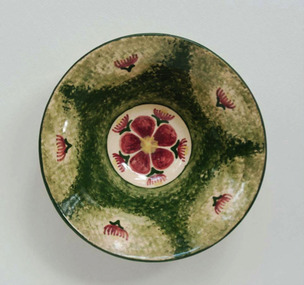
Ceramic, Karl Duldig, Gumnut Bowl by Karl Duldig c.1948, c. 1948
... Karl and his wife Slawa Horowitz-Duldig between 1944 and 1960. Clay was an important medium for Karl. When he was forced to flee Austria for Switzerland, working with clay became a convenient medium; and he continued to expand his use of clay in Singapore. In Australia his work in clay extended from domestic hand-made pottery to public sculptures and architectural reliefs. In 1944 Duldig purchased a kiln, which was installed in the garage of the family’s...Karl and his wife Slawa Horowitz-Duldig between 1944 and 1960. Clay was an important medium for Karl. When he was forced to flee Austria for Switzerland, working with clay became a convenient medium; and he continued to expand his use of clay in Singapore. In Australia his work in clay extended from domestic hand-made pottery to public sculptures and architectural reliefs. In 1944 Duldig purchased a kiln, which was installed in the garage of the family’s ...Karl Duldig’s ceramic bowl is a particularly interesting example of Karl’s ability to creatively respond to a new environment with a fresh visual repertoire, in this case, the flowering Eucalyptus in a design reminiscent of traditional European folk art. The bowl is an excellent example of the utilitarian and decorative studio pottery produced by Karl and his wife Slawa Horowitz-Duldig between 1944 and 1960. Clay was an important medium for Karl. When he was forced to flee Austria for Switzerland, working with clay became a convenient medium; and he continued to expand his use of clay in Singapore. In Australia his work in clay extended from domestic hand-made pottery to public sculptures and architectural reliefs. In 1944 Duldig purchased a kiln, which was installed in the garage of the family’s St. Kilda flat, soon after a pottery wheel was acquired. It was the beginning of a cottage industry that supplemented the family income during the war years and beyond. Duldig initially sold his decorative ceramic wares through a local florist in St. Kilda, and subsequently through shops such as the Chez Nous French Art Shop (Howey Place) and Light and Shade (Royal Arcade), and the Primrose Pottery shop in Collins Street. The Primrose Pottery shop was an extremely important commercial outlet, and hub, for emerging artists, potters and designers from 1929 until 1974. Its proprietors Edith and Betty MacMillan worked closely with their suppliers, commissioning and taking items on consignment. In the post war period important Melbourne studio potters such as Allan Lowe, Arthur Boyd, John Perceval and Neil Douglas exhibited and sold domestic wares in the Primrose Pottery shop. The Duldigs studio pottery provides a counterpoint to the ceramics produced at Arthur Merric Boyd Pottery in Murrumbeena, which was established in 1944 by Arthur Boyd, John Perceval and Peter Herbst. The emphasis on painterly decoration was important and the AMB potters also produced simple household wares decorated with Australian flora and wildlife, for example Neil Douglas also made small bowls decorated with the fairy wrens, lyrebirds, gumnuts and eucalypts. Ann Carew 2016The Duldig Studio’s collection of ceramics has national aesthetic and historic significance. It contains a representative sample of works of art in ceramics created by Karl Duldig during his lifetime, including small sculptures, as well as functional and novelty items for the tourist market during the 1956 Melbourne Olympic Games. The artist’s working methods and the development of his practice are comprehensively demonstrated in the collection. This in-situ collection demonstrates the philosophy of the Vienna Secession and its inheritors that handcrafted, simple functional domestic wares might enrich both the lives of the maker and the user. This bowl is part of a collection of ceramics that has national historic significance in providing a rich illustration of an immigrant and artistic experience, and touching on the themes of settlement adaptation of artistic practice. The collection is also associated with places of cultural and historical significance in Melbourne such as the Primrose Pottery Shop, and the story of Australian studio ceramics in the post-war years. Ann Carew 2016Cream earthenware bowl with flowering gum motif and sponged green background.Duldig in script incised under. -
 Duldig Studio museum + sculpture garden
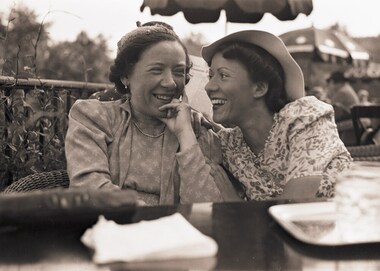
Photograph, Slawa and her sister Rella, Vienna, c.1938, c.1938
... Karl in Switzerland. After leaving Europe, she did not see her sister again for 30 years – years which are documented in the many letters held by the Studio, sent over this time. In 1968 Slawa and Rella met one more time in Paris. This photograph documents the important relationship between Slawa Horowitz-Duldig and her sister Rella Horowitz, later Laisne. Rella assisted Slawa in the process of developing her invention of the modern foldable umbrella, and hid the family's ...This photograph of Slawa and her sister was taken a few months before Slawa and baby Eva left Vienna, in December 1938. They joined Karl in Switzerland. After leaving Europe, she did not see her sister again for 30 years – years which are documented in the many letters held by the Studio, sent over this time. In 1968 Slawa and Rella met one more time in Paris.This photograph documents the important relationship between Slawa Horowitz-Duldig and her sister Rella Horowitz, later Laisne. Rella assisted Slawa in the process of developing her invention of the modern foldable umbrella, and hid the family's artworks and furniture, designed by Slawa and the firm of Sigmund Jaray, in her apartment in Paris during the Second World War. It is of historical significance as it documents life in Vienna prior to the Second World War. -
 Duldig Studio museum + sculpture garden
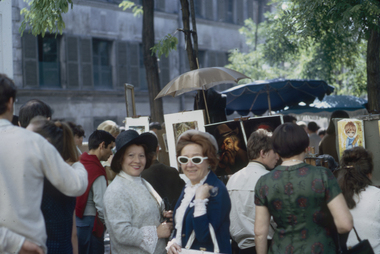
Photograph, Karl Duldig, Slawa and her sister Rella, Paris, 1968, 1968
... Karl Duldig when he and Slawa visited Slawa's sister Rella Laisne in Paris in 1968. They went to Paris as part of a world trip on the occasion of the unveiling of Karl's sculptural monument, Dawn, at the Maccabiah Village, Ram Gat, Israel. Commissioned by Hakoah and World Maccabi Union his monument commemorates the sportsmen and women of Hakoah Sports Club who were among the victims in the Holocaust. Karl had played for Hakoah in his youth. This is one of a large collection of photographs taken by sculptor Karl Duldig, documenting his art, life and family ...This photograph was taken by Karl Duldig when he and Slawa visited Slawa's sister Rella Laisne in Paris in 1968. They went to Paris as part of a world trip on the occasion of the unveiling of Karl's sculptural monument, Dawn, at the Maccabiah Village, Ram Gat, Israel. Commissioned by Hakoah and World Maccabi Union his monument commemorates the sportsmen and women of Hakoah Sports Club who were among the victims in the Holocaust. Karl had played for Hakoah in his youth. This is one of a large collection of photographs taken by sculptor Karl Duldig, documenting his art, life and family. The collection is of historical and aesthetic significance as a personal record of the work, cultural and social milieu of an Austro- Australian sculptor and his family from the early to late 20th century. it is also a record and representative of the experience of those people who came to Australia at this time, displaced by the upheavals of the Second World War. -
 Ballarat Heritage Services
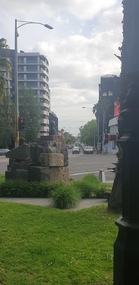
Photograph, Raoul Wallenberg Memorial at Kew Junction
... The monument, created by Australian sculptor Karl Duldig, was initiated by Free Wallenberg Australia with the support of the former City of Kew. Unveiled in 1985, it was the last public work created by Duldig. Born in Poland, Duldig and his family...The monument, created by Australian sculptor Karl Duldig, was initiated by Free Wallenberg Australia with the support of the former City of Kew. Unveiled in 1985, it was the last public work created by Duldig. Born in Poland, Duldig and his family ...Situated in a small park at Kew Junction, the 'Monument to Raoul Wallenberg' commemorates the courageous Swedish diplomat and humanitarian Raoul Wallenberg who undertook one of the most significant rescue of Jews during the Holocaust in World War Two. He was captured by Soviet troops in Budapest Hungary in 1945. The monument, created by Australian sculptor Karl Duldig, was initiated by Free Wallenberg Australia with the support of the former City of Kew. Unveiled in 1985, it was the last public work created by Duldig. Born in Poland, Duldig and his family fled Vienna in 1938 following the annexation of Austria by Nazi Germany, eventually settling in Australia in 1941. As a sculptor, he was instrumental in introducing the Modernist style to an Australian audience, won the 1956 Victorian Sculptor of the Year Award and had an annual lecture established in his name by the National Gallery of Victoria. The artist’s home and studio have been preserved through the Duldig Studio museum and sculpture garden in Malvern East. The Duldig Studio holds the original terracotta maquette, the original of the bust and a number of working drawings of the 'Monument to Raoul Wallenberg'. A plaque on the rear of the sculpture reads: RAOUL WALLENBERG Swedish Diplomat, Humanitarian, Hero Of The Holocaust. In Budapest, Hungary, In 1944 He Saved The Lives Of Tens Of Thousands Of People Threatened By Nazi Mass Murder. He Was Arrested On January 17th 1945 By Soviet Troops, And Has Been Imprisoned In The Soviet Union Ever Since. Erected January 17th 1985Karl DULDIG(1902 - 1986) Monument to Raoul Wallenberg 1985 Sandstone, granite, bronze 245 x 325 x 142 cmkarl duldig, jewish, jew, righteous, memorial, kew, boroondara, world war ii, world war two, world war 2
