
Showing 389 items matching " walters family"
-
 Glen Eira Historical Society
Document - Ontario Street Methodist Church
... ... Walters Family...Stafford Ray Watts Family Bearson Family Redman Family Youren Family Hill Family Pullen Family Walters Family Weber Family Boness Family Allen Family Cowlishaw Family Davies J. ...Brief printed history of Ontarios Street Methodist Church compiled by Gwenda Mann from minute books at Uniting Church Archives. Period covered 1921 to 1975. Printed memories of Ontario Street, compiled by Gwen Stafford around 1989-1990 covering the period 1928-1987.methodist church, lempriere street, ontario street, caulfield north, davies j., pettitson mr., denmead mr., ponsford mr., shannon r., mclellan john, alday t. rev., overend h. a. rev., burns h.m. rev., mccallum dr., mccure r. mr., choirs, josephs p., palmer phillips h. rev., petterson c.m., davies jack, cartwright w.b., halls, architects, browning mr., bladen mr., alday mrs., gyngell mrs., eskdale road, kurl mrs., roberts n. mrs., butler j. mrs., williams g., morey m. mrs., williams miss, salmon mr., turner mrs., salmon mrs., hefford mrs., williams c., marsden miss, briaris miss, orrong road methodist church, harris s.s., griffith t.r., wilson a.r., warfe j.e., mclean r.c., mckay h.g., mann gwenda, stafford gwen, choirs, ladies guild, halls, sunday schools, women’s australian and overseas mission, elsternwick – st.kilda circuit, palamountain rev., barnes mr., sunday school, trivett mr., stafford evan, hauser geoff, hauser betty, hauser connie, austin keith, cunnington fred, peterson reg, tregear rev., trivett family, denmead family, davis family, kinderman family, clarke family, light family, dark family, brown family, salmon family, andrewatha family, 2 phillip families, cunnington family, kennedy family, geer family, peterson family, william family, watkins family, jones family, lambden family, stafford e.r., stafford ray, watts family, bearson family, redman family, youren family, hill family, pullen family, walters family, weber family, boness family, allen family, cowlishaw family, davies j., kinderman r., trivett w., brown f., brown r., salmon f., wedlock w., boness j., stafford e.r., denman c., walters c., harris selwyn rev., wilson ray rev., mclean roy rev., warfe john rev., griffen tom rev., mckay harry rev., kinder gardens, king dorothy, ritchie clarice, balchin, phillips lila, geer keith, atkinson mrs., beason gwen, tennis clubs, beason tas mr., choirs, watkins clarrie, williams ray rev., butler rev., haynes fred rev., wilson gus rev., jones barry, waldron glen, yeatman john dr., kooyong road church, halls, stafford gwen -
 Greensborough Historical Society
Book, Diamond Creek Farmer, 1994
... ...walters family...He also had family connections to Kangaroo Ground. wattle glen kangaroo ground nillumbik historical society william ellis diamond creek farming walters family ellis cottage John Mackey in pencil inside front cover A black and white booklet, 12 pages, black and white illus. ...History of the Ellis family in Diamond Creek and Yarra Glen.William Ellis emigrated to Victoria in 1847 and bought most of the Wattle Glen area in 1850. He also had family connections to Kangaroo Ground.A black and white booklet, 12 pages, black and white illus.John Mackey in pencil inside front coverwattle glen, kangaroo ground, nillumbik historical society, william ellis, diamond creek, farming, walters family, ellis cottage -
Eltham District Historical Society Inc
Document - Folder, Stevenson, Joseph
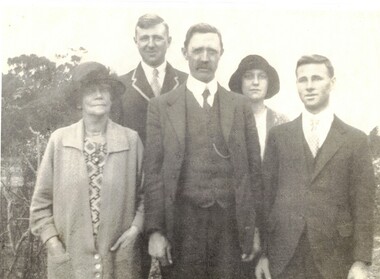
... ...Walters family Kangaroo Ground...Joseph Stevenson ship Willington 1837 Ruth Stevenson nee Boyd David Stevenson Jane Stevenson Kirk's Bazaar First punt across Yarra River Princes Bridge Melbourne Stevenson Street Melbourne Saltwater Creek River Plenty Christmas Hills David Christmas Diamond Creek Isabella Stevenson Robert Stevenson Five Mill Creek Watson's Creek "Bankhead" Kangaroo Ground Ellen Stevenson Yarra Glen Road Yarra Glen Cemetery Stevenson's Corner Kangaroo Ground Stevenson's Creek Presbyterian Church Kangaroo Ground Eltham District Road Board Margaret Stevenson Ruth Stevenson Emma Stevenson nee Peers Margaret Hargreaves nee Stephenson Robert Peers Cyrus Peers Charlotte Peers Jane Mess nee Stevenson Robert Mess Pearl Mess nee Mills James Mess George Mess Janet Mess Joseph Mess William Mess Alexander Mess Barbara Mess Isabella Mess Ruth Gosling nee Mess John Gosling Jessie Gosling Evelyn Sinclair nee Gosling William Gosling Vera Rowland nee Gosling Florrie Rawland Ethel Rawland John Rawland Isobel Gilson nee Mess Bruce Mess Joy Mess nee Masefield Janet Crook nee Mess Rodney Crook Judith Rodgers nee Mess Ray Rodgers Dean Crook Jenine Crooks Carolyn Rodgers Merryn Rodgers Beryl Nansen nee Mess Robert Nansen Gerry Oliming Roberta Oliming nee Nansen Bernard Nansen Michele Nansen nee Blackie Rohan Nansen Janet Nansen nee Britton Vera Cope nee Mess Cliff Cope Graeme Cope Louise Cope nee Thimpton Shannon Cope Lucas Cope Peter Cope Marilyn Cope nee Turnley Oliver Cope Sarah Cope Kelvin Cope Donald Mess Joan Mess Geoffrey Mess Peter Mess Rosemary Mess Kerrie Mess Isobel Gibson nee Mess Ellen Stevenson nee Armstrong James Stevenson John Stevenson Elizabeth Stevenson Joanna Stevenson Ellen Little nee Stevenson william Little Francis Little Janet Little nee Armstrong Ruth Lorimer nee Little David Lorimer Ruth Cameron nee Lorimer Francis Lorimer Val Wade Elizabeth Lorimer David Kelso Willaim Lorimer Jean Lorimer nee Hewitt Nancy Mitson nee Lorimer Stan Mitson John Hewitt Alison Hewitt John Cameron Beryl Ryan nee Cameron Robert Cameron Maryann Ryan Peter Ryan Margaret ryan Steven Wade Andrew Wade Jonathan Wade Jennifer Wade Ruth Sadlernee Stevenson Thomas Sadler Alexander Sadler Isabella Booth nee Sadler Angus Sadler Heather Sadler Ruth Sadler Andrew Sadler Nancy Sadler Benjamin Sadler Robert Sadler Alice Sadler nee Smith Margaret Smith David Sadler Anne McClusky nee Sadler Hope Sadler Anne Carson nee Sadler Ruth Edwards nee Carson David Carson Joseph Sadler Isabella Bond nee Sadler Ian Bond Ruth Bond Isabella Bond John Sadler thoas Sadler Mary Sadler nee Stewart Stewart Sadler Keith Sadler Glen Sadler Peter Sadler Terry Sadler Pamela Sadler Armstrong family Kangaroo Ground Bell family Kangaroo Ground Rogerson family Kangaroo Ground Barr family Kangaroo Ground Harkness family Kangaroo Ground Jardin family Kangaroo Ground Thompson family Kangaroo Ground Johnson family Kangaroo Ground Walters family Kangaroo Ground Sir Ewen Camerson Flora Margaret Cameron Ewen Cameron Sir Ewan Camerson Sir Herbert Gepp "Garden Hill" Yarra Glen Road Andrew Moss Museum Kangaroo Ground Lynette Beale Noel Beale Mick woiwod Diana Bassett-Smith Newspaper clippings, A4 photocopies, etc Stevenson, Joseph Document Folder ...Joseph Stevenson came to Australia in 1837, eventually settling near Kangaroo Ground. He was active in local affairs.. Contents Handwritten and typed notes by Winifred Joy Ness, 1985, "Joseph Stevenson of Kangaroo Ground". Handwritten extracts from "Pioneers and Painters" by Alan Marshall, relevant to Joseph Stevenson. Handwritten extracts from "Pastoral Pioneers of Port Phillip"by R V Bills and A S Kenyon, relevant to Joseph Stevenson. Photocopy of photographs: Stevenson daughters; a stevenson daughter with baby; Joseph Stevenson. Handwritten Stevenson family tree (on 2 sheets). Photocopy of photograph: Robert Stevenson and family, "Bankhead", Kangaroo Ground (ref 423). Photocopy of two prints/paintings, annotated on reverse (information from R B Ness: Punt over Yarra River at Melbourne which Joseph Stevenson helped build, from "History of South Melbourne", published 1930s; First bridge over Yarra at Melbourne which Joseph Stevenson helped build. Photocopy of Death Certificate: Joseph Stevenson, 1 November 1878. Photocopy of Death Certificate: Ruth Sevenson, 1 November 1868. Photocopy of Marriage Certificate: names illegible 16 November 1868 Photocopy of extract of Marriage Certificate: Joseph Stephenson and Ruth Boyd, 14 June 1837. Newspaper article: "Resting in peace", Diamond Valley News, 23 March 1982. Judith Furphy and early Kangaroo Ground families buried in Kangaroo Ground Cemetery. Newspaper article: "Grounds for celebration", Diamond Valley Leader, 23 November 2005. Lynette Beale traced her ancestor Joseph Stevenson to Kangaroo Ground. Letter Diana Bassett-Smith to EDHS, 10 August 2005. Donation of a moulding plane marked Joseph Stephenson, property of descendants.Newspaper clippings, A4 photocopies, etcjoseph stevenson, ship willington 1837, ruth stevenson nee boyd, david stevenson, jane stevenson, kirk's bazaar, first punt across yarra river, princes bridge melbourne, stevenson street melbourne, saltwater creek, river plenty, christmas hills, david christmas, diamond creek, isabella stevenson, robert stevenson, five mill creek, watson's creek, "bankhead" kangaroo ground, ellen stevenson, yarra glen road, yarra glen cemetery, stevenson's corner kangaroo ground, stevenson's creek, presbyterian church kangaroo ground, eltham district road board, margaret stevenson, ruth stevenson, emma stevenson nee peers, margaret hargreaves nee stephenson, robert peers, cyrus peers, charlotte peers, jane mess nee stevenson, robert mess, pearl mess nee mills, james mess, george mess, janet mess, joseph mess, william mess, alexander mess, barbara mess, isabella mess, ruth gosling nee mess, john gosling, jessie gosling, evelyn sinclair nee gosling, william gosling, vera rowland nee gosling, florrie rawland, ethel rawland, john rawland, isobel gilson nee mess, bruce mess, joy mess nee masefield, janet crook nee mess, rodney crook, judith rodgers nee mess, ray rodgers, dean crook, jenine crooks, carolyn rodgers, merryn rodgers, beryl nansen nee mess, robert nansen, gerry oliming, roberta oliming nee nansen, bernard nansen, michele nansen nee blackie, rohan nansen, janet nansen nee britton, vera cope nee mess, cliff cope, graeme cope, louise cope nee thimpton, shannon cope, lucas cope, peter cope, marilyn cope nee turnley, oliver cope, sarah cope, kelvin cope, donald mess, joan mess, geoffrey mess, peter mess, rosemary mess, kerrie mess, isobel gibson nee mess, ellen stevenson nee armstrong, james stevenson, john stevenson, elizabeth stevenson, joanna stevenson, ellen little nee stevenson, william little, francis little, janet little nee armstrong, ruth lorimer nee little, david lorimer, ruth cameron nee lorimer, francis lorimer, val wade, elizabeth lorimer, david kelso, willaim lorimer, jean lorimer nee hewitt, nancy mitson nee lorimer, stan mitson, john hewitt, alison hewitt, john cameron, beryl ryan nee cameron, robert cameron, maryann ryan, peter ryan, margaret ryan, steven wade, andrew wade, jonathan wade, jennifer wade, ruth sadlernee stevenson, thomas sadler, alexander sadler, isabella booth nee sadler, angus sadler, heather sadler, ruth sadler, andrew sadler, nancy sadler, benjamin sadler, robert sadler, alice sadler nee smith, margaret smith, david sadler, anne mcclusky nee sadler, hope sadler, anne carson nee sadler, ruth edwards nee carson, david carson, joseph sadler, isabella bond nee sadler, ian bond, ruth bond, isabella bond, john sadler, thoas sadler, mary sadler nee stewart, stewart sadler, keith sadler, glen sadler, peter sadler, terry sadler, pamela sadler, armstrong family kangaroo ground, bell family kangaroo ground, rogerson family kangaroo ground, barr family kangaroo ground, harkness family kangaroo ground, jardin family kangaroo ground, thompson family kangaroo ground, johnson family kangaroo ground, walters family kangaroo ground, sir ewen camerson, flora margaret cameron, ewen cameron, sir ewan camerson, sir herbert gepp, "garden hill" yarra glen road, andrew moss museum kangaroo ground, lynette beale, noel beale, mick woiwod, diana bassett-smith -
 Whitehorse Historical Society Inc.
photograph - Photocopy, Walter Jones Family
... Walter Jones Family...Black and white photocopy of the Jones Family. Walter is in the middle....Refer to Jones Flower Farm NP4498 Mt Pleasant Road Nunawading Jones Flower Farm Black and white photocopy of the Jones Family. Walter is in the middle. Walter Jones Family photograph Photocopy ...Refer to Jones Flower Farm NP4498Black and white photocopy of the Jones Family. Walter is in the middle.mt pleasant road nunawading, jones flower farm -
Whitehorse Historical Society Inc.
Document, Charles Family, 24/05/1988 12:00:00 AM
... Family...Charles...Hazel...Grundy...Walter...Memories of the Charles Family by Walter Grundy....Memories of the Charles Family by Walter Grundy. Charles Family Document Document ...Memories of the Charles Family by Walter Grundy.Memories of the Charles Family by Walter Grundy.Memories of the Charles Family by Walter Grundy.charles family, charles, hazel, grundy, walter, charles, arthur, charles, eric, charles, ken, charles, keith (arch), grundy, albert, grundy, marie, grundy, bertha, grundy, harold, thomas street, mitcham -
Port Melbourne Historical & Preservation Society
Photograph - Miss Port Melbourne' beauty conest, 1920s
... One of four photographs that belonged to Charles Walter Pont: four family members, designated as 'finalists in Miss Port Melbourne beauty contest'...Families Charles Walter Pont - Plumber One of four photographs that belonged to Charles Walter Pont: four family members, designated as 'finalists in Miss Port Melbourne beauty contest' Photograph Miss Port Melbourne' beauty conest ...One of four photographs that belonged to Charles Walter Pont: four family members, designated as 'finalists in Miss Port Melbourne beauty contest'families, charles walter pont - plumber -
 Tatura Irrigation & Wartime Camps Museum
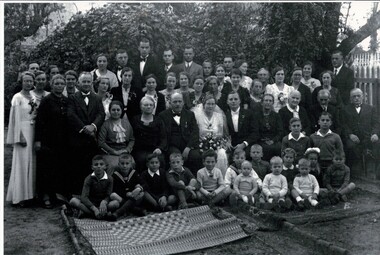
Photograph, Wagner Family Wedding
... Wedding photograph of Walter Wagner family taken in Jaffa, Palestine. Contains many generations of the family. ...Wedding photograph of Walter Wagner family taken in Jaffa, Palestine. Contains many generations of the family. ...Wedding photograph of Walter Wagner family taken in Jaffa, Palestine. Contains many generations of the family. Wagners were internees in Camp 3.Black and white photograph of a bride and groom with many people gathered around them. Trees in background. Photograph has been laminated.walter wagner, camp 3 internees -
 Stawell Historical Society Inc
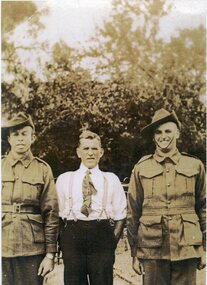
Photograph, Mr Walter Delahoy, Mr Oriel Delahoy & Mr Keith Delahoy WW2
... Delahoy Family. Walter Delahoy Oriel Centre and Keith Delahoy WW2 ...Delahoy Family. Walter Delahoy Oriel Centre and Keith Delahoy WW2 Stawell Mr Walter Delahoy, Mr Oriel Delahoy & Mr Keith Delahoy WW2 Photograph ...Delahoy Family. Walter Delahoy Oriel Centre and Keith Delahoy WW2 stawell -
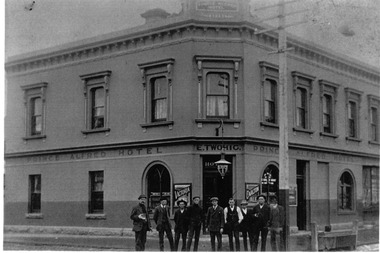 Port Melbourne Historical & Preservation Society
Photograph - Prince Alfred Hotel, Bay Street, Port Melbourne, c. 1910
... Nine men standing in Bay Street include Maurice Twohig (publican family) and Walter Cooke (barber), Jim Smith, Bert Cooke and Gol Gallagher....Business and Traders - Hotels Maurice TWOHIG Ellen TWOHIG Eliza TWOHIG Jim SMITH Walter COOKE Bert COOKE Gol GALLAGHER Copy of photo of Prince Alfred Hotel c1910. Nine men standing in Bay Street include Maurice Twohig (publican family) and Walter Cooke (barber), Jim Smith, Bert Cooke and Gol Gallagher. ...Copy of photo of Prince Alfred Hotel c1910. Nine men standing in Bay Street include Maurice Twohig (publican family) and Walter Cooke (barber), Jim Smith, Bert Cooke and Gol Gallagher.business and traders - hotels, maurice twohig, ellen twohig, eliza twohig, jim smith, walter cooke, bert cooke, gol gallagher -
Halls Gap & Grampians Historical Society
Photograph - Sepia, C 1908
... Thomas E. Walter and family C.1908. Back (L to R): Edgar Walter, Elsie Walter, Ralph Walter (all children of Thomas Walter and his first wife, Elizabeth Cook). ...Thomas E. Walter and family C.1908. Back (L to R): Edgar Walter, Elsie Walter, Ralph Walter (all children of Thomas Walter and his first wife, Elizabeth Cook). ...Thomas E. Walter and family C.1908. Back (L to R): Edgar Walter, Elsie Walter, Ralph Walter (all children of Thomas Walter and his first wife, Elizabeth Cook). Front: Thomas E Walter with Eva May Walter, Cecil R. Walter and Marian Anna Walter (nee Neate), Thomas' second wife (married 1903), with Gwendoline Walter (b. 1908). Taken in Grampians when Thomas had a sawmill near "The Chimney Pots".Eight family members. Two women, one standing & one sitting holding a baby; three men, two standing and one sitting holding the arm of a little girl; the little girl is holding the hand of a little boy. All standing in front of a weatherboard building. A few fernspeople, walter -
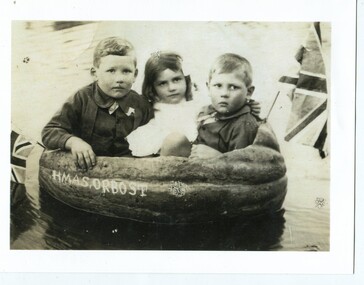 Orbost & District Historical Society
Photograph - Pumpkin boat photos, Helena Warren, c. 1910-1920
... ...Walter Rice family...Some of these photos in the pumpkin series appear to have been creatively manipulated. 2694.2 The Walter Rice family: Eileen (b.1908), Myrtle (b.1909), Laura (b.1912), Gilbert (b.1913), Thelma (b.1914), Cecil (b.1912). ...Some of these photos in the pumpkin series appear to have been creatively manipulated. 2694.2 The Walter Rice family: Eileen (b.1908), Myrtle (b.1909), Laura (b.1912), Gilbert (b.1913), Thelma (b.1914), Cecil (b.1912). ...These photographs are part of a series of b/w photos produced and marketed as postcards by Helena Warren. Mrs Warren, of Newmerella, Orbost was a well known photographer and local press correspondent during 1900s-1950s. She took many photos of local people, soldiers going to war, and of local events. Some of these photos in the pumpkin series appear to have been creatively manipulated. 2694.2 The Walter Rice family: Eileen (b.1908), Myrtle (b.1909), Laura (b.1912), Gilbert (b.1913), Thelma (b.1914), Cecil (b.1912). These photographs are significant because they are wonderful examples of the work of local photographer, Helena Warren. Two b/w photographs of children posed in large pumpkin boats. 2694.1 has 3 children (2 boys, 1 girl) and has the label HMAS ORBOST printed in white paint on the outside of the pumpkin boat. 2294.2 has 7children and two babies posed in a pumpkin boat. The label HMAS VICTOR is painted in white paint on the outside of the pumpkin boat. 2264.1 HMAS ORBOST 2264.2 HMAS VICTORpumpkins, pumpkin boats, helena warren, walter rice family -
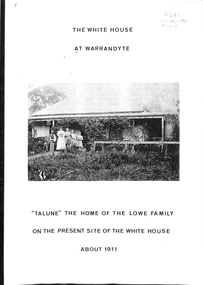 Ringwood and District Historical Society
Book, The White House At Warrandyte, 1988
... The first known residents were Mr and Mrs Walter Pretty and their family who moved there in 1856. ...The first known residents were Mr and Mrs Walter Pretty and their family who moved there in 1856. ...The first known residents were Mr and Mrs Walter Pretty and their family who moved there in 1856. Mr William Collins took out a miner's right in 1886 and Mr and Mrs Frank Lowe bought the freehold when the site was auctioned in 1930.History of families associated with the property originally leased on a miner's right near the corner of Yarra Street and Cemetery Road circa 1850s, and later had a frontage to the Main Road with access from to Taroona Avenue. -
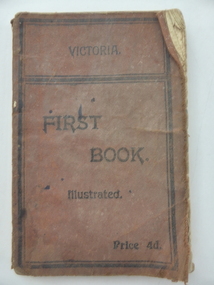 Warrnambool and District Historical Society Inc.
Book, First book Victoria, 1909
... Stanley Bell may have belonged to one of these families. Walter Davies had a book shop in Timor Street, Warrnambool from the late 19th century and three generations of the Davies family were proprietors of this shop over the years. ...Stanley Bell may have belonged to one of these families. Walter Davies had a book shop in Timor Street, Warrnambool from the late 19th century and three generations of the Davies family were proprietors of this shop over the years. ...This is a reader produced for schools in Victoria in 1909. It contains many simple fables and stories and some phonetic instruction at the beginning of the short articles. It has no specific Australian content. The inscription includes the name ‘Stanley Bell’. There were several Bell families in the Wangoom area early in the 20th century, including one teacher associated with the Wangoom State School. Stanley Bell may have belonged to one of these families. Walter Davies had a book shop in Timor Street, Warrnambool from the late 19th century and three generations of the Davies family were proprietors of this shop over the years. This book is of educational and social interest as an example of the readers used by primary school children in the early 20th century. This is a soft cover book of 80 pages. The cover is brown with black printing. The pages are partly torn and very tattered. The inscriptions are handwritten in black ink and pencil and there is some scribble on the first pages. The text has many black and white illustrations. There is a blue stamp of Walter Davies, the Warrnambool bookseller, on the first page. ‘Stanley J. Bell, Warrumyea, Wangoom’ ‘Walter Davies, Bookseller, Warrnambool’walter davies, stanley bell -
 Greensborough Historical Society
Photographs, Whittingham family Photos, 2014_
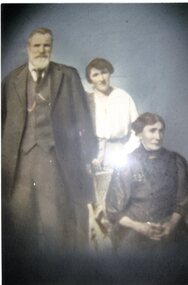
... Photographs sourced by Rosie Bray from a descendant of the Whittingham family. a: Walter S Whittingham and wife Elsie (called Lily); b: Elsie and Eric Whittingham on wedding day; c: Whittingham family, not identified; d: Trinnie Di Giacomo (nee Whittingham) May 2014; e and f: Irene Taylor (Whittingham descendant); g: Ship "Ivanhoe" owned by Whittingham family (painting held by family member)....Photographs sourced by Rosie Bray from a descendant of the Whittingham family. a: Walter S Whittingham and wife Elsie (called Lily); b: Elsie and Eric Whittingham on wedding day; c: Whittingham family, not identified; d: Trinnie Di Giacomo (nee Whittingham) May 2014; e and f: Irene Taylor (Whittingham descendant); g: Ship "Ivanhoe" owned by Whittingham family (painting held by family member). whittingham family Envelope containing 9 col. photographs of members of the Whittingham family Whittingham family Photos Photographs ...Photographs sourced by Rosie Bray from a descendant of the Whittingham family. a: Walter S Whittingham and wife Elsie (called Lily); b: Elsie and Eric Whittingham on wedding day; c: Whittingham family, not identified; d: Trinnie Di Giacomo (nee Whittingham) May 2014; e and f: Irene Taylor (Whittingham descendant); g: Ship "Ivanhoe" owned by Whittingham family (painting held by family member).Envelope containing 9 col. photographs of members of the Whittingham familywhittingham family -
 Eltham District Historical Society Inc
Photograph, Possibly Nancy Josephine Pitt Withers with her mother Fanny (in background) at their new home, Southernwoood, in Eltham, c.1903
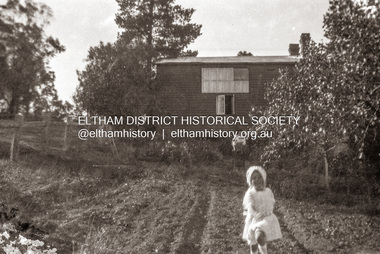
... She was the daughter of artist Walter Withers and Fanny (nee Flinn). Walter Withers and his family moved from Heidelberg to Eltham in 1903 where he set up his studio in Southernwood at the corner of Brougham and Bolton streets, Eltham. ...She was the daughter of artist Walter Withers and Fanny (nee Flinn). Walter Withers and his family moved from Heidelberg to Eltham in 1903 where he set up his studio in Southernwood at the corner of Brougham and Bolton streets, Eltham. ...Nancy (Nan) Josephine Pitt Withers was born 17 May 1897 at Heidelberg. She was the daughter of artist Walter Withers and Fanny (nee Flinn). Walter Withers and his family moved from Heidelberg to Eltham in 1903 where he set up his studio in Southernwood at the corner of Brougham and Bolton streets, Eltham. In the background is believed to Fanny Withers holding the family's dog, a spotted white terrier known as "Rip"Many items in this collection have suffered from significant water damage and black mouldjohn withers collection, eltham, southernwood, fanny withers (nee flinn), nancy josephine pitt withers, scan - 620 format 6x9 negative, 1903, rip (dog) -
Federation University Historical Collection
Document, Walter Martin of Garibaldi, Victoria, c2015
... At the time of Walter Martin's retirement the family property had been in the family for 130 years. ...At the time of Walter Martin's retirement the family property had been in the family for 130 years. ...Walter Martin was born on 25 August 1915, and died on 07 October 1995. He was raised on the family property of Garibaldi which was opposite the Garibaldi Bridge, and attended the Garibaldi State School until 1930. At the time of Walter Martin's retirement the family property had been in the family for 130 years. He was a keen photographer and combined this passion with a knowledge of the history of Garibaldi and Durham Lead. Walter Martin was an engineering blacksmith at Durham Lead and lived at 'Cragleigh' RSD R-885, Durham Lead, 3352.Nine typed pages relating to Walter Martin, including copies of photographs. It includes a copy of a reference from the Buninyong Shire Council.walter martin, blacksmith, garibaldi, durham lead, elaine, garibaldi bridge -
Stawell Historical Society Inc
Photograph, Mick Walsh, Mick Walsh Stawell Studio Colour Negatives, 1975 to 1986
... Willett family Peterborough Holidays 77 Gunning Suares Tennis 77 Hannett & Hosken Newton & Payne O’Grady & Bigmore Bryant & Holmes Brown Nicholls & Driscoll Franklin family Dalkin Family Crawford family Sue Marshall & Greg Holmes Warren & Morton Jones Baby Lois Ralph Baby Dark & Hay Ryan Children Whelan baby Kath Sluga Ken Potter family Barbara McDonald baby North Western Woollen Mills Tina Walters McArthur family Frencham & Templeton Keith Boyd Tony Beck Axford family Jean Taylor 70th birthday Winkley family Wayne Shalders Kims baby Dunlop baby Mex & Upson Blackie family Snowfall 7/6/1977 Gready reunion Stawell Golf 1976 Flowers May 1977 Hank Neil presentation Harris & Collier McKenzie & Dryburgh wedding Monteith baby Tennis Giles & Cameron Pulley & Griffin wedding Simpson & Whelan wedding Baird & Lewis wedding Rundell & Dreher ...Willett family Peterborough Holidays 77 Gunning Suares Tennis 77 Hannett & Hosken Newton & Payne O’Grady & Bigmore Bryant & Holmes Brown Nicholls & Driscoll Franklin family Dalkin Family Crawford family Sue Marshall & Greg Holmes Warren & Morton Jones Baby Lois Ralph Baby Dark & Hay Ryan Children Whelan baby Kath Sluga Ken Potter family Barbara McDonald baby North Western Woollen Mills Tina Walters McArthur family Frencham & Templeton Keith Boyd Tony Beck Axford family Jean Taylor 70th birthday Winkley family Wayne Shalders Kims baby Dunlop baby Mex & Upson Blackie family Snowfall 7/6/1977 Gready reunion Stawell Golf 1976 Flowers May 1977 Hank Neil presentation Harris & Collier McKenzie & Dryburgh wedding Monteith baby Tennis Giles & Cameron Pulley & Griffin wedding Simpson & Whelan wedding Baird & Lewis wedding Rundell & Dreher Photography Mick Walsh 52 Patrick Street Stawell Colour negatives of families, weddings and other. ...Negatives from Stawell Photographer. Discarded from Penna Print Ararat. Son contacted and gave approval for Stawell Historical Society to keep them. Only those of a non personal nature scanned. Willett family Peterborough Holidays 77 Gunning Suares Tennis 77 Hannett & Hosken Newton & Payne O’Grady & Bigmore Bryant & Holmes Brown Nicholls & Driscoll Franklin family Dalkin Family Crawford family Sue Marshall & Greg Holmes Warren & Morton Jones Baby Lois Ralph Baby Dark & Hay Ryan Children Whelan baby Kath Sluga Ken Potter family Barbara McDonald baby North Western Woollen Mills Tina Walters McArthur family Frencham & Templeton Keith Boyd Tony Beck Axford family Jean Taylor 70th birthday Winkley family Wayne Shalders Kims baby Dunlop baby Mex & Upson Blackie family Snowfall 7/6/1977 Gready reunion Stawell Golf 1976 Flowers May 1977 Hank Neil presentation Harris & Collier McKenzie & Dryburgh wedding Monteith baby Tennis Giles & Cameron Pulley & Griffin wedding Simpson & Whelan wedding Baird & Lewis wedding Rundell & Dreher Colour negatives of families, weddings and other. Nineteen Lever Arch Folders Mick Walsh 52 Patrick Street Stawellphotography -
 Warrnambool and District Historical Society Inc.
Book, Brave Men's Footsteps, 1873
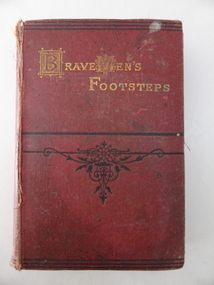
... No specific information has been found on Walter Wright or any family named Wright residing in the Wangoom area. ...No specific information has been found on Walter Wright or any family named Wright residing in the Wangoom area. ...This book was given as a school prize to Walter Wright by the Wangoom School in 1873. The name ‘Wangoon’ is on the printed book plate – is this a misprint or an alternative spelling of ‘Wangoom’? Wangoom State School, No. 645, on the Warrnambool/Wangoom Road was opened in 1865 as a Common School. The school is now closed. The Hon. William Bayles, a Melbourne businessman with property near Macarthur, first became a member of the Legislative Council for Villiers and Heytesbury in 1864 and continued until 1880. He was a prominent and popular politician in Warrnambool, regularly giving prizes to pupils of schools in his electorate and in 1872 he offered a £10 prize for the best student in the district. No specific information has been found on Walter Wright or any family named Wright residing in the Wangoom area. There was a piano tuner named W. Wright in the Warrnambool area in the 1870s. Was this Walter’s father? This book is of interest because of the connection with Wangoom School, the Hon. William Bayles and Walter Wright. More interest will be created if information comes to light on Walter Wright. This is a hard cover book of 333 pages plus 32 pages of advertisements for books published by Henry S. King and Co. The cover is dark red with an ornamental pattern in black on the front cover and lettering in gold on the front cover and spine. The book has three full page black and white illustrations with the illustration next to the first page missing. There is a printed book plate pasted onto the inside of the front cover with blue printing and ornamentation and a handwritten name and date. The cover is partly detached from the binding and the cover and pages are somewhat stained and the cover is frayed. ‘State School, No. 645 Wangoon (sic), Class 3rd, Prize Presented to Walter Wright by the Hon. William Bayles, M.P. for Villiers and Heytesbury, Christmas 1873’. wangoom state school, walter wright -
 Sunshine and District Historical Society Incorporated
Archive - Walter Peeler VC
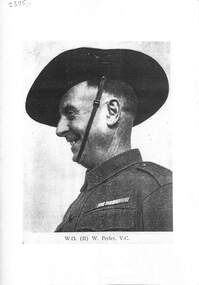
... 2396.01 - Photograph Walter Peeler VC 2396.02 - Extract History of Walter Peeler includes Family Background World War One then Enter War Period and World War Two then Post World War Two and Addresses and Recreations and Decorations and The Victoria Cross and Citation for Walter Peelers Victoria Cross then The Victoria Cross for Australia and Walters Childrens Service History 2396.03 - Extract of War Records for Walter Peeler|2396.04 - Extract of Casualty Form Active Service 2396.05 - Extract of Rank and Unit at time of award for Walter Peeler 23 November 1917 2396.06 - Notes of Walter Peeler 2396.07 - Typed notes Walter Peeler and extracts from Australian Dictionary of Biography 2396.08 - Extract from the Story of the 2/2nd Australian Pioneer Battalion by EF Aitken 2396.09 - Walter Peeler - They Dared Mightily Extract Front Cover Photo 01.jpg 2396.09 - Walter Peeler - They Dared Mightily Extract Page 105 Photo 02.jpg 2396.09 - Walter Peeler - They Dared Mightily Extract Page 106 Photo 03.jpg...Walter Peeler Victorian Cross World War 1914 - 1918 World War 1939 - 1945 2396.01 - Photograph Walter Peeler VC 2396.02 - Extract History of Walter Peeler includes Family Background World War One then Enter War Period and World War Two then Post World War Two and Addresses and Recreations and Decorations and The Victoria Cross and Citation for Walter Peelers Victoria Cross then The Victoria Cross for Australia and Walters Childrens Service History 2396.03 - Extract of War Records for Walter Peeler|2396.04 - Extract of Casualty Form Active Service 2396.05 - Extract of Rank and Unit at time of award for Walter Peeler 23 November 1917 2396.06 - Notes of Walter Peeler 2396.07 - Typed notes Walter Peeler and extracts from Australian Dictionary of Biography 2396.08 - Extract from the Story of the 2/2nd Australian Pioneer Battalion by EF Aitken 2396.09 - Walter Peeler - They Dared Mightily Extract Front Cover Photo 01.jpg 2396.09 - Walter Peeler - They Dared Mightily Extract Page 105 Photo 02.jpg 2396.09 - Walter Peeler - They Dared Mightily Extract Page 106 Photo 03.jpg Collection of documents on Walter Peeler VC Archive Walter Peeler VC ...2396.01 - Photograph Walter Peeler VC 2396.02 - Extract History of Walter Peeler includes Family Background World War One then Enter War Period and World War Two then Post World War Two and Addresses and Recreations and Decorations and The Victoria Cross and Citation for Walter Peelers Victoria Cross then The Victoria Cross for Australia and Walters Childrens Service History 2396.03 - Extract of War Records for Walter Peeler|2396.04 - Extract of Casualty Form Active Service 2396.05 - Extract of Rank and Unit at time of award for Walter Peeler 23 November 1917 2396.06 - Notes of Walter Peeler 2396.07 - Typed notes Walter Peeler and extracts from Australian Dictionary of Biography 2396.08 - Extract from the Story of the 2/2nd Australian Pioneer Battalion by EF Aitken 2396.09 - Walter Peeler - They Dared Mightily Extract Front Cover Photo 01.jpg 2396.09 - Walter Peeler - They Dared Mightily Extract Page 105 Photo 02.jpg 2396.09 - Walter Peeler - They Dared Mightily Extract Page 106 Photo 03.jpgwalter peeler, victorian cross, world war 1914 - 1918, world war 1939 - 1945 -
 Stawell Historical Society Inc
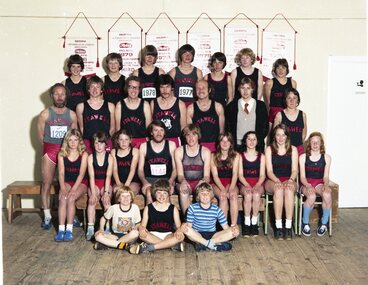
Photograph, Mick Walsh, Mick Walsh Stawell Studio Colour Negatives, 1975 to 1986
... Ken German David Read Motors Graeme Healy Family Ann French Doug Cross Family Vikki & John Holcombe Family Kaye Ellen Family Jenkins Hand Heather Slorach & Rod Reading Pencker Family Pigeons Ian Bryant Linda Clarke & Hank Woldhuis Philip West Aerial Photos Mrs L Fielding 80th Show 1980 Lindsay Flowers Harrisons Wedding Cake Debbie Martin & Bob McGregor Rene Hall 80th Pool Game 1980 Mrs Coates 100th Ann Watson & Mike Farrell Glenda Smith & Geoff Lewin Nell Stewart & Liam Pickering SAAC 1980 Dadswells Stawell Brass Band Shuttleworth Dogs Helen Grace Cat Tina Walters Queens Scout Peel Family Trudy Harrison Grange Golf Slaughter House Suzanne Gercovitch & Gary Isbel ...Ken German David Read Motors Graeme Healy Family Ann French Doug Cross Family Vikki & John Holcombe Family Kaye Ellen Family Jenkins Hand Heather Slorach & Rod Reading Pencker Family Pigeons Ian Bryant Linda Clarke & Hank Woldhuis Philip West Aerial Photos Mrs L Fielding 80th Show 1980 Lindsay Flowers Harrisons Wedding Cake Debbie Martin & Bob McGregor Rene Hall 80th Pool Game 1980 Mrs Coates 100th Ann Watson & Mike Farrell Glenda Smith & Geoff Lewin Nell Stewart & Liam Pickering SAAC 1980 Dadswells Stawell Brass Band Shuttleworth Dogs Helen Grace Cat Tina Walters Queens Scout Peel Family Trudy Harrison Grange Golf Slaughter House Suzanne Gercovitch & Gary Isbel Photography Mick Walsh 52 Patrick Street Stawell Colour negatives of families, weddings and other. ...Negatives from Stawell Photographer. Discarded from Penna Print Ararat. Son contacted and gave approval for Stawell Historical Society to keep them. Only those of a non personal nature scanned. Ken German David Read Motors Graeme Healy Family Ann French Doug Cross Family Vikki & John Holcombe Family Kaye Ellen Family Jenkins Hand Heather Slorach & Rod Reading Pencker Family Pigeons Ian Bryant Linda Clarke & Hank Woldhuis Philip West Aerial Photos Mrs L Fielding 80th Show 1980 Lindsay Flowers Harrisons Wedding Cake Debbie Martin & Bob McGregor Rene Hall 80th Pool Game 1980 Mrs Coates 100th Ann Watson & Mike Farrell Glenda Smith & Geoff Lewin Nell Stewart & Liam Pickering SAAC 1980 Dadswells Stawell Brass Band Shuttleworth Dogs Helen Grace Cat Tina Walters Queens Scout Peel Family Trudy Harrison Grange Golf Slaughter House Suzanne Gercovitch & Gary Isbel Colour negatives of families, weddings and other. Nineteen Lever Arch Folders Mick Walsh 52 Patrick Street Stawellphotography -
 Eltham District Historical Society Inc
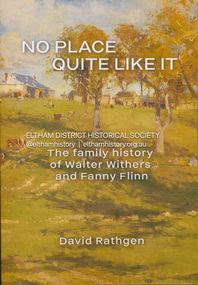
Book, David Rathgen, No Place Quite Like It; The family history of Walter Withers and Fanny Flinn, 2023
... No Place Quite Like It; The family history of Walter Withers and Fanny Flinn...Walter Withers...Fanny Withers (nee Flinn)...Family... trees, provide a visual porthole through which an insight might be had into the lives and times of Walter Withers and his family history.... trees, provide a visual porthole through which an insight might be had into the lives and times of Walter Withers and his family history. Walter Withers Fanny Withers (nee Flinn) Family History Paperback; 25.3x17.6x1.4 cm; 173 pages, illustr.; Bibliography; Index ISBN: 9780645099003 No Place Quite Like It; The family history of Walter Withers and Fanny Flinn Book Book David Rathgen Rathgen Enterprises ...Summary For over 250 years the Withers family of Birmingham worked as tailors, sometimes also as butchers. During the Georgian era, English society changed and the Withers family with it. First came a gentleman amateur artist in the form of Edward Weston Withers, grandfather of Walter Withers. Then Edwin Withers, Walter Withers' father, took to tobacco, rope and twine manufacturing which put an end to the traditions of butchery and tailoring.The origins of Walter's painterly ambitions are explored. There was a physical altercation between Walter and his father, Edwin. That fight emerged out of contradictory expectations between Walter's father, Edwin and his grandfather Edward. Those expectations and the societies which kindled them contributed to Walter's character and art. Up until now there has been no family history about Walter Herbert Withers (1854-1914) a notable Australian landscape artist of the Heidelberg school and friend to Tom Roberts, Frederick McCubbin, Arthur Streeton and Clara Southern. Walter, the son of a rich Victorian businessman, married Fanny Flinn, the daughter of a commercial salesman who also owned part of a Birmingham brewery. In No Place Quite Like It, Walter, his wife Fanny and his family are depicted against the social contexts in which they each grew up. Our appreciation of Walter Withers' art is expanded: by knowing those forces which helped shape his early years and how he responded to them; by gaining new insights into his origins and how he grew into the man he was. We also gain a fresh appreciation of his wife Fanny, and the influence she had upon him, their children, and upon the society in which she lived. Includes 200 pages of text, Prefaces by Andrew Mackenzie OAM (art historian), and Eileen Mackley AM (President, Victorian Artists Society), Bibliography and an Index, extensive images, maps, charts and family trees, provide a visual porthole through which an insight might be had into the lives and times of Walter Withers and his family history.walter withers, fanny withers (nee flinn), family history -
 Flagstaff Hill Maritime Museum and Village
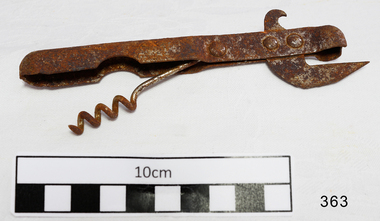
Domestic object - Can Opener, Bottle Opener & Corkscrew
... In the 1950s, Walter Hess Bodle and his daughter, Elizabeth Bodle, developed an electric can opener in the family garage. ...In the 1950s, Walter Hess Bodle and his daughter, Elizabeth Bodle, developed an electric can opener in the family garage. ...It took 15 years to invent the can. It took 100 more to invent a standard way to open it. In the 19th century, decades after the invention of canning, there were virtually no can openers. Canned food, such as sardines, came with its own "key" to peel back the tin lid. Birth of the can One of the oddest things about the can opener is that the can predates it by almost 150 years. Though common today, cans were once military-grade technology. In 1795, Napoleon, to whom the phrase "an army marches on its stomach" is attributed, offered 12,000 francs to anyone who could find a way to preserve food. Without any knowledge of bacteria or their role in food spoilage, scientists didn't even know where to begin. It took 15 years before a chef named Nicholas Appert claimed the prize after successfully jarring food. Soon after that, his countryman Philippe de Girard came up with a variant on Appert's method—metal tins—and sold the idea to the British. Spoiled food, and the sickness it caused, was a widespread problem. The public would have benefited from canned food, but for decades cans were almost exclusively for the army and the navy. The canning process, with its hours of boiling and steaming, its scrupulous cleanliness, its heated metal, and its need for a great deal of disposable material, made canned food far too expensive for anyone but the military. No can openers were needed or even possible. The metal of early cans was too thick to make openers practical. Soldiers and sailors had plenty of sharp objects on hand and made ample use of them when they wanted to eat. During the 19th century, the process of canning was refined and mechanised, and the metal wall of the average can slimmed down enough that a civilian could get it open—if that civilian had the right tool. No one had that tool yet, so early cans had to open themselves. In other words, they came with built-in openers. The result was a confusing but pleasing free-for-all, in terms of product engineering. Each type of food came with its own kind of can, and each kind of can came with its own kind of opener. Tinned fish and meat were often sold in rectangular cans. These cans were fitted with a "key" that would roll down the top of the can. Coffee, beans, and other types of meat were packaged in cylinders with metal strips that could be peeled back with their own kinds of built-in keys. Cans of milk, which didn't need to be completely opened, came with puncture devices. As tinned food became more common, its containers became more regular. A nice cylindrical can became the norm, and, as these cans filled kitchens, more engineers put their minds to finding a convenient way to open all of them. The first standalone can opener worked on a simple principle: point, stab, and pull. From the mid-19th century to the end of World War I, the typical can opener looked roughly like a wrench, if the lower 'jaw' of the wrench were replaced with a blade. People used the blade to puncture the top of the can near its edge, push the upper jaw against the side of the can, and drag the blade through the metal along the rim. Because meat was the first and most popular canned substance, these can openers were often shaped to look like cows and given the nickname 'bully beef can openers'. The bully beef can opener, popular in the mid-19th century, resulted in many lost fingers. Later, a corkscrew was added that was seated in the handle, and could be pulled out for use. Bully beef can openers were so common, effective, and sturdy that they are still frequently available on collectors' sites. Some are advertised as “still working,” and every last one of them is, without a doubt, soaked in the blood of our ancestors. Dragging a sharp blade along the edge of a can is certain to cause injury sooner or later. So once people got a reliable can shape and a reliable way to get the can open, the search was on for a reliable way to get a can open without the possibility of losing a finger. The answer came in 1925, from the Star Can Opener Company of San Francisco. This is probably the first can opener that resembles the one people have in their kitchens today. Instead of using a blade to pry open a metal can, buyers could clamp the edge of the can between two wheels and twist the handle of one of the wheels to move the blade around the lip. The Star can openers weren't perfect. Compared to the bully beef model, they were flimsy and breakable, but they probably prevented a few injuries. Six short years after the Star model came to market, the first electric can opener was invented. It was patented in 1931 by the Bunker Clancey Company of Kansas City, who had already been sued by the Star Can Opener Company for trying sell a double-wheeled can opener like the Star model (the case was dismissed). The electric can opener must have seemed like the wave of the future and a sure-fire seller, but it proved to be too far ahead of its time. In 1931 not that many households had electricity, and those that did weren't interested in buying can openers. The Bunker Clancey Company was subsequently bought by the Rival Company, which still makes small appliances like can openers today. It took another 25 years for electrically powered can openers to become practical. In the 1950s, Walter Hess Bodle and his daughter, Elizabeth Bodle, developed an electric can opener in the family garage. Walter came up with the opener's blades and motor, and Elizabeth sculpted the outside. Their can opener was a free-standing unit that could sit on the kitchen counter. The Udico brand of the Union Die Casting Company put it on the market in time for Christmas in 1956 and had great success with it. Over the next few years it came out in different styles and colours, and, like the bully beef can opener, has become a collector's item. Also like the bully beef model, Udico can openers often still work. They don't make 'em like they used to. Although there have been some design changes and refinements over the last sixty years, there have yet to be any more leaps forward in can opener technology. If you're resentfully opening a can, you are almost certainly doing it using the Star design, manually forcing the can between two wheels, or the Bodle design, clamping the can into a free-standing electrical opener. Whether or not you enjoy your holiday meals, at least you can be happy that you are not getting poisoned by your own food or cutting open your hand with the blade you use to get at it. That's something, right?The can opener, Bottle opener and the corkscrew are still very important and essential items in most kitchens.Metal can opener, chromed, with bottle opener, and a corkscrew seated in the handle.None.flagstaff hill, warrnambool, shipwrecked-coast, flagstaff-hill, flagstaff-hill-maritime-museum, maritime-museum, shipwreck-coast, flagstaff-hill-maritime-village, canning, can opener, corkscrew, bottle opener, kitchen equipment -
 Flagstaff Hill Maritime Museum and Village
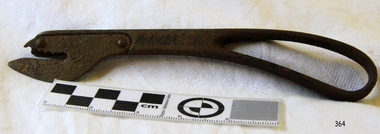
Domestic object - Can Opener
... In the 1950s, Walter Hess Bodle and his daughter, Elizabeth Bodle, developed an electric can opener in the family garage. ...In the 1950s, Walter Hess Bodle and his daughter, Elizabeth Bodle, developed an electric can opener in the family garage. ...It took 15 years to invent the can. It took 100 more to invent a standard way to open it. In the 19th century, decades after the invention of canning, there were virtually no can openers. Canned food, such as sardines, came with its own "key" to peel back the tin lid. Birth of the can One of the oddest things about the can opener is that the can predates it by almost 150 years. Though common today, cans were once military-grade technology. In 1795, Napoleon, to whom the phrase "an army marches on its stomach" is attributed, offered 12,000 francs to anyone who could find a way to preserve food. Without any knowledge of bacteria or their role in food spoilage, scientists didn't even know where to begin. It took 15 years before a chef named Nicholas Appert claimed the prize after successfully jarring food. Soon after that, his countryman Philippe de Girard came up with a variant on Appert's method—metal tins—and sold the idea to the British. Spoiled food, and the sickness it caused, was a widespread problem. The public would have benefited from canned food, but for decades cans were almost exclusively for the army and the navy. The canning process, with its hours of boiling and steaming, its scrupulous cleanliness, its heated metal, and its need for a great deal of disposable material, made canned food far too expensive for anyone but the military. No can openers were needed or even possible. The metal of early cans was too thick to make openers practical. Soldiers and sailors had plenty of sharp objects on hand and made ample use of them when they wanted to eat. During the 19th century, the process of canning was refined and mechanised, and the metal wall of the average can slimmed down enough that a civilian could get it open—if that civilian had the right tool. No one had that tool yet, so early cans had to open themselves. In other words, they came with built-in openers. The result was a confusing but pleasing free-for-all, in terms of product engineering. Each type of food came with its own kind of can, and each kind of can came with its own kind of opener. Tinned fish and meat were often sold in rectangular cans. These cans were fitted with a "key" that would roll down the top of the can. Coffee, beans, and other types of meat were packaged in cylinders with metal strips that could be peeled back with their own kinds of built-in keys. Cans of milk, which didn't need to be completely opened, came with puncture devices. As tinned food became more common, its containers became more regular. A nice cylindrical can became the norm, and, as these cans filled kitchens, more engineers put their minds to finding a convenient way to open all of them. The first standalone can opener worked on a simple principle: point, stab, and pull. From the mid-19th century to the end of World War I, the typical can opener looked roughly like a wrench, if the lower 'jaw' of the wrench were replaced with a blade. People used the blade to puncture the top of the can near its edge, push the upper jaw against the side of the can, and drag the blade through the metal along the rim. Because meat was the first and most popular canned substance, these can openers were often shaped to look like cows and given the nickname 'bully beef can openers'. The bully beef can opener, popular in the mid-19th century, resulted in many lost fingers. Bully beef can openers were so common, effective, and sturdy that they are still frequently available on collectors' sites. Some are advertised as “still working,” and every last one of them is, without a doubt, soaked in the blood of our ancestors. Dragging a sharp blade along the edge of a can is certain to cause injury sooner or later. So once people got a reliable can shape and a reliable way to get the can open, the search was on for a reliable way to get a can open without the possibility of losing a finger. The answer came in 1925, from the Star Can Opener Company of San Francisco. This is probably the first can opener that resembles the one people have in their kitchens today. Instead of using a blade to pry open a metal can, buyers could clamp the edge of the can between two wheels and twist the handle of one of the wheels to move the blade around the lip. The Star can openers weren't perfect. Compared to the bully beef model, they were flimsy and breakable, but they probably prevented a few injuries. Six short years after the Star model came to market, the first electric can opener was invented. It was patented in 1931 by the Bunker Clancey Company of Kansas City, who had already been sued by the Star Can Opener Company for trying sell a double-wheeled can opener like the Star model (the case was dismissed). The electric can opener must have seemed like the wave of the future and a sure-fire seller, but it proved to be too far ahead of its time. In 1931 not that many households had electricity, and those that did weren't interested in buying can openers. The Bunker Clancey Company was subsequently bought by the Rival Company, which still makes small appliances like can openers today. It took another 25 years for electrically powered can openers to become practical. In the 1950s, Walter Hess Bodle and his daughter, Elizabeth Bodle, developed an electric can opener in the family garage. Walter came up with the opener's blades and motor, and Elizabeth sculpted the outside. Their can opener was a free-standing unit that could sit on the kitchen counter. The Udico brand of the Union Die Casting Company put it on the market in time for Christmas in 1956 and had great success with it. Over the next few years it came out in different styles and colours, and, like the bully beef can opener, has become a collector's item. Also like the bully beef model, Udico can openers often still work. They don't make 'em like they used to. Although there have been some design changes and refinements over the last sixty years, there have yet to be any more leaps forward in can opener technology. If you're resentfully opening a can, you are almost certainly doing it using the Star design, manually forcing the can between two wheels, or the Bodle design, clamping the can into a free-standing electrical opener. Whether or not you enjoy your holiday meals, at least you can be happy that you are not getting poisoned by your own food or cutting open your hand with the blade you use to get at it. That's something, right?The can opener is still a very important and essential item in most kitchens.Can opener, right handed, metal, upper blade section serrated, inscription 'Peerless Pat.Feb 11-90'.Peerless Pat.Feb 11-90flagstaff hill, warrnambool, shipwrecked-coast, flagstaff-hill, flagstaff-hill-maritime-museum, maritime-museum, shipwreck-coast, flagstaff-hill-maritime-village, cannning, can opener, kitchen equipment -
 Flagstaff Hill Maritime Museum and Village
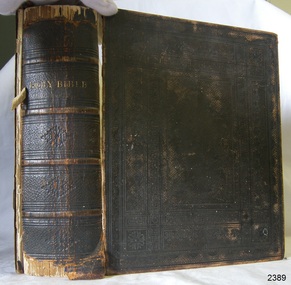
Book - Religious Book/Bilble, Oxford University Press, The Holy Bible, 1866
... The family joined Joseph's younger brother, William Walter Bell, to farm a massive 1,600-acre property called "Thornbury" at Brundah Creek in the Grenfell area. ...The family joined Joseph's younger brother, William Walter Bell, to farm a massive 1,600-acre property called "Thornbury" at Brundah Creek in the Grenfell area. ...To understand the nature of your 1866 Oxford University Press (OUP) Bible, it helps to look at how Bibles were produced in the 19th century and the massive historical scale of the publisher. The context of the King James Version Bible is indicated by the standard phrase on the flyleaf: "Translated out of the Original Tongues... By His Majesty's Special Command." This work is a historical 1866 reprint of the original version published in 1611. This particular volume served as the family Bible for Joseph and Elizabeth Bell, documenting their family history through the births and deaths noted on its end papers.Book, black hard cover with embossed pattern and gold test, metal locking clasp. King James Version of the Holy Bible, containing the Old and New Testaments. It was published by Oxford University Press in 1866. Inscriptions on the loose endpaper list the marriage of Joseph and Elizabeth Bell in 1854 at St Paul's, Bristol, England, and their ten children born from 1856 to 1878.non-fictionTo understand the nature of your 1866 Oxford University Press (OUP) Bible, it helps to look at how Bibles were produced in the 19th century and the massive historical scale of the publisher. The context of the King James Version Bible is indicated by the standard phrase on the flyleaf: "Translated out of the Original Tongues... By His Majesty's Special Command." This work is a historical 1866 reprint of the original version published in 1611. This particular volume served as the family Bible for Joseph and Elizabeth Bell, documenting their family history through the births and deaths noted on its end papers.flagstaff hill, flagstaff hill maritime museum and village, warrnambool, maritime museum, maritime village, great ocean road, shipwreck coast, holy bible, book, religious book, bell family, bell family bible, elizabeth bell, joseph bell, 1826, 1833, 1854, st paul's bristol -
 Flagstaff Hill Maritime Museum and Village
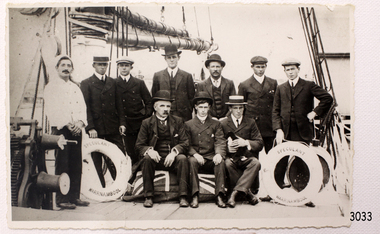
Photograph, early 1900's
... Walter, and Edward Vidler. After Peter J McGennan's death Harry, Andrew and Edith continued to operate the family business until July 11th 1923 when the company was wound up. ...Walter, and Edward Vidler. After Peter J McGennan's death Harry, Andrew and Edith continued to operate the family business until July 11th 1923 when the company was wound up. ...This photograph of the 10 crew of the SPECULANT would have been taken prior to Feb 10th 1911, when the ship was wrecked on the south coast of Victoria at a place called Cape Patton. The barquentine SPECULANT was a steel, three-masted sailing ship built in 1895 in Inverkeithing, Scotland, registered in Warrnambool, Victoria and wrecked at Cape Paton, Victoria, 10th February 1911. The SPECULANT had been involved in the timber trade between the United Kingdom and Russia, until sold to its Warrnambool owners and timber merchants Messrs. P.J. McGennan & Co. (Peter John McGennan) in 1902 for 3000 pounds and had her sailed to Warrnambool as her new port. Peter John McGennan was born in 1844 and worked as a builder and cooper in Holyhead, Anglesea, Wales. He immigrated to Australia in 1869 as a free settler and arrived in Warrnambool in 1871 and undertook management of a property in Grassmere for Mr. Palmer. Peter met his wife Emily in South Melbourne and they married in 1873. They had ten children including Harry who lived to 1965, and Andrew who lived until 1958. (The other children were their four brothers - John who was killed in the Dardenalles aged 35, Frederick who died aged 8, Peter who died aged 28, Frank who died aged 5 weeks - and four sisters - Beatrice who died age 89, Edith who died aged 49, Blanche who died aged 89 and Eveline who died aged 48.) In 1874 Peter starting a boating establishment on the Hopkins River. In 1875 he opened up a Coopers business in Kepler Street next to what was Bateman, Smith and Co., moving to Liebig Street, next to the Victoria Hotel, in 1877. In 1882 he then moved to Lava Street (which in later years was the site of Chandlers Hardware Store). He was associated with the establishment of the Butter Factory at Allansford. He started making Butter Boxes to his own design and cheese batts for the Butter Factory. In 1896 established a Box Factory in Davis Street Merrivale, employing 24 people at its peak, (it was burnt down in 1923); and in Pertobe Road from 1912 (now the Army Barracks building). Peter was a Borough Councillor for Albert Ward from 1885 to 1891, he commenced the Foreshore Trust (including the camping grounds along Pertobe Road), and he was an inaugural Director of the Woollen Mill in Harris Street, buying an extensive share-holding in 1908 from the share trader Edward Vidler. They lobbied the Town Hall to have a formal ‘Cutting’ for the waters of the Merri River to be redirected from its natural opening south of Dennington, to its existing opening near Viaduct Road, in order to have the scourings from the wool at the Woollen Mill discharged into the sea. He sold Butter Boxes around the state, and had to ship them to Melbourne by rail. Peter’s purchase of the SPECULANT in 1902 enabled him to back-load white pine from Kaipara, New Zealand to Warrnambool to make his butter boxes then, to gain profitability, buy and ship potatoes and other primary produce bound to Melbourne. (McGennan & Co. had also owned the LA BELLA, which had traded in timber as well, until she was tragically wrecked with the loss of seven lives, after missing the entrance channel to Warrnambool harbour in 1905. It appears that the SPECULANT was bought to replace the LA BELLA.) In 1911 the SPECULANT had been attempting to depart Warrnambool for almost the entire month of January to undergo docking and overhaul in Melbourne. A month of east and south-easterly winds had forced her to remain sheltered in Lady Bay, Warrnambool apart from one morning of northerlies, when an attempt was made to round Cape Otway; she had to return to shelter in Portland after failing to make any headway. With only 140 tons of sand ballast aboard, the ship would not have been easy to handle. Captain Jacobsen and his crew of nine, mainly Swedes, decided to make for Melbourne, leaving Portland Harbour on 5th February 1911. By the 9th they had reached Cape Otway, where they encountered a moonless night, constant heavy rain, and a heavy sea with a south-easterly wind blowing. After safely rounding Cape Otway the course was changed to east, then north-east to take the vessel to a point six miles off Cape Patton, following the orders of Captain Jacobsen, who told the crew to be very careful with the steering, as the wind and sea was running to leeward. The patent log (used to measure speed) had been out of order for the last four months as no-one in Warrnambool was able to fix it: it was intended to have it repaired in Melbourne. In the meantime the crew measured the vessel's speed by looking over the side and estimating wind strength. This compounded the difficulties of imprecise positioning, as the strong cross wind and sea were acting on the lightly laden vessel to steadily drive it towards the shore. At 3.30am on Friday 10 February 1911 Captain Jacobsen and the first mate were looking over the side of the vessel when they heard the sound of breakers and suddenly struck the rocks. The crew immediately knew they had no chance of getting the SPECULANT off, and attempted to rescue themselves by launching the lifeboat, which was instantly smashed to pieces. One of the crew then volunteered to take a line ashore, and the rest of the crew were all able to drag themselves to shore, some suffering hand lacerations from the rocks. Once ashore they began to walk along the coast towards Lorne, believing it was the nearest settlement. Realising their mistake as dawn broke they returned westwards to Cape Patton, and found a farm belonging to Mr C. Ramsden, who took them in and gave them a change of clothes and food. After resting for a day and returning to the wreck to salvage some of their personal possessions, at 10am on Saturday they set out for Apollo Bay, a voyage that took six hours, sometimes wading through flooded creeks up to their necks. The Age described the wreck as "listed to starboard. All the cabin is gutted and the ballast gone. There is a big rock right through the bottom of her, and there is not the slightest hope of getting her off". A Board of Marine inquiry found that Captain Jacobson was guilty of careless navigation by not taking steps to accurately verify the position of the vessel with respect to Cape Otway when the light was visible and by not setting a safe and proper course with respect to the wind and sea. It suspended his certificate for 6 months and ordered him to pay costs. The location of the wreck site was marked for a long time by two anchors on the shoreline, until in 1970 the larger of the two anchors was recovered by the Underwater Explorers' Club and mounted on the foreshore at Apollo Bay. The bell from the wreck was also donated to the Apollo Bay Surf Lifesaving Club but is recorded to have been stolen. Rusting remains of the wreck can still be found on the shoreline on the southern side of, and directly below Cape Patton. Parts of the SPECULANT site have been buried by rubble from construction and maintenance works to the Great Ocean Road, as well as by naturally occurring landslides. Peter J McGennan passed away in 1920. The Gates in the western wall of the Anglican Church in Henna Street/Koroit St are dedicated to him for his time of community work, which is matched with other prominent Warrnambool citizens; Fletcher Jones, John Younger, J.D.E (Tag) Walter, and Edward Vidler. After Peter J McGennan's death Harry, Andrew and Edith continued to operate the family business until July 11th 1923 when the company was wound up. (Andrew lived in Ryot Street Warrnambool, near Lava Street.) Harry McGennan (Peter and Emily’s son) owned the Criterion Hotel in Kepler Street Warrnambool (now demolished). His son Sid and wife Dot lived in 28 Howard Street (corner of Nelson Street) and Sid managed the Criterion until it was decided by the family to sell, and for he remained Manager for the new owners until he retired. Harry commenced the Foreshore Trust in Warrnambool around 1950. The McGennan Carpark in Pertobe Road is named after Harry and there are Memorial-Stone Gates in his memory. (The Gates were once the original entrance to the carpark but are now the exit.). Peter’s great-grandson, also called Andrew, is a Security Officer in Warrnambool. The Patent Log (also called a Taffrail log) from the SPECULANT, mentioned above, and a number of photographs, are now part of the Collection at Flagstaff Hill Maritime Village. The SPECULANT is historically significant as the largest ship to have been registered in Warrnambool, and is believed to have been the largest barquentine to visit Melbourne. It is evidence of the final days of large commercial sailing vessels involved in the Victorian and New Zealand timber trade. The SPECULANT is listed on the Victorian Heritage Register VHR S626Photograph, black and white. of the 10 crew of the SPECULANT on board the ship holding two 'Speculant Warrnambool' lifebuoys. Taken early 1900's flagstaff hill, warrnambool, shipwrecked-coast, flagstaff-hill, flagstaff-hill-maritime-museum, maritime-museum, shipwreck-coast, flagstaff-hill-maritime-village, warrnambool historical photograph, la bella, speculant, cumming and ellis, international timber trade, p. j. mcgennan and co. warrnambool, peter mcgennan, capt. james jacobsen, warrnambool maritime history, h. pengilley apollo bay -
 Federation University Historical Collection
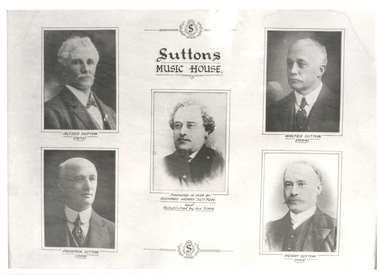
Photograph - Photograph - Black and White, Sutton Family
... family, of Sutton's Music House. The portraits are of Richard Henry Sutton, Alfred Sutton, Frederick Sutton, Walter Sutton and Henry Sutton....walter sutton richard sutton. Richard Sutton Black and white photograph of five members of the Sutton family, of Sutton's Music House. ...The famous Sutton's Music House was founded in a tent by Richard Sutton, and continued by his sons.Black and white photograph of five members of the Sutton family, of Sutton's Music House. The portraits are of Richard Henry Sutton, Alfred Sutton, Frederick Sutton, Walter Sutton and Henry Sutton.henry sutton, sutton, richard henry sutton, alfred sutton, frederick sutton, walter sutton, richard sutton., richard sutton -
 Federation University Historical Collection
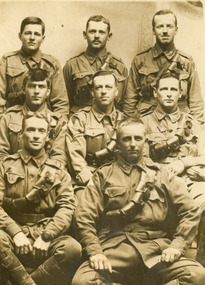
Photograph - World War One soldiers, Members of 18th Company Australian Army Service Corps, c1916
... Les Sim was associated with Sim and Co. hardware and wood merchants). world war 1 chatham jack nase chatham family archive joe fawcett h. reid blight sim les walters ray blight gordon les sim pickford world war gordon spittle harry holmes les sim horace pickford world war one aif armed services handwritten in pen on verso "This is a snap of our tent mates. ...HENRY SMERDON (Harry) HOLMES was born in 1897 at the family property, ’Sauchieburn’, 17 km north of Ballarat, in the Ascot district. He was the youngest of four children. After finishing his education at St Patrick’s College, Ballarat, Henry joined the Holmes family farming interests. At the age of 18 he enlisted and served with AIF in Egypt, France and Belgium 1915-1918. Henry served at the famous battlegrounds of Ypes and Somme in the Australian Army 8th Battalion. He was a Driver with the 4th D.A.C. The postcard is of "The Ascot" boys. Includes [Samuel] Gordon Spittle, Henry [Harry] Holmes's first cousin, and other Ascot lads and district connections: neighbours, Ascot State School classmates and football mates from Clunes / Creswick districts. [Research by a granddaughter of Henry Smerdon Holmes, Jane Dyer (nee Chatham) 2024] Ray Blight and Gordon Les Sim were former students of the Ballarat School of Mines. Les Sim was associated with Sim and Co. hardware and wood merchants). Eight soldiers of the AIF. They are the tent mates of Harry Holmes a Driver with the 5th D.A.C. The names of the soldiers are John Raymond (Ray) Blight, Joseph Fawcett, John Joseph (Jack) Nase, Gordon Spittle, Harry Holmes, Harold Joseph Reid, James Leslie (Les) Sim, Leslie John Walters. handwritten in pen on verso "This is a snap of our tent mates. Reading left to right. Back row, Jack Nase, Joe Fawcett, H. Reid. Middle - Les Walters, Ray Blight, Gordon Les Sim, (Sim and Co wood merchants) and Harryworld war 1, chatham, jack nase, chatham family archive, joe fawcett, h. reid, blight, sim, les walters, ray blight, gordon les sim, pickford, world war, gordon spittle, harry holmes, les sim, horace pickford, world war one, aif, armed services -
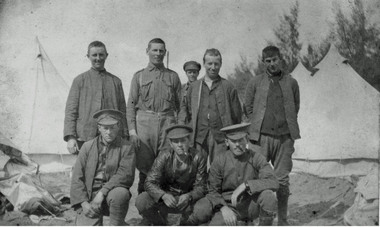 Federation University Historical Collection
Photograph, Australian Soldiers at Serapeum
... Chatham family Archive Chatham Holmes World War World War 1 world War I World war One France Nase Fawcett Gordon Theo Jones Reid H.Reid Harry Holmes Walters gordon spittle joe fawcett joseph fawcett harold holmes les walters Verso "Group taken at Serapeum, left to right front row, Frank S., Jack Nase, Joe Fawcett, B.R., H.H. ...This item was created while on service during World War One. A group of eight uniformed Australian soldiers casually dressed while posing for a photograph. The image was taken at Serapeum during World War One.Verso "Group taken at Serapeum, left to right front row, Frank S., Jack Nase, Joe Fawcett, B.R., H.H. Gordon, Theo Jones at back, Harold Holmes, Reid, Les Walters.chatham family archive, chatham, holmes, world war, world war 1, world war i, world war one, france, nase, fawcett, gordon, theo jones, reid, h.reid, harry holmes, walters, gordon spittle, joe fawcett, joseph fawcett, harold holmes, les walters -
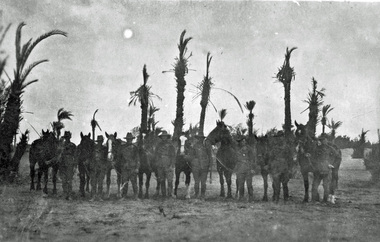 Federation University Historical Collection
Postcard - photographic, The Ascot (Victoria) Soldiers
... Chatham family Archive Chatham Holmes World War World War 1 world War I World war One France Ascot Harry Holmes Gordon Spittle Les Walters Archie May Frank Thomas. ...Gordon Spittle was the youngest of Three brothers. He grew up in Creswick and attended Creswick Grammar School. Gordon purchased 'Mt Cavern' in 1912. It had 4 years of a 10 year lease to run. His mother and father took delivery of it on 1 April 1916. They lived there and farmed it until Gordon returned from active service in May 1919. He married Violet Holmes and both lived at "Mt Cavern" until their deaths. Gordon died in 1942 aged 51. Violet Holmes-Spittle died in 1949 aged 56. Image of eight Australian soldiers during World War One. They stand in front of damaged palm trees alongside their horses. Each of the soldiers are from Ascot, Victoria. They are Harry [Holmes], Jack Nase, Harold Reid, Gordon Spittle, Les Walters, Archie May, Frank Thomas, Joe Fawcett.'Verso 'A group of the Ascot boy. Taken with our own horses. from left to right:- Harry [Holmes], Jack Nase, Harold Reid, Gordon Spittle, Les Walters, Archie May, Frank Thomas, Joe Fawcett.'chatham family archive, chatham, holmes, world war, world war 1, world war i, world war one, france, ascot, harry holmes, gordon spittle, les walters, archie may, frank thomas. mase, reif, spittle, walters, may, thomas, fawcett -
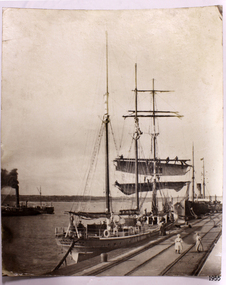 Flagstaff Hill Maritime Museum and Village
Photograph, early 1900's
... Walter, and Edward Vidler. After Peter J McGennan's death Harry, Andrew and Edith continued to operate the family business until July 11th 1923 when the company was wound up. ...Walter, and Edward Vidler. After Peter J McGennan's death Harry, Andrew and Edith continued to operate the family business until July 11th 1923 when the company was wound up. ...This photograph of the SPECULANT was taken while she was in dock at the Warrnambool, Victoria, Breakwater in the early 1900's. Crew seem busy on her decks and others are watching from the breakwater. There are also 2 steamships in the photograph. The barquentine SPECULANT was a steel, three-masted sailing ship built in 1895 in Inverkeithing, Scotland, registered in Warrnambool, Victoria and wrecked at Cape Paton, Victoria, 10th February 1911. The SPECULANT had been involved in the timber trade between the United Kingdom and Russia, until sold to its Warrnambool owners and timber merchants Messrs. P.J. McGennan & Co. (Peter John McGennan) in 1902 for 3000 pounds and had her sailed to Warrnambool as her new port. Peter John McGennan was born in 1844 and worked as a builder and cooper in Holyhead, Anglesea, Wales. He immigrated to Australia in 1869 as a free settler and arrived in Warrnambool in 1871 and undertook management of a property in Grassmere for Mr. Palmer. Peter met his wife Emily in South Melbourne and they married in 1873. They had ten children including Harry who lived to 1965, and Andrew who lived until 1958. (The other children were their four brothers - John who was killed in the Dardenalles aged 35, Frederick who died aged 8, Peter who died aged 28, Frank who died aged 5 weeks - and four sisters - Beatrice who died age 89, Edith who died aged 49, Blanche who died aged 89 and Eveline who died aged 48.) In 1874 Peter starting a boating establishment on the Hopkins River. In 1875 he opened up a Coopers business in Kepler Street next to what was Bateman, Smith and Co., moving to Liebig Street, next to the Victoria Hotel, in 1877. In 1882 he then moved to Lava Street (which in later years was the site of Chandlers Hardware Store). He was associated with the establishment of the Butter Factory at Allansford. He started making Butter Boxes to his own design and cheese batts for the Butter Factory. In 1896 established a Box Factory in Davis Street Merrivale, employing 24 people at its peak, (it was burnt down in 1923); and in Pertobe Road from 1912 (now the Army Barracks building). Peter was a Borough Councillor for Albert Ward from 1885 to 1891, he commenced the Foreshore Trust (including the camping grounds along Pertobe Road), and he was an inaugural Director of the Woollen Mill in Harris Street, buying an extensive share-holding in 1908 from the share trader Edward Vidler. They lobbied the Town Hall to have a formal ‘Cutting’ for the waters of the Merri River to be redirected from its natural opening south of Dennington, to its existing opening near Viaduct Road, in order to have the scourings from the wool at the Woollen Mill discharged into the sea. He sold Butter Boxes around the state, and had to ship them to Melbourne by rail. Peter’s purchase of the SPECULANT in 1902 enabled him to back-load white pine from Kaipara, New Zealand to Warrnambool to make his butter boxes then, to gain profitability, buy and ship potatoes and other primary produce bound to Melbourne. (McGennan & Co. had also owned the LA BELLA, which had traded in timber as well, until she was tragically wrecked with the loss of seven lives, after missing the entrance channel to Warrnambool harbour in 1905. It appears that the SPECULANT was bought to replace the LA BELLA.) In 1911 the SPECULANT had been attempting to depart Warrnambool for almost the entire month of January to undergo docking and overhaul in Melbourne. A month of east and south-easterly winds had forced her to remain sheltered in Lady Bay, Warrnambool apart from one morning of northerlies, when an attempt was made to round Cape Otway; she had to return to shelter in Portland after failing to make any headway. With only 140 tons of sand ballast aboard, the ship would not have been easy to handle. Captain Jacobsen and his crew of nine, mainly Swedes, decided to make for Melbourne, leaving Portland Harbour on 5th February 1911. By the 9th they had reached Cape Otway, where they encountered a moonless night, constant heavy rain, and a heavy sea with a south-easterly wind blowing. After safely rounding Cape Otway the course was changed to east, then north-east to take the vessel to a point six miles off Cape Patton, following the orders of Captain Jacobsen, who told the crew to be very careful with the steering, as the wind and sea was running to leeward. The patent log (used to measure speed) had been out of order for the last four months as no-one in Warrnambool was able to fix it: it was intended to have it repaired in Melbourne. In the meantime the crew measured the vessel's speed by looking over the side and estimating wind strength. This compounded the difficulties of imprecise positioning, as the strong cross wind and sea were acting on the lightly laden vessel to steadily drive it towards the shore. At 3.30am on Friday 10 February 1911 Captain Jacobsen and the first mate were looking over the side of the vessel when they heard the sound of breakers and suddenly struck the rocks. The crew immediately knew they had no chance of getting the SPECULANT off, and attempted to rescue themselves by launching the lifeboat, which was instantly smashed to pieces. One of the crew then volunteered to take a line ashore, and the rest of the crew were all able to drag themselves to shore, some suffering hand lacerations from the rocks. Once ashore they began to walk along the coast towards Lorne, believing it was the nearest settlement. Realising their mistake as dawn broke they returned westwards to Cape Patton, and found a farm belonging to Mr C. Ramsden, who took them in and gave them a change of clothes and food. After resting for a day and returning to the wreck to salvage some of their personal possessions, at 10am on Saturday they set out for Apollo Bay, a voyage that took six hours, sometimes wading through flooded creeks up to their necks. The Age described the wreck as "listed to starboard. All the cabin is gutted and the ballast gone. There is a big rock right through the bottom of her, and there is not the slightest hope of getting her off". A Board of Marine inquiry found that Captain Jacobson was guilty of careless navigation by not taking steps to accurately verify the position of the vessel with respect to Cape Otway when the light was visible and by not setting a safe and proper course with respect to the wind and sea. It suspended his certificate for 6 months and ordered him to pay costs. The location of the wreck site was marked for a long time by two anchors on the shoreline, until in 1970 the larger of the two anchors was recovered by the Underwater Explorers' Club and mounted on the foreshore at Apollo Bay. The bell from the wreck was also donated to the Apollo Bay Surf Lifesaving Club but is recorded to have been stolen. Rusting remains of the wreck can still be found on the shoreline on the southern side of, and directly below Cape Patton. Parts of the SPECULANT site have been buried by rubble from construction and maintenance works to the Great Ocean Road, as well as by naturally occurring landslides. Peter J McGennan passed away in 1920. The Gates in the western wall of the Anglican Church in Henna Street/Koroit St are dedicated to him for his time of community work, which is matched with other prominent Warrnambool citizens; Fletcher Jones, John Younger, J.D.E (Tag) Walter, and Edward Vidler. After Peter J McGennan's death Harry, Andrew and Edith continued to operate the family business until July 11th 1923 when the company was wound up. (Andrew lived in Ryot Street Warrnambool, near Lava Street.) Harry McGennan (Peter and Emily’s son) owned the Criterion Hotel in Kepler Street Warrnambool (now demolished). His son Sid and wife Dot lived in 28 Howard Street (corner of Nelson Street) and Sid managed the Criterion until it was decided by the family to sell, and for he remained Manager for the new owners until he retired. Harry commenced the Foreshore Trust in Warrnambool around 1950. The McGennan Carpark in Pertobe Road is named after Harry and there are Memorial-Stone Gates in his memory. (The Gates were once the original entrance to the carpark but are now the exit.). Peter’s great-grandson, also called Andrew, is a Security Officer in Warrnambool. The Patent Log (also called a Taffrail log) from the SPECULANT, mentioned above, and a number of photographs, are now part of the Collection at Flagstaff Hill Maritime Village. The SPECULANT is historically significant as the largest ship to have been registered in Warrnambool, and is believed to have been the largest barquentine to visit Melbourne. It is evidence of the final days of large commercial sailing vessels involved in the Victorian and New Zealand timber trade. The SPECULANT is listed on the Victorian Heritage Register VHR S626Photograph. black and white, of the three-masted barque SPECULANT in dock at the Warrnambool Breakwater in the early 1900's. A steam ship is docked behind her and another steamship is in Lady Bay on her left. There are people on the SPECULANT and others walking nearby. flagstaff hill, warrnambool, shipwrecked-coast, flagstaff-hill, flagstaff-hill-maritime-museum, maritime-museum, shipwreck-coast, flagstaff-hill-maritime-village, la bella, speculant, cumming and ellis, international timber trade, p. j. mcgennan and co. warrnambool, peter mcgennan, capt. james jacobsen, warrnambool maritime history, h. pengilley apollo bay
