
Showing 135 items matching " water conservation"
-
 Wodonga & District Historical Society Inc
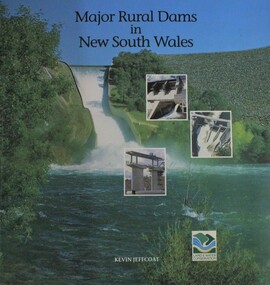
Book - Major Rural Dams In New South Wales, Department of Land and Water Conservation, NSW, 1996
... ...water conservation...Department of Land and Water Conservation, NSW...dams new south wales water management water conservation A pictorial examination of key dams established throughout New South Wales as part of approaches to water management in the state. ...A pictorial examination of key dams established throughout New South Wales as part of approaches to water management in the state.non-fictionA pictorial examination of key dams established throughout New South Wales as part of approaches to water management in the state.dams new south wales, water management, water conservation -
 Ringwood and District Historical Society
Envelope, Packet: Water Conservation Booklet and Ringwood Clippings. Proposed Yarra Dam. 1964
... Packet: Water Conservation Booklet and Ringwood Clippings. ...Water conservation booklet - 1968; Newspaper cuttings 1964-1991...Water conservation booklet - 1968; Newspaper cuttings 1964-1991 Packet: Water Conservation Booklet and Ringwood Clippings. ...Water conservation booklet - 1968; Newspaper cuttings 1964-1991 -
 Wodonga & District Historical Society Inc
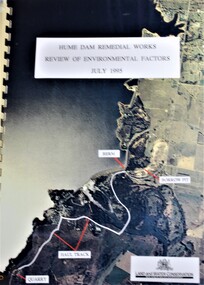
Booklet - Hume Dam Remedial Works - Review of Environmental Factors July 1995, Department of Land and Water Conservation, NSW Government, July 1995
... Department of Land and Water Conservation, NSW Government...Hume Dam Remedial Works - Review of Environmental Factors July 1995 Booklet Hume Dam Remedial Works - Review of Environmental Factors July 1995 Department of Land and Water Conservation, NSW Government ...The findings of a review into the environmental impact of remedial works being carried out on the Hume Dam.non-fictionThe findings of a review into the environmental impact of remedial works being carried out on the Hume Dam.hume dam, remedial works dams, environmental impact of dams -
 Wodonga & District Historical Society Inc
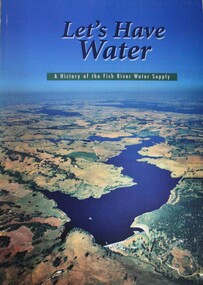
Book - Let's Have Water - A history of the Fish River Water Supply, Robin McLachlan, Denis Barrett, Jack Domis, Nick Welling, 1997
... Department of Land and Water Conservation, NSW...Let's Have Water - A history of the Fish River Water Supply Book Let's Have Water - A history of the Fish River Water Supply Robin McLachlan, Denis Barrett, Jack Domis, Nick Welling Department of Land and Water Conservation, NSW ...A history of the development of the management of the Fish River Water Supply Scheme in Central NSW. The scheme extends across the local government areas of the Shire of Oberon, the City of Lithgow and the City of the Blue Mountains.non-fictionA history of the development of the management of the Fish River Water Supply Scheme in Central NSW. The scheme extends across the local government areas of the Shire of Oberon, the City of Lithgow and the City of the Blue Mountains.water nsw, fish river region nsw, oberon dam, water resources development nsw australia -
 The Beechworth Burke Museum
Photograph, 25 October 1930
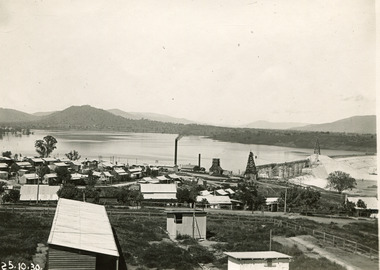
... Department of Land & Water Conservation...Archaeological surveys were completed by Austral Archaeology, which was done when the Department of Land & Water Conservation was doing work to improve Hume Dam. ...Archaeological surveys were completed by Austral Archaeology, which was done when the Department of Land & Water Conservation was doing work to improve Hume Dam. ...Taken on 25 October 1930, various houses with the Hume Dam under construction are depicted in the background. The construction of the Hume Dam took place from 1919 to 1936. At the time of construction, it was the second largest dam in the world. It was also one of the earliest civil projects developed after the Federation. Some of the Dam workers consisted of World War I veterans. Dam workers often settled their families in Mitta Junction Village and Wodonga. Archaeological surveys were completed by Austral Archaeology, which was done when the Department of Land & Water Conservation was doing work to improve Hume Dam. The archaeological report that came out of the survey recommended three sites of interest where archaeological excavation should be done: Camp Ganger’s Quarters, Stableman’s Quarters, and the Industrial Dump. The excavation uncovered artefacts. Mitta Mitta: Mitta Mitta is situated between Mount Welcome and Mount Misery. It is named after the river that explorers Hume and Hovell discovered in 1824. The town would eventually become a huge gold mining town. Mitta Mitta is called Midamodunga by the local Indigenous peoples Wodonga: Wodonga is situated on the Murray River and is part of North East Victoria. Hume and Hovell: Hamilton Hume (1979-1873) and William Hilton Hovell (1786-1875). W. H. Hovell was born in Norfolk England and Hume was born in Parramatta, New South Wales Hovell and Hume undertook an exploration journey in 1824 and thought they discovered a river, which turned out to be the Murray River. They returned home in 1825, but returned to the area in 1826 and discovered coal in the area. This photo is historically significant as it shows the Hume Dam under construction in 1930. The Dam was named after Hamilton Hume, who is an important historical figure for this area as he helped discover the area where resources were found. Black and white rectangular photograph printer unmountedReverse: 1997.3145/ 84-20-2construction, houses, veterans, mitta junction village, hume dam, world war i, federation, wodonga, archaeological survey, excavation, austral archaeology, department of land & water conservation, camp ganger's quarter's, stableman's quarters, industrial dump, artefacts, mitta mitta, mount welcome, mount misery, murray river, hamilton hume, william hilton hovell, hume and hovell expedition -
 The Beechworth Burke Museum
Photograph
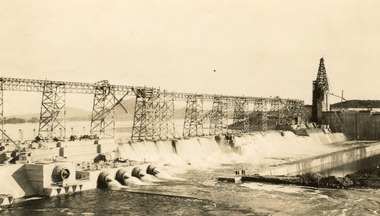
... Department of Land & Water Conservation...Archaeological surveys were completed by Austral Archaeology, which was done when the Department of Land & Water Conservation was doing work to improve Hume Dam. ...Archaeological surveys were completed by Austral Archaeology, which was done when the Department of Land & Water Conservation was doing work to improve Hume Dam. ...Taken on 25 October 1930, various houses with the Hume Dam under construction are depicted in the background. The construction of the Hume Dam took place from 1919 to 1936. At the time of construction, it was the second largest dam in the world. It was also one of the earliest civil projects developed after the Federation. Some of the Dam workers consisted of World War I veterans. Dam workers often settled their families in Mitta Junction Village and Wodonga. Archaeological surveys were completed by Austral Archaeology, which was done when the Department of Land & Water Conservation was doing work to improve Hume Dam. The archaeological report that came out of the survey recommended three sites of interest where archaeological excavation should be done: Camp Ganger’s Quarters, Stableman’s Quarters, and the Industrial Dump. The excavation uncovered artefacts. Mitta Mitta: Mitta Mitta is situated between Mount Welcome and Mount Misery. It is named after the river that explorers Hume and Hovell discovered in 1824. The town would eventually become a huge gold mining town. Mitta Mitta is called Midamodunga by the local Indigenous peoples Wodonga: Wodonga is situated on the Murray River and is part of North East Victoria. Hume and Hovell: Hamilton Hume (1979-1873) and William Hilton Hovell (1786-1875). W. H. Hovell was born in Norfolk England and Hume was born in Parramatta, New South Wales Hovell and Hume undertook an exploration journey in 1824 and thought they discovered a river, which turned out to be the Murray River. They returned home in 1825, but returned to the area in 1826 and discovered coal in the area. This photo is historically significant as it shows the Hume Dam under construction in 1930. The Dam was named after Hamilton Hume, who is an important historical figure for this area as he helped discover the area where resources were found.Sepia rectangular photograph printed unmountedReverse: 84-19-5 / 1997.3185/ Values & spillway. / When completed the wall / will be as high as the / scaffolding. [featuring trademark: kodak print]construction, houses, veterans, mitta junction village, hume dam, world war i, federation, wodonga, archaeological survey, excavation, austral archaeology, department of land & water conservation, camp ganger's quarter's, stableman's quarters, industrial dump, artefacts, mitta mitta, mount welcome, mount misery, murray river, hamilton hume, william hilton hovell, hume and hovell expedition -
 The Beechworth Burke Museum
Photograph, c1930
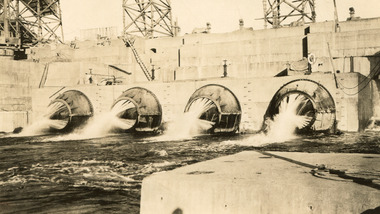
... Department of Land & Water Conservation...Archaeological surveys were completed by Austral Archaeology, which was done when the Department of Land & Water Conservation was doing work to improve Hume Dam. ...Archaeological surveys were completed by Austral Archaeology, which was done when the Department of Land & Water Conservation was doing work to improve Hume Dam. ...Taken on 25 October 1930, various houses with the Hume Dam under construction are depicted in the background. The construction of the Hume Dam took place from 1919 to 1936. At the time of construction, it was the second largest dam in the world. It was also one of the earliest civil projects developed after the Federation. Some of the Dam workers consisted of World War I veterans. Dam workers often settled their families in Mitta Junction Village and Wodonga. Archaeological surveys were completed by Austral Archaeology, which was done when the Department of Land & Water Conservation was doing work to improve Hume Dam. The archaeological report that came out of the survey recommended three sites of interest where archaeological excavation should be done: Camp Ganger’s Quarters, Stableman’s Quarters, and the Industrial Dump. The excavation uncovered artefacts. Mitta Mitta: Mitta Mitta is situated between Mount Welcome and Mount Misery. It is named after the river that explorers Hume and Hovell discovered in 1824. The town would eventually become a huge gold mining town. Mitta Mitta is called Midamodunga by the local Indigenous peoples Wodonga: Wodonga is situated on the Murray River and is part of North East Victoria. Hume and Hovell: Hamilton Hume (1979-1873) and William Hilton Hovell (1786-1875). W. H. Hovell was born in Norfolk England and Hume was born in Parramatta, New South Wales Hovell and Hume undertook an exploration journey in 1824 and thought they discovered a river, which turned out to be the Murray River. They returned home in 1825, but returned to the area in 1826 and discovered coal in the area.This photo is historically significant as it shows the Hume Dam under construction in 1930. The Dam was named after Hamilton Hume, who is an important historical figure for this area as he helped discover the area where resources were found.Sepia rectangular photograph printed unmountedReverse: 84-19-2/ 1997.3188/ These are the four / release valves they are / not always open (illegible) this / when closed the water flows / over the spillway. [featuring trademark: kodak print] photograph number: 354construction, houses, veterans, mitta junction village, hume dam, world war i, federation, wodonga, archaeological survey, excavation, austral archaeology, department of land & water conservation, camp ganger's quarter's, stableman's quarters, industrial dump, artefacts, mitta mitta, mount welcome, mount misery, murray river, hamilton hume, william hilton hovell, hume and hovell expedition -
 The Beechworth Burke Museum
Photograph, 25 October 1930
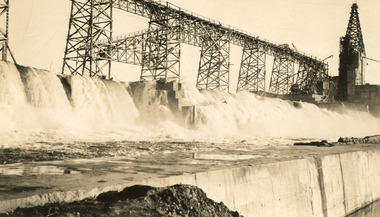
... Department of Land & Water Conservation...Archaeological surveys were completed by Austral Archaeology, which was done when the Department of Land & Water Conservation was doing work to improve Hume Dam. ...Archaeological surveys were completed by Austral Archaeology, which was done when the Department of Land & Water Conservation was doing work to improve Hume Dam. ...Taken on 25 October 1930, various houses with the Hume Dam under construction are depicted in the background. The construction of the Hume Dam took place from 1919 to 1936. At the time of construction, it was the second largest dam in the world. It was also one of the earliest civil projects developed after the Federation. Some of the Dam workers consisted of World War I veterans. Dam workers often settled their families in Mitta Junction Village and Wodonga. Archaeological surveys were completed by Austral Archaeology, which was done when the Department of Land & Water Conservation was doing work to improve Hume Dam. The archaeological report that came out of the survey recommended three sites of interest where archaeological excavation should be done: Camp Ganger’s Quarters, Stableman’s Quarters, and the Industrial Dump. The excavation uncovered artefacts. Mitta Mitta: Mitta Mitta is situated between Mount Welcome and Mount Misery. It is named after the river that explorers Hume and Hovell discovered in 1824. The town would eventually become a huge gold mining town. Mitta Mitta is called Midamodunga by the local Indigenous peoples Wodonga: Wodonga is situated on the Murray River and is part of North East Victoria. Hume and Hovell: Hamilton Hume (1979-1873) and William Hilton Hovell (1786-1875). W. H. Hovell was born in Norfolk England and Hume was born in Parramatta, New South Wales Hovell and Hume undertook an exploration journey in 1824 and thought they discovered a river, which turned out to be the Murray River. They returned home in 1825, but returned to the area in 1826 and discovered coal in the area.This photo is historically significant as it shows the Hume Dam under construction in 1930. The Dam was named after Hamilton Hume, who is an important historical figure for this area as he helped discover the area where resources were found.Sepia rectangular photograph printed unmountedReverse: 84-19-6/ 1997.3187/ The spillway [featuring trademark: kodak print] construction, houses, veterans, mitta junction village, hume dam, world war i, federation, wodonga, archaeological survey, excavation, austral archaeology, department of land & water conservation, camp ganger's quarter's, stableman's quarters, industrial dump, artefacts, mitta mitta, mount welcome, mount misery, murray river, hamilton hume, william hilton hovell, hume and hovell expedition -
 The Beechworth Burke Museum
Photograph, 25 October 1930
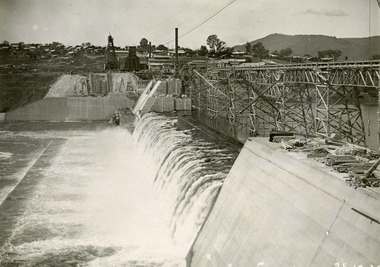
... Department of Land & Water Conservation...Archaeological surveys were completed by Austral Archaeology, which was done when the Department of Land & Water Conservation was doing work to improve Hume Dam. ...Archaeological surveys were completed by Austral Archaeology, which was done when the Department of Land & Water Conservation was doing work to improve Hume Dam. ...Taken on 25 October 1930, various houses with the Hume Dam under construction are depicted in the background. The construction of the Hume Dam took place from 1919 to 1936. At the time of construction, it was the second largest dam in the world. It was also one of the earliest civil projects developed after the Federation. Some of the Dam workers consisted of World War I veterans. Dam workers often settled their families in Mitta Junction Village and Wodonga. Archaeological surveys were completed by Austral Archaeology, which was done when the Department of Land & Water Conservation was doing work to improve Hume Dam. The archaeological report that came out of the survey recommended three sites of interest where archaeological excavation should be done: Camp Ganger’s Quarters, Stableman’s Quarters, and the Industrial Dump. The excavation uncovered artefacts. Mitta Mitta: Mitta Mitta is situated between Mount Welcome and Mount Misery. It is named after the river that explorers Hume and Hovell discovered in 1824. The town would eventually become a huge gold mining town. Mitta Mitta is called Midamodunga by the local Indigenous peoples Wodonga: Wodonga is situated on the Murray River and is part of North East Victoria. Hume and Hovell: Hamilton Hume (1979-1873) and William Hilton Hovell (1786-1875). W. H. Hovell was born in Norfolk England and Hume was born in Parramatta, New South Wales Hovell and Hume undertook an exploration journey in 1824 and thought they discovered a river, which turned out to be the Murray River. They returned home in 1825, but returned to the area in 1826 and discovered coal in the area.This photo is historically significant as it shows the Hume Dam under construction in 1930. The Dam was named after Hamilton Hume, who is an important historical figure for this area as he helped discover the area where resources were found.Black and white rectangular photograph printer unmountedReverse: 84-20-1/ 1997.3147construction, houses, veterans, mitta junction village, hume dam, world war i, federation, wodonga, archaeological survey, excavation, austral archaeology, department of land & water conservation, camp ganger's quarter's, stableman's quarters, industrial dump, artefacts, mitta mitta, mount welcome, mount misery, murray river, hamilton hume, william hilton hovell, hume and hovell expedition -
 Greensborough Historical Society
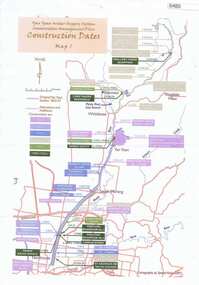
Maps, Yan Yean Water Supply System Conservation Management Plan: Construction dates Map 1, 2007_
... Yan Yean Water Supply System Conservation Management Plan: Construction dates Map 1...Plan of Yan Yean Water Supply System, showing natural and constructed features from 1850s to 1930s from Silver Creek Weirs to Eastern Freeway. water supply yan yean reservoir plenty river Printed in colour one side. 3 copies Yan Yean Water Supply System Conservation Management Plan: Construction dates Map 1 Maps Spatial Vision ...Plan of Yan Yean Water Supply System, showing natural and constructed features from 1850s to 1930s from Silver Creek Weirs to Eastern Freeway.Printed in colour one side. 3 copieswater supply, yan yean reservoir, plenty river -
 Bendigo Historical Society Inc.
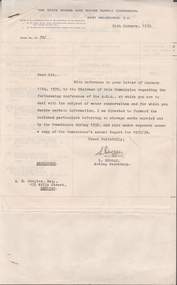
Document - EDWIN BUCKLAND COLLECTION: THE STATE RIVERS AND WATER SUPPLY COMMISSION, 1939
... Ref. letter Janusary 17th 1939 to Chairman of A.N.A. and Water Conservation....Ref. letter Janusary 17th 1939 to Chairman of A.N.A. and Water Conservation. Document EDWIN BUCKLAND COLLECTION: THE STATE RIVERS AND WATER SUPPLY COMMISSION. ...Dolcument. The State Rivers and Water Commission. Ref. letter Janusary 17th 1939 to Chairman of A.N.A. and Water Conservation. -
Glen Eira Historical Society
Article - Glen Eira Parks and Gardens
... ... Water Conservation...This file contains four items. 1/ An article in the Glen Eira News reporting on a new park with indigenous planting and an interpretive walk being developed to link Duncan McKinnon Reserve and Packer Park in Murrumbeena, dated September 2000. 2/ An article from the Glen Eira Leader on the converting of sports grounds from cool season to warm season grasses, as well as the installation of subsurface drip irrigation at Princes Park, Caulfield South, dated March 2012. 3/ An article from the Caulfield/Port Phillip leader reporting Caulfield RSL military historian Carl Johnson’s appeal to have a “lone pine” in Caulfield Park designated as a war memorial, dated 11/9/2012 4/ An article from the Glen Eira/Port Phillip Leader reporting on the Friends of Caulfield Park organising the first band stand concert in over twenty years with the City of Glen Eira Band, dated 6/11/2012 Glen Eira Council Hawthorn Rd Caulfield Glen Eira Rd Caulfield Glen Eira Caulfield Parks Reserves Leila Rd Caulfield Glen Eira City Council Landscaping Memorial Park Kooyong Rd Caulfield North Caulfield Recreation Tennis Club Murrumbeena Rd Caulfield Churchill Green housing estate North Rd Caulfield Boake Street Caulfield Exservices organisation RSL Clubs Sporting Clubs Recreations Sportsgrounds Clubs Tennis Clubs Associations Leisure Cultural Events Cultural Activities Sports Establishments Recreations Establishments Irrigation Water Conservation Conservation of Natural Resources Water Supply Ovals Playing fields Tennis Courts Murrumbeena Park School Concerts Musical Activities Musical Events Glen Eira Artists society DiMarco Lisa St. ...This file contains four items. 1/ An article in the Glen Eira News reporting on a new park with indigenous planting and an interpretive walk being developed to link Duncan McKinnon Reserve and Packer Park in Murrumbeena, dated September 2000. 2/ An article from the Glen Eira Leader on the converting of sports grounds from cool season to warm season grasses, as well as the installation of subsurface drip irrigation at Princes Park, Caulfield South, dated March 2012. 3/ An article from the Caulfield/Port Phillip leader reporting Caulfield RSL military historian Carl Johnson’s appeal to have a “lone pine” in Caulfield Park designated as a war memorial, dated 11/9/2012 4/ An article from the Glen Eira/Port Phillip Leader reporting on the Friends of Caulfield Park organising the first band stand concert in over twenty years with the City of Glen Eira Band, dated 6/11/2012glen eira council, hawthorn rd caulfield, glen eira rd caulfield, glen eira, caulfield, parks, reserves, leila rd caulfield, glen eira city council, landscaping, memorial park, kooyong rd caulfield north, caulfield recreation tennis club, murrumbeena rd caulfield, churchill green housing estate, north rd caulfield, boake street caulfield, exservices organisation, rsl clubs, sporting clubs, recreations, sportsgrounds, clubs, tennis clubs, associations, leisure, cultural events, cultural activities, sports establishments, recreations establishments, irrigation, water conservation, conservation of natural resources, water supply, ovals, playing fields, tennis courts, murrumbeena park, school concerts, musical activities, musical events, glen eira artists society, dimarco lisa, st. aloysius college, band rotundas, entertainment structures, musical ensembles, city of glen eira band, bands, the friends of caulfield park, gallipoli lone pine, princes park, packer park, duncan mckinnon reserve, king george reserve, caulfield park, glenhuntly park, glen huntly park, bentleigh reserve, victory park, schools, education establishments, recycling, water disposal, cultural structures, cultural establishments, caulfield rsl, johnson carl, war memorials, monuments, memorials, avenue of honour, “lone pine”, glen eira leader, glen eira news, caulfield/port phillip leader, glen eira leader -
Whitehorse Historical Society Inc.
Document, Whitehorse ecovision, 1/09/2002 12:00:00 AM
... ...Water conservation...City of Whitehorse Water conservation Wildlife conservation Conservation of natural resources Pollution Whitehorse Council report - a strategy for ecological sustainability. ...Whitehorse Council report - a strategy for ecological sustainability.Whitehorse Council report - a strategy for ecological sustainability. Includes basic statistics, information and detailed proposals for sustainable use of energy, water. Protection of biodiversity, Transport, Effects on the community.Whitehorse Council report - a strategy for ecological sustainability. city of whitehorse, water conservation, wildlife conservation, conservation of natural resources, pollution -
Whitehorse Historical Society Inc.
Article, All in a good day's work, 2008
... ...Water conservation...Day Steven City of Whitehorse Parkswide Water conservation Plant nurseries Article on Steve Day's water recycling program for Whitehorse Council nurseries. ...Article on Steve Day's water recycling program for Whitehorse Council nurseries.Article on Steve Day's water recycling program for Whitehorse Council nurseries.Article on Steve Day's water recycling program for Whitehorse Council nurseries.day, steven, city of whitehorse parkswide, water conservation, plant nurseries -
 Wodonga & District Historical Society Inc
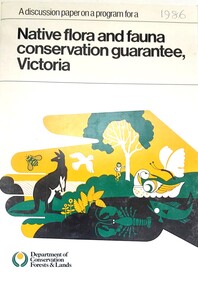
Book - Discussion Paper on Native flora and fauna conservation guarantee, Victoria, Department of Conservation, Forests and Lands, Victoria, 1986
... ...Water Conservation...Land Management Conservation Victoria Water Conservation This publication was produce as a discussion paper to inform decisions related to changes in land management and conservation regulations and policy in 1986 On bottom of front - Logo Department of Conservation, Forests and Lands An A4 size document outlining findings into an investigation into the state of flora and fauna in Victoria. ...This publication was produce as a discussion paper to inform decisions related to changes in land management and conservation regulations and policy in 1986An A4 size document outlining findings into an investigation into the state of flora and fauna in Victoria.This publication was produce as a discussion paper to inform decisions related to changes in land management and conservation regulations and policy in 1986land management, conservation victoria, water conservation -
 Wodonga & District Historical Society Inc
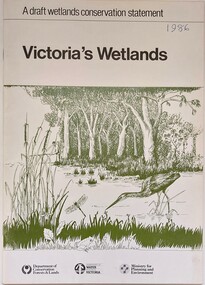
Book - Victoria's Wetlands, Dept. of Conservation, Forests & Lands, 1986
... ...Water Conservation... On foot of cover: Department of Conservation, Forests & Lands, Department of Water Resources, Victoria, Ministry for Planning and Environment...Wetland protection Wetlands Victoria Water Conservation This publication was the result of an inquiry into the state of wetland environments in Victoria. ...This publication was the result of an inquiry into the state of wetland environments in Victoria. It produced a draft strategy for conservation of threatened areas in the future.An 22 page book containing maps and illustrationsThis publication was the result of an inquiry into the state of wetland environments in Victoria. It produced a draft strategy for conservation of threatened areas in the future.wetland protection, wetlands victoria, water conservation -
 Federation University Historical Collection
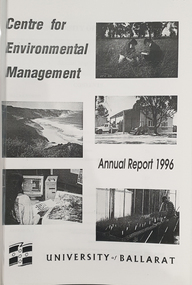
Booklet, University of Ballarat Centre for Environmental Management, 1996
... soil and water assessment...conservation...The University will be working with the lessees to develop the historic Telegraph Station as a dual purpose facility for interpretation and research." university of ballarat centre for environmental management martin westbrooke richard mcewan mal weston john miller nanya telegraph station, cape otway cape otway lighthouse station cape otway telegraph station field resaerch stations s. hadden peter dahlhaus r.j. macewan pat prevett native vegetation assessment fauna management pest plants and animal research soil and water assessment conservation reserve management paul ryan richard macewan Black and white cover with clear plastic sheet. ...The Centre for Environmental Management as established in July 1995 as a strategic development initiative to consolidate the University's position as a centre for industry linked environmenttal teaching, resarech and consultancy. Page 19 "SPECIAL INITIATIVES Establishment of field Research Stations Two areas of concentration of research effort for the Centre are the Otways in the south western Victoria and the Scotia Country in the rangelands of NSW. In both these areas it is essential that ther be a secure accomodation abase for research students. In the former case there is a need for a sheltered base to enable year round field work in cold wet conditions and in the latter a base with a reliable water supply and the facilities to allow field work in very hot dry conditions which prevail from much of the year. It has been an ibjective of the Centre to establish field stations at these two sites and considerable progress has been made through the year. (i) Nanya Field Station in the Scotial Country Through the generosity of the owner, Mr Rob Taylor, an unused homestead on Nanya Station was made available to the Centre. Largely through voluntary labour during research field trips during the year this previously derelict homestead has been restored to functionality and now has facilities for up to 20 research workers with a reliable water supply, cooking, washing, and refrigeration facilities. (ii) Cape Otway Resaerch Centre Negotiations have continued through the year with the potential lessees of the Cape Otway Lighthouse Precinct with the support of the Vice Chancellor and other potential user groups within the University these have reached a successful outcome. The University will be working with the lessees to develop the historic Telegraph Station as a dual purpose facility for interpretation and research." Black and white cover with clear plastic sheet. university of ballarat, centre for environmental management, martin westbrooke, richard mcewan, mal weston, john miller, nanya, telegraph station, cape otway, cape otway lighthouse station, cape otway telegraph station, field resaerch stations, s. hadden, peter dahlhaus, r.j. macewan, pat prevett, native vegetation assessment, fauna management, pest plants and animal research, soil and water assessment, conservation reserve management, paul ryan, richard macewan -
 Orbost & District Historical Society
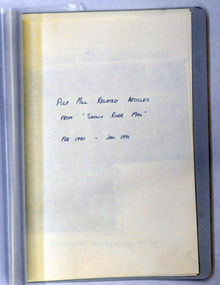
document, PULP MILL RELATED ARTICLES from "Snowy River Mail" Feb 1990 -Jan 1991, 1990 / 1991
... This folder of articles was compiled by the Department of Land & Water Conservation / Forestry....This folder of articles was compiled by the Department of Land & Water Conservation / Forestry. This item is a useful reference tool on the pulp /paper mill proposed for East Gippsland. pulp-mill-Orbost A small 8 pp folder of photocopied articles from the Snowy River Mail. ...This folder of articles was compiled by the Department of Land & Water Conservation / Forestry.This item is a useful reference tool on the pulp /paper mill proposed for East Gippsland.A small 8 pp folder of photocopied articles from the Snowy River Mail. They relate to the pulp/paper mill proposal in East Gippsland. pulp-mill-orbost -
Tatura Irrigation & Wartime Camps Museum
Book, Northern Irrigation District Advisory Boards, 1946
... information on water conservation, allocation of water, irrigation advice etc....Programme of converence, Bendigo 1st and 2nd August, 1945. information on water conservation, allocation of water, irrigation advice etc. water resources books history local Small booklet of programme of irrigation converence, Bendigo 1st and 2nd August, 1945 Northern Irrigation District Advisory Boards Book ...Programme of converence, Bendigo 1st and 2nd August, 1945. information on water conservation, allocation of water, irrigation advice etc.Small booklet of programme of irrigation converence, Bendigo 1st and 2nd August, 1945water resources, books, history, local -
 Melbourne Water
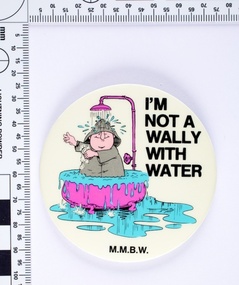
I'm not a Wally with Water badge, 1980s
... Following the 1983 Victorian drought The Board of Works (MMBW) ran a television, radio and print campaign to encourage water conservation called ‘Don’t Be a Wally with Water’. ...Following the 1983 Victorian drought The Board of Works (MMBW) ran a television, radio and print campaign to encourage water conservation called ‘Don’t Be a Wally with Water’. ...Following the 1983 Victorian drought The Board of Works (MMBW) ran a television, radio and print campaign to encourage water conservation called ‘Don’t Be a Wally with Water’. The campaign followed Wally, a bumbling, habitual water waster, and is an early example of educating the public on water sustainability both environmentally and financially. Wally was both a cartoon character and played on television by the comedian Peter Moon. The campaign ran for several years and was designed to change attitudes towards water wastage. This MMBW branded item is associated with ‘Don’t Be a Wally with Water’ campaign, and demonstrates an early water sustainability education program. These badges would have been given out as promotional merchandise and at public events. Round metal badge with printed cartoon image and text. -
 Melbourne Water
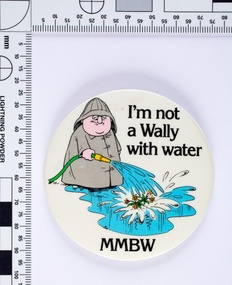
I'm not a Wally with Water badge, 1980s
... Following the 1983 Victorian drought The Board of Works (MMBW) ran a television, radio and print campaign to encourage water conservation called "Don't Be a Wally with Water". ...Following the 1983 Victorian drought The Board of Works (MMBW) ran a television, radio and print campaign to encourage water conservation called "Don't Be a Wally with Water". ...Following the 1983 Victorian drought The Board of Works (MMBW) ran a television, radio and print campaign to encourage water conservation called "Don't Be a Wally with Water". The campaign followed Wally, a bumbling, habitual water waster, and is an early example of educating the public on water sustainability both environmentally and financially. Wally was both a cartoon character and played on television by the comedian Peter Moon. The campaign ran for several years and was designed to change attitudes towards water wastage.This MMBW branded item is associated with "Don't Be a Wally with Water" campaign, and demonstrates an early water sustainability education program. These badges would have been given out as promotional merchandise and at public events.Round metal badge with printed cartoon image and text. -
Emerald Museum & Nobelius Heritage Park
Document - Book, Nobelius Nursery Sales Day Book, May 1934-June 1935, 1930s
... Trees sent to irrigation areas must be accompanied by Phylloxera certificate in addition to the fumigation certificate Post certificates to the district inspector of the water conservation and [?] commissioner or Griffith whatever the case may be All trees N.S.W. ...Trees sent to irrigation areas must be accompanied by Phylloxera certificate in addition to the fumigation certificate Post certificates to the district inspector of the water conservation and [?] commissioner or Griffith whatever the case may be All trees N.S.W. ...CONTINUATION OF INSCRIPTION... Trees sent to irrigation areas must be accompanied by Phylloxera certificate in addition to the fumigation certificate Post certificates to the district inspector of the water conservation and [?] commissioner or Griffith whatever the case may be All trees N.S.W. (except parcels posted) must have lucerne flee certificate posted to fruit inspector at Albury (Mr C F Benton) and contents marked on label Cherries for certain places in N.S.W (including Armadale and Glen Innes) must be dipped in tar distillate and advise and send the certificate to Inspector at Albury that the same has been done Fumigate for Leecton TAS and all [?] area in N.S.W [?] Consignments to NZ containing apple, pear or quince [?] must be accompanied by a fire-blight certificate as well as the ordinary nursery certificate and form of invoice All trees fro N.S.W, must show on contents what variety of trees whether railed or shipped and bundles must not be over 2cwt Cherry dipping certificate required by inspector at Albury / For India Cases not to weight over 5 [?] =3cwt. 2qts. 18lbs and cases not to exceed 18 x 5 x 4 / Trees dispatched to NSW should be in bdles not over 1 cwt 1qr and consigned as each bundle weight and a cheaper rate of freight if gt will be charged Launceston agent J H Stephens 41 St John St Launceston and 11 Willaims St Carrier Camberwell J R Massey 20 Camberwell Rd Auburn Sydney agent Bright [?] and co Pitt St Sydney NSW"historically, and socially significant as the entries give an insight into the growth of the company and the details payments from local and other government offices and overseas customers as well as significant companies associations and people.Hard cover sales book, with green embossed, alligator print cover and red spine. The book has a total of 90 pages, not all used, with entries starting 21 May 1934 and concluding 14 June 1935.Front cover "Sales Book 1934 from May to June 14th 1935" Front end paper "Tree for Leeton send fumigation certificate to J G Guy Cole district inspector book 111 [?] Trees for Griffith in Yenda to district inspector Griffith or Yenda as the case may bedocuments, financial records, sales records -
 Melbourne Tram Museum
Pamphlet, Energy Conservation Systems, "Case Study Yarra Trams", May. 2005
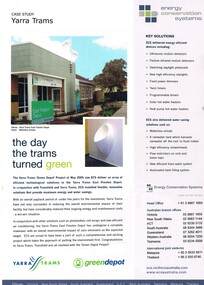
... Published by Energy Conservation Systems. Water saving systems etc. Two copies held....Published by Energy Conservation Systems. Water saving systems etc. Two copies held. ...Pamphlet - A4 full colour printed on white paper, titled "Case Study Yarra Trams" with sub-title "the day the trams turned green" about the installation of environmental friendly installations at East Preston Depot, solar panels, part of the Green Depot project, May 2005. Published by Energy Conservation Systems. Water saving systems etc. Two copies held.trams, tramways, yarra trams, east preston depot -
 Wodonga & District Historical Society Inc
Album - Hume Reservoir Australia Album - Introduction - Part 1, Department of Public Works, N.S.W, 1927
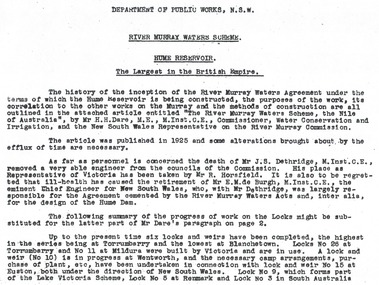
... Dare, M.E., M.Inst.C.E., Commissioner, Water Conservation and Irrigation, and the New South Wales Representative on the River Murray Commission. ...Dare, M.E., M.Inst.C.E., Commissioner, Water Conservation and Irrigation, and the New South Wales Representative on the River Murray Commission. ...This set of photos is from a leather bound album bearing the inscription "HUME RESERVOIR AUSTRALIA" plus 'The Rt. Hon. L. C. M. S. Amery, P. C., M .P.' all inscribed in gold. It was presented to The Rt. Hon. L. C. M. S. Amery, P. C., M. P, Secretary of State for Dominion Affairs on the occasion of his visit to the Hume Reservoir on 2nd November 1927. This album is of local and national significance as it documents the planning and development of the Hume Reservoir up to 1927. It was the largest water reservoir in the British Empire. The album records the pioneering engineering work that went into its construction.RIVER MURRAY WATERS SCHEME, HUME RESERVOIR THE LARGEST IN THE BRITISH EMPIRE. ' The history of the inception of the River Murray Waters Agreement under the terms of which the Hume Reservoir is being constructed, the purposes of the work, its correlation to the other works on the Murray and the methods of construction are all outlined in the attached article entitled “The River Murray Waters Scheme, the Nile of Australia”, by Mr H.H. Dare, M.E., M.Inst.C.E., Commissioner, Water Conservation and Irrigation, and the New South Wales Representative on the River Murray Commission. The article was published in 1925 and some alterations brought about by the efflux of time are necessary. As far as personnel is concerned, the death of Mr J.S. Dethridge, M.Inst.C.E., removed a very able engineer from the councils of the Commission. His place as Representative of Victoria has been taken by Mr R. Horsfield. It is also to be regretted that ill-health has caused the retirement of Mr E.M. de Burgh, M.Inst.C.E., the eminent Chief Engineer for New South Wales, who, with Mr Dethridge, was largely responsible for the Agreement cemented by the River Murray Waters Acts and, inter alia, for the design of the Hume Dam. The following summary of the progress of work on the Locks might be substituted for the latter part of Mr Dare’s paragraph. Up to the present time six locks and weirs have been completed, the highest in the series being at Torrumberry and the lowest at Blanchetown. Locks No.26 at Torrumberry and No.11 at Mildura were built by Victoria and are in use. A lock and weir (No.10) is in progress at Wentworth, and the necessary camp arrangements, purchase of plant, etc., have been undertaken in connection with lock and weir No.15 at Euston, both under the direction of New South Wales. Lock No.9, which forms part of the Lake Victoria Scheme, Lock No.5 at Renmark and Lock No.3 in South Australia hume reservoir australia, river murray waters scheme -
 Flagstaff Hill Maritime Museum and Village
Book - A Fictional Story, William Hatfield, Ginger Murdoch, 1932
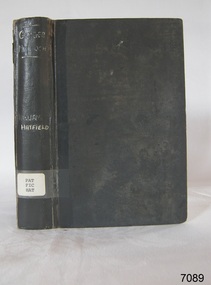
... In later years he turned to conservationist causes, lecturing as a declared Communist and writing works such as Australia Reclaimed (1944), a work on water conservation, irrigation and soil erosion. He also campaigned for breaking up northern pastoral leaseholds in favour of agricultural settlement. ...In later years he turned to conservationist causes, lecturing as a declared Communist and writing works such as Australia Reclaimed (1944), a work on water conservation, irrigation and soil erosion. He also campaigned for breaking up northern pastoral leaseholds in favour of agricultural settlement. ...Ginger Murdoch is a novel built around a recurring bush character of Hatfield's, which had already been running as a series of short stories in The Sydney Mail from 1931 onward. It's about a hard-drinking bushman named Ginger Murdoch. The stories (titles like 'Ginger Murdoch: Horse Dealer', 'Ginger Murdoch, Publican', 'Ginger Murdoch–Outlaw', 'Ginger Murdoch: Squatter') cast him as a knockabout outback figure a horse-dealer, publican, 'knight errant', squatter moving through the kind of droving, station and bush-town life Hatfield knew first-hand. The 1932 Angus & Robertson first edition ran to 268 pages, and the dust-jacket art shows Ginger Murdoch on horseback, exploring the countryside consistent with a picaresque, episodic outback adventure rather than a tightly plotted single narrative.Hard cover book. Ginger Murdoch Author: William Hatfield Publisher: Angus & Robertson Date: 1932 Further Information: Dark Blue plain cloth hardcover with lettering and patterning to spine in white. The spine has a Library label with an inscription.fictionGinger Murdoch is a novel built around a recurring bush character of Hatfield's, which had already been running as a series of short stories in The Sydney Mail from 1931 onward. It's about a hard-drinking bushman named Ginger Murdoch. The stories (titles like 'Ginger Murdoch: Horse Dealer', 'Ginger Murdoch, Publican', 'Ginger Murdoch–Outlaw', 'Ginger Murdoch: Squatter') cast him as a knockabout outback figure a horse-dealer, publican, 'knight errant', squatter moving through the kind of droving, station and bush-town life Hatfield knew first-hand. The 1932 Angus & Robertson first edition ran to 268 pages, and the dust-jacket art shows Ginger Murdoch on horseback, exploring the countryside consistent with a picaresque, episodic outback adventure rather than a tightly plotted single narrative.warrnambool, shipwrecked-coast, flagstaff-hill, flagstaff-hill-maritime-museum, maritime-museum, shipwreck-coast, flagstaff-hill-maritime-village, shipwrecked-artefact, book, ginger murdoch, william hatfield -
 Flagstaff Hill Maritime Museum and Village
Book - A Fictional Story, William Hatfield, Black Waterlily, 1935
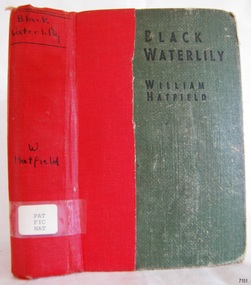
... In later years he turned to conservationist causes, lecturing as a declared Communist and writing works such as Australia Reclaimed (1944), a work on water conservation, irrigation and soil erosion. He also campaigned for breaking up northern pastoral leaseholds in favour of agricultural settlement. ...In later years he turned to conservationist causes, lecturing as a declared Communist and writing works such as Australia Reclaimed (1944), a work on water conservation, irrigation and soil erosion. He also campaigned for breaking up northern pastoral leaseholds in favour of agricultural settlement. ...Black Waterlily is an outback novel set in the Northern Territory. It is dedicated to ‘Dinkum’, a blue cattle-dog and the author’s sole companion on many tough outback tracks. Contemporary reviewers grouped it with other 1935 books on northern Australia. Its central character is a woman, which scholars have contrasted with the male-centred Territory of Xavier Herbert’s Capricornia. An Australian National University (ANU) Press study notes that the continuing popularity of Capricornia has overshadowed Hatfield’s female character, who explores the same theme in Black Waterlily. The story includes a mission-station doctor who is noted for his sincerity and rapport with Aboriginal people, and the station is recognisable as Oenpelli, in the Northern Territory.Hard cover book. Black Waterlily Author: William Hatfield Publisher: Angus & Robertson Date: 1935 Further Information: Dark green plain cloth hardcover with lettering to front cover spine has red cloth repair to spine lettering in black pen. The spine has a Library label with an inscription.fictionBlack Waterlily is an outback novel set in the Northern Territory. It is dedicated to ‘Dinkum’, a blue cattle-dog and the author’s sole companion on many tough outback tracks. Contemporary reviewers grouped it with other 1935 books on northern Australia. Its central character is a woman, which scholars have contrasted with the male-centred Territory of Xavier Herbert’s Capricornia. An Australian National University (ANU) Press study notes that the continuing popularity of Capricornia has overshadowed Hatfield’s female character, who explores the same theme in Black Waterlily. The story includes a mission-station doctor who is noted for his sincerity and rapport with Aboriginal people, and the station is recognisable as Oenpelli, in the Northern Territory.shipwrecked-coast, flagstaff-hill, flagstaff-hill-maritime-museum, warrnambool, maritime-museum, shipwreck-coast, flagstaff-hill-maritime-village, shipwrecked-artefact, book, pattison collection, warrnambool library, warrnambool mechanics’ institute, ralph eric pattison, corangamite regional library service, warrnambool city librarian, mechanics’ institute library, victorian library board, warrnambool books and records, warrnambool children’s library, black waterlily, william hatfield -
 Flagstaff Hill Maritime Museum and Village
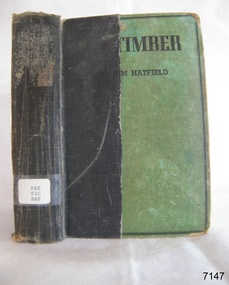
Book - A Fictional Story, William Hatfield, Big Timber, 1936
... In later years he turned to conservationist causes, lecturing as a declared Communist and writing works such as Australia Reclaimed (1944), a work on water conservation, irrigation and soil erosion. He also campaigned for breaking up northern pastoral leaseholds in favour of agricultural settlement. ...In later years he turned to conservationist causes, lecturing as a declared Communist and writing works such as Australia Reclaimed (1944), a work on water conservation, irrigation and soil erosion. He also campaigned for breaking up northern pastoral leaseholds in favour of agricultural settlement. ...Big Timber was first published as a serial in the Sydney Morning Herald in 40 daily instalments between 25 February and 10 April 1936. Angus & Robertson issued the first print edition later that year, with new editions in 1937 and 1938. It is set mainly in the timber-milling districts of eastern Australia, with a chapter or two overseas. The story is described as a conventional poor-boy-rich-girl romance that carries a lot of knowledge of the timber industry and of trees. The book includes a wood chopping contest between a Canadian and an Australian. A bookseller’s description says it opens in the Burragorang Valley and moves to the Walda Valley, where a settler clears a grazing farm from forest wilderness.Hard cover book. Big Timber Author: William Hatfield Publisher: Angus & Robertson Date: 1936 Further Information: Dark green plain cloth hardcover with lettering to front cover spine has black cloth repair no lettering. The spine has a Library label with an inscription.fictionBig Timber was first published as a serial in the Sydney Morning Herald in 40 daily instalments between 25 February and 10 April 1936. Angus & Robertson issued the first print edition later that year, with new editions in 1937 and 1938. It is set mainly in the timber-milling districts of eastern Australia, with a chapter or two overseas. The story is described as a conventional poor-boy-rich-girl romance that carries a lot of knowledge of the timber industry and of trees. The book includes a wood chopping contest between a Canadian and an Australian. A bookseller’s description says it opens in the Burragorang Valley and moves to the Walda Valley, where a settler clears a grazing farm from forest wilderness. shipwrecked-coast, flagstaff-hill, flagstaff-hill-maritime-museum, warrnambool, maritime-museum, shipwreck-coast, flagstaff-hill-maritime-village, shipwrecked-artefact, book, pattison collection, warrnambool library, warrnambool mechanics’ institute, ralph eric pattison, corangamite regional library service, warrnambool city librarian, mechanics’ institute library, victorian library board, warrnambool books and records, warrnambool children’s library, book, big timber, william hatfield -
 Flagstaff Hill Maritime Museum and Village
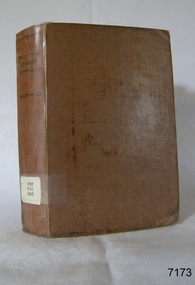
Book - A Fictional Story, William Hatfield, Into the Great Unfenced, 1940
... In later years he turned to conservationist causes, lecturing as a declared Communist and writing works such as Australia Reclaimed (1944), a work on water conservation, irrigation and soil erosion. He also campaigned for breaking up northern pastoral leaseholds in favour of agricultural settlement. ...In later years he turned to conservationist causes, lecturing as a declared Communist and writing works such as Australia Reclaimed (1944), a work on water conservation, irrigation and soil erosion. He also campaigned for breaking up northern pastoral leaseholds in favour of agricultural settlement. ...Into the Great Unfenced is a 1940 Australian outback novel by William Hatfield (pen name of Ernest Chapman), published by Popular Publications in South Melbourne. The title itself famously includes a question mark, Into the (Great?) Unfenced, reflecting the book’s thematic questioning of the romance and reality of the Australian inland. Because the book has been out of print since its original 1940 wartime run and is rarely held outside major Australian research libraries, a plot breakdown is not publicly archived. However, contemporary literary reviews from its 1940 release provide a clear overview of its plot, characters and themes. The novel is set in the harsh, vast and largely unfenced pastoral regions of inland Australia, specifically drawing on Hatfield’s own experiences working and wandering around Cooper Creek. Rather than offering a purely romanticised frontier tale, Hatfield blends adventure with stark realism and political commentary about life in the ‘inland’. The narrative centres on Janet McKay and her father, pioneers who are attempting to carve out and maintain a livelihood in the unforgiving outback country. The McKays’ story is woven through the daily hardships of station life, clashes of strong personalities, and bitter disputes between rival claimants fighting over vital waterholes – the lifeblood of survival in the arid interior. Alongside the gruelling labour, the novel depicts the crude, rough-and-ready amusements that punctuate the pioneers’ rare intervals of rest. The plot is further driven by a mysterious shooting affair. This crime brings mounted police constables into the region, and their arduous task of tracking down the perpetrators across the vast, trackless terrain forms a major narrative thread of its own within the novel.Hard cover book. Into the Great Unfenced Author: William Hatfield Publisher: Popular Publications Date: 1940 Further Information: Brown plain cloth hardcover with lettering to spine in black pen. The spine has a Library label with an inscription.fictionInto the Great Unfenced is a 1940 Australian outback novel by William Hatfield (pen name of Ernest Chapman), published by Popular Publications in South Melbourne. The title itself famously includes a question mark, Into the (Great?) Unfenced, reflecting the book’s thematic questioning of the romance and reality of the Australian inland. Because the book has been out of print since its original 1940 wartime run and is rarely held outside major Australian research libraries, a plot breakdown is not publicly archived. However, contemporary literary reviews from its 1940 release provide a clear overview of its plot, characters and themes. The novel is set in the harsh, vast and largely unfenced pastoral regions of inland Australia, specifically drawing on Hatfield’s own experiences working and wandering around Cooper Creek. Rather than offering a purely romanticised frontier tale, Hatfield blends adventure with stark realism and political commentary about life in the ‘inland’. The narrative centres on Janet McKay and her father, pioneers who are attempting to carve out and maintain a livelihood in the unforgiving outback country. The McKays’ story is woven through the daily hardships of station life, clashes of strong personalities, and bitter disputes between rival claimants fighting over vital waterholes – the lifeblood of survival in the arid interior. Alongside the gruelling labour, the novel depicts the crude, rough-and-ready amusements that punctuate the pioneers’ rare intervals of rest. The plot is further driven by a mysterious shooting affair. This crime brings mounted police constables into the region, and their arduous task of tracking down the perpetrators across the vast, trackless terrain forms a major narrative thread of its own within the novel.shipwrecked-coast, flagstaff-hill, flagstaff-hill-maritime-museum, warrnambool, maritime-museum, shipwreck-coast, flagstaff-hill-maritime-village, shipwrecked-artefact, book, pattison collection, warrnambool library, warrnambool mechanics’ institute, ralph eric pattison, corangamite regional library service, warrnambool city librarian, mechanics’ institute library, victorian library board, warrnambool books and records, warrnambool children’s library, great ocean road, into the great unfenced, william hatfield, ernest chapman -
 Sunshine and District Historical Society Incorporated
Coin - Australian One Dollar Coin - Centenary of Australia Scouting 2008
... . - Survival Skills: Shelter building, fire lighting, and water purification. - Nature Conservation: Tree planting, wildlife monitoring, and clean-up projects. - First Aid: Emergency response and safety training. - Cooking: Campfire meals, bush cooking, and nutrition. - Crafts & DIY: Knot tying, woodwork, leatherwork, and badge-making. - STEM Projects: Robotics, coding, and environmental science. - Drama & Performance: Skits, storytelling, and talent shows. - Music & Dance: Campfire songs, cultural dances, and instrument practice. - Art & Design: Poster-making, painting, and costume creation. - Service Projects: Volunteering, fundraising, and helping local causes. - Leadership Training: Patrol leader roles, mentoring, and public speaking. - Cultural Exchange: International pen pals, travel, and global awareness. - Badge Work: Earning merit badges in areas like fitness, communication, and innovation. - Team Challenges: Problem-solving games and cooperative tasks. - Reflection & Journaling: Personal growth and goal setting. - Environmental Advocacy: Sustainability campaigns and eco-challenges..... - Survival Skills: Shelter building, fire lighting, and water purification. - Nature Conservation: Tree planting, wildlife monitoring, and clean-up projects. - First Aid: Emergency response and safety training. - Cooking: Campfire meals, bush cooking, and nutrition. - Crafts & DIY: Knot tying, woodwork, leatherwork, and badge-making. - STEM Projects: Robotics, coding, and environmental science. - Drama & Performance: Skits, storytelling, and talent shows. - Music & Dance: Campfire songs, cultural dances, and instrument practice. - Art & Design: Poster-making, painting, and costume creation. - Service Projects: Volunteering, fundraising, and helping local causes. - Leadership Training: Patrol leader roles, mentoring, and public speaking. - Cultural Exchange: International pen pals, travel, and global awareness. - Badge Work: Earning merit badges in areas like fitness, communication, and innovation. - Team Challenges: Problem-solving games and cooperative tasks. - Reflection & Journaling: Personal growth and goal setting. - Environmental Advocacy: Sustainability campaigns and eco-challenges. ...Over the years, Australia has issued numerous commemorative $2 coins, often featuring vibrant colors and themes honoring national events, heroes, and cultural milestones. This coin was issued in 2008 to celebrate the centenary of Scouting in Australia. Sunshine Scouts & Cubs are part of the global youth movement that empowers young people to become responsible, active citizens through adventure, education, and service. It fosters character development, leadership, and community engagement across cultures and continents. Activities include: - Camping: From weekend bush camps to international jamborees. - Hiking & Orienteering: Map reading, compass skills, and trail navigation. - Survival Skills: Shelter building, fire lighting, and water purification. - Nature Conservation: Tree planting, wildlife monitoring, and clean-up projects. - First Aid: Emergency response and safety training. - Cooking: Campfire meals, bush cooking, and nutrition. - Crafts & DIY: Knot tying, woodwork, leatherwork, and badge-making. - STEM Projects: Robotics, coding, and environmental science. - Drama & Performance: Skits, storytelling, and talent shows. - Music & Dance: Campfire songs, cultural dances, and instrument practice. - Art & Design: Poster-making, painting, and costume creation. - Service Projects: Volunteering, fundraising, and helping local causes. - Leadership Training: Patrol leader roles, mentoring, and public speaking. - Cultural Exchange: International pen pals, travel, and global awareness. - Badge Work: Earning merit badges in areas like fitness, communication, and innovation. - Team Challenges: Problem-solving games and cooperative tasks. - Reflection & Journaling: Personal growth and goal setting. - Environmental Advocacy: Sustainability campaigns and eco-challenges.Australian One Dollar Coin. The obverse side features the portrait of Queen Elizabeth II. The reverse side features the international symbol for scouting, the fleur-de-lis representing the compass which symbolizes the three promises made by all scouts and cubs throughout the world.Obverse Side - Elizabeth II Australia 2008 Reverse Side - Centenary of Scoting 1908 - 2008 Scouts Australia One Dollarscouting, scouts -
 Blacksmith's Cottage and Forge
Mug, Shaving
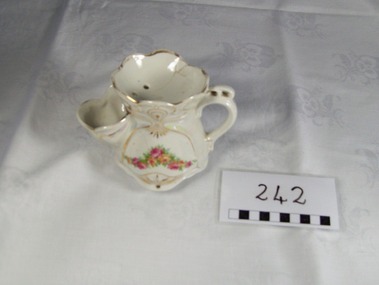
... When needed, one can take the brush and brush it against the soap, bringing up a layer of lather; excess water is drained back. This allows conservation of water and soap, whilst retaining enough heat to ensure a long shave. ...When needed, one can take the brush and brush it against the soap, bringing up a layer of lather; excess water is drained back. This allows conservation of water and soap, whilst retaining enough heat to ensure a long shave. ...A shaving scuttle and shaving mug were developed around the 19th century with the first patent for a shaving mug dating to 1867.[8] As hot water was not common in many households, one way to provide hot lather was to use a scuttle or mug. A traditional scuttle resembles a teapot with a wide spout where hot water is poured in, and this is where it differs from a shaving mug, which has no spout. Both shaving scuttles and mugs usually have a handle, but some have none. Shaving mugs often look like a standard mug, however, some also have a built in brush rest, so the brush does not sit in lather. Modern versions of the scuttle are in limited production, usually by independent potters working in small volumes.[9] At the top of the scuttle or mug is a soap holder. Traditionally, it was used with a hard block of shaving soap (rather than soft soap or cream) and therefore had drain holes at the bottom. Later scuttles and mugs do not include the holes, and thus can be used with creams and soft soaps. Some scuttles and mugs have concentric circles on the bottom, which retain some water thus helping to build lather.[9] In use, the shaving brush is dunked into the wide spout, allowing it to soak into the water and heat up. The soap is placed in the soap holder. When needed, one can take the brush and brush it against the soap, bringing up a layer of lather; excess water is drained back. This allows conservation of water and soap, whilst retaining enough heat to ensure a long shave. Source: www.wikipedia.org Local social historyOrnate white china mug with handle. Cup side to hold brush and saucer shaped top with 3 drainage holes. Gold painted decoration and flower garland of pink and yellow roses. Mother of pearl effect over sides.Made in Germanyshaving, item, china, mug, bathroom, men, personal, toiletry
