
Showing 49 items matching "1874-1889"
-
 Eltham District Historical Society Inc
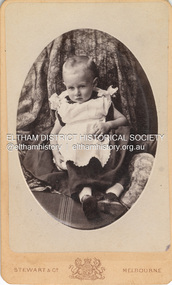
Photograph, Stewart & Co, Possibly Florence May Aldous, first born child of Sarah (Shillinglaw) and Charles Aldous, c.1884
... ...1874-1889...Possible date range is 1874-1889. The girl appears to be about 1 years of age. ...Possible date range is 1874-1889. The girl appears to be about 1 years of age. ...Stewart & Co Photographers operated from various addresses Bourke St., East Melbourne from 1874 through 1905 They were at 217 Bourke Street from 1874 through 1889. By 1890 they had moved to 42 Bourke Street. Possible date range is 1874-1889. The girl appears to be about 1 years of age. If she is Sarah and Charles's first child, Florence May Aldous then the date would be c.1884. Another copy of the same photo in Album 2 (05664) is grouped in the album with several others featuring Sarah Shillinglaw. CARTE-DE-VISITE (cdv) 1857-1890 Cartes-de-visite (cdv's) are the most common form of photograph from the nineteenth century, generally measuring two and a half inches by four and an eighth inches (6.3 x 10.5 cm) when mounted, sepia toned, mounted on a card which was generally printed with the photographer's name and address on the back or beneath the portrait. - Frost, Lenore; Dating Family Photos 1850-1920; Valiant Press Pty. Ltd., Berwick, Victoria 1991 marg ball collection, shillinglaw family photo album 1, 1874-1889, 1884, florence may aldous, stewart & co photographers 217 & 219 bourke st east melbourne -
 Tarnagulla History Archive
Research file: Dunolly Cemetery Register, Dunolly Cemetery Register, 1864-1874 & 1874-1889
... A red binder containing records (1864-1874 & 1874-1889) from the Dunolly Cemetery Register, photocopied from the 1990 index held by Dunolly undertaker A.L. ...1864-1874 & 1874-1889...Donald Clark Collection tarnagulla dunolly people cemetery register deaths A red binder containing records (1864-1874 & 1874-1889) from the Dunolly Cemetery Register, photocopied from the 1990 index held by Dunolly undertaker A.L. ...Donald Clark Collection A red binder containing records (1864-1874 & 1874-1889) from the Dunolly Cemetery Register, photocopied from the 1990 index held by Dunolly undertaker A.L. Lovell. tarnagulla, dunolly, people, cemetery register, deaths -
 Victorian Aboriginal Corporation for Languages
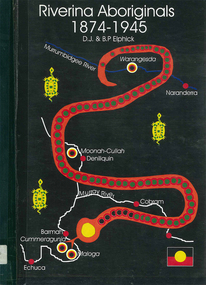
Book, Riverina Aboriginals : 1874-1945, 1996
... Lists of residents of the Warangesda 1880-1925, Maloga 1874-1888, Cummeragunja 1889-1953 (Stn) 1883 - present (Res) Moonah Cullah 1910-1952(Stn) 1896-1962(Res) Aboriginal Stations and other Rivereina Aboriginals 1874-1954...Yorta Yorta Wemba Wemba Wiradjuri Warangesda Maloga Cummeragunja Moonah Cullah maps, b&w photographs, registry listings Lists of residents of the Warangesda 1880-1925, Maloga 1874-1888, Cummeragunja 1889-1953 (Stn) 1883 - present (Res) Moonah Cullah 1910-1952(Stn) 1896-1962(Res) Aboriginal Stations and other Rivereina Aboriginals 1874-1954 Riverina Aboriginals : 1874-1945 Book D J Elphick B P Elphick ...Lists of residents of the Warangesda 1880-1925, Maloga 1874-1888, Cummeragunja 1889-1953 (Stn) 1883 - present (Res) Moonah Cullah 1910-1952(Stn) 1896-1962(Res) Aboriginal Stations and other Rivereina Aboriginals 1874-1954 maps, b&w photographs, registry listings yorta yorta, wemba wemba, wiradjuri, warangesda, maloga, cummeragunja, moonah cullah -
 Port Melbourne Historical & Preservation Society
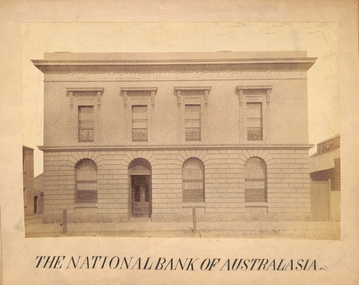
Photograph - Port Melbourne, The National Bank of Australasia, c 1890s
... The National Bank of Australasia in Bay Street was designed by Leonard TERRY of Terry and Oakden, Architects and built in 1874. In 1889, architect George JOBBINS designed an extension of the southern end of the building. ...The National Bank of Australasia in Bay Street was designed by Leonard TERRY of Terry and Oakden, Architects and built in 1874. In 1889, architect George JOBBINS designed an extension of the southern end of the building. ...The National Bank of Australasia in Bay Street was designed by Leonard TERRY of Terry and Oakden, Architects and built in 1874. In 1889, architect George JOBBINS designed an extension of the southern end of the building. This photograph was taken after the alterations had been completed. A photograph of Bay Street by Charles NETTLETON from around 1878 (Cat No 178) shows the bank as it was originally built. Photograph of the facade of the National Bank of Australasia taken probably in the 1890s - Bay Street, Port Melbourne Received from Port Melbourne Library 16/7/1973 built environment - commercial, business and traders, national bank of australasia. -
 Federation University Historical Collection
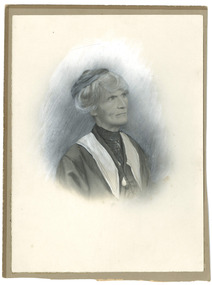
Article - Article - Women, Ballarat School of Mines: Women of Note; Ellie Campbell (Martin), Telegrapher
... Ellie studied Telegraphy at SMB in 1874 and 1875. In 1889 she married Cosby Stockford Mangin Campbell. ...Ellie studied Telegraphy at SMB in 1874 and 1875. In 1889 she married Cosby Stockford Mangin Campbell. ...Emily (Ellie) Martin was one of ten children born to James Martin and Bridget Hyde at Spring Hill near Creswick. This farmland was allotted to James c1849. When her mother died James moved them into Ballarat. All the children attended Ballarat School of Mines. Ellie studied Telegraphy at SMB in 1874 and 1875. In 1889 she married Cosby Stockford Mangin Campbell. He had also studied Telegraphy at the Ballarat School of Mines (SMB), the same time as Ellie. Photograph of a woman in a hat. She is Ellie Campbell. women of note, teacher, ballarat school of mines, smb campus, emily martin, ellie martin, ellie campbell, telegraphy, james martin, bridget hyde, spring hill, creswick, 1874-1875, cosby stockford mangin campbell, cosby campbell -
 Emerald Museum & Nobelius Heritage Park
Decorative object - Pen and Inkstand, c.1880s
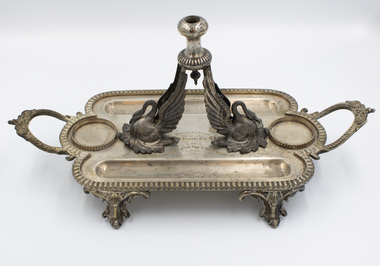
... In addition to his lifetime interest in plants and their medicinal uses, Joseph Bosisto was committed to public service and represented Richmond in the Legislative Assembly from 1874 till 1889. Bosisto was the mayor of Richmond 1865-1867 and Commissioner of the Melbourne International Exhibition 1880-1881. ...In addition to his lifetime interest in plants and their medicinal uses, Joseph Bosisto was committed to public service and represented Richmond in the Legislative Assembly from 1874 till 1889. Bosisto was the mayor of Richmond 1865-1867 and Commissioner of the Melbourne International Exhibition 1880-1881. ...The desk set does not have a maker’s mark so it is unclear where or by whom it was made. The employees of the Public Parks and Gardens presented the desk set to Bosisto in 1882 as a token of gratitude. This is most probably because Bosisto successfully campaigned for gardeners employed at public parks and gardens to receive retirement allowances in the years immediately prior, which all other public servants were entitled to (Geelong Advertiser 1880:3). In addition to his lifetime interest in plants and their medicinal uses, Joseph Bosisto was committed to public service and represented Richmond in the Legislative Assembly from 1874 till 1889. Bosisto was the mayor of Richmond 1865-1867 and Commissioner of the Melbourne International Exhibition 1880-1881. This is the only known presentation swan desk set of its type. The Museum of Applied Arts and Sciences in Sydney has a collection of presentation inkstands. These range from rare gold inkstands to small silver and plated sets; the most similar to this example is noted to be part of a collection of national standing. Related to this item, the Emerald Museum collection also includes vintage Bosisto oil bottles, as well as Camden wollybutt (Eucaplytus macarthuri) live plantings, which are remnants of Bosisto’s eucalyptus distillery industry that operated approximately 500 metres from the former nursery. Both Butterfield Park (past Bosisto eucalyptus oil distillery) in Emerald and the Bosisto factory/depot in Oakleigh are interested in these collection items. The desk set belonged to Melville Lober and originally came from the family's engraving / engineering business, Max Lober P/L, in Bridge Road Richmond, not far from Bosisto Street. Melville's daughter, Mirren Alenson, is not sure if it was given to her father or grandfather to restore and then was not wanted, or if it was left in the Richmond property by the previous owner. The desk set is of historic, social and aesthetic significance. It is the only surviving presentation piece owned by Joseph Bosisto (1824-1898), a prominent chemist, inventor and public figure in Melbourne and nationally. His particular significance for the Emerald area is that he set up eucalyptus distilleries at Emerald, Menzies Creek, and Macclesfield in 1882. Made from silver and electroplated silver (base), this desk set features two cast figures of swans in blackened silver finish, each sitting on a stylised acanthus leaf. The swans support and elevate the central candle stand with their outstretched wings, while flanking a gilt inscription engraved in the center of a rectangular base with curved sides and an applied gadrooned rim. At front and back there is a recess to hold pens, and the sides have a circular recess for ink glass-bottles (missing). The whole rests on four cast acanthus feet and the two cast side handles feature a scroll-and-palmette motif. The inkwell is not marked, and the maker is not known; it was probably imported from England or assembled in Australia from imported components. On inkstand inscribed: ‘PRESENTED TO/ Joseph Bosisto Esq. MLA/ BY/ THE EMPLOYEES OF THE PUBLIC PARKS AND GARDENS/ 1882’. bosisto, eucalyptus distilleries -
 Mission to Seafarers Victoria
Administrative record (sub-series) - Annual Reports, Victorian Seamen's Mission, Annual Reports - Victorian Seamen's Mission, 1857 -1905
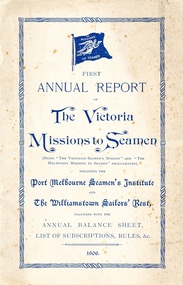
... From 1906, the Victorian mission amalgamated with the London Mission and changed its name to The Victoria Missions to Seamen. 1857: Missing 1858 1859 1860 1861 1862 1863 1864 1865: AR.1865 1866 1867 1868 1869 1870 1871 1872 1873 1874 1875 1876 1877 1878 1879 1880 1881 1882 1883 1884 1885 1886 1887 1888 1889 1890 1891 1892 1893 1894 1895 1896 1897 1898 1899: AR.1899 1900 1901 1902 1903 1904 1905 ...From 1906, the Victorian mission amalgamated with the London Mission and changed its name to The Victoria Missions to Seamen. 1857: Missing 1858 1859 1860 1861 1862 1863 1864 1865: AR.1865 1866 1867 1868 1869 1870 1871 1872 1873 1874 1875 1876 1877 1878 1879 1880 1881 1882 1883 1884 1885 1886 1887 1888 1889 1890 1891 1892 1893 1894 1895 1896 1897 1898 1899: AR.1899 1900 1901 1902 1903 1904 1905 The Annual Reports together with 'Jottings from our Log' and the Epitomised History of matters of interest...0045]] Provide the best accounts and story of the Mission from the late 19th Century through to the end of the 20th Century. ...Victorian Seamen's Mission Chronological annual-report, victoria-missions-to-seamen, victorian-seamens-mission, melbourne-missions-to-seamen, port-melbourne-seamens-institute, williamstown-sailors-rest, 1906, financial reports, members, rules for members, war memorial fund, administrative document-annual report annual-report, victoria-missions-to-seamen, victorian-seamens-mission, melbourne-missions-to-seamen, port-melbourne-seamens-institute, williamstown-sailors-rest, 1906, financial reports, members, rules for members, war memorial fund, administrative document-annual report -
Federation University Historical Collection
Image, Robert Malachy Serjeant
... 1874 and 1880. Robert Serjeant’s community involvement extended to Education. Years of discussion eventually saw the development of the Ballarat School of Mines, the first school of mines in Australia. The inaugural School Council was formed in 1870 with Sir Redmond Barry, the Chief Justice, as President and Robert Malachy Serjeant as a member of the council. He held a position on the council until illness forced him to retire in 1889...1874 and 1880. Robert Serjeant’s community involvement extended to Education. Years of discussion eventually saw the development of the Ballarat School of Mines, the first school of mines in Australia. The inaugural School Council was formed in 1870 with Sir Redmond Barry, the Chief Justice, as President and Robert Malachy Serjeant as a member of the council. He held a position on the council until illness forced him to retire in 1889 ...ROBERT MALACHY SERJEANT (1828-1902) Robert Malachy Serjeant was born on 21 December 1828 at Callington, Cornwall. He was the son of Philip Davey Serjeant, a surgeon in the Royal Marines, and Eliza Malachy. Philip Serjeant died in 1834. His mother, Eliza, remarried John Burgh in 1836. He died in 1837. In September 1848 Eliza, Robert and his two sisters, Caroline and Susan, departed Plymouth on the William Moneya for Port Adelaide and arrived in January 1849. Once gold was discovered in Victoria, Serjeant made his way to Forest Creek (near Castlemaine) and he and his mate Mr Victor, were the first party to sink through the basalt in search of a deep lead. In 1854 he moved to Ballarat to work as a miner and enjoyed some success. In 1855 he was with a group that discovered a 500 ounce nugget. With his share of the sale he set himself up with the latest mining equipment, as well as beginning a lifelong interest in the share market. He became the Manager of the Chryseis, Isis and Garibaldi claims and then the Manager of the Band and Albion Consol Company. He held the position for thirty years and only resigned when the company amalgamated with the Sir Henry Loch Mine. Robert Malachy Serjeant became interested in Politics. The first election for Parliament Representatives for Ballarat was in 1855. Robert stood for election for the first time in 1859, representing Ballarat West. He was also elected to represent Ballarat West in 1874 and 1880. Robert Serjeant’s community involvement extended to Education. Years of discussion eventually saw the development of the Ballarat School of Mines, the first school of mines in Australia. The inaugural School Council was formed in 1870 with Sir Redmond Barry, the Chief Justice, as President and Robert Malachy Serjeant as a member of the council. He held a position on the council until illness forced him to retire in 1889. He was elected a Life Governor in 1889. He was also a Life Governor of the Ballarat Hospital. Robert Serjeant showed Prince Albert and Prince George (later King George V) around the Band and Albion Mine. At the age of 42, Robert enrolled as a student at the School of Mines in 1871. He obtained a Certificate of Competency in Assaying (including Metallurgy) in 1875. The first certificate in “Geology as Applied to Mining” was awarded to Robert Serjeant in 1876. Robert Serjeant was an active and generous supporter of the School of Mines. As well as being a financial contributor, he lectured and examined in the Principles and Practice of Mining. He was regarded as an authority on alluvial and quartz mining and was a member of the Ballarat Local Court and mining board. In 1977 Robert, Joseph Flude and Henry Caselli donated the patent rights of a novel Pyrites furnace to the school. The R.M. Serjeant Scholarship at the Ballarat School of Mines resulted after a reward was offered for the first to produce the best method of treating auriferous ores – other than the smelting method. The offer was open for two years but not awarded. The money for this was donated by Robert Serjeant to the amount of 256 Pounds. It was then used to fund the School of Mines Scholarship in Engineering (1889). It was first awarded in 1922. Robert Malachy Serjeant died on 25 October 1902 and was buried at the Ballaarat Old Cemetery. (Sometimes Malachy is incorrectly written as Malachi) Two photographic portraits of mine manager Robert Malachy Serjeant. Both portraits were purchased by the donor from the State Library of Victoria. robert malachy serjeant, r.m. sergeant, robert malachi serjeant, band of hope and albion consols -
Federation University Historical Collection
Photograph - Image, Yarrowee Hall, Redan, c1883
... 1874 and 1880. <br> <br> Robert Serjeant’s community involvement extended to Education. Years of discussion eventually saw the development of the Ballarat School of Mines, the first school of mines in Australia. The inaugural School Council was formed in 1870 with Sir Redmond Barry, the Chief Justice, as President and Robert Malachy Serjeant as a member of the council. He held a position on the council until illness forced him to retire in 1889...1874 and 1880. <br> <br> Robert Serjeant’s community involvement extended to Education. Years of discussion eventually saw the development of the Ballarat School of Mines, the first school of mines in Australia. The inaugural School Council was formed in 1870 with Sir Redmond Barry, the Chief Justice, as President and Robert Malachy Serjeant as a member of the council. He held a position on the council until illness forced him to retire in 1889 ...ROBERT MALACHY SERJEANT (1828-1902) <br> <br> Robert Malachy Serjeant was born on 21 December 1828 at Callington, Cornwall. He was the son of Philip Davey Serjeant, a surgeon in the Royal Marines, and Eliza Malachy. Philip Serjeant died in 1834. His mother, Eliza, remarried John Burgh in 1836. He died in 1837. <br> <br> In September 1848 Eliza, Robert and his two sisters, Caroline and Susan, departed Plymouth on the William Moneya for Port Adelaide and arrived in January 1849. <br> <br> Once gold was discovered in Victoria, Serjeant made his way to Forest Creek (near Castlemaine) and he and his mate Mr Victor, were the first party to sink through the basalt in search of a deep lead. In 1854 he moved to Ballarat to work as a miner and enjoyed some success. In 1855 he was with a group that discovered a 500 ounce nugget. With his share of the sale he set himself up with the latest mining equipment, as well as beginning a lifelong interest in the share market. He became the Manager of the Chryseis, Isis and Garibaldi claims and then the Manager of the Band and Albion Consol Company. He held the position for thirty years and only resigned when the company amalgamated with the Sir Henry Loch Mine. <br> <br> Robert Malachy Serjeant became interested in Politics. The first election for Parliament Representatives for Ballarat was in 1855. Robert stood for election for the first time in 1859, representing Ballarat West. He was also elected to represent Ballarat West in 1874 and 1880. <br> <br> Robert Serjeant’s community involvement extended to Education. Years of discussion eventually saw the development of the Ballarat School of Mines, the first school of mines in Australia. The inaugural School Council was formed in 1870 with Sir Redmond Barry, the Chief Justice, as President and Robert Malachy Serjeant as a member of the council. He held a position on the council until illness forced him to retire in 1889. He was elected a Life Governor in 1889. He was also a Life Governor of the Ballarat Hospital. <br> <br> Robert Serjeant showed Prince Albert and Prince George (later King George V) around the Band and Albion Mine. <br> <br> At the age of 42, Robert enrolled as a student at the School of Mines in 1871. He obtained a Certificate of Competency in Assaying (including Metallurgy) in 1875. The first certificate in “Geology as Applied to Mining” was awarded to Robert Serjeant in 1876.<br> <br> Robert Serjeant was an active and generous supporter of the School of Mines. As well as being a financial contributor, he lectured and examined in the Principles and Practice of Mining. He was regarded as an authority on alluvial and quartz mining and was a member of the Ballarat Local Court and mining board. In 1977 Robert, Joseph Flude and Henry Caselli donated the patent rights of a novel Pyrites furnace to the school. <br> <br> The R.M. Serjeant Scholarship at the Ballarat School of Mines resulted after a reward was offered for the first to produce the best method of treating auriferous ores – other than the smelting method. The offer was open for two years but not awarded. The money for this was donated by Robert Serjeant to the amount of 256 Pounds. It was then used to fund the School of Mines Scholarship in Engineering (1889). It was first awarded in 1922. <br> <br> Robert Malachy Serjeant died on 25 October 1902 and was buried at the Ballaarat Old Cemetery. <br> <br> (Sometimes Malachy is incorrectly written as Malachi) An copy of a photo of Yarrowee Hall, the home of of mine manager Robert Malachy Serjeant. robert malachy serjeant, r.m. sergeant, robert malachi serjeant, band of hope and albion consols, yarrowee hall, redan -
 Flagstaff Hill Maritime Museum and Village
Award - Medal, ca. 1872
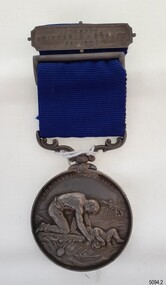
... 1874 and records show that since that time only one gold medal has been awarded, twenty-two silver medals and seventeen bronze medals, the last being in 1945. This Bromley-Moore medal was awarded to Peter Carmody for his bravery in saving lives on the Newfield shipwreck. The Newfield was a three-masted iron and steel barque, built in Dundee, Scotland, in 1889...1874 and records show that since that time only one gold medal has been awarded, twenty-two silver medals and seventeen bronze medals, the last being in 1945. This Bromley-Moore medal was awarded to Peter Carmody for his bravery in saving lives on the Newfield shipwreck. The Newfield was a three-masted iron and steel barque, built in Dundee, Scotland, in 1889 ...This medal is the Liverpool Shipwreck and Humane Society’s “Bramley-Moore medal for saving life at sea 1872”. The Society was formed in 1839. In 1872 Mr John Bramley-Moore donated £500 on condition that the medal have the specific inscription above on its reverse. The Bramley Morre medal was first awarded in 1874 and records show that since that time only one gold medal has been awarded, twenty-two silver medals and seventeen bronze medals, the last being in 1945. This Bromley-Moore medal was awarded to Peter Carmody for his bravery in saving lives on the Newfield shipwreck. The Newfield was a three-masted iron and steel barque, built in Dundee, Scotland, in 1889 by Alexander Stephen and Sons. It was owned by the Newfield Ship Company in 1890 and later that year It was registered in Liverpool to owners Brownells and Co. The Newfield left Sharpness, Scotland, on 28th May 1892 with a crew of 25 under the command of Captain George Scott and on 1st June left Liverpool. She was bound for Brisbane, Australia, with a cargo of 1850 tons of fine rock salt, the main export product of Sharpness. At about 9pm on 28th August 1892, in heavy weather, Captain Scott sighted, between heavy squalls, the Cape Otway light on the mainland of Victoria but, due to a navigational error (the ship’s chronometers were wrong), he assumed it to be the Cape Wickham light on King Island, some 40 miles south. He altered his course to the north, expecting to enter Bass Strait. The ship was now heading straight for the south west Victorian coast. At about 1:30am the Newfield ran aground on a reef about 100 yards from shore and one mile east of Curdie’s Inlet, Peterborough. The ship struck heavily three times before grounding on an inner shoal with 6 feet of water in the holds. Rough sea made the job of launching lifeboats very difficult. The first two lifeboats launched by the crew were smashed against the side of the ship and some men were crushed or swept away. The third lifeboat brought eight men to shore. It capsized when the crew tried to return it to the ship for further rescue The rescue was a difficult operation. The Port Campbell Rocket Crew arrived and fired four rocket lines, none of which connected with the ship. Peter Carmody, a local man, volunteered to swim about one mile off shore to the ship with a line to guide the fourth and final lifeboat safely to shore. He was assisted by James McKenzie and Gerard Irvine. Seventeen men survived the shipwreck but the captain and eight of his crew perished. The Newfield remained upright on the reef with sails set for a considerable time as the wind slowly ripped the canvas to shreds and the sea battered the hull to pieces. The Marine Board inquiry found the wreck was caused by a "one man style of navigation" and that the Captain had not heeded the advice of his crew. According to Jack Loney ‘… when the drama was over . . the Newfield was deserted except for the Captain’s dog and two pigs.’ Peter Carmody was awarded the Bramley-Moore medal by the Liverpool Shipwreck and Humane Society for Saving Life at Ssea, which he received by mail on January 21st 1893. The medal and a letter of congratulations were donated to Flagstaff Hill Maritime Museum by Peter Carmody’s grand-daughter Norma Bracken and her son Stuart Bracken on 25th May 2006. The Medal and Letter of Congratulations join other items in the Newfield collection. The Carmody Medal recognises the bravery of Peter Carmody in risking his life to rescue crew members of the Barque Newfield when it was wrecked near Curdies Inlet in August 1892. The ‘Bramley-Moore medal for saving life at sea, 1872’ was presented by the Liverpool Shipwreck and Humane Society. The medal and accompanying letter have local and international historic significance as they demonstrate both the difficulties associated with navigation and the dangers of shipping along the South West Coast of Victoria in the 19th century and the medal’s association with the Liverpool Shipwreck and Humane Society and John Bramley-Moore, who provided £500 to found the Bramley-Moore medal. The medal is socially significant. It emphasises the importance of Peter Carmody in rescuing victims of shipwrecks with little thought for his own safety. The medal reminds us of the importance of local people to Victoria’s maritime history. The Carmody Medal and Humane Society letter were in the Carmody family until they were presented to Flagstaff Hill Maritime Village, by the grand-daughter and great-grandson of Peter Carmody, on the 25th May 2006. The medal is significant for its complete provenance recorded in the donation documentation. The medal is in very good condition and relatively rare with only 22 silver medals awarded between 1874 and 1945. The Carmody Medal and letter add a human element to the story of the shipwrecks. They give life and significance to the Newfield, its victims and its artefacts. Bramley-Moore medal from the Liverpool Shipwreck and Humane Society, awarded to Peter Carmody. The round,silver medal is attached to a looped blue ribbon by a decorative, swivelling silver connector. The top of the ribbon has a silver pin bar threaded through it. The obverse of the medal has a design of a man kneeling on a floating part of a wreck. He is rescuing a child from the sea. There is a manned boat in the distance rescuing someone from the sea. In the far background there is a sailing ship. The top third of the medal has an inscription around it. The reverse shows a long-legged hen cormorant with extended wings holding an olive branch in its beak. The bird is surrounded by a wreath of oak leaves made from two branches. There is an inscription between the design and the rim that goes all the way around the circumference. There is a name engraved around the edge of the medal. The medal in embedded in a purple velvet panel that rests inside a brown, leather-covered case. The lid of the case has a gold embossed emblem in the cemtre. Both the lid and base have a rectangular gold border. The lid is attached to the base with two brass hinges. The base has a brass push-button catch. The box is lined with padded cream silk. The lining inside the lid has a gold emblem in the centre. The obverse has the words "LORD, SAVE US, WE PERISH". The reverse has the words "BRAMLEY-MOORE MEDAL FOR SAVING LIFE AT SEA" and "1872". Around the edge of the medal are the words "PETER CARMODY, FOR HAVING BEEN MAINLY INSTRUMENTAL IN RESCUING THE CREW OF THE BARQUE NEWFIELD, AUG 29 1892" The pin bar has the words “LIVERPOOL SHIPWRECK & HUMANE SOCIETY” written across it. The gold embossed emblem on the lid of the box has the words in the centre "SHIPWRECK AND …. …. ….FOUNDED 1839" The gold emblem on the cream silk lining has the words “BY APPOINTMENT ELKINGTON & CO” printed on it. medal, shipwrecked coast, flagstaff hill, flagstaff hill maritime museum, maritime museum, flagstaff hill maritime village, shipwreck coast, warrnambool, peter, peter carmody, carmody, bramley moore, newfield, liverpool shipwreck and humane society, 1892, 28 august 1892, august 1892, port campbell, bravery, shipwreck, rescue, nineteenth century, ship, curdie s river, victorian shipwrecks, barque, stuart bracken, norma bracken, gerard irvine, james mckenzie -
 Flagstaff Hill Maritime Museum and Village
Award - Document, 21/1/1893
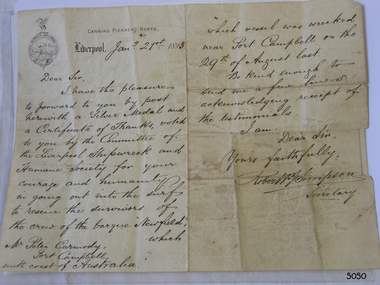
... 1874 and records show that since that time only one gold medal has been awarded, twenty-two silver medals and seventeen bronze medals, the last being in 1945. This Bromley-Moore medal was awarded to Peter Carmody for his bravery in saving lives on the Newfield shipwreck. The Newfield was a three-masted iron and steel barque, built in Dundee, Scotland, in 1889...1874 and records show that since that time only one gold medal has been awarded, twenty-two silver medals and seventeen bronze medals, the last being in 1945. This Bromley-Moore medal was awarded to Peter Carmody for his bravery in saving lives on the Newfield shipwreck. The Newfield was a three-masted iron and steel barque, built in Dundee, Scotland, in 1889 ...The name on the letterhead, “Canning Pierhead North” is the name of the Liverpool Pilot Authority, which was situated in 1883 at Cannon Pier on the River Mersey where ships entered to travel to Liverpool. The logo on the letterhead belongs to the Liverpool Shipwreck and Humane Society. The letter is addressed to “Mr Peter Carmody, Port Campbell, south coast of Australia”, and reads as follows: “January 21st 1893, Dear Sir, I have the pleasure to forward to you by post herewith a Silver Medal and a Certificate of Thanks, voted to you by the Committee of the Liverpool Shipwreck and Humane Society for your courage and humanity in going out into the surf to rescue the survivors of the crew of the barque “Newfield” which vessel was wrecked near Port Campbell on the 29th of August last. Be kind enough to send a few lines acknowledging receipt of the testimonials. I am Dear Sir, Yours Faithfully, Robert P. J. Simpson, Secretary.” The medal accompanying the letter is the Liverpool Shipwreck and Humane Society’s “Bramley-Moore medal for saving life at sea 1872”. The Society was formed in 1839. In 1872 Mr John Bramley-Moore donated £500 on condition that the medal have the specific inscription above on its reverse. The Bramley Morre medal was first awarded in 1874 and records show that since that time only one gold medal has been awarded, twenty-two silver medals and seventeen bronze medals, the last being in 1945. This Bromley-Moore medal was awarded to Peter Carmody for his bravery in saving lives on the Newfield shipwreck. The Newfield was a three-masted iron and steel barque, built in Dundee, Scotland, in 1889 by Alexander Stephen and Sons. It was owned by the Newfield Ship Company in 1890 and later that year It was registered in Liverpool to owners Brownells and Co. The Newfield left Sharpness, Scotland, on 28th May 1892 with a crew of 25 under the command of Captain George Scott and on 1st June left Liverpool. She was bound for Brisbane, Australia, with a cargo of 1850 tons of fine rock salt, the main export product of Sharpness. At about 9pm on 28th August 1892, in heavy weather, Captain Scott sighted, between heavy squalls, the Cape Otway light on the mainland of Victoria but, due to a navigational error (the ship’s chronometers were wrong), he assumed it to be the Cape Wickham light on King Island, some 40 miles south. He altered his course to the north, expecting to enter Bass Strait. The ship was now heading straight for the south west Victorian coast. At about 1:30am the Newfield ran aground on a reef about 100 yards from shore and one mile east of Curdie’s Inlet, Peterborough. The ship struck heavily three times before grounding on an inner shoal with 6 feet of water in the holds. Rough sea made the job of launching lifeboats very difficult. The first two lifeboats launched by the crew were smashed against the side of the ship and some men were crushed or swept away. The third lifeboat brought eight men to shore. It capsized when the crew tried to return it to the ship for further rescue The rescue was a difficult operation. The Port Campbell Rocket Crew arrived and fired four rocket lines, none of which connected with the ship. Peter Carmody, a local man, volunteered to swim about one mile off shore to the ship with a line to guide the fourth and final lifeboat safely to shore. He was assisted by James McKenzie and Gerard Irvine. Seventeen men survived the shipwreck but the captain and eight of his crew perished. The Newfield remained upright on the reef with sails set for a considerable time as the wind slowly ripped the canvas to shreds and the sea battered the hull to pieces. The Marine Board inquiry found the wreck was caused by a "one man style of navigation" and that the Captain had not heeded the advice of his crew. According to Jack Loney ‘… when the drama was over . . the Newfield was deserted except for the Captain’s dog and two pigs.’ Peter Carmody was awarded the Bramley-Moore medal by the Liverpool Shipwreck and Humane Society for Saving Life at Ssea, which he received by mail on January 21st 1893. The medal and letter of congratulations were donated to Flagstaff Hill Maritime Museum by Peter Carmody’s grand-daughter Norma Bracken and her son Stuart Bracken on 25th May 2006. The Medal and Letter of Congratulations join other items in the Newfield collectionl Flagstaff Hill’s collection of artefacts from the Newfield is significant for its association with the shipwreck Newfield, which is listed on the Victorian Heritage Registry. The collection is significant because of the relationship between the objects. The Newfield collection is archaeologically significant as the remains of an international cargo ship. The Newfield collection is historically significant for representing aspects of Victoria’s shipping history and its association with the shipwreck. The Letter accompanying the Medal for Bravery awarded to Peter Carmody is significant because the attempt to save lives is associated with the shipwreck Newfield. A copy of a letter from the Liverpool Shipwreck and Humane Society to Peter Carmody in reference to the bravery of Peter Carmody over the wreck of the "Newfield". The letter is divided into 2 columns and is written in longhand using black ink on both columns. There is a letterhead in the centre of the left hand page and a round logo printed or stamped on the top of left of the left hand page. The centre of the logo shows a design of a man kneeling on a floating part of a wreck. He is rescuing a child from the sea. On the top of the circle of the logo a design shows a long-legged hen cormorant with extended wings holding an olive branch in its beak. There is also the name of a city printed onto the page under the letterhead. The letter has been folded into half along its long side, then in half again along its long side then into thirds. The letter is dated January 21st 1893. “CANNING, PIERHEAD, NORTH” and “LIVERPOOL” are printed on the top left hand page. The logo “LIVERPOOL SHIPWRECK AND HUMANE SOCIETY” is printed or embossed on the paper. 28 august 1892, bramley moore, carmody, certificate of thanks, curdie's river, flagstaff hill, flagstaff hill maritime museum, gerard irvine, james mckenzie, liverpool shipwreck and humane society, maritime museum, medal, newfield, nineteenth century, norma bracken, peter carmody, port campbell, rescue, robert simpson,, shipwreck, ship wreck, stuart bracken, victorian shipwrecks -
 Warrnambool and District Historical Society Inc.
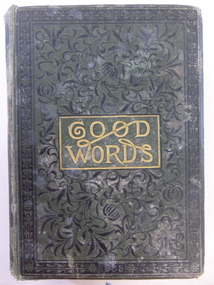
Book, Good Words, 1880s
... 1889. His wife was the Work Mistress of the school and both were involved in community affairs, particularly in regard to the Presbyterian Church and the local Mechanics’ Institute. Annis Morgan was born at Woodford to Jenkin and Mary Morgan in 1874...1889. His wife was the Work Mistress of the school and both were involved in community affairs, particularly in regard to the Presbyterian Church and the local Mechanics’ Institute. Annis Morgan was born at Woodford to Jenkin and Mary Morgan in 1874 ...This book, published in England, has been awarded as a school prize in 1887. Woodford School, No. 648, was an early National School which commenced in a house in 1854. In 1872 a sandstone building was erected. The school still operates. James Craig was the Head Master of Woodford School from 1884 to 1889. His wife was the Work Mistress of the school and both were involved in community affairs, particularly in regard to the Presbyterian Church and the local Mechanics’ Institute. Annis Morgan was born at Woodford to Jenkin and Mary Morgan in 1874. She would have been about 13 at the time she received the prize book. Annis (Ann) married Alan Patterson in 1897. This book is of considerable significance as it is connected with the history of Woodford, the Woodford school, the teacher, James Craig, the pupil, Annis Morgan and her family. This is a hard cover book of 812 pages The cover is black with an engraved ornamental pattern and edging and gold printing in the title on the cover and the spine. There is gilt edging on the pages. There is a bookplate on the inside front cover and one or two pages at the beginning are missing. The book contains many black and white illustrations with the first one covered by a piece of tissue (now blotched). The book contains poetry, short stories (some serialized) and some factual writing suitable for older children and adults. The cover is stained and somewhat faded and is ragged at the edges. Bookplate: ‘State School No. 648 Woodford, Fifth Class, presented to Annis Morgan, Christmas 1887, Jas. Craig, Head Teacher’. Stamp inside first page: ‘Warrnambool & District Historical Society WB 196’ history of woodford, woodford state school, annis morgan, james craig -
 Eltham District Historical Society Inc
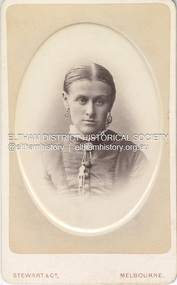
Photograph, Stewart & Co, Possibly Jane Shillinglaw, c.1878
... 1874 through 1905. The photo is estimated to have been taken c.1878 which would make Jane 32 years of age and Catherine 26 years. There is another photo of who is believed to be Catherine Shillinglaw with Edward Henry Bottle. There are visual differences with the eyes so it is presumed this photo is of Jane. A duplicate photo is contained in Album 2 (05664) Stewart & Co operated from 217 Bourke St., East from 1871 to 1876 and from 217-219 from 1877 to 1889...1874 through 1905. The photo is estimated to have been taken c.1878 which would make Jane 32 years of age and Catherine 26 years. There is another photo of who is believed to be Catherine Shillinglaw with Edward Henry Bottle. There are visual differences with the eyes so it is presumed this photo is of Jane. A duplicate photo is contained in Album 2 (05664) Stewart & Co operated from 217 Bourke St., East from 1871 to 1876 and from 217-219 from 1877 to 1889 ...Jane Shillinglaw was born 14 Jun 1846. She had a a son, Joseph Shillinglaw in 1863 and a daughter Jane Davidson in 1870 prior to her marriage to William James Sommerville in 1887. Jane's younger sister Catherine Shillinglaw was born 13 Nov 1852 at Coburg, Victoria. She married Edward Henry Bottle in 1897 This photo shows fashion and hairstyles typical of the later 1870s. Photographer Stewart & Co operated from various addresses in Bourke Street East Melbourne from 1874 through 1905. The photo is estimated to have been taken c.1878 which would make Jane 32 years of age and Catherine 26 years. There is another photo of who is believed to be Catherine Shillinglaw with Edward Henry Bottle. There are visual differences with the eyes so it is presumed this photo is of Jane. A duplicate photo is contained in Album 2 (05664) Stewart & Co operated from 217 Bourke St., East from 1871 to 1876 and from 217-219 from 1877 to 1889. Other locations included 42, 284 and 286. Overall, they operated in Melbourne from 1871 through at least 1910 though Carte-de-Visite photos were superseded by 1890. CARTE-DE-VISITE (cdv) 1857-1890 Cartes-de-visite (cdv's) are the most common form of photograph from the nineteenth century, generally measuring two and a half inches by four and an eighth inches (6.3 x 10.5 cm) when mounted, sepia toned, mounted on a card which was generally printed with the photographer's name and address on the back or beneath the portrait. - Frost, Lenore; Dating Family Photos 1850-1920; Valiant Press Pty. Ltd., Berwick, Victoria 1991 marg ball collection, shillinglaw family photo album 1, 1871-1890, 1878, jane shillinglaw (1846-1893), jane sommerville (nee shillinglaw 1846-1893), shillinglaw family photo album 2, stewart & co photographers melbourne, unknown -
Eltham District Historical Society Inc
Document - Folder, Macklin, Isaac, Elizabeth and family
... 1889, Elizabeth died Beechworth 1869. Children of Isaac and Elizabeth: Elizabeth born Eltham ~1846, died Mulwala NSW 1931. Ellen born Little Eltham 1856, married Thomas House, Albury, 26 September 1874, died Coonamble 1914. ...1889, Elizabeth died Beechworth 1869. Children of Isaac and Elizabeth: Elizabeth born Eltham ~1846, died Mulwala NSW 1931. Ellen born Little Eltham 1856, married Thomas House, Albury, 26 September 1874, died Coonamble 1914. ...Isaac Macklin and Elizabeth (nee Bailey) Macklin, born Wiltshire UK. Isaac died Tallangatta 1889, Elizabeth died Beechworth 1869. Children of Isaac and Elizabeth: Elizabeth born Eltham ~1846, died Mulwala NSW 1931. Ellen born Little Eltham 1856, married Thomas House, Albury, 26 September 1874, died Coonamble 1914. Children of Thomas and Ellen: Mary, Jane, Emma, Elizabeth Solway, Alice, Thomas, Samuel, Ellen, Martha. Contents Letter Valda McPherson to Eltham District Historical Society, 2 August 2006, providing some information about Elizabeth Macklin, and seeking more information about her. Letter Ruth Lewis to Eltham District Historical Society,, 7 September 2010, providing some information about Isaac and Elizabeth Macklin, and seeking information about their daughter Ellen and her husband Thomas House. Newspaper clippings, A4 photocopies, etc isaac macklin, elizabeth macklin nee bailey, ellen house nee macklin, thomas house, jane house, emma house, elizabeth solway house, alice house, samuel house, ellen house, martha house -
 Eltham District Historical Society Inc
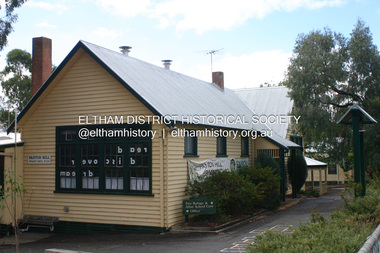
Photograph - Digital Photograph, Alan King, Panton Hill Primary School, 27 March 2008
... 1889, was not the area's first. Kingston School (an early name for Panton Hill) opened in May 1865. This was replaced in 1871 when the Panton Hill School number 1134 opened and in 1874 the school moved to its current location [September 2023] where many additions and renovations have taken place to meet the needs of local children in the 21st century. ...1889, was not the area's first. Kingston School (an early name for Panton Hill) opened in May 1865. This was replaced in 1871 when the Panton Hill School number 1134 opened and in 1874 the school moved to its current location [September 2023] where many additions and renovations have taken place to meet the needs of local children in the 21st century. ...The Panton Hill Primary School building, which has served the community since 1889, was not the area's first. Kingston School (an early name for Panton Hill) opened in May 1865. This was replaced in 1871 when the Panton Hill School number 1134 opened and in 1874 the school moved to its current location [September 2023] where many additions and renovations have taken place to meet the needs of local children in the 21st century. Covered under Heritage Overlay, Nillumbik Planning Scheme. Published: Nillumbik Now and Then / Marguerite Marshall 2008; photographs Alan King with Marguerite Marshall.; p63 The Panton Hill Primary School building, which has served the community since 1889, was not the area’s first. In 1871 Henry Edelman opened a Common School in a paling-clad hut, replacing the Kingstown No 786 school. The two-acre (0.8ha) site of crown land had previously been held under Miners Right. In 1875 the Education Department bought a building on the main road for State School No 1134, for £200 and remodelled it as a school.4 Panton Hill had as one of its teachers, Frank Tate, who was to become one of Victoria’s most influential educational reformers. It was his first school, when he began teaching on January 22, 1884, as a 20 year old.5 The following month Robert J Harris was appointed to the school and remained as head teacher until his death in 1887. His son R C Harris was apprenticed to Mr Rossiter, editor of the first local paper. The Evelyn Observer, first published in 1873. Harris later bought the newspaper which remained a family business until the 1920s. J Hughes of Cherry Tree Road succeeded Harris as teacher at Panton Hill and sold his land for the school site. Though now unrecognisable, the school building includes the classroom of the last Smiths Gully State School No 1737, which was built in 1882, and moved to Panton Hill in 1894. From 1922 each school day began with the ringing of the bell, which is still in its stand, and is an unusually old memorial of this kind. To accommodate the growing population, the building was remodelled, with additions in 1923 and classrooms were added in 1955, 1963 and 1970. The former teacher’s residence is the only surviving 19th century dwelling in the centre of Panton Hill, and is now used as part of the school. The residence was originally rectangular but is now L-shaped. Similar weatherboard State School buildings in the shire from this period are the Kangaroo Ground and the St Andrews Primary Schools. All were standard Education Department/Public Works Department designs. This collection of almost 130 photos about places and people within the Shire of Nillumbik, an urban and rural municipality in Melbourne's north, contributes to an understanding of the history of the Shire. Published in 2008 immediately prior to the Black Saturday bushfires of February 7, 2009, it documents sites that were impacted, and in some cases destroyed by the fires. It includes photographs taken especially for the publication, creating a unique time capsule representing the Shire in the early 21st century. It remains the most recent comprehenesive publication devoted to the Shire's history connecting local residents to the past. nillumbik now and then (marshall-king) collection, panton hill primary school -
 Eltham District Historical Society Inc
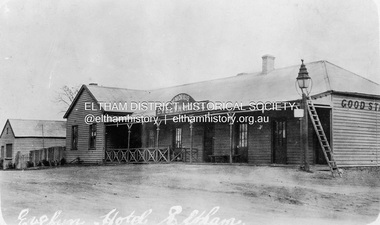
Photograph, Evelyn Hotel, Eltham, c.1892
... 1874 and September 1878 the name of the hotel is changed from the Fountain Hotel to the Evelyn Hotel. In March 1880, ownership is transferred to James Purcell, a former Councillor of the Shire of Eltham’s North Riding. Purcell’s ownership of the hotel is associated with the 1880s though there is a brief period in 1887 where the license is granted to a Lawrence Brennan, reasons unknown. In December 1889...1874 and September 1878 the name of the hotel is changed from the Fountain Hotel to the Evelyn Hotel. In March 1880, ownership is transferred to James Purcell, a former Councillor of the Shire of Eltham’s North Riding. Purcell’s ownership of the hotel is associated with the 1880s though there is a brief period in 1887 where the license is granted to a Lawrence Brennan, reasons unknown. In December 1889 ...Postcard image of W. Morris Evelyn Hotel, cnr. Main Road and Pitt Street, Eltham, opposite present hotel. Built in 1852 as the Fountain of Friendship Hotel, later named the Fountain Hotel it was located on the southwest corner of Maria (Main) and Pitt streets. Also later known as the Evelyn Hotel, it was de-licensed in 1919. The hotel was totally destroyed by fire on Wednesday, February 18, 1931 Sometime between June 1851 and 1854, the property at the top of the hill of Little Eltham described as Lot 235 of plan of subdivision, of portion number 12, of section number 4, of the parish of Nillumbik, on the county of Evelyn was purchased from J.M. Holloway and the Fountain of Friendship Hotel was built using prefabricated sections constructed from cedar timber, imported from Singapore. By 1854, John O’Brien, a somewhat shady character was the proprietor of the hotel when he put it up for sale in November 1854. It is not clear whether he was the original owner / builder. John O’Brien purchased several other lots in Little Eltham from a Robert Wells but did not pay the balance for these lots and skipped town as soon as he sold the Fountain Hotel to Charles Roberts. Following the somewhat dodgy business practices of John O’Brien, little is known of Charles Roberts but it is possible he enjoyed several years of ownership. It was put up for sale again in 1858 but no outcome of that sale is known, and it was advertised to let in 1863, again possibly to no avail. James Trew took it over in July 1864 but his association was short lived with his premature death in December of that year leaving his widow Mary to take over and run the enterprise. No other details regarding ownership or issuances of licenses to run a public house have been identified so it is possible that Mary Trew managed the business until it was eventually advertised To Let in December 1870. George Merrick took over the hotel and was granted a license at the end of March 1871 but he too was destined to follow in the footsteps of James Trew and died prematurely at age 40 just six months later, in September 1871. John Treloar then took over the hotel but sometime between 1872 and 1873 the license was transferred to Bejamin Gane. Gane it seems held the license for the majority of the 1870s At some point between December 1874 and September 1878 the name of the hotel is changed from the Fountain Hotel to the Evelyn Hotel. In March 1880, ownership is transferred to James Purcell, a former Councillor of the Shire of Eltham’s North Riding. Purcell’s ownership of the hotel is associated with the 1880s though there is a brief period in 1887 where the license is granted to a Lawrence Brennan, reasons unknown. In December 1889, James Purcell ownership of the Evelyn hotel throughout the 1880s comes to an end when William Morris purchases the property and the license is transferred to him. Ownership of the property remains within the Morris family for the next 40 plus years and it is the Morris name that is most associated with its history. William Morris was a Councillor with the Shire of Eltham for a continuous 24 year period. He served as Shire President for three terms. It appears he did very well with the Evelyn Hotel and his entertainment and dining experiences are well regarded. Morris is also closely asspotaieted with local horse racing events and often provided the hospitality for the Diamond Creek races and various races held at Eltham Park (Eltham Lower Park). It is during Morris’ stewardship that major changes occurred to the hotel. On June 2, 1892 a fire broke out in one of the lodger’s rooms from a candle that had been left burning. The hotel is constructed of timber and three rooms are destroyed. Christopher Watson, proprietor of the Eltham Hotel across the road comes to Morris’ assistance and the hotel is saved but there is significant damage. It is suspected that the lodgers rooms were at the southern end of the building in the two-story section. It is further suspected that it is a result of this fire that the building was modified and the two story section rebuilt as single story and the shingle roof converted to tin. From this point on, Morris appears to enjoy a relatively long and quiet period of ownership. He signs a 5 year lease to let the hotel out in 1903 and the license is transferred to an Ann Evans. Morris intended to live in a house near the railway station but the license ris renewed in his name just two years later in December 1905. Morris is charged with illegal Sunday trading in August 1917. The case is dismissed through lack of evidence. It seems that this was fairly commonplace amongst the various hostelries of the countryside. In June 1919 the Evelyn Hotel is de-licensed. Though considered clean and well maintained, the Licensing Board did not believe having two hotels directly opposite each other was warranted for the existing trade. The case for the Eltham Hotel to remain in business was stronger. Morris was subsequently awarded £480 in November of that year as compensation. The property then was used for various businesses such as hairdressing and dining rooms as well as lodging. William Morris died in December 1922 and his wife Mary inherited the property. She had listed it for sale in August 1929 but nothing eventuated from that. In February 1931, whilst occupied by Hector and Louise McLean and their young family, the old building caught fire. Ashes from one of the fires had fallen through the cracks in the floorboards and took hold in the basement. A firsthand account of that harrowing experience was recorded by Mrs Edith Jones (nee McLean) in 1998, who was six years old at the time, and held by Eltham District Historical Society (04749). It was published in EDHS Newsletter No. 226, October 2022. On July 3, 1931 the Advertiser published the following endnote to the Evelyn Hotel. Last Traces of Fire The traces of Eltham's largest fire are being obliterated by the removal of debris from the site of the old Evelyn Hotel, which was destroyed a few months ago, and all that now remains is a blackened spot and fire colored bricks and stones. The site is one of the most imposing in the district, being in the heart of the old township. The township is really in two sections, old and new, the latter is situated round the station. The passing of the old hotel was regretted by all, as it was so closely associated with the pioneering, days. - Research by Peter Pidgeon, EDHS, June 2026 Postcard photo Retun to Garnet Burges c/o Judge Book hotels, evelyn hotel, eltham, main road, pitt street, fountain hotel, william morris -
 Eltham District Historical Society Inc
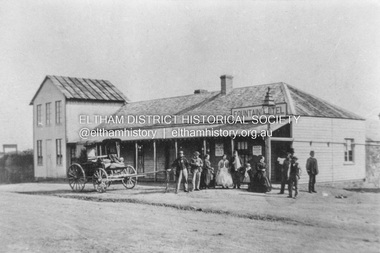
Photograph, Fountain Hotel, Main Road, Eltham, c.1870
... 1874 and September 1878 the name of the hotel is changed from the Fountain Hotel to the Evelyn Hotel. In March 1880, ownership is transferred to James Purcell, a former Councillor of the Shire of Eltham’s North Riding. Purcell’s ownership of the hotel is associated with the 1880s though there is a brief period in 1887 where the license is granted to a Lawrence Brennan, reasons unknown. In December 1889...1874 and September 1878 the name of the hotel is changed from the Fountain Hotel to the Evelyn Hotel. In March 1880, ownership is transferred to James Purcell, a former Councillor of the Shire of Eltham’s North Riding. Purcell’s ownership of the hotel is associated with the 1880s though there is a brief period in 1887 where the license is granted to a Lawrence Brennan, reasons unknown. In December 1889 ...Digitised from scanned print of original postcard of Fountain Hotel, Main Road Eltham (later Evelyn Hotel) early view showing two storey section. Built in 1852 as the Fountain of Friendship Hotel, later named the Fountain Hotel it was located on the southwest corner of Maria (Main) and Pitt streets. Also later known as the Evelyn Hotel, it was de-licensed in 1919. The hotel was totally destroyed by fire on Wednesday, February 18, 1931 Sometime between June 1851 and 1854, the property at the top of the hill of Little Eltham described as Lot 235 of plan of subdivision, of portion number 12, of section number 4, of the parish of Nillumbik, on the county of Evelyn was purchased from J.M. Holloway and the Fountain of Friendship Hotel was built using prefabricated sections constructed from cedar timber, imported from Singapore. By 1854, John O’Brien, a somewhat shady character was the proprietor of the hotel when he put it up for sale in November 1854. It is not clear whether he was the original owner / builder. John O’Brien purchased several other lots in Little Eltham from a Robert Wells but did not pay the balance for these lots and skipped town as soon as he sold the Fountain Hotel to Charles Roberts. Following the somewhat dodgy business practices of John O’Brien, little is known of Charles Roberts but it is possible he enjoyed several years of ownership. It was put up for sale again in 1858 but no outcome of that sale is known, and it was advertised to let in 1863, again possibly to no avail. James Trew took it over in July 1864 but his association was short lived with his premature death in December of that year leaving his widow Mary to take over and run the enterprise. No other details regarding ownership or issuances of licenses to run a public house have been identified so it is possible that Mary Trew managed the business until it was eventually advertised To Let in December 1870. George Merrick took over the hotel and was granted a license at the end of March 1871 but he too was destined to follow in the footsteps of James Trew and died prematurely at age 40 just six months later, in September 1871. John Treloar then took over the hotel but sometime between 1872 and 1873 the license was transferred to Bejamin Gane. Gane it seems held the license for the majority of the 1870s At some point between December 1874 and September 1878 the name of the hotel is changed from the Fountain Hotel to the Evelyn Hotel. In March 1880, ownership is transferred to James Purcell, a former Councillor of the Shire of Eltham’s North Riding. Purcell’s ownership of the hotel is associated with the 1880s though there is a brief period in 1887 where the license is granted to a Lawrence Brennan, reasons unknown. In December 1889, James Purcell ownership of the Evelyn hotel throughout the 1880s comes to an end when William Morris purchases the property and the license is transferred to him. Ownership of the property remains within the Morris family for the next 40 plus years and it is the Morris name that is most associated with its history. William Morris was a Councillor with the Shire of Eltham for a continuous 24 year period. He served as Shire President for three terms. It appears he did very well with the Evelyn Hotel and his entertainment and dining experiences are well regarded. Morris is also closely asspotaieted with local horse racing events and often provided the hospitality for the Diamond Creek races and various races held at Eltham Park (Eltham Lower Park). It is during Morris’ stewardship that major changes occurred to the hotel. On June 2, 1892 a fire broke out in one of the lodger’s rooms from a candle that had been left burning. The hotel is constructed of timber and three rooms are destroyed. Christopher Watson, proprietor of the Eltham Hotel across the road comes to Morris’ assistance and the hotel is saved but there is significant damage. It is suspected that the lodgers rooms were at the southern end of the building in the two-story section. It is further suspected that it is a result of this fire that the building was modified and the two story section rebuilt as single story and the shingle roof converted to tin. From this point on, Morris appears to enjoy a relatively long and quiet period of ownership. He signs a 5 year lease to let the hotel out in 1903 and the license is transferred to an Ann Evans. Morris intended to live in a house near the railway station but the license ris renewed in his name just two years later in December 1905. Morris is charged with illegal Sunday trading in August 1917. The case is dismissed through lack of evidence. It seems that this was fairly commonplace amongst the various hostelries of the countryside. In June 1919 the Evelyn Hotel is de-licensed. Though considered clean and well maintained, the Licensing Board did not believe having two hotels directly opposite each other was warranted for the existing trade. The case for the Eltham Hotel to remain in business was stronger. Morris was subsequently awarded £480 in November of that year as compensation. The property then was used for various businesses such as hairdressing and dining rooms as well as lodging. William Morris died in December 1922 and his wife Mary inherited the property. She had listed it for sale in August 1929 but nothing eventuated from that. In February 1931, whilst occupied by Hector and Louise McLean and their young family, the old building caught fire. Ashes from one of the fires had fallen through the cracks in the floorboards and took hold in the basement. A firsthand account of that harrowing experience was recorded by Mrs Edith Jones (nee McLean) in 1998, who was six years old at the time, and held by Eltham District Historical Society (04749). It was published in EDHS Newsletter No. 226, October 2022. On July 3, 1931 the Advertiser published the following endnote to the Evelyn Hotel. Last Traces of Fire The traces of Eltham's largest fire are being obliterated by the removal of debris from the site of the old Evelyn Hotel, which was destroyed a few months ago, and all that now remains is a blackened spot and fire colored bricks and stones. The site is one of the most imposing in the district, being in the heart of the old township. The township is really in two sections, old and new, the latter is situated round the station. The passing of the old hotel was regretted by all, as it was so closely associated with the pioneering, days. - Research by Peter Pidgeon, EDHS, June 2026 Digital file scan of photo print copy and photocopy of original image of Fountain Hotel, Main Road Eltham (later Evelyn Hotel) early view showing two storey section Also 9 x 12.5 cm print copy (with more scratches) hotels, eltham, fountain hotel, evelyn hotel, main road, pitt street -
 Port Melbourne Historical & Preservation Society
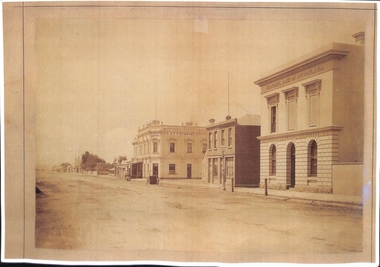
Photograph - Bay Street, Charles Nettleton, Charles Nettleton, 1878-79
... 1874. It was subsequently extended to a design by architect George JOBBINS in 1889. ...1874. It was subsequently extended to a design by architect George JOBBINS in 1889. ...This photograph can be dated to 1878-79 because according to Chartered Scoundrel's by Pat Grainger, Scott's Hotel only operated during those years. The National Bank of Australasia at the right of the photograph was designed by Leonard TERRY of Terry and Oakden, Architects and was constructed in 1874. It was subsequently extended to a design by architect George JOBBINS in 1889. See Cat No 197 for a photograph of the altered building. Mounted Charles NETTLETON original: looking northeast in Bay Street: National Bank of Australiasia, grocery shop, Scotts Hotel, trees at Holy Trinity, George Hotel, unmade road national bank of australasia, charles nettleton, built environment - commercial, scott's hotel, bay street -
 Victorian Interpretive Projects Inc.
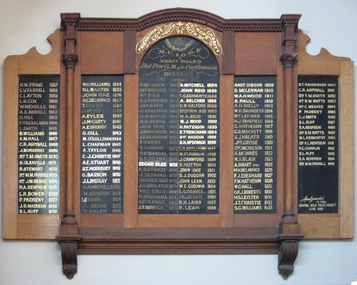
Photograph - Honour Board, Clare Gervasoni, Manchester Unity Indipendant Order of Oddfellows (MUIOOF+ Honour Board, 2013
... 1874 H.S. Hilton 1875 Edgar Slee 1876 Francis Rotanzi 1877 J. Desmond 1878 Charles Slee 1879 J.S. Unklater 1880 William Field 1881 W. Broughall 1882 George H. Page 1883 J.S. Horner 1884 R. Mitchell 1885 John Reid 1886 C.C Servante 1888 A. Belcher 1889...1874 H.S. Hilton 1875 Edgar Slee 1876 Francis Rotanzi 1877 J. Desmond 1878 Charles Slee 1879 J.S. Unklater 1880 William Field 1881 W. Broughall 1882 George H. Page 1883 J.S. Horner 1884 R. Mitchell 1885 John Reid 1886 C.C Servante 1888 A. Belcher 1889 ...The original Honour Board for the Castlemaine branch of the Manchester Unity Independent Order of Oddfellows was hanging in the Castlemaine Market Building in 2013. Colour photograph of a timber honour board for the Provincial Grand Masters of the Castlemaine Branch of the Manchester Unity Independent order of Oddfellows. The Provincial Grand Masters are: 1859 Wal Smith 1861 George Farroll 1862 William Bird 1863 G.J. Fawkner 1864 Joseph Davie 1865 J. Collings 1866 J.D. Hatch 1867 S.H. Clark 1868 John Tate 1869 J. Mackenzie 1870 J.H. Dickinson 1871 F. Emery 1872 H. London 1873 C.F. Randal 1874 H.S. Hilton 1875 Edgar Slee 1876 Francis Rotanzi 1877 J. Desmond 1878 Charles Slee 1879 J.S. Unklater 1880 William Field 1881 W. Broughall 1882 George H. Page 1883 J.S. Horner 1884 R. Mitchell 1885 John Reid 1886 C.C Servante 1888 A. Belcher 1889 G.W. Halford 1890 Stephen Box 1891 W.A. Reid 1892 W.J. Wood 1893 H. Paterson 1894 E. Trenchard 1895 Robert Maddin 1896 D.H. McDonach 1897 C.W. Armstrong 1898 M. O'Loughlan 1899 J. Crawford 1900 R. Hutton 1901 John Oke 1902 D.J. Duggan 1903 john Lean 1904 W.E. Goodwin 1905 S.S. graves 1906 J.H. Liscombe 1907 R.H. Laird 1908 R. Lean manchester unity independent order of oddfellows, muioof, castlemaine -
 Bendigo Historical Society Inc.
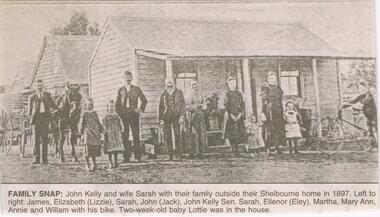
Newspaper - JENNY FOLEY COLLECTION: FAMILY SNAP
... John Andrew (Jack) 1874-1952; James 1877-1878; James (1878- ); Mary Ann (1880- ); Eleanor Harriet (1883-1982); William Patrick (1885-1965); Elizabeth Margaret (1887- ); Sarah Louise (1889- ); Annie (1892-1902); Lottie (1897- ) . ...John Andrew (Jack) 1874-1952; James 1877-1878; James (1878- ); Mary Ann (1880- ); Eleanor Harriet (1883-1982); William Patrick (1885-1965); Elizabeth Margaret (1887- ); Sarah Louise (1889- ); Annie (1892-1902); Lottie (1897- ) . ...John Kelly (1859-1941) was born at Lockwood, the son of Patrick and Ann Kelly. In 1873 he married Sarah Ann Nievandt and they had 11 children. John Andrew (Jack) 1874-1952; James 1877-1878; James (1878- ); Mary Ann (1880- ); Eleanor Harriet (1883-1982); William Patrick (1885-1965); Elizabeth Margaret (1887- ); Sarah Louise (1889- ); Annie (1892-1902); Lottie (1897- ) . Eleanor married George James Lakey in 1904. No birth record found for Martha. This photo can be dated to 1897/98 Bendigo Advertiser ''The way we were'' from 2003. Family snap: John Kelly and wife Sarah with their family outside their Shelbourne home in 1897. Left to right: James, Elizabeth (Lizzie), Sarah, John (Jack), John Kelly Sen., Sarah, Ellenor (Eley), Martha, Mary Ann, Annie and William with his bike. Two-week old baby Lottie was in the house. The clip is in a folder. newspaper, bendigo advertiser, the way we were -
 Bendigo Historical Society Inc.
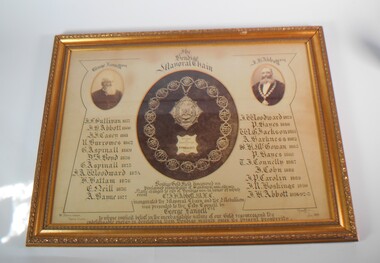
Memorabilia - FRAMED IMAGE OF BENDIGO MAYORAL CHAIN
... 1874, H.Hattam 1876, E. Neil 1876, A. Bayne 1877, J.A. Woodward 1879, P. Hayes 1880, W.G. Jackson 1881, A. Harkness 1882, S.H. McGowan 1885, P. Hayes 1886, T.J. Connelly 1887, J. Cohn 1888, J.P. Carolin 1889...1874, H.Hattam 1876, E. Neil 1876, A. Bayne 1877, J.A. Woodward 1879, P. Hayes 1880, W.G. Jackson 1881, A. Harkness 1882, S.H. McGowan 1885, P. Hayes 1886, T.J. Connelly 1887, J. Cohn 1888, J.P. Carolin 1889 ...Large framed item. At the centre a photograph of the Bendigo Mayoral Chain designed and manufactured by F. Prescott, jeweller, Bendigo At the right a photo of George Lansell esq. and on the left a photo of J.H. Abbott esq. A list of Mayor is underneath the two photos, starting from the left J.F. Sullivan 1857, J.H. Abbott 1860, J.J. Casey 1861, R. Burrows 1862, G. Aspinall 1869, J. Boyd 1870, G. Aspinall 1873, J.A. Woodward 1874, H.Hattam 1876, E. Neil 1876, A. Bayne 1877, J.A. Woodward 1879, P. Hayes 1880, W.G. Jackson 1881, A. Harkness 1882, S.H. McGowan 1885, P. Hayes 1886, T.J. Connelly 1887, J. Cohn 1888, J.P. Carolin 1889, J,R. Hoskins 1890, J.H. Abbott 1891-92-95. Under the Mayoral chain the words: Bendigo gold fields discovered 1851. Proclaimed municipality of Sandhurst 1855 and city in 1871. Name changed to City of Bendigo in honor of which event cnr. J.H Abbott inaugurated the mayoral chain and the medallion was presented to the City Council by George Lansell esq. To whose implicit belief in the inextinguishable nature of our gold resource and the indefatigable energy in developing them Bendigo manly owes its present prosperity. July 1893, W. Honeybone Town Clerk and signed by F. Prescott. bendigo, council, mayoral chain, from dudley house stored at bendigo art gallery from 2000 -
Glen Eira Historical Society
Document - St. Mary’s Church, Caulfield
... 1889 by Rev. Macartney. Includes a summary of events from 1853-1888 and information on the contribution to the various churches in the parish. Also includes a listing of contributors to Mrs. Macartney’s memorial window, and tow financial statements related to the building of the church from 1871-1874...1889 by Rev. Macartney. Includes a summary of events from 1853-1888 and information on the contribution to the various churches in the parish. Also includes a listing of contributors to Mrs. Macartney’s memorial window, and tow financial statements related to the building of the church from 1871-1874 ...A report on St. Mary’s Anglican Church written in February 1889 by Rev. Macartney. Includes a summary of events from 1853-1888 and information on the contribution to the various churches in the parish. Also includes a listing of contributors to Mrs. Macartney’s memorial window, and tow financial statements related to the building of the church from 1871-1874. caulfield, macartney h.b., parsons c.h., st. mary’s church, sunday schools, st. clement’s church, glen huntly road, st. catherine’s church, camden town, booran road church, memorials, glen eira road -
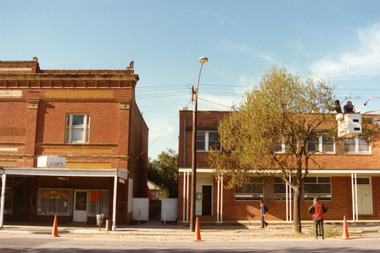 Charlton Golden Grains Museum Inc
Photograph, Dillon Building and Globe Hotel, High St Charlton c.1987, c.1987
... 1889. The third building operated as a cafe in the 1960s - 1980s. Heather's Choice Gift Shop sold out in early 1990s. The Old Globe Hotel established 1874...1889. The third building operated as a cafe in the 1960s - 1980s. Heather's Choice Gift Shop sold out in early 1990s. The Old Globe Hotel established 1874 ...Dillon Building built 1889. The third building operated as a cafe in the 1960s - 1980s. Heather's Choice Gift Shop sold out in early 1990s. The Old Globe Hotel established 1874, rebuilt c. 1903 and again in 1940 for licensee J. Credlin. Was the Soil Conservation Authority office , then flats and offices. Colour photograph of the café section of the Dillon Building and the Globe Hotel. LH side of the photo is the cafe section of the two storet, red brick Dillon building. Signage in LH café window reads CHARLTON BYO RESTAURANT and on the RH window MEALS, TAKE AWAYS, SNACKS, COFFEE, DRINKS. Sheer curtains in the cafe windows. The signage on the RH building reads SOIL CONSERVATION AUTHORITY. There are two men in a cherry picker in front of the Soil Conservation building trimming the tree. There are three witches hats on the road and a man in an orange hi-vis vest watching, A woman is walking past on the footpath. dillon, globe hotel, the old globe hotel, credlin, soil conservation authority, charlton, business, industry -
 Uniting Church Archives - Synod of Victoria
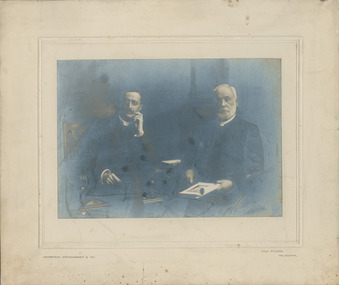
Photograph, Rev. James Galloway and Rev. John Meiklejohn
... James Bulloch Galloway - b. 1872 Govan, Scotland; 1889 ordained Townsville Qld; 1900 Charters Towers Qld; 1907 South Melbourne Dorcas Street (colleague with John Meiklejohn); 1913 Brisbane South (Park Church). John Meiklejohn MA BD b. 1841 Glasgow; University of Glasgow; Theological Hall of U.P. Church; 1872 ordained Glasgow City Mission; 1874...James Bulloch Galloway - b. 1872 Govan, Scotland; 1889 ordained Townsville Qld; 1900 Charters Towers Qld; 1907 South Melbourne Dorcas Street (colleague with John Meiklejohn); 1913 Brisbane South (Park Church). John Meiklejohn MA BD b. 1841 Glasgow; University of Glasgow; Theological Hall of U.P. Church; 1872 ordained Glasgow City Mission; 1874 ...James Bulloch Galloway - b. 1872 Govan, Scotland; 1889 ordained Townsville Qld; 1900 Charters Towers Qld; 1907 South Melbourne Dorcas Street (colleague with John Meiklejohn); 1913 Brisbane South (Park Church). John Meiklejohn MA BD b. 1841 Glasgow; University of Glasgow; Theological Hall of U.P. Church; 1872 ordained Glasgow City Mission; 1874 Kirkmairhill, UP. Lanarkshire; 1868 South Melbourne Dorcas Street Vic; 1901 First Moderator General Assembly of Australia; First Principal Emmanuel College, Brisbane; 1915 died 28 September. Galloway and Meiklejohn are seated adjacent to each other, facing the camera, dressed in clerical clothing. Meiklejohn is holding a sheaf of papers, and there is a small table at the rear between them. "Rev. James Galloway and Rev. John Meiklejohn" meiklejohn, john, galloway, james -
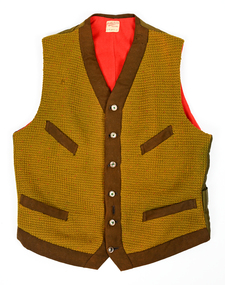 National Wool Museum
Textile - Waistcoat, R. Collins Hocking, c.1910
... 1874 Connewarre Road Board, Chairman 1871-73 •1875-1900 South Barwon Shire Council. When the Board amalgamated with South Barwon to form the Shire of South Barwon, he was an inaugural representative of Connewarre. He was a council member for 44 years and president for the following terms: 1878-1879; 1885-1887; 1889...1874 Connewarre Road Board, Chairman 1871-73 •1875-1900 South Barwon Shire Council. When the Board amalgamated with South Barwon to form the Shire of South Barwon, he was an inaugural representative of Connewarre. He was a council member for 44 years and president for the following terms: 1878-1879; 1885-1887; 1889 ...The Waistcoat’s Owners The first owner of the waistcoat was Alfred (Alf) Gilbert White, 1868 Stretton Park, Connewarre – 1946, Mt Duneed. He was the fourth child of Andrew White, 1828-1900, and Jane Roberts, 1827-1871. His father Andrew White was born at Stretton-on-Dunsmore, Warwickshire, England, the sixth child of William White and Sarah Elkington. Andrew had come to Victoria on the James L. Bogart in 1852 with his first wife, Emily Walker. From 1854, records show he was the owner of livery stables in central Geelong before he moved into land ownership. In 1862, Andrew became a landowner with 1,400 acres in Connewarre, the Salt Water Run, then re-named Stretton Park by Andrew. Thereafter he is usually noted as a Farmer or Sheep Farmer. Emily died in 1861 and Andrew remarried Jane Roberts in 1863. Jane was the daughter of Jane (Jenefer) Pearce and William Roberts in Crowan, Cornwell, England and it is thought arrived in Victoria on the British Trident in 1855. In 1878 Andrew moved to the newly purchased “Hillside” at Mt Duneed with his family including Alfred. By 1880 Andrew held 11,095 acres in South Barwon and Barrabool. As well as being a landowner, he had other business interests including Auctioneers, Stock and Station Agents Learmonth White from 1886. However farming at Hillside, particularly wool production, was an important part of his life. For example, in 1893 10,350 sheep were shorn although the highest number of bales of wool produced was in 1892 with 174 bales under AW’s wool mark and 8 under that of Stretton Park. This was the result of shearing 9,234 sheep. There were usually six or seven shearers, shearing over a two to three week period, beginning in early or mid October. Some of the shearers bore names familiar in the district such as Gogoll, Duffield, and Baensch. Andrew White held a number of local positions including: •1863-1874 Connewarre Road Board, Chairman 1871-73 •1875-1900 South Barwon Shire Council. When the Board amalgamated with South Barwon to form the Shire of South Barwon, he was an inaugural representative of Connewarre. He was a council member for 44 years and president for the following terms: 1878-1879; 1885-1887; 1889; 1894; 1895-1896; and 1898-1899. •1878-1886, Barrabool Shire Council, President 1882 •In 1885 he was appointed a Justice of the Peace in the Southern Bailiwick •Committee member of the Geelong Racing Club, 1890-96 •In 1892 he was appointed returning officer for the South-Western Province and the electoral district of Barwon •Foundation President of Torquay Racing Club, 1893 •Mount Duneed Cemetery Trustee, 1893 Alfred Gilbert White went to Connewarre School and then to Mt Duneed School after the family moved to Mt Duneed. He then went to Geelong Grammar School as a boarder from 31 July 1883. After leaving school, in 1886, he worked as a bookkeeper for the family business Learmonth-White stock and station agents and lived at home at Hillside. He and Bessie Orchard Mathews were married in 1894. Bessie was born in Geelong in 1869, the sixth child of William Matthews and Amelia Orchard. Her family lived at “Turley,” Malop Street, Geelong, named after the hamlet of Turleigh in West Wiltshire, England. Bessie’s father, William Mathews, a butcher from Winsley, Wiltshire, arrived on the Queen of the East in Sydney in 1854 and established a successful butcher’s business with his brother James in Geelong. Her mother, Amelia Orchard, also from Winsley, arrived on the Thames in Melbourne in 1857. Alfred, Bessie and their family lived at Stretton Park, Connewarre, leasing it from Andrew. They had six children including their fourth child Douglas Alfred White, the second owner of the waistcoat. His father Andrew supported Alfred’s sheep farming at Stretton Park. In 1896 “.... eight splendid 2-tooth Lincoln rams in the wool were purchased by Mr Andrew White for his son, Mr Alfred G. White….intended for Mr White’s sheep run at Connewarre.“ Alfred White bought ‘Hillside’, 640 acres, after his father’s death and moved there with his family from Stretton Park in Connewarre. (Stretton Park was bought by his half sister Emily and her family and renamed “Morangarell”.) A family partnership was formed to run the wider station. It was then Alfred who managed the new partnership, called Stretton Park. Alfred meticulously kept the financial records of the station, as might be expected from a former bookkeeper. The detail kept is exemplified in the annual shearing records, including the names of the paddocks, the number of lambs and ewes and the shearers’ tallies. In the spring of 1900, after Andrew White had died, shearing began on 7 October and was finished on 6 November. On some days well over 500 sheep were shorn. The highest tally was 616 on 11 October. That year the overall total of sheep shorn was 9,101. Alfred was an active community member including: •South Barwon Council member (46 years), president: 1903-04; 1906-07; 1921-22; and 1931-33 •Geelong Grammar School Council member, 1908-1946 (over 37 years) •Active member of St. Wilfred’s Church of England, Mt Duneed •Director of Dennys Lascelles, 1932-1946 •Mt Duneed Cemetery Trustee, 1900 •Honorary member of the Mt Duneed Rifle Club, 1900 •Mt Duneed Mutual Improvement Association •Mt Duneed Recreation Reserve Trustee •Torquay Improvement Association Trustee •Barwon Returning Officer Douglas Alfred White, 1900 Stretton Park, Connewarre-1976, Geelong. Initially Douglas and his sisters were taught at home by a governess. Then, like his father, Douglas attended Geelong Grammar. After finishing school, he studied Engineering at Melbourne University where he met Violet Fullerton, 1900-1992, who was studying Medicine. They married in 1926 and had two children including Douglas Robert Stretton (DRS) White Melbourne, 1928–Geelong, 1989, the final owner of the waistcoat. After a successful career as an engineer with the Department of Main Roads, NSW, and serving as a Major in the Royal Australian Engineers in NT, New Guinea and Borneo during the Second World War, Douglas purchased part of Stretton Park when it was sold in 1952. He farmed “South Beach Farm” until his death in 1975. (This area now includes The Sands and Stretton Estate subdivisions.) His son DRS White also attended Geelong Grammar before studying at Dookie Agricultural College. In 1955 DRS purchased land from Peter Fisher, John Fisher and Frank Walter, naming the property “Lambidgee”. (This was part of the land that had originally belonged to Andrew White that had been sold previously.) He farmed this land for the rest of his life, continuing the family tradition. After his father’s death in 1975, the waistcoat became his and so passed to a third generation of the family. Chartreuse green and red waistcoat featuring woven wool front with six buttons, silk back with metal clasp, and red lining. The buttons feature small green beads in the centre. Label [printed]: R. Collins Hocking / GEELONG Label [handwritten]: A. G. White Esq waistcoat, vest, design, textiles, fashion, alfred white, sheep farming, mt duneed, rural life -
Clunes Museum
Book - HOLY BIBLE
... /Ballarat 1871 Creswick 1873 Castlemaine 1874 Runnymede 1875 Runnymede Rochester & Echuca 1876 Runnymede & Rochester 1877 Campberdown 1878 Sandhurst 1879 Castlemaine 1883 Daylesford 1887 Clunes & Creswick 1889 Clunes 1890 Melbourne II (Footscray) 1893 Ballarat 1895 Supernumerary (retired) 1902 to Australasian Methodist Vic. .../Ballarat 1871 Creswick 1873 Castlemaine 1874 Runnymede 1875 Runnymede Rochester & Echuca 1876 Runnymede & Rochester 1877 Campberdown 1878 Sandhurst 1879 Castlemaine 1883 Daylesford 1887 Clunes & Creswick 1889 Clunes 1890 Melbourne II (Footscray) 1893 Ballarat 1895 Supernumerary (retired) 1902 to Australasian Methodist Vic. ...THIS BIBLE OWNED BY REV. AMOS USLOW WHO WAS MINISTER OF CLUNES METHODIST CHURCH CIRCA 1880 WAS USED DURING GOLD RUSH DAYS. HE CAME FROM CORNWELL, RETIRED TO MELBOURNE, BURIED MELBOURNE GENERAL CEMETERY. BIBLE PRINTED AT UNIVERSITY PRESS FOR THE BRITISH AND FOREIGN SOCIETY. SOLD TO SUBSCRIBERS. .1 BLACK LEATHER BOUND BIBLE WITH EMBOSSED COVER .2 LETTER 13.02.05.05 (F8) UGLOW, Amos 1864 Tavistock 1865 Hatherleigh 1867 Barnstable (FC 1868) Australia 1869 Vic./Ballarat 1871 Creswick 1873 Castlemaine 1874 Runnymede 1875 Runnymede Rochester & Echuca 1876 Runnymede & Rochester 1877 Campberdown 1878 Sandhurst 1879 Castlemaine 1883 Daylesford 1887 Clunes & Creswick 1889 Clunes 1890 Melbourne II (Footscray) 1893 Ballarat 1895 Supernumerary (retired) 1902 to Australasian Methodist Vic. BC President 1889, District Chapel Secretary 1881-83. Returned to active ministry 1906-7 at Laanacoorie rev amos uglow, methodist minister, clunes methodist -
 Surrey Hills Historical Society Collection
Photograph, Nick Pote, Medlow in 1990, 1990
... 1889. Was known as 'Willcyrus' during the occupancy of Lieutenant Colonel (Lt Col) William McGregor Cairncross and family. It was named after two of his sons - Sergeant William McGregor Cairncross and Trooper Cyrus Hay Cairncross, who served with the 2nd Scottish Horse during the Boer War and in British units in the First World War. Lt Col Cairncross served at the Victoria Barracks in Melbourne for 25 years. During the Boer War he was controller of stores at Victoria Barracks. It was renamed 'Medlow' when it became the home of Dr Richard Joseph Bull (1874...1889. Was known as 'Willcyrus' during the occupancy of Lieutenant Colonel (Lt Col) William McGregor Cairncross and family. It was named after two of his sons - Sergeant William McGregor Cairncross and Trooper Cyrus Hay Cairncross, who served with the 2nd Scottish Horse during the Boer War and in British units in the First World War. Lt Col Cairncross served at the Victoria Barracks in Melbourne for 25 years. During the Boer War he was controller of stores at Victoria Barracks. It was renamed 'Medlow' when it became the home of Dr Richard Joseph Bull (1874 ...Built in 1889. Was known as 'Willcyrus' during the occupancy of Lieutenant Colonel (Lt Col) William McGregor Cairncross and family. It was named after two of his sons - Sergeant William McGregor Cairncross and Trooper Cyrus Hay Cairncross, who served with the 2nd Scottish Horse during the Boer War and in British units in the First World War. Lt Col Cairncross served at the Victoria Barracks in Melbourne for 25 years. During the Boer War he was controller of stores at Victoria Barracks. It was renamed 'Medlow' when it became the home of Dr Richard Joseph Bull (1874-1927) and his wife Catherine Grace, nee Perrier (1884-1972) in 1911. Richard Joseph Bull was the Director of Bacteriology at Melbourne University. Norma was a noted artist and was born in Hawthorn in 1906; her brother Ronald Richard was born in Surrey Hills in 1912. Fundraising events were held there during the First World War. The property was left to the National Trust of Victoria but the costs of maintenance forced the Trust to sell it and it has returned to private ownership. A coloured photograph of the west side of a rendered two storey building. There are well established trees in the garden. medlow, house names, warrigal road, surrey hills, (mrs) catherine bull, (miss) norma bull, house styles, late victorian boom style, (miss) catherine perrier, (mr) (dr) richard joseph bull, (mr) ronald joseph bull, (lt) (col) (mr) william mcgregor cairncross, (mr) william mcgregor cairncross, (mr) cyrus hay cairncross, willcyrus, garden parties, fundraising, world war, 1914-1918 -
 Surrey Hills Historical Society Collection
Photograph, Nick Pote, Medlow in 1990, 1990
... 1889. Was known as 'Willcyrus' during the occupancy of Lieutenant Colonel (Lt Col) William McGregor Cairncross and family. It was named after two of his sons - Sergeant William McGregor Cairncross and Trooper Cyrus Hay Cairncross, who served with the 2nd Scottish Horse during the Boer War and in British units in the First World War. Lt Col Cairncross served at the Victoria Barracks in Melbourne for 25 years. During the Boer War he was controller of stores at Victoria Barracks. It was renamed 'Medlow' when it became the home of Dr Richard Joseph Bull (1874...1889. Was known as 'Willcyrus' during the occupancy of Lieutenant Colonel (Lt Col) William McGregor Cairncross and family. It was named after two of his sons - Sergeant William McGregor Cairncross and Trooper Cyrus Hay Cairncross, who served with the 2nd Scottish Horse during the Boer War and in British units in the First World War. Lt Col Cairncross served at the Victoria Barracks in Melbourne for 25 years. During the Boer War he was controller of stores at Victoria Barracks. It was renamed 'Medlow' when it became the home of Dr Richard Joseph Bull (1874 ...Built in 1889. Was known as 'Willcyrus' during the occupancy of Lieutenant Colonel (Lt Col) William McGregor Cairncross and family. It was named after two of his sons - Sergeant William McGregor Cairncross and Trooper Cyrus Hay Cairncross, who served with the 2nd Scottish Horse during the Boer War and in British units in the First World War. Lt Col Cairncross served at the Victoria Barracks in Melbourne for 25 years. During the Boer War he was controller of stores at Victoria Barracks. It was renamed 'Medlow' when it became the home of Dr Richard Joseph Bull (1874-1927) and his wife Catherine Grace, nee Perrier (1884-1972) in 1911. Richard Joseph Bull was the Director of Bacteriology at Melbourne University. Norma was a noted artist and was born in Hawthorn in 1906; her brother Ronald Richard was born in Surrey Hills in 1912. Fundraising events were held there during the First World War. The property was left to the National Trust of Victoria but the costs of maintenance forced the Trust to sell it and it has returned to private ownership. A coloured photograph of the south side of a rendered two-storey Victorian-style building. There are well established trees in the garden. medlow, house names, warrigal road, surrey hills, (mrs) catherine bull, (miss) norma bull, house styles, late victorian boom style, (miss) catherine perrier, (mr) richard joseph bull, (mr) ronald joseph bull, (lt) (col) (mr) william mcgregor cairncross, (mr) william mcgregor cairncross, (mr) cyrus hay cairncross, willcyrus, garden parties, fundraising, world war, 1914-1918 -
 Surrey Hills Historical Society Collection
Photograph, Nick Pote, Medlow in 1990, 1990
... 1889. Was known as 'Willcyrus' during the occupancy of Lieutenant Colonel (Lt Col) William McGregor Cairncross and family. It was named after two of his sons - Sergeant William McGregor Cairncross and Trooper Cyrus Hay Cairncross, who served with the 2nd Scottish Horse during the Boer War and in British units in the First World War. Lt Col Cairncross served at the Victoria Barracks in Melbourne for 25 years. During the Boer War he was controller of stores at Victoria Barracks. It was renamed 'Medlow' when it became the home of Dr Richard Joseph Bull (1874...1889. Was known as 'Willcyrus' during the occupancy of Lieutenant Colonel (Lt Col) William McGregor Cairncross and family. It was named after two of his sons - Sergeant William McGregor Cairncross and Trooper Cyrus Hay Cairncross, who served with the 2nd Scottish Horse during the Boer War and in British units in the First World War. Lt Col Cairncross served at the Victoria Barracks in Melbourne for 25 years. During the Boer War he was controller of stores at Victoria Barracks. It was renamed 'Medlow' when it became the home of Dr Richard Joseph Bull (1874 ...Built in 1889. Was known as 'Willcyrus' during the occupancy of Lieutenant Colonel (Lt Col) William McGregor Cairncross and family. It was named after two of his sons - Sergeant William McGregor Cairncross and Trooper Cyrus Hay Cairncross, who served with the 2nd Scottish Horse during the Boer War and in British units in the First World War. Lt Col Cairncross served at the Victoria Barracks in Melbourne for 25 years. During the Boer War he was controller of stores at Victoria Barracks. It was renamed 'Medlow' when it became the home of Dr Richard Joseph Bull (1874-1927) and his wife Catherine Grace, nee Perrier (1884-1972) in 1911. Richard Joseph Bull was the Director of Bacteriology at Melbourne University. Norma was a noted artist and was born in Hawthorn in 1906; her brother Ronald Richard was born in Surrey Hills in 1912. Fundraising events were held there during the First World War. The property was left to the National Trust of Victoria but the costs of maintenance forced the Trust to sell it and it has returned to private ownership. A coloured photograph of the front door of 'Medlow'. The paintwork is tired and part of the wooden veranda is degraded. medlow, house names, warrigal road, surrey hills, (mrs) catherine bull, (miss) norma bull, house styles, late victorian boom style, (miss) catherine perrier, (mr) (dr) richard joseph bull, (mr) ronald joseph bull, (lt) (col) (mr) william mcgregor cairncross, (mr) william mcgregor cairncross, (mr) cyrus hay cairncross, willcyrus, garden parties, fundraising, world war, 1914-1918 -
 Surrey Hills Historical Society Collection
Photograph, Nick Pote, Medlow in 1990, 1990
... 1889. Was known as 'Willcyrus' during the occupancy of Lieutenant Colonel (Lt Col) William McGregor Cairncross and family. It was named after two of his sons - Sergeant William McGregor Cairncross and Trooper Cyrus Hay Cairncross, who served with the 2nd Scottish Horse during the Boer War and in British units in the First World War. Lt Col Cairncross served at the Victoria Barracks in Melbourne for 25 years. During the Boer War he was controller of stores at Victoria Barracks. It was renamed 'Medlow' when it became the home of Dr Richard Joseph Bull (1874...1889. Was known as 'Willcyrus' during the occupancy of Lieutenant Colonel (Lt Col) William McGregor Cairncross and family. It was named after two of his sons - Sergeant William McGregor Cairncross and Trooper Cyrus Hay Cairncross, who served with the 2nd Scottish Horse during the Boer War and in British units in the First World War. Lt Col Cairncross served at the Victoria Barracks in Melbourne for 25 years. During the Boer War he was controller of stores at Victoria Barracks. It was renamed 'Medlow' when it became the home of Dr Richard Joseph Bull (1874 ...Built in 1889. Was known as 'Willcyrus' during the occupancy of Lieutenant Colonel (Lt Col) William McGregor Cairncross and family. It was named after two of his sons - Sergeant William McGregor Cairncross and Trooper Cyrus Hay Cairncross, who served with the 2nd Scottish Horse during the Boer War and in British units in the First World War. Lt Col Cairncross served at the Victoria Barracks in Melbourne for 25 years. During the Boer War he was controller of stores at Victoria Barracks. It was renamed 'Medlow' when it became the home of Dr Richard Joseph Bull (1874-1927) and his wife Catherine Grace, nee Perrier (1884-1972) in 1911. Richard Joseph Bull was the Director of Bacteriology at Melbourne University. Norma was a noted artist and was born in Hawthorn in 1906; her brother Ronald Richard was born in Surrey Hills in 1912. Fundraising events were held there during the First World War. The property was left to the National Trust of Victoria but the costs of maintenance forced the Trust to sell it and it has returned to private ownership. A close-up coloured photograph of the front door of 'Medlow'. medlow, house names, warrigal road, surrey hills, (mrs) catherine bull, (miss) norma bull, house styles, late victorian boom style, (miss) catherine perrier, (mr) richard joseph bull, (mr) ronald joseph bull, (lt) (col) (mr) william mcgregor cairncross, (mr) william mcgregor cairncross, (mr) cyrus hay cairncross, willcyrus, garden parties, fundraising, first world war
