
Showing 84 items matching "1949-51: migrant or refugee camps"
-
 Bendigo Historical Society Inc.
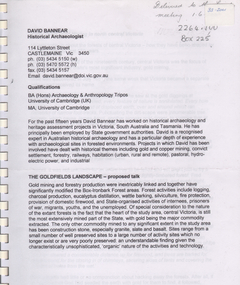
Booklet - The Goldfields Landscape, David Bannear, 2001
... ...1949-51: Migrant or refugee camps...Subjects covered in the presentation include: Early 1850's Gold Mining in north central Victoria Botanising diggers Quartz mining Deep lead mining, The state of the forests at the end of the nineteenth century State of the Central Victoria forests Settlement Charcoal production Wattle bark industry The railways Eucalyptus production State nurseries and plantations Thinning of forests Royalty system Creswick School of Forestry and Forestry Commission 1919: Pines and unemployed schemes 1931 - 1940: The Great Depression 1939: Black Friday 1939-45: Alien or interment forestry camps 1939- 45: Second World War charcoal production 1944-45 Prisoner of War Camps 1949-51: Migrant or refugee camps ...Early 1850's Gold Mining in north central Victoria Botanising diggers Quartz mining Deep lead mining The state of the forests at the end of the nineteenth century State of the Central Victoria forests Settlement Charcoal production Wattle bark industry The railways Eucalyptus production State nurseries and plantations Thinning of forests Royalty system Creswick School of Forestry and Forestry Commission 1919: Pines and unemployed schemes 1931 - 1940: The Great Depression 1939: Black Friday 1939-45: Alien or interment forestry camps 1939- 45: Second World War charcoal production 1944-45 Prisoner of War Camps 1949-51: Migrant or refugee camps David Bannear Eleven page typed booklet with clear plastic cover and white plastic ring binding. ...Eleven page typed booklet with clear plastic cover and white plastic ring binding. Booklet contains a presentation delivered to the Bendigo Historical Society on 1st June 2001, by David Bannear, BA, MA (University of Cambridge) Historical Archaeologist. Subjects covered in the presentation include: Early 1850's Gold Mining in north central Victoria Botanising diggers Quartz mining Deep lead mining, The state of the forests at the end of the nineteenth century State of the Central Victoria forests Settlement Charcoal production Wattle bark industry The railways Eucalyptus production State nurseries and plantations Thinning of forests Royalty system Creswick School of Forestry and Forestry Commission 1919: Pines and unemployed schemes 1931 - 1940: The Great Depression 1939: Black Friday 1939-45: Alien or interment forestry camps 1939- 45: Second World War charcoal production 1944-45 Prisoner of War Camps 1949-51: Migrant or refugee camps early 1850's gold mining in north central victoria, botanising diggers, quartz mining, deep lead mining, the state of the forests at the end of the nineteenth century, state of the central victoria forests, settlement, charcoal production, wattle bark industry, the railways, eucalyptus production, state nurseries and plantations, thinning of forests, royalty system, creswick school of forestry and forestry commission, 1919: pines and unemployed schemes, 1931 - 1940: the great depression, 1939: black friday, 1939-45: alien or interment forestry camps, 1939- 45: second world war charcoal production, 1944-45 prisoner of war camps, 1949-51: migrant or refugee camps, david bannear -
 Archive of Vietnamese Boat People
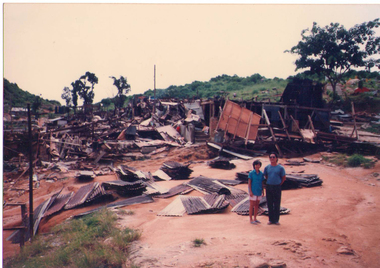
Demolishment of Bidong refugee camp in 1991
... Demolishment of Bidong refugee camp in 1991...Demolishment of Bidong refugee camp in 1991...Bidong refugee camp located in Bidong Island, Terengganu state, Malaysia, was established in Oct 1978 and closed down in Nov 1991. ...Demolishment of Bidong refugee camp in 1991...Demolishment of Bidong refugee camp in 1991 Demolishment of Bidong refugee camp in 1991 ...Bidong refugee camp located in Bidong Island, Terengganu state, Malaysia, was established in Oct 1978 and closed down in Nov 1991. In 13 years it provided accomodatation to a number of nearly 250,000 Vietnamese boat people, with the topmost crowded period of time in 1980 it housed over 40,000 boat people at one time in a small area of one square kilometre.Demolishment of Bidong refugee camp in 1991 -
 Slovenian Association Melbourne
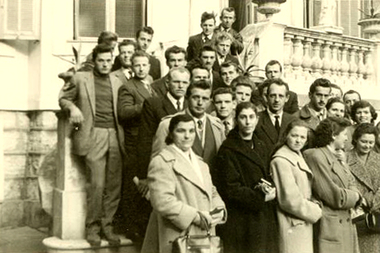
Sepia Photo, Slovenians in Italian refugee camp, after the Second World War
... Slovenians in Italian refugee camp...Group of young Slovenians in an Italian refugee camp...Group of young Slovenians in an Italian refugee camp Slovenians in Italian refugee camp Sepia Photo ...Group of young Slovenians in an Italian refugee camp -
 Archive of Vietnamese Boat People
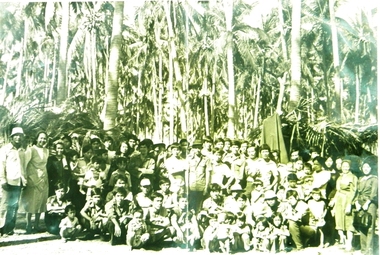
Vietnamese boat people in Philippines, Refugees in Philippines, 1978
... They were grouped up from many different islands and transferred to the refugee camp in Palawan Island. There they were interviewed and waited for decision from UNHCR to be granted settlement approval. ...Pictures taken on a beach of the island, in front of 2 huts covered with coco-palm leaves as temporary shelter, together with two nuns and government workers coming to pick up and transfer to a refugee camp....Pictures taken on a beach of the island, in front of 2 huts covered with coco-palm leaves as temporary shelter, together with two nuns and government workers coming to pick up and transfer to a refugee camp. Refugees in Philippines Vietnamese boat people in Philippines ...Vietnamese boat people landing in Philippines during the first years of the events (1975 - 1996). They were grouped up from many different islands and transferred to the refugee camp in Palawan Island. There they were interviewed and waited for decision from UNHCR to be granted settlement approval. Then they would be transferred to Bataan Processing Centre in Manilla waiting for flight to a third country.It is one of the very rare black and white photographs collected during the first years of the Vietnamese boat people in Philippines.Black and whilte picture taken at Lubang Island, Philippines, 1978. A group about 50 Vietnamese refugees landing in Lubang Island, Philippines, 1978. Pictures taken on a beach of the island, in front of 2 huts covered with coco-palm leaves as temporary shelter, together with two nuns and government workers coming to pick up and transfer to a refugee camp.Nguoi Viet ty nan tai Lubang, Philippines, 1978.lubang island, philippines, vietnamese refugees -
 Archive of Vietnamese Boat People
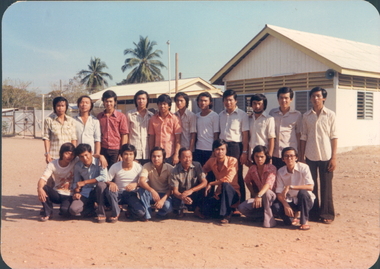
VN boat people in refugee camp at Kota Bharu
... VN boat people in refugee camp at Kota Bharu...VN boat people in refugee camp at Kota Bharu...VN boat people in refugee camp at Kota Bharu, 1980. Former refugee camp in Kota Bharu, capital of the state of Kelantan, north of Malaysia. ...VN boat people in refugee camp at Kota Bharu, 1980. Former refugee camp in Kota Bharu, capital of the state of Kelantan, north of Malaysia. ...VN boat people in refugee camp at Kota Bharu, 1980. Former refugee camp in Kota Bharu, capital of the state of Kelantan, north of Malaysia. It was a temporary camp and was closed down in 1984 after all refugees had been moved to Pulau Bidong. -
 Sunshine and District Historical Society Incorporated
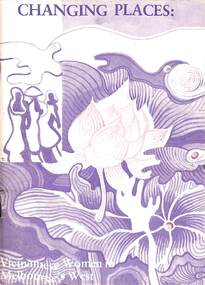
Book - Changing Places Vietnamese Women in Melbourne's West, Melbourne's Living Museum of the West, 1985
... ...Refugee camps...Vietnamese Vietnam Women Community history Refugee camps This book contains stories of Vietnamese Women in Melbourne's Western Suburbs Changing Places Vietnamese Women in Melbourne's West|Le Van Tai|Thi Tu Nguyen|Yen Nhi|Trng Dang|Pham Thi Tranh|Carolyn Nguyen|Thai Huu Phuc|Uyen|and many other people A soft purple covered book with illustrations Changing Places Vietnamese Women in Melbourne's West Book Changing Places Vietnamese Women in Melbourne's West Melbourne's Living Museum of the West Le Van Tai Thanh Son Ngyuen Jenny Mitchell ...This book contains stories of Vietnamese Women in Melbourne's Western SuburbsA soft purple covered book with illustrationsnon-fictionThis book contains stories of Vietnamese Women in Melbourne's Western Suburbsvietnamese, vietnam, women, community history, refugee camps -
 Archive of Vietnamese Boat People
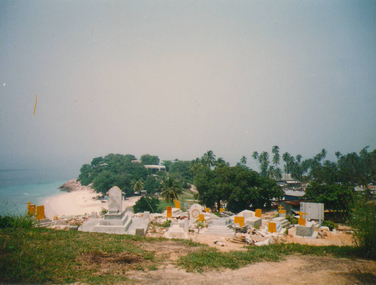
Graveyard Zone F in Bidong refugee camp
... Graveyard Zone F in Bidong refugee camp...Graveyard Zone F in Bidong refugee camp...The graveyard in Zone F had been cleaned up in 1991 before the Bidong refugee camp was closed down permanently in Nov 1991....Graveyard Zone F in Bidong refugee camp Graveyard Zone F in Bidong refugee camp ...This is the largest burial ground in Zone F, of Pulau Bidong Island in Malaysia. This photo was taken in May 2012The graveyard in Zone F had been cleaned up in 1991 before the Bidong refugee camp was closed down permanently in Nov 1991.Graveyard Zone Fgraveyard zone f, bidong -
 Archive of Vietnamese Boat People
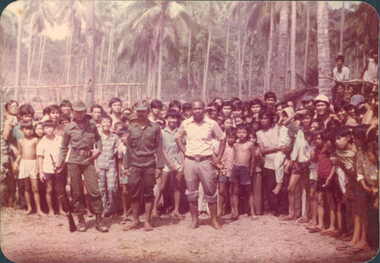
Vietnamese boat people in Air Raya, 1978
... Air Raya is the name of a former refugee camp located in Jemayah Island (Anambas Islands), Riau Province, Indonesia, established for Vietnamese boat people....Air Raya is the name of a former refugee camp located in Jemayah Island (Anambas Islands), Riau Province, Indonesia, established for Vietnamese boat people. ...Vietnamese boat people in Air Raya, 1978. Air Raya is the name of a former refugee camp located in Jemayah Island (Anambas Islands), Riau Province, Indonesia, established for Vietnamese boat people. -
 Slovenian Association Melbourne
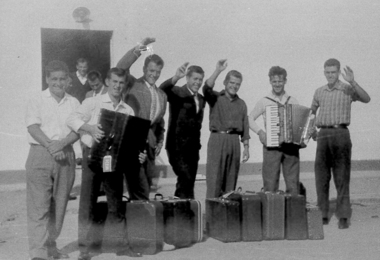
Goodbye Camp Latina, photo, Goodbye camp Latina, Sept 1960, September 1960
... Moving on from refugee camp... ( Refugee Camp ) Latina, Italy...Moving on from refugee camp Leaving the refugee camp for a new start celebration immigration refugee Black and White photo of a group of Slovenians waving goodbye to camp Latina prior to moving on to Australia. . . . ...Moving on from refugee campLeaving the refugee camp for a new startBlack and White photo of a group of Slovenians waving goodbye to camp Latina prior to moving on to Australia. . . . Lojze Markic, Karlo Strancar, . . Rudi Koloini.celebration, immigration, refugee -
 Embroiderers Guild, Victoria
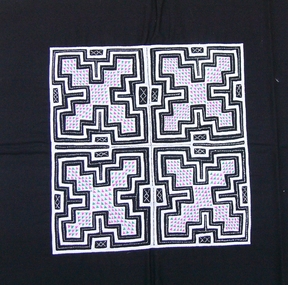
Textile - Mat, Prior to 1979
... Made in refugee camps in norther Thailand. Traditional design....Made in refugee camps in norther Thailand. Traditional design. ...Made in refugee camps in norther Thailand. Traditional design.Black and white cotton fabric, the white applied to the black. White and black running stitches. Pink and green small triangles embroidered on silk or synthetic embroidery thread. Geometric design based on squares. Backed with natural cotton.embroidery, applique, surface stitchery, mats, 1960-80, thailand, laos, reverse applique -
 Slovenian Association Melbourne
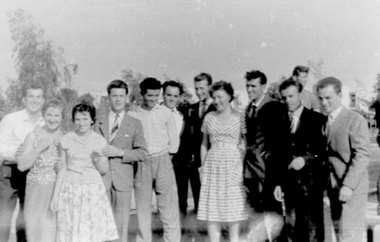
Camp Latina, photo, Slovenians in camp Latina, 1960, September 1960
... A gathering of Slovenians at the refugee camp in Italy, Latina prior to sailing to Australia...Latina, Italy refugee camp, Latina, italy...A gathering of Slovenians at the refugee camp in Italy, Latina prior to sailing to Australia Slovenians Moving on from the camp in Latina, Italy to a new future in Australia slovenians in latina slovenian association melbourne Black and white photo Slovenians in camp Latina, 1960 Camp Latina, photo ...A gathering of Slovenians at the refugee camp in Italy, Latina prior to sailing to AustraliaSlovenians Moving on from the camp in Latina, Italy to a new future in AustraliaBlack and white photo slovenians in latina, slovenian association melbourne -
 Slovenian Association Melbourne
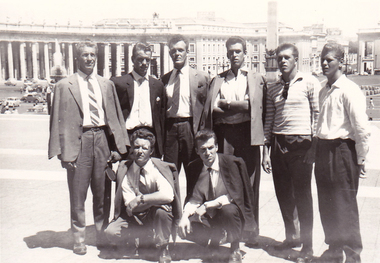
Rome, photo, Rome 1960, M Krsevan, L Markic, F Saule, R Koloini, K Strancar, Florjan, D Ziberna and I Mihelj, 31/7/1960
... A group of Slovenian friends on a sightseeing trip from refugee camp Latina to the eternal city of ROME...A group of Slovenian friends on a sightseeing trip from refugee camp Latina to the eternal city of ROME Refugees to Italy, Slovenian riends exploring Rome slovenians visiting rome slovenian association melbourne Black and white photo of a group of Slovenian refugees from Latina on a visit to Rome. ...A group of Slovenian friends on a sightseeing trip from refugee camp Latina to the eternal city of ROMERefugees to Italy, Slovenian riends exploring RomeBlack and white photo of a group of Slovenian refugees from Latina on a visit to Rome. Miro Krsevan, Alojz Markic, Franc Savle, Rudi Koloini, Karlo Strancar, Florijan Vidmar , Darjo Ziberna and Ivo Miheljslovenians visiting rome, slovenian association melbourne -
 Slovenian Association Melbourne
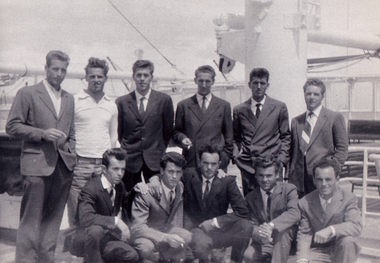
Flaminia, photo, Slovenians ready to board Flaminia, 1960, September 1960
... Next step Slovenian refugees moving on from refugee camp in Latina to a new start in Australia end of September 1960 with the ship Flaminia...Next step Slovenian refugees moving on from refugee camp in Latina to a new start in Australia end of September 1960 with the ship Flaminia Slovenian refugees ready to leave Latina camp, Italy slovenian refugees in italy slovenian association melbourne Black and white photo of a group of Slovenian refugees Slovenians ready to board Flaminia, 1960 Flaminia, photo ...Next step Slovenian refugees moving on from refugee camp in Latina to a new start in Australia end of September 1960 with the ship FlaminiaSlovenian refugees ready to leave Latina camp, ItalyBlack and white photo of a group of Slovenian refugeesslovenian refugees in italy, slovenian association melbourne -
 Embroiderers Guild, Victoria
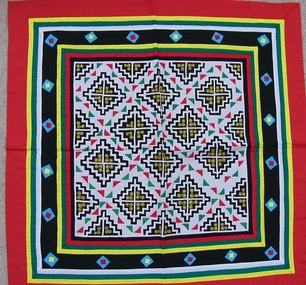
Textile - Mat, 1979
... Toole, working in a Laotian refugee camp Ban-Nan-Yao in north eastern Thailand, near Chieng Mae. ...Toole, working in a Laotian refugee camp Ban-Nan-Yao in north eastern Thailand, near Chieng Mae. ...Purchased from a Dr. Toole, working in a Laotian refugee camp Ban-Nan-Yao in north eastern Thailand, near Chieng Mae. Under his direction the refugees are making these panels for funds for the camp.Central square of dark blue with white applique in a geometric design. Borders of yellow green, red, yellow, green and red. Inner band of red has a wide herringbone in navy tied with tiny white stitches.embroidery, applique, surface stitchery, 1960-80, laos -
 Embroiderers Guild, Victoria
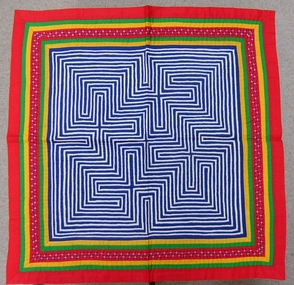
Textile - Mat, 1960-80
... Toole, working in a Laotian refugee camp Ban-nam-yao in the north east of Thailand near Chieng Mae. ...Toole, working in a Laotian refugee camp Ban-nam-yao in the north east of Thailand near Chieng Mae. ...Purchased from a Dr. Toole, working in a Laotian refugee camp Ban-nam-yao in the north east of Thailand near Chieng Mae. Under his direction he is encouraging the refugees to make these panels for selling.Applique in many colours with the addition of a series of borders of varying widths with a small amount of surface stitchery.embroidery, applique, surface stitchery, 1960-80, laos -
 Tatura Irrigation & Wartime Camps Museum
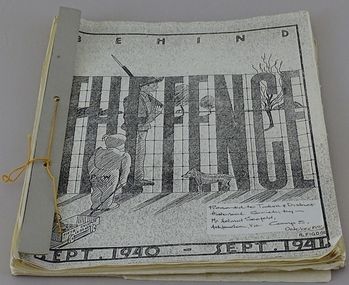
Book, Behind the Fence, 1941
... Made by internees, Singapore Group Refugees at Camp 3 Tatura for entertainment purposes...Made by internees, Singapore Group Refugees at Camp 3 Tatura for entertainment purposes tatura singapore group camp 3 books history local Soft cover loose leaf book "Behind the Fence" Sept 1940 - Sept1941. 12month periodical. ...Made by internees, Singapore Group Refugees at Camp 3 Tatura for entertainment purposesSoft cover loose leaf book "Behind the Fence" Sept 1940 - Sept1941. 12month periodical. Has camp sketch on front cover. Written (typed) in English and German. Black & White illustrations and sketches. Card cover bound with coloured thread.tatura, singapore group camp 3, books, history, local -
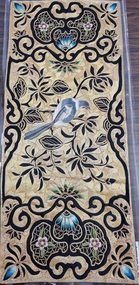 Embroiderers Guild, Victoria
Textile - Gold and Silk Embroidered Chinese Panel, c 1977
... He went to live in Hong Kong, as it was not safe staying at the refugee camp in Thailand. Donor sponsored family to Australia in 1978. ...He went to live in Hong Kong, as it was not safe staying at the refugee camp in Thailand. Donor sponsored family to Australia in 1978. ...Given to the donor by the husband of a cousin. They were refugees, fleeing from the Khmer Rouge. He went to live in Hong Kong, as it was not safe staying at the refugee camp in Thailand. Donor sponsored family to Australia in 1978. Husband acquired these pieces from Hong Kong, possibly came from China. Given to donor as a token of gratitude.Black silk panel with intricate design in goldwork leaving black silk as negative space. Highlighted with coloured silk flowers and central bird all embroidered in long and short stitch. -
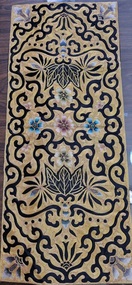 Embroiderers Guild, Victoria
Textile - Gold and Silk Embroidered Chinese Panel, c 1977
... He went to live in Hong Kong, as it was not safe staying at the refugee camp in Thailand. Donor sponsored family to Australia in 1978. ...He went to live in Hong Kong, as it was not safe staying at the refugee camp in Thailand. Donor sponsored family to Australia in 1978. ...Given to the donor by the husband of a cousin. They were refugees, fleeing from the Khmer Rouge. He went to live in Hong Kong, as it was not safe staying at the refugee camp in Thailand. Donor sponsored family to Australia in 1978. Husband acquired these pieces from Hong Kong, possibly came from China. Given to donor as a token of gratitude.Black silk panel with intricate design in goldwork leaving black silk as negative space. Highlighted with coloured silk flowers all embroidered in long and short stitch. -
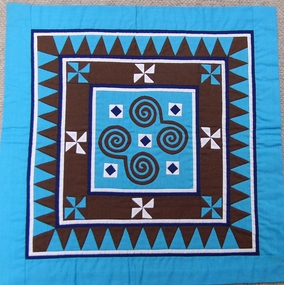 Embroiderers Guild, Victoria
Textile - Mat, 1981
... Made by Laotian refugees in camps in Northern Thailand. These pieces of patchwork are worked in their own traidtional way and style and are being sold for funds to help the camps....Made by Laotian refugees in camps in Northern Thailand. These pieces of patchwork are worked in their own traidtional way and style and are being sold for funds to help the camps. ...Made by Laotian refugees in camps in Northern Thailand. These pieces of patchwork are worked in their own traidtional way and style and are being sold for funds to help the camps.Applique panel. The square is made up of brown, dark blue, blue and white piecing, some reverse applique and applique. Some stitching showing on back which is cream cotton.patchwork, reverse applique, 1980-2000, thailand -
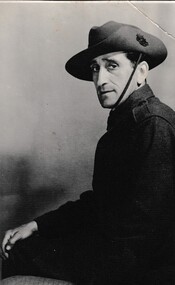 Tatura Irrigation & Wartime Camps Museum
Photograph, Paul Bridgeman, late 1940's
... Paul was an Singapore refugee and in Camp 3. Joined the 8th Employment Co. ...Paul was an Singapore refugee and in Camp 3. Joined the 8th Employment Co. singapore refugee paul bridgeman 8th employment co. ...Paul was an Singapore refugee and in Camp 3. Joined the 8th Employment Co. Black and white photos of Paul Bridgeman in slouch hat and uniform of the 8th Employment Co. singapore refugee, paul bridgeman, 8th employment co. -
 Embroiderers Guild, Victoria
Textile - Mat, Prior to 1979
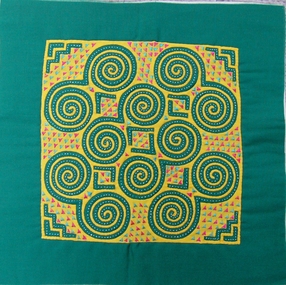
... Made by refugees in their camps in Northern Thailand. Traditional designs and embroidery used....Made by refugees in their camps in Northern Thailand. Traditional designs and embroidery used. ...Made by refugees in their camps in Northern Thailand. Traditional designs and embroidery used.Reverse applique of concentric circles. Embroidery in red and green small triangles and white running stitches in circles. Backing of natural cotton.embroidery, applique, surface stitchery, mats, 1960-80, thailand, reverse applique -
 Tatura Irrigation & Wartime Camps Museum
Photograph - Photocopy of Painting, Bank Director, 3 August 1943
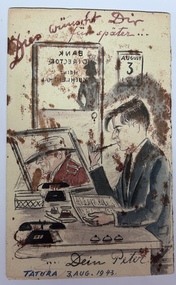
... Heinz Kuehlenthal, Dunera refugee, internee in camp 3 during WW2. His name is on the door as the Bank Director....Heinz Kuehlenthal, Dunera refugee, internee in camp 3 during WW2. His name is on the door as the Bank Director. heinz kuehlenthal peter dein Dunera Camp 2 Tatura Photocopy of a painting depicting a man at his desk. ...Heinz Kuehlenthal, Dunera refugee, internee in camp 3 during WW2. His name is on the door as the Bank Director.Photocopy of a painting depicting a man at his desk. He has short dark hair wearing a blue jacket and tie with white shirt. He has a pen in his right hand and holding it up to his lips. He has an open book in front of him. On the desk there are two black telephones, an ink well, letter tray and three bells. A large framed picture of a man in profile wearing a hat and burgandy jacket dominates the desk. A calendar on the wall shows August 3. The door to the office has a glass window with the wording "Bank director Heinz Kuelenthal" There is a shadow of a woman on the other side of the door. Hand written across the bottom of the picture is "....Dein Peter. Tatura 3 Aug 1943" Writing across the top is "Dries W...?? Dir fur spater...."heinz kuehlenthal, peter dein, dunera, camp 2, tatura -
 Tatura Irrigation & Wartime Camps Museum
wooden recorder, Approx W.W 2
... Recorder made by German refugees from Palestine in camp 3...Recorder made by German refugees from Palestine in camp 3 w.w.2 internment camps in australia Recorder made from red gum in camp 3. ...Recorder made by German refugees from Palestine in camp 3Recorder made from red gum in camp 3. Made by German internees from Palestine.w.w.2, internment camps in australia -
 Mentone Grammar School
Karl Duldig, Art Master (1945-1967)
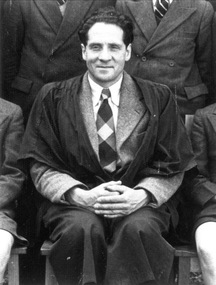
... In 1945, after feeling Nazi Germany in 1939, Karl Duldig and his wife, Slawa, were finally granted ‘landing permits’ in Australia, after six years living in refugee camps, both here and Singapore. Duldig was appointed art master at Mentone Grammar in 1945, while also establishing a small ceramics business with his artist-inventor wife, Slawa. ...In 1945, after feeling Nazi Germany in 1939, Karl Duldig and his wife, Slawa, were finally granted ‘landing permits’ in Australia, after six years living in refugee camps, both here and Singapore. Duldig was appointed art master at Mentone Grammar in 1945, while also establishing a small ceramics business with his artist-inventor wife, Slawa. ...In 1945, after feeling Nazi Germany in 1939, Karl Duldig and his wife, Slawa, were finally granted ‘landing permits’ in Australia, after six years living in refugee camps, both here and Singapore. Duldig was appointed art master at Mentone Grammar in 1945, while also establishing a small ceramics business with his artist-inventor wife, Slawa. His work was prolific across several mediums. Our School Archives holds a large collection of sketches, as well as several bronze busts which he made, depicting life, students, and staff at Mentone Grammar during his time at the School from 1945 to 1967. -
Tatura Irrigation & Wartime Camps Museum
Macrame Belt, Approx W.W 2
... Macrame belt made by German refugees from Palestine in camp 3...Macrame belt made by German refugees from Palestine in camp 3 w.w.2 internment camps in australia Made by German internees from Palestine .Macrame belt made from cotton - metal Macrame belt Macrame Belt German internees ...Macrame belt made by German refugees from Palestine in camp 3 Made by German internees from Palestine .Macrame belt made from cotton - metalw.w.2, internment camps in australia -
 Tatura Irrigation & Wartime Camps Museum
Document, Tatura, 1940's
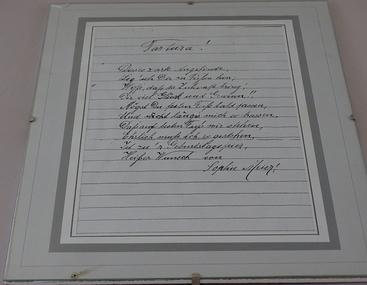
... Camp 3 by Mrs. Sophie Meier, mother of Mrs. Helmut Seefeld, Singapore Group, refugees, internees at Camp 3 Tatura...Camp 3 by Mrs. Sophie Meier, mother of Mrs. Helmut Seefeld, Singapore Group, refugees, internees at Camp 3 Tatura tatura documents pamphlets internment camp poetry Helmut Seefeld Sophie Meier Framed and mounted single sided sheet of paper, photocopy of handwritten (in German) poem titled "Tartura" Tatura Document Document ...Poem written in Camp 3 by Mrs. Sophie Meier, mother of Mrs. Helmut Seefeld, Singapore Group, refugees, internees at Camp 3 TaturaFramed and mounted single sided sheet of paper, photocopy of handwritten (in German) poem titled "Tartura"tatura, documents, pamphlets, internment camp poetry, helmut seefeld, sophie meier -
Tatura Irrigation & Wartime Camps Museum
Folio, Hans Ernest Fleischer
... Dunera Jewish refugee internee. Hay/Tatura Camps. Prepared by Fleischer's daughter, Anna Fletcher...Dunera Jewish refugee internee. Hay/Tatura Camps. Prepared by Fleischer's daughter, Anna Fletcher dunera 8th employment co books biography Personal records and photos. ...Dunera Jewish refugee internee. Hay/Tatura Camps. Prepared by Fleischer's daughter, Anna FletcherPersonal records and photos.dunera, 8th employment co, books, biography -
 Tatura Irrigation & Wartime Camps Museum
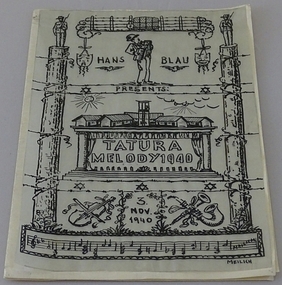
Programme, Tatura Melody 1940, 1940
... Programme of musical show presented by Hans Blay & Company. Refugees at the Tatura Camp (of the Singapore Group)...Programme of musical show presented by Hans Blay & Company. Refugees at the Tatura Camp (of the Singapore Group) tatura documents programmes Meilich Hand produced programme of concert "Tatura Melody 1940". ...Programme of musical show presented by Hans Blay & Company. Refugees at the Tatura Camp (of the Singapore Group)Hand produced programme of concert "Tatura Melody 1940". Cover of waxed paper, printed and illustrated in ink (black). Insert of programme typed dated 3 nov 1940. Wording on cover Hans Blay presents: Tatura Melody 1940Meilichtatura, documents, programmes -
 Embroiderers Guild, Victoria
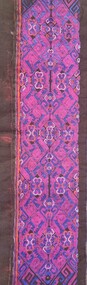
Textile - Embroidered Hmong Dress Panel
... This tradition took on a new powerful meaning in the late 1970's after the wars in Southeast Asia. Forced into refugee camps in Thailand, Hmong women began creating "story cloths". ...This tradition took on a new powerful meaning in the late 1970's after the wars in Southeast Asia. Forced into refugee camps in Thailand, Hmong women began creating "story cloths". ...During periods of harsh persecution, Hmong women developed a way to record their history by weaving it directly into their clothing. Called "pajntaub" , which means "flower cloth", and it was traditionally practiced only by the women of the community. Using a variety of complex stitching techniques, they created intricate geometric patterns. These designs were not just for decoration on clothes, collars and baby carriers. At times when their own language was suppressed, these symbols served as a form of communication and cultural documentation, with history hidden in the very pleats of their skirts. This tradition took on a new powerful meaning in the late 1970's after the wars in Southeast Asia. Forced into refugee camps in Thailand, Hmong women began creating "story cloths". These were larger tapestries that documented their lives, their traditions, and their harrowing journey from their homelands to the camps. These story cloths became a way to tell the world what had happened to them . They also became a vital source of income, sometimes selling for just one dollar, which helped families survive in the camps. Hmong Archives; Library of Congress. Hill Tribe clothing panel in fuchsia pinks and royal blue, with white, green, orange highlights. Embroidered in buttonhole stitch and satin stitch filling. Worked on black even weave linen. -
 Embroiderers Guild, Victoria
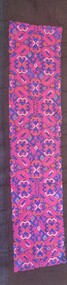
Textile - Embroidered Hmong Dress Panel
... This tradition took on a new powerful meaning in the late 1970's after the wars in Southeast Asia. Forced into refugee camps in Thailand, Hmong women began creating "story cloths". ...This tradition took on a new powerful meaning in the late 1970's after the wars in Southeast Asia. Forced into refugee camps in Thailand, Hmong women began creating "story cloths". ...During periods of harsh persecution, Hmong women developed a way to record their history by weaving it directly into their clothing. Called "pajntaub" , which means "flower cloth", and it was traditionally practiced only by the women of the community. Using a variety of complex stitching techniques, they created intricate geometric patterns. These designs were not just for decoration on clothes, collars and baby carriers. At times when their own language was suppressed, these symbols served as a form of communication and cultural documentation, with history hidden in the very pleats of their skirts. This tradition took on a new powerful meaning in the late 1970's after the wars in Southeast Asia. Forced into refugee camps in Thailand, Hmong women began creating "story cloths". These were larger tapestries that documented their lives, their traditions, and their harrowing journey from their homelands to the camps. These story cloths became a way to tell the world what had happened to them . They also became a vital source of income, sometimes selling for just one dollar, which helped families survive in the camps. Hmong Archives; Library of Congress. Hill Tribe clothing panel in fuchsia pinks and royal blue, with white, green, orange highlights. Embroidered in buttonhole stitch and satin stitch filling. Worked on black even weave linen.
