
Showing 8 items matching "19th century recipes"
-
 Wodonga & District Historical Society Inc
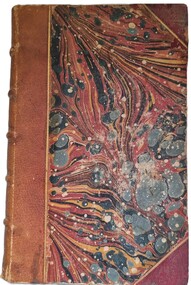
Book - Simpson's Cookery, Improved and Modernised, Henderson William Brand, 1834
... 19th Century Recipes...This item is signicant because of its age and its widespread popularity at the time of its publication. 19th Century Recipes Recipes Simpson's Cookery, Improved and Modernised is a 19th-century cookbook first published in London in 1834. ...Simpson's Cookery, Improved and Modernised is a 19th-century cookbook first published in London in 1834. Authored by the prominent cook of the time, John Simpson and updated by Henderson William Brand. Brand described his credentials as “of the kitchen of his late Majesty George the Fourth; Chief cook to T W. Coke. Esq.; Earl Manvers; his Grace the Duke of Norfolk; the Marquis of Ailsa and Lord Rolle”. It contains a range of recipes influenced by French and English cuisine including extensive instructions for the creation of all aspects of a complete menu for small as well as large parties. The menus covered a wide collection from those “now used at the best tables of London and Paris”.A small volume with a textured leather binding. It features a heavy card cover decorated with an abstract design of swirling brown and cream tones. The preface page is printed in multiple fonts in black ink.non-fictionSimpson's Cookery, Improved and Modernised is a 19th-century cookbook first published in London in 1834. Authored by the prominent cook of the time, John Simpson and updated by Henderson William Brand. Brand described his credentials as “of the kitchen of his late Majesty George the Fourth; Chief cook to T W. Coke. Esq.; Earl Manvers; his Grace the Duke of Norfolk; the Marquis of Ailsa and Lord Rolle”. It contains a range of recipes influenced by French and English cuisine including extensive instructions for the creation of all aspects of a complete menu for small as well as large parties. The menus covered a wide collection from those “now used at the best tables of London and Paris”.19th century recipes, recipes -
 Warrnambool and District Historical Society Inc.
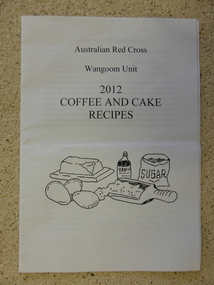
Leaflet, Coffee & Cake, 2012
... 19th century based on the ideas of Swiss business man Jean-Henri Dunant. The Australian organization was founded in September 1914 and the Warrnambool branch in October 1914. The Wangoom branch was formed at a later date This recipe ...The Red Cross was founded in the mid 19th century based on the ideas of Swiss business man Jean-Henri Dunant. The Australian organization was founded in September 1914 and the Warrnambool branch in October 1914. The Wangoom branch was formed at a later dateThis recipe book is of minor interest as an example of the production of a local volunteer group – Wangoom Red Cross. It will be useful for display.This is a 12 page booklet of six A4 folded and stapled pages. The printing is black on a white background and there are sketches related to cookery. This is a 12 page booklet of six A4 folded and stapled pages. The printing is black on a white background and there are sketches related to cookery. wangoom red cross, recipe books -
 Warrnambool and District Historical Society Inc.
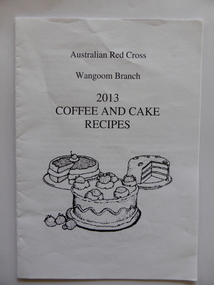
Document, Recipe Book Wangoom Red Cross, 2013
... 19th century as a service organization dedicated to helping those in need. The Australian Red Cross was established in 1914 and the Warrnambool Red Cross was established in the same year. Wangoom Red Cross was established at a later date. The recipe...19th century as a service organization dedicated to helping those in need. The Australian Red Cross was established in 1914 and the Warrnambool Red Cross was established in the same year. Wangoom Red Cross was established at a later date. The recipe ...The Red Cross was formed in the 19th century as a service organization dedicated to helping those in need. The Australian Red Cross was established in 1914 and the Warrnambool Red Cross was established in the same year. Wangoom Red Cross was established at a later date. The recipe booklet was a means of funding the organization and utilizing the culinary knowledge and skills of the local women. Wangoom is a small settlement on the northern fringes of the city of Warrnambool. This booklet is of some interest as an example of the fund-raising methods used by the Wangoom Red Cross. It also shows the type of cakes and ingredients popular in 2013 (eg blueberries, muffins, mud cakes )These are three A4 pages folded to make 12 pages of printed recipes. The printing is black type on white paper with black and white sketches related to cookery. The pages are stapled.Front page: ‘Australian Red Cross, Wangoom Branch, 2013 Coffee and Cake Recipes’wangoom red cross, recipe books, warrnambool -
 Emerald Museum & Nobelius Heritage Park
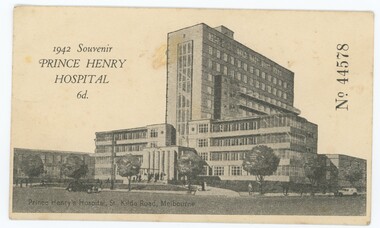
Postcard - Postcard of Prince Henry Hospital
... 19th century. It was rebuilt on the St Kilda Rd. site and opened c1940. It ceased operations on that site c1991. The number on this card suggests this card may have been bought as part of a fund-raising 'raffle'. This postcard recalls a hospital building which has now disappeared from St. Kilda Rd. postcard photography postcard album 1940s Prince Henry Hospital "Green Postcard Album" On front, printed: '1942 Souvenir / PRINCE HENRY / HOSPITAL / 6d.' Also printed on extreme right-hand side: 'No. 44578' On back: Hand-written recipe ...This postcard is one in an album of mainly late 19th and early 20th century decorative and photographic postcards. This postcard is one of only three postcards in the album dating from the 1940s. It recalls Prince Henry Hospital in St Kilda Rd, Melbourne. Prince Henry's history dated from the 19th century. It was rebuilt on the St Kilda Rd. site and opened c1940. It ceased operations on that site c1991. The number on this card suggests this card may have been bought as part of a fund-raising 'raffle'.This postcard recalls a hospital building which has now disappeared from St. Kilda Rd.Black and white photographic postcard of Prince Henry Hospital 1942 On front, printed: '1942 Souvenir / PRINCE HENRY / HOSPITAL / 6d.' Also printed on extreme right-hand side: 'No. 44578' On back: Hand-written recipe with no title for something like a jam slice. postcard, photography, postcard album, 1940s, prince henry hospital, "green postcard album" -
 Greensborough Historical Society
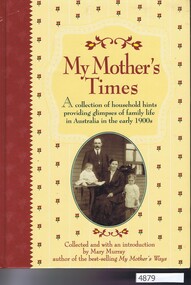
Book, Mary Murray, My mother's times: a collection of household hints... collected... by Mary Murray, 1998_
... Household hints and recipes from 19th and early 20th century times....Greensborough Historical Society 34A Glenauburn Road Lower Plenty Lower Plenty melbourne Household hints and recipes from 19th and early 20th century times. household hints 152 p., hardback book, photographs and line drawings My mother's times: a collection of household hints... collected... by Mary Murray Book Mary Murray Mallon Publishing ...Household hints and recipes from 19th and early 20th century times.152 p., hardback book, photographs and line drawingshousehold hints -
 Flagstaff Hill Maritime Museum and Village
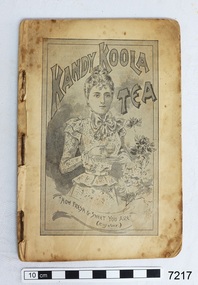
Book - Cookbook, The Kandy Koola Cookery Book, 1898
... The comment given is “This is an early example of an Australian cookbook printed as a product promotion, ‘published by the proprietors of Kandy Koola Tea for presentation to the ladies of Victoria, with compliments.’ “ Flagstaff Hill also has a green Kandy Koola Tea tin in our Collection This Kandy Koola Cookery Book is an example of the recipes, foods, manufacturers, advertisements available and used in the late 19th century in Australia’s colonial times. ...This is a cookbook of family recipes and promotes products available for purchase at that time. The products include Kandy Koola, Nestle, Usher’s Whiskey and O.K. Kandy Koola ran an advertisement in the West Gippsland Gazette on 2 May 1911 promoting its tea as perfect for a picnic. The text reads “Picnicking. All as hungry as hunters – made a fire of small twigs – put on our billy of fresh spring water – and waited. Soon bubble, bubble, bubble and the billy boiled. In goes the pure Kandy-Koola Tea. Tea! Tea is not the word – it tasted like nectar! One cup, two cups, three cups – then had to make a fresh billy full. Lazed away the rest of the day sipping our Kandy Koola and chatting. How good indeed! “All grocers sell Kandy Koola Tea. It is pure leaf, selected and blended with the greatest care and skill. Ask your grocer for Kandy Koola . Sold in three grades, i.e. red, blue and green packets” A copy of this cookery book is in the Monash University Library’s Rare Books Collection and has a cover with red printing on a cream background. The price stamp on the corner of the cover is “One Shilling” and is under an image of a crown. The book has 71 pages. It is listed as being published in Melbourne, 1898. The comment given is “This is an early example of an Australian cookbook printed as a product promotion, ‘published by the proprietors of Kandy Koola Tea for presentation to the ladies of Victoria, with compliments.’ “ Flagstaff Hill also has a green Kandy Koola Tea tin in our Collection This Kandy Koola Cookery Book is an example of the recipes, foods, manufacturers, advertisements available and used in the late 19th century in Australia’s colonial times. Food types, preparation and cooking methods show those available to housewives in those times.Book, cookbook, The Kandy Koola Cookery Book and Housewife’s Companion. Small book, pages bound with staples, contained in a black card cover (original outer covers is missing). Pages start at number 11, which is an advertisement for Kandy Koola Tea. The book includes a wide variety of recipes promoting products of Kandy Koola, Nestle, Usher’s Whiskey and O.K. There are pages of line drawings of a ‘Chinese Tea Plantation’ and ‘Natural Bridge in Virginia U.S.A.’ Advertisements include a drawing of a kangaroo. flagstaff hill, warrnambool, shipwrecked coast, flagstaff hill maritime museum, maritime museum, shipwreck coast, flagstaff hill maritime village, great ocean road, cookery book, cookbook, australian cookbook, 19th century cookbook, colonial cookbook, domestic, book, promotional cookbook, o.k. preserves manufacturer, nestle, usher’s whiskey, image of chinese tea plantation, image of natural bridge in virginia u.s.a., cook book, kandy koola cookery book -
 Flagstaff Hill Maritime Museum and Village
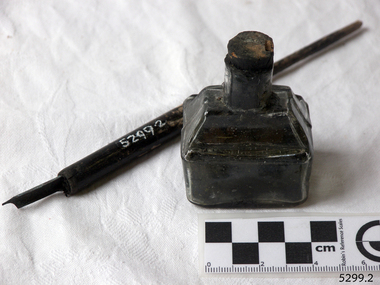
Container - Ink Bottle and Pen, Caldwell’s Ink Factory, Early 20th century
... This pen and ink bottle set is of significance as the bottle has its original cork and retains remnants of ink, which was made from a recipe that at the time was over 100 years old, according to Caldwell.. The handmade, mould blown method of manufacture is representative of a 19th-century handcraft industry that is now been largely replaced by mass production. ...This shaped ink bottle made by Caldwell's is called a 'boat ink bottle'. It was shaped especially to hold a nib pen when the pen was not in use. The design of the bottle is sometimes called a ‘cottage’ or ‘boat’ shape. The Caldwell’s handmade glass ink bottle was mouth-blown into a two-piece mould, a method often used in the mid-to-late 19th century. The glass blower burst the bottle off the end of his blowpipe with a tool, leaving an uneven mouth and sharp edge on the bottle, which was usually filed. The bottle was then filled with ink and sealed with a cork. More expensive bottles would have a lip added, which was more time-consuming and costly to produce. The capacity for a bottle such as this was about 3 ½ oz (ounces) equal to about 100 ml. Pen and ink have been in use for handwriting since about the seventh century. A quill pen made from a bird’s feather was used up until around the mid-19th century. In the 1850s a steel point nib for the dip pen was invented and could be manufactured on machines in large quantities. The nis only held a small amount of ink so users had to frequently dip the nib into an ink well for more ink. Handwriting left wet ink on the paper, so the blotting paper was carefully used to absorb the excess ink and prevent smudging. Ink could be purchased as a ready-to-use liquid or in powdered form, which needed to be mixed with water. In the 1880s a successful, portable fountain pen gave smooth-flowing ink and was easy to use. In the mid-20th century, the modern ballpoint pen was readily available and inexpensive, so the fountain pen lost its popularity. However, artisans continue to use nib pens to create beautiful calligraphy. Caldwell’s Ink Co. – F.R. Caldwell established Caldwell’s Ink Company in Australia around 1902. In Victoria, he operated from a factory at Victoria Avenue, Albert Park, until about 1911, then from Yarra Bank Road in South Melbourne. Newspaper offices were appointed as agencies to sell his inks, for example, in 1904 the New Zealand Evening Star sold Caldwell’s Flo-Eesi blue black ink in various bottle sizes, and Murchison Advocate (Victoria) stocked Caldwell’s ink in crimson, green, blue black, violet, and blue. Caldwell’s ink was stated to be “non-corrosive and unaffected by steel pens”. A motto used in advertising in 1904-1908 reads ‘Makes Writing a Pleasure’. Stationers stocked Caldwell’s products and hawkers sold Caldwell’s ink stands from door to door in Sydney in the 1910s and 1920s. In 1911 Caldwell promised cash for returned ink bottles and warned of prosecution for anyone found refilling his bottles. Caldwell’s Ink Stands were given as gifts. The company encouraged all forms of writing with their Australian-made Flo-Eesi writing inks and bottles at their impressive booth in the ‘All Australian Exhibition’ in 1913. It advertised its other products, which included Caldwell’s Gum, Caldwell’s Stencil Ink (copy ink) and Caldwell’s Quicksticker as well as Caldwell’s ‘Zac’ Cough Mixture. Caldwell stated in a 1920 article that his inks were made from a formula that was over a century old, and were scientifically tested and quality controlled. The formula included gallic and tannic acids and high-quality dyes to ensure that they did not fade. They were “free from all injurious chemicals”. The permanent quality of the ink was important for legal reasons, particularly to banks, accountants, commerce, municipal councils and lawyers. The Caldwell’s Ink Company also exported crates of its ink bottles and ink stands overseas. Newspaper advertisements can be found for Caldwell’s Ink Company up until 1934 when the company said they were the Best in the business for 40 years.This pen and ink bottle set is of significance as the bottle has its original cork and retains remnants of ink, which was made from a recipe that at the time was over 100 years old, according to Caldwell.. The handmade, mould blown method of manufacture is representative of a 19th-century handcraft industry that is now been largely replaced by mass production. The bottle and its contents are of state significance for being produced by an early Melbourne industry and exported overseas. The pen and ink set is historically significant as it represents methods of handwritten communication that were still common up until the mid-20th century when fountain pens and modern ballpoint pens became popular and convenient and typewriters were becoming part of standard office equipment.Victorian boat ink bottle; small rectangular clear glass ink bottle with horizontal grooves made in the glass for resting and holding the pen. The set includes one pen and nib with the bottle and cork. The bottle is made by Caldwell's and contains its Flo-Eesi Blue Black Ink brand."Caldwell's Flo-Eesi Blue Black Ink."flagstaff hill, warrnambool, maritime museum, maritime village, great ocean road, shipwreck coast, ink, nib pen, writing ink, writing, copying, banks, lawyers, commerce, student, permanent ink, flo-eesi, blue black ink, stationery, record keeping, handwriting, writing equipment, writing accessory, office supply, cottage bottle, boat bottle, mouth-blown bottle, two-part mould, sheer-lip bottle, burst-lip, cork seal, f r caldwell, caldwell’s ink company, albert park, south melbourne, inkstands, stencil ink, copy ink, quicksticker, zac cough mixture -
 Kew Historical Society Inc
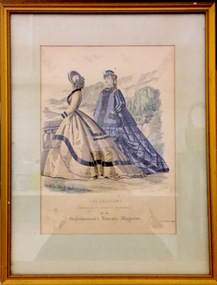
Print - Framed Fashion Plate, 'The Newest French Fashions', from the Young Englishwoman, 1864, 1864
... recipes, house-hold management tips and fashion. The Young Englishwoman started out as a weekly magazine but, as editors and publishers changed over time, it became a monthly periodical. This items is used to illustrate the popularisation of fashion styles in the 19th century ...The first issue of The Young Englishwoman was published in December of 1864 and was directed toward a young, female, middle-class audience and treated mostly household matters such as needlework, recipes, house-hold management tips and fashion. The Young Englishwoman started out as a weekly magazine but, as editors and publishers changed over time, it became a monthly periodical.This items is used to illustrate the popularisation of fashion styles in the 19th centuryFramed fashion plate - 'The Newest French Fashions': modelled for the Young Englishwoman. fashion illustration, young englishwoman
