
Showing 28 items matching "1st infantry division"
-
 National Vietnam Veterans Museum (NVVM)
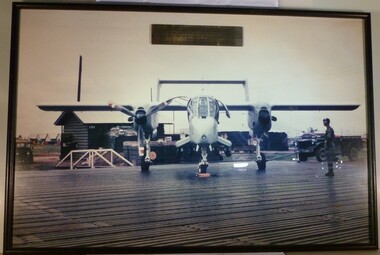
Photograph - A Framed Coloured Photograph, The Big Red, 1/09/1969 12:00:00 AM
... ...1st Infantry Division...Ron supported the 2nd Brigade of US 1st Infantry Division 'The Big Red'....Ron supported the 2nd Brigade of US 1st Infantry Division 'The Big Red'. The Big Red Photograph A Framed Coloured Photograph ...A framed colour photograph of RAAF Flt Lt Ron Slater starting left engine of OV-10 aircraft at Di An, South Vietnam September 1969. Ron supported the 2nd Brigade of US 1st Infantry Division 'The Big Red'.Plaque with details of the engine start Donated by Flt Lt Peter Condonflight lieutenant ronald alexander slater, o61240, distinguished flying cross, 79 squadron, headquarters, australian force vietnam raaf element, 2nd brigade, 1st infantry division, the big red, flight lieutenant peter damien condon, o44252, ov-10 aircraft, di an, photograph -
 National Vietnam Veterans Museum (NVVM)
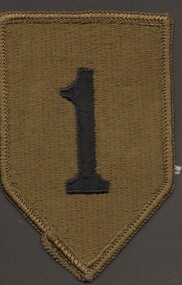
Textile - Badge - cloth
... ...1st Infantry Division...This item is a US Army 1st Infantry Division patch, often known as the "Big Red 1". ...This item is a US Army 1st Infantry Division patch, often known as the "Big Red 1". ...This item is a US Army 1st Infantry Division patch, often known as the "Big Red 1". This is the black version designed for wear on the Army OCP (Operational Camouflage Pattern) or MultiCam uniform. Soldiers who have served in a combat zone with the unit wear this patch on their right shoulder. The U.S. Army 1st Infantry Division served in Vietnam from 1965 to 1970, primarily conducting search-and-destroy missions. Based in Di An and Lai Khe, they fought in the Iron Triangle, secured Tan Son Nhut Air Base during the 1968 Tet Offensive, and engaged in major operations. This patch was collected by WO2 Robert Palmer Matthews ( Service # 34974) of the Royal Australian Army Ordnance Corps, who served with 161 Reconnaissance (Recce) Flight.Shield shaped khaki cloth badge with the number 1 embroidered in black. Khaki overstitch on edges.robert palmer matthews, cloth badge, badge, patch, matthews, united states army, us army, 1st infantry division, big red 1 -
 Bendigo Military Museum
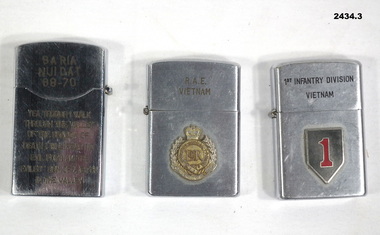
Memorabilia - TRENCH ART, CIGARETTE LIGHTERS, C.1960’s
... These cigarette lighters were called Zippo Lighters. .2) Yea though I walk through the valley of the shadow of death I will fear no evil for I am the evilist son of a bitch in the valley. .3) The Red Figure 1 the 1st Infantry Division US. They were known as The Big Red One. ....1) Baria Nui Dat 69-70 (see notes) .2) RAE Vietnam .3) 1st Infantry Division Vietnam...These cigarette lighters were called Zippo Lighters. .2) Yea though I walk through the valley of the shadow of death I will fear no evil for I am the evilist son of a bitch in the valley. .3) The Red Figure 1 the 1st Infantry Division US. They were known as The Big Red One. ...These cigarette lighters were called Zippo Lighters. .2) Yea though I walk through the valley of the shadow of death I will fear no evil for I am the evilist son of a bitch in the valley. .3) The Red Figure 1 the 1st Infantry Division US. They were known as The Big Red One. Items souvenired by Peter James Dodd No 217842 while serving in South Vietnam. refer 2436.2P for his service details..1) Cigarette lighter, metal, silver colour with hinged lid for use. Engraving on both sides, 1 depicts a lady with a bird in her palm, the other a poem & date. .2) Cigarette lighter, metal, silver colour with hinged lid for use 1 face has a minature Royal Aust Engineers badge attached. .3) Cigarette lighter, metal, silver colour with hinged lid for use 1 face has a small plaque attached with the figure 1 in red..1) Baria Nui Dat 69-70 (see notes) .2) RAE Vietnam .3) 1st Infantry Division Vietnamcigarette, zippo, accessory -
 Bendigo Military Museum
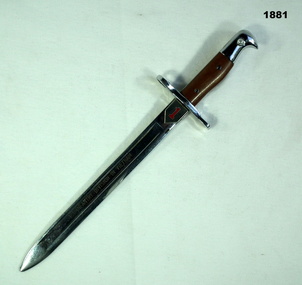
Accessory - LETTER OPENER, 1966-75
... Engraved on blade "1st Infantry Division in Vietnam"....Refer Cat No 2436.2P for his service details. domestic items-writing equipment military history-army Red Engraved on blade "1st Infantry Division in Vietnam". Replica bayonet letter opener. ...Item souvenired by Peter Dodd. Refer Cat No 2436.2P for his service details.Replica bayonet letter opener. Chrome with wooden handle. On blade under crossguard is plaque with large red number "1".Engraved on blade "1st Infantry Division in Vietnam".domestic items-writing equipment, military history-army, red -
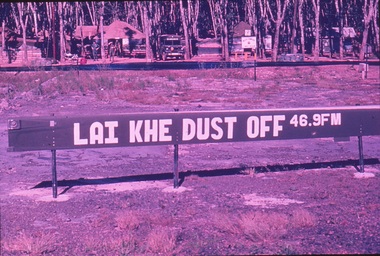 National Vietnam Veterans Museum (NVVM)
Slide - Sims Image Collection
... Lai Khe Base Camp was a significant United States Army base in South Vietnam during the Vietnam War, serving as the headquarters for the 1st Infantry Division from 1965 to 1972. Located along Highway QL13, also known as Thunder Road, it also hosted other U.S. ...Lai Khe Base Camp was a significant United States Army base in South Vietnam during the Vietnam War, serving as the headquarters for the 1st Infantry Division from 1965 to 1972. Located along Highway QL13, also known as Thunder Road, it also hosted other U.S. ...Lai Khe Base Camp was a significant United States Army base in South Vietnam during the Vietnam War, serving as the headquarters for the 1st Infantry Division from 1965 to 1972. Located along Highway QL13, also known as Thunder Road, it also hosted other U.S. Army units and the South Vietnamese Army's 5th Division. From a collection of 253 images on slides taken while on deployment in Vietnam, by Corporal Peter Stanley Sims (44304), who served in the Royal Australian Army Medical Corps, 1969 - 1970.Sign of 'Lai Khe Dust Off 48.9FM', Vietnam 1969/70. peter stanley sims, 44304, slides, royal australian army medical corps, vietnam war, sims, hq australian forces vietnam, 20 surgical hospital, lai khe, dust off -
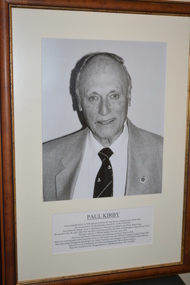 Wangaratta RSL Sub Branch
Photograph - Framed photograph, NE Framing Studio, Paul Kirby
... He was commissioned into the Duke of Wellingtons Regt and served in Palestine with the 1st British Infantry Division until 1948. Paul was discharge at Royal Park in Melbourne in 1948. ...He was commissioned into the Duke of Wellingtons Regt and served in Palestine with the 1st British Infantry Division until 1948. Paul was discharge at Royal Park in Melbourne in 1948. ...Paul Kirby joined the British Army in Melbourne in 1944 and was posted to the Black Watch Regt. He served in the UK until 1946. He was commissioned into the Duke of Wellingtons Regt and served in Palestine with the 1st British Infantry Division until 1948. Paul was discharge at Royal Park in Melbourne in 1948. He joined the R.S.L in 1948 and received his 50 year Service Award in 1998. He was awarded Life Membership in 2001.Timber framed photograph of male in suit.PAUL KIRBY1991-2000paul kirby, palestine, life membership, rsl -
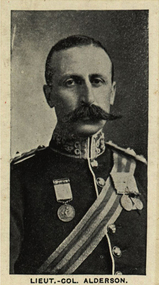 Federation University Historical Collection
Photograph (black & White), Lieutenant-Colonel Alderson - South Africa
... Infantry against the Boer forces. Alderson also served in the 1882 Anglo-Egyptian War, Mounted Camel Regiment during the failed expedition to relieve Khartoum and rescue General Gordon. At the outbreak of the First World War, Alderson was in charge of the 1st Mounted Division...Infantry against the Boer forces. Alderson also served in the 1882 Anglo-Egyptian War, Mounted Camel Regiment during the failed expedition to relieve Khartoum and rescue General Gordon. At the outbreak of the First World War, Alderson was in charge of the 1st Mounted Division ...Edwin Alderson was born in 1859 and served in several campaigns of the late nineteenth and early twentieth centuries. He saw service in the First Boer War in 1881 in the Transvaal. In 1896 he was sent to Mashonaland as a commander of a regiment of local troops during the Second Matabele War. In 1900 shortly after the outbreak of the Second Boer War he returned to South Africa to command the Mounted Infantry against the Boer forces. Alderson also served in the 1882 Anglo-Egyptian War, Mounted Camel Regiment during the failed expedition to relieve Khartoum and rescue General Gordon. At the outbreak of the First World War, Alderson was in charge of the 1st Mounted Division. He retired from active service in 1920 aged 61. In 1901, as a result of Alderson's contribution to many campaigns he was rewarded with confirmation as a Brigadier General, appointment as a Companion of the Order of Bath and to receive the ceremonial post of Aide-de-Camp to Queen Victoria, who died the same year. He also received the Queen's South Africa Medal. He died in 1927 aged 68. Individual image from photographed poster of tobacco and cigarette cards. alderson, campaigns, first boer war, transvaal, mashonaland, south africa, second boer war, first world war, anglo-egyptian war, mounted camel regiment, second matabele war, general gordon, brigadier-general, companion of the order of bath, aide-de-camp, queen victoria, queen's south africa medal -
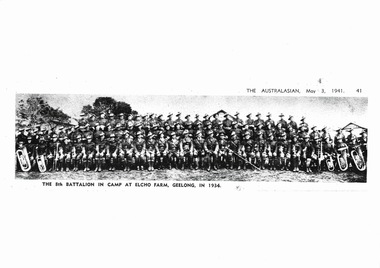 Lara RSL Sub Branch
Photograph, THE 8TH BATTALION IN CAMP AT ELCHO FARM, GEELONG IN 1934, 1934
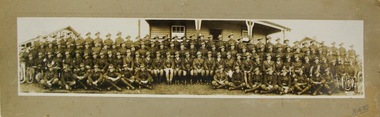
... infantry battalion of the Australian Army. Initially raised in 1914 for the First Australian Imperial Force during the First World War the battalion was completely recruited from Victoria and formed part of the 2nd Brigade, 1st Division. ...infantry battalion of the Australian Army. Initially raised in 1914 for the First Australian Imperial Force during the First World War the battalion was completely recruited from Victoria and formed part of the 2nd Brigade, 1st Division. ...The 8th Battalion was an infantry battalion of the Australian Army. Initially raised in 1914 for the First Australian Imperial Force during the First World War the battalion was completely recruited from Victoria and formed part of the 2nd Brigade, 1st Division. During the war it fought at Gallipoli and in France and Belgium on the Western Front. It was disbanded in 1919, before being re-raised as a Militia battalion in 1921. During the Second World War the 8th Battalion was used primarily as a garrison unit before taking part in the Bougainville campaign late in the war. It was disbanded again in 1946 during the demobilisation process, although it was reformed again in 1948 when it was amalgamated with the 7th Battalion. Today, its honours and traditions are perpetuated by the 8th/7th Battalion, Royal Victoria Regiment.Rectangular shaped black and white photograph.THE AUSTRALIAN, May 3, 1941. THE 8TH BATTALION IN CAMP AT ELCHO FARM, GELONG IN 1934. 8th battalion, ww1, australian infantry, lara r.s.l. -
 Lara RSL Sub Branch
Photograph Elcho Farm, 1934
... infantry battalion of the Australian Army. Initially raised in 1914 for the First Australian Imperial Force during the First World War the battalion was completely recruited from Victoria and formed part of the 2nd Brigade, 1st Division. ...infantry battalion of the Australian Army. Initially raised in 1914 for the First Australian Imperial Force during the First World War the battalion was completely recruited from Victoria and formed part of the 2nd Brigade, 1st Division. ...The 8th Battalion was an infantry battalion of the Australian Army. Initially raised in 1914 for the First Australian Imperial Force during the First World War the battalion was completely recruited from Victoria and formed part of the 2nd Brigade, 1st Division. During the war it fought at Gallipoli and in France and Belgium on the Western Front. It was disbanded in 1919, before being re-raised as a Militia battalion in 1921.Rectangular Black and White Photograph mounted on Grey CardboardFront H. WaL? George Crawford Elcho Farm Lara 1936-1937elcho farm lara 1936 1937 photo george crawford -
 Lara RSL Sub Branch
Photograph, Set 4 photographs. and others for Torquay Light Horse camp, 1940
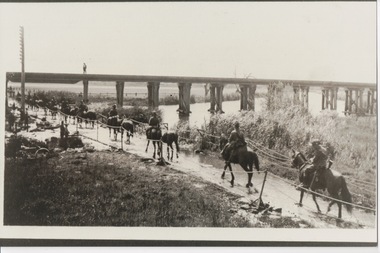
... On 1st November, 1914, Australia’s First Infantry Division and the first four Light Horse regiments sailed for England in a fleet of transport ships. ...On 1st November, 1914, Australia’s First Infantry Division and the first four Light Horse regiments sailed for England in a fleet of transport ships. ...These images capture for all time Light Horsemen travelling through Geelong on their way to camp at Torquay for the last Group meeting in Australia . information following - details obtained from .........https://torquayhistory.com/light-horse-brigade/ On Australia Day, 1997, Sir John Young unveiled this plaque on Point Danger, Torquay. Torquay history, Light Horse Training Camp, WW2 Plaque at Pt. Danger Note----- (See images to view plaque) The plaque identifies a significant event in Torquay’s history and the sentiments of ‘change’ for the Light Horse Brigade – from horses to machines. In 1940 the four Light Horse Regiments (4th, 8th, 13th and 20th), some 5000 Light Horse and 2000 horses camped and trained at Torquay. Three other regiments, formerly mounted on horses, were also at Torquay ‘mounted’ on privately owned trucks and cars. Division troops included Artillery, Engineers, Signals, Field Ambulance and other branches of the Army necessary to enable a Division to function. It wasn’t just the sheer numbers of men coming to this little town that made the event significant, it was also the fact that the men of the Light Horse were dramatic, almost glamorous figures and it is easy to see their exploits as some splendid adventure. Horses have played a special role in the story of Australia. They were the only means of transport across this huge country, so it was necessary for everyone to have the ability to ride a horse. When war broke out in 1899 between Britain and the Boers of South Africa (“Boer” was Dutch for “farmer”) Australia sent troops to fight. At first Britain was wary of using untried, unprofessional colonial cavalrymen but soon saw that the slouch-hatted Australian “bushmen” were a match for the fast-moving and unconventional mounted commandos of the Boers. The Australians proved themselves to be expert rough-riding horsemen and good shots. Bush life had hardened them to go for long periods with little food and water. They also showed remarkable ability to find their way in a strange country and use its features for cover, in both attack and defence. By 1914, when Australia joined the war against Germany, there were 23 Light Horse regiments of militia volunteers. Many men from these units joined the Light Horse regiments of the Australian Imperial Force (AIF). Men were given remounts (if not using their own horses) – army horses bought by Commonwealth purchasing officers from graziers and breeders. These were called “walers” because they were a New South Wales stockhorse type – strong, great-hearted animals with the strains of the thoroughbred and semi-draught to give them speed, strength and stamina. On 1st November, 1914, Australia’s First Infantry Division and the first four Light Horse regiments sailed for England in a fleet of transport ships. The first of the Light Horse arrived at Gallipoli in May without their horses. Back with their horses after Gallipoli, they were formidable combatants across the Sinai and Palestine. Some British commanders observed that the light horseman moved with a “lazy, slouching gait, like that of a sleepy tiger” but described how the promise of battle “changes that careless gait, into a live athletic swing that takes him over the ground much quicker than other troops”. They had Light Horse, Torquay, training campdeveloped a reputation as formidable infantrymen. The Turks called them “the White Ghurkas” – a reference to their deadly skill with the bayonet. The Arabs called them “The Kings of the Feathers”. The plume had originally been a battle honour of the Queensland Mounted Infantry for their work in the shearer’s strike of 1891. During WW1 it was adopted by almost all the Light Horse Regiments. It was the proud badge of the light horseman. The most famous of their battles was the attack on Beersheba- the charge of the 4th Light Horse Brigade. Mounted infantrymen and their superb walers had carried out one of the most successful cavalry charges in history – against what seemed impossible odds. They surprised the Turks by charging cavalry-style, when they would normally have ridden close to an objective then dismounted to fight. The fall of Beersheba swung the battle tide against the Turks in Palestine; and changed the history of the Middle East. While 19 men from the Surf Coast Shire served with the 4th Light Horse over the course of WW1, only four were involved in the charge of Beersheba- John GAYLARD, Philip QUINN.(Winchelsea); Wallace FINDLAY (Anglesea); Harry TRIGG (Bambra). After the war, Light Horse units played a key role in the Australian Government’s compulsory military training programme. The Citizen Military Forces (C.M.F.) thrived on the glamour of the wartime Light Horse tradition, ignoring the possibility that motor vehicles would soon replace the horses. When training was no longer compulsory, the C.M.F. regiments declined and horses became more of a luxury during the 1930s depression years of poverty and unemployment. Some regiments were motorised. Then, in 1939, Australia joined Britain in another world war. Training was increased for the militia at both home bases and regional training camps. The camp at Torquay in 1940, commanded by Major General Rankin, was at Divisional strength. By the end of the camp some felt that the Division was ready for active service. Gradually, over the next four years, the Australian Light Horse units were mounted on wheels and tracks and the horses were retired. Six men enlisted at the Torquay camp and another 57 men and women enlisted at Torquay for service in WW2. Those who served in the Militia provided valuable Officers and NCOs and men for the armed services during the war. Each infantry division of the 2nd AIF had a Light Horse regiment attached to it. But the day of the Australian mounted soldier hadn’t quite passed. During World War II, Australia’s 6th Cavalry Regiment formed a mounted unit they called “The Kelly Gang” which did valuable scouting work. In New Guinea, a mounted Light Horse Troop did patrol duty and helped carry supplies. Some fully equipped walers were flown into Borneo for reconnaissance in rugged mountain country. But by the end of the war, in 1945, the horse had disappeared from the Australian Army. References: Australian Light Horse Association www.lighthorse.org.au National Australia Archives Australian War Memorial Surf Coast Shire WW1 memorials www.togethertheyserved.com The Light horse- a Cavalry under Canvas Light Horse, Training Camp, Torquay, WW2 Late in 1939 it was decided to set up a Lighthorse training camp in Torquay to train both men and horses for the battles of the Second World War. Horses, men and equipment came on special trains from all over Victoria and NSW, and as you would expect horseman came from areas such as Omeo and Sale, the Wimmera and the Western District. They arrived at the Geelong racecourse for watering in the Barwon River and then were ridden across the ford at the breakwater and began their 11 mile trek to Torquay. Light Horse, Training Camp, Torquay, WW2 Tent city By the end of January 1940 the camp at Torquay accommodated some 5000 men and 2500 horses of the Second Cavalry Division. The rows of horses, tents and huts near Blackgate Road were quite a sight. While the cavalrymen engaged in exercises on the land and on the beaches, many of the troops took over the Torquay School for special training of men and officers. Mr Bob Pettit local farmer and Councillor for the Barrabool Shire, wrote about the Light horse in the Surf Coast Community News in 1985 saying “They used to travel about the district riding four abreast in one long convoy. To my annoyance they went through my property and shut all the gates behind them. I had certain gates open to let stock in to the water holes and it would take me three -quarters of an hour to follow the horsemen up and put all the gates right again” he continued “the men from the Light Horse were here when the fire went through in March 1940. He recalled an incident when early one morning, as some one blew the bugle, a soldier putting a white sheet on the line frightened the horses. They panicked and ran off in all directions. Six went over the cliff near Bird Rock, five were never found, and the rest were gathered up after nearly a fortnight in the bush around Addiscott and Anglesea" Light Horse, Training Camp, Torquay, WW2, Geelong Parade Geelong parade The training camp culminated in a parade through the streets of Geelong on March 12th 1940. The salute was given at the Town Hall and the troops continued on a route to the You Yang’s for a training exercise. Note-----(see media section for photograph) The Camp was abandoned in mid 1940 as it was deemed unsuitable for training during winter and the cost of a permanent camp could not be justified if it could not be used all year. Historic.......Rare,,,Interpretive.Sepia photographs.set of four ....post card size ....Horses &LighthorsemenNo 1, Lighthorsemen Regiment Geelong 1940......No 2 Light Horse at Breakwater Geelong 1938 to 1940....No 3 Light Horse at Breakwater Geelong 1938 to 1940.....No 4 Light Horse crossing Breakwater camped at Geelong Showgrounds. These markings are on reverse of photographs.light horsemengeelong 1940., world war 2 -
 Red Cliffs Military Museum
Replica Medals, WW1 & WW11 Medals Awarded to Nathaniel Barclay, (estimated); between 1914 & 1945
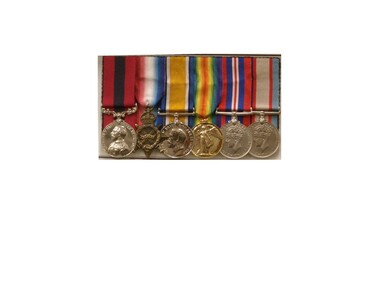
... 1st August 1916 Returned to England 14th September 1916. Operations France and Flanders from 6th December 1916. To 59th Battalion 29th December 1916. To 5th Division Infantry...1st August 1916 Returned to England 14th September 1916. Operations France and Flanders from 6th December 1916. To 59th Battalion 29th December 1916. To 5th Division Infantry ...Born 5th October 1895 in Adavoyle, United Kindom Occupation Grocer and later horticulturalist Married after WW1- Wife - Daisy Florence Barclay World War One Staff Sergeant Regimental Number 2139 Enlisted AIF in Melbourne 29th December 1914, having previously served 3 months with the Ulster Volunteers and to camp Broadmeadows, to depot Battalion 29th December 1914. Embarked from Melbourne for the middle East with 3rd reinforcement group for the 5th Battalion, 2nd Brigade, 1st Division, 25th February 1915 per transport 'Runic'. Disembarked Alexandria and to camp Heliopolis, Egypt. Operation Gallipoli from 5th May 1915 with 5th Battalion. Sick with dental problems 2nd Field Ambulance 17th September 1915. To hospital Lemnos 20th December 1915. To Alexandria hospital with pluerisy 12th January 1916. Returned to Australia with enteric per 'Nestor' 9th February 1916.To duty Broadmeadows 4th April 1916. Wmbarked with 4th reinforcements group for the 58th Battalion, 15th Brigade per transport 'Themistocles' 1st August 1916 Returned to England 14th September 1916. Operations France and Flanders from 6th December 1916. To 59th Battalion 29th December 1916. To 5th Division Infantry School 18th February to 28th March 1917 as Lance Corporal. Corporal 7th April 1917. Sergeant 2nd May 1917. To 3rd Southern General Hospital Oxford 4th October 1917. Returned to Melbourne per Transport 'Persic' 12th February 1918. Discharged 14th March 1918. Second World War. Regimental Number V5571 Emlisted in the Australian Military Forces in Royal Park, Melbourne 22nd August 1940 and to 2nd Infantry Training Battalion, Fyansford. Staff Sergeant 24th August 1940. To 2/14th Training Battalion Wangaratta 11th October 1940. To 2/23rd Training Battalion, Wangaratta 18th October, 1940.To Southern Command Training School 26th May 1941.to Camp Bonegilla 15th May 1942. To Camp Caulfield 11th November 1942. Discharged to Reserve Occupation 19th November 1942. Remarks. Awarded 1915-15 Star, British War Medal, and Victory Medal 1914-1919 Awarded Distinguished Conduct Medal as Lance Corporal vide London Gazette 30111 of 31st July 1918. Citation for action on 9th July 1917 during the third Battle of Ypres reads- " For conspicous gallantry and devotion to duty. He rendered invaluable service during operation in carrying important messsages through heavy fire" Awarded War Medal and Australian Service Medal 1939-45 in 1951. Described as 71.5inches tall, medium complexion, blue eyes and brown hair. He died 11th September 1962.WW1 - Distinguished Conduct Medal 1914/15 Star 1914/18 British War Medal Victory Medal WW11 - 1939/45 British War Medal Australian Service Medal 1939/45 All medals with associated coloured ribbons. These are replica medals made in the exact metals as the originals. Also in display is a record of War Service which can be found in the narrative. Noneservice, medal, 1918, citation, ww1, military, gazette, london, ww11, medals, 30111, 31st, july, ypres, distinguished -
 Victorian Interpretive Projects Inc.
Photograph - Digital, Troopship Wiltshire, 1918, c1918
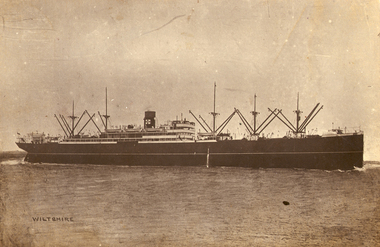
... During that time The Wiltshire carried the 4th Field Artillery Brigade (Victoria) 2nd Division Artillery and their 1st Reinforcements, 1st Division Ammunition Column 1st Division Artillery 4th Reinforcements, thirty-four Infantry Battalion Reinforcements, the 10th, 11th & 12th Field Artillery Battery (Victoria) 4th Field Artillery Brigades, the 4th Brigade Ammunition Column 4th Field Artillery Brigade, the 1st Siege Artillery Brigade 15th Reinforcements, the 4th Light Horse Regiment (Victoria) A, B & C squadron & their Machine Gun Section, six Light Horse Brigade Reinforcements, the 1st Veterinary Section (New South Wales) 11th Reinforcements, the 1st Mobile Veterinary Section (New South Wales) 1st Division 11th Reinforcements, the 2nd Mobile Veterinary Section (Victoria, New South Wales) 2nd Division 11th Reinforcements, the 1st Cyclist Battalion (New South Wales and Queensland) 3rd Reinforcements, the 2nd Field Ambulance (Victoria) First Division & Medical Officers. ...During that time The Wiltshire carried the 4th Field Artillery Brigade (Victoria) 2nd Division Artillery and their 1st Reinforcements, 1st Division Ammunition Column 1st Division Artillery 4th Reinforcements, thirty-four Infantry Battalion Reinforcements, the 10th, 11th & 12th Field Artillery Battery (Victoria) 4th Field Artillery Brigades, the 4th Brigade Ammunition Column 4th Field Artillery Brigade, the 1st Siege Artillery Brigade 15th Reinforcements, the 4th Light Horse Regiment (Victoria) A, B & C squadron & their Machine Gun Section, six Light Horse Brigade Reinforcements, the 1st Veterinary Section (New South Wales) 11th Reinforcements, the 1st Mobile Veterinary Section (New South Wales) 1st Division 11th Reinforcements, the 2nd Mobile Veterinary Section (Victoria, New South Wales) 2nd Division 11th Reinforcements, the 1st Cyclist Battalion (New South Wales and Queensland) 3rd Reinforcements, the 2nd Field Ambulance (Victoria) First Division & Medical Officers. ...The HMAT A18 Wiltshire (1912-1922) weighed 10,390 tons with an average cruise speed of 13.5 knots or 25.00 kmph. Described as a refrigerated steamship it was b uilt 1912 by John Brown, Clydebank for the Federal S N Co Ltd, London and was propelled by a twin screw, quadruple expansion engine 2 x 4 cylinders each 6500 hp. Owned by the Commonwealth & Dominion Line Ltd, London, it was leased by the Commonwealth until 2 October 1917. It embarked from Egypt on 2 February 1918. On 18 October 1914 at Melbourne embarked the 4th Light Horse Regiment (Victoria) A, B & C squadron & their Machine Gun Section, the 2nd Field Ambulance (Victoria) First Division. The disembarked the 4th Light Horse Regiment in Egypt on 10 December 1914. On 01 November 1914 The Wiltshire assembled with the first convoy at King George's Sound, Albany Western Australia in transporting the first detachment of the Australian and New Zealand Imperial Expeditionary Forces. It completed nine transport voyages from Australia commencing 18 October 1914 until final voyage from Sydney 9th November 1918. During that time The Wiltshire carried the 4th Field Artillery Brigade (Victoria) 2nd Division Artillery and their 1st Reinforcements, 1st Division Ammunition Column 1st Division Artillery 4th Reinforcements, thirty-four Infantry Battalion Reinforcements, the 10th, 11th & 12th Field Artillery Battery (Victoria) 4th Field Artillery Brigades, the 4th Brigade Ammunition Column 4th Field Artillery Brigade, the 1st Siege Artillery Brigade 15th Reinforcements, the 4th Light Horse Regiment (Victoria) A, B & C squadron & their Machine Gun Section, six Light Horse Brigade Reinforcements, the 1st Veterinary Section (New South Wales) 11th Reinforcements, the 1st Mobile Veterinary Section (New South Wales) 1st Division 11th Reinforcements, the 2nd Mobile Veterinary Section (Victoria, New South Wales) 2nd Division 11th Reinforcements, the 1st Cyclist Battalion (New South Wales and Queensland) 3rd Reinforcements, the 2nd Field Ambulance (Victoria) First Division & Medical Officers. After the conclusion of World War One is was wrecked Rosalie Bay, Great Barrier Island New Zealand 31 May 1922 on passage London for Dunedin. Onboard was a crew of 103 plus 1 stowaway, and 10,000 ton of general cargo. No lives lost and is now a well frequented 'Dive' wrecksite. (http://www.flotilla-australia.com/hmat.htm#A18)Photographic postcard of the troopship Wiltshire out at sea.world war one, world war, wiltshire, troop ship, mmm -
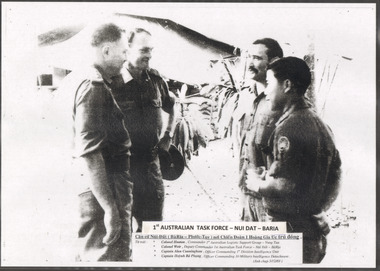 National Vietnam Veterans Museum (NVVM)
Memorabilia - Copied image 1st Australian Task Force
... 1st Australian Logistic Support Group...1st Division Intelligence Unit...10 Military Intelligence Detachment...Colonel Hooton...Colonel Weir...Captain Alan Cunningham...Captain Huynh Ba Phung...Grzegozewski...Helmut...Ziggy...39121...Royal Australian Infantry...This item is part of a collection donated by Helmut Grzegozewski (Ziggy) who served in the Royal Australian Infantry Corps, 3rd Battalion, The Royal Australian Regiment from December 1967 to November 1968 1st Australian Task Force 1st Australian Logistic Support Group 1st Division Intelligence Unit 10 Military Intelligence Detachment Colonel Hooton Colonel Weir Captain Alan Cunningham Captain Huynh Ba Phung Grzegozewski Helmut Ziggy 39121 Royal Australian Infantry Corps 3rd Battalion The Royal Australian Regiment A laminated copy of a black and white (poor quality) photograph taken at the 1st Australian Task Force - Nui Dat - Baria. ...This item is part of a collection donated by Helmut Grzegozewski (Ziggy) who served in the Royal Australian Infantry Corps, 3rd Battalion, The Royal Australian Regiment from December 1967 to November 1968 A laminated copy of a black and white (poor quality) photograph taken at the 1st Australian Task Force - Nui Dat - Baria. The names of the soldiers in the photograph are Colonel Hooton, commander 1st Australian Logistic Support Group, Colonel Weir, Deputy Commander 1st Australian Task Force, Captain Alan Cunningham, Officer Commanding 1st Division Intelligence Unit and Captain Huynh Ba Phung, Officer Commanding 10 Military Intelligence Detachment.1st australian task force, 1st australian logistic support group, 1st division intelligence unit, 10 military intelligence detachment, colonel hooton, colonel weir, captain alan cunningham, captain huynh ba phung, grzegozewski, helmut, ziggy, 39121, royal australian infantry corps, 3rd battalion, the royal australian regiment -
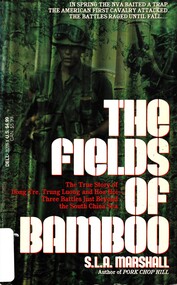 National Vietnam Veterans Museum (NVVM)
Book, Marshall, S.L.A, The Fields of Bamboo: The True Story of Dong Tre, Trung Luong and Hoa Hoi - Three Battles Just Beyond the South China Sea, 1971
... 1st Cavalry Division 101st Screaming Eagles NVA It began and ended with a trap. The first one nearl led a green Special Forces captain into a slaughter, the last cost the life of a heroic lietuenant. Between the two raged some of the fiercest infantry ...It began and ended with a trap. The first one nearl led a green Special Forces captain into a slaughter, the last cost the life of a heroic lietuenant. Between the two raged some of the fiercest infantry fighting of the Vietnam WarIt began and ended with a trap. The first one nearl led a green Special Forces captain into a slaughter, the last cost the life of a heroic lietuenant. Between the two raged some of the fiercest infantry fighting of the Vietnam Waraustralia - armed forces - biography, vietnam war, personal narratives - australian, vietnamese conflict, 1961-1971 - personal narratives, australian, battle of dong tre, battle of trung luong, battle of hoa hoi, 1st cavalry division, 101st screaming eagles, nva -
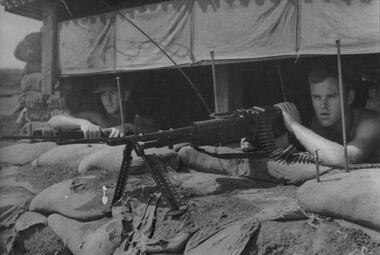 National Vietnam Veterans Museum (NVVM)
Photograph, Gibbons, Denis, Nui Dat Hill Bunker
... 1st Australian Task Force in Nui Dat working as a photographer. For almost five years Gibbons toured with nine Australian infantry battalions, posting compelling war images from within many combat zones before being flown out in late November 1970 after sustaining injuries. The images held within the National Vietnam Veterans Museum make up the Gibbons Collection. Photograph 131st Locating Battery 1st Field Regt RAA Nui Dat Gibbons Collection Catalogue Gnr Cahill M60 Machine Gun SLR Nui Dat Hill 1 AFT Base Denis Gibbons A black and white photograph of 131st Divisional ...Denis Gibbons (1937 – 2011) Trained with the Australian Army, before travelling to Vietnam in January 1966, Denis stayed with the 1st Australian Task Force in Nui Dat working as a photographer. For almost five years Gibbons toured with nine Australian infantry battalions, posting compelling war images from within many combat zones before being flown out in late November 1970 after sustaining injuries. The images held within the National Vietnam Veterans Museum make up the Gibbons Collection. A black and white photograph of 131st Divisional Locating Battery, 1st Field Regt RAA. Gnr Cahill mans an M60 machine gun while his number two is at the ready with his SLR rifle, in one of the units' sandbagged bunkers, in the battery location on top of Nui Dat Hill, 1AFT BAse, (circa March 1967)photograph, 131st locating battery, 1st field regt, raa, nui dat, gibbons collection catalogue, gnr cahill, m60 machine gun, slr, nui dat hill, 1 aft base, denis gibbons -
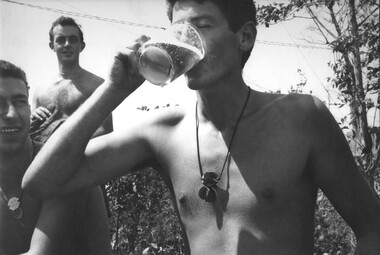 National Vietnam Veterans Museum (NVVM)
Photograph, Gibbons, Denis, 21st Birthday
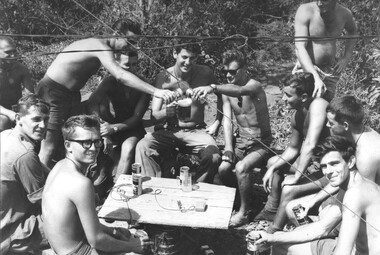
... 1st Australian Task Force in Nui Dat working as a photographer. For almost five years Gibbons toured with nine Australian infantry battalions, posting compelling war images from within many combat zones before being flown out in late November 1970 after sustaining injuries. The images held within the National Vietnam Veterans Museum make up the Gibbons Collection. Photograph 131st Locating Battery 1st Field Regt RAA Gnr Ben Lombardo Nui Dat Gibbons Collection Catalogue Birthday 1 ATF Base Nui Dat Hill Phuoc Tuy Province 21st Birthday Denis Gibbons A black and white photograph of 131st Divisional ...Denis Gibbons (1937 – 2011) Trained with the Australian Army, before travelling to Vietnam in January 1966, Denis stayed with the 1st Australian Task Force in Nui Dat working as a photographer. For almost five years Gibbons toured with nine Australian infantry battalions, posting compelling war images from within many combat zones before being flown out in late November 1970 after sustaining injuries. The images held within the National Vietnam Veterans Museum make up the Gibbons Collection. A black and white photograph of 131st Divisional Locating Battery, 1st Field Regt RAA, off duty Gnr Ben Lombardo downs his pint mug of ale on his 21st birthday. The celebration was held, in the battery location on top if Nud Dat Hill, 1ATF Base, Phuoc Tuy Province, South Vietnam.photograph, 131st locating battery, 1st field regt, raa, gnr ben lombardo, nui dat, gibbons collection catalogue, birthday, 1 atf base, nui dat hill, phuoc tuy province, 21st birthday, denis gibbons -
 National Vietnam Veterans Museum (NVVM)
Photograph, Gibbons, Denis, 21st Birthday
... 1st Australian Task Force in Nui Dat working as a photographer. For almost five years Gibbons toured with nine Australian infantry battalions, posting compelling war images from within many combat zones before being flown out in late November 1970 after sustaining injuries. The images held within the National Vietnam Veterans Museum make up the Gibbons Collection. Photograph 131st Locating Battery 1st Field Regt RAA Gnr Ben Lombardo Nui Dat Gibbons Collection Catalogue Phuoc Tuy Province Birthday 1 ATF Base 21st Birthday Denis Gibbons A black and white photograph of 131st Divisional ...Denis Gibbons (1937 – 2011) Trained with the Australian Army, before travelling to Vietnam in January 1966, Denis stayed with the 1st Australian Task Force in Nui Dat working as a photographer. For almost five years Gibbons toured with nine Australian infantry battalions, posting compelling war images from within many combat zones before being flown out in late November 1970 after sustaining injuries. The images held within the National Vietnam Veterans Museum make up the Gibbons Collection. A black and white photograph of 131st Divisional Locating Battery, 1st Field Regimet, RAA, off duty gunners fill Gnr Ben Lombardo's "pint" mug, to drink the traditional toast on his 21st birthday. The celebration as at the battery location on top of Nui Dat Hill, 1st AFT Base, Phuoc Tuy Province (Circa March 1967)photograph, 131st locating battery, 1st field regt, raa, gnr ben lombardo, nui dat, gibbons collection catalogue, phuoc tuy province, birthday, 1 atf base, 21st birthday, denis gibbons -
 National Vietnam Veterans Museum (NVVM)
Photograph, Gibbons, Denis, Vietnamization
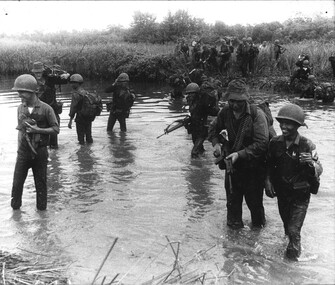
... 1st Australian Task Force in Nui Dat working as a photographer. For almost five years Gibbons toured with nine Australian infantry battalions, posting compelling war images from within many combat zones before being flown out in late November 1970 after sustaining injuries. The images held within the National Vietnam Veterans Museum make up the Gibbons Collection. Photograph 11 Platoon D coy 6 RAR/NZ 18th ARVN Gibbons Collection Catalogue Diggers 6 RAR/NZ (ANZAC) Vietnamization ARVN Saigon Denis Gibbons A black and white photograph of Diggers of 11 platoon, D Company, 6 RAR/NZ (ANZAC), operating with 18th ARVN Division ...Denis Gibbons (1937 – 2011) Trained with the Australian Army, before travelling to Vietnam in January 1966, Denis stayed with the 1st Australian Task Force in Nui Dat working as a photographer. For almost five years Gibbons toured with nine Australian infantry battalions, posting compelling war images from within many combat zones before being flown out in late November 1970 after sustaining injuries. The images held within the National Vietnam Veterans Museum make up the Gibbons Collection. A black and white photograph of Diggers of 11 platoon, D Company, 6 RAR/NZ (ANZAC), operating with 18th ARVN Division, as part of the increased program of Vietnamization of the war in order to retrain the ARVN under combat conditions. Here both units cross a wide stream east of Saigonphotograph, 11 platoon, d coy, 6 rar/nz, 18th arvn, gibbons collection catalogue, diggers, 6 rar/nz (anzac), vietnamization, arvn, saigon, denis gibbons -
 National Vietnam Veterans Museum (NVVM)
Photograph, Gibbons. Denis, Wounded Vietnamese Boy
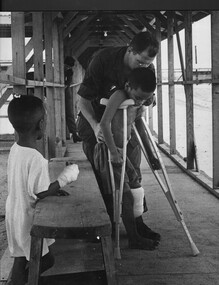
... 1st Australian Task Force in Nui Dat working as a photographer. For almost five years Gibbons toured with nine Australian infantry battalions, posting compelling war images from within many combat zones before being flown out in late November 1970 after sustaining injuries. The images held within the National Vietnam Veterans Museum make up the Gibbons Collection. Photograph 1st Air Cavalry Division ...Denis Gibbons (1937 – 2011) Trained with the Australian Army, before travelling to Vietnam in January 1966, Denis stayed with the 1st Australian Task Force in Nui Dat working as a photographer. For almost five years Gibbons toured with nine Australian infantry battalions, posting compelling war images from within many combat zones before being flown out in late November 1970 after sustaining injuries. The images held within the National Vietnam Veterans Museum make up the Gibbons Collection.A black and white photograph of an American Hospital Orderly at 1st Air Cavalry Division Hospital, at Tuy Hoa, assists a Vietnamese boy in how to use crutches, needed after suffering a serious leg wound, caused by schrapnel from an artillery shell exploding close by his village home.photograph, 1st air cavalry division hospital, tuy hoa, gibbons collection catalogue, vietnamese children, american hospital orderly, wounded vietnamese children, denis gibbons -
 National Vietnam Veterans Museum (NVVM)
Book, Casey, Michael. Dougan, Clark. Kennedy, Denis and Stanton, Shelby, The Vietnam Experience: The Army at War (Copy 1)
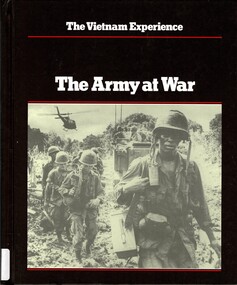
... 1st Infantry Battalion...173d Airborne Brigade...25th Infantry Division...Vietnam War - 1961-1975 USNS Gordon 1st Infantry Battalion 173d Airborne Brigade 25th Infantry Division 199th Light Infantry Brigade 11th Armoured Cavalry Regiment 9th Infantry Division 23d Infantry Division When the USNS Gordon sailed under the Golden Gate Bridge and steamed into the Pacific Ocean on June 25, 1965, few of the 4,000 American troops crowded onto its deck knew their destination, at least officially. ...When the USNS Gordon sailed under the Golden Gate Bridge and steamed into the Pacific Ocean on June 25, 1965, few of the 4,000 American troops crowded onto its deck knew their destination, at least officially.When the USNS Gordon sailed under the Golden Gate Bridge and steamed into the Pacific Ocean on June 25, 1965, few of the 4,000 American troops crowded onto its deck knew their destination, at least officially.vietnam war - 1961-1975, usns gordon, 1st infantry battalion, 173d airborne brigade, 25th infantry division, 199th light infantry brigade, 11th armoured cavalry regiment, 9th infantry division, 23d infantry division -
 National Vietnam Veterans Museum (NVVM)
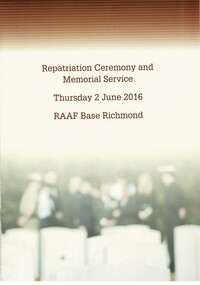
Booklet, Repatriation Ceremony and Memorial Service: Thursday 2 June 2016: RAAF Base, Richmond, 2016
... Australia - Soldiers - Repatriation Ceremonies Repatriation - Australia RAAF Base Richmond Australian War Graves Pte Norman George Allen 2784699 Royal Australian Infantry Corps 7th Battalion 6th Battalion the Royal Australian Regiment Pte Gary Alex Archer 2788583 9th Battalion Lt Robert Graham Birse 215349 Royal Regiment Of Australian Artillery 4th Field Regiment Cpl Robert Walter Bowtell 213151 Royal Australian Engineers 3 Field Troop Sgt Ronald Thomas Carroll 14208 3rd Battalion The Royal Australian Regiment Gunner Thomas William Checkley 311534 Detachment 131 Divisional Locating Battery Pte Christopher Clark 215214 1st Battalion WO2 (Temp) Kevin George Conway 13097 Australian Army Training Team Vietnam (AATTV) Pte Ronald Eric Field 214479 WO2 John Garrigan 310089 WO2 (Temp) Maxwell Powell Hanley 43593 Australian Intelligence Corp Cpl Reginald Hedley Hillier 42774 Trooper Tony Holland 3786634 Royal Australian Armoured Corps 1st Armoured Personnel Carrier Squadron Pte Neville Wayne Horne 215217 39510 Australian Army Aviation Corps 161 (Indep) Recce Flt 2Lt Alan Douglas Jellie Cpl (Temp) Kenneth Charles Johnson 215949 Headquarters Australian Force Vietnam WO2 (Temp) Ronald Victor Lees 26182 Cpl John Gregory Stinson Pearce 2784043 WO2 (Temp) Thomas Dudley 42352 Pte Thomas Ross L/Cpl Thomas Ross 212612 L/Cpl Arthur Ruduss 3410295 1st Australian Task Force Cpl (Temp) Francis John Smith 37003 Pte Mervyn Arthur Frederick Wilson 213780 Killed in Action Australian National Serviceman Repatriation Ceremony and Memorial Service: Thursday 2 June 2016: RAAF Base, Richmond for the remains of thirty-three Australians, who were buried in military cemeteries in Malaysia and Singapore, have been returned to Australia. ...Repatriation Ceremony and Memorial Service: Thursday 2 June 2016: RAAF Base, Richmond for the remains of thirty-three Australians, who were buried in military cemeteries in Malaysia and Singapore, have been returned to Australia.australia - soldiers - repatriation ceremonies, repatriation - australia, raaf base, richmond, australian war graves, pte norman george allen, 2784699, royal australian infantry corps, 7th battalion, 6th battalion the royal australian regiment, pte gary alex archer, 2788583, 9th battalion, lt robert graham birse, 215349, royal regiment of australian artillery, 4th field regiment, cpl robert walter bowtell, 213151, royal australian engineers, 3 field troop, sgt ronald thomas carroll, 14208, 3rd battalion, the royal australian regiment, gunner thomas william checkley, 311534, detachment, 131 divisional locating battery, pte christopher clark, 215214, 1st battalion, wo2 (temp) kevin george conway, 13097, australian army training team vietnam (aattv), pte ronald eric field, 214479, wo2 john garrigan, 310089, wo2 (temp) maxwell powell hanley, 43593, australian intelligence corp, cpl reginald hedley hillier, 42774, trooper tony holland, 3786634, royal australian armoured corps, 1st armoured personnel carrier squadron, pte neville wayne horne, 215217, 39510, australian army aviation corps, 161 (indep) recce flt, 2lt alan douglas jellie, cpl (temp) kenneth charles johnson, 215949, headquarters, australian force vietnam, wo2 (temp) ronald victor lees, 26182, cpl john gregory stinson pearce, 2784043, wo2 (temp) thomas dudley, 42352, pte thomas ross, l/cpl thomas ross, 212612, l/cpl arthur ruduss, 3410295, 1st australian task force, cpl (temp) francis john smith, 37003, pte mervyn arthur frederick wilson, 213780, killed in action, australian national serviceman -
 Bendigo Military Museum
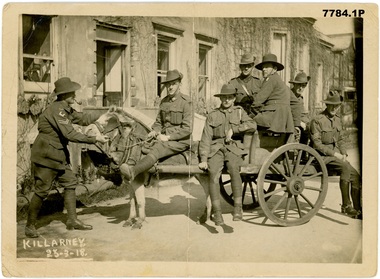
Photograph - GROUP PHOTOGRAPHS WW1, Edgar Dawson Collection : Leave in Killarney Ireland March 1918
... The soldier on left is a corporal in 2nd Division Pioneers, next to him is a private in the 1st Division, then a signaller from 5th Division with two years' overseas service chevrons and two wound stripes, RSM Hector Dawson, 57th Btn, then a Gallipoli veteran with what seems to be a Fifth Division patch, unknown, and lastly a 1st Division sergeant. 2. A relaxed group outside the Graham Hotel. RSM Dawson is third from the right. Second from the left is an officer of the Canterbury Infantry...The soldier on left is a corporal in 2nd Division Pioneers, next to him is a private in the 1st Division, then a signaller from 5th Division with two years' overseas service chevrons and two wound stripes, RSM Hector Dawson, 57th Btn, then a Gallipoli veteran with what seems to be a Fifth Division patch, unknown, and lastly a 1st Division sergeant. 2. A relaxed group outside the Graham Hotel. RSM Dawson is third from the right. Second from the left is an officer of the Canterbury Infantry ...This three-photograph group is the fifth in a series of records of items in the collection of Edgar Dawson DCM. Dawson was the Regimental Sergeant Major of 57th Battalion, AIF. C Company of the 57th was composed of men drawn from Echuca, Eaglehawk and Bendigo. The postcards are from his personal album, and many are annotated in Dawson's hand with explanatory notes on the subject. Refer to Cat No 893 for his service details. Items originally in album cat. no. 207P These three photographs above portray various members of the AIF on leave in Killarney, Ireland. Three photographs taken by a commercial photographer in Killarney Ireland. These photographs illustrate how men from different units relaxed together on leave. 1. A group of AIF soldiers enjoying leave outside the Graham Hotel, Killarney. The soldier on left is a corporal in 2nd Division Pioneers, next to him is a private in the 1st Division, then a signaller from 5th Division with two years' overseas service chevrons and two wound stripes, RSM Hector Dawson, 57th Btn, then a Gallipoli veteran with what seems to be a Fifth Division patch, unknown, and lastly a 1st Division sergeant. 2. A relaxed group outside the Graham Hotel. RSM Dawson is third from the right. Second from the left is an officer of the Canterbury Infantry Regiment, New Zealand Expeditionary Force. 3. RSM Dawson (hatless) and comrades setting off to likely see the famous local lakes. Each photograph is inscribed on verso "To dear Mother and Father, with love from Heck, Killarney" with the date.postcards, 57th battalion, edgar dawson dcm -
 National Wool Museum
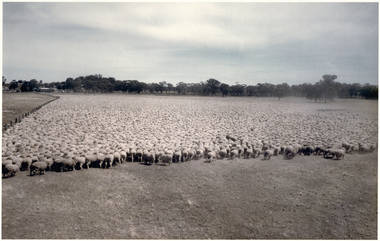
Photograph, Puckapunyal - 75,172 Sheep for Shearing, 1988
... During the Second World War the Second Australian Imperial Force trained there as well as the US Army 41st Infantry Division. It was also home to the 1st Armoured Regiment from 1949 until 1995. ...During the Second World War the Second Australian Imperial Force trained there as well as the US Army 41st Infantry Division. It was also home to the 1st Armoured Regiment from 1949 until 1995. ...Banjo Paterson once wrote, ‘The musterers are fetching them a hundred thousand strong’. Well, not quite 100,000 strong, but there are 75,172 mixed age Riverina-bred merino wethers in this mob mustered for shearing on January 22, 1988. The sheep were owned by the Mountjoy family from Geelong Victoria and were running on Puckapunyal Army Base near Seymour in Central Victoria on which the family held the grazing lease. Contractor for the shearing, Jim Walker, Avenel, Victoria, former Australian shearing team captain in 1974-75 and 1978-79, recalls there were up to 21 shearers in his team waiting for the red eyes to arrive despite the mid-summer heat of up to 38°C and the blinding dust on windy days. Jim Walker thinks there may also have been some sheep in the mob from Portland Downs and Isis Downs near Isisford in Central Queensland. The biggest shearing he did at ‘Pucka’ was 87,087 shorn in 1988. The ‘Pucka’ base was established during WW1. During the Second World War the Second Australian Imperial Force trained there as well as the US Army 41st Infantry Division. It was also home to the 1st Armoured Regiment from 1949 until 1995. During the 1950s up to 4000 national servicemen at any given time were training there. In the 1980s the Army undertook a major 60,000-acre land rehabilitation programme as decades of heavy use had led to serious degradation. By 1988 when the photo was taken, further land acquisition had increased the area to just under 100,000 acres, 43,000 of which is still bush country. There are no sheep there now, and the old shed was bulldozed and burnt. There are thousands of kangaroos which of course don’t need to be shorn and would be hard to muster and hold for a similar photo. Colour photograph, 75,172 merino wethers, mustered for shearing at Puckapunyal in 1988.shearing merino sheep, mountjoy, mr dale - worungalla pastoral co., shearing, merino sheep -
 Wangaratta RSL Sub Branch
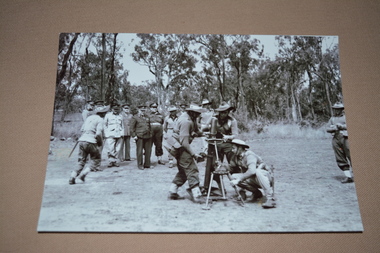
Photograph, c1944
... INFANTRY BRIGADE (7); VX20308 LIEUTENANT-GENERAL F.H. BERRYMAN, CBE., DSO., GENERAL OFFICER COMMANDING, 1ST AUSTRALIAN CORPS (8); NX35000 LIEUTENANT-GENERAL V.A.H. STURDEE, CB., CBE., DSO., GENERAL OFFICER COMMANDING, FIRST AUSTRALIAN ARMY (9); NX7 MAJOR-GENERAL G.F. WOOTTEN, CBE., DSO., GENERAL OFFICER COMMANDING, 9TH DIVISION...INFANTRY BRIGADE (7); VX20308 LIEUTENANT-GENERAL F.H. BERRYMAN, CBE., DSO., GENERAL OFFICER COMMANDING, 1ST AUSTRALIAN CORPS (8); NX35000 LIEUTENANT-GENERAL V.A.H. STURDEE, CB., CBE., DSO., GENERAL OFFICER COMMANDING, FIRST AUSTRALIAN ARMY (9); NX7 MAJOR-GENERAL G.F. WOOTTEN, CBE., DSO., GENERAL OFFICER COMMANDING, 9TH DIVISION ...RAVENSHOE, QLD. 1944-06-19. THE COMMANDER-IN-CHIEF, ALLIED LAND FORCES, SOUTH WEST PACIFIC AREA, VX1 GENERAL SIR THOMAS BLAMEY, GBE., KCB., CMG., DSO., ED., AND HIS STAFF WATCHING PERSONNEL OF HEADQUARTERS COMPANY, 2/24TH INFANTRY BATTALION ENGAGED IN THEIR 3" MORTAR DRILL DURING HIS TOUR OF INSPECTION OF ARMY UNITS IN THE ATHERTON AREA. IDENTIFIED PERSONNEL ARE:- QX6408 LIEUTENANT COLONEL A.B. GILLESPIE, COMMANDING 2/24TH INFANTRY BATTALION (2) VX48762 CAPTAIN A.W. OAKLEY (3); PRIVATE C.C. DAWES (4); PRIVATE TUCKER (5); PRIVATE COONEY (6); NX376 BRIGADIER D.A. WHITEHEAD, DSO., MC., ED., COMMANDING, 26TH INFANTRY BRIGADE (7); VX20308 LIEUTENANT-GENERAL F.H. BERRYMAN, CBE., DSO., GENERAL OFFICER COMMANDING, 1ST AUSTRALIAN CORPS (8); NX35000 LIEUTENANT-GENERAL V.A.H. STURDEE, CB., CBE., DSO., GENERAL OFFICER COMMANDING, FIRST AUSTRALIAN ARMY (9); NX7 MAJOR-GENERAL G.F. WOOTTEN, CBE., DSO., GENERAL OFFICER COMMANDING, 9TH DIVISION (10); PRIVATE R.S. O'BRIEN (11); PRIVATE S. ROSMAN (12); NX12371 MAJOR N.B. TREBECK (13).The 2/24th Battalion was an infantry battalion of the Australian Army, which served during World War II .A unit of all-volunteers, it was formed in July 1940 from primarily Victorian volunteers and was known as "Wangaratta's Own" because of the time the battalion spent in the town during its formative period prior to deployment overseas. It served in North Africa in 1941–1942 as part of the 26th Brigade, which was assigned to the 7th Division, before being reassigned to the 9th Division. In early 1943, the battalion returned to Australia and later took part in campaigns against the Japanese in New Guinea in 1943–1944 and Borneo in 1945, before being disbanded in 1946. The 2/24th suffered the highest number of casualties of any 2nd AIF infantry battalion. The Unit was granted the Freedom of the City by the Rural City of Wangaratta in 1990 and one of the first, if not the first, to receive this type of honourReproduced black and white photograph of three soldiers in foreground demonstrate use of equipment whilst soldiers and Officers in the background watch on.2/24th battalion, ravenshoe, general blamey -
 Wangaratta RSL Sub Branch
Document - Citation, Military Medal
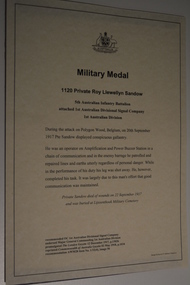
... Military Medal 1120 Private Roy Llewellyn Sandow 5th Australian Infantry Battalion attached 1st Australian Divisional Signal Company 1st Australian Division...Private Sandow died of wounds on 22 September 1917 and was buried at Lijssenthoek Military Cemetery. roy llewellyn sandow polygon wood belgium 1917 ww1 5th australian infantry battalion Military Medal 1120 Private Roy Llewellyn Sandow 5th Australian Infantry Battalion attached 1st Australian Divisional Signal Company 1st Australian Division Cream coloured citation with Australian Coat of Arms above black type contained in black border. ...During the attack on Polygon Wood Belgium on 20th September 1917 Pte Sandow displayed conspicuousu gallantry - He was an operator on Amplification and Power Buzzer Station in a chain of communication and in the enemy barrage he patrolled and repaired lines and earths utterly regardless of personal danger. While in the performance of his duty his leg was shot away. He however completed his task. It was largely due to this man's effort that good communication was maintained. Private Sandow died of wounds on 22 September 1917 and was buried at Lijssenthoek Military Cemetery. Cream coloured citation with Australian Coat of Arms above black type contained in black border.Military Medal 1120 Private Roy Llewellyn Sandow 5th Australian Infantry Battalion attached 1st Australian Divisional Signal Company 1st Australian Divisionroy llewellyn sandow, polygon wood, belgium, 1917, ww1, 5th australian infantry battalion -
 8th/13th Victorian Mounted Rifles Regimental Collection
Document - Royal guard report, AAF A18 Guard Report, 2 March 1954
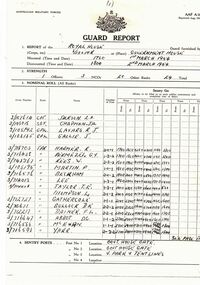
... The queen was resident at Government House Melbourne for nine days and during the time guard duties were shared by 1st Battalion Royal Australian Regiment, 3rd Division Royal Australian Artillery, 5th Infantry Battalion (Victorian Scottish), 6th Infantry Battalion (Royal Melbourne Regiment), 4th/19th Prince of Wales's Light Horse, 8th/13th Victorian Mounted Rifles, 2nd Medium Regiment, 22nd Field Regiment and Melbourne University Rifles. ...The queen was resident at Government House Melbourne for nine days and during the time guard duties were shared by 1st Battalion Royal Australian Regiment, 3rd Division Royal Australian Artillery, 5th Infantry Battalion (Victorian Scottish), 6th Infantry Battalion (Royal Melbourne Regiment), 4th/19th Prince of Wales's Light Horse, 8th/13th Victorian Mounted Rifles, 2nd Medium Regiment, 22nd Field Regiment and Melbourne University Rifles. ...The 8th/13th Victorian Mounted Rifles was raised as a regiment of the Royal Australian Armoured Corps on 1 May 1948 with Headquarters in Melbourne and squadrons in Sale, Benalla/Wangaratta and Albury. In 1955 Regimental Headquarters moved to Wangaratta and a second squadron was located at Albury. The Sale squadron transferred to 4th/19th Prince of Wales’s Light Horse. In 1977 8/13 VMR Regiment was reduced to an independent squadron A Squadron 8th/13th Victorian Mounted Rifles and in 1991 was linked with 4th/19th Prince of Wales’s Light Horse forming the VMR Squadron of that regiment. The queen was resident at Government House Melbourne for nine days and during the time guard duties were shared by 1st Battalion Royal Australian Regiment, 3rd Division Royal Australian Artillery, 5th Infantry Battalion (Victorian Scottish), 6th Infantry Battalion (Royal Melbourne Regiment), 4th/19th Prince of Wales's Light Horse, 8th/13th Victorian Mounted Rifles, 2nd Medium Regiment, 22nd Field Regiment and Melbourne University Rifles. Rare document relating to guard duty at Government House Melbourne mounted by a unit of the Citizen Military Forces from Victoria during a royal visit .Photocopy of a three page report prepared for period 1/2 March 1954 when 8th/13th Victorian Mounted Rifles Regiment provided the guard at Government House Melbourne during the visit of Her Majesty Queen Elizabeth II. The report lists the officer, 4 non commissioned officers and 20 other ranks comprising the guard together with timings and locations of the sentry posts. Also details of the guard duties, the general remarks at the conclusion of the guard period and the signatures of the Guard Commander, Captain LA Jackson 8th/13th Victorian Mounted Rifles and the Relieving Guard Commander Captain EJ King, 2nd Medium Regiment. queen elizabeth ii, royal visit 1954, government house, melbourne, guard, vmr -
 Dandenong/Cranbourne RSL Sub Branch
Certificate - Certificate -Salute to the Gippsland Regiment
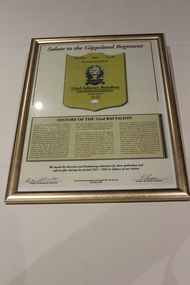
... 1st AIF's lineage including battle honours earned by 2nd Bn, Tasmanian Infantry Regiment in the Boer War, 1899-1902, and the same circular colour patch, horizontally bisected with white over blue halves. Later the 52nd officially received its regional title, "The Gippsland Regiment" and its motto "Always Ready". Digger prevailing during WW2 it was nicknamed "The Gippsland Bushrangers". The 52nd formed part of the 10th Infantry Brigade, 3rd Militia (CMF) Division...1st AIF's lineage including battle honours earned by 2nd Bn, Tasmanian Infantry Regiment in the Boer War, 1899-1902, and the same circular colour patch, horizontally bisected with white over blue halves. Later the 52nd officially received its regional title, "The Gippsland Regiment" and its motto "Always Ready". Digger prevailing during WW2 it was nicknamed "The Gippsland Bushrangers". The 52nd formed part of the 10th Infantry Brigade, 3rd Militia (CMF) Division ...Refer also https://en.wikipedia.org/wiki/52nd_Battalion_(Australia)Rectangular framed Certificate. Salute to the Gippsland Regiment. ---------------------------------------------------------------------------------------------------------------------------------------- In Shield in top half of certificate-: Defending Australia with rising sun badge then In commemoration of: No 52 surrounded by wreath with inscription on bottom Always Ready Gippsland Regiment 52nd Infantry Battalion (The Gippsland Regiment) "Always Ready" 1921-1930 1936-1942 Circle with white top half and light blue bottom half. -------------------------------------------------------------------------------------------------------------------------------- Under the Shield-: History of the 52nd Battalion. Tracing the ancestry going back to the "Gippsland Battalion of the Victorian Rangers, the Militia (CMF) 52nd Battalion was raised from the 2nd Bn/5th Australian Infantry Regiment (HQ Dandenong) as part of an overhaul of Australia's defences in 1920-21 that saw the reintroduction of compulsory military service. To afford it a proud identity ,the new battalion was assigned the same number as the 52nd/1st AIF which had performed with distinction in France ( Somme, Pozieres, Bullicort, Messine and Ypes to name just some). In addition the new battalion also inherited the Kings and Regimental Colours which, as part of the 52nd Bn/1st AIF's lineage including battle honours earned by 2nd Bn, Tasmanian Infantry Regiment in the Boer War, 1899-1902, and the same circular colour patch, horizontally bisected with white over blue halves. Later the 52nd officially received its regional title, "The Gippsland Regiment" and its motto "Always Ready". Digger prevailing during WW2 it was nicknamed "The Gippsland Bushrangers". The 52nd formed part of the 10th Infantry Brigade, 3rd Militia (CMF) Division. With the reversion to voluntary citizen forces in1930,declining numbers forced an amalgamation with the 37th Bn to become 37th/52nd Bn. Then in mid 1936, an expansion and modernisation of the CMF, including the conversation of the Light Horse to motorised, allowed both battalions to separate and for the 52nd to expand into East Gippsland. In 1938, 52nd Bn was granted linkage with the "Queens Own Cameron Highlanders" and permission to use its Regimental March- "March of the Cameron Men'. When Japan entered the war in December 1941,the Australian Military Forces were fully mobilized, (part time to full time) for the defence of homeland Australia. While training at various locations in central Victoria, the militia became for many, a stepping stone into the AIF and other services, as well as a training unit for new conscripts. As part of our national defence preparations, in mid 1942 the 52 Bn relocated to Queensland as part of the 3rd Division, replacing the AIF 7th Div on the so called "Brisbane Line". However as the threat of invasion lifted, a restructure of army units saw the disbandment of the 10th Brigade and hence the 52nd in September 1942 and the revival of the 37th/52nd Battalion. The 52nds colours were returned to Melbourne, eventually being placed in the Shrine of Remembrance for safe keeping. ----------------------------------------------------------------------------------------------------------------------------------------------------------------------------------------------------------------------------------- At bottom of the certificate- We thank the Berwick and Dandenong volunteers for their dedication and self sacrifice during the period 1921- 1942 in defence of our nation. (Signed) D W Shields President Dandenong RSL Sub Branch L Lucas President Berwick RSL Sub Branch Presented by the Dandenong and Berwick RSL Sub Branches November 2009. -
 Dandenong/Cranbourne RSL Sub Branch
Badge - RAN Bridging Train Collar Badge, Circa 1914/15
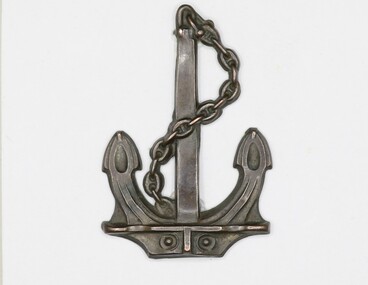
... The 1st Royal Australian Naval Bridging Train (1st RANBT) was formed in Melbourne on 28 February 1915 and was intended to be a horse drawn engineering unit attached to the Royal Naval Division (RND), then serving as infantry on the Western Front. ...The 1st Royal Australian Naval Bridging Train (1st RANBT) was formed in Melbourne on 28 February 1915 and was intended to be a horse drawn engineering unit attached to the Royal Naval Division (RND), then serving as infantry on the Western Front. The term ‘train’, in its title, was a direct reference to the horse drawn wagons that would, in theory, form and move ‘in train’ to carry the unit’s heavy lumber, building materials and engineering equipment to the front. The unit was manned by members of the Royal Australian Naval Reserve for whom there were no available billets in seagoing RAN ships. Many of the sailors serving in the 1st RANBT were rated ‘drivers’, and again, this refers to wagon drivers as opposed to motor vehicle drivers. Other seamen were rated as ‘artificers’ or ‘sappers’, the latter being a military term traditionally used to describe army engineers. Appointed in command of the 1st RANBT was Lieutenant Commander Leighton Seymour Bracegirdle, RAN. Bracegirdle was ideally suited to command the unit, having seen active service with the NSW Naval Brigade during the Boxer Rebellion in China as well as serving as a military officer in the South African Irregular Horse during the Boer War in 1901. He had also recently returned from German New Guinea where he had served as a staff officer in the joint Australian Naval and Military Expeditionary Force (ANMEF) responsible for the capture of the German colonies in the Pacific in September 1914. Three hundred naval reservists, including 50 men who had recently served in New Guinea, were selected for the 1st RANBT and they began their training in horsemanship, engineering and pontoon bridging at the Domain in Melbourne. By late May 1915 a decision was made to send the unit to Britain to complete its training and then to join the RND on the Western Front. The plan, however, never eventuated. The complaints about the non-combatant work being done by the men had been raised in Federal Parliament and following consultation with the senior Australian officer in the Middle East, Lieutenant General Sir Harry Chauvel, a recommendation was made that the unit be disbanded and its men used as reinforcements for the AIF. Consequently, Lieutenant Commander Bracegirdle was advised that his unit was to be dispersed; its men transferring to the AIF or being returned to Australia for discharge. On 27 March 1917 the 1st RANBT was officially disbanded.Oxidised brass anchor shaped collar badge.ww1, world war 1, first world war, ranbt, ran bridging train, royal australian navy bridging train, collar badge
