
Showing 75 items matching "3-storey building"
-
 Flagstaff Hill Maritime Museum and Village
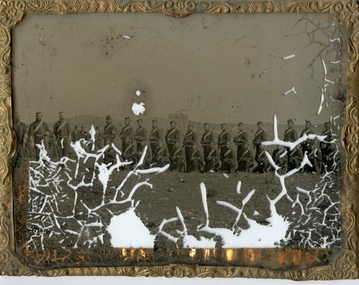
Photograph - Glass plate, circa 1866
... ...3-storey building...The photograph is also the only example of the early methods of glass plate photography in our collection. flagstaff hill warrnambool shipwrecked coast flagstaff hill maritime museum maritime museum shipwreck coast flagstaff hill maritime village great ocean road glass plate photography 19th century colonial forces military defence volunteer act 1854 volunteer rifle garrison artillery volunteer corps militia militia garrison band pillbox forage caps helpmann manifold and bostock 1853 lee enfield musket tintype Warrnambool Garrison 1860s Cannon Hill Manifold & Bostock flour mill 3-storey building Photograph, rectangular glass plate, positive sepia image. ...This glass plate photograph shows good detail of members of the Warrnambool Garrison posing for their photograph in front of a young township. There are other well-dressed citizens behind them. The three men with frogging on their sleeves were commanders were likely to be commanders. The men are facing north with Cannon Hill and the fortification area in the background. It dates from the 1860s. The firearms held appear to be 1853 pattern Lee Enfield muskets used by the British army in Crimea at this time and in Australia, rather than the later Martini Henry cartridge rifles. The uniforms match other photos of the Warrnambool Garrison Militia and Band in our Collection, taken up until the 1880s. The three storey building in the photograph is likely to be the Manifold & Bostock flour mill, built in 1854 near the ‘cutting’ in Merri Street, which was one of the main streets at the time; if one faced the building’s front from a vantage point and looked south to south-east, the hills around Flagstaff Hill and Cannon Hill would be behind that mill, and the Harbour behind the hills. This is the area of the Fortifications. The glass plate method of photography was widely used during the mid-19th to early-20th century. The donor and maker of the photograph are unknown. Around this time the citizens of Victoria were prospering from the gold rush but felt isolated and uneasy about their security in the colony. In 1854 the Volunteer Act was passed to provide some military defence. In 1858 the Warrnambool Volunteer Rifle Corps was established, disbanded in 1863, then a new Warrnambool Detachment was formed in September 1866. Legislation was passed in 1884 that replaced the volunteers’ corps with a partly paid, permanent Militia Defence Force. The batteries manning the coastal forts of Victoria were termed Garrison Artillery Companies. When the Army was federated in 1901 there were eight Militia Companies in Victoria. Warrnambool and Port Fairy together were known as 8 Coy AGA (Australian Garrison Artillery). Changes to formation and name continued into the 20th century.This photograph is a record of the very early local defence force, circa 1866. The photograph signifies the connection of the colony in Victoria to the growing need for security due to the unrest in Europe at that time. The photograph is also locally significant to the industry of the young township of Warrnambool, showing what is likely to be one of the first flour mills in the town. The photograph is also the only example of the early methods of glass plate photography in our collection. Photograph, rectangular glass plate, positive sepia image. Photograph has brass framed edges that fold over to the back, with mitred corners. The front edges are pressed with a decorative floral pattern. The photograph shows a group of thirty military men, standing or kneeling, in dark uniforms with pillbox forage caps, round-collared jackets with light buttons, light sashes worn from top left shoulder to bottom right side of waist belt, and long, straight-legged trousers. Three of these men have light braid around the buttons on the front of their jackets, light frogging on their sleeve cuffs and stripes on the outside seams of their trousers. The other twenty-seven men have plain uniforms and are holding firearms in their right hands, steadied with their left hands. Other figures are standing behind this group of soldiers, including three or four men wearing top hats, jackets and ties. In the background is a row of buildings. The central building is three stories high. Bare hills are in the far background. The foreground is uneven ground with patches of short grass. Photographer looking towards the south east and Cannon Hill, with the Warrnambool Garrison facing north, ca.1860s.flagstaff hill, warrnambool, shipwrecked coast, flagstaff hill maritime museum, maritime museum, shipwreck coast, flagstaff hill maritime village, great ocean road, glass plate, photography 19th century, colonial forces, military defence, volunteer act 1854, volunteer rifle, garrison artillery, volunteer corps, militia, militia garrison band, pillbox forage caps, helpmann, manifold and bostock, 1853 lee enfield musket, tintype, warrnambool garrison, 1860s, cannon hill, manifold & bostock, flour mill, 3-storey building -
 Stawell Historical Society Inc
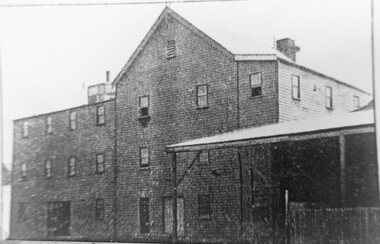
Photograph, Horse drawn wagons loaded with bagged Grain
... Wooden 3 storey building verandah and wooden paling fence. ...Published 1911 (Cat no 3580 m/box 3 room 2). stawell industry Wooden 3 storey building verandah and wooden paling fence. ...Black and white photograph of Stawell Flour Mill owned by Frayne family for many years. Photograph copied from "Stawell & The Grampians " booklet p32. Published 1911 (Cat no 3580 m/box 3 room 2).Wooden 3 storey building verandah and wooden paling fence. stawell industry -
 Sunbury Family History and Heritage Society Inc.
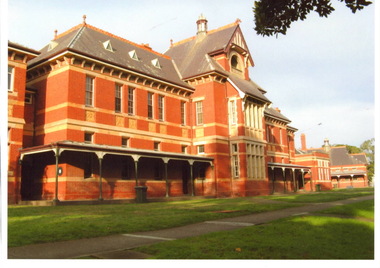
Photograph, Sarah Dunn, 2000
... A coloured photograph with a white border of a Federation red brick 3 storey building with aquarium slate roof and ventilation turrets projecting from the slate roof. ...Sunbury Asylum A coloured photograph with a white border of a Federation red brick 3 storey building with aquarium slate roof and ventilation turrets projecting from the slate roof. ...The building is part of the former Sunbury Asylum complex and was constructed in 1906. It had three buildings on its east side and three on the west side. Male patients were housed in the buildings on the east and females were in the west side buildings. The slates on the roof were from Wales.This building housed the patients at the Asylum right up until its closure in 1992.A coloured photograph with a white border of a Federation red brick 3 storey building with aquarium slate roof and ventilation turrets projecting from the slate roof. A large grassed area has been planted in the front of the building.sunbury asylum -
 Glenelg Shire Council Cultural Collection
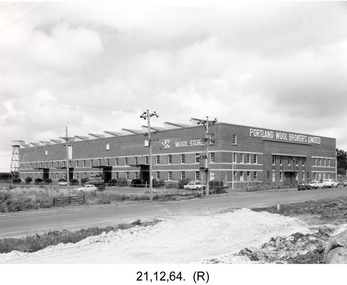
Photograph - Photograph - Portland Wool Brokers Limited, Wool Store, 1964
... View of 3 storey brick building with 2 paved roads and 1 unpaved road in front of it....Tel. 858 (blue stamp & pencil) (centre) View of 3 storey brick building with 2 paved roads and 1 unpaved road in front of it. ...Port of Portland Authority archivesFront: (no inscriptions) Back: 12-8 Items date & 25½ [each ?] (blue pen, centre) 4572 (lower centre, pencil) Page 11 (lower right, blue pen) Film No. I.98/ Neg. No. 3/ Date 21-12-64/ (Portland Studios, 11 Julia St, Portland. Tel. 858 (blue stamp & pencil) (centre)port of portland archives -
 Glenelg Shire Council Cultural Collection
Photograph - Photograph - Department of Supply, Stores & Transport Branch, Portland Store, n.d
... View of a brick building (3 storeys). In front of building is a tall wire fence. ...Port of Portland Archives Front: (no inscriptions) Back: (no inscriptions) View of a brick building (3 storeys). In front of building is a tall wire fence. ...Port of Portland Authority archives.Front: (no inscriptions) Back: (no inscriptions)port of portland archives -
Glenelg Shire Council Cultural Collection
Photograph, Portland Wool Brokers Limited, n.d
... View of 3-storey brick building with windows on lower two storeys. ...Port of Portland Authority Port of Portland Front: (no inscriptions) Back: 177 (centre, pencil) View of 3-storey brick building with windows on lower two storeys. ...Port of Portland AuthorityFront: (no inscriptions) Back: 177 (centre, pencil)port of portland -
 Canterbury History Group
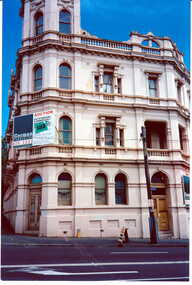
Photograph - Canterbury Road view of the Canterbury Mansions at No. 208 Canterbury Road, Jan Pigot, 1994
... Coloured photograph of the Canterbury Road view of the 3 storey Victorian Building called Canterbury Mansions. ...Canterbury Canterbury Road Shops Victorian Architecture Signs Coloured photograph of the Canterbury Road view of the 3 storey Victorian Building called Canterbury Mansions. ...Coloured photograph of the Canterbury Road view of the 3 storey Victorian Building called Canterbury Mansions. Also depicts the corner roof tower and the sold sign after the auction of the building.canterbury, canterbury road, shops, victorian architecture, signs -
 Bendigo Historical Society Inc.
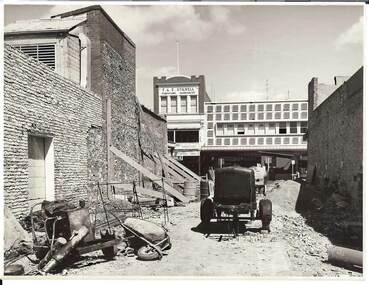
Photograph - BENDIGO ARCADE, c1950
... Opposite 2 & 3 storey buildings with shops and offices. In image F & E Stillwell, Furniture Warehouse. ...Opposite 2 & 3 storey buildings with shops and offices. In image F & E Stillwell, Furniture Warehouse. ...Black and white photograph. Demolition site, taken from Old Bennett's Arcade. Brick walls each side, wheelbarrows and machinery on site. Opposite 2 & 3 storey buildings with shops and offices. In image F & E Stillwell, Furniture Warehouse. On windows 'Pitson Bros', GH? Pitson, GJ? Pitson, Public Accountants, Estate Agents, Travel Agents, Sister McKenzie, Chiropodist. Identified by James Lerk as a Allan Doney photo.Allan Doney Photoplace, arcade, bendigo arcade -
 Bendigo Historical Society Inc.
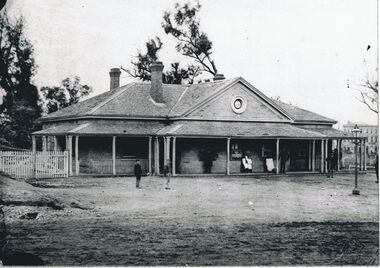
Photograph - POST OFFICE: VIEW STREET
... Adult males on at front, 2 boys at front centre left. 3 storey building at back right. 2 females at right on verandah. ...Adult males on at front, 2 boys at front centre left. 3 storey building at back right. 2 females at right on verandah. ...Black and white photo: single storey stone building with shingle roof, 3 chimneys, verandah, clock in large gable, notices on board under verandah, picket gate at left, gas lamp at front right. Adult males on at front, 2 boys at front centre left. 3 storey building at back right. 2 females at right on verandah. On back in pencil '48' In image at bottom right. In image at bottom right 'Batchelder/Sandhurst'Batchelderbuildings, post office, view street, bendigo historic buildings p 22 and 90. 'butcher & flanders' -
 Glen Eira Historical Society
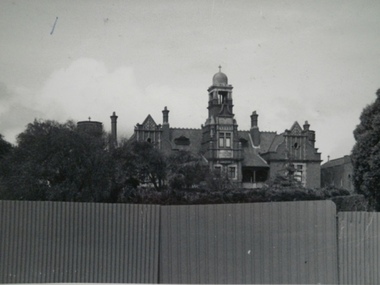
Historical Caulfield to 1972, photo album by Jenny O’Donnell, St James Pde
... 3 photos of O’Neill Catholic Girls College which became junior campus of Star of the Sea then became Leibler Yavneh secondary College circa 1992 –large 2-3 storey tower building...Elsternwick St James Pde O’Neill Catholic Girls College Star of the Sea Leibler Yavneh secondary College O’Donnell Jenny 3 photos of O’Neill Catholic Girls College which became junior campus of Star of the Sea then became Leibler Yavneh secondary College circa 1992 –large 2-3 storey tower building Historical Caulfield to 1972, photo album by Jenny O’Donnell, St James Pde ...3 photos of O’Neill Catholic Girls College which became junior campus of Star of the Sea then became Leibler Yavneh secondary College circa 1992 –large 2-3 storey tower buildingelsternwick, st james pde, o’neill catholic girls college, star of the sea, leibler yavneh secondary college, o’donnell, jenny -
 Bendigo Historical Society Inc.
Photograph - BENDIGO HOTEL COLLECTION: CITY FAMILY HOTEL: BENDIGO, 1995 ?
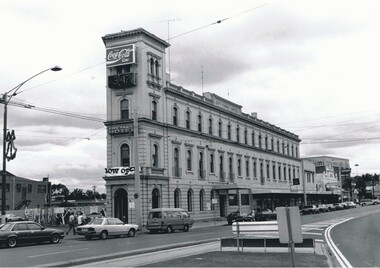
... Black and white photograph: City Family Hotel, 1 High Street, Bendigo. 3 storey rendered building with square tower, motor vehicles at front. ...BUILDINGS Hotel city family Peter Hyett Black and white photograph: City Family Hotel, 1 High Street, Bendigo. 3 storey rendered building with square tower, motor vehicles at front. ...Black and white photograph: City Family Hotel, 1 High Street, Bendigo. 3 storey rendered building with square tower, motor vehicles at front. In image ' City Family Hotel' on parapet. A7 on back in black lead.Peter Hyettbuildings, hotel, city family -
 Bendigo Historical Society Inc.
Photograph - FOSTER AND WILSON COLLECTION: PHOTOGRAPH, 1925
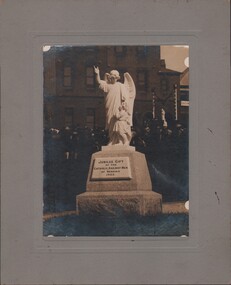
... It has a plaque with: Jubilee Gift of the Catholic Railway Men of Bendigo 1925. A large 3 storey brick building is in the background and also a crowd of people. ...It has a plaque with: Jubilee Gift of the Catholic Railway Men of Bendigo 1925. A large 3 storey brick building is in the background and also a crowd of people. ...Dark sepia? photo of a statue of a small girl with an angel standing beside her. The angel has the right hand raised. The statue is mounted on a large shaped piece of granite. It has a plaque with: Jubilee Gift of the Catholic Railway Men of Bendigo 1925. A large 3 storey brick building is in the background and also a crowd of people. Photo is mounted on grey cardboard. Written on the back: 'To Mr S. McKinnon with Dean Rooney's Compliments.'photograph, bendigo, foster & wilson collection, photograph, mr s mckinnon, dean rooney, catholic railway men of bendigo -
 Bendigo Historical Society Inc.
Photograph - ANNE CAUDLE CENTRE, 1995
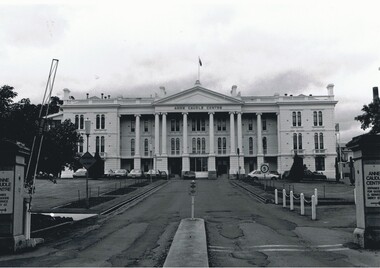
... Black and white photo: 3 storey rendered building with parapet. 8 columns at front. ...BUILDINGS Hospital anne caudle centre Peter Hyatt Black and white photo: 3 storey rendered building with parapet. 8 columns at front. ...Black and white photo: 3 storey rendered building with parapet. 8 columns at front. Driveway with grass and garden beds each side. Hinged traffic barrier at front left. Motor vehicles in front of building. In image on building ' Anne Caudle Centre' on back in grey lead pencil O 24. ( Noelene Wild 7.2000 Photo, Peter Hyett 1995. Anne Caudle Centre, main entrance from Barnard Street. ( formerly Home and Hospital for the Aged, originally Bendigo Benevolent Asylum )Peter Hyattbuildings, hospital, anne caudle centre -
 Surrey Hills Historical Society Collection
Photograph, Nethercourt Private Hospital in Union Road Surrey Hills, 1976
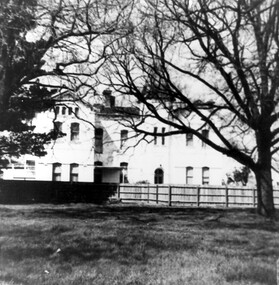
... It shows a 3 storey brick rendered building painted in a light colour. ...It shows a 3 storey brick rendered building painted in a light colour. ...The 3 front blocks facing Union Road were subdivided off in circa 1967, so this building now faces Barton Street. Since 1984 it has been a private residence. It was originally built in c1890 and from 1896 it was used as facilities for Surrey College, a private boys' boarding school. Dr F Darling was Principal. From 1935-1960s it became Nethercourt Private Hospital. This had previously operated from 1921 in Wilson Street. Later it was known as St Jude's Hospital; this closed in 1983.Black and white photo of Nethercourt Private Hospital taken from Union Road. It shows a 3 storey brick rendered building painted in a light colour. It is fronted by a paling fence and with a vacant area in the foreground, on which there is a bare-leafed mature tree to the right and an evergreen tree to the left. The fence appears to be new suggesting that the photo was taken at the time of subdivision of the land.The original has the following inscriptions: Top: In black biro "D Hall our collection / hall / family" in Jocelyn Hall's writing. Below in lead pencil "Old entrance of / St Judes" - unknown hand; presumed to be Duncan Hall's. In black biro in Jocelyn Hall's hand: "Taken c. 1976." nethercourt private hospital, the surrey college, norwich hall, st judes hospital, barton street, medical services, education, dr f darling -
Glenelg Shire Council Cultural Collection
Photograph - Copy Of Photograph - Henty Wool Store, 1859
... Road in foreground, footpath with several men standing around. 3 two-storey blue stone buildings, with diffrent roof levels. ...Road in foreground, footpath with several men standing around. 3 two-storey blue stone buildings, with diffrent roof levels. ...Vern Mc Callum CollectionDigital copy of a monochrome photo. Taken in Portland in 1859. Road in foreground, footpath with several men standing around. 3 two-storey blue stone buildings, with diffrent roof levels. Between building on left and middle buiding, is a horse and cart. -
 Bendigo Historical Society Inc.
Photograph - BRIDGE STREET: SANDHURST, 1861
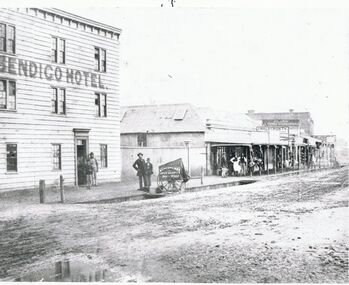
... 'Batchelder, Photographer, Pall Mall' handcart in foreground. 3 storey weatherboard building with 3 males at door, 2 males and photographers cart in front of fence. ...'Batchelder, Photographer, Pall Mall' handcart in foreground. 3 storey weatherboard building with 3 males at door, 2 males and photographers cart in front of fence. ...Copy of black and white photo: Bridge Street streetscape near site of the present Chinese Museum. Showing Bendigo Hotel at left,. 'Crossingham & Goodman, Saddlers ' ' J. Holdsworth', 'Glass and Chines Warehouse'. 'Batchelder, Photographer, Pall Mall' handcart in foreground. 3 storey weatherboard building with 3 males at door, 2 males and photographers cart in front of fence. Row of single storey buildings with verandahs, some with business signs. 2 storey building at back. Deep gutters with foot bridges over. On back in grey lead '12' Note: Batchelder and his assistant are standing at the hardcart' ( James Lerk 22.9.2000 }Batchelder, Pall Mallplace, streetscape, bridge street -
 Federation University Historical Collection
Postcard, Roslin, c1945
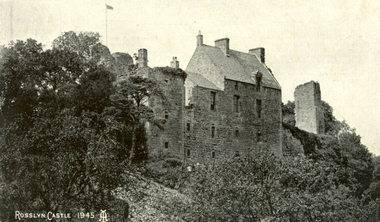
... storeys high, five above and three underground. .2) While at Edinburgh I went out to Roslin saw there the Castle and Church. They are both very old dating back 500 hundred years. .3) The hole in the wall is the oven, is an immense thing. A fire was lit in the oven then pulled out and the heat in the stone did the baking. Three postcards showing different views of Roslin Castle. .1) A stone building ...Roslin Castle, the seat of the St Clair Family, was founded in 1304. It is partly in ruins. According to legend some millions of pounds worth of treasure being hidden in the vaults. it is said to be under the charge of a lady of the ancient St Clair family. She is to wake from her slumber and point out the spot where the treasure lies. It is located near the village of Roslin in Midlothian, Scotland. It is located around 9 miles south of Edinburgh, on the north bank of the North Esk, only a few hundred metres from the famous Rosslyn Chapel. (See http://en.wikipedia.org/wiki/Roslin_Castle)Three postcards showing different views of Roslin Castle. .1) A stone building on a hill side, with flying flag, .2) The Courtyard, Roslin Castle .3) The Bakehouse, Roslin Castle.1) This a fine view taken from the Glen. Formerly the castle was eight storeys high, five above and three underground. .2) While at Edinburgh I went out to Roslin saw there the Castle and Church. They are both very old dating back 500 hundred years. .3) The hole in the wall is the oven, is an immense thing. A fire was lit in the oven then pulled out and the heat in the stone did the baking.roslin, rosslyn, roslin castle, st clair, spirit, ghost, baking, oven, bread -
 Federation University Historical Collection
Photograph - Photograph (colour), N.L. Harvey & Sons Photographers, Prince Charles visits Ballarat Institute of Advanced Education, 1974, 28/10/1974
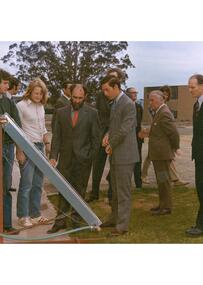
... Five men stand outside a single storey brick building with large windows. .2) Same as for .1) but in colour. Student Union President Peter Shepherd is in the photograph. .3) Prince Charles and students from the Ballarat College of Advanced Education. .4) Prince Charles and Minister Lindsay Thompson .5) Four men gather around Ballarat College of Advanced Education Metallurgy Student, Michael Martin, as he demonstrates a projection microscope to Prince Charles. ...Five men stand outside a single storey brick building with large windows. .2) Same as for .1) but in colour. Student Union President Peter Shepherd is in the photograph. .3) Prince Charles and students from the Ballarat College of Advanced Education. .4) Prince Charles and Minister Lindsay Thompson .5) Four men gather around Ballarat College of Advanced Education Metallurgy Student, Michael Martin, as he demonstrates a projection microscope to Prince Charles. ...The Prince of Wales visited Mt Helen on 28 October 1974. At that time the campus was four years old. In September 2022, after the death of Queen Elizabeth II, Prince Charles became King Charles III..1) Visit of Prince Charles to the Ballarat Institute of Technology. Five men stand outside a single storey brick building with large windows. .2) Same as for .1) but in colour. Student Union President Peter Shepherd is in the photograph. .3) Prince Charles and students from the Ballarat College of Advanced Education. .4) Prince Charles and Minister Lindsay Thompson .5) Four men gather around Ballarat College of Advanced Education Metallurgy Student, Michael Martin, as he demonstrates a projection microscope to Prince Charles. From left to right: Lindsay Thompson (State Minister for Education), E.J. Barker (Director Ballarat College of Advanced Education), Brian Sunter (Head of Metallurgy), Michael Martin (student). .6) Prince Charles with Brian Sunter, Head of Metallurgy and student Michael Martin examining a projection microscope. .7) Prince Charles, E.J. Barker and Ballarat College of Advanced EducationPrince Charles and a party of Ballarat College of Advanced Education studentsstudents .8) Prince Charles and a party of Ballarat College of Advanced Education students .9) Prince Charles and a party of Ballarat College of Advanced Education students .10) Prince Charles talks to Ballarat College of Advanced Education students .11) Prince Charles and E.J. Barker .12) Prince Charles and party inspect students working on equipment. .13) Prince Charles, students, Minister for Education Lindsay Thompson and Brian Sunter .14) Prince Charles and a party of Ballarat College of Advanced Education studentsVerso Handwritten "Return to Director's Secretary" Stamped "Ballarat College of Advanced Education" Handwritten "Visit of Prince of Wales 28 Oct 74" Stamped "N.L. Harvey & Sons photographers.ballarat college of advanced education, mt helen, jack barker, prince of wales, bcae, prince charles, michael martin, mike martin, lindsay thompson, ej barker, brian sunter, colin kline, peter shepherd, minister for education, royal visit, royalty, prince charles iii -
Federation University Historical Collection
Poster - Signs, Window signs by Keith Rash
... Ludbrook used this property as Auction Rooms. .3) McArtney & aldred first occupied these premises in 1856. There were coachbuilders. .4) From the Single Storeyed wooden building once her J.P. ...Ludbrook used this property as Auction Rooms. .3) McArtney & aldred first occupied these premises in 1856. There were coachbuilders. .4) From the Single Storeyed wooden building once her J.P. ...It is thought the signs were used for Ballarat's Gold Centenary in 1851.Seven window signs by Keith Rash painted onto wallpaper. The signs were designed to sit in shop windows to tell the history of the shop of company. .1) In 1862 Eurgene Bourdet conducted the "Imperial Dining Rooms" here. Board 20/- Board & Lodging 25/- week .2) On 16th Feb. 1853 at the Government Land Sale, Mr C.N. Thorne purchased this area. In 1893, R. Ludbrook used this property as Auction Rooms. .3) McArtney & aldred first occupied these premises in 1856. There were coachbuilders. .4) From the Single Storeyed wooden building once her J.P. Clarke operated as a carrier until 1865. Welsh & Surplice took over as Estate Agents until 1870. .5) Dr James Stewart built this property H.G. Harrison, 1957. J.C. Proctor 1862, John Stokes 1865, were chemists here. In 1856 The Savings Bank commenced here. W.H. Pooley, actuary .6) Wm Moss, tinsmith, occupied this site in 1865. Thos. Freeman,a uctioneer in 1882. .7) Doig & Cant. Gasfitters & Plumbers came here from Main Road in 1866. After 38 years A. Cant removed 2 doors further north .8) In 1871, This part was the shop of Wm Moss, tinsmith & plumberballarat, doig, cant, plumber, william moss, tinsmith, thomas freeman, james stewart, h.g. harrison, j.c. proctor, john stokes, savings bank, w.h. pooley, j.p. clarke, welsh, surplice, mcartney, aldred, coachbuilders, c.n. thorne, r. ludbrook, eugene bourdet -
Federation University Historical Collection
Booklet, Report on the Viability of Establishing a Post Secondary Education Facility Located at the Aradale Traininf Centre, Ararat, Victoria, 1993, 12/1993
... 3 km from the centre of Ararat and covers approximately 101 hectares. It consistes of an impresive group of mainly heritage buildings of national significance surrounded by open farmland. Aradale was designed in 1864 in the Victorian Italianate style by John James Clark of the Public Works Department, Victoria. A three storey...3 km from the centre of Ararat and covers approximately 101 hectares. It consistes of an impresive group of mainly heritage buildings of national significance surrounded by open farmland. Aradale was designed in 1864 in the Victorian Italianate style by John James Clark of the Public Works Department, Victoria. A three storey ...Aradale is located 3 km from the centre of Ararat and covers approximately 101 hectares. It consistes of an impresive group of mainly heritage buildings of national significance surrounded by open farmland. Aradale was designed in 1864 in the Victorian Italianate style by John James Clark of the Public Works Department, Victoria. A three storey nurses quarters was built in the 1930s and the Forensic Psychaitry Centre was established in the 1980s. The design of asylums as a specific building type orginated in England in the mddle of the 19th century when it was decided that 'pauper lunatics' would be better cared for in a separate institution rather than being house within the workhouses. Some of the early purpose built asylums were based on the radiating principle of prisons but the arrangement of separat wings at right angles used in hospitals and whorkhouse design soon came to be seen as the most appropriate. The largest 19th century asylum in England was built at Colney Hatch. Kew, Beechworth and Ararat Asylums closely followed the Colney Hatch model. In victoria the population rose due to the gold rushes resulting in severe housing shortages, and additional pressure on asylums. The first asylum in Melbourne was established at Y arra Bend. In 1862 a new asylum was established at Kew. Ararat Asylum and Beechworth Asylum were designed in 1864. Ararat was opened on 19 October 1867, with Beechworth Asylum opening five days later. Soft covered bookletararat regional development board inc., aradale training centre, aradale, grano street ararat, alfred st ararat, ivar nelson, john christie, jon duggan, wes matthews, peter helfer, michael burke, john grant, asylum, lunatic asylum, colney hatch asylum, ararat asylum, fever tents, sunbury asylum, kew asylum, beechworth asylum, wine industry training -
 Federation University Historical Collection
Image - Colour, Ballarat School of Mines M.B. John Building, Albert Street, Ballarat, 1987, 1987
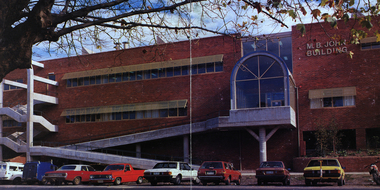
... building (Albert Street front) of SMB was officially opened by the Hon. John Cain, Premier of Victoria, in the presence of Morgan B. John. Programs include 3 Dimensional Art, Painting & Decorating, and Engineering Trades. (SMB Institutional Plan 1989) The M.B. John Building (Building K), a three storey...building (Albert Street front) of SMB was officially opened by the Hon. John Cain, Premier of Victoria, in the presence of Morgan B. John. Programs include 3 Dimensional Art, Painting & Decorating, and Engineering Trades. (SMB Institutional Plan 1989) The M.B. John Building (Building K), a three storey ...The M.B. John Trade–Art building (Albert Street front) of SMB was officially opened by the Hon. John Cain, Premier of Victoria, in the presence of Morgan B. John. Programs include 3 Dimensional Art, Painting & Decorating, and Engineering Trades. (SMB Institutional Plan 1989) The M.B. John Building (Building K), a three storey, face red brick, restrained Late Twentieth Century International styled building with an elongated, cuboid form (defined by the parapeted facades) that is offset by projecting exposed concrete framed, round‐arched entrance and stair wells on the east (Albert Street) elevation (the centrally located entrance breaking the brick façade with glazing). The facades are also characterised by banks of aluminium framed, horizontal ribbon windows, which wrap around the building corners. Metal shades project beyond the windows, while post‐supported bullnosed verandahs and hoods and projecting concrete stairs are other features. On the west elevation, the cuboid façade is punctuated by projecting curved concrete and glazed, elongated bays at first floor level. (David Rowe/Wendy Jacobs)Image of a multi-storey brick building on the Ballarat School of Mines campus. The building is known as the M.B. John Building.ballarat school of mines, m.b. john building, morgan b. john, albert street, m.b. john -
 Federation University Historical Collection
Photograph - Black and White Photographs, Views of Mount Helen Campus, c1973
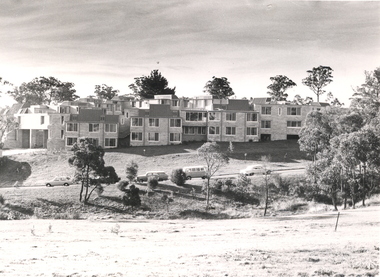
... building (later Albert Coates Complex), and a four storey library (later E.J.. Barker Library) on the Mt Helen campus was signed in November and December 1971. They were all completed and occupied in 1973. mount helen campus buildings student residences Views of Mount Helen Campus .1) Signposts of first turnoff campus road from Gear Avenue .2) Mount Helen Student Residences (stage 1) .3) Rear view of Mount Helen Student Residences (Stage 1) Views of Mount Helen Campus Photograph Black and White Photographs ...Ongoing photgraphic record of Mount Helen Campus development. A contract for the construction of Student housing, Union building (later Albert Coates Complex), and a four storey library (later E.J.. Barker Library) on the Mt Helen campus was signed in November and December 1971. They were all completed and occupied in 1973. Views of Mount Helen Campus .1) Signposts of first turnoff campus road from Gear Avenue .2) Mount Helen Student Residences (stage 1) .3) Rear view of Mount Helen Student Residences (Stage 1)mount helen campus, buildings, student residences -
Federation University Historical Collection
Photograph, Photographs relating to the Purchase of the Calton and United Brewery at Ballarat, 1993, 1993
... Ballarat Brewery Brewery Building signing contract haddon storey bill gribble Photographs relating to the Purchase of the Calton and United Brewery at Ballarat. .1) Haddon Storey, Member for Tertiary Educaiton and Training addressed the audience at the signing of the purchase by the Ballarat School of Mines. .3) Signing of document. ...Photographs relating to the Purchase of the Calton and United Brewery at Ballarat. .1) Haddon Storey, Member for Tertiary Educaiton and Training addressed the audience at the signing of the purchase by the Ballarat School of Mines. .3) Signing of document. Haddon Storey on right, Bill Gribble seated at centreballarat brewery, brewery building, signing contract, haddon storey, bill gribble -
 Orbost & District Historical Society
Photograph - Three photographs - Bombala; SS Whyralla; bean picking, Crown Studios ( W Stanley Vogt), c.1920s
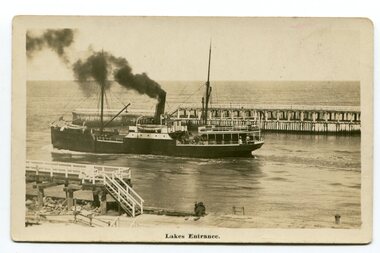
... 3 b/w photographs/postcards 2717.1 shows the street with buildings, some two-storey on both sides of the street. ...Agriculture Bombala Lakes Entrance SS Wyrallah 2717.1 BOMBALA Crown Studios, Bairnsdale, Victoria 2717.2 on back of card: To dear David and Violet with love and best wishes from father and mother 2717.3 Lakes Entrance 3 b/w photographs/postcards 2717.1 shows the street with buildings, some two-storey on both sides of the street. ...These 3 photos are of locations in East Gippsland. They all appear to be c. 1920s. 2717.1 Bombala was at the terminus of a railway line in NSW, and also road routes. 2717.2 shows the intensive labour force involved with agriculture in the 1920s eg. beans. 2717.3 shows the man-made entrance to Lakes Entrance, with the Steam Ship Wyrallah sailing through. This ship was a regular coastal trader from Melbourne to Lks. Entrance. She was sunk in 1924 when run down by the SS Dilkerra at Pt Phillip Heads, with a loss of 6 lives.These photographs are significant because they show different aspects of East Gippsland locations c.1920s.3 b/w photographs/postcards 2717.1 shows the street with buildings, some two-storey on both sides of the street. A number of cars and people are in the street. 2717.2 shows a flat paddock with rows of a crop (probably beans), and 20-30 people, men, women and children. Many of them carry baskets or tins and wear hats. In the background is a fence and a shed. 2717.3 shows a steam ship travelling through two embankments made from wood. 2717.1 BOMBALA Crown Studios, Bairnsdale, Victoria 2717.2 on back of card: To dear David and Violet with love and best wishes from father and mother 2717.3 Lakes Entranceagriculture, bombala, lakes entrance, ss wyrallah -
 Cheese World Museum
Photograph, Nirranda Creamery
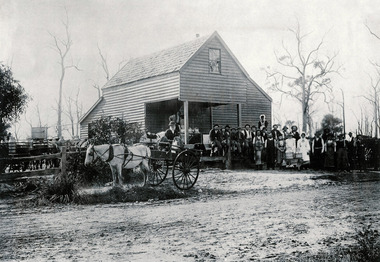
... 3 subsidiary creameries where farmers delivered their milk. Often the farmers collected the skim milk to feed pigs. At this time bacon was considered to be a dairy product. There were over 200 butter factories and creameries in Victoria in 1905. This is the only known photograph of the Nirranda Creamery. allansford nirranda creameries transport costumes warrnambool cheese and butter factory company Black & white photograph showing a two storey weatherboard building with horse and cart loaded with milk cans and a group of men and women standing in front. ...Warrnambool Cheese and Butter Factory at Allansford commenced in 1888. By the early 1900s it had 3 subsidiary creameries where farmers delivered their milk. Often the farmers collected the skim milk to feed pigs. At this time bacon was considered to be a dairy product. There were over 200 butter factories and creameries in Victoria in 1905.This is the only known photograph of the Nirranda Creamery.Black & white photograph showing a two storey weatherboard building with horse and cart loaded with milk cans and a group of men and women standing in front.allansford, nirranda, creameries, transport, costumes, warrnambool cheese and butter factory company -
 Ringwood and District Historical Society
Flyer, Auction - Former Holeproof Factory Site, Maroondah Highway, Ringwood, Victoria - 1978
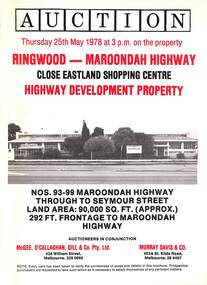
... Building is a double storey brick factory previously used for clothing manufacture. Zoning - MMBW "Light Industrial". Vacant possession 25th July 1978. Terms 10% deposit on signing of contract to be made up to $300,000 within 60 days. Balance end of 2 years. Interest 11-1/2% p.a. payable quarterly. Auctioneers in conjunction - McGee O'Callaghan Gill & Co Pty Ltd, 438 William Street, Melbourne - 329 0666. Murray Davis & Co, 403A St.Kilda Road, Melbourne - 26 4407. Folded 3 ...Folded 3-page auction advertisement with red and black print. Black & white photograph of Holeproof factory on the front and red shaded location maps on centre pages.Auction Thursday 25th May 1978 at 3pm on the property. Ringwood - Maroondah Highway, close to Eastland Shopping Centre. Highway development property. 93-99 Maroondah Highway through to Seymour Street. Land area 90,000 square feet (approx.) 292ft. Frontage to Maroondah Highway. Building is a double storey brick factory previously used for clothing manufacture. Zoning - MMBW "Light Industrial". Vacant possession 25th July 1978. Terms 10% deposit on signing of contract to be made up to $300,000 within 60 days. Balance end of 2 years. Interest 11-1/2% p.a. payable quarterly. Auctioneers in conjunction - McGee O'Callaghan Gill & Co Pty Ltd, 438 William Street, Melbourne - 329 0666. Murray Davis & Co, 403A St.Kilda Road, Melbourne - 26 4407. -
 Bendigo Military Museum
Photograph - AUSTRALIANS IN NORTH AFRICA, WW2, c.WW2
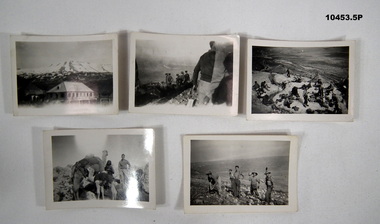
... storey building with snow capped mountain in the background. 2. Black and white photograph of a group of officer inspecting works. Back of soldier carrying a container on RHS of photograph. 3. ...3. Handwritten in black ink on back: "Dinner-time during one of our working days". 4. Handwritten on back in black ink: "Doing a spot of work. From left:- Stan Wallis - Mildura, Frank Kettle - Wangaratta, Bill Harris - Melbourne, Bernie Egan - Wonthaggi, Jack Smellin - Semaphore SA. 1. Black and white photograph of a two storey building ...Series of photographs featuring Australian soldiers in North Africa. Part of the Bennetts collection.1. Black and white photograph of a two storey building with snow capped mountain in the background. 2. Black and white photograph of a group of officer inspecting works. Back of soldier carrying a container on RHS of photograph. 3. Black and white photograph of a work party on a meal break. Party has been digging a trench. 4. Black and white photograph of a soldier standing next to a lady in traditional dress. She is in control of two camels. 5. Black and white photograph featuring five soldiers who are part of a work party.1. Handwritten in black ink on back: “A Hotel, at a place we called at during one of our tours. Note the snow, which has all gone now” 2. Handwritten in black ink on back: "Extreme left, Gen. Auckinleck" 3. Handwritten in black ink on back: "Dinner-time during one of our working days". 4. Handwritten on back in black ink: "Doing a spot of work. From left:- Stan Wallis - Mildura, Frank Kettle - Wangaratta, Bill Harris - Melbourne, Bernie Egan - Wonthaggi, Jack Smellin - Semaphore SA.bennetts collection, army, photographs, ww2, north africa, general auckinleck -
 Bendigo Military Museum
Photograph - PHOTOGRAPHS, BENNETTS
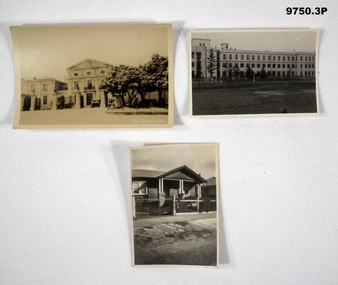
... storey building a fence. Jeep is visible passing through a gate in fence. Photo has a white border. 2. Black and white photograph of a three storey building. trees and open parkland in foreground. Photo has a white border. 3...Buildings in 1. & 2. relate to BCOF. Bennetts Collection Alva Bennetts Photographs BCOF 3. Green stamp of photograph's printer on back. 1. faded black and white photograph of a three storey building a fence. ...Part of the Bennetts Collection. See Catalogue No. 9726P for details of service for "Alva Marie Bennetts". Buildings in 1. & 2. relate to BCOF.1. faded black and white photograph of a three storey building a fence. Jeep is visible passing through a gate in fence. Photo has a white border. 2. Black and white photograph of a three storey building. trees and open parkland in foreground. Photo has a white border. 3. Black and white photograph of a single storey weatherboard bungalow, Portico with three posts in front of the bungalow. White border on photo.3. Green stamp of photograph's printer on back.bennetts collection, alva bennetts, photographs, bcof -
 Eltham District Historical Society Inc
Photograph - Digital Photograph, Alan King, Edendale Farm Homestead, 29 January 2008
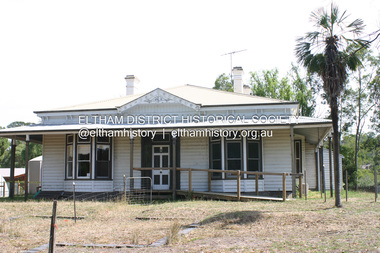
... 3 The centre demonstrates the sustainable living the farm teaches, with features like solar hot water and drive lighting and for the fireplace, logs of recycled cardboard. Edendale has had a varied history as a dog pound and even as a retreat for Thomas Cool, Club Manager of the Victoria Coffee Palace in Melbourne. His single-storey weatherboard house built in 1896, which still stands, was grander than most homes in Eltham. Although such buildings...3 The centre demonstrates the sustainable living the farm teaches, with features like solar hot water and drive lighting and for the fireplace, logs of recycled cardboard. Edendale has had a varied history as a dog pound and even as a retreat for Thomas Cool, Club Manager of the Victoria Coffee Palace in Melbourne. His single-storey weatherboard house built in 1896, which still stands, was grander than most homes in Eltham. Although such buildings ...Edendale Farm is Nillumbik Shire Council's environment centre situated in Gastons Road, Eltham between the railway and the Diamond Creek. The homestead on the property was built in 1896 and is of historical significance, being the subject of a Heritage Overlay under the Nillumbik Planning Scheme. The Edendale property was originally part of an extensive land purchase in 1852 from the Crown by pioneer Eltham farmer Henry Stooke. He initially purchased 51 acres and later expanded his holdings by purchasing another three adjacent Crown allotments extending northerly from Josiah Holloway's Little Eltham subdivision. Despite clearing the land, Stooke did not build on this property, choosing to live on his property "Rosehill" at Lower Plenty. In 1896 Thomas Cool, Club Manager of the Victoria Coffee Palace in Melbourne purchased 7 acres of the original Stooke land and built the house now known as Edendale. Cool did not farm the land, instead using it as a gentleman’s residence, retiring to Eltham at weekends. In 1918 he purchased an additional 7 acres but in 1919 he sold the property. Later owners included J.W. Cox, the Gaston family and D. Mummery. In the 1980s the Eltham Shire Council purchased the site for use as a Council depot, but this use did not proceed. Subsequently, it was used as the Council pound. The Edendale Farm Pet Education and Retention Centre was established in the summer of 1988/1989 and was set up to replace the existing dog kennels with a high standard pet retention centre. The design style of the building was established to compliment the features of the existing house. It was equipped with 10 retention pens, a veterinary room and a pet education area where school children and other interested parties learnt about pet care procedures. It was later developed into a community farm and was run by an advisory committee and in 2000 it became an Environment Centre. In early 2006 an advisory committee was established for the development of a master plan for future development at Edendale Farm. The committee included Russell Yeoman, a former long-time shire planner and founding member of the Eltham District Historical Society. At the time of filming the Master Plan and future for Edendale was about continuing to develop Edendale as a centre of environment learning and looking at expanding displays and school program, running a lot more of life-long learning and workshops around sustainable living. Covered under Heritage Overlay, Nillumbik Planning Scheme. Published: Nillumbik Now and Then / Marguerite Marshall 2008; photographs Alan King with Marguerite Marshall.; p101 A sharp turn from busy Wattletree Road by the railway line, brings a surprise. Only 1.4 km from Eltham’s centre, sheep feed, blissfully unaware of the hectic suburban activity so close by. At the entrance to the 5.6ha Edendale Farm is another surprise. A work of art that looks like huge tree trunks transformed into bowler and top-hatted men. The Fences Act 1968 by Tony Trembath with Mark Cain and John Doyle, 1996, is classified by the National Trust of Australia as having Regional Significance. The title refers to a government act on disputes between neighbors over the placement of fences and boundaries. This takes a ‘wry swipe’ at a community divided by trivial squabbles. It also celebrates making do with limited resources.1 Further along on the left, the office wall is decorated with a massive Eltham Copper Butterfly, designed by Robert Tickner and made by school children with used plastic bottles and other waste material. Nillumbik Council runs Edendale as an Environmental Education Centre, to help preserve and enhance the local environment. As early as 1988 the former Eltham Shire Council realised Edendale’s importance in meeting people’s needs, particularly of children, to enjoy farmland. The centre, with the Eltham North Reserve to the north - including remnant bushland and open parkland - makes up the major part of the public open space for this area. The council considers this area will become increasingly important to the local community for recreational use.2 Educational programs aim to encourage community involvement to ensure the long-term rehabilitation and protection of natural bushland areas. Edendale is used by people of all ages - from school children to adults - for environmental programs and workshops, as well as for recreation, to enjoy the domestic animals and to picnic. Edendale is also home to the Environmental Works staff who manage reserves and roadsides and support Nillumbik Friends environmental groups. The Friends propagate plants at the nursery, which grows indigenous plants and sells these to the public.3 The centre demonstrates the sustainable living the farm teaches, with features like solar hot water and drive lighting and for the fireplace, logs of recycled cardboard. Edendale has had a varied history as a dog pound and even as a retreat for Thomas Cool, Club Manager of the Victoria Coffee Palace in Melbourne. His single-storey weatherboard house built in 1896, which still stands, was grander than most homes in Eltham. Although such buildings were common in many other parts of Melbourne, Eltham’s poverty and remoteness did not encourage such construction. The Victorian rectangular-shaped house, with a corrugated iron roof and veranda, has elegant large rooms, leadlight windows, ceiling roses, two bay windows and ornately carved wooden fireplace surrounds. Cool bought seven acres (2.8ha) from pioneer Eltham farmer Henry Stooke’s 200 acre (81ha) farm, which he had bought from the Crown in 1852. In 1918 Cool bought an extra seven acres (2.8ha) but in 1919 sold the estate to farmer John Cox. In 1933 Cox sold Edendale to Mrs Elizabeth Gaston, after whom the road leading to the centre was named. The property was owned by several Gaston family members, who called it Edendale, then by a police constable, Douglas Mummery, until the Shire of Eltham bought it in 1970. Oddly Edendale was known as Mummery’s for almost 20 years, although Mummery owned it only for a short time.4 The shire used Edendale as a dog pound until amalgamation with other municipalities in 1996. The pound then moved to the Yan Yean Road, Plenty site, which had been used by the former Diamond Valley Shire Council. To the west and north the centre is bounded by Diamond Creek and on the east by the Melbourne-Hurstbridge railway line. Part of the Research creek forms the centre’s southern boundary.This collection of almost 130 photos about places and people within the Shire of Nillumbik, an urban and rural municipality in Melbourne's north, contributes to an understanding of the history of the Shire. Published in 2008 immediately prior to the Black Saturday bushfires of February 7, 2009, it documents sites that were impacted, and in some cases destroyed by the fires. It includes photographs taken especially for the publication, creating a unique time capsule representing the Shire in the early 21st century. It remains the most recent comprehenesive publication devoted to the Shire's history connecting local residents to the past. nillumbik now and then (marshall-king) collection, edendale farm -
 Eltham District Historical Society Inc
Photograph - Digital Photograph, Marguerite Marshall, Art Gallery at Clifton Pugh's Artists' Colony, Dunmoochin, Barreenong Road, Cottles Bridge, 5 February 2008
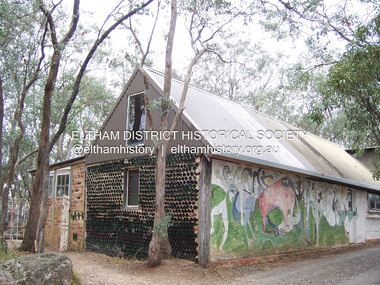
... Now in place of Pugh’s house, are two double-storey mud-brick artists’ studios topped with corrugated roofs curved like birds’ wings, with accommodation for seven. The original studios, gallery and other buildings remain.3 Pugh grew up on his parents’ hobby farm at Briar Hill and attended the Briar Hill Primary School, then Eltham High School and later Ivanhoe Grammar. ...Now in place of Pugh’s house, are two double-storey mud-brick artists’ studios topped with corrugated roofs curved like birds’ wings, with accommodation for seven. The original studios, gallery and other buildings remain.3 Pugh grew up on his parents’ hobby farm at Briar Hill and attended the Briar Hill Primary School, then Eltham High School and later Ivanhoe Grammar. ...Art Gallery with mural painted by Clifton Pugh (1924-1990) at his Artists' Colony, Dunmoochin, Barreenong Road, Cottles Bridge. Following military service in the second world war, Clifton Pugh studied under artist Sir William Dargie at the National Gallery School in Melbourne as well as Justus Jorgensen, founder of Montsalvat. For a while he lived on the dole but also worked packing eggs for the Belot family saving sufficient to purchase six acres (2.4 ha) of land at Barreenong Road, Cottles Bridge. He accumulated more land and persuaded several other artists and friends to buy land nearby, resulting in a property of approximately 200 acres, stablishing it as one of the first artistic communes in Australia alongside Montsalvat in Eltham. It was around 1951 that Pugh felt he had '"done moochin' around" and so the name of the property evolved. He bought timber from Alistair Knox to build his house on the crest of a hill. Inspired by local goldminer's huts, it was a one room wattle-and-daub structure with dirt floor. Over the years it expanded with thick adobe walls made from local clay, high ceilings and stone floors. All materials other than the local earth were sourced from second hand materials, most found at wreckers' yards. Artists from across the nation were drawn to Dunmoochin, with several setting up houses and shacks on the property, maintaining their independence but sharing their artistic zeal. Artists who worked or resided at Dunmoochin included Mirka Mora, John Perceval, Albert Tucker, Fred Williams, Charles Blackman, Arthur Boyd and John Olsen. In 2002, Pugh's house along with its treasure trove of art and a library of some 20,000 books was destroyed by fire. Traces of Pugh's home remain with the presence of the Victorian doorframe archway with leadlight of intricate design, procured from a demolished Melbourne mansion; and two bronze life-sized female statues created by Pugh and cast by Matcham Skipper. In place of Pugh's house rose two double-storey mud-brick artists' studios topped with corrugated iron rooves curved like the wings of a bird with accommodation for seven. The original studios, gallery and other buildings survived the fire. Covered under Heritage Overlay, Nillumbik Planning Scheme. Published: Nillumbik Now and Then / Marguerite Marshall 2008; photographs Alan King with Marguerite Marshall.; p153 It’s not surprising that artist Clifton Pugh was drawn to Cottles Bridge to establish his artists’ colony Dunmoochin. Undisturbed by the clamour of modern life at Barreenong Road, Pugh was surrounded by the Australian bush he loved, and where his ashes were later scattered. The 200 acres (81ha) of bushland, broken by glimpses of rolling hills, has more than 50 species of orchids and Pugh shared his property with native animals including kangaroos, emus, phascogales, wombats, and diverse bird life. Pugh encouraged these creatures to join him in the bush by creating, with Monash University, a holding station where the animals were raised. Dunmoochin inspired Pugh for such paintings as in a book on orchids and the Death of a Wombat series.1 But his love for the bush was accompanied by the fear that Europeans were destroying it and much of his painting illustrated this fear and his plea for its conservation.2 However it was his house rather than the surrounding bush that was to be destroyed. Tragically in 2002 Pugh’s house, with its treasure of art and library of 20,000 art books, was destroyed by fire. Traces of the beauty of Pugh’s home still remain, however, in the magnificent Victorian doorframe archway with leadlight of intricate design procured from a demolished Melbourne mansion; and two bronze life-sized female statues created by Pugh and cast by Matcham Skipper. Now in place of Pugh’s house, are two double-storey mud-brick artists’ studios topped with corrugated roofs curved like birds’ wings, with accommodation for seven. The original studios, gallery and other buildings remain.3 Pugh grew up on his parents’ hobby farm at Briar Hill and attended the Briar Hill Primary School, then Eltham High School and later Ivanhoe Grammar. At 15 he became a copy boy for the Radio Times newspaper, then worked as a junior in a drafting office. Pugh was to have three wives and two sons. After serving in World War Two in New Guinea and Japan, Pugh studied under artist Sir William Dargie, at the National Gallery School in Melbourne.4 Another of his teachers was Justus Jörgensen, founder of Montsalvat the Eltham Artists’ Colony. Pugh lived on the dole for a while and paid for his first six acres (2.4ha) at Barreenong Road by working as an egg packer for the Belot family. Pugh accumulated more land and persuaded several other artists and friends to buy land nearby, resulting in the 200 acre property. They, too, purchased their land from the Belot family by working with their chickens. Around 1951 Pugh felt he had ‘Done moochin’ around’ and so the name of his property was born. Pugh bought some used timber from architect Alistair Knox to build his house on the crest of a hill. Inspired by local goldminers’ huts it was a one-room wattle-and-daub structure with a dirt floor. It was so small that the only room he could find for his telephone was on the fork of a tree nearby.5 Over the years the mud-brick house grew to 120 squares in the style now synonymous with Eltham. It had thick adobe walls (sun-dried bricks) made from local clay, high ceilings and stone floors with the entire structure made of second-hand materials – most found at wreckers’ yards. Pugh’s first major show in Melbourne in 1957, established him as a distinctive new painter, breaking away from the European tradition ‘yet not closely allied to any particular school of Australian painting’.6 Pugh became internationally known and was awarded the Order of Australia. He won the Archibald Prize for portraiture three times, although he preferred painting the bush and native animals. In 1990 not long before he died, Pugh was named the Australian War Memorial’s official artist at the 75th anniversary of the landing at Gallipoli. Today one of Pugh’s legacies is the Dunmoochin Foundation, which gives seven individual artists or couples and environmental researchers the chance to work in beautiful and peaceful surroundings, usually for a year. By November 2007, more than 80 people had taken part, and the first disabled artist had been chosen to reside in a new studio with disabled access.1 In 1989, not long before Pugh died in 1990 of a heart attack at age 65, he established the Foundation with La Trobe University and the Victorian Conservation Trust now the Trust for Nature. Pugh’s gift to the Australian people – of around 14 hectares of bushland and buildings and about 550 art works – is run by a voluntary board of directors, headed by one of his sons, Shane Pugh. La Trobe University in Victoria stores and curates the art collection and organises its exhibition around Australia.2 The Foundation aims to protect and foster the natural environment and to provide residences, studios and community art facilities at a minimal cost for artists and environmental researchers. They reside at the non-profit organisation for a year at minimal cost. The buildings, some decorated with murals painted by Pugh and including a gallery, were constructed by Pugh, family and friends, with recycled as well as new materials and mud-bricks. The Foundation is inspired by the tradition begun by the Dunmoochin Artists’ Cooperative which formed in the late 1950s as one of the first artistic communes in Australia. Members bought the land collaboratively and built the seven dwellings so that none could overlook another. But, in the late 1960s, the land was split into private land holdings, which ended the cooperative. Dunmoochin attracted visits from the famous artists of the day including guitarists John Williams and Segovia; singer and comedian Rolf Harris; comedian Barry Humphries; and artists Charles Blackman, Arthur Boyd and Mirka Mora. A potters’ community, started by Peter and Helen Laycock with Alma Shanahan, held monthly exhibitions in the 1960s, attracting local, interstate and international visitors – with up to 500 attending at a time.3 Most artists sold their properties and moved away. But two of the original artists remained into the new millennium as did relative newcomer Heja Chong who built on Pugh’s property (now owned by the Dunmoochin Foundation). In 1984 Chong brought the 1000-year-old Japanese Bizan pottery method to Dunmoochin. She helped build (with potters from all over Australia) the distinctive Bizan-style kiln, which fires pottery from eight to 14 days in pine timber, to produce the Bizan unglazed and simple subdued style. The kiln, which is rare in Australia, is very large with adjoining interconnected ovens of different sizes, providing different temperatures and firing conditions. Frank Werther, who befriended Pugh as a fellow student at the National Gallery Art School in Melbourne, built his house off Barreenong Road in 1954. Werther is a painter of the abstract and colourist style and taught art for about 30 years. Like so many in the post-war years in Eltham Shire, as it was called then, Werther built his home in stages using mud-brick and second-hand materials. The L-shaped house is single-storey but two-storey in parts with a corrugated-iron pitched roof. The waterhole used by the Werthers for their water supply is thought to be a former goldmining shaft.4 Alma Shanahan at Barreenong Road was the first to join Pugh around 1953. They also met at the National Gallery Art School and Shanahan at first visited each weekend to work, mainly making mud-bricks. She shared Pugh’s love for the bush, but when their love affair ended, she designed and built her own house a few hundred yards (metres) away. The mud-brick and timber residence, made in stages with local materials, is rectangular, single-storey with a corrugated-iron roof. As a potter, Shanahan did not originally qualify as an official Cooperative member.This collection of almost 130 photos about places and people within the Shire of Nillumbik, an urban and rural municipality in Melbourne's north, contributes to an understanding of the history of the Shire. Published in 2008 immediately prior to the Black Saturday bushfires of February 7, 2009, it documents sites that were impacted, and in some cases destroyed by the fires. It includes photographs taken especially for the publication, creating a unique time capsule representing the Shire in the early 21st century. It remains the most recent comprehenesive publication devoted to the Shire's history connecting local residents to the past. nillumbik now and then (marshall-king) collection, art gallery, clifton pugh, dunmoochin, cottlesbridge, cottles bridge, barreenong road
