
Showing 121 items matching "aboriginal australian art"
-
 Tatura Irrigation & Wartime Camps Museum
Booklet, Has Australian Aboriginal Art a Future?, 1944
... Has Australian Aboriginal Art a Future?...Leonhard Adam studied both anthropology and jurisprudence as a young man. books history local Soft cream coloured cover booklet with brown writing. 4 pages of photographs Written in English Has Australian Aboriginal Art a Future? Booklet ...Dr. Leonhard Adam studied both anthropology and jurisprudence as a young man.Soft cream coloured cover booklet with brown writing. 4 pages of photographs Written in Englishbooks, history, local -
Koorie Heritage Trust
Journal - Serials, Britton, Stephanie, Art Link : Contemporary Australian Aboriginal Art, 1990
... Art Link : Contemporary Australian Aboriginal Art...Art Link : Contemporary Australian Aboriginal Art Journal Serials Britton, Stephanie Artlink ...Includes: Traditions in Evolution Legal and Lobby Appropriation: a fine line. Lin Onus. Aboriginal Copyright Cases. Martin Hardie. What is Comalco up to? Report from Arukun. Peter Sutton At Last!! The arts & crafts industry review! And what did it achieve? Tim Rowse. Working in Isolation Performing Arts Media Visual Arts Projects / Opinions Artist Profiles Lin Onus Michael Eather Mural at Port Lincoln. Kerry Giles, Melanie Howard talk to Felicity Wright. Kurwingie. (Kerry Giles) Peter Dabah Vincent Megaw Robert Campbell Jnr. Milton Budge Leone Stanford Bluey Roberts Noris Ioannou Tatipai Barsa and Zane Saunders Anna Eglitis. Les Griggs Megan Griggs Judy Watson Margariet Bonnin Shane Pickett Alta Winmar Wanjidari Libby Morgan Ellen Jose Donna Leslie Natalie Greenwood Gordon Bennett Anne Kirker Maree Clarke Natalie Greenwood Seminar series at Power Institute Bronwyn Bancroft Gayle Maddigan Natalile Greenwood Narragunawali in Canberra Sylvia Kleinert Sally Morgan Design in the Commercial Area Organisations120 p.; ill.; 28 cm.Includes: Traditions in Evolution Legal and Lobby Appropriation: a fine line. Lin Onus. Aboriginal Copyright Cases. Martin Hardie. What is Comalco up to? Report from Arukun. Peter Sutton At Last!! The arts & crafts industry review! And what did it achieve? Tim Rowse. Working in Isolation Performing Arts Media Visual Arts Projects / Opinions Artist Profiles Lin Onus Michael Eather Mural at Port Lincoln. Kerry Giles, Melanie Howard talk to Felicity Wright. Kurwingie. (Kerry Giles) Peter Dabah Vincent Megaw Robert Campbell Jnr. Milton Budge Leone Stanford Bluey Roberts Noris Ioannou Tatipai Barsa and Zane Saunders Anna Eglitis. Les Griggs Megan Griggs Judy Watson Margariet Bonnin Shane Pickett Alta Winmar Wanjidari Libby Morgan Ellen Jose Donna Leslie Natalie Greenwood Gordon Bennett Anne Kirker Maree Clarke Natalie Greenwood Seminar series at Power Institute Bronwyn Bancroft Gayle Maddigan Natalile Greenwood Narragunawali in Canberra Sylvia Kleinert Sally Morgan Design in the Commercial Area Organisations art-aborignal, australian-contemporary -
Koorie Heritage Trust
Book, Barrett, Charles et al, Australian Aboriginal Art, 1929
... Australian Aboriginal Art....Aboriginal art....Artifacts...Aboriginal...Australia...National Museum of Victoria-Exhibitions-Aboriginal art. Artifacts Aboriginal Australia. Victorian Aboriginal Art. ...Issued in connection with the Exhibition of Australian Aboriginal Art, National Museum, Melbourne.39 p.; plates; ill.; 21 cm.Issued in connection with the Exhibition of Australian Aboriginal Art, National Museum, Melbourne.national museum of victoria-exhibitions-aboriginal art., artifacts, aboriginal, australia., victorian aboriginal art. -
Koorie Heritage Trust
Journal - Serials, Beier, Ulli et al, Long water - Aboriginal Art & Literature 1988, 1988
... Aboriginal...Australian...Art...Collections - Aboriginal Australian Art and literature. 119 P.; ports; notes; ill.; 24 cm. ...119 P.; ports; notes; ill.; 24 cm.collections - aboriginal, australian, art and literature. -
 Wyndham Art Gallery (Wyndham City Council)
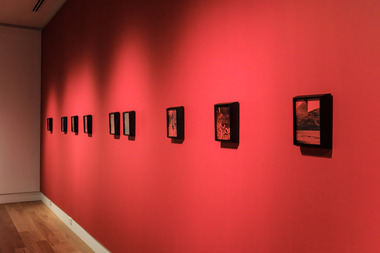
Photograph - She was like the lizard that fell into the water and became a crocodile, Hayley Millar Baker, 2025
... ...Aboriginal Australian art...First Nations art Aboriginal Australian art Gunditjmara culture Djabwurrung culture Indigenous knowledge systems Indigenous sovereignty Cultural reclamation Cultural memory Storytelling Contemporary Indigenous identity Aboriginal women Womanhood Motherhood Indigenous feminism Spirituality First Nations Photography A series of ten photographic collages 2O.5 X 15CM EACH She was like the lizard that fell into the water and became a crocodile Photograph She was like the lizard that fell into the water and became a crocodile Hayley Millar Baker ...She was like the lizard that fell into the water and became a crocodile works with land through photographs that are cut, reassembled, and sutured into collaged forms. The seams have been left open; the ruptures are central to each work. Observing the sutured landscapes becomes a meditation on responsibility and on the uneasy coexistence of care, complicity, and inherited harm. The collages return the act of looking back onto the viewer, presenting their scars. To engage with them is to confront one’s position within ongoing colonial systems and to acknowledge the violences that remain embedded in the land and in the systems that have fractured its sovereignty. To look to the land is to feel the weight of what has been done to it and to those who belong to it, while recognising how it continues to nourish, restore, and strengthen. Looking demands attentiveness and accountability, insisting on the ethical and relational dimensions of vision itself. The images collaged throughout She was like the lizard that fell into the water and became a crocodile combine photographs taken by the artist on unceded Country in south-western Victoria over the past decade —across the lands of the Wauthaurong, Bunurong, Wadawurrung, and Gunditjmara —with archival material sourced from the State Library of Victoria of the same areas. The archival images, produced exclusively by white colonial settler photographers, documented and mapped the land, creating visual records that both precede and actively participate in the colonial inscription of place. By bringing these materials into dialogue, the work creates a confrontation between lived Indigenous presence and the extractive logic of the colonial archive.A series of ten photographic collages 2O.5 X 15CM EACHfirst nations art, aboriginal australian art, gunditjmara culture, djabwurrung culture, indigenous knowledge systems, indigenous sovereignty, cultural reclamation, cultural memory, storytelling, contemporary indigenous identity, aboriginal women, womanhood, motherhood, indigenous feminism, spirituality, first nations, photography -
Marysville & District Historical Society
THE TRIANGLE NEWS-VOL 36 NO 4-FEBRUARY 6 2009
... australia...dr lachlan fraser...running...australian ultramarathon runners assocn...deadline...advertising rates...diary dates...snippets from history...gallipoli park...joe white...alex white...kerami guest house...wandsworth...kerami crescent...environmental forum...disclaimer...fire calls...indidj art gallery...australian & aboriginal...marysville victoria australia dr lachlan fraser running australian ultramarathon runners assocn deadline advertising rates diary dates snippets from history gallipoli park joe white alex white kerami guest house wandsworth kerami crescent environmental forum disclaimer fire calls indidj art gallery australian & aboriginal art church notices mops women of hope bible quote men's fellowship breakfast life centre alexandra falls family fellowship mount cathedral baptist church buxton 10th anniversary founding fellowship ivor & yvonne jones buxton memorial hall buxton weather graphs marysville fire brigade children's services team trash & treasure stall holders wirreanda festival mystic mountains tourism marysville golfers alexandra cinema narby day narbethong hall bushdance & dinner outreach services murrindindi shire brewers choice home brew david kitchen gluten free beer community health services maryor's chair energy efficient homes councillor comment health & wellbeing new shire officer environment strategy yarra valley grape grazing country touch t.a.c. road safety planning permit notice of application payment of rates & charges marysville real estate marysville medical clinic THE TRIANGLE NEWS-VOL 36 NO 4-FEBRUARY 6 2009 ...marysville, victoria, australia, dr lachlan fraser, running, australian ultramarathon runners assocn, deadline, advertising rates, diary dates, snippets from history, gallipoli park, joe white, alex white, kerami guest house, wandsworth, kerami crescent, environmental forum, disclaimer, fire calls, indidj art gallery, australian & aboriginal art, church notices, mops, women of hope, bible quote, men's fellowship breakfast, life centre alexandra, falls family fellowship, mount cathedral baptist church buxton, 10th anniversary founding fellowship, ivor & yvonne jones, buxton memorial hall, buxton weather graphs, marysville fire brigade, children's services team, trash & treasure stall holders, wirreanda festival, mystic mountains tourism, marysville golfers, alexandra cinema, narby day, narbethong hall, bushdance & dinner, outreach services, murrindindi shire, brewers choice home brew, david kitchen, gluten free beer, community health services, maryor's chair, energy efficient homes, councillor comment, health & wellbeing, new shire officer, environment strategy, yarra valley grape grazing, country touch, t.a.c. road safety, planning permit notice of application, payment of rates & charges, marysville real estate, marysville medical clinic -
Koorie Heritage Trust
Booklet, Albert, Trish, Stories through art, 2009
... Aboriginal Australian -- 21st century. | Art...Artists Aboriginal Australian -- 21st century. | Art Aboriginal Australian -- 21st century. | Australian 11 Indigenous artists discuss their work and motivation. 32 P; plates; photographs; ill. ...11 Indigenous artists discuss their work and motivation.32 P; plates; photographs; ill.11 Indigenous artists discuss their work and motivation.artists, aboriginal australian -- 21st century. | art, aboriginal australian -- 21st century. | australian -
Koorie Heritage Trust
Book, Bellear, Lisa, Central Business Dreaming, 2008
... Art...Aboriginal Australian -- Victoria -- Melbourne. | Art...Indigenous Arts Program. | Art Aboriginal Australian -- Victoria -- Melbourne. | Art Aboriginal Australian. | In recognition of Indigenous culture, we (The City of Melbourne) have initiated and supported the only dedicated local government indigenous arts funding program in Victoria. 3-138 P.; ports.; index; facs. ...In recognition of Indigenous culture, we (The City of Melbourne) have initiated and supported the only dedicated local government indigenous arts funding program in Victoria.3-138 P.; ports.; index; facs.In recognition of Indigenous culture, we (The City of Melbourne) have initiated and supported the only dedicated local government indigenous arts funding program in Victoria.melbourne (vic). indigenous arts program. | art, aboriginal australian -- victoria -- melbourne. | art, aboriginal australian. | -
Federation University Historical Collection
Book, Freund, Peter, Victorian Indigenous Art Awards, 2013, 2013
... The awards celebrate the quality and diversity of current art practice of aboriginal and Torres Straight Islander Victorians and showcase and raise the profile of the uniqueness of South-East Australian Aboriginal Art. ...The awards celebrate the quality and diversity of current art practice of aboriginal and Torres Straight Islander Victorians and showcase and raise the profile of the uniqueness of South-East Australian Aboriginal Art. ...The Victorian Indigenous Art Awards started in 2005. The awards celebrate the quality and diversity of current art practice of aboriginal and Torres Straight Islander Victorians and showcase and raise the profile of the uniqueness of South-East Australian Aboriginal Art. The awards were presented at the Art Gallery of Ballarat for the first time in 2013. In 2013 the University of Ballarat (now Federation University Australia) sponsored The University of Ballarat Acquisitive Award for Work Reflecting Victoria's Western District.Red soft covered book of 64 pages. The book has coloured reproctions and artist's overview on the works exhibited at the Art Gallery of Ballarat as part of the Awards. Artists include Ray Thomas, Georgia MacGuire, John Duggan, Peter Waples-Crowe, Bindi Cole, Bronwyn Razem, Lucy Williams-Connelly, Jack Anselmi, Deanne Gilson, Marlene Gilsonvictorian indigenous art awards, ray thomas, georgia macguire, john duggan, peter waples-crowe, bindi cole, bronwyn razem, lucy williams-connelly, jack anselmi, deanne gilson, marlene gilson, alumni -
 Warrnambool and District Historical Society Inc.
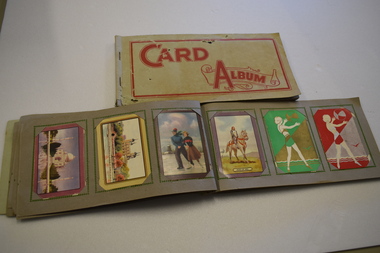
Work on paper - Swap Card Albums (2), Swap card albums, Mid 20th century
... There are many of birds and animals, some of great artwork reproductions, some of famous places and buildings, a couple of V.F.L. footballers, two from the Melbourne Olympic Games, some matching pairs and a couple of Australian aboriginal art work. They are all of high quality and many are very beautiful. ...There are many of birds and animals, some of great artwork reproductions, some of famous places and buildings, a couple of V.F.L. footballers, two from the Melbourne Olympic Games, some matching pairs and a couple of Australian aboriginal art work. They are all of high quality and many are very beautiful. ...The 120 cards in these two albums are very varied in content. There are many of birds and animals, some of great artwork reproductions, some of famous places and buildings, a couple of V.F.L. footballers, two from the Melbourne Olympic Games, some matching pairs and a couple of Australian aboriginal art work. They are all of high quality and many are very beautiful. Swap card collecting was a popular activity for young girls throughout the 20th century and cards were swapped with friends and sometimes sold. Usually the cards, bought from newsagents and fancy goods shops, were kept loose in a school bag or pocket and so the number of cards and the type varied from week to week. Boys also often saved cards of a particular nature – sports cards, nature cards etc though the idea of ‘swapping’ was not so prevalent among the boys. Card collecting, usually promoted by a business concern or a toy company, is still a pastime for young people today. The cards in these two albums are of considerable interest as they are of good quality and are aesthetically pleasing. They also are good examples of a popular hobby of girls in the 20th century. .1 & .2 These two albums are similar in size and design. Both have grey/pale green covers with red printing on the front cover. Both are bound with two staples and both contain 10 pages with inserts to hold three cards each side of the page. The inserts are edged with a green decoration. Both albums contain 60 coloured cards. There is evidence of silverfish damage on the front covers of both albums. hobbies of the past, history of warrnambool, swap cards, trading cards, albums, card collection -
 Victorian Aboriginal Corporation for Languages
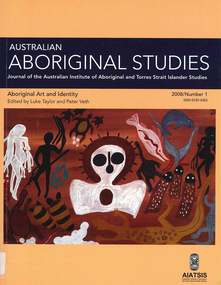
Periodical, Australian Institute of Aboriginal and Torres Strait Islander Studies, Australian Aboriginal studies : journal of the Australian Institute of Aboriginal and Torres Strait Islander Studies, 2008
... Do they see non-Aboriginal Australians as other? However, art works produced for this exhibition rejected curatorial constructions of Black and White, instead presenting viewers with more complex and ambivalent notions of Aboriginality and non-Aboriginality. ...Do they see non-Aboriginal Australians as other? However, art works produced for this exhibition rejected curatorial constructions of Black and White, instead presenting viewers with more complex and ambivalent notions of Aboriginality and non-Aboriginality. ...1. Rock-art of the Western Desert and Pilbara: Pigment dates provide new perspectives on the role of art in the Australian arid zone Jo McDonald (Australian National University) and Peter Veth (Australian National University) Systematic analysis of engraved and painted art from the Western Desert and Pilbara has allowed us to develop a spatial model for discernable style provinces. Clear chains of stylistic connection can be demonstrated from the Pilbara coast to the desert interior with distinct and stylistically unique rock-art bodies. Graphic systems appear to link people over short, as well as vast, distances, and some of these style networks appear to have operated for very long periods of time. What are the social dynamics that could produce unique style provinces, as well as shared graphic vocabularies, over 1000 kilometres? Here we consider language boundaries within and between style provinces, and report on the first dates for pigment rock-art from the Australian arid zone and reflect on how these dates from the recent past help address questions of stylistic variability through space and time. 2. Painting and repainting in the west Kimberley Sue O?Connor, Anthony Barham (Australian National University) and Donny Woolagoodja (Mowanjum Community, Derby) We take a fresh look at the practice of repainting, or retouching, rockart, with particular reference to the Kimberley region of Western Australia. We discuss the practice of repainting in the context of the debate arising from the 1987 Ngarinyin Cultural Continuity Project, which involved the repainting of rock-shelters in the Gibb River region of the western Kimberley. The ?repainting debate? is reviewed here in the context of contemporary art production in west Kimberley Indigenous communities, such as Mowanjum. At Mowanjum the past two decades have witnessed an artistic explosion in the form of paintings on canvas and board that incorporate Wandjina and other images inspired by those traditionally depicted on panels in rock-shelters. Wandjina also represents the key motif around which community desires to return to Country are articulated, around which Country is curated and maintained, and through which the younger generations now engage with their traditional lands and reach out to wider international communities. We suggest that painting in the new media represents a continuation or transference of traditional practice. Stories about the travels, battles and engagements of Wandjina and other Dreaming events are now retold and experienced in the communities with reference to the paintings, an activity that is central to maintaining and reinvigorating connection between identity and place. The transposition of painting activity from sites within Country to the new ?out-of-Country? settlements represents a social counterbalance to the social dislocation that arose from separation from traditional places and forced geographic moves out-of-Country to government and mission settlements in the twentieth century. 3. Port Keats painting: Revolution and continuity Graeme K Ward (AIATSIS) and Mark Crocombe (Thamarrurr Regional Council) The role of the poet and collector of ?mythologies?, Roland Robinson, in prompting the production of commercial bark-painting at Port Keats (Wadeye), appears to have been accepted uncritically - though not usually acknowledged - by collectors and curators. Here we attempt to trace the history of painting in the Daly?Fitzmaurice region to contextualise Robinson?s contribution, and to evaluate it from both the perspective of available literature and of accounts of contemporary painters and Traditional Owners in the Port Keats area. It is possible that the intervention that Robinson might have considered revolutionary was more likely a continuation of previously well established cultural practice, the commercial development of which was both an Indigenous ?adjustment? to changing socio-cultural circumstances, and a quiet statement of maintenance of identity by strong individuals adapting and attempting to continue their cultural traditions. 4. Negotiating form in Kuninjku bark-paintings Luke Taylor (AIATSIS) Here I examine social processes involved in the manipulation of painted forms of bark-paintings among Kuninjku artists living near Maningrida in Arnhem Land. Young artists are taught to paint through apprenticeships that involve exchange of skills in producing form within extended family groups. Through apprenticeship processes we can also see how personal innovations are shared among family and become more regionally located. Lately there have been moves by senior artists to establish separate out-stations and to train their wives and daughters to paint. At a stylistic level the art now creates a greater sense of family autonomy and yet the subjects link the artists back in to much broader social networks. 5. Making art and making culture in far western New South Wales Lorraine Gibson This contribution is based on my ethnographic fieldwork. It concerns the intertwining aspects of the two concepts of art and culture and shows how Aboriginal people in Wilcannia in far western New South Wales draw on these concepts to assert and create a distinctive cultural identity for themselves. Focusing largely on the work of one particular artist, I demonstrate the ways in which culture (as this is considered) is affectively experienced and articulated as something that one ?comes into contact with? through the practice of art-making. I discuss the social and cultural role that art-making, and art talk play in considering, mediating and resolving issues to do with cultural subjectivity, authority and identity. I propose that in thinking about the content of the art and in making the art, past and present matters of interest, of difficulty and of pleasure are remembered, considered, resolved and mediated. Culture (as this is considered by Wilcannia Aboriginal people) is also made anew; it comes about through the practice of artmaking and in displaying and talking about the art work. Culture as an objectified, tangible entity is moreover writ large and made visible through art in ways that are valued by artists and other community members. The intersections between Aboriginal peoples, anthropologists, museum collections and published literature, and the network of relations between, are also shown to have interesting synergies that play themselves out in the production of art and culture. 6. Black on White: Or varying shades of grey? Indigenous Australian photo-media artists and the ?making of? Aboriginality Marianne Riphagen (Radboud University, The Netherlands) In 2005 the Centre for Contemporary Photography in Melbourne presented the Indigenous photo-media exhibition Black on White. Promising to explore Indigenous perspectives on non-Aboriginality, its catalogue set forth two questions: how do Aboriginal artists see the people and culture that surrounds them? Do they see non-Aboriginal Australians as other? However, art works produced for this exhibition rejected curatorial constructions of Black and White, instead presenting viewers with more complex and ambivalent notions of Aboriginality and non-Aboriginality. This paper revisits the Black on White exhibition as an intercultural event and argues that Indigenous art practitioners, because of their participation in a process to signify what it means to be Aboriginal, have developed new forms of Aboriginality. 7. Culture production Rembarrnga way: Innovation and tradition in Lena Yarinkura?s and Bob Burruwal?s metal sculptures Christiane Keller (University of Westerna Australia) Contemporary Indigenous artists are challenged to produce art for sale and at the same time to protect their cultural heritage. Here I investigate how Rembarrnga sculptors extend already established sculptural practices and the role innovation plays within these developments, and I analyse how Rembarrnga artists imprint their cultural and social values on sculptures made in an essentially Western medium, that of metal-casting. The metal sculptures made by Lena Yarinkura and her husband Bob Burruwal, two prolific Rembarrnga artists from north-central Arnhem Land, can be seen as an extension of their earlier sculptural work. In the development of metal sculptures, the artists shifted their artistic practice in two ways: they transformed sculptural forms from an earlier ceremonial context and from earlier functional fibre objects. Using Fred Myers?s concept of culture production, I investigate Rembarrnga ways of culture-making. 8. 'How did we do anything without it?': Indigenous art and craft micro-enterprise use and perception of new media technology.maps, colour photographs, b&w photographswest kimberley, rock art, kuninjku, photo media, lena yarinkura, bob burruwal, new media technology -
 Federation University Historical Collection
Magazine - Booklets, Ballarat School of Mines Students' Magazine 1954, 1953-1955
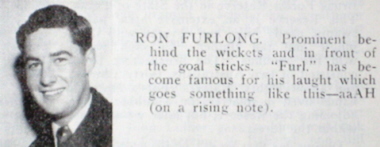
... Articles include: The Mining and Metallurgy Congress, Aboriginal research, Power from Water, Engineering Etiquette, Australian Art Images include: Queen Elizabeth 2, Ballarat Junior Technical School winning the Marching Competition, competitors in the Redex Trial. .2) 1954 - Articles include: Eureka Stockade; Working in East Africa and Canada, Greece, Images include; Craig's Hotel, Eureka Swimming Pool; Barry Jones, Harold Everett, "Tailspin" Taylor, Pastoral Skipton, Margaret McGregor, Nancy Rimmington, Janice Tonkin, First Roll Call in Girls' Junior Technical School .3) 1955. ...Articles include: The Mining and Metallurgy Congress, Aboriginal research, Power from Water, Engineering Etiquette, Australian Art Images include: Queen Elizabeth 2, Ballarat Junior Technical School winning the Marching Competition, competitors in the Redex Trial. .2) 1954 - Articles include: Eureka Stockade; Working in East Africa and Canada, Greece, Images include; Craig's Hotel, Eureka Swimming Pool; Barry Jones, Harold Everett, "Tailspin" Taylor, Pastoral Skipton, Margaret McGregor, Nancy Rimmington, Janice Tonkin, First Roll Call in Girls' Junior Technical School .3) 1955. ...Three soft covered Magazines - the Ballarat School of Mines Students' Magazine for 1953-5. .1) 1953 - The Coronation Number. Articles include: The Mining and Metallurgy Congress, Aboriginal research, Power from Water, Engineering Etiquette, Australian Art Images include: Queen Elizabeth 2, Ballarat Junior Technical School winning the Marching Competition, competitors in the Redex Trial. .2) 1954 - Articles include: Eureka Stockade; Working in East Africa and Canada, Greece, Images include; Craig's Hotel, Eureka Swimming Pool; Barry Jones, Harold Everett, "Tailspin" Taylor, Pastoral Skipton, Margaret McGregor, Nancy Rimmington, Janice Tonkin, First Roll Call in Girls' Junior Technical School .3) 1955. Articles include: Tales from Malaysia, Literary Society Images include; Craig's Hotel, Signatures: N.H. Andrews; J. Skuja: Alan E. Johnson, B.V. McDougall, L.J. Mathews, Daryl Schmidt, J, Collierballarat school of mines, tinney, faneco, jim john, dean, spiers, ngip, barrie smith, stewart rowe, elaine walton, stevens, max stevens, sawyer, ann mitchell, flavel, ingleton, bethune, blackburn, boag, brokenshire, carmichael, kirby, kinnane, alec kinnane, ludbrook, meagher, searl, sheppard, gillin, murray gillan, archer, beattie, bautovich, benjamin, buck, bunting, athol day, eddie, habel, heyes, maddox, phillips, schreenan, donald stevens, tinissen, whitcher, ian whitcher, mccallum, ryrie mccallum, marching competition, skuja, wilton, neil andrews, ellen freemantle, alan johnson, willey, graeme willey, mainwaring, diana mainwaring, mcdougall, little, margaret little, lance matthews, philp davis, eureka stockade, eureka swimming pool, pools, swimming pool, restarick, kempe, barry johns, harold everett, taylor, holmes, wendell holmes, skipton, john collier, collier, daryl schmidt, chris sanos, greece, andrews, doull, everett, seong, lockhead, pitzen, watts, technical school, junior technical school, girl's junior technical school, ballarat girl's junior technical school, baxendale, stan kisler, graham willey, murray, jim murray, grundell, cleland, furlog, ron furlong, judy johnson, russ whitcher, anita young, durant, malaysia, literary society, thurling, andrewartha, barnes, ditchfield, peter ditchfield, dunlop, kisler, mcneil, orgill, quinlan, saggers, bill saggers, seabrook, williams, paddle, graham, handmer, hetehrington, dow, pine, ballarat north junior technical school, william saggers -
 Marysville & District Historical Society
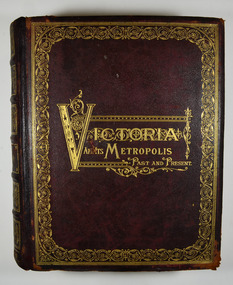
Book - Hardcover book, Alexander Sutherland, M.A, Victoria and its Metropolis-Past and Present-Volume 1, 1888
... It also covers the beginning of Victoria's literary and art's movements, early music and drama facilities, the beginning of education in Victoria, early churches in Victoria and the position of early Melbourne in the cities of the world. A history of Victoria from the time of the discovery of Australia through until 1888. melbourne victoria exploration settlement john batman john pascoe fawkner pioneers colonisation immegration aboriginals discovery of gold democracy burke and wills agriculture manufacturing literature art music drama education science churches history A history of Victoria from the time of the discovery of Australia through until 1888. ...A history of Victoria from the time of the discovery of Australia through until 1888.Hardback. Dark brown cover with the title in gold lettering. There is also a border in gold decorating the outer edge of the front cover. The spine is also decorated in gold along with the title and the volume number.non-fictionA history of Victoria from the time of the discovery of Australia through until 1888.melbourne, victoria, exploration, settlement, john batman, john pascoe fawkner, pioneers, colonisation, immegration, aboriginals, discovery of gold, democracy, burke and wills, agriculture, manufacturing, literature, art, music, drama, education, science, churches, history -
 Federation University Historical Collection
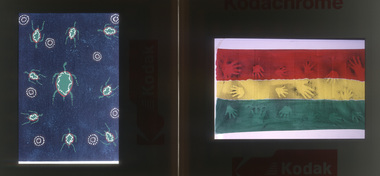
Photograph - Collection of Slides, Koorie Art and Design, 1994
... Australia...Graphic Design...Art...Koorie...Aboriginal...Art and Design course, 1994. Please note, scanned images are for archive reference only. Images may appear flipped or rotated, and colours may not be accurate. University of Ballarat Federation University Australia Graphic Design Art Koorie Aboriginal Art Indigenous Art First peoples Bill Rubina Kylie Abraham Series of 11 35mm mounted slides, from Koorie Art and Design classes, 1994. ...These are most likely student works from Koorie Art and Design course, 1994. Please note, scanned images are for archive reference only. Images may appear flipped or rotated, and colours may not be accurate.Series of 11 35mm mounted slides, from Koorie Art and Design classes, 1994. university of ballarat, federation university australia, graphic design, art, koorie, aboriginal art, indigenous art, first peoples, bill, rubina, kylie, abraham -
Federation University Historical Collection
Book - Book - Scrapbook, Ballarat School of MInes: Scrapbook of Newspaper Cuttings, Book 76, October 1996 to January 1997
... The papers concerned are The Courier, Ballarat, The Australian, The Age and other region papers over the period of 25 October 1996 to 16 January 1997 teaching positions advertised pre-employment courses courses available enrolment for smb courses certificate in work education course students with disabilities smb founder's day brian mclennan kerrie cross bill gribble dennis olmstead susanne mckenzie sue labbett frank kitchen david nicholson max palmer mobile training facility farm machinery course murray cook phillip kinnersly performing arts "heat" and "heat 2" smb ceramics exhibition smb tafe college offer police recruitment testing tafe teachers in pay strike australian education union organiser eric sinkis derek van der bom ballarat uni smb launch writing course'smb seek part of $200m funds smb council demands explanation on axing bill gribble smb council president aboriginal art on display deanne jakiel ballarat academy of performing arts rich cultural heritage steinway gift to academy amy young smb subjects on internet the brewery complex farewell to long serving staff frank hurley pat hope bob morrell smb expands into ararat and asia self-styled award winners women in building industry janet bruce in course for females education ministers visit ballarat senator amanda vanstone phil honeywood victorian minister pam davies president smb council $145500 to smb edgar bartrop scholarship to jayson ryder Book with yellow cover, front, spiral bound. ...Collection of newspaper articles related to Ballarat School Of Mines.They cover activities and advertisements for staff. The papers concerned are The Courier, Ballarat, The Australian, The Age and other region papers over the period of 25 October 1996 to 16 January 1997Book with yellow cover, front, spiral bound. teaching positions advertised, pre-employment courses, courses available, enrolment for smb courses, certificate in work education course, students with disabilities, smb founder's day, brian mclennan, kerrie cross, bill gribble, dennis olmstead, susanne mckenzie, sue labbett, frank kitchen, david nicholson, max palmer, mobile training facility, farm machinery course, murray cook, phillip kinnersly, performing arts "heat" and "heat 2", smb ceramics exhibition, smb tafe college offer police recruitment testing, tafe teachers in pay strike, australian education union organiser eric sinkis, derek van der bom, ballarat uni smb launch writing course'smb seek part of $200m funds, smb council demands explanation on axing, bill gribble smb council president, aboriginal art on display, deanne jakiel, ballarat academy of performing arts, rich cultural heritage, steinway gift to academy, amy young, smb subjects on internet, the brewery complex, farewell to long serving staff, frank hurley, pat hope, bob morrell, smb expands into ararat and asia, self-styled award winners, women in building industry, janet bruce in course for females, education ministers visit ballarat, senator amanda vanstone, phil honeywood victorian minister, pam davies president smb council, $145500 to smb, edgar bartrop scholarship to jayson ryder -
Federation University Historical Collection
Book - Book - Scrapbook, Ballarat School of MInes: Scrapbook of Newspaper Cuttings, Book 35, April 1988 to July 1988
... The papers concerned are The Courier, Ballarat, The Australian, The Age over the period of 22 July 1988 to 3 October 1987. teaching positions advertised pre-employment courses courses available enrolment for smb courses aboriginal flag for smb $600000 for science studies building arbor day at victoria park smb and local industry smb's marketing company inskill ltd open learning for maths students pilot business program industry oriented training scheme rob webber new enterprise incentives scheme gerardine christou myra morgan art and craft teacher 1950s new computer software for engineers more adults return to school cuts to special school funding transition program hospitality studies - certificate of catering anne-marie allison christine brady robert reilly sue collins sculptor peter blizzard student andrew burnham ricky hains wins tippett award kandra chapman award winner sheetmetal women's access group smb women's trade and technical program offended girl mechanic hit back mining course at smb kerrie cross council president adult literacy tutors june huggins josie micich hospitality traineeship system launched farm manager computer program course peter quinn peter davis federal grant to john valves special course on stoneware glazes ceramics instructor neville french players find home at smb michael staley winning apprentice ballarat small business centre quality control course at smb calligraphyteacher eddie goodson Book with green cover, front, spiral bound. ...Collection of newspaper articles related to Ballarat School Of Mines.They cover activities and advertisements for staff. The papers concerned are The Courier, Ballarat, The Australian, The Age over the period of 22 July 1988 to 3 October 1987.Book with green cover, front, spiral bound. teaching positions advertised, pre-employment courses, courses available, enrolment for smb courses, aboriginal flag for smb, $600000 for science studies building, arbor day at victoria park, smb and local industry, smb's marketing company inskill ltd, open learning for maths students, pilot business program, industry oriented training scheme, rob webber, new enterprise incentives scheme, gerardine christou, myra morgan art and craft teacher 1950s, new computer software for engineers, more adults return to school, cuts to special school funding, transition program, hospitality studies - certificate of catering, anne-marie allison, christine brady, robert reilly, sue collins, sculptor peter blizzard, student andrew burnham, ricky hains wins tippett award, kandra chapman award winner sheetmetal, women's access group, smb women's trade and technical program, offended girl mechanic hit back, mining course at smb, kerrie cross council president, adult literacy tutors, june huggins, josie micich, hospitality traineeship system launched, farm manager computer program course, peter quinn, peter davis, federal grant to john valves, special course on stoneware glazes, ceramics instructor neville french, players find home at smb, michael staley winning apprentice, ballarat small business centre, quality control course at smb, calligraphyteacher eddie goodson -
 Federation University Historical Collection
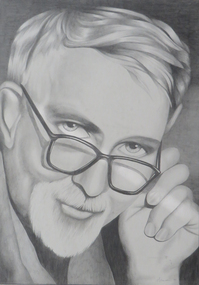
Artwork - Sketch Books, Neville Bunning, 1902-1990, 1900s
... art. His works were included in the 1988 Australian Bicentennial Exhibition. His sympathetic understanding of Aboriginal culture is recorded in a letter written in 1937 to the Victoria and Albert Museum. ...art. His works were included in the 1988 Australian Bicentennial Exhibition. His sympathetic understanding of Aboriginal culture is recorded in a letter written in 1937 to the Victoria and Albert Museum. ...Neville Mirvane Bunning was born in Rockhampton, Queensland in 1902. He was home taught until 1916 and then was a boarder at Geelong Grammar School, Victoria until 1921. He then returned to Queensland and worked on the family property. During this time he built ceramic kilns and taught himself the required skills for ceramiic production. During the Depression he went to Sydney and set up an artist's studio. In 1934 he went to England and studied, wrote and did commission work. Achieving local success and had work acquired by the Victoria and Albert Museum. Neville returned to Australia and became a lecturer at East Sydney Technical School until the outbreak of the Second World War. He joined the RAAF. After the War he joined the staff of the Art School of the Ballarat School of Mines and Industries until his retirement in 1964. Neville Bunning formed the Ballarat Artist's Society, a group which sponsored art and invite guests to speak to students and the public of Ballarat. He wrote a weekly column in "The Courier", the local newspaper where he encouraged people to be more aware of the trends in art. His works were included in the 1988 Australian Bicentennial Exhibition. His sympathetic understanding of Aboriginal culture is recorded in a letter written in 1937 to the Victoria and Albert Museum. Neville Bunning continued painting during his retirement. His last major exhibition was held at the Golden Age Gallery in Ballarat in 1983. The sketch books cover a range of topics using pen, ink and watercolour.28 A3 sketch books, spiral boundneville bunning, queensland, geelong grammar school, ceramics, kilns, depression, sydney, england, commission work, victoria and albert museum, east sydney technical school, art school, ballarat school of mines and industries, ballarat artist's society, second world war, raaf, australian bicentennial exhibition, golden age gallery ballarat, painting -
 Flagstaff Hill Maritime Museum and Village
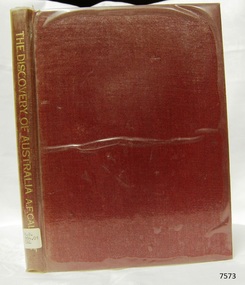
Book - Reference Book/History, Albert Frederick Calvert, The Discovery of Australia, 1893
... Australian‑themed books on topics such as Aboriginal people, minerals, forests, goldfields, and pearls, aimed at investors and general readers rather than specialists. As a managing director of mining companies in the Pilbara region and as a consulting engineer at sites like Malinda. Calvert’s enthusiasm for Australia faded after Federation and a series of financial setbacks, including bankruptcy from horse‑racing losses in 1898. He then turned to Spain, where he wrote some thirty‑six books on Spanish art...Australian‑themed books on topics such as Aboriginal people, minerals, forests, goldfields, and pearls, aimed at investors and general readers rather than specialists. As a managing director of mining companies in the Pilbara region and as a consulting engineer at sites like Malinda. Calvert’s enthusiasm for Australia faded after Federation and a series of financial setbacks, including bankruptcy from horse‑racing losses in 1898. He then turned to Spain, where he wrote some thirty‑six books on Spanish art ...Albert Frederick Calvert was an English author, traveler, mining engineer, and entrepreneur who became a prominent booster of Western Australia in the 1890s before shifting focus to Spain and Africa. He was born in London in 1872 and died there in 1946, his life blended exploration, promotion, and prolific, sometimes slapdash writing. His Australian Dictionary of Biography entry notes that he circumnavigated Australia while gathering material for “The Discovery of Australia” in 1893. The book was published in London by George Philip & Son in 1893, and a library record shows a 2nd edition issued in 1902 by Dean, so the work had at least two editions.The Discovery of Australia Author: Albert F Calvert Publisher: George Phillip & Son Date: 1893non-fictionAlbert Frederick Calvert was an English author, traveler, mining engineer, and entrepreneur who became a prominent booster of Western Australia in the 1890s before shifting focus to Spain and Africa. He was born in London in 1872 and died there in 1946, his life blended exploration, promotion, and prolific, sometimes slapdash writing. His Australian Dictionary of Biography entry notes that he circumnavigated Australia while gathering material for “The Discovery of Australia” in 1893. The book was published in London by George Philip & Son in 1893, and a library record shows a 2nd edition issued in 1902 by Dean, so the work had at least two editions. warrnambool, shipwrecked-coast, flagstaff-hill, flagstaff-hill-maritime-museum, maritime-museum, flagstaff-hill-maritime-village, shipwrecked-artefact, book, the discovery of australia, albert f calvert -
Phillip Island and District Historical Society Inc.
Book, KEELER, Chris, Meerreeng-an here is my country : the story of Aboriginal Victoria told through art, 2010
... art...aboriginal australian...art aboriginal australian victoria artists antiquities Meerreeng-an here is my country : the story of Aboriginal Victoria told through art Book KEELER, Chris Vicki COUZENS Koorie Heritage Trust Inc. ...art, aboriginal australian, victoria, artists, antiquities -
 The Beechworth Burke Museum
Animal specimen - Common Wombat, Trustees of the Australian Museum, 1860-1880
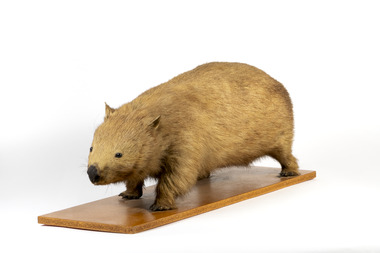
... Australia. A common wombat can grow up to 1.2 metres in length and weigh up to 35 kilograms. The name “wombat” comes from the Darug language spoken by the Aboriginal Darug people, who originally inhabited the Sydney area. The wombat was first recorded in 1798 by explorer John Price on a visit to Bargo in New South Wales, however, wombats are depicted on Aboriginal rock-art that date back as far as 4,000 years ago. ...Australia. A common wombat can grow up to 1.2 metres in length and weigh up to 35 kilograms. The name “wombat” comes from the Darug language spoken by the Aboriginal Darug people, who originally inhabited the Sydney area. The wombat was first recorded in 1798 by explorer John Price on a visit to Bargo in New South Wales, however, wombats are depicted on Aboriginal rock-art that date back as far as 4,000 years ago. ...Common wombats are short-legged, muscular, nocturnal marsupials that live in a wide variety of habitats throughout Australia. A common wombat can grow up to 1.2 metres in length and weigh up to 35 kilograms. The name “wombat” comes from the Darug language spoken by the Aboriginal Darug people, who originally inhabited the Sydney area. The wombat was first recorded in 1798 by explorer John Price on a visit to Bargo in New South Wales, however, wombats are depicted on Aboriginal rock-art that date back as far as 4,000 years ago. This specimen is part of a collection of almost 200 animal specimens that were originally acquired as skins from various institutions across Australia, including the Australian Museum and the National Museum of Victoria, as well as individuals such amateur anthropologist Reynell Eveleigh Johns between 1860-1880. These skins were then mounted by members of the Burke Museum Committee and put-on display in the formal space of the Museum’s original exhibition hall where they continue to be on display. This display of taxidermy mounts initially served to instruct visitors to the Burke Museum of the natural world around them, today it serves as an insight into the collecting habits of the 19th century. This specimen is part of a significant and rare taxidermy mount collection in the Burke Museum. This collection is scientifically and culturally important for reminding us of how science continues to shape our understanding of the modern world. They demonstrate a capacity to hold evidence of how Australia’s fauna history existed in the past and are potentially important for future environmental research. This collection continues to be on display in the Museum and has become a key part to interpreting the collecting habits of the 19th century. Medium sized stocky wombat with a broad head and two muscular forelegs and two weaker hind legs that are met with long sharp black claws. The hair is long, thick and coarse in brown/yellow shades. The head features two small black eyes that have been made from glass, two short pointed ears and a bare nose pad. On wooden mount: BMM 5901 /taxidermy mount, taxidermy, wombat, animalia, vombatidae, burke museum, beechworth, australian museum, skin, reynell eveleigh johns, common wombat -
 Orbost & District Historical Society
eggs
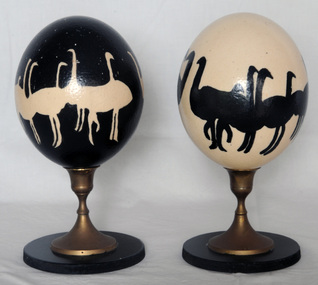
... Aboriginal art. The carving of emu eggs by Indigenous and non-Indigenous people was popular in the late 19th century but production declined in the 20th century, partly due to the protection of eggs through legislation. This has been overturned in recent years with the development of commercial emu farms. In the period between the two world wars particularly, with the production of other Aboriginal artefacts for an outside market, the carving of emu eggs provided an important source of income for Aboriginal people in many parts of Australia. ...Aboriginal art. The carving of emu eggs by Indigenous and non-Indigenous people was popular in the late 19th century but production declined in the 20th century, partly due to the protection of eggs through legislation. This has been overturned in recent years with the development of commercial emu farms. In the period between the two world wars particularly, with the production of other Aboriginal artefacts for an outside market, the carving of emu eggs provided an important source of income for Aboriginal people in many parts of Australia. ...These eggs could be ostrich eggs from an ostrich farm which operated just out of Marlo. It is likely that they were donated by Kate and Richard Earle who ran the enterprise. Emu and ostrich eggs are perfect for decorating, painting or carving. Emu egg shells have multiple layers ranging from an inner white layer through to the dark green outer layer. The contents must be removed through a small hole (either tool drilled or poked with a needle). After the yolk has been blown out (scrambling the yolk first by poking with a needle will make it easier to remove), the egg needs to be washed through and left to drain dry. It can then be painted, carved, etched or decorated. Emu decorating is a traditional Aboriginal art. The carving of emu eggs by Indigenous and non-Indigenous people was popular in the late 19th century but production declined in the 20th century, partly due to the protection of eggs through legislation. This has been overturned in recent years with the development of commercial emu farms. In the period between the two world wars particularly, with the production of other Aboriginal artefacts for an outside market, the carving of emu eggs provided an important source of income for Aboriginal people in many parts of Australia. It was a widespread practice in the south-east and it was not unusual for Aboriginal people to decorate their own homes with carved eggs and other items created by themselves or community members, serving to affirm an Indigenous identity within the domestic environment. (ref National Gallery of Australia)This item is significant for its uniqueness and aesthetic appeal.Two painted eggs on stands. 1907.1 is painted black and has white emus or ostriches painted on it. 1907.2 is painted white and has black emus or ostriches painted on it. Both stands are wooden with brass pedestals. The eggs are possibly ostrich eggs.handcraft emu-egg ornament ostrich-egg -
 Orbost & District Historical Society
emu egg
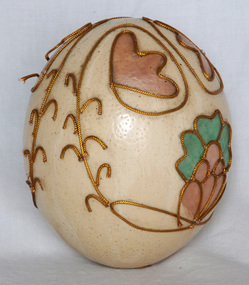
... Aboriginal art. The carving of emu eggs by Indigenous and non-Indigenous people was popular in the late 19th century but production declined in the 20th century, partly due to the protection of eggs through legislation. This has been overturned in recent years with the development of commercial emu farms. In the period between the two world wars particularly, with the production of other Aboriginal artefacts for an outside market, the carving of emu eggs provided an important source of income for Aboriginal people in many parts of Australia. ...Aboriginal art. The carving of emu eggs by Indigenous and non-Indigenous people was popular in the late 19th century but production declined in the 20th century, partly due to the protection of eggs through legislation. This has been overturned in recent years with the development of commercial emu farms. In the period between the two world wars particularly, with the production of other Aboriginal artefacts for an outside market, the carving of emu eggs provided an important source of income for Aboriginal people in many parts of Australia. ...Emu eggs are perfect for decorating, painting or carving. Emu egg shells have multiple layers ranging from an inner white layer through to the dark green outer layer. The contents must be removed through a small hole (either tool drilled or poked with a needle). After the yolk has been blown out (scrambling the yolk first by poking with a needle will make it easier to remove), the egg needs to be washed through and left to drain dry. It can then be painted, carved, etched or decorated. Emu decorating is a traditional Aboriginal art. The carving of emu eggs by Indigenous and non-Indigenous people was popular in the late 19th century but production declined in the 20th century, partly due to the protection of eggs through legislation. This has been overturned in recent years with the development of commercial emu farms. In the period between the two world wars particularly, with the production of other Aboriginal artefacts for an outside market, the carving of emu eggs provided an important source of income for Aboriginal people in many parts of Australia. It was a widespread practice in the south-east and it was not unusual for Aboriginal people to decorate their own homes with carved eggs and other items created by themselves or community members, serving to affirm an Indigenous identity within the domestic environment. (ref National Gallery of Australia)This item is significant for its uniqueness and its aesthetic appeal.An emu egg which has been painted white and decorated with glued on cord/thread to make a pattern of flowers and leaves.emu-egg ornament handcraft -
 Orbost & District Historical Society
money, 1853 - 1910
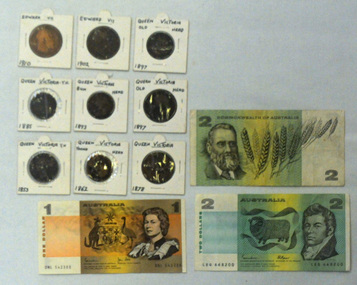
... The nine coins are separate in small white cardboard frames with black print descriptive labelling. 2366.1 is an Australian $1 note with the queen's head, coat of arms and Aboriginal art. 2366.2 and .3 are $2 notes with John McArthur and sheep and William Farrer with wheat. ...The nine coins are separate in small white cardboard frames with black print descriptive labelling. 2366.1 is an Australian $1 note with the queen's head, coat of arms and Aboriginal art. 2366.2 and .3 are $2 notes with John McArthur and sheep and William Farrer with wheat. ...These items were on display in the Slab Hut (Orbost Visitor Information Centre).These items are examples of pre-decimal Australian currency and British coins no longer in use.Three decimal notes and nine coins. There are two $2 notes and one $1 note in a plastic sleeve. The nine coins are separate in small white cardboard frames with black print descriptive labelling. 2366.1 is an Australian $1 note with the queen's head, coat of arms and Aboriginal art. 2366.2 and .3 are $2 notes with John McArthur and sheep and William Farrer with wheat. There are seven coins dating from 1853 - 1897 with the head of Queen Victoria on them. There are two coins, 1902 and 1910 with the head of Edward V11 on them.currency bank-notes-australian-decimal coin-british -
 Eltham District Historical Society Inc
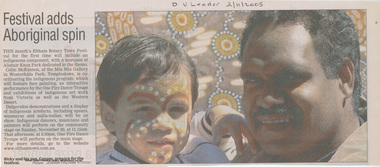
Newspaper - Newspaper clipping, Diamond Valley News, Festival adds Aboriginal spin, 2 Nov 2005
... Colin McKinnon of the Mia Mia Gallery in Westerfolds Park coordinated the program. eltham festival 2005 Eltham Community Festival Rotary Club of Eltham Rotary Eltham Town Festival Aboriginal Australians Colin McKinnon indigenous art Mia Mia Gallery One Fire Dance Troupe Newsprint Festival adds Aboriginal spin Newspaper Newspaper clipping Diamond Valley News ...Published Diamond Valley Leader, 2 Nov. 2005 The 2005 Rotary Eltham Town Festival for the first time included an indigineous component with a marquee in Alistair Knox Park dedicated to the theme. Colin McKinnon of the Mia Mia Gallery in Westerfolds Park coordinated the program.Newsprinteltham festival, 2005, eltham community festival, rotary club of eltham, rotary eltham town festival, aboriginal australians, colin mckinnon, indigenous art, mia mia gallery, one fire dance troupe -
 Eltham District Historical Society Inc
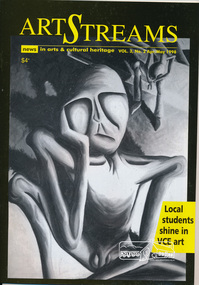
Journal, Peter Doughtery, ArtStreams: News in arts and cultural heritage; Vol. 3, No. 2, Apr-May 1998, 1998
... Vol. 3, No. 2, Apr-May 1998 CONTENTS TOP CATS FOR '97 Emerging talent from our local schools 3 BOOK REVIEW A Small Unsigned Painting 6 LAND SHAPES Eltham artist Nel ten Wolde captures Australian images 7 REVIVING RAVENSWOOD Grand old Ivanhoe mansion restored to its former glory 9 ART IN A VEGE SHOP Murals brighten an organic greengrocer's shop 12 ADDRESSING SOCIAL CONCERNS Literary festival brings critical writers together 14 PHOTOGRAPHY Local student shows her talent 16 WOUNDEDNESS AND HEALING Australian artist in London exhibits in Eltham 18 CD REVIEW 22 SHORT STORY 23 BOOK REVIEW 25 MURALS a charming sense of community 27 EXHIBITION AT HEIDE 28 EVENT - ABORIGINAL CELEBRATION 29 ART OF PRINTMAKERS 30 ART SERVICES & TEACHING 32 ...Vol. 3, No. 2, Apr-May 1998 CONTENTS TOP CATS FOR '97 Emerging talent from our local schools 3 BOOK REVIEW A Small Unsigned Painting 6 LAND SHAPES Eltham artist Nel ten Wolde captures Australian images 7 REVIVING RAVENSWOOD Grand old Ivanhoe mansion restored to its former glory 9 ART IN A VEGE SHOP Murals brighten an organic greengrocer's shop 12 ADDRESSING SOCIAL CONCERNS Literary festival brings critical writers together 14 PHOTOGRAPHY Local student shows her talent 16 WOUNDEDNESS AND HEALING Australian artist in London exhibits in Eltham 18 CD REVIEW 22 SHORT STORY 23 BOOK REVIEW 25 MURALS a charming sense of community 27 EXHIBITION AT HEIDE 28 EVENT - ABORIGINAL CELEBRATION 29 ART OF PRINTMAKERS 30 ART SERVICES & TEACHING 32 "Peter Dougherty has been involved in the local art scene for many years. ...Vol. 3, No. 2, Apr-May 1998 CONTENTS TOP CATS FOR '97 Emerging talent from our local schools 3 BOOK REVIEW A Small Unsigned Painting 6 LAND SHAPES Eltham artist Nel ten Wolde captures Australian images 7 REVIVING RAVENSWOOD Grand old Ivanhoe mansion restored to its former glory 9 ART IN A VEGE SHOP Murals brighten an organic greengrocer's shop 12 ADDRESSING SOCIAL CONCERNS Literary festival brings critical writers together 14 PHOTOGRAPHY Local student shows her talent 16 WOUNDEDNESS AND HEALING Australian artist in London exhibits in Eltham 18 CD REVIEW 22 SHORT STORY 23 BOOK REVIEW 25 MURALS a charming sense of community 27 EXHIBITION AT HEIDE 28 EVENT - ABORIGINAL CELEBRATION 29 ART OF PRINTMAKERS 30 ART SERVICES & TEACHING 32 "Peter Dougherty has been involved in the local art scene for many years. As publisher and editor of the arts magazine Artstreams, his comments on the various branches of the arts are widely respected. His "The Arts" column in the Diamond Valley Leader presents a brief summary for a much wider cross section of the local community. Peter also operates his own gallery and the Artstreams Cafe at the St Andrews market. Peter has a wealth of knowledge about present day and historical aspects of local art and artists." - Eltham District Historical Society Newsletter No. 161, March 2005Colour front and back cover with feature articles and literary pieces with photographs and advertisements printed in black and white. 36 pages, 30 cm. Vol. 1, no. 1 (Nov. 1996) - Vol. 10, no. 5 (summer ed. 2005/06) art streams, faces coffee place, jessie glavin, katie williams, kelly almond, michelle ceravolo, mariella mckinlay, rochelle carr, manningham gallery, stephen sheding, dynamic vegies, nel ten wolde, pool & spa care centre, bi-wize quality paints, llobex image wizards, east ivanhoe gallery, ravenswood, marguerite marshall, theresa martin, soni stecker, virginia trioli, robert dessaix, lauren williams, robert manne, chris jurewicz, moira rayner, marela mckinley, wendy donald, anne redmond, wingrove cottage community clinic, were street cafe, rob vines, ashley cross, serge de leucio, michael conolan, daniel chable, pietro ristorante grossi, lucinda mcknight, litfest 98, morag fraser, michele lonsdale, wintyre recital gallery, murals, port jackson press australia, epping secondary college, bulleen art & garden centre, christmas hills, museum of modern art at heide, nillumbik gayip, mye woonbah dancers, intaglio, violeta capovska, christina cordero, elizabeth dobrilla, belinda fox, david frazer, melinda schawel, amanda woodford, pandora journal, ward sagar, wholefood delights, dymocks booksellers -
Eltham District Historical Society Inc
Document - Folder, Thomson, Donald
... Australian Institute of Aboriginal Studies Brandy Creek Gippsland ."Donald Tomson in Arnhem Land". "N.T.S.R.U. 1941-1943" "Thomson of Arnhem Land" Victorian Aborigines Welfare Board Thomson Collection Museum Victoria Mia Mia Aboriginal Art Gallery Louise Thomson-Officer Marcia Langton Su baker Lake Tyers Victorian Aboriginal Reserve Gippsland Robert Macklin Yintjingga people 29 Edwin Road Templestowe Royal Geographic Society Nicholas Peterson Mapoon Mission Wongo Aboriginal man Wuluwirr Aboriiginal man Mattuwa Aboriginal man Mauwunbol Aboriginal man Munguyuma Aboriginal man Dja Dja Wurrung people Gavin Jennings Gary Murray Film "Ten Canoes" Galanbingu people Mandallpuy people Djinba people Rolf de Heer Arnhem Land Arafura Swamp Ramingining Caledon Bay Lindy Allen Bunjilaka Centre Newspaper clippings, A4 photocopies, etc Thomson, Donald Document Folder ...Anthropologist and Aboriginal activist Donald Thomson later lived in Eltham with wife Dorita. Contents Photocopy of photograph of Thomson family at "The Oaks", Kinglate 11 November 1891. Photocopy of old photograph of "Worlingworth", home of Donald Thomson. Booklet: "N.T.S.R.U. 1941-1943: text and photographs from the report of Sqn Leader Donald Thomson." Yirrkale Literature Production Centre, 1992. Photocopy of Australian Dictionary of Biography (Vol.16, pp385-386), entry for Thomson, Donald Finlay Fergusson. Newspaper article: "Drought close to city", no source, no date. Donald Thomson wants South Riding of Eltham declared a drought area, photograph of Elaine Thomson. Newspaper article: "Professor dies", The Post, 27 1970. Obituary of Donald Thomson. Photocopy of extracts from "Donald Thomson in Arnhem Land" 1983: Chapter "Donald Thomson: A biographical Sketch". pp1-15; Map; Notes on sources pp141-142. Newspaper article: "Memoirs of an advocate for Aboriginal rights", Diamond Valley News, 8 March 1983. Interview of Dorita Thomson, widow of Donald Thomson, about him and house "Worlingworth". Newspaper article: "Australia's secret Aboriginal 'army". Herald, 2 June 1983. Donald Thomson's life and work, and the book about it, "Donald Thomson of Arnhem Land". Invitation to exhibition of photographs by Donald Thomson, Brighton City Library, 22 July 1983. Publicity for film "Thomson of Arnhem Land" with note from Bruce Nixon, 8 June 2000. Newspaper article: "A crusader before his time", Diamond Valley News, 9 August 2000. Details of life and work of Donald Thomson. Newspaper article: "Outback part. of his life", Diamond Valley News, 9 August 2000. Interview of Dorita Thomson about Donald Thomson's life and work. Newspaper article: "Museum and Aboriginies to meet in stand-off over heritage items", The Age, 29 July 2004. Bark paintings on loan from British Museum in dispute. Magazine article: "Keeping time with Rolf", Time, 20 March 2006. Mentions of Donald Thomson. Newspaper advertisement: "The Thomson House" Templestowe, Emerson Oliver Estate Agent. The Weekly Review, no date (possibly 2017). Flier: "The Thomson House" Templestowe, Emerson Oliver Estate Agent. Newspaper article: "Once upon a time an anthropolgist watched men hunt in 10 canoes", The Age, 16 December 2006. Donald Thomson's work and a new film "Ten Canoes". Newspaper article: "A life's work offers forgotten link to the cultural wealth of nation's first people", The Age, 23 December 2024. The Donald Thomson Ethnohistory Collection. Newspaper clippings, A4 photocopies, etcdonald thomson, northern territory special reconnaissance unit, donald finlay fergusson thomson, "the oaks" kinglake, "worlingworth" eltham, elaine thomson, louise thomson, rosemary thomson, dorita thomson, st margaret's church of england eltham, australian institute of aboriginal studies, brandy creek gippsland, ."donald tomson in arnhem land"., "n.t.s.r.u. 1941-1943", "thomson of arnhem land", victorian aborigines welfare board, thomson collection museum victoria, mia mia aboriginal art gallery, louise thomson-officer, marcia langton, su baker, lake tyers victorian aboriginal reserve gippsland, robert macklin, yintjingga people, 29 edwin road templestowe, royal geographic society, nicholas peterson, mapoon mission, wongo aboriginal man, wuluwirr aboriiginal man, mattuwa aboriginal man, mauwunbol aboriginal man, munguyuma aboriginal man, dja dja wurrung people, gavin jennings, gary murray, film "ten canoes", galanbingu people, mandallpuy people, djinba people, rolf de heer, arnhem land, arafura swamp, ramingining, caledon bay, lindy allen, bunjilaka centre -
 Eltham District Historical Society Inc
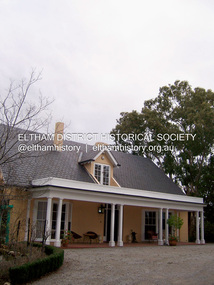
Photograph - Digital Photograph, Marguerite Marshall, 'Landscape', 60 Lavender Park Road, Eltham South, 24 June 2008
... Australian town Wiregrass, which were inspired by Kaniva, his home town. The art gallery in Main Road Eltham was named Wiregrass in Leason’s honour. Leason completed 1000 drawings from 1919 to 1937, which author Garrie Hutchinson claimed, were technically unsurpassed and had regional and universal interest. Leason’s acute observations of country life stemmed from his childhood in Kaniva in Victoria’s western Wimmera, where he was born, the son of a selector, in 1889. Meldrum claimed that Leason could name every plant and the habits of every animal.2 Leason also painted 28 portraits of the last full-blooded aboriginals...Australian town Wiregrass, which were inspired by Kaniva, his home town. The art gallery in Main Road Eltham was named Wiregrass in Leason’s honour. Leason completed 1000 drawings from 1919 to 1937, which author Garrie Hutchinson claimed, were technically unsurpassed and had regional and universal interest. Leason’s acute observations of country life stemmed from his childhood in Kaniva in Victoria’s western Wimmera, where he was born, the son of a selector, in 1889. Meldrum claimed that Leason could name every plant and the habits of every animal.2 Leason also painted 28 portraits of the last full-blooded aboriginals ...Built by artist and cartoonist Percy Leason in 1927 in what was then New Street but renamed Lavender Park Road in the late 1950s/early 1960s. Covered under Heritage Overlay, Nillumbik Planning Scheme. Published: Nillumbik Now and Then / Marguerite Marshall 2008; photographs Alan King with Marguerite Marshall.; p121 Said to be a genius, cartoonist Percy Leason’s career was at its peak when in 1925 to 1926 he built his home at New Street (now Lavender Park Road) Eltham. The Herald newspaper owner, Sir Keith Murdoch, had hired Leason for his newly acquired Melbourne Punch magazine at a salary of £1750, making him ‘one of the highest paid cartoonists in the world’.1 With this salary and financial help from Murdoch, Leason was able to build his lovely home in Eltham. At the crest of a sweeping drive, the home now two-storey in white brick with a gabled grey slate roof and dormer windows is flanked by an extension built by another owner in the 1980s. Leason lived in the home with his wife, Isabel and children, until 1937, when he left for the United States of America, where he lived until his death in 1959. The four-bedroom house and garden would have been well-suited to bringing up his family and to entertaining their friends in style. Large airy rooms have high ceilings with moulded plaster, timber floors and several are brightened with bay windows. Leason made friends with many of the artists and personalities who gravitated to Eltham. Around 1931 Justus Jörgensen, founder of the Montsalvat Artists’ Colony, helped Leason build his large studio at the back of the house. Another friend was journalist Mervyn Skipper, father of jeweller and sculptor Matcham, and artists Helen and Sonia. Leason’s teacher, artist Max Meldrum, also visited and rented accommodation in Eltham, opposite Wingrove Park. Punch folded in 1925, but Leason continued as cartoonist for Table Talk. In 1926 Leason began the cartoons of a mythical Australian town Wiregrass, which were inspired by Kaniva, his home town. The art gallery in Main Road Eltham was named Wiregrass in Leason’s honour. Leason completed 1000 drawings from 1919 to 1937, which author Garrie Hutchinson claimed, were technically unsurpassed and had regional and universal interest. Leason’s acute observations of country life stemmed from his childhood in Kaniva in Victoria’s western Wimmera, where he was born, the son of a selector, in 1889. Meldrum claimed that Leason could name every plant and the habits of every animal.2 Leason also painted 28 portraits of the last full-blooded aboriginals in Victoria at Lake Tyers in Gippsland, most of which are in a private collection. In Sydney Leason illustrated Henry Lawson’s Selected Poems and worked for The Bulletin. Leason had begun his career at 13 as an apprentice lithographic artist at Sands and MacDougall. He attended night classes at the National Gallery and the Victorian Artists Society. Leason first visited Eltham in 1910 to paint with fellow artist William ‘Jock’ Frater. They camped near Bible and Pitt Streets and along the Diamond Creek on the site of the present Eltham Retirement Centre. Despite his success as a cartoonist, Leason wanted to be recognised as a serious painter and for his anthropological work.3 He was also conservative and felt uncomfortable with the modern art scene in Melbourne.4 So he left for the United States of America to work as a painter. Ironically his time in New York saw the burgeoning of modern art, notably by artists such as Jackson Pollock. But Leason found his niche by running an art school, painting society portraits and illustrating books and magazines.This collection of almost 130 photos about places and people within the Shire of Nillumbik, an urban and rural municipality in Melbourne's north, contributes to an understanding of the history of the Shire. Published in 2008 immediately prior to the Black Saturday bushfires of February 7, 2009, it documents sites that were impacted, and in some cases destroyed by the fires. It includes photographs taken especially for the publication, creating a unique time capsule representing the Shire in the early 21st century. It remains the most recent comprehenesive publication devoted to the Shire's history connecting local residents to the past. nillumbik now and then (marshall-king) collection, landscape, lavender park road, percy leason, new street -
 Bendigo Military Museum
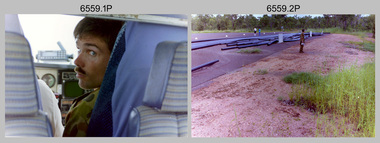
Photograph - 4th Field Survey Squadron – Operation MIZMAZE 92, Kimberley region, Western Australia, 1992
... Australia. The colour photographs are on 35mm negative film and are part of the Army Survey Regiment’s Collection. The photographs were scanned at 96 dpi. .1) - Photo, colour, 1992. CAPT Craig Hersant. .2) - Photo, colour, 1992. Unidentified officer/soldier. .3) & .4) - Photo, colour, 1992. Aboriginal rock art...Australia. The colour photographs are on 35mm negative film and are part of the Army Survey Regiment’s Collection. The photographs were scanned at 96 dpi. .1) - Photo, colour, 1992. CAPT Craig Hersant. .2) - Photo, colour, 1992. Unidentified officer/soldier. .3) & .4) - Photo, colour, 1992. Aboriginal rock art ...This is a set of 40 photographs taken in 1992 during 4th Field Survey Squadron’s deployment on Operation MIZMAZE 92 in the Kimberley region of Western Australia from the 13th of May to the 14th of July 1992. The area of operations was Wyndham, Halls Creek and Sandfire Flat. It was a two-part operation involving the field completion of topographic maps and the acquisition of mapping control by GPS field parties utilising Texas Instruments TI4100 Global Positioning System receivers. Survey parties conducted field checking of topographic maps and GPS control acquisition in Perentie 110 Series Survey variant FFR Land Rovers. Three Bell Kiowa LOH helicopters provided by 162 Recce Sqn supported field checking and limited deployment of GPS surveys parties. C-l30 Hercules from 36 Sqn supported deployment and extraction of personnel and equipment to and from from the AO. A Cessna 404 Titan Ambassador from Vee-H Aviation was used as the Wild RC10 camera platform for aerial photography acquisition.This is a set of 40 photographs taken in 1992 during 4th Field Survey Squadron’s deployment on Operation MIZMAZE 92 in the Kimberley region of Western Australia. The colour photographs are on 35mm negative film and are part of the Army Survey Regiment’s Collection. The photographs were scanned at 96 dpi. .1) - Photo, colour, 1992. CAPT Craig Hersant. .2) - Photo, colour, 1992. Unidentified officer/soldier. .3) & .4) - Photo, colour, 1992. Aboriginal rock art - Wandjina Gunduran, Donkey Creek. .5) - Photo, colour, 1992. Aboriginal rock art - Track Wandjinas, Donkey Creek. .6) & .7) - Photo, colour, 1992. CAPT Craig Hersant. .8) - Photo, colour, 1992. Kimberley region topography. CPL Glen Weatherell. .9) - Photo, colour, 1992. Unidentified personnel .10) - Photo, colour, 1992. Supermarket at unknown location. .11) to .13) - Photo, colour, 1992. Caravan park at unknown location. .14) - Photo, colour, 1992. Old bridge at Fitzroy Crosssing. .15) & .16) - Photo, colour, 1992. Survey party in Perentie 110 Series Land Rover. .17) & .18) - Photo, colour, 1992. Kimberley region topography. .19) - Photo, colour, 1992. Kimberley region topography. CPL Glen Weatherell. .20) - Photo, colour, 1992. Kimberley region topography, possibly the Bungle Bungles. .21) - Photo, colour, 1992. Kimberley region topography. SGT Frank Downie. .22) - Photo, colour, 1992. Kimberley region topography: the Bungle Bungles. .23) - Photo, colour, 1992. Kimberley region topography: the Bungle Bungles. .24) - Photo, colour, 1992. Kimberley region topography: the Bungle Bungles. SPR Neil Pedler. .25) & .26) - Photo, colour, 1992. Kimberley region topography: the Bungle Bungles. .27) - Photo, colour, 1992. Kimberley region topography. .28) - Photo, colour, 1992. Survey party with Perentie 110 Series Land Rover. .29) - Photo, colour, 1992. Kimberley region topography. .30) - Photo, colour, 1992. Survey party outside Perentie 110 Series Land Rover. .31) & .32) - Photo, colour, 1992. Survey party operating TI4100 GPS Receiver next to Perentie 110 Series Land Rover. SGT Eddie Jacobs. .33) & .34) - Photo, colour, 1992. Survey party operating TI4100 GPS Receiver next to Perentie 110 Series Land Rover. Unidentified surveyor. .35) - Photo, colour, 1992. Kimberley region topography. Hand water pump at well. .36) - Photo, colour, 1992. Survey party in Perentie 110 Series Land Rover. .37) - Photo, colour, 1992. Kimberley region topography. CPL Glen Weatherell. .38) - Photo, colour, 1992. Kimberley region topography viewed from Bell Kiowa LOH helicopter. .39) & .40) - Photo, colour, 1992. Unidentified surveyor field checking a preliminary map in a Bell Kiowa LOH helicopter..1P to .40P – There are no personnel identified. ‘1992 OP MIZMAZE annotated on negative sleeve.royal australian survey corps, rasvy, 4 fd svy sqn, op mizmaze 92 -
 Eltham District Historical Society Inc
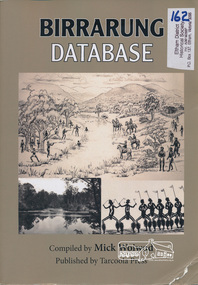
Book, Tarcoola Press, Birrarung Database compiled by Mick Woiwod, 2012
... art & craft, climate, personalities, disease, death and the river's flora and fauna. Sister publication to "Coranderrk database". wurundjeri yarra river indigenous history Wurundjeri Woi Wurrung Aboriginal Australians ISBN 9780987157423 318 pages : illustrations, maps ; 30 cm + 1 CD-ROM (4 3/4 in.) ...A compilation of Woiwod's research material, with information on the history of the Wurundjeri people of the Yarra Valley, from the time of first European contact. Its prime focus is the Yarra River as it has been understood by its Wurundjeri people. Includes a compilation of those difficult to locate "brief snatches of the action" collated under headings with in each instance, the provenance as to source and / or author included. Themes include: agriculture, law, ceremony, language, reconciliation, retribution, lifestyle, art & craft, climate, personalities, disease, death and the river's flora and fauna. Sister publication to "Coranderrk database". 318 pages : illustrations, maps ; 30 cm + 1 CD-ROM (4 3/4 in.) PDF or Microsoft Office Word 97-2003.ISBN 9780987157423wurundjeri, yarra river, indigenous history, wurundjeri woi wurrung, aboriginal australians -
 Women's Art Register
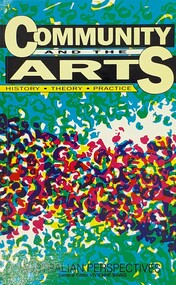
Book, Vivienne Binns, Community and the Arts. History. Theory. Practice.Australian Perspectives, 1991
... This book complements material held in the Women's Art Register. community arts collaborative practice art history political art Community Arts Network Aboriginal Land Rights Anthology of articles on the history and theory of community arts in Australia written by artists and artsworkers involved. ...Anthology of articles on the history and theory of community arts in Australia written by artists and artsworkers involved.Booknon-fictionAnthology of articles on the history and theory of community arts in Australia written by artists and artsworkers involved. community arts, collaborative practice, art history, political art, community arts network, aboriginal land rights
