
Showing 108 items matching "administration support"
-
 National Vietnam Veterans Museum (NVVM)
Photograph - Collage, 9RAR
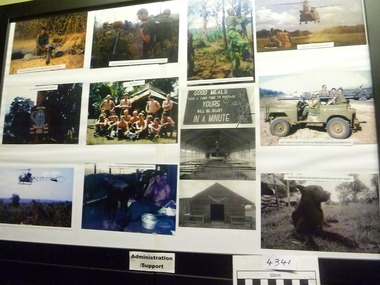
... ...Administration support...These Photograph depict the administration/support for 9 RAR. Depicting Pte Manning, O'Toole, Gustav, Wilson, Sloan, Nankervice, Parcell, Mathews. ...These Photograph depict the administration/support for 9 RAR. Depicting Pte Manning, O'Toole, Gustav, Wilson, Sloan, Nankervice, Parcell, Mathews. ...Nine coloured and four black and white Photograph in a black frame with a white matt. These Photograph depict the administration/support for 9 RAR. Depicting Pte Manning, O'Toole, Gustav, Wilson, Sloan, Nankervice, Parcell, Mathews. Anti tank platoon members, helicopters, vehicles, mess hall, tracker dog 'Janus'. In the centre of the Photograph reads Good Meal take a long time to prepare, Yours will be ready in a minute.9 rar, administration support, anti tank platoon, collage, photograph, cpl (temp) ronald james o'toole, 61803, royal australian infantry corps, 9th battalion, 1 australian reinforcement unit, australian force vietnam, 7th battalion, cpl (temp) john pilkington, 39490, pte ronald freeman mckendry, 39463, chinook, tracker dogs, pte graham albert sloan, 217903, tracker dog janus, pte john henry parcell, 1201221, framed collage -
 National Vietnam Veterans Museum (NVVM)
Booklet, Australian Army, Australian Army: Administration in the field (Non-Divisional) 1966 (Copy 2), 1966
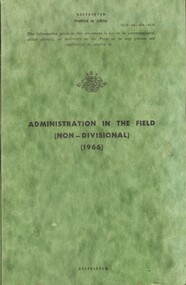
... ...Administration support...Australia - Armed Forces - Service manuals Administration support A green plastic coloured cover with black information. ...A green plastic coloured cover with black information. Top right corner reads 7610-66-024-4121. The Australian Coat of Arms and under this is the title of the booklet. the booklet is held together with two metal screws and this is done on the inside cover.australia - armed forces - service manuals, administration support -
 National Vietnam Veterans Museum (NVVM)
Booklet, Australian Army, Australian Army: Administration in the field (Non-Divisional) 1966 (Copy 3), 1966
... ...Administration support...Australia - Armed Forces - Service manuals Administration support A green plastic coloured cover with black information. ...A green plastic coloured cover with black information. Top right corner reads 7610-66-024-4121. The Australian Coat of Arms and under this is the title of the booklet. the booklet is held together with two metal screws and this is done on the inside cover.australia - armed forces - service manuals, administration support -
 National Vietnam Veterans Museum (NVVM)
Booklet, Australian Army, Australian Army: Administration in the field (Non-Divisional) 1966 (Copy 1), 1966
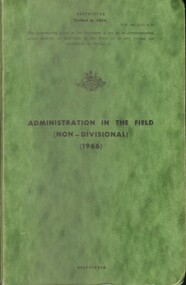
... ...Administration support...Australia - Armed Forces - Service manuals Administration support A green plastic coloured cover with black information. ...A green plastic coloured cover with black information. Top right corner reads 7610-66-024-4121. The Australian Coat of Arms and under this is the title of the booklet. the booklet is held together with two metal screws and this is done on the inside cover.australia - armed forces - service manuals, administration support -
 Vision Australia
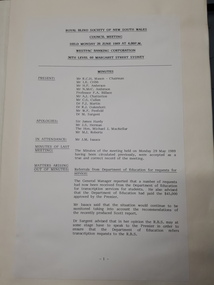
Administrative record - Text, Royal Blind Society of NSW Council meeting minutes: 26/6/1989 - 25/1/1993, 1989-1993
... Reports are also included from Honorary Treasurer, Finance, Corporate Services, Accommodation Services, Rehabilitation, Library Services, Marketing, Mitchell Manufacturing, Administration Support, Information Technology and Personnel. 30/9/1989 presents a detailed report from the General Manager regarding the proposed sale of Mitchell Manufacturing with the approach from Australia Foundation for the Disabled. 30/11/1989 the General Manager announced the decision to Mitchell Manufacturing staff that afternoon and he reported that so far the transfer had preceded smoothly and that staff now seemed to accept that they would benefit from it. 25/3/1991 The Chairman, Mr. ...Reports are also included from Honorary Treasurer, Finance, Corporate Services, Accommodation Services, Rehabilitation, Library Services, Marketing, Mitchell Manufacturing, Administration Support, Information Technology and Personnel. 30/9/1989 presents a detailed report from the General Manager regarding the proposed sale of Mitchell Manufacturing with the approach from Australia Foundation for the Disabled. 30/11/1989 the General Manager announced the decision to Mitchell Manufacturing staff that afternoon and he reported that so far the transfer had preceded smoothly and that staff now seemed to accept that they would benefit from it. 25/3/1991 The Chairman, Mr. ...These minutes contain information on attendees, meeting chairs, apologies, matters arising out of minutes, correspondence, subscriptions, donations and general business. Reports are also included from Honorary Treasurer, Finance, Corporate Services, Accommodation Services, Rehabilitation, Library Services, Marketing, Mitchell Manufacturing, Administration Support, Information Technology and Personnel. 30/9/1989 presents a detailed report from the General Manager regarding the proposed sale of Mitchell Manufacturing with the approach from Australia Foundation for the Disabled. 30/11/1989 the General Manager announced the decision to Mitchell Manufacturing staff that afternoon and he reported that so far the transfer had preceded smoothly and that staff now seemed to accept that they would benefit from it. 25/3/1991 The Chairman, Mr. Cribb reported that the Library staff had moved into the new building. 1 volume of minutes from committee meetingsroyal blind society of nsw, mitchell manufacturing -
 Vision Australia
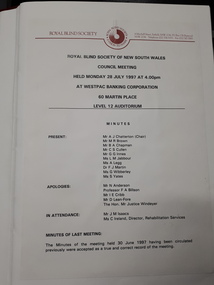
Administrative record - Text, Royal Blind Society of NSW Council meeting minutes: 28/7/1997 - 18/12/2001, 1997-2001
... Reports are also included from Reports for Honorary Treasurer, Chief Executive Officer (CEO), Council Committee, Information Services, Corporate Services, Accommodation Services, Rehabilitation, Marketing, Administration Support and Personnel. 25/8/1997 The President read a letter from the CEO, Mr. ...Reports are also included from Reports for Honorary Treasurer, Chief Executive Officer (CEO), Council Committee, Information Services, Corporate Services, Accommodation Services, Rehabilitation, Marketing, Administration Support and Personnel. 25/8/1997 The President read a letter from the CEO, Mr. ...These minutes contain information on attendees, meeting chairs, apologies, matters arising out of minutes, correspondence, subscriptions, donations and general business. Reports are also included from Reports for Honorary Treasurer, Chief Executive Officer (CEO), Council Committee, Information Services, Corporate Services, Accommodation Services, Rehabilitation, Marketing, Administration Support and Personnel. 25/8/1997 The President read a letter from the CEO, Mr. J. M. Isaacs formally advising of his resignation to take into effect from 31 December 1997. 24/11/1997 The President reported that Mr. John Landau was to be appointed to the position of CEO. 8/7/1997 The CEO advised the telephone based daily new service using interactive voice response technology developed by RBS was launched. 10/8/1997 it was reported the Queensland Talking Book Service (QTBS) was launched. 21/3/2000 The CEO reported that Ms. Jane Evans had been appointed as General Manager of the National Information Library Service (NILS). 18/4/2000 The CEO reported that one of the reasons for the creation of NILS was to combine the resources of RVIB and RBS to ensure an economical and smooth transition of both collections. 12/11/2001 The CEO reported that a meeting was held to discuss the merger of NILS and Vision Australia Foundation. 1 volume of sheets glued to pagesroyal blind society of nsw, national information library service -
 Vision Australia
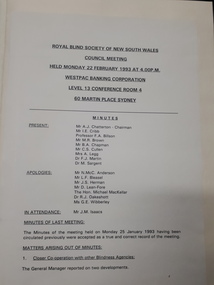
Administrative record - Text, Royal Blind Society of NSW Council meeting minutes: 22/2/1993 - 30/6/1997, 1993-1997
... Reports are also included from Honorary Treasurer, Finance, Corporate Services, Accommodation Services, Rehabilitation, Library Services, Marketing, Mitchell Manufacturing, Administration Support, Information Technology and Personnel. 6/9/1993 The General Manager reported on the Strategic Overview and Implementation Plan. ...Reports are also included from Honorary Treasurer, Finance, Corporate Services, Accommodation Services, Rehabilitation, Library Services, Marketing, Mitchell Manufacturing, Administration Support, Information Technology and Personnel. 6/9/1993 The General Manager reported on the Strategic Overview and Implementation Plan. ...These minutes contain information on attendees, meeting chairs, apologies, matters arising out of minutes, correspondence, subscriptions, donations and general business. Reports are also included from Honorary Treasurer, Finance, Corporate Services, Accommodation Services, Rehabilitation, Library Services, Marketing, Mitchell Manufacturing, Administration Support, Information Technology and Personnel. 6/9/1993 The General Manager reported on the Strategic Overview and Implementation Plan. The core services would be Library Services, Rehabilitation Services and Technology Services. RBS would withdraw from providing Mobility Services and Talking Magazines unless by contract. In both cases there was existing services of a comparable standard and hence clients would not be adversely affected. RBS reduce its staff by 38 positions. 25/11/1996 Council members agreed that the Library Services Department be merged into the Information Technology Services Department. 28/1/1997 The CEO stated an opportunity for RBS to become a member of an international consortium known as DAISY (Digital Accessible Information SYtem). Whose main goal is establish a World Standard Digital Talking Book System for people who are blind and vision impaired. 1/4/1997 it was reported there are now 6 agencies including RBS comprising the Australia & New Zealand Group, as member of the DAISY consortium. Council approved that the CEO attend the first meeting of the Consortium on April 18-20. 1 volume of printed sheets glued to pagesroyal blind society of nsw, audio books -
 Bendigo Military Museum
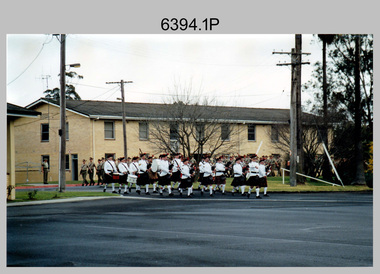
Photograph - Army Survey Regiment – Corps Day Parade, Fortuna Villa, Bendigo, 1995
... In centre - Administration Support Squadron. On right - Data Acquisition Squadron. 7.) - Photo, colour, 1995. ...In centre - Administration Support Squadron. On right - Data Acquisition Squadron. 7.) - Photo, colour, 1995. ...This set of 23 photographs were taken at the Corps Day Parade held at the Army Survey Regiment, Bendigo on the 1st of July 1995. This occasion was to commemorate the 80th anniversary of the formation of the Royal Australian Survey Corps. The Parade Commander was CO LTCOL Duncan Burns, and the Reviewing Officer was the Deputy Chief of the Defence Force MAJGEN G.D. Carter AM. Also in attendance was his MA MAJ M.D. Bornholt AM and the COL COMDT of the Royal Australian Survey Corps COL Don Swiney MBE. On this occasion the Reviewing Officer presented the Defence Force Service Medal to SGT Graham Hales and SPR Ken Labouchardiere for 15 years of efficient remunerated service in the Australian Army. SSGT Russ Mollenhauer received the Defence Force Service Medal clasp in recognition of 20 years of service. SGT Stuart Symonds received his second Defence Force Service Medal clasp in recognition of 25 years of service.This is a set of 23 photographs of the Corps Day Parade held at the Army Survey Regiment, Fortuna, Bendigo on the 1st July 1995. The colour photographs were printed on photographic paper and are part of the Army Survey Regiment’s Collection. The photographs were scanned at 300 dpi. .1) - Photo, colour, 1995. Fortuna Pipes and Drums lead the Army Survey Regiment onto the parade ground. .2) to .3) - Photo, colour, 1995. Fortuna Pipes and Drums in position on the parade ground. .4) - Photo, colour, 1995. Data Acquisition Squadron marches onto the parade ground, led by L to R: WO2 Peter Imeson, WO2 Bruce Hammond. .5) - Photo, colour, 1995. Data Acquisition Squadron front rank L to R: WO2 Peter Imeson, SPR Stuart Catharall, CPL Damien Killeen, CPL Trevor King, SPR Glen Norrell, SPR Kim Baker, SPR Craig Smith, LCPL Mark Fedden, SGT Graham Hales, SPR Josh Andrews OAM, unidentified (x2), WO2 Bruce Hammond. .6) - Photo, colour, 1995. Army Survey Regiment in position on the parade ground. On left - Product Construction Squadron rear rank L to R: CPL Dave Scott, SPR Shane Campbell, CPL Guenther Ebenwaldner, remainder unidentified. Centre rank L to R: CPL Ian Bowes, remainder unidentified. RSM WO1 Ken Johnston OAM MM. Front rank L to R: WO2 Alan Virtue, SSGT Bob Thrower, CPL Paul Einam, SGT Peter Tuddenham, SPR Dik Brierley, SGT Stuart Ridge, SPR Mick Muzeen, SPR Marty Stradbrook, unidentified, SGT Steve Nokes, SPR James Commons, SPR Lance Hillier. WO2 Gill Park. In centre - Administration Support Squadron. On right - Data Acquisition Squadron. 7.) - Photo, colour, 1995. Officers ready to take posts. L to R: LT Dave Sapparth, CAPT Colin Davidson, CAPT Tony Harder – UK Exchange Officer, LT Jason Selman, CAPT Doug Arman, QM CAPT Bill Griggs, LT Roger Grose, CAPT Bin Fashar Sutimin – Indonesian Exchange Officer in white uniform, MAJ Ross Jenkins, CAPT Gary Warnest. 8.) - Photo, colour, 1995. CO LTCOL Duncan Burns salutes the Reviewing Officer MAJGEN G.D. Carter AM. .9) & .10) - Photo, colour, 1995. Data Acquisition Squadron presents arms. Officers’ rank L to R: CAPT Tony Harder – UK Exchange Officer, CAPT Colin Davidson, LT Dave Sapparth. ADJT CAPT Brenton McDonald at far right. Front rank L to R: WO2 Peter Imeson, SPR Stuart Catharall, CPL Damien Killeen, CPL Trevor King, SPR Glen Norrell, SPR Kim Baker, SPR Craig Smith, LCPL Mark Fedden, SGT Graham Hales, SPR Josh Andrews OAM, unidentified (x2), WO2 Bruce Hammond. 11) - Photo, colour, 1995. Army Survey Regiment presenting arms. L to R: Product Construction Squadron, Administration Support Squadron, Data Acquisition Squadron. .12) - Photo, colour, 1995. Product Construction Squadron presents arms. Officers’ Rank: 2IC MAJ Mick Banham, L to R: CAPT Gary Warnest, OC MAJ Ross Jenkins CAPT Bin Fashar Sutimin – Indonesian Exchange Officer, LT Roger Grose. L to R: RSM WO1 Ken Johnston OAM MM. Front rank L to R: SSGT Bob Thrower, CPL Paul Einam, SGT Peter Tuddenham, SPR Dik Brierley, SGT Stuart Ridge, SPR Mick Muzeen, SPR Marty Stradbrook, unidentified, SGT Steve Nokes, SPR James Commons, SPR Lance Hillier, WO2 Gill Park. Other identifiable personnel in rear ranks L to R: SGT Peter Tuddenham, SPR Ben Lucas, SPR Dik Brierley, SGT Dale Hudson, SPR Annette (Odgers) Wynn, CPL Roger Pearson, SPR Corey Hill, SSGT Russ Mollenhauer. 13) - Photo, colour, 1995. Army Survey Regiment Advances in Review Order. L to R: Product Construction Squadron, Administration Support Squadron, Data Acquisition Squadron. 14) - Photo, colour, 1995. Army Survey Regiment in rank formation slow marches around parade ground L to R: Product Construction Squadron, Administration Support Squadron, Data Acquisition Squadron. .15) & .16) - Photo, colour, 1995. Data Acquisition Squadron slow marches, using ‘Forms’ to turn right in rank formation. Officers’ rank L to R: CAPT Tony Harder – UK Exchange Officer, CAPT Colin Davidson, LT Dave Sapparth. ADJT CAPT Brenton McDonald at far right.front rank L to R: WO2 Peter Imeson, SPR Stuart Catharall CPL Damien Killeen, CPL Trevor King, SPR Glen Norrell, SPR Kim Baker, SPR Craig Smith, LCPL Mark Fedden, SGT Graham Hales, SPR Josh Andrews OAM, unidentified (x2), WO2 Bruce Hammond. Centre Right Marker SPR Cameron Gee OAM is behind SPR Stuart Catharall. .17) - Photo, colour, 1995. Data Acquisition Squadron proceeds past Reviewing Officer on ‘Eyes Right’ command. Officers’ rank L to R: CAPT Tony Harder – UK Exchange Officer, LT Dave Sapparth. CAPT Colin Davidson. Centre Right Marker SPR Cameron Gee OAM. Right rear supernumerary SSGT Rod Skidmore, ADJT CAPT Brenton McDonald to his left. Front rank L to R: WO2 Peter Imeson, SPR Stuart Catharall CPL Damien Killeen, CPL Trevor King, SPR Glen Norrell, SPR Kim Baker, SPR Craig Smith, LCPL Mark Fedden, SGT Graham Hales, SPR Josh Andrews OAM, unidentified (x2), WO2 Bruce Hammond. CO LTCOL Duncan Burns in foreground. .18) - Photo, colour, 1995. Data Acquisition Squadron proceeds past Reviewing Officer on ‘Eyes Right’ command. Rear rank L to R: unidentified, CPL John ‘Doc’ Commons, CPL Tony Jackson, SPR Helen Scorgie. Centre rank L to R: SPR Cameron Gee OAM, SPR Derek Percival, SPR Grant Lloyd. Front rank L to R: WO2 Peter Imeson, SPR Stuart Catharall CPL Damien Killeen, CPL Trevor King, SPR Glen Norrell, SPR Kim Baker, SPR Craig Smith, LCPL Mark Fedden, SGT Graham Hales, SPR Josh Andrews OAM, unidentified (x2), WO2 Bruce Hammond. .19) - Photo, colour, 1995. L to R: MAJGEN G.D. Carter AM returning salute, MA MAJ M.D. Bornholt AM, COL COMDT, COL Don Swiney MBE, in background CPL Warren ‘Waldo’ Shirley, WO2 Pat Lumsden. 20.) - Photo, colour, 1995. Product Construction Squadron L to R: SSGT Paul ‘Hutch’ Hunter, WO2 Jeff Willey, rear rank L to R: CPL Dave Scott, SPR Shane Campbell, CPL Guenther Ebenwaldner, remainder unidentified. Centre rank L to R: CPL Ian Bowes, SPR Ben Lucas, remainder unidentified. MAJGEN G.D. Carter AM, CO LTCOL Duncan Burns, Front rank L to R: WO2 Alan Virtue, remainder unidentified, RSM WO1 Ken Johnston OAM MM, Officers’ Rank: LT Jason Selman, CAPT Bin Fashar Sutimin – Indonesian Exchange Officer, CAPT Gary Warnest, MAJ Ross Jenkins, 2IC MAJ Mick Banham. .21) - Photo, colour, 1995. L to R: Centre marker CPL Ian Bowes, SPR Ben Lucas, remainder unidentified, MAJGEN G.D. Carter AM, COL COMDT, COL Don Swiney MBE, CO LTCOL Duncan Burns, WO2 Allan Virtue. .22) & .23) - Photo, colour, 1995. L to R: WO2 Pat Lumsden, MAJGEN G.D. Carter AM, SGT Graham Hales, SPR Ken Labouchardiere, SSGT Russ Mollenhauer, SGT Stuart Symonds..1P to.23P – The occasion and date are annotated on the plastic sleeve.royal australian survey corps, rasvy, army survey regiment, army svy regt, fortuna, asr -
 Marysville & District Historical Society
THE TRIANGLE NEWS-VOL 40 NO 7-MARCH 1 2013
... administration at marysville rac...rebuilding advisory centre...survey aims to support...marysville victoria australia skate park almost finished gallipoli park lions club what's on when in march marysville sub branch rsl agm marysville community golf & bowls club marysville primary school council agm marysville primary school parents club agm creative triangle marysville community market rates strategy needs further consideration state government review murrindindi shire council labour day office closures church notices world day of prayer triangle community dinner adventurous cooks madrats weekend black spur inn bbq at gallipoli oval community happy hour maryton beer & platter garden modern life music school taggerty community ticks off on township projects marysville netball notice of agm and call for teams mayor's chair pet registration by april temporary road closure watercolours on display councillor comment triangle community dance group new yarra valley design market changes to administration at marysville rac rebuilding advisory centre survey aims to support inclusiveness stategy marysville golf report wriggly fish swimming lessons program marysville world's longest lunch swimming pool season coming to an end advertisments community upgrade regeneration burns in central highlands stephanie alexander-cook marysville primary school fundraiser for dunalley primary school tasmania marysville fire brigade presentation night a positive outlook for ageing in community real estate bakers lane works revised ceaca agm construction of new visitors information and interpretive centre yea wetlands council community services open hall buxton murrindindi planning scheme camp marysville maintenance manager wanted st john's anglican church arts crafts & produce festival memorabilia of buxton memorial hall wanted buxton progress assocn community notice THE TRIANGLE NEWS-VOL 40 NO 7-MARCH 1 2013 ...marysville, victoria, australia, skate park almost finished, gallipoli park, lions club, what's on when in march, marysville sub branch rsl agm, marysville community golf & bowls club, marysville primary school council agm, marysville primary school parents club agm, creative triangle, marysville community market, rates strategy needs further consideration, state government review, murrindindi shire council, labour day office closures, church notices, world day of prayer, triangle community dinner, adventurous cooks, madrats weekend, black spur inn, bbq at gallipoli oval, community happy hour, maryton beer & platter garden, modern life music school, taggerty community ticks off on township projects, marysville netball notice of agm and call for teams, mayor's chair, pet registration by april, temporary road closure, watercolours on display, councillor comment, triangle community dance group, new yarra valley design market, changes to administration at marysville rac, rebuilding advisory centre, survey aims to support inclusiveness stategy, marysville golf report, wriggly fish swimming lessons program, marysville world's longest lunch, swimming pool season coming to an end, advertisments, community upgrade regeneration burns in central highlands, stephanie alexander-cook, marysville primary school fundraiser for dunalley primary school tasmania, marysville fire brigade presentation night, a positive outlook for ageing in community, real estate, bakers lane works revised, ceaca agm, construction of new visitors information and interpretive centre, yea wetlands, council community services, open hall buxton, murrindindi planning scheme, camp marysville maintenance manager wanted, st john's anglican church arts crafts & produce festival, memorabilia of buxton memorial hall wanted, buxton progress assocn community notice -
 Federation University Historical Collection
Article - Article - Women, Ballarat School of Mines to University of Ballarat: Women of Note; Verna Barry, Secretary to Jack Barker
... administration officer...engineering faculty...engineering science...information technology and mathematical science...research support...Administration Officer with Engineering Faculty. She spent five years with Engineering Science from 1990, and in 1996 worked for Information Technology & Mathematical Science (ITMS), becoming a key member of the Research Support team. ...Administration Officer with Engineering Faculty. She spent five years with Engineering Science from 1990, and in 1996 worked for Information Technology & Mathematical Science (ITMS), becoming a key member of the Research Support team. ...Verna Barry commenced worked as a typist at the Ballarat School of Mines (SMB) in 1961. In 1965 she became private secretary to Jack Barker, Principal of the Ballarat School of Mines and later Director of the Ballarat Institute of Education (BIAE) and the Ballarat College of Advanced Education (BCAE). A trusted and loyal member of staff, Verna was devoted to her job, her workplace and greatly respected Jack Barker with whom she worked loyally for until his retirement in 1987. In 1988 Verna was appointed Administration Officer with Engineering Faculty. She spent five years with Engineering Science from 1990, and in 1996 worked for Information Technology & Mathematical Science (ITMS), becoming a key member of the Research Support team. After thirty-nine years of service to the University of Ballarat and its predecessor institutions Verna Barry retired from full-time work on 31 January 2000women of note, verna barry, typist, secretary, jack barker, 1965-1987, ballarat school of mines, ballarat institute of advanced education, ballarat college of advanced education, administration officer, engineering faculty, engineering science, information technology and mathematical science, research support -
 Flagstaff Hill Maritime Museum and Village
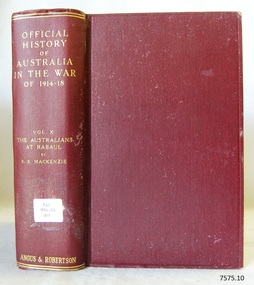
Book, Official History of Australia In The War of 1914-18 Vol 10
... His aim was to foster portraiture, as well as support artists, and perpetuate the memory of great Australians. warrnambool shipwrecked-coast flagstaff-hill flagstaff-hill-maritime-museum maritime-museum shipwreck-coast flagstaff-hill-maritime-village shipwrecked-artefact book warrnambool mechanics’ institute pattison collection warrnambool library ralph eric pattison warrnambool city librarian mechanics’ institute library victorian library board warrnambool books and records the australians at rabaul. s s mackenzie the capture and administration of the german possessions in the southern pacific Label on spine cover with typed text PATT 994.04 OFF Front pastedown endpaper has sticker from Warrnambool Public Library Front loose endpaper has a sticker from Corangamite Regional Library Service Official History of Australia In The War of 1914-18 Vol 10 The Australians at Rabaul. ...This item is from the ‘Pattison Collection’, a collection of books and records that was originally owned by the Warrnambool Mechanics’ Institute, which was founded in Warrnambool in 1853. By 1886 the Warrnambool Mechanics’ Institute (WMI) had grown to have a Library, Museum and Fine Arts Gallery, with a collection of “… choice productions of art, and valuable specimens in almost every branch and many wonderful national curiosities are now to be seen there, including historic relics of the town and district.” It later included a School of Design. Although it was very well patronised, the lack of financial support led the WMI in 1911 to ask the City Council to take it over. In 1935 Ralph Pattison was appointed as City Librarian to establish and organise the Warrnambool Library as it was then called. When the WMI building was pulled down in 1963 a new civic building was erected on the site and the new Warrnambool Library, on behalf of the City Council, took over all the holdings of the WMI. At this time some of the items were separated and identified as the ‘Pattison Collection’, named after Ralph Pattison. Eventually the components of the WMI were distributed from the Warrnambool Library to various places, including the Art Gallery, Historical Society and Flagstaff Hill. Later some were even distributed to other regional branches of Corangamite Regional Library and passed to and fro. It is difficult now to trace just where all of the items have ended up. The books at Flagstaff Hill Maritime Village generally display stamps and markings from Pattison as well as a variety of other institutions including the Mechanics’ Institute itself. RALPH ERIC PATTISON Ralph Eric Pattison was born in Rockhampton, Queensland, in 1891. He married Maude Swan from Warrnambool in 1920 and they set up home in Warrnambool. In 1935 Pattison accepted a position as City Librarian for the Warrnambool City Council. His huge challenge was to make a functional library within two rooms of the Mechanics’ Institute. He tirelessly cleaned, cleared and sorted a disarrayed collection of old books, jars of preserved specimens and other items reserved for exhibition in the city’s museum. He developed and updated the library with a wide variety of books for all tastes, including reference books for students; a difficult task to fulfil during the years following the Depression. He converted all of the lower area of the building into a library, reference room and reading room for members and the public. The books were sorted and stored using a cataloguing and card index system that he had developed himself. He also prepared the upper floor of the building and established the Art Gallery and later the Museum, a place to exhibit the many old relics that had been stored for years for this purpose. One of the treasures he found was a beautiful ancient clock, which he repaired, restored and enjoyed using in his office during the years of his service there. Ralph Pattison was described as “a meticulous gentleman whose punctuality, floorless courtesy and distinctive neat dress were hallmarks of his character, and ‘his’ clock controlled his daily routine, and his opening and closing of the library’s large heavy doors to the minute.” Pattison took leave during 1942 to 1942 to serve in the Royal Australian Navy, Volunteer Reserve as Lieutenant. A few years later he converted one of the Museum’s rooms into a Children’s Library, stocking it with suitable books for the younger generation. This was an instant success. In the 1950’s he had the honour of being appointed to the Victorian Library Board and received more inspiration from the monthly conferences in Melbourne. He was sadly retired in 1959 after over 23 years of service, due to the fact that he had gone over the working age of council officers. However he continued to take a very keen interest in the continual development of the Library until his death in 1969. WARRNAMBOOL PUBLIC LIBRARY The Warrnambool Mechanics’ Institute (WMI) was formed by a voluntary community group in 1863, within six years of Warrnambool’s beginnings, and its Reading Room opened in 1854. The WMI operated until 1963, at which time it was one of the oldest Mechanics’ Institutes in Victoria. Mechanics’ Institutes offered important services to the public including libraries, reading rooms and places to display and store collections of all sorts such as curiosities and local historical relics. In 1886 a Museum and Fine Arts Gallery were added to the WMI and by the beginning of the 20th century there was also a billiards room and a School of Art. By this time all Mechanics’ Institutes in country Victoria had museums attached. Over the years the Warrnambool Mechanics’ Institute Library was also known as the Warrnambool Public Library the Warrnambool Library and the Free Library. Early funding from the government was for the “Free Library”. The inscription in a book “Science of Man” was for the “Warrnambool Public Library”, donated by Joseph Archibald in 1899. Another inscription in the book “Catalogue of Plants Under Cultivation in the Melbourne Botanic Gardens 1 & 2, 1883” was presented to the “Warrnambool Library” and signed by the author W.R. Guilfoyle. In 1903 the Warrnambool Public Library decided to add a Juvenile Department to library and stock it with hundreds of books suitable for youth. In 1905 the Public Library committee decided to update the collection of books and added 100 new novels plus arrangements for the latest novels to be included as soon as they were available in Victoria. In July 1911 the Warrnambool Council took over the management of the Public Library, Art Gallery, Museum and Mechanics’ Institute and planned to double the size of the then-current building. In 1953, when Mr. R. Pattison was Public Librarian, the Warrnambool Public Library’s senior section 10,000 of the 13,000 books were fiction. The children’s section offered an additional 3,400 books. The library had the equivalent of one book per head of population and served around 33 percent of the reading population. The collection of books was made up of around 60 percent reference and 40 percent fiction. The library was lending 400 books per day. In 1963 the Warrnambool City Council allocated the site of the Mechanics’ Institute building, which included the Public Library, Museum and Art Gallery, for the new Municipal Offices and the Collections were dispersed until 1971. The Warrnambool Library took over the Mechanics’ Institute Library’s holdings on behalf of the Warrnambool City Council. Since the closure of the Warrnambool Mechanics’ Institute the exact location and composition of the original WMI books and items has become unclear. Other materials have been added to the collection, including items from Terang MI, Warrnambool Court House and Customs House. Many of the books have been identified as the Pattison Collection, named after the Librarian who catalogued and numbered the books during his time as Warrnambool Public Librarian in the time before the Mechanics’ Institute closed. It seems that when Warrnambool became part of the Corangamite Regional Library some of the books and materials went to its head office in Colac and then back to Warrnambool where they were stored at the Art Gallery for quite some time. Some then went to the Warrnambool Historical Society, some stayed at the Art Gallery and some were moved to Flagstaff Hill Maritime Village. The various stamps and labels on the books held at Flagstaff Hill show the variety of the collection’s distribution and origin. The books in the collection at Flagstaff Hill Maritime Village date from the 1850’s to the late 1950’s and include rare and valuable volumes. Many of the books are part of the “Pattison Collection” after the Warrnambool’s Public Librarian, Mr. R. Pattison. The Pattison Collection, along with other items at Flagstaff Hill Maritime Village, was originally part of the Warrnambool Mechanics' Institute’s collection. The Warrnambool Mechanics’ Institute Collection is primarily significant in its totality, rather than for the individual objects it contains. Its contents are highly representative of the development of Mechanics' Institute libraries across Australia, particularly Victoria. A diversity of publications and themes has been amassed, and these provide clues to our understanding of the nature of and changes in the reading habits of Victorians from the 1850s to the middle of the 20th century. The collection also highlights the Warrnambool community’s commitment to the Mechanics’ Institute, reading, literacy and learning in the regions, and proves that access to knowledge was not impeded by distance. These items help to provide a more complete picture of our community’s ideals and aspirations. The Warrnambool Mechanics Institute book collection has historical and social significance for its strong association with the Mechanics Institute movement and the important role it played in the intellectual, cultural and social development of people throughout the latter part of the nineteenth century and the early twentieth century. The collection of books is a rare example of an early lending library and its significance is enhanced by the survival of an original collection of many volumes. The Warrnambool Mechanics' Institute’s publication collection is of both local and state significance. The Warrnambool Mechanics' Institute Collection is primarily significant in its totality, rather than for the individual objects it contains. Its contents are highly representative of the development of Mechanics' Institute libraries across Australia, particularly Victoria. A diversity of publications and themes has been amassed, and these provide clues to our understanding of the nature of and changes in the reading habits of Victorians from the 1850s to the middle of the 20th century. The collection also highlights the Warrnambool community’s commitment to the Mechanics’ Institute, and to reading, literacy and learning in the regions, and proves that access to knowledge was not impeded by distance. These items help to provide a more complete picture of our community’s ideals and aspirations. As with many Mechanics' Institutes in Australia, the one which operated in Warrnambool was established and overseen for many years by key individuals associated with the development of the city itself. The WMI publication collection is historically significant because of its association with local people, places and the key historical themes in the development of Warrnambool of rural development, industry, farming, education, and community. The collection documents and illustrates the changing interests, focus and tastes of Victorians, especially those in regional cities. Generally the individual items in the collection are not particularly rare, as examples of all probably exist in other public collections in Victoria. It is primarily because there are so very few surviving Mechanics' Institute collections in Victoria, which lends this overall collection its significance. Many items in the WMI Collection have the potential to support further research, both as individual objects and through the collection in its entirety. This material is significant for its ability to assist in the interpretation of the history of the area and adds to the general understanding of the development of the township. Many components of the WMI publication collection complement and reinforce the Flagstaff Hill Maritime Museum Collection, the Warrnambool Art Gallery Collection, and that in the Warrnambool Historical Society, and also contribute to a clearer understanding of the original Warrnambool Mechanics' Institute collections. This will greatly enhance the appreciation of the few surviving Mechanics' Institute collections across Victoria, and also in New South Wales. The similarities and differences between the small number of collections that have survived can provide further insights into how the people of Victoria in general, and Warrnambool in particular, constructed a civic culture of adult learning to foster an informed citizenry. The Warrnambool Mechanics' Institute publication collection is of both local and state significance. (This Statement of Significance is quoted from the Significance Assessment : Warrnambool Mechanics’ Institute Book Collection at Flagstaff Hill Maritime Museum, February 2009, by Annette Welkamp, Cultural Connections, for Delise Oldfied, FHMV) References Juvenile Department in Warrnambool Public Library In August 1903 The Age newspaper reported in its Warrnambool news section that “With the object of discouraging boys from reading literature of the “penny dreadful” class, the committee of the local public library has decided to open a juvenile department and to stock it with hundreds of suitable books attractive to the youthful mind.” 100 new novels added to Warrnambool Public Library Shelves In November 1905 The Argue newspaper’s Warrnambool news section announced “The committee of the Public Library is bringing the collection of books more up to date. It has recently added 100 new novels to the shelves, and arrangements have been made for a supply of the latest novels immediately they arrive in the state.” Warrnambool Town Council takes over Mechanics’ Institute, Art Gallery, Public Library, Museum – and will double the building’s size In 1912 The Age reported in its Warrnambool news section “Considerable improvements are being effected by the town council in the most picturesque part of Liebig Street. Between the fire brigade station and the mechanics’ institute and art gallery a vacant block of land is being transformed a garden for carpet bedding and flowering plants. The council, which recently took over the control of the art gallery, public library, museum and mechanics’ institute, is doubling the size of the substantial stone building containing these institutions. The new building will contain a supper room for use in conjunction with functions in the town hall, adjoining, and a new reading room.” Mr Pattison, Public Librarian, says Library has a book per head of population In 1953 The Age reported an interview with the Public Librarian, Mr. R. Pattison, who said “Warrnambool has an insatiable thirst for reading. And its reading recipe contains a strong dash of fiction – 73 percent of it. Fiction makes up 10,000 of the 13,000 books in the senior section of the public library. That works out at a book per head of population. Warrnambool today is really book minded. This city has an almost insatiable thirst for knowledge as well as fiction. We’re lending 400 books a day. We supply 33 percent of the reading population of Warrnambool.” The reporter goes on to say “Warrnambool Public Library also has an ultra-modern children’s section of 3,400 books, open to every boy and girl attending school in Warrnambool. Mr Pattison hopes to show travel-talk films and install a radiogram in the children’s section “later on”. But it won’t disturb adult reading next door because the junior section is sound proof. “ Mechanics’ Institutes and Museums Mechanics’ Institutes were important sites for collecting in country Victoria … Warrnambool … all had museums attached to Mechanics’ Institutes before the end of the twentieth century” Warrnambool Mechanics’ Institute Ms Tierney said FHMV holds the collection of the Warrnambool Mechanics’ Institute in three different locations on its site. “The Mechanics’ Institute opened in 1871, was demolished in the 1960s and was one of the oldest in Victoria. “FHMV intends to create a new storage area and bring the collection together in one place which will greatly facilitate access and research. “The collection consists of books and archives dating from the 1850s to 1959s. “Some of the books are rare and valuable but it is unclear as to their relevance to the history of Warrnambool or Victoria,” Ms Tierney said. Warrnambool TAFE History South West TAFE has a long and proud history of providing technical and specialist education, with links back to the formation of the Mechanic’s Institute in 1853. Warrnambool Art Gallery’s History The Warrnambool Art Gallery began in 1886 when retired police officer Joseph Archibald opened its doors in a building behind the mechanics institute in Liebig Street. The Gallery began with an eclectic mix of artworks and museum curios. Before long Archibald mobilised public support and paid for a new gallery annex. Loans and grants allowed the Gallery collection to grow with significant early acquisitions by French, German, and Belgian artists, which were less expensive than British works. Despite its enthusiastic start the economic downturn of the 1890s brought the Collection to a halt. In 1910 the Council took control of the Mechanics Institute and ran the Gallery there until 1963 when the building was allocated for municipal offices. The Collection was dispersed on loan to galleries in Shepparton and Hamilton and not reunited until 1971. In 1986 the Gallery’s Centenary year, a permanent home was built next to the ‘Civic Green’ and named in memory of one its champions Sir Fletcher Jones O.B.E. 2016 Warrnibald Entries Joseph Archibald established the Warrnambool Museum and Art Gallery in 1886 while his son Jules Francois Archibald founded the Archibald Prize through his bequest of 1919. His aim was to foster portraiture, as well as support artists, and perpetuate the memory of great Australians. Official History of Australia In The War of 1914-18 Vol 10 The Australians at Rabaul. The capture and Administration of the German possessions in the Southern Pacific Author: S S Mackenzie Publisher: Angus & Robertson Date: 1938 Label on spine cover with typed text PATT 994.04 OFF Front pastedown endpaper has sticker from Warrnambool Public Library Front loose endpaper has a sticker from Corangamite Regional Library Service warrnambool, shipwrecked-coast, flagstaff-hill, flagstaff-hill-maritime-museum, maritime-museum, shipwreck-coast, flagstaff-hill-maritime-village, shipwrecked-artefact, book, warrnambool mechanics’ institute, pattison collection, warrnambool library, ralph eric pattison, warrnambool city librarian, mechanics’ institute library, victorian library board, warrnambool books and records, the australians at rabaul., s s mackenzie, the capture and administration of the german possessions in the southern pacific -
Glenelg Shire Council Cultural Collection
Administrative record - Envelope relates to Ancient Order of Foresters Society administration, n.d
... support to members and their families in times of unemployment, sickness, death, disability and old age. The Society is now known as the Foresters Friendly Society and in July 1999 was incorporated as a public company limited by shares and guarantee. Blue envelope, 7 cent stamp, postmarked Hamilton 3300, 6 am 2 JAN 1973. Addressed to Mrs. F. Hewitt, Kennedy Street Hamilton, 3300, in blue biro. The address has been crossed out and Box 16 Donald added in red biro. Administrative record Envelope relates to Ancient Order of Foresters Society administration ...The Ancient Order of Foresters, which originated in England in the mid 1700s, established its first branch (Court) in Victoria in 1849. Foresters was set up as a non-profit organisation, the founding principles of the Society being to provide financial and social benefits as well as support to members and their families in times of unemployment, sickness, death, disability and old age. The Society is now known as the Foresters Friendly Society and in July 1999 was incorporated as a public company limited by shares and guarantee.Blue envelope, 7 cent stamp, postmarked Hamilton 3300, 6 am 2 JAN 1973. Addressed to Mrs. F. Hewitt, Kennedy Street Hamilton, 3300, in blue biro. The address has been crossed out and Box 16 Donald added in red biro. -
 Flagstaff Hill Maritime Museum and Village
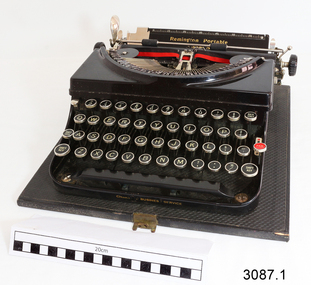
Machine - Typewriter, 1930's
... But in addition the four members of the Sack family were very involved in Church activities, particularly in lay administration and lay preaching in the Baptist Church, and the typewriter gained a lot of after-hours use. The family actively supported overseas Missions in India, SE Asia, and Africa. ...But in addition the four members of the Sack family were very involved in Church activities, particularly in lay administration and lay preaching in the Baptist Church, and the typewriter gained a lot of after-hours use. The family actively supported overseas Missions in India, SE Asia, and Africa. ...This "Remington Portable Model 5, Remington Business Service" typewriter is in very good working order and was donated in its case complete with its Operating Instructions and a Touch Method typing instruction book. The typewriter was owned by William Sack, owner of the business Sacks Jewellers at 115 Liebig Street, Warrnambool. He commenced trading in the early 1900’s; and used this typewriter in the business from its purchase date, around 1931, through until about 1996. William and his wife June had three children, Eric, Audrey and David. The children were owners/partners of Sack’s Jewellers after William’s passing in 1976. Eric and David were ‘owners of the business’, with Audrey carrying out much of the clerical work. Eric died in about 1984 and David sold the practise in 1996. During the 65 years of business the typewriter was used for all the normal applications of a jeweller’s; preparing invoices, guarantees, taxation records. But in addition the four members of the Sack family were very involved in Church activities, particularly in lay administration and lay preaching in the Baptist Church, and the typewriter gained a lot of after-hours use. The family actively supported overseas Missions in India, SE Asia, and Africa. After the sale of the business in 1996, Audrey took the typewriter home for her community activities (David got a computer). In the 1980’s David volunteered as the Clock Repairer at Flagstaff Hill for the historical instruments. In the early days this took some long hours to get the clocks working, but in recent years he has just been ‘on call’ if needed. He is an alert 85 year old and just in the last 12 months has given up a busy schedule of Sunday Lay Preaching around the district. (2015)The typewriter is of local significance, being previously owned and used by Sacks Jewellers, a local business that had been in operation for about 100 years.Typewriter, Remington, "Remington Portable Model 5, Remington Business Service". Typewriter is in black, textured hard case with lock and key. Case has leather carry handle. Company has USA, copyright 1931.Includes Operating Instructions for the Remington Portable Models 5 and 5T. Remington Typewriter Company. "Remington Portable Model 5, Remington Business Service". flagstaff hill, warrnambool, shipwrecked coast, flagstaff hill maritime museum, maritime museum, shipwreck coast, flagstaff hill maritime village, great ocean road, typewriter, remington business services, office equipment, business equipment, office communication, sack’s jewellers warrnambool, warrnambool business, remington typewriter company, touch typing, william sack, david sack, warrnambool baptist church -
 Flagstaff Hill Maritime Museum and Village
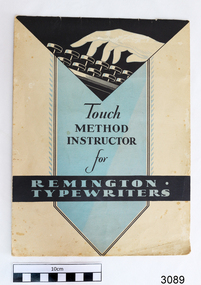
Book, Touch Method Instructor for Remington Typewriters, c. 1931
... But in addition the four members of the Sack family were very involved in Church activities, particularly in lay administration and lay preaching in the Baptist Church, and the typewriter gained a lot of after-hours use. The family actively supported overseas Missions in India, SE Asia, and Africa. ...But in addition the four members of the Sack family were very involved in Church activities, particularly in lay administration and lay preaching in the Baptist Church, and the typewriter gained a lot of after-hours use. The family actively supported overseas Missions in India, SE Asia, and Africa. ...The instruction book was donated together with a typewriter and manual by David Sack, previous owner of Sack's Jewellers, Liebig St in Warrnambool. The typewriter and books were owned by William Sack, owner of the business Sacks Jewellers at 115 Liebig Street, Warrnambool. He commenced trading in the early 1900’s; and used this typewriter in the business from its purchase date, around 1931, through until about 1996. William and his wife June had three children, Eric, Audrey and David. The children were owners/partners of Sack’s Jewellers after William’s passing in 1976. Eric and David were ‘owners of the business’, with Audrey carrying out much of the clerical work. Eric died in about 1984 and David sold the practise in 1996. During the 65 years of business the typewriter was used for all the normal applications of a jeweller’s; preparing invoices, guarantees, taxation records. But in addition the four members of the Sack family were very involved in Church activities, particularly in lay administration and lay preaching in the Baptist Church, and the typewriter gained a lot of after-hours use. The family actively supported overseas Missions in India, SE Asia, and Africa. After the sale of the business in 1996, Audrey took the typewriter home for her community activities (David got a computer). In the 1980’s David volunteered as the Clock Repairer at Flagstaff Hill for the historical instruments. In the early days this took some long hours to get the clocks working, but in recent years he has just been ‘on call’ if needed. He is an alert 85 year old and just in the last 12 months has given up a busy schedule of Sunday Lay Preaching around the district. (2015) The typewriter and instruction books are of local significance, being previously owned and used in a local business for about 100 years.Book, Touch Method Instructor for Remington Typewriters. Published by Remington Typewriter Company, printed in U.S.A. Copyright 1931. Soft cover, cream with black and blue panels, drawing of a hand with fingers above typewriter keys. Lesson book for teaching touch typing.flagstaff hill, warrnambool, shipwrecked coast, flagstaff hill maritime museum, maritime museum, shipwreck coast, flagstaff hill maritime village, great ocean road, typing instructor, typing lesson book, sack’s jewellers warrnambool, remington typewriter company, william sack, david sack, warrnambool baptist church, warrnambool history -
 Flagstaff Hill Maritime Museum and Village
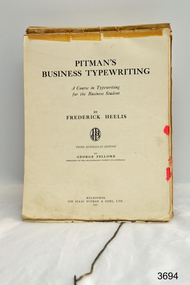
Book - Textbook, Pitman's Business Typing, 1937
... But in addition the four members of the Sack family were very involved in Church activities, particularly in lay administration and lay preaching in the Baptist Church, and the typewriter gained a lot of after-hours use. The family actively supported overseas Missions in India, SE Asia, and Africa. ...But in addition the four members of the Sack family were very involved in Church activities, particularly in lay administration and lay preaching in the Baptist Church, and the typewriter gained a lot of after-hours use. The family actively supported overseas Missions in India, SE Asia, and Africa. ...This Pitman’s Business Typing textbook was owned by Audrey Sack and was donated by David Sack at the same time as a typewriter in its case plus accessories (refer to RN 3087). Audrey was the daughter of William Sack, owner of the business Sacks Jewellers at 115 Liebig Street, Warrnambool. William commenced trading in the early 1900’s; and the typewriter was used by Audrey in the business from the late 1930’s through to about 1996 when the business was sold. William and his wife June had three children, Eric, Audrey and David. The children were owners/partners of Sack’s Jewellers after William’s passing in 1976. Eric and David were ‘owners of the business’, with Audrey carrying out much of the clerical work. Eric died in about 1984 and David sold the practise in 1996. During the 65 years of business the typewriter was used for all the normal applications of a jeweller’s; preparing invoices, guarantees, taxation records. But in addition the four members of the Sack family were very involved in Church activities, particularly in lay administration and lay preaching in the Baptist Church, and the typewriter gained a lot of after-hours use. The family actively supported overseas Missions in India, SE Asia, and Africa. After the sale of the business in 1996, Audrey took the typewriter home for her community activities (David got a computer). In the 1980’s David volunteered as the Clock Repairer at Flagstaff Hill for the historical instruments. In the early days this took some long hours to get the clocks working, but in recent years he has just been ‘on call’ if needed. He is an alert 85 year old and just in the last 12 months has given up a busy schedule of Sunday Lay Preaching around the district. (2015) The textbook is associated with the typewriter, which is of local significance, being previously owned and used in a local business for about 100 years.Textbook, "Pitman's Business Typing". Brown paper covered, hard cover, published in 1937. Book has attached cord to enable it to stand during use. Book belonged to Audrey Sack.Handwriten name "Audrey Sack, … Warrnambool …WHS" (Warrnambool High School) 18/8/15"flagstaff hill, warrnambool, shipwrecked coast, flagstaff hill maritime museum, maritime museum, shipwreck coast, flagstaff hill maritime village, great ocean road, typewriter, touch typing, office communications, sack’s jewellers warrnambool, william sack, david sack, audrey sack, typing textbook -
 Flagstaff Hill Maritime Museum and Village
Book - Student Exercise Book, Audrey Sack, student, Commercial Principles, 1938-1939
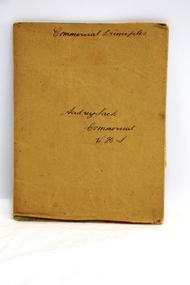
... But in addition the four members of the Sack family were very involved in Church activities, particularly in lay administration and lay preaching in the Baptist Church, and the typewriter gained a lot of after-hours use. The family actively supported overseas Missions in India, SE Asia, and Africa. ...But in addition the four members of the Sack family were very involved in Church activities, particularly in lay administration and lay preaching in the Baptist Church, and the typewriter gained a lot of after-hours use. The family actively supported overseas Missions in India, SE Asia, and Africa. ...This exercise book was owned by Audrey Sack and was donated by David Sack at the same time as a typewriter in its case plus accessories (refer to RN 3087). It has hand written notes of Commercial Principles class lessons from Warrnambool High School, written by Audrey Sack including pages dated 1938 and 1939. Audrey was the daughter of William Sack, owner of the business Sacks Jewellers at 115 Liebig Street, Warrnambool. William commenced trading in the early 1900’s; and the typewriter was used by Audrey in the business from the late 1930’s through to about 1996 when the business was sold. William and his wife June had three children, Eric, Audrey and David. The children were owners/partners of Sack’s Jewellers after William’s passing in 1976. Eric and David were ‘owners of the business’, with Audrey carrying out much of the clerical work. Eric died in about 1984 and David sold the practise in 1996. During the 65 years of business the typewriter was used for all the normal applications of a jeweller’s; preparing invoices, guarantees, taxation records. But in addition the four members of the Sack family were very involved in Church activities, particularly in lay administration and lay preaching in the Baptist Church, and the typewriter gained a lot of after-hours use. The family actively supported overseas Missions in India, SE Asia, and Africa. After the sale of the business in 1996, Audrey took the typewriter home for her community activities (David got a computer). In the 1980’s David volunteered as the Clock Repairer at Flagstaff Hill for the historical instruments. In the early days this took some long hours to get the clocks working, but in recent years he has just been ‘on call’ if needed. He is an alert 85 year old and just in the last 12 months has given up a busy schedule of Sunday Lay Preaching around the district. (2015)The exercise book is associated with a typewriter and text book, which is of local significance, being previously owned and used in a local business established for about 100 years.Book, student's exercise book with brown paper cover over soft cover. White pages have printed blue lines. Notes written in script with nib pen. Correction marks are on some pages. The book has entries from front to just past the centre pages, the turned upside down and written from back to almost centre pages. It belong to Autrey Sack, who was a Commercial Practices student at Warrnambool High School. Handwritten ink pen inscriptions are on the front cover and within the book. Notes are dated as 1938 and 1939."Commercial Principles" "Audrey Sack /. Commercial / W.H.S."flagstaff hill, warrnambool, flagstaff hill maritime museum, maritime museum, shipwreck coast, flagstaff hill maritime village, great ocean road, commercial principles, warrnambool high school, sack’s jewellers warrnambool, william sack, david sack, audrey sack, sack’s jewellers, exercise book, student notes, business education -
 Eltham District Historical Society Inc
Book, Nina Kelabora, Welcome : a gift to you, our new neighbours, from the extended Eltham community / produced by Nina Kelabora (graphic designer) and Lara McKinley (principal photographer), December 2016
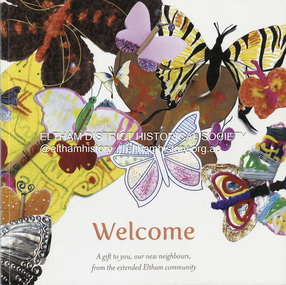
... Administration 1. Welcome to Eltham Infant Plan, Purpose and Scope (Aug. 2016) 2. Circle of Friends; A draft proposal from Welcome to Eltham, 26 August 2016 3. Welcome to Eltham; a resident support...Administration 1. Welcome to Eltham Infant Plan, Purpose and Scope (Aug. 2016) 2. Circle of Friends; A draft proposal from Welcome to Eltham, 26 August 2016 3. Welcome to Eltham; a resident support ...In 2016 the Welcome to Eltham community project started to welcome Syrian refugees into the community and made Welcome Butterflies to say welcome to them. In addition to the physical book, EDHS also holds several hundred digital images pertaining to the development of the Welcome to Eltham campaign, photographs, artworks and graphic designs, which resulted in the publication of this book. EDHS also holds further material from the period 2016 to 2017 associated with the Welcome to Eltham campaign group. Contents: 1. Welcome Book Welcome Book includes selected page extracts and images as published December 2016 Contents: • Greetings to our Country P2 • Offering P8 • Your neighbours P10 • Rotary P39 • Eltham Baptist Church P44 • Eltham Farmers Market stall holders P48 • The Eltham community P54 • Surrounding communities P60 • Our Lady Help of Christians Primary School P64 • Nillumbik Greens P66 • Our Lady Help of Christians Church Eltham P68 • Catholic Care Eltham P70 • St Vincent’s P71 • Montmorency South Primary School P72 • Victoria Police P73 • Catholic Ladies College P74 • Warrandyte P76 • Eltham Toy Library P78 • Eltham-Montmorency Uniting Church P82 • Gingerbread P84 • Scouts P86 • Eltham businesses P89 • Surrounding communities P96 • The Seed P101 2. Administration 1. Welcome to Eltham Infant Plan, Purpose and Scope (Aug. 2016) 2. Circle of Friends; A draft proposal from Welcome to Eltham, 26 August 2016 3. Welcome to Eltham; a resident support group for refugees settling in Eltham (Sep. 2016) 4. Welcome to Eltham; Purpose and Scope (Sep. 2016) 5. Welcome to Eltham Plan (Sep. 2016); 10 pages typed of tasks broken into four categories, 10 pages 6. Welcome to Eltham Team/Volunteer organisation structure, volunteers’ skills assessment and role assignments, strategies, 11 pages 7. Briefing Document: Refugees being welcomed in Eltham, 2 Oct. 2016; 5 pages 8. Public Engagement Plan, 2 Oct. 2016; 2 pages 9. Welcome to Eltham 2016 Review, Values and Structure, 2017 10. Welcome to Eltham Incorporated Financial Report July 2016 – June 2017; 3 pages 11. Letter: Nina Kelabora and Welcome to Eltham Team to Bolton Street Fruit Market re offer to provide fresh fruit, 30 Jun. 2017 12. Welcome to Eltham Incorporated Annual Report 2016–2017; Oct. 2017; 4 pages 13. Certificate: Jagajaga Community Australia Day Award 2018 to Nina Kelabora, signed Jenny Macklin MP, Federal Member for Jagajaga 14. Certificate: Jagajaga Community Australia Day Award 2018 to Welcome to Eltham, signed Jenny Macklin MP, Federal Member for Jagajaga 15. Letter: Simon Le Plastrier, Principal, Eltham College to Nina Kelabora, 20 April 2018 offering congratulations for the work achieved by Welcome to Eltham group 16. Photo: River pebble covered in spray paint of multiple colours. The rock was used to hold down templates for painting butterflies on the footpaths near Andrew park as a counter to protesters assembling for the ‘Battle for Eltham’ demonstration on 5 November 2016 17. Photo: Welcome to Eltham team member, Gillian Essex 18. Photo: Welcome to Eltham team member, Kirsten Bate 19. Photo: Welcome to Eltham team member, Lara McKinley 20. Photo: Welcome to Eltham team member, Nina Kelabora 21. Photo: Welcome to Eltham team member, Sarah Hooten 22. Incorporation • AGM-minutes-2017 • Certificate of Incorporation • Mission and Values • Ordinary Business of the AGM 2017 • Welcome to Eltham Rules 23. Advocacy • Eltham Butterfly Effect Corflute panel design 5 November 2016 Rally • MemeFest PowerPoint presentation 23 November 2016 • Oxfam PowerPoint presentation 16 June 2017 • Eltham Rotary PowerPoint presentation 1 June 2017 • Welcome to Eltham Gift Card artwork 3. Artwork • Logo: Welcome to Eltham • 12 artworks by children of the Eltham Child Care Co-Operative (ECCC) o Me at the Immigration Museum by Ethan B. o Immigration Museum by Edie o Me with my family and lots of hearts by Charlotte o My suitcase like the refugees we learnt about with Bec by Jarvis o Me at the football with my friends by Harley o My suitcase if I had to leave the country by Ellen o Me at the park near the library by Chloe o Books at the library by Addison o Ethan’s grandfather who died in the war and this is him in his grave by Ethan o A nursery by Annabel o The age care home we visit by Ari o This is my mum the Ranger by Mia • Butterfly Effect, Ona Henderson 2016, inscribed “Dedicated to Nina, in appreciation of your butterfly effect for ‘Welcome to Eltham’; reproduced p1 • Ona and Sid gifting her artwork for use by the campaign; reproduced p1 • Duat and Iuk, Mandy Nicholson, Wurundjeri woman; reproduced p3 • These hands welcome you to Australia, Mungo, Warrandyte resident; reproduced p9 • The Library by Rose; reproduced p15 • Welcome to Eltham from Maia; reproduced p19 • Billy, Warrandyte resident; reproduced p20 • Through my window, Janet Boddy; reproduced p23 • Eryn and Lachie, Eltham residents; reproduced p25 • Eva, Eltham resident; reproduced p29 • This is the community hall across from my house by Cinta; reproduced p30 • Welcome, Brenda, Eltham resident; reproduced p34 • Flying over Kerry Crescent, Kerry, Eltham resident; reproduced p38 • A dragon called 'fat' from Joe, 6; reproduced p42 • A rainbow-heart-welcome from Trixie, 8; reproduced p42 • A lovely message from Sarah; reproduced p53 • Monique; reproduced p56 • Tom; reproduced p56 • Josh; reproduced p56 • Chloe; reproduced p56 • Jack; reproduced p57 • Mia; reproduced p57 • Ann Curry, Montmorency resident; reproduced p60 • From Mia: "Keep your head up high and be confident. I'm sure that you will soon find that Eltham is a very nice place and I hope you can have a happy life."; reproduced p77 • Amy; reproduced p79 • Ben; reproduced p80 • Welcome, Kayla, Warrandyte resident; reproduced p94 • Lucas; reproduced p98 • Ale; reproduced p98 • Grace; reproduced p99 • Hugo; reproduced p99 4. Australian-Syrian Charity • ASC – Certificate of Appreciation; Awarded from Australian-Syrian Charity presented to Welcome to Eltham Group by Rev. Fr. Samir Haddad, ASC president, 30 Sep. 2016 including two images of Father Samir and WTE organiser, Nina Kelabora 5. Butterflies • 148 images of handcrafted butterflies and artwork of butterflies edited for reproduction throughout the Welcome to Eltham book and for use on other placards, gift cards and promotional materials including the original source photographs (232 total) • 128 other images of butterflies submitted or photographed installed at various locations around Eltham • 11 images of metal butterfly artworks created by Linda MacAulay and Tim Read showing the works during creation at Bend of Isles and at initial install at the roundabout on Main Road at Luck Street then at the final install to greet the new arrivals and residents alike at St Vincents Aged Care Services (since demolished). 6. Eltham and Surrounds Residents and Local Businesses • 195 photos (157 published in book) submitted by local residents and businesses with people holding Welcome to Eltham placards including: Eltham Farmer’s Market, Eltham Baptist Church, CatholicCare Eltham, Nillumbik Greens, Hurstbridge Wattle Festival, Our Lady Help of Christians Eltham, Our Lady Help of Christians Primary School, Montmorency South Primary School, Warrandyte Primary School, Bronnie Hattam, Mayor, Nillumbik Shire Council, Vicki Ward, MP for Eltham, Jenny Macklin, Member for Jagajaga, Bend of Isles, Eltham Toy Library, Eltham Library, Eltham-Montmorency Uniting Church, Catholic Ladies College (CLC), First Eltham North Scouts, Warrandyte Primary School, Ona Henderson and many individuals and businesses. 7. Events • Alistair Knox Park, 12 August 2016 • Syrian Community Dinner, 30 September 2016 • Pop up Picnic, Eltham North Adventure Playground, 1 October 2016 • Alistair Knox Park, 7 October 2016 • At Our Lady of Help of Christians, 7 October 2016 • Andrew Park Butterfly Effect v Battle for Eltham, 5 November 2016 • City Rally, 5 November 2016 • Eltham Library Children’s Garden, 12 November 2016 • Eltham Festival, 13 November 2016 • Welcome Book Fundraiser, St Margaret’s Church, 11 December 2016 • Nillumbik International Women’s Day Dinner 9 March 2017 • Bush Dance, 17 June 2017 • Eltham Police Morning Tea, 29 July 2017 8. House warmers • Approximately 40 images of gift care items donated (food, drink, blankets, etc) intended as housewarming hampers 9. Media Media Releases • Eltham elders take to social media to welcome refuges, video goes viral; Wednesday 28 October 2016 • Eltham locals use their bodies to say WELCOME to refugees; 1 October 2016 • Community group welcomes Minister’s decision so refugees can call Eltham home; 5 October 2016 • Locals answer far-right “Battle for Eltham” with butterflies: thousand of them; 5 November 2016 Newspaper articles • Group fosters goodwill; organisation works to assist refugees; Brittany Shanahan; Diamond Valley Leader, Wednesday, August 17, 2016, p3 • Refugees are welcome (Gillian); Care is for the elderly alone (Fred); Plenty of positives in plan (Kirstin); Open your hearts and doors (Alison); Flood of families a worry (Cath), Conversations, Diamond Valley Leader, Wednesday, August 17, 2016, p11 • Support refugee housing; Diamond Valley Leader, Pamela Nash via Facebook, Janet R. Body, Eltham, Glenise Michaelson, Montmorency; Letters (online), 5 October 2016 • Refugees find a haven, and, Groups to fundraise for arrivals; Wednesday, October 12, 2016, p5 • Site for resettlement of refugees on a flood plane (Jacquie Bellchambers); Accommodating young families from a foreign culture in an established western culture retirement home will only lead to both parties feeling …. (Margit Alm); Great news for our community … (Nean Tatnal); Conversations, Diamond Valley Leader, Wednesday, October 12, 2016, p19 • Refugee scrap looms; daughter of Eltham aged-care resident upset as extreme group hijacks debate; Brittany Shanahan. Diamond Valley Leader, Wednesday, October 26, 2016, p1 • Many ready to welcome refugees into community (Megan Anne) and others; Conversations, Diamond Valley Leader, Wednesday, October 26, 2016, p20 • On a wing and a prayer; Chris Vedelago, Tammy Mills and Mark Hawthorne; Sunday Age, November 6, 2016, p3. – It was billed as the “Battle for Eltham”, but in te end the butterflies carried the day. • Rally hits trade; Diamond Valley Leader, Wednesday, November 9, 2016, p1 • Protests bad for business; Brittany Shanahan; Diamond Valley Leader, Wednesday, November 9, 2016, p8 • Police earn praise for keeping protest calm; Re: Battle for Eltham rally (Maree Quinlan) and others; Conversations, Diamond Valley Leader, Wednesday, November 9, 2016, p14 • Butterflies to counter anti-Muslim protest; Bianca Hall and Marissa Calligeros, The Age, November 5, 2016 • Rally created challenges but it’s time to move on; Re: Battle for Eltham rally (Local Area Commander Acting Inspector Danielle Leemon) and others; Conversations, Diamond Valley Leader, Wednesday, November 16, 2016, p19 • Praise for warm welcome (Linda Jajawi) and others also photo “Officers from Eltham police station welcomed newly arrived refugees to the community”; Conversations, Diamond Valley Leader, Wednesday, August 9, 2017, p15 • Refugees welcomed; Diamond Valley Leader, n.d. 2017, p12 • Refugee plan riles; Retirement centre residents voice concerns; Brittany Shanahan, Diamond Valley Leader; n.d. 2016 Facebook Responses • Responses top frequent Facebook comments regarding the housing of refugees in aged care at Eltham 10. Placards and Promotional Flyers • Selection of placard images and Welcome to Eltham Gift Card artwork 11. St Vincents • Two hand drawn sketches showing plan views of proposed front and rear units at St Vincents to be used by refugees 12. Videos • Feisties; several local seniors read online comments made by objectors and offer their own opinions; 00.02.28 • Tour of unit at St Vincents, 31 July 2016; 00.00.44 • Drone view of people creating Welcome sign at Eltham North Adventure Playground, 14 September 2016; 00.00.14 • Launching of the butterflies (campaign); Nina Kelabora releases the first butterfly into the wild; 00.00.24 • Gillian Essex, Welcome to Eltham, discussing counter strategy to protest demonstration (Battle for Eltham) scheduled for later in the day; 5 November 2016; 00.01.45 • Glenise Michaelson, Eltham local for 69 years discussing counter strategy to protest demonstration (Battle for Eltham) scheduled for later in the day; 5 November 2016; 00.01.30 • The Butterfly Effect, counter strategy to protesters 5 November 2016 Battle for Eltham rally; 00.02.24 with ten associated photos of the seniors involved; 31 October 2016 • Butterfly art ninjas 1 (15 secs), 2 (26 secs) and 3 (14 secs), showing the butterflies remaining in existence on the paths around Andrew Park, 16 November 2016 • Butterfly capture and release with Nina Kelabora– butterflies around Andrew Park relocated to the Children’s garden at Eltham Library, 17 November 2016; 00.00.28eltham (vic.), welcome to eltham (vic.), syrian refugees, refugees, social life and customs, butterflies, welcome butterflies, nina kelabora collection -
 Kiewa Valley Historical Society
Alex McCullough Collection - Notes and Photos on History of Mt Beauty
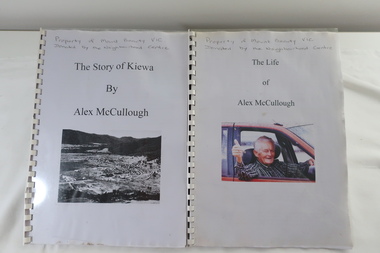
... Administration of Mt Beauty Township' - 2nd July 1957. SECV buildings in Mt Beauty shared with community groups notes re - arrangement between groups. G) Barrie Wilcox's Memories living in Marum's paddock from c1940s onwards. Written in June 1999 H) Mt Beauty website June 1998 - a lot of history I) Papers - Mt Beauty High School band developement J) The 1950s Development of the Birth of Community support organisations K) Community Centre Mt Beauty opening 3rd August 1951 L) Mt Beauty Fire Brigade History M) Folder Personal papers re Alex McCullough ...Administration of Mt Beauty Township' - 2nd July 1957. SECV buildings in Mt Beauty shared with community groups notes re - arrangement between groups. G) Barrie Wilcox's Memories living in Marum's paddock from c1940s onwards. Written in June 1999 H) Mt Beauty website June 1998 - a lot of history I) Papers - Mt Beauty High School band developement J) The 1950s Development of the Birth of Community support organisations K) Community Centre Mt Beauty opening 3rd August 1951 L) Mt Beauty Fire Brigade History M) Folder Personal papers re Alex McCullough Alex McCullough Collection - Notes and Photos on History of Mt Beauty ...Alex McCullough was a resident of Mt Beauty for many years and wrote a book on the History of Mt Beauty. Mt Beauty was constructed by the State Electricity Commission of Victoria to house employees working on the Kiewa Hydro Electric Scheme. Alex was involved with many organisations in Mt Beauty and interested in history. He took many photos of events and new developments in town. He also collected individuals memoirs on life in the town.Mt Beauty's history is unique as it was built as a construction town in the late 1940s. The information in Alex's Collection records the town's development perhaps in more detail than in his book "The History of Mt Beauty". His folder includes his education, his work with the SECV (foreman working on Clover Dam), his war service, his community work (Mt Beauty & District Progress Association & Mt Beauty Neighbourhood Centre) and awards, work as Shire Councillor and Mayor, sporting (tennis & golf) interests. Alexander John McCullough 1916 - 2011's obituary is online ref. legacy.comA) Booklet - The Life of Alex McCullough B) Booklet - The Story of Kiewa by Alex McCullough C) Coloured photos 15cm x 10 cm of the renovation of the Mt Beauty Neighbourhood Centre mid 2001. Four photos are labelled by Alex McCullough on the back. Also, photos of various sizes both colored and black and white depicting sites and people in Mt Beauty. Not labelled.Also, six packets of negatives of older photos incl. Community Hall, Fire Brigade, School, School ski group, Back to Kiewa, Alpine Study, D) Alex McCulloughs 1951 Diary - Clover Dam E) Random Items from History Profile Kiewa by Alex McCullough F) Papers - 'Administration of Mt Beauty Township' - 2nd July 1957. SECV buildings in Mt Beauty shared with community groups notes re - arrangement between groups. G) Barrie Wilcox's Memories living in Marum's paddock from c1940s onwards. Written in June 1999 H) Mt Beauty website June 1998 - a lot of history I) Papers - Mt Beauty High School band developement J) The 1950s Development of the Birth of Community support organisations K) Community Centre Mt Beauty opening 3rd August 1951 L) Mt Beauty Fire Brigade History M) Folder Personal papers re Alex McCullough alex mccullough, mt beauty history, community work -
 Bendigo Military Museum
Photograph - Administration Efficiency Award Presentation - Army Survey Regiment, Fortuna Villa, Bendigo, 1991
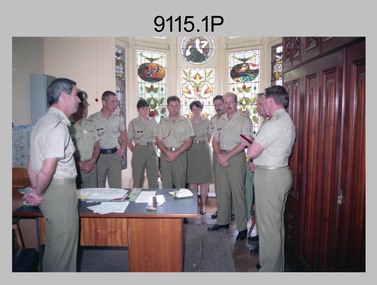
... This set of four photographs were taken at an administration award presentation held at the Army Survey Regiment, Fortuna, Bendigo in November 1991. The Commander of the 3rd Military District BRIG P. Davies AM ADC presented the award for Efficiency in Support...This set of four photographs were taken at an administration award presentation held at the Army Survey Regiment, Fortuna, Bendigo in November 1991. The Commander of the 3rd Military District BRIG P. Davies AM ADC presented the award for Efficiency in Support ...This set of four photographs were taken at an administration award presentation held at the Army Survey Regiment, Fortuna, Bendigo in November 1991. The Commander of the 3rd Military District BRIG P. Davies AM ADC presented the award for Efficiency in Support & Administrative Procedures to the Army Survey Regiment’s Orderly Room staff. CO LTCOL Rene van den Tol received the award on their behalf.This set of four photographs was taken at the presentation of an administration award to Army Survey Regiment staff at Fortuna, Bendigo in November 1991. The photographs are on 35mm negative film with photos .1P to .3P scanned at 1200 dpi and photo .4P scanned at 2400 dpi. They are part of the Army Survey Regiment’s Collection. .1) - Photo, colour, 1991. L to R: CO LTCOL Rene van den Tol, WO1 Kevin Slater, unidentified, PTE L.M. Power, unidentified, CPL Di (Thomas) Soutar, CAPT Colin Cuskelly, unidentified (x2), Commander 3rd Military District BRIG P. Davies AM ADC. .2) - Photo, colour, 1991. L to R: CO LTCOL Rene van den Tol, Commander 3rd Military District BRIG P. Davies AM ADC. In background L to R: WO1 Kevin Slater, PTE L.M. Power, unidentified, CAPT Colin Cuskelly, unidentified. .3) - Photo, colour, 1991. L to R: CO LTCOL Rene van den Tol, Commander 3rd Military District BRIG P. Davies AM ADC. In background L to R: WO1 Kevin Slater, PTE L.M. Power, unidentified, CPL Di (Thomas) Soutar, unidentified. .4) - Photo, colour, 1991. L to R: PTE L.M. Power, CPL Di (Thomas) Soutar.No personnel are identified. ‘Award for Efficiency in Support & Admin procedures by COMM 3MD to ASR Nov ‘91’ is annotated on the plastic negative sleeve.royal australian survey corps, rasvy, army survey regiment, army svy regt, fortuna -
 Bendigo Historical Society Inc.
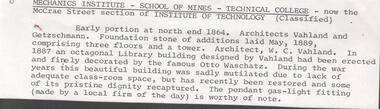
Document - National Trust Collection: Mechanics Institute - School of Mines - Technical College, & Royal Princess Hotel, 1977-1983
... .- local NTofVic advising "it would appear that the Urban Conservation Committee have unearthed possible options for the building so that it may be retained for its streetscape value" 3084.77va & vb 28/09/1981 from local NTofVic the Committee resolved to refer any further discussions on the Royal Princess Hoyel to the Building Committee in Central Administration.... as a result of conflicting engineering reports 3084.77wa-wd 30/10/1981 classification of the Bendigo Technical College 3084.77xa-ac 3/03/1982 from Loddon Regional TAFE Board requesting a copy of NTofVic correspondence concerning the building at the Bendigo Technology College and requesting support for the redevelopment plans for the BTC 3084.77ya-yc 14/10/1982 NTofVic urging the Government Buildings Advisory to "take action as quickly as possible"....- local NTofVic advising "it would appear that the Urban Conservation Committee have unearthed possible options for the building so that it may be retained for its streetscape value" 3084.77va & vb 28/09/1981 from local NTofVic the Committee resolved to refer any further discussions on the Royal Princess Hoyel to the Building Committee in Central Administration.... as a result of conflicting engineering reports 3084.77wa-wd 30/10/1981 classification of the Bendigo Technical College 3084.77xa-ac 3/03/1982 from Loddon Regional TAFE Board requesting a copy of NTofVic correspondence concerning the building at the Bendigo Technology College and requesting support for the redevelopment plans for the BTC 3084.77ya-yc 14/10/1982 NTofVic urging the Government Buildings Advisory to "take action as quickly as possible" Document National Trust Collection: Mechanics Institute - School of Mines - Technical College, & Royal Princess Hotel ...National Trust Collection: Mechanics Institute - School of Mines - Technical College (the McCrae Street section of the Institute) A variety of correspondence from December 1977 to March 1983, between The National Trust and the Principal of the Bendigo Technical College, regarding the facade of the building, the Assay Laboratory, the Library. Various letterheaded correspondence, generally typed letters and information three site sketch plans of the buildings on the corner of Mundy and Hargreaves Streets (circa 1980). "Early portions at the northern end in 1984. Architects Vahland and Getzschmann. Foundation stone of additions laid in May 1889 comprising three floors and a tower. Architect W.C. Vahland. In 1887 an octagonal Library building designed by Vahland had been erected and finely decorated by the famous Otto Waschatz. During the war years this beautiful building was sadly mutilated due to lack of adequate classroom space but has recently been restored and some of its pristine dignity recaptured. The pendant gas-light fitting (made by a local firm of the day) is worthy of note." 3084.77a UNDATED file note Mechanics Institute - School of Mines - Technical College - now the McCrae Street section of the Institute of Technology 3084.77b&c 20/12/1977 -Bendigo Institute of Technolgy - data sheet and photographs 3084.77d citation and history of buildings 3084.77e 2/08/1978 follow up request for data information 3084.77f handwritten request from David Collins for information of the de-licensed Princess Hotel on the corner of Mundt & Hargreaves Streets 3084.77g 1/02/1980 National Trust memo requesting a site plan to show the location of the Classified Library Building in relation to the McCrae Street buildings 3084.77h 10/06/1980 from NTofVic requesting information on the various alterations and improvements proposed to the Bendigo Institute of Technology 3084.77i 29/09/1980 from NTofVic Bendigo Branch referring to proposed alterations "the matter has been referred to the Government Buildings Advisory Committee, as the buildings are now included in their register" 3084.77j 10/03/1983 from BIT Principal "for advice in designing a suitable recognition of the Royal Princess Hotel on site .....of the building and its history" 3084.77ka-d 10/08/1971 correspondence on the future of the Town Hall 3084.77l-o 12/08/1980 fwd to NTofVic re the existing building on the corner of Mundy & Hargreaves Streets, Bendigo currently occupied by W.A. Pulfer Motors Pty Ltd 3084.77p-r 12/08/1980 three sketches (site building details and street elevations) of the existing buildings on the corner of Mundy & Hargreaves Streets, Bendigo 3084.77s16/08/1980 Note advising the NTofVic of the T.A.F.E. proposal for redevelopment of the site north of Mundy Street, between McCrae and Hargreaves Sts. 3084.77t 19/08/1980 memo re: the T.A.F.E. proposal for redevelopment of the site north of Mundy Street, between McCrae and Hargreaves Sts. and existing reports 3084.77 u 11/09/1980 re: the T.A.F.E. proposal for redevelopment of the site north of Mundy Street, between McCrae and Hargreaves Sts.- local NTofVic advising "it would appear that the Urban Conservation Committee have unearthed possible options for the building so that it may be retained for its streetscape value" 3084.77va & vb 28/09/1981 from local NTofVic the Committee resolved to refer any further discussions on the Royal Princess Hoyel to the Building Committee in Central Administration.... as a result of conflicting engineering reports 3084.77wa-wd 30/10/1981 classification of the Bendigo Technical College 3084.77xa-ac 3/03/1982 from Loddon Regional TAFE Board requesting a copy of NTofVic correspondence concerning the building at the Bendigo Technology College and requesting support for the redevelopment plans for the BTC 3084.77ya-yc 14/10/1982 NTofVic urging the Government Buildings Advisory to "take action as quickly as possible"bendigo institue of technology, royal princess hotel -
 Monbulk RSL Sub Branch
Book, Air Power Development Centre, Operation Pelican : The RAAF in the Berlin Airlift, 1948-1949, 2008
... administration. Thus began the first large-scale humanitarian airlift in history. When Britain turned for support to its Dominion partners, the transport element of the Royal Australian Air Force had recently ceased flying a regular courier service for Australian occupation forces involved in garrisoning another defeated Axis power of World War II, Japan - this role having been handed over to a commercial airline. ...In 1948 Britain, France and the United States of America found themselves opposed to their former wartime ally, the Soviet Union, over matters regarding control of the capital of the defeated Nazi German regime. When the Soviets imposed a blockade of the city, the Allies had no option but to begin flying in the necessities of life for the two million inhabitants of the zones under their administration. Thus began the first large-scale humanitarian airlift in history. When Britain turned for support to its Dominion partners, the transport element of the Royal Australian Air Force had recently ceased flying a regular courier service for Australian occupation forces involved in garrisoning another defeated Axis power of World War II, Japan - this role having been handed over to a commercial airline. By September 1948 an unnumbered Australian squadron had joined other RAAF transport crews already engaged as part of the massive allied undertaking. To the Americans the fifteen-month-long operation was codenamed Vittles, while the British called it Plainfare. But to the Royal Australian Air Force personnel involved, the Berlin Airlift was known as Pelican. Here the story is told of the events that made the airlift necessary, what the undertaking entailed and the part that Australians played in it, as well as the outcome and achievements of Operation Pelican.Ill, maps, p.82.non-fictionIn 1948 Britain, France and the United States of America found themselves opposed to their former wartime ally, the Soviet Union, over matters regarding control of the capital of the defeated Nazi German regime. When the Soviets imposed a blockade of the city, the Allies had no option but to begin flying in the necessities of life for the two million inhabitants of the zones under their administration. Thus began the first large-scale humanitarian airlift in history. When Britain turned for support to its Dominion partners, the transport element of the Royal Australian Air Force had recently ceased flying a regular courier service for Australian occupation forces involved in garrisoning another defeated Axis power of World War II, Japan - this role having been handed over to a commercial airline. By September 1948 an unnumbered Australian squadron had joined other RAAF transport crews already engaged as part of the massive allied undertaking. To the Americans the fifteen-month-long operation was codenamed Vittles, while the British called it Plainfare. But to the Royal Australian Air Force personnel involved, the Berlin Airlift was known as Pelican. Here the story is told of the events that made the airlift necessary, what the undertaking entailed and the part that Australians played in it, as well as the outcome and achievements of Operation Pelican.cold war - history, berlin airlift 1948-1949 -
 Deaf Children Australia
Book, Annual Meetings from 1955 to 1963, Contents 1955-1963
... These are the supporting documents that go with the Annual General Meeting report and provide further information on the Administration of the VSDC Deaf Children Australia Victorian Deaf and Dumb Institution Annual General Meeting Minutes of meeting Front Cover: "ANNUAL MEETING/from/1955 to 1963" in handwriting, in biro The brown foolscap size book is made with cardboard covers and masking tape spine and contains the documents tabled at the Annual General Meetings from 1955-1963. ...The Annual General Meetings are the official report of the VSDC to the public. These are the supporting documents that go with the Annual General Meeting report and provide further information on the Administration of the VSDC The brown foolscap size book is made with cardboard covers and masking tape spine and contains the documents tabled at the Annual General Meetings from 1955-1963. Includes the Minutes of the 100th AGM. Documents include: nomination letters, speakers notes, agendas, etc. Corrections are handwritten. Front Cover: "ANNUAL MEETING/from/1955 to 1963" in handwriting, in biro deaf children australia, victorian deaf and dumb institution, annual general meeting, minutes of meeting -
 Deaf Children Australia
Book, Annual Meetings from 1964 to 1970, Contents from 1964-1970
... These are the supporting documents that go with the Annual General Meeting report and provide further information on the Administration of the VSDC Deaf Children Australia Victorian Deaf and Dumb Institution Annual General Meeting Minutes of meeting Front Cover: "ANNUAL MEETING/from/1964 to 1970" in handwriting, in biro The brown foolscap size book is made with cardboard covers and masking tape spine and contains the documents tabled at the Annual General Meetings from 1964-1970. ...The Annual General Meetings are the official report of the VSDC to the public. These are the supporting documents that go with the Annual General Meeting report and provide further information on the Administration of the VSDC The brown foolscap size book is made with cardboard covers and masking tape spine and contains the documents tabled at the Annual General Meetings from 1964-1970. Documents include: nomination letters, speakers notes, agendas, etc. Corrections are handwritten. Front Cover: "ANNUAL MEETING/from/1964 to 1970" in handwriting, in biro deaf children australia, victorian deaf and dumb institution, annual general meeting, minutes of meeting -
 NMIT (Northern Melbourne Institute of TAFE)
Minutes - CTS, Minutes of Parents' Association. Collingwood Technical School. 1964-1974, 1964-1974
... The Parents' Association supports the administration of the school and this is recorded in the minutes. ...Minutes of the Collingwood Technical School Parents' Association. Deals with areas of concern to parents of boys at the school.The Parents' Association supports the administration of the school and this is recorded in the minutes.Green hard cover minute book with leather spine and corners. Includes some loose papers.All entries are handwritten.collingwood technical school, cts, parents association, minutes, nmit, -
 Bendigo Historical Society Inc.
Letter - MERLE HALL COLLECTION: ROSALIND PARK CREATIVE VILLAGE BENDIGO PROJECT LETTERS, 1994
... The agreed fee was $5000 and $60 per visit to Bendigo with living away to be provided by Arts Bendigo, plus transfer of the diamond saw purchased by AB 28 August 1996 Memorial to Bendigo’s Mining Heritage and Traditions financial and other support as at August 128th Arts Bendigo Financial contribution: $7000 Local Busine Sponsors: $2800 City of Greater Bendigo Matching Above: $2800 City of Greater Bendigo Site works: Equiv, $12000 Local Businesses and institutions supplying goods and services to total value of: Equiv: $7600 Expenditure: Purchase of equipment, including diamond saw: $2000 Purchase of materials: $800 Artists design fees: $3000 Artists on site work, travel and accommodation: $12000 insurance, administration etc.: $700 31 May 1996 List of possible donors' checklist Undated Budget Sheet 21 September 1995 From: The Victorian Arts Council To: City of Greater Bendigo Content: Invoice for $5000 10 December 1995 From: Maery Gabriel artist To: Arts Bendigo Content: Invoice $1575 for design of Rosalind Park Lookout. 45 hours @ $35/hour 1 October 1996 Historic mining Mosaic Pavement, Rosalind Park Poppet Head Financial Statement as a October 1st, 1996 28 October 1996 From: Maery Gabriel To: Ann Buzza (representing Arts Bendigo) Report on project of Rosalind Park Mosaic as at October 1996. ...The agreed fee was $5000 and $60 per visit to Bendigo with living away to be provided by Arts Bendigo, plus transfer of the diamond saw purchased by AB 28 August 1996 Memorial to Bendigo’s Mining Heritage and Traditions financial and other support as at August 128th Arts Bendigo Financial contribution: $7000 Local Busine Sponsors: $2800 City of Greater Bendigo Matching Above: $2800 City of Greater Bendigo Site works: Equiv, $12000 Local Businesses and institutions supplying goods and services to total value of: Equiv: $7600 Expenditure: Purchase of equipment, including diamond saw: $2000 Purchase of materials: $800 Artists design fees: $3000 Artists on site work, travel and accommodation: $12000 insurance, administration etc.: $700 31 May 1996 List of possible donors' checklist Undated Budget Sheet 21 September 1995 From: The Victorian Arts Council To: City of Greater Bendigo Content: Invoice for $5000 10 December 1995 From: Maery Gabriel artist To: Arts Bendigo Content: Invoice $1575 for design of Rosalind Park Lookout. 45 hours @ $35/hour 1 October 1996 Historic mining Mosaic Pavement, Rosalind Park Poppet Head Financial Statement as a October 1st, 1996 28 October 1996 From: Maery Gabriel To: Ann Buzza (representing Arts Bendigo) Report on project of Rosalind Park Mosaic as at October 1996. ...Merle Hall Collection: Rosalind Park Creative Village Bendigo Project Letters 31 March 1994 To: Victorian Arts Council Members From Grant Finck Project Coordinator Content: Introduces himself as the coordinator for 12 months; to members looking for expression of interest, includes Information Sheet 1994 on what the Creative Village is. 27 October 1995 To: Mrs. Mearle Hall From: City of Greater Bendigo, Bernard Smith (Director Environmental Services) Content: Granting access to the Victoria Hill site for small quantities of geological material. 10 January 1996 To: Mrs. Mearle Hall From: City of Greater Bendigo, Bernard Smith (Director Environmental Services) Content: Endorsement of the project by the Council and confirmation that the Council will provide preliminary site work to allow the project to be enabled. Also advised the Arts Bendigo Mosaic Project makes contact with the Salvation Army (New Work Opportunity Project) 27 February 1996 To: Mrs. Mearle Hall From: Ken Beasley Manager Project Development The Smith Read Training Group. Content: LEAP Project Proposal - Mining Heritage Mosaic outlining the benefits of using LEAP Trainees to undertake the project. Proposed Scope of work outlining responsibilities of each participant. Bendigo Mining NL Environmental Trust Fund (Perseverance Exploration and Department of Energy and Minerals Victoria representatives) 27 June 1996 To: Mrs. Mearle Hall From: City of Greater Bendigo, Bernard Smith (Director Environmental Services) Content: Advising that the Council will match dollar for dollar funding for the engagement of an artist to supervise the construction of the Mosaic in Upper Rosalind Park up to $3,500. 22 July 1996 To: Anne Buzza From Geof Brown Camp Hill Primary School Content: Thanks for using and managing the school students to help create tiles. 9 October 1996 To: Mrs. Mearle Hall From: City of Greater Bendigo, Bernard Smith (Director Environmental Services) Content: Enclosed cheque for matching grant of $3500 15 October 1996 To: Mrs. Mearle Hall From: City of Greater Bendigo, Bernard Smith (Director Environmental Services) Content: Agreement to relocate the project facilities to the car park and to maintain a close liaison between the Council and Arts Bendigo. 13 November 1996 To: Mrs. Mearle Hall From: The Sidney Myer Fund Helen Morris Research Officer Content: Remittance advice for $1000 22 April 1997 To: Mrs. Mearle Hall From: John Little Administrator Victorian Arts Council Content: Remittance advice for $500 towards the project and enclosing 12 VAC Annual reports. 20 October 1998 To: Mrs. Mearle Hall From: City of Greater Bendigo, Andrew Hall (Director Community Development) Content: Advising that the Council will make a grant of $1090 for the purpose of printing of Brochures for Bendigo Heritage Mosaic. A service agreement to be signed before the issue of the grant, 21 March 2001 To: Mrs. Mearle Hall From: City of Greater Bendigo, Justin Hanney (Director Community Services) Content: A reference from Council supporting the project application to Vic Health for the development of a series of small mosaic pieces along the linear pathway asjacent to the Bendigo Creek. 12 November 1996 To: Mrs. Mearle Hall From: Arts Bendigo Inc. Content: Cheque for $2000 being first payment as under contract two for mosaic project. 4 December 1996 To: Mrs. Mearle Hall From: Arts Bendigo Inc. Content: Cheque for $2000 being second payment as under contract two for mosaic project. 27 July 1997 To: Maery Gabriel Mosaic Artist From: Arts Bendigo Inc. Content: Cheque for $2000 being final payment as under contract two for mosaic project. 12 June 1997 - Two copies To: Maery Gabriel Mosaic Artist From: Arts Bendigo Inc. Content: Agreement between Maery Gabriel (The artist) and Arts Bendigo Inc. to complete the final two sections of the Bendigo Heritage Mosaic at the base of the Rosalin Park Poppet Head, Bendigo with a design of approximately two square meters within each section. The work to be completed by the endo of July 1997, unless severe weather conditions make the laying impossible. Agreement for two lots of $2000. 14 June 1996 From: Maery Gabriel Mosaic Artist To: Arts Bendigo Inc. Content: receipt for 50% payment for two weeks and $60 Travelling expenses. 21 May 1996 Agreement between Arts Bendigo of P.O Box 563, Bendigo in the State of Victoria (hereinafter referred to as the ‘AB’ of the first part AND Meary Hall of Morningswood, Petersons Road, Ellinbank, 3821 in the State of Victoria (hereinafter referred to as ‘the artist’) of the second part. ENGAGEMENT: (a) AB engages the Artist to provide her services as Mosaic Artist for the design and creation of a Mosaic pavement surround to the poppet head lookout in Rosalind Park, Bendigo and matters incidental thereto at such schools, halls and any other places as required from time to time by AB and the Artist accepts the engagement upon the term and conditions hereinafter appearing. (b) Services to be provided by the artist include community consultation and design work in association with AB Co-Ordinator and Arts Bendigo, a minimum of six weeks of the artist’s time within the six months of the project. Completion of section one of the whole design with further work on the other sections to depend on available funding. The agreed fee was $5400 and $60 per visit to Bendigo with living away to be provided by Arts Bendigo 1 November 1996 Agreement between Arts Bendigo of P.O Box 563, Bendigo in the State of Victoria (hereinafter referred to as the ‘AB’ of the first part AND Meary Hall of Morningswood, Petersons Road, Ellinbank, 3821 in the State of Victoria (hereinafter referred to as ‘the artist’) of the second part. ENGAGEMENT: (a) AB engages the Artist to provide her services as Mosaic Artist for the design and creation of a Mosaic pavement surround to the poppet head lookout in Rosalind Park, Bendigo and matters incidental thereto at such schools, halls and any other places as required from time to time by AB and the Artist accepts the engagement upon the term and conditions hereinafter appearing. (b) Services to be provided by the artist include community consultation and design work in association with AB Co-Ordinator and Arts Bendigo, a minimum of six weeks of the artist’s time within the six months of the project. Completion of section one of the whole design with further work on the other sections to depend on available funding. The agreed fee was $5000 and $60 per visit to Bendigo with living away to be provided by Arts Bendigo, plus transfer of the diamond saw purchased by AB 28 August 1996 Memorial to Bendigo’s Mining Heritage and Traditions financial and other support as at August 128th Arts Bendigo Financial contribution: $7000 Local Busine Sponsors: $2800 City of Greater Bendigo Matching Above: $2800 City of Greater Bendigo Site works: Equiv, $12000 Local Businesses and institutions supplying goods and services to total value of: Equiv: $7600 Expenditure: Purchase of equipment, including diamond saw: $2000 Purchase of materials: $800 Artists design fees: $3000 Artists on site work, travel and accommodation: $12000 insurance, administration etc.: $700 31 May 1996 List of possible donors' checklist Undated Budget Sheet 21 September 1995 From: The Victorian Arts Council To: City of Greater Bendigo Content: Invoice for $5000 10 December 1995 From: Maery Gabriel artist To: Arts Bendigo Content: Invoice $1575 for design of Rosalind Park Lookout. 45 hours @ $35/hour 1 October 1996 Historic mining Mosaic Pavement, Rosalind Park Poppet Head Financial Statement as a October 1st, 1996 28 October 1996 From: Maery Gabriel To: Ann Buzza (representing Arts Bendigo) Report on project of Rosalind Park Mosaic as at October 1996. The report lists the difficulties faced with the weather, unsuitable facilities on site and problems with the LEAP team labour.victorian arts council, city of greater bendigo -
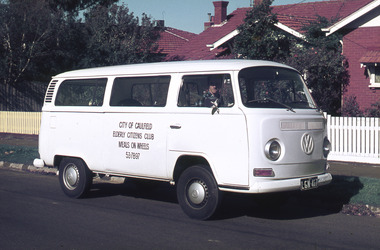 Glen Eira Historical Society
Album - Page 1 of folder D-F, Caulfield Municipality Photo Slide Collection, c.1976 - c.1994
... support of Glen Eira City Council. Caulfield’s Meals on wheels project started in 1958 and was run by volunteers. By 1974 Caulfield Council assumed responsibility for the administration of the service which by then was the largest in Victoria, supplying 300 meals each weekday. ...support of Glen Eira City Council. Caulfield’s Meals on wheels project started in 1958 and was run by volunteers. By 1974 Caulfield Council assumed responsibility for the administration of the service which by then was the largest in Victoria, supplying 300 meals each weekday. ...The photographs for the slides are believed to have been taken by the inaugural Editor for the Caulfield Contact - the official newspaper of the former City of Caulfield from 1976-1994. The Editor was also Council's Community Liaison Officer and she (and her successor) took many photographs of official events and Council-related services and locations in connection with both these official roles. The City of Caulfield was the Municipal Council for an area of the South Eastern suburbs of Melbourne, including Brighton East, Carnegie, Caulfield, Elsternwick, Gardenvale, Glen Huntly, McKinnon, Murrumbeena, Ormond and St Kilda East. Credit: Glen Eira Historical Society - This item was digitised and made available through the Glen Eira Heritage Digitisation Strategy 2019-2023. Glen Eira Historical Society acknowledges the support of Glen Eira City Council. Caulfield’s Meals on wheels project started in 1958 and was run by volunteers. By 1974 Caulfield Council assumed responsibility for the administration of the service which by then was the largest in Victoria, supplying 300 meals each weekday. By 1987 with a combination of both paid and volunteer staff up to 136,000 meals were distributed each year to individual homes and to various clubs and organizations. Page 1 of slide album D to F, in a polypropylene slide sleeve containing 19 x 35mm colour slides. A sample of 8 images from this page is included. meals on wheels, glen eira city council, local government, caulfield city council, caulfield council, city of caulfield, council services, brighton east, carnegie, caulfield, elsternwick, gardenvale, glen huntly, mckinnon, murrumbeena, ormond, st kilda east, caulfield municipality photo slide collection -
Port Melbourne Historical & Preservation Society
Book - Temporary Honour Roll, Nott Street School Old Boys, 1917 - 1920
... support of Port Melbourne City Council in recognising the necessity of ensuring that the Board and it's contents were protected for posterity. Accordingly, when the school closed in 1993. it was arranged with the Education Department for it to be transferred to Port Melbourne Town Hall. In 1994, existing councils, including Port Melbourne, were abolished and a new City of Port Phillip was created. Concerned about the fate of these documents under the administration...support of Port Melbourne City Council in recognising the necessity of ensuring that the Board and it's contents were protected for posterity. Accordingly, when the school closed in 1993. it was arranged with the Education Department for it to be transferred to Port Melbourne Town Hall. In 1994, existing councils, including Port Melbourne, were abolished and a new City of Port Phillip was created. Concerned about the fate of these documents under the administration ...These papers were originally in a hidden compartment of the large timber Nott Street School Honor Board, now in the foyer of Port Melbourne Town Hall. This Board was originally located in the Infant School building. During the 1970s, Cr. Perce WHITE had been Chairman of the School Committee and had been aware of the "secret" compartment and its contents. In the early 1990s, Perce obtained the support of Port Melbourne City Council in recognising the necessity of ensuring that the Board and it's contents were protected for posterity. Accordingly, when the school closed in 1993. it was arranged with the Education Department for it to be transferred to Port Melbourne Town Hall. In 1994, existing councils, including Port Melbourne, were abolished and a new City of Port Phillip was created. Concerned about the fate of these documents under the administration of Commissioners, Perce removed these documents and kept them in a safe place, eventually handing them over to the Port Melbourne Historical & Preservation Society in 2004..03 - Brown paper covered (23 x 18) temporary Honour (Honor) Roll of Nott St Old Boys, 1914-19.war - world war i, nott street state school, education - primary schools -
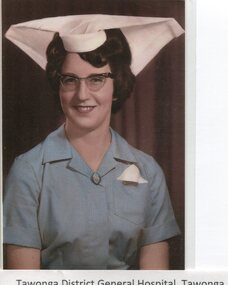 Kiewa Valley Historical Society
Photographs - Tawonga District General Hospital - Set of 21
... administration offices located in the town centre. Official opening of the 18 bed Tawonga District General Hospital on April 29 in 1961. Alpine Health CEO Mr Lyndon Seys oversaw the opening of the new Mount Beauty Hospital in November 2001 alongside Board of Management President Mr Andrew Randell, other board members and politicians. The Kiewa Hydro-Electric Scheme the State Electricity Commission played a pivotal part in the planning and initial funding of the Tawonga District General Hospital, with a view to providing medical support ...In the early stages of the Kiewa Hydro-Electric Scheme the State Electricity Commission took over the financial and construction responsibility of the Tawonga District General Hospital building at a cost of 27,000 pounds. This included the removal and re-erection of the ex-military Bonegilla ward from Wodonga while in addition they carried out all the necessary building works that allowed the hospital to operate as a functional unit. The work was completed and handed over to the Hospital Committee of Management on September 1, 1949. Local residents raised 3,400 pounds through fund raising. The balance was met by the SEC and the Hospital and Charities Commission. The initial project was to provide for a basic temporary hospital which was later to include an Operating Theatre, Offices, Store, Mortuary and a Nurse’s Home, until the establishment of a permanent medical premises. Following the opening, 455 patients were admitted to the Tawonga District General Hospital and 254 operations were performed in the first year. The hospital relocated to Mount Beauty in the former SEC administration offices located in the town centre. Official opening of the 18 bed Tawonga District General Hospital on April 29 in 1961. Alpine Health CEO Mr Lyndon Seys oversaw the opening of the new Mount Beauty Hospital in November 2001 alongside Board of Management President Mr Andrew Randell, other board members and politicians. The Kiewa Hydro-Electric Scheme the State Electricity Commission played a pivotal part in the planning and initial funding of the Tawonga District General Hospital, with a view to providing medical support for its many workers on the Hydro scheme. Later, spouse and family members of workers were also able to access medical assistance The hospital was originally located in Tawonga away from the majority of the patients as the Hospital and Charities Board was not prepared to have it within the SEC controlled area. It was not until the gate at Tawonga South was taken down that the hospital was moved to the main centre of population at Mount Beauty. 1. Early nurses uniform; 2. Hospital Opening Ceremony; 3-7. Nursing Staff; 8. Delivery Room; 9. Mens Ward; 10.Enclosed Veranda; 11. Main Ward; 12-13. Kitchen; 14. Opening Ceremony 1949; 15.Original Hospital at Tawonga; 16-18. Relocated Hospital at Mt Beauty; 19. Rear of hospital and Matron’s quarters; 20. Hospital and Kiewa Valley House; 21. Renovated Hospital in 20001.Tawonga District General Hospital Tawonga; 2. Kiewa construction engineer Mr HHC Williams speaking at the opening of the hospital. Health Minister the Hon CP Gartside performed the official opening. L to R: TH Mitchell MLA; Manager of the hospital Mr RH Kronberg (obscured) Hon CP Gartside; CL McVilley; LT Knevitt; Matron AI Tarnish & W Sealey: 4. Dedicated Nursing Staff; 5. Nurse Campbell (nee Reid); 6. Sister Seager 1955 (nee Janice Burnett. First District Nurse; 7. L to R: Sister F Rosengrove; Sister J Griffiths; Matron AI Tarnish; Nurse D Satori; Nurse D Tregonning; Sister E Hill & Sister S O’Shannessy; 8. In the early years Tawonga District General Hospital had the second highest birth rate in Australia; 9. The men’s ward catered for men only in the early years of the hospitals operation; 10. The enclosed verandah at the original Tawonga District General Hospital allowed for an additional 10 beds; 11. Tawonga District General Hospital, Tawonga Main Ward. Ward ready and waiting for patients at Tawonga Hospital. Complete with lovely vases of flowers for every bed. Nice touch by the nurses; 12. Kitchen of Tawonga District General Hospital, Mt Beauty. The hospital kitchen provided meals for patients and a 3 course dinner for Meals on Wheels. In 1977, 11,795 meals were produced at an average cost of $2.60 per meal; 13. Tawonga District General Hospital, Tawonga. Kitchen. Kitchen staff employed in the old Tawonga District General Hospital 1949-1961; 14. The official opening ceremony of the Tawonga District General Hospital, 1949. The official ceremony was attended by a large number of residents and Tawonga District General Hospital was open for public inspection; 15. Original Tawonga District General Hospital transported form Bonegilla began operations in 1949; 16. In 1961, the Tawonga District General Hospital relocated to take a central position in the town of Mt Beauty in the former SEC Administration building; 19. The rear of the Tawonga District General Hospital and Matron’s house seen from Holland St, Mt Beauty during a snow storm in the mid 1960’s; 21. Tawonga District General Hospital & Kiewa Valley House, 2000. tawonga district hospital, mt beauty hospital, medical, health care, s.e.c. -
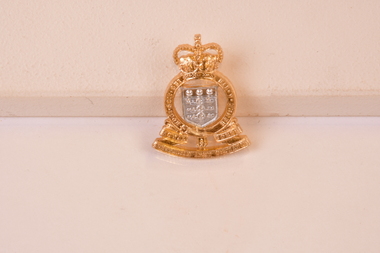 Chiltern Athenaeum Trust
Royal Australian Army Ordinance Corps Hat Badge : 1953 to 1960, 1953 to 1960
... administration, as well as the demolition and disposal of explosives and salvage of battle-damaged equipment. The Corps contains clerks, operator supplies (including q-store staff, warehouse staff and food technicians), petroleum operators, parachute riggers and ammunition technicians. Members of the Corps are nicknamed Roaches. Unlike other Corps within the Australian Army, there are no longer any RAAOC specific units, instead RAAOC sub-units sit within mixed units such as Combat Service Support...administration, as well as the demolition and disposal of explosives and salvage of battle-damaged equipment. The Corps contains clerks, operator supplies (including q-store staff, warehouse staff and food technicians), petroleum operators, parachute riggers and ammunition technicians. Members of the Corps are nicknamed Roaches. Unlike other Corps within the Australian Army, there are no longer any RAAOC specific units, instead RAAOC sub-units sit within mixed units such as Combat Service Support ...The Royal Australian Army Ordnance Corps (RAAOC) is the Corps within the Australian Army concerned with supply and administration, as well as the demolition and disposal of explosives and salvage of battle-damaged equipment. The Corps contains clerks, operator supplies (including q-store staff, warehouse staff and food technicians), petroleum operators, parachute riggers and ammunition technicians. Members of the Corps are nicknamed Roaches. Unlike other Corps within the Australian Army, there are no longer any RAAOC specific units, instead RAAOC sub-units sit within mixed units such as Combat Service Support Battalions (CSSBs) or Force Support Battalions (FSBs). RAAOC is also responsible for clerks and quartermaster store staff in all Australian Army Units.Circa 1953 to 1960. Associated with the supply chain and equipment resourcing within The Royal Australian Army. Gold and silver chrome hat corps badge. The reverse has two pin points that a stud affixes to so as to secure to a hat or cap. The top of the badge has a crown shape and the bottom is curved. There is corps writing on the badge at the bottom and surrounding sides : "Royal Australian Army Ordinance Corps". Royal Australian Army Ordinance Corps. 1953 to 1960 raaoc corps hat badge, royal australian army ordinance corps, raaoc -
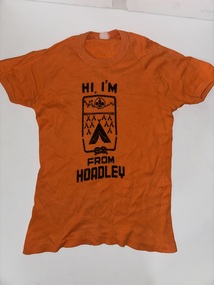 Sunshine and District Historical Society Incorporated
Clothing - Hi, I'm from Hoadley T-Shirt
... . - Teams from Sunshine have: - Competed under creative patrol names - Won awards for initiative and teamwork - Contributed staff and Rover support - The event is often held in bushland areas like Castlemaine, Mataranka, or Tallarook, but Sunshine units travel statewide to participate. 🗂️ Historical Area Structures - In earlier decades, Scouts Victoria was divided into Areas (e.g. Hoadley Area, Baden-Powell Area), which grouped districts for administration.... - Teams from Sunshine have: - Competed under creative patrol names - Won awards for initiative and teamwork - Contributed staff and Rover support - The event is often held in bushland areas like Castlemaine, Mataranka, or Tallarook, but Sunshine units travel statewide to participate. 🗂️ Historical Area Structures - In earlier decades, Scouts Victoria was divided into Areas (e.g. Hoadley Area, Baden-Powell Area), which grouped districts for administration ...The Hoadley Area in Scouting refers to a regional designation within Scouts Victoria, named in honour of Charles Hoadley, a pioneering Antarctic explorer and influential figure in Australian Scouting. While there isn’t a formal “Hoadley Area” in Sunshine today, the name is most prominently associated with the Hoadley Hide—a major Venturer Scout event. Sunshine, Deer Park, St. Albans and Brimbank Scout Troops are part of the Hoadley Area. 🧭 Charles Hoadley’s Legacy - Charles Hoadley (1887–1947) was a geologist on Douglas Mawson’s Australasian Antarctic Expedition and later became Chief Commissioner of Scouts Victoria. - He championed youth leadership, bushcraft, and adventure-based learning. - The Hoadley Hide was named in his honour and began in the 1950s as a way to challenge Venturers in navigation and initiative. 🏕️ Sunshine & Hoadley Hide - Sunshine-area Venturer Units (including Sunshine, Deer Park, and Brimbank District) have long participated in Hoadley Hide events. - Teams from Sunshine have: - Competed under creative patrol names - Won awards for initiative and teamwork - Contributed staff and Rover support - The event is often held in bushland areas like Castlemaine, Mataranka, or Tallarook, but Sunshine units travel statewide to participate. 🗂️ Historical Area Structures - In earlier decades, Scouts Victoria was divided into Areas (e.g. Hoadley Area, Baden-Powell Area), which grouped districts for administration and events. - Sunshine is part of a Hoadley-named Area, especially during the 1960s–80s, but these structures have since evolved into Regions and Districts. Orange Size 14 t-shirt with black textHi, I'm from Hoadley T-Shirtscouting, scouts, cubs
