
Showing 34 items matching "albury railway station"
-
 Wodonga & District Historical Society Inc
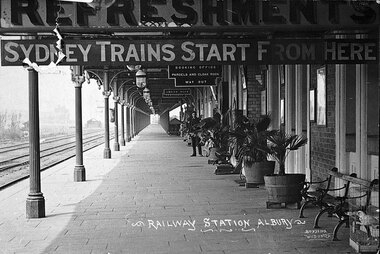
Photograph - Albury Railway Station, Thomas Bonsema, 1910
... Albury Railway Station ...Albury Railway Station ......Albury Railway Station...The Albury Railway Station was opened on February 26 1882. ...Railway Station Albury. Bonsema Wodonga...The Albury Railway Station was opened on February 26 1882. ...The Albury Railway Station was opened on February 26 1882. It was the first large transit stop to be built on the border of Victoria and New South Wales. The two states still used different gauge train tracks, so the longest undercover platform in the southern hemisphere at the time was built at Albury, to allow passengers to quickly transition between lines. A new covered platform and new goods shed were added in 1884. Our Collection includes several photographs signed BONSEMA WODONGA or sometimes simply TBW. Later images taken in Chiltern were signed Bonsema Chiltern or TBC. Thomas Peter John Bonsema was born in Wodonga in 1876 to Peter John Bonsema and Mary Ann nee Nash. His name first appears on the Electoral Roll for Wodonga in 1909 and on the Electoral Roll in 1912 he is listed as a photographer. His photographs capture many scenes and events around Wodonga and surrounding areas. Thomas Bonsema married Minna Louisa Jones in 1912. By 1914 he had moved to Chiltern, Victoria where he established Bonsema’s Photographic Studio. From this time onward many of his works bore the signature “BONSEMA CHILTERN”. As well as continuing to photograph landscapes and important buildings, Mr Bonsema was often the official photographer at school and community celebrations. He also sold many framed photographs and postcards from his premises at 68 -70 Conness Street, Chiltern. By 1943 Thomas John Bonsema had relocated to New South Wales and died in Beecroft, NSW on 14th July 1944. Some of his photographs are held in the Victorian State Library and Mitchell Library Sydney Collections.These images are significant because they are the work of a recognised photographer Thomas Bonsema who was born in Wodonga in 1876. The Albury Railway Station was a critical link in transport between Victoria and New South Wales.A black and white image of the platform at Albury StationRailway Station Albury. Bonsema Wodongabonsema photography, thomas peter john bonsema, albury railway station -
 8th/13th Victorian Mounted Rifles Regimental Collection
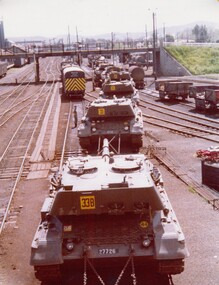
Photograph
... Five coloured photographs of Leopard tanks on rail wagons at Albury Railway Station, circa 1978....Five coloured photographs of Leopard tanks on rail wagons at Albury Railway Station, circa 1978. Photograph ...In 1977, the Leopard AS 1 Main Battle Tank entered service with the Royal Australian Armoured Corps. It was the replacement for the Centurion Tank, which had given sterling service since 1952 including four years on active service in South Vietnam. Although the Leopard AS1 had been in service for 23 years, with some upgrading it still has a formidable battlefield presence and will be a key weapon system in the Australian Army inventory. Transport by rail was the major method of moving the tank around the country.Five coloured photographs of Leopard tanks on rail wagons at Albury Railway Station, circa 1978. -
 The Beechworth Burke Museum
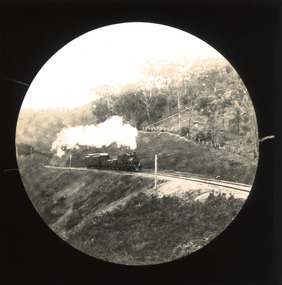
Photograph - Lantern Slide, c1900
... station...everton...wangaratta...wodonga...albury...rail transport...cargo transport...g.b. kerferd...john orr...murray to mountains rail trail...cycling...biking...railway...Albury hindered trade and formed a barrier to the social development of the town. The subsequent positioning of Beechworth on a branch rather than a main line was not considered ideal to achieve these aims, but the Everton-to-Beechworth and Beechworth-to-Yackandandah components of the line cost an average of £7,277 per mile and State Government officials felt the need in the area did not justify the cost of a direct line. The Beechworth Railway Station...Albury hindered trade and formed a barrier to the social development of the town. The subsequent positioning of Beechworth on a branch rather than a main line was not considered ideal to achieve these aims, but the Everton-to-Beechworth and Beechworth-to-Yackandandah components of the line cost an average of £7,277 per mile and State Government officials felt the need in the area did not justify the cost of a direct line. The Beechworth Railway Station ...This slide shows a train proceeding along the Beechworth rail trail in approximately 1900. The rail line to Beechworth was the subject of significant lobbying by local officials such as John Orr and G.B. Kerferd in the 1860s, as it was recognised that the poor quality of roads to Melbourne and Albury hindered trade and formed a barrier to the social development of the town. The subsequent positioning of Beechworth on a branch rather than a main line was not considered ideal to achieve these aims, but the Everton-to-Beechworth and Beechworth-to-Yackandandah components of the line cost an average of £7,277 per mile and State Government officials felt the need in the area did not justify the cost of a direct line. The Beechworth Railway Station was officially opened on the 29th of September 1876 and ran services twice daily to Melbourne, transporting nearly 12,000 passengers and around 6,500 tons of cargo in 1900. It closed in 1976 and is today used as a cycling trail used by locals and promoted as a feature of the area to tourists. Lantern slides, sometimes called 'magic lantern' slides, are glass plates on which an image has been secured for the purpose of projection. Glass slides were etched or hand-painted for this purpose from the Eighteenth Century but the process became more popular and accessible to the public with the development of photographic-emulsion slides used with a 'Magic Lantern' device in the mid-Nineteenth Century. Photographic lantern slides comprise a double-negative emulsion layer (forming a positive image) between thin glass plates that are bound together. A number of processes existed to form and bind the emulsion layer to the base plate, including the albumen, wet plate collodion, gelatine dry plate and Woodburytype techniques. Lantern slides and magic lantern technologies are seen as foundational precursors to the development of modern photography and film-making techniques.This glass slide is significant because it provides insight into Beechworth's social amenities and transport infrastructure in the late Nineteenth Century. It is also an example of an early photographic and film-making technology in use in regional Victoria in the time period.Thin translucent sheet of glass with a circular image printed on the front and framed in a black backing. It is held together by metal strips to secure the edges of the slide.burke museum, beechworth, lantern slide, slide, glass slide, plate, burke museum collection, photograph, monochrome, indigo shire, north-east victoria, rail trail, beechworth rail trail, beechworth station, everton, wangaratta, wodonga, albury, rail transport, cargo transport, g.b. kerferd, john orr, murray to mountains rail trail, cycling, biking, railway -
 Kiewa Valley Historical Society
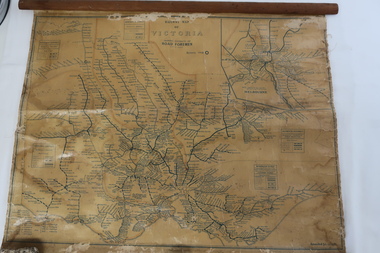
Map - Railway Map of Victoria, Amended to 1/11/1945
... Railways began in the 1850s and were privately owned and operated. Later they were taken over by the Victorian Government reaching a peak in the early 1940s.Steam trains were followed by electric trains with both running after the war in 1945. Bright was the closest station to the Kiewa Valley but road transport was used more often as the Kiewa Valley Highway was improved with the construction of the Kiewa Hydro Electric Scheme. To travel to Melbourne or Sydney by train residents went via Wodonga/Albury ...Railways began in the 1850s and were privately owned and operated. Later they were taken over by the Victorian Government reaching a peak in the early 1940s.Steam trains were followed by electric trains with both running after the war in 1945.Bright was the closest station to the Kiewa Valley but road transport was used more often as the Kiewa Valley Highway was improved with the construction of the Kiewa Hydro Electric Scheme. To travel to Melbourne or Sydney by train residents went via Wodonga/Albury where they also did their shopping.Plastic on parchment with detailed railway routes (in green) across Victoria including each district's 'Road Foremen' and 'Depots'. There is a length of flat wood attached by 10 tacks across the top of the mapvictorian railways 1945, trains, transport -
 Sunshine and District Historical Society Incorporated
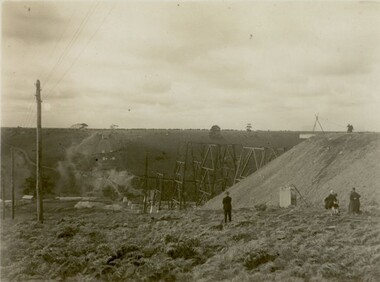
Photograph - Maribyrnong railway bridge construction, 1928
... station. The congestion was being caused by the construction of suburban passenger platforms associated with the electrification of the suburban railway network. Initially the bridge was for goods trains but during the Second World War it was also used by troop trains. When the standard gauge line was built in 1962 all trains to Albury...station. The congestion was being caused by the construction of suburban passenger platforms associated with the electrification of the suburban railway network. Initially the bridge was for goods trains but during the Second World War it was also used by troop trains. When the standard gauge line was built in 1962 all trains to Albury ...One man lost his life during the building of this bridge. The bridge was constructed by the Victorian Railways between 1927 to 1929 to carry a new double track goods line. This enabled trains from all parts of the state except Gippsland to have direct access to the Tottenham marshalling and sorting yards. These yards were constructed in the 1920's to relieve congestion in the Melbourne Yard near Spencer Street station. The congestion was being caused by the construction of suburban passenger platforms associated with the electrification of the suburban railway network. Initially the bridge was for goods trains but during the Second World War it was also used by troop trains. When the standard gauge line was built in 1962 all trains to Albury and Sydney have used this route, thus avoiding travelling through Essendon and Pascoe Vale on the suburban tracks. The standard gauge track across the bridge took the place of one of the broad gauge tracks so broad gauge trains crossing the bridge in either direction have to now use the same track. The bridge is 1,257 feet (383.13 metres) long and 180 feet (54.86 metres) above the water level. It is just 63 feet (19.2 metres) short of a quarter mile in length between abutments. There is a similar bridge on the same railway line crossing the Moonee Ponds Creek between Gowenbrae and Glenroy, however it is smaller at 1060 feet (323.08 metres) length and 115 feet (35.05) height.The bridge is now Victorian Heritage Registered under Number: H1197, and Heritage Overlay Numbers HO5, and HO107. On the Heritage Register it is named RAIL BRIDGE (ALBION VIADUCT). According to the Heritage Report the bridge is scientifically and architecturally important because of its large size, and because of the cost effective design features such as two girders per span (one for each track), the K bracing in the towers, and the broad flange beams as columns. When it was being built it was the largest trestle bridge in Australia, and until the Sydney Harbour bridge was constructed it was the highest railway bridge.449.01 - Maribyrnong railway bridge construction.jpg 449.02 - Maribyrnong railway bridge construction.jpg 449.03 - Maribyrnong railway bridge construction.jpg 449.04 - Maribyrnong railway bridge construction.jpg 449.05 - Maribyrnong railway bridge construction.jpgmaribyrnong river, bridge, quarter mile bridge, trestle bridge -
 Sunshine and District Historical Society Incorporated
Administrative record - City of Sunshine - Commissioner Mr Alexander Alex George Gillon Collection 1976 - 1982 - Minutes Of Ordinary Meeting 15th December 1976, City of Sunshine, 15th December 1976
... Railway Parade...King Edward Avenue...Bunnett Street...Cooke Avenue...River Street...Talmage Street...Geelong Road...Conifer Avenue...Clarendon Street...Dunedin Street...Radio Street...Brooklyn...Maidstone...Maribyrnong...Ballarat Road...Albury Street...York Street...Albion...Mother of God Primary School...Maxwell Street...Ardeer...Christie Street...Station...City of Sunshine Alexander "Alex" George Gillon The Hub Sun Crescent Sunshine Sheffield Estate Orama Street Deer Park Orama Street Child Care Centre Sunshine City Soccer Club Chaplin Reserve Anderson Road Railway Parade King Edward Avenue Bunnett Street Cooke Avenue River Street Talmage Street Geelong Road Conifer Avenue Clarendon Street Dunedin Street Radio Street Brooklyn Maidstone Maribyrnong Ballarat Road Albury Street York Street Albion Mother of God Primary School Maxwell Street Ardeer Christie Street Station Road Neale Road Holy Eucharist Primary School Oleander Drive St. ...Minutes of Ordinary Meeting 15th December 1976 Report of Town Clerk Land Transfer Orama Street for Orama Street Child Care Centre Chaplin Reserve Proposed Increase in Rent Sunshine City Soccer Club Sheffield Estate Private Street Scheme Extension of Time for Completion Proposed Assignment of Lease The Hub Dates for Ordinary Meetings Rates Interest Abandonments Land Transfer Lots 43 & 44 Railway Parade Supplementary Valuations Swimming Pools Fees and Charges Easement Drainage Scheme Procedure Under the Provisions of Section 74 of the Health Act King Edward Avenue Area Between Sydney Street and Kororoit Street Pavilion Dempster Park Resolution Report of Welfare Offices Submission for Funds for School Vacation Care Programme Submission for Funds for Children's Service Worker Report on Rainbow Workshop Report of the City Engineer Westerngate Estate Stage 1B Urban land Council Furlong Road Estate Stage 7 Private Street Construction by day Labour Bunnett Street & Cooke Avenue Finalisation of Cooke Avenue Private Street Scheme Tender for Mechanical Type Sweeper Tender for Suction Type Sweeper Tender for Land Fill Compactor Load Limit River Street Load Limit Talmage Street Load Limit Geelong Road Service Road South Side Load Limit Conifer Avenue Load Limit Clarendon Street Load Limit Dunedin Street Load Limit Radio Street Land Use Permit Application Detached House Orama Street Land Use Permit Application Subdivision Albanvale Estate Consolidation of Title Ballarat Road, Albury Street & York Street Albion Squash Centre Land Use Permit Application Shed Addition to Existing School Mother of God Primary School Maxwell Street Re-Zoning Canterbury Street, Christie Street & Station Road Land Use Permit Application Subdivision & Detached House Neale Road Land Use Permit Application Portable Classroom Addition to Holy Eucharist Primary School Oleander Drive Concrete For Floor of Club room Western Suburbs Soccer Club Ralph Street Reserve Land Use Permit Factory Somer Street Land Use Permit Application Extension to Existing factory Lots 49, 50 & 51 Marshall Street Level Crossing Abolition Project Ashley Street Tottenham Country Road Board Culvert At Western Avenue Central Avenue Drain Land Use Permit Application Mini Mix Concrete Plant Market Road Fourth Avenue Private Street Scheme Plan of Subdivision 100 The Esplanade Land Use Permit Application Additions to Detached House 159 Chifley Drive Report of the Building Surveyor Building Office Hours Photocopying of Building Permit Documents Special Inspections Cash in Lieu Lot 13 Grandview Avenue Orders of the Day Swimming Pool Fees and Charges Extraordinary Business Town Clerk Award Matters City Engineer Land Use Permit Application Panel Beating and Spray Painting Central Avenue Land Use Permit Application Flood Lights Mitchell Street Land Use Permit Application Caretaker's Residence Addition to Existing Service Premises Mulhall Drive Land Use Permit Application Office Addition Ballarat Road Land Use Permit Application Equipment Shed Additions to Existing St. Theresa's Primary School Drummartin Street Land Use Permit Application Mini Mix Concrete Plant Addition to Existing Garden Supply and Plant Nursery Hampstead Road Land Use Permit Application Consulting Rooms Ainsworth Street Dempster Park Tenders city of sunshine, alexander "alex" george gillon, the hub, sun crescent, sunshine, sheffield estate, orama street, deer park, orama street child care centre, sunshine city soccer club, chaplin reserve, anderson road, railway parade, king edward avenue, bunnett street, cooke avenue, river street, talmage street, geelong road, conifer avenue, clarendon street, dunedin street, radio street, brooklyn, maidstone, maribyrnong, ballarat road, albury street, york street, albion, mother of god primary school, maxwell street, ardeer, christie street, station road, neale road, holy eucharist primary school, oleander drive, st. albans, western suburbs soccer club, ralph street reserve, ralph street, sunshine west, somer street, marshall street, ashley street, tottenham, western avenue, central avenue, market road, fourth avenue, the esplanade, chifley drive, grandview avenue, mulhall drive, mitchell street, st. theresa's primary school, drummartin street, hampstead road, ainsworth street -
 Wodonga & District Historical Society Inc
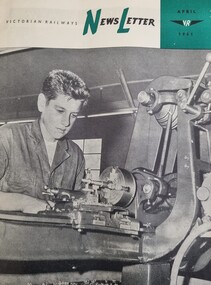
Newsletter - Victorian Railways April 1961
... Railway station and staff in the 1960s. Wodonga Railways Victorian Railways Victorian Railways Wodonga This booklet is one of a series featuring news items from Victorian Railways from the early 1960s until the late 1980s. During this period the corporate name changed to VLine and the newsletter continued to be published as VLine Newsletter. This issue from April 1961 features an article "Wodonga Links the States" which explains the complexity of operations of the railways at Wodonga and Albury ...This booklet is one of a series featuring news items from Victorian Railways from the early 1960s until the late 1980s. During this period the corporate name changed to VLine and the newsletter continued to be published as VLine Newsletter. This issue from April 1961 features an article "Wodonga Links the States" which explains the complexity of operations of the railways at Wodonga and Albury due to the break of gauge in gauge between the two railway networks. The article was written to acknowledge the work carried out by the railway at both stations prior to the opening of the standard gauge track. Until this time Victorian trains operated on 4’ 8½” tracks whilst New South Wales were 5’ 3” wide. With an overall stall of 241, Wodonga railmen prepared, serviced and manned 14 "up" and 11 "down" trains as well as specials each day. Special migrant trains to Bonegilla were often a feature at this time as well as transport of heavy equipment to the Snowy Mountain Scheme.A small booklet of 14 pages including articles and images.This booklet is one of a series featuring news items from Victorian Railways from the early 1960s until the late 1980s. During this period the corporate name changed to VLine and the newsletter continued to be published as VLine Newsletter. This issue from April 1961 features an article "Wodonga Links the States" which explains the complexity of operations of the railways at Wodonga and Albury due to the break of gauge in gauge between the two railway networks. The article was written to acknowledge the work carried out by the railway at both stations prior to the opening of the standard gauge track. Until this time Victorian trains operated on 4’ 8½” tracks whilst New South Wales were 5’ 3” wide. With an overall stall of 241, Wodonga railmen prepared, serviced and manned 14 "up" and 11 "down" trains as well as specials each day. Special migrant trains to Bonegilla were often a feature at this time as well as transport of heavy equipment to the Snowy Mountain Scheme.wodonga railways, victorian railways, victorian railways wodonga -
 Wodonga & District Historical Society Inc
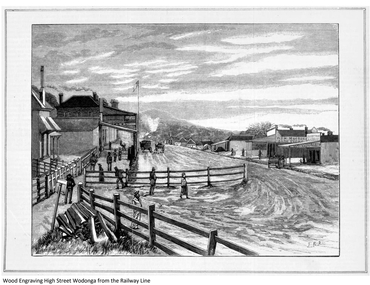
Work on paper - Wodonga From the Railway Line, John Rossi Ashton, 1883
... Albury there is a distance of three miles, which in summer has the reputation of being the dustiest three miles in Australia. This distance is traversed by omnibuses and cabs, which ply between the two towns, and until the junction of the railways did a good business in carrying all travellers from station to station. ...Albury there is a distance of three miles, which in summer has the reputation of being the dustiest three miles in Australia. This distance is traversed by omnibuses and cabs, which ply between the two towns, and until the junction of the railways did a good business in carrying all travellers from station to station. ...This image appeared in the Australasian Sketcher on 2nd July 1883. This issue had several illustrations relating to the meeting of the railways at Albury and Wodonga. The item was accompanied by the following text:- Wodonga consists of two principal streets lying parallel to each other seemingly desirous of outstripping the other in length and the straggling character of its buildings. After carrying on this contest for the length of three quarters of High Street, of which we give a view, bears off the palm. Between the township and Albury there is a distance of three miles, which in summer has the reputation of being the dustiest three miles in Australia. This distance is traversed by omnibuses and cabs, which ply between the two towns, and until the junction of the railways did a good business in carrying all travellers from station to station. The dwellers in Wodonga, who are Victorians to the backbone, complain severely of the disadvantages under which they labour, owing to the border duties, in comparison with their more fortunate neighbours in Albury, but though they grumble they have no intention of giving in, and confidently look forward to the brighter days which they say are in store for Wodonga. In the lower right hand corner are the initials J. R. A. These are the initials of Julian Rossi Ashton (1851-1942). Ashton was born in England and emigrated to Melbourne in 1878 to work as an artist for the Illustrated Australian News. In 1881 he worked at the Australasian Sketcher and in 1883 moved to Sydney to work on the Picturesque Atlas of Australasia and the Bulletin. He became an influential patron and supporter of Australian Art through his roles as trustee of the National Art Gallery of New South Wales. He was awarded the Society of Artists’ medal for distinguished services to Australian art in 1924, appointed as Commander of the Order of the British Empire in 1930, and won the Sydney Sesquicentennial Prize for a watercolour in 1938. Ashton dominated artistic circles in Sydney for over 50 years. He established his own Art School in Sydney and became a teacher and mentor to many now prominent Australian artists. Julian Rossi Ashton died on 27th April 1942 This item is significant because it depicts an early view of Wodonga and was created by a future prominent artist and influential patron and supporter of Australian Art .A print from a Wood Engraving which was published in the Australasian Sketcher 1883. It features a street scene in Wodonga.wodonga town 1883, early wodonga -
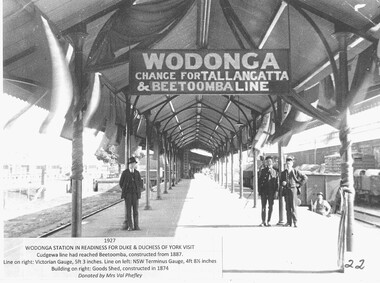 Wodonga & District Historical Society Inc
Photograph - Wodonga Station decorated for the Royal Train, 1927
... Albury, according to the railway time table arrangements at 9.54 a.m. and Wodonga at 9.20. Principal towns on the route to Melbourne will be passed as follows:- Wangaratta 10.10; Benalla 11.16; Seymour 12.45; and Spencer street 2.50. From Albury the Sydney express which leaves at 20 minutes past 8 o'clock will be used as the pilot train for the Royal train." This image is significant because it captures Wodonga Railway Station ...The Duke and Duchess of York (later King George VI and Queen Elizabeth) visited Australia and New Zealand in 1927 primarily to open the provisional Parliament House in Canberra. Their tour also served as a show of gratitude for the sacrifices made by the Dominions during World War I and to strengthen ties between Australia and the British Empire. Part of their journey from Canberra to Melbourne was onboard the Royal Train which travelled through Wodonga and was reported in the Argus. Argus, Wednesday 11 May 1927, page 19 "The Royal train will leave Albury, according to the railway time table arrangements at 9.54 a.m. and Wodonga at 9.20. Principal towns on the route to Melbourne will be passed as follows:- Wangaratta 10.10; Benalla 11.16; Seymour 12.45; and Spencer street 2.50. From Albury the Sydney express which leaves at 20 minutes past 8 o'clock will be used as the pilot train for the Royal train."This image is significant because it captures Wodonga Railway Station during an important Royal Visit to Australia in 1927.Two black and white images of people at the Wodonga Railway Station waiting for the Royal Train carrying the Duke and Duchess of York in 1927. royal visit 1927, duke and duchess of york 1927 -
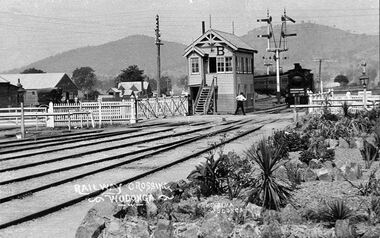 Wodonga & District Historical Society Inc
Photograph - Train approaching Wodonga Crossroads, Thomas Bonsema, c1915
... A black and white image showing a train approaching the Wodonga Railway Station from Albury. horse and buggy are waiting at the gates. ...Bonsema Photography Thomas Peter John Bonsema Railways Wodonga RAILWAY CROSSING WODONGA BONSEMA WODONGA A black and white image showing a train approaching the Wodonga Railway Station from Albury. horse and buggy are waiting at the gates. ...Our Collection includes several photographs signed BONSEMA WODONGA or sometimes simply TBW. Thomas Peter John Bonsema was born in Wodonga in 1876 to Peter John Bonsema and Mary Ann nee Nash. His name first appears on the Electoral Roll for Wodonga in 1909 and on the Electoral Roll in 1912 he is listed as a photographer. His photographs capture many scenes and events around Wodonga and surrounding areas. Thomas Bonsema married Minna Louisa Jones in 1912. By 1914 he had moved to Chiltern, Victoria where he established Bonsema’s Photographic Studio. From this time onward many of his works bore the signature “BONSEMA CHILTERN”. As well as continuing to photograph landscapes and important buildings, Mr Bonsema was often the official photographer at school and community celebrations. He also sold many framed photographs and postcards from his premises at 68 -70 Conness Street, Chiltern. By 1943 Thomas John Bonsema had relocated to New South Wales and died in Beecroft, NSW on 14th July 1944. Some of his photographs are held in the Victorian State Library and Mitchell Library Sydney Collections.These images are significant because they are the work of a recognised photographer Thomas Bonsema who was born in Wodonga in 1876. The railway was a critical element in the development of Wodonga.A black and white image showing a train approaching the Wodonga Railway Station from Albury. horse and buggy are waiting at the gates. Moloney’s house is located left of centre. RAILWAY CROSSING WODONGA BONSEMA WODONGAbonsema photography, thomas peter john bonsema, railways wodonga -
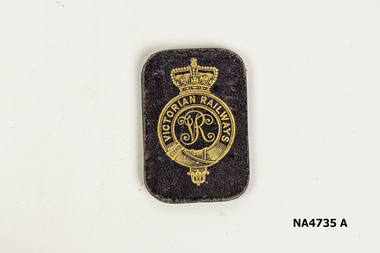 Whitehorse Historical Society Inc.
Functional object - Railway Ticket, 1910
... Small leather folder containing Victorian Railways station to station ticket issued to R.W.V. McCall Esq. Ticket available from between Melbourne, Albury, Bendigo and Queenscliff until 31.1.1910, signed McLelland Secretary, Victorian Railways insignia is on front and back cover in gold....documents tickets No 1725 Victorian Railways Small leather folder containing Victorian Railways station to station ticket issued to R.W.V. McCall Esq. Ticket available from between Melbourne, Albury, Bendigo and Queenscliff until 31.1.1910, signed McLelland Secretary, Victorian Railways insignia is on front and back cover in gold. ...Small leather folder containing Victorian Railways station to station ticket issued to R.W.V. McCall Esq. Ticket available from between Melbourne, Albury, Bendigo and Queenscliff until 31.1.1910, signed McLelland Secretary, Victorian Railways insignia is on front and back cover in gold.No 1725 Victorian Railwaysdocuments, tickets -
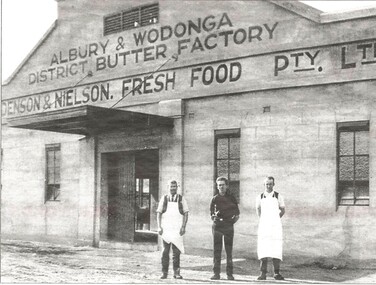 Wodonga & District Historical Society Inc
Photograph - Albury & Wodonga District Butter Factory
... Albury. The plant was moved to Wodonga that year. Cream was collected from all areas of North East Victoria and the Riverina, with contractors carting it to the railway stations for rail travel to Wodonga. ...Albury. The plant was moved to Wodonga that year. Cream was collected from all areas of North East Victoria and the Riverina, with contractors carting it to the railway stations for rail travel to Wodonga. ...Holdenson and Nielson Fresh Food Pty Ltd was founded in 1903 by Poul Jorgenson Holdenson and Andrew Nielson, after acquiring the Fresh Food and Storage Co, which had plants throughout Australia, including Albury. The plant was moved to Wodonga that year. Cream was collected from all areas of North East Victoria and the Riverina, with contractors carting it to the railway stations for rail travel to Wodonga. The Butter Factory was built on the Lincoln Causeway in 1926, and the Cheese Factory in 1942 as a wartime emergency project. At the same time, a pasteurising plant was installed in the complex, and so whole milk was collected from dairy farmers, rather than just cream. The company was bought out by the North Eastern Dairy Co-operative in 1962. It became a retail milk depot also involved in ice-making and cold storage. In 1985, Goulburn Murray bought the complex and as the site was surplus to requirements, it was sold to Wodonga Council. The buildings were adapted for other uses. The Butter Factory was modified and extended and for some time was occupied by the Albury- Wodonga Visitor Centre. The Creator's Gallery was established in the engine room, and the loading area and ice-making works were extended and modified for use as the HotHouse Theatre. The Cheese Factory was adapted for use as a theatre and jazz venue, and housed the HotHouse office. The various outbuildings, such as garages and storage areas, were adapted for use as shops and craft outlets.This collection is significant because it documents an important industry in Wodonga.A collection of images and advertisements promoting Holdenson and Nielsen of Wodongaholdenson & nielson, wodonga dairies, victorian dairy industry -
 Wodonga & District Historical Society Inc
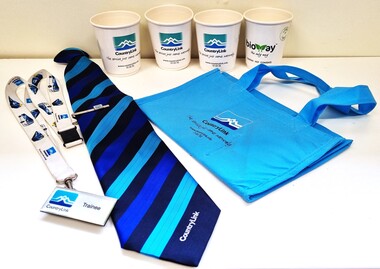
Memorabilia - CountryLink Collection
... station to Albury before continuing on the North East line to Southern Cross station in Melbourne. The Sydney/Melbourne Express ceased in November 1993 and was replaced by an XPT in November 1993 In December 1994, a daylight service to Melbourne resumed by extending the Riverina XPT from Albury. In July 2013, CountryLink was merged with the intercity services of CityRail to form NSW TrainLink. These items are connected to a major transportation system in eastern Australia. CountryLInk Australian Railways ...For residents of Northeast Victoria, railway services have provided a critical link between the area and state capital cities. CountryLink was established in January 1989 under the Transport Administration Act 1988. It was a passenger rail and road service brand that operated in regional areas of New South Wales, and to and from Canberra, Brisbane and Melbourne. CountryLink operated rail services a fleet of XPT and locomotive-hauled passenger trains. The Southern region of the Country Link network covered New South Wales districts of Illawarra, South Coast, Snowy Mountains, South West Slopes, Southern Tablelands, Riverina and Sunraysia regions plus the Australian Capital Territory and parts of Victoria. The Government of Victoria contributed to the provision of these services. Services ran along the Main South line from Sydney Central station to Albury before continuing on the North East line to Southern Cross station in Melbourne. The Sydney/Melbourne Express ceased in November 1993 and was replaced by an XPT in November 1993 In December 1994, a daylight service to Melbourne resumed by extending the Riverina XPT from Albury. In July 2013, CountryLink was merged with the intercity services of CityRail to form NSW TrainLink.These items are connected to a major transportation system in eastern Australia.A collection of uniform items and memorabilia from the CountryLink rail service. They include a tie and tiepin, staff badge and lanyard, cups and a bag with CountryLink logo.Tag on tie: Stylecore Corporate Wear Australia/ Polyester/ Made in England On all items: CountryLinkcountrylink, australian railways, countrylink uniforms -
 Wodonga & District Historical Society Inc
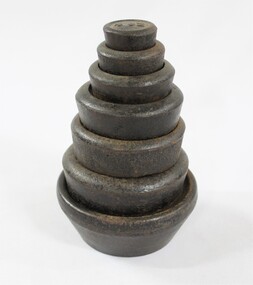
Functional object - Imperial Postal Weights used in the Post Office in Wodonga
... The mail service in 1878 included delivery four times a day from the Railway Station to the Post Office in Wodonga, and to and from the Wodonga Post Office to Albury twice a day....The mail service in 1878 included delivery four times a day from the Railway Station to the Post Office in Wodonga, and to and from the Wodonga Post Office to Albury twice a day. ...The set of seven imperial weights were used in the Post Office in Wodonga. The first Post Office in Wodonga opened on the 6th June 1856, and a second Post Office was built in 1874 on the corner of Sydney Road which became High St. and South St. In 1878 there were three staff at the Wodonga Post Office, including the Postmaster/Telegraph Manager and two Office-Keepers/Messengers. The mail service in 1878 included delivery four times a day from the Railway Station to the Post Office in Wodonga, and to and from the Wodonga Post Office to Albury twice a day.The set of seven imperial weights has local and state significance as it was used in the Wodonga Post Office in North East Victoria before decimal currency was introduced in Australia in 1966. The weights also have national significance as examples of the equipment used in post offices in Australia pre 1966.Set of seven cast iron and lead weights with imperial measurements '4 oz, 8oz, 1 lb, 2 lb, 3 lb, 4 lb, and 7 lb' The exterior circular black painted cast iron encases the heavy inner grey lead component, which is visible from the underside. "4 oz.", "8 / oz.", 1 lb.", "1 lb.", "2 lb.", "3 lb.", 4 lb.", MERCURY / 7 LB." on the top of the weights in raised numbers and letters.wodonga post office, post office, victoria post offices, wodonga, north eastern victoria post offices, victorian mail service -
 Wodonga & District Historical Society Inc
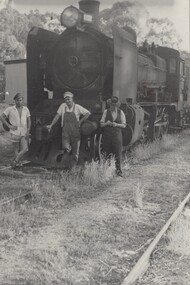
Photograph - Fred Rochow Railways Collection - Shunting at Shelley Station, 1961
... railway workers. Fred worked for many years as a fireman and then worked his way up the ranks to driver, experiencing many changes from the days of steam locomotives through to diesel trains, locomotives and even the modern XPT train. He worked throughout Victoria at different stages of his career, with his final working years focused on the northeast of Victoria and the Albury to Melbourne line. After his retirement, Fred continued to share his love of steam miniature trains with the community. Shelley Railway Station...railway workers. Fred worked for many years as a fireman and then worked his way up the ranks to driver, experiencing many changes from the days of steam locomotives through to diesel trains, locomotives and even the modern XPT train. He worked throughout Victoria at different stages of his career, with his final working years focused on the northeast of Victoria and the Albury to Melbourne line. After his retirement, Fred continued to share his love of steam miniature trains with the community. Shelley Railway Station ...The Fred Rochow Railways Collection incorporates photos related to the operation of the Wodonga Railway Station including different types of trains and railways staff C. 1930 – 1990. It was donated to the Wodonga Historical Society by Fred Rochow, a railwayman who spent many years based in Wodonga. He joined the Victorian Railways on 17th June l947 and retired in 1988. For some time, he was a member of the Australian Federated Union of Locomotive Enginemen and served a term as a member of the Trades Hall Council. He had an extensive knowledge of the struggles that took place to achieve better conditions for railway workers. Fred worked for many years as a fireman and then worked his way up the ranks to driver, experiencing many changes from the days of steam locomotives through to diesel trains, locomotives and even the modern XPT train. He worked throughout Victoria at different stages of his career, with his final working years focused on the northeast of Victoria and the Albury to Melbourne line. After his retirement, Fred continued to share his love of steam miniature trains with the community. Shelley Railway Station - Shelley was once Victoria's highest railway station, located 781 metres above sea level. The Shelley Railway Station was opened in 1916 and closed in 1979. The railway was used early in its life to transport farmer’s livestock from the Upper Murray to Wodonga. From the 1950s the railway was used heavily to transport equipment and machinery from Wodonga to the Upper Murray to help build the Snowy Mountains Hydro Electric Scheme. The Snowy Hydro Scheme was completed in 1974 and after several years of low level use, the railway was closed. Some remnants of the Shelley Station passenger platform can still be seen today, along with some information boards. The Shelley Railway Station now forms part of the High Country Rail Trail.This collection has local and statewide significance as it captures images of trains, locomotives and personnel who operated the railway services in Wodonga and throughout Northeast Victoria. The railways played a critical role in opening up Victoria and connecting Australia for trade, business, social communication and transport.Left to Right: Fireman Bert Cadman, Driver Wally Riley, Guard Hugh Fraser. Locomotive S300 - the ‘Matthew Flinders’ The S class diesel locomotives were built by Clyde Engineering in 1957 for the Victorian Railways. Designed as premier express passenger diesels, they assumed the ‘S class’ title from a fleet of steam locomotives. They were also given names of famous Australians. The S300 took the name ‘Matthew Flinders’. In 1962, S300 was converted from the Victorian broad gauge of 5’3” to the New South Wales gauge of 4’8.5”, in order to operate the new Southern Aurora between Sydney & Melbourne. As the locomotive grew older it was removed from these duties and was sold to Chicago Freight Car Leasing Australia (CFCLA) in 2004. It is now owned by a private owner and is on loan to the Canberra Railway Museum.railways wodonga, fred rochow, wodonga railwaymen, s class locomotive -
 Wodonga & District Historical Society Inc
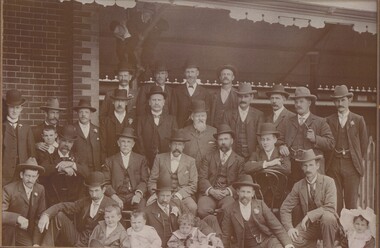
Photograph - Fred Rochow Railways Collection - Wodonga Railways staff, Early 1900s
... Albury to Melbourne line. After his retirement, Fred continued to share his love of steam miniature trains with the community. This collection has local and statewide significance as it captures images of trains, locomotives and personnel who operated the railway services in Wodonga and throughout Northeast Victoria. The railways played a critical role in opening up Victoria and connecting Australia for trade, business, social communication and transport. Railways Wodonga Fred Rochow Wodonga Railwaymen Wodonga Railway staff This photo was taken at Wodonga Railway Station ...The Fred Rochow Railways Collection incorporates photos related to the operation of the Wodonga Railway Station including different types of trains and railways staff C. 1930 – 1990. It was donated to the Wodonga Historical Society by Fred Rochow, a railwayman who spent many years based in Wodonga. He joined the Victorian Railways on 17th June l947 and retired in 1988. For some time, he was a member of the Australian Federated Union of Locomotive Enginemen and served a term as a member of the Trades Hall Council. He had an extensive knowledge of the struggles that took place to achieve better conditions for railway workers. Fred worked for many years as a fireman and then worked his way up the ranks to driver, experiencing many changes from the days of steam locomotives through to diesel trains, locomotives and even the modern XPT train. He worked throughout Victoria at different stages of his career, with his final working years focused on the northeast of Victoria and the Albury to Melbourne line. After his retirement, Fred continued to share his love of steam miniature trains with the community.This collection has local and statewide significance as it captures images of trains, locomotives and personnel who operated the railway services in Wodonga and throughout Northeast Victoria. The railways played a critical role in opening up Victoria and connecting Australia for trade, business, social communication and transport. This photo was taken at Wodonga Railway Station shortly after the introduction of corridor carriages in the early 1900s. Colligan and Donovan were the first two conductors appointed. Back Row, left to right: J. O'Neill (Traffic), W. Benson (Traffic), D. Fraser (Per Way); J. Wilson (Per Way). Second Back row, left to right: ? Prosser, Mat Ryan (Loco), J. Trembath (Loco), E. Fitch (Traffic); J. Colligan (Traffic), ? Hanna (Express Guard); F. Schuman (Loco). W. Coy (Express Guard), W. Wark (Loco), (unknown). Seated left to right: ? McKenna (Driver In Charge), G. Fogarty (Per Way Inspector), J. Broadbent (Station Master), J. Rowe (Assistant Station Master), ? Beaumont (Clerk). Boy behind: Ray Broadbent. Front Left to right: (Unknown); J. Cotter (Traffic), Dinny Donovan (Traffic), (Unknown), R. Prentice (Traffic). Children in front: ? Colligan, ? Colligan, J. Donovan, ? Weiss. Boys in the roof: Eric Broadbent and W. Mahoney. (Per Way is an approved person with responsibility for regular permanent way inspection to ensure the safety of the line)railways wodonga, fred rochow, wodonga railwaymen, wodonga railway staff -
 Wodonga & District Historical Society Inc
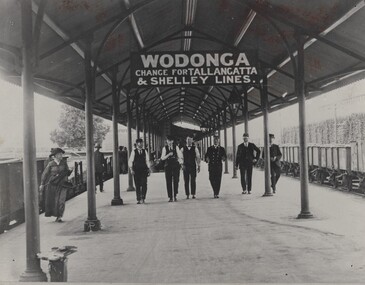
Photograph - Fred Rochow Railways Collection - Wodonga Railway Station, C. 1916 - 1930
... Albury to Melbourne line. After his retirement, Fred continued to share his love of steam miniature trains with the community. This collection has local and statewide significance as it captures images of trains, locomotives and personnel who operated the railway services in Wodonga and throughout Northeast Victoria. The railways played a critical role in opening up Victoria and connecting Australia for trade, business, social communication and transport. Railways Wodonga Fred Rochow Wodonga Railwaymen Cudgewa rail line Wodonga Railway Station ...The Fred Rochow Railways Collection incorporates photos related to the operation of the Wodonga Railway Station including different types of trains and railways staff C. 1930 – 1990. It was donated to the Wodonga Historical Society by Fred Rochow, a railwayman who spent many years based in Wodonga. He joined the Victorian Railways on 17th June l947 and retired in 1988. For some time, he was a member of the Australian Federated Union of Locomotive Enginemen and served a term as a member of the Trades Hall Council. He had an extensive knowledge of the struggles that took place to achieve better conditions for railway workers. Fred worked for many years as a fireman and then worked his way up the ranks to driver, experiencing many changes from the days of steam locomotives through to diesel trains, locomotives and even the modern XPT train. He worked throughout Victoria at different stages of his career, with his final working years focused on the northeast of Victoria and the Albury to Melbourne line. After his retirement, Fred continued to share his love of steam miniature trains with the community.This collection has local and statewide significance as it captures images of trains, locomotives and personnel who operated the railway services in Wodonga and throughout Northeast Victoria. The railways played a critical role in opening up Victoria and connecting Australia for trade, business, social communication and transport.Railway men walking along the Wodonga Railway Platform. The sign overhead advises of changes to the Tallangatta and Shelley lines. Cudgewa Line -The Cudgewa railway line opened in stages between 1889 and 1921. The first section from Wodonga to Huon opened on 10 September 1889. It was extended to Bolga on 18 July 1890, Tallangatta on 24 July 1891 and then to Shelley on 13 June 1916. Shelley was the highest station in Victoria. It extended further on to Beetomba on 10 April 1919 and finally reached Cudgewa on 5 May 1921. The line had 1 in 30 grades and trestle bridges that have been heritage listed. In 1919, the line was used to carry materials for the construction of Hume Weir, and three years later a spur line connecting Ebden to the weir was opened. In the 1960s, Cudgewa became the railhead of materials for the Snowy Mountains Scheme. The last passenger service from Wodonga to Tallangatta ran on 30 September 1961. The turntable and passenger platform at Cudgewa were abolished in 1976. On sign hanging overhead "WODONGA/ CHANGE FOR TALLANGATTA AND SHELLEY LINES"railways wodonga, fred rochow, wodonga railwaymen, cudgewa rail line, wodonga railway station -
 Wodonga & District Historical Society Inc
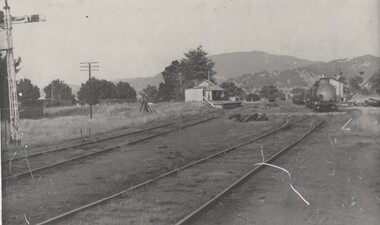
Photograph - Fred Rochow Railways Collection - Cudgewa - As most railwaymen knew it, C. 1950s - 1960s
... Albury to Melbourne line. After his retirement, Fred continued to share his love of steam miniature trains with the community. This collection has local and statewide significance as it captures images of trains, locomotives and personnel who operated the railway services in Wodonga and throughout Northeast Victoria. The railways played a critical role in opening up Victoria and connecting Australia for trade, business, social communication and transport. Railways Wodonga Fred Rochow Cudgewa Station ...The Fred Rochow Railways Collection incorporates photos related to the operation of the Wodonga Railway Station including different types of trains and railways staff C. 1930 – 1990. It was donated to the Wodonga Historical Society by Fred Rochow, a railwayman who spent many years based in Wodonga. He joined the Victorian Railways on 17th June l947 and retired in 1988. For some time, he was a member of the Australian Federated Union of Locomotive Enginemen and served a term as a member of the Trades Hall Council. He had an extensive knowledge of the struggles that took place to achieve better conditions for railway workers. Fred worked for many years as a fireman and then worked his way up the ranks to driver, experiencing many changes from the days of steam locomotives through to diesel trains, locomotives and even the modern XPT train. He worked throughout Victoria at different stages of his career, with his final working years focused on the northeast of Victoria and the Albury to Melbourne line. After his retirement, Fred continued to share his love of steam miniature trains with the community.This collection has local and statewide significance as it captures images of trains, locomotives and personnel who operated the railway services in Wodonga and throughout Northeast Victoria. The railways played a critical role in opening up Victoria and connecting Australia for trade, business, social communication and transport.The space on the left was storage space for machinery for the Snowy Mountains Hydro Electric Scheme. A special train was used to cart wide loads such as turbines, and trucks were made for widening when required. Equipment was loaded onto trains t the docks in Melbourne. Cudgewa Line -The Cudgewa railway line opened in stages between 1889 and 1921. The first section from Wodonga to Huon opened on 10 September 1889. It was extended to Bolga on 18 July 1890, Tallangatta on 24 July 1891, Shelley on 13 June 1916 (the highest station in Victoria), Beetomba on 10 April 1919 and Cudgewa on 5 May 1921. In 1919, the line was used to carry materials for the construction of Hume Weir, and three years later a spur line connecting Ebden to the weir was opened. In the 1960s, Cudgewa became the railhead of materials for the Snowy Mountains Scheme. The last passenger service from Wodonga to Tallangatta ran on 30 September 1961 The turntable and passenger platform at Cudgewa were abolished in 1976.railways wodonga, fred rochow, cudgewa station, snowy mountains hydro electric scheme -
 Wodonga & District Historical Society Inc
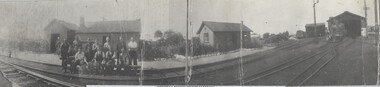
Photograph - Fred Rochow Railways Collection - Wodonga Railway Station Panorama, Before 1938
... Railway Station Far left: Crew's bike shed, then Fitter and Turner's working quarters. Neither building remains. Centre: Building comprised the Office and store. This building was demolished in 1938, so helps to date the photo. Far right: Engine shed with car cleaning on its left. The Albury...Railway Station Far left: Crew's bike shed, then Fitter and Turner's working quarters. Neither building remains. Centre: Building comprised the Office and store. This building was demolished in 1938, so helps to date the photo. Far right: Engine shed with car cleaning on its left. The Albury ...The Fred Rochow Railways Collection incorporates photos related to the operation of the Wodonga Railway Station including different types of trains and railways staff C. 1930 – 1990. It was donated to the Wodonga Historical Society by Fred Rochow, a railwayman who spent many years based in Wodonga. He joined the Victorian Railways on 17th June l947 and retired in 1988. For some time, he was a member of the Australian Federated Union of Locomotive Enginemen and served a term as a member of the Trades Hall Council. He had an extensive knowledge of the struggles that took place to achieve better conditions for railway workers. Fred worked for many years as a fireman and then worked his way up the ranks to driver, experiencing many changes from the days of steam locomotives through to diesel trains, locomotives and even the modern XPT train. He worked throughout Victoria at different stages of his career, with his final working years focused on the northeast of Victoria and the Albury to Melbourne line. After his retirement, Fred continued to share his love of steam miniature trains with the community.This collection has local and statewide significance as it captures images of trains, locomotives and personnel who operated the railway services in Wodonga and throughout Northeast Victoria. The railways played a critical role in opening up Victoria and connecting Australia for trade, business, social communication and transport.Panorama of Wodonga Railway Station Far left: Crew's bike shed, then Fitter and Turner's working quarters. Neither building remains. Centre: Building comprised the Office and store. This building was demolished in 1938, so helps to date the photo. Far right: Engine shed with car cleaning on its left. The Albury Express went in on the right and the "Spirit of Progress" entered on the left.railways wodonga, fred rochow, wodonga railway station -
 Wodonga & District Historical Society Inc
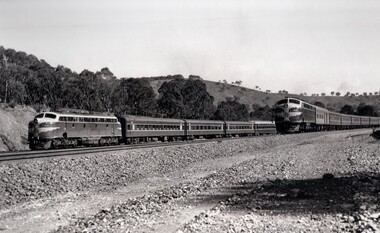
Photograph - Fred Rochow Railways Collection - "Albury Express" and the "Spirit of Progress", 1973
... Albury to Melbourne line. After his retirement, Fred continued to share his love of steam miniature trains with the community. This collection has local and statewide significance as it captures images of trains, locomotives and personnel who operated the railway services in Wodonga and throughout Northeast Victoria. The railways played a critical role in opening up Victoria and connecting Australia for trade, business, social communication and transport. Railways Wodonga Fred Rochow Northeast line centenary From your Station ...The Fred Rochow Railways Collection incorporates photos related to the operation of the Wodonga Railway Station including different types of trains and railways staff C. 1930 – 1990. It was donated to the Wodonga Historical Society by Fred Rochow, a railwayman who spent many years based in Wodonga. He joined the Victorian Railways on 17th June l947 and retired in 1988. For some time, he was a member of the Australian Federated Union of Locomotive Enginemen and served a term as a member of the Trades Hall Council. He had an extensive knowledge of the struggles that took place to achieve better conditions for railway workers. Fred worked for many years as a fireman and then worked his way up the ranks to driver, experiencing many changes from the days of steam locomotives through to diesel trains, locomotives and even the modern XPT train. He worked throughout Victoria at different stages of his career, with his final working years focused on the northeast of Victoria and the Albury to Melbourne line. After his retirement, Fred continued to share his love of steam miniature trains with the community.This collection has local and statewide significance as it captures images of trains, locomotives and personnel who operated the railway services in Wodonga and throughout Northeast Victoria. The railways played a critical role in opening up Victoria and connecting Australia for trade, business, social communication and transport. “Albury Express” on broad gauge flanked by “Spirit of Progress” on standard gauge. This photo was presented to Mr. Quirk, to celebrate the Centenary Celebration of the Northeast Railway line from Melbourne to Wodonga, November 1873 to 1973. From your Station Master. S.E. Simpsonrailways wodonga, fred rochow, northeast line centenary -
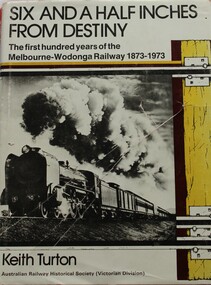 Wodonga & District Historical Society Inc
Book - Six and a Half Inches from Destiny: First 100 Years of Melbourne to Wodonga Railway, 1873 - 1973, Keith W. Turton
... railway was extended over the River Murray to meet the New South Wales railhead at Albury. When the two lines finally met a significant fact became apparent - the track gauges of the two systems differed by six and a half inches. For 80 years this difference created havoc until a new railway of uniform gauge was built parallel to the Victorian gauge line from Melbourne to Wodonga. This book deals with the planning, construction and the first 100 years of operation or the railway to Wodonga, together with its locomotives, stations ...Inter-colonial railway communication was established in 1883 when the Melbourne - Wodonga railway was extended over the River Murray to meet the New South Wales railhead at Albury. When the two lines finally met a significant fact became apparent - the track gauges of the two systems differed by six and a half inches. For 80 years this difference created havoc until a new railway of uniform gauge was built parallel to the Victorian gauge line from Melbourne to Wodonga. This book deals with the planning, construction and the first 100 years of operation or the railway to Wodonga, together with its locomotives, stations and trains which travelled its tracks.non-fictionInter-colonial railway communication was established in 1883 when the Melbourne - Wodonga railway was extended over the River Murray to meet the New South Wales railhead at Albury. When the two lines finally met a significant fact became apparent - the track gauges of the two systems differed by six and a half inches. For 80 years this difference created havoc until a new railway of uniform gauge was built parallel to the Victorian gauge line from Melbourne to Wodonga. This book deals with the planning, construction and the first 100 years of operation or the railway to Wodonga, together with its locomotives, stations and trains which travelled its tracks.railways victoria, railway melbourne to wodonga -
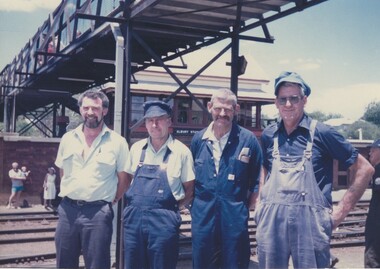 Wodonga & District Historical Society Inc
Photograph - Fred Rochow Railways Collection - Crew on the Flying Scotsman, 1988
... The 4 members of the crew of The Flying Scotsman in 1988, taken at the Albury Station The Flying Scotsman Pacific 4-6-2, perhaps one of the most iconic steam locomotives in the world, visited Australia in 1988-89 for a series of events associated with the country’s bicentennial celebrations. As part of the Bicentennial celebrations locomotives began to arrive in Melbourne for the AusSteam 88 exhibition from 14 October. A planned parallel run south of Seymour with NSW locomotives 3112 and 1210 and Victorian Railways...Railways Wodonga Fred Rochow Flying Scotsman Australia Bicentennial L-R: Guard Jim Taylor, Fireman Noel Strauss, Foreman Jack Brown and Driver Ned Ziebell. The 4 members of the crew of The Flying Scotsman in 1988, taken at the Albury Station The Flying Scotsman Pacific 4-6-2, perhaps one of the most iconic steam locomotives in the world, visited Australia in 1988-89 for a series of events associated with the country’s bicentennial celebrations. ...The Fred Rochow Railways Collection incorporates photos related to the operation of the Wodonga Railway Station including different types of trains and railways staff C. 1930 – 1990. It was donated to the Wodonga Historical Society by Fred Rochow, a railwayman who spent many years based in Wodonga. He joined the Victorian Railways on 17th June l947 and retired in 1988. For some time, he was a member of the Australian Federated Union of Locomotive Enginemen and served a term as a member of the Trades Hall Council. He had an extensive knowledge of the struggles that took place to achieve better conditions for railway workers. Fred worked for many years as a fireman and then worked his way up the ranks to driver, experiencing many changes from the days of steam locomotives through to diesel trains, locomotives and even the modern XPT train. He worked throughout Victoria at different stages of his career, with his final working years focused on the northeast of Victoria and the Albury to Melbourne line. After his retirement, Fred continued to share his love of steam miniature trains with the community.This collection has local and statewide significance as it captures images of trains, locomotives and personnel who operated the railway services in Wodonga and throughout Northeast Victoria. The railways played a critical role in opening up Victoria and connecting Australia for trade, business, social communication and transport.The 4 members of the crew of The Flying Scotsman in 1988, taken at the Albury Station The Flying Scotsman Pacific 4-6-2, perhaps one of the most iconic steam locomotives in the world, visited Australia in 1988-89 for a series of events associated with the country’s bicentennial celebrations. As part of the Bicentennial celebrations locomotives began to arrive in Melbourne for the AusSteam 88 exhibition from 14 October. A planned parallel run south of Seymour with NSW locomotives 3112 and 1210 and Victorian Railways J515 had to be abandoned due to late running by the NSW locomotives. A parallel run did take place on Sunday 16 October when VR R761 and NSW 3801 ran from Wodonga to Melbourne. On 25 October 1988, the Flying Scotsman worked its first passenger trip in Australia when it took a return Melbourne to Albury journey. L-R: Guard Jim Taylor, Fireman Noel Strauss, Foreman Jack Brown and Driver Ned Ziebell.railways wodonga, fred rochow, flying scotsman, australia bicentennial -
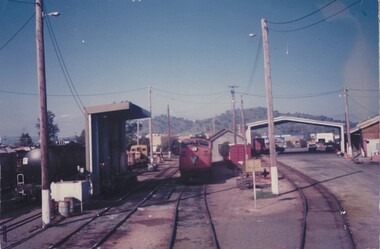 Wodonga & District Historical Society Inc
Photograph - Fred Rochow Railways Collection - Wodonga Locomotive, 23 August 1988
... Albury to Melbourne line. After his retirement, Fred continued to share his love of steam miniature trains with the community. This collection has local and statewide significance as it captures images of trains, locomotives and personnel who operated the railway services in Wodonga and throughout Northeast Victoria. The railways played a critical role in opening up Victoria and connecting Australia for trade, business, social communication and transport. Fred Rochow Victorian Railways Wodonga A locomotive in the yards at Wodonga Station ...The Fred Rochow Railways Collection incorporates photos related to the operation of the Wodonga Railway Station including different types of trains and railways staff C. 1930 – 1990. It was donated to the Wodonga Historical Society by Fred Rochow, a railwayman who spent many years based in Wodonga. He joined the Victorian Railways on 17th June l947 and retired in 1988. For some time, he was a member of the Australian Federated Union of Locomotive Enginemen and served a term as a member of the Trades Hall Council. He had an extensive knowledge of the struggles that took place to achieve better conditions for railway workers. Fred worked for many years as a fireman and then worked his way up the ranks to driver, experiencing many changes from the days of steam locomotives through to diesel trains, locomotives and even the modern XPT train. He worked throughout Victoria at different stages of his career, with his final working years focused on the northeast of Victoria and the Albury to Melbourne line. After his retirement, Fred continued to share his love of steam miniature trains with the community.This collection has local and statewide significance as it captures images of trains, locomotives and personnel who operated the railway services in Wodonga and throughout Northeast Victoria. The railways played a critical role in opening up Victoria and connecting Australia for trade, business, social communication and transport.A locomotive in the yards at Wodonga Stationfred rochow, victorian railways wodonga -
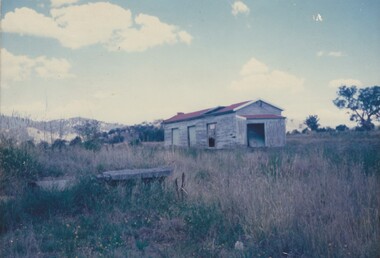 Wodonga & District Historical Society Inc
Photograph - Fred Rochow Railways Collection - Cudgewa as it was, 27 January 1989
... Albury to Melbourne line. After his retirement, Fred continued to share his love of steam miniature trains with the community. Cudgewa Line -The Cudgewa railway line opened in stages between 1889 and 1921. The first section from Wodonga to Huon opened on 10 September 1889. It was extended to Bolga on 18 July 1890, Tallangatta on 24 July 1891, Shelley on 13 June 1916 (the highest station...Albury to Melbourne line. After his retirement, Fred continued to share his love of steam miniature trains with the community. Cudgewa Line -The Cudgewa railway line opened in stages between 1889 and 1921. The first section from Wodonga to Huon opened on 10 September 1889. It was extended to Bolga on 18 July 1890, Tallangatta on 24 July 1891, Shelley on 13 June 1916 (the highest station ...The Fred Rochow Railways Collection incorporates photos related to the operation of the Wodonga Railway Station including different types of trains and railways staff C. 1930 – 1990. It was donated to the Wodonga Historical Society by Fred Rochow, a railwayman who spent many years based in Wodonga. He joined the Victorian Railways on 17th June l947 and retired in 1988. For some time, he was a member of the Australian Federated Union of Locomotive Enginemen and served a term as a member of the Trades Hall Council. He had an extensive knowledge of the struggles that took place to achieve better conditions for railway workers. Fred worked for many years as a fireman and then worked his way up the ranks to driver, experiencing many changes from the days of steam locomotives through to diesel trains, locomotives and even the modern XPT train. He worked throughout Victoria at different stages of his career, with his final working years focused on the northeast of Victoria and the Albury to Melbourne line. After his retirement, Fred continued to share his love of steam miniature trains with the community. Cudgewa Line -The Cudgewa railway line opened in stages between 1889 and 1921. The first section from Wodonga to Huon opened on 10 September 1889. It was extended to Bolga on 18 July 1890, Tallangatta on 24 July 1891, Shelley on 13 June 1916 (the highest station in Victoria), Beetomba on 10 April 1919 and Cudgewa on 5 May 1921. In 1919, the line was used to carry materials for the construction of Hume Weir, and three years later a spur line connecting Ebden to the weir was opened. In the 1960s, Cudgewa became the railhead of materials for the Snowy Mountains Scheme. The last passenger service from Wodonga to Tallangatta ran on 30 September 1961 The turntable and passenger platform at Cudgewa were abolished in 1976.This collection has local and statewide significance as it captures images of trains, locomotives and personnel who operated the railway services in Wodonga and throughout Northeast Victoria. The railways played a critical role in opening up Victoria and connecting Australia for trade, business, social communication and transport.What remains of the Cudgewa Railway Station taken in January 1989. A disused shed in a paddock is all that remains of a once busy station.railways wodonga, fred rochow, cudgewa station, high country railway line -
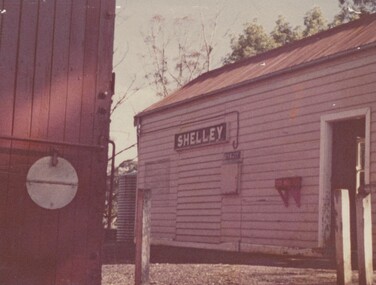 Wodonga & District Historical Society Inc
Photograph - Fred Rochow Railways Collection - Shelley Station
... railway workers. Fred worked for many years as a fireman and then worked his way up the ranks to driver, experiencing many changes from the days of steam locomotives through to diesel trains, locomotives and even the modern XPT train. He worked throughout Victoria at different stages of his career, with his final working years focused on the northeast of Victoria and the Albury to Melbourne line. After his retirement, Fred continued to share his love of steam miniature trains with the community. Shelley Railway Station...railway workers. Fred worked for many years as a fireman and then worked his way up the ranks to driver, experiencing many changes from the days of steam locomotives through to diesel trains, locomotives and even the modern XPT train. He worked throughout Victoria at different stages of his career, with his final working years focused on the northeast of Victoria and the Albury to Melbourne line. After his retirement, Fred continued to share his love of steam miniature trains with the community. Shelley Railway Station ...The Fred Rochow Railways Collection incorporates photos related to the operation of the Wodonga Railway Station including different types of trains and railways staff C. 1930 – 1990. It was donated to the Wodonga Historical Society by Fred Rochow, a railwayman who spent many years based in Wodonga. He joined the Victorian Railways on 17th June l947 and retired in 1988. For some time, he was a member of the Australian Federated Union of Locomotive Enginemen and served a term as a member of the Trades Hall Council. He had an extensive knowledge of the struggles that took place to achieve better conditions for railway workers. Fred worked for many years as a fireman and then worked his way up the ranks to driver, experiencing many changes from the days of steam locomotives through to diesel trains, locomotives and even the modern XPT train. He worked throughout Victoria at different stages of his career, with his final working years focused on the northeast of Victoria and the Albury to Melbourne line. After his retirement, Fred continued to share his love of steam miniature trains with the community. Shelley Railway Station - Shelley was once Victoria's highest railway station, located 781 metres above sea level. The Shelley Railway Station was opened in 1916 and closed in 1979. The railway was used early in its life to transport farmer’s livestock from the Upper Murray to Wodonga. From the 1950s the railway was used heavily to transport equipment and machinery from Wodonga to the Upper Murray to help build the Snowy Mountains Hydro Electric Scheme. The Snowy Hydro Scheme was completed in 1974 and after several years of low level use, the railway was closed. Some remnants of the Shelley Station passenger platform can still be seen today, along with some information boards. The Shelley Railway Station now forms part of the High Country Rail Trail.This collection has local and statewide significance as it captures images of trains, locomotives and personnel who operated the railway services in Wodonga and throughout Northeast Victoria. The railways played a critical role in opening up Victoria and connecting Australia for trade, business, social communication and transport.Shelley Railway Station. This image shows the tank where the hand brakes were lifted. They were applied again at the "up" side of Koetong for about another 10 miles then lifted near Bullioh.railways wodonga, fred rochow, shelley station, high country rail trail -
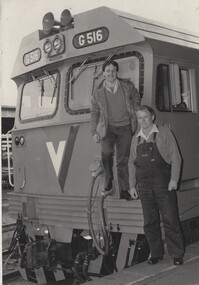 Wodonga & District Historical Society Inc
Photograph - Fred Rochow Railways Collection - Driver Tom Symonds and Fireman Billy Hyde, 3 August 1986
... Albury to Melbourne line. After his retirement, Fred continued to share his love of steam miniature trains with the community. This collection has local and statewide significance as it captures images of trains, locomotives and personnel who operated the railway services in Wodonga and throughout Northeast Victoria. The railways played a critical role in opening up Victoria and connecting Australia for trade, business, social communication and transport. Railways Wodonga Fred Rochow Wodonga Railway men G Class locomotives The Southern Aurora At top of locomotive "G516". In centre of locomotive, "V" insignia of VLine At Spencer Street Station ...The Fred Rochow Railways Collection incorporates photos related to the operation of the Wodonga Railway Station including different types of trains and railways staff C. 1930 – 1990. It was donated to the Wodonga Historical Society by Fred Rochow, a railwayman who spent many years based in Wodonga. He joined the Victorian Railways on 17th June l947 and retired in 1988. For some time, he was a member of the Australian Federated Union of Locomotive Enginemen and served a term as a member of the Trades Hall Council. He had an extensive knowledge of the struggles that took place to achieve better conditions for railway workers. Fred worked for many years as a fireman and then worked his way up the ranks to driver, experiencing many changes from the days of steam locomotives through to diesel trains, locomotives and even the modern XPT train. He worked throughout Victoria at different stages of his career, with his final working years focused on the northeast of Victoria and the Albury to Melbourne line. After his retirement, Fred continued to share his love of steam miniature trains with the community.This collection has local and statewide significance as it captures images of trains, locomotives and personnel who operated the railway services in Wodonga and throughout Northeast Victoria. The railways played a critical role in opening up Victoria and connecting Australia for trade, business, social communication and transport.At Spencer Street Station on the last “Southern Aurora". The locomotive was G516. Driver Tom Symonds was based in Wodonga from 1955 to 1987. He served as AFULE Branch Secretary from 1962 to 1963 and 1966 to 1971. G Class Locomotives - G Class locomotives were primarily intended for hauling freight services, they were also used on passenger trains such as the “Southern Aurora” and the “Intercapital Daylight”. Locomotive G516 came into service in December 1984. After a series of contractual changeovers between companies it was transferred to QR National and is still in operation, The "Southern Aurora", the overnight Sydney-Melbourne express, was one of the icons of Australian railways in the 1960s and 1970s. Uniquely in Australia, it conveyed only First Class passengers, all of whom were accommodated in air-conditioned sleeping cars, all equipped with showers. The Southern Aurora was introduced when part of Australia's rail gauge problem was solved with the construction of a new standard gauge line. The new line was a 317 km long line running from Albury, NSW, parallel to the existing broad gauge line to Melbourne, connecting Australia's two largest cities by standard gauge. The Southern Aurora consisted of 14 stainless steel cars: a luggage van, a power van, a dining car, a lounge car, and ten First Class Sleeping Cars. The total capacity was 198 passengers. For a number of years, there were no intermediate stops for passengers, and the train had the longest non-stop run in Australia, 430 km from Goulburn to Albury. Dining car crews changed at Goulburn and Albury, and locos were changed at Albury. The first train ran from Sydney on Thursday 14th April 1962, with full regular services starting from both Sydney and Melbourne on Monday 16th April 1962. The classic S Class locomotive was used to haul the early Southern Aurora trains. From 1984 it was also hauled by the new G Class locomotives, On the morning of 7th February 1969, the southbound Southern Aurora collided head-on with a northbound goods near Violet Town, Victoria. Nine passengers and crew were killed, and seven carriages were destroyed. A steady decline in patronage saw the withdrawal of the service in August 1986. At top of locomotive "G516". In centre of locomotive, "V" insignia of VLinerailways wodonga, fred rochow, wodonga railway men, g class locomotives, the southern aurora -
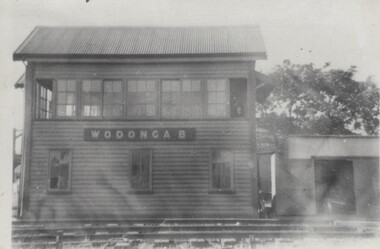 Wodonga & District Historical Society Inc
Photograph - Fred Rochow Railways Collection - Signal Box B, Wodonga Station, Before 1964
... Railways Wodonga Fred Rochow Wodonga Signal Box B On front of building "WODONGA B" Signal Box B was located on the south-east side of the High Street level crossing and controlled the High Street gates. A big wheel was used to operate the gates. The Signal Box B was demolished on May 10th, 1964, when the standard gauge line to Albury was completed. Fred Rochow Railways Collection - Signal Box B, Wodonga Station ...The Fred Rochow Railways Collection incorporates photos related to the operation of the Wodonga Railway Station including different types of trains and railways staff C. 1930 – 1990. It was donated to the Wodonga Historical Society by Fred Rochow, a railwayman who spent many years based in Wodonga. He joined the Victorian Railways on 17th June l947 and retired in 1988. For some time, he was a member of the Australian Federated Union of Locomotive Enginemen and served a term as a member of the Trades Hall Council. He had an extensive knowledge of the struggles that took place to achieve better conditions for railway workers. Fred worked for many years as a fireman and then worked his way up the ranks to driver, experiencing many changes from the days of steam locomotives through to diesel trains, locomotives and even the modern XPT train. He worked throughout Victoria at different stages of his career, with his final working years focused on the northeast of Victoria and the Albury to Melbourne line. After his retirement, Fred continued to share his love of steam miniature trains with the community.This collection has local and statewide significance as it captures images of trains, locomotives and personnel who operated the railway services in Wodonga and throughout Northeast Victoria. The railways played a critical role in opening up Victoria and connecting Australia for trade, business, social communication and transport.Signal Box B was located on the south-east side of the High Street level crossing and controlled the High Street gates. A big wheel was used to operate the gates. The Signal Box B was demolished on May 10th, 1964, when the standard gauge line to Albury was completed. On front of building "WODONGA B"railways wodonga, fred rochow, wodonga signal box b -
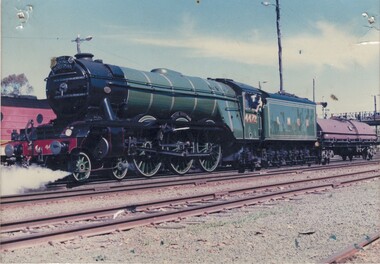 Wodonga & District Historical Society Inc
Photograph - Fred Rochow Railways Collection - "The Flying Scotsman" with water gin, 25 October 1988
... Albury Station. The Flying Scotsman Pacific 4-6-2, perhaps one of the most iconic steam locomotives in the world, visited Australia in 1988-89 for a series of events associated with the country’s bicentennial celebrations. As part of the Bicentennial celebrations locomotives began to arrive in Melbourne for the AusSteam 88 exhibition from 14 October. A planned parallel run south of Seymour with NSW locomotives 3112 and 1210 and Victorian Railways...Albury to Melbourne line. After his retirement, Fred continued to share his love of steam miniature trains with the community. This collection has local and statewide significance as it captures images of trains, locomotives and personnel who operated the railway services in Wodonga and throughout Northeast Victoria. The railways played a critical role in opening up Victoria and connecting Australia for trade, business, social communication and transport. Railways Wodonga Fred Rochow Flying Scotsman Australia Bicentennial "The Flying Scotsman" locomotive with water gin behind at the Albury Station ...The Fred Rochow Railways Collection incorporates photos related to the operation of the Wodonga Railway Station including different types of trains and railways staff C. 1930 – 1990. It was donated to the Wodonga Historical Society by Fred Rochow, a railwayman who spent many years based in Wodonga. He joined the Victorian Railways on 17th June l947 and retired in 1988. For some time, he was a member of the Australian Federated Union of Locomotive Enginemen and served a term as a member of the Trades Hall Council. He had an extensive knowledge of the struggles that took place to achieve better conditions for railway workers. Fred worked for many years as a fireman and then worked his way up the ranks to driver, experiencing many changes from the days of steam locomotives through to diesel trains, locomotives and even the modern XPT train. He worked throughout Victoria at different stages of his career, with his final working years focused on the northeast of Victoria and the Albury to Melbourne line. After his retirement, Fred continued to share his love of steam miniature trains with the community.This collection has local and statewide significance as it captures images of trains, locomotives and personnel who operated the railway services in Wodonga and throughout Northeast Victoria. The railways played a critical role in opening up Victoria and connecting Australia for trade, business, social communication and transport."The Flying Scotsman" locomotive with water gin behind at the Albury Station. The Flying Scotsman Pacific 4-6-2, perhaps one of the most iconic steam locomotives in the world, visited Australia in 1988-89 for a series of events associated with the country’s bicentennial celebrations. As part of the Bicentennial celebrations locomotives began to arrive in Melbourne for the AusSteam 88 exhibition from 14 October. A planned parallel run south of Seymour with NSW locomotives 3112 and 1210 and Victorian Railways J515 had to be abandoned due to late running by the NSW locomotives. A parallel run did take place on Sunday 16 October when VR R761 and NSW 3801 ran from Wodonga to Melbourne. On 25 October 1988, the Flying Scotsman worked its first passenger trip in Australia when it took a return Melbourne to Albury journey.railways wodonga, fred rochow, flying scotsman, australia bicentennial -
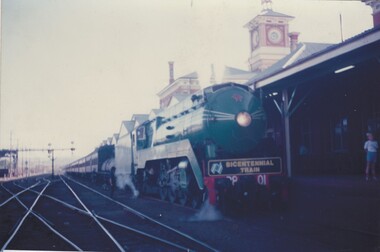 Wodonga & District Historical Society Inc
Photograph - Fred Rochow Railways Collection - Bicentennial Train Locomotive 3801 arriving in Albury, 29 October 1988
... Bicentennial Train hauled by Locomotive 3801 arriving at Albury Station, Locomotive 3801 was built by Sydney company The Clyde Engineering Co. Ltd., Granville in 1943 as the first of five streamlined (C) 38-class locomotives for the New South Wales Government Railways’ top-link express passenger duties. ...Albury to Melbourne line. After his retirement, Fred continued to share his love of steam miniature trains with the community. This collection has local and statewide significance as it captures images of trains, locomotives and personnel who operated the railway services in Wodonga and throughout Northeast Victoria. The railways played a critical role in opening up Victoria and connecting Australia for trade, business, social communication and transport. Railways Wodonga Fred Rochow Locomotive R761 Bicentennial Train Locomotive 3801 On front of locomotive Australia Bicentennial logo and sign "BICENTENNIAL TRAIN/3801" Bicentennial Train hauled by Locomotive 3801 arriving at Albury Station ...The Fred Rochow Railways Collection incorporates photos related to the operation of the Wodonga Railway Station including different types of trains and railways staff C. 1930 – 1990. It was donated to the Wodonga Historical Society by Fred Rochow, a railwayman who spent many years based in Wodonga. He joined the Victorian Railways on 17th June l947 and retired in 1988. For some time, he was a member of the Australian Federated Union of Locomotive Enginemen and served a term as a member of the Trades Hall Council. He had an extensive knowledge of the struggles that took place to achieve better conditions for railway workers. Fred worked for many years as a fireman and then worked his way up the ranks to driver, experiencing many changes from the days of steam locomotives through to diesel trains, locomotives and even the modern XPT train. He worked throughout Victoria at different stages of his career, with his final working years focused on the northeast of Victoria and the Albury to Melbourne line. After his retirement, Fred continued to share his love of steam miniature trains with the community.This collection has local and statewide significance as it captures images of trains, locomotives and personnel who operated the railway services in Wodonga and throughout Northeast Victoria. The railways played a critical role in opening up Victoria and connecting Australia for trade, business, social communication and transport.Bicentennial Train hauled by Locomotive 3801 arriving at Albury Station, Locomotive 3801 was built by Sydney company The Clyde Engineering Co. Ltd., Granville in 1943 as the first of five streamlined (C) 38-class locomotives for the New South Wales Government Railways’ top-link express passenger duties. The delivery of 3801 was much delayed due to wartime labour & material shortages, together with competing wartime construction priorities. After many years of service, 3801 had been scheduled for withdrawal in 1962 due to deteriorating mechanical condition, but rail enthusiasts raised sufficient funds to cover the cost of its overhaul. 3801 joined the collection of the New South Wales Rail Transport Museum (NSWRTM), Enfield on withdrawal from NSWGR service and continued in operation as a tour locomotive. It hauled the “Western Endeavour” on the first crossing of the Australian continent by a standard gauge train from Sydney to Perth and return in August – September 1970. 3801 also stars in the railway film ‘A Steam Train Passes’ made by Film Australia in 1974 By 1976 had been withdrawn from service due to poor boiler condition and placed on static display by the Rail Transport Museum in Thirlmere, NSW. The Locomotive remained in Thirlmere until 1983 when it was decided it should be restored for the Australian Bicentenary in 1988. A new organisation was created specifically for the purpose of operating 3801, and thus 3801 Limited was incorporated on 5th June 1985. Work on the locomotive was completed after three years, with 3801 making its debut at a special Railway Ball hosted in its honour on 29th November 1986. During the Australian Bicentenary celebrations in 1988, it operated an extensive program across Australia visiting every mainland capital accessible by rail including an appearance at AusSteam ’88 in Melbourne in October 1988, stopping over in Wodonga on the way. After the company’s 20-year lease on the locomotive expired in 2006 Railcorp chose not to extend the agreement, and the locomotive returned to the Rail Transport Museum at Thirlmere (now the NSW Rail Museum). 3801 was withdrawn from service in 2007 for major boiler repairs. Locomotive 3801 was officially relaunched at Sydney's Central Station on Friday 12 March 2021 by Her Excellency, the Honourable Margaret Beazley AC QC, Governor of New South Wales.On front of locomotive Australia Bicentennial logo and sign "BICENTENNIAL TRAIN/3801" railways wodonga, fred rochow, locomotive r761, bicentennial train, locomotive 3801 -
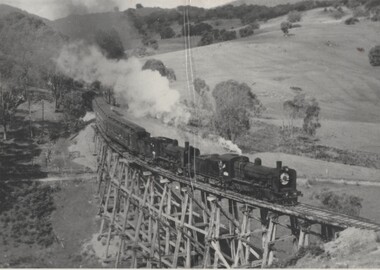 Wodonga & District Historical Society Inc
Photograph - Fred Rochow Railways Collection - Historical Special to Cudgewa, 3 November 1963
... Albury to Melbourne line. After his retirement, Fred continued to share his love of steam miniature trains with the community. Cudgewa Line -The Cudgewa railway line opened in stages between 1889 and 1921. The first section from Wodonga to Huon opened on 10 September 1889. It was extended to Bolga on 18 July 1890, Tallangatta on 24 July 1891, Shelley on 13 June 1916 (the highest station...Albury to Melbourne line. After his retirement, Fred continued to share his love of steam miniature trains with the community. Cudgewa Line -The Cudgewa railway line opened in stages between 1889 and 1921. The first section from Wodonga to Huon opened on 10 September 1889. It was extended to Bolga on 18 July 1890, Tallangatta on 24 July 1891, Shelley on 13 June 1916 (the highest station ...The Fred Rochow Railways Collection incorporates photos related to the operation of the Wodonga Railway Station including different types of trains and railways staff C. 1930 – 1990. It was donated to the Wodonga Historical Society by Fred Rochow, a railwayman who spent many years based in Wodonga. He joined the Victorian Railways on 17th June l947 and retired in 1988. For some time, he was a member of the Australian Federated Union of Locomotive Enginemen and served a term as a member of the Trades Hall Council. He had an extensive knowledge of the struggles that took place to achieve better conditions for railway workers. Fred worked for many years as a fireman and then worked his way up the ranks to driver, experiencing many changes from the days of steam locomotives through to diesel trains, locomotives and even the modern XPT train. He worked throughout Victoria at different stages of his career, with his final working years focused on the northeast of Victoria and the Albury to Melbourne line. After his retirement, Fred continued to share his love of steam miniature trains with the community. Cudgewa Line -The Cudgewa railway line opened in stages between 1889 and 1921. The first section from Wodonga to Huon opened on 10 September 1889. It was extended to Bolga on 18 July 1890, Tallangatta on 24 July 1891, Shelley on 13 June 1916 (the highest station in Victoria), Beetomba on 10 April 1919 and Cudgewa on 5 May 1921. In 1919, the line was used to carry materials for the construction of Hume Weir, and three years later a spur line connecting Ebden to the weir was opened. In the 1960s, Cudgewa became the railhead of materials for the Snowy Mountains Scheme. The last passenger service from Wodonga to Tallangatta ran on 30 September 1961 The turntable and passenger platform at Cudgewa were abolished in 1976.This collection has local and statewide significance as it captures images of trains, locomotives and personnel who operated the railway services in Wodonga and throughout Northeast Victoria. The railways played a critical role in opening up Victoria and connecting Australia for trade, business, social communication and transport.Historical Steam locomotive on journey to Cudgewa. Locomotive K184 leading with Driver Noel Strauss and Fireman Barrows. Locomotive K186 is the Banker with Driver Doug West. A banker is railway locomotive that temporarily assists a train that requires additional power or traction to climb a gradient. K Class Locomotives - One of VR's most successful classes of loco they were built over a 24 year period. A general purpose, light lines loco the K class had a very long career in all sorts of service from branch line passenger and goods work to pilot and banker duties and roadside mainline service. The K class is credited with working virtually every line in the VR system and hauling almost every kind of train. The majority of the class lasted into the 60's. K 184 and K186 were built by the Victorian Railways' Newport Workshops in 1945 to the successful K-class 2-8-0 locomotive design for branch-line work. K184 entered service on 9 January 1946. K186 entered service on 19 March 1946. K184 was used on heritage services with Steamrail Victoria through the 1970s. It was withdrawn from service in 1980 and is stored at Newport Workshops. and is now used as a source of spare parts; other Steamrail K Class locomotives occasionally wear its number plates and headlight number boards. K186 was scrapped on 25 October 1967.railways wodonga, fred rochow, cudgewa station, high country railway line, k class locomotives
