
Showing 90 items matching "architecture gothic"
-
 Federation University Historical Collection
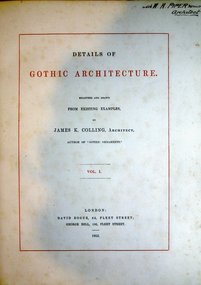
Book, Details of Gothic Architecture, 1852 (exact)
... Details of Gothic Architecture......architecture gothic...“Details of Gothic Architecture is measured and drawn from existing examples by James K. ...“Details of Gothic Architecture is measured and drawn from existing examples by James K. ...“Details of Gothic Architecture is measured and drawn from existing examples by James K. Colling, author of ‘Gothic Ornaments’.“—Front cover. It contains detailed drawings of parish churches during the 19 century.A large book with blue hardcover and black cloth corners and spine. Illus. with b&w plates of architectual drawings. Vol.1. Title is printed in black and red. This book contains measured drawings of details from parish churches. It includes 8p. table of contents. Inscription on title page "W. H. Piper, architect". A plate inside front cover titled "Ballarat Technical Art School Library No. AD/14".and, architecture gothic, decoration, ornament gothic, james k colling, gothic england, norman, early english, decorated, perpendicular, burnby church, etton church, yorkshire, walsoken church, norfolk, great grimsby church, lincolnshire, bookplate, ballarat technical art school library -
 Glen Eira Historical Society
Article - Glenfern
... Gothic revival architecture... Gothic...Caulfield Conservation Study conducted by Andrew Ward in October 1994, outlining a description of the gothic revival architectural aspects of Glenfern. It includes the history of the owners and the forthcoming recommendations for planning scheme control. ...Inkerman Road Glenfern Gothic revival architecture Gothic style Bakewell John St Kilda East Hotham Street McDonnell Francis Mansions Laing Charles Watson Thomas du Frayer Agnes Boyd John Boyd Lucy Hennessy M. ...Caulfield Conservation Study conducted by Andrew Ward in October 1994, outlining a description of the gothic revival architectural aspects of Glenfern. It includes the history of the owners and the forthcoming recommendations for planning scheme control. Includes three exterior photographs.inkerman road, glenfern, gothic revival architecture, gothic style, bakewell john, st kilda east, hotham street, mcdonnell francis, mansions, laing charles, watson thomas, du frayer agnes, boyd john, boyd lucy, hennessy m., architect, smith and johnson, danne mary, primary school, newington college, ostberg anders, inkerman street, ostberg sarah, mair agnes, glenfern college, ostberg amy, ostberg ebba, stables -
 Federation University Historical Collection
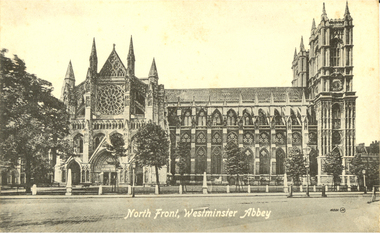
Postcard - black and white, North Front, Westminster Abbey, London, England, c198
... architecture...church...postcard...Gothic...The north front of Westminster Abbey is built in Gothic Style. chatham-holmes family collection westminster abbey architecture church postcard Gothic Black and white postcard showing the architectural wonder of Westminster Abbey and its north front. ...The north front of Westminster Abbey is built in Gothic Style.Black and white postcard showing the architectural wonder of Westminster Abbey and its north front. chatham-holmes family collection, westminster abbey, architecture, church, postcard, gothic -
Glen Eira Historical Society
Document - St. Mary’s Church, Caulfield
... ... Gothic Architecture...Mary’s Church Gothic Architecture Bluestone Towers Bell Reed and Barnes Stephen George Sir Helenslea Jubilee School Schools Stained Glass Bell Towers Arches Roofs Bonham James Perry Bishop Little and Byrne Peck Arthur Hood Crescent Ward Andrew Building Construction Reid and Barnes Cockram and Co. ...Photocopied copy of Andrew Ward’s February 1994 conservation study he completed of St. Mary’s Church. Includes exterior and interior photograph. Two information leaflets on St. Mary’s Church of England and St. Mary’s Jubilee School, giving brief history of the church and hall. Includes sketches of church features.glen eira road, st. mary’s church, gothic architecture, bluestone, towers, bell, reed and barnes, stephen george sir, helenslea, jubilee school, schools, stained glass, bell towers, arches, roofs, bonham james, perry bishop, little and byrne, peck arthur, hood crescent, ward andrew, building construction, reid and barnes, cockram and co., moorehouse bishop, webb charles, goe bishop, shelford girls grammar school, architectural features, porches, bishops -
Glen Eira Historical Society
Article - Trinity Congregational Church, Glen Huntly
... ... Gothic architecture...Trinity Congregational Church Gothic architecture Market gardens Primitive Methodists Gables Glen Huntly Grange Road Towers Gas Lighting Mercy G. ...History of Trinity Congregational Church, Glen Huntly by J. O’ Donnell dated April 1973. Article tells where the church building came from, its features and how the land in Grange Road was obtained. How, after its removal from South Melbourne to Grange Road; it was re-erected a porch and timber cross were added. Source is Caulfield Historical Society Newsletter.trinity congregational church, gothic architecture, market gardens, primitive methodists, gables, glen huntly, grange road, towers, gas lighting, mercy g., porches, congregational union., rosstown sugarmill -
 Mrs Aeneas Gunn Memorial Library
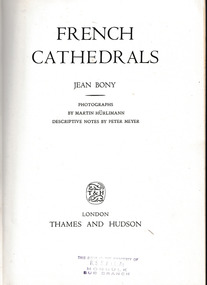
Book, Thames and Hudson, French cathedrals, 1954
... ...Gothic architecture - France...France - Cathedrals Gothic architecture - France A photographic and descriptive essay of French cathedrals Ill, text. ...A photographic and descriptive essay of French cathedralsIll, text.non-fictionA photographic and descriptive essay of French cathedralsfrance - cathedrals, gothic architecture - france -
 Box Hill Historical Society
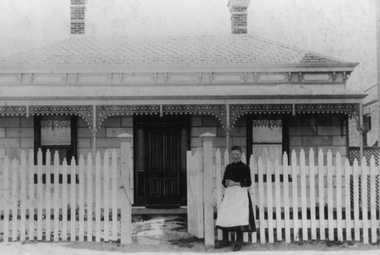
Photograph - Dines home
... The single-fronted house is Victorian Gothic (revival) architecture in style, has lacework along the verandah and a tile roof. ...The single-fronted house is Victorian Gothic (revival) architecture in style, has lacework along the verandah and a tile roof. ...The home of Anne Dines built in 1889, on the site of the present Town Hall. Shows girl standing in front of the picket fence. The single-fronted house is Victorian Gothic (revival) architecture in style, has lacework along the verandah and a tile roof. B&w photodines> anne, whitehorse road, box hill, lace work, houses, victorian style -
Glen Eira Historical Society
Document - Hengar, Glen Eira Road, 356, Elsternwick
... The study gives a brief history of Hengar’s construction and occupancy, a description of its Gothic revival architectural features and a statement of its heritage significance. ...The study gives a brief history of Hengar’s construction and occupancy, a description of its Gothic revival architectural features and a statement of its heritage significance. ...A photocopy of a two page Caulfield Conservation Study by Andrew Ward, dated 01/1995, on Hengar at 356 Glen Eira Road, Elsternwick. The study gives a brief history of Hengar’s construction and occupancy, a description of its Gothic revival architectural features and a statement of its heritage significance. The study includes a black and white photograph of the exterior of Hengar.langdon henry, renwick mary, langdon elizabeth, langdon laura, blanche street, glen eira road, kooyong road, langdon estate, elsternwick, caulfield, hengar, beemery park, rosecraddock, tarqua, beemery, happy days kindergarten, architectural styles, architectural features, gothic revival, victorian style, preschools, the contemporary school of art -
 Federation University Historical Collection
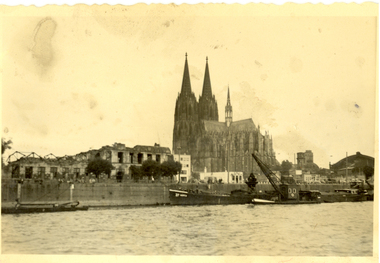
Photograph - black and white, Cologne Cathedral from the Rhine, c1950
... Cologne Cathedral is a renowned monument of German Catholicism and Gothic architecture and is a World Heritage Site. ...Cologne Cathedral is a renowned monument of German Catholicism and Gothic architecture and is a World Heritage Site. ...Cologne Cathedral is a renowned monument of German Catholicism and Gothic architecture and is a World Heritage Site. It is Germany's most visited landmark, attracting an average of 20,000 people a day. (Wikipedia) Though not targeted itself, the cathedral was very near to the central railway station and suffered fourteen hits by aerial bombs during World War II. Badly damaged, it nevertheless remained standing in an otherwise completely flattened city. The twin spires were an easily recognizable navigational landmark for Allied aircraft bombing deeper into Germany, which may explain why the cathedral was spared. Repairs were completed in 1956. An emergency repair on the northwest tower's base carried out in 1944 using poor-quality brick taken from a nearby ruined building remained visible until 2005 as a reminder of the war, when it was decided to restore the section its original appearance. (Wikipedia) Black and white photograph showing a grand cathedral from a waterway. It is Cologne (Koln) Cathedral from the Rhine. To the left of the photo bombed buildings are evident. The photograph is believed to have been taken by Frank Wright.cologne cathedral, koln, germany, rhine, bombing, world war two, frank wright -
 The Beechworth Burke Museum
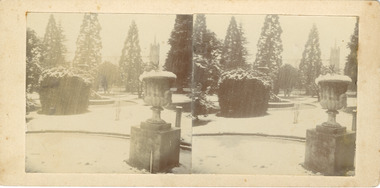
Photograph - Stereoscopic Photograph
... It is an architectural example of gothic revival churches in Victoria....It is an architectural example of gothic revival churches in Victoria. ...Town Hall Gardens in Beechworth were laid out by R H Jenkyn in 1875, however the gardens as a public open space dates back to 1857. The row of Sierra Redwood trees along the historic gardens' Williams Street frontage are presumed to be a gift from Baron Ferdinand von Mueller, Director of the Royal Botanic Gardens. Many trees from the original plantings are on the National Trust Significant Tree Register. The gardens also feature a rotuda, fountain and two urns which are dated to 1876 and remain in their original positions. Today, Town Hall Gardens are adjacent to prominent buildings including Indigo Shire Council, Burke Museum, Beechworth Library, and Beechworth Visitor Information Centre. The church steeple visible in the background belongs to St Andrew's Presbyterian Church which was erected in 1857 by Smith, Bank and Cranston. It is an architectural example of gothic revival churches in Victoria.This photograph documents a snowfall event in August 1899 which covered Beechworth's Town Hall Gardens in a blanket of snow. It also provides a historical view of key landmarks in the gardens and surrounding area, which is adjacent to the Burke Museum.Black and white stereoscopic photograph mounted on pasteboard.Reverse: 97-2282 / 84-159-1 / Town Hall Gardens / BMMA03167 / Note: A03167 / Town Hall Gardens, Beechworth /town hall gardens, snow, churches beechworth -
 Ballarat Heritage Services
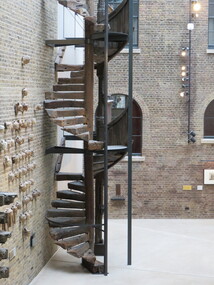
Digital Photograph, Stairs from Salisbury Cathedral
... Standing 123 metres high above the city that grew up around it Salisbury Cathedral is almost entirely Early English Gothic in architectural style. The Magna Carta housed at SAlisbury is the best preserved of the four originals dating from June 1215 and still in existence.It is written in Latin with a quill pen on treated animal skin (parchment). ...Standing 123 metres high above the city that grew up around it Salisbury Cathedral is almost entirely Early English Gothic in architectural style. The Magna Carta housed at SAlisbury is the best preserved of the four originals dating from June 1215 and still in existence.It is written in Latin with a quill pen on treated animal skin (parchment). ...These stairs are on display at Victoria and Albert Museum, London. Salisbury Cathedral is still in existence and houses the famous Magna Carta. Standing 123 metres high above the city that grew up around it Salisbury Cathedral is almost entirely Early English Gothic in architectural style. The Magna Carta housed at SAlisbury is the best preserved of the four originals dating from June 1215 and still in existence.It is written in Latin with a quill pen on treated animal skin (parchment). The sealed documents were sent throughout the country after the Charter was forced on King John barons who were unhappy with the way he was ruling England. Wooden stairsmagna carta salisbury cathedral king john stairs -
 Ballarat Heritage Services
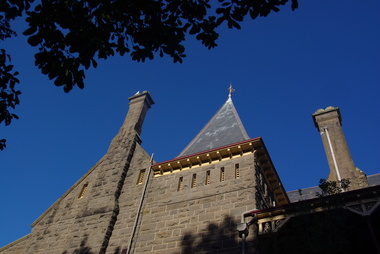
Photograph - Image - Colour, Clare Gervasoni, Bishop's Palace Ballarat Featuring Chimneys and Roof Line, Ballarat, 2014, 23/02/2014
... Bishop's Palace is of architectural, aesthetic and historical significance to the State of Victoria. The two-storey bluestone mansion is an impressive example of 19th-century Gothic architecture with an unusual design. ...Bishop's Palace is of architectural, aesthetic and historical significance to the State of Victoria. The two-storey bluestone mansion is an impressive example of 19th-century Gothic architecture with an unusual design. ...Bishops Palace was built in 1877 as the home for the first Catholic Bishop of Ballarat. Designed by Melbourne architect, Joseph Reed, of Reed and Barnes, it was built by George Broom at a cost of £6,000. Reed and Barnes also designed Melbourne’s State Library, Ripponlea Estate and the Melbourne Royal Exhibition Building. The original heritage-listed gold lead stencilled paintwork that can be seen in the front entry and on the staircase walls at Bishops Palace was replicated in the Royal Exhibition Building. The original property was 140 squares set on 11 acres of gardens and took up an entire block of Sturt Street. This was on scale with the importance of Ballarat as a gold-mining centre at the time. Bishop's Palace is of architectural, aesthetic and historical significance to the State of Victoria. The two-storey bluestone mansion is an impressive example of 19th-century Gothic architecture with an unusual design. It retains many of its original features, including lead stencilled paintwork, cornices, ceiling roses, fixtures and fittings. Since sold by the Catholic Church the Bishops Palace has undergone a number of transformations in its lifetime, from the home of the first Bishop to a private residence, and today, as a luxurious accommodation, wedding and events venue. The grounds were subdivided over the years, and the property is now surrounded by four of the original 11 acres of gardens. It opened its doors to the public in 2019.Colour image of the bluestone Bishop's Palace, and it's cast iron lace.architecture, garden, bishop's palace, cast iron lace, cast iron, catholic church -
 Flagstaff Hill Maritime Museum and Village
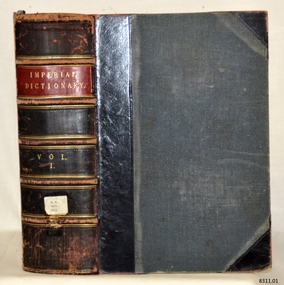
Book - Reference Dictionary/Scientific/Technological, John Ogilvie, The Imperial Dictionary English Technological and Scientific Vol 1, 1861
... Jewitt was one of the preeminent architectural and scientific wood-engravers of the Victorian era, highly celebrated for his precise, clean, and beautiful depictions of Gothic architecture, structural components, and natural history specimens....Jewitt was one of the preeminent architectural and scientific wood-engravers of the Victorian era, highly celebrated for his precise, clean, and beautiful depictions of Gothic architecture, structural components, and natural history specimens. ...The Imperial Dictionary was a massive, progressive undertaking designed to be a bridge between a traditional language dictionary and a comprehensive technical encyclopedia. John Ogilvie built the text upon the foundation of Noah Webster’s famous American Dictionary. However, Ogilvie dramatically expanded it to include thousands of new terms born from the Industrial Revolution. It heavily prioritized the vocabulary of engineering, medicine, manufacturing, chemistry, and the arts, alongside a vast array of distinct Scottish and provincial British terms that Webster had omitted.The Imperial Dictionary English Technological and Scientific Vol 1 Author: John Ogilvie Publisher: Blackie & Son Ltd Date: 1861 Further Information: Black cloth hardcover with a brown leather spine, title lettering in gold. The spine has a Library label with an inscription.non-fictionThe Imperial Dictionary was a massive, progressive undertaking designed to be a bridge between a traditional language dictionary and a comprehensive technical encyclopedia. John Ogilvie built the text upon the foundation of Noah Webster’s famous American Dictionary. However, Ogilvie dramatically expanded it to include thousands of new terms born from the Industrial Revolution. It heavily prioritized the vocabulary of engineering, medicine, manufacturing, chemistry, and the arts, alongside a vast array of distinct Scottish and provincial British terms that Webster had omitted.flagstaff hill, warrnambool, shipwrecked coast, flagstaff hill maritime museum, maritime museum, shipwreck coast, flagstaff hill maritime village, great ocean road, book, pattison collection, warrnambool library, warrnambool mechanics’ institute, ralph eric pattison, corangamite regional library service, warrnambool city librarian, mechanics’ institute library, victorian library board, warrnambool books and records, warrnambool children’s library -
 Flagstaff Hill Maritime Museum and Village
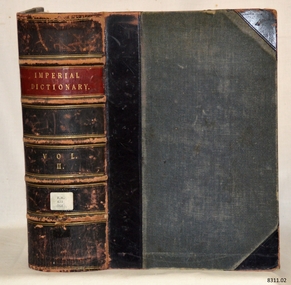
Book - Reference Dictionary/Scientific/Technological, John Ogilvie, The Imperial Dictionary English Technological and Scientific Vol 2, 1861
... Jewitt was one of the preeminent architectural and scientific wood-engravers of the Victorian era, highly celebrated for his precise, clean, and beautiful depictions of Gothic architecture, structural components, and natural history specimens....Jewitt was one of the preeminent architectural and scientific wood-engravers of the Victorian era, highly celebrated for his precise, clean, and beautiful depictions of Gothic architecture, structural components, and natural history specimens. ...The Imperial Dictionary was a massive, progressive undertaking designed to be a bridge between a traditional language dictionary and a comprehensive technical encyclopedia. John Ogilvie built the text upon the foundation of Noah Webster’s famous American Dictionary. However, Ogilvie dramatically expanded it to include thousands of new terms born from the Industrial Revolution. It heavily prioritized the vocabulary of engineering, medicine, manufacturing, chemistry, and the arts, alongside a vast array of distinct Scottish and provincial British terms that Webster had omitted.The Imperial Dictionary English Technological and Scientific Vol 2 Author: John Ogilvie Publisher: Blackie & Son Ltd Date: 1861 Further Information: Black cloth hardcover with a brown leather spine, title lettering in gold. The spine has a Library label with an inscription.non-fictionThe Imperial Dictionary was a massive, progressive undertaking designed to be a bridge between a traditional language dictionary and a comprehensive technical encyclopedia. John Ogilvie built the text upon the foundation of Noah Webster’s famous American Dictionary. However, Ogilvie dramatically expanded it to include thousands of new terms born from the Industrial Revolution. It heavily prioritized the vocabulary of engineering, medicine, manufacturing, chemistry, and the arts, alongside a vast array of distinct Scottish and provincial British terms that Webster had omitted.flagstaff hill, warrnambool, shipwrecked coast, flagstaff hill maritime museum, maritime museum, shipwreck coast, flagstaff hill maritime village, great ocean road, book, pattison collection, warrnambool library, warrnambool mechanics’ institute, ralph eric pattison, corangamite regional library service, warrnambool city librarian, mechanics’ institute library, victorian library board, warrnambool books and records, warrnambool children’s library -
 Lara RSL Sub Branch
Wallet, Y.M.C.A. Wallet Mr Sid Ellis carried by hm during WW1
... "Servicio De Campanha" .07 Small brown paper representation of a boomerang with Cooee in gold lettering embossed on the front. .08 Small white business card for "Cafe - Debit" written in French "Albert Succr" Le Havre. .09 Cut-out from a magazine "View of the Seven Bridges" .10 Cut-out From a magazine "The New Louvre. .11 Cut-out from a magazine "Vendome Place" .12 Cut-out from a magazine "The Madeleine" .13 Cut-out from a magazine "The Arch De Triomphe - it is 150 feet high and cost 362,000 Pounds" .14 Cut-out from a magazine "The Grand Opera House - its cost was about 1,190,500 pounds and it seats over 2,000 people" .15 Cut-out from a magazine "The Cathedral of Notre Dame - A splendid example of the gothic architecture of the 13th century. .16 Cut-out from a magazine "The Trocadero Place erected from the Universal Exhibition of 1878 . with a Hall Capable of holding 5,000 people. .17 Envelope sent to Private S.W. ..."Servicio De Campanha" .07 Small brown paper representation of a boomerang with Cooee in gold lettering embossed on the front. .08 Small white business card for "Cafe - Debit" written in French "Albert Succr" Le Havre. .09 Cut-out from a magazine "View of the Seven Bridges" .10 Cut-out From a magazine "The New Louvre. .11 Cut-out from a magazine "Vendome Place" .12 Cut-out from a magazine "The Madeleine" .13 Cut-out from a magazine "The Arch De Triomphe - it is 150 feet high and cost 362,000 Pounds" .14 Cut-out from a magazine "The Grand Opera House - its cost was about 1,190,500 pounds and it seats over 2,000 people" .15 Cut-out from a magazine "The Cathedral of Notre Dame - A splendid example of the gothic architecture of the 13th century. .16 Cut-out from a magazine "The Trocadero Place erected from the Universal Exhibition of 1878 . with a Hall Capable of holding 5,000 people. .17 Envelope sent to Private S.W. ...WW1. Y.M.C.A. London, French scenesWW1 Wallet . YMCA LondonYMCA Wallet containing personal papers and letters - Sid Ellis- -472.01 Black leather Wallet - Y.M.C.A. Australian Logo on front. On the rear of the wallet is a Motto "Talk Clean, Live Clean, Fight Clean. Play the Game." .02 Paper slip containing details of acquaintances service numbers name and regiment details. .03 Paper Sovenior of France - written in French. .04 Paper folded to contain 10 photographic shots of French scenes countryside, sailing cutters. .05 Receipt from Returned Sailors & Soldiers Imperial League of Australia(Victoria). Issued to S. W. Ellis Brunswick Sub-branch dated 31/12/1936 Badge Number 48697. .06 Envelope Service of Campaign - printed on the front the envelope is written in Portuguese. "Servicio De Campanha" .07 Small brown paper representation of a boomerang with Cooee in gold lettering embossed on the front. .08 Small white business card for "Cafe - Debit" written in French "Albert Succr" Le Havre. .09 Cut-out from a magazine "View of the Seven Bridges" .10 Cut-out From a magazine "The New Louvre. .11 Cut-out from a magazine "Vendome Place" .12 Cut-out from a magazine "The Madeleine" .13 Cut-out from a magazine "The Arch De Triomphe - it is 150 feet high and cost 362,000 Pounds" .14 Cut-out from a magazine "The Grand Opera House - its cost was about 1,190,500 pounds and it seats over 2,000 people" .15 Cut-out from a magazine "The Cathedral of Notre Dame - A splendid example of the gothic architecture of the 13th century. .16 Cut-out from a magazine "The Trocadero Place erected from the Universal Exhibition of 1878 . with a Hall Capable of holding 5,000 people. .17 Envelope sent to Private S.W. Ellis from Lara took a well-traveled route to reach him. .18 Postcard of Park & Bandstand, Melton, Mowbray to Pte S.W Ellis. .19 Y.M.C.A. Newspaper "The Rising Sun" Vol 1, No. 14 Dated 28/1/1919 London, England. .20 Small note from Y.M.C.A. with pencil note on the rear "423 Pte. Schofield E.J." .21 Small Calander for 1918 from Y.M.C.A. London. .22 Cut out from a newspaper of a Funeral notice of Mrs. Thompson. .23 Paper note a pencil written recipe for an ointment measured amounts of the ingredients. .24 Two copies of Australian Imperial Force, Message to the "Officers, Non-Commissioned Officers, and Men of the Australian Imperial Force." From Commander in the field. .25 Memo "the Diggers" by Capt. William Denny - an order form for copies of the book.472.01 Black leather with Y.M.C.A. Australian Armed Forces Logo embossed on the front and on the Back a motto "Talk Clean, Live Clean, Fight Clean, Play The Game." .02 White pocket notebook paper. .03 Small thin cardboard white with Blue and Red chevrons on each corner. On the reverse side is a word "Souscrivez!" .04 Thin paper folder in a cascade that contains 10 small photos of French scenery. .05 Tissue paper receipt No. 31996 dated 15/01/1916 from Returned Sailors & Soldiers Imperial League of Australia (Victoria). .06 Brown Envelope with Green printing of the front. Army Form Number W 3078 (P) .07 Small Brown paper, shaped as a boomerang with a saying printed on the front "Cooee" .08 Cardboard white Business card for Cafe-Debit, Le Havre, .09 Paper cut out from a magazine with a view of the Seven Bridges. The reverse is printed with magazine writings. .10 Paper cut out from a magazine with a view of the New Louvre. The reverse is printed with magazine writings. .11 Paper cut out from a magazine with a view of Vendome Place. The reverse is printed with magazine writings. .12 Paper cut out from a magazine with a view of The Madeleine. The reverse is printed with magazine writings. .13 Paper cut out from a magazine with a view of The Arc De Triomphe. The reverse is printed with magazine writings. .14 Paper cut out from a magazine with a view of The Grand Opera House. The reverse is printed with magazine writings. .15 Paper cut out from a magazine with a view of The Cathedral Of Notre Dame. The reverse is printed with magazine writings. .16 Paper cut out from a magazine with a view of The Trocadero Palace. The reverse is printed with magazine writings. .17 Paper envelope Addressed to Pte. S. W. Ellis No. 640 sent from Lara and redirected to the recipient by Army Base Post Office. .18 Cardboard Postcard with a photographic picture of The Park & Bandstand, Melton Mowbray. Addressed to Pte. S. W. Ellis No. 640. .19 Y.M.C.A. Newspaper "The Rising Sun" Vol. 1 No. 14. .20 Thin paper from Y.M.C.A. addressed to 423 Pte. Schofield E.J. .21 Cardboard folded in two, a calendar for 1918, and small Map of Aldwych, reverse side is Y.M.C.A. in London details. Printed in red and black. .22 Cut out from a newspaper of a Funeral notice of Mrs. Thompson. .23 Thin Brown Paper with a note in pencil containing a written recipe for an ointment measured amounts of the ingredients. .24 Two copies of paper pamphlets. To the Officers & men of Australian Imperial Force dated 14th November 1918, .25 A paper pamphlet "The Diggers" by Capt. William Denny -
 Federation University Historical Collection
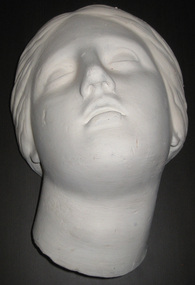
Sculpture - Plaster Drawing Prop, Cast of Woman's Head
... Gothic sculptural examples, which were used as drawing props by students. The school inherited some casts from its predecessor institutions, and further consignments were purchased during the 1920s, including full length, bust and relief figures, as well as dozens of ornamental and architectural casts. ...Gothic sculptural examples, which were used as drawing props by students. The school inherited some casts from its predecessor institutions, and further consignments were purchased during the 1920s, including full length, bust and relief figures, as well as dozens of ornamental and architectural casts. ...The Ballarat Technical Art School boasted a well-stocked Antique Room replete with plaster copies of classical, Renaissance and Gothic sculptural examples, which were used as drawing props by students. The school inherited some casts from its predecessor institutions, and further consignments were purchased during the 1920s, including full length, bust and relief figures, as well as dozens of ornamental and architectural casts. Unfortunately, much of the collection was lost or destroyed in the late 1950s. This is one of the few surviving pieces, with TAFE students reportedly drawing from it into the twenty-first century. It was removed to the University's Historical Collection in 2012.White plaster cast of a woman with closed eyes. The cast is hollow, with an opening at the back. There is a metal wire at the back so it can hang on the wall.ballarat technical art school, ballarat school of mines, art, drawing, plaster, drawing the human figure from cast, drawing from the antique -
 Federation University Historical Collection
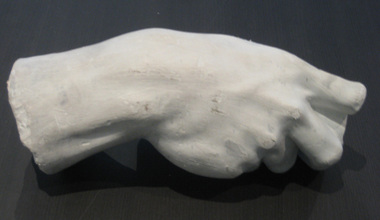
Equipment - Object, Otto Waschatz, Cast of Hand, Plaster Cast Drawing Prop
... Gothic sculptural examples, which were used as drawing props by students. The school inherited some casts from its predecessor institutions, and further consignments were purchased during the 1920s, including full length, bust and relief figures, as well as dozens of ornamental and architectural casts. ...Gothic sculptural examples, which were used as drawing props by students. The school inherited some casts from its predecessor institutions, and further consignments were purchased during the 1920s, including full length, bust and relief figures, as well as dozens of ornamental and architectural casts. ...The Ballarat Technical Art School boasted a well-stocked Antique Room replete with plaster copies of classical, Renaissance and Gothic sculptural examples, which were used as drawing props by students. The school inherited some casts from its predecessor institutions, and further consignments were purchased during the 1920s, including full length, bust and relief figures, as well as dozens of ornamental and architectural casts. Unfortunately, much of the collection was lost or destroyed in the late 1950s. This is one of the few surviving pieces, with TAFE students reportedly drawing from it into the twenty-first century. This plaster hand is inscribed “Waschatz, Modeller, Melbourne.” Otto Waschatz was a German plasterer who opened a plaster business in the Melbourne suburb of Richmond, and was responsible for the invention of the first true fibrous plaster - using a layer of hemp laid between plaster to create light and strong panels. By 1912 Waschatz's Lottoid Pty Ltd was a thriving and creative business, and possessed over 5,000 moulds for all kinds of plasterwork. The business closed in 1915, as the result of anti-German sentiment during World War One. Plaster cast of a hand used as a teaching aid at the Ballarat Technical Art School. The Victorian Education Department courses required art students to create studies based on ancient sculptures so copies of famous works were purchased as teaching aids. Among these courses were 'Drawing the Human Figure from Cast' and ‘Drawing from the Antique’. Waschatz, Modeller, Melbourneballarat school of mines, art, arts academy, ballarat technical art school, vikki nash, plaster cast, otto waschatz, lattoid pty ltd, school of mines, plaster copy, drawing from the antique, drawing the human figure from cast -
 Federation University Historical Collection
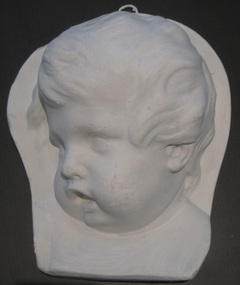
Sculpture - Plaster Drawing Prop, Cast of Child’s Head
... Gothic sculptural examples, which were used as drawing props by students. The school inherited some casts from its predecessor institutions, and further consignments were purchased during the 1920s, including full length, bust and relief figures, as well as dozens of ornamental and architectural casts. ...Gothic sculptural examples, which were used as drawing props by students. The school inherited some casts from its predecessor institutions, and further consignments were purchased during the 1920s, including full length, bust and relief figures, as well as dozens of ornamental and architectural casts. ...The Ballarat Technical Art School boasted a well-stocked Antique Room replete with plaster copies of classical, Renaissance and Gothic sculptural examples, which were used as drawing props by students. The school inherited some casts from its predecessor institutions, and further consignments were purchased during the 1920s, including full length, bust and relief figures, as well as dozens of ornamental and architectural casts. Unfortunately, much of the collection was lost or destroyed in the late 1950s. This is one of the few surviving pieces, with TAFE students reportedly drawing from it into the twenty-first century. It was removed to the University's Historical Collection in 2012.White plaster cast showing the side profile of a child's face.ballarat technical art school, ballarat school of mines, art, drawing, plaster, drawing from the antique, drawing the human figure from cast, copy, replica -
 Federation University Historical Collection
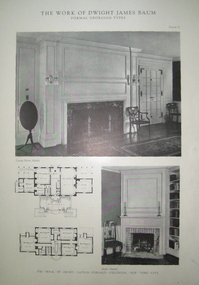
Book, The Work of Dwight James Baum, 1927 (exact)
... architectural designs art moderne domestic designs ca d zan Book with large blue hard cover. Title is written on the front cover and the spine in gold. Manufacturer's logo is written on front cover in gold. The book includes index, preface and an introduction. black and white illustrations, plates and floor planes of the architect's work such as Ca d Zan, the fantastical Venetian Gothic waterfront palace of John and Mable Ringling in Sarasota, Florida and the stately Italianate house of Anthony Campagna in Riverdale, New York and more. ...Dwight James Baum is an American architect. He was born in 1886 in Newville, New York. As a young man, Baum moved to Syracuse. In 1909, he graduated from Syracuse University with an architecture degree. He worked for Boring and Tilton and Sanford White which are well known Architecture firms in America. Around 1912, he started his own residential design firm. During the 1920s, Baum designed a significant buildings and several houses in Sarasota, Tampa, Terrace, Temple and Florida all in the Mediterranean Revival Style such as the Ringlings dubbed Cà d'Zan, which is now known as the John and Mable Ringling Museum of Art. In 1923-1924, he also designed Sunset Hill for Mrs. Eugene D. Stocker at Warren, New York which was listed on the National Register of Historic Places in 2007. During the Depression Baum became involved with Good Housekeeping Magazine as consulting architect, and as designer of their building exhibit at the 1933 Chicago World's Fair. His later work includes Hendricks Memorial Chapel at Syracuse University, with John Russell Pope in 1929–1930 and the pedestal for V. Renzo Baldi's statue of Columbus in the city's Columbus Circle. Dwight James Baum died in 1939. Book with large blue hard cover. Title is written on the front cover and the spine in gold. Manufacturer's logo is written on front cover in gold. The book includes index, preface and an introduction. black and white illustrations, plates and floor planes of the architect's work such as Ca d Zan, the fantastical Venetian Gothic waterfront palace of John and Mable Ringling in Sarasota, Florida and the stately Italianate house of Anthony Campagna in Riverdale, New York and more.architecture, architectural designs, art moderne, domestic designs, ca d zan -
 Federation University Historical Collection
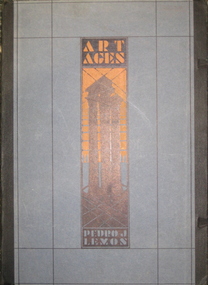
Book, Art Ages, 1929 (exact)
... Some of the images are: The Temple of Luxor in Egypt, Temple of Zeus, the Arch of Titus, Gothic cathedral in Cologne, Assyrian furniture and weapons, Greek architectural decorations, Byzantine costumes, Renaissance weapons and household articles, plus much more. ...Some of the images are: The Temple of Luxor in Egypt, Temple of Zeus, the Arch of Titus, Gothic cathedral in Cologne, Assyrian furniture and weapons, Greek architectural decorations, Byzantine costumes, Renaissance weapons and household articles, plus much more. art art ages pedro j lemos historic art egyptian art grecian art roman art byzantine art romanesque art saracenic art gothic art renaissance art american colonial art assyrian art ancient costumes ancient weapons ancient instruments ancient household articles ancient furniture ancient architectural textile decorations Inside the front cover there is a plate titled "Ballarat Techincal Art School Library no. ...Pedro J. Lemos was an educator and artist. He was also the editor of the School of Arts Magazine and Director of Stanford University Museum of Fine Arts. He was born in 1882 and died in 1954. This art portfolio contains ten periods of art history: Egyptian, Assyrian, Grecian, Roman, Byzantine, Romanesque, Saracenic, Gothic, Renaissance and Georgian. Some of the images are: The Temple of Luxor in Egypt, Temple of Zeus, the Arch of Titus, Gothic cathedral in Cologne, Assyrian furniture and weapons, Greek architectural decorations, Byzantine costumes, Renaissance weapons and household articles, plus much more. Blue, large, hard cover. Black tape edges and spine. Title is written in orange on front cover. Ribbon ties stitched to the edge of the cover used to close book by tying them together. Loose pages showing coloured and b/w illustrations of the ages of art. Includes fold-out text booklet with five pages. The book has a number of coloured prints of examples of art through the ages, including Egyptian, Assyrian, Grecian, Roman, Byzantine, Romanesque, Saracenic, Gothic, Renaissance and Georgian. Inside the front cover there is a plate titled "Ballarat Techincal Art School Library no. R/400". It is also stamped with the publisher's details. art, art ages, pedro j lemos, historic art, egyptian art, grecian art, roman art, byzantine art, romanesque art, saracenic art, gothic art, renaissance art, american colonial art, assyrian art, ancient costumes, ancient weapons, ancient instruments, ancient household articles, ancient furniture, ancient architectural, textile decorations -
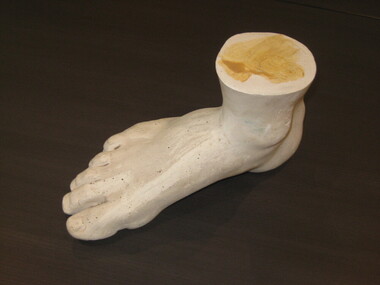 Federation University Historical Collection
Sculpture - Plaster Drawing Prop, Cast of Foot, before 1918
... Gothic sculptural examples, which were used as drawing props by students. The school inherited some casts from its predecessor institutions, and further consignments were purchased during the 1920s, including full length, bust and relief figures, as well as dozens of ornamental and architectural casts. ...Gothic sculptural examples, which were used as drawing props by students. The school inherited some casts from its predecessor institutions, and further consignments were purchased during the 1920s, including full length, bust and relief figures, as well as dozens of ornamental and architectural casts. ...The Ballarat Technical Art School boasted a well-stocked Antique Room replete with plaster copies of classical, Renaissance and Gothic sculptural examples, which were used as drawing props by students. The school inherited some casts from its predecessor institutions, and further consignments were purchased during the 1920s, including full length, bust and relief figures, as well as dozens of ornamental and architectural casts. Unfortunately, much of the collection was lost or destroyed in the late 1950s. This is one of the few surviving pieces. The foot came into the school’s collection prior to 1920 as it appears in a photo in the SMB Annual Report. There are two possibilities where these sculptures may have originated, either Victorian and Albert Museum or the British Museum. There is a reference to the purchase of plaster casts from the Victoria and Albert Museum in the 1918 School of Mines Ballarat Minute Book. This plaster cast of a foot is of local significance as only one of a few remaining teaching pieces from the substantial collection of sculptures used in the art school. The foot also has significance as an interpretive tool complementing the complete art folio of Edith Alice Watson who was a student from 1930-1933.Plaster cast of right foot including ankle. Made from plaster of Paris. Mainly white in colour with grey patches around metatarsels, flecks of blue and green paint and pale brown paint (possibly shellac) and on top of ankle. Measurements suggest a size 11 man's right foot.plaster cast, foot, drawing aid, art school, smb, edith alice watson, 1931, 1931-33, 1918, 1920, plaster of paris, sculpture, ballarat technical art school number 10, drawing from the antique, drawing the human figure from cast -
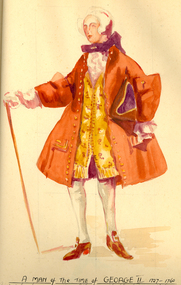 Federation University Historical Collection
Book, Historic Ornament Parts I and II. Ballarat Technical Art School Art History Books, 1931, 1931
... Students studied the influences of history, geography, culture and climate on ornamental aesthetics, including the tools, materials and methods applied to decorative objects, interior design and architecture. ballarat school of mines ballarat technical art school art history edith lawn edith curnow val lawn val d'angri curnow lawn ornament costume. ballarat technical art school library artists workbook journal Historic Ornament University Women Ballarat School of Mines Old Girls Association Two books containing student notes and drawing relating to courses at the Ballarat techncial Art School in 1931. The work was undertaken by Edith Curnow. .1) - Foolscap red covered book on Historic Ornament. Includes History of Ornament, Egyptian Ornament, Assyrian Ornament; Greek Ornament, Roman Ornament, Pompeian Ornament, Byzantine, Romanesque Ornament, Norman, Decorated Gothic ...Edith CURNOW (1913–2003) Ballarat | Australia Edith Gertrude Curnow undertook Industrial Art teacher training at the Ballarat Technical Art School, with a five-year Senior Technical Scholarship, between 1926 and 1931. She taught for a time before marrying compositor James Lawn in 1937. She reportedly continued to teach at the Ballarat Technical Art School as Edith Lawn. She retired in 1972 at which time she was the Lecturer in Charge of Craft Edith Lawn was a member of inaugural Ballarat School of Mines Old Girls Association, and served as first Press Correspondent. Her daughter, Valda Lawn (later D'Angri) also attended and taught at the School. One of the subjects Curnow studied was Historic Ornament. This subject spanned time and space to inform and inspire designers. Students studied the influences of history, geography, culture and climate on ornamental aesthetics, including the tools, materials and methods applied to decorative objects, interior design and architecture.Two books containing student notes and drawing relating to courses at the Ballarat techncial Art School in 1931. The work was undertaken by Edith Curnow. .1) - Foolscap red covered book on Historic Ornament. Includes History of Ornament, Egyptian Ornament, Assyrian Ornament; Greek Ornament, Roman Ornament, Pompeian Ornament, Byzantine, Romanesque Ornament, Norman, Decorated Gothic, Perpendicular Gothic, Renaissance. .2) Green quarto book on Historic Ornament Part 2: Costume. The work includes Egyptian Costume, Greek Costume, Roman Costume, Richard I, Crusades, Edward III, Charles I, Charles II, George II.ballarat school of mines, ballarat technical art school, art history, edith lawn, edith curnow, val lawn, val d'angri, curnow, lawn, ornament, costume., ballarat technical art school library, artists workbook, journal, historic ornament, university women, ballarat school of mines old girls association -
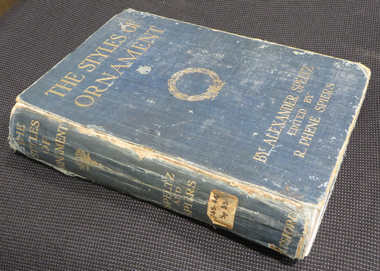 Federation University Historical Collection
Book, Banister Fletcher, A History of Architecture, 1921, 1921
... architecture...herbert l. coburn...frederick russell king...renaissance...gothic...It belonged to the late Frederick Russell King who trained at the Ballarat School of Mines during the 1930s ballarat tecnical art school architecture herbert l. coburn frederick russell king renaissance gothic H.L. ...This book was used by architect Herbert L. Coburn. It belonged to the late Frederick Russell King who trained at the Ballarat School of Mines during the 1930sBlue cloth covered book with gold detail. 932 pages.Written in front inside cover "Herbert L. Coburn"ballarat tecnical art school, architecture, herbert l. coburn, frederick russell king, renaissance, gothic, h.l. coburn -
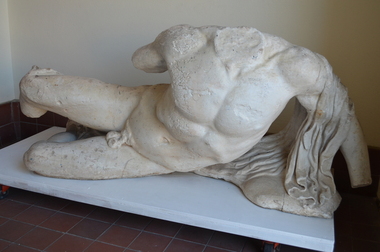 Federation University Historical Collection
Sculpture - Plaster Replica (from original by Pheidias, 438 BCE-432 BCE), The river god Ilissos (possibly), c 1920 (from original 438 BCE-432 BCE)
... Gothic sculptural examples, which were used as drawing props by students. The school inherited some casts from its predecessor institutions, and further consignments were purchased during the 1920s, including full length, bust and relief figures, as well as dozens of ornamental and architectural casts. ...Gothic sculptural examples, which were used as drawing props by students. The school inherited some casts from its predecessor institutions, and further consignments were purchased during the 1920s, including full length, bust and relief figures, as well as dozens of ornamental and architectural casts. ...This ‘heroic size’ reclining figure is a copy made from one of The Parthenon Sculptures currently housed at The British Museum, and thought to represent the river-god Ilissos. This piece was part of the Ballarat Technical Art School's collection of reference for art studies, and became affectionately known as 'Hercules' by subsequent student cohorts. The cast was likely made by Brucciani and Co. London, and part of a consignment delivered to the School during the 1920s. This cast replicates one of a number of relics acquired by Thomas Bruce, seventh Earl of Elgin and ambassador to Turkey, (Lord Elgin) in Athens in the early 19th century. (Hence, these works were sometimes collectively referred to as the Elgin Marbles). Ownership of the artefacts, once part of the 2,500-year-old Parthenon temple, is disputed by Greece. It maintains that Elgin removed them illegally while the country was under Turkish occupation as part of the Ottoman Empire. The items were sold to the British Museum in 1816 and have remained there ever since. The original "Ilissos" was located on the west pediment of the Parthenon in Greece, and was created in c435 BC. It is unknown if the statue was in position or had already fallen when removed from the Parthenon by Elgin. The Royal Academy London also holds a copy of this plaster cast. The Ballarat Technical Art School boasted a well-stocked Antique Room replete with plaster copies of classical, Renaissance and Gothic sculptural examples, which were used as drawing props by students. The school inherited some casts from its predecessor institutions, and further consignments were purchased during the 1920s, including full length, bust and relief figures, as well as dozens of ornamental and architectural casts. Unfortunately, much of the collection was lost or destroyed in the late 1950s.Quality examples of heroic sized plaster replicas are now rare, as many plaster collections were destroyed or lost when the copy of antique examples fell out of favour with art schools.Plaster cast used during Drawing classes at the Ballarat Technical Arts School. It is likely a headless depiction of the river god Ilissos.hercules, ballarat technical art school, elgin marbles, plaster, plaster cast, figure of a river god, parthenon marbles, ilissos, copy, drawing the human figure from cast, drawing from the antique, visual arts -
 Flagstaff Hill Maritime Museum and Village
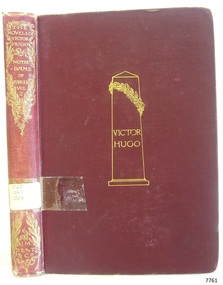
Book - Fictional Novel, Victor Hugo, Notre Dame of Paris Vol 2, 1899
... Beyond the human drama, the book is a love letter to Gothic architecture; Hugo famously wrote it to spark a preservation movement to save the crumbling Notre-Dame Cathedral from neglect and modernisation. ...The novel is better known today by its English title, The Hunchback of Notre-Dame. This grand historical novel is set in 1482 Paris and revolves around the doomed gypsy dancer Esmeralda, the tortured archdeacon Claude Frollo, the dashing but shallow captain Phoebus, and the fiercely loyal, deformed bell-ringer Quasimodo. By the time you reach the final volume, the narrative is driving toward its intense, tragic climax. Beyond the human drama, the book is a love letter to Gothic architecture; Hugo famously wrote it to spark a preservation movement to save the crumbling Notre-Dame Cathedral from neglect and modernisation.Notre Dame of Paris Vol 2 Author: Victor Hugo Publisher: J M Dent & Co Date: 1899 Further Information: Translated by J. Carroll Beckwith Vol. 1 is 7072, Vol. 3 is 7073, Vol.4 is 8036fictionThe novel is better known today by its English title, The Hunchback of Notre-Dame. This grand historical novel is set in 1482 Paris and revolves around the doomed gypsy dancer Esmeralda, the tortured archdeacon Claude Frollo, the dashing but shallow captain Phoebus, and the fiercely loyal, deformed bell-ringer Quasimodo. By the time you reach the final volume, the narrative is driving toward its intense, tragic climax. Beyond the human drama, the book is a love letter to Gothic architecture; Hugo famously wrote it to spark a preservation movement to save the crumbling Notre-Dame Cathedral from neglect and modernisation.flagstaff hill, warrnambool, shipwrecked coast, flagstaff hill maritime museum, maritime museum, shipwreck coast, flagstaff hill maritime village, great ocean road, book, pattison collection, warrnambool library, warrnambool mechanics’ institute, ralph eric pattison, corangamite regional library service, warrnambool city librarian, mechanics’ institute library, victorian library board, warrnambool books and records, warrnambool children’s library, notre dame of paris vol 4, victor hugo, j. carroll beckwith -
Glenelg Shire Council Cultural Collection
Photograph - Photograph - 'Stanton Drew', Portland, n.d
... Stanton Drew is a late example in Victoria of the primitive regency gothic style of villa architecture popularised by pattern books of the period 1840-60. ...Stanton Drew is a late example in Victoria of the primitive regency gothic style of villa architecture popularised by pattern books of the period 1840-60. ...Stanton Drew was a two storey stucco rendered bluestone house was constructed in 1864 for Major Alexander Davidson, a Scottish born pastoralist who had earlier in 1848 settled on the Wando River near Casterton. Stanton Drew is a characteristic pattern book, regency gothic villa and virtually devoid of ornamentation save for unusually fenestrated bay windows and window label mouldings. Stanton Drew is a late example in Victoria of the primitive regency gothic style of villa architecture popularised by pattern books of the period 1840-60. The two storey house is an undistinguished design most notable for its associations with Western District pastoralist Alexander Davidson. No important historical associations are apparent, although the Davidson family lived in the residence until c.1908. Stanton Drew is in an extremely dilapidated state and has suffered badly form subsidence and lack of regular maintenance. The slate roof has been replaced with iron. The house was originally named Wando Villa by Davidson in memory of his time at Wando River. The house was renamed in 1938.Black and white photo. View of the front of 'Stanton-Drew' house, Portland.Back: 'STANTON-DREW, PORTLAND, VICTORIA, 1971' -handwritten black biro. Purple stamp 'ALEX PRIESTLEY BOX 155 PHONE 309 HEYWOOD VIC 3304'historic homestead, bluestone building, alexander davidson, pastoralist -
Mission to Seafarers Victoria
Article, A Woman's Melbourne Letter
... Gothic windows open upon the cloisters, where, in the hot weather, the sailors enjoy their meals out of doors. The cloisters, indeed, form an exquisite spot. They are between a series of sweeping arches which lead to the chapel, and are sheltered by the open balcony of the chaplain's quarters. Grace of contour marks the architecture...Gothic windows open upon the cloisters, where, in the hot weather, the sailors enjoy their meals out of doors. The cloisters, indeed, form an exquisite spot. They are between a series of sweeping arches which lead to the chapel, and are sheltered by the open balcony of the chaplain's quarters. Grace of contour marks the architecture ...A detailed description of the Mission and its activities written by a woman: Western Mail (Perth, WA : 1885 - 1954), Friday 13 December 1918, page 34 A WOMAN'S MELBOURNE LETTER. Melbourne, Dec. 4. There is an idea abroad, which as regards Melbourne, at any rate, is quite erroneous, that our sailors are not as well looked after as our soldiers, and that the noble men of the Mercantile Marine are much neglected ! For once, perhaps, my readers will pardon a letter dealing with only one subject, but the steady, unostentatious work done by the Ladies' Harbour Light Guild, in connection with the mission to seamen in Melbourne could not be adequately explained if dismissed in the usual short paragraph. Some of the most prominent names in Melbourne are associated with this guild and with the Mission Chaplain, and Mrs. Gurney Goldsmith, the members have made the Seamen's Institute a real home for those sailors of the Mercantile Marine, who touch our port. What we as a community owe to those men by their heroism in recent hostilities is certainly more understood by this band of enthusiastic workers than by the community generally. By using their unflagging energies, and influence on the sailor's behalf they endeavour to discharge a debt to which in some way or other we could and should all contribute. Even the most casual person can, if he thinks at all, sum up a few of the things our sailors - other than those belonging to our glorious navy - have done for us. On the spur of the moment we remember that those of the Mercantile Marine, are the men who manned our transports, who carried our wheat and wool, to oversea markets; who kept us in touch with our loved ones abroad; who kept the fires going in the furnaces of the great leviathans, bringing our wounded soldiers home again; who never flinched when self-sacrifice was demanded; who cared, with that tenderness, innate in all sailors, for the women and children, when the passenger ships were struck a dastardly blow by the wicked enemy; who, mocking death, gave up life with a heroism all the more heroic because it was always taken as a matter of course! Is it any wonder, then, that the members of the Ladies' Harbour Light Guild make it their business to provide a bright, homelike, spot in Melbourne, where the sailors are always certain of a cherry welcome ashore? The members of the guild are admirably drafted! The 360 non-workers each pay £1 1s. per annum. The workers, of whom there are between 700 and 800, donate 2s. 6d. and school members - it is confidently hoped that gradually all the schools will take an active interest in the mission - 1s. a year. The knights of the guild - as the men members are designated - are responsible for any sum they wish to name, from 5s. a year upwards. Everything is paid for out of these revenues, with the exception of a small grant from the Home Mission Fund - and such is the organisation, and management, that the entire concern is quite free from debt. The Seamen's Church and Institute, where the "Harbour Lights" gleam so brightly, is situated right in the midst of all the bustle and turmoil of the wharves, at the end of Flinders-street. The building, comprising chapel, and institute under the one red tiled roof, is grey stuccoed, with a small tower, from which flaunts the flag of 'The Flying Angel" - the badge of the guild. A visit to the institute makes one fully appreciate the boon the place must be to the voyage worn, weary, sailor. The atmosphere is eminently social in its best sense. While the architecture imparts an elegance, and quiet dignity which soothes by the very subtlety of its charm. With its comfortable furniture, its wealth of flowers, and the happy, wholesome, feminine influence which prevails everywhere, the quality which stands for the magic word "home" abounds. The Chaplain in the course of conversation said: -"We try to make this really a free club for sailors." But the habitues would probably tell you it was far more than that to them. The Institute is excellently appointed, and every little corner seems to have its particular history. It was built after the model of one of the old mission churches in California, and retains something of the old world attraction, while yet it combines all the advantages of modern, practical, conveniences. On entering the door the first thing, one notices is a huge compass, inlaid upon the floor, evidently to indicate one's proper bearings for it points due north - to the chapel! Only one other seamen's mission in the world boasts such a compass. As the sailor swings through the entrance he finds the office on his right, and there is, here, always a smiling face to welcome the shy, or timid, new comer. Quite a real post office is staffed by members of the guild, and all the letters received are listed alphabetically. Therefore, the expectant sailor has just to run his eye down the list, and he can immediately see whether there is a letter for him or not. If he is fortunate, he comes up to the member in charge, who unlocks the box, and produces the longed for missive. The boys are always encouraged to answer letters - and to write them. Often a few words about their mother, and their own home, will provoke a sleeping memory into activity. The writing room is well stocked with paper, envelopes, pens, and ink. The tables are so divided to ensure the utmost privacy, and through a calculated chain of circumstances, many an anxious mother receives a letter from her sailor lad, who, perhaps, might not have written but for these kindly inducements. The central hall - where social evenings are held every other night besides two special concerts a week - is inviting in the extreme. A handsome piano affords opportunity for those musically inclined. The tables are strewn with papers. The walls are bright with pictures, and here, and there, is a carved model, of a ship. One, of especial interest, is a model of "The Roon" carved, and presented by a French sailor. This German vessel will always be remembered in Australia. For it was across her bows that the first hostile shot was ever fired in Australian waters. In the corner is the canteen. It was fitted up entirely from the proceeds of a quotation calendar compiled by one of the members. The sailors may at any time, get a teapot of tea, or a tray of eatables, at a nominal cost. Before the canteen was in existence they had to go out for refreshments! - and sometimes they did not come back! Groups of sailors sit chatting at the tables. Half a dozen Swedes laugh and talk among themselves, for the simple reason they know no other language than their own. Several British sailors cluster about a dark-eyed Welsh lad - a perfect Celtic type - who, although only about twenty years of age, has been the victim of the Hun five times. Mines and torpedoes sank the ships he was in, either in the Channel or off the English coast, four times; and it is to his fifth experience, when the Inverness was wrecked, that everyone is eagerly listening. "We were in the boats eight days," he was saying, "I was pretty well mangled when they picked me up. The sufferings we endured were awful. At last we managed to reach Rapa, a Hawaiian island. The natives thought we were Germans, and came at us with spears. When they found we were British, they were awfully good to us. They even cried when we left, and the day before the rescue boat arrived they begged us to go into the hills and hide." At another table a Canadian lad - once a sailor - then a soldier, who trained at the Broadmeadows camp - was telling his experiences : - "The voyage which will always stick in my memory," he said, "was to a place which must be nameless. We left the United States not knowing whether we were bound, or what we were going to do. After some weeks we sighted a group of wonderfully beautiful islands, and we headed for the most remote and most lovely of them all. Then, and only then, we learned our mission from the skipper. We were taking their year's supply to a leprosy station! Oh no! I don't blame the skipper for not telling us ! Someone has to do these things, you know. A naval guard saw they didn't come near - and we all got sixty dollars extra. When the job was over we were quarantined on another island for two months, and one little chap - the baby of the crew, not eighteen - developed leprosy, and died before we left. Yes! I'll never forget that voyage, mates! Sometimes, I seem to see Leper's Island yet, with its lavish tropical vegetation and the gorgeous sunsets which stained all the water with blood. Then, too" - here the voice deepened - "there was an English girl - a leper - there. We heard she used to be an actress, and she contracted the disease somehow or other. She was always alone, and always watching us. In the distance we could see her come to the water's edge, and from there she would watch. Just watch . .. . watch . . .watch. ..." "Here come a couple of North Sea chaps," broke in an elderly man after pause. "One of them wounded, too, poor lad." It is not strange that all the sailors flock to the Institute. It is so comfortable, and essentially inviting, besides being full of human interest. The men's quarters comprise reading, writing and dressing rooms - hot and cold baths are always available - billiard room, and a special baggage room, where any sailor may leave his kit for as long as he likes. The payment of 3d. covers its complete insurance. Upstairs are the officers' quarters. These also have their own billiard room, writing and reading rooms, bath and dressing rooms. Just close are the apprentices' quarters - "The Half Deck," as popular parlance has it! The lads also have a billiard room of their own, and indulge in an easy armchair - amongst others - which was a donation from the Milverton School branch of the Guild. It is hoped by the committee to some day utilise the huge empty rooms, which run the length of the whole building. Their ultimate intention is to fit them up as cubicles, or "cabins," as they are to be called. They trust these "cabins" will be donated, either in memory, or in honour, of someone dear to the donor. Another forward movement soon to be put in hand, now that materials are available, is the establishment of "Norla Gymnasium." In a sailors' club such facility for exercise is absolutely essential. The men both need, and miss, exertion. As one boy, who had been backsliding, once said pathetically : -"If only there was something to do to get me into a good sweat, I would be all right." Soon such an one will be helped to swing from the trapese of the Norla Gymnasium into the right track! Sunday is always a fete day at the Institute, for 40 or 50 sailors generally come into tea. The up-to-date kitchen, which is fitted with every labour-saving appliance - all paid for out of working members' half crowns - is then a hive of animation, and methodical order. A formidable row of teapots await filling. Mrs. Goldsmith -, the chaplain's wife - rightly thinks it is far more homely to pour out the tea from a pot, than to serve it straight from the urns. So tea is poured out by a member, who sits at the head of a table gay with flowers, and chats to the guests. These latter are of all nationalities. But the French, the Spanish, Scandinavian, Norwegian - or any other sailor is equally welcome with the British. Two enthusiasts belonging to the Guild actually learnt Norwegian, so that men of this nation would have someone to talk to, and so be less lonely when they reached this, to them, foreign port ! The members of the Guild have their own private suite where they arrange the flow-err and do other necessary odds and ends undisturbed. No one appreciates flowers like a sailor, and the earliest and most beautiful may always be seen adorning the tables and rooms. Teas are served and lectures are held in the "Celia Little Hall," one of the most beautiful portions of the institute. It was erected by the chaplain in memory of his aunt from whom the hall takes its name. The Gothic windows open upon the cloisters, where, in the hot weather, the sailors enjoy their meals out of doors. The cloisters, indeed, form an exquisite spot. They are between a series of sweeping arches which lead to the chapel, and are sheltered by the open balcony of the chaplain's quarters. Grace of contour marks the architecture on every turn. Just around the corner is the chaplain's garden - a patch of green and colour, transformed from a desert waste, by a well-known woman horticulturist. The book room is a department especially valued by the sailors. There are two secretaries, one for home and the other for foreign literature. Books in French, English, Spanish, Scandinavian, Norwegian, and German may be found on the shelves. Each week about 36 convenient parcels of reading stuff are made up. These contain illustrated papers, books in various languages, and magazines. These parcels are eagerly accepted by the sailor with a long monotonous voyage before him. But complete as is every corner of the institute, no part is so well equipped as the memorial chapel erected by the Ladies' Harbour Light Guild, in memory of the officers and men, who have lost their lives during the war. St Peter's - for it is called after the sailor's patron saint - with its hallowed gentle dignity is a veritable sanctuary of peace, perhaps all the more so because it sprang out of war. The fittings are entirely of Australian wood. The pews, given in memory of some loved one by one of the members, are of Tasmanian hardwood. The reredos and altar chairs of carved blackwood. The rich carpet was provided by the members' magical half-crowns. Already this chapel holds memorials of peculiar historical interest. The altar lectern was given in memory of Commander Elwell, who, it will be remembered, was killed at Rabaul, in the early part of the war. The font commemorates two heroes - Nigel Hockley and Fred Hyde, who lost their lives at the hands of the Germans, although they survived the actual torpedoing of their ships, the Galgorn Castle off the coast of Ireland. The mother of one of them wrote out that her son had died as an Englishman should - fighting for the right. This noble sentiment is suitably paraphrased upon the inscription engraved upon the font. Practically every-hing enshrined in the chapel has its own sentimental value. The alms salver of beaten copper, studded with agate, is fragrant with the memory of a saintly woman.The eye of the sailor is caught and held by the pulpit, which is fashioned like a ship's hull and only a twist of rope guides the chaplain up the steps. For the last 13 years the Rev. A. Gurney Goldsmith, M.A., has acted as chaplain to the Seamen's Mission in Melbourne. Before that he and his wife worked in China. Mr Goldsmith visits all the boats and gets in touch personally with the sailor, over whom he has great influence. He is not only their chaplain and friend, but, amongst a wide range of other things, their banker besides. An exchange system exists between the various Missions, and the sailor who has "banked" his money with the chaplain, upon going away, receives a cheque which is cashed - minus exchange - by the chaplain of the next port. Mr. Goldsmith will tell you he has a soft spot in his heart for on old sailor he calls "Paddy." This ancient mariner has been wrecked ten times. It was a long time before the chaplain prevailed upon "Paddy" to partake of the spiritual and secular advantages afforded by the institute. He would not come, he said, until he could do so "with a good heart." Finally he frankly admitted that he had no "friends like those of 'the Flying Angel,' " and that he eventually proved his own "good heart" will be shown in this story. One day he came in to the chaplain and said bluffly, "Well, sir, I've been payin' off some old scores up Carlton way, an' I tells yer, plain, sir, not one of 'em would have seen a penny of their money but for the Mission." The Ladies' Harbour Light Guild has over thirty working suburban branches, and the excellent results achieved at the Institute now will no doubt be considerably augmented in the future. The practical actions of the members do more than anything else to convey the subtle meaning of the name of the Guild. To the visiting sailors the word "ladies" signifies the bread givers; "harbour" safety ; "lights" welcome; "guild" the welding of fraternity, and they one and all tell you the ideals thus embodied are unselfishly carried out by all the ladies who have banded together to care for the sailors' welfare.The article describes the Mission and the use of several spaces a year after its opening and gives details about the daily activities.Digital copy of an article published in the Western Mail on the 13th of December 1918. 717 flinders street, seamen's mission, norla dome, lhlg, reverend alfred gurney goldsmith, celia little room, garden, frederica godfrey -
Glen Eira Historical Society
Document - Brighton Cemetery, North Road, Caulfield South
... ... Gothic (revival) architecture...Miller Mausoleum Brighton Cemetery Caulfield South North Road Ward Andrew Miller Septimus Miller Clara Johnstone Miller Gwendoline Stewart Cantala Dandenong Road Cemeteries Graves Tombstones Gravestones Monuments and memorials Architectural styles Gothic (revival) architecture Architectural features Gables Roofs Windows Document Brighton Cemetery, North Road, Caulfield South ...Photocopy of the entry in the Caulfield Conservation Study, dated 01/1995, by Andrew Ward for the Miller Mausoleum at Brighton Cemetery. The study includes a description of the tomb’s architectural features, a brief history and a photograph of the tomb.miller mausoleum, brighton cemetery, caulfield south, north road, ward andrew, miller septimus, miller clara johnstone, miller gwendoline stewart, cantala, dandenong road, cemeteries, graves, tombstones, gravestones, monuments and memorials, architectural styles, gothic (revival) architecture, architectural features, gables, roofs, windows -
Glen Eira Historical Society
Article - Elsternwick Congregational Church – Caulfield Union Church
... ... Gothic Revival Architecture...Mary’s Anglican Church Architectural Styles Architectural Features Gothic Revival Architecture Fonts Clergy Religious Groups Sunday Schools Congregational Church Religious Structures and Establishments Article Elsternwick Congregational Church – Caulfield Union Church ...A two page article Elsternwick Congregational Church by J. O’Donnell, No. 12 October 1974 describing the church’s history. Includes references and exterior photograph. Undated typed Short History of Elsternwick Congregational Church by Jim McLoghlin. Brief handwritten note dated August 1984 by Jim McLoghlin about the church’s history. Brief typed, undated, unattributed not about the church’s early history. Brief undated, handwritten note by Jim McLoghlin about the church’s history in the 1970s and 1980s. Photocopy of a page from A Coming Together, entitled Elsternwick Congregational Church: Some Memories by Jim McLoghlin dated 01/01/1989. Two pages of undated typed and handwritten notes by Trevor Hart concerning the early history of the church including The Fincham Organ. Printout of brief biographical details of Rev. William Poole, first resident pastor at Caulfield Union Church, from a website. URL is included. Photocopy of brief article from The Southern Baptist of 26/01/1911 describing the life of Rev. John Reid, an early pastor at Caulfield Union Church after his recent death. Undated, unattributed handwritten brief note of rate book entries from 1879 and 1888 for the Caulfield Union Church site.elsternwick congregational church, o’donnell j., caulfield union church, watts thomas, black chapel, hawthorn road, balaclava road, glen eira road, orrong road, fulton thomas, rolfe g., jordan w.f., macartney h.b. rev., st. mary’s church of england, elsternwick, korong street, king street, de lacy evans g., mcmurtie mcnaughton and stewart, copland osric rev., day edwin rev., day louisa, day annie, day jeanie, cromarty school for girls, sandham street, presentation convent, pedler b.r., st. john’s uniting church, clarke g., clarke graham, mcloghlin jim, prahran grove, garden street, poole j.l. rev., poole william, old grammar school, regent street, little kids contact, st. john’s presbyterian church, pedler b.r., mills miss, shaw mary, mcloghlin mrs., martin les, riddle rev., cromarty girls school, gregson w. rev., mcnaughton mcmurtie and stewart, de lacy evans g., fincham geo., fletcher rich rev., reid john, beauchamp mr., jubilee hall st. mary’s anglican church, architectural styles, architectural features, gothic revival architecture, fonts, clergy, religious groups, sunday schools, congregational church, religious structures and establishments -
 Glen Eira Historical Society
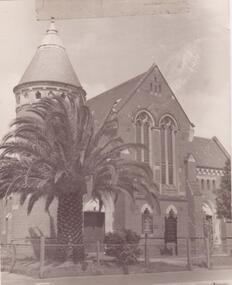
Document - Elsternwick Congregational Church – Caulfield Union Church
... ... Gothic Revival Architecture...Elsternwick Congregational Church Caulfield Union Church Orrong Road Architectural Features Architectural Styles Gothic Revival Architecture Elsternwick Towers Korong Street Glen Eira Road King Street De Lacy Evans G. ...Photocopy of extract of Caulfield Conservation Study by Andrew Ward dated September 1994. Includes brief history and description of Elsternwick Congregational Church and black and white exterior photograph and references. Printed page, dated and source unknown, with sketch of the church and a brief history. Five colour, one black and white exterior, photographs date and photographer unknown.elsternwick congregational church, caulfield union church, orrong road, architectural features, architectural styles, gothic revival architecture, elsternwick, towers, korong street, glen eira road, king street, de lacy evans g., mcmurtie mcnaughton and stewart, copland osric rev., uniting church, congregational church, corrong street, religious structures and establishments
