
Showing 15 items matching "argyll "
-
 Warrnambool RSL Sub Branch
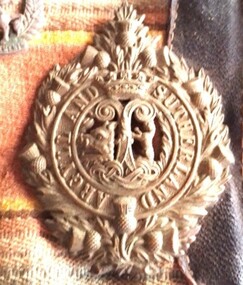
Uniform - Headdress Badge, Argyll and Sutherland Highlanders (Princess Louise's)
... Argyll and Sutherland Highlanders (Princess Louise's)...A circlet inscribed ARGYLL AND SUTHERLAND. Within the circlet the cypher "L" of the late Princess Louise, interlaced and reversed. ...WW1. worn from 1882-1958 A circlet inscribed ARGYLL AND SUTHERLAND. Within the circlet the cypher "L" of the late Princess Louise, interlaced and reversed. ...WW1. worn from 1882-1958A circlet inscribed ARGYLL AND SUTHERLAND. Within the circlet the cypher "L" of the late Princess Louise, interlaced and reversed. On the left of the cypher is a boar's head and on the right a cat-a-mountain (wild cat). Above the cypher and overlaying the top of the circlet is the Princess's coronet (a Royal Ducal coronet), all within a wreath of thistles. A pair of lugs to reverse. -
 Lorne Historical Society
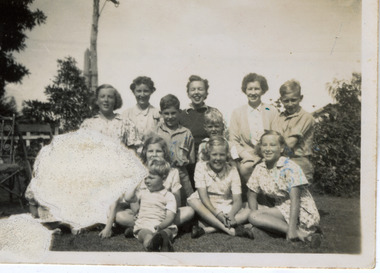
Photograph - British people evacuated from Malaya billeted in Lorne 1943, British people evacuated from Malaya and billeted at Argyll guesthouse in Lorne in 1943
... British people evacuated from Malaya and billeted at Argyll guesthouse in Lorne in 1943...British people evacuated from Malaya and billeted at Argyll guesthouse in Lorne in 1943 Photograph British people evacuated from Malaya billeted in Lorne 1943 ... -
 Tatura Irrigation & Wartime Camps Museum
Book, Braves White and Red
... Argyll Saxby...Braves White and Red Book Book Argyll Saxby T. C. & E. C. Jack Ltd ...Tatura Presbyterian Sunday School 1st prize awarded to Edgar Mitchell, December 1923. F. E. WilliamsHard cover, light tan, oval photograph of Indians on front. Title and name of author in black. Decorative spine. presbyterian sunday school prize, tatura presbyterian church, edgar mitchell, f e williams -
 Geelong RSL Sub Branch
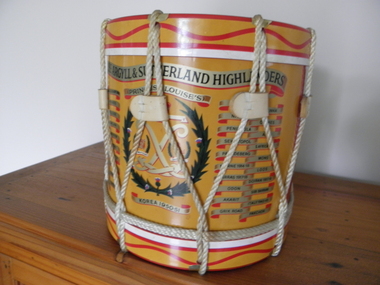
Replica Ice Bucket, Mid 20th Century
... A Replica Ice Bucket of 1st Bn Argyll & Sutherland Highlanders (Princess Louise's). ...1st Bn The Argyll & Sutherland Highlanders (Princess Louise's) Korea 1950-51...A Replica Ice Bucket of 1st Bn Argyll & Sutherland Highlanders (Princess Louise's). ...A Replica Ice Bucket of 1st Bn Argyll & Sutherland Highlanders (Princess Louise's). There is a list of conflicts on the front of the Ice Bucket that this Regiment has been involved in. The Regiment has been amalgamated and renamed several times. As of July 2012 they are known as Balaklava Company, 5 SCOTS (A&SH), Royal Regiment of Scotland.This Regiment was created in 1881 and served during WW1 and WW2, an active battalion served in Korea 1950-51 and Aden during 1967.A round shape Replica Ice Bucket various colours predominately yellow looks like a drum of the corps.1st Bn The Argyll & Sutherland Highlanders (Princess Louise's) Korea 1950-51argyll & sutherland highlanders, princess louise's, scotland, ww1, ww2 -
 The 5th/6th Battalion Royal Victoria Regiment Historical Collection
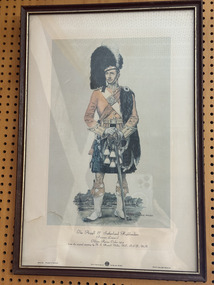
Print - Large print of Sutherland Highlanders
... Large print of The Argyll & Sutherland Highlanders (Princes Louise's), the person in the print is holding a sword...Large print of The Argyll & Sutherland Highlanders (Princes Louise's), the person in the print is holding a sword Print Large print of Sutherland Highlanders ...Large print of The Argyll & Sutherland Highlanders (Princes Louise's), the person in the print is holding a sword -
 Running Rabbits Military Museum operated by the Upwey Belgrave RSL Sub Branch
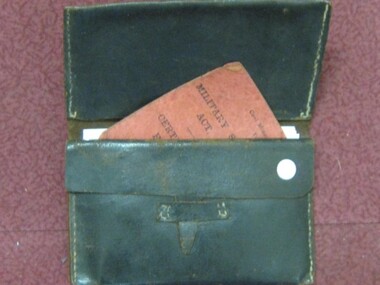
Wallet
... William Laing, 3rd Argyll & Sutherland Highlanders. See COL017...William Laing, 3rd Argyll & Sutherland Highlanders. See COL017 Wallet ...ID cert and Cert of Exemption -#25548 Pte. William Laing, 3rd Argyll & Sutherland Highlanders. See COL017ephemera, ww1, army -
 National Wool Museum
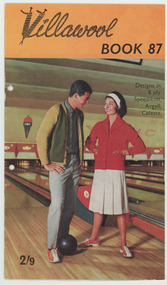
Book, Knitting, Villawool Knitting Book no. 87
... Villawool / BOOK 87 / Designs in / 8 ply / Speediknit, / Argyll, / Celeste. / 2'9...Knitting Handicrafts - history Villawood Textile Company Knitting Handicrafts - history Villawool / BOOK 87 / Designs in / 8 ply / Speediknit, / Argyll, / Celeste. / 2'9 Villawool Knitting Book no. 87 Book, Knitting ...This knitting pattern book was published by the Villawood Textile Company, Sydney and contains knitting patterns for womens and mens knitted garments. The patterns were photographed at the St Leonard's Olympic Bowl and mention is made that ten-pin bowling is Australia's 'newest all-family sport which is catching on fast'.Villawool / BOOK 87 / Designs in / 8 ply / Speediknit, / Argyll, / Celeste. / 2'9knitting handicrafts - history, villawood textile company, knitting, handicrafts - history -
 Bendigo Military Museum
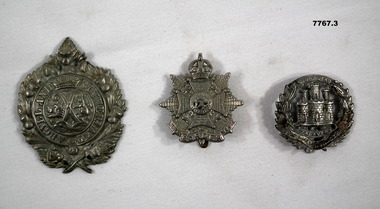
Badge - BADGE, CAP, BRITISH
... Cap Badge of the Argyll and Sutherland Highlanders. 2. Cap Badge of The Border Regiment. 3. ...Depicts a circlet with "ARGYLL AND SUTHERLAND" inscribed. Cypher with interlaced and reversed "L". ...Cap Badge of the Argyll and Sutherland Highlanders. 2. Cap Badge of The Border Regiment. 3. ...1. Cap Badge of the Argyll and Sutherland Highlanders. 2. Cap Badge of The Border Regiment. 3. Cap badge of the Northamptonshire Regiment. Badges collected by Robert H. Baron during World War One. Part of the "Robert H. Baron" No. 3596, and Cooper Collections. See Catalogue No. 1981P for details of Baron's Service.1. Silver, coloured metal cap badge. Design is pressed into metal. Depicts a circlet with "ARGYLL AND SUTHERLAND" inscribed. Cypher with interlaced and reversed "L". On the left of the cypher is a boars head and on right is a wild cat. Above the cypher is a coronet. All within a wreath of thistles. 2. Silver coloured metal cap badge. Design features a Maltese Cross over a laurel wreath and Order of the Garter Star. Battle honours of the regiment inscribed on the four arms of the cross. Centre of the cross has "ARROYO DOS MOLINOS 1811" inscribed. THE BORDER REGIMENT inscribed on a scroll below cross. 3. Silver coloured metal cap badge, design features a castle within a laurel wreath. Above castle is a scroll inscribed "Gibralter". Below the castle is another scroll inscribed "Talavera". On the base of the wreath is a scroll inscribed "Northhamptonshire".robert h. baron, cooper collection, cap badge, argyll and sutherland, border regiment, northampton regiment -
 National Wool Museum
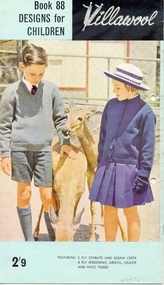
Book, Knitting, Villawool Knitting Book no. 88
... Villawool / Book 88 / DESIGNS for / CHILDREN / FEATURING 5 PLY STARLITE AND GLEAM CREPE / 8 PLY SPEEDIKNIT, ARGYLL, CELESTE / AND NYLO TWEED / 2'9...Knitting Handicrafts - history Villawood Textile Company Knitting Handicrafts - history Villawool / Book 88 / DESIGNS for / CHILDREN / FEATURING 5 PLY STARLITE AND GLEAM CREPE / 8 PLY SPEEDIKNIT, ARGYLL, CELESTE / AND NYLO TWEED / 2'9 Villawool Knitting Book no. 88 Book, Knitting ...This knitting pattern book was published by the Villawood Textile Company, Sydney and contains knitting patterns for childrens knitted garments. The photographs have been taken at Taronga Park Zoo.Villawool / Book 88 / DESIGNS for / CHILDREN / FEATURING 5 PLY STARLITE AND GLEAM CREPE / 8 PLY SPEEDIKNIT, ARGYLL, CELESTE / AND NYLO TWEED / 2'9knitting handicrafts - history, villawood textile company, knitting, handicrafts - history -
Lorne Historical Society
Print - Framed coloured print, Print Accommodation Lorne to 1950
... Kia-Ora 6. Kalimna 7. Argyll 8. Minapre 9. Erskine House 10.Hotel Pacific 11. ...Kia-Ora 6. Kalimna 7. Argyll 8. Minapre 9. Erskine House 10.Hotel Pacific 11. ...Rob Coy depicted the 22 following buildings with a map 1. Bonnie Doon 2. Gracedale 3. Cora Lynn 4. Carinya 5. Kia-Ora 6. Kalimna 7. Argyll 8. Minapre 9. Erskine House 10.Hotel Pacific 11. The Cumberland 12. Riverview 13. Hotel Lorne 14. The Chalet 15. Santoy 16. Clovelly 17. Yendallock 18. Nenthorne 19. Quamby 20. Ben-My-Kree 21. Glenora 22. Ozone House Rectangular framed color print of Rob Coy ‘ sketch Accommodation Lorne to 1950. The guest houses were, Bonnie Doon, Gracedale, Cora Lyn, Karinya, Kia Ora, Kalimna, Argyle, Minapre, Erskine House, Hotel Pacific, Cumberland, Riverview, Lorne Hotel, Chalet, Santoy, Clovelly, Yendaloch, Nenthorne, Quamby, Ben - My Cree, Glendora, Ozone House and a small map showing the locations of the accommodation. We believe this this is the original print. The colors are mainly blue and light tan. rob coy, lorne, accommodation, hotels, guest houses, pubs, erskine house -
 Melton City Libraries
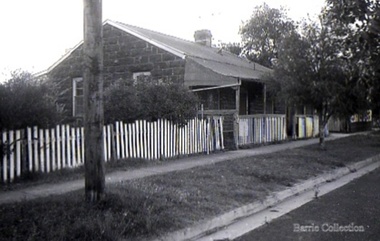
Photograph, "Dunvegan”, Unknown
... Mary McCrimmon McPherson came from the family who were hereditary Pipers to the McLeods of Dunvegan Castle, Isle of Skye (also of Isle of Mull, Argyll) . At aged 70 years after the death of her husband, Mary and her family came to Australia in 1851. ...Mary McCrimmon McPherson came from the family who were hereditary Pipers to the McLeods of Dunvegan Castle, Isle of Skye (also of Isle of Mull, Argyll) . At aged 70 years after the death of her husband, Mary and her family came to Australia in 1851. ...Dunvegan built in 1875, it was situated at rear of the Golden Fleece Hotel. Mary McCrimmon McPherson came from the family who were hereditary Pipers to the McLeods of Dunvegan Castle, Isle of Skye (also of Isle of Mull, Argyll) . At aged 70 years after the death of her husband, Mary and her family came to Australia in 1851. They took up residence in 1852 on the Toolern Road, Melton. Son James married Mary McInnes in 1859. They named another residence occupied by other family in Smith Street, Dunvegan. It was relocated to the Willows Park at the creation of Bakery Square. Edna Barrie participated in the restoration and reconstruction of Dunvegan.House on Smith Street, Meltonlocal architecture -
 Flagstaff Hill Maritime Museum and Village
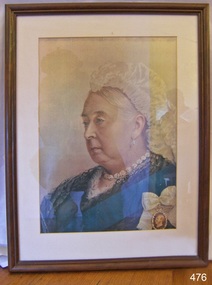
Print - Portrait of Queen Victoria, Hoy Art Picture Framing, Original probably painted in 1887 or 1897 to commemorate 50 or 60 years on the throne
... Louise (born 1848) married John Campbell, 9th Duke of Argyll. Beatrice (born 1857) married Henry of Battenberg. ...Louise (born 1848) married John Campbell, 9th Duke of Argyll. Beatrice (born 1857) married Henry of Battenberg. ...Queen Victoria was born at Kensington Palace, London, on 24 May 1819. She was the only daughter of Edward, Duke of Kent, the fourth son of George III. Her father died shortly after her birth and she became heir to the throne because the three uncles who were ahead of her in the succession - George IV, Frederick Duke of York, and William IV - had no legitimate children who survived. Warmhearted and lively, Victoria had a gift for drawing and painting; educated by a governess at home, she was a natural diarist and kept a regular journal throughout her life. On William IV's death in 1837, she became Queen at the age of 18. Queen Victoria is associated with Britain's great age of industrial expansion, economic progress and, especially, empire. At her death, it was said, Britain had a worldwide empire on which the sun never set. In the early part of her reign, she was influenced by two men: her first Prime Minister, Lord Melbourne, and then her husband, Prince Albert, whom she married in 1840. Both men taught her much about how to be a ruler in a 'constitutional monarchy, in which the monarch had very few powers but could use much influence. Albert took an active interest in the arts, science, trade and industry; the project for which he is best remembered was the Great Exhibition of 1851, the profits from which helped to establish the South Kensington museums complex in London. Her marriage to Prince Albert produced nine children between 1840 and 1857. Most of her children married into other Royal families in Europe. Edward VII (born 1841), married Alexandra, daughter of Christian IX of Denmark. Alfred, Duke of Edinburgh and of Saxe-Coburg and Gotha (born 1844) married Marie of Russia. Arthur, Duke of Connaught (born 1850) married Louise Margaret of Prussia. Leopold, Duke of Albany (born 1853) married Helen of Waldeck-Pyrmont. Victoria, Princess Royal (born 1840) married Friedrich III, German Emperor. Alice (born 1843) married Ludwig IV, Grand Duke of Hesse and by Rhine. Helena (born 1846) married Christian of Schleswig-Holstein. Louise (born 1848) married John Campbell, 9th Duke of Argyll. Beatrice (born 1857) married Henry of Battenberg. Victoria bought Osborne House (later presented to the nation by Edward VII) on the Isle of Wight as a family home in 1845, and Albert bought Balmoral in 1852. Victoria was deeply attached to her husband and she sank into depression after he died, aged 42, in 1861. She had lost a devoted husband and her principal trusted adviser in affairs of state. For the rest of her reign she wore black. Until the late 1860s she rarely appeared in public; although she never neglected her official Correspondence, and continued to give audiences to her ministers and official visitors, she was reluctant to resume a full public life. She was persuaded to open Parliament in person in 1866 and 1867, but she was widely criticised for living in seclusion and quite a strong republican movement developed. Seven attempts were made on Victoria's life, between 1840 and 1882 - her courageous attitude towards these attacks greatly strengthened her popularity. With time, the private urgings of her family and the flattering attention of Benjamin Disraeli, Prime Minister in 1868 and from 1874 to 1880, the Queen gradually resumed her public duties. In foreign policy, the Queen's influence during the middle years of her reign was generally used to support peace and reconciliation. In 1864, Victoria pressed her ministers not to intervene in the Prussia-Denmark war, and her letter to the German Emperor (whose son had married her daughter) in 1875 helped to avert a second Franco-German war. On the Eastern Question in the 1870s - the issue of Britain's policy towards the declining Turkish Empire in Europe - Victoria (unlike Gladstone) believed that Britain, while pressing for necessary reforms, ought to uphold Turkish hegemony as a bulwark of stability against Russia, and maintain bi-partisanship at a time when Britain could be involved in war. Victoria's popularity grew with the increasing imperial sentiment from the 1870s onwards. After the Indian Mutiny of 1857, the government of India was transferred from the East India Company to the Crown, with the position of Governor-General upgraded to Viceroy, and in 1877 Victoria became Empress of India under the Royal Titles Act passed by Disraeli's government. During Victoria's long reign, direct political power moved away from the sovereign. A series of Acts broadened the social and economic base of the electorate. These acts included the Second Reform Act of 1867; the introduction of the secret ballot in 1872, which made it impossible to pressurise voters by bribery or intimidation; and the Representation of the Peoples Act of 1884 - all householders and lodgers in accommodation worth at least £10 a year, and occupiers of land worth £10 a year, were entitled to vote. Despite this decline in the Sovereign's power, Victoria showed that a monarch who had a high level of prestige and who was prepared to master the details of political life could exert an important influence. This was demonstrated by her mediation between the Commons and the Lords, during the acrimonious passing of the Irish Church Disestablishment Act of 1869 and the 1884 Reform Act. It was during Victoria's reign that the modern idea of the constitutional monarch, whose role was to remain above political parties, began to evolve. But Victoria herself was not always non-partisan and she took the opportunity to give her opinions, sometimes very forcefully, in private. After the Second Reform Act of 1867, and the growth of the two-party (Liberal and Conservative) system, the Queen's room for manoeuvre decreased. Her freedom to choose which individual should occupy the premiership was increasingly restricted. In 1880, she tried, unsuccessfully, to stop William Gladstone - whom she disliked as much as she admired Disraeli and whose policies she distrusted - from becoming Prime Minister. She much preferred the Marquess of Hartington, another statesman from the Liberal party which had just won the general election. She did not get her way. She was a very strong supporter of the Empire, which brought her closer both to Disraeli and to the Marquess of Salisbury, her last Prime Minister. Although conservative in some respects - like many at the time she opposed giving women the vote - on social issues, she tended to favour measures to improve the lot of the poor, such as the Royal Commission on housing. She also supported many charities involved in education, hospitals and other areas. Victoria and her family travelled and were seen on an unprecedented scale, thanks to transport improvements and other technical changes such as the spread of newspapers and the invention of photography. Victoria was the first reigning monarch to use trains - she made her first train journey in 1842. In her later years, she became the symbol of the British Empire. Both the Golden (1887) and the Diamond (1897) Jubilees, held to celebrate the 50th and 60th anniversaries of the Queen's accession, were marked with great displays and public ceremonies. On both occasions, Colonial Conferences attended by the Prime Ministers of the self-governing colonies were held. Despite her advanced age, Victoria continued her duties to the end - including an official visit to Dublin in 1900. The Boer War in South Africa overshadowed the end of her reign. As in the Crimean War nearly half a century earlier, Victoria reviewed her troops and visited hospitals; she remained undaunted by British reverses during the campaign: 'We are not interested in the possibilities of defeat; they do not exist.' Victoria died at Osborne House on the Isle of Wight, on 22 January 1901 after a reign which lasted almost 64 years, then the longest in British history. Her son, Edward VII succeeded her. She was buried at Windsor beside Prince Albert, in the Frogmore Royal Mausoleum, which she had built for their final resting place. Above the Mausoleum door are inscribed Victoria's words: "Farewell best beloved, here, at last, I shall rest with thee, with thee in Christ I shall rise again." Source: https://www.royal.uk/queen-victoria This picture captures Queen Victoria in her later years. It may well have been painted to commemorate her Golden Anniversary in 1887, or her Diamond Anniversary in 1897.Picture, print, reproduction of a drawing or photograph of Queen Victoria. She is wearing a dark-coloured dress, white headdress and a diamond necklace and earrings. On her left shoulder is the Royal Order of Victoria and Albert, awarded to female members of the British Royal Family and female courtiers. There are four grades or classes of this Royal Order as well as the Sovereign's Badge, which is exclusive to her. Also across her left shoulder, is a blue riband representing the Order of the Garter. The picture is in a medium-coloured timber frame with a white string across the width at the rear. The label says it was framed by Hoy Art, Warrnambool. The signature of the Queen is on the picture but is not obvious since the picture has been re-framed."HOY ART / PICTURE FRAMING / 48 Kepler St, Warrnambool 3280 / Phone (055) 62 8022" Signature (hidden by new framing) "Victoria H.R.S."flagstaff hill, warrnambool, shipwrecked-coast, flagstaff-hill, flagstaff-hill-maritime-museum, maritime-museum, shipwreck-coast, flagstaff-hill-maritime-village, picture of queen victoria, queen victoria, the royal order of victoria and albert, the order of the garter, hoy art -
 Federation University Historical Collection
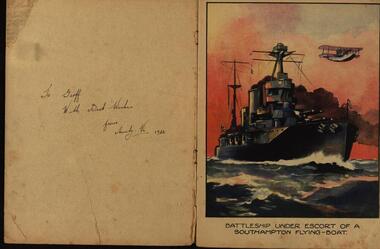
Booklet, United Services: A Story Book with Eighteen Coloured Plates, c1932
... The Geoff mentioned in the inscription is Geoff Biddington. army airforce navy armed service royal marines sailors naval aircraft carrier signalling submarine royal horse guards military band drum major argyll and sutherland highlanders royal artillery machine gunners tanks bridge building the piper whippet tank airmen armstrong whitworth atlas machine hawlker fury aeroplance super-marine napier schneider racing aeroplane fairet iiif sea-plane hawker hart day bomber parachute jumping schneifer trophy sea-plane bristol bulldogs iris flying-boat geoff biddington uniforms Inside front cover "To Geoff With Best Wishes From Aunty Vi 1932 Children's book with colour and black and white illustrations. ...The Geoff mentioned in the inscription is Geoff Biddington.Children's book with colour and black and white illustrations.Inside front cover "To Geoff With Best Wishes From Aunty Vi 1932army, airforce, navy, armed service, royal marines, sailors, naval aircraft carrier, signalling, submarine, royal horse guards, military band, drum major, argyll and sutherland highlanders, royal artillery, machine gunners, tanks, bridge building, the piper, whippet tank, airmen, armstrong whitworth atlas machine, hawlker fury aeroplance, super-marine napier, schneider racing aeroplane, fairet iiif sea-plane, hawker hart day bomber, parachute jumping, schneifer trophy sea-plane, bristol bulldogs, iris flying-boat, geoff biddington, uniforms -
 Lorne Historical Society
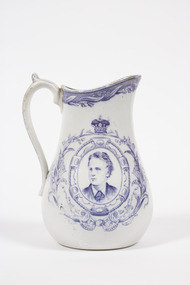
Souvenir - Water jug, J & M.P.Bell & Co, 1871
... commemorating marriage of Princess Louise to Marquis of Lorne 1871 Hammerton collection The name of the township comes from the Marquess of Lorne: John Campbell, Duke of Argyll. princess louise duchess of argyll marquess of lorne duke of argyll marquis of lorne queen victoria weddings Makers mark unreadable White porcelain jug with blue tansfer Souvenir Water jug J & M.P.Bell & Co ...commemorating marriage of Princess Louise to Marquis of Lorne 1871 Hammerton collectionThe name of the township comes from the Marquess of Lorne: John Campbell, Duke of Argyll.White porcelain jug with blue tansfer Makers mark unreadableprincess louise, duchess of argyll, marquess of lorne, duke of argyll, marquis of lorne, queen victoria, weddings -
Linton Mechanics Institute and Free Library Collection
Book, Chambers, W, Stories of old families, 1878
... Seton family Lady Jean Gordon Countess of Nithsdale Lady Grisell Baillie Griselle Cochrane Keith family Lady Grange Lady Jane Douglas Wedderburn family Thomas Erskine Countess of Eglintoun Lady Forbes Duchess of Queensberry Dalrymple family Cecil family Marquis of Montrose Buccleugh family Argyll family Baroness Burdett-Coutts Walpole family Bedford family English peerage system Biography Outlines the histories of established/influential Scottish and English families and individuals. 320 p. ...Outlines the histories of established/influential Scottish and English families and individuals.320 p.non-fictionOutlines the histories of established/influential Scottish and English families and individuals.seton family, lady jean gordon, countess of nithsdale, lady grisell baillie, griselle cochrane, keith family, lady grange, lady jane douglas, wedderburn family, thomas erskine, countess of eglintoun, lady forbes, duchess of queensberry, dalrymple family, cecil family, marquis of montrose, buccleugh family, argyll family, baroness burdett-coutts, walpole family, bedford family, english peerage system, biography
