
Showing 29 items matching "artist's equipment"
-
 Emerald Museum & Nobelius Heritage Park
Equipment - Artist's Box, Unknown maker, 1970s-1980s
... ...Artist's equipment...artist's case was owned by John Alexander, son of Belgrave councilor and property developer, C T Alexander. John inherited a small mixed farm at Emerald after his father died in 1942 - this is now owned by his niece, Karen Alexander, who has donated this equipment. ...Artist's box contains 21 paint brushes, 3 palette knives, many partly used tubes of oil paint, a container of varnish, a bottle of an oil and an empty bottle which is a pre-used pill bottle repurposed to hold oil or the like. and one metal 12'' / 30cm ruler. Equipment ...This artist's case was owned by John Alexander, son of Belgrave councilor and property developer, C T Alexander. John inherited a small mixed farm at Emerald after his father died in 1942 - this is now owned by his niece, Karen Alexander, who has donated this equipment. John did not live on the farm but managed its leases. It is thought that his interest in oil painting was pursued mainly in 1970s-1980sPortable, wooden artist's box with six compartments plus a palette holder. Leather covered strap. Artist's box contains 21 paint brushes, 3 palette knives, many partly used tubes of oil paint, a container of varnish, a bottle of an oil and an empty bottle which is a pre-used pill bottle repurposed to hold oil or the like. and one metal 12'' / 30cm ruler.No discernible markingsalexander, artist's equipment, oil painting, belgrave victoria australia, john alexander, emerald, victoria, australia -
 Federation University Historical Collection
Photograph - Black and White, Ponsonby May Carew Smyth, 1906
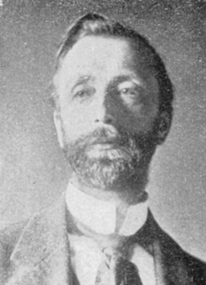
... artist', Carew-Smyth was primarily an educationist. He was actively involved in the early years of Prahran and Swinburne Technical colleges, and especially the Working Men's College which held his interest even after his retirement. In 1906 he was appointed chairman of the Victorian State Schools' Equipment...artist', Carew-Smyth was primarily an educationist. He was actively involved in the early years of Prahran and Swinburne Technical colleges, and especially the Working Men's College which held his interest even after his retirement. In 1906 he was appointed chairman of the Victorian State Schools' Equipment ...Ponsonby Carew Smyth, A.R.C.A. London, was Victorian Art Inspector of Technical Schools. "Ponsonby May Carew-Smyth (1860-1939), educationist, was born on 7 August 1860 at Cork, Ireland, son of Emmanuel Uniacke Smyth, gentleman, and his wife Catherine Giles, née Carew. Carew-Smyth's initial art training and teaching was at the Belfast Government School of Art and Design. In 1885 he entered the National Art Training School at South Kensington, London, where he remained as student and teacher for five years. He also taught at Rugby School, studied at the Royal School of Wood Carving and the Guild School of Handicrafts, London, and was sent by the Department of Science and Art to study art, art education and museum procedures in Paris. Testimonials to his career in England affirm his ability and dedication as an educationist and his integrity as a man. On 23 December 1890 Carew-Smyth married Marie Reynolds of Brixton; they migrated to Australia next January. In September Carew-Smyth applied from Melbourne for the position of master of the school of art and design, established under the auspices of the Ballarat Fine Art Gallery. Opening in November, the school offered day classes and a broad curriculum, and under Carew-Smyth's guidance, established a sound reputation. In November 1899 he was appointed inspector of drawing in the Department of Education. Carew-Smyth saw drawing as a crucial link between primary and technical education, insisting on it as a 'mental process quite as much as a manual'; he believed strongly in the utilitarian value of drawing to the artisan class and of art as 'craftmanship'. By his emphasis on teacher-training, by his role in the Teachers' Training College, and by his constant travels, writing and lecturing, he upgraded both the standard and importance of drawing early in the century. His meticulous mind formulated the Austral Drawing Books which provided the basis of instruction in the subject in Victoria until 1927. Although he gave his occupation as 'artist', Carew-Smyth was primarily an educationist. He was actively involved in the early years of Prahran and Swinburne Technical colleges, and especially the Working Men's College which held his interest even after his retirement. In 1906 he was appointed chairman of the Victorian State Schools' Equipment and Decoration Society, and he was important in the organization of the state schools' exhibition that year. He designed the commemorative wall plaques installed in state schools after World War I, and the art teachers' certificate. He was prominent in bringing about the 1922 Jubilee Exhibition, and the 1926 showing of work of overseas schools, and especially the 1934 Melbourne centenary 'Early Victorian Art' exhibition. In the 1930s he wrote wide-ranging, informative and sometimes humorous articles for the Argus on various aspects of the decorative arts. In mid-1936 he was acting director of the National Gallery of Victoria. To students his single-mindedness sometimes suggested sternness, but Carew-Smyth was always held in the highest regard both professionally and personally. His colleagues recalled a man of kindness, unstinting devotion to work, and humour; he was considered quite a raconteur. Survived by his wife, a son and a daughter, he died in his home at South Yarra on 9 October 1939, and was cremated." (Margot Lethlean, 'Carew-Smyth, Ponsonby May (1860–1939)', Australian Dictionary of Biography, National Centre of Biography, Australian National University, http://adb.anu.edu.au/biography/carew-smyth-ponsonby-may-5501/text9359, accessed 4 June 2013.)Image of the face and shoulders of a bearded man - Ponsonby Carew Smyth. The image was originally published from the State Schools Exhibition Catalogue, 1906. (Cat. No. 401)carew smyth, inspector, technical schools, art. -
 Federation University Historical Collection
Document - Document - Booklet, VIOSH: VIOSH Commission and Ballarat College of Advanced Education Health and Safety Unit: Health and Safety in the Arts, Bob Hall, 1987
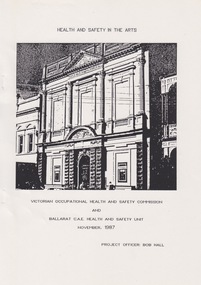
... artists. Comments made by Bob Hall; Project Officer BCAE viosh victorian institute of occupational safety and health bob hall project officer commission ballarat college of advanced eucation health and safety in the arts control measures codes and standards of practice chemical environment protective equipment management of environment noise machines temperature control Sixty pages stapled together. ...Victorian Institute of Occupational Safety and Health (VIOSH) Australia is the Asia-Pacific centre for teaching and research in occupational health and safety (OHS) and is known as one of Australia's leaders on the field. VIOSH has a global reputation for its innovative approach within the field of OHS management. VIOSH had its first intake of students in 1979. At that time the Institution was known as the Ballarat College of Advanced Education. In 1990 it became known as Ballarat University College, then in 1994 as University of Ballarat. It was 2014 that it became Federation University. VIOSH Australia students are safety managers, senior advisors and experienced OHS professionals. They come from all over Australia and industry. Students are taught active research and enquiry; rather than textbook learning and a one-size fits all approach. VIOSH accepts people into the Graduate Diploma of Occupational Hazard Management who have no undergraduate degree - on the basis of extensive work experience and knowledge. The stimulus for this project to investigate health and safety in art teaching and to suggest cost effective control measures, arose from concerns that had been expressed by some members of staff within the Arts Faculty at the Ballarat College of Advanced Education about aspects of health and safety at their workplace. As a non-artist it is hard to attempt to describe the artists' perspective of their working environment. Within the artistic community there is a great concern for individuality and this is expressed in the artists' work. The need for flexibility and spontaneity is a vital and intuitive part of the artistic environment. Consequently codes and standards of practice that would restrict this environment ethic are unlikely to be viewed favourably by artists. Comments made by Bob Hall; Project Officer BCAESixty pages stapled together. Type written with illustrations relevant to safety issues. Front has clear perspex sheetviosh, victorian institute of occupational safety and health, bob hall, project officer, commission, ballarat college of advanced eucation, health and safety in the arts, control measures, codes and standards of practice, chemical environment, protective equipment, management of environment, noise, machines, temperature control -
 Lara RSL Sub Branch
greeting Card 8/8/1918, Advance from Villers-Bretonneux 8/8/1918 & Capture of Hamel 4/7/1918 & Captured German Tank
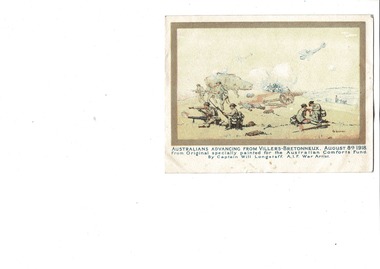
... Artist. Pages 4 : Australian capture A 14 C.M. German Naval Gun intact with its Train and Equipment. ...Artist. Pages 4 : Australian capture A 14 C.M. German Naval Gun intact with its Train and Equipment. ...Four color pages card Advance from Villers-Bretonneux 8/8/1918 & Capture of Hamel 4/7/1918 & Captured German Tank .Page 1: Australian Advancing from Villlers - Bretonneux 8/8/1918 drawing of soldiers in action. Page 2 : Villlers - Bretonneux Start of the German attack 8/8/1918 Picture of captured German tank by Australians. Page 3 : Capture of Hamel Village 4/4/1918 by Australian. From color Paiinting Australian Comfort Fund by A. Pearse War Artist. Pages 4 : Australian capture A 14 C.M. German Naval Gun intact with its Train and Equipment. Greeting from.................cardboard card, world war 1, greeting card -
 Lara RSL Sub Branch
Card & Envelope, Raphael Tuck & Sons,Ltd.Publishers to the King and Queen, Australian Comforts Fund Xmas & New Years Greeting Card 1918-19, Circa 1918-19
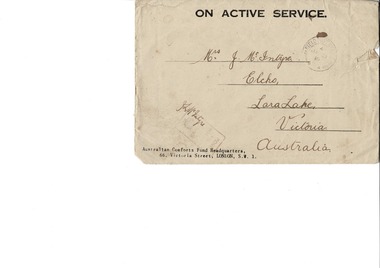
... Artist. Christmas card with blue and black lettering Australian Comforts Fund Christmas & New Years Greetings, 1918-19, Produced by Raphael Tuck & Sons, Publishers to the King and Queen. The card depicts four scenes from the First World War: Australians Advancing from Villers-Brettonneux August 8th 1918, A German tank captured by the Australians near Villers-Brettonneux, Capture of Hamel Village July 4th 1918 by Australians assisted by a detachment of Americans, Captured by The Australians a 14 C.M. German Naval Gun intact with its Train & Equipment ...Small Christmas card produced for the Australian Comforts Fund, Christmas 1918. Christmas & New Years Greetings, 1918-19, with scenes of battles at Villers-Brettonneux and Hamel, and views of a captured tank and a 14cm. gun. Produced by Raphael Tuck & Sons, Publishers to the King and Queen.These cards were sent by service personal serving overseas to family members back home.l Sent by J.L.Mcintre while on active service in France to his loved ones back home.Christmas card with blue and black lettering Australian Comforts Fund Christmas & New Years Greetings, 1918-19, Produced by Raphael Tuck & Sons, Publishers to the King and Queen. The card depicts four scenes from the First World War: Australians Advancing from Villers-Brettonneux August 8th 1918, A German tank captured by the Australians near Villers-Brettonneux, Capture of Hamel Village July 4th 1918 by Australians assisted by a detachment of Americans, Captured by The Australians a 14 C.M. German Naval Gun intact with its Train & Equipment.Australian Advancing from Vlllers-Brettonneux.August 8th 1918. From Original specially painted for the Australian Comforts Fund by Captain Will Longstaff.A.I.F.War Artist. -
 Federation University Historical Collection
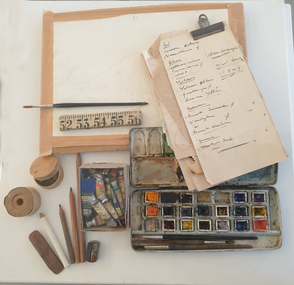
Equipment - Object, Artist's Box, c 1940
... There is a small, plywood, stretching board. Artist's Box Equipment Object Alice Watson ...Edith (Alice) Watson (1914–2010) studied at the Ballarat Technical Art School, at the School of Mines Ballarat, from 1930 until 1933. Watson was warmly regarded in her home town, Murtoa, easily winning local fundraiser, ‘Most Popular Girl’ in 1936. Upon graduating, Watson taught at the Murtoa High School, living with her parents until their deaths 1972 and 1988. Watson was 74 years old. Alice Watson died in Ballarat, aged 95, having conserved her beautiful student folio. Alice's comprehensive folio of Ballarat Technical Art School work is held by the University's Geoffrey Blainey Research Centre.A cardboard box containing items used by Alice Watson to produce paintings. The items included are: tubes of oil colour; two paint palettes; paint brushes; imperial measure tape measure; pencils; an erasure; two pencil sharpeners; a roll of brown, gummed tape; small, round container of various pins; a State Savings Bank Victoria ruler; and a collection of scraps of artists paper held together with a metal clip which includes a list of paint colour names and a design tracing of a fuschia. There is a small, plywood, stretching board. alice watson, edith alice watson, ballarat school of mines, artists workbook, ballarat technical art school, paint, oil paint -
 City of Moorabbin Historical Society (Operating the Box Cottage Museum)
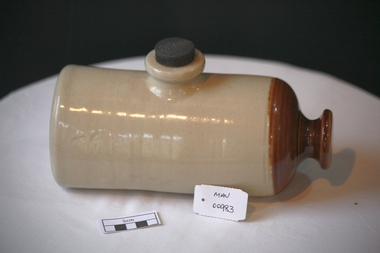
Household Equipment, Earthenware hot water bottle 'Hoffmann', c1900
... artists, designer architects and artisans enabled the realisation of the ‘total artwork’. Hoffmann’s designs were based on simple and clear proportions and employed rich, high-quality materials. Everyday objects were conceived as part of a whole living environment and were considered works of art. early settlers moorabbin mckinnon ormond bentleigh pottery craftwork earthenware pioneers hoffmann josef waerndorfer fritz moser kololan weiner werkstatte vienna austria brumpton frances HOFFMANN A large earthenware hot water bottle. Household Equipment ...Large stoneware hot water bottle also called a foot warmer. The stoneware hot water bottle has a rubber cap, often the original stone cap would be replaced with a cork alternative to seal the hot water. Because they were mass produced and very robust many survived so the antique value is not great. Many stoneware hot water bottles are still in use today and will be for years to come. Stoneware is a certain clay fired at a particularly high temperature and glazed so that it resembles polished stone.The bottle was filled with hot water, close the stopper securely and stand them in a bed, upright, on their small flat ends so that the sheets and blankets formed a tent-like structure over them. The peak of the 'tent' was the special feature of the rounded knob opposite the flat end, which also served as a carrying handle. Used this way, the hot water bottle was supposed to heat more of the bed Josef Hoffmann (1870–1956) attended the Academy of Fine Arts in Vienna and studied architecture under Otto Wagner. As a designer, Hoffmann was creative and prolific. His design portfolio encompassed commissions for buildings and interiors but extended to things as diverse as textiles, umbrella knobs, walking stick handles, tea pots, caskets and book covers as well as glass and ceramics.In 1903, with Koloman Moser and financier Fritz Waerndorfer, Hoffmann founded the Wiener Werkstätte. The collaboration of artists, designer architects and artisans enabled the realisation of the ‘total artwork’. Hoffmann’s designs were based on simple and clear proportions and employed rich, high-quality materials. Everyday objects were conceived as part of a whole living environment and were considered works of art. A large earthenware hot water bottle.HOFFMANNearly settlers, moorabbin mckinnon, ormond, bentleigh, pottery, craftwork, earthenware, pioneers, hoffmann josef, waerndorfer fritz, moser kololan, weiner werkstatte, vienna, austria, brumpton frances -
 Bendigo Historical Society Inc.
Letter - MERLE HALL COLLECTION: ROSALIND PARK CREATIVE VILLAGE BENDIGO PROJECT LETTERS, 1994
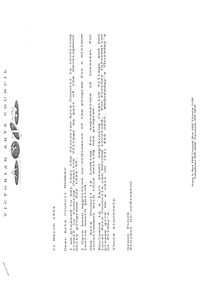
... The agreed fee was $5000 and $60 per visit to Bendigo with living away to be provided by Arts Bendigo, plus transfer of the diamond saw purchased by AB 28 August 1996 Memorial to Bendigo’s Mining Heritage and Traditions financial and other support as at August 128th Arts Bendigo Financial contribution: $7000 Local Busine Sponsors: $2800 City of Greater Bendigo Matching Above: $2800 City of Greater Bendigo Site works: Equiv, $12000 Local Businesses and institutions supplying goods and services to total value of: Equiv: $7600 Expenditure: Purchase of equipment, including diamond saw: $2000 Purchase of materials: $800 Artists design fees: $3000 Artists on site work, travel and accommodation: $12000 insurance, administration etc.: $700 31 May 1996 List of possible donors' checklist Undated Budget Sheet 21 September 1995 From: The Victorian Arts Council To: City of Greater Bendigo Content: Invoice for $5000 10 December 1995 From: Maery Gabriel artist To: Arts Bendigo Content: Invoice $1575 for design of Rosalind Park Lookout. 45 hours @ $35/hour 1 October 1996 Historic mining Mosaic Pavement, Rosalind Park Poppet Head Financial Statement as a October 1st, 1996 28 October 1996 From: Maery Gabriel To: Ann Buzza (representing Arts Bendigo) Report on project of Rosalind Park Mosaic as at October 1996. ...The agreed fee was $5000 and $60 per visit to Bendigo with living away to be provided by Arts Bendigo, plus transfer of the diamond saw purchased by AB 28 August 1996 Memorial to Bendigo’s Mining Heritage and Traditions financial and other support as at August 128th Arts Bendigo Financial contribution: $7000 Local Busine Sponsors: $2800 City of Greater Bendigo Matching Above: $2800 City of Greater Bendigo Site works: Equiv, $12000 Local Businesses and institutions supplying goods and services to total value of: Equiv: $7600 Expenditure: Purchase of equipment, including diamond saw: $2000 Purchase of materials: $800 Artists design fees: $3000 Artists on site work, travel and accommodation: $12000 insurance, administration etc.: $700 31 May 1996 List of possible donors' checklist Undated Budget Sheet 21 September 1995 From: The Victorian Arts Council To: City of Greater Bendigo Content: Invoice for $5000 10 December 1995 From: Maery Gabriel artist To: Arts Bendigo Content: Invoice $1575 for design of Rosalind Park Lookout. 45 hours @ $35/hour 1 October 1996 Historic mining Mosaic Pavement, Rosalind Park Poppet Head Financial Statement as a October 1st, 1996 28 October 1996 From: Maery Gabriel To: Ann Buzza (representing Arts Bendigo) Report on project of Rosalind Park Mosaic as at October 1996. ...Merle Hall Collection: Rosalind Park Creative Village Bendigo Project Letters 31 March 1994 To: Victorian Arts Council Members From Grant Finck Project Coordinator Content: Introduces himself as the coordinator for 12 months; to members looking for expression of interest, includes Information Sheet 1994 on what the Creative Village is. 27 October 1995 To: Mrs. Mearle Hall From: City of Greater Bendigo, Bernard Smith (Director Environmental Services) Content: Granting access to the Victoria Hill site for small quantities of geological material. 10 January 1996 To: Mrs. Mearle Hall From: City of Greater Bendigo, Bernard Smith (Director Environmental Services) Content: Endorsement of the project by the Council and confirmation that the Council will provide preliminary site work to allow the project to be enabled. Also advised the Arts Bendigo Mosaic Project makes contact with the Salvation Army (New Work Opportunity Project) 27 February 1996 To: Mrs. Mearle Hall From: Ken Beasley Manager Project Development The Smith Read Training Group. Content: LEAP Project Proposal - Mining Heritage Mosaic outlining the benefits of using LEAP Trainees to undertake the project. Proposed Scope of work outlining responsibilities of each participant. Bendigo Mining NL Environmental Trust Fund (Perseverance Exploration and Department of Energy and Minerals Victoria representatives) 27 June 1996 To: Mrs. Mearle Hall From: City of Greater Bendigo, Bernard Smith (Director Environmental Services) Content: Advising that the Council will match dollar for dollar funding for the engagement of an artist to supervise the construction of the Mosaic in Upper Rosalind Park up to $3,500. 22 July 1996 To: Anne Buzza From Geof Brown Camp Hill Primary School Content: Thanks for using and managing the school students to help create tiles. 9 October 1996 To: Mrs. Mearle Hall From: City of Greater Bendigo, Bernard Smith (Director Environmental Services) Content: Enclosed cheque for matching grant of $3500 15 October 1996 To: Mrs. Mearle Hall From: City of Greater Bendigo, Bernard Smith (Director Environmental Services) Content: Agreement to relocate the project facilities to the car park and to maintain a close liaison between the Council and Arts Bendigo. 13 November 1996 To: Mrs. Mearle Hall From: The Sidney Myer Fund Helen Morris Research Officer Content: Remittance advice for $1000 22 April 1997 To: Mrs. Mearle Hall From: John Little Administrator Victorian Arts Council Content: Remittance advice for $500 towards the project and enclosing 12 VAC Annual reports. 20 October 1998 To: Mrs. Mearle Hall From: City of Greater Bendigo, Andrew Hall (Director Community Development) Content: Advising that the Council will make a grant of $1090 for the purpose of printing of Brochures for Bendigo Heritage Mosaic. A service agreement to be signed before the issue of the grant, 21 March 2001 To: Mrs. Mearle Hall From: City of Greater Bendigo, Justin Hanney (Director Community Services) Content: A reference from Council supporting the project application to Vic Health for the development of a series of small mosaic pieces along the linear pathway asjacent to the Bendigo Creek. 12 November 1996 To: Mrs. Mearle Hall From: Arts Bendigo Inc. Content: Cheque for $2000 being first payment as under contract two for mosaic project. 4 December 1996 To: Mrs. Mearle Hall From: Arts Bendigo Inc. Content: Cheque for $2000 being second payment as under contract two for mosaic project. 27 July 1997 To: Maery Gabriel Mosaic Artist From: Arts Bendigo Inc. Content: Cheque for $2000 being final payment as under contract two for mosaic project. 12 June 1997 - Two copies To: Maery Gabriel Mosaic Artist From: Arts Bendigo Inc. Content: Agreement between Maery Gabriel (The artist) and Arts Bendigo Inc. to complete the final two sections of the Bendigo Heritage Mosaic at the base of the Rosalin Park Poppet Head, Bendigo with a design of approximately two square meters within each section. The work to be completed by the endo of July 1997, unless severe weather conditions make the laying impossible. Agreement for two lots of $2000. 14 June 1996 From: Maery Gabriel Mosaic Artist To: Arts Bendigo Inc. Content: receipt for 50% payment for two weeks and $60 Travelling expenses. 21 May 1996 Agreement between Arts Bendigo of P.O Box 563, Bendigo in the State of Victoria (hereinafter referred to as the ‘AB’ of the first part AND Meary Hall of Morningswood, Petersons Road, Ellinbank, 3821 in the State of Victoria (hereinafter referred to as ‘the artist’) of the second part. ENGAGEMENT: (a) AB engages the Artist to provide her services as Mosaic Artist for the design and creation of a Mosaic pavement surround to the poppet head lookout in Rosalind Park, Bendigo and matters incidental thereto at such schools, halls and any other places as required from time to time by AB and the Artist accepts the engagement upon the term and conditions hereinafter appearing. (b) Services to be provided by the artist include community consultation and design work in association with AB Co-Ordinator and Arts Bendigo, a minimum of six weeks of the artist’s time within the six months of the project. Completion of section one of the whole design with further work on the other sections to depend on available funding. The agreed fee was $5400 and $60 per visit to Bendigo with living away to be provided by Arts Bendigo 1 November 1996 Agreement between Arts Bendigo of P.O Box 563, Bendigo in the State of Victoria (hereinafter referred to as the ‘AB’ of the first part AND Meary Hall of Morningswood, Petersons Road, Ellinbank, 3821 in the State of Victoria (hereinafter referred to as ‘the artist’) of the second part. ENGAGEMENT: (a) AB engages the Artist to provide her services as Mosaic Artist for the design and creation of a Mosaic pavement surround to the poppet head lookout in Rosalind Park, Bendigo and matters incidental thereto at such schools, halls and any other places as required from time to time by AB and the Artist accepts the engagement upon the term and conditions hereinafter appearing. (b) Services to be provided by the artist include community consultation and design work in association with AB Co-Ordinator and Arts Bendigo, a minimum of six weeks of the artist’s time within the six months of the project. Completion of section one of the whole design with further work on the other sections to depend on available funding. The agreed fee was $5000 and $60 per visit to Bendigo with living away to be provided by Arts Bendigo, plus transfer of the diamond saw purchased by AB 28 August 1996 Memorial to Bendigo’s Mining Heritage and Traditions financial and other support as at August 128th Arts Bendigo Financial contribution: $7000 Local Busine Sponsors: $2800 City of Greater Bendigo Matching Above: $2800 City of Greater Bendigo Site works: Equiv, $12000 Local Businesses and institutions supplying goods and services to total value of: Equiv: $7600 Expenditure: Purchase of equipment, including diamond saw: $2000 Purchase of materials: $800 Artists design fees: $3000 Artists on site work, travel and accommodation: $12000 insurance, administration etc.: $700 31 May 1996 List of possible donors' checklist Undated Budget Sheet 21 September 1995 From: The Victorian Arts Council To: City of Greater Bendigo Content: Invoice for $5000 10 December 1995 From: Maery Gabriel artist To: Arts Bendigo Content: Invoice $1575 for design of Rosalind Park Lookout. 45 hours @ $35/hour 1 October 1996 Historic mining Mosaic Pavement, Rosalind Park Poppet Head Financial Statement as a October 1st, 1996 28 October 1996 From: Maery Gabriel To: Ann Buzza (representing Arts Bendigo) Report on project of Rosalind Park Mosaic as at October 1996. The report lists the difficulties faced with the weather, unsuitable facilities on site and problems with the LEAP team labour.victorian arts council, city of greater bendigo -
 Bendigo Historical Society Inc.
Letter - MERLE HALL COLLECTION: ROSALIND PARK CREATIVE VILLAGE BENDIGO PROJECT LETTERS, 1995
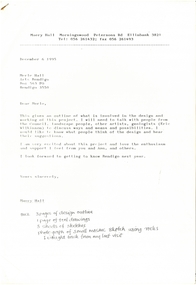
... A non-specific plan for being ‘contracted and not employed’ An expectation the ‘Future Connections’ would then offer you separate contract to conduct workshops for their clients and develop tutorials. 9 November 1995 To: Maery Hall From Merle Hall Secretary Arts Bendigo Content: Sketches enclosed for the poppet head site and comments on them from the City Council. 20 January 1997 From: Maery Gabiel Artist in Mosaic (formerly Maery Hall) To: Merle Hall Secretary Arts Bendigo Content: Receipt of $5000 plus one ‘Stubbie Electric Bricksaw, with stand, serial number 0002056 being payment under contract no. 2 for work on mosaic payments in Bendigo. 20 May 1996 List of Materials and equipment required for Mosaic and tools to be made...A non-specific plan for being ‘contracted and not employed’ An expectation the ‘Future Connections’ would then offer you separate contract to conduct workshops for their clients and develop tutorials. 9 November 1995 To: Maery Hall From Merle Hall Secretary Arts Bendigo Content: Sketches enclosed for the poppet head site and comments on them from the City Council. 20 January 1997 From: Maery Gabiel Artist in Mosaic (formerly Maery Hall) To: Merle Hall Secretary Arts Bendigo Content: Receipt of $5000 plus one ‘Stubbie Electric Bricksaw, with stand, serial number 0002056 being payment under contract no. 2 for work on mosaic payments in Bendigo. 20 May 1996 List of Materials and equipment required for Mosaic and tools to be made Letter MERLE HALL COLLECTION: ROSALIND PARK CREATIVE VILLAGE BENDIGO PROJECT LETTERS ...MERLE HALL COLLECTION: ROSALIND PARK CREATIVE VILLAGE BENDIGO PROJECT LETTERS Merle Hall Collection: Rosalind Park Creative Village Bendigo Project Letters from Maery Hall (Gabriel). 6 December 1995 To: Merle Hall Arts Bendigo From Maery Hall Content: Outline of what is involved in the design and working of the project. Enclosed are three page of the design outline, one page of tool drawings, three sheets of sketches, photograph of small mosaic sketch using rocks I brought back from my last visit. The letter also contains: Materials, Tools, labour, other needs, Time, Costs and the Council’s role. 6 November 1995 To: Merle Hall Secretary Arts Bendigo From Maery Hall Content: Contains a rough sketch of the project. Note that the sketch is missing. 29 January 1997 To: Merle Hall Arts Bendigo From Maery Gabriel Content: Contains a drawing for the remaining pavement areas that I submitted before and measurements for the actual slabs for 22 square m. for the two. The result will be 2 (saddle reefs) in style. Also mentioned are two options for payment. Receipts also included for the last two payments and the saw. Thank you for sending the form of transfer for the saw. (Note the drawing is missing) 10 April 1997 To: Merle Hall Arts Bendigo From Maery Gabriel (artist in Mosaic) Content: Thank you for your letter of 9 March and further discussions on costs and layouts. 25 Feb 1997 To: Maery Gabrel, ‘Morningswood’ Peterson’s Road Ellinbank 3821 From Merle Hall Secretary Arts Bendigo Content: Apologies for the delay in not answering last letters and drawings. Mentions the need to meet with the Council to discuss the completion of the project and the need to enquire about funding from the Premier’s ‘community support fund’ 9 March 1997 To: Maery Gabrel From Merle Hall Secretary Arts Bendigo Content: Follow-up letter from 25 Feb 1997 concerning the last sections of the mosaic project. Outcome of meeting with Bernard Smith of the City of Greater Bendigo One local business sponsor prepared to donate a small amount towards completion of the project P.S. Sharon Hackett: the painter would love to receive her questionnaire from you. 22 Dec 1996 To: Maery Gabrel From Merle Hall Secretary Arts Bendigo Content: Enclosed is a form to cover transfer of ownership of the diamond saw as recommended by an adviser. P.S. the transfer is made out to ‘Hall’ - your name under our contracts. I’ve used your name for the address. 20 Dec 1996 To: Maery Gabrel From Merle Hall Secretary Arts Bendigo Content: Arts Bendigo Inc. of P.O. Box 563, Bendigo, 3552, agrees to the transfer of ownership to Maery Hall of ‘Morningswood’, Peterson’s Rd., Ellinbank, 3821 of one ‘Stubbie electric Bricksaw. Purchased from DEMBICON on May 25th, 1996 Diamond Blade for $1650, now valued at $1200 Part payment for the contractor of a mosaic pavement around the poppet lookout in Rosalind Park Bendigo. 30 Nov 1995 To: Maery Gabrel From Merle Hall Secretary Arts Bendigo Content: The enclosed survey sketches just arrived. Formal approval from the commissioners. Early next year the poppet head will be re-painted and have scaffolding there for a time but shouldn’t be a problem. 9 January 1996 To: Maery Gabrel From Merle Hall Secretary Arts Bendigo Content: Summary of discussions with the John Little V.A.C. and Roni Schell from ‘Future Connections’ re her DEET submission and Bernard King from the City and one of the Commisioners. A non-specific plan for being ‘contracted and not employed’ An expectation the ‘Future Connections’ would then offer you separate contract to conduct workshops for their clients and develop tutorials. 9 November 1995 To: Maery Hall From Merle Hall Secretary Arts Bendigo Content: Sketches enclosed for the poppet head site and comments on them from the City Council. 20 January 1997 From: Maery Gabiel Artist in Mosaic (formerly Maery Hall) To: Merle Hall Secretary Arts Bendigo Content: Receipt of $5000 plus one ‘Stubbie Electric Bricksaw, with stand, serial number 0002056 being payment under contract no. 2 for work on mosaic payments in Bendigo. 20 May 1996 List of Materials and equipment required for Mosaic and tools to be mademaery hall, arts bendigo -
 Eltham District Historical Society Inc
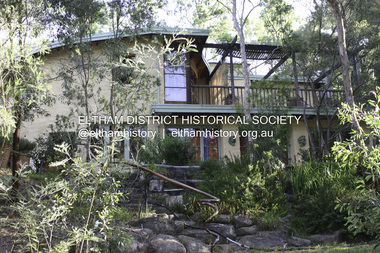
Photograph - Digital Photograph, Alan King, Busst House, cnr Silver Street and Kerrie Crescent, Eltham, 2 February 2008
... artists Peter Glass, Clifton Pugh, Matcham Skipper, Sonia Skipper and husband Jo Hannan. For Knox, mud-brick building was more than just a cheap building medium. He saw it as harmonising with the surrounding bush and as a way of counteracting the growing materialism of the age. He wrote of its impact on ‘ 20th century man. It should counteract the confusion that the perpetual flow of high technology products have upon him ..’ Building the Busst house on a steep site was difficult because most earth-moving equipment...artists Peter Glass, Clifton Pugh, Matcham Skipper, Sonia Skipper and husband Jo Hannan. For Knox, mud-brick building was more than just a cheap building medium. He saw it as harmonising with the surrounding bush and as a way of counteracting the growing materialism of the age. He wrote of its impact on ‘ 20th century man. It should counteract the confusion that the perpetual flow of high technology products have upon him ..’ Building the Busst house on a steep site was difficult because most earth-moving equipment ...Considered the best of the early mud-brick houses built by Alistair Knox. Covered under Heritage Overlay, Nillumbik Planning Scheme. Published: Nillumbik Now and Then / Marguerite Marshall 2008; photographs Alan King with Marguerite Marshall.; p143 The Busst house hidden by trees at the corner of Silver Street and Kerrie Crescent is considered the best of the early mud-brick houses built by Eltham architect, Alistair Knox. Knox himself said, that the Busst house was the most mature mud-brick house designed at that period. ‘It related with true understanding to its steep site and expressed the flexibility of earth building ………to develop a new sense of flowing form and shape’. Built in 1948 for artist Phyl Busst, a former art student at Montsalvat, the house helped usher in Eltham Shire’s distinctive mud-brick residential character. Knox was the pivotal figure of the style developed from the 1950s to the 1970s. Scarcity of building materials after World War Two encouraged mud-brick building because earth was a cheap and plentiful building medium. But when Knox began building in mud-brick in 1947, no council in Victoria knew anything of this ancient art and he needed a permit. Fortunately the Commonwealth Experimental Building Station at Ryde in NSW, had been experimenting with earth construction to help overcome the shortages of that time. They published a pamphlet that became available in Melbourne on the same day the Eltham Council was to consider whether the earth building should be allowed. Knox caught one of the three morning trains to the city in those days and bought several copies of the pamphlet to give to each councillor. On his return he found the councillors standing on the steps of the shire offices after lunch at the local hotel. He heard that earth building had been discussed before lunch and that they were not in favor of it. Knox gave each councillor a pamphlet. They passed that plan and by doing so, opened the door for all future earth building in Victoria and by default, in Australia. Mud-brick houses attracted artists to Eltham, for their aesthetic appeal and because they were cheap. Those who built their own houses, included film maker Tim Burstall, artists Peter Glass, Clifton Pugh, Matcham Skipper, Sonia Skipper and husband Jo Hannan. For Knox, mud-brick building was more than just a cheap building medium. He saw it as harmonising with the surrounding bush and as a way of counteracting the growing materialism of the age. He wrote of its impact on ‘ 20th century man. It should counteract the confusion that the perpetual flow of high technology products have upon him ..’ Building the Busst house on a steep site was difficult because most earth-moving equipment was then in its infancy. For instance drilling for explosives was done by hand, which was a slow and painful process. Knox, assisted by his foreman Horrie Judd and Gordon Ford (who was to become a famous landscape designer), built two large main rooms - a living room/ kitchen downstairs - and upstairs, a studio/bedroom. The studio/bedroom opens onto the balcony, which covers the living area. The bath made of solid concrete by stonemason Jack Fabro, is particularly deep. Sunshine pours through the three French windows of the north-east facing kitchen/living area, which is lined with timber. The large hearth can fit a family around the fire while the timber floors and solomite (compressed straw) ceilings add to the cosy atmosphere. The garden is thick with trees, and in the late 1990s, Ford put in a pool near the original dry wall he had built as a young man.This collection of almost 130 photos about places and people within the Shire of Nillumbik, an urban and rural municipality in Melbourne's north, contributes to an understanding of the history of the Shire. Published in 2008 immediately prior to the Black Saturday bushfires of February 7, 2009, it documents sites that were impacted, and in some cases destroyed by the fires. It includes photographs taken especially for the publication, creating a unique time capsule representing the Shire in the early 21st century. It remains the most recent comprehenesive publication devoted to the Shire's history connecting local residents to the past. nillumbik now and then (marshall-king) collection, alistair knox, alistair knox design, busst house, kerrie crescent, mudbrick construction, mudbrick houses, silver street -
 Sunshine and District Historical Society Incorporated
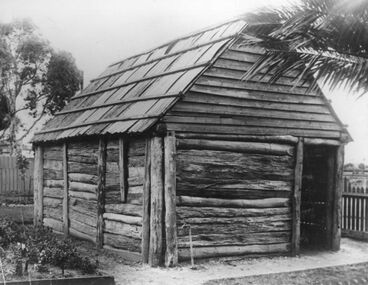
Photograph - HV McKay replica smithy
... Photograph of reproduction of HV McKays original smithy Photocopies of replica Smithy erected at Sunshine Harvester Works Extract from publication not known an artists drawing This record would not be complete without paying tribute to the early pioneers who dispite difficulties and they were legion laid the foundations of Australia today Their descendants have been tried and proved in two world wars They have played their part in subduing those powers of evil threatening the freedom of the indiviual and his right to carve out his own destiny Hugh Victor McKay the founder of the Sunshine Harvester Works for it was here as a youth that he built the prototype of his now famous stripper harvester His equipment was just as crude as his workshop...McKays Sunshine Harvester Works Smithy Photograph of reproduction of HV McKays original smithy Photocopies of replica Smithy erected at Sunshine Harvester Works Extract from publication not known an artists drawing This record would not be complete without paying tribute to the early pioneers who dispite difficulties and they were legion laid the foundations of Australia today Their descendants have been tried and proved in two world wars They have played their part in subduing those powers of evil threatening the freedom of the indiviual and his right to carve out his own destiny Hugh Victor McKay the founder of the Sunshine Harvester Works for it was here as a youth that he built the prototype of his now famous stripper harvester His equipment was just as crude as his workshop HV McKay replica smithy Photograph HV McKay replica smithy ...Photograph of reproduction of HV McKays original smithy Photocopies of replica Smithy erected at Sunshine Harvester Works Extract from publication not known an artists drawing This record would not be complete without paying tribute to the early pioneers who dispite difficulties and they were legion laid the foundations of Australia today Their descendants have been tried and proved in two world wars They have played their part in subduing those powers of evil threatening the freedom of the indiviual and his right to carve out his own destiny Hugh Victor McKay the founder of the Sunshine Harvester Works for it was here as a youth that he built the prototype of his now famous stripper harvester His equipment was just as crude as his workshoph.v. mckays, sunshine harvester works, smithy -
 Nillumbik Shire Council
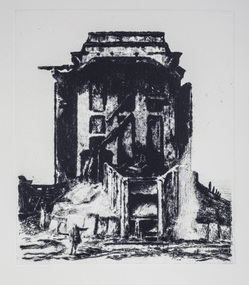
Print (drypoint): Rick AMOR (b.1948 Melbourne, AUS), Rick Amor, 'The Ruin' from 'The Baldessin & Friends' commemorative folio, 2016
... artists. He was a good friend of the late George Baldessin and three times Archibald Prize winner Clifton Pugh, having lived and worked at Pugh's property, Dunmoochin in Cottles Bridge, Nillumbik during the 1980s and 90s. George Baldessin (1939-1978) was born in San Biagio di Callalta, in the Veneto in Northern Italy and arrived in Australia ten years later. A printmaker and sculptor he built his bluestone studio at St Andrews (Nillumbik) in 1971 with his partner Tess and the three Hails brothers, Rob, Doug and Don. Made of recycled materials the studio today contains all of George’s equipment...artists. He was a good friend of the late George Baldessin and three times Archibald Prize winner Clifton Pugh, having lived and worked at Pugh's property, Dunmoochin in Cottles Bridge, Nillumbik during the 1980s and 90s. George Baldessin (1939-1978) was born in San Biagio di Callalta, in the Veneto in Northern Italy and arrived in Australia ten years later. A printmaker and sculptor he built his bluestone studio at St Andrews (Nillumbik) in 1971 with his partner Tess and the three Hails brothers, Rob, Doug and Don. Made of recycled materials the studio today contains all of George’s equipment ...Painter, printmaker and sculptor Rick Amor is one of Australia's most distinguished senior artists. He was a good friend of the late George Baldessin and three times Archibald Prize winner Clifton Pugh, having lived and worked at Pugh's property, Dunmoochin in Cottles Bridge, Nillumbik during the 1980s and 90s. George Baldessin (1939-1978) was born in San Biagio di Callalta, in the Veneto in Northern Italy and arrived in Australia ten years later. A printmaker and sculptor he built his bluestone studio at St Andrews (Nillumbik) in 1971 with his partner Tess and the three Hails brothers, Rob, Doug and Don. Made of recycled materials the studio today contains all of George’s equipment including the large press, which he modelled himself with the help of Neil Jeffrey (Enjay Presses). George won many prizes throughout his career and is represented in many of Australia's public art collections including his famous 'Pears' sculpture in front of the National Gallery of Australia, Canberra. In 1975 he represented Australia in the Sao Paulo Biennale, before living and working in Paris until his return to St Andrews in 1977. In 1978 George was killed in a car accident aged 39 years. In 2001 Tess returned to St Andrews to reclaim the run-down studio and reconstitute it as The Baldessin Press & Studio - a printmaking retreat. It operates in George’s memory, so that artists may continue to create, perpetuating the generous spirit of George. 'The Ruin' is one of eight prints in the 'Baldessin & Friends commemorative folio. The folio was conceived by Tess Edwards as a fundraising initiative in celebration of the The Baldessin Press & Studio's fifteen year anniversary, and as a way to honour George Baldessin's memory. The folio is a unique coming together of seven very different and acclaimed artists who are connected by their friendship to the missing eighth member, George Baldessin. The Baldessin Press & Studio is a not-for-profit organisation created in memory of the late George Baldessin (1939-1978), whose original studio is now open to the public for creative use and as a practical legacy to living artists. The Studio is located in St Andrews, Nillumbik. Rick Amor has been an ardent supporter of the Baldessin Press & Studio and a great patron of living artists. In 2014 the Press partnered with Amor and the State Library of Victoria to create The Amor Residency at The Baldessin Press & Studio, which is part of the Library's annual fellowship program. 'The Ruin' was based on a plein air painting done by Rick Amor on a trip to Broken Hill in 2001 and reflects on death and the passing of time so eloquently portrayed by the industrial ruins of NSW. In the tradition of a Piranesi, the work emphasises the transience of life and the triumph of time. Black and white drypoint etching in which a small figure, a traveller; located bottom left, points to a large crumbling edifice (building), a stage like space in the background. Ed.14/25baldessin, print, drypoint, amor, 2018 ekphrasis, ruin, etching, ekphrasis2018 -
 Nillumbik Shire Council
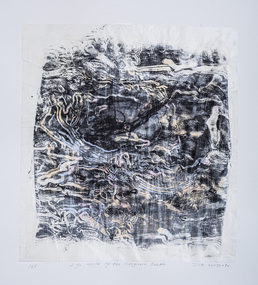
Print (woodcut and etching on chine-colle): John WOLSELEY (b.1938 Somerset, UK; arrived 1976 Melb., AUS), John Wolseley, 'Life world of the Longicorn beetle' from the 'Baldessin & Friends commemorative folio', 2016
... artists John Wolseley met when he arrived in Australia in 1976. Both immigrated to Australia and connected through this shared experience. They were both at 'Realities Gallery' with Marianne Baillieu in the 1970s and 80s. George Baldessin (1939-1978) was born in San Biagio di Callalta, in the Veneto in Northern Italy and arrived in Australia ten years later. A printmaker and sculptor he built his bluestone studio at St Andrews (Nillumbik) in 1971 with his partner Tess and the three Hails brothers, Rob, Doug and Don. Made of recycled materials the studio today contains all of George’s equipment...artists John Wolseley met when he arrived in Australia in 1976. Both immigrated to Australia and connected through this shared experience. They were both at 'Realities Gallery' with Marianne Baillieu in the 1970s and 80s. George Baldessin (1939-1978) was born in San Biagio di Callalta, in the Veneto in Northern Italy and arrived in Australia ten years later. A printmaker and sculptor he built his bluestone studio at St Andrews (Nillumbik) in 1971 with his partner Tess and the three Hails brothers, Rob, Doug and Don. Made of recycled materials the studio today contains all of George’s equipment ...Painter, printmaker and installation artist John Wolseley was born in Somerset, England. He lived and worked throughout Europe before relocating to Australia in 1976. His work explores how people dwell and move within landscape. Wolseley see's himself as a hybrid mix of artist and scientist; one who tries to relate the minutiae of the natural world - leaf, feather and beetle wing - to the abstract dimensions of the earth's dynamic systems. Using techniques of watercolour, collage, frottage, nature printing and other methods of direct physical or kinetic contact Wolseley finds ways of collaborating with the actual plants, birds, trees, rocks and earth of a particular place. George Baldessin was one of the first artists John Wolseley met when he arrived in Australia in 1976. Both immigrated to Australia and connected through this shared experience. They were both at 'Realities Gallery' with Marianne Baillieu in the 1970s and 80s. George Baldessin (1939-1978) was born in San Biagio di Callalta, in the Veneto in Northern Italy and arrived in Australia ten years later. A printmaker and sculptor he built his bluestone studio at St Andrews (Nillumbik) in 1971 with his partner Tess and the three Hails brothers, Rob, Doug and Don. Made of recycled materials the studio today contains all of George’s equipment including the large press, which he modelled himself with the help of Neil Jeffrey (Enjay Presses). George won many prizes throughout his career and is represented in many of Australia's public art collections including his famous 'Pears' sculpture in front of the National Gallery of Australia, Canberra. In 1975 he represented Australia in the Sao Paulo Biennale, before living and working in Paris until his return to St Andrews in 1977. In 1978 George was killed in a car accident aged 39 years. In 2001 Tess returned to St Andrews to reclaim the run-down studio and reconstitute it as The Baldessin Press & Studio - a printmaking retreat. It operates in George’s memory, so that artists may continue to create, perpetuating the generous spirit of George. 'Life world of the Longicorn beetle' is one of eight prints in the 'Baldessin & Friends commemorative folio. The folio was conceived by Tess Edwards as a fundraising initiative in celebration of the The Baldessin Press & Studio's fifteen year anniversary, and as a way to honour George Baldessin's memory. The Baldessin Press & Studio is a not-for-profit organisation created in memory of the late George Baldessin (1939-1978), whose original studio is now open to the public for creative use and as a practical legacy to living artists. The Studio is located in St Andrews, Nillumbik. The folio is a unique coming together of seven very different and acclaimed artists who are connected by their friendship to the missing eighth member, George Baldessin. Communion and collaboration with nature are central to Wolseley's practice. He assembles different drawing methods to represent a kind of inventory or document about the state of the earth. His interest is to paint the processes and energy field of the living systems of this land. 'Life world of the Longicorn beetle' is his continued exploration of Australia's natural eco-systems. The beetle attacks the eucalypt and in the process of tunnelling into the wood of the tree leaves scribbly patterns. The work celebrates the cycle of life, and the wisdom and delicacy of these creatures. This three dimensional work consisting of three layers of paper is a varied edition, offering just the slightest difference between each print, reflective of variation in nature. The found log used as a woodcut acknowledges the interconnectedness of nature and living beings; the log is not apart from the art and the beetle has become an active artistic collaborator. An intimate and layered print of a tree log with line trails from the Longicorn beetle. Patches of pink, yellow and orange watercolour placed randomly. Woodcut from found log and etching on chine-colle with water colour on Gampi (top layer), Mulberry (middle layer) and Arches (bottom layer) paper. In pencil (handwritten): low plate: left '14/25' (edition); centre 'Life world of the Longicorn beetle' (title); right 'John Wolseley' (signature); low paper: right emboss 'GB' (Baldessin Press & Studio monogram)woodcut, etching, chine-colle, landscape, environment, longicorn beetle, print, baldessin, ekphrasis2018, eco, mixed media -
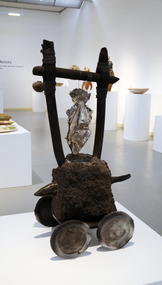 Federation University Art Collection
Ceramic - Artwork - Ceramics, [Untitled]
... equipment, scholarships and awards. The decision to commence a collection was made based on the idea that all future students could benefit from the availability of a collection, whereas only a very few individuals could benefit from a scholarship. Students immediately set about raising money by selling 'seconds' called 'Junque Sales'. a total of $760.00 was raised and the first two works purchased were by Victor Greenaway and Victoria Howlett. Ceramic works were purchased from visiting lecturers who became leading ceramic artists...equipment, scholarships and awards. The decision to commence a collection was made based on the idea that all future students could benefit from the availability of a collection, whereas only a very few individuals could benefit from a scholarship. Students immediately set about raising money by selling 'seconds' called 'Junque Sales'. a total of $760.00 was raised and the first two works purchased were by Victor Greenaway and Victoria Howlett. Ceramic works were purchased from visiting lecturers who became leading ceramic artists ...Jan FEDER ( - 1981) Jan Feder is an alumna of Federation University having studied ceramics at the Gippsland Institute of Advanced Education (now Federation University Gippsland campus). Jan Feder was respected by all students for her diligence and technical ability. Her tragic death in 1981 evoked an immediate response from her peers for a memorial. Students discussed a number of memorial options, such as funds for equipment, scholarships and awards. The decision to commence a collection was made based on the idea that all future students could benefit from the availability of a collection, whereas only a very few individuals could benefit from a scholarship. Students immediately set about raising money by selling 'seconds' called 'Junque Sales'. a total of $760.00 was raised and the first two works purchased were by Victor Greenaway and Victoria Howlett. Ceramic works were purchased from visiting lecturers who became leading ceramic artists around the world, as well as from many of the staff who taught at the Gippsland Campus. The Artist in Residence Program assisted the collection, with many resident artists contributing to the Collection (ie Robin Welch, Anna Zamorska, Sandy Brown), as well as international guests. Ceramic events such as 'Strzelecki Spotkanie 1984' and 'Woodfire 86' also resulted on major contributions to the collection. Jan Feder Memorial Ceramics Collectionjan feder, jan feder memorial collection, ceramics, gippsland campus -
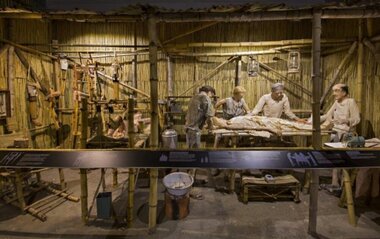 Australian Army Museum of Western Australia
Diorama, 2015
... artists and craftsmen, all themselves former Prisoners of War in 1995. Bamboo for the display and replica prosthetics was sourced from Thailand. The mannequins are artistic interpretations of identified POW surgical staff and doctors. The original display was moved and reassembled during the Gallery redevelopment process in 2015. All items presented within the diorama are based on POW recorded drawings and diaries of experiences in the Thai Burma Railway POW camps. thai burma railway; 1:1 scale diorama showing operating theatre in POW camp on Burma Thai Railway together with reproductions of prothesis and improvised equipment Diorama ...This diorama is the focal point the Prisoner of War Gallery. It was originally designed and installed by a collaborative group of artists and craftsmen, all themselves former Prisoners of War in 1995. Bamboo for the display and replica prosthetics was sourced from Thailand. The mannequins are artistic interpretations of identified POW surgical staff and doctors. The original display was moved and reassembled during the Gallery redevelopment process in 2015. All items presented within the diorama are based on POW recorded drawings and diaries of experiences in the Thai Burma Railway POW camps.1:1 scale diorama showing operating theatre in POW camp on Burma Thai Railway together with reproductions of prothesis and improvised equipmentthai burma railway; -
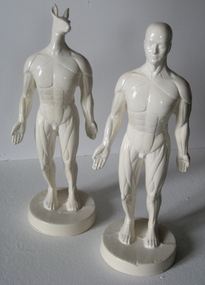 Federation University Art Collection
Ceramic - Sculpture, 'Platonic Friends' by Christopher Headley, c2009
... about) While artist-in-residence at the Arts Academy, Federation University in 2009 Chris was spotted dragging his ceramic figures and photographic equipment across mullock heaps near Ullina, around Lake Wendouree and inside the Art Gallery of Ballarat where he was photographing Mount Warrenheip. ...about) While artist-in-residence at the Arts Academy, Federation University in 2009 Chris was spotted dragging his ceramic figures and photographic equipment across mullock heaps near Ullina, around Lake Wendouree and inside the Art Gallery of Ballarat where he was photographing Mount Warrenheip. ...Christopher HEADLEY Born York, England Arrived Australia 1974 Chris Headley studied at York School of Art before majoring in Ceramics at the Central School of Art in London, learning to throw with (the late) Michael Casson and hand-build with Gordon Baldwin. Chris graduated in 1973 and set out for Australia. He travelled overland across Europe and Asia, through Turkey, Afghanistan and Iran. He was invited to attend a traditional wedding in Pakistan by someone he made friends with on the bus trip from Isfahan to Teheran, got lost several times in India and ran out of money in Thailand. Eventually, a year after leaving England, he arrived in Australia, where he has lived and worked ever since. He undertook his Master’s degree at the Australian National University, graduating in 1991; and in 1999, with Dr Owen Rye as his supervisor, gained his PhD from Monash University, Victoria. (http://www.christopherheadley.net/#!about) While artist-in-residence at the Arts Academy, Federation University in 2009 Chris was spotted dragging his ceramic figures and photographic equipment across mullock heaps near Ullina, around Lake Wendouree and inside the Art Gallery of Ballarat where he was photographing Mount Warrenheip. These figures were used in the photographs. This item is part of the Federation University Art Collection. The Art Collection features over 2000 works and was listed as a 'Ballarat Treasure' in 2007.Two white earthenware glazed ceramic figures, one with a kangaroo head.art, artwork, christopher headley, ceramics, sculpture, artist in residence, figures -
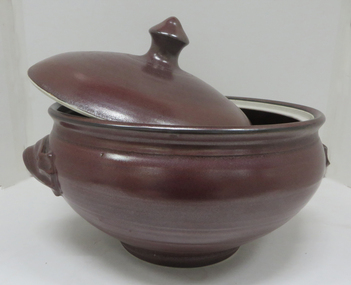 Federation University Art Collection
Ceramic - Artwork - Ceramics, Jan Feder, Lidded Stoneware Casseroles with iron glaze by Jan Feder, 1981
... equipment, scholarships and awards. The decision to commence a collection was made based on the idea that all future students culd benefit from the availability of a collection, whereas only a very few individuals could benefit from a scholarship. Students immediately set about raising money by selling 'seconds' called 'Junque Sales'. a total of $760.00 was raised and the first two works purchased were by Victor Greenaway and Victoria Howlett. Ceramic works were purchased from visiting lecturers who became leading ceramic artists...equipment, scholarships and awards. The decision to commence a collection was made based on the idea that all future students culd benefit from the availability of a collection, whereas only a very few individuals could benefit from a scholarship. Students immediately set about raising money by selling 'seconds' called 'Junque Sales'. a total of $760.00 was raised and the first two works purchased were by Victor Greenaway and Victoria Howlett. Ceramic works were purchased from visiting lecturers who became leading ceramic artists ...Jan FEDER ( - 1981) Jan Feder is an alumna of Federation University having studied ceramics at the Gippsland Institute of Advanced Education (now Federation University Gippsland campus). Jan Feder was respected by all students for her diligence and technical ability. Her tragic death in 1981 evoked an immediate response from her peers for a memorial. Students discussed a number of memorial options, such as funds for equipment, scholarships and awards. The decision to commence a collection was made based on the idea that all future students culd benefit from the availability of a collection, whereas only a very few individuals could benefit from a scholarship. Students immediately set about raising money by selling 'seconds' called 'Junque Sales'. a total of $760.00 was raised and the first two works purchased were by Victor Greenaway and Victoria Howlett. Ceramic works were purchased from visiting lecturers who became leading ceramic artists around the world, as well as from many of the staff who taught at the Gippsland Campus. The Artist in Residendence Program assisted the collection, with many resident artists conrtibuting to the Collection (ie Robin Welch, Anna Zamorska, Sandy Brown), as well as international guests. Ceramic events such as 'Strzelecki Spotkanie 1984' and 'Woodfire 86' also resulted on major contributions to the collection. Three lidded pots by Jan Feder made in 1981.jan feder, jan feder memorial ceramics collection, ceramics, gippsland campus, alumni, casserole -
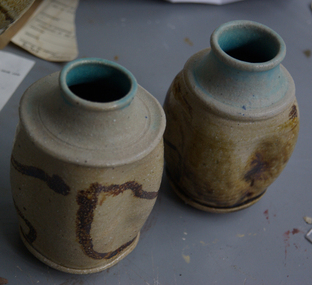 Federation University Art Collection
Ceramic - Artwork - Ceramics, Bruce Stewart, Set of Five Salt-glazed Pots, by Bruce Stewart, 1979
... equipment, scholarships and awards. The decision to commence a collection was made based on the idea that all future students could benefit from the availability of a collection, whereas only a very few individuals could benefit from a scholarship. Students immediately set about raising money by selling 'seconds' called 'Junque Sales'. A total of $760.00 was raised and the first two works purchased were by Victor Greenaway and Victoria Howlett. Ceramic works were purchased from visiting lecturers who became leading ceramic artists...equipment, scholarships and awards. The decision to commence a collection was made based on the idea that all future students could benefit from the availability of a collection, whereas only a very few individuals could benefit from a scholarship. Students immediately set about raising money by selling 'seconds' called 'Junque Sales'. A total of $760.00 was raised and the first two works purchased were by Victor Greenaway and Victoria Howlett. Ceramic works were purchased from visiting lecturers who became leading ceramic artists ...Bruce STEWART A Diploma Student in Ceramics at the Gippsland Institute of Advanced Education from 1977 to 1979. Jan Feder is an alumna of Federation University having studied ceramics at the Gippsland Institute of Advanced Education (now Federation University Gippsland campus). Jan Feder was respected by all students for her diligence and technical ability. Her tragic death in 1981 evoked an immediate response from her peers for a memorial. Students discussed a number of memorial options, such as funds for equipment, scholarships and awards. The decision to commence a collection was made based on the idea that all future students could benefit from the availability of a collection, whereas only a very few individuals could benefit from a scholarship. Students immediately set about raising money by selling 'seconds' called 'Junque Sales'. A total of $760.00 was raised and the first two works purchased were by Victor Greenaway and Victoria Howlett. Ceramic works were purchased from visiting lecturers who became leading ceramic artists around the world, as well as from many of the staff who taught at the Gippsland Campus. The Artist in Residence Program assisted the collection, with many resident artists contributing to the Collection (ie Robin Welch, Anna Zamorska, Sandy Brown), as well as international guests. Ceramic events such as 'Strzelecki Spotkanie 1984' and 'Woodfire 86' also resulted on major contributions to the collection. Salt-glazed pots. Presented to the Jan Feder Memorial Ceramic Collection by Bruce Stewart jan feder memorial collection, jan feder, ceramics, gippsland campus, artwork, artist, bruce stewart, alumni -
![[CeramicSculptural Form] by Larrel Kane](/media/collectors/530576742162ef0fa09a2288/items/5efef3e521ea6712bcaee859/item-media/5efef41a21ea6712bcaf1450/item-fit-380x285.jpg?cb=6) Federation University Art Collection
Federation University Art CollectionCeramic, [CeramicSculptural Form] by Larrel Kane, C1986
... equipment, scholarships and awards. The decision to commence a collection was made based on the idea that all future students could benefit from the availability of a collection, whereas only a very few individuals could benefit from a scholarship. Students immediately set about raising money by selling 'seconds' called 'Junque Sales'. a total of $760.00 was raised and the first two works purchased were by Victor Greenaway and Victoria Howlett. Ceramic works were purchased from visiting lecturers who became leading ceramic artists...equipment, scholarships and awards. The decision to commence a collection was made based on the idea that all future students could benefit from the availability of a collection, whereas only a very few individuals could benefit from a scholarship. Students immediately set about raising money by selling 'seconds' called 'Junque Sales'. a total of $760.00 was raised and the first two works purchased were by Victor Greenaway and Victoria Howlett. Ceramic works were purchased from visiting lecturers who became leading ceramic artists ...Larrel KANE A Diploma Student at the Gippsland Institute of Advanced Education. This item is a part of the Jan Feder Memorial Ceramics Collection. Jan Feder is an alumna of Federation University having studied ceramics at the Gippsland Institute of Advanced Education (now Federation University Gippsland campus). Jan Feder was respected by all students for her diligence and technical ability. Her tragic death in 1981 evoked an immediate response from her peers for a memorial. Students discussed a number of memorial options, such as funds for equipment, scholarships and awards. The decision to commence a collection was made based on the idea that all future students could benefit from the availability of a collection, whereas only a very few individuals could benefit from a scholarship. Students immediately set about raising money by selling 'seconds' called 'Junque Sales'. a total of $760.00 was raised and the first two works purchased were by Victor Greenaway and Victoria Howlett. Ceramic works were purchased from visiting lecturers who became leading ceramic artists around the world, as well as from many of the staff who taught at the Gippsland Campus. The Artist in Residence Program assisted the collection, with many resident artists contributing to the Collection (ie Robin Welch, Anna Zamorska, Sandy Brown), as well as international guests. Ceramic events such as 'Strzelecki Spotkanie 1984' and 'Woodfire 86' also resulted on major contributions to the collection. Earthernware Sculpure with hand thrown element. Gift of the Artist Jan Feder Memorial Ceramics Collectionjan feder memorial collection, ceramics, jan feder, woodfire, churchill, jan feder memorial ceramics collection, alumni -
Federation University Art Collection
Ceramic, [Decorated Bowl]
... equipment, scholarships and awards. The decision to commence a collection was made based on the idea that all future students culd benefit from the availability of a collection, whereas only a very few individuals could benefit from a scholarship. Students immediately set about raising money by selling 'seconds' called 'Junque Sales'. a total of $760.00 was raised and the first two works purchased were by Victor Greenaway and Victoria Howlett. Ceramic works were purchased from visiting lecturers who became leading ceramic artists...equipment, scholarships and awards. The decision to commence a collection was made based on the idea that all future students culd benefit from the availability of a collection, whereas only a very few individuals could benefit from a scholarship. Students immediately set about raising money by selling 'seconds' called 'Junque Sales'. a total of $760.00 was raised and the first two works purchased were by Victor Greenaway and Victoria Howlett. Ceramic works were purchased from visiting lecturers who became leading ceramic artists ...This work is part of the Jan Feder Memorial Ceramics Collection .Jan Feder is an alumna of Federation University having studied ceramics at the Gippsland Institute of Advanced Education (now Federation Univesity Gippsland campus). Jan Feder was respected by all students for her diligence and technical ability. Her tragic death in 1981 evoked an immediate response from her peers for a memorial. Students discussed a number of memorial options, such as funds for equipment, scholarships and awards. The decision to commence a collection was made based on the idea that all future students culd benefit from the availability of a collection, whereas only a very few individuals could benefit from a scholarship. Students immediately set about raising money by selling 'seconds' called 'Junque Sales'. a total of $760.00 was raised and the first two works purchased were by Victor Greenaway and Victoria Howlett. Ceramic works were purchased from visiting lecturers who became leading ceramic artists around the world, as well as from many of the staff who taught at the Gippsland Campus. The Artist in Residendence Program assisted the collection, with many resident artists conrtibuting to the Collection (ie Robin Welch, Anna Zamorska, Sandy Brown), as well as international guests. Ceramic events such as 'Strzelecki Spotkanie 1984' and 'Woodfire 86' also resulted on major contributions to the collection.A hand thrown stoneware bowl with with green, pink and black glaze decoration. If you can assist with information on this artist or artwork please use the email link below. jan feder memorial ceramics collection, alumni -
Federation University Art Collection
Ceramic, [Glazed Bowl]
... equipment, scholarships and awards. The decision to commence a collection was made based on the idea that all future students culd benefit from the availability of a collection, whereas only a very few individuals could benefit from a scholarship. Students immediately set about raising money by selling 'seconds' called 'Junque Sales'. a total of $760.00 was raised and the first two works purchased were by Victor Greenaway and Victoria Howlett. Ceramic works were purchased from visiting lecturers who became leading ceramic artists...equipment, scholarships and awards. The decision to commence a collection was made based on the idea that all future students culd benefit from the availability of a collection, whereas only a very few individuals could benefit from a scholarship. Students immediately set about raising money by selling 'seconds' called 'Junque Sales'. a total of $760.00 was raised and the first two works purchased were by Victor Greenaway and Victoria Howlett. Ceramic works were purchased from visiting lecturers who became leading ceramic artists ...This work is part of the Jan Feder Memorial Ceramics Collection .Jan Feder is an alumna of Federation University having studied ceramics at the Gippsland Institute of Advanced Education (now Federation Univesity Gippsland campus). Jan Feder was respected by all students for her diligence and technical ability. Her tragic death in 1981 evoked an immediate response from her peers for a memorial. Students discussed a number of memorial options, such as funds for equipment, scholarships and awards. The decision to commence a collection was made based on the idea that all future students culd benefit from the availability of a collection, whereas only a very few individuals could benefit from a scholarship. Students immediately set about raising money by selling 'seconds' called 'Junque Sales'. a total of $760.00 was raised and the first two works purchased were by Victor Greenaway and Victoria Howlett. Ceramic works were purchased from visiting lecturers who became leading ceramic artists around the world, as well as from many of the staff who taught at the Gippsland Campus. The Artist in Residendence Program assisted the collection, with many resident artists conrtibuting to the Collection (ie Robin Welch, Anna Zamorska, Sandy Brown), as well as international guests. Ceramic events such as 'Strzelecki Spotkanie 1984' and 'Woodfire 86' also resulted on major contributions to the collection.A hand thrown stoneware bowl with with a stunning gold and black glaze. If you can assist with information on this artist or artwork please use the email link below. jan feder memorial ceramics collection, alumni, japanese? -
Federation University Art Collection
Ceramic
... equipment, scholarships and awards. The decision to commence a collection was made based on the idea that all future students culd benefit from the availability of a collection, whereas only a very few individuals could benefit from a scholarship. Students immediately set about raising money by selling 'seconds' called 'Junque Sales'. a total of $760.00 was raised and the first two works purchased were by Victor Greenaway and Victoria Howlett. Ceramic works were purchased from visiting lecturers who became leading ceramic artists...equipment, scholarships and awards. The decision to commence a collection was made based on the idea that all future students culd benefit from the availability of a collection, whereas only a very few individuals could benefit from a scholarship. Students immediately set about raising money by selling 'seconds' called 'Junque Sales'. a total of $760.00 was raised and the first two works purchased were by Victor Greenaway and Victoria Howlett. Ceramic works were purchased from visiting lecturers who became leading ceramic artists ...This work is part of the Jan Feder Memorial Ceramics Collection .Jan Feder is an alumna of Federation University having studied ceramics at the Gippsland Institute of Advanced Education (now Federation Univesity Gippsland campus). Jan Feder was respected by all students for her diligence and technical ability. Her tragic death in 1981 evoked an immediate response from her peers for a memorial. Students discussed a number of memorial options, such as funds for equipment, scholarships and awards. The decision to commence a collection was made based on the idea that all future students culd benefit from the availability of a collection, whereas only a very few individuals could benefit from a scholarship. Students immediately set about raising money by selling 'seconds' called 'Junque Sales'. a total of $760.00 was raised and the first two works purchased were by Victor Greenaway and Victoria Howlett. Ceramic works were purchased from visiting lecturers who became leading ceramic artists around the world, as well as from many of the staff who taught at the Gippsland Campus. The Artist in Residendence Program assisted the collection, with many resident artists conrtibuting to the Collection (ie Robin Welch, Anna Zamorska, Sandy Brown), as well as international guests. Ceramic events such as 'Strzelecki Spotkanie 1984' and 'Woodfire 86' also resulted on major contributions to the collection.Two small, hand thrown woodfired pots. If you can assist with information on this artist or artwork please use the email link below. jan feder memorial ceramics collection, alumni -
![Ceramic - Artwork - Ceramics, Untitled [Pair Tea Cups], by Silvia Richardson, c1985, c1985](/media/collectors/530576742162ef0fa09a2288/items/56b7f64c2162f11c0c8c7590/item-media/59d0c82d21ea690cc8367f56/item-fit-380x285.jpg?cb=6) Federation University Art Collection
Federation University Art CollectionCeramic - Artwork - Ceramics, Untitled [Pair Tea Cups], by Silvia Richardson, c1985, c1985
... equipment, scholarships and awards. The decision to commence a collection was made based on the idea that all future students could benefit from the availability of a collection, whereas only a very few individuals could benefit from a scholarship. Students immediately set about raising money by selling 'seconds' called 'Junque Sales'. a total of $760.00 was raised and the first two works purchased were by Victor Greenaway and Victoria Howlett. Ceramic works were purchased from visiting lecturers who became leading ceramic artists...equipment, scholarships and awards. The decision to commence a collection was made based on the idea that all future students could benefit from the availability of a collection, whereas only a very few individuals could benefit from a scholarship. Students immediately set about raising money by selling 'seconds' called 'Junque Sales'. a total of $760.00 was raised and the first two works purchased were by Victor Greenaway and Victoria Howlett. Ceramic works were purchased from visiting lecturers who became leading ceramic artists ...Silvia RICHARDSON A post graduate student at the Gippsland Centre for Art and Desish (GCAD) who presented this work to the Jan Feder Art Collection. Jan Feder was an alumna of Federation University having studied ceramics at the Gippsland Institute of Advanced Education (now Federation University Gippsland campus). Jan Feder was respected by all students for her diligence and technical ability. Her tragic death in 1981 evoked an immediate response from her peers for a memorial. Students discussed a number of memorial options, such as funds for equipment, scholarships and awards. The decision to commence a collection was made based on the idea that all future students could benefit from the availability of a collection, whereas only a very few individuals could benefit from a scholarship. Students immediately set about raising money by selling 'seconds' called 'Junque Sales'. a total of $760.00 was raised and the first two works purchased were by Victor Greenaway and Victoria Howlett. Ceramic works were purchased from visiting lecturers who became leading ceramic artists around the world, as well as from many of the staff who taught at the Gippsland Campus. The Artist in Residence Program assisted the collection, with many resident artists contributing to the Collection (ie Robin Welch, Anna Zamorska, Sandy Brown), as well as international guests. Ceramic events such as 'Strzelecki Spotkanie 1984' and 'Woodfire 86' also resulted on major contributions to the collection. Two low tempreture fused slipcase bone china with inlaid decoration. Jan Feder Memorial Collectionjan feder memorial collection, jan feder, sylvia richardson, ceramics, gippsland campus, artwork, artist -
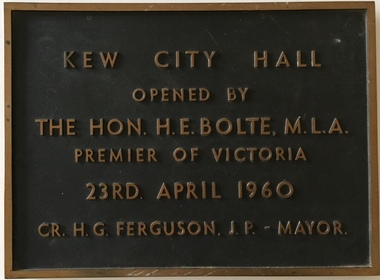 Kew Historical Society Inc
Plaque, Kew City Hall : Opened by The Hon H.E. Bolte M.L.A. Premier of Victoria 23rd April 1960 : Cr H.H. Ferguson J.P. Mayor, 1960
... equipment for live TV transmission. The building, befitting its original intent as a war memorial, was also to include a sculpted monument, for which a separate design competition was held. First prize went to George H Allen (1900-1972), long-time head of the Sculpture Department at RMIT and a former war artist himself (the only one, in fact, to have worked in the medium of sculpture). ...equipment for live TV transmission. The building, befitting its original intent as a war memorial, was also to include a sculpted monument, for which a separate design competition was held. First prize went to George H Allen (1900-1972), long-time head of the Sculpture Department at RMIT and a former war artist himself (the only one, in fact, to have worked in the medium of sculpture). ...The Municipality of Kew was proclaimed on 19 December 1860, then upgraded to a Borough (1863), a Town (1910) and finally a City (1921). From 1865, its offices were based in the former Athenaeum Hall in Walpole Street, which, although extended in 1883, inevitably became inadequate. Plans for a new purpose-built Town Hall were first mooted in the late 1880s, but fell prey to six subsequent decades of debate. During that time, many sites were considered and rejected, and several schemes prepared. Finally, in 1945, it was resolved to build a new civic centre as a war memorial. The council acquired Southesk, a mansion on the south-west corner of Cotham Road and Charles Street – first mooted as a possible Town Hall site two decades earlier – and plans for a civic precinct were drawn up by John Scarborough. The project stalled until 1957, when a Town Hall Committee was formed and a new architect appointed: Harold Bartlett of Leith & Bartlett. He also proposed an entire civic precinct, of which a large public hall would constitute Stage One. Designed to accommodate almost any public or official function, the space had had a small stage at one end for intimate theatrical productions, a larger stage at the other (with operable sunken orchestra pit) for musical performances, plus the most up-to-date equipment for live TV transmission. The building, befitting its original intent as a war memorial, was also to include a sculpted monument, for which a separate design competition was held. First prize went to George H Allen (1900-1972), long-time head of the Sculpture Department at RMIT and a former war artist himself (the only one, in fact, to have worked in the medium of sculpture). At the time of the Kew project, Allen was best known for his Cenotaph at the Shrine of Remembrance (1955) and a controversial abstract sculpture at Hume House in William Street (1957). Tenders for the new hall were called and the contract (worth £104,986) was awarded to H F Yuncken. The foundation stone was laid by the Mayor, Cr F C O'Brien, on 1 June 1959. Completion (initially scheduled for October) was delayed by the unavailability of certain materials; it was barely finished in time for the official opening (by Premier Henry Bolte) on 23 April 1960. The war memorial was unveiled two days later (Anzac Day) by Bolte's deputy, the Hon A G Rylah. Fittingly, that year also marked Kew's municipal centenary, and many celebratory events were held in and around the new civic centre in December, including a special council meeting (attended by the Prime Minister), a tree planting ceremony and a youth ball. Source: Survey of Built Heritage in Victoria: Stage Two (Built Heritage Pty Ltd., 2010)Plaque commemorating the opening of a new town hall in KewMetal plaque recording the official opening of the Kew City Hall, 23rd April 1960. This plaque was given to the Kew Historical Society in 1991 by the former City of Kew.Kew City Hall / Opened by / The Hon. H.E. Bolte M.L.A. / Premier of Victoria / 23rd April 1960 / Cr. H.G. Ferguson J.P. - Mayor.kew city hall, foundation stones - kew (vic), sir henry bolte, local government -- kew (vic.) -
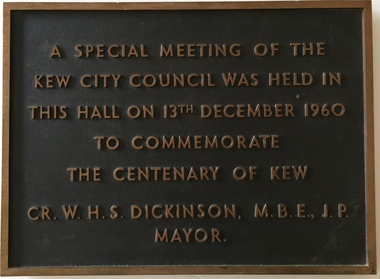 Kew Historical Society Inc
Plaque, A Special Meeting of the Kew City Council Was Held in This Hall on 13th December 1960 to Commemorate the Centenary of Kew : Cr. W.H.S. Dickinson M.B.E., J.P. Mayor, 1960
... equipment for live TV transmission. The building, befitting its original intent as a war memorial, was also to include a sculpted monument, for which a separate design competition was held. First prize went to George H Allen (1900-1972), long-time head of the Sculpture Department at RMIT and a former war artist himself (the only one, in fact, to have worked in the medium of sculpture). ...equipment for live TV transmission. The building, befitting its original intent as a war memorial, was also to include a sculpted monument, for which a separate design competition was held. First prize went to George H Allen (1900-1972), long-time head of the Sculpture Department at RMIT and a former war artist himself (the only one, in fact, to have worked in the medium of sculpture). ...The Municipality of Kew was proclaimed on 19 December 1860, then upgraded to a Borough (1863), a Town (1910) and finally a City (1921). From 1865, its offices were based in the former Athenaeum Hall in Walpole Street, which, although extended in 1883, inevitably became inadequate. Plans for a new purpose-built Town Hall were first mooted in the late 1880s, but fell prey to six subsequent decades of debate. During that time, many sites were considered and rejected, and several schemes prepared. Finally, in 1945, it was resolved to build a new civic centre as a war memorial. The council acquired Southesk, a mansion on the south-west corner of Cotham Road and Charles Street – first mooted as a possible Town Hall site two decades earlier – and plans for a civic precinct were drawn up by John Scarborough. The project stalled until 1957, when a Town Hall Committee was formed and a new architect appointed: Harold Bartlett of Leith & Bartlett. He also proposed an entire civic precinct, of which a large public hall would constitute Stage One. Designed to accommodate almost any public or official function, the space had had a small stage at one end for intimate theatrical productions, a larger stage at the other (with operable sunken orchestra pit) for musical performances, plus the most up-to-date equipment for live TV transmission. The building, befitting its original intent as a war memorial, was also to include a sculpted monument, for which a separate design competition was held. First prize went to George H Allen (1900-1972), long-time head of the Sculpture Department at RMIT and a former war artist himself (the only one, in fact, to have worked in the medium of sculpture). At the time of the Kew project, Allen was best known for his Cenotaph at the Shrine of Remembrance (1955) and a controversial abstract sculpture at Hume House in William Street (1957). Tenders for the new hall were called and the contract (worth £104,986) was awarded to H F Yuncken. The foundation stone was laid by the Mayor, Cr F C O'Brien, on 1 June 1959. Completion (initially scheduled for October) was delayed by the unavailability of certain materials; it was barely finished in time for the official opening (by Premier Henry Bolte) on 23 April 1960. The war memorial was unveiled two days later (Anzac Day) by Bolte's deputy, the Hon A G Rylah. Fittingly, that year also marked Kew's municipal centenary, and many celebratory events were held in and around the new civic centre in December, including a special council meeting (attended by the Prime Minister), a tree planting ceremony and a youth ball. Source: Survey of Built Heritage in Victoria: Stage Two (Built Heritage Pty Ltd., 2010)Historically significant commemorative plaqueMetal plaque relating to special Council meeting to mark centenary of Kew, 13th December 1960. This plaque was given to the Kew Historical Society in 1991 by the former City of Kew.A Special Meeting Of The / Kew City Council Was Held In / This Hall On 13th December 1960 / To Commemorate / The Centenary of Kew / Cr. W.H.S. Dickinson, M.B.E., J.P., / Mayorkew city hall, foundation stones - kew (vic), cr. w.h.s. dickinson, local government -- kew (vic.) -
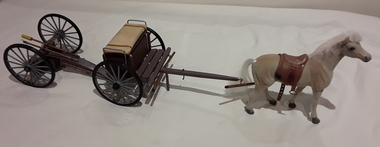 Mont De Lancey
Decorative object - Military Carriages, Chas W Davis, Unknown
... artist and saw doctor. These models are of single horse drawn military gun carriages and accessories. Military Vehicles Military Models Gun Carriages Military Equipment 56 VIR (3rd VIR) Three gun carriages: 1. ...The collection of thirteen model horse drawn vehicles were carefully handmade by Mr Chas W Davis 1925 - 2002. He was a talented artist and saw doctor. These models are of single horse drawn military gun carriages and accessories.Three gun carriages: 1. A brown four wheeled wooden model of a gun carriage for military use with a white horse. The carriage wheels have black rims with grey painted spokes. There is a brown storage box at the front for the driver with a brown vinyl padded seat.Three wooden slats form the footrest. A gun cleaning rod and lighter rod are attached to the back of the narrow support tray towards the back wheels. The saddled horse is linked to the carriage by a wooden shaft. A gun carriage is a frame and mount that supports the gun barrel of an artillery piece allowing it to be maneuvered and fired. These platforms often had wheels so that the artillery pieces could be moved more easily. 2. A brown large two wheeled gun carriage with no horse. The wheels have grey painted spokes and black rims. There is a cleaning rod and a lighting rod attached to the carriage shaft near the wheels. An additional accessory is included of a black vinyl saddle with lambswool lining as well as clips for attaching to the horse tack. 3. A grey two large wheeled gun carriage with no horse. The wheels have grey painted spokes and black rims. There is a cleaning rod and a lighting rod attached to the carriage shaft near the wheels. There is a chain to attach the carriage to the horse tack.56 VIR (3rd VIR)military vehicles, military models, gun carriages, military equipment -
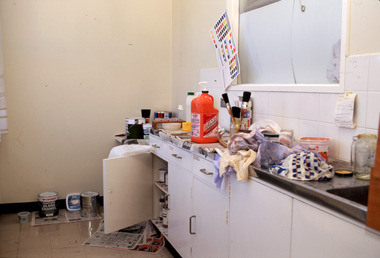 City of Greater Geelong
Photograph - Carousel Restoration, Elphinstone, Victoria, Stewart Strachan, 1997-1999
... As part of the revitalisation, the Steampacket Place Development Board purchased the Armitage-Herschell portable steam-driven carousel as a major feature on the revitalised waterfront. merry go-round horses carousel geelong restoration rides j. j. miller Geelong Waterfront Steam Engine Opening 35mm colour transparency steampacket place development board City of Greater Geelong revitalisation armitage-herschell Stewart Strachan Photograhy Elphinstone Rick Furlong Artists mordialloc Colour image showing sink, cupboards, paint cans and cleaning equipment. ...This image is part of a collection of 35mm colour transparencies taken by photographer Stewart Strachan during the carousel restoration project which took place in Elphinstone between 1997-1999. The Carousel was manufactured around 1892 by the Armitage-Herschell company of New York. The Carousel operated on the Mordialloc Pier from the 1920s to the 1950s. In around 1996, the carousel was found quietly rotting away in a Victorian shed by collector and restorer Rick Furlong, who saw its beauty and potential, then gathered a team of specialist historians, craftspeople and artists to work on the project of authentic restoration. Rick Furlong – Collector, Restorer and Project Manager Lindsay Mew – Woodcarver and Foundry Artist, dismantled, sectioned and cleaned the horses. Graeme Wright – Artist, who stripped up to 40 layers of paint from the horses and completed colour research for each individual horse. Kurt Simmons - Dismantled, sectioned and cleaned the horses. Andy Bull – Carpenter and Joiner, restored the floorboards, platforms, drums and crown panels and recreated a ticket box. Colin Turton – Repaired and restored all the structural metal work. Brendan Furlong & David Ely – Artists, painted the horses in their original colours. Jenny McCracken – Artist, created the paintings on sixteen scenery panels. Denise Puller – Made the pure horsehair tails. Chuck Kaparich (from Montana, USA) – Carved the chariots and shipped them for assembly and painting in Elphinstone. Using only recycled timbers, 24 of the 36 horses were restored with many legs, heads and necks replaced, while 12 replicas were hand-carved to match the originals, believed to be rare examples hand-carved by the American master, Charles Dare. Each horse took 300 hours to restore, with intricate carving, coating, filling, sanding, smoothing, painting and varnishing. The period matched organ and steam engine were sourced from New South Wales and Tasmania respectively. The Steampacket Place Development Board, a joint team formed by the Victorian State Government and the City of Greater Geelong undertook the $30 million revitalisation of the entire Geelong Waterfront from 1995 to 2000. As part of the revitalisation, the Steampacket Place Development Board purchased the Armitage-Herschell portable steam-driven carousel as a major feature on the revitalised waterfront.Colour image showing sink, cupboards, paint cans and cleaning equipment.merry go-round, horses, carousel, geelong, restoration, rides, j. j. miller, geelong waterfront, steam engine, opening, 35mm colour transparency, steampacket place development board, city of greater geelong, revitalisation, armitage-herschell, stewart strachan photograhy, elphinstone, rick furlong, artists, mordialloc -
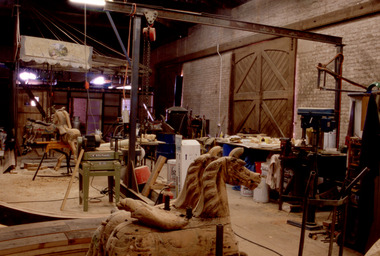 City of Greater Geelong
Photograph - Carousel Restoration, Elphinstone, Victoria, Stewart Strachan, 1997-1999
... As part of the revitalisation, the Steampacket Place Development Board purchased the Armitage-Herschell portable steam-driven carousel as a major feature on the revitalised waterfront. merry go-round horses carousel geelong restoration rides j. j. miller Geelong Waterfront Steam Engine Opening 35mm colour transparency steampacket place development board City of Greater Geelong revitalisation armitage-herschell Stewart Strachan Photograhy Elphinstone Rick Furlong Artists mordialloc Colour image showing the interior of a goods shed with carousel horses, equipment and machinery. ...This image is part of a collection of 35mm colour transparencies taken by photographer Stewart Strachan during the carousel restoration project which took place in Elphinstone between 1997-1999. The Carousel was manufactured around 1892 by the Armitage-Herschell company of New York. The Carousel operated on the Mordialloc Pier from the 1920s to the 1950s. In around 1996, the carousel was found quietly rotting away in a Victorian shed by collector and restorer Rick Furlong, who saw its beauty and potential, then gathered a team of specialist historians, craftspeople and artists to work on the project of authentic restoration. Rick Furlong – Collector, Restorer and Project Manager Lindsay Mew – Woodcarver and Foundry Artist, dismantled, sectioned and cleaned the horses. Graeme Wright – Artist, who stripped up to 40 layers of paint from the horses and completed colour research for each individual horse. Kurt Simmons - Dismantled, sectioned and cleaned the horses. Andy Bull – Carpenter and Joiner, restored the floorboards, platforms, drums and crown panels and recreated a ticket box. Colin Turton – Repaired and restored all the structural metal work. Brendan Furlong & David Ely – Artists, painted the horses in their original colours. Jenny McCracken – Artist, created the paintings on sixteen scenery panels. Denise Puller – Made the pure horsehair tails. Chuck Kaparich (from Montana, USA) – Carved the chariots and shipped them for assembly and painting in Elphinstone. Using only recycled timbers, 24 of the 36 horses were restored with many legs, heads and necks replaced, while 12 replicas were hand-carved to match the originals, believed to be rare examples hand-carved by the American master, Charles Dare. Each horse took 300 hours to restore, with intricate carving, coating, filling, sanding, smoothing, painting and varnishing. The period matched organ and steam engine were sourced from New South Wales and Tasmania respectively. The Steampacket Place Development Board, a joint team formed by the Victorian State Government and the City of Greater Geelong undertook the $30 million revitalisation of the entire Geelong Waterfront from 1995 to 2000. As part of the revitalisation, the Steampacket Place Development Board purchased the Armitage-Herschell portable steam-driven carousel as a major feature on the revitalised waterfront.Colour image showing the interior of a goods shed with carousel horses, equipment and machinery.merry go-round, horses, carousel, geelong, restoration, rides, j. j. miller, geelong waterfront, steam engine, opening, 35mm colour transparency, steampacket place development board, city of greater geelong, revitalisation, armitage-herschell, stewart strachan photograhy, elphinstone, rick furlong, artists, mordialloc -
 Vision Australia
Administrative record - Text, Royal Victorian Institute for the Blind annual report 1957-1958, 1958
... Duncan filling the temporary vacancy, thanks to Mabel Nelson for acting as accompaniste to concert artists, resignation of Alban Whitehead as a Country Concert Party manager and appointment of Denis Bandel in the position, outgoing Council member Cr. W.J. Wrens was recognised as Companion of the Order of the British Empire, and Captain Semmens and crew of 'Triaster' provided play equipment for playground. ...Duncan filling the temporary vacancy, thanks to Mabel Nelson for acting as accompaniste to concert artists, resignation of Alban Whitehead as a Country Concert Party manager and appointment of Denis Bandel in the position, outgoing Council member Cr. W.J. Wrens was recognised as Companion of the Order of the British Empire, and Captain Semmens and crew of 'Triaster' provided play equipment for playground. ...Events that occurred during the year : further expansion of nursery with 3 children under the age of 3 admitted, first Aboriginal child (Alexander Marks) was admitted, children gained 23 swimming certificates, some Scouts met Lady Baden Powell, Board approved revised sketch plans for 42 acre site at Box Hill, doubling of Talking Book Library service with additional 60 machines purchased at a subsidised cost courtesy of the Nuffield Foundation, Alberta Tutton is taking a break from Auxiliary President duties with J. A. Duncan filling the temporary vacancy, thanks to Mabel Nelson for acting as accompaniste to concert artists, resignation of Alban Whitehead as a Country Concert Party manager and appointment of Denis Bandel in the position, outgoing Council member Cr. W.J. Wrens was recognised as Companion of the Order of the British Empire, and Captain Semmens and crew of 'Triaster' provided play equipment for playground. Dick Sutcliffe led the blind orchestra as it played 'There'll Always Be An England" as Queen Mother drove by the Institute and stopped when she saw the crowd of blind children and workers waiting for her, accepting a bouquet of gardenias from Margaret Oliphant.1 volume of text and illustrationsannual reports, royal victorian institute for the blind, boy scouts
