
Showing 52 items matching "attendance books"
-
 Emerald Museum & Nobelius Heritage Park
Administrative record - Emerald Garden Club Attendance Books 1973 and 1977, Unknown maker, Unknown
... Emerald Garden Club Attendance Books 1973 and 1977......Attendance Books...Emerald Garden Club Attendance Books - 2 exercise books - one for 1973 and one for 1977...Garden clubs are very important in the community life of a small town like Emerald. These attendance books add to the history of the club. local history Emerald Victoria Australia Emerald and District Garden Club Attendance Books Emerald Garden Club Attendance Books - 2 exercise books - one for 1973 and one for 1977 Administrative record Emerald Garden Club Attendance Books 1973 and 1977 Unknown maker ...Garden clubs are very important in the community life of a small town like Emerald. These attendance books add to the history of the club.Emerald Garden Club Attendance Books - 2 exercise books - one for 1973 and one for 1977local history, emerald, victoria, australia, emerald and district garden club, attendance books -
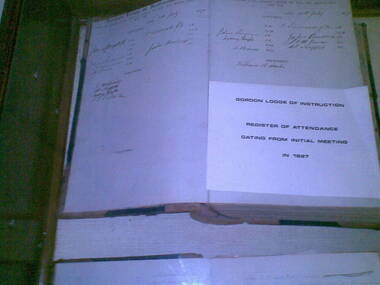 Freemasons Victoria - Gordon Lodge, 99
Minute and Attendance Books for Gordon Lodge of Instruction established in 1887
... Minute and Attendance Books for Gordon Lodge of Instruction established in 1887...Minute and Attendance Books for Gordon Lodge of Instruction established in 1887 ... -
Stawell Historical Society Inc
Archive - Book, Deep Lead Pupils Roll and Register
... Inside attendance roll & examination register books. 14 in total, dated 1948, 1949 - 1958, 1962- 63...Inside attendance roll & examination register books. 14 in total, dated 1948, 1949 - 1958, 1962- 63 Deep Lead Pupils Roll and Register Archive Book ...One hard cover book, covered in brown paper. Inside attendance roll & examination register books. 14 in total, dated 1948, 1949 - 1958, 1962- 63Pupils Register. State Elementary School at Deep Lead No 721education, register -
Ballarat Clarendon College
Book
... books donated by old collegian Francis Tweedie and possibly his sister Miss E M Tweedie. Francis Tweedie entered Ballarat College in 1889. He was the son of Mrs Tweedie 60 Doveton St, and attended with his brother Alec. The school holds no record of Miss E M Tweedie's attendance...books donated by old collegian Francis Tweedie and possibly his sister Miss E M Tweedie. Francis Tweedie entered Ballarat College in 1889. He was the son of Mrs Tweedie 60 Doveton St, and attended with his brother Alec. The school holds no record of Miss E M Tweedie's attendance ...Twenty-five books donated by old collegian Francis Tweedie and possibly his sister Miss E M Tweedie. Francis Tweedie entered Ballarat College in 1889. He was the son of Mrs Tweedie 60 Doveton St, and attended with his brother Alec. The school holds no record of Miss E M Tweedie's attendance. Some of the books contain the signatures of Andrew Anderson and May Anderson. Their connection to the donors is unknown at this point. Example of ongoing old collegian support of school. The Weatherly Library was opened in 1936 and its collection significantly established by donation or bequest of old collegians.Twenty-five books variously titled and sized including The History of England (8 vol) , Taine's History of English Literature (2 vols), and Hallam's History of England (3 vols)Book plates inside front cover: Ballarat College Library / PRESENTED BY / Miss E M Tweedie and Mr F Tweedie / 1947.... Illustrated book plate inside cover of 'Longfellow's poetical works': Weatherly Library / Ballarat College / Miss E Tweedie / Mr F Tweedie 1947e-m-tweedie, francis-tweedie, weatherly-library, ballarat-college, andrew-anderson, may-anderson -
 Federation University Historical Collection
Booklet, The Ballarat School of Mines and Industries 1870-1920 Jubilee Booklet, 1920 (estimated)
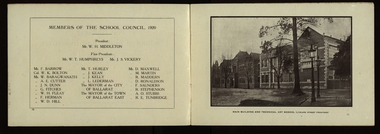
... attendance was somewhat irregular, they made very good progress. Old prints which have been preserved show them at work at furnaces, big bearded men of the old-fashioned type of miner. It is interesting to note that among those who gave evidence and encouragement was Sir Roderick Murchison, who many years before had advised Cornish miners to emigrate to Australia to search for gold, and who in 1848 was in possession of gold ore sent from this country. Sir Roderick sent a parcel of books...attendance was somewhat irregular, they made very good progress. Old prints which have been preserved show them at work at furnaces, big bearded men of the old-fashioned type of miner. It is interesting to note that among those who gave evidence and encouragement was Sir Roderick Murchison, who many years before had advised Cornish miners to emigrate to Australia to search for gold, and who in 1848 was in possession of gold ore sent from this country. Sir Roderick sent a parcel of books ...The first school of Mines in Australia was established at Ballarat in 1870. At the time of its jubilee (1930) the following people were members of the School Council: W.H. Middleton (President), W.T. Humphreys (VP), J.S. Vickery (VP), F. Barrow, Col. W.K. Bolton, William Baragwanath, A.E. Cutter, J.N. Dunn, G. Fitches, W.H. Fleay, F. Herman. W.D. Hill, T. Hurley, K. Kean. J. Kelly, L. Lederman, Mayor of Ballarat, Mayour of Ballarat East, D. Maxwell, M. Martin, R. Maddern, D. Ronaldson, F. Saunders, R. Stephenson, A.O. Stubbs, R.E. Tunbridge. The School Staff in 1920 comprised: Herbert H. Smith, Walter Rowbotham, Reginald L. Cutter, M.C. Young, Hilda Wardle, M. Wiliamson, P.S. Richards, L.H. Archibald, J. Woods, Ken Moss, W. Kenneth, Mrs McIlvena. B. Robinson, S. Rowe, E. Hope-Jones, Miss Abrams, L.St.G.P. Austin, Alfred Mica Smith, J.R. Pound, Herbert R. Murphy, N.H. Junner, Maurice Copland, L.H. Archibald, E.J.A. McConnon, Newton King, D.m. Hull, T.R. Gordon, John M. Sutherland, T.K. Jebb, Dick Richards, C. Tonkin, A.W. Steane, J. Paterson, H.W. Malin, R.V. Maddison, S.M. Mayo, F.A. King, W.H. Steane, T.R. Gordon, T.A. Williams, H. Waldron, G. Black, E.J. McConnon, R.V. Duncan. R. Cutter, E.G. Vawdrey, Hilda WardleWhite stapled booklet - landscape format - 20pp + soft covers with blue writing. Includes an historical sketch of the Ballarat School of Mines. Contains images of the school from around 1920. The history outlined in the booklet follows: 'Ballarat has helped to influence the life and destinies of Australia in many ways, the recital of which would perhaps prove tedious to the citizens of less favoured localities! However, it can be said, without much fear of contradiction, that only less known thought Australia than its fame as a gold field is the reputation won for it by its school of Mines, ... Ballarat was still quite a new place when the School was founded, but a very propserous and popular place all the same, with a go-ahead lot of citizens brim full of the spirit of enterprise which seemsto animate mining populations generally. Money was plentiful, and they launched out into ventures, which later, were to develop and take the place of the gold mines, while what is more to the point, they understood the value of education. the old digging days were passing away. So far as Ballarat itself was concerned the day of the cradle and tin dish had already passed into an antiquity "as dead and distant as the age of the Tubal Caon," said dir redmond Barry on declaring the School open. Mining had become a serious business, and the mining engineer, the metallurgist, and the geologist had become a power in the land. In these circumstances the suggestions to found a School of Mines met with ready acceptance. The late Mr James M. Bickett had the honor of bringing forward the proposition at a meeting of the Ballarat Mining Board in October, 1869. it was agreed to, and the Government, having been approached for assistance, granted a lease of the old Supreme Court buildings at a nominal reantal. A modest sum, including 100 pounds from the Borough Council of Ballarat West, was subscribed by a number of sympathisers, and on the 26th October, 1870, the inaugural address was delivered by Sir Redmond Barry, the first President of the School. Classes were commenced on the 23rd January, 1871. The students at first were mostly adults. They were chiefly men emloyed at the mines, who had the wisdom and energy to devote their spare time to study, and, though their attendance was somewhat irregular, they made very good progress. Old prints which have been preserved show them at work at furnaces, big bearded men of the old-fashioned type of miner. It is interesting to note that among those who gave evidence and encouragement was Sir Roderick Murchison, who many years before had advised Cornish miners to emigrate to Australia to search for gold, and who in 1848 was in possession of gold ore sent from this country. Sir Roderick sent a parcel of books for the library, and gave useful advice as to the curriculum which should be adopted. The Museum, which now contains a most valuable collection of minerals, was one of the first things attended to, and the reports presented to the Council from time to time speak of additions being made from all parts of the world. New equipment was constantly being added to the School, a good deal of assay work was done, and some specimens were sent from the East Indies for examination as far back as 1873. By this time there was a difficulty in providing accomodation for the students who wished to enrol, and the number of instructors had grown from two to four. In 1882 the first building was being erected on what was then part of the gaol reserve. A little more than ten years afterwards a buildnig formerly serving as a Methodist Church was absorbed, while later on, the demand for accomodation increasing, the attack upon the gaol was renewed. The School continued to grow in reputation and size, and became the science centre of the district, and in 1889 a learge new building was opened by Sir Alexander Peacock. Students came from over seas as well as from all the States of Australia, and after going through their courses they took with them the name and fame of the old School to all parts of the globe. School of Mines boys have played a great part in developing the mining fields of Western Australia, South Australia, and africa, while old students who have made a name in their profession are constantly dropping in to see how the old place is getting along. It was not to be expected, however, that the Ballarat School would be left without rivals, its very success inspiring competition. Mining Schools were started in other parts of Australia, and, at the same time, Victoria ceased to hold first place as a mining state. On the other hand there was a great advance in manufacturing, and the demand for technicaly trained men became a great and as insistent as ever it had been for trained mining men. The Council was quick to adapt the school to the new conditions, and the result is seen in the institution, which is one of Ballarat's proudest possession. Instruction is given in all branches of technical work, and the classes are filled with students who are building up for Ballarat a reputation as an industrial centre, which promises to equal that which it formerly held as a mining town. Owing to its bracing climate, its abundant opportunities for recreations, and its accessibilty, Ballarat as a city is an ideal place for educational purposed, and is yearly becoming more and more appreciated throughout the State. The chairman of one of Ballarat's biggests industries claims that the workman can do twice the day's work here that he can do in Melbourne. he was a little enthusiastic over it, perhaps, but it is a well-known fact that the healthy and invigourating Ballarat climate is conducive to both physical and mental activity, and the records of the School provide ample proof of it. One of the most interesting and successful branches of the School of Mines and Industries - if the name be enlarged with the enlargement of its scope - is the Technical Art School. "The City of Statues" has from its earliest days been a stronghold of art. Art schools have flourised here, and in 1905 the Education Department came to the conclusion that the best thing to do with them was to place them under the management of the School of Mines Council. A magnificent new Technical Art School was built at a cost of some 12,000 pounds on the site of the old Supreme Court building, and was formally opened on the 23rd July, 1915. The results have not only been justified but surpassed all anticipations. The most comprehensive list of subjects is taught, and this list is constantly added to. Students have flocked to the art School, which may be said to occupy a unique position in Australia, and its record of success is really astonishing. Its students supply art teachers for the newer schools that are being built, and many occupy leading positinos in important business houses. So well is its reputation known that orders are constantly being received, not only from Victoria, but from other States, for honor boards and challenge shields to be designed and made. The most recent addition to the School of Mines and Industries is the Junior Technical School, for which a new building is now being erected on a portion of the gaol site, transferred to the School of Mines Counci by the Government. At the present moment temporary quarters are being occupied. Some students after passing through the Junior School go straight to employment, continuing perhaps to attend the evening trade classes, while others move on to the senior School. In a review of the work of the School of Mines mention must be made of a series of industrial research carried out under supervision of the Principal. One in particular, regarding the suitability of the local ores for the manufacture of pigments attracted much attention, while the experiemtns on the manufacture of white potery from Victorian clayes were considered of sufficient importance by the Federal Advisory Council of Science and Industry to warrant the appointment of a special investigator. The results of these have been most encouraging, and may have far-reaching consequences. The vocational training of returned soldiers also should not be overlooked. The work was taken in hand from the first, before the Repatriation Department gave assistance, and now with the help of the department of the School has become one of the largest vocational training centres in Victoria outside of Melbourne. The soldiers, trained in a variety of occupations, have made remarkable progress, and already considerable numbers have found employment in local workshops and factories. To sum up, the School is divided into the following departments, each well staffed and equipped: - The School of Mines, science, and Engineering; the Techncial Art School, the Boys' Junior Technical School, the Girl's Preparatory Technical Classes, Trade Classes, and the Commercial School. The school of Mines, science and Engineering, comprises the following branches: - Mining, Metallurgy, Geology, Electrical Engineering, Civil Engineering, Mechanical Engineering, Applied Chemistry, and Pharmacy. Battery treatments, Cyanide Testing, Smelting, Assays, and Clay Testing from a regular part of the School's work. Students gaining qualifications obtain concession in their courses at the university, should they proceed there to continue their studies. The technical Art school curriculum includes training in all branches of pictorial and applied art, an Architectural Diploma Course, a Draughtman's Course, technical Art teachers' Course, Photography,Ticket Writing, Art Metal Work, Woodcarving, Needlework, and Leather work. The Trade Classes give instruction in Telephone Mechanics, telegraphy, Carpentry, Cabinet Making, Plumbing, Blacksmithing, Fitting, Electric Wiring, and Printing. Numerous Scholarships are offered every year, and altogether students will find few places to equal the Ballarat School of Mines and Industries as a training place for their life's work. One of the first in the continent to be established, its Jubilee finds it still in the front rank, keeping pace with the times, and offering to the youths of this country the means of taking advantage of Australia's teeming opportunities. william, battery, smith, herbert, drawing from the antique, ballarat school of mines botanical gardens, ballarat school of mines, redmond barry, alfred mica smith, james bickett, museum, dick richards, ballarat junior technical school, s m b, ballarat school of mines and industries, ballarat technical art school, model mine, james m bickett, j m bickett, roderick murchison, vocational training rooms, wesley church, methodist church, alexander peacock, lathes, repatriation, repatriatin department, war service, school council, baragwanath, gold mining, mining laboratory, plaster cast, r.w. richards, anniversary, jubilee -
Federation University Historical Collection
Booklet, The Ballarat School of Mines and Industries 1870-1920 Jubilee Booklet, 1920 (estimated)
... attendance was somewhat irregular, they made very good progress. Old prints which have been preserved show them at work at furnaces, big bearded men of the old-fashioned type of miner. It is interesting to note that among those who gave evidence and encouragement was Sir Roderick Murchison, who many years before had advised Cornish miners to emigrate to Australia to search for gold, and who in 1848 was in possession of gold ore sent from this country. Sir Roderick sent a parcel of books...attendance was somewhat irregular, they made very good progress. Old prints which have been preserved show them at work at furnaces, big bearded men of the old-fashioned type of miner. It is interesting to note that among those who gave evidence and encouragement was Sir Roderick Murchison, who many years before had advised Cornish miners to emigrate to Australia to search for gold, and who in 1848 was in possession of gold ore sent from this country. Sir Roderick sent a parcel of books ...The first school of Mines in Australia was established at Ballarat in 1870. At the time of its jubilee (1930) the following people were members of the School Council: W.H. Middleton (President), W.T. Humphreys (VP), J.S. Vickery (VP), F. Barrow, Col. W.K. Bolton, William Baragwanath, A.E. Cutter, J.N. Dunn, G. Fitches, W.H. Fleay, F. Herman. W.D. Hill, T. Hurley, K. Kean. J. Kelly, L. Lederman, Mayor of Ballarat, Mayour of Ballarat East, D. Maxwell, M. Martin, R. Maddern, D. Ronaldson, F. Saunders, R. Stephenson, A.O. Stubbs, R.E. Tunbridge. The School Staff in 1920 comprised: Herbert H. Smith, Walter Rowbotham, Reginald L. Cutter, M.C. Young, Hilda Wardle, M. Wiliamson, P.S. Richards, L.H. Archibald, J. Woods, Ken Moss, W. Kenneth, Mrs McIlvena. B. Robinson, S. Rowe, E. Hope-Jones, Miss Abrams, L.St.G.P. Austin, Alfred Mica Smith, J.R. Pound, Herbert R. Murphy, N.H. Junner, Maurice Copland, L.H. Archibald, E.J.A. McConnon, Newton King, D.m. Hull, T.R. Gordon, John M. Sutherland, T.K. Jebb, Dick Richards, C. Tonkin, A.W. Steane, J. Paterson, H.W. Malin, R.V. Maddison, S.M. Mayo, F.A. King, W.H. Steane, T.R. Gordon, T.A. Williams, H. Waldron, G. Black, E.J. McConnon, R.V. Duncan. R. Cutter, E.G. Vawdrey, Hilda WardleWhite stapled booklet - landscape format - 20pp + soft covers with blue writing. Includes an historical sketch of the Ballarat School of Mines. Contains images of the school from around 1920. The history outlined in the booklet follows: 'Ballarat has helped to influence the life and destinies of Australia in many ways, the recital of which would perhaps prove tedious to the citizens of less favoured localities! However, it can be said, without much fear of contradiction, that only less known thought Australia than its fame as a gold field is the reputation won for it by its school of Mines, ... Ballarat was still quite a new place when the School was founded, but a very propserous and popular place all the same, with a go-ahead lot of citizens brim full of the spirit of enterprise which seemsto animate mining populations generally. Money was plentiful, and they launched out into ventures, which later, were to develop and take the place of the gold mines, while what is more to the point, they understood the value of education. the old digging days were passing away. So far as Ballarat itself was concerned the day of the cradle and tin dish had already passed into an antiquity "as dead and distant as the age of the Tubal Caon," said dir redmond Barry on declaring the School open. Mining had become a serious business, and the mining engineer, the metallurgist, and the geologist had become a power in the land. In these circumstances the suggestions to found a School of Mines met with ready acceptance. The late Mr James M. Bickett had the honor of bringing forward the proposition at a meeting of the Ballarat Mining Board in October, 1869. it was agreed to, and the Government, having been approached for assistance, granted a lease of the old Supreme Court buildings at a nominal reantal. A modest sum, including 100 pounds from the Borough Council of Ballarat West, was subscribed by a number of sympathisers, and on the 26th October, 1870, the inaugural address was delivered by Sir Redmond Barry, the first President of the School. Classes were commenced on the 23rd January, 1871. The students at first were mostly adults. They were chiefly men emloyed at the mines, who had the wisdom and energy to devote their spare time to study, and, though their attendance was somewhat irregular, they made very good progress. Old prints which have been preserved show them at work at furnaces, big bearded men of the old-fashioned type of miner. It is interesting to note that among those who gave evidence and encouragement was Sir Roderick Murchison, who many years before had advised Cornish miners to emigrate to Australia to search for gold, and who in 1848 was in possession of gold ore sent from this country. Sir Roderick sent a parcel of books for the library, and gave useful advice as to the curriculum which should be adopted. The Museum, which now contains a most valuable collection of minerals, was one of the first things attended to, and the reports presented to the Council from time to time speak of additions being made from all parts of the world. New equipment was constantly being added to the School, a good deal of assay work was done, and some specimens were sent from the East Indies for examination as far back as 1873. By this time there was a difficulty in providing accomodation for the students who wished to enrol, and the number of instructors had grown from two to four. In 1882 the first building was being erected on what was then part of the gaol reserve. A little more than ten years afterwards a buildnig formerly serving as a Methodist Church was absorbed, while later on, the demand for accomodation increasing, the attack upon the gaol was renewed. The School continued to grow in reputation and size, and became the science centre of the district, and in 1889 a learge new building was opened by Sir Alexander Peacock. Students came from over seas as well as from all the States of Australia, and after going through their courses they took with them the name and fame of the old School to all parts of the globe. School of Mines boys have played a great part in developing the mining fields of Western Australia, South Australia, and africa, while old students who have made a name in their profession are constantly dropping in to see how the old place is getting along. It was not to be expected, however, that the Ballarat School would be left without rivals, its very success inspiring competition. Mining Schools were started in other parts of Australia, and, at the same time, Victoria ceased to hold first place as a mining state. On the other hand there was a great advance in manufacturing, and the demand for technicaly trained men became a great and as insistent as ever it had been for trained mining men. The Council was quick to adapt the school to the new conditions, and the result is seen in the institution, which is one of Ballarat's proudest possession. Instruction is given in all branches of technical work, and the classes are filled with students who are building up for Ballarat a reputation as an industrial centre, which promises to equal that which it formerly held as a mining town. Owing to its bracing climate, its abundant opportunities for recreations, and its accessibilty, Ballarat as a city is an ideal place for educational purposed, and is yearly becoming more and more appreciated throughout the State. The chairman of one of Ballarat's biggests industries claims that the workman can do twice the day's work here that he can do in Melbourne. he was a little enthusiastic over it, perhaps, but it is a well-known fact that the healthy and invigourating Ballarat climate is conducive to both physical and mental activity, and the records of the School provide ample proof of it. One of the most interesting and successful branches of the School of Mines and Industries - if the name be enlarged with the enlargement of its scope - is the Technical Art School. "The City of Statues" has from its earliest days been a stronghold of art. Art schools have flourised here, and in 1905 the Education Department came to the conclusion that the best thing to do with them was to place them under the management of the School of Mines Council. A magnificent new Technical Art School was built at a cost of some 12,000 pounds on the site of the old Supreme Court building, and was formally opened on the 23rd July, 1915. The results have not only been justified but surpassed all anticipations. The most comprehensive list of subjects is taught, and this list is constantly added to. Students have flocked to the art School, which may be said to occupy a unique position in Australia, and its record of success is really astonishing. Its students supply art teachers for the newer schools that are being built, and many occupy leading positinos in important business houses. So well is its reputation known that orders are constantly being received, not only from Victoria, but from other States, for honor boards and challenge shields to be designed and made. The most recent addition to the School of Mines and Industries is the Junior Technical School, for which a new building is now being erected on a portion of the gaol site, transferred to the School of Mines Counci by the Government. At the present moment temporary quarters are being occupied. Some students after passing through the Junior School go straight to employment, continuing perhaps to attend the evening trade classes, while others move on to the senior School. In a review of the work of the School of Mines mention must be made of a series of industrial research carried out under supervision of the Principal. One in particular, regarding the suitability of the local ores for the manufacture of pigments attracted much attention, while the experiemtns on the manufacture of white potery from Victorian clayes were considered of sufficient importance by the Federal Advisory Council of Science and Industry to warrant the appointment of a special investigator. The results of these have been most encouraging, and may have far-reaching consequences. The vocational training of returned soldiers also should not be overlooked. The work was taken in hand from the first, before the Repatriation Department gave assistance, and now with the help of the department of the School has become one of the largest vocational training centres in Victoria outside of Melbourne. The soldiers, trained in a variety of occupations, have made remarkable progress, and already considerable numbers have found employment in local workshops and factories. To sum up, the School is divided into the following departments, each well staffed and equipped: - The School of Mines, science, and Engineering; the Techncial Art School, the Boys' Junior Technical School, the Girl's Preparatory Technical Classes, Trade Classes, and the Commercial School. The school of Mines, science and Engineering, comprises the following branches: - Mining, Metallurgy, Geology, Electrical Engineering, Civil Engineering, Mechanical Engineering, Applied Chemistry, and Pharmacy. Battery treatments, Cyanide Testing, Smelting, Assays, and Clay Testing from a regular part of the School's work. Students gaining qualifications obtain concession in their courses at the university, should they proceed there to continue their studies. The technical Art school curriculum includes training in all branches of pictorial and applied art, an Architectural Diploma Course, a Draughtman's Course, technical Art teachers' Course, Photography,Ticket Writing, Art Metal Work, Woodcarving, Needlework, and Leather work. The Trade Classes give instruction in Telephone Mechanics, telegraphy, Carpentry, Cabinet Making, Plumbing, Blacksmithing, Fitting, Electric Wiring, and Printing. Numerous Scholarships are offered every year, and altogether students will find few places to equal the Ballarat School of Mines and Industries as a training place for their life's work. One of the first in the continent to be established, its Jubilee finds it still in the front rank, keeping pace with the times, and offering to the youths of this country the means of taking advantage of Australia's teeming opportunities. william, battery, smith, herbert, drawing from the antique, ballarat school of mines botanical gardens, ballarat school of mines, redmond barry, alfred mica smith, james bickett, museum, dick richards, ballarat junior technical school, s m b, ballarat school of mines and industries, ballarat technical art school, model mine, james m bickett, j m bickett, roderick murchison, vocational training rooms, wesley church, methodist church, alexander peacock, lathes, repatriation, repatriatin department, war service, school council, baragwanath, gold mining, mining laboratory, plaster cast, r.w. richards, anniversary, jubilee -
Ballarat Clarendon College
Book
... Two books donated to the Clarendon Presbyterian Ladies' College by old collegian Miss C H Stewart in 1954. The school holds no record of C H Stewart's attendance. ...Two books donated to the Clarendon Presbyterian Ladies' College by old collegian Miss C H Stewart in 1954. The school holds no record of C H Stewart's attendance. c-h-stewart clarendon-presbyterian-ladies-college library 1954 Book plates on flyleaf: Clarendon Presbyterian / Ladies' College / Ballarat / Crest / Presented by / Miss C H Stewart / Old Collegian / 26/4/54 Two books of varying title and size Book ...Two books donated to the Clarendon Presbyterian Ladies' College by old collegian Miss C H Stewart in 1954. The school holds no record of C H Stewart's attendance. Two books of varying title and sizeBook plates on flyleaf: Clarendon Presbyterian / Ladies' College / Ballarat / Crest / Presented by / Miss C H Stewart / Old Collegian / 26/4/54c-h-stewart, clarendon-presbyterian-ladies-college, library, 1954 -
 Flagstaff Hill Maritime Museum and Village
Ceremonial object - Ecclesiastical Linen set, 1907 to mid 20th century
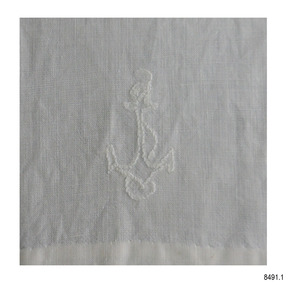
... attendance for morning services was just over 22 people. In 1936 extensive repairs and replacements were carried out. In 1947 the first recorded Pastoral Festival took place and in the same year, a Ladies Guild was formed. In 1954 water services were connected to the church building. Many items of furniture, furnishings and books...attendance for morning services was just over 22 people. In 1936 extensive repairs and replacements were carried out. In 1947 the first recorded Pastoral Festival took place and in the same year, a Ladies Guild was formed. In 1954 water services were connected to the church building. Many items of furniture, furnishings and books ...The items in this collection of Ecclesiastical Linen were used by St. Andrews Anglican Church on the corner of the Esplanade and 14 Drummond St, Dennington, Victoria. The first Anglican service was conducted on December 22nd, 1907. The church was decommissioned in January 2003. The items donated include Maniples, Chalice Covers, a Goblet Cover, Altar Cloths, Matts, Priest's scarf, armband and sashes, and a bag that is a cover for the Baptismal Towel. HISTORY OF ST ANDREWS, DENNINGTON The land on which St Andrews Church was built in Dennington was surveyed in the 1840s and reserved for church purposes in 1855. In 1889 the Farnham Dairy factory relocated to Dennington and the town began to grow as involvement in the dairy industry increased in the area. In 1896 plans for a church hall on the reserved land were considered and on 22nd December 1907, the first Anglican Service was conducted in Dennington, with 60 people attending. In August 1909 the first building was opened with a midweek evening service conducted by the Rev. J.A. Coe. The Sunday School was opened the following year. In that same year, Nestle took over the Farnham dairy plant. On December 20th, 1914, a new church was opened in memory of Andrew Peacock, who passed away in 1912. The funds had been raised by the community and 150 attended the morning service. The building was described as a simple edifice with a plain exterior and high, wide pointed windows, and a comfortable porch entrance, all of which gave a pleasing impression of light and space. In 1935 the average attendance for morning services was just over 22 people. In 1936 extensive repairs and replacements were carried out. In 1947 the first recorded Pastoral Festival took place and in the same year, a Ladies Guild was formed. In 1954 water services were connected to the church building. Many items of furniture, furnishings and books were donated over the life of the church, including handworked linen items. Further items were added due to the work of the Ladies Guild, as well as donations in memory of church and community members.These items of Ecclesiastical Linen are significant as examples of handworked embroidery and drawn-thread work from the early 20th century. They are also examples of a collection of items used for church services during this period. The Ecclesiastical Linen is also significant for its association with the early development of the local township of Dennington and the importance of setting aside land in the 1850s for the purpose of religious worship. The Ecclesiastical Linen is also significant for its connection to St Andrews Anglican Church, Dennington. The church was funded and attended by the local community in the early 1900s and is now listed on the Victorian Heritage Database (VHD 118083) as a building of historical and social significance. Set of Ecclesiastical Linen. The items were once used in St. Andrew's Anglican Church, Dennington, Victoria, between the years 1907 and 2003. All of the handmade items are in white fabric. Some also have embroidered emblems, tassels and drawn-thread work. White embroidery thread has been used for most of the decorated items, with the following exceptions, which have been embroidered with coloured thread; the communion linen, the Priest's scarf, armband and sash, the altar cloths, mats and a cover for the baptismal towel. Two items have hand written inscriptions.(See individual objects for details)flagstaff hill, warrnambool, maritime museum, shipwreck coast, great ocean road, st andrews anglican church dennington, dennington church, warrnambool church 1907, ecclesiastical linen, linen for religious service, communion linen, priest's sash, baptismal towel, maniple, eucharist, emblem of rope and cross, embroidered religious cloths, embroidered celtic cross, drawn thread, chalice covers, handmade linen, embroidered linen, stylised cross, the english church, ladies guild dennington, nestle, farnham dairy, andrew peacock, victorian heritage register vhr 118083, hand worked linen, handworked embroidery, j.a. coe -
 Flagstaff Hill Maritime Museum and Village
Book - Fiction, Oxford University Press, That Boarding School Girl, 1926
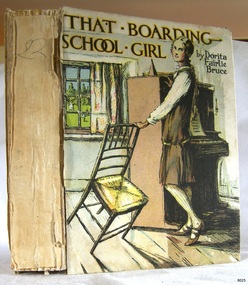
... It was specifically selected as an end-of-year award, recognising consistent attendance at Sabbath School. Such choices highlight the role of books in supporting the educational and moral development of young women during this period. ...Sylvia Jean Veronica McCullagh Barr (1914–1998) was a student at the Presbyterian Sabbath School in Dennington, near Warrnambool. In December 1930, she received a book as an award from F. Jones, the Sabbath School Superintendent, recognising her involvement and achievements at the school. Sylvia was the granddaughter of James McCullagh (1831–1911) and Elizabeth Eccles (1831–1909), a pioneering couple in the region. Married in 1856, James and Elizabeth settled at Oak Grove, Yangery, Illowa from 1859, where they lived until their deaths. One of James and Elizabeth’s sons, William McCullagh (1873–1940), married Margaret Jane Russell (1879–1981). William and Margaret also made their home at Oak Grove and raised eleven children there, including Sylvia.The book, “That Boarding School Girl” by Dorita Fairlie Bruce, represents an example of literature accessible to older girls during the early 20th century. It was specifically selected as an end-of-year award, recognising consistent attendance at Sabbath School. Such choices highlight the role of books in supporting the educational and moral development of young women during this period. The book is important as a connection to the early township of Dennington, a community distinguished by its established school and church. This association reflects the values the community placed on education and religious instruction. The book’s significance is further enhanced by its relationship with colonial pioneer families in Australia, particularly those from Victoria and the Warrnambool district in southwest Victoria. It is a tangible link to the history and legacy of these early settlers, who were instrumental in shaping the regional development. That Boarding School Girl Author: Dorita Fairlie Bruce Publisher: Oxford University Press Date: 1926 The front cover and the page opposite the fly page have drawn and coloured illustrations. The cloth-covered, hardcover book includes black and white illustrations and coloured illustrations on the front cover and frontispiece. The front cover illustration shows a teenage irl in a school tunic, standing beside a piano with one hand on the backrest of a tilted chair. Inscriptions are printed on the front loose endpaper and handwritten on the fly page. The book belonged to Sylvia McCullagh. It was awarded to her as a prize in 1930.Handwritten on the top of the fly page: "Sylvia McCullagh Den" [ Den - abbreviation for Dennington] " Presbyterian Sabbath School, Dennington. Prize Awarded to: Sylvia McCullagh. December 1930." "F. Jones, Superintendent"flagstaff hill, flagstaff hill maritime museum and village, warrnambool, maritime museum, maritime village, great ocean road, shipwreck coast, book, warrnambool library, warrnambool mechanics’ institute, mechanics’ institute library, victorian library board, warrnambool books and records, warrnambool children’s library, warrnambool public library, that boarding school girl, dorita fairlie bruce, sylvia mccullagh, sylvia jean veronica mccullagh, sylvia barr, james mccullagh, elizabeth eccles mccullagh, william mccullagh, margaret jane russell mccullagh, oak grove, yangery, illowa, dennington, presbyterian sabbath school, presbyterian sunday school, dennington presbyterian church, book award, book prize, book presentation, f. jones, sabbath school superintendent, 1930 -
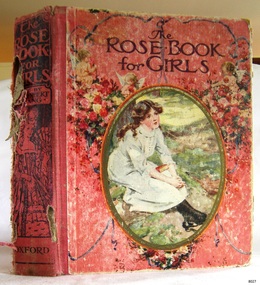 Flagstaff Hill Maritime Museum and Village
Book - Fiction, Mrs Herbert Strang, editor, The Rose Book for Girls, 1916
... It was specifically selected as an end-of-year award, recognising consistent attendance at Sabbath School. Such choices highlight the role of books in supporting the educational and moral development of young women during this period. ...Alma McCullagh was a student at the Presbyterian Sabbath School located in Dennington, near Warrnambool. In January, around 1928, she received a book as an award from R. Conn, her Sabbath School teacher, in recognition of her involvement and achievements at the school. The exact year of this award is based on available records: in January 1928, Alma was presented with a prize by R. Conn, whereas by 1930, the role of awarding prizes had passed to F. Jones. Alma was probably the granddaughter of James McCullagh (1831–1911) and Elizabeth Eccles (1831–1909), who were pioneering settlers in the region. James and Elizabeth married in 1856 and established their home at Oak Grove, Yangery, Illowa from 1859, residing there until their deaths. One of their sons, William McCullagh (1873–1940), married Margaret Jane Russell (1879–1981). William and Margaret continued the family tradition, making their home at Oak Grove as well. They raised eleven children, with Alma likely being among the youngest of their children.The book, “The Rose Book for Girls”, edited by Mrs Herbert Strang, represents an example of literature accessible to older girls during the early 20th century. It was specifically selected as an end-of-year award, recognising consistent attendance at Sabbath School. Such choices highlight the role of books in supporting the educational and moral development of young women during this period. The book is important as a connection to the early township of Dennington, a community distinguished by its established school and church. This association reflects the values the community placed on education and religious instruction. The book’s significance is further enhanced by its relationship with colonial pioneer families in Australia, particularly those from Victoria and the Warrnambool district in southwest Victoria. It is a tangible link to the history and legacy of these early settlers, who were instrumental in shaping the regional development. In addition, the book is notable for its connection to the McCullagh family, a prominent farming family whose contributions supported the social and economic growth of the local district. This historical association enriches its value, situating the book within the broader narrative of community progress and pioneer achievement in the area, and highlighting its place within a tradition of religious life and community building.The Rose Book for Girls A collection of short stories by various authors Edited by Mrs Herbert Strang Publisher: Henry Frowde, Hodder & Stoughton, London Printer: Morrison & Gibb Ltd., Tanfield, Edinburgh, Scotland, UK Date: 1916 Hardcover book. Deep pink front and back covers, decorated with garlands of pink and white flowers, cupids and blue ribbons. The front has a cameo with a seated girl in white, with a book in her lap. Details on the spine: title, author, publisher and a sketched female in 19th-century dress holding a fan. The fly page shows details of the book and has a black and red sketch of two seated girls, one reading, the other stitching. Twenty-five books are listed on the Contents page, as well as the printer's details. Within the book are several colourful sketches. Inscriptions include the name of the book's previous owner, Alma McCullagh.Front loose-end paper: "Presbyterian Sabbath School, Dennington. Prize Awarded to: Alma McCullagh. January. (year is unreadable, circa 1928) R. Conn, Teacher"flagstaff hill, flagstaff hill maritime museum and village, warrnambool, maritime museum, maritime village, great ocean road, shipwreck coast, book, the rose book for girls, mrs herbert strang, short stories, henry frowde, hodder & stoughton, london, morrison & gibb ltd, 1916, alma mccullagh, james mccullagh, elizabeth eccles mccullagh, ca. 1928, dennington, southwest victoria, warrnambool district, presbyterian sabbath school, presbyterian sunday school, dennington presbyterian church, book award, book prize, book presentation, r. conn, sabbath school superintendent -
Ringwood and District Historical Society
Exercise book, Norwood Secondary College Parents Assoc. Meeting Attendance book 1974-1984, 1974-1984
... This book is the third in the collection of books about Ladies Auxiliary meetings at Norwood Secondary College, previously called Norwood High School, Ringwood. Earlier records are from 1959-63 and 1963-64. Exercise book with tartan coloured covers used to record the attendance ...This book is the third in the collection of books about Ladies Auxiliary meetings at Norwood Secondary College, previously called Norwood High School, Ringwood. Earlier records are from 1959-63 and 1963-64.Exercise book with tartan coloured covers used to record the attendance of the Norwood Secondary College Ladies Auxiliary. Filled with names ,addresses and phone nos. of attendees. Also the topic for the meeting such as a speaker from the Heart Foundation or a Needlecraft Parade. -
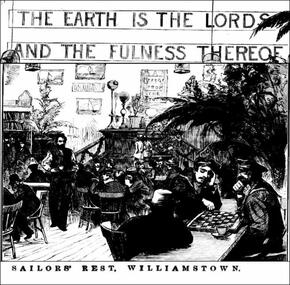 Mission to Seafarers Victoria
Print - Engraving, Sailors' Rest, Williamstown, 31 October 1878
... attendance has ho largely increased that the receipts now average £80 per month. The print is a rare insight of the Sailors' Rest in Williamstown, depicitng the room filled with plants, birds in cages, the seamen enjoying some board games, and coffee. sailors' rest williamstown 1878 plants books library tables sailors games chess coffee seamen sir william stawell hugh ronald reid Illustration depicting the interios of the Williamstown Sailors' Rest in 1878 with decoration (plants, paintings, birds in cages), and sailors at tables busy playing chess, talking, having a drink. ...The Sailors' Rest, located in Ann Street, Williamstown opened on 24 May 1878. An article dating 25 May 1878, in the Williamstown Chronicle, describes the interior of the renovated Wesleyan chuch as depicted on the print: "Inside the building the carpenters and painters have been busily engaged. It has been painted throughout, the lower part of the walls be ing stained blue. There is a form all round the building with tables up the sides, and a number of small round tables are scattered about the roomi. In the centre is a splendid wire stand for pot plants, of which there is a grand display. Pictures adorn, the walls; singing birds warble their sweet strains ; and the silent gold fish of which there are several globes add to the beauty of the display. At the east end of the room is the bar, occupying one corner, while in the other are the shelves which accommodate the books of the Library, while last evening across the end wall was in large illuminated letters-'" The earth is the Lord's and the fulness thereof." On the platform are a piano and harmonium. The room is very presentable whether in day light or illuminated vith gas." Eva Carmichael, one of the two survivors of the Loch Art tragedy, visited here on 19 July 1878. She had stayed with Mr and Mrs Gibson and travelled from Camperdown to Melbourne (15 July 1878) to sail back to Ireland. Article in the Leader, 20 July 1878, Page 19: "The Saitors' Rest at Williamstown was yesterday visited by Miss Carmichael, Mr. T. Pearce and Mr. and Mrs. Gibson. The objects of the institution were explained to them, and after a brief stay they complimented the committee on their arrangement. The attendance has ho largely increased that the receipts now average £80 per month. The print is a rare insight of the Sailors' Rest in Williamstown, depicitng the room filled with plants, birds in cages, the seamen enjoying some board games, and coffee.Illustration depicting the interios of the Williamstown Sailors' Rest in 1878 with decoration (plants, paintings, birds in cages), and sailors at tables busy playing chess, talking, having a drink.sailors' rest, williamstown, 1878, plants, books, library, tables, sailors, games, chess, coffee, seamen, sir william stawell, hugh ronald reid -
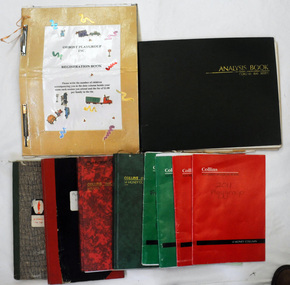 Orbost & District Historical Society
Orbost Playgroup Collection, 1986 -2011
... The collection consists of minute books, financial documents and attendance records....The collection consists of minute books, financial documents and attendance records. Orbost Playgroup Collection Orbost Playgroup ...Orbost Playgroup operated from 1986 until 2011. This collection of records was donated the Orbost & District Historical Society in 2011 after the playgroup ceased to exist in July 2011.These records are of immediate interest and value to the children and staff who have been part of the Orbost Playgroup. The record also has a much wider significance, to the community in which the group was situated, as a record and research tool.A collection of records of the Orbost Playgroup - 1986-2011. The collection consists of minute books, financial documents and attendance records.documents orbost-playgroup records -
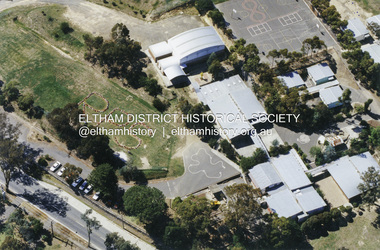 Eltham District Historical Society Inc
Document - Archive Box, 1570 Main Road, Research (Research Primary School)
... School Historical Documents (Folder 5) School Historical Documents • Certificate of Merit Ernest Reynolds • Inventory of Books and Equipment 1891 • Letter from Teacher Frank Scott explain poor results • Letter from Henry Cole recommending appointment of Mary Jane Rodda as Sewing Mistress • Special Certificate for Regular Attendance Anton Brinkkotter (2 copies • Certificate of Merit Anton Brinkkotter 1911 • Merit Certificate Lyla Dickson 1922 • Special Certificate for Regular Attendance Margery Palmer 1927 • Letter from Head teacher Reg Jackman 1957 • Petition to Education Dept 1884 from Research Gully to open a school • Joseph Mankey's complaints about temporary classroom 1890 • Research 1890 - Plan of one acre site to be purchased by education Dept for permanent school • List of buildings and dates • Need for extensions and improvements 1949 • Looking to the Future 1950 • Negotiations to buy school site 1890 2. ...School Historical Documents (Folder 5) School Historical Documents • Certificate of Merit Ernest Reynolds • Inventory of Books and Equipment 1891 • Letter from Teacher Frank Scott explain poor results • Letter from Henry Cole recommending appointment of Mary Jane Rodda as Sewing Mistress • Special Certificate for Regular Attendance Anton Brinkkotter (2 copies • Certificate of Merit Anton Brinkkotter 1911 • Merit Certificate Lyla Dickson 1922 • Special Certificate for Regular Attendance Margery Palmer 1927 • Letter from Head teacher Reg Jackman 1957 • Petition to Education Dept 1884 from Research Gully to open a school • Joseph Mankey's complaints about temporary classroom 1890 • Research 1890 - Plan of one acre site to be purchased by education Dept for permanent school • List of buildings and dates • Need for extensions and improvements 1949 • Looking to the Future 1950 • Negotiations to buy school site 1890 2. ...Contents: 1. Andrew Lemon's Working File of Return to Research Andrew Lemon's Working File for his 1989 book, “Return to Research: A Centenary History of Research Primary School" (EDHS_00867). Includes a disassembled copy of the book. (All other documentation and photos passed to Research Primary School 3 September 2013) 1.1. EDHS_05004 - Cassette Tape of "Afternoon Tea with Senior Residents Nov 1st 1984" Reminiscences, chit chat and banter between group of senior citizens at an afternoon tea held for them at Research Primary School. 1.2. School Register 1935-1994 (Box 1) Photocopy of Research Primary School register from 1935 to 1994 (originals held at school) From 1994 onwards registrations were made online via the Education Department CASES system. 1.3. School Register A-Z 1935-1987 (Box 2) Computer print-out of alphabetized register 1935-87 (Research Primary School) (Done by David and Sue Grigg in 1987 from the register) Contains some extra details/corrections/current addresses Plus disks containing this data (not housed in box – there is a separate floppy disc box containing several 5 ¾” and 3 ½” floppy disks which are not readable as no hardware/software to support) 1.4. Research Locality History (Yellow Folder 1) Research Locality History Newspaper cuttings, Photocopies etc Collection for Research Primary School History 1989 Contents • 3 x photocopies (A3) regarding sale of Raglan Estate, Research [2 x A3 and 1 x composite A3 colour photocopy] • Souvenir Map of area with pictures of historical items and wild life - A Visitor's Guide Map; ELTHAM, WARRANDYTE and Environs (see also EDHS_01633-1) • EO article 26 Mar 1897 "Research State School picnic expedition to Mordialloc" • TA article 25 Jul 30" Research Affairs" plus an add for J Ingram's Research Bakery • DVN articles 14 Jan 69 (2 pages) "Research Fire Victim (Bill Pelling) still in hospital" • DVN 14 Jan 69 Page of Deaths, In Memories, Obituaries, Church Notices, Public Notices and Notices • Age article 24 Jan 84 "Eltham before the Mud Bricks" • DVN article 21 Oct 86 "Facing Good and Bad Times with enthusiasm - Keith Maxwell" • DVN article 29 Aug 87 "Eltham - the historic haven" • DVN article 25 Aug 87 "Eltham - a piece of living history, (the historic haven cont…)" • DVN article 20 Oct 87 "When push bikes were made for touring - Sam Howard" • 6 x pages of what appear to be various student's workbooks/ projects from 1944/45 era • ''They lost their homes- Historical places go at Research" plus other articles on fires 8 Jan 69 [Located in Folder 2] • DVN articles 23 Oct 84 "Centenary Plans" & Folklore surrounds Research township" [Located in Folder 2] • DVN article 23 Sep 86 "The teacher who had cut cane but never used one" Frank Sheehan (3 copies) [Located in Folder 2] • 2 x copies of booklet "Memories of Eltham" [Located in Folder 3] • Photocopy of subdivision Parish of Nillumbik [Located in Folder 4] DVN = Diamond Valley News, EO = Evelyn Observer TA= The Advertiser 1.5. Copies of items held by Public Records Office Victoria (Yellow Folder 2) Copies of items held by Public Records Office Photos and display items from Research Primary School Centenary August 19, 1989 • Laminated photocopy: “State School No. 2959, Copy of the above school property,” signed Henry L. Cole 18.6.91 • Photocopy: Petition for a school at Research, 13/11/1888; Public Record Office Victoria School Building File – School 2959 CUPRS 795/1717 • Photocopy: Negotiation to buy school site – part of Allotment 2, owned by the West family (copy attached to letter) 15/1/1890; Public Record Office Victoria School Building File – School 2959 CUPRS 795/1717 • Photocopy: Frank Scott, Head Teacher Research 1904-1907, letter of explanation (first page) to Department re poor results by pupils at the school, 24/8/1907; Public Record Office Victoria School Building File – 640 / School 2959 • Photocopy: Anton Brinkkotter’s Certificate for Regular Attendance 1908 (This was ‘traded in’ in 1911 for a certificate to mark six years without missing a day of school; Public Record Office Victoria School Building File – 640 / School 2959 for 1911 • Photocopy: Education Department Memorandum 1949 re need for extensions and improvements; Public Record Office Victoria School Building File – 795 / School 2959 • Photocopy: Looking to the future about expanding site for additional land for play space, 1950, Education Department Inspector to Department; Public Record Office Victoria School Building File – 795 / School 2959 • Photocopy (laminated, 2 sheets) First School Fire -1953 copy of Police Report. The old school building was badly damaged but repaired. It burnt down in 1976; Public Record Office Victoria School Building File – 795 / School 2959 • Photocopy: The Argus (28 July 1953) & the (Sun 28 July 1953) Two newspaper cuttings and notes re school fire 1953; Public Record Office Victoria School Building File – / School 2959 • Photocopy: Head Teacher Reg Jackman expresses concern to Education Department about conditions as he takes charge of Research State School, 1957; Public Record Office Victoria School Building File – 640 / School 2959 • Photo print (x2) of Education Department Qualifications and Certificates, Lyla Dickson, State School. (1) Print missing (2) Education department Victoria, Merit Certificate, This is to certify that Lyla Dickson has completed satisfactorily the Course of Study presented for the Eight Grade in Elementary Schools, dated at research Elementary School, this 20th day of November A.D. 1923 • Copy of original photo owned by Nell Howard “Fancy dress night in the school house – 1920s”, black and white print, 10.5 x 18 cm, attached to A4 photocopy of photo with names inscribed10.5 x 18 cm • Copy of original photo (stamped Reynolds Collection), black and white print, 24.5 x 16 cm, attached to paper sheet 37.6 x 25.5 cm, inscribed “Miss Doney” and “Elizabeth Doney and her family owned and ran Research’s Store and Post Office for many years after buying the property from the wests. This land surrounded the school site and includes today’s [1989] Kanandah Ct, Raglan St and shops” • Black and white photo print, 20 x 25 cm, Reconstruction of Main Road in front of Research Primary School, August 1989 • Black and white photo print, 20 x 25 cm, Eastern end of old oval, Research Primary School, 1989 • Black and white photo print, 20 x 25 cm, Portable Buildings, Research Primary School, 1989 • Black and white photo print, 20 x 25 cm, Gymnasium, Research Primary School, 1989 • Black and white photo print, 20 x 25 cm, Administrative Art Building, Research Primary School, c.1989 • Black and white photo print, 20 x 25 cm, Betty Kicker, Cleaner at Research Primary School, c.1989. Betty worked at the school from early 1970s to 1990s 1.6. ‘Memories of Research 1951-1968’ (Yellow Folder 3) Interview by Sue Grigg of Florence Egglestone for publication in Return to Research. Original handwritten notes, ‘Memories of Research 1951-1968’ 1.7. Centenary Committee Minutes & Newsletters (Yellow Folder 4) Centenary Committee Minutes and Newsletters Information regarding attendance of 100th anniversary including lists of staff contact details 1983-1986 Request (1985) to Shire of Eltham Historical Society for information and memorabilia • Letter: Ann Bouchier, Convenor – Centenary Committee, Research Primary School to R. Yeoman, Shire of Eltham Historical Society, 15 October 1985; enquiring about memorabilia etc that could be used in a proposed compilation on the “History of the School.” • Minutes of Meeting, Centenary Sub-Committee, Research Primary School Council o 17 June 1985. Also includes a list of general aim, specific aims and methods for the research Primary School Centenary - 1989 o 15 October 1985. o 17 September 1986. o 20 August 1987. o 2 May 1988. o 9 June 1988. o 22 August 1988. o 12 October 1988. o 24 November 1988. o 17 April 1989. o 24 July 1989. • Outline of Historical Events 1884-1954 (3 pages) • Centenary Newsletters o Number 1 (1989) o Number 2 (1989) o Number 3 (1989) o Newsletter (c. Aug. 1989) • Information re attendance of 100th Anniversary, Research Primary School, 19 August 1989 o Research Primary School – Staff 1984 (includes Name, Address, Telephone) o Research Primary School – Staff 1985 (includes Name, Address, Telephone) o Research Primary School – Staff 1986 (includes Name, Address, Telephone) o Emergency Teacher List 1983 o Emergency Teacher List 1986 o Previous teachers 1984 on • Quotation No. 733, Major Graphics for Engraved Brass Commemorative Plaque for opening of School Gymnasium • Centenary Invitation; Program and Souvenir and Chicken & Champagne Supper order forms • Various Centenary Invitation lists with notations, and various returned RSVPs • Centenary Program and map • Photocopy: 11 pages typed with hand corrections, draft manuscript for Andrew Lemon’s book, Return to Research (pages 13-24) • Bulletin: “I’m an Aussie” Week – 15th-19th April 10/4/85 • Bulletin: Research Centenary 26/4/88 • Bulletin: Official Centenary Logo For Research Primary School 15/12/88 • Bulletin: Centenary School Activity – “Colonial School” 23/5/89 • Bulletin: Centenary Activity Days – Monday, 14th August, Tuesday, 15th August 7/8/89 • Advertisement: A3 photocopy, Centenary Bush Dance, Sat. 4th March featuring “Paradiddle” Bush Band • Photocopy Master: Invitation (blank) to attend “Return to Research” celebration and Official Opening of the School Gymnasium on Saturday, August 19th from 1.00p.m. to 5.00p.m. and attached RSVP (also includes yellow paper sample -blank) • Photocopy Master: Tickets for Centenary Chicken & Champagne Supper, Friday, 18th August 1989, 7.30p.m., $5.00 per head (2 yellow paper samples marked on reverse ‘13’ and ‘55’) • Photocopy Master: Centenary Gift Donated by slips including multiple blank samples • Promotional Notices o Letter, Robert Wenn, Principal, 29 November 1988 for placement of “HELP WANTED” in Public Notices of The Age o Information provided to Ian Reid Real Estate Agent for Board to promote Centenary Bush Dance Paradiddle Band, Saturday 4 March 1989 o Notice Board promoting ‘Old Time’ Gala Fete Saturday 17 June 1989 o Letter, Robert Wenn, Principal, 24 August 1989 to Ian Reid Real Estate thanking for support of Centenary celebration and successful book launch and seeking further support for next event being school musical production “Spirit of Research” written by Andrew Lemon to be performed December 7th. 1.8. 1989 Research Primary School Centenary Visitors Register and Sue Grigg Correspondence (Red Folder) Sue Grigg’s Folder of Visitors to 1989 Centenary Celebrations and correspondence to Sue Grigg as organiser of Centenary Celebrations • 22 A3 Sheets of 1989 Research Primary School Centenary Visitors Register (approx. 238 entries) • Correspondence to Sue Grigg as Organizer of Centenary Celebrations o Trace B? – Ingram, Dunolly, 30 January 1990 re photo of Ingrams Road. Includes hand drawn map of various buildings on Ingrams Road. Also black and white print copy (12.5 x 17.5 cm) of photo of Ingrams and Main Road (possibly one sent to her) – see SEPP_0511 o Barbara Booth (nee Coles); thanks for wonderful celebration o Len and Marlene Parsons, 21 August 1989 o Mrs R. Towers, n.d. thanks for school photo ordered o Winifred L. Lade, 7 August 1989, gg grandparents William and Mary Crozier, daughter Sarah married Thomas Baillie (her g grandparents). Thomas Baillie was one of the petitioners for the school o Winifred L. Lade, n.d., thanks for photo and map o Carol Mathews, thanks for celebrations and payments for photos. Written on reverse of Sue Grigg’s letter to her of 19 September 1989 o Kenneth Ingram, Monday 14th, thanks for invitation but unable to attend • Photo of Ingrams and Main Road 1.9. Student Photos c.1970s (Buff Folder 1) [Not in Archive Box] Quantity of photos of students taken by Mrs Avril Baker (Staff Member) In 1970s 1.10. 1989 Centenary Questionnaires (Buff Folder 2) Research Primary School, 1989 Centenary Questionnaires from school families (approx. 190 responses) 1.11. Archive and Class Photos 1890s-1961 (Buff Folder 3) • Archive photographs of Research and District; 10 x 15 cm prints and digital files on thumb drive (copied to Collection catalogue) o RPS 1- Henry Cole Head Teacher 1891 to 1903. Photo from Mrs E. Williams o RPS 2 - Mary Jane Cole with eldest daughter Doris c 1905 o RPS 3 - Wedding Photo Mary Jane Rodda and Henry Cole o RPS 4 - Joseph Rodda of Chun Grove, Research o RPS 5 - Walter Rodda 1917 son of Joseph Rodda o RPS 6- Henry Cole and Pupils 1897 (Reynolds Collection) o RPS 7 - Elizabeth Doney (Reynolds Collections) o RPS 8 - Doney's Store early 1960's o RPS 9 - Main Road Research to Left, lngrams Road to Right o RPS 10- Main Road Eltham from Griggs family o RPS 11- Eltham near Station from Griggs family o RPS 12 - The Main Street Eltham from Griggs family (Rose Series 4344) o RPS 13 - The Rev and Mrs Thomas Cole. Parents of Henry Cole o RPS 14- Henry Cole as a boy with older brother Tom. From Mrs E. Williams. o RPS 15- Mary Jane Rodda as Mrs Henry Cole, Sewing Mistress Research State School 1891 to 1897 o RPS 16 - Etta Rodda Sewing Mistress Research State School 1897 -1904 o RPS 17 - Frederick Rodda son of Joseph Rodda o RPS 18- Bush Fires 1963 o RPS 19 - The view to the northeast from the top of the School Grounds 1989 o RPS 20- Edwin Rodda son of Joseph Rodda • Class and Staff photos, some with lists and names for identification [see separate folder of digital files – no hard copies in folder] Decade Years Represented 1890-1899 1897 1900-1909 1900, 1904 1910-1919 1910 1920-1929 1922, 1925 1930-1939 1930, 1932, 1937 1940-1949 1940, 1942 1950-1959 1950, 1951, 1952, 1953, 1954, 1955, 1956, 1957, 1958 1960-1969 1960, 1961, 1969 1970-1979 1970, 1971, 1972, 1973, 1975, 1976, 1977, 1978, 1979 Staff: 1971, 1976, 1978, 1979 1980-1989 1980, 1981, 1982, 1983, 1984, 1985, 1986, 1987, 1988, 1989 Staff: 1981, 1982, 1985, 1986, 1987, 1988, 1989 1990-1999 1990, 1991, 1994, 1995, 1996, 1997, 1998, 1999 Staff: 1990, 1994, 1995, 1996, 1998, 1999 2000-2009 2000, 2001, 2002, 2003, 2004, 2005, 2006, 2007, 2008, 2009 Staff: 2000, 2002, 2003, 2004, 2005, 2006, 2007, 2008, 2009 2010-2019 2010, 2011, 2012, 2013, 2014 Staff: 2010, 2011, 2012, 2013, 2014 • Class names; 4 pages handwritten and 2 numbered diagrams of Class names: o 1942 whole school o 1975 Grade 1 o 1976 Grade 2-3 o 1977 Grade 3 o 1978 Grade 4 o 1979 Grade 5 o 1980 Grade 6 • Negatives of photographs, 1 x roll of 36 and contact prints, copied at or for the Centenary 1989 o Neg. S – same as Neg. 27 o Neg. 1 – 1961 2/3 o Neg. 2 – 1960 5/6 o Neg. 3 – 1960 2/3 o Neg. 4 – 1960 Prep o Neg. 5 – 1957 Gr 2 o Neg. 6 – 1956 1A & II o Neg. 7 – Prep & I o Neg. 8 - 1955 o Neg. 9 – 1955 I & II o Neg. 10 – 1958 Gr II o Neg. 11 - 1960 3A & 4 o Neg. 12 – 1961 4 & 5 o Neg. 13 – same as Neg. 17 o Neg. 14 - 1925 o Neg. 15 - 1930 o Neg. 16 - 1942 o Neg. 17 – 1927 whole school o Neg. 18 - 1937 o Neg. 19 - 1932 o Neg. 20 - 1953 o Neg. 21 – 1951 Prep - 3 o Neg. 22 - 1954 o Neg. 23 - 1952 o Neg. 24 – Gr 4-7 o Neg. 25 – 1956 V & VI o Neg. 26 - 1940 o Neg. 27 – 1961 Gr 1 & 2 o Neg. 28 – SEPP_0610 (and 12.5 x 17.5 cm black and white print) o Neg. 29 – SEPP_0611 (and 12.5 x 17.5 cm black and white print) o Neg. 30 – SEPP_0612 o Neg. 31 – SEPP_0516 o Neg. 32 – SEPP_0509 (and 12.5 x 17.5 cm black and white print) o Neg. 33 – SEPP_0510 o Neg. 34 – SEPP_0511 o Neg. 35 – SEPP_0513 • Requests for copies of photos including explanation from Andrew Lemon that copies were made by camera of original photos provided by their owners • Colour photo print (copy of original), 12.5 x 17.5 cm, Doney’s Store, Main Road, Research, early 1960s including black and white photocopy of original print showing slightly wider field of view • Colour photo print, 10 x 15 cm, marked on reverse “19A” and “1 copy”, Aerial view of Research Primary School, c.1989 • Black and white print, 9 x 9 cm, Burnt out houses Ingrams Road Research near Cassell's Road after 1963 bushfire • Black and white print, 9 x 9 cm, Sight see-ers Ingrams Road Research near Cassell's Road after 1963 bushfire • Black and white photo print (copy of original), 20 x 25 cm, A memento of the Eltham Higher Elementary School Past Pupils Association Ball, Research Hall, 9 October 1966; inscribed and stamped on reverse “Reynolds Collection” • Colour photo print (copy of original), Kodak A4 photo paper, Pittaways cnr Main Road and Parsons Road c.1968 • Colour photo print (copy of original), Kodak A4 photo paper, Pittaways cnr Main Road and Parsons Road, my dad’s boat, c.1970, • Black and white photocopies of photos from Reynolds Collection o EDHS_00799-20 - The Research Hotel o EDHS_00799-22 - General Store, Research o EDHS_00799-27 – Plumtree Creek, Blashik family home, Ingrams Road o EDHS_00799-30 - Research o EDHS_00799-34 - Research Gully Bridge, Research Gully Road, c.1895 o EDHS_00799-35 - Research o EDHS_00799-37 - Waiting for the taxi-bus, Main Road, Research o SEPP_0524 - A Bush Home - Research, Vic.. 1.12. Research Primary School Centenary 1989 Display Photos (Buff Folder 4) 7 display pages, 37.8 x 25.5 cm, with 10 x 15 cm sepia coloured reproduction photographs attached and handwritten notations [some have come loose or missing] • Henry Cole, Head Teacher, Research, 1891-1903 o RPS-14 Henry Cole as a boy with his older brother Tom o 2 photos as a young man (missing) • Rodda Family, Jospeh B Rodda and two of his daughters o RPS-4 Joseph Rodda of Chun Grove Research o RPS-15 Mary Jane Rodda as Mrs Henry Cole, Sewing Mistress, Research State School, 1891-1897 o RPS-16 Ettie Rodda, Sewing Mistress, Research State School, 1897-1904 • Cole Family o Henry Cole, Head Teacher, 1891-1903 o RPS-3 Wedding photo 1894, Mary Jane Rodda and Henry Cole (missing) o RPS-2 Mary Jane Cole with eldest daughter, Doris, c.1905 (missing) • Cole Family; The Rev. and Mrs Thomas Cole, parents of Henry Cole o Rev. Thomas Cole o Mrs Thomas Cole o RPS-13 The Rev & Mrs Thomas Cole parents of Henry Cole • Cole Family o Reg Cole, O.B.E., as Town Clerk of Hobart meeting Queen Elizabeth and Prince Phillip, 1954. HJR (Reg) Cole was the eldest child of Henry and Mary Jane Cole, and was a pupil at Research State School c.1900-1903 • Sons of Joseph B. Rodda of ‘Chune Grove’, Research o RPS-17 Frederick Rodda o RPS-20 Edwin Rodda o RPS-5 Walter Rodda, 1917 • The Aqueduct (20 x 25 cm black and white reproduction print); built for opening in 1891 to take water from Maroondah to Reservoir (Reynolds Collection) 1.13. Class Photos (photocopies) - with names identified at Centenary 1989 (Buff Folder 5) [Not in Archive Box] Research Primary School- Class Photos (photocopies) -with names identified at Centenary 1989 1964 - 1984 1.14. News Paper Cuttings (Folder 2) News Paper Cuttings • Diamond Valley News - 23 Oct 1984-Centenary Plans - Folklore surrounding Research Township • Diamond Valley News 23 September 1986 - The Teacher who had cut can but never used one (4 copies) • Diamond Valley News- 20 October 1987 - When push bikes were made for touring (2 copies) • Diamond Valley News-14 January 1969 - They lost their homes (Historical places go at Research) • Diamond Valley News- 14 January 1969 - Bush Havoc ( 10 houses burnt at Warrandyte) • The Age - 24 January 1984- Eltham before the Mud Brick • Diamond Valley News - 14 January 1969- First Fire Call came at 10:25 am • Diamond Valley News - 14 January 1969 - Black Wednesday • The Advertiser- 25 July 1930- Research Affairs and add Research Bakery • Evelyn Observer - 26 March 1897 - Research State School part of a district schools expedition to Mordialloc (2 copies) • Diamond Valley News- 21 October 1986- Facing good and bad times with enthusiasm • Diamond Valley News- 14 January 1969 -Obituary David Leslie Mitchener • Diamond Valley News- 25 August 1987 - Eltham - the historic haven (2 copies) • Diamond Valley News-14 January 1969 - Research fire victim still in hospital 1.15. Reminiscences (Folder 3) • Memories of Eltham (Multiple authors) (2 copies) • List of names of children who attended Research Primary School as recalled by Kenneth Ingram (b.1907) provided in 1987 by his niece Grace Burrows (nee Ingram) including names of students and teachers she recalled from her time at school 1936-1941 • Photocopy of Interview by Sue Grigg of Florence Egglestone for publication in Return to Research, ‘Memories of Research 1951-1968’. [Original handwritten version in Yellow Folder 3.] 1.16. School Site and Buildings (Folder 4) • 3 x photocopies of photos of early school building • Raglan Estate Research • Plan of subdivisions Research 1920s • 1981 Education Department Building Operation process to be followed in the event of criminal damage 1.17. School Historical Documents (Folder 5) School Historical Documents • Certificate of Merit Ernest Reynolds • Inventory of Books and Equipment 1891 • Letter from Teacher Frank Scott explain poor results • Letter from Henry Cole recommending appointment of Mary Jane Rodda as Sewing Mistress • Special Certificate for Regular Attendance Anton Brinkkotter (2 copies • Certificate of Merit Anton Brinkkotter 1911 • Merit Certificate Lyla Dickson 1922 • Special Certificate for Regular Attendance Margery Palmer 1927 • Letter from Head teacher Reg Jackman 1957 • Petition to Education Dept 1884 from Research Gully to open a school • Joseph Mankey's complaints about temporary classroom 1890 • Research 1890 - Plan of one acre site to be purchased by education Dept for permanent school • List of buildings and dates • Need for extensions and improvements 1949 • Looking to the Future 1950 • Negotiations to buy school site 1890 2. Magenta Folio 1. USB drive containing • Class photos 1897-2014 • Class photo names • List of head teachers/Principals 1989-2014 • List of Infant Productions 2001-2010 • School photo names typed up identified at centenary reunion 1925-1984 • List of school camps 1964-2014 • List of Senior Productions 1986-2014 • Staff list 1989-2014 • List of grades by year taught by Mrs Avril Baker 1976-2010 2. CD of School and Class Photos 2013-2014 including laminated print of school photo 2014 3. 2 x CD of photos of Research Remembered. CD 1 containing 20 images of various activities from Centenary Celebrations and CD 2 containing 12 images of various student activities (1990s) 3. Clear Folio 1. Additional RPS Material • History of Research State School No. 2959; F.P. Sheehan (Principal) and Mrs M. Allwood (Historian) – duplicate copy of EDHS_03095-1570 held in Main Road property file. • Invitation; The Official Opening of 4 New Classrooms & Library Extension • Program; The Official Opening of 4 New Classrooms & Library Extension, 27 April 1996 • News clipping; Remember Sleepy Swipers Gully? Diamond Valley News, July 22, 1980, pp28-29 • Site plan of building layouts • Colour photo paper print of Rob Wenn’s retirement, June 1999 • Email from former teacher Brett Barnett sent March 2008 (teacher 1967-1980) with references to pet python that students would look after, and which perished when original school building used as a library burnt down • 2 letters (2009) from Peta McGinley offering some papers and photos for school archives. Her father, Rix McGinley was Principal for 1984 till his retirement in 1987. She was also a casual Relief Teacher in her first year of teaching in 1984. • List of 60 names associated with engraved bricks 2. 100th Anniversary 1989 • News clipping; Celebrations and nostalgia at school, Diamond Valley News, Tuesday, August 29, 1989, p28 3. 120th Anniversary 2009 • Notes of contact details of some former students who expressed interest in a reunion 4. 125th Anniversary 24 August 2014 • 3 pages handwritten of reminiscences of a group of mums whose children attended RPS during the 1980s. • 2 pages dated 29 March 2014 typed by Janet Page (nee Zambra) of reminiscences of her years at school (1948-1954) in support of 125th Anniversary Reunion (24 August 2014) sent to Joy Pagan with some queries noted by Maggie Sakko • Reminisces (single sheet double sided handwritten) of teacher Mrs Jacqui Edwards 1989-2001 retired and Casual Relief Teacher 2001-2014 sent to Maggie Sakko in support for 125th Anniversary book and follow up queries from Maggie Sakko (18 July 2014) • List of regular Casual Relief Teachers established by Brooke and Maria for Maggie Sakko • Two pages of working notes • News clipping: Ring in the years, Diamond Valley Leader, Wednesday, August 27, 2014, p1 – Illustrated – “Koray, Aidan and Lasenya helped ring in the 125th anniversary of Research Primary School. A huge reunion brought together past and present students and staff who reminisced about their school days. Report Page 14” • News clipping: School back to the past, Diamond Valley Leader, Wednesday, August 27, 2014, p14 – Illustrated (2 copies) • Poster: Arbor Week June 23-29 (2008) – Arbor Week is the same age as Research Primary School – note written on poster to possibly include tree planting as part of 125th celebrations 5. Centenary of Federation Medal presented to students of Research Primary School (2001) by former student, Miss Ivy Reynolds • Letter: Ivy Reynolds to staff and children, May 22, 2001, letter of thanks for privilege of sharing the celebrations with her • 9 x laminated paper colour prints of students with medals and Ivy Reynolds 6. Newspaper and Magazine Articles • Newspaper Article: Grand designs at Research Primary School by James Poyner; Manningham and Nillumbik Bulletin, February 2022, p8 • Newspaper Article: School’s reconciliation in action by Fiona Vale; Manningham and Nillumbik Bulletin, September 2022main road, property, research (vic.), research state school no. 2959, caledonian gold field, swiper's gully, wallaby town, research gully, discovery gold plenty ranges, fountain of friendship hotel, ray morris, alice russell, norma family, bettison family, reynolds family, william west, joseph m makey, henry james cole, mary jane rodda, florissa milton, f p sheehan, m allwood, research hotel -
 Warrnambool and District Historical Society Inc.
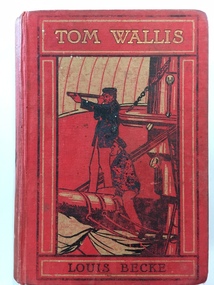
Book, Tom Wallis Louis Becke, Early 20th century
... attendance was a strong feature of the religious, educational and social life of many children in the 19th century and the first half of the 20th century. Sunday Schools still operate but have fewer children attending in relation to the numbers of Protestant churches adherents. Bertie Wilson Grasmere Presbyterian Sunday School Warrnambool Front Cover: ‘Tom Wallis, Louis Becke’. Inscription Plate: ‘Grasmere Presbyterian Sabbath School, Third Prize, Awarded to Bertie Wilson, Mr Paton Teacher, Xmas, 1910’ This is a hard cover book of 320 pages plus several pages at the end detailing other books ...This book, ‘Tom Wallis’ written by Louis Becke was awarded as a third prize to Bertie Wilson by the Grasmere Presbyterian Sabbath School in 1910. Grasmere is a small settlement about 12 kilometres from Warrnambool and was settled in the 1840s by pastoralists prior to the founding of Warrnambool. The Grasmere Presbyterian Church and Sunday School were established in 1898 though services had been held prior to this date in an older church which was converted at that time to house the Sunday School. The Sunday School was burnt down in 1914 and later rebuilt. Mr Paton, the Sunday School teacher in 1910, was on the Board of Management of the church in 1911. This book is significant because it is a memento of the Grasmere Presbyterian Sabbath School of 1910. Sunday School attendance was a strong feature of the religious, educational and social life of many children in the 19th century and the first half of the 20th century. Sunday Schools still operate but have fewer children attending in relation to the numbers of Protestant churches adherents. This is a hard cover book of 320 pages plus several pages at the end detailing other books published by the Religious Tract Society. The cover is dark red with an illustration in black, red and grey colours of two sailors aboard a ship. The book was a prize given to Bertie Wilson from the Grasmere Presbyterian Sabbath School in 1910. There are several illustrations (black and white plates) inserted throughout the book. The inscription plate has both printed and handwritten material. The colours on the cover, particularly on the spine, are somewhat faded. Front Cover: ‘Tom Wallis, Louis Becke’. Inscription Plate: ‘Grasmere Presbyterian Sabbath School, Third Prize, Awarded to Bertie Wilson, Mr Paton Teacher, Xmas, 1910’bertie wilson, grasmere presbyterian sunday school, warrnambool -
 Warrnambool and District Historical Society Inc.
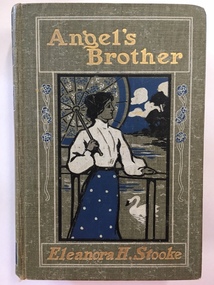
Book, Angel's Brother Eleanora H Stooke, Early 1900s
... attendance and instruction. This book is significant because it is an example of the type of prize given to the prizewinners at the Christ Church Sunday School in Warrnambool in 1909. The prize, a book, has a story that has heavy Christian religious and moral overtones and the English Religious Tract Society produced books especially for the Sunday School prizegiving market. ...This book, ‘Angel’s Brother’ by Eleanora H. Stooke was a prize given to a pupil (name unknown) by the Christ Church Sunday School, Warrnambool in 1909. The Sunday School of the Anglican Church in Warrnambool dates from the 1850s and by 1909 it was an established tradition for most children whose parents belonged to the Anglican Church to attend a Sunday School. In 1906 there were about 30 teachers taking 45 pupils in the morning session and 177 pupils in the afternoon session. The highlights of the year were the Sunday School picnic held at various venues and the annual prizegiving day. In 1909 a cantata, ‘The Fairy Chain’ was performed by Sunday School students in the Oddfellows Hall. The Vicar in 1909 was Archdeacon Peacock (1906-1912) and in 1908 he introduced a Church Stamp System at the Sunday School whereby children were given stamps and pictures for an album to record their attendance and instruction. This book is significant because it is an example of the type of prize given to the prizewinners at the Christ Church Sunday School in Warrnambool in 1909. The prize, a book, has a story that has heavy Christian religious and moral overtones and the English Religious Tract Society produced books especially for the Sunday School prizegiving market. This is a hard cover book of 314 pages pus several pages detailing other books recently published. The book is a children’s book given as a prize by Christ Church Sunday School, Warrnambool in 1909. It has a brown cover with an inset of a sketch of a young woman holding an umbrella and a sea or a lake setting in the background. The colours of the sketch are blue, white and black and the sketch is set in a decorative border. A similar decorative pattern is on the spine of the book. There are several black and white plates in the book relating to the story. The inscription plate inside has both printed material in blue print and handwritten material in black ink. Front Cover: ‘Angel’s Brother, Eleanora H. Stooke’ Book Plate inside: ‘Christ Church Sunday School, Warrnambool, presented to Ethel … (name scratched out), Class VI, Teacher, Miss Ware, A.E.Peacock, Vicar, J.Ward, S.Smith, Superintendents, Advent, 1909.’ christ church warrnambool sunday school, archdeacon peacock, warrnambool -
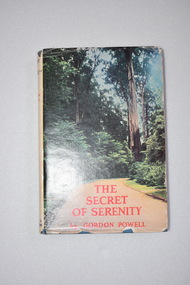 Warrnambool and District Historical Society Inc.
Book, The Secret of Serenity, 1957
... Stephens Church in Sydney he attracted large attendances at both his Sunday and week-day services and became well-known for his religious radio broadcasts. He wrote several books...Stephens Church in Sydney he attracted large attendances at both his Sunday and week-day services and became well-known for his religious radio broadcasts. He wrote several books ...This is a book offering the reader ways to combat mental and spiritual stress. The author, the Rev. Gordon Powell (1911-2005) was born in Warrnambool to Louisa and George Powell. His father was a dentist in Kepler Street Warrnambool. Gordon Powell was educated in Melbourne and was a Presbyterian Minister in Adelaide, Sydney, Melbourne and U.S.A. He was an R.A.A.F. chaplain in World War Two and established the Alcoholics Anonymous organization in Victoria. At St. Stephens Church in Sydney he attracted large attendances at both his Sunday and week-day services and became well-known for his religious radio broadcasts. He wrote several books and many articles for religious journals. This book is retained because it is the only piece of writing we have by the Rev. Gordon Powell who was born in Warrnambool in 1911 and was one of the most influential Presbyterian Church ministers in Australia in the 20th century. This is a hard cover book of 128 pages. The hard cover is blue with black printing on the spine. The dust cover has printing on the back cover and spine and a colour photograph of a path and parkland with red printing on the front cover. The pages contain an introduction and twelve chapters of text. rev. gordon powell, australian presbyterian church, history of warrnambool -
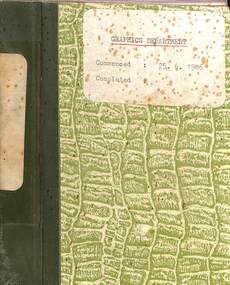 Sunshine and District Historical Society Incorporated
Administrative record - Sunshine Technical School Office Memorabilia - Miscellaneous Office Books, Various
... Sunshine Technical School Technical School 3504.01 - Graphics Department Receipt Book 1986|3504.02 - Cash Book|3504.03 - Visitors Book|3504.04 - Teachers' Absence Register|3504.05 - Register of Attendances|3504.06 - Technical Schools General Register|3504.07 - Ledger 1961 Collection of miscellaneous office books from the Sunshine Techncial School Administrative record Sunshine Technical School Office Memorabilia - Miscellaneous Office Books ...3504.01 - Graphics Department Receipt Book 1986|3504.02 - Cash Book|3504.03 - Visitors Book|3504.04 - Teachers' Absence Register|3504.05 - Register of Attendances|3504.06 - Technical Schools General Register|3504.07 - Ledger 1961sunshine technical school, technical school -
Clunes Museum
Book, GALL & INGLIS, LITTLE BULLETS FROM BATALA BY A.L.O.E
... local history book school education books education A. OATS / PRESENTED TO ALBERT OATS FOR REGULAR ATTENDANCE STATE SCHOOL 136 SOUTH CLUNES CHRISTMAS 1888 BOOK LITTLE BULLETS FROM BALATA BY A.L.O.E. ...BOOK LITTLE BULLETS FROM BALATA BY A.L.O.E. HON MISSIONARY OF BATALA PUNJAB.local history, book, school education, books education -
Kew Historical Society Inc
Archive (Sub-series) - Subject File, East Kew Women’s Club, 1945-70, 1958
... Club Records deposited by Mrs Bysouth in 1973 include 1973.0001 Book: Twenty Years 20/7/1945 - 30/7/1965 East Kew Women’s Club (9pp & covers) 1973.0005 Document: East Kew Women’s Club (1p) 1973.0006 Minute Book: Register containing the minutes of committee meetings of the East Kew Womens Club, 1953-56 1973.0007 Minute Book: Register containing the minutes of committee meetings of the East Kew Womens Club, 1955-59 1973.0008 Minute Book: Register containing the minutes of committee meetings of the East Kew Womens Club, 1960-65 1973.0009 Minute Book: Register containing the minutes of committee meetings of the East Kew Womens Club, 1965-68 1973.0010 Minute Book: Register containing the minutes of committee meetings of the East Kew Womens Club, 1968-73 1973.0011 Register: Visitors Book, East Kew Women’s Club 1973.0012 Register: Attendance Register, East Kew Women’s Club, 1959-64 1973.0013 Register: Attendance Register, East Kew Women’s Club, 1965-67 1973.0014 Register: Attendance Register, East Kew Women’s Club, 1967-71 1973.0015 Register: Attendance Register, East Kew Women’s Club, 1971-73 Following the closure of the Club in 1973, after twenty-eight years, its records were deposited with the Kew Historical Society and are thus available for research into the history of women’s groups in the post war period in Australia. The Society holds the Club’s Minute Books ...Various partiesReference, Research, InformationSecondary Values (KHS Imposed Order)Most of the original manuscripts of the Club (attendance registers, minutes of meetings, histories etc.,) are kept separately in archival boxes. The reference file contains a copy of the 9-page history of the Club’s history from 1945-65 a newspaper clipping relating to a 25-year anniversary lunch.kew (vic) - history, kew east (vic) - community groups, kew east (vic) - womenkew (vic) - history, kew east (vic) - community groups, kew east (vic) - women -
Kew Historical Society Inc
Journal, Kew Historical Society, Newsletter No.2, November, 1977
... attendance R.H.S.V. Seventh Biennial conference; Eastern Historical Societies Regional Conference]. Historic Possessions [collation of possessions; storage Kew High School Library]. Donation from National Australia Bank [signature books ...President’s Letter to Members / Winifred Hall. Conferences [attendance R.H.S.V. Seventh Biennial conference; Eastern Historical Societies Regional Conference]. Historic Possessions [collation of possessions; storage Kew High School Library]. Donation from National Australia Bank [signature books]. Finance [Council grant]. Historic Committee [formation of committee] p1. Christmas Holiday Project [request recording people and buildings of Kew]. Dictionary of Street Names [suggested books, recording]. Cemetery Transcripts. Honorary Life Members [Miss Eva Grant]. Membership Drive. Meetings 1978. Office Bearers p2.Published quarterly since 1977, the newsletters of the Kew Historical Society contain significant research by members exploring relevant aspects of the Victorian and Australian Framework of Historical Themes. Frequently, articles on people, places and artefacts are the only source of information about an aspect of Kew, and Melbourne’s history.President’s Letter to Members / Winifred Hall. Conferences [attendance R.H.S.V. Seventh Biennial conference; Eastern Historical Societies Regional Conference]. Historic Possessions [collation of possessions; storage Kew High School Library]. Donation from National Australia Bank [signature books]. Finance [Council grant]. Historic Committee [formation of committee] p1. Christmas Holiday Project [request recording people and buildings of Kew]. Dictionary of Street Names [suggested books, recording]. Cemetery Transcripts. Honorary Life Members [Miss Eva Grant]. Membership Drive. Meetings 1978. Office Bearers p2.kew historical society (vic.) -- periodicals., kew historical society (vic.) -- newsletters, kew historical society (vic.) -- journals -
Whitehorse Historical Society Inc.
Book, Reporter District Cricket Association, 1913 - 1986
... Minute books of Reporter District Cricket Association 27 May 1913 to 17 Sep 1951, 19 Mar 1959 to 22 Feb 1966, 14 Dec 1971- 4 Aug 1986. With 'Rough minutes' 13 Jan 1975 - 23 Sep 1986 and meeting Attendance book 1967-1970....Minute books of Reporter District Cricket Association 27 May 1913 to 17 Sep 1951, 19 Mar 1959 to 22 Feb 1966, 14 Dec 1971- 4 Aug 1986. With 'Rough minutes' 13 Jan 1975 - 23 Sep 1986 and meeting Attendance book 1967-1970. ...Minute books of Reporter District Cricket Association 27 May 1913 to 17 Sep 1951, 19 Mar 1959 to 22 Feb 1966, 14 Dec 1971- 4 Aug 1986.Minute books of Reporter District Cricket Association 27 May 1913 to 17 Sep 1951, 19 Mar 1959 to 22 Feb 1966, 14 Dec 1971- 4 Aug 1986. With 'Rough minutes' 13 Jan 1975 - 23 Sep 1986 and meeting Attendance book 1967-1970.Minute books of Reporter District Cricket Association 27 May 1913 to 17 Sep 1951, 19 Mar 1959 to 22 Feb 1966, 14 Dec 1971- 4 Aug 1986. cricket, reporter district cricket association, box hill reporter district cricket association -
 Mont De Lancey
Book, W M. Thackeray et al, The Virginians, c 1859
... Books were often given to children as gifts for birthdays and Christmas as well as for attendance at Sunday School. ...Books were often given to children as gifts for birthdays and Christmas as well as for attendance at Sunday School. ...A story about British society during the late colonial era in North America. Two brothers rival for heir to the family fortune. George Washington is a neighbour.A damaged vintage red covered fiction book, The Virginians by W M. Thackeray. The title and author are printed in gold lettering on the spine. The title page has full details including the publisher. Thackeray illustrated the book. The frontispiece illustration shows people inside a church with the heading 'The Family Pew - P. 75'. At the back are several recommended titles for reading. There is a Bookplate pasted onto the right front end paper.Pp. 516.A story about British society during the late colonial era in North America. Two brothers rival for heir to the family fortune. George Washington is a neighbour.historical fiction, family life fiction, fiction books, fiction - american -
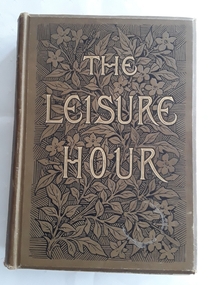 Mont De Lancey
Book, R.K. Burt and Co, The Leisure Hour 1887, 1887
... Books Non fiction book A book of British general interest periodicals of the Victorian era which ran weekly from 1852 - 1905. Each issue mixed multiple genres of fiction, and factual stories, historical and topical. The articles were a mix, including biographies, poetry, essays and fiction. Each issue usually started with a piece of serialised fiction. Opposite the title page is handwritten in black copperplate script - 'Presented to Thomas Johnston by The United Methodist Sabbath School Wandin Yallock for diligence and good attendance ...A book of British general interest periodicals of the Victorian era which ran weekly from 1852 - 1905. Each issue mixed multiple genres of fiction, and factual stories, historical and topical. The articles were a mix, including biographies, poetry, essays and fiction. Each issue usually started with a piece of serialised fiction.An antique thick heavy brown covered children's book entitled - The Leisure Hour 1887. The front cover has the title printed in large gold lettering surrounded by black outlined flowers and leaves. It is a bound edition of a collection of British general interest periodicals of the Victorian era. It has a variety of genres of fiction and factual stories, historical and topical. There are black and white illustrations throughout with some large frontispiece ones too. The stained back cover has a bunch of wildflowers printed in black outline. 860p.non-fictionA book of British general interest periodicals of the Victorian era which ran weekly from 1852 - 1905. Each issue mixed multiple genres of fiction, and factual stories, historical and topical. The articles were a mix, including biographies, poetry, essays and fiction. Each issue usually started with a piece of serialised fiction.magazines, fiction books, historical fiction, children's books, non fiction book -
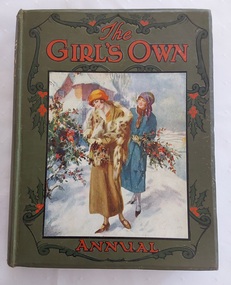 Mont De Lancey
Book, The Girl's Own Annual, 1924
... Books Children's Books Awards Adventure stories Family life fiction Family life The contents of the book are for girls and women with stories, knitting and sewing patterns, handy home hints, factual information and more. There is an emphasis on Royal Family life. The Bookplate: Presbyterian Church of Victoria and Tasmania St Andrew's School Sunbury. Awarded to Clarice Lancaster as the Special Attendance ...The contents of the book are for girls and women with stories, knitting and sewing patterns, handy home hints, factual information and more. There is an emphasis on Royal Family life.A large thick, heavy green hardcover Girl's Own Annual Volume 46 with a large square picture depicting two women walking in the snow holding bunches of holly. The title is in red print and there is holly surrounding the illustration. The spine has the title printed in gold lettering, holly leaves and Vol 46 in black type at the bottom. It is a 1924 edition of this series. The end papers show green tinted woods and a stream. The coloured frontispiece is of a woman decorating a Christmas Tree from the story - The Christmas Fairy. Tissue paper protects this page. The contents of the book are for girls and women with stories, knitting and sewing patterns, handy home hints, factual information and more. There is an emphasis on Royal Family life. Inside is a 1997 religious bookmark for a Ekankar Seminar, Brisbane Australia. A bookplate is pasted at the front of the book. non-fictionThe contents of the book are for girls and women with stories, knitting and sewing patterns, handy home hints, factual information and more. There is an emphasis on Royal Family life.books, children's books, awards, adventure stories, family life fiction, family life -
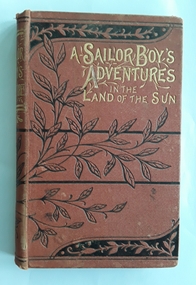 Mont De Lancey
Book, James Nunn, A Sailor Boy's Adventures in the Land of the Sun, c1900's
... Prizes such as this were given to children for merit and regular attendance to their local Sunday School. Religious Stories Religious books Religious fiction Adventure stories Adventure fiction Stories for boys Set in the early 19th century days of sailing and shipwrecks with a young boy as the main protaganist telling of his many adventures in far away lands. ...Set in the early 19th century days of sailing and shipwrecks with a young boy as the main protaganist telling of his many adventures in far away lands. It has very strong religious themes.A small tan hardcover children's fiction book - A Sailor Boy's Adventure in the Land of the Sun by James Nunn who was the author of The Realm of the Ice King and Saved from the Wreck. The front cover has the title printed in gold lettering at the top with bands of black lines and leaf outlines. The spine too has the title in gold lettering with black leaves. The frontispiece in black and white depicts a lion attacking a man with hunters in the background. There are a few similar black and white illustrations throughout the book.128pp.fictionSet in the early 19th century days of sailing and shipwrecks with a young boy as the main protaganist telling of his many adventures in far away lands. It has very strong religious themes.religious stories, religious books, religious fiction, adventure stories, adventure fiction, stories for boys -
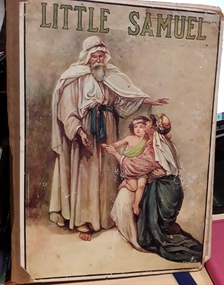 Mont De Lancey
Book, John F. Shaw & Co. Ltd, Little Samuel : bible stories, Unknown
... Author of "Suffer little children", "Long ago in Bible lands", "Stories from the book of books" and others. children's books bible stories Children's Fiction A collection of bible stories for young children Retold by Catherine Shaw. "Awarded to Lance Sebire for diligence and attendance"(31 days). ...A collection of bible stories for young children Retold by Catherine Shaw.A young children's collection of Bible stories with an illustration of a man talking to a mother and her child on the front cover. The title, Little Samuel is printed at the top of the front cover in green text.fictionA collection of bible stories for young children Retold by Catherine Shaw.children's books, bible stories, children's fiction -
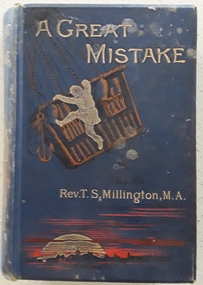 Mont De Lancey
Book, T.S. Millington, A Great Mistake - a Story of Adventure, 1880
... children's books adventure war friendship A novel from The Boy's Own Bookshelf No IV - a story of adventure of three boys who ran away from school, and later go to war and the siege of Paris. 'Presented to Thomas Sebire by the United Methodist Sabbath School Wandin Yallock for diligence and good attendance. ...A novel from The Boy's Own Bookshelf No IV - a story of adventure of three boys who ran away from school, and later go to war and the siege of Paris.A blue cloth hardcover book, A Great Mistake by Rev. T.S. Millington, with a gold, red and brown illustration of a boy climbing into a hot air balloon basket already in flight and a city skyline in sunset at the bottom of the cover. The title and author are printed in gold and black lettering on the front. An illustration in gold and brown is on spine of a soldier and a woman holding hands. Black initials RTS for the publisher are at base of the spine. Numerous black and white illustrations are inside. On the middle of the back cover black leaves are printed on it.fictionA novel from The Boy's Own Bookshelf No IV - a story of adventure of three boys who ran away from school, and later go to war and the siege of Paris.children's books, adventure, war, friendship -
 Mont De Lancey
Book, Annie Gray, Denny; or from Haven to Haven, 1883
... fiction adventure religion children's books A children's adventure story about a lost little boy and how he was saved. Religious influences throughout. Presented to Miss Lily Sebier ( Sebire) for diligence and good attendance Wandon ( Wandin) Sabeth (Sabbath) School 1883 Tan cloth covered hardcover book, Denny or From Haven to Haven, by Annie Gray, with gold and brown lettering for title and author's name. ...A children's adventure story about a lost little boy and how he was saved. Religious influences throughout.Tan cloth covered hardcover book, Denny or From Haven to Haven, by Annie Gray, with gold and brown lettering for title and author's name. Green, brown and gold illustration of father holding oars, embracing daughter in a field in Scotland. Boat in background along with flowers and leaves as decoration. Spine has gold title, child, lines and leaves. Back cover has embossed design in middle. Gold on edges of all pages.,fictionA children's adventure story about a lost little boy and how he was saved. Religious influences throughout.fiction, adventure, religion, children's books -
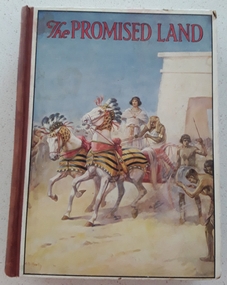 Mont De Lancey
Book, Catherine Shaw et al, The Promised Land, 1928
... An Award presented to Lance Sebire for diligence and attendance at Kindergarten Methodist Sabbath School. books fiction biblical stories children's books A collection of Bible stories about The Promised Land retold by Catherine Shaw 1st Prize Kindergarten 52 days Methodist Sabbath School Wandin Yallock - Awarded to Lance Sebire for diligence and attendance. ...A collection of Bible stories about The Promised Land retold by Catherine ShawHardcover children's religious instruction book, The Promised land, with picture of an Egyptian chariot race in biblical times with red lettering for title at top of illustration. Brown spine with black printed title, 6 crowns and publisher name. Black and white and coloured illustrations throughout.fictionA collection of Bible stories about The Promised Land retold by Catherine Shaw books, fiction, biblical stories, children's books
