
Showing 46 items matching "australian federal parliament opening"
-
 Wodonga & District Historical Society Inc
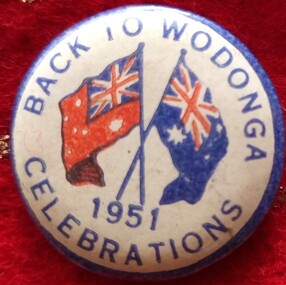
Badge - Back to Wodonga Celebrations 1951
... ...Australian Federal Parliament opening...1951 was a year of celebration in Victoria. 9th May 1951 marked the 50th anniversary of the opening of the Australian Federal Parliament in 1901, which at that time met in Melbourne, Victoria. 13th November marked the Centenary of the opening of the first Victorian Parliament. ...Back to Wodonga 1951 Opening Victorian Parliament Australian Federal Parliament opening Around the edge; BACK TO WODONGA CELEBRATIONS 1951 A small enamel badge featuring both the blue and red Australian ensigns in the centre on a white background surrounded by blue text. ...1951 was a year of celebration in Victoria. 9th May 1951 marked the 50th anniversary of the opening of the Australian Federal Parliament in 1901, which at that time met in Melbourne, Victoria. 13th November marked the Centenary of the opening of the first Victorian Parliament. Cities and towns held activities and celebrations to recognise the occasion. A "Back to Wodonga" was held from Friday 9th to Saturday 7th November 1951. Friday: Children’s Sport and Children’s Concert. Saturday: Welcome to Visitors, Official Luncheon, Gymkhana, Official Opening and Barbecue. Sunday: Church services, various denominations. Monday: Ladies’ Day (Bowls, Tennis, Croquet etc.) Afternoon Garden Parties, Boxing Tournament. Tuesday: Procession, Basket Lunch, Apex Sports Carnival, 50-50 Dance. Wednesday: Tour of district and visit to factories. Re-unions of various organisations. Thursday: All-day Street Fair and Carnival. Friday: Back to School (Higher Elementary School), Wodonga Hospital Ball. Saturday: Bonegilla Race Club meeting, Competition Sports, (Cricket, Bowls, Tennis, etc.) Farewell Parties by various organisations.This Badge is significant because it is a memento of an important community celebration in Wodonga.A small enamel badge featuring both the blue and red Australian ensigns in the centre on a white background surrounded by blue text.Around the edge; BACK TO WODONGA CELEBRATIONS 1951back to wodonga 1951, opening victorian parliament, australian federal parliament opening -
 Wodonga & District Historical Society Inc
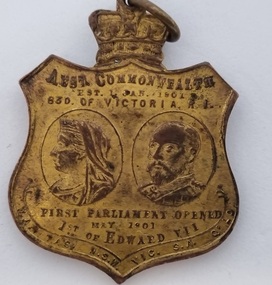
Medal - Opening of First Australian Parliament, Stokes, 1901
... ...Australian Federal Parliament opening...This gilt bronze medal was issued to school children to commemorate the opening of the first Australian Federal Parliament which opened in Melbourne on 9 May, 1901. ...Medallion Australian Federal Parliament opening Federal Parliament Melbourne Obverse side at top: "AUST. ...This gilt bronze medal was issued to school children to commemorate the opening of the first Australian Federal Parliament which opened in Melbourne on 9 May, 1901. This item was used to commemorate an important Australian historical event.A gilt bronze medal in a shield shape with a crown at the top. On on the obverse side are images of Queen Victoria and Edward VII and an inscription. On the reverse side are images of the Duke and Duchess of Cornwall and York and an inscription.Obverse side at top: "AUST. COMMONWEALTH/EST. 1 JAN. 1901/63D of VICTORIA, R.I". Below the images "FIRST PARLIAMENT OPENED/MAY 1902/1ST of EDWARD VII. Along the bottom rim: WA TAS NSW VIC SA QLD. Reverse side at the top:" OPENING OF THE FIRST /FEDERAL PARLIAMENT". Below the images: "T.R.H/ THE DUKE & DUCHESS OF CORNWALL/AND , MAY 1904"medallion, australian federal parliament opening, federal parliament melbourne -
 Flagstaff Hill Maritime Museum and Village
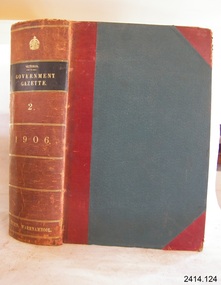
Book - Reference/Colonial Government Notification Gazette, James Kemp, The Victorian Government Gazette 1906 Vol 2 /129, 1906
... Australia's Federal Parliament, Kemp oversaw the printing of official documents for both the State of Victoria and the Commonwealth of Australia, including the Federal Hansard, Commonwealth Gazettes, and parliamentary papers. Kemp's term coincided with a rapid industrial transition in printing technology. Under his management, the GPO expanded its reliance on automated typesetting machinery such as Linotype and Monotype systems to handle the immense volume of legislative work required by two levels of government. During his leadership, the Victorian GPO was also responsible for printing Australian colonial and state postage stamps, as well as early post-Federation Commonwealth stamp issues prior to the opening...Australia's Federal Parliament, Kemp oversaw the printing of official documents for both the State of Victoria and the Commonwealth of Australia, including the Federal Hansard, Commonwealth Gazettes, and parliamentary papers. Kemp's term coincided with a rapid industrial transition in printing technology. Under his management, the GPO expanded its reliance on automated typesetting machinery such as Linotype and Monotype systems to handle the immense volume of legislative work required by two levels of government. During his leadership, the Victorian GPO was also responsible for printing Australian colonial and state postage stamps, as well as early post-Federation Commonwealth stamp issues prior to the opening ...The Victoria Government Gazette and other government documents from 1887 were printed and published by Robert S. Brain, Government Printer, Melbourne. Brain held the position of Victorian Government Printer through the 1890s and into the early 1900s. The same imprint appears on other official Victorian publications from that era, such as the annual reports of the Board for the Protection of the Aborigines and the colony's Statistical Register. There wasn't really an editor in the modern sense the Gazette was compiled and issued under the authority of the colonial government, via the Chief Secretary's Department, with Brain's printing office producing and publishing it. In May 1906, James Kemp succeeded him, serving as Government Printer from May 1906 to August 1912, with the title of Acting Government Printer right at the very start of his tenure he was stepping into the role Brain had just vacated, and by later in December 1906 he was signing gazettes in that capacity, apparently before his appointment was made permanent. Then in 1913 Albert James Mullett took over the role starting from January 1913.Hard cover book. The Victorian Government Gazette 1906 Vol 2 /129 Printer: James Kemp Publisher: James Kemp Publisher: Authority of The Colonial Government Date: 1906 Further Information: Textured hard cover bound book leather burgundy colour spine with gilt lettering, covers embossed blue cloth & reinforced corners to front and back cover. non-fictionThe Victoria Government Gazette and other government documents from 1887 were printed and published by Robert S. Brain, Government Printer, Melbourne. Brain held the position of Victorian Government Printer through the 1890s and into the early 1900s. The same imprint appears on other official Victorian publications from that era, such as the annual reports of the Board for the Protection of the Aborigines and the colony's Statistical Register. There wasn't really an editor in the modern sense the Gazette was compiled and issued under the authority of the colonial government, via the Chief Secretary's Department, with Brain's printing office producing and publishing it. In May 1906, James Kemp succeeded him, serving as Government Printer from May 1906 to August 1912, with the title of Acting Government Printer right at the very start of his tenure he was stepping into the role Brain had just vacated, and by later in December 1906 he was signing gazettes in that capacity, apparently before his appointment was made permanent. Then in 1913 Albert James Mullett took over the role starting from January 1913. flagstaff hill, warrnambool, shipwrecked-coast, flagstaff-hill, flagstaff-hill-maritime-museum, maritime-museum, shipwreck-coast, flagstaff-hill-maritime-village, book, the victoria government gazette 1906 2 vol 129, the victoria government gazette 1906, the victoria government gazette -
 Flagstaff Hill Maritime Museum and Village
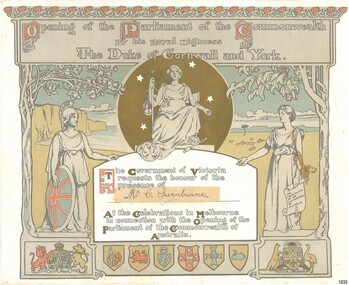
Certificate - Invitation, Norman Lindsay (Artist), Opening of the Parliament of the Commonwealth by His Royal Highness The Duke of Cornwall and York, ca. 1901
... Opening of Federal Parliament...HRH The Duke of Cornwall and York...C Swinburne...Susan Jane Granter...Susan Jane Swinburne...Federal Parliament...1901...Australian Federation...Ceremonies...Politics...Royal Exhibition Building...Invited guest...Britannia...Orb...Sceptre...Advance Australia...Australia. The Government of Victoria invited 12,000 guests to attend the official celebrations for the Opening of the Federal Parliament by His Royal Highness, the Duke of Cornwall and York (later King George V). ...Opening of Federal Parliament by HRH the Duke of Cornwall and York, held in Melbourne. The invitation has printed drawings of figures, decorations, heraldic symbols, and gilt accents behind the central figure, on the capital letters of the message, and the Advance Australia Arms. ...Australia. The Government of Victoria invited 12,000 guests to attend the official celebrations for the Opening of the Federal Parliament by His Royal Highness, the Duke of Cornwall and York (later King George V). ...Australia became a Federation on January 1st, 1901, uniting Australia's six British colonies - New South Wales, Victoria, Queensland, South Australia, Western Australia and Tasmania – into States of the Commonwealth of Australia. The Government of Victoria invited 12,000 guests to attend the official celebrations for the Opening of the Federal Parliament by His Royal Highness, the Duke of Cornwall and York (later King George V). The historic occasion was held at noon on May 9th, 1901, at Melbourne's Royal Exhibition Building, the only building large enough for that number of guests. The guests represented all six states of Australia with varied connections and interests, including politics, business and industry, the arts, religion, education, and public service. In Melbourne, the occasion was followed by two weeks of celebrations. The decorative, elaborate design of the certificate-size invitation represents Australia’s colonial history and its transition to the Federated Commonwealth of Australia. The National Gallery of Australia attributes the artwork of this invitation to Australian artists Norman Lindsay (1879–1969) and John Longstaff (1861–1941) and its printing to Sands & McDougall Limited, Melbourne. The invitation has no date or location details. This invitation has the label “Mr. C Swinburne” added over an original, handwritten name. Perhaps it was a spelling correction, or a late change, with Swinburne attending in the place of another citizen. The book “Our Invited Guests An Official Directory, Melbourne, Victoria, 1901” lists all the guests, but not one has the surname SWINBURNE. There are five Warrnambool listings, eight people in all: - - MoCOBMICK, G. D., Esq., P.M., Warrnambool. - O’DOWD, The Ven. Monsignor, Warrnambool. - OPIE, C. N. T., Esq. (and Lady), Warrnambool. - OSBORNE, Hy. Wm., Esq., Shire Secretary (and Lady), Town Hall, Warrnambool. - STEVENS, Mrs. F. P., Mia Mia, Warrnambool. CHARLES GRANT SWINBURNE (1864-1934): - Charles Grant Swinburne, known as Chas.., was a prominent Warrnambool figure: a member of Toc H., the Progress Association and several other local clubs and societies. He purchased Warrnambool’s Tattersall’s Hotel in 1911 and had a booth at the 1914 Warrnambool Show. In 1891, he married Susan Jane Granter (1867-19 June 1935), daughter of Joseph Granter (1832-1879) and Ann (born Holley). Joseph had arrived in Melbourne on the famous tall ship Marco Polo in February 1856. In 1868, he was a shareholder of the Warrnambool Steam Packet Co., trading along the coast of Victoria. His portrait is among those recognised on the historic Warrnambool Pioneers Board. The invitation is nationally significant for its connection with the first Federal Parliament in May 1901, where the first federal parliamentarians were sworn in, and where the Duke and Duchess of Cornwall and York attended, representing the continued link with Britain. The invitation also unites a local Warrnambool businessman, Mr C Swinburne, with the 12,000 guests representing their towns and states that in 1901 became the Commonwealth of Australia. Swinburn was also married to the daughter of Joseph Granter, an early pioneer recognised on Warrnambool’s Pioneer Board. Invitation: certificate size, colour lithograph on cream card with gilt highlights. The Victorian Government invited Mr C Swinburne to celebrate the Opening of Federal Parliament by HRH the Duke of Cornwall and York, held in Melbourne. The invitation has printed drawings of figures, decorations, heraldic symbols, and gilt accents behind the central figure, on the capital letters of the message, and the Advance Australia Arms. Inscribed with a handwritten label that covers handwritten text. [The event was held at Noon, 9th May 1901, Royal Exhibition Building, Melbourne.] Inscription, handwritten on a label: "Mr. C. Swinburne" Left image: [figure of Britannia holding a blue shield with three crossing red bands, standing below an oak tree] Central image, in front of a gilt circle : [symbolic female royal future with Orbe and Sceptre seated on throne, four stars around her] Right image: [young female figure representing Australia holding a scroll, standing below a flowering gum] "THE CONSTITUTION OF THE COMMONWEALTH OF AUSTRALIA" Bottom left: Combined Arms: "[Duke of Cornwall and York, Prince George Frederick Ernest Albert, Princess Alexandra, his Duchess]" Bottom centre: [six symbols representing the Coat of Arms for each state of Australia] Bottom right: Advance Australia Arms "[Shield with six symbols, between Kangaroo and Emu, and below Rising Sun'] ADVANCE AUSTRALIA"flagstaff hill maritime museum and village, flagstaff hill, maritime museum, maritime village, warrnambool, great ocean road, shipwreck coast, invitation, certificate, mr c swinburne, government of victoria, opening of federal parliament, hrh the duke of cornwall and york, c swinburne, susan jane granter, susan jane swinburne, federal parliament, 1901, australian federation, ceremonies, politics, royal exhibition building, invited guest, britannia, orb, sceptre, advance australia arms, constitution of the commonwealth of australia, norman lindsay, john longstaff, sands & mcdougall, federation, british colonies, commonwealth of australia, charles grant swinburne, chas swinburne, c g swinburne, opening of the federal parliament, duke of cornwall and york, may 9th, tattersall’s hotel, marco polo, warrnambool steam packet co, warrnambool pioneers board, joseph granter, ann granter -
 Flagstaff Hill Maritime Museum and Village
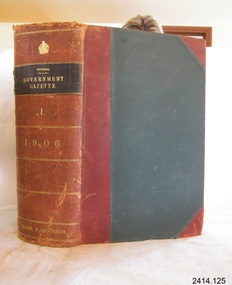
Book - Reference/Colonial Government Notification Gazette, James Kemp, The Victorian Government Gazette 1906 Vol 1 /128, 1906
... Australia's Federal Parliament, Kemp oversaw the printing of official documents for both the State of Victoria and the Commonwealth of Australia, including the Federal Hansard, Commonwealth Gazettes, and parliamentary papers. Kemp's term coincided with a rapid industrial transition in printing technology. Under his management, the GPO expanded its reliance on automated typesetting machinery such as Linotype and Monotype systems to handle the immense volume of legislative work required by two levels of government. During his leadership, the Victorian GPO was also responsible for printing Australian colonial and state postage stamps, as well as early post-Federation Commonwealth stamp issues prior to the opening...Australia's Federal Parliament, Kemp oversaw the printing of official documents for both the State of Victoria and the Commonwealth of Australia, including the Federal Hansard, Commonwealth Gazettes, and parliamentary papers. Kemp's term coincided with a rapid industrial transition in printing technology. Under his management, the GPO expanded its reliance on automated typesetting machinery such as Linotype and Monotype systems to handle the immense volume of legislative work required by two levels of government. During his leadership, the Victorian GPO was also responsible for printing Australian colonial and state postage stamps, as well as early post-Federation Commonwealth stamp issues prior to the opening ...The Victoria Government Gazette and other government documents from 1887 were printed and published by Robert S. Brain, Government Printer, Melbourne. Brain held the position of Victorian Government Printer through the 1890s and into the early 1900s. The same imprint appears on other official Victorian publications from that era, such as the annual reports of the Board for the Protection of the Aborigines and the colony's Statistical Register. There wasn't really an editor in the modern sense the Gazette was compiled and issued under the authority of the colonial government, via the Chief Secretary's Department, with Brain's printing office producing and publishing it. In May 1906, James Kemp succeeded him, serving as Government Printer from May 1906 to August 1912, with the title of Acting Government Printer right at the very start of his tenure he was stepping into the role Brain had just vacated, and by later in December 1906 he was signing gazettes in that capacity, apparently before his appointment was made permanent. Then in 1913 Albert James Mullett took over the role starting from January 1913.Hard cover book. The Victorian Government Gazette 1906 Vol 1 /128 Printer: James Kemp Publisher: James Kemp Publisher: Authority of The Colonial Government Date: 1906 Further Information: Textured hard cover bound book leather burgundy colour spine with gilt lettering, covers embossed blue cloth & reinforced corners to front and back cover. non-fictionThe Victoria Government Gazette and other government documents from 1887 were printed and published by Robert S. Brain, Government Printer, Melbourne. Brain held the position of Victorian Government Printer through the 1890s and into the early 1900s. The same imprint appears on other official Victorian publications from that era, such as the annual reports of the Board for the Protection of the Aborigines and the colony's Statistical Register. There wasn't really an editor in the modern sense the Gazette was compiled and issued under the authority of the colonial government, via the Chief Secretary's Department, with Brain's printing office producing and publishing it. In May 1906, James Kemp succeeded him, serving as Government Printer from May 1906 to August 1912, with the title of Acting Government Printer right at the very start of his tenure he was stepping into the role Brain had just vacated, and by later in December 1906 he was signing gazettes in that capacity, apparently before his appointment was made permanent. Then in 1913 Albert James Mullett took over the role starting from January 1913. flagstaff hill, warrnambool, shipwrecked-coast, flagstaff-hill, flagstaff-hill-maritime-museum, maritime-museum, shipwreck-coast, flagstaff-hill-maritime-village, book, the victoria government gazette 1906 2 vol 129, the victoria government gazette 1906, the victoria government gazette -
 Flagstaff Hill Maritime Museum and Village
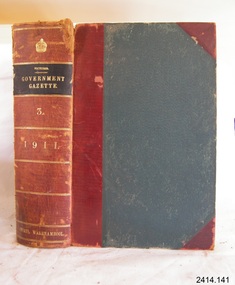
Book - Reference/Colonial Government Notification Gazette, James Kemp, The Victorian Government Gazette 1911 Vol 3 /145, 1911
... Australia's Federal Parliament, Kemp oversaw the printing of official documents for both the State of Victoria and the Commonwealth of Australia, including the Federal Hansard, Commonwealth Gazettes, and parliamentary papers. Kemp's term coincided with a rapid industrial transition in printing technology. Under his management, the GPO expanded its reliance on automated typesetting machinery such as Linotype and Monotype systems to handle the immense volume of legislative work required by two levels of government. During his leadership, the Victorian GPO was also responsible for printing Australian colonial and state postage stamps, as well as early post-Federation Commonwealth stamp issues prior to the opening...Australia's Federal Parliament, Kemp oversaw the printing of official documents for both the State of Victoria and the Commonwealth of Australia, including the Federal Hansard, Commonwealth Gazettes, and parliamentary papers. Kemp's term coincided with a rapid industrial transition in printing technology. Under his management, the GPO expanded its reliance on automated typesetting machinery such as Linotype and Monotype systems to handle the immense volume of legislative work required by two levels of government. During his leadership, the Victorian GPO was also responsible for printing Australian colonial and state postage stamps, as well as early post-Federation Commonwealth stamp issues prior to the opening ...The Victoria Government Gazette and other government documents from 1887 were printed and published by Robert S. Brain, Government Printer, Melbourne. Brain held the position of Victorian Government Printer through the 1890s and into the early 1900s. The same imprint appears on other official Victorian publications from that era, such as the annual reports of the Board for the Protection of the Aborigines and the colony's Statistical Register. There wasn't really an editor in the modern sense the Gazette was compiled and issued under the authority of the colonial government, via the Chief Secretary's Department, with Brain's printing office producing and publishing it. In May 1906, James Kemp succeeded him, serving as Government Printer from May 1906 to August 1912, with the title of Acting Government Printer right at the very start of his tenure he was stepping into the role Brain had just vacated, and by later in December 1906 he was signing gazettes in that capacity, apparently before his appointment was made permanent. Then in 1913 Albert James Mullett took over the role starting from January 1913.Hard cover book. The Victorian Government Gazette 1911 Vol 3 /145 Printer: James Kemp Publisher: James Kemp Publisher: Authority of The Colonial Government Date: 1911 Further Information: Textured hard cover bound book leather burgundy colour spine with gilt lettering, covers embossed blue cloth & reinforced corners to front and back cover. non-fictionThe Victoria Government Gazette and other government documents from 1887 were printed and published by Robert S. Brain, Government Printer, Melbourne. Brain held the position of Victorian Government Printer through the 1890s and into the early 1900s. The same imprint appears on other official Victorian publications from that era, such as the annual reports of the Board for the Protection of the Aborigines and the colony's Statistical Register. There wasn't really an editor in the modern sense the Gazette was compiled and issued under the authority of the colonial government, via the Chief Secretary's Department, with Brain's printing office producing and publishing it. In May 1906, James Kemp succeeded him, serving as Government Printer from May 1906 to August 1912, with the title of Acting Government Printer right at the very start of his tenure he was stepping into the role Brain had just vacated, and by later in December 1906 he was signing gazettes in that capacity, apparently before his appointment was made permanent. Then in 1913 Albert James Mullett took over the role starting from January 1913. flagstaff hill, warrnambool, shipwrecked-coast, flagstaff-hill, flagstaff-hill-maritime-museum, maritime-museum, shipwreck-coast, flagstaff-hill-maritime-village, book, the victoria government gazette 1906 2 vol 129, the victoria government gazette 1906, the victoria government gazette -
 Flagstaff Hill Maritime Museum and Village
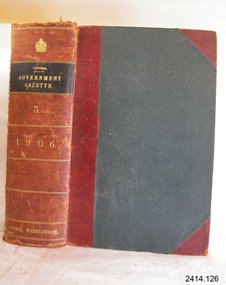
Book - Reference/Colonial Government Notification Gazette, James Kemp, The Victorian Government Gazette 1906 Vol 3 /130, 1906
... Australia's Federal Parliament, Kemp oversaw the printing of official documents for both the State of Victoria and the Commonwealth of Australia, including the Federal Hansard, Commonwealth Gazettes, and parliamentary papers. Kemp's term coincided with a rapid industrial transition in printing technology. Under his management, the GPO expanded its reliance on automated typesetting machinery such as Linotype and Monotype systems to handle the immense volume of legislative work required by two levels of government. During his leadership, the Victorian GPO was also responsible for printing Australian colonial and state postage stamps, as well as early post-Federation Commonwealth stamp issues prior to the opening...Australia's Federal Parliament, Kemp oversaw the printing of official documents for both the State of Victoria and the Commonwealth of Australia, including the Federal Hansard, Commonwealth Gazettes, and parliamentary papers. Kemp's term coincided with a rapid industrial transition in printing technology. Under his management, the GPO expanded its reliance on automated typesetting machinery such as Linotype and Monotype systems to handle the immense volume of legislative work required by two levels of government. During his leadership, the Victorian GPO was also responsible for printing Australian colonial and state postage stamps, as well as early post-Federation Commonwealth stamp issues prior to the opening ...The Victoria Government Gazette and other government documents from 1887 were printed and published by Robert S. Brain, Government Printer, Melbourne. Brain held the position of Victorian Government Printer through the 1890s and into the early 1900s. The same imprint appears on other official Victorian publications from that era, such as the annual reports of the Board for the Protection of the Aborigines and the colony's Statistical Register. There wasn't really an editor in the modern sense the Gazette was compiled and issued under the authority of the colonial government, via the Chief Secretary's Department, with Brain's printing office producing and publishing it. In May 1906, James Kemp succeeded him, serving as Government Printer from May 1906 to August 1912, with the title of Acting Government Printer right at the very start of his tenure he was stepping into the role Brain had just vacated, and by later in December 1906 he was signing gazettes in that capacity, apparently before his appointment was made permanent. Then in 1913 Albert James Mullett took over the role starting from January 1913.Hard cover book. The Victorian Government Gazette 1906 Vol 3 /130 Printer: James Kemp Publisher: James Kemp Publisher: Authority of The Colonial Government Date: 1906 Further Information: Textured hard cover bound book leather burgundy colour spine with gilt lettering, covers embossed blue cloth & reinforced corners to front and back cover. non-fictionThe Victoria Government Gazette and other government documents from 1887 were printed and published by Robert S. Brain, Government Printer, Melbourne. Brain held the position of Victorian Government Printer through the 1890s and into the early 1900s. The same imprint appears on other official Victorian publications from that era, such as the annual reports of the Board for the Protection of the Aborigines and the colony's Statistical Register. There wasn't really an editor in the modern sense the Gazette was compiled and issued under the authority of the colonial government, via the Chief Secretary's Department, with Brain's printing office producing and publishing it. In May 1906, James Kemp succeeded him, serving as Government Printer from May 1906 to August 1912, with the title of Acting Government Printer right at the very start of his tenure he was stepping into the role Brain had just vacated, and by later in December 1906 he was signing gazettes in that capacity, apparently before his appointment was made permanent. Then in 1913 Albert James Mullett took over the role starting from January 1913. flagstaff hill, warrnambool, shipwrecked-coast, flagstaff-hill, flagstaff-hill-maritime-museum, maritime-museum, shipwreck-coast, flagstaff-hill-maritime-village, book, the victoria government gazette 1906 2 vol 129, the victoria government gazette 1906, the victoria government gazette -
 Flagstaff Hill Maritime Museum and Village
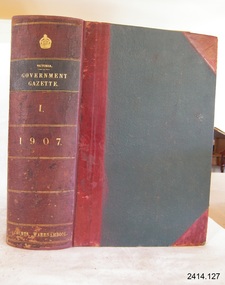
Book - Reference/Colonial Government Notification Gazette, James Kemp, The Victorian Government Gazette 1907 Vol 1 /131, 1907
... Australia's Federal Parliament, Kemp oversaw the printing of official documents for both the State of Victoria and the Commonwealth of Australia, including the Federal Hansard, Commonwealth Gazettes, and parliamentary papers. Kemp's term coincided with a rapid industrial transition in printing technology. Under his management, the GPO expanded its reliance on automated typesetting machinery such as Linotype and Monotype systems to handle the immense volume of legislative work required by two levels of government. During his leadership, the Victorian GPO was also responsible for printing Australian colonial and state postage stamps, as well as early post-Federation Commonwealth stamp issues prior to the opening...Australia's Federal Parliament, Kemp oversaw the printing of official documents for both the State of Victoria and the Commonwealth of Australia, including the Federal Hansard, Commonwealth Gazettes, and parliamentary papers. Kemp's term coincided with a rapid industrial transition in printing technology. Under his management, the GPO expanded its reliance on automated typesetting machinery such as Linotype and Monotype systems to handle the immense volume of legislative work required by two levels of government. During his leadership, the Victorian GPO was also responsible for printing Australian colonial and state postage stamps, as well as early post-Federation Commonwealth stamp issues prior to the opening ...The Victoria Government Gazette and other government documents from 1887 were printed and published by Robert S. Brain, Government Printer, Melbourne. Brain held the position of Victorian Government Printer through the 1890s and into the early 1900s. The same imprint appears on other official Victorian publications from that era, such as the annual reports of the Board for the Protection of the Aborigines and the colony's Statistical Register. There wasn't really an editor in the modern sense the Gazette was compiled and issued under the authority of the colonial government, via the Chief Secretary's Department, with Brain's printing office producing and publishing it. In May 1906, James Kemp succeeded him, serving as Government Printer from May 1906 to August 1912, with the title of Acting Government Printer right at the very start of his tenure he was stepping into the role Brain had just vacated, and by later in December 1906 he was signing gazettes in that capacity, apparently before his appointment was made permanent. Then in 1913 Albert James Mullett took over the role starting from January 1913.Hard cover book. The Victorian Government Gazette 1907 Vol 1 /131 Printer: James Kemp Publisher: James Kemp Publisher: Authority of The Colonial Government Date: 1907 Further Information: Textured hard cover bound book leather burgundy colour spine with gilt lettering, covers embossed blue cloth & reinforced corners to front and back cover. non-fictionThe Victoria Government Gazette and other government documents from 1887 were printed and published by Robert S. Brain, Government Printer, Melbourne. Brain held the position of Victorian Government Printer through the 1890s and into the early 1900s. The same imprint appears on other official Victorian publications from that era, such as the annual reports of the Board for the Protection of the Aborigines and the colony's Statistical Register. There wasn't really an editor in the modern sense the Gazette was compiled and issued under the authority of the colonial government, via the Chief Secretary's Department, with Brain's printing office producing and publishing it. In May 1906, James Kemp succeeded him, serving as Government Printer from May 1906 to August 1912, with the title of Acting Government Printer right at the very start of his tenure he was stepping into the role Brain had just vacated, and by later in December 1906 he was signing gazettes in that capacity, apparently before his appointment was made permanent. Then in 1913 Albert James Mullett took over the role starting from January 1913. flagstaff hill, warrnambool, shipwrecked-coast, flagstaff-hill, flagstaff-hill-maritime-museum, maritime-museum, shipwreck-coast, flagstaff-hill-maritime-village, book, the victoria government gazette 1906 2 vol 129, the victoria government gazette 1906, the victoria government gazette -
 Flagstaff Hill Maritime Museum and Village
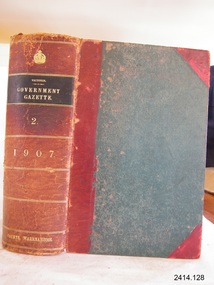
Book - Reference/Colonial Government Notification Gazette, James Kemp, The Victorian Government Gazette 1907 Vol 2 /132, 1907
... Australia's Federal Parliament, Kemp oversaw the printing of official documents for both the State of Victoria and the Commonwealth of Australia, including the Federal Hansard, Commonwealth Gazettes, and parliamentary papers. Kemp's term coincided with a rapid industrial transition in printing technology. Under his management, the GPO expanded its reliance on automated typesetting machinery such as Linotype and Monotype systems to handle the immense volume of legislative work required by two levels of government. During his leadership, the Victorian GPO was also responsible for printing Australian colonial and state postage stamps, as well as early post-Federation Commonwealth stamp issues prior to the opening...Australia's Federal Parliament, Kemp oversaw the printing of official documents for both the State of Victoria and the Commonwealth of Australia, including the Federal Hansard, Commonwealth Gazettes, and parliamentary papers. Kemp's term coincided with a rapid industrial transition in printing technology. Under his management, the GPO expanded its reliance on automated typesetting machinery such as Linotype and Monotype systems to handle the immense volume of legislative work required by two levels of government. During his leadership, the Victorian GPO was also responsible for printing Australian colonial and state postage stamps, as well as early post-Federation Commonwealth stamp issues prior to the opening ...The Victoria Government Gazette and other government documents from 1887 were printed and published by Robert S. Brain, Government Printer, Melbourne. Brain held the position of Victorian Government Printer through the 1890s and into the early 1900s. The same imprint appears on other official Victorian publications from that era, such as the annual reports of the Board for the Protection of the Aborigines and the colony's Statistical Register. There wasn't really an editor in the modern sense the Gazette was compiled and issued under the authority of the colonial government, via the Chief Secretary's Department, with Brain's printing office producing and publishing it. In May 1906, James Kemp succeeded him, serving as Government Printer from May 1906 to August 1912, with the title of Acting Government Printer right at the very start of his tenure he was stepping into the role Brain had just vacated, and by later in December 1906 he was signing gazettes in that capacity, apparently before his appointment was made permanent. Then in 1913 Albert James Mullett took over the role starting from January 1913.Hard cover book. The Victorian Government Gazette 1907 Vol 2 /132 Printer: James Kemp Publisher: James Kemp Publisher: Authority of The Colonial Government Date: 1907 Further Information: Textured hard cover bound book leather burgundy colour spine with gilt lettering, covers embossed blue cloth & reinforced corners to front and back cover. non-fictionThe Victoria Government Gazette and other government documents from 1887 were printed and published by Robert S. Brain, Government Printer, Melbourne. Brain held the position of Victorian Government Printer through the 1890s and into the early 1900s. The same imprint appears on other official Victorian publications from that era, such as the annual reports of the Board for the Protection of the Aborigines and the colony's Statistical Register. There wasn't really an editor in the modern sense the Gazette was compiled and issued under the authority of the colonial government, via the Chief Secretary's Department, with Brain's printing office producing and publishing it. In May 1906, James Kemp succeeded him, serving as Government Printer from May 1906 to August 1912, with the title of Acting Government Printer right at the very start of his tenure he was stepping into the role Brain had just vacated, and by later in December 1906 he was signing gazettes in that capacity, apparently before his appointment was made permanent. Then in 1913 Albert James Mullett took over the role starting from January 1913. flagstaff hill, warrnambool, shipwrecked-coast, flagstaff-hill, flagstaff-hill-maritime-museum, maritime-museum, shipwreck-coast, flagstaff-hill-maritime-village, book, the victoria government gazette 1906 2 vol 129, the victoria government gazette 1906, the victoria government gazette -
 Flagstaff Hill Maritime Museum and Village
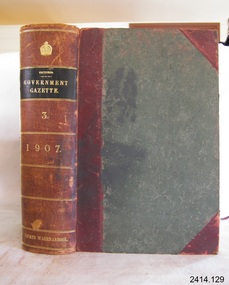
Book - Reference/Colonial Government Notification Gazette, James Kemp, The Victorian Government Gazette 1907 Vol 3 /133, 1907
... Australia's Federal Parliament, Kemp oversaw the printing of official documents for both the State of Victoria and the Commonwealth of Australia, including the Federal Hansard, Commonwealth Gazettes, and parliamentary papers. Kemp's term coincided with a rapid industrial transition in printing technology. Under his management, the GPO expanded its reliance on automated typesetting machinery such as Linotype and Monotype systems to handle the immense volume of legislative work required by two levels of government. During his leadership, the Victorian GPO was also responsible for printing Australian colonial and state postage stamps, as well as early post-Federation Commonwealth stamp issues prior to the opening...Australia's Federal Parliament, Kemp oversaw the printing of official documents for both the State of Victoria and the Commonwealth of Australia, including the Federal Hansard, Commonwealth Gazettes, and parliamentary papers. Kemp's term coincided with a rapid industrial transition in printing technology. Under his management, the GPO expanded its reliance on automated typesetting machinery such as Linotype and Monotype systems to handle the immense volume of legislative work required by two levels of government. During his leadership, the Victorian GPO was also responsible for printing Australian colonial and state postage stamps, as well as early post-Federation Commonwealth stamp issues prior to the opening ...The Victoria Government Gazette and other government documents from 1887 were printed and published by Robert S. Brain, Government Printer, Melbourne. Brain held the position of Victorian Government Printer through the 1890s and into the early 1900s. The same imprint appears on other official Victorian publications from that era, such as the annual reports of the Board for the Protection of the Aborigines and the colony's Statistical Register. There wasn't really an editor in the modern sense the Gazette was compiled and issued under the authority of the colonial government, via the Chief Secretary's Department, with Brain's printing office producing and publishing it. In May 1906, James Kemp succeeded him, serving as Government Printer from May 1906 to August 1912, with the title of Acting Government Printer right at the very start of his tenure he was stepping into the role Brain had just vacated, and by later in December 1906 he was signing gazettes in that capacity, apparently before his appointment was made permanent. Then in 1913 Albert James Mullett took over the role starting from January 1913.Hard cover book. The Victorian Government Gazette 1907 Vol 3 /133 Printer: James Kemp Publisher: James Kemp Publisher: Authority of The Colonial Government Date: 1907 Further Information: Textured hard cover bound book leather burgundy colour spine with gilt lettering, covers embossed blue cloth & reinforced corners to front and back cover. non-fictionThe Victoria Government Gazette and other government documents from 1887 were printed and published by Robert S. Brain, Government Printer, Melbourne. Brain held the position of Victorian Government Printer through the 1890s and into the early 1900s. The same imprint appears on other official Victorian publications from that era, such as the annual reports of the Board for the Protection of the Aborigines and the colony's Statistical Register. There wasn't really an editor in the modern sense the Gazette was compiled and issued under the authority of the colonial government, via the Chief Secretary's Department, with Brain's printing office producing and publishing it. In May 1906, James Kemp succeeded him, serving as Government Printer from May 1906 to August 1912, with the title of Acting Government Printer right at the very start of his tenure he was stepping into the role Brain had just vacated, and by later in December 1906 he was signing gazettes in that capacity, apparently before his appointment was made permanent. Then in 1913 Albert James Mullett took over the role starting from January 1913. flagstaff hill, warrnambool, shipwrecked-coast, flagstaff-hill, flagstaff-hill-maritime-museum, maritime-museum, shipwreck-coast, flagstaff-hill-maritime-village, book, the victoria government gazette 1906 2 vol 129, the victoria government gazette 1906, the victoria government gazette -
 Flagstaff Hill Maritime Museum and Village
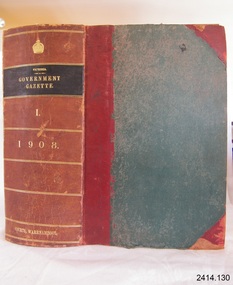
Book - Reference/Colonial Government Notification Gazette, James Kemp, The Victorian Government Gazette 1908 Vol 1 /134, 1908
... Australia's Federal Parliament, Kemp oversaw the printing of official documents for both the State of Victoria and the Commonwealth of Australia, including the Federal Hansard, Commonwealth Gazettes, and parliamentary papers. Kemp's term coincided with a rapid industrial transition in printing technology. Under his management, the GPO expanded its reliance on automated typesetting machinery such as Linotype and Monotype systems to handle the immense volume of legislative work required by two levels of government. During his leadership, the Victorian GPO was also responsible for printing Australian colonial and state postage stamps, as well as early post-Federation Commonwealth stamp issues prior to the opening...Australia's Federal Parliament, Kemp oversaw the printing of official documents for both the State of Victoria and the Commonwealth of Australia, including the Federal Hansard, Commonwealth Gazettes, and parliamentary papers. Kemp's term coincided with a rapid industrial transition in printing technology. Under his management, the GPO expanded its reliance on automated typesetting machinery such as Linotype and Monotype systems to handle the immense volume of legislative work required by two levels of government. During his leadership, the Victorian GPO was also responsible for printing Australian colonial and state postage stamps, as well as early post-Federation Commonwealth stamp issues prior to the opening ...The Victoria Government Gazette and other government documents from 1887 were printed and published by Robert S. Brain, Government Printer, Melbourne. Brain held the position of Victorian Government Printer through the 1890s and into the early 1900s. The same imprint appears on other official Victorian publications from that era, such as the annual reports of the Board for the Protection of the Aborigines and the colony's Statistical Register. There wasn't really an editor in the modern sense the Gazette was compiled and issued under the authority of the colonial government, via the Chief Secretary's Department, with Brain's printing office producing and publishing it. In May 1906, James Kemp succeeded him, serving as Government Printer from May 1906 to August 1912, with the title of Acting Government Printer right at the very start of his tenure he was stepping into the role Brain had just vacated, and by later in December 1906 he was signing gazettes in that capacity, apparently before his appointment was made permanent. Then in 1913 Albert James Mullett took over the role starting from January 1913.Hard cover book. The Victorian Government Gazette 1908 Vol 1 /134 Printer: James Kemp Publisher: James Kemp Publisher: Authority of The Colonial Government Date: 1908 Further Information: Textured hard cover bound book leather burgundy colour spine with gilt lettering, covers embossed blue cloth & reinforced corners to front and back cover. non-fictionThe Victoria Government Gazette and other government documents from 1887 were printed and published by Robert S. Brain, Government Printer, Melbourne. Brain held the position of Victorian Government Printer through the 1890s and into the early 1900s. The same imprint appears on other official Victorian publications from that era, such as the annual reports of the Board for the Protection of the Aborigines and the colony's Statistical Register. There wasn't really an editor in the modern sense the Gazette was compiled and issued under the authority of the colonial government, via the Chief Secretary's Department, with Brain's printing office producing and publishing it. In May 1906, James Kemp succeeded him, serving as Government Printer from May 1906 to August 1912, with the title of Acting Government Printer right at the very start of his tenure he was stepping into the role Brain had just vacated, and by later in December 1906 he was signing gazettes in that capacity, apparently before his appointment was made permanent. Then in 1913 Albert James Mullett took over the role starting from January 1913. flagstaff hill, warrnambool, shipwrecked-coast, flagstaff-hill, flagstaff-hill-maritime-museum, maritime-museum, shipwreck-coast, flagstaff-hill-maritime-village, book, the victoria government gazette 1906 2 vol 129, the victoria government gazette 1906, the victoria government gazette -
 Flagstaff Hill Maritime Museum and Village
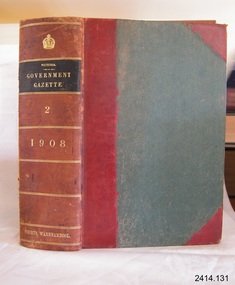
Book - Reference/Colonial Government Notification Gazette, James Kemp, The Victorian Government Gazette 1908 Vol 2 /135, 1908
... Australia's Federal Parliament, Kemp oversaw the printing of official documents for both the State of Victoria and the Commonwealth of Australia, including the Federal Hansard, Commonwealth Gazettes, and parliamentary papers. Kemp's term coincided with a rapid industrial transition in printing technology. Under his management, the GPO expanded its reliance on automated typesetting machinery such as Linotype and Monotype systems to handle the immense volume of legislative work required by two levels of government. During his leadership, the Victorian GPO was also responsible for printing Australian colonial and state postage stamps, as well as early post-Federation Commonwealth stamp issues prior to the opening...Australia's Federal Parliament, Kemp oversaw the printing of official documents for both the State of Victoria and the Commonwealth of Australia, including the Federal Hansard, Commonwealth Gazettes, and parliamentary papers. Kemp's term coincided with a rapid industrial transition in printing technology. Under his management, the GPO expanded its reliance on automated typesetting machinery such as Linotype and Monotype systems to handle the immense volume of legislative work required by two levels of government. During his leadership, the Victorian GPO was also responsible for printing Australian colonial and state postage stamps, as well as early post-Federation Commonwealth stamp issues prior to the opening ...The Victoria Government Gazette and other government documents from 1887 were printed and published by Robert S. Brain, Government Printer, Melbourne. Brain held the position of Victorian Government Printer through the 1890s and into the early 1900s. The same imprint appears on other official Victorian publications from that era, such as the annual reports of the Board for the Protection of the Aborigines and the colony's Statistical Register. There wasn't really an editor in the modern sense the Gazette was compiled and issued under the authority of the colonial government, via the Chief Secretary's Department, with Brain's printing office producing and publishing it. In May 1906, James Kemp succeeded him, serving as Government Printer from May 1906 to August 1912, with the title of Acting Government Printer right at the very start of his tenure he was stepping into the role Brain had just vacated, and by later in December 1906 he was signing gazettes in that capacity, apparently before his appointment was made permanent. Then in 1913 Albert James Mullett took over the role starting from January 1913.Hard cover book. The Victorian Government Gazette 1908 Vol 2 /135 Printer: James Kemp Publisher: James Kemp Publisher: Authority of The Colonial Government Date: 1908 Further Information: Textured hard cover bound book leather burgundy colour spine with gilt lettering, covers embossed blue cloth & reinforced corners to front and back cover. non-fictionThe Victoria Government Gazette and other government documents from 1887 were printed and published by Robert S. Brain, Government Printer, Melbourne. Brain held the position of Victorian Government Printer through the 1890s and into the early 1900s. The same imprint appears on other official Victorian publications from that era, such as the annual reports of the Board for the Protection of the Aborigines and the colony's Statistical Register. There wasn't really an editor in the modern sense the Gazette was compiled and issued under the authority of the colonial government, via the Chief Secretary's Department, with Brain's printing office producing and publishing it. In May 1906, James Kemp succeeded him, serving as Government Printer from May 1906 to August 1912, with the title of Acting Government Printer right at the very start of his tenure he was stepping into the role Brain had just vacated, and by later in December 1906 he was signing gazettes in that capacity, apparently before his appointment was made permanent. Then in 1913 Albert James Mullett took over the role starting from January 1913. flagstaff hill, warrnambool, shipwrecked-coast, flagstaff-hill, flagstaff-hill-maritime-museum, maritime-museum, shipwreck-coast, flagstaff-hill-maritime-village, book, the victoria government gazette 1906 2 vol 129, the victoria government gazette 1906, the victoria government gazette -
 Flagstaff Hill Maritime Museum and Village
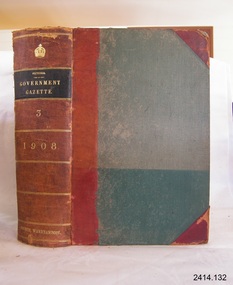
Book - Reference/Colonial Government Notification Gazette, James Kemp, The Victorian Government Gazette 1908 Vol 3 /136, 1908
... Australia's Federal Parliament, Kemp oversaw the printing of official documents for both the State of Victoria and the Commonwealth of Australia, including the Federal Hansard, Commonwealth Gazettes, and parliamentary papers. Kemp's term coincided with a rapid industrial transition in printing technology. Under his management, the GPO expanded its reliance on automated typesetting machinery such as Linotype and Monotype systems to handle the immense volume of legislative work required by two levels of government. During his leadership, the Victorian GPO was also responsible for printing Australian colonial and state postage stamps, as well as early post-Federation Commonwealth stamp issues prior to the opening...Australia's Federal Parliament, Kemp oversaw the printing of official documents for both the State of Victoria and the Commonwealth of Australia, including the Federal Hansard, Commonwealth Gazettes, and parliamentary papers. Kemp's term coincided with a rapid industrial transition in printing technology. Under his management, the GPO expanded its reliance on automated typesetting machinery such as Linotype and Monotype systems to handle the immense volume of legislative work required by two levels of government. During his leadership, the Victorian GPO was also responsible for printing Australian colonial and state postage stamps, as well as early post-Federation Commonwealth stamp issues prior to the opening ...The Victoria Government Gazette and other government documents from 1887 were printed and published by Robert S. Brain, Government Printer, Melbourne. Brain held the position of Victorian Government Printer through the 1890s and into the early 1900s. The same imprint appears on other official Victorian publications from that era, such as the annual reports of the Board for the Protection of the Aborigines and the colony's Statistical Register. There wasn't really an editor in the modern sense the Gazette was compiled and issued under the authority of the colonial government, via the Chief Secretary's Department, with Brain's printing office producing and publishing it. In May 1906, James Kemp succeeded him, serving as Government Printer from May 1906 to August 1912, with the title of Acting Government Printer right at the very start of his tenure he was stepping into the role Brain had just vacated, and by later in December 1906 he was signing gazettes in that capacity, apparently before his appointment was made permanent. Then in 1913 Albert James Mullett took over the role starting from January 1913.Hard cover book. The Victorian Government Gazette 1908 Vol 3 /136 Printer: James Kemp Publisher: James Kemp Publisher: Authority of The Colonial Government Date: 1908 Further Information: Textured hard cover bound book leather burgundy colour spine with gilt lettering, covers embossed blue cloth & reinforced corners to front and back cover. non-fictionThe Victoria Government Gazette and other government documents from 1887 were printed and published by Robert S. Brain, Government Printer, Melbourne. Brain held the position of Victorian Government Printer through the 1890s and into the early 1900s. The same imprint appears on other official Victorian publications from that era, such as the annual reports of the Board for the Protection of the Aborigines and the colony's Statistical Register. There wasn't really an editor in the modern sense the Gazette was compiled and issued under the authority of the colonial government, via the Chief Secretary's Department, with Brain's printing office producing and publishing it. In May 1906, James Kemp succeeded him, serving as Government Printer from May 1906 to August 1912, with the title of Acting Government Printer right at the very start of his tenure he was stepping into the role Brain had just vacated, and by later in December 1906 he was signing gazettes in that capacity, apparently before his appointment was made permanent. Then in 1913 Albert James Mullett took over the role starting from January 1913. flagstaff hill, warrnambool, shipwrecked-coast, flagstaff-hill, flagstaff-hill-maritime-museum, maritime-museum, shipwreck-coast, flagstaff-hill-maritime-village, book, the victoria government gazette 1906 2 vol 129, the victoria government gazette 1906, the victoria government gazette -
 Flagstaff Hill Maritime Museum and Village
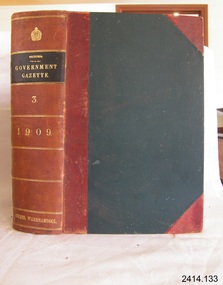
Book - Reference/Colonial Government Notification Gazette, James Kemp, The Victorian Government Gazette 1909 Vol 3 /139, 1909
... Australia's Federal Parliament, Kemp oversaw the printing of official documents for both the State of Victoria and the Commonwealth of Australia, including the Federal Hansard, Commonwealth Gazettes, and parliamentary papers. Kemp's term coincided with a rapid industrial transition in printing technology. Under his management, the GPO expanded its reliance on automated typesetting machinery such as Linotype and Monotype systems to handle the immense volume of legislative work required by two levels of government. During his leadership, the Victorian GPO was also responsible for printing Australian colonial and state postage stamps, as well as early post-Federation Commonwealth stamp issues prior to the opening...Australia's Federal Parliament, Kemp oversaw the printing of official documents for both the State of Victoria and the Commonwealth of Australia, including the Federal Hansard, Commonwealth Gazettes, and parliamentary papers. Kemp's term coincided with a rapid industrial transition in printing technology. Under his management, the GPO expanded its reliance on automated typesetting machinery such as Linotype and Monotype systems to handle the immense volume of legislative work required by two levels of government. During his leadership, the Victorian GPO was also responsible for printing Australian colonial and state postage stamps, as well as early post-Federation Commonwealth stamp issues prior to the opening ...The Victoria Government Gazette and other government documents from 1887 were printed and published by Robert S. Brain, Government Printer, Melbourne. Brain held the position of Victorian Government Printer through the 1890s and into the early 1900s. The same imprint appears on other official Victorian publications from that era, such as the annual reports of the Board for the Protection of the Aborigines and the colony's Statistical Register. There wasn't really an editor in the modern sense the Gazette was compiled and issued under the authority of the colonial government, via the Chief Secretary's Department, with Brain's printing office producing and publishing it. In May 1906, James Kemp succeeded him, serving as Government Printer from May 1906 to August 1912, with the title of Acting Government Printer right at the very start of his tenure he was stepping into the role Brain had just vacated, and by later in December 1906 he was signing gazettes in that capacity, apparently before his appointment was made permanent. Then in 1913 Albert James Mullett took over the role starting from January 1913.Hard cover book. The Victorian Government Gazette 1909 Vol 3 /139 Printer: James Kemp Publisher: James Kemp Publisher: Authority of The Colonial Government Date: 1909 Further Information: Textured hard cover bound book leather burgundy colour spine with gilt lettering, covers embossed blue cloth & reinforced corners to front and back cover. non-fictionThe Victoria Government Gazette and other government documents from 1887 were printed and published by Robert S. Brain, Government Printer, Melbourne. Brain held the position of Victorian Government Printer through the 1890s and into the early 1900s. The same imprint appears on other official Victorian publications from that era, such as the annual reports of the Board for the Protection of the Aborigines and the colony's Statistical Register. There wasn't really an editor in the modern sense the Gazette was compiled and issued under the authority of the colonial government, via the Chief Secretary's Department, with Brain's printing office producing and publishing it. In May 1906, James Kemp succeeded him, serving as Government Printer from May 1906 to August 1912, with the title of Acting Government Printer right at the very start of his tenure he was stepping into the role Brain had just vacated, and by later in December 1906 he was signing gazettes in that capacity, apparently before his appointment was made permanent. Then in 1913 Albert James Mullett took over the role starting from January 1913. flagstaff hill, warrnambool, shipwrecked-coast, flagstaff-hill, flagstaff-hill-maritime-museum, maritime-museum, shipwreck-coast, flagstaff-hill-maritime-village, book, the victoria government gazette 1906 2 vol 129, the victoria government gazette 1906, the victoria government gazette -
 Flagstaff Hill Maritime Museum and Village
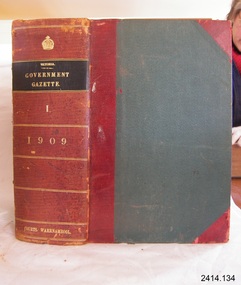
Book - Reference/Colonial Government Notification Gazette, James Kemp, The Victorian Government Gazette 1909 Vol 1 /137, 1909
... Australia's Federal Parliament, Kemp oversaw the printing of official documents for both the State of Victoria and the Commonwealth of Australia, including the Federal Hansard, Commonwealth Gazettes, and parliamentary papers. Kemp's term coincided with a rapid industrial transition in printing technology. Under his management, the GPO expanded its reliance on automated typesetting machinery such as Linotype and Monotype systems to handle the immense volume of legislative work required by two levels of government. During his leadership, the Victorian GPO was also responsible for printing Australian colonial and state postage stamps, as well as early post-Federation Commonwealth stamp issues prior to the opening...Australia's Federal Parliament, Kemp oversaw the printing of official documents for both the State of Victoria and the Commonwealth of Australia, including the Federal Hansard, Commonwealth Gazettes, and parliamentary papers. Kemp's term coincided with a rapid industrial transition in printing technology. Under his management, the GPO expanded its reliance on automated typesetting machinery such as Linotype and Monotype systems to handle the immense volume of legislative work required by two levels of government. During his leadership, the Victorian GPO was also responsible for printing Australian colonial and state postage stamps, as well as early post-Federation Commonwealth stamp issues prior to the opening ...The Victoria Government Gazette and other government documents from 1887 were printed and published by Robert S. Brain, Government Printer, Melbourne. Brain held the position of Victorian Government Printer through the 1890s and into the early 1900s. The same imprint appears on other official Victorian publications from that era, such as the annual reports of the Board for the Protection of the Aborigines and the colony's Statistical Register. There wasn't really an editor in the modern sense the Gazette was compiled and issued under the authority of the colonial government, via the Chief Secretary's Department, with Brain's printing office producing and publishing it. In May 1906, James Kemp succeeded him, serving as Government Printer from May 1906 to August 1912, with the title of Acting Government Printer right at the very start of his tenure he was stepping into the role Brain had just vacated, and by later in December 1906 he was signing gazettes in that capacity, apparently before his appointment was made permanent. Then in 1913 Albert James Mullett took over the role starting from January 1913.Hard cover book. The Victorian Government Gazette 1909 Vol 1 /137 Printer: James Kemp Publisher: James Kemp Publisher: Authority of The Colonial Government Date: 1909 Further Information: Textured hard cover bound book leather burgundy colour spine with gilt lettering, covers embossed blue cloth & reinforced corners to front and back cover. non-fictionThe Victoria Government Gazette and other government documents from 1887 were printed and published by Robert S. Brain, Government Printer, Melbourne. Brain held the position of Victorian Government Printer through the 1890s and into the early 1900s. The same imprint appears on other official Victorian publications from that era, such as the annual reports of the Board for the Protection of the Aborigines and the colony's Statistical Register. There wasn't really an editor in the modern sense the Gazette was compiled and issued under the authority of the colonial government, via the Chief Secretary's Department, with Brain's printing office producing and publishing it. In May 1906, James Kemp succeeded him, serving as Government Printer from May 1906 to August 1912, with the title of Acting Government Printer right at the very start of his tenure he was stepping into the role Brain had just vacated, and by later in December 1906 he was signing gazettes in that capacity, apparently before his appointment was made permanent. Then in 1913 Albert James Mullett took over the role starting from January 1913. flagstaff hill, warrnambool, shipwrecked-coast, flagstaff-hill, flagstaff-hill-maritime-museum, maritime-museum, shipwreck-coast, flagstaff-hill-maritime-village, book, the victoria government gazette 1906 2 vol 129, the victoria government gazette 1906, the victoria government gazette -
 Flagstaff Hill Maritime Museum and Village
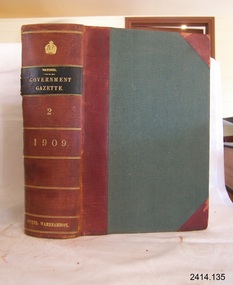
Book - Reference/Colonial Government Notification Gazette, James Kemp, The Victorian Government Gazette 1909 Vol 2 /138, 1909
... Australia's Federal Parliament, Kemp oversaw the printing of official documents for both the State of Victoria and the Commonwealth of Australia, including the Federal Hansard, Commonwealth Gazettes, and parliamentary papers. Kemp's term coincided with a rapid industrial transition in printing technology. Under his management, the GPO expanded its reliance on automated typesetting machinery such as Linotype and Monotype systems to handle the immense volume of legislative work required by two levels of government. During his leadership, the Victorian GPO was also responsible for printing Australian colonial and state postage stamps, as well as early post-Federation Commonwealth stamp issues prior to the opening...Australia's Federal Parliament, Kemp oversaw the printing of official documents for both the State of Victoria and the Commonwealth of Australia, including the Federal Hansard, Commonwealth Gazettes, and parliamentary papers. Kemp's term coincided with a rapid industrial transition in printing technology. Under his management, the GPO expanded its reliance on automated typesetting machinery such as Linotype and Monotype systems to handle the immense volume of legislative work required by two levels of government. During his leadership, the Victorian GPO was also responsible for printing Australian colonial and state postage stamps, as well as early post-Federation Commonwealth stamp issues prior to the opening ...The Victoria Government Gazette and other government documents from 1887 were printed and published by Robert S. Brain, Government Printer, Melbourne. Brain held the position of Victorian Government Printer through the 1890s and into the early 1900s. The same imprint appears on other official Victorian publications from that era, such as the annual reports of the Board for the Protection of the Aborigines and the colony's Statistical Register. There wasn't really an editor in the modern sense the Gazette was compiled and issued under the authority of the colonial government, via the Chief Secretary's Department, with Brain's printing office producing and publishing it. In May 1906, James Kemp succeeded him, serving as Government Printer from May 1906 to August 1912, with the title of Acting Government Printer right at the very start of his tenure he was stepping into the role Brain had just vacated, and by later in December 1906 he was signing gazettes in that capacity, apparently before his appointment was made permanent. Then in 1913 Albert James Mullett took over the role starting from January 1913.Hard cover book. The Victorian Government Gazette 1909 Vol 2 /138 Printer: James Kemp Publisher: James Kemp Publisher: Authority of The Colonial Government Date: 1909 Further Information: Textured hard cover bound book leather burgundy colour spine with gilt lettering, covers embossed blue cloth & reinforced corners to front and back cover. non-fictionThe Victoria Government Gazette and other government documents from 1887 were printed and published by Robert S. Brain, Government Printer, Melbourne. Brain held the position of Victorian Government Printer through the 1890s and into the early 1900s. The same imprint appears on other official Victorian publications from that era, such as the annual reports of the Board for the Protection of the Aborigines and the colony's Statistical Register. There wasn't really an editor in the modern sense the Gazette was compiled and issued under the authority of the colonial government, via the Chief Secretary's Department, with Brain's printing office producing and publishing it. In May 1906, James Kemp succeeded him, serving as Government Printer from May 1906 to August 1912, with the title of Acting Government Printer right at the very start of his tenure he was stepping into the role Brain had just vacated, and by later in December 1906 he was signing gazettes in that capacity, apparently before his appointment was made permanent. Then in 1913 Albert James Mullett took over the role starting from January 1913. flagstaff hill, warrnambool, shipwrecked-coast, flagstaff-hill, flagstaff-hill-maritime-museum, maritime-museum, shipwreck-coast, flagstaff-hill-maritime-village, book, the victoria government gazette 1906 2 vol 129, the victoria government gazette 1906, the victoria government gazette -
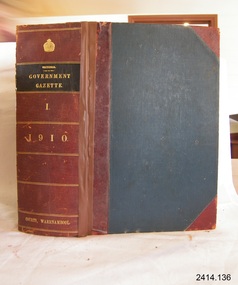 Flagstaff Hill Maritime Museum and Village
Book - Reference/Colonial Government Notification Gazette, James Kemp, The Victorian Government Gazette 1910 Vol 1 /140, 1910
... Australia's Federal Parliament, Kemp oversaw the printing of official documents for both the State of Victoria and the Commonwealth of Australia, including the Federal Hansard, Commonwealth Gazettes, and parliamentary papers. Kemp's term coincided with a rapid industrial transition in printing technology. Under his management, the GPO expanded its reliance on automated typesetting machinery such as Linotype and Monotype systems to handle the immense volume of legislative work required by two levels of government. During his leadership, the Victorian GPO was also responsible for printing Australian colonial and state postage stamps, as well as early post-Federation Commonwealth stamp issues prior to the opening...Australia's Federal Parliament, Kemp oversaw the printing of official documents for both the State of Victoria and the Commonwealth of Australia, including the Federal Hansard, Commonwealth Gazettes, and parliamentary papers. Kemp's term coincided with a rapid industrial transition in printing technology. Under his management, the GPO expanded its reliance on automated typesetting machinery such as Linotype and Monotype systems to handle the immense volume of legislative work required by two levels of government. During his leadership, the Victorian GPO was also responsible for printing Australian colonial and state postage stamps, as well as early post-Federation Commonwealth stamp issues prior to the opening ...The Victoria Government Gazette and other government documents from 1887 were printed and published by Robert S. Brain, Government Printer, Melbourne. Brain held the position of Victorian Government Printer through the 1890s and into the early 1900s. The same imprint appears on other official Victorian publications from that era, such as the annual reports of the Board for the Protection of the Aborigines and the colony's Statistical Register. There wasn't really an editor in the modern sense the Gazette was compiled and issued under the authority of the colonial government, via the Chief Secretary's Department, with Brain's printing office producing and publishing it. In May 1906, James Kemp succeeded him, serving as Government Printer from May 1906 to August 1912, with the title of Acting Government Printer right at the very start of his tenure he was stepping into the role Brain had just vacated, and by later in December 1906 he was signing gazettes in that capacity, apparently before his appointment was made permanent. Then in 1913 Albert James Mullett took over the role starting from January 1913.Hard cover book. The Victorian Government Gazette 1910 Vol 1 /140 Printer: James Kemp Publisher: James Kemp Publisher: Authority of The Colonial Government Date: 1910 Further Information: Textured hard cover bound book leather burgundy colour spine with gilt lettering, covers embossed blue cloth & reinforced corners to front and back cover. non-fictionThe Victoria Government Gazette and other government documents from 1887 were printed and published by Robert S. Brain, Government Printer, Melbourne. Brain held the position of Victorian Government Printer through the 1890s and into the early 1900s. The same imprint appears on other official Victorian publications from that era, such as the annual reports of the Board for the Protection of the Aborigines and the colony's Statistical Register. There wasn't really an editor in the modern sense the Gazette was compiled and issued under the authority of the colonial government, via the Chief Secretary's Department, with Brain's printing office producing and publishing it. In May 1906, James Kemp succeeded him, serving as Government Printer from May 1906 to August 1912, with the title of Acting Government Printer right at the very start of his tenure he was stepping into the role Brain had just vacated, and by later in December 1906 he was signing gazettes in that capacity, apparently before his appointment was made permanent. Then in 1913 Albert James Mullett took over the role starting from January 1913. flagstaff hill, warrnambool, shipwrecked-coast, flagstaff-hill, flagstaff-hill-maritime-museum, maritime-museum, shipwreck-coast, flagstaff-hill-maritime-village, book, the victoria government gazette 1906 2 vol 129, the victoria government gazette 1906, the victoria government gazette -
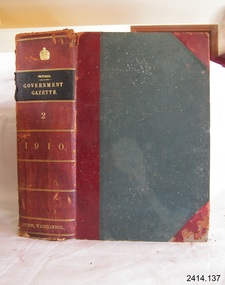 Flagstaff Hill Maritime Museum and Village
Book - Reference/Colonial Government Notification Gazette, James Kemp, The Victorian Government Gazette 1910 Vol 2 /141, 1910
... Australia's Federal Parliament, Kemp oversaw the printing of official documents for both the State of Victoria and the Commonwealth of Australia, including the Federal Hansard, Commonwealth Gazettes, and parliamentary papers. Kemp's term coincided with a rapid industrial transition in printing technology. Under his management, the GPO expanded its reliance on automated typesetting machinery such as Linotype and Monotype systems to handle the immense volume of legislative work required by two levels of government. During his leadership, the Victorian GPO was also responsible for printing Australian colonial and state postage stamps, as well as early post-Federation Commonwealth stamp issues prior to the opening...Australia's Federal Parliament, Kemp oversaw the printing of official documents for both the State of Victoria and the Commonwealth of Australia, including the Federal Hansard, Commonwealth Gazettes, and parliamentary papers. Kemp's term coincided with a rapid industrial transition in printing technology. Under his management, the GPO expanded its reliance on automated typesetting machinery such as Linotype and Monotype systems to handle the immense volume of legislative work required by two levels of government. During his leadership, the Victorian GPO was also responsible for printing Australian colonial and state postage stamps, as well as early post-Federation Commonwealth stamp issues prior to the opening ...The Victoria Government Gazette and other government documents from 1887 were printed and published by Robert S. Brain, Government Printer, Melbourne. Brain held the position of Victorian Government Printer through the 1890s and into the early 1900s. The same imprint appears on other official Victorian publications from that era, such as the annual reports of the Board for the Protection of the Aborigines and the colony's Statistical Register. There wasn't really an editor in the modern sense the Gazette was compiled and issued under the authority of the colonial government, via the Chief Secretary's Department, with Brain's printing office producing and publishing it. In May 1906, James Kemp succeeded him, serving as Government Printer from May 1906 to August 1912, with the title of Acting Government Printer right at the very start of his tenure he was stepping into the role Brain had just vacated, and by later in December 1906 he was signing gazettes in that capacity, apparently before his appointment was made permanent. Then in 1913 Albert James Mullett took over the role starting from January 1913.Hard cover book. The Victorian Government Gazette 1910 Vol 2 /141 Printer: James Kemp Publisher: James Kemp Publisher: Authority of The Colonial Government Date: 1910 Further Information: Textured hard cover bound book leather burgundy colour spine with gilt lettering, covers embossed blue cloth & reinforced corners to front and back cover. non-fictionThe Victoria Government Gazette and other government documents from 1887 were printed and published by Robert S. Brain, Government Printer, Melbourne. Brain held the position of Victorian Government Printer through the 1890s and into the early 1900s. The same imprint appears on other official Victorian publications from that era, such as the annual reports of the Board for the Protection of the Aborigines and the colony's Statistical Register. There wasn't really an editor in the modern sense the Gazette was compiled and issued under the authority of the colonial government, via the Chief Secretary's Department, with Brain's printing office producing and publishing it. In May 1906, James Kemp succeeded him, serving as Government Printer from May 1906 to August 1912, with the title of Acting Government Printer right at the very start of his tenure he was stepping into the role Brain had just vacated, and by later in December 1906 he was signing gazettes in that capacity, apparently before his appointment was made permanent. Then in 1913 Albert James Mullett took over the role starting from January 1913. flagstaff hill, warrnambool, shipwrecked-coast, flagstaff-hill, flagstaff-hill-maritime-museum, maritime-museum, shipwreck-coast, flagstaff-hill-maritime-village, book, the victoria government gazette 1906 2 vol 129, the victoria government gazette 1906, the victoria government gazette -
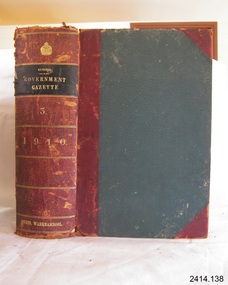 Flagstaff Hill Maritime Museum and Village
Book - Reference/Colonial Government Notification Gazette, James Kemp, The Victorian Government Gazette 1910 Vol 3 /142, 1910
... Australia's Federal Parliament, Kemp oversaw the printing of official documents for both the State of Victoria and the Commonwealth of Australia, including the Federal Hansard, Commonwealth Gazettes, and parliamentary papers. Kemp's term coincided with a rapid industrial transition in printing technology. Under his management, the GPO expanded its reliance on automated typesetting machinery such as Linotype and Monotype systems to handle the immense volume of legislative work required by two levels of government. During his leadership, the Victorian GPO was also responsible for printing Australian colonial and state postage stamps, as well as early post-Federation Commonwealth stamp issues prior to the opening...Australia's Federal Parliament, Kemp oversaw the printing of official documents for both the State of Victoria and the Commonwealth of Australia, including the Federal Hansard, Commonwealth Gazettes, and parliamentary papers. Kemp's term coincided with a rapid industrial transition in printing technology. Under his management, the GPO expanded its reliance on automated typesetting machinery such as Linotype and Monotype systems to handle the immense volume of legislative work required by two levels of government. During his leadership, the Victorian GPO was also responsible for printing Australian colonial and state postage stamps, as well as early post-Federation Commonwealth stamp issues prior to the opening ...The Victoria Government Gazette and other government documents from 1887 were printed and published by Robert S. Brain, Government Printer, Melbourne. Brain held the position of Victorian Government Printer through the 1890s and into the early 1900s. The same imprint appears on other official Victorian publications from that era, such as the annual reports of the Board for the Protection of the Aborigines and the colony's Statistical Register. There wasn't really an editor in the modern sense the Gazette was compiled and issued under the authority of the colonial government, via the Chief Secretary's Department, with Brain's printing office producing and publishing it. In May 1906, James Kemp succeeded him, serving as Government Printer from May 1906 to August 1912, with the title of Acting Government Printer right at the very start of his tenure he was stepping into the role Brain had just vacated, and by later in December 1906 he was signing gazettes in that capacity, apparently before his appointment was made permanent. Then in 1913 Albert James Mullett took over the role starting from January 1913.Hard cover book. The Victorian Government Gazette 1910 Vol 3 /142 Printer: James Kemp Publisher: James Kemp Publisher: Authority of The Colonial Government Date: 1910 Further Information: Textured hard cover bound book leather burgundy colour spine with gilt lettering, covers embossed blue cloth & reinforced corners to front and back cover. non-fictionThe Victoria Government Gazette and other government documents from 1887 were printed and published by Robert S. Brain, Government Printer, Melbourne. Brain held the position of Victorian Government Printer through the 1890s and into the early 1900s. The same imprint appears on other official Victorian publications from that era, such as the annual reports of the Board for the Protection of the Aborigines and the colony's Statistical Register. There wasn't really an editor in the modern sense the Gazette was compiled and issued under the authority of the colonial government, via the Chief Secretary's Department, with Brain's printing office producing and publishing it. In May 1906, James Kemp succeeded him, serving as Government Printer from May 1906 to August 1912, with the title of Acting Government Printer right at the very start of his tenure he was stepping into the role Brain had just vacated, and by later in December 1906 he was signing gazettes in that capacity, apparently before his appointment was made permanent. Then in 1913 Albert James Mullett took over the role starting from January 1913. flagstaff hill, warrnambool, shipwrecked-coast, flagstaff-hill, flagstaff-hill-maritime-museum, maritime-museum, shipwreck-coast, flagstaff-hill-maritime-village, book, the victoria government gazette 1906 2 vol 129, the victoria government gazette 1906, the victoria government gazette -
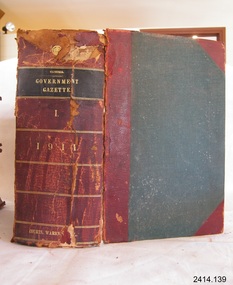 Flagstaff Hill Maritime Museum and Village
Book - Reference/Colonial Government Notification Gazette, James Kemp, The Victorian Government Gazette 1911 Vol 1 /143, 1911
... Australia's Federal Parliament, Kemp oversaw the printing of official documents for both the State of Victoria and the Commonwealth of Australia, including the Federal Hansard, Commonwealth Gazettes, and parliamentary papers. Kemp's term coincided with a rapid industrial transition in printing technology. Under his management, the GPO expanded its reliance on automated typesetting machinery such as Linotype and Monotype systems to handle the immense volume of legislative work required by two levels of government. During his leadership, the Victorian GPO was also responsible for printing Australian colonial and state postage stamps, as well as early post-Federation Commonwealth stamp issues prior to the opening...Australia's Federal Parliament, Kemp oversaw the printing of official documents for both the State of Victoria and the Commonwealth of Australia, including the Federal Hansard, Commonwealth Gazettes, and parliamentary papers. Kemp's term coincided with a rapid industrial transition in printing technology. Under his management, the GPO expanded its reliance on automated typesetting machinery such as Linotype and Monotype systems to handle the immense volume of legislative work required by two levels of government. During his leadership, the Victorian GPO was also responsible for printing Australian colonial and state postage stamps, as well as early post-Federation Commonwealth stamp issues prior to the opening ...The Victoria Government Gazette and other government documents from 1887 were printed and published by Robert S. Brain, Government Printer, Melbourne. Brain held the position of Victorian Government Printer through the 1890s and into the early 1900s. The same imprint appears on other official Victorian publications from that era, such as the annual reports of the Board for the Protection of the Aborigines and the colony's Statistical Register. There wasn't really an editor in the modern sense the Gazette was compiled and issued under the authority of the colonial government, via the Chief Secretary's Department, with Brain's printing office producing and publishing it. In May 1906, James Kemp succeeded him, serving as Government Printer from May 1906 to August 1912, with the title of Acting Government Printer right at the very start of his tenure he was stepping into the role Brain had just vacated, and by later in December 1906 he was signing gazettes in that capacity, apparently before his appointment was made permanent. Then in 1913 Albert James Mullett took over the role starting from January 1913.Hard cover book. The Victorian Government Gazette 1911 Vol 1 /143 Printer: James Kemp Publisher: James Kemp Publisher: Authority of The Colonial Government Date: 1911 Further Information: Textured hard cover bound book leather burgundy colour spine with gilt lettering, covers embossed blue cloth & reinforced corners to front and back cover. non-fictionThe Victoria Government Gazette and other government documents from 1887 were printed and published by Robert S. Brain, Government Printer, Melbourne. Brain held the position of Victorian Government Printer through the 1890s and into the early 1900s. The same imprint appears on other official Victorian publications from that era, such as the annual reports of the Board for the Protection of the Aborigines and the colony's Statistical Register. There wasn't really an editor in the modern sense the Gazette was compiled and issued under the authority of the colonial government, via the Chief Secretary's Department, with Brain's printing office producing and publishing it. In May 1906, James Kemp succeeded him, serving as Government Printer from May 1906 to August 1912, with the title of Acting Government Printer right at the very start of his tenure he was stepping into the role Brain had just vacated, and by later in December 1906 he was signing gazettes in that capacity, apparently before his appointment was made permanent. Then in 1913 Albert James Mullett took over the role starting from January 1913. flagstaff hill, warrnambool, shipwrecked-coast, flagstaff-hill, flagstaff-hill-maritime-museum, maritime-museum, shipwreck-coast, flagstaff-hill-maritime-village, book, the victoria government gazette 1906 2 vol 129, the victoria government gazette 1906, the victoria government gazette -
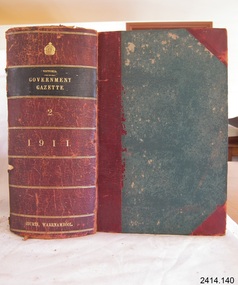 Flagstaff Hill Maritime Museum and Village
Book - Reference/Colonial Government Notification Gazette, James Kemp, The Victorian Government Gazette 1911 Vol 2 /144, 1911
... Australia's Federal Parliament, Kemp oversaw the printing of official documents for both the State of Victoria and the Commonwealth of Australia, including the Federal Hansard, Commonwealth Gazettes, and parliamentary papers. Kemp's term coincided with a rapid industrial transition in printing technology. Under his management, the GPO expanded its reliance on automated typesetting machinery such as Linotype and Monotype systems to handle the immense volume of legislative work required by two levels of government. During his leadership, the Victorian GPO was also responsible for printing Australian colonial and state postage stamps, as well as early post-Federation Commonwealth stamp issues prior to the opening...Australia's Federal Parliament, Kemp oversaw the printing of official documents for both the State of Victoria and the Commonwealth of Australia, including the Federal Hansard, Commonwealth Gazettes, and parliamentary papers. Kemp's term coincided with a rapid industrial transition in printing technology. Under his management, the GPO expanded its reliance on automated typesetting machinery such as Linotype and Monotype systems to handle the immense volume of legislative work required by two levels of government. During his leadership, the Victorian GPO was also responsible for printing Australian colonial and state postage stamps, as well as early post-Federation Commonwealth stamp issues prior to the opening ...The Victoria Government Gazette and other government documents from 1887 were printed and published by Robert S. Brain, Government Printer, Melbourne. Brain held the position of Victorian Government Printer through the 1890s and into the early 1900s. The same imprint appears on other official Victorian publications from that era, such as the annual reports of the Board for the Protection of the Aborigines and the colony's Statistical Register. There wasn't really an editor in the modern sense the Gazette was compiled and issued under the authority of the colonial government, via the Chief Secretary's Department, with Brain's printing office producing and publishing it. In May 1906, James Kemp succeeded him, serving as Government Printer from May 1906 to August 1912, with the title of Acting Government Printer right at the very start of his tenure he was stepping into the role Brain had just vacated, and by later in December 1906 he was signing gazettes in that capacity, apparently before his appointment was made permanent. Then in 1913 Albert James Mullett took over the role starting from January 1913.Hard cover book. The Victorian Government Gazette 1911 Vol 2 /144 Printer: James Kemp Publisher: James Kemp Publisher: Authority of The Colonial Government Date: 1911 Further Information: Textured hard cover bound book leather burgundy colour spine with gilt lettering, covers embossed blue cloth & reinforced corners to front and back cover. non-fictionThe Victoria Government Gazette and other government documents from 1887 were printed and published by Robert S. Brain, Government Printer, Melbourne. Brain held the position of Victorian Government Printer through the 1890s and into the early 1900s. The same imprint appears on other official Victorian publications from that era, such as the annual reports of the Board for the Protection of the Aborigines and the colony's Statistical Register. There wasn't really an editor in the modern sense the Gazette was compiled and issued under the authority of the colonial government, via the Chief Secretary's Department, with Brain's printing office producing and publishing it. In May 1906, James Kemp succeeded him, serving as Government Printer from May 1906 to August 1912, with the title of Acting Government Printer right at the very start of his tenure he was stepping into the role Brain had just vacated, and by later in December 1906 he was signing gazettes in that capacity, apparently before his appointment was made permanent. Then in 1913 Albert James Mullett took over the role starting from January 1913. flagstaff hill, warrnambool, shipwrecked-coast, flagstaff-hill, flagstaff-hill-maritime-museum, maritime-museum, shipwreck-coast, flagstaff-hill-maritime-village, book, the victoria government gazette 1906 2 vol 129, the victoria government gazette 1906, the victoria government gazette -
 Glenelg Shire Council Cultural Collection
Medal - Medal - opening of the first federal parliament, 1901, \, 1901
... Medal issued to commemorate the opening of the First Federal Parliament of Australia on 9 May 1901. ...AUSTRALIA, below busts of Victoria and Edward VII in ovals; above, AUST. COMMONWEALTH / EST.1.JA.1901 / 63D. OF VICTORIA, R.I; below, FIRST PARLIAMENT OPENED / MAY 1901 / 1ST OF EDWARD VII / W.A. TAS. N.S.W. VIC. S.A. Q'LD. Reverse: Busts of the Duke and Duchess in ovals; above, OPENING OF THE FIRST / FEDERAL...Medal issued to commemorate the opening of the First Federal Parliament of Australia on 9 May 1901. ...Medal issued to commemorate the opening of the First Federal Parliament of Australia on 9 May 1901. The silver medal was minted by Stokes & Sons and presented to MLA Thomas Bent. Knighted in 1907, Bent served as Premier and Treasurer of Victoria from 1904-1909.At top of red ribbon Australian Arms over blue enamelled ribbon AUSTRALIA, below busts of Victoria and Edward VII in ovals; above, AUST. COMMONWEALTH / EST.1.JA.1901 / 63D. OF VICTORIA, R.I; below, FIRST PARLIAMENT OPENED / MAY 1901 / 1ST OF EDWARD VII / W.A. TAS. N.S.W. VIC. S.A. Q'LD. Reverse: Busts of the Duke and Duchess in ovals; above, OPENING OF THE FIRST / FEDERAL PARLIAMENT; below, T.R.H. / THE DUKE AND DUCHESS OF CORNWALL / AND YORK / MELBOURNE, MAY 1901Front: Inverse: Opening of the first/Federal Parliament/T.R.H./The Duke and Duchess of Cornwall/-and York-/Melbourne, May 1901. Back: Obverse: Aust. Commonwealth/Est. 1 Jan. 1901/63 D. of Victoria. R.I./First Parliament opened/May 1901/1st of Edward VII/ W.A. TAS. N.S.W. VIC. SA. QLDcelebration, numismatics, medal, federal parliament, 1901 -
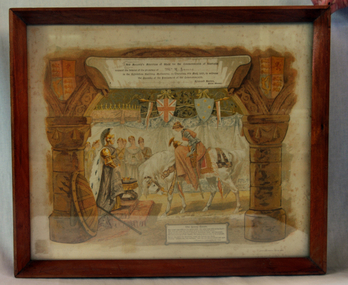 Orbost & District Historical Society
Invitation, 1901
... Henry James was a prominent Orbost identity who was very much involved in the local community. invitation 1901 parliament james-harry federation snowy-river-shipping-company Printed: His Majesty's Ministers of State for the Commonwealth of Australia/ request the honour of the presence of... / in the Exhibition Building, Melbourne, on Thursday, 9th May, to witness/ the Opening of the Parliament of the Commonwealth./ Edmund Barton/ Prime Minister Invitation to James, H. (Mr) to the opening of Federal ...Henry James (1860-1932) was an agent and auctioneer. Record secretary of the Snowy River Shipping company. Shire councillor. Foundation member of Butter Factory.Henry James was a prominent Orbost identity who was very much involved in the local community.Invitation to James, H. (Mr) to the opening of Federal Parliament by the Prime Minister Edmund Bartonon 9 May 1901. Framed in wood, white paper with print of the young queen on a horse holding court. Colour invitations shows a young woman with armour and sword dismounting from a white horse in front of an older woman who has a crown in front of her. Several other women look on. The room is hung with heraldic bunting and shields, including one of the Union Jack and one showing the Southern Cross. The older woman is dressed as Britannia, and her shield and trident are at rest beside her.Printed: His Majesty's Ministers of State for the Commonwealth of Australia/ request the honour of the presence of... / in the Exhibition Building, Melbourne, on Thursday, 9th May, to witness/ the Opening of the Parliament of the Commonwealth./ Edmund Barton/ Prime Minister invitation 1901 parliament james-harry federation snowy-river-shipping-company -
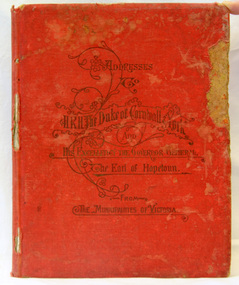 Orbost & District Historical Society
book, McCarron, Bird & Co, Addresses to H.R.H Duke of Cornwall and York, 1901
... Australia in 1901. The addresses were made on the occasion of the Duke & Duchess of Cornwall & York's visit to Melbourne in May 1901. They were in the city for the opening of Federal Parliament which took place at the Exhibition Building in Carlton Gardens on 9 May 1901. ....Australia in 1901. The addresses were made on the occasion of the Duke & Duchess of Cornwall & York's visit to Melbourne in May 1901. They were in the city for the opening of Federal Parliament which took place at the Exhibition Building in Carlton Gardens on 9 May 1901. . ...This book was published by the Municipal Association of Victoria to commemorate the inauguration of the Commonwealth of Australia in 1901. The addresses were made on the occasion of the Duke & Duchess of Cornwall & York's visit to Melbourne in May 1901. They were in the city for the opening of Federal Parliament which took place at the Exhibition Building in Carlton Gardens on 9 May 1901. .This item is associated with the history of the Federation of Australia and is a useful research tool.Hard-covered book, red cloth, with gold impressed lettering, containing 118 pages of illustrated copies of addresses to HRH Duke of Cornwall & York and His Excellency, Earl Hopetoun, the Governor General from the Shires of Victoria (includes Orbost). The addresses are surrounded by elaborate borders containing native flowers, particularly wattle. There are alsos cenes of rural Victoria. Incised on front cover - Addresses to H.R.H. Duke of Cornwall & York and his Excellency the Gov. General, the Earl of Hopetoun from the Municipalities of Victoria.federation duke-of-cornwall speeches-addresses -
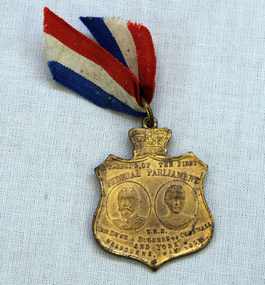 Orbost & District Historical Society
medal, 1901
... This is a commemorative medal issued to school teachers to commemorate the opening of the first Parliament of Australia, held in Victoria in 1901. this item was created to commemorate an historic event, the opening of the Australian federal Parliament, in May 1901. medal australian-federation federal-parliament-australia obverse : "AUST COMMONWEALTH / EST.1 JAN 1901 /63RD OF VICTORIA, R.I. below , FIRST PARLIAMENT OPENED /MAY 1901 / 1ST OF EDWARD V11; below, WA TAS NSW VIC QLD" reverse: "OPENING OF THE FIRST / FEDERAL PARLIAMENT below , T.R.H. / THE DUKE & DUCHESS OF CORNWALL / AND YORK / MELBOURNE MAY 1901 A shield shaped bronze medal. ...This is a commemorative medal issued to school teachers to commemorate the opening of the first Parliament of Australia, held in Victoria in 1901.this item was created to commemorate an historic event, the opening of the Australian federal Parliament, in May 1901.A shield shaped bronze medal. On one side are busts of the Duke and duchess of Cornwall and York. The other side depicts HM Queen Victoria and King Edward V11. There is a small length of red, white and blue ribbon threaded through the metal loop at the top.obverse : "AUST COMMONWEALTH / EST.1 JAN 1901 /63RD OF VICTORIA, R.I. below , FIRST PARLIAMENT OPENED /MAY 1901 / 1ST OF EDWARD V11; below, WA TAS NSW VIC QLD" reverse: "OPENING OF THE FIRST / FEDERAL PARLIAMENT below , T.R.H. / THE DUKE & DUCHESS OF CORNWALL / AND YORK / MELBOURNE MAY 1901medal australian-federation federal-parliament-australia -
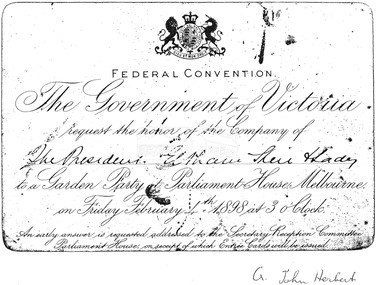 Eltham District Historical Society Inc
Document - Folder, Cr. John Herbert, Shire President, Eltham Shire, 1894-1906, 1898 to 1917
... Federal Convention, The Government of Victoria request the honor of the Company of the The President, Eltham Shire & Lady to a Garden Party at Parliament House Melbourne on Friday February 4th 1898 at 3 o'clock. 2. Heidelberg & Eltham Railway Construction Trust, Ticket No. 87, Dinner in celebration of the opening of the Railway to Eltham, will be given in the Marquee on the Station Ground, Eltham on Thursday, 5th June, 190212.30 o'clock, H.J. Price, Secretary 3. Post card addressed to Miss Flora Herbert, "Blair Athol", Nutfield P.O., Victoria, Australia...Federal Convention, The Government of Victoria request the honor of the Company of the The President, Eltham Shire & Lady to a Garden Party at Parliament House Melbourne on Friday February 4th 1898 at 3 o'clock. 2. Heidelberg & Eltham Railway Construction Trust, Ticket No. 87, Dinner in celebration of the opening of the Railway to Eltham, will be given in the Marquee on the Station Ground, Eltham on Thursday, 5th June, 190212.30 o'clock, H.J. Price, Secretary 3. Post card addressed to Miss Flora Herbert, "Blair Athol", Nutfield P.O., Victoria, Australia ...Cr. John Herbert served three terms as Eltham Shire President A3 photocopy of 3 documents with note at bottom of page - Cr. John Herbert 1. Federal Convention, The Government of Victoria request the honor of the Company of the The President, Eltham Shire & Lady to a Garden Party at Parliament House Melbourne on Friday February 4th 1898 at 3 o'clock. 2. Heidelberg & Eltham Railway Construction Trust, Ticket No. 87, Dinner in celebration of the opening of the Railway to Eltham, will be given in the Marquee on the Station Ground, Eltham on Thursday, 5th June, 190212.30 o'clock, H.J. Price, Secretary 3. Post card addressed to Miss Flora Herbert, "Blair Athol", Nutfield P.O., Victoria, Australia - France 12/12/17 - Dear Floss, Just a card to let you know I have not forgotten you. Tell "Mum" I am quite well, but a bit cold, I remain yours sincerely, Will"Photocopy A3 page; all three items on one page aif, blair athol, councillors, cr. john herbert, eltham railway station, eltham shire council, federal convention, first world war, flora herbert, government of victoria, heidelberg & eltham railway construction trust, invitation, nutfield, opening ceremony, parliament house, postcards, shire president -
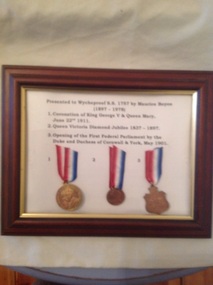 Wycheproof & District Historical Society Inc.
Three medals
... Federal Australian Parliament. Earliest date: 1837 - 1901. Medals of Commonwealth and National significance. queen victoria duke & duchess federal parliament 3 bronze medals with red/white/blue rlbbons. Presented to Wycheproof S.S. by Maurice Boyce 1877 -1978. 1. Coronation of King George v & Queen Mary, June 22nd, 1911. 2. Queen Victoria Diamond Jubilee1837-1897. 3. Opening ...Souvenir medals - British Royalty and First Federal Australian Parliament. Earliest date: 1837 - 1901.Medals of Commonwealth and National significance.3 bronze medals with red/white/blue rlbbons. Presented to Wycheproof S.S. by Maurice Boyce 1877 -1978. 1. Coronation of King George v & Queen Mary, June 22nd, 1911. 2. Queen Victoria Diamond Jubilee1837-1897. 3. Opening of the First Federal Parliament by the Duke and Duchess of Cornwall &York, May 1901. queen victoria, duke & duchess, federal parliament -
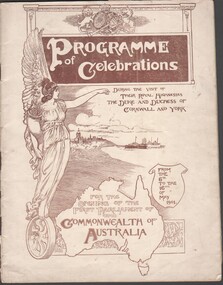 Bendigo Historical Society Inc.
Booklet - JOHN JONES COLLECTION: PROGRAM FOR THE OPENING OF THE FIRST PARLIAMENT OF THE COMMONWEALTH OF AUSTRALIA FROM 6TH TO 16TH MAY 1901
... Australia parliament Federal goveernment 1091 Program, forty-eight pages, for Celebrations for the opening of the First Parliament of the Commonwealth of Australia, from 6th to 17th May 1901opening during the visit of their Royal Highnesses of the Duke and Duchess of Cornwall and York. 48 page program, printed in sepia ink includes photographs, maps and portraits of parliamentary officials Booklet JOHN JONES COLLECTION: PROGRAM FOR THE OPENING OF THE FIRST PARLIAMENT OF THE COMMONWEALTH OF AUSTRALIA FROM 6TH TO 16TH MAY 1901 ...Program, forty-eight pages, for Celebrations for the opening of the First Parliament of the Commonwealth of Australia, from 6th to 17th May 1901opening during the visit of their Royal Highnesses of the Duke and Duchess of Cornwall and York. 48 page program, printed in sepia ink includes photographs, maps and portraits of parliamentary officialsaustralia parliament, federal goveernment, 1091 -
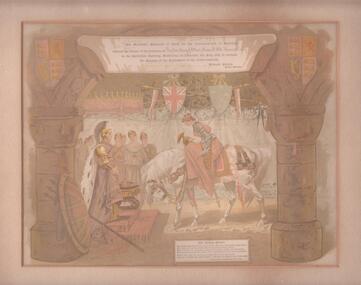 Bendigo Historical Society Inc.
Document - DOCUMENT. ILLUMINATED REQUEST, 1901
... opening of the first Federal Parliament, where the new Senators and Members of the House of Representatives were sworn in. Royal Exhibition Building. 9 May 1901. AT this time, Mr H. D. Thomas served as the Secretary of the Shire of McIvor, a local government area based in Heathcote, Victoria. hrh duke of cornwall & york H. D. Thomas Document. Illuminated request. His Majesty's Ministers of the State for the Commonwealth of Australia ...Invitation from HRH The Duke of Cornwall and York (later King George V), acting on behalf of King Edward VII to the Secretary of McIvor Shire Mr. H. D. Thomas and Mrs Thomas to attend the official opening of the first Federal Parliament, where the new Senators and Members of the House of Representatives were sworn in. Royal Exhibition Building. 9 May 1901. AT this time, Mr H. D. Thomas served as the Secretary of the Shire of McIvor, a local government area based in Heathcote, Victoria.Document. Illuminated request. His Majesty's Ministers of the State for the Commonwealth of Australia request the honour of the presence of The Secretary of McIvor Shire Mr. H. D. Thomas and Mrs Thomas in the Exhibition Building, Melbourne, on Thursday, 9th May , 1901, to witness the Opening of the Parliament of the Commonwealth. Edmund Barton, Prime Minister. At the bottom of the Picture there is a quote. "The Young Queen. Authored by Kipling's Commonwealth Ode. Her hand was still on her sword hilt---the spur was still on her heel--- she had not cast her harness of grey war-dinted steel; High on her red-- splashed charger , beautiful, bold, and browned, Bright--eyed out of the battle, the young Queen rode to be crowned, Loyal she gave the greeting, royal she bowed her head, Crying 'Crown me, my mother,' and the old Queen stood and said."hrh duke of cornwall & york, h. d. thomas -
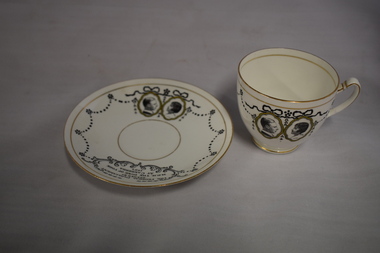 Warrnambool and District Historical Society Inc.
China, The Federation Parliament HRH Duke of York, 1920s
... opening of the Federal Parliament in Canberra in 1927. The building was opened by Prince Albert, the Duke of York who was accompanied by Elizabeth, the Duchess of York. The Duke of York later became King George VI of England. The colonies in Australia...Australian Federal Parliament sat in Melbourne. When Canberra became the capital of Australia a Parliament House building was erected at a cost of £600,000 but it is now known as Old Parliament House as the present Parliament House was opened in 1988. This cup and saucer set is of interest as a memento of an important event in Australia’s history – the creation of a capital city and the opening ...This cup and saucer set was issued as a souvenir of the opening of the Federal Parliament in Canberra in 1927. The building was opened by Prince Albert, the Duke of York who was accompanied by Elizabeth, the Duchess of York. The Duke of York later became King George VI of England. The colonies in Australia became Federated States in 1901 and from that date to 1927 the Australian Federal Parliament sat in Melbourne. When Canberra became the capital of Australia a Parliament House building was erected at a cost of £600,000 but it is now known as Old Parliament House as the present Parliament House was opened in 1988. This cup and saucer set is of interest as a memento of an important event in Australia’s history – the creation of a capital city and the opening of the first Federal Parliament House. It will be useful for display. This is a white china cup and saucer set. Both the cup and saucer have two gold bands around the rims and are decorated with black ornamentation and the portraits of the Duke and Duchess of York contained within gold oval patterns. There is also black lettering on both objects. The name of the maker is printed on the bottoms of both objects. On both objects: ‘The Federal Parliament opened by H.R.H. The Duke of York at Canberra 1927’ ‘Foley China E.B. & Co. Made in England’ opening of federal parliament 1927, history of warrnambool
