
Showing 11 items matching "australian indigenous tribes"
-
 City of Moorabbin Historical Society (Operating the Box Cottage Museum)
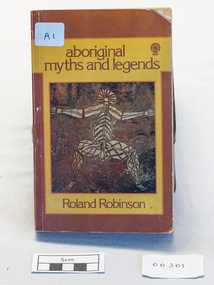
Book - Aboriginal stories, Sun Books Melbourne Pty Ltd, aboriginal myths and legends, 1967
... ...australian indigenous tribes...Australia when 9 years old. He became a nature poet and writer. In 1946 he lived with a tribe of Aborigines around the Roper River, NT and began to record the myths as told to him by his indigenous friends. ...Australia when 9 years old. He became a nature poet and writer. In 1946 he lived with a tribe of Aborigines around the Roper River, NT and began to record the myths as told to him by his indigenous friends. ...A collection of stories of Aboriginal mythsxvi, 218 p. illus. : non-fictionA collection of stories of Aboriginal mythsaboriginal, human rights, myths, legends, robinson roland edward, australian indigenous tribes, storytellers, poetry, roper river, northern territory, sydney morning herald, the age, folk-lore, dreamtime legends, sacred songs, vesper alexander, worrell eric, naturalist, zoology, legend and dreaming -
 Flagstaff Hill Maritime Museum and Village
Book - Ethnographic survey, Edward Micklethwaite Curr, The Australian Race Vol 2, 1886-1887
... tribes or mobs. The four volume set is a broad survey of Aboriginal peoples’ origins, languages, social customs, and movements across the Australian continent. Volume one is chiefly a comparative on various vocabularies and linguistic materials, with early observations used to identify and compare Aboriginal language groups. This volume also documents specific rites and regional practices, as part of his broader attempt to synthesize ethnographic and linguistic data across Australia. The work is considered a foundational reference work although in today's modern world is is regarded as dated and eurocentric set of volumes as a reference in Australian Indigenous ...The Australian Race Vol. 2 by Edward M. Curr is the second part of Curr’s four volume ethnographic survey of Aboriginal Australia. Volume two continues the language and vocabulary work from volume one, and goes on in expanding the comparative material available across more regions and groups of Aboriginal tribes or mobs. The four volume set is a broad survey of Aboriginal peoples’ origins, languages, social customs, and movements across the Australian continent. Volume one is chiefly a comparative on various vocabularies and linguistic materials, with early observations used to identify and compare Aboriginal language groups. This volume also documents specific rites and regional practices, as part of his broader attempt to synthesize ethnographic and linguistic data across Australia. The work is considered a foundational reference work although in today's modern world is is regarded as dated and eurocentric set of volumes as a reference in Australian Indigenous studies and anthropology.Hard cover book, The Australian Race Vol 2. Author: Edward Micklethwaite Curr Publisher: John Ferres, Government Printer Melbourne Aus. Date: 1886-1887 Light brown cloth hardcover and spine and blue edging to hard covers lettering in blue . The spine has a label with an inscription.non-fictionThe Australian Race Vol. 2 by Edward M. Curr is the second part of Curr’s four volume ethnographic survey of Aboriginal Australia. Volume two continues the language and vocabulary work from volume one, and goes on in expanding the comparative material available across more regions and groups of Aboriginal tribes or mobs. The four volume set is a broad survey of Aboriginal peoples’ origins, languages, social customs, and movements across the Australian continent. Volume one is chiefly a comparative on various vocabularies and linguistic materials, with early observations used to identify and compare Aboriginal language groups. This volume also documents specific rites and regional practices, as part of his broader attempt to synthesize ethnographic and linguistic data across Australia. The work is considered a foundational reference work although in today's modern world is is regarded as dated and eurocentric set of volumes as a reference in Australian Indigenous studies and anthropology.flagstaff hil, warrnambool, flagstaff hill maritime museum, maritime museum, shipwreck coast, flagstaff hill maritime village, great ocean road, book, pattison collection, warrnambool library, warrnambool mechanics’ institute, ralph eric pattison, corangamite regional library service, warrnambool city librarian, mechanics’ institute library, victorian library board, warrnambool books and records, warrnambool children’s library, the australian race vol 4, aboriginal studies, languages, native langauge -
 City of Moorabbin Historical Society (Operating the Box Cottage Museum)
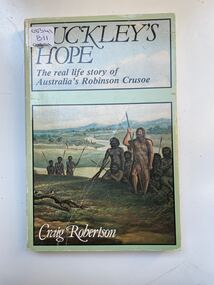
Book, Globe Press Pty. Ltd, Buckley's hope : the story of Australia's wild white man, 1981
... On the third page there are five lines of text on the next page is a map of Southern Victoria listing the different indigenous tribes that lived from Port Phillip Bay west to Cape Otway on the next page there is another map showing Van Dieman's land in the South,Victoria and the South Australian border to the West and the Victorian N.S.W. border up to the Lachlan River in the north....indigenous tribes. On the third page there are five lines of text on the next page is a map of Southern Victoria listing the different indigenous tribes that lived from Port Phillip Bay west to Cape Otway on the next page there is another map showing Van Dieman's land in the South,Victoria and the South Australian border to the West and the Victorian N.S.W. border up to the Lachlan River in the north. ...A small soft cover book with a blue/green cover,on the front cover is a painting of early Australia with Indigenous Australians hunting with spears alongside them is a European with long unkept hair and a beard dressed in animal skins,on the back cover is text by the author giving a brief outline of the book.buckley, sorrento, robinson crusoe, port phillip, van diemen's land, colonialism, 1840, convicts, indigenous tribes. -
 Eltham District Historical Society Inc
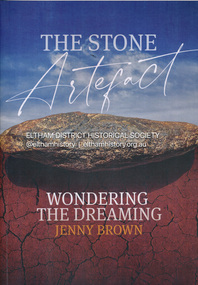
Book, Jenny Brown, The stone artefact : wondering the dreaming, 2022
... Indigenous elders and knowledge holders to discover what it was. The stone tool invited many interpretations and spun off just as many amazing stories and experiences. It also afforded Jenny the appropriate canvas to tell of her own time-warping encounters with the extraordinary "otherness" of Aboriginal Australia, and with an especially marvelous character, the late Elder of the Yuin Tribe of southern NSW, Guboo Ted Thomas....Indigenous elders and knowledge holders to discover what it was. The stone tool invited many interpretations and spun off just as many amazing stories and experiences. It also afforded Jenny the appropriate canvas to tell of her own time-warping encounters with the extraordinary "otherness" of Aboriginal Australia, and with an especially marvelous character, the late Elder of the Yuin Tribe of southern NSW, Guboo Ted Thomas. indigenous history Aboriginal artefacts Warrandyte Archaeology 193 pages : illustrations (chiefly colour), maps, portraits ; 30 cm The stone artefact : wondering the dreaming Book Jenny Brown ...The discovery in a Melbourne park (opposite the Osborne Peninsula, North Warrandyte) of an enigmatic Aboriginal stone tool led writer Jenny Brown on a fascinating journey that connected her with expert anthropologists, archeologists, Indigenous elders and knowledge holders to discover what it was. The stone tool invited many interpretations and spun off just as many amazing stories and experiences. It also afforded Jenny the appropriate canvas to tell of her own time-warping encounters with the extraordinary "otherness" of Aboriginal Australia, and with an especially marvelous character, the late Elder of the Yuin Tribe of southern NSW, Guboo Ted Thomas.193 pages : illustrations (chiefly colour), maps, portraits ; 30 cmindigenous history, aboriginal artefacts, warrandyte, archaeology -
 Kiewa Valley Historical Society
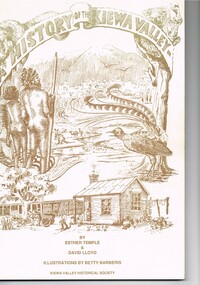
Book - A History of the Kiewa Valley, Kiewa Valley Historical Society, A History of the Kiewa Valley by Esther Temple and David Lloyd, Circa 1991
... It briefly covers the period from the indigenous tribes(broken down into family groupings) known as the "first Australians" who lived in the valley well before English settlers arrived. first white settlement (graziers, miners, stockmen) to smaller settlements.The development or transformation from a pristine(hunter/gatherer) valley environment to one that has been gradually changing to a more commercial rural/industrial landscaped valley. ...It briefly covers the period from the indigenous tribes(broken down into family groupings) known as the "first Australians" who lived in the valley well before English settlers arrived. first white settlement (graziers, miners, stockmen) to smaller settlements.The development or transformation from a pristine(hunter/gatherer) valley environment to one that has been gradually changing to a more commercial rural/industrial landscaped valley. ...This book was compiled by Esther Temple and David Lloyd with illustrations by Betty Barberis and additional material provided by Clare Roper, Joan Macdonald, Wilma Davies and Nell Bateman. The book was first penned in 1971. It briefly covers the period from the indigenous tribes(broken down into family groupings) known as the "first Australians" who lived in the valley well before English settlers arrived. first white settlement (graziers, miners, stockmen) to smaller settlements.The development or transformation from a pristine(hunter/gatherer) valley environment to one that has been gradually changing to a more commercial rural/industrial landscaped valley. This transformation was made within a time span of two hundred years. The book details the first pioneers and their descendants, along with the changes to their environments both domestic and commercial. The book highlights dates and events that shaped the "feel" of the valley. The extreme hardships faced by pioneer families during the extremely isolated times away from "civilisation".This publication provides an insight to the struggles and victories against the harsh Australian bushland by people who had not been raised in such a sometimes inhospitable environment. It was this transformation which instilled into the Australian psyche of self sufficiency and the ability to grasp onto ideas or "bush" remedies to overcome enormous difficulties. It is is ability that has produced the many inventions useful in the 20th and 21st centuries.This book has a 250 g/m cream coloured cover with print and drawings of rural aspects of historical significance ( Aboriginal and early white settlers). The book contains 124 pages of black and white photographs(139), black and white sketches(75), two pages of sketches and freehand drawings, two freehand maps one county lease /subdivision plan and black and white printing. See KVHS 0237 (B) for the official invitation to the launch of the book.The front top cover heading(in shaded print and enclosed in a banner form) "A HISTORY OF THE KIEWA VALLEY" The bottom printing "BY ESTHER TEMPLE & DAVID LLOYD ILLUSTRATIONS BY BETTY BARBERIS" and at the very bottom "KIEWA VALLEY HISTORICAL SOCIETY" oN THE BOOK SPINE "A HISTORY OF THE KIEWA VALLEY.....BY ESTHER TEMPLE & DAVID LLOYD"early settlers, dederang, tawonga, mount beauty, sec vic hydro electricity, falls creek early settlers, bonegilla -
 Victorian Interpretive Projects Inc.
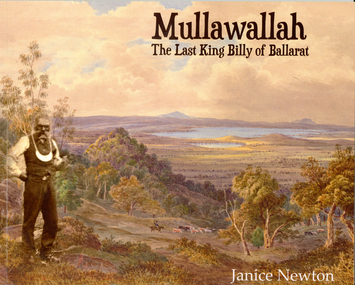
Book, Janice Newton, 'Mullawallah: The Last King Billy of Ballarat' by Janice Newton, 2015
... Indigenous Studies and Aboriginality, and has published papers linking Aboriginality to the counterculture and to artists and musicians. She has published a paper commenting on Ballarat's response to the death in 1896 of King Billy, the so called 'last of his tribe'. Janice has recently taught courses on 'The Anthropology of Indigenous Art' and 'Indigenous History' at Federation University Australia...Indigenous Studies and Aboriginality, and has published papers linking Aboriginality to the counterculture and to artists and musicians. She has published a paper commenting on Ballarat's response to the death in 1896 of King Billy, the so called 'last of his tribe'. Janice has recently taught courses on 'The Anthropology of Indigenous Art' and 'Indigenous History' at Federation University Australia ...Dr Janice Newton has had a long term interest in Indigenous Studies and Aboriginality, and has published papers linking Aboriginality to the counterculture and to artists and musicians. She has published a paper commenting on Ballarat's response to the death in 1896 of King Billy, the so called 'last of his tribe'. Janice has recently taught courses on 'The Anthropology of Indigenous Art' and 'Indigenous History' at Federation University Australia.56 page soft covered booklet outlining the life of Ballarat's Mullawallah (also known as King Billy or Frank Wilson). Numerous photographs. The book 'Mullawallah: The Last King Billy of Ballarat' is an initiative of Victorian Interpretive Projects. It is available for purchase for $15.00 (additional for postage). Please email [email protected] for further details. Images include: Ercildoun, Lake Burrumbeet, Lal Lal Falls, William Buckley, Warrenheip, King Billy and his Camp in McCree's Paddock, King Billy and His Tribe, Carl Walter King Billy, Mary of Carngham, Rosa of Carngham, King Billy (Bullip Bullip), Queen Mary of Buninyong, Queen Marie of Ballarat, Queen Mary and King Billy and their original mia mia, Football at Ercildoune, Thomas Jerusalem, Samuel Wilson, Frank the last of the Ballarat Tribe, The Burial of King Billy, King Billy's Grave. mullawullah, frank wilson, king billy, aborigines, wathauwrung, wadawurrung, aboriginal, ercildoun, ercildoune, lake learmonth -
 National Vietnam Veterans Museum (NVVM)
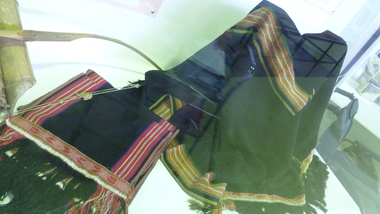
Clothing - Montagnard traditional costume
... indigenous non-Vietnamese ethnic minorities living in the Central Highlands of Vietnam. Australian Army Captain Barry Petersen was sent to Vietnam in 1963 as part of the elite Australian Army Training Team to train Montagnard rebels in how to deal with the guerrilla tactics used by Viet Cong insurgents. The laplap is an integral part of the traditional ceremonial costume of various Montagnard groups, particularly the Rhade tribe...indigenous non-Vietnamese ethnic minorities living in the Central Highlands of Vietnam. Australian Army Captain Barry Petersen was sent to Vietnam in 1963 as part of the elite Australian Army Training Team to train Montagnard rebels in how to deal with the guerrilla tactics used by Viet Cong insurgents. The laplap is an integral part of the traditional ceremonial costume of various Montagnard groups, particularly the Rhade tribe ...Montagnard people were the indigenous non-Vietnamese ethnic minorities living in the Central Highlands of Vietnam. Australian Army Captain Barry Petersen was sent to Vietnam in 1963 as part of the elite Australian Army Training Team to train Montagnard rebels in how to deal with the guerrilla tactics used by Viet Cong insurgents. The laplap is an integral part of the traditional ceremonial costume of various Montagnard groups, particularly the Rhade tribe, with whom Petersen lived and worked, learning their language and wearing their traditional clothing.Top and shawl black. Embroidery and weaving in white, red and ocremontagnard, ceremonial costume, laplap, loincloth, petersen, barry petersen, rhade, rade -
 Port Melbourne Historical & Preservation Society
Book, Ian McFarlane et al, "My Heart is Breaking", 1993
... Indigenous Australians Public Records Office Victoria Australian Archives "My Heart is Breaking" - A Joint Guide to Records about Aboriginal People" in the PROV and the Australian Archives. A4, earth tones, with photo of Susan from the Gippsland tribe ..."My Heart is Breaking" - A Joint Guide to Records about Aboriginal People" in the PROV and the Australian Archives. A4, earth tones, with photo of Susan from the Gippsland tribe, with baby. 192 pagesindigenous australians, public records office victoria, australian archives -
 Victorian Aboriginal Corporation for Languages
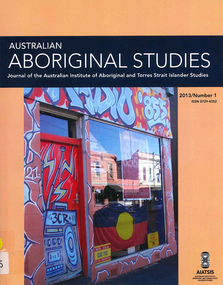
Periodical, Australian Institute of Aboriginal and Torres Strait Islander Studies, Australian Aboriginal studies : journal of the Australian Institute of Aboriginal and Torres Strait Islander Studies, 2013
... The paper concludes with a discussion of the outcomes of the Engwura festival and the subsequent publication of The Native Tribes of Central Australia within the context of a broader set of relationships that helped to define the emergent field of Australian anthropology at the close of the nineteenth century. One size doesn?t fit all: Experiences of family members of Indigenous...The paper concludes with a discussion of the outcomes of the Engwura festival and the subsequent publication of The Native Tribes of Central Australia within the context of a broader set of relationships that helped to define the emergent field of Australian anthropology at the close of the nineteenth century. One size doesn?t fit all: Experiences of family members of Indigenous ...We don?t leave our identities at the city limits: Aboriginal and Torres Strait Islander people living in urban localities Bronwyn Fredericks Aboriginal and Torres Strait Islander people who live in cities and towns are often thought of as ?less Indigenous? than those who live ?in the bush?, as though they are ?fake? Aboriginal people ? while ?real? Aboriginal people live ?on communities? and ?real? Torres Strait Islander people live ?on islands?. Yet more than 70 percent of Australia?s Indigenous peoples live in urban locations (ABS 2007), and urban living is just as much part of a reality for Aboriginal and Torres Strait Islander people as living in remote discrete communities. This paper examines the contradictions and struggles that Aboriginal and Torres Strait Islander people experience when living in urban environments. It looks at the symbols of place and space on display in the Australian cities of Melbourne and Brisbane to demonstrate how prevailing social, political and economic values are displayed. Symbols of place and space are never neutral, and this paper argues that they can either marginalise and oppress urban Aboriginal and Torres Strait Islander people, or demonstrate that they are included and engaged. Juggling with pronouns: Racist discourse in spoken interaction on the radio Di Roy While the discourse of deficit with regard to Australian Indigenous health and wellbeing has been well documented in print media and through images on film and on television, radio talk concerning this discourse remains underresearched. This paper interrogates the power of an interactive news interview, aired on the Radio National Breakfast program on ABC Radio in 2011, to maintain and reproduce the discourse of deficit, despite the best intentions of the interview participants. Using a conversation-analytical approach, and membership categorisation analysis in particular, this paper interrogates the spoken interaction between a well-known radio interviewer and a respected medical researcher into Indigenous eye health. It demonstrates the recreation of a discourse emanating from longstanding hegemonies between mainstream and Indigenous Australians. Analysis of firstperson pronoun use shows the ongoing negotiation of social category boundaries and construction of moral identities through ascriptions to category members, upon which the intelligibility of the interview for the listening audience depended. The findings from analysis support claims in a considerable body of whiteness studies literature, the main themes of which include the pervasiveness of a racist discourse in Australian media and society, the power of invisible assumptions, and the importance of naming and exposing them. Changes in Pitjantjatjara mourning and burial practices Bill Edwards, University of South Australia This paper is based on observations over a period of more than five decades of changes in Pitjantjatjara burial practices from traditional practices to the introduction of Christian services and cemeteries. Missions have been criticised for enforcing such changes. However, in this instance, the changes were implemented by the Aboriginal people themselves. Following brief outlines of Pitjantjatjara traditional life, including burial practices, and of the establishment of Ernabella Mission in 1937 and its policy of respect for Pitjantjatjara cultural practices and language, the history of these changes which commenced in 1973 are recorded. Previously, deceased bodies were interred according to traditional rites. However, as these practices were increasingly at odds with some of the features of contemporary social, economic and political life, two men who had lost close family members initiated church funeral services and established a cemetery. These practices soon spread to most Pitjantjatjara communities in a manner which illustrates the model of change outlined by Everett Rogers (1962) in Diffusion of Innovations. Reference is made to four more recent funerals to show how these events have been elaborated and have become major social occasions. The world from Malarrak: Depictions of South-east Asian and European subjects in rock art from the Wellington Range, Australia Sally K May, Paul SC Ta�on, Alistair Paterson, Meg Travers This paper investigates contact histories in northern Australia through an analysis of recent rock paintings. Around Australia Aboriginal artists have produced a unique record of their experiences of contact since the earliest encounters with South-east Asian and, later, European visitors and settlers. This rock art archive provides irreplaceable contemporary accounts of Aboriginal attitudes towards, and engagement with, foreigners on their shores. Since 2008 our team has been working to document contact period rock art in north-western and western Arnhem Land. This paper focuses on findings from a site complex known as Malarrak. It includes the most thorough analysis of contact rock art yet undertaken in this area and questions previous interpretations of subject matter and the relationship of particular paintings to historic events. Contact period rock art from Malarrak presents us with an illustrated history of international relationships in this isolated part of the world. It not only reflects the material changes brought about by outside cultural groups but also highlights the active role Aboriginal communities took in responding to these circumstances. Addressing the Arrernte: FJ Gillen?s 1896 Engwura speech Jason Gibson, Australian National University This paper analyses a speech delivered by Francis James Gillen during the opening stages of what is now regarded as one of the most significant ethnographic recording events in Australian history. Gillen?s ?speech? at the 1896 Engwura festival provides a unique insight into the complex personal relationships that early anthropologists had with Aboriginal people. This recently unearthed text, recorded by Walter Baldwin Spencer in his field notebook, demonstrates how Gillen and Spencer sought to establish the parameters of their anthropological enquiry in ways that involved both Arrernte agency and kinship while at the same time invoking the hierarchies of colonial anthropology in Australia. By examining the content of the speech, as it was written down by Spencer, we are also able to reassesses the importance of Gillen to the ethnographic ambitions of the Spencer/Gillen collaboration. The incorporation of fundamental Arrernte concepts and the use of Arrernte words to convey the purpose of their 1896 fieldwork suggest a degree of Arrernte involvement and consent not revealed before. The paper concludes with a discussion of the outcomes of the Engwura festival and the subsequent publication of The Native Tribes of Central Australia within the context of a broader set of relationships that helped to define the emergent field of Australian anthropology at the close of the nineteenth century. One size doesn?t fit all: Experiences of family members of Indigenous gamblers Louise Holdsworth, Helen Breen, Nerilee Hing and Ashley Gordon Centre for Gambling Education and Research, Southern Cross University This study explores help-seeking and help-provision by family members of Indigenous people experiencing gambling problems, a topic that previously has been ignored. Data are analysed from face-to-face interviews with 11 family members of Indigenous Australians who gamble regularly. The results confirm that substantial barriers are faced by Indigenous Australians in accessing formal help services and programs, whether for themselves or a loved one. Informal help from family and friends appears more common. In this study, this informal help includes emotional care, practical support and various forms of ?tough love?. However, these measures are mostly in vain. Participants emphasise that ?one size doesn?t fit all? when it comes to avenues of gambling help for Indigenous peoples. Efforts are needed to identify how Indigenous families and extended families can best provide social and practical support to assist their loved ones to acknowledge and address gambling problems. Western Australia?s Aboriginal heritage regime: Critiques of culture, ethnography, procedure and political economy Nicholas Herriman, La Trobe University Western Australia?s Aboriginal Heritage Act 1972 (WA) and the de facto arrangements that have arisen from it constitute a large part of the Aboriginal ?heritage regime? in that state. Although designed ostensibly to protect Aboriginal heritage, the heritage regime has been subjected to various scholarly critiques. Indeed, there is a widespread perception of a need to reform the Act. But on what basis could this proceed? Here I offer an analysis of these critiques, grouped according to their focus on political economy, procedure, ethnography and culture. I outline problems surrounding the first three criticisms and then discuss two versions of the cultural critique. I argue that an extreme version of this criticism is weak and inconsistent with the other three critiques. I conclude that there is room for optimism by pointing to ways in which the heritage regime could provide more beneficial outcomes for Aboriginal people. Read With Me Everyday: Community engagement and English literacy outcomes at Erambie Mission (research report) Lawrence Bamblett Since 2009 Lawrie Bamblett has been working with his community at Erambie Mission on a literacy project called Read With Me. The programs - three have been carried out over the past four years - encourage parents to actively engage with their children?s learning through reading workshops, social media, and the writing and publication of their own stories. Lawrie attributes much of the project?s extraordinary success to the intrinsic character of the Erambie community, not least of which is their communal approach to living and sense of shared responsibility. The forgotten Yuendumu Men?s Museum murals: Shedding new light on the progenitors of the Western Desert Art Movement (research report) Bethune Carmichael and Apolline Kohen In the history of the Western Desert Art Movement, the Papunya School murals are widely acclaimed as the movement?s progenitors. However, in another community, Yuendumu, some 150 kilometres from Papunya, a seminal museum project took place prior to the completion of the Papunya School murals and the production of the first Papunya boards. The Warlpiri men at Yuendumu undertook a ground-breaking project between 1969 and 1971 to build a men?s museum that would not only house ceremonial and traditional artefacts but would also be adorned with murals depicting the Dreamings of each of the Warlpiri groups that had recently settled at Yuendumu. While the murals at Papunya are lost, those at Yuendumu have, against all odds, survived. Having been all but forgotten, this unprecedented cultural and artistic endeavour is only now being fully appreciated. Through the story of the genesis and construction of the Yuendumu Men?s Museum and its extensive murals, this paper demonstrates that the Yuendumu murals significantly contributed to the early development of the Western Desert Art Movement. It is time to acknowledge the role of Warlpiri artists in the history of the movement.b&w photographs, colour photographsracism, media, radio, pitjantjatjara, malarrak, wellington range, rock art, arrernte, fj gillen, engwura, indigenous gambling, ethnography, literacy, erambie mission, yuendumu mens museum, western desert art movement -
 Inglewood/Bridgewater RSL Sub Branch
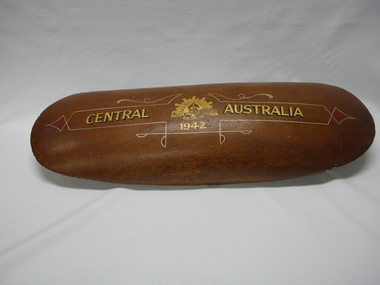
Shield, 1942
... This item presented by the indigenious community to their local police officer on the the occasion of his joining the Armed Services in 1942 which resulting in his interment in Changi Unique personal gift to this Serviceman WW2 Shield Central Australia Police officer Storey indigenous gift "CENTRAL AUSTRALIA / 1942" RISING SUN Emblem at centre ("AUSTRALIAN COMMONWEALTH MILITARY FORCES") Pinstriping in silver and red. Lacquered wood hand made. Hand grip to rear Shield Aboriginal tribe ...This item presented by the indigenious community to their local police officer on the the occasion of his joining the Armed Services in 1942 which resulting in his interment in ChangiUnique personal gift to this ServicemanLacquered wood hand made. Hand grip to rear"CENTRAL AUSTRALIA / 1942" RISING SUN Emblem at centre ("AUSTRALIAN COMMONWEALTH MILITARY FORCES") Pinstriping in silver and red.ww2, shield, central australia, police officer, storey, indigenous gift -
 Federation University Art Collection
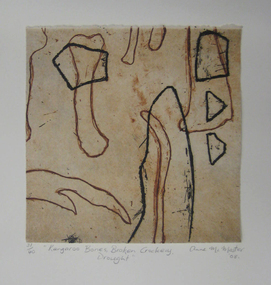
Printmaking - etching, 'Kangaroo Bones, Broken Crockery, Drought' by Anne McMaster, 2008
... indigenous tribes. Foul biting and earthy colours bring attention to the weathered landscape of Australia. ...indigenous tribes. Foul biting and earthy colours bring attention to the weathered landscape of Australia. ...Anne McMaster (1959- ) Born Melbourne Artists' Statement: In the thick of drought kangaroos perish and farmers walk off the land. All that is left are bones and broken crockery. Overlaid images prompt the observer to question the Anglo-Saxon relationship to country, to that of indigenous tribes. Foul biting and earthy colours bring attention to the weathered landscape of Australia. This item is part of the Federation University Art Collection. The Art Collection features over 2000 works and was listed as a 'Ballarat Treasure' in 2007.Framed limited edition print.art, artwork, anne mcmaster, print council of australia, kangaroo, bones
