
Showing 82 items matching "back slab"
-
 Ballarat Base Hospital Trained Nurses League
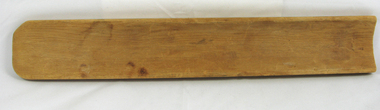
Wooden Back Slab for IV Therapy
... Wooden Back Slab for IV Therapy......Back Slab...Wooden Back Slab IV Therapy Ballarat Curved wooden length of wood Wooden Back Slab for IV Therapy ...Curved wooden length of woodwooden, back slab, iv therapy, ballarat -
 Lakes Entrance Historical Society
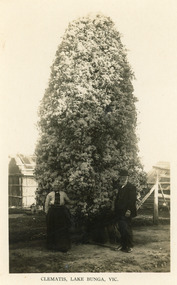
Postcard - Northrope Lake Bunga 1920, Bulmer H D
... Black and white postcard showing Mr and Mrs Northrope in front of huge clematis at their home, bark building with corregated iron roof at back, slab building on right behind wire netting fence in Lake Bunga Victoria...Genealogy Black and white postcard showing Mr and Mrs Northrope in front of huge clematis at their home, bark building with corregated iron roof at back, slab building on right behind wire netting fence in Lake Bunga Victoria Postcard Northrope Lake Bunga 1920 Bulmer H D ...Black and white postcard showing Mr and Mrs Northrope in front of huge clematis at their home, bark building with corregated iron roof at back, slab building on right behind wire netting fence in Lake Bunga Victoriagenealogy -
 Orbost & District Historical Society
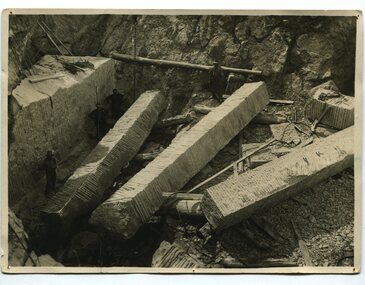
black and white photograph, first half 20th century
... on back - " Cutting marble slabs......"...Its inclusion in the Shrine of Remembrance War Memorial is noteworthy. buchan-marble shrine-of-remembrance cameron-james geology on back - " Cutting marble slabs......" A black / white photograph of four men working in a quarry with three large slabs of marble on the ground. black and white photograph ...This photograph shows men cutting marble slabs at Buchan on James Cameron's property. The marble was used in the Shrine of REmembrance in Melbourne. The slabs in the photograph were about 8.5 metres long. The Shrine of Remembrance was created to meet the needs of a grieving community after the extensive loss of lives in the First World War (1914 –18). Sixteen dark Ionic columns were made of .Buchan marble In the early 1900s black marble was being mined in the Bruthen district. Some was used for the Shrine of Remembrance in Melbourne and also Australia House in London. 900 tonnes were shipped to London to be included in the construction of Australia House. Marble quarrying has been a significant part of the history of Buchan in East Gippsland. Its inclusion in the Shrine of Remembrance War Memorial is noteworthy.A black / white photograph of four men working in a quarry with three large slabs of marble on the ground.on back - " Cutting marble slabs......"buchan-marble shrine-of-remembrance cameron-james geology -
 Glenelg Shire Council Cultural Collection
Photograph - Photograph - construction, Portland Harbour, 1981
... Back: PRE-CAST SLABS 4 ALCOA WHARF DECK 8/1/81...Port of Portland Authority Archives Port of Portland Archives construction concrete slbs truck Portland Harbour Back: PRE-CAST SLABS 4 ALCOA WHARF DECK 8/1/81 Black & white photo showing concrete being poured from a chute into a prepared slab. ...Port of Portland Authority ArchivesBack: PRE-CAST SLABS 4 ALCOA WHARF DECK 8/1/81port of portland archives, construction, concrete, slbs, truck, portland harbour -
 The Beechworth Burke Museum Research Collection
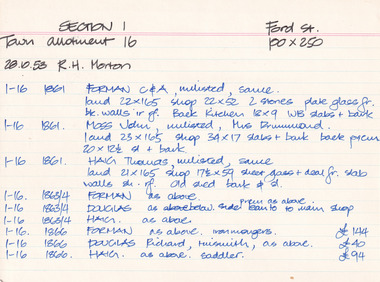
Card (Series) - Index Card, George Tibbits, Ford Street, Beechworth, 1976
... Morton 1861 - Forman C&A, unlisted, same. land 22'x165' shop 22'x52' - 2 stories plate glass fr. bk. walls ir. rf. Back Kitchen 18'x9' WB slabs + bark 1861 - Moss, John, unlisted, Mrs Drummond. land 23'x165' shop 34'x17' slabs & bark back prem 20'x12'6" sl & bark. 1861 Haig, Thomas, unlisted, same, land 21'x165' shop 17'6"x59' sheet glass & deal fr. slab walls sh. rf. old shed bark + sl. 1863/4 - Forman - as above 1863/4 - Douglas - as below. side prem as above, lean to main shop. 1866 - Forman - as above, ironmongers £144 1866 - Douglas, Richard, Tinsmith, as above £40 1866 - Haig. as above, saddler £94 1871 - Forman - as above 1871 - Lasker, David, Tailor, Mrs Drummond, shop 8'x30' £35 1871 - Douglas, Richard, tinsmith, Mrs Drummond. land 23'x165' (less above 8'x30') prem 9'x20' to front +n 17'x14' to back WB slabs + sh. rf...Morton 1861 - Forman C&A, unlisted, same. land 22'x165' shop 22'x52' - 2 stories plate glass fr. bk. walls ir. rf. Back Kitchen 18'x9' WB slabs + bark 1861 - Moss, John, unlisted, Mrs Drummond. land 23'x165' shop 34'x17' slabs & bark back prem 20'x12'6" sl & bark. 1861 Haig, Thomas, unlisted, same, land 21'x165' shop 17'6"x59' sheet glass & deal fr. slab walls sh. rf. old shed bark + sl. 1863/4 - Forman - as above 1863/4 - Douglas - as below. side prem as above, lean to main shop. 1866 - Forman - as above, ironmongers £144 1866 - Douglas, Richard, Tinsmith, as above £40 1866 - Haig. as above, saddler £94 1871 - Forman - as above 1871 - Lasker, David, Tailor, Mrs Drummond, shop 8'x30' £35 1871 - Douglas, Richard, tinsmith, Mrs Drummond. land 23'x165' (less above 8'x30') prem 9'x20' to front +n 17'x14' to back WB slabs + sh. rf. £30 1871 - Haig, saddler, same. land 22'x165' prem 22'x39' bk. bldgs. plate glass fr. £110 1876 - Forman, Alfred & William Richard, managers, same, prem as above £130 1876 - Douglas, R. ...George Tibbits, University of Melbourne. Faculty of Architecture, Building and Town & Regional PlanningIndex system that support the research for Beechworth : historical reconstruction / [by] George Tibbits ... [et al]Arranged by street names of BeechworthEach index card includes: street name and number of property, image of property, allotment and section number, property owners and dates of ownership, description of the property according to rate records, property floor plan with dimensions.beechworth, george tibbitsbeechworth, george tibbits -
 The Beechworth Burke Museum Research Collection
Card (Series) - Index Card, George Tibbits, Ford Street, Beechworth, 1976
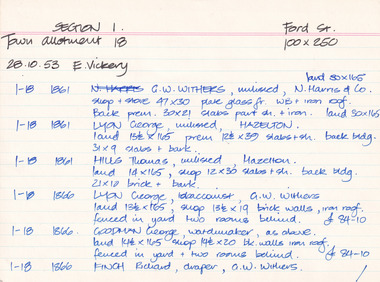
... WB + iron roof. Back prem, 30'x21' slabs, part sh. + iron. land 30'x165' 1861 - Lyon, George, unlisted, Hazelton. land 13'6x165' prem 12'6"x39' slabs + sh. back bldg. 31'x9' slabs + bark 1861 - Hills, Thomas, unlisted, Hazelton. land 14'x165', shop 12'x30' slabs + sh. back bldg. 21'x10' brick +bark. 1866 - Lyon, George, tobacconist, G.W. ...WB + iron roof. Back prem, 30'x21' slabs, part sh. + iron. land 30'x165' 1861 - Lyon, George, unlisted, Hazelton. land 13'6x165' prem 12'6"x39' slabs + sh. back bldg. 31'x9' slabs + bark 1861 - Hills, Thomas, unlisted, Hazelton. land 14'x165', shop 12'x30' slabs + sh. back bldg. 21'x10' brick +bark. 1866 - Lyon, George, tobacconist, G.W. ...George Tibbits, University of Melbourne. Faculty of Architecture, Building and Town & Regional PlanningIndex system that support the research for Beechworth : historical reconstruction / [by] George Tibbits ... [et al]Arranged by street names of BeechworthEach index card includes: street name and number of property, image of property, allotment and section number, property owners and dates of ownership, description of the property according to rate records, property floor plan with dimensions.beechworth, george tibbitsbeechworth, george tibbits -
 The Beechworth Burke Museum Research Collection
Card (Series) - Index Card, George Tibbits, Ford Street, Beechworth, 1976
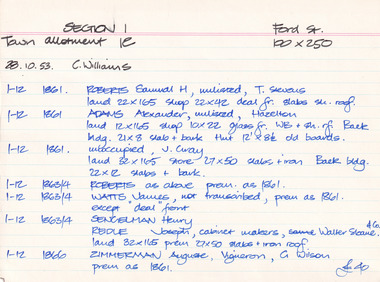
... Stevens, land 22'x165' shop 22'x42' deal fr. slabs sh. roof. 1-12 - 1861 - Adams, Alexander, unlisted, Hazelton. land 12'x165' shop 10'x22' glass fr. WB & sh rf. Back...Stevens, land 22'x165' shop 22'x42' deal fr. slabs sh. roof. 1-12 - 1861 - Adams, Alexander, unlisted, Hazelton. land 12'x165' shop 10'x22' glass fr. WB & sh rf. Back ...George Tibbits, University of Melbourne. Faculty of Architecture, Building and Town & Regional PlanningIndex system that support the research for Beechworth : historical reconstruction / [by] George Tibbits ... [et al]Arranged by street names of BeechworthEach index card includes: street name and number of property, image of property, allotment and section number, property owners and dates of ownership, description of the property according to rate records, property floor plan with dimensions.beechworth, george tibbitsbeechworth, george tibbits -
 The Beechworth Burke Museum Research Collection
Card (Series) - Index Card, George Tibbits, Ford Street, Beechworth, 1976
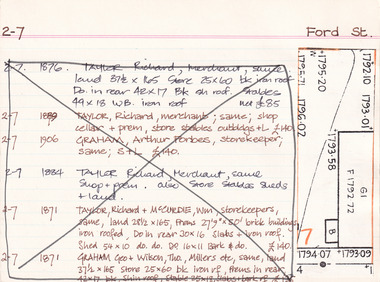
... Whitty 1861 - Scott, Robert - Cunningham, James, unlisted, Longiville, land 28'6'x165' shop and store 27'6"x50' bk. bldg. glass fr. iron roof. Back prem. 30'x16' slabs+ iron Do. open shed, 54'x10' iron rf. ...Whitty 1861 - Scott, Robert - Cunningham, James, unlisted, Longiville, land 28'6'x165' shop and store 27'6"x50' bk. bldg. glass fr. iron roof. Back prem. 30'x16' slabs+ iron Do. open shed, 54'x10' iron rf. ...George Tibbits, University of Melbourne. Faculty of Architecture, Building and Town & Regional PlanningIndex system that support the research for Beechworth : historical reconstruction / [by] George Tibbits ... [et al]Arranged by street names of BeechworthEach index card includes: street name and number of property, image of property, allotment and section number, property owners and dates of ownership, description of the property according to rate records, property floor plan with dimensions.beechworth, george tibbitsbeechworth, george tibbits -
 The Beechworth Burke Museum Research Collection
Card - Index Card, George Tibbits, Ford Street, Beechworth, 1976
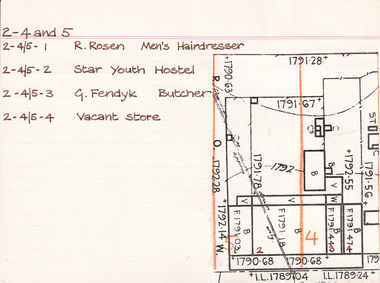
... Kitchen 45'x25' slabs, Back Bldg. 22'x15' do. Stables 60'6"x 20'6" do. 2-4 - 1861 - Hearn, William, unlisted, J. ...Kitchen 45'x25' slabs, Back Bldg. 22'x15' do. Stables 60'6"x 20'6" do. 2-4 - 1861 - Hearn, William, unlisted, J. ...Property - Ford Street, Beechworth - Section 2, Town Allotments 4 - 100' x 250' - Note: (see also Town Allotment 5, 2-4/5-1, 2-4/5-2, 2-4/5-3 and 2-4/5-4) Ownership details and history - 28 Oct 1853 - W.H. Neuber 2-4+5 - 1861 - Wallace, Peter, unlisted, J.A. Wallace, I. 105'x165' Hotel 86'x21', 2 Stories WB. sh. rf. Dp. 84'x18' do----do. Theatre 75'x26' do. Office 18'x20' do, Billiard room 35'x22' sl. & sh. rf. Kitchen 45'x25' slabs, Back Bldg. 22'x15' do. Stables 60'6"x 20'6" do. 2-4 - 1861 - Hearn, William, unlisted, J. Gray, land 13'6"x25' shop 13'6"x25' plate glass fr. WB. + sh. rf. 2-4+5 - 1863/4 - Clark, J.S. Publican, same, land 105'x165' Hotel & bedrooms 105'x18', 2 stories WB. + sh. rf. Store at back 10'x24' Stables, slabs, battenwork, + sh. 113'x26' Kitchen 45'x25' slabs + bark rf. Store 14'x9' WB + bark, Ldry 11'x10' WB + sh. Theatre 75'x26' WB + sh. 2-4 - 1863/4 - Richter, A. Mrs Gray, bld 13'6"x25' shop as above 2-5 - 1866 - Brown, John, barber, J.S. Clark, shop + back rooms, 18'x16' part "Star Hotel Bldgs" £55 2-4 + 5 - 1866 - Clark, John Sitch, publican, same. land 105'x165' "Star Hotel" 61'x41' 2 stories bk bldg + sh. rf. Bedrooms from front along "Star Lane" 105'x18' 2 stories WB + sh. rf. In rear store 24'x10' slabs + sh. rf. Kitchen 45'x25' slabs + bark rf. Ldry 11'x10' WB + sh. Store 14'x9' W.B. + bark rf. £330 2-4 - 1866 Clark, J.S. Publican, same, 'Theatre" 75'x26' WB + sh. roof £70 2-4 + 5 - 1866 Crawford, Hiram Allen - also 16-17, Connolly, Michael, coach owners, J.S. Clark "Star" stables 120'x26' slabs trellis work & sh. rf. £30 2-4 - 1866 - Richter, Augustus, Watchmaker, William Telford, land + Prem as 1861 £52 no entry - 1871 - Isaacs, Alfred, Clothier, J.S. Clark, shop 18'x18'. part of Star Hotel Buildings 2-4 + 5 - 1871 - Clark, J.S. Publican, same hotel as 1866 £300 no entry - 1871 - Clark, J.S. Publican, same, coach office 14'x12' part of old Star Theatre £20 no entry - 1871 - Brasch, Morris, Clothier, J.S. Clark, shop 14'6'x50' part of old Star Theatre, £65 2-4 + 5 - 1871 - Clark, J.S. Publican, same, Stables 120'x26' slabs + sh. roof. £26 2-4 - Richter, A. Watchmaker, Wm. Telford, land + prem as 1861 £45 no entry - 1876 - Issacs, Alfred, tailor, F.K. Allen, shop and dwelling, part of Star Hotel Bldgs, £40 2-4 + 5 - 1876 - Allen, Frederick K. Hotelkeeper, same. land + hotel as 1866 + coach office part of old Theatre £160 2-5 - 1876 - Crawford, H.A. - Connolly, M. Coach Proprietors, F.K. Allen stables, 120'x26' slabs + sh. roof £78 no entry - 1876 - Galbraith, Andrew L. Confectioner, F.K. Allen, double shop 15'x50' part of old Star Theatre £65 no entry - 1876 - Richter, Augustus, Watchmaker, W. Telford, J.G. Orr. land + prem as 1861 £40 no entry - 1884 - O'Connor, David M. Hairdresser, shop + prem, portion of Hotel Bldg 2-4 + 5 - 1884 - Allen, F.K. Publican, same "Star Hotel" 2-4 - 1884 - William, Robert, Bootmaker, F.K. Allen - double shop 2-4 - 1889 - Crawford, Connolly & McCurdy, Coach Proprietors, F.K. Allen, Star Stables, Sheds + Land £60 2-4 - 1889 - Dunn, Fred, Bootmaker, F. Allen, shop, prem + land £15 2-4 + 5 - 1889 - Carroll, Wm. Hotelkeeper, F. Allen, Star Hotel. prem + land £135 2-4 - 1889 - Williams, Robert, Bootmaker, F. Allen, double shop + prem + land £40 2-4 - 1900 - Philips, William R. Blacksmith, Wm. Carroll, Star Stables and land £25 2-4 - 1900 - _unoccupied) , William Carroll, land £5 2-4 + 5 - 1900 - Lowe, John, Hotelkeeper, Wm. Carroll, Star Hotel premises £130 2-4 - 1900 - Vandenberg, George, Dentist, H. Vandenberg, surgery + land £10 2-4 - 1906 - Lod, Wm. G. Star Lane, Blacksmith, execs. W. Carroll, Star Stables and land £20 2-4 - 1906 - Dumbrell, Starr & Jarvis, Watchmakers, execs. W. Carroll, shop + land £40 2-4 + 5 - 1906 - Lowe, John. Hotelkeeper, W. Carroll execs. of Star Hotel and land £130 2-4 - 1906 - Vandenberg, Henry, not tenant issued, land £10 Note: execs. = executors 2-4 and 5 - 1976 2-4/5-1 - R. Rosen - Men's Hairdresser 2-4/5-2 - Star Youth Hostel 2-4/5-3 - G. Fendyk, Butcher 2-4/5-4 - Vacant Store Architectural Index Card - Brian Pump and Tony Dugan - Photographers beechworth, george tibbits -
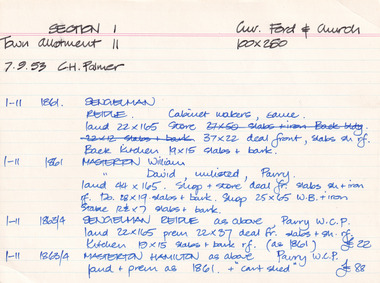 The Beechworth Burke Museum Research Collection
Card (Series) - Index Card, George Tibbits, Corner of Ford and Church Streets, Beechworth, 1976
... Land 22'x165' store 37'x22' deal front, slabs sh rf. Back Kitchen 19'x15' slabs & bark. 1861 - Masterton, William - Masterton, David, unlisted, Parry - land 44'x165'. ...Land 22'x165' store 37'x22' deal front, slabs sh rf. Back Kitchen 19'x15' slabs & bark. 1861 - Masterton, William - Masterton, David, unlisted, Parry - land 44'x165'. ...George Tibbits, University of Melbourne. Faculty of Architecture, Building and Town & Regional PlanningIndex system that support the research for Beechworth : historical reconstruction / [by] George Tibbits ... [et al]Arranged by street names of BeechworthEach index card includes: street name and number of property, image of property, allotment and section number, property owners and dates of ownership, description of the property according to rate records, property floor plan with dimensions.beechworth, george tibbitsbeechworth, george tibbits -
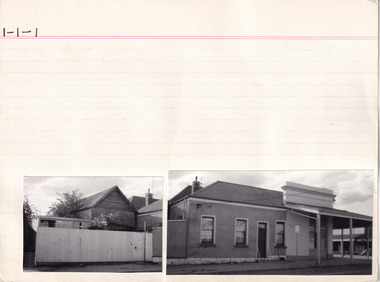 The Beechworth Burke Museum Research Collection
Card (Series) - Index Card, George Tibbits, Camp Street (Cnr Camp & High Streets), Beechworth, 1976
... Land 22'x 48' shop 28'x21' WB. & sh rf, back prem 20'x18' slabs & sh. rf. Kitchen 10'x8'6" do-do £29 Camp Street 20-1 - 1889 - O'Bri8en-Frederick Christ, Draper, Same, shop + prem + land £50 1-1 - 1889 - Howard, Alfred H. ...Land 22'x 48' shop 28'x21' WB. & sh rf, back prem 20'x18' slabs & sh. rf. Kitchen 10'x8'6" do-do £29 Camp Street 20-1 - 1889 - O'Bri8en-Frederick Christ, Draper, Same, shop + prem + land £50 1-1 - 1889 - Howard, Alfred H. ...George Tibbits, University of Melbourne. Faculty of Architecture, Building and Town & Regional PlanningIndex system that support the research for Beechworth : historical reconstruction / [by] George Tibbits ... [et al]Arranged by street names of BeechworthEach index card includes: street name and number of property, image of property, allotment and section number, property owners and dates of ownership, description of the property according to rate records, property floor plan with dimensions.beechworth, george tibbitsbeechworth, george tibbits -
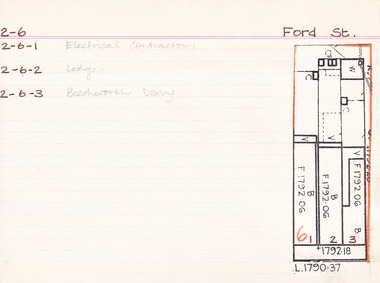 The Beechworth Burke Museum Research Collection
Card - Index Card, George Tibbits, Ford Street, Beechworth, 1976
... Manson. land 11'x140' shop 10'x33' plate glass & cedar front, slabs + sh. Back 10'6"x34' WB + sh. 1861 - Joel, Abraham, unlisted, J. ...Manson. land 11'x140' shop 10'x33' plate glass & cedar front, slabs + sh. Back 10'6"x34' WB + sh. 1861 - Joel, Abraham, unlisted, J. ...Property - Ford Street, Beechworth - Section 2, Town Allotment 6 - (Note: also 2-6-1 Electrical Contractors, 2-6-2 Lodge and 2-6-3 Beechworth Dairy) - 100' x250' Ownership details and history - 28 Oct 1853 - W.H. Neuber 1861 - Galbraith, Andrew - Faulkner George, unlisted, J.S. Clark. land 22'x165', shop 32'x20' glass + deal fr. 2 stories, WB + sh. Bakery 25'x20' slabs + bark. Stable 20'x10' WB + do. 1861 - Steel, William, unlisted, J. Manson. land 11'x140' shop 10'x33' plate glass & cedar front, slabs + sh. Back 10'6"x34' WB + sh. 1861 - Joel, Abraham, unlisted, J. Manson, land 11'x140' shop 10'x33' plate glass + cedar front, slabs + sh. bark, 10'6"x34' WB + do. 1861 - J. Manson, unlisted, same, land 22'x25' (in rear) stable 14'x14' slabs + bark 1861 - George Gammon, unlisted, same, land 22'x165' shop 14'x31' glazed front. deal + WB slabs + sh. Kitchen 15'x12' store in rear 20'x10' do + bark 1863/4 - Eveleigh, J.L. (A. Galbraith in '63-'63) J.S. Clark land + prem as 1861. 1863/4 - Hall, Algernon, J. Manson. land + prem as 1861 1863/4 - Faulkner, baker & confectioner, J. Manson, land + prem as 1861 1863/4 - Manson, John as 1861 1863/4 - Gammon as 1861, Kitchen 15'x12' bk. resid. 24'x12' 1866 - Raphael, Julius, Tobias, Sally, tobacconists, J.S. Clark, land 22'x165 shop 20'x38' bk. bldg. glass fr. + sh. rf. Kitch. in rear 14'x12' WB = sh. Do. Stable 20'x10' slabs + bark. £115 1866 - Cunningham, James & Robert, ironmongers, John Manson, land 22'x165' shop 20'x33' plate glass + cedar fr. slabs + sh. rf. prem in rear 21'x34' WB + sh. rf. £110 1866 - Gammon, George, Druggist, same. land 22'x165' prem. 30'x20' + 24'x12' bk. bldg. 2 stories with plate glass + cedar shop front + sh. rf. Kitchen 15'x12' WB + sh. rf. 1871 - Brown, John, Barber etc. J.S. Clark. land + prem as 1866 £75 1871 - Cunningham, J&R, ironmongers, same. land + prem as 1866 + stable 13'x8' slabs + bark £96 1871 - Gammon, G. Druggist, same land + prem as 1866 £144 1876 - Walton, Wm. Tailor, Mary Clark. prem as 1866 exc. kitch 16'x12' + 20'x10' 1876 - Cunningham, J&R, ironmongers, same land 22'x165' prem 20'x30' deal fr. bk walls sh. roof Do. in rear 34'x21. WB + sh. rf. stable 20'x20' WB + ir. rf. £90 1876 - Gammon, George, Chemist, same land + prem as 1866 exc. no. 24'x12' bk £120 1884 - Armstrong, John, Draper, Mary Clark. shop 1884 - Cunningham Js. Ironmonger, same shop 1884 - Gammon, G. Chemist, same, shop + dwelling 1889 - Armstrong, as above £45 1889 - Cunningham, JS. as above. Cunningham, J&R, shop, prem + land £70 1889 - Gammon, G. Chemist, smae shop, dwelling pr. l. £80 1899-1900 - Armstrong. One shop owned, other ....? one 1900-1901 - Armstrong. double shop 1900 - Armstrong, John, draper, same shop + store £110 1900 - Bowen, Wm Johnston, Chemist, Kate Gammon, Sh. DW + L £65 1906 - Armstrong, Draper, same S+L £110 1906 - Bowen, Wm. Johnston, Chemist, Kate Gammon, shop, prem + land £65 Sect. 2, Town Allot. 6 - Note: 2-6-1 Electrical Contractors, 2-6-2 Lodge and 2-6-3 Beechworth Dairy Architectural Index Card - Brian Pump and Tony Dugan - Photographers beechworth, george tibbits -
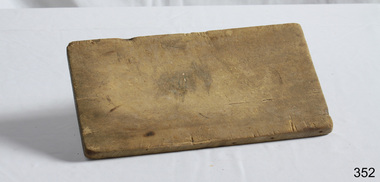 Flagstaff Hill Maritime Museum and Village
Domestic object - Wooden Bread Board, Not known
... Of course, back then, cavemen probably used an unpolished slab of tree trunk to cut the kill of the day on and they probably didn’t think twice about saving it once the meal was over. ...Of course, back then, cavemen probably used an unpolished slab of tree trunk to cut the kill of the day on and they probably didn’t think twice about saving it once the meal was over. ...In the high tech, fast paced society that we live in, it’s easy to take some things for granted. Case in point: the wood cutting board on which you’ll probably be preparing the evening’s dinner. Have you ever taken the time to think about the history of the cutting board? Where did it come from, and what did ancient civilizations use to cut their meats, fruits and vegetables? Wood throughout the ages Since the dawn of time, wood has been one of the most available materials used by mankind to build tools and lodgings, so it’s not really surprising to know that wood has been used in the preparation of food since the prehistoric ages. Of course, back then, cavemen probably used an unpolished slab of tree trunk to cut the kill of the day on and they probably didn’t think twice about saving it once the meal was over. Chances are they probably threw it in the fire with the rest of the wood needed to kindle it. Advances in technology Throughout the centuries, mankind evolved and started creating machines from steam, electricity and metal. When the circular saw was invented, nicer, cleaner slabs of wood were cut and used as cutting boards. Since soft wood was the most available type of wood at the time, it was the material of choice for to be used for cutting boards. Boards were made smaller since the slab of wood could now be cut to any desired size. Since they were made smaller, they were also used to eat off of and some people referred to them as trenchers. Trenchers were originally pieces of stale hard bread that were used as substitute plates. Wood trenchers quickly became the replacements of the eatable dinnerware. The butcher block: the cutting board’s larger cousin In the industrial ages, many industries rapidly developed, and the butchery industry followed this trend as well. Before the invention of the cutting board, butchers used tree rounds to carve their meat on. The rounds were often too soft and they rapidly became unsanitary. Hard maple wood butcher blocks were the preferred choice of the industry. They were made to be extremely thick and durable, so durable in fact, that a butcher could use the same block for almost his entire career. Cutting boards around the world As cutting boards began to be more and more used in kitchens around North America, the rest of the world crafted such boards from different materials. The East used thick bamboo as their material of choice. Despite its frail appearance, bamboo is quite strong and made durable cutting boards and butcher blocks. Europe used maple in the crafting of their cutting boards while Persia used flat pieces of polished wood in their kitchens. The world then saw cutting boards that were being made from other materials like plastic and they came in all shapes and sizes, but they always served the same purpose, to provide a household with a safe, clean surface on which to prepare meals for their friends and family members. https://www.woodcuttingboards.com/news/quick-history-of-the-cutting-board-47.aspxThe use of the wooden chopping board over time. Wooden Rectangular Bread board . Worn (concave in centre). Raw wood.None.flagstaff hill, warrnambool, shipwrecked-coast, flagstaff-hill, flagstaff-hill-maritime-museum, maritime-museum, shipwreck-coast, flagstaff-hill-maritime-village, chopping board, cooking -
 Flagstaff Hill Maritime Museum and Village
Domestic object - Bread Board
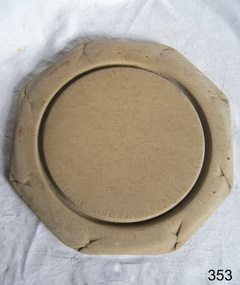
... Of course, back then, cavemen probably used an unpolished slab of tree trunk to cut the kill of the day on and they probably didn’t think twice about saving it once the meal was over. ...Of course, back then, cavemen probably used an unpolished slab of tree trunk to cut the kill of the day on and they probably didn’t think twice about saving it once the meal was over. ...In the high tech, fast paced society that we live in, it’s easy to take some things for granted. Case in point: the wood cutting board on which you’ll probably be preparing the evening’s dinner. Have you ever taken the time to think about the history of the cutting board? Where did it come from, and what did ancient civilizations use to cut their meats, fruits and vegetables? Wood throughout the ages Since the dawn of time, wood has been one of the most available materials used by mankind to build tools and lodgings, so it’s not really surprising to know that wood has been used in the preparation of food since the prehistoric ages. Of course, back then, cavemen probably used an unpolished slab of tree trunk to cut the kill of the day on and they probably didn’t think twice about saving it once the meal was over. Chances are they probably threw it in the fire with the rest of the wood needed to kindle it. Advances in technology Throughout the centuries, mankind evolved and started creating machines from steam, electricity and metal. When the circular saw was invented, nicer, cleaner slabs of wood were cut and used as cutting boards. Since soft wood was the most available type of wood at the time, it was the material of choice for to be used for cutting boards. Boards were made smaller since the slab of wood could now be cut to any desired size. Since they were made smaller, they were also used to eat off of and some people referred to them as trenchers. Trenchers were originally pieces of stale hard bread that were used as substitute plates. Wood trenchers quickly became the replacements of the eatable dinnerware. The butcher block: the cutting board’s larger cousin In the industrial ages, many industries rapidly developed, and the butchery industry followed this trend as well. Before the invention of the cutting board, butchers used tree rounds to carve their meat on. The rounds were often too soft and they rapidly became unsanitary. Hard maple wood butcher blocks were the preferred choice of the industry. They were made to be extremely thick and durable, so durable in fact, that a butcher could use the same block for almost his entire career. Cutting boards around the world As cutting boards began to be more and more used in kitchens around North America, the rest of the world crafted such boards from different materials. The East used thick bamboo as their material of choice. Despite its frail appearance, bamboo is quite strong and made durable cutting boards and butcher blocks. Europe used maple in the crafting of their cutting boards while Persia used flat pieces of polished wood in their kitchens. The world then saw cutting boards that were being made from other materials like plastic and they came in all shapes and sizes, but they always served the same purpose, to provide a household with a safe, clean surface on which to prepare meals for their friends and family members. https://www.woodcuttingboards.com/news/quick-history-of-the-cutting-board-47.aspxThe bread board is an example of kitchen equipment used during Victorian times and similar to those used today.Bread board. Wooden, octagonal, plain sanded light wood. Has decoration around edge and indented circular line to delineate round cutting board section.None.flagstaff hill, warrnambool, shipwrecked-coast, flagstaff-hill, flagstaff-hill-maritime-museum, maritime-museum, shipwreck-coast, flagstaff-hill-maritime-village, bread board, cutting board, pastry board, kitchen utensil, kitchen equipment, baking equipment, food preparation -
 Flagstaff Hill Maritime Museum and Village
Domestic object - Bread Board
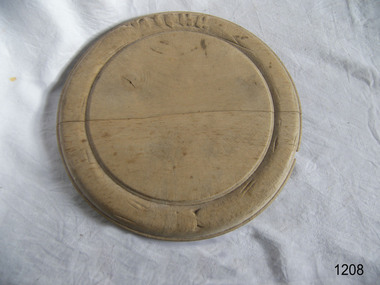
... Of course, back then, cavemen probably used an unpolished slab of tree trunk to cut the kill of the day on and they probably didn’t think twice about saving it once the meal was over. ...Of course, back then, cavemen probably used an unpolished slab of tree trunk to cut the kill of the day on and they probably didn’t think twice about saving it once the meal was over. ...In the high tech, fast paced society that we live in, it’s easy to take some things for granted. Case in point: the wood cutting board on which you’ll probably be preparing the evening’s dinner. Have you ever taken the time to think about the history of the cutting board? Where did it come from, and what did ancient civilizations use to cut their meats, fruits and vegetables? Wood throughout the ages Since the dawn of time, wood has been one of the most available materials used by mankind to build tools and lodgings, so it’s not really surprising to know that wood has been used in the preparation of food since the prehistoric ages. Of course, back then, cavemen probably used an unpolished slab of tree trunk to cut the kill of the day on and they probably didn’t think twice about saving it once the meal was over. Chances are they probably threw it in the fire with the rest of the wood needed to kindle it. Advances in technology Throughout the centuries, mankind evolved and started creating machines from steam, electricity and metal. When the circular saw was invented, nicer, cleaner slabs of wood were cut and used as cutting boards. Since soft wood was the most available type of wood at the time, it was the material of choice for to be used for cutting boards. Boards were made smaller since the slab of wood could now be cut to any desired size. Since they were made smaller, they were also used to eat off of and some people referred to them as trenchers. Trenchers were originally pieces of stale hard bread that were used as substitute plates. Wood trenchers quickly became the replacements of the eatable dinnerware. The butcher block: the cutting board’s larger cousin In the industrial ages, many industries rapidly developed, and the butchery industry followed this trend as well. Before the invention of the cutting board, butchers used tree rounds to carve their meat on. The rounds were often too soft and they rapidly became unsanitary. Hard maple wood butcher blocks were the preferred choice of the industry. They were made to be extremely thick and durable, so durable in fact, that a butcher could use the same block for almost his entire career. Cutting boards around the world As cutting boards began to be more and more used in kitchens around North America, the rest of the world crafted such boards from different materials. The East used thick bamboo as their material of choice. Despite its frail appearance, bamboo is quite strong and made durable cutting boards and butcher blocks. Europe used maple in the crafting of their cutting boards while Persia used flat pieces of polished wood in their kitchens. The world then saw cutting boards that were being made from other materials like plastic and they came in all shapes and sizes, but they always served the same purpose, to provide a household with a safe, clean surface on which to prepare meals for their friends and family members. https://www.woodcuttingboards.com/news/quick-history-of-the-cutting-board-47.aspxThe bread board is an example of kitchen equipment used during Victorian times and similar to those used today.Bread board wooden round with carved inner circle and carving an outer rim in old English lettering "Bread"None.flagstaff hill, warrnambool, shipwrecked-coast, flagstaff-hill, flagstaff-hill-maritime-museum, maritime-museum, shipwreck-coast, flagstaff-hill-maritime-village, chopping board, cooking, kitchen equipment -
Glenelg Shire Council Cultural Collection
Functional object - Survey Marker - Tyers' Surveyors' bearings slab, n.d
... Front: LAT. 38. 21.34 S/Long. 141.41E/Var 5.30E (front, incised) Back: (from previous worksheet) Remains of Sheoak Stump from Allot 5 St Portland with lat de and long de cut in by Govt. Surveyor in the year 1840/T.W. 21-4-1900 (black print) Wooden slab, painted white, carved inscription on face. ...Displayed in History House.Wooden slab, painted white, carved inscription on face. Encased in wooden case with glass front.Front: LAT. 38. 21.34 S/Long. 141.41E/Var 5.30E (front, incised) Back: (from previous worksheet) Remains of Sheoak Stump from Allot 5 St Portland with lat de and long de cut in by Govt. Surveyor in the year 1840/T.W. 21-4-1900 (black print) -
Glenelg Shire Council Cultural Collection
Photograph - Photograph - Portland Harbour Crane concrete slab, n.d
... Port of Portland Authority Archives Port of Portland Archives Back: Top right corner '83/84 ' in pencil Black and white photo showing concrete slab being lowered into position by crane. ...Port of Portland Authority ArchivesBack: Top right corner '83/84 ' in pencilport of portland archives -
Glenelg Shire Council Cultural Collection
Photograph - Photograph - Concrete Pile, Dec-80
... Port of Portland Authority Archives Port of Portland Archives Back: 'Pile test - Alcoa wharf - Dec 1980' - in pencil Black and white photo of concrete pile, concrete slab on top attached by chains. ...Port of Portland Authority ArchivesBack: 'Pile test - Alcoa wharf - Dec 1980' - in pencilport of portland archives -
Glenelg Shire Council Cultural Collection
Photograph - Photograph - Portland Centenary Celebrations 1934, 19/11/1934
... Portland Centenary Celebrations 1934 Back: 'Hut built on beach for Centenary 1934' - handwritten in pencil Black and white photo. Slab ...Black and white photo. Slab hut built on Henty Beach, Portland, as part of Centenary celebrations 19 November. 1934. Man in suit standing beside hut.Back: 'Hut built on beach for Centenary 1934' - handwritten in pencilportland centenary celebrations 1934 -
Glenelg Shire Council Cultural Collection
Slide - Slide - Construction Portland/Cashmore Airport, c. 1980
... Two parallel, narrow strips of concrete, running from foreground back to a large concrete slab, with a building under construction....Two parallel, narrow strips of concrete, running from foreground back to a large concrete slab, with a building under construction. ...Coloured slide. Two parallel, narrow strips of concrete, running from foreground back to a large concrete slab, with a building under construction. -
Glenelg Shire Council Cultural Collection
Photograph - Photograph - Alcoa Berth, Port of Portland, 1980
... Back: Pouring Pre-cast slabs - ALCOA BERTH Sept 1980 - pencil bottom right....Port of Portland Authority Archives Port of Portland Archives Alcoa Berth slab concrete construction construction worker Back: Pouring Pre-cast slabs - ALCOA BERTH Sept 1980 - pencil bottom right. ...Port of Portland Authority ArchivesBack: Pouring Pre-cast slabs - ALCOA BERTH Sept 1980 - pencil bottom right.port of portland archives, alcoa berth, slab, concrete, construction, construction worker -
Glenelg Shire Council Cultural Collection
Photograph - Photograph - Alcoa berth, Portland Harbour, 1981
... Black & white photo showing two men leveling off a concrete slab. Another man standing with his back to them. Silos & harbour Trust offices in the background....Back: PRE-CAST DECK SLABS 4 ALCOA WHARF 8.1.81 - pencil...Port of Portland Authority Archives Port of Portland Archives Alcoa Berth silos Portland Harbour Trust Back: PRE-CAST DECK SLABS 4 ALCOA WHARF 8.1.81 - pencil Black & white photo showing two men leveling off a concrete slab. ...Port of Portland Authority ArchivesBack: PRE-CAST DECK SLABS 4 ALCOA WHARF 8.1.81 - pencilport of portland archives, alcoa berth, silos, portland harbour trust -
Glenelg Shire Council Cultural Collection
Photograph - Photograph - Portland Harbour, 1977
... Back: Bottom left - 6/10/77 (0979 ?) - pencil Black & white photo of No 2. Quay under construction. 14 rows of square concrete slabs in foreground. ...Port of Portland Authority ArchivesBack: Bottom left - 6/10/77 (0979 ?) - pencilport of portland archives, portland harbour -
Glenelg Shire Council Cultural Collection
Photograph - Photograph - Main Breakwater construction, Portland, n.d
... Port of Portland Authority Archives Port of Portland Archives harbour construction Portland Front: '5 Wide 120 Screen'-Red Pencil 8486-Blue biro Back: '5 wide 120 screen' - Red pencil 8486- Blue biro Black and white photo. Five workmen working on preparation of concrete slab. ...Port of Portland Authority ArchivesFront: '5 Wide 120 Screen'-Red Pencil 8486-Blue biro Back: '5 wide 120 screen' - Red pencil 8486- Blue biroport of portland archives, harbour construction, portland -
Glenelg Shire Council Cultural Collection
Photograph - Photograph - Main Breakwater Construction, 1960
... Port of Portland Authority Archives Port of Portland Archives Portland Harbour Wharf Front: Boreder ruled in pencil 'c'- Pink texta Back: Border ruled in pencil 'c'- Pink texta Black and white photo, taken from above, of wharf section, several workmen positioning a concrete slab on grid of piles. ...Port of Portland Authority ArchivesFront: Boreder ruled in pencil 'c'- Pink texta Back: Border ruled in pencil 'c'- Pink textaport of portland archives, portland harbour, wharf -
Glenelg Shire Council Cultural Collection
Photograph - Photograph - Main Breakwater construction, Portland, n.d
... slabs. Piles of reo on right. Constr huts, truck with crane on back....slabs. Piles of reo on right. Constr huts, truck with crane on back. Photograph Photograph - Main Breakwater construction, Portland ...Port of Portland Authority Archivesport of portland archives, main breakwater, construction, portland harbour, harbour development -
Glenelg Shire Council Cultural Collection
Photograph - Photograph - Main Breakwater construction, Portland, 05/06/1659
... Port of Portland Authority archives Port of Portland Archives main breakwater construction harbour development site Front: 5/6/59- Pencil Back: 5/6/59 - Pencil Black and white photo of wharf area ready for concrete decking. Stacks of concrete piles and slabs, various vehicles, site huts. ...Port of Portland Authority archivesFront: 5/6/59- Pencil Back: 5/6/59 - Pencilport of portland archives, main breakwater, construction, harbour development, site -
Glenelg Shire Council Cultural Collection
Photograph - Photograph - Main Breakwater construction, Portland, n.d
... Back: Wharf piles, the flat platform one's are ready for the decking. Tall ones await pile driver. - Pencil Black and white photo, of west side of construction site grid of piles ready to be driven into sea bed by pile driver. Larger crane lifting concrete slabs ...Port of Portland Authority ArchivesBack: Wharf piles, the flat platform one's are ready for the decking. Tall ones await pile driver. - Pencilport of portland archives, main breakwater, construction, harbour development -
 Orbost & District Historical Society
black and white photograph, first half 20th century
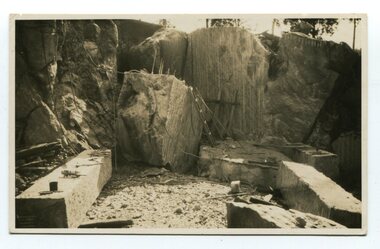
... Its inclusion in the Shrine of Remembrance War Memorial is noteworthy. buchan-marble shrine-of-remembrance australia-house on back - "Marble blocks for the Shrine of Remembrance..." A black / white photograph of a quarry pit with marble slabs on the ground. black and white photograph ...In the early 1900s black marble was being mined in the Bruthen district. Some was used for the Shrine of Remembrance in Melbourne and Australia House in London. 900 tonnes were shipped to London to be included in the construction of Australia House.Marble quarrying has been a significant part of the history of Buchan in East Gippsland. Its inclusion in the Shrine of Remembrance War Memorial is noteworthy.A black / white photograph of a quarry pit with marble slabs on the ground.on back - "Marble blocks for the Shrine of Remembrance..."buchan-marble shrine-of-remembrance australia-house -
 Orbost & District Historical Society
black and white photograph, first half 20th century
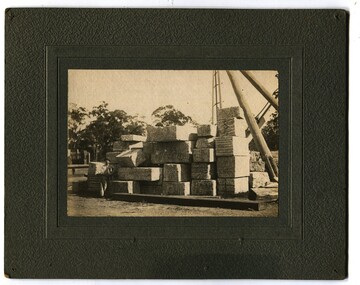
... Its inclusion in the Shrine of Remembrance War Memorial is noteworthy. buchan-marble australia-house shrine-of-remembrance nowa-nowa-railway geology on back - " Marble stacked at Nowa Nowa Rail Station for Australia House." A black / white photograph mounted on a dark grey buff card. It shows a man and a dog sitting next to slabs ...This photograph shows marble waiting to be loaded on the train at Nowa Nowa Station to be sent to Melbourne for the Shrine of Remembrance and Australia Housee in London. In the early 1900s black marble was being mined in the Bruthen district. Some was used for the Shrine of Remembrance in Melbourne and Australia House in London. 900 tonnes were shipped to London to be included in the construction of Australia House.Marble quarrying has been a significant part of the history of Buchan in East Gippsland. Its inclusion in the Shrine of Remembrance War Memorial is noteworthy.A black / white photograph mounted on a dark grey buff card. It shows a man and a dog sitting next to slabs of stacked marble.on back - " Marble stacked at Nowa Nowa Rail Station for Australia House."buchan-marble australia-house shrine-of-remembrance nowa-nowa-railway geology
