
Showing 28 items matching "basic function "
-
 Moorabbin Air Museum
Manual - Boeing 747 APU, GTCP 660-4 747 APU
... ...Basic function & construction...Boeing 747 APU Installation & specifications Basic function & construction Lubrication system Fuel system components Bleed air system Control electrical/electronic turbine systems Control system operation Indicating systems Trouble shooting Installation & maintenance of Boeing 747 GTCP 660-4 auxiliary power unit ( APU ) , circa 1970 Loose pages stapled top left hand corner GTCP 660-4 747 APU Manual Boeing 747 APU ...Installation & maintenance of Boeing 747 GTCP 660-4 auxiliary power unit ( APU ) , circa 1970Loose pages stapled top left hand cornernon-fictionInstallation & maintenance of Boeing 747 GTCP 660-4 auxiliary power unit ( APU ) , circa 1970installation & specifications, basic function & construction, lubrication system, fuel system components, bleed air system, control electrical/electronic turbine systems, control system operation, indicating systems, trouble shooting -
 Victorian Aboriginal Corporation for Languages
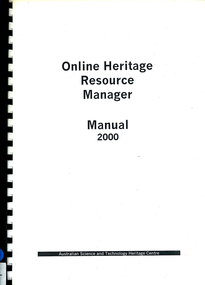
Book, Australian Science and Technology Heritage Centre, Online heritage resource manager manual 2000, 2000
... This manual documents the basic structures and functions of the Online Heritage Resource Manual....manuals heritage research This manual documents the basic structures and functions of the Online Heritage Resource Manual. ...This manual documents the basic structures and functions of the Online Heritage Resource Manual.manuals, heritage, research -
 Federation University Historical Collection
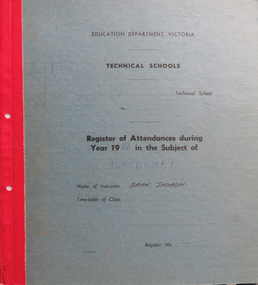
Booklet, Education Department Victoria Technical Schools Register of Attendances in Woodwork, 1984, 1984
... basic carpentry...brian jacobson...liz gurrie...geoff pinkerton...chris sedgwick...andrew ridsdale...brian hodge...michael linahanrudy panozzo...charles henty...len spark...kay buckingham...founders day function...ballarat school of mines trades basic carpentry brian jacobson liz gurrie geoff pinkerton chris sedgwick andrew ridsdale brian hodge michael linahanrudy panozzo charles henty len spark kay buckingham founders day function invitation Blue hard covered book with red tape spine. ...Blue hard covered book with red tape spine. It lists students in Woodwork. The instructor was Brian Jacobson..ballarat school of mines, trades, basic carpentry, brian jacobson, liz gurrie, geoff pinkerton, chris sedgwick, andrew ridsdale, brian hodge, michael linahanrudy panozzo, charles henty, len spark, kay buckingham, founders day function invitation -
 Orbost & District Historical Society
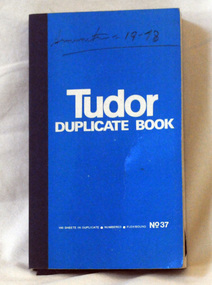
accounts book, 24-27 May 1978
... function. Members were drilled, wore uniforms and practised all the basic skills of soldiering as well as target shooting. ...The Orbost Rifle Club existed in the early 20th century. (There are records from 1900). It folded in the late 1970's. This book was used by the club just before it folded.Target shooting is one of the oldest organised sports in Australia. Records date back to the British Marines at Sydney Cove in 1788. The Victorian Rifle Association (VRA) was formed in 1860. One of the most important adjuncts to the militia system from 1903 to the re-organisation of 1912 was the role played by the Rifle Club movement in Australia. At the time, these clubs were seen as the reservoir of manpower for a potential guerrilla force should any invasion occur. For Australia, the invasion fear was uppermost in the minds of the population. So important were the rifle clubs for the defence of Australia that the Commonwealth provided the training staff, rifles and ammunition so the clubs could function. Members were drilled, wore uniforms and practised all the basic skills of soldiering as well as target shooting. The Orbost Rifle Club was active during this period.An almost new blue covered book for accounts and receipts. It has a navy blue spine and white print on the cover - "TUDOR DUPLICATE BOOK No. 37". It contains a record of ammunition. Only two pages of 100 have been used.orbost-rifle-club -
 Orbost & District Historical Society
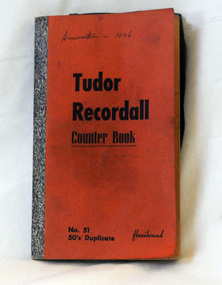
account book, November 5 1976 - July 18 1977
... function. Members were drilled, wore uniforms and practised all the basic skills of soldiering as well as target shooting. ...The Orbost Rifle Club existed in the early 20th century. (There are records from 1900). It folded in the late 1970's.Target shooting is one of the oldest organised sports in Australia. Records date back to the British Marines at Sydney Cove in 1788. The Victorian Rifle Association (VRA) was formed in 1860. One of the most important adjuncts to the militia system from 1903 to the re-organisation of 1912 was the role played by the Rifle Club movement in Australia. At the time, these clubs were seen as the reservoir of manpower for a potential guerrilla force should any invasion occur. For Australia, the invasion fear was uppermost in the minds of the population. So important were the rifle clubs for the defence of Australia that the Commonwealth provided the training staff, rifles and ammunition so the clubs could function. Members were drilled, wore uniforms and practised all the basic skills of soldiering as well as target shooting. The Orbost Rifle Club was active during this period.A bright orange receipt / account book with a blue spine. On the cover in dark blue is "Tudor Recordall COUNTER BOOK" at the top and at the bottom is " No. 51 50's Duplicate flexibound"on front cover - handwritten -" Amunition (sic) 1976"orbost-rifle-club -
 Orbost & District Historical Society
accounts book, June 30 1956
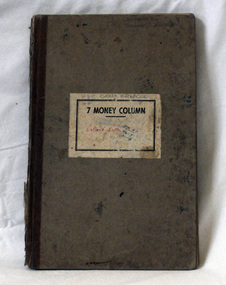
... function. Members were drilled, wore uniforms and practised all the basic skills of soldiering as well as target shooting. ...The Orbost Rifle Club existed in the early 20th century. (There are records from 1900). It folded in the late 1970's.Target shooting is one of the oldest organised sports in Australia. Records date back to the British Marines at Sydney Cove in 1788. The Victorian Rifle Association (VRA) was formed in 1860. One of the most important adjuncts to the militia system from 1903 to the re-organisation of 1912 was the role played by the Rifle Club movement in Australia. At the time, these clubs were seen as the reservoir of manpower for a potential guerrilla force should any invasion occur. For Australia, the invasion fear was uppermost in the minds of the population. So important were the rifle clubs for the defence of Australia that the Commonwealth provided the training staff, rifles and ammunition so the clubs could function. Members were drilled, wore uniforms and practised all the basic skills of soldiering as well as target shooting. The Orbost Rifle Club was active during this period.A grey covered bookj with a light brown fabric spine. The front has a white sticker label with "Orbost Rifle Club" handwritten in ink. It contains accounts and a trophy list.orbost-rifle-club accounts-book -
 Orbost & District Historical Society
minute book, 10.2.1950 - 11.5.1961
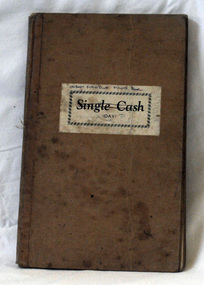
... function. Members were drilled, wore uniforms and practised all the basic skills of soldiering as well as target shooting. ...The Orbost Rifle Club existed in the early 20th century. (There are records from 1900). It folded in the late 1970's. The secretaries at the time of this book were D.Towers and ? Healey.arget shooting is one of the oldest organised sports in Australia. Records date back to the British Marines at Sydney Cove in 1788. The Victorian Rifle Association (VRA) was formed in 1860. One of the most important adjuncts to the militia system from 1903 to the re-organisation of 1912 was the role played by the Rifle Club movement in Australia. At the time, these clubs were seen as the reservoir of manpower for a potential guerrilla force should any invasion occur. For Australia, the invasion fear was uppermost in the minds of the population. So important were the rifle clubs for the defence of Australia that the Commonwealth provided the training staff, rifles and ammunition so the clubs could function. Members were drilled, wore uniforms and practised all the basic skills of soldiering as well as target shooting. The Orbost Rifle Club was active during this period.A light brown covered book with a brown fabric binding. There is a white sticker label on the front - "Single Cash" in black print. It contains minutes .orbost-rifle-club minute-book -
 Orbost & District Historical Society
accounts book, 6.7.1968 - 13.10. 1973
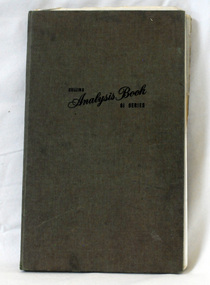
... function. Members were drilled, wore uniforms and practised all the basic skills of soldiering as well as target shooting. ...The Orbost Rifle Club existed in the early 20th century. (There are records from 1900). It folded in the late 1970's.Target shooting is one of the oldest organised sports in Australia. Records date back to the British Marines at Sydney Cove in 1788. The Victorian Rifle Association (VRA) was formed in 1860. One of the most important adjuncts to the militia system from 1903 to the re-organisation of 1912 was the role played by the Rifle Club movement in Australia. At the time, these clubs were seen as the reservoir of manpower for a potential guerrilla force should any invasion occur. For Australia, the invasion fear was uppermost in the minds of the population. So important were the rifle clubs for the defence of Australia that the Commonwealth provided the training staff, rifles and ammunition so the clubs could function. Members were drilled, wore uniforms and practised all the basic skills of soldiering as well as target shooting. The Orbost Rifle Club was active during this period.A green fabric covered book with "Collins Analysis Book 81 Series" in black print on front cover. Inside the pages are lined in green and blue. It contains accounts and a trophy list at the back. There is a page on a memo to clubs re Stamp Duties Act 1967. orbost-rifle-club acounts-book trophy-list -
 Orbost & District Historical Society
correspondence books, 10.12.1955 - 20.9.1977
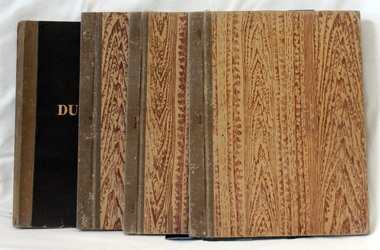
... function. Members were drilled, wore uniforms and practised all the basic skills of soldiering as well as target shooting. ...These books were used by the Orbost Rifle Club to record correspondence. The Orbost Rifle Club existed in the early 20th century. (There are records from 1900). It folded in the late 1970's.Target shooting is one of the oldest organised sports in Australia. Records date back to the British Marines at Sydney Cove in 1788. The Victorian Rifle Association (VRA) was formed in 1860. One of the most important adjuncts to the militia system from 1903 to the re-organisation of 1912 was the role played by the Rifle Club movement in Australia. At the time, these clubs were seen as the reservoir of manpower for a potential guerrilla force should any invasion occur. For Australia, the invasion fear was uppermost in the minds of the population. So important were the rifle clubs for the defence of Australia that the Commonwealth provided the training staff, rifles and ammunition so the clubs could function. Members were drilled, wore uniforms and practised all the basic skills of soldiering as well as target shooting. The Orbost Rifle Club was active during this period.Four duplicate Correspondence books. All are brown with a brown cloth spine. 1359.1, 1359.2 and 1359.3 have marbled covers and 1359.4 has a dark brown soft cover with "TUDOR DUPLICATE BOOK" in paler print. -
 Orbost & District Historical Society
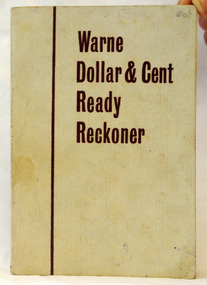
book, Warne Dollar & Cent Ready Reckoner, 1967
... function. Members were drilled, wore uniforms and practised all the basic skills of soldiering as well as target shooting. ...This book was used after the introduction of decimal currency in 1966. it was used by the Orbost Rifle Club. The Orbost Rifle Club existed in the early 20th century. (There are records from 1900). It folded in the late 1970's.Target shooting is one of the oldest organised sports in Australia. Records date back to the British Marines at Sydney Cove in 1788. The Victorian Rifle Association (VRA) was formed in 1860. One of the most important adjuncts to the militia system from 1903 to the re-organisation of 1912 was the role played by the Rifle Club movement in Australia. At the time, these clubs were seen as the reservoir of manpower for a potential guerrilla force should any invasion occur. For Australia, the invasion fear was uppermost in the minds of the population. So important were the rifle clubs for the defence of Australia that the Commonwealth provided the training staff, rifles and ammunition so the clubs could function. Members were drilled, wore uniforms and practised all the basic skills of soldiering as well as target shooting. The Orbost Rifle Club was active during this period. This item is an example of accounting practices during the transition to Decimal currency.A small cream coloured book with brown print on front cover - "Warne Dollar & Cent Ready Reckoner".inside cover - Ted Curtis 5 Lind Lane Orbostaccounting orbost-rifle-club ready-reckoner-warne decimal-currency -
 Orbost & District Historical Society
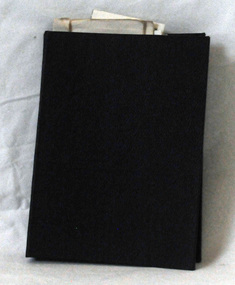
folder of documents, 1960 - 1970
... function. Members were drilled, wore uniforms and practised all the basic skills of soldiering as well as target shooting. ...The Orbost Rifle Club existed in the early 20th century. (There are records from 1900). It folded in the late 1970's.Target shooting is one of the oldest organised sports in Australia. Records date back to the British Marines at Sydney Cove in 1788. The Victorian Rifle Association (VRA) was formed in 1860. One of the most important adjuncts to the militia system from 1903 to the re-organisation of 1912 was the role played by the Rifle Club movement in Australia. At the time, these clubs were seen as the reservoir of manpower for a potential guerrilla force should any invasion occur. For Australia, the invasion fear was uppermost in the minds of the population. So important were the rifle clubs for the defence of Australia that the Commonwealth provided the training staff, rifles and ammunition so the clubs could function. Members were drilled, wore uniforms and practised all the basic skills of soldiering as well as target shooting. The Orbost Rifle Club was active during this period.A small blue folder with a metal grip. It contains assorted documents concerning the Orbost Rifle Club.orbost-rifel-club documents -
 Orbost & District Historical Society
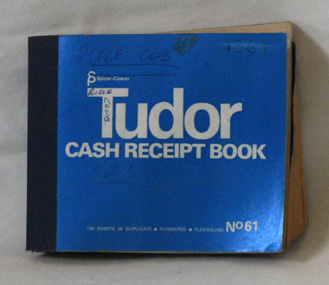
cash book, 6. 7. 1977 - 3.8.1977
... function. Members were drilled, wore uniforms and practised all the basic skills of soldiering as well as target shooting. ...The Orbost Rifle Club existed in the early 20th century. (There are records from 1900). It folded in the late 1970's.Target shooting is one of the oldest organised sports in Australia. Records date back to the British Marines at Sydney Cove in 1788. The Victorian Rifle Association (VRA) was formed in 1860. One of the most important adjuncts to the militia system from 1903 to the re-organisation of 1912 was the role played by the Rifle Club movement in Australia. At the time, these clubs were seen as the reservoir of manpower for a potential guerrilla force should any invasion occur. For Australia, the invasion fear was uppermost in the minds of the population. So important were the rifle clubs for the defence of Australia that the Commonwealth provided the training staff, rifles and ammunition so the clubs could function. Members were drilled, wore uniforms and practised all the basic skills of soldiering as well as target shooting. The Orbost Rifle Club was active during this period.A small thick light blue cocered book with whit print on front - "Tudor Cash Receipt Book No. 61". Eleven pages have been used.Inside T of Tudor is written - "Rifle Club".orbost-rifle-club accounts-receipts -
 Orbost & District Historical Society
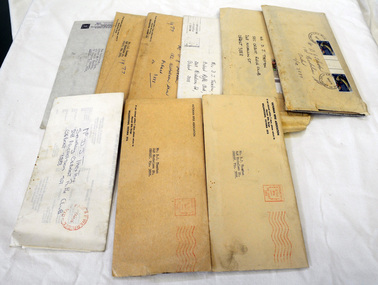
documents, 1977-1978
... function. Members were drilled, wore uniforms and practised all the basic skills of soldiering as well as target shooting. ...The Orbost Rifle Club existed in the early 20th century. (There are records from 1900). It folded in the late 1970's.Target shooting is one of the oldest organised sports in Australia. Records date back to the British Marines at Sydney Cove in 1788. The Victorian Rifle Association (VRA) was formed in 1860. One of the most important adjuncts to the militia system from 1903 to the re-organisation of 1912 was the role played by the Rifle Club movement in Australia. At the time, these clubs were seen as the reservoir of manpower for a potential guerrilla force should any invasion occur. For Australia, the invasion fear was uppermost in the minds of the population. So important were the rifle clubs for the defence of Australia that the Commonwealth provided the training staff, rifles and ammunition so the clubs could function. Members were drilled, wore uniforms and practised all the basic skills of soldiering as well as target shooting. The Orbost Rifle Club was active during this period.Nine envelopes containing correspondence sent to Mr D. Thexton, Secretary of Orbost Rifle Club in 1977-1978. Some are from the Victorian Rifle Association.orbost-rifle-club shooting -
 Orbost & District Historical Society
book, Orbost Rifle Club, Match Record Book, 5th January, 1974 ; 13th May, 1978
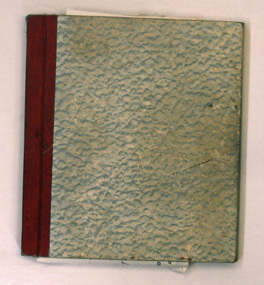
... function. Members were drilled, wore uniforms and practised all the basic skills of soldiering as well as target shooting. ...Cec, Curtis was a member of the Orbost Rifle Club. He was a cycle trader with a business in Lind Lane, Orbost. The Orbost Rifle Club existed in the early 20th century. (There are records from 1900). It folded in the late 1970's.Target shooting is one of the oldest organised sports in Australia. Records date back to the British Marines at Sydney Cove in 1788. The Victorian Rifle Association (VRA) was formed in 1860. One of the most important adjuncts to the militia system from 1903 to the re-organisation of 1912 was the role played by the Rifle Club movement in Australia. At the time, these clubs were seen as the reservoir of manpower for a potential guerrilla force should any invasion occur. For Australia, the invasion fear was uppermost in the minds of the population. So important were the rifle clubs for the defence of Australia that the Commonwealth provided the training staff, rifles and ammunition so the clubs could function. Members were drilled, wore uniforms and practised all the basic skills of soldiering as well as target shooting. The Orbost Rifle Club was active during this period A light blue covered book with a bright red spine. It contains hand-written records of the shooters who were members of the Orbost Rifle Club. Inside are seven letter heads of CED. CURTIS - 9 LIND ST ORBOST and a newspaper cutting ( date unknown). orbost-rifle-club shooting -
 Orbost & District Historical Society
book, Match Record Book, 13.1.1965 - 12.5. 1973
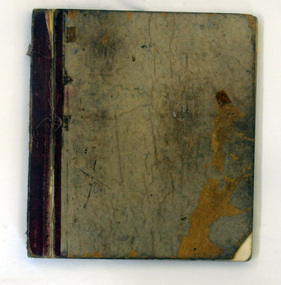
... function. Members were drilled, wore uniforms and practised all the basic skills of soldiering as well as target shooting. ...The Orbost Rifle Club existed in the early 20th century. (There are records from 1900). It folded in the late 1970's.Target shooting is one of the oldest organised sports in Australia. Records date back to the British Marines at Sydney Cove in 1788. The Victorian Rifle Association (VRA) was formed in 1860. One of the most important adjuncts to the militia system from 1903 to the re-organisation of 1912 was the role played by the Rifle Club movement in Australia. At the time, these clubs were seen as the reservoir of manpower for a potential guerrilla force should any invasion occur. For Australia, the invasion fear was uppermost in the minds of the population. So important were the rifle clubs for the defence of Australia that the Commonwealth provided the training staff, rifles and ammunition so the clubs could function. Members were drilled, wore uniforms and practised all the basic skills of soldiering as well as target shooting. The Orbost Rifle Club was active during this period A grey cardboard covered book with a red spine. It contains hand-written match records of the members of the Orbost Rifle Club.records orbost-rifle-club shooting -
 Orbost & District Historical Society
book, Handicaps, 1968
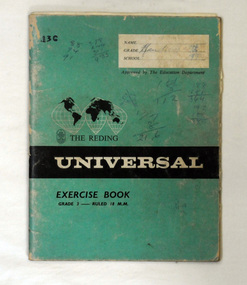
... function. Members were drilled, wore uniforms and practised all the basic skills of soldiering as well as target shooting. ...The Orbost Rifle Club existed in the early 20th century. (There are records from 1900). It folded in the late 1970's.Target shooting is one of the oldest organised sports in Australia. Records date back to the British Marines at Sydney Cove in 1788. The Victorian Rifle Association (VRA) was formed in 1860. One of the most important adjuncts to the militia system from 1903 to the re-organisation of 1912 was the role played by the Rifle Club movement in Australia. At the time, these clubs were seen as the reservoir of manpower for a potential guerrilla force should any invasion occur. For Australia, the invasion fear was uppermost in the minds of the population. So important were the rifle clubs for the defence of Australia that the Commonwealth provided the training staff, rifles and ammunition so the clubs could function. Members were drilled, wore uniforms and practised all the basic skills of soldiering as well as target shooting. The Orbost Rifle Club was active during this period. A green Universal exercise book which contains hand-written handicap record of the Orbost Rifle Club. On front cover - handwritten - Handicap Recordsorbost-rifle-club shooting records -
 Orbost & District Historical Society
inventory book, 1950-1970
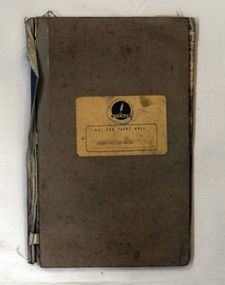
... function. Members were drilled, wore uniforms and practised all the basic skills of soldiering as well as target shooting. ...The Orbost Rifle Club existed in the early 20th century. (There are records from 1900). It folded in the late 1970's.Target shooting is one of the oldest organised sports in Australia. Records date back to the British Marines at Sydney Cove in 1788. The Victorian Rifle Association (VRA) was formed in 1860. One of the most important adjuncts to the militia system from 1903 to the re-organisation of 1912 was the role played by the Rifle Club movement in Australia. At the time, these clubs were seen as the reservoir of manpower for a potential guerrilla force should any invasion occur. For Australia, the invasion fear was uppermost in the minds of the population. So important were the rifle clubs for the defence of Australia that the Commonwealth provided the training staff, rifles and ammunition so the clubs could function. Members were drilled, wore uniforms and practised all the basic skills of soldiering as well as target shooting. The Orbost Rifle Club was active during this period. A plain grey covered indexed book with a light blue cloth spine. It has a yellow label on the front cover. It appears to be a record of individual results for the Orbost Rifle Club.On label - printed - ORBOST RIFLE CLUB 211orbost-rifle-club shooting records -
 Orbost & District Historical Society
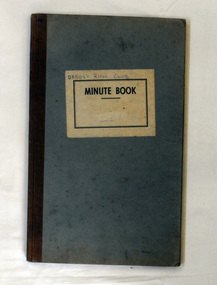
minute book, 8.6.1961 - 15.2.1978
... function. Members were drilled, wore uniforms and practised all the basic skills of soldiering as well as target shooting. ...The Orbost Rifle Club existed in the early 20th century. (There are records from 1900). It folded in the late 1970's.Target shooting is one of the oldest organised sports in Australia. Records date back to the British Marines at Sydney Cove in 1788. The Victorian Rifle Association (VRA) was formed in 1860. One of the most important adjuncts to the militia system from 1903 to the re-organisation of 1912 was the role played by the Rifle Club movement in Australia. At the time, these clubs were seen as the reservoir of manpower for a potential guerrilla force should any invasion occur. For Australia, the invasion fear was uppermost in the minds of the population. So important were the rifle clubs for the defence of Australia that the Commonwealth provided the training staff, rifles and ammunition so the clubs could function. Members were drilled, wore uniforms and practised all the basic skills of soldiering as well as target shooting. The Orbost Rifle Club was active during this period. A plain light blue minute book with a cloth brown spine. It has a white label on the front cover.On label- Orbost Rifle Clubminutes orbost-rifle-club shooting -
 Flagstaff Hill Maritime Museum and Village
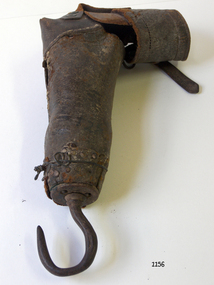
Functional object - Prosthetic Arm, Early 20th century
... functions of a hand. Prosthetic hook arms like this one have existed for centuries. Archaeological evidence shows that prosthetic limbs have been designed and used since almost 6000 years ago. Hooks for seafarers were made from whatever materials were readily available onboard the ship., such as metal, wood and leather. Often the prosthetic arms were simple lock-jointed pieces with basic...functions of a hand. Prosthetic hook arms like this one have existed for centuries. Archaeological evidence shows that prosthetic limbs have been designed and used since almost 6000 years ago. Hooks for seafarers were made from whatever materials were readily available onboard the ship., such as metal, wood and leather. Often the prosthetic arms were simple lock-jointed pieces with basic ...This prosthetic arm has been made to assist a person who has part of his or her arm missing. The hook fixed to the end is an attempt to give the wearer extra assistance in replacing some of the functions of a hand. Prosthetic hook arms like this one have existed for centuries. Archaeological evidence shows that prosthetic limbs have been designed and used since almost 6000 years ago. Hooks for seafarers were made from whatever materials were readily available onboard the ship., such as metal, wood and leather. Often the prosthetic arms were simple lock-jointed pieces with basic hand positions. During the 19th century, advanced technology led to improved appearance and movement of prosthetics. Further development in the 20th century included lightweight, durable materials and electronic robotic movement of the hook, along with a more aesthetic appearance.This prosthetic arm is an example of an aid used to assist people with missing limbs, whether born that way or as a result of injury. Prosthetic or artificial arm. Brown leather cylinder with elbow pad and straps with buckles. A single rotating metal hook has been fixed to the end.flagstaff hill, warrnambool, shipwrecked coast, flagstaff hill maritime museum, maritime museum, shipwreck coast, flagstaff hill maritime village, great ocean road, prosthetic, artificial arm, artificial limb, prosthetic arm, false arm, hook hand, amputee's aid, medical equipment, medical assistive aid, assistive aid, rotating hook, fake arm -
 Kiewa Valley Historical Society
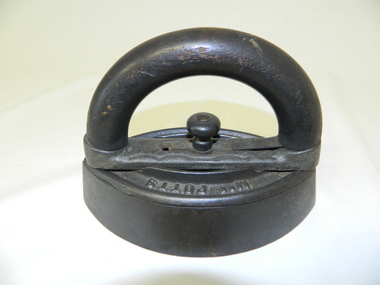
Iron - Flat, Circa early 1900s
... function. The reduction of time taken for this household duty provided women great flexibility to undertake other activities. These type of improvements to basic ...Historically this item was used before the spirit and the electrical iron took over Circa 1930s -1950s. The main body of the iron was placed on a flat heated surface of a stove (wood, coal or gas fired). It was mainly used by women in their domestic role, ironing the family clothes and linen. In the Kiewa Valley the supply of coal or gas was not available or too expensive than the locally cut hard wood trees. This particular iron was an improvement on the fixed handled iron because it allowed (by use of its easily detachable handle) to use multiple bases and thereby allowing a constant heat supply to be maintained and not having to waste time for a base to reheat to the required level of application.The significance of this item was that it allowed for a faster method of ironing clothes and linen. It's invention was a progress towards reducing the time it took to undertake a very labour and intensive domestic function. The reduction of time taken for this household duty provided women great flexibility to undertake other activities. These type of improvements to basic domestic tasks liberated housewives not only physically but also mentally from the isolation of the home environment.This flat iron has a removable, clip-on handle. The handle and its release knob are of wood. The base of the handle together with the heavy flat body are made of cast iron. The body of the iron is oval shaped tapered at each end and is 40mm thick.Underneath the handle frame and on the main body, on one side, in raised lettering is "Mrs Potts" and on the other side "Iron". Both are clearly visible when viewed from an aerial position. Under removable handle and on a plate (screwed onto the main body) is "No 2"iron, antique, household, pressing clothes, domestic, laundry -
 Monbulk RSL Sub Branch
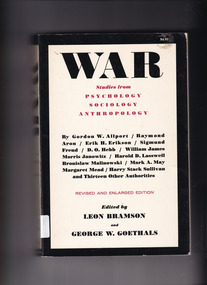
Book, Leon Bramson, War: Studies from psychology, sociology, anthropology, 1968
... function of war / Robert E. Park An anthropological analysis of war / Bronislaw Malinowski Warfare is only an invention not a biological necessity / Margaret Mead Primitive warfare: a methodological note / Joseph Schneider Part III: War, liberal democracy, and industrial society The military and the industrial society / Herbert Spencer The garrison state / Harold D. Lasswell On war, society, and the military / Alexis de Tocqueville Military elites and the study of war / Morris Janowitz War and industrial society / Raymond Aron. Index, bib, p.438. War: Studies from psychology, sociology, anthropology Book Leon Bramson George W Goethals Basic ...Part I: Studies from psychology Introduction Instinct theories and comparative psychology The moral equivalent of war / William James The instinct of pugnacity / William McDougall Emotion and society / D.O. Hebb & W.R. Thompson Psychoanalytic perspectives Why war? / Sigmund Freud Personal aggressiveness and war / E.F.M. Durbin & John Bowlby Toward a psychiatry of peoples / Harry Stack Sullivan Wholeness and totality / Erik H. Erikson Authoritarian personality and foreign policy / Daniel J. Levinson Social learning and intergroup relations War, peace, and social learning / Mark A. May Drives toward war / Edward C. Tolman The role of expectancy / Gordon W. Allport Part II: Studies from sociology and anthropology War / William Graham Sumner The social function of war / Robert E. Park An anthropological analysis of war / Bronislaw Malinowski Warfare is only an invention not a biological necessity / Margaret Mead Primitive warfare: a methodological note / Joseph Schneider Part III: War, liberal democracy, and industrial society The military and the industrial society / Herbert Spencer The garrison state / Harold D. Lasswell On war, society, and the military / Alexis de Tocqueville Military elites and the study of war / Morris Janowitz War and industrial society / Raymond Aron.Index, bib, p.438.non-fictionPart I: Studies from psychology Introduction Instinct theories and comparative psychology The moral equivalent of war / William James The instinct of pugnacity / William McDougall Emotion and society / D.O. Hebb & W.R. Thompson Psychoanalytic perspectives Why war? / Sigmund Freud Personal aggressiveness and war / E.F.M. Durbin & John Bowlby Toward a psychiatry of peoples / Harry Stack Sullivan Wholeness and totality / Erik H. Erikson Authoritarian personality and foreign policy / Daniel J. Levinson Social learning and intergroup relations War, peace, and social learning / Mark A. May Drives toward war / Edward C. Tolman The role of expectancy / Gordon W. Allport Part II: Studies from sociology and anthropology War / William Graham Sumner The social function of war / Robert E. Park An anthropological analysis of war / Bronislaw Malinowski Warfare is only an invention not a biological necessity / Margaret Mead Primitive warfare: a methodological note / Joseph Schneider Part III: War, liberal democracy, and industrial society The military and the industrial society / Herbert Spencer The garrison state / Harold D. Lasswell On war, society, and the military / Alexis de Tocqueville Military elites and the study of war / Morris Janowitz War and industrial society / Raymond Aron.armed conflict - history and teaching, conflict - history -
 Ballarat Tramway Museum
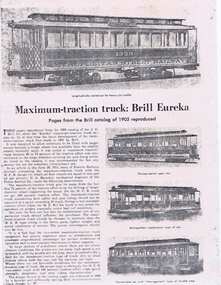
Document - Photocopy, Ballarat Tramway Preservation Society (BTPS), "Maximum-traction truck: Brill Eureka", 1970's
... Gives details of the truck, its capability, basis, use in New York for example, how it functions, load and speed capacity, motor size, basic dimensions, limitations and drawings. ...Gives details of the truck, its capability, basis, use in New York for example, how it functions, load and speed capacity, motor size, basic dimensions, limitations and drawings. ...Demonstrates aspects of the two types of trucks or bogies used on Ballarat trams and their design basis. Photocopied from a catalogue.Five pages, each page trimmed to a slightly different width, photocopy of an article titled "Maximum-traction truck: Brill Eureka", reproduced from the 1905 Brill catalogue. Gives details of the truck, its capability, basis, use in New York for example, how it functions, load and speed capacity, motor size, basic dimensions, limitations and drawings. Copy made at time of filing. Scanned copies of all sheets added 25/3/15.trams, tramways, trucks, maximum traction, brill trucks -
 Ballarat Tramway Museum
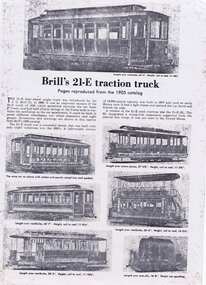
Document - Photocopy, Ballarat Tramway Preservation Society (BTPS), "Brill's 21-E traction truck", 1970's
... Gives details of the truck, its capability, basis, use in New York for example, how it functions, load and speed capacity, motor size, basic dimensions, limitations and drawings. 2nd copy held as well - on toner based copy rather than heat sensitive paper. ...Gives details of the truck, its capability, basis, use in New York for example, how it functions, load and speed capacity, motor size, basic dimensions, limitations and drawings. 2nd copy held as well - on toner based copy rather than heat sensitive paper. ...Demonstrates aspects of the two types of trucks or bogies used on Ballarat trams and their design basis. Photocopied from a catalogue.Five pages, each page trimmed to a slightly different width, photocopy of an article titled "Brill's 21-E traction truck", reproduced from the 1905 Brill catalogue. Gives details of the truck, its capability, basis, use in New York for example, how it functions, load and speed capacity, motor size, basic dimensions, limitations and drawings. 2nd copy held as well - on toner based copy rather than heat sensitive paper. Scanned copies of all sheets added 25/3/15.trams, tramways, trucks, 21e trucks, brill trucks -
 Ararat Gallery TAMA
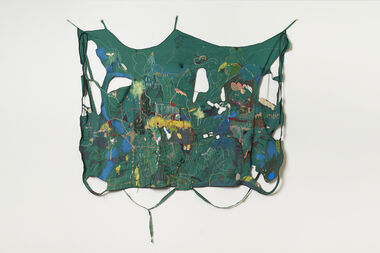
Kasia Töns, Beyond Homeostasis, 2021
... It is about what we do with our thoughts and bodies beyond the basic functions to keep us alive.” Töns exhibited her 2024 solo exhibition Panoply at Ararat Gallery TAMA, which explored how sculptural textiles can support mental well-being in emergency evacuation situations. ...Kasia Töns is a textile artist working and living on Peramangk Country (Adelaide Hills). Hand embroidery and mask making are central to Töns’ practice, which sits at the intersection of art, fashion, and craft. Her process is slow and intuitive, colourful, and expressive. Töns studied textile design studies at RMIT. The labour and time invested in creating Töns’ work acts as an antidote to the fast pace of the modern world and the addictive seeking of instant gratification through digital means. Recurring thematic interests include social impacts of digital technology use, the Anthropocene, and interpersonal/interspecies relationship dynamics. The artist says of this artwork: “Using an ex-house tent as a base, this work was my first attempt at making embroidery a more physical experience so it could match my feelings. Using larger stitches and threads I made this work outside in the Flinders Ranges and Lenswood. It is about what we do with our thoughts and bodies beyond the basic functions to keep us alive.” Töns exhibited her 2024 solo exhibition Panoply at Ararat Gallery TAMA, which explored how sculptural textiles can support mental well-being in emergency evacuation situations. A key work from that exhibition, Panoply II, was subsequently included in Art Gallery of South Australia’s major textile-focussed exhibition Radical Textiles, November 2024 – March 2025. Kasia Töns is represented by MARS Gallery. -
Moorabbin Air Museum
Pamphlet (item) - Basic theory of aricraft engine function, Engine sense
... Basic theory of aricraft engine function...Engine sense Pamphlet Basic theory of aricraft engine function ... -
 Ballarat Heritage Services
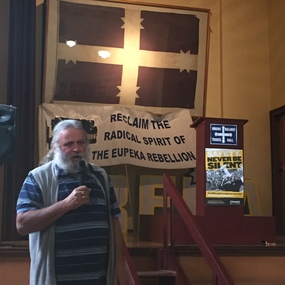
Photograph - Photograph - Colour, Clare Gervasoni, Joe Toscano speaks at Ballarat Trades Hall, 2016, 04/06/2016
... basic rights and democracy. On Wednesday 11th July 2001, following a ceremony to mark the refurbishment of the Galloway Monument, the Ballarat Trades Hall Eureka Flag was unveiled at a function in the Ballarat Trades Hall by President of the Ballarat Trades & Labour Council, Rhonda Young and Premier of Victoria, Steve Bracks. ...basic rights and democracy. On Wednesday 11th July 2001, following a ceremony to mark the refurbishment of the Galloway Monument, the Ballarat Trades Hall Eureka Flag was unveiled at a function in the Ballarat Trades Hall by President of the Ballarat Trades & Labour Council, Rhonda Young and Premier of Victoria, Steve Bracks. ...The Ballarat Trades Hall Eureka Flag The flag originally flew from the flagstaff of the Trades Hall Building in Camp Street Ballarat on 03 December 1942. This prompted many enquiries to the Ballarat Courier newspaper. The Courier reported that the flag was, in fact, a replica of the original Eureka Stockade flag. The newspaper reported: "It (seemed) very strange that the town in which Eureka made a name for Australia and its effort to get freedom from the control for the ordinary man, did not recognise the flag that flew which the first move for freedom was fought out against big odds." The Trades Hall Eureka Flag, made of cotton material, was used in Union marches during hte 1940s. In later years it was all but forgotten, until in 1981 it was brought to the office of the then MHR for Ballarat, John Mildren by members of the family that the flag maker boarded with in Ballarat. David Miller, who had a keen interest in the Eureka story and was electorate officer for John Mildren, became custodian of the flag for many years and presented it to the Ballarat Trades Hall for display. In 1994 the Ballarat Trdes Hall Eureka Flag traveled Australia as part of a touring Eureka collection at the time, the Secretary of the Ballarat Regional Trades and Labour Council, Graeme Shearer said "...The Eureka Fag then, as it does not, sybolises the struggle for basic rights and democracy. On Wednesday 11th July 2001, following a ceremony to mark the refurbishment of the Galloway Monument, the Ballarat Trades Hall Eureka Flag was unveiled at a function in the Ballarat Trades Hall by President of the Ballarat Trades & Labour Council, Rhonda Young and Premier of Victoria, Steve Bracks. Joe Toscano speaks at Ballarat Trades Hall while standing in front of a replica Eureka Flag.joe toscano, eureka flag, ballary trades hall, eureka flag replica, john mildren, david miller -
 Sunbury Family History and Heritage Society Inc.
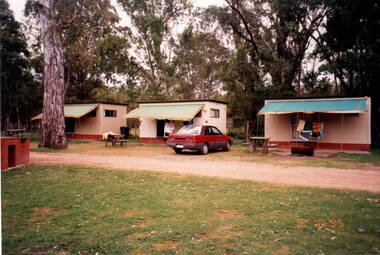
Photograph, Bulla Primary School, Hanging Rock, 1995
... basic rock climbing skills and explored the rock for its interesting geological formations. Hanging Rock, also known as Mount Diogenes, is the traditional land of the Dja Dja Wurrung, Woi Wurrung and Taungurung people. It is a mamelon formed when magma poured from a vent and congealed. There are interesting rock functions...basic rock climbing skills and explored the rock for its interesting geological formations. Hanging Rock, also known as Mount Diogenes, is the traditional land of the Dja Dja Wurrung, Woi Wurrung and Taungurung people. It is a mamelon formed when magma poured from a vent and congealed. There are interesting rock functions ...In 1995, the upper school students from Bulla Primary School attended a camp at Hanging Rock Reserve which is part of the Macedon Ranges. At this camp the students were shown basic rock climbing skills and explored the rock for its interesting geological formations. Hanging Rock, also known as Mount Diogenes, is the traditional land of the Dja Dja Wurrung, Woi Wurrung and Taungurung people. It is a mamelon formed when magma poured from a vent and congealed. There are interesting rock functions at the site such as the Colonnade, the Eagle and the UFO. The highest point on the rock is 718metres above sea level and 105 meters above the land at its base.Hanging Rock is an important geological and volcanic structure in the Macedon Ranges area and in central Victoria. A non-digital coloured photograph of three holiday cabins and a barbecue in a bushland setting. A red car is parked outside one of the cabins as well as two permanent picnic tables.hanging rock, mount diogenes, mamelons, volcanoes, school camps, bulla primary school -
 Unions Ballarat
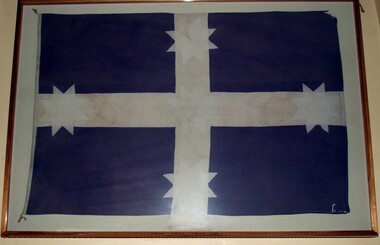
Ballarat Trades Hall Eureka Flag, 1942
... basic rights and democracy”. On Wednesday 11th July 2001, following a ceremony to mark the refurbishment of the Galloway Monument, the Ballarat Trades Hall Eureka flag was unveiled at a function in the Ballarat Trades Hall by President of the Ballarat Trades & Labour Council, Rhonda Young, and Premier of Victoria, Steve Bracks. ...basic rights and democracy”. On Wednesday 11th July 2001, following a ceremony to mark the refurbishment of the Galloway Monument, the Ballarat Trades Hall Eureka flag was unveiled at a function in the Ballarat Trades Hall by President of the Ballarat Trades & Labour Council, Rhonda Young, and Premier of Victoria, Steve Bracks. ...This flag originally flew from the flagstaff on the Trades Hall Building in Camp Street Ballarat on December 3rd 1942. The flag prompted many enquiries to the Ballarat's Courier newspaper. The Courier in reporting that the flag was, in fact, a replica of the original Eureka Stockade flag went on to say that: "… it (seemed) very strange that the town in which Eureka made a name for Australia and its efforts to get freedom from control for the ordinary man, did not recognise the flag that flew while the first move for freedom was fought out against big odds." The Trades Hall Eureka flag, made of cotton material, was used in union marches during the 1940s. In later years it had been all but forgotten, until in 1981 it was brought to the office of the then MHR for Ballarat, John Mildren by members of the family that the flag maker had boarded with in Ballarat. David Miller, who had a keen interest in the Eureka story and was electorate officer for John Mildren, became custodian of the flag for many years and presented it to Ballarat Trades Hall for display. In 1994 The Ballarat Trades Hall Eureka flag travelled Australia as part of a touring Eureka collection. At that time, the Secretary of the Ballarat Regional Trades and Labour Council, Graeme Shearer said “…The Eureka flag then, as it does now, symbolises the struggle for basic rights and democracy”. On Wednesday 11th July 2001, following a ceremony to mark the refurbishment of the Galloway Monument, the Ballarat Trades Hall Eureka flag was unveiled at a function in the Ballarat Trades Hall by President of the Ballarat Trades & Labour Council, Rhonda Young, and Premier of Victoria, Steve Bracks. The Trades Hall gratefully acknowledges the assistance of Dean Mighell, then Victorian State Secretary of the CEPU/ETU - who was a passionate supporter of the diggers' stand at Eureka - and instrumental in making funds available to assist in Trades Hall's Eureka flag being mounted in the Main Hall of the Ballarat Trades Hall. As far as we know, this is the second oldest Eureka flag in the world. Union (especially Ballarat Trades and Labour Council) history and Eureka Stockade - Ballarat.Flag; blue background; white embellishments - cross and stars; framed.btlc, ballarat trades hall, ballarat trades and labour council, mildren, john, miller, david, southern cross flag - btlc, eureka rebellion, trade unions - history, gold mining - ballarat, gold miners, eureka flag - btlc
