
Showing 105 items matching "blanche street"
-
 Glen Eira Historical Society
Document - Sarsfield, Blanche Street, 19, Elsternwick
... Sarsfield, Blanche Street, 19, Elsternwick...... Blanche Street...Handwritten notes reference to typed document regarding the owners of Sarsfield 19 Blanche Street Elsternwick....Handwritten notes reference to typed document regarding the owners of Sarsfield 19 Blanche Street Elsternwick. Historical Buildings Sarsfield Blanche Street Elsternwick Holloway J.M. ...Copy of typed document on this history and owners from 1851 to 1989 researched by Brighton Historical Society dated 09 March 1990. Handwritten notes reference to typed document regarding the owners of Sarsfield 19 Blanche Street Elsternwick.historical buildings, sarsfield, blanche street, elsternwick, holloway j.m., langdon henry j., beemery park, rose craddock, langdon blanche, bardwell everett, wynne edwin p., mcrorie william, mcrorie and co., healy j.d., healy eugene, holland ernest, holland e. w., coutts k.d., bullock hilary, landells rosalind, hocking stuart real estate agents, glenhuntly road, land division, place name, house names -
 Sunshine and District Historical Society Incorporated
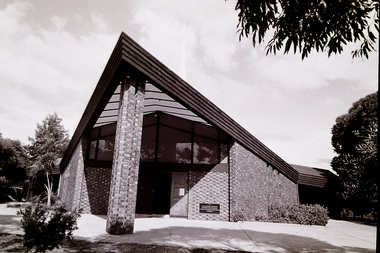
Photograph - Mother Of God Catholic Church 57 Blanche Street Ardeer 1991 Photographs, Sharon Cavanagh, 13th September 1991
... Mother Of God Catholic Church 57 Blanche Street Ardeer 1991 Photographs...Mother of God Church Blanche Street Ardeer 471.1...Mother of God Catholic Church Mother of God Church Blanche Street Ardeer 471.1 Digital scans of black and white negatives Photograph Mother Of God Catholic Church 57 Blanche Street Ardeer 1991 Photographs Sharon Cavanagh The Sunshine Advocate ...Mother of God Church, Ardeer was established in the mid‑1950s, when the Marist Fathers created a new parish for the rapidly growing migrant communities of West Sunshine, Ardeer, and Deer Park. The church became part of St Theresa’s Parish, Albion in 1974.The church represents the post‑war Catholic migrant story in Melbourne’s west, particularly Maltese, Polish, Ukrainian, and later Vietnamese and African communities.Mother of God Church Blanche Street Ardeer 471.1mother of god catholic church -
 Sunshine and District Historical Society Incorporated
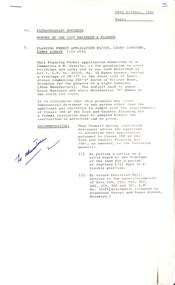
Administrative record - City of Sunshine - Commissioner Mr Alexander Alex George Gillon Collection 1976 - 1982 - Extraordinary business 28th October 1980, City of Sunshine, 28th October 1980
... ...Blanche Street...Extraordinary Business 28th October 1980 Report of the City Engineer & Planner Planning Permit Application Light Industry 14 Eames Avenue Brooklyn Planning Permit Application Extension to Existing School Mother of God Primary School Blanche Street Ardeer Planning Permit Application Light Industry Hot Bread Kitchen and Caretaker's Residence 9 Commercial Street Maidstone Planning Permit Application Transport Depot 552 Geelong Road Brooklyn Planning Permit Application Truck Wash Bay 552 Geelong Road Brooklyn Planning Permit Application Take Away Food Premises and Caretaker's Dwelling 288 Ballarat Road Braybrook Planning Permit Application Timber Yard Lot 9 Ballarat Road Sunshine Omar Street Maidstone Road Closure Report of the Building Surveyor Location of Buildings 9 Delamare Drive St. ...Eames Avenue Brooklyn Mother of God Primary School Blanche Street Ardeer Commercial Street Maidstone Geelong Road Ballarat Road Braybrook Sunshine Delamare Drive Belford Street St. ...Extraordinary Business 28th October 1980 Report of the City Engineer & Planner Planning Permit Application Light Industry 14 Eames Avenue Brooklyn Planning Permit Application Extension to Existing School Mother of God Primary School Blanche Street Ardeer Planning Permit Application Light Industry Hot Bread Kitchen and Caretaker's Residence 9 Commercial Street Maidstone Planning Permit Application Transport Depot 552 Geelong Road Brooklyn Planning Permit Application Truck Wash Bay 552 Geelong Road Brooklyn Planning Permit Application Take Away Food Premises and Caretaker's Dwelling 288 Ballarat Road Braybrook Planning Permit Application Timber Yard Lot 9 Ballarat Road Sunshine Omar Street Maidstone Road Closure Report of the Building Surveyor Location of Buildings 9 Delamare Drive St. Albans Location of Buildings 29 Hampshire Road Sunshine Building Over Easement 42 Belford Street St. Albans Building Over Easement12 - 14 Drummartin Street Albioneames avenue, brooklyn, mother of god primary school, blanche street, ardeer, commercial street, maidstone, geelong road, ballarat road, braybrook, sunshine, delamare drive, belford street, st. albans, hampshire road, drummartin street, albion -
 Sunshine and District Historical Society Incorporated
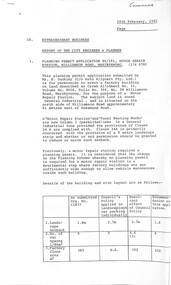
Administrative record - City of Sunshine - Commissioner Mr Alexander Alex George Gillon Collection 1976 - 1982 - Extraordinary business 24th February 1981, City of Sunshine, 24th February 1981
... ...Blanche Street...Extraordinary business 24th February 1981 Planning Permit Application Motor Repair Station Williamson Road Maribyrnong Planning Permit Application Factory Stage 2 Extensions Lot 7 Holmwood Road Brooklyn Planning Permit Application Radion Mast Carrington Drive Albion Planning Permit Application Extensions to existing school Blanche Street Ardeer Planning Permit Application Amusement Parlour Princess Street St. ...Williamson Road Highpoint West Rosamond Road Chifley Drive Maribyrnong Holmwood Road Brooklyn Carrington Drive Albion Mother of God Primary School Blanche Street Ardeer Princess Street St. Albans Princess Highway Mulhall Drive St. ...Extraordinary business 24th February 1981 Planning Permit Application Motor Repair Station Williamson Road Maribyrnong Planning Permit Application Factory Stage 2 Extensions Lot 7 Holmwood Road Brooklyn Planning Permit Application Radion Mast Carrington Drive Albion Planning Permit Application Extensions to existing school Blanche Street Ardeer Planning Permit Application Amusement Parlour Princess Street St. Albans Planning Permit Application Petrol Filling Station Princess Highway Planning Permit Application Four Flats Corner of Mulhall Drive and St. Albans Road St. Albans Planning Permit Application Service Premises and Consultation Rooms Lots 2, 3 & 4 Glengala Road Sunshine West for hairdresser, pharmacy and doctor or dentist Planning Permit Application Furniture Sales Rosamond Road Maribyrnong Planning Permit Application Highpoint West Shopping Centre Level 1 Market Extensions Rosamond Road Maribyrnong Plan of Consolidation Connor Shea Fourth Avenue Sunshine Construction of part of Neale Road Deer Park Location of Building 3 Ruth Street Sunshine North Building on Land Liable to Flooding 155 Chifley Drive Maribyrnongwilliamson road, highpoint west, rosamond road, chifley drive, maribyrnong, holmwood road, brooklyn, carrington drive, albion, mother of god primary school, blanche street, ardeer, princess street, st. albans, princess highway, mulhall drive, st. albans road, glengala road, sunshine west, connor shea, fourth avenue, neale road, deer park, ruth street, sunshine north -
 Sunshine and District Historical Society Incorporated
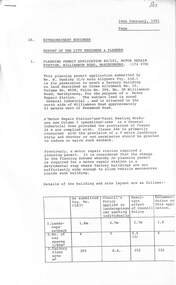
Administrative record - City of Sunshine - Commissioner Mr Alexander Alex George Gillon Collection 1976 - 1982 - Extraordinary business 24th February 1981, City of Sunshine, 24th February 1981
... ...Blanche Street...Extraordinary business 24th February 1981 Report of the City Engineer & Planner Planning Permit Application Motor Repair Station Williamson Road Maribyrnong Planning Permit Application Factory Stage 2 Extensions Lot 7 Holmwood Road Brooklyn Planning Permit Application Radion Mast Carrington Drive Albion Planning Permit Application Extensions to Existing Mother of God Primary School Blanche Street Ardeer Planning Permit Application Amusement Parlour Princess Street St. ...Williamson Road Highpoint West Rosamond Road Chifley Drive Maribyrnong Holmwood Road Brooklyn Carrington Drive Albion Mother of God Primary School Blanche Street Ardeer Princess Street St. Albans Princess Highway Mulhall Drive St. ...Extraordinary business 24th February 1981 Report of the City Engineer & Planner Planning Permit Application Motor Repair Station Williamson Road Maribyrnong Planning Permit Application Factory Stage 2 Extensions Lot 7 Holmwood Road Brooklyn Planning Permit Application Radion Mast Carrington Drive Albion Planning Permit Application Extensions to Existing Mother of God Primary School Blanche Street Ardeer Planning Permit Application Amusement Parlour Princess Street St. Albans Planning Permit Application Petrol Filling Station Princess Highway (Geelong Road) Planning Permit Application Four Flats Corner of Mulhall Drive and St. Albans Road St. Albans Planning Permit Application Service Premises and Consultation Rooms Lots 2, 3 & 4 Glengala Road Sunshine West for Hairdresser, Pharmacy and Doctor or Dentist Planning Permit Application Furniture Sales Rosamond Road Maribyrnong Planning Permit Application Highpoint West Shopping Centre Level 1 Market Extensions Rosamond Road Maribyrnong Plan of Consolidation Connor Shea Fourth Avenue Sunshine Construction of Part of Neale Road Deer Park Hire of Tandem Tip Trucks for Cartage of Soil at Sunshine Tip Tenders Report of the Building Surveyor Location of Building 3 Ruth Street Sunshine North Building on Land Liable to Flooding 155 Chifley Drive Maribyrnongwilliamson road, highpoint west, rosamond road, chifley drive, maribyrnong, holmwood road, brooklyn, carrington drive, albion, mother of god primary school, blanche street, ardeer, princess street, st. albans, princess highway, mulhall drive, st. albans road, glengala road, sunshine west, connor shea, fourth avenue, neale road, deer park, ruth street, sunshine north -
 Sunshine and District Historical Society Incorporated
Administrative record - City of Sunshine - Commissioner Mr Alexander Alex George Gillon Collection 1976 - 1982 - Minutes of the ordinary meeting of council held on 28th October 1980, City of Sunshine, 28th October 1980
... ...Blanche Street...Albans Location of Building 16 Tyler Street Sunshine Statistical Information on Numbers of Building Permits Schedule for Authorising of Affixing the Common Seal of the Municipality to Documents Orders of the Day Accounts Submitted for Payment as at 13th October 1980 Proposal to Construct Ayton Street and Steers Street Area Under the Provisions of the Division 10 Part XXIX of the Local Government Act 1958 Extraordinary Business Report of the City Engineer & Planner Planning Permit Application Light Industry 14 Eames Avenue Brooklyn Planning Permit Application Extension to Existing School Mother of God Primary School Blanche Street Ardeer Planning Permit Application Light Industry Hot Bread Kitchen and Caretaker's Residence 9 Commercial Street Maidstone Planning Permit Application Transport Depot 552 Geelong Road Brooklyn Planning Permit Application Truck Wash Bay 552 Geelong Road Brooklyn Planning Permit Application Take Away Food Premises and Caretaker's Dwelling 288 Ballarat Road Braybrook Planning Permit Application Timber Yard Lot 9 Ballarat Road Sunshine Omar Street Maidstone Road Closure Report of the Building Surveyor Location of Buildings 9 Delamare Drive St. ...Albans Meadows Primary School Diamond Avenue Dover Street Albanvale Albanvale Primary School River Street Athol Street Christ the King Primary School Riley Court Cornwall Road Ayton Street Steers Street Cherry Crescent Child Care Centre Cherry Crescent Tyler Street Eames Avenue Mother of God Primary School Blanche Street Commercial Street Delamare Drive Belford Street Drummartin Street Minutes of the Ordinary Meeting of Council held on 28th October 1980 Report of the Town Clerk's Department Report of the Town Clerk St. ...Minutes of the Ordinary Meeting of Council held on 28th October 1980 Report of the Town Clerk's Department Report of the Town Clerk St. Albans High School Maintenance of Oval and Use of School Library by City of Sunshine Report Rainbow Workshop Pottery Student's Exhibition at Highpoint West Library Rainbow Workshop Claim for Balance of Proceeds Rates Recovery Sale Lot 88 Balfour Avenue Sunshine North Meals on Wheels Sunshine Swimming Pool kiosk Italo-Australian Social Club Proposal for Assignment of Lease Furlong Road St. Albans Proposed Land Transfer Part of Howard Street Maidstone Discontinued Proposed Acquisition of 22 Roberts Crescent Sunshine West Demise of Land Howard Kingham Lodge 69 Darnley Street Braybrook Pensioner Rates Assistance Scheme 1980/81 Sunshine Football Club Skinner Reserve Lease Skinner Reserve Churchill Avenue Braybrook Increase Rent by Victorian Railway for The Hub Sun Crescent Sunshine Report of the Co-Ordinator of Welfare Services September Teenage Holiday Programme Centres Sunshine High School, Sunshine West High School and St. Albans Youth Centre Volunteer Weekend Training Conference Torquay Report Use of Former Albion Tennis Club House Selwyn Park by Albion Rovers Soccer & Athletic Club Study Tour North American Youth Organisation Council Sponsorship of Housing Commission Units Westerngate Kindergarten Aycliffe Drive Deer Park Ardeer High School Censorship "R" Rated Films Regularistation of Status Programme (ROSP) Braybrook Youth Project Report of the Chief Health Surveyor Removal of Dwelling Outside the Municipality 10 Gilbert Street Braybrook to Lodden Valley Highway Kerang Removal of Dwelling Outside the Municipality 21 Pritchard Avenue to Lot 3 Section 21 Township of Landsborough Pollution Control Relationship with the M.M.B.W. Aycliffe Avenue Infant Welfare & Pre-School Centre Aycliffe Avenue Deer Park Litter Bottles European Economic Community Health Act Registrations Application for Transfer of Proprietorship of Premises Under the Health Act Report of the Superintendent Traffic & By-Laws Operational Costs 1980/81 Lost Dogs' Home Report of the City Librarian Christmas / New Year 1980/81 Library Opening Hours National Conference on Multiculturalism and Libraries 7th - 11th November 1980 Report of the City Engineer & Planner Maribyrnong River Valley Humes and Adjacent Properties Planning Permit Application Three Panel Signs 250 McIntyre Road Sunshine North Planning Permit Application Panel Sign 28 Berkshire Road Sunshine North Planning Permit Application Panel Sign Lot 5 McIntyre Road Sunshine North Planning Permit Application Amateur Radio Mast 866 Ballarat Road Deer Park Planning Permit Application Signs 267 Hampshire Road Sunshine Planning Permit Application Lot 27 Errol Street North West Corner Gilbert Street Braybrook Planning Permit Application Used Car Sales Yard Lot 101 Geelong Road South West Corner Millers Road Brooklyn Planning Permit Application Access to Lot 3 Geelong Road South West Corner Victorian Railways' Easement and Main Road Reservation Brooklyn Planning Permit Application Subdivision Lot 36 Reid Street Ardeer Planning Permit Application Signs Lot 2 Neale Road Deer Park Planning Permit Application Factory Lots 41, 42 & 43 Cromer Avenue Sunshine North Planning Permit Application Factory Lot 40 Cromer Avenue Sunshine North Planning Permit Application Illuminated Sky Lots 5, 6, 7, 8, 9, 10, 12 and 13 120 - 200 Sign Highpoint Shopping Centre Rosamond Road Maribyrnong Planning Permit Application Consulting Rooms 309 Main Road East St. Albans Planning Permit Stages 1 and 4 Only Lots 1 - 7 Warrs Road & Lots 18 - 22 Fabian Court Maribyrnong Planning Permit Consulting Rooms Devonshire Road South West Corner Gertrude Street Sunshine Planning Permit Application Extension to Existing Premises Lots 15 & 16 Hampshire Road Sunshine Amendment No 115 Part 2A to the Melbourne Metropolitan Planning Scheme Consolidation of Title McIntyre Road, Comley Street and Glenroy Avenue Sunshine Armstrong York Pty Ltd Consolidation of Title Rothray Avenue and Cromer Avenue Sunshine North Drain Construction Works Grant Street and Gladstone Street St. Albans Consolidation of Title Gee Street Sunsine North Consolidation of Title South Road and Lawton Street Braybrook Expungement of Part of Easement Derby Road and Stanford Street Sunshine Prohibited Parking McDonald Road Brooklyn Prohibited Parking Laurel Street St. Albans Near St. Albans Meadows Primary School Prohibited Parking and Proposed School Crossing Diamond Avenue and Dover Street Albanvale Near Albanvale Primary School Rosamond Road and River Street Maidstone Pedestrian Signals Restricted Parking Prohibited Parking Athol Street Braybrook Near Christ the King Primary School Proposed Traffic Signals Cornwall Road / Devonshire Road Intersection Sunshine Private Street Scheme Ayton Street and Steers Street Area Objections Proposed Child Care Centre Cherry Crescent Braybrook Tenders Report of the Building Surveyor Building Over Easement Lot 246 Furlong Road St. Albans Location of Building 16 Tyler Street Sunshine Statistical Information on Numbers of Building Permits Schedule for Authorising of Affixing the Common Seal of the Municipality to Documents Orders of the Day Accounts Submitted for Payment as at 13th October 1980 Proposal to Construct Ayton Street and Steers Street Area Under the Provisions of the Division 10 Part XXIX of the Local Government Act 1958 Extraordinary Business Report of the City Engineer & Planner Planning Permit Application Light Industry 14 Eames Avenue Brooklyn Planning Permit Application Extension to Existing School Mother of God Primary School Blanche Street Ardeer Planning Permit Application Light Industry Hot Bread Kitchen and Caretaker's Residence 9 Commercial Street Maidstone Planning Permit Application Transport Depot 552 Geelong Road Brooklyn Planning Permit Application Truck Wash Bay 552 Geelong Road Brooklyn Planning Permit Application Take Away Food Premises and Caretaker's Dwelling 288 Ballarat Road Braybrook Planning Permit Application Timber Yard Lot 9 Ballarat Road Sunshine Omar Street Maidstone Road Closure Report of the Building Surveyor Location of Buildings 9 Delamare Drive St. Albans Location of Buildings 29 Hampshire Road Sunshine Building Over Easement 42 Belford Street St. Albans Building Over Easement12 - 14 Drummartin Street Albionst. albans high school, main road east, st. albans, balfour avenue, sunshine north, sunshisne swimming pool, kennedy street, italo-australian social club, furlong road, howard street, maidstone, howard kingham lodge, darnley street, sunshine football club, skinner reserve, churchill avenue, braybrook, highpoint west library, rosamond road, maribyrnong, roberts crescent, sunshine west, the hub, sun crescent, sunshine, sunshine high school, sunshine west high school, ballarat road, lachlan road, st. albans youth centre, albion tennis club, albion rovers soccer & athletic club, selwyn park, selwyn street, albion, aycliffe drive, deer park, ardeer high school, glengala road, gilbert street, pritchard avenue, aycliffe avenue infant welfare & pre-school centre, maribyrnong river valley, hume pipes, mcintyre road, berkshire road, hampshire road, errol street, geelong road, millers road, brooklyn, reid street, ardeer, neale road, cromer avenue, highpoint shopping centre, warrs road, fabian court, devonshire road, gertrude street, comley street, glenroy avenue, sunshine armstrong york, rothray avenue, grant street, gladstone street, gee street, south road, lawton street, derby road, stanford street, mcdonald road, laurel street, st. albans meadows primary school, diamond avenue, dover street, albanvale, albanvale primary school, river street, athol street, christ the king primary school, riley court, cornwall road, ayton street, steers street, cherry crescent child care centre, cherry crescent, tyler street, eames avenue, mother of god primary school, blanche street, commercial street, delamare drive, belford street, drummartin street -
 Sunshine and District Historical Society Incorporated
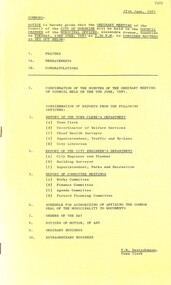
Administrative record - City of Sunshine - Commissioner Mr Alexander Alex George Gillon Collection 1976 - 1982 - Notice of ordinary meeting of the council 23rd June 2026, City of Sunshine, 17th June 1981
... ...Blanche Street...Albans Building Over Easement 7 Innis Court Deer Park Building Over Easement 9 Joules Court Deer Park Building Over Easement 6 Trevose Court Albanvale Building Over Easement Mother of God Primary School Blanche Street Ardeer Statistical Information of Numbers of Building Permits Schedule for Authorising of Affixing the Common Seal of the Municipality to Documents Orders of the Day Accounts Submitted for Payment as at 15th June 1981 Delegation of Authority Orama Street Child Care Centre...Albans Building Over Easement 7 Innis Court Deer Park Building Over Easement 9 Joules Court Deer Park Building Over Easement 6 Trevose Court Albanvale Building Over Easement Mother of God Primary School Blanche Street Ardeer Statistical Information of Numbers of Building Permits Schedule for Authorising of Affixing the Common Seal of the Municipality to Documents Orders of the Day Accounts Submitted for Payment as at 15th June 1981 Delegation of Authority Orama Street Child Care Centre Foolscap sized document. ...Notice of Ordinary Meeting of the Council 23rd June 2026 Report of the Town Clerk's Department Report of the Town Clerk Vehicle Accident Cover Proposed Compulsory Insurance Southwold Street Kindergarten Proposed Extension Annual Donations Supplementary Donations Ground Allocations Schools Winter Season 1981 Sunshine Cricket Club Request for Bingo License Dempster Park Sunshine North Records Management Training Programme Award Matters Energy Conservation Report of the Co-Ordinator of Welfare Services Sunshine Volunteer Youth Resource Group Submission Victorian Association of Youth Clubs Request for Funds Youth Camping Equipment Pool Sunshine CYSS Interim Funding Young People's Forum Youth Homelessness Sunshine Lions Club (Lions Club of Sunshine) Youth Assistance Miss Sunshine Beauty Queen Ball Study Tours North Americal Youth Organisations Report Handyman Services Early Childhood Development Programme Orama Street Child Care Centre Deer Park Report of the Chief Health Surveyor Health Act Registrations Prosecution Proceedings Sunshine Magistrates Court Application for Transfer of Proprietorship of Premises Under the Health Act Removal of Dwelling Outside the Municipality 798 Ballarat Road Deer Park to Shire of Cranbourne Removal of Dwelling Outside the Municipality 35 Northumberland Road to Lot 9A Franklenford Road Daylesford Report of the Medical Office of Health Report of the City Librarian Report of the Project Officer (Rainbow Workshop) Report of the City Engineer & Planner Planning Permit Application Amusement Parlour 54A Station Place Sunshine Planning Permit Application Cafe / Amusement Parlour 59 St. Albans Road St. Albans Planning Permit Application Illuminated Fascia Mounted Sign 88 - 90 Berkshire Road North West Corner Steers Street Sunshine North Planning Permit Application Extension to Petrol Filling Station / Motor Repair Station 35 Couch Street Sunshine Delegated Matters Planning Permit Application Storage Building Lot 45 Cranwell Street Braybrook Planning Permit Application Petrol Filling Station 35 Raleigh Road Maribyrnong Tenders Building Works Report of the Building Surveyor Building Over Easement Lot 570 Waranga Crescent St. Albans Building Over Easement 7 Innis Court Deer Park Building Over Easement 9 Joules Court Deer Park Building Over Easement 6 Trevose Court Albanvale Building Over Easement Mother of God Primary School Blanche Street Ardeer Statistical Information of Numbers of Building Permits Schedule for Authorising of Affixing the Common Seal of the Municipality to Documents Orders of the Day Accounts Submitted for Payment as at 15th June 1981 Delegation of Authority Orama Street Child Care Centresouthwold street, st. albans, sunshine cricket club, dempster park, phoenix street, sunshine north, southwold street kindergarten, sunshine lions club, lions club of sunshine, orama street child care centre, orama street, deer park, ballarat road, northumberland road, station place, sunshine, st. albans road, berkshire road, steers street, couch street, cranwell street, braybrook, raleigh road, maribyrnong, waranga crescent, innis court, joules court, trevose court, albanvale, mother of god primary school, blanche street, ardeer -
 Sunshine and District Historical Society Incorporated
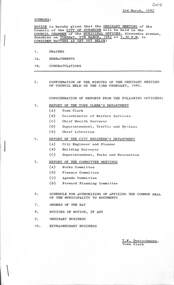
Administrative record - City of Sunshine - Commissioner Mr Alexander Alex George Gillon Collection 1976 - 1982 - Notice of Ordinary Meeting 9th March 1982, City of Sunshine, 3rd March 1982
... ...Blanche Street...Albans Substandard Allotment Lot 25A Ballarat Road Sunshine Report of the Superintendent of Parks & Recreation Landscaping Selwyn Park Tennis Pavilion Removal of Trees Blanche Street Ardeer Tree Removal Request 1 Winnington Street Deer Park Tree Removal Request 12 Coronation Street Sunshine North...Albans Substandard Allotment Lot 25A Ballarat Road Sunshine Report of the Superintendent of Parks & Recreation Landscaping Selwyn Park Tennis Pavilion Removal of Trees Blanche Street Ardeer Tree Removal Request 1 Winnington Street Deer Park Tree Removal Request 12 Coronation Street Sunshine North Foolscap sized document. ...Ordinary meeting notice including reports from Council's officers Report of the Town Clerk's Department Report of the Town Clerk Deer Park Club Request for Loan for Improvement to the Bowling Green Refuse Disposal Agreements Possible Cancellations Pennel Reserve Hall Committee Replacement of Member Maribyrnong Reserve Committee of Management Replacement of Fence Sporting Complex (F.I.T. Project) New Activity The Hub Sports Centre Report of the Co-Ordinator of Welfare Services Co-Ordinator Footscray / Sunshine Early Childhood Development Programme Disability Resources Centre Pre-School Advisor Project Officer Braybrook / Glengala Estate Improvement Project Community Youth Support Scheme Report of the Chief Health Surveyor Removal of Dwelling Outside the Municipality 6 Williamson Road Maribyrnong to Shire of Maldon Temporary Public Buildings Circus's Disposal of Refure (Further Amendment) By-law Roberts Crescent Infant Welfare Centre Health Act Registrations Report of the Medical Officer of Health Report of the Chief Librarian Report of the Children's Services Librarian December / January 1981 / 1982 Holiday Programme Report of the City Engineers Department Report of the City Engineer / Planner Planning Permit Application Part Lot 2 Shopping Centre Alterations Neale Road Deer Park Planning Permit Application Presbytery Lot 59 Western Highway Deer Park Planning Permit Application Factory Lot 14 McIntyre Road Sunshine North Planning Permit Application Transport Depot Lots 1 & 2 First Avenue and Lot 2 & 4 Second Avenue Sunshine Planning Permit Application Proposed Staff Room Extension St. Bernadettes School West Moreland Road Sunshine North Planning Permit Application Alterations to Existing Office Lot 1 Rosamond Road Maidstone Planning Permit Application Panel Signs 405 Ballarat Road Sunshine Planning Permit Application Floodlit Promotions Panel Sign Lot 15 Geelong Road Brooklyn Planning Permit Application Plant Platform 51 McIntyre Road Sunshine North Plan of Proposed Consolidation Lots 41, 42 & 43 Somers Street & Grainger Street Sunshine / Deer Park Plan of Proposed Consolidation Robertsons Engineering Lots 79 & 80 Market Road Sunshine Plan of Removal of Easement Robertsons Engineering Lots 79 & 80 Market Road Sunshine Plan of Proposed Consolidation Deer Park Engineering Ballarat Road Deer Park Plan of Removal of Easement Deer Park Engineering Ballarat Road Deer Park Plan of Transfer Kentucky Fried Chicken Ballarat Road Sunshine Plan of Proposed Consolidation St. Albans Road & Princes Street St. Albans Plan of Subdivision I.C.I. Western Highway Service Road Deer Park Local Government (Land Liable to Flooding) Act 1979 designation of Flood Levels Maribyrnong River and other areas Remodel of Intersection Signals Raleigh Road / Rosamond Road Maribyrnong Hampshire Road / Herford Road Signalisation Declaration of Sewerage Area Availability of Sewerage Facilities Footpath Construction McIntyre Road from Bridge to Baldwin Avenue Sunshine North Traffic Management C.R.B. / ROSTA Deer Park Hall Report of Building Surveyor Show Cause 2 Fairbairn Road Sunshine West Location of Building 4 Western Avenue Sunshine West Location of Building McKechnie Street St. Albans Substandard Allotment Lot 25A Ballarat Road Sunshine Report of the Superintendent of Parks & Recreation Landscaping Selwyn Park Tennis Pavilion Removal of Trees Blanche Street Ardeer Tree Removal Request 1 Winnington Street Deer Park Tree Removal Request 12 Coronation Street Sunshine North city of sunshine, alexander "alex" george gillon, deer park club, ballarat road, deer park, pennell reserve hall committee, pennell reserve, burke street, braybrook, maribyrnong reserve, hortense street, maribyrnong, maribyrnong reserve committee of management, the hub, sun crescent, sunshine, williamson road, roberts crescent infant welfare centre, roberts crescent, sunshine west, neale road, mcintyre road, sunshine north, second avenue, westmoreland road, rosamond road, maidstone, geelong road, brooklyn, somers street, grainger street, market road, st. albans road, princes street, st. albans, western highway, raleigh road, hampshire road, hertford road, baldwin avenue, deer park hall, station road, fairbairn road, western avenue, mckechnie street, selwyn park, selwyn street, albion, blanche street, ardeer, winnington street, coronation street, albion tennis club -
 Sunshine and District Historical Society Incorporated
Administrative record - City of Sunshine - Commissioner Mr Alexander Alex George Gillon Collection 1976 - 1982 - Minutes of the ordinary meeting of council held on 24th February 1981, City of Sunshine, 24th February 1981
... ...Blanche Street...Engineering 528 Ballarat Road Albion Planning Permit Application Car Park Extensions 2 Devonshire Road Sunshine Planning Permit Transport Depot 1 Duke Street Braybrook Planning Permit Transport Depot Lot 3 Geelong Road Brooklyn Planning Permit Application New Canopy, Showroom and Signs 431 Ballarat Road Sunshine Planning Permit Application Advertising Sign Corner Geelong Road and Francis Street Brooklyn Planning Permit Application Advertising Signs Units 1 - 7 Corner Francis Street and Geelong Road Brooklyn Planning Permit Application Highpoint West Shopping Centre Level 1 Extensions Rosamond Road Maribyrnong Appointment of Statutory Town Planner to Ministry for Planning Independant Panel Consolidation of Title Lot 2 McIntyre Road and Lot 29 and 30 Cromer Avenue Sunshine North Transfer and Consolitation of Title Warwick Road and McIntyre Road Sunshine North Reticulation of Water Mains Gladstone Street & Grant Street Area Availability of Sewers Main Road West Sewerage Facilities Sports Pavilion Pennell Reserve Burke Street Braybrook Half Cost Fencing Lot 9 Stayton Close Deer Park Report of the Building Surveyor Statistical Information of Numbers of Building Permits in the Four Months 6th October 1980 to 30th January 1981 Building Over Easement Lots 29 & 30 Cromer Avenue Sunshine North Building Over Easement 2 Coronation Street Sunshine North Schedule for Authorising of Affixing the Common Seal of the Muncipality to Documents Orders of the Day Accounts Submitted for Payment as at 15th February 1981 Confirmation of Loan with the Melbourne & Metropolitan Board of Works Confirmation of Loan with the State Insurance Confirmation of Loan with the Melbourne & Metropolitan Board of Works Extraordinary Business Report of the City Engineer & Planner Planning Permit Application Motor Repair Station Williamson Road Maribyrnong Planning Permit Application Factory Stage 2 Extensions Lot 7 Holmwood Road Brooklyn Planning Permit Application Radion Mast Carrington Drive Albion Planning Permit Application Extensions to Existing Mother of God Primary School Blanche Street Ardeer Planning Permit Application Amusement Parlour Princess Street St. ...Engineering Albion Devonshire Road Duke Street Geelong Road Brooklyn Francis Street Highpoint West Shopping Centre Rosamond Road Cromer Avenue McIntyre Road Warwick Road Gladstone Street Grant Street Main Road West Pennell Reserve Burke Street Stayton Close Coronation Street Williamson Road Holmwood Road Carrington Drive Blanche Street Princess Highway Mulhall Drive Glengala Road Sunshine West Connor Shea Fourth Avenue Neale Road Sunshine Tip Ruth Street Chifley Drive Mother of God Primary School Minutes of the Ordinary Meeting of Council held on 24th February 1981 Report of the Town Clerk's Department Report of the Town Clerk Proposal to close Right of Way between Barnard Court and Pizzey Street Sunshine Sealing of Conveyance Property 66 Northumberland Road Sunshine North Report of the Co-Ordinator of Welfare Services Request for Financial Assistance State Relief Committee Braybrook Youth Project Children's Services Development Officer Ministry of Housing Activity in Sunshine Report of the Chief Health Surveyor Control of Delivery of Advertising Catalogues, etc. ...Minutes of the Ordinary Meeting of Council held on 24th February 1981 Report of the Town Clerk's Department Report of the Town Clerk Proposal to close Right of Way between Barnard Court and Pizzey Street Sunshine Sealing of Conveyance Property 66 Northumberland Road Sunshine North Report of the Co-Ordinator of Welfare Services Request for Financial Assistance State Relief Committee Braybrook Youth Project Children's Services Development Officer Ministry of Housing Activity in Sunshine Report of the Chief Health Surveyor Control of Delivery of Advertising Catalogues, etc. Alteration to Sewerage Treatment Plant 77 Wright Street Sunshine Report of the Inspector of Weights & Measures Aycliffe Drive Infant Welfare Centre Builders' Sanitary Service Litter Control in Victoria Depoist on Bottles Application for Transfer of Propirietorship of Premieses Under the Health Act Health Act Resistrations Report of the Superintendent Traffic & By-Laws Derelict Car Tenders By-Laws Officer Course 2nd to 6th February 1981 R.M.I.T. Report Report of City Librarian Report of the Children's Services Librarian Holiday Programme Mobile Library Drivers Report of the City Engineer & Planner City of Sunshine Amusement Parlour Guidance Notes and Policy Review Planning Permit Application Three Flats Lot 24 Middle Road Maribyrnong Planning Permit Application Consulting Rooms 309 Main Road East St. Albans Planning Permit Application Indoor Cricket Centre Lots 282 & 283 Ayton Street Sunshine North Planning Permit Application Red Rooster Restaurant Service Premises and Associated Signs 204 - 210 Ballarat Road Sunshine Planning Permit Application Advertising Sign Lot 8 St. Albans Road Corner of St. Albans Road and Princess Street St. Albans Planning Permit Application Subdivision and Factory Development Lot 1 Berkshire Road Sunshine North Planning Permit Application Extension to St. Johns College School Classrooms Land Bounded by Churchill Avenue, Dobson Crescent and Darnley Street Braybrook Planning Permit Application Alterations to Existing Premises A.R.C. Engineering 528 Ballarat Road Albion Planning Permit Application Laboratory / Offices A.R.C. Engineering 528 Ballarat Road Albion Planning Permit Application Car Park Extensions 2 Devonshire Road Sunshine Planning Permit Transport Depot 1 Duke Street Braybrook Planning Permit Transport Depot Lot 3 Geelong Road Brooklyn Planning Permit Application New Canopy, Showroom and Signs 431 Ballarat Road Sunshine Planning Permit Application Advertising Sign Corner Geelong Road and Francis Street Brooklyn Planning Permit Application Advertising Signs Units 1 - 7 Corner Francis Street and Geelong Road Brooklyn Planning Permit Application Highpoint West Shopping Centre Level 1 Extensions Rosamond Road Maribyrnong Appointment of Statutory Town Planner to Ministry for Planning Independant Panel Consolidation of Title Lot 2 McIntyre Road and Lot 29 and 30 Cromer Avenue Sunshine North Transfer and Consolitation of Title Warwick Road and McIntyre Road Sunshine North Reticulation of Water Mains Gladstone Street & Grant Street Area Availability of Sewers Main Road West Sewerage Facilities Sports Pavilion Pennell Reserve Burke Street Braybrook Half Cost Fencing Lot 9 Stayton Close Deer Park Report of the Building Surveyor Statistical Information of Numbers of Building Permits in the Four Months 6th October 1980 to 30th January 1981 Building Over Easement Lots 29 & 30 Cromer Avenue Sunshine North Building Over Easement 2 Coronation Street Sunshine North Schedule for Authorising of Affixing the Common Seal of the Muncipality to Documents Orders of the Day Accounts Submitted for Payment as at 15th February 1981 Confirmation of Loan with the Melbourne & Metropolitan Board of Works Confirmation of Loan with the State Insurance Confirmation of Loan with the Melbourne & Metropolitan Board of Works Extraordinary Business Report of the City Engineer & Planner Planning Permit Application Motor Repair Station Williamson Road Maribyrnong Planning Permit Application Factory Stage 2 Extensions Lot 7 Holmwood Road Brooklyn Planning Permit Application Radion Mast Carrington Drive Albion Planning Permit Application Extensions to Existing Mother of God Primary School Blanche Street Ardeer Planning Permit Application Amusement Parlour Princess Street St. Albans Planning Permit Application Petrol Filling Station Princess Highway (Geelong Road) Planning Permit Application Four Flats Corner of Mulhall Drive and St. Albans Road St. Albans Planning Permit Application Service Premises and Consultation Rooms Lots 2, 3 & 4 Glengala Road Sunshine West for Hairdresser, Pharmacy and Doctor or Dentist Planning Permit Application Furniture Sales Rosamond Road Maribyrnong Planning Permit Application Highpoint West Shopping Centre Level 1 Market Extensions Rosamond Road Maribyrnong Plan of Consolidation Connor Shea Fourth Avenue Sunshine Construction of Part of Neale Road Deer Park Hire of Tandem Tip Trucks for Cartage of Soil at Sunshine Tip Tenders Report of the Building Surveyor Location of Building 3 Ruth Street Sunshine North Building on Land Liable to Flooding 155 Chifley Drive Maribyrnongbarnard court, pizzey street, sunshine, northumberland road, sunshine north, wright street, aycliffe drive infant welfare centre, aycliffe drive, deer park, middle road, maribyrnong, main road east, st. albans, ayton street, red rooster, ballarat road, st. albans road, princess street, berkshire road, st. johns college, churchill avenue, dobson crescent, darnley street, braybrook, a.r.c. engineering, albion, devonshire road, duke street, geelong road, brooklyn, francis street, highpoint west shopping centre, rosamond road, cromer avenue, mcintyre road, warwick road, gladstone street, grant street, main road west, pennell reserve, burke street, stayton close, coronation street, williamson road, holmwood road, carrington drive, blanche street, princess highway, mulhall drive, glengala road, sunshine west, connor shea, fourth avenue, neale road, sunshine tip, ruth street, chifley drive, mother of god primary school -
 Sunshine and District Historical Society Incorporated
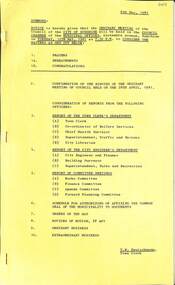
Administrative record - City of Sunshine - Commissioner Mr Alexander Alex George Gillon Collection 1976 - 1982 - Notice of ordinary meeting of the council 6th May 1981, City of Sunshine, 6th May 1981
... ...Blanche Street...Notice of Ordinary Meeting of the Council 6th May 1981 Report of the Town Clerk's Department Report of the Town Clerk Use of Committee Room and Facilities Saturday 27th June 1981 by the Sunshine International Women's Year Action Group Land Transfer Former Right of Way off Station Road Deer Park Application for Rate Exemption Brigidine Sisters Convent 54 Blanche Street Ardeer Disadvantaged Schools Supplementary Grants Programme Award Matters Report of the Co-Ordinator of Welfare Services Sunshine Park Estate Kindergarten Capital Subsidy Cherry Crescent Pre-School Centre The Duke of Edinburgh's Award Scheme Family Day Care Scheme Funding Emergency Accommodation Programme Disadvantaged Schools Programme Early Childhood Development Programme Electricity and Gas Debts in Melbourne Community Youth Support Scheme Funding Report of the Chief Health Surveyor Report of the Medical Officer of Health1980 Annual Report Health Act Registrations Application for Transfer of Proprietorship of Premises Under the Health Act Litter Material from the Inter-Departmental Committee on Litter Control Litter Bin Banks Report of the Superintendent Traffic & By-Laws Dog Act Disposal of Derelict Vehicles Report of the City Librarian Report of the Project Officer Rainbow Workshop Community Arts Network Victoria Report of the City Engineer & Planner Town & Country Planning (General Amendment) Act 1979 Rezoning Application Main Road East South East Corner St. ...Station Road Deer Park Sunshine International Women's Year Action Group Brigidine Sisters Convent Blanche Street Ardeer Sunshine Park Estate Kindergarten Cherry Crescent Pre-School Centre Cherry Crescent Braybrook Main Road East St. ...Notice of Ordinary Meeting of the Council 6th May 1981 Report of the Town Clerk's Department Report of the Town Clerk Use of Committee Room and Facilities Saturday 27th June 1981 by the Sunshine International Women's Year Action Group Land Transfer Former Right of Way off Station Road Deer Park Application for Rate Exemption Brigidine Sisters Convent 54 Blanche Street Ardeer Disadvantaged Schools Supplementary Grants Programme Award Matters Report of the Co-Ordinator of Welfare Services Sunshine Park Estate Kindergarten Capital Subsidy Cherry Crescent Pre-School Centre The Duke of Edinburgh's Award Scheme Family Day Care Scheme Funding Emergency Accommodation Programme Disadvantaged Schools Programme Early Childhood Development Programme Electricity and Gas Debts in Melbourne Community Youth Support Scheme Funding Report of the Chief Health Surveyor Report of the Medical Officer of Health1980 Annual Report Health Act Registrations Application for Transfer of Proprietorship of Premises Under the Health Act Litter Material from the Inter-Departmental Committee on Litter Control Litter Bin Banks Report of the Superintendent Traffic & By-Laws Dog Act Disposal of Derelict Vehicles Report of the City Librarian Report of the Project Officer Rainbow Workshop Community Arts Network Victoria Report of the City Engineer & Planner Town & Country Planning (General Amendment) Act 1979 Rezoning Application Main Road East South East Corner St. Albans Road St. Albans Planning Permit Application Promotion / Panel Sign 57 McIntyre Road Sunshine North Planning Permit Application Finance Office Shop 8 266 Hampshire Road Sunshine Planning Permit Licensed Rosamond Bowling Club Robert Barrett Reserve Rosamond Road Maribyrnong Planning Permit Laundrette 171 Main Road West St. Albans Planning Permit Application Dental Laboratory 171 Main Road West St. Albans Planning Permit Application Carport Display Lot 5 Ballarat Road Corner Wasley Street Albion Planning Permit Application Warehouse & Associated Car Parking Lot 18 McIntyre Road Sunshine North Planning Permit Application Coffee Shop 74 Warwick Road Sunshine North Planning Permit Application Service Premises and Caretaker's Dwelling King Edward Avenue North West Corner Adelaide Street Albion Planning Permit Application New Canopy Showroom and Signs Petrol Filling Station 431 Ballarat Road Sunshine Planning Permit Application Motor Repair Station 30 Berkshire Road Sunshine North Planning Permit Application Dental Surgery Shop 103A Deer Park Shopping Centre Neale Road Deer Park Planning Permit Application Chinese Restaurant Take Away Food Shop 103B Deer Park Shopping Centre Neale Road Deer Park Rezoning Application Lots 9, 11, 13, 15, 17 & 19 Withers Street and Lots 6, 8, 10, 12, 14, 16 & 18 Martin Street and Lots 1, 2, 3, 2, 23, 24 & 25 Withers Street Sunshine Planning Permit Application Hot Bread Kitchen 40 Furlong Road Sunshine North Planning Permit Application Factory Alterations Tasman U.E.B. 520 Geelong Road Brooklyn Planning Permit Application Amusement Parlour Lot 2 Disraeli Street St. Albans Planning Permit Application 22kV Switch Room Monsanto Australia Ltd Somerville Road Footscray West Planning Permit Application Factory Lot 43 Judge Street Sunshine Planning Permit Application Four Flats 34 Ridley Street Albion Abandonment of Easement 39 Birchwood Boulevard Deer Park Consolidation of Title Corner Watt Street and Corio Street Sunshine (House of Sunshine) Plan of Subdivision Rita Street St. Albans Availability of Sewers Albanvale and St. Albans Western Highway (Ballarat Road) Street Lighting Between Duke Street and Hampshire Road Sunshine Albion Explosive Factory Application by Council for Drainage Licence Station Road Drain Bond Agreement 5 King Edward Avenue Albion Sunshine Bowling Club Proposed Club Room Extensions Vacant Land Bounded by Western Highway (Ballarat Road), Westmoreland Road and Phoenix Street Sunshine North Education Department Chifley Drive Street Lighting Opposite to Scheme St. Albans South Progress Association Request for Tree Planting Along Sunshine Tip Site Northern Boundary Norfolk Street Request to Remove Tree Disgraceful Condition of Industrial Property Along McIntyre Road Sunshine North Report of the Building Surveyor Location of Building Lot 6 McIntyre Road Sunshine North Location of Building 9 Orloff Court Sunshine North Height of Fence 8 Glenrobe Street Deer Park Height of Fence 3 Horham Court St. Albans Building Over Easement 3 Ordell Close Deer Park Building Over Easement 3 Robyn Avenue St. Albans Building Over Easement 11 Morval Court Deer Park Rotary Club of Sunshine Has Request the Provision of Rubbish Bins at Rotary Park Schedule for Authorising of Affixing the Common Seal of the Municipality to Documents Orders of the Day Accounts Submitted for Payment as at 30th April 1981station road, deer park, sunshine international women's year action group, brigidine sisters convent, blanche street, ardeer, sunshine park estate kindergarten, cherry crescent pre-school centre, cherry crescent, braybrook, main road east, st. albans road, st. albans, mcintyre road, sunshine north, hampshire road, sunshine, robert barrett reserve, rosamond road, maribyrnong, rosamond bowling club, main road west, ballarat road, wasley street, albion, warwick road, king edward avenue, berkshire road, adelaide street, deer park shopping centre, neale road, withers street, martin street, furlong road, tasman u.e.b., geelong road, brooklyn, disraeli street, monsanto, somerville road, footscray west, judge street, ridley street, birchwood boulevard, watt street, corio street, house of sunshine, rita street, western highway, duke street, albion explosive factory, sunshine bowling club, anderson road, westmoreland road, phoenix street, chifley drive, st. albans south progress association, sunshine tip, norfolk street, orloff court, glenrobe street, horham court, ordell close, robyn avenue, morval court, rotary club of sunshine, rotary park -
Glen Eira Historical Society
Document - Hengar, Glen Eira Road, 356, Elsternwick
... ... Blanche Street...Langdon Henry Renwick Mary Langdon Elizabeth Langdon Laura Blanche Street Glen Eira Road Kooyong Road Langdon Estate Elsternwick Caulfield Hengar Beemery Park Rosecraddock Tarqua Beemery Happy Days Kindergarten Architectural styles Architectural features Gothic revival Victorian style Preschools The Contemporary School of Art Document Hengar, Glen Eira Road, 356, Elsternwick ...A photocopy of a two page Caulfield Conservation Study by Andrew Ward, dated 01/1995, on Hengar at 356 Glen Eira Road, Elsternwick. The study gives a brief history of Hengar’s construction and occupancy, a description of its Gothic revival architectural features and a statement of its heritage significance. The study includes a black and white photograph of the exterior of Hengar.langdon henry, renwick mary, langdon elizabeth, langdon laura, blanche street, glen eira road, kooyong road, langdon estate, elsternwick, caulfield, hengar, beemery park, rosecraddock, tarqua, beemery, happy days kindergarten, architectural styles, architectural features, gothic revival, victorian style, preschools, the contemporary school of art -
Glen Eira Historical Society
Article - Little Cromer, Kooyong Road, 235, Elsternwick
... ... Blanche Street...Also includes print of entry for Bellecourt, 85 Seymour Road from Victorian Heritage Database which notes that Little Cromer was formerly called Neringa Kooyong Road Elsternwick Little Cromer Hughes Allan Hughes Marjorie Air Raid Shelters Beemery Park Langdon Henry Langdon Montague Renwick Samuel Blanche Street Neringa Langdon Charles Petley Sadleir John Schreiber Robert Henry Architect Auctions Roof Gables Stables Gary Peer and Associates Parsons Charles Moloney James Trezise Alex Vassy Albert Johnston Mr. ...Photocopied article from Australian Jewish News April 20, 2001 titled A Rich History on the property Little Cromer, 235 Kooyong Road Elsternwick, which is to be auctioned on April 29, 2001. Includes one exterior and one interior photograph. Also includes print of entry for Bellecourt, 85 Seymour Road from Victorian Heritage Database which notes that Little Cromer was formerly called Neringakooyong road, elsternwick, little cromer, hughes allan, hughes marjorie, air raid shelters, beemery park, langdon henry, langdon montague, renwick samuel, blanche street, neringa, langdon charles petley, sadleir john, schreiber robert henry, architect, auctions, roof, gables, stables, gary peer and associates, parsons charles, moloney james, trezise alex, vassy albert, johnston mr., johnston mrs., bellecourt -
Glen Eira Historical Society
Letter - Bellecourt, Seymour Road, 85, Elsternwick
... ... Blanche Street...Also included is a document giving additional details on Bellecourt with a black and white illustration (85mm x 130mm) of the house, source unknown though handwritten notes provide that it is a duplicate from the book Caulfield’s Building Heritage Bellecourt Buildings Heritage studies Architectural features History Johnston Mr Hart Trevor Town clerks Caulfield South Filbert Street Beemery Glen Eira Road Kooyong Road Seymour Road Blanche Street Kooyong Estate Caulfield Caulfield North Langdon Charles Pettey Rosecraddock Rose Craddock Tarqua Hengar Victorian style Seymour Street Kooyong Estate Beemery Park Extension Langdon H J Langdon Montague Lirrewa Rennick Samuel The Garrell Langdon family Victorian era Neringa Little Gromer Little Cromer Parson Charles Moloney James Trezise Alex Vassy Albert Johnston Mrs Solomon G Caulfield’s Heritage Volume 1 City of Caulfield City of Glen Eira Heritage Management Plan Ward Andrew Belemery Park Johnston Archibald Letter Bellecourt, Seymour Road, 85, Elsternwick ...A typewritten letter to Mr Johnston from the National Trust Victoria, concerning the listing of Bellecourt by the Trust. The file also includes a print of the Victorian Heritage Database web page on Bellecourt with a black and white photograph (60mm x 45mm) of the house. Also included is a document giving additional details on Bellecourt with a black and white illustration (85mm x 130mm) of the house, source unknown though handwritten notes provide that it is a duplicate from the book Caulfield’s Building Heritagebellecourt, buildings, heritage studies, architectural features, history, johnston mr, hart trevor, town clerks, caulfield south, filbert street, beemery, glen eira road, kooyong road, seymour road, blanche street, kooyong estate, caulfield, caulfield north, langdon charles pettey, rosecraddock, rose craddock, tarqua, hengar, victorian style, seymour street, kooyong estate, beemery park extension, langdon h j, langdon montague, lirrewa, rennick samuel, the garrell, langdon family, victorian era, neringa, little gromer, little cromer, parson charles, moloney james, trezise alex, vassy albert, johnston mrs, solomon g, caulfield’s heritage , volume 1 city of caulfield, city of glen eira heritage management plan, ward andrew, belemery park, johnston archibald -
Glen Eira Historical Society
Document - Bellecourt, Seymour Road, 85, Elsternwick
... ... Blanche Street...Bellecourt Beemery Park Estate Beemery Mansions Johnston Archibald Architectural features Furniture Flats Johnston Mr Johnston Mrs Moloney James Langdon Charles Petley Parsons Charles Ratebooks Caulfield Langdon Charles Langdon Louisa Langdon Philip Seymour Road Blanche Street Neringa Langdon Mary Langdon Clive Servants Superintendent o Police Recollections Books Sadlier John Kelly Ned Kelly Edward Hunting Textile manufacturing Langdon Henry Joseph Langdon Mrs Rosecraddock Langdon Montague William Tarqua Lirrewa Langdon Blanche Hengar Langdon Laura Little Cromer Brookes Mr Anderson Rene Hart Trevor Franklin John Rosemount Avenue Document Bellecourt, Seymour Road, 85, Elsternwick ...One page handwritten document, undated and unattributed, describing Bellecourt’s exterior and interior with details of owners and occupiers. The file also includes an undated two page handwritten document, copied from the files of Trevor Hart by Rene Anderson, which contains details of Bellecourt and details of the Langdon family. It also contains a reference to a letter sent from the National Trust to Mr Johnston regarding heritage listing of the property. The file also includes a one page handwritten document, undated and unattributed, though possibly authored by Rene Anderson on the basis of handwriting comparison. The document contains details of the properties Bellecourt and Neringa.bellecourt, beemery park estate, beemery, mansions, johnston archibald, architectural features, furniture, flats, johnston mr, johnston mrs, moloney james, langdon charles petley, parsons charles, ratebooks, caulfield, langdon charles, langdon louisa, langdon philip, seymour road, blanche street, neringa, langdon mary, langdon clive, servants, superintendent o police, recollections, books, sadlier john, kelly ned, kelly edward, hunting, textile manufacturing, langdon henry joseph, langdon mrs, rosecraddock, langdon montague william, tarqua, lirrewa, langdon blanche, hengar, langdon laura, little cromer, brookes mr, anderson rene, hart trevor, franklin john, rosemount avenue -
Glen Eira Historical Society
Document - LANGDON FAMILY
... ... Blanche Street...Langdon Marie Langdon Clive Moxham Margaret Langdon Henry Joseph Langdon Elizabeth Laetitia Langdon Montague William Langdon Charles Petley Langdon Emily Amy Langdon Florence Elizabeth Langdon Laura Langdon Blanche Emma Langdon Jane Renwick Jane Renwick Samuel ‘The Garrell’ Glen Eira Road Langdon Elizabeth Langdon Leslie John Langdon Mary Elizabeth Langdon Dorothy Langdon Margery Campbell Mary Elizabeth Campbell Dorothy Franklin Margery Franklin John Riddoch Halstead Street ‘Tarqua’ ‘Lirrewa’ Lirrewa Grove Caulfield Town Hall ‘Hengar’ Happy Days Kindergarten Read louisa Martha ‘Neringa’ House names ‘Beemery’ Blanche Street Seymour Road ‘Little Cromer’ Esler Lilian Webb Lilian Langdon Stanley Blake Langdon Richard Read Langdon Philip Clarke Langdon Mary Laetitia Lane Langdon Henry Clive Courtenay St Mary’s Anglican Church Caulfield ‘Penleigh’ Parsons Florence Elizabeth Parsons Charles Robert Waiora Road ‘Beemery Park’ ‘Bellecourt’ Sherlock Max Langdon Road Anderson Irene Victoria ‘Lincluden’ Southall Kate ‘Ringwood’ Sadler Alfred Mansion House Elsternwick Document LANGDON FAMILY ...This file contains four items pertaining to the Langdon family: 1/Five typed copies of research notes ‘History of the Langdons of Caulfield’, undated, probably by Irene Anderson, eleven pages. 2/Photocopy of typed and hand written notes, four pages, by Irene Anderson for her history of the Langdons dated August 1982 plus one typed version of the first 3 pages. 3/Handwritten, nineteen pages draft of ‘The Langdon homes’ by Irene Anderson, undated. 4/Photocopy of an extract from ‘Henderson’s Families’, five pages titled ‘Langdon of Rosecraddock’ (four copies), some with handwritten notes.caulfield, langdon phillip, ‘rosecraddock’, hawthorn road, kooyong road, powderham road, craddock avenue, franklin j. r., langdon marie, langdon clive, moxham margaret, langdon henry joseph, langdon elizabeth laetitia, langdon montague william, langdon charles petley, langdon emily amy, langdon florence elizabeth, langdon laura, langdon blanche emma, langdon jane, renwick jane, renwick samuel, ‘the garrell’, glen eira road, langdon elizabeth, langdon leslie john, langdon mary elizabeth, langdon dorothy, langdon margery, campbell mary elizabeth, campbell dorothy, franklin margery, franklin john riddoch, halstead street, ‘tarqua’, ‘lirrewa’, lirrewa grove, caulfield town hall, ‘hengar’, happy days kindergarten, read louisa martha, ‘neringa’, house names, ‘beemery’, blanche street, seymour road, ‘little cromer’, esler lilian, webb lilian, langdon stanley blake, langdon richard read, langdon philip clarke, langdon mary laetitia lane, langdon henry clive courtenay, st mary’s anglican church caulfield, ‘penleigh’, parsons florence elizabeth, parsons charles robert, waiora road, ‘beemery park’, ‘bellecourt’, sherlock max, langdon road, anderson irene victoria, ‘lincluden’, southall kate, ‘ringwood’, sadler alfred, mansion house, elsternwick -
Glen Eira Historical Society
Document - Langdon Homes of Caulfield
... ... Blanche Street...The Langdon Homes of Caulfield Caulfield Historical Society Rosecraddock Caulfield Langdon Road Langdon Philip Langdon Marie Anderson Irene Langdon Henry Joseph Hawthorn Road Powderham Road Kooyong Road Craddock Avenue Langdon Elizabeth Laetitia Lane Langdon Langdon Montague William Roads Board of Caulfield Brighton Cemetery Langdon Edward Henry Langdon Charles Petley Langdon John Berry Langdon Emily Amy Langdon Florence Elizabeth Langdon Laura Langdon Blanche Emma Beemery Park Tarqua Renwick Samuel The Garrell Glen Eira Road Seymour Road Blanche Street Lirrewa Renwick Jane Read Louise Martha Freedman Harold Langdon Charles Stanley Blake Langdon Richard Read Langdon Philip Clark Langdon Mary Laetitia Lane Langdon Henry Clive Courtenay Elser Lilian St. ...One item encompassing three copies of this book: Two photocopies of the proof of the book The Langdon Homes of Caulfield by Irene Anderson published by Caulfield Historical Society in 1986. The book contains a history of the Langdon Family and their houses in Glen Eira: Rosecraddock, Lirrewa, Beemery, Hengar, Lincluden and Croton Hurst. Also one final print of this published book.the langdon homes of caulfield, caulfield historical society, rosecraddock, caulfield, langdon road, langdon philip, langdon marie, anderson irene, langdon henry joseph, hawthorn road, powderham road, kooyong road, craddock avenue, langdon elizabeth laetitia lane langdon, langdon montague william, roads board of caulfield, brighton cemetery, langdon edward henry, langdon charles petley, langdon john berry, langdon emily amy, langdon florence elizabeth, langdon laura, langdon blanche emma, beemery park, tarqua, renwick samuel, the garrell, glen eira road, seymour road, blanche street, lirrewa, renwick jane, read louise martha, freedman harold, langdon charles stanley blake, langdon richard read, langdon philip clark, langdon mary laetitia lane, langdon henry clive courtenay, elser lilian, st. mary’s church of england caulfield, keverell road, langdon richard berry, langdon charles hugh, topp mr., jamieson mr., tayler lloyd, mansions, balaclava road, crotonhurst avenue, langley h.t. rev., hengar, langdon henry, lirrewa grove, riddoch elizabeth helen, langdon leslie john, langdon mary elizabeth, langdon dorothy, langdon margery, caulfield town hall, caulfield shire council, caulfield city hall, lincluden, sinclair a.j., elsternwick, langdon madge, weddings, memorial services, beemery, beemery park estate, langdon clive, neringa, sadleir john, penleigh, garrell street, victorian style, croton hurst, webb george henry frederick, judges, langdon william farr, webb sophie sarah annie, webb dottie, mitchell road, caulfield racecourse, webb isabella, langdon frank henry webb, langdon george rupert webb, langdon mark, langdon webb, langdon isobel, langdon grace, langdon georgie, langdon violet, somers charles, mclaughlin j., walworth avenue -
Mission to Seafarers Victoria
Letter - Correspondence, 14/01/1950
... The outer right-hand side of the letter is blue and addressed to Allen Quinn Esq. 10 Blanche Street, Elsternwick, Melbourne....The outer right-hand side of the letter is blue and addressed to Allen Quinn Esq. 10 Blanche Street, Elsternwick, Melbourne. Letter Correspondence Vera South ...Vera writes ..'I am enjoying my stay in Calcutta but I am sorry I am unable to see more of India. Conditions are unsettled and it isn't very safe travelling around and most uncomfortable.'Quinn CollectionA self-folding letter (0834.a) written in blue ink on buff coloured paper headed Calcutta and dated 14/01/50. The outer right-hand side of the letter is blue and addressed to Allen Quinn Esq. 10 Blanche Street, Elsternwick, Melbourne.Letter commences 'My Dear Allen, How pleased I am to hear from your Father that you will be in Melbourne on Jan. 20th.....' and concludes '..My love to your Mother. From Vera' letters-from-abroad, quinn, 1950, calcutta, vera south -
 Sunshine and District Historical Society Incorporated
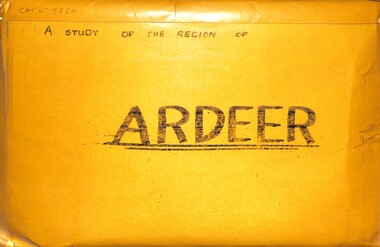
Archive - A Study Of The Region Of Ardeer, Sister Chanel (Sister Julia Williams), 1985
... At the time, she was based at the Brigidine Convent in Blanche Street, Ardeer, opposite the Mother of God Catholic Primary School. ...There's Northing To Study 5384.02 - A Regional Study Of The Region Of Ardeer Page 8.jpg 1978 Municipal Directory 5384.02 - A Regional Study Of The Region Of Ardeer Page 9.jpg Text - Who Fosters It Image - House 5384.02 - A Regional Study Of The Region Of Ardeer Page 10.jpg Image - Market Gardens Yallourn Street Image - Yallourn Street 5384.02 - A Regional Study Of The Region Of Ardeer Page 11.jpg Image - Mother Of God Catholic Church Blanche Street Image - Mother Of God Catholic Church Blanche Street 5384.02 - A Regional Study Of The Region Of Ardeer Page 12.jpg Image - Scotch Thistles Image - Kororoit Creek Bridge West Street To Esmond Street 5384.02 - A Regional Study Of The Region Of Ardeer Page 13.jpg Image - Kororoit Creek Bridge Yalloun Street to Ballarat Road Image - Mother Of God Catholic Church Blanche Street 5384.02 - A Regional Study Of The Region Of Ardeer Page 14.jpg Text - Councillors, Politicians, People 5384.02 - A Regional Study Of The Region Of Ardeer Page 15.jpg Reality 5384.02 - A Regional Study Of The Region Of Ardeer Page 16.jpg Text - Geography Of The City Of Sunshine 5384.02 - A Regional Study Of The Region Of Ardeer Page 18.jpg Melway Map 5384.02 - A Regional Study Of The Region Of Ardeer Page 20.jpg Image - Kororoit Creek From Ballarat Road 5384.02 - A Regional Study Of The Region Of Ardeer Page 22.jpg Text - Basalt Sample Of A Basalt Rock When Laying Foundations For The Polish Community Hall In Helene Street 5384.02 - A Regional Study Of The Region Of Ardeer Page 23.jpg Image - Corner Yallourn Street And Rockbank Road Image - Tower Road Proposed Freeway Site (Now Scrapped) 5384.02 - A Regional Study Of The Region Of Ardeer Page 24.jpg Image - Kororoit Creek Bridge West Street To Esmond Street 5384.02 - A Regional Study Of The Region Of Ardeer Page 25.jpg Kororoit Creek Bridge West Street To Esmond Street 5384.02 - A Regional Study Of The Region Of Ardeer Page 26.jpg Image - Sunshine Swimming Pool Kororoit Creek 5384.02 - A Regional Study Of The Region Of Ardeer Page 27.jpg Text - Industry 5384.02 - A Regional Study Of The Region Of Ardeer Page 28.jpg Text - ICI 5384.02 - A Regional Study Of The Region Of Ardeer Page 29.jpg Text - ICINZ 5384.02 - A Regional Study Of The Region Of Ardeer Page 30.jpg Image - ICIANZ Ballarat Road Entrance 1979 Image - ICIANZ Explosive Reserve View From More Park Esmond Road 5384.02 - A Regional Study Of The Region Of Ardeer Page 31.jpg Image - Forrest Street Corner Fitzgerald Road Image - Entrance To ICIANZ Forrest Street 5384.02 - A Regional Study Of The Region Of Ardeer Page 32.jpg Image - Explosive Train Shunting Across Forrest Street 5384.02 - A Regional Study Of The Region Of Ardeer Page 33.jpg Image - Besco Batteries Forrest Street 5384.02 - A Regional Study Of The Region Of Ardeer Page 34.jpg Image - Queen Of Heaven Catholic Church Holt Street 5384.02 - A Regional Study Of The Region Of Ardeer Page 35.jpg Image - Ukrainian Catholic Church Forrest Street 5384.02 - A Regional Study Of The Region Of Ardeer Page 36.jpg Image - Mother Of God Catholic Church Blanche Street 5384.02 - A Regional Study Of The Region Of Ardeer Page 37.jpg Image - Ukrainian Hall Suspension Street Image - Polish Hall Helene Street 5384.02 - A Regional Study Of The Region Of Ardeer Page 38.jpg Image - Mother Of God Catholic Primary School Blanche Street 5384.02 - A Regional Study Of The Region Of Ardeer Page 39.jpg Image - Ardeer State School Looking From Suspension Street 5384.02 - A Regional Study Of The Region Of Ardeer Page 40.jpg Image - Polish Soccer Club Playgroup 5384.02 - A Regional Study Of The Region Of Ardeer Page 41.jpg Image - Holt Street Shopping Centre Image - Holt Street Milk Bar And Post Office 5384.02 - A Regional Study Of The Region Of Ardeer Page 42.jpg Image - 29 - 31 Maxwell Street Shopping Centre Image - 60 - 62 Maxwell Street Shopping Centre 5384.02 - A Regional Study Of The Region Of Ardeer Page 43.jpg Image - Motor Rail Train At Ardeer Station 5384.02 - A Regional Study Of The Region Of Ardeer Page 44.jpg Image - Ardeer Railway Station 5384.02 - A Regional Study Of The Region Of Ardeer Page 45.jpg Image - Railway Line Pedestrian Crossing Ardeer Station Ridgeway Parade To Forrest Street Image - Railway Line Pedestrian Crossing Ridgeway Parade To West Street 5384.02 - A Regional Study Of The Region Of Ardeer Page 46.jpg Image - Half House Image - Half House 5384.02 - A Regional Study Of The Region Of Ardeer Page 47.jpg Image - Small House Image - Vacant Block 5384.02 - A Regional Study Of The Region Of Ardeer Page 48.jpg Image - House Image - New House 5384.02 - A Regional Study Of The Region Of Ardeer Page 49.jpg Image - House 5384.02 - A Regional Study Of The Region Of Ardeer Page 50.jpg Image - Horse Riding School Forrest Street Image - Horse Riding School Forrest Street 5384.02 - A Regional Study Of The Region Of Ardeer Page 51.jpg Image - Kororoit Creek Image - Playground 5384.02 - A Regional Study Of The Region Of Ardeer Page 52.jpg Image - More Park Women's Sport Centre Esmond Street Image - Old Service Station Old Service Station 5384.02 - A Regional Study Of The Region Of Ardeer Page 53.jpg Image - Vegetable Garden Image - Vegetable Garden 5384.02 - A Regional Study Of The Region Of Ardeer Page 54.jpg Text - Open Space Analysis 5384.02 - A Regional Study Of The Region Of Ardeer Page 55.jpg 1976 Census 5384.02 - A Regional Study Of The Region Of Ardeer Page 56.jpg 1976 Census 5384.02 - A Regional Study Of The Region Of Ardeer Page 57.jpg 1979 Statistics 5384.02 - A Regional Study Of The Region Of Ardeer Page 58.jpg Text - Some Significant Realities 5384.02 - A Regional Study Of The Region Of Ardeer Page 59.jpg Text - A Typical Story From An Ardeerite 5384.02 - A Regional Study Of The Region Of Ardeer Page 60.jpg Text - Bibliography 5384.03 - A Regional Study Of The Region Of Ardeer - Donation Letter.jpg 5384.04 - A Regional Study Of The Region Of Ardeer - Sister Chanel Details.jpg ...At the time, she was based at the Brigidine Convent in Blanche Street, Ardeer, opposite the Mother of God Catholic Primary School. ...Sister Chanel, was later known as Sister Julia Williams. She was professed on the 7th December 1963. She is mentioned in a history of the Brigidine Sister, by Morna Sturrock, Women of Strength, Women of Gentleness: Brigidine Sisters - Victoria Province, David Lovell Publishing, Victoria Australia, 1995, page 290. Sister Chanel (Sister Julia Williams) undertook a study of Ardeer in 1985, as part of her university studies. At the time, she was based at the Brigidine Convent in Blanche Street, Ardeer, opposite the Mother of God Catholic Primary School. Some years later, she was living at Unit 3, 387 Station Street, Bonbeach, Vic, 3196. Today, the Brigidine Convent at Ardeer no longer exists. The buildings have been demolished. The local schools begun by the Brigidine Sisters are now entirely staffed by lay teachers. There is a Brigidine Centre in Malvern, which contains archives relating to the Brigidine Sisters' history.The Brigidine Sisters (often misheard as “Bridiline”) are a long‑established Catholic religious congregation with a major historical presence in Melbourne, especially in education and social justice work. They arrived in Victoria in the 1880s and continue to operate schools, ministries, and community programs across the state.5384.01 - A Regional Study Of The Region Of Ardeer Envelope.jpg Text - A Regional Study Of The Region Of Ardeer 5384.02 - A Regional Study Of The Region Of Ardeer Page 1.jpg Text - A Regional Study Of The Region Of Ardeer 5384.02 - A Regional Study Of The Region Of Ardeer Page 2.jpg 5384.02 - A Regional Study Of The Region Of Ardeer Page 3.jpg Text - Subject HU211 Regionalism And Australia 5384.02 - A Regional Study Of The Region Of Ardeer Page 4.jpg Text - Ardeer Regions Selected 5384.02 - A Regional Study Of The Region Of Ardeer Page 5.jpg Melway Map 5384.02 - A Regional Study Of The Region Of Ardeer Page 6.jpg Text - Ardeer Never Heard Of It. Wheres That? 5384.02 - A Regional Study Of The Region Of Ardeer Page 7.jpg Text - Study The Region of Ardeer. There's Northing To Study 5384.02 - A Regional Study Of The Region Of Ardeer Page 8.jpg 1978 Municipal Directory 5384.02 - A Regional Study Of The Region Of Ardeer Page 9.jpg Text - Who Fosters It Image - House 5384.02 - A Regional Study Of The Region Of Ardeer Page 10.jpg Image - Market Gardens Yallourn Street Image - Yallourn Street 5384.02 - A Regional Study Of The Region Of Ardeer Page 11.jpg Image - Mother Of God Catholic Church Blanche Street Image - Mother Of God Catholic Church Blanche Street 5384.02 - A Regional Study Of The Region Of Ardeer Page 12.jpg Image - Scotch Thistles Image - Kororoit Creek Bridge West Street To Esmond Street 5384.02 - A Regional Study Of The Region Of Ardeer Page 13.jpg Image - Kororoit Creek Bridge Yalloun Street to Ballarat Road Image - Mother Of God Catholic Church Blanche Street 5384.02 - A Regional Study Of The Region Of Ardeer Page 14.jpg Text - Councillors, Politicians, People 5384.02 - A Regional Study Of The Region Of Ardeer Page 15.jpg Reality 5384.02 - A Regional Study Of The Region Of Ardeer Page 16.jpg Text - Geography Of The City Of Sunshine 5384.02 - A Regional Study Of The Region Of Ardeer Page 18.jpg Melway Map 5384.02 - A Regional Study Of The Region Of Ardeer Page 20.jpg Image - Kororoit Creek From Ballarat Road 5384.02 - A Regional Study Of The Region Of Ardeer Page 22.jpg Text - Basalt Sample Of A Basalt Rock When Laying Foundations For The Polish Community Hall In Helene Street 5384.02 - A Regional Study Of The Region Of Ardeer Page 23.jpg Image - Corner Yallourn Street And Rockbank Road Image - Tower Road Proposed Freeway Site (Now Scrapped) 5384.02 - A Regional Study Of The Region Of Ardeer Page 24.jpg Image - Kororoit Creek Bridge West Street To Esmond Street 5384.02 - A Regional Study Of The Region Of Ardeer Page 25.jpg Kororoit Creek Bridge West Street To Esmond Street 5384.02 - A Regional Study Of The Region Of Ardeer Page 26.jpg Image - Sunshine Swimming Pool Kororoit Creek 5384.02 - A Regional Study Of The Region Of Ardeer Page 27.jpg Text - Industry 5384.02 - A Regional Study Of The Region Of Ardeer Page 28.jpg Text - ICI 5384.02 - A Regional Study Of The Region Of Ardeer Page 29.jpg Text - ICINZ 5384.02 - A Regional Study Of The Region Of Ardeer Page 30.jpg Image - ICIANZ Ballarat Road Entrance 1979 Image - ICIANZ Explosive Reserve View From More Park Esmond Road 5384.02 - A Regional Study Of The Region Of Ardeer Page 31.jpg Image - Forrest Street Corner Fitzgerald Road Image - Entrance To ICIANZ Forrest Street 5384.02 - A Regional Study Of The Region Of Ardeer Page 32.jpg Image - Explosive Train Shunting Across Forrest Street 5384.02 - A Regional Study Of The Region Of Ardeer Page 33.jpg Image - Besco Batteries Forrest Street 5384.02 - A Regional Study Of The Region Of Ardeer Page 34.jpg Image - Queen Of Heaven Catholic Church Holt Street 5384.02 - A Regional Study Of The Region Of Ardeer Page 35.jpg Image - Ukrainian Catholic Church Forrest Street 5384.02 - A Regional Study Of The Region Of Ardeer Page 36.jpg Image - Mother Of God Catholic Church Blanche Street 5384.02 - A Regional Study Of The Region Of Ardeer Page 37.jpg Image - Ukrainian Hall Suspension Street Image - Polish Hall Helene Street 5384.02 - A Regional Study Of The Region Of Ardeer Page 38.jpg Image - Mother Of God Catholic Primary School Blanche Street 5384.02 - A Regional Study Of The Region Of Ardeer Page 39.jpg Image - Ardeer State School Looking From Suspension Street 5384.02 - A Regional Study Of The Region Of Ardeer Page 40.jpg Image - Polish Soccer Club Playgroup 5384.02 - A Regional Study Of The Region Of Ardeer Page 41.jpg Image - Holt Street Shopping Centre Image - Holt Street Milk Bar And Post Office 5384.02 - A Regional Study Of The Region Of Ardeer Page 42.jpg Image - 29 - 31 Maxwell Street Shopping Centre Image - 60 - 62 Maxwell Street Shopping Centre 5384.02 - A Regional Study Of The Region Of Ardeer Page 43.jpg Image - Motor Rail Train At Ardeer Station 5384.02 - A Regional Study Of The Region Of Ardeer Page 44.jpg Image - Ardeer Railway Station 5384.02 - A Regional Study Of The Region Of Ardeer Page 45.jpg Image - Railway Line Pedestrian Crossing Ardeer Station Ridgeway Parade To Forrest Street Image - Railway Line Pedestrian Crossing Ridgeway Parade To West Street 5384.02 - A Regional Study Of The Region Of Ardeer Page 46.jpg Image - Half House Image - Half House 5384.02 - A Regional Study Of The Region Of Ardeer Page 47.jpg Image - Small House Image - Vacant Block 5384.02 - A Regional Study Of The Region Of Ardeer Page 48.jpg Image - House Image - New House 5384.02 - A Regional Study Of The Region Of Ardeer Page 49.jpg Image - House 5384.02 - A Regional Study Of The Region Of Ardeer Page 50.jpg Image - Horse Riding School Forrest Street Image - Horse Riding School Forrest Street 5384.02 - A Regional Study Of The Region Of Ardeer Page 51.jpg Image - Kororoit Creek Image - Playground 5384.02 - A Regional Study Of The Region Of Ardeer Page 52.jpg Image - More Park Women's Sport Centre Esmond Street Image - Old Service Station Old Service Station 5384.02 - A Regional Study Of The Region Of Ardeer Page 53.jpg Image - Vegetable Garden Image - Vegetable Garden 5384.02 - A Regional Study Of The Region Of Ardeer Page 54.jpg Text - Open Space Analysis 5384.02 - A Regional Study Of The Region Of Ardeer Page 55.jpg 1976 Census 5384.02 - A Regional Study Of The Region Of Ardeer Page 56.jpg 1976 Census 5384.02 - A Regional Study Of The Region Of Ardeer Page 57.jpg 1979 Statistics 5384.02 - A Regional Study Of The Region Of Ardeer Page 58.jpg Text - Some Significant Realities 5384.02 - A Regional Study Of The Region Of Ardeer Page 59.jpg Text - A Typical Story From An Ardeerite 5384.02 - A Regional Study Of The Region Of Ardeer Page 60.jpg Text - Bibliography 5384.03 - A Regional Study Of The Region Of Ardeer - Donation Letter.jpg 5384.04 - A Regional Study Of The Region Of Ardeer - Sister Chanel Details.jpg -
 Sunshine and District Historical Society Incorporated
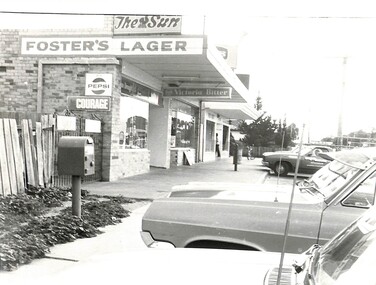
Photograph - Images of Ardeer By Sister Chanel, Sister Chanel (Sister Julia Williams), 1980's
... At the time, she was based at the Brigidine Convent in Blanche Street, Ardeer, opposite the Mother of God Catholic Primary School. ...5383.01 - Images of Ardeer By Sister Chanel - Holt Street Shopping Centre.jpg 5383.02 - Images of Ardeer By Sister Chanel - Holt Street Milk Bar And Post Office.jpg 5383.03 - Images of Ardeer By Sister Chanel - 29 - 31 Maxwell Street Shopping Centre.jpg 5383.04 - Images of Ardeer By Sister Chanel - 60 - 62 Maxwell Street Shopping Centre.jpg 5383.05 - Images of Ardeer By Sister Chanel - Mother Of God Catholic Church Blanche Street.jpg 5383.06 - Images of Ardeer By Sister Chanel - Mother Of God Catholic Church Blanche Street.jpg 5383.07 - Images of Ardeer By Sister Chanel - Mother Of God Catholic Church Blanche Street.jpg 5383.08 - Images of Ardeer By Sister Chanel - Mother Of God Catholic Church Blanche Street.jpg 5383.09 - Images of Ardeer By Sister Chanel - Mother Of God Catholic Primary School Blanche Street.jpg 5383.10 - Images of Ardeer By Sister Chanel - Ukrainian Catholic Church Forrest Street.jpg 5383.11 - Images of Ardeer By Sister Chanel - Ukrainian Hall Suspension Street.jpg 5383.12 - Images of Ardeer By Sister Chanel - Polish Hall Helene Street.jpg 5383.13 - Images of Ardeer By Sister Chanel - Queen Of Heaven Catholic Church Holt Street.jpg 5383.14 - Images of Ardeer By Sister Chanel - More Park Women's Sport Centre Esmond Street.jpg 5383.15 - Images of Ardeer By Sister Chanel - Kororoit Creek Bridge West Street To Esmond Street.jpg 5383.16 - Images of Ardeer By Sister Chanel - Kororoit Creek Bridge West Street To Esmond Street.jpg 5383.17 - Images of Ardeer By Sister Chanel - ICIANZ Ballarat Road Entrance 1979.jpg 5383.18 - Images of Ardeer By Sister Chanel - Ardeer Railway Station.jpg 5383.19 - Images of Ardeer By Sister Chanel - Motor Rail Train At Ardeer Station.jpg 5383.20 - Images of Ardeer By Sister Chanel - Railway Line Pedestrian Crossing Ridgeway Parade To West Street.jpg 5383.21 - Images of Ardeer By Sister Chanel - Railway Line Pedestrian Crossing Ardeer Station Ridgeway Parade To Forrest Street.jpg 5383.22 - Images of Ardeer By Sister Chanel - Old Service Station.jpg 5383.23 - Images of Ardeer By Sister Chanel - New House.jpg 5383.24 - Images of Ardeer By Sister Chanel - Ardeer State School Looking From Suspension Street.jpg 5383.25 - Images of Ardeer By Sister Chanel - Besco Batteries Forrest Street.jpg 5383.26 - Images of Ardeer By Sister Chanel - Corner Yallourn Street And Rockbank Road.jpg 5383.27 - Images of Ardeer By Sister Chanel - House.jpg 5383.28 - Images of Ardeer By Sister Chanel - Kororoit Creek From Ballarat Road.jpg 5383.29 - Images of Ardeer By Sister Chanel - Forrest Street Corner Fitzgerald Road.jpg 5383.30 - Images of Ardeer By Sister Chanel - Half House.jpg 5383.31 - Images of Ardeer By Sister Chanel - House.jpg 5383.32 - Images of Ardeer By Sister Chanel - Entrance To ICIANZ Forrest Street.jpg 5383.33 - Images of Ardeer By Sister Chanel - ICIANZ Explosive Reserve View From More Park Esmond Road.jpg 5383.34 - Images of Ardeer By Sister Chanel - Explosive Train Shunting Across Forrest Street.jpg 5383.35 - Images of Ardeer By Sister Chanel - House.jpg 5383.36 - Images of Ardeer By Sister Chanel - Kororoit Creek.jpg 5383.37 - Images of Ardeer By Sister Chanel - Market Gardens Yallourn Street.jpg 5383.38 - Images of Ardeer By Sister Chanel - Playground.jpg 5383.39 - Images of Ardeer By Sister Chanel - Polish Soccer Club Playgroup.jpg 5383.40 - Images of Ardeer By Sister Chanel - Scotch Thistles.jpg 5383.41 - Images of Ardeer By Sister Chanel - Small House.jpg 5383.42 - Images of Ardeer By Sister Chanel - Tower Road Proposed Freeway Site (Now Scrapped).jpg 5383.43 - Images of Ardeer By Sister Chanel - Vacant Block.jpg 5383.44 - Images of Ardeer By Sister Chanel - Vegetable Garden.jpg 5383.45 - Images of Ardeer By Sister Chanel - Yallourn Street.jpg 5383.46 - Images of Ardeer By Sister Chanel - Half House.jpg 5383.47 - Images of Ardeer By Sister Chanel - Horse Riding School Forrest Street.jpg 5383.48 - Images of Ardeer By Sister Chanel - Horse Riding School Forrest Street.jpg 5383.49 - Images of Ardeer By Sister Chanel - Kororoit Creek Bridge Yalloun Street to Ballarat Road.jpg 5383.50 - Images of Ardeer By Sister Chanel - Vegetable Garden.jpg ...At the time, she was based at the Brigidine Convent in Blanche Street, Ardeer, opposite the Mother of God Catholic Primary School. ...Sister Chanel, was later known as Sister Julia Williams. She was professed on the 7th December 1963. She is mentioned in a history of the Brigidine Sister, by Morna Sturrock, Women of Strength, Women of Gentleness: Brigidine Sisters - Victoria Province, David Lovell Publishing, Victoria Australia, 1995, page 290. Sister Chanel (Sister Julia Williams) undertook a study of Ardeer in 1985, as part of her university studies. At the time, she was based at the Brigidine Convent in Blanche Street, Ardeer, opposite the Mother of God Catholic Primary School. Some years later, she was living at Unit 3, 387 Station Street, Bonbeach, Vic, 3196. These photographs have been scanned from her university work "A Study Of The Region Of Ardeer" Today, the Brigidine Convent at Ardeer no longer exists. The buildings have been demolished. The local schools begun by the Brigidine Sisters are now entirely staffed by lay teachers. There is a Brigidine Centre in Malvern, which contains archives relating to the Brigidine Sisters' history.These black & white photographs capture Ardeer's street scenes and other points of interest in the 1980's5383.01 - Images of Ardeer By Sister Chanel - Holt Street Shopping Centre.jpg 5383.02 - Images of Ardeer By Sister Chanel - Holt Street Milk Bar And Post Office.jpg 5383.03 - Images of Ardeer By Sister Chanel - 29 - 31 Maxwell Street Shopping Centre.jpg 5383.04 - Images of Ardeer By Sister Chanel - 60 - 62 Maxwell Street Shopping Centre.jpg 5383.05 - Images of Ardeer By Sister Chanel - Mother Of God Catholic Church Blanche Street.jpg 5383.06 - Images of Ardeer By Sister Chanel - Mother Of God Catholic Church Blanche Street.jpg 5383.07 - Images of Ardeer By Sister Chanel - Mother Of God Catholic Church Blanche Street.jpg 5383.08 - Images of Ardeer By Sister Chanel - Mother Of God Catholic Church Blanche Street.jpg 5383.09 - Images of Ardeer By Sister Chanel - Mother Of God Catholic Primary School Blanche Street.jpg 5383.10 - Images of Ardeer By Sister Chanel - Ukrainian Catholic Church Forrest Street.jpg 5383.11 - Images of Ardeer By Sister Chanel - Ukrainian Hall Suspension Street.jpg 5383.12 - Images of Ardeer By Sister Chanel - Polish Hall Helene Street.jpg 5383.13 - Images of Ardeer By Sister Chanel - Queen Of Heaven Catholic Church Holt Street.jpg 5383.14 - Images of Ardeer By Sister Chanel - More Park Women's Sport Centre Esmond Street.jpg 5383.15 - Images of Ardeer By Sister Chanel - Kororoit Creek Bridge West Street To Esmond Street.jpg 5383.16 - Images of Ardeer By Sister Chanel - Kororoit Creek Bridge West Street To Esmond Street.jpg 5383.17 - Images of Ardeer By Sister Chanel - ICIANZ Ballarat Road Entrance 1979.jpg 5383.18 - Images of Ardeer By Sister Chanel - Ardeer Railway Station.jpg 5383.19 - Images of Ardeer By Sister Chanel - Motor Rail Train At Ardeer Station.jpg 5383.20 - Images of Ardeer By Sister Chanel - Railway Line Pedestrian Crossing Ridgeway Parade To West Street.jpg 5383.21 - Images of Ardeer By Sister Chanel - Railway Line Pedestrian Crossing Ardeer Station Ridgeway Parade To Forrest Street.jpg 5383.22 - Images of Ardeer By Sister Chanel - Old Service Station.jpg 5383.23 - Images of Ardeer By Sister Chanel - New House.jpg 5383.24 - Images of Ardeer By Sister Chanel - Ardeer State School Looking From Suspension Street.jpg 5383.25 - Images of Ardeer By Sister Chanel - Besco Batteries Forrest Street.jpg 5383.26 - Images of Ardeer By Sister Chanel - Corner Yallourn Street And Rockbank Road.jpg 5383.27 - Images of Ardeer By Sister Chanel - House.jpg 5383.28 - Images of Ardeer By Sister Chanel - Kororoit Creek From Ballarat Road.jpg 5383.29 - Images of Ardeer By Sister Chanel - Forrest Street Corner Fitzgerald Road.jpg 5383.30 - Images of Ardeer By Sister Chanel - Half House.jpg 5383.31 - Images of Ardeer By Sister Chanel - House.jpg 5383.32 - Images of Ardeer By Sister Chanel - Entrance To ICIANZ Forrest Street.jpg 5383.33 - Images of Ardeer By Sister Chanel - ICIANZ Explosive Reserve View From More Park Esmond Road.jpg 5383.34 - Images of Ardeer By Sister Chanel - Explosive Train Shunting Across Forrest Street.jpg 5383.35 - Images of Ardeer By Sister Chanel - House.jpg 5383.36 - Images of Ardeer By Sister Chanel - Kororoit Creek.jpg 5383.37 - Images of Ardeer By Sister Chanel - Market Gardens Yallourn Street.jpg 5383.38 - Images of Ardeer By Sister Chanel - Playground.jpg 5383.39 - Images of Ardeer By Sister Chanel - Polish Soccer Club Playgroup.jpg 5383.40 - Images of Ardeer By Sister Chanel - Scotch Thistles.jpg 5383.41 - Images of Ardeer By Sister Chanel - Small House.jpg 5383.42 - Images of Ardeer By Sister Chanel - Tower Road Proposed Freeway Site (Now Scrapped).jpg 5383.43 - Images of Ardeer By Sister Chanel - Vacant Block.jpg 5383.44 - Images of Ardeer By Sister Chanel - Vegetable Garden.jpg 5383.45 - Images of Ardeer By Sister Chanel - Yallourn Street.jpg 5383.46 - Images of Ardeer By Sister Chanel - Half House.jpg 5383.47 - Images of Ardeer By Sister Chanel - Horse Riding School Forrest Street.jpg 5383.48 - Images of Ardeer By Sister Chanel - Horse Riding School Forrest Street.jpg 5383.49 - Images of Ardeer By Sister Chanel - Kororoit Creek Bridge Yalloun Street to Ballarat Road.jpg 5383.50 - Images of Ardeer By Sister Chanel - Vegetable Garden.jpg -
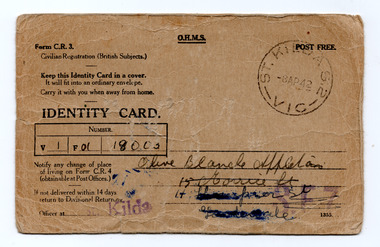 St Kilda Historical Society
Administrative record - Identification card, Identity Card, 1942
... This card was issued to Olive Blanche Appelton, 15 Morrie Street, Caulfield North....This card was issued to Olive Blanche Appelton, 15 Morrie Street, Caulfield North. WWII World War II Civilian identification ID cards Postmarked 8 April 1942 St Kilda. ...An identity card issued for civilian registration of British Subjects during World War II. This card was issued to Olive Blanche Appelton, 15 Morrie Street, Caulfield North.Brown card printed in black on both sidesPostmarked 8 April 1942 St Kilda. Card number 18003. Handwritten name, address and signatures of cardholder and witness. Handwritten additional reference numbers for official purposes.wwii, world war ii, civilian identification, id cards -
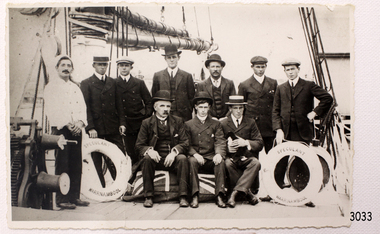 Flagstaff Hill Maritime Museum and Village
Photograph, early 1900's
... Blanche who died aged 89 and Eveline who died aged 48.) In 1874 Peter starting a boating establishment on the Hopkins River. In 1875 he opened up a Coopers business in Kepler Street next to what was Bateman, Smith and Co., moving to Liebig Street, next to the Victoria Hotel, in 1877. ...Blanche who died aged 89 and Eveline who died aged 48.) In 1874 Peter starting a boating establishment on the Hopkins River. In 1875 he opened up a Coopers business in Kepler Street next to what was Bateman, Smith and Co., moving to Liebig Street, next to the Victoria Hotel, in 1877. ...This photograph of the 10 crew of the SPECULANT would have been taken prior to Feb 10th 1911, when the ship was wrecked on the south coast of Victoria at a place called Cape Patton. The barquentine SPECULANT was a steel, three-masted sailing ship built in 1895 in Inverkeithing, Scotland, registered in Warrnambool, Victoria and wrecked at Cape Paton, Victoria, 10th February 1911. The SPECULANT had been involved in the timber trade between the United Kingdom and Russia, until sold to its Warrnambool owners and timber merchants Messrs. P.J. McGennan & Co. (Peter John McGennan) in 1902 for 3000 pounds and had her sailed to Warrnambool as her new port. Peter John McGennan was born in 1844 and worked as a builder and cooper in Holyhead, Anglesea, Wales. He immigrated to Australia in 1869 as a free settler and arrived in Warrnambool in 1871 and undertook management of a property in Grassmere for Mr. Palmer. Peter met his wife Emily in South Melbourne and they married in 1873. They had ten children including Harry who lived to 1965, and Andrew who lived until 1958. (The other children were their four brothers - John who was killed in the Dardenalles aged 35, Frederick who died aged 8, Peter who died aged 28, Frank who died aged 5 weeks - and four sisters - Beatrice who died age 89, Edith who died aged 49, Blanche who died aged 89 and Eveline who died aged 48.) In 1874 Peter starting a boating establishment on the Hopkins River. In 1875 he opened up a Coopers business in Kepler Street next to what was Bateman, Smith and Co., moving to Liebig Street, next to the Victoria Hotel, in 1877. In 1882 he then moved to Lava Street (which in later years was the site of Chandlers Hardware Store). He was associated with the establishment of the Butter Factory at Allansford. He started making Butter Boxes to his own design and cheese batts for the Butter Factory. In 1896 established a Box Factory in Davis Street Merrivale, employing 24 people at its peak, (it was burnt down in 1923); and in Pertobe Road from 1912 (now the Army Barracks building). Peter was a Borough Councillor for Albert Ward from 1885 to 1891, he commenced the Foreshore Trust (including the camping grounds along Pertobe Road), and he was an inaugural Director of the Woollen Mill in Harris Street, buying an extensive share-holding in 1908 from the share trader Edward Vidler. They lobbied the Town Hall to have a formal ‘Cutting’ for the waters of the Merri River to be redirected from its natural opening south of Dennington, to its existing opening near Viaduct Road, in order to have the scourings from the wool at the Woollen Mill discharged into the sea. He sold Butter Boxes around the state, and had to ship them to Melbourne by rail. Peter’s purchase of the SPECULANT in 1902 enabled him to back-load white pine from Kaipara, New Zealand to Warrnambool to make his butter boxes then, to gain profitability, buy and ship potatoes and other primary produce bound to Melbourne. (McGennan & Co. had also owned the LA BELLA, which had traded in timber as well, until she was tragically wrecked with the loss of seven lives, after missing the entrance channel to Warrnambool harbour in 1905. It appears that the SPECULANT was bought to replace the LA BELLA.) In 1911 the SPECULANT had been attempting to depart Warrnambool for almost the entire month of January to undergo docking and overhaul in Melbourne. A month of east and south-easterly winds had forced her to remain sheltered in Lady Bay, Warrnambool apart from one morning of northerlies, when an attempt was made to round Cape Otway; she had to return to shelter in Portland after failing to make any headway. With only 140 tons of sand ballast aboard, the ship would not have been easy to handle. Captain Jacobsen and his crew of nine, mainly Swedes, decided to make for Melbourne, leaving Portland Harbour on 5th February 1911. By the 9th they had reached Cape Otway, where they encountered a moonless night, constant heavy rain, and a heavy sea with a south-easterly wind blowing. After safely rounding Cape Otway the course was changed to east, then north-east to take the vessel to a point six miles off Cape Patton, following the orders of Captain Jacobsen, who told the crew to be very careful with the steering, as the wind and sea was running to leeward. The patent log (used to measure speed) had been out of order for the last four months as no-one in Warrnambool was able to fix it: it was intended to have it repaired in Melbourne. In the meantime the crew measured the vessel's speed by looking over the side and estimating wind strength. This compounded the difficulties of imprecise positioning, as the strong cross wind and sea were acting on the lightly laden vessel to steadily drive it towards the shore. At 3.30am on Friday 10 February 1911 Captain Jacobsen and the first mate were looking over the side of the vessel when they heard the sound of breakers and suddenly struck the rocks. The crew immediately knew they had no chance of getting the SPECULANT off, and attempted to rescue themselves by launching the lifeboat, which was instantly smashed to pieces. One of the crew then volunteered to take a line ashore, and the rest of the crew were all able to drag themselves to shore, some suffering hand lacerations from the rocks. Once ashore they began to walk along the coast towards Lorne, believing it was the nearest settlement. Realising their mistake as dawn broke they returned westwards to Cape Patton, and found a farm belonging to Mr C. Ramsden, who took them in and gave them a change of clothes and food. After resting for a day and returning to the wreck to salvage some of their personal possessions, at 10am on Saturday they set out for Apollo Bay, a voyage that took six hours, sometimes wading through flooded creeks up to their necks. The Age described the wreck as "listed to starboard. All the cabin is gutted and the ballast gone. There is a big rock right through the bottom of her, and there is not the slightest hope of getting her off". A Board of Marine inquiry found that Captain Jacobson was guilty of careless navigation by not taking steps to accurately verify the position of the vessel with respect to Cape Otway when the light was visible and by not setting a safe and proper course with respect to the wind and sea. It suspended his certificate for 6 months and ordered him to pay costs. The location of the wreck site was marked for a long time by two anchors on the shoreline, until in 1970 the larger of the two anchors was recovered by the Underwater Explorers' Club and mounted on the foreshore at Apollo Bay. The bell from the wreck was also donated to the Apollo Bay Surf Lifesaving Club but is recorded to have been stolen. Rusting remains of the wreck can still be found on the shoreline on the southern side of, and directly below Cape Patton. Parts of the SPECULANT site have been buried by rubble from construction and maintenance works to the Great Ocean Road, as well as by naturally occurring landslides. Peter J McGennan passed away in 1920. The Gates in the western wall of the Anglican Church in Henna Street/Koroit St are dedicated to him for his time of community work, which is matched with other prominent Warrnambool citizens; Fletcher Jones, John Younger, J.D.E (Tag) Walter, and Edward Vidler. After Peter J McGennan's death Harry, Andrew and Edith continued to operate the family business until July 11th 1923 when the company was wound up. (Andrew lived in Ryot Street Warrnambool, near Lava Street.) Harry McGennan (Peter and Emily’s son) owned the Criterion Hotel in Kepler Street Warrnambool (now demolished). His son Sid and wife Dot lived in 28 Howard Street (corner of Nelson Street) and Sid managed the Criterion until it was decided by the family to sell, and for he remained Manager for the new owners until he retired. Harry commenced the Foreshore Trust in Warrnambool around 1950. The McGennan Carpark in Pertobe Road is named after Harry and there are Memorial-Stone Gates in his memory. (The Gates were once the original entrance to the carpark but are now the exit.). Peter’s great-grandson, also called Andrew, is a Security Officer in Warrnambool. The Patent Log (also called a Taffrail log) from the SPECULANT, mentioned above, and a number of photographs, are now part of the Collection at Flagstaff Hill Maritime Village. The SPECULANT is historically significant as the largest ship to have been registered in Warrnambool, and is believed to have been the largest barquentine to visit Melbourne. It is evidence of the final days of large commercial sailing vessels involved in the Victorian and New Zealand timber trade. The SPECULANT is listed on the Victorian Heritage Register VHR S626Photograph, black and white. of the 10 crew of the SPECULANT on board the ship holding two 'Speculant Warrnambool' lifebuoys. Taken early 1900's flagstaff hill, warrnambool, shipwrecked-coast, flagstaff-hill, flagstaff-hill-maritime-museum, maritime-museum, shipwreck-coast, flagstaff-hill-maritime-village, warrnambool historical photograph, la bella, speculant, cumming and ellis, international timber trade, p. j. mcgennan and co. warrnambool, peter mcgennan, capt. james jacobsen, warrnambool maritime history, h. pengilley apollo bay -
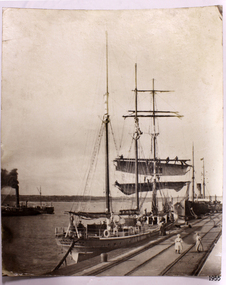 Flagstaff Hill Maritime Museum and Village
Photograph, early 1900's
... Blanche who died aged 89 and Eveline who died aged 48.) In 1874 Peter starting a boating establishment on the Hopkins River. In 1875 he opened up a Coopers business in Kepler Street next to what was Bateman, Smith and Co., moving to Liebig Street, next to the Victoria Hotel, in 1877. ...Blanche who died aged 89 and Eveline who died aged 48.) In 1874 Peter starting a boating establishment on the Hopkins River. In 1875 he opened up a Coopers business in Kepler Street next to what was Bateman, Smith and Co., moving to Liebig Street, next to the Victoria Hotel, in 1877. ...This photograph of the SPECULANT was taken while she was in dock at the Warrnambool, Victoria, Breakwater in the early 1900's. Crew seem busy on her decks and others are watching from the breakwater. There are also 2 steamships in the photograph. The barquentine SPECULANT was a steel, three-masted sailing ship built in 1895 in Inverkeithing, Scotland, registered in Warrnambool, Victoria and wrecked at Cape Paton, Victoria, 10th February 1911. The SPECULANT had been involved in the timber trade between the United Kingdom and Russia, until sold to its Warrnambool owners and timber merchants Messrs. P.J. McGennan & Co. (Peter John McGennan) in 1902 for 3000 pounds and had her sailed to Warrnambool as her new port. Peter John McGennan was born in 1844 and worked as a builder and cooper in Holyhead, Anglesea, Wales. He immigrated to Australia in 1869 as a free settler and arrived in Warrnambool in 1871 and undertook management of a property in Grassmere for Mr. Palmer. Peter met his wife Emily in South Melbourne and they married in 1873. They had ten children including Harry who lived to 1965, and Andrew who lived until 1958. (The other children were their four brothers - John who was killed in the Dardenalles aged 35, Frederick who died aged 8, Peter who died aged 28, Frank who died aged 5 weeks - and four sisters - Beatrice who died age 89, Edith who died aged 49, Blanche who died aged 89 and Eveline who died aged 48.) In 1874 Peter starting a boating establishment on the Hopkins River. In 1875 he opened up a Coopers business in Kepler Street next to what was Bateman, Smith and Co., moving to Liebig Street, next to the Victoria Hotel, in 1877. In 1882 he then moved to Lava Street (which in later years was the site of Chandlers Hardware Store). He was associated with the establishment of the Butter Factory at Allansford. He started making Butter Boxes to his own design and cheese batts for the Butter Factory. In 1896 established a Box Factory in Davis Street Merrivale, employing 24 people at its peak, (it was burnt down in 1923); and in Pertobe Road from 1912 (now the Army Barracks building). Peter was a Borough Councillor for Albert Ward from 1885 to 1891, he commenced the Foreshore Trust (including the camping grounds along Pertobe Road), and he was an inaugural Director of the Woollen Mill in Harris Street, buying an extensive share-holding in 1908 from the share trader Edward Vidler. They lobbied the Town Hall to have a formal ‘Cutting’ for the waters of the Merri River to be redirected from its natural opening south of Dennington, to its existing opening near Viaduct Road, in order to have the scourings from the wool at the Woollen Mill discharged into the sea. He sold Butter Boxes around the state, and had to ship them to Melbourne by rail. Peter’s purchase of the SPECULANT in 1902 enabled him to back-load white pine from Kaipara, New Zealand to Warrnambool to make his butter boxes then, to gain profitability, buy and ship potatoes and other primary produce bound to Melbourne. (McGennan & Co. had also owned the LA BELLA, which had traded in timber as well, until she was tragically wrecked with the loss of seven lives, after missing the entrance channel to Warrnambool harbour in 1905. It appears that the SPECULANT was bought to replace the LA BELLA.) In 1911 the SPECULANT had been attempting to depart Warrnambool for almost the entire month of January to undergo docking and overhaul in Melbourne. A month of east and south-easterly winds had forced her to remain sheltered in Lady Bay, Warrnambool apart from one morning of northerlies, when an attempt was made to round Cape Otway; she had to return to shelter in Portland after failing to make any headway. With only 140 tons of sand ballast aboard, the ship would not have been easy to handle. Captain Jacobsen and his crew of nine, mainly Swedes, decided to make for Melbourne, leaving Portland Harbour on 5th February 1911. By the 9th they had reached Cape Otway, where they encountered a moonless night, constant heavy rain, and a heavy sea with a south-easterly wind blowing. After safely rounding Cape Otway the course was changed to east, then north-east to take the vessel to a point six miles off Cape Patton, following the orders of Captain Jacobsen, who told the crew to be very careful with the steering, as the wind and sea was running to leeward. The patent log (used to measure speed) had been out of order for the last four months as no-one in Warrnambool was able to fix it: it was intended to have it repaired in Melbourne. In the meantime the crew measured the vessel's speed by looking over the side and estimating wind strength. This compounded the difficulties of imprecise positioning, as the strong cross wind and sea were acting on the lightly laden vessel to steadily drive it towards the shore. At 3.30am on Friday 10 February 1911 Captain Jacobsen and the first mate were looking over the side of the vessel when they heard the sound of breakers and suddenly struck the rocks. The crew immediately knew they had no chance of getting the SPECULANT off, and attempted to rescue themselves by launching the lifeboat, which was instantly smashed to pieces. One of the crew then volunteered to take a line ashore, and the rest of the crew were all able to drag themselves to shore, some suffering hand lacerations from the rocks. Once ashore they began to walk along the coast towards Lorne, believing it was the nearest settlement. Realising their mistake as dawn broke they returned westwards to Cape Patton, and found a farm belonging to Mr C. Ramsden, who took them in and gave them a change of clothes and food. After resting for a day and returning to the wreck to salvage some of their personal possessions, at 10am on Saturday they set out for Apollo Bay, a voyage that took six hours, sometimes wading through flooded creeks up to their necks. The Age described the wreck as "listed to starboard. All the cabin is gutted and the ballast gone. There is a big rock right through the bottom of her, and there is not the slightest hope of getting her off". A Board of Marine inquiry found that Captain Jacobson was guilty of careless navigation by not taking steps to accurately verify the position of the vessel with respect to Cape Otway when the light was visible and by not setting a safe and proper course with respect to the wind and sea. It suspended his certificate for 6 months and ordered him to pay costs. The location of the wreck site was marked for a long time by two anchors on the shoreline, until in 1970 the larger of the two anchors was recovered by the Underwater Explorers' Club and mounted on the foreshore at Apollo Bay. The bell from the wreck was also donated to the Apollo Bay Surf Lifesaving Club but is recorded to have been stolen. Rusting remains of the wreck can still be found on the shoreline on the southern side of, and directly below Cape Patton. Parts of the SPECULANT site have been buried by rubble from construction and maintenance works to the Great Ocean Road, as well as by naturally occurring landslides. Peter J McGennan passed away in 1920. The Gates in the western wall of the Anglican Church in Henna Street/Koroit St are dedicated to him for his time of community work, which is matched with other prominent Warrnambool citizens; Fletcher Jones, John Younger, J.D.E (Tag) Walter, and Edward Vidler. After Peter J McGennan's death Harry, Andrew and Edith continued to operate the family business until July 11th 1923 when the company was wound up. (Andrew lived in Ryot Street Warrnambool, near Lava Street.) Harry McGennan (Peter and Emily’s son) owned the Criterion Hotel in Kepler Street Warrnambool (now demolished). His son Sid and wife Dot lived in 28 Howard Street (corner of Nelson Street) and Sid managed the Criterion until it was decided by the family to sell, and for he remained Manager for the new owners until he retired. Harry commenced the Foreshore Trust in Warrnambool around 1950. The McGennan Carpark in Pertobe Road is named after Harry and there are Memorial-Stone Gates in his memory. (The Gates were once the original entrance to the carpark but are now the exit.). Peter’s great-grandson, also called Andrew, is a Security Officer in Warrnambool. The Patent Log (also called a Taffrail log) from the SPECULANT, mentioned above, and a number of photographs, are now part of the Collection at Flagstaff Hill Maritime Village. The SPECULANT is historically significant as the largest ship to have been registered in Warrnambool, and is believed to have been the largest barquentine to visit Melbourne. It is evidence of the final days of large commercial sailing vessels involved in the Victorian and New Zealand timber trade. The SPECULANT is listed on the Victorian Heritage Register VHR S626Photograph. black and white, of the three-masted barque SPECULANT in dock at the Warrnambool Breakwater in the early 1900's. A steam ship is docked behind her and another steamship is in Lady Bay on her left. There are people on the SPECULANT and others walking nearby. flagstaff hill, warrnambool, shipwrecked-coast, flagstaff-hill, flagstaff-hill-maritime-museum, maritime-museum, shipwreck-coast, flagstaff-hill-maritime-village, la bella, speculant, cumming and ellis, international timber trade, p. j. mcgennan and co. warrnambool, peter mcgennan, capt. james jacobsen, warrnambool maritime history, h. pengilley apollo bay -
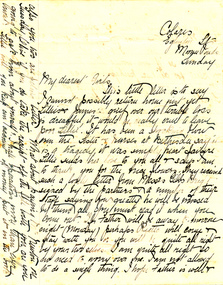 Mission to Seafarers Victoria
Letter - Correspondence, Unknown
... This letter is of social and historic significance, being part of a sub-collection of material that provides a snapshot of the type of individuals involved in the Ladies Harbour Lights Guild and the activities carried out by that organisation. lillie duncan olive duncan 20th century letter ada blanche duncan (nee thomson) The reverse of the letter has something barely legible written in pencil, believed to be a name. Below this inscription is also a sentence that reads "Lillie's Mother married to David Hood Duncan". A letter hand written in black ink from Colaris Eglinton Street ...This letter was written by Aida Duncan, to her daughters Lillie and Olive Duncan following the death of a family member - possibly an Uncle. This letter is of social and historic significance, being part of a sub-collection of material that provides a snapshot of the type of individuals involved in the Ladies Harbour Lights Guild and the activities carried out by that organisation.A letter hand written in black ink from Colaris Eglinton Street, Moonee Ponds addressed to "My Dearest Girls" and signed "Your loving Mother, A.D."The reverse of the letter has something barely legible written in pencil, believed to be a name. Below this inscription is also a sentence that reads "Lillie's Mother married to David Hood Duncan".lillie duncan, olive duncan, 20th century, letter, ada blanche duncan (nee thomson) -
 Mission to Seafarers Victoria
Book (Item) - Scrapbook, David Hood Duncan, Album, 1850-1900
... Blanche Thomson (1861-1928) on 25 November 1896. Ada was the daughter of John Gilmour Thomson (1829-1905) from Moonee Ponds and Hannah Davies (1834-1890) Their first daughter, Lillie, was born on 15 October 1897 in Woodland, South Gippsland where he was a farmer. In 1908, 1910, 1911, 1913, Lillie Duncan sent letters to Patience from the Young Folk section of the Australian. She was writing from Woodlea, Cathkin, where they had moved as there was no school in South Gippsland. They moved to 11 Paxton Street...Blanche Thomson (1861-1928) on 25 November 1896. Ada was the daughter of John Gilmour Thomson (1829-1905) from Moonee Ponds and Hannah Davies (1834-1890) Their first daughter, Lillie, was born on 15 October 1897 in Woodland, South Gippsland where he was a farmer. In 1908, 1910, 1911, 1913, Lillie Duncan sent letters to Patience from the Young Folk section of the Australian. She was writing from Woodlea, Cathkin, where they had moved as there was no school in South Gippsland. They moved to 11 Paxton Street ...This scrapbook contains newspaper cuttings, hand written poems and quotes from friends and family members and pressed flowers and ferns. Entries were made in the mid 1800s to early 1900s and relate to Duncan family history. The initials suggest this is Lillie and Olive's father, David Hood Duncan, who created this scrapbook. David Hood Duncan married Ada Blanche Thomson (1861-1928) on 25 November 1896. Ada was the daughter of John Gilmour Thomson (1829-1905) from Moonee Ponds and Hannah Davies (1834-1890) Their first daughter, Lillie, was born on 15 October 1897 in Woodland, South Gippsland where he was a farmer. In 1908, 1910, 1911, 1913, Lillie Duncan sent letters to Patience from the Young Folk section of the Australian. She was writing from Woodlea, Cathkin, where they had moved as there was no school in South Gippsland. They moved to 11 Paxton Street, East Malvern when David retired. He was leasing a farm, Kia Ora, in Koo Wee Rup, the South Gippsland. Ada Blanche died on 28 December 1928. David died on 24 May 1942.This is an album of social and historic significance, being part of a sub-collection of material that provides a snapshot of the type of individuals and families involved in the Ladies Harbour Lights Guild and the activities carried out by that organisation.Decoratively embossed word on front cover : "ALBUM" . Inner pages: Handwritten in various inks throughout are poems and quotes. Two unidentified initials followed by Duncan name on the inside page. duncan, poems, quotes, newspaper cuttings, albums, scrapbooks, lillie duncan, olive duncan, poetry, ferns, plants, david hood duncan, ada blanche duncan (nee thomson), epistolary -
 Ballarat Clarendon College
Book, L. C. Silke, Little Queen Mab, 1883
... Blanche on 30/07/1884 at the age of 14. Father's Christian name listed in the original register as Daniel Barton residing at 18 Mc Carthur street, Ballarat. ...Blanche on 30/07/1884 at the age of 14. Father's Christian name listed in the original register as Daniel Barton residing at 18 Mc Carthur street, Ballarat. ...This book was awarded to Florence Groves for first prize in arithmetic in 1885. Florence enrolled at Clarendon Ladies' College with her sister Blanche on 30/07/1884 at the age of 14. Father's Christian name listed in the original register as Daniel Barton residing at 18 Mc Carthur street, Ballarat. It also lists his employment as Commercial traveller.Presbyterian educators placed great value on a classical education matched with diligence in study. Book prizes were highly regarded and academic success admired. In the school’s early years prizes were ordered direct from London and had the school crest embossed in gold on the front or back cover. Many of the prizes given in early years were returned to the school to equip the Weatherly Library when it opened in 1936.Bound in brown and green cloth with gilt lettering and floral decorations on front cover and spine. Detached spine and pages, black and white illustrations throughout. 144 pages (several pages missing at the end of book.)Book plate inside front cover: CLARENDON LADIES' COLLEGE./ BALLARAT./ First PRIZE,/ VI Arithmetic Div II./ AWARDED TO/ Florence Groves./ 19th December, 1885. Handwritten on fly leaf "V. Gay/ 1935"florence-groves, book-prize, 1885, clarendon-ladies'-college, blanche-groves, daniel-barton. -
 Flagstaff Hill Maritime Museum and Village
Photograph - Vessels Speculant and S. S. Flinders, Between 1902 and 1907
... Blanche who died aged 89 and Eveline who died aged 48.) In 1874 Peter starting a boating establishment on the Hopkins River. In 1875 he opened up a Coopers business in Kepler Street next to what was Bateman, Smith and Co., moving to Liebig Street, next to the Victoria Hotel, in 1877. ...Blanche who died aged 89 and Eveline who died aged 48.) In 1874 Peter starting a boating establishment on the Hopkins River. In 1875 he opened up a Coopers business in Kepler Street next to what was Bateman, Smith and Co., moving to Liebig Street, next to the Victoria Hotel, in 1877. ...This photograph was one of ten photographs donated to Flagstaff Hill Maritime Museum and Village by Fred Trewartha. Frederick John Fox Trewartha (Fred) was a well-known Warrnambool businessman. He was born in Beeac near Geelong in 1920 and came to Warrnambool with his family as a very young child. He was apprenticed to his father John, as a saddler and later opened his own shop on Raglan Parade. He then moved into working with tarpaulins and canvases for the trucking industry. Fred was keenly interested in photography (and was a member of the Warrnambool Cine Club), yachting and boat building. He kept his yacht moored at Port Fairy for many years and participated in sailing events locally and interstate. He also built boats with his sons. He had the opportunity to meet many older sailors and it's thought this photo (and others in the set) may have been given to him by one of these men. Fred Trewartha died in 2016 in Warrnambool. The two identifiable ships in this picture are the "Speculant" and the "S. S. Flinders" - both coastal trading vessels that regularly came and went from Warrnambool. The third steamer on the left hasn't been identified The barquentine SPECULANT was a steel, three-masted sailing ship built in 1895 in Inverkeithing, Scotland, registered in Warrnambool, Victoria and wrecked at Cape Paton, Victoria, 10th February 1911. The SPECULANT had been involved in the timber trade between the United Kingdom and Russia, until sold to its Warrnambool owners and timber merchants Messrs. P.J. McGennan & Co. (Peter John McGennan) in 1902 for 3000 pounds and had her sailed to Warrnambool as her new port. Peter John McGennan was born in 1844 and worked as a builder and cooper in Holyhead, Anglesea, Wales. He immigrated to Australia in 1869 as a free settler and arrived in Warrnambool in 1871 and undertook management of a property in Grassmere for Mr. Palmer. Peter met his wife Emily in South Melbourne and they married in 1873. They had ten children including Harry who lived to 1965, and Andrew who lived until 1958. (The other children were their four brothers - John who was killed in the Dardenalles aged 35, Frederick who died aged 8, Peter who died aged 28, Frank who died aged 5 weeks - and four sisters - Beatrice who died age 89, Edith who died aged 49, Blanche who died aged 89 and Eveline who died aged 48.) In 1874 Peter starting a boating establishment on the Hopkins River. In 1875 he opened up a Coopers business in Kepler Street next to what was Bateman, Smith and Co., moving to Liebig Street, next to the Victoria Hotel, in 1877. In 1882 he then moved to Lava Street (which in later years was the site of Chandlers Hardware Store). He was associated with the establishment of the Butter Factory at Allansford. He started making Butter Boxes to his own design and cheese batts for the Butter Factory. In 1896 established a Box Factory in Davis Street Merrivale, employing 24 people at its peak, (it was burnt down in 1923); and in Pertobe Road from 1912 (now the Army Barracks building). Peter was a Borough Councillor for Albert Ward from 1885 to 1891, he commenced the Foreshore Trust (including the camping grounds along Pertobe Road), and he was an inaugural Director of the Woollen Mill in Harris Street, buying an extensive share-holding in 1908 from the share trader Edward Vidler. They lobbied the Town Hall to have a formal ‘Cutting’ for the waters of the Merri River to be redirected from its natural opening south of Dennington, to its existing opening near Viaduct Road, in order to have the scourings from the wool at the Woollen Mill discharged into the sea. He sold Butter Boxes around the state, and had to ship them to Melbourne by rail. Peter’s purchase of the SPECULANT in 1902 enabled him to back-load white pine from Kaipara, New Zealand to Warrnambool to make his butter boxes then, to gain profitability, buy and ship potatoes and other primary produce bound to Melbourne. (McGennan & Co. had also owned the LA BELLA, which had traded in timber as well, until she was tragically wrecked with the loss of seven lives, after missing the entrance channel to Warrnambool harbour in 1905. It appears that the SPECULANT was bought to replace the LA BELLA.) In 1911 the SPECULANT had been attempting to depart Warrnambool for almost the entire month of January to undergo docking and overhaul in Melbourne. A month of east and south-easterly winds had forced her to remain sheltered in Lady Bay, Warrnambool apart from one morning of northerlies, when an attempt was made to round Cape Otway; she had to return to shelter in Portland after failing to make any headway. With only 140 tons of sand ballast aboard, the ship would not have been easy to handle. Captain Jacobsen and his crew of nine, mainly Swedes, decided to make for Melbourne, leaving Portland Harbour on 5th February 1911. By the 9th they had reached Cape Otway, where they encountered a moonless night, constant heavy rain, and a heavy sea with a south-easterly wind blowing. After safely rounding Cape Otway the course was changed to east, then north-east to take the vessel to a point six miles off Cape Patton, following the orders of Captain Jacobsen, who told the crew to be very careful with the steering, as the wind and sea was running to leeward. The patent log (used to measure speed) had been out of order for the last four months as no-one in Warrnambool was able to fix it: it was intended to have it repaired in Melbourne. In the meantime the crew measured the vessel's speed by looking over the side and estimating wind strength. This compounded the difficulties of imprecise positioning, as the strong cross wind and sea were acting on the lightly laden vessel to steadily drive it towards the shore. At 3.30am on Friday 10 February 1911 Captain Jacobsen and the first mate were looking over the side of the vessel when they heard the sound of breakers and suddenly struck the rocks. The crew immediately knew they had no chance of getting the SPECULANT off, and attempted to rescue themselves by launching the lifeboat, which was instantly smashed to pieces. One of the crew then volunteered to take a line ashore, and the rest of the crew were all able to drag themselves to shore, some suffering hand lacerations from the rocks. Once ashore they began to walk along the coast towards Lorne, believing it was the nearest settlement. Realising their mistake as dawn broke they returned westwards to Cape Patton, and found a farm belonging to Mr C. Ramsden, who took them in and gave them a change of clothes and food. After resting for a day and returning to the wreck to salvage some of their personal possessions, at 10am on Saturday they set out for Apollo Bay, a voyage that took six hours, sometimes wading through flooded creeks up to their necks. The Age described the wreck as "listed to starboard. All the cabin is gutted and the ballast gone. There is a big rock right through the bottom of her, and there is not the slightest hope of getting her off". A Board of Marine inquiry found that Captain Jacobson was guilty of careless navigation by not taking steps to accurately verify the position of the vessel with respect to Cape Otway when the light was visible and by not setting a safe and proper course with respect to the wind and sea. It suspended his certificate for 6 months and ordered him to pay costs. The location of the wreck site was marked for a long time by two anchors on the shoreline, until in 1970 the larger of the two anchors was recovered by the Underwater Explorers' Club and mounted on the foreshore at Apollo Bay. The bell from the wreck was also donated to the Apollo Bay Surf Lifesaving Club but is recorded to have been stolen. Rusting remains of the wreck can still be found on the shoreline on the southern side of, and directly below Cape Patton. Parts of the SPECULANT site have been buried by rubble from construction and maintenance works to the Great Ocean Road, as well as by naturally occurring landslides. Peter J McGennan passed away in 1920. The Gates in the western wall of the Anglican Church in Henna Street/Koroit St are dedicated to him for his time of community work, which is matched with other prominent Warrnambool citizens; Fletcher Jones, John Younger, J.D.E (Tag) Walter, and Edward Vidler. After Peter J McGennan's death Harry, Andrew and Edith continued to operate the family business until July 11th 1923 when the company was wound up. (Andrew lived in Ryot Street Warrnambool, near Lava Street.) Harry McGennan (Peter and Emily’s son) owned the Criterion Hotel in Kepler Street Warrnambool (now demolished). His son Sid and wife Dot lived in 28 Howard Street (corner of Nelson Street) and Sid managed the Criterion until it was decided by the family to sell, and for he remained Manager for the new owners until he retired. Harry commenced the Foreshore Trust in Warrnambool around 1950. The McGennan Carpark in Pertobe Road is named after Harry and there are Memorial-Stone Gates in his memory. (The Gates were once the original entrance to the carpark but are now the exit.). The Patent Log (also called a Taffrail log) from the SPECULANT, mentioned above, and a number of photographs, are now part of the Collection at Flagstaff Hill Maritime Village.. The S. S. Flinders was built by A. J. Inglis, Ltd, Pointhouse, Glasgow in 1878 for the "Tasmanian Steam Navigation Company', Hobart which merged with the "Union Steamship Company" of New Zealand and it was later sold to the firm "McIlwraith, McEacham and Company". It was built of iron and was 1000 tons and 227 feet, 1 inch long. It was described as "splendidly fitted up for the carriage of passengers and her cargo space was also very large". In the saloon about 130 passengers could be accommodated while the second class had sufficient room for one hundred passengers. In 1890, the S. S. Flinders would leave Melbourne on Mondays and Thursdays at 5 pm and reach Warrnambool the following morning at 8 am. On the return it would leave Warrnambool on Wednesdays and Saturdays at 5 pm and reach Melbourne the following morning. In 1896, the Weekly Times described the "steamer Flinders (otherwise known as "the Warrnambool mailboat") as "as good a sample of a seagoing steamer as there is trading on the Victorian Coast at the present time". In April 1896 newspaper reports noted the S. S. Flinders took 2915 bags of potatoes from Warrnambool to Melbourne (the largest shipment of that season) as well as 50 tons of tinned rabbits from the Hamilton Preserving Factory. It was also noted that particularly during the Christmas period, there were excessive demands for berths from holiday makers wanting to enjoy a holiday in Warrnambool. In May 1903, the S. S. Flinders narrowly escaped destruction when an explosion and subsequent fire occurred during the passage from Melbourne to Warrnambool. A drum (which apparently contained carbide of calcium) exploded and blew off a hatch cover. As the steamer got to within a mile or two of Warrnambool, smoke was seen coming out of the hold and (unknown to the passengers) flames had taken hold. The crew quickly got to work - closing down all the hatches and pumping water into the hold through a hole in the saloon floor. There were 30 or 40 cases of kerosene on board. The Flinders continued on to Warrnambool and berthed at the Breakwater. The passengers all went ashore - many unaware of the danger they had been in. A telephone message was sent to the local Fire Brigade Station however the fire was extinguished before the firemen and their equipment arrived. After the hold was checked, the Flinders was certified as seaworthy and left for Portland. The Flinders continued to transport Western District produce as well as passengers from Warrnambool to Melbourne until 1906 when (due to a decrease in shipping trade during the Winter and the availability of train services) the Flinders was replaced by the smaller steamer "Dawn" and in 1907 when it was sold to the "Adelaide Steamship Company" for use in the Western Australia coastal trade, it was replaced by the "S. S. Barrabool".This photograph is a significant record of two of the well known coastal traders (the "Speculant" and the "Flinders") that sailed along the south west coast of Victoria for many years - transporting goods and passengers between Melbourne and Warrnambool.Black and white photograph of the Breakwater in Warrnambool with two ships docked and another in the bay. On the front boat (the Speculant), men can be seen at the wheel, on the deck and on the bottom two booms where they appear to be furling the sails. The sails of the top booms are already furled. A small boy can be seen on the deck and a young girl, two women and a dog are on the Breakwater. There is a steam ship (the S. S. Flinders) tied up behind the "Speculant" and an unidentified steam ship (with smoke coming from its smokestack) in the bay. There is a blue and black handwritten label on the back of the photo - naming the ships and the owner of the photo.Speculant and Flinders / Passenger ship in / Lady Bay / name of donor and phone numberflagstaff hill maritime museum and village, warrnambool, great ocean road, shipwreck coast, speculant, barque speculant, flinders, s. s. finders, steamship flinders, coastal trader, passenger ship, goods, steamer, breakwater, lady bay, warrnambool mailboat, p. j. mcgennan, peter john mcgennan, butter boxes, captain jacobsen, cape patton, tasmanian steam navigation company -
 Flagstaff Hill Maritime Museum and Village
Photograph - Vessels at Breakwater Pier, Warrnambool, Foyle Photographic Studio, circa 1906
... Blanche who died aged 89 and Eveline who died aged 48.) In 1874 Peter starting a boating establishment on the Hopkins River. In 1875 he opened up a Coopers business in Kepler Street next to what was Bateman, Smith and Co., moving to Liebig Street, next to the Victoria Hotel, in 1877. ...Blanche who died aged 89 and Eveline who died aged 48.) In 1874 Peter starting a boating establishment on the Hopkins River. In 1875 he opened up a Coopers business in Kepler Street next to what was Bateman, Smith and Co., moving to Liebig Street, next to the Victoria Hotel, in 1877. ...This photograph was one of ten photographs donated to Flagstaff Hill Maritime Museum and Village by Fred Trewartha. Frederick John Fox Trewartha (Fred) was a well-known Warrnambool businessman. He was born in Beeac near Geelong in 1920 and came to Warrnambool with his family as a very young child. He was apprenticed to his father John, as a saddler and later opened his own shop on Raglan Parade. He then moved into working with tarpaulins and canvases for the trucking industry. Fred was keenly interested in photography (and was a member of the Warrnambool Cine Club), yachting and boat building. He kept his yacht moored at Port Fairy for many years and participated in sailing events locally and interstate. He also built boats with his sons. He had the opportunity to meet many older sailors and it's thought this photo (and others in the set) may have been given to him by one of these men. Fred Trewartha died in 2016 in Warrnambool. The three identifiable ships in this picture are the "Speculant", the "S. S. Barrabool" and the "S. S. Flinders" - coastal trading vessels that regularly came and went from Warrnambool. The steamer on the left hasn't been identified. The barquentine SPECULANT was a steel, three-masted sailing ship built in 1895 in Inverkeithing, Scotland, registered in Warrnambool, Victoria and wrecked at Cape Paton, Victoria, 10th February 1911. The SPECULANT had been involved in the timber trade between the United Kingdom and Russia, until sold to its Warrnambool owners and timber merchants Messrs. P.J. McGennan & Co. (Peter John McGennan) in 1902 for 3000 pounds and had her sailed to Warrnambool as her new port. Peter John McGennan was born in 1844 and worked as a builder and cooper in Holyhead, Anglesea, Wales. He immigrated to Australia in 1869 as a free settler and arrived in Warrnambool in 1871 and undertook management of a property in Grassmere for Mr. Palmer. Peter met his wife Emily in South Melbourne and they married in 1873. They had ten children including Harry who lived to 1965, and Andrew who lived until 1958. (The other children were their four brothers - John who was killed in the Dardenalles aged 35, Frederick who died aged 8, Peter who died aged 28, Frank who died aged 5 weeks - and four sisters - Beatrice who died age 89, Edith who died aged 49, Blanche who died aged 89 and Eveline who died aged 48.) In 1874 Peter starting a boating establishment on the Hopkins River. In 1875 he opened up a Coopers business in Kepler Street next to what was Bateman, Smith and Co., moving to Liebig Street, next to the Victoria Hotel, in 1877. In 1882 he then moved to Lava Street (which in later years was the site of Chandlers Hardware Store). He was associated with the establishment of the Butter Factory at Allansford. He started making Butter Boxes to his own design and cheese batts for the Butter Factory. In 1896 established a Box Factory in Davis Street Merrivale, employing 24 people at its peak, (it was burnt down in 1923); and in Pertobe Road from 1912 (now the Army Barracks building). Peter was a Borough Councillor for Albert Ward from 1885 to 1891, he commenced the Foreshore Trust (including the camping grounds along Pertobe Road), and he was an inaugural Director of the Woollen Mill in Harris Street, buying an extensive share-holding in 1908 from the share trader Edward Vidler. They lobbied the Town Hall to have a formal ‘Cutting’ for the waters of the Merri River to be redirected from its natural opening south of Dennington, to its existing opening near Viaduct Road, in order to have the scourings from the wool at the Woollen Mill discharged into the sea. He sold Butter Boxes around the state, and had to ship them to Melbourne by rail. Peter’s purchase of the SPECULANT in 1902 enabled him to back-load white pine from Kaipara, New Zealand to Warrnambool to make his butter boxes then, to gain profitability, buy and ship potatoes and other primary produce bound to Melbourne. (McGennan & Co. had also owned the LA BELLA, which had traded in timber as well, until she was tragically wrecked with the loss of seven lives, after missing the entrance channel to Warrnambool harbour in 1905. It appears that the SPECULANT was bought to replace the LA BELLA.) In 1911 the SPECULANT had been attempting to depart Warrnambool for almost the entire month of January to undergo docking and overhaul in Melbourne. A month of east and south-easterly winds had forced her to remain sheltered in Lady Bay, Warrnambool apart from one morning of northerlies, when an attempt was made to round Cape Otway; she had to return to shelter in Portland after failing to make any headway. With only 140 tons of sand ballast aboard, the ship would not have been easy to handle. Captain Jacobsen and his crew of nine, mainly Swedes, decided to make for Melbourne, leaving Portland Harbour on 5th February 1911. By the 9th they had reached Cape Otway, where they encountered a moonless night, constant heavy rain, and a heavy sea with a south-easterly wind blowing. After safely rounding Cape Otway the course was changed to east, then north-east to take the vessel to a point six miles off Cape Patton, following the orders of Captain Jacobsen, who told the crew to be very careful with the steering, as the wind and sea was running to leeward. The patent log (used to measure speed) had been out of order for the last four months as no-one in Warrnambool was able to fix it: it was intended to have it repaired in Melbourne. In the meantime the crew measured the vessel's speed by looking over the side and estimating wind strength. This compounded the difficulties of imprecise positioning, as the strong cross wind and sea were acting on the lightly laden vessel to steadily drive it towards the shore. At 3.30am on Friday 10 February 1911 Captain Jacobsen and the first mate were looking over the side of the vessel when they heard the sound of breakers and suddenly struck the rocks. The crew immediately knew they had no chance of getting the SPECULANT off, and attempted to rescue themselves by launching the lifeboat, which was instantly smashed to pieces. One of the crew then volunteered to take a line ashore, and the rest of the crew were all able to drag themselves to shore, some suffering hand lacerations from the rocks. Once ashore they began to walk along the coast towards Lorne, believing it was the nearest settlement. Realising their mistake as dawn broke they returned westwards to Cape Patton, and found a farm belonging to Mr C. Ramsden, who took them in and gave them a change of clothes and food. After resting for a day and returning to the wreck to salvage some of their personal possessions, at 10am on Saturday they set out for Apollo Bay, a voyage that took six hours, sometimes wading through flooded creeks up to their necks. The Age described the wreck as "listed to starboard. All the cabin is gutted and the ballast gone. There is a big rock right through the bottom of her, and there is not the slightest hope of getting her off". A Board of Marine inquiry found that Captain Jacobson was guilty of careless navigation by not taking steps to accurately verify the position of the vessel with respect to Cape Otway when the light was visible and by not setting a safe and proper course with respect to the wind and sea. It suspended his certificate for 6 months and ordered him to pay costs. The location of the wreck site was marked for a long time by two anchors on the shoreline, until in 1970 the larger of the two anchors was recovered by the Underwater Explorers' Club and mounted on the foreshore at Apollo Bay. The bell from the wreck was also donated to the Apollo Bay Surf Lifesaving Club but is recorded to have been stolen. Rusting remains of the wreck can still be found on the shoreline on the southern side of, and directly below Cape Patton. Parts of the SPECULANT site have been buried by rubble from construction and maintenance works to the Great Ocean Road, as well as by naturally occurring landslides. Peter J McGennan passed away in 1920. The Gates in the western wall of the Anglican Church in Henna Street/Koroit St are dedicated to him for his time of community work, which is matched with other prominent Warrnambool citizens; Fletcher Jones, John Younger, J.D.E (Tag) Walter, and Edward Vidler. After Peter J McGennan's death Harry, Andrew and Edith continued to operate the family business until July 11th 1923 when the company was wound up. (Andrew lived in Ryot Street Warrnambool, near Lava Street.) Harry McGennan (Peter and Emily’s son) owned the Criterion Hotel in Kepler Street Warrnambool (now demolished). His son Sid and wife Dot lived in 28 Howard Street (corner of Nelson Street) and Sid managed the Criterion until it was decided by the family to sell, and for he remained Manager for the new owners until he retired. Harry commenced the Foreshore Trust in Warrnambool around 1950. The McGennan Carpark in Pertobe Road is named after Harry and there are Memorial-Stone Gates in his memory. (The Gates were once the original entrance to the carpark but are now the exit.). The Patent Log (also called a Taffrail log) from the SPECULANT, mentioned above, and a number of photographs, are now part of the Collection at Flagstaff Hill Maritime Village.. The S. S. Flinders was built by A. J. Inglis, Ltd, Pointhouse, Glasgow in 1878 for the "Tasmanian Steam Navigation Company', Hobart which merged with the "Union Steamship Company" of New Zealand and it was later sold to the firm "McIlwraith, McEacham and Company". It was built of iron and was 1000 tons and 227 feet, 1 inch long. It was described as "splendidly fitted up for the carriage of passengers and her cargo space was also very large". In the saloon about 130 passengers could be accommodated while the second class had sufficient room for one hundred passengers. In 1890, the S. S. Flinders would leave Melbourne on Mondays and Thursdays at 5 pm and reach Warrnambool the following morning at 8 am. On the return it would leave Warrnambool on Wednesdays and Saturdays at 5 pm and reach Melbourne the following morning. In 1896, the Weekly Times described the "steamer Flinders (otherwise known as "the Warrnambool mailboat") as "as good a sample of a seagoing steamer as there is trading on the Victorian Coast at the present time". In April 1896 newspaper reports noted the S. S. Flinders took 2915 bags of potatoes from Warrnambool to Melbourne (the largest shipment of that season) as well as 50 tons of tinned rabbits from the Hamilton Preserving Factory. It was also noted that particularly during the Christmas period, there were excessive demands for berths from holiday makers wanting to enjoy a holiday in Warrnambool. In May 1903, the S. S. Flinders narrowly escaped destruction when an explosion and subsequent fire occurred during the passage from Melbourne to Warrnambool. A drum (which apparently contained carbide of calcium) exploded and blew off a hatch cover. As the steamer got to within a mile or two of Warrnambool, smoke was seen coming out of the hold and (unknown to the passengers) flames had taken hold. The crew quickly got to work - closing down all the hatches and pumping water into the hold through a hole in the saloon floor. There were 30 or 40 cases of kerosene on board. The Flinders continued on to Warrnambool and berthed at the Breakwater. The passengers all went ashore - many unaware of the danger they had been in. A telephone message was sent to the local Fire Brigade Station however the fire was extinguished before the firemen and their equipment arrived. After the hold was checked, the Flinders was certified as seaworthy and left for Portland. The Flinders continued to transport Western District produce as well as passengers from Warrnambool to Melbourne until 1906 when (due to a decrease in shipping trade during the Winter and the availability of train services) the Flinders was replaced by the smaller steamer "Dawn" and in 1907 when it was sold to the "Adelaide Steamship Company" for use in the Western Australia coastal trade, it was replaced by the "S. S. Barrabool". The S. S. Barrabool was a coastal steamer built by "Palmer Shipbuilding and Iron Company Limited" in Jarrow, Durham in 1874. It was bought by "Howard Smith Ltd" who was a pioneer in the coal trade between Melbourne and Newcastle. Howards Smith's early fleet contained ships named after local hills and mountains -"You Yangs", "Macedon", "Dandenongs" and "Barrabool". Later they extended their fleet to include ships that were well known in Warrnambool including the "Dawn" and the "Edina". The S. S. Barrabool had a chequered start and was nicknamed the "Great Australian Ram" because of the numerous accidents it was involved in. Between 1875 and 1883 it collided with three other vessels - sinking the "Queensland" on August 3rd, 1876, near Wilson's Promontory and sinking the "Bonnie Dundee" on 10th March 1879 off Lake Macquarie, New South Wales (with the loss of five lives). In August 1884 the Barrabool collided with the steamer "Birksgate" in Port Jackson causing considerable damage to "Birksgate". However in a newspaper article published in the "Truth" in March 1899 the S. S. Barrabool was described as "one of the fine old type of vessels" and "still a stout a craft as ever". The article was describing the practice of a "two-mate" system on board many ships (the Barrabool being one) whereby the company only employs two men (a first and second mate who must alternate watches of four hours each) rather than three mates who work four hours on and eight hours off. It was suggested that ships employing the "two-mate" system may find their insurance policies "null and void" should an accident occur. However the writer did note that the Barrabool was "officered by a captain and first and second mates .. whom it would be impossible to find more capable officers amongst the maritime fleet of the colonies". Between 1900 and 1909 the Barrabool was making regular trips along the east coast of Australia, carrying coal to Hobsons Bay (Melbourne) from Newcastle, Bellambi and Sydney. In 1907 it was brought in as a temporary replacement on the Melbourne to Warrnambool route for the S.S. Flinders. In 1912 the S. S. Barrabool ran aground off the Fitzroy River in Queensland and was found to be uneconomic to repair. It was brought back to Sydney and converted into a hulk. In August 1952 it was towed 17 miles off Sydney and scuttled. “Foyle” written on the photograph is the name of Foyle’s Photographic studio - originally owned by James Charles Foyle. He owned “Foyle’s Photo Card Studios” in Liebig St, Warrnambool, which operated between 1889 – 1919 At the time of the photograph the studio was owned by both Charles and Lilian Foyle (sometimes known as Lillian or Lily), either of whom could have taken this photograph. They also worked together at a later date on the photographs, sketches and paintings of the famous and historical Pioneers’ Honour Board.This photograph is a significant record of three of the well-known coastal traders (the "Speculant", the "S. S. Barrabool" and the "S. S. Flinders") that sailed along the southwest coast of Victoria for many years - transporting goods and passengers between Melbourne and Warrnambool.A black and white photograph titled "Breakwater Pier, Warrnambool". A line of coal trucks on rails are on the Breakwater. There are three ships (one sailing ship and two steamers) moored at the pier. In the left side of the picture is another ship. The name of the photographer is printed in the lower right corner. On the back of the photograph are the handwritten names of the moored ships written in blue pen. It also has the handwritten name, town and telephone number of the donor. In the bottom right hand corner is an upside down stamped number in black ink.Front of photograph - "BREAKWATER PIER, WARRNAMBOOL." "FOYLE PHOTO" Back of photograph - "Sailing Ship" "Speculant sail ship" "Barrabool coal ship" "Flinders Passenger ship" Name of donor W'Bool (and telephone number) "K-7148 M" (stamped upside down)flagstaff hill maritime museum and village, warrnambool, great ocean road, shipwreck coast, speculant, barque speculant, p. j. mcgennan, peter john mcgennan, speculant wreck, captain jacobsen, s. s. flinders, steamer flinders, a. j. inglis ltd, tasmanian steam navigation company, mcilwraith mceacham and company, warrnambool mailboat, coastal steamer, s. s. barrabool, howard smith ltd, two-mate system, coal ship, dawn, edina, lady bay, breakwater, warrnambool breakwater, foyle, foyle photographic studio warrnambool -
 Greensborough Historical Society
Photograph - Digital image, Auntie Blanche's baby, 1900-1901
... Blanche McLaughlin was the sister of John McLaughlin. This photo was taken in 1900 or 1901 when Webb and Webb operated their studio at 374 Hay Street Perth, next to Bon Marche....Blanche McLaughlin was the sister of John McLaughlin. This photo was taken in 1900 or 1901 when Webb and Webb operated their studio at 374 Hay Street Perth, next to Bon Marche. shirley fraser john mclaughlin mclaughlin family blanche mclaughlin Digital copy of black and white studio photograph. ...Part of a collection of photographs copied from the late Shirley Fraser (nee Black), also descendant of the McLaughlin family. This photograph shows "Auntie Blanche's baby". Blanche McLaughlin was the sister of John McLaughlin. This photo was taken in 1900 or 1901 when Webb and Webb operated their studio at 374 Hay Street Perth, next to Bon Marche.Digital copy of black and white studio photograph.shirley fraser, john mclaughlin, mclaughlin family, blanche mclaughlin -
 Flagstaff Hill Maritime Museum and Village
Photograph, before 1911
... Blanche who died aged 89 and Eveline who died aged 48.) In 1874 Peter starting a boating establishment on the Hopkins River. In 1875 he opened up a Coopers business in Kepler Street next to what was Bateman, Smith and Co., moving to Liebig Street, next to the Victoria Hotel, in 1877. ...Blanche who died aged 89 and Eveline who died aged 48.) In 1874 Peter starting a boating establishment on the Hopkins River. In 1875 he opened up a Coopers business in Kepler Street next to what was Bateman, Smith and Co., moving to Liebig Street, next to the Victoria Hotel, in 1877. ...Photograph, black and white, of the three-masted barque SPECULANT at a jetty in low water. On the jetty and the shore are stacks of cut timber. The ship is in a wide river or bay, hills in the background, trees (like gum trees) in the foreground. Inscribed "Wrecked 10.2.11. Cape Patten. Jacobson. Munro. - - - -" Written on the photograph in blue pen "Rosbercon". (The SPECULANT was wrecked on 10th February 2011 at Cape Patton, Victoria, (not Patten as on the photograph). She was sailing under the control of Captain James Jacobsen and her First Mate was James Mumro.) The barquentine SPECULANT was a steel, three-masted sailing ship built in 1895 in Inverkeithing, Scotland, registered in Warrnambool, Victoria and wrecked at Cape Paton, Victoria, 10th February 1911. The SPECULANT had been involved in the timber trade between the United Kingdom and Russia, until sold to its Warrnambool owners and timber merchants Messrs. P.J. McGennan & Co. (Peter John McGennan) in 1902 for 3000 pounds and had her sailed to Warrnambool as her new port. Peter John McGennan was born in 1844 and worked as a builder and cooper in Holyhead, Anglesea, Wales. He immigrated to Australia in 1869 as a free settler and arrived in Warrnambool in 1871 and undertook management of a property in Grassmere for Mr. Palmer. Peter met his wife Emily in South Melbourne and they married in 1873. They had ten children including Harry who lived to 1965, and Andrew who lived until 1958. (The other children were their four brothers - John who was killed in the Dardenalles aged 35, Frederick who died aged 8, Peter who died aged 28, Frank who died aged 5 weeks - and four sisters - Beatrice who died age 89, Edith who died aged 49, Blanche who died aged 89 and Eveline who died aged 48.) In 1874 Peter starting a boating establishment on the Hopkins River. In 1875 he opened up a Coopers business in Kepler Street next to what was Bateman, Smith and Co., moving to Liebig Street, next to the Victoria Hotel, in 1877. In 1882 he then moved to Lava Street (which in later years was the site of Chandlers Hardware Store). He was associated with the establishment of the Butter Factory at Allansford. He started making Butter Boxes to his own design and cheese batts for the Butter Factory. In 1896 established a Box Factory in Davis Street Merrivale, employing 24 people at its peak, (it was burnt down in 1923); and in Pertobe Road from 1912 (now the Army Barracks building). Peter was a Borough Councillor for Albert Ward from 1885 to 1891, he commenced the Foreshore Trust (including the camping grounds along Pertobe Road), and he was an inaugural Director of the Woollen Mill in Harris Street, buying an extensive share-holding in 1908 from the share trader Edward Vidler. They lobbied the Town Hall to have a formal ‘Cutting’ for the waters of the Merri River to be redirected from its natural opening south of Dennington, to its existing opening near Viaduct Road, in order to have the scourings from the wool at the Woollen Mill discharged into the sea. He sold Butter Boxes around the state, and had to ship them to Melbourne by rail. Peter’s purchase of the SPECULANT in 1902 enabled him to back-load white pine from Kaipara, New Zealand to Warrnambool to make his butter boxes then, to gain profitability, buy and ship potatoes and other primary produce bound to Melbourne. (McGennan & Co. had also owned the LA BELLA, which had traded in timber as well, until she was tragically wrecked with the loss of seven lives, after missing the entrance channel to Warrnambool harbour in 1905. It appears that the SPECULANT was bought to replace the LA BELLA.) In 1911 the SPECULANT had been attempting to depart Warrnambool for almost the entire month of January to undergo docking and overhaul in Melbourne. A month of east and south-easterly winds had forced her to remain sheltered in Lady Bay, Warrnambool apart from one morning of northerlies, when an attempt was made to round Cape Otway; she had to return to shelter in Portland after failing to make any headway. With only 140 tons of sand ballast aboard, the ship would not have been easy to handle. Captain Jacobsen and his crew of nine, mainly Swedes, decided to make for Melbourne, leaving Portland Harbour on 5th February 1911. By the 9th they had reached Cape Otway, where they encountered a moonless night, constant heavy rain, and a heavy sea with a south-easterly wind blowing. After safely rounding Cape Otway the course was changed to east, then north-east to take the vessel to a point six miles off Cape Patton, following the orders of Captain Jacobsen, who told the crew to be very careful with the steering, as the wind and sea was running to leeward. The patent log (used to measure speed) had been out of order for the last four months as no-one in Warrnambool was able to fix it: it was intended to have it repaired in Melbourne. In the meantime the crew measured the vessel's speed by looking over the side and estimating wind strength. This compounded the difficulties of imprecise positioning, as the strong cross wind and sea were acting on the lightly laden vessel to steadily drive it towards the shore. At 3.30am on Friday 10 February 1911 Captain Jacobsen and the first mate were looking over the side of the vessel when they heard the sound of breakers and suddenly struck the rocks. The crew immediately knew they had no chance of getting the SPECULANT off, and attempted to rescue themselves by launching the lifeboat, which was instantly smashed to pieces. One of the crew then volunteered to take a line ashore, and the rest of the crew were all able to drag themselves to shore, some suffering hand lacerations from the rocks. Once ashore they began to walk along the coast towards Lorne, believing it was the nearest settlement. Realising their mistake as dawn broke they returned westwards to Cape Patton, and found a farm belonging to Mr C. Ramsden, who took them in and gave them a change of clothes and food. After resting for a day and returning to the wreck to salvage some of their personal possessions, at 10am on Saturday they set out for Apollo Bay, a voyage that took six hours, sometimes wading through flooded creeks up to their necks. The Age described the wreck as "listed to starboard. All the cabin is gutted and the ballast gone. There is a big rock right through the bottom of her, and there is not the slightest hope of getting her off". A Board of Marine inquiry found that Captain Jacobson was guilty of careless navigation by not taking steps to accurately verify the position of the vessel with respect to Cape Otway when the light was visible and by not setting a safe and proper course with respect to the wind and sea. It suspended his certificate for 6 months and ordered him to pay costs. The location of the wreck site was marked for a long time by two anchors on the shoreline, until in 1970 the larger of the two anchors was recovered by the Underwater Explorers' Club and mounted on the foreshore at Apollo Bay. The bell from the wreck was also donated to the Apollo Bay Surf Lifesaving Club but is recorded to have been stolen. Rusting remains of the wreck can still be found on the shoreline on the southern side of, and directly below Cape Patton. Parts of the SPECULANT site have been buried by rubble from construction and maintenance works to the Great Ocean Road, as well as by naturally occurring landslides. Peter J McGennan passed away in 1920. The Gates in the western wall of the Anglican Church in Henna Street/Koroit St are dedicated to him for his time of community work, which is matched with other prominent Warrnambool citizens; Fletcher Jones, John Younger, J.D.E (Tag) Walter, and Edward Vidler. After Peter J McGennan's death Harry, Andrew and Edith continued to operate the family business until July 11th 1923 when the company was wound up. (Andrew lived in Ryot Street Warrnambool, near Lava Street.) Harry McGennan (Peter and Emily’s son) owned the Criterion Hotel in Kepler Street Warrnambool (now demolished). His son Sid and wife Dot lived in 28 Howard Street (corner of Nelson Street) and Sid managed the Criterion until it was decided by the family to sell, and for he remained Manager for the new owners until he retired. Harry commenced the Foreshore Trust in Warrnambool around 1950. The McGennan Carpark in Pertobe Road is named after Harry and there are Memorial-Stone Gates in his memory. (The Gates were once the original entrance to the carpark but are now the exit.). Peter’s great-grandson, also called Andrew, is a Security Officer in Warrnambool. The Patent Log (also called a Taffrail log) from the SPECULANT, mentioned above, and a number of photographs, are now part of the Collection at Flagstaff Hill Maritime Village. The SPECULANT is historically significant as the largest ship to have been registered in Warrnambool, and is believed to have been the largest barquentine to visit Melbourne. It is evidence of the final days of large commercial sailing vessels involved in the Victorian and New Zealand timber trade. The SPECULANT is listed on the Victorian Heritage Register VHR S626Photograph, black and white, of the three-masted barque SPECULANT at a jetty in low water. On the jetty and the shore are stacks of cut timber. The ship is in a wide river or bay, hills in the background, trees (like gum trees) in the foreground. Inscribed below photograph "Wrecked 10.2.11. Cape Patten. Jacobson. Munro. - - - -" Written on the photograph in blue pen "Rosbercon"Inscribed below photograph "Wrecked 10.2.11. Cape Patten. Jacobson. Munro. - - - -" Written on the photograph in blue pen "Rosbercon"flagstaff hill, warrnambool, shipwrecked-coast, flagstaff-hill, flagstaff-hill-maritime-museum, maritime-museum, shipwreck-coast, flagstaff-hill-maritime-village, warrnambool historical photograph, cape patten, munro, james munro, la bella, speculant, cumming and ellis, international timber trade, p. j. mcgennan and co. warrnambool, peter mcgennan, capt. james jacobsen, warrnambool maritime history -
 Flagstaff Hill Maritime Museum and Village
Photograph, before 1911
... Blanche who died aged 89 and Eveline who died aged 48.) In 1874 Peter starting a boating establishment on the Hopkins River. In 1875 he opened up a Coopers business in Kepler Street next to what was Bateman, Smith and Co., moving to Liebig Street, next to the Victoria Hotel, in 1877. ...Blanche who died aged 89 and Eveline who died aged 48.) In 1874 Peter starting a boating establishment on the Hopkins River. In 1875 he opened up a Coopers business in Kepler Street next to what was Bateman, Smith and Co., moving to Liebig Street, next to the Victoria Hotel, in 1877. ...Photograph, black and white, of the sailing barque Speculant, berth at Warrnambool Breakwater. Two steamships are also in the photograph. There are people on the Speculant and on the breakwater. The barquentine SPECULANT was a steel, three-masted sailing ship built in 1895 in Inverkeithing, Scotland, registered in Warrnambool, Victoria and wrecked at Cape Paton, Victoria, 10th February 1911. The SPECULANT had been involved in the timber trade between the United Kingdom and Russia, until sold to its Warrnambool owners and timber merchants Messrs. P.J. McGennan & Co. (Peter John McGennan) in 1902 for 3000 pounds and had her sailed to Warrnambool as her new port. Peter John McGennan was born in 1844 and worked as a builder and cooper in Holyhead, Anglesea, Wales. He immigrated to Australia in 1869 as a free settler and arrived in Warrnambool in 1871 and undertook management of a property in Grassmere for Mr. Palmer. Peter met his wife Emily in South Melbourne and they married in 1873. They had ten children including Harry who lived to 1965, and Andrew who lived until 1958. (The other children were their four brothers - John who was killed in the Dardenalles aged 35, Frederick who died aged 8, Peter who died aged 28, Frank who died aged 5 weeks - and four sisters - Beatrice who died age 89, Edith who died aged 49, Blanche who died aged 89 and Eveline who died aged 48.) In 1874 Peter starting a boating establishment on the Hopkins River. In 1875 he opened up a Coopers business in Kepler Street next to what was Bateman, Smith and Co., moving to Liebig Street, next to the Victoria Hotel, in 1877. In 1882 he then moved to Lava Street (which in later years was the site of Chandlers Hardware Store). He was associated with the establishment of the Butter Factory at Allansford. He started making Butter Boxes to his own design and cheese batts for the Butter Factory. In 1896 established a Box Factory in Davis Street Merrivale, employing 24 people at its peak, (it was burnt down in 1923); and in Pertobe Road from 1912 (now the Army Barracks building). Peter was a Borough Councillor for Albert Ward from 1885 to 1891, he commenced the Foreshore Trust (including the camping grounds along Pertobe Road), and he was an inaugural Director of the Woollen Mill in Harris Street, buying an extensive share-holding in 1908 from the share trader Edward Vidler. They lobbied the Town Hall to have a formal ‘Cutting’ for the waters of the Merri River to be redirected from its natural opening south of Dennington, to its existing opening near Viaduct Road, in order to have the scourings from the wool at the Woollen Mill discharged into the sea. He sold Butter Boxes around the state, and had to ship them to Melbourne by rail. Peter’s purchase of the SPECULANT in 1902 enabled him to back-load white pine from Kaipara, New Zealand to Warrnambool to make his butter boxes then, to gain profitability, buy and ship potatoes and other primary produce bound to Melbourne. (McGennan & Co. had also owned the LA BELLA, which had traded in timber as well, until she was tragically wrecked with the loss of seven lives, after missing the entrance channel to Warrnambool harbour in 1905. It appears that the SPECULANT was bought to replace the LA BELLA.) In 1911 the SPECULANT had been attempting to depart Warrnambool for almost the entire month of January to undergo docking and overhaul in Melbourne. A month of east and south-easterly winds had forced her to remain sheltered in Lady Bay, Warrnambool apart from one morning of northerlies, when an attempt was made to round Cape Otway; she had to return to shelter in Portland after failing to make any headway. With only 140 tons of sand ballast aboard, the ship would not have been easy to handle. Captain Jacobsen and his crew of nine, mainly Swedes, decided to make for Melbourne, leaving Portland Harbour on 5th February 1911. By the 9th they had reached Cape Otway, where they encountered a moonless night, constant heavy rain, and a heavy sea with a south-easterly wind blowing. After safely rounding Cape Otway the course was changed to east, then north-east to take the vessel to a point six miles off Cape Patton, following the orders of Captain Jacobsen, who told the crew to be very careful with the steering, as the wind and sea was running to leeward. The patent log (used to measure speed) had been out of order for the last four months as no-one in Warrnambool was able to fix it: it was intended to have it repaired in Melbourne. In the meantime the crew measured the vessel's speed by looking over the side and estimating wind strength. This compounded the difficulties of imprecise positioning, as the strong cross wind and sea were acting on the lightly laden vessel to steadily drive it towards the shore. At 3.30am on Friday 10 February 1911 Captain Jacobsen and the first mate were looking over the side of the vessel when they heard the sound of breakers and suddenly struck the rocks. The crew immediately knew they had no chance of getting the SPECULANT off, and attempted to rescue themselves by launching the lifeboat, which was instantly smashed to pieces. One of the crew then volunteered to take a line ashore, and the rest of the crew were all able to drag themselves to shore, some suffering hand lacerations from the rocks. Once ashore they began to walk along the coast towards Lorne, believing it was the nearest settlement. Realising their mistake as dawn broke they returned westwards to Cape Patton, and found a farm belonging to Mr C. Ramsden, who took them in and gave them a change of clothes and food. After resting for a day and returning to the wreck to salvage some of their personal possessions, at 10am on Saturday they set out for Apollo Bay, a voyage that took six hours, sometimes wading through flooded creeks up to their necks. The Age described the wreck as "listed to starboard. All the cabin is gutted and the ballast gone. There is a big rock right through the bottom of her, and there is not the slightest hope of getting her off". A Board of Marine inquiry found that Captain Jacobson was guilty of careless navigation by not taking steps to accurately verify the position of the vessel with respect to Cape Otway when the light was visible and by not setting a safe and proper course with respect to the wind and sea. It suspended his certificate for 6 months and ordered him to pay costs. The location of the wreck site was marked for a long time by two anchors on the shoreline, until in 1970 the larger of the two anchors was recovered by the Underwater Explorers' Club and mounted on the foreshore at Apollo Bay. The bell from the wreck was also donated to the Apollo Bay Surf Lifesaving Club but is recorded to have been stolen. Rusting remains of the wreck can still be found on the shoreline on the southern side of, and directly below Cape Patton. Parts of the SPECULANT site have been buried by rubble from construction and maintenance works to the Great Ocean Road, as well as by naturally occurring landslides. Peter J McGennan passed away in 1920. The Gates in the western wall of the Anglican Church in Henna Street/Koroit St are dedicated to him for his time of community work, which is matched with other prominent Warrnambool citizens; Fletcher Jones, John Younger, J.D.E (Tag) Walter, and Edward Vidler. After Peter J McGennan's death Harry, Andrew and Edith continued to operate the family business until July 11th 1923 when the company was wound up. (Andrew lived in Ryot Street Warrnambool, near Lava Street.) Harry McGennan (Peter and Emily’s son) owned the Criterion Hotel in Kepler Street Warrnambool (now demolished). His son Sid and wife Dot lived in 28 Howard Street (corner of Nelson Street) and Sid managed the Criterion until it was decided by the family to sell, and for he remained Manager for the new owners until he retired. Harry commenced the Foreshore Trust in Warrnambool around 1950. The McGennan Carpark in Pertobe Road is named after Harry and there are Memorial-Stone Gates in his memory. (The Gates were once the original entrance to the carpark but are now the exit.). Peter’s great-grandson, also called Andrew, is a Security Officer in Warrnambool. The Patent Log (also called a Taffrail log) from the SPECULANT, mentioned above, and a number of photographs, are now part of the Collection at Flagstaff Hill Maritime Village. The SPECULANT is historically significant as the largest ship to have been registered in Warrnambool, and is believed to have been the largest barquentine to visit Melbourne. It is evidence of the final days of large commercial sailing vessels involved in the Victorian and New Zealand timber trade. The SPECULANT is listed on the Victorian Heritage Register VHR S626Photograph, black and white, of the sailing barque Speculant, berth at Warrnambool Breakwater. Two steamships are also in the photograph. There are people on the Speculant and on the breakwater.flagstaff hill, warrnambool, shipwrecked-coast, flagstaff-hill, flagstaff-hill-maritime-museum, maritime-museum, shipwreck-coast, flagstaff-hill-maritime-village, warrnambool breakwater, la bella, speculant, cumming and ellis, international timber trade, p. j. mcgennan and co. warrnambool, peter mcgennan, capt. james jacobsen, warrnambool maritime history, h. pengilley apollo bay, cape patton victoria, warrnambool historical photograph
