
Showing 269 items matching "blue range"
-
 Marysville & District Historical Society
Article (item) - Magazine article, Murrindindi Magic, TIMBER - A HISTORY, 2012
... ...blue range...A transcription of an article outlining the history of the timber industry in Marysville and the surrounding district. marysville victoria austalia taggerty buxton cambarville narbethong blue range black range mount margaret big river acheron fall j.l. gould sawmill bennett's pine mill narbethong timber mill alexandra woodend orbost heyfield murrundindi magic magazine article A transcription of an article outlining the history of the timber industry in Marysville and the surrounding district. ...A transcription of an article outlining the history of the timber industry in Marysville and the surrounding district. The original article was published in Murrindindi Magic in 2012.A transcription of an article outlining the history of the timber industry in Marysville and the surrounding district.marysville, victoria, austalia, taggerty, buxton, cambarville, narbethong, blue range, black range, mount margaret, big river, acheron fall, j.l. gould sawmill, bennett's pine mill, narbethong timber mill, alexandra, woodend, orbost, heyfield, murrundindi magic, magazine article -
 Tatura Irrigation & Wartime Camps Museum
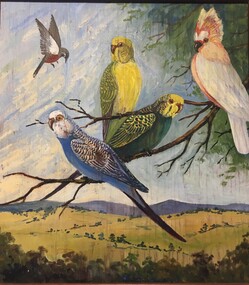
Painting - Painting - Oil, Australian Birds
... The sky is blue and the landscape is yellow with a tinge of green. A blue mountain range is on the horizon. Painted on board with a brown wooden frame....The sky is blue and the landscape is yellow with a tinge of green. A blue mountain range is on the horizon. Painted on board with a brown wooden frame. ...The painting belonged to the Wied family who were in Camp 3 Tatura. Artist unknownThree budgerigars, one blue, one yellow, one green sit on a thin branch of a tree with a Major Mitchell Cockatoo to the right of the picture. Another bird is in the air attempting to land on the branch. The sky is blue and the landscape is yellow with a tinge of green. A blue mountain range is on the horizon. Painted on board with a brown wooden frame.major mitchell cockatoo, australian birds, budgerigars, australian landscape -
Moorabbin Air Museum
Document (item) - (SP) GAF Heritage Group Library on Excel DOCUMENTS, FILMS, SLIDES & MISC ITEMS - Iss.1 Access via SharePoint only
... A/C belly landed 8 miles from Evetts Field (ex Rob Nash Collection) Jindivik A92-50 Blue Jay Radar Ranging. MTS failed at TO. Sortie carried out at 24,00'. ...A/C belly landed 8 miles from Evetts Field (ex Rob Nash Collection) GHG 2003 MAM X1310 800 Significant historical JAW GHG 2003 Digitise High historical value M Jindivik Film 35 KA 57 A92-50 Blue Jay Radar Ranging. MTS failed at TO. Sortie carried out at 24,00'. ...A/C belly landed 8 miles from Evetts Field (ex Rob Nash Collection) Jindivik A92-50 Blue Jay Radar Ranging. MTS failed at TO. Sortie carried out at 24,00'. ...GAF HERITAGE GROUP LIBRARY CATALOGUE DOCUMENTS, FILMS, SLIDES & MISC ITEMS - Iss.1 COMPILED BY GAF HERITAGE GROUP 17-Apr-26 Jindivik Lists of Pika and Jindivik Trials. Inc. pilot notes. (ex Rob Nash Collection) Malkara (ex Rob Nash Collection) Jindivik A92-38 Flt OK (ex Rob Nash Collection) Jindivik KC 1 A92-5 Initial Jindi Flt attempt. Trolley gyro fail. KC 3 A92-5 Succesful T/O. A/C belly landed 8 miles from Evetts Field (ex Rob Nash Collection) Jindivik A92-50 Blue Jay Radar Ranging. MTS failed at TO. Sortie carried out at 24,00'. Nil Data (A/C skids off runway ??) (ex Rob Nash Collection) Jindivik Mk 1 Landing (ex Rob Nash Collection) Jindivik A92-45 Autopilot 60deg turns @ 35k' Object achieved. A/C failed to respond in pitch ?? Jindivik A92-49 Blue Sky Firing 20k'.Round fired. Successful flight (ex Rob Nash Collection) Malkara S225 1 - 5 (ex Rob Nash Collection) ?? Launch of unknown vehicle (ex Rob Nash Collection) Jindivik B1 flight & landing. Good footage. Inc Meteor chase A/C (ex Rob Nash Collection) Jindivik Trolley Nose wheel test. Possibly Pika (ex Rob Nash Collection) Jindivik Trolley Nose wheel test. Possibly Pika (ex Rob Nash Collection) Jindivik Pika trolley test (ex Rob Nash Collection) Jindivik Mk 2 A92-22 Proving flt Mk 2 A/C. Second Mk2 flt. First flight this A/C . Landing balooned nil damage (ex Rob Nash Collection) Jindivik Jindivik Tonic Tow Target First flight Chase A/C (ex Rob Nash Collection) JBMR Nowra Skyhawks. Air to Air (ex Rob Nash Collection) ?? Unkown guys mucking around. No interest (ex Rob Nash Collection) Malkara Trials shots, Parachute recovery. Colour, good Nomad SloMo of undercarriage drop test (ex Rob Nash Collection) ?? Unknown launcher Jindivik Short clips of Jindi prep.(at JBMR??) (ex Rob Nash Collection) Jindivik Jindivik K 3350 “This Day Tonight” 4min 27 sec (ex Rob Nash Collection) Ikara M6 0.6 scale Tests. SA 2/6 VL103,101,100,47,45,33,1,44,43 & 22 (ex Rob Nash Collection) Nomad Nomad TO & landing trials. B&W Negative (ex Rob Nash Collection) Jindivik Uneventful flight (ex Rob Nash Collection) Jindivik Jindi 80 in wing extention MK 5 Pods. J16/4 (Vinten) (ex Rob Nash Collection) Jindivik Jindi with Tonic Tow (ex Rob Nash Collection) Jindivik J16/2 Vinten. Dirt strip landing?? (ex Rob Nash Collection) Malkara Launcher tests. S222/1 VL3; S222/2; S221/4 (ex Rob Nash Collection) Jindivik ? Unknown instrument panel. (ex Rob Nash Collection) Jindivik Trolley nose wheel. Poor quality (ex Rob Nash Collection) Malkara Publicity film. Similar to "MALKARA Australian short range command-controlled Missile" Sound (ex Rob Nash Collection) Not Used Accessn Num Ikara WRE SA 3/1 790. A Type “M3” PD36. V.L 103, 101, 100, 47, 45, 33, 1, 44, 43, 22 (Ex Mal Crozier Collection - MJC 15) Unknown Unknown missile firing (Ex Mal Crozier Collection - MJC-14) Jindivik Jindi, Meteor, Rapier Anti Aircraft missile (ex Rob Nash Collection) Woomera Shots of Meteor & Victor overflying Evetts field (ex Rob Nash Collection) Jindivik Filmhouse Aniversary Aircore (ex Rob Nash Collection) Malkara Lulworth Malkara Trials Series L13 RDS 76 101 (ex Bob Nash Collection) Jindivik A92-26 Vinten MTS range trial. Partial success. Heavy landing, Nosed over. Major damage (ex Rob Nash Collection) Jindivik Jindivik Dirt strip landing Ginger & Tonic Tow. Under Cessna & Meteor. Colour (ex Rob Nash Collection) Malkara Trials Series 10 RDS 117-130 (ex Rob Nash Collection) Malkara BC 85 Trial S238 S239 S240. Little to see. (ex Rob Nash Collection) Malkara Flight Trials Colour. (ex Rob Nash Collection) Jindivik In flight. Shows wing (Pitch oscillation) flutter?? (ex Rob Nash Collection) Malkara Review of Development Activity between March and August 1953. Significant historical interest. (ex Rob Nash Collection) Malkara VL 49 S223/1/2 Malkara tests at Woomera. Nothing new. (ex Rob Nash Collection) Jindivik 80 inch wing extention. Take off. Flight & landing. (ex Rob Nash Collection) Nomad N24 Flight 20 21 etc B&W negative (ex Rob Nash Collection) Malkara S 253 (725) V22-56 60-62 VL45 VL144 VL120 (ex Rob Nash Collection) Jindivik A92-41 Blue Sky Firing 20k' Successful flt (ex Rob Nash Collection) Jindivik A92-45 autopilot devel MK3 R.S.R 30deg turns. Successful flt (ex Rob Nash Collection) Nomad Nomad N24 in Alice Springs VH-DHU (ex Rob Nash Collection) Jindivik S250/1 K8 Vinten? No interest. (ex Rob Nash Collection) Malkara S242/1 - /3 S243/1-/3 VL 22 Nothing new (ex Rob Nash Collection) Malkara S238 VC 22 S239 VC22 VC 40 S240 241. Nothing new (ex Rob Nash Collection) Malkara Review of Development Activity between March and August 1953. Duplicate of GHG 2047 (ex Rob Nash Collection) Malkara Malkara S252/3 V62 (ex Rob Nash Collection) Malkara S250/3 V22 (ex Rob Nash Collection) Malkara S253-4 V22 V56 V60 V62 (ex Rob Nash Collection) Malkara VL 114 S252/3 (ex Rob Nash Collection) Woomera Images of Service tower at Launch Site 6A (Blue Streak) (Ex Mal Crozier Collection - MJC-14) Jindivik A92-41 Blue Sky Tracking exercise Successful flt. (Ex Mal Crozier Collection - MJC-13) GAF Aerial shots of GAF taken from Nomad. (Ex Mal Crozier Collection - MJC-08) GAF GAF Sheetmetal production. (Ex Mal Crozier Collection - MJC-10) ? Unknown fracture test. (Ex Mal Crozier Collection - MJC-09) Ikara Folding wing test rig. (Ex Mal Crozier Collection - MJC 11) Jindivik In flight Woomera (Ex Mal Crozier Collection - MJC 05) Nomad Demo short TO & landing on dirt & bitumen. Avalon & Canberra. (ex Kevin Kerle Collection - MJC-01) Nomad Roll out Avalon (Ex Mal Crozier Collection - MJC-06) Jindivik Towed target deployment. (Ex Mal Crozier Collection - MJC-07) GAF Sheet metal production methods inc. Hufford Stretch Formers. 11 min. (ex Kevin Kerle Collection MJC-02) GAF Various projects Inc Ikara Nomad. Computer room (ex - Kevin Kerle Collection MJC-04) Mirage Jindivik Avalon Arrival of Mirage first aircraft, Jindi T/O & land at JBMR. (ex Kevin Kerle Collection MJC-03) HaDigitise Target HaDigitise Target deployed from unknown aircraft. (ex R Friedman Collection MJC-22 ) Nomad Early Nomad publicity. Long version.VH-SUR "NOMAD Light Utility Aircraft" (Ex Mal Crozier Collection - MJC-18) Nomad Includes shots of Nomad used by RFDS (Ex Mal Crozier Collection - MJC-17) Jindivik Jindi publicity film. (Ex Mal Crozier Collection - MJC-25) Nomad Roll out, TO & flight. (Ex Mal Crozier Collection - MJC-24) Nomad Transporting fuselage and wings. GAF to Avalon. (Ex Mal Crozier Collection - MJC-26) Nomad VH-SUR Demo flight T/O landing; dirt strip (Ex Mal Crozier Collection -MJC-23) GAF Inc. Nomad & Mirage. Army Nomad A18-312 Silent. Colour faded (Ex Mal Crozier Collection - MJC-27) Ikara (ex Ron Friedman Collection - MJC-19) Woomera Good account of going to Woomera in the 1960's (ex Ron Friedman Collection - MJC 20 ) Turana Audio of the GIMIC and launch of P1-007 at JBMR St George Lighthouse site (ex Geoff Palfreman Collection) Turana Hanger prep. Launch from Light Weight Launcher. Chase A/C. HMAS Swan & hello recovery. Muddy road to lighthouse (ex Geoff Colquhoun Collection) Turana Telemetry; personnel; Hanger & launcher prep (ex Les Jones Collection) Turana (Ex Ian Turner collection) Photo collection Turana trials. Woomera 2 Aug 1971. JB airfield facilities. Jervis Bay Booderee Ridge com facilities. JB trial Nov 1971. JB Low Altitude 1 trial June 1973. St George Lighthouse Turana Slides JB and Sea Trials (ex John Wilson Collection) Turana Slides LA1, 2 & 3 and CEP Trials (ex John Wilson Collection) Nomad Nomad N22 Aerocor Ikara M7 Manufacturing & design team. Wing deployment test rig (ex John Wilson Collection) Ikara M7 Description of folding wing mechanism; launch container; design and preparation of test vehicles. Inc Photos (ex John Wilson Collection) Ikara M7 Collection of photos of M7 Womera trial (ex Ian Turner Collection) Mirage Procedure for painting of first Mirage. Problems. Paint shop conditions. (ex John Wilson Collection) Jindivik Evaluation of various surface finishes on aluminium sheet adjacent to jetpipe. (ex John Wilson Collection) Jindivik Modifications for landing weight of 3500 lb. Analysis and tests (ex John Wilson Collection) Nomad Development of manufacturing process for adhesive bonded sandwich structure incorporating aluminium honeycomb. Quality control. Testing (ex John Wilson Collection) Ikara M3 Evaluation of polycarbonate. Modifications Tests (ex John Wilson Collection) Ikara M6 Nene blower (ARL) tests at various flight conditions (ex John Wilson Collection) GAF Spec for first Autoclave at GAF. 30ft long; 6.5ft dia (ex John Wilson Collection)films, slides & misc items - iss.1 compiled by gaf heritage group, 17-apr-26, project artifact type title extract/comments author date of publication accession number ghg xxxx location item size area of significance entered scanned or digitised comments new/modified description of change, box location box id shelf location by date format link to data file(s) by date, "turana/ikara/, gaf/asta company data" eg. document, report, manual, folder, drawings. film, photo, slide etc "the formal title of the document, report etc, " put more detail in here than just the title. think of the words that people will use to search for and what will need to come up on their search. mon-yy "three letter owner prefix followed by four digits eg ghg 1500, " baa/mam/etc eg ikara 01. column not be filled in until shelf locations are finalised. approx size eg a3, a4 page count other details if useful. films: see note 1 --> eg “historic” or “scientific or research potential” etc. three initials format: 31/12/22 pdf/jpeg url three initials format: 31/12/22, updated archive box no. n, jindivik software trials records lists of pika and jindivik trials. inc. pilot notes. (ex rob nash collection) rob nash ghg 2000 jaw ghg 2000 m, malkara film 35 s39 vl2 (ex rob nash collection) ghg 2001 mam x1310 400 jaw ghg 2001 digitise m data file added, jindivik film 35 ka 18 a92-38 flt ok (ex rob nash collection) jul-55 ghg 2002 mam x1310 600 jaw ghg 2002 copy of baa 2182 m data file added, jindivik film 35 kc 1 & kc 3 kc 1 a92-5 initial jindi flt attempt. trolley gyro fail. kc 3 a92-5 succesful t/o. a/c belly landed 8 miles from evetts field (ex rob nash collection) ghg 2003 mam x1310 800 significant historical jaw ghg 2003 digitise high historical value m, jindivik film 35 ka 57 a92-50 blue jay radar ranging. mts failed at to. sortie carried out at 24, 00'. nil data (a/c skids off runway ??) (ex rob nash collection) mar-56 ghg 2004 mam x1310 600 jaw ghg 2004 m, jindivik film 16 mk 1 landing (ex rob nash collection) ghg 2006 mam x1310 10 jaw ghg 2006 good shots but ghg 2011 better. m, jindivik film 35 ka 53 emu a92-45 autopilot 60deg turns @ 35k' object achieved. a/c failed to respond in pitch ?? feb-56 ghg 2007 mam x1310 50 jaw ghg 2007 see 16 mm version baa 2060 m, jindivik film 35 ka 38 a92-49 blue sky firing 20k'.round fired. successful flight (ex rob nash collection) nov-55 ghg 2008 mam x1310 400 jaw ghg 2008 film in poor condition m, malkara film 16 s225 1 - 5 (ex rob nash collection) jun-58 ghg 2009 mam x1310 65 jaw ghg 2009 momentary shot of launch m, ?? film 16 launch of unknown vehicle (ex rob nash collection) ghg 2010 mam x1310 160 jaw ghg 2010 m, jindivik film 16 b1 flight & landing. good footage. inc meteor chase a/c (ex rob nash collection) ghg 2011 mam x1310 140 jaw ghg 2011 digitise m, jindivik film 16 trolley nose wheel test. possibly pika (ex rob nash collection) ghg 2012 mam x1310 40 jaw ghg 2012 digitise . film shrunk m, jindivik film 16 trolley nose wheel test. possibly pika (ex rob nash collection) ghg 2013 mam x1310 40 jaw ghg 2013 film broken, damaged. shrunk? m, jindivik film 16 pika trolley test (ex rob nash collection) ghg 2014 mam x1310 64 jaw ghg 2014 t good quality. ghg 2021 better. m, jindivik film 35 ka 2 mk 2 a92-22 proving flt mk 2 a/c. second mk2 flt. first flight this a/c . landing balooned nil damage (ex rob nash collection) jul-54 ghg 2015 mam x1310 500 jaw ghg 2015 digitise good vision. m, jindivik film 16 jindivik tonic tow target first flight chase a/c (ex rob nash collection) nov-81 ghg 2016 mam x1310 60 jaw ghg 2016 digitise good shots of tonic tow. lots of waste space. m, jbmr film 16 nowra skyhawks. air to air (ex rob nash collection) ghg 2017 mam x1310 100 jaw ghg 2017 m, ?? film 16 unkown guys mucking around. no interest (ex rob nash collection) ghg 2018 mam x1310 50 jaw ghg 2018 m, malkara film 16 trials shots, parachute recovery. colour, good ghg 2019 mam x1311 300 jaw ghg 2019 digitise splice broken m, nomad film 16 slomo of undercarriage drop test (ex rob nash collection) ghg 2020 mam x1311 400 jaw ghg 2020 very little to see. m, ?? film 16 unknown launcher ghg 2021 mam x1311 350 jaw ghg 2021 m, jindivik film 16 short clips of jindi prep.(at jbmr??) (ex rob nash collection) ghg 2022 mam x1311 30 jaw ghg 2022 not projectionable m, jindivik film 16 jindivik k 3350 “this day tonight” 4min 27 sec (ex rob nash collection) mar-68 ghg 2023 mam x1311 167 jaw ghg 2023 digitise m, ikara film 35 m6 0.6 scale tests. sa 2/6 vl103, 101, 100, 47, 45, 33, 1, 44, 43 & 22 (ex rob nash collection) aug-61 ghg 2024 mam x1311 400 jaw ghg 2024 m, nomad film 35 nomad to & landing trials. b&w negative (ex rob nash collection) ghg 2025 mam x1311 120 jaw ghg 2025 m, jindivik film 35 ka 54 emu uneventful flight (ex rob nash collection) ghg 2026 mam x1311 200 jaw ghg 2026 film shrunk m, jindivik film 35 jindi 80 in wing extention mk 5 pods. j16/4 (vinten) (ex rob nash collection) ghg 2027 mam x1311 300 jaw ghg 2027 digitise - a/c in flight only m, jindivik film 16 jindi with tonic tow (ex rob nash collection) ghg 2028 mam x1310 30 jaw ghg 2028 see also ghg 2016 m, jindivik film 35 j16/2 vinten. dirt strip landing?? (ex rob nash collection) ghg 2029 mam x1311 60 jaw ghg 2029 m, malkara film 16 launcher tests. s222/1 vl3, s222/2, s221/4 (ex rob nash collection) ghg 2030 mam x1311 350 jaw ghg 2030 m, jindivik ? film 16 kc 5 ? unknown instrument panel. (ex rob nash collection) ghg 2031 mam x1311 100 jaw ghg 2031 m, jindivik film 16 ka 22 ? trolley nose wheel. poor quality (ex rob nash collection) ghg 2032 mam x1311 50 jaw ghg 2032 m, malkara film 16 malkara anti-tank missile publicity film. similar to "malkara australian short range command-controlled missile" sound (ex rob nash collection) ghg 2033 mam x1311 400 jaw ghg 2033 film shrunk but good quality images. keep m, not used accessn num ghg 2034 mam unallocated m, ikara film 35 0.6 scale firing wre sa 3/1 790. a type “m3” pd36. v.l 103, 43, 22 (ex mal crozier collection - mjc 15) aug-61 ghg 2035 mam x1311 400 jaw ghg 2035 film in poor condition m, unknown film 35 unknown missile firing (ex mal crozier collection - mjc-14) ghg 2036 mam x1311 200 jaw ghg 2036 m, jindivik film 16 jindi, meteor, rapier anti aircraft missile (ex rob nash collection) ghg 2037 mam x1311 150 jaw ghg 2037 film unprojectable m, woomera film 16 shots of meteor & victor overflying evetts field (ex rob nash collection) ghg 2038 mam x1311 90 jaw ghg 2038 m, jindivik film 16 25th aniversary jbmr filmhouse aniversary aircore (ex rob nash collection) ghg 2039 mam x1311 150 jaw ghg 2039 work print. see baa 2134 m, malkara film 16 lulworth malkara trials series l13 rds 76 101 (ex bob nash collection) sep-52 ghg 2040 mam x1312 400 jaw ghg 2040 m, jindivik film 35 ka 12 a92-26 vinten mts range trial. partial success. heavy landing, nosed over. major damage (ex rob nash collection) apr-55 ghg 2041 mam x1312 400 jaw ghg 2041 digitise m, jindivik film 16 df 85 jindivik dirt strip landing ginger & tonic tow. under cessna & meteor. colour (ex rob nash collection) ghg 2042 mam x1312 400 jaw ghg 2042 digitise m, malkara film 16 trials series 10 rds 117-130 (ex rob nash collection) ghg 2043 mam x1312 400 jaw ghg 2043 digitise m, malkara film 16 bc 85 trial s238 s239 s240. little to see. (ex rob nash collection) ghg 2044 mam x1312 150 jaw ghg 2044 m, malkara film 16 flight trials colour. (ex rob nash collection) aug-59 ghg 2045 mam x1312 350 jaw ghg 2045 splice broken m, jindivik film 16 j 470 in flight. shows wing (pitch oscillation) flutter?? (ex rob nash collection) apr-71 ghg 2046 mam x1311 100 jaw ghg 2046 digitise film damaged ~ 3min m, malkara film 16 ident 101 review of development activity between march and august 1953. significant historical interest. (ex rob nash collection) ghg 2047 mam x1312 400 jaw ghg 2047 digitise m, malkara film 16 vl 49 s223/1/2 malkara tests at woomera. nothing new. (ex rob nash collection) jun-58 ghg 2048 mam x1311 150 jaw ghg 2048 m, jindivik film 35 80 inch wing extention. take off. flight & landing. (ex rob nash collection) ghg 2049 mam x1311 150 jaw ghg 2049 m, nomad film 35 n24 flight 20 21 etc b&w negative (ex rob nash collection) sep-77 ghg 2050 mam x1312 90 jaw ghg 2050 m, malkara film 35 s 253 (725) v22-56 60-62 vl45 vl144 vl120 (ex rob nash collection) ghg 2051 mam x1313 800 jaw ghg 2051 film in poor condition m, jindivik film 35 ka 44 a92-41 blue sky firing 20k' successful flt (ex rob nash collection) dec-55 ghg 2052 mam x1312 800 jaw film in poor condition m, jindivik film 35 ka 43 a92-45 autopilot devel mk3 r.s.r 30deg turns. successful flt (ex rob nash collection) dec-55 ghg 2053 mam x1312 600 jaw film in poor condition m, nomad film 35 nomad n24 in alice springs vh-dhu (ex rob nash collection) ghg 2054 mam x1312 50 jaw ghg 2054 m, jindivik film 35 s250/1 k8 vinten? no interest. (ex rob nash collection) may-62 ghg 2055 mam x1312 80 jaw ghg 2055 m, malkara film 16 s242/1 - /3 s243/1-/3 vl 22 nothing new (ex rob nash collection) sep-60 ghg 2056 mam x1312 100 jaw ghg 2056 m, malkara film 16 s238 vc 22 s239 vc22 vc 40 s240 241. nothing new (ex rob nash collection) ghg 2057 mam x1312 100 jaw ghg 2057 m, malkara film 16 ident 100 review of development activity between march and august 1953. duplicate of ghg 2047 (ex rob nash collection) sep-60 ghg 2058 mam x1313 400 jaw duplicate film film in poor condition m, malkara film 35 firing trial malkara s252/3 v62 (ex rob nash collection) oct-62 ghg 2059 mam x1313 500 jaw ghg 2059 m, malkara film 35 firing trial s250/3 v22 (ex rob nash collection) may-62 ghg 2060 mam x1313 400 jaw ghg 2060 film in poor condition m, malkara film 35 s253-4 v22 v56 v60 v62 (ex rob nash collection) ghg 2061 mam x1313 570 jaw ghg 2061 m, malkara film 35 vl 114 s252/3 (ex rob nash collection) ghg 2062 mam x1313 600 jaw ghg 2062 film in poor condition. broken splices. m, woomera film 35 images of service tower at launch site 6a (blue streak) (ex mal crozier collection - mjc-14) ghg 2063 mam x1313 1 jaw ghg 2063 still images off ghg 2036 only. m, jindivik film 35 ka 37 a92-41 blue sky tracking exercise successful flt. (ex mal crozier collection - mjc-13) nov-55 ghg 2064 mam x1313 400 jaw film in poor condition m, gaf film 16 aerial shots of gaf taken from nomad. (ex mal crozier collection - mjc-08) ghg 2065 mam x1313 100 jaw ghg 2065 digitise m, gaf film 16 facilities gaf sheetmetal production. (ex mal crozier collection - mjc-10) ghg 2066 mam x1313 100 jaw ghg 2066 digitise m, ? film 16 unknown fracture test. (ex mal crozier collection - mjc-09) ghg 2067 mam x1313 100 jaw ghg 2067 m, ikara film 16 m7 folding wing test rig. (ex mal crozier collection - mjc 11) ghg 2068 mam x1313 100 jaw ghg 2068 digitise do not project splices broken m, jindivik film 16 mk 2 in flight woomera (ex mal crozier collection - mjc 05) ghg 2069 mam x1313 100 jaw ghg 2069 m, nomad film 16 publicity demo short to & landing on dirt & bitumen. avalon & canberra. (ex kevin kerle collection - mjc-01) feb-72 ghg 2070 mam x1314 400 jaw ghg 2070 digitise m, nomad film 16 roll out avalon (ex mal crozier collection - mjc-06) ghg 2071 mam x1314 100 jaw ghg 2071 digitise m, jindivik film 16 towed target towed target deployment. (ex mal crozier collection - mjc-07) ghg 2072 mam x1314 100 jaw ghg 2072 digitise m, gaf film 16 production facilities sheet metal production methods inc. hufford stretch formers. 11 min. (ex kevin kerle collection mjc-02) ghg 2073 mam x1314 400 jaw ghg 2073 digitise m, gaf film 16 production facilities various projects inc ikara nomad. computer room (ex - kevin kerle collection mjc-04) ghg 2074 mam x1314 600 jaw ghg 2074 digitise m, mirage jindivik film 16 avalon arrival of mirage first aircraft, jindi t/o & land at jbmr. (ex kevin kerle collection mjc-03) ghg 2075 mam x1314 400 jaw ghg 2075 digitise m, hadigitise target film 16 towed target hadigitise target deployed from unknown aircraft. (ex r friedman collection mjc-22 ) ghg 2076 mam x1314 100 jaw ghg 2076 digitised by mjc m, nomad film 16 nomad publicity early nomad publicity. long version.vh-sur "nomad light utility aircraft" (ex mal crozier collection - mjc-18) commonwealth film unit mar-72 ghg 2077 mam x1314 400 jaw ghg 2077 film yellowed. check for similar versions in baa collection m, nomad film 16 royal flying doctor sevice broken hill includes shots of nomad used by rfds (ex mal crozier collection - mjc-17) ghg 2078 mam x1314 824 jaw available from nfsa title, 32884 m, jindivik film super 8 jindivik - the hunted one jindi publicity film. (ex mal crozier collection - mjc-25) ghg 2079 mam x1314 150 jaw ghg 2079 digital copy exists. also available in other formats. m, nomad film 16 100th nomad roll out, to & flight. (ex mal crozier collection - mjc-24) nov-79 ghg 2080 mam x1314 100 jaw ghg 2080 digital copy exists m, nomad film 16 nomad assembly transporting fuselage and wings. gaf to avalon. (ex mal crozier collection - mjc-26) ghg 2081 mam x1314 100 jaw ghg 2081 digital copy exists. film broken at tail splice. m, nomad film 16 demo flight vh-sur demo flight t/o landing, dirt strip (ex mal crozier collection -mjc-23) feb-72 ghg 2082 mam x1314 300 jaw ghg 2082 digital copy exists m, gaf film 16 family day avalon inc. nomad & mirage. army nomad a18-312 silent. colour faded (ex mal crozier collection - mjc-27) ghg 2083 mam x1314 800 jaw ghg 2083 m, ikara film 8 ikara sea trials (ex ron friedman collection - mjc-19) ghg 2084 mam x1314 250 jaw ghg 2084 mjc m, woomera film 8 woomera trial good account of going to woomera in the 1960's (ex ron friedman collection - mjc 20 ) ghg 2085 mam x1314 250 jaw ghg 2085 mjc m, turana audio cassette jervis bay trial audio of the gimic and launch of p1-007 at jbmr st george lighthouse site (ex geoff palfreman collection) geoff palfreman nov-71 ghg 2086 mam x1314 41 + 31 minutes jaw ghg 2086 g. wilson 0409416246 apr-24 n data file added, turana film 8 jervis bay cep 1 (la2) trial hanger prep. launch from light weight launcher. chase a/c. hmas swan & hello recovery. muddy road to lighthouse (ex geoff colquhoun collection) geoff colquhoun jun-74 ghg 2087 mam x1314 150 ft 9 min jaw ghg 2087 photoq apr-24 n data file added, turana software woomera, jb trials telemetry, personnel, hanger & launcher prep (ex les jones collection) l jones nov-71 ghg 2088 ghg 2088 l jones son aug-23 from l jones 8mm movie n data file added, turana digital photos (ex ian turner collection) photo collection turana trials. woomera 2 aug 1971. jb airfield facilities. jervis bay booderee ridge com facilities. jb trial nov 1971. jb low altitude 1 trial june 1973. st george lighthouse ian turner 1971 to 1973 ghg 2089 approx 200 b&w photos jaw apr-26 ghg 2089, turana slides trials slides jb and sea trials (ex john wilson collection) j wilson ghg 2101 mam x1314 36 jaw ghg 2101 turana jb & sea trials slides jaw apr-24 n data file added, turana slides trials slides la1, 2 & 3 and cep trials (ex john wilson collection) j wilson ghg 2102 mam x1314 30 jaw ghg 2102 turana la 1, 2, 3 & cep slides jaw apr-24 n data file added, nomad photo print vh-fai nomad n22 aerocor ghg 2103 mam x1314 10” x 8” jaw ghg 2103 nomad vh-fai jaw apr-24 n data file added, ikara m7 photo print ikara m7 manufacturing & design team. wing deployment test rig (ex john wilson collection) ghg 2104 mam x1314 10” x 8” jaw ghg 2104 m7 team jaw apr-24 n data file added, ikara m7 software memories of ikara m7 description of folding wing mechanism, launch container, design and preparation of test vehicles. inc photos (ex john wilson collection) j wilson 2016 ghg 2105 ghg 2105 j wilson m7 jaw jun-24 n data file added, ikara m7 software woomera trial collection of photos of m7 womera trial (ex ian turner collection) i turner 1986 ghg 2106 ghg 2106 i turner pics jaw jun-24 n data file added, mirage software external painting of mirage a3-22 procedure for painting of first mirage. problems. paint shop conditions. (ex john wilson collection) j wilson dec-65 ghg 2107 ghg 2107 mirage painting jaw jun-24 n data file added, jindivik software evaluation of heat reflective surfaces for jindivik evaluation of various surface finishes on aluminium sheet adjacent to jetpipe. (ex john wilson collection) j wilson may-66 ghg 2108 ghg 2108 jindi reflective surfaces jaw jun-24 n data file added, jindivik software analysis of the jindivik oleo strut with increased landing weights modifications for landing weight of 3500 lb. analysis and tests (ex john wilson collection) j wilson feb-84 ghg 2109 ghg 2109 jindi increased landing weights jaw jun-24 n data file added, nomad software nomad tank bay door development development of manufacturing process for adhesive bonded sandwich structure incorporating aluminium honeycomb. quality control. testing (ex john wilson collection) j wilson nov-69 ghg 2110 ghg 2110 nomad tank bay doors jaw jun-24 n data file added, ikara m3 software parapac materials evaluation evaluation of polycarbonate. modifications tests (ex john wilson collection) j wilson oct-66 ghg 2111 ghg 2111 m3 parapac jaw jun-24 n data file added, ikara m6 software break-off fairing tests nene blower (arl) tests at various flight conditions (ex john wilson collection) j wilson jan-82 ghg 2112 ghg 2112 m6 break off fairing jaw jun-24 n data file added, gaf software performance specification for autoclave and associated equipment spec for first autoclave at gaf. 30ft long, 6.5ft dia (ex john wilson collection) j wilson nov-68 ghg 2113 ghg 2113 autoclave spec jaw jun-24 n data file added -
 Flagstaff Hill Maritime Museum and Village
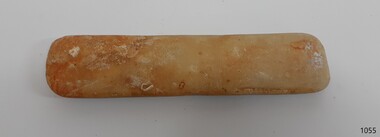
Equipment - Sharpening Stone, ca 1878
... Blue is stronger and ‘cuts’ more quickly, but with a less polished finish. A double-sided whetstone is therefore valued for its increased durability (the harder BBW ‘backs’, or supports, the softer Coticule), and additional utility (the fine ‘grit’ of Coticule complements the coarser BBW to meet a range of sharpening needs). ...Blue is stronger and ‘cuts’ more quickly, but with a less polished finish. A double-sided whetstone is therefore valued for its increased durability (the harder BBW ‘backs’, or supports, the softer Coticule), and additional utility (the fine ‘grit’ of Coticule complements the coarser BBW to meet a range of sharpening needs). ...The sharpening stone can also be referred to as a whetstone, oil stone or honing stone. It is a well-worn double-sided sharpening stone retrieved from the wreck site of the Loch Ard. It is used to grind and hone the edges of metal blades and tools. ‘Natural’ sharpening stones like this one are quarried from ancient sedimentary rock that has metamorphosed from clay and volcanic ash to produce garnet crystals. Most modern stones are artificially produced, or ‘bonded’, abrasive stones, made by fusing clay and metal powder under heat and pressure. The softer yellow Corticule stone is found in thin vertical veins running through the more plentiful Belgian Blue rock. Coticule is a fine-grained and dense material that ‘cuts’ metal slowly but to a superior standard of sharpness and finish. The relatively coarser Belgian Blue is stronger and ‘cuts’ more quickly, but with a less polished finish. A double-sided whetstone is therefore valued for its increased durability (the harder BBW ‘backs’, or supports, the softer Coticule), and additional utility (the fine ‘grit’ of Coticule complements the coarser BBW to meet a range of sharpening needs). The blue-grey base of this stone is thinner than the remaining yellow Coticule on top. This suggests that the majority of grinding and honing work it has done on board the ship was for larger tools, rather than on surgical or shaving blades. Its rounded or spherical shaping may also be related to the ‘tumbling’ action of the sea on the ocean floor. History of the Loch Ard wreck: The Loch Ard got its name from ”Loch Ard” a loch that lies to the west of Aberfoyle, and the east of Loch Lomond. It means "high lake" in Scottish Gaelic. The vessel belonged to the famous Loch Line which sailed many vessels from England to Australia. The Loch Ard was built in Glasgow by Barclay, Curle & Co. in 1873, the vessel was a three-masted square-rigged iron sailing ship that measured 79.87 meters in length, 11.58 m in width, and 7 m in depth with a gross tonnage of 1693 tons with a mainmast that measured a massive 45.7 m in height. Loch Ard made three trips to Australia and one trip to Calcutta before its fateful voyage. Loch Ard left England on March 2, 1878, under the command of 29-year-old Captain Gibbs, who was newly married. The ship was bound for Melbourne with a crew of 37, plus 17 passengers. The general cargo reflected the affluence of Melbourne at the time. Onboard were straw hats, umbrellas, perfumes, clay pipes, pianos, clocks, confectionery, linen and candles, as well as a heavier load of railway irons, cement, lead and copper. There were other items included that were intended for display in the Melbourne International Exhibition of 1880. The voyage to Port Phillip was long but uneventful. Then at 3 am on June 1, 1878, Captain Gibbs was expecting to see land. But the Loch Ard was running into a fog which greatly reduced visibility. Captain Gibbs was becoming anxious as there was no sign of land or the Cape Otway lighthouse. At 4 am the fog lifted and a lookout aloft announced that he could see breakers. The sheer cliffs of Victoria's west coast came into view, and Captain Gibbs realised that the ship was much closer to them than expected. He ordered as much sail to be set as time would permit and then attempted to steer the vessel out to sea. On coming head-on into the wind, the ship lost momentum, the sails fell limp and Loch Ard's bow swung back towards land. Gibbs then ordered the anchors to be released in an attempt to hold their position. The anchors sank some 50 fathoms - but did not hold. By this time the ship was among the breakers and the tall cliffs of Mutton Bird Island rose behind. Just half a mile from the coast, the ship's bow was suddenly pulled around by the anchor. The captain tried to tack out to sea, but the ship struck a reef at the base of Mutton Bird Island, near Port Campbell. Waves subsequently broke over the ship and the top deck became loosened from the hull. The masts and rigging came crashing down knocking passengers and crew overboard. When a lifeboat was finally launched, it crashed into the side of Loch Ard and capsized. Tom Pearce, who had launched the boat, managed to cling to its overturned hull and shelter beneath it. He drifted out to sea and then on the flood tide came into what is now known as Lochard Gorge. He swam to shore, bruised and dazed, and found a cave in which to shelter. Some of the crew stayed below deck to shelter from the falling rigging but drowned when the ship slipped off the reef into deeper water. Eva Carmichael a passenger had raced onto the deck to find out what was happening only to be confronted by towering cliffs looming above the stricken ship. In all the chaos, Captain Gibbs grabbed Eva and said, "If you are saved Eva, let my dear wife know that I died like a sailor". That was the last Eva Carmichael saw of the captain. She was swept off the ship by a huge wave. Eva saw Tom Pearce on a small rocky beach and yelled to attract his attention. He dived in and swam to the exhausted woman and dragged her to shore. He took her to the cave and broke the open case of brandy which had washed up on the beach. He opened a bottle to revive the unconscious woman. A few hours later Tom scaled a cliff in search of help. He followed hoof prints and came by chance upon two men from nearby Glenample Station three and a half miles away. In a complete state of exhaustion, he told the men of the tragedy. Tom then returned to the gorge while the two men rode back to the station to get help. By the time they reached Loch Ard Gorge, it was cold and dark. The two shipwreck survivors were taken to Glenample Station to recover. Eva stayed at the station for six weeks before returning to Ireland by steamship. In Melbourne, Tom Pearce received a hero's welcome. He was presented with the first gold medal of the Royal Humane Society of Victoria and a £1000 cheque from the Victorian Government. Concerts were performed to honour the young man's bravery and to raise money for those who lost family in the disaster. Of the 54 crew members and passengers on board, only two survived: the apprentice, Tom Pearce and the young woman passenger, Eva Carmichael, who lost her family in the tragedy. Ten days after the Lochard tragedy, salvage rights to the wreck were sold at auction for £2,120. Cargo valued at £3,000 was salvaged and placed on the beach, but most washed back into the sea when another storm developed. The wreck of Lochard still lies at the base of Mutton Bird Island. Much of the cargo has now been salvaged and some items were washed up into Lochard Gorge. Cargo and artefacts have also been illegally salvaged over many years before protective legislation was introduced in March 1982. One of the most unlikely pieces of cargo to have survived the shipwreck was a Minton majolica peacock- one of only nine in the world. The peacock was destined for the Melbourne 1880 International Exhibition. It had been well packed, which gave it adequate protection during the violent storm. Today the Minton peacock can be seen at the Flagstaff Hill Maritime Museum in Warrnambool. From Australia's most dramatic shipwreck, it has now become Australia's most valuable shipwreck artifact and is one of very few 'objects' on the Victorian State Heritage Register. The shipwreck of the Loch Ard is of significance for Victoria and is registered on the Victorian Heritage Register ( S 417). Flagstaff Hill has a varied collection of artefacts from Loch Ard and its collection is significant for being one of the largest accumulation of artefacts from this notable Victorian shipwreck of which the subject items are a small part. The collections objects give us a snapshot of how we can interpret the story of this tragic event. The collection is also archaeologically significant as it represents aspects of Victoria's shipping history that allows us to interpret Victoria's social and historical themes of the time. Through is associated with the worst and best-known shipwreck in Victoria's history. A sharpening stone is also called a whetstone, oil, or honing stone. The stone is a worn double-sided rectangular block with rounded corners. There is a clear delineation between its coarser Belgian Blue base (grey colour) and its finer Belgian Coticule face (yellow colour). It bears sedimentary encrustation over one-third of its surface. flagstaff hill, warrnambool, shipwrecked coast, flagstaff hill maritime museum, maritime museum, shipwreck coast, flagstaff hill maritime village, great ocean road, loch line, loch ard, captain gibbs, eva carmichael, tom pearce, glenample station, mutton bird island, loch ard gorge, sharpening stone, whetstone, oilstone, double-sided stone, belgian coticule, belgian blue whetstone, oil stone, honing stone -
 Federation University Historical Collection
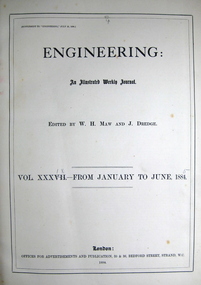
Book, Engineering: an illustrated weekly journal, 1884 (exact)
... blue large hard cover. Title and publication date are written on spine in gold. Illustrations (fig., plates, plans, diagrams) in B/W. Includes collection of the engineering weekly journal vol. xxxix-from January to June 1885. This book contains a wide range...blue large hard cover. Title and publication date are written on spine in gold. Illustrations (fig., plates, plans, diagrams) in B/W. Includes collection of the engineering weekly journal vol. xxxix-from January to June 1885. This book contains a wide range ...William Henry Maw was a British civil engineer and astronomer. He was born in 1838 and died in 1924 at eighty-five years. Maw worked as an assistant at the workshops of the Eastern Counties Railway before he became a draughtsman in the design office. He designed the first outside cylinder locomotive for use in India. In 1865 he founded the journal Engineering and continued to be an editor for the rest of his life. Maw became a consulting engineer. He was president of the Civil and Mechanical Engineers' Society, the Institution of Mechanical Engineers and the Institution of Civil Engineers. This book contains a wide range of articles and reviews related to industrial developments such as rail mill engines at the Dowlais iron works (constructed by Messrs. Kitson and Co., engineers, Leeds), cable tramway, Clay-street, San Francisco, U.S.A., road and railway bridge over the river Dnieper, at Jekaterinoslow, Russia (constructed from the designs of Professor N. Belelubsky, St. Petersburg, by the Brjonsk iron works) etc. A book with blue large hard cover. Title and publication date are written on spine in gold. Illustrations (fig., plates, plans, diagrams) in B/W. Includes collection of the engineering weekly journal vol. xxxix-from January to June 1885. This book contains a wide range of articles and reviews related to industrial developments. Page no.712.machinery, tools, engines, engineering, railroad, w h maw, rail, mill engines, cable tramway, clay street, dowlais iron works, twin screw engines, royal italian torpedo ram vessel, messrs r and, w hawthorn engineers, electro plated carriage, the tehuantepec ship railway, otis elevator -
 Flagstaff Hill Maritime Museum and Village
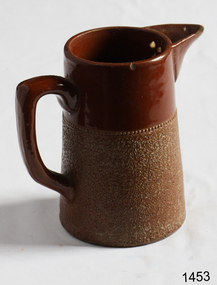
Domestic object - Jug
... blue, purple and reddish brown. Manganese dioxide is a flux in and of itself as well. So, glazes that get their black and purple colours, often interact with other glazes and RUN! Our mirror black is a good example – it mixes really well with many glazes because it fluxes them – causes them to melt faster. It will also bring out many beautiful colours in the glazes because it’s black colouring most definitely comes from manganese dioxide! Glaze chemistry is a whole subject on it’s own! We use commercial Mayco glazes on purpose – for their huge range...blue, purple and reddish brown. Manganese dioxide is a flux in and of itself as well. So, glazes that get their black and purple colours, often interact with other glazes and RUN! Our mirror black is a good example – it mixes really well with many glazes because it fluxes them – causes them to melt faster. It will also bring out many beautiful colours in the glazes because it’s black colouring most definitely comes from manganese dioxide! Glaze chemistry is a whole subject on it’s own! We use commercial Mayco glazes on purpose – for their huge range ...The Process of Making Pottery Decorating, Firing, Glazing, Making, Technical There is a rhythm and flow to clay. It can’t be done all at once! Even the making process! It can take weeks to get everything done, especially if you can only work on your pottery once a week! Even though we have three hour classes, it’s often just not enough time! Here is an overview of some of the processes so you have a bit more grasp on some of the technical stuff! Step One – Design There are SO many ideas out there for making stuff in clay! From delicate porcelain jewellery, through to heavy sculptural work and everything in between. Deciding your direction is sometimes not that easy – when you first start, try everything, you will naturally gravitate to the style that you enjoy! The options and variations are endless and can get a wee bit overwhelming too! Check in with me before you start to ensure your ideas will work, what order you might do things, how you could achieve the look you are seeking and any other technical data required! Step Two – Making Clay is thixotropic. This means that as you work with it, the clay first gets sloppier and wetter, before is begins to dry in the atmosphere. For most things, you simply can’t do all parts of the project at once. An example of work order might look like: Get last weeks work out from the shelves Prepare clay for today’s work – roll your clay, prepare balls for throwing, make the first stage of a pinch pot) Clean up last week’s work and put it on the shelf for bisque firing Check that you have any glazing to do – and do enough of it that you will have time to finish your main project Do the next step of your next project – there might be a further step that can’t be complete immediately, in that case, wrap your work well and put onto the shelves. Letting your work rest for a while can really help keep your work clean and professional looking. Many things require bagging under plastic to keep it ready for work the next week – put your name on the outside of the bag so you can find your work easily. We have stickers and markers. Consider how you want to decorate your work – coloured slip can be applied at a fairly wet stage (remembering that it will make your work even wetter!). Trying to apply slip to dry clay won’t work! If you want to do sgraffito – you will need to keep the work leather hard (a state of dryness where you can still work the clay with a little effort and a little water and care). Step Three – Drying Most of the time your work can go into the rack uncovered to let it dry out for the following week. If you want to continue forming or shaping you will need to double bag your work – put your work on a suitable sized bat and put the bat in a bag so the base of the bag is under the bat, then put another bag over the top of the work and tuck the top of the bag under the bat. If you want to trim (or turn) your thrown work the following week, it should also be double bagged. If your work is large, delicate, or of uneven thicknesses, you should lightly cover your work for drying. When considering the drying process, bare in mind the weather, humidity and wind! The hotter and dryer, the faster things dry and work can dry unevenly in the shelves – this can lead to cracking – another time to lightly cover your work for drying. Step Four – Trimming and Cleaning Up Your work is dry! It is called greenware now and it is at it’s most fragile! Handle everything with two hands. I often refer to soft hands – keep everything gentle and with your fingers spread as much as possible. Try to not pick up things like plates too much, and always with both hands! Before your work can be bisque fired it should be “cleaned up”. You work won’t go into the kiln if it has sharp edges – when glazed, sharp edges turn into razor blades! Use a piece of fly wire to rub the work all over – this will scratch a little so be light handed. Use a knife or metal kidney to scrape any areas that require a bit more dynamic treatment than the fly wire offers! Finally, a very light wipe over with a slightly damp sponge can help soften and soothe all of your edges and dags! Trimming thrown work: If you are planning to trim (or turn) your thrown work (and you should be), make sure you bag it well – your work should be leather hard to almost dry for easiest trimming. Use this step to finish the work completely – use a metal kidney to polish the surface, or a slightly damp sponge to give a freshly thrown look. Wipe the sponge around the rim after trimming, and check the inside of the pot for dags! Trimming slip cast work: Usually I will trim the rims of your work on the wheel the following day to make that stage easier, however you will still need to check your work for lumps and bumps. Last but not least – check that your name is still clearly on the bottom of your work. Step Five – Bisque Firing When the work is completely dry it can go into the bisque kiln. The bisque kiln is fired to 1000°C. This process burns off the water in the clay as well as some of the chemically bound water. The structure of the clay is not altered that much at this temperature. Inside the bisque kiln, the work is stacked a little, small bowl inside a larger bowl and onto a heavy plate. Smaller items like decorations or drink coasters might get stacked several high. Consideration is paid to the weight of the stack and shape of the work. A bisque kiln can fire about one and a half times the amount of work that the glaze kiln can fire. The firing takes about 10 hours to complete the cycle and about two days to cool down. Once it has been emptied the work is placed in the glaze room ready for you to decorate! Step Six – Glazing Decorating your work with colour can be a lot of fun – and time consuming! There are three main options for surface treatment at this stage: Oxide Washes Underglazes Glazes Washes and underglazes do not “glaze” the work – It will still need a layer of glaze to fully seal the clay (washes don’t need glaze on surfaces not designed for food or liquid as they can gloss up a little on their own). Underglazes are stable colourants that turn out pretty much how they look in the jar. They can be mixed with each other to form other colours and can be used like water colours to paint onto your work. Mostly they should have a clear glaze on top to seal them. Oxides are a different species – the pink oxide (cobalt) wash turns out bright blue for instance. They don’t always need a glaze on top, and some glazes can change the colour of the wash! The glazes need no other “glaze” on top! Be careful of unknown glaze interactions – you can put any combination of glaze in a bowl or on a plate, but only a single glaze on the outside of any vertical surface! Glazes are a chemical reaction under heat. We don’t know the exact chemicals in the Mayco glazes we use. I can guess by the way they interact with each other, however, on the whole, you need to test every idea you have, and not run the test on a vertical surface! Simply put, glaze is a layer of glass like substance that bonds with the clay underneath. Clay is made of silica, alumina and water. Glaze is made of mostly silica. Silica has a melting point of 1700°C and we fire to 1240°C. The silica requires a “flux” to help it melt at the lower temperature. Fluxes can be all sorts of chemicals – a common one is calcium – calcium has a melting point of 2500°C, however, together they both melt at a much lower temperature! Colourants are metal oxides like cobalt (blue), chrome (green through black), copper (green, blue, even red!), manganese (black, purple and pink) iron (red brown), etc. Different chemicals in the glaze can have dramatic effects. for example, barium carbonate (which we don’t use) turns manganese bright pink! Other elements can turn manganese dioxide brown, blue, purple and reddish brown. Manganese dioxide is a flux in and of itself as well. So, glazes that get their black and purple colours, often interact with other glazes and RUN! Our mirror black is a good example – it mixes really well with many glazes because it fluxes them – causes them to melt faster. It will also bring out many beautiful colours in the glazes because it’s black colouring most definitely comes from manganese dioxide! Glaze chemistry is a whole subject on it’s own! We use commercial Mayco glazes on purpose – for their huge range of colour possibilities, stability, cool interactions, artistic freedom with the ability to easily brush the glazes on and ease of use. We currently have almost 50 glazes on hand! A major project is to test the interactions of all glazes with each other. That is 2,500 test tiles!!!! I’m going to make the wall behind the wheels the feature wall of pretty colours! Step Seven – Glaze (Gloss or sometimes called “Glost”) Firing Most of the time this is the final stage of making your creation (but not always!) The glaze kiln goes to 1240°C. This is called cone 6, or midrange. It is the low end of stoneware temperatures. Stoneware clays and glazes are typically fired at cone 8 – 10, that is 1260 – 1290°C. The energy requirement to go from 1240°C to 1280°C is almost a 30% more! Our clay is formulated to vitrify (mature, turn “glass-like”) at 1240°, as are our glazes. A glaze kiln take around 12 hours to reach temperature and two to three days to cool down. Sometimes a third firing process is required – this is for decoration that is added to work after the glaze firing. For example – adding precious metals and lustres. this firing temperature is usually around 600 – 800°C depending upon the techniques being used. There are many students interested in gold and silver trims – we will be doing this third type of firing soon! After firing your work will be in the student finished work shelves. Remember to pay for it before you head out the door! There is a small extra charge for using porcelain clay (it’s more than twice the price of regular clay), and for any third firing process! Once your work has been fired it can not turn back into clay for millennia – so don’t fire it if you don’t like it! Put it in the bucket for recycling. https://firebirdstudios.com.au/the-process-of-making-pottery/The form of the jug has been in use for many centuries.Stoneware jug. Two tone brown glaze with pierced lip behind spout. Spout chipped.None.flagstaff hill, warrnambool, shipwrecked-coast, flagstaff-hill, flagstaff-hill-maritime-museum, maritime-museum, shipwreck-coast, flagstaff-hill-maritime-village, jug, ceramic jug -
 Flagstaff Hill Maritime Museum and Village
Container - Bottle, Pre 1974
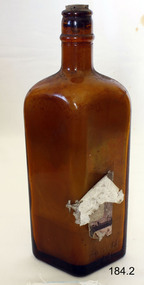
... ranging roughly from the 1870s to the 1930s. At that time some, of the bottles were distinguished by particularly bright colors, such as cobalt blue (the most common) and emerald green. ...ranging roughly from the 1870s to the 1930s. At that time some, of the bottles were distinguished by particularly bright colors, such as cobalt blue (the most common) and emerald green. ...Phenyle has been used for decades as a cleaner and disinfectant. It is well know for its use for cleaning outdoor toilets and easily identified by its strong odour. The brown glass bottle is immediately recognised as containing a poison. We've all seen them in a hundred different mystery movie scenes. The medicine cabinet opens and there, sitting on a shelf, is the incriminating object -- the ominous dark bottle with the skull and crossbones on the label. In off-screen reality, however, poison bottles have quite a different identity -- they are distinctive, varied, colorful -- and definitely collectible. Obviously, the one thing that sets the poison bottle apart from all other bottles is the need for prominent and immediate identification as a receptacle for toxic material, and this was achieved in a number of ways, including shape, color, embossing and labeling. Poisons were commonly found in the home for the purpose of controlling rodents and other pests, and were sold by grocers and druggists. For consumer protection, as far back as 1829, New York State made mandatory the marking of the bottles with the word "poison" in large letters. Then, in the middle of the 19th century, the American Pharmaceutical Association recommended legislation regarding identification of all poison bottles. In 1872 the American Medical Association also made recommendations -- namely that poison bottles be made of colored glass, and also have a rough surface on one side -- making them identifiable even in the dark -- and the word "poison" visible on the other (the skull and crossbones wasn't quite as ubiquitous as those movies led us to believe). However, passing these laws was not easy, and the manufacturers were essentially left to do as they wished. For collectors, the high point of poison bottle manufacturing was the period ranging roughly from the 1870s to the 1930s. At that time some, of the bottles were distinguished by particularly bright colors, such as cobalt blue (the most common) and emerald green. Others, particularly rare and collectible, had unusual -- and appropriate -- shapes, including skulls, leg bones and coffins. In order to better identify these lethal vessels by feel (not forgetting that there were many people in this period who could not read) when groping for them in the dark, they had such elaborate tactile patterns as quilted diamonds, lattices, hobnails and prominent vertical or horizontal ribbing, as well as spiky knobs and ridges. In addition, many had sharp points on top for the same precautionary purpose. Further efforts to distinguish poison bottles from others included uncommon multisided and triangular shapes, and unusual, hard-to-open tops, the predecessors of the modern child-proof openings. https://www.southcoasttoday.com/story/lifestyle/2001/08/19/poison-bottles-steeped-in-history/50352280007/The recognition and awareness of bottles containing poisonpous substances is extremely important for safety reasons.Bottle, brown glass, diamond shaped. "Bright Star" phenyle. Paper label attached, but peeling off and badly damaged. Corked with contents. Text moulded into glass, some with a border of stars. Poisonous contents, not to be taken. Registered Number 2140. Volume is 20 fluid ounces. Printed label "Bright Star". Text is moulded in the glass in raised lettering: "PHENYLE" outlined and decorated with star border. "POISONOUS", "NOT TO BE TAKEN" "V / DM / A" within oval, "REGD NO. 2140" (D and O are smaller and underlined) . Base is marked "F190".flagstaff hill, warrnambool, shipwrecked-coast, flagstaff-hill, flagstaff-hill-maritime-museum, maritime-museum, shipwreck-coast, flagstaff-hill-maritime-village, bright star, phenyl, cleaning and disinfecting chemical, poison, bottles -
 Flagstaff Hill Maritime Museum and Village
Domestic object - Bowl, Late 19th or early 20th Century
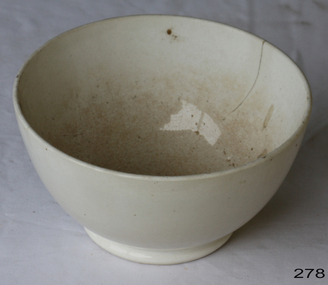
... blue, purple and reddish brown. Manganese dioxide is a flux in and of itself as well. So, glazes that get their black and purple colours, often interact with other glazes and RUN! Our mirror black is a good example – it mixes really well with many glazes because it fluxes them – causes them to melt faster. It will also bring out many beautiful colours in the glazes because it’s black colouring most definitely comes from manganese dioxide! Glaze chemistry is a whole subject on it’s own! We use commercial Mayco glazes on purpose – for their huge range...blue, purple and reddish brown. Manganese dioxide is a flux in and of itself as well. So, glazes that get their black and purple colours, often interact with other glazes and RUN! Our mirror black is a good example – it mixes really well with many glazes because it fluxes them – causes them to melt faster. It will also bring out many beautiful colours in the glazes because it’s black colouring most definitely comes from manganese dioxide! Glaze chemistry is a whole subject on it’s own! We use commercial Mayco glazes on purpose – for their huge range ...The Process of Making Pottery Decorating, Firing, Glazing, Making, Technical There is a rhythm and flow to clay. It can’t be done all at once! Even the making process! It can take weeks to get everything done, especially if you can only work on your pottery once a week! Even though we have three hour classes, it’s often just not enough time! Here is an overview of some of the processes so you have a bit more grasp on some of the technical stuff! Step One – Design There are SO many ideas out there for making stuff in clay! From delicate porcelain jewellery, through to heavy sculptural work and everything in between. Deciding your direction is sometimes not that easy – when you first start, try everything, you will naturally gravitate to the style that you enjoy! The options and variations are endless and can get a wee bit overwhelming too! Check in with me before you start to ensure your ideas will work, what order you might do things, how you could achieve the look you are seeking and any other technical data required! Step Two – Making Clay is thixotropic. This means that as you work with it, the clay first gets sloppier and wetter, before is begins to dry in the atmosphere. For most things, you simply can’t do all parts of the project at once. An example of work order might look like: Get last weeks work out from the shelves Prepare clay for today’s work – roll your clay, prepare balls for throwing, make the first stage of a pinch pot) Clean up last week’s work and put it on the shelf for bisque firing Check that you have any glazing to do – and do enough of it that you will have time to finish your main project Do the next step of your next project – there might be a further step that can’t be complete immediately, in that case, wrap your work well and put onto the shelves. Letting your work rest for a while can really help keep your work clean and professional looking. Many things require bagging under plastic to keep it ready for work the next week – put your name on the outside of the bag so you can find your work easily. We have stickers and markers. Consider how you want to decorate your work – coloured slip can be applied at a fairly wet stage (remembering that it will make your work even wetter!). Trying to apply slip to dry clay won’t work! If you want to do sgraffito – you will need to keep the work leather hard (a state of dryness where you can still work the clay with a little effort and a little water and care). Step Three – Drying Most of the time your work can go into the rack uncovered to let it dry out for the following week. If you want to continue forming or shaping you will need to double bag your work – put your work on a suitable sized bat and put the bat in a bag so the base of the bag is under the bat, then put another bag over the top of the work and tuck the top of the bag under the bat. If you want to trim (or turn) your thrown work the following week, it should also be double bagged. If your work is large, delicate, or of uneven thicknesses, you should lightly cover your work for drying. When considering the drying process, bare in mind the weather, humidity and wind! The hotter and dryer, the faster things dry and work can dry unevenly in the shelves – this can lead to cracking – another time to lightly cover your work for drying. Step Four – Trimming and Cleaning Up Your work is dry! It is called greenware now and it is at it’s most fragile! Handle everything with two hands. I often refer to soft hands – keep everything gentle and with your fingers spread as much as possible. Try to not pick up things like plates too much, and always with both hands! Before your work can be bisque fired it should be “cleaned up”. You work won’t go into the kiln if it has sharp edges – when glazed, sharp edges turn into razor blades! Use a piece of fly wire to rub the work all over – this will scratch a little so be light handed. Use a knife or metal kidney to scrape any areas that require a bit more dynamic treatment than the fly wire offers! Finally, a very light wipe over with a slightly damp sponge can help soften and soothe all of your edges and dags! Trimming thrown work: If you are planning to trim (or turn) your thrown work (and you should be), make sure you bag it well – your work should be leather hard to almost dry for easiest trimming. Use this step to finish the work completely – use a metal kidney to polish the surface, or a slightly damp sponge to give a freshly thrown look. Wipe the sponge around the rim after trimming, and check the inside of the pot for dags! Trimming slip cast work: Usually I will trim the rims of your work on the wheel the following day to make that stage easier, however you will still need to check your work for lumps and bumps. Last but not least – check that your name is still clearly on the bottom of your work. Step Five – Bisque Firing When the work is completely dry it can go into the bisque kiln. The bisque kiln is fired to 1000°C. This process burns off the water in the clay as well as some of the chemically bound water. The structure of the clay is not altered that much at this temperature. Inside the bisque kiln, the work is stacked a little, small bowl inside a larger bowl and onto a heavy plate. Smaller items like decorations or drink coasters might get stacked several high. Consideration is paid to the weight of the stack and shape of the work. A bisque kiln can fire about one and a half times the amount of work that the glaze kiln can fire. The firing takes about 10 hours to complete the cycle and about two days to cool down. Once it has been emptied the work is placed in the glaze room ready for you to decorate! Step Six – Glazing Decorating your work with colour can be a lot of fun – and time consuming! There are three main options for surface treatment at this stage: Oxide Washes Underglazes Glazes Washes and underglazes do not “glaze” the work – It will still need a layer of glaze to fully seal the clay (washes don’t need glaze on surfaces not designed for food or liquid as they can gloss up a little on their own). Underglazes are stable colourants that turn out pretty much how they look in the jar. They can be mixed with each other to form other colours and can be used like water colours to paint onto your work. Mostly they should have a clear glaze on top to seal them. Oxides are a different species – the pink oxide (cobalt) wash turns out bright blue for instance. They don’t always need a glaze on top, and some glazes can change the colour of the wash! The glazes need no other “glaze” on top! Be careful of unknown glaze interactions – you can put any combination of glaze in a bowl or on a plate, but only a single glaze on the outside of any vertical surface! Glazes are a chemical reaction under heat. We don’t know the exact chemicals in the Mayco glazes we use. I can guess by the way they interact with each other, however, on the whole, you need to test every idea you have, and not run the test on a vertical surface! Simply put, glaze is a layer of glass like substance that bonds with the clay underneath. Clay is made of silica, alumina and water. Glaze is made of mostly silica. Silica has a melting point of 1700°C and we fire to 1240°C. The silica requires a “flux” to help it melt at the lower temperature. Fluxes can be all sorts of chemicals – a common one is calcium – calcium has a melting point of 2500°C, however, together they both melt at a much lower temperature! Colourants are metal oxides like cobalt (blue), chrome (green through black), copper (green, blue, even red!), manganese (black, purple and pink) iron (red brown), etc. Different chemicals in the glaze can have dramatic effects. for example, barium carbonate (which we don’t use) turns manganese bright pink! Other elements can turn manganese dioxide brown, blue, purple and reddish brown. Manganese dioxide is a flux in and of itself as well. So, glazes that get their black and purple colours, often interact with other glazes and RUN! Our mirror black is a good example – it mixes really well with many glazes because it fluxes them – causes them to melt faster. It will also bring out many beautiful colours in the glazes because it’s black colouring most definitely comes from manganese dioxide! Glaze chemistry is a whole subject on it’s own! We use commercial Mayco glazes on purpose – for their huge range of colour possibilities, stability, cool interactions, artistic freedom with the ability to easily brush the glazes on and ease of use. We currently have almost 50 glazes on hand! A major project is to test the interactions of all glazes with each other. That is 2,500 test tiles!!!! I’m going to make the wall behind the wheels the feature wall of pretty colours! Step Seven – Glaze (Gloss or sometimes called “Glost”) Firing Most of the time this is the final stage of making your creation (but not always!) The glaze kiln goes to 1240°C. This is called cone 6, or midrange. It is the low end of stoneware temperatures. Stoneware clays and glazes are typically fired at cone 8 – 10, that is 1260 – 1290°C. The energy requirement to go from 1240°C to 1280°C is almost a 30% more! Our clay is formulated to vitrify (mature, turn “glass-like”) at 1240°, as are our glazes. A glaze kiln take around 12 hours to reach temperature and two to three days to cool down. Sometimes a third firing process is required – this is for decoration that is added to work after the glaze firing. For example – adding precious metals and lustres. this firing temperature is usually around 600 – 800°C depending upon the techniques being used. There are many students interested in gold and silver trims – we will be doing this third type of firing soon! After firing your work will be in the student finished work shelves. Remember to pay for it before you head out the door! There is a small extra charge for using porcelain clay (it’s more than twice the price of regular clay), and for any third firing process! Once your work has been fired it can not turn back into clay for millennia – so don’t fire it if you don’t like it! Put it in the bucket for recycling. https://firebirdstudios.com.au/the-process-of-making-pottery/ The bowl is an example of kitchenware used in the 19th century and still in use today.Bowl white ceramic. Crack on side. Badly stained.Backstamp very faint and unable to be read.flagstaff hill, warrnambool, shipwrecked-coast, flagstaff-hill, flagstaff-hill-maritime-museum, maritime-museum, shipwreck-coast, flagstaff-hill-maritime-village, mixing bowl, food preparation, kitchen equipment, ceramic -
 Flagstaff Hill Maritime Museum and Village
Domestic object - Bowl
... blue, purple and reddish brown. Manganese dioxide is a flux in and of itself as well. So, glazes that get their black and purple colours, often interact with other glazes and RUN! Our mirror black is a good example – it mixes really well with many glazes because it fluxes them – causes them to melt faster. It will also bring out many beautiful colours in the glazes because it’s black colouring most definitely comes from manganese dioxide! Glaze chemistry is a whole subject on it’s own! We use commercial Mayco glazes on purpose – for their huge range...blue, purple and reddish brown. Manganese dioxide is a flux in and of itself as well. So, glazes that get their black and purple colours, often interact with other glazes and RUN! Our mirror black is a good example – it mixes really well with many glazes because it fluxes them – causes them to melt faster. It will also bring out many beautiful colours in the glazes because it’s black colouring most definitely comes from manganese dioxide! Glaze chemistry is a whole subject on it’s own! We use commercial Mayco glazes on purpose – for their huge range ...The Process of Making Pottery Decorating, Firing, Glazing, Making, Technical There is a rhythm and flow to clay. It can’t be done all at once! Even the making process! It can take weeks to get everything done, especially if you can only work on your pottery once a week! Even though we have three hour classes, it’s often just not enough time! Here is an overview of some of the processes so you have a bit more grasp on some of the technical stuff! Step One – Design There are SO many ideas out there for making stuff in clay! From delicate porcelain jewellery, through to heavy sculptural work and everything in between. Deciding your direction is sometimes not that easy – when you first start, try everything, you will naturally gravitate to the style that you enjoy! The options and variations are endless and can get a wee bit overwhelming too! Check in with me before you start to ensure your ideas will work, what order you might do things, how you could achieve the look you are seeking and any other technical data required! Step Two – Making Clay is thixotropic. This means that as you work with it, the clay first gets sloppier and wetter, before is begins to dry in the atmosphere. For most things, you simply can’t do all parts of the project at once. An example of work order might look like: Get last weeks work out from the shelves Prepare clay for today’s work – roll your clay, prepare balls for throwing, make the first stage of a pinch pot) Clean up last week’s work and put it on the shelf for bisque firing Check that you have any glazing to do – and do enough of it that you will have time to finish your main project Do the next step of your next project – there might be a further step that can’t be complete immediately, in that case, wrap your work well and put onto the shelves. Letting your work rest for a while can really help keep your work clean and professional looking. Many things require bagging under plastic to keep it ready for work the next week – put your name on the outside of the bag so you can find your work easily. We have stickers and markers. Consider how you want to decorate your work – coloured slip can be applied at a fairly wet stage (remembering that it will make your work even wetter!). Trying to apply slip to dry clay won’t work! If you want to do sgraffito – you will need to keep the work leather hard (a state of dryness where you can still work the clay with a little effort and a little water and care). Step Three – Drying Most of the time your work can go into the rack uncovered to let it dry out for the following week. If you want to continue forming or shaping you will need to double bag your work – put your work on a suitable sized bat and put the bat in a bag so the base of the bag is under the bat, then put another bag over the top of the work and tuck the top of the bag under the bat. If you want to trim (or turn) your thrown work the following week, it should also be double bagged. If your work is large, delicate, or of uneven thicknesses, you should lightly cover your work for drying. When considering the drying process, bare in mind the weather, humidity and wind! The hotter and dryer, the faster things dry and work can dry unevenly in the shelves – this can lead to cracking – another time to lightly cover your work for drying. Step Four – Trimming and Cleaning Up Your work is dry! It is called greenware now and it is at it’s most fragile! Handle everything with two hands. I often refer to soft hands – keep everything gentle and with your fingers spread as much as possible. Try to not pick up things like plates too much, and always with both hands! Before your work can be bisque fired it should be “cleaned up”. You work won’t go into the kiln if it has sharp edges – when glazed, sharp edges turn into razor blades! Use a piece of fly wire to rub the work all over – this will scratch a little so be light handed. Use a knife or metal kidney to scrape any areas that require a bit more dynamic treatment than the fly wire offers! Finally, a very light wipe over with a slightly damp sponge can help soften and soothe all of your edges and dags! Trimming thrown work: If you are planning to trim (or turn) your thrown work (and you should be), make sure you bag it well – your work should be leather hard to almost dry for easiest trimming. Use this step to finish the work completely – use a metal kidney to polish the surface, or a slightly damp sponge to give a freshly thrown look. Wipe the sponge around the rim after trimming, and check the inside of the pot for dags! Trimming slip cast work: Usually I will trim the rims of your work on the wheel the following day to make that stage easier, however you will still need to check your work for lumps and bumps. Last but not least – check that your name is still clearly on the bottom of your work. Step Five – Bisque Firing When the work is completely dry it can go into the bisque kiln. The bisque kiln is fired to 1000°C. This process burns off the water in the clay as well as some of the chemically bound water. The structure of the clay is not altered that much at this temperature. Inside the bisque kiln, the work is stacked a little, small bowl inside a larger bowl and onto a heavy plate. Smaller items like decorations or drink coasters might get stacked several high. Consideration is paid to the weight of the stack and shape of the work. A bisque kiln can fire about one and a half times the amount of work that the glaze kiln can fire. The firing takes about 10 hours to complete the cycle and about two days to cool down. Once it has been emptied the work is placed in the glaze room ready for you to decorate! Step Six – Glazing Decorating your work with colour can be a lot of fun – and time consuming! There are three main options for surface treatment at this stage: Oxide Washes Underglazes Glazes Washes and underglazes do not “glaze” the work – It will still need a layer of glaze to fully seal the clay (washes don’t need glaze on surfaces not designed for food or liquid as they can gloss up a little on their own). Underglazes are stable colourants that turn out pretty much how they look in the jar. They can be mixed with each other to form other colours and can be used like water colours to paint onto your work. Mostly they should have a clear glaze on top to seal them. Oxides are a different species – the pink oxide (cobalt) wash turns out bright blue for instance. They don’t always need a glaze on top, and some glazes can change the colour of the wash! The glazes need no other “glaze” on top! Be careful of unknown glaze interactions – you can put any combination of glaze in a bowl or on a plate, but only a single glaze on the outside of any vertical surface! Glazes are a chemical reaction under heat. We don’t know the exact chemicals in the Mayco glazes we use. I can guess by the way they interact with each other, however, on the whole, you need to test every idea you have, and not run the test on a vertical surface! Simply put, glaze is a layer of glass like substance that bonds with the clay underneath. Clay is made of silica, alumina and water. Glaze is made of mostly silica. Silica has a melting point of 1700°C and we fire to 1240°C. The silica requires a “flux” to help it melt at the lower temperature. Fluxes can be all sorts of chemicals – a common one is calcium – calcium has a melting point of 2500°C, however, together they both melt at a much lower temperature! Colourants are metal oxides like cobalt (blue), chrome (green through black), copper (green, blue, even red!), manganese (black, purple and pink) iron (red brown), etc. Different chemicals in the glaze can have dramatic effects. for example, barium carbonate (which we don’t use) turns manganese bright pink! Other elements can turn manganese dioxide brown, blue, purple and reddish brown. Manganese dioxide is a flux in and of itself as well. So, glazes that get their black and purple colours, often interact with other glazes and RUN! Our mirror black is a good example – it mixes really well with many glazes because it fluxes them – causes them to melt faster. It will also bring out many beautiful colours in the glazes because it’s black colouring most definitely comes from manganese dioxide! Glaze chemistry is a whole subject on it’s own! We use commercial Mayco glazes on purpose – for their huge range of colour possibilities, stability, cool interactions, artistic freedom with the ability to easily brush the glazes on and ease of use. We currently have almost 50 glazes on hand! A major project is to test the interactions of all glazes with each other. That is 2,500 test tiles!!!! I’m going to make the wall behind the wheels the feature wall of pretty colours! Step Seven – Glaze (Gloss or sometimes called “Glost”) Firing Most of the time this is the final stage of making your creation (but not always!) The glaze kiln goes to 1240°C. This is called cone 6, or midrange. It is the low end of stoneware temperatures. Stoneware clays and glazes are typically fired at cone 8 – 10, that is 1260 – 1290°C. The energy requirement to go from 1240°C to 1280°C is almost a 30% more! Our clay is formulated to vitrify (mature, turn “glass-like”) at 1240°, as are our glazes. A glaze kiln take around 12 hours to reach temperature and two to three days to cool down. Sometimes a third firing process is required – this is for decoration that is added to work after the glaze firing. For example – adding precious metals and lustres. this firing temperature is usually around 600 – 800°C depending upon the techniques being used. There are many students interested in gold and silver trims – we will be doing this third type of firing soon! After firing your work will be in the student finished work shelves. Remember to pay for it before you head out the door! There is a small extra charge for using porcelain clay (it’s more than twice the price of regular clay), and for any third firing process! Once your work has been fired it can not turn back into clay for millennia – so don’t fire it if you don’t like it! Put it in the bucket for recycling. https://firebirdstudios.com.au/the-process-of-making-pottery/ This bowl is an example of kitchenware used in the 19th century and still in use today.Bowl white ceramic plain that has two sets of edging around lip. Inside bowl has plaster designed to look like cooking mixture.flagstaff hill, warrnambool, shipwrecked-coast, flagstaff-hill, flagstaff-hill-maritime-museum, maritime-museum, shipwreck-coast, flagstaff-hill-maritime-village, kitchen equipment, ceramic -
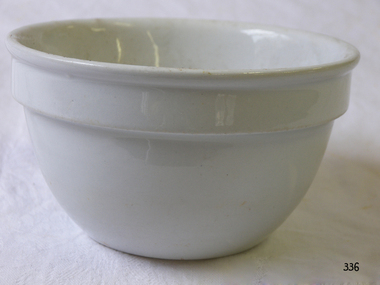 Flagstaff Hill Maritime Museum and Village
Domestic object - Bowl, J & G Meakin, Late 19th or early 20th Century
... blue, purple and reddish brown. Manganese dioxide is a flux in and of itself as well. So, glazes that get their black and purple colours, often interact with other glazes and RUN! Our mirror black is a good example – it mixes really well with many glazes because it fluxes them – causes them to melt faster. It will also bring out many beautiful colours in the glazes because it’s black colouring most definitely comes from manganese dioxide! Glaze chemistry is a whole subject on it’s own! We use commercial Mayco glazes on purpose – for their huge range...blue, purple and reddish brown. Manganese dioxide is a flux in and of itself as well. So, glazes that get their black and purple colours, often interact with other glazes and RUN! Our mirror black is a good example – it mixes really well with many glazes because it fluxes them – causes them to melt faster. It will also bring out many beautiful colours in the glazes because it’s black colouring most definitely comes from manganese dioxide! Glaze chemistry is a whole subject on it’s own! We use commercial Mayco glazes on purpose – for their huge range ...The Process of Making Pottery Decorating, Firing, Glazing, Making, Technical There is a rhythm and flow to clay. It can’t be done all at once! Even the making process! It can take weeks to get everything done, especially if you can only work on your pottery once a week! Even though we have three hour classes, it’s often just not enough time! Here is an overview of some of the processes so you have a bit more grasp on some of the technical stuff! Step One – Design There are SO many ideas out there for making stuff in clay! From delicate porcelain jewellery, through to heavy sculptural work and everything in between. Deciding your direction is sometimes not that easy – when you first start, try everything, you will naturally gravitate to the style that you enjoy! The options and variations are endless and can get a wee bit overwhelming too! Check in with me before you start to ensure your ideas will work, what order you might do things, how you could achieve the look you are seeking and any other technical data required! Step Two – Making Clay is thixotropic. This means that as you work with it, the clay first gets sloppier and wetter, before is begins to dry in the atmosphere. For most things, you simply can’t do all parts of the project at once. An example of work order might look like: Get last weeks work out from the shelves Prepare clay for today’s work – roll your clay, prepare balls for throwing, make the first stage of a pinch pot) Clean up last week’s work and put it on the shelf for bisque firing Check that you have any glazing to do – and do enough of it that you will have time to finish your main project Do the next step of your next project – there might be a further step that can’t be complete immediately, in that case, wrap your work well and put onto the shelves. Letting your work rest for a while can really help keep your work clean and professional looking. Many things require bagging under plastic to keep it ready for work the next week – put your name on the outside of the bag so you can find your work easily. We have stickers and markers. Consider how you want to decorate your work – coloured slip can be applied at a fairly wet stage (remembering that it will make your work even wetter!). Trying to apply slip to dry clay won’t work! If you want to do sgraffito – you will need to keep the work leather hard (a state of dryness where you can still work the clay with a little effort and a little water and care). Step Three – Drying Most of the time your work can go into the rack uncovered to let it dry out for the following week. If you want to continue forming or shaping you will need to double bag your work – put your work on a suitable sized bat and put the bat in a bag so the base of the bag is under the bat, then put another bag over the top of the work and tuck the top of the bag under the bat. If you want to trim (or turn) your thrown work the following week, it should also be double bagged. If your work is large, delicate, or of uneven thicknesses, you should lightly cover your work for drying. When considering the drying process, bare in mind the weather, humidity and wind! The hotter and dryer, the faster things dry and work can dry unevenly in the shelves – this can lead to cracking – another time to lightly cover your work for drying. Step Four – Trimming and Cleaning Up Your work is dry! It is called greenware now and it is at it’s most fragile! Handle everything with two hands. I often refer to soft hands – keep everything gentle and with your fingers spread as much as possible. Try to not pick up things like plates too much, and always with both hands! Before your work can be bisque fired it should be “cleaned up”. You work won’t go into the kiln if it has sharp edges – when glazed, sharp edges turn into razor blades! Use a piece of fly wire to rub the work all over – this will scratch a little so be light handed. Use a knife or metal kidney to scrape any areas that require a bit more dynamic treatment than the fly wire offers! Finally, a very light wipe over with a slightly damp sponge can help soften and soothe all of your edges and dags! Trimming thrown work: If you are planning to trim (or turn) your thrown work (and you should be), make sure you bag it well – your work should be leather hard to almost dry for easiest trimming. Use this step to finish the work completely – use a metal kidney to polish the surface, or a slightly damp sponge to give a freshly thrown look. Wipe the sponge around the rim after trimming, and check the inside of the pot for dags! Trimming slip cast work: Usually I will trim the rims of your work on the wheel the following day to make that stage easier, however you will still need to check your work for lumps and bumps. Last but not least – check that your name is still clearly on the bottom of your work. Step Five – Bisque Firing When the work is completely dry it can go into the bisque kiln. The bisque kiln is fired to 1000°C. This process burns off the water in the clay as well as some of the chemically bound water. The structure of the clay is not altered that much at this temperature. Inside the bisque kiln, the work is stacked a little, small bowl inside a larger bowl and onto a heavy plate. Smaller items like decorations or drink coasters might get stacked several high. Consideration is paid to the weight of the stack and shape of the work. A bisque kiln can fire about one and a half times the amount of work that the glaze kiln can fire. The firing takes about 10 hours to complete the cycle and about two days to cool down. Once it has been emptied the work is placed in the glaze room ready for you to decorate! Step Six – Glazing Decorating your work with colour can be a lot of fun – and time consuming! There are three main options for surface treatment at this stage: Oxide Washes Underglazes Glazes Washes and underglazes do not “glaze” the work – It will still need a layer of glaze to fully seal the clay (washes don’t need glaze on surfaces not designed for food or liquid as they can gloss up a little on their own). Underglazes are stable colourants that turn out pretty much how they look in the jar. They can be mixed with each other to form other colours and can be used like water colours to paint onto your work. Mostly they should have a clear glaze on top to seal them. Oxides are a different species – the pink oxide (cobalt) wash turns out bright blue for instance. They don’t always need a glaze on top, and some glazes can change the colour of the wash! The glazes need no other “glaze” on top! Be careful of unknown glaze interactions – you can put any combination of glaze in a bowl or on a plate, but only a single glaze on the outside of any vertical surface! Glazes are a chemical reaction under heat. We don’t know the exact chemicals in the Mayco glazes we use. I can guess by the way they interact with each other, however, on the whole, you need to test every idea you have, and not run the test on a vertical surface! Simply put, glaze is a layer of glass like substance that bonds with the clay underneath. Clay is made of silica, alumina and water. Glaze is made of mostly silica. Silica has a melting point of 1700°C and we fire to 1240°C. The silica requires a “flux” to help it melt at the lower temperature. Fluxes can be all sorts of chemicals – a common one is calcium – calcium has a melting point of 2500°C, however, together they both melt at a much lower temperature! Colourants are metal oxides like cobalt (blue), chrome (green through black), copper (green, blue, even red!), manganese (black, purple and pink) iron (red brown), etc. Different chemicals in the glaze can have dramatic effects. for example, barium carbonate (which we don’t use) turns manganese bright pink! Other elements can turn manganese dioxide brown, blue, purple and reddish brown. Manganese dioxide is a flux in and of itself as well. So, glazes that get their black and purple colours, often interact with other glazes and RUN! Our mirror black is a good example – it mixes really well with many glazes because it fluxes them – causes them to melt faster. It will also bring out many beautiful colours in the glazes because it’s black colouring most definitely comes from manganese dioxide! Glaze chemistry is a whole subject on it’s own! We use commercial Mayco glazes on purpose – for their huge range of colour possibilities, stability, cool interactions, artistic freedom with the ability to easily brush the glazes on and ease of use. We currently have almost 50 glazes on hand! A major project is to test the interactions of all glazes with each other. That is 2,500 test tiles!!!! I’m going to make the wall behind the wheels the feature wall of pretty colours! Step Seven – Glaze (Gloss or sometimes called “Glost”) Firing Most of the time this is the final stage of making your creation (but not always!) The glaze kiln goes to 1240°C. This is called cone 6, or midrange. It is the low end of stoneware temperatures. Stoneware clays and glazes are typically fired at cone 8 – 10, that is 1260 – 1290°C. The energy requirement to go from 1240°C to 1280°C is almost a 30% more! Our clay is formulated to vitrify (mature, turn “glass-like”) at 1240°, as are our glazes. A glaze kiln take around 12 hours to reach temperature and two to three days to cool down. Sometimes a third firing process is required – this is for decoration that is added to work after the glaze firing. For example – adding precious metals and lustres. this firing temperature is usually around 600 – 800°C depending upon the techniques being used. There are many students interested in gold and silver trims – we will be doing this third type of firing soon! After firing your work will be in the student finished work shelves. Remember to pay for it before you head out the door! There is a small extra charge for using porcelain clay (it’s more than twice the price of regular clay), and for any third firing process! Once your work has been fired it can not turn back into clay for millennia – so don’t fire it if you don’t like it! Put it in the bucket for recycling. https://firebirdstudios.com.au/the-process-of-making-pottery/This bowl was made by renowned pottery company J & G Meakin of England. The firm was established in the mid-1800's. The bowl is an example of kitchenware used in the 19th century and still in use today.Bowl; white ceramic, round and tapering inwards towards base. Made by J and G Meakin England.On base, 'Ironstone China Reg SOL 391413' with symbolflagstaff hill, flagstaff hill maritime museum and village, warrnambool, maritime museum, maritime village, great ocean road, shipwreck coast, mixing bowl, food preparation, j & g meakin, pottery, stoke-on-trent, kitchen equipment, ceramic -
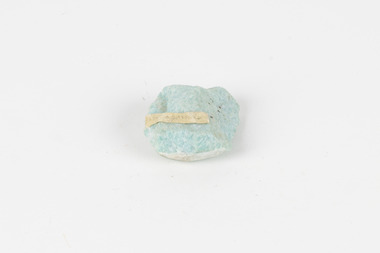 The Beechworth Burke Museum
Geological specimen - Amazonite, unknown
... In appearance, Amazonite can range from shades of green to green blue to blue, and often with white streaks or veining. ...In appearance, Amazonite can range from shades of green to green blue to blue, and often with white streaks or veining. ...Amazonite is classed as a Tectosilicate and is part of the Feldspar group of minerals. Amazonite forms in a triclinic crystal structure and its chemical formula is K(AlSi3O8). In appearance, Amazonite can range from shades of green to green blue to blue, and often with white streaks or veining. The greenish colour is believed to come from the small amount of lead contained in its composition. Amazonite is named after the Amazon River due to its colour and similarities to another rock found along the riverbanks, although Amazonite is not actually found at or near the Amazon. Although less commonly used in jewellery today, Amazonite has been mined and used by humans for thousands of years and Amazonite jewellery from at least 2000BCE have been discovered in North Africa. Amazonite is found in many locations around the world including Brazil, Peru, Ethiopia, Canada, Russia, Mozambique, Myanmar, Pakistan, China, Madagascar, and the United States of America. This specimen most probably comes from the U.S.A., Amazonite is found in several US states particularly in Colorado, Virginia, Pennsylvania. This specimen is of both scientific and historic significance as a striking blue green example of Amazonite mined prior to 1868 in the United States of America, most likely from Colorado, Virginia, or Pennsylvania. These three states are all locations of significant Amazonite deposits. This specimen is part of a larger collection of geological and mineral specimens collected from around Australia (and some parts of the world) and donated to the Burke Museum between 1868-1880. A large percentage of these specimens were collected in Victoria as part of the Geological Survey of Victoria that begun in 1852 (in response to the Gold Rush) to study and map the geology of Victoria. Collecting geological specimens was an important part of mapping and understanding the scientific makeup of the earth. Many of these specimens were sent to research and collecting organisations across Australia, including the Burke Museum, to educate and encourage further study.A palm-sized Feldspar mineral specimen from the Tectosilicate class in shades of blue-green with white veining.Existing label: green/blue Feldspar / "amazonite" / possibly USA geological specimen, geology, geology collection, burke museum, beechworth, tectosilicate, amazonite, feldspar, triclinic crystal structure, amazonite usa, amazonite colorado, amazonite virginia, amazonite pennsylvania -
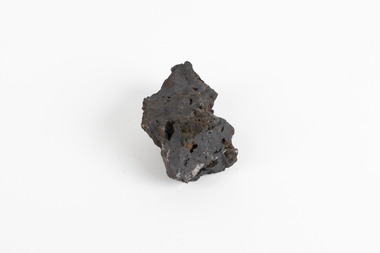 The Beechworth Burke Museum
Geological specimen - Hematite (iron oxide)
... Ranges, S. Aust. A small ferric oxide mineral composition a mid-blue-grey in colour with specks of rust-brown throughout. ...Hematite is an iron ore significant for its high iron content (70%) and as being one of the two main iron oxide minerals, the other being magnetite. Hematite has a rating of 5-6 on the Moh's hardness scale and is often found as an accessory mineral in many igneous rocks. (an accessory mineral being "any mineral in an igneous rock not essential to the naming of the rock" - Britannica) Hematite has historically been the mainstay of South Australia’s iron ore production. (Magnetite: South Australia’s potential) Making up the eastern section of the Gawler Rangers, the Middleback Range is a mountain range on the eastern side of Eyre Peninsula in South Australia that has been a source of iron ore (its main commodity in minerals) for over a century. (see https://www.mindat.org/loc-22576.html). "Large reserves of high-grade iron ore were identified in 1890 in the Middleback Range, west of Whyalla. From 1915 these ores were shipped to Newcastle and later to Port Kembla, both in New South Wales. Local production of pig iron began when the first blast furnace was opened at Whyalla in 1941, and construction of an integrated iron and steel plant began there in 1958." (Britannica, South Australia: Resources and power). This area is home to 24 mines/mineral deposits (according to mindat.org, thought the Sarig Map provided by SA gov on their Energy and Mining website indicates significantly more mining leases).This mineral specimen was collected from the Middleback Ranges before the area was identified as holding large reserves of iron ore and being commercially mined and is representative of South Australia's significant and ongoing history of iron ore mining, and its contribution to Australia's steel manufacturing industry of the early 20th century (this specimen being collected in the prelude to these events).A small ferric oxide mineral composition a mid-blue-grey in colour with specks of rust-brown throughout.HEMATITE / (iron oxide) / Locality: Middleback Ranges, S. Aust.middleback ranges, iron ore mining, mining, south australia -
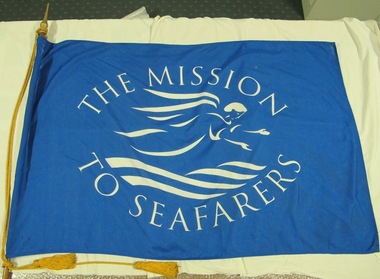 Mission to Seafarers Victoria
Flag - Flying Angel Mission to Seafarers Flag, Early 21st century
... Cooks, spouses, cadets, officers have increasingly come from a broader range of gender. flag missions to seafarers blue ferrule tassels wood pole 'MISSION TO SEAFARERS' Commissioned blue flag with Mission to Seafarers insignia. ...Founded in 1856, the Mission adopted, as its symbol, a flying angel inspired by a verse from the Book of Revelation (14:60) “Then I saw a flying angel in mid-heaven, with an eternal gospel to proclaim to those on earth, to every nation and tribe, language and people” The mission to Seamen became the Mission to Seafarers at turn of the 20th to 21st century. A new logo and graphic of the Angel of the revelation was produced.The change from seamen to seafarers recognised that many seafarers are not exclusively male. Cooks, spouses, cadets, officers have increasingly come from a broader range of gender.Commissioned blue flag with Mission to Seafarers insignia. Mounted on long wooden pole with pointed ferrule at end, corded artificial silk with two tassels. 'MISSION TO SEAFARERS'flag, missions to seafarers, blue, ferrule, tassels, wood, pole -
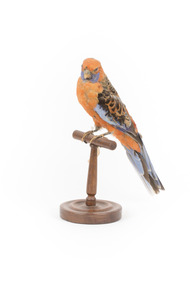 The Beechworth Burke Museum
Animal specimen - Crimson Rosella
... Australia has a diverse range of rosellas, but the crimson rosella is easily recognised by the red body and blue cheeks. ...Australia has a diverse range of rosellas, but the crimson rosella is easily recognised by the red body and blue cheeks. ...The Crimson Rosella is native to Australia and located in Queensland and South Australia. Australia has a diverse range of rosellas, but the crimson rosella is easily recognised by the red body and blue cheeks. These birds are friendly to humans and consume seeds, insects and some blossoms. They nest in high trees, preferably eucalyptus. Typically, a crimson rosella should have far brighter colours than the specimen collected. This specimen has also been documented as having a light blue or black beak. This specimen is part of a collection of almost 200 animal specimens that were originally acquired as skins from various institutions across Australia, including the Australian Museum in Sydney and the National Museum of Victoria (known as Museums Victoria since 1983), as well as individuals such as amateur anthropologist Reynell Eveleigh Johns between 1860-1880. These skins were then mounted by members of the Burke Museum Committee and put-on display in the formal space of the Museum’s original exhibition hall where they continue to be on display. This display of taxidermy mounts initially served to instruct visitors to the Burke Museum of the natural world around them, today it serves as an insight into the collecting habits of the 19th century.This specimen is part of a significant and rare taxidermy mount collection in the Burke Museum. This collection is scientifically and culturally important for reminding us of how science continues to shape our understanding of the modern world. They demonstrate a capacity to hold evidence of how Australia’s fauna history existed in the past and are potentially important for future environmental research. This collection continues to be on display in the Museum and has become a key part to interpreting the collecting habits of the 19th century.This Crimson Rosella has a red feathered chest and cape across the head and blue cheeks besides the bill. The tail and wing feathers are mostly black with blue around the edges. The head is angled slightly to the specimen's left. This specimen stands upon a wooden platform and has an identification tag tied around its leg.78a. / Rennauts Parakeet / See Catalogue, page 22 /taxidermy mount, taxidermy, animalia, burke museum, beechworth, australian museum, skin, bird, california, australian native bird, crimson rosella, rosella, reynell eveleigh johns, platycercus elegans -
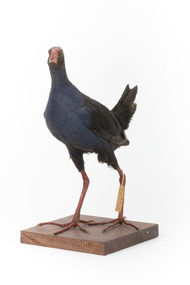 The Beechworth Burke Museum
Animal specimen - Australasian Swamphen, Trustees of the Australian Museum, 1860-1880
... This swamphen is easily identified by its deep blue-purple plumage, prominent red frontal shield, and sturdy red legs. It primarily inhabits swamps, marshes, and other wet lowland areas, though its range has expanded to include pastures, roadsides, and farmland due to significant landscape modifications over the past 150 years. ...This swamphen is easily identified by its deep blue-purple plumage, prominent red frontal shield, and sturdy red legs. It primarily inhabits swamps, marshes, and other wet lowland areas, though its range has expanded to include pastures, roadsides, and farmland due to significant landscape modifications over the past 150 years. ...The Australasian swamphen is a visually striking and socially complex bird found across Oceania. It can be found in eastern Indonesia (specifically the Moluccas, Aru, and Kai Islands), Papua New Guinea, New Zealand, and Australia. As a member of the rail family (Rallidae), it belongs to the diverse order Gruiformes, which also includes cranes and other rail species. Like other rails, it possesses relatively short wings and a strong, elongated bill, both adaptations suited to its semi-aquatic wetland habitat. This swamphen is easily identified by its deep blue-purple plumage, prominent red frontal shield, and sturdy red legs. It primarily inhabits swamps, marshes, and other wet lowland areas, though its range has expanded to include pastures, roadsides, and farmland due to significant landscape modifications over the past 150 years. Unlike many wetland birds, it is highly adaptable and thrives in both natural and human-altered environments. Its diet is similarly flexible, consisting mostly of plant material such as grass stems, shoots, and leaves, but also including invertebrates and, on occasion, the young of other bird species. This specimen was misidentified as a Purple Swamphen in original catalogue records and is part of a collection of almost 200 animal specimens that were originally acquired as skins from various institutions across Australia, including the Australian Museum in Sydney and the National Museum of Victoria (known as Museums Victoria since 1983), as well as individuals such as amateur anthropologist Reynell Eveleigh Johns between 1860-1880. These skins were then mounted by members of the Burke Museum Committee and put-on display in the formal space of the Museum’s original exhibition hall where they continue to be on display. This display of taxidermy mounts initially served to instruct visitors to the Burke Museum of the natural world around them, today it serves as an insight into the collecting habits of the 19th century.This specimen is part of a significant and rare taxidermy mount collection in the Burke Museum. This collection is scientifically and culturally important for reminding us of how science continues to shape our understanding of the modern world. They demonstrate a capacity to hold evidence of how Australia’s fauna history existed in the past and are potentially important for future environmental research. This collection continues to be on display in the Museum and has become a key part to interpreting the collecting habits of the 19th century.This taxidermy specimen is of a Australasian swamphen which is mounted standing on a wooden platform and has a paper identification tag tied to its upper left leg. The specimen has dark colouring on its back and head with a purple-blue coloured neck, breast and belly. The bill is oversized and is orange/red which is the same colour as the frontal shield on the bird's face. The eyes are made from a red and black glass and the legs of this specimen are orange. The legs are elongated and the toes also long and unwebbed. 17e. / Purple Gallinule / Catalogue Page 35 / taxidermy mount, taxidermy, animalia, burke museum, beechworth, australian museum, skin, reynell eveleigh johns, bird, australian birds, swamphen, moorhen, purple bird, hen, purple swamphen, water bird -
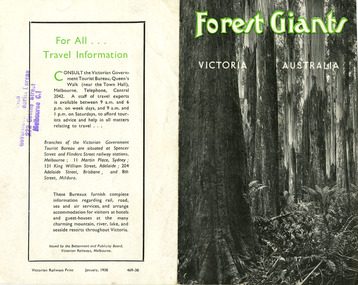 Marysville & District Historical Society
Ephemera (Item) - Information brochure, Victorian Government Tourist Bureau, Forest Giants Victoria Australia, 01-1938
... An information brochure on where to see tall trees, Forest Giants, in Victoria, including Marysville, that was published in January, 1938. victoria australia victorian government tourist bureau betterment and publicity board victorian railways white mountain ash red mountain ash messmate blue gum mountain ash cumberland valley marysville mount monda healesville acheron way alpine highway omeo baw baws strzelecki ranges otway ranges warburton yarra junction noojee bulga and tarra valley park yarram turton's pass otway forest beech forest apollo bay information brochure brochure Victorian Railways Print January, 1938 469-38 Stamp of Victorian/ Government Tourist Bureau/ 272 Collins Street/ Melbourne C.1 An information brochure on where to see tall trees, Forest Giants, in Victoria, including Marysville, that was published in January, 1938. ...An information brochure on where to see tall trees, Forest Giants, in Victoria, including Marysville, that was published in January, 1938.An information brochure on where to see tall trees, Forest Giants, in Victoria, including Marysville, that was published in January, 1938.Victorian Railways Print January, 1938 469-38 Stamp of Victorian/ Government Tourist Bureau/ 272 Collins Street/ Melbourne C.1victoria, australia, victorian government tourist bureau, betterment and publicity board, victorian railways, white mountain ash, red mountain ash, messmate, blue gum, mountain ash, cumberland valley, marysville, mount monda, healesville, acheron way, alpine highway, omeo, baw baws, strzelecki ranges, otway ranges, warburton, yarra junction, noojee, bulga and tarra valley park, yarram, turton's pass, otway forest, beech forest, apollo bay, information brochure, brochure -
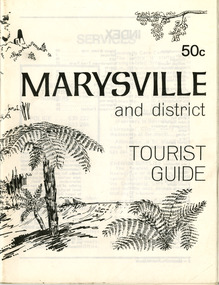 Marysville & District Historical Society
Booklet (Item) - Tourist guide, Ian and Danese Walshe et al, MARYSVILLE and district TOURIST GUIDE, 1982
... blue hills riding school...mountain view horse hire...pitt's garage...maryton park...j l gould sawmill...eildon deer park...eildon weir...maroondah dam...snob's creek...healesville sanctuary...graceburn park...cathedral range...A tourist guide outlining services, accommodation, activities and places of interest to visit in and around Marysville and the local district. marysville victoria australia tourist guide marysville hotel castles' store hawthorne's corner shop tudor lodge black spur motel and caravan park buxton general store golden fleece roadhouse marysville garage burrengeen park lake mountain steavenson falls nanda binya lodge alpenglow nursery black spur inn hotel silver stream trout farm mccfarlane's grocery barton's drapery marysville newsagency eildon explorer beauty spot nursery crossways pumpernickel mckenzie's tourist services blue hills riding school mountain view horse hire pitt's garage maryton park j l gould sawmill eildon deer park eildon weir maroondah dam snob's creek healesville sanctuary graceburn park cathedral range beauty spot walk tree fern gully walk michaeldene track keppel track woods lookout track cumberland scenic reserve cambarville the big tree cora-lyn falls barton's lookout cumberland falls sovereign view wirreanda festival scenic motel tower motel marylands guest house kooringa guest house marylyn guest house mountain lodge el kanah marysville hotel motel buxton hotel motel black spur inn buxton caravan park marysville caravan park the cumberland marysville recreation and fun park A tourist guide outlining services, accommodation, activities and places of interest to visit in and around Marysville and the local district. ...A tourist guide outlining services, accommodation, activities and places of interest to visit in and around Marysville and the local district.A tourist guide outlining services, accommodation, activities and places of interest to visit in and around Marysville and the local district.marysville, victoria, australia, tourist guide, marysville hotel, castles' store, hawthorne's corner shop, tudor lodge, black spur motel and caravan park, buxton general store, golden fleece roadhouse, marysville garage, burrengeen park, lake mountain, steavenson falls, nanda binya lodge, alpenglow nursery, black spur inn hotel, silver stream trout farm, mccfarlane's grocery, barton's drapery, marysville newsagency, eildon explorer, beauty spot nursery, crossways, pumpernickel, mckenzie's tourist services, blue hills riding school, mountain view horse hire, pitt's garage, maryton park, j l gould sawmill, eildon deer park, eildon weir, maroondah dam, snob's creek, healesville sanctuary, graceburn park, cathedral range, beauty spot walk, tree fern gully walk, michaeldene track, keppel track, woods lookout track, cumberland scenic reserve, cambarville, the big tree, cora-lyn falls, barton's lookout, cumberland falls, sovereign view, wirreanda festival, scenic motel, tower motel, marylands guest house, kooringa guest house, marylyn guest house, mountain lodge, el kanah, marysville hotel motel, buxton hotel motel, black spur inn, buxton caravan park, marysville caravan park, the cumberland, marysville recreation and fun park -
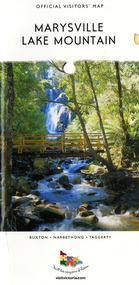 Marysville & District Historical Society
Map (Item) - Tourist map, Mystic Mountains Tourism, OFFICIAL VISITORS' MAP MARYSVILLE LAKE MOUNTAIN, Unknown
... A visitors' map of Marysville and Lake Mountain produced by Mystic Mountains Tourism for Visit Victoria. marysville lake mountain victoria australia visitor's map official visitors' map marysville lake mountain buxton narbethong taggerty visit victoria mystic mountains tourism inc graph attack p/l mystic mountains marysville triangle marysville visitor information centre marylands country house black spur steavenson falls lady talbot drive cambarville cathedral ranges wirreanda festival lake mountain summit walk summit walk loop leadbeaters loop day loop walk buxton hotel igloo roadhouse karmann waters silverstream b&b cottages buxton trout and salmon farm the niche wine bar buxton post office & general store choppers buxton roadhouse woodlands rainforest bungalows chestnut glade black spur inn wombat cottage abbey lake luxury b&b spa cottages mystic mountain ski hire & outdoors pnl 4wdriving blue views holiday units & ski hire marapana agistment park & farm stay b&b danico design things of sand & stone mantirri blueberry farm allawah country cottages amberview cottages ashlar cottage b&b black spur motel & caravan park blackwood deluxe cottages blackwood courtyard b&b dalrymples guest cottages delderfield el kanah guest house fruit salad farm kerami guest house keppels hotel lake mountain-snow gum lodge lomatia lodge lyell guest cottages magnolia house keppel waters lyrebird apartments marysville caravan park all view spa apartments riverside cottages maryton park b&b country cottages melina cottage mountain lodge mystic mountains holiday cottages nanda binya lodge rendezvous luxury cottages scenic b&b motel the cumberland south cathedral farm tower motel willowbank at taggerty woodlands rainforest retreat marysville & district country club inc mystic mountains ski hire & outdoors rubicon valley horse riding marysville trout and salmon ponds gallipoli park keppels lookout cambarville-yarra ranges national park lake mountain-yarra ranges national park lady talbot drive-yarra ranges national park cathedral range state park steavenson river taggerty river acheron river lake mountain alpine resort bruno's art and sculpture garden manical mechanicals uncle fred & aunty val's old style lolly shop carmyle farm boutique crossways historic country inn fraga's gilberts restaurant heights licensed bistro the old woolshed cafe cathedral view natural therapies crystal journey The Marysville and Lake Mountain Visitor Map and Touring Guide has been compiled and/ published by Mystic Mountains Tourism Inc. ...A visitors' map of Marysville and Lake Mountain produced by Mystic Mountains Tourism for Visit Victoria.A visitors' map of Marysville and Lake Mountain produced by Mystic Mountains Tourism for Visit Victoria.The Marysville and Lake Mountain Visitor Map and Touring Guide has been compiled and/ published by Mystic Mountains Tourism Inc. Copyright./ Production and artwork Graph Attack P/Lmarysville, lake mountain, victoria, australia, visitor's map, official visitors' map marysville lake mountain, buxton, narbethong, taggerty, visit victoria, mystic mountains tourism inc, graph attack p/l, mystic mountains, marysville triangle, marysville visitor information centre, marylands country house, black spur, steavenson falls, lady talbot drive, cambarville, cathedral ranges, wirreanda festival, lake mountain summit walk, summit walk loop, leadbeaters loop, day loop walk, buxton hotel, igloo roadhouse, karmann waters, silverstream b&b cottages, buxton trout and salmon farm, the niche wine bar, buxton post office & general store, choppers buxton roadhouse, woodlands rainforest bungalows, chestnut glade, black spur inn, wombat cottage, abbey lake luxury b&b spa cottages, mystic mountain ski hire & outdoors, pnl 4wdriving, blue views holiday units & ski hire, marapana agistment park & farm stay b&b, danico design, things of sand & stone, mantirri blueberry farm, allawah country cottages, amberview cottages, ashlar cottage b&b, black spur motel & caravan park, blackwood deluxe cottages, blackwood courtyard b&b, dalrymples guest cottages, delderfield, el kanah guest house, fruit salad farm, kerami guest house, keppels hotel, lake mountain-snow gum lodge, lomatia lodge, lyell guest cottages, magnolia house, keppel waters, lyrebird apartments, marysville caravan park, all view spa apartments, riverside cottages, maryton park b&b country cottages, melina cottage, mountain lodge, mystic mountains holiday cottages, nanda binya lodge, rendezvous luxury cottages, scenic b&b motel, the cumberland, south cathedral farm, tower motel, willowbank at taggerty, woodlands rainforest retreat, marysville & district country club inc, mystic mountains ski hire & outdoors, rubicon valley horse riding, marysville trout and salmon ponds, gallipoli park, keppels lookout, cambarville-yarra ranges national park, lake mountain-yarra ranges national park, lady talbot drive-yarra ranges national park, cathedral range state park, steavenson river, taggerty river, acheron river, lake mountain alpine resort, bruno's art and sculpture garden, manical mechanicals, uncle fred & aunty val's old style lolly shop, carmyle farm boutique, crossways historic country inn, fraga's, gilberts restaurant, heights licensed bistro, the old woolshed cafe, cathedral view natural therapies, crystal journey -
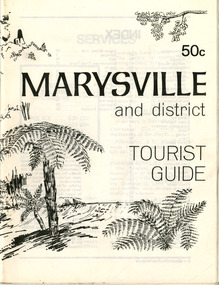 Marysville & District Historical Society
Booklet (Item) - Tourist guide, Ian and Danese Walshe et al, MARYSVILLE and district TOURIST GUIDE, 1982
... blue hills riding school...mountain view horse hire...pitt's garage...maryton park...j l gould sawmill...eildon deer park...eildon weir...maroondah dam...snob's creek...healesville sanctuary...graceburn park...cathedral range...A tourist guide outlining services, accommodation, activities and places of interest to visit in and around Marysville and the local district. marysville victoria australia tourist guide marysville hotel castles' store hawthorne's corner shop tudor lodge black spur motel and caravan park buxton general store golden fleece roadhouse marysville garage burrengeen park lake mountain steavenson falls nanda binya lodge alpenglow nursery black spur inn hotel silver stream trout farm mccfarlane's grocery barton's drapery marysville newsagency eildon explorer beauty spot nursery crossways pumpernickel mckenzie's tourist services blue hills riding school mountain view horse hire pitt's garage maryton park j l gould sawmill eildon deer park eildon weir maroondah dam snob's creek healesville sanctuary graceburn park cathedral range beauty spot walk tree fern gully walk michaeldene track keppel track woods lookout track cumberland scenic reserve cambarville the big tree cora-lyn falls barton's lookout cumberland falls sovereign view wirreanda festival scenic motel tower motel marylands guest house kooringa guest house marylyn guest house mountain lodge el kanah marysville hotel motel buxton hotel motel black spur inn buxton caravan park marysville caravan park the cumberland marysville recreation and fun park A tourist guide outlining services, accommodation, activities and places of interest to visit in and around Marysville and the local district. ...A tourist guide outlining services, accommodation, activities and places of interest to visit in and around Marysville and the local district.A tourist guide outlining services, accommodation, activities and places of interest to visit in and around Marysville and the local district.marysville, victoria, australia, tourist guide, marysville hotel, castles' store, hawthorne's corner shop, tudor lodge, black spur motel and caravan park, buxton general store, golden fleece roadhouse, marysville garage, burrengeen park, lake mountain, steavenson falls, nanda binya lodge, alpenglow nursery, black spur inn hotel, silver stream trout farm, mccfarlane's grocery, barton's drapery, marysville newsagency, eildon explorer, beauty spot nursery, crossways, pumpernickel, mckenzie's tourist services, blue hills riding school, mountain view horse hire, pitt's garage, maryton park, j l gould sawmill, eildon deer park, eildon weir, maroondah dam, snob's creek, healesville sanctuary, graceburn park, cathedral range, beauty spot walk, tree fern gully walk, michaeldene track, keppel track, woods lookout track, cumberland scenic reserve, cambarville, the big tree, cora-lyn falls, barton's lookout, cumberland falls, sovereign view, wirreanda festival, scenic motel, tower motel, marylands guest house, kooringa guest house, marylyn guest house, mountain lodge, el kanah, marysville hotel motel, buxton hotel motel, black spur inn, buxton caravan park, marysville caravan park, the cumberland, marysville recreation and fun park -
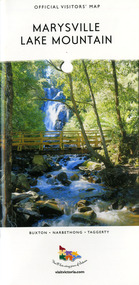 Marysville & District Historical Society
Map (Item) - Tourist map, Mystic Mountains Tourism, OFFICIAL VISITORS' MAP MARYSVILLE LAKE MOUNTAIN, Unknown
... A visitors' map of Marysville and Lake Mountain produced by Mystic Mountains Tourism for Visit Victoria. marysville lake mountain victoria australia visitor's map official visitors' map marysville lake mountain buxton narbethong taggerty visit victoria mystic mountains tourism inc graph attack p/l mystic mountains marysville triangle marysville visitor information centre marylands country house black spur steavenson falls lady talbot drive cambarville cathedral ranges wirreanda festival lake mountain summit walk summit walk loop leadbeaters loop day loop walk buxton hotel igloo roadhouse karmann waters silverstream b&b cottages buxton trout and salmon farm the niche wine bar buxton post office & general store choppers buxton roadhouse woodlands rainforest bungalows chestnut glade black spur inn wombat cottage abbey lake luxury b&b spa cottages mystic mountain ski hire & outdoors pnl 4wdriving blue views holiday units & ski hire marapana agistment park & farm stay b&b danico design things of sand & stone mantirri blueberry farm allawah country cottages amberview cottages ashlar cottage b&b black spur motel & caravan park blackwood deluxe cottages blackwood courtyard b&b dalrymples guest cottages delderfield el kanah guest house fruit salad farm kerami guest house keppels hotel lake mountain-snow gum lodge lomatia lodge lyell guest cottages magnolia house keppel waters lyrebird apartments marysville caravan park all view spa apartments riverside cottages maryton park b&b country cottages melina cottage mountain lodge mystic mountains holiday cottages nanda binya lodge rendezvous luxury cottages scenic b&b motel the cumberland south cathedral farm tower motel willowbank at taggerty woodlands rainforest retreat marysville & district country club inc mystic mountains ski hire & outdoors rubicon valley horse riding marysville trout and salmon ponds gallipoli park keppels lookout cambarville-yarra ranges national park lake mountain-yarra ranges national park lady talbot drive-yarra ranges national park cathedral range state park steavenson river taggerty river acheron river lake mountain alpine resort bruno's art and sculpture garden manical mechanicals uncle fred & aunty val's old style lolly shop carmyle farm boutique crossways historic country inn fraga's gilberts restaurant heights licensed bistro the old woolshed cafe cathedral view natural therapies crystal journey The Marysville and Lake Mountain Visitor Map and Touring Guide has been compiled and/ published by Mystic Mountains Tourism Inc. ...A visitors' map of Marysville and Lake Mountain produced by Mystic Mountains Tourism for Visit Victoria.A visitors' map of Marysville and Lake Mountain produced by Mystic Mountains Tourism for Visit Victoria.The Marysville and Lake Mountain Visitor Map and Touring Guide has been compiled and/ published by Mystic Mountains Tourism Inc. Copyright./ Production and artwork Graph Attack P/Lmarysville, lake mountain, victoria, australia, visitor's map, official visitors' map marysville lake mountain, buxton, narbethong, taggerty, visit victoria, mystic mountains tourism inc, graph attack p/l, mystic mountains, marysville triangle, marysville visitor information centre, marylands country house, black spur, steavenson falls, lady talbot drive, cambarville, cathedral ranges, wirreanda festival, lake mountain summit walk, summit walk loop, leadbeaters loop, day loop walk, buxton hotel, igloo roadhouse, karmann waters, silverstream b&b cottages, buxton trout and salmon farm, the niche wine bar, buxton post office & general store, choppers buxton roadhouse, woodlands rainforest bungalows, chestnut glade, black spur inn, wombat cottage, abbey lake luxury b&b spa cottages, mystic mountain ski hire & outdoors, pnl 4wdriving, blue views holiday units & ski hire, marapana agistment park & farm stay b&b, danico design, things of sand & stone, mantirri blueberry farm, allawah country cottages, amberview cottages, ashlar cottage b&b, black spur motel & caravan park, blackwood deluxe cottages, blackwood courtyard b&b, dalrymples guest cottages, delderfield, el kanah guest house, fruit salad farm, kerami guest house, keppels hotel, lake mountain-snow gum lodge, lomatia lodge, lyell guest cottages, magnolia house, keppel waters, lyrebird apartments, marysville caravan park, all view spa apartments, riverside cottages, maryton park b&b country cottages, melina cottage, mountain lodge, mystic mountains holiday cottages, nanda binya lodge, rendezvous luxury cottages, scenic b&b motel, the cumberland, south cathedral farm, tower motel, willowbank at taggerty, woodlands rainforest retreat, marysville & district country club inc, mystic mountains ski hire & outdoors, rubicon valley horse riding, marysville trout and salmon ponds, gallipoli park, keppels lookout, cambarville-yarra ranges national park, lake mountain-yarra ranges national park, lady talbot drive-yarra ranges national park, cathedral range state park, steavenson river, taggerty river, acheron river, lake mountain alpine resort, bruno's art and sculpture garden, manical mechanicals, uncle fred & aunty val's old style lolly shop, carmyle farm boutique, crossways historic country inn, fraga's, gilberts restaurant, heights licensed bistro, the old woolshed cafe, cathedral view natural therapies, crystal journey -
Lara RSL Sub Branch
Book, RAAF Saga - The RAAF at War, 1944
... Front and back inside cover is a blue sepia background with the RAAF insignia and a range of bombers being maintained....Front and back inside cover is a blue sepia background with the RAAF insignia and a range of bombers being maintained. ...This volume is like a veteran 'gong' - winner with years of tough going and breathless incidents to draw from. The service and the blokes in it have been able to dig into this pile of gen. and present some amazing stories, pictures, poems, graphics and cartoons.Personal recounts from RAAF service personnel by way of stories, poems, cartoons, illustrations and portraitsRAAF Saga - The RAAF at War, blue hardcover front, back and spine with black Text of title and a black silhouette picture on front cover showing aircraft. Front and back inside cover is a blue sepia background with the RAAF insignia and a range of bombers being maintained.Message from Air Vice Marshall Chief of air staff C Jonesraaf, wwii, beaufighters, waafs, partisans, parachute, middle east squadron, kitty hawk, flying nurses, medical air evacuation unit, wewak, new guinea, jungle diary, the p24 -
Federation University Historical Collection
Costume, Federation University, Indigenous Uni Games Polo Shirt, Approx 2019?
... The colour ranges from mid blue at the top to a dark blue with spots at the bottom. ...The colour ranges from mid blue at the top to a dark blue with spots at the bottom. ...National Indigenous Tertiary Education Student Games (NITESG) began in 1996. Now referred to as Indigenous Nationals, the event is a week-long multisport competition for indigenous student-athletes. The annual event aims to bring together athletes from universities across Australia to compete in a variety of sports and ultimately crown one university team the champion of the games. Indigenous Nationals seeks to also acknowledge the heritage and history of the participating athletes. This new synthetic shirt (still with tags attached) has short sleeves, a collar and three white buttons set in a placket at the neckline. The colour ranges from mid blue at the top to a dark blue with spots at the bottom. On the front is printed the FedUni logo on the left breast and on the right side is printed Indigenous Uni Games and the Aboriginal and Torres Strait crossed flags at the breast and below is a design and a platypus. The same design is repeated on the left sleeve and on the right sleeve is a logo for the Central Highlands Local Aboriginal Network. The number 28 is printed on the back.Makers brand is stamped on the inside back neck.federation university, indigenous uni games, indigenous nationals, central highlands local aboriginal network, polo shirt -
 Federation University Historical Collection
Book, Longman's, Green and Co, Sir Joseph Swan and the Invention of the Incandescent Electric Lamp, 1946, 1948 reprint
... range of scientific interest and practical usage. This book was withdrawn from the Ballarat School of Mines Library sir joseph swan, invention, incandescent electric lamp, history, filament lamp, electricity, ballarat school of mines library Blue paperback book, 50 pages: Biography Sir Joseph Swan and the invention of the incandescent electric lamp. ...Joseph Wilson Swan was born in 1882, he made many discoveries and inventions covering a wide range of scientific interest and practical usage. This book was withdrawn from the Ballarat School of Mines LibraryBlue paperback book, 50 pages: Biography Sir Joseph Swan and the invention of the incandescent electric lamp. Includes photographic images of Joseph Swan a carbon filament lamp.sir joseph swan, invention, incandescent electric lamp, history, filament lamp, electricity, ballarat school of mines library -
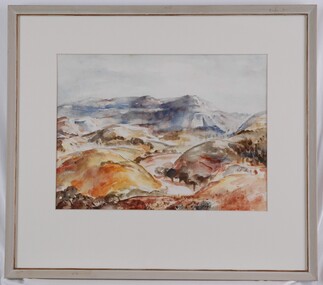 Glenelg Shire Council Cultural Collection
Painting, Enid Denton, Flinders Ranges, 1963
... ranges from an elevated position looking down across the mountains. The mountains in the foreground are predominantly shades of green, yellow and brown. The mountains in the background are various shades of blue...blue sky. The work has a grey painted frame with a white cardboard mount and glass. Flinders Ranges Painting Painting Enid Denton ...CEMA Art Collection Winner of 1963 Portland Art Society Art Prize for category Watercolour. Included in the 1999 "Salvage" exhibition at CEMA Arts Centre.The painting depicts mountain ranges from an elevated position looking down across the mountains. The mountains in the foreground are predominantly shades of green, yellow and brown. The mountains in the background are various shades of blue and extend into a pale blue sky. The work has a grey painted frame with a white cardboard mount and glass.Front: E Denton (lower right, black paint) Back: ENID DENTON "FLINDERS RANGES" (1963) Watercolour (typed label) 1963 (yellow sticker) -
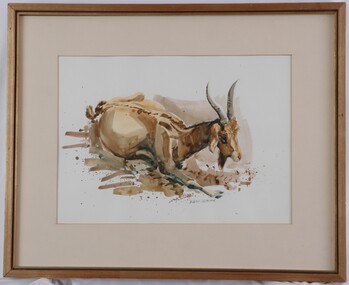 Glenelg Shire Council Cultural Collection
Painting, Robert Ulmann, Goat, c. 1974
... His works range from two stone fountains with figures commissioned by the City of Zurich, while he was still a student, to a 4 ½ ton sculpture in bluestone commissioned in 1977 as a memorial to Sir Fletcher Jones., a five metre representation of whale tails in steel, and a life-size bronze of St. John of God commissioned for a private hospital. Front: Robert Ulmann (lower centre, paint) Back: (no inscriptions) Image of a goat beginning to rise from a seated position, possible struggling out of mud. Painted in yellow and brown tones, with blue ...Robert Ulmann was born in Zurich, Switzerland, where he studied sculpture and painting, exhibiting annually with the National Art Society of Switzerland and in Paris, Munich and Stockholm. He migrated to Canada in 1956 and became a Canadian citizen. After working on the restoration of sculpture on the west wing of the Parliament Buildings Ottawa, he took up a Government appointment as one of six artist advisers to the Eskimos, initiating handicraft and sculpture programs in isolated settlements across the Central Arctic. He arrived in Australia with his Australian wife, Helen, in 1969, after two adventurous years backpacking and sketching through the United States, Central and South America and the South Pacific. From 1970 to 1972 he was employed by the Northern Territory Administration as a manual arts instructor to the aboriginal people of Docker River, a remote settlement west of Ayers Rock. A series of drawings from this period was exhibited by the Department of the Interior in Canberra, Sydney and Adelaide. Robert Ulmann’s paintings and prints of wildlife from Australia and overseas fill a beautiful studio overlooking the famous Logans Beach whale nursery at Warrnambool in the Western District of Victoria. His previous studio and home, together with 13 years of field sketches and his best work collected together for two books were destroyed by the Ash Wednesday fires at Naringal in 1983. Rob exhibited in Sydney, Melbourne, Adelaide and Perth as well as in the Regional Galleries of Warrnambool, Ballarat, Portland and Horsham, and, among numerous prizes, he won the award for watercolour at six of the annual exhibitions of the Wildlife Art Society of Australasia, between 1978 and 1983. Although his principal interest was in drawing and painting, he retained a fascination with sculpture. His works range from two stone fountains with figures commissioned by the City of Zurich, while he was still a student, to a 4 ½ ton sculpture in bluestone commissioned in 1977 as a memorial to Sir Fletcher Jones., a five metre representation of whale tails in steel, and a life-size bronze of St. John of God commissioned for a private hospital.Image of a goat beginning to rise from a seated position, possible struggling out of mud. Painted in yellow and brown tones, with blue shadows. Earth colours form a rough ground area surrounding the goat. A brown wash provides a cursory background behind the goat's head. Dark cream matt surrounds image. Gold painted wooden frame, with glass.Front: Robert Ulmann (lower centre, paint) Back: (no inscriptions) -
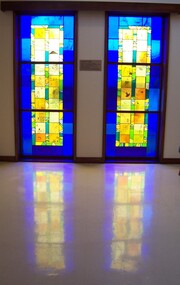 Glenelg Shire Council Cultural Collection
Artwork, other - Leadlight, windows, Gaylene Allen & Portland Community, 1987
... range of different styles. The centre panels have eight square sections, with similar styles and motifs. A double border of shades of blue in small rectangles surrounds the central sections, which are in shades of yellow, with central rectangular glass in green. ...range of different styles. The centre panels have eight square sections, with similar styles and motifs. A double border of shades of blue in small rectangles surrounds the central sections, which are in shades of yellow, with central rectangular glass in green. ...Conservation work of sills - see notes in object file.Two windows, composed of three panels each, arranged vertically. The top and bottom panels of each window are composed of six square glass sections depicting line drawings and figurative depictions in a range of different styles. The centre panels have eight square sections, with similar styles and motifs. A double border of shades of blue in small rectangles surrounds the central sections, which are in shades of yellow, with central rectangular glass in green. Clear glass panels are set on either side of windows. -
Glenelg Shire Council Cultural Collection
Document - Invitation - Portland Rifle Club, Mar-56
... Vivian and Lady' handwritten, blue ink Invitation from the Portland Rifle club, to the official opening of their new range at Point Danger on Sat. 17 MAR 1956. ...Invitation from the Portland Rifle club, to the official opening of their new range at Point Danger on Sat. 17 MAR 1956. Pale green card, scalloped edges, gold print and edgingFront: 'Mr. H.L. Vivian and Lady' handwritten, blue ink -
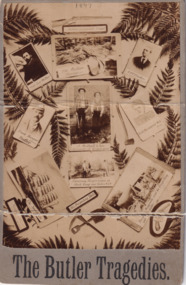 The Beechworth Burke Museum
Photograph, Enterprise Photo Company, 1897
... He would then shoot them, take their valuables, and bury them. entertainment album captain lee weller charles burgess arthur preston frank harwood frank butler crime blue mountains new south wales murder tragedy gold gold mine sydney morning herald swanhilda richard ashe Obverse: 1897 / Butler's inseparable Friend / Cap ' Lee Weller / The Victim Burgess / A OT Preston / Frank Harwood / alias / Butler / J. Mulhall & Son / discoverers of Burgess grave / Butlers supposed Wife / Frisco / Examining Burgess corpse at Black Range ...The photograph depicts eleven vignettes relating to the murders of Captain Lee Weller, Charles Burgess and Arthur Preston by Frank Butler (born Richard Ashe, alias Frank Harwood). Some historians consider Butler to be Australia's first serial killer. Butler submitted written advertisements to the classified columns of the Sydney Morning Herald newspaper looking for people to join him in prospecting for gold. Butler took his victims into the Blue Mountains in New South Wales and told fabricated stories of gold mines worth thousands of pounds. He then made his victims dig their own graves under the guise that they were digging for gold. He would then shoot them, take their valuables, and bury them.Sepia rectangular photograph printed on matte photographic paper mounted on card.Obverse: 1897 / Butler's inseparable Friend / Cap ' Lee Weller / The Victim Burgess / A OT Preston / Frank Harwood / alias / Butler / J. Mulhall & Son / discoverers of Burgess grave / Butlers supposed Wife / Frisco / Examining Burgess corpse at Black Range near Parkes NSW / The Swanhda / His Prospecting Tools / Burgs Waggonette used for Prospecting sold Butler / (?) / The Butler Tragedies Reverse: BMMA03308 / Removal story of the / 1997.3119 / Butler murders near / Parkes NSW 1897 / 84 - 35 - 1 / Enterprise Photo Company, / 26 Elizabeth Street, / SYDNEY. /entertainment album, captain lee weller, charles burgess, arthur preston, frank harwood, frank butler, crime, blue mountains, new south wales, murder, tragedy, gold, gold mine, sydney morning herald, swanhilda, richard ashe -
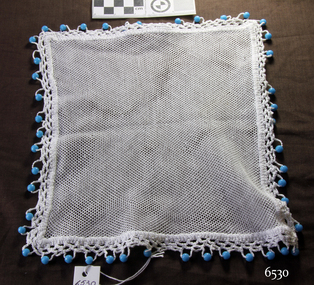 Flagstaff Hill Maritime Museum and Village
Textile - Jug Cover, ca 1910
... range of linen and other domestic items in preparation for their future marriage. The item is a fine example of early 20th-century needlework and handmade domestic items. Flagstaff Hill Warrnambool Flagstaff Hill Maritime Museum and Village Great Ocean Road Chamberlain family Dale family Lees Family Betty Stone Warrnambool Pioneer Warrnambool genealogy Wangoom Chamberlain Dale Lees collection glory box handmade craft manchester linen haberdashery needlework crochet jug cover Jug cover, square shape, net fabric with blue beads along the crocheted edge. ...The jug cover was made by overlapping two squares of net fabric and joining them together. The beads on the cover’s border are used to weigh the cover down and keep it on the jug. In the Words of donor, Betty Stone, … “These crocheted and embroidered articles cover a period of three generations- ie. Sarah (nee Chamberlain) Lees, Ann (nee Lees) Dale, and Daisy Elvena (nee Dale) Welsh. All three were accomplished needlewomen; also, both Sarah Lees (born 1844) and her daughter, Ann (b 1865) crocheted a wide variety of articles for use in their homes. A few examples of these items have survived the years.” It was a tradition for brides to have a 'glory box' containing linen and embroidered articles to take to their new home. Many of the items were made by Daisy, a skilled dressmaker. Daisy began her apprenticeship at two shillings and sixpence per week at Miss A. E. Emery's dressmaking establishment at 150-152 Liebig Street, Warrnambool. Considered to be the leading house of fashion in Warrnambool, Miss Emery employed about eight young women who worked long hours to sew elaborate gowns for clients, including wives of graziers who would attend the race carnivals and social functions in Warrnambool. (NOTE: For additional information please refer to my book Pioneer and Places- A History of Three Warrnambool Pioneering Families ie. Chamberlain, Dale and Lees families)This item is associated with the Warrnambool pioneer families of Chamberlain, Dale and Lees. These families are listed in the Pioneers' Register for Warrnambool Township and Shire, 1835-1900, published by A.I.G.S. Warrnambool Branch. The item is significant for its association with a ‘glory box’ or hope chest’, a tradition of single ladies making and collecting a range of linen and other domestic items in preparation for their future marriage. The item is a fine example of early 20th-century needlework and handmade domestic items.Jug cover, square shape, net fabric with blue beads along the crocheted edge. Part of the Chamberlain Dale Lees Collection.flagstaff hill, warrnambool, flagstaff hill maritime museum and village, great ocean road, chamberlain family, dale family, lees family, betty stone, warrnambool pioneer, warrnambool genealogy, wangoom, chamberlain dale lees collection, glory box, handmade, craft, manchester, linen, haberdashery, needlework, crochet, jug cover -
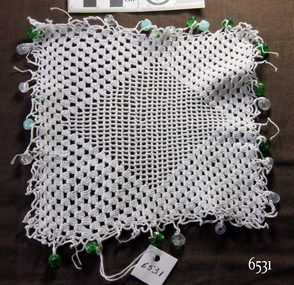 Flagstaff Hill Maritime Museum and Village
Textile - Jug Cover, ca 1910
... range of linen and other domestic items in preparation for their future marriage. The item is a fine example of early 20th-century needlework and handmade domestic items. Flagstaff Hill Warrnambool Flagstaff Hill Maritime Museum and Village Great Ocean Road Chamberlain family Dale family Lees Family Betty Stone Warrnambool Pioneer Warrnambool genealogy Wangoom Chamberlain Dale Lees collection glory box handmade craft manchester linen haberdashery Miss A.E. Emery dressmaker needlework crochet jug cover Jug Cover, crocheted square shape, diamond pattern in the centre, with alternate blue ...The jug cover has beads on the border, which are used to weigh the cover down and keep it on the jug. In the Words of donor, Betty Stone, … “These crocheted and embroidered articles cover a period of three generations- ie. Sarah (nee Chamberlain) Lees, Ann (nee Lees) Dale, and Daisy Elvena (nee Dale) Welsh. All three were accomplished needlewomen; also, both Sarah Lees (born 1844) and her daughter, Ann (b 1865) crocheted a wide variety of articles for use in their homes. A few examples of these items have survived the years.” It was a tradition for brides to have a 'glory box' containing linen and embroidered articles to take to their new home. Many of the items were made by Daisy, a skilled dressmaker. Daisy began her apprenticeship at two shillings and sixpence per week at Miss A. E. Emery's dressmaking establishment at 150-152 Liebig Street, Warrnambool. Considered to be the leading house of fashion in Warrnambool, Miss Emery employed about eight young women who worked long hours to sew elaborate gowns for clients, including wives of graziers who would attend the race carnivals and social functions in Warrnambool. (NOTE: For additional information please refer to my book Pioneer and Places- A History of Three Warrnambool Pioneering Families ie. Chamberlain, Dale and Lees families)This item is associated with the Warrnambool pioneer families of Chamberlain, Dale and Lees. These families are listed in the Pioneers' Register for Warrnambool Township and Shire, 1835-1900, published by A.I.G.S. Warrnambool Branch. The item is significant for its association with a ‘glory box’ or hope chest’, a tradition of single ladies making and collecting a range of linen and other domestic items in preparation for their future marriage. The item is a fine example of early 20th-century needlework and handmade domestic items.Jug Cover, crocheted square shape, diamond pattern in the centre, with alternate blue, green and clear beads on the edge. From the Chamberlain Dale Lees Collection'. flagstaff hill, warrnambool, flagstaff hill maritime museum and village, great ocean road, chamberlain family, dale family, lees family, betty stone, warrnambool pioneer, warrnambool genealogy, wangoom, chamberlain dale lees collection, glory box, handmade, craft, manchester, linen, haberdashery, miss a.e. emery dressmaker, needlework, crochet, jug cover
