
Showing 49 items matching "bomber crew"
-
 Moorabbin Air Museum
Journal - CAC Canberra bomber flight crew checklist includes emergency procedures, CAC Canberra bomber mark 20 flight crew checklist
... CAC Canberra bomber flight crew checklist includes emergency procedures...CAC Canberra bomber mark 20 flight crew checklist...CAC Canberra bomber mark 20 flight crew checklist Journal CAC Canberra bomber flight crew checklist includes emergency procedures ... -
Moorabbin Air Museum
Book - Avro Lincoln, Lincoln at War 1944 - 1966
... ...Bomber crew...Avro Lincoln The die is cast Bomber crew Special duties & odd jobs Malaya The Aussies The long nose Kenya Test beds Around the globe Aden Swansong Surviviors Historical overview of Avro Lincoln at war , circa 1979 Lincoln at War 1944 - 1966 Book Avro Lincoln ...Historical overview of Avro Lincoln at war , circa 1979non-fictionHistorical overview of Avro Lincoln at war , circa 1979the die is cast, bomber crew, special duties & odd jobs, malaya, the aussies, the long nose, kenya, test beds, around the globe, aden, swansong, surviviors -
 Dandenong/Cranbourne RSL Sub Branch
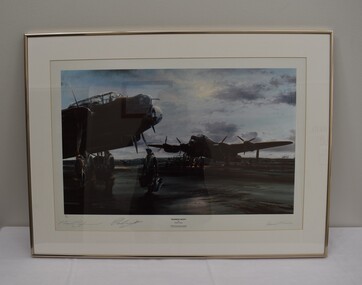
Print - "Bombers Moon"
... Showing Lancaster Bombers crewing up before a mission....Inscribed " Bombers Moon" by Robert Taylor. Pathfinder Force Lancaster's crewing up on a Lincolnshire airfield. ...Showing Lancaster Bombers crewing up before a mission. Print "Bombers Moon". ...The Lancaster bombers shown were a part of a squadron of elite Pathfinder Force. The small Pathfinder Force went ahead of the main bomber stream to mark targets with flares and incendiary bombs. R.A.F Pathfinder was Squadron 582.Framed print named "Bombers Moon" . Showing Lancaster Bombers crewing up before a mission.Inscribed " Bombers Moon" by Robert Taylor. Pathfinder Force Lancaster's crewing up on a Lincolnshire airfield. Winter 1944. Signed by Air Vice Marshal DON BENNETT CB CBE DSO FRAES and Group Captain HAMISH MAHADDIE DSO DFC AFC FRAES. -
 Running Rabbits Military Museum operated by the Upwey Belgrave RSL Sub Branch
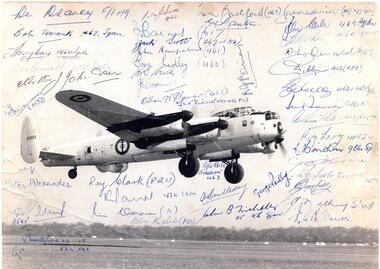
Photo of a Lancaster Bomber
... Lancaster Bomber Signed by crew...Picture WW2 RAF Lancaster Bomber Signed by crew Photo of a Lancaster Bomber ...Lancaster Bomber Signed by crewpicture, ww2, raf -
 Bendigo Military Museum
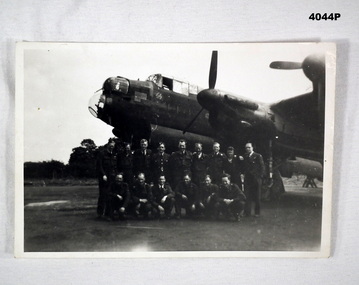
Photograph - PHOTOGRAPH, LANCASTER AND CREW, c. WWII
... Photograph of Fred Davey and his Lancaster bomber crew. Part of Frederick Gardner Davey DFC No.410533 RAAF Collection. ...Photograph of Fred Davey and his Lancaster bomber crew. Part of Frederick Gardner Davey DFC No.410533 RAAF Collection. ...F.G. Davey - Front row, 3rd from the left. Photograph of Fred Davey and his Lancaster bomber crew. Part of Frederick Gardner Davey DFC No.410533 RAAF Collection. See Cat. No. 3536P for his service record.Photo - Black & white, of a group of airmen in front of a Lancaster heavy bomber.On back, handwritten in blue ink "I.M. Davey Pres. Strathdale C.W.A." Handwritten in pencil "Lancaster. Fred and crew"lancaster, crew, raaf -
 B-24 Liberator Memorial Restoration Australia Inc
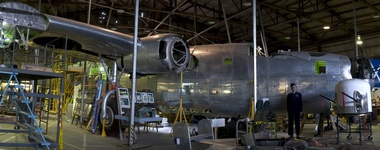
Aircraft, B-24 Liberator, Consolidated Aircraft Corporation, c. 1940
... The training saw bomber crews learn how to fly the bomber, operate as a team and work with fighters. ...The training saw bomber crews learn how to fly the bomber, operate as a team and work with fighters. ...This particular aircraft was modified with a search radar in the lower fuselage to help locate and track targets and was then redesignated as a B-24R model. The RAAF took A72-176 on charge in late 1944 and this saw it issued to 7 OTU (Operational Training Unit) based at Tocumwal, south west NSW. The training saw bomber crews learn how to fly the bomber, operate as a team and work with fighters. Towards the end of the war there were up to 50 aircraft located at Tocumwal along with 5000 personnel. A72-176 was noted as flown on training missions by various aircrew.This aircraft is one of the only remaining B-24 bombers in the southern hemisphere and 1 of only 8 remaining B-24 airframes still existing in the world, out of the nearly 19,000 which were originally built. The restoration honours the contribution of one of the RAAF’s main bombers of the WWII era. This restored Liberator aircraft was assembled from parts salvaged from B-24M models, manufactured during the 1940s in the USA. Made from aluminium, the plane is 68 feet long, with a wingspan of 110 feet, and is metallic silver with a distinctive blue and white target design on each side. The aircraft is powered by four wing-mounted engines, and is fitted with 10 heavy machine guns.Registration number on side of fuselage at rear of plane: 'A72-176' Inscription on side of fuselage at front of plane: 'ROYAL AUSTRALIAN AIR FORCE / US ARMY B24-10 CO / AIR FORCES SERIAL NUMBER 44-41956' aircraft, liberator, bomber, wwii -
 B-24 Liberator Memorial Restoration Australia Inc
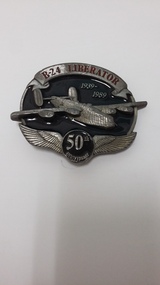
Accessory - Belt Buckle
... B-24 LIBERATOR Origin: Consolidated Vultee Aircraft Co Type: Long-range bomber with normal crew of 10 History: First flight(xb 24) December 29 1939 Withdraw from service 1955-56 It was built in bigger numbers than any other American aircraft in history and served on every front in WW11 and with15 allied nations....B-24 LIBERATOR Origin: Consolidated Vultee Aircraft Co Type: Long-range bomber with normal crew of 10 History: First flight(xb 24) December 29 1939 Withdraw from service 1955-56 It was built in bigger numbers than any other American aircraft in history and served on every front in WW11 and with15 allied nations. ...Large Forged Iron embossed belt buckle.B-24 LIBERATOR, 1939-1989, 50th ANNIVERSARY (on front) LIMITED EDITION 50th ANNIVERSARY ISSUE,B-24 LIBERATOR, 1989 BUCKLE CONNECTION, SERIAL 0612 OF 1939. B-24 LIBERATOR Origin: Consolidated Vultee Aircraft Co Type: Long-range bomber with normal crew of 10 History: First flight(xb 24) December 29 1939 Withdraw from service 1955-56 It was built in bigger numbers than any other American aircraft in history and served on every front in WW11 and with15 allied nations. -
 Mont De Lancey
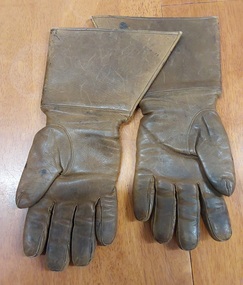
Uniform - Flying Gauntlets, 1940's
... They were favored by bomber and maritime patrol crews in unheated aircraft, German aircrew gauntlets used thin brown kid leather with raised ridges and expanding wrist gussets. ...They were favored by bomber and maritime patrol crews in unheated aircraft, German aircrew gauntlets used thin brown kid leather with raised ridges and expanding wrist gussets. ...World War II 1939-1945 Luftwaffe leather flying gauntlets were protective hand wear designed for military aviators to guard against high-altitude freezing temperatures and severe flash burns. They shielded aircrews from instrument burns and cockpit fires. Long gauntlet cuffs protected the wrists and forearms from drafts and cold air. They were favored by bomber and maritime patrol crews in unheated aircraft, German aircrew gauntlets used thin brown kid leather with raised ridges and expanding wrist gussets. Fighter pilots usually rejected them in favor of shorter gloves for better mobility.A pair of WW11 Luftwaffe flying gauntlets. They are light brown leather, fur lined, tapered at the wrist, and fitted with a narrow expandable wristband which closes with a dark brown press stud. There are three detailed stitching lines on the back of each gauntlet.gloves, gauntlet gloves, ww2 flying gloves, uniforms -
 Lara RSL Sub Branch
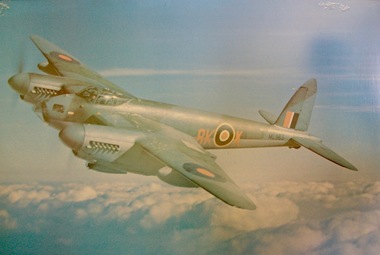
Framed photo print of Mosquito fighter plane
... crew of two, pilot and navigator, sat side by side. It served during and after the Second World War. It was one of few operational front-line aircraft of the era whose frame was constructed almost entirely of wood and was nicknamed The Wooden Wonder. https://en.wikipedia.org/wiki/De_Havilland_Mosquito It is one of the paradoxes of aircraft development that some of the world's greatest aeroplanes have achieved their fame doing jobs other than the one they were originally designed for. No better example of this could be found than the Mosquito, which, conceived as a bomber ...The de Havilland DH.98 Mosquito is a British twin-engine shoulder-winged multi-role combat aircraft. The crew of two, pilot and navigator, sat side by side. It served during and after the Second World War. It was one of few operational front-line aircraft of the era whose frame was constructed almost entirely of wood and was nicknamed The Wooden Wonder. https://en.wikipedia.org/wiki/De_Havilland_MosquitoIt is one of the paradoxes of aircraft development that some of the world's greatest aeroplanes have achieved their fame doing jobs other than the one they were originally designed for. No better example of this could be found than the Mosquito, which, conceived as a bomber, became one of the war's most potent fighters. More than this, indeed, it was probably the most successfully versatile of any twin-engined type built between 1939 and 1945. It excelled in all the widely varied roles. Its duties included the duties of low-level and high-attack day and night bomber, long-range photo-reconnaissance, mine layer, pathfinder, high-speed military transport, long-range day and night fighter, and fighter-bomber. It served in Europe, the Middle and Far East and on the Russian front. In fact, the ubiquitous Mosquito reigned supreme among General Purpose types. Of the grand total of 7,781 Mosquitos built, 6,710 were delivered during the war years. www.aviation-history.com/dehavilland/mosquito.html Rectangular shaped picture frame showing Mosquito fighter plane.fighter planes, ww2, british aircraft, mosquito fighter planes, lara r.s.l. -
 Lara RSL Sub Branch
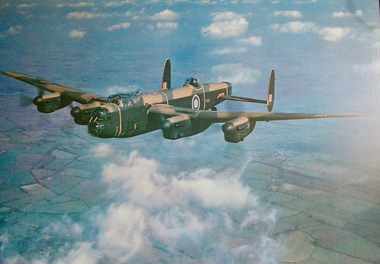
Framed Picture Print of a Lancaster Bomber
... bomber during the war. The first prototype Lancaster flew in January, 1941. A total of 7,377 Lancasters were made, after the first one rolled off the production line in October, 1941. It carried a crew...Over 1,000 bombers dropped bombs on the industrial city, destroying over 600 acres. Many Lancaster crew members were given medals for heroic actions while flying. ...The Lancaster Bomber was one of the most famous aircraft of World War II. It first saw service in 1941 and became the RAF’s main bomber during the war. The first prototype Lancaster flew in January, 1941. A total of 7,377 Lancasters were made, after the first one rolled off the production line in October, 1941. It carried a crew of 7 and could fly at about 454 kmh. The plane was just over 21 metres long, had a wingspan of 31 metres and a flying range of 4,000 km. The Lancaster was normally armed with 8 Browning machine guns, as well as bombs. Some planes were modified so they could carry the so called Grand Slam bomb, weighing 10,000 kg. During World War II, Lancasters flew over 156,000 sorties, or raids. They dropped over 50 million incendiary bombs and over 608,000 tons of explosive bombs.One of the most famous bombing raids was a 1942 raid on Cologne, Germany. Over 1,000 bombers dropped bombs on the industrial city, destroying over 600 acres. Many Lancaster crew members were given medals for heroic actions while flying. Guy Gibson had flown 170 missions by the age of 24 and was awarded the Victoria Cross. Towards the end of World War II, Lancaster Bombers dropped food into the occupied Netherlands.Rectangular shaped glass covered picture frame with photo print of a Lancaster Bomber.lancaster bomber, ww2, avro, lara r.s.l. british aircraft. -
 Australian Commando Association - Victoria
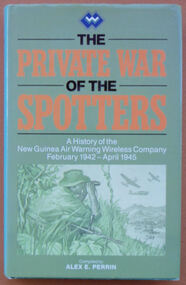
Book, The Private War of the Spotters: A history of the New Guinea Air Warning Wireless Company, February 1942-April 1945
... The following month the company was responsible for the first Japanese killed in action in Papua by Australian ground forces, when spotters from Gona engaged the crew of a downed Japanese bomber. And in July 1942 the station at Buna signalled Port Moresby with news of the Japanese landings in Papua, marking the beginning of the Kokoda campaign. ...The history of the New Guinea Air Warning Wireless Company. This reprinted version contains a map of the dispositions of Spotting Stations August 1943, additional MID awards listed and some additions to the nominal roll. The New Guinea Air Warning Wireless Company was formed in Port Moresby in late January 1942 and was granted “Separate Independent Establishment” status in October 1943. The company’s “founding father” was Major Don Small, who had witnessed Japanese air raids on Rabaul and realised that having lacked an effective early-warning system around New Britain meant that the defenders were taken by surprise. At the time, gaps had also appeared in the coast-watching communications network because the territory administration ordered the withdrawal of civilian wireless operators when Japan entered the war. The first influx of men into the company consisted largely of volunteers from the 39th Infantry Battalion, which was stationed at Port Moresby. Initial training was rudimentary, hasty, and was sometimes even carried out on en route to a new station. The first party of company personnel, or “spotters”, left Port Moresby as early as 1 February 1942, bound for the strategically important Samarai area, at the tip of Papua. In the first month of the company’s existence 16 spotter stations were established on the coast of Papua and in the mountains around Port Moresby. At the end of 1942 there were 61 operational stations being run by 180 men. The company’s high-water mark was in late 1944, by which time over 150 stations had been set up in Papua and New Guinea behind enemy lines. On 3 February 1942 the company issued its first air warning in Papua, when spotters at Tufi saw Japanese aircraft about to attack Port Moresby for the first time. The following month the company was responsible for the first Japanese killed in action in Papua by Australian ground forces, when spotters from Gona engaged the crew of a downed Japanese bomber. And in July 1942 the station at Buna signalled Port Moresby with news of the Japanese landings in Papua, marking the beginning of the Kokoda campaign. The dangers involved in the company’s work had also been made clear by this time. In July 1942 a party of spotters attempting to set up a station at Misima Island, off Milne Bay, was intercepted by a Japanese destroyer, resulting in the company’s first operational losses. Anticipating the direction of the campaign as a whole, the company’s focus moved north and north-west over the three years of its existence. In May 1942 a network was set up in the Wau area in association with the activities of Kanga Force. As part of the Wau network, spotter Ross Kirkwood audaciously constructed an observation post overlooking the Japanese airstrip at Salamaua. Kirkwood’s position was photographed by Damian Parer on the understanding that the pictures would not be published. They nevertheless appeared in a Sydney newspaper. The day after the publication of the photographs the observation post was attacked by the Japanese and Kirkwood was lucky to escape. In June 1944 the company’s headquarters were moved to Nadzab. By that time, spotter stations existed behind Japanese lines, as far north as Hollandia, and the company began to train Americans to perform similar work in the Philippines. In early 1945 the company moved to Balcombe, Victoria, where its members were posted to other units of the Australian Corps of Signals.gray plasticnon-fictionThe history of the New Guinea Air Warning Wireless Company. This reprinted version contains a map of the dispositions of Spotting Stations August 1943, additional MID awards listed and some additions to the nominal roll. The New Guinea Air Warning Wireless Company was formed in Port Moresby in late January 1942 and was granted “Separate Independent Establishment” status in October 1943. The company’s “founding father” was Major Don Small, who had witnessed Japanese air raids on Rabaul and realised that having lacked an effective early-warning system around New Britain meant that the defenders were taken by surprise. At the time, gaps had also appeared in the coast-watching communications network because the territory administration ordered the withdrawal of civilian wireless operators when Japan entered the war. The first influx of men into the company consisted largely of volunteers from the 39th Infantry Battalion, which was stationed at Port Moresby. Initial training was rudimentary, hasty, and was sometimes even carried out on en route to a new station. The first party of company personnel, or “spotters”, left Port Moresby as early as 1 February 1942, bound for the strategically important Samarai area, at the tip of Papua. In the first month of the company’s existence 16 spotter stations were established on the coast of Papua and in the mountains around Port Moresby. At the end of 1942 there were 61 operational stations being run by 180 men. The company’s high-water mark was in late 1944, by which time over 150 stations had been set up in Papua and New Guinea behind enemy lines. On 3 February 1942 the company issued its first air warning in Papua, when spotters at Tufi saw Japanese aircraft about to attack Port Moresby for the first time. The following month the company was responsible for the first Japanese killed in action in Papua by Australian ground forces, when spotters from Gona engaged the crew of a downed Japanese bomber. And in July 1942 the station at Buna signalled Port Moresby with news of the Japanese landings in Papua, marking the beginning of the Kokoda campaign. The dangers involved in the company’s work had also been made clear by this time. In July 1942 a party of spotters attempting to set up a station at Misima Island, off Milne Bay, was intercepted by a Japanese destroyer, resulting in the company’s first operational losses. Anticipating the direction of the campaign as a whole, the company’s focus moved north and north-west over the three years of its existence. In May 1942 a network was set up in the Wau area in association with the activities of Kanga Force. As part of the Wau network, spotter Ross Kirkwood audaciously constructed an observation post overlooking the Japanese airstrip at Salamaua. Kirkwood’s position was photographed by Damian Parer on the understanding that the pictures would not be published. They nevertheless appeared in a Sydney newspaper. The day after the publication of the photographs the observation post was attacked by the Japanese and Kirkwood was lucky to escape. In June 1944 the company’s headquarters were moved to Nadzab. By that time, spotter stations existed behind Japanese lines, as far north as Hollandia, and the company began to train Americans to perform similar work in the Philippines. In early 1945 the company moved to Balcombe, Victoria, where its members were posted to other units of the Australian Corps of Signals.world war ii, special operations, new guinea, new guinea air warning wireless company -
 Bendigo Military Museum
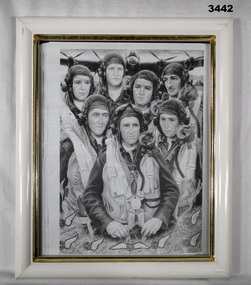
Drawing - DRAWING WW2, FRAMED, Possibly post WW2
... crew. Each is wearing his flying gear, each has a last name drawn on front of helmet. An Avro Lancaster Bomber is at the top part of drawing. ...crew. Each is wearing his flying gear, each has a last name drawn on front of helmet. An Avro Lancaster Bomber is at the top part of drawing. ...Names of airmen are: “CHAMPKIN D G, CARROLL M W, LYNCH T J, JARMAN E G D, HARRIS H R, JACKSON J G NEAL R L”Black / white drawing of a Lancaster air crew. Each is wearing his flying gear, each has a last name drawn on front of helmet. An Avro Lancaster Bomber is at the top part of drawing. Winged badges bearing pilot's full names are at bottom part of drawing. Frame is simple wood design, painted white with a small amount of gold trim.illustrations-pen&ink, military history - air force, airforce, lancaster -
 Bendigo Military Museum
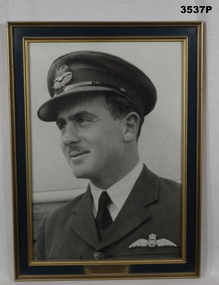
Photograph - PHOTOGRAPH RAAF, FRAMED, C. WW2
... Bombers he arrived in New Guinea in May 1942. Along the way he was promoted to Pilot Officer, Flying Officer and then Flight Lieutenant. On the 18.3 1943 during a low level attack on Japanese positions around Salamaua he hit his target but his plane was hit several times by flack and burst into flames but he landed it in the sea. Sgt B.G Eastwood No 13055 a crew...Bombers he arrived in New Guinea in May 1942. Along the way he was promoted to Pilot Officer, Flying Officer and then Flight Lieutenant. On the 18.3 1943 during a low level attack on Japanese positions around Salamaua he hit his target but his plane was hit several times by flack and burst into flames but he landed it in the sea. Sgt B.G Eastwood No 13055 a crew ...William Ellis NEWTON VC enlisted in the RAAF no 250748 on 5.2.1940 age 20 years 8 months. Serving with No 22Sqd RAAF flying Boston Bombers he arrived in New Guinea in May 1942. Along the way he was promoted to Pilot Officer, Flying Officer and then Flight Lieutenant. On the 18.3 1943 during a low level attack on Japanese positions around Salamaua he hit his target but his plane was hit several times by flack and burst into flames but he landed it in the sea. Sgt B.G Eastwood No 13055 a crew member went down with the aircraft. Newton and Flt Sgt J Lyon No 401706 swam to shore but were captured by the Japanese. Newton was taken to Lae for interrogation and then returned to Salamaua and was executed by decapitation and his body thrown in bomb crater on 29.3.1943. His body was later recovered in late 1943 when Australian troops captured Salamaua. Lyons was executed at Lae by bayoneting in the back. The award to Newton of the Victoria Cross was for low level attacks in the Salamaua area which inflicted heavy losses on Japanese installations one of which his plane was hit by flak heavily and he successfully flew it back some 180 miles and landed. The award also included the attack for which he was executed. Newtons and war crimes records are some 800 plus pages with photos, statements etc. Refer also Cat No 3456.Black & white photo, head & shoulders portrait of F/LT W. E. NEWTON V.C. He is wearing a peaked cap, collar & tie with RAAF wings badge on L side of jacket. In a green / gold wooden frame with glass front. Fawn paper backing. Gold plaque in middle beneath photo.Engraved on plaque: “F/LT W. E. NEWTON V.C. 22 Squadron RAAF”photograph, raaf, vc, newton -
 Bendigo Military Museum
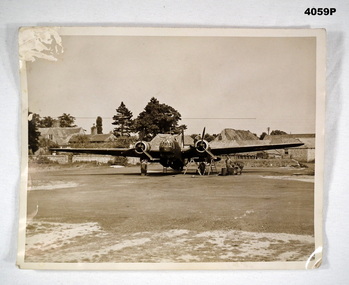
Photograph - PHOTOGRAPH, AIRCRAFT, Central Press Photos Ltd, c. WWII
... Card details a Lancaster bomber, but in all likelihood its a Wellington bomber being serviced at an airfield by ground crew. Part of Frederick Gardner Davey DFC No.410533 RAAF Collection. ...Card details a Lancaster bomber, but in all likelihood its a Wellington bomber being serviced at an airfield by ground crew. Part of Frederick Gardner Davey DFC No.410533 RAAF Collection. ...Card details a Lancaster bomber, but in all likelihood its a Wellington bomber being serviced at an airfield by ground crew. Part of Frederick Gardner Davey DFC No.410533 RAAF Collection. See Cat. No. 3536P for his service record. Photo, black & white, white border, of an aircraft being serviced by two airmen. Buildings and trees visible in the background.On back, hand written in pencil: "Lancaster by day". On back, two stamps in purple ink: 1 "Copyright photos issued by Central Press Photos Ltd. Incorporating Central News Illustrations Service, 119 Fleet Street London E.C.4" 2 "Certified by Central Press Photos Ltd as passed by censor. Pres and censorship bureau"bombers, ww2 -
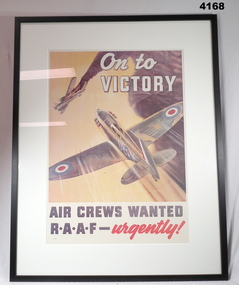 Bendigo Military Museum
Poster - AIR CREW POSTER, FRAMED, Frame 2006
... Air Crew RAAF On the Poster, “On to Victory, Air crew wanted RAAF Urgently” On the rear is, “Bill Clark Esq” Original coloured poster displaying a Spitfire shooting a Luftwaffe twin engined Bomber which has it’s port engine on fire. ...Original coloured poster displaying a Spitfire shooting a Luftwaffe twin engined Bomber which has it’s port engine on fire. The print is mounted in a plain black wood frame.On the Poster, “On to Victory, Air crew wanted RAAF Urgently” On the rear is, “Bill Clark Esq”air crew, raaf -
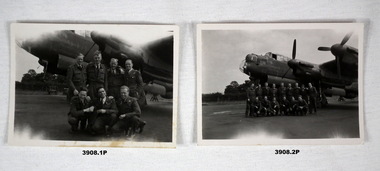 Bendigo Military Museum
Memorabilia - PHOTOGRAPHS, c.WWII
... Photography Lancaster’s crews .1) Handwritten in blue ink on back: Fred (centre) and crew .1) Black / white photo of a group of 7 men in RAAF uniform, Lancaster bomber in background. .2) Black / white photo of a group of 15 men in RAAF uniform, Lancaster bomber in background. ....1) Frederick Gardner DAVEY centre of front row. .2) Frederick Gardner DAVEY 3rd from left front row. Item re Frederick Gardner DAVEY DFC No 410533 RAAF. Refer Reg No 3536P for his service details..1) Black / white photo of a group of 7 men in RAAF uniform, Lancaster bomber in background. .2) Black / white photo of a group of 15 men in RAAF uniform, Lancaster bomber in background..1) Handwritten in blue ink on back: Fred (centre) and crewphotography, lancaster’s, crews -
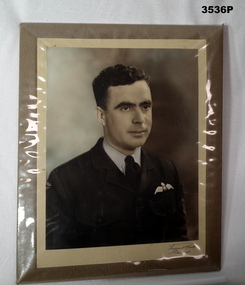 Bendigo Military Museum
Film - PHOTOGRAPH, FRAMED
... A total of 779 aircraft were on the raid & 105 aircraft were lost with 534 crew & 157 captured. His Sqd during the war had the 3rd highest losses in Bomber Command. ...A total of 779 aircraft were on the raid & 105 aircraft were lost with 534 crew & 157 captured. His Sqd during the war had the 3rd highest losses in Bomber Command. ...Frederick Gardner DAVEY was born in Bendigo & worked at Hume & Iser prior to enlisting. He initially enlisted as No V24918 in the 17th Machine Gun Regt in 1939 aged 22. Fred was discharged from the Army with the rank of Sgt in 10.9.1941. He then applied to join the RAAF & was finally accepted & began his service on 30.1.1942 No 410533. Finally he was posted to No 44 Sqd RAF Rhodesian which were Lancasters on 16.3.1944, so named because 25% of the aircrew & ground staff were from Rhodesia. Fred flew on the Nuremberg Raid on 30/31.3.1944 which suffered the costliest in terms of RAF losses in a single night. A total of 779 aircraft were on the raid & 105 aircraft were lost with 534 crew & 157 captured. His Sqd during the war had the 3rd highest losses in Bomber Command. Fred flew 35 missions in total & was awarded the Distinguished Flying Cross in 1944. He was presented with his DFC at an investure at Buckingham Palace on 18.5.1945. Fred was discharged from the RAAF with the rank of Flying Officer on 28.9.1945.Framed colour portrait photo of a man in RAAF uniform. Frame is metal with photo covered in clear plastic. Folding stand attached at back.On mounting of photo: Vincent Riely Bendigophotography, portrait, raaf -
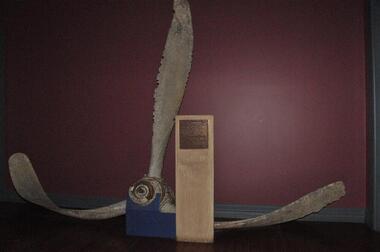 Running Rabbits Military Museum operated by the Upwey Belgrave RSL Sub Branch
Propeller from Crashed RAAF B-25 MITCHELL A47-24 BOMBER, The North American Aviation Company, RAAF Bomber A47-24, 1944
... bomber built by NORTH AMERICAN AVIATION COMPANY in Kansas City U.S.A. Initially issued for use by the Netherlands East Indies Air Force as N5-216, The Aircraft was taken on charge by the RAAF in 1944. On the 01/12/44, A47-24 was undergoing flight trials over the Torquay Bombing Range off Pt. Addis,when it appeared to catch fire and subsequently crashed into the sea. Of it's crew...bomber built by NORTH AMERICAN AVIATION COMPANY in Kansas City U.S.A. Initially issued for use by the Netherlands East Indies Air Force as N5-216, The Aircraft was taken on charge by the RAAF in 1944. On the 01/12/44, A47-24 was undergoing flight trials over the Torquay Bombing Range off Pt. Addis,when it appeared to catch fire and subsequently crashed into the sea. Of it's crew ...The A47-24 was a B-25D MITCHELL,a twin-engined medium bomber built by NORTH AMERICAN AVIATION COMPANY in Kansas City U.S.A. Initially issued for use by the Netherlands East Indies Air Force as N5-216, The Aircraft was taken on charge by the RAAF in 1944. On the 01/12/44, A47-24 was undergoing flight trials over the Torquay Bombing Range off Pt. Addis,when it appeared to catch fire and subsequently crashed into the sea. Of it's crew of 5,3 were killed. This Propeller was recovered after becoming entangled in fishing nets. A47-24 PropellerNone. Sea erosion of the Aluminium is very evident.propeller, b25 bomber, crash, torquay, pt addis -
 Bendigo Military Museum
Photograph - PHOTOGRAPHS FRAMED RAAF, SAFE HOME, C.1944 - 45
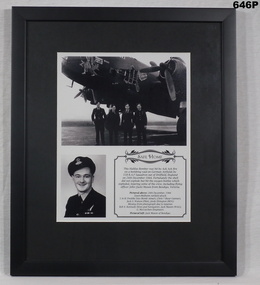
... Large photo shows 4 crew members standing in front of a damaged Halifax bomber. Small photo is of air crewman flying officer JACK MASON (WAG) of Bendigo. ...Large photo shows 4 crew members standing in front of a damaged Halifax bomber. Small photo is of air crewman flying officer JACK MASON (WAG) of Bendigo. ...John Joseph MASON No 418670 Wireless Air Gunner (WAG) (born Bendigo, enlisted Melbourne) in the RAAF on 29.5.1942 age 19 years. After 5 Training postings he embarked for Canada on 15.1.1943 arriving 31.1.1943. He then did Training in Edmonton, Calgary and Mossank before embarking to England 21.10.1943 arriving 30.6.1943. After more Training at several postings he was finally posted to No 158 SQD RAF flying Halifax Bombers and commenced operational flying on 5.11.1944. He rose through the ranks to Flt Sgt on 31.12.1944 and then granted a Commission as F/O on 12.3.1945. He transferred to 466 SQD RAAF on 26.5.1945. His records are a bit sketchy but it appears he flew 11 Operational Sorties. His Commission was terminated on 19.3.1946. His brother Hugh who was also in the RAAF and home at the time told the story that when the aircraft was hit his mother new something had happened to Jack.Photograph, framed. Safe home. The frame is black smooth wooden type. A montage of 2 black and white photos and a description. Large photo shows 4 crew members standing in front of a damaged Halifax bomber. Small photo is of air crewman flying officer JACK MASON (WAG) of Bendigo. The story covers the raid that aircraft was on, how the side exploded out, and the crew members names.Rear has "From HUGH MASON and the MASON family"photography - photographs, raaf ww2, 158 sqd -
 Bendigo Military Museum
Memorabilia - BOOKLET, Estimated 1989
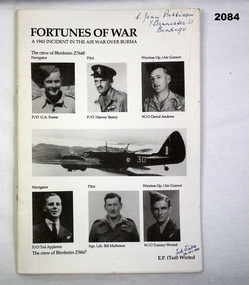
... On 5.4.43 after a bombing run over Meiktila in central Burma two Blenheim bombers collided with the result that the crews of both planes were either KIA or taken POW. ...On 5.4.43 after a bombing run over Meiktila in central Burma two Blenheim bombers collided with the result that the crews of both planes were either KIA or taken POW. ...On 5.4.43 after a bombing run over Meiktila in central Burma two Blenheim bombers collided with the result that the crews of both planes were either KIA or taken POW. W/O David Thomas Andrew 400247 RAAF KIA, P/O George Atkinson Foster 407418 RAAF KIA, F/O Harvey Besley "MM" 402942 POW, F/O Edward Francis Appleton 400067 KIA, F/L William Roland Matheson 406253 POW, W/O Thomas Joseph Wixted 404225 KIA. Refer 2085, 2088 re David Andrew. Booklet "Fortunes of War". White cover with B & W photos of Airmen and Aircraft. The book is mainly about an incident in 1943 in the air war over Burma involving David Andrew 400247 RAAF. 28 pages."C. Jean Pattison 7 Bannister St Bendigo" " Ted Wixted 23." (Date unclear)books, military, history -
 Bendigo Military Museum
Award - MEDAL SET WW2, Post 1945
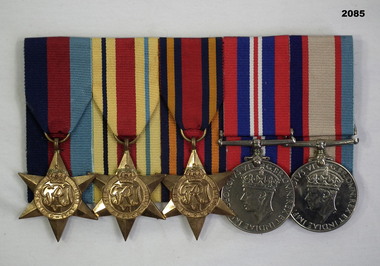
... During a bombing run by No 11 Sqd on Meiktila in central Burma on 5.4.43 two of the Sqd's Blenheim Bombers collided and subsequently crashed. Warrant Officer Andrew was killed. Out of the two crews totaling six personnel four were killed and two were taken POW. ...During a bombing run by No 11 Sqd on Meiktila in central Burma on 5.4.43 two of the Sqd's Blenheim Bombers collided and subsequently crashed. Warrant Officer Andrew was killed. Out of the two crews totaling six personnel four were killed and two were taken POW. ...David Thomas Andrew No 400247 (born Tarnagulla, enlisted Melbourne) in the RAAF on 21.7.40. During a bombing run by No 11 Sqd on Meiktila in central Burma on 5.4.43 two of the Sqd's Blenheim Bombers collided and subsequently crashed. Warrant Officer Andrew was killed. Out of the two crews totaling six personnel four were killed and two were taken POW. Refer 2084, 2088.Medal set, court mounted, set of (5) re D Andrew. 1. 1939-45 Star. 2. Africa Star. 3. Burma Star. 4. War Medal 1939-45. 5. Australian Service Medal 1939 - 45"400247 D.T.Andrew"medals, military, history -
 Bendigo Military Museum
Memorabilia - PHOTOGRAPH & SOUVENIR, C.1943 - 45
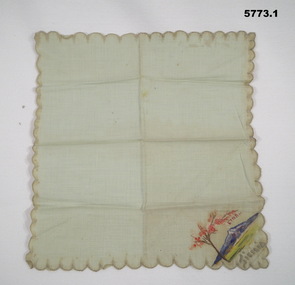
... Crew members were L to R, Bill Jones, Tony White, Nobby Norris, Doug Eden, Peter Ellis, Alan Goodall. photographs souvenirs memorabilia DFC On Rear , "left to right, F/Sgt Bill Jones (Gunner), F/Sgt Tony White (Bomb aimer), F/Sgt Nobby Norris ? (W/Op 2nd), F/Lt Doug Egan (Pilot), F/O Peter Ellis (Navigator), F/O Allan Goodall (1st W/Op)" .1) B & W photo of a Wellington Bomber ...Item re Allan Frederick Goodall DFC, RAAF, refer Cat No 543.2 for his service details. These items were in a wallet, refer Cat No 5772 for the story and connection. This would be a multi Commonwealth Aircrew. Crew members were L to R, Bill Jones, Tony White, Nobby Norris, Doug Eden, Peter Ellis, Alan Goodall..1) B & W photo of a Wellington Bomber in the rear with six Aircrew in Flying gear standing in front. Inscription on rear in faint black pen. .2) Handkerchief with hand painted scene of Mt Etna in Sicily.On Rear , "left to right, F/Sgt Bill Jones (Gunner), F/Sgt Tony White (Bomb aimer), F/Sgt Nobby Norris ? (W/Op 2nd), F/Lt Doug Egan (Pilot), F/O Peter Ellis (Navigator), F/O Allan Goodall (1st W/Op)"photographs, souvenirs, memorabilia, dfc -
4th/19th Prince of Wales's Light Horse Regiment Unit History Room
Medal, 1939-45 Star
... crew involved in the Battle of Britain. When the ribbon is worn alone a gilt rosette ribbon emblem is worn to denote the award of the ‘BATTLE OF BRITAIN' clasp. The ‘BOMBER...crew involved in the Battle of Britain. When the ribbon is worn alone a gilt rosette ribbon emblem is worn to denote the award of the ‘BATTLE OF BRITAIN' clasp. The ‘BOMBER ...The 1939-45 Star may be awarded for those who undertook operational service during World War II. Eligibility The 1939-45 Star is awarded for service between 3 September 1939 and 2 September 1945 for: a period of six months (180 days) operational service for RAN and Army personnel and RAAF non-air crew personnel a period of two months operational service for air crew personnel a period of six months service at sea for Merchant Navy provided at least one voyage was made through one of the specified areas of active operations The 1939-45 Star is awarded to Australian Civilian Personnel who served afloat with the United States Army Small Ships Section between 8 December 1941 and 2 September 1945. Eligibility is the same as that for Merchant Navy personnel. See required evidence to support a claim. The Medal The 1939-45 Star is a six–pointed star of yellow copper zinc alloy. The obverse has a central design of the Royal and Imperial cypher, surmounted by a crown. The cypher is surrounded by a circlet containing the words ‘The 1939-45 Star'. Stars issued to Australian personnel have recipient names engraved on the plain reverse. The Ribbon The 1939-45 Star ribbon has three vertical stripes of dark blue, red and light blue. The dark blue stripe represents the Naval Forces and the Merchant Navy, the red stripe the Armies and the light blue stripe the Air Forces. Clasps The ‘BATTLE OF BRITAIN' clasp was awarded to eligible air crew involved in the Battle of Britain. When the ribbon is worn alone a gilt rosette ribbon emblem is worn to denote the award of the ‘BATTLE OF BRITAIN' clasp. The ‘BOMBER COMMAND’ clasp was introduced in 2012 and is awarded to eligible Bomber Command aircrew. When the ribbon is worn alone the standard silver rosette ribbon emblem is worn to denote the award of the ‘BOMBER COMMAND’ clasp. Full size and miniature medals with ribbons. Miniature has clasp : Battle of Britainnilmedal 1939-45 star -
 B-24 Liberator Memorial Restoration Australia Inc
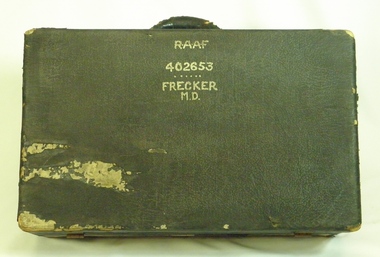
Suitcase from Mason Day Frecker, 1930s
... crew by RAAF during World War II. The contents of M D Frecker's suitcase include World War II medals awarded to the owner, photographs, maps, pilots' handbooks, language dictionaries (Malay, Pidgin, Japanese), propaganda leaflets dropped by Japanese. Has historical and social significance, also research significance. Provenance known, owner piloted B-24 Liberator bombers ...Suitcase issued to aircraft captains or crew by RAAF during World War II. The contents of M D Frecker's suitcase include World War II medals awarded to the owner, photographs, maps, pilots' handbooks, language dictionaries (Malay, Pidgin, Japanese), propaganda leaflets dropped by Japanese.Has historical and social significance, also research significance. Provenance known, owner piloted B-24 Liberator bombers and General Blamey's personal aircraft; item was donated by son. Great interpretive potential.Worn dark suitcase belonging to Mason Day Frekker, strong cardboard covered with 'leatherette', metal fasteners on front, with carry handle. Suitcase contains Flying Log Book RAAF, Wedding Photo, National Archives Record Search Mason Day Frecker, Distinguished Flying Medal Register WW2 x 3, Papers on Medals and Victorian Ground Crew Numbers, Files 1 - 2 - 3 - Photographs, Leaflets, Pilots' Notes, Maps - Germany (28 maps), Buttons and badges and other medals."RAAF/402653/Frecker/M.D." on top surface, "M.D.F." on front surface under handle.b24 liberator bomber, world war ii, raaf pilot, world war ii aerial photographs, a22.00 -
 Monbulk RSL Sub Branch
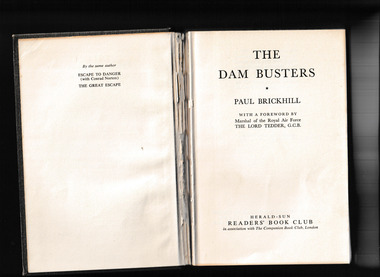
Book, Paul Brickhill, The dam busters, 1953
... World war 1939-1945 - Aerial operations - Britain Dam buster raid - Germany On 17 May 1943, nearly 350 million tons of water crashed into the valleys of the Ruhr when the Lancaster bombers of 617 Squadron breached the giant Moehne and Eder Dams with colossal ‘blockbuster’ bombs. The Dam Busters tells the story of the raid and the squadron of fearless airmen who carried it through. Again and again, the crews ...On 17 May 1943, nearly 350 million tons of water crashed into the valleys of the Ruhr when the Lancaster bombers of 617 Squadron breached the giant Moehne and Eder Dams with colossal ‘blockbuster’ bombs. The Dam Busters tells the story of the raid and the squadron of fearless airmen who carried it through. Again and again, the crews of 617 Squadron Bomber Command used their flying skills, their tremendous courage and Barnes Wallis’ highly accurate bouncing bombs to deal devastating blows to Nazi Germany.Ill, p.287.non-fictionOn 17 May 1943, nearly 350 million tons of water crashed into the valleys of the Ruhr when the Lancaster bombers of 617 Squadron breached the giant Moehne and Eder Dams with colossal ‘blockbuster’ bombs. The Dam Busters tells the story of the raid and the squadron of fearless airmen who carried it through. Again and again, the crews of 617 Squadron Bomber Command used their flying skills, their tremendous courage and Barnes Wallis’ highly accurate bouncing bombs to deal devastating blows to Nazi Germany. world war 1939-1945 - aerial operations - britain, dam buster raid - germany -
 Monbulk RSL Sub Branch
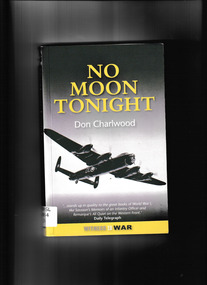
Book, Crecy Publishing, No moon tonight, 2000
... There he crewed up with a pilot from Western Australia and a British crew to fly a Lancaster bomber. In No Moon Tonight he gives a profound insight into the inner lives of the men of Bomber Command and their hopes and fears in the face of mounting losses. ...Don Charlwood was born in Melbourne in 1915. Accepted as a RAF navigator in 1940, he was posted to 103 Squadron at Elsham Wolds in the winter of 1942. There he crewed up with a pilot from Western Australia and a British crew to fly a Lancaster bomber. In No Moon Tonight he gives a profound insight into the inner lives of the men of Bomber Command and their hopes and fears in the face of mounting losses. He depicts the appalling human cost of the air war in an account which has been favorably compared to other enduring memoirs of the 1st World War, namely Sassoon's Memoirs of an Infantry Officer and Remarque's All Quiet on the Western Front. A memorable first hand account of the air war over Germany.Ill, p.244.non-fictionDon Charlwood was born in Melbourne in 1915. Accepted as a RAF navigator in 1940, he was posted to 103 Squadron at Elsham Wolds in the winter of 1942. There he crewed up with a pilot from Western Australia and a British crew to fly a Lancaster bomber. In No Moon Tonight he gives a profound insight into the inner lives of the men of Bomber Command and their hopes and fears in the face of mounting losses. He depicts the appalling human cost of the air war in an account which has been favorably compared to other enduring memoirs of the 1st World War, namely Sassoon's Memoirs of an Infantry Officer and Remarque's All Quiet on the Western Front. A memorable first hand account of the air war over Germany.world war 1939-1945 - aerial operations - britain, world war 1939-1945 - personal narratives - australia -
 Monbulk RSL Sub Branch
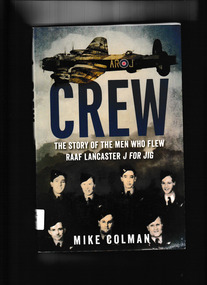
Book, Mike Colman, Crew : the story of the men who flew RAAF Lancaster J for Jig, 2018
... Royal Australian Air Force - Aerial operations - Europe Royal Australian Air Force - Biographies The story of an RAAF Lancaster bomber crew shot down over France in 1944. On the evening of 24 February 1944, RAAF Lancaster bomber J for Jig took off from an airfield in Lincolnshire. ...The story of an RAAF Lancaster bomber crew shot down over France in 1944. On the evening of 24 February 1944, RAAF Lancaster bomber J for Jig took off from an airfield in Lincolnshire. On board was a crew of seven young men - five Australians, two Scots - whose mission was to bomb factories in Schweinfurt, Germany. But J for Jig never reached its target. It was shot down in the night skies over France. This book is about the seven lives on that aircraft - who they were, what they did, whom they loved, and whom they left behind. Some were to die that night, and others were to survive, withstanding incredible hardships and adventures as prisoners and evaders in a war that was far from over. Crew brilliantly recreates J for Jig's final mission but, more than that, in telling seven individuals' stories Mike Colman has captured the achievements, loss and the enduring legacy of the generation that fought in the Second World War.Ill, p.326.non-fictionThe story of an RAAF Lancaster bomber crew shot down over France in 1944. On the evening of 24 February 1944, RAAF Lancaster bomber J for Jig took off from an airfield in Lincolnshire. On board was a crew of seven young men - five Australians, two Scots - whose mission was to bomb factories in Schweinfurt, Germany. But J for Jig never reached its target. It was shot down in the night skies over France. This book is about the seven lives on that aircraft - who they were, what they did, whom they loved, and whom they left behind. Some were to die that night, and others were to survive, withstanding incredible hardships and adventures as prisoners and evaders in a war that was far from over. Crew brilliantly recreates J for Jig's final mission but, more than that, in telling seven individuals' stories Mike Colman has captured the achievements, loss and the enduring legacy of the generation that fought in the Second World War.royal australian air force - aerial operations - europe, royal australian air force - biographies -
 Monbulk RSL Sub Branch
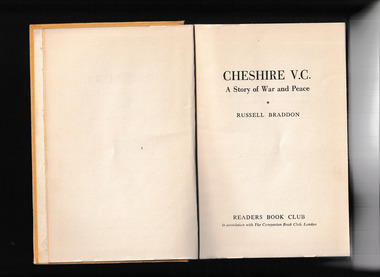
Book, Readers book club, The dam busters, 1954
... world war 1939 – 1945 – britain – aerial operations - europe royal air force - 617 squadron On 17 May 1943, nearly 350 million tons of water crashed into the valleys of the Ruhr when the Lancaster bombers of 617 Squadron breached the giant Moehne and Eder Dams with colossal ‘blockbuster’ bombs. The Dam Busters tells the story of the raid and the squadron of fearless airmen who carried it through. Again and again, the crews ...On 17 May 1943, nearly 350 million tons of water crashed into the valleys of the Ruhr when the Lancaster bombers of 617 Squadron breached the giant Moehne and Eder Dams with colossal ‘blockbuster’ bombs. The Dam Busters tells the story of the raid and the squadron of fearless airmen who carried it through. Again and again, the crews of 617 Squadron Bomber Command used their flying skills, their tremendous courage and Barnes Wallis’ highly accurate bouncing bombs to deal devastating blows to Nazi Germany.Ill p.254.non-fictionOn 17 May 1943, nearly 350 million tons of water crashed into the valleys of the Ruhr when the Lancaster bombers of 617 Squadron breached the giant Moehne and Eder Dams with colossal ‘blockbuster’ bombs. The Dam Busters tells the story of the raid and the squadron of fearless airmen who carried it through. Again and again, the crews of 617 Squadron Bomber Command used their flying skills, their tremendous courage and Barnes Wallis’ highly accurate bouncing bombs to deal devastating blows to Nazi Germany.world war 1939 – 1945 – britain – aerial operations - europe, royal air force - 617 squadron -
 Monbulk RSL Sub Branch
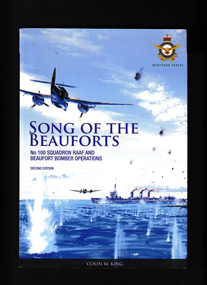
Book, Colin King, Song of the Beauforts: No100 Squadron RAAF and its Beaufort bomber operations, 2008
... Royal Australian Air Force - Aerial Operations - South West pacific Royal Australian Air Force - History The author vividly brings to life the bravery of the aviators and the dedication and skill of the ground crews who operated Beauforts during the protracted campaign across the South West Pacific Ill, index, p.456. Song of the Beauforts: No100 Squadron RAAF and its Beaufort bomber operations Book Colin King Air Power Development Centre ...The author vividly brings to life the bravery of the aviators and the dedication and skill of the ground crews who operated Beauforts during the protracted campaign across the South West PacificIll, index, p.456.non-fictionThe author vividly brings to life the bravery of the aviators and the dedication and skill of the ground crews who operated Beauforts during the protracted campaign across the South West Pacificroyal australian air force - aerial operations - south west pacific, royal australian air force - history -
 National Vietnam Veterans Museum (NVVM)
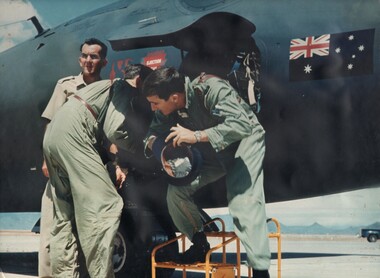
Photograph, Gibbons, Denis, 1st Canberra Bomber Arrives
... A coloured photograph of the crew of the first Canberra Jet bomber of the RAAF's No. 2 Sqn to land in Vietnam alight from their aircraft upon arrival at the Phan Rang Airbase to commence their tour of duty on active service in the Vietnam conflict....Photograph Canberra bomber 2 Sqn RAAF Phan Rang Airbase Gibbons Collection Catalogue Denis Gibbons Royal Australian Air Force A coloured photograph of the crew of the first Canberra Jet bomber of the RAAF's No. 2 Sqn to land in Vietnam alight from their aircraft upon arrival at the Phan Rang Airbase to commence their tour of duty on active service in the Vietnam conflict. 1st Canberra Bomber Arrives Photograph Gibbons, Denis ...Denis Gibbons (1937 – 2011) Trained with the Australian Army, before travelling to Vietnam in January 1966, Denis stayed with the 1st Australian Task Force in Nui Dat working as a photographer. For almost five years Gibbons toured with nine Australian infantry battalions, posting compelling war images from within many combat zones before being flown out in late November 1970 after sustaining injuries. The images held within the National Vietnam Veterans Museum make up the Gibbons Collection.A coloured photograph of the crew of the first Canberra Jet bomber of the RAAF's No. 2 Sqn to land in Vietnam alight from their aircraft upon arrival at the Phan Rang Airbase to commence their tour of duty on active service in the Vietnam conflict.photograph, canberra bomber, 2 sqn, raaf, phan rang airbase, gibbons collection catalogue, denis gibbons, royal australian air force
