
Showing 38 items matching "brass helmet"
-
 Flagstaff Hill Maritime Museum and Village
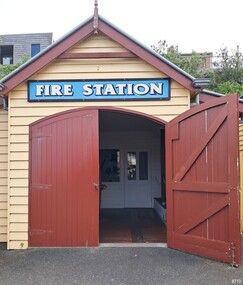
Memorabilia - Fire Brigade Collection, Warrnambool Fire Brigade, 1863-1950s
... ...brass helmet...Hose reels and equipment: essential firefighting equipment used during the late 19th and early 20th centuries. . Brass helmets: symbolic headgear worn by firefighters for protection and identification. . ...The items include: EQUIPMENT: 2 fire reels, 3 leather buckets, 1 wooden ladder, 2 old pumps, 2 fire extinguishers, 1 foam nozzle, 2 hydrants, 1 red chest with breathing apparatus, 1 large grey chest, 1 red metal thread gauges box, 2 copper and brass extinguishers, 3 copper and brass branches, 1 canvas bucket, assorted reels of hose, assorted couplings and branches, PHOTOGRAPHS/CERTIFICATES: 3 Discipline Certificates dated 1894, 1893, 1911, Mounted photo of members of the Warrnambool Fire Brigade Football Club, Mounted photos of members of the Warrnambool Fire Brigade in uniform, framed photo of LC Marshall UNIFORMS: 1 Officer’s jacket, 1 blazer, 1 turnout jacket, 1 harness belt, 1 leather helmet, 1 pair of boots, 1 brass helmet, 1 axe belt with axe and plug spanner TROPHIES: 1 clock ...Hose reels and equipment: essential firefighting equipment used during the late 19th and early 20th centuries. . Brass helmets: symbolic headgear worn by firefighters for protection and identification. . ...The original replica Fire Station at Flagstaff Hill was constructed in 2006 by members of the CVA Warrnambool Fire Brigade. It was rebuilt in 2015, ironically due to damage from fire in the adjacent building, and now includes a locked display. The fire station faithfully replicates the designs of the late 1800s fire stations found across Victoria. Every detail, including the type of nails used, adheres to period-correct specifications. The objects on display are on loan from the CFA. They provide a glimpse into the history and evolution of firefighting in Victoria, preserving the heritage and legacy of the brave men and women who have served their communities. Fire Brigade Collection highlights: . Hose reels and equipment: essential firefighting equipment used during the late 19th and early 20th centuries. . Brass helmets: symbolic headgear worn by firefighters for protection and identification. . Photographs: historical images capturing the evolution of firefighting in the region. . Certificates: awards highlighting the skill and dedication of firefighters. A BRIEF HISTORY OF THE WARRNAMBOOL FIRE BRIGADE - [Ref: Quarrell, A, 2013, The Warrnambool Fire Brigade: 1863-2013, Amazon Printing, Warrnambool]: “Since the township of Warrnambool was established in the 1840s, there were several attempts at forming a Fire Brigade. However, many issues hindered progress. Firstly, minimal fires were recorded. Secondly, the town had no money to purchase expensive equipment, including a fire engine, and thirdly and most importantly, there was no infrastructure for accessible running water from pipes, as we know today. But after the expansion and growth of the township, it was time for action. The Warrnambool Fire Brigade was formed in 1863. The Brigade has served Warrnambool on a daily basis ever since. The volunteers of the Brigade were required to fill their water carts each evening from a spring on Cannon Hill and be on standby to deliver water to fire scenes. In 1889, the Warrnambool Council built a new Fire Station at 25 Liebig Street. Today, the Civic Centre is located on this site.” The objects on loan from the Warrnambool Fire Brigade are significant to local history since its establishment in 1863. They tell the story of the Brigade’s history, which is part of Warrnambool and the district’s history.Warrnambool Fire Brigade Collection: a variety of historic objects and equipment used by the firemen of the brigade since 1863. The items are kindly on loan from the Warrnambool Fire Brigade in a building originally erected in the Village by the Fire Brigade to house their historic collection. The items include: EQUIPMENT: 2 fire reels, 3 leather buckets, 1 wooden ladder, 2 old pumps, 2 fire extinguishers, 1 foam nozzle, 2 hydrants, 1 red chest with breathing apparatus, 1 large grey chest, 1 red metal thread gauges box, 2 copper and brass extinguishers, 3 copper and brass branches, 1 canvas bucket, assorted reels of hose, assorted couplings and branches, PHOTOGRAPHS/CERTIFICATES: 3 Discipline Certificates dated 1894, 1893, 1911, Mounted photo of members of the Warrnambool Fire Brigade Football Club, Mounted photos of members of the Warrnambool Fire Brigade in uniform, framed photo of LC Marshall UNIFORMS: 1 Officer’s jacket, 1 blazer, 1 turnout jacket, 1 harness belt, 1 leather helmet, 1 pair of boots, 1 brass helmet, 1 axe belt with axe and plug spanner TROPHIES: 1 clock flagstaff hill maritime museum and village, great ocean road, shipwreck coast, flagstaff hill, warrnambool, maritime village, maritime museum, cfa, fire brigade, warrnambool fire brigade, fire reel, leather bucket, wooden ladder, pump, fire extinguisher, foam nozzle, fireman’s hydrant, breathing apparatus, copper and brass extinguishers, copper and brass branches, canvas bucket, discipline certificates, warrnambool fire brigade football club, l c marshall, officer’s jacket, blazer, turnout jacket, harness belt, leather helmet, pair of boots, brass helmet, axe belt with axe and plug spanner, clock, mantle clock -
 Seaworks Maritime Museum
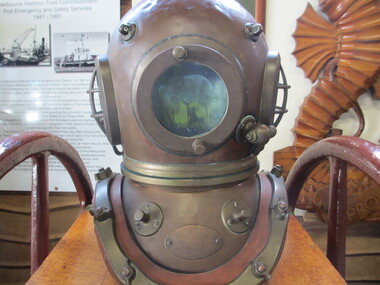
Divers helmet
... large brass diving helmet ...Total weight on wearer is approximately 90 kgs large brass diving helmet Divers helmet ...Standard dress diving equipment used by Melbourne Harbour Trust from late 1800s until 1991. Because of its structure of heavy canvas, lead and brass, it was used in wharf construction and salvage. Total weight on wearer is approximately 90 kgslarge brass diving helmet -
 Warrnambool and District Historical Society Inc.
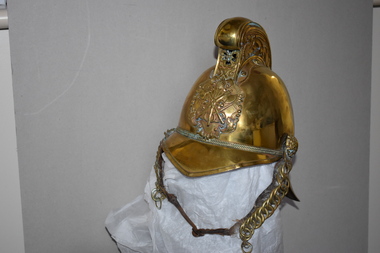
Helmet, Firmin & Sons, Fireman's helmet, Early 20th century
... This fire helmet may have been one used in England or one used in the late 19th century and early 20th century in Australia. It was made by Firmin & Sons of England, a firm which was founded in 1655. It supplies military ceremonial buttons, badges and uniforms and brass...This is a brass helmet with an oval crown with an ornate scrolled curved piece coming over the crown. ...Late of 153 & 154 Strand This is a brass helmet with an oval crown with an ornate scrolled curved piece coming over the crown. ...This fire helmet may have been one used in England or one used in the late 19th century and early 20th century in Australia. It was made by Firmin & Sons of England, a firm which was founded in 1655. It supplies military ceremonial buttons, badges and uniforms and brass and pith helmets of various kinds. It is regarded as the oldest manufacturing business operating in England today. The Warrnambool Fire Brigade was established in the early 1860s and today has both paid and volunteer firefighters.This helmet has no known local provenance but is retained for display purposes.This is a brass helmet with an oval crown with an ornate scrolled curved piece coming over the crown. There is a decoration of a winged dragon breathing fire and on the front side a torch, an axe and a hose with decorative surrounds. There is a breathing hole at the top of the crown in a petal shape. On the sides are metal medallions holding a chin strap which is adjustable. The edge of the crown has a scrolled band. The front peak is angled with a folded metal edge and the rear peak is a concave shape with a brass screw in the middle. Inside the helmet are 8 screws holding the upper decorative arching piece and a black leather band with eyelets tied together to fir the individual head. There is an oval plaque with wording contained within a decorative belt.Firmin & Sons Ltd 108 & 109 St Martins Lane W.C. Late of 153 & 154 Strandwarrnambool fire brigade, history of warrnambool -
 Ballarat Fire Brigade
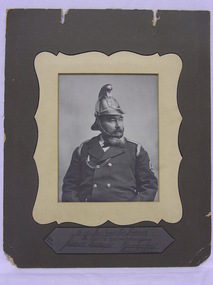
Photograph, just prior to March 1908
... Photograph shows Geilhofer in his Captains uniform with brass helmet and a whistle in his right pocket. ...Photograph shows Geilhofer in his Captains uniform with brass helmet and a whistle in his right pocket. ...Geilhofer was Honorary Secretary of Ballarat Fire Brigade before moving to WarrnamboolMounted black & white photograph of Richard Geilhofer (ex Brigade Honorary Secretary) presented to the brigade in March 1908. Photograph shows Geilhofer in his Captains uniform with brass helmet and a whistle in his right pocket. Photo is of Geilhofer during his time as captain of Warrnambool fire brigade.To the Ballarat Fire Brigade / In Kindly rememberance from / Richard Geilhofer Warrnambool / March 1908 -
 Flagstaff Hill Maritime Museum and Village
Functional object - Binnacle and Magnetic Compass
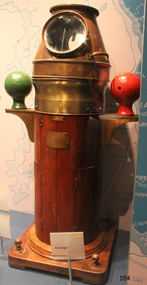
... Round, teak wood pedestal with mounted brass compensating sphere brackets and painted iron balls one green the other red. Heavy brass helmet style compass cover with hinged front door and removable top for compass viewing and natural lighting. ...Round, teak wood pedestal with mounted brass compensating sphere brackets and painted iron balls one green the other red. Heavy brass helmet style compass cover with hinged front door and removable top for compass viewing and natural lighting. ...In 1947, the scientific instrument manufacturing firms of Henry Hughes & Son Ltd, London, England, and Kelvin Bottomley & Baird Ltd, Glasgow, Scotland, came together to form Kelvin & Hughes Ltd. Hughes Company History: Henry Hughes & Sons were founded in 1838 in London as a maker of chronographic and scientific instruments. The firm was incorporated as “Henry Hughes & Sons Ltd” in 1903. In 1923, the company produced its first recording echo sounder and in 1935 a controlling interest in the company was acquired by S Smith & Son Ltd resulting in the development and production of marine and aircraft instruments. Following the London office's destruction in the Blitz of 1941, a collaboration was entered into with Kelvin, Bottomley & Baird Ltd resulting in the establishing “Marine Instruments Ltd”. Following the formal amalgamation of Kelvin, Bottomley & Baird Ltd and Henry Hughes & Sons Ltd in 1947 to form Kelvin & Hughes Ltd. Marine Instruments Ltd then acted as regional agents in the UK for Kelvin & Hughes Ltd who were essentially now a part of Smith's Industries Ltd founded in 1944 and the successors of S. Smith & Son Ltd. Kelvin & Hughes Ltd went on to develop various marine radar and echo sounders supplying the Ministry of Transport, and later the Ministry of Defence. The firm was liquidated in 1966 but the name was continued as Kelvin Hughes, a division of the Smiths Group. In 2002, Kelvin Hughes continues to produce and develop marine instruments for commercial and military use. (See Note section this document for further information on the company's origins) This model binnacle and compass is a good example of the commercial diversity of navigational instruments made by Kelvin & Hughes after world war 2. It was made in numbers for use by shipping after the second world war and is not particularly rare or significant for its type. Also, it was made no earlier than 1947 as the firms of Kelvin, Bottomley & Baird Ltd and Henry Hughes & Sons Ltd who took over from Smith & Sons were not amalgamated until 1947. It can there for be assumed that this item was made during the company's transitional period to Kelvin & Hughes from Smith Industries Ltd.Mid 20th century ship's binnacle with Kelvin Hughes/ F. Fuselli Genova 8 inch diameter (glass) compass on gimballed ring. Round, teak wood pedestal with mounted brass compensating sphere brackets and painted iron balls one green the other red. Heavy brass helmet style compass cover with hinged front door and removable top for compass viewing and natural lighting. A single handle is located on the side and single burner on the opposite side. Retains an old finish and some wear to the pedestal base. Binnacle marked Serial No 163 "Veritas" Made by Kelvin Hughes Compass marked "Kelvin Hughes & Made in Great Britain Serial No 760 C J"flagstaff hill, warrnambool, shipwrecked-coast, flagstaff-hill, flagstaff-hill-maritime-museum, maritime-museum, shipwreck-coast, flagstaff-hill-maritime-village -
 Mont De Lancey
Helmet and Helmet Box
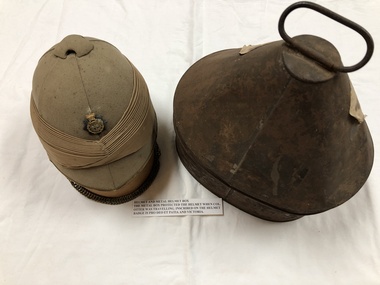
... Khaki Helmet with brass Military Badge. Rusted metal Helmet Box with handle and latch....Military badges Military helmets Badge: Pro Deo Et Patia and Victoria Khaki Helmet with brass Military Badge. Rusted metal Helmet Box with handle and latch. ...Belonged to Colonel Otter.Khaki Helmet with brass Military Badge. Rusted metal Helmet Box with handle and latch.Badge: Pro Deo Et Patia and Victoriamilitary badges, military helmets -
 City of Melbourne Libraries
Photograph, Bull, Hugh Jones, 1897-1993, Fire at Cathedral Hotel, Swanston Street, Melbourne
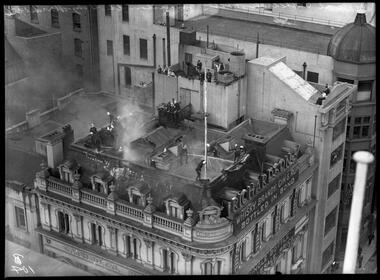
... In Queensland, traditional brass helmets remained in service until 1970. ...In Queensland, traditional brass helmets remained in service until 1970. ...Fire at the Cathedral Hotel! Bird’s eye view These firemen on the roof of the Cathedral Hotel are very bold in their approach to firefighting! One heroically aims a firehose at the roof while another holds onto the flagpole with one hand as he walks around the narrow edge, three storeys up! Onlookers from adjacent buildings make the most of their front row view, and The Age reported that on street level, hundreds of people gathered to watch, enthralled by “a thrilling spectacle when three firemen walked along the stone coping on the top floor of the building and, despite the clouds of smoke and sheets of flame which shot through the roof they ripped off the hot slate tiles and provided an outlet for the flames”. The Cathedral Hotel was built in 1883 and demolished in 1966 to make way for the City Square. Featured in "Newsworthy: Melbourne in photographs 1933-1936" exhibition at East Melbourne Library, October to December 2023. Exhibition caption by project volunteer, Louise McKenzie. Photographer notations on slide: "Fire at Cathedral Hotel Swanston St City March 1936 B104" Description: View looking down on roof of the Cathedral Hotel showing 16 firefighters battling a fire. There is smoke coming through the roof. Onlookers watch from adjoining buildings, not perturbed by the proximity of the fire. The firemen look bold and impressive in their brass helmets. Research by project volunteer, Louise McKenzie: The Age reported on 4 March 1936 that the fire broke out in rubbish between the roof space and wooden ceiling of the Cathedral Hotel at 4.30 pm. “The Eastern Hill fire brigade was notified by telephone, and an almost simultaneous call was also received at fire brigade headquarters from a street alarm.” These red fire alarm call boxes were typically installed on street corners, and when the knob was turned, a pulsed electric signal corresponding to the box’s number was received at fire headquarters. A large detachment of firemen with full fire-fighting equipment, including two large extension ladders, were quickly on the scene, pouring vast quantities of water into the hotel, causing several hundred pounds of damage to hotel and guest property, but quickly bringing the fire under control. Lengths of hose had to be carried through the front entrance and up several flights of stairs. On street level hundreds of people gathered to watch, but were controlled by police in order to keep them at a safe distance and ensure that tram and motor traffic was not seriously disorganised. The crowd were enthralled by “a thrilling spectacle when three firemen walked along the stone coping on the top floor of the building and, despite the clouds of smoke and sheets of flame which shot through the roof, they ripped off the hot slate tiles and provided an outlet for the flames”. The firemen are noteworthy for their highly polished brass helmets, known as Merryweather helmets, based on those of French sapeurs-pompiers and introduced to the British Metropolitan Fire Brigade in London in 1868. Metal helmets are conductive, a safety issue as the use of electricity became widespread, so a composite cork and rubber helmet was introduced in London from 1936. In Queensland, traditional brass helmets remained in service until 1970. The firemen are very bold in their actions – one heroically aiming a fire hose at the roof of the building, another holding onto the flagpole with one hand as he walks around the narrow top edge of the roof, three storeys up! The onlookers from adjoining buildings are interested in the spectacle, rather than dismayed by the fire. Lettering around the building exterior reads "Cathedral Hotel - Erected 1883". Prominent signage for “Richardson’s whisky, brandy, gin & rum" sits along the edge of the roof. The Cathedral Hotel was located on the corner of Swanston Street and Flinders Lane. It was built in 1883, and its name derived from St Paul’s Cathedral on the south side of Flinders Lane. It was demolished in 1966 as Melbourne City Council wished to create a City Square. Robyn Annear notes that at the time, the development was referred to as “Whelan’s Square” due to the large number of buildings which needed to be demolished to create the Square. Ironically the Hotel had been the victim of a previous fire in 1917, when its then licensee, also named Whelan, was charged with two failed arson attempts. References: No title (1936, March 4). The Age (Melbourne, Vic. : 1854 - 1954), p. 13. Retrieved February 5, 2024, from http://nla.gov.au/nla.news-article205256255 FIRE AT A CITY HOTEL. (1936, March 4). The Age (Melbourne, Vic. : 1854 - 1954), p. 12. Retrieved February 5, 2024, from http://nla.gov.au/nla.news-article205256231 FIRE IN ROOF OF CITY HOTEL (1936, March 4). The Argus (Melbourne, Vic. : 1848 - 1957), p. 8. Retrieved February 5, 2024, from http://nla.gov.au/nla.news-article11018696 Hotel Roof Fire Draws Crowd (1936, March 4). Examiner (Launceston, Tas. : 1900 - 1954), p. 8 (DAILY). Retrieved February 5, 2024, from http://nla.gov.au/nla.news-article52000751 'Flinders Lane Melbourne 1966', Peter Andrew Barrett, Facebook, 12 June 2020, https://www.facebook.com/120943481324886/photos/a.512123662206864/3025002490918956/?type=3 Fire Alarm Call Box, Wikipedia, https://en.wikipedia.org/wiki/Fire_alarm_call_box Research notes, 'A city lost and found', Robyn Annear, https://robynannear.com/docs/whelan-the-wrecker-notes.pdfPhotographer notations on slide: "Fire at Cathedral Hotel Swanston St City March 1936 B104".fires, hotels, 1930-1939 -
 Frankston RSL Sub Branch
Helmet, Felt WW1
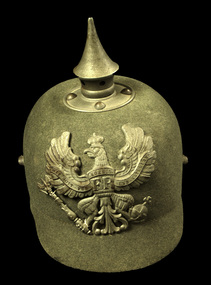
... German Pickelhaube helmet made of felt, spike on top of helmet possibly brass,badge on front with writing in german,nine fingered insert with broken string chinstrap held together by safety pins, some writing inside of back flap....Inside back flap is 2 letters possibly an H and N, there is a badge on front with an eagle and a german inscription when translated means "With God for King and Fatherland" German Pickelhaube helmet made of felt, spike on top of helmet possibly brass,badge on front with writing in german,nine fingered insert with broken string chinstrap held together by safety pins, some writing inside of back flap. ...German Pickelhaube helmet made of felt, spike on top of helmet possibly brass,badge on front with writing in german,nine fingered insert with broken string chinstrap held together by safety pins, some writing inside of back flap.Inside back flap is 2 letters possibly an H and N, there is a badge on front with an eagle and a german inscription when translated means "With God for King and Fatherland" -
 City of Melbourne Libraries
Photograph, Bull, Hugh Jones, 1897-1993, Fire at Cathedral Hotel, Swanston Street, Melbourne
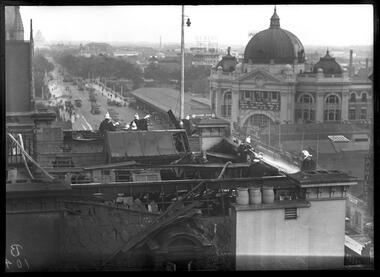
... Southward view Firemen in their shiny brass Merryweather style helmets battle a fire in the roof of the Cathedral Hotel, Tuesday 3 March 1936. ...Southward view Firemen in their shiny brass Merryweather style helmets battle a fire in the roof of the Cathedral Hotel, Tuesday 3 March 1936. ...Fire at the Cathedral Hotel! Southward view Firemen in their shiny brass Merryweather style helmets battle a fire in the roof of the Cathedral Hotel, Tuesday 3 March 1936. It was located on the corner of Swanston Street and Flinders Lane and so named for its proximity to St Paul’s Cathedral, just visible at top left. The fire broke out in between the roof space and wooden ceiling of the hotel at around 4.30 pm, causing disruption to afternoon commuters – hence the banked-up trams along St Kilda Road. The hoses snaking across the roof have been dragged up through the hotel’s front door. The scene of devastation on the roof appears to be a result of both the fire and firefighting efforts. The panoramic background is dominated by the dome of Flinders Street Station, the wide, treed boulevard of St Kilda Road, and a densely built-up industrial area south of the Yarra with its elevated signage and substantial buildings. Featured in "Newsworthy: Melbourne in photographs 1933-1936" exhibition at East Melbourne Library, October to December 2023. Exhibition caption by project volunteer, Louise McKenzie. Photographer notations on slide: "Fire at Cathedral Hotel Swanston St 1936 B104" Description: This photo, taken from an adjacent building, shows 12 firemen fighting a fire on the roof of the Cathedral Hotel, Melbourne. There is evidence of considerable damage to the roof of the building as a result of the fire and fire fighting efforts. The photo gives a feeling of elevation, as the firemen are in focus, with an out of focus panoramic background, showing the dome of Flinders Street Station, and St Kilda Road down to the Shrine. Research by project volunteer, Louise McKenzie: The Age reported on 4 March 1936 that the fire broke out in rubbish between the roof space and wooden ceiling of the Cathedral Hotel at 4.30 pm. “The Eastern Hill fire brigade was notified by telephone, and an almost simultaneous call was also received at fire brigade headquarters from a street alarm.” The firemen in their dark uniforms with brass buttons, gold epaulettes and shiny brass Merryweather helmets, stand out against the broken slate tiles and dislodged timber of the damaged roofing, all of which look blackened and in disarray. Two pale water hoses snake thickly across the roof. It is a scene of some devastation and chaos. Three chimney pots by contrast sit plump and strong against the damage. The Cathedral Hotel is located on the corner of Swanston Street and Flinders Lane, so named due to its proximity to St Pauls Cathedral (just visible at far left) on the corner of Flinders and Swanston streets. This intersection is a hub and focus of Melbourne activity. The backgrounded Melbourne skyline, while not in clear focus, is of interest. On the right is the impressive dome of Flinders Street Station, with the clock at 4.50 pm. Its grand frontage, and some of the façade along Flinders Street, are visible. To the left is the wide and grand-scaled St Kilda Road, leading down to the Shrine of Remembrance. There are many trams on Princes Bridge (mostly heading northward), together with some trucks and pedestrians. The pedestrian walkway along Princes Bridge is wide, and the Bridge balustrade lined with flag poles. The middle background shows a large number of trees. This was the site of Wirths Brothers Circus, an impressive complex including an octagonal circus Hippodrome (5000 seat auditorium), Pleasure Park, roller skating rink, and Dance Hall. Today it is the site of the Melbourne Arts Centre. Adjacent to the station is a large covered area, still extant today as part of the Station precinct. Floating above the horizon is sign advertising 'DUNLOP', located in the formerly industrial area which is today’s Southbank. Port Phillip Bay is faintly visible in the distance. The city seems sprawling, but uncrowded, and well punctuated by trees. Two photos were included an Age pictorial, one showing the firefighters at work, the other a crowd scene at street level (see References). These images are not part of the McKenzie Collection. References: No title (1936, March 4). The Age (Melbourne, Vic. : 1854 - 1954), p. 13. Retrieved February 5, 2024, from http://nla.gov.au/nla.news-article205256255 FIRE AT A CITY HOTEL. (1936, March 4). The Age (Melbourne, Vic. : 1854 - 1954), p. 12. Retrieved February 5, 2024, from http://nla.gov.au/nla.news-article205256231 FIRE IN ROOF OF CITY HOTEL (1936, March 4). The Argus (Melbourne, Vic. : 1848 - 1957), p. 8. Retrieved February 5, 2024, from http://nla.gov.au/nla.news-article11018696 Hotel Roof Fire Draws Crowd (1936, March 4). Examiner (Launceston, Tas. : 1900 - 1954), p. 8 (DAILY). Retrieved February 5, 2024, from http://nla.gov.au/nla.news-article52000751 'Flinders Lane Melbourne 1966', Peter Andrew Barrett, Facebook, 12 June 2020, https://www.facebook.com/120943481324886/photos/a.512123662206864/3025002490918956/?type=3Photographer notations on slide: "Fire at Cathedral Hotel Swanston St 1936 B104".fires, 1930-1939, hotels -
 Flagstaff Hill Maritime Museum and Village
Tool - Torch, 1935-1960
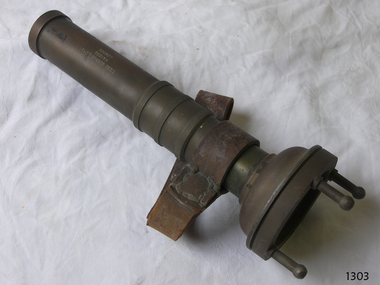
... helmets, compressors and other diving equipment. Items that are today eagerly sought after for maritime collections around the world. The items that have been donated to the Flagstaff Hill collection give us an insight as to how divers operated and the dangers they faced doing a very necessary and dangerous job. flagstaff hill warrnambool shipwrecked-coast flagstaff-hill flagstaff-hill-maritime-museum maritime-museum shipwreck-coast flagstaff-hill-maritime-village "Siebe Gorman and Co Ltd, Makers, London." Has A.P.4456 stamped on front face Divers torch, brass ...Diver's Submarine Electric Torches were first developed to give illumination for close examination work. They have to be self-contained, the older ones are powered by an accumulator type battery which could be recharged. Some models were fitted with a switch to turn the light off saving on the battery power. The lens is of a convex type and magnifies the light. Sometimes there was a protective grill across the glass or prongs to protect the glass from an impact. When fully charged the battery would last about seven hours. Torches are made from non-ferrous metal so as not to corrode in their watery environment. Siebe Gorman & Co Ltd has been producing hand-held, battery-powered, submarine electric torches for divers and the Ministry of Defence (MOD) since the 1920s. In 1961, the famous diving manufacturer C.E. Heinke merged with Siebe Gorman, and for a short while, torches were made with the combined 'Siebe Heinke' inscription. However, this linked inscription was later dropped, with a return to the Siebe Gorman name tag. Date of manufacture for these torches can be determined by their Admiralty Pattern (AP) number that was used to identify a particular item and were for naval stores use. Before NATO stock coding became more widely used, earlier MOD torches often have a simple four-digit group of AP numbers such as AP4456 or AP4458. In 1975 Siebe Gorman moved from their Neptune Works at Chessington in Surrey to a new location at Cwmbran in Wales and by this time their manufacture of diving equipment had declined. (For additional historic company information on Siebe & Gorman see notes section this document.)The item is significant as it gives us a snapshot into marine history and the development of diving equipment generally, especially that used for salvage operations before and during WW2. The company that made the torch Siebe Gorman was a leading inventor, developer and innovator of marine equipment with its early developments in helmets, compressors and other diving equipment. Items that are today eagerly sought after for maritime collections around the world. The items that have been donated to the Flagstaff Hill collection give us an insight as to how divers operated and the dangers they faced doing a very necessary and dangerous job.Divers torch, brass with glass lens , screw on piece with three lugs attached. Leather wrist strap attached & loose contact spring inside."Siebe Gorman and Co Ltd, Makers, London." Has A.P.4456 stamped on front faceflagstaff hill, warrnambool, shipwrecked-coast, flagstaff-hill, flagstaff-hill-maritime-museum, maritime-museum, shipwreck-coast, flagstaff-hill-maritime-village -
 Nhill Aviation Heritage Centre
Equipment - Flying Goggles, c1940
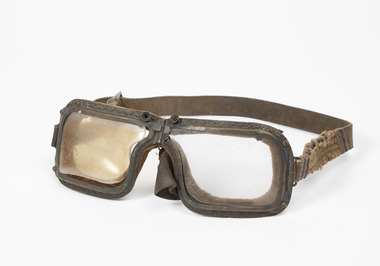
... goggles typically worn with leather helmet goggles flying goggles Leather goggles with perspex lens mounted in a brass border, adjustable leather strap with elastic ends Equipment Flying Goggles ...goggles typically worn with leather helmet Leather goggles with perspex lens mounted in a brass border, adjustable leather strap with elastic endsgoggles, flying goggles -
 Federation University Historical Collection
Trophy, The Art Directors Club 81st Annual Award - 2002, c2002
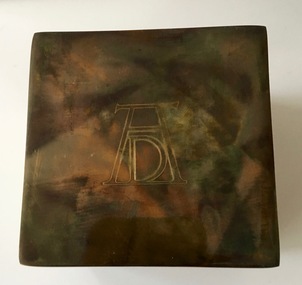
... helmet stenzel 2002 art directors club annual awards "University of Ballarat" - presumably the recipient of award. Symbol on top - letters "A" and "D". Logo for Art Directors. "The Art Directors Club 81st Annual Awards" at bottom of side Manufacturer's label on base - "Simba Awards Ltd.46-44 11th St, Long Island City, NY 11101. Phone (718) 482-7822" Brass ...The Art Directors Club Annual Awards began in 1921. They celebrate "the artistry and craftsmanship that is synonymous with beautiful advertising and design". At the 81st Awards in 2002, Ballarat University won gold. This is the first time an Australian University has been recognised. Student Leigh Scholten art directed the winning project labelled Promotional Use Only. It was created by 27 students under Project Instructor and University Graphic Design/Multimedia Lecturer Helmet Stenzel. The book "Art Directors Annual 81st" (10171) donated to the Geoffrey Blainey Research Centre by Helmet Stenzel http://adcglobal.org/awards/Brass cube - polished surface. Four cork pads on base."University of Ballarat" - presumably the recipient of award. Symbol on top - letters "A" and "D". Logo for Art Directors. "The Art Directors Club 81st Annual Awards" at bottom of side Manufacturer's label on base - "Simba Awards Ltd.46-44 11th St, Long Island City, NY 11101. Phone (718) 482-7822" art directors club, annual awards, advertising, design, 81st award, university of ballarat, gold, leigh scholten, helmet stenzel, 2002, art directors club annual awards -
 Glenelg Shire Council Cultural Collection
Equipment - Divers Helmut, n.d
... Siebe Gorman & Co Divers Helmet with fitting harness. Part of a six stud patent admiralty diving dress. Bronze and brass, glass viewing ports....Port of Portland Collection Front: SIEBE GORMAN & CO LTD SUBMARINE ENGINEERS LONDON Siebe Gorman & Co Divers Helmet with fitting harness. Part of a six stud patent admiralty diving dress. Bronze and brass, glass viewing ports. ...Port of Portland CollectionSiebe Gorman & Co Divers Helmet with fitting harness. Part of a six stud patent admiralty diving dress. Bronze and brass, glass viewing ports.Front: SIEBE GORMAN & CO LTD SUBMARINE ENGINEERS LONDON -
Glenelg Shire Council Cultural Collection
Headwear - Diver's Helmet, 1930-1960
... Siebe Gorman & Co Ltd diver's helmet with fitting harness. Part of a six stud pattern admiralty diving dress. Bronze and brass, glass viewing sections...Port of Portland Collection - Exhibited Front: Siebe Gorman & Co Ltd / Submarine Engineers, London (PATENT) 18714 (front window) Siebe Gorman & Co Ltd diver's helmet with fitting harness. Part of a six stud pattern admiralty diving dress. Bronze and brass, glass viewing sections Headwear Diver's Helmet SIEBE GORMAN & CO LTD ...Port of Portland Collection - ExhibitedFront: Siebe Gorman & Co Ltd / Submarine Engineers, London (PATENT) 18714 (front window) -
 Seaworks Maritime Museum
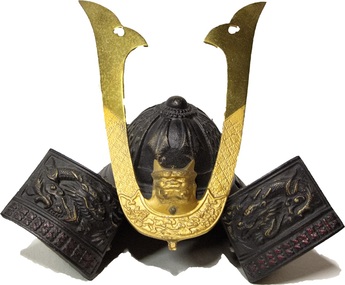
Ornamental Samurai helmet, c. 1950
... A minature, ornamental Samurai helmet made of cast iron and brass, gifted to the Port of Melbourne Authority. ...ornament samurai japan A minature, ornamental Samurai helmet made of cast iron and brass, gifted to the Port of Melbourne Authority. ...A minature, ornamental Samurai helmet made of cast iron and brass, gifted to the Port of Melbourne Authority. The helmet has wing-like projections on the front, known as Fukigaeshi, and a prominent gold plated crest, mounted on the front centre. Red and gold embellishments can also be seen around the bottom edge of the piece and on the dragons adorning the Fukigaeshi. There are six small holes around the centre of the helmet. Research shows that there may have originally been decorative fabric and tassels embellishing the piece which would have been threaded through these holes and then looped around the crest.ornament, samurai, japan -
 Flagstaff Hill Maritime Museum and Village
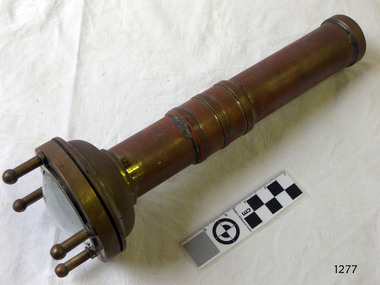
Tool - Torch, 1935-1960
... helmets, compressors and other diving equipment. Items that are today eagerly sought after for maritime collections around the world. The items that have been donated to the Flagstaff Hill collection give us an insight as to how divers operated and the dangers they faced doing a very necessary and dangerous job. flagstaff hill warrnambool shipwrecked coast flagstaff hill maritime museum maritime museum shipwreck coast flagstaff hill maritime village great ocean road siebe gorman diver's torch torch diver diving accessories "Siebe Gorman and Co Ltd, Makers, London." Has "A.P.4458" inscribed on front above glass Diver's Torch brass ...Diver's Submarine Electric Torches were first developed to give illumination for close examination work. They have to be self-contained, the older ones are powered by an accumulator type battery which could be recharged. Some models were fitted with a switch to turn the light off saving on the battery power. The lens is of a convex type and magnifies the light. Sometimes there was a protective grill across the glass or prongs to protect the glass from an impact. When fully charged the battery would last about seven hours. Torches are made from non-ferrous metal so as not to corrode in their watery environment. Siebe Gorman & Co Ltd has been producing hand-held, battery-powered, submarine electric torches for divers and the Ministry of Defence (MOD) since the 1920s. In 1961, the famous diving manufacturer C.E. Heinke merged with Siebe Gorman, and for a short while, torches were made with the combined 'Siebe Heinke' inscription. However, this linked inscription was later dropped, with a return to the Siebe Gorman name tag. Date of manufacture for these torches can be determined by their Admiralty Pattern (AP) number that was used to identify a particular item and were for naval stores use. Before NATO stock coding became more widely used, earlier MOD torches often have a simple four-digit group of AP numbers such as AP4456 or AP4458. In 1975 Siebe Gorman moved from their Neptune Works at Chessington in Surrey to a new location at Cwmbran in Wales and by this time their manufacture of diving equipment had declined. (For additional historic company information on Siebe & Gorman see notes section this document.)The item is significant as it gives us a snapshot into marine history and the development of diving equipment generally, especially that used for salvage operations before and during WW2. The company that made the torch Siebe Gorman was a leading inventor, developer and innovator of marine equipment with its early developments in helmets, compressors and other diving equipment. Items that are today eagerly sought after for maritime collections around the world. The items that have been donated to the Flagstaff Hill collection give us an insight as to how divers operated and the dangers they faced doing a very necessary and dangerous job.Diver's Torch brass with heavy glass screw on piece with four lugs attached contact spring inside. Leather hand strap missing."Siebe Gorman and Co Ltd, Makers, London." Has "A.P.4458" inscribed on front above glassflagstaff hill, warrnambool, shipwrecked coast, flagstaff hill maritime museum, maritime museum, shipwreck coast, flagstaff hill maritime village, great ocean road, siebe, gorman, diver's torch, torch, diver, diving accessories -
 Bendigo Military Museum
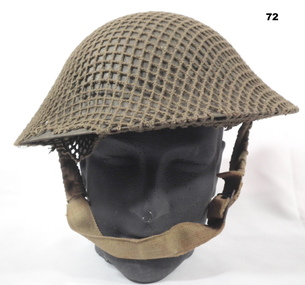
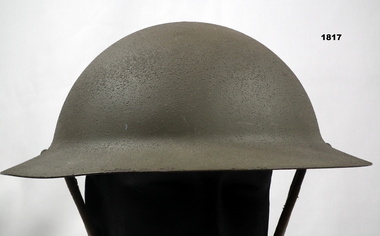
Headwear - HELMET, STEEL - BRITISH PATTERN, c. WW2
... A sweat band in black synthetic material is secured to the inside rim of the helmet. An adjustable webbing chin strap with brass buckle is attached with clips to each side....A sweat band in black synthetic material is secured to the inside rim of the helmet. An adjustable webbing chin strap with brass buckle is attached with clips to each side. ...British pattern steel army helmet as used in both WW1 and WW2. This example dates from the WW2 era.British pattern steel helmet, dark olive in colour. Outside of the helmet is covered in dark olive green mesh which is secured with olive green cotton cord. A bolt head is prominent on the crown of the helmet and corresponds to a nut and thread on the inside. This nut and bolt secures a black rubber pad. A sweat band in black synthetic material is secured to the inside rim of the helmet. An adjustable webbing chin strap with brass buckle is attached with clips to each side.Niluniform - army, costume - male, protective headgear -
 Bendigo Military Museum
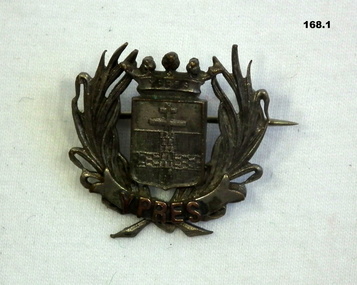
Souvenir - VARIOUS SOUVENIRS, WW1
... helmet) Metal souvenirs from France and Letter opener. .1) Silver shield with cross, wheat, on either side, crown on top. Town coat-of arms for Ypres, with clasp. .2) Tarnished metal, lion on shield, crown on top,3 leaf clover on either side, town coat-of-arms for Arras, with clasp. .3) Letter opener. Trench art - metal rifle cartridge with pressed brass ...Items souveniered or collected by James Worland Mills No 3441 59th Batt AIF. Refer 169P. Metal souvenirs from France and Letter opener. .1) Silver shield with cross, wheat, on either side, crown on top. Town coat-of arms for Ypres, with clasp. .2) Tarnished metal, lion on shield, crown on top,3 leaf clover on either side, town coat-of-arms for Arras, with clasp. .3) Letter opener. Trench art - metal rifle cartridge with pressed brass handle and knife/blade. .1) "YPRES" coat of arms. .2) "ARRAS" coat of arms. .3) "SOUVENIR OF FRANCE" (under helmet)souvenirs, coats of arms, letter openers, trench art -
 Bendigo Military Museum
Badge - BADGE, GERMAN WW1, C. WW1 or pre
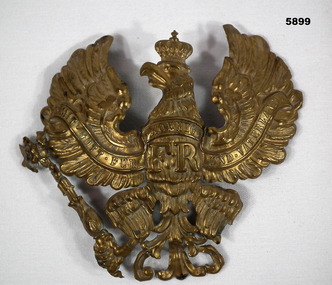
... Badge large pressed brass, comprises an eagle with outstretched wings and claw holding a type of staff. Through the centre on a scroll are raised lettering, on the rear are two lugs. Item is curved to fit a German helmet...Badge large pressed brass, comprises an eagle with outstretched wings and claw holding a type of staff. Through the centre on a scroll are raised lettering, on the rear are two lugs. Item is curved to fit a German helmet ...Item in the collection re John D Gardiner No 2832, refer Cat No 5892.2 for his service details.Badge large pressed brass, comprises an eagle with outstretched wings and claw holding a type of staff. Through the centre on a scroll are raised lettering, on the rear are two lugs. Item is curved to fit a German helmet.On the face, " MIT. GOTT. FUR. KOENIG. UND. VATERLAND", Central are letters "F R". English translation meaning, "With God for King and Fatherland".badges, german, fatherland -
 Bendigo Military Museum
Headwear - STEEL HELMET, 1942
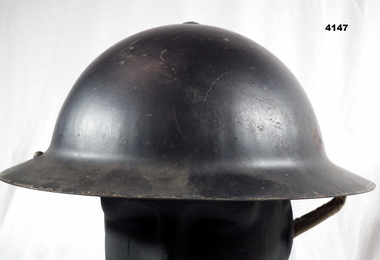
... Steel helmet, painted blackish colour, khaki coloured cotton webbing and fabric chin strap. Liner, black coloure coated canvas with rubber padding on the crown, brass flat buckle on chin strap....steel helmets headwear Etched on the chin strap holder, “MK 111/1942” Steel helmet, painted blackish colour, khaki coloured cotton webbing and fabric chin strap. Liner, black coloure coated canvas with rubber padding on the crown, brass flat buckle on chin strap. ...Steel helmet, painted blackish colour, khaki coloured cotton webbing and fabric chin strap. Liner, black coloure coated canvas with rubber padding on the crown, brass flat buckle on chin strap.Etched on the chin strap holder, “MK 111/1942”steel helmets, headwear -
 Bendigo Military Museum
Headwear - STEEL HELMETS, 1) c 1939 .2) 1941
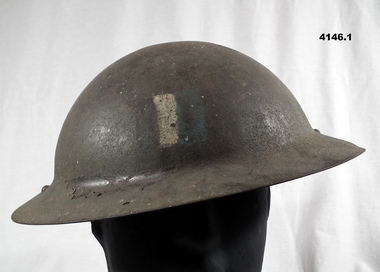
... .1) steel helmet, painted Kahki colour, front of the helmet has a colour patch red or black, white and blue. .2) Steel helmet, painted Kahki colour with Kahki coloured elasticated Cotten webbing chin strap, etched label on the chinstrap with brass flat buckle on the chin strap. ...Helmets steel headwear .2) Etched on chinstrap holder, “Mk 111/1941 .1) steel helmet, painted Kahki colour, front of the helmet has a colour patch red or black, white and blue. .2) Steel helmet, painted Kahki colour with Kahki coloured elasticated Cotten webbing chin strap, etched label on the chinstrap with brass flat buckle on the chin strap. ....1) steel helmet, painted Kahki colour, front of the helmet has a colour patch red or black, white and blue. .2) Steel helmet, painted Kahki colour with Kahki coloured elasticated Cotten webbing chin strap, etched label on the chinstrap with brass flat buckle on the chin strap. .2) Etched on chinstrap holder, “Mk 111/1941helmets, steel, headwear -
 Bendigo Military Museum
Award - MEDALS, JAPANESE, 1940-45
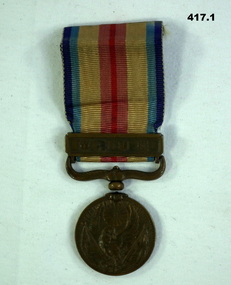
... Ribbon colours, 2 blue, yellow, 2 reds .2) Medal, brass, Japanese, Ribbon and clasp. Medal one side, 2 with helmets over scroll and writing. other bird with spread wings. ...Ribbon colours, 2 blue, yellow, 2 reds .2) Medal, brass, Japanese, Ribbon and clasp. Medal one side, 2 with helmets over scroll and writing. other bird with spread wings. ...Items souvenired by Frederick Ernest ADDLEM VX142253. Refer Cat No 432.2 for his service history and 937P..1) Medal, brass, Japanese, ribbon and clasp. Medal is detached from ribbon mount. Medal one side , bird with flags, other mountains and writing. Ribbon colours, 2 blue, yellow, 2 reds .2) Medal, brass, Japanese, Ribbon and clasp. Medal one side, 2 with helmets over scroll and writing. other bird with spread wings. Ribbon colours 4 shades red and yellow. .3) Medal , metal, Japan's, ribbon. Medal one side is tree and flower arrangement, on rear, writing. Ribbon is red and white, .4) Ribbons x2, Japanese fitted with metal clip. 1, Red and white 2, , 2 blues, 2 reds ,yellow.metalcraft, medals japanese -
 Bendigo Military Museum
Headwear - HELMET - RAAF, c. WW2
... helmet painted a khaki colour. The chin strap is made of light khaki coloured cotton webbing and is secured with an adjustable brass buckle. ...helmet painted a khaki colour. The chin strap is made of light khaki coloured cotton webbing and is secured with an adjustable brass buckle. ...Helmet issued to John Charles Dean No 144278 RAAF. He enlisted on 26.8.43 aged 18 years and was a LAC in 78 Sqd RAAF. He was discharged from the RAAF on 13.3.46.British designed steel helmet painted a khaki colour. The chin strap is made of light khaki coloured cotton webbing and is secured with an adjustable brass buckle. The liner is black coloured and coated canvas with rubber padding on the crown.On the underside of the rim in black handwriting: 'LAC Dean JC/144278/RAAF'uniforms - raaf, helmet, headwear -
 Queenscliffe Maritime Museum
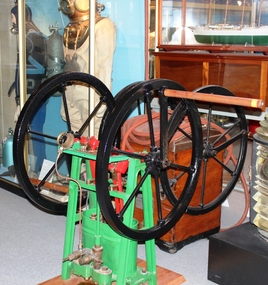
Equipment - Hand operated divers air pump
... Standard diving dress consists of a diving helmet made from copper and brass or bronze, an air hose from a surface-supplied manually operated PUMP or low pressure breathing air compressor, a waterproofed canvas suit, a diving knife, and weights to counteract buoyancy, generally on the chest, back and shoes. ...Standard diving dress consists of a diving helmet made from copper and brass or bronze, an air hose from a surface-supplied manually operated PUMP or low pressure breathing air compressor, a waterproofed canvas suit, a diving knife, and weights to counteract buoyancy, generally on the chest, back and shoes. ...Standard diving dress (also known as hard-hat or copper hat equipment, or heavy gear) is a type of diving suit that was formerly used for all relatively deep underwater work that required more than breath-hold duration, which included marine salvage, civil engineering, pearl shell diving and other commercial diving work, and similar naval diving applications. Standard diving dress has largely been superseded by lighter and more comfortable equipment. Standard diving dress consists of a diving helmet made from copper and brass or bronze, an air hose from a surface-supplied manually operated PUMP or low pressure breathing air compressor, a waterproofed canvas suit, a diving knife, and weights to counteract buoyancy, generally on the chest, back and shoes. Later models were equipped with a diver's telephone for voice communications with the surface.Hand operated divers air pump for one or two diversdiving, air pump -
 Bendigo Military Museum
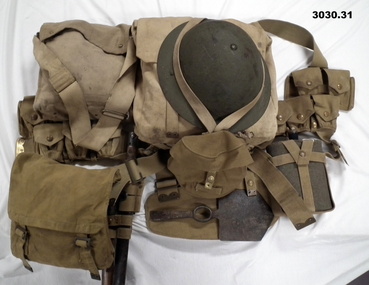
Equipment - WEBBING KIT, 1911; Post 1911
... Refer attached sheet. .1) Waist belt with brass buckles & keepers. .2) Braces x 2, connects to waist belt & large pack. .3) Bayonet. .4) Bayonet carrier. .5) Bayonet scabbard. .6) Entrenching tool carrier [fits to .5)]. .7) Entrenching tool handle, wood & metal [fits to .6)]. .8) Entrenching tool, metal, combination shovel & pick. .9) Entrenching tool carrier [fits inside .8)]. .10) Cartridge carriers x 2, 1 left hand, 1 right hand. .11) Water bottle, metal, blue colour. .12) Water bottle cover, khaki wool. .13) Water bottle carrier. .14) Pack, large. .15) Great coat, wool, [inside .14)]. .16) Helmet, steel with inside liner & chin strap. .17) Mess tin carrier, replica. .18) Haversack, side pack. .19) Carry all, white cotton, for personnel hygiene items [inside .18)]. .20) Razor, cut throat [inside .19)]. .21) Comb [inside .19)]. .22) Toothbrush [inside .19)]. .23) Shaving brush [inside .19)]. .24) Laces, leather, not original, [inside .19)]. .25) Soap [inside .19)]. .26) Tin bully beef x 2, replicas, [inside .18)]. .27) Tin stew, replica, [inside .18)]. .28) Pair socks, khaki wool, not original, [inside .18)]. .29) Field dressing, WWII issue, [inside .18)]. .30) Towel, brown colour, not original, [inside .18)]. .31) Gas mask carrier bag & straps. ...Refer attached sheet. .1) Waist belt with brass buckles & keepers. .2) Braces x 2, connects to waist belt & large pack. .3) Bayonet. .4) Bayonet carrier. .5) Bayonet scabbard. .6) Entrenching tool carrier [fits to .5)]. .7) Entrenching tool handle, wood & metal [fits to .6)]. .8) Entrenching tool, metal, combination shovel & pick. .9) Entrenching tool carrier [fits inside .8)]. .10) Cartridge carriers x 2, 1 left hand, 1 right hand. .11) Water bottle, metal, blue colour. .12) Water bottle cover, khaki wool. .13) Water bottle carrier. .14) Pack, large. .15) Great coat, wool, [inside .14)]. .16) Helmet, steel with inside liner & chin strap. .17) Mess tin carrier, replica. .18) Haversack, side pack. .19) Carry all, white cotton, for personnel hygiene items [inside .18)]. .20) Razor, cut throat [inside .19)]. .21) Comb [inside .19)]. .22) Toothbrush [inside .19)]. .23) Shaving brush [inside .19)]. .24) Laces, leather, not original, [inside .19)]. .25) Soap [inside .19)]. .26) Tin bully beef x 2, replicas, [inside .18)]. .27) Tin stew, replica, [inside .18)]. .28) Pair socks, khaki wool, not original, [inside .18)]. .29) Field dressing, WWII issue, [inside .18)]. .30) Towel, brown colour, not original, [inside .18)]. .31) Gas mask carrier bag & straps. ...The 1908 pattern was used during WWI, made from woven cotton & water proofed. The kit is used for school groups.Webbing kit complete including 1908 pattern webbing, gas mask haversack, personnel items, rations. Refer attached sheet. .1) Waist belt with brass buckles & keepers. .2) Braces x 2, connects to waist belt & large pack. .3) Bayonet. .4) Bayonet carrier. .5) Bayonet scabbard. .6) Entrenching tool carrier [fits to .5)]. .7) Entrenching tool handle, wood & metal [fits to .6)]. .8) Entrenching tool, metal, combination shovel & pick. .9) Entrenching tool carrier [fits inside .8)]. .10) Cartridge carriers x 2, 1 left hand, 1 right hand. .11) Water bottle, metal, blue colour. .12) Water bottle cover, khaki wool. .13) Water bottle carrier. .14) Pack, large. .15) Great coat, wool, [inside .14)]. .16) Helmet, steel with inside liner & chin strap. .17) Mess tin carrier, replica. .18) Haversack, side pack. .19) Carry all, white cotton, for personnel hygiene items [inside .18)]. .20) Razor, cut throat [inside .19)]. .21) Comb [inside .19)]. .22) Toothbrush [inside .19)]. .23) Shaving brush [inside .19)]. .24) Laces, leather, not original, [inside .19)]. .25) Soap [inside .19)]. .26) Tin bully beef x 2, replicas, [inside .18)]. .27) Tin stew, replica, [inside .18)]. .28) Pair socks, khaki wool, not original, [inside .18)]. .29) Field dressing, WWII issue, [inside .18)]. .30) Towel, brown colour, not original, [inside .18)]. .31) Gas mask carrier bag & straps. (Cowley) .32) Water bottle, metal, blue colour, [inside .31)].Items 1 - 13, there are numerous markings all stamped on from, “A.A.O.D”, “L”, “R”, “S”, “M.E.C.O”, “49th INF”, Years examples, “8.12”, “1.13”, “1911”military history - equipment / army, medicine-first aid, personal effects - containers, toilet requisites - shaving -
 Bendigo Military Museum
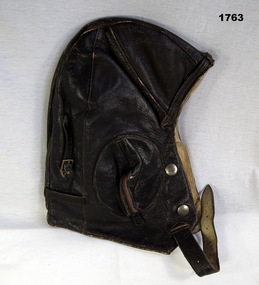
Headwear - FLYING HELMET, C.1939 - 45
... A circular ear piece is sewn on either side of the helmet with a zippered opening. Inside each piece is a brass fitting for attaching gosport tubes. ...A circular ear piece is sewn on either side of the helmet with a zippered opening. Inside each piece is a brass fitting for attaching gosport tubes. ...The helmet belonged to Henry Victor Evans No 418655 RAAF. Refer 1760.4. Type B flying helmet made of dark brown leather and lined with chamois. There is a leather chin strap fastened on the left with a white metal buckle. On the inside of the helmet on either side of the face are two snap fasteners with a strip of chamois backed webbing fastened between them for securing an oxygen mask or face protector. There is a buckled strap across the back of the neck with two thinner buckled straps running vertically above it. Another thin buckled strap is secured across the front of the helmet. A circular ear piece is sewn on either side of the helmet with a zippered opening. Inside each piece is a brass fitting for attaching gosport tubes. Brown leather Flying Helmet, yellow suede lined inside."N361". Hand written "V.H.Evans".flying helmet, raaf, headwear, leather -
 Bendigo Military Museum
Photograph - PHOTOGRAPH COLLECTION, C. 1914 - 1918
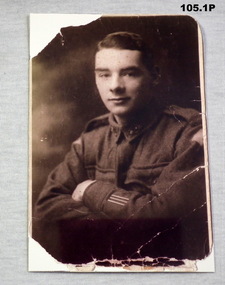
... .1) Copy of sepia photo of Walter Henry SMITH seated, showing 3 WIA bars. .2) Copy of sepia photo depicting 2 soldiers, 1 standing, 1 seated, both wearing pith helmets. .3) Copy of sepia photo of 15 AIF soldiers & 2 children. .4) Copy of sepia photo depicting soldiers from C Company 25th Battalion eating in front of a tent. .5) Copy of sepia portrait of 5 AIF soldiers, 3 standing, 2 seated. .6) Copy of sepia portrait of 2 AIF soldiers. .7) Copy of elderly man wearing RSL badge - Walter H SMITH. Metallic brass...COMP. 25 BATTALION. 16.5.15 HAVING DINNER IN OUR NEW DINING ROOM .1) Copy of sepia photo of Walter Henry SMITH seated, showing 3 WIA bars. .2) Copy of sepia photo depicting 2 soldiers, 1 standing, 1 seated, both wearing pith helmets. .3) Copy of sepia photo of 15 AIF soldiers & 2 children. .4) Copy of sepia photo depicting soldiers from C Company 25th Battalion eating in front of a tent. .5) Copy of sepia portrait of 5 AIF soldiers, 3 standing, 2 seated. .6) Copy of sepia portrait of 2 AIF soldiers. .7) Copy of elderly man wearing RSL badge - Walter H SMITH. Metallic brass ...Photos from WWI belonged to Walter Henry SMITH Reg No 1572. Refer Reg Nos 102.4 Medals, 104 Certificate..1) Copy of sepia photo of Walter Henry SMITH seated, showing 3 WIA bars. .2) Copy of sepia photo depicting 2 soldiers, 1 standing, 1 seated, both wearing pith helmets. .3) Copy of sepia photo of 15 AIF soldiers & 2 children. .4) Copy of sepia photo depicting soldiers from C Company 25th Battalion eating in front of a tent. .5) Copy of sepia portrait of 5 AIF soldiers, 3 standing, 2 seated. .6) Copy of sepia portrait of 2 AIF soldiers. .7) Copy of elderly man wearing RSL badge - Walter H SMITH. Metallic brass covered frame..4) Bottom centre in white print: C. COMP. 25 BATTALION. 16.5.15 HAVING DINNER IN OUR NEW DINING ROOMmilitary history, photography, aif -
 Running Rabbits Military Museum operated by the Upwey Belgrave RSL Sub Branch
Badge
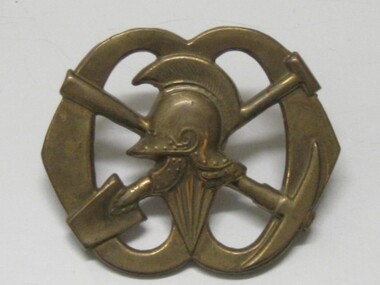
... Cap badge brass, Royal Dutch Army Pioneer Battalion. Helmet, with crossed pick and shovel....Badge/Buttons Army Cap badge brass, Royal Dutch Army Pioneer Battalion. Helmet, with crossed pick and shovel. ...Cap badge brass, Royal Dutch Army Pioneer Battalion. Helmet, with crossed pick and shovel.badge/buttons, army -
 Warrnambool and District Historical Society Inc.
Pith Helmet, Royal Australian Navy, 1930s
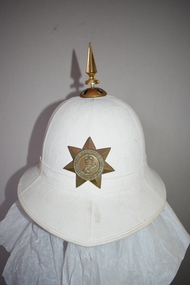
... Inside, the helmet has a leather rim with an adjustable leather string with brass clips (one missing). ...Inside, the helmet has a leather rim with an adjustable leather string with brass clips (one missing). ...This helmet has been used by a member of the Royal Australian Navy in the early to mid 20th century. The Commonwealth Naval Forces were formed after Federation in 1901 and became known as the Royal Australian Navy in 1911. Pith helmets are now used only in the Australian Defence Forces for ceremonial purposes. No information is available on A.B. Pollock.This helmet is retained for display purposes.This helmet is made of white material with a six-segmented crown and a peak and back covering. In the centre of the crown is a dome with three breathing holes. On top of the dome is an ornamental gold-coloured metal finial. The edge of the crown has a band of white fabric and in the centre of this is a metal badge with a crown, anchor and seven stars and the wording ‘Royal Australian Navy’. Inside, the helmet has a leather rim with an adjustable leather string with brass clips (one missing). Inside, the breathing holes are made of brass and the metal rotates to open or close the holes. Inside also are the size of the helmet, the owner’s name and some other indecipherable information Royal Australian Navy A.B.Pollock 6⅞ vintage headwear, royal australian navy, history of warrnambool -
 Warrnambool and District Historical Society Inc.
Safari Helmet, Early 20th century
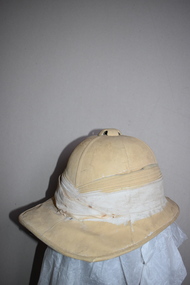
... Inside the helmet is the brass base of the top dome in eight circular sections. ...Inside the helmet is the brass base of the top dome in eight circular sections. ...A safari helmet was also called a pith helmet as it was made of sholapith material. It was first used by the Spanish forces in the Spanish East Indies and by the mid 19th century was used extensively by military forces in tropical countries and then became common civilian headwear for westerners in the tropics by the end of the 19th century. Safari helmets are still won today in tropical countries by both men and women and are part of the dress or ceremonial uniform for many members of the armed forces and music bands. This helmet has no known local provenance but is retained for display purposesThis is a pith or safari helmet made from a cream-coloured stiffened fabric. The crown has six segments with a small dome on top with three arch-shaped breathing holes. Around the edge of the crown is a white or stiffened cream cloth (puggaree) intertwined in layers and stitched onto the crown. The brim is peaked at the front and oblong at the back and tapered from front to back. The pleated cloth band is stiffened and has two brass clips. The edge of the brim is reinforced, perhaps with wire. Inside the helmet is the brass base of the top dome in eight circular sections. The interior of the helmet has green cloth in a damaged state. headwear, history of warrnambool
