
Showing 42 items matching "building suppliers"
-
 Hume City Civic Collection
Photograph, Mid 1990's
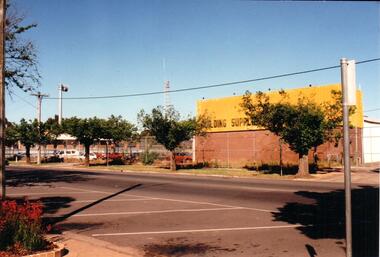
... building suppliers...The building suppliers and the Sunbury CFA were sited at the northern end of Evans Street and in the past were away from the main shopping centre. ...A coloured photograph of the east side of Evans Street showing the building suppliers yard and the Sunbury CFA station and towers. ...The building suppliers and the Sunbury CFA were sited at the northern end of Evans Street and in the past were away from the main shopping centre. ...The building suppliers and the Sunbury CFA were sited at the northern end of Evans Street and in the past were away from the main shopping centre. As Sunbury expanded and Sunbury Shopping Square was built on the opposite side of Evans Street, the building suppliers closed down and the CFA depot was moved out of the town centre to two other locations to avoid traffic conjestion.A coloured photograph of the east side of Evans Street showing the building suppliers yard and the Sunbury CFA station and towers. The road in the foreground has been marked out for angle parking. There is a metal pole on the extreme RHS of the photograph.building suppliers, shopping centres, sunbury country fire authority (cfa), evans street, george evans collection -
 Hume City Civic Collection
Photograph, Early 1990's
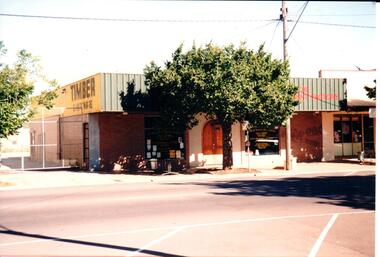
... building suppliers...The building suppliers and timber yard has been demolished and a Centrelink Office and car park area has been built on the site. ...The building suppliers and timber yard has been demolished and a Centrelink Office and car park area has been built on the site. ...The building suppliers and timber yard has been demolished and a Centrelink Office and car park area has been built on the site. The adjacent shop is now a Youth Resource Centre.A coloured photograph of part of a streetscape on the east side of Evans Street featuring the timber supply yard and 3 other shops. A plane tree has been planted at the edge of the footpath and there are high cyclone gates into the timber yard.building suppliers, timber yards, shopping centres, evans street, george evans collection -
 Sunshine and District Historical Society Incorporated
Photograph - Malouf Industries 410 Francis Street Brooklyn 1993 Photographs, John Edwards, 6th May 1993
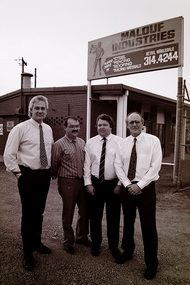
... These photographs feature the staff of Malouf Industries, a steel & building supplier located at 410 Francis Street, Brooklyn....These photographs feature the staff of Malouf Industries, a steel & building supplier located at 410 Francis Street, Brooklyn. ...These photographs, taken by The Advocate in 1994, were published as part of the newspaper’s ongoing column profiling local traders across the district. These photographs feature the staff of Malouf Industries, a steel & building supplier located at 410 Francis Street, Brooklyn.The Advocate’s feature on local traders was a modest yet well‑liked column that played a meaningful role in strengthening community identity. Through these regular profiles, the newspaper promoted local businesses and helped shape Sunshine’s understanding of its developing commercial district.7669.01 - Malouf Industries 410 Francis Street Brooklyn 1993 Photographs (Advocate 206.3).JPG 7669.02 - Malouf Industries 410 Francis Street Brooklyn 1993 Photographs (Advocate 206.3).JPGmalouf industries, francis street, brooklyn -
 Southern Sherbrooke Historical Society Inc.
Information folder - Belgrave South Timber & Hardware
... Belgrave South Building Supplies. -letter, informing suppliers of change of name from Belgrave South Building Supplies to Belgrave South Timber & Hardware, effective 1 November 1961. ...Belgrave South Building Supplies. -letter, informing suppliers of change of name from Belgrave South Building Supplies to Belgrave South Timber & Hardware, effective 1 November 1961. ...Information folder containing items pertaining to the Belgrave South Timber & Hardware business. Contents: -receipt, Belgrave South Building Supplies, dated 27 October 1961, to Edelston Brothers. -blotter, Belgrave Sth & Heights District free blotter, with advertisements for local business, inc. Belgrave South Building Supplies. -letter, informing suppliers of change of name from Belgrave South Building Supplies to Belgrave South Timber & Hardware, effective 1 November 1961. Also small photo attached. -advertisement, from Free Press, dated 3 October 1963. Also handwritten note, "We now have an advertising manager" -various advertisements (6 pages). -telegram, 10 March 1966 (?), from Michael's Hardware, Bowen QLD, to Belgrave South Building Supplies. -advertisement./invitation, South Australian Sawmillers Association Golf Day and Radiata Pine Association inspection tour, including photographic highlights from previous tours.belgrave south building supplies -
 Flagstaff Hill Maritime Museum and Village
Ceremonial object - Church Bell, Before 1855
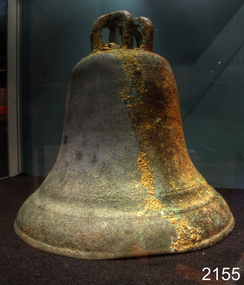
... buildings also grew. We will never know if this bell was a specific order or part of an enterprising bell founder's consignment of general stock to a wholesale supplier in Melbourne. ...buildings also grew. We will never know if this bell was a specific order or part of an enterprising bell founder's consignment of general stock to a wholesale supplier in Melbourne. ...This artifact is a large brass bell. Local divers recovered the bell from the Schomberg wreck in the 1970s. Its location at the wreck site was described as "found on the west side towards the stern"; the vessel remains on a north-south axis, with the bow pointing towards the shore. As a result, the bell was assessed from this position to have formed part of the cargo. The view that this was not a ship's bell belonging to the Schomberg is gained from two other 'Schomberg Bells' in the Flagstaff Hill collection, both of which have the vessel's name prominently etched into their outer surface. Additional information indicates that this bell was not intended for maritime use due to its rounded 'bell-curve' shape, suggesting it was melodically tunable. Also, the detailed basket-type fittings on the bell dome would allow the bell to be suspended by ropes rather than bolted to a yoke. The bell is currently on display at Flagstaff Hill, categorised as a church bell, and part of Schomberg's cargo, intended for use in a church within the Victorian colony. As the Colony of Victoria became more established and its population expanded with the Gold Rush and other emigration from Britain, the demand for regular religious services and permanent church buildings also grew. We will never know if this bell was a specific order or part of an enterprising bell founder's consignment of general stock to a wholesale supplier in Melbourne. Unfortunately, the cargo manifest for the Schomberg has never been found. The shipwreck of the Schomberg is regarded as of significance to Victoria and is registered on the states Heritage list (S 612). The Schomberg wreck has great historical significance as a rare example of a mid 19th century large, fast clipper ship intended to transport cargo and passengers between England and Australia. The vessel that carried this bell represents the marine advances made in an attempt to break established sailing records between Europe and Australia. Flagstaff Hill holds a noteworthy collection of artefacts from the Schomberg shipwreck. The whole collection is primarily significant because of the relationship the objects have archaeologically, not only to highlight the story of the Schomberg ship and later its wrecking, but also has an important potential to interpret the story and progression of maritime shipping in the 19th century. The church bell has a standard bell-curve shape and is dull bronze in colour. A large brass bell, plain and without visible maker marks, but with traditionally intricate basket-type cast fittings for suspension from a yoke by a number of ropes or chains. Approximately 3/8 of the bell’s outer surface bears a thin layer of marine growth and limestone accretion, and there is some minor pitting and spots of light verdigris over the remainder. The bell mouth, or lip, is slightly compressed-in in two places. It was retrieved from the wreck of the Schomberg. warrnambool, flagstaff-hill, flagstaff-hill-maritime-museum, maritime-museum, shipwreck-coast, flagstaff-hill-maritime-village, schomberg, shipwrecked-artefact, clipper ship, black ball line, 1855 shipwreck, aberdeen clipper ship, captain forbes, peterborough shipwreck, ss queen, brass bell, church bell -
 Flagstaff Hill Maritime Museum and Village
Furniture - Theatre Chairs, 1930's
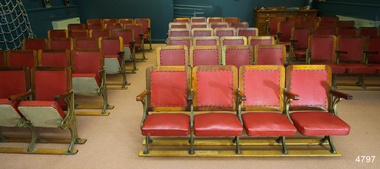
... building was modified and set up for musical concerts with the name Mozart Hall. The seats were re-covered by Miss Eva Gaspar, Director of the Warrnambool Music Society, with assistance from group members. The material was order by W.C. James (Treasurer) in 1964, at a cost of 26 pound and 10 shillings (£26-10), and supplied by Jacka-Wortley Fabrics Pty Ltd, Upholstery and Furnishing Supplies, 157-163 Pelham Street, Carlton, Melbourne, Victoria. The supplier’s...building was modified and set up for musical concerts with the name Mozart Hall. The seats were re-covered by Miss Eva Gaspar, Director of the Warrnambool Music Society, with assistance from group members. The material was order by W.C. James (Treasurer) in 1964, at a cost of 26 pound and 10 shillings (£26-10), and supplied by Jacka-Wortley Fabrics Pty Ltd, Upholstery and Furnishing Supplies, 157-163 Pelham Street, Carlton, Melbourne, Victoria. The supplier’s ...These theatre chairs had been used in the Mozart Hall in Warrnambool for many years but are now no longer required. They were about to be offered for anyone to take but just by chance Flagstaff Hill’s Manager heard about them from a friend in Melbourne. Our Manager thought it important to keep the chairs in Warrnambool as they were significant to our local history and could be incorporated in our Museum. He made arrangements to collect and install them in Flagstaff Hill’s Theatrette. Originally these theatre chairs belonged to Warrnambool Town Hall. When The Warrnambool Baths (or Swimming Pool) in Gillies Street closed, due to the Health Act of 1958, the changing rooms were taken over by the Mozart Group. The building was modified and set up for musical concerts with the name Mozart Hall. The seats were re-covered by Miss Eva Gaspar, Director of the Warrnambool Music Society, with assistance from group members. The material was order by W.C. James (Treasurer) in 1964, at a cost of 26 pound and 10 shillings (£26-10), and supplied by Jacka-Wortley Fabrics Pty Ltd, Upholstery and Furnishing Supplies, 157-163 Pelham Street, Carlton, Melbourne, Victoria. The supplier’s telephone was “JACKAFAB” (5222 2322). The fabric was delivered to J. Hulin of 116 Belmore Rd, Warrnambool. The manufacturer of the chairs, Riddell & Preece Pty Ltd of Melbourne, also supplied theatre chairs for other public buildings including (1) the Ozone Theatre in Enfield, South Australia, in 1929, (2) the Gallery of the Horsham Town Hall in Victoria (at 26/6 each, that is 26 shillings and sixpence, approximate conversion in 2014 to $100.00au), (3) in 1927 in the Gallery of the Kyenton Mechanics’ Institute (4) in 1926, Horsham Theatre. (In May 2018 a transfer of three banks of chairs was made from Flagstaff Hill to the Australian Centre for the Moving Image in Melbourne.) The chairs are of local historical and social significance. Theatre chairs. The sixteen sets (groups or banks) of complete chairs, four seats per chair, give a total of 64 seats. Each chair has timber framed seats, with arm rests, upholstered in red vinyl. The seats are set into decorative gilt iron frames which incorporate five legs, all set into two timber floor rails. The seats are hinged to fold upwards and rest against the backrests. On ironwork "PTY. LTD"flagstaff hill, warrnambool, shipwrecked coast, flagstaff hill maritime museum, maritime museum, shipwreck coast, flagstaff hill maritime village, great ocean road, theatre chairs, theatre seats 1939, warrnambool town hall seats, mozart hall warrnambool, theatre furniture, mechanics’ institute chairs, j hulin warrnambool, mozart hall choral group, eva gaspar, warrnambool music society, w.c. james, jacka-wortley fabrics pty ltd -
 Flagstaff Hill Maritime Museum and Village
Domestic object - Spoon, SSP Sheffield Silver Plate & Cutlery Co. Ltd, About 1913 to early-1930s
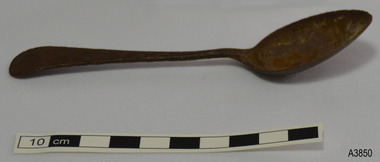
... Buildings, Charterhouse Street, E.C.1. The company was dissolved in 2000, the last office address being 23 Albemarle Street London, W1S 4AS. Although this spoon is not linked to a particular shipwreck, it is recognised as being historically significant as an example of cutlery, possibly from a passenger’s luggage or imported for use in Colonial Victoria in the 19th to early 20th century. The spoon is the only example in Flagstaff Hill’s collection that is connected to the manufacturer Sheffield Silver Plate and Cutlery Co. Ltd., historically significant also, as in 1939 the same manufacturer was a recognised supplier ...This electroplated silver teaspoon was made by the Sheffield Silver Plate & Cutlery Company Limited from about 1913 to early-1930s. It was recovered from an unknown shipwreck in the coastal waters of Victoria in the late 1960s to early 1970s. The shipwrecks in the area range from around the 1840s to the early-1930s. It is part of the John Chance Collection. Sheffield manufactures produced high quality silverware products. In the mid-1700s a cutler, Thomas Boulsover, invented a process to fuse copper between two sheets of silver, which could still be like solid silver then the edges were bound in silver. Items made this way are now referred to as Old Silver Plate. The modern method of electroplating has a much thinner layer of silver. The firm Sheffield Silver Plate and Cutlery Co. Ltd. was established in 1913 by Mappin & Webb to make spoons and forks using the American Wilzin process, which was a failure. In 1923 the company was incorporated then re-financed and reverted back to the older production method for electroplating. The maker’s stamp usually had the letters “S.S.P. & C. Co Ltd EPNS” and often included an octagon stamp with “SSP”. The firm had the registered trademarks of ‘SILCUTA’ and ‘SILTONA’ and has also used the name ‘Sheffield Nickel & Silver Plating Co. Ltd.’ The firm had manufacturing Works at Priestley Street, Sheffield from 1913 until the 1960s. They also had a London office in 1919 at Atlantic House, 40a Holborn Viaduct, London, E.C.1., then in 1921 at Union Bank Buildings, Charterhouse Street, E.C.1. The company was dissolved in 2000, the last office address being 23 Albemarle Street London, W1S 4AS. Although this spoon is not linked to a particular shipwreck, it is recognised as being historically significant as an example of cutlery, possibly from a passenger’s luggage or imported for use in Colonial Victoria in the 19th to early 20th century. The spoon is the only example in Flagstaff Hill’s collection that is connected to the manufacturer Sheffield Silver Plate and Cutlery Co. Ltd., historically significant also, as in 1939 the same manufacturer was a recognised supplier to the British Government. The spoon is also significant as it was recovered by John Chance, a diver in Victoria’s coastal waters in the late 1960s to early 1970s. Items that come from several wrecks have since been donated to the Flagstaff Hill Maritime Village’s museum collection by his family, illustrating this item’s level of historical value.Spoon; teaspoon, nickel plated silver, discoloured to brown. Old English design. Inscription on handle. Made by Sheffield Silver Plate & Cutlery Co Ltd., Sheffield. Spoon has dimpled surface, nicks and dents. Embossed logo within sunken elongated octagon [SSP] Embossed letters following logo, “S S P C & CO LTD EP/NS” flagstaff hill maritime museum, maritime museum, shipwreck coast, flagstaff hill maritime village, great ocean road, shipwreck artefact, john chance, sheffield, cutlery, eating utensils, electroplate, silver plate, silverware, flatware, antique flatware, old english flatware pattern, spoon, teaspoon, silver flatware, dining, silver plated, epnns, sheffield silver plater & cutlery, ssp, ssp & c co ltd, 20th century silverware -
 Flagstaff Hill Maritime Museum and Village
Document - Ship Model Plans, Webb Warships Pty Ltd, Loch Ard Clipper Ship, 1874; Model Construction Plan Set, 1978
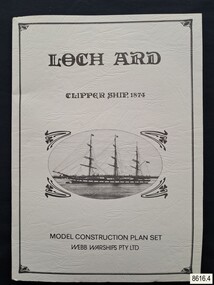
... building the LOCH ARD. The three sets of plans are presented in a textured cream card folder with the supplier’s details and an oval cameo drawing of the LOCH ARD. ...building the LOCH ARD. The three sets of plans are presented in a textured cream card folder with the supplier’s details and an oval cameo drawing of the LOCH ARD. ...The plans are presented in a keepsake folder. They show marks of sections copied and assembled together. Overall, the plans are similar to those drawn by Mr P Webb to the order of the Loch Ard Shipwreck Centenary through Mr P Williams, the organizer of the Centenary competition. “The details were based on all available information which resulted in considerable historical research…and received favourable comment from model makers because of their attention to detail…In excess of 650 sets of plans were sold before entries closed…Many plans were probably purchased by collectors and interested persons for historical reference. An illustrated historical story sheet…was prepared and enclosed with the plans…” (‘Loch Ard Shipwreck Centenary 1878-1978 Report’, November 1978). An example of the attention to historical detail on the plans is the inclusion of the following useful information about the original vessel … Tonnage….1,693 G.R.T., 1,624 N.R.T. Dimensions, Builders….Charles Connell & Co., Ltd., Scotstoun, 1873. Owners….General Shipping Co., Glasgow, (Aitken Lilburn & Co., Ltd.), and the ship’s fate. The plans, in conjunction with the scale Ship Model of the LOCH ARD also on display, are of interpretive significance to Flagstaff Hill Maritime Village. The plans provide historical and technological context to artefacts from the shipwreck, increasing understanding and appreciation of those objects. Flagstaff Hill’s collection of artefacts from LOCH ARD is significant for being one of the largest collections of artefacts from this shipwreck in Victoria. It is significant for its association with the shipwreck, which is on the Victorian Heritage Register (VHR S417). The collection is significant because of the relationship between the objects, as together they have a high potential to interpret the story of the LOCH ARD. The LOCH ARD collection is archaeologically significant as the remains of a large international passenger and cargo ship. The LOCH ARD collection is historically significant for representing aspects of Victoria’s shipping history and its potential to interpret sub-theme 1.5 of Victoria’s Framework of Historical Themes (living with natural processes). The collection is also historically significant for its association with the LOCH ARD, which was one of the worst and best known shipwrecks in Victoria’s history.Model ship plans for building the LOCH ARD. The three sets of plans are presented in a textured cream card folder with the supplier’s details and an oval cameo drawing of the LOCH ARD. The plans are detailed and drawn to scale. They and printed on good quality paper with details, scale and legends. Sheet 1: Sails and Rigging Sheet 2: Lines, Decks and Details Sheet 3: Masts and Spars Details include deck fittings, the wheel, lights and the shipping company’s house flag. The ship model plans are copyrighted in 1977 and 1978 to Webb Warships Pty Ltd. The folder has details of four locations; Australia, USA, UK and New Zealand. Sheet has a handwritten inscription.On Folder: "LOCH ARD CLIPPER SHIP, 1874, MODEL CONSTRUCTION PLAN SET, WEBB WARRIORS PTY LTD." "CONTENTS COPYRIGHT (C) 1978, WEBB WARSHIPS PTY LTD" "WEBB WARSHIPS PTY LTD, PO BOX 50, WILLIAMSTOWN, VICTORIA 3016, AUSTRALIA" Handwritten inscription on sheet 3: "834" "THE FLOATING DRYDOCK, PO BOX 16066, PHILADELPHIA, PENNA. 14114, USA" "SAMBROOK MARINE (PLANS), 84 BROAD ST. TEDDINGTON, MIDDLESEX, UK" "BYMODELS, PO BOX 3037, FORBURY, DUNEDIN, NEW ZEALAND" flagstaff hill, warrnambool, shipwrecked coast, flagstaff hill maritime museum, maritime museum, shipwreck coast, flagstaff hill maritime village, great ocean road, loch line, loch ard, captain gibbs, eva carmichael, tom pearce, glenample station, mutton bird island, loch ard gorge, ship model plans, loch ard model plans, sailing ship, loch ard centenary, webb warriors pty ltd, 1977, 1978, centenary competition -
 Eltham District Historical Society Inc
Film - Video (DVD), H.V. Plowman, Briar Hill Timber & Trading Co. Pty. Ltd, c.1956
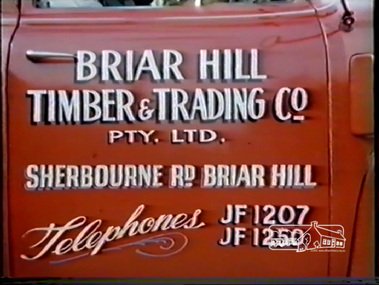
... Briar Hill Timber was associated with the Olympic Village Project being suppliers of all building materials including Flush Panel Doors, Mouldings and Joinery. ...Briar Hill Timber was associated with the Olympic Village Project being suppliers of all building materials including Flush Panel Doors, Mouldings and Joinery. ...Briar Hill Timber was associated with the Olympic Village Project being suppliers of all building materials including Flush Panel Doors, Mouldings and Joinery. Briar Hill Timber owned by F. Squire and the Squire family owned a lot of land around Briar Hill and land for forest at Flowerdale. The 16 mm film photographed by H.V. Plowman (converted to DVD) shows all aspects of the operations of Briar Hill Timber from logging of trees, to milling to manufacture of joinery and housing framesMP4 00:13:12; 247MB Converted from DVD converted from VHS video converted from 16mm colour filmbriar hill timber, f. squire, olympic village, 1956 olympic games, timber mill, flowerdale, cinematography, briar hill, h.v. plowman, logging, video recording -
 Kiewa Valley Historical Society
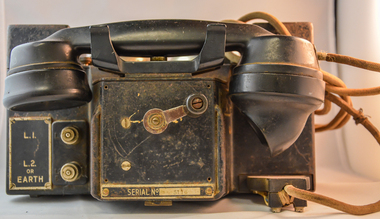
Telephone Handset Field, early 1900s
... buildings, before the mobile handset evolution. This handset was located in an environment which required a rugged and reliable day to day communications linkage as a vital part of its logistical (business) survival. As progress demands it, the faster that customers are satisfied with the service they obtain from suppliers ...This field telephone was developed primary for military purposes (World War I) and other wars/military interventions there after. It was the first "mobile" telephone which had a prime objective of providing isolated or "hard" to connect with locations instant communication links. Like a lot of "new" technologies it evolved from a war environment. This handset was used to connect offices and workshops, which due to their functions could not be co-located with their prime office(external workshops).The evolution from the early 1900s to the mid 1980s when mobile communication technology progressed in leaps and bounds from hard wire telephone communication to mobile digital receivers. This handset was manufactured by a subcontracted Australian company under the Australian Post Office mandate.This handset is significant in that it was donated by the Mount Beauty Timber yards and formed an integrated part of its communication system with its out lying work yards and buildings, before the mobile handset evolution. This handset was located in an environment which required a rugged and reliable day to day communications linkage as a vital part of its logistical (business) survival. As progress demands it, the faster that customers are satisfied with the service they obtain from suppliers the longer those services will be asked for and the longer and more profitable the supplier will be. This edict is as true for rural companies as it is for small or large city businesses. The customer is "always" right.This sturdy field telephone has a shell housing made in black bakelite material with a "U" form housing the major components (wiring, magneto and batteries). The main housing has two metal bells, with a central ringer between both, on the top part (to notify incoming calls). In front of the main structure is a box with the telephone hand piece (ear and mouth receptacles) nestled on two cradles. An on/off switch is activated when handset is removed from its cradle. On the front of the control box is a winder handle(to ring off) and in a field situation to activate/deactivate the magneto. To the left of the winder but on the the main body are two wind up connection buttons for the connection of operational wires (power)On the main right hand front body and next to two chrome switches is a plate with "L (next to the top switch) and below this "L2" and underneath this are "or" "EARTH". There is a plate fastened to the front of the handset and behind the winder with "REPLACE HANDSET WHEN FINISHED" and below the winder 'SERIAL NUMBER 5116"field telephone, world war ii field telephone f mk i -
 Eltham District Historical Society Inc
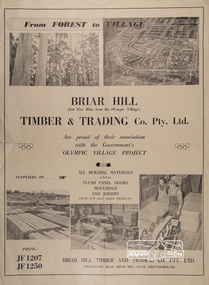
Poster, Briar Hill Timber & Trading Co. Pty. Ltd, c.1956
... Advertisement insert in The Age newspaper around the opening of the 1956 Olympic Games promoting Briar Hill Timber's association with the Olympic Village Project being suppliers of all building materials including Flush Panel Doors, Mouldings and Joinery. ...Advertisement insert in The Age newspaper around the opening of the 1956 Olympic Games promoting Briar Hill Timber's association with the Olympic Village Project being suppliers of all building materials including Flush Panel Doors, Mouldings and Joinery. ...Advertisement insert in The Age newspaper around the opening of the 1956 Olympic Games promoting Briar Hill Timber's association with the Olympic Village Project being suppliers of all building materials including Flush Panel Doors, Mouldings and Joinery. Briar Hill Timber owned by F. Squire and the Squire family owned a lot of land around Briar Hill and land for forest at Flowerdale. Operations ranged from logging of trees, to milling to manufacture of joinery and housing frames.Poster approximately A2 in sizebriar hill timber, f. squire, olympic village, 1956 olympic games, timber mill, flowerdale, briar hill, h.v. plowman, logging, advertisement -
 Warrnambool and District Historical Society Inc.
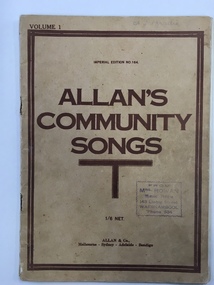
Booklet, Allan's Community Songs, 1920s
... The supplier of this music item in Warrnambool was Mrs Fanny Rowan (nee Lavery) who had a music store at 143 Liebig Street after 1918. Later, in the 1930s, she had a music and stationery shop in the Oddfellows Hall and, as the owner of the building, also operated the Plaza Cinema in that building. ...The supplier of this music item in Warrnambool was Mrs Fanny Rowan (nee Lavery) who had a music store at 143 Liebig Street after 1918. Later, in the 1930s, she had a music and stationery shop in the Oddfellows Hall and, as the owner of the building, also operated the Plaza Cinema in that building. ...This is a book of music produced by Allan & Co. English- born George Allan (1826-1897) was a pioneer singing teacher in Melbourne who joined the music warehouse of Wilkie and Webster in 1862 and became the sole proprietor in 1874. By the late 1870s Allan & Co was the largest music warehouse in the Southern Hemisphere. It was bought by Brashs Stores in 1998 and since then it has had a series of other owners operating on a limited scale. Allan & Co. had a music warehouse in Warrnambool later in the 20th century. The supplier of this music item in Warrnambool was Mrs Fanny Rowan (nee Lavery) who had a music store at 143 Liebig Street after 1918. Later, in the 1930s, she had a music and stationery shop in the Oddfellows Hall and, as the owner of the building, also operated the Plaza Cinema in that building. This item is of some interest mainly because it was sold by Mrs Fanny Rowan, a prominent Warrnambool businesswoman in the first half of the 20th century. It is also of interest because it is an example of the music produced by Allan and Co, at one time the largest supplier of music books in Australia. Also Warrnambool had for some time an Allans Music Store at 76 Liebig Street. This is a soft-cover book of 50 pages containing the music of well-known community songs. The pages were stapled but the staples have been removed and there are rust marks and some tearing where the staples were removed. The book has a buff-coloured cover with brown printed material on the back and front covers. The back contains a list of the music titles in another booklet, ‘Primary Melodies’. The front cover has a stamp of the music shop of Mrs Rowan of Liebig street, Warrnambool and there is a brown border of two lines on the front cover. The inside first page has a list of contents. Front Cover: ‘Volume One, Imperial Edition No. 164, Allan’s Community Songs, 1/6 net, Allan & Co., Melbourne, Sydney, Adelaide, Bendigo’. Front Cover in pencil: ‘A.L.Brodie’ Stamp: ‘ From Mrs Rowan, Music House, 143 Liebig Street, Warrnambool, Phone 634.’ allan & co, allans store,, warrnambool, fanny rowan music store, history -
 Bendigo Historical Society Inc.
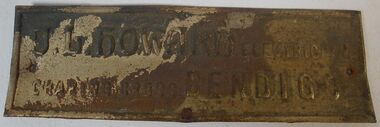
Sign - J.L. Howard Name Plate
... From the years 1915 - 1917 he advertised in the Bendigo Advertiser as an Electrical contractor and supplier of Electrical accessories, operating from the Lyric Building in Charing Cross, Bendigo. ...From the years 1915 - 1917 he advertised in the Bendigo Advertiser as an Electrical contractor and supplier of Electrical accessories, operating from the Lyric Building in Charing Cross, Bendigo. ...Joseph Lambert Howard was born in Albury, NSW in 1886 and died in Bendigo, Vic. in 1958. From the years 1915 - 1917 he advertised in the Bendigo Advertiser as an Electrical contractor and supplier of Electrical accessories, operating from the Lyric Building in Charing Cross, Bendigo. He also produced an advertising calendar for 1917.Small metal name plate possible tin - has holes Centre of each side. Front is Gold in parts with brown dirty spots - back shows embossing in reverse with some discoloration. Rectangular in shape 6.5cm x 2.0cm. J.L HOWARD - Electrician Charing Cross Bendigo.bendigo electrician, j.l. howard, charing cross bendigo -
 Eltham District Historical Society Inc
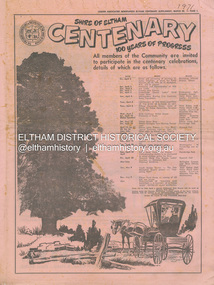
Newspaper - Supplement, Leader Associated Newspapers, Shire of Eltham Centenary; 100 Years of Progress, March 30, 1971
... Building & Joinery Contractors (Eltham) Montmorency Authorised Newsagency Eltham Produce Store (W.J. Cameron) Consolidated Aluminium (Aust.) Pty Ltd (Eltham) Briar Hill Timber & Trading Co. Pty Ltd Diamond Valley Coaches (Eltham) Lyon Bros Ford (Eltham) The Natural Development Association (Eltham Shire) Alan Whitmore R.E.S.I. (Eltham) Keith Wilkie’s Mensland (Montmorency) Eltham Home Supplies (Eltham) Safeway (Greensborough) Lower Plenty Fish Supply Blue Gum Milk Bar (Eltham) W. Hutchinson Sand Soil & Gravel Suppliers...Building & Joinery Contractors (Eltham) Montmorency Authorised Newsagency Eltham Produce Store (W.J. Cameron) Consolidated Aluminium (Aust.) Pty Ltd (Eltham) Briar Hill Timber & Trading Co. Pty Ltd Diamond Valley Coaches (Eltham) Lyon Bros Ford (Eltham) The Natural Development Association (Eltham Shire) Alan Whitmore R.E.S.I. (Eltham) Keith Wilkie’s Mensland (Montmorency) Eltham Home Supplies (Eltham) Safeway (Greensborough) Lower Plenty Fish Supply Blue Gum Milk Bar (Eltham) W. Hutchinson Sand Soil & Gravel Suppliers ...Produced as a supplement to the Diamond Valley News in celebration of the centenary of the Shire of Eltham in 1971. Contains stories of historical note about people and places of the shire as well as numerous advertisng by local businsesses. Also on page 1 lists the program of events commencing Friday, April 2 commencing with a dinner and previewing of paintings by Justus Jorgensen at Montsalvat attended by the Prime Minister, the Rt. Hon. W. H. McMahon running through to the publication of Pioneers & Painters edited by Alan Marshall. Contents: Page 1 Program of Events Page 2 Wingrove . . man of Eltham Page 3 Council people of 100 years Page 5 Capt. Sweeney, Eltham’s first Irish settler Page 6 Station a tribute to ex-concillor Page 7 Eltham 25 Years Ago just a street Page 9 Kangaroo Ground – once the hub of the shire Page 10 Festival of Arts and Crafts at Montsalvat Page 11 Obelisk honours their memory Page 11 Henry Dendy – an Eltham venture Page 12 Free by rail – if they worked Page 12 The long shadow of Ween Cameron Page 13 McMahon’s – a momentous era Page 14 50 Years Ago . . . Lyon Bros Ford Page 15 Beer at 3d. a pint Page 17 Oldest Home Built in 1850 Page 19 History in black and white . . . . Page 20 Historical Pigeon Bank Page 22 Bridge over log crossing Page 22 Pioneer shot by outlaw Page 23 Milestone for Smith Family Page 24 The Eltham Chamber of Commerce Mardi Gras Advertisers: F.J. & R. Favier (Butcher & Delicatessen Lower Plenty) Eltham Hotel Country Art Store (Eltham) A.R. Warren (Eltham) Heidelberg Travel Service Williams Butcher (Lower Plenty) Greensborough Bulk Store Mac’s Meats (Eltham) Buxton Garden Ornaments (Eltham) Hugh Fisher Photographer (Eltham) Para (Mach. Trading Co. (Greensborough) Westfield Shoppingtown (Doncaster) Clinton’s (Eltham) Gillespie & Lewis P/L (Soft Furnishings Greensborough) T. Hutchinson’s Engineers (Greensborough) Knox & Hellemons Pty Ltd (Builders) Angliss Butchers (Eltham) Rainbow Real Estate (Research) Research Licensed Supermarket Gibsons Research Meat Supply Owen Holmes Motors (Greensborough) Research Pharmacy R. & P. Humphries Delicatessen (Eltham) Montsalvat Eltham Apex Mowerama (Eltham) R.H. Dean & Son Real Estate (Greensborough) L.J. & J.D. Avery Butchers (Eltham) Deylen & Torikov (Motor Engineers Eltham) George Lovitt & Co. Pty Ltd Precision Engineers and Toolmakers Montmorency) Fred’s Mower Repairs (Lower Plenty) Gray’s Milk Bar (Montmorency) Maranne Beauty Salon (Montmorency) Evans Bros. & Newell Pty Ltd (Printing Greensborough) La Ronde Restaurant (Eltham) Terry & Margaret’s Garage (Caltex Lower Plenty) Kevin Dawson Building & Joinery Contractors (Eltham) Montmorency Authorised Newsagency Eltham Produce Store (W.J. Cameron) Consolidated Aluminium (Aust.) Pty Ltd (Eltham) Briar Hill Timber & Trading Co. Pty Ltd Diamond Valley Coaches (Eltham) Lyon Bros Ford (Eltham) The Natural Development Association (Eltham Shire) Alan Whitmore R.E.S.I. (Eltham) Keith Wilkie’s Mensland (Montmorency) Eltham Home Supplies (Eltham) Safeway (Greensborough) Lower Plenty Fish Supply Blue Gum Milk Bar (Eltham) W. Hutchinson Sand Soil & Gravel Suppliers (Greensborough) Keyzers Milk Bar (Greensborough) P.J. Timber & Trading Pty Ltd (Eltham) Diamond Valley Motocycles (Honda Macleod) Neville F. Emerson Real Estate (Lower Plenty) Edon Engineering (Eltham) Mobil Service Centre (Eltham) C.A. & J.M. Kohlman (Panton Hill General Store) C.A. & J.M. Kohlman (Smiths Gully General Store) ANZ (Eltham) Diamond Valley Demolition (Eltham) Volkswagen Specialists (D. Young Greensborough) N.F. Thorpe Pty Ltd Precision Engineers (Briar Hill) Ashley’s Milk Bar (Montmorency) J. Turnbull (General Blacksmith Greensborough) Airlook Service Station (Montmorency) A. & L. Mallios (Grocer Hurstbridge) United Refrigeration Pty Ltd (Greensborough) Peter McDougall & Associates Real Estate (Eltham) Hurstbridge Bus & Taxi Service Pty Ltd Browne Bros. Safeway (Eltham) St Andrews Hotel Eltham Real Estate Pty Ltd Eltham Chamber of Commerce B.P. Evergreen Service Station (Eltham) A.R. Warren Fuel Merchant (Eltham) W. Penna Chemist (Eltham) PPH Produce Paint Hardware (Eltham) Eltham Cake Kitchen (Eltham) Fred Ramak Continental Hairdresser (Eltham) Clinton’s (Eltham) Thompson’s Pharmacy (Eltham) Tillings Timber Supermarket (Eltham) Lyon Bros Ford (Eltham) Bob Clarke’s Men’s Wear (Eltham) Eltham Glen Service Station (Eltham) Miss V. Rampton Naturopath (Eltham) Eltham South Milk Bar (Eltham) Eltham Jewellers (Eltham) Baines Supa-Valu Supermarket (Eltham) Sibbel Builders P/L (Eltham) G. & E. Reivers Fly and Shower Screens (Eltham) Kenton Shoeland (Eltham) Eltham Newsagency (Eltham)One copy marked '1971' on fronta. & l. mallios (grocer hurstbridge), a.r. warren (eltham), a.r. warren fuel merchant (eltham), airlook service station (montmorency), alan whitmore r.e.s.i. (eltham), angliss butchers (eltham), anz (eltham), ashley’s milk bar (montmorency), b.p. evergreen service station (eltham), baines supa-valu supermarket (eltham), blue gum milk bar (eltham), bob clarke’s men’s wear (eltham), briar hill timber & trading co. pty ltd, browne bros. safeway (eltham), buxton garden ornaments (eltham), c.a. & j.m. kohlman (panton hill general store), c.a. & j.m. kohlman (smiths gully general store), clinton’s (eltham), consolidated aluminium (aust.) pty ltd (eltham), country art store (eltham), deylen & torikov (motor engineers eltham), diamond valley coaches (eltham), diamond valley demolition (eltham), diamond valley motocycles (honda macleod), edon engineering (eltham), eltham apex, eltham cake kitchen (eltham), eltham chamber of commerce, eltham glen service station (eltham), eltham home supplies (eltham), eltham hotel, eltham jewellers (eltham), eltham newsagency (eltham), eltham produce store (w.j. cameron), eltham real estate pty ltd, eltham south milk bar (eltham), evans bros. & newell pty ltd (printing greensborough), f.j. & r. favier (butcher & delicatessen lower plenty), fred ramak continental hairdresser (eltham), fred’s mower repairs (lower plenty), g. & e. reivers fly and shower screens (eltham), george lovitt & co. pty ltd precision engineers and toolmakers montmorency), gibsons research meat supply, gillespie & lewis p/l (soft furnishings greensborough), gray’s milk bar (montmorency), greensborough bulk store, heidelberg travel service, hugh fisher photographer (eltham), hurstbridge bus & taxi service pty ltd, j. turnbull (general blacksmith greensborough), keith wilkie’s mensland (montmorency), kenton shoeland (eltham), kevin dawson building & joinery contractors (eltham), keyzers milk bar (greensborough), knox & hellemons pty ltd (builders), l.j. & j.d. avery butchers (eltham), la ronde restaurant (eltham), lower plenty fish supply, lyon bros ford (eltham), mac’s meats (eltham), maranne beauty salon (montmorency), miss v. rampton naturopath (eltham), mobil service centre (eltham), montmorency authorised newsagency, montsalvat, mowerama (eltham), n.f. thorpe pty ltd precision engineers (briar hill), neville f. emerson real estate (lower plenty), owen holmes motors (greensborough), p.j. timber & trading pty ltd (eltham), para (mach. trading co. (greensborough), peter mcdougall & associates real estate (eltham), pph produce paint hardware (eltham), r. & p. humphries delicatessen (eltham), r.h. dean & son real estate (greensborough), rainbow real estate (research), research licensed supermarket, research pharmacy, safeway (greensborough), shire of eltham centenary, sibbel builders p/l (eltham), st andrews hotel, t. hutchinson’s engineers (greensborough), terry & margaret’s garage (caltex lower plenty), the natural development association (eltham shire), thompson’s pharmacy (eltham), tillings timber supermarket (eltham), united refrigeration pty ltd (greensborough), volkswagen specialists (d. young greensborough), w. hutchinson sand soil & gravel suppliers (greensborough), w. penna chemist (eltham), westfield shoppingtown (doncaster), williams butcher (lower plenty), a. roy ford, a.g. thomas, agnes bell, albert h. price, andrew ross, anton w. brinkkotter, arthur brindley, b. bessant, b.w. plant, bell family, charles wingrove, culla hill, dave lyon, david w. bell, e.j. andrew, edwin smith, eltham court house, eltham obelisk, ewen hugh cameron, f.e. griffith, f.v. squire, frank mcmahon, george green, george stebbing, h. eric rundle, harold e. bartlett, henry dendy, henry hurst, henry stooke, herbert a. davies, herbert hewitt, i.g. smedley, j.a. mcdonald, jack baker, jack williams, james k. brice, james rossiter, john lyon, john s. smedley, justus jorgensen, kangaroo ground, larry burke, martin mcmahon, menzies jackson, mott family, mrs andrew, mrs harper, p. harmer, p.j. lester, patrick joseph mcmahon, r.j. galbraith, robert burke, robert charles harris, rosehill, s. willey, shillinglaw cottage, shire of eltham war memorial tower, thomas sweeney, tiny carroll, tom orford, w.b. thomas, william morris -
 Bendigo Historical Society Inc.
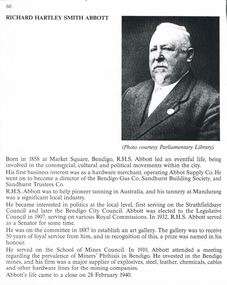
Document - LONG GULLY HISTORY GROUP COLLECTION: RICHARD HARTLEY SMITH ABBOTT
... Building Society and Sandhurst Trustees Co. He also helped pioneer tanning in Australia and he had his tannery in Mandurang. He served on the Strathfieldsaye Council and later the Bendigo City Council. He was elected to the Legislative Council in 1907 and in 1932 served as a Senator. In 1887 he was on the committee to establish an art gallery. He served on the School of Mines Council. In 1910, he attended a meeting about Miners' Phthisis in Bendigo. He invested in the Bendigo mines and his firm was a major supplier...Building Society and Sandhurst Trustees Co. He also helped pioneer tanning in Australia and he had his tannery in Mandurang. He served on the Strathfieldsaye Council and later the Bendigo City Council. He was elected to the Legislative Council in 1907 and in 1932 served as a Senator. In 1887 he was on the committee to establish an art gallery. He served on the School of Mines Council. In 1910, he attended a meeting about Miners' Phthisis in Bendigo. He invested in the Bendigo mines and his firm was a major supplier ...Copy of a piece about Richard Hartley Smith Abbott. Abbott was born in Bendigo. He was a hardware merchant, it operated as Abbot Supply Co. He was a director of the Bendigo gas Co, Sandhurst Building Society and Sandhurst Trustees Co. He also helped pioneer tanning in Australia and he had his tannery in Mandurang. He served on the Strathfieldsaye Council and later the Bendigo City Council. He was elected to the Legislative Council in 1907 and in 1932 served as a Senator. In 1887 he was on the committee to establish an art gallery. He served on the School of Mines Council. In 1910, he attended a meeting about Miners' Phthisis in Bendigo. He invested in the Bendigo mines and his firm was a major supplier of various hardware for the mining companies. There is also a photo.bendigo, history, long gully history group, the long gully history group - richard hartley smith abbott, parliamentary library, abbott supply co, bendigo gas co, sandhurst building society, sandhurst trustees co, strathfieldsaye council, bendigo city council, art gallery, school of mines council, miners' phthisis -
 Warrnambool and District Historical Society Inc.
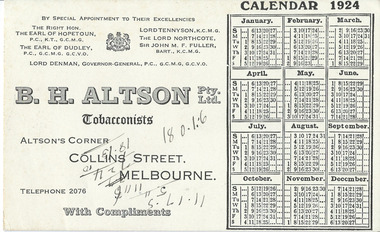
Document, Blotter Calendar 1924, 1924
... It comes from the firm of B.H.Altson, a tobacconist, probably a supplier of goods to the Warrnambool Club. Henry Altson, a tobacconist, built an eight-storeyed building in 1903 at the corner of Elizabeth and Collins Streets in Melbourne (on the site of the first brick building in Melbourne). ...It comes from the firm of B.H.Altson, a tobacconist, probably a supplier of goods to the Warrnambool Club. Henry Altson, a tobacconist, built an eight-storeyed building in 1903 at the corner of Elizabeth and Collins Streets in Melbourne (on the site of the first brick building in Melbourne). ...As this blotter came with a collection of dockets etc from the Warrnambool Club it is assumed that it was a blotter used at the Club. It comes from the firm of B.H.Altson, a tobacconist, probably a supplier of goods to the Warrnambool Club. Henry Altson, a tobacconist, built an eight-storeyed building in 1903 at the corner of Elizabeth and Collins Streets in Melbourne (on the site of the first brick building in Melbourne). Altson’s tobacconist shop occupied the prime corner position for many years. The Warrnambool Club was a gentlemen’s club established in Warrnambool in 1873 and the Warrnambool Club building in Kepler Street erected in 1877 and the Club still exist. This blotter is of some interest as an example of the Melbourne firms patronized by the Warrnambool Club in 1924This is a piece of blotting paper advertising on one side the firm of B.H. Altson, Tobacconists, in Melbourne. It has a calendar for 1924. The printed material is black on a creamy-coloured surface. The blotting paper on the other side has been slightly used (blotted handwriting) There are also some handwritten figures scrawled across the advertisement, the meaning of which is not known.‘B.H. Altson Pty Ltd, Tobacconists, Altson’s Corner, Collins Street, Melbourne, Telephone 2076, With Compliments’.warrnambool club, b.h.altson,, tobacconist -
 Warrnambool and District Historical Society Inc.
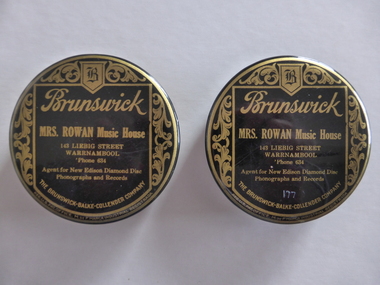
Cleaning Pad, Cleaning Pad Gramaphone Mrs Rowan, 1920s
... building. She died in 1948. Brunswick- Balke- Collender Company mrs tilly rowan brunswick- balke- collender company ‘Brunswick, Mrs Rowan Music House, 143 Liebig Street, Warrnambool, ‘Phone 634, Agent for New Edison Diamond Disc Phonographs and Records, The Brunswick-Balke-Collender Company, Reg.U.S. Pat.Office, M de F. Marca Industrial Registrada, patented November 1922, Philadelphia Badge Co., Phila, U.S.A.’ These are two gramophone records cleaning pads. They are circular in shape with a tin top and felt cleaning pads. One pad is brown-coloured and the other is green-coloured. The metal tops have the name of the supplier ...John Brunswick from Switzerland came to U.S.A. in 1845 and established a business in Ohio making carriages and billiard tables. In 1874 a merger gave the company a new name of Brunswick and Balke Company and in 1884 it became Brunswick, Balke and Collender. In the early 20th century the company made other products including phonograph records and discs and in 1930 this section of the company was sold to Warner Brothers. Today it is known as the Brunswick Corporation. The patent for these cleaning pads was taken out in 1922. Matilda (Tilly) Rowan, the daughter of Robert and Ellen Lavery was born in Warrnambool in 1872 and by 1896 was advertising her stationery shop in the Oddfellows Hall in Koroit Street. She married Thomas Rowan in 1908. She had a music shop at 143 Liebig Street with one known date, 1930, and then transferred her business to the Oddfellows Hall building which she owned. She also operated the Plaza Picture Theatre in the same building. She died in 1948.Brunswick- Balke- Collender CompanyThese are two gramophone records cleaning pads. They are circular in shape with a tin top and felt cleaning pads. One pad is brown-coloured and the other is green-coloured. The metal tops have the name of the supplier and the name of the music shop in Warrnambool that gave out or sold the pads. The tops are painted black with gold-coloured printing. The tops have ornamental scrolls on the edges. ‘Brunswick, Mrs Rowan Music House, 143 Liebig Street, Warrnambool, ‘Phone 634, Agent for New Edison Diamond Disc Phonographs and Records, The Brunswick-Balke-Collender Company, Reg.U.S. Pat.Office, M de F. Marca Industrial Registrada, patented November 1922, Philadelphia Badge Co., Phila, U.S.A.’mrs tilly rowan, brunswick- balke- collender company -
 Warrnambool and District Historical Society Inc.
Ledger, Swintons, 1930s
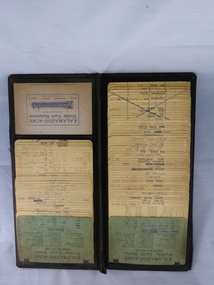
... suppliers for seeds and farm requirements such as poultry pellets, calf food and stock salt. William and Ann Swinton migrated to Australia in 1854 and for a decade William Swinton worked as a builder and carpenter in the Warrnambool area, erecting many buildings, including the Wangoom Presbyterian Church. ...suppliers for seeds and farm requirements such as poultry pellets, calf food and stock salt. William and Ann Swinton migrated to Australia in 1854 and for a decade William Swinton worked as a builder and carpenter in the Warrnambool area, erecting many buildings, including the Wangoom Presbyterian Church. ...This folder contains cards listing suppliers for the Warrnambool business, Swintons Pty Ltd. The cards date from the 1930s to the 1980s and contain information on the suppliers for seeds and farm requirements such as poultry pellets, calf food and stock salt. William and Ann Swinton migrated to Australia in 1854 and for a decade William Swinton worked as a builder and carpenter in the Warrnambool area, erecting many buildings, including the Wangoom Presbyterian Church. In 1865 he opened a shop in Timor Street, Warrnambool selling groceries, china, glass and hardware. By 1888 the business was known as William Swinton and Sons. Branch stores were opened in Cudgee, Nullawarre, Wangoom, South Warrnambool and West Warrnambool. After William died his son Robert became the first managing director of Swintons Pty Ltd. In 1934 the business split, with George Swinton and Sons selling furnishings, clothing and glassware and Swintons Pty Ltd selling seeds, hardware and produce. Today the Swinton family still operates a furniture and bedding store in Timor Street. This ledger is of interest as one from the Swinton business in Warrnambool. It gives us an idea of the items sold by Swintons Pty Ltd over a fifty-year period in the 20th century and will be very useful to researchers. The current Swinton business in Timor Street is the oldest family business in Warrnambool and, with the Swinton name associated with businesses in Timor Street, Warrnambool for 152 years, it is among the oldest family businesses in Australia. This is a black Kalamazoo folder made of thick board covered with material (leather?). The material is worn at the edges. The folder has a metal insert affixed with metal studs. The insert has thin metal wires strung across the inside. To these are affixed at the top with metal clips heavy-duty paper cards. There are two green cards with printed black material, one white card with printed blue material and the rest of the cards are yellow. The yellow cards are placed one under the other in a fan design. The yellow cards have printed red lines and printed titles and contain handwritten material, mostly in black ink. The cards, especially the green ones, are stained. ‘Kalamazoo-Acme Visible Card Books’swinton family warrnambool, history of warrnambool -
 Ballarat Tramway Museum
Photograph - Digital image, c1885
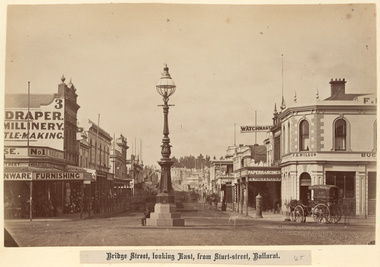
... Building. Has the W. M. Bean? store on the corner, F. B. Wilson, Bucks Head Hotel, a paper hangings supplier, watchmaker and other stores. ...Building. Has the W. M. Bean? store on the corner, F. B. Wilson, Bucks Head Hotel, a paper hangings supplier, watchmaker and other stores. ...Yields information about the appearance of the intersection of Grenville and Bridge St prior to the opening of the horse tram service.Digital image of Bridge St looking east from the intersection of Sturt and Grenville St Ballarat, prior to the construction of the horse tram line, c1885. Shows the NE corner prior to the construction of the Nichol and Alan Building. Has the W. M. Bean? store on the corner, F. B. Wilson, Bucks Head Hotel, a paper hangings supplier, watchmaker and other stores. Postcard or image has title "Bridge St, looking East from Sturt St, Ballarat"trams, tramways, bridge st, grenville st, sturt st -
 Sunshine and District Historical Society Incorporated
Manual - McPherson's Guide For The Handyman Manual, McPherson's Ltd
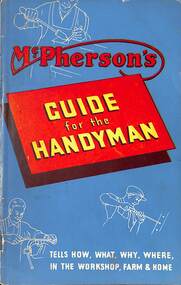
... building one of its key Victorian factories adjacent to the railway line. By the mid‑20th century, McPherson’s had become a significant employer in the district and part of Sunshine’s broader industrial ecosystem alongside H.V. McKay, Wiltshire Files, and other manufacturers. These handyman manuals were given out to customers by McPhersons's suppliers ...McPherson’s established a major industrial presence in Sunshine after purchasing 76 acres of land in 1937, building one of its key Victorian factories adjacent to the railway line. By the mid‑20th century, McPherson’s had become a significant employer in the district and part of Sunshine’s broader industrial ecosystem alongside H.V. McKay, Wiltshire Files, and other manufacturers.These handyman manuals were given out to customers by McPhersons's suppliers and salesmen.Front Cover - McPherson's Guide For The Handyman Tells How, What, Why, Where, In The Worshop, Farm & Home Inside Front Cover - Handwritten Geo E. Tracey (He was the Senior Mechnical Foreman at the Albion Explosive Factory Workshop & Outsdoor Services of the Plummers, Carpeters, Electricals & Fitters)mcphersons, ballarat road, sunshine north, manufacturing -
 Kew Historical Society Inc
Book, Flannel Flower Press, The Federation House: a restoration guide, 1986, 2004
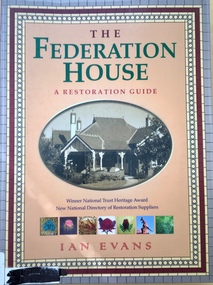
... buildings with a wealth of information on their restoration and conservation. Shrewd practical advice on restoration techniques from Australia's best-known writer on old houses, together with a comprehensive directory of suppliers which lists all of the services and materials necessary, combine to form an essential guide for every owner of a Federation-style house."...buildings with a wealth of information on their restoration and conservation. Shrewd practical advice on restoration techniques from Australia's best-known writer on old houses, together with a comprehensive directory of suppliers which lists all of the services and materials necessary, combine to form an essential guide for every owner of a Federation-style house." ...160 p. : ill. (some col. ) ; 29 cm.non-fictionarchitecture -- domestic -- australia -- conservation and restoration, interior decoration -- australia -
 Kew Historical Society Inc
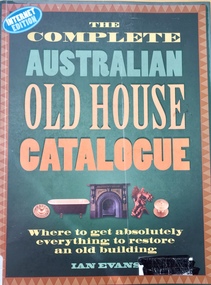
Book, Flannel Flower Press, The Complete Australian Old House Catalogue, 2000
... Some 750 entries list the names of suppliers throughout Australia who specialise in every aspect of building restoration. ..."If you own an old house, The Compete Australian Old House Catalogue will save you time, money and effort. Thanks to this book, finding the products, materials, skills and services needed to care for and restore your old house - from the front fence to the chimney pots - is now a simple matter. Ian Evans has collected the names of companies and people who can help you return your house to its original appearance and condition. Some 750 entries list the names of suppliers throughout Australia who specialise in every aspect of building restoration. For the first time, entries include e-mail and website addresses where these are available. Each chapter opens with introductory text which provides concise background information on the subject, drawn from Ian Evans's research into old Australian houses. Practical advice on many aspects of building conservation is combined with authoritative historical information, creating a unique and fascinating blend. The illustrations consist of a selection from old and new building catalogues, together with a wealth of archival and modern photographs. This is a book which belongs in every old house throughout the length and breadth of Australia." - back cover.96 p. : ill. ; 29 cm.non-fiction"If you own an old house, The Compete Australian Old House Catalogue will save you time, money and effort. Thanks to this book, finding the products, materials, skills and services needed to care for and restore your old house - from the front fence to the chimney pots - is now a simple matter. Ian Evans has collected the names of companies and people who can help you return your house to its original appearance and condition. Some 750 entries list the names of suppliers throughout Australia who specialise in every aspect of building restoration. For the first time, entries include e-mail and website addresses where these are available. Each chapter opens with introductory text which provides concise background information on the subject, drawn from Ian Evans's research into old Australian houses. Practical advice on many aspects of building conservation is combined with authoritative historical information, creating a unique and fascinating blend. The illustrations consist of a selection from old and new building catalogues, together with a wealth of archival and modern photographs. This is a book which belongs in every old house throughout the length and breadth of Australia." - back cover.interior decoration -- australia -- equipment and supplies -- directories., houses and domestic architecture. -
 Whitehorse Historical Society Inc.
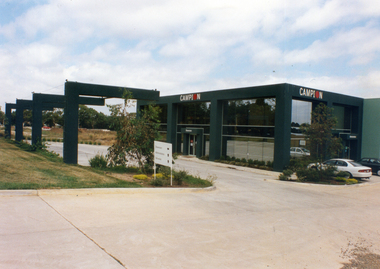
Photograph, Campion Pty Ltd
... The Campion Company are suppliers of educational materials such as text books, calculators and educational software. campion pty ltd 3 coloured photographs (a-c) of the Campion headquarters in Mitcham Road, Mitcham, showing the front facade of the building which faces Mitcham Road. ...The Campion Company are suppliers of educational materials such as text books, calculators and educational software.3 coloured photographs (a-c) of the Campion headquarters in Mitcham Road, Mitcham, showing the front facade of the building which faces Mitcham Road.campion pty ltd -
 Kew Historical Society Inc
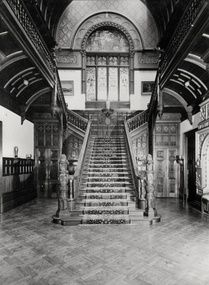
Photograph - Grand Staircase, Tara Hall', Studley Park Road, Marc Strizic (attrib), c.1960
... buildings that had previously been demolished. A chapter in the book was devoted to Goathland, later known as Tara Hall. To supplement the text, he sourced photographs from a range of suppliers, chiefly the Royal Women's Hospital which had once owned Tara Hall, but had sold it in 1960. ...buildings that had previously been demolished. A chapter in the book was devoted to Goathland, later known as Tara Hall. To supplement the text, he sourced photographs from a range of suppliers, chiefly the Royal Women's Hospital which had once owned Tara Hall, but had sold it in 1960. ...'Lost Glories: a memorial to forgotten Australian buildings' was published by David Latta in 1986. It tells the story of a number of significant Australian buildings that had previously been demolished. A chapter in the book was devoted to Goathland, later known as Tara Hall. To supplement the text, he sourced photographs from a range of suppliers, chiefly the Royal Women's Hospital which had once owned Tara Hall, but had sold it in 1960. This is one of the photographs donated to KHS by the author. The Grand Staircase of Tara Hall, circa 1957. The central hallway and stairs of Tara Hall, (previously named Byram, Goathland and Lowan). Edward George Kilburn, of Ellerker & Kilburn, designed this Studley Park Road mansion, of which the hallway was a significant feature, for the industrialist George Ramsden in 1888. Tara Hall, one of the great houses in Kew was demolished in 1959-60. Possibly Marc Strizic, photographer (1928-2012). Typed inscription on reverse: "The Grand Staircase of Tara Hall (Royal Women's Hospital, Melbourne).byram, goathland, tara hall, lowan, studley park (kew), george ramsden, sir malcolm mceacharn, edward george kilburn (architect), studley park road (kew) -
 Kew Historical Society Inc
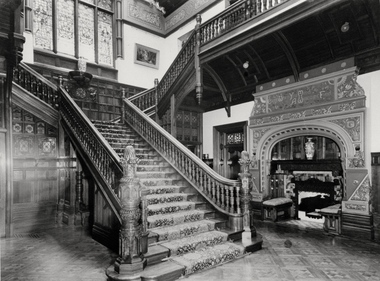
Photograph - Staircase of 'Tara Hall', Studley Park Road, Marc Strizic (attrib), c.1960
... buildings that had previously been demolished. A chapter in the book was devoted to Goathland, later known as Tara Hall. To supplement the text, he sourced photographs from a range of suppliers, chiefly the Royal Women's Hospital which had once owned Tara Hall, but had sold it in 1960. ...buildings that had previously been demolished. A chapter in the book was devoted to Goathland, later known as Tara Hall. To supplement the text, he sourced photographs from a range of suppliers, chiefly the Royal Women's Hospital which had once owned Tara Hall, but had sold it in 1960. ...'Lost Glories: a memorial to forgotten Australian buildings' was published by David Latta in 1986. It tells the story of a number of significant Australian buildings that had previously been demolished. A chapter in the book was devoted to Goathland, later known as Tara Hall. To supplement the text, he sourced photographs from a range of suppliers, chiefly the Royal Women's Hospital which had once owned Tara Hall, but had sold it in 1960. This is one of the photographs donated to KHS by the author. The Staircase at Tara Hall, circa 1957. An angled view of the main hallway and staircase of Tara Hall (previously named Byram, Goathland and Lowan). To the right of the staircase in this Studley Park Road mansion, a large inglenook fireplace was located, which was surrounded by stucco decoration. The latter was a characteristic of E. G. Kilburn’s late style.Typed inscription on reverse: "The Staircase at Tara Hall. Above the ornate fireplace is the legend 'Come When You Mind, A Welcome Find'. (Royal Women's Hospital, Melbourne)." byram, goathland, tara hall, lowan, studley park (kew), george ramsden, sir malcolm mceacharn, edward george kilburn (architect), studley park road (kew) -
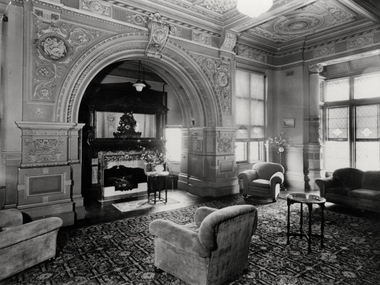 Kew Historical Society Inc
Photograph - Drawing Room, 'Tara Hall', Studley Park Road, Marc Strizic (attrib), c.1960
... buildings that had previously been demolished. A chapter in the book was devoted to Goathland, later known as Tara Hall. To supplement the text, he sourced photographs from a range of suppliers, chiefly the Royal Women's Hospital which had once owned Tara Hall, but had sold it in 1960. ...buildings that had previously been demolished. A chapter in the book was devoted to Goathland, later known as Tara Hall. To supplement the text, he sourced photographs from a range of suppliers, chiefly the Royal Women's Hospital which had once owned Tara Hall, but had sold it in 1960. ...'Lost Glories: a memorial to forgotten Australian buildings' was published by David Latta in 1986. It tells the story of a number of significant Australian buildings that had previously been demolished. A chapter in the book was devoted to Goathland, later known as Tara Hall. To supplement the text, he sourced photographs from a range of suppliers, chiefly the Royal Women's Hospital which had once owned Tara Hall, but had sold it in 1960. This is one of the photographs donated to KHS by the author. The Drawing Room, Tara Hall, circa 1957. A reception room in Tara Hall (previously named Byram, Goathland and Lowan). The room is presumed to be the original drawing room. In the La Trobe collection, there is a drawing by Charlie Hammond, depicting a group of painters who are gilding the elaborate stucco ceiling of this room. The drawing is dated 16 September 1889. The elaborate stucco decoration is characteristic of E. G. Kilburn’s late style. Kilburn, of Ellerker & Kilburn, designed Byram for the industrialist George Ramsden in 1888. Typed inscription on reverse: "A sitting room, one of many handsomely decorated rooms at Tara Hall.( Royal Women's Hospital, Melbourne)."byram, goathland, tara hall, lowan, studley park (kew), george ramsden, sir malcolm mceacharn, edward george kilburn (architect), studley park road (kew) -
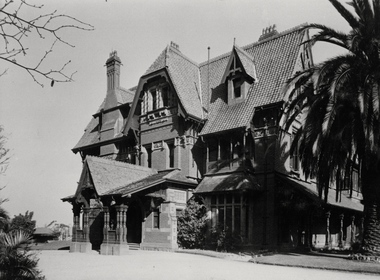 Kew Historical Society Inc
Photograph - Porte-cochere, 'Tara Hall', Studley Park Road, Marc Strizic (attrib), c.1960
... buildings that had previously been demolished. A chapter in the book was devoted to Goathland, later known as Tara Hall. To supplement the text, he sourced photographs from a range of suppliers, chiefly the Royal Women's Hospital which had once owned Tara Hall, but had sold it in 1960. ...buildings that had previously been demolished. A chapter in the book was devoted to Goathland, later known as Tara Hall. To supplement the text, he sourced photographs from a range of suppliers, chiefly the Royal Women's Hospital which had once owned Tara Hall, but had sold it in 1960. ...'Lost Glories: a memorial to forgotten Australian buildings' was published by David Latta in 1986. It tells the story of a number of significant Australian buildings that had previously been demolished. A chapter in the book was devoted to Goathland, later known as Tara Hall. To supplement the text, he sourced photographs from a range of suppliers, chiefly the Royal Women's Hospital which had once owned Tara Hall, but had sold it in 1960. This is one of the photographs donated to KHS by the author. Porte-cochere, Tara Hall, circa 1957. The main entrance to Tara Hall (previously named Byram, Goathland and Lowan). The entrance, through a porte-cochère, was located on the side of the house facing east. During construction, commentators described the house as being in the ‘Elizabethan style’. The architectural style of the exterior, with its innovatory use of red brick and Italian tiles was more influenced by American models. Edward George Kilburn, of Ellerker & Kilburn, designed Byram for the industrialist George Ramsden in 1888. Typed inscription on reverse: "Goathland, also known as Tara Hall (Royal Women's Hospital, Melbourne)."goathland -- kew (vic), byram -- kew (vic), tara hall - kew (vic), studley park road -
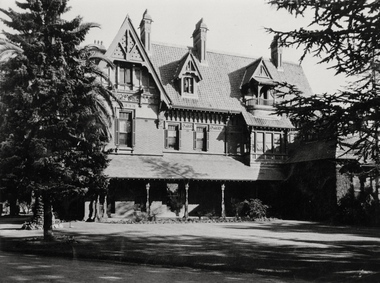 Kew Historical Society Inc
Photograph - 'Tara Hall', Studley Park Road, Marc Strizic (attrib), c.1960
... buildings that had previously been demolished. A chapter in the book was devoted to Goathland, later known as Tara Hall. To supplement the text, he sourced photographs from a range of suppliers, chiefly the Royal Women's Hospital which had once owned Tara Hall, but had sold it in 1960. ...buildings that had previously been demolished. A chapter in the book was devoted to Goathland, later known as Tara Hall. To supplement the text, he sourced photographs from a range of suppliers, chiefly the Royal Women's Hospital which had once owned Tara Hall, but had sold it in 1960. ...'Lost Glories: a memorial to forgotten Australian buildings' was published by David Latta in 1986. It tells the story of a number of significant Australian buildings that had previously been demolished. A chapter in the book was devoted to Goathland, later known as Tara Hall. To supplement the text, he sourced photographs from a range of suppliers, chiefly the Royal Women's Hospital which had once owned Tara Hall, but had sold it in 1960. This is one of the photographs donated to KHS by the author.Tara Hall, Studley Park Road, circa 1957. The front of Tara Hall (previously named Byram, Goathland and Lowan). This triple-storey mansion with its elaborate gabled, steeply-pitched roofs and verandah was set back from Studley Park Road and concealed by a high brick fence. E. G. Kilburn, of Ellerker & Kilburn, designed Byram for the industrialist George Ramsden in 1888. Typed inscription on reverse: "Tara Hall at the time it was a home for nurses from the Royal Women's Hospital, Melbourne. (Royal Women's Hospital, Melbourne)."byram, goathland, tara hall, lowan, studley park (kew), george ramsden, sir malcolm mceacharn, edward george kilburn (architect), studley park road (kew) -
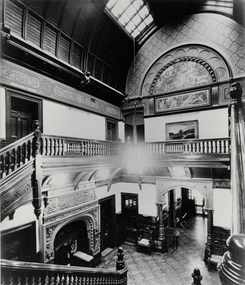 Kew Historical Society Inc
Photograph - Central Hall, 'Tara Hall', Studley Park Road, Marc Strizic, c.1960
... buildings that had previously been demolished. A chapter in the book was devoted to Goathland, later known as Tara Hall. To supplement the text, he sourced photographs from a range of suppliers, chiefly the Royal Women's Hospital which had once owned Tara Hall, but had sold it in 1960. ...buildings that had previously been demolished. A chapter in the book was devoted to Goathland, later known as Tara Hall. To supplement the text, he sourced photographs from a range of suppliers, chiefly the Royal Women's Hospital which had once owned Tara Hall, but had sold it in 1960. ...'Lost Glories: a memorial to forgotten Australian buildings' was published by David Latta in 1986. It tells the story of a number of significant Australian buildings that had previously been demolished. A chapter in the book was devoted to Goathland, later known as Tara Hall. To supplement the text, he sourced photographs from a range of suppliers, chiefly the Royal Women's Hospital which had once owned Tara Hall, but had sold it in 1960. This is one of the photographs donated to KHS by the author.Central Hall, Tara Hall, circa 1957. The central hallway and grand staircase of Tara Hall (previously named Byram, Goathland and Lowan). This photograph provides the clearest evidence of the scale and building materials selected by Edward George Kilburn, of Ellerker & Kilburn, for the industrialist George Ramsden in 1888. These include the murals on the second floor, the use of skylights, and the vaulted wooden panelling. byram, goathland, tara hall, lowan, studley park (kew), george ramsden, sir malcolm mceacharn, edward george kilburn (architect), studley park road (kew) -
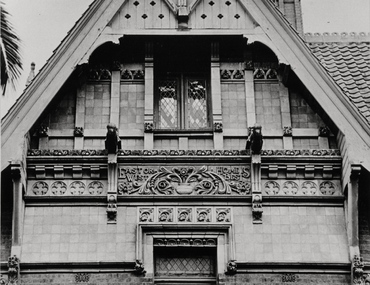 Kew Historical Society Inc
Photograph - Gable, 'Tara Hall', Studley Park Road, Marc Strizic, c.1960
... buildings that had previously been demolished. A chapter in the book was devoted to Goathland, later known as Tara Hall. To supplement the text, he sourced photographs from a range of suppliers, chiefly the Royal Women's Hospital which had once owned Tara Hall, but had sold it in 1960. ...buildings that had previously been demolished. A chapter in the book was devoted to Goathland, later known as Tara Hall. To supplement the text, he sourced photographs from a range of suppliers, chiefly the Royal Women's Hospital which had once owned Tara Hall, but had sold it in 1960. ...'Lost Glories: a memorial to forgotten Australian buildings' was published by David Latta in 1986. It tells the story of a number of significant Australian buildings that had previously been demolished. A chapter in the book was devoted to Goathland, later known as Tara Hall. To supplement the text, he sourced photographs from a range of suppliers, chiefly the Royal Women's Hospital which had once owned Tara Hall, but had sold it in 1960. This is one of the photographs donated to KHS by the author.A detailed photograph of the main gable on the front of Tara Hall (previously named Byram, Goathland and Lowan). The façade included detailed terra cotta mouldings. The Kew Historical Society was gifted a remnant of this façade (ie. ‘East or West’) in 2013. The use of applied terra cotta decoration by the architect Edward George Kilburn, of Ellerker & Kilburn, is typical of his style of the period. Mark Strizic (1928-2012), photographer. byram, goathland, tara hall, lowan, studley park (kew), george ramsden, sir malcolm mceacharn, edward george kilburn (architect), studley park road (kew)
