
Showing 243 items matching "built 1913"
-
 Sunshine and District Historical Society Incorporated
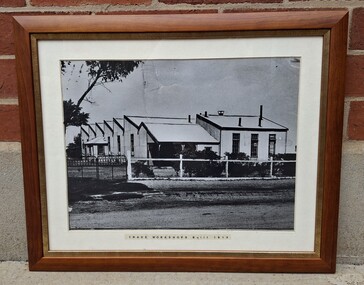
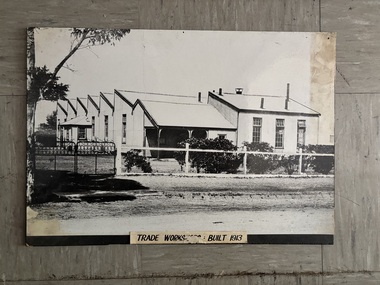
Photograph - Sunshine Technical School Trade Workshops Built 1913 Photograph
... Sunshine Technical School Trade Workshops Built 1913 Photograph...1913, following H.V. McKay’s donation of £2,000 and 4.5 acres on Derby Road. - Facilities: The school featured a timber administration building with six classrooms and a large, galvanized iron workshop specifically built for trade apprentices. - Purpose: Designed to train apprentices for McKay’s Sunshine Harvester Works, reflecting the industrial needs of the time. - Initial Enrollment: 70 students, including 44 apprentices from the Harvester Works....Trade Workshop Built 1913...McKay Sunshine Harvester Works Trade Workshop Built 1913 Black and white photograph mounted in a wooden frame Photograph Sunshine Technical School Trade Workshops Built 1913 Photograph ...The Sunshine Technical School trade workshop was constructed in 1913. It was a foundational part of Victoria’s early technical education system and was closely tied to the industrial growth of Sunshine and the legacy of H.V. McKay’s Harvester Works. - Opened: 7 July 1913, following H.V. McKay’s donation of £2,000 and 4.5 acres on Derby Road. - Facilities: The school featured a timber administration building with six classrooms and a large, galvanized iron workshop specifically built for trade apprentices. - Purpose: Designed to train apprentices for McKay’s Sunshine Harvester Works, reflecting the industrial needs of the time. - Initial Enrollment: 70 students, including 44 apprentices from the Harvester Works.Workshop Significance - The workshop was central to the school’s mission: “mente et manibus” — “with mind and with hands.” - It provided hands-on training in mechanical and industrial trades, aligning with the Education Act 1910’s push for secondary technical education. - This made Sunshine one of the first three technical schools established under the Act, and the longest-running of them, operating until 1991. Trade Workshop Built 1913sunshine technical school, h.v. mckay, sunshine harvester works -
 Ballarat Tramway Museum
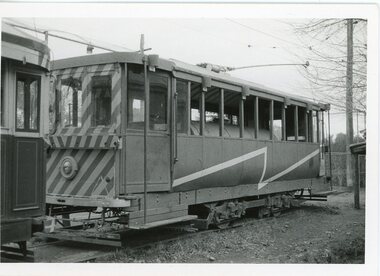
Photograph - "Scrubber" initially Tram 23, Scrubber outside the tennis courts near the Depot in Wendouree - side view
... ...built 1913...It was one of three trams built specifically for Ballarat in 1913. In mid 1930s it was converted to be a scrubber. ...When the trams ceased to run in Ballarat it was given to the Tramways Museum Society of Victoria, Bylands. tram 23 scrubber sebastopol type built 1913 large water tank cleaning tracks drains tramways museum society of victoria bylands campbell duncan photographer built for ballarat tramways Black and white photograph Scrubber outside the tennis courts near the Depot in Wendouree - side view Photograph "Scrubber" initially Tram 23 ...This tram was initially a straight sill car known as a Sebastopol type. It was No.23. It was one of three trams built specifically for Ballarat in 1913. In mid 1930s it was converted to be a scrubber. This meant the inside of the centre section was removed and a large water tank and cleaning equipment fitted. It was used to clean the tracks and also used to clean drains when necessary. This was done at night and there were complaints about the noise it made. When the trams ceased to run in Ballarat it was given to the Tramways Museum Society of Victoria, Bylands.Black and white photographtram 23, scrubber, sebastopol type, built 1913, large water tank, cleaning tracks, drains, tramways museum society of victoria, bylands, campbell duncan, photographer, built for ballarat tramways -
 Ballarat Tramway Museum
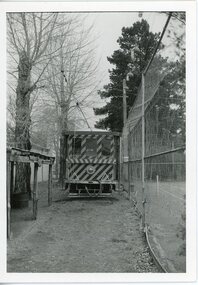
Photograph - "Scrubber" initially Tram 23, Scrubber outside the tennis courts near the Depot in Wendouree - Front view
... ...built 1913...It was one of three trams built specifically for Ballarat in 1913. In mid 1930s it was converted to be a scrubber. ...When the trams ceased to run in Ballarat it was given to the Tramways Museum Society of Victoria, Bylands. tram 23 scrubber sebastopol type built 1913 large water tank cleaning tracks drains tramways museum society of victoria bylands campbell duncan photographer built for ballarat tramways Black and white photograph Scrubber outside the tennis courts near the Depot in Wendouree - Front view Photograph "Scrubber" initially Tram 23 ...This tram was initially a straight sill car known as a Sebastopol type. It was No.23. It was one of three trams built specifically for Ballarat in 1913. In mid 1930s it was converted to be a scrubber. This meant the inside of the centre section was removed and a large water tank and cleaning equipment fitted. It was used to clean the tracks and also used to clean drains when necessary. This was done at night and there were complaints about the noise it made. When the trams ceased to run in Ballarat it was given to the Tramways Museum Society of Victoria, Bylands.Black and white photographtram 23, scrubber, sebastopol type, built 1913, large water tank, cleaning tracks, drains, tramways museum society of victoria, bylands, campbell duncan, photographer, built for ballarat tramways -
 Ballarat Tramway Museum
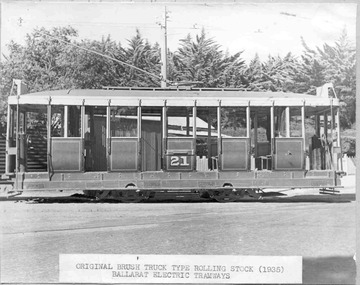
Photograph - Black & White Photograph/s, State Electricity Commission of Victoria (SECV), 1935
... Handwritten notes re tram history under photo in pencil - "Specially built 1913 for Sebastopol...Yields information about the condition of the ESCo tram fleet at the time of the SEC takeover of the operations their appearance and in particular tram Sebastopol type car No. 21. tramways trams ESCo SECV Tramcars Ballarat tram 21 Handwritten notes re tram history under photo in pencil - "Specially built 1913 for Sebastopol Black and White photograph contained within Reg. ...Yields information about the condition of the ESCo tram fleet at the time of the SEC takeover of the operations their appearance and in particular tram Sebastopol type car No. 21.Black and White photograph contained within Reg. Item 3000 - Photo Album produced by the SEC in 1935 titled "Photographs of Ballarat Tramways Rolling Stock & Track Reconditioning Works". Photo of Ballarat tram (ESCo or Sebastopol type) No. 21 on the depot fan at Ballarat. Side on photograph with caption "Original Brush truck type rolling stock (1935) Ballarat Electric Tramways". Taken by the SEC to illustrate the type of equipment on site in 1935. The caption has been adhered to the photograph. See also Reg. Item 1354 for copy prints. 3002i1 - digital image of photograph with pencil notes around the edge of the photograph included added 15-7-2014. Photos not to be taken out of the album unless for photographic copying. Use image files. Handwritten notes re tram history under photo in pencil - "Specially built 1913 for Sebastopoltramways, trams, esco, secv, tramcars, ballarat, tram 21 -
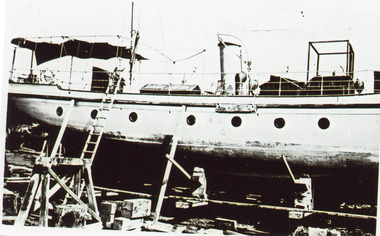 Lakes Entrance Historical Society
Photograph - M V Westwind, 1920 c
... Westwind built 1913 by J J Savige Melbourne for Syme family...Westwind built 1913 by J J Savige Melbourne for Syme family Ships and Shipping Slipway Black and white photograph showing M V Westwind up on the slip possibly Bulls Shipyard at Metung or slips on Fraser Island, shows work being done on hull of boat, work materials nearby, supports and ladder leaning against side. ...Westwind built 1913 by J J Savige Melbourne for Syme familyBlack and white photograph showing M V Westwind up on the slip possibly Bulls Shipyard at Metung or slips on Fraser Island, shows work being done on hull of boat, work materials nearby, supports and ladder leaning against side. Gippsland Lakes, Victoria.ships and shipping, slipway -
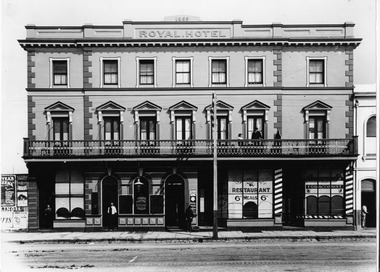 Port Melbourne Historical & Preservation Society
Photograph - Royal Hotel, Bay Street, Port Melbourne, 1913
... Photograph of Royal Hotel in Bay Street c 1913 (built 1859), showing Lorenzo CAELLI's Restaurant...Business and Traders - Hotels Business and Traders - Cafes and Restaurants Built Environment Joseph O'SULLIVAN Lorenzo CAELLI Photograph of Royal Hotel in Bay Street c 1913 (built 1859), showing Lorenzo CAELLI's Restaurant Photograph Royal Hotel, Bay Street, Port Melbourne ...Photograph of Royal Hotel in Bay Street c 1913 (built 1859), showing Lorenzo CAELLI's Restaurantbusiness and traders - hotels, business and traders - cafes and restaurants, built environment, joseph o'sullivan, lorenzo caelli -
 Port Melbourne Historical & Preservation Society
Photograph - Troopship, Ceramic (A40), outer west Railway Pier, WWI
... COPYRIGHT PUBLIC RECORDS OFFICE B&W photo (copy) showing the vessel the Ceramic (A40) - built 1913/18, 481 Tons gross, is at the outer West of Railway Pier/Station Pier. ...Piers and Wharves - Railway Pier Piers and wharves - Station Pier Transport - Shipping War - World War I Ceramic COPYRIGHT PUBLIC RECORDS OFFICE B&W photo (copy) showing the vessel the Ceramic (A40) - built 1913/18, 481 Tons gross, is at the outer West of Railway Pier/Station Pier. ...COPYRIGHT PUBLIC RECORDS OFFICE B&W photo (copy) showing the vessel the Ceramic (A40) - built 1913/18, 481 Tons gross, is at the outer West of Railway Pier/Station Pier. The troops were part of the second contingent waiting to embark for a departure at 14.30 that day (22nd dec 1914) for Albany in Western Australia where she was joined by other ships from all Aust and N.Z. major ports for a final destination the Middle Eastpiers and wharves - railway pier, piers and wharves - station pier, transport - shipping, war - world war i, ceramic -
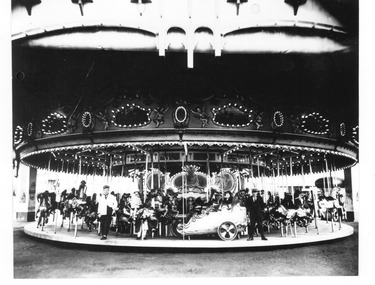 St Kilda Historical Society
Photograph, Luna Park, c.1923
... The Carousel, Luna Park, St Kilda, c1923. Built in 1913...The Carousel, Luna Park, St Kilda, c1923. Built in 1913 Carousel black and white photograph, a small and a large copy, unmounted, fair condition (numbered 216 on back) Luna Park Photograph ...The Carousel, Luna Park, St Kilda, c1923. Built in 1913black and white photograph, a small and a large copy, unmounted, fair condition (numbered 216 on back)Carousel -
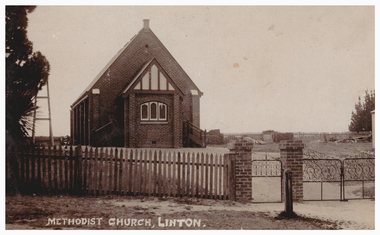 Linton and District Historical Society Inc
Photograph, Methodist Church, Linton
... The church was built in 1913, replacing earlier timber churches. ...The church was built in 1913, replacing earlier timber churches. ...The church was built in 1913, replacing earlier timber churches. It is currently a private dwelling.Photograph of the Methodist Church in Grantley Street, Linton, which has been printed as a postcard. Photograph shows brick church building, wooden bell tower to left, picket fence and wrought iron gates. The words "METHODIST CHURCH, LINTON" printed across lower LH edge.methodist church linton -
 Sunshine and District Historical Society Incorporated
Photograph - Sunshine Technical School Photographs
... 1/ Trade Workshop Built 1913 , pavement protest outside Jim Cairns office 1975|2/ The Office and Trade Block About 1955|3/ Staff|4/ Sunshine Technical College Typewriting Class|5/ Boys at Woodworking class Sunshine Technical School|6/ A Pavement Protest 1975 J. ...Sunshine Technical School Technical School Sunshine Student 1/ Trade Workshop Built 1913 , pavement protest outside Jim Cairns office 1975|2/ The Office and Trade Block About 1955|3/ Staff|4/ Sunshine Technical College Typewriting Class|5/ Boys at Woodworking class Sunshine Technical School|6/ A Pavement Protest 1975 J. ...1/ Trade Workshop Built 1913 , pavement protest outside Jim Cairns office 1975|2/ The Office and Trade Block About 1955|3/ Staff|4/ Sunshine Technical College Typewriting Class|5/ Boys at Woodworking class Sunshine Technical School|6/ A Pavement Protest 1975 J. Cox, A. Becker, F. Bassini, M. Bawden, H. Stagoll, M. Rufener, N. Butler, S. Hennessey, L. Diaz, W. Leaf, V. Litziersunshine technical school, technical school, sunshine, student -
 Bendigo Historical Society Inc.
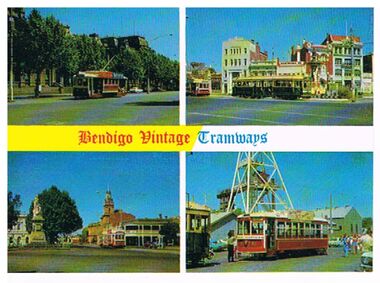
Postcard - BENDIGO TRAMS - BENDIGO VINTAGE TRAMWAYS
... No. 5 at Alexandra Fountain - built 1913 Adelaide. No. 25 at the Gold Monument, one of the first trams to start the Bendigo Tourist Tram Service. ...No. 5 at Alexandra Fountain - built 1913 Adelaide. No. 25 at the Gold Monument, one of the first trams to start the Bendigo Tourist Tram Service. ...coloured postcard. 4 separate images showing views of trams in Bendigo streets, Pall Mall, Charing Cross, Alexandra Fountain, Deborah Mine. On back of card 'Post Card, The Rose Series Deluxe. No. 19, in front of Post Office and Civic Buildings, Built Duncan & Fraser, Adelaide, 1920, came to Bendigo 1935. No. 5 at Alexandra Fountain - built 1913 Adelaide. No. 25 at the Gold Monument, one of the first trams to start the Bendigo Tourist Tram Service. No. 30 at the Central Deborah Mine, this Birney is probably the oldest of its type to come to Australia. Built USA.' ' The Bendigo Trust, PO, Box 333, Bendigo, Australia, 3550'Rose Seriesbendigo, tramways, trams in street views, bendigo, alexandra fountain, charing cross, central deborah, post office, duncan and fraser, birney, tourism -
 Melton City Libraries
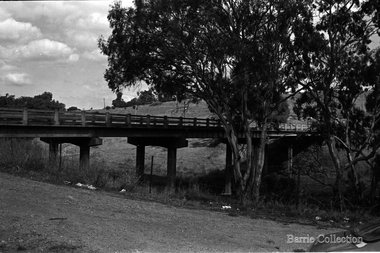
Photograph, Bridge Road Bridge, Unknown
... The Bridge Road Bridge built in 1913 by Sir John Monash for the Shire of Melton. ...The Bridge Road Bridge built in 1913 by Sir John Monash for the Shire of Melton. ...The Bridge Road Bridge built in 1913 by Sir John Monash for the Shire of Melton. It was built to provide railway station access to the new farming areas.Black and white photo of the bridgetransport, council -
 Linton and District Historical Society Inc
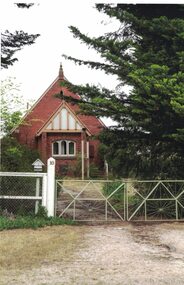
Photograph, Former Methodist Church, Grantley Street, Linton
... This building was formerly the Methodist Church in Linton, built in 1913 to replace an earlier timber building, and used as a church until 1977. ...This building was formerly the Methodist Church in Linton, built in 1913 to replace an earlier timber building, and used as a church until 1977. ...This building was formerly the Methodist Church in Linton, built in 1913 to replace an earlier timber building, and used as a church until 1977. The building is now a private home.Colour photograph which shows a red brick building with a high gable. Steps lead to an entrance porch, which has a window in three sections.methodist church linton, 10 grantley street linton -
 Charlton Golden Grains Museum Inc
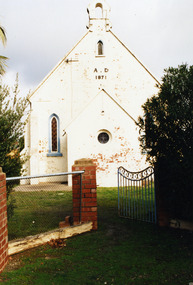
Photograph, Charlton Shire, St Andrews Charlton Presbyterian Church, c.Dec 1987
... Dismantled in 1889 to clear area for St Andrews Village, Hall built in 1913....Dismantled in 1889 to clear area for St Andrews Village, Hall built in 1913. Charlton Presbyterian Church James Patterson Church Presbyterian Pastoral Care Manse Colour Photo of St Andrews Presbyterian Church c.1987 St Andrews Charlton Presbyterian Church Photograph Photograph Charlton Shire ...The St Andrew Charlton Presbyterian Church was built in 1871 by James Patterson, a contractor and grazier of Nardoo Park, Woosang. Dismantled in 1889 to clear area for St Andrews Village, Hall built in 1913.Colour Photo of St Andrews Presbyterian Church c.1987charlton presbyterian church, james patterson, church, presbyterian, pastoral care, manse -
 Port Melbourne Historical & Preservation Society
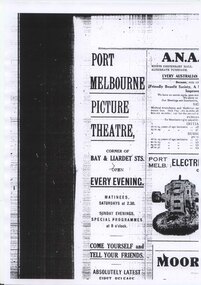
Photograph - Port Melbourne Picture Theatre - advertisement in The Standard Newspaper, 20 Sep 1913
... The Port Melbourne Picture Theatre was built in 1913 with a seating capacity for 1000 patrons. ...The Port Melbourne Picture Theatre was built in 1913 with a seating capacity for 1000 patrons. ...The Port Melbourne Picture Theatre was built in 1913 with a seating capacity for 1000 patrons. This item shows an advertisement for the theatre which appeared in the 20 September 1913 edition of the Standard Newspaper (Port Melbourne).Photograph of an advertisement in the Standard Newspaper - in three parts.port melbourne picture theatre, arts and entertainment - film/cinema, built environment - commercial -
 Ballarat Tramway Museum
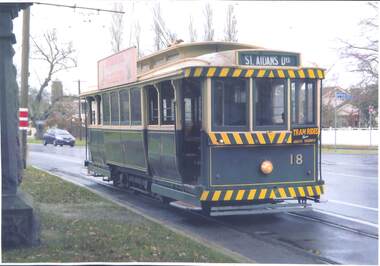
Photograph - Photograph - coloured, Tram No.18 - Single Truck Tram
... The tram was built in 1913 for the Prahran and Malvern Tramways Trust. ...The tram was built in 1913 for the Prahran and Malvern Tramways Trust. ...The tram was built in 1913 for the Prahran and Malvern Tramways Trust. It was sold to the Electric Supply Co. of Victoria Ltd. and transferred to Ballarat in 1931. It is a single truck with drop ends and modified California combination. It was donated to the Borough of Sebastopol in 1971 for their centenary. The tram returned to Ballarat in 1982 and was the last tram to move through the city area of Ballarat.Laminated colour photograph of tram 18 - tram colour is green and cream. St Aidens Dve in destination window. Tram fares board.Number and symbol of SEC in gold. Fares: Adults $4, Children $2.melbourne, 1931, sec vic, ballarat, borough of sebastopol, 1971, centenary, 1982, last tram, prahran and malvern tramways trust, 1913, single truck, drop ends, california combination -
 Melbourne Tram Museum
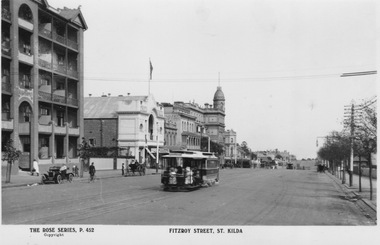
Postcard - Fitzroy Street, St Kilda, 1910s
... On the south side are the "Majestic Mansion" apartments built in 1913, the St Kilda (Bioscope) Theater built in 1911 and the tower of the George Hotel at the corner of Grey Street. ...On the south side are the "Majestic Mansion" apartments built in 1913, the St Kilda (Bioscope) Theater built in 1911 and the tower of the George Hotel at the corner of Grey Street. ...Photograph east of Grey Street, looking west along Fitzroy Street St Kilda. Two approaching cable trams, a number of horse-drawn and motor vehicles. On the south side are the "Majestic Mansion" apartments built in 1913, the St Kilda (Bioscope) Theater built in 1911 and the tower of the George Hotel at the corner of Grey Street. Rose Postcard No. 452.Yields information about Fitzroy Street St Kilda Postcard with label below photograph and postcard markings on rear. On front: 'The Rose Series P 452 Fitzroy Street, St Kilda'; on rear: 'Postcard - A real photograph. Produced in Australia'cable tram, fitzroy street, st kilda, rose series -
 Ballarat Tramway Museum
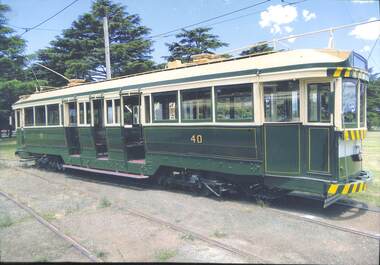
Photograph - Photograph - coloured, Tram No.40 - Maximum Traction truck bogie, drop end and centre combination
... This tram was built in 1913 for the Prahran and Malvern Tramways Trust. ...This tram was built in 1913 for the Prahran and Malvern Tramways Trust. ...This tram was built in 1913 for the Prahran and Malvern Tramways Trust. When first in use it was number 35. It was sold to the State Electricity Commission of Victoria and became number 40 in 1951. Ballarat Tramway Museum purchased the tram in 1971. It was the last tram to run when it ran from Sebastopol to the depot on 19 September 1971. Tram 40 is an operational vehicle and in general use in the Museum service.Large coloured photograph, laminated, of green and cream tram number 40.Tram number 40 and emblem of State Electricity Commission of Victoria in gold on side.1913, prahran and malvern tramways trust, tram 35, state electricity commission, tram 40, 1951, ballarat tramway museum, 1971, last tram, sebastopol to depot, operational vehicle -
 Phillip Island and District Historical Society Inc.
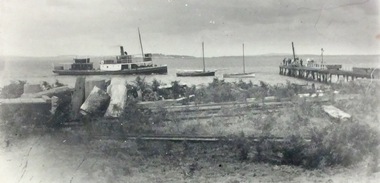
Photograph, Genista approaching Rhyll c 1915, 1915?
... "Veronica" - built by J. Norling, 1913 at Bass Landing...."Veronica" - built by J. Norling, 1913 at Bass Landing. local history photography photographs transport shipping maritime technology fisheries ferries fishing boats black & white photograph phillip island western port "Genista" approaching Rhyll jetty c.1915. ..."Genista" - built 1886, Sydney. Western Port Ferry 1889 to early 1930's. "Veronica" - built by J. Norling, 1913 at Bass Landing."Genista" approaching Rhyll jetty c.1915. Smaller black boat is John Norling's crayfishing boat - Veronica".local history, photography, photographs, transport, shipping, maritime technology, fisheries, ferries, fishing boats, black & white photograph, phillip island, western port -
 Ballarat Tramway Museum
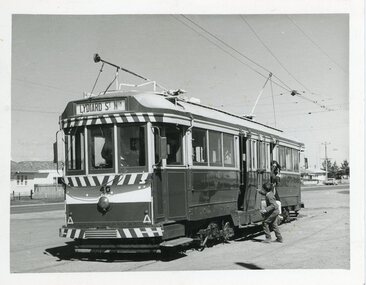
Photograph - Ballarat Tram 40, Ballarat Tram 40: At Sebastopol Terminus, last day, 1971
... This tram was built in 1913 by Duncan and Fraser in 1913 for the Prahran and Malvern Tramways Trust. ...This tram was built in 1913 by Duncan and Fraser in 1913 for the Prahran and Malvern Tramways Trust. ...This tram was built in 1913 by Duncan and Fraser in 1913 for the Prahran and Malvern Tramways Trust. It began service as their Number 35. It was classified "C" by the Melbourne Tramways Board. In 1951 it was sold to the State Electricity Commission of Victoria and renumbered 40. This tram was the last Ballarat tram to operate by the SEC to officially carry passengers in Ballarat on 19 September 1971. Tram 40 had a Maximum Traction truck bogie (eight wheels), drop end and centre combination. Photograph taken by Campbell Duncan.Black and white photograph "Sebastopol Terminus last day" on backballarat tram 40, 1913, duncan & fraser, prahran and malvern tramways trust, number 35, melbourne tramways board, 1951, state electricity commission, number 40, ballarat, last tram, 1971, campbell duncan, photographer -
 Ballarat Tramway Museum
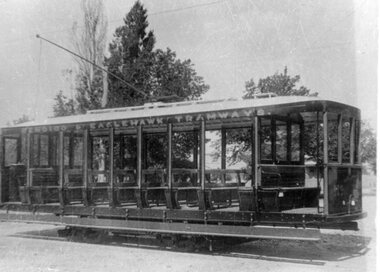
Photograph - Black & White Photograph/s, Electric Supply Co. of Vic (ESCo), 1913
... Black and white photograph of a Bendigo Single Truck cross bench tramcar (either 17 or 18) when built new in 1913. Tram has words "Bendigo and Eaglehawk Tramways" on top rail above windows. ...trams tramways Bendigo Cross bench tram Black and white photograph of a Bendigo Single Truck cross bench tramcar (either 17 or 18) when built new in 1913. Tram has words "Bendigo and Eaglehawk Tramways" on top rail above windows. ...Black and white photograph of a Bendigo Single Truck cross bench tramcar (either 17 or 18) when built new in 1913. Tram has words "Bendigo and Eaglehawk Tramways" on top rail above windows. Photograph appears to be a photo of another print, with black ink "15" in the bottom left hand corner on the newer print on copy 1 of the item only. See page 30 of Destination Eaglehawktrams, tramways, bendigo, cross bench tram -
 Ballarat Tramway Museum
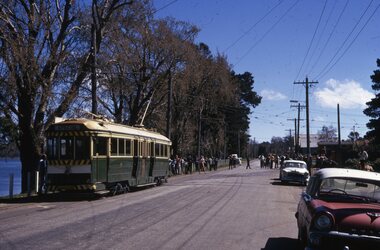
Photograph - Ballarat Tram 40, Tram leaving the Depot for the last time, 19 September 1971
... Tram 40 was built in 1913 by Duncan and Fraser for the Prahran and Malvern Tramways Trust was given the number 35. ...Tram 40 was built in 1913 by Duncan and Fraser for the Prahran and Malvern Tramways Trust was given the number 35. ...Tram 40 was built in 1913 by Duncan and Fraser for the Prahran and Malvern Tramways Trust was given the number 35. It was sold to the State Electricity Commission of Victoria (SEC) and renumbered 40 when it came to Ballarat in 1951. This tram was the last Ballarat tram operated by the SEC to officially carry passengers in Ballarat. This was on 19 September 1971. The tram remained in Ballarat and became part of the Ballarat Tramway Museum fleet. It is classified as operable - used for visitors to travel on at the Museum. The photograph shows a number of people watching Tram 40 leave the Depot for the last time. Photograph taken by Campbell Duncan 19 September 1971.Colour image in C/B Kodak mount, 35 mm slideHandwritten notation in ink on mount.tram 40, 1913, duncan and fraser, prahran and malvern tramways trust, state electricity commission, sec, 19 september 1971, last tram, ballarat tramway museum -
 Ballarat Tramway Museum
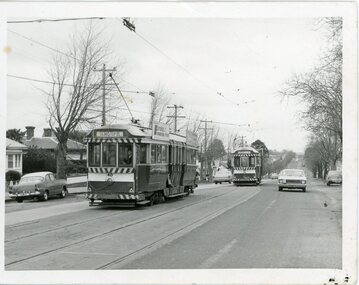
Photograph - Ballarat Tram 40, Ballarat Tram 40: In Drummond Street at the Urqhuart Street Loop
... This tram was built in 1913 by Duncan and Fraser in 1913 for the Prahran and Malvern Tramways Trust. ...This tram was built in 1913 by Duncan and Fraser in 1913 for the Prahran and Malvern Tramways Trust. ...This tram was built in 1913 by Duncan and Fraser in 1913 for the Prahran and Malvern Tramways Trust. It began service as their Number 35. It was classified "C" by the Melbourne Tramways Board. In 1951 it was sold to the State Electricity Commission of Victoria and renumbered 40. This tram was the last Ballarat tram to operate by the SEC to officially carry passengers in Ballarat on 19 September 1971. Tram 40 had a Maximum Traction truck bogie (eight wheels), drop end and centre combination. The photograph shows the tram on Drummond Street at the Urquhart Street loop. Another tram is about to enter the loop to allow No 40 to proceed on the way to Sebastopol. Photograph by Campbell Duncan. Black and white photograph "Urquhart St Loop" on backballarat tram 40, 1913, duncan & fraser, prahran and malvern tramways trust, number 35, melbourne tramways board, 1951, state electricity commission, number 40, ballarat, last tram, 1971, drummond street, urquart street loop, destination blind, sebastopol, campbell duncan, photographer -
 Ballarat Tramway Museum
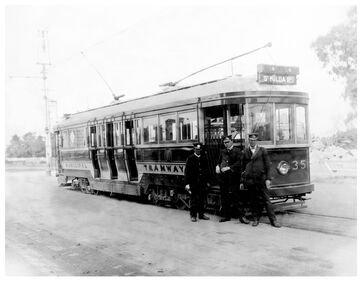
Photograph - Digital Image, PMTT Tram 35 Burke Road, c1914
... Not known whether this was a full time arrangement or for peak periods only. The tram, built in 1913 was sold to the SEC Ballarat where it became No. 40 in 1951....Not known whether this was a full time arrangement or for peak periods only. The tram, built in 1913 was sold to the SEC Ballarat where it became No. 40 in 1951. ...Digital image of Prahran and Malvern Tramways Trust (PMTT) bogie tram No. 35 at the Burke Road terminus c1914. The tram has the destination of St Kilda Road. Three crewman are standing by the front of the tram - motorman or driver and two conductors. Two conductors were used as the seating arrangements had two full width cross bench seats as shown in the floor plan - see second image. This prevented the conductor collecting fares from all passengers unless they swung to the outside of the tram. Not known whether this was a full time arrangement or for peak periods only. The tram, built in 1913 was sold to the SEC Ballarat where it became No. 40 in 1951.Yields information about PMTT tram 35 or SEC No. 40 and crewing arrangements.Set of two digital images.trams, tramways, pmtt, tram 35, tram 40, burke road -
 Ballarat Tramway Museum
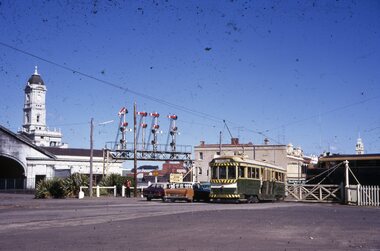
Photograph - Ballarat Tram 40, Tram waiting at level crossing for train to pass through, 19 September 1971
... Tram 40 was built in 1913 by Duncan and Fraser for the Prahran and Malvern Tramways Trust was given the number 35. ...Tram 40 was built in 1913 by Duncan and Fraser for the Prahran and Malvern Tramways Trust was given the number 35. ...Tram 40 was built in 1913 by Duncan and Fraser for the Prahran and Malvern Tramways Trust was given the number 35. It was sold to the State Electricity Commission of Victoria (SEC) and renumbered 40 when it came to Ballarat in 1951. This tram was the last Ballarat tram operated by the SEC to officially carry passengers in Ballarat. This was on 19 September 1971. The tram remained in Ballarat and became part of the Ballarat Tramway Museum fleet. It is classified as operable - used for visitors to travel on at the Museum. The photograph shows Tram 40 waiting at the Lydiard Street railway crossing for a train to pass through. This is at the Ballarat Railway Station which is visible to the left of the photo. Photograph taken by Campbell Duncan 19 September 1971.Colour image in C/B Kodak mount, 35 mm slideHandwritten notation in ink on mount.tram 40, 1913, duncan and fraser, prahran and malvern tramways trust, state electricity commission, sec, 19 september 1971, last tram, ballarat tramway museum, lydiard street train crossing, ballarat railway station -
 Surrey Hills Historical Society Collection
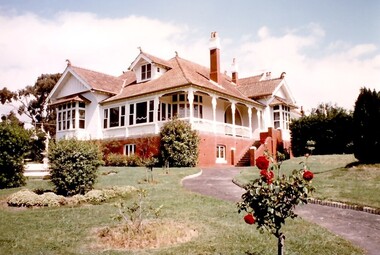
Photograph, Mr A Noack, Emilia Villa, 4 Albany Crescent, Surrey Hills, 1984
... The house was built in 1913 for Mr James Rubira and named for his wife Emilia Tajouera Guidotti, an Italian opera singer. ...The house was built in 1913 for Mr James Rubira and named for his wife Emilia Tajouera Guidotti, an Italian opera singer. ...The house was built in 1913 for Mr James Rubira and named for his wife Emilia Tajouera Guidotti, an Italian opera singer. She was born in 1865 and died in Surrey Hills on 21 October 1950. James was born in 1863 in Allela, Barcelona, Catalonia, Spain and died on 8 November 1935 in Surrey Hills. They married in Victoria in 1892. They married in 1892. James's mother was a member of the Parer family. The Rubiras and the Parers were among a number of Spanish families who began to migrate to Australia in the 1860s. James' mother was Teresa Florentina Lluisa Parer. Many of the families settled in Box Hill and then Surrey Hills by the 1900s. The Rubiras and the Parers established and supplied a number of high-class restaurants and hotels in Melbourne.Coloured image of an Edwardian style brick house at 4 Albany Crescent, Surrey Hills. It shows the path up to the house with the garden on each side. There is a fountain in the garden on the LHS of the path.On rear in blue pen: "Mr Rubira's House / per / A Noack (underlined) / Albany Cres"emilia villa, house names, 1913, singers, spanish community, italian community, ethnic communities, parer family, albany crescent, surrey hills, restaurants, hotels, edwardian style, mr james rubira, mrs emilia rubira, miss emilia tajouera guidotti -
 Eltham District Historical Society Inc
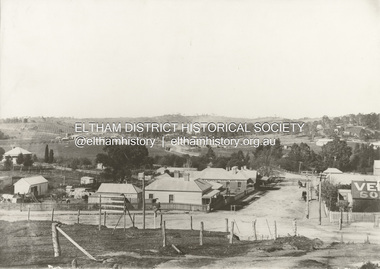
Albert Jones, Chute Street, Diamomnd Creek, c.1920
... Above and to the right of the Kidd hoime is the Diamond Creek Cool Stores, built in 1913 and now the site of the squash courts. ...Above and to the right of the Kidd hoime is the Diamond Creek Cool Stores, built in 1913 and now the site of the squash courts. ...Reproduced in The Diamond Valley Story, Dianne H Edwards, The Shire of Diamond Valley 1979, p43 "1920s - the toiwnship now has some private phones. To the right at the single pole in Main Street is of Diamond Creek's street lamps. Rose's bakery is at the rear of the corner house. The baker's daughty, Fanny, married Charlie Wilson. Both attended Diamond Creek State School in the 1890s. The small square hgouse on the left-hand sid in Inglis Street was the home of the Kidd family. This house and the station are the only buildings in the photo still standing [1979]. Above and to the right of the Kidd hoime is the Diamond Creek Cool Stores, built in 1913 and now the site of the squash courts. The hills around Perversi Street are cleared and planted ith orchards. On the corner of Chute and Diamond Streets is the roof of the Lawrey sisters haberdashery shop. Photo: Spark/Jones Collection"Stamped in purple ink on reverse within border "A.J. SPARK COLLECTION PHOTOS 1900 - 1930 PHOTOGHRAPHER LATE ALBERT JONES DIAMOND VALLEY. TEL: 83-3561"a.j. spark collection, albert jones, chute street, diamond creek, j. mcritchie, royal mail hotel -
 Ballarat Tramway Museum
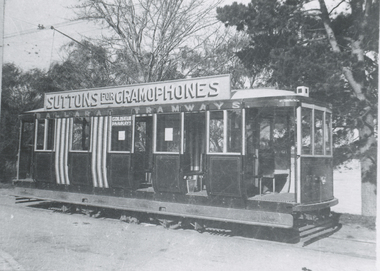
Photograph - Black & White Photograph/s - set of 3, Electric Supply Co. of Vic (ESCo), 1913
... 1708 - Black and white photograph of a Ballarat Sebastopol type tramcar when built new in 1913. Photo used in Keith Kings book, "The Ballarat Tramways" on page 28. ...Yields information about Ballarat No. 30, in the 1950's - SEC Official photograph. trams tramways Sebastopol Type Suttons Coliseum Destination Indicators ESCo 1708.1 - "12" in pencil in top right hand corner. 1708 - Black and white photograph of a Ballarat Sebastopol type tramcar when built new in 1913. Photo used in Keith Kings book, "The Ballarat Tramways" on page 28. ...Yields information about Ballarat No. 30, in the 1950's - SEC Official photograph.1708 - Black and white photograph of a Ballarat Sebastopol type tramcar when built new in 1913. Photo used in Keith Kings book, "The Ballarat Tramways" on page 28. Understood to be an ESCo photograph. Tram has "Suttons for Gramophones" roof advertisement, words "Ballarat Tramways" on the top rail above windows and "Coliseum Photoplays"in central window. Two of the four side blinds are in the down position, probably done to show their presence. Tram has a "bulls-eye" type destination indicator. Photographed outside the depot with Lake Wendouree in the background. Photograph is a photo of another print, with the words? "Original Rolling Stock" underneath the original print and the black ink "12" in the bottom left hand corner on the newer print. 1708.1 - as above, but without the "12" written on the photograph. The words "Ballarat Rolling Stock 2 Man Brush Type Car 1918". - added 18/11/2001. 1708.2 - as above, but with more of the label cut off. 1708.3 - Electronic copy of same photograph donated by Ron Hann on a CD of photographs given to him at the time of his visit in January 1963 by the Manager. Refer to email held with item 3841. Added 28/2/2010. See Reg Item 4568 for the CD. See page 28 of Keith Kings, The Ballarat Tramways. 1708.1 - "12" in pencil in top right hand corner.trams, tramways, sebastopol type, suttons, coliseum, destination indicators, esco -
 Surrey Hills Historical Society Collection
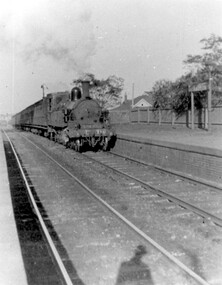
Photograph, D716 steam train at Mont Albert Station, 1919, 1919
... A total of 58 were built between 1908 and 1913. See wikipedia for a more detailed history of the D class locomotives. ...A total of 58 were built between 1908 and 1913. See wikipedia for a more detailed history of the D class locomotives. ...The photo was taken at 8.15am on Friday 12 September 1919. The D class was a passenger and mixed traffic steam locomotive which operated on the Victorian Railways from 1902 to 1974. Originally it was introduced on mainline express passenger services, but they were quickly superseded by the much larger A2 class and were relegated to secondary and branch line passenger and goods service, where they continued in service for the next fifty years. The D716 was probably built at the Newport Workshops, post 1910 and before 1914. The expansion of Melbourne's population into new suburbs early in the 20th century, and the delay of the suburban electrification project, meant there was the need for faster and more powerful steam locomotives for the suburban rail network. In 1908, the basic design was adapted to create a more powerful locomotive. They were put to work on longer and hillier suburban routes including the Lilydale line. A total of 58 were built between 1908 and 1913. See wikipedia for a more detailed history of the D class locomotives. Electric trains replaced steam in 1922. Mr William Holmes of 'Lugano', Mont Albert Road was in charge of the design and introduction of the electrification of the Melbourne rail system.Black and white photo of a steam train approaching the platform at Mont Albert station. Rear in blue biro in Jocelyn Hall's handwriting: "Hamilton St Mont Albert / probably 1919".mont albert station, railways, trains, d class locomotives, norman carter, steam trains -
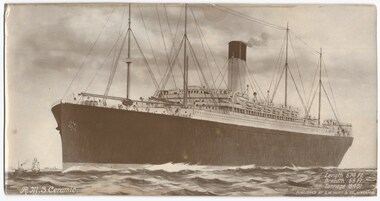 Melbourne Legacy
Photograph, RMS Ceramic, 1920
... The Ceramic was a transport vessel built in Belfast in 1913 for the White Star Line to transport frozen produce and apples from Australia to UK. ...The Ceramic was a transport vessel built in Belfast in 1913 for the White Star Line to transport frozen produce and apples from Australia to UK. ...A commemorative photo from the voyage back to Australia aboard the ship The Ceramic in 1920. It departed Tillbury, UK 12th March and docked in Freemantle on 27th April 1920 and then went onto Adelaide, Melbourne and Sydney. The Ceramic was a transport vessel built in Belfast in 1913 for the White Star Line to transport frozen produce and apples from Australia to UK. It was taken over by the Australian Government for troop transport in October 1914 and could carry over 3,000 troops. This trip in 1920 there were 1467 on board, there were women and children as well as 439 soldiers returning home, one of whom was John 'Basil' McLean. Was with other World War 1 memorabilia that has come from Private John Basil McLean, 2nd Reinforcements, 37th Battalion, A.I.F. J.B. McLean (Service No. 13824) was from near Maffra, Victoria and enlisted on 22 January 1916. He embarked on 16 December 1916 for Europe. His full war record is available from AWM. He spent time with the Australian Field Artillery (Pack Section). At the end of the war he worked for a year at the A.I.F. Headquarters in London before returning to Australia on the 'Ceramic', arriving Portsea in 1920.A record of a soldier's journey home after World War 1.Black and white photo of a ship that brought troops home from World War 1.Handwritten on the back 'Ship - Basil came home from 1st World War'world war one, souvenir, ship, rms ceramic
