
Showing 40 items matching "bush foods"
-
 Victorian Aboriginal Corporation for Languages
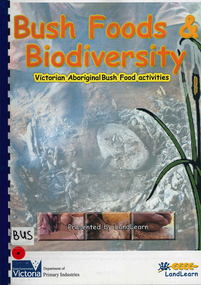
Book, Lydia Fehring et al, Bush foods and biodiversity : Victorian Aboriginal bush food activities, 2003
... Bush foods and biodiversity : Victorian Aboriginal bush food activities...It is aimed at providing non-Aboriginal students (but does not preclude Aboriginal students from taking part in these activities) curriculum linked hands-on activities designed to introduce them to the world of Aboriginal bush foods....It is aimed at providing non-Aboriginal students (but does not preclude Aboriginal students from taking part in these activities) curriculum linked hands-on activities designed to introduce them to the world of Aboriginal bush foods. Bush foods and biodiversity : Victorian Aboriginal bush food activities Book Lydia Fehring LandLearn ...This resource has been developed to assist teachers in bringing the topic of bushfoods and biodiversity into the curriculum. It is aimed at providing non-Aboriginal students (but does not preclude Aboriginal students from taking part in these activities) curriculum linked hands-on activities designed to introduce them to the world of Aboriginal bush foods.B&w illustrations, tablesenvironmental education, sustainable agriculture, natural resource management, sustainability, koori plants, curriculum development, classroom activities -
 Victorian Aboriginal Corporation for Languages
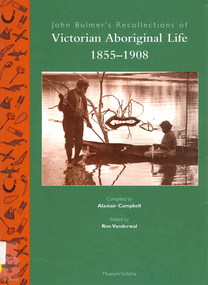
Book, Ron Vanderwal, John Bulmer's recollections of Victorian Aboriginal life, 1855-1908
... ...bush foods...Gunai Kurnai Gippsland Lake Tyers Lakes Entrance King Charley Snowy River Ellen Hood Sarah Moffat Lance McDougall Kassie McDougall Tom Foster Alec McCrae Nellie Blair John Bulmer Victorian history Indigenous social life kinship religion and mythology bush foods maps, b&w photograph, word lists, tables John Bulmer spent forty years of his life as missionary to Aboriginal people in Victoria, in 1855 devoting his activities to communities on the Murray, but most of his life was spent at Lake Tyers where he established a Church of England mission in 1862, In his later years he wrote a series of thirteen papers in which he recorded his observations on the life and times of the people to whom he ministered. ...John Bulmer spent forty years of his life as missionary to Aboriginal people in Victoria, in 1855 devoting his activities to communities on the Murray, but most of his life was spent at Lake Tyers where he established a Church of England mission in 1862, In his later years he wrote a series of thirteen papers in which he recorded his observations on the life and times of the people to whom he ministered. Over a period of several years Alistair Campbell transliterated the manuscripts, altering a little but retaining the flavour of the original text.maps, b&w photograph, word lists, tablesgunai kurnai, gippsland, lake tyers, lakes entrance, king charley, snowy river, ellen hood, sarah moffat, lance mcdougall, kassie mcdougall, tom foster, alec mccrae, nellie blair, john bulmer, victorian history, indigenous social life, kinship, religion and mythology, bush foods -
 Federation University Art Collection
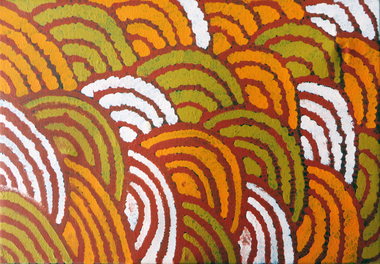
Painting - Artwork - Painting, 'Bushfood' by Anne Ferguson, 09/2006
... ...bush food...Ann Ferguson is also a basket weaver, carver and lino block printmaker at Indulkana Community, South Australia, aboriginal bushfood anne ferguson bush food bush foods Ann Cleary Ann Ferguson Indulkana Acrylic painting on stretched canvas 'Bushfood' by Anne Ferguson Painting Artwork - Painting ...Ann FERGUSON (1939- ) Country: Wingetllina Area: Alice Spring, Kalka/Pipalyatjara Language group: Pitjantjarara Ann Ferguson (Ann Cleary Nyankulya Bnaka) is a member of the Stolen Generation, she was removed from her family and take to Kalgoorlie Mission, South Australia. She started painting in 1973 when her care givers noticed her artistic talent. Ann Ferguson is also a basket weaver, carver and lino block printmaker at Indulkana Community, South Australia, Acrylic painting on stretched canvasaboriginal, bushfood, anne ferguson, bush food, bush foods, ann cleary, ann ferguson, indulkana -
 Victorian Aboriginal Corporation for Languages
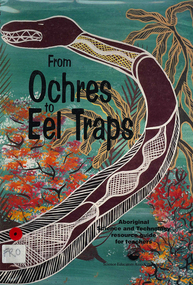
Book, Helen Halling, From ochres to eel traps : Aboriginal science and technology resource guide for teachers, 1999
... Art pigments Boomerangs Woomera Natural resins and gums Separation of poisons from edible plants Aboriginal bush foods Stone tool technology Aboriginal inventors Aboriginal bush medicine Specific uses of technology by a community Seasonal calendars Games and toys Firesticks...art seasonal calendars Aboriginal social life and customs stone tool technology games and toys colour photographs, b&w illustrations, diagrams Art pigments Boomerangs Woomera Natural resins and gums Separation of poisons from edible plants Aboriginal bush foods Stone tool technology Aboriginal inventors Aboriginal bush medicine Specific uses of technology by a community Seasonal calendars Games and toys Firesticks From ochres to eel traps : Aboriginal science and technology resource guide for teachers Book Helen Halling ...Art pigments Boomerangs Woomera Natural resins and gums Separation of poisons from edible plants Aboriginal bush foods Stone tool technology Aboriginal inventors Aboriginal bush medicine Specific uses of technology by a community Seasonal calendars Games and toys Firestickscolour photographs, b&w illustrations, diagramsart, seasonal calendars, aboriginal social life and customs, stone tool technology, games and toys -
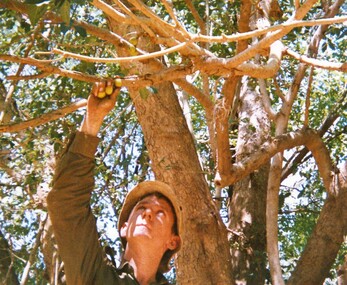 8th/13th Victorian Mounted Rifles Regimental Collection
Photograph
... Soldiers of ' A ' Squadron 8/13 VMR had received instruction of bush food by Major Les Hiddens aka ' The Bush Tucker Man. '100 mm x 100 mm...Soldiers of ' A ' Squadron 8/13 VMR had received instruction of bush food by Major Les Hiddens aka ' The Bush Tucker Man. '100 mm x 100 mm Photograph ...In 1988, as part of a Defence of Mainland Australian policy, defence of facilities of strategic importance in northern Australia were allocated to Army Reserve units. ‘A’ Squadron was allocated the defence of Tindal Air Force base located 15 KM outside Katherine in Northern Territory. Consequently the Squadron deployed on Exercise ‘Northern Explorer’ to gain first-hand knowledge of operating conditions for mounted and dismounted patrolling in the area.Colour photograph of Lance Corporal R. Van. De Velde picking native figs on bank of Ferguson River, Northern Territory during Exercise "Northern Explorer." Soldiers of ' A ' Squadron 8/13 VMR had received instruction of bush food by Major Les Hiddens aka ' The Bush Tucker Man. '100 mm x 100 mm -
 Orbost & District Historical Society
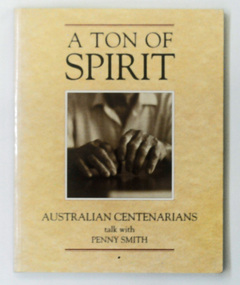
book, Kim Hup Lee Printing, A Ton of Spirit, 1990
... It includes reminiscences of Judy Bagu, Jimmy Bird, Paddy Djiaween and Walter Smith; brief accounts of bush foods, medicines, uses of plants, birth and mortuary rituals; working lives on cattle stations, missions, prospecting, dingo trapping, camel working, pearling, shire council; Kunmunyah, Beagle Bay Mission, Broome....It includes reminiscences of Judy Bagu, Jimmy Bird, Paddy Djiaween and Walter Smith; brief accounts of bush foods, medicines, uses of plants, birth and mortuary rituals; working lives on cattle stations, missions, prospecting, dingo trapping, camel working, pearling, shire council; Kunmunyah, Beagle Bay Mission, Broome. ...This book contains interviews with 48 of the 300 centenarians listed by the Australian Bicentennial Authority, whose long lives together form an oral social history of the development of Australia over the past one hundred years. It includes reminiscences of Judy Bagu, Jimmy Bird, Paddy Djiaween and Walter Smith; brief accounts of bush foods, medicines, uses of plants, birth and mortuary rituals; working lives on cattle stations, missions, prospecting, dingo trapping, camel working, pearling, shire council; Kunmunyah, Beagle Bay Mission, Broome.This compilation of stories from centenarians is a contemporary social record of one hundred years of living through two world wars and the Great Depression in Australia. A 183 pp book with a light brown cover, darker spine. On the front cover is a photograph of a pair of hands. Print is black "A Ton of Spirit Australian Centenarians talk with Penny Smith".book-a-ton-of-spirit-penny-smith social-records-early-australia -
 Eltham District Historical Society Inc
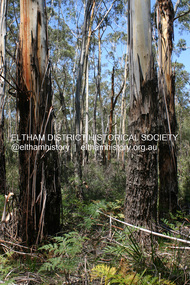
Photograph - Digital Photograph, Alan King, Manna Gums at the Gawa Wurundjeri Aboriginal Resource Trail, 28 December 2007
... Signs share information about how the Wurundjeri people lived near the creek and used the land to obtain bush foods, medicines, tools, shelter and clothes. ...Signs share information about how the Wurundjeri people lived near the creek and used the land to obtain bush foods, medicines, tools, shelter and clothes. ...Manna Gum is a species of a small to a very tall tree that is endemic to south-eastern Australia. These particular trees are part of the Gawa Wurundjeri Resource Trail at Watsons Creek. Signs share information about how the Wurundjeri people lived near the creek and used the land to obtain bush foods, medicines, tools, shelter and clothes. The trail introduces visitors to the indigenous flora and fauna, including manna gums, Lomandra (used to weave baskets) and wombat burrows. Published: Nillumbik Now and Then / Marguerite Marshall 2008; photographs Alan King with Marguerite Marshall.; p3This collection of almost 130 photos about places and people within the Shire of Nillumbik, an urban and rural municipality in Melbourne's north, contributes to an understanding of the history of the Shire. Published in 2008 immediately prior to the Black Saturday bushfires of February 7, 2009, it documents sites that were impacted, and in some cases destroyed by the fires. It includes photographs taken especially for the publication, creating a unique time capsule representing the Shire in the early 21st century. It remains the most recent comprehenesive publication devoted to the Shire's history connecting local residents to the past. nillumbik now and then (marshall-king) collection, gawa wurundjeri aboriginal resource trail, manna gums, watsons creek -
 National Wool Museum
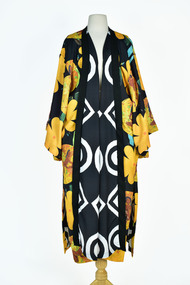
Textile - Cloak, Dr Deanne Gilson, Murnong Daisy Cloak (Women Gathering Food) Cloak, 2022
... All parts of the plants and trees were and still are honoured as sacred medicine, healing plants and bush food knowledge....All parts of the plants and trees were and still are honoured as sacred medicine, healing plants and bush food knowledge. Deanne Gilson Wadawurrung Dja First Nations Art Cloak murnong Yellow flower and female figure motif on black background on outer cloak, black and white diamond, and circle design in lining. ...Standing proud, still here, the spirit of ten ancestral matriarchs adorned in contemporary ceremonial cloaks. Representing our women past, present and future, her Spirit, our culture, our Country (spelt with a capital for its importance and this is part of First Peoples protocols on acknowledging Country, our strength, our resilience and healing towards a sustainable future. The murnong was one of the main food sources for First Peoples before colonisation as it grew right across Wadawurrung Dja. The introduction of the sheep and cattle saw the murnong eaten roots and all and it quickly became less plentiful. The tubers were eaten raw or roasted on a fire. Water could be added to make a paste for small children to eat. The woman’s wooden digging stick that was used to gather and harvest plants was often buried with the woman for her afterlife and is considered sacred women’s knowledge. All parts of the plants and trees were and still are honoured as sacred medicine, healing plants and bush food knowledge.Yellow flower and female figure motif on black background on outer cloak, black and white diamond, and circle design in lining. Solid black trimming. Cloak is machine sewn and handstitched with hand stitching on shoulder seam.deanne gilson, wadawurrung dja, first nations art, cloak, murnong -
 Bendigo Historical Society Inc.
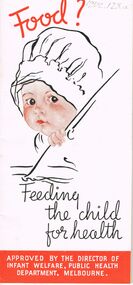
Document - MERLE BUSH COLLECTION: FOOD RELATED MATERIAL OF MERLE BUSH
... MERLE BUSH COLLECTION: FOOD RELATED MATERIAL OF MERLE BUSH...Food related material of Merle Bush. Booklet (x2) ''Food - Feeding the Child for Health'' (approved by the director of Infant Welfare, Public health Dept.; 54 pages, 1937; b. ...Food?'' by the Victorian Railways' Dietician, 1936; d. ''The Feeding of Children'' pamphlet by the Public Health Dept., Victoria 1927 Document MERLE BUSH COLLECTION: FOOD RELATED MATERIAL OF MERLE BUSH ...Food related material of Merle Bush. Booklet (x2) ''Food - Feeding the Child for Health'' (approved by the director of Infant Welfare, Public health Dept.; 54 pages, 1937; b. ''Venereal Diseases - Information relating to Venereal Diseases and Duties of patients'' ; Public Health Dept, Victoria (no date); c. ''Are You Interested in Food?'' by the Victorian Railways' Dietician, 1936; d. ''The Feeding of Children'' pamphlet by the Public Health Dept., Victoria 1927government, state, department of public health -
 Federation University Art Collection
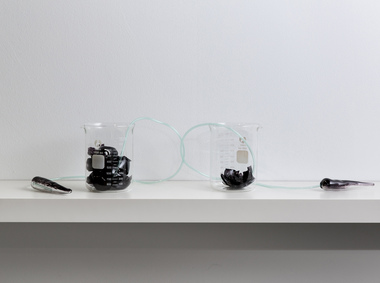
Sculpture - Artwork, 'The More Bones the Better' by Yhonnie Scarce, 2016
... Akin to a gatherer of bush food Scarce creates glass-gatherings of the persecuted. ...Akin to a gatherer of bush food Scarce creates glass-gatherings of the persecuted. ...Yhonnie SCARCE (1973- ) Born Woomera, South Australia Language group: Kokatha, Southern desert region and Nukunu, Spencer region Yhonnie Scarce works predominantly in glass. She majored in glass withing a Bachelor of Visual Arts (Honours) course at the South Australian School of Art, Adelaide, and holds a Master of Fine Arts from Monash University. One of the first contemporary Australian artists to explore the political and aesthetic power of glass, Scarce describes her work as ‘politically motivated and emotionally driven’. Scarce’s work often references the on-going effects of colonisation on Aboriginal people, In particular her research focus has explored the impact of the removal and relocation of Aboriginal people from their homelands and the forcible removal of Aboriginal children from their families. (https://thisisnofantasy.com/artist/yhonnie-scarce/, accessed 10 September 2018)Artist's Statement 'The More Bones the Better', 2016 Yhonnie Scarce was born in Woomera, SA and belongs to the Kokatha and Nukunu peoples. Scarce embraces a non traditional approach to glass blowing using glass as more than a mere material, acting as a lens and a mirror, Scarce reflects and exposes the tragedies of Australia’s colonisation. She applies the technical rigours of traditional glass blowing techniques in an innovative and unconventional manner. In particular Scarce uses glass to explore the lives and histories of Aboriginal Australians. Hand blown glass is shaped, engraved, painted and smashed to create indigenous fruits and vegetables such as bush bananas, bush plums and long yams symbolic of her peoples culture and traditions. With their elongated, torso-like shapes, they even evoke human bodies. Akin to a gatherer of bush food Scarce creates glass-gatherings of the persecuted. The repetition of brittle ambiguous bodies collected for experimentation and examination conjures the relentless impact of colonisation and the litany of abuses suffered by Aboriginal people. Within her research Scarce encountered a variety of ethnographic studies examining the use of scientific interventions amongst Indigenous cultures. These include Government sanctioned illegal drug testing of children in orphanages and other dubious medical practices amongst indigenous prison inmates. This work metaphorically looks at these situations and poses questions of what might have gone on in such a laboratory. The judge of the 2017 Guirguis New Art Prize (GNAP), Simon Maidment, Senior Curator, Contemporary Art, National Gallery of Victoria said; “The winning work by Yhonnie Scarce captures the sensitivity to materials she displays throughout her artistic practice. The blown and shattered glass elements are a delicate contrast to the shocking and little discussed histories of Aboriginal exploitation and abuse in the name of science in Australia. Engaging this topic, this work is haunting, in the same way those lived and documented experiences continue to haunt the collective unconscious of this country. Yhonnie Scarce’s work, The More Bones the Better 2016, I believe makes an important contribution to the Collection of Federation University Australia and will engage and move diverse audiences with its technical accomplishment, beauty and message. Yhonnie Scarce was born in Woomera SA and belongs to the Kokatha and Nukunu peoples. Scarce embraces a non-traditional approach to glass blowing using her medium as more than a mere material. Applying the technical rigours of traditional glass blowing in an innovative and unconventional manner, Scarce’s glass objects act as a lens and a mirror to reflect and expose the tragedies of Australia’s colonisation and, in particular, explore the lives and histories of Aboriginal Australians. Hand-blown glass is shaped, engraved, painted and smashed to represent indigenous fruits and vegetables such as bush bananas, bush plums and long yams, symbolic of Scarce’s people’s culture and traditions. While these elongated shapes on the one hand represent fruit and vegetables, gathered and grouped as in the gathering of bush food, Scarce’s torso-like bodies and forms are glass ‘gatherings’ representative of the gathering of people. Here, the many brittle bodies act as a metaphor for the collection, experimentation and examinations undertaken by government authorities on Aboriginal communities researched by Scarce. Exposing a variety of ethnographic studies, examining the use of scientific interventions on Indigenous cultures, Scarce also revealed Government sanctioned illegal drug testing of children in orphanages and other dubious medical practices undertaken on indigenous prison inmates. Scarce’s gatherings also reflect the impact of colonisation and the relentless conjuring and litany of abuses suffered by Aboriginal people. The More Bones the Better metaphorically looks at these situations and poses questions of what was undertaken and investigated in these laboratories. guirguis new art prize, yhonnie scarce, glass, aboriginal -
 The Beechworth Burke Museum
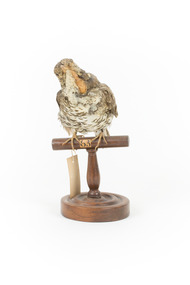
Animal specimen - Bassian Thrush, Trustees of the Australian Museum, 1860-1880
... food on the ground eating small invertebrates and nests in tree stumps and tree forks. Primarily found in Tasmania, South Australia and Queensland, there are three sub-species of thrush, Zoothera lunulata cuneate (Queensland), Zoothera lunulata halmaturina (South Australian and Western Bassian Thrushes) and Zoothera lunulata lunulata/Zoothera lunulata macrorhyncha (South East Australia, Queensland, Victoria and Tasmania). Because this bird is a ground foraging species, the main threat to the Bassian Thrush is the ground clearing of its habitat, and unfortunately, the South Australian Zoothera lunulata halmaturina sub-species is considered vulnerable because of the bush...food on the ground eating small invertebrates and nests in tree stumps and tree forks. Primarily found in Tasmania, South Australia and Queensland, there are three sub-species of thrush, Zoothera lunulata cuneate (Queensland), Zoothera lunulata halmaturina (South Australian and Western Bassian Thrushes) and Zoothera lunulata lunulata/Zoothera lunulata macrorhyncha (South East Australia, Queensland, Victoria and Tasmania). Because this bird is a ground foraging species, the main threat to the Bassian Thrush is the ground clearing of its habitat, and unfortunately, the South Australian Zoothera lunulata halmaturina sub-species is considered vulnerable because of the bush ...The habitat of the Bassian Thrush includes leaf littered and canopied gullies and dense forests. It forages for food on the ground eating small invertebrates and nests in tree stumps and tree forks. Primarily found in Tasmania, South Australia and Queensland, there are three sub-species of thrush, Zoothera lunulata cuneate (Queensland), Zoothera lunulata halmaturina (South Australian and Western Bassian Thrushes) and Zoothera lunulata lunulata/Zoothera lunulata macrorhyncha (South East Australia, Queensland, Victoria and Tasmania). Because this bird is a ground foraging species, the main threat to the Bassian Thrush is the ground clearing of its habitat, and unfortunately, the South Australian Zoothera lunulata halmaturina sub-species is considered vulnerable because of the bush fires that have eliminated much of its habitat, especially on Kangaroo Island. While the overall structure of this particular representation of a Bassian Thrush is relatively accurate, some of the smaller details are lacking. The eyes within this particular specimen are not accurate. Instead of solid black eyes, this specimen has golden/yellow eyes with black pupils. Another inaccuracy is some inappropriate intrusions coming from the beak (most noticeable in the left and right close up images). From the photographs, it is unclear if this is a representative/presentation choice or a condition problem caused overtime. Unfortunately, several aging problems have also occurred over time, with the bird’s feathers fading (Bassian Thrushes have distinct dark brown and black and white scalloped plumage) and the beak which was probably once dark grey has faded to the under colour, a yellowy cream. This specimen is part of a collection of almost 200 animal specimens that were originally acquired as skins from various institutions across Australia, including the Australian Museum in Sydney and the National Museum of Victoria (known as Museums Victoria since 1983), as well as individuals such as amateur anthropologist Reynell Eveleigh Johns between 1860-1880. These skins were then mounted by members of the Burke Museum Committee and put-on display in the formal space of the Museum’s original exhibition hall where they continue to be on display. This display of taxidermy mounts initially served to instruct visitors to the Burke Museum of the natural world around them, today it serves as an insight into the collecting habits of the 19th century.This specimen is part of a significant and rare taxidermy mount collection in the Burke Museum. This collection is scientifically and culturally important for reminding us of how science continues to shape our understanding of the modern world. They demonstrate a capacity to hold evidence of how Australia’s fauna history existed in the past and are potentially important for future environmental research. This collection continues to be on display in the Museum and has become a key part to interpreting the collecting habits of the 19th century.The Bassian Thrush has white and black scalloped plumage on its underbelly with caramel, soft brown and black tipped scalloped plumage on its back. This soft brown continues onto the bird’s head and neck. The thrush has a white rim around the glass black eyes. When seen in flight, there is also a noticeable wide band across the underside of the wings which is not visible on this specimen due to its particular stance.Swing tag appears to read: ‘46a [the a is superscripted] / Mountain Thrush. / See Catalogue, Page 16. / The number in the top centre of the wooden perch reads '63'taxidermy mount, taxidermy, animalia, burke museum, beechworth, australian museum, skin, reynell eveleigh johns, bird, bassian thrush, zoothera lunulata, white's thrush, ground thrush, scaly thrush -
 Marysville & District Historical Society
THE TRIANGLE NEWS-VOL 39 NO 33-AUGUST 31 2012
... food wine & cultural group...triangle community dinner...marysville golf club...castella central park project control group...councillor passes on leadership life skills...buxton primary school...complimentary therapist team...lantern making workshop...marysville community centre...after fire revegetation work continues...triangle community dancers...social dance buxton hall...buxton cfa...close fire call at buxton...alexandra library september events...real estate...don giovanni opera comes to marysville...black spur inn...marysville villains...2012 presentation night...golfers appreciate the daffodils...bush...marysville victoria australia goulburn broken catchment management authority opportunity to comment on draft regional catchment strategy marysville & district lions club what's on when in august the committee of management of the gallipoli park precinct maryville community market intrepid triangle bushwalkers creative triangle marysville cricket club registration day advertisements breakfast for men saladin lodge church notices upper goulburn food wine & cultural group triangle community dinner marysville golf club castella central park project control group councillor passes on leadership life skills buxton primary school complimentary therapist team lantern making workshop marysville community centre after fire revegetation work continues triangle community dancers social dance buxton hall buxton cfa close fire call at buxton alexandra library september events real estate don giovanni opera comes to marysville black spur inn marysville villains 2012 presentation night golfers appreciate the daffodils bush dance buxton hotel toboggan race day lake mountain cup murrindindi shire council draft municipal fire management plan ready for public comment local government elections call for women candidates THE TRIANGLE NEWS-VOL 39 NO 33-AUGUST 31 2012 ...marysville, victoria, australia, goulburn broken catchment management authority, opportunity to comment on draft regional catchment strategy, marysville & district lions club, what's on when in august, the committee of management of the gallipoli park precinct, maryville community market, intrepid triangle bushwalkers, creative triangle, marysville cricket club registration day, advertisements, breakfast for men, saladin lodge, church notices, upper goulburn food wine & cultural group, triangle community dinner, marysville golf club, castella central park project control group, councillor passes on leadership life skills, buxton primary school, complimentary therapist team, lantern making workshop, marysville community centre, after fire revegetation work continues, triangle community dancers, social dance buxton hall, buxton cfa, close fire call at buxton, alexandra library september events, real estate, don giovanni opera comes to marysville, black spur inn, marysville villains, 2012 presentation night, golfers appreciate the daffodils, bush dance buxton hotel, toboggan race day, lake mountain cup, murrindindi shire council, draft municipal fire management plan ready for public comment, local government elections call for women candidates -
 Lara RSL Sub Branch
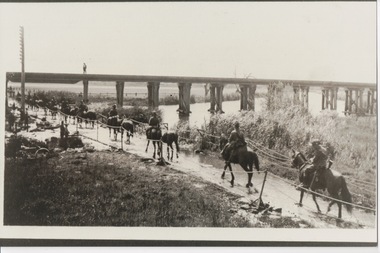
Photograph, Set 4 photographs. and others for Torquay Light Horse camp, 1940
... Bush life had hardened them to go for long periods with little food and water. ...Bush life had hardened them to go for long periods with little food and water. ...These images capture for all time Light Horsemen travelling through Geelong on their way to camp at Torquay for the last Group meeting in Australia . information following - details obtained from .........https://torquayhistory.com/light-horse-brigade/ On Australia Day, 1997, Sir John Young unveiled this plaque on Point Danger, Torquay. Torquay history, Light Horse Training Camp, WW2 Plaque at Pt. Danger Note----- (See images to view plaque) The plaque identifies a significant event in Torquay’s history and the sentiments of ‘change’ for the Light Horse Brigade – from horses to machines. In 1940 the four Light Horse Regiments (4th, 8th, 13th and 20th), some 5000 Light Horse and 2000 horses camped and trained at Torquay. Three other regiments, formerly mounted on horses, were also at Torquay ‘mounted’ on privately owned trucks and cars. Division troops included Artillery, Engineers, Signals, Field Ambulance and other branches of the Army necessary to enable a Division to function. It wasn’t just the sheer numbers of men coming to this little town that made the event significant, it was also the fact that the men of the Light Horse were dramatic, almost glamorous figures and it is easy to see their exploits as some splendid adventure. Horses have played a special role in the story of Australia. They were the only means of transport across this huge country, so it was necessary for everyone to have the ability to ride a horse. When war broke out in 1899 between Britain and the Boers of South Africa (“Boer” was Dutch for “farmer”) Australia sent troops to fight. At first Britain was wary of using untried, unprofessional colonial cavalrymen but soon saw that the slouch-hatted Australian “bushmen” were a match for the fast-moving and unconventional mounted commandos of the Boers. The Australians proved themselves to be expert rough-riding horsemen and good shots. Bush life had hardened them to go for long periods with little food and water. They also showed remarkable ability to find their way in a strange country and use its features for cover, in both attack and defence. By 1914, when Australia joined the war against Germany, there were 23 Light Horse regiments of militia volunteers. Many men from these units joined the Light Horse regiments of the Australian Imperial Force (AIF). Men were given remounts (if not using their own horses) – army horses bought by Commonwealth purchasing officers from graziers and breeders. These were called “walers” because they were a New South Wales stockhorse type – strong, great-hearted animals with the strains of the thoroughbred and semi-draught to give them speed, strength and stamina. On 1st November, 1914, Australia’s First Infantry Division and the first four Light Horse regiments sailed for England in a fleet of transport ships. The first of the Light Horse arrived at Gallipoli in May without their horses. Back with their horses after Gallipoli, they were formidable combatants across the Sinai and Palestine. Some British commanders observed that the light horseman moved with a “lazy, slouching gait, like that of a sleepy tiger” but described how the promise of battle “changes that careless gait, into a live athletic swing that takes him over the ground much quicker than other troops”. They had Light Horse, Torquay, training campdeveloped a reputation as formidable infantrymen. The Turks called them “the White Ghurkas” – a reference to their deadly skill with the bayonet. The Arabs called them “The Kings of the Feathers”. The plume had originally been a battle honour of the Queensland Mounted Infantry for their work in the shearer’s strike of 1891. During WW1 it was adopted by almost all the Light Horse Regiments. It was the proud badge of the light horseman. The most famous of their battles was the attack on Beersheba- the charge of the 4th Light Horse Brigade. Mounted infantrymen and their superb walers had carried out one of the most successful cavalry charges in history – against what seemed impossible odds. They surprised the Turks by charging cavalry-style, when they would normally have ridden close to an objective then dismounted to fight. The fall of Beersheba swung the battle tide against the Turks in Palestine; and changed the history of the Middle East. While 19 men from the Surf Coast Shire served with the 4th Light Horse over the course of WW1, only four were involved in the charge of Beersheba- John GAYLARD, Philip QUINN.(Winchelsea); Wallace FINDLAY (Anglesea); Harry TRIGG (Bambra). After the war, Light Horse units played a key role in the Australian Government’s compulsory military training programme. The Citizen Military Forces (C.M.F.) thrived on the glamour of the wartime Light Horse tradition, ignoring the possibility that motor vehicles would soon replace the horses. When training was no longer compulsory, the C.M.F. regiments declined and horses became more of a luxury during the 1930s depression years of poverty and unemployment. Some regiments were motorised. Then, in 1939, Australia joined Britain in another world war. Training was increased for the militia at both home bases and regional training camps. The camp at Torquay in 1940, commanded by Major General Rankin, was at Divisional strength. By the end of the camp some felt that the Division was ready for active service. Gradually, over the next four years, the Australian Light Horse units were mounted on wheels and tracks and the horses were retired. Six men enlisted at the Torquay camp and another 57 men and women enlisted at Torquay for service in WW2. Those who served in the Militia provided valuable Officers and NCOs and men for the armed services during the war. Each infantry division of the 2nd AIF had a Light Horse regiment attached to it. But the day of the Australian mounted soldier hadn’t quite passed. During World War II, Australia’s 6th Cavalry Regiment formed a mounted unit they called “The Kelly Gang” which did valuable scouting work. In New Guinea, a mounted Light Horse Troop did patrol duty and helped carry supplies. Some fully equipped walers were flown into Borneo for reconnaissance in rugged mountain country. But by the end of the war, in 1945, the horse had disappeared from the Australian Army. References: Australian Light Horse Association www.lighthorse.org.au National Australia Archives Australian War Memorial Surf Coast Shire WW1 memorials www.togethertheyserved.com The Light horse- a Cavalry under Canvas Light Horse, Training Camp, Torquay, WW2 Late in 1939 it was decided to set up a Lighthorse training camp in Torquay to train both men and horses for the battles of the Second World War. Horses, men and equipment came on special trains from all over Victoria and NSW, and as you would expect horseman came from areas such as Omeo and Sale, the Wimmera and the Western District. They arrived at the Geelong racecourse for watering in the Barwon River and then were ridden across the ford at the breakwater and began their 11 mile trek to Torquay. Light Horse, Training Camp, Torquay, WW2 Tent city By the end of January 1940 the camp at Torquay accommodated some 5000 men and 2500 horses of the Second Cavalry Division. The rows of horses, tents and huts near Blackgate Road were quite a sight. While the cavalrymen engaged in exercises on the land and on the beaches, many of the troops took over the Torquay School for special training of men and officers. Mr Bob Pettit local farmer and Councillor for the Barrabool Shire, wrote about the Light horse in the Surf Coast Community News in 1985 saying “They used to travel about the district riding four abreast in one long convoy. To my annoyance they went through my property and shut all the gates behind them. I had certain gates open to let stock in to the water holes and it would take me three -quarters of an hour to follow the horsemen up and put all the gates right again” he continued “the men from the Light Horse were here when the fire went through in March 1940. He recalled an incident when early one morning, as some one blew the bugle, a soldier putting a white sheet on the line frightened the horses. They panicked and ran off in all directions. Six went over the cliff near Bird Rock, five were never found, and the rest were gathered up after nearly a fortnight in the bush around Addiscott and Anglesea" Light Horse, Training Camp, Torquay, WW2, Geelong Parade Geelong parade The training camp culminated in a parade through the streets of Geelong on March 12th 1940. The salute was given at the Town Hall and the troops continued on a route to the You Yang’s for a training exercise. Note-----(see media section for photograph) The Camp was abandoned in mid 1940 as it was deemed unsuitable for training during winter and the cost of a permanent camp could not be justified if it could not be used all year. Historic.......Rare,,,Interpretive.Sepia photographs.set of four ....post card size ....Horses &LighthorsemenNo 1, Lighthorsemen Regiment Geelong 1940......No 2 Light Horse at Breakwater Geelong 1938 to 1940....No 3 Light Horse at Breakwater Geelong 1938 to 1940.....No 4 Light Horse crossing Breakwater camped at Geelong Showgrounds. These markings are on reverse of photographs.light horsemengeelong 1940., world war 2 -
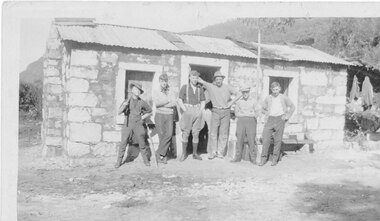 Halls Gap & Grampians Historical Society
Photograph - B/W
... food. It is not known when the cottage was last occupied but during the 1970s the drum was removed and the pit filled in for safety reasons. Houses Mt Difficult Quarry Photo shows 6 men standing in front of stone cottage at Heatherlie (Mt Difficult) quarry. Cottage made from sawnand off-cuts of stone with stone window frames and door lintel. Rough bush ...It is believed that the three stone cottages in the area were built c.1930 by Italian stonemasons. This cottage is a single room with open fireplace at one end. A hole was dug in the floor inside which a small drum was sunk and covered by a wooden lid. It served as a cool box for the storage of perishable food. It is not known when the cottage was last occupied but during the 1970s the drum was removed and the pit filled in for safety reasons. Photo shows 6 men standing in front of stone cottage at Heatherlie (Mt Difficult) quarry. Cottage made from sawnand off-cuts of stone with stone window frames and door lintel. Rough bush-pole awning at right hand end of cottage.houses, mt difficult quarry -
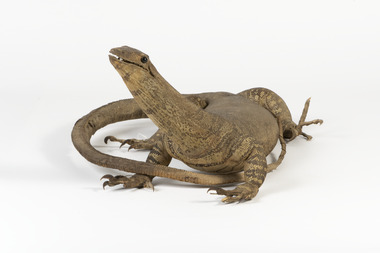 The Beechworth Burke Museum
Animal specimen - Sand Goanna, Trustees of the Australian Museum, 1860-1880
... bush settlers in Australia likened goannas to the South American lizards. Goannas retain special cultural and historic significance within Australian folklore and Indigenous culture. They were an important traditional native food...bush settlers in Australia likened goannas to the South American lizards. Goannas retain special cultural and historic significance within Australian folklore and Indigenous culture. They were an important traditional native food ...Sand goannas are the second largest species of carnivorous lizards found across mainland Australia. They can grow up to 160cm in length and can weigh as much as 6kg. Their common name is derived from "iguana", since early European bush settlers in Australia likened goannas to the South American lizards. Goannas retain special cultural and historic significance within Australian folklore and Indigenous culture. They were an important traditional native food source and are commonly represented in Aboriginal Dreamtime stories. In some Aboriginal languages, the sand goanna is called "bungarra"; a term also commonly used by non-Aboriginal people in Western Australia. In Pitjantjatjara and other central Australian languages, goannas are called "tingka". This specimen is part of a collection of almost 200 animal specimens that were originally acquired as skins from various institutions across Australia, including the Australian Museum and the National Museum of Victoria, as well as individuals such amateur anthropologist Reynell Eveleigh Johns between 1860-1880. These skins were then mounted by members of the Burke Museum Committee and put-on display in the formal space of the Museum’s original exhibition hall where they continue to be on display. This display of taxidermy mounts initially served to instruct visitors to the Burke Museum of the natural world around them, today it serves as an insight into the collecting habits of the 19th century. This specimen is part of a significant and rare taxidermy mount collection in the Burke Museum. This collection is scientifically and culturally important for reminding us of how science continues to shape our understanding of the modern world. They demonstrate a capacity to hold evidence of how Australia’s fauna history existed in the past and are potentially important for future environmental research. This collection continues to be on display in the Museum and has become a key part to interpreting the collecting habits of the 19th century.Small goanna with a streamlined body and textured scaly skin in different shades of olive and brown. It has a long neck and a long tail which narrows towards the tip. The goanna has four short, stocky legs which meet with large, curled claws. Its mouth is slightly slightly open, and it has two black glass eyes.On tag: BMM / 5892 /taxidermy mount, taxidermy, animalia, burke museum, beechworth, australian museum, skin, reynell eveleigh johns, lizard, goanna, sand goanna, monitor lizard, various gouldii -
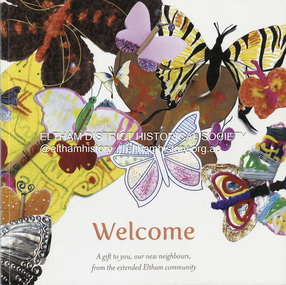 Eltham District Historical Society Inc
Book, Nina Kelabora, Welcome : a gift to you, our new neighbours, from the extended Eltham community / produced by Nina Kelabora (graphic designer) and Lara McKinley (principal photographer), December 2016
... Events • Alistair Knox Park, 12 August 2016 • Syrian Community Dinner, 30 September 2016 • Pop up Picnic, Eltham North Adventure Playground, 1 October 2016 • Alistair Knox Park, 7 October 2016 • At Our Lady of Help of Christians, 7 October 2016 • Andrew Park Butterfly Effect v Battle for Eltham, 5 November 2016 • City Rally, 5 November 2016 • Eltham Library Children’s Garden, 12 November 2016 • Eltham Festival, 13 November 2016 • Welcome Book Fundraiser, St Margaret’s Church, 11 December 2016 • Nillumbik International Women’s Day Dinner 9 March 2017 • Bush Dance, 17 June 2017 • Eltham Police Morning Tea, 29 July 2017 8. House warmers • Approximately 40 images of gift care items donated (food, drink, blankets, etc) intended as housewarming hampers 9. ...Events • Alistair Knox Park, 12 August 2016 • Syrian Community Dinner, 30 September 2016 • Pop up Picnic, Eltham North Adventure Playground, 1 October 2016 • Alistair Knox Park, 7 October 2016 • At Our Lady of Help of Christians, 7 October 2016 • Andrew Park Butterfly Effect v Battle for Eltham, 5 November 2016 • City Rally, 5 November 2016 • Eltham Library Children’s Garden, 12 November 2016 • Eltham Festival, 13 November 2016 • Welcome Book Fundraiser, St Margaret’s Church, 11 December 2016 • Nillumbik International Women’s Day Dinner 9 March 2017 • Bush Dance, 17 June 2017 • Eltham Police Morning Tea, 29 July 2017 8. House warmers • Approximately 40 images of gift care items donated (food, drink, blankets, etc) intended as housewarming hampers 9. ...In 2016 the Welcome to Eltham community project started to welcome Syrian refugees into the community and made Welcome Butterflies to say welcome to them. In addition to the physical book, EDHS also holds several hundred digital images pertaining to the development of the Welcome to Eltham campaign, photographs, artworks and graphic designs, which resulted in the publication of this book. EDHS also holds further material from the period 2016 to 2017 associated with the Welcome to Eltham campaign group. Contents: 1. Welcome Book Welcome Book includes selected page extracts and images as published December 2016 Contents: • Greetings to our Country P2 • Offering P8 • Your neighbours P10 • Rotary P39 • Eltham Baptist Church P44 • Eltham Farmers Market stall holders P48 • The Eltham community P54 • Surrounding communities P60 • Our Lady Help of Christians Primary School P64 • Nillumbik Greens P66 • Our Lady Help of Christians Church Eltham P68 • Catholic Care Eltham P70 • St Vincent’s P71 • Montmorency South Primary School P72 • Victoria Police P73 • Catholic Ladies College P74 • Warrandyte P76 • Eltham Toy Library P78 • Eltham-Montmorency Uniting Church P82 • Gingerbread P84 • Scouts P86 • Eltham businesses P89 • Surrounding communities P96 • The Seed P101 2. Administration 1. Welcome to Eltham Infant Plan, Purpose and Scope (Aug. 2016) 2. Circle of Friends; A draft proposal from Welcome to Eltham, 26 August 2016 3. Welcome to Eltham; a resident support group for refugees settling in Eltham (Sep. 2016) 4. Welcome to Eltham; Purpose and Scope (Sep. 2016) 5. Welcome to Eltham Plan (Sep. 2016); 10 pages typed of tasks broken into four categories, 10 pages 6. Welcome to Eltham Team/Volunteer organisation structure, volunteers’ skills assessment and role assignments, strategies, 11 pages 7. Briefing Document: Refugees being welcomed in Eltham, 2 Oct. 2016; 5 pages 8. Public Engagement Plan, 2 Oct. 2016; 2 pages 9. Welcome to Eltham 2016 Review, Values and Structure, 2017 10. Welcome to Eltham Incorporated Financial Report July 2016 – June 2017; 3 pages 11. Letter: Nina Kelabora and Welcome to Eltham Team to Bolton Street Fruit Market re offer to provide fresh fruit, 30 Jun. 2017 12. Welcome to Eltham Incorporated Annual Report 2016–2017; Oct. 2017; 4 pages 13. Certificate: Jagajaga Community Australia Day Award 2018 to Nina Kelabora, signed Jenny Macklin MP, Federal Member for Jagajaga 14. Certificate: Jagajaga Community Australia Day Award 2018 to Welcome to Eltham, signed Jenny Macklin MP, Federal Member for Jagajaga 15. Letter: Simon Le Plastrier, Principal, Eltham College to Nina Kelabora, 20 April 2018 offering congratulations for the work achieved by Welcome to Eltham group 16. Photo: River pebble covered in spray paint of multiple colours. The rock was used to hold down templates for painting butterflies on the footpaths near Andrew park as a counter to protesters assembling for the ‘Battle for Eltham’ demonstration on 5 November 2016 17. Photo: Welcome to Eltham team member, Gillian Essex 18. Photo: Welcome to Eltham team member, Kirsten Bate 19. Photo: Welcome to Eltham team member, Lara McKinley 20. Photo: Welcome to Eltham team member, Nina Kelabora 21. Photo: Welcome to Eltham team member, Sarah Hooten 22. Incorporation • AGM-minutes-2017 • Certificate of Incorporation • Mission and Values • Ordinary Business of the AGM 2017 • Welcome to Eltham Rules 23. Advocacy • Eltham Butterfly Effect Corflute panel design 5 November 2016 Rally • MemeFest PowerPoint presentation 23 November 2016 • Oxfam PowerPoint presentation 16 June 2017 • Eltham Rotary PowerPoint presentation 1 June 2017 • Welcome to Eltham Gift Card artwork 3. Artwork • Logo: Welcome to Eltham • 12 artworks by children of the Eltham Child Care Co-Operative (ECCC) o Me at the Immigration Museum by Ethan B. o Immigration Museum by Edie o Me with my family and lots of hearts by Charlotte o My suitcase like the refugees we learnt about with Bec by Jarvis o Me at the football with my friends by Harley o My suitcase if I had to leave the country by Ellen o Me at the park near the library by Chloe o Books at the library by Addison o Ethan’s grandfather who died in the war and this is him in his grave by Ethan o A nursery by Annabel o The age care home we visit by Ari o This is my mum the Ranger by Mia • Butterfly Effect, Ona Henderson 2016, inscribed “Dedicated to Nina, in appreciation of your butterfly effect for ‘Welcome to Eltham’; reproduced p1 • Ona and Sid gifting her artwork for use by the campaign; reproduced p1 • Duat and Iuk, Mandy Nicholson, Wurundjeri woman; reproduced p3 • These hands welcome you to Australia, Mungo, Warrandyte resident; reproduced p9 • The Library by Rose; reproduced p15 • Welcome to Eltham from Maia; reproduced p19 • Billy, Warrandyte resident; reproduced p20 • Through my window, Janet Boddy; reproduced p23 • Eryn and Lachie, Eltham residents; reproduced p25 • Eva, Eltham resident; reproduced p29 • This is the community hall across from my house by Cinta; reproduced p30 • Welcome, Brenda, Eltham resident; reproduced p34 • Flying over Kerry Crescent, Kerry, Eltham resident; reproduced p38 • A dragon called 'fat' from Joe, 6; reproduced p42 • A rainbow-heart-welcome from Trixie, 8; reproduced p42 • A lovely message from Sarah; reproduced p53 • Monique; reproduced p56 • Tom; reproduced p56 • Josh; reproduced p56 • Chloe; reproduced p56 • Jack; reproduced p57 • Mia; reproduced p57 • Ann Curry, Montmorency resident; reproduced p60 • From Mia: "Keep your head up high and be confident. I'm sure that you will soon find that Eltham is a very nice place and I hope you can have a happy life."; reproduced p77 • Amy; reproduced p79 • Ben; reproduced p80 • Welcome, Kayla, Warrandyte resident; reproduced p94 • Lucas; reproduced p98 • Ale; reproduced p98 • Grace; reproduced p99 • Hugo; reproduced p99 4. Australian-Syrian Charity • ASC – Certificate of Appreciation; Awarded from Australian-Syrian Charity presented to Welcome to Eltham Group by Rev. Fr. Samir Haddad, ASC president, 30 Sep. 2016 including two images of Father Samir and WTE organiser, Nina Kelabora 5. Butterflies • 148 images of handcrafted butterflies and artwork of butterflies edited for reproduction throughout the Welcome to Eltham book and for use on other placards, gift cards and promotional materials including the original source photographs (232 total) • 128 other images of butterflies submitted or photographed installed at various locations around Eltham • 11 images of metal butterfly artworks created by Linda MacAulay and Tim Read showing the works during creation at Bend of Isles and at initial install at the roundabout on Main Road at Luck Street then at the final install to greet the new arrivals and residents alike at St Vincents Aged Care Services (since demolished). 6. Eltham and Surrounds Residents and Local Businesses • 195 photos (157 published in book) submitted by local residents and businesses with people holding Welcome to Eltham placards including: Eltham Farmer’s Market, Eltham Baptist Church, CatholicCare Eltham, Nillumbik Greens, Hurstbridge Wattle Festival, Our Lady Help of Christians Eltham, Our Lady Help of Christians Primary School, Montmorency South Primary School, Warrandyte Primary School, Bronnie Hattam, Mayor, Nillumbik Shire Council, Vicki Ward, MP for Eltham, Jenny Macklin, Member for Jagajaga, Bend of Isles, Eltham Toy Library, Eltham Library, Eltham-Montmorency Uniting Church, Catholic Ladies College (CLC), First Eltham North Scouts, Warrandyte Primary School, Ona Henderson and many individuals and businesses. 7. Events • Alistair Knox Park, 12 August 2016 • Syrian Community Dinner, 30 September 2016 • Pop up Picnic, Eltham North Adventure Playground, 1 October 2016 • Alistair Knox Park, 7 October 2016 • At Our Lady of Help of Christians, 7 October 2016 • Andrew Park Butterfly Effect v Battle for Eltham, 5 November 2016 • City Rally, 5 November 2016 • Eltham Library Children’s Garden, 12 November 2016 • Eltham Festival, 13 November 2016 • Welcome Book Fundraiser, St Margaret’s Church, 11 December 2016 • Nillumbik International Women’s Day Dinner 9 March 2017 • Bush Dance, 17 June 2017 • Eltham Police Morning Tea, 29 July 2017 8. House warmers • Approximately 40 images of gift care items donated (food, drink, blankets, etc) intended as housewarming hampers 9. Media Media Releases • Eltham elders take to social media to welcome refuges, video goes viral; Wednesday 28 October 2016 • Eltham locals use their bodies to say WELCOME to refugees; 1 October 2016 • Community group welcomes Minister’s decision so refugees can call Eltham home; 5 October 2016 • Locals answer far-right “Battle for Eltham” with butterflies: thousand of them; 5 November 2016 Newspaper articles • Group fosters goodwill; organisation works to assist refugees; Brittany Shanahan; Diamond Valley Leader, Wednesday, August 17, 2016, p3 • Refugees are welcome (Gillian); Care is for the elderly alone (Fred); Plenty of positives in plan (Kirstin); Open your hearts and doors (Alison); Flood of families a worry (Cath), Conversations, Diamond Valley Leader, Wednesday, August 17, 2016, p11 • Support refugee housing; Diamond Valley Leader, Pamela Nash via Facebook, Janet R. Body, Eltham, Glenise Michaelson, Montmorency; Letters (online), 5 October 2016 • Refugees find a haven, and, Groups to fundraise for arrivals; Wednesday, October 12, 2016, p5 • Site for resettlement of refugees on a flood plane (Jacquie Bellchambers); Accommodating young families from a foreign culture in an established western culture retirement home will only lead to both parties feeling …. (Margit Alm); Great news for our community … (Nean Tatnal); Conversations, Diamond Valley Leader, Wednesday, October 12, 2016, p19 • Refugee scrap looms; daughter of Eltham aged-care resident upset as extreme group hijacks debate; Brittany Shanahan. Diamond Valley Leader, Wednesday, October 26, 2016, p1 • Many ready to welcome refugees into community (Megan Anne) and others; Conversations, Diamond Valley Leader, Wednesday, October 26, 2016, p20 • On a wing and a prayer; Chris Vedelago, Tammy Mills and Mark Hawthorne; Sunday Age, November 6, 2016, p3. – It was billed as the “Battle for Eltham”, but in te end the butterflies carried the day. • Rally hits trade; Diamond Valley Leader, Wednesday, November 9, 2016, p1 • Protests bad for business; Brittany Shanahan; Diamond Valley Leader, Wednesday, November 9, 2016, p8 • Police earn praise for keeping protest calm; Re: Battle for Eltham rally (Maree Quinlan) and others; Conversations, Diamond Valley Leader, Wednesday, November 9, 2016, p14 • Butterflies to counter anti-Muslim protest; Bianca Hall and Marissa Calligeros, The Age, November 5, 2016 • Rally created challenges but it’s time to move on; Re: Battle for Eltham rally (Local Area Commander Acting Inspector Danielle Leemon) and others; Conversations, Diamond Valley Leader, Wednesday, November 16, 2016, p19 • Praise for warm welcome (Linda Jajawi) and others also photo “Officers from Eltham police station welcomed newly arrived refugees to the community”; Conversations, Diamond Valley Leader, Wednesday, August 9, 2017, p15 • Refugees welcomed; Diamond Valley Leader, n.d. 2017, p12 • Refugee plan riles; Retirement centre residents voice concerns; Brittany Shanahan, Diamond Valley Leader; n.d. 2016 Facebook Responses • Responses top frequent Facebook comments regarding the housing of refugees in aged care at Eltham 10. Placards and Promotional Flyers • Selection of placard images and Welcome to Eltham Gift Card artwork 11. St Vincents • Two hand drawn sketches showing plan views of proposed front and rear units at St Vincents to be used by refugees 12. Videos • Feisties; several local seniors read online comments made by objectors and offer their own opinions; 00.02.28 • Tour of unit at St Vincents, 31 July 2016; 00.00.44 • Drone view of people creating Welcome sign at Eltham North Adventure Playground, 14 September 2016; 00.00.14 • Launching of the butterflies (campaign); Nina Kelabora releases the first butterfly into the wild; 00.00.24 • Gillian Essex, Welcome to Eltham, discussing counter strategy to protest demonstration (Battle for Eltham) scheduled for later in the day; 5 November 2016; 00.01.45 • Glenise Michaelson, Eltham local for 69 years discussing counter strategy to protest demonstration (Battle for Eltham) scheduled for later in the day; 5 November 2016; 00.01.30 • The Butterfly Effect, counter strategy to protesters 5 November 2016 Battle for Eltham rally; 00.02.24 with ten associated photos of the seniors involved; 31 October 2016 • Butterfly art ninjas 1 (15 secs), 2 (26 secs) and 3 (14 secs), showing the butterflies remaining in existence on the paths around Andrew Park, 16 November 2016 • Butterfly capture and release with Nina Kelabora– butterflies around Andrew Park relocated to the Children’s garden at Eltham Library, 17 November 2016; 00.00.28eltham (vic.), welcome to eltham (vic.), syrian refugees, refugees, social life and customs, butterflies, welcome butterflies, nina kelabora collection -
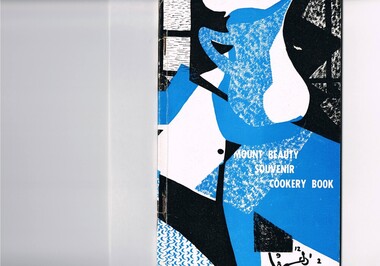 Kiewa Valley Historical Society
Book - Reference Cooking, Mount Beauty Souvenir Cookery Book x2, Circa 1962
... An increase in tourist related industries such as snow skiing in winter, hang gliding and gliding, mountain bike rallies, bush walking and horse riding, all of which have supply outlets in the town, has provided a more cosmopolitan atmosphere. These activities and the greater interaction with populations outside of the region has reduced the "hermit" type feel of the town psyche. recipe cooking food domestic kitchen local history comfort food pioneer cleaning methods On the foreword(page two and page three) "Mt. ...This cookery book was printed in the early 1960s for the purpose of obtaining the necessary funds for the construction of the Mount Beauty swimming pool. The advertisements within this book covers local traders of this time frame, for example, the Bogong Hotel which is no longer operational. the culinary measurements are in Imperial measures(pounds and ounces). The book has sections for continental dishes and sweets (Australian flavour), special dishes for Lent, cakes (farmhouse fruit cake), jams, marmalades (home made), marrow and apple chutney. Some of these recipes are early 20th Century related and in the 2000s are not sought after. The food "take away" lifestyle has been responsible for the demise of a lot of the recipes in this book. The swing away from home grown produce has been not only a lifestyle change but also the faster pace of living in rural areas. The specialisation and redefined development of the local produce store (previously provided everything the rural shopper needed) was a forced move due to larger and cheaper city born fresh food supermarkets. Although there are still some local produce store within the region these will in time vanish. This cookery book was produced just after Mount Beauty was released from an SEC "closed" community in 1961(see KVHS 0134) and the town then had to fend for itself. This book was compiled and produced because the town needed a swimming pool (which possible would have been provided had the SEC still been responsible). The book demonstrates the strong rural psyche of rallying together for the good of all and united for something which would be of benefit to all. The period 1961 to the 1970s was one of great change for Mount Beauty. The SEC protective cage was a blessing for some but a goal for others. The independence that was gained after the SEC left provided for a drastic "make over" in regards to the facilities provided for the "locals" and that for the tourists. An increase in tourist related industries such as snow skiing in winter, hang gliding and gliding, mountain bike rallies, bush walking and horse riding, all of which have supply outlets in the town, has provided a more cosmopolitan atmosphere. These activities and the greater interaction with populations outside of the region has reduced the "hermit" type feel of the town psyche.This recipe book consists of eighty nine pages in black and white print. It contains black and white sketches, recipes of local domestic cooks and advertisements covering local traders. The cover is approximately 280 g/m2 in weight and the pages are at 90 g/m2 in weight. The cover has a design in the style of Abstract Expressionism (period 1950-1960s) of identifiable (clock,jug,fruit,window) and abstract objects in tints of blue and shades of black. This was designed by Cheryl Ryder of the Mount Beauty High School, under supervision of Mr I Baker (Art Teacher)On the foreword(page two and page three) "Mt. Beauty Souvenir Cookery Book First Edition" . This foreword was presented by Rosa Kinnear, President, Ladies' Auxiliary 2nd copy - no inscriptionrecipe, cooking, food, domestic, kitchen, local history, comfort food, pioneer cleaning methods -
 Kiewa Valley Historical Society
Photograph Fire Prevention Victorian Alps, Burning, Circa 1950
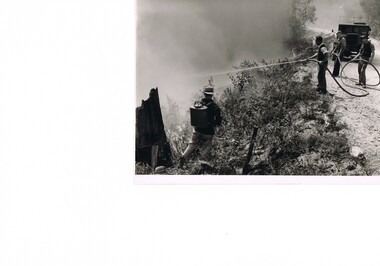
... bush fire. Controlled fires within alpine regions are required not only to reduce the level of dry undergrowth but also to provide those various plant species requiring fire for regenerate. This method was used by the original inhabitants (Aborigines) as limited scrub fires were used to flush game and bird population for food, with a side benefit to those plants requiring the fire for regeneration. kiewa valley tourism victorian alps alternate energy supplies alpine population growth This black and white photograph shows an Alpine Fire Prevention technique of "burning off" low levels of scrub. ...This photograph, in late 1950s, shows an Alpine Fire Prevention technique of "burning off" low levels of scrub to reduce the level of available fuel against any possible summer bush fires. The Alpine regions accumulate high levels of potential fuel (undergrowth and small shrubs) which if not reduced has the potential of breaking into a dangerous bush fire. The men in this photograph are not wearing any protective clothing. Their visibility to other firefighters is severely reduced by smoke. This photo is a snap shot in time when Occupational Health and Safety Legislation was in its infancy stage.This photograph details the fire prevention activities in the Victorian Alps under the management of the SEC Victoria. The level of undergrowth within the Australian bush needs to be kept under control to avoid the possibility of lightning strikes (during summer storms) igniting dry forests resulting in a major bush fire. Controlled fires within alpine regions are required not only to reduce the level of dry undergrowth but also to provide those various plant species requiring fire for regenerate. This method was used by the original inhabitants (Aborigines) as limited scrub fires were used to flush game and bird population for food, with a side benefit to those plants requiring the fire for regeneration.This black and white photograph shows an Alpine Fire Prevention technique of "burning off" low levels of scrub. The photograph is on 200gsm paper but it is not photographic paper. It can be assumed that the photo is not the original but a copy. See also KVHS 0413 and KVHS 0415 for other similar photos.kiewa valley tourism, victorian alps, alternate energy supplies, alpine population growth -
 4th/19th Prince of Wales's Light Horse Regiment Unit History Room
Equipment - Bush Kettle
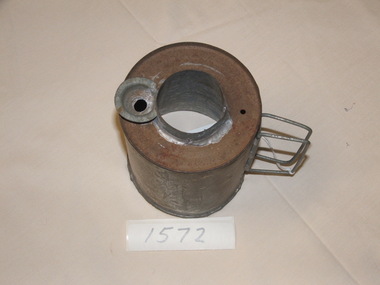
... Traces of label adhesive on body suggest that it was made from a food can. Equipment Bush Kettle ...Such items used by troops in field exercises. Known as "Choofers"Made of soldered tin plate. It has a central open column for fire of twigs and leaves, surrounded by a water jacket. Fitted with folding double wire handle. On top is a small fitted funnel to facilitate filling and a small vent hole. Traces of label adhesive on body suggest that it was made from a food can.Nilfield equipment, cooking -
 Kiewa Valley Historical Society
Tin Coffee and Chicory, circa mid to late 1900's
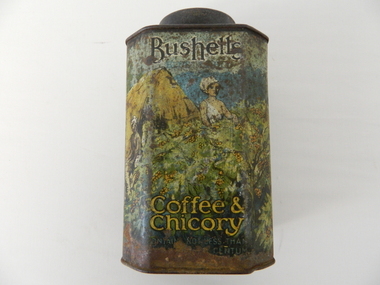
... In the late 1800's and early 1900's road freight had to contend with dirt roads, flooded roads, bush fires and grazing cattle/sheep in rural areas. The easier access that city households had with regard to replenishment of food and drink products, up until the mid 1900's, was severely retarded in rural areas. chicory / coffee drinks tin hydrated drink rural food and drink consumption patterns tinned food and drink "Bushells Coffee & Chicory", "NET 1-Ib. weight", " No. 144" "Under the Pure Food Act N.S.W. 1938" "by Bushells Ltd. ...Chicory was mixed with coffee to reduce the amount of coffee bean required to be used. This coffee "substitute" was due to the repeated fluctuations in availability of coffee beans (and price fluctuations) in the USA in the late 1800s and early 1900s resulting in the search for substitutes and additives to bulk out the available supplies. This was especially so during times of the major World Wars. Chicory was an excellent choice of fillers as it did not greatly influence the strong coffee bean taste. The first choice in USA households was coffee not tea and the influence of the American servicemen's thirst for coffee was a major thrust into the Australian "colonial" preference for a "cuppa" tea. Rural areas took longer to acquire a coffee "break" but with more and more subliminal advertising through "American" films the rural regions developed a growing preference for coffee, however the tea break alias "smoko" has lingered on.This coffee and chicory blend tin container is very significant to the Kiewa Valley in that it demonstrates that even in rural regions of Australia tastes and drinking preferences have changed by subliminal advertising as time goes by. The American "influence" whether by the "invasion" of friendly troops during the major wars or the avalanche of "American films" has altered some of the "dinky-di" Australian "true blue" tastes and mores. The availability of "straight " coffee supplies to rural areas was also in proportion to the level of all weather transport routes. In the late 1800's and early 1900's road freight had to contend with dirt roads, flooded roads, bush fires and grazing cattle/sheep in rural areas. The easier access that city households had with regard to replenishment of food and drink products, up until the mid 1900's, was severely retarded in rural areas. This extensively rusted tin of "Bushells Blue Label" Coffee and Chicory has an octagonal shaped body with a "push/pull" lid(tin).Three sides has reproduced painted ladies in "Roman dress" ladies picking the coffee beans. There is no reproduction of any chicory roots. There are two "Indian dressed" field workers(pickers) with turban head dress. On one side of the tin is "directions of use, net weight and manufacturer details."Bushells Coffee & Chicory", "NET 1-Ib. weight", " No. 144" "Under the Pure Food Act N.S.W. 1938" "by Bushells Ltd. No 144"chicory / coffee drinks, tin hydrated drink, rural food and drink consumption patterns, tinned food and drink -
 Bendigo Historical Society Inc.
Newspaper - PETER ELLIS COLLECTION: NEWSPAPER CLIPPINGS
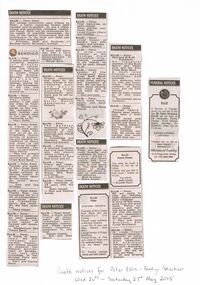
... food and great music. Pierre, our Maestro and fearless band leader, we will miss the sound of your squeeze box and your passion for the music. - Paul and Alida Robinson, Emu Creek Bush Band. ...food and great music. Pierre, our Maestro and fearless band leader, we will miss the sound of your squeeze box and your passion for the music. - Paul and Alida Robinson, Emu Creek Bush Band. ...A4 sheet white printer paper with 8 newspaper clippings glued on. Handwritten note reads: Death notices for Peter Ellis - Bendigo Advertiser Wed 20th - Saturday 23rd May 2015. Death Notices. Ellis - Peter OAM. Our college community pays tribute to Peter, a highly respected former staff member and ex-student. He was a highly valued and supportive colleague, mentor and friend. Peter will be remembered for his wealth of scientific knowledge, his love of the natural environment and his contribution to the local and state Lab Technicians Associations. - Principal, staff and Students of Bendigo Senior Secondary College. City of Greater Bendigo. Ellis- Peter. A gentle man with a wonderful passion for Greater Bendigo's natural, built and musical heritage, Peter will be greatly missed by the Greater Bendigo Heritage Advisory Committee. He willingly shared his love and knowledge of the rich and unique heritage around us. Ellis - Peter Nicolaus OAM. You went so quickly. I will miss our trips to Festivals doing crosswords on the way. My sympathy to both families and Brian a great mate to the last. A void impossible to fill. - Mary Smith. Ellis- Peter OAM. A tribute to our intrepid band leader of 34 years who took us on an unforgettable musical journey of preserving and teaching the traditions of dance and music to old and young throughout Australia. You are irreplaceable ' Dirty Pierre' - Past and present members of the celebrated Emu Creek Bush Band. Ellis - Peter OAM. Founder and leader of Emu Creek Bush Band. Australia's largest collector of dancing history. A great friend taken far too young. Au revoir 'Dirty Pierre' - John and Sue Williams. Ellis - Peter OAM. Thanks Pete, you introduced me to a life of extraordinary experiences, amazing friendships, dance and music. We did have some fun. - Marg Hogan. Ellis - Peter. We are so saddened by your passing. Your music and great sense of humour will remain with us. - Wedderburn Old Timers Band. Ellis - Peter. A friend of many years. We will remember your warmth, humour and tireless pursuit to preserve the Natural Environment of Bendigo. Your love and knowledge of the Bendigo Flora was inspirational. - Mary and Patrick Ward. Ellis- Peter. A music and dance man with a warm appreciation and encouragement of diverse talent. - Winzar boys. Death Notices. Ellis - Peter. Greatly respected and loved by his many friends in the traditional music and dance movement across Australia. His achievements were many and he will be missed. - The Traditional Social Dance Association of Victoria. Ellis - Peter. The Bendigo Historical Society is saddened at the passing of fine musician and friend Peter Ellis. - Committee and members, Bendigo Historical Society. Ellis- Peter. A talented musician and long time friend who was always willing to help us. - Members of Euro fest Choir and Inc. Ellis - Peter. Friend and neighbour, nature's gentleman at rest. Sincere sympathy to Robyn, Rick, Ryan and Doug. - Judy Monti. Ellis- Peter OAM Fond memories of 28 years with the band. Sadly Missed. - Stan and Heather Symes. Death Notices. Ellis - Peter OAM Pete, a much loved friend of many years. We fondly remember your knowledge, humour and those great times together, especially in the bush. Deeply missed. - Rob and Glen Moors. Death Notices. Ellis- Peter. Fond memories, so sadly missed. Keep playing your music Peter. Loved cousin Cheryl and families. Ellis -Peter. Loved cousin of Sandra and Phil Jubber and families. Deeply Missed. Ellis - Peter. A long term member of the Bendigo Field Naturalist Club. Deepest sympathy to his friends, he will be sadly missed by all. Ellis - Peter. Leader of the 'Celebrated Emu Creek Bush Band' Memories of lots of great times playing and travelling all over. We learned so much about dancing and music and it just won't be the same. - Don and Julie. Ellis - Peter. Much loved friend, dancer and band leader. - Dianne and Doug Pearse. Death Notices. Ellis - Peter. Peter, you gave so much laughter and happiness to many, many people through your lovely nature and your brilliant music to listen to and dance to. You have left a legacy of music, books and dance as well as unforgettable memories. Rest in peace. - Diana Austin. Death Notices Ellis Peter 27/3/1946 - 18/5/2015 Formerly of Emu Creek Bush Band and the Wedderburn Old Timers). Passed away suddenly at Bendigo Hospice. Loved son of Joan and Allan Nielsen (both Dec). Loving brother of Robyn and Doug. Brother-in-law of Rick and Uncle of Ryan and the extended family. Let the music play on… For Funeral arrangements see later edition. Death Notices. Ellis - Peter Nicolaus O.A.M. Suddenly. An inaugural member of the Bush Dance and Music Club and the Emu Creek Bush Band. A much loved friend, dance instructor and musician. Very generous with his time and knowledge. Passionate collector of dance music and old time dances. Will be sadly missed by all who knew him. - Devastated dance members. Ellis- Peter. OAM 27/3/46 - 18/5/15 Passed away peacefully after a brief illness. Much loved and irreplaceable brother, cousin and uncle to the Lilford, Datson, Burns, Shaw and Kitch families. You enriched our lives. No words can express how much we will miss you. Ellis Pierre (Peter) You were as much a father to me as an uncle. I never told you that or how much I looked up to you. You will be sadly missed - Boswald ( Ryan). Ellis - Peter. We are going to miss our Monday night dinners before rehearsal. A lover of fine wine, good food and great music. Pierre, our Maestro and fearless band leader, we will miss the sound of your squeeze box and your passion for the music. - Paul and Alida Robinson, Emu Creek Bush Band. Ellis - Peter. A close friend colleague, musician, authority on native plants and colonial music researcher. An enormous influence in preserving early Australian dance and dance music. We will all miss you Pete. - Jill and Graeme Balaam. Funeral Notices Ellis. A service of thanksgiving for the life of the late Mr Peter Nicolaus Ellis will be held at the Mulqueen Family Chapel, 15-25 Bridge street, Bendigo on MONDAY (May 25) at 11.00am. A private cremation will follow. Tributes can be left at www.heavenaddress.com Mulqueen Family 15-25 Bridge street, Bendigo Est. 1853 5443 4455.person, individual, peter ellis oam -
 Bendigo Historical Society Inc.
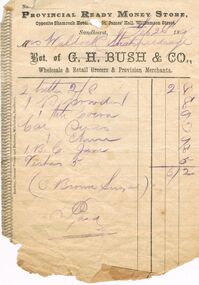
Document - INVOICE, 1891
... Bush & Co. Wholesale & Retail Grocers & Provision Merchants. Invoice lists household food items. ...Bush & Co. Wholesale & Retail Grocers & Provision Merchants. Invoice lists household food items. ...Invoice: Provincial Ready Money Store. Opposite Shamrock Hotel, Next to St. James Hall Williamson Street. Sandhurst Sept 26th 1891. Mrs Waldock Strathfieldsaye. Bot. of G.H. Bush & Co. Wholesale & Retail Grocers & Provision Merchants. Invoice lists household food items. On the back in pencil, hand written is number calculations. Box 625business, retail, grocer, provincial ready money store. shamrock hotel. g. h. bush. -
 Bendigo Historical Society Inc.
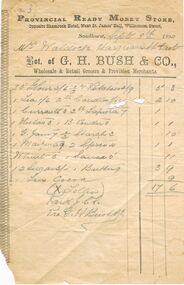
Document - INVOICE, 1890
... Bush & Co. Wholesale & Retail Grocers & Provision Merchants. The invoice lists household food items. ...Bush & Co. Wholesale & Retail Grocers & Provision Merchants. The invoice lists household food items. ...Invoice: Yellow in colour with Provincial Ready Money Store, Opposite Shamrock Hotel, Next St. James' Hall, Williamson Street. Sandhurst, Sept 8th 1890. Mrs Waldock Hargreaves St East. Bot of G.H. Bush & Co. Wholesale & Retail Grocers & Provision Merchants. The invoice lists household food items. Small tear on invoice. Box 625business, retail, grocer, provincial ready money store. g.h.bush & co. shamrock hotel -
 Chiltern Athenaeum Trust
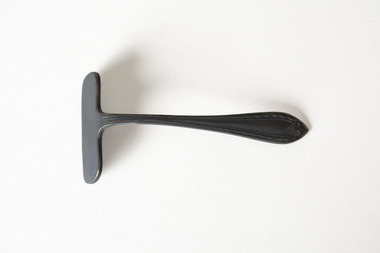
Domestic object - Child's food pusher, J. Biggin & Co, Unknown
... food from a serving platter onto an individual plate. Wilfred Clarence Busse was born in Chiltern in 1898. He went to school at Wesley College in Melbourne, studied law at the University of Melbourne and became a barrister. Additionally, after spending time on a Victorian station in his early twenties, he wrote two historical novels about bush...food from a serving platter onto an individual plate. Wilfred Clarence Busse was born in Chiltern in 1898. He went to school at Wesley College in Melbourne, studied law at the University of Melbourne and became a barrister. Additionally, after spending time on a Victorian station in his early twenties, he wrote two historical novels about bush ...This children's eating utensil is believed to belong to the household of Chiltern writer and historian, W.C. Busse. The level of tarnish and the mark 'EPNS' may indicate it is electroplated. The blade also contains the maker's mark 'APEX', which was used by John Biggin & Co, Sheffield, United Kingdom. Pushers such as these were a common utensil in Victorian and early twentieth-century households. They were used to help children too young to use knives learn to eat politely at the table - the blunt blade was used to push food onto the fork. Pushers could also be used to pull food from a serving platter onto an individual plate. Wilfred Clarence Busse was born in Chiltern in 1898. He went to school at Wesley College in Melbourne, studied law at the University of Melbourne and became a barrister. Additionally, after spending time on a Victorian station in his early twenties, he wrote two historical novels about bush life. His first novel was 'The Blue Beyond: a Romance of the Early Days in South Eastern Australia', written in 1928 and published in 1930. Busse's second novel was titled 'The Golden Plague: A Romance of the Early Fifties'. The judges of the Henry Lawson Society's T.E. Rofe competition to advance Australian literature unanimously awarded it the Gold Medal in 1931 for the best historical novel of 1930. Newspaper articles about the award mention the writer's meticulous documentary and oral history research regarding life on the Gold Fields in the 1850s. It became a best-seller. Busse also wrote a series of articles about local history for "The Federal Standard" newspaper in Chiltern. He was a member of the Chiltern Athenaeum. He died in 1960.This child's eating utensil is significant for the detail it conveys of ordinary domestic life in the household of a significant Victorian writer with special reference to Chiltern and the surrounding region. It may also be significant in understanding the customs and practices of English-speaking nations in the early Twentieth Century. The object is a metal food pusher, a child's eating utensil with a blunt lozenge at right angles to the handle. The metal is tarnished, indicating that it may be silver or silverplated. APEX EPNS AI w.c. busse, wilfred clarence busse, chiltern, indigo shire, north-east victoria, gold fields, gold mining, gold rush, table manners, etiquette, children, childhood, john biggin & co, sheffield, golden plague, blue beyond, historical fiction, 1930s, 1850s, t.e. rofe, henry lawson society, electroplate, tableware, cutlery -
 Uniting Church Archives - Synod of Victoria
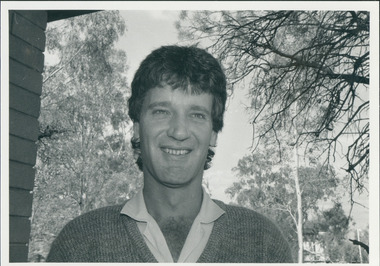
Photograph, St Philip's College Alice Springs - Principal Chris Tudor & Deputy Principal Chris Eldridge, 09/1986
... bush” families, but also the growing population of Alice Springs. The then College Council embraced the idea and three years of frantic, determined preparation and planning commenced, culminating in an extensive $2 million building program in 1988. To this day there continues to be further development with the new landscaping underway near The Minnamurra Hall, Reception and Rivergum Cafe, plus the recent completion of the Science & Food Technology building and the new Rivergum Cafe....bush” families, but also the growing population of Alice Springs. The then College Council embraced the idea and three years of frantic, determined preparation and planning commenced, culminating in an extensive $2 million building program in 1988. To this day there continues to be further development with the new landscaping underway near The Minnamurra Hall, Reception and Rivergum Cafe, plus the recent completion of the Science & Food Technology building and the new Rivergum Cafe. ...In 1945 the Reverend Harry Griffiths, who worked for the Methodist Inland Mission in Alice Springs, saw the need for a boarding facility for children of families living in remote areas in Central Australia who needed access to schools. He and his wife established Griffiths House, on a site in the town centre, and for many years it became home for students from all over the Outback, including many young Aboriginal people. In the late 1950's the Rev Fred McKay, successor to the Rev John Flynn as Superintendent of the Australian Inland Mission, lobbied the United Church in the Northern Territory to build and expand on this important start. Together the Presbyterian, Methodist and Congregational churches embarked on a missionary venture to develop St Philip's College - a new, larger residential hostel which would one day become a full boarding school. An ideal site - 22 acres of bush at the junction of the Charles and Todd Rivers and backing on to the Telegraph Station National Park - was secured and after six years of planning, construction began in 1964. Fred McKay led the legendary work parties comprised of volunteers from all over Australia who travelled to Alice Springs, paying their own way and volunteering their expertise, time and labour, to turn a dream into a reality. This fantastic tradition continues today, with work parties arriving each mid-year holiday. On 13 February 1965 the first boarders moved in to St Philip's College. For the first 24 years, therefore, St Philip's College operated as a residential hostel only. The College’s ninth Headmaster, Mr Christopher Tudor, arrived in 1986. He and the Council Chairman, Mrs Jan Heaslip, judged that the time was right to complete the original plan to turn St Philip’s College into a fully fledged independent boarding/day school, serving not only “bush” families, but also the growing population of Alice Springs. The then College Council embraced the idea and three years of frantic, determined preparation and planning commenced, culminating in an extensive $2 million building program in 1988. To this day there continues to be further development with the new landscaping underway near The Minnamurra Hall, Reception and Rivergum Cafe, plus the recent completion of the Science & Food Technology building and the new Rivergum Cafe.Head & Shoulders of Chris Eldridgest. philip's college, tudor, chris, eldridge, chris -
 Uniting Church Archives - Synod of Victoria
Photograph, St Philip's College Alice Springs - Principal Chris Tudor & Deputy Principal Chris Eldridge, 09/1986
... bush” families, but also the growing population of Alice Springs. The then College Council embraced the idea and three years of frantic, determined preparation and planning commenced, culminating in an extensive $2 million building program in 1988. To this day there continues to be further development with the new landscaping underway near The Minnamurra Hall, Reception and Rivergum Cafe, plus the recent completion of the Science & Food Technology building and the new Rivergum Cafe....bush” families, but also the growing population of Alice Springs. The then College Council embraced the idea and three years of frantic, determined preparation and planning commenced, culminating in an extensive $2 million building program in 1988. To this day there continues to be further development with the new landscaping underway near The Minnamurra Hall, Reception and Rivergum Cafe, plus the recent completion of the Science & Food Technology building and the new Rivergum Cafe. ...In 1945 the Reverend Harry Griffiths, who worked for the Methodist Inland Mission in Alice Springs, saw the need for a boarding facility for children of families living in remote areas in Central Australia who needed access to schools. He and his wife established Griffiths House, on a site in the town centre, and for many years it became home for students from all over the Outback, including many young Aboriginal people. In the late 1950's the Rev Fred McKay, successor to the Rev John Flynn as Superintendent of the Australian Inland Mission, lobbied the United Church in the Northern Territory to build and expand on this important start. Together the Presbyterian, Methodist and Congregational churches embarked on a missionary venture to develop St Philip's College - a new, larger residential hostel which would one day become a full boarding school. An ideal site - 22 acres of bush at the junction of the Charles and Todd Rivers and backing on to the Telegraph Station National Park - was secured and after six years of planning, construction began in 1964. Fred McKay led the legendary work parties comprised of volunteers from all over Australia who travelled to Alice Springs, paying their own way and volunteering their expertise, time and labour, to turn a dream into a reality. This fantastic tradition continues today, with work parties arriving each mid-year holiday. On 13 February 1965 the first boarders moved in to St Philip's College. For the first 24 years, therefore, St Philip's College operated as a residential hostel only. The College’s ninth Headmaster, Mr Christopher Tudor, arrived in 1986. He and the Council Chairman, Mrs Jan Heaslip, judged that the time was right to complete the original plan to turn St Philip’s College into a fully fledged independent boarding/day school, serving not only “bush” families, but also the growing population of Alice Springs. The then College Council embraced the idea and three years of frantic, determined preparation and planning commenced, culminating in an extensive $2 million building program in 1988. To this day there continues to be further development with the new landscaping underway near The Minnamurra Hall, Reception and Rivergum Cafe, plus the recent completion of the Science & Food Technology building and the new Rivergum Cafe.Head & Shoulders of Chris Tudor.st. philip's college, tudor, chris, eldridge, chris -
 Uniting Church Archives - Synod of Victoria
Photograph, St Philip's College Alice Springs - Principal Chris Tudor & Deputy Principal Chris Eldridge, 09/1986
... bush” families, but also the growing population of Alice Springs. The then College Council embraced the idea and three years of frantic, determined preparation and planning commenced, culminating in an extensive $2 million building program in 1988. To this day there continues to be further development with the new landscaping underway near The Minnamurra Hall, Reception and Rivergum Cafe, plus the recent completion of the Science & Food Technology building and the new Rivergum Cafe....bush” families, but also the growing population of Alice Springs. The then College Council embraced the idea and three years of frantic, determined preparation and planning commenced, culminating in an extensive $2 million building program in 1988. To this day there continues to be further development with the new landscaping underway near The Minnamurra Hall, Reception and Rivergum Cafe, plus the recent completion of the Science & Food Technology building and the new Rivergum Cafe. ...In 1945 the Reverend Harry Griffiths, who worked for the Methodist Inland Mission in Alice Springs, saw the need for a boarding facility for children of families living in remote areas in Central Australia who needed access to schools. He and his wife established Griffiths House, on a site in the town centre, and for many years it became home for students from all over the Outback, including many young Aboriginal people. In the late 1950's the Rev Fred McKay, successor to the Rev John Flynn as Superintendent of the Australian Inland Mission, lobbied the United Church in the Northern Territory to build and expand on this important start. Together the Presbyterian, Methodist and Congregational churches embarked on a missionary venture to develop St Philip's College - a new, larger residential hostel which would one day become a full boarding school. An ideal site - 22 acres of bush at the junction of the Charles and Todd Rivers and backing on to the Telegraph Station National Park - was secured and after six years of planning, construction began in 1964. Fred McKay led the legendary work parties comprised of volunteers from all over Australia who travelled to Alice Springs, paying their own way and volunteering their expertise, time and labour, to turn a dream into a reality. This fantastic tradition continues today, with work parties arriving each mid-year holiday. On 13 February 1965 the first boarders moved in to St Philip's College. For the first 24 years, therefore, St Philip's College operated as a residential hostel only. The College’s ninth Headmaster, Mr Christopher Tudor, arrived in 1986. He and the Council Chairman, Mrs Jan Heaslip, judged that the time was right to complete the original plan to turn St Philip’s College into a fully fledged independent boarding/day school, serving not only “bush” families, but also the growing population of Alice Springs. The then College Council embraced the idea and three years of frantic, determined preparation and planning commenced, culminating in an extensive $2 million building program in 1988. To this day there continues to be further development with the new landscaping underway near The Minnamurra Hall, Reception and Rivergum Cafe, plus the recent completion of the Science & Food Technology building and the new Rivergum Cafe.Tudor and Eldridge in conversation with the College in the background.st. philip's college, tudor, chris, eldridge, chris -
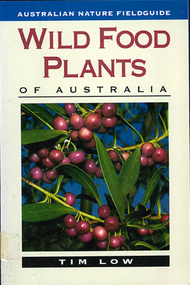 Victorian Aboriginal Corporation for Languages
Book, Tim Low, Wild food plants of Australia, 2001
... edible wild plants cooking flora cuisine bush tucker Maps, colour photographs, b&w illustrations The fieldguide edition of Wild Food Plants of Australia. ...The fieldguide edition of Wild Food Plants of Australia. It is presented in a concise, convenient form to facilitate quick and ready reference in the field. Tim Low has provided a truly reliable guide to our edible flora, making identification easy. Thus it is a perfect companion for bushwalkers, naturalists, scientists and, with emphasis on wild food cuisine, gourmets. Low describes more than 180 plants - from the most tasty and significant plant foods of southern and eastern Australia to the more important and spectacular inland and tropical foods.Maps, colour photographs, b&w illustrationsedible wild plants, cooking, flora, cuisine, bush tucker -
Koorie Heritage Trust
Book, Brown, Anne, Koorie Bush Tucker of the Murray Basin, 1992
... Accompanied by detailed charts this booklet explores the bush tucker of the Murray Basin Aborigines and the methods they used to obtain these foods. 15 p.; ill.; tables; footnotes, bib. ...Accompanied by detailed charts this booklet explores the bush tucker of the Murray Basin Aborigines and the methods they used to obtain these foods.15 p.; ill.; tables; footnotes, bib.Accompanied by detailed charts this booklet explores the bush tucker of the Murray Basin Aborigines and the methods they used to obtain these foods.aborigines, murray basin - bush tucker., hunting and gathering - murray basin, aborigines. -
Koorie Heritage Trust
Book, Brown, Anne, Aboriginal bush tucker of the Murray Basin : observations from the journals and manuscripts of early European settlers and explorers, 1996
... Food. A well-presented account of Aboriginal life in the Murray Basin. 15 p. : ill. ; 21 cm. Aboriginal bush tucker of the Murray Basin : observations from the journals and manuscripts of early European settlers and explorers Book Brown, Anne Aboriginal Affairs Victoria ...A well-presented account of Aboriginal life in the Murray Basin.15 p. : ill. ; 21 cm.A well-presented account of Aboriginal life in the Murray Basin.wild foods -- victoria. | aboriginal australians -- victoria -- hunting. | aboriginal australians -- victoria -- food.
