
Showing 83 items matching "c1983"
-
 Ballarat Heritage Services
Book, Ballarat School of Mines Background Information, c1983, c1983
... Ballarat School of Mines Background Information, c1983...c1983...Ballarat School of Mines Background Information, c1983 Book ...Printed before the E.J. Tippett Library was opened.Foolscap photocopied book outlinng the history and development of the Ballarat School of Mines. ballarat school of mines, ballarat school of mines history -
 Bendigo Military Museum
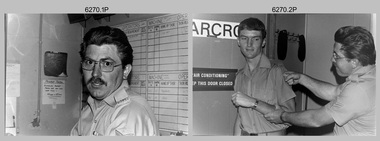
Photograph - Photo Troop, Lithographic Squadron – Army Survey Regiment, Fortuna, Bendigo, c1983
... This collection of seven photos was most likely taken at Lithographic Squadron, Army Survey Regiment, Fortuna, Bendigo in c1983. The main tasks undertaken by technicians in Photo Troop were most likely enlargements, reductions and duplication of map reproduction material, and processing of aerial photography....They are part of the Army Survey Regiment’s Collection. .1) - Photo, black & white, c1983, Photo Troop work area, SGT Garran Hill. .2) - Photo, black & white, c1983, Photo Troop work area, L to R: SPR Steve Burke, SGT Garran Hill. .3) - Photo, black & white, c1983, Photo Troop work area, SPR Steve Burke. .4) - Photo, black & white, c1983, Photo Troop work area, WO1 Noel ‘Nesty’ Coulthard. .5) - Photo, black & white, c1983, Photo Troop work area, WO1 Noel ‘Nesty’ Coulthard. .6) - Photo, black & white, c1983, Photo Troop work area, CPL Gary Tremain. .7) - Photo, black & white, c1983, Photo Troop work area, CPL Neville Carr. ...c1983....They are part of the Army Survey Regiment’s Collection. .1) - Photo, black & white, c1983, Photo Troop work area, SGT Garran Hill. .2) - Photo, black & white, c1983, Photo Troop work area, L to R: SPR Steve Burke, SGT Garran Hill. .3) - Photo, black & white, c1983, Photo Troop work area, SPR Steve Burke. .4) - Photo, black & white, c1983, Photo Troop work area, WO1 Noel ‘Nesty’ Coulthard. .5) - Photo, black & white, c1983, Photo Troop work area, WO1 Noel ‘Nesty’ Coulthard. .6) - Photo, black & white, c1983, Photo Troop work area, CPL Gary Tremain. .7) - Photo, black & white, c1983, Photo Troop work area, CPL Neville Carr. ...This collection of seven photos was most likely taken at Lithographic Squadron, Army Survey Regiment, Fortuna, Bendigo in c1983. The main tasks undertaken by technicians in Photo Troop were most likely enlargements, reductions and duplication of map reproduction material, and processing of aerial photography.This is a set of seven photographs of Photo Troop personnel and equipment from Lithographic Squadron at the Army Survey Regiment, Fortuna, Bendigo, c1983. The photographs were on 35mm negative film and were scanned at 96 dpi. They are part of the Army Survey Regiment’s Collection. .1) - Photo, black & white, c1983, Photo Troop work area, SGT Garran Hill. .2) - Photo, black & white, c1983, Photo Troop work area, L to R: SPR Steve Burke, SGT Garran Hill. .3) - Photo, black & white, c1983, Photo Troop work area, SPR Steve Burke. .4) - Photo, black & white, c1983, Photo Troop work area, WO1 Noel ‘Nesty’ Coulthard. .5) - Photo, black & white, c1983, Photo Troop work area, WO1 Noel ‘Nesty’ Coulthard. .6) - Photo, black & white, c1983, Photo Troop work area, CPL Gary Tremain. .7) - Photo, black & white, c1983, Photo Troop work area, CPL Neville Carr. No personnel are identified.royal australian survey corps, rasvy, army survey regiment, army svy regt, fortuna, asr, litho -
 Federation University Historical Collection
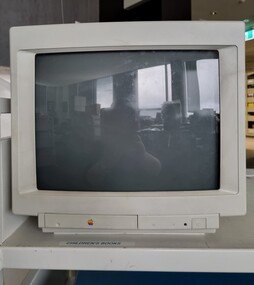
Equipment - Computer, monitor and keyboard, Apple IIe Computer c1983
... Apple IIe Computer c1983...Apple IIe Computer c1983 Equipment Computer, monitor and keyboard ...Apple IIe complete computer system from Mount Helen Campus Nursing Co-hort. Complete Apple IIe Computer - monitor, keyboard, mouse and disk drive 22456.1 Monitor 22456.2 keyboard, spare keyboard, mouse and disc drive.Apple IIe computer, mount helen campus, apple iie, bachelor of nursing -
Federation University Historical Collection
Book, Increasing Educational Opportunities: A Study of Post-Primary Schools in the Central Highlands, c1983, c1984
... Increasing Educational Opportunities: A Study of Post-Primary Schools in the Central Highlands, c1983...Increasing Educational Opportunities: A Study of Post-Primary Schools in the Central Highlands, c1983 Book Book ...Red soft covered book.central highlands, education, post-secondary education, bob dobell, les o'brien, john minotti, john poliness, michael broderick, kevin caulfield, jack chisholm, joyce robinson, peter shiells, alex stoneman, ian hirst -
Friends of Ballarat Botanical Gardens History Group
Work on paper - National Trust of Australia (Vic), Register of Significant Trees. Ballarat Botanical Gardens. c1983, Unknown
... Ballarat Botanical Gardens. c1983...Ballarat Botanical Gardens. c1983 Work on paper National Trust of Australia (Vic) ...This National Trust Register of Significant Trees in the Ballarat Botanical Gardens is an important part of Ballarat's history. Unfortunately, since 1983, some of the trees listed have died or been removed.The Ballarat Botanical Gardens has a unique collection of trees which testify to the knowledge and enthusiasm of the Curators, City fathers and Gardeners in their development of the Gardens in earlier years, especially in the nineteenth century.1 sheet of paper with three lists of the trees and the number of them in the Gardens. (1 copy)Draft printed in red under main heading. In black biro, written on the first entry, "no on map". 10th entry (Sierra Redwood) number scribbled over and "outside gate" written. 14th entry (Horizontal Elm) "3 on list, 1dead". 15th entry (Horizontal Elm) "W of 17". ballarat botanical gardens, national trust of australia (vic), register of significant trees, trees, john garner collection, gardens, ballarat -
 Bendigo Historical Society Inc.
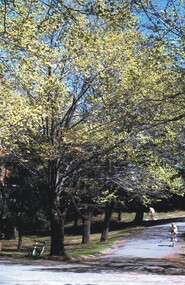
Slide - BENDIGO & EASTER FAIR, c1983
... Rosalind Park, lower reserve. C1983...c1983...SLIDE Bendigo rosalind park Rosalind Park Rosalind Park, lower reserve. C1983 Slide BENDIGO & EASTER FAIR ...Rosalind Park, lower reserve. C1983slide, bendigo, rosalind park, rosalind park -
 Bendigo Historical Society Inc.
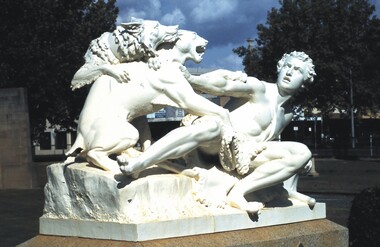
Slide - BENDIGO & EASTER FAIR, c1983
... Statue in the Bendigo Conservatory Gardens. C1983....c1983...SLIDE Bendigo conservatory gardens Statue Bendigo Conservatory Gardens Statue in the Bendigo Conservatory Gardens. C1983. Slide BENDIGO & EASTER FAIR ...Statue in the Bendigo Conservatory Gardens. C1983.slide, bendigo, conservatory gardens, statue bendigo conservatory gardens -
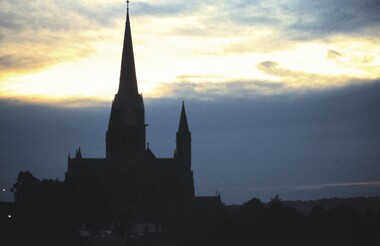 Bendigo Historical Society Inc.
Slide - BENDIGO & EASTER FAIR, c1983
... Sacred Heart Cathedral with the setting sun. c1983...c1983...SLIDE Bendigo sacred heart cathedral bendigo Sacred Heart Cathedral Sacred Heart Cathedral with the setting sun. c1983 Slide BENDIGO & EASTER FAIR ...Sacred Heart Cathedral with the setting sun. c1983slide, bendigo, sacred heart cathedral, bendigo, sacred heart cathedral -
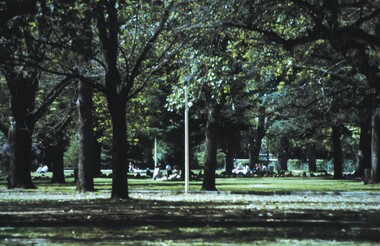 Bendigo Historical Society Inc.
Slide - BENDIGO & EASTER FAIR, c1983
... Rosalind Park lower reserve, Bendigo. C1983...c1983...SLIDE Bendigo rosalind park Rosalind Park Rosalind Park lower reserve, Bendigo. C1983 Slide BENDIGO & EASTER FAIR ...Rosalind Park lower reserve, Bendigo. C1983slide, bendigo, rosalind park, rosalind park -
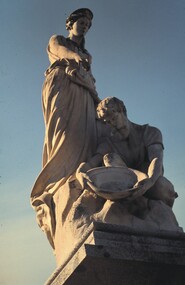 Bendigo Historical Society Inc.
Slide - BENDIGO & EASTER FAIR, c1983
... 'Goldpanning' Statue, Howard Place, Bendigo. C1983...c1983...SLIDE Bendigo statue 'Gold panning' statue Bendigo 'Goldpanning' Statue, Howard Place, Bendigo. C1983 Slide BENDIGO & EASTER FAIR ...'Goldpanning' Statue, Howard Place, Bendigo. C1983slide, bendigo, statue, 'gold panning' statue, bendigo -
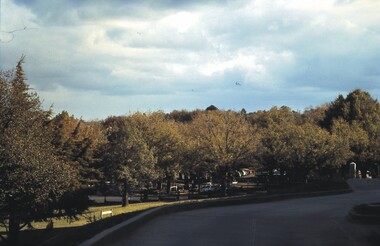 Bendigo Historical Society Inc.
Slide - BENDIGO & EASTER FAIR, c1983
... View from the Sacred Heart Cathedral. C1983....c1983...SLIDE Bendigo church view from Sacred Heaqt Cathedral View from the Sacred Heart Cathedral. C1983. Slide BENDIGO & EASTER FAIR ...View from the Sacred Heart Cathedral. C1983.slide, bendigo, church, view from sacred heaqt cathedral -
 Bendigo Historical Society Inc.
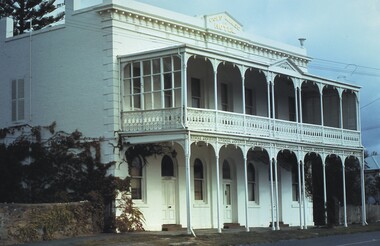
Slide - BENDIGO & EASTER FAIR, c1983
... Golde Mines Hotel, Marong Road, Iron Bark (Bendigo). C1983....c1983...SLIDE Bendigo gold mines hotel Gold Mines Hotel Golde Mines Hotel, Marong Road, Iron Bark (Bendigo). C1983. Slide BENDIGO & EASTER FAIR ...Golde Mines Hotel, Marong Road, Iron Bark (Bendigo). C1983.slide, bendigo, gold mines hotel, gold mines hotel -
 Bendigo Historical Society Inc.
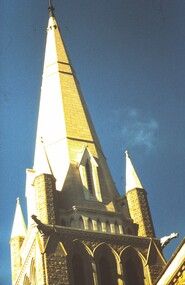
Slide - BENDIGO & EASTER FAIR, 1983
... Spire of the Sacred Heart Cathedral, Bendigo. Catholic Church. c1983....SLIDE Bendigo church Sacred Heart Cathedral Spire of the Sacred Heart Cathedral, Bendigo. Catholic Church. c1983. Slide BENDIGO & EASTER FAIR ...Spire of the Sacred Heart Cathedral, Bendigo. Catholic Church. c1983.slide, bendigo, church, sacred heart cathedral -
 Melbourne Tram Museum
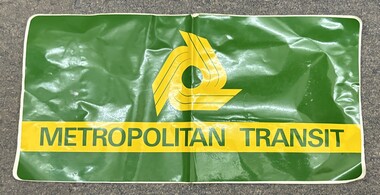
Sign - "Metropolitan Transit" logo for tramcars, Metropolitan Transit Authority (MTA), c1983
... Metropolitan Transit logo for use on the side of vehicles, such as trams, c1983. See item 3688 for the introduction document and 6856 for a sample of "The Met" logo....c1983...Metropolitan Transit logo for use on the side of vehicles, such as trams, c1983. See item 3688 for the introduction document and 6856 for a sample of "The Met" logo. ...Metropolitan Transit logo for use on the side of vehicles, such as trams, c1983. See item 3688 for the introduction document and 6856 for a sample of "The Met" logo.Demonstrates a Metropolitan Transit logo for the use on the sides of vehicles.Adhesive sign with a paper backing.the met, logos, tramcars, metropolitan transit, signs -
 Melbourne Tram Museum
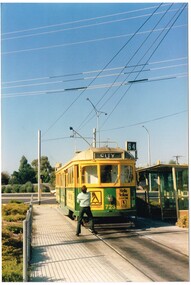
Photograph - Colour Print, c1983
... Colour print of SW5 723 at the East Brighton terminus, c1983, route 64, photo undated. Driver or conductor placing trolley pole on the overhead. ...c1983...Trams tramways East Brighton Route 64 Trolley Poles Drivers Conductors tram 723 Colour print of SW5 723 at the East Brighton terminus, c1983, route 64, photo undated. Driver or conductor placing trolley pole on the overhead. ...Colour print of SW5 723 at the East Brighton terminus, c1983, route 64, photo undated. Driver or conductor placing trolley pole on the overhead. Tram has the destination of City and Yellow pages front panel advertisements.trams, tramways, east brighton, route 64, trolley poles, drivers, conductors, tram 723 -
 Melbourne Tram Museum
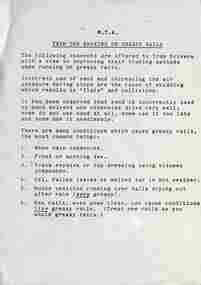
Document, Metropolitan Transit Authority (MTA), "Tram car braking on greasy rails", c1983
... Undated, possibly c1983 as headed MTA. ...c1983...Undated, possibly c1983 as headed MTA. Yields information a instruction or reminder to tram drivers about tram braking during slippery conditions. tramways drivers Sanding Equipment Braking Accidents Document or instruction - single sheet, A5 "Tram car braking on greasy rails" Document Metropolitan Transit Authority (MTA) ...Document or instruction titled "Tram car braking on greasy rails", issued by the MTA about reminding drivers actions when braking trams on greasy rails. Gives common conditions, eg rain, frost, oil and new rails. Notes the correct use of sand to and the air brake. Undated, possibly c1983 as headed MTA. Yields information a instruction or reminder to tram drivers about tram braking during slippery conditions.Document or instruction - single sheet, A5 tramways, drivers, sanding equipment, braking, accidents -
 Bendigo Military Museum
Photograph - Superseded AUTOMAP 1 Equipment, Army Survey Regiment, Fortuna, Bendigo, c1983
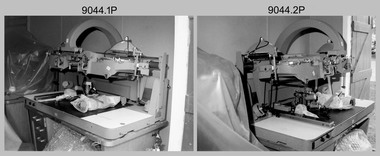
... They are part of the Army Survey Regiment’s Collection. .1) to .8) - Photo, black & white, c1983, superseded AUTOMAP 1 B8 Stereoplotters and equipment in storage awaiting disposal....c1983...They are part of the Army Survey Regiment’s Collection. .1) to .8) - Photo, black & white, c1983, superseded AUTOMAP 1 B8 Stereoplotters and equipment in storage awaiting disposal. ...This set of eight photographs of superseded AUTOMAP 1 equipment was taken at the Army Survey Regiment, Fortuna, Bendigo, circa 1983. The photos were taken in one of the Q-store buildings. Introduced in 1975, the AUTOMAP 1 computer assisted cartography and mapping system was the first computer assisted cartography and mapping system utilised by the Survey Corps and the first system used by Australian mapping organisations. The replacement AUTOMAP 2 system achieved operational status in August 1983. The history of the AUTOMAP 1 system is covered in more detail with additional historic photographs, in pages 116-118 of Valerie Lovejoy’s book 'Mapmakers of Fortuna – A history of the Army Survey Regiment’ ISBN: 0-646-42120-4. See items 6122.20P, 6183.19P, and 6184.20P for additional photographs of AUTOMAP 1’s system and the B8 Stereoplotters in operation. This set of eight photographs of superseded AUTOMAP 1 Equipment was taken at the Army Survey Regiment, Fortuna, Bendigo, circa 1983. The photographs are on 35mm negative film and scanned at 96 dpi. They are part of the Army Survey Regiment’s Collection. .1) to .8) - Photo, black & white, c1983, superseded AUTOMAP 1 B8 Stereoplotters and equipment in storage awaiting disposal..1P to .8P – There are no annotationsroyal australian survey corps, rasvy, fortuna, army survey regiment, automap 1 -
 Running Rabbits Military Museum operated by the Upwey Belgrave RSL Sub Branch
Jumper
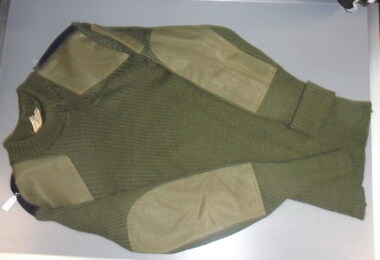
... ...c1983...Uniform c1983 Army Jumper Green Howard with dark blue epaulettes Jumper ...Jumper Green Howard with dark blue epaulettesuniform, c1983, army -
Canterbury History Group
Drawing - Architectural drawing - 1 Balwyn Road Canterbury, Margaret Picken, 1999
... This architectural drawing is one of a series created by Margaret Picken for a range of real estate agents in Melbourne between c1983 and c 2005 ...This architectural drawing is one of a series created by Margaret Picken for a range of real estate agents in Melbourne between c1983 and c 2005 Margaret Picken Architectural drawing Balwyn Road Pen and ink architectural drawing Drawing Architectural drawing - 1 Balwyn Road Canterbury Margaret Picken ...This architectural drawing is one of a series created by Margaret Picken for a range of real estate agents in Melbourne between c1983 and c 2005 Pen and ink architectural drawingmargaret picken, architectural drawing, balwyn road -
 Whitehorse Historical Society Inc.
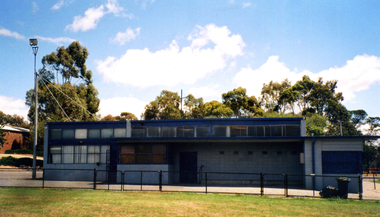
Photograph - Coloured Photograph, East Burwood Football Pavilion, 2007
... Social committee room on left of building erected c1983. Building now used for other Council purposes....Social committee room on left of building erected c1983. Building now used for other Council purposes. ...Coloured Photo of the East Burwood football Pavilion erected in 1980/81. Social committee room on left of building erected c1983. Building now used for other Council purposes.east burwood, football club, 2007 -
 Melbourne Tram Museum
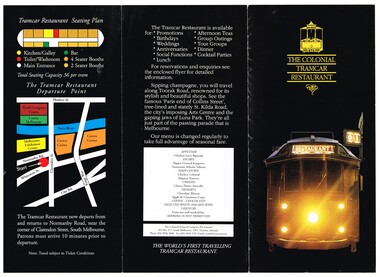
Document - Programme, Colonial Tramcar Restaurant Co, "The Colonial Tramcar Restaurant", c1983
... Has contact details. c1983. Two copies of .1 held. .3 and .4 - similar to .1 with slightly different information and contents....c1983...Has contact details. c1983. Two copies of .1 held. .3 and .4 - similar to .1 with slightly different information and contents. ...Set of two documents, full colour on gloss paper, for the "The Colonial Tramcar Restaurant", Melbourne. .1 - pamphlet with 442 on front cover, advertising the restaurant, the food, seating plan, departure point and the availability of the tramcar. .2 - Menu - full dinner four course menu, including logos. On the rear is a brief history of Melbourne tramways and the Colonial Tramcar Restaurant itself. Has contact details. c1983. Two copies of .1 held. .3 and .4 - similar to .1 with slightly different information and contents.trams, tramways, restaurant tram, colonial tramcar restaurant, menu -
Tatura Irrigation & Wartime Camps Museum
Booklet, Courage to Care
Booklet written to accompany an exhibition shown a a number of major Australian Capital cities and regional centres including : Jewish Museum of Australia, Melbourne. In Adelaide by B'nai B'rith and the Jewish CommunityBeige coloured soft cover booklet. Shadow photo of people rounded up in Holocustcourage to care, raoul wallenberg unit, jewish museum, camp 3, tatura, ww2, books, history, local -
 Federation University Historical Collection
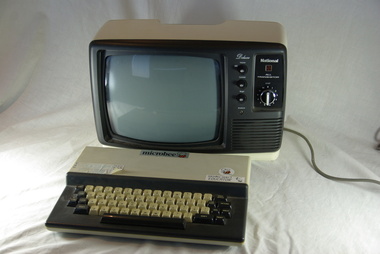
Equipment - Computer, MicroBee Word Processor, c1983
... c1983 ...The Australian designed Microbee computer ran at a clock speed of 2 MHz, with a video clock of 12 MHz (displaying 64x16 characters of 512 x 256 pixels) on a modified television of composite monitor. The standard machines were supplied with 16 rt 32 KB of static RAM, and stored programs on a cassette. It was released in June 1982, and could be purchased for AUS$399 in kit form. The Microbee operating system was micro World BASIC.White computer monitor, keyboard, two instruction books and a MicroBee manual. It was the first computer designed and built in Australia. The Ballarat School of Mines was an early user of the MicroBee and had computer labs set up with MicroBee technology. It includes an eight page MicroBee Word Processor Instruction Manual compiled by Pam Baldock,17 July 1984.microbee, computer, pam baldock -
 Federation University Historical Collection
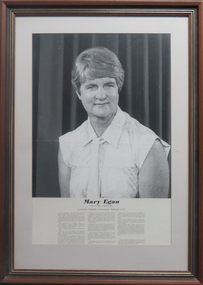
Photograph - Photograph - Black and White, Mary Egan, Lecturer at the Ballarat Teachers' College, c1983
... c1983 ...Mary Egan lectured in English Curriculum at Ballarat College of advanced Education, a predecessor institution of Federation University Australia.Mounted photograph of Mary Egan, and text outlining her career. .2) Framed photograph of Mary Egan, with biographical textballarat college of advanced education, egan, mary egan, ballarat teachers' college, available, university women -
 Federation University Historical Collection
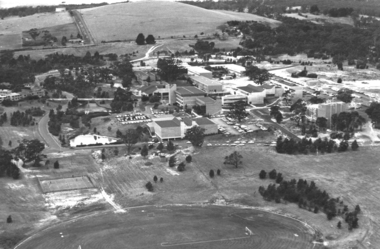
Photograph - Photograph - Black and White, Aerial view of Ballarat Institute of Advanced Education Mount Helen Campus, 1983, c1983
... c1983 ...The Mt Helen Campus is a Ballarat campus of Federation University Australia and was opened in 1970. Aerial view of Federation University's Mount Helen Campusmount helen, aerial, mount helen campus, ballarat streetscape -
 Federation University Historical Collection
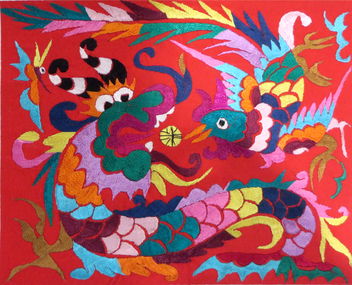
Banner, Asian Embroidery, c1983
... c1983 ...Gift from Shenzhen University to the ChancellorScroll with very bright embroidery. If you can assist with translation of this item, or country of origin, please use the comments box below. calligraphy, asian, calligraphic scroll, shenzhen university -
Federation University Historical Collection
Photograph, Plaque for Stage One of the Vocational Skills Centre, 1983, c1983
... c1983 ...Colour photographSchool of Mines and Industries Ballarat Established - 1870 Stage one of The Vocational Skills Cente was officially opened by the Hon. Robet Fordham M.P. Minister of Education in 29th April 1983 P.R. Shiells K.J. Flecknoe Principal Presidentbuildings, ballarat school of mines, smb campus, premier of victoria, plaque, vocational skills centre, stage one of the vocational skills centre, robert fordham, peter shiels, ken flecknoe -
 The Beechworth Burke Museum
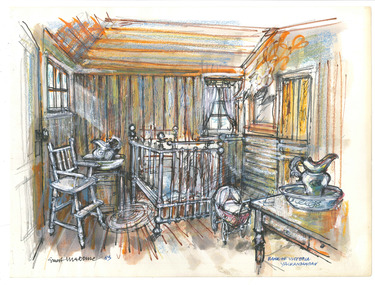
Drawing, Ernest Marcuse, Bank of Victoria – Yackandandah III, c1983
... c1983 ...Ernest Heinrich Marcuse was born on the 1st of December 1900 to Hedwig and Siegmund Marcuse in Berlin Germany. While Marcuse's artistic talent was apparent from a younger age, his earliest existing artwork was from when he was approximately 20 years old. Ernest's formal art training commenced in 1918 with a three year course at the Berlin school of Interior design. After completion he found work until 1924 when Germany's Great Depression took effect. To broaden his career opportunities he undertook a further 12 months study of fashion, drawing and advertising at Berlin's Reiman school of art. From 1925 to 1934 Ernest was primarily a freelance press artist specialising in industrial, architectural and figurative drawing. Prominent newspaper The Berliner Morgenpost was his largest client along with Gross Deutsche Rundfunaustellung (Germany's organisation for major trade shows). During this period he would create many significant works. Two months after Hitler and the Nazi part came to power in 1933, Ernest received a life changing letter stating that being Jewish he could no longer continue employment in Germany. Up until 1938 he would only be able to undertake private commissions and occasional unofficial work as a book illustrator and games designer. This was by arrangement with non Jewish artists who claimed his work as their own, they would then share the income with Ernest. With increasing unrest in Germany during late 1938 Ernest decided to move to London and there he married his girlfriend Lotte. In late 1939 Ernest and Lotte Marcuse embarked on an eight week journey to their new home in Australia where they had been accepted as refugees. Shortly after arriving in Australia Ernest presented his portfolio to an editor at the Argus newspaper and gained employment as a war events illustrator. He soon became well respected and known in particular for his detailed illustrations and cross sections of ships , artillery and aircrafts. His detailed depictions of battles were displayed on the front pages of The Argus newspaper on a number of occasions. In May 1940 as the war intensified Ernest was dismissed from The Argus newspaper due to his Australian government classification of 'stateless person of enemy origin' and was considered a potential security risk. The editor of the time commented "don't blame us, blame Hitler". Marcuse then began to establish himself as a commercial artist. Ernest was de-classified as a 'stateless person of enemy origin' and in early 1942. The Australian army heard of Ernest's artistic abilities and began to utilize his designs for visual training aids and posters. Ernest became Private E.H Marcuse V377746, his first army posting was as staff artist at The infantry officer's training school at Bonegilla. When off duty he was inspired by the beauty of the surrounding area creating the works in North east Victoria 'Kiewa river bridge', 'Hume weir', ' Dried up river bed' and 'Hawksview gold reef mine' from his 1942-1943 period at Bonegilla Victoria. Ernest returned to the area to create drawings and paintings from 1948 to 1983 in locations including Bright, Wandilligong, Bogong High plains and Wallace's Hut, Mt Buffalo, Beechworth, Pretty valley, Kiewa Hydro, Yackandandah and Bontherambo homestead. These sketches were often completed on location, photographs were also taken onsite to assist the works back at the studio. Occasionally Marcuse also painted in the field. Ernest's preferred choice of medium was pencil and ink. Up until 1952 he would often incorporate watercolour into his work. Later into his career he began introducing pastels, acrylic and mixed media. In earlier years Ernest Marcuse often signed his work Mar, later on the signing of works ranged from Marcuse, E.Marcuse, Ernest Marcuse, EHM or simply EM . If a work was considered incomplete or Marcuse did not like the work it would remain unsigned. From Bonegilla Marcuse was transferred to Woodside South Australia before his final posting in Melbourne until the end of 1945. Ernest's work from within his army posting 'Troop Train at Night' from his 1945 exhibition Australia at War are part of the permanent collection at Canberra's War Museum. Between 1946 and 1969 Ernest largely worked from home and concentrated on a career as a freelance commercial artist and graphic designer. During that time he created work for well known household names including CRA/Conzinc, Vacuum oil (Caltex), Cottee's Brand (Schweppes and Heinz), Home Beautiful magazine Fulton garden supplies, International Iveco trucks, Ego pharmaceuticals, QV and Sunsense. After retirement Ernest concentrated on his true love of fine art and focused on painting images of personal interest both across Australia and Internationally. Earnest never drove a car. He would often walk or use public transport or enlist in the help of family or artist friends to drive him. Throughout his career Ernest Marcuse's artworks were purchase by private collectors these included ACTU, Melbourne City council, Holland Constructions, Melbourne Metropolitan Tramways Board, GJ Coles and Australian Resources Bank. Ernest Marcuse permanent collections can be viewed at The National Gallery of Victoria , Sydney Jewish Museum, Jewish Holocaust Centre Melbourne, Canberra's War Museum, City of Melbourne, Shire of Yarra ranges and now the Burke Museum. © 2020 Art by Marcuse https://www.artbymarcuse.com.au/aboutDonated to the Burke Museum through the Australian Government's Cultural Gifts Program by Peter and Evelyn MarcusePen and pencil landscape drawing on paper.Obverse: ERNEST MARCUSE / BANK OF VICTORIA / YACKANDANDAH Reverse: Y 2 / 013 ernest marcuse, marcuse, art, artbymarcuse, beechworth, burke museum, indigo shire, landscape, illustration, drawing, pen and pencil, australian army, war events illustrator, the age, the sun, the argus, germany, refugee, industrial drawing, architectual drawing, figure drawing, berliner morgenpost, grosse deutsche rundfunaustellung, berlin’s reiman school of art., cultural gifts program -
 The Beechworth Burke Museum
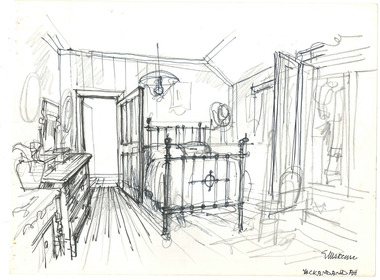
Drawing, Ernest Marcuse, Yackandandah VIII, c1983
... c1983 ...Ernest Heinrich Marcuse was born on the 1st of December 1900 to Hedwig and Siegmund Marcuse in Berlin Germany. While Marcuse's artistic talent was apparent from a younger age, his earliest existing artwork was from when he was approximately 20 years old. Ernest's formal art training commenced in 1918 with a three year course at the Berlin school of Interior design. After completion he found work until 1924 when Germany's Great Depression took effect. To broaden his career opportunities he undertook a further 12 months study of fashion, drawing and advertising at Berlin's Reiman school of art. From 1925 to 1934 Ernest was primarily a freelance press artist specialising in industrial, architectural and figurative drawing. Prominent newspaper The Berliner Morgenpost was his largest client along with Gross Deutsche Rundfunaustellung (Germany's organisation for major trade shows). During this period he would create many significant works. Two months after Hitler and the Nazi part came to power in 1933, Ernest received a life changing letter stating that being Jewish he could no longer continue employment in Germany. Up until 1938 he would only be able to undertake private commissions and occasional unofficial work as a book illustrator and games designer. This was by arrangement with non Jewish artists who claimed his work as their own, they would then share the income with Ernest. With increasing unrest in Germany during late 1938 Ernest decided to move to London and there he married his girlfriend Lotte. In late 1939 Ernest and Lotte Marcuse embarked on an eight week journey to their new home in Australia where they had been accepted as refugees. Shortly after arriving in Australia Ernest presented his portfolio to an editor at the Argus newspaper and gained employment as a war events illustrator. He soon became well respected and known in particular for his detailed illustrations and cross sections of ships , artillery and aircrafts. His detailed depictions of battles were displayed on the front pages of The Argus newspaper on a number of occasions. In May 1940 as the war intensified Ernest was dismissed from The Argus newspaper due to his Australian government classification of 'stateless person of enemy origin' and was considered a potential security risk. The editor of the time commented "don't blame us, blame Hitler". Marcuse then began to establish himself as a commercial artist. Ernest was de-classified as a 'stateless person of enemy origin' and in early 1942. The Australian army heard of Ernest's artistic abilities and began to utilize his designs for visual training aids and posters. Ernest became Private E.H Marcuse V377746, his first army posting was as staff artist at The infantry officer's training school at Bonegilla. When off duty he was inspired by the beauty of the surrounding area creating the works in North east Victoria 'Kiewa river bridge', 'Hume weir', ' Dried up river bed' and 'Hawksview gold reef mine' from his 1942-1943 period at Bonegilla Victoria. Ernest returned to the area to create drawings and paintings from 1948 to 1983 in locations including Bright, Wandilligong, Bogong High plains and Wallace's Hut, Mt Buffalo, Beechworth, Pretty valley, Kiewa Hydro, Yackandandah and Bontherambo homestead. These sketches were often completed on location, photographs were also taken onsite to assist the works back at the studio. Occasionally Marcuse also painted in the field. Ernest's preferred choice of medium was pencil and ink. Up until 1952 he would often incorporate watercolour into his work. Later into his career he began introducing pastels, acrylic and mixed media. In earlier years Ernest Marcuse often signed his work Mar, later on the signing of works ranged from Marcuse, E.Marcuse, Ernest Marcuse, EHM or simply EM . If a work was considered incomplete or Marcuse did not like the work it would remain unsigned. From Bonegilla Marcuse was transferred to Woodside South Australia before his final posting in Melbourne until the end of 1945. Ernest's work from within his army posting 'Troop Train at Night' from his 1945 exhibition Australia at War are part of the permanent collection at Canberra's War Museum. Between 1946 and 1969 Ernest largely worked from home and concentrated on a career as a freelance commercial artist and graphic designer. During that time he created work for well known household names including CRA/Conzinc, Vacuum oil (Caltex), Cottee's Brand (Schweppes and Heinz), Home Beautiful magazine Fulton garden supplies, International Iveco trucks, Ego pharmaceuticals, QV and Sunsense. After retirement Ernest concentrated on his true love of fine art and focused on painting images of personal interest both across Australia and Internationally. Earnest never drove a car. He would often walk or use public transport or enlist in the help of family or artist friends to drive him. Throughout his career Ernest Marcuse's artworks were purchase by private collectors these included ACTU, Melbourne City council, Holland Constructions, Melbourne Metropolitan Tramways Board, GJ Coles and Australian Resources Bank. Ernest Marcuse permanent collections can be viewed at The National Gallery of Victoria , Sydney Jewish Museum, Jewish Holocaust Centre Melbourne, Canberra's War Museum, City of Melbourne, Shire of Yarra ranges and now the Burke Museum. © 2020 Art by Marcuse https://www.artbymarcuse.com.au/aboutDonated to the Burke Museum through the Australian Government's Cultural Gifts Program by Peter and Evelyn MarcusePen and pencil landscape drawing on paper.Obverse: MARCUSE / YACKANDANDAH / Reverse: Y 3 / 014 / ernest marcuse, marcuse, art, artbymarcuse, beechworth, burke museum, indigo shire, landscape, illustration, drawing, pen and pencil, australian army, war events illustrator, the age, the sun, the argus, germany, refugee, industrial drawing, architectual drawing, figure drawing, berliner morgenpost, grosse deutsche rundfunaustellung, berlin’s reiman school of art., cultural gifts program -
 The Beechworth Burke Museum
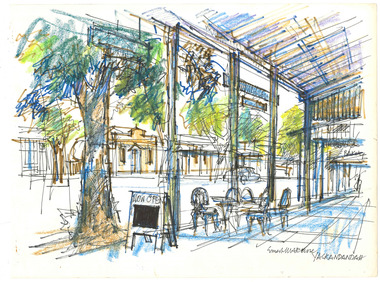
Drawing, Ernest Marcuse, Yackandandah VII, c1983
... c1983 ...Ernest Heinrich Marcuse was born on the 1st of December 1900 to Hedwig and Siegmund Marcuse in Berlin Germany. While Marcuse's artistic talent was apparent from a younger age, his earliest existing artwork was from when he was approximately 20 years old. Ernest's formal art training commenced in 1918 with a three year course at the Berlin school of Interior design. After completion he found work until 1924 when Germany's Great Depression took effect. To broaden his career opportunities he undertook a further 12 months study of fashion, drawing and advertising at Berlin's Reiman school of art. From 1925 to 1934 Ernest was primarily a freelance press artist specialising in industrial, architectural and figurative drawing. Prominent newspaper The Berliner Morgenpost was his largest client along with Gross Deutsche Rundfunaustellung (Germany's organisation for major trade shows). During this period he would create many significant works. Two months after Hitler and the Nazi part came to power in 1933, Ernest received a life changing letter stating that being Jewish he could no longer continue employment in Germany. Up until 1938 he would only be able to undertake private commissions and occasional unofficial work as a book illustrator and games designer. This was by arrangement with non Jewish artists who claimed his work as their own, they would then share the income with Ernest. With increasing unrest in Germany during late 1938 Ernest decided to move to London and there he married his girlfriend Lotte. In late 1939 Ernest and Lotte Marcuse embarked on an eight week journey to their new home in Australia where they had been accepted as refugees. Shortly after arriving in Australia Ernest presented his portfolio to an editor at the Argus newspaper and gained employment as a war events illustrator. He soon became well respected and known in particular for his detailed illustrations and cross sections of ships , artillery and aircrafts. His detailed depictions of battles were displayed on the front pages of The Argus newspaper on a number of occasions. In May 1940 as the war intensified Ernest was dismissed from The Argus newspaper due to his Australian government classification of 'stateless person of enemy origin' and was considered a potential security risk. The editor of the time commented "don't blame us, blame Hitler". Marcuse then began to establish himself as a commercial artist. Ernest was de-classified as a 'stateless person of enemy origin' and in early 1942. The Australian army heard of Ernest's artistic abilities and began to utilize his designs for visual training aids and posters. Ernest became Private E.H Marcuse V377746, his first army posting was as staff artist at The infantry officer's training school at Bonegilla. When off duty he was inspired by the beauty of the surrounding area creating the works in North east Victoria 'Kiewa river bridge', 'Hume weir', ' Dried up river bed' and 'Hawksview gold reef mine' from his 1942-1943 period at Bonegilla Victoria. Ernest returned to the area to create drawings and paintings from 1948 to 1983 in locations including Bright, Wandilligong, Bogong High plains and Wallace's Hut, Mt Buffalo, Beechworth, Pretty valley, Kiewa Hydro, Yackandandah and Bontherambo homestead. These sketches were often completed on location, photographs were also taken onsite to assist the works back at the studio. Occasionally Marcuse also painted in the field. Ernest's preferred choice of medium was pencil and ink. Up until 1952 he would often incorporate watercolour into his work. Later into his career he began introducing pastels, acrylic and mixed media. In earlier years Ernest Marcuse often signed his work Mar, later on the signing of works ranged from Marcuse, E.Marcuse, Ernest Marcuse, EHM or simply EM . If a work was considered incomplete or Marcuse did not like the work it would remain unsigned. From Bonegilla Marcuse was transferred to Woodside South Australia before his final posting in Melbourne until the end of 1945. Ernest's work from within his army posting 'Troop Train at Night' from his 1945 exhibition Australia at War are part of the permanent collection at Canberra's War Museum. Between 1946 and 1969 Ernest largely worked from home and concentrated on a career as a freelance commercial artist and graphic designer. During that time he created work for well known household names including CRA/Conzinc, Vacuum oil (Caltex), Cottee's Brand (Schweppes and Heinz), Home Beautiful magazine Fulton garden supplies, International Iveco trucks, Ego pharmaceuticals, QV and Sunsense. After retirement Ernest concentrated on his true love of fine art and focused on painting images of personal interest both across Australia and Internationally. Earnest never drove a car. He would often walk or use public transport or enlist in the help of family or artist friends to drive him. Throughout his career Ernest Marcuse's artworks were purchase by private collectors these included ACTU, Melbourne City council, Holland Constructions, Melbourne Metropolitan Tramways Board, GJ Coles and Australian Resources Bank. Ernest Marcuse permanent collections can be viewed at The National Gallery of Victoria , Sydney Jewish Museum, Jewish Holocaust Centre Melbourne, Canberra's War Museum, City of Melbourne, Shire of Yarra ranges and now the Burke Museum. © 2020 Art by Marcuse https://www.artbymarcuse.com.au/aboutDonated to the Burke Museum through the Australian Government's Cultural Gifts Program by Peter and Evelyn MarcusePen and pencil landscape drawing on paper.Obverse: ERNEST MARCUSE / YACKANDANDAH / Reverse: Y 10 / 016 ernest marcuse, marcuse, art, artbymarcuse, beechworth, burke museum, indigo shire, landscape, illustration, drawing, pen and pencil, australian army, war events illustrator, the age, the sun, the argus, germany, refugee, industrial drawing, architectual drawing, figure drawing, berliner morgenpost, grosse deutsche rundfunaustellung, berlin’s reiman school of art., cultural gifts program
