
Showing 72 items matching "camberwell city council"
-
 Camberwell Historical Society
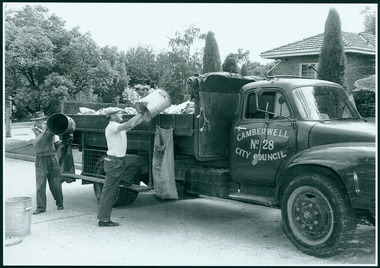
Photograph, Camberwell, Victoria, Garbage men loading rubbish into a Camberwell City Council truck, c. 1950
... Camberwell, Victoria, Garbage men loading rubbish into a Camberwell City Council truck...Print of photograph with inscription 'Camberwell Victoria, Garbage men loading rubbish into a Camberwell City Council truck c. 1950' ...Camberwell Victoria, Garbage men loading rubbish into a Camberwell City Council truck c. 1950...Camberwell Camberwell Victoria, Garbage men loading rubbish into a Camberwell City Council truck c. 1950 Print of photograph with inscription 'Camberwell Victoria, Garbage men loading rubbish into a Camberwell City Council truck c. 1950' Camberwell, Victoria, Garbage men loading rubbish into a Camberwell City Council truck Photograph Photograph ...Print of photograph with inscription 'Camberwell Victoria, Garbage men loading rubbish into a Camberwell City Council truck c. 1950' Camberwell Victoria, Garbage men loading rubbish into a Camberwell City Council truck c. 1950camberwell -
 University of Melbourne, Burnley Campus Archives
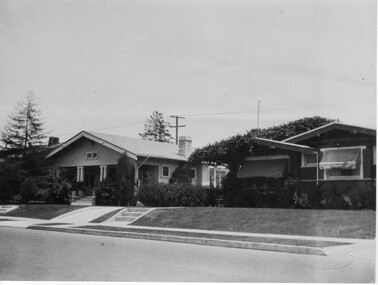
Photograph - Black and white print, Camberwell City Council, Two Suburban Houses, 1930
... Camberwell City Council...Two Suburban Houses Photograph Black and white print Camberwell City Council Stuart Tomkin ...Note by T.H. Kneen 24 June 1992, "B91.424 and 425 are paired to show effect of lowering road level and consequent adjustment to access to the houses photographed. The handwriting is Mr. Jessep's."Black and white photograph. The front of 2 suburban houses. No front fences.suburban house, a.w. jessep, landscaping -
 University of Melbourne, Burnley Campus Archives
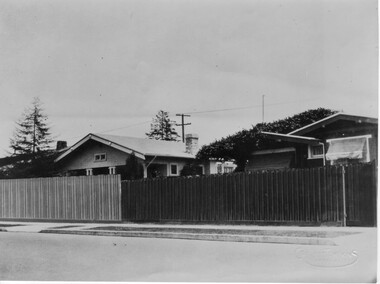
Photograph - Black and white print, Camberwell City Council, Two Suburban Houses, 1930
... Camberwell City Council...Two Suburban Houses Photograph Black and white print Camberwell City Council Stuart Tomkin ...Note by T.H. Kneen 24 June 1992, "B91.424 and 425 are paired to show effect of lowering road level and consequent adjustment to access to the houses photographed. The handwriting is Mr. Jessep's."Black and white photograph. The front of the same 2 suburban houses as B91.424. The nature strip has been lowered to the same level as the road and each has a wooden paling front fence.suburban house, a.w. jessep, landscaping -
 Surrey Hills Historical Society Collection
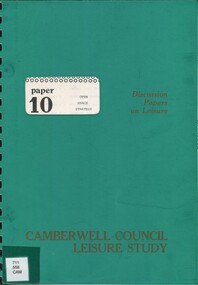
Book, Camberwell Council - Open Space Strategy: paper 10, 1982
... City of Camberwell...Camberwell City Council... of Camberwell Camberwell City Council ...Series title: Camberwell Council Leisure study: discussion papers on leisure; 10 126p.; maps; This discussion paper only present draft policies, and are published in this form to obtain the opinions of the community, councillors, field-workers and experts.126p.; maps; This discussion paper only present draft policies, and are published in this form to obtain the opinions of the community, councillors, field-workers and experts.open spaces, camberwell, victoria, recreational use -
 Canterbury History Group
Ephemera - Have a say about your Centre's future, Camberwell City Council, 1978
... Camberwell City Council...Town Planning Canterbury shop Character of area and shopping Camberwell Council Black and white and green text writing in size A3 - double sided plus 7 black and white photos and 2 maps. Ephemera Have a say about your Centre's future Camberwell City Council ...Black and white and green text writing in size A3 - double sided plus 7 black and white photos and 2 maps.town planning, canterbury shop, character of area and shopping, camberwell council -
Canterbury History Group
Programme - First Annual Canterbury Carols
... ...Camberwell City Council...First Annual Canterbury Carols, 24/12/1945 by courtesy of the Mayor and Councillors of Camberwell City Council...First Annual Canterbury Carols, 24/12/1945 by courtesy of the Mayor and Councillors of Camberwell City Council Canterbury Gardens Christmas Carols Camberwell City Council Photocopy of Program; 2 x A$ sheets; black and white type Programme First Annual Canterbury Carols ...First Annual Canterbury Carols, 24/12/1945 by courtesy of the Mayor and Councillors of Camberwell City CouncilPhotocopy of Program; 2 x A$ sheets; black and white typecanterbury gardens, christmas carols, camberwell city council -
Camberwell Historical Society
Document, Petition to investigate Camberwell Council, 1988-1993
... Correspondence and documents: Investigation into Camberwell City Council, statement by Neville Lee, faxes, minutes, newspaper clippings, and industrial dispute regarding unfair dismissal...camberwell Council Correspondence and documents: Investigation into Camberwell City Council, statement by Neville Lee, faxes, minutes, newspaper clippings, and industrial dispute regarding unfair dismissal Petition to investigate Camberwell Council Document Document ...Correspondence and documents: Investigation into Camberwell City Council, statement by Neville Lee, faxes, minutes, newspaper clippings, and industrial dispute regarding unfair dismissalcamberwell, council -
 Eltham District Historical Society Inc
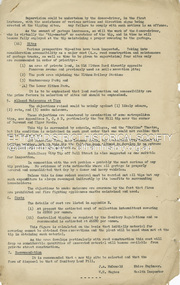
Album - Document, J.A. McDonald, Report to Works Committee: Garbage Disposal, Eltham and Montmorency Ridings, c. 1956
... ...Camberwell City Council Tip...Infrastructure shire of eltham Benchmark studies Box Hill State School Box Hill Teachers College Box Hill Tip Andrew Park Camberwell City Council Tip Eltham Lower Park Eltham Tip Health Inspector Heidelberg City Tip J.A. ...Reference report associated with photos: EDHS_05569-30-4 Box Hill Tip EDHS_05569-30-6 Camberwell Tip EDHS_05569-30-7 Camberwell Tip EDHS_05569-30-8 Camberwell TipRecord of various Shire of Eltham infrastructure works undertaken during the period of 1952-1962 involving bridge and road reconstruction projects, sometimes with Eltham Shire Council Project Reference numbers quoted. It was during this period that a number of significant improvements were made to roads and new bridges constructed within the shire that remain in place as of present day (2022). In many situations, the photos provide a tangible visible record of infrastructure that existed throughout the early days of the Shire. The album was put together by or under the direction of the Shire Engineer, J.A. McDonald.infrastructure, shire of eltham, benchmark studies, box hill state school, box hill teachers college, box hill tip, andrew park, camberwell city council tip, eltham lower park, eltham tip, health inspector, heidelberg city tip, j.a. mcdonald, montmorency park, panorama avenue, report, road construction, shire engineer, skyline theatre, tips, w.u. hughes, works committee: garbage disposal -
Camberwell Historical Society
Newspaper (Item), City of Camberwell, Camberwell City News + Progress Press, 1983-1986
... Camberwell...City of Camberwell...Council...Official journal of the Council of the City of Camberwell, February 1983 + Progress Press newspaper 2 July 1986...Camberwell City of Camberwell Council Newspaper Progress Press Boroondara Official journal of the Council of the City of Camberwell, February 1983 + Progress Press newspaper 2 July 1986 Camberwell City News + Progress Press Newspaper Newspaper City of Camberwell Progress Press ...camberwell, city of camberwell, council, newspaper, progress press, boroondara -
 Surrey Hills Historical Society Collection
Book, A History of Camberwell, 1964
... Published [Brisbane] : Jacaranda Press in association with the Camberwell City Council, 1964 From estate of Ken Hall; Cheryl Poustie was Ken's daughter. ...Published [Brisbane] : Jacaranda Press in association with the Camberwell City Council, 1964 From estate of Ken Hall; Cheryl Poustie was Ken's daughter. ...Includes description including photographs of Camberwell Junction and Burke Road, pre 1950's era. Electric transport 1916-1925, tools and waterways. Published [Brisbane] : Jacaranda Press in association with the Camberwell City Council, 1964 From estate of Ken Hall; Cheryl Poustie was Ken's daughter. Records in detail history and development of the Melbourne suburb of Camberwell. A city covering thirteen square miles. Begins with first European settlement in 1835 by John Gardiner - ending at 1960.Records in detail history and development of the Melbourne suburb of Camberwell. A city covering thirteen square miles. Begins with first European settlement in 1835 by John Gardiner - ending at 1960.Title Page: Kenneth T.Hall / 89-4418camberwell - history, (mr) john gardiner, outer circle railway, camberwell (vic) - history, broughton hall -
 Surrey Hills Historical Society Collection
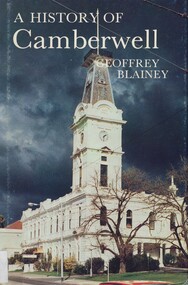
Book, A history of Camberwell, 1980
... In 1964 Camberwell City Council commissioned Professor Geoffrey Blainey to first write this history. ...In 1964 Camberwell City Council commissioned Professor Geoffrey Blainey to first write this history. ...In 1964 Camberwell City Council commissioned Professor Geoffrey Blainey to first write this history. Since that time, many changes have taken place and therefore the Council asked Professor Blainey to bring the book up to date. Bibliography, includes index. The author presents a century of pioneering development and endeavours. He has traced the coming of the wood-cutters and the farmers, the transition from rectangular paddocks to a grid of roads and streets, the growth from shire to borough, town and city, the filling up of thirteen squares miles into residential suburbia - in successive waves of invasion, along new transport routes - including the Outer Circle Railway. Substantial chapters cover the War Years and the progress of Camberwell since the 1960s have also been included in this edition. 134p; ill;camberwell, victoria, market gardens, tolls, railways, mayors, boroondara road board, borondara shire, councillors, (mr) (prof) geoffrey blainey -
 Surrey Hills Historical Society Collection
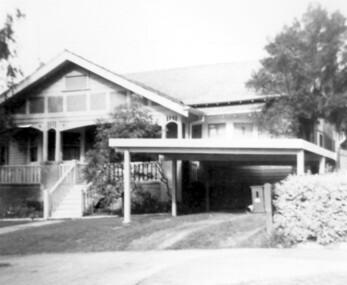
Photograph, 3 Norfolk Road Surrey Hills - home of Mr and Mrs Albert Ernest Vine
... Box Hill Reporter (6/6/19) records that Ernest applied to Camberwell City Council for permission to subdivide land in Norfolk Road with a frontage of 85' into 2 equal lots for a dwelling to be erected on each, one for himself and the other for his mother. ...Box Hill Reporter (6/6/19) records that Ernest applied to Camberwell City Council for permission to subdivide land in Norfolk Road with a frontage of 85' into 2 equal lots for a dwelling to be erected on each, one for himself and the other for his mother. ...Albert Ernest Vine Snr, was a City of Camberwell Councillor from 1926-1934 and 1937-1944. He was also Mayor of Camberwell in 1940/41. There is a sundial in the Surrey Gardens erected in his memory. Known as Ernest, he and his wife Edith (nee Sword) lived at 3 Norfolk Road from 1920-1945. Earlier addresses are on file in Alan Holt card index. He was active in Surrey Hills Progress Association. He was the son of William James Vine (1860-1920) and Sarah Elizabeth Gunner (1859-1941). W J Vine & Co Timber Yards were located at 587-593 Canterbury Road. Elizabeth Gunner's brother was Henry Gabez Gunner (1862-1940), a builder in the Surrey Hills area. Box Hill Reporter (6/6/19) records that Ernest applied to Camberwell City Council for permission to subdivide land in Norfolk Road with a frontage of 85' into 2 equal lots for a dwelling to be erected on each, one for himself and the other for his mother. Albert Ernest & Edith Vine had the following children: Albert Ernest Jnr (b 1904), Robert (b 1908), Edgar (b 1912), Inez (b 1915) and Beth (b 1918). Both No 1 & No 3 were demolished c1970.Black and white photo of a 1920s style single-storey weatherbaord home with leadlight windows, a tiled roof and a wide veranda supported by timber columns on stucco pillars. The veranda has a simple timber balastrade and a flight of timber stairs to it. There does not appear to be front fence. A simple sloped double carport on the RHS and proud of the house is of a later date.norfolk road, californian bungalows, w j vine & co timber yards, mr william james vine, mr albert ernest vine, mrs edith vine, miss edith sword -
Surrey Hills Historical Society Collection
Work on paper - Vertical File, Heritage Study - C148 Union Road Shops
... Urban Planning Special Committee Agenda open to the public, Monday, 16 April 2012 Council Chamber, 8 Inglesby Road, Camberwell. Boroondara City Council. (29 pages). 4. ...Urban Planning Special Committee Agenda open to the public, Monday, 16 April 2012 Council Chamber, 8 Inglesby Road, Camberwell. Boroondara City Council. (29 pages). 4. ...Heritage Study C148 1. Surrey Hills and Canterbury Hill Estate Heritage Study Union Road Commercial Precinct Citation. Lovell Chen. June 2011 (30 pages) 2. Urban Planning Special Committee Monday, 16 April 2012, Attachments. Agenda attachments to the report: UPC2 Amendment C148 – Union Road Commercial Heritage Precinct – Post Exhibition Update. (38 pages). 3. Urban Planning Special Committee Agenda open to the public, Monday, 16 April 2012 Council Chamber, 8 Inglesby Road, Camberwell. Boroondara City Council. (29 pages). 4. Letter from the Department of Planning and Community Development, Planning Panels Victoria re: Amendment C148 to the Boroondara Planning Scheme dated 6 June 2012. (8 pages single sided) 5. Statement of Evidence and Report to Planning Panel, Boroondara Planning Scheme Amendment C148 Union Road Commercial Heritage Precinct Surrey Hills. Prepared for City of Boroondara by Lovell Chen, July 2012. (8 pages double sided). 6. Appeal to Officers Comments to our initial submission ref. Item #3 page 2 of 38 Attachment to UPC Agenda for 16 April 2012 letter to Urban Planning Special Committee UPC2 Amendment C148 Union Road Commercial Heritage Precinct – Post Exhibition Update (4 pages single sided). 7. Submission to the Panel Hearing Thursday, 26 July 2012 re: Boroondara Planning Scheme – Amendment C148 by Coordinator of the Surrey Hills Neighbourhood Heritage Collection and member of Surrey Hills Historical Collection. (3 pages single sided). 8. Union Road Commercial Heritage Precinct Panel Hearing Submission on behalf of Boroondara City Council, Amendment C148, 26 July 2012. (38 pages double sided). 9. Memorandum to Michelle Wyatt from Lovell Chen dated 7 August 2012 re: Supplementary Information to C148 Panel. 10. Planning and Environment Act 1987 Report Panel Boroondara Planning Scheme Amendment C148, 29 August 2012. (12 pages double sided). surrey hills and canterbury hill estate heritage study, urban planning special committee, boroondara planning scheme amendment c148, union road commercial heritage precinct panel -
 Glen Eira Historical Society
Article - Outer Circle Linear Park
... OUTER CIRCLE LINEAR PARK, joint submission by cities of Kew, Camberwell, Malvern and Caulfield. A bound fifteen page submission, dated 08/07/1985, by four councils urging the creation of the Outer Circle Linear Park. ...OUTER CIRCLE LINEAR PARK, joint submission by cities of Kew, Camberwell, Malvern and Caulfield. A bound fifteen page submission, dated 08/07/1985, by four councils urging the creation of the Outer Circle Linear Park. ...OUTER CIRCLE LINEAR PARK, joint submission by cities of Kew, Camberwell, Malvern and Caulfield. A bound fifteen page submission, dated 08/07/1985, by four councils urging the creation of the Outer Circle Linear Park. Includes map and photographs. OUTER CIRCLE RAILWAY: A PLAN FOR A LINEAR PARK, report of the Outer Circle Study Group. Bound booklet of one hundred and thirty five typewritten and photocopied pages about the creation of this park. The Introduction was signed by Tom Roper, Minister for Planning and Environment, and by Joan Kirner, Minister for Conservation, Forests and Lands. Undated but the Introduction states that public submissions must be received by 31/05/1988. Includes maps, sketches of proposed facilities, a history of the former Outer Circle Railway Line, and a description of notable plants and trees. A double sided, one page leaflet, published by the Murrumbeena Outer Circle Parkland Retention Group, MOCPRG, with timeline of the park and map. Undated but the last date on the timeline is 1985. Includes small sheet headed WHAT CAN YOU DO? Cutting from the CAULFIELD CONTACT titled A NEW PARK IT’S OFFICIAL, dated 26/02/1988, on official announcement of the new park. Two copies of OUTER CIRCLE LINEAR PARK, a four paged pamphlet published by Outer Circle Linear Park Implementation Committee on the new park. Includes detailed map. Letter between Felicitie E. Campbell of the Caulfield Historical Society, dated 14/09/1988 supporting the naming of a section of the Linear Park as Boyd Park. Two pages typed and a hand written copy. Also a type written letter from Jim Badger, Manager, Cultural Services, City of Caulfield, supporting the naming as Boyd Park, dated 16/08/1988. An album of thirty five colour photographs by Peter Foeden and Associates, of the official opening of the Outer Circle Linear Park by Premier John Cain, 1988. Photographs are numbered and the album includes handwritten descriptions of each photograph. Two mounted photographs of the Caulfield section of Linear Park, undated. One black and white and one colour.outer circle linear park, outer circle railway, parks, saunders r. e., briggs a. g., quinn m., rudski b., outer circle study group, roper tom, kirner joan, dunstan david, railways, trees, murrumbeena, campbell felicitie e., badger jim, peter foeden and associates, campbell adack, lang robert, gallney cr., cain john, cain nancy, boyd john, boyd arthur, boyd merric, boyd penleigh, boyd robyn, boyd james, boyd guy, ballantyne mr. -
 Glen Eira Historical Society
Album - Album page, Caulfield Town Hall cnr Hawthorn & Glen Eira Rds, Circa 1972
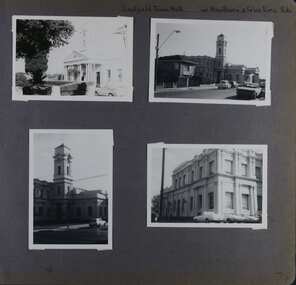
... City sustained during the Inter-war period, the work proceeding in spite of the Depression. It compares with other similar work of that time including the refurbishment of the Malvern Municipal Offices and Hall in 1927 (Hudson and Wardrop), the Melbourne Corporation Offices and Hall in 1925-28 (Stephenson and Meldrum, A. and K. Henderson) and the Camberwell Offices and Council ...This photograph is part of the Caulfield Historical Album 1972. This album was created in approximately 1972 as part of a project by the Caulfield Historical Society to assist in identifying buildings worthy of preservation. The album is related to a Survey the Caulfield Historical Society developed in collaboration with the National Trust of Australia (Victoria) and Caulfield City Council to identify historic buildings within the City of Caulfield that warranted the protection of a National Trust Classification. Principal photographer thought to be Trevor Hart, member of Caulfield Historical Society. Most photographs were taken between 1966-1972 with a small number of photographs being older and from unknown sources. All photographs are black and white except where stated, with 386 photographs over 198 pages. Caulfield Town Hall is now known as Glen Eira Town Hall.From Victorian Heritage Database: Citation for Town Hall, Corner Glen Eira and Hawthorn Roads - HO106 https://vhd.heritagecouncil.vic.gov.au/places/43613 as at (19/10/2020) The former City of Caulfield (now City of Glen Eira) Municipal Offices, located at the south-west corner of Hawthorn and Glen Eira Roads, Caulfield South, were commenced for the Borough of Caulfield in 1884 when they also included a Post and Telegraph Office and Court of Petty Sessions. They were designed by the Borough surveyor, Sydney Smith. The hall was completed in 1890 to the design of Alexander Rankin and the present hall, foyer and portico completed to the design of Goldsmith and Jenkin, architects, in 1931. The complex is historically, aesthetically and socially significant. It is historically significant {Criterion A) as the centre of Local Government services in the area since 1885 and as a centre of post and telegraph and legal services for a period. Its association with architect and Borough surveyor, Sydney W. Smith is important in that the east elevation and facade (ground floor level only)as far west as the tower (lower two stages) survive as evidence of his work, the practice which his son continued after his death in 1886, becoming highly successful. The work of Goldsmith and Jenkin is historically important in that it indirectly demonstrates the growth of the City sustained during the Inter-war period, the work proceeding in spite of the Depression. It compares with other similar work of that time including the refurbishment of the Malvern Municipal Offices and Hall in 1927 (Hudson and Wardrop), the Melbourne Corporation Offices and Hall in 1925-28 (Stephenson and Meldrum, A. and K. Henderson) and the Camberwell Offices and Council Chamber in 1924 (Leighton Irwin and Roy Stevenson), other comparable municipal projects being undertaken during the 1930s. Finally, the Goldsmith and Jenkin works are important as a project of the Depression years organised specifically to alleviate unemployment problems in the Municipality. The complex is aesthetically important (Criterion E) as a prominent and imposing Classically derived complex of its type with individually noteworthy interior spaces being the entry hall and staircase, main Hall, Foyer and Council Chamber. The Adamesque plasterwork, timber panelling and furniture, Art Nouveaux enrichment and Classically derived treatment with sparing use of Australian decorative motifs are contributory elements. Exterior .elements of note include the remains of the original design prepared by Sydney Smith and the clock tower and portico which have come to symbolise important Municipal complexes erected prior to the Second World War. The complex is socially important (Criterion G) for the value placed on it by the community which has made use of it for activities including that of Local government for well over a century.Page 74 of Photograph Album with four photographs (three portrait and one landscape) of different views of the Caulfield Town Hall.Hand written: Caulfield Town Hall cnr Hawthorn & Glen Eira Rds [top right] / 74 [bottom right] trevor hart, caulfield, glen eira, caulfield town hall, sydney smith, sydney w smith, municipal, adamesque plasterwork, adamesque, art nouveaux, portico, council chambers, alexander rankin, foyer, local government, timber panelling, tower, unemployment, clock tower, hawthorn road, glen eira road, city of glen eira, municipal offices, post and telegraph office, goldsmith and jenkin, courthouses, surveyors, architects, classical architectural style, streetscapes, gardens, cars, glen eira town hall, depression 1929-1939 -
 Glen Eira Historical Society
Album - Album page, Caulfield Town Hall cnr Hawthorn & Glen Eira Rds, Circa 1972
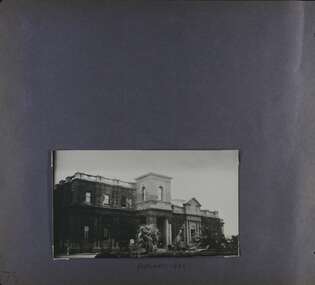
... City sustained during the Inter-war period, the work proceeding in spite of the Depression. It compares with other similar work of that time including the refurbishment of the Malvern Municipal Offices and Hall in 1927 (Hudson and Wardrop), the Melbourne Corporation Offices and Hall in 1925-28 (Stephenson and Meldrum, A. and K. Henderson) and the Camberwell Offices and Council ...This photograph is part of the Caulfield Historical Album 1972 but is noted as taken in 1922. This album was created in approximately 1972 as part of a project by the Caulfield Historical Society to assist in identifying buildings worthy of preservation. The album is related to a Survey the Caulfield Historical Society developed in collaboration with the National Trust of Australia (Victoria) and Caulfield City Council to identify historic buildings within the City of Caulfield that warranted the protection of a National Trust Classification. Principal photographer thought to be Trevor Hart, member of Caulfield Historical Society. Most photographs were taken between 1966-1972 with a small number of photographs being older and from unknown sources. All photographs are black and white except where stated, with 386 photographs over 198 pages. Caulfield Town Hall is now known as Glen Eira Town Hall.From Victorian Heritage Database: Citation for Town Hall, Corner Glen Eira and Hawthorn Roads - HO106 https://vhd.heritagecouncil.vic.gov.au/places/43613 as at (19/10/2020) The former City of Caulfield (now City of Glen Eira) Municipal Offices, located at the south-west corner of Hawthorn and Glen Eira Roads, Caulfield South, were commenced for the Borough of Caulfield in 1884 when they also included a Post and Telegraph Office and Court of Petty Sessions. They were designed by the Borough surveyor, Sydney Smith. The hall was completed in 1890 to the design of Alexander Rankin and the present hall, foyer and portico completed to the design of Goldsmith and Jenkin, architects, in 1931. The complex is historically, aesthetically and socially significant. It is historically significant {Criterion A) as the centre of Local Government services in the area since 1885 and as a centre of post and telegraph and legal services for a period. Its association with architect and Borough surveyor, Sydney W. Smith is important in that the east elevation and facade (ground floor level only)as far west as the tower (lower two stages) survive as evidence of his work, the practice which his son continued after his death in 1886, becoming highly successful. The work of Goldsmith and Jenkin is historically important in that it indirectly demonstrates the growth of the City sustained during the Inter-war period, the work proceeding in spite of the Depression. It compares with other similar work of that time including the refurbishment of the Malvern Municipal Offices and Hall in 1927 (Hudson and Wardrop), the Melbourne Corporation Offices and Hall in 1925-28 (Stephenson and Meldrum, A. and K. Henderson) and the Camberwell Offices and Council Chamber in 1924 (Leighton Irwin and Roy Stevenson), other comparable municipal projects being undertaken during the 1930s. Finally, the Goldsmith and Jenkin works are important as a project of the Depression years organised specifically to alleviate unemployment problems in the Municipality. The complex is aesthetically important (Criterion E) as a prominent and imposing Classically derived complex of its type with individually noteworthy interior spaces being the entry hall and staircase, main Hall, Foyer and Council Chamber. The Adamesque plasterwork, timber panelling and furniture, Art Nouveaux enrichment and Classically derived treatment with sparing use of Australian decorative motifs are contributory elements. Exterior .elements of note include the remains of the original design prepared by Sydney Smith and the clock tower and portico which have come to symbolise important Municipal complexes erected prior to the Second World War. The complex is socially important (Criterion G) for the value placed on it by the community which has made use of it for activities including that of Local government for well over a century.Page 75 of Photograph Album with one portrait photograph of the exterior of Caulfield Town Hall taken in 1922.Hand written: FEBRUARY 1922 [under photo] / 75 [bottom left] trevor hart, caulfield, glen eira, caulfield town hall, sydney smith, sydney w smith, adamesque plasterwork, art nouveaux, portico, council chambers, alexander rankin, foyer, local government, timber panelling, tower, unemployment, clock tower, hawthorn road, glen eira road, city of glen eira, municipal offices, palms, gardens, post and telegraph offices, goldsmith and jenkin, architects, city of caulfield, ivy clad walls, surveyors, depression 1929-1939, glen eira town hall -
 Chiltern Athenaeum Trust
Brochure for WW2 - Air Raid Precautions "City Of Camberwell", Air Raid Precautions
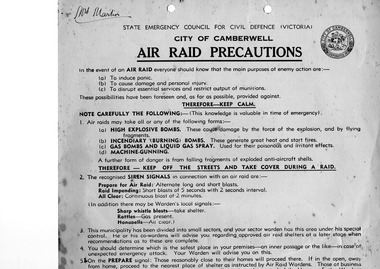
... State Emergency Council for Civil Defence (Victoria) City of Camberwell Air Raid Precautions Sector Warden Mr Ashcroft Glen Iris Mr Lyte Glen Iris Nearest Wardens Post F W Smith phone U1526 Sector No. 114 Area Warden Councillor E W Raven WM1510 ...State Emergency Council for Civil Defence (Victoria) City of Camberwell Air Raid Precautions Sector Warden Mr Ashcroft Glen Iris Mr Lyte Glen Iris Nearest Wardens Post F W Smith phone U1526 Sector No. 114 Area Warden Councillor E W Raven WM1510 light card Air Raid Precautions Brochure for WW2 - Air Raid Precautions "City Of Camberwell" ...WW2light cardMrs Martin. State Emergency Council for Civil Defence (Victoria) City of Camberwell Air Raid Precautions Sector Warden Mr Ashcroft Glen Iris Mr Lyte Glen Iris Nearest Wardens Post F W Smith phone U1526 Sector No. 114 Area Warden Councillor E W Raven WM1510 -
 Kew Historical Society Inc
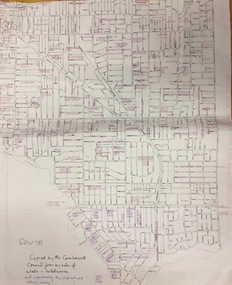
Plan, Gwen McWilliam, Annotated Plan of City of Boroondara, c.1995
... City. She was awarded the medal of the Order of Australia in 2001 ‘for service to the community of Hawthorn and district, particularly through the research, documentation and publication of its history.’ subdivisions - hawthorn, subdivisions - kew, subdivisions - camberwell, subdivisions - balwyn, subdivisions - surrey hills, subdivisions - canterbury, gwen mcwilliam Council markings in pink Digitally annotated part plan of the City of Boroondara, created by Council (Library?) ...Gwen Barton McWilliam (nee: Nelson), OAM, BA (1933- ). Gwen McWilliam is well known as an authority on the history of Boroondara and the author of a large number of books and pamphlets about the City. She was awarded the medal of the Order of Australia in 2001 ‘for service to the community of Hawthorn and district, particularly through the research, documentation and publication of its history.’ Digitally annotated part plan of the City of Boroondara, created by Council (Library?) staff, based on annotated plans provided by the historian Gwen McWilliam, identifying significant landholdings, subdivisions and key dates. On the plan Gwen McWilliam noted that the attempt to copy her annotations had resulted in incorrect data being included, so the plans were never published. For plans including her original 1993 annotations, see 2017.0143 and 2017.0144.Council markings in pinksubdivisions - hawthorn, subdivisions - kew, subdivisions - camberwell, subdivisions - balwyn, subdivisions - surrey hills, subdivisions - canterbury, gwen mcwilliam -
 Kew Historical Society Inc
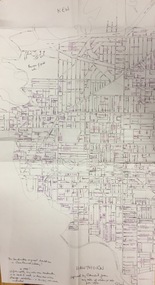
Plan, Gwen McWilliam, Annotated Plan of City of Boroondara, c.1995
... City. She was awarded the medal of the Order of Australia in 2001 ‘for service to the community of Hawthorn and district, particularly through the research, documentation and publication of its history.’ subdivisions - hawthorn, subdivisions - kew, subdivisions - camberwell, subdivisions - balwyn, subdivisions - surrey hills, subdivisions - canterbury, gwen mcwilliam Council additions in pink Digitally annotated part plan of the City of Boroondara, created by Council (Library?) ...Gwen Barton McWilliam (nee: Nelson), OAM, BA (1933- ). Gwen McWilliam is well known as an authority on the history of Boroondara and the author of a large number of books and pamphlets about the City. She was awarded the medal of the Order of Australia in 2001 ‘for service to the community of Hawthorn and district, particularly through the research, documentation and publication of its history.’ Digitally annotated part plan of the City of Boroondara, created by Council (Library?) staff, based on annotated plans provided by the historian Gwen McWilliam, identifying significant landholdings, subdivisions and key dates. On the plan Gwen McWilliam noted that the attempt to copy her annotations had resulted in incorrect data being included, so the plans were never published. For plans including her original 1993 annotations, see 2017.0143 and 2017.0144.Council additions in pinksubdivisions - hawthorn, subdivisions - kew, subdivisions - camberwell, subdivisions - balwyn, subdivisions - surrey hills, subdivisions - canterbury, gwen mcwilliam -
 Kew Historical Society Inc
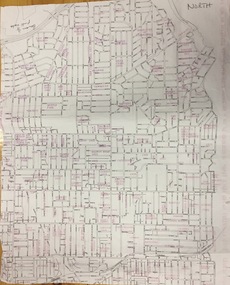
Plan, Gwen McWilliam, Annotated Plan of City of Boroondara, c.1995
... City. She was awarded the medal of the Order of Australia in 2001 ‘for service to the community of Hawthorn and district, particularly through the research, documentation and publication of its history.’ subdivisions - hawthorn, subdivisions - kew, subdivisions - camberwell, subdivisions - balwyn, subdivisions - surrey hills, subdivisions - canterbury, gwen mcwilliam Additions in pink by City of Boroondara Digitally annotated part plan of the City of Boroondara, created by Council (Library?) ...Gwen Barton McWilliam (nee: Nelson), OAM, BA (1933- ). Gwen McWilliam is well known as an authority on the history of Boroondara and the author of a large number of books and pamphlets about the City. She was awarded the medal of the Order of Australia in 2001 ‘for service to the community of Hawthorn and district, particularly through the research, documentation and publication of its history.’ Digitally annotated part plan of the City of Boroondara, created by Council (Library?) staff, based on annotated plans provided by the historian Gwen McWilliam, identifying significant landholdings, subdivisions and key dates. On the plan Gwen McWilliam noted that the attempt to copy her annotations had resulted in incorrect data being included, so the plans were never published. For plans including her original 1993 annotations, see 2017.0143 and 2017.0144.Additions in pink by City of Boroondarasubdivisions - hawthorn, subdivisions - kew, subdivisions - camberwell, subdivisions - balwyn, subdivisions - surrey hills, subdivisions - canterbury, gwen mcwilliam -
 Kew Historical Society Inc
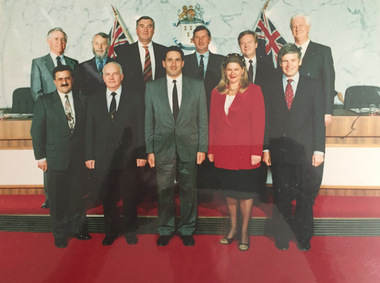
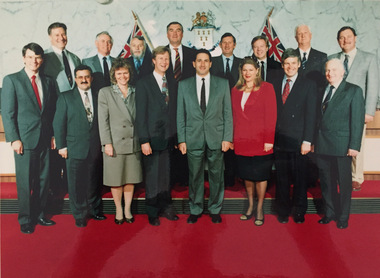
Photograph, City of Kew : 1994 Final Councillors, 1994
... City in 1921. Under a conservative Victorian Government, led by premier Jeff Kennett, Councils across Victoria were amalgamated, including the City of Kew, which was joined with the Cities of Hawthorn and Camberwell to form a new City of Boroondara (1994- ). ...City in 1921. Under a conservative Victorian Government, led by premier Jeff Kennett, Councils across Victoria were amalgamated, including the City of Kew, which was joined with the Cities of Hawthorn and Camberwell to form a new City of Boroondara (1994- ). ...Kew was gazetted as a Municipality in 1860, as a Borough in 1863, as a Town in 1910, and as a City in 1921. Under a conservative Victorian Government, led by premier Jeff Kennett, Councils across Victoria were amalgamated, including the City of Kew, which was joined with the Cities of Hawthorn and Camberwell to form a new City of Boroondara (1994- ). This is one of two photographs recording the last Kew Council in 1994. Laminated photograph of City of Kew Final Councillors, taken in 1994, during the year that Council amalgamation led to the demise of the City of Kew. The photograph was laminated a number of years before its donation. CITY OF KEW / 1994 FINAL COUNCILLORS / FROM LEFT: / BACK ROW: ALLEN MARTIN, PHILIP SLOBOM, ROGER STREETON, JAMES TUTT, DARYL OLDAKER, GERARD PETRIE / FRONT ROW: MICHAEL MONTALTO, PAUL VALLIS, TOM INDOVINO (MAYOR), JOAN LAMB, JOHN MURRAYcity of kew councillors, kew council - 1994 -
 Kew Historical Society Inc
Photograph, City of Kew : 1994 Final Councillors and Corporate Management Group, 1994
... City in 1921. Under a conservative Victorian Government, led by premier Jeff Kennett, Councils across Victoria were amalgamated, including the City of Kew, which was joined with the Cities of Hawthorn and Camberwell to form a new City of Boroondara (1994- ). ...City in 1921. Under a conservative Victorian Government, led by premier Jeff Kennett, Councils across Victoria were amalgamated, including the City of Kew, which was joined with the Cities of Hawthorn and Camberwell to form a new City of Boroondara (1994- ). ...Kew was gazetted as a Municipality in 1860, as a Borough in 1863, as a Town in 1910, and as a City in 1921. Under a conservative Victorian Government, led by premier Jeff Kennett, Councils across Victoria were amalgamated, including the City of Kew, which was joined with the Cities of Hawthorn and Camberwell to form a new City of Boroondara (1994- ). This is one of two photographs recording the last Kew Council and senior corporate staff in 1994. Laminated photograph of City of Kew Final Councillors, taken in 1994, during the year that Council amalgamation led to the demise of the City of Kew. The photograph was laminated a number of years before its donation. CITY OF KEW / 1994 FINAL COUNCILLORS AND CORPORATE MANAGEMENT GROUP / FROM LEFT: / BACK ROW: PETER HUGGINS, ALLEN MARTIN, PHILIP SLOBOM, ROGER STREETON, JAMES TUTT, DARYL OLDAKER, GERARD PETRIE, IAN POULTER / FRONT ROW: NEIL HOCKING, MICHAEL MONTALTO, JUNE DUGINA, MALCOLM HUTCHINSON, TOM INDOVINO (MAYOR), JOAN LAMB, JOHN MURRAY, PAUL LAMBcity of kew councillors, kew council - 1994, city of kew corporate staff -
 Kew Historical Society Inc
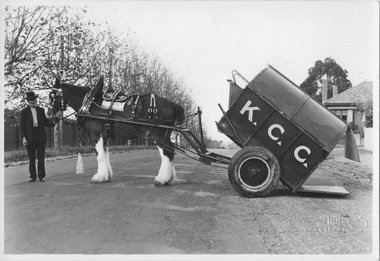
Photograph - City of Kew Horse, Cart and Employee, c.1950
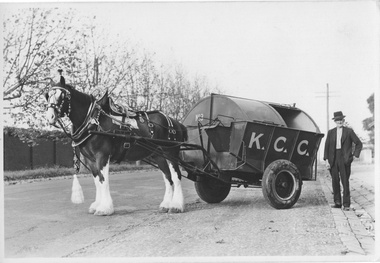
... One of four original black and white photographs by Stuart Tompkins Camberwell of a horse and cart and a council employee, Barry Avery, in Parkhill Road, Kew. In a number of photos the cart has K.C.C., in large letters on its side. It is presumed to be the city...The City of Kew was a suburb in Melbourne from 1860 to 1994. city of kew garbage waste collection - kew (vic) Barry avery kew depot stuart tompkins "Location Cr Parkhill Rd & Hillcrest Av KEW / Driver Barry Avery" One of four original black and white photographs by Stuart Tompkins Camberwell of a horse and cart and a council employee, Barry Avery, in Parkhill Road, Kew. ...The City of Kew was a suburb in Melbourne from 1860 to 1994.One of four original black and white photographs by Stuart Tompkins Camberwell of a horse and cart and a council employee, Barry Avery, in Parkhill Road, Kew. In a number of photos the cart has K.C.C., in large letters on its side. It is presumed to be the city garbage cart No.3 which was stationed at the old Council Depot on the corner of High and Disraeli Streets."Location Cr Parkhill Rd & Hillcrest Av KEW / Driver Barry Avery"city of kew, garbage waste collection - kew (vic), barry avery, kew depot, stuart tompkins -
 Kew Historical Society Inc
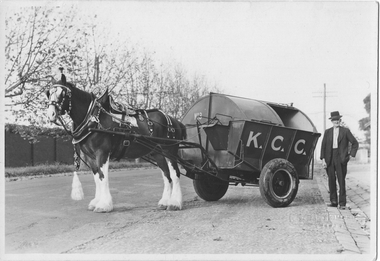
Photograph - City of Kew Horse, Cart and Employee, Stuart Tompkins, c.1950
... The Kew City Council Depot was for a period situated on the corner of High Street and Disraeli Streets. The photo from the former City of Kew Municipal Collection was taken by a photographer from Stuart Tompkins Studio in Camberwell....The Kew City Council Depot was for a period situated on the corner of High Street and Disraeli Streets. The photo from the former City of Kew Municipal Collection was taken by a photographer from Stuart Tompkins Studio in Camberwell. city of kew garbage waste collection - kew (vic) Barry avery kew depot stuart tompkins "Cr Parkhill Rd & Hillcrest Ave Kew / Driver : Barry Avery" One of four black and white photographs (perhaps reproductions) of a horse and cart and a council employee in Parkhill Road, Kew. ...The Kew City Council Depot was for a period situated on the corner of High Street and Disraeli Streets. The photo from the former City of Kew Municipal Collection was taken by a photographer from Stuart Tompkins Studio in Camberwell.One of four black and white photographs (perhaps reproductions) of a horse and cart and a council employee in Parkhill Road, Kew. In a number of photos the cart has K.C.C., in large letters on its side. It is presumed to be the city garbage cart No.3 which was stationed at the old Council Depot on the corner of High and Disraeli Streets. "Cr Parkhill Rd & Hillcrest Ave Kew / Driver : Barry Avery"city of kew, garbage waste collection - kew (vic), barry avery, kew depot, stuart tompkins -
 Kew Historical Society Inc
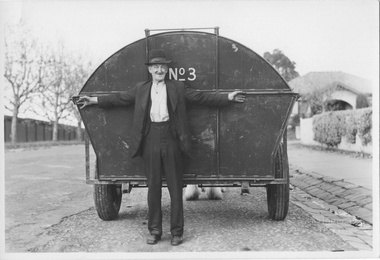
Photograph - City of Kew Horse, Cart and Employee, Stuart Tompkins, c.1950
... The Kew City Council Depot was for a period situated on the corner of High Street and Disraeli Streets. The photo from the former City of Kew Municipal Collection was taken by a photographer from Stuart Tompkins Studio in Camberwell. ...One of four original black and white photographs by Stuart Tompkins Camberwell of a horse and cart and a council employee, Barry Avery, in Parkhill Road, Kew. In a number of photos the cart has K.C.C., in large letters on its side. It is presumed to be the city...The Kew City Council Depot was for a period situated on the corner of High Street and Disraeli Streets. The photo from the former City of Kew Municipal Collection was taken by a photographer from Stuart Tompkins Studio in Camberwell. city of kew garbage waste collection - kew (vic) Barry avery kew depot stuart Tompkins "Cr Parkhill Rd & Hillcrast Ave Kew / Driver Barry Avery" One of four original black and white photographs by Stuart Tompkins Camberwell of a horse and cart and a council employee, Barry Avery, in Parkhill Road, Kew. ...The Kew City Council Depot was for a period situated on the corner of High Street and Disraeli Streets. The photo from the former City of Kew Municipal Collection was taken by a photographer from Stuart Tompkins Studio in Camberwell. One of four original black and white photographs by Stuart Tompkins Camberwell of a horse and cart and a council employee, Barry Avery, in Parkhill Road, Kew. In a number of photos the cart has K.C.C., in large letters on its side. It is presumed to be the city garbage cart No.3 which was stationed at the old Council Depot on the corner of High and Disraeli Streets. "Cr Parkhill Rd & Hillcrast Ave Kew / Driver Barry Avery"city of kew, garbage waste collection - kew (vic), barry avery, kew depot, stuart tompkins -
 Kew Historical Society Inc
Photograph - City of Kew Horse, Cart and Employee, Stuart Tompkins, c.1950
... The Kew City Council Depot was for a period situated on the corner of High Street and Disraeli Streets. The photo from the former City of Kew Municipal Collection was taken by a photographer from Stuart Tompkins Studio in Camberwell. ...The Kew City Council Depot was for a period situated on the corner of High Street and Disraeli Streets. The photo from the former City of Kew Municipal Collection was taken by a photographer from Stuart Tompkins Studio in Camberwell. city of kew garbage waste collection - kew (vic) stuart tompkins barry avery "Cr Parkhill Rd & Hillcrest Ave, Kew / Driver: Barry Avery" One of four original black and white photographs of a horse and cart and a council employee, Barry Avery, in Parkhill Road, Kew. ...The Kew City Council Depot was for a period situated on the corner of High Street and Disraeli Streets. The photo from the former City of Kew Municipal Collection was taken by a photographer from Stuart Tompkins Studio in Camberwell. One of four original black and white photographs of a horse and cart and a council employee, Barry Avery, in Parkhill Road, Kew. In a number of photos the cart has K.C.C., in large letters on its side. It is presumed to be the city garbage cart No.3 which was stationed at the old Council Depot on the corner of High and Disraeli Streets. "Cr Parkhill Rd & Hillcrest Ave, Kew / Driver: Barry Avery"city of kew, garbage waste collection - kew (vic), stuart tompkins, barry avery -
 Surrey Hills Historical Society Collection
Photograph, City of Camberwell Council, Surrey Gardens, looking east from Union Road, 1933
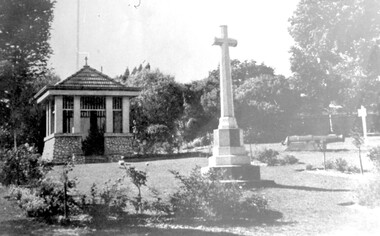
... City of Camberwell Council...Surrey Gardens, looking east from Union Road Photograph Photograph City of Camberwell Council Ken Hall ...The Honor Roll and Shrine in the Surrey Gardens were opened on Sunday 7 April 1918, prior to the cessation of fighting. Mrs Charles H D Steele (MS: Sarah Margaret Russell), president of the local Patriotic League, is credited with the idea of building The Shrine as a fitting memorial to the soldiers of the district. The Surrey Hills Progress Association coordinated raising funds from local residents. John Kendrick Blogg carved the beautiful honor roll in Indian teak and Australian white mahogany and the design of The Shrine was by architectural firm Gawler & Drummond. John Stevens Gawler was a partner in the firm, lived locally and also enlisted. Although he may have been overseas during some of the design process he is often credited with the design. Both men donated their services. The 2 cannons in the gardens were acquired by Mr Arthur Brookes in 1901 to commemorate the end of the Boer War. He was popularly known as 'Empire Brooks' and the cannons as 'Brooks' Babies'. They were originally placed in the grounds of the Guildford Road Recreation Oval. Arthur Brooks was an active community member and one of the founding members of the Surrey Hills Progress Association. Original photo was contained in a booklet printed by Camberwell Council in 1933.This is one of the earliest known photos of 3 elements important in designating the Surrey Gardens as one of the City of Boroondara's heritage gardens, now protected by a heritage overlay. The Shrine was one of the first WW1 memorials to be built in Australia and possibly the first in Victoria. It was unveiled prior to the end of hostilities and was built entirely through local community effort. The design of The Shrine, reflective of domestic architecture, is unusual. Its Honor Roll is also a noted example of sculptor John Kendrick Blogg's work and valued especially for its incorporation of Australian motifs, wattle blossom and gum leaves. The boomerang over the full width of the monument was said to be symbolic of both those who did and did not return. Black and white photo of part of the Surrey Gardens, located between Union Road and Norfolk Road, Surrey Hills. It shows The Shrine, the cannons installed to commemorate the end of the Boer War and the Memorial Cross. Taken from within the park looking east. surrey gardens, shrine of remembrance, monuments and memorials, boer war, cannons, mr john gawler, john kendrick blogg, arthur brooks, mrs charles steele, mrs sarah steele, miss sarah margaret russell -
Surrey Hills Historical Society Collection
Work on paper - Vertical file, City of Camberwell
... Camberwell City News, October, 1984. (8 pages). 7. City of Camberwell 1984/5 budget. (8 pages). 8. ‘’Recycling – It’s up to you’’ (source uncertain, like Council publication undated). (1 page). 9. ‘’Big bins arrive’’, Free Press, 1.2.1984. (1 page). 10. ...city of camberwell cr jim rumpf waste collection recycling local government A vertical file of clippings and general information relating to the City of Camberwell including: 1. Election notice, The Argus, 28.8.1937 (1 page). 2. “City news”: Council ...A vertical file of clippings and general information relating to the City of Camberwell including: 1. Election notice, The Argus, 28.8.1937 (1 page). 2. “City news”: Council announces conservation position. Undated. (8 pages). 3. “Council to introduce new waste collection”. Undated Council publication. (4 pages). 4. Camberwell newsletter (incomplete, undated). (4 pages). 5. Camberwell City News, December 1983. (8 pages). 6. Camberwell City News, October, 1984. (8 pages). 7. City of Camberwell 1984/5 budget. (8 pages). 8. ‘’Recycling – It’s up to you’’ (source uncertain, like Council publication undated). (1 page). 9. ‘’Big bins arrive’’, Free Press, 1.2.1984. (1 page). 10. New bins photo and article – no heading; Free Press, 11 April 1884 with note re role of Cr Jim Rumpf. 11. Booklet: Camberwell Your City 82, 31 pages includes business ads as well as municipal information; published 1982. 12. Article re Richard Pearse, newly elected councillor re his philosophy; SHNN No 9, April / May 1984. 13. Article re Mary Drost, newly elected councillor re her philosophy; SHNN No 4, June / July, 1983. 14. Article re Irene Wegner, newly elected councillor re his philosophy; SHNN No 18, October / November 1985. 15. Article asking questions of ward candidates Patrick Trost and Alex Briggs, SHNN No 11, August / September 1984. 16. Articles re new councillors Jennie Carey and Sally Brentnall, SHNN No 39, April /May 1989. 17. Articles re views of ward candidates Wendy Nettle, David McCloskey and Alan Black, SHNN No 23, August / September 1986. 18. Article re CEO Brian Jones, SHNN No 39, April / may 1989. 19. Article questioning Council's conservation strategy in the light of proposed Red rooster development and forthcoming sale of then post office in Canterbury Road, SHHN No 64, June / July 1993. 20. Article urging voting at August 1992 local government elections; candidates mentioned: Bryan Steele, Joe Stanley, Ted Dugdale, Ilias Gouletas, Dennis Whelan, Phillip Barresi, SHNN No 59, August / September 1992. 21. Article re Phillip Barresi and Ilias Gouletsas - with photos, SHNN No 59, August / September 1992. 22. Article re Dennis Whelan and Ted Dugdale - with photos, SHNN No 59, August / September 1992. 23. Exhibition pamphlet: 'Camberwell - As we were' produced for Victoria's 150th anniversary, 3-21 June 1985. (REF: SH2023/1/2) 24. Pamphlet re Centenary of proclamation of Boroondara Shire, 17 November 1871; includes photos. (REF: SH2023/1/5) 25. Letter from John Paech to Miss V White of Barton Street re opposition to proposed transfer of part of Surrey Hills from City of Camberwell to City of Box Hill, dated 25 July 1986. NB/ Correspondant is Miss Val White. 26. City of Camberwell By-Law No 214 - Incinerator, BBQ & Open Air Burning By-Law, dated 20 April 1988. 27. City of Camberwell By-Law No 207 - Prevention & extinguishing fires, suppressing nuisances, and regulating times incinerators may be used; dated 16 July 1984. city of camberwell, cr jim rumpf, waste collection, recycling, local government -
Canterbury History Group
Letter - Camberwell Honor Roll relocation, 1/02/2015 12:00:00 AM
... City of Boroondara Canterbury Canterbury Road Canterbury Memorial Home Units World War 1914-1918 Soldiers' Memorial Hall Honour Boards Memorandum sent from the City of Boroondara notifying the residents of the Canterbury Memorial Homes of the decision of council to remove the Honor Roll from the entrance of the homes where it had been erected after the demolition of the Soldiers' Memorial Hall Letter Camberwell Honor Roll relocation ...Memorandum sent from the City of Boroondara notifying the residents of the Canterbury Memorial Homes of the decision of council to remove the Honor Roll from the entrance of the homes where it had been erected after the demolition of the Soldiers' Memorial Hallcity of boroondara, canterbury, canterbury road, canterbury memorial home units, world war 1914-1918, soldiers' memorial hall, honour boards -
Canterbury History Group
Article, Graeme Davison, What makes a building historic?
... Canterbury Shrublands Historic Buildings Council Davison> Graeme Town Planning Historic Buildings Article from the Camberwell City News by Professor Graeme Davison provides an insight into the classification of buildings as historic. ...Article from the Camberwell City News by Professor Graeme Davison provides an insight into the classification of buildings as historic.Double page newspaper spreadnon-fictionArticle from the Camberwell City News by Professor Graeme Davison provides an insight into the classification of buildings as historic.canterbury, shrublands, historic buildings council, davison> graeme, town planning, historic buildings
