Showing 19 items matching "camp street hostel"
-
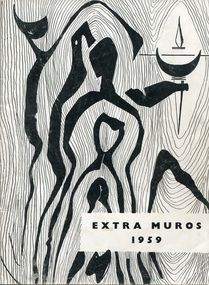
Federation University Historical CollectionBooklet - Magazine, J.A. Hoskin & Son, Extra Muros, 1959, 1959
... street hostel...Victoria Street hostel...students residences.... O'Neill...I. Ferguson...I. Jenkins...E.Davies...B. Matthews...M. Robinson...R. Cummings...B. Vandenberg...N. Wright...D. McKimmie...D. Eldridge...N. Beacham...K. Ryrie...J. Rae...D. Wise...R. Power...G. Briggs...D. Ryan...G. Wallace...V. Delbridge...S. Dawe...Miss Lloyd...Mr Bourke...R. Kelly...M. Grey...J. Cadzow...E. Davies...Monica Miller...G. Commons...F. Mason...Camp...Articles include: education in North Borneo, Webster St Hostel, Gillies Street Girls Hostel, Victoria Street Hostel, Camp Street Hostel, Gillies Street Boys Hostel, Ex-Students' association, The Joys of caravaning, How to Spend One's Leisure, Ideas from the Design Club, Faces Behind the Wheel, Life's Bitterness, Characterization, Such is Life. ...street hostel A black and white soft covered magazine of the Ballarat Teachers' College. The cover design was by Doug Sheen. Articles include: education in North Borneo, Webster St Hostel, Gillies Street Girls Hostel, Victoria Street Hostel, Camp Street Hostel, Gillies Street Boys Hostel, Ex-Students' association, The Joys of caravaning, How to Spend One's Leisure, Ideas from the Design Club, Faces Behind the Wheel, Life's Bitterness, Characterization, Such is Life. ...The Publications Committee were Ken McDougall, Kath Hayes, Brian Haig, Sue Tucker, heather Bell, Dawn Brown, Ian george, elizabeth Lemmon, Janette Leviston, Leah Harwood, Tony scanlon. Mal Wordsworth. Ian Walshe. The Year Book Committee were Carmel Keys, Judy Krahe, Jill Mayo, and Mr Ryan was the staff representative. The Students' representative council for 1959 were J. O'Neill, I. Ferguson, I. Jenkins, E.Davies, B. Matthews, M. Robinson, R. Cummings, B. Vandenberg, N. Wright, D. McKimmie, K. McDougall, D. Eldridge, N. Beacham, K. Ryrie, J. Rae and D. Wise. The social committee comprised R. Power, G. Briggs, D. Ryan, G. Wallace, V. Delbridge, S. Dawe, Miss Lloyd, Mr Bourke, R. Kelly, M. Grey, J. Cadzow, E. Davies, Monica Miller, G. Commons and F. Mason. A black and white soft covered magazine of the Ballarat Teachers' College. The cover design was by Doug Sheen. Articles include: education in North Borneo, Webster St Hostel, Gillies Street Girls Hostel, Victoria Street Hostel, Camp Street Hostel, Gillies Street Boys Hostel, Ex-Students' association, The Joys of caravaning, How to Spend One's Leisure, Ideas from the Design Club, Faces Behind the Wheel, Life's Bitterness, Characterization, Such is Life. ballarat teachers' college, margaret brown, ken mcdougall, kath hayes, brian haig, tom turner, k. mcdougall, noel beacham, norma mchenry, heather speedie, ted doney, north borneo, webster street hostel, victoria street hostel, students residences, . o'neill, i. ferguson, i. jenkins, e.davies, b. matthews, m. robinson, r. cummings, b. vandenberg, n. wright, d. mckimmie, d. eldridge, n. beacham, k. ryrie, j. rae, d. wise, r. power, g. briggs, d. ryan, g. wallace, v. delbridge, s. dawe, miss lloyd, mr bourke, r. kelly, m. grey, j. cadzow, e. davies, monica miller, g. commons, f. mason, camp street hostel, gillies street hostel -
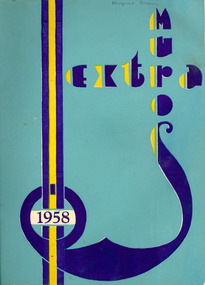
Federation University Historical CollectionBooklet - Magazine, Extra Muros, 1958, 1958
... street hostel...student residences...gillies street hostel...beaufort house...sturt street hostel...camp...Articles include: Teaching Rounds, Art and Craft, Victoria Street Hostel, Gillies Street Hostel, Grampians Trip, Camp St Hostel Beaufort House, Spring is Spring, A Windy Night, What are Sculptors? ...Walpole, Monica Miller ballarat teachers' college kevin o'neill barry withers v. la franchi john teschendorr victoria street hostel student residences gillies street hostel beaufort house sturt street hostel camp street hostel lois hayne verna rogers joan bates lorna anderson margaret brown gillies street campus tom turner p.r. burgess bob croft howard pattenden alan sonsee mavis canty mary egan jack roach w.h. ellwood prize michael long kevin o'neil grampians excursion Signed on frank cover 'Margaret Brown'. ...In 1958 the Ballarat Teachers' College moved to a new site in Gillies Street. The 1958 Students' Representative Council were M. Hines, B. Rickard, D. Eldridge, N. Turnball, B. English, K. O'Neill, P. Burgess, M. Almeida, ed Doney, J. Rae, P. Wise, W. Crocker. The 1958 staff were J. Bourke, A. Linton, Ed Doney, S. McKaskill, Howard Pattenden, D. Chandler, A. Stafford, Bob Croft, Arch Cuthbertson, R. Reed, A. Sonsee, J. Lacy, F. Ryan, C. Rodger, Mary Egan, J. Hill, Tom Turner, Mavis Canty, J. Blair, E. Walpole, Monica MillerSoft covered booklet of 48 pages. Articles include: Teaching Rounds, Art and Craft, Victoria Street Hostel, Gillies Street Hostel, Grampians Trip, Camp St Hostel Beaufort House, Spring is Spring, A Windy Night, What are Sculptors? Photographs include: Aerial photograph of the new college in Gillies Street, Students' Representative Council, staff photo, class photosSigned on frank cover 'Margaret Brown'. Signed in back 'Verna Rogers Natimuk' "Lorna G. Anderson Gold House Riddells B.T.C. 1958" "E. Joan Bates Lakeside Murtoa Vic"ballarat teachers' college, kevin o'neill, barry withers, v. la franchi, john teschendorr, victoria street hostel, student residences, gillies street hostel, beaufort house, sturt street hostel, camp street hostel, lois hayne, verna rogers, joan bates, lorna anderson, margaret brown, gillies street campus, tom turner, p.r. burgess, bob croft, howard pattenden, alan sonsee, mavis canty, mary egan, jack roach, w.h. ellwood prize, michael long, kevin o'neil, grampians excursion -

Federation University Historical CollectionPhoto Album, Ballarat Teachers' College Golden Jubilee Reunion 1947 - 1997, 22/03/1997
... The album includes a photograph of former residents of the Camp Street Hostel. (Margaret Palmer, Joyce Mathison, Beatrice Freeman, Gwen Pamphilon, Betty Perry, Nancy Kerr, Kath Crosetti, Neila Vallance, Ann McKinnon) The second half of the album include photos from the 1998 reunion. ...The album includes a photograph of former residents of the Camp Street Hostel. (Margaret Palmer, Joyce Mathison, Beatrice Freeman, Gwen Pamphilon, Betty Perry, Nancy Kerr, Kath Crosetti, Neila Vallance, Ann McKinnon) The second half of the album include photos from the 1998 reunion. ...Students at the Ballarat Teachers' College in 1947 undertook one year training to become a primary school teacher. Hard covered white and grey photo album with photographs from the Ballarat Teachers' College Year of 1947 Golden Jubilee Reunion held at Craigs Hotel, Lydiard Street, Ballarat. The album includes a photograph of former residents of the Camp Street Hostel. (Margaret Palmer, Joyce Mathison, Beatrice Freeman, Gwen Pamphilon, Betty Perry, Nancy Kerr, Kath Crosetti, Neila Vallance, Ann McKinnon) The second half of the album include photos from the 1998 reunion. The back pages have autographs of those who attended the 1997 Jubilee reunion.ballarat teachers' college, 1947, nield, roddis, lelean, marshman, mclachlan, bunney, lynch, gleeson, welsh, pattenden, henning, pamphilon, fauld, mckenna, morrish, boyd, mathison, doney, batson, kennedy, kerr, surman, williams, vallance, freeman, hannan, harley, palmer, perry, watts, esmore, gunning, tobin, crosetti, mclachlan, hill, carless, rice, mallett, fraser, gleeson, martin, batson, perry, harley -
Kiewa Valley Historical SocietyPhotographs x 2 - 1. Mt Beauty Camp 2. Bogong Camp, Photo 1 - September 1950
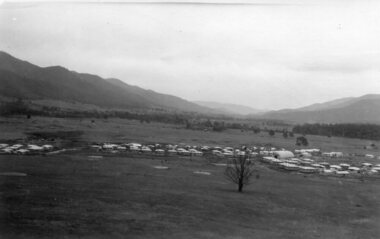
... Street in 1950. The workmen's camp was enlarged in 1950 to the extent of providing accommodation for a total of 1,200. Bogong Camp - In 1940 Field Headquarters for the Kiewa Scheme were established at Bogong with office, workshop facilities and accommodation for workmen, staff and some families constructed. (There had been a 'tent camp' on this site in 1939 but was destroyed by bushfires) Construction of accommodation continued until 1947. A total of 40 houses plus a hostel...Street in 1950. The workmen's camp was enlarged in 1950 to the extent of providing accommodation for a total of 1,200. Bogong Camp - In 1940 Field Headquarters for the Kiewa Scheme were established at Bogong with office, workshop facilities and accommodation for workmen, staff and some families constructed. (There had been a 'tent camp' on this site in 1939 but was destroyed by bushfires) Construction of accommodation continued until 1947. A total of 40 houses plus a hostel ...Mt Beauty Camp- The new State Electricity Commission construction camp at the head of the Kiewa Valley was for workmen on the second power station in the project expected to be the most modern and best equipped in Australia… In contrast to the early Kiewa days of horses and canvas tents, the new camp, with its modern amenities, compared favourably with any country town. Administration of the Kiewa Scheme was moved from Tawonga to Mount Beauty in 1946. The first house in Mount Beauty, in Hollonds Street, was occupied by the co-op store manager from November 1946. The new Mess Hall at Mt Beauty was opened with much ceremony in early November 1946. The houses up to Nelse street were erected from 1946 onward and then the township was extended beyond Nelse Street in 1950. The workmen's camp was enlarged in 1950 to the extent of providing accommodation for a total of 1,200. Bogong Camp - In 1940 Field Headquarters for the Kiewa Scheme were established at Bogong with office, workshop facilities and accommodation for workmen, staff and some families constructed. (There had been a 'tent camp' on this site in 1939 but was destroyed by bushfires) Construction of accommodation continued until 1947. A total of 40 houses plus a hostel for single staff, post office, police station, medical centre and primary school all with water and sewerage and electricity supply. The staff hostel was known as Kiewa House and is now occupied by the Education Department. Lake Guy was named after Mr. L.T. Guy who was the Resident Engineer in charge of construction work and associated activities on the Kiewa area. He held this position from 1939 to November 1946 when he was transferred to Head Office. Both Bogong Village and Mt Beauty were developed to accommodate workmen on the Kiewa Hydro Electric Scheme but have since become centres for tourism and a range of outdoor activities.1. Black and white photograph of Mount Beauty Camp taken in September 1950 2. Black and white photograph of Bogong Village Camp1. Written on the back in grey lead - Sept 1950. Mt Beauty Camp. HT Cooper own taking 2. Stamped on back of photograph - Copyright. Not for reproduction. Herald Sun feature Service. Melbourne Australiamt beauty camp, bogong camp, secv -
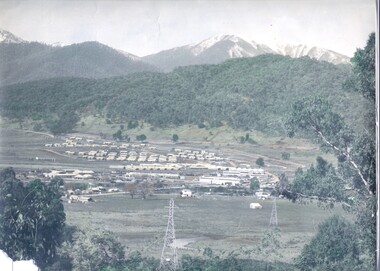
Kiewa Valley Historical SocietySet of 2 hand coloured photographs of early Mount Beauty, photographs of Mount Beauty, 1947/48
... As well as housing, there was an administration building, staff hostel, merchandising centre, workmen's camps, base stores and workshops and the Mount Beauty Terminal Station. The first house was occupied in November, 1946 by the then manager of the trading store, with a frontage onto Hollonds Street. ...As well as housing, there was an administration building, staff hostel, merchandising centre, workmen's camps, base stores and workshops and the Mount Beauty Terminal Station. The first house was occupied in November, 1946 by the then manager of the trading store, with a frontage onto Hollonds Street. ...Construction of the town of Mount Beauty commenced in 1946 and continued until 1952. It was built to provide family accommodation for workers engaged in the construction of the hydro electric power scheme. As well as housing, there was an administration building, staff hostel, merchandising centre, workmen's camps, base stores and workshops and the Mount Beauty Terminal Station. The first house was occupied in November, 1946 by the then manager of the trading store, with a frontage onto Hollonds Street. The total number of houses erected was 488, 162 custom built and 326 prefabricated. The main workmen's camp can be seen just left of the centre of the photograph and accommodated 144 men at the time of the photograph. By 1950 it could accommodate 1200men. Photo No. 1 is taken in 1947/early 1948 as there is no evidence of the staff hostel under construction. This hostel was commenced in August/September 1948 and is clearly shown in photograph No. 2, dating this photo as 1948 as it is before the completion of the bypass road connecting to the main (high plains) road. This road was constructed in 1939 and in 1948 followed the route of Tawonga Crescent. This remained in use until the bypass construction was completed in early 1949 and does not appear to be finished in this photograph.. Both photographs are taken from the power line easement adjacent to the Bright road.Significant historical pictorial record of the development of a town from grazing land. The type of terrain that had to be surveyed and then to construct roads and other infrastructure, with very little machinery, is also of prime significance in the development of the Kiewa Hydro Electric Scheme.Two photographs, both hand painted to show colours, and both of Mount Beauty c 1947/48 not long after commencement of construction of homes and facilities for workers.Photo No.1 - on back of photo, left upper corner, faintly in pencil, SPIKE, underneath this is written T Pay,. Photo No. 2 - on back of photo, left upper corner, faintly in pencil, Jmount beauty, housing, accommodation -
Federation University Historical CollectionBook, J.A. Hoskin & Son, Ballarat Teachers' College Extra Muros, 1958, 1958
... Articles include Victoria Street Hostel, Gilies Street Hostel, Grampians Trip, Beaufort House , Sturt St House , Camp St Hostel, Club Notes ...Articles include Victoria Street Hostel, Gilies Street Hostel, Grampians Trip, Beaufort House , Sturt St House , Camp St Hostel, Club Notes Ballarat Teachers' College Extra Muros, 1958 Book Book J.A. ...February 1958 Classes commence at the new Gillies Street location of Ballarat Teachers’. (BTC Handbook 1965; Beggs-Sunter: 84) Contents include: Editorial, Our Principal Speaks, the President S.R.C., 1958 Highlights, Teaching Round, Section Notes, Social Notes, Hostel Life, Sporting World, Insignias and Awards 1958, Club NotesLight blue cover with dark blue and yellow titles. Soft covered magazine of the Ballarat Teachers College. 48 pages. Articles include Victoria Street Hostel, Gilies Street Hostel, Grampians Trip, Beaufort House , Sturt St House , Camp St Hostel, Club Notes btc, ballarat teachers college, n. harvey, t. w. h. turner, monica miller, m. hines, b. rickard, d. eldridge, n. turnbull, b. english, k. o'neil, p. burgess, m. almeida, e. doney, j. rae, p. wise, w. crocker, p. r. burgess, barry withers, j. bourke, a. linton, s. mckaskill, h. pattenden, d. chandler, a. stafford, r. croft, a. cuthbertson, r. reed, a. sonsee, j. lacy, f. ryan, c. rodger, m. egan, j. hill, t. turner, c. m. canty, j. blair, e. walpole, m. miller, michael long, m. blair, j. blackman, n. beacham, d. astbury, m. bergin, a. constable, g. clarke, g. briggs, m. brown, e. beck, j. badger, g. angwin, g. alexander, k. broad, a. costa, e. davidson, p. burbidge, j. clements, s. elder, d. foster, b. fernandes, b. fischer, m. harcoan, j. heenan, b. hudson, e. jardine, k. hayes, g. coffey, r. dennis, w. cartledge, v. delbridge, n. hawker, l. hales, d. farnsworth, l. hallam, r. fencher, g. karstens, f. leach, r. kelly, m. long, g. macdonald, j. mcdermott, a. lehmann, i. hastie, b. haig, m. jones, l. jeffrey, m. kiefel, j. mcalpine, i. jenkins, j. kenworthy, b. lawton, m. livingston, e. mcormick, d. mckimmie, g. mcintosh, m. mckee, b. murphy, f. mitchell, m. mclachlan, r. power, k. mcdougall, s. murphy, b. nash, d. mckenzie, j. madder, j. meadows, n. mchenry, j. mayo, l. missen, e. muir, g. roberts, k. ryrie, d. ritchie, m. scanlon, e. robinson, m. rutter, j. rogers, m. rae, v. reynolds, j. rees, r. sloley, d. sheen, b. nunn, r. nicholas, b. ruwoldt, m. rowe, l. walker, l. wilkinson, n. wright, d. shoebridge, f. stokie, g. stewart, j. teschendorf, n. souter, e. walker, m. spinks, m. wallace, m. stone, s. tucker, r. taylor, j. short, b. tucker, l. castree, w. craig, r. bibby, b. davies, r. bowker, g. cabble, i. clayton, w. coleman, j. bates, m. elder, l. anthony, j. carmichael, e. edwards, l. anderson, b. cannard, b. drake, j. elliott, p. dunn, b. withers, m. stewart, l. wright, d. smith, r. rowe, k. wilson, k. waltrowicz, j. roach, l. schreenan, i. sutherland, d. williams, b. wynne, j. schaefer, s. shepherd, s. wright, b. whiteside, m. oliver, j. quayle, j. waller, j. taylor, v. rogers, s. moller, m. norman, l. thomas, j. wagner, w. j. craig, e. anthony, r. neville, j. noonan, b. lay, k. hammer, g. moncrieff, r. mason, g. howlett, w. knight, j. matthews, b. lumsden, b. phelan, p. hope, v. la franchi, s. henderson, l. hayne, w. keen, b. forbes, m. gray, g. mcilvena, a. horwill, j. mccumber, m. hateley, k. rieniets, e. fletcher, d. johnson, j. miller, i. ross, c. keys, e. jarvis, m. youngs, j. smith, e. davies, g. commons, p. larmour, r. gowan, b. hedley, miss egan, s. blomfield, m. meyer, k. duffy, h. speedie, j. witton, d. magee, a. pope, p. quinlan, h. jones, miss miller, kevin o'neil, lois e. hayne, w. keem, mr croft, geoff cabble, jack noonan, jan carmichael, gwen macdonald, bev. ross -
Tatura Irrigation & Wartime Camps MuseumPhotograph - Framed Photograph, Kindergarten Concert Rushworth Migrant Camp 1950
... Tatura Irrigation & Wartime Camps Museum 49 Hogan Street Tatura the-murray Camp 3 was used as a Migrant Hostel after the war. rushworth migrant camp kindergarten concert Maria Duic (nee Amrogowicz) on back of frame: Kindergarten Concert held at Rushworth Migrant Camp February 1920. ...Camp 3 was used as a Migrant Hostel after the war.Frame: Black and gold rectangular frame; Photograph: sepia photograph of 4 little girls kneeling and posing for camera inside a wooden hut. Maria Duic (nee Amrogowicz) is 2nd from left.on back of frame: Kindergarten Concert held at Rushworth Migrant Camp February 1920. European migrant families housed at former internment camp 3 whilst adults sought work in nearby towns. Donor Mrs Maria Diue, of Glenroy Vic 1996rushworth migrant camp, kindergarten concert, maria duic (nee amrogowicz) -
Tatura Irrigation & Wartime Camps MuseumPhotograph, Daryl Walker, Moyola Lodge, 1987
... Tatura Irrigation & Wartime Camps Museum 49 Hogan Street Tatura the-murray Moyola Lodge Hostel for the elderly was opened in 1983, next to hospital. ...Moyola Lodge Hostel for the elderly was opened in 1983, next to hospital. An eight bed edition was opened in 1989.Black and white photograph of Moyala Lodge Tatura. Exterioron back: Moyola Lodge, Park Street, Tatura. -
Tatura Irrigation & Wartime Camps MuseumPhotograph, Daryl Walker, Doctors Surgery, 1985
... Tatura Irrigation & Wartime Camps Museum 49 Hogan Street Tatura the-murray The doctors surgery, in Walsh Street, Tatura, was conducted by Doctors Lally and Hodson, from 1955 to 1985. A new medical centre was opened in Thomson Street, in 1986. Doctor Lally Doctor Hodson Tatura Doctors on back: Doctors surgery 1985. Doctors Moyola Lodge Hostel ...The doctors surgery, in Walsh Street, Tatura, was conducted by Doctors Lally and Hodson, from 1955 to 1985. A new medical centre was opened in Thomson Street, in 1986.Black and white photograph of Doctors surgery Walsh Street, Tatura. Also part of residence.on back: Doctors surgery 1985. Doctors Moyola Lodge Hostel. Lally and Hodson. Walsh Street, Tatura.doctor lally, doctor hodson, tatura doctors -
Tatura Irrigation & Wartime Camps MuseumBooklet, Life As I See It
... Tatura Irrigation & Wartime Camps Museum 49 Hogan Street Tatura the-murray Selected verse by G Leamon, a resident at Warramunda Village Retirement Hostel, Kyabram. ...Selected verse by G Leamon, a resident at Warramunda Village Retirement Hostel, Kyabram. Proceeds to Warramunda residents bus fund.Pale pink cover, black writing. life as i see it, leamon g, kyabram, tatura, warramunda village -
Falls Creek Historical SocietyPhotograph - Bogong Alpine Village 1941
... Street Falls Creek The images in the Bogong Village Collection were displayed in Bogong Jack’s Tavern for over 20 years and were donated to the Falls Creek Museum when the Tavern closed in 2021. In 1939, the State Electricity Commission of Victoria established a field headquarters at Bogong to house workers and their families for the Kiewa Hydroelectric Scheme which ran from the 1930s to the 1960s. The workmen's camp was originally started with tents and was called Junction Camp. By 1947, the village supported 300 workers and their families. It included 40 houses, a hostel ...The images in the Bogong Village Collection were displayed in Bogong Jack’s Tavern for over 20 years and were donated to the Falls Creek Museum when the Tavern closed in 2021. In 1939, the State Electricity Commission of Victoria established a field headquarters at Bogong to house workers and their families for the Kiewa Hydroelectric Scheme which ran from the 1930s to the 1960s. The workmen's camp was originally started with tents and was called Junction Camp. By 1947, the village supported 300 workers and their families. It included 40 houses, a hostel for single staff, a post office, a police station, a medical centre, and a primary school. The staff hostel was known as Kiewa House. At the completion of the Scheme, in the 1960s, the village was opened to public/tourism use. In 1968 the Victorian Education Department acquired the camp buildings and four houses from the State Electricity Commission of Victoria to establish an Outdoor Education Centre which operated for over 50 years. The Kiewa Hydroelectric Scheme was privatized in the 1990s and sold to Southern Hydro, before being acquired by AGL in 2005. In 2023 the Grollo Group signed a 73 year sublease on Bogong Village and has plans for its redevelopment as a workers’ village.These images are significant because they capture the development of Bogong Village as an important element of the Kiewa Hydroelectric Scheme in Victoria.A collection of four black and white images capturing the development of Bogong Alpine Village. They depict development of the new village, the surrounding area and some staff members during 1941.bogong alpine village, bogong high plains, bogong 1941 -
Falls Creek Historical SocietyPhotograph - Bogong Alpine Village 1942
... Street Falls Creek The images in the Bogong Village Collection were displayed in Bogong Jack’s Tavern for over 20 years and were donated to the Falls Creek Museum when the Tavern closed in 2021. In 1939, the State Electricity Commission of Victoria established a field headquarters at Bogong to house workers and their families for the Kiewa Hydroelectric Scheme which ran from the 1930s to the 1960s. The workmen's camp was originally started with tents and was called Junction Camp. By 1947, the village supported 300 workers and their families. It included 40 houses, a hostel ...The images in the Bogong Village Collection were displayed in Bogong Jack’s Tavern for over 20 years and were donated to the Falls Creek Museum when the Tavern closed in 2021. In 1939, the State Electricity Commission of Victoria established a field headquarters at Bogong to house workers and their families for the Kiewa Hydroelectric Scheme which ran from the 1930s to the 1960s. The workmen's camp was originally started with tents and was called Junction Camp. By 1947, the village supported 300 workers and their families. It included 40 houses, a hostel for single staff, a post office, a police station, a medical centre, and a primary school. The staff hostel was known as Kiewa House. At the completion of the Scheme, in the 1960s, the village was opened to public/tourism use. In 1968 the Victorian Education Department acquired the camp buildings and four houses from the State Electricity Commission of Victoria to establish an Outdoor Education Centre which operated for over 50 years. The Kiewa Hydroelectric Scheme was privatized in the 1990s and sold to Southern Hydro, before being acquired by AGL in 2005. In 2023 the Grollo Group signed a 73 year sublease on Bogong Village and has plans for its redevelopment as a workers’ village.These images are significant because they capture the development of Bogong Village as an important element of the Kiewa Hydroelectric Scheme in Victoria.A collection of four black and white images capturing the development of Bogong Alpine Village and the Pretty Valley area during 1942.bogong alpine village, bogong high plains, bogong 1942 -
Falls Creek Historical SocietyPhotograph - Bogong Alpine Village 1943
... Street Falls Creek The images in the Bogong Village Collection were displayed in Bogong Jack’s Tavern for over 20 years and were donated to the Falls Creek Museum when the Tavern closed in 2021. In 1939, the State Electricity Commission of Victoria established a field headquarters at Bogong to house workers and their families for the Kiewa Hydroelectric Scheme which ran from the 1930s to the 1960s. The workmen's camp was originally started with tents and was called Junction Camp. By 1947, the village supported 300 workers and their families. It included 40 houses, a hostel ...The images in the Bogong Village Collection were displayed in Bogong Jack’s Tavern for over 20 years and were donated to the Falls Creek Museum when the Tavern closed in 2021. In 1939, the State Electricity Commission of Victoria established a field headquarters at Bogong to house workers and their families for the Kiewa Hydroelectric Scheme which ran from the 1930s to the 1960s. The workmen's camp was originally started with tents and was called Junction Camp. By 1947, the village supported 300 workers and their families. It included 40 houses, a hostel for single staff, a post office, a police station, a medical centre, and a primary school. The staff hostel was known as Kiewa House. At the completion of the Scheme, in the 1960s, the village was opened to public/tourism use. In 1968 the Victorian Education Department acquired the camp buildings and four houses from the State Electricity Commission of Victoria to establish an Outdoor Education Centre which operated for over 50 years. The Kiewa Hydroelectric Scheme was privatized in the 1990s and sold to Southern Hydro, before being acquired by AGL in 2005. In 2023 the Grollo Group signed a 73 year sublease on Bogong Village and has plans for its redevelopment as a workers’ village.These images are significant because they capture the development of Bogong Village as an important element of the Kiewa Hydroelectric Scheme in Victoria.A collection of seven black and white images capturing the development of Bogong Alpine Village and the Pretty Valley area during 1943.bogong alpine village, bogong high plains, bogong 1943 -
Falls Creek Historical SocietyPhotograph - Bogong Alpine Village 1944
... Street Falls Creek The images in the Bogong Village Collection were displayed in Bogong Jack’s Tavern for over 20 years and were donated to the Falls Creek Museum when the Tavern closed in 2021. In 1939, the State Electricity Commission of Victoria established a field headquarters at Bogong to house workers and their families for the Kiewa Hydroelectric Scheme which ran from the 1930s to the 1960s. The workmen's camp was originally started with tents and was called Junction Camp. By 1947, the village supported 300 workers and their families. It included 40 houses, a hostel ...The images in the Bogong Village Collection were displayed in Bogong Jack’s Tavern for over 20 years and were donated to the Falls Creek Museum when the Tavern closed in 2021. In 1939, the State Electricity Commission of Victoria established a field headquarters at Bogong to house workers and their families for the Kiewa Hydroelectric Scheme which ran from the 1930s to the 1960s. The workmen's camp was originally started with tents and was called Junction Camp. By 1947, the village supported 300 workers and their families. It included 40 houses, a hostel for single staff, a post office, a police station, a medical centre, and a primary school. The staff hostel was known as Kiewa House. At the completion of the Scheme, in the 1960s, the village was opened to public/tourism use. In 1968 the Victorian Education Department acquired the camp buildings and four houses from the State Electricity Commission of Victoria to establish an Outdoor Education Centre which operated for over 50 years. The Kiewa Hydroelectric Scheme was privatized in the 1990s and sold to Southern Hydro, before being acquired by AGL in 2005. In 2023 the Grollo Group signed a 73 year sublease on Bogong Village and has plans for its redevelopment as a workers’ village.These images are significant because they capture the development of Bogong Village as an important element of the Kiewa Hydroelectric Scheme in Victoria.A collection of four black and white images capturing the weather conditions in the Bogong area in June 1944bogong alpine village, bogong high plains, bogong june 1944 -
Falls Creek Historical SocietyPhotograph - Bogong Alpine Village Houses 1946
... Street Falls Creek The images in the Bogong Village Collection were displayed in Bogong Jack’s Tavern for over 20 years and were donated to the Falls Creek Museum when the Tavern closed in 2021. In 1939, the State Electricity Commission of Victoria established a field headquarters at Bogong to house workers and their families for the Kiewa Hydroelectric Scheme which ran from the 1930s to the 1960s. The workmen's camp was originally started with tents and was called Junction Camp. By 1947, the village supported 300 workers and their families. It included 40 houses, a hostel ...The images in the Bogong Village Collection were displayed in Bogong Jack’s Tavern for over 20 years and were donated to the Falls Creek Museum when the Tavern closed in 2021. In 1939, the State Electricity Commission of Victoria established a field headquarters at Bogong to house workers and their families for the Kiewa Hydroelectric Scheme which ran from the 1930s to the 1960s. The workmen's camp was originally started with tents and was called Junction Camp. By 1947, the village supported 300 workers and their families. It included 40 houses, a hostel for single staff, a post office, a police station, a medical centre, and a primary school. The staff hostel was known as Kiewa House. At the completion of the Scheme, in the 1960s, the village was opened to public/tourism use. In 1968 the Victorian Education Department acquired the camp buildings and four houses from the State Electricity Commission of Victoria to establish an Outdoor Education Centre which operated for over 50 years. The Kiewa Hydroelectric Scheme was privatized in the 1990s and sold to Southern Hydro, before being acquired by AGL in 2005. In 2023 the Grollo Group signed a 73 year sublease on Bogong Village and has plans for its redevelopment as a workers’ village.These images are significant because they capture the development of Bogong Village as an important element of the Kiewa Hydroelectric Scheme in Victoria.Two black and white images featuring houses in Bogong Village in January 1946. They are constructed of weatherboard, with brick chimneys and tin roofs. Timber steps lead up to the front door and a garden has been planted in front of the house.bogong alpine village, bogong high plains, bogong houses 1946 -
Falls Creek Historical SocietyPhotograph - Bogong Alpine Village 1947
... Street Falls Creek The images in the Bogong Village Collection were displayed in Bogong Jack’s Tavern for over 20 years and were donated to the Falls Creek Museum when the Tavern closed in 2021. In 1939, the State Electricity Commission of Victoria established a field headquarters at Bogong to house workers and their families for the Kiewa Hydroelectric Scheme which ran from the 1930s to the 1960s. The workmen's camp was originally started with tents and was called Junction Camp. By 1947, the village supported 300 workers and their families. It included 40 houses, a hostel ...The images in the Bogong Village Collection were displayed in Bogong Jack’s Tavern for over 20 years and were donated to the Falls Creek Museum when the Tavern closed in 2021. In 1939, the State Electricity Commission of Victoria established a field headquarters at Bogong to house workers and their families for the Kiewa Hydroelectric Scheme which ran from the 1930s to the 1960s. The workmen's camp was originally started with tents and was called Junction Camp. By 1947, the village supported 300 workers and their families. It included 40 houses, a hostel for single staff, a post office, a police station, a medical centre, and a primary school. The staff hostel was known as Kiewa House. At the completion of the Scheme, in the 1960s, the village was opened to public/tourism use. In 1968 the Victorian Education Department acquired the camp buildings and four houses from the State Electricity Commission of Victoria to establish an Outdoor Education Centre which operated for over 50 years. The Kiewa Hydroelectric Scheme was privatized in the 1990s and sold to Southern Hydro, before being acquired by AGL in 2005. In 2023 the Grollo Group signed a 73 year sublease on Bogong Village and has plans for its redevelopment as a workers’ village.These images are significant because they capture the development of Bogong Village as an important element of the Kiewa Hydroelectric Scheme in Victoria.Two black and white images capturing Bogong Village by night and the spillway at Junction Dam.bogong alpine village, bogong high plains, bogong 1947 -
Falls Creek Historical SocietyPhotograph - Bogong Alpine Village and Howman's Dam Camp 1948
... Street Falls Creek The images in the Bogong Village Collection were displayed in Bogong Jack’s Tavern for over 20 years and were donated to the Falls Creek Museum when the Tavern closed in 2021. In 1939, the State Electricity Commission of Victoria established a field headquarters at Bogong to house workers and their families for the Kiewa Hydroelectric Scheme which ran from the 1930s to the 1960s. The workmen's camp was originally started with tents and was called Junction Camp. By 1947, the village supported 300 workers and their families. It included 40 houses, a hostel ...The images in the Bogong Village Collection were displayed in Bogong Jack’s Tavern for over 20 years and were donated to the Falls Creek Museum when the Tavern closed in 2021. In 1939, the State Electricity Commission of Victoria established a field headquarters at Bogong to house workers and their families for the Kiewa Hydroelectric Scheme which ran from the 1930s to the 1960s. The workmen's camp was originally started with tents and was called Junction Camp. By 1947, the village supported 300 workers and their families. It included 40 houses, a hostel for single staff, a post office, a police station, a medical centre, and a primary school. The staff hostel was known as Kiewa House. At the completion of the Scheme, in the 1960s, the village was opened to public/tourism use. In 1968 the Victorian Education Department acquired the camp buildings and four houses from the State Electricity Commission of Victoria to establish an Outdoor Education Centre which operated for over 50 years. The Kiewa Hydroelectric Scheme was privatized in the 1990s and sold to Southern Hydro, before being acquired by AGL in 2005. In 2023 the Grollo Group signed a 73 year sublease on Bogong Village and has plans for its redevelopment as a workers’ village.These images are significant because they capture the development of Bogong Village as an important element of the Kiewa Hydroelectric Scheme in Victoria.Two images capturing the depiction Bogong Village and the Howman's Dam Camp 1948bogong alpine village, bogong high plains, bogong 1947 -
Falls Creek Historical SocietyPhotograph - Aerial View of Bogong Alpine Village
... Street Falls Creek The images in the Bogong Village Collection were displayed in Bogong Jack’s Tavern for over 20 years and were donated to the Falls Creek Museum when the Tavern closed in 2021. In 1939, the State Electricity Commission of Victoria established a field headquarters at Bogong to house workers and their families for the Kiewa Hydroelectric Scheme which ran from the 1930s to the 1960s. The workmen's camp was originally started with tents and was called Junction Camp. By 1947, the village supported 300 workers and their families. It included 40 houses, a hostel ...The images in the Bogong Village Collection were displayed in Bogong Jack’s Tavern for over 20 years and were donated to the Falls Creek Museum when the Tavern closed in 2021. In 1939, the State Electricity Commission of Victoria established a field headquarters at Bogong to house workers and their families for the Kiewa Hydroelectric Scheme which ran from the 1930s to the 1960s. The workmen's camp was originally started with tents and was called Junction Camp. By 1947, the village supported 300 workers and their families. It included 40 houses, a hostel for single staff, a post office, a police station, a medical centre, and a primary school. The staff hostel was known as Kiewa House. At the completion of the Scheme, in the 1960s, the village was opened to public/tourism use. In 1968 the Victorian Education Department acquired the camp buildings and four houses from the State Electricity Commission of Victoria to establish an Outdoor Education Centre which operated for over 50 years. The Kiewa Hydroelectric Scheme was privatized in the 1990s and sold to Southern Hydro, before being acquired by AGL in 2005. In 2023 the Grollo Group signed a 73 year sublease on Bogong Village and has plans for its redevelopment as a workers’ village.These images are significant because they capture the development of Bogong Village as an important element of the Kiewa Hydroelectric Scheme in Victoria.An aerial view of Bogong Village and surrounds, date unknown.bogong alpine village, bogong high plains, aerial photos bogong village -
Falls Creek Historical SocietyPhotograph - Jack Maddison Leading horses on the Bogong High Plain
... Street Falls Creek The images in the Bogong Village Collection were displayed in Bogong Jack’s Tavern for over 20 years and were donated to the Falls Creek Museum when the Tavern closed in 2021. In 1939, the State Electricity Commission of Victoria established a field headquarters at Bogong to house workers and their families for the Kiewa Hydroelectric Scheme which ran from the 1930s to the 1960s. The workmen's camp was originally started with tents and was called Junction Camp. By 1947, the village supported 300 workers and their families. It included 40 houses, a hostel ...The images in the Bogong Village Collection were displayed in Bogong Jack’s Tavern for over 20 years and were donated to the Falls Creek Museum when the Tavern closed in 2021. In 1939, the State Electricity Commission of Victoria established a field headquarters at Bogong to house workers and their families for the Kiewa Hydroelectric Scheme which ran from the 1930s to the 1960s. The workmen's camp was originally started with tents and was called Junction Camp. By 1947, the village supported 300 workers and their families. It included 40 houses, a hostel for single staff, a post office, a police station, a medical centre, and a primary school. The staff hostel was known as Kiewa House. At the completion of the Scheme, in the 1960s, the village was opened to public/tourism use. In 1968 the Victorian Education Department acquired the camp buildings and four houses from the State Electricity Commission of Victoria to establish an Outdoor Education Centre which operated for over 50 years. The Kiewa Hydroelectric Scheme was privatized in the 1990s and sold to Southern Hydro, before being acquired by AGL in 2005. In 2023 the Grollo Group signed a 73 year sublease on Bogong Village and has plans for its redevelopment as a workers’ village. John Maddison and his wife Mary Padman emigrated from London to Australia in 1850 with their five sons. Jack (John James William Maddison) was one of their great grandsons. In 1877 Jack’s grandfather George Maddison selected land between the East and West Kiewa branches of the Kiewa River - known as the "Island". It is now known as Mount Beauty. The Maddison family built Aertex Hut at the top of T Spur at Mt. Bogong for use when grazing cattle. It later became known as Maddison's Hut. Staircase Spur walking track at Bogong was formerly known as Maddison’s Track as it is the path once used by the Maddison family to drive their cattle on to the high plains. These images are significant because they feature the son of a pioneering family on the Bogong High Plains.A black and white photograph of Jack Maddison leading horses on the Bogong High Plains.bogong alpine village, bogong high plains, maddison family mt beauty, maddison's hut, aertex hut,