
Showing 81 items matching "cattle farming"
-
 The Beechworth Burke Museum
Audio - Oral History, Jennifer Williams, John Watson, 22 June 2000
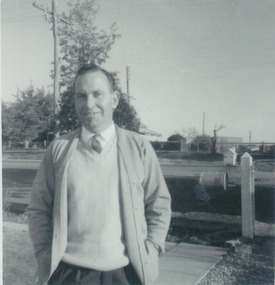
... ...farming...cattle...This history speaks of land cultivation and the innovation of industry in the region, in particular cattle farming and butchering. Watson's account speaks of the way that the practice of breeding cattle effects the rural lifestyle, and the hardships that come with working on the land. ...This history speaks of land cultivation and the innovation of industry in the region, in particular cattle farming and butchering. Watson's account speaks of the way that the practice of breeding cattle effects the rural lifestyle, and the hardships that come with working on the land. ...John Watson's story shows insight to the families that moved to Beechworth and the motivation behind this. It showcases the nuances of life in the district and the day to day ways of living. This history speaks of land cultivation and the innovation of industry in the region, in particular cattle farming and butchering. Watson's account speaks of the way that the practice of breeding cattle effects the rural lifestyle, and the hardships that come with working on the land. This oral history recording was part of a project conducted by Jennifer Williams in the year 2000 to capture the everyday life and struggles in Beechworth during the twentieth century. This project involved recording seventy oral histories on cassette tapes of local Beechworth residents which were then published in a book titled: Listen to what they say: voices of twentieth century Beechworth. These cassette tapes were digitised in July 2021 with funds made available by the Friends of the Burke.Watson's account is historically significant due to its ability to illustrate the lifestyle and industry of those in Beechworth during the twentieth century. It is a rare insight into the the practices of residents of this time. This oral history also shows deep insight into the social structure of the community. It describes the family and community dynamics over a long period of time, the motivations behind behaviour, and the greater community fabric. This is a digital copy of a recording that was originally captured on a cassette tape. The cassette tape is black with a horizontal white strip and is currently stored in a clear flat plastic rectangular container. It holds up 40 minutes of recordings on each side.John Watson1800s beechworth, 20th century beechworth, beechworth, farming and agriculture, farm, farm work, farmers, farming, cattle, industry, oral history, john watson -
 Kiewa Valley Historical Society
Papers - Hollonds Family History
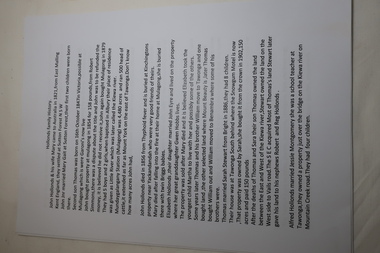
... ...cattle farming...Hollonds Family cattle farming Tawonga boarding house 6 A4 pages including typed pages and 3 pages of photocopied photos. papers are held together in a clear plastic sleeve Papers - Hollonds Family History ...The Hollonds family were early settlers in the Kiewa Valley at MullagongEarly settlers of the Kiewa Valley in Tawonga and Mt Beauty owning the land on the east and west of the Kiewa River. The land on the west of Vails Road was owned by Thomas then Stewart. The SECV acquired most of this land including the island (now Mt Beauty) Stewart later gave his land to his nephews, Robert and Reg.6 A4 pages including typed pages and 3 pages of photocopied photos. papers are held together in a clear plastic sleevehollonds family, cattle farming, tawonga boarding house -
 Ballarat Heritage Services
Photograph - Image - Black and White, Stockyard at the Cattlesales, Northern Territory, c1950, c1950
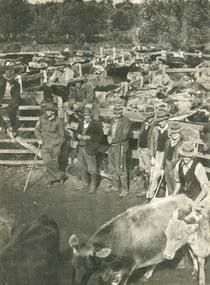
... cattle...cattlesales...farming...cattle cattlesales farming northern territory A black and white image of cattle for sale in the Northern Territory. ...A black and white image of cattle for sale in the Northern Territory. cattle, cattlesales, farming, northern territory -
 Orbost & District Historical Society
black and white photograph, second half 20th century
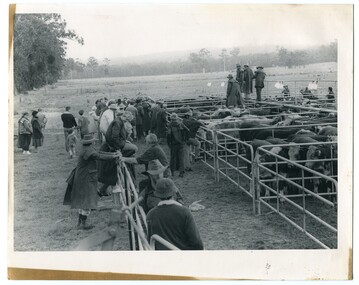
... cattle-sale agriculture farming...This is a pictorial record of a cattle sale in East Gippsland. cattle-sale agriculture farming A large black / white photograph of cattle in yards with metal rails. ...This is a photograph of a cattle sale. There is no information with the item. It is probably of an Orbost cattle sale.This is a pictorial record of a cattle sale in East Gippsland.A large black / white photograph of cattle in yards with metal rails. Mden are standing on the rails. Others are watching.cattle-sale agriculture farming -
 National Wool Museum
Film - Herding Sheep, Sound Design Studio, c.2000
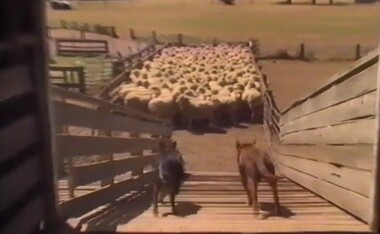
... ...farming...cattle...cattle dogs to herd sheep on a property. Probably used in previous displays at the National Wool Museum. Film Sheep rural industries farm farming cattle dogs herding property farmer Label on tape: VIDEO VISION / VHS / NATIONAL WOOL MUSEUM / SHEEP DOG / COMPILE / SOUND / DESIGN / STUDIO / LES GILBERT/DIRECTOR / 9A GARDEN STREET PRAHRAN / VICTORIA 3181 AUSTRALIA / TELEPHONE (03) 529 3086 Black VHS tape with white stickers and hand written and printed text. ...Tape shows farmer working with cattle dogs to herd sheep on a property. Probably used in previous displays at the National Wool Museum.Black VHS tape with white stickers and hand written and printed text. Tape is housed in a black plastic case with stickers. Film includes colour footage and audio. 00:04 - Herding sheep on a property, featuring farmer, cattle dogs, sheep, motorbike and a horse. 04:49 - end Film loops four times.Label on tape: VIDEO VISION / VHS / NATIONAL WOOL MUSEUM / SHEEP DOG / COMPILE / SOUND / DESIGN / STUDIO / LES GILBERT/DIRECTOR / 9A GARDEN STREET PRAHRAN / VICTORIA 3181 AUSTRALIA / TELEPHONE (03) 529 3086film, sheep, rural industries, farm, farming, cattle dogs, herding, property, farmer -
 Wodonga & District Historical Society Inc
Journal - Hamilton-Smith Collection Stock Farmers Diary c. 1921 "The Cooper Diary"
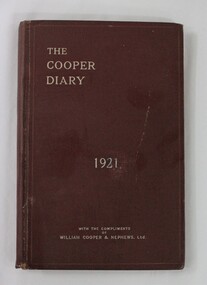
... ...farming...cattle...It contributes to our understanding of social and family life in early twentieth century Wodonga, as well as providing interpretative capacity for themes including local history and social history. agriculture farm farming cattle wodonga hamilton-smith hamilton-smith collection grazier A small burgundy leather diary with silver embossing containing agricultural information and advertisements for farmers. ...The Hamilton-Smith collection was donated by the children of Grace Mary Hamilton-Smith nee Ellwood (1911-2004) and John Hamilton-Smith (1909-1984) who settled in Wodonga in the 1940s. The Ellwood family had lived in north-east Victoria since the late 1800s. Grace’s mother, Rosina Ellwood nee Smale, was the first teacher at Baranduda in 1888, and a foundation member of the C.W.A. Rosina and her husband Mark retired to Wodonga in 1934. Grace and John married at St. David’s Church, Albury in 1941. John was a grazier, and actively involved in Agricultural Societies. The collection contains significant items which reflect the local history of Wodonga, including handmade needlework, books, photographs, a wedding dress, maps, and material relating to the world wars. This item has well documented provenance and a known owner. It forms part of a significant and representative historical collection which reflects the local history of Wodonga. It contributes to our understanding of social and family life in early twentieth century Wodonga, as well as providing interpretative capacity for themes including local history and social history. A small burgundy leather diary with silver embossing containing agricultural information and advertisements for farmers. agriculture, farm, farming, cattle, wodonga, hamilton-smith, hamilton-smith collection, grazier -
 The Beechworth Burke Museum
Audio - Oral History, Jennifer Williams, Hubert Warner, 2 April 2000
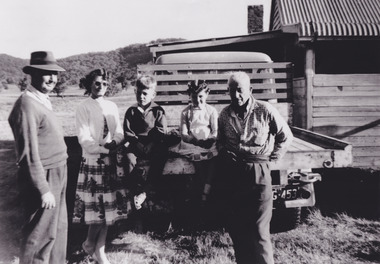
... ...Farming and agriculture...cattle...This history speaks of land cultivation and the innovation of industry in the region, in particular sheep and cattle farming and slaughter. Warner speaks of the highs and lows of the practice of breeding cattle, the awards he won, but also the hardships that come with working on the land such as having to face natural disaster. ...This history speaks of land cultivation and the innovation of industry in the region, in particular sheep and cattle farming and slaughter. Warner speaks of the highs and lows of the practice of breeding cattle, the awards he won, but also the hardships that come with working on the land such as having to face natural disaster. ...Hubert Warner’s story shows insight to the families that emigrated from Europe for the gold rush. It illustrates the nuances of life in the district. This history speaks of land cultivation and the innovation of industry in the region, in particular sheep and cattle farming and slaughter. Warner speaks of the highs and lows of the practice of breeding cattle, the awards he won, but also the hardships that come with working on the land such as having to face natural disaster. This oral history recording was part of a project conducted by Jennifer Williams in the year 2000 to capture the everyday life and struggles in Beechworth during the twentieth century. This project involved recording seventy oral histories on cassette tapes of local Beechworth residents which were then published in a book titles: Listen to what they say: voices of twentieth century Beechworth. These cassette tapes were digitised in July 2021 with funds made available by the Friends of the Burke.Hubert Warner's account of life in Beechworth is uniquely illustrative as it captures many aspects of the community. It explains the motivation for European migrants for choosing to settle in the area and how they were able to both become a part of and create a presence in their local community. This oral history also exemplifies the process of developing industry through the twentieth century, how it was done, the struggles it faces, and the triumphs that came with this. Warner's history is specific to the cattle industry and shows great nuance in the day-to-day operation of such a business over time. This is a digital copy of a recording that was originally captured on a cassette tape. The cassette tape is black with a horizontal white strip and is currently stored in a clear flat plastic rectangular container. It holds up 40 minutes of recordings on each side. Herbert Warnerlisten to what they say, listen to what they say: voices of twentieth century beechworth, 1800s beechworth, 20th century beechworth, beechworth, farming and agriculture, cattle, gold, gold rush, farm, farming -
 Kiewa Valley Historical Society
Photograph Farm Land, Mount Beauty Acreage before Golf Course, Circa 1950
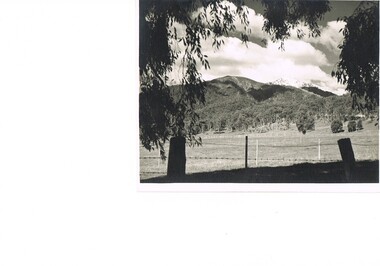
... Land used, before establishment of the Mount Beauty Village, as farming/grazing cattle and viewed towards Mount Bogong and its Alpine ranges. ...Land used, before establishment of the Mount Beauty Village, as farming/grazing cattle and viewed towards Mount Bogong and its Alpine ranges. ...This photograph is a "snap shot" in time circa 1950s detailing the rural environment before the effects of the Kiewa Valley Hydro Scheme altered the basic rural setting of the valley. The golfing fairway was being mapped out on previous grazing land, before the laying of a golf course, for use by the construction workers and auxiliary administration employees of the Victorian State Electricity Commission. This photograph details a dramatic period in time which saw an enormous change to the exclusively rural area of the Kiewa Valley region in the mid 1900s. This change presented both physical and mental challenges to the existing quiet rural inhabitants of the valley. The State of Victoria had to make adjustments to the changing demands imposed by population and industrial expansions. The development of cleaner energy supplies to a growing population has its downside ,which ever way the intrusion into the "natural" landscape is made.Black and white photograph detailing surveyor posts for construction of golf course. Land used, before establishment of the Mount Beauty Village, as farming/grazing cattle and viewed towards Mount Bogong and its Alpine ranges. The photo is on 200gms paper and not on photographic paper.nilmount beauty in the 1940s - 1950s, grazing in the kiewa valley, sec victoria -
 The Beechworth Burke Museum
Audio - Oral History, Jennifer Williams, Mr Herbert McFeeters, 4 May 2000
... After which he worked for himself, farming cattle and selling milk around the region. ...After which he worked for himself, farming cattle and selling milk around the region. ...Herbert McFeeters as born in Wooragee Creek in 11th July 1905. Mr McFeeters would walk to school in Beechworth by foot, about 3.5 miles through the hills. It would take him and his siblings one hour to get to school. Mr McFeeters worked at the local tannery from the age of 14 for 11 years. After which he worked for himself, farming cattle and selling milk around the region. Mr McFeeters bought land from the Crown, who were selling lands after many miners had left the region. Mr McFeeters recalls the Chinese community that remained the Beechworth area and the social activities in the town, including the pictures, football games and Harvest Festivals. This oral history recording was part of a project conducted by Jennifer Williams in the year 2000 to capture the everyday life and struggles in Beechworth during the twentieth century. This project involved recording seventy oral histories on cassette tapes of local Beechworth residents which were then published in a book titled: Listen to what they say: voices of twentieth century Beechworth. These cassette tapes were digitised in July 2021 with funds made available by the Friends of the Burke. Mr McFeeters oral history provides detail of life in rural Victoria during the early 20th Century. Mr McFeeters describes his early childhood and working life, including details of the social activities This oral history recording was part of a project conducted by Jennifer Williams in the year 2000 to capture the everyday life and struggles in Beechworth during the twentieth century. This project involved recording seventy oral histories on cassette tapes of local Beechworth residents which were then published in a book titled: Listen to what they say: voices of twentieth century Beechworth. These cassette tapes were digitised in July 2021 with funds made available by the Friends of the Burke. This is a digital copy of a recording that was originally captured on a cassette tape. The cassette tape is black with a horizontal white strip and is currently stored in a clear flat plastic rectangular container. It holds up 40 minutes of recordings on each side.Mr Herbert McFeeters /listen to what they say, beechworth, oral history, burke museum, herbert mcfeeters, wooragee creek, reid's creek -
 Flagstaff Hill Maritime Museum and Village
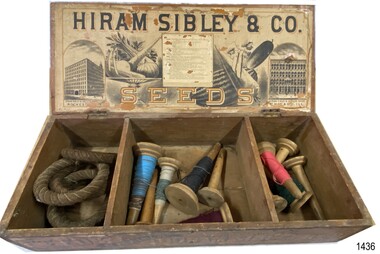
Container - Box for seeds, ca. 1880s
... farming and seed supply. In this area he used his skills to engineer seeds that were stronger and develop plants that produced more seeds. The production of seeds became his main business. He bought land cheaply and improved to soil so that he could produce seed and grain, and graze herds of cattle. ...farming and seed supply. In this area he used his skills to engineer seeds that were stronger and develop plants that produced more seeds. The production of seeds became his main business. He bought land cheaply and improved to soil so that he could produce seed and grain, and graze herds of cattle. ...This seed box was made for Hiram Sibley for his seed house business. He sold seeds priced by the weight or the space they took up e.g. bushel. This box allowed for seeds to be divided by type, size or even date. The box was strong and easy to cart and store. It was also a handy item to 'recycle' as a storage container for other items. The Sibley seed box is a desirable collectors' item. A large variety of sizes and shapes are still available today in various stages of condition. Hiram Sibley developed seeds that were strong and the plants that grew from these seeds produced many seeds. Varieties of Sibley seeds and plants are still advertised for sale in modern times. HIRAM SIBLEY (1807-1888) - Hiram Sibley was born in America. He had a natural mechanical ability and became skilled in many trades. He and his partner Don Watson opened a sawmill then a machine shop and foundry. He became involved with Alfred Vale and Samuel Morse and their work on the telegraph. Eventually he became the first president of the Western Union Telegraph Company. Later, after leaving Western Union in the early 1860s, Sibley bought and sold railroads, manufactured sold, ran timber mills, and became involved in farming and seed supply. In this area he used his skills to engineer seeds that were stronger and develop plants that produced more seeds. The production of seeds became his main business. He bought land cheaply and improved to soil so that he could produce seed and grain, and graze herds of cattle. He became the owner of 14 large farms. Hiram Sibley earned the reputation "as the most extensive farmer and seedsman in this country". The business of Hiram Sibley & Co. was conducted his warehouse in Rochester and his seed house in Chicago. One department of the business sold farming equipment, another department imported ornamental plants from overseas countries Sibley went on to invest a large amount of money in a bank, and to be financially involved in the community by making large donations to public services such as a library and a school of music. At one point he was the richest man in Monroe county.This box is significant for its historic connection with Hiram Sibley, who is famous for many reasons, among which is his very profitable business of seed engineering to improve the production of crops. This box also represents the value of containers used for selling products in the 1880s, being re-used for other useful purposes. The box is an example of goods imported for use in Australia. The text and images of the box are an example of 1880s advertisingBox, wooden, with two brass hinges joining lid to base. Base has two wooden partitions, divided into three unequal sized compartments. Lid's underside has label with drawings of buildings and produce, text with maker's name and description of vegetables. Front edge of box has stencilled text and diagrams. Outside lid, and the other three sides, have no inscriptions. Made by Hiram Sibley & Co., USA. (Box is currently used to store quoits 1436.2 and cones of cotton thread 1436.3.)Marked "HIRAM SIBLEY & CO / SEEDS", "WAREHOUSE - "ROCHESTER N.Y. ", "SEED HOUSE - CHICARGO, ILL.", "SEEDS BY WEIGHT & MEASURE", "PUT UP BY / HIRAM SIBLEY & CO. / ROCHESTER, N.Y. AND CHICARGO, ILL."flagstaff hill, warrnambool, maritime village, maritime museum, flagstaff hill maritime museum & village, hiram sibley & co, rochester n.y., seeds, wooden seed box, seed box, seedsmen, arable farming, chicargo illinois, seed house, seed engineering, seed distribution, seeds by weight and measure -
The Beechworth Burke Museum
Audio - Oral History, Jennifer Williams, Mr and Mrs Forrest, 25th September 2000
... Mr and Mrs Forrest's families have strong association with Beechworth's farming community, especially when it came to rearing sheep and cattle. This oral history recording was part of a project conducted by Jennifer Williams in the year 2000 to capture the everyday life and struggles in Beechworth during the twentieth century. ...Mr and Mrs Forrest's families have strong association with Beechworth's farming community, especially when it came to rearing sheep and cattle. This oral history recording was part of a project conducted by Jennifer Williams in the year 2000 to capture the everyday life and struggles in Beechworth during the twentieth century. ...Mr Forrest was born on the 11th of November 1916 in Beechworth. Mrs Forrest was also born in Beechworth. Mr and Mrs Forrest's families have strong association with Beechworth's farming community, especially when it came to rearing sheep and cattle. This oral history recording was part of a project conducted by Jennifer Williams in the year 2000 to capture the everyday life and struggles in Beechworth during the twentieth century. This project involved recording seventy oral histories on cassette tapes of local Beechworth residents which were then published in a book titled: Listen to what they say: voices of twentieth century Beechworth. These cassette tapes were digitised in July 2021 with funds made available by the Friends of the Burke.Although Beechworth is famous for its history in gold, the project by Jennifer Williams is significant as it captures the everyday life and struggles of residents living in Beechworth during the twentieth century. Mr and Mrs Forrest’s story is significant as their story brings to light the life on a farm in Beechworth. It gives insight into not only the Forrest’s role in Beechworth’s farming, but it also gives insight into the changed Beechworth went through during and after the war period.This is a digital copy of a recording that was originally captured on a cassette tape. The cassette tape is black with a horizontal white strip and is currently stored in a clear flat plastic rectangular container. It holds up 40 minutes of recordings on each side.listen to what they say, beechworth, oral history, burke museum, forrest, mr and mrs forrest, farm, farming -
 The Beechworth Burke Museum
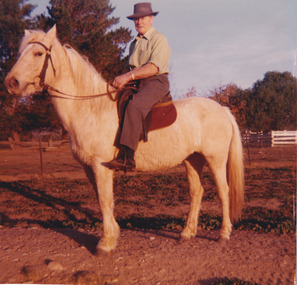
Audio - Oral History, Jennifer Williams, Mr Albert (Bert) Nankervis, 15th March 2000
... Farming and agriculture...farm...farm work...cow...cattle...Albert Nankervis Bert Nankervis Nankervis Wattle Grove Wooragee Dairy Farm Beechworth dairy farm Dairy Factories Beechworth Dairying milkman Oral History Springhurst Butter Factory Electricity rural life Farming and agriculture farm farm work cow cattle jersey cattle interwar period First World War second world war WWI WWII greatest generation centenarian nonagenarian 1920s 1930s Beechworth Thougla Upper Murray Murray lucyvale benalla Mr Albert (Bert) Nankervis / This is a digital copy of a recording that was originally captured on a cassette tape. ...Mr Albert (Bert) Nankervis was born at Thougla, in the Upper Murray, in 1903. He had a large family and was one of eight children, four boys and four girls. He and his family moved to a farm in Wooragee named ‘Wattle Grove’ in 1918 after his father returned from serving as a soldier in World War One. The family established ‘Wattle Grove’ as a dairy farm as Beechworth has a high demand for milk and little supply. They had 25 milk cows that were hand milked every morning in order to provide milk for approximately 100 customers in the town, with any extra going to the butter factory at Springhurst. Albert married Floré Lilias Hardy in 1930 and they had two sons, Phillip and Barry. In this oral history, Albert discusses his life as a farmer in Wooragee, including his role in getting electricity to Beechworth, as well as his participation in the Young Farmer’s Association Immigration Scheme, which provided work experience to migrants in order for them to learn how to farm. This oral history recording was part of a project conducted by Jennifer Williams in the year 2000 to capture the everyday life and struggles in Beechworth during the twentieth century. This project involved recording seventy oral histories on cassette tapes of local Beechworth residents which were then published in a book titled: Listen to what they say: voices of twentieth century Beechworth. These cassette tapes were digitised in July 2021 with funds made available by the Friends of the Burke. Mr Albert (Bert) Nankervis’s account of his life in Wooragee and the local area, including Beechworth, during the early 20th century is historically and socially significant to the cultural heritage of the region. He details his life as a farmer and milkman in the early 20th century, particularly the interwar period (1918-1939), but also discusses life after the Second World War, including employing young migrant men to train them as farmers through the Young Farmer’s Association. This oral history account is socially and historically significant as it is a part of a broader collection of interviews conducted by Jennifer Williams which were published in the book 'Listen to what they say: voices of twentieth-century Beechworth.' While the township of Beechworth is known for its history as a gold rush town, these accounts provide a unique insight into the day-to-day life of the town's residents during the 20th century, many of which will have now been lost if they had not been preserved. This is a digital copy of a recording that was originally captured on a cassette tape. The cassette tape is black with a horizontal white strip and is currently stored in a clear flat plastic rectangular container. It holds up 45 minutes of recordings on each side.Mr Albert (Bert) Nankervis / albert nankervis, bert nankervis, nankervis, wattle grove, wooragee, dairy farm beechworth, dairy farm, dairy factories beechworth, dairying, milkman, oral history, springhurst, butter factory, electricity, rural life, farming and agriculture, farm, farm work, cow, cattle, jersey cattle, interwar period, first world war, second world war, wwi, wwii, greatest generation, centenarian, nonagenarian, 1920s, 1930s beechworth, thougla, upper murray, murray, lucyvale, benalla -
The Beechworth Burke Museum
Audio - Oral History, Jennifer Williams, John O'Loughlin, 13 July 2000
... farming industry, taking trusted prisoners out to a farm on the Wodonga side of Beechworth to work the land. This area was known as The Rockery, a grazing property of two-hundred and eighty acres about two miles north of Beechworth. This work done by the prisoners included timber cutting, land maintenance and the grazing of livestock, mainly Black Poll cattle...farming industry, taking trusted prisoners out to a farm on the Wodonga side of Beechworth to work the land. This area was known as The Rockery, a grazing property of two-hundred and eighty acres about two miles north of Beechworth. This work done by the prisoners included timber cutting, land maintenance and the grazing of livestock, mainly Black Poll cattle ...John O'Loughlin was born in 1922 in Warracknabeal, Victoria and moved to Beechworth in February 1969. Following a brief time working in the real estate business, John gained employment as a prison officer at Beechworth Gaol. The gaol had initially closed its doors in 1918 but was reopened after the completion of alterations in 1926 as a reformatory prison for habitual male criminals. In his new role, John was able to pursue management in the farming industry, taking trusted prisoners out to a farm on the Wodonga side of Beechworth to work the land. This area was known as The Rockery, a grazing property of two-hundred and eighty acres about two miles north of Beechworth. This work done by the prisoners included timber cutting, land maintenance and the grazing of livestock, mainly Black Poll cattle. The programme was an instrumental component of prisoner rehabilitation, allowing freedom and responsibility. When he retired from his work in 1987, John observed that many improvements had been made towards the living conditions and daily life of the prisoners. This oral history recording was part of a project conducted by Jennifer Williams in the year 2000 to capture the everyday life and struggles in Beechworth during the twentieth century. This project involved recording seventy oral histories on cassette tapes of local Beechworth residents which were then published in a book titled: Listen to what they say: voices of twentieth century Beechworth. The cassette tapes were digitised in July 2021 with funds made available by the Friends of the Burke. John O'Loughlin's account of his life in Beechworth and the local area during the twentieth century is historically and socially significant to the cultural heritage of the region. He details important information surrounding Beechworth Gaol and the daily life of its prisoners; it is a place that still holds significance for the residents of Beechworth today. This oral history account is socially and historically significant as it is part of a broader collection of interviews conducted by Jennifer Williams which were published in the book 'Listen to what they say: voices of twentieth century Beechworth'. While the township of Beechworth is known for its history as a gold rush town, these accounts provide a unique insight into the day-to-day life of the town's residents during the twentieth century, much of which would have been lost if they had not been preserved. This is a digital copy of a recording that was originally captured on a cassette tape. The cassette tape is black with a horizontal white stripe and is currently stored in a clear flat rectangular plastic container. It holds up to forty minutes of recording on each side. John O'Loughlin / beechworth gaol, old beechworth gaol, john o'loughlin, beechworth prison, beechworth, gaol, prisoners, beechworth prison officer, prisoner reform beechworth, the rockery, black poll cattle, daily prison life beechworth, prisoner farmwork, beechworth training prison -
 Marysville & District Historical Society
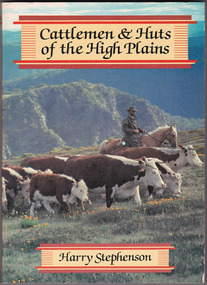
Book - Paperback book, Harry H. Stephenson, Cattlemen & Huts of the High Plains, 1980
... cattle...victoria...beeding...history...hill farming...A book that records the early development of Victoria's alpine regions by the pioneer cattlemen. cattle victoria beeding history hill farming mountain life cattlemen A book that records the early development of Victoria's alpine regions by the pioneer cattlemen. ...A book that records the early development of Victoria's alpine regions by the pioneer cattlemen.Paperback book. The cover photograph shows snow plains, wildflowers, cattle, cattlemen and the mountain scenery across the Howqua Valley in Victoria.non-fictionA book that records the early development of Victoria's alpine regions by the pioneer cattlemen.cattle, victoria, beeding, history, hill farming, mountain life, cattlemen -
 City of Moorabbin Historical Society (Operating the Box Cottage Museum)
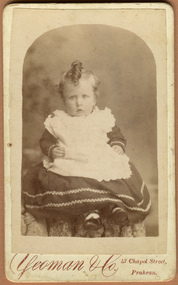
Photograph, B&W Jessie Melinda Box 1888 - 1975, c1889
... * box george, box mary, box william, box elizabeth honor, box alonzo, box mary louisa, dendy henry, were j b, dendy's special survey 1841, brighton, moorabbin, bentleigh, mckinnon, ormond, market gardeners, dairy farms, early settlers, pioneers, tucker road, box francis , thompson eliza jane, box william henry george, box charles francis, , box mabel alma. box jessie melinda, robinson william, robinson jack francis, robinson william james, poll hereford stud farming, rowville, mornington, notting hill victoria, royal melbourne agricultural show, royal sydney agricultural show. cattle breeding,...A B Leigh * box george, box mary, box william, box elizabeth honor, box alonzo, box mary louisa, dendy henry, were j b, dendy's special survey 1841, brighton, moorabbin, bentleigh, mckinnon, ormond, market gardeners, dairy farms, early settlers, pioneers, tucker road, box francis , thompson eliza jane, box william henry george, box charles francis, , box mabel alma. box jessie melinda, robinson william, robinson jack francis, robinson william james, poll hereford stud farming, rowville, mornington, notting hill victoria, royal melbourne agricultural show, royal sydney agricultural show. cattle breeding, YEOMAN & Co 47 Chapel Street, / Prahran A black and white photograph of Jessie Melinda Box a daughter of Francis Box and Elizabeth Jane Thompson Box c 1889 Photograph, B&W Jessie Melinda Box 1888 - 1975 Yeoman & Co ...Francis Box was born in Withyham, Sussex and came to Australia with his parents George and Mary Box and siblings in 1856. He was assigned to work in Beaufort and had various jobs including ‘gold miner’ at Heathcoat where he married Eliza Jane Thompson. Francis decided to return to market gardening after the death of his 1st child Francis George Box in 1875 aged 13months. The child was buried in Brighton Cemetery and Francis then rent/leased the land on the corner of Tucker Road and Elizabeth Street East Brighton ( now Bentleigh) owned by his brother Henry who with another brother John helped Francis clear the land, and establish a market garden. They had 4 children and began to prosper until in 1882 their 2year old child Lena Caroline Box was killed in a fire that destroyed their house. Francis was burned trying to rescue the child. The local community raised money to assist the family. The land boom brought prosperity again and Francis bought more land around Tucker Road which was bequeathed to his children. Francis and Eliza Jane had four more children but one died in infancy and another aged 2 years. Only 5 of their 9 children survived. Francis and Eliza Jane, who died in 1922, are also buried in Brighton Cemetery Jessie Melinda Box 1888- 1975 was born in East Brighton ( Bentleigh) the 8th child of Francis and Eliza Jane Box. She was a teacher in Eskdale, Victoria and married William Robinson d 1983, a farmer at Mitta in 1921. The family later moved to Tucker Road, Bentleigh where they ran a market garden until in 1950 they established "The Hilandale Poll Hereford Stud" at Notting Hill and Rowville. They moved to Mornington c 1960 where they continued their stud farming and enjoyed success at Melbourne, Sydney and local Shows. They had 2 children Jack Francis Robinson b1921, William James Robinson b1925. Box Cottage Museum, a reconstruction of an early settler hut, is named after the Box family who resided there 1865 -1913 . William Box who with his wife Elizabeth Avis Box and 13 children lived and farmed on the block of land in Jasper Road, East Brighton ( now McKinnon / Ormond) that was part of the Henry Dendy Special Survey 1841 . Francis Box, a brother of William Box, was born in Withyham, Sussex and came to Australia with his parents George and Mary Box and siblings in 1856. Francis established market gardens in Tucker Road Bentleigh. Jessie melinda Box was the 8th child of Francis Box Inscribed in Album “ The early photos in this album were found by Mr (Laurie) Lewis when he was demolishing the Old Box Cottage. He gave them to Mrs Avis Box Eldridge who in turn gave them to me. They were not identified. I believe they rightly belong in the Cottage. I have attempted to identify them and present them in a way they can be preserved as a historical record of the era.” A B Leigh A black and white photograph of Jessie Melinda Box a daughter of Francis Box and Elizabeth Jane Thompson Box c 1889YEOMAN & Co 47 Chapel Street, / Prahran* box george, box mary, box william, box elizabeth honor, box alonzo, box mary louisa, dendy henry, were j b, dendy's special survey 1841, brighton, moorabbin, bentleigh, mckinnon, ormond, market gardeners, dairy farms, early settlers, pioneers, tucker road, box francis , thompson eliza jane, box william henry george, box charles francis, , box mabel alma. box jessie melinda, robinson william, robinson jack francis, robinson william james, poll hereford stud farming, rowville, mornington, notting hill victoria, royal melbourne agricultural show, royal sydney agricultural show. cattle breeding, -
 Orbost & District Historical Society
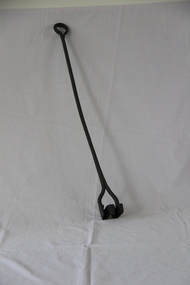
Tool - Branding iron, early 1900s
... cattle or horses. The iron was heated in a fire and then applied to the flank of the animal where the 'W' brand remained as a scar on the animal. This item is significant because it is identified as belonging to the Warren family, and also because of it shows the methods used to identify stock until the last decades of the 20th century. farming Orbost branding iron Warren 'W' for Warren family brand A long piece of iron rod with a ring at one end and a forged W shape at the other end. ...This is a branding iron used by the Warren family on their farm in the Nerwmerella/Orbost district. It was locally made, probably by a blacksmith in Orbost. Hot iron branding was a typical method of identifying stock, usually cattle or horses. The iron was heated in a fire and then applied to the flank of the animal where the 'W' brand remained as a scar on the animal.This item is significant because it is identified as belonging to the Warren family, and also because of it shows the methods used to identify stock until the last decades of the 20th century. A long piece of iron rod with a ring at one end and a forged W shape at the other end. 'W' for Warren family brandfarming, orbost, branding iron, warren -
 Greensborough Historical Society
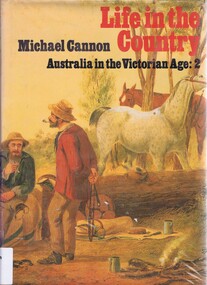
Book, Life in the Country: Australia in the Victorian Age by Michael Cannon, 1983_
... Significant to this area as Greensborough was a farming area at this time. australia history australia social conditions michael cannon australia country life Hard cover. 322 pages, illus. Dust jacket has illustration by S.T.Gill of "Herdsmen with horses and drove of cattle" Life in the Country: Australia in the Victorian Age by Michael Cannon Book Book Currey O'Neil ...A text dealing with life in country areas of Australia from 1851 to 1901.Significant to this area as Greensborough was a farming area at this time.Hard cover. 322 pages, illus. Dust jacket has illustration by S.T.Gill of "Herdsmen with horses and drove of cattle"australia history, australia social conditions, michael cannon, australia country life -
Glen Eira Historical Society
Document - Frogmore
... Cattle... Livestock... Horses... Farmhouses... Graziers... Farming...Frogmore Lyall William Lyall Davis Mary G Cahill P Murrumbeena Road Warrien Road Wahgoo Road Koornang Road North Road Murrumbeena Carnegie Cattle Livestock Horses Farmhouses Graziers Farming Stock breeding centres Murray Peter R Mickle John Wells John C Mickle Alexander Mickle Agnes Lyall Andrew Brown Helen Patterson Mr Maxwell Thomas Leman Swamp Lyall Annabella Document Frogmore ...Eight pages of photocopied extracts from a family history of the Lyalls who owned the property Frogmore in Murrumbeena. The history was written by Mary G Lyall Davis and published in 1993. One page includes a hand drawn illustration (60mm x 110mm) of the exterior of Frogmore.frogmore, lyall william, lyall davis mary g, cahill p, murrumbeena road, warrien road, wahgoo road, koornang road, north road, murrumbeena, carnegie, cattle, livestock, horses, farmhouses, graziers, farming, stock breeding centres, murray peter r, mickle john, wells john c, mickle alexander, mickle agnes, lyall andrew, brown helen, patterson mr, maxwell thomas, leman swamp, lyall annabella -
 Eltham District Historical Society Inc
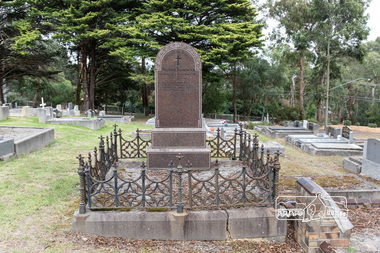
Photograph, Peter Pidgeon, Grave of Patrick Carrucan, Eltham Cemetery, Victoria, 5 April 2021
... cattle, poultry and an orchard. Patrick and Mary had ten children (Bridget, Michael, Susan, Patrick, Thomas, Mary Anne, Catherine, Margaret, Frances and Annie) and lived in Eltham for the rest of their lives. In later years, the Sweeney and the Carrucan families intermarried, as did most of the old Catholic farming...cattle, poultry and an orchard. Patrick and Mary had ten children (Bridget, Michael, Susan, Patrick, Thomas, Mary Anne, Catherine, Margaret, Frances and Annie) and lived in Eltham for the rest of their lives. In later years, the Sweeney and the Carrucan families intermarried, as did most of the old Catholic farming ...Whilst the three original Carrucan pioneers and their spouses are all buried at Eltham, only one gravestone (that of Patrick Carrucan) exists. Like many of the poor farmers of these early times, their graves were not marked with any permanent stone monuments and have deteriorated to become unmarked graves over the years. Patrick Carrucan, born in 1831 in Ireland, was the second oldest son of Patrick and Bridget Carrucan. He married Mary O'Brien in Ireland in 1856 before migrating to Australia, accompanied by Mary’s father, to join his sister Bridget Coleman in Eltham who had migrated in 1853. Patrick and Mary purchased a farm at the corner of Dalton and Bible Streets, initially living in a hut. After a few years, a more substantial house was built with assistance from Mary's father, who then returned to Ireland. The farm gradually prospered, with cattle, poultry and an orchard. Patrick and Mary had ten children (Bridget, Michael, Susan, Patrick, Thomas, Mary Anne, Catherine, Margaret, Frances and Annie) and lived in Eltham for the rest of their lives. In later years, the Sweeney and the Carrucan families intermarried, as did most of the old Catholic farming families of the Eltham District. Patrick died 6 October 1894 aged 63, reputedly from a broken back after being run over by his own bullock cart. Mary died in 2 Nov 1927 aged 90. They, together with other family members, are buried in a family plot in Eltham Cemetery, though only Patrick is recorded on the gravestone. Patrick's gravestone was in such disrepair that Betty Erickson (nee Carrucan) paid to have a new one erected in the late 1970s. Unfortunately, this gravestone, like the original, only honours Patrick Carrucan and does not record the other family members buried in this family plot. Betty wrote in 1989 "our people were farmers; the Sweeneys well-educated and prosperous, the Carrucans on a somewhat less favoured scale, but solid workers and providers." Patrick Carrucan Who departed this life 6 Oct. 1894 Aged 63 yearsBorn Digitaleltham cemetery, gravestones, patrick carrucan -
 Kiewa Valley Historical Society
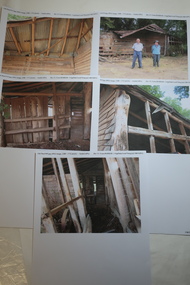
Photocopied photos - Wooden planks from Reid's Shed, Constructed by Jack Pratt
... The Kiewa Valley was a farming district being developed by clearing and farming the land with cattle....The Kiewa Valley was a farming district being developed by clearing and farming the land with cattle. The Reid family were early settlers of the Kiewa Valley.. ...The Kiewa Valley was a farming district being developed by clearing and farming the land with cattle.The Reid family were early settlers of the Kiewa Valley.. Their property was known as 'Willowdene' in Reid's Lane, Tawonga. Reid's farm in Tawonga - photos showing building methods in the early days. The builder (the local bush carpenter) ,Jack Platt was well known in the area having built the Reid's home and the shed. A full account of the Reid family is on Pages 100 -to 102 of "A History of the Kiewa Valley", by Esther Temple.6 A4 sheets, 5 photocopied coloured photos and one typed page with explanation. Reid's shed and the Reids familyreid family, tawonga farm, jack platt builder -
 Kiewa Valley Historical Society
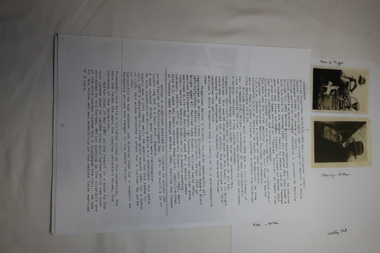
Higginson Family History from 1852
... The Kiewa Valley was a farming district being developed by clearing and farming the land with cattle. ...The Kiewa Valley was a farming district being developed by clearing and farming the land with cattle. The Higginson family were early farmers of the Kiewa Valley. ...The Kiewa Valley was a farming district being developed by clearing and farming the land with cattle. The Higginson family were early farmers of the Kiewa Valley. They were related to the Ryder family, by marriage. The Ryder family were also early settlers of the Kiewa Valley.2 A3 and 4 A4 sheets of paper including one A4 sheet typed history of the Higginson Family history and including photocopies of several black and white photos higginson family, ryder family, farmers of the kiewa valley -
 Kiewa Valley Historical Society
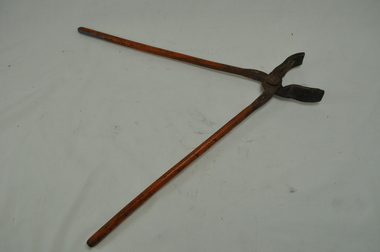
Tongs Blacksmith, circa mid to late 1900's
... farming region. The remoteness was due to the small population, poor transport routes and flood prone roads winding through the lower lying flat plains of the Kiewa Valley. Any blacksmith work whilst grazing Cattle ...These long handled "Blacksmith" tongs were used in the late 1800's to mid 1900's by a blacksmith(or others) within the Kiewa Valley. During these times blacksmiths would regularly visit "remote" rural properties and work on any "hard to manufacture" items. A few properties had either stockmen,farm hands, or owners able to do "minor" blacksmith work. The ability to undertake blacksmith functions was sometimes "by necessity" handled by a local "jack of all trades" person. During this period however demand for rural based blacksmiths was very high. The rural store, however was usually very small and many "off" the shelf rural appliances and apparatus available in the larger rural towns were not available to the semi remote rural areas.This long handled shaped nipper tongs is very significant to the Kiewa Valley because it represents one of the essential mores relating to isolated rural regions as was the Kiewa Valley at this period in time (1800's to mid 1900's). This "ingrained " more was the ability to achieve anything that was required to maintain a living standard or survival in a remote grazing, mining and farming region. The remoteness was due to the small population, poor transport routes and flood prone roads winding through the lower lying flat plains of the Kiewa Valley. Any blacksmith work whilst grazing Cattle on the Bogong High Plains or any part of the Kiewa Valley, had to be done in situ. The part of the "culture" of this regions was that of "self help" either from within the family or from a friendly neighbour.Long handled blacksmith's tongs. The handles are rusted and painted orange. The nippers have one central fixing and are flat edged.tools, blacksmith, horses, trades -
 Kiewa Valley Historical Society
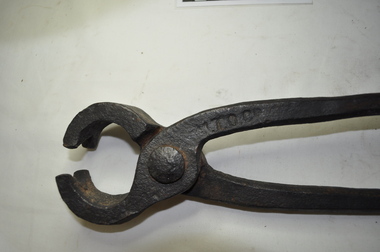
Tongs Blacksmith, circa early 1900s
... farming region. The remoteness was due to the small population, poor transport routes and flood prone roads and lower flat plains of the Kiewa Valley. Any blacksmith work whilst grazing Cattle ...These long handled "V" shaped tongs were used late 1800's to mid 1900's by a blacksmith within the Kiewa Valley. During these times blacksmiths would regularly visit "remote" rural properties and work on any "hard to manufacture" items. A few properties had either stockmen,farm hands, or owners able to do "minor" blacksmith work. The ability to undertake blacksmith functions was sometimes "by necessity" handled by a local "jack of all trades" person. During this period however demand for rural based blacksmiths was very high. The rural store, however was usually very small and many "off" the shelf rural appliances and apparatus available in the larger rural towns were not available to the semi remote rural areas.This long handled "V" shaped nipper tongs is very significant to the Kiewa Valley because it represents one of the essential mores relating to isolated rural regions as was the Kiewa Valley at this period in time. This "ingrained " more was the ability to achieve anything that was required to maintain a living standard or survival in a remote grazing, mining and farming region. The remoteness was due to the small population, poor transport routes and flood prone roads and lower flat plains of the Kiewa Valley. Any blacksmith work whilst grazing Cattle on the Bogong Plains had to be done in situ.Long handled tongs with "V" shaped ends on the nippers (used by blacksmiths)I.T.O.C.tools, blacksmith, horses, wrought iron tools -
 Kiewa Valley Historical Society
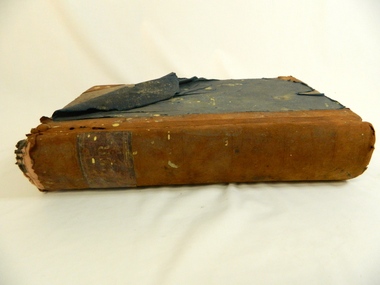
Book - Ledger Commercial, Ledger No 5, Commenced Jan 1st 1897, circa 1890's
... Although Kiewa Valley had mining, agriculture, cattle and sheep it was also composed of a mixed society, encompassing all levels of society at that period. It identifies some family farming history in the specific year of 1897 ledger early bookkeeping local history commerce circa 1890 Spine of book marked in faded golden print "Ledger". ...Historically this ledger not only details the legible hand writing of this era but also the day to day commercial activity in this region. The neatness and the diligence of those who were required to pen the information was a requirement by all who were in commercial trade. Emphasis on neatness was ingrained in students at a young age. This era was well before general typewriters and computers. Generally all students of commerce required an accuracy in writing and arithmetic. Neatness and order were a selection requirement This item clearly identifies the Kiewa Valley as having a substantial financial hub to accommodate the various commercial enterprises within a rural environment Circa 1880's. Although Kiewa Valley had mining, agriculture, cattle and sheep it was also composed of a mixed society, encompassing all levels of society at that period. It identifies some family farming history in the specific year of 1897Leather reinforced corner covers and spine. Remaining book front and back covers are protected by blue weaved cloth. The covers are very thick cardboard, in layers. Missing front index pages C,E - 0,Q,T,U,V,XSpine of book marked in faded golden print "Ledger". First page in hand writing "Ledger No. 5" and underneath handwritten "Commenced Jan 1st !897" After the index pages each page (double sided) has a page number stamped in black and is 6mm highledger, early bookkeeping, local history, commerce circa 1890 -
 Kiewa Valley Historical Society
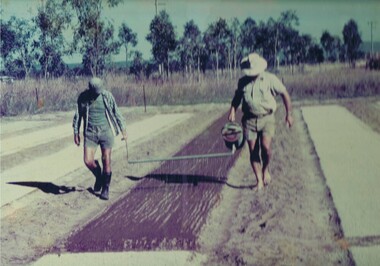
Photograph Tobacco planting, Planting Tobacco seeding, Circa mid to late 1900's
... farming/rural community has since mid 1970s, been slowly dissipating. Stricter controls of herbicides and pesticides used in agriculture are now in force. The death of the tobacco industry(2006) resulted in the expansion of the dairy , sheep, beef cattle, venison and lama wool producers in the Kiewa Valley and surrounding regions. tobacco farming rural industry licences ollie mould blue mould benzol vapour A sign, which has been removed from the picture at some previous point in time is "The Tobacco seed, being so fine, is suspended in water and sown onto the seed base using a watering can [as in the photo] or similar device - August - Sept." ...This promotional photograph by the Tobacco Growers Association was in response to a 1935 meeting of tobacco growers from Victoria, South Australia and Queensland which produced four major resolutions for the industry covering the remainder of the 1900s. These four resolutions were: (1) Adequate tariff protection (2) Control of pests and diseases (3) Orderly marketing (4) The formation of an advisory council of growers. History has produced the following results. (1) adequate tariff protection was never achieved,(2) control of disease through benzol vapour (CSIRO) breakthrough, was later identified as carcinogenic, (3) orderly marketing was achieved through (4) the establishment of the Tobacco Growers Association(1984). In October 2006, by way of Government buy back of tobacco leases from growers, resulted in the end of Tobacco farming in Australia (after 136 years of planting the first crop). It was also significant that the major tobacco companies such as Philip Morris and The British American Tobacco Australasia advised the industry that it would source its tobacco requirements overseas by 2009.The remnants of the Tobacco Industry can still be viewed throughout the Kiewa Valley and adjacent regions on the former tobacco farms which still have the tobacco drying sheds and now converted into hay sheds. The problems from the large quantities of carcinogenic infused soil of farmlands in the region, still remains a problem now and for future generations. This particular photograph shows the lack of understanding by farmers and the contracted labour, at that time, and is demonstrated by the bare footed farmer walking next to the seed canister. Some workers did use protective "gum" boots but the majority of farm owners were skeptical of city scientists and their carcinogenic concerns, and it was only after the younger generation of farmers , who had attended Agricultural colleges, encompassed the scientific approach to farm management and began working closely with agricultural scientists. The "she'll be right mate" attitude of the earlier farming/rural community has since mid 1970s, been slowly dissipating. Stricter controls of herbicides and pesticides used in agriculture are now in force. The death of the tobacco industry(2006) resulted in the expansion of the dairy , sheep, beef cattle, venison and lama wool producers in the Kiewa Valley and surrounding regions.Coloured photograph pasted onto a thick wood chip backing. Two galvanised eyelets at the top of the frame, 50mm from each end, with a twine cord stretch from each, for hanging purposes. See also KVHS 0054(B) to KVHS 0054(F)A sign, which has been removed from the picture at some previous point in time is "The Tobacco seed, being so fine, is suspended in water and sown onto the seed base using a watering can [as in the photo] or similar device - August - Sept."tobacco, farming, rural industry, licences, ollie mould, blue mould, benzol vapour -
 Kiewa Valley Historical Society
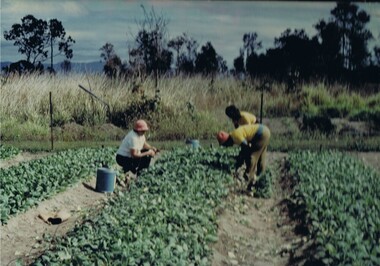
Photograph Tobacco seedlings, Pulling tobacco seedlings for Planting, Circa mid to late 1900s
... farming in Australia (after 136 years of planting the first crop). It was also significant that the major tobacco companies such as Philip Morris and The British American Tobacco Australasia advised the industry that it would source its tobacco requirements overseas by 2009. The death of the tobacco industry(2006) resulted in the expansion of the dairy , sheep, beef cattle ...This promotional photograph by the Tobacco Growers Association was in response to a 1935 meeting of tobacco growers from Victoria, South Australia and Queensland which produced four major resolutions for the industry covering the remainder of the 1900s. These four resolutions were: (1) Adequate tariff protection (2) Control of pests and diseases (3) Orderly marketing (4) The formation of an advisory council of growers. History has produced the following results. (1) adequate tariff protection was never achieved,(2) control of disease through benzol vapour (CSIRO) breakthrough, was later identified as carcinogenic, (3) orderly marketing was achieved through (4) the establishment of the Tobacco Growers Association(19840. In October 2006, by way of Government buy back of tobacco leases from growers, resulted in the end of Tobacco farming in Australia (after 136 years of planting the first crop). It was also significant that the major tobacco companies such as Philip Morris and The British American Tobacco Australasia advised the industry that it would source its tobacco requirements overseas by 2009.The death of the tobacco industry(2006) resulted in the expansion of the dairy , sheep, beef cattle, venison and lama wool producers in the Kiewa Valley and surrounding regions. The remnants of the Tobacco Industry can still be viewed throughout the Kiewa Valley and adjacent regions on the former tobacco farms which still have the tobacco drying sheds and now converted into hay sheds. The problems from the large quantities of carcinogenic infused soil of farmlands in the region, still remains a problem now and for future generations. This particular photograph shows the lack of understanding by farmers and the contracted labour, at that time, and is demonstrated by the lack of protection of hands when handling seedlings and attached soil. Hand and foot protection was rarely used, even when later warnings were issued of the carcinogenic toxicity of the soil. The majority of farm owners, up until Health authorities stepped in the later stages of 1900s, were skeptical of city scientists' "carcinogenic" health warnings and it was only after the younger generation of farmers, who had graduated from Agricultural colleges, encompassed the scientific approach to farm management. The "she'll be right mate" attitude of the farming/rural community has since the 1970s been slowly dissipating. Stricter controls of herbicides and pesticides used in agriculture are now in force.Coloured photograph pasted onto a thick wood chip backing. Two galvanised eyelets at the top of the frame, 50mm from each end, with a twine cord stretch from each, for hanging purposes. See also KVHS 0054A, KVHS0054C to KVHS 0054FA sign, which has been removed from the picture at some previous point in time is "Pulling seedlings for planting"tobacco, farming, rural industry, licences, ollie mould, blue mould, benzol vapour, photograph -
 Kiewa Valley Historical Society
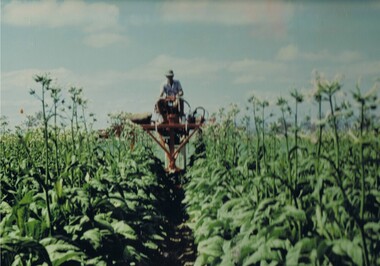
Photograph Topping Tobacco, Tobacco being topped (removal of flower), Circa mid to late 1900's
... farming/rural community has since the 1970s been slowly dissipating. Stricter controls of herbicides and pesticides used in agriculture are now in force. The death of the tobacco industry(2006) resulted in the expansion of the dairy , sheep, beef cattle, venison and lama wool producers in the Kiewa Valley and surrounding regions. tobacco farming rural industry licences ollie mould blue mould benzol vapour A sign, which has been removed from the picture at some previous point in time is "The Tobacco crop being topped (flower removed)". ...This promotional photograph by the Tobacco Growers Association was in response to a 1935 meeting of tobacco growers from Victoria, South Australia and Queensland which produced four major resolutions for the industry covering the remainder of the 1900s. These four resolutions were: (1) Adequate tariff protection (2) Control of pests and diseases (3) Orderly marketing (4) The formation of an advisory council of growers. History has produced the following results. (1) adequate tariff protection was never achieved,(2) control of disease through benzol vapour (CSIRO) breakthrough, was later identified as carcinogenic, (3) orderly marketing was achieved through (4) the establishment of the Tobacco Growers Association(1984). In October 2006, by way of Government buy back of tobacco leases from growers, resulted in the end of Tobacco farming in Australia (after 136 years of planting the first crop). It was also significant that the major tobacco companies such as Philip Morris and The British American Tobacco Australasia advised the industry that it would source its tobacco requirements overseas by 2009.The remnants of the Tobacco Industry can still be viewed throughout the Kiewa Valley and adjacent regions on the former tobacco farms which still have the tobacco drying sheds and now converted into hay sheds. The problems from the large quantities of carcinogenic infused soil of farmlands in the region, still remains a problem now and for future generations. This particular photograph shows the lack of understanding by farmers and the contracted labour, at that time, and is demonstrated by the lack of protection of hands when handling seedlings and attached soil. Hand and foot protection was rarely used, even when later warnings were issued of the carcinogenic toxicity of the soil. The majority of farm owners, up until Health authorities stepped in the latter stages of 1900s, were skeptical of city scientists' "carcinogenic" health warnings and it was only after the younger generation of farmers, who had graduated from Agricultural colleges, encompassed the scientific approach to farm management. The "she'll be right mate" attitude of the farming/rural community has since the 1970s been slowly dissipating. Stricter controls of herbicides and pesticides used in agriculture are now in force. The death of the tobacco industry(2006) resulted in the expansion of the dairy , sheep, beef cattle, venison and lama wool producers in the Kiewa Valley and surrounding regions.Coloured photograph pasted onto a thick wood chip backing. Two galvanised eyelets at the top of the frame, 50mm from each end, with a twine cord stretch from each, for hanging purposes. See also KVHS 0054A ,KVHS 0054B and KVHC 0054D to KVHS 0054F A sign, which has been removed from the picture at some previous point in time is "The Tobacco crop being topped (flower removed)". tobacco, farming, rural industry, licences, ollie mould, blue mould, benzol vapour -
 Kiewa Valley Historical Society
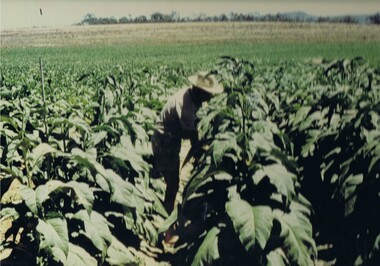
Photograph Tobacco plants, Tobacco fully grown prior to start picking, Circa mid to late 1900's
... farming/rural community has since the 1970s been slowly dissipating. Stricter controls of herbicides and pesticides used in agriculture are now in force. The death of the tobacco industry(2006) resulted in the expansion of the dairy , sheep, beef cattle, venison and lama wool producers in the Kiewa Valley and surrounding regions. tobacco farming rural industry licences ollie mould blue mould benzol vapour A sign, which has been removed from the picture at some previous point in time is "The Tobacco fully grown prior to start picking" Coloured photograph pasted onto a thick wood chip backing. ...This promotional photograph by the Tobacco Growers Association was in response to a 1935 meeting of tobacco growers from Victoria, South Australia and Queensland which produced four major resolutions for the industry covering the remainder of the 1900s. These four resolutions were: (1) Adequate tariff protection (2) Control of pests and diseases (3) Orderly marketing (4) The formation of an advisory council of growers. History has produced the following results. (1) adequate tariff protection was never achieved,(2) control of disease through benzol vapour (CSIRO) breakthrough, was later identified as carcinogenic, (3) orderly marketing was achieved through (4) the establishment of the Tobacco Growers Association(1984). In October 2006, by way of Government buy back of tobacco leases from growers, resulted in the end of Tobacco farming in Australia (after 136 years of planting the first crop). It was also significant that the major tobacco companies such as Philip Morris and The British American Tobacco Australasia advised the industry that it would source its tobacco requirements overseas by 2009.The remnants of the Tobacco Industry can still be viewed throughout the Kiewa Valley and adjacent regions on the former tobacco farms which still have the tobacco drying sheds and now converted into hay sheds. The problems from the large quantities of carcinogenic infused soil of farmlands in the region, still remains a problem now and for future generations. This particular photograph shows the lack of understanding by farmers, at that time, and is demonstrated by the lack of protection of hands and no masks over their noses, when handling plants. Hand, nose and foot protection was rarely used, even when later warnings were issued of the carcinogenic toxicity of the soil. The majority of farm owners, up until Health authorities stepped in the latter stages of 1900s, were skeptical of city scientists' "carcinogenic" health warnings and it was only after the younger generation of farmers, who had graduated from Agricultural colleges, encompassed the scientific approach to farm management. The "she'll be right mate" attitude of the farming/rural community has since the 1970s been slowly dissipating. Stricter controls of herbicides and pesticides used in agriculture are now in force. The death of the tobacco industry(2006) resulted in the expansion of the dairy , sheep, beef cattle, venison and lama wool producers in the Kiewa Valley and surrounding regions.Coloured photograph pasted onto a thick wood chip backing. Two galvanised eyelets at the top of the frame, 50mm from each end, with a twine cord stretch from each, for hanging purposes. See also KVHS 0054A to KVHS 0054C and 0054E to KVHS 0054FA sign, which has been removed from the picture at some previous point in time is "The Tobacco fully grown prior to start picking"tobacco, farming, rural industry, licences, ollie mould, blue mould, benzol vapour -
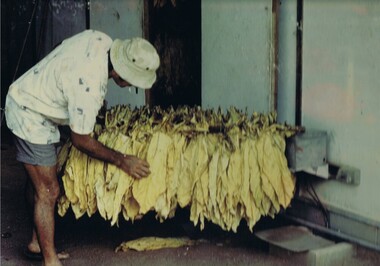 Kiewa Valley Historical Society
Photograph Tobacco drying leaves, Inspecting Drying tobacco leaves, 1950's to 1999
... farming/rural community has since the 1970s been slowly dissipating. Stricter controls of herbicides and pesticides used in agriculture are now in force. The death of the tobacco industry(2006) resulted in the expansion of the dairy , sheep, beef cattle, venison and lama wool producers in the Kiewa Valley and surrounding regions. tobacco farming rural industry licences ollie mould blue mould benzol vapour photograph Coloured photograph pasted onto a thick wood chip backing. ...This promotional photograph by the Tobacco Growers Association was in response to a 1935 meeting of tobacco growers from Victoria, South Australia and Queensland which produced four major resolutions for the industry covering the remainder of the 1900s. These four resolutions were: (1) Adequate tariff protection (2) Control of pests and diseases (3) Orderly marketing (4) The formation of an advisory council of growers. History has produced the following results. (1) adequate tariff protection was never achieved,(2) control of disease through benzol vapour (CSIRO) breakthrough, was later identified as carcinogenic, (3) orderly marketing was achieved through (4) the establishment of the Tobacco Growers Association(19840. In October 2006, by way of Government buy back of tobacco leases from growers, resulted in the end of Tobacco farming in Australia (after 136 years of planting the first crop). It was also significant that the major tobacco companies such as Philip Morris and The British American Tobacco Australasia advised the industry that it would source its tobacco requirements overseas by 2009.The remnants of the Tobacco Industry can still be viewed throughout the Kiewa Valley and adjacent regions on the former tobacco farms which still have the tobacco drying sheds and now converted into hay sheds. The problems from the large quantities of carcinogenic infused soil of farmlands in the region, still remains a problem now and for future generations. This particular photograph shows the lack of understanding by farmers and the contracted labour, at that time, and is demonstrated by the lack of protection of hands when handling the tobacco leaves and nose from tobacco dust. Hand and foot protection was rarely used, even when later warnings were issued of the carcinogenic toxicity of the soil. The majority of farm owners, up until Health authorities stepped in the later stages of 1900s, were skeptical of city scientists' "carcinogenic" health warnings and it was only after the younger generation of farmers, who had graduated from Agricultural colleges, encompassed the scientific approach to farm management. The "she'll be right mate" attitude of the farming/rural community has since the 1970s been slowly dissipating. Stricter controls of herbicides and pesticides used in agriculture are now in force. The death of the tobacco industry(2006) resulted in the expansion of the dairy , sheep, beef cattle, venison and lama wool producers in the Kiewa Valley and surrounding regions.Coloured photograph pasted onto a thick wood chip backing. Two galvanised eyelets at the top of the frame, 50mm from each end, with a twine cord stretch from each, for hanging purposes. See also KVHS 0054A to KVHS 0054D and KVHS 0054Ftobacco, farming, rural industry, licences, ollie mould, blue mould, benzol vapour, photograph -
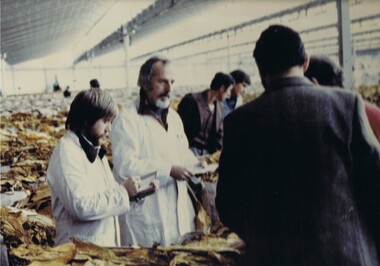 Kiewa Valley Historical Society
Photograph Tobacco selling, Tobacco sale floor, 1950 to 199
... cattle, venison and lama wool producers in the Kiewa Valley and surrounding regions. The problems from the large quantities of carcinogenic infused soil of farmlands in the region, still remains a problem now and for future generations. The tighter restrictions of where the final product can be smoked and the higher tax levied (no tariff protection) was the main contributor to this one time lucrative industry's demise. tobacco farming rural industry licences ollie mould blue mould benzol vapour photograph A sign, which has been removed from the picture at some previous point in time is "Tobacco sale floor" Coloured photograph pasted onto a thick wood chip backing. ...This promotional photograph by the Tobacco Growers Association was in response to a 1935 meeting of tobacco growers from Victoria, South Australia and Queensland which produced four major resolutions for the industry covering the remainder of the 1900s. These four resolutions were: (1) Adequate tariff protection (2) Control of pests and diseases (3) Orderly marketing (4) The formation of an advisory council of growers. History has produced the following results. (1) adequate tariff protection was never achieved,(2) control of disease through benzol vapour (CSIRO) breakthrough, was later identified as carcinogenic, (3) orderly marketing was achieved through (4) the establishment of the Tobacco Growers Association(19840. In October 2006, by way of Government buy back of tobacco leases from growers, resulted in the end of Tobacco farming in Australia (after 136 years of planting the first crop). It was also significant that the major tobacco companies such as Philip Morris and The British American Tobacco Australasia advised the industry that it would source its tobacco requirements overseas by 2009.This particular photograph shows prospective buyers (from the major processing firms of Philip Morris and British American Tobacco Australasia) inspecting the dried tobacco leaves at the Melbourne sales, before 2009, when they moved to overseas growers.The remnants of the Tobacco Industry can still be viewed throughout the Kiewa Valley and adjacent regions on the former tobacco farms, which still have the former tobacco drying sheds but now converted into hay sheds. The death of the tobacco industry(2006) resulted in the expansion of the dairy , sheep, beef cattle, venison and lama wool producers in the Kiewa Valley and surrounding regions. The problems from the large quantities of carcinogenic infused soil of farmlands in the region, still remains a problem now and for future generations. The tighter restrictions of where the final product can be smoked and the higher tax levied (no tariff protection) was the main contributor to this one time lucrative industry's demise.Coloured photograph pasted onto a thick wood chip backing. Two galvanised eyelets at the top of the frame, 50mm from each end, with a twine cord stretch from each, for hanging purposes. See also KVHS 0054A to KVHS 0054EA sign, which has been removed from the picture at some previous point in time is "Tobacco sale floor"tobacco, farming, rural industry, licences, ollie mould, blue mould, benzol vapour, photograph
