
Showing 61 items matching "china sea"
-
 Flagstaff Hill Maritime Museum and Village
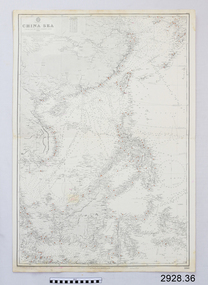
Document - Navigation Chart, China Sea
... China Sea......China Sea...British Admiralty Navigation Chart - China Sea...Warrnambool Shipwrecked-coast Flagstaff-Hill Flagstaff-Hill-Maritime-Museum Maritime-Museum Shipwreck-coast Flagstaff-Hill-Maritime-Village Shipwrecked-artefact Navigation Chart British Admiralty Navigation Chart British Admiralty China Sea British Admiralty Navigation Chart - China Sea China Sea Document Navigation Chart ...British Admiralty Navigation Chart - China Seawarrnambool, shipwrecked-coast, flagstaff-hill, flagstaff-hill-maritime-museum, maritime-museum, shipwreck-coast, flagstaff-hill-maritime-village, shipwrecked-artefact, navigation chart, british admiralty navigation chart, british admiralty, china sea -
 Flagstaff Hill Maritime Museum and Village
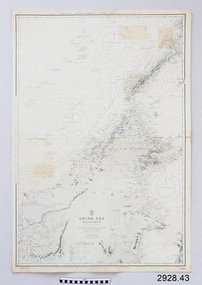
Document - Navigation Chart, China Sea
... China Sea......China Sea...British Admiralty Navigation Chart - China Sea, Southern Portion - Eastern Sheet...Warrnambool Shipwrecked-coast Flagstaff-Hill Flagstaff-Hill-Maritime-Museum Maritime-Museum Shipwreck-coast Flagstaff-Hill-Maritime-Village Shipwrecked-artefact Navigation Chart British Admiralty Navigation Chart British Admiralty China Sea British Admiralty Navigation Chart - China Sea, Southern Portion - Eastern Sheet China Sea Document Navigation Chart ...British Admiralty Navigation Chart - China Sea, Southern Portion - Eastern Sheetwarrnambool, shipwrecked-coast, flagstaff-hill, flagstaff-hill-maritime-museum, maritime-museum, shipwreck-coast, flagstaff-hill-maritime-village, shipwrecked-artefact, navigation chart, british admiralty navigation chart, british admiralty, china sea -
 National Vietnam Veterans Museum (NVVM)
Book, Marshall, S.L.A, The Fields of Bamboo: The True Story of Dong Tre, Trung Luong and Hoa Hoi - Three Battles Just Beyond the South China Sea, 1971
... The Fields of Bamboo: The True Story of Dong Tre, Trung Luong and Hoa Hoi - Three Battles Just Beyond the South China Sea....Between the two raged some of the fiercest infantry fighting of the Vietnam War The Fields of Bamboo: The True Story of Dong Tre, Trung Luong and Hoa Hoi - Three Battles Just Beyond the South China Sea. Book Book Marshall, S.L.A. ...It began and ended with a trap. The first one nearl led a green Special Forces captain into a slaughter, the last cost the life of a heroic lietuenant. Between the two raged some of the fiercest infantry fighting of the Vietnam WarIt began and ended with a trap. The first one nearl led a green Special Forces captain into a slaughter, the last cost the life of a heroic lietuenant. Between the two raged some of the fiercest infantry fighting of the Vietnam Waraustralia - armed forces - biography, vietnam war, personal narratives - australian, vietnamese conflict, 1961-1971 - personal narratives, australian, battle of dong tre, battle of trung luong, battle of hoa hoi, 1st cavalry division, 101st screaming eagles, nva -
 National Vietnam Veterans Museum (NVVM)
Document
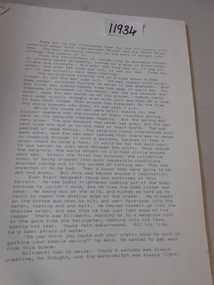
... ...South China Sea...Story of soldiers landed in a swampy hole in Rung Sat between Saigon and the South China Sea. Unknown author or date....Document Saigon South China Sea Story of soldiers landed in a swampy hole in Rung Sat between Saigon and the South China Sea. ...Story of soldiers landed in a swampy hole in Rung Sat between Saigon and the South China Sea. Unknown author or date.document, saigon, south china sea -
 Flagstaff Hill Maritime Museum and Village
Book - Mariner's Pocket Book, Captain John Budge Murray, circa 1881 - 1887
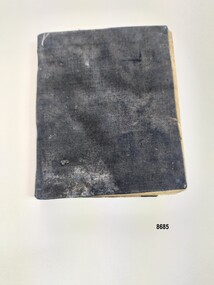
... ...South China Sea...Family records show his sister describing him as "commanding three frigates in the South China Sea - allegedly chasing pirates!" His obituary in the "John O'Groat Journal" in 1910 said he was "one of the original contingent of Britons who served as officers in the Chinese Fleet ...it was they who cleared the Chinese seas of the pirates who infected them." ...Assam drill commands Chinese Naval Service Qing Dynasty South China Sea First page - "John Budge Murray/Aucorn /Bower/ J. ...This is a small pocketbook owned by Master Mariner John Budge Murray. It is 119 pages long and contains a mix of detailed navigational calculations and lessons, diary entries, drill commands for soldiers "On Parade" and personal jottings. The dates in the notebook span the years from 1881 to 1887 and mention trips from Hong Kong to Singapore, Galle, Colombo, the Suez Canal, Aden, Port Said, Malta, Gibraltar and London. Two of the ships mentioned include the S. S. Bangalore and the S. S. Assam - both belonged to the "Peninsula and Oriental Steam Navigation Company" (later known as the P&O Line). John Budge Murray was born in 1847 at Olrig, Caithness in Scotland. During the course of his career, he was a merchant marine employed by the Peninsula and Oriental Steam Navigation Company (better known as P&O) and also became a master mariner and Captain serving in the Chinese Naval Service. When he married in 1888, his marriage certificate listed his occupation as "Captain in the Chinese Naval Service". Family records show his sister describing him as "commanding three frigates in the South China Sea - allegedly chasing pirates!" His obituary in the "John O'Groat Journal" in 1910 said he was "one of the original contingent of Britons who served as officers in the Chinese Fleet ...it was they who cleared the Chinese seas of the pirates who infected them." It went on to say "Captain Murray was brave even to the most reckless exposure of his life and ... the Chinese crews had explicit faith in him." John Murray and his wife Jessie had four children and by 1901 were living on a farm at Aucorn in Caithness. One of his sons (also called John Budge Murray) immigrated to Australia and joined the 8th Battalion, AIF (Australia Imperial Force) in 1915 and was killed in France in August 1918. Captain Murray died at Olrig in 1910. In 1840 the Peninsula Steam Navigation Company won a contract for the mail service between the U.K. and Egypt. They expanded their operations to include mail contracts to Alexandria, from Suez to Ceylon, Madras and Calcutta and in 1845 further expanded their operations to Shanghai. Steam communication with Australia was inaugurated in 1852 and in 1854 the Bombay Mail Service passed from the East India Company to P&O. By 1884 P&O's fleet contained fifty ships including the S.S. Assam and S.S. Bangalore - both are mentioned in Captain Murray's pocketbook. In 1882 the S.S. Bangalore was operating in the Bombay / Far East mail service and had made several trips in 1876 between Bombay and Melbourne. In 1875, the Qing Dynasty began to establish a modern Imperial Navy. They ordered a series of warships from Britain and Germany. Two of these ships (the Chaoyong and the Yangwoi) were built at the Tyne shipyards and sailed to China in 1881. They also needed to improve the skills of their naval personnel, and some skilled officers were recruited from Britain. This pocketbook is a significant example of a Master Mariner's everyday working pocketbook. It is also an important object as it belonged to a Scottish Master Mariner who held the unusual position as an officer in the Chinese Naval Fleet.A Master Mariner's small pocket-sized notebook. It has a black cover, 119 pages and contains a mix of navigational records, personal addresses, diary type entries and personal jottings in ink and pencil.First page - "John Budge Murray/Aucorn /Bower/ J. B. Murray/John B/ John B Murray/ Aucorn"flagstaff hill maritime museum and village, great ocean road, captain john budge murray, captain murray, master mariner, navigational calculations, ships log, pocketbook, peninsula and oriental steam navigation company, p&o, s.s. bangalore, s.s. assam, drill commands, chinese naval service, qing dynasty, south china sea -
 Bendigo Historical Society Inc.
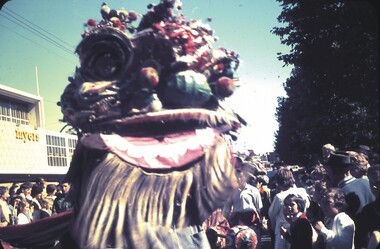
Slide - BENDIGO & EASTER FAIR, c1983
... Chinese Sea Lion...SLIDE Bendigo chinese sea lion chinese sea lion Chinese Sea Lion Slide BENDIGO & EASTER FAIR ...Chinese Sea Lionslide, bendigo, chinese sea lion, chinese sea lion -
 Running Rabbits Military Museum operated by the Upwey Belgrave RSL Sub Branch
Pilot's Map
... Map of Japan & China Sea...Part of Survival Pack Equipment WW2 RAAF Map of Japan & China Sea Pilot's Map ...Part of Survival PackMap of Japan & China Seaequipment, ww2, raaf -
Running Rabbits Military Museum operated by the Upwey Belgrave RSL Sub Branch
Pilot's Map
... Map of Japan, East & South China Seas....Part of survival Kit Equipment WW2 RAAF Map of Japan, East & South China Seas. Pilot's Map ...Part of survival KitMap of Japan, East & South China Seas.equipment, ww2, raaf -
 National Vietnam Veterans Museum (NVVM)
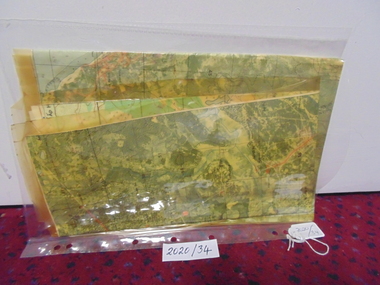
Map
... A laminated coloured map around the South China Sea...Map 3RAR McPhail Collection A laminated coloured map around the South China Sea Map Map ...A laminated coloured map around the South China Seamap, 3rar, mcphail collection -
 Flagstaff Hill Maritime Museum and Village
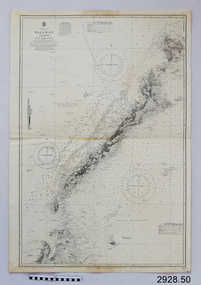
Document - Navigation Chart, Palawan Island
... British Admiralty Navigation Chart - China Sea- Palawan Island...Warrnambool Shipwrecked-coast Flagstaff-Hill Flagstaff-Hill-Maritime-Museum Maritime-Museum Shipwreck-coast Flagstaff-Hill-Maritime-Village Shipwrecked-artefact Navigation Chart British Admiralty Navigation Chart British Admiralty Palawan Island British Admiralty Navigation Chart - China Sea- Palawan Island Palawan Island Document Navigation Chart ...British Admiralty Navigation Chart - China Sea- Palawan Islandwarrnambool, shipwrecked-coast, flagstaff-hill, flagstaff-hill-maritime-museum, maritime-museum, shipwreck-coast, flagstaff-hill-maritime-village, shipwrecked-artefact, navigation chart, british admiralty navigation chart, british admiralty, palawan island -
 National Vietnam Veterans Museum (NVVM)
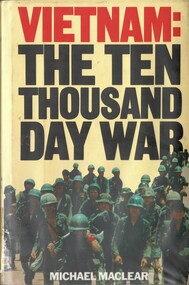
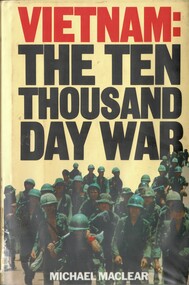
Book, Maclear, Michael, Vietnam: The Ten Thousand Day War (Copy 3)
... ...South China Sea...Vietnam War 1961-1975 Vietnam - History - 1945-1975 Saigon South China Sea United States Embassy At 7.53 on the morning of 30 April 1975, the last helicopter took of from the United States embassy compound in Saigon, bound for a waiting aircraft-carrier in the South China Sea. ...At 7.53 on the morning of 30 April 1975, the last helicopter took of from the United States embassy compound in Saigon, bound for a waiting aircraft-carrier in the South China Sea. After thirty years - more that ten thousand days - the Vietnam War was over.At 7.53 on the morning of 30 April 1975, the last helicopter took of from the United States embassy compound in Saigon, bound for a waiting aircraft-carrier in the South China Sea. After thirty years - more that ten thousand days - the Vietnam War was over.vietnam war, 1961-1975, vietnam - history - 1945-1975, saigon, south china sea, united states embassy -
 National Vietnam Veterans Museum (NVVM)
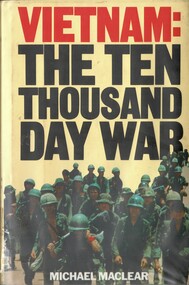
Book, Maclear, Michael, Vietnam: The Ten Thousand Day War (Copy 1)
... ...South China Sea...Vietnam War 1961-1975 Vietnam - History - 1945-1975 Saigon United States Embassy South China Sea At 7.53 on the morning of 30 April 1975, the last helicopter took of from the United States embassy compound in Saigon, bound for a waiting aircraft-carrier in the South China Sea. ...At 7.53 on the morning of 30 April 1975, the last helicopter took of from the United States embassy compound in Saigon, bound for a waiting aircraft-carrier in the South China Sea. After thirty years - more that ten thousand days - the Vietnam War was over.At 7.53 on the morning of 30 April 1975, the last helicopter took of from the United States embassy compound in Saigon, bound for a waiting aircraft-carrier in the South China Sea. After thirty years - more that ten thousand days - the Vietnam War was over.vietnam war, 1961-1975, vietnam - history - 1945-1975, saigon, united states embassy, south china sea -
 National Vietnam Veterans Museum (NVVM)
Book, Maclear, Michael, Vietnam: The Ten Thousand Day War (Copy 2)
... ...South China Sea...Vietnam War 1961-1975 Vietnam - History - 1945-1975 Saigon United States Embassy South China Sea At 7.53 on the morning of 30 April 1975, the last helicopter took of from the United States embassy compound in Saigon, bound for a waiting aircraft-carrier in the South China Sea. ...At 7.53 on the morning of 30 April 1975, the last helicopter took of from the United States embassy compound in Saigon, bound for a waiting aircraft-carrier in the South China Sea. After thirty years - more that ten thousand days - the Vietnam War was over.At 7.53 on the morning of 30 April 1975, the last helicopter took of from the United States embassy compound in Saigon, bound for a waiting aircraft-carrier in the South China Sea. After thirty years - more that ten thousand days - the Vietnam War was over.vietnam war, 1961-1975, vietnam - history - 1945-1975, saigon, united states embassy, south china sea -
 National Vietnam Veterans Museum (NVVM)
Document, A Copy of Vietnam Veterans Council of Victoria Inc.: A brief history of the Vietnam War (Copy 1), 1993
... ...South China Sea...Vietnam Veterans Council of Victoria Inc. South China Sea Laos Cambodia The Viet Minh Ho Chi Minh Battle of Dien Bien Phu Vietnamese Communist Party National Liberation Front Viet Cong Saigon Bien Hoa The Domino Theory South East Asia Australian Government Prime Minister - Robert Menzies Australian Army Training Team Vietnam (AATTV) Royal Australian Air force RAAF Caribou Australian National Serviceman 1st Battalion Royal Australian Regiment 1RAR HMAS Sydney Bien Hoa Airbase US 173rd Airborne Brigade Cu Chi Tunnels Tunnel Rats Saigon-Cholon Australian Task Force Phuoc Tuy Province 5RAR 6RAR Nui Dat 1st Australian Task Force 1ATF Headquarters Australian Force Vietnam Ho Chi Minh City Phuoc Tuy D Company Battle of Long Tan Gunners New Zealand Gunners Australian Gunners M113 RAAF Helicopters D445 Provincial Battalion Vietnam Veterans' Day ANZAC HMAS Hobart U.S. 7th Fleet A Squadron Canberra Bomber Vung Tau Harbour Tet Offensive Baria Long Dien Long Hai Hills C Company 3RAR Fire Support Base Fire Support Base - Coral Fire Support Base - Balmoral 8RAR Vietnamese Territorial Force US Troops Whitlam Labor Government Prime Minister Gough Whitlam Agent Orange Evatt Royal Commission Post Traumatic Stress Disorder PTSD Welcome Home Parade 1987 A Copy of Vietnam Veterans Council of Victoria Inc.: A brief history of the Vietnam War which was compiled as a guide to secondary school students and or any other person wishing to study the history of the Vietnam War. ...A Copy of Vietnam Veterans Council of Victoria Inc.: A brief history of the Vietnam War which was compiled as a guide to secondary school students and or any other person wishing to study the history of the Vietnam War. For more information please read the media files.vietnam veterans council of victoria inc., south china sea, laos, cambodia, the viet minh, ho chi minh, battle of dien bien phu, vietnamese communist party, national liberation front, viet cong, saigon, bien hoa, the domino theory, south east asia, australian government, prime minister - robert menzies, australian army training team vietnam (aattv), royal australian air force, raaf, caribou, australian national serviceman, 1st battalion, royal australian regiment, 1rar, hmas sydney, bien hoa airbase, us 173rd airborne brigade, cu chi, tunnels, tunnel rats, saigon-cholon, australian task force, phuoc tuy province, 5rar, 6rar, nui dat, 1st australian task force, 1atf, headquarters, australian force vietnam, ho chi minh city, phuoc tuy, d company, battle of long tan, gunners, new zealand gunners, australian gunners, m113, raaf helicopters, d445 provincial battalion, vietnam veterans' day, anzac, hmas hobart, u.s. 7th fleet, a squadron, canberra bomber, vung tau harbour, tet offensive, baria, long dien, long hai hills, c company, 3rar, fire support base, fire support base - coral, fire support base - balmoral, 8rar, vietnamese territorial force, us troops, whitlam labor government, prime minister gough whitlam, agent orange, evatt royal commission, post traumatic stress disorder, ptsd, welcome home parade 1987 -
 National Vietnam Veterans Museum (NVVM)
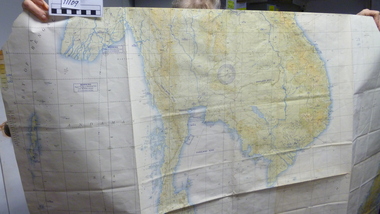
Map
... Scale 1:2,000,000 of South China Sea...Scale 1:2,000,000 of South China Sea Map Map USAF ...Large USAF jet Navigation chart. Scale 1:2,000,000 of South China Seamap, navigation chart -
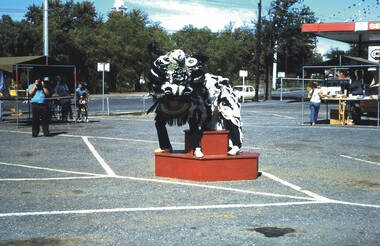 Bendigo Historical Society Inc.
Slide - BENDIGO & EASTER FAIR, 1987
... Sea Lion, Chinese market day, 1987...SLIDE Bendigo chinese sea lion Sea Lion Chinese market day Sea Lion, Chinese market day, 1987 Slide BENDIGO & EASTER FAIR ...Sea Lion, Chinese market day, 1987slide, bendigo, chinese sea lion, sea lion chinese market day -
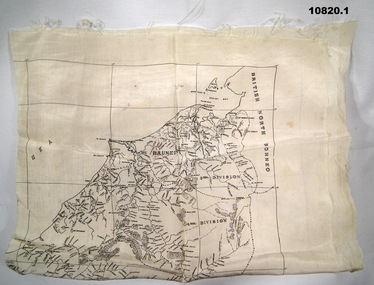 Bendigo Military Museum
Map - SILK MAPS, LAND HQ CARTOGRAPHIC COY, 1939-1945
... British North Borneo, China Sea, Dutch Borneo. It covers 109.5 to 116 degrees East and 0.5 to 116 degrees North Lat. ...British North Borneo, China Sea, Dutch Borneo. It covers 109.5 to 116 degrees East and 0.5 to 116 degrees North Lat. ...The soldier who had these was; "Gilbert Kerr MacKenzie", N247489 (born Sydney, enlisted Marrackville) on 6 Nov 1941, Age 18 years, 9 mths. Transferred to 2nd AIF 12 Nov 1942 as number NX132907. Promoted in the field to Lieut, 4 Feb 1945. Posted to “Z” Special Unit. Discharged 14 Aug 1946. Last Rank Lieut in WW2. Later Colonel when retired. Last Unit - “Z” Special Unit.1. & 2. White silk maps, printing in black ink. Topographer information, roads and rivers shown. It aso shows place names and border lines, i.e. British North Borneo, China Sea, Dutch Borneo. It covers 109.5 to 116 degrees East and 0.5 to 116 degrees North Lat. On the maps are printed Divisional areas - 1st to 5th Division. The maps are not hemmed. Words are in English.ww2, silk maps, pacific war, z special unit, gilbert kerr mackenzie -
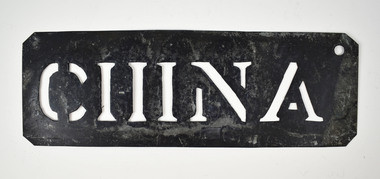 National Wool Museum
Stencil - CHINA
... Wool bales marked CHINA would have been transported to China by sea....Wool bales marked CHINA would have been transported to China by sea. wool sales wool transportation wool export CHINA Wool bale export stencil - CHINA Stencil - CHINA ...This stencil was used as a location stamp for the transportation of wool bales. Wool bales marked CHINA would have been transported to China by sea.Wool bale export stencil - CHINACHINAwool sales, wool transportation, wool export -
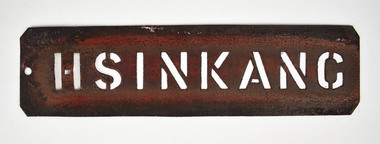 National Wool Museum
Stencil - HSIN KANG
... Wool bales marked HSIN KANG would have been transported to China by sea....Wool bales marked HSIN KANG would have been transported to China by sea. wool - transportation wool sales wool class wool classers HSIN KANG Wool bale export stencil - HSIN KANG Stencil - HSIN KANG ...This stencil was used as a location stamp for the transportation of wool bales. Hsin Kang is a port in China. Wool bales marked HSIN KANG would have been transported to China by sea.Wool bale export stencil - HSIN KANGHSIN KANGwool - transportation, wool sales, wool class, wool classers -
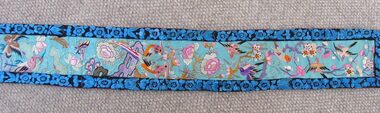 Embroiderers Guild, Victoria
Clothing - Sleeve Band, 1900
... Sleeve band is believed to have been brought from China by a sea captain....Sleeve band is believed to have been brought from China by a sea captain. Garments 1900-20 China Silk Embroidery Flowers birds butterfly Turquoise blue silk band embroidered in a delicate design of flowers, birds, butterflies and insects in classical Chinese style. ...Sleeve band is believed to have been brought from China by a sea captain.Turquoise blue silk band embroidered in a delicate design of flowers, birds, butterflies and insects in classical Chinese style. The edge is bound with black silk worked with a bright blue design and the lining is a magenta brocade. garments, 1900-20, china, silk embroidery, flowers, birds, butterfly -
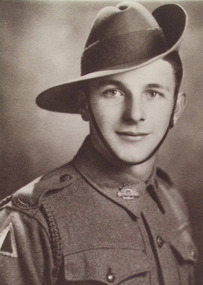 Williamstown Historical Society Inc
Photograph - Private Ernest Albert BURANDT, AIF
... During 1944, he became a POW in Java and passed away (drowned) at sea near Nagasaki, East China Sea, Pacific Ocean, on 24 Jun 1944, aged 24 years Source: vwma.org.au and nominal-rolls.dva.gov.au ...During 1944, he became a POW in Java and passed away (drowned) at sea near Nagasaki, East China Sea, Pacific Ocean, on 24 Jun 1944, aged 24 years Source: vwma.org.au and nominal-rolls.dva.gov.au Photograph Private Ernest Albert BURANDT, AIF ...Private Ernest Albert BURANDT, Service No: VX17846 was born in Newport on 11 July 1919 and enlisted in the Australian Army on 27 May 1940. He served in the 105 General Transport Company, Workshops Platoon; 1st Australian Corps Petrol Park, and served in Benghazi, Greece and Syria and became a POW in Java. During 1944, he became a POW in Java and passed away (drowned) at sea near Nagasaki, East China Sea, Pacific Ocean, on 24 Jun 1944, aged 24 years Source: vwma.org.au and nominal-rolls.dva.gov.au aif, private ernest albert burandt, pow, ww2, australian army -
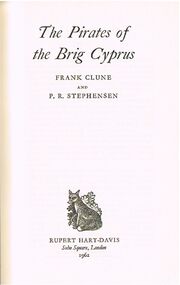 Bendigo Historical Society Inc.
Book - ALEC H CHISHOLM COLLECTION: BOOK ''THE PIRATES OF THE BRIG CYPRUS'' BY FRANK CLUNE & P.R.STEPHENSEN
... Stephensen being the true story of the seizure of the Brig 'Cyprus' by Tasmanian convicts in 1829 and sailing it to the South China Sea. Published in 1962 Rupert Hart-Davis, London. ...Stephensen being the true story of the seizure of the Brig 'Cyprus' by Tasmanian convicts in 1829 and sailing it to the South China Sea. Published in 1962 Rupert Hart-Davis, London. ...Book. ALEC H CHISHOLM COLLECTION. 205 page hardcover book by Frank Clune and P. R. Stephensen being the true story of the seizure of the Brig 'Cyprus' by Tasmanian convicts in 1829 and sailing it to the South China Sea. Published in 1962 Rupert Hart-Davis, London. Printed by Ebenezer Baylis and Son Ltd, The Trinity Press, Worcester and London. Catalogue sticker ''2210 CLU'' on spine. Handwritten in biro on flyleaf ''To Alec H. Chisholm, OBE, FRAHS Para Avis. Ornithologist, Historian, Editor and Author. Ornithorbyneus Paradacus Australiensis. From Percy R. Stephensen at Sydney 1962'' Inserts - a single page roneoed book announcement by the Publishers with opinions by English reviewers. Between pages 28 & 29 is a newspaper cutting from the Sydney Daily Telegraph April 21 1962 Book review by Ross Campbell.Frank Clune & P. R. Stephensenbooks, collections, history, alec h chisholm collection, brig cyprus, piracy, pirates, frank clune, p.r.stephensen -
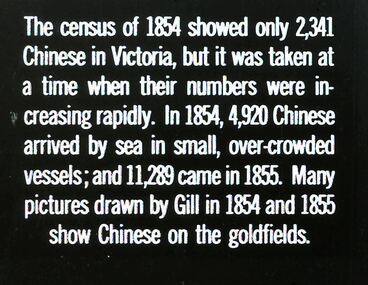 Bendigo Historical Society Inc.
Slide - DIGGERS & MINING. CHINESE ON THE GOLDFEILD, c1854
... In 1854, 4,920 Chinese arrived by sea in small, over-crowded vessels; and 11,289 came in 1855. ...In 1854, 4,920 Chinese arrived by sea in small, over-crowded vessels; and 11,289 came in 1855. ...Diggers & Mining. Chinese on the goldfeild. Gold. The census of 1854 showed only, 2,341 Chinese in Victoria, but it was taken at a time when their numbers were increasing rapidly. In 1854, 4,920 Chinese arrived by sea in small, over-crowded vessels; and 11,289 came in 1855. Many pictures drawn by Gill in 1854 and 1855 show Chinese on the goldfields. Markings: 9 994.GOL. Used as a teaching aid.hanimounteducation, tertiary, goldfields -
 Ballarat Tramway Museum
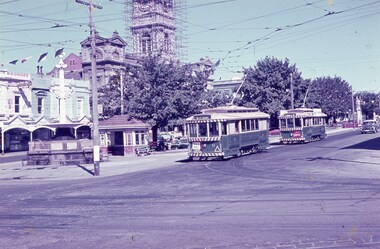
Slide - 35mm slide/s, Keith Caldwell, 12/03/1962 12:00:00 AM
... In the background is the Burke and Wills Fountain, shelter, Golden Star Chinese Cafe, Georges Sea Food shop and the Town Hall with the clock tower having scaffolding around it....In the background is the Burke and Wills Fountain, shelter, Golden Star Chinese Cafe, Georges Sea Food shop and the Town Hall with the clock tower having scaffolding around it. ...Yields information about the nature of tram services at the city terminus at Sturt and Lydiard St and the street scene at the time.Agfa colour slide, white cardboard mount, photo by Keith Caldwell on 12/3/1962 of: Trams 11 and 27 arriving at the "Tramway Centre" the city terminus. Tram 11 has the destination of Mt Pleasant and has a The Age dash canopy advertisement. No. 27 showing Victoria St and has a Briquettes dash panel advertisement. In the background is the Burke and Wills Fountain, shelter, Golden Star Chinese Cafe, Georges Sea Food shop and the Town Hall with the clock tower having scaffolding around it.In ink "Ballarat 12.3.62"tramways, trams, shelters, sturt st, lydiard st north, fountains, tram 11, tram 27 -
 Bendigo Historical Society Inc.
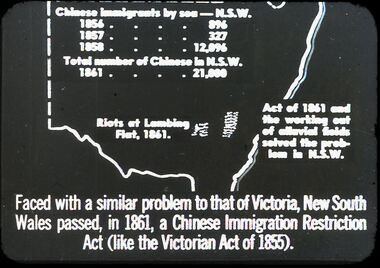
Slide - DIGGERS & MINING. THE CHINESE ON THE GOLD FIELDS, c1850s
... Slide: Map of New South Wales. Chinese immigration by sea - N.S.W. 1856 - 896, 1857 - 327, 1858 - 12,096. ...Slide: Map of New South Wales. Chinese immigration by sea - N.S.W. 1856 - 896, 1857 - 327, 1858 - 12,096. ...Diggers & Mining. The Chinese on the Gold Fields. Slide: Map of New South Wales. Chinese immigration by sea - N.S.W. 1856 - 896, 1857 - 327, 1858 - 12,096. Total number of Chinese in N.S.W. 1861 - 21,000. Riots of Lambing Flat, 1861. Act of 1861 the working out of alluvial fields solved the problem in N.S.W. Faced with a similar problem to that of Victoria, New South Wales passed, in 1861, a Chinese Immigration Restriction Act (like the Victorian Act of 1855). Markings: 10 994:LIF I. Used as a teaching aid.hanimounteducation, tertiary, goldfields -
 City of Melbourne Libraries
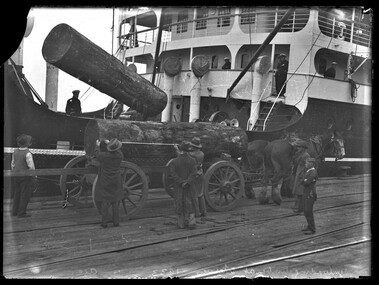
Photograph (item), Bull, Hugh Jones, 1897-1993, Unloading timber at Victoria Dock, 1933
... Shortly after midnight on 27 January 1949 the Taiping collided with the smaller cargo steamer Chien Yuan in the East China Sea near the Zhoushan Archipelago. The Chien Yuan was also operating in darkness. ...Shortly after midnight on 27 January 1949 the Taiping collided with the smaller cargo steamer Chien Yuan in the East China Sea near the Zhoushan Archipelago. The Chien Yuan was also operating in darkness. ...Photographer notations on slide: "Unloading Timber at Wharves 1933 Age B5" Published: Age (Melbourne, Vic.: 1854- ), Tuesday 15 August 1933 MAHOGANY FROM MANILA. (1933, August 15). The Age (Melbourne, Vic. : 1854 - 1954), p. 11. Retrieved January 16, 2026, from http://nla.gov.au/nla.news-article204377024 Published title: MAHOGANY FROM MANILA Published Caption: Age Tue 15 Aug 1933 Caption: Unloading Mahogany Logs brought from Manila, Philippine Islands, by the steamer Taiping, which berthed yesterday at Victoria Dock. The vessel discharged twenty logs, each weighing three tons, the first shipment of this type of timber landed in Melbourne. Research by Project Volunteer, Louise McKenzie: This photograph in many ways epitomises Melbourne in the 1930s. It is a time of enormous growth, development and change. But before delving into that, the photo itself is very powerful. The huge mahogany logs being unloaded appear to be so heavy that the ship itself seems to list to port as they are craned over the side. They are being levered into a cart to which two large and sturdy Clydesdale horses are hitched. In contrast to the traditional horses, the wharf is crisscrossed with modern railway tracks. Unloading is both mechanical and manual, and the scene is one of intense interest to a young boy bystander. The ship appears to be squat and solid, but the whole image also gives a feeling of movement and intensity. The mahogany being delivered to Melbourne would be intended for high quality furniture. In the 1930s Australia actually had a growing timber industry, but much of the eucalyptus wood was being utilised for mass produced furniture, and much of this furniture would then have had a veneer applied to it. The fact that it was economic to import this timber from the “Philippine Islands” – not a traditional trading market for Australia – reflects a Victorian economy that was strong enough to support a growing demand for good quality furniture Mahogany was described as a classic, strong hardwood, often used for dark opulent furniture. In the 1930s the importation of timber from Manila (Philippines) to Australia was a notable trade, particularly in Philippine Lauan (often referred to as Philippine Mahogany), which was used as a cheaper alternative to other hardwoods. 1930s furniture, dominated by the art deco style, used a mix of luxurious exotic woods like mahogany, macassar and ebony for high-end pieces, often veneered over less expensive woods such as walnut, birch and poplar, and with plywood, chrome and lacquer also popular for more practical, streamlined designs during the Depression era. By the mid 1930s timber mills were being relocated away from the immediate dock area, but the fact that these logs were being transported by horse-drawn cart implies that the load would not have had to be taken too far for milling. 1885 the Melbourne Harbour Trust Commissioners had decided that land in or near the city was far too valuable to be used as timber yards. Furthermore, large stacks of timber posed a fire risk. The Trust asked the Victorian Government to reserve a site on the east side of the Yarra River opposite Yarraville and Spotswood. Here, in 1889, the Trust began building six jetties and a wharf specifically for the landing of timber. Clydesdale horses were initially brought to Victoria from Tasmania in the 1830s, and with the 1850s gold rush they were imported direct from Scotland. Melbourne was from its earliest years an important centre of horse-breeding from both imported and colonial-bred stock, providing the well-built draught horse for pulling heavily loaded wagons, the harness horse for delivery work and drawing coaches, and the saddle-horse used for riding. Stud breeding facilities were advertised from the early 1840s. By the 1870s the horse export trade was thriving, and the Port of Melbourne was the country's busiest exporter of horses to Indian, Asian and New Zealand markets. Kirk's Melbourne Horse and Carriage Bazaar in Bourke Street first advertised for business in 1840, and by the 1850s Bourke Street West was famed for its horse bazaars and saleyards. The Victorian Clydesdale Horse Society reports that Clydesdale working horses were a vital part of Melbourne's infrastructure and agricultural industry in the 1930s, when they reached the peak of their popularity despite the increasing competition from mechanization. Their main roles and usage at this time were: • City Delivery: Clydesdales were a common sight for metropolitan deliveries, particularly for breweries (such as Carlton & United Breweries), milk runs, and bread deliveries. • Industrial Work: They were heavily used for hauling cargo at the docks, in construction, and at specialized sites like the Truganina Explosives Reserve, where they pulled wagons. • Agriculture: In surrounding rural areas, they were the primary power source for ploughing and agricultural machinery. • Specialization: By the 1930s, the Clydesdale was smaller and more compact than the Shire or Percheron breeds, making them ideal for navigation in urban environments. After the 1930s their numbers decreased due to the onset of WWI and mechanisation. Wartime petrol rationing led to a brief revival for the working horse, as suburban tradesmen, now used to motor delivery, took their old jinkers out of mothballs. By 1947, however, only 1.5% of city traffic was horse-drawn. In 1952 the large horse cartage company A. Kellet Pty Ltd sold its 250 horses and converted its Richmond stables to storage. In the 1950s at Station and Princes piers, wharf labourers refused to work with the six draught horses still being used to haul trolleys and which were soon superseded by the fork lift, semi-trailer and mobile crane. Where carefully trained horses had once shunted trains in city goods yards, a few hundred a week were now being killed at the abattoirs for pet and human consumption. The last MCC dray horse was withdrawn from service in 1958, but some of the few remaining working animals are used by the mounted police for crowd control at demonstrations and football games. The death knell had also sounded for the associated trades of farrier, saddler and blacksmith. Our photo, therefore, showing the wharf with both the haulage Clydesdales and the rail lines, is a strong visual summary of the social and economic changes experienced in Victoria in the 1930s and on towards the 1950s. Our photo is located at Victoria Dock (also known as Victoria Harbour) which is still an active component of Melbourne’s port system. In 1892 the West Melbourne Dock (later Victoria Dock) was opened, downstream and immediately west of the Spencer Street railway shunting yards. It contained a swing basin for ships, replacing the one which had been provided on the south side of the river, later to be the Duke and Orr dry dock, west of the Charles Grimes Bridge. Further west was the South Wharf along the river bank. The history of Victoria Dock is extremely well described by Ashley Smith in his 2 March 2022 article in Docklands News, and its accompanying aerial photo of the Dock taken in 1934. He writes: "In the early 1930s Victoria Dock was one of the biggest sites for trade and export in Melbourne. A constant queue of ships sailed in, unloaded their cargo, recharged and reloaded, then left for the next port. Around the time this photo was taken (found in a 1934 photo book), the trapezium-shaped basin had been through some changes since its construction in the 1890s. The 497-metre-long Central Pier, finished in 1919, now featured six sheds to house the ever-increasing volume of cargo. The entrance had also been widened in the 1920s to allow better access. Some of the berths featured three-ton jib electric cranes to help with loading cargo and a rail network connected to the State Railway service. By the time construction was completed, the dock was 39 hectares and hailed as the second-largest dock in the world (behind Cavendish Dock, Barrow-in-Furness). To further save costs, excavations were dug to a more reasonable seven metres below low water, instead of British engineer Sir John Coode’s recommended 8.3 metres. Even then, the costs were still around £900,000. It was envisaged, with the extra wharfage, that around thirty 90-metre ships could berth inside. On March 22, 1892, Victoria Dock was opened by Victoria’s Governor, the Earl of Hopetoun (later Australia’s first Governor-General) who opened the sluice to let the Yarra in. It took six days to fill the basin with The Leader newspaper estimating that it would take another six months to completely fill (March 26, 1892). In the end, it took nearly a year before the first ship was allowed to enter on February 20, 1893, when the steamer Hubbuck sailed in to unload 1200 tonnes of cargo in 15 hours. The Argus (February 23, 1893) reported that the ship’s captain, J. R. Brodie, called the Yarra “better than the Thames”, and compared Victoria Dock favourably to the Albert Dock (Liverpool)." This would be a good time to move our focus on to the Taiping, which is the transporter of these giant mahogany logs. The Taiping was a steel-hulled, single-screw passenger-cargo Chinese steamer, which today has the dubious legacy of being involved in a collision headlined as “The Chinese Titanic”. It was constructed by the Hong Kong and Shampoa Dock Company at its facility in Hong Kong, with completion in 1926 for service under the Australia Oriental Line. Her gross register tonnage measured 4,324 tons, reflecting her design for inter-island and coastal trade routes, accommodating both passengers and freight. She operated routes connecting Australian ports with East Asian destinations. As World War II approached, Taiping continued predominantly working the trade routes between China and Australia, until December 1941, when she evacuated women and children from Hong Kong to Manila just before Japanese forces overran the region. She then safely reached Australia despite enemy air raids. Taiping was then requisitioned by the Royal Navy and repurposed as a victualling stores issuing ship for the Eastern Fleet, supporting logistical needs in the Pacific and Indian oceans. Returned to the Australian Oriental Line in 1947, she underwent refitting and by mid-1948 was chartered to the Shanghai Shipping Company, and modified for greater passenger accommodation – approximately 500 passengers. In 1948/49 the Chinese Civil War took place. The Taiping departed Shanghai on 26 January 1949 as one of the final vessels evacuating civilians from to Keelung Harbour in Taiwan. Reports indicate that the Taiping carried double the rated capacity of passengers i.e. 1000. The ship carried families, military personnel, civilians, carrying personal belongings, gold and valuables in hope of resettlement in Nationalist Taiwan. It also held heavy cargo in the form of silver and gold bullion loaded by the Central Bank of China. Because of the risk of patrols, and to conserve fuel, the Captain took the ship away from the usual open-sea passage, and instead navigated along the coast. He also extinguished navigation lights to avoid detection. Shortly after midnight on 27 January 1949 the Taiping collided with the smaller cargo steamer Chien Yuan in the East China Sea near the Zhoushan Archipelago. The Chien Yuan was also operating in darkness. The subsequent collision was catastrophic. The Chien Yuan sank with in 5 minutes, with the loss of 72 of its 74 crew. The Taiping sustained severe structural compromise from the broadside strike and initially remained afloat, then made a swift descent into the freezing water, with no attempt at an organised evacuation. No formal recovery process was instigated, however a distress signal went out. 32 survivors were picked up by the Australian destroyer HMAS Warramunga (on patrol nearby), a passing US vessel found 2 more, and local Zhoushan fishermen retrieved others. In the end, only 37 people survived. The event is remembered as a poignant moment in the mass migration to Taiwan, with families tragically separated. A memorial to the disaster exists at the Keelung Harbour naval base on Taiwan. With its total of over 1,500 deaths, it constituted one of the worst peacetime maritime losses. It is sometimes referred to as the “Oriental Titanic” because of the similarly large loss of life and speed of demise with the RMS Titanic in 1912. A fictional depiction of this event appears in the John Woo movies “The Crossing (Part 1) (2014), and The Crossing II (2015), known in Chinese as “Taiping Wheel”. The narrative weaves a story around pre-disaster romances and wartime turmoil among passengers, culminating in the ship’s rapid sinking. “The production, a high-budget Sino-Taiwanese-Hong Kong co-effort, portrays the event as a microcosm of the 1940s Sino-Japanese and civil war legacies, though critics noted the melodramatic style prioritizing spectacle over historical precision.” In conclusion, it is nice to return to our photo, and observe the people involved in this moment. The dockworkers are, so typical of the 1930s, dressed in what looks to us like formal clothing – dark suits or coats, white shirts, and black hats. I am particularly drawn to the young boy, bare-headed, arms crossed, and so intent on the unloading process. He too is wearing a white shirt, black trousers and jacket, and black shoes. This is 1933 Melbourne – but the haircut he is sporting is now very “hipster” and modern in 2026 Melbourne. References: MAHOGANY FROM MANILA. (1933, August 15). The Age (Melbourne, Vic. : 1854 - 1954), p. 11. Retrieved January 30, 2026, from http://nla.gov.au/nla.news-article204377024 Wikipedia, Taiping steamer, https://en.wikipedia.org/wiki/Taiping_(steamer) Wikipedia, Victoria Dock, https://en.wikipedia.org/wiki/Victoria_Dock_(Melbourne) Docklands News, Ashley Smith, 2 Mar 2022, https://www.docklandsnews.com.au/victoria-dock/ Living Histories: Heritage Council of Victoria, Jill Barnard, 2008, Jetties and Piers, https://livinghistories.net.au/wp-content/uploads/2015/11/Jetties-ONL-intro_Part-1.pdf eMelbourne, Wharves and Docks, https://www.emelbourne.net.au/biogs/EM01612b.htm Australian Academy of Technological Sciences – Harvesting Wood, https://www.austehc.unimelb.edu.au/tia/225.html Old Treasury Building, On the Water – The Docks, https://tinyurl.com/3wkbk66m Old Treasury Building, On The Road, https://tinyurl.com/dw44yr3t Port of Melbourne, Victorian Places, https://www.victorianplaces.com.au/port-of-melbourne Docklands Heritage Study - Environmental History, https://mvga-prod-files.s3.ap-southeast-4.amazonaws.com/public/2024-05/docklands-heritage-review-thematic-environmental-history-1991.pdf eMelbourne, Horses, https://www.emelbourne.net.au/biogs/EM00723b.htm Victorian Clydesdale Horse Society, https://www.clydesdalesvic.org.au/history The Crossing, https://letterboxd.com/film/the-crossing-i/Photographer notations on slide: "Unloading Timber at Wharves 1933 Age B5"ships, shipping, timber industry, shipwrecks, horses, docks, wharves, 1930-1939, wars, docklands -
 Flagstaff Hill Maritime Museum and Village
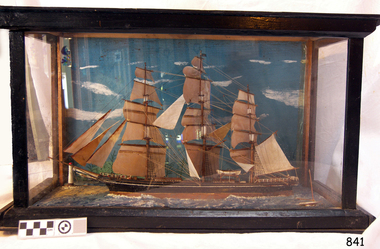
Craft - Ship Model, Cutty Sark
... China. Later, it was used to transport wool from Australia. It became famous for its speed and held the record for the fastest voyage from Australia to Britain for ten years. Later, a Portuguese company bought the ship and renamed it Ferreira. After that, a retired sea...China. Later, it was used to transport wool from Australia. It became famous for its speed and held the record for the fastest voyage from Australia to Britain for ten years. Later, a Portuguese company bought the ship and renamed it Ferreira. After that, a retired sea ...THE CUTTY SARK: - The Cutty Sark was built in Britain in 1869 and was one of the last great sailing ships. At first, it carried tea from China. Later, it was used to transport wool from Australia. It became famous for its speed and held the record for the fastest voyage from Australia to Britain for ten years. Later, a Portuguese company bought the ship and renamed it Ferreira. After that, a retired sea captain purchased it to use as a training ship in Cornwall. When the captain died, the ship was given to a training college in Greenwich in 1938. In 1954, it was placed in dry dock at Greenwich, where it remains on display. The Cutty Sark is a special ship because it carried wool from Australia to other parts of the world. Models like this one help us imagine what sea travel was like before steam-powered ships were common, and they show us how trade, travel and migration changed over time. The Cutty Sark is also famous for being very fast. It set a record for the journey from Australia to Britain and kept that title for ten years. Today, people still recognise its importance because it has been carefully preserved and is on display at the British Maritime Museum in Greenwich. Its story has also made it a favorite subject for people who enjoy building ship models. Ship model: the clipper ship Cutty Sark in full ship rig with raised poop deck, deck house, three boats on deck (one has fallen). It has a two-toned black and tan hull and three jibs. The model is set in a diorama of a blue sea, a lighthouse and another small yacht. It is housed in a glass-sided case with a dark grey painted structure. The bow has an inscription."Cutty Sark"flagstaff hill, warrnambool, flagstaff hill maritime museum, shipwreck coast, flagstaff hill maritime village, maritime museum, great ocean road, cutty sark, historic sailing ship, tea clipper, sail training vessel, cadet training ship, commercial trading vessel, cargo sail vessel, ferreria, 1869, tea cargo, tea trade, china tea, wool export, australian export, australian wool export, cornwall, training ship, greenwich, british museum, ship model, craft, hobby, ship model cutty sark, model making -
 Flagstaff Hill Maritime Museum and Village
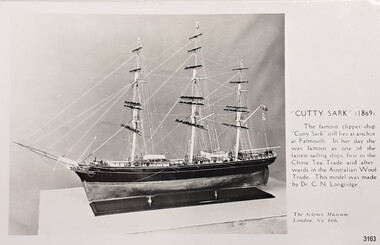
Postcard - Vessel, Sailing Ship, B Matthews (photo printer), Cutty Sark, 20t century
... China. Later, it was used to transport wool from Australia. It became famous for its speed and held the record for the fastest voyage from Australia to Britain for ten years. Later, a Portuguese company bought the ship and renamed it Ferreira. After that, a retired sea...China. Later, it was used to transport wool from Australia. It became famous for its speed and held the record for the fastest voyage from Australia to Britain for ten years. Later, a Portuguese company bought the ship and renamed it Ferreira. After that, a retired sea ...The maker of the ship model on the postcard was Dr C Nelson Longridge (1876–1952), an English surgeon, maritime author, and builder of detailed ship models. Other models include the SS Marioness and the steam yacht Asia. He also wrote the books 'Cutty Sark' and 'The Anatomy of Nelson's Ships'. The postcard was printed by B Matthews, Bradford, England, incorporated in 1970 as B. Matthews (Photo Printers) Limited. Collections of B Matthews' photo prints of famous painted portraits are held at The National Portrait Gallery of London. Copies of B Matthews postcards are today sought after by collectors. THE CUTTY SARK: - The Cutty Sark was built in Britain in 1869 and was one of the last great sailing ships. At first, it carried tea from China. Later, it was used to transport wool from Australia. It became famous for its speed and held the record for the fastest voyage from Australia to Britain for ten years. Later, a Portuguese company bought the ship and renamed it Ferreira. After that, a retired sea captain purchased it to use as a training ship in Cornwall. When the captain died, the ship was given to a training college in Greenwich in 1938. In 1954, it was placed in dry dock at Greenwich, where it remains on display. This postcard features a photograph of a model of the sailing ship Cutty Sark, making it significant because of its connection to this well-known vessel. The famous tea clipper transported wool from Australia to markets around the world. Models such as this one help us understand what sea travel was like before steam-powered ships became widespread, while also illustrating how trade, travel and migration developed over time. Cutty Sark was also celebrated for its speed. It broke records on the voyage from Australia to Britain and held this distinction for ten years. Its importance is still recognised today, as the ship has been carefully preserved and is now displayed at the British Maritime Museum in Greenwich. Its remarkable history has also made it a popular subject for model ship enthusiasts. The postcard is also valuable because it shows a model of Cutty Sark built by the renowned C. N. Longridge, who was not only a respected surgeon but also a skilled model maker and author of detailed maritime works. A further connection is found in the printer, B Matthews, who photographed and printed collections featuring famous people, model ships and maritime scenes, adding another layer of historical interest to the postcard. Postcard, black and white, showing a model of the sailing ship Cutty Sark. Printed details are provided on both the front and back of the postcard. Inscriptions include a brief description of the Cutty Sark, the location and maker of the model, and the printer's contact information. The postcard was printed in Great Britain.FRONT: " "CUTTY SARK" (1869) The famous clipper ship "Cutty Sark" still lies at anchor at Falmouth. In her day, she was famous as one of the fastest sailing ships, first in the China Tea Trade, and afterwards in the Australian Wool Trade. This model was made by Dr C.N. Longridge." "The Science Museum, London. No. 166." REVERSE: "POSTCARD" "COMMUNICATION" "ADDRESS" "Printed by B Matthews, Bradford, England"flagstaff hill, warrnambool, flagstaff hill maritime museum, shipwreck coast, flagstaff hill maritime village, maritime museum, great ocean road, cutty sark, historic sailing ship, tea clipper, sail training vessel, cadet training ship, commercial trading vessel, cargo sail vessel, clipper races, scott and linton of dunbarton scottland, race record, ferreria, 1869, tea cargo, tea trade, china tea, wool export, australian export, australian wool export, china tea trade, cornwall, training ship, greenwich, british museum, ship model, craft, hobby, ship model cutty sark, model making, postcard, c nelson longridge, charles nelson longridge, b matthews, photo printer, b matthews bradford england, b matthews (photo printer ) ltd. -
 Flagstaff Hill Maritime Museum and Village
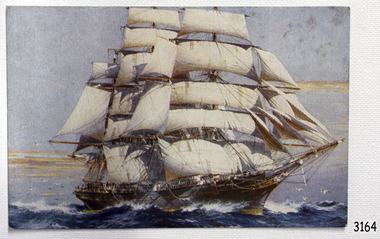
Postcard - Vessel, Sailing Ship, Jack Spurling (John Robert Charles Spurling), marine artist, circa 19th century
... sea shows in his detailed paintings of ship portraits. THE CUTTY SARK: - The Cutty Sark was built in Britain in 1869 and was one of the last great sailing ships. At first, it carried tea from China...sea shows in his detailed paintings of ship portraits. THE CUTTY SARK: - The Cutty Sark was built in Britain in 1869 and was one of the last great sailing ships. At first, it carried tea from China ...The postcard is a copy of a painting by the renowned British maritime artist Jack Spurling (John (Jack) Robert Charles Spurling 1870-1933). Spurling's love for the sea was fulfilled as a teenager when he worked as an apprentice, eventually gaining a Second Mate certificate and going on to join the Blue Anchor Line as a junior officer. His love for the sea shows in his detailed paintings of ship portraits. THE CUTTY SARK: - The Cutty Sark was built in Britain in 1869 and was one of the last great sailing ships. At first, it carried tea from China. Later, it was used to transport wool from Australia. It became famous for its speed and held the record for the fastest voyage from Australia to Britain for ten years. Later, a Portuguese company bought the ship and renamed it Ferreira. After that, a retired sea captain purchased it to use as a training ship in Cornwall. When the captain died, the ship was given to a training college in Greenwich in 1938. In 1954, it was placed in dry dock at Greenwich, where it remains on display. The postcard depicts the clipper, Cutty Sark, which was a special ship because it carried wool from Australia to other parts of the world. Postcards like this one help us imagine what sea travel was like before steam-powered ships became common, and they show us how trade, travel, and migration evolved. The Cutty Sark is also famous for its speed. It set a record for the journey from Australia to Britain and kept that title for ten years. Today, people still recognise its importance because it has been carefully preserved and is on display at the British Maritime Museum in Greenwich. Its story has also made it a favourite subject for people who enjoy building ship models. The picture is a copy of a painting by renowned maritime artist Jack Spurling, who was famous for his ship portraits.Coloured postcard of the Cutty Sark. Photograph of a painting by J Spurling. flagstaff hill, warrnambool, flagstaff hill maritime museum, shipwreck coast, flagstaff hill maritime village, maritime museum, great ocean road, cutty sark, historic sailing ship, tea clipper, sail training vessel, cadet training ship, commercial trading vessel, cargo sail vessel, clipper races, scott and linton of dunbarton scottland, race record, ferreria, 1869, tea cargo, tea trade, china tea, wool export, australian export, australian wool export, china tea trade, cornwall, training ship, greenwich, british museum, postcard, coloured postcard, postcard of a painting, jack spurling, british maritime artist, ship portraits, john 'jack' robert charles spurling -
 Flagstaff Hill Maritime Museum and Village
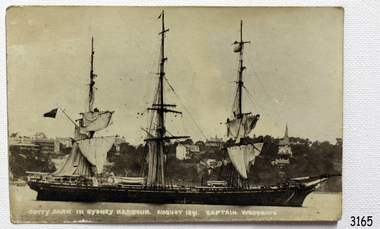
Postcard - Vessel, Sailing Ship, Cutty Sark in Sydney Harbour, After August 1891
... China. Later, it was used to transport wool from Australia. It became famous for its speed and held the record for the fastest voyage from Australia to Britain for ten years. Later, a Portuguese company bought the ship and renamed it Ferreira. After that, a retired sea...China. Later, it was used to transport wool from Australia. It became famous for its speed and held the record for the fastest voyage from Australia to Britain for ten years. Later, a Portuguese company bought the ship and renamed it Ferreira. After that, a retired sea ...Captain Richard Woodget (1845-1928) was renowned for his successful command of the Cutty Sark. He began his maritime career in 1861 as an apprentice seaman at almost 15 years old and received his Master Certificate in 1871. In 1881, aged 35, he took his first command on the vessel Coldstream. His sailing skill and careful financial management earned him the command of the Cutty Sark for ten of its voyages. For another year, he commanded the Coldingham, then retired from life as a mariner in 1896. The Cutty Sark was built in Britain in 1869 and was one of the last great sailing ships. At first, it carried tea from China. Later, it was used to transport wool from Australia. It became famous for its speed and held the record for the fastest voyage from Australia to Britain for ten years. Later, a Portuguese company bought the ship and renamed it Ferreira. After that, a retired sea captain purchased it to use as a training ship in Cornwall. When the captain died, the ship was given to a training college in Greenwich in 1938. In 1954, it was placed in dry dock at Greenwich, where it remains on display. The postcard is important for is connection with the vessel, Cutty Sark, a special ship because it carried wool from Australia to other parts of the world. Postcards like this one help us imagine what sea travel was like before steam-powered ships were common, and they show us how trade, travel and migration changed over time. The Cutty Sark is also famous for being very fast. It set a record for the journey from Australia to Britain and kept that title for ten years. Today, people still recognise its importance because it has been carefully preserved and is on display at the British Maritime Museum in Greenwich. Its story has also made it a favourite subject for people who enjoy building ship models. The postcard is important to Australian history, as it shows the Cutty Sark at Sydney on one of its voyages, in the command of Captain Richard Woodget, a respected mariner and master of sailing ships.Postcard: Black and white postcard of a photographed image of a 3-masted sailing ship, sails half-lowered. Behind the vessel is a hill with buildings on it. A white handwritten inscription is along the base of the postcard. The vessel is the Cutty Sark in Sydney Harbour in August 1891. Its master was Captain Woodget."CUTTY SARK IN SYDNEY HARBOUR. AUGUST 1891. CAPTAIN WOODGATE."flagstaff hill, warrnambool, flagstaff hill maritime museum, shipwreck coast, flagstaff hill maritime village, maritime museum, great ocean road, cutty sark, historic sailing ship, tea clipper, sail training vessel, cadet training ship, commercial trading vessel, cargo sail vessel, clipper races, scott and linton of dunbarton scottland, race record, transportation, ferreria, 1869, tea cargo, tea trade, china tea, wool export, australian export, australian wool export, china tea trade, cornwall, training ship, greenwich, british museum, captain richard woodget, captain woodget
