
Showing 57 items matching "civilian nurse"
-
 National Vietnam Veterans Museum (NVVM)
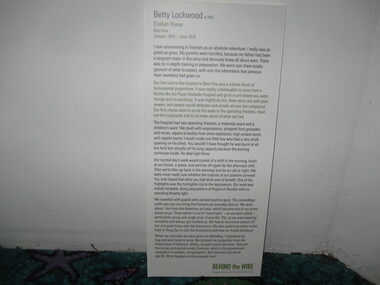
Poster - Poster, Information Board, Betty Lockward - Civilian Nurse
... Betty Lockward - Civilian Nurse....Story detailing her 6 months as a civilian nurse in Vietnam....Behind the Wire Betty Lockward Nurses - Vietnam Bien Hoa Story detailing her 6 months as a civilian nurse in Vietnam. Betty Lockward - Civilian Nurse. ...Story detailing her 6 months as a civilian nurse in Vietnam.behind the wire, betty lockward, nurses - vietnam, bien hoa -
 National Vietnam Veterans Museum (NVVM)
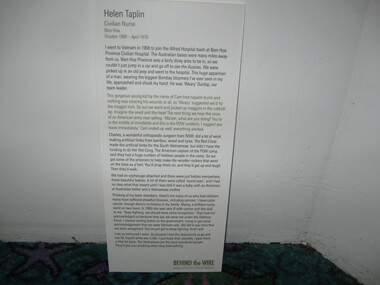
Poster - Information Board, Helen Taplin - Civilian Nurse
... Helen Taplin - Civilian Nurse....Helen Taplin - Civilian Nurse. Poster Information Board Gordon-Brown, Susan ...Recollections of term between 1969 - April 1970.Images and Stories of Vietnam Vets.behind the wire, photographic exhibition -
 National Vietnam Veterans Museum (NVVM)
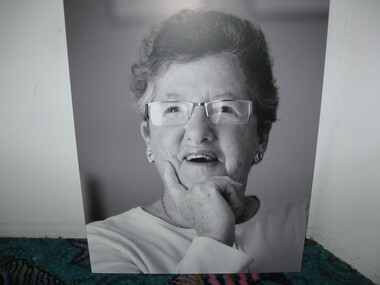
Photograph, Helen Taplin - Civilian Nurse
... Helen Taplin - Civilian Nurse....Helen Taplin - Civilian Nurse. Photograph Susan Gordon-Brown ...Black & white photograph.nurses - vietnam, helen taplin, susan gordon-brown -
 Returned Nurses RSL Sub-branch
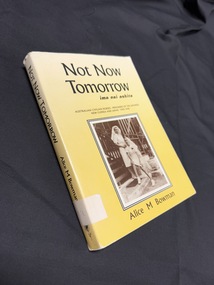
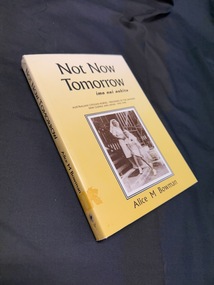
Book, Alice M Bowman, Not now tomorrow ima nai ashita : A true story by an Australian civilian nurse, from the Government Hospital in Rabaul, who was held prisoner with her colleagues in New Britain and Japan following the Japanese onslaught of Rabaul in 1942, 1996
... Not now tomorrow ima nai ashita : A true story by an Australian civilian nurse, from the Government Hospital in Rabaul, who was held prisoner with her colleagues in New Britain and Japan following the Japanese onslaught of Rabaul in 1942...The Author was a civilian nurse from the Government Hospital in Rabaul and in Not Now Tomorrow she tells her story; a story of the Rabaul nurses - prisoners of the Pacific War.' ...'Courageous men and women suffered and the lives of many were sacrificed when Rabaul fell to the Japanese in 1942. The Author was a civilian nurse from the Government Hospital in Rabaul and in Not Now Tomorrow she tells her story; a story of the Rabaul nurses - prisoners of the Pacific War.' [From back of dust jacket]Paperback book with a yellow dustjacket that has a sepia photo on the cover and black writing on the cover and spinenon-fiction'Courageous men and women suffered and the lives of many were sacrificed when Rabaul fell to the Japanese in 1942. The Author was a civilian nurse from the Government Hospital in Rabaul and in Not Now Tomorrow she tells her story; a story of the Rabaul nurses - prisoners of the Pacific War.' [From back of dust jacket]australian nurses, world war two, wwii, ww2, rabaul, japan, prisoners of war -
 Returned Nurses RSL Sub-branch
Book, Alice M Bowman, Not now tomorrow ima nai ashita : A true story by an Australian civilian nurse, from the Government Hospital in Rabaul, who was held prisoner with her colleagues in New Britain and Japan following the Japanese onslaught of Rabaul in 1942, 1996
... Not now tomorrow ima nai ashita : A true story by an Australian civilian nurse, from the Government Hospital in Rabaul, who was held prisoner with her colleagues in New Britain and Japan following the Japanese onslaught of Rabaul in 1942...The Author was a civilian nurse from the Government Hospital in Rabaul and in Not Now Tomorrow she tells her story; a story of the Rabaul nurses - prisoners of the Pacific War.' ...'Courageous men and women suffered and the lives of many were sacrificed when Rabaul fell to the Japanese in 1942. The Author was a civilian nurse from the Government Hospital in Rabaul and in Not Now Tomorrow she tells her story; a story of the Rabaul nurses - prisoners of the Pacific War.' [From back of dust jacket]Paperback book with a yellow dustjacket that has a sepia photo on the cover and black writing on the cover and spinenon-fiction'Courageous men and women suffered and the lives of many were sacrificed when Rabaul fell to the Japanese in 1942. The Author was a civilian nurse from the Government Hospital in Rabaul and in Not Now Tomorrow she tells her story; a story of the Rabaul nurses - prisoners of the Pacific War.' [From back of dust jacket]australian nurses, world war two, wwii, ww2, rabaul, japan, prisoners of war -
 Returned Nurses RSL Sub-branch
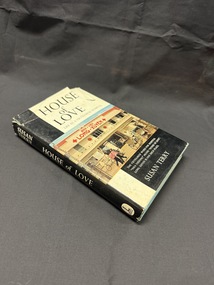
Book - Illustrated hardback book, Susan Terry, House of love : Life in a Vietnamese hospital, 1966
... ...Civilian nurse...First hand account of experience of a civilian nurse in Vietnam during the Vietnam war....First hand account of experience of a civilian nurse in Vietnam during the Vietnam war. ...This warm, personal document by an ordinary Australian girl who worked in Vietnam does not pretend to enter areas of speculation and reporting where experts are confounded. It is simple, homely, informative, disarmingly honest, and clothes the shadowed image of a suffering nation with flesh, blood and heart. Out of it walk the unknown ones, the forgotten ones, the ordinary people of Vietnam. In growing bewilderment Western readers have puzzled over millions of words about the politics and violence of Vietnam. Quietly, without fuss or humbug, Susan Terry lets in a little light and a lot of love. Here is something that is real, that one can accept and trust. For one memorable year she worked with an Australian medical team of civilian specialists in Long Xuyen Hospital on the Mekong Delta and met life in the raw. She reports on the Viet Cong, on children, on anguish, on cities and villages, on Americans, on Buddhists, on happiness, on people at many levels of society, on fascinating facets of everyday life. She writes of lives transformed by the surgeon's knife, of ignorance, fear and death, of a wonderland of human emotion. Perhaps unwittingly, Sister Susan Terry also reveals herself; young, fresh, and nice to know. To read her is to believe her. Her is something of truth out of Vietnam. (From inside dust jacket)Hardback book with a torn dust jacket. Dust jacket is black and white with a colour photograph of a street scene in front of a hospital building.non-fictionThis warm, personal document by an ordinary Australian girl who worked in Vietnam does not pretend to enter areas of speculation and reporting where experts are confounded. It is simple, homely, informative, disarmingly honest, and clothes the shadowed image of a suffering nation with flesh, blood and heart. Out of it walk the unknown ones, the forgotten ones, the ordinary people of Vietnam. In growing bewilderment Western readers have puzzled over millions of words about the politics and violence of Vietnam. Quietly, without fuss or humbug, Susan Terry lets in a little light and a lot of love. Here is something that is real, that one can accept and trust. For one memorable year she worked with an Australian medical team of civilian specialists in Long Xuyen Hospital on the Mekong Delta and met life in the raw. She reports on the Viet Cong, on children, on anguish, on cities and villages, on Americans, on Buddhists, on happiness, on people at many levels of society, on fascinating facets of everyday life. She writes of lives transformed by the surgeon's knife, of ignorance, fear and death, of a wonderland of human emotion. Perhaps unwittingly, Sister Susan Terry also reveals herself; young, fresh, and nice to know. To read her is to believe her. Her is something of truth out of Vietnam. (From inside dust jacket)australian nurses, vietnam war, civilian nurse, susan terry -
 National Vietnam Veterans Museum (NVVM)
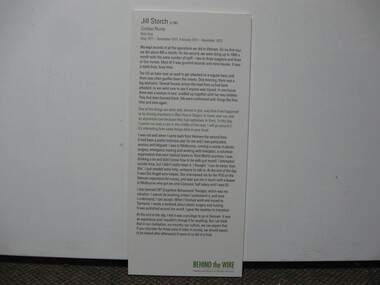
Poster - Poster, Information Board, Behind The Wire
... Storyboard of Jill Storch - Civilian Nurse in Bien Hoa. May 1971 - December 1971, February 1972 to December 1972...Storyboard Behind the Wire Bien Hoa Nurse Jill Storch Storyboard of Jill Storch - Civilian Nurse in Bien Hoa. May 1971 - December 1971, February 1972 to December 1972 Behind The Wire Poster Poster, Information Board ...Storyboard of Jill Storch - Civilian Nurse in Bien Hoa. May 1971 - December 1971, February 1972 to December 1972storyboard, behind the wire, bien hoa, nurse, jill storch -
 National Vietnam Veterans Museum (NVVM)
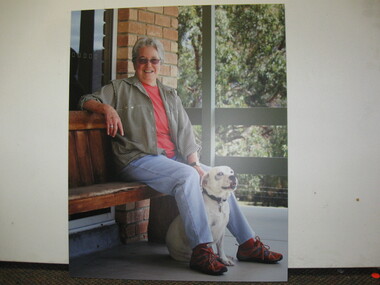
Photograph, Behind The Wire
... A coloured photograph of Jill Storch and her dog - Civilian Nurse in Bien Hoa. May 1971 - December 1971, February 1972 to December 1972...Behind the Wire Photograph Jill Storch Bien Hoa Nurse A coloured photograph of Jill Storch and her dog - Civilian Nurse in Bien Hoa. May 1971 - December 1971, February 1972 to December 1972 Behind The Wire Photograph Photograph ...A coloured photograph of Jill Storch and her dog - Civilian Nurse in Bien Hoa. May 1971 - December 1971, February 1972 to December 1972behind the wire, photograph, jill storch, bien hoa, nurse -
 Returned Nurses RSL Sub-branch
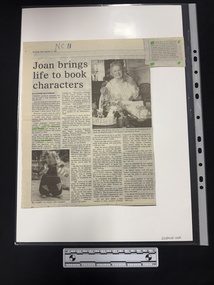
Newspaper - Newspaper clipping with correction, Weekly Times, Joan brings life to book characters [and correction paragraph attached], December 13, 1995
... Biographical article about Joan Kirwan, her Royal Australian Air Force nursing career, her time as a civilian nurse and how after her retirement she makes soft toys inspired by children's books....Biographical article about Joan Kirwan, her Royal Australian Air Force nursing career, her time as a civilian nurse and how after her retirement she makes soft toys inspired by children's books. ...Biographical article about Joan Kirwan, her Royal Australian Air Force nursing career, her time as a civilian nurse and how after her retirement she makes soft toys inspired by children's books.Article with two black and white photographs, four columns of text and a small paragraph clipping attached with corrections printed after the article. Parts are highlighted in green highlighter.'NC11' [Blue ink at top of page] [various green highlighter marks on page and attached correction clipping]joan kirwan, raaf nurse, associate royal red cross medal awardee -
 Alfred Hospital Nurses League - Nursing History Collection
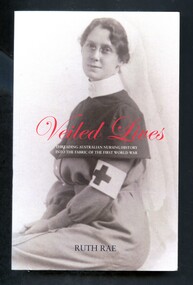
Book - Illustrated book, Ruth Rae 1957, Veiled Lives: threading Australian nursing history into the fabric of the First World War, 2009
... The back cover has a photograph of a civilian nurse in uniform (Pearl Lottie Trayhurn, Paramatta Hospital) the back cover also has a summary of the book...The back cover has a photograph of a civilian nurse in uniform (Pearl Lottie Trayhurn, Paramatta Hospital) the back cover also has a summary of the book Veiled Lives: threading Australian nursing history into the fabric of the First World War Book Illustrated book Ruth Rae 1957- The College of Nursing Fine Line Print and Copy Service ...A history of the Australian nurses who served in the 1914-1918 conflict. Also includes history of nursing in Australia pre federation, the Boer War, and the influenza pandemicIllustrated book. Front cover has a black and white photograph of a nurse in military uniform (Pearl Lottie Trayhurn) main title in red and subsidiary tile in white overprinted on this photo. Author's name printed in black at bottom. Main title printed in red on spine along with authors name and publisher's mark printed in black. The back cover has a photograph of a civilian nurse in uniform (Pearl Lottie Trayhurn, Paramatta Hospital) the back cover also has a summary of the booknon-fictionA history of the Australian nurses who served in the 1914-1918 conflict. Also includes history of nursing in Australia pre federation, the Boer War, and the influenza pandemicmilitary nursing-australia-history, world war 1914-1918-nursing, boer war-nursing, colonial history-australia-nursing, nurses -
 Northern District School of Nursing. Managed by Bendigo Historical Society Inc.
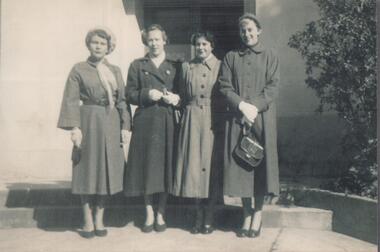
Photograph - 99 Wattle Street Bendigo1954
... Photo of four nurses in civilian clothes at 99 Wattle Street, Bendigo 1954...Mildura, Margaret Arnoldt SHDH - at Wattle St, Bendigo 1954 Photo of four nurses in civilian clothes at 99 Wattle Street, Bendigo 1954 Photograph 99 Wattle Street Bendigo1954 ...The Northern District School of Nursing opened in 1950 in to address the issues around nurse recruitment, training and education that had previously been hospital based. The residential school was to provide theoretical and in-house education and practical training over three years. The students would also receive practical hands-on training in the wards of associated hospitals. The Northern District School of Nursing operated from Lister House, Rowan Street, Bendigo. It was the first independent school of nursing in Victoria and continued until it closed in 1989.Photo of four nurses in civilian clothes at 99 Wattle Street, Bendigo 1954L. to R. Rae Eyles SHDH (now Rosten), Verna Hoensch SHDH (now Paterson), Dorothy Gregg ? Mildura, Margaret Arnoldt SHDH - at Wattle St, Bendigo 1954 four nurses at 99 wattle street bendigo, from mildura and swan hill hospitals 1954 -
 Melbourne Legacy
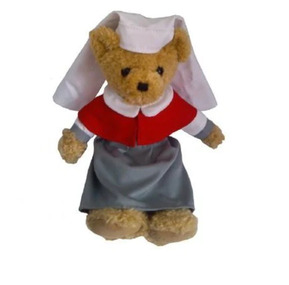
Leisure object - Toy Bear, Legacy Bear $15 - Nurse, 2021
... More than 3,000 civilian nurses volunteered to serve during WWI. ...More than 3,000 civilian nurses volunteered to serve during WWI. ...In the 2000s Legacy released a range of Legacy Bears to expand the merchandise available for sale during Legacy Week and at other fundraising opportunities during the year. This bear is in an Australian WW1 nurse with a red cape and white headpiece. The Australian Army Nursing Service (AANS) was formed in 1903 as part of the Australian Army Medical Corps. More than 3,000 civilian nurses volunteered to serve during WWI. While their stories are rarely told eight of these inspirational women received the Military Medal for bravery. Sometimes special editions of the bears were produced. In 2021 the price was increased to $20 per bear.An example of the type of products sold along with Legacy Badges for fundraising in the 2010-2020s.Legacy bear dressed in a WW1 nurse uniform with a printed cardboard tag.Printed tag gives the price as $20.legacy appeal, fundraising, legacy bear -
 Bendigo Military Museum
Photograph - FRAMED WW1 PHOTOGRAPH, Wayne Eels, C.2008/2009
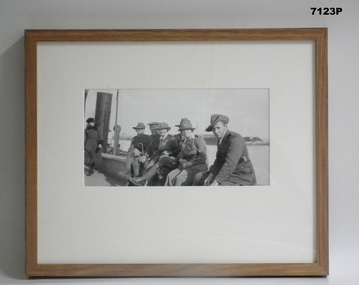
... Photograph - black and white photograph on paper depicting one civilian standing, seated two nurses and four officers wharfside. ...nurses." Photograph framed. Photograph - black and white photograph on paper depicting one civilian standing, seated two nurses and four officers wharfside. ...The Grinton Collection. 38th Bn Officers with Nurses Refer Cat No. 1280 for Jack Grintons service details.Photograph framed. Photograph - black and white photograph on paper depicting one civilian standing, seated two nurses and four officers wharfside. Ships in the background. Frame - timber, light varnish finish, Perspex front, cardboard backing."Group 3: Trip of a Lifetime". "L. 38th Battalion Officers with nurses."framed accessories, camera on the somme, ww1, 38th bn, grinton -
 Returned Nurses RSL Sub-branch
Newspaper - Newspaper clippings, The Argus, 'Ceremony for war sisters: Nurses' memorial centre opened' [front of page], 'Nurses' memorial centre opened' [back of page], 20 Feb 1950
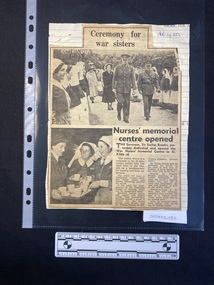
... Back page - Left hand clipping - About 500 people, including more than 100 service and civilian nurses attended the ceremony that opened the War Nurses Memorial Centre. ...Back page - Left hand clipping - About 500 people, including more than 100 service and civilian nurses attended the ceremony that opened the War Nurses Memorial Centre. ...Front page - Governor, Sir Dallas Brooks, opens the War Nurses' Memorial Centre on St Kilda Road. The centre is a memorial to the 75 Australian nurses who lost their lives in the war. The centre will offer various rooms for use and house the the headquarters of the Australian College of Nursing. General Sir Thomas Blamey, chairman of the Centre Committee said there was hardly a fighting soldier who had not at some time experienced the care and devotion to duty of the service sisters. Back page - Left hand clipping - About 500 people, including more than 100 service and civilian nurses attended the ceremony that opened the War Nurses Memorial Centre. The centre is a refurbished and converted house. The crowd also included former POWs and relatives of the 75 nursing sisters who lost their lives in the 1939-45 war. Dr Garnet Leary gave 100 pounds towards the establishment of a nurses' library in the centre. Back page - Right hand clippings - top - The author heard a service broadcasted from St Paul's Cathedral and felt overwhelming gratitude towards nurses. bottom - After the dedication of the War Nurses Memorial Centre, the author was reminded of two instances of senseless loss of nurses' live during the war. May 1943, the Australian hospital ship, the Centaur, was torpedoed by the Japanese, resulting in 299 dead, eleven of them nurses, and only 64 survivors. Also the Banka massacre, where 22 nurses were shot by the Japanese, after surviving the sinking of their ship. Only one nurse survived the massacre. Three newspaper clippings have been glued to either side of a lined sheet of paper. Front of page - A newspaper clipping of two black and white photos and a short story in two columns. the larger photo is of two men in military uniform walking through women in nurses uniforms lined up on either side of a path. The smaller photo is of three women, all wearing nurse's uniforms, one woman holding a tray with cups. Back of page -Two newspaper clippings have been glued to a lined sheet of paper. The left hand clipping consists of a large black and white photo of a crowd of people and nurses outside a nice house, and a column of text. The right hand clipping is of two separate paragraphs of text, both appear to be letters to the editor.'Feb 19 50.' [blue ink, front of page, top right]melbourne, wwii, ww2, st kilda road, muriel violet turner laing, thomas blamey, annie moriah sage, muriel brooks, queensland, vivian bullwinkel, heidelberg military hospital -
 Alfred Hospital Nurses League - Nursing History Collection
Book - Illustrated book, Patsy Adam-Smith 1924-2001, Prisoners of war: from Gallipoli to Korea, 1998
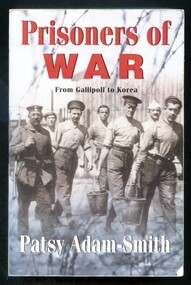
... Back cover has a black and white photograph of a group of women (Australian nurses, (civilian and army) after being held POW for almost three and a half years by the Japanese). ...Back cover has a black and white photograph of a group of women (Australian nurses, (civilian and army) after being held POW for almost three and a half years by the Japanese). ...This book has not been written for ex-prisoners: they know the homesickness of exile, the tyranny of bondage; it was written for those people of today who know little of the experiences of these men and women, of their courage, endurance and pain. It has been written for the generations to come.Illustrated book. The front cover and spine have the same black and white photograph of six men walking ("the guards were old, the soldiers young. Bertie Giles is third from left) Front cover has full title in red and black print, authors name in white print. Spine has abbreviated title in red print, authors name in black and white print and publishers name in black print. Back cover has a black and white photograph of a group of women (Australian nurses, (civilian and army) after being held POW for almost three and a half years by the Japanese). Under this photograph is a summary of the book and information about the author.non-fictionThis book has not been written for ex-prisoners: they know the homesickness of exile, the tyranny of bondage; it was written for those people of today who know little of the experiences of these men and women, of their courage, endurance and pain. It has been written for the generations to come.prisoners of war-australia, world war 1914-1918-prisoners and prisons, world war 1939-1945-prisoners and prisons, korean war 1950-1953 - prisoners and prisons -
 Returned Nurses RSL Sub-branch
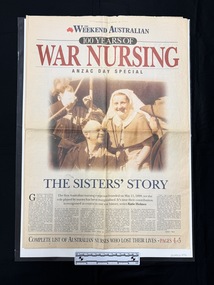
Newspaper - Newspaper lift out, The Weekend Australian et al, 100 years of War Nursing : ANZAC Day Special, 19990424
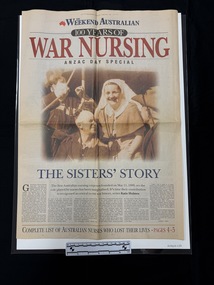
... 'Anyone's blood was welcome' by Siobhan McHugh - p7 - Brief article of the working conditions of civilian nurses in Vietnam during the war, including recollections of Jenny James, Fran Sardelich and Kay Collett (radiographer not nurse). ...'Anyone's blood was welcome' by Siobhan McHugh - p7 - Brief article of the working conditions of civilian nurses in Vietnam during the war, including recollections of Jenny James, Fran Sardelich and Kay Collett (radiographer not nurse). ...The Weekend Australian lift out from ANZAC Day 1999. Contains article titles as follows: 'The Sisters' story' by Katie Holmes - p1 - Beginning of an article talking about the circumstances of nurses in warfare, duties, conditions, etc. Continued on p8 'Private battles' by Jan Bassett - p2 - Article gives a brief overview of how armed forces nursing services were formed, why and how they developed, including major players such as Nellie Gould and Grace Wilson. '100 years of service, dedication' - p2 - Timeline of armed forces nursing services. 'Wild dogs and 13 patients' by Jan Bassett - p2 - Edited extract from recollections of Julia Anderson who served as a nurse in the Boer War. 'A pioneer called Nellie' by Jan Bassett - p2 - Brief biographical article on Nellie Gould. 'Into the mess' by Jan Bassett - p3 - Article on the conditions faced by WWI nurses serving overseas including memories of various nurses. 'Tragedy made more personal' by Jan Bassett - p3 - Brief biographical article on Grace Wilson. 'The old ship is heaven after the peninsula' - p3 - Edited excerpt from WWI diary of Ella Jane Tucker. 'In Memoriam' - p4-5 - Names of nurses who have died as a result of war service from Boer war to Vietnam war. 'Hell of Banka' by Catherine Kenny - p6 - Article providing basic details on the sinking of the Vyner Brooke, massacre on Banka Island, survival of Vivian Bullwinkel and later surrender to Japanese. 'A will to remember' by Catherine Kenny - p6 - Article providing overview of stories shared by surviving Japanese POW nurses including Betty Jeffrey, Wilma Young (neé Oram), Jessie Hookway (neé Simons), Pat Darling (neé Gunther), Vivian Bullwinkel, Lorna Johnson (neé Whyte), and Mavis Cation (neé Cullen). Article also discussed artistic representations of the stories on stage and screen. 'Making do to survive' by Jessie Simons - p6 - Reprinted excerpt from book by same author 'Japanese Hands Australian Nurses as POWs'. 'Grim miracles' by Siobhan McHugh - p7 - Article on experiences of nurses in the Vietnam war including Colleen Mealy, Anne Hall, Trish Ferguson, Jan McCarthy, Del Waterman, Terrie Roach and Anne Healy. 'Anyone's blood was welcome' by Siobhan McHugh - p7 - Brief article of the working conditions of civilian nurses in Vietnam during the war, including recollections of Jenny James, Fran Sardelich and Kay Collett (radiographer not nurse). 'A long day's journey' - p7 - Brief interview article with Del Waterman an RAAF Nurse who served in Malaysia during the Vietnam war. 'Attitudes changes in the face of suffering' by Siobhan McHugh - p7 - Brief interview article with Anne Hall on her time as an army nurse during the Vietnam war. 'Neglected heroes' by Ken Inglis - p8 - An article on war memorial recognition or lack of for nurses throughout history of memorials in Australia, how some were recognised and others not and how attitudes have changed over time. '100 years of service, skill and sacrifice' by Katie Holmes - p8 - Continuation of article on p1. 'Sisters in arms' - p8 - Box insert of numbers of military nurses who served in major conflicts from Boer - Gulf wars.A large newspaper lift out with text in red, blue and black. Front cover has large headings and a large sepia toned photo featuring a woman in nurses uniform with men in dressing gowns around her. The lift out is made up of two pieces of paper folded to make 8 pages of articles.nursing in warfare, anzac day, memorial -
 Returned Nurses RSL Sub-branch
Newspaper - Newspaper lift out, The Weekend Australian et al, 100 years of War Nursing : ANZAC Day Special, 19990424
... 'Anyone's blood was welcome' by Siobhan McHugh - p7 - Brief article of the working conditions of civilian nurses in Vietnam during the war, including recollections of Jenny James, Fran Sardelich and Kay Collett (radiographer not nurse). ...'Anyone's blood was welcome' by Siobhan McHugh - p7 - Brief article of the working conditions of civilian nurses in Vietnam during the war, including recollections of Jenny James, Fran Sardelich and Kay Collett (radiographer not nurse). ...The Weekend Australian lift out from ANZAC Day 1999. Contains article titles as follows: 'The Sisters' story' by Katie Holmes - p1 - Beginning of an article talking about the circumstances of nurses in warfare, duties, conditions, etc. Continued on p8 'Private battles' by Jan Bassett - p2 - Article gives a brief overview of how armed forces nursing services were formed, why and how they developed, including major players such as Nellie Gould and Grace Wilson. '100 years of service, dedication' - p2 - Timeline of armed forces nursing services. 'Wild dogs and 13 patients' by Jan Bassett - p2 - Edited extract from recollections of Julia Anderson who served as a nurse in the Boer War. 'A pioneer called Nellie' by Jan Bassett - p2 - Brief biographical article on Nellie Gould. 'Into the mess' by Jan Bassett - p3 - Article on the conditions faced by WWI nurses serving overseas including memories of various nurses. 'Tragedy made more personal' by Jan Bassett - p3 - Brief biographical article on Grace Wilson. 'The old ship is heaven after the peninsula' - p3 - Edited excerpt from WWI diary of Ella Jane Tucker. 'In Memoriam' - p4-5 - Names of nurses who have died as a result of war service from Boer war to Vietnam war. 'Hell of Banka' by Catherine Kenny - p6 - Article providing basic details on the sinking of the Vyner Brooke, massacre on Banka Island, survival of Vivian Bullwinkel and later surrender to Japanese. 'A will to remember' by Catherine Kenny - p6 - Article providing overview of stories shared by surviving Japanese POW nurses including Betty Jeffrey, Wilma Young (neé Oram), Jessie Hookway (neé Simons), Pat Darling (neé Gunther), Vivian Bullwinkel, Lorna Johnson (neé Whyte), and Mavis Cation (neé Cullen). Article also discussed artistic representations of the stories on stage and screen. 'Making do to survive' by Jessie Simons - p6 - Reprinted excerpt from book by same author 'Japanese Hands Australian Nurses as POWs'. 'Grim miracles' by Siobhan McHugh - p7 - Article on experiences of nurses in the Vietnam war including Colleen Mealy, Anne Hall, Trish Ferguson, Jan McCarthy, Del Waterman, Terrie Roach and Anne Healy. 'Anyone's blood was welcome' by Siobhan McHugh - p7 - Brief article of the working conditions of civilian nurses in Vietnam during the war, including recollections of Jenny James, Fran Sardelich and Kay Collett (radiographer not nurse). 'A long day's journey' - p7 - Brief interview article with Del Waterman an RAAF Nurse who served in Malaysia during the Vietnam war. 'Attitudes changes in the face of suffering' by Siobhan McHugh - p7 - Brief interview article with Anne Hall on her time as an army nurse during the Vietnam war. 'Neglected heroes' by Ken Inglis - p8 - An article on war memorial recognition or lack of for nurses throughout history of memorials in Australia, how some were recognised and others not and how attitudes have changed over time. '100 years of service, skill and sacrifice' by Katie Holmes - p8 - Continuation of article on p1. 'Sisters in arms' - p8 - Box insert of numbers of military nurses who served in major conflicts from Boer - Gulf wars.A large newspaper lift out with text in red, blue and black. Front cover has large headings and a large sepia toned photo featuring a woman in nurses uniform with men in dressing gowns around her. The lift out is made up of two pieces of paper folded to make 8 pages of articles.nursing in warfare, anzac day, memorial -
 Flagstaff Hill Maritime Museum and Village
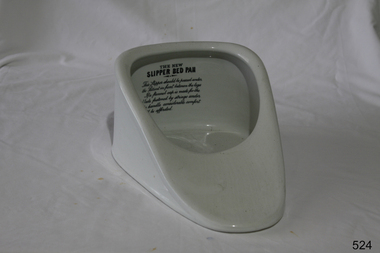
Equipment - Bed Pan
... Florence Nightingale, who worked as a nurse in the United Kingdom from the mid to late 1800s, recorded death rates and causes for soldiers in military hospitals during the Crimean War and then correlated them to corresponding sanitisation procedures. As a result, Nightingale proposed several methods to improve the sanitary conditions in both military and civilian...Florence Nightingale, who worked as a nurse in the United Kingdom from the mid to late 1800s, recorded death rates and causes for soldiers in military hospitals during the Crimean War and then correlated them to corresponding sanitisation procedures. As a result, Nightingale proposed several methods to improve the sanitary conditions in both military and civilian ...The Bedpan Toilet device is a special tool designed for people who are unable to get out of bed to use the bathroom. It helps them go to the toilet comfortably and conveniently without having to leave their bed. The device is placed under the person's bottom, and it has a container that collects urine or stool. It is easy to clean and can be emptied into a toilet or sink. The Bedpan Toilet device allows individuals who are confined to bed due to illness or injury to maintain their dignity and independence by providing them with a practical solution for using the bathroom while staying in bed. The word bedpan was first seen in the literature of John Higgins in 1572, and one of the oldest known bedpans is on display in the Science Museum of London. It is a green, glazed earthenware bedpan that has been dated to the 16th or 17th century. At that time, bedpans were made from materials including pewter, brass, pottery, glass, and porcelain. Bedpans were not a commonplace item in hospitals until the late 1800s. Florence Nightingale, who worked as a nurse in the United Kingdom from the mid to late 1800s, recorded death rates and causes for soldiers in military hospitals during the Crimean War and then correlated them to corresponding sanitisation procedures. As a result, Nightingale proposed several methods to improve the sanitary conditions in both military and civilian hospitals, including the addition of bedpans in order to reduce infection exposure from urine or faeces. https://www.wikiwand.com/en/Bedpan The use of bedpans is significant, as it allows a patient who cannot move much, to remain in bed and perform toilet functions.Bed pan ceramic white glaze with handle. Labelled "The New Slipper Bed Pan". Has specific instructions for use under the maker's label.‘THE NEW SLIPPER BED PAN. This slipper should be passed under the patient in front between the legs. If a flannel cap is made for the blade fastened by strings under the handle considerable comfort will be afforded.’ flagstaff hill, warrnambool, shipwrecked-coast, flagstaff-hill, flagstaff-hill-maritime-museum, maritime-museum, shipwreck-coast, flagstaff-hill-maritime-village, nursing, bedpans, hygiene -
 Bendigo Military Museum
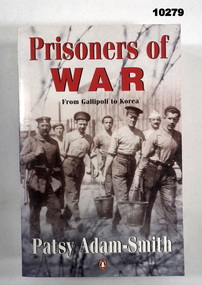
Book - POW'S, GALLIPOLI to KOREA, Patsy Adam - Smith, "PRISONERS OF WAR", 1992, This edition 1997
... Back - group of nurses (Army and Civilian). 754 pages - cut, plain, off white colour paper. ...Back - group of nurses (Army and Civilian). 754 pages - cut, plain, off white colour paper. ...From Title Page "Prisoners of War/ From Gallipoli to Korea".Soft cover book. Cover - cardboard. Red, black and white print on front, spine and back. Illustrated - black and white photographs. Front and spine - group of soldiers with guard. Back - group of nurses (Army and Civilian). 754 pages - cut, plain, off white colour paper. Illustrated, black and white photographs.publication, books, military history, pow's, ww2 -
 Bendigo Military Museum
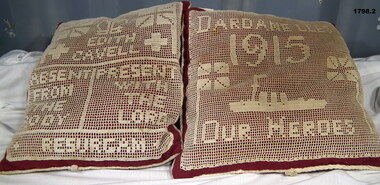
Memorabilia - CUSHIONS WW1, Post WW1
... Edith Louisa Cavell 1865 - 1915 was a British Nurse working in German occupied Belgium during the early years of WW1. She saved lives on both sides but she also helped some 200 Allied POW’s and Civilians escape Belgium to Britain. ...Edith Louisa Cavell 1865 - 1915 was a British Nurse working in German occupied Belgium during the early years of WW1. She saved lives on both sides but she also helped some 200 Allied POW’s and Civilians escape Belgium to Britain. ...Edith Louisa Cavell 1865 - 1915 was a British Nurse working in German occupied Belgium during the early years of WW1. She saved lives on both sides but she also helped some 200 Allied POW’s and Civilians escape Belgium to Britain. She was arrested by the Germans and charged with Treason, found guilty by Court Martial and executed on 12.10.1915. .1) Commemorative cushions bearing Edith CAVELL's name .2) Crotchet commemorates the Dardanelle's campaign fallen 1915. Fillet crochet panels mounted on dark red plain cushion covers with white piping on edge.1) "Edith/Cavell/Absent/From/The/Body/ Present/With/ The/ Lord/Resurgam." .2) "Dardenelles/ 1915/ our heroesmilitary history - souvenirs, manchester -furnishings, handcrafts- crochetwork, cavell -
 Kiewa Valley Historical Society
Veil - Nurse's
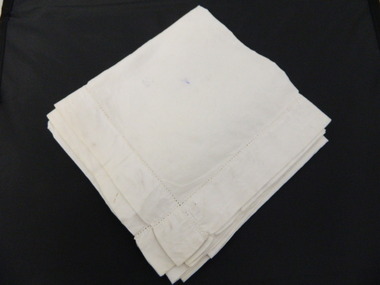
... As KVHS has many hospital instruments in its collection from the towns hospital the veil has good interpretive capacity and is in a good condition to be placed on display. nurse's uniform. civilian uniform. veil. headwear. tawonga and district hospital. ...This nurses veil is preventative of what was part of nurses uniforms in the mid 1900's. Tawonga and district hospital was the only hospital in the Upper Kiewa Valley and was then moved to Mt Beauty to cater for the increased population due to the Kiewa Hydro Scheme. Many of the hospital equipment KVHS has in its collection is from the time when the hospital was moved to Mt Beauty. This veil could also be from this period.This has historic significance due to being representative of what nurses wore in the Tawonga and district hospital during the mid 1900's. As KVHS has many hospital instruments in its collection from the towns hospital the veil has good interpretive capacity and is in a good condition to be placed on display. White linen fabric with 3-4 cm bound edging.nurse's uniform. civilian uniform. veil. headwear. tawonga and district hospital. -
 Alfred Hospital Nurses League - Nursing History Collection
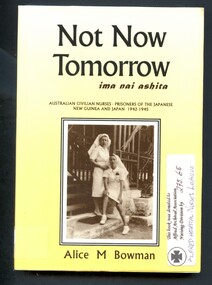
Book - Illustrated Book, Alice M. (Alice Mary) Bowman 1912-2000, Not now tomorrow=ima nai ashita, 1996
... Of significance to the AHNL as it is an important record of the conditions nurses endured ad prisoners of war World War 1939-1945 Prisoners of War-Papua New Guinea Prisoners of War-Japan nurses A true story of a civilian nurse from the Government Hospital in Rabaul, who was held prisoner in New Britain (six months) and Japan (3 years) following the Japanese attack of Rabaul in 1942 On the front of the dustjacket is a printed black and white donation sticker: black Maltese cross in circle, "This book was donated to Alfred Archival Association Nursing Division by" Alfred Hospital Nurses League (handwritten in black ink) Also previous catalogue number handwritten in black ink on this label Illustrated book with dust jacket. ...A true story of a civilian nurse from the Government Hospital in Rabaul, who was held prisoner in New Britain (six months) and Japan (3 years) following the Japanese attack of Rabaul in 1942Illustrated book with dust jacket. Book has a yellow cover with title and author's name printed in white on front and spine. Dust jacket has a pale-yellow background, title and author's name printed in brown on front and spine. The front of the dustjacket also has a black and white photograph of the author (Alice Bowman) (seated) and Joyce McGahan (standing) they are wearing Sisters uniforms; a building of the Namanalu Hospital, Rabaul is behind them (1939). On the back cover is another black and white photograph: Rabaul panorama, and a summary of the book in brown print. non-fictionA true story of a civilian nurse from the Government Hospital in Rabaul, who was held prisoner in New Britain (six months) and Japan (3 years) following the Japanese attack of Rabaul in 1942world war 1939-1945, prisoners of war-papua new guinea, prisoners of war-japan, nurses -
 Alfred Hospital Nurses League - Nursing History Collection
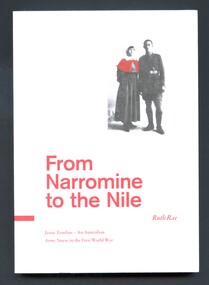
Book - Illustrated Book, Ruth Rae 1957, From Narromine to the Nile: Jessie Tomlins an Australian Army Nurse in the First World War:, 2015
... Based on the diary and letters of Jessie Tomlins Of significance to the AHNL as it gives insight into an important era of nursing history Jessie Tomlins Military nursing-Australia World War 1914-1918 Nurses Australia Army-Nurses This book is an introduction to the social, nursing, military and political history of the time through the experiences of one nurse, Jessie Tomlins. This book follows Jessie's journey through her civilian training at Sydney Hospital to the wards of the 14th Australian General Hospital in Egypt and the rehabilitation wards in England. ...This book is an introduction to the social, nursing, military and political history of the time through the experiences of one nurse, Jessie Tomlins. This book follows Jessie's journey through her civilian training at Sydney Hospital to the wards of the 14th Australian General Hospital in Egypt and the rehabilitation wards in England. The book also details the social changes in the immediate aftermath of the war.Illustrated book with white front and back covers and red spine. The front cover has a red, black and white photograph of a nurse and soldier: Sister Jessie Tomlins (AANS) and her brother Fred (1 ALH), Egypt. Title and author's name are printed in red below this photo. Abbreviated title and author's name printed in white on the spine. Back cover has abbreviated title printed in red and a summary of the book printed in black.non-fictionThis book is an introduction to the social, nursing, military and political history of the time through the experiences of one nurse, Jessie Tomlins. This book follows Jessie's journey through her civilian training at Sydney Hospital to the wards of the 14th Australian General Hospital in Egypt and the rehabilitation wards in England. The book also details the social changes in the immediate aftermath of the war. jessie tomlins, military nursing-australia, world war 1914-1918, nurses, australia army-nurses -
 Alfred Hospital Nurses League - Nursing History Collection
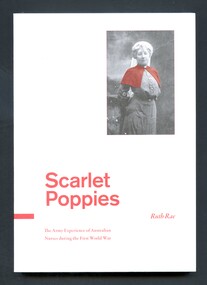
Book - Illustrated book, Ruth Rae 1957, Scarlet Poppies: the army experience of Australian nurses during the First World War, 2015
... World War 1914-1918 Military nursing-Australia Nurses Australia Army-Nurses Scarlet Poppies analyses the impact the military paradigm had upon the challenges faced by the 2,468 civilian trained nurses who joine the Australian Army Nursing Service (AANS). ...Scarlet Poppies analyses the impact the military paradigm had upon the challenges faced by the 2,468 civilian trained nurses who joine the Australian Army Nursing Service (AANS). The complex relationship between the male dominated military model and the female dominated Nightingale system of nursing training by the First World War nurses is examined in detail.Illustrated book with white front and back covers and red spine. The front cover has a red, black and white photograph of a nurse: Matron Adelaide (Maud) Kellett. Title and author's name are printed in red below this photo. Abbreviated title and author's name printed in white on the spine. Back cover has abbreviated title printed in red and a summary of the book printed in black.non-fictionScarlet Poppies analyses the impact the military paradigm had upon the challenges faced by the 2,468 civilian trained nurses who joine the Australian Army Nursing Service (AANS). The complex relationship between the male dominated military model and the female dominated Nightingale system of nursing training by the First World War nurses is examined in detail.world war 1914-1918, military nursing-australia, nurses, australia army-nurses -
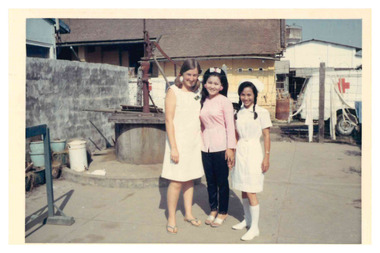 National Vietnam Veterans Museum (NVVM)
Photograph
... An Australian women dressed is dressed in civilian clothes, standing next to her are two Asian woman. One is wearing a pink top with black pants, the other is in a nurses uniform. ...An Australian women dressed is dressed in civilian clothes, standing next to her are two Asian woman. One is wearing a pink top with black pants, the other is in a nurses uniform. ...Photo provided by Rosalind Marshall whilst a civilian volunteer radiographer at a Medical faculty in Bien Hoa, South Vietnam.Coloured photo of three women standing in front of well, brick wall and a building; A white ambulance in the background with a red cross. An Australian women dressed is dressed in civilian clothes, standing next to her are two Asian woman. One is wearing a pink top with black pants, the other is in a nurses uniform. Ros, Miss Thu & her sister Mrs Sunmarshall rosland, radiographer, bien hoa, vietnam, civilian -
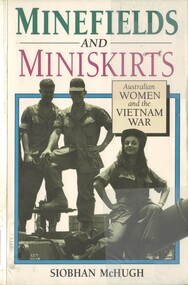 National Vietnam Veterans Museum (NVVM)
Book, McHugh, Siobhan, Minefields And Miniskirts: Australian Women And The Vietnam War (Copy 3), 1993
... 1961-1975 - Women - Australia Vietnam War Nurses Entertainers Journalists Consular Staff Volunteer Workers Up to a thousand Australian women were in wartime Vietnam during the sixties and early seventies - as entertainers, army and civilian nurses, secretaries, consular staff and more. ...Up to a thousand Australian women were in wartime Vietnam during the sixties and early seventies - as entertainers, army and civilian nurses, secretaries, consular staff and more. They were feted and pampered, patronised and harrassed, and a few were assaulted.Up to a thousand Australian women were in wartime Vietnam during the sixties and early seventies - as entertainers, army and civilian nurses, secretaries, consular staff and more. They were feted and pampered, patronised and harrassed, and a few were assaulted. 1961-1975 - women - australia, vietnam war, nurses, entertainers, journalists, consular staff, volunteer workers -
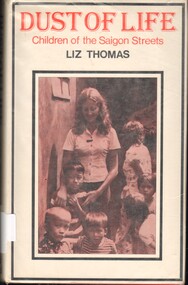 National Vietnam Veterans Museum (NVVM)
Book, Thomas, Liz, Dust of Life: children of Saigon Streets, 1977
... Vietnam War 1961-1975 - Children Vietnam War 1961-1975 - Civilian Relief This is a remarkable story of bravery and compassion. Liz Thomas flew alone to Vietnam in 1972 having trained as a nurse. ...This is a remarkable story of bravery and compassion. Liz Thomas flew alone to Vietnam in 1972 having trained as a nurse. She was twenty years old and her one aim was to help and care for the suffering.This is a remarkable story of bravery and compassion. Liz Thomas flew alone to Vietnam in 1972 having trained as a nurse. She was twenty years old and her one aim was to help and care for the suffering.vietnam war, 1961-1975 - children, vietnam war, 1961-1975 - civilian relief -
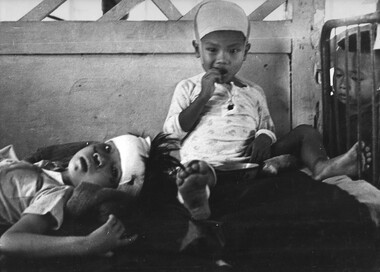 National Vietnam Veterans Museum (NVVM)
Photograph, Gibbons, Denis, Wounded Children
... Children suffering schrapnel wounds are nursed anything up to four to a bed in Long Xuyen Hospital, under the care of an Australian Civilian Surgical Team...Photograph Long Xuyen Hospital Australian Civilian Surgical Team Gibbons Collection Catalogue IV Corps Vietnamese Children Wounded Children Denis Gibbons A black and white photograph of Long Xuyen, IV Corps, South Vietnam 1969. Children suffering schrapnel wounds are nursed ...Denis Gibbons (1937 – 2011) Trained with the Australian Army, before travelling to Vietnam in January 1966, Denis stayed with the 1st Australian Task Force in Nui Dat working as a photographer. For almost five years Gibbons toured with nine Australian infantry battalions, posting compelling war images from within many combat zones before being flown out in late November 1970 after sustaining injuries. The images held within the National Vietnam Veterans Museum make up the Gibbons Collection. A black and white photograph of Long Xuyen, IV Corps, South Vietnam 1969. Children suffering schrapnel wounds are nursed anything up to four to a bed in Long Xuyen Hospital, under the care of an Australian Civilian Surgical Teamphotograph, long xuyen hospital, australian civilian surgical team, gibbons collection catalogue, iv corps, vietnamese children, wounded children, denis gibbons -
 St Vincent's Hospital Melbourne Archives
Photograph - Photographs of May Mulcare at St Vincent's Hospital Melbourne in 1939 and at other locations
... Photograph of May Mulcare in nurses uniform outside St Vincents Hospital ward, St Columba's. Photograph of May Mulcare in civilian dress, a suit, hat and white gloves. ...Photograph of May Mulcare in nurses uniform outside St Vincents Hospital ward, St Columba's. Photograph of May Mulcare in civilian dress, a suit, hat and white gloves. ...Photograph of May Mulcare in nurses uniform outside St Vincents Hospital ward, St Columba's. Photograph of May Mulcare in civilian dress, a suit, hat and white gloves. Circa 1940's. Photograph of May Mulcare and family, taken with her nephew Phillip Mulcare when he graduated from Flinders Naval College in 1955. may mulcare, st vincent's hospital melbourne, nurse -
 National Vietnam Veterans Museum (NVVM)
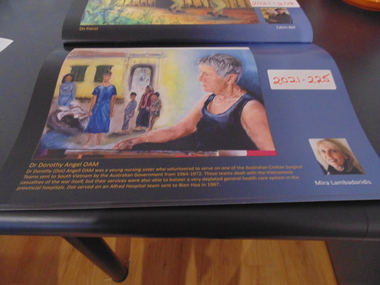
Painting, Dr Dorothy Angel OAM
... Painting Vietnam Lest We Forget Order Of Australia Nurses - Vietnam Bien Hoa Dr Dorothy (Dot) Angel OAM (Order Of Australian Medal) was a young nursing sister who volunteered to serve on one of the Australian Civilian Surgical Teams sent to South Vietnam by the Australian Government from 1964 - 1972. ...An Original painting of Dorothy Angel in the foreground of the painting. In the background there is a patient lying on a bed with five people nearby.Dr Dorothy (Dot) Angel OAM (Order Of Australian Medal) was a young nursing sister who volunteered to serve on one of the Australian Civilian Surgical Teams sent to South Vietnam by the Australian Government from 1964 - 1972. These teams dealt with the Vietnamese casualities of the war itself, but their services were also albe to bolster a very depleted general health care system in the provincial hospitals. Dot served on an Alfrred Hospital team sent to Bien Hoa in 1967painting, vietnam lest we forget, order of australia, nurses - vietnam, bien hoa
