
Showing 31 items matching "collective art"
-
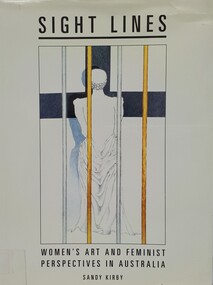 Women's Art Register
Book, Sandy Kirby, Sight Lines. Women's Art and Feminist Perspectives in Australia, 1992
... ...collective art...Complements other material held in The Women's Art Register portraiture feminist art practice performance art political art art and craft Thancoupie Jill Orr Vivienne Binns collective art Erica McGilchrist Mickey Allan Ann Newmarch Charts the intersection of the women's art movement with women's art, and the increased visibility of women artists from the 1960s into the 1970s in Australia. "709.94/KIR" Inside Front Cover. ...Charts the intersection of the women's art movement with women's art, and the increased visibility of women artists from the 1960s into the 1970s in Australia.Booknon-fictionCharts the intersection of the women's art movement with women's art, and the increased visibility of women artists from the 1960s into the 1970s in Australia.portraiture, feminist art practice, performance art, political art, art and craft, thancoupie, jill orr, vivienne binns, collective art, erica mcgilchrist, mickey allan, ann newmarch -
 Victorian Aboriginal Corporation for Languages
DVD, Michelle Mahrer, Urban clan : a portrait of the Page brothers and the Bangarra Dance Theatre, 1998
... The essence of the Page brothers' story captures an Aboriginal 'dreaming' of three spirits, a storyteller, a song man and a dancer, who through their collective art, build bridges within their own culture and between Aboriginal and non-Aboriginal people....The essence of the Page brothers' story captures an Aboriginal 'dreaming' of three spirits, a storyteller, a song man and a dancer, who through their collective art, build bridges within their own culture and between Aboriginal and non-Aboriginal people. ...A documentary portrait of three brothers who together formed the creative core of the Bangarra Dance Theatre. The essence of the Page brothers' story captures an Aboriginal 'dreaming' of three spirits, a storyteller, a song man and a dancer, who through their collective art, build bridges within their own culture and between Aboriginal and non-Aboriginal people.DVDnunukul, munaldjali, yugambeh, south east queensland, stephen page, david page, russell page, bangarra dance theatre -
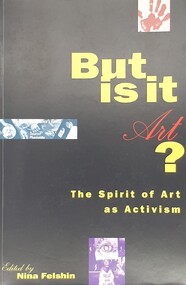 Women's Art Register
Book - Anthology, Nina Felshin, But is it Art? The Spirit of Art as Activism, 1995
... art...collective...Complements material held in The Women's Art Register. public art collective interdisciplinary body racism durational art social practice museology feminism collaboration A collection of essays by art critics, historians and journalists exploring 12 individual and group practices of activist art making. ...A collection of essays by art critics, historians and journalists exploring 12 individual and group practices of activist art making. An overview of the dynamic exhibitions, events, happenings and cultural practices engaged in creating social change.BookA collection of essays by art critics, historians and journalists exploring 12 individual and group practices of activist art making. An overview of the dynamic exhibitions, events, happenings and cultural practices engaged in creating social change.public art, collective, interdisciplinary, body, racism, durational art, social practice, museology, feminism, collaboration -
 The 69 Collective
Video Art, Jenny Gibson, Lineage - An Oral History of 69 Smith Street Gallery
... art galleries...merle parker...julian di martino...marianne little...69 collective... galleries merle parker julian di martino marianne little 69 collective jenny gibson art video art Lineage - An Oral History of 69 Smith Street Gallery Video Art Jenny Gibson ...This work is the result of a series of interviews with committee members of 69 Smith Street Gallery, an artist-run gallery that operated in Collingwood between 1998 and 2016. These interviews taken between 2010 and 2011 feature artists who went on to form the creative group known as the 69 Collective.This work was part of The Line exhibition at Collingwood Gallery in 2018. The brief given to participating artists was to present works using the theme of the horizontal line. The artworks, in a range of mediums, were hung with a consistent line travelling through each piece around the perimeter of the gallery space. The line in each work, inferred or explicit, were carefully placed together to make this cohesive whole.oral history, video, 69 smith street gallery, artist-run initiative, artist-run space, melbourne art galleries, merle parker, julian di martino, marianne little, 69 collective, jenny gibson, art, video art -
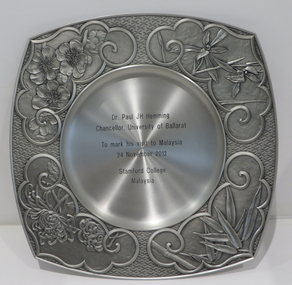 Federation University Historical Collection
Object, Pewter 'Four Gentleman' Plate
... Collectively known in Chinese art and literature as the Four Gentlemen, the plum blossom, orchid, bamboo and chrysanthemum have exemplified the high moral conduct and noble ideals of a gentleman since the 10th century....Collectively known in Chinese art and literature as the Four Gentlemen, the plum blossom, orchid, bamboo and chrysanthemum have exemplified the high moral conduct and noble ideals of a gentleman since the 10th century. pewter four gemntlemen stamford college malaysia paul hemming souvenir Pewter plate. ...Collectively known in Chinese art and literature as the Four Gentlemen, the plum blossom, orchid, bamboo and chrysanthemum have exemplified the high moral conduct and noble ideals of a gentleman since the 10th century.Pewter plate. pewter, four gemntlemen, stamford college malaysia, paul hemming, souvenir -
Federation University Art Collection... Wendy Whitford is a members of the Soldiers Hill Art Collective, a group of practicing artists who all live in the Ballarat suburn of Soldiers Hill....Wendy Whitford is a members of the Soldiers Hill Art Collective, a group of practicing artists who all live in the Ballarat suburn of Soldiers Hill. ...Wendy WHITFORD (1942- ) Born Ballarat, Victoria Wendy Whitford'swork has an Her emphasis is on texture and colour., and she paints in acrylic and produces limited edition prints on an etching press. She attended evening Life Drawing classes with Geoffrey Mainwaring at the Ballarat School of Mines, and undertook group srudies with artist Edward Heffernan. Undertaking full time formal art training inher thirties,, she completed a Diploma of Art at the Ballarat College of Advanced Education (later Federation University in the early 1980s. During this time she was introduced to Printmaking by Satish Sharma,and has alternated printmaking with painting until the present day. Wendy Whitford is a members of the Soldiers Hill Art Collective, a group of practicing artists who all live in the Ballarat suburn of Soldiers Hill.wendy whitford, printmaking, satish sharma
-
 Federation University Art Collection
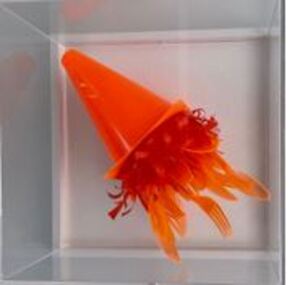
Sculpture, Rodney Scherer, 'Cornucopia' by Rodney Scherer, 2015
... He was the founding chair of the Art Resource Collective, arcYinnar. He was an Artist in Residence at the Gippsland Trades and Labour Council, Yallourn Power Station in 1991, and site manager of the Fifth Sculpture Triennial at the 1992 Melbourne International Arts Festival. ...He was the founding chair of the Art Resource Collective, arcYinnar. He was an Artist in Residence at the Gippsland Trades and Labour Council, Yallourn Power Station in 1991, and site manager of the Fifth Sculpture Triennial at the 1992 Melbourne International Arts Festival. ...Rodney SCHERER (24/02/1951 - ) Born Campbelltown, NSW Rodney Scherer studied at the National Art School, East Sydney Technical College (1968 -1972); the Canberra School of Art (1973-75) Dip, Art Gippsland Institute of Advanced Education (1978); and a Grad, Dip, Art (Painting) at Gippsland Institute of Advanced Educaton (1985). He curated a number of significant exhibitions for the Gippsland region of Victoria, including the first national travelling exhibition of regional artist "Contemporary Gippsland Artists 1990-92". Rodney Scherer is a painter, print maker, sculptor, Curator, retired Public Gallery Director, and fine art consultant. He was the founding chair of the Art Resource Collective, arcYinnar. He was an Artist in Residence at the Gippsland Trades and Labour Council, Yallourn Power Station in 1991, and site manager of the Fifth Sculpture Triennial at the 1992 Melbourne International Arts Festival. In 2021 he curated "The Happy Wanderer. Victoria Cobb 1876-1945" at the Gippsland Art Gallery, Sale, Victoria.This work was purchased by the donor from Rodney Scherer's solo exhibition 'Ubiquitous Orange' at Sparc Gallery, Yinnar.rodney scherer, alumni, sculpture, available -
![Ceramic, Ino Kiyoshi, [Vase] by Ino Kiyoshi, c1982](/media/collectors/530576742162ef0fa09a2288/items/5566bbdf2162f113608fc669/item-media/60f41b51b06f0c13a9354719/item-fit-380x285.jpg?cb=6) Federation University Art Collection
Federation University Art CollectionCeramic, Ino Kiyoshi, [Vase] by Ino Kiyoshi, c1982
... Ino was involved in the establishment of a space for artists in the old butter factory at the nearby township of Yinnar and in 1982 the Yinnar Art Resource Collective, commonly known as Yinnar ARC, was established. ...Ino was involved in the establishment of a space for artists in the old butter factory at the nearby township of Yinnar and in 1982 the Yinnar Art Resource Collective, commonly known as Yinnar ARC, was established. ...Ino KIYOSHI (b 1946, Kyoto Japan, d. 2008) Worked in Australia from 1973–76 and 1978–2008 Ino Kiyoshi was to a family that has been involved in the production of pottery for some 160 years. Working in the family studio while studying at the Kyoto School of Arts and Crafts, he completed his diploma of Ceramic Art in 1969. He then attended the KyotoTechnical School for a post-graduate course in glazing. then lectured in ceramics at the KyotoTechnical School. Following in the footsteps of the famous Japanese potter, Shoji Hamada who had visited Australia in 1965, Kiyoshi Ino visited Sydney in 1973, where he worked with Japanese potter Shigeo Shiga). Kiyoshi took up an appointment as Visiting Lecturer in Ceramics at the Gippsland Institute of Technical Education, Churchill, Victoria, from 1974 to 1976 and returned there as Assistant to the Senior Lecturer in Ceramics in 1979. He ceased teaching at the Gippsland Institute in 1988. Ino was involved in the establishment of a space for artists in the old butter factory at the nearby township of Yinnar and in 1982 the Yinnar Art Resource Collective, commonly known as Yinnar ARC, was established. Ino has exhibited extensively throughout Australia.Australian Studio Ceramics Gift of the artist, 1982Impressed seal for Kiyoshi Ino on baseceramics, gippsland campus, jan feder memorial ceramics collection, ino kiyoshi, japanese ceramics -
 Federation University Art Collection
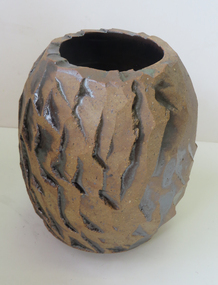
Ceramic, [Untitled] by Ino Kiyoshi, c1982
... ...yinnar art resource collective...Ino was involved in the establishment of a space for artists in the old butter factory at the nearby township of Yinnar and in 1982 the Yinnar Art Resource Collective, commonly known as Yinnar ARC, was established. ...Ino was involved in the establishment of a space for artists in the old butter factory at the nearby township of Yinnar and in 1982 the Yinnar Art Resource Collective, commonly known as Yinnar ARC, was established. ...Ino KIYOSHI (b 1946, Kyoto Japan, d. 2008) Worked in Australia from 1973–76 and 1978–2008 Ino Kiyoshi was to a family that has been involved in the production of pottery for some 160 years. Working in the family studio while studying at the Kyoto School of Arts and Crafts, he completed his diploma of Ceramic Art in 1969. He then attended the KyotoTechnical School for a post-graduate course in glazing. then lectured in ceramics at the KyotoTechnical School. Following in the footsteps of the famous Japanese potter, Shoji Hamada who had visited Australia in 1965, Kiyoshi Ino visited Sydney in 1973, where he worked with Japanese potter Shigeo Shiga). Kiyoshi took up an appointment as Visiting Lecturer in Ceramics at the Gippsland Institute of Technical Education, Churchill, Victoria, from 1974 to 1976 and returned there as Assistant to the Senior Lecturer in Ceramics in 1979. He ceased teaching at the Gippsland Institute in 1988. Ino was involved in the establishment of a space for artists in the old butter factory at the nearby township of Yinnar and in 1982 the Yinnar Art Resource Collective, commonly known as Yinnar ARC, was established. Ino has exhibited extensively throughout Australia. Gift of the artist, 1982impressed seal for Kiyoshi Ino on baseceramics, shikuhu ino, jan feder memorial ceramics collection, gippsland campus, yinnar, yinnar art resource collective -
 Federation University Art Collection
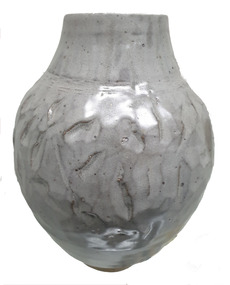
Ceramic, [Vessel] by Ino Kiyoshi, c1982
... ...Yinnar Art Resource Collective...Ino was involved in the establishment of a space for artists in the old butter factory at the nearby township of Yinnar and in 1982 the Yinnar Art Resource Collective, commonly known as Yinnar ARC, was established....Jan Feder Memorial Ceramics Collection staffmember ceramics Yinnar Art Resource Collective Ino Kiyoshi Glazed vessel [Vessel] by Ino Kiyoshi Ceramic ...Ino KIYOSHI (1 (1946-28/09/2008) ) Born Kyoto, Japan Kiyoshi Ino was born into a family that has been involved in the production of pottery for some 160 years. He working towards a Diploma of Ceramic Arta at the Kyoto School of Arts and Crafts, which he completed in 1969. He then attended the Kyoto Technical School for a post-graduate course in glazing, and was laer appointed lecturer in Ceramics at the Kyoto Technical School. After completing a study tour of China and Taiwan, Ino was one of a group of Japanese potters that travelled to Australia from the 1970s onwards following in the footsteps of the famous Japanese potter, Shoji Hamada who Kyoshi visited in 1965. Kiyoshi Ino visited Sydney in 1973, where he worked with Japanese potter Shigeo Shiga. Between 1974 and 1976 Kyoshi took up an appointment as Visiting Lecturer in Ceramics at the Gippsland Institute of Technical Education, returning there as Assistant to the Senior Lecturer in Ceramics in 1979. He left Gippsland Institute in 1988. Ino was involved in the establishment of a space for artists in the old butter factory at the nearby township of Yinnar and in 1982 the Yinnar Art Resource Collective, commonly known as Yinnar ARC, was established.Glazed vesseljan feder memorial ceramics collection, staffmember, ceramics, yinnar art resource collective, ino kiyoshi -
 Federation University Historical Collection
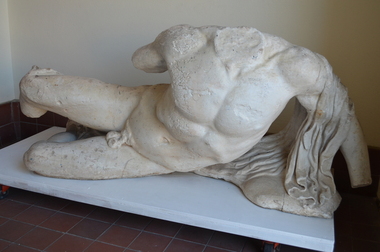
Sculpture - Plaster Replica (from original by Pheidias, 438 BCE-432 BCE), The river god Ilissos (possibly), c 1920 (from original 438 BCE-432 BCE)
... art studies, and became affectionately known as 'Hercules' by subsequent student cohorts. The cast was likely made by Brucciani and Co. London, and part of a consignment delivered to the School during the 1920s. This cast replicates one of a number of relics acquired by Thomas Bruce, seventh Earl of Elgin and ambassador to Turkey, (Lord Elgin) in Athens in the early 19th century. (Hence, these works were sometimes collectively...art studies, and became affectionately known as 'Hercules' by subsequent student cohorts. The cast was likely made by Brucciani and Co. London, and part of a consignment delivered to the School during the 1920s. This cast replicates one of a number of relics acquired by Thomas Bruce, seventh Earl of Elgin and ambassador to Turkey, (Lord Elgin) in Athens in the early 19th century. (Hence, these works were sometimes collectively ...This ‘heroic size’ reclining figure is a copy made from one of The Parthenon Sculptures currently housed at The British Museum, and thought to represent the river-god Ilissos. This piece was part of the Ballarat Technical Art School's collection of reference for art studies, and became affectionately known as 'Hercules' by subsequent student cohorts. The cast was likely made by Brucciani and Co. London, and part of a consignment delivered to the School during the 1920s. This cast replicates one of a number of relics acquired by Thomas Bruce, seventh Earl of Elgin and ambassador to Turkey, (Lord Elgin) in Athens in the early 19th century. (Hence, these works were sometimes collectively referred to as the Elgin Marbles). Ownership of the artefacts, once part of the 2,500-year-old Parthenon temple, is disputed by Greece. It maintains that Elgin removed them illegally while the country was under Turkish occupation as part of the Ottoman Empire. The items were sold to the British Museum in 1816 and have remained there ever since. The original "Ilissos" was located on the west pediment of the Parthenon in Greece, and was created in c435 BC. It is unknown if the statue was in position or had already fallen when removed from the Parthenon by Elgin. The Royal Academy London also holds a copy of this plaster cast. The Ballarat Technical Art School boasted a well-stocked Antique Room replete with plaster copies of classical, Renaissance and Gothic sculptural examples, which were used as drawing props by students. The school inherited some casts from its predecessor institutions, and further consignments were purchased during the 1920s, including full length, bust and relief figures, as well as dozens of ornamental and architectural casts. Unfortunately, much of the collection was lost or destroyed in the late 1950s.Quality examples of heroic sized plaster replicas are now rare, as many plaster collections were destroyed or lost when the copy of antique examples fell out of favour with art schools.Plaster cast used during Drawing classes at the Ballarat Technical Arts School. It is likely a headless depiction of the river god Ilissos.hercules, ballarat technical art school, elgin marbles, plaster, plaster cast, figure of a river god, parthenon marbles, ilissos, copy, drawing the human figure from cast, drawing from the antique, visual arts -
 Flagstaff Hill Maritime Museum and Village
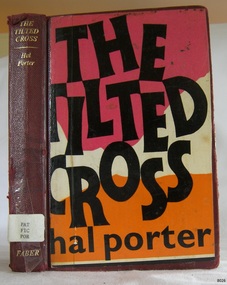
Book - Fiction, Hal Porter, author, The Tilted Cross, 1961
... Integration and Significance of the WMI Publication Collection: Many components of the Warrnambool Mechanics' Institute (WMI) publication collection serve to complement and reinforce other important cultural collections in the region, including those held by the Flagstaff Hill Maritime Museum, the Warrnambool Art Gallery, and the Warrnambool Historical Society. Collectively, these collections provide a more comprehensive understanding of the origins and development of the original Warrnambool Mechanics' Institute holdings. ...The Pattison Collection: The ‘Pattison Collection’ comprises books and records that were originally owned by the Warrnambool Mechanics’ Institute, which was established in Warrnambool in 1853. By 1886, the Institute had expanded significantly, boasting a Library, Museum, and Fine Arts Gallery. The collection included notable works of art and valuable specimens from various fields, as well as remarkable national curiosities and historic relics relating to the town and district. The Institute later incorporated a School of Design. Despite being popular with the public, the Institute struggled financially and, in 1911, requested that the City Council assume control. In 1935, Ralph Pattison was appointed as City Librarian to establish and organise what was then known as the Warrnambool Library. When the Mechanics’ Institute building was demolished in 1963, a new civic building was constructed on the site, and the Warrnambool Library, managed by the City Council, acquired all the holdings of the WMI. It was during this transition that certain items were separated and designated as the ‘Pattison Collection’, in honour of Ralph Pattison. Over time, the various components of the WMI were distributed among different institutions, including the Art Gallery, Historical Society, and Flagstaff Hill. Some items were also sent to other regional branches of the Corangamite Regional Library, and their exact locations have become difficult to trace. The books at Flagstaff Hill Maritime Village typically bear stamps and markings from Pattison and various other institutions, including the Mechanics’ Institute itself. Ralph Eric Pattison: Ralph Eric Pattison was born in Rockhampton, Queensland, in 1891. In 1920, he married Maude Swan from Warrnambool, and the couple settled in Warrnambool. Pattison accepted the role of City Librarian for the Warrnambool City Council in 1935. Tasked with transforming two rooms in the Mechanics’ Institute into a functional library, he diligently cleaned, sorted, and organised a disordered collection of old books, jars of preserved specimens, and assorted items previously reserved for the city’s museum. Pattison expanded and modernised the library, ensuring it catered to a broad range of interests, including providing reference books for students—a challenging feat in the years following the Depression. He converted the lower level of the building into a library, reference room, and reading room for both members and the public. Books were organised using a cataloguing and card index system that Pattison designed himself. He also prepared the upper floor, establishing both an Art Gallery and, later, a Museum to display the many historical relics collected over the years. Among these treasures was a beautiful antique clock, which Pattison restored and used in his office throughout his tenure. He was known as a meticulous gentleman, recognised for his punctuality, impeccable courtesy, and neat appearance. His restored clock regulated his daily routine and the precise opening and closing of the library’s doors. During 1942 to 1945, Pattison took leave to serve as a Lieutenant in the Royal Australian Navy Volunteer Reserve. A few years later, he converted one of the Museum’s rooms into a Children’s Library, which quickly became popular. In the 1950s, Pattison was appointed to the Victorian Library Board, where he gained further inspiration from monthly conferences in Melbourne. He retired in 1959, after more than 23 years of service, due to having surpassed the working age limit for council officers. Nevertheless, Pattison maintained a strong interest in the ongoing development of the Library until his death in 1969. Warrnambool Public Library: The Warrnambool Mechanics’ Institute (WMI) originated from a voluntary community group in 1863, just six years after the founding of Warrnambool, with its Reading Room opening in 1854. The WMI remained in operation until 1963 and was among the oldest Mechanics’ Institutes in Victoria. Mechanics’ Institutes provided essential public services, including libraries, reading rooms, and spaces for the exhibition and storage of curiosities and local historical relics. In 1886, a Museum and Fine Arts Gallery were added to the WMI, and by the early 20th century, it also featured a billiards room and a School of Art. At this time, it was common for country Victorian Mechanics’ Institutes to have attached museums. Over the years, the Warrnambool Mechanics’ Institute Library was also referred to as the Warrnambool Public Library, the Warrnambool Library, and the Free Library. Early government funding was provided for the “Free Library”. For example, a book titled “Science of Man” was inscribed for the “Warrnambool Public Library” and donated by Joseph Archibald in 1899. Another book, “Catalogue of Plants Under Cultivation in the Melbourne Botanic Gardens 1 & 2, 1883”, was presented to the “Warrnambool Library” and signed by the author W.R. Guilfoyle. In 1903, the Warrnambool Public Library established a Juvenile Department, stocking hundreds of books suitable for young readers. In 1905, the committee updated the book collection by adding 100 new novels and arranging for the latest novels to be included as soon as they became available in Victoria. By July 1911, the Warrnambool Council had assumed management of the Public Library, Art Gallery, Museum, and Mechanics’ Institute, with plans to double the size of the existing building. In 1953, under the stewardship of Mr. R. Pattison, the Warrnambool Public Library’s senior section contained 10,000 fiction books out of a total of 13,000. The children’s section held an additional 3,400 books, equating to one book per head of population and serving around 33 percent of the local reading public. The collection comprised approximately 60 percent reference books and 40 percent fiction, with the library lending out 400 books per day. In 1963, the Warrnambool City Council designated the site of the Mechanics’ Institute building—which included the Public Library, Museum, and Art Gallery—for the new Municipal Offices, resulting in the dispersal of the collections until 1971. The Warrnambool Library subsequently assumed responsibility for the Mechanics’ Institute Library’s holdings on behalf of the City Council. Since the closure of the Mechanics’ Institute, the precise location and composition of the original WMI books and items have become unclear. Additional items have entered the collection over time, including materials from Terang MI, Warrnambool Court House, and Customs House. Many books are now identified as part of the Pattison Collection, named after the librarian who catalogued and numbered them before the Mechanics’ Institute closed. When Warrnambool joined the Corangamite Regional Library, some books and materials were sent to its head office in Colac and later returned to Warrnambool, where they were stored at the Art Gallery for an extended period. Some items subsequently went to the Warrnambool Historical Society, some remained at the Art Gallery, and others were transferred to Flagstaff Hill Maritime Village. The various stamps and labels on the books at Flagstaff Hill reflect the diverse distribution and origins of the collection. The books currently held at Flagstaff Hill Maritime Village date from the 1850s to the late 1950s and include rare and valuable volumes. Many are part of the “Pattison Collection”, named after Warrnambool’s Public Librarian, Mr. R. Pattison.Integration and Significance of the WMI Publication Collection: Many components of the Warrnambool Mechanics' Institute (WMI) publication collection serve to complement and reinforce other important cultural collections in the region, including those held by the Flagstaff Hill Maritime Museum, the Warrnambool Art Gallery, and the Warrnambool Historical Society. Collectively, these collections provide a more comprehensive understanding of the origins and development of the original Warrnambool Mechanics' Institute holdings. The presence and integration of these materials not only enhance the appreciation of the few remaining Mechanics' Institute collections in Victoria, but also contribute to the recognition of similar collections in New South Wales. Examining both the similarities and differences among these surviving collections offers valuable insights into the ways in which the people of Victoria—and the community of Warrnambool in particular—constructed a civic culture centred on adult education, ultimately fostering an informed and engaged citizenry. Local and State Importance: The Warrnambool Mechanics' Institute publication collection is significant at local and state levels. Its value lies in its relationship to other cultural collections, its historical context, and its enduring role in supporting the intellectual and social development of the community.The Tilted Cross Author: Hal Porter Publisher: Faber and Faber. London Date: 1961 Hardcover bound book with gold embossed titles on the spine, and a pasted-on title on the front cover. Inscriptions are on labels on the spine and front loose endpaper, and on a stamp on the fly page. The book is part of the Pattison CollectionLabel with typed text": "PAT FIC POR" Sticker: "Corangamite Regional Library Service" Stamp: "Warrnambool Public Library"warrnambool, shipwrecked-coast, flagstaff-hill, flagstaff-hill-maritime-museum, maritime-museum, shipwreck-coast, flagstaff-hill-maritime-village, shipwrecked-artefact, book, pattison collection, warrnambool library, warrnambool mechanics’ institute, ralph eric pattison, corangamite regional library service, warrnambool city librarian, mechanics’ institute library, victorian library board, warrnambool books and records, warrnambool children’s library, great ocean road, the tilted cross, hal porter -
 Mission to Seafarers Victoria
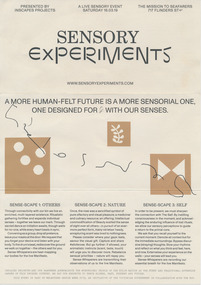
Flyer, Sensory Experiments, 2019
... collective. Guided by Sense Whisperers, you’ll wander through a series of live, uniquely designed corporeal experiences. Your emotional and physical responses will leave a digital imprint as the results of Sensory Experiments are transmitted in real time. Connect to self, connect to others, and connect to nature – and leave your mark on a living, breathing manifesto for living. Project Partners Matt Tambellini, More Studio and Mr. Kyle Mac, Design and Web Amara Speechley, Curated by, Marketing, PR & Partnerships Damien Boecasse and Erika Hirzinger, Event Production & Project Management Event Partners Justin James, Edibles Hattie Molloy and Emma Proudfoot, Flower Art...collective. Guided by Sense Whisperers, you’ll wander through a series of live, uniquely designed corporeal experiences. Your emotional and physical responses will leave a digital imprint as the results of Sensory Experiments are transmitted in real time. Connect to self, connect to others, and connect to nature – and leave your mark on a living, breathing manifesto for living. Project Partners Matt Tambellini, More Studio and Mr. Kyle Mac, Design and Web Amara Speechley, Curated by, Marketing, PR & Partnerships Damien Boecasse and Erika Hirzinger, Event Production & Project Management Event Partners Justin James, Edibles Hattie Molloy and Emma Proudfoot, Flower Art ...Melbourne Design Week: 14-24 March 2019 Sat 16 Mar 19, 2pm–10pm Norla Dome The Mission to Seafarers Victoria 717 Flinders St Docklands Indulge in a fleshy live experience. Reconnect with your primal being through a progression of sensorial confrontations. Recalibrate your connection to the world around you – the future depends on it. Sensory Experiments is a call for change – a Manifesto for Sensory Intelligence. Part social experiment, part philosophical inquiry and a fully immersive performance piece, this innovative project is forged from a collaboration between two of the city’s (and, indeed, the world’s) most progressive and inquiring minds. An eclectic cohort of creative contributors has been assembled to design a provocative experience intended to awaken the senses. Allow internationally renowned chef Justin James (Executive Chef of Vue de monde and Iki Jime and previously of Eleven Madison Park & Noma Copenhagen) to reignite your sense of taste. Avail yourself to floral artist Hattie Molloy’s interrogation of sensual perception with her reckoning of the Sublime. Absorb and participate in live-choreographed performances, and be aurally challenged by the masters behind the Sydney Opera House’s iconic acoustics. Come, bear witness, bring curiosity. Immerse yourself in this never-before seen collective. Guided by Sense Whisperers, you’ll wander through a series of live, uniquely designed corporeal experiences. Your emotional and physical responses will leave a digital imprint as the results of Sensory Experiments are transmitted in real time. Connect to self, connect to others, and connect to nature – and leave your mark on a living, breathing manifesto for living. Project Partners Matt Tambellini, More Studio and Mr. Kyle Mac, Design and Web Amara Speechley, Curated by, Marketing, PR & Partnerships Damien Boecasse and Erika Hirzinger, Event Production & Project Management Event Partners Justin James, Edibles Hattie Molloy and Emma Proudfoot, Flower Art Mihan Aromatics, Scent Design Chelsea Kate Evans, Performance Direction Samantha Iliov and Holly Simpson, Ensemble Studio, Costume Rachelle Austin, Olivia Reddan and Holly White, Set Stylists Isabel Johnson, Ed Supreme, Messaging and Copy Arup, Soundscape Design Hayden Sommerville, Videography Belle Nowak, Social Media Pord, Wine Tasting Noomi, Seating Website inscapesprojects.com Instagram: @inscapesprojectsA4 size flyer on creamy colour papercultural events, sensory experiments, ngv, national gallery of victoria, melbourne design week, 2019, community, norla dome, incas projects -
 Women's Art Register
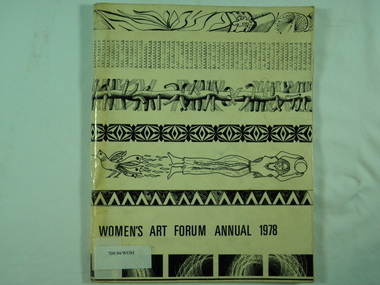
Journal, Women's Art Forum Annual 1978, 27th February 1979
... This journal is the first issue of the Women's Art Forum, a women artists' collective established in 1978 (Melbourne, Australia), in connection with the Women's Art Register....This journal is the first issue of the Women's Art Forum, a women artists' collective established in 1978 (Melbourne, Australia), in connection with the Women's Art Register. ...This journal is the first issue of the Women's Art Forum, a women artists' collective established in 1978 (Melbourne, Australia), in connection with the Women's Art Register.The Women's Art Register is an Australian collection of national significance, documenting the work of Australian women artists from the 19th, 20th and 21st centuries.First issue of the Women's Art Forum, reporting on the state of feminist art in Australia in 1978. 100 pages. B/W text and illustrations. Articles include artist drawings, stories, histories of women artists, and reports, advocating and representing Australian women artists.Published by the Women's Art Forum of Victoria. Printed by Sybylla Co-operative Press Ltd. -
 Women's Art Register
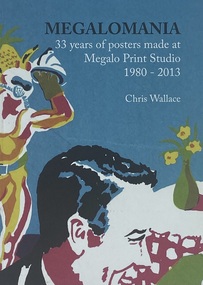
Book, Chris Wallace et al, Megalomania 35 years of posters made at Megan Print Studio 1980 - 2013, 2013
... Complements material held in the Women's Art Register community political art artist unknown gender health environment A visual record of posters made at Megalomania Print Studio, a print collective in Canberra 1980-2013 Book Megalomania 35 years of posters made at Megan Print Studio 1980 - 2013 Book Book Chris Wallace Kathryn Ross & Emily Sykes Megalo Print Studio & Gallery Publication ...A visual record of posters made at Megalomania Print Studio, a print collective in Canberra 1980-2013Booknon-fictionA visual record of posters made at Megalomania Print Studio, a print collective in Canberra 1980-2013community, political art, artist unknown, gender, health, environment -
 Women's Art Register
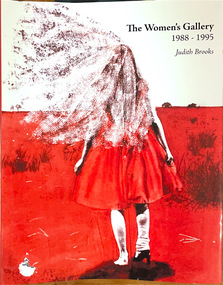
Book, Judith Brooks, The Women's Gallery 1988 - 1995, 2019
... art...portraiture...IWD exhibitions...collaborative prectice...collective...Overview of a significant feminist centred art space which collaborated with The Women's Art Register on an annual exhibition.and showed the work of established and emerging artists. solo and group exhibitions spiritual art political art portraiture IWD exhibitions collaborative prectice collective practice Documents every event in the volunteer-run Women's Gallery, which ran June 1988 until December 1995, in bohemian Brunswick Street Melbourne and showed 119 solo and group exhibitions, and hosted book launches, music and theatre performances, seminars and poetry readings. ...Documents every event in the volunteer-run Women's Gallery, which ran June 1988 until December 1995, in bohemian Brunswick Street Melbourne and showed 119 solo and group exhibitions, and hosted book launches, music and theatre performances, seminars and poetry readings.BOOKnon-fictionDocuments every event in the volunteer-run Women's Gallery, which ran June 1988 until December 1995, in bohemian Brunswick Street Melbourne and showed 119 solo and group exhibitions, and hosted book launches, music and theatre performances, seminars and poetry readings.solo and group exhibitions, spiritual art, political art, portraiture, iwd exhibitions, collaborative prectice, collective practice -
 Nillumbik Shire Council
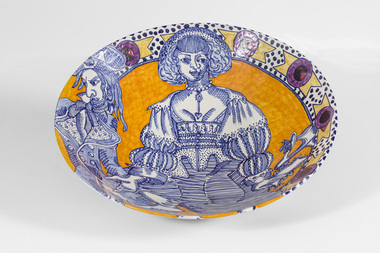
Ceramic (bowl): Alexandra COPELAND, Alexandra Copeland, Vanity, 1/9/1994
... Art Gallery in Launceston, Tasmania. Copeland's parents are John and Betty Hipwell, one of the founding members of Potters Cottage (an influential ceramic collective that grew out of Nillumbik) / Copeland grew up surrounded by this artform. ...This bowl is part of a series completed in 1994 on the subject of the sin of 'Vanity' / A smug looking woman flirts coquettishly with a manservant who helps her to put on her shoes / The people depicted on the bowl are dressed in 18th century costumes / The court of Marie Antoinette of France is evoked / The blue and white drawing is in the style of 18th century woodblock prints and was drawn freehand / The bowl is signed and dated on the base / The technique is traditional tin glaze (majolica, maiolica or delft) / Coloured oxides were painted onto a clear glaze which had been opacified with tin oxide, and then fired at 900 degrees / The bowl was exhibited at Christine Abrahams Gallery, Melbourne in 1994 / A bowl from the 'Vanity' series is held in the Collection of the Queen Victoria Museum and Art Gallery in Launceston, Tasmania. Copeland's parents are John and Betty Hipwell, one of the founding members of Potters Cottage (an influential ceramic collective that grew out of Nillumbik) / Copeland grew up surrounded by this artform. Reg Preston (another founding member of Potter's Cottage) introduced her to the Majolica technique which has influenced her ceramic work to this day / This bowl is characteristic of Copeland's speciality and mastery of the Majolica technique. This bowl is hand painted with an image of a couple flirting (man-left side and woman-centre) in 18th century French dress / Decorative circle and polka dot pattern along the rim and underside of the bowl / The bowl is predominantly painted in cobalt blue and orange colour using the Majolica (maiolica or delft) technique; a traditional tinglaze method of application. Coloured oxides are painted onto a clear glaze which has been opacified with tin oxide / The bowl is then fired at 900 degrees.Underside has in colbalt blue artist signature and date / 'A. Copeland . 1.9.1994'.copeland, earthenware, majolica, potters cottage, vanity, bowl, eighteen century, french, marie antoinette -
 Nillumbik Shire Council
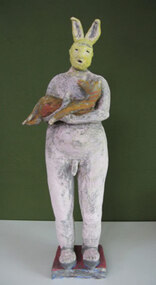
Sculpture: Angela NAGEL, Angela Nagel, How to Explain Genetics to a Thylacine, 2009
... Art and has worked with clay for over 20 years. Her work is held in collections around Australia. Angela Nagel's creative practice is informed by an interest in the human condition, universal symbols, mythology and Jung's theory on the 'collective unconscious'. ...Entry into the 2009 Nillumbik Prize. Angela holds a Masters of Fine Art and has worked with clay for over 20 years. Her work is held in collections around Australia.Angela Nagel's creative practice is informed by an interest in the human condition, universal symbols, mythology and Jung's theory on the 'collective unconscious'. Her hybrid part human/animal creatures reference introduced species and indigenous Australian animals as a way for her to explore a personal mythology, and narrative, of home and environment. Recent work is developing around the relationship of ceramics to other materials such as glass, printmaking and found objects. Angela holds a Masters of Fine Art and has worked with clay for over 20 years. Her work is held in collections around Australia.Human and animal like figure in the stance reminiscent of classical sculpture. Hand built ceramics with engobes, oxides, glaze and gold leaf Medium: Porcelain, oxide, underglazeangela nagel, nillumbik shire council collection, victoria, nillumbik prize, ceramic -
 Nillumbik Shire Council
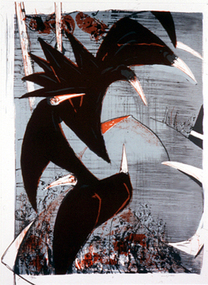
Print (Lithograph) Clifton Pugh, Clifton Pugh, Untitled (Black Birds) from the Bodford Terrace Suite 1978, 1978
... collectively protect the land. Numerous renowned artists worked or resided at Dunmoochin including: Rick Amor, Fred Williams, Albert Tucker, Frank Hodgkinson, Mirka Mora, John Olsen, John Percival and John Howley amongst others. Upon his death in 1990 he left an art ...Pugh was one of many artists who brought an Australian experience to attention. This work reveals the colour, textures, harshness and inhabitants of the natural bush, with the angular forms found on the ‘black birds’ dominating the composition with dramatic effect. Shanahan, Albert Tucker, Frank Werther and Fred Williams have at one time settled and or work there. Untitled (Black Birds) from the Bodford Terrace Suite 1978, created by Clifton Pugh - a celebrated Australian artist known for his landscapes and portraiture as well as (three-time) winner of Australia’s Archibald Prize. This piece plays a significant role within the Nillumbik Shire Collection due to Pugh’s strong connection to the local land where he settled in Cottle’s Bridge in 1951, purchasing 15 acres and named it Dunmoochin. Artists, potters and others settled at Dunmoochin and formed the Dunmoochin Artists Co-operative in order to collectively protect the land. Numerous renowned artists worked or resided at Dunmoochin including: Rick Amor, Fred Williams, Albert Tucker, Frank Hodgkinson, Mirka Mora, John Olsen, John Percival and John Howley amongst others. Upon his death in 1990 he left an art collection and extensive properties at Dunmoochin to be appreciated and utilised by artists for years to come lithographic print on French Arches paper. Dynamic and expressive depiction of black birds in flight on far left of composition, cropped elements of Australian landscape in blue and red in the background (trees, shrubs, rocks). Inscribed lower right 'Clifton'; 1:1; 179/300clifton pugh, bodford suite, dunmoochin -
 Nillumbik Shire Council
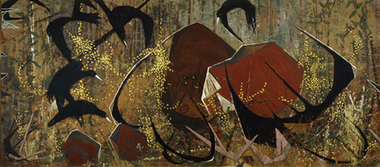
Painting, Clifton PUGH, White Choughs in the Landscape, 1958
... collectively protect the land. Numerous renowned artists worked or resided at Dunmoochin including: Rick Amor, Fred Williams, Albert Tucker, Frank Hodgkinson, Mirka Mora, John Olsen, John Percival and John Howley amongst others. Upon his death in 1990 he left an art ...Pugh was one of many artists who brought an Australian experience to attention. His landscapes reveal the colour and textures of the natural bush, often with a dramatic emphasis. His reference to the harshness of the bush consistently arises, with angular forms dominating the composition. White Choughs in the Landscape is typical of his representations of the bush as a dynamic environment. White Choughs in the Landscape, 1958, created by Clifton Pugh - a celebrated Australian artist known for his landscapes and portraiture as well as (three-time) winner of Australia’s Archibald Prize. This piece plays a significant role within the Nillumbik Shire Collection due to Pugh’s strong connection to the local land where he settled in Cottle’s Bridge in 1951, purchasing 15 acres and named it Dunmoochin. Artists, potters and others settled at Dunmoochin and formed the Dunmoochin Artists Co-operative in order to collectively protect the land. Numerous renowned artists worked or resided at Dunmoochin including: Rick Amor, Fred Williams, Albert Tucker, Frank Hodgkinson, Mirka Mora, John Olsen, John Percival and John Howley amongst others. Upon his death in 1990 he left an art collection and extensive properties at Dunmoochin to be appreciated and utilised by artists for years to come White Choughs in the Landscape is typical of Pughs' representations of the bush as a dynamic environment. The brittleness and fragility of the landscape is recorded in the surface of the work, where paint is applied in thin layers.Signed 'Clifton Sept. 1958'clifton pugh, dunmoochin, white choughs -
 Nillumbik Shire Council
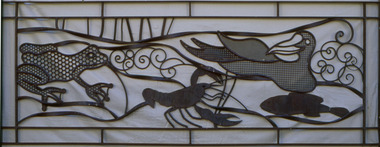
Deborah Halpern (b.1957 Melb) with Malcolm Laurence (b.1974 Melb), Malcolm Laurence, The Spirit of Nillumbik (balustrade panels x11); Location: Eltham Town Square - Main St, Eltham, 2001
... collective visions. Halpern acknowledges these contributions to our hand-made history and the influence they have on the character and identity of Eltham and Nillumbik. public art nillumbik fauna flora wrought iron balustrade halpern laurence kangaroo eltham town square spirit warrandyte christmas hills kangaroo ground hurstbridge kinglake panton hill water valley creek flats cockatoos N/A Five picture and six woven balustrades each made out of welded steel / organic wrought iron and coated with wax. ...In October 2000, Council invited three artists from the region (Deborah Halpern, Matcham Skipper, Tony Trembath) to submit designs for a sculpture / public art work for the Eltham Town Square. The commission was paid for by supermarket giant Safeway (Woolies) as part of its supermarket permit, which required them to contribute to beautification work in the Town Square.This is the first of three parts. The 'Spirit of Nillumbik' is a celebration of the artistic spirit of Eltham and surrounding communities. Each area is identified through the flora and fauna represented in the panels. The work honours the many creative artists and architects, past and present, who have built homes and shaped lives and livelihoods with their unique creative spirit. Halpern describes her work as a public expression of their individual and collective visions. Halpern acknowledges these contributions to our hand-made history and the influence they have on the character and identity of Eltham and Nillumbik. Five picture and six woven balustrades each made out of welded steel / organic wrought iron and coated with wax. Imagery (flora - plants, landscapes and fauna - animals, birds, reptiles, insects) are all based on the local environment. There is also a relevant aboriginal presence amongst each of the panels. Each panel represents the different areas that make up the Shire. 'Water' for Warrandyte, 'Kangaroos' for Christmas Hills, 'Cockatoos and 'Valley Creek Flats' for Hurstbridge, 'Wombats', 'Bluetongues' and 'Possums' for St. Andrews/Kinglake, 'Orchids' for Panton Hill, 'Cows' and 'Grapevines' for the Kangaroo Gound Hill landmark. N/Apublic art, nillumbik, fauna, flora, wrought iron, balustrade, halpern, laurence, kangaroo, eltham town square, spirit, warrandyte, christmas hills, kangaroo ground, hurstbridge, kinglake, panton hill, water, valley creek flats, cockatoos -
Broadmeadows Historical Society & Museum
Photograph, Mural, c 1987
... collective spirit and creativity of the community. The project was made possible through the generous support of the Ministry of Arts, the Community Arts Board, the Ministry of Housing, and Broadmeadows Health Services. This mural not only enhanced the aesthetic appeal of the area but also served as a lasting testament to the power of community collaboration and the positive impact of public art initiatives. ...The photograph was published in the Broadmeadows Observer as part of an article highlighting community support initiatives. It features a mural located in the Banksia Gardens estate, which was painted by local residents. The project received funding from several sources, including the Ministry of Arts, the Community Arts Board, the Ministry of Housing, and Broadmeadows Health Services. This mural stands as a testament to the collaborative efforts of the community and various organisations in fostering a supportive and vibrant neighbourhood. The mural featured in the photograph, published in the Broadmeadows Observer, held significant cultural and community value. Located in the Banksia Gardens estate, this artwork was created by local residents and symbolised the collective spirit and creativity of the community. The project was made possible through the generous support of the Ministry of Arts, the Community Arts Board, the Ministry of Housing, and Broadmeadows Health Services. This mural not only enhanced the aesthetic appeal of the area but also served as a lasting testament to the power of community collaboration and the positive impact of public art initiatives.Black and white photograph on glossy photographic paper.Reduce/to/66%/P6.3/OBS/28-10-87banksia gardens estate, broadmeadows, broadmeadows observer, 1987 -
 Federation University Art Collection
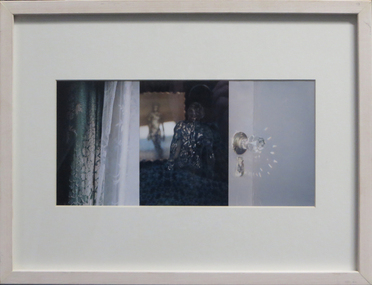
Photograph, Erin McCuskey, 'Shiney Man' by Erin McCuskey
... Media creation is a group pursuit and those behind the camera are more often control the balance of power, therefore she is committed to unique collective story development. “I believe that art is in the everyday, that we all can, should and do, create. ...Media creation is a group pursuit and those behind the camera are more often control the balance of power, therefore she is committed to unique collective story development. “I believe that art is in the everyday, that we all can, should and do, create. ...Erin McCUSKEY Erin is a filmmaker, photographer and digital media artist with a bent on ‘difference’. She is the Creative Director at Yum Studio where she has forged a national reputation for delivering innovative and unique creative media projects, using projection, media, social media and social broadcasting. Ern McCuskey has a passion for producing projects with human rights at their core. Her short films, installations and commissions have screened at Museum of Australian Democracy at Eureka (MADE), Melbourne International Film Festival (MIFF), Flickerfest, Indiefest, Gertrude St Projection Festival, Ballarat International Foto Biennale, numerous exhibitions, performances and collections. Erin’s work is informed by the knowledge that difference is a necessary part of society and the core of a healthy one. She is passionate about creating media that is thought provoking, possibly controversial and also entertaining. Media creation is a group pursuit and those behind the camera are more often control the balance of power, therefore she is committed to unique collective story development. “I believe that art is in the everyday, that we all can, should and do, create. My work is informed by the moving images of my siblings as children recorded by my father, the houses and homes, spaces and events, which live on as objects themselves in various homes as photos, archives, projected and loved. These flickering images were embedded and now I spend time creating more.” (Central Highlands Art Atlas, http://www.artsatlas.com.au/erin/) This item is part of the Federation University Art Collection. The Art Collection features over 2000 works and was listed as a 'Ballarat Treasure' in 2007.Three photographs mounted side by side (portrait orientation). #1 image of curtains #2 image of sculpture of man reflected in a mirror #3 light reflecting through crystal door handle. Slight scratching on front bottom of frame. art, artwork, erin mccuskey, mccuskey, photography, foto, available -
 Federation University Art Collection
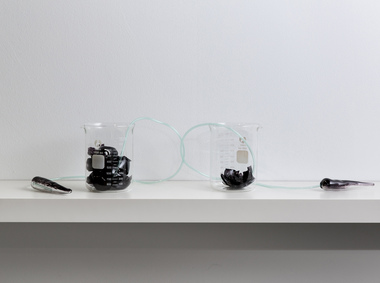
Sculpture - Artwork, 'The More Bones the Better' by Yhonnie Scarce, 2016
... Art, National Gallery of Victoria said; “The winning work by Yhonnie Scarce captures the sensitivity to materials she displays throughout her artistic practice. The blown and shattered glass elements are a delicate contrast to the shocking and little discussed histories of Aboriginal exploitation and abuse in the name of science in Australia. Engaging this topic, this work is haunting, in the same way those lived and documented experiences continue to haunt the collective...Art, National Gallery of Victoria said; “The winning work by Yhonnie Scarce captures the sensitivity to materials she displays throughout her artistic practice. The blown and shattered glass elements are a delicate contrast to the shocking and little discussed histories of Aboriginal exploitation and abuse in the name of science in Australia. Engaging this topic, this work is haunting, in the same way those lived and documented experiences continue to haunt the collective ...Yhonnie SCARCE (1973- ) Born Woomera, South Australia Language group: Kokatha, Southern desert region and Nukunu, Spencer region Yhonnie Scarce works predominantly in glass. She majored in glass withing a Bachelor of Visual Arts (Honours) course at the South Australian School of Art, Adelaide, and holds a Master of Fine Arts from Monash University. One of the first contemporary Australian artists to explore the political and aesthetic power of glass, Scarce describes her work as ‘politically motivated and emotionally driven’. Scarce’s work often references the on-going effects of colonisation on Aboriginal people, In particular her research focus has explored the impact of the removal and relocation of Aboriginal people from their homelands and the forcible removal of Aboriginal children from their families. (https://thisisnofantasy.com/artist/yhonnie-scarce/, accessed 10 September 2018)Artist's Statement 'The More Bones the Better', 2016 Yhonnie Scarce was born in Woomera, SA and belongs to the Kokatha and Nukunu peoples. Scarce embraces a non traditional approach to glass blowing using glass as more than a mere material, acting as a lens and a mirror, Scarce reflects and exposes the tragedies of Australia’s colonisation. She applies the technical rigours of traditional glass blowing techniques in an innovative and unconventional manner. In particular Scarce uses glass to explore the lives and histories of Aboriginal Australians. Hand blown glass is shaped, engraved, painted and smashed to create indigenous fruits and vegetables such as bush bananas, bush plums and long yams symbolic of her peoples culture and traditions. With their elongated, torso-like shapes, they even evoke human bodies. Akin to a gatherer of bush food Scarce creates glass-gatherings of the persecuted. The repetition of brittle ambiguous bodies collected for experimentation and examination conjures the relentless impact of colonisation and the litany of abuses suffered by Aboriginal people. Within her research Scarce encountered a variety of ethnographic studies examining the use of scientific interventions amongst Indigenous cultures. These include Government sanctioned illegal drug testing of children in orphanages and other dubious medical practices amongst indigenous prison inmates. This work metaphorically looks at these situations and poses questions of what might have gone on in such a laboratory. The judge of the 2017 Guirguis New Art Prize (GNAP), Simon Maidment, Senior Curator, Contemporary Art, National Gallery of Victoria said; “The winning work by Yhonnie Scarce captures the sensitivity to materials she displays throughout her artistic practice. The blown and shattered glass elements are a delicate contrast to the shocking and little discussed histories of Aboriginal exploitation and abuse in the name of science in Australia. Engaging this topic, this work is haunting, in the same way those lived and documented experiences continue to haunt the collective unconscious of this country. Yhonnie Scarce’s work, The More Bones the Better 2016, I believe makes an important contribution to the Collection of Federation University Australia and will engage and move diverse audiences with its technical accomplishment, beauty and message. Yhonnie Scarce was born in Woomera SA and belongs to the Kokatha and Nukunu peoples. Scarce embraces a non-traditional approach to glass blowing using her medium as more than a mere material. Applying the technical rigours of traditional glass blowing in an innovative and unconventional manner, Scarce’s glass objects act as a lens and a mirror to reflect and expose the tragedies of Australia’s colonisation and, in particular, explore the lives and histories of Aboriginal Australians. Hand-blown glass is shaped, engraved, painted and smashed to represent indigenous fruits and vegetables such as bush bananas, bush plums and long yams, symbolic of Scarce’s people’s culture and traditions. While these elongated shapes on the one hand represent fruit and vegetables, gathered and grouped as in the gathering of bush food, Scarce’s torso-like bodies and forms are glass ‘gatherings’ representative of the gathering of people. Here, the many brittle bodies act as a metaphor for the collection, experimentation and examinations undertaken by government authorities on Aboriginal communities researched by Scarce. Exposing a variety of ethnographic studies, examining the use of scientific interventions on Indigenous cultures, Scarce also revealed Government sanctioned illegal drug testing of children in orphanages and other dubious medical practices undertaken on indigenous prison inmates. Scarce’s gatherings also reflect the impact of colonisation and the relentless conjuring and litany of abuses suffered by Aboriginal people. The More Bones the Better metaphorically looks at these situations and poses questions of what was undertaken and investigated in these laboratories. guirguis new art prize, yhonnie scarce, glass, aboriginal -
 Kew Historical Society Inc
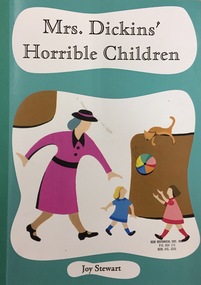
Book, Mrs Dickins' Horrible Children: Anecdotes in the Life of a Growing Family, 2004
... Joy's dedication has seen her involved in exhibitions at Raintrees Gallery with Cairns Artists United in the early 1980s, in ongoing Cairns Art Society projects and in early KickArts Collective events. joy stewart dickins family -- kew (vic.) ...Mrs Dickins' Horible Children: Anecdotes in the Life of a Growing Family / by Joy Stewart. Whitfield, 2004. Qld. : Marie-Claire Nemel, 2004. 91 p. : col. ill., ports. ; 29 cm. non-fictionjoy stewart, dickins family -- kew (vic.) -
 Wyndham Art Gallery (Wyndham City Council)
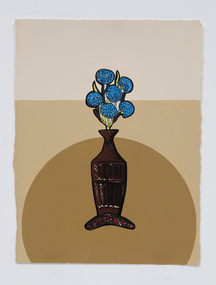
Painting, Tony Albert, Interior Composition (with Appropriated Aboriginal Design Vase) IX, 2022
... collective histories, Albert explores the ways in which optimism can be utilised to overcome adversity. His work poses important questions such as how do we remember, give justice to, and rewrite complex and traumatic histories. Albert’s technique and imagery are distinctly contemporary, displacing traditional Australian Aboriginal aesthetics with an urban conceptuality. Appropriating textual references from sources as diverse as popular music, film, fiction, and art...collective histories, Albert explores the ways in which optimism can be utilised to overcome adversity. His work poses important questions such as how do we remember, give justice to, and rewrite complex and traumatic histories. Albert’s technique and imagery are distinctly contemporary, displacing traditional Australian Aboriginal aesthetics with an urban conceptuality. Appropriating textual references from sources as diverse as popular music, film, fiction, and art ...Tony Albert’s 2022 solo exhibition at Sullivan+Strumpf, Remark, continues the artist’s investigation into the imagery and identification of appropriated Indigenous Australian iconography in domestic decoration and design. Incorporating fabric from his extensive collection of ‘Aboriginalia’, Remark sees Albert expand on his acclaimed Conversations with Margaret Preston series dimensionality, critically engaging with the fabric in his own right. Like the fabric of Australian society, the appropriated Indigenous imagery printed on souvenir tea towels intertwines in a complicated web of national identity. These are not images by Aboriginal people and our voices and autonomy continued to be silenced through the object’s inauthenticity. As a country we must reconcile with these objects’ very existence. They are painful reiterations of a violent and oppressive history, but we also cannot hide or destroy them because they are an important societal record that should not be forgotten. As an artist this juxtaposition and tension fascinates me. Tony Albert’s multidisciplinary practice investigates contemporary legacies of colonialism, prompting audiences to contemplate the human condition. Drawing on both personal and collective histories, Albert explores the ways in which optimism can be utilised to overcome adversity. His work poses important questions such as how do we remember, give justice to, and rewrite complex and traumatic histories. Albert’s technique and imagery are distinctly contemporary, displacing traditional Australian Aboriginal aesthetics with an urban conceptuality. Appropriating textual references from sources as diverse as popular music, film, fiction, and art history, Albert plays with the tension arising from the visibility, and in-turn, the invisibility of Aboriginal People across the news media, literature, and the visual world. australian first nations art, colonialisation, painting -
 Wyndham Art Gallery (Wyndham City Council)
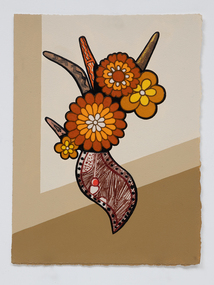
Painting, Tony Albert, Interior Composition (with Appropriated Aboriginal Design Vase) X, 2022
... collective histories, Albert explores the ways in which optimism can be utilised to overcome adversity. His work poses important questions such as how do we remember, give justice to, and rewrite complex and traumatic histories. Albert’s technique and imagery are distinctly contemporary, displacing traditional Australian Aboriginal aesthetics with an urban conceptuality. Appropriating textual references from sources as diverse as popular music, film, fiction, and art...collective histories, Albert explores the ways in which optimism can be utilised to overcome adversity. His work poses important questions such as how do we remember, give justice to, and rewrite complex and traumatic histories. Albert’s technique and imagery are distinctly contemporary, displacing traditional Australian Aboriginal aesthetics with an urban conceptuality. Appropriating textual references from sources as diverse as popular music, film, fiction, and art ...Tony Albert’s 2022 solo exhibition at Sullivan+Strumpf, Remark, continues the artist’s investigation into the imagery and identification of appropriated Indigenous Australian iconography in domestic decoration and design. Incorporating fabric from his extensive collection of ‘Aboriginalia’, Remark sees Albert expand on his acclaimed Conversations with Margaret Preston series dimensionality, critically engaging with the fabric in his own right. Like the fabric of Australian society, the appropriated Indigenous imagery printed on souvenir tea towels intertwines in a complicated web of national identity. These are not images by Aboriginal people and our voices and autonomy continued to be silenced through the object’s inauthenticity. As a country we must reconcile with these objects’ very existence. They are painful reiterations of a violent and oppressive history, but we also cannot hide or destroy them because they are an important societal record that should not be forgotten. As an artist this juxtaposition and tension fascinates me. Tony Albert’s multidisciplinary practice investigates contemporary legacies of colonialism, prompting audiences to contemplate the human condition. Drawing on both personal and collective histories, Albert explores the ways in which optimism can be utilised to overcome adversity. His work poses important questions such as how do we remember, give justice to, and rewrite complex and traumatic histories. Albert’s technique and imagery are distinctly contemporary, displacing traditional Australian Aboriginal aesthetics with an urban conceptuality. Appropriating textual references from sources as diverse as popular music, film, fiction, and art history, Albert plays with the tension arising from the visibility, and in-turn, the invisibility of Aboriginal People across the news media, literature, and the visual world. australian first nations art, colonialisation, painting -
 Wyndham Art Gallery (Wyndham City Council)
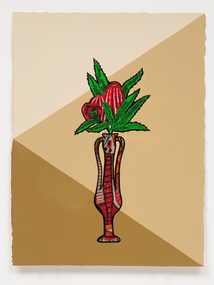
Painting, Tony Albert, Interior Composition (with Appropriated Aboriginal Design Vase) VII, 2022
... collective histories, Albert explores the ways in which optimism can be utilised to overcome adversity. His work poses important questions such as how do we remember, give justice to, and rewrite complex and traumatic histories. Albert’s technique and imagery are distinctly contemporary, displacing traditional Australian Aboriginal aesthetics with an urban conceptuality. Appropriating textual references from sources as diverse as popular music, film, fiction, and art...collective histories, Albert explores the ways in which optimism can be utilised to overcome adversity. His work poses important questions such as how do we remember, give justice to, and rewrite complex and traumatic histories. Albert’s technique and imagery are distinctly contemporary, displacing traditional Australian Aboriginal aesthetics with an urban conceptuality. Appropriating textual references from sources as diverse as popular music, film, fiction, and art ...Tony Albert’s 2022 solo exhibition at Sullivan+Strumpf, Remark, continues the artist’s investigation into the imagery and identification of appropriated Indigenous Australian iconography in domestic decoration and design. Incorporating fabric from his extensive collection of ‘Aboriginalia’, Remark sees Albert expand on his acclaimed Conversations with Margaret Preston series dimensionality, critically engaging with the fabric in his own right. Like the fabric of Australian society, the appropriated Indigenous imagery printed on souvenir tea towels intertwines in a complicated web of national identity. These are not images by Aboriginal people and our voices and autonomy continued to be silenced through the object’s inauthenticity. As a country we must reconcile with these objects’ very existence. They are painful reiterations of a violent and oppressive history, but we also cannot hide or destroy them because they are an important societal record that should not be forgotten. As an artist this juxtaposition and tension fascinates me. Tony Albert’s multidisciplinary practice investigates contemporary legacies of colonialism, prompting audiences to contemplate the human condition. Drawing on both personal and collective histories, Albert explores the ways in which optimism can be utilised to overcome adversity. His work poses important questions such as how do we remember, give justice to, and rewrite complex and traumatic histories. Albert’s technique and imagery are distinctly contemporary, displacing traditional Australian Aboriginal aesthetics with an urban conceptuality. Appropriating textual references from sources as diverse as popular music, film, fiction, and art history, Albert plays with the tension arising from the visibility, and in-turn, the invisibility of Aboriginal People across the news media, literature, and the visual world. australian first nations art, colonialisation, painting -
 City of Stonnington
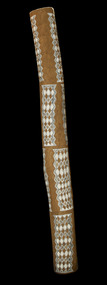
Gunybi Ganambarr, Gangan, 2012
... collectively as Yolngu, meaning human beings. The Yolngu traditionally use logs naturally hollowed out by termites in a funerary and ceremonial functions, principally as an ossuary. In an Australian contemporary art...collectively as Yolngu, meaning human beings. The Yolngu traditionally use logs naturally hollowed out by termites in a funerary and ceremonial functions, principally as an ossuary. In an Australian contemporary art ...Gunybi Ganambarr has built a reputation for his innovative techniques, incising and shaping barks and adding materials to traditional art forms. He attributes his confidence in using new materials to his twelve year stint as a part of a building team in remote homelands. Ganambarr primarily lives in his mother’s community at Gangan, which lies north-west of Blue Mud Bay in eastern Arnhem Land, Northern Territory. Ganambarr has absorbed the minutiae and spirituality of place; his paintings can be read as meditations on the specific tracts of land for which he is entitled to speak; in this case, a sacred expanse of water behind the Gangan outstation where this work was produced, referred to as Gulutji. Ganambarr’s designs recount the ancestral formation of the land, the beings that reside within its borders and the seasonal events that nourish its ecosystem. His work exemplifies the confidence and cultural assertion of a new, experimental Yolngu art, while remaining firmly influenced by elders and senior artists. Ceremonial hollow log poles Arnhem Land, Northern Territory The people of Central and Eastern Arnhem Land refer to themselves collectively as Yolngu, meaning human beings. The Yolngu traditionally use logs naturally hollowed out by termites in a funerary and ceremonial functions, principally as an ossuary. In an Australian contemporary art context however hollow log sculptures are purely memorial in function and made explicitly for public display. In Arnhem Land hollow logs are known as larrakitj; hollow logs known by other names are used in burial practices by a number of Aboriginal peoples in the north of Australia. The logs can also represent the deceased person, as the designs applied are the same as those painted on the body during the burial rites. All Yolngu clans belong to a moiety, one of two complementary halves of society: Dhuwa and Yirritja. All such affiliations play a part in Aboriginal artists' inherited right to paint an established set of designs belonging to their social group; this inheritance is, in fact, the artist's copyright over imagery. stonnington contemporary art collection, first peoples, first nations, indigenous, aboriginal torres strait islander, painting, gunybi ganambarr, natural environment, cultural heritage, cultural identity, cultural knowledge, landscape -
 City of Stonnington
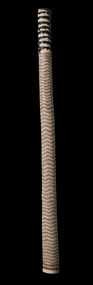
Nawurapu Wunungmurra, Garraparra, 2013
... collectively as Yolngu, meaning human beings. The Yolngu traditionally use logs naturally hollowed out by termites in a funerary and ceremonial functions, principally as an ossuary. In an Australian contemporary art...collectively as Yolngu, meaning human beings. The Yolngu traditionally use logs naturally hollowed out by termites in a funerary and ceremonial functions, principally as an ossuary. In an Australian contemporary art ...Nawurapu Wunungmurra is the eldest son of the late Yaggarriny Wunungmurra, the first Aboriginal artist to have his copyright recognised in an Australian court. From an early age he was trained by his father and assisted him with this painting. Later, as his own spiritual authority increased, he painted in his own right. This pole depicts the sea at Garraparra, a coastal headland and bay area within Mungurru, or Blue Mud Bay. Garraparra has been rendered by the wavy design for Yirritja (deep saltwater) that has many states and connects with the sacred waters coming from the land estates by currents and tidal flow. Garraparra marks the spot of a sacred burial area for the Dhalwangu clan to which Wunungmurra belongs. Sacred songs and dance narrate the heroic adventures of two ancestral hunters who left the shores of Garraparra hunting for turtle. On their journey they passed sacred places and ancestral totems before they came to grief when their canoe capsized. The hunters’ bodies washed back to the shores of Garraparra with the currents and the tides, as the Wangupini, cloud rising from the north, followed with its rain and wind. In the songs, the terns (Gitkit) reel in the breeze around these statuesque clouds on the horizon, and this stylised rendition of clouds seen at the top of this work is the latest motif in Wunungmurra’s ouvre.Ceremonial hollow log poles Arnhem Land, Northern Territory The people of Central and Eastern Arnhem Land refer to themselves collectively as Yolngu, meaning human beings. The Yolngu traditionally use logs naturally hollowed out by termites in a funerary and ceremonial functions, principally as an ossuary. In an Australian contemporary art context however hollow log sculptures are purely memorial in function and made explicitly for public display. In Arnhem Land hollow logs are known as larrakitj; hollow logs known by other names are used in burial practices by a number of Aboriginal peoples in the north of Australia. The logs can also represent the deceased person, as the designs applied are the same as those painted on the body during the burial rites. All Yolngu clans belong to a moiety, one of two complementary halves of society: Dhuwa and Yirritja. All such affiliations play a part in Aboriginal artists' inherited right to paint an established set of designs belonging to their social group; this inheritance is, in fact, the artist's copyright over imagery.stonnington contemporary art collection, first peoples, first nations, indigenous, aboriginal torres strait islander, painting, nawurapu wunungmurra, garraparra, coastal, yirritja, saltwater, sacred burial, cultural heritage, cultural identity
