
Showing 58 items matching "committees - procedure"
-
 Unions Ballarat
Practical chairmanship, public speaking, committee and club procedures, Hunt, Thomas M, 1960
... ...Committees - procedure...BTLC ballarat trades and labour council Ballarat Trades Hall Committees - procedure Committees - Chairperson Business practice Stamp: "Ronaldson Bros and Tippett Ltd" & "15 Oct 1961". ...Procedural book for committee chairpersons.Training, business and procedural.Book; 400 pages. Dust jacket: light green background; blue lettering; author's name and title. Cover: red background; gold lettering; author's name and title.Stamp: "Ronaldson Bros and Tippett Ltd" & "15 Oct 1961".btlc, ballarat trades and labour council, ballarat trades hall, committees - procedure, committees - chairperson, business practice -
 Falls Creek Historical Society
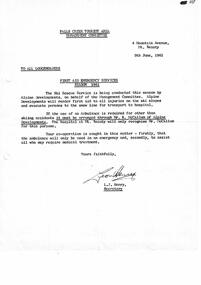
Letter - First Aid Emergency Services Season
... A letter from the Management Committee outlining procedures established for First Aid Emergency Services during the upcoming snow season....Falls Creek Tourist Area Management Committee Medical Facilities Falls Creek 1961 A letter from the Management Committee outlining procedures established for First Aid Emergency Services during the upcoming snow season. ...Bob (Herman) Hymans (a former member of the Royal Netherlands Navy) was born in Bloemendaal, Holland on 30th September 1922. During World War II he fought against the Japanese in the Dutch East Indies (now Indonesia) and was imprisoned in Changi and on the Burma Railway. After gaining qualifications as a Ski Instructor, Bob arrived in Falls Creek in July 1950. Working as an Instructor and Supervisor at Bogong Lodge, Bob decided his future was in accommodation. He was successful in negotiating an indenture for land from the State Electricity Commission (SEC). It took Bob two years to build his Grand Coeur Chalet but, tragically, it was burned down in August 1961. Bob also built the first Chairlift in Australia. This was a single chairlift and the structure was built from wooden electricity poles. He was constantly full of new ideas and proposals for the village. Bob Hymans died on 7th July 2007. This Collection of documents and letters tells the story of Bob's endeavours to develop Falls Creek into the ski village it is today.This letter is significant because it documents procedures put in place by the Falls Creek Tourist Area Management Committee for safe functioning of the area under its jurisdiction.A letter from the Management Committee outlining procedures established for First Aid Emergency Services during the upcoming snow season.falls creek tourist area management committee, medical facilities falls creek 1961 -
 Falls Creek Historical Society
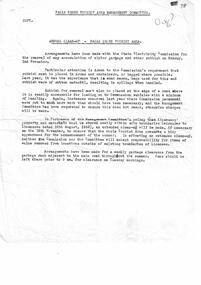
Letter - Annual Clean-Up - Falls Creek Tourist Area
... A notification from the Management Committee outlining the procedure and times for the Annual Clean up of the Falls Creek Tourist Area prior to the summer season....Falls Creek Tourist Area Management Committee Chairlift licence negotiations Double Chairlift A notification from the Management Committee outlining the procedure and times for the Annual Clean up of the Falls Creek Tourist Area prior to the summer season. ...Bob (Herman) Hymans (a former member of the Royal Netherlands Navy) was born in Bloemendaal, Holland on 30th September 1922. During World War II he fought against the Japanese in the Dutch East Indies (now Indonesia) and was imprisoned in Changi and on the Burma Railway. After gaining qualifications as a Ski Instructor, Bob arrived in Falls Creek in July 1950. Working as an Instructor and Supervisor at Bogong Lodge, Bob decided his future was in accommodation. He was successful in negotiating an indenture for land from the State Electricity Commission (SEC). It took Bob two years to build his Grand Coeur Chalet but, tragically, it was burned down in August 1961. Bob also built the first Chairlift in Australia. This was a single chairlift and the structure was built from wooden electricity poles. He was constantly full of new ideas and proposals for the village. Bob Hymans died on 7th July 2007. This Collection of documents and letters tells the story of Bob's endeavours to develop Falls Creek into the ski village it is today.This letter is significant because it documents developments made or endorsed by the Falls Creek Tourist Area Management Committee.A notification from the Management Committee outlining the procedure and times for the Annual Clean up of the Falls Creek Tourist Area prior to the summer season.falls creek tourist area management committee, chairlift licence negotiations, double chairlift -
 Bendigo Historical Society Inc.
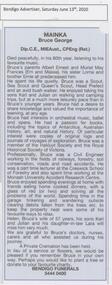
Document - DUDLEY HOUSE COLLECTION: OBITUARY, 2020
... Bruce was President of the Bendigo Historical Society 2000-2002 and was instrumental in organizing a new committee, establishing procedures and record keeping processes after several decades of neglect....Bruce was President of the Bendigo Historical Society 2000-2002 and was instrumental in organizing a new committee, establishing procedures and record keeping processes after several decades of neglect. ...Document. Obituary for Bruce Mainka, published in the Bendigo Advertiser, Saturday 13 June 2020. Bruce was President of the Bendigo Historical Society 2000-2002 and was instrumental in organizing a new committee, establishing procedures and record keeping processes after several decades of neglect.document, memo, obituary -
 Falls Creek Historical Society
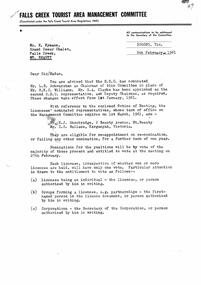
Document - Management Committee Changes to SEC representative from 1st January 1961
... A letter from the Management Committee notifying of changes to the SEC appointed to the Committee. It also outlines procedures for the nomination and election of new representatives to take place at the next meeting of the Committee....This letter is significant because it documents the procedures followed to appoint new members of the Management Committee. Falls Creek Tourist Area Management Committee Nominations for Committee A letter from the Management Committee notifying of changes to the SEC appointed to the Committee. ...Bob Hymans Collection Bob (Herman) Hymans (a former member of the Royal Netherlands Navy) was born in Bloemendaal, Holland on 30th September 1922. During World War II he fought against the Japanese in the Dutch East Indies (now Indonesia) and was imprisoned in Changi and on the Burma Railway. After gaining qualifications as a Ski Instructor, Bob arrived in Falls Creek in July 1950. Working as an Instructor and Supervisor at Bogong Lodge, Bob decided his future was in accommodation. He was successful in negotiating an indenture for land from the State Electricity Commission (SEC). It took Bob two years to build his Grand Coeur Chalet but, tragically, it was burned down in August 1961. Bob also built the first Chairlift in Australia. This was a single chairlift and the structure was built from wooden electricity poles. He was constantly full of new ideas and proposals for the village. Bob Hymans died on 7th July 2007. This Collection of documents and letters tells the story of Bob's endeavours to develop Falls Creek into the ski village it is today.This letter is significant because it documents the procedures followed to appoint new members of the Management Committee.A letter from the Management Committee notifying of changes to the SEC appointed to the Committee. It also outlines procedures for the nomination and election of new representatives to take place at the next meeting of the Committee.falls creek tourist area management committee, nominations for committee -
 Federation University Historical Collection
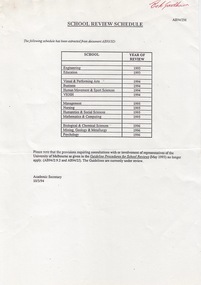
Document - Document - Guideline, VIOSH: Ballarat University College; School Review Schedule and Guidelines and Procedures, 1993
... procedure...academic board...dr frank hurley...chair of academic board review committee...procedures and participants, documentation, review report and consideration. Amendments to the Academic Board document are provided. There is a guideline for the introduction of new courses and changes to existing courses. (This is a schematic outline). Memorandum from Dr Frank Hurley, Chair of the Academic Board Review Committee...procedures and participants, documentation, review report and consideration. Amendments to the Academic Board document are provided. There is a guideline for the introduction of new courses and changes to existing courses. (This is a schematic outline). Memorandum from Dr Frank Hurley, Chair of the Academic Board Review Committee ...Victorian Institute of Occupational Safety and Health (VIOSH) Australia is the Asia-Pacific centre for teaching and research in occupational health and safety (OHS) and is known as one of Australia's leaders on the field. VIOSH has a global reputation for its innovative approach within the field of OHS management. VIOSH had its first intake of students in 1979. At that time the Institution was known as the Ballarat College of Advanced Education. In 1990 it became known as Ballarat University College, then in 1994 as University of Ballarat. It was 2014 that it became Federation University. VIOSH Australia students are safety managers, senior advisors and experienced OHS professionals. They come from all over Australia and industry. A review schedule for the University shows when each School is due for their review. The years range from 1993 through to 1996. Included with this are guideline procedures - rationale, schedule, procedures and participants, documentation, review report and consideration. Amendments to the Academic Board document are provided. There is a guideline for the introduction of new courses and changes to existing courses. (This is a schematic outline). Memorandum from Dr Frank Hurley, Chair of the Academic Board Review Committee, refers to guideline procedures re new courses and changes, reviews. As Ballarat University College is affiliated with The University of Melbourne, recommendations must be approved by Melbourne University. Students are taught active research and enquiry; rather than textbook learning and a one-size fits all approach. VIOSH accepts people into the Graduate Diploma of Occupational Hazard Management who have no undergraduate degree - on the basis of extensive work experience and knowledge.Seven A4 pages. Table and schematic outline includedBallarat University College paper. Signature of Frank Hurleyviosh, victorian institute of occupational safety and health, ballarat university college, melbourne university, review schedule, guidelines for procedure, academic board, dr frank hurley, chair of academic board review committee, new courses, changes to courses -
 Federation University Historical Collection
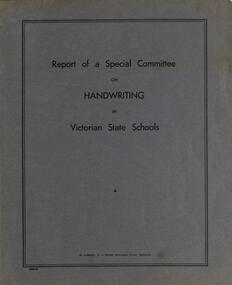
Book, A C Brooks, Government Printer, Report of a Special Committee on Handwriting in Victorian State Schools, 1958, 1958
... Committee members were:- J.W. Elijah, Chairman; Miss M.C. Morris, Secretary; Miss I. Agnew; R.A. Baker; W.R. Davern; H.C. Evans; G,W, Fleming; W.V. Lewis; A.R. Ramsay; Miss E.W.M. Sims; Miss R.M. Smith and A. Sullivan. Foreward is signed by G. A. Osborne, Chief Inspector of Primary Schools. Book outlines the procedure...Committee members were:- J.W. Elijah, Chairman; Miss M.C. Morris, Secretary; Miss I. Agnew; R.A. Baker; W.R. Davern; H.C. Evans; G,W, Fleming; W.V. Lewis; A.R. Ramsay; Miss E.W.M. Sims; Miss R.M. Smith and A. Sullivan. Foreward is signed by G. A. Osborne, Chief Inspector of Primary Schools. Book outlines the procedure ...Report of a special committee established to investigate the handwriting to be taught in Victorian State Schools. Committee members were:- J.W. Elijah, Chairman; Miss M.C. Morris, Secretary; Miss I. Agnew; R.A. Baker; W.R. Davern; H.C. Evans; G,W, Fleming; W.V. Lewis; A.R. Ramsay; Miss E.W.M. Sims; Miss R.M. Smith and A. Sullivan. Foreward is signed by G. A. Osborne, Chief Inspector of Primary Schools. Book outlines the procedure for teaching handwriting at various stages of development, grade levels and progression from Primary to Secondary.48 page soft covered book with writing, diagrams and photographscommittee, handwriting, primary schools, victorian state schools, chief inspector, j w elijah, miss m c morris, miss i agnew, r a baker, w r davern, h c evans, g w fleming, w v lewis, a r ramsay, miss e w m sims, miss r m smith -
Ringwood and District Historical Society
Document, Ringwood Technical School, 1982 - Policies, Structures, Roles, SRC, Camp Duncan Rules etc
... The Index pdf lists the contents of each part but is repeated here: Part 1 • General Educational Policy • Procedures Adopted By The Curriculum Board In Order To Implement The Educational Policy Part 2 • School Administrative Structure o Operational Structure - Operations Committee o Curriculum Board o Org Chart • Role of the Senior Teacher • Role of Head of Department • Role of Assistant with Responsibility • Role of Year Level Coordinator • Role of Section Leader Part 3 • Role of the Welfare Officer • Bell Times 1983 • School Layout • Evacuation Procedure and Diagram • Recording of Students’ Attendance • Staff Absences • Concerning School Rules Part 4 - SRC • Students; Representative Council – Constitution and Rules Part 5 – Camp Duncan, Excursion etc • Camp Duncan Disposition of Duties 1983 • Receipts/forms pro-forma • Some Facts About Camp Duncan • Camp Duncan Date 1983 • Student Checklist and Luggage Requirements for Camps and excursions • Confidential Medical Report for School Camps • Parental Permission Form Part 6 • Education Department Victoria o Pay Advice and Allowance Table o Subject Coding o Leave o General Advice on Transfers o Excursion procedure, Approval Form • Student Assembly Points ...The Index pdf lists the contents of each part but is repeated here: Part 1 • General Educational Policy • Procedures Adopted By The Curriculum Board In Order To Implement The Educational Policy Part 2 • School Administrative Structure o Operational Structure - Operations Committee o Curriculum Board o Org Chart • Role of the Senior Teacher • Role of Head of Department • Role of Assistant with Responsibility • Role of Year Level Coordinator • Role of Section Leader Part 3 • Role of the Welfare Officer • Bell Times 1983 • School Layout • Evacuation Procedure and Diagram • Recording of Students’ Attendance • Staff Absences • Concerning School Rules Part 4 - SRC • Students; Representative Council – Constitution and Rules Part 5 – Camp Duncan, Excursion etc • Camp Duncan Disposition of Duties 1983 • Receipts/forms pro-forma • Some Facts About Camp Duncan • Camp Duncan Date 1983 • Student Checklist and Luggage Requirements for Camps and excursions • Confidential Medical Report for School Camps • Parental Permission Form Part 6 • Education Department Victoria o Pay Advice and Allowance Table o Subject Coding o Leave o General Advice on Transfers o Excursion procedure, Approval Form • Student Assembly Points Ringwood Technical School, 1982 - Policies, Structures, Roles, SRC, Camp Duncan Rules etc Document ...Set of Documents describing school policies, structure, roles, SRC, Camp Duncan, subject coding, emergency procedures etc. Scanned in 6 parts due to volume of pages. Most pages are not numbered. Donated by Joan Pickford (nee Dear) 2022. (Prefect 1970-71). The Index pdf lists the contents of each part but is repeated here: Part 1 • General Educational Policy • Procedures Adopted By The Curriculum Board In Order To Implement The Educational Policy Part 2 • School Administrative Structure o Operational Structure - Operations Committee o Curriculum Board o Org Chart • Role of the Senior Teacher • Role of Head of Department • Role of Assistant with Responsibility • Role of Year Level Coordinator • Role of Section Leader Part 3 • Role of the Welfare Officer • Bell Times 1983 • School Layout • Evacuation Procedure and Diagram • Recording of Students’ Attendance • Staff Absences • Concerning School Rules Part 4 - SRC • Students; Representative Council – Constitution and Rules Part 5 – Camp Duncan, Excursion etc • Camp Duncan Disposition of Duties 1983 • Receipts/forms pro-forma • Some Facts About Camp Duncan • Camp Duncan Date 1983 • Student Checklist and Luggage Requirements for Camps and excursions • Confidential Medical Report for School Camps • Parental Permission Form Part 6 • Education Department Victoria o Pay Advice and Allowance Table o Subject Coding o Leave o General Advice on Transfers o Excursion procedure, Approval Form • Student Assembly Points rts, ringwood tech -
 Greensborough Historical Society
Document - Handbook, Watsonia High School - Teachers/Staff Handbook-Manual 1985, 1985_
... procedures and expectations of staff. An annual publication, updated as regulations change. This gives a snapshot of Watsonia High School in 1985. watsonia high school staff handbooks In-school produced A4 Size booklet containing sections on; School Policy; Roles & Responsibilities of the Principal, Staff, School Council and Committees; other information relevant to working as a teacher. ...Staff handbook outlining procedures and expectations of staff.An annual publication, updated as regulations change. This gives a snapshot of Watsonia High School in 1985.In-school produced A4 Size booklet containing sections on; School Policy; Roles & Responsibilities of the Principal, Staff, School Council and Committees; other information relevant to working as a teacher.watsonia high school, staff handbooks -
 Greensborough Historical Society
Document - Handbook, Watsonia High School - Teachers/Staff Handbook-Manual 1986, 1986_
... procedures and expectations of staff. An annual publication, updated as regulations change. This gives a snapshot of Watsonia High School in 1986. watsonia high school staff handbooks In-school produced A4 Size booklet containing sections on: School Policy; Roles & Responsibilities of the Principal, Staff, School Council and Committees; other information relevant to working as a teacher. ...Staff handbook outlining procedures and expectations of staff.An annual publication, updated as regulations change. This gives a snapshot of Watsonia High School in 1986.In-school produced A4 Size booklet containing sections on: School Policy; Roles & Responsibilities of the Principal, Staff, School Council and Committees; other information relevant to working as a teacher. watsonia high school, staff handbooks -
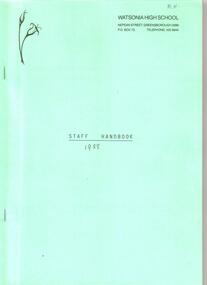 Greensborough Historical Society
Document - Handbook, Watsonia High School - Teachers/Staff Handbook-Manual 1988, 1988_
... procedures and expectations of staff. An annual publication, updated as regulations change. This gives a snapshot of Watsonia High School in 1988. watsonia high school staff handbooks In-school produced A4 Size booklet containing sections on; School Policy; Roles & Responsibilities of the Principal, Staff, School Council and Committees; other information relevant to working as a teacher. ...Staff handbook outlining procedures and expectations of staff.An annual publication, updated as regulations change. This gives a snapshot of Watsonia High School in 1988.In-school produced A4 Size booklet containing sections on; School Policy; Roles & Responsibilities of the Principal, Staff, School Council and Committees; other information relevant to working as a teacher.watsonia high school, staff handbooks -
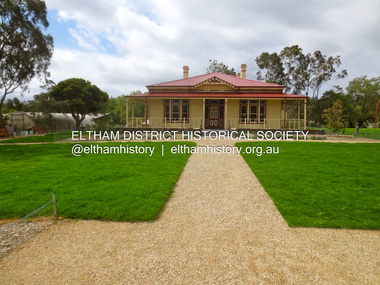 Eltham District Historical Society Inc
Photograph - Digital Photograph, Jim Connor, Edendale Farm Homestead, 11 December 2014
... procedures. It was later developed into a community farm and was run by an advisory committee and in 2000 it became an Environment Centre. ...procedures. It was later developed into a community farm and was run by an advisory committee and in 2000 it became an Environment Centre. ...Edendale Farm is Nillumbik Shire Council's environment centre situated in Gastons Road, Eltham between the railway and the Diamond Creek. The homestead on the property was built in 1896 and is of historical significance, being the subject of a Heritage Overlay under the Nillumbik Planning Scheme. The Edendale property was originally part of an extensive land purchase in 1852 from the Crown by pioneer Eltham farmer Henry Stooke. He initially purchased 51 acres and later expanded his holdings by purchasing another three adjacent Crown allotments extending northerly from Josiah Holloway's Little Eltham subdivision. Despite clearing the land, Stooke did not build on this property, choosing to live on his property "Rosehill" at Lower Plenty. In 1896 Thomas Cool, Club Manager of the Victoria Coffee Palace in Melbourne purchased 7 acres of the original Stooke land and built the house now known as Edendale. Cool did not farm the land, instead using it as a gentleman’s residence, retiring to Eltham at weekends. In 1918 he purchased an additional 7 acres but in 1919 he sold the property. Later owners included J.W. Cox, the Gaston family and D. Mummery. In the 1980s the Eltham Shire Council purchased the site for use as a Council depot, but this use did not proceed. Subsequently, it was used as the Council pound. The Edendale Farm Pet Education and Retention Centre was established in the summer of 1988/1989 and was set up to replace the existing dog kennels with a high standard pet retention centre. The design style of the building was established to compliment the features of the existing house. It was equipped with 10 retention pens, a veterinary room and a pet education area where school children and other interested parties learnt about pet care procedures. It was later developed into a community farm and was run by an advisory committee and in 2000 it became an Environment Centre. In early 2006 an advisory committee was established for the development of a master plan for future development at Edendale Farm. The committee included Russell Yeoman, a former long-time shire planner and founding member of the Eltham District Historical Society. At the time of filming the Master Plan and future for Edendale was about continuing to develop Edendale as a centre of environment learning and looking at expanding displays and school program, running a lot more of life-long learning and workshops around sustainable living.jim connor collection, edendale community farm, edendale farm, eltham, gastons road -
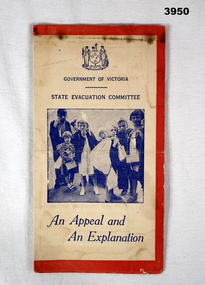 Bendigo Military Museum
Document - DOCUMENT, EVACUATION, Possibly WW2
... Document evacuation families “GOVERNMENT OF VICTORIA STATE EVACUATION COMMITTEE” “An Appeal and An Explanation” Coloured document, red / white / blue. Document folds out 4 times. Front shows a group of children with hand luggage. Details the evacuation procedure ...Coloured document, red / white / blue. Document folds out 4 times. Front shows a group of children with hand luggage. Details the evacuation procedure for all school children from aged between 6 - 15 years & mother or guardian. The document is for householders who may be implicated in this procedure during the war.“GOVERNMENT OF VICTORIA STATE EVACUATION COMMITTEE” “An Appeal and An Explanation”document, evacuation, families -
 Eltham District Historical Society Inc
Film - Video (DVD), Nillumbik Shire Council, Edendale Farm Community Environment Centre: History, c.2009
... procedures. It was later developed into a community farm and was run by an advisory committee and in 2000 it became an Environment Centre. ...procedures. It was later developed into a community farm and was run by an advisory committee and in 2000 it became an Environment Centre. ...EDENDALE FARM Edendale Farm is Nillumbik Shire Council's environment centre situated in Gastons Road, Eltham between the railway and the Diamond Creek. The homestead on the property was built in 1896 and is of historical significance, being the subject of a Heritage Overlay under the Nillumbik Planning Scheme. The Edendale property was originally part of an extensive land purchase in 1852 from the Crown by pioneer Eltham farmer Henry Stooke. He initially purchased 51 acres and later expanded his holdings by purchasing another three adjacent Crown allotments extending northerly from Josiah Holloway's Little Eltham subdivision. Despite clearing the land, Stooke did not build on this property, choosing to live on his property "Rosehill" at Lower Plenty. In 1896 Thomas Cool, Club Manager of the Victoria Coffee Palace in Melbourne purchased 7 acres of the original Stooke land and built the house now known as Edendale. Cool did not farm the land, instead using it as a gentleman’s residence, retiring to Eltham at weekends. In 1918 he purchased an additional 7 acres but in 1919 he sold the property. Later owners included J.W. Cox, the Gaston family and D. Mummery. In the 1980s the Eltham Shire Council purchased the site for use as a Council depot, but this use did not proceed. Subsequently, it was used as the Council pound. The Edendale Farm Pet Education and Retention Centre was established in the summer of 1988/1989 and was set up to replace the existing dog kennels with a high standard pet retention centre. The design style of the building was established to compliment the features of the existing house. It was equipped with 10 retention pens, a veterinary room and a pet education area where school children and other interested parties learnt about pet care procedures. It was later developed into a community farm and was run by an advisory committee and in 2000 it became an Environment Centre. In early 2006 an advisory committee was established for the development of a master plan for future development at Edendale Farm. The committee included Russell Yeoman, a former long-time shire planner and founding member of the Eltham District Historical Society. At the time of filming the Master Plan and future for Edendale was about continuing to develop Edendale as a centre of environment learning and looking at expanding displays and school program, running a lot more of life-long learning and workshops around sustainable living.edendale community farm, eltham, gastons homestead, gastons road, shire of nillumbik, video recording -
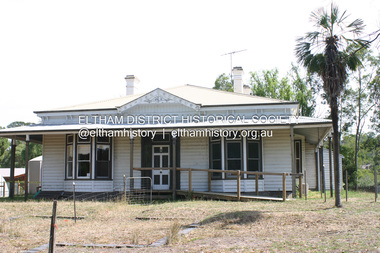 Eltham District Historical Society Inc
Photograph - Digital Photograph, Alan King, Edendale Farm Homestead, 29 January 2008
... procedures. It was later developed into a community farm and was run by an advisory committee and in 2000 it became an Environment Centre. ...procedures. It was later developed into a community farm and was run by an advisory committee and in 2000 it became an Environment Centre. ...Edendale Farm is Nillumbik Shire Council's environment centre situated in Gastons Road, Eltham between the railway and the Diamond Creek. The homestead on the property was built in 1896 and is of historical significance, being the subject of a Heritage Overlay under the Nillumbik Planning Scheme. The Edendale property was originally part of an extensive land purchase in 1852 from the Crown by pioneer Eltham farmer Henry Stooke. He initially purchased 51 acres and later expanded his holdings by purchasing another three adjacent Crown allotments extending northerly from Josiah Holloway's Little Eltham subdivision. Despite clearing the land, Stooke did not build on this property, choosing to live on his property "Rosehill" at Lower Plenty. In 1896 Thomas Cool, Club Manager of the Victoria Coffee Palace in Melbourne purchased 7 acres of the original Stooke land and built the house now known as Edendale. Cool did not farm the land, instead using it as a gentleman’s residence, retiring to Eltham at weekends. In 1918 he purchased an additional 7 acres but in 1919 he sold the property. Later owners included J.W. Cox, the Gaston family and D. Mummery. In the 1980s the Eltham Shire Council purchased the site for use as a Council depot, but this use did not proceed. Subsequently, it was used as the Council pound. The Edendale Farm Pet Education and Retention Centre was established in the summer of 1988/1989 and was set up to replace the existing dog kennels with a high standard pet retention centre. The design style of the building was established to compliment the features of the existing house. It was equipped with 10 retention pens, a veterinary room and a pet education area where school children and other interested parties learnt about pet care procedures. It was later developed into a community farm and was run by an advisory committee and in 2000 it became an Environment Centre. In early 2006 an advisory committee was established for the development of a master plan for future development at Edendale Farm. The committee included Russell Yeoman, a former long-time shire planner and founding member of the Eltham District Historical Society. At the time of filming the Master Plan and future for Edendale was about continuing to develop Edendale as a centre of environment learning and looking at expanding displays and school program, running a lot more of life-long learning and workshops around sustainable living. Covered under Heritage Overlay, Nillumbik Planning Scheme. Published: Nillumbik Now and Then / Marguerite Marshall 2008; photographs Alan King with Marguerite Marshall.; p101 A sharp turn from busy Wattletree Road by the railway line, brings a surprise. Only 1.4 km from Eltham’s centre, sheep feed, blissfully unaware of the hectic suburban activity so close by. At the entrance to the 5.6ha Edendale Farm is another surprise. A work of art that looks like huge tree trunks transformed into bowler and top-hatted men. The Fences Act 1968 by Tony Trembath with Mark Cain and John Doyle, 1996, is classified by the National Trust of Australia as having Regional Significance. The title refers to a government act on disputes between neighbors over the placement of fences and boundaries. This takes a ‘wry swipe’ at a community divided by trivial squabbles. It also celebrates making do with limited resources.1 Further along on the left, the office wall is decorated with a massive Eltham Copper Butterfly, designed by Robert Tickner and made by school children with used plastic bottles and other waste material. Nillumbik Council runs Edendale as an Environmental Education Centre, to help preserve and enhance the local environment. As early as 1988 the former Eltham Shire Council realised Edendale’s importance in meeting people’s needs, particularly of children, to enjoy farmland. The centre, with the Eltham North Reserve to the north - including remnant bushland and open parkland - makes up the major part of the public open space for this area. The council considers this area will become increasingly important to the local community for recreational use.2 Educational programs aim to encourage community involvement to ensure the long-term rehabilitation and protection of natural bushland areas. Edendale is used by people of all ages - from school children to adults - for environmental programs and workshops, as well as for recreation, to enjoy the domestic animals and to picnic. Edendale is also home to the Environmental Works staff who manage reserves and roadsides and support Nillumbik Friends environmental groups. The Friends propagate plants at the nursery, which grows indigenous plants and sells these to the public.3 The centre demonstrates the sustainable living the farm teaches, with features like solar hot water and drive lighting and for the fireplace, logs of recycled cardboard. Edendale has had a varied history as a dog pound and even as a retreat for Thomas Cool, Club Manager of the Victoria Coffee Palace in Melbourne. His single-storey weatherboard house built in 1896, which still stands, was grander than most homes in Eltham. Although such buildings were common in many other parts of Melbourne, Eltham’s poverty and remoteness did not encourage such construction. The Victorian rectangular-shaped house, with a corrugated iron roof and veranda, has elegant large rooms, leadlight windows, ceiling roses, two bay windows and ornately carved wooden fireplace surrounds. Cool bought seven acres (2.8ha) from pioneer Eltham farmer Henry Stooke’s 200 acre (81ha) farm, which he had bought from the Crown in 1852. In 1918 Cool bought an extra seven acres (2.8ha) but in 1919 sold the estate to farmer John Cox. In 1933 Cox sold Edendale to Mrs Elizabeth Gaston, after whom the road leading to the centre was named. The property was owned by several Gaston family members, who called it Edendale, then by a police constable, Douglas Mummery, until the Shire of Eltham bought it in 1970. Oddly Edendale was known as Mummery’s for almost 20 years, although Mummery owned it only for a short time.4 The shire used Edendale as a dog pound until amalgamation with other municipalities in 1996. The pound then moved to the Yan Yean Road, Plenty site, which had been used by the former Diamond Valley Shire Council. To the west and north the centre is bounded by Diamond Creek and on the east by the Melbourne-Hurstbridge railway line. Part of the Research creek forms the centre’s southern boundary.This collection of almost 130 photos about places and people within the Shire of Nillumbik, an urban and rural municipality in Melbourne's north, contributes to an understanding of the history of the Shire. Published in 2008 immediately prior to the Black Saturday bushfires of February 7, 2009, it documents sites that were impacted, and in some cases destroyed by the fires. It includes photographs taken especially for the publication, creating a unique time capsule representing the Shire in the early 21st century. It remains the most recent comprehenesive publication devoted to the Shire's history connecting local residents to the past. nillumbik now and then (marshall-king) collection, edendale farm -
 Victorian Aboriginal Corporation for Languages
Book, Sarah Pritchard, Indigenous Peoples, the United Nations and human rights, 1998
... .-- The Committee on the Elimination of Racial Discrimination: non-governmental input and the early warning and urgent procedure /? ....-- The Committee on the Elimination of Racial Discrimination: non-governmental input and the early warning and urgent procedure /? ...Introduction: The significance of international law /? Sarah Pritchard.-- Linking international standards with contemporary concerns of Aboriginal and Torres Strait Islander peoples /? Mick Dodson.-- The UN Charter-based human rights system: The UN Charter-based human rights system: an overview /? Garth Nettheim.-- Working Group on Indigenous Populations: mandate, standard-setting activities and future perspectives /? Sarah Pritchard.-- The UN treaty-based human rights system and individual complaints: The UN treaty-based human rights system: an overview /? Hilary Charlesworth.-- Individual complaints: an overview and admissibility requirements /? Hilary Charlesworth.-- Individual complaints: historical perspectives and the International Covenant on Economic, Social and Cultural Rights /? Philip Alston.-- Individual communications under the Optional Protocol to the International Covenant on Civil and Political Rights Elizabeth Evatt.-- Individual communications: the Convention against Torture and the Convention on the Elimination of All Forms of Racial Discrimination /? Michael O'Flaherty.-- The UN treaty-based human rights system and periodic reporting: Periodic reporting: the International Covenant on Economic, Social and Cultural Rights and the Convention on the Rights of the Child /? Philip Alston.-- Periodic reporting: the International Covenant on Civil and Political Rights and the Convention on the Elimination of All Forms of Discrimination against Women /? Elizabeth Evatt .-- The Committee on the Elimination of Racial Discrimination: non-governmental input and the early warning and urgent procedure /? Michael O'Flaherty.-- Indigenous peoples and some relevant human rights standards: Substantive provisions of the International Convention on the Elimination of All Forms of Racial Discrimination /? Michael O'Flaherty.-- The International Covenant on Civil and Political Rights and Indigenous peoples /? Sarah Pritchard.united nations -- history. indigenous peoples -- legal status, laws, etc. aboriginal australians -- civil rights. aboriginal australians -- legal status, laws, etc. human rights. -
 Sunshine and District Historical Society Incorporated
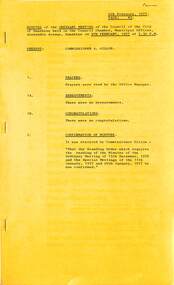
Administrative record - City of Sunshine - Commissioner Mr Alexander Alex George Gillon Collection 1976 - 1982 - Minutes of the ordinary meeting of council held on 9th February 1977, City of Sunshine, 9th February 1977
... Albans West North of the Albanvale Estate to Kurung Acquisition of Tip Site Sunshine Tip from Albion Reid Pty Ltd Sale of land Laurel Street to Education Department Proposed Indoor Heated Swimming Pool Report of Chief Health Inspector Ant Spray Authorisation of Doctor for Immunisation / Vaccination Procedures Application for Septic Tanks Application for Installation of Gas Fired Dry Septic Tank Units Prosecution Proceedings Sunshine Magistrate Court Food Sampling Apex Project City of Sunshine Nuisance Conditions Arising from the Continued Use of Vancant Land at Lot 272 Beela Court Sunshine West as a Trucking Depot Removal of Dwelling Outside of the Municipality Commonwealth Property Ashley Street to Port Arlington Proposed Disposal of Refuse By-Law Report of the Medical Officer of Health Holiday Activities in the Children's Section of the Library Report of the Federal Government's Committee of Inquiry into Public Libraries March 1976 Report of the City Engineer Certificate of Completion Private Street Scheme Right of Way Between Princess Street & Main Road East St. ...Albans West North of the Albanvale Estate to Kurung Acquisition of Tip Site Sunshine Tip from Albion Reid Pty Ltd Sale of land Laurel Street to Education Department Proposed Indoor Heated Swimming Pool Report of Chief Health Inspector Ant Spray Authorisation of Doctor for Immunisation / Vaccination Procedures Application for Septic Tanks Application for Installation of Gas Fired Dry Septic Tank Units Prosecution Proceedings Sunshine Magistrate Court Food Sampling Apex Project City of Sunshine Nuisance Conditions Arising from the Continued Use of Vancant Land at Lot 272 Beela Court Sunshine West as a Trucking Depot Removal of Dwelling Outside of the Municipality Commonwealth Property Ashley Street to Port Arlington Proposed Disposal of Refuse By-Law Report of the Medical Officer of Health Holiday Activities in the Children's Section of the Library Report of the Federal Government's Committee of Inquiry into Public Libraries March 1976 Report of the City Engineer Certificate of Completion Private Street Scheme Right of Way Between Princess Street & Main Road East St. ...Minutes of the Ordinary Meeting of Council held on 9th February 1977 Report of the Town Clerk Subsidies Rainbow Workshop Proposed Community Health Regional Planning Western Region Commission Proposal Co-Ordination Committee Proposed Regional Library Service Payment of Allowances to Councillors Employment of Unemployed Proposed Closure of Roads Railway Land Alexandra Avenue and Service Street Request for Inquiry into M.M.B.W. Operations Turkish Disaster Appeal Request for Financial Assistance Proposed Assignment of Lease The Hub Lease of land Scout Hall Lowe Crescent Loan Funds Financial Reports Castley Hall Financial Statement Transfer of Loan Funds not now Required for the Purpose for which they were borrowed either in part or full Future of Australian Assistance Plan Proposed Name Railway Station Deer Park Land Transfers for Sealing Proposed purchase of Garbage Tip Sunshine Tip Agreement with Councils Associated Matters Development of School Grounds Agrrements Use of Facilities by Ratepayers Proposed Liquor Licence Albion Rovers Soccer Club Subsidies for Welfare Officers and Elderly Citizens Clubs Proposed Name Part of St. Albans by City of Keilor St. Albans West North of the Albanvale Estate to Kurung Acquisition of Tip Site Sunshine Tip from Albion Reid Pty Ltd Sale of land Laurel Street to Education Department Proposed Indoor Heated Swimming Pool Report of Chief Health Inspector Ant Spray Authorisation of Doctor for Immunisation / Vaccination Procedures Application for Septic Tanks Application for Installation of Gas Fired Dry Septic Tank Units Prosecution Proceedings Sunshine Magistrate Court Food Sampling Apex Project City of Sunshine Nuisance Conditions Arising from the Continued Use of Vancant Land at Lot 272 Beela Court Sunshine West as a Trucking Depot Removal of Dwelling Outside of the Municipality Commonwealth Property Ashley Street to Port Arlington Proposed Disposal of Refuse By-Law Report of the Medical Officer of Health Holiday Activities in the Children's Section of the Library Report of the Federal Government's Committee of Inquiry into Public Libraries March 1976 Report of the City Engineer Certificate of Completion Private Street Scheme Right of Way Between Princess Street & Main Road East St. Albans Flat Development Control Vehicle Fleet Compound at Municipal Offices Tool Kits for Apprentice Mechanics Security Compound at Garbage Tip Sunshine Tip Purchase Four-Wheel Drive Tractor Parks & Recreation Land Use Permit Application Greyhound Training Establishment 5 Vule Street Land Use Permit Application Flats 15 Bardsley Street Land Use Permit Application Service Premises Caretaker's Dwelling Lot 80 Porter Road Deer Park Land Use Permit Application Community Health Centre Andrea Street Land Use Permit Application Subdivision and Detached House Lot 2 Main Road East, Sunshine Avenue & McIntyre Road Land Use Permit Application Detached House Lot 376 Doherty Street Land Use Permit Application Extension Existing Shop and Dwelling 82 Glengala Road Land Use Permit Application Subdivision & Detached Houses Glenmaggie Drive Land Use Permit Application Temporary Storage of Equipment and Machinery Lot 493 Fairbairn Road Land Use Permit Flats 17 St. Albans Road Land Use Permit Application Regional Depot Melbourne Metropolitan Board of Works St. Albans Road Re-Zoning 843 Ballarat Road Deer Park Land Use Permit Application Presbytery and Church Addition to Existing Church and School St. Peter Chanel Catholic Church & St. Peter Chanel Primary School Lot 59 Ballarat Road Deer Park Land Use Permit Application Garden Shed & Car Port Addition to Flats 9 Yarmouth Avenue Land Use Permit Application Holy Eucharist Primary School Oleander Drive Plan of Subdivision St. Albans Road Orama Street Child Care Centre Preparations of Plans Alteration to Bus Stop Route 416 McIntyre Road Sunshine North Land Use Permit Application Factory Lot 63 Munro Street Land Use Permit Application Extension to Existing Hall Sunshine United Cricket Club Selwyn Park Land Use Permit Application Factory & Storage Area Lots 101 & 102 Davies Avenue Land Use Permit Application Factory Lot 50 Cromer Avenue Land Use Permit Application Garage Extension 64 - 66 Monash Street Land Use Permit Application Recreation Buildings Additon to Existing Factory Australian Tube Mills Pty Ltd Hawthorn Avenue Land Use Permit Application Display of Goods in Conjunction with Petrol Filling Station 359 Ballarat Road Braybrook Land Use Permit Application 359 Ballarat Road General Engineering Lot 262 and Part Lots 258, 259 & 260 Rothray Avenue Land Use Permit Application Indoor Training Centre Lot 7 Mullenger Street Land Use Permit Application Extension to Existing Factory Ayton Street Land Use Permit Application Extension to Existing Factory Lots 49. 50 & 51 Marshall Street Land Use Permit Application Office & Amenities Addition to Existing Complex Lot 1 Burke Street Plan of Transfer of Land Old Geelong Road Land Use Permit Application Retail Timber Yard & Hardware Sales Lot 78 Sunshine Road Land Use Permit Application Underground Tank Additon to Existing Service Station Lot 2 Sunshine Road Land Use Permit Application Nursery & Garden Supply Depot 11 Norman Street Land Use Permit Application Office Finance Company 16A Watt Street Land Use Permit Application Service Industry and Shop 557B Geelong Road Proposed Widening of Easement Drain Monsanto Australia Limited Plan of Subdivision Market Road Hampton Avenue Private Street Scheme Strata Subdivision Lot 26 Belvedere Close Land Use Permit Application Flats Chifley Drive Land Use Permit Application Extension to Existing Factory Lot 6 Van Nes Avenue Statcon Intersection Signalisation Programme Churchill Avenue & Ashley Street Land Use Permit Application Warehouse, Office & Commercial Display Area 159 & 161 Rosamond Road and 3 White Street Land Use Permit Application Warehouse & Office Lot 4 Mitchell Street Land Use Permit Application Flats Van Ness Avenue Construction of Cranwell Street Extraordinary Business Report of the Town Clerk Amended Hours of Opening of Swimming Pools Castley Hall Committee of Management Loan Schedules Levels Possible Compensation McIntyre Road Bridge Railway Crossing Bunnett Street Land Transfer Loan National Bank Savings Bank Traffic Lights Anderson Road & Durham Road city of sunshine, alexander "alex" george gillon, the hub, sun crescent, sunshine, lowe crescent, castley hall, simmie street, deer park railway station, deer park, albion rovers soccer club, selwyn park, albion, laurel street, st. albans, beela court, sunshine west, alexandra avenue, service street, sunshine tip, albion reid, princess street, main road east, vule street, bardsley street, porter court, andrea street, sunshine avenue, mcintyre road, doherty street, glengala road, glenmaggie drive, fairbairn road, st. albans road, ballarat road, st. peter chanel catholic church, st. peter chanel primary school, yarmouth avenue, holy eucharist primary school, oleander drive, munro street, sunshine united cricket club, davies avenue, cromer avenue, monash street, hawthorn avenue, braybrook, rothray avenue, mullenger street, ayton street, marshall street, burke street, old geelong road, brooklyn, sunshine road, tottenham, norman street, watt street, market road, hampton avenue, belvedere close, chifley drive, van nes avenue, maribyrnong, churchill avenue, ashley street, rosamond road, white street, mitchell street, maidstone, cranwell street, mcintyre road bridge, anderson road, durham road -
 Sunshine and District Historical Society Incorporated
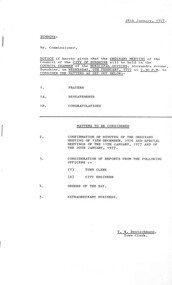
Administrative record - City of Sunshine - Commissioner Mr Alexander Alex George Gillon Collection 1976 - 1982 - Notice of ordinary meeting of the council of the City of Sunshine to be held on 9th February 1977, City of Sunshine, 28th January 1977
... Albans West North of the Albanvale Estate to Kurung Acquisition of Tip Site Sunshine Tip from Albion Reid Pty Ltd Sale of land Laurel Street to Education Department Proposed Indoor Heated Swimming Pool Report of Chief Health Inspector Ant Spray Authorisation of Doctor for Immunisation / Vaccination Procedures Application for Septic Tanks Application for Installation of Gas Fired Dry Septic Tank Units Prosecution Proceedings Sunshine Magistrate Court Food Sampling Apex Project City of Sunshine Nuisance Conditions Arising from the Continued Use of Vancant Land at Lot 272 Beela Court Sunshine West as a Trucking Depot Removal of Dwelling Outside of the Municipality Commonwealth Property Ashley Street to Port Arlington Proposed Disposal of Refuse By-Law Report of the Medical Officer of Health Holiday Activities in the Children's Section of the Library Report of the Federal Government's Committee of Inquiry into Public Libraries March 1976 Report of the City Engineer Certificate of Completion Private Street Scheme Right of Way Between Princess Street & Main Road East St. ...Albans West North of the Albanvale Estate to Kurung Acquisition of Tip Site Sunshine Tip from Albion Reid Pty Ltd Sale of land Laurel Street to Education Department Proposed Indoor Heated Swimming Pool Report of Chief Health Inspector Ant Spray Authorisation of Doctor for Immunisation / Vaccination Procedures Application for Septic Tanks Application for Installation of Gas Fired Dry Septic Tank Units Prosecution Proceedings Sunshine Magistrate Court Food Sampling Apex Project City of Sunshine Nuisance Conditions Arising from the Continued Use of Vancant Land at Lot 272 Beela Court Sunshine West as a Trucking Depot Removal of Dwelling Outside of the Municipality Commonwealth Property Ashley Street to Port Arlington Proposed Disposal of Refuse By-Law Report of the Medical Officer of Health Holiday Activities in the Children's Section of the Library Report of the Federal Government's Committee of Inquiry into Public Libraries March 1976 Report of the City Engineer Certificate of Completion Private Street Scheme Right of Way Between Princess Street & Main Road East St. ...Notice of Ordinary Meeting of the Council of the City of Sunshine to be held on 9th February 1977 Report of the Town Clerk Subsidies Rainbow Workshop Proposed Community Health Regional Planning Western Region Commission Proposal Co-Ordination Committee Proposed Regional Library Service Payment of Allowances to Councillors Employment of Unemployed Proposed Closure of Roads Railway Land Alexandra Avenue and Service Street Request for Inquiry into M.M.B.W. Operations Turkish Disaster Appeal Request for Financial Assistance Proposed Assignment of Lease The Hub Lease of land Scout Hall Lowe Crescent Loan Funds Financial Reports Castley Hall Financial Statement Transfer of Loan Funds not now Required for the Purpose for which they were borrowed either in part or full Future of Australian Assistance Plan Proposed Name Railway Station Deer Park Land Transfers for Sealing Proposed purchase of Garbage Tip Sunshine Tip Agreement with Councils Associated Matters Development of School Grounds Agrrements Use of Facilities by Ratepayers Proposed Liquor Licence Albion Rovers Soccer Club Subsidies for Welfare Officers and Elderly Citizens Clubs Proposed Name Part of St. Albans by City of Keilor St. Albans West North of the Albanvale Estate to Kurung Acquisition of Tip Site Sunshine Tip from Albion Reid Pty Ltd Sale of land Laurel Street to Education Department Proposed Indoor Heated Swimming Pool Report of Chief Health Inspector Ant Spray Authorisation of Doctor for Immunisation / Vaccination Procedures Application for Septic Tanks Application for Installation of Gas Fired Dry Septic Tank Units Prosecution Proceedings Sunshine Magistrate Court Food Sampling Apex Project City of Sunshine Nuisance Conditions Arising from the Continued Use of Vancant Land at Lot 272 Beela Court Sunshine West as a Trucking Depot Removal of Dwelling Outside of the Municipality Commonwealth Property Ashley Street to Port Arlington Proposed Disposal of Refuse By-Law Report of the Medical Officer of Health Holiday Activities in the Children's Section of the Library Report of the Federal Government's Committee of Inquiry into Public Libraries March 1976 Report of the City Engineer Certificate of Completion Private Street Scheme Right of Way Between Princess Street & Main Road East St. Albans Flat Development Control Vehicle Fleet Compound at Municipal Offices Tool Kits for Apprentice Mechanics Security Compound at Garbage Tip Sunshine Tip Purchase Four-Wheel Drive Tractor Parks & Recreation Land Use Permit Application Greyhound Training Establishment 5 Vule Street Land Use Permit Application Flats 15 Bardsley Street Land Use Permit Application Service Premises Caretaker's Dwelling Lot 80 Porter Court Deer Park Land Use Permit Application Community Health Centre Andrea Street Land Use Permit Application Subdivision and Detached House Lot 2 Main Road East, Sunshine Avenue & McIntyre Road Land Use Permit Application Detached House Lot 376 Doherty Street Land Use Permit Application Extension Existing Shop and Dwelling 82 Glengala Road Land Use Permit Application Subdivision & Detached Houses Glenmaggie Drive Land Use Permit Application Temporary Storage of Equipment and Machinery Lot 493 Fairbairn Road Land Use Permit Flats 17 St. Albans Road Land Use Permit Application Regional Depot Melbourne Metropolitan Board of Works St. Albans Road Re-Zoning 843 Ballarat Road Deer Park Land Use Permit Application Presbytery and Church Addition to Existing Church and School St. Peter Chanel Catholic Church & St. Peter Chanel Primary School Lot 59 Ballarat Road Deer Park Land Use Permit Application Garden Shed & Car Port Addition to Flats 9 Yarmouth Avenue Land Use Permit Application Holy Eucharist Primary School Oleander Drive Plan of Subdivision St. Albans Road Orama Street Child Care Centre Preparations of Plans Alteration to Bus Stop Route 416 McIntyre Road Sunshine North Land Use Permit Application Factory Lot 63 Munro Street Land Use Permit Application Extension to Existing Hall Sunshine United Cricket Club Selwyn Park Land Use Permit Application Factory & Storage Area Lots 101 & 102 Davies Avenue Land Use Permit Application Factory Lot 50 Cromer Avenue Land Use Permit Application Garage Extension 64 - 66 Monash Street Land Use Permit Application Recreation Buildings Additon to Existing Factory Australian Tube Mills Pty Ltd Hawthorn Avenue Land Use Permit Application Display of Goods in Conjunction with Petrol Filling Station 359 Ballarat Road Braybrook Land Use Permit Application 359 Ballarat Road General Engineering Lot 262 and Part Lots 258, 259 & 260 Rothray Avenue Land Use Permit Application Indoor Training Centre Lot 7 Mullenger Street Land Use Permit Application Extension to Existing Factory Ayton Street Land Use Permit Application Extension to Existing Factory Lots 49. 50 & 51 Marshall Street Land Use Permit Application Office & Amenities Addition to Existing Complex Lot 1 Burke Street Plan of Transfer of Land Old Geelong Road Land Use Permit Application Retail Timber Yard & Hardware Sales Lot 78 Sunshine Road Land Use Permit Application Underground Tank Additon to Existing Service Station Lot 2 Sunshine Road Land Use Permit Application Nursery & Garden Supply Depot 11 Norman Street Land Use Permit Application Office Finance Company 16A Watt Street Land Use Permit Application Service Industry and Shop 557B Geelong Road Proposed Widening of Easement Drain Monsanto Australia Limited Plan of Subdivision Market Road Hampton Avenue Private Street Scheme Strata Subdivision Lot 26 Belvedere Close Land Use Permit Application Flats Chifley Drive Land Use Permit Application Extension to Existing Factory Lot 6 Van Nes Avenue Statcon Intersection Signalisation Programme Churchill Avenue & Ashley Street Land Use Permit Application Warehouse, Office & Commercial Display Area 159 & 161 Rosamond Road and 3 White Street Land Use Permit Application Warehouse & Office Lot 4 Mitchell Street Land Use Permit Application Flats Van Ness Avenue Construction of Cranwell Street Extraordinary Business Report of the Town Clerk Amended Hours of Opening of Swimming Pools Castley Hall Committee of Management Loan Schedules Levels Possible Compensation McIntyre Road Bridge Railway Crossing Bunnett Street Land Transfer city of sunshine, alexander "alex" george gillon, the hub, sun crescent, sunshine, lowe crescent, castley hall, simmie street, deer park railway station, deer park, albion rovers soccer club, selwyn park, albion, laurel street, st. albans, beela court, sunshine west, alexandra avenue, service street, sunshine tip, albion reid, princess street, main road east, bardsley street, porter court, andrea street, sunshine avenue, mcintyre road, doherty street, glengala road, glenmaggie drive, fairbairn road, ballarat road, st. peter chanel catholic church, st. peter chanel primary school, yarmouth avenue, holy eucharist primary school, oleander drive, munro street, sunshine united cricket club, st. albans road, davies avenue, cromer avenue, monash street, hawthorn avenue, braybrook, rothray avenue, mullenger street, ayton street, marshall street, burke street, old geelong road, brooklyn, sunshine road, tottenham, norman street, watt street, geelong road, monsanto, somerville road, footscray west, hampton avenue, belvedere close, chifley drive, van nes avenue, maribyrnong, churchill avenue, ashley street, rosamond road, white street, mitchell street, maidstone, cranwell street, castley hall committee of management, bunnett street, mcintyre road bridge -
 Sunshine and District Historical Society Incorporated
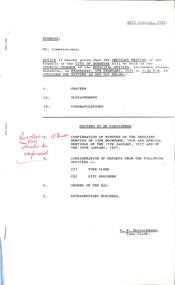
Administrative record - City of Sunshine - Commissioner Mr Alexander Alex George Gillon Collection 1976 - 1982 - Notice of ordinary meeting of the council of the City of Sunshine to be held on 9th February 1977, City of Sunshine, 28th January 1977
... Albans West North of the Albanvale Estate to Kurung Acquisition of Tip Site Sunshine Tip from Albion Reid Pty Ltd Sale of land Laurel Street to Education Department Proposed Indoor Heated Swimming Pool Report of Chief Health Inspector Ant Spray Authorisation of Doctor for Immunisation / Vaccination Procedures Application for Septic Tanks Application for Installation of Gas Fired Dry Septic Tank Units Prosecution Proceedings Sunshine Magistrate Court Food Sampling Apex Project City of Sunshine Nuisance Conditions Arising from the Continued Use of Vancant Land at Lot 272 Beela Court Sunshine West as a Trucking Depot Removal of Dwelling Outside of the Municipality Commonwealth Property Ashley Street to Port Arlington Proposed Disposal of Refuse By-Law Report of the Medical Officer of Health Holiday Activities in the Children's Section of the Library Report of the Federal Government's Committee of Inquiry into Public Libraries March 1976 Report of the City Engineer Certificate of Completion Private Street Scheme Right of Way Between Princess Street & Main Road East St. ...Albans West North of the Albanvale Estate to Kurung Acquisition of Tip Site Sunshine Tip from Albion Reid Pty Ltd Sale of land Laurel Street to Education Department Proposed Indoor Heated Swimming Pool Report of Chief Health Inspector Ant Spray Authorisation of Doctor for Immunisation / Vaccination Procedures Application for Septic Tanks Application for Installation of Gas Fired Dry Septic Tank Units Prosecution Proceedings Sunshine Magistrate Court Food Sampling Apex Project City of Sunshine Nuisance Conditions Arising from the Continued Use of Vancant Land at Lot 272 Beela Court Sunshine West as a Trucking Depot Removal of Dwelling Outside of the Municipality Commonwealth Property Ashley Street to Port Arlington Proposed Disposal of Refuse By-Law Report of the Medical Officer of Health Holiday Activities in the Children's Section of the Library Report of the Federal Government's Committee of Inquiry into Public Libraries March 1976 Report of the City Engineer Certificate of Completion Private Street Scheme Right of Way Between Princess Street & Main Road East St. ...Notice of Ordinary Meeting of the Council of the City of Sunshine to be held on 9th February 1977 Report of the Town Clerk Subsidies Rainbow Workshop Proposed Community Health Regional Planning Western Region Commission Proposal Co-Ordination Committee Proposed Regional Library Service Payment of Allowances to Councillors Employment of Unemployed Proposed Closure of Roads Railway Land Alexandra Avenue and Service Street Request for Inquiry into M.M.B.W. Operations Turkish Disaster Appeal Request for Financial Assistance Proposed Assignment of Lease The Hub Lease of land Scout Hall Lowe Crescent Loan Funds Financial Reports Castley Hall Financial Statement Transfer of Loan Funds not now Required for the Purpose for which they were borrowed either in part or full Future of Australian Assistance Plan Proposed Name Railway Station Deer Park Land Transfers for Sealing Proposed purchase of Garbage Tip Sunshine Tip Agreement with Councils Associated Matters Development of School Grounds Agrrements Use of Facilities by Ratepayers Proposed Liquor Licence Albion Rovers Soccer Club Subsidies for Welfare Officers and Elderly Citizens Clubs Proposed Name Part of St. Albans by City of Keilor St. Albans West North of the Albanvale Estate to Kurung Acquisition of Tip Site Sunshine Tip from Albion Reid Pty Ltd Sale of land Laurel Street to Education Department Proposed Indoor Heated Swimming Pool Report of Chief Health Inspector Ant Spray Authorisation of Doctor for Immunisation / Vaccination Procedures Application for Septic Tanks Application for Installation of Gas Fired Dry Septic Tank Units Prosecution Proceedings Sunshine Magistrate Court Food Sampling Apex Project City of Sunshine Nuisance Conditions Arising from the Continued Use of Vancant Land at Lot 272 Beela Court Sunshine West as a Trucking Depot Removal of Dwelling Outside of the Municipality Commonwealth Property Ashley Street to Port Arlington Proposed Disposal of Refuse By-Law Report of the Medical Officer of Health Holiday Activities in the Children's Section of the Library Report of the Federal Government's Committee of Inquiry into Public Libraries March 1976 Report of the City Engineer Certificate of Completion Private Street Scheme Right of Way Between Princess Street & Main Road East St. Albans Flat Development Control Vehicle Fleet Compound at Municipal Offices Tool Kits for Apprentice Mechanics Security Compound at Garbage Tip Sunshine Tip Purchase Four-Wheel Drive Tractor Parks & Recreation Land Use Permit Application Greyhound Training Establishment 5 Vule Street Land Use Permit Application Flats 15 Bardsley Street Land Use Permit Application Service Premises Caretaker's Dwelling Lot 80 Porter Court Deer Park Land Use Permit Application Community Health Centre Andrea Street Land Use Permit Application Subdivision and Detached House Lot 2 Main Road East, Sunshine Avenue & McIntyre Road Land Use Permit Application Detached House Lot 376 Doherty Street Land Use Permit Application Extension Existing Shop and Dwelling 82 Glengala Road Land Use Permit Application Subdivision & Detached Houses Glenmaggie Drive Land Use Permit Application Temporary Storage of Equipment and Machinery Lot 493 Fairbairn Road Land Use Permit Flats 17 St. Albans Road Land Use Permit Application Regional Depot Melbourne Metropolitan Board of Works St. Albans Road Re-Zoning 843 Ballarat Road Deer Park Land Use Permit Application Presbytery and Church Addition to Existing Church and School St. Peter Chanel Catholic Church & St. Peter Chanel Primary School Lot 59 Ballarat Road Deer Park Land Use Permit Application Garden Shed & Car Port Addition to Flats 9 Yarmouth Avenue Land Use Permit Application Holy Eucharist Primary School Oleander Drive Plan of Subdivision St. Albans Road Orama Street Child Care Centre Preparations of Plans Alteration to Bus Stop Route 416 McIntyre Road Sunshine North Land Use Permit Application Factory Lot 63 Munro Street Land Use Permit Application Extension to Existing Hall Sunshine United Cricket Club Selwyn Park Land Use Permit Application Factory & Storage Area Lots 101 & 102 Davies Avenue Land Use Permit Application Factory Lot 50 Cromer Avenue Land Use Permit Application Garage Extension 64 - 66 Monash Street Land Use Permit Application Recreation Buildings Additon to Existing Factory Australian Tube Mills Pty Ltd Hawthorn Avenue Land Use Permit Application Display of Goods in Conjunction with Petrol Filling Station 359 Ballarat Road Braybrook Land Use Permit Application 359 Ballarat Road General Engineering Lot 262 and Part Lots 258, 259 & 260 Rothray Avenue Land Use Permit Application Indoor Training Centre Lot 7 Mullenger Street Land Use Permit Application Extension to Existing Factory Ayton Street Land Use Permit Application Extension to Existing Factory Lots 49. 50 & 51 Marshall Street Land Use Permit Application Office & Amenities Addition to Existing Complex Lot 1 Burke Street Plan of Transfer of Land Old Geelong Road Land Use Permit Application Retail Timber Yard & Hardware Sales Lot 78 Sunshine Road Land Use Permit Application Underground Tank Additon to Existing Service Station Lot 2 Sunshine Road Land Use Permit Application Nursery & Garden Supply Depot 11 Norman Street Land Use Permit Application Office Finance Company 16A Watt Street Land Use Permit Application Service Industry and Shop 557B Geelong Road Proposed Widening of Easement Drain Monsanto Australia Limited Plan of Subdivision Market Road Hampton Avenue Private Street Scheme Strata Subdivision Lot 26 Belvedere Close Land Use Permit Application Flats Chifley Drive Land Use Permit Application Extension to Existing Factory Lot 6 Van Nes Avenue Statcon Intersection Signalisation Programme Churchill Avenue & Ashley Street Land Use Permit Application Warehouse, Office & Commercial Display Area 159 & 161 Rosamond Road and 3 White Street Land Use Permit Application Warehouse & Office Lot 4 Mitchell Street Land Use Permit Application Flats Van Ness Avenue Construction of Cranwell Street Extraordinary Business Report of the Town Clerk Amended Hours of Opening of Swimming Pools Castley Hall Committee of Management Loan Schedules Levels Possible Compensation McIntyre Road Bridge Railway Crossing Bunnett Street Land Transfer city of sunshine, alexander "alex" george gillon, the hub, sun crescent, sunshine, lowe crescent, castley hall, simmie street, deer park railway station, deer park, albion rovers soccer club, selwyn park, albion, laurel street, st. albans, beela court, sunshine west, alexandra avenue, service street, sunshine tip, albion reid, princess street, main road east, bardsley street, porter court, andrea street, sunshine avenue, mcintyre road, doherty street, glengala road, glenmaggie drive, fairbairn road, ballarat road, st. peter chanel catholic church, st. peter chanel primary school, yarmouth avenue, holy eucharist primary school, oleander drive, munro street, sunshine united cricket club, st. albans road, davies avenue, cromer avenue, monash street, hawthorn avenue, braybrook, rothray avenue, mullenger street, ayton street, marshall street, burke street, old geelong road, brooklyn, sunshine road, tottenham, norman street, watt street, geelong road, monsanto, somerville road, footscray west, hampton avenue, belvedere close, chifley drive, van nes avenue, maribyrnong, churchill avenue, ashley street, rosamond road, white street, mitchell street, maidstone, cranwell street, castley hall committee of management, bunnett street, mcintyre road bridge -
 Ballarat Tramway Museum
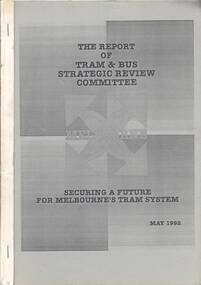
Document - Report, Tram & Bus Strategic Review Committee, "The Report of Tram & Bus Strategic Review Committee - Securing a future for Melbourne's Tram System.", May. 1992
... Appendix No. 1 - Left/right turn priority at intersections 2 - draft structural efficiency proposal 3 - selection and training procedures report 4 - absenteeism report 5 - cost study of W and Z class trams 6 - Trams in Melbourne - AGB Australia Consultants 7 - Proposed tram and bus depot - South Melbourne - Detailed evaluation 8 - Depot and Route vehicle composition 9 - Options and Feasibility study of Additional W class trams in Melbourne. "The Report of Tram & Bus Strategic Review Committee ...1302.1 - A4 size, 88 page report on Melbourne's tram and bus system produced by 'Tram & Bus Strategic Review Committee' in May 1992. Report printed on white paper, with blue covers, stapled on sides. Report examines cross linking of trams routes and many other recommendations regarding services, union awards, ticketing, opportunities for expansion, reliability, revenue impacts, driver only trams, workplace reform, staffing, revenue protection and tourism opportunities. Note the report has been mis-bound with pages out of order eg 2, 1, 4, 3, 6, 5 etc. Gives a series of recommendations, few of which were implemented in reality. 1302.2 - A4 size - approx. 200 page document with blue covers - appendix to the above report. List of appendices given in 1302.1. Appendix No. 1 - Left/right turn priority at intersections 2 - draft structural efficiency proposal 3 - selection and training procedures report 4 - absenteeism report 5 - cost study of W and Z class trams 6 - Trams in Melbourne - AGB Australia Consultants 7 - Proposed tram and bus depot - South Melbourne - Detailed evaluation 8 - Depot and Route vehicle composition 9 - Options and Feasibility study of Additional W class trams in Melbourne.trams, tramways, melbourne, routes, strategic reviews, tramway systems -
Moorabbin Air Museum
Book - Aircraft Structural Fatigue, Fatigue Design Procedures
... Airplane Structural Fatgiue Aspects of aircraft structural fatigue Proceedings of 4th symposium on aircraft structural fatigue by International Committee on Aeronautical Fatigue , held in Munich June 1965 Fatigue Design Procedures Book Aircraft Structural Fatigue ...Proceedings of 4th symposium on aircraft structural fatigue by International Committee on Aeronautical Fatigue , held in Munich June 1965Proceedings of 4th symposium on aircraft structural fatigue by International Committee on Aeronautical Fatigue , held in Munich June 1965aspects of aircraft structural fatigue -
 Melbourne Tram Museum
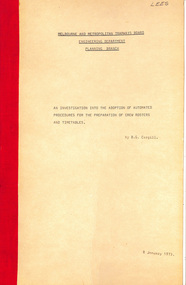
Document - Report, Melbourne & Metropolitan Tramways Board (MMTB), "Parliamentary Public Works Committee - Eastern Railway Inquiry No. 2 - Evidence on Behalf of the MMTB", 8/01/1973 12:00:00 AM
... Report - Foolscap about 40 pages, with card covers and a red binding strip titled - "An investigation into the adoption of automated procedures for the preparation of crew rosters and timetables", dated 8 Jan. 1973, by B. G. Cargill. Notes work in MTT Adelaide and Hungary. Has a table of Contents. "Parliamentary Public Works Committee ...Report - Foolscap about 40 pages, with card covers and a red binding strip titled - "An investigation into the adoption of automated procedures for the preparation of crew rosters and timetables", dated 8 Jan. 1973, by B. G. Cargill. Notes work in MTT Adelaide and Hungary. Has a table of Contents.In top right hand corner " Lees" in ink.trams, tramways, timetables, rosters, planning -
 Melbourne Legacy
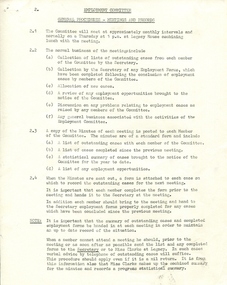
Document, Employment Committee / General Procedures - Meetings and Records
... These documents relate the procedures of meetings of the Employment Committee. There is also a draft advertisement to be typed up and added to the Legacy Bulletin asking for assistance in finding work for junior legatees. ...Employment Committee / General Procedures - Meetings and Records Document ...These documents relate the procedures of meetings of the Employment Committee. There is also a draft advertisement to be typed up and added to the Legacy Bulletin asking for assistance in finding work for junior legatees. The importance of the document is that it clearly states procedures of meetings and records.Paper, 5 pages, typed in black. 1 pink page typed on both sides, dated 26/6/1979, 1 paper folder,pink titled "Notification of Employment Vacancies". White out has been used extensively. This appears to have been a draft copy with alterations made.committee, procedures -
 Melbourne Legacy
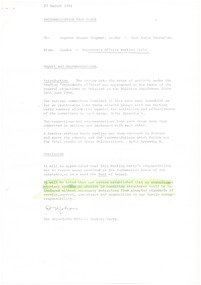
Document - Document, report, Rationalisation Task Force. August 1984, 1984
... Due to declining numbers of Legatees and the number of families requiring help in certain areas, the report shows that Legacy needs to alter the way in which it delivers some of the services to Widows and families but still maintain the services that Legacy has provided previously. review procedures review committee Notations in blue biro on some pages. ...This report highlights the ongoing need to review and if necessary update and change policies and priorities if need be. The report explains that to provide recommendations and suggestions three working parties were established with two Legatees in charge of each group. In group1, 47 Legatees were involved, group 2&3, 59 Legatees involved in each group. Each group had a budget to work to and designated areas of Legacy activities to investigate and report on e.g. group1 would report on Accommodation, Housing, Handicapped Dependants, Firewood - refer to appendix A. Reports and suggestions are made in appendix B. Some recommendations suggest that Legacy and Legatees do not cease providing services but refer suitable applicants on to similar activities with other organisations if the need arises. This was due to declining numbers of Legatees to supervise, and those under the care of Legacy to paricipate. Due to declining numbers of Legatees and the number of families requiring help in certain areas, the report shows that Legacy needs to alter the way in which it delivers some of the services to Widows and families but still maintain the services that Legacy has provided previously. White A4 paper with black type, 5 pages about the Rationalisation TaskforceNotations in blue biro on some pages. First page, last paragraph highlighted in green. Page two Appendix B, paragraphs d Widows,b Pensions, Welfare highlighted in pink.review, procedures, review committee -
 Melbourne Legacy
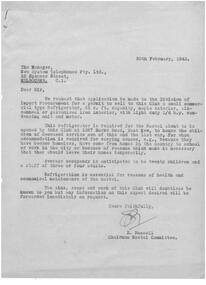
Letter - Document, letter, 1943
... procedures as it requests that "application be made to the Division of Import Procurement for a permit to sell to this Club a small commercial type Refrigerator". See also 00485. An example of the way Legacy sought to leverage their reputation to obtain favourable terms for equipping Holmbush. residences holmbush holmbush administration Initialled in blue ink by E. Russell, Chairman Hostel Committee ...This is a file copy of a request for the purchase of a refrigerator for Holmbush. It is an example of war time procedures as it requests that "application be made to the Division of Import Procurement for a permit to sell to this Club a small commercial type Refrigerator". See also 00485.An example of the way Legacy sought to leverage their reputation to obtain favourable terms for equipping Holmbush.Letter from 1943 requesting a wartime permit for a refrigerator. Carbon copy on green paper, two punched filing holes.Initialled in blue ink by E. Russell, Chairman Hostel Committeeresidences, holmbush, holmbush administration -
 Melbourne Legacy
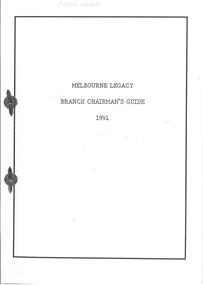
Document, Branch Chairman's Guide 1991, 1991
... The guide contains: Section A Operations Council and Branches : The Relationship Operations Council Section B Group, Liaison Committee and Groups : The Relationship Group Liaison Committee Section C Internal Changes of Communication and Sources of Information for the Legatee Section D An outline of responsibilities and procedural guidelines for branch chairmen Section E Financial Authority of Branches Section F Guidelines for the Format and Content of Branch Minutes Section G Selection and Appointment of Branch Chairmen Section H Enrolment, Contact and Reporting Procedures Section I Procedure and Notes for Proposers of Prospective Members Section J Duty Legatee Scheme Section K Education (including Sir John Gellibrand Memorial Scholarship and the Macrae Trust) Section L Section M Welfare Section N Pensions, Benefits and Allowances Section O Widows' Committee and Widows' Clubs Section P Widows' Clubs Rules Section Q Current Rates of Social Security and Repatriation Pensions Section R Recommended List of Contractors Available for Home Maintenance (including a list of contractors that can provide services to Widows, such as plumbers, bricklayers, electricians and blind supplies and repairs) 31 yellow pages - not scanned due to it being names and addresses and phone numbers. ...The guide contains: Section A Operations Council and Branches : The Relationship Operations Council Section B Group, Liaison Committee and Groups : The Relationship Group Liaison Committee Section C Internal Changes of Communication and Sources of Information for the Legatee Section D An outline of responsibilities and procedural guidelines for branch chairmen Section E Financial Authority of Branches Section F Guidelines for the Format and Content of Branch Minutes Section G Selection and Appointment of Branch Chairmen Section H Enrolment, Contact and Reporting Procedures Section I Procedure and Notes for Proposers of Prospective Members Section J Duty Legatee Scheme Section K Education (including Sir John Gellibrand Memorial Scholarship and the Macrae Trust) Section L Section M Welfare Section N Pensions, Benefits and Allowances Section O Widows' Committee and Widows' Clubs Section P Widows' Clubs Rules Section Q Current Rates of Social Security and Repatriation Pensions Section R Recommended List of Contractors Available for Home Maintenance (including a list of contractors that can provide services to Widows, such as plumbers, bricklayers, electricians and blind supplies and repairs) 31 yellow pages - not scanned due to it being names and addresses and phone numbers. ...A guide for Chairmen of Melbourne Legacy. This copy was owned by Graham Riches. The guide contains: Section A Operations Council and Branches : The Relationship Operations Council Section B Group, Liaison Committee and Groups : The Relationship Group Liaison Committee Section C Internal Changes of Communication and Sources of Information for the Legatee Section D An outline of responsibilities and procedural guidelines for branch chairmen Section E Financial Authority of Branches Section F Guidelines for the Format and Content of Branch Minutes Section G Selection and Appointment of Branch Chairmen Section H Enrolment, Contact and Reporting Procedures Section I Procedure and Notes for Proposers of Prospective Members Section J Duty Legatee Scheme Section K Education (including Sir John Gellibrand Memorial Scholarship and the Macrae Trust) Section L Section M Welfare Section N Pensions, Benefits and Allowances Section O Widows' Committee and Widows' Clubs Section P Widows' Clubs Rules Section Q Current Rates of Social Security and Repatriation Pensions Section R Recommended List of Contractors Available for Home Maintenance (including a list of contractors that can provide services to Widows, such as plumbers, bricklayers, electricians and blind supplies and repairs) 31 yellow pages - not scanned due to it being names and addresses and phone numbers. Section S Administration Instructions An Organisation Chart of Legacy and A Table of Organisation of StaffA living document that was regularly updated for the Chairman of Melbourne Legacy to use in his duties.A4 pages x 64 bound together with split pins.L/GPA Riches in pencil on top edge.regulations, rules, objectives -
 Kew Historical Society Inc
Document, Irena Higgins, Kew Children's Cottages, 1952-1964
... Committee members, pp. 4&5 ---, (---), (Untitled), p.4. ---, (---), [Memo re feedback from Official Visitors Conference at Royal Park], p.1. ---, (---), [Patient profile proforma], pp.1-2. ---, (---), Admission to Children’s Cottages Kew, p.1. ---, (---), Admissions Procedure, pp.1-2. ---, (---), Chaplaincy, p.1. ---, (---), Children’s Cottages and Special School Kew - Open for Education Week, p.1. ---, (---), Children’s Cottages Kew, p. 1-2. ---, (---), Children’s Cottages Kew, p.1. ---, (---), Children’s Cottages, Kew - Pathology Request and Report Form, p. 1. ---, (---), Children’s Cottages? ...Committee members, pp. 4&5 ---, (---), (Untitled), p.4. ---, (---), [Memo re feedback from Official Visitors Conference at Royal Park], p.1. ---, (---), [Patient profile proforma], pp.1-2. ---, (---), Admission to Children’s Cottages Kew, p.1. ---, (---), Admissions Procedure, pp.1-2. ---, (---), Chaplaincy, p.1. ---, (---), Children’s Cottages and Special School Kew - Open for Education Week, p.1. ---, (---), Children’s Cottages Kew, p. 1-2. ---, (---), Children’s Cottages Kew, p.1. ---, (---), Children’s Cottages, Kew - Pathology Request and Report Form, p. 1. ---, (---), Children’s Cottages? ...---, ---, Cottages Liaison Committee members, pp. 4&5 ---, (---), (Untitled), p.4. ---, (---), [Memo re feedback from Official Visitors Conference at Royal Park], p.1. ---, (---), [Patient profile proforma], pp.1-2. ---, (---), Admission to Children’s Cottages Kew, p.1. ---, (---), Admissions Procedure, pp.1-2. ---, (---), Chaplaincy, p.1. ---, (---), Children’s Cottages and Special School Kew - Open for Education Week, p.1. ---, (---), Children’s Cottages Kew, p. 1-2. ---, (---), Children’s Cottages Kew, p.1. ---, (---), Children’s Cottages, Kew - Pathology Request and Report Form, p. 1. ---, (---), Children’s Cottages? Kew, pp.1-4 ---, (---), Extracts From the Report of Dr. J. V. McCreery, first Superintendent, p.1. ---, (---), Kew Cottages Training Centre Brochure, pp.1. ---, (---), Kew Special School, pp.1-2. ---, (---), Notes for General Guidance of Officers in Charge of Idiot Children, p.1. ---, (---), Notes for General Guidance of Officers in Charge of Idiot Children, p.1. ---, (---), Notes for Student Groups, pp.1-6. ---, (---), Physiotherapy at the Children’s Cottages Kew, p.1. ---, (---), Preface to Brochure on Cottages, pp.1-2. ---, (---), The administrative staff comprises …, pp.1-2. ---, (---), Untitled, p.2. ---, (1958, 29 August), Notes from a meeting of Superintendents with Dr Dax and other superintendents, p.1. ---, (1958, October - December), Proposed Survey of Children’s Cottages, Kew, pp.1-6., and Case Sheet pp. 1-5. ---, (1961, 2 November), Untitled letter regarding finances and upgrades, p.1. ---, (1962, 25 October), Memorandum, p.1. ---, (1962), Children’s Cottages Kew [overview of activities], p.1. ---, (1962), Report for the Year 1962 [statistics], p.1. ---, (1963), The Children’s Cottages Kew, pp.1-3. ---, (1964, 10 September), Merchandise Project Children’s Welfare Fund, Kew Cottages Parents Association, p.1. ---, (1964, 26 May), [Draft] Preface to Brochure on Cottages, pp.1-2. ---, (1964, October), Report to the Twelfth Annual (Perth) Conference: Australian Council for the Mentally Retarded, Kew Cottages Parents Association, pp.1-2. ---, (1964), Children’s Welfare Fund: Disbursements July 1963 - September 1964. [Brady, Dr W.A.] , (---), Transfer of Patients from One Institution to Another, pp.1-3. [Higgins, Irena], (---), The Formation and Development of Kew Children’s Cottages Parent’s Association, pp.1-6. Ashburner, J.B., (---, ---), Notes and Instructions, Kew Mental Hospital, p.1. Ashburner, J.B., (1954, 1 April), Notices and Instructions, Kew Mental Hospital, pp.1-2. Ashburner, J.B., (1954, 10 February), Notices and Instructions, Kew Mental Hospital, pp.1-3. Ashburner, J.B., (1954, 10 March), Notices and Instructions, Kew Mental Hospital, p.1. Ashburner, J.B., (1954, 11 March), Notices and Instructions, Kew Mental Hospital, pp.1-4. Ashburner, J.B., (1954, 11 May), Notes and Instructions, Kew Mental Hospital, p.1. Ashburner, J.B., (1954, 12 March), Notices and Instructions, Kew Mental Hospital, pp.1-4. Ashburner, J.B., (1954, 12 May), Notes and Instructions, Kew Mental Hospital, p.1. Ashburner, J.B., (1954, 13 August), Notes and Instructions, Kew Mental Hospital, p.1. Ashburner, J.B., (1954, 13 May), Notes and Instructions, Kew Mental Hospital, pp.1-3. Ashburner, J.B., (1954, 14 April), Notes and Instructions, Kew Mental Hospital, pp.1-2. Ashburner, J.B., (1954, 15 April), Notes and Instructions, Kew Mental Hospital, p.1. Ashburner, J.B., (1954, 15 June), Notes and Instructions, Kew Mental Hospital, p.1-2. Ashburner, J.B., (1954, 16 July), Notes and Instructions, Kew Mental Hospital, p.1. Ashburner, J.B., (1954, 19 February), Notes and Instructions, Kew Mental Hospital, pp.1-2. Ashburner, J.B., (1954, 19 October), Notes and Instructions, Kew Mental Hospital, p.1. Ashburner, J.B., (1954, 2 April), Notices and Instructions, Kew Mental Hospital, pp.1-2. Ashburner, J.B., (1954, 2 July), Notes and Instructions, Kew Mental Hospital, p.1. Ashburner, J.B., (1954, 2 March), Annual Report for 1952, Kew Mental Hospital, pp.1-4. Ashburner, J.B., (1954, 20 August), Notes and Instructions, Kew Mental Hospital, pp.1-2. Ashburner, J.B., (1954, 21 October), Notes and Instructions, Kew Mental Hospital, p.1. Ashburner, J.B., (1954, 23 February), Notices and Instruction - Succinic Acid Treatment, Kew Mental Hospital, pp.1-2 Ashburner, J.B., (1954, 23 June), Notes and Instructions, Kew Mental Hospital, pp.1-2. Ashburner, J.B., (1954, 23 March), Notices and Instructions, Kew Mental Hospital, pp.1-2. Ashburner, J.B., (1954, 25 May), Notes and Instructions, Kew Mental Hospital, p.1. Ashburner, J.B., (1954, 27 April), Notes and Instructions, Kew Mental Hospital, pp.1-3. Ashburner, J.B., (1954, 27 May), Notes and Instructions, Kew Mental Hospital, p.1. Ashburner, J.B., (1954, 28 July), Notes and Instructions, Kew Mental Hospital, pp.1-2. Ashburner, J.B., (1954, 29 July), Notes and Instructions, Kew Mental Hospital, p.1. Ashburner, J.B., (1954, 3 September), Notes and Instructions, Kew Mental Hospital, p.1. Ashburner, J.B., (1954, 31 March), Notices and Instructions - Rations, Kew Mental Hospital, pp.1-4. Ashburner, J.B., (1954, 4 June), Notes and Instructions, Kew Mental Hospital, p.1. Ashburner, J.B., (1954, 4 May), Notes and Instructions, Kew Mental Hospital, p.1. Ashburner, J.B., (1954, 4 October), Notes and Instructions, Kew Mental Hospital, p.1. Ashburner, J.B., (1954, 6 April), Notes and Instructions, Kew Mental Hospital, p.1. Ashburner, J.B., (1954, 6 October), Notes and Instructions, Kew Mental Hospital, pp.1-2. Ashburner, J.B., (1954, 7 July), Notes and Instructions, Kew Mental Hospital, p.1. Ashburner, J.B., (1954, 5 February), Notices and Instructions, Kew Mental Hospital, p.1. Brady Dr. W.A. (1960, December), Newsletter to parents, pp.1-5 Brady, Dr W.A. (1965, 28 May), Letter to The Secretary, Mental Health Authority regarding waiting lists, p.1. Brady, Dr. W.A. (1963, 28 February) Annual Report [to the Secretary of the Mental Health Authority], pp.1-15 Brady, W.A., (1954, 9 April), Notes and Instructions, Kew Mental Hospital, pp.1-2. Brady, W.A., (1954, 15 December), Notes and Instructions, Kew Mental Hospital, p.1. Brady, W.A., (1954, 7 December), Notes and Instructions, Kew Mental Hospital, p.1. Brady, W.A., (1954, 9 November), Notes and Instructions, Kew Mental Hospital, p.1. Brady, W.A., (1955, 13 December), Notes and Instructions, Kew Mental Hospital, p.1. Brady, W.A., (1955, 14 December), Notes and Instructions, Kew Mental Hospital, p.1. Brady, W.A., (1955, 15 July), Notes and Instructions, Kew Mental Hospital, p.1. Brady, W.A., (1955, 20 June), Notes and Instructions, Kew Mental Hospital, p.1. Brady, W.A., (1955, 24 June), Notes and Instructions, Kew Mental Hospital, p.1. Brady, W.A., (1955, 24 October), Notes and Instructions, Kew Mental Hospital, p.1. Brady, W.A., (1955, 25 August), Notes and Instructions, Kew Mental Hospital, p.1. Brady, W.A., (1955, 29 March), Notes and Instructions, Kew Mental Hospital, p.1. Brady, W.A., (1955, 5 December), Notes and Instructions, Kew Mental Hospital, p.1. Brady, W.A., (1955, 8 November), Notes and Instructions, Kew Mental Hospital, p.1. Brady, W.A., (1955, 9 May), Notes and Instructions, Kew Mental Hospital, p.1. Brady, W.A., (1956, 6 January), Notes and Instructions, Kew Mental Hospital, p.1. Brady, W.A., (1961, 8 December), Invitation to a screening of Dr. Pitt’s “Brookland Experiment”, p.1. Brazier, ‘Mac’ (1964, February), Newsletter, Kew Cottages Parents Association, pp.1-2. Brazier, ‘Mac’, (1964, June), Newsletter, Kew Cottages Parents Association, pp.1-4. Brazier, ‘Mac’, (1964, April), Newsletter, Kew Cottages Parents Association, pp.1-4. Brazier, ‘Mac’, (1964, August), Newsletter, Kew Cottages Parents Association, pp.1-4. Brazier, ‘Mac’, (1964, December), Newsletter, Kew Cottages Parents Association, pp.1-4. [3 copies]. Brazier, ‘Mac’, (1964, July), Newsletter, Kew Cottages Parents Association, pp.1-4. Brazier, ‘Mac’, (1964, May), Newsletter, Kew Cottages Parents Association, pp.1-4. Brazier, ‘Mac’, (1964, November), Newsletter, Kew Cottages Parents Association, pp.1-5. Brazier, ‘Mac’, (1964, October), Newsletter, Kew Cottages Parents Association, pp.1-6. Brazier, ‘Mac’, (1964, September), Newsletter, Kew Cottages Parents Association, pp.1-4. Brazier, Betty (1964, 26 April), Letter to I Higgins re Distribution of newsletters to staff, Kew Cottages Parents Association. (p.1) Dale, (1964), A Few Facts About the Children’s Cottages Kew Fordyce, J., (1956, 13 January), Notes and Instructions, Kew Mental Hospital, p.1. Higgins, Irena (---), A Short History of the Children’s Cottages, Kew, pp.1-2. Higgins, Irena (1966, 28 November), Letter to Dr Brady regarding waiting lists, pp.1-3. Higgins, Irena, (---), ‘Children’s Cottages’, Kew, p. 1-2. Loveless, L.W., (1963, 18 July), [Commonwealth Department of Social Services] ‘Approval of Children’s Cottages as an endowed Institution’, p.1. M.H. 11, Schedule 17 Section 41 (2) (b), ‘Request of Medical Practitioner for Admission of Voluntary patient to a Training Centre or Private Training Centre’, Mental Health Regulations 1962, p.1. M.H. 12, Section 41 (10) (a) (b) (c), ‘Order for the Discharge of a Voluntary Patient’, Mental Health Regulations 1962, p.1. M.H. 13, Section 41 (10) (d), ‘Application for Discharge by Voluntary Patient and Order for Discharge’, Mental Health Regulations 1962, p.1. M.H. 14, Section 41 (1), Application for Leave of Absence for Voluntary Patient, Mental Health Regulations 1962, p.1. M.H. 2, Schedule 9 Section 41 (a) 41 (b) 42 (1) 43 (1) 44 (1) 48, 59 (1) (2) ‘Statement of Personal Details of Patient’, Mental Health Regulations 1962, p.1-2. M.H. 21, Schedule 9 Section 44 (1) 48 and 52, Medical Approval for Admission to Training Centre, Mental Health Regulations 1962, pp.1-2. M.H. 22, Schedule 25 Section 44, Request to Receive a Patient into a Training Centre, Mental Health Regulations 1962, p.1. M.H. 33, Schedule 40, Section 62, Notice of Death, Mental Health Regulations 1962, p.1. M.H. 37, Section 87 (1), Application and Approval for Trial Leave, Recommended and Approved Patients, Mental Health Regulations 1962, p.1. M.H. 39, Section 93 (1), Order of Superintendent for Discharge of Patient on Leave Upon Production of Medical Certificate, Mental Health Regulations 1962, p.1. M.H. 40, Section 94 (1), Order of Superintendent for Discharge of Patient, Mental Health Regulations 1962, p.1. M.H. 43, Section 102, Consent of the Chief medical Officer or Superintendent for Anaethesia or Surgical Operation Upon a Patient, Mental Health Regulations 1962, p. 1. M.H. 7, Schedule 14 Section 41 (2) (a) (i) and (ii), ‘Application for Admission of Voluntary Patient to a Training Centre or Private Training Centre by Parent or Guardian’, Mental Health Regulations 1962, p.1. M.H. 9, Schedule 16 Section 41 (2) (a) (ii), ‘Application for Admission to a Training Centre as a Voluntary Patient’, Mental Health Regulations 1962, p.1. Medical Officers (1958, 11 October), Percentage of deaths and statistics for the years 1955 to 1957, Report to Dr. E.C. Dax, Chairman, Mental Health Authority, pp. 1-2. Plumridge, Len, (1964), Statement of Receipts & Expenditure 1963-1964: Children’s Welfare Fund, Kew Cottages Parents Association, p.1. Temby, E., (---), The Kew Cottages Parents’ Association, p. 1-2. Temby, Ethel, (1964, October), Proceedings of the Twelfth Annual Conference, Australian Council for the Mentally Retarded, pp.1-2. Temby, Ethel, (1964, September), [Information Committee] Sixth Annual Report pp.1-2 Temby, Ethel, (1964, September), Information Committee: Sixth Annual Report, pp.1-2 Wann, E.M., (1956, 16 March), Memo [regarding the overcrowding crisis], p. 1. WM.7663 (---), Children’s Cottages Kew E.4 [overview and personnel], pp. 1-2.An important manuscript comprising original and reproduced materials from the period 1952-1964 assembled by and for senior staff at the Children's Cottages, Kew.Sorted folio of original manuscripts and printed material from the 1950s and 1960s relating to the Kew Cottages created by Irena Higgins, senior social worker at the Kew Mental Hospital and Kew Cottages. The material later formed part of the collection of Dr Cliff Judge, resident psychiatrist at the Cottages. Material within the folio includes original typescripts created by Irena Higgins, copies of newsletters by various Superintendent and Deputy Superintendent Psychiatrists including Dr A.W. Brady, and published and unpublished reports to relevant mental health departments.mental health - victoria - history, chidren's cottages - kew, irana higgins, dr cliff judge, dr. a.w. brady -
RMIT GSBL Justice Smith Collection
Report, Victoria. Parliament. Law Reform Committee, Regulatory efficiency legislation : report, 1997
... administrative procedure -- victoria trade regulation -- victoria law reform -- victoria ISBN: 0731108639 No. 61 Sessio 1996-97 Regulatory efficiency legislation : report Report Victoria. Parliament. Law Reform Committee ...No. 61 Sessio 1996-97ISBN: 0731108639administrative procedure -- victoria, trade regulation -- victoria, law reform -- victoria -
RMIT GSBL Justice Smith Collection
Report, Scrutiny of Acts and Regulations Committee, Inquiry into the right to silence : final report March 1999, 1999
... criminal procedure -- victoria silence (law) -- victoria self-incrimination -- victoria evidence: criminal -- victoria ISBN: 0731130189 Final report March 1999 No. 40 session 1998 Includes 'With compliments' slip inside front cover Inquiry into the right to silence : final report March 1999 Report Scrutiny of Acts and Regulations Committee Government Printer ...Final report March 1999 No. 40 session 1998 Includes 'With compliments' slip inside front coverISBN: 0731130189criminal procedure -- victoria, silence (law) -- victoria, self-incrimination -- victoria, evidence: criminal -- victoria -
RMIT GSBL Justice Smith Collection
Report, Victoria. Parliament. Law Reform Committee, Warrant powers and procedures : final report, 2005
... justice: administration of -- victoria warrants (law) -- victoria ISBN: 0975798405 Final report Warrant powers and procedures : final report Report Victoria. Parliament. Law Reform Committee Government Printer ...Final reportISBN: 0975798405justice: administration of -- victoria, warrants (law) -- victoria
