
Showing 18 items matching "commonwealth cabinet"
-
 Lara RSL Sub Branch
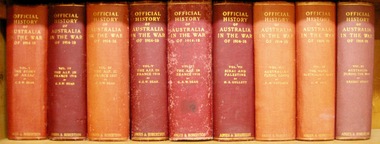
Book, Official History of Australia in the War of 1914-18 - Volume XI - Australia During the War Author Ernest Scott Professor of History at Melbourne University, 1937
... ...commonwealth cabinet...It describes the background - political, social, industrial, economic-against which the war effort of Australia was projected. australia declaration of war commonwealth cabinet war pledges of political leadeers censorship of newspapers censorship of mail blind codes internment camps hughes stress of war military organisations of australia formation of armies equipment of armies matters of policy gallipoli conscription conscription movement military service referendum act the last months of the war economy aspects of the war commonwealth taxation patriotic funds peace conference Official History of Australia in the War of 1914-18 - Volume XI - Australia During the War. ...This book deals almost entirely with occurrences within Australia. It describes the background - political, social, industrial, economic-against which the war effort of Australia was projected.This book deals almost entirely with occurrences within Australia. It describes the background - political, social, industrial, economic-against which the war effort of Australia was projected.Official History of Australia in the War of 1914-18 - Volume XI - Australia During the War. Illustrations, Photographs,australia, declaration of war, commonwealth cabinet, war pledges of political leadeers, censorship of newspapers, censorship of mail, blind codes, internment camps, hughes, stress of war, military organisations of australia, formation of armies, equipment of armies, matters of policy, gallipoli, conscription, conscription movement, military service referendum act, the last months of the war, economy aspects of the war, commonwealth taxation, patriotic funds, peace conference -
 Ringwood and District Historical Society
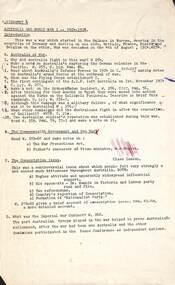
Document, Ringwood High School - Form IV - 1967 - History of Australia and the Pacific Assignment- Australia and World War I -- 1914-1918
... The Commonwealth Government and the War. C. The Conscription Issue. D. What was the Imperial War Cabinet? ...The Commonwealth Government and the War. C. The Conscription Issue. D. What was the Imperial War Cabinet? ...One single sided foolscap sheet This paper consists of four main parts - A. Australia at War. B. The Commonwealth Government and the War. C. The Conscription Issue. D. What was the Imperial War Cabinet? There are several sub-sections in most of the topics. -
 Bendigo Military Museum
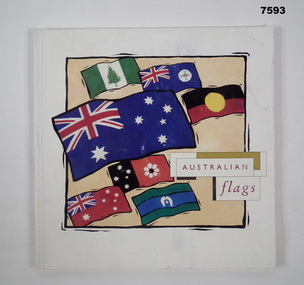
Book - BOOK, AUSTRALIAN FLAGS, Commonwealth of Australia, AUSTRALIAN FLAGS, 1998
... Commonwealth of Australia...Awards and National Symbols Branch, Department of the Prime Minister and Cabinet....AUSTRALIAN FLAGS Book BOOK, AUSTRALIAN FLAGS Commonwealth of Australia Awards and National Symbols Branch, Department of the Prime Minister and Cabinet. ...Soft cover book. Cover - cardboard, white background with red and black print on front, spine and back. Illustrated on front in colour, collection of seven flags. 64 pages, cut , plain, white gloss paper. Illustrated in colour photographs and flag illustrations. End paper - have printed information, green, black and gold colours.books, australian flags -
 Bendigo Military Museum
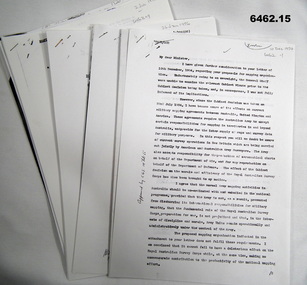
Administrative record - Advisory Committee on Commonwealth Mapping Meeting Notes - (National Mapping Council Meetings), Circa 1972
... Advisory Committee on Commonwealth Mapping (ACOCM) Meeting Notes. 15 Items of typed pages and diagrams. .1 Letter to the Hon WS Kent Hughes MVO, OBE, Mc, ED, MP, Minister for the Interior, ACT Signed Jos Francis. Cabinet...Advisory Committee on Commonwealth Mapping (ACOCM) Meeting Notes. 15 Items of typed pages and diagrams. .1 Letter 22 July 1954 .2 Letter 17 Feb 1955 .3 Letter 22 July 1955 .4 letter 26 Jan 1956 .5 Letter Hon WS Kent Hughes Minister for the Interior ACT .6 National Mapping Programme 1956/57 .7 Clarifies Army participation in Cabinet Decision No2 (VP) .8 History of National Mapping 24 Apr 1958 .9 Report on Army Committee on National Mapping 2 July 1958 .10 RASvy Brief Review of Activities Jan - Dec 1964 .11 Advisory Committee Meeting Notes 12 Feb 1965 - Agenda item 8 .12 Advisory Committee Meeting Notes 12 Feb 1965 - Agenda item 8 para 5.1.3 - 11.2 .13 ACOCM Meeting Agenda 1968 .14 ACOCM Meeting Minutes 1970 .15 Letter to Mr B White CBE Secretary from LF Bott...Advisory Committee on Commonwealth Mapping (ACOCM) Meeting Notes. 15 Items of typed pages and diagrams. .1 Letter to the Hon WS Kent Hughes MVO, OBE, Mc, ED, MP, Minister for the Interior, ACT Signed Jos Francis. Cabinet ...Advisory Committee on Commonwealth Mapping (ACOCM) Meeting Notes. 15 Items of typed pages and diagrams. .1 Letter to the Hon WS Kent Hughes MVO, OBE, Mc, ED, MP, Minister for the Interior, ACT Signed Jos Francis. Cabinet Decision taken on 22 July 1954, effects on current military mapping agreements between AUS, UK and USA. Australian responsibility "Noted was the fact that RASvy was in preparation for War." .2 Letter by H Wells Lieutenant General, Chief of the General Staff, 17 Feb 1955. Refers to the invitation of Major General RL Brown UK Defence to visit Australia to help align the mapping programme. .3 Draft Cabinet Submission on National Mapping Survey and Mapping Co-ordination of the 22 July 1955. Attachment 1 Cabinet Minute, Vice-President's letter Canberra22 July 1954. Decision No2 (VP). Submission 8 National Mapping Survey and Mapping Co-ordination. .4 Air photography and Mapping Programme 1956/57. Signed by LF Fitzgerald OBE Director of Military Survey 26 Jan 56. .5 Letter Hon WS Kent Hughes MVO, OBE, MC, ED, MP. Minister for the Interior ACT. Confirming the Cabinet Decision No2 (VP) Signed by Joe Francis .6 National Mapping Programme 1956/57. States a view to Army's contribution to this programme .7 Clarifies Army participation in Cabinet Decision No2 (VP) .8 History of National Mapping Asst Secretary (General) 24 Apr 1958 .9 Report on Army Committee on National Mapping. 2 July 1958 .10 RASvy Brief Review of Activities Jan - Dec 1964 .11 Advisory Committee on Commonwealth Mapping Meeting Notes 12 Feb 1965 - Agenda item 8. This endorsed the principle of grouping Commonwealth Mapping Agencies in a Survey Mapping Group in Canberra which included AHQ Survey Regiment. This did not come to fruition. .12 Advisory Committee on Commonwealth Mapping Meeting Notes 12 Feb 1965 - Agenda item 8 para 5.1.3 - 11.2 .13 ACOCM Meeting Agenda 1968 .14 ACOCM Meeting Minutes 1970 .15 Letter to Mr B White CBE Secretary from LF BottAdvisory Committee on Commonwealth Mapping (ACOCM) Meeting Notes. 15 Items of typed pages and diagrams. .1 Letter 22 July 1954 .2 Letter 17 Feb 1955 .3 Letter 22 July 1955 .4 letter 26 Jan 1956 .5 Letter Hon WS Kent Hughes Minister for the Interior ACT .6 National Mapping Programme 1956/57 .7 Clarifies Army participation in Cabinet Decision No2 (VP) .8 History of National Mapping 24 Apr 1958 .9 Report on Army Committee on National Mapping 2 July 1958 .10 RASvy Brief Review of Activities Jan - Dec 1964 .11 Advisory Committee Meeting Notes 12 Feb 1965 - Agenda item 8 .12 Advisory Committee Meeting Notes 12 Feb 1965 - Agenda item 8 para 5.1.3 - 11.2 .13 ACOCM Meeting Agenda 1968 .14 ACOCM Meeting Minutes 1970 .15 Letter to Mr B White CBE Secretary from LF Bottroyal australian survey corps, rasvy, fortuna, army survey regiment, army svy regt, asr, national mapping -
 Bendigo Military Museum
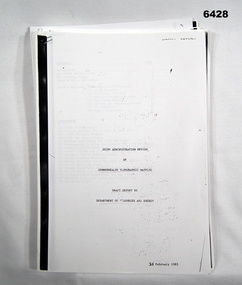
Administrative record - Department of Resources Draft Report of Commonwealth Topographic Mapping February 1985, 21 Feb 85
... By its decision 3998 of 30 July 1984, The Australian Cabinet directed that there be a complete joint administration review of Commonwealth Topographic Mapping Resources and needs and the way in which those needs could be met. ...By its decision 3998 of 30 July 1984, The Australian Cabinet directed that there be a complete joint administration review of Commonwealth Topographic Mapping Resources and needs and the way in which those needs could be met. ...By its decision 3998 of 30 July 1984, The Australian Cabinet directed that there be a complete joint administration review of Commonwealth Topographic Mapping Resources and needs and the way in which those needs could be met. This is a Draft Report of that review.A photocopy of a 14 page, A4 Report, stapled top Left-hand corner. Some A3 folded Annexesroyal australian survey corps, rasvy, fortuna, army survey regiment, army svy regt, asr -
 Ballarat Tramway Museum
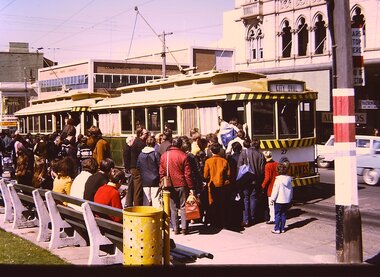
Photograph - Digital image Set of 2, Chris Phillips, c1970
... Commonwealth Bank building. The tram has a Twin Lakes sign. .2 - Four trams at the same stop, from rear - 12, 43, 26 and ?. No. 12 has the destination of Sebastopol and has a Twin Lakes sign. Has the Town Hall in the background and the ESCo pillar cabinet...Commonwealth Bank building. The tram has a Twin Lakes sign. .2 - Four trams at the same stop, from rear - 12, 43, 26 and ?. No. 12 has the destination of Sebastopol and has a Twin Lakes sign. Has the Town Hall in the background and the ESCo pillar cabinet ...Yields information about the City terminus on the south side of Sturt St and the passenger traffic prior to closure of the system. Shows many people boarding the tram.Set of two digital images of trams at the City terminus on the south side of Sturt St, c1970. and corner with Lydiard St. .1 - No. 27 and another single trucker loading large crowds of passengers at the tram stop. No. 27 has the destination of City Oval. In the background is the Commonwealth Bank building. The tram has a Twin Lakes sign. .2 - Four trams at the same stop, from rear - 12, 43, 26 and ?. No. 12 has the destination of Sebastopol and has a Twin Lakes sign. Has the Town Hall in the background and the ESCo pillar cabinet on the corner.trams, tramways, sturt st, city oval, city, lydiard st, electrical switching, electrical equipment, esco, tram 27, tram 12, tram 43, tram 26 -
 Ballarat Tramway Museum
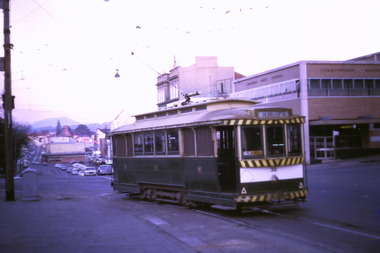
Photograph - Digital image Set of 10, Tony Smith, 5/09/1971 12:00:00 AM
... IN the background is the Commonwealth bank and the SEC cabinet switch isolator on the corner. .2 - 13 and another single trucker at the City terminus, north side with Racey's store and the SEC offices in the background. 13 has a Twin Lakes sign and the destination of Victoria St. .3 - 26 (Mt Pleasant) and 27 at the city terminus, with many passengers. ...IN the background is the Commonwealth bank and the SEC cabinet switch isolator on the corner. .2 - 13 and another single trucker at the City terminus, north side with Racey's store and the SEC offices in the background. 13 has a Twin Lakes sign and the destination of Victoria St. .3 - 26 (Mt Pleasant) and 27 at the city terminus, with many passengers. ...Yields information about Ballarat Tramways and trams prior to the closure of the tramway system.Set of 10 digital images of Ballarat trams prior to closure, scanned from original slides by Tony Smith, 1971 prior to closure of the system. This set of slides, possibly on the last weekend of Mt Pleasant services - closure took place on 5/9/1971. . .1 - 30 rounding the curve from Lydiard St Nth to Sturt St. Tram has destination of Sebastopol. IN the background is the Commonwealth bank and the SEC cabinet switch isolator on the corner. .2 - 13 and another single trucker at the City terminus, north side with Racey's store and the SEC offices in the background. 13 has a Twin Lakes sign and the destination of Victoria St. .3 - 26 (Mt Pleasant) and 27 at the city terminus, with many passengers. Has the town hall in the background. .4 - 14 turning from Sturt St into Lydiard St (destination does not appear to be Lydiard St nth - City Oval?) with the ANZ bank in the background. A number of passengers waiting at the tram stop. .5 - 14 in Sturt St west near Pleasant St, at City Oval, with the pole being reversed by a "Bounds". Tram has the destination of City Oval. .6 - 13 west bound (showing Mt Pleasant) at Pleasant and Sturt St, with the VicRoads (CRB) offices and St Peters Anglican church in the background. .7 - 13 and 14 in Sturt St west, opposite City Oval (see .5 and .6) - trams reversing. .8 - 13 and 14 at Grenville St, about to cross into Bridge St from Sturt St. .9 - 14 at ditto - both trams for Mt Pleasant. Has the Patersons furniture store in the background. .10 - 30 eastbound in Sturt St, near Armstrong St with the Crockers store in the background. Tram showing "Special"trams, tramways, sturt st, electrical switching, city oval, lydiard st, pleasant st, grenville st, tram 30, tram 13, tram 26, tram 14 -
 Ballarat Tramway Museum
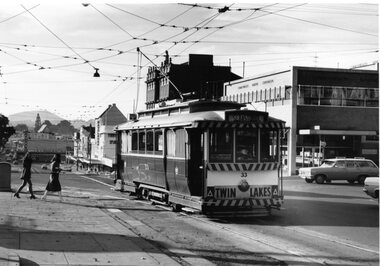
Photograph - Black & White Photograph/s, Doug Colquhoun, 15/05/1971 12:00:00 AM
... Commonwealth Bank and Patersons. Has two young ladies walking across the street and the ESCo electrical cabinet. ...Commonwealth Bank and Patersons. Has two young ladies walking across the street and the ESCo electrical cabinet. ...Yields information about Ballarat's trams in the early 1970's and the Drummond St streetscape near the Mill St loop, Yields information about Ballarat's trams in the early 1970's and the Drummond St streetscape near the Mill St loopBlack and white print of Ballarat 33, in turning from Lydiard St Nth into Sturt St, with the Commonwealth Bank and buildings on the south side of Sturt St.. Two copies. Photo by Doug Colquhoun, 15/5/1971. Trams has the destination of Sebastopol and has a "Twin Lakes" sign on the dash panel. In the photograph is signage for Dickins, Neptune, Commonwealth Bank and Patersons. Has two young ladies walking across the street and the ESCo electrical cabinet. Photo print courtesy of Port Dock Railway Museum, now the National Railway Museum. See worksheet 4311 for letter and details of prints sent to Bill Scott, 19/10/2001. Any photo credit to mention NRM Collection.On rear of copy 1 "SEC Ballarat / 33 / 15/5/71 4164 / Lydiard St @ Sturt St / D.A. Colquhoun" . Copy 2 "DAC" in ink, bottom right hand corner.trams, tramways, sturt st, fashions, lydiard st nth, tram 33 -
 Sunshine and District Historical Society Incorporated
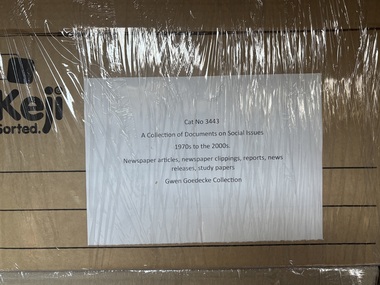
Archive - Gwen Goedecke Collection - A Collection of documents on Social Issues
... FOLDERS: |Employment|Education|Violence|Childcare Services|Divorce/Old Age/Victorian Caregiver's Association|Families/ The Institute of Family Studies (including newsletters, discussion and study papers)|Socialism|Social Welfare|Poverty |PUBLICATIONS: |Royal Commission on Human Relationships, Final Report Vol 5 - Commonwealth of Australia 1977|Possibilities for Social Welfare in Australia - Commonwealth of Australia 1975|Social Welfare Research Centre Newsletter - Number 8 - 1983|Social Justice Consultative Council Department of the Premier and Cabinet, Melbourne 1992|Voluntary Associations and Funding Issues Working Party - Lost Sleep Over Government Funding - 5 Case Studies - Victoria 1979|Government of Victoria - Submission to the Senate Standing Committee on Social Welfare concerning Homeless Youth Melbourne 1981|Victorian Council of Social Service - Passing the Buck - A Victorian Perspective on Federal Responsibility 2 copies - 1982|Social Welfare Research Bulletin No 1 - Australian Government Social Welfare Commission - 1975|FACS - The Victorian Family & Community Service Programme What is it about? ...Gwyneth 'Gwen Goedecke' collection FOLDERS: |Employment|Education|Violence|Childcare Services|Divorce/Old Age/Victorian Caregiver's Association|Families/ The Institute of Family Studies (including newsletters, discussion and study papers)|Socialism|Social Welfare|Poverty |PUBLICATIONS: |Royal Commission on Human Relationships, Final Report Vol 5 - Commonwealth of Australia 1977|Possibilities for Social Welfare in Australia - Commonwealth of Australia 1975|Social Welfare Research Centre Newsletter - Number 8 - 1983|Social Justice Consultative Council Department of the Premier and Cabinet, Melbourne 1992|Voluntary Associations and Funding Issues Working Party - Lost Sleep Over Government Funding - 5 Case Studies - Victoria 1979|Government of Victoria - Submission to the Senate Standing Committee on Social Welfare concerning Homeless Youth Melbourne 1981|Victorian Council of Social Service - Passing the Buck - A Victorian Perspective on Federal Responsibility 2 copies - 1982|Social Welfare Research Bulletin No 1 - Australian Government Social Welfare Commission - 1975|FACS - The Victorian Family & Community Service Programme What is it about? ...Gwyneth 'Gwen Goedecke' collectionFOLDERS: |Employment|Education|Violence|Childcare Services|Divorce/Old Age/Victorian Caregiver's Association|Families/ The Institute of Family Studies (including newsletters, discussion and study papers)|Socialism|Social Welfare|Poverty |PUBLICATIONS: |Royal Commission on Human Relationships, Final Report Vol 5 - Commonwealth of Australia 1977|Possibilities for Social Welfare in Australia - Commonwealth of Australia 1975|Social Welfare Research Centre Newsletter - Number 8 - 1983|Social Justice Consultative Council Department of the Premier and Cabinet, Melbourne 1992|Voluntary Associations and Funding Issues Working Party - Lost Sleep Over Government Funding - 5 Case Studies - Victoria 1979|Government of Victoria - Submission to the Senate Standing Committee on Social Welfare concerning Homeless Youth Melbourne 1981|Victorian Council of Social Service - Passing the Buck - A Victorian Perspective on Federal Responsibility 2 copies - 1982|Social Welfare Research Bulletin No 1 - Australian Government Social Welfare Commission - 1975|FACS - The Victorian Family & Community Service Programme What is it about? - Department of Community Welfare Services, Victoria - 1979| FACS - The Victorian Family & Community Service Programme What is it about? - Department of Community Welfare Services, Victoria (Second Draft) - 1979| Australian Government Social Welfare Commission Annual Report - 1973|Australian Government Commission of Inquiry into Poverty - Study of the Heidelberg Community - 1976|Victorian Emergency Relief Committee findings/report- March 1982|Monday on a Shoestring - a resource guide for low-income people in the West - 1997 -
 Ballarat Tramway Museum
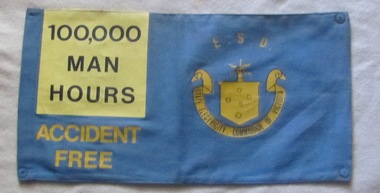
Flag, Evan Evans Pty Ltd, "100,000 Man Hours Accident Free", early to mid 1960's
... Commonwealth Games (Perth 1962). This indicates the flag was made early to mid 1960's. Was on display - Item to Display cabinet 02-04-01 on 12/7/2011 until 1/2017 - then to box 01-03-38....Commonwealth Games (Perth 1962). This indicates the flag was made early to mid 1960's. Was on display - Item to Display cabinet 02-04-01 on 12/7/2011 until 1/2017 - then to box 01-03-38. "100,000 Man Hours Accident Free" Flag Flag Evan Evans Pty Ltd ...Yields information about the way the SEC marked the achievement of safety records by workers and yields information about the work of the SEC Ballarat tram depot.A flag or banner made for the SEC to enable an award to work sites that had achieved 100,000 man hours without an accident. Base materials for the flag is blue cloth with blue cotton seamed edges, the left hand side has been overlain by about 15mm to provide a part where a dowel or rope could be passed through. Has the 100,000 Man Hours area with a yellow paint overlay and the 100,000 hours in black paint. The Accident Free is in a darker yellow pain and the SEC Logo of the Electricity Supply Department is in the same yellow base with black lines. On the rear is the Evan Evans manufacturing logo with the Olympic rings giving address and that they were the official flag makers for the XVIth (16th) Olympic games (Melbourne 1956) and the VIIth (7th) British Empire and Commonwealth Games (Perth 1962). This indicates the flag was made early to mid 1960's. Was on display - Item to Display cabinet 02-04-01 on 12/7/2011 until 1/2017 - then to box 01-03-38.trams, tramways, sec, safety, awards, flags, accidents -
 Parks Victoria - Cape Nelson Lightstation
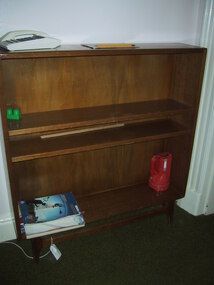
Furniture - Bookcase
... cabinets. The bookcases have first level contributory significance as examples of the modernist furnishings that the Sydney‐based firm, Kalmar Interiors supplied to the Commonwealth Lighthouse Service in the post‐war years. ...Their polished wood finish appears to be original to their date of manufacture during the 1960s‐70s. They were located in the head keeper’s and assistant keepers’ quarters, where their use for office purposes also may have crossed over to a domestic function. In the post‐war years the Commonwealth Lighthouse Service (CLS) introduced modern, low‐cost furnishings to lightstations. Most notably, it commissioned a number of light, compact and functional items in bulk from émigré designer, Steven Kalmar (1909‐ 1989), who played a significant role in popularising modernist design concepts in Australia and drew his ideas from Scandinavian and American design trends. Born in Hungary, he trained as an architect and his contemporary affordable furnishings were especially suitable for the open‐plan houses being built in Australia’s new post‐war suburbs. It is not known whether the bookcases bear the Kalmar label, but the design, particularly the legs and bar bracing, is a signature style that is associated with his Sydney‐based firm, Kalmar Interiors. The CLS supplied the same bookshelves to a number of other lightstations, including Point Hicks, Cape Otway and Gabo Island, as well as other types of furnishings such as tables and cabinets. The bookcases have first level contributory significance as examples of the modernist furnishings that the Sydney‐based firm, Kalmar Interiors supplied to the Commonwealth Lighthouse Service in the post‐war years.The bookcases stand at about bench level and are almost square in dimension. They have two adjustable shelves as well as the base shelf and stand on legs supported by a single stretcher with a polished wood finish. -
 Parks Victoria - Point Hicks Lightstation
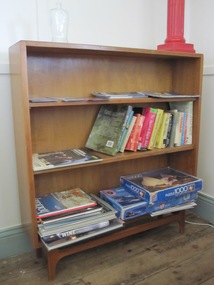
Bookcase (2)
... The bracing and the angled slightly curved front legs, which do not align with corners of the cabinet, produce the appearance of a box resting on a separate frame. These modern style bookshelves are examples of the low-cost furnishings that the Commonwealth Lighthouse Service (CLS) introduced to Australian lightstations in the post-war years. ...The bracing and the angled slightly curved front legs, which do not align with corners of the cabinet, produce the appearance of a box resting on a separate frame. These modern style bookshelves are examples of the low-cost furnishings that the Commonwealth Lighthouse Service (CLS) introduced to Australian lightstations in the post-war years. ...The two identical bookcases probably date to the 1960s-70s period and retain their original light wood finish. They contain two adjustable shelves as well as the base shelf and stand on four legs braced by a stretcher extending across the front and around the sides. The bracing and the angled slightly curved front legs, which do not align with corners of the cabinet, produce the appearance of a box resting on a separate frame. These modern style bookshelves are examples of the low-cost furnishings that the Commonwealth Lighthouse Service (CLS) introduced to Australian lightstations in the post-war years. Most notably, it commissioned a number of light, compact and functional items in bulk from émigré designer, Steven Kalmar (1909-1989), who played a significant role in popularising modernist design concepts in Australia and drew his ideas from Scandinavian and American design trends. Born in Hungary, he trained as an architect and his contemporary affordable furnishings were especially suitable for the open-plan houses being built in Australia’s new post-war suburbs. It is not known whether the bookcases bear the Kalmar label, but the design, particularly the legs and bar bracing, is a signature style of his Sydney-based firm, Kalmar Interiors. The CLS supplied the same bookshelves to a number of other lightstations, including Cape Nelson (3 examples), Cape Otway and Gabo Island (2 examples), as well as other types of furnishings such as tables and nests of coffee tables, cabinets, drawers, bedside tables. The Point Hicks bookcases original function was more likely office-related rather than domestic. The bookcases have first level contributory significance for their provenance and historic value as examples of the modernist furnishings that the Sydney-based firm, Kalmar Interiors supplied to the Commonwealth Lighthouse Service in the post-war years.Two bookcases in the Scandinavian style. Each have 3 internal shelves and four legs, light coloured wood. -
 City of Melbourne Libraries
Photograph, Bull, Hugh Jones, 1897-1993, Leather Exhibition, Melbourne Town Hall
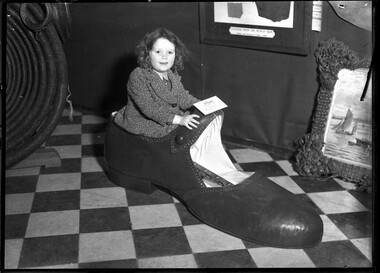
... cabinet of curiosities! A charming article in The Argus is a nice note on which to end. It gives a quick history and overview of the Australian leather industry and its unprecedented, and possibly unexpected, development and success, and states with pride: “Though Victoria is the largest leather producer in the Commonwealth all tanners in the Commonwealth can look back with pride on the long march of progress.” ...cabinet of curiosities! A charming article in The Argus is a nice note on which to end. It gives a quick history and overview of the Australian leather industry and its unprecedented, and possibly unexpected, development and success, and states with pride: “Though Victoria is the largest leather producer in the Commonwealth all tanners in the Commonwealth can look back with pride on the long march of progress.” ...Photographer notations on slide: At the Leather Exhib. at T. Hall Melb 1933 Age Published: Age (Melbourne, Vic.: 1854- ), 1933 THE EXHIBITS. (1933, September 20). The Age (Melbourne, Vic. : 1854 - 1954), p. 16. Retrieved January 25, 2026, from http://nla.gov.au/nla.news-article205109730 Published title: THE EXHIBITS. A COMPREHENSIVE RANGE. Curios, Novelties, Working Displays Published Caption: ONE OF THE NOVELTIES – AN OUTSIZE IN SHOES Research by Project Volunteer, Louise McKenzie: Our photo is dated 20 September 1933, and shows a happy, chubby-faced young girl sitting in a very over-sized girl’s shoe. It is labelled – “Shoe, An Out Size, loaned by Messrs Blackman & Rose”. (1) It is an effective way to capture the attention of the readership and alert them to the Melbourne Leather Show 1933. This show was designed to be a drawcard of extraordinary proportion, and there is no doubt that this leather exhibition was a really big deal for Melbourne. It completely took over the Melbourne Town Hall, and was open from 10.30 am until 10.30 pm. It seemed to contain something for everyone – the military, the man about town, the home handyman, the housewife, the child, the sporting types, the domestic workers, the outdoor enthusiasts, the horseracing fans, car enthusiasts, those wishing to show off the latest fashion – both men and women - and those just intrigued by a lot of fascinating and wide ranging exhibits. One of the most comprehensive descriptions of the Exhibition accompanies the photograph, and is worth quoting in full: “PROMINENT among exhibits which first attract attention in the foyer of the Town Hall is a comprehensive display of leather articles used by the defence forces. A conspicuous legend states that leather plays an important part in national defence, being used for saddlery, tool containers, holdalls, range-finding, surveying and signalling equipment, explosives factories, harness accoutrement, bandsmen's equipment and clothing. Three models of horses and several figures of soldiers wearing leather equipment illustrate the lesson, and a great range of leather goods used in military training and work variegate the display. Nearby are Texas cowboy, buckjumping and breaking-in saddles; whips, a walking stick, made of leather and numerous other curios. The general exhibition occupies the whole floor space of the main Town Hall, and is subdivided by partitions running most of the length of the hall. A bewildering variety, of leather goods presses for close and leisured inspection. Here and there operatives in charge of working machinery give practical demonstrations of factory processes in the production of footwear. Polishing materials are well represented. One attractive exhibit includes two bush huts constructed of leather, with wattle bark for roofing. Opossums, rosellas and a kookaburra add touches of bush realism. Adjacent exhibits include bags, fishing boots, leggings, leather covers in all colours. Factory Processes. One exhibitor has installed an automatic cinema apparatus and screen, which projects various factory processes in making a shoe, the operator being shown at work. Elsewhere an interesting exhibit depicts the five stages in the manufacture of sole leather, and the tanning materials employed. "Very handsome effects are achieved in the interior appointments of motor cars, which are attended by figures of smart chauffeurs in leather coats. Motor-trimming leather is said to be more durable and hygienic than fabric materials, and cheaper. The neat finish of the material, its excellent appearance, certainly make a very favourable impression. It takes the hides of three beasts to cover the cushions, squabs and door panels of a full-sized sedan, while to finish the entire interior, including quarter-panels and head linings would take four or even five. Special Exhibits. Amongst the special sections the display arranged by the handicrafts and home industries- committee of the Country Women's Association of Victoria is a notable one. In all there are about 130 entries which are in four classifications, viz., hand-tooled or embossed leathers, suede, hand-made gloves and undecorated leather. The glove section attracted the most numerous entries, a number being the work of members and craft subscribers of the Country Women's Association. In the leathercraft competition, organised by the Country Women's Association, the judges yesterday awarded the first prize for bookbinding (the only prize given in this division) to Miss M. Alston, of South Yarra. There is also a creditable display of exhibits submitted by boys of the orthopaedic section of the Children's Hospital at Frankston. Amongst the novelties on view in other portions of the exhibition were the following: — Leather coats worn by Sir C. Kingsford Smith on his Atlantic flight. Model Wellington boot, Phar Lap's saddle. Melbourne Cup winner's saddle. Longest whip in world, 108 feet long. (33 metres) [See our photo, to left of Girl in Shoe] Diminutive shoes. Pair of shoes 65 years old. Pair of men's working boots 75 years old. Larwood's, Tate’s and Pataudi’s cricket boots. [Three internationally revered cricketers of the day] (2) Picture frame made of leather bought 63 years ago. [See our photo, to right of Girl in Shoe] Leather frame, powder bowl, &c. Saddle used by world's champion buckjumper in U.S.A. Mexican cowboy outfit. Miniature saddle and bridle. A fireman's helmet made of sole leather. (3) Sample of the leather hat worn by porters at the Billingsgate Fish Market, London. (4) From South Australia there have been obtained sets of harness for donkeys, goats and camels, the equipment being displayed to good advantage on stuffed representations of the animals mentioned. Close to the platform is a glass case containing snow shoes and coats which have been used in Antarctic exploration work. Trade Display. Amongst the trade exhibits may be seen in operation a slipper turn shoe sewing machine, with heeling and channelling facilities, and the various stages in the production of ladies' sandals are shown. There is a wide contrast between sole leather of varying degrees of thickness on view in one stall and the choice samples of ladies' footwear in another — footwear, by the way, which could almost be used as ornaments, so dainty in colour and production are they. Again, there are displays of upholstering leathers of such soft texture that they could he readily mistaken for some of the finest cloth. Those who may be particularly interested in the production of chamois leather may gain an insight into the materials and chemicals used in the "working up” of this variety of leather. Supplies of glace kid (5) are tastefully arranged, and there may also be seen bags of all shapes and sizes, including satchels, suit cases and "sporting" cases, and bags for tennis players and golfers. Further variety is given to the exhibition by the display of antique hides, brightly coloured, with punching balls, boxing gloves and batsman's pads. There are crocodile skins and snake skins so cleverly "Worked up" that one could be almost pardoned for betraying an affection for such unpopular creatures.” “ Another wonderful article on this Exhibition, published the same day in one of the opposition daily newspapers, The Argus, is in the weekly article “Women to Women”, entitled “A Great Victorian Industry: Many Uses for Leather”. This weekly column was penned by Vesta, and she writes, with much purpose: “Yesterday afternoon I paid a hurried visit to the Leather Exhibition now being held in the Melbourne Town Hall and I was disappointed to find that the early visitors to the main exhibition were almost all men. Women, I think, should make a point of seeing every exhibition of our great industries, for women are the buyers of household requisites and goods for their own use and their tastes, and opinion influence also, to a large extent, the purchases of men. So, the welfare of industries is more or less in their hands and it becomes a duty for them to inform themselves fully of the extent and the quality of the manufacturing that is done here. The value of the output of the Australian boot and shoe factories alone was in 1930-31, the latest year for which the figures are given, Stg 3,750,000. Fully two thirds of that amount must have been spent by women on boots and shoes for themselves and their children. In a host of other directions, in the purchase of handbags, travelling bags, belts and straps, cushions, furniture coverings, purses, notebooks, spectacle cases, their annual expenditure must be very high. Their interest, therefore, in this industry is practical, and their support of it should be governed by knowledge of comparable values and qualities of the goods they buy. From the point of view of women, however, the exhibition itself is rather disappointing. There is an amazing collection of good stuff on show, but most of it is not displayed in a fashion that attracts attention. I was surprised, for example, at the range and quality of the leathers displayed, the suppleness of the finer qualities, and the varied range of colours and designs. But they are shown in such a fashion that if one set out deliberately to look for them it would be quite easy to miss most of them.” …It was surprising, too, that no one seemed to have taken advantage of the present fashion of wearing coloured gloves, or the cult of glove making, which the Country Women’s Association has fostered so successfully. Outside the collection of chamois leathers I saw no skins which were suitable to glove making. (6) However, it is perhaps a little unfair to be highly critical of the exhibition, inasmuch as it is the first of its kind. The material is there, undoubtedly, for a splendid show of every phase of this enterprising industry, and I am confident that experience will prove to those concerned that it will be worth while next time to devote a great deal of attention of the method of display.” With further research, it transpires that “Vera” is in fact NZ born Stella May Allen (nee Henderson) (1871-1962), a journalist, the first woman in NZ to begin a law course, in 1890-91). She later worked at a law firm while she completed her degree. Study of the law had always been open to women in NZ, but its practice was still barred to them. Her case “…led to amending legislation in 1896 allowing women to practise as barristers or solicitors. However, on gaining her LL.B. in November 1897 she did not apply for admission to the Bar. Instead, she became the Wellington-based correspondent and leader-writer for the Lyttelton Times. Her appointment, the first for a woman, was not welcomed by the all-male Press Gallery, and special permission had to be obtained from a subcommittee of the House before her presence was accepted. In 1900 she married Edwin Allen, a senior leader-writer for the Wellington Evening Post, and they moved to Australia in 1903 when Edwin Allen took up the post of foreign affairs leader-writer and parliamentary man for the Melbourne Argus. As Patricia Keep notes in her excellent entry of Stella Allan in the Australian Dictionary of Biography: “In 1907 The Argus commissioned her to write a series of articles on the first Australian Women's Work Exhibition held in October. They aroused much interest and next year The Argus invited her to join its full-time staff and begin a weekly section on the particular interests of women. She adopted the nom de plume 'Vesta' and called the column 'Women to Women'. Her work was unique in an Australian daily paper at that time. Her pages extended to cover every aspect of women's affairs, children's interests and community welfare, and 'Vesta' became a household word for authoritative information and advice on such matters. An excellent needlewoman and first-rate cook herself, she thoroughly tutored her staff in the work and needs of women in both country and city, as well as providing the usual training for cadet journalists. She conducted interviews and also visited the country to see at first hand the results of bushfires, mouse plagues, droughts and floods. In 1910 she was one of three women foundation members of the Australian Journalists' Association. “…she found time to become deeply involved in community affairs. She was an original committee-member of the Victorian Association of Crèches and of the Free Kindergarten Union of Victoria, and had much to do with the early days of the Victorian Bush Nursing Association, the Baby Health Centres Association and the Queen Victoria Hospital. She was a member of the National Council of Women, first in New Zealand and then in Melbourne, and of the Country Women's Association from its inception. … in 1924 she was appointed substitute delegate for Australia to the fifth assembly of the League of Nations at Geneva and was a delegate to the second Pan Pacific Women's Conference in Hawaii in 1930. A meeting held in the Melbourne Town Hall in 1938 by representatives of all the main Victorian women's organizations paid special tribute to her work and influence. She retired next year to England where she continued to write for the Argus, contributing articles on the experiences of women and children in wartime.” It is little wonder that “Vesta” was unafraid to take to task both the women of Victoria, and those who created the exhibition! One item which appears to have gone unnoticed, or at least unreported, is a framed article in the background of the photo of the chubby girl in the shoe. The display frame is labelled “Leather from the Human Skin, Tanned and Dressed by French artists.” The exhibition was certainly a cabinet of curiosities! A charming article in The Argus is a nice note on which to end. It gives a quick history and overview of the Australian leather industry and its unprecedented, and possibly unexpected, development and success, and states with pride: “Though Victoria is the largest leather producer in the Commonwealth all tanners in the Commonwealth can look back with pride on the long march of progress.” Footnotes: (1) “Blackman and Rose”. Messrs Blackman and Rose were shoe manufacturers, from 1927 located at 200 Noone Street, Clifton Hill. The Melbourne Circle describes their building as a “fine-looking building in the Federation ‘blood and bandage’ style.” It was built around 1912 for Puttifoot and Bloom, boot manufacturers, and today the building is apartments. (2) These cricketers were household names in the day: Tate: Maurice Tate, “English cricketer of the 1920s and 1930s, and leader of England’s Test bowling attack for a long time during this period. The founder of modern seam bowling. “ Larwood: Harold Larwood, “English right-arm fast bowler and the main exponent of the bowling style known as “bodyline”. Used to considerable effect in the 1932-33 Test series in Australia. Pataudi: Iftikhar A K Pataudi, “an Indian prince who in the 1930s played Test cricket for England, and in the 1940s played Test cricket for India (as Captain) – the only test cricketer to have played for both India and England. (3) “sole” leather “… is the thickest and most resistant material existing in the tanning industry … made from vegetable tanned leathers, usually bovine butts, processed in a special way to make them the hardest type of leather in existence.” (4) The hats worn by porters at Billingsgate Fish Market were also known as a “Bobbin” and look quite squat and rather unsophisticated. They were made of wood and tarred leather, with a “flat, hardened top designed to support large rectangular boxes of fish. The upturned brim protected the porter’s head against fish juice draining from the boxes of fish which would be carried on top of the hat. Some hats featured a small drain hole at the rear to allow this collected juice to drain down the back of the carrier. The hats were made using the ‘cuir bouilli’ technique. The leather was immersed in water which was heated until the leather began to shrink. It was then removed and put on a wooden former. The leather was stitched together to make the hat while still wet, and then held in place until dry.” (See article and photo on the London Museum website) (5) Glace kid – described on the Boston Museum of Fine Arts’ Cameo database as “A smooth glossy leather originally prepared from goat or sheepskin. Early glace kid had a shiny surface that was originally prepared by tawing the skin in a mixture of alum, table salt, flour, and egg yolk. Today, glace kid is prepared from many types of vegetable or chrome tanned leathers. The smooth polished surface is obtained mechanically by shaving, glazing, ironing, and/or rolling the dry leather.” (6) In the 1930s, Melbourne’s glovemaking industry was characterised by local manufacturing, with key producers like Simpson’s Gloves Pty Ltd in Richmond and the Stagg Glove Company in Clifton Hill leading the market. These factories produced high-quality leather gloves, handbags, and specialty gear, often employing a clear gendered division of labour and training young, local women. Museum Victoria holds the Simpson’s Gloves Collection, comprising over 1200 items, and the University of Melbourne Archives holds the company’s business records. References: THE EXHIBITS. (1933, September 20). The Age (Melbourne, Vic. : 1854 - 1954), p. 16. Retrieved January 25, 2026, from http://nla.gov.au/nla.news-article205109730 EXPORT LEATHER. (1929, September 17). The Argus (Melbourne, Vic. : 1848 - 1957), p. 17. Retrieved January 19, 2026, from http://nla.gov.au/nla.news-article4037647 LEATHER EXHIBITION (1933, September 18). The Argus (Melbourne, Vic. : 1848 - 1957), p. 10. Retrieved January 19, 2026, from http://nla.gov.au/nla.news-article11693362 (1933, September 23). The Argus (Melbourne, Vic. : 1848 - 1957), p. 21. Retrieved January 19, 2026, from http://nla.gov.au/nla.news-page522766 WOMEN TO WOMEN (1933, September 20). The Argus (Melbourne, Vic. : 1848 - 1957), p. 13. Retrieved January 19, 2026, from http://nla.gov.au/nla.news-article11694034 Australian Dictionary of Biography, Stella May Allan (1871–1962) https://adb.anu.edu.au/biography/allan-stella-may-4998 WOMEN TO WOMEN (1930, January 22). The Argus (Melbourne, Vic. : 1848 - 1957), p. 13. Retrieved January 19, 2026, from http://nla.gov.au/nla.news-article4063888 Museums Victoria, Simpson’s Gloves, 486-496 Victoria Street, North Richmond, VIC, Australia https://collections.museumsvictoria.com.au/articles/2702 The Argus. (1927, October 31). The Argus (Melbourne, Vic. : 1848 - 1957), p. 20. Retrieved February 7, 2026, from http://nla.gov.au/nla.news-article3888451 Melbourne Circle: stories from the suburbs: “Boots and all in Clifton Hill” https://melbournecircle.net/2015/11/20/bootmakers-of-clifton-hill/ Wikipedia, Maurice Tate, https://en.wikipedia.org/wiki/Maurice_Tate Wikipedia, Harold Larwood, https://en.wikipedia.org/wiki/Harold_Larwood Wikipedia, Iftikhar Ali Khan Pataudi, https://en.wikipedia.org/wiki/Iftikhar_Ali_Khan_Pataudi Buy Leather Online Italy, Sole leather: https://buyleatheronline.com/en/blog/outsole-and-insole-leather-n7 London Museum, Porters hats, https://www.londonmuseum.org.uk/collections/v/object-731122/hat-porters-hat/ Cameo Database, Museum of Fine Arts, Boston, Glace Kid, https://cameo.mfa.org/wiki/Glac%C3%A9_kid VICTORIAN LEATHER HAS WON RENOWN (1937, September 22). The Argus (Melbourne, Vic. : 1848 - 1957), p. 31 (March of Progress Supplement). Retrieved February 7, 2026, from http://nla.gov.au/nla.news-article1108704 Photographer notations on slide: "At the Leather Exhib. at T. Hall Melb 1933 Age B5".displays, melbourne town hall, leather, children, shoes, 1930-1939, industry, hats, gloves -
 Bendigo Military Museum
Card - LHQ Cartographic Company Publications, Fortuna, Bendigo, 1943 to 1945
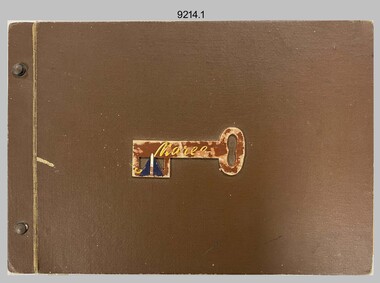
... Commonwealth of Australia, under the provisions of the National Security Act of 1939, took possession of the house, the old battery buildings and the fifteen acres of grounds. LHQ Cartographic Company moved to Bendigo on 11 Jun 1942, from Mitchell House, Melbourne. The responsibilities of this unit were map compilation, fair drawing and lithographic reproduction, including printing the work of other Units as well as their own. Added to this unlikely mixture of permanent army officers, skilled tradesmen, artists and old soldiers were the women of the Company. A decision of War Cabinet...Commonwealth of Australia, under the provisions of the National Security Act of 1939, took possession of the house, the old battery buildings and the fifteen acres of grounds. LHQ Cartographic Company moved to Bendigo on 11 Jun 1942, from Mitchell House, Melbourne. The responsibilities of this unit were map compilation, fair drawing and lithographic reproduction, including printing the work of other Units as well as their own. Added to this unlikely mixture of permanent army officers, skilled tradesmen, artists and old soldiers were the women of the Company. A decision of War Cabinet ...This is a collection of publications produced from 1943 to 1945, during Army’s early years of occupation at Fortuna, Bendigo in WW2. The first item is a colour photograph of a photo album cover. The remaining items are publications printed on manilla card. The items are from a photo album provided by the family of Rosemary (Atkinson) Bowman, who served in the Australian Women's Army Service (AWAS) and a former member of RA Svy. On 1 Feb 1941, a Cartographic Section was reformed as the Land Headquarters (LHQ) Cartographic Company. Deputy Chief of the General Staff, Major General Sidney Rowell instructed Its OC - Major William Sarll, in the interests of security of plant and to provide against possible damage of air attack, to investigate suitable safer inland accommodation for LHQ Cartographic Company. Major William Sarll inspected many properties before finding one that would meet the requirements of the Cartographic Company. In late 1941, he came to inspect Fortuna, a rambling old mansion dating back to the gold rush, with about fifteen acres of ground in central Bendigo. On 23 March 1942, the Commonwealth of Australia, under the provisions of the National Security Act of 1939, took possession of the house, the old battery buildings and the fifteen acres of grounds. LHQ Cartographic Company moved to Bendigo on 11 Jun 1942, from Mitchell House, Melbourne. The responsibilities of this unit were map compilation, fair drawing and lithographic reproduction, including printing the work of other Units as well as their own. Added to this unlikely mixture of permanent army officers, skilled tradesmen, artists and old soldiers were the women of the Company. A decision of War Cabinet on 13 August 1941 had authorised the formation of the Australian Women's Army Service (AWAS), in order to release men from certain military duties for employment with fighting units. Originally their employment was restricted to traditional female areas and numbers were strictly limited, but the outbreak of the Pacific War in 1942 led to a broadening of employment categories and an increase in numbers. The first AWAS arrived at Fortuna on 26 November 1942 and immediately became an integral part of the unit. Most of these women had artistic talent. Their work included fine drawing work, filling in all the topographical detail on fair copies of field sheets and pasting on names and figures, while others were drawing actual map outlines. Other sections the AWAS worked in were the duffing section, where unwanted features were painted out of the negatives before reproduction, and the retouching section where any defects in the zinc plates were corrected. The AWAS also worked on creating Army posters and other publicity material in this section. Sometimes the women were employed in particularly arduous jobs. With Lieutenant Goodrich in charge, approximately twenty AWAS worked in the folding section where they spent long and arduous hours folding, collating and stapling top secret cipher and code publications. Seventy-five AWAS served with the Cartographic Company during the war and Major Sarll paid them a special tribute for their 'untiring efforts' in the Company's war report. Refer to Item 6099.17P for photos taken in 1942, the first year of LHQ Cartographic Company’s occupation at Fortuna, Bendigo in WW2. The Survey Corps’ occupation of Fortuna during WW2 is covered in more detail with additional historic photographs, in pages 17 to 27 of Valerie Lovejoy’s book 'Mapmakers of Fortuna – A history of the Army Survey Regiment’ ISBN: 0-646-42120-4. Other items from Rosemary (Atkinson) Bowman are: 9209.12P, 9210.16P, 99211.6P, 9212.6P, and 9213.4P.This is a collection of publications produced during Army’s early years of occupation at Fortuna, Bendigo in WW2. The first item is a colour photograph of a photo album cover. The remaining items are publications printed on manilla card. The items are contained in a photo album provided by the family of Rosemary (Atkinson) Bowman, a former member of RA Svy. The photographs were scanned at 600 dpi and are part of the Army Survey Regiment’s Collection. .1) – photo of album cover, brown hard textured cardboard, brown wooden key and purple and white Aust Svy Corps 2nd AIF badge. .2) – LHQ Cartographic Company Christmas Card, colour, 1943. .3) & .4) – LHQ Cartographic Company SGTs Mess Christmas Card, colour, 1943. Folded and unfolded. .5) & .6) – LHQ Cartographic Company Christmas Card, colour, 1945. Front and back. Annotated ‘From Margie’ .7) – Church of England Active Service Memento Card, colour, signed, 1943. .8) – LHQ Cartographic Company AWAS Dance Invitation, colour, dated 15th Jun 1944. Annotated ‘SPR Atkinson.’ .9) & .10) – LHQ Cartographic Company Carto Capers Musical Review Programme, colour, c1944. Front and back. .11) & .12) – LHQ Cartographic Company Christmas Dinner Menu, colour, 1943. Folded and unfolded.There are no annotations.royal australian survey corps, rasvy, army survey regiment, asr, fortuna -
 Bendigo Military Museum
Photograph - LHQ Cartographic Company Personnel and Vehicles, Fortuna, Bendigo, 1943 to 1945
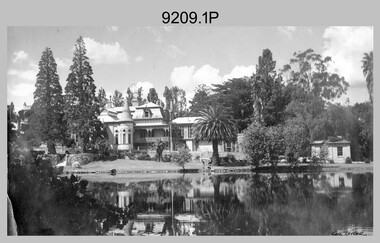
... Commonwealth of Australia, under the provisions of the National Security Act of 1939, took possession of the house, the old battery buildings and the fifteen acres of grounds. LHQ Cartographic Company moved to Bendigo on 11 Jun 1942, from Mitchell House, Melbourne. The responsibilities of this unit were map compilation, fair drawing and lithographic reproduction, including printing the work of other Units as well as their own. A decision of War Cabinet...Commonwealth of Australia, under the provisions of the National Security Act of 1939, took possession of the house, the old battery buildings and the fifteen acres of grounds. LHQ Cartographic Company moved to Bendigo on 11 Jun 1942, from Mitchell House, Melbourne. The responsibilities of this unit were map compilation, fair drawing and lithographic reproduction, including printing the work of other Units as well as their own. A decision of War Cabinet ...This is a set of 12 photographs taken in 1943 and 1945, during Army’s early years of occupation at Fortuna, Bendigo in WW2. The black and white photographs are contained in a photo album provided by the family of Rosemary (Atkinson) Bowman, who served in the Australian Women's Army Service (AWAS) and a former member of RA Svy. On 1 Feb 1941, a Cartographic Section was reformed as the Land Headquarters (LHQ) Cartographic Company. Deputy Chief of the General Staff, Major General Sidney Rowell instructed Its OC - Major William Sarll, in the interests of security of plant and to provide against possible damage of air attack, to investigate suitable safer inland accommodation for LHQ Cartographic Company. Major William Sarll inspected many properties before finding one that would meet the requirements of the Cartographic Company. In late 1941, he came to inspect Fortuna, a rambling old mansion dating back to the gold rush, with about fifteen acres of ground in central Bendigo. On 23 March 1942, the Commonwealth of Australia, under the provisions of the National Security Act of 1939, took possession of the house, the old battery buildings and the fifteen acres of grounds. LHQ Cartographic Company moved to Bendigo on 11 Jun 1942, from Mitchell House, Melbourne. The responsibilities of this unit were map compilation, fair drawing and lithographic reproduction, including printing the work of other Units as well as their own. A decision of War Cabinet on 13 August 1941 had authorised the formation of the Australian Women's Army Service (AWAS), in order to release men from certain military duties for employment with fighting units. Originally their employment was restricted to traditional female areas and numbers were strictly limited, but the outbreak of the Pacific War in 1942 led to a broadening of employment categories and an increase in numbers. The first AWAS arrived at Fortuna on 26 November 1942 and immediately became an integral part of the unit. Most of these women had artistic talent. Their work included fine drawing work, filling in all the topographical detail on fair copies of field sheets and pasting on names and figures, while others were drawing actual map outlines. Other sections the AWAS worked in were the duffing section, where unwanted features were painted out of the negatives before reproduction, and the retouching section where any defects in the zinc plates were corrected. The AWAS also worked on creating Army posters and other publicity material in this section. Seventy-five AWAS served with the Cartographic Company during the war. Refer to Item 6099.17P for photos taken in 1942, the first year of LHQ Cartographic Company’s occupation at Fortuna, Bendigo in WW2. The Survey Corps’ occupation of Fortuna during WW2 is covered in more detail with additional historic photographs, in pages 17 to 27 of Valerie Lovejoy’s book 'Mapmakers of Fortuna – A history of the Army Survey Regiment’ ISBN: 0-646-42120-4. Other items from Rosemary (Atkinson) Bowman are: 9210.16P, 99211.6P, 9212.6P, 9213.4P and 9214.12 This is a set of 12 photographs taken in 1943 and 1945, during Army’s early years of occupation at Fortuna, Bendigo in WW2. The black and white photographs are printed on photographic paper are contained in a photo album provided by the family of Rosemary (Atkinson) Bowman, who served in the Australian Women's Army Service (AWAS) and a former member of RA Svy. The photographs were scanned at 600 dpi and are part of the Army Survey Regiment’s Collection. .1) - Photo, black & white, 1943. LHQ Cartographic Company, Fortuna Villa, Bendigo. .2) - Photo, black & white, 1943. Ronye Bond. .3) - Photo, black & white, 1943. Rosemary (Atkinson) Bowman. .4) - Photo, black & white, 1943. Billie Hyatt. .5) - Photo, black & white, 1943. Helen Morton. .6) - Photo, black & white, 1943. Wes Runting. .7) - Photo, black & white, 1943. Ronye Bond. .8) - Photo, black & white, 1943. Rosemary (Atkinson) Bowman. .9) - Photo, black & white, 1943. Accommodation Tents L to R: Norma Lewis, Billie Hyatt, Peggy Priest, Ken Taylor, Tiny Lewis, Norma Jeffrey. .10) - Photo, black & white, 1943. Marching Contest in Bendigo’s Charing Cross. .11) - Photo, black & white, 1945. In front of Regimental Office. .12) - Photo, black & white, 1945. Part of Drive.Some personnel are identified with dates in the photo album.royal australian survey corps, rasvy, army survey regiment, asr, fortuna -
 Bendigo Military Museum
Photograph - LHQ Cartographic Company AWAS Accommodation, Westend Hall, Bendigo, 1943
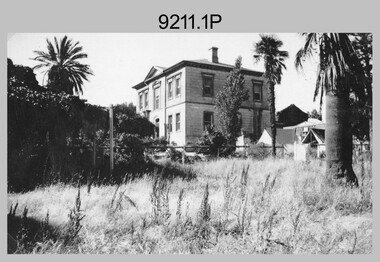
... Commonwealth of Australia, under the provisions of the National Security Act of 1939, took possession of the house, the old battery buildings and the fifteen acres of grounds. LHQ Cartographic Company moved to Bendigo on 11 Jun 1942, from Mitchell House, Melbourne. The responsibilities of this unit were map compilation, fair drawing and lithographic reproduction, including printing the work of other Units as well as their own. A decision of War Cabinet...Commonwealth of Australia, under the provisions of the National Security Act of 1939, took possession of the house, the old battery buildings and the fifteen acres of grounds. LHQ Cartographic Company moved to Bendigo on 11 Jun 1942, from Mitchell House, Melbourne. The responsibilities of this unit were map compilation, fair drawing and lithographic reproduction, including printing the work of other Units as well as their own. A decision of War Cabinet ...This is a set of 12 photographs taken during Army’s occupation at Fortuna, Bendigo in WW2. On 1 Feb 1941, a Cartographic Section was reformed as the Land Headquarters (LHQ) Cartographic Company. Deputy Chief of the General Staff, Major General Sidney Rowell instructed Its OC - Major William Sarll, in the interests of security of plant and to provide against possible damage of air attack, to investigate suitable safer inland accommodation for LHQ Cartographic Company. Major William Sarll inspected many properties before finding one that would meet the requirements of the Cartographic Company. In late 1941, he came to inspect Fortuna, a rambling old mansion dating back to the gold rush, with about fifteen acres of ground in central Bendigo. On 23 March 1942, the Commonwealth of Australia, under the provisions of the National Security Act of 1939, took possession of the house, the old battery buildings and the fifteen acres of grounds. LHQ Cartographic Company moved to Bendigo on 11 Jun 1942, from Mitchell House, Melbourne. The responsibilities of this unit were map compilation, fair drawing and lithographic reproduction, including printing the work of other Units as well as their own. A decision of War Cabinet on 13 August 1941 had authorised the formation of the Australian Women's Army Service (AWAS), in order to release men from certain military duties for employment with fighting units. Originally their employment was restricted to traditional female areas and numbers were strictly limited, but the outbreak of the Pacific War in 1942 led to a broadening of employment categories and an increase in numbers. The first AWAS arrived at Fortuna on 26 November 1942 and immediately became an integral part of the unit. Seventy-five AWAS served with the Cartographic Company during the war and Major Sarll paid them a special tribute for their 'untiring efforts' in the Company's war report. The AWAS could not be accommodated at Fortuna, and a nearby house, Westend Hall, on the corner of Lily and Barnard Streets, provided the first barracks with Warrant Officer Durack in charge. The building, designed by Vahland and Getzchmann in 1868, has been described as the 'grandest house on the goldfields with elegant Corinthian columns supporting a balustraded portico.' The building was conveniently situated close to the front gates of Fortuna. The women appreciated their pleasant surroundings as a magazine article written a year after their arrival reveals. 'It was a stroke of luck which gave us West End Hall with its gardens and large airy rooms; and it is to Miss Durack that we must give thanks for the bright furnishings, the good food and ... the splendid atmosphere of comradeship. But not all could be accommodated in the house; some slept in tents through the freezing Bendigo winters. Local girls like Gwen McGown were able to live at home, but had to report for the Monday morning parade after which the women would march to work. Saturday afternoon was designated sports afternoon for the women. They formed teams among themselves for competitions in basketball and softball. The women participated in an active way in the recreational activities of the Company, including athletics sports days, marching contests, concerts and dances. In the later years of the war, the barracks at West End Hall were too cramped and the AWAS were transferred to Lansellstowe, a beautiful old home in Barkly Terrace built originally for Leonard Vere Lansell, the third son of George Lansell. Prior to the AWAS occupation the Army had used the spacious house as a camp hospital. Refer to Item 6099.17P for photos taken in 1942, the first year of LHQ Cartographic Company’s occupation at Fortuna, Bendigo in WW2. The Survey Corps’ occupation of Fortuna during WW2 is covered in more detail with additional historic photographs, in pages 17 to 27 of Valerie Lovejoy’s book 'Mapmakers of Fortuna – A history of the Army Survey Regiment’ ISBN: 0-646-42120-4.Other items from Rosemary (Atkinson) Bowman are: 9209.12P, 9210.16P, 9212.6P, 9213.4P and 9214.12. This is a set of four photographs of AWAS Accommodation at ‘Westend Hall’, taken in 1943 during Army’s early years of occupation at Fortuna, Bendigo in WW2. The black and white photo, graphs are printed on photographic paper are contained in a photo album provided by the family of Rosemary (Atkinson) Bowman, a former member of RA Svy. The photographs were scanned at 600 dpi and are part of the Army Survey Regiment’s Collection. .1) - Photo, black & white, 1943. AWAS Accommodation, Westend Hall. .2) - Photo, black & white, 1943. At front steps of Westend Hall. L to R: Norma Lewis, Tiny Lewis, Billie Hyatt, Norma Jeffrey, Betty Eyval, Peggy Priest. .3) - Photo, black & white, 1943. Hall and stairway inside the old barracks - Westend Hall. .4) - Photo, black & white, 1943. Recreation room inside the old barracks - Westend Hall.Some personnel are identified with dates in the photo album.royal australian survey corps, rasvy, army survey regiment, asr, fortuna -
 Bendigo Military Museum
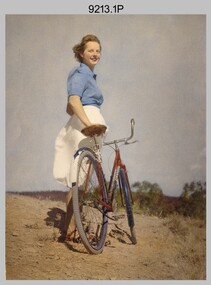
Photograph - LHQ Cartographic Company Visit to Spring Gully and Castlemaine, 1943, 1944
... Commonwealth of Australia, under the provisions of the National Security Act of 1939, took possession of the house, the old battery buildings and the fifteen acres of grounds. LHQ Cartographic Company moved to Bendigo on 11 Jun 1942, from Mitchell House, Melbourne. The responsibilities of this unit were map compilation, fair drawing and lithographic reproduction, including printing the work of other Units as well as their own. Added to this unlikely mixture of permanent army officers, skilled tradesmen, artists and old soldiers were the women of the Company. A decision of War Cabinet...Commonwealth of Australia, under the provisions of the National Security Act of 1939, took possession of the house, the old battery buildings and the fifteen acres of grounds. LHQ Cartographic Company moved to Bendigo on 11 Jun 1942, from Mitchell House, Melbourne. The responsibilities of this unit were map compilation, fair drawing and lithographic reproduction, including printing the work of other Units as well as their own. Added to this unlikely mixture of permanent army officers, skilled tradesmen, artists and old soldiers were the women of the Company. A decision of War Cabinet ...This is a set of four photographs of Land Headquarters (LHQ) Cartographic Company personnel taken on Christmas Day, 25 December 1943 at Spring Gully Reservoir, Bendigo and in March 1944 during a visit to Castlemaine, 37km south of Bendigo. These visits were taken during Army’s WW2 occupation of Fortuna, Bendigo. On 1 Feb 1941, a Cartographic Section was reformed as the LHQ Cartographic Company. Deputy Chief of the General Staff, Major General Sidney Rowell instructed Its OC - Major William Sarll, in the interests of security of plant and to provide against possible damage of air attack, to investigate suitable safer inland accommodation for LHQ Cartographic Company. Major William Sarll inspected many properties before finding one that would meet the requirements of the Cartographic Company. In late 1941, he came to inspect Fortuna, a rambling old mansion dating back to the gold rush, with about fifteen acres of ground in central Bendigo. On 23 March 1942, the Commonwealth of Australia, under the provisions of the National Security Act of 1939, took possession of the house, the old battery buildings and the fifteen acres of grounds. LHQ Cartographic Company moved to Bendigo on 11 Jun 1942, from Mitchell House, Melbourne. The responsibilities of this unit were map compilation, fair drawing and lithographic reproduction, including printing the work of other Units as well as their own. Added to this unlikely mixture of permanent army officers, skilled tradesmen, artists and old soldiers were the women of the Company. A decision of War Cabinet on 13 August 1941 had authorised the formation of the Australian Women's Army Service (AWAS), in order to release men from certain military duties for employment with fighting units. Originally their employment was restricted to traditional female areas and numbers were strictly limited, but the outbreak of the Pacific War in 1942 led to a broadening of employment categories and an increase in numbers. The first AWAS arrived at Fortuna on 26 November 1942 and immediately became an integral part of the unit. Seventy-five AWAS served with the Cartographic Company during the war and Major Sarll paid them a special tribute for their 'untiring efforts' in the Company's war report. Refer to Item 6099.17P for photos taken in 1942, the first year of LHQ Cartographic Company’s occupation at Fortuna, Bendigo in WW2. The Survey Corps’ occupation of Fortuna during WW2 is covered in more detail with additional historic photographs, in pages 17 to 27 of Valerie Lovejoy’s book 'Mapmakers of Fortuna – A history of the Army Survey Regiment’ ISBN: 0-646-42120-4. Other items from Rosemary (Atkinson) Bowman are: 9209.12P, 9210.16P, 99211.6P, 9212.6P, and 9214.12.This is a set of four photographs of Land Headquarters (LHQ) Cartographic Company personnel taking time off at Spring Gully, Bendigo on December 1943 and Castlemaine in March 1944, during Army’s WW2 occupation of Fortuna, Bendigo. The colour and black and white photographs are printed on photographic paper are contained in a photo album provided by the family of Rosemary (Atkinson) Bowman, a former member of RA Svy. The photographs were scanned at 600 dpi and are part of the Army Survey Regiment’s Collection. .2) - Photo, colour, 25 December 1943. Rosemary (Atkinson) Bowman at Spring Gully Reservoir, Bendigo. .2) - Photo, black & white, March 1944. Outside Cumberland Hotel, Castlemaine, L to R: Ken Taylor, Wes Runting, Bob Vincent. .3) - Photo, black & white, March 1944. Outside Cumberland Hotel, Castlemaine, L to R: Rosemary (Atkinson) Bowman, Bob Vincent. .4) - Photo, black & white, March 1944. Halfway back to Bendigo - Rosemary (Atkinson) Bowman.Some personnel are identified with dates in the photo album.royal australian survey corps, rasvy, army survey regiment, asr, fortuna -
 Bendigo Military Museum
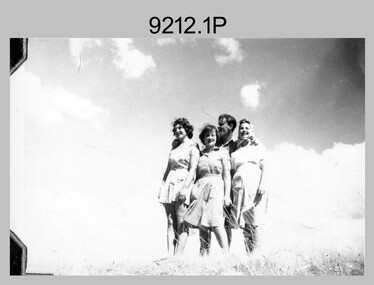
Photograph - LHQ Cartographic Company Picnic, Axe Creek, Bendigo region, 1944
... Commonwealth of Australia, under the provisions of the National Security Act of 1939, took possession of the house, the old battery buildings and the fifteen acres of grounds. LHQ Cartographic Company moved to Bendigo on 11 Jun 1942, from Mitchell House, Melbourne. The responsibilities of this unit were map compilation, fair drawing and lithographic reproduction, including printing the work of other Units as well as their own. Added to this unlikely mixture of permanent army officers, skilled tradesmen, artists and old soldiers were the women of the Company. A decision of War Cabinet...Commonwealth of Australia, under the provisions of the National Security Act of 1939, took possession of the house, the old battery buildings and the fifteen acres of grounds. LHQ Cartographic Company moved to Bendigo on 11 Jun 1942, from Mitchell House, Melbourne. The responsibilities of this unit were map compilation, fair drawing and lithographic reproduction, including printing the work of other Units as well as their own. Added to this unlikely mixture of permanent army officers, skilled tradesmen, artists and old soldiers were the women of the Company. A decision of War Cabinet ...This is a set of six photographs of Land Headquarters (LHQ) Cartographic Company personnel taken in 1944 at a picnic held at Axe Creek, a locality 15km SE of Bendigo, during Army’s WW2 occupation of Fortuna, Bendigo. On 1 Feb 1941, a Cartographic Section was reformed as the LHQ Cartographic Company. Deputy Chief of the General Staff, Major General Sidney Rowell instructed Its OC - Major William Sarll, in the interests of security of plant and to provide against possible damage of air attack, to investigate suitable safer inland accommodation for LHQ Cartographic Company. Major William Sarll inspected many properties before finding one that would meet the requirements of the Cartographic Company. In late 1941, he came to inspect Fortuna, a rambling old mansion dating back to the gold rush, with about fifteen acres of ground in central Bendigo. On 23 March 1942, the Commonwealth of Australia, under the provisions of the National Security Act of 1939, took possession of the house, the old battery buildings and the fifteen acres of grounds. LHQ Cartographic Company moved to Bendigo on 11 Jun 1942, from Mitchell House, Melbourne. The responsibilities of this unit were map compilation, fair drawing and lithographic reproduction, including printing the work of other Units as well as their own. Added to this unlikely mixture of permanent army officers, skilled tradesmen, artists and old soldiers were the women of the Company. A decision of War Cabinet on 13 August 1941 had authorised the formation of the Australian Women's Army Service (AWAS), in order to release men from certain military duties for employment with fighting units. Originally their employment was restricted to traditional female areas and numbers were strictly limited, but the outbreak of the Pacific War in 1942 led to a broadening of employment categories and an increase in numbers. The first AWAS arrived at Fortuna on 26 November 1942 and immediately became an integral part of the unit. Seventy-five AWAS served with the Cartographic Company during the war and Major Sarll paid them a special tribute for their 'untiring efforts' in the Company's war report. Refer to Item 6099.17P for photos taken in 1942, the first year of LHQ Cartographic Company’s occupation at Fortuna, Bendigo in WW2. The Survey Corps’ occupation of Fortuna during WW2 is covered in more detail with additional historic photographs, in pages 17 to 27 of Valerie Lovejoy’s book 'Mapmakers of Fortuna – A history of the Army Survey Regiment’ ISBN: 0-646-42120-4. Other items from Rosemary (Atkinson) Bowman are: 9209.12P, 9210.16P, 99211.6P, 9213.4P and 9214.12. This is a set of six photographs of Australian Survey Corps personnel at a picnic held at Axe Creek, a locality a locality 15km SE of Bendigo, taken in 1944 during Army’s WW2 occupation of Fortuna, Bendigo. in printed on photographic paper are contained in a photo album provided by the family of Rosemary (Atkinson) Bowman, a former member of RA Svy. The photographs were scanned at 600 dpi and are part of the Army Survey Regiment’s Collection. .1) - Photo, black & white, 1944. L to R: Ronye Bond, Margie, Phil Flood, Rosemary (Atkinson) Bowman. .2) - Photo, black & white, 1944. L to R: Rosemary (Atkinson) Bowman, Margie, Bob Vincent, ‘Noakie’, Wes Runting. .3) - Photo, black & white, 1944. Rosemary (Atkinson) Bowman. .4) - Photo, black & white, 1944. L to R: ‘Noakie’, Wes Runting. .5) - Photo, black & white, 1944. Back row L to R: Ronald ‘Stape’ Stapleton, Wes ‘JD’ Runting, Ray Jones, Centre row L to R: Ronye Bond, Peggy Priest, Rosemary (Atkinson) Bowman. At front: Noakie. .6) - Photo, black & white, 1944. L to R: Ray Jones, Ronye Bond, ‘Noakie’, Rosemary (Atkinson) Bowman, Wes ‘JD’ Runting, Ronald ‘Stape’ Stapleton.Some personnel are identified with dates in the photo album.royal australian survey corps, rasvy, army survey regiment, asr, fortuna
