
Showing 12 items matching "cooramook road"
-
 Flagstaff Hill Maritime Museum and Village
Vehicle - Wagon, Circa 1909
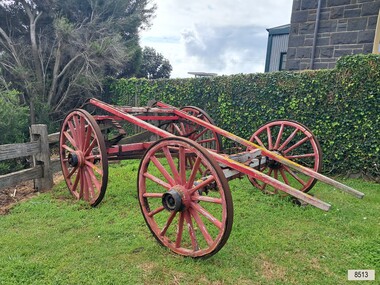
... ...Cooramook Road...By 1916, Singh was living and working at Garvoc in western Victoria, where that year, he lost his paper licence on Cooramook Road, and he placed a notice in The Standard. ...By 1916, Singh was living and working at Garvoc in western Victoria, where that year, he lost his paper licence on Cooramook Road, and he placed a notice in The Standard. ...This wagon was used in towns across south-west Victoria during the first half of the twentieth century by Pooran Singh, an Indian-born immigrant. Singh arrived in Australia alone in 1899 at the age of 30. The following year, at the Colac Licensing Court in western Victoria, he was one of 78 hawkers granted a Hawker’s Licence. According to the Colac Herald, all but two of the applicants appeared to be Asian. While some hawkers registered horse-drawn carts, Singh was one of nineteen licensed to trade on foot, selling door to door. Applicants were encouraged to contribute to a collection for the Colac Hospital. Over time, Pooran Singh came to own his own wagon—a top-of-the-range light delivery vehicle—and a horse named Prince. His work often took him along rough country roads, and for a period, he worked in the Corryong district of north-eastern Victoria, an area popular with hawkers. In September 1909, near Thowgla, he was thrown from his wagon while attempting to navigate a deep rut and was run over by one of its wheels. Although he suffered bruising to his chest, his injuries were not serious. The following year, he was granted a Hawker’s Licence in Corryong. By 1916, Singh was living and working at Garvoc in western Victoria, where that year, he lost his paper licence on Cooramook Road, and he placed a notice in The Standard. In 1918, at the Warrnambool Petty Sessions Court, he was one of four applicants granted renewal of their hawkers’ licences, and each donated ten shillings to Warrnambool Hospital. Throughout these years, Singh became well known to farmers and their families as he travelled across Victoria’s Western District, living and working from his covered wagon. In his later years, Pooran Singh formed a close friendship with John Jandes Moore and his wife, Vera, of Russells Creek, Warrnambool. They offered him the use of their property as a base for his travels and cared for him during his final illness. John Moore was later appointed one of the two executors of Singh’s will. Pooran Singh died in Warrnambool on 8 June 1947, aged 77. His final wish was to be cremated and for his ashes to be returned to India for immersion in the Ganges. The cremation was arranged by Guyett’s Funerals in Warrnambool. Having never married, Singh left his estate to his four nephews, enabling them to buy land and build homes; one later installed a memorial plaque in his honour. In the late 1980s, Guyett’s Funerals placed his ashes in the niche wall at Warrnambool Cemetery as a memorial, while continuing to hope that family instructions might eventually arrive. Nearly 63 years after his death, renewed enquiries brought public attention to the long and respectful care given to his ashes. As a result, the renowned Indian cricketer Kapil Dev travelled to Warrnambool to collect them and escort them to India, helping to fulfil Singh’s final wish. He was joined by one of Singh’s grand-nephews, Harmel Uppal, who had travelled from England. At a formal ceremony on 25 July 2010 commemorating Singh’s life, the ashes were handed to Dev and Uppal, and local resident Avis Quarrell, who had known Singh as a child, read a poem she had written in his memory. She still owned a shell necklace that Singh had made for her mother. Some Warrnambool locals who had been closely involved also travelled to India, where they joined Uppal’s family from the village of Uppal Bhopa, near Jalandhar. On 31 July 2010, Pooran Singh’s ashes were immersed in the Ganges, fulfilling the wish he had expressed more than six decades earlier. After Pooran Singh’s death, his horse and wagon remained on John Moore’s property. When Prince died, he was buried on the beach at Warrnambool. The wagon remained with the Moore family and was occasionally used as a cubby house. In about 1997, John Moore, the son of John Jandes Moore, donated it to Flagstaff Hill. After restoration, the wagon became an attraction in the village, where volunteer Pat and his Clydesdale horse, Duke, offered visitors rides around Flagstaff Hill’s lake. This wagon is significant for its association with an Indian emigrant who used it to earn an income in Australia. It also reflects the vital role of hawkers, who travelled through rural and regional communities in the late nineteenth and early twentieth centuries, supplying food, goods and news. The wagon is also historically significant as a former Flagstaff Hill attraction, offering visitors the experience of horse-drawn rides around the lake.Wagon: a light delivery vehicle once used as a hawker's wagon. It is a four-wheel, horse-drawn vehicle with iron tyres, brakes, spoked wheels painted red with decorative yellow strips on the hubs, a timber shaft, and springs on the undercarriage. It was once a covered wagon, fitted with green, wooden sideboards, a front seat with leather-padded backrest and mounting steps. The late-19th to early-20th-century wagon was once owned by Pooran Singh, a local Indian hawker. flagstaff hill, warrnambool, maritime village, maritime museum, flagstaff hill maritime museum and village, shipwreck coast, great ocean road, southwest victoria, northwest victoria, western district, colac, colac hospital, colac licensing court, thowgla, corryong, garvoc, cooramook road, warrnambool petty sessions court, warrnambool hospital, russells creek road, ganges, warrnambool cemetery, uppal bhopa, jalandhar, hawker’s licence, covered wagon, wagon, hawker's wagon, horse-drawn cart, hawker's cart, light delivery vehicle, hawker, travelling salesman, travelling hawker, door-to-door sales, rural salesman, rural commerce, prince, duke, clydesdale horse, 1997, pooran singh, indian immigrant, pat, john james moore, vera moore, john and vera moore, john moore, guyatt’s funerals, kapil dev, harmel uppal, avis quarrell -
 Flagstaff Hill Maritime Museum and Village
Furniture - Double Bed, Late 19th to early 20th centuries
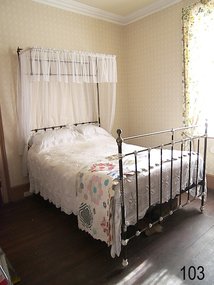
... road...double bed...canopy bed...metal frame bed...giles collection...henry giles...cooramook...The Giles family collection has social significance at a local level, because it illustrates the level of material support the Warrnambool community gave to Flagstaff Hill when the Museum was established. flagstaff hill warrnambool shipwrecked coast flagstaff hill maritime museum great ocean road double bed canopy bed metal frame bed giles collection henry giles cooramook mailor’s flat wangoom 19th century household goods None Double Bed metal frame with design on posts and chrome knobs at bed end. ...There are many 19th century items of furniture, linen and crockery donated to Flagstaff Hill Maritime Village by Vera and Aurelin Giles. The items are associated with the Giles Family and are known as the “Giles Collection”. These items mostly came from the simple home of Vera’s parents-in-law, Henry Giles and his wife Mary Jane (nee Freckleton), whose photos are in the parlour. They married in 1880. Henry Giles was born at Tower Hill in 1858. He was a labourer on the construction of the Breakwater before leaving in 1895 to build bridges in N.S.W. for about seven years. Mary Jane was born in 1860 at Cooramook. She attended Mailor’s Flat State School where she was also a student teacher before, as family legend has it, she became a governess at “Injemiara” where her grandfather, Francis Freckleton, once owned land. Henry and Mary’s family of six, some of whom were born at Mailor’s Flat and later children at Wangoom, lived with their parents at Wangoom and Purnim west, where Henry died in 1933 and Mary Jane in 1940. The Giles family collection has social significance at a local level, because it illustrates the level of material support the Warrnambool community gave to Flagstaff Hill when the Museum was established.Double Bed metal frame with design on posts and chrome knobs at bed end. Head has canopy that hangs from tall frame. Wood, wire sprung mattress base sits on metal frame.Noneflagstaff hill, warrnambool, shipwrecked coast, flagstaff hill maritime museum, great ocean road, double bed, canopy bed, metal frame bed, giles collection, henry giles, cooramook, mailor’s flat, wangoom, 19th century household goods -
 Flagstaff Hill Maritime Museum and Village
Textile - Tablecloth, late 19th century
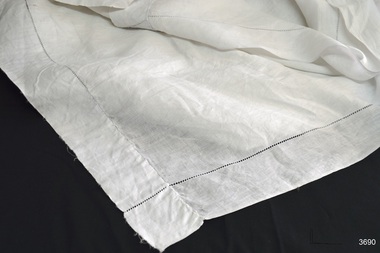
... road...giles family...cooramook...The Giles family collection has social significance at a local level, because it illustrates the level of material support the Warrnambool community gave to Flagstaff Hill when the Museum was established. flagstaff hill warrnambool shipwrecked coast flagstaff hill maritime museum maritime museum shipwreck coast flagstaff hill maritime village great ocean road giles family cooramook 19th century linen 19th century household goods 19th century handcraft 19th century manchester 19th century table linen 19th century tablecloth giles family collection 19th century household linen warrnambool breakwater construction Iron-on label, hand written in black pen "LHK B22". ...The linen tablecloth has been hand worked using satin stitch embroidery and drawn thread work. This tablecloth is one of many 19th century items of furniture, linen and crockery donated to Flagstaff Hill Maritime Village by, Vera and Aurelin Giles. The items are associated with the Giles Family and are known as the “Giles Collection”. Most of the items in this Collection are in the Lighthouse Keeper’s Cottage at Flagstaff Hill. The majority came from the simple home of Vera’s Giles’ parents, Henry Giles and his wife Mary Jane (nee Freckleton), whose photographs are in the parlour. They married in 1880. Henry Giles was born at Tower Hill, Victoria in 1858 and worked as a labourer on the construction of the Warrnambool Breakwater. His wife, Mary Jane, was born in 1860 at Cooramook. She attended Mailor’s Flat State School, and later worked there as a student teacher, before (as family legend has it) she became a governess at “Injemira” where her grandfather, Francis Freckleton, owned the land. The Giles family of six, some of whom were born at Mailor’s Flat and the younger at Purnim West, lived at “The Maam”, Wangoom before moving to New South Wales in 1895, where Henry built bridges for about 7 years. Henry died in 1933 and Mary Jane died in 1940. The Giles family collection has social significance at a local level, because it illustrates the level of material support the Warrnambool community gave to Flagstaff Hill when the Museum was established.Tablecloth, white linen, part of the Giles Collection. Large white rectangular tablecloth, hand embroidered using white thread. Floral design in satin stitch and drawn threadwork. Cloth has additional white cloth iron-on label.Iron-on label, hand written in black pen "LHK B22". flagstaff hill, warrnambool, shipwrecked coast, flagstaff hill maritime museum, maritime museum, shipwreck coast, flagstaff hill maritime village, great ocean road, giles family, cooramook, 19th century linen, 19th century household goods, 19th century handcraft, 19th century manchester, 19th century table linen, 19th century tablecloth, giles family collection, 19th century household linen, warrnambool breakwater construction -
 Flagstaff Hill Maritime Museum and Village
Furniture - Armchair, 1897-1921
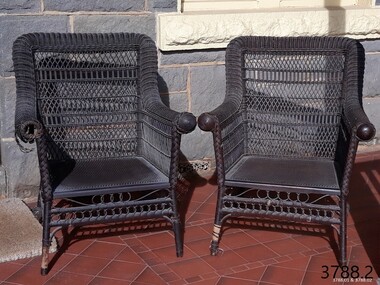
... road...giles collection...giles family...henry and mary jane giles...tower hill...cooramook...The wicker furniture is a fine example of late 19th and early 20th century lightweight domestic furniture that is today a very collectible item and quite rare and valuable. flagstaff hill warrnambool shipwrecked coast flagstaff hill maritime museum shipwreck coast great ocean road giles collection giles family henry and mary jane giles tower hill cooramook warrnambool breakwater mailor’s flat wangoom 19th century furniture wicker armchairs rolled serpentine wicker work cane armchair classic wicker furniture victorian style furniture domestic furniture late 19th century chair armchair woven cane wicker rolled serpentine MANUFA - Heywood B – GARDNE Heywood Brothers & Wakefield Company USA Tag, orange with black print: “MANUFA - Heywood B – GARDNE” Armchair: pair of wicker armchairs, painted dark brown. ...These cane chairs are one of many 19th-century items of furniture, linen and crockery donated to Flagstaff Hill Maritime Village by Vera and Aurelin Giles. The items are associated with Warrnambool and the Giles Family history. Items donated by the family have come to be known as the Giles Collection. Many items in the Lighthouse Keeper’s Cottage were donated by Vera and Aurelin Giles and mostly came from the home of Vera’s parents-in-law, Henry Giles and his wife Mary Jane (nee Freckleton), who married in 1880 and whose photos are on display in the parlour. Henry was born at Tower Hill in 1858 and was a labourer on the construction of the Warrnambool Breakwater before leaving in 1895 for around seven years to build bridges in NSW. Mary Jane was born in 1860 at Cooramook, and she attended Mailor’s Flat State School and where she eventually became a student teacher. After which she became a governess at “Injemiara”, where her grandfather, Francis Freckleton, had once owned land. Henry and Mary’s family consisted of six; some of the children were born at Mailor’s Flat, and later, some children were born at Wangoom. They lived with their parents at Wangoom and Purnim west, and this is where Henry died in 1933 and Mary Jane in 1940. Heywood & Wakefield Furniture Co: - The Heywood-Wakefield Company is an American furniture manufacturer established in 1897. It went on to become a major presence in the US. Its older products are considered collectibles and have been featured on television antique programs. The Heywood brothers established themselves in 1826 as furniture makers, and the Wakefield Company began in 1855 as a separate company. Both firms produced wicker and rattan furniture, and as these products became increasingly popular towards the end of the century, they became serious rivals. In 1897, the companies merged as Heywood Brothers & Wakefield Company (this name was changed to Heywood-Wakefield Company in 1921), purchasing Washburn-Heywood Chair Company in 1916, Oregon Chair Company in 1920, and Lloyd Manufacturing Company in 1921. While its wooden furniture plant in Gardner, Massachusetts, closed in 1979, a branch in Menominee, Michigan, continued to manufacture metal outdoor seats, auditorium seats, and school furniture. The Heywood-Wakefield Company Complex in Gardner was added to the National Historic Register in 1983. The South Beach Furniture Company acquired the rights to the name in 1994 and reproduces its wooden furniture. Both founding companies produced wicker and rattan furniture in the late 19th century. The wicker styles drew on the Aesthetic Movement and Japanese influences simpler designs arose in the wake of the Arts and Crafts Movement. The merged entity stayed abreast of wicker furniture trends by hiring designers such as Paul Frankl and Donald Deskey during the 1920s. Its furniture was exhibited at the 1933 Century of Progress exhibition and the 1964 New York World's Fair. During the 1930s and 1940s, Heywood-Wakefield began producing furniture using sleek designs based on French Art Deco.The Giles family collection has social significance at a local level because it illustrates the level of material support the Warrnambool community gave to Flagstaff Hill when the village and museum were established. The wicker furniture is a fine example of late 19th and early 20th century lightweight domestic furniture that is today a very collectible item and quite rare and valuable.Armchair: pair of wicker armchairs, painted dark brown. The open wicker weave pattern of a traditional Asian design extends from the seat up to the armrests and completely over the backrest, plus across the front of the chair below the seat. The seat is very firmly woven and fitted into a timber frame. A reinforcing pattern of wicker work covers the top edges of the armrests and backrest in one piece and folds around to the underside, referred to as rolled serpentine arms and back. The hollow ends of the armrests are filled with a circular knob of wicker work. The back legs are also completed with decorative wicker knobs. The frames are constructed from bamboo. One chair base (3788.1) has been strengthened with metal bracing. The other chair (3788.2) has the remnants of an orange manufacturer’s tag fixed to the base. The chairs were made from 1897 to 1921 by Heywood Brothers & Wakefield Company, USA. These chairs are part of the Giles Collection.Tag, orange with black print: “MANUFA - Heywood B – GARDNE”flagstaff hill, warrnambool, shipwrecked coast, flagstaff hill maritime museum, shipwreck coast, great ocean road, giles collection, giles family, henry and mary jane giles, tower hill, cooramook, warrnambool breakwater, mailor’s flat, wangoom, 19th century furniture, wicker armchairs, rolled serpentine wicker work, cane armchair, classic wicker furniture, victorian style furniture, domestic furniture late 19th century, chair, armchair, woven cane, wicker, rolled serpentine, manufa - heywood b – gardne, heywood brothers & wakefield company, usa -
 Flagstaff Hill Maritime Museum and Village
Container - Ceramic Bottle (Chinese Style), Minton Potteries, Late 19th century
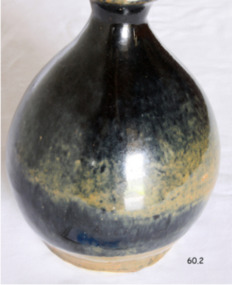
... road...vase...pottery...ceramic ornament...domestic ware...late 19th - early 20th centuy ornament...giles collection...henry giles...tower hill...cooramook...The Giles family collection has social significance at a local level, because it illustrates the level of material support the Warrnambool community gave to Flagstaff Hill when the Museum was established. flagstaff hill warrnambool shipwrecked coast flagstaff hill maritime museum shipwreck coast flagstaff hill maritime village great ocean road vase pottery ceramic ornament domestic ware late 19th - early 20th centuy ornament giles collection henry giles tower hill cooramook warrnambool breakwater mailor’s flat wangoom 19th century household goods light keeper Mark of a double triangle, apex touching, on base, (Minton mark for 1879). ...The subject item is believed to be a "Chinese style stoneware liquor bottle used to store "Tiger Whiskey" (rice wine). These Chinese liquor bottles are made of glazed pottery known as brown stoneware and have been made throughout the centuries by many makers until well after American Prohibition. Later varieties from the mid 20th century are commonly found in the USA with the raised lettering "Federal Law Forbids Sale Or Re-use of this bottle" a sure sign of post-1934 manufacture. This example is interesting as it has a British Minton mark of two triangles on the base indicating a date of 1879 and was likely exported to Australia by Minton. These ceramic bottles virtually always have irregularities and flaws which indicate a product has been hastily manufactured, in any event, this is a fine example of a relatively common item that may have been copied by Minton and sold as a decorative domestic item for display or mass produced for storing liquor. Giles Family: The pair of ceramic bottles were given to Vera Giles by Jim Thompson and are just many 19th century items of furniture, linen and crockery donated to Flagstaff Hill Maritime Village by, Vera and Aurelin Giles. The items are associated with Warrnambool and the Giles Family history. Items donated by the family have come to be known as the “Giles Collection”. Many items in the Lighthouse Keeper’s Cottage were donated by Vera and Aurelin Giles and mostly came from the home of Vera’s parents-in-law, Henry Giles and his wife Mary Jane (nee Freckleton) who married in 1880 and whose photos are on display in the parlour. Henry was born at Tower Hill in 1858, and was a labourer on the construction of the Warrnambool Breakwater before leaving in 1895 for around seven years to build bridges in NSW. Mary Jane was born in 1860 at Cooramook and she attended Mailor’s Flat State School and where she eventually was to become a student teacher. After which she became a governess at “Injemiara” where her grandfather, Francis Freckleton, had once owned land. Henry and Mary’s family consisted of six, some of the children were born at Mailor’s Flat and later some children at Wangoom. They lived with their parents at Wangoom and Purnim west, and this is where Henry died in 1933 and Mary Jane in 1940. A significant item of lead-glazed ceramic with the possibility it was made by the Minton potteries in England who were renowned for making quality pottery. The item style is in all probability a copy of a Chinese liquor bottle that was in common use throughout the British colonies and America up until the mid 20th Century. The Giles family collection has social significance at a local level, because it illustrates the level of material support the Warrnambool community gave to Flagstaff Hill when the Museum was established.Chinese liquor bottle one of a pair, lead glazed ceramic, dark brown and blue/black. Part of the Giles Collection.Mark of a double triangle, apex touching, on base, (Minton mark for 1879).flagstaff hill, warrnambool, shipwrecked coast, flagstaff hill maritime museum, shipwreck coast, flagstaff hill maritime village, great ocean road, vase, pottery, ceramic ornament, domestic ware, late 19th - early 20th centuy ornament, giles collection, henry giles, tower hill, cooramook, warrnambool breakwater, mailor’s flat, wangoom, 19th century household goods, light keeper -
 Flagstaff Hill Maritime Museum and Village
Textile - Runners, Mary Jane Giles (Mrs Harry Giles), Late 19th to Early 20th Century
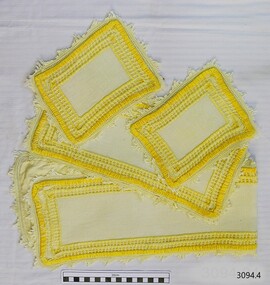
... road...giles family...henry giles...cooramook...But the Giles collection also gives us today a snapshot into what domestic life was like in early colonial times prior to Federation. flagstaff hill warrnambool shipwrecked coast flagstaff hill maritime museum shipwreck coast flagstaff hill maritime village great ocean road giles family henry giles cooramook mailor’s flat wangoom 19th century linen 19th century handcraft Textiles "LHK / PAB" Set of four lined and embroidered runners and doilies, white with yellow huckaback embroidery, crochet fringe. ...This hand crafted set of runners is one of many 19th century items of furniture, linen and crockery donated to Flagstaff Hill Maritime Village by, Vera and Aurelin Giles. The items are associated with Warrnambool and the Giles Family history. Items donated by the family have come to be known as the “Giles Collection”. Many items in the Lighthouse Keeper’s Cottage were donated by Vera and Aurelin Giles and mostly came from the home of Vera’s parents-in-law, Henry Giles and his wife Mary Jane (nee Freckleton) who married in 1880 and whose photos are on display in the parlour. Henry was born at Tower Hill in 1858, and was a labourer on the construction of the Warrnambool Breakwater before leaving in 1895 for around seven years to build bridges in NSW. Mary Jane was born in 1860 at Cooramook and she attended Mailor’s Flat State School and where she eventually was to become a student teacher. After which she became a governess at “Injemiara” where her grandfather, Francis Freckleton, had once owned land. Henry and Mary’s family consisted of six, some of the children were born at Mailor’s Flat and later some children at Wangoom. They lived with their parents at Wangoom and Purnim west, and this is where Henry died in 1933 and Mary Jane in 1940.The Giles family collection is of social significance at a local level, because it not only illustrates the level of material support the Warrnambool community gave to Flagstaff Hill during it’s establishment. But the Giles collection also gives us today a snapshot into what domestic life was like in early colonial times prior to Federation.Set of four lined and embroidered runners and doilies, white with yellow huckaback embroidery, crochet fringe. The smaller runner has a small same-fabric patch in one corner with a label attached to it. (Giles Collection)."LHK / PAB" flagstaff hill, warrnambool, shipwrecked coast, flagstaff hill maritime museum, shipwreck coast, flagstaff hill maritime village, great ocean road, giles family, henry giles, cooramook, mailor’s flat, wangoom, 19th century linen, 19th century handcraft, textiles -
 Flagstaff Hill Maritime Museum and Village
Container - Jardiniere, ca 1920
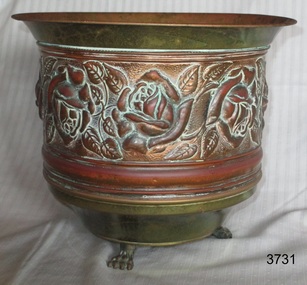
... road...emigrants from ireland...giles collection...henry giles...tower hill...cooramook...The Jardinière is a good example of late Victorian memorabilia that was to be found in many homes of the period. flagstaff hill warrnambool shipwrecked coast flagstaff hill maritime museum flagstaff hill maritime village great ocean road emigrants from ireland giles collection henry giles tower hill cooramook warrnambool breakwater mailor’s flat wangoom 19th century household goods brass jardinière plant pot potted plant domestic decor copperware lion paw feet rose design Handwritten: "$85" Plant container: brass and copper jardinière, with tooled and pressed ornamental rose design on a band of copper around the planter and braised seam joins. ...This jardinière is one of many 19th and early 20th-century items donated to Flagstaff Hill Maritime Village by the Giles Family. It would have been used to contain a potted plant or similar foliage to decorate a room. Donated to Flagstaff Hill Maritime Village by Vera and Aurelin Giles, this item is associated with Warrnambool and the Giles Family history. Many items have been donated by the family and have come to be known as the “Giles Collection”. Many items in the Lighthouse Keeper’s Cottage that were donated by Vera and Aurelin Giles mostly came from the home of Vera’s parents-in-law, Henry Giles and his wife Mary Jane (nee Freckleton), who married in 1880 and whose photos are on display in the parlour. Henry was born at Tower Hill in 1858 and was a labourer on the construction of the Warrnambool Breakwater before leaving in 1895 for around seven years to build bridges in NSW. Mary Jane was born in 1860 at Cooramook, and she attended Mailor’s Flat State School and where she eventually became a student teacher. After which she became a governess at “Injemiara”, where her grandfather, Francis Freckleton, had once owned land. Henry and Mary’s family consisted of six; some of the children were born at Mailor’s Flat, and later, some children were born at Wangoom. They lived with their parents at Wangoom and Purnim west, and this is where Henry died in 1933 and Mary Jane died in 1940. The Giles family collection has social significance at a local level, because it illustrates the level of material support the Warrnambool community gave to Flagstaff Hill when the Museum was established. It also represents typical furniture and household goods owned by settlers in the Warrnambool District in the late 19th and early 20th century. The Jardinière is a good example of late Victorian memorabilia that was to be found in many homes of the period.Plant container: brass and copper jardinière, with tooled and pressed ornamental rose design on a band of copper around the planter and braised seam joins. Three short lion paw feet support the base. Part of the Giles Collection. An inscription is on a sticker under the base.Handwritten: "$85"flagstaff hill, warrnambool, shipwrecked coast, flagstaff hill maritime museum, flagstaff hill maritime village, great ocean road, emigrants from ireland, giles collection, henry giles, tower hill, cooramook, warrnambool breakwater, mailor’s flat, wangoom, 19th century household goods, brass jardinière, plant pot, potted plant, domestic decor, copperware, lion paw feet, rose design -
 Flagstaff Hill Maritime Museum and Village
Textile - Cot Cover, mid 20th century
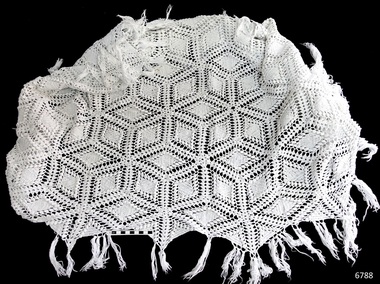
... road...giles collection...henry giles...tower hill...cooramook...But the Giles collection also gives us today a snapshot into what domestic life was like in early colonial times prior to Federation. flagstaff hill warrnambool shipwrecked coast flagstaff hill maritime museum shipwreck coast flagstaff hill maritime village great ocean road giles collection henry giles tower hill cooramook mailor’s flat wangoom manchester linen cot cover crochet manchester 20th century handcraft vera giles textile None Cot cover, white cotton thread, crochet diamond pattern with tassels on all sides. ...This child's cot cover was made by Vera Giles and is one of many 19th century items of furniture, linen and crockery donated to Flagstaff Hill Maritime Village by, Vera and Aurelin Giles. The items are associated with Warrnambool and the Giles Family history. Items donated by the family have come to be known as the “Giles Collection”. Many items in the Lighthouse Keeper’s Cottage were donated by Vera and Aurelin Giles and mostly came from the home of Vera’s parents-in-law, Henry Giles and his wife Mary Jane (nee Freckleton) who married in 1880 and whose photos are on display in the parlour. Henry was born at Tower Hill in 1858, and was a labourer on the construction of the Warrnambool Breakwater before leaving in 1895 for around seven years to build bridges in NSW. Mary Jane was born in 1860 at Cooramook and she attended Mailor’s Flat State School and where she eventually was to become a student teacher. After which she became a governess at “Injemiara” where her grandfather, Francis Freckleton, had once owned land. Henry and Mary’s family consisted of six, some of the children were born at Mailor’s Flat and later some children at Wangoom. They lived with their parents at Wangoom and Purnim west, and this is where Henry died in 1933 and Mary Jane in 1940.The Giles family collection is of social significance at a local level, because it not only illustrates the level of material support the Warrnambool community gave to Flagstaff Hill during it’s establishment. But the Giles collection also gives us today a snapshot into what domestic life was like in early colonial times prior to Federation.Cot cover, white cotton thread, crochet diamond pattern with tassels on all sides. (Giles Collection)Noneflagstaff hill, warrnambool, shipwrecked coast, flagstaff hill maritime museum, shipwreck coast, flagstaff hill maritime village, great ocean road, giles collection, henry giles, tower hill, cooramook, mailor’s flat, wangoom, manchester, linen, cot cover, crochet manchester, 20th century handcraft, vera giles, textile -
 Flagstaff Hill Maritime Museum and Village
Artwork, other - Wall decoration, Vera Giles, late 19th to early 20th century
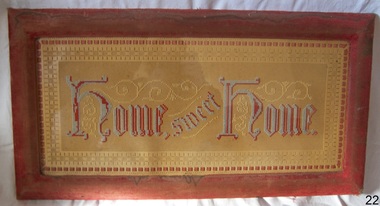
... road...soft furnishing...wall decoration...home sweet home...wall hanging...handmade wall hanging...giles collection...henry giles...tower hill...cooramook...But the Giles collection also gives us an additional view into what domestic life was like in early colonial times prior to Federation. flagstaff hill warrnambool shipwrecked coast flagstaff hill maritime museum flagstaff hill maritime village great ocean road soft furnishing wall decoration home sweet home wall hanging handmade wall hanging giles collection henry giles tower hill cooramook warrnambool breakwater mailor’s flat wangoom 19th century handcraft mrs vera giles Home Sweet Home, in gothic script Wall decoration, framed handmade embroidered tapestry with the woven inscription, Frame has velvet cover. ...During the Victorian era, the period (1837-1901) in which Queen Victoria ruled England. The queen’s influence was felt throughout the world, including in the United States and Australia where Victorian values shaped society and style, especially in home décor. This period’s distinct style presents an eclectic mix of highly ornamented furniture, wallpaper, and knick-knacks. Particularly in terms of furniture, and the characteristic floral patterns and rich, contrasting colours, wall hanging that enjoyed the height of its popularity during the Victorian era were of the spiritual type with an either embroidered or punched paper religious motto or bible quote. Mottoes were commonly hung high up on the wall or in an area of prominence, to remind the viewer of their important message, such as "Home sweet Home “He Leadeth Me” and “Honesty, Industry, and Sobriety.” Short and pithy, they embodied the ideals of Victorian society. Technological advances contributed to the boom of religious mottoes whereas before the Industrial Revolution home décor of this sort was handmade and therefore minimal, now consumers could purchase and fill their homes with all sorts of mass-produced ephemera goods similar to the subject item. Many of these mass-produced period pieces still exist today, often in their original frames, ceramic, or paper formats. Flagstaff maritime museum has many examples of mottoes on display that serve to reflect the period in which values of home, faith, and Christianity were very prominent in everyday Victorian society. For more information on the Giles collection see Acquisition section this document: An item that reflects the social values and attitudes of the late Victorian era that was used to promote good Christian and moral values in many households. These items of decoration were very popular at this time and the subject item is significant as it gives a snapshot into the social norms of past generations. The Giles family collection is of additional social significance at a local level, because it not only illustrates the level of material support the Warrnambool community gave to Flagstaff Hill during it’s establishment. But the Giles collection also gives us an additional view into what domestic life was like in early colonial times prior to Federation.Wall decoration, framed handmade embroidered tapestry with the woven inscription, Frame has velvet cover. This item is part of the Giles CollectionHome Sweet Home, in gothic scriptflagstaff hill, warrnambool, shipwrecked coast, flagstaff hill maritime museum, flagstaff hill maritime village, great ocean road, soft furnishing, wall decoration, home sweet home, wall hanging, handmade wall hanging, giles collection, henry giles, tower hill, cooramook, warrnambool breakwater, mailor’s flat, wangoom, 19th century handcraft, mrs vera giles -
 Flagstaff Hill Maritime Museum and Village
Photograph, Joseph Jordan Photographic Studio, Miss Christina Giles, before May 1899
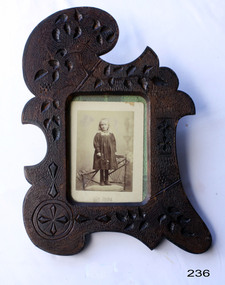
... road...christina giles...giles collection...giles family...giles history...henry and mary giles...henry giles...tower hill...cooramook...The photograph is also significant for is association with renowned Western District photographer, Joseph Jordan. flagstaff hill warrnambool shipwrecked coast flagstaff hill maritime museum maritime museum shipwreck coast flagstaff hill maritime village great ocean road christina giles giles collection giles family giles history henry and mary giles henry giles tower hill cooramook warrnambool breakwater mailor’s flat wangoom 19th century personal effects Joseph Jordan Jordan photography "Jordan Warrnambool" ( Photographers) Photograph of Christina Giles standing on chair in a decorative carved wood frame with floral design in abstract shape. ...This photograph is of Christina Giles, who died in Wangoom, Warrnambool, in 1899 at 7 years, 5 months and 4 days old and is one of many 19th century items of furniture, linen and crockery donated to Flagstaff Hill Maritime Village by, Vera and Aurelin Giles. The items are associated with Warrnambool and the Giles Family history. Items donated by the family have come to be known as the “Giles Collection”. Many items in the Lighthouse Keeper’s Cottage were donated by Vera and Aurelin Giles and mostly came from the home of Vera’s parents-in-law, Henry Giles and his wife Mary Jane (nee Freckleton) who married in 1880 and whose photos are on display in the parlour. Henry was born at Tower Hill in 1858, and was a labourer on the construction of the Warrnambool Breakwater before leaving in 1895 for around seven years to build bridges in NSW. Mary Jane was born in 1860 at Cooramook and she attended Mailor’s Flat State School and where she eventually was to become a student teacher. After which she became a governess at “Injemiara” where her grandfather, Francis Freckleton, had once owned land. Henry and Mary’s family consisted of six, some of the children were born at Mailor’s Flat and later some children at Wangoom. They lived with their parents at Wangoom and Purnim west, and this is where Henry died in 1933 and Mary Jane in 1940. Jordan, Warrnambool refers to Joseph Jordan who operated a photographic studio in Warrnambool from the late 1880s. His work was prevelent in Victoria's Western District of Victoria.This photograph of Christina Giles is of social significance at a local level, because it not only illustrates the level of material support the Warrnambool community gave to Flagstaff Hill during it’s establishment. But the Giles collection also gives us today a snapshot into what domestic life was like in early colonial times prior to Federation and the high mortality rates amongst children during the early years of colonial settlement. The photograph is also significant for is association with renowned Western District photographer, Joseph Jordan.Photograph of Christina Giles standing on chair in a decorative carved wood frame with floral design in abstract shape. Photo by Jordan of Warrnambool. Christina Giles died in Warrnambool in 1899 at 7 years, 5 months, 4 days of age. It is part of the Giles Family Collection. "Jordan Warrnambool" ( Photographers) flagstaff hill, warrnambool, shipwrecked coast, flagstaff hill maritime museum, maritime museum, shipwreck coast, flagstaff hill maritime village, great ocean road, christina giles, giles collection, giles family, giles history, henry and mary giles, henry giles, tower hill, cooramook, warrnambool breakwater, mailor’s flat, wangoom, 19th century personal effects, joseph jordan, jordan photography -
 Flagstaff Hill Maritime Museum and Village
Photograph - Mrs Mary Jane Giles of Woodford, International Art Company, Circa 1880
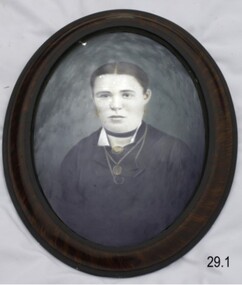
... road...photograph late 1800s...oval wooden frame...portrait...mrs mary jane giles of woodford victoria...giles collection...henry giles...tower hill...cooramook...The photograph itself is of added significance as we can see the faces of the family whose lives the collection represents . flagstaff hill warrnambool shipwrecked coast flagstaff hill maritime museum shipwreck coast flagstaff hill maritime village great ocean road photograph late 1800s oval wooden frame portrait mrs mary jane giles of woodford victoria giles collection henry giles tower hill cooramook warrnambool breakwater mailor’s flat wangoom 19th century personal effects mary giles christine giles Inscription on back of frame "International Art Company 30/-" "Rosewood" Portrait photograph mounted in an oval rosewood frame, one of a pair. ...The pair of photographs of Mr Henry and Mrs Mary Jane Giles was made by the International Art Company, the price was 30 shillings and the choice of frame was Rosewood. It is part of the Giles Collection, which also includes a photograph of the couple's daughter Christina Giles, who died in 1899 aged seven years. There are many 19th century items of furniture, linen and crockery donated to Flagstaff Hill Maritime Village by, Vera and Aurelin Giles. The items are associated with Warrnambool and the Giles Family history. Items donated by the family have come to be known as the “Giles Collection”. Many items in the Lighthouse Keeper’s Cottage were donated by Vera and Aurelin Giles and mostly came from the home of Vera’s parents-in-law, Henry Giles and his wife Mary Jane (nee Freckleton) who married in 1880 and whose photos are on display in the parlour. Henry was born at Tower Hill in 1858, and was a labourer on the construction of the Warrnambool Breakwater before leaving in 1895 for around seven years to build bridges in NSW. Mary Jane was born in 1860 at Cooramook and she attended Mailor’s Flat State School and where she eventually was to become a student teacher. After which she became a governess at “Injemiara” where her grandfather, Francis Freckleton, had once owned land. Henry and Mary’s family consisted of six, some of the children were born at Mailor’s Flat and later some children at Wangoom. They lived with their parents at Wangoom and Purnim west, and this is where Henry died in 1933 and Mary Jane in 1940.This photograph is locally significant due to its association with a local pioneering family. The Giles family collection is of social significance at a local level, because it not only illustrates the level of material support the Warrnambool community gave to Flagstaff Hill during it’s establishment. But the Giles collection also gives us today a snapshot into what domestic life was like in early colonial times prior to Federation. The photograph itself is of added significance as we can see the faces of the family whose lives the collection represents . Portrait photograph mounted in an oval rosewood frame, one of a pair. This photograph is Mary Jane Giles, dressed formally showing chest to head. Her hair is tied back hair and she has a neck band. The couple in the pair of photographs is Mr and Mrs Giles of Woodford, Victoria. The photographic studio was the International Art Company. It is part of the Giles Collection.Inscription on back of frame "International Art Company 30/-" "Rosewood"flagstaff hill, warrnambool, shipwrecked coast, flagstaff hill maritime museum, shipwreck coast, flagstaff hill maritime village, great ocean road, photograph late 1800s, oval wooden frame, portrait, mrs mary jane giles of woodford victoria, giles collection, henry giles, tower hill, cooramook, warrnambool breakwater, mailor’s flat, wangoom, 19th century personal effects, mary giles, christine giles -
 Flagstaff Hill Maritime Museum and Village
Container - Ceramic Bottle (Chinese Style), Minton Potteries, Late 19th century
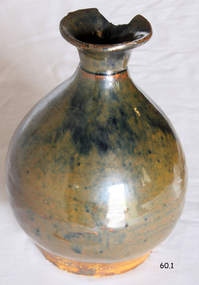
... road...vase...pottery...ceramic ornament...domestic ware...late 19th - early 20th centuy ornament...giles collection...henry giles...tower hill...cooramook...The Giles family collection has social significance at a local level, because it illustrates the level of material support the Warrnambool community gave to Flagstaff Hill when the Museum was established. flagstaff hill warrnambool shipwrecked coast flagstaff hill maritime museum maritime museum shipwreck coast flagstaff hill maritime village great ocean road vase pottery ceramic ornament domestic ware late 19th - early 20th centuy ornament giles collection henry giles tower hill cooramook warrnambool breakwater mailor’s flat wangoom 19th century household goods light keeper Mark of a double triangle, apex touching, on base, (Minton mark for 1879). ...The subject item is believed to be a "Chinese style stoneware liquor bottle used to store "Tiger Whiskey" (rice wine). These Chinese liquor jugs are made of glazed pottery known as brown stoneware and have been made throughout the centuries by many makers until well after American Prohibition. Later varieties from the mid 20th century are commonly found in the USA with the raised lettering "Federal Law Forbids Sale Or Re-use of this bottle" a sure sign of post-1934 manufacture. This example is interesting as it has a British Minton mark of two triangles on the base indicating a date of 1879 and was likely exported to Australia by Minton. These ceramic bottles virtually always have irregularities and flaws which indicate a product has been hastily manufactured, in any event, this is a fine example of a relatively common item that may have been copied by Minton and sold as a decorative domestic item for display or mass produced for storing liquor. Giles Family: The pair of ceramic bottles were given to Vera Giles by Jim Thompson and are just many 19th century items of furniture, linen and crockery donated to Flagstaff Hill Maritime Village by, Vera and Aurelin Giles. The items are associated with Warrnambool and the Giles Family history. Items donated by the family have come to be known as the “Giles Collection”. Many items in the Lighthouse Keeper’s Cottage were donated by Vera and Aurelin Giles and mostly came from the home of Vera’s parents-in-law, Henry Giles and his wife Mary Jane (nee Freckleton) who married in 1880 and whose photos are on display in the parlour. Henry was born at Tower Hill in 1858, and was a labourer on the construction of the Warrnambool Breakwater before leaving in 1895 for around seven years to build bridges in NSW. Mary Jane was born in 1860 at Cooramook and she attended Mailor’s Flat State School and where she eventually was to become a student teacher. After which she became a governess at “Injemiara” where her grandfather, Francis Freckleton, had once owned land. Henry and Mary’s family consisted of six, some of the children were born at Mailor’s Flat and later some children at Wangoom. They lived with their parents at Wangoom and Purnim west, and this is where Henry died in 1933 and Mary Jane in 1940. A significant item of lead-glazed ceramic with the possibility it was made by the Minton potteries in England who were renowned for making quality pottery. The item style is in all probability a copy of a Chinese liquor bottle that was in common use throughout the British colonies and America up until the mid 20th Century. The Giles family collection has social significance at a local level, because it illustrates the level of material support the Warrnambool community gave to Flagstaff Hill when the Museum was established.Chinese liquor bottle one of a pair, lead glazed ceramic, dark brown and blue/black. Part of the Giles Collection.Mark of a double triangle, apex touching, on base, (Minton mark for 1879).flagstaff hill, warrnambool, shipwrecked coast, flagstaff hill maritime museum, maritime museum, shipwreck coast, flagstaff hill maritime village, great ocean road, vase, pottery, ceramic ornament, domestic ware, late 19th - early 20th centuy ornament, giles collection, henry giles, tower hill, cooramook, warrnambool breakwater, mailor’s flat, wangoom, 19th century household goods, light keeper
