
Showing 39 items matching "coy family"
-
 Surrey Hills Historical Society Collection
Work on paper - Vertical file of information related to music & theatre in Surrey Hills
... ...Coy family...Notes from Victoria & its Metropolis re Coy and Zeplin families. 8. Notes re Miss Beryl Tolstrup compiled by Jocelyn Hall. 9. ...Notes from Victoria & its Metropolis re Coy and Zeplin families. 8. Notes re Miss Beryl Tolstrup compiled by Jocelyn Hall. 9. ...A vertical file containing the following: 1. Report from BHR, 10/6/1898 – 1 paqe – ‘Concert at Surrey Hills’ mentions Theo Hansen, Emily Walker, Rosalie Hansen and Mr Lumsden. 2. Compilation of various notes by Jocelyn Hall; includes mention of Henry Garrett, brass band concerts, William McRaild, Victorian Scottish Pipe Band, Harald & Stan Sydsereff, Percy Pledger, Win Jacobs, Ernest W Swan and Surrey Hills Musical Club – 1 page, undated. 3. Box Hill and Surrey Hills College of Music – “A concert” – 1 page, 4/12/1911 – photocopy of program; lists staff of the College and Mr Smith, newsagent 4. Notes compiled by Jocelyn Hall re Mrs Constance Clucas and the Operatic Society of Surrey Hills – 1 page; undated. 5. Memories of Jack Colquhuon, July 1988, 2 pages compiled by Jocelyn Hall. Mentions various residents, the opening of the SH picture theatre in 1939, his role as prompter for the Surrey Hills Operatic Society. 6. Notes re Mont Albert Choral Society, Betty Farley, Rayment Fehmel, Marie Collins and Greg Dempsey. 7. Notes from Victoria & its Metropolis re Coy and Zeplin families. 8. Notes re Miss Beryl Tolstrup compiled by Jocelyn Hall. 9. Notes re Ida Holmes (nee Hansen) & Gwendoline Evans compiled by Jocelyn Hall. 10. Notes re Joy Blair Dicker compiled by Jocelyn Hall. 11. Notes re Iris Roderick provided by Mrs Ruth Edgar, 9/11/1988. 12. Notes re the Pay family of Shepherd Street and their link to the Mitchell family. Notes compiled by Jocelyn Hall from information from Lyn Mitchell. NOTE: This contains mis-information regarding the announcement of Australian involvement in WW2. 13. Notes compiled by Jocelyn Hall re the Benwerrin Players from information provided by Jack Colquhuon. 14. Notes compiled by Jocelyn Hall re the Surrey Hills Operatic society provided by Miss Dorothy Clucas, October 1979. theo hansen, emily walker, rosalie hansen, mr lumsden, henry garrett, brass band concerts, william mcraild, victorian scottish pipe band, percy pledger, win jacobs, musical club, harald sydsereff, stan sydsereff, ernest w swan, box hill and surrey hills college of music, constance clucas, surrey hills operatic society, jack colquhuon, mont albert choral society, betty farley, rayment fehmel, marie collins, greg dempsey, coy family, zeplin family, beryl tolstrup, ida holmes, ida hansen, gwendoline evans, joy blair dicker, iris roderick, ruth edgar, lyn mitchell, benwerrin players, dorothy clucas -
Surrey Hills Historical Society Collection
Work on paper - Vertical File, Music and Theatre
... Notes from Victoria & its Metropolis re Coy and Zeplin families. 8. Notes re Miss Beryl Tolstrup compiled by Jocelyn Hall. 9. ...Notes from Victoria & its Metropolis re Coy and Zeplin families. 8. Notes re Miss Beryl Tolstrup compiled by Jocelyn Hall. 9. ...MUSIC & THEATRE 1. Report from BHR, 10/6/1898 – 1 paqe – ‘Concert at Surrey Hills’ mentions Theo Hansen, Emily Walker, Rosalie Hansen and Mr Lumsden. 2. Compilation of various notes by Jocelyn Hall; includes mention of Henry Garrett, brass band concerts, William McRaild, Victorian Scottish Pipe Band, Harald & Stan Sydsereff, Percy Pledger, Win Jacobs, Ernest W Swan and Surrey Hills Musical Club – 1 page, undated. 3. Box Hill and Surrey Hills College of Music – “A concert” – 1 page, 4/12/1911 – photocopy of program; lists staff of the College and Mr Smith, newsagent 4. Notes compiled by Jocelyn Hall re Mrs Constance Clucas and the Operatic Society of Surrey Hills – 1 page; undated. 5. Memories of Jack Colquhuon, July 1988, 2 pages compiled by Jocelyn Hall. Mentions various residents, the opening of the SH picture theatre in 1939, his role as prompter for the Surrey Hills Operatic Society. 6. Notes re Mont Albert Choral Society, Betty Farley, Rayment Fehmel, Marie Collins and Greg Dempsey. 7. Notes from Victoria & its Metropolis re Coy and Zeplin families. 8. Notes re Miss Beryl Tolstrup compiled by Jocelyn Hall. 9. Notes re Ida Holmes (nee Hansen) & Gwendoline Evans compiled by Jocelyn Hall. 10. Notes re Joy Blair Dicker compiled by Jocelyn Hall. 11. Notes re Iris Roderick provided by Mrs Ruth Edgar, 9/11/1988. 12. Notes re the Pay family of Shepherd Street and their link to the Mitchell family. Notes compiled by Jocelyn Hall from information from Lyn Mitchell. NOTE: This contains mis-information regarding the announcement of Australian involvement in WW2. 13. Notes compiled by Jocelyn Hall re the Benwerrin Players from information provided by Jack Colquhuon. 14. Notes compiled by Jocelyn Hall re the Surrey Hills Operatic society provided by Miss Dorothy Clucas, October 1979. music and theatre, mont albert choral society, surrey hills operatic society -
 Federation University Historical Collection
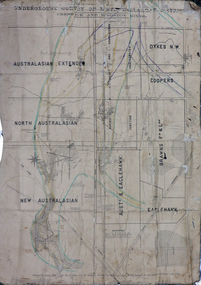
Plan, Underground Survey of Mines, Ballarat District, Creswick and Kingston Mines, 1888, 06/1888
... Gift of the Squire Family creswick kingston berry australasian plan mining robert allen richard squire Written above Australian Extended "West Berry Consols Coy" Written near Davis' and Charlesons Amalgamated "West Berry Consols Coy" A paper plan on linen showing the following mines: Australasian Extended, North Australasian, Davis and Charlesons Amalgamated, Davies Junction, Dykes N.W., Coopers, F & L Holding, New Australasian, Australasian and Eaglehawk, Brawns Underground Survey of Mines, Ballarat District, Creswick and Kingston Mines, 1888 Plan Robert Allan ...This plan is associated with former Ballarat School of Mines Student Richard Squire (1875-1876). Gift of the Squire FamilyA paper plan on linen showing the following mines: Australasian Extended, North Australasian, Davis and Charlesons Amalgamated, Davies Junction, Dykes N.W., Coopers, F & L Holding, New Australasian, Australasian and Eaglehawk, BrawnsWritten above Australian Extended "West Berry Consols Coy" Written near Davis' and Charlesons Amalgamated "West Berry Consols Coy"creswick, kingston, berry, australasian, plan, mining, robert allen, richard squire -
 Flagstaff Hill Maritime Museum and Village
Book - Maritime, Herbert Whitney, Shipwrecks with illustrations, 1890
... family has not been able to trace that book. The author was the uncle of Mrs W I Holmes, need Kathleen Whitney. The book is significant for its collection of information and illustrations about shipwrecks. Flagstaff Hill Flagstaff Hill Maritime Museum and Village Warrnambool Maritime Museum Maritime Village Great Ocean Road Shipwreck Coast Herbert Whitney Kathleen Whitney Kathleen Holmes shipwrecks Victorian shipwrecks Illustrated shipwrecks Kuleah Pastoral Coy. ...The author Herbert Whitney has written and illustrated his information about shipwrecks in an exercise book. This book is the second that he has written on the topic. The first book was about Victorian shipwrecks and the family has not been able to trace that book. The author was the uncle of Mrs W I Holmes, need Kathleen Whitney. The book is significant for its collection of information and illustrations about shipwrecks.Herbert Whitney wrote a an illustrated book about shipwrecks. It is the anther's second book on the subject of shipwrecks. A note typed on letterhead is attached to the inside cover. Printed letterhead "TELEPHONE: WOOLSTHORPE 7" , " KULEAN PASTORAL COY. Pty Ltd", 3279" Typed text "This book was completed by Herbert Whitney, Uncle of Mrs W.I. Holmes, nee Kathleen Whitney. There is no name attached, and it is book No.2. All attempts to trace No 1 have failed -- it is the most important- -- on "Victorian ships."flagstaff hill, flagstaff hill maritime museum and village, warrnambool, maritime museum, maritime village, great ocean road, shipwreck coast, herbert whitney, kathleen whitney, kathleen holmes, shipwrecks, victorian shipwrecks, illustrated shipwrecks, kuleah pastoral coy. pty ltd., woolsthorpe -
 Federation University Historical Collection
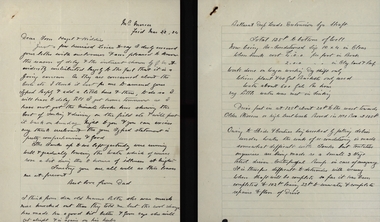
Letter, Letters from Richard Squire to his son Tom 1934
... Walker Secretary for Mines Pipeclay Sandstone Mr Saville Weymouth & Carroll Suction Pipe Valves Financiers Gold Mines of Australia Mr Hanley Hunter Sadowa Coy Kerang Shareholder Buninyong Stanley Hunter Len Fran Max Dr Jones Honeycomb Rock Booth Sandy McNab Emily Shaw John Cock Ross Creek Mitchell Rowe Neil Cameron Walker Kidney Disease Holst Nellie Ronaldson's Ronaldson & Tippett Brokers Investors Lockett Miller & Co Wellesly John Sharpe Elizabeht Ellen Old Lawaluk Mining Handwritten letters from Richard Squire to his son Tom and Family reporting happening at the mine Letters from Richard Squire to his son Tom 1934 Letter ...In 1905 Richard Squire was manager of the West Berry Consols at Allendale, and developed an improved system of mine ventilation, which was supported in "The Age."[4] He was successful in combating and remedying the gas and ventilation troubles of the Deep Mines of Creswick and Allendale Districts after all had failed.[5] MINE MANAGERS’ ASSOCIATION. Ballarat Branch. ... Mr R. B. Squire, manager of the West Berry Consols, at Allendale, submitted a paper detailing what he had done tor the betterment of ventilation in the alluvial mines of Smeaton and Mary borough districts- Members gave Mr Squire every credit for the results that he claimed to have effected; the adoption of his ideas had testified to their value to mine-owners. It was painted out, however, that for want of a thorough debate of the subject with experienced men the author had unwittingly included some general statements that required modifying in some points and extending in others, in justice to other workers among the earlier and the present day managers of mines. It was decided to invite the author to meet a sub-committee on this subject![6]Handwritten letters from Richard Squire to his son Tom and Family reporting happening at the mine richard squire, tom squire, engine trouble, basil, f.l. smythe broker, trembath, w. ryall, mt mercer, flu, plant, skids, pump, c. hayes, illness, poppet, carburetor, mum, ned, shaft, balance weight, hazel squire, pearson, pulleys, syndicate, goon, len hopkins, suction, dunstown, lease, jim squire, bannockburn, nina, albert, mrs trenery, connie, jay, judy squire, cohuna, bladder attack, reports, estimates, dunstan & coy, jelbarts, barrett, flat fields, brown, gold estates, berry leads, parsley roots, share book, meredith, reef, pay sheet, colin, mr gibbs, l.r.g plan, banagwanth, mcnaughton bores, glenfine, allan, william thomas, john lynch, crawford, shelford, liz the car, trucks, chandlers, ballarat trustees, cameron, elaine, mrs read, clark, j. hayes, dunlop, dr lawrence, eye specialist, reid, mullock bank, jack squire, herman, peter's legal inc. ballarat, freddie reid, j.r. whipp, a.b. reid, grenville, leigh river plan, johnstone's, premier petrol coy, chandler's, ballarat deep leads extension, harwood & pincott, a. rice, lillas, l. e. walker, secretary for mines, pipeclay, sandstone, mr saville, weymouth & carroll, suction pipe, valves, financiers, gold mines of australia, mr hanley hunter, sadowa coy, kerang shareholder, buninyong, stanley hunter, len, fran, max, dr jones, honeycomb rock, booth, sandy mcnab, emily shaw, john cock, ross creek, mitchell, rowe, neil cameron, walker, kidney disease, holst, nellie, ronaldson's, ronaldson & tippett, brokers, investors, lockett, miller & co, wellesly, john sharpe, elizabeht ellen, old lawaluk, mining -
 Flagstaff Hill Maritime Museum and Village
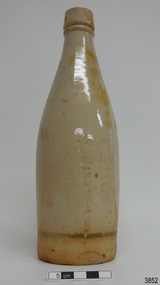
Ceramic - Stoneware Bottle, Dundas Pottery, Late 1800s to early 1900s
... Items that come from several wrecks along Victoria's coast have since been donated to the Flagstaff Hill Maritime Village’s museum collection by his family, illustrating this item’s level of historical value. flagstaff hill warrnambool flagstaff hill maritime museum maritime museum shipwreck coast flagstaff hill maritime village great ocean road shipwreck artefact stoneware ironstone pottery bottle port dundas pottery glasgow john chance antique bottle william johnstone Stamp: [symbol of concentric ovals], text within the symbol "PORT DUNDAS POTTERY COY." and "GLASGOW". ...This bottle was made in Scotland and recovered decades later from a shipwreck along the coast of Victoria. It may have been amongst the ship's cargo, its provisions or amongst a passenger's personal luggage. It is now part of the John Chance collection. Stoneware bottles similar to this one were in common use during the mid-to-late 19th century. They were used to store and transport. The bottles were handmade using either a potter's wheel or in moulds such as a plaster mould, which gave the bottles uniformity in size and shape. The bottle would then be fired and glazed in a hot kiln. Makers often identified their bottles with the impression of a small symbol or adding a colour to the mouth. The manufacturer usually stamped their bottles with their name and logo, and sometimes a message that the bottle remained their property and should be returned to them. The bottles could then be cleaned and refilled. DUNDAS POTTERY WORKS - The Dundas Pottery works were established in 1828 by William Johnstone in partnership with John Forsyth and John Mc Coll. Located where the Forth and Clyde Canal joined the Monkland Canal, North of Glasgow. Johnstone sold the pottery in 1835 to Robert Cochran and James Couper. Mc Coll was retained as manager until 1837when in 1839 Cochran & Couper sold the pottery and purchased the St Rollex Glass Works. George Duncan took over briefly but died in 1841, with the pottery possibly being run by his widow Helen and a potter named Alexander Paul. James Miller was the manager at the time and he bought the pottery in 1856, in partnership with John Moody. Miller's long and careful stewardship of the pottery saw success from the export market which allowed him to purchase the North British pottery in 1867 until 1874 when it was sold. In 1875, Miller, in partnership with John Young, leased part of Caledonian Pottery, naming it Crown Pottery, however, it burned down in 1879. In the early 1880s, Young extended the pottery and named it Milton Pottery. Miller’s son, James W., became a partner in Milton pottery in 1905. James Miller Snr died in 1905 and the company continued as a limited liability company, being sold to the Borax Consolidation Ltd in 1929, but it was unsuccessful and Possil pottery purchased some of the company's equipment before it finally closed in 1932. From 1828 until the James Miller period of circa 1856, the pottery produced salt-glazed stoneware for the local industrial trade; mainly bottles and drain pipes. James Miller produced various bottles, whisky and acid jars, casks, butter crocks, jam jars and domestic wares in Bristol glaze. He streamlined the water filter manufacturing, which had become a specialty of the pottery, and a dedicated section of the pottery was created solely for their production, which was exported worldwide. This stoneware bottle is historically significant for its manufacture and use in the late 19th to the early 20th century. This bottle is historically significant for its connection with the well-known stoneware manufacturers, Dundas Pottery of Glasgow, Scotland. The bottle is also significant as it was recovered by John Chance, a diver, from a wreck on the coast of Victoria in the 1960s-70s. Items that come from several wrecks along Victoria's coast have since been donated to the Flagstaff Hill Maritime Village’s museum collection by his family, illustrating this item’s level of historical value. Bottle, salt glazed stoneware, beige, sealed with wax, discolouration above base. Inscriptions stamped near base. Stamp: [symbol of concentric ovals], text within the symbol "PORT DUNDAS POTTERY COY." and "GLASGOW". Stamp:[Symbol - square with short vertical line in centre of base line] flagstaff hill, warrnambool, flagstaff hill maritime museum, maritime museum, shipwreck coast, flagstaff hill maritime village, great ocean road, shipwreck artefact, stoneware, ironstone, pottery, bottle, port dundas pottery, glasgow, john chance, antique bottle, william johnstone -
 Flagstaff Hill Maritime Museum and Village
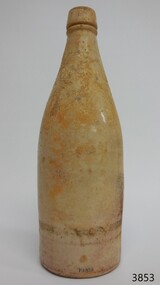
Ceramic - Stoneware Bottle, Dundas Pottery, 1856-1910
... Items that come from several wrecks along Victoria's coast have since been donated to the Flagstaff Hill Maritime museum collection by his family Illustrating the level of historical value the subject item has. flagstaff hill warrnambool flagstaff hill maritime museum maritime museum shipwreck coast flagstaff hill maritime village great ocean road john chance stoneware bottle pottery port dundas pottery william johnstone bottles shipwreck artefact stoneware ironstone bottle glasgow antique bottle Stamp: [symbol of concentric ovals], text within the symbol "PORT DUNDAS POTTERY COY." and "GLASGOW". ...This bottle is part of the John Chance Collection of shipwreck artefacts. The Dundas Pottery works were established in 1828 by William Johnstone in partnership with John Forsyth and John Mc Coll. Located where the Forth and Clyde Canal joined the Monkland Canal, North of Glasgow. Johnstone sold the pottery in 1835 to Robert Cochran and James Couper. Mc Coll was retained as manager until 1837when in 1839 Cochran & Couper sold the pottery and purchased the St Rollex Glass Works. George Duncan took over briefly but died in 1841, with the pottery possibly being run by his widow Helen and a potter named Alexander Paul. James Miller was the manager at the time and he bought the pottery in 1856, in partnership with John Moody. Miller's long and careful stewardship of the pottery saw success from the export market which allowed him to purchase the North British pottery in 1867 until 1874 when it was sold. In 1875, Miller, in partnership with John Young, leased part of Caledonian Pottery, naming it Crown Pottery, however, it burned down in 1879. In the early 1880s, Young extended the pottery and named it Milton Pottery. Miller’s son, James W., became a partner in Milton pottery in 1905. James Miller Snr died in 1905 and the company continued as a limited liability company, being sold to the Borax Consolidation Ltd in 1929, but it was unsuccessful and Possil pottery purchased some of the company's equipment before it finally closed in 1932. From 1828 until the James Miller period of circa 1856, the pottery produced salt-glazed stoneware for the local industrial trade; mainly bottles and drain pipes. James Miller produced various bottles, whisky and acid jars, casks, butter crocks, jam jars and domestic wares in Bristol glaze. He streamlined the water filter manufacturing, which had become a speciality of the pottery, and a dedicated section of the pottery was created solely for their production, which was exported worldwide. A significant item of salt-glazed ceramic stoneware made by the Dundas potteries in Scotland who were renowned for making quality ironstone pottery. The bottle that was in common use throughout the British colonies and America for the containment of ale The bottle is also significant as it was recovered by John Chance, a diver, from a wreck on the coast of Victoria in the 1960s-70s. Items that come from several wrecks along Victoria's coast have since been donated to the Flagstaff Hill Maritime museum collection by his family Illustrating the level of historical value the subject item has.Beige salt glazed stoneware, bottle with discolorations above base. Manufacturer's oval Inscription lozenge stamped near base. Stamp: [symbol of concentric ovals], text within the symbol "PORT DUNDAS POTTERY COY." and "GLASGOW". Stamp:[Symbol - square with short vertical line in centre of base line]flagstaff hill, warrnambool, flagstaff hill maritime museum, maritime museum, shipwreck coast, flagstaff hill maritime village, great ocean road, john chance, stoneware bottle, pottery, port dundas pottery, william johnstone, bottles, shipwreck artefact, stoneware, ironstone, bottle, glasgow, antique bottle -
 Flagstaff Hill Maritime Museum and Village
Ceramic - Stoneware Bottle, Dundas Pottery, Late 1800s to early 1900s
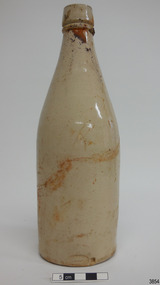
... Items that come from several wrecks along Victoria's coast have since been donated to the Flagstaff Hill Maritime Village’s museum collection by his family, illustrating this item’s level of historical value. flagstaff hill warrnambool flagstaff hill maritime museum maritime museum shipwreck coast flagstaff hill maritime village great ocean road john chance shipwreck artefact stoneware ironstone pottery bottle port dundas pottery glasgow antique bottle william johnstone Stamp: [symbol of concentric ovals], text within the symbol "PORT DUNDAS POTTERY COY." and "GLASGOW". ...This bottle was made in Scotland and recovered decades later from a shipwreck along the coast of Victoria. It may have been amongst the ship's cargo, its provisions or amongst a passenger's personal luggage. It is now part of the John Chance collection. Stoneware bottles similar to this one were in common use during the mid-to-late 19th century. They were used to store and transport. The bottles were handmade using either a potter's wheel or in moulds such as a plaster mould, which gave the bottles uniformity in size and shape. The bottle would then be fired and glazed in a hot kiln. Makers often identified their bottles with the impression of a small symbol or adding a colour to the mouth. The manufacturer usually stamped their bottles with their name and logo, and sometimes a message that the bottle remained their property and should be returned to them. The bottles could then be cleaned and refilled. DUNDAS POTTERY WORKS - The Dundas Pottery works were established in 1828 by William Johnstone in partnership with John Forsyth and John Mc Coll. Located where the Forth and Clyde Canal joined the Monkland Canal, North of Glasgow. Johnstone sold the pottery in 1835 to Robert Cochran and James Couper. Mc Coll was retained as manager until 1837when in 1839 Cochran & Couper sold the pottery and purchased the St Rollex Glass Works. George Duncan took over briefly but died in 1841, with the pottery possibly being run by his widow Helen and a potter named Alexander Paul. James Miller was the manager at the time and he bought the pottery in 1856, in partnership with John Moody. Miller's long and careful stewardship of the pottery saw success from the export market which allowed him to purchase the North British pottery in 1867 until 1874 when it was sold. In 1875, Miller, in partnership with John Young, leased part of Caledonian Pottery, naming it Crown Pottery, however, it burned down in 1879. In the early 1880s, Young extended the pottery and named it Milton Pottery. Miller’s son, James W., became a partner in Milton pottery in 1905. James Miller Snr died in 1905 and the company continued as a limited liability company, being sold to the Borax Consolidation Ltd in 1929, but it was unsuccessful and Possil pottery purchased some of the company's equipment before it finally closed in 1932. From 1828 until the James Miller period of circa 1856, the pottery produced salt-glazed stoneware for the local industrial trade; mainly bottles and drain pipes. James Miller produced various bottles, whisky and acid jars, casks, butter crocks, jam jars and domestic wares in Bristol glaze. He streamlined the water filter manufacturing, which had become a speciality of the pottery, and a dedicated section of the pottery was created solely for their production, which was exported worldwide. This stoneware bottle is historically significant for its manufacture and use in the late 19th to the early 20th century. This bottle is historically significant for its connection with the well-known stoneware manufacturers, Dundas Pottery of Glasgow, Scotland. The bottle is also significant as it was recovered by John Chance, a diver, from a wreck on the coast of Victoria in the 1960s-70s. Items that come from several wrecks along Victoria's coast have since been donated to the Flagstaff Hill Maritime Village’s museum collection by his family, illustrating this item’s level of historical value.Bottle, salt glazed stoneware, beige, sealed with wax, some discolouration above base. Inscription stamped near base..Stamp: [symbol of concentric ovals], text within the symbol "PORT DUNDAS POTTERY COY." and "GLASGOW". Stamp:[Symbol - square with short vertical line in centre of base line]flagstaff hill, warrnambool, flagstaff hill maritime museum, maritime museum, shipwreck coast, flagstaff hill maritime village, great ocean road, john chance, shipwreck artefact, stoneware, ironstone, pottery, bottle, port dundas pottery, glasgow, antique bottle, william johnstone -
 Flagstaff Hill Maritime Museum and Village
Ceramic - Stoneware Bottle, Dundas Pottery, Late 1800s to early 1900s
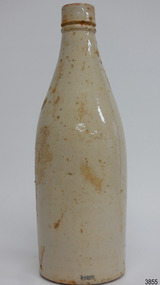
... Items that come from several wrecks along Victoria's coast have since been donated to the Flagstaff Hill Maritime Village’s museum collection by his family, illustrating this item’s level of historical value. flagstaff hill warrnambool flagstaff hill maritime museum maritime museum shipwreck coast flagstaff hill maritime village great ocean road john chance shipwreck artefact stoneware ironstone pottery bottle port dundas pottery glasgow antique bottle william johnstone Stamp: [symbol of concentric ovals], text within the symbol "PORT DUNDAS POTTERY COY." and "GLASGOW". ...This bottle was made in Scotland and recovered decades later from a shipwreck along the coast of Victoria. It may have been amongst the ship's cargo, its provisions or amongst a passenger's personal luggage. It is now part of the John Chance collection. Stoneware bottles similar to this one were in common use during the mid-to-late 19th century. They were used to store and transport. The bottles were handmade using either a potter's wheel or in moulds such as a plaster mould, which gave the bottles uniformity in size and shape. The bottle would then be fired and glazed in a hot kiln. Makers often identified their bottles with the impression of a small symbol or adding a colour to the mouth. The manufacturer usually stamped their bottles with their name and logo, and sometimes a message that the bottle remained their property and should be returned to them. The bottles could then be cleaned and refilled. DUNDAS POTTERY WORKS - The Dundas Pottery works were established in 1828 by William Johnstone in partnership with John Forsyth and John Mc Coll. Located where the Forth and Clyde Canal joined the Monkland Canal, North of Glasgow. Johnstone sold the pottery in 1835 to Robert Cochran and James Couper. Mc Coll was retained as manager until 1837when in 1839 Cochran & Couper sold the pottery and purchased the St Rollex Glass Works. George Duncan took over briefly but died in 1841, with the pottery possibly being run by his widow Helen and a potter named Alexander Paul. James Miller was the manager at the time and he bought the pottery in 1856, in partnership with John Moody. Miller's long and careful stewardship of the pottery saw success from the export market which allowed him to purchase the North British pottery in 1867 until 1874 when it was sold. In 1875, Miller, in partnership with John Young, leased part of Caledonian Pottery, naming it Crown Pottery, however, it burned down in 1879. In the early 1880s, Young extended the pottery and named it Milton Pottery. Miller’s son, James W., became a partner in Milton pottery in 1905. James Miller Snr died in 1905 and the company continued as a limited liability company, being sold to the Borax Consolidation Ltd in 1929, but it was unsuccessful and Possil pottery purchased some of the company's equipment before it finally closed in 1932. From 1828 until the James Miller period of circa 1856, the pottery produced salt-glazed stoneware for the local industrial trade; mainly bottles and drain pipes. James Miller produced various bottles, whisky and acid jars, casks, butter crocks, jam jars and domestic wares in Bristol glaze. He streamlined the water filter manufacturing, which had become a speciality of the pottery, and a dedicated section of the pottery was created solely for their production, which was exported worldwide.This stoneware bottle is historically significant for its manufacture and use in the late 19th to the early 20th century. This bottle is historically significant for its connection with the well-known stoneware manufacturers, Dundas Pottery of Glasgow, Scotland. The bottle is also significant as it was recovered by John Chance, a diver, from a wreck on the coast of Victoria in the 1960s-70s. Items that come from several wrecks along Victoria's coast have since been donated to the Flagstaff Hill Maritime Village’s museum collection by his family, illustrating this item’s level of historical value.Bottle, salt glazed stoneware, beige, part sealed with wax and cork, very little discolouration. Inscriptions stamped near base.Stamp: [symbol of concentric ovals], text within the symbol "PORT DUNDAS POTTERY COY." and "GLASGOW". Stamp:[Symbol - square with short vertical line in centre of base line]flagstaff hill, warrnambool, flagstaff hill maritime museum, maritime museum, shipwreck coast, flagstaff hill maritime village, great ocean road, john chance, shipwreck artefact, stoneware, ironstone, pottery, bottle, port dundas pottery, glasgow, antique bottle, william johnstone -
 Flagstaff Hill Maritime Museum and Village
Ceramic - Stoneware Bottle, Dundas Pottery, Late 1800s to early 1900s
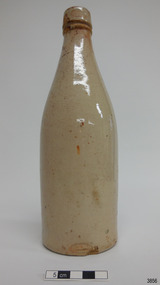
... Items that come from several wrecks along Victoria's coast have since been donated to the Flagstaff Hill Maritime Village’s museum collection by his family, illustrating this item’s level of historical value. flagstaff hill warrnambool flagstaff hill maritime museum maritime museum shipwreck coast flagstaff hill maritime village great ocean road john chance shipwreck artefact stoneware ironstone pottery bottle port dundas pottery glasgow antique bottle william johnstone Stamp: [symbol of concentric ovals], text within the symbol "PORT DUNDAS POTTERY COY." and "GLASGOW". ...This bottle was made in Scotland and recovered decades later from a shipwreck along the coast of Victoria. It may have been amongst the ship's cargo, its provisions or amongst a passenger's personal luggage. It is now part of the John Chance collection. Stoneware bottles similar to this one were in common use during the mid-to-late 19th century. They were used to store and transport. The bottles were handmade using either a potter's wheel or in moulds such as a plaster mould, which gave the bottles uniformity in size and shape. The bottle would then be fired and glazed in a hot kiln. Makers often identified their bottles with the impression of a small symbol or adding a colour to the mouth. The manufacturer usually stamped their bottles with their name and logo, and sometimes a message that the bottle remained their property and should be returned to them. The bottles could then be cleaned and refilled. DUNDAS POTTERY WORKS - The Dundas Pottery works were established in 1828 by William Johnstone in partnership with John Forsyth and John Mc Coll. Located where the Forth and Clyde Canal joined the Monkland Canal, North of Glasgow. Johnstone sold the pottery in 1835 to Robert Cochran and James Couper. Mc Coll was retained as manager until 1837when in 1839 Cochran & Couper sold the pottery and purchased the St Rollex Glass Works. George Duncan took over briefly but died in 1841, with the pottery possibly being run by his widow Helen and a potter named Alexander Paul. James Miller was the manager at the time and he bought the pottery in 1856, in partnership with John Moody. Miller's long and careful stewardship of the pottery saw success from the export market which allowed him to purchase the North British pottery in 1867 until 1874 when it was sold. In 1875, Miller, in partnership with John Young, leased part of Caledonian Pottery, naming it Crown Pottery, however, it burned down in 1879. In the early 1880s, Young extended the pottery and named it Milton Pottery. Miller’s son, James W., became a partner in Milton pottery in 1905. James Miller Snr died in 1905 and the company continued as a limited liability company, being sold to the Borax Consolidation Ltd in 1929, but it was unsuccessful and Possil pottery purchased some of the company's equipment before it finally closed in 1932. From 1828 until the James Miller period of circa 1856, the pottery produced salt-glazed stoneware for the local industrial trade; mainly bottles and drain pipes. James Miller produced various bottles, whisky and acid jars, casks, butter crocks, jam jars and domestic wares in Bristol glaze. He streamlined the water filter manufacturing, which had become a specialty of the pottery, and a dedicated section of the pottery was created solely for their production, which was exported worldwide.This stoneware bottle is historically significant for its manufacture and use in the late 19th to the early 20th century. This bottle is historically significant for its connection with the well-known stoneware manufacturers, Dundas Pottery of Glasgow, Scotland. The bottle is also significant as it was recovered by John Chance, a diver, from a wreck on the coast of Victoria in the 1960s-70s. Items that come from several wrecks along Victoria's coast have since been donated to the Flagstaff Hill Maritime Village’s museum collection by his family, illustrating this item’s level of historical value.Bottle, salt glazed stoneware, beige, sealed with cork, no discolouration . Inscriptions stamped near base.Stamp: [symbol of concentric ovals], text within the symbol "PORT DUNDAS POTTERY COY." and "GLASGOW". Stamp:[Symbol - square with short vertical line in centre of base line]flagstaff hill, warrnambool, flagstaff hill maritime museum, maritime museum, shipwreck coast, flagstaff hill maritime village, great ocean road, john chance, shipwreck artefact, stoneware, ironstone, pottery, bottle, port dundas pottery, glasgow, antique bottle, william johnstone -
 Flagstaff Hill Maritime Museum and Village
Ceramic - Stoneware Bottle, Dundas Pottery, Late 1800s to early 1900s
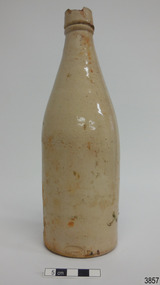
... Items that come from several wrecks along Victoria's coast have since been donated to the Flagstaff Hill Maritime Village’s museum collection by his family, illustrating this item’s level of historical value. flagstaff hill warrnambool flagstaff hill maritime museum maritime museum shipwreck coast flagstaff hill maritime village great ocean road john chance shipwreck artefact stoneware ironstone pottery bottle port dundas pottery glasgow antique bottle william johnstone Stamp: [symbol of concentric ovals], text within the symbol "PORT DUNDAS POTTERY COY." and "GLASGOW". ...This bottle was made in Scotland and recovered decades later from a shipwreck along the coast of Victoria. It may have been amongst the ship's cargo, its provisions or amongst a passenger's personal luggage. It is now part of the John Chance collection. Stoneware bottles similar to this one were in common use during the mid-to-late 19th century. They were used to store and transport. The bottles were handmade using either a potter's wheel or in moulds such as a plaster mould, which gave the bottles uniformity in size and shape. The bottle would then be fired and glazed in a hot kiln. Makers often identified their bottles with the impression of a small symbol or adding a colour to the mouth. The manufacturer usually stamped their bottles with their name and logo, and sometimes a message that the bottle remained their property and should be returned to them. The bottles could then be cleaned and refilled. DUNDAS POTTERY WORKS - The Dundas Pottery works were established in 1828 by William Johnstone in partnership with John Forsyth and John Mc Coll. Located where the Forth and Clyde Canal joined the Monkland Canal, North of Glasgow. Johnstone sold the pottery in 1835 to Robert Cochran and James Couper. Mc Coll was retained as manager until 1837when in 1839 Cochran & Couper sold the pottery and purchased the St Rollex Glass Works. George Duncan took over briefly but died in 1841, with the pottery possibly being run by his widow Helen and a potter named Alexander Paul. James Miller was the manager at the time and he bought the pottery in 1856, in partnership with John Moody. Miller's long and careful stewardship of the pottery saw success from the export market which allowed him to purchase the North British pottery in 1867 until 1874 when it was sold. In 1875, Miller, in partnership with John Young, leased part of Caledonian Pottery, naming it Crown Pottery, however, it burned down in 1879. In the early 1880s, Young extended the pottery and named it Milton Pottery. Miller’s son, James W., became a partner in Milton pottery in 1905. James Miller Snr died in 1905 and the company continued as a limited liability company, being sold to the Borax Consolidation Ltd in 1929, but it was unsuccessful and Possil pottery purchased some of the company's equipment before it finally closed in 1932. From 1828 until the James Miller period of circa 1856, the pottery produced salt-glazed stoneware for the local industrial trade; mainly bottles and drain pipes. James Miller produced various bottles, whisky and acid jars, casks, butter crocks, jam jars and domestic wares in Bristol glaze. He streamlined the water filter manufacturing, which had become a specialty of the pottery, and a dedicated section of the pottery was created solely for their production, which was exported worldwide.This stoneware bottle is historically significant for its manufacture and use in the late 19th to the early 20th century. This bottle is historically significant for its connection with the well-known stoneware manufacturers, Dundas Pottery of Glasgow, Scotland. The bottle is also significant as it was recovered by John Chance, a diver, from a wreck on the coast of Victoria in the 1960s-70s. Items that come from several wrecks along Victoria's coast have since been donated to the Flagstaff Hill Maritime Village’s museum collection by his family, illustrating this item’s level of historical value.Bottle, salt glazed stoneware, beige, large chip on lip of bottle. Inscription stamped near base.Stamp: [symbol of concentric ovals], text within the symbol "PORT DUNDAS POTTERY COY." and "GLASGOW". Stamp:[Symbol - square with short vertical line in centre of base line]flagstaff hill, warrnambool, flagstaff hill maritime museum, maritime museum, shipwreck coast, flagstaff hill maritime village, great ocean road, john chance, shipwreck artefact, stoneware, ironstone, pottery, bottle, port dundas pottery, glasgow, antique bottle, william johnstone -
 Flagstaff Hill Maritime Museum and Village
Ceramic - Stoneware Bottle, Dundas Pottery, Late 1800s to early 1900s
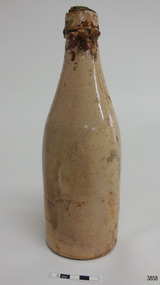
... Items that come from several wrecks along Victoria's coast have since been donated to the Flagstaff Hill Maritime Village’s museum collection by his family, illustrating this item’s level of historical value. flagstaff hill warrnambool flagstaff hill maritime museum maritime museum shipwreck coast flagstaff hill maritime village great ocean road john chance shipwreck artefact stoneware ironstone pottery bottle port dundas pottery glasgow antique bottle william johnstone Stamp: [symbol of concentric ovals], text within the symbol "PORT DUNDAS POTTERY COY." and "GLASGOW". ...This bottle was made in Scotland and recovered decades later from a shipwreck along the coast of Victoria. It may have been amongst the ship's cargo, its provisions or amongst a passenger's personal luggage. It is now part of the John Chance collection. Stoneware bottles similar to this one were in common use during the mid-to-late 19th century. They were used to store and transport. The bottles were handmade using either a potter's wheel or in moulds such as a plaster mould, which gave the bottles uniformity in size and shape. The bottle would then be fired and glazed in a hot kiln. Makers often identified their bottles with the impression of a small symbol or adding a colour to the mouth. The manufacturer usually stamped their bottles with their name and logo, and sometimes a message that the bottle remained their property and should be returned to them. The bottles could then be cleaned and refilled. DUNDAS POTTERY WORKS - The Dundas Pottery works were established in 1828 by William Johnstone in partnership with John Forsyth and John Mc Coll. Located where the Forth and Clyde Canal joined the Monkland Canal, North of Glasgow. Johnstone sold the pottery in 1835 to Robert Cochran and James Couper. Mc Coll was retained as manager until 1837 when in 1839 Cochran & Couper sold the pottery and purchased the St Rollex Glass Works. George Duncan took over briefly but died in 1841, with the pottery possibly being run by his widow Helen and a potter named Alexander Paul. James Miller was the manager at the time and he bought the pottery in 1856, in partnership with John Moody. Miller's long and careful stewardship of the pottery saw success from the export market which allowed him to purchase the North British pottery in 1867 until 1874 when it was sold. In 1875, Miller, in partnership with John Young, leased part of Caledonian Pottery, naming it Crown Pottery, however, it burned down in 1879. In the early 1880s, Young extended the pottery and named it Milton Pottery. Miller’s son, James W., became a partner in Milton pottery in 1905. James Miller Snr died in 1905 and the company continued as a limited liability company, being sold to the Borax Consolidation Ltd in 1929, but it was unsuccessful and Possil pottery purchased some of the company's equipment before it finally closed in 1932. From 1828 until the James Miller period of circa 1856, the pottery produced salt-glazed stoneware for the local industrial trade; mainly bottles and drain pipes. James Miller produced various bottles, whisky and acid jars, casks, butter crocks, jam jars and domestic wares in Bristol glaze. He streamlined the water filter manufacturing, which had become a speciality of the pottery, and a dedicated section of the pottery was created solely for their production, which was exported worldwide.This stoneware bottle is historically significant for its manufacture and use in the late 19th to the early 20th century. This bottle is historically significant for its connection with the well-known stoneware manufacturers, Dundas Pottery of Glasgow, Scotland. The bottle is also significant as it was recovered by John Chance, a diver, from a wreck on the coast of Victoria in the 1960s-70s. Items that come from several wrecks along Victoria's coast have since been donated to the Flagstaff Hill Maritime Village’s museum collection by his family, illustrating this item’s level of historical value.Bottle, salt glazed stoneware, beige, sealed with cork and wax, discolouration on upper part. Inscription stamped near base.Stamp: [symbol of concentric ovals], text within the symbol "PORT DUNDAS POTTERY COY." and "GLASGOW". Stamp:[Symbol - square with short vertical line in centre of base line]flagstaff hill, warrnambool, flagstaff hill maritime museum, maritime museum, shipwreck coast, flagstaff hill maritime village, great ocean road, john chance, shipwreck artefact, stoneware, ironstone pottery, bottle, port dundas pottery, glasgow, antique bottle, william johnstone -
 Geelong RSL Sub Branch
Documents - 2146 Pte L W England, Relating to the Plaque, there are no makers mark, Early 20 Century
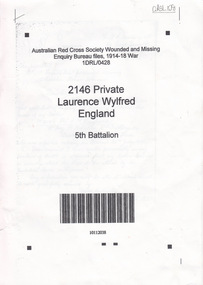
... Coy, 5 Battalion, 2nd Infantry Brigade. He was Lilled in Action of 25 July 1916 at Posieres. The documents and the plaque relate to 2146 Pte L W England and provide information to his Service and being Killed in Action at Posieres. WW1 Posieres Killed in Aciion 2146 Pte L W England 5th Battalion The pages are relating to enquiries from Pte England's family ...2146 Pte L W England was a member of the AIF and served during WW1 with 'A' Coy, 5 Battalion, 2nd Infantry Brigade. He was Lilled in Action of 25 July 1916 at Posieres.The documents and the plaque relate to 2146 Pte L W England and provide information to his Service and being Killed in Action at Posieres.Seven white photocoped foolscap pages relating to 2146 Pte L W England - missing in action/killed in action on 25 July 1916 at Pozieres. A metal plaque.The pages are relating to enquiries from Pte England's family and the Military. There is also a plaque with the documents - In Loving Memory of our dear son and brother, Killed at Poziere July 1916 aged 19. 'A' Company 5th Battalion, AIF. Presented by Mr and Mrs G England and Family.ww1, posieres, killed in aciion, 2146 pte l w england, 5th battalion -
 Orbost & District Historical Society
trowel, 1915
... family, Orbost pioneers. Russell-John Orbost-Butter-Factory Presented to John Russel Esq.; Chairmen of Directors ;To Commemorate the Laying of; Foundation Stone; of the Orbost Butter and Produce; Coy's New Factory; 22.9.15 on right hand side : silver marks - crown, lion H.G.H. ...This trowel was presented to John Russell, director of Orbost Butter Factory for fiftyyears and Chairman for nine years. John Russell was an early Orbost blacksmith in Orbost, and director of the Orbost Butter Factory for 50 years. He came to Orbost in c. 1890 at the invitation of another early settler, James Nixon, became a blacksmith, and later a farmer and landholder. Many of his descendants still live in the Orbost area.This item is significant because of its association with the Orbost Butter Factory as well as the connection with the Russell family, Orbost pioneers.A silver (plated?) trowel ornately decorated with engravings. It is attached to a bone(?) handle with a silver metal ferule. the trowel is triangular with a scalloped lower edge.Presented to John Russel Esq.; Chairmen of Directors ;To Commemorate the Laying of; Foundation Stone; of the Orbost Butter and Produce; Coy's New Factory; 22.9.15 on right hand side : silver marks - crown, lion H.G.H.russell-john orbost-butter-factory -
 Orbost & District Historical Society
books, 1916
... family ww1 books signalling 1846.5 Edward Lawless 1846.6 E.V. Lawless 1846.7 Ted Lawless A Group Signalling 6th Battalion 22/6 Lark Hill School No 5 Camp No 5 Camp B Coy Three books used by Edward Vincent Lawless during his service in WW1. 1846.5 has a black cover and contains hand-written notes and diagrams in an exercise book. 1846.6 has a purple cover and contains hand-written notes on bombing. 1846.7 is a small book with a black cover and a ribbon for tying closed. ...These books are part of the Lawless Collection. The Lawless family lived in Orbost from 1907 - c 1920. John Francis Lawless had a saddlery shop. He died at an early age - 47 years - June 7 1912, leaving his wife, Elizabeth and seven children. The eldest son, Victor Rowland lawless volunteered for serv ice in WW1 but did not leave Australia because of illness. The second son, Edward Vincent Lawless (b 1895 d 1917) worked for McCoy & Co. in Orbost, coachbuilding, undertakers, general blacksmiths and farriers, prior to enlisting in WW!. He was trained as a signaller and was sent to France where he was killed in action on 9.10.1917. Elizabeth Lawless worked as a ladies' nurse (midwife) in Orbost prior to leaving the district in 1920. She lived to 6.6.1975 aged 104 years.These personal documents, photographs, medals and books give an insight into the human element of World War 1 ensuring that those who were part of the Orbost community and died while playing a vital role during this time are remembered.Three books used by Edward Vincent Lawless during his service in WW1. 1846.5 has a black cover and contains hand-written notes and diagrams in an exercise book. 1846.6 has a purple cover and contains hand-written notes on bombing. 1846.7 is a small book with a black cover and a ribbon for tying closed. It contains signalling notes1846.5 Edward Lawless 1846.6 E.V. Lawless 1846.7 Ted Lawless A Group Signalling 6th Battalion 22/6 Lark Hill School No 5 Camp No 5 Camp B Coylawless-family ww1 books signalling -
 Bendigo Military Museum
Document - Heritage Victoria Assessment of Cultural Heritage - Fortuna Villa, Heritage Victoria, October 2013
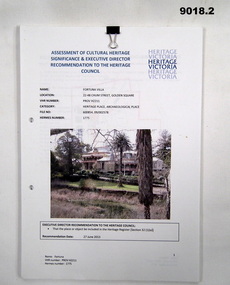
... Fortuna Villa was the family home of George Lansell the "Gold King" of Bendigo prior to being occupied by the Australian Army's Land Headquarters Cartographic Coy in WWII from 1942. ...Fortuna Villa was the family home of George Lansell the "Gold King" of Bendigo prior to being occupied by the Australian Army's Land Headquarters Cartographic Coy in WWII from 1942. ...These documents 9018.1 and .2 discuss the significant Cultural Heritage value of Fortuna Villa and is a report regarding the acceptance of the Heritage Values by the Heritage Council of Victoria. 9018.2 while almost identical to 9018.1 in content does have additional information in red. Fortuna Villa was the family home of George Lansell the "Gold King" of Bendigo prior to being occupied by the Australian Army's Land Headquarters Cartographic Coy in WWII from 1942. The Army Survey Regiment was disbanded in 1996 and Defence left the site in 2004..1 A A4 Paper Heritage Report of Fortuna Villa. 26 x Pages of the Assessment part of the document, further 24 x Pages are the City of Greater Bendigo discussions of Heritage permit Exemptions. The document is two hole punched and held together with a metal Arnos fastener. .2 A second copy of the document containing 32 x unnumbered loose Pages held together with a small "bulldog" clip. Name Fortuna, VHR Number : PROV H2211, Hermes Number 1775royal australian survey corps, rasvy, fortuna, army survey regiment, army svy regt, asr, heritage victoria -
 Bendigo Military Museum
Mixed media - REMEMBRANCE NOTICES 38th BN, Post 12.8.1918
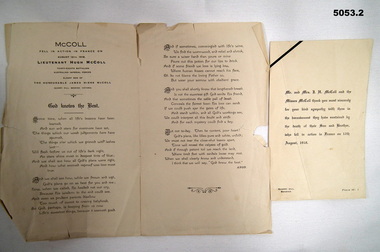
... Remembrance 38th Bn C Coy .1) Folding paper, nothing on the outside, inside two pages relating to the death of Hugh McColl 38th BN, page 1 has details re Hugh McColl and family followed by a five verse poem. .2) Folding paper nothing on inside, front has a black stripe across top RH corner, enscription re Mr & Mrs McColl and daughter thanking those for their sympathy on the loss of their sone Hugh. ...Hugh McColl. Hugh had pre war service in the local Bendigo 67th BN and reached the rank of 2nd Lieutenant. Enlisted 1.3.1916 in A Coy 38th BN then transfer to C Coy on 1.5.1916, embark for England 20.6.1916, promoted to Lieutenant 19.8.1916, hospital sick 21.11.1916 (unclear), embark for France 21.5.1917, WIA 12.10.1917 Bomb Concussion, rejoin unit 22.11.1917, hospital 14.3.1918 Defective Vision, rejoin unit 16.3.1918, hospital 7.4.1918 Sprained Ankle, rejoin unit 28.4.1918, KIA 12.8.1918..1) Folding paper, nothing on the outside, inside two pages relating to the death of Hugh McColl 38th BN, page 1 has details re Hugh McColl and family followed by a five verse poem. .2) Folding paper nothing on inside, front has a black stripe across top RH corner, enscription re Mr & Mrs McColl and daughter thanking those for their sympathy on the loss of their sone Hugh.remembrance, 38th bn, c coy -
 Eltham District Historical Society Inc
Photograph, American Photo Coy, Elizabeth Docherty (nee Shillinglaw), c.1910
... Coy Queen St Petries Bight Brisbane...Greeting Card...Marg Ball Collection...Shillinglaw Family...Queen St, Petrie's Bight, Brisbane" 1910 American Photo Coy Queen St Petries Bight Brisbane Greeting Card Marg Ball Collection Shillinglaw Family Photo Album 1 Straw Boater Elizabeth Docherty (nee Shillinglaw 1861-1942) Digital file only, scanned from album in private collection Elizabeth Docherty (nee Shillinglaw) Photograph Photograph American Photo Coy. ...Seasons Greetings photo card sent by Elizabeth Docherty to her sister Carrie. Inscribed on reverse "Carrie" and stamped "American Photo Coy. Queen St, Petrie's Bight, Brisbane"1910, american photo coy queen st petries bight brisbane, greeting card, marg ball collection, shillinglaw family photo album 1, straw boater, elizabeth docherty (nee shillinglaw 1861-1942) -
 Eltham District Historical Society Inc
Photograph, American Photo Coy, Elizabeth Docherty (nee Shillinglaw), c.1910
... Coy Queen St Petries Bight Brisbane...Greeting Card...Marg Ball Collection...Shillinglaw Family...Queen St, Petrie's Bight, Brisbane" 1910 American Photo Coy Queen St Petries Bight Brisbane Greeting Card Marg Ball Collection Shillinglaw Family Photo Album 1 Straw Boater Elizabeth Docherty (nee Shillinglaw 1861-1942) Digital file only, scanned from album in private collection Elizabeth Docherty (nee Shillinglaw) Photograph Photograph American Photo Coy. ...Seasons Greetings photo card sent by Elizabeth Docherty to her brother Phillip. Inscribed on reverse "Phillip" and stamped "American Photo Coy. Queen St, Petrie's Bight, Brisbane"1910, american photo coy queen st petries bight brisbane, greeting card, marg ball collection, shillinglaw family photo album 1, straw boater, elizabeth docherty (nee shillinglaw 1861-1942) -
 Queenscliffe Maritime Museum
Equipment - Seal Press, c. 1860
... The tragedy and heroism of the crew, inspired the people of Melbourne and a public apeal raised funds to support the affected families as well as the formation of what is now the Royal Humane Society of Australasia to provide public recognition to acts of bravery. Seal Press Rip Pilot Boats Official Seal Press of No. 2 Coy 'RIP' 1860 - 1889 Equipment Seal Press ...In August 1873, four of the crew were killed and the other four injured when the Pilot schooner Rip was overwelmed in heavy seas at the Heads. The tragedy and heroism of the crew, inspired the people of Melbourne and a public apeal raised funds to support the affected families as well as the formation of what is now the Royal Humane Society of Australasia to provide public recognition to acts of bravery.Official Seal Press of No. 2 Coy 'RIP' 1860 - 1889 seal press, rip, pilot boats -
 Buninyong & District Historical Society
Photograph - Photograph of Original Photograph, Dr. Longden's house, front garden and family, 1903
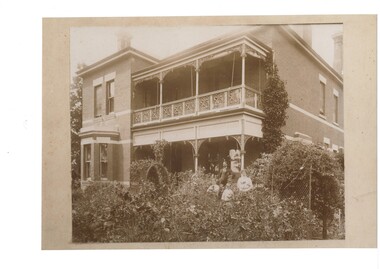
... family. Photograph Photograph of Original Photograph Graphite Coy. ...historic building, built by Richard RennieSepia photo, Dr. Longden's house, front garden and family, Dr. Frank Reginald Longden, Mrs Josephine Mary Longden, and sons Cedric and Norman Longden.buninyong, house, longden, rennie -
 Bendigo Historical Society Inc.
Document - VICTORIA HILL - THE RICH VICTORIA HILL AND IT'S HISTORICAL ASSOCIATION
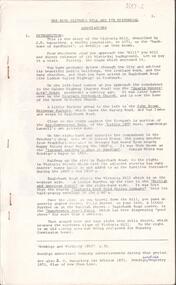
... Coy... Manchester Arms Hotel... Housing Commission Homes... Ironbark (Victoria Reef Gold Mines... Hercules and Energetic... Midway... Wittscheibe... Gt Central Victoria... Wm Rae... Mr & Mrs Conroy... Wm Rae Jr... Central Nell Gwynne... Moorhead's Shop... Gill Family...Macartney Quartz Miner's Arms Hotel Ironbark Methodist Church Greek Orthodox Church John Brown Knitwear Factory Little 180 Mine Geo Lansell Conrad Heinz British & American Hotel Victoria Reef Gold Mining Coy Manchester Arms Hotel Housing Commission Homes Ironbark (Victoria Reef Gold Mines Hercules and Energetic Midway Wittscheibe Gt Central Victoria Wm Rae Mr & Mrs Conroy Wm Rae Jr Central Nell Gwynne Moorhead's Shop Gill Family Gold Mines Hotel David Chaplin Sterry Pioneer New Chum and Victoria Burrowes and Sterry New Chum and Victoria Tribute Rotary Club of Bendigo South Big 180 Victoria Quartz Mines Jeweller's Shop Bendigo and District Tourist Association North Old Chum Mine John Wybrandt Ballerstedt's First Open-Cut J C T Christopher Ballerstedt Ballerstedt's Mine Bendigo Cemetry Lansell's 'Cleopatra Nedle' type Chimney 222 Mine Sandhurst Or 'Needle' Mine Victoria Quartz Mine Victoria Reef Quartz Company Mr E J Dunn Eureka Ext'd New Chum Railway Pearl Bendigo Advertiser 16 June 1910 Victoria Consols Shamrock Shenandoah Victoria Quartz Dams Rae's Open Cut Prospecting Tunnels Floyd's small 5 head Crushing battery Gt Central Victoria (Midway) Shaft Midway No 2 Midway North Ballerstedt's Small 24 Yard Claim The Humboldt The Tribute Coy Advance Luffsman and Sterry's Claim A Round Shaft Chinese Joss House Lansell's Fortuna P M G Repeater Station A Richardson Two copies of document : nineteen handwritten pages of notes on 'The Rich Victoria Hill and Its Historical Association' Signed by A Richardson and dated 30 - 8 - 1971. and a typed copy of same. ...Two copies of document : nineteen handwritten pages of notes on 'The Rich Victoria Hill and Its Historical Association' Signed by A Richardson and dated 30 - 8 - 1971. and a typed copy of same. Notes include: Introduction, Hotels, Mines, Mining History and descriptions of features where the signposts are. Mines mentioned in the text are: North Old Chum. Ballerstedt's first open cut, Lansell's Big 180. 20 head stamper, Lansell's Cleopatra Needle, Victoria Quartz Mine. Cleopatra's Needle was a square sectioned brick chimney with this four sided pyramidal chimney top with four vents to allow the smoke to escape whatever the direction of the wind. It was demolished in the 1950's as it had a bend in it and it was considered unsafe. Lansell had two other mines with similar chimneys, the '222' in Chum Street and his 'Sandhurst' or 'Needle' mine near the Bendigo, Eaglehawk boundary. Notes prepared by Albert Richardson.mine, gold, victoria hill, victoria hill, the rich victoria hill and it's historical association, j. n. macartney, quartz miner's arms hotel, ironbark methodist church, greek orthodox church, john brown knitwear factory, little 180 mine, geo lansell, conrad heinz, british & american hotel, victoria reef gold mining coy, manchester arms hotel, housing commission homes, ironbark (victoria reef gold mines, hercules and energetic, midway, wittscheibe, gt central victoria, wm rae, mr & mrs conroy, wm rae jr, central nell gwynne, moorhead's shop, gill family, gold mines hotel, david chaplin sterry, pioneer, new chum and victoria, burrowes and sterry, new chum and victoria tribute, rotary club of bendigo south, big 180, victoria quartz mines, jeweller's shop, bendigo and district tourist association, north old chum mine, john wybrandt, ballerstedt's first open-cut, j c t christopher ballerstedt, ballerstedt's mine, bendigo cemetry, lansell's 'cleopatra nedle' type chimney, 222 mine, sandhurst or 'needle' mine, victoria quartz mine, victoria reef quartz company, mr e j dunn, eureka ext'd, new chum railway, pearl, bendigo advertiser 16 june 1910, victoria consols, shamrock, shenandoah, victoria quartz dams, rae's open cut, prospecting tunnels, floyd's small 5 head crushing battery, gt central victoria (midway) shaft, midway no 2, midway north, ballerstedt's small 24 yard claim, the humboldt, the tribute coy, advance, luffsman and sterry's claim, a round shaft, chinese joss house, lansell's fortuna, p m g repeater station, a richardson -
 Bendigo Historical Society Inc.
Document - VICTORIA HILL - THE RICH VICTORIA HILL AND IT'S HISTORICAL ASSOCIATIONS
... Coy... Manchester Arms Hotel... Housing Commission Homes... The Ironbark (Victoria Reef Gold)... Hercules & Energetic... Midway... Wittscheibe... Gt Central Victoria... Wm Rae... Mr and Mrs Conroy... Mrs Lavery... Central Nell Gwynne... Moorhead's Shop... Gill Family...DOCUMENT Gold victoria hill Victoria Hill The Rich Victoria Hill and it's Historical Associations J N Macartney Quartz Miners' Arms Hotel Ironbark Methodist Church Greek Orthodox Church Conrad Heinz John Brown Industries Knitwear Factory Little 180 Mine George Lansell British & American Hotel Victoria Reef Gold Mining Coy Manchester Arms Hotel Housing Commission Homes The Ironbark (Victoria Reef Gold) Hercules & Energetic Midway Wittscheibe Gt Central Victoria Wm Rae Mr and Mrs Conroy Mrs Lavery Central Nell Gwynne Moorhead's Shop Gill Family Gold Mines Hotel David Chaplin Sterry New Chum and Victoria Mine P M G Repeater Station Old Chum Mine Pioneer Rotary Club of Bendigo South North Old Chum Mine Ballerstedt's First Open Cut Lansell's Big 180 Mine Multiple handwritten and carbon copies referring to Victoria Hill. ...Multiple handwritten and carbon copies referring to Victoria Hill. Mentioned in the notes are places of interest between Ironbark and Victoria Hill areas, history of the area and signposts for the Victoria Hill area.document, gold, victoria hill, victoria hill, the rich victoria hill and it's historical associations, j n macartney, quartz miners' arms hotel, ironbark methodist church, greek orthodox church, conrad heinz, john brown industries knitwear factory, little 180 mine, george lansell, british & american hotel, victoria reef gold mining coy, manchester arms hotel, housing commission homes, the ironbark (victoria reef gold), hercules & energetic, midway, wittscheibe, gt central victoria, wm rae, mr and mrs conroy, mrs lavery, central nell gwynne, moorhead's shop, gill family, gold mines hotel, david chaplin sterry, new chum and victoria mine, p m g repeater station, old chum mine, pioneer, rotary club of bendigo south, north old chum mine, ballerstedt's first open cut, lansell's big 180 mine -
 Bendigo Historical Society Inc.
Photograph - MR & MRS J.B.WITTMANN PORTRAIT, cq. 1900
... Family wittmann portriat The Crown Studios, Sydney, George & Market Street B+W photograph on front mount studio portrait (B+W) of lady seated on upholstered chair (carved wood), man standing behind occasional table. Man is dressed formally (Bow tie and stiff shirt); whiskered- beard & moustache. Inscription: Front: the crown studios Sydney - printed on board. Back: (P.T.O).Back: Handwritten: 'Mr & Mrs Wittmann in later years when/they had gone to live in Sydney. RHSV stamp (Royal Historical Society of Victoria/Bendigo Branch), '1128', Printed by Studio: 'George & Market Streets/Sydney', 'The Crown Bromide Enlargement Coy ...B+W photograph on front mount studio portrait (B+W) of lady seated on upholstered chair (carved wood), man standing behind occasional table. Man is dressed formally (Bow tie and stiff shirt); whiskered- beard & moustache. Inscription: Front: the crown studios Sydney - printed on board. Back: (P.T.O).Back: Handwritten: 'Mr & Mrs Wittmann in later years when/they had gone to live in Sydney. RHSV stamp (Royal Historical Society of Victoria/Bendigo Branch), '1128', Printed by Studio: 'George & Market Streets/Sydney', 'The Crown Bromide Enlargement Coy 'Trade Mark'','The/Crown/Studios','Mark Blow/General/Manager', 'Portrait enlarged/on Bromide,Platinotype/Carbon Opal, and Finished/ in crayon, indian in, partel/water colour or oils',' Telephone No 477','Cable Address 'Bromide'/Sydney',' Copies of this Photograph No__ maybe had at any time'.The Crown Studios, Sydney, George & Market Streetperson, family, wittmann portriat -
 Bendigo Historical Society Inc.
Document - BENDIGO POST OFFICE COLLECTION: NOTES
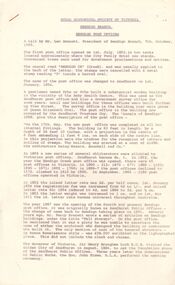
... Family Hotel... Pyke (Pike)... Baby Health Centre... Sandhurst Post Office... Government Survey Office... Queen Elizabeth Oval... Sandhurst Trustees Coy...BENDIGO Buildings post office Bendigo Post Offices Mr Len Bennett City Family Hotel Pyke (Pike) Baby Health Centre Sandhurst Post Office Government Survey Office Queen Elizabeth Oval Sandhurst Trustees Coy The Annals of Bendigo Messrs Snowball and Co Sandhurst Public Offices Mr Percy Everett 'Tall Sooreys' Sir Henry Brougham Lock K. ...Five copies of typed notes on Bendigo Post Offices. The first Post Office opened on the 1/7/1852. Also mentions descriptions of Post Offices, the postal rates to send a letter/parcel. There are also some facts, the number of bells, size of the clock face, hands and numerals. Also changing the name of Sandhurst to Bendigo.bendigo, buildings, post office, bendigo post offices, mr len bennett, city family hotel, pyke (pike), baby health centre, sandhurst post office, government survey office, queen elizabeth oval, sandhurst trustees coy, the annals of bendigo, messrs snowball and co, sandhurst public offices, mr percy everett, 'tall sooreys', sir henry brougham lock k. c. b., hon john nimmo m. l. a., j w harwood castlemaine, w lowden -
 National Vietnam Veterans Museum (NVVM)
Memorabilia - Australian Force Vietnam Air Mail Envelope
... family in Ascot Vale, Melbourne. On the back of the envelope are the details of the sender, 3796086, alexander, HQ Coy ...family in Ascot Vale, Melbourne. On the back of the envelope are the details of the sender, 3796086, alexander, HQ Coy Memorabilia Australian Force Vietnam Air Mail Envelope ...This item is part of a collection donated by Pte John William Alexander (3796068) who was called up for National Service. Pte Alexander was with the Australian Army Catering Corps and was in Vietnam at Headquarters, 1st Australian Task Force from March 1970 to March 1971. An Australian Force Vietnam Air Mail envelope address to Mr and Mrs Alexander and family in Ascot Vale, Melbourne. On the back of the envelope are the details of the sender, 3796086, alexander, HQ Coy air mail, envelope, pte john william alexander, 3796068, australian national serviceman, australian army catering corps, headquarters, 1st australian task force -
 National Vietnam Veterans Museum (NVVM)
Document, Joint US Public Office (JUSPAO), Propaganda Leaflet, 1962 (Approximate)
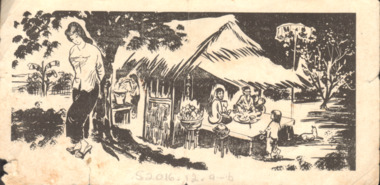
... Leaflet Propaganda Sgt A Moylan 4 Platoon B Coy 7 RAR 7th Battalion 16063 Royal Australian Infantry Corps Arnold George Moylan Black and white leaflet. Picture of a traditional hut with family around table. ...Black and white leaflet. Picture of a traditional hut with family around table. Lady with her hands tied behind her back under nearby tree. All writing in Vietnamese script.leaflet, propaganda, sgt a moylan, 4 platoon, b coy, 7 rar, 7th battalion, 16063, royal australian infantry corps, arnold george moylan -
 National Vietnam Veterans Museum (NVVM)
Document, Joint US Public Affairs Office (JUSPAO), Bura com chieu nay vang Anh
... Leaflet Propaganda Sgt A Moylan 4 Platoon B Coy 7 RAR 7th Battalion 16063 Royal Australian Infantry Corps Arnold George Moylan Bura com chieu nay vang Anh SP 2246 Yellowing leaflet with black print depicting a family of 3 sitting and eating a traditional Tet meal. ...Yellowing leaflet with black print depicting a family of 3 sitting and eating a traditional Tet meal. They are sitting on a raised platform inside a structure made of bamboo. Outside are other houses. Title above picture reads "Bura com chieu nay vang Anh" - translation "he missed his dinner". Reverse side of leaflet is all in Vietnamese.Bura com chieu nay vang Anh SP 2246leaflet, propaganda, sgt a moylan, 4 platoon, b coy, 7 rar, 7th battalion, 16063, royal australian infantry corps, arnold george moylan -
Port Melbourne Historical & Preservation Society
Photograph - Unidentified couple, Australian Photographic Coy, Morrison and Perrot
... families business and traders morrison & perrott market buildings Morrison & Perrott (in script). Market buildings - Bay street - Port Melbourne Sepia photograph of an unidentified couple. Woman in dark dress with white collar is seated. Man standing with hand on back of chair has a beard and moustache Photograph Unidentified couple Australian Photographic Coy ...Sepia photograph of an unidentified couple. Woman in dark dress with white collar is seated. Man standing with hand on back of chair has a beard and moustacheMorrison & Perrott (in script). Market buildings - Bay street - Port Melbournefamilies, business and traders, morrison & perrott, market buildings -
 Tatura Irrigation & Wartime Camps Museum
Folio, Camp 3
... families in Camp 3. Copy of "FHP Communications", in which Fritz describes how his company, F.H. Prager & Coy...families in Camp 3. Copy of "FHP Communications", in which Fritz describes how his company, F.H. Prager & Coy ...Material collected relating to Camp 3. Material relating to Palestine Group of Internees in Camp 3 Theatre Programs & lists of cast.. Wilhelm Fugmann, Director. Coloured sketch of stage with setting presented to Prompter, Julia Mueller, autographed by the Theatre Group. 1945 Christmas Greetings from the Camp Leaders. "Templers in Israel" by Yossi Ben-Artzi. "Loyalties at Swordpoint - Lutheran Missionaries in Wartime New Guinea" by H.N. Nelson. Records of Resi, Maria, Erich & Friedrich Haering; Rudolf Hoefer, Willy & Else Groezinger, Ruth Stoll, Gisela Stellar. Copies of letters written by Wilhelm Stoll in 1946 seeking employment in S.A. Recollections from Ted Stoll. Obituary of Ruth Stoll. Play (in German) "Prinzess Chiu", written by Fritz Prager for his daughter in Camp 3. Prager, a German businessman in Sydney, Australia, interned with his brother, Hans in Camp 1. Fritz and Hans were later joined by their families in Camp 3. Copy of "FHP Communications", in which Fritz describes how his company, F.H. Prager & Coy. became established. Letter from Ursula Grimsdale describing how the two brothers came to be interned. Prager Company Newsletter from Ursula Grimsdale. Birth certificate of Heidi Wennagel, born in Camp 1 Hospital. Painted backdrop and theatre scene presented to Julia Mueller.Black 3 ring folder with printed material in plastic sleevesdocuments, reports
