
Showing 51 items matching "crashed plane"
-
 Tatura Irrigation & Wartime Camps Museum
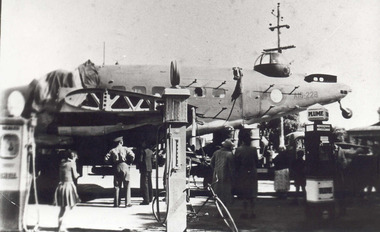
Photograph, Liberator
... ...crashed plane...crashed at Waranga Basin after flying low over Camps 3 & 4. Photograph taken at the garage, corner Hogan and Ross Streets on route to Tocumwal for repairs. Foam backed copy in file. allied bomber Liberator Waranga Basin aeroplane plane crashed plane Tatura crashed plane Waranga plane Black and white photograph of an aeroplane (Liberator), minus part of wing and tail, at service station in Tatura. ...This dismantled allied bomber "Liberator" crashed at Waranga Basin after flying low over Camps 3 & 4. Photograph taken at the garage, corner Hogan and Ross Streets on route to Tocumwal for repairs. Foam backed copy in file.Black and white photograph of an aeroplane (Liberator), minus part of wing and tail, at service station in Tatura.allied bomber, liberator, waranga basin, aeroplane, plane, crashed plane, tatura crashed plane, waranga plane -
 Bendigo Military Museum
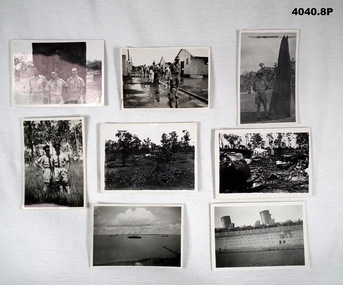
Photograph - PHOTOGRAPHS WW2, 1939 - 1940
... .1) Photo, black & white, three men standing in front of a large tree. .2) Photo, black & white, group of men stretched out in a barracks area. .3) Photo, black & white, man in uniform, pith helment beside ant hill. .4) Photo, black & white, two men, in uniform, hats, ties in gardens. .5) Photo, black & white, Bush setting with crashed plane in distance. .6) Photo, black & white, crashed aeroplane. .7) Photo, black & white, harbour scene with two ships in distance. .8) Photo, black & white, close up of section of large ship.....8) On rear in pen: This is part of the Queen Mary close up - will enclose this next letter - Lyle. .1) Photo, black & white, three men standing in front of a large tree. .2) Photo, black & white, group of men stretched out in a barracks area. .3) Photo, black & white, man in uniform, pith helment beside ant hill. .4) Photo, black & white, two men, in uniform, hats, ties in gardens. .5) Photo, black & white, Bush setting with crashed plane in distance. .6) Photo, black & white, crashed aeroplane. .7) Photo, black & white, harbour scene with two ships in distance. .8) Photo, black & white, close up of section of large ship. ...Photos are in a collection relating to James Lyle TRUSCOTT No.1842. Enlisted in the RAAF 13.5.1935, aged 19. Discharged 7.2.1942 with the rank of LAC. .1) Photo, black & white, three men standing in front of a large tree. .2) Photo, black & white, group of men stretched out in a barracks area. .3) Photo, black & white, man in uniform, pith helment beside ant hill. .4) Photo, black & white, two men, in uniform, hats, ties in gardens. .5) Photo, black & white, Bush setting with crashed plane in distance. .6) Photo, black & white, crashed aeroplane. .7) Photo, black & white, harbour scene with two ships in distance. .8) Photo, black & white, close up of section of large ship..1) On rear in pen: ARCH LOXTON, JIM TRUSCOTT, BOB THOMPSON. .2) On rear in pen: RAAF DARWIN, ACCOMMODATION CIVIL DROME 1940, note lack of rainwater tanks. .3) On rear in pen: ARCH. A. LOXTON (S.A. ATHLETE) near Darwin 1940 - 1983 lives at Tocumwal NSW. .4) On rear in pen: Jim Truscott, Ben Kennedy, Darwin Botanic Gardens 1940. .5) On rear in pen: 6AM 11.12.39 Thursday, END OF DARWIN CIVIL DROME - No Deaths - Troops Returning south to join AIF. .6) On rear in pen: 6am 11.12.39 DARWIN CIVIL DROME, No Deaths - Lookheed Electra, DMF troops going south. .7) On rear in pen: 1939 - from ABBOTTS House DARWIN HARBOUR - foreign ships detained. (why?) .8) On rear in pen: This is part of the Queen Mary close up - will enclose this next letter - Lyle.photographs, raaf -
 Mt Dandenong & District Historical Society Inc.
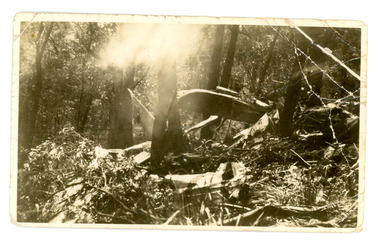
Photograph
... On reverse: Wreckage of plane crash in Dandenongs flying daily from Adelaide to Melbourne 1930s. ...They were related through the Dorey family. kyeema carl tepper frank child aircraft aeroplane crash site crash tepper On reverse: Wreckage of plane crash in Dandenongs flying daily from Adelaide to Melbourne 1930s. ...The aircraft KYEEMA, a Douglas DC-2, crashed into the western face of Mt Dandenong in thick cloud on 25th October 1938. All 18 occupants on board were killed. The aircraft overshot Essendon Airport by 20 miles. The subsequent findings triggered the beginning of air traffic control and the establishment of the Department of Civil Aviation. This photograph was taken in 1938 by First Constable Carl Tepper of Russell Street Police Station. Carl Tepper was a cousin of Frank Child, grandson of Ted Child. They were related through the Dorey family.Sepia photograph showing the wreckage of an aeroplane spread in the forest amongst trees. Sunlight is streaming through a gap in the trees.On reverse: Wreckage of plane crash in Dandenongs flying daily from Adelaide to Melbourne 1930s. No survivors. Taken by late First Constable Carl Tepper Russell Street Police Station.kyeema, carl tepper, frank child, aircraft, aeroplane, crash site, crash, tepper -
 Port Melbourne Historical & Preservation Society
Book, Dr Simon Smith, James SECCULL: A tale of two families, 2017
... below are four small pictures, from left, Finn Barr House; Charles SECCULL; Red Baron Plane crash; Royal Melbourne Hospital. back cover has text and photo of author on a black background....A tale of two families " Book with cover photo of a bearded man (James SECULL) above and behind the title. below are four small pictures, from left, Finn Barr House; Charles SECCULL; Red Baron Plane crash; Royal Melbourne Hospital. back cover has text and photo of author on a black background. ..."James SECCULL. A tale of two families " Book with cover photo of a bearded man (James SECULL) above and behind the title. below are four small pictures, from left, Finn Barr House; Charles SECCULL; Red Baron Plane crash; Royal Melbourne Hospital. back cover has text and photo of author on a black background.families, industry, james seccull, mary anne seccull, nancy smith -
 Bendigo Historical Society Inc.
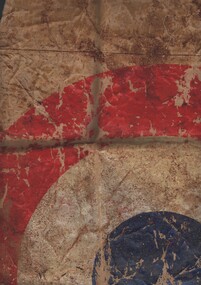
Memorabilia - BASIL WATSON COLLECTION: FABRIC FROM BIPLANE (PIECE), c. 1916
... Could be from Basil Watson's plane that crashed into Port Phillip Bay, near Point Cook in 1917. ...Could be from Basil Watson's plane that crashed into Port Phillip Bay, near Point Cook in 1917. ...Section of silk fabric from Biplane partly painted with airforce type symbol. Encrusted with fragments of red and blue paint (also loose). Plus sand? Could be from Basil Watson's plane that crashed into Port Phillip Bay, near Point Cook in 1917. Basil died in the accident.aviation, civilian, fabric -
Surrey Hills Historical Society Collection
Work on paper - Vertical file, Denny, Orme
... Aviator Orme Denny notes by Alan Holt 10.7.1991 (2 pages, handwritten). 4. ‘Plane crash yields some souvenirs 65 years on’, The Age, 19.2.1992 (2 page photocopy). 5. ...Aviator Orme Denny notes by Alan Holt 10.7.1991 (2 pages, handwritten). 4. ‘Plane crash yields some souvenirs 65 years on’, The Age, 19.2.1992 (2 page photocopy). 5. ...1. Notes on air pilot Orme Denny by Alan Holt c. 1980-85 (1 page, typed). 2. Notes on air pilot Orme Denny by Alan Holt c. 1991 (1 page, typed). 3. Aviator Orme Denny notes by Alan Holt 10.7.1991 (2 pages, handwritten). 4. ‘Plane crash yields some souvenirs 65 years on’, The Age, 19.2.1992 (2 page photocopy). 5. As above no. 4 original newspaper cutting. -
 Warrnambool and District Historical Society Inc.
Document, Ist Airmail letter 1917, 1917
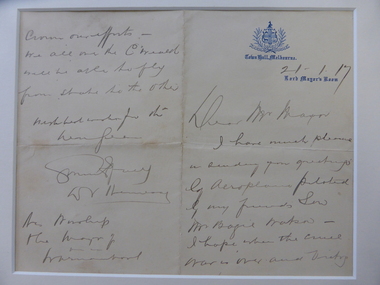
... Basil Watson died when he crashed his plane into the sea near Point Cook, just two months after he landed in Warrnambool. ...Basil Watson died when he crashed his plane into the sea near Point Cook, just two months after he landed in Warrnambool. ...This letter, the first air mail letter sent to Warrnambool, was written by the Lord Mayor of Melbourne, Sir David Valentine Hennessy and carried by the aviator, Basil Watson on the first flight to Warrnambool January 24th 1917. The letter was delivered to the Mayor of Warrnambool, Cr Webb.There were several other letters delivered at the same time but this is the important official one. Basil Watson was a pioneer aviator who built his own aeroplane which was 18 feet long with a wing span of 26 feet and it had a 7 cylinder 50 H.P. Rotary Gnome engine. Watson flew from Point Cook to Warrnambool in one hour 55 minutes, an Australian cross-country flying record at the time. In Warrnambool Watson amazed the crowd with his dare-devil aerial acrobatics, looping the loop 14 times over the Warrnambool Racecourse. Basil Watson died when he crashed his plane into the sea near Point Cook, just two months after he landed in Warrnambool. This letter is of the utmost significance being the first air mail letter delivered to Warrnambool. It is an important memento of the first aeroplane flight into Warrnambool by the pioneer aviator Basil Watson. This is a cream-coloured sheet of paper folded in two to make four pages. It has handwriting in black ink on two pages. The writing is a little faded. The first page has the logo of the Melbourne Town Hall. The pages are partly torn at the folds. ‘Town Hall, Melbourne, 21/1/17. Lord Mayor’s Room, Dear Mr Mayor, I have much pleasure in sending you greetings by aeroplane piloted by my friend’s son, Mr Basil Watson. I hope when the cruel war is over and victory crowns our efforts, we all in the C’wealth will be able to fly from one state to the other. With best wishes for the New Year, …….. (signature indecipherable), D.V. Hennessy. His Worship the Mayor of Warrnambool.’pioneer aviation in the western district, basil watson, history of warrnambool -
 Bendigo Historical Society Inc.
Document - BASIL WATSON COLLECTION: LETTER OF ACKNOWLEDGEMENT FROM THE INDUSTRIAL AND TECHNOLOGICAL MUSEUM (RE B WATSON AIRCRAFT ITEMS), 1919
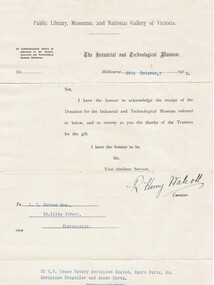
... Relics of Basil Watson's ill fated bi-plane that crashed into the Bay at Point Cook. Acknowledges receipt of 50 HP Gnome rotary aeroplane engine; spare parts, aeroplane propeller 'and other parts' ....Relics of Basil Watson's ill fated bi-plane that crashed into the Bay at Point Cook. Acknowledges receipt of 50 HP Gnome rotary aeroplane engine; spare parts, aeroplane propeller 'and other parts' . ...Letter of acknowledgement from Curator of The Industrial and Technological Museum (re Basil Watson aircraft items), addressed to J. I. Watson, Esq, St Kilda St, Elsternwick, dated 29th October, 1919. Relics of Basil Watson's ill fated bi-plane that crashed into the Bay at Point Cook. Acknowledges receipt of 50 HP Gnome rotary aeroplane engine; spare parts, aeroplane propeller 'and other parts' .person, individual, basil watson -
 Bendigo Military Museum
Photograph - PHOTOGRAPH RAAF, c.1936
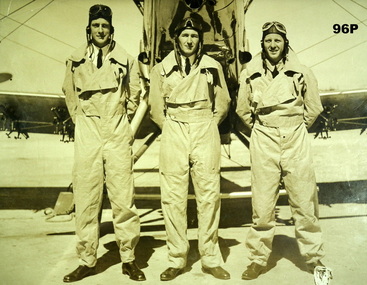
... Flying Hudson No A16-69 himself and 3 crew members were killed when the plane crashed into the sea near Ambon Island, Indonesia. ...Flying Hudson No A16-69 himself and 3 crew members were killed when the plane crashed into the sea near Ambon Island, Indonesia. ...Given that the photo is 1936 the first two are possibly, F/O Joshua Roger McDONALD No 86, enlisted 15.1.35. At his death on 10.12.1941 he was Wing Commander No 13 Sqd RAAF Darwin. Flying Hudson No A16-69 himself and 3 crew members were killed when the plane crashed into the sea near Ambon Island, Indonesia. Fl/Lt Robert Frederick DALTON No 37, no details of enlistment date. When he was discharged from the RAAF on 16.12.1947 he was Wing Commander at RSTN Laverton (TD & RS) F/O Frederick Attwood WITTSCHEIBE No 89 enlisted on 15.1.1935. At discharge from the RAAF on 21.5.1946 he was Wing Commander at Station HQ East Sale. There is only one WITTSCHEIBE listed on the nominal role. Refer also Reg No 97.Black & white photo of 3 members of A Flight No 21 Squadron in rectangular black timber frame with wire hanger.Hand written on rear: F/O McDonald, FL/Lt R F Dalton, F/O F A Wittscheibe (Born Bendigo 1913, died Bendigo 1998) A Flight No 2 Squadron, circa 1936.military history, photography - group photograph, raaf -
 International House, The University of Melbourne
Photograph (Item), Richard Shiell, "Nick Kanaris (Cyprus), M.Sc. | Foundation Member of IH | Botany Tutor"
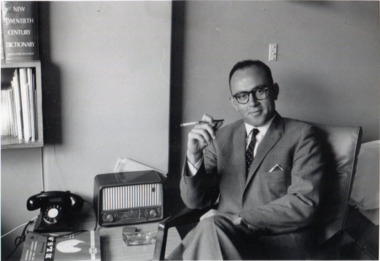
... Tragically, however, both Kanaris and Kirnis were killed in a plane crash en route to Cyprus in 1961. Their lives and contributions to International House were commemorated via a memorial scholarship funded by the Student Club. ...Tragically, however, both Kanaris and Kirnis were killed in a plane crash en route to Cyprus in 1961. Their lives and contributions to International House were commemorated via a memorial scholarship funded by the Student Club. ...Pictured here is Nicos 'Nick' Kanaris, a foundation student, and later tutor, of International House. Kanaris and his friend Michael Kirnis represented Cyprus among the first forty-two students at International House in 1957. Awarded the Exhibition in Botany III and attaining a Masters in Science, Kanaris became a residential tutor of Botany and Biology for the House from 1959 to 1960. Having returned to work in their home country, both men had decided to return to Australia after spending Christmas with their families. Tragically, however, both Kanaris and Kirnis were killed in a plane crash en route to Cyprus in 1961. Their lives and contributions to International House were commemorated via a memorial scholarship funded by the Student Club. This photograph comes from an 'Album of Student Activities 1960', compiled and presented to International House by Soedjadi Satrosoegito & Richard Shiell.nicos kanaris, staff, students -
 St Kilda Historical Society
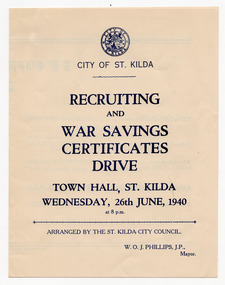
Ephemera - Program, Recruiting and War Savings Certificate Drive, 1940
... Within three months his brief military career came to an end when three senior government ministers died in a plane crash, an election was called, and he was given leave from the Army to campaign. ...Within three months his brief military career came to an end when three senior government ministers died in a plane crash, an election was called, and he was given leave from the Army to campaign. ...Program for a rally arranged by the City of St Kilda on 26 June 1940 at St Kilda Town Hall to recruit numbers and raise war savings. Includes a detachable application form for War Savings Certificates on the back page. One of the speakers at the rally was Gunner Harold Holt MHR, who later served as Prime Minister in 1966-67. Holt was elected to Parliament in 1935 at the age of 27. He enlisted in the Militia in February 1939, joining a part-time artillery unit for businessmen and professionals and, May 1940, without resigning his seat, he enlisted in the Australian Imperial Force with the intent of becoming a full-time soldier. He was posted to the 2/4th Field Regiment, holding the rank of gunner. Within three months his brief military career came to an end when three senior government ministers died in a plane crash, an election was called, and he was given leave from the Army to campaign. He was re-elected and then resigned from the Army in October 1940 upon being sworn in as Minister for Labour and National Service.Cream coloured paper, printed in blue on both sides, folded and perforated at the fold city of st kilda, world war ii, wwii fund-raising, harold holt, arnold colman -
 Warrnambool and District Historical Society Inc.
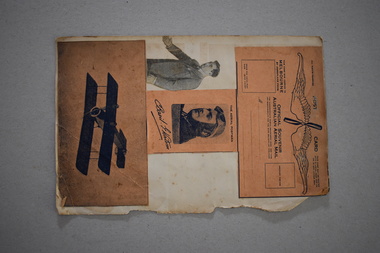
Postcard, Basil Watson Scrapbook, 1917
... Sadly Basil Watson died when his plane crashed at Point Cook in March 1917, just two months after his record-breaking flight to Warrnambool. ...Sadly Basil Watson died when his plane crashed at Point Cook in March 1917, just two months after his record-breaking flight to Warrnambool. ...The Hollywood film stars pasted on to one side of this paper are of no historical interest to our Society. The four paper items attached to the other side relate to the pioneer aviator, Basil Watson. He flew the first aeroplane to come to Warrnambool in January 1917. Watson flew from Point Cook to Warrnambool in one hour 55 minutes, an Australian cross-country flying record at the time. He had built his own aeroplane which was 18 feet long with a wing span of 26 feet and it had a 7 cylinder 50 H.P. rotary Gnome engine. In Warrnambool he amazed the crowds with his dare-devil aerial acrobatics, looping the loop 14 times over the Warrnambool Racecourse. Watson also brought several letters with him, making him the bearer of the first aerial mail to Warrnambool. Sadly Basil Watson died when his plane crashed at Point Cook in March 1917, just two months after his record-breaking flight to Warrnambool. The Warrnambool and District Historical Society has in its collection the small galvanized bucket seat which came from Watson’s plane and the original first air letter written by the Mayor of Melbourne to the Mayor of Warrnambool. These four items are of considerable historical interest as they are souvenirs issued at the time of Basil Watson’s aviation exploits in the early 1900s and Watson is of great importance in the aviation history of Warrnambool.This is a piece of paper (possibly from a scrapbook) with one torn edge. Pasted on to the paper on one side are newspaper photographs of early Hollywood female film stars. On the other side are four items relating to the pioneer aviator, Basil Watson – an airmail post card, a newspaper black and white photograph, a souvenir black and white photograph and a card with an illustration of an early aeroplane (pictured upside down). ‘The Aerial Postman Basil Watson’ ‘Official Souvenir Australian Aerial Mail’ basil watson, pioneer aviator, aviation in warrnambool’s history, history of warrnambool -
 Warrnambool and District Historical Society Inc.
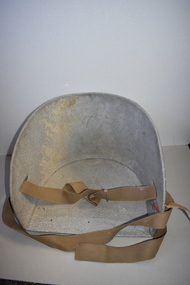
Aeroplane Seat, C 1916
... Two months after he was in Warrnambool Basil Watson was killed when his plane crashed near Point Cook in March 1917. Parts of the plane were salvaged and the seat was donated to the old Warrnambool Museum in 1918. ...Two months after he was in Warrnambool Basil Watson was killed when his plane crashed near Point Cook in March 1917. Parts of the plane were salvaged and the seat was donated to the old Warrnambool Museum in 1918. ...This is the seat from the aeroplane of Basil Watson. Photographs held by the Warrnambool and District Historical Society confirm that this was Watson’s aeroplane seat. He was a pioneer aviator who had built his own plane which was 5.5 metres long with a wingspan of 8 metres. It had a 7-cylinder 50 HP rotary Gnome engine. Basil Watson flew this aircraft to Warrnambool in January 1917, becoming the first person to fly to Warrnambool, coming from Point Cook in one hour 55 minutes – an Australian cross-country flying record at that time. Watson amazed Warrnambool crowds with his dare-devil flying, looping the loop 14 times over the Warrnambool racecourse. He also brought with him the first aerial post to arrive in Warrnambool and the Warrnambool and District Historical Society has the letter he brought written by the Lord Mayor of Melbourne to the Mayor of Warrnambool. Two months after he was in Warrnambool Basil Watson was killed when his plane crashed near Point Cook in March 1917. Parts of the plane were salvaged and the seat was donated to the old Warrnambool Museum in 1918. It remained there until the museum was dismantled in the early 1960s and it was later passed over to the Warrnambool and District Historical Society. The tag on the seat today is an old Warrnambool Museum label. This is a most significant item as it is the original seat from the aeroplane of Basil Watson, an important early aviator in Australia’s history and it is also an early 20th century memento of the many treasures from the old Warrnambool Museum (1883-1963). The seat shows the primitive nature of early 20th century aeroplanes in Australia. This is a metal (galvanized iron) seat with a semi-circular base and a curved back stretching around from one end of the base to the other end. The back has a rolled metal edging on the base and the top. On the sides are two slots with a khaki-coloured cloth strap passing through the slots. This strap has a metal buckle at the end. The metal in the seat is somewhat blotched and discoloured. A luggage label is tied to one of the slots and has a name typed on it.Mr Watsonbasil watson, aviator, old warrnambool museum, history of warrnambool -
 Bendigo Historical Society Inc.
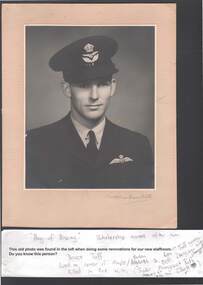
Photograph - GOLDEN SQUARE P.S. LAUREL ST. 1189 COLLECTION: BRUCE TUFF
... See attached document, where he baled out of his plane over the English Channel, to try to rescue his commanding officer whose plane had crashed. Written on paper insert: Sister Margaret Tuff, Harley st., Bendigo, now Elliott. ...See attached document, where he baled out of his plane over the English Channel, to try to rescue his commanding officer whose plane had crashed. Written on paper insert: Sister Margaret Tuff, Harley st., Bendigo, now Elliott. ...Flying Officer Robert Bruce Tuff was reported missing over the English Channel during air operations, on the 22nd. February, 1944. A report was received by the RAAF in London that during a patrol, the Commanding Officer of the squadron was heard to say that he was going to ditch his plane, 8 miles north west of Guernsey. Later Flying Officed Tuff was heard to say that he had seen the CO injured in the water and that he was going to 'bale out' and help him. Neither Flying Officer Tuff or the Commanding Officer were ever found. His plane was observed diving into the ocean. Robert Bruce Tuff attended Laurel Street Primary School, Golden Square for part of his primary years. He was the son of R. and M. Tuff of 125 Myrtle Street, Golden Square and the brother of Ken, Margaret and Beth. Black and white photo of Bruce Tuff: image shows young man, dressed in Airforce uniform. Head and shoulders portrait, mounted on buff board. Label on photo states 'this old photo was found in the loft when doing some renovations for our new staffroom (Laurel Street Primary School, Golden Square) Do you know this person?' Handwritten notes state 'Bay of Biscay' scholarship named after him. Bruce Tuff lived on corner of Maple/Panton St. and was killed in World War 2. See attached document, where he baled out of his plane over the English Channel, to try to rescue his commanding officer whose plane had crashed. Written on paper insert: Sister Margaret Tuff, Harley st., Bendigo, now Elliott. Ken Tuff younger, Beth Dungey, Harkness St. primary, world war 2, r.a.a.f., wirraway, golden square primary school laurel street, robert bruce tuff, english channel -
 Narre Warren and District Family History Group
Book, Narre Warren & District Family History Group Inc, Casey Cardinia Collection - Bunyip Information File
... Koschade opens new chapter 13 Jun 2007 Filling in the gaps – Bunyip Landcare Group 14 Oct 1992 Twin Pines, a reminder of early life in Bunyip Mar 2005 Discover Historic Cardinia – Bunyip 18 May 2005 War Memorial takes a hit 25 Mar 2009 Round ball role for Tony – Tony Arrigo 12 Oct 2016 Fatal Flight - Plane crash in Northern Territory 30 Nov 2016 Last Drinks Before Flight - Plane crash in Northern Territory 25 Apr 2012 Secret Marriage Blossoms Over the Decades of Love 14 Sep 2016 Eric McCraw, 100 Not Out 13 May 2015 Bunyip Red Cross on the Ropes 4 Jun 2008 Family Gathers for Happy 96th - Douglas Brain 17 Aug 2016 Sniper Cuts Short a Happy-Go-Lucky Life - John Tinkham 26 May 2010 Joy of Country Music - Joy Batchelor 20 Jul 2016 Cash to Preserve Heritage - St Thomas Church 23 Aug 2017 Tanya Thrives on Netball - Tanya Roberts 18 Apr 2018 Golden Duo - Tony & Carmelina Arrigo 24 Nov 2021 New Mural Becomes a Bunyip Tourist Attraction 27 May 2009 A Century of Fighting Fires - Duncan & Betty Holman 26 Jan 2022 75 Years of CFA Service - Joe Cumming 11 Oct 2023 For the Love of Community - Tony Orrigo 19 Jan 2022 60 Years of Laughs - Madeline & Ron Bridgman 20 July 2022 From Bunyip to Moy-yan 16 Aug 2023 Tribute to Young Sportsman - John Tinkham 27 Mar 2019 A True Legend Lost - Clarrie Steenholdt 7 June 2006 Tears Shed for “Tub” - Greg Riley 7 June 2006 A Man Who Got Things Done - Greg Riley 6 Feb 2019 Former Mayor Remembers - Bill Pearson 6 Feb 2019 Aged Evacuation Drama 15 May 2024 Historic Home on Market - Tonimbuk House 1 May 2024 Rail Towns Honour ANZACS 27 Nov 2024 Stacey’s Hotel Memories 4 Dec 2025 Les Celebrates Big 90th - Les Abrehart...Koschade opens new chapter 13 Jun 2007 Filling in the gaps – Bunyip Landcare Group 14 Oct 1992 Twin Pines, a reminder of early life in Bunyip Mar 2005 Discover Historic Cardinia – Bunyip 18 May 2005 War Memorial takes a hit 25 Mar 2009 Round ball role for Tony – Tony Arrigo 12 Oct 2016 Fatal Flight - Plane crash in Northern Territory 30 Nov 2016 Last Drinks Before Flight - Plane crash in Northern Territory 25 Apr 2012 Secret Marriage Blossoms Over the Decades of Love 14 Sep 2016 Eric McCraw, 100 Not Out 13 May 2015 Bunyip Red Cross on the Ropes 4 Jun 2008 Family Gathers for Happy 96th - Douglas Brain 17 Aug 2016 Sniper Cuts Short a Happy-Go-Lucky Life - John Tinkham 26 May 2010 Joy of Country Music - Joy Batchelor 20 Jul 2016 Cash to Preserve Heritage - St Thomas Church 23 Aug 2017 Tanya Thrives on Netball - Tanya Roberts 18 Apr 2018 Golden Duo - Tony & Carmelina Arrigo 24 Nov 2021 New Mural Becomes a Bunyip Tourist Attraction 27 May 2009 A Century of Fighting Fires - Duncan & Betty Holman 26 Jan 2022 75 Years of CFA Service - Joe Cumming 11 Oct 2023 For the Love of Community - Tony Orrigo 19 Jan 2022 60 Years of Laughs - Madeline & Ron Bridgman 20 July 2022 From Bunyip to Moy-yan 16 Aug 2023 Tribute to Young Sportsman - John Tinkham 27 Mar 2019 A True Legend Lost - Clarrie Steenholdt 7 June 2006 Tears Shed for “Tub” - Greg Riley 7 June 2006 A Man Who Got Things Done - Greg Riley 6 Feb 2019 Former Mayor Remembers - Bill Pearson 6 Feb 2019 Aged Evacuation Drama 15 May 2024 Historic Home on Market - Tonimbuk House 1 May 2024 Rail Towns Honour ANZACS 27 Nov 2024 Stacey’s Hotel Memories 4 Dec 2025 Les Celebrates Big 90th - Les Abrehart Casey Cardinia Collection - Bunyip Information File Book Narre Warren & District Family History Group Inc. ...Folder containing a table of contents and various newspaper clippings and other information pertaining to the Bunyip area. The date the articles were published, and title of articles are listed below. 13 Jun 2007 Blooming honour for protea veteran – Martin Sayers 23 Mar 2005 Dorothy Costain nee Cubis – obituary 05 Jul 2006 Dr. Koschade opens new chapter 13 Jun 2007 Filling in the gaps – Bunyip Landcare Group 14 Oct 1992 Twin Pines, a reminder of early life in Bunyip Mar 2005 Discover Historic Cardinia – Bunyip 18 May 2005 War Memorial takes a hit 25 Mar 2009 Round ball role for Tony – Tony Arrigo 12 Oct 2016 Fatal Flight - Plane crash in Northern Territory 30 Nov 2016 Last Drinks Before Flight - Plane crash in Northern Territory 25 Apr 2012 Secret Marriage Blossoms Over the Decades of Love 14 Sep 2016 Eric McCraw, 100 Not Out 13 May 2015 Bunyip Red Cross on the Ropes 4 Jun 2008 Family Gathers for Happy 96th - Douglas Brain 17 Aug 2016 Sniper Cuts Short a Happy-Go-Lucky Life - John Tinkham 26 May 2010 Joy of Country Music - Joy Batchelor 20 Jul 2016 Cash to Preserve Heritage - St Thomas Church 23 Aug 2017 Tanya Thrives on Netball - Tanya Roberts 18 Apr 2018 Golden Duo - Tony & Carmelina Arrigo 24 Nov 2021 New Mural Becomes a Bunyip Tourist Attraction 27 May 2009 A Century of Fighting Fires - Duncan & Betty Holman 26 Jan 2022 75 Years of CFA Service - Joe Cumming 11 Oct 2023 For the Love of Community - Tony Orrigo 19 Jan 2022 60 Years of Laughs - Madeline & Ron Bridgman 20 July 2022 From Bunyip to Moy-yan 16 Aug 2023 Tribute to Young Sportsman - John Tinkham 27 Mar 2019 A True Legend Lost - Clarrie Steenholdt 7 June 2006 Tears Shed for “Tub” - Greg Riley 7 June 2006 A Man Who Got Things Done - Greg Riley 6 Feb 2019 Former Mayor Remembers - Bill Pearson 6 Feb 2019 Aged Evacuation Drama 15 May 2024 Historic Home on Market - Tonimbuk House 1 May 2024 Rail Towns Honour ANZACS 27 Nov 2024 Stacey’s Hotel Memories 4 Dec 2025 Les Celebrates Big 90th - Les Abrehartnon-fictionbunyip (vic.) -
 Melton City Libraries
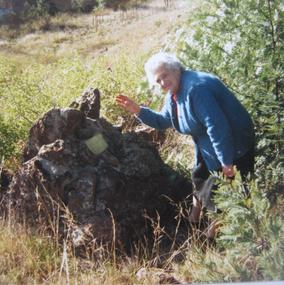
Photograph, The Cairn- Jimmy Melrose's plane crash site, 1988
... The Cairn- Jimmy Melrose's plane crash site...The cairn marks the site of Jimmy Melrose's plane crash in Melton South. The accident which happened on July 5th 1936. ...The cairn marks the site of Jimmy Melrose's plane crash in Melton South. The accident which happened on July 5th 1936. ...Edna Barrie at the cairn, photo received from Graeme Minns in 1988. The cairn marks the site of Jimmy Melrose's plane crash in Melton South. The accident which happened on July 5th 1936. In 1934 Melrose made headlines with a series of spectacular flights. In July of that year, he set around Australia record and in that year established a new solo Australia England record when he flew to England to compete in the MacRoberston race with a De Havilland Puss Moth VH- YQO. The only Australian and the only solo pilot to complete the course within the time limit. He was seventh in finishing order and third in the handicap section making news again during the race with a dramatic landing in Darwin with empty fuel tanks. Late in 1935 Melrose imported the Phoenix for his “Adelaide to Anywhere” Charter Service. The previous year the Heston Aircraft Company had taken over the interests of the well known Comper Aircraft Company, and the first production of the new firm was the Phoenix, a single-engined all wooden five seater machine of sesquiplane configuration. The forward half of the fuselage was a streamlined rectangular section and the rear portion was a monocogue shell; the whole was of plywood fabric covered. The wing was built up of spruce box spars and lattice ribs, ply covered from the leading edge to the front spar and the fabric covered over the remainder. The tail surfaces were of similar construction. The most notable feature of the design was the lower stub wing which ran right across the fuselage embodying two box spars, plywood covered it housed the main undercarriage wheels when retracted and provided a substantial anchorage for the Nu form wing struts. The Dowty undercarriage retracted inwards, operated manually by hydraulic packs, Dual control fitted, with side by side seating for the pilots and three passenger seats behind. Power was a 200 h.p. De Havilland Gipsy VI 6 cylinder inverted in-line air-cooled engine. Six Phoenix were built; five of them registered in Great Britain and one of those was later sold abroad the remaining four were impressed into the R.A.F. in 1940. Specifications were: 40 feet 4 inches length 30 ft 2 ins height, 9ft 7ins, wing area 270 sq ft, Tare weight 2,600lbs loaded weight 3,300lbs; cruising speed 360 m.p.h. landing 50mph ceiling 14,000 ft range 700 miles. Melrose’s machine the first production aircraft was built early in 1936 and test flown of the 24th March. Painted green it carries the words “South Australian Centenary 1936” in silver of the fuselage and the name “Billing on the engine cowling in honor of Melrose’s uncle Noel Pemberton Billing, pioneer designer and founder of the Supermarine Aviation Company. The delivery flight was planned as a goodwill mission to publicise the forthcoming South Australian Centenary celebrations. Melrose left Dympne on the 9th April 1936, and flying via Marseilles, Naples, Athens, Baghdad, Basra, Karachi, Jodphur, Calcutta, Akyab, Penang, Singapore, Lombok, Darwin, Newcastle Waters and Alice Springs reached Adelaide on the 25th of April. Continuing the goodwill flight to other States, he visited Melbourne, Sydney, Newcastle, Grafton, Brisbane, Coff’s Harbour, Sydney again, Launceston, Hobart and Mount Gambier before returning to Adelaide on the 13th May. During June Jimmy made some charter flights and early in July was engaged by Mr. A.J. Campbell a director of several mining companies from Melbourne to Darwin to commence at Essendon on the4th July. However on that day low cloud and steady rain caused the postponement. There was little improvement and Melrose was advised to delay the departure again. However he wished to reach Oodnadatta that night, and when he observed the break in the clouds decided to leave. He planned to climb above the cloud and fly to Adelaide at 3,000 feet. The aircraft was airborne about 8.10 a.m. and was last seen from Essendon climbing above the clouds. At 8.45 people at Melton (30 miles West of Melbourne) heard an approaching aircraft. The engine noise increased abnormally and eye witnesses saw the machine fall out of control from the cloud base about 800 feet and then disintegrate, fragments were scattered for 1½ miles and both occupants were killed. Hand written carbon copy by Edna Barrie.Typed by Wendy Barrie March 2014 Last Flight of Jimmy Melrose by John Burke Parade Magazine July 1972 Page 2 –4 This article gives the take off time of 7.50 am from Essendon Airport Eyewitness account at the time Maisie Arthur’s description. Newspaper article. Edna Barrie at the site of the 'Cairn'local identities, local significant events -
 Melton City Libraries
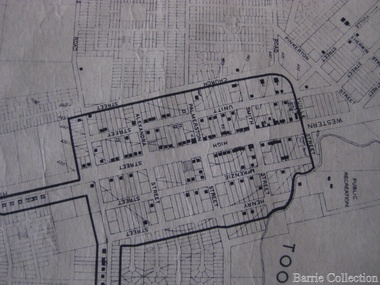
Map, Streets of Melton, 1963
... Alphabetical List Aboriginal place names, Early Family Names and landowners, Agricultural, Shop and Commercial premises, Places and Events Melton & District Historical Society Street Naming Project 1972 – c 1998 Suburb Name – KURUNJANG - Kirkton, 1972, Brookfield, West, 1988 Melton and Town Centre - A joint collaboration with the Shire of Melton and Subdivision Developers ARNOLD Court – Family house - Arnolds Creek ALKEMADE Drive Family – Lime kilns Coimadia ALEXANDRA Street 1902 – Corination of King Edward VII and Queen Alexandra AVIATOR Place Event, location of plane crash – Jimmy Melrose 1936 Adina ?Annibee - Anniba? ...Alphabetical List Aboriginal place names, Early Family Names and landowners, Agricultural, Shop and Commercial premises, Places and Events Melton & District Historical Society Street Naming Project 1972 – c 1998 Suburb Name – KURUNJANG - Kirkton, 1972, Brookfield, West, 1988 Melton and Town Centre - A joint collaboration with the Shire of Melton and Subdivision Developers ARNOLD Court – Family house - Arnolds Creek ALKEMADE Drive Family – Lime kilns Coimadia ALEXANDRA Street 1902 – Corination of King Edward VII and Queen Alexandra AVIATOR Place Event, location of plane crash – Jimmy Melrose 1936 Adina ?Annibee - Anniba? ...MELTON’S STREETS Heritage Week 2014 What’s in a Name? Alphabetical List Aboriginal place names, Early Family Names and landowners, Agricultural, Shop and Commercial premises, Places and Events Melton & District Historical Society Street Naming Project 1972 – c 1998 Suburb Name – KURUNJANG - Kirkton, 1972, Brookfield, West, 1988 Melton and Town Centre - A joint collaboration with the Shire of Melton and Subdivision Developers ARNOLD Court – Family house - Arnolds Creek ALKEMADE Drive Family – Lime kilns Coimadia ALEXANDRA Street 1902 – Corination of King Edward VII and Queen Alexandra AVIATOR Place Event, location of plane crash – Jimmy Melrose 1936 Adina ?Annibee - Anniba? Agricultural Avon court .. .. BAKERY Square - Location of Jongebloed shop, bakehouse and stables BALUK Place Aboriginal BARLEYCORN Place Agricultural BILLING Place Name of Jimmy Melrose Uncle Noel Pemberton Billing BLACKWOOD Drive - Alexander Blackwood 1860c Registrar BARRIES Road C. E. Barrie “Darlingsford” farmer 1911, chaff mill owner BROOKLYN Road Staughton family residence. 1875 – Dismantled c 193? CAHILL Drive Family - Glenville Dairy CAMERON Court Family Canopus Place ? CANALLAN Drive Early Surveyor CAMPBELL Court Aviation – Melrose passenger 6th July 1936 CARBERRY Drive Michael, early landowner family CAREW Court Edward and Michael. Royal Hotel. Vera (Carew) Forran Singer - Opera CASEY Court Family CASHIN Court Family CHEVIOT Court Agriculture, breed of sheep CHESNEY Road was re named ( Minns Road being duplicated c 1973) CHRISTINA Crescent Christina McPherson, daughter of James and Mary Mary McPherson. Died 1955 aged 85 years COLLYER Close a deleted street (parallel to Yuille) re-used CORRIEDALE Road Breed of sheep CORR Court Teacher at first school, landowner CROXTON Court Name of the Hornbuckle and Knox family home DALEY Court - William Daley and family 1865 Bootmaker High Street DARLINGSFORD Boulevard - Name of early homestead Thomas B Darling 1853 DJERRIWARRH Court - Parish County of Bourke - very early map. DODEMAIDE Place Early land owners - Melton Football Team had 6 brothers playing c 1924 DONALD Court McPherson family 6 generations in Melton in 1936 DOUGAL Court DUNCAN Court .. .. DUNVEGAN Circuit Home of the McPherson family, castle Isle of Skye Name of bluestone house Smith Street (now at Willows) EMIL Court Jongebloed family EXELL Avenue Farming family Melton Sth- Closer Settlement 1907 EXFORD Road Exe former name of the Werribee river FARMER Court Name of early postmistress FERRIS Road John Ferris Farmer HANNAH Close First name of Hannah Watts – midwife HAYBALE Place Agricultural HELDER Court Early surveyor J Helder Wedge map HEWSON Street Winston Hewson Shire Engineer – check title c 1960 HENRY Street Township map c 1860 HESTON Street Heston Phoenix – C.J. Melrose plane HILDEGARDE Court Jimmy Melrose’s mothers name HOMESTEAD Close HORNBUCKLE Cres Farmers. Three members of family - Shire Presidents HURLEY Street Farmers IAIN Court Descendent of James and Mary McPherson JAMES MELROSE Drive Name appears on 2013 Melton information map JANG Place KURUN – jang KIRKTON Drive Name of the McPherson family home Toolern Vale Road KIRWIN Street Michael early landowners (deleted for freeway construction) KILPATRICKS Road Deleted when Barries Road was extended across Station Rd KOROROIT Court Early map, Parish of Kororoit. Creek name KNOX Circuit Family – Hornbuckle “Croxton Park” KURRUNJANG Drive Aboriginal name for people of the red earth – Suburb name Lara Place ? LLOYD Court Garage owners High Street. Laura lived to 100 years D 1955 LUBY Court John Luby – Crown Grant Land Title LITTLE Court MANNING Avenue Richard, hotel owner 1891 MARGARET Drive McPherson family McDONALD Street Melton South family name McKENZIE Street Township c1860 MORROW Street Early name MOWBRAY Crescent Name of English Melton, popularly believed origin of Melton MYERS Court Early setters c 1866 Crown Grant Land Title NIMMO Street Early name NIXON Street Name submitted by Mary nee Nixon Collins c1985 OLDERSHAW Road Early builder PALMERSTON Street Early township map c 1860 PEART Court Early name PENNYROYAL Avenue Plant growing by the creek. Early name used for the Toolern Toolam Creek PINKERTON Street Family name and early street map PINNACLE Crescent Agricultural - type of wheat PHOENIX Circuit C.J. Melrose Phoenix Heston Plane 2013 map PRATT Family PRIOR Court PYKE Place Brothers – early settlement 1838 RADFORD Court Land owners and business operators. Former Royal Hotel Grocer High Street demolished 1970 RAGLAN Court Hotel 19th century Lord Raglan RALEIGHS Road Oliver Reierson family (Norweigen) Shopkeeper – Dressmakers RIDDELL Drive (misspelt Riddle) Resident and land owner RODERICK Road McPherson family – a re occurring name ROLLAND Court Jones family ROSS Court Daniel. Landowner. Agnes Ross music teacher RUSSELL Court Robert. Early land surveyor of Melton 1853 RYAN Court Family early landowner. Member of the 1862 Road Board SHEBLER Place Augustus early Melton resident – Golden Fleece Hotel SHEEPFOLD Court Farming SHERWIN Court Sherwin Street earliest Township map– became Golf course SMITH Street Early township map. STRATHULLOH Circuit Strathtulloh Homestead. STAUGHTON Street Family – LARGE land owners Strachan ? SWANEY Court Marie Swaney earlier resident of Strathtulloh. SUTHERLAND Family name TOOLERN Street TOOLAM – TOOLERN Creek TULLIDGE St Road marked on 1861 map UNITT Street Early Township c 1860 WALLACE Square Cr Jack Wallace 5 terms as President 46 years unopposed WATTS Court Hannah Watts – midwife, cottage hospital WALSINGHAM Name of house of Minns family. From Walsingham Norfolk England WESTLEY Place Name of Jimmy Melrose Percival Gull Plane WESTLAKE Drive Early resident WHICKHAM Street Family Name Melton South WILSON Road Albert, Melton South YUILLE Street William Cross, early landowner, Rockbank run Zoomed in section of Melton Streets including Church and High Streetlandscapes of significance -
 Federation University Historical Collection
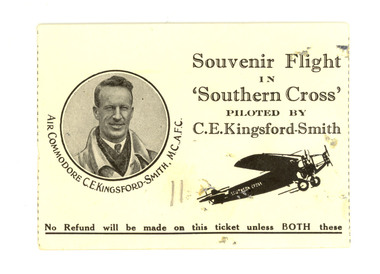
Souvenir - Ticket Stub, Ticket for a souvenir Flight with Charles Kingsford-Smith, c1932
... The plane and pilots were never seen again, believed to have crashed into the sea at night somewhere off the coast of Burma. ...The plane and pilots were never seen again, believed to have crashed into the sea at night somewhere off the coast of Burma. chatham chatham family collection kingsford-smith charles kingsford-smith smithy southern cross aeroplane flight joy ride entertainment airport charles kingsford smith Printed on ticket 'Souvenir Flight in 'Southern Cross' piloted by C.E. ...Sir Charles Edward Kingsford Smith (1897-1935) is one of Australia's most known Australia’s fliers. Born in 1897 at Hamilton, Qld. He spent his early life in Sydney enlisting in the AIF in 1915. He served at Gallipoli before transferring to the Royal Flying Corps in 1916. He was shot down and wounded in the foot in 1917. In 1929, Kingsford-Smith flew from Australia to England in the record-breaking time of 12 days, 18 hours. The following year he completed an east–west crossing of the Atlantic Ocean in 31 hours, followed by a record-breaking solo flight from England to Darwin in 10 days. He was knighted for services to aviation in 1932. He made the first west–east trans-Pacific flight in 1934. In 1932 was selling joy-flights at ten shillings a trip. Most of his flights, including the joy flights, were made in the three-engine Fokker plane known as the 'Southern Cross', now preserved in a special display area at Brisbane Airport. In late 1935 Kingsford Smith took off on the second leg of a flight from England to Australia with John ‘JT’ Pethybridge. The plane and pilots were never seen again, believed to have crashed into the sea at night somewhere off the coast of Burma. White ticket stub with black ink. It includes a photographic portrait of Charles Kingsford-Smith, and a drawing of the Southern Cross aeroplane. Gift of the Chatham-Holmes family.Printed on ticket 'Souvenir Flight in 'Southern Cross' piloted by C.E. Kingsford-Smith. No refund will be made on this ticket unless BOTH these"chatham, chatham family collection, kingsford-smith, charles kingsford-smith, smithy, southern cross, aeroplane, flight, joy ride, entertainment, airport, charles kingsford smith -
 Flagstaff Hill Maritime Museum and Village
Newspaper - The Standard, Warrnambool Standard Centenary Issue 1872-1972, 02/10/1972
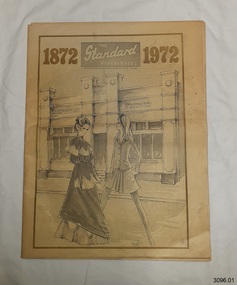
... plane accident. PAGE 70; In 1967 Australia's Prime Minister, Mr Harold Holt, goes missing, presumed drowned. PAGE 71; In 1970 the mystery of four bodies were found in a car that crashed over the cliff at Loch Ard Gorge, near Port Campbel, made headlines in the Standard. ...Page 1: "The Standard Warrnambool" "Warrnambool Standard Centenary Issue October 2 1972, 72 pages" On illustration of building "1872 / Warrnambool Standard" Page 34: "On this site ... since 1924" [Ponting Bros} "Staff of Ponting Bros. 1972" Page 39: "Aviation history-maker" "RECORD TRIP BY FIRST PLANE TO VISIT CITY" "Thrilling display of aerial acrobatics" Page 70: "PM HOLT IS PRESUMED DROWNED" "GAVE GOVT. IMAGE OF YOUTH" Page 71: "Where death car crashed on ledge" "PT CAMPBELL MYSTERY: FOUR BODIES FOUND IN CAR AT BOTTOM OF CLIFF" "POLICE SEARCH SWINGS BACK TO MELBOURNE" Page 72: "Greetings to the"Standard"" "Fletcher Jones" ...plane accident. PAGE 70; In 1967 Australia's Prime Minister, Mr Harold Holt, goes missing, presumed drowned. PAGE 71; In 1970 the mystery of four bodies were found in a car that crashed over the cliff at Loch Ard Gorge, near Port Campbel, made headlines in the Standard. ...The Warrnambool Standard Centenary Issue, 1872 - 1972, summarises the local and world history highlights over 100 years. The pages in the images are a sample of the newspaper's contents. They show: - PAGE 1; sketches of two young women, one dressed in 1872 fashion, the other in 1972 fashion. PAGE 34; This page was dedicated to the Ponting Bros. The business celebrated its Centenary in 1972. There apr photographs of the original and the new building, and a photograph and names of the staff of 1972. PAGES 34-38: Lift out facsimile copy of the first edition of The Standard (no longer in 3096.01) PAGE 39; In January 1917 Mr Basil Watson flew the first aeroplane to visit the Warrnambool area. He entertained the crowds by performing aerobic acrobatics in the plane he'd built himself. Two months later he died in a plane accident. PAGE 70; In 1967 Australia's Prime Minister, Mr Harold Holt, goes missing, presumed drowned. PAGE 71; In 1970 the mystery of four bodies were found in a car that crashed over the cliff at Loch Ard Gorge, near Port Campbel, made headlines in the Standard. PAGE 72; The back page features a photograph and greetings from Fletcher Jones and Staff. There are many staff members in front of the Fletcher Jones factory in Warrnambool, which was established around 1924.The centennial edition of the Standard newspaper includes local social, economic and historical aspects of Warrnambool, Victoria, Australia and the World. It reflects the interests of the local community and the reactions to the events of the time.The Standard, Warrnambool, Centenary Issue 1872 – 1972 (Two copies).100 years of District Service. The issue includes World and Local History, Advertisements, Timeline, Facsimile of the First Issue, Shipwrecks, and Wars. The Centenary edition was printed on October 2, 1972, 72 pages. One copy (3096.02) includes the centre lift-out on pages 35 to 38 of a facsimile copy of the first edition published on October 1, 1872.Page 1: "The Standard Warrnambool" "Warrnambool Standard Centenary Issue October 2 1972, 72 pages" On illustration of building "1872 / Warrnambool Standard" Page 34: "On this site ... since 1924" [Ponting Bros} "Staff of Ponting Bros. 1972" Page 39: "Aviation history-maker" "RECORD TRIP BY FIRST PLANE TO VISIT CITY" "Thrilling display of aerial acrobatics" Page 70: "PM HOLT IS PRESUMED DROWNED" "GAVE GOVT. IMAGE OF YOUTH" Page 71: "Where death car crashed on ledge" "PT CAMPBELL MYSTERY: FOUR BODIES FOUND IN CAR AT BOTTOM OF CLIFF" "POLICE SEARCH SWINGS BACK TO MELBOURNE" Page 72: "Greetings to the"Standard"" "Fletcher Jones" flagstaff hill, flagstaff hill maritime museum and village, warrnambool, maritime museum, maritime village, great ocean road, shipwreck coast, ladies fashion 1872, ladies fashion 1972, ponting bros. centenary 1872-1972, ponting bros. staff, basil watson, basil watson 1917, harold holt 1967, car crash at loch ard gorge, fletcher jones and staff 1972, the standard centenary 1872-1972, warrnambool newspaper, warrnambool standard, centenary edition, the standard -
 Eltham District Historical Society Inc
Photograph, Peter Pidgeon, Grave of Beulah Alice Rutter and children, June and Samuel, Eltham Cemetery, Victoria, 5 April 2021
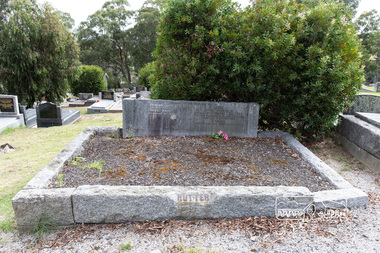
... Hubert wrote to the Air Force in frustration, failing to understand how the plane could disappear when it crashed in a relatively populated area. ...Hubert wrote to the Air Force in frustration, failing to understand how the plane could disappear when it crashed in a relatively populated area. ...Hubert and Beulah Alice (Simpson) Rutter had five children: Hubert Jnr. (Joe) in 1913, David in 1915, June in 1917, Donald in 1922 and Samuel in 1926. Samuel died as an infant aged 17 days. Hubert was a notable figure in Eltham and beyond, with a career as a mining manager in Australia and Malaya. He served in the AIF in the First World War. While the children were growing up at ‘Yarra Braes’, Eltham, their father was an Eltham Shire Councillor in the 1920s, shire president in 1928 and a leading figure in establishing the Shire of Eltham War Memorial League, which was responsible for building the Shire of Eltham War Memorial tower at Kangaroo Ground, near where the Shire Offices were located until the 1930s. The Rutter name was commemorated after the war at Eltham High School with one of the schoolhouses named ‘Rutter House’ and at Geelong Grammar School until the 1960s where a ‘Rutter Badge’ was awarded to junior boys for leadership. The family home, ‘Yarra Braes’ was destroyed in the devasting Black Friday bushfire, 13 January 1939 and Beulah relocated to Toorak, Hubert working in Western Australia. Tragedy struck the family again December 19, 1940 when daughter June was killed after falling from the Heidelberg train on to an adjacent track into the path of a Reservoir train at Victoria Park station. Sons David and Donald both served in the R.A.A.F. during the Second World War and were killed in action, David in Libya in 1941 and Donald in Germany in 1945. The wreck of his plane and his body were not recovered at the time and Hubert never ceased to chase down leads as to his whereabouts. Beulah never gave up hope that Donald was still alive. Hubert had received several reports shortly after the war that his son was still alive but these were ultimately accepted as misidentification. Such was the anguish of the grieving parents, their son’s plane not found to confirm the fact for certain. Hubert wrote to the Air Force in frustration, failing to understand how the plane could disappear when it crashed in a relatively populated area. Unfortunately the answers came too late for Beulah who died in 1946 and was buried in Eltham Cemetery along with her daughter June and baby Samuel. Donald’s plane was eventually located and his body recovered in 1949. He is buried in the Hanover War Cemetery, Germany. David is commemorated on Column 245, Alamein Memorial, Egypt. Both David and Donald are commemorated on Eltham’s Roll of Honour Board, commissioned by the Eltham War Memorial Trust to be hung in the Baby Health Centre, part of the Eltham War Memorial building precinct. Hubert Senior and Hubert Junior both continued to work in the mining industry in Western Australia. Hubert senior died 1957 at Plantagenet Western Australia and Hubert junior in 1979 at Gascoyne, Western Australia. Sacred to the memory of Beulah AliceBeloved wife of Hubert Rutter Died August 21st 1946 also June Beloved daughter of Beulah and Hubert Rutter Died 19th December 1940 aged 23 years Also her baby brother Samuel Died 7th October 1926, aged 17 daysBorn Digitaleltham cemetery, gravestones, beulah alice rutter, hubert rutter, june rutter, samuel rutter -
 Bendigo Military Museum
Award - MEDAL DFC, C.1944 - 46
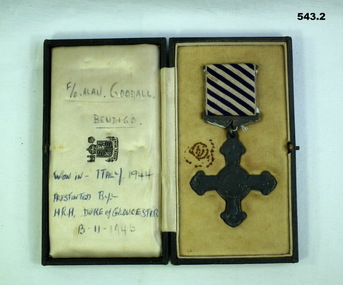
... crashed into Mt Etna, they were coming out of a cloud when the Pilot saw Etna. Allan as least injured made sure his mates were okay and sheltered he walked down to a nearby village (Maletto) to get help. Allan spent from 21.12.1943 to 5.1.1944 in hospital with Abrasions. He was awarded the DFC (Distinguished Flying Cross) in 1944 for operations over Italy, at the time he was classed as Sqd Signals Leader. According to his records he flew 37 Operational sorties. He was discharged from the RAAF on 3.1.1946. The crew of the Plane...crashed into Mt Etna, they were coming out of a cloud when the Pilot saw Etna. Allan as least injured made sure his mates were okay and sheltered he walked down to a nearby village (Maletto) to get help. Allan spent from 21.12.1943 to 5.1.1944 in hospital with Abrasions. He was awarded the DFC (Distinguished Flying Cross) in 1944 for operations over Italy, at the time he was classed as Sqd Signals Leader. According to his records he flew 37 Operational sorties. He was discharged from the RAAF on 3.1.1946. The crew of the Plane ...Allan Frederick GOODALL DFC. (Born Ringwood, enlisted Melbourne) in the RAAF on 10.10.1941 No 409828 age 18 years. He was mustered as Aircrew on elisted and was designated as WO/AG ( Wireless operator Air Gunner) on 23.7.1942. he rose through the ranks from AC2, LAC, Sgt, F/Sgt, W/O, F/O to Flt/Lt on 1.3.1945. Embarked for England on 24.8.1942 and posted to RAF Station Bournemouth on 18 .11.1942, posted to MEC (Middle East Command) with 150 Sqd RAF flying Wellingtons from North Africa. On 21.12.1943 on a non operational flight from Africa to Italy his flight crashed into Mt Etna, they were coming out of a cloud when the Pilot saw Etna. Allan as least injured made sure his mates were okay and sheltered he walked down to a nearby village (Maletto) to get help. Allan spent from 21.12.1943 to 5.1.1944 in hospital with Abrasions. He was awarded the DFC (Distinguished Flying Cross) in 1944 for operations over Italy, at the time he was classed as Sqd Signals Leader. According to his records he flew 37 Operational sorties. He was discharged from the RAAF on 3.1.1946. The crew of the Plane were; Bruce Hayman (NZ) Pilot, Fractured leg. Allan Goodall Aust (WOP/AG) abrasions and injured wrist. Alan Warner (Aust) Navigator, Fractured Ankle. Y.F.Redknap (UK) injured shoulder. C.A. Carr (UK) Fractured Dorsal Spine. J.E. Ward (UK) Dislocated shoulder. Alfred Dugdale (UK) Deceased. Tony Moore (UK) Deceased. Both are buried at the Catania War Cemetery Sicily. Refer Cat No 1025P for his photo.543.1 Medal-Distinguished FLying Cross won by FO Alan F Goodall. Rear of medal is engraved "Italy FO Alan Goodall 1944" 543.2 Case-to suit DFC above. Case rear has a note "Alan's sister Jean, Mrs R.T Mitchell, 22 O'Dea Cres Kangaroo Flat 3555 471428." Written inside case in pen "F/O Alan Goodall Bendigo Won in Italy 1944 Presented by HRH Duke of Gloucester 13-11-1946"awards, dfc ww2, raaf -
 4th/19th Prince of Wales's Light Horse Regiment Unit History Room
Souvenir cut from crashed aircraft stay
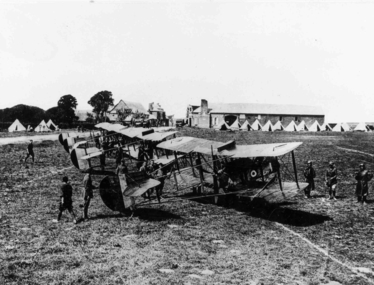
... crash on the reverse. The aircraft was probably an SE5 archibald smith arch smith 17alh 17th lhr sevententh light horse regiment. somme fremicourt souvenir aircraft Manufacturers logo of London Aircraft Co Ld. Reverse side has hand written inscription. Logo is Red "A" with red wings enclosed in a red circle with "Aircraft Co London on scroll under logo. Inscription on reverse reads "Captain Shepherd killed near Fremicourt April 21 1917 Piece of his planes ...Souvenir is from an aircraft flown by 2LT Lewis Charles Burford Sheppard RFC, killed when his aircraft crashed on landing on the Bapaume Rd, Fremicourt in the Somme Area. A portion of a wing stay was cut from the aircraft and fashioned into a war trophy with the manufacturers logo and a hand written inscription detailing the crash on the reverse. The aircraft was probably an SE5Brown sealed timber cross section of a WW 1 aircraft stay Aircraft manufacturer logo in red and gold of London Aircraft Co Ld. Reverse has hand written inscription.Manufacturers logo of London Aircraft Co Ld. Reverse side has hand written inscription. Logo is Red "A" with red wings enclosed in a red circle with "Aircraft Co London on scroll under logo. Inscription on reverse reads "Captain Shepherd killed near Fremicourt April 21 1917 Piece of his planes stay Collided with tree on Bapuame Rd while landing archibald smith, arch smith, 17alh, 17th lhr, sevententh light horse regiment. somme, fremicourt, souvenir, aircraft -
 Bendigo Military Museum
Photograph - PHOTOGRAPHS, WW2
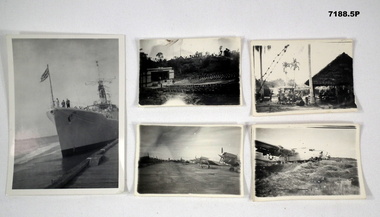
... planes lined up in formation. 4. Photo of Allied soldiers resting under thatched roof and palm trees in a casual setting. 5. Photo of crashed...planes lined up in formation. 4. Photo of Allied soldiers resting under thatched roof and palm trees in a casual setting. 5. Photo of crashed ...The photo with the stage is most likely for the "Gracie Fields" show for the troops in Borneo in 1945. It is unclear where the other photos were taken.WW2 Asian Theatre five photos.Black and white photos of various sizes. 1. Photo of Allied Navy ship at dock. Union Jack flag and Navy Personnel at bow. 2. Photo of temporary stage set up with seating set in a small rural valley. 3. Photo of Airfield with town in background and at least 12 fighter planes lined up in formation. 4. Photo of Allied soldiers resting under thatched roof and palm trees in a casual setting. 5. Photo of crashed Bomber or Transport US Aircraft, partially stripped of parts.airfield operations, ww2, photos -
 B-24 Liberator Memorial Restoration Australia Inc
Tail Plane from 'Little Eva' crash, Circa 1941/2
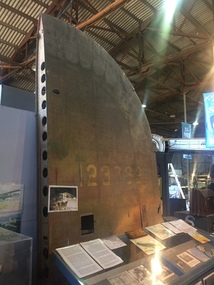
... Tail Plane from 'Little Eva' crash...The tail plane/fin from the crash site of Liberator 'Little Eva'. ...Crashed near Burriejell waterhole at Moonlight Creek, Escott Station in far north Queensland on 2 December 1942. Two of the ten crewmen were rescued by the manager of Escott Station after 13 days of deprivation. 2bx little eva 4123762 usaaf Faded USAAF Insignia 41-23762 The tail plane/fin from the crash site of Liberator 'Little Eva'. ...Commemoration of the crash of USAAF B-24 Liberator #41-23762 'Little Eva' of the 321st Squadron, 90th Bombardment Group based at Iron Range. Crashed near Burriejell waterhole at Moonlight Creek, Escott Station in far north Queensland on 2 December 1942. Two of the ten crewmen were rescued by the manager of Escott Station after 13 days of deprivation.2bxThe tail plane/fin from the crash site of Liberator 'Little Eva'. This site is registered as Doomadgee Queensland Australia, approximate GPS Co-ordinates: Latitude -17 56 24 Longitude +138 49 47.Faded USAAF Insignia 41-23762little eva, 4123762, usaaf -
 Bendigo Historical Society Inc.
Document - BASIL WATSON
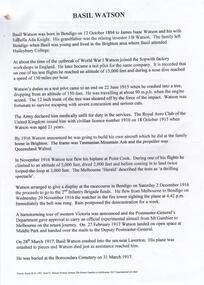
... crash rendered him unfit for military duty, he returned to Australia in late 1915. He designed and constructed his own biplane in the back yard of his Elsternwick home. At the end of 1916 he tested his plane...crash rendered him unfit for military duty, he returned to Australia in late 1915. He designed and constructed his own biplane in the back yard of his Elsternwick home. At the end of 1916 he tested his plane ...Basil George Watson was an aviation pioneer born in Bendigo 12/10/1893. The family moved to Melbourne when he was a child. In 1914 he went to England to work as an engineer for the Sopwith Aviation Company. He also took flying lessons and received his licence in 1915. He now worked as a test pilot for Sopwith but when a crash rendered him unfit for military duty, he returned to Australia in late 1915. He designed and constructed his own biplane in the back yard of his Elsternwick home. At the end of 1916 he tested his plane by flying from Point Cook to Bendigo and then to Melbourne. This included an aviation display in Bendigo. He followed this by flying to Warnambool 25/1/1916. He then set up an experimental airmail flight from Melbourne to Mount Gambier. On 28th March 1917, Watson was demonstrating aerobatics for the entertainment of AIF servicemen at Point Cook, when his plane collapsed and fell into the ocean close to shore. Unfortunately, Watson was tangled in the plane's wires and died. On hearing of his death, the bells of St Pauls in Bendigo and the Bendigo fire bell tolled.A paper detailing the life of Bendigo pilot Basil Watson, one of the first Australian pilots. 4 pages.aviation, basil watson, sopwith -
 Warrnambool and District Historical Society Inc.
Book, Basil Watson Pioneer Aviator, March 2015
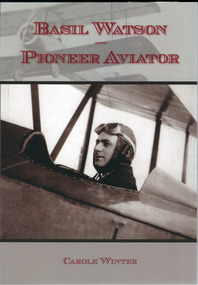
... He flew this plane to Bendigo, Warrnambool, Hamilton, Camperdown, Casterton and Mount Gambier and carried the first official airmail to these places. He also gave exhibitions of aerial flying stunts at these towns. He died when he crashed...He flew this plane to Bendigo, Warrnambool, Hamilton, Camperdown, Casterton and Mount Gambier and carried the first official airmail to these places. He also gave exhibitions of aerial flying stunts at these towns. He died when he crashed ...This book gives details on the life and work of Basil Watson (1893-1917), a pioneer aviator in AustraliaThis is a paper back book with a plastic-laminated cover. There are 61 pages with diagrams, photographs, illustrations, advertisements, posters and newspaper cuttings. The cover is mainly grey and white in colour with printed material in a red insert and two photographs superimposed over the background.This book gives details on the life and work of Basil Watson (1893-1917), a pioneer aviator in Australiabasil watson, warrnambool and aviation pioneer, australian aviators -
 Bendigo Historical Society Inc.
Memorabilia - BASIL WATSON COLLECTION: FABRIC FROM BASIL WATSON'S PLANE, 1916
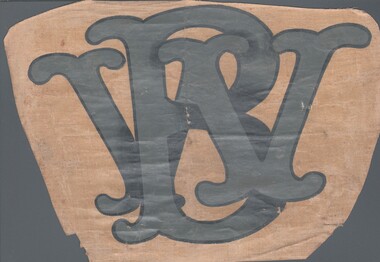
... Handwritten on back in ink 'Taken from Basil's plane' Potentially taken from Basil Watson's plane following his fatal crash at Point Cook in 1917....Handwritten on back in ink 'Taken from Basil's plane' Potentially taken from Basil Watson's plane following his fatal crash at Point Cook in 1917. Memorabilia BASIL WATSON COLLECTION: FABRIC FROM BASIL WATSON'S PLANE ...Piece of silk fabric from Basil Watson's plane; with stylised logo 'BW' painted in grey and black. Handwritten on back in ink 'Taken from Basil's plane' Potentially taken from Basil Watson's plane following his fatal crash at Point Cook in 1917.aviation, civilian, fabric -
 Bendigo Historical Society Inc.
Photograph - BASIL WATSON COLLECTION: ALBUM OF PHOTOGRAPHS (BASIL WATSON STORY), 1917
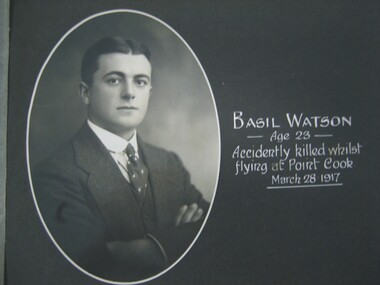
... Album of 12 photographs (Basil Watson story): construction of plane at family home plus two photos of crash site at Point Cook. ...Album of 12 photographs (Basil Watson story): construction of plane at family home plus two photos of crash site at Point Cook. ...a. Album of 12 photographs (Basil Watson story): construction of plane at family home plus two photos of crash site at Point Cook. Inscribed beside frontispiece photo is: Basil Watson - Age 23 - Accidentally killed whilst flying at Point Cook March 28 1917'. Inside front cover: 'To dear Keith, With love from Aunt Belle', 'Foilacleugh' St Kilda St., Elsternwick July 1917. b. Listing of photos in this album - concise description of 12 photosperson, individual, basil watson -
 Otway Districts Historical Society
Transport, Remains of Airspeed Oxford aeroplane, 12 April 1942
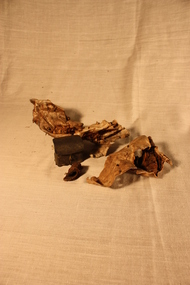
... beech forest; plane crash; airspeed oxford; world war 2;...crashed 5 kilometres from Beech Forest. The pilot, Sergeant T.W. Penn, and two pupils, LAC R.E. Johnston and LAC J.R. Black, were killed. The airframe and engine were extensively damaged. beech forest; plane crash; airspeed oxford; world war 2; Two pieces of crumbled aluminium metal and one piece of solid black rubber recovered from an Airspeed Oxford aeroplane. ...Leaving Point Cook airbase conducting a low visibility cross-country flight at 11.05 am on 12 April 1942 an A25 Airspeed Oxford crashed 5 kilometres from Beech Forest. The pilot, Sergeant T.W. Penn, and two pupils, LAC R.E. Johnston and LAC J.R. Black, were killed. The airframe and engine were extensively damaged.Two pieces of crumbled aluminium metal and one piece of solid black rubber recovered from an Airspeed Oxford aeroplane.beech forest; plane crash; airspeed oxford; world war 2; -
 Ithacan Historical Society
Photograph, Aircrash, c 1940s
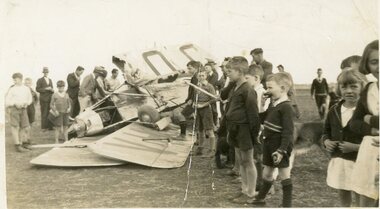
... A black and white photograph of children and some adults looking at the wreckage of a plane which has crashed in an open paddock. ...Stamped on the back in blue: v 14 A black and white photograph of children and some adults looking at the wreckage of a plane which has crashed in an open paddock. Aircrash Photograph ...A black and white photograph of children and some adults looking at the wreckage of a plane which has crashed in an open paddock. Stamped on the back in blue: v 14
