
Showing 31 items matching "david syme and co"
-
 Greensborough Historical Society
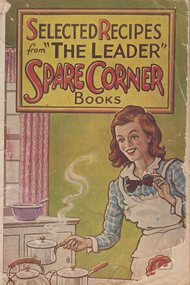
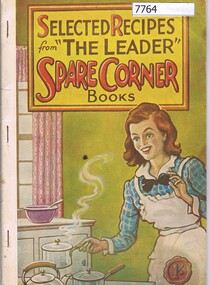
Photograph - Book - Digital Image, Selected recipes from "The Leader" spare corner books, 1930s
... David Syme & Co...An example of early 20th century advertising the leader recipe books historic advertisements fowlers vacola Digital copy of front and back covers of a book Selected recipes from "The Leader" spare corner books Photograph Book - Digital Image David Syme & Co ...Front and back covers of "Selected recipes from "The Leader" small corner books". The back cover is an advertisement for Fowlers Vacola bottling outfits.An example of early 20th century advertisingDigital copy of front and back covers of a bookthe leader, recipe books, historic advertisements, fowlers vacola -
 Greensborough Historical Society
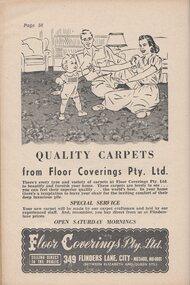
Photograph - Advertisement - Digital Image, Floor Coverings Pty Ltd Melbourne, 1930s
... David Syme & Co...This advertisement is for Floor Coverings Pty Ltd of Flinders Lane Melbourne An example of early 20th century advertising historic advertisements "the leader" small corner books Digital copy of advertisement from a book Floor Coverings Pty Ltd Melbourne Photograph Advertisement - Digital Image David Syme & Co ...Advertisement from "Selected recipes from "The Leader" small corner books" (1930s). This advertisement is for Floor Coverings Pty Ltd of Flinders Lane MelbourneAn example of early 20th century advertisingDigital copy of advertisement from a bookhistoric advertisements, "the leader" small corner books -
 Greensborough Historical Society
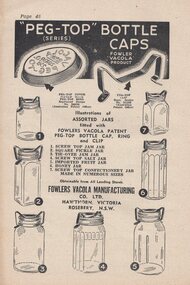
Photograph - Advertisement - Digital Image, Fowlers Vacola, 1930s
... David Syme & Co...An example of early 20th century advertising historic advertisements "the leader" small corner books fowlers vacola Digital copy of advertisement from a book Fowlers Vacola Photograph Advertisement - Digital Image David Syme & Co ...Advertisement from "Selected recipes from "The Leader" small corner books" (1930s). This advertisement is for Fowlers Vacola and shows a variety of bottles and caps used in the Fowlers Vacola system.An example of early 20th century advertisingDigital copy of advertisement from a bookhistoric advertisements, "the leader" small corner books, fowlers vacola -
 Greensborough Historical Society
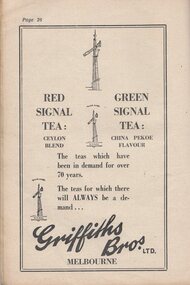
Photograph - Advertisement - Digital Image, Griffiths Bros. Tea, 1930s
... David Syme & Co...Tea Photograph Advertisement - Digital Image David Syme & Co ...Advertisement from "Selected recipes from "The Leader" small corner books" (1930s). This advertisement is for Griffiths Bros. Tea and shows different varieties of tea.An example of early 20th century advertisingDigital copy of advertisement from a bookhistoric advertisements, "the leader" small corner books, griffiths bros tea -
 Greensborough Historical Society
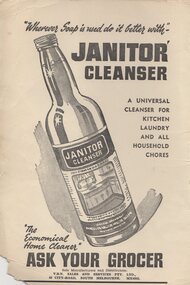
Photograph - Advertisement - Digital Image, Janitor Cleanser, 1930s
... David Syme & Co...An example of early 20th century advertising historic advertisements "the leader" small corner books janitor cleanser Digital copy of advertisement from a book Janitor Cleanser Photograph Advertisement - Digital Image David Syme & Co ...Advertisement from "Selected recipes from "The Leader" small corner books" (1930s). This advertisement is for Janitor Cleanser, "a universal cleanser for kitchen, laundry and all household chores".An example of early 20th century advertisingDigital copy of advertisement from a bookhistoric advertisements, "the leader" small corner books, janitor cleanser -
 Greensborough Historical Society
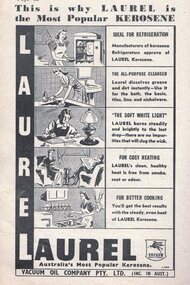
Photograph - Advertisement - Digital Image, Laurel Kerosene, 1930s
... David Syme & Co...An example of early 20th century advertising historic advertisements "the leader" small corner books laurel kerosene Digital copy of advertisement from a book Laurel Kerosene Photograph Advertisement - Digital Image David Syme & Co ...Advertisement from "Selected recipes from "The Leader" small corner books" (1930s). This advertisement is for Laurel Kerosene and gives many uses for kerosene that are no longer common in the 21st century, such as refrigeration, cleaning, lighting, heating and cooking.An example of early 20th century advertisingDigital copy of advertisement from a bookhistoric advertisements, "the leader" small corner books, laurel kerosene -
 Greensborough Historical Society
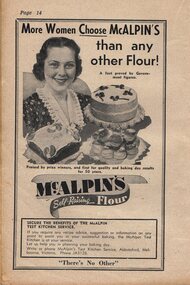
Document - Advertisement - Digital Image, McAlpin's Self Raising Flour, 1930s
... David Syme & Co...An example of early 20th century advertising historic advertisements "the leader" small corner books mcalpins self raising flour Digital copy of advertisement from a book McAlpin's Self Raising Flour Document Advertisement - Digital Image David Syme & Co ...Advertisement from "Selected recipes from "The Leader" small corner books" (1930s). This advertisement is for McAlpin's Self Raising Flour.An example of early 20th century advertisingDigital copy of advertisement from a bookhistoric advertisements, "the leader" small corner books, mcalpins self raising flour -
 Greensborough Historical Society
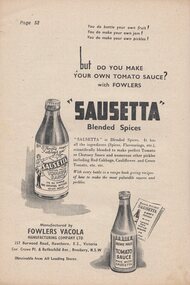
Photograph - Advertisement - Digital Image, Sausetta Blended Spices, by Fowlers Vacola, 1930s
... David Syme & Co...An example of early 20th century advertising historic advertisements "the leader" small corner books sausetta blended spices fowlers vacola Digital copy of advertisement from a book Sausetta Blended Spices, by Fowlers Vacola Photograph Advertisement - Digital Image David Syme & Co ...Advertisement from "Selected recipes from "The Leader" small corner books" (1930s). This advertisement is for Sausetta Blended Spices, by Fowlers Vacola, used for flavouring home made sauces.An example of early 20th century advertisingDigital copy of advertisement from a bookhistoric advertisements, "the leader" small corner books, sausetta blended spices, fowlers vacola -
 Greensborough Historical Society
Book - Recipe Book, David Syme & Co, Selected recipes from "The Leader" spare corner books, 1959
... David Syme & Co...Book Recipe Book David Syme & Co ...Recipes in this book were submitted to "The Leader" by readers over many years and compiled into a series of cookbooks.Part of a collection of recipe books from Laurence N. Lewis64 p., illus. non-fictioncookbooks, recipe books, the leader -
 Eltham District Historical Society Inc
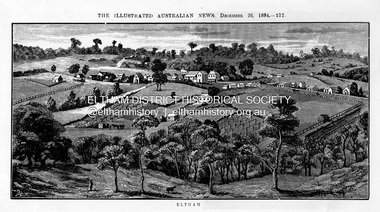
Photograph, Samuel Calvert, Eltham, The Illustrated Australian News, December 26, p212, 1884
... ...David Syme and Co...It is significant in being the first community sourced collection representing the places and people of the Shire's first one hundred years. shire of eltham pioneers photograph collection Eltham Illustrated Australian News Digital image Eltham, The Illustrated Australian News, December 26, p212 Photograph Photograph Samuel Calvert David Syme and Co ...A description in the newspaper near the illustration (page 210) reads as follows: "Eltham is a pretty little township on the Yarra Flats road, about 14 miles east north east of Melbourne, from which place there is communication by way of Heidelberg. It has a population of nearly 400 inhabitants, but in addition it is the centre of a large district extending over about 203 square miles, having a population of 2344. The land in the district is mostly used for grazing purposes, although as a rule the small farms grow a good deal of wheat, oats and other agricultural produce. A large quantity of fruit, especially raspberries and strawberries, is also produced, the rich alluvial flats along the creek upon which the township is situated being very well adapted for that purpose. Gold has also been found in the vicinity of the township, but not in remunerative quantities". This photo forms part of a collection of photographs gathered by the Shire of Eltham for their centenary project book,"Pioneers and Painters: 100 years of the Shire of Eltham" by Alan Marshall (1971). The collection of over 500 images is held in partnership between Eltham District Historical Society and Yarra Plenty Regional Library (Eltham Library) and is now formally known as 'The Shire of Eltham Pioneers Photograph Collection.' It is significant in being the first community sourced collection representing the places and people of the Shire's first one hundred years.Digital imageshire of eltham pioneers photograph collection, eltham, illustrated australian news -
 Robin Boyd Foundation
Book, Kevin Childs, Cheap Eats In Melbourne, 1987
... ...David Syme & Co....Walsh St library Softcover Cheap Eats In Melbourne Book Kevin Childs David Syme & Co. ...Softcoverwalsh st library -
 Robin Boyd Foundation
Book, Ed Claude Foreel, Stephanie Wood, John Lethlean, Good Food Guide, 2000
... ...David Syme and Co Ltd...Walsh St library City planning -- History, Urbanism, Urban ecology Softcover Good Food Guide Book Ed Claude Foreel, Stephanie Wood, John Lethlean David Syme and Co Ltd ...SoftcoverCity planning -- History, Urbanism, Urban ecologywalsh st library -
 Tatura Irrigation & Wartime Camps Museum
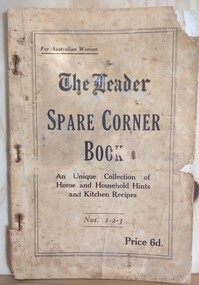
Book - Booklet, The Leader Spare Corner Book, 1927
... ...david syme and co......David Syme and Co...The Leader Spare Corner Book Book Booklet Quintin Thomas Bone David Syme and Co ...Contains household hints, kitchen recipes, crochet patterns. Printed 1927Thin cardboard cover, tan coloured with black printing inside a triple lined rectangle. 32 printed pages. Held together with three staples.Front cover: For Australian Women; The Leader; Spare Corner Book; An unique collection of home and household hints and kitchen recipes; Nos. 1-2-3; Price 6d. Back cover: statue of person standing on one leg and right arm raised.recipes, crochet patterns, kitchen hints, quintin thomas bone, david syme and co, the leader -
 Moorabbin Air Museum
Book - Qantas publicity publication QANTAS AIRWAYS THE SPIRIT OF AUSTRALIA 70th ANNIVERSARY SPECIAL EDITION, Group Publications, David Syme & Co Limited, QANTAS AIRWAYS THE SPIRIT OF AUSTRALIA 70th ANNIVERSARY SPECIAL EDITION, 1990
... Group Publications, David Syme & Co Limited...against a blue background QANTAS AIRWAYS THE SPIRIT OF AUSTRALIA 70th ANNIVERSARY SPECIAL EDITION Book Qantas publicity publication QANTAS AIRWAYS THE SPIRIT OF AUSTRALIA 70th ANNIVERSARY SPECIAL EDITION Group Publications, David Syme & Co Limited ...Qantas publicity publication QANTAS AIRWAYS THE SPIRIT OF AUSTRALIA 70th ANNIVERSARY SPECIAL EDITIONFront cover showing 10 colour portrait photos of Australians ?? against a blue backgroundnon-fictionQantas publicity publication QANTAS AIRWAYS THE SPIRIT OF AUSTRALIA 70th ANNIVERSARY SPECIAL EDITION -
 Rutherglen Historical Society
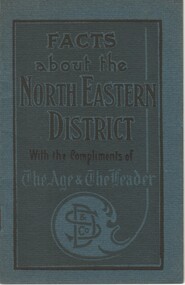
Booklet, David Syme & Co, Facts about the North Eastern District, With the Compliments of The Age & The Leader, c1928
... David Syme & Co....Facts about the North Eastern District, With the Compliments of The Age & The Leader Booklet David Syme & Co. ...Covers information on the districts and the leading towns of the north-east of Victoria, including Benalla, Rutherglen, Wodonga, Omeo, Euroa and Mansfield. Centre pages present statistics comparing 1928 to 1908, relating to agricultural production, and the population, dwellings and valuations of the shires of each of these towns.Small booklet with a dark blue-green cover, containing information about the North Eastern districts of Victoria.benalla, rutherglen, wodonga, omeo, euroa, mansfield, statistics -
 Mont De Lancey
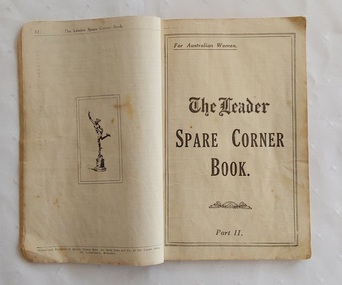
Book, David Syme and Co, The Leader Spare Corner Book, c 1930
... David Syme and Co.,...The Leader Spare Corner Book Book David Syme and Co., Quintin Thomas Bone ...The Leader Spare Corner Books originated from a popular women's supplement feature launched in 1927 in The Leader, a Melbourne based weekly newspaper published by David Syme & Co. Due to overwhelming reader demand, these crowd sourced domestic columns were compiled into annual and multi-part booklets filled with reader contributed recipes, household hints, and remedies.This is a badly damaged incomplete copy of The Leader Spare Corner Book: a unique Collection of Home and Household Hints and Kitchen Recipes contributed by readers. The cover is missing and the book begins on loose p.5 of the 1930 edition, which is presumed to be Part 1 of this copy. It is stapled at the spine. P.29 has, What Readers say about The Spare Corner, followed by two pages of The Spare Corner Index. Part 11 commences with an Index, Foreword Spare Corner recipes, Hints for the Cook, Help for the Housewife, Simple Home Remedies and a few advertisements. Part 111 follows, dated 1931 with similar contributions. It is sellotaped at the spine. P.101.non-fictionThe Leader Spare Corner Books originated from a popular women's supplement feature launched in 1927 in The Leader, a Melbourne based weekly newspaper published by David Syme & Co. Due to overwhelming reader demand, these crowd sourced domestic columns were compiled into annual and multi-part booklets filled with reader contributed recipes, household hints, and remedies.cookbooks, cookery books, domestic objects, p.w.m.u., reference books -
 Flagstaff Hill Maritime Museum and Village
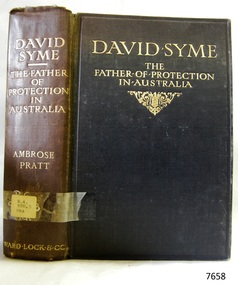
Book, David Syme The Father of Protection in Australia
... David Syme The Father of Protection in Australia Author: Ambrose Pratt Publisher: Ward Lock & Co Date: 1908...David Syme" Front endpaper has a sticker from Warrnambool Mechanics Institute David Syme The Father of Protection in Australia Author: Ambrose Pratt Publisher: Ward Lock & Co Date: 1908 David Syme The Father of Protection in Australia Book ...David Syme The Father of Protection in Australia Author: Ambrose Pratt Publisher: Ward Lock & Co Date: 1908Label on spine cover with typed text RA 920.5 PRA Pastedown front endpaper has sticker that reads " With the Compliments of the Executors of the late Mr. David Syme" Front endpaper has a sticker from Warrnambool Mechanics Institutewarrnambool, shipwrecked-coast, flagstaff-hill, flagstaff-hill-maritime-museum, maritime-museum, shipwreck-coast, flagstaff-hill-maritime-village, shipwrecked-artefact, book, warrnambool library, warrnambool mechanics’ institute, mechanics’ institute library, victorian library board, warrnambool books and records, great ocean road, david syme the father of protection in australia, ambrose pratt -
Port Melbourne Historical & Preservation Society
Newspaper - Newspaper Supplement, The Age Weekender, Port Melbourne, Jenny Brown, The Borough, 22 Jun 1984
... ...David Syme & Co Ltd...The Borough Newspaper Newspaper Supplement, The Age Weekender, Port Melbourne Jenny Brown The Age David Syme & Co Ltd ...The Age Weekender - 22-6-1984 - Supplement on Port Melbourne with illustration and photographs.business and traders, sport - australian rules football, market reserve, publishing - newspapers, goss family, anderson family, daly family, atkinson family, george samuel walter, frederick robert winduss, charles stoley, charles fitzgerald, sue stevens, noel turnbull, james edward earl, jeff lanagan, curly brooks, bob skilton jnr, nappy ollington, tommy lahiff, teddy freyer, frank callaghan, sir black joe, herbert charles edwards, gordon lockhart edwards -
Port Melbourne Historical & Preservation Society
Magazine - Sunday Life, 16 Oct 1988
... David Syme & Co Ltd...and pp 8-11 ('Doncaster-by-Sea') are about Beacon Cove Magazine Sunday Life David Syme & Co Ltd ...Copy of 'Sunday Life!' magazine, colour supplement to the Sunday Age of 18 October 1998. Cover ('Is this the perfect suburb?') and pp 8-11 ('Doncaster-by-Sea') are about Beacon Covebuilt environment - domestic, town planning, mirvac, beacon cove -
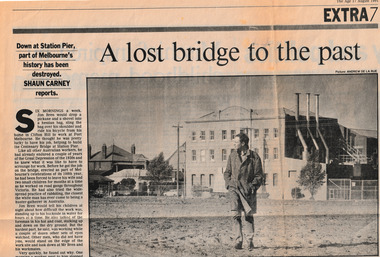 Port Melbourne Historical & Preservation Society
Newspaper, Shaun CARNEY, A Lost Bridge to the Past, 17 Aug 1991
... ...David Syme & Co Ltd...A Lost Bridge to the Past Newspaper Shaun CARNEY The Age The Age David Syme & Co Ltd ...Shaun CARNEY's article on the demolition of Centenary Bridge includes reminiscences of Jim BREN. He also mentions the closure of the Swallow & Ariell Ltd Steam Biscuit Manufactory earlier in 1991.Part of page 7 from The Age Extra 17 Aug 1991.piers and wharves - station pier, shaun carney, swallow & ariell ltd, jim bren, centenary bridge, demolitions -
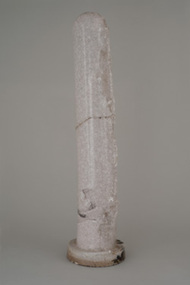 University of Melbourne, School of Chemistry
Glass Stirrer
... In 1935 he recorded Brownian movement in colloidal solutions on 35 mm cinefilm, which was later copied onto 16 mm film for the Eastman Kodak Co. World Science Library. This can be viewed in the Chemistry laboratory. ...In 1935 he recorded Brownian movement in colloidal solutions on 35 mm cinefilm, which was later copied onto 16 mm film for the Eastman Kodak Co. World Science Library. This can be viewed in the Chemistry laboratory. ...Stirrer, used in Optical Glass work, Hartung & associates, 1941 Ernst Johannes Hartung was a chemist and astronomer. Educated at the University of Melbourne (BSc 1913, DSc 1919), he became lecturer in 1919, associate professor in 1924, and succeeded Rivett as chair of chemistry in 1928, remaining in this position until 1953. Hartung?s lecturing style surged with enthusiasm and he employed the use of screen projections to demonstrate chemical phenomena to large undergraduate classes. In 1935 he recorded Brownian movement in colloidal solutions on 35 mm cinefilm, which was later copied onto 16 mm film for the Eastman Kodak Co. World Science Library. This can be viewed in the Chemistry laboratory. He researched the photo decomposition of silver halides, and was awarded the David Syme Prize in 1926. He devoted time to the design and construction of a large, new chemistry building for the School of Chemistry (built 1938?1939). During World War II he was approached by Professor Thomas Laby, chairman of the Optical Munitions Panel, to chair the advisory committee on optical materials, to produce high quality optical glass in Australia. This was successful, with large-scale production achieved within ten months at a reasonable cost. Hartung served three terms as general President of the (Royal) Australian Chemical Institute, was an ex-officio councillor of the Council for Scientific and Industrial Research, and a Trustee of the Museum of Applied Science (now part of Museum Victoria). -
University of Melbourne, School of Chemistry
Microscope Accessories
... In 1935 he recorded Brownian movement in colloidal solutions on 35 mm cinefilm, which was later copied onto 16 mm film for the Eastman Kodak Co. World Science Library. This can be viewed in the Chemistry laboratory. ...In 1935 he recorded Brownian movement in colloidal solutions on 35 mm cinefilm, which was later copied onto 16 mm film for the Eastman Kodak Co. World Science Library. This can be viewed in the Chemistry laboratory. ...Ernst Johannes Hartung was a chemist and astronomer. Educated at the University of Melbourne (BSc 1913, DSc 1919), he became lecturer in 1919, associate professor in 1924, and succeeded Rivett as chair of chemistry in 1928, remaining in this position until 1953. Hartung?s lecturing style surged with enthusiasm and he employed the use of screen projections to demonstrate chemical phenomena to large undergraduate classes. In 1935 he recorded Brownian movement in colloidal solutions on 35 mm cinefilm, which was later copied onto 16 mm film for the Eastman Kodak Co. World Science Library. This can be viewed in the Chemistry laboratory. He researched the photo decomposition of silver halides, and was awarded the David Syme Prize in 1926. He devoted time to the design and construction of a large, new chemistry building for the School of Chemistry (built 1938?1939). During World War II he was approached by Professor Thomas Laby, chairman of the Optical Munitions Panel, to chair the advisory committee on optical materials, to produce high quality optical glass in Australia. This was successful, with large-scale production achieved within ten months at a reasonable cost. Hartung served three terms as general President of the (Royal) Australian Chemical Institute, was an ex-officio councillor of the Council for Scientific and Industrial Research, and a Trustee of the Museum of Applied Science (now part of Museum Victoria).Accessories for microscope etc.used in E.J.Hartung's work -
University of Melbourne, School of Chemistry
Silver Salts
... In 1935 he recorded Brownian movement in colloidal solutions on 35 mm cinefilm, which was later copied onto 16 mm film for the Eastman Kodak Co. World Science Library. This can be viewed in the Chemistry laboratory. ...In 1935 he recorded Brownian movement in colloidal solutions on 35 mm cinefilm, which was later copied onto 16 mm film for the Eastman Kodak Co. World Science Library. This can be viewed in the Chemistry laboratory. ...Ernst Johannes Hartung was a chemist and astronomer. Educated at the University of Melbourne (BSc 1913, DSc 1919), he became lecturer in 1919, associate professor in 1924, and succeeded Rivett as chair of chemistry in 1928, remaining in this position until 1953. Hartung?s lecturing style surged with enthusiasm and he employed the use of screen projections to demonstrate chemical phenomena to large undergraduate classes. In 1935 he recorded Brownian movement in colloidal solutions on 35 mm cinefilm, which was later copied onto 16 mm film for the Eastman Kodak Co. World Science Library. This can be viewed in the Chemistry laboratory. He researched the photo decomposition of silver halides, and was awarded the David Syme Prize in 1926. He devoted time to the design and construction of a large, new chemistry building for the School of Chemistry (built 1938?1939). During World War II he was approached by Professor Thomas Laby, chairman of the Optical Munitions Panel, to chair the advisory committee on optical materials, to produce high quality optical glass in Australia. This was successful, with large-scale production achieved within ten months at a reasonable cost. Hartung served three terms as general President of the (Royal) Australian Chemical Institute, was an ex-officio councillor of the Council for Scientific and Industrial Research, and a Trustee of the Museum of Applied Science (now part of Museum Victoria).Ag salts used by E.J.Hartung in 1924 photo decomposition expts. -
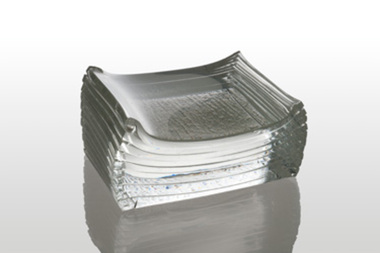 University of Melbourne, School of Chemistry
Optical Glass
... In 1935 he recorded Brownian movement in colloidal solutions on 35 mm cinefilm, which was later copied onto 16 mm film for the Eastman Kodak Co. World Science Library. This can be viewed in the Chemistry laboratory. ...In 1935 he recorded Brownian movement in colloidal solutions on 35 mm cinefilm, which was later copied onto 16 mm film for the Eastman Kodak Co. World Science Library. This can be viewed in the Chemistry laboratory. ...Stages in development of optical glass. Very early experiments by E.J. Hartung. Ernst Johannes Hartung was a chemist and astronomer. Educated at the University of Melbourne (BSc 1913, DSc 1919), he became lecturer in 1919, associate professor in 1924, and succeeded Rivett as chair of chemistry in 1928, remaining in this position until 1953. Hartung?s lecturing style surged with enthusiasm and he employed the use of screen projections to demonstrate chemical phenomena to large undergraduate classes. In 1935 he recorded Brownian movement in colloidal solutions on 35 mm cinefilm, which was later copied onto 16 mm film for the Eastman Kodak Co. World Science Library. This can be viewed in the Chemistry laboratory. He researched the photo decomposition of silver halides, and was awarded the David Syme Prize in 1926. He devoted time to the design and construction of a large, new chemistry building for the School of Chemistry (built 1938?1939). During World War II he was approached by Professor Thomas Laby, chairman of the Optical Munitions Panel, to chair the advisory committee on optical materials, to produce high quality optical glass in Australia. This was successful, with large-scale production achieved within ten months at a reasonable cost. Hartung served three terms as general President of the (Royal) Australian Chemical Institute, was an ex-officio councillor of the Council for Scientific and Industrial Research, and a Trustee of the Museum of Applied Science (now part of Museum Victoria).Optical glass -
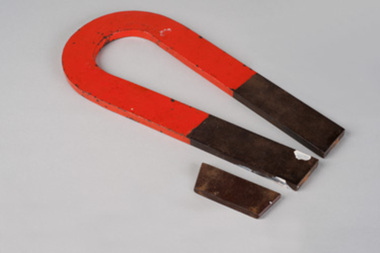 University of Melbourne, School of Chemistry
Horseshoe Magnet �
... In 1935 he recorded Brownian movement in colloidal solutions on 35 mm cinefilm, which was later copied onto 16 mm film for the Eastman Kodak Co. World Science Library. This can be viewed in the Chemistry laboratory. ...In 1935 he recorded Brownian movement in colloidal solutions on 35 mm cinefilm, which was later copied onto 16 mm film for the Eastman Kodak Co. World Science Library. This can be viewed in the Chemistry laboratory. ...Large horseshoe magnet, given to young E.J. Hartung. by an uncle. Ernst Johannes Hartung was a chemist and astronomer. Educated at the University of Melbourne (BSc 1913, DSc 1919), he became lecturer in 1919, associate professor in 1924, and succeeded Rivett as chair of chemistry in 1928, remaining in this position until 1953. Hartung?s lecturing style surged with enthusiasm and he employed the use of screen projections to demonstrate chemical phenomena to large undergraduate classes. In 1935 he recorded Brownian movement in colloidal solutions on 35 mm cinefilm, which was later copied onto 16 mm film for the Eastman Kodak Co. World Science Library. This can be viewed in the Chemistry laboratory. He researched the photo decomposition of silver halides, and was awarded the David Syme Prize in 1926. He devoted time to the design and construction of a large, new chemistry building for the School of Chemistry (built 1938?1939). During World War II he was approached by Professor Thomas Laby, chairman of the Optical Munitions Panel, to chair the advisory committee on optical materials, to produce high quality optical glass in Australia. This was successful, with large-scale production achieved within ten months at a reasonable cost. Hartung served three terms as general President of the (Royal) Australian Chemical Institute, was an ex-officio councillor of the Council for Scientific and Industrial Research, and a Trustee of the Museum of Applied Science (now part of Museum Victoria).Horseshoe Magnet � -
 University of Melbourne, School of Chemistry
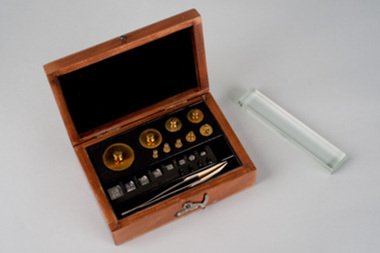
Set Of Weights
... In 1935 he recorded Brownian movement in colloidal solutions on 35 mm cinefilm, which was later copied onto 16 mm film for the Eastman Kodak Co. World Science Library. This can be viewed in the Chemistry laboratory. ...In 1935 he recorded Brownian movement in colloidal solutions on 35 mm cinefilm, which was later copied onto 16 mm film for the Eastman Kodak Co. World Science Library. This can be viewed in the Chemistry laboratory. ...Ernst Johannes Hartung was a chemist and astronomer. Educated at the University of Melbourne (BSc 1913, DSc 1919), he became lecturer in 1919, associate professor in 1924, and succeeded Rivett as chair of chemistry in 1928, remaining in this position until 1953. Hartung?s lecturing style surged with enthusiasm and he employed the use of screen projections to demonstrate chemical phenomena to large undergraduate classes. In 1935 he recorded Brownian movement in colloidal solutions on 35 mm cinefilm, which was later copied onto 16 mm film for the Eastman Kodak Co. World Science Library. This can be viewed in the Chemistry laboratory. He researched the photo decomposition of silver halides, and was awarded the David Syme Prize in 1926. He devoted time to the design and construction of a large, new chemistry building for the School of Chemistry (built 1938?1939). During World War II he was approached by Professor Thomas Laby, chairman of the Optical Munitions Panel, to chair the advisory committee on optical materials, to produce high quality optical glass in Australia. This was successful, with large-scale production achieved within ten months at a reasonable cost. Hartung served three terms as general President of the (Royal) Australian Chemical Institute, was an ex-officio councillor of the Council for Scientific and Industrial Research, and a Trustee of the Museum of Applied Science (now part of Museum Victoria).Set of analytic weights, used by E.J.H. in most of his work -
 University of Melbourne, School of Chemistry
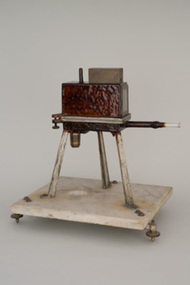
Microbalance
... In 1935 he recorded Brownian movement in colloidal solutions on 35 mm cinefilm, which was later copied onto 16 mm film for the Eastman Kodak Co. World Science Library. This can be viewed in the Chemistry laboratory. ...In 1935 he recorded Brownian movement in colloidal solutions on 35 mm cinefilm, which was later copied onto 16 mm film for the Eastman Kodak Co. World Science Library. This can be viewed in the Chemistry laboratory. ...An original Kerr-Grant Microbalance, modified by E.J.Hartung This balance was invented in the chemistry department by Bertram Dillon Steele, later first Professor of Chemistry at the University of Queensland 1910-1930, in collaboration with Professor Kerr Grant, Physics. The design was widely used by other chemists, including Masson's mentor, Professor Ramsay, working in London on newly discovered rare gases (especially Radon), and Professor Hartung in Melbourne, investigating the chemistry of the decomposition of silver salts in photographic processes. The principle of the microbalance was to measure the change in density of a gas by the shift in the balancing beam due to a change in pressure of the gas in the balance case. The quartz balancing beam was made by Bertram Steele who was particularly skilled in glassblowing. A quartz beam is the beam of the Aston microbalance based on the Steele/Grant instrument, and described by F.W. Aston, the inventor of the mass spectrometer. The bulb at one end of the beam contained a fixed amount of air, so that a change in the pressure of gas in the balance case changed the buoyancy of the beam, yielding a displacement in the beam which could be measured. By this means, differences in weight of about 10 nanogram could be measured, in amounts of up to 0.1 gram. Such differences are significant the increase in weight of a metal sample due to surface oxidation (Steele's interest) in the weight loss due to radioactive decay of Radium (Ramsay's work), and in the estimates of density change due to the isotopic distribution of Neon (Aston). Ernst Johannes Hartung was a chemist and astronomer. Educated at the University of Melbourne (BSc 1913, DSc 1919), he became lecturer in 1919, associate professor in 1924, and succeeded Rivett as chair of chemistry in 1928, remaining in this position until 1953. Hartung?s lecturing style surged with enthusiasm and he employed the use of screen projections to demonstrate chemical phenomena to large undergraduate classes. In 1935 he recorded Brownian movement in colloidal solutions on 35 mm cinefilm, which was later copied onto 16 mm film for the Eastman Kodak Co. World Science Library. This can be viewed in the Chemistry laboratory. He researched the photo decomposition of silver halides, and was awarded the David Syme Prize in 1926. He devoted time to the design and construction of a large, new chemistry building for the School of Chemistry (built 1938?1939). During World War II he was approached by Professor Thomas Laby, chairman of the Optical Munitions Panel, to chair the advisory committee on optical materials, to produce high quality optical glass in Australia. This was successful, with large-scale production achieved within ten months at a reasonable cost. Hartung served three terms as general President of the (Royal) Australian Chemical Institute, was an ex-officio councillor of the Council for Scientific and Industrial Research, and a Trustee of the Museum of Applied Science (now part of Museum Victoria).An original Kerr-Grant Microbalance, modified by E.J. Hartung. -
 Bendigo Historical Society Inc.
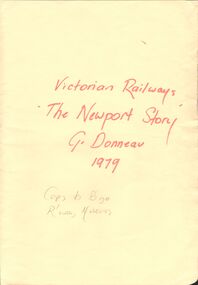
Document - VICTORIAN RAILWAYS - THE NEWPORT STORY
... Melbourne and Geelong Railway Co...DOCUMENT Victorian Railways The Newport Story G Donneau Melbourne and Geelong Railway Co Melbourne & Hobson's Bay United Railway Co Mr William Meikle Solomon Mirls Richard Speight Sir james Allport Midland Railway Mr Allison Dalrymple Phoenix Foundry North Melbourne Loco Depot Beyer Peacock & CO Mr A E Smith Roger Barnes Thomas Tait BHP F J Shea Commonwealth Ordnance Department James Rooks London Times Mr Merz Mr McLellan Bendigo North Railway Workshops Ballarat Shops James Taylor Donald McGregor Julius Aurelian Sylvester Barber Victor Lethlean Melbourne Institute of Technology Prince of Wales Queen Victoria W M Shannon Sir Thomas Bent Puffing Billy Harold Winthrop Clapp Francis Boardman Clapp Melbourne Tramway & Omnibus Co Austral Otis Engineering Co Melbourne University Franklin Supply Co E H Brownbill Heavy Harry Locomotive Mausoleum North Melbourne North British Locomotive Co Walter Stinton Thomas Smith Peter Alexander Peter Alexander Robert Ferguson King George V English Railway Gazette Harry Nunn May Merz & MacLellan Arthur Lowe R H Roach W H Chapman L C Rolls G A Swift John McRae Caledonian Society Thistle Club Bristol Hotel James Taylor George Allibon Walter Grimshaw Robert Maybin Roy Hodge Walter Biddle John Ramsbottom Robert Hewitt James Green Thomas Waldhuter Giles Dobney Mr Richardson Mr Arthur Sydney Express The Age Mr Speight David Syme Father Gapon Typed history of the Newport Railway Workshops. ...Typed history of the Newport Railway Workshops. Mentions the men who worked at the workshop, the locomotives that were built there, the different classes of locomotives, the equipment they used, and some of the work they did. Written by G. Donneau (who worked there) and dated 19-3-79.document, victorian railways, the newport story, g donneau, melbourne and geelong railway co, melbourne & hobson's bay united railway co, mr william meikle, solomon mirls, richard speight, sir james allport, midland railway, mr allison dalrymple, phoenix foundry, north melbourne loco depot, beyer peacock & co, mr a e smith, roger barnes, thomas tait, bhp, f j shea, commonwealth ordnance department, james rooks, london times, mr merz, mr mclellan, bendigo north railway workshops, ballarat shops, james taylor, donald mcgregor, julius aurelian sylvester barber, victor lethlean, melbourne institute of technology, prince of wales, queen victoria, w m shannon, sir thomas bent, puffing billy, harold winthrop clapp, francis boardman clapp, melbourne tramway & omnibus co, austral otis engineering co, melbourne university, franklin supply co, e h brownbill, heavy harry, locomotive mausoleum north melbourne, north british locomotive co, walter stinton, thomas smith, peter alexander, peter alexander, robert ferguson, king george v, english railway gazette, harry nunn may, merz & maclellan, arthur lowe, r h roach, w h chapman, l c rolls, g a swift, john mcrae, caledonian society, thistle club, bristol hotel, james taylor, george allibon, walter grimshaw, robert maybin, roy hodge, walter biddle, john ramsbottom, robert hewitt, james green, thomas waldhuter, giles dobney, mr richardson, mr arthur, sydney express, the age, mr speight, david syme, father gapon -
 Whitehorse Historical Society Inc.
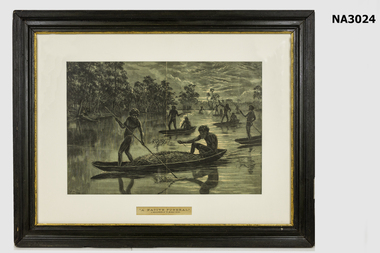
Newspaper - Framed Cutting, 'A Native Funeral. A reminiscence of the Murray River', December 1885
... It was published by David Syme & Co. The framed etching was copied from a supplement in the newspaper. ...Donors were:- Hepburn, Mrs A.E. Hepburn, Miss E Hepburn, Mr. Hepburn Mr. Zeogh Holman, Mrs. Evalie.The Illustrated Australian News published 1864-1896 was a pictorial newspaper based in Melbourne. It was published by David Syme & Co. The framed etching was copied from a supplement in the newspaper. The State Library of NSW. Search Manuscripts, Oral History, and Pictures Catalogue, has copies of the newspaper.A black and white etching titled 'A Native Funeral. A reminiscence of the Murray River' in a black frame with gold inner edge and grey mount. Picture features six canoes with lead canoe, in centre, carrying a body covered with foliage. April 2012: During restoration it was found under the original mount board the print 'Supplement to the Illustrated Australian News December 1885' First Nations.Supplement to the Illustrated Australian News December 1885illustrations, etchings -
 Ringwood and District Historical Society
Newspaper, Ringwood State School - Newspaper Clipping 1 Nov. 1937 - "Politics at School" - Election in the 6th Grade
... The election officials were Arthur Gillespie, returning officer and Ken Ward, scrutineer 🗳 Results House of Representatives: Bernice Dickson (Warrigal) — 25 votes David Allen (Wombat) — 18 Graham Morcom (Wombat) — 10 Don Martin (Wallaby) — 8 Howard Turner (Warrigal) — 6 Ellen Crouch (Wallaby) — 3 Bruce Graham (Wombat) — 3 Senate: Murray Graham (Wallaby) — 21 Ken Symes (Wombat) — 19 Edward Flynn (Warrigal) — 18 (Co-Pilot summary 12/9/2026)....): House of Representatives candidates: David Allen, Bruce Graham, Graham Morcom Senate candidate: Ken Symes Wallabies (Country Party): House of Representatives candidates: Ellen Crouch, Don Martin Senate candidate: Murray Graham Warrigals (Labor Party): House of Representatives candidates: Bernice Dickson, Howard Turner Senate candidate: Edward Flynn Each student candidate prepared a policy speech and designed their own campaign posters. ...Newspaper Clipping - Summary: In late October 1937, the 6th Grade at Ringwood State School held a lively mock election inspired by the recent Australian Federal election. Students organised themselves into three parties: Wombats (U.A.P.): House of Representatives candidates: David Allen, Bruce Graham, Graham Morcom Senate candidate: Ken Symes Wallabies (Country Party): House of Representatives candidates: Ellen Crouch, Don Martin Senate candidate: Murray Graham Warrigals (Labor Party): House of Representatives candidates: Bernice Dickson, Howard Turner Senate candidate: Edward Flynn Each student candidate prepared a policy speech and designed their own campaign posters. The election was conducted using preferential voting, mirroring real Australian electoral practice. The election officials were Arthur Gillespie, returning officer and Ken Ward, scrutineer 🗳 Results House of Representatives: Bernice Dickson (Warrigal) — 25 votes David Allen (Wombat) — 18 Graham Morcom (Wombat) — 10 Don Martin (Wallaby) — 8 Howard Turner (Warrigal) — 6 Ellen Crouch (Wallaby) — 3 Bruce Graham (Wombat) — 3 Senate: Murray Graham (Wallaby) — 21 Ken Symes (Wombat) — 19 Edward Flynn (Warrigal) — 18 (Co-Pilot summary 12/9/2026)
