
Showing 63 items matching "defence properties"
-
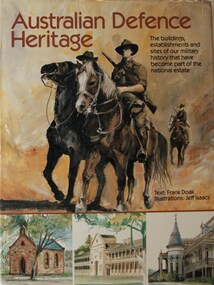 4th/19th Prince of Wales's Light Horse Regiment Unit History Room
Book, Australian Defence Heritage, 1988 (exact)
... ...defence properties...Approximately 200 Defence-occupied buildings have been classified by the Australian Heritage Commission and placed on the Register of the National Estate, and a further 100 buildings have been registered by the National Trust. Twenty properties...heritage books defence estate national estate national trust aboriginal sites australian heritage commission defence properties frank doak jeff isaacs fairfax library heritage books defence estate national estate national trust aboriginal sites australian heritage commission defence properties frank doak jeff isaacs fairfax library ISBN 949 054 968 The Department of Defence controls more than two million hectares of land used either as training areas or for operational and logistic bases. ...The Department of Defence controls more than two million hectares of land used either as training areas or for operational and logistic bases. Approximately 200 Defence-occupied buildings have been classified by the Australian Heritage Commission and placed on the Register of the National Estate, and a further 100 buildings have been registered by the National Trust. Twenty properties also have been listed by the Australian Heritage Commission for significant environmental aspects and for the protection of Aboriginal sites. This book, produced as a contribution to Australia's bicentennial, is the first publication devoted entirely to Australia's priceless defence heritage. Text: Frank Doak Illustrations: Jeff IsaacsISBN 949 054 968heritage, books, defence estate, national estate, national trust, aboriginal sites, australian heritage commission, defence properties, frank doak, jeff isaacs, fairfax library, heritage, books, defence estate, national estate, national trust, aboriginal sites, australian heritage commission, defence properties, frank doak, jeff isaacs, fairfax library -
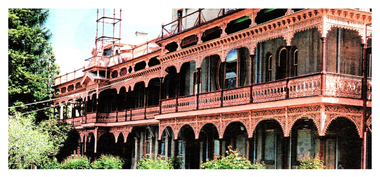 Bendigo Historical Society Inc.
Newspaper - Fortuna Articles - "Decision on Villa's future moves closer", June 26 2009
... Mike Kelly, the parliamentary secretary for Defence Support responsible for Defence property disposals, plans to visit Fortuna Villa, though his visit has been delayed....Mike Kelly, the parliamentary secretary for Defence Support responsible for Defence property disposals, plans to visit Fortuna Villa, though his visit has been delayed. bendigo fortuna george lansell dr mike kelly Fortuna Articles - "Decision on Villa's future moves closer" June 26 2009 The Bendigo Advertiser by Nino Bucci and pictures by Julian Prowd This item contains the following: 11217.42a Colour photo of the Villa Fortuna 11217.42b Part of Page - Fortuna Articles - "Decision on Villa's future moves closer" Newspaper Fortuna Articles - "Decision on Villa's future moves closer" ...The Defence Department is finalizing due diligence investigations into Fortuna Villa, including heritage, environmental contamination, and unexploded ordnance studies. These investigations have taken longer than expected, with completion delayed by almost six months. Once the due diligence report is completed (expected by early next month), it will be shared with the State Government and the City of Greater Bendigo.State or local government will have the first opportunity to purchase the property before it is offered on the open market. The site has not yet been valued, and the timing for the disposal process remains uncertain, pending full consideration of the due diligence studies. Dr. Mike Kelly, the parliamentary secretary for Defence Support responsible for Defence property disposals, plans to visit Fortuna Villa, though his visit has been delayed.Fortuna Articles - "Decision on Villa's future moves closer" June 26 2009 The Bendigo Advertiser by Nino Bucci and pictures by Julian Prowd This item contains the following: 11217.42a Colour photo of the Villa Fortuna 11217.42b Part of Page - Fortuna Articles - "Decision on Villa's future moves closer"non-fictionbendigo, fortuna, george lansell, dr mike kelly -
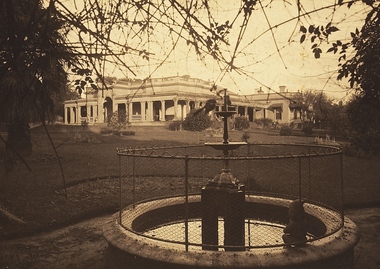 Kew Historical Society Inc
Photograph - 'Southesk' (formerly 'Ordsall'), Cotham Road, 1920s
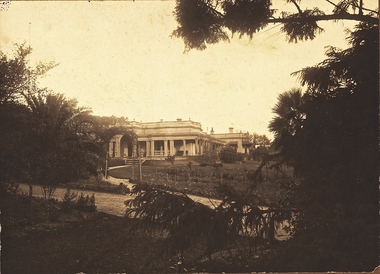
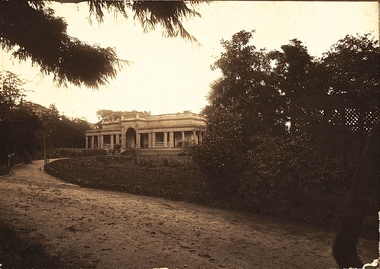
... The Carnegie family mounted a defence of their property when the City of Kew sought to compulsorily acquire the site for a new town hall in the 1930s. ...The Carnegie family mounted a defence of their property when the City of Kew sought to compulsorily acquire the site for a new town hall in the 1930s. ...Ordsall was originally built for John Halfey, second Chairman of Kew, and sold after his death to the Carnegie family who renamed it ‘South Esk'. The Carnegie family mounted a defence of their property when the City of Kew sought to compulsorily acquire the site for a new town hall in the 1930s. The house and land were later acquired by Council in 1947 and demolished in 1970. The present Kew Library and the former Council Offices (now owned by Trinity Grammar) are located on the site.One of the earliest photographs of 'Southesk' and its gardens. The house was of statewide significance because of its historical association with John Halfey. It was artistically significant due to its elaborate interiors, decorated by Cullis Hill & Co in the 1880s. Sepia photograph mounted on brown card of "Southesk' (formerly known as 'Ordsall'). The single-storey Italianate facade of the house can be seen surrounded by an extensive garden. The point-of-view of the camera is from Cotham Road.john halfey, david carnegie, southesk - south esk - ordsall -
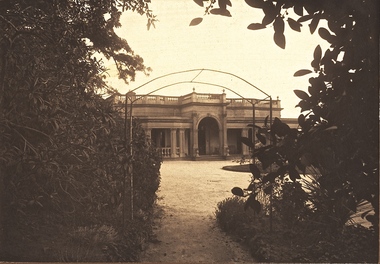 Kew Historical Society Inc
Photograph - 'Southesk' (formerly 'Ordsall'), Cotham Road, 1920s
... The Carnegie family mounted a defence of their property when the City of Kew sought to compulsorily acquire it as the site for a new town hall in the 1930s. ...The Carnegie family mounted a defence of their property when the City of Kew sought to compulsorily acquire it as the site for a new town hall in the 1930s. ...Ordsall was originally built for John Halfey, second Chairman of Kew, and sold after his death to the Carnegie family who renamed it ‘South Esk'. The Carnegie family mounted a defence of their property when the City of Kew sought to compulsorily acquire it as the site for a new town hall in the 1930s. The house and land were later acquired by Council in 1947 and demolished in 1970. The present Kew Library and the former Council Offices (now owned by Trinity Grammar) are located on the site.One of the earliest photographs of 'Southesk' and its gardens. The house was of statewide significance because of its historical association with John Halfey. It was artistically significant due to its elaborate interiors, decorated by Cullis Hill & Co in the 1880s. Sepia photograph mounted on brown card of "Southesk' (formerly known as 'Ordsall'). The single-storey Italianate facade of the house can be seen surrounded by an extensive garden. The point-of-view of the camera is from Cotham Road.john halfey, david carnegie, southesk - south esk - ordsall -
 Kew Historical Society Inc
Photograph - 'Southesk' (formerly 'Ordsall'), Cotham Road, 1920s
... The Carnegie family mounted a defence of their property when the City of Kew sought to compulsorily acquire it as the site for a new town hall in the 1930s. ...The Carnegie family mounted a defence of their property when the City of Kew sought to compulsorily acquire it as the site for a new town hall in the 1930s. ...Ordsall was originally built for John Halfey, second Chairman of Kew, and sold after his death to the Carnegie family who renamed it ‘South Esk'. The Carnegie family mounted a defence of their property when the City of Kew sought to compulsorily acquire it as the site for a new town hall in the 1930s. The house and land was later acquired by Council in 1947 and demolished in 1970. The present Kew Library and the former Council Offices (now owned by Trinity Grammar) are located on the site.One of the earliest photographs of 'Southesk' and its gardens. The house was of statewide significance because of its historical association with John Halfey. It was artistically significant due to its elaborate interiors, decorated by Cullis Hill & Co in the 1880s. Sepia photograph mounted on brown card of "Southesk' (formerly known as 'Ordsall'). The single-storey Italianate facade of the house can be seen surrounded by an extensive garden. The point-of-view of the camera is from Cotham Road.john halfey, david carnegie, southesk - south esk - ordsall -
 Kew Historical Society Inc
Photograph - 'Southesk' (formerly 'Ordsall'), Cotham Road, 1920s
... The Carnegie family mounted a defence of their property when the City of Kew sought to compulsorily acquire it as the site for a new town hall in the 1930s. ...The Carnegie family mounted a defence of their property when the City of Kew sought to compulsorily acquire it as the site for a new town hall in the 1930s. ...Ordsall was originally built for John Halfey, second Chairman of Kew, and sold after his death to the Carnegie family who renamed it ‘South Esk'. The Carnegie family mounted a defence of their property when the City of Kew sought to compulsorily acquire it as the site for a new town hall in the 1930s. The house and land were later acquired by Council in 1947 and demolished in 1970. The present Kew Library and the former Council Offices (now owned by Trinity Grammar) are located on the site.One of the earliest photographs of 'Southesk' and its gardens. The house was of statewide significance because of its historical association with John Halfey. It was artistically significant due to its elaborate interiors, decorated by Cullis Hill & Co in the 1880s. Sepia photograph mounted on brown card of "Southesk' (formerly known as 'Ordsall'). The single-storey Italianate facade of the house can be seen surrounded by an extensive garden. The point-of-view of the camera is from Cotham Road.david carnegie, john halfey, southesk - south esk - ordsall -
 Bendigo Historical Society Inc.
Newspaper - Fortuna Article - "Villa May Open to the Public", Jul 10 2008
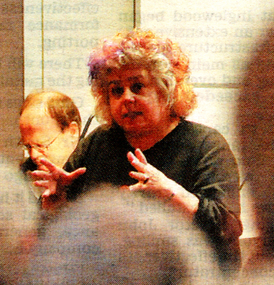
... There is significant uncertainty about the property's value, with multiple valuation methods resulting in differences of millions of dollars. After the Defence...There is significant uncertainty about the property's value, with multiple valuation methods resulting in differences of millions of dollars. After the Defence ...The Department of Defence is considering opening Fortuna Villa for public inspection before vacating the property, likely in September or October, as part of community consultation. The City of Greater Bendigo and the Brumby Government will have the first opportunity to bid on the property before it is offered on the open market. There is significant uncertainty about the property's value, with multiple valuation methods resulting in differences of millions of dollars. After the Defence Department vacates, the property will be assessed by heritage experts, architects, surveyors, and engineers to determine necessary work for sale readiness.The Defence Department will conduct an audit and coordinate with the local council before finalizing sale preparations. The Villa Fortuna Action Group is actively monitoring the process and engaging with the community, emphasizing that progress is slow but ongoing.Maggie Maguire, CEO of Abbotsford Convent Foundation, spoke at a public meeting, drawing parallels between the efforts to preserve Villa Fortuna and similar heritage battles in Melbourne.Fortuna Article - "Villa May Open to the Public" - The Bendigo Miner Thursday Jul 10 2008 - Author Nino Bucci, photos Nick McGrath This item contains the following: 11217.12a Colour Photo of Maggie Maguire at the Villa Fortuna Action Group public meeting 11217.12b Colour Photo of the Villa 11217.12c Part of page - Villa may Open to the Publicnon-fictionbendigo, fortuna, george lansell, villa fortuna action group public meeting, maggie maquire -
 Bendigo Historical Society Inc.
Newspaper - Fortuna Article - "Moves afoot at Fortuna", Oct 02 2008
... Army surveyors originally moved into Fortuna Villa in 1942, and the Department of Defence has occupied the property since then. The property is now in higher demand, and its future use is under local discussion.The Villa Fortuna Action Group is preparing a proposal for the City of Greater Bendigo to develop the site into an arts and cultural precinct. ...Army surveyors originally moved into Fortuna Villa in 1942, and the Department of Defence has occupied the property since then. The property is now in higher demand, and its future use is under local discussion.The Villa Fortuna Action Group is preparing a proposal for the City of Greater Bendigo to develop the site into an arts and cultural precinct. ...This document details the recent relocation of the Defence Imagery Geospatial Organisation (DIGO) from Fortuna Villa in Golden Square to a new facility in Longlea. DIGO has vacated Fortuna Villa after 66 years and moved to a new headquarters at Atlas Road, Longlea.The move was completed recently, with staff farewelling the old site and removal trucks seen transporting items. The official opening of the Longlea facility is scheduled for early November, with celebrations to honor Fortuna Villa's legacy. Army surveyors originally moved into Fortuna Villa in 1942, and the Department of Defence has occupied the property since then. The property is now in higher demand, and its future use is under local discussion.The Villa Fortuna Action Group is preparing a proposal for the City of Greater Bendigo to develop the site into an arts and cultural precinct. The group has been in contact with the Department of Defence regarding a public open day, expected in late October or November.Security ArrangementsFortuna Article - "Moves afoot at Fortuna" - The Bendigo Miner Thursday Oct 02 2008 by Nino Bucci This item contains the following: 11217.18a Part of page - Article Fortuna - "Moves afoot at Fortuna"non-fictionbendigo, fortuna, george lansell, defence imagery geospatial organisation (digo) -
Bendigo Historical Society Inc.
Document - Fortuna - Health, Reports and Risk Assessments of the Site, 2008
... In 1992 Defence purchased the adjoining undeveloped property, commonly known as the Bush Block. ...Fortuna - Health, Reports and Risk Assessments of the Site This item contains the following documents: 11217.75a Fortuna Defense Site - Health Risk Assessment Final Report - 50 pages and appendices A to M - Contact the BHS for details 11217.75b Fortuna Defense Site - Structural inspection and report on various buildings, Department of Defence, Fortuna Site, 30 Chum Street Bendigo - Contact the BHS for details 11217.75c Fortuna Defense Site - Department of Defence Summary Report on Property Disposals Bendigo - Contact the BHS for details 11217.75d Fortuna Defense Site - Department of Defence Report on unexploded ordnance - Contact the BHS for details 11217.75e Fortuna Defense Site - Department of Defence Phase 1 Summary Report on Property Disposals Bendigo - Contact the BHS for details 11217.75f Fortuna Defense Site - Health Risk Assessment Final Report - 50 pages and appendices A to M - Contact the BHS for details 11217.75g Fortuna Defense Site - Environmental Site Assessment - Contact the BHS for details...In 1992 Defence purchased the adjoining undeveloped property, commonly known as the Bush Block. ...Theodore Ballerstedt originally purchased the Fortuna site from the Crown in 1857. The firstimprovements at Fortuna were undertaken by the Ballerstedt family and consisted of a small mill and house. At the peak of the mining era (c.1860s) Fortuna was central to the deep alluvial gold mining operations of Bendigo. In 1871 Theodore Ballerstedt sold the house, mine and associated works to George Lansell 'The Quartz King'. During his time at Fortuna, Lansell owned 13 mines and directed a further 73 in Bendigo. The primary building on the site is the Fortuna Villa. With the wealth Lansell generated from gold mining he funded the continuous expansion of the Villa and surrounding grounds. The Villa is built in a number of architectural styles, namely Victorian Italianate and Victorian Free Classical, with Federation influences. The surrounding landscape featured up to seven decorative lakes in the early 1870s, including one larger lake which still remains today. The former lakes were originally used as disposal points for tailings produced in the gold processing activities at the site. Fortuna was occupied by the Department of Defence from 1942 and was compulsorily acquired for Army use in 1957. Since that time Fortuna has been occupied by the Army and other various Defence organisations. During Defence's ownership, additional buildings were constructed and existing buildings were modified for re-use. In 1992 Defence purchased the adjoining undeveloped property, commonly known as the Bush Block. This parcel of land adjoins the main Fortuna landholding. It is approximately 0.8 hectares in size and is predominately covered in vegetation regrowth. Heritage investigations note that the uniqueness of Fortuna lies in the mixture of architectural styles of the Villa. The relationship between mining and domestic areas and the. close proximity of the two is considered rare to Australian domestic building of that time.Fortuna - Health, Reports and Risk Assessments of the Site This item contains the following documents: 11217.75a Fortuna Defense Site - Health Risk Assessment Final Report - 50 pages and appendices A to M - Contact the BHS for details 11217.75b Fortuna Defense Site - Structural inspection and report on various buildings, Department of Defence, Fortuna Site, 30 Chum Street Bendigo - Contact the BHS for details 11217.75c Fortuna Defense Site - Department of Defence Summary Report on Property Disposals Bendigo - Contact the BHS for details 11217.75d Fortuna Defense Site - Department of Defence Report on unexploded ordnance - Contact the BHS for details 11217.75e Fortuna Defense Site - Department of Defence Phase 1 Summary Report on Property Disposals Bendigo - Contact the BHS for details 11217.75f Fortuna Defense Site - Health Risk Assessment Final Report - 50 pages and appendices A to M - Contact the BHS for details 11217.75g Fortuna Defense Site - Environmental Site Assessment - Contact the BHS for detailsnon-fictionbendigo, fortuna, george lansell -
 Flagstaff Hill Maritime Museum and Village
Equipment - Field Stretcher, Australian Defence Force, 1939-1942
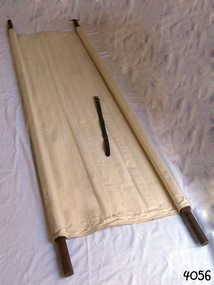
... property of Dr. William Roy Angus. It was donated to Flagstaff Hill Maritime Village by the family of Doctor William Roy Angus, Surgeon and Oculist. It is part of the “W.R. Angus Collection” that includes historical medical equipment, surgical instruments, and material once belonging to Dr Edward Ryan and Dr Thomas Francis Ryan (both of Nhill, Victoria), as well as Dr Angus’ belongings. The Collection’s history spans the medical practices of the two Doctors Ryan, from 1885-1926, plus that of Dr Angus, up until 1969. W R Angus served with the Australian Department of Defence...property of Dr. William Roy Angus. It was donated to Flagstaff Hill Maritime Village by the family of Doctor William Roy Angus, Surgeon and Oculist. It is part of the “W.R. Angus Collection” that includes historical medical equipment, surgical instruments, and material once belonging to Dr Edward Ryan and Dr Thomas Francis Ryan (both of Nhill, Victoria), as well as Dr Angus’ belongings. The Collection’s history spans the medical practices of the two Doctors Ryan, from 1885-1926, plus that of Dr Angus, up until 1969. W R Angus served with the Australian Department of Defence ...This field stretcher was the property of Dr. William Roy Angus. It was donated to Flagstaff Hill Maritime Village by the family of Doctor William Roy Angus, Surgeon and Oculist. It is part of the “W.R. Angus Collection” that includes historical medical equipment, surgical instruments, and material once belonging to Dr Edward Ryan and Dr Thomas Francis Ryan (both of Nhill, Victoria), as well as Dr Angus’ belongings. The Collection’s history spans the medical practices of the two Doctors Ryan, from 1885-1926, plus that of Dr Angus, up until 1969. W R Angus served with the Australian Department of Defence as a Surgeon Captain during World War II from 1942 to 1945, in Ballarat, Victoria, and Bonegilla, N.S.W., completing his service just before the end of the war due to suffering from a heart attack. During his convalescence, he carved an intricate and ‘most artistic’ chess set from the material used for making dentures.The stretcher is an example of portable medical and emergency equipment used by the military and emergency services in the 19th and early 20th centuries. It is significant for its connection to Dr W R Abgus, who practised medicine in the community, the Australian Army and the Flying Doctor service from the 1920s to 1960s. He was also Warrnambool's last Port Medical Officer.Medical Field Stretcher: cream coloured canvas with wooden poles through side hems and a leather strap with buckle to keep parts together when folded or rolled up. This stretcher is part of the W.R. Angus Collection.flagstaff hill, flagstaff hill maritime museum and village, warrnambool, maritime museum, maritime village, great ocean road, shipwreck coast, stretcher, field stretcher, first aid, military equipment, medical equipment, emergency equipment, dr w r angus, canvas stretcher, patient transport, world war ii, ww2, australian department of defence, military doctor, medic, military stretcher, field gear, army stretcher, litter, adf, folding stretcher, w.r. angus -
 Flagstaff Hill Maritime Museum and Village
Equipment - Lifebuoy
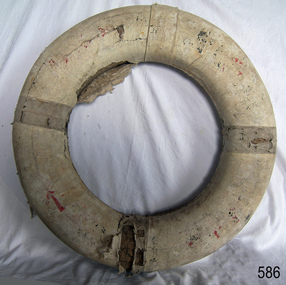
... The broad arrow symbol indicates that it was once the property of the British or Australian defence force. A lifebuoy, or life-preserver, is used as a buoyancy device to keep a person afloat in the. ...The broad arrow symbol indicates that it was once the property of the British or Australian defence force. A lifebuoy, or life-preserver, is used as a buoyancy device to keep a person afloat in the. ...This lifebuoy is part of the lifesaving equipment that would be carried on vessels in the late 19th and early 20th century. The strips of cork wood have been joined together to make the ring shape. The broad arrow symbol indicates that it was once the property of the British or Australian defence force. A lifebuoy, or life-preserver, is used as a buoyancy device to keep a person afloat in the. It is usually connected by a rope to a person in a safe area such a nearby vessel or on shore. The lifebuoy is thrown to a person in distress in the water, allowing the rescuer to pull the person to safety. The lifebuoy is a made from a buoyant material such as cork or rubber and is usually covered with canvas for protection and to make it easy to grip. The first use of life saving devices in recent centuries was by the Nordic people, who used light weight wood or cork blocks to keep afloat. From the early 20th century Kapok fibre was used as a filling for buoys. Light weight balsa wood was used as a filler after WW1. In 1928 Peter Markus invented and patented the first inflatable life-preserver. By WW2 foam was combined with Kapok. Laws were passed over time that has required aeroplanes and water going-vessels to carry life-preservers on board. The lifebuoy is an example of equipment carried on vessels in the late 19th and early 20th century to help preserve life. There were many lives lost in Australia’s colonial period, particularly along the coast of South West Victoria. The lifebuoy was once the property of the British or Australian defence force.Lifebuoy, round cork object with canvas wrapped around it and rope attached to one side. Broad arrow mark and other red marks indecipherable. Painted white.Symbol of broad arrow. indecipherable markings.flagstaff hill, warrnambool, shipwrecked-coast, flagstaff-hill, flagstaff-hill-maritime-museum, maritime-museum, shipwreck-coast, flagstaff-hill-maritime-village, life rings, lifebuoy, safety ring, life-saving buoy, ring buoy, life preserver, personal floating device, floatation device, safety equipment, government lifebuoy, broad arrow -
 Flagstaff Hill Maritime Museum and Village
Equipment - Belaying Pins, Late 19th Century
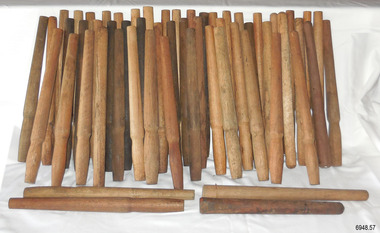
... Some of the pins have the mark of a 'Broad Arrow' with 'D ↑ D, which signifies that they were the property of the Australian Government's Department of Defence. Belaying pins are essential equipment on a traditional sailing ship of the 19th and early 20th centuries. ...Some of the pins have the mark of a 'Broad Arrow' with 'D ↑ D, which signifies that they were the property of the Australian Government's Department of Defence. Belaying pins are essential equipment on a traditional sailing ship of the 19th and early 20th centuries. ...The pins in this collection vary in the timber used and the design. They were found in a warehouse beside Crown Casino in Melbourne, located along the Yarra River, close to the sailing ship "Polly Woodside" and not far from the docks of Port Melbourne. Some of the pins have the mark of a 'Broad Arrow' with 'D ↑ D, which signifies that they were the property of the Australian Government's Department of Defence. Belaying pins are essential equipment on a traditional sailing ship of the 19th and early 20th centuries. They are usually made of wood but some are metal. A belaying pin is used to secure the running ropes of the rigging to the ship's rails using holes drilled onto the rails for that purpose. The belaying pins are inserted into holes in the ship’s rail, drilled for that purpose. When the sail has been raised, the ropes are wrapped around the upper and lower sections of the pins in a figure-eight pattern. The shapes of these belaying pins taper from the rounded end of the handle inwards towards the bottom, which allows them to have a firm fit into the holes in the rails. The rigging rope is wound around the pins in such a way that a tug on the pin's handle pulls it out of the hole and quickly frees the rope and the sail.These belaying pins are significant for their association with sailing vessels, particularly vessels of the late 19th and early 20th centuries. They are also significant for their association with the Port of Melbourne where sailing ships docked to and from the Port of Melbourne. Some of the pins have additional significance for being connected with the Australian Government's Department of Defence.Belaying pin, wooden, simple design, wooden shaft with a wider rounded end on top third, tapering to the centre third, which is wider than a lower third. The bottom has a blunt base. Some of the pins have the three sections divided by a line around their circumferences. This collection of fifty-seven pins of varying shapes, colours and timber. Some of the pins are stained with colour, and some have been left natural Stored in a wooden crate. Some have inscriptions.Marks: (Government Defence Department Broad Arrow) "D ↑ D"sailiing equipment, nautical equipment, rigging, yards, flagstaff hill, maritime museum, maritime village, belaying pin, broad arrow, australian government, australian department of defence, sailing ship, sail -
 Flagstaff Hill Maritime Museum and Village
Domestic object - Butter Knife, Barker Brothers, Ca. 1885-1895
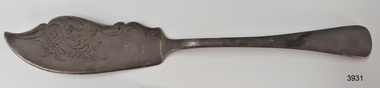
... - Broad Arrow - an official stamp that indicates it was once the property of Britain government, either in Britain or one of its colonies, and used in the defence force. ... - Broad Arrow - an official stamp that indicates it was once the property of Britain government, either in Britain or one of its colonies, and used in the defence force. ...This butter or cheese knife is a decorative example of electroplated cutlery that had become an affordable alternative to more expensive silver cutlery in the late 1800s to early 1900s. The knife has stamp marks in the back of its handle that are a combination of letters and symbols used by British silversmiths to identify their workmanship. The design and type of this knife was not normally used by everyday people but rather those of a higher social class with time and money to have a particular decorative knife to serve butter or cheese. The marks on the handle tell that it was made of nickel silver, and electroplated with superior quality Stirling silver. The Barker Brothers of Birmingham made the knife between 1885 and 1907, but most likely before 1895. It was made for the British, or British colonial, people, connected with a government department such as the navy or defence. This story may be slightly inaccurate, as some silversmiths added extra ‘pseudo marks’ to their wares to disguise the quality. THE MARKS and their meaning – - ‘A1’ The silver used in electroplating this knife was the highest level, ‘superior quality’, measured in grams of silver per table spoon or table fork, with ‘A1’ being 2 2/3 grams, and ‘D’ being 0 1/2 grams of silver. - ‘BB’ The Baker Brothers used these initials from 1885 to 1907. - ‘[crown symbol]’ – This symbol is used for Sterling silver but this knife is a metal alloy. The crown is also the town mark of Sheffield (appointed by the Sheffield Assay Office) but this knife was made in Birmingham, which has the town mark of an anchor. The Barker Brothers may have added the crown mark to this electroplated silverware as a ‘pseudo hallmark’, leading the buyer to think that it was actual Sterling silver. The use of pseudo hallmarks by electroplaters of the Victorian era was common practice but it was illegal. In 1895 the unlawful practice was seen as imitating the Sheffield Silver Mark and the law was firmly applied to eradicate the deception, so items with this mark probably date before 1895. - [EPNS] Electro Plated Nickel Silver, called nickel silver or German silver, is a metal alloy that usually combines copper, nickel and zinc (60 percent copper, 20 percent nickel, 20 percent zinc). It has a silver-white appearance and is sometimes referred to as ‘white ware’. It does not contain any silver but is often used as a base for electroplating, when the item is covered with a thin layer of silver to give it the polished appearance of pure silver. It became popular in the late 19th and early 20th century as an affordable substitute for sterling silver. - Broad Arrow - an official stamp that indicates it was once the property of Britain government, either in Britain or one of its colonies, and used in the defence force. In Great Britain, from an 1875 government act, it was, and still, is a crime to forge or wrongfully use, the broad arrow symbol. The BARKER BROTHERS of Birmingham - Barker Brothers were one of the earlies firms of Birmingham silversmiths, established in 1801 by Mary Barker. They became Barker & Creed, then William and Matthias Barker, then from 1885 they were the Barker Brothers. They were operating in Paradise Street in 1871 until in 1903 they moved to Unity Works, Constitution Hill, in Birmingham. The firm also had a showroom at 292 High Holborn, London, from the early 1900s to the 1980s. In 1907 the firm became Barker Brothers Silversmiths Ltd, then in the 1960s they merged with Ellis & Co, becoming Barker Ellis Silver Co. Ltd. In 1979 they were registered in USA as Ellis & Co., Barker Ellis, and Ellis Barker. The business went into administration in 1992, after almost 200 years of production. The firm advertised as specialists in electroplating, and used the trademarks BRITANOID, UNITY PLATE and THE HYGENIA.This knife is historically significant, dated from 1885 to 1907 but most likely pre-1895, and made by the longstanding Birmingham silversmiths, the Barker Brothers, established in 1801. The knife is an example of decorative flatware used by people of ’class’. It also has the broad arrow stamp, connecting it to the British government, in particular the ordinance department. The stamp also connects it to other items in our collection with that stamp. It may have been connected to pre-Federation government organisations and officials such as the army Garrison, government naval vessel, police, lighthouse keepers, harbour masters. The knife is the only example of its kind in our collection, being a decorative silver butter or cheese knife, made by the Barker Brothers of Birmingham. Butter knife, or cheese knife, electroplated nickel silver (EPNS). Upper blade edge has decorative shape and engraved motifs, lower blade edge is bevelled to a cutting edge, and narrow plain handle flares out to a wide, rounded end. Maker’s marks are stamped on the reverse. Made by Barker Brothers of Birmingham in the late-19th century. Stamps: “flagstaff hill, warrnambool, maritime village, maritime museum, flagstaff hill maritime museum & village, shipwreck coast, great ocean road, butter knife, cheese knife, electroplate, electro plate, nickel silver, nickel alloy, alloy composition, copper nickel zinc, german silver, epns, barker brothers, birmingham, london, silversmiths, victorian era, 19th century, a1, bb, crown inside square, broad arrow, flatware, tableware, cutlery, cutler, dining utensils, eating utensils, superior quality, pseudo hallmark, stirling silver, silver-white metal, mary barker, barker & creed, william barker, matthias barker, barker brothers silversmiths, barker ellis silver co, ellis & co, barker ellis, ellis barker, britanoid, unity plate, the hygenia, british, colonial, government use, defence department use, naval use, knife, serving knife -
 Australian Commando Association - Victoria
Metal Uniform Embellishments of the Australian Army Post 1953 Volume 1 - Insignia for Corps and Schools, 2017
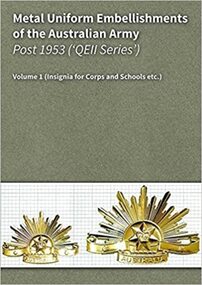
... This item does not infringe on any copyright, trademark and/or intellectual property rights and we hold specific written publication approval from the Australian Defence Force. ...This item does not infringe on any copyright, trademark and/or intellectual property rights and we hold specific written publication approval from the Australian Defence Force. ...This 236 page, full-colour hard copy reference work, catalogues the metal insignia embellishments used by all Corps and Schools of the Australian Army (including philanthropic organisations), from 1953 through to the present. The book provides images of the front and the back of a given (metal) insignia set for each Corps etc. Each image set depicts the relevant hat badge, collar badges and epaulette title and/or cloth shoulder title applicable. The book's images record three distinctly different 'generations' of insignia manufacturing methods/types, including the: gilt brass and white metal items used in the 1953 to 1964 period; and anodised aluminium 'StayBright' insignia introduced as from 1964[ and 'BriteShine' insignia introduced with effect from 1997 (running through to the present). The full colour photographic images in the book are complimented by written descriptions which cite each item's distinguishing characteristics... including measures of: typical weight, height, width and thickness (at a given point). A discussion of copies and faked items is also provided, including microscope resolution images of 'tell tale' signs to look for. The entries in the book are organised alphabetically and match those used in the Authors' 614 page eBook version of this work (the eBook is a separate edition which provides scalable images of all relevant insignia and many manufacturing variants).The hard copy and electronic editions of this work are able to be used either separately or concurrently, as and when users require. Regards Mark Corcoran & Arthur Butler The Authors charlibravobooks.com Re: Copyright As the original authors we hold the sole copyright authority to sell this work. This item does not infringe on any copyright, trademark and/or intellectual property rights and we hold specific written publication approval from the Australian Defence Force. Soft cover, spiral bound 235 pagesaustralian army, post ww2 insignia -
 Flagstaff Hill Maritime Museum and Village
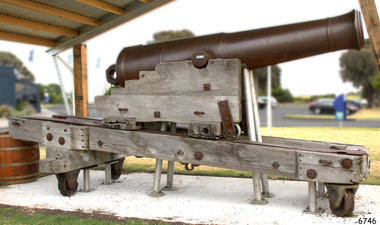
Weapon - Cannon, 1861
... defence of Hobsons Bay, (Williamstown, Melbourne) (Billets p.12). It was possibly brought to Warrnambool in the late 1860s or the 1870s, to be used for training purposes by volunteers and local militia. The wrought iron runners were probably added to the slides at a later date. This model of carriage had been manufactured since 1855, and the traversing slide since 1860. The traversing slide of the wooden carriage absorbs the recoil when the gun is then returns to the gun to its original position for loading and re-firing. The properties...defence of Hobsons Bay, (Williamstown, Melbourne) (Billets p.12). It was possibly brought to Warrnambool in the late 1860s or the 1870s, to be used for training purposes by volunteers and local militia. The wrought iron runners were probably added to the slides at a later date. This model of carriage had been manufactured since 1855, and the traversing slide since 1860. The traversing slide of the wooden carriage absorbs the recoil when the gun is then returns to the gun to its original position for loading and re-firing. The properties ...The artillery piece of the cannon was cast at the Low Moor foundry in England in 1861. It is a 68 pound muzzle loading cannon, capable of firing a 68 pound weight projectile. The arrow on the top of the barrel is the symbol of government ownership. It is probably one of the artillery pieces purchased by the Victorian government in response to the 1863 report by Captain Scratchley, which recommended 19 such artillery pieces be bought for the defence of Hobsons Bay, (Williamstown, Melbourne) (Billets p.12). It was possibly brought to Warrnambool in the late 1860s or the 1870s, to be used for training purposes by volunteers and local militia. The wrought iron runners were probably added to the slides at a later date. This model of carriage had been manufactured since 1855, and the traversing slide since 1860. The traversing slide of the wooden carriage absorbs the recoil when the gun is then returns to the gun to its original position for loading and re-firing. The properties of the timber (regarded as being Burmese teak) have helped to preserve these carriages in Australia. This particular carriage and traversing slide would have been manufactured about the same time as the gun (in 1861) in the Royal Carriage Department of the Royal Gun Factory in Woolwich, England. The gun would then have been assembled on the traversing slide of the carriage, then despatched as a unit. The wooden slide compressor mechanism that belongs to the cannon was used to limit the recoil when the cannon was fired. It is now stored separately for purposes of preservation. It is extremely rare, as it is the only one surviving in this group of South Western Victorian cannons.This 68 pdr cannon, mounted with its original wooden carriage, is part of the South Western Victoria collection of surviving 19th Century artillery pieces, item number W/F/02. It is rated as EXTREMELY RARE on a State, National and World level. The 68 pound smooth bore cannon of this period are not particularly rare either in Australia or overseas; its significance lies in its Victorian provenance and as an element in a major collection of 19th century cannon. The number of surviving carriages with traversing slides in this group in South Western Victoria is unique in Australia and probably in the World. Out of 10 such platforms surviving in Australia, the South Western Victorian group has half. Several survive around the world but probably not in such a large group. The wooden sliding compressor mechanism belonging to this cannon is extremely rare, and the only one in this South Western Victorian group of Guns and Cannons. As a whole, this cannon has undergone very little restoration or modification, giving it a high level of integrity.Warrnambool Garrison Cannon. 68pdr smoothbore, muzzle-loading, cast-iron cannon. Manufactured in Low Moor, 1861, No. 10310. Mounted on the wooden carriage with wrought iron traversing slide and wrought iron runners and fittings. The cannon's Cascabel is cast with a loop. The wooden slide Compressor Mechanism, or Recoil Mechanism, is extremely rare. This mechanism comprises two equal-sized sections of wood, one on each side of the centre, joined by metal rods. In the centre of this wooden platform, with openings, top and bottom is a 15cm diameter metal cylinder with two cusps on the edge of the top (this wood has split over time). Two parallel sides each have two 1cm thick metal "L' plates attached 15cm long and 8.5cm wide. With the unit is ‘ L’ bracket, curved bracket and bolt head.Cannon trunnion "LOW MOOR / 10310 / 1861" Top of the barrel "7045, (symbol of an arrow pointing up), 95 – 3 – 14, 1861, 209" Cascabel "CV / N / C" The rear of left-hand slide " "OD” “JW” “No 33” Side chock – “JW” twice. flagstaff hill, warrnambool, shipwrecked-coast, flagstaff-hill, flagstaff-hill-maritime-museum, maritime-museum, shipwreck-coast, flagstaff-hill-maritime-village, muzzle loading cannon, 68 pound cannon, low moor foundry, royal gun factory, warrnambool militia, warrnambool garrison volunteers, warrnambool fortifications, wooden sliding compression mechanism, carriage and traversing slide, 19th century cannon, traversing platform, garrison sliding carriage, 68 pounder -
 Bendigo Military Museum
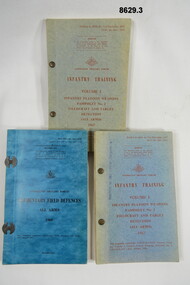
Manual - INFANTRY TRAINING, Australian Military Forces, 1967 - 1969
... Property of SME Library, Liverpool, NSW. 1. & 2. Small to medium manuals of 124 pages, both manuals are identical and they are designed to teach the soldier individual skills in Fieldcraft and Target detection. 3. Small to medium manual which aims to teach the soldier in the construction of basic field defences ...1. & 2. Small to medium manuals of 124 pages, both manuals are identical and they are designed to teach the soldier individual skills in Fieldcraft and Target detection. 3. Small to medium manual which aims to teach the soldier in the construction of basic field defences.1. Property of SME Library, Liverpool, NSW.passchendaele barracks trust, pbt 30.1and 30.2 and 49, infantry training, fieldcraft -
 Bendigo Military Museum
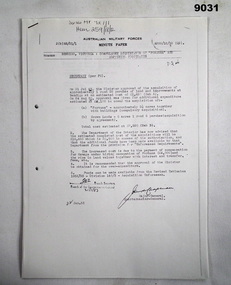
Document - Defence Compulsory Acquisition of "Fortuna" and adjoining properties 1942-1953, Australian Army, Department of the Interior, 19 May 1942 - 20 Jan 1953
... properties by the Australian Military Forces. Documents dated 1942-1953. This was very important as this land and buildings were used as the home of the Army Survey Regiment from 1942 until 1996 and housed the Australian Defence Forces Mapping capability during WWII and beyond....Defence Compulsory Acquisition of "Fortuna" and adjoining properties 1942-1953 Document Defence Compulsory Acquisition of "Fortuna" and adjoining properties 1942-1953 Australian Army, Department of the Interior ...Numerous A4 photocopies of Minutes, letters and memorandums pertaining to the compulsory acquisition of the Bendigo property known as "Fortuna" and adjoining properties by the Australian Military Forces. Documents dated 1942-1953. This was very important as this land and buildings were used as the home of the Army Survey Regiment from 1942 until 1996 and housed the Australian Defence Forces Mapping capability during WWII and beyond.22 x unnumbered page A4 Defence Minute stapled top LH Corner, black and white photocopies of the original Minute.Numerous hand written signatures and handwritten small notesroyal australian survey corps, rasvy, fortuna, army survey regiment, army svy regt, asr -
 Bendigo Military Museum
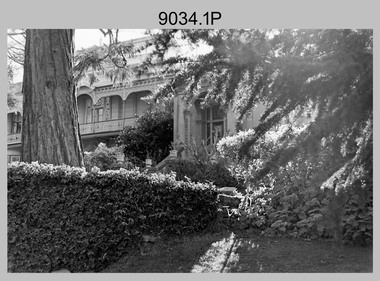
Photograph - Army Survey Regiment - Fortuna & Surrounds, Bendigo, Army Survey Regiment - Fortuna Interior, Bendigo, c1987-1989
... The photos feature much of Fortuna’s exterior and most of the out-buildings spread over the property’s fifteen acres of grounds. After Defence took possession of Fortuna in 1942, the Q-store and engineering workshops were added during the wartime period. ...The photos feature much of Fortuna’s exterior and most of the out-buildings spread over the property’s fifteen acres of grounds. After Defence took possession of Fortuna in 1942, the Q-store and engineering workshops were added during the wartime period. ...This set of 12 photographs of the Army Survey Regiment’s Fortuna Villa and surrounding facilities was taken circa 1987 to 1989. The photos feature much of Fortuna’s exterior and most of the out-buildings spread over the property’s fifteen acres of grounds. After Defence took possession of Fortuna in 1942, the Q-store and engineering workshops were added during the wartime period. Soldiers were accommodated in tents during WW2 for 20 years next to the parade ground before the construction of accommodation buildings in 1962. In 1990 most of the weatherboard buildings in the Q-store area were replaced. A climate-controlled building was also constructed to house a map library and digital data media. This photo set also includes the exterior of Air Survey Squadron’s Building 16 and two modular buildings -16A and 16B that were added in the early 1980s to accommodate map production and technical services. See item 6456.30P for more photos of Fortuna Villa and its surrounding facilities. This set of 12 photographs of the Army Survey Regiment’s Fortuna Villa and surrounding facilities was taken circa 1987 to 1989. The photographs are on 35mm negative film and scanned at 96 dpi. They are part of the Army Survey Regiment’s Collection. .1) - Photo, black & white, c1987-1989. Fortuna Villa – front view. .2) - Photo, black & white, c1987-1989. Fortuna Villa – view of lake towards tennis courts. .3) - Photo, black & white, c1987-1989. Fortuna Villa – view of lake towards OR’s Barracks. .4) - Photo, black & white, c1987-1989. Fortuna Villa – back view. .5) - Photo, black & white, c1987-1989. View of Fortuna Villa from Air Survey Squadron’s Building. Technical Services, Building 16B at right. .6) - Photo, black & white, c1987-1989. Fortuna Villa – view of lake towards tennis courts. .7) - Photo, black & white, c1987-1989. Fortuna Villa – Pompeii Fountain in front garden. .8) - Photo, black & white, c1987-1989. Fortuna Villa – statue on top of the Pompeii Fountain’s pillar. .9) - Photo, black & white, c1987-1989. Fortuna Villa – view of Litho buildings and newly constructed Wayzgoose Hall Print Building from rooftop. .10) - Photo, black & white, c1987-1989. Fortuna Villa – view of sequoia trees and lake from rooftop. .11) - Photo, black & white, c1987-1989. Fortuna Villa – balcony view of Q-store and transport compound from rooftop. .12) - Photo, black & white, c1987-1989. Fortuna Villa – playground with tennis courts in background.There are no annotations.royal australian survey corps, rasvy, fortuna, army survey regiment -
 Bendigo Military Museum
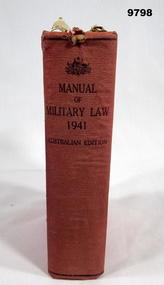
Manual - MILITARY LAW WW2, Command of the Military Board, Army Headquarters/ Melbourne, 1941
... Defence Act 1903 - 1939 and the Australian Military Regulations". Part of the William (Bill) THOMASON Collection. Refer Cat. No. 4136P for more items. Publication Book WW2 Manual Military Law Front end paper - purple ink stamp. "Major/ Brigade Major B.P. & G. Force" date "1942", illegible signature. "Major/ G.S. Victoria Garrison Brigade - date "1942", illegible signature. "Major/ Adm.Comd. Vic Garrison Bde with illegible signature - date "42/43" - black ink print. "Lt.Col/ A.A. & G.M.G., Vic covering Force " - with illegible signature - handwritten information, black ink pen "Private Property ...From Title Page; "AUSTRALIAN EDITION/ OF/ MANUAL OF/ MILITARY LAW/ 1941/ Including Army Act and Rules of Procedure as/ modified and adapted by the Defence Act 1903 - 1939 and the Australian Military Regulations". Part of the William (Bill) THOMASON Collection. Refer Cat. No. 4136P for more items.Hardcover book Cover - cardboard, red colour buckram, embossed lettering on front, black colour ink print on spine. 850 pages - cut, plain, off white colour . No illustrations. Amendments have been added to many pages - paper slips glued to designated pages. Amendments noted on Page iii - handwritten red and black ink pen dated "30/11/41", 31/9/42", "31/12/42", 30/6/43". Front end paper - three purple and one black ink stamps and handwritten signatures and information in black and blue ink pen. Front end paper - purple ink stamp. "Major/ Brigade Major B.P. & G. Force" date "1942", illegible signature. "Major/ G.S. Victoria Garrison Brigade - date "1942", illegible signature. "Major/ Adm.Comd. Vic Garrison Bde with illegible signature - date "42/43" - black ink print. "Lt.Col/ A.A. & G.M.G., Vic covering Force " - with illegible signature - handwritten information, black ink pen "Private Property", blue ink pen. Return to/ Room 10 Block B/ Southern Command.publication, book, ww2, manual, military law -
 Warrnambool and District Historical Society Inc.
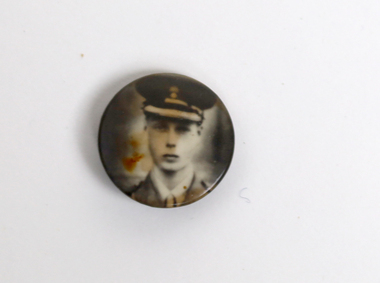
Badge - Prince of Wales Badge 1920, 1920
... defence forces during World War One. Edward, Prince of Wales, later became King of England in 1936 and abdicated that same year. During the 1920 visit to Victoria the Prince of Wales came to Terang and stayed overnight at Glenormiston, near Terang, at that time the property of Cr Black, the President of the Shire of Hampden....defence forces during World War One. Edward, Prince of Wales, later became King of England in 1936 and abdicated that same year. During the 1920 visit to Victoria the Prince of Wales came to Terang and stayed overnight at Glenormiston, near Terang, at that time the property of Cr Black, the President of the Shire of Hampden. ...This badge was issued in 1920 to commemorate the visit to Australia of Edward, Prince of Wales. It was issued to school children. The visit of the Prince of Wales was a gesture by the British Crown to recognize the sacrifices and efforts of the Australian people and defence forces during World War One. Edward, Prince of Wales, later became King of England in 1936 and abdicated that same year. During the 1920 visit to Victoria the Prince of Wales came to Terang and stayed overnight at Glenormiston, near Terang, at that time the property of Cr Black, the President of the Shire of Hampden.This badge is of interest as a memento of a Royal visit to Victoria in 1920.This is a round metal badge with a black and white photograph of Edward, Prince of Wales on one side and a metal pin on the other side.visit to australia of prince of wales 1920, glenormiston homestead -
 Bendigo Military Museum
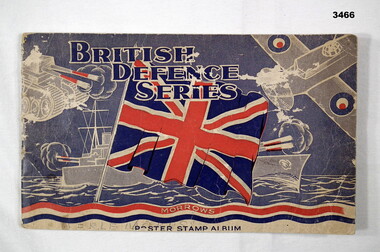
Album - ALBUM, STAMP, C.1940
... Printed on front cover: “BRITISH DEFENCE SERIES, MORROWS POSTER STAMP ALBUM” In pencil on front at bottom: “Merle Mobbs” Inside front cover: “Album is the property of: DOUGLAS MOBBS 49 HUNTER ST CASTLEMAINE, COLLECTION COMMENCED - 27TH JANUARY 1940”...Albums defence series Printed on front cover: “BRITISH DEFENCE SERIES, MORROWS POSTER STAMP ALBUM” In pencil on front at bottom: “Merle Mobbs” Inside front cover: “Album is the property of: DOUGLAS MOBBS 49 HUNTER ST CASTLEMAINE, COLLECTION COMMENCED - 27TH JANUARY 1940” Cardboard cover with Union Jack on blue / grey background. 36 pages, white with blue photos & printing. ...Cardboard cover with Union Jack on blue / grey background. 36 pages, white with blue photos & printing. Spaces for 112 stamps.Printed on front cover: “BRITISH DEFENCE SERIES, MORROWS POSTER STAMP ALBUM” In pencil on front at bottom: “Merle Mobbs” Inside front cover: “Album is the property of: DOUGLAS MOBBS 49 HUNTER ST CASTLEMAINE, COLLECTION COMMENCED - 27TH JANUARY 1940”albums, defence series -
 Bendigo Military Museum
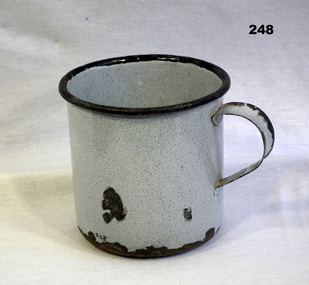
Equipment - ENAMEL MUG, Department of Defence, C.139 - 45
... Inscription on base indicates property of Dept. of Defence....Inscription on base indicates property of Dept. of Defence. Equipment ENAMEL MUG. Department of Defence ...Item issued to Edward (ted) Kennedy 2nd AIFEnameled mug, grey with black rim. Inscription on base indicates property of Dept. of Defence.On base in black: "D ^ D"military - equipment, domestic items - food & drink consumption -
 4th/19th Prince of Wales's Light Horse Regiment Unit History Room
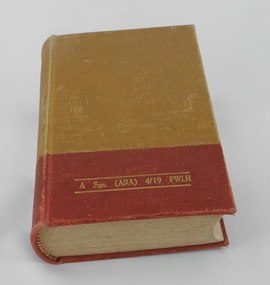
Book, Australian Army, Australian Edition of Manual of Military Law 1941
... In 1982 the Defence Force Discipline Act of the Australian Parliament established a framework of military law for Australia's circumstances. military law world war 2 On front cover in gold lettering- "A Sqn (ARA) 4/19 PWLH" On fly leaf, rubber stamps - "A SQN 1 CAV REGT. Inscription in red ink - "This book is the personal property ...Law manual applicable to Australian Army personnel from 1941. This effectively applied British military law. In 1982 the Defence Force Discipline Act of the Australian Parliament established a framework of military law for Australia's circumstances. Hard cover bookOn front cover in gold lettering- "A Sqn (ARA) 4/19 PWLH" On fly leaf, rubber stamps - "A SQN 1 CAV REGT. Inscription in red ink - "This book is the personal property of ; -J.B.Larkman" and rubber stamp - "WO2 SSM A SQN" On title page - Rubber stamps - "A Sqn (ARA) 4/19 PWLH" and "A SQN 1 CAV REGT" Detailed records of amendments entered in red ink on Amendments pages from Serial 1, 30 Nov 41 to Serial 9, 31 July 1948 military law, world war 2 -
 Bendigo Historical Society Inc.
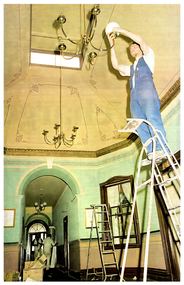
Newspaper - Fortuna Article - "Villa fit for a Quartz King", Mar 08 1997
... The project, named Parare, is valued between $8 million and $10 million.Its goal is to position ATSE as a leading defence mapping organization in Australia and internationally.The initiative addresses outdated hardware, enabling the production and distribution of digital defence data across Australia.Project TimelineTenders for the project are set to close soon, indicating the project is in its early procurement phase. The historic Fortuna property...The project, named Parare, is valued between $8 million and $10 million.Its goal is to position ATSE as a leading defence mapping organization in Australia and internationally.The initiative addresses outdated hardware, enabling the production and distribution of digital defence data across Australia.Project TimelineTenders for the project are set to close soon, indicating the project is in its early procurement phase. The historic Fortuna property ...The article outlines the launch of the Fortuna program's new computer mapping project at the Army Topographic Support Establishment (ATSE). Workforce ExpansionATSE will increase its staff from 135 to 150, adding 15 new jobs as a result of the project. The project, named Parare, is valued between $8 million and $10 million.Its goal is to position ATSE as a leading defence mapping organization in Australia and internationally.The initiative addresses outdated hardware, enabling the production and distribution of digital defence data across Australia.Project TimelineTenders for the project are set to close soon, indicating the project is in its early procurement phase. The historic Fortuna property is undergoing a $1.5 million refurbishment to restore the main building and outbuildings to their original 1870s grandeur. Over 40 workers spent at least two months on the project, which includes new carpets, painting, lighting, rewiring, and rehabilitation of a former stone crushing area. Fortuna Villa was built by George Lansell, a prominent figure in Bendigo's gold mining history, and designed by architects W. C. Vahland and William Beebe. The property has served as home to the Army Survey Regiment for 54 years and was recently taken over by the Army Topographic Support Establishment (ATSE). The fully restored three-level building will open to the public on March 16, with guided tours every Sunday for $8 per person, including devonshire teas in the hall. ATSE will move its production and administrative staff into the villa after renovations, with printing operations at the rehabilitated stone crushing site. State-of-the-art computer equipment will be installed in the building. 20 beer bottles from the 1940s were found in a ceiling.Fortuna Restoration Article - "Villa fit for a Quartz King" - Bendigo Advertiser Sat Mar 08 1997 - Author Ashok Verma This item contains the following: 11217.1a Couloured photo of Brad Murray fixing a light shade as part of the retoration work 11217.1b Part of page 2 - Fortuna Program Maps out new jobs 11217.1c Part of page 2 - Fortuna Program Maps out new jobsnon-fictionbendigo, fortuna, army tropographic support establishment -
 Bendigo Historical Society Inc.
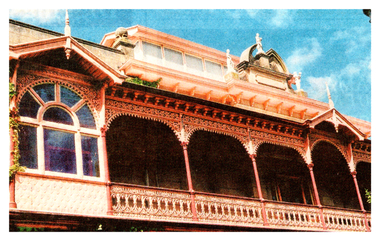
Newspaper - Fortuna Article - "Fortuna to Open Up", Nov 27 2008
... The Defence Department confirmed the open day will occur within the next month, though the exact date is not yet set. The opening is part of a broader community consultation process ahead of the property's eventual sale. ...The Defence Department confirmed the open day will occur within the next month, though the exact date is not yet set. The opening is part of a broader community consultation process ahead of the property's eventual sale. ...Fortuna Villa, a prominent Bendigo landmark, will open to the public before Christmas. The Defence Department confirmed the open day will occur within the next month, though the exact date is not yet set. The opening is part of a broader community consultation process ahead of the property's eventual sale. Visitors will be able to tour the Villa and its grounds, but the level of access is still being discussed with heritage consultants. Details about the consultation process and the timeline for the property's disposal remain undecided, as site investigations are ongoing. The Villa Fortuna Action Group welcomed the announcement but expressed concern that the timing near Christmas might limit public attendance due to seasonal pressures.Fortuna Article - "DIGO's new home opens" - The Bendigo Miner Thursday Nov 27 2008 by Nino Bucci, picture Julian Prowd This item contains the following: 11217.21a Colour Photo of Fortuna balcony 11217.21b Part of page 8 - Article "Fortuna to Open Up"non-fictionbendigo, fortuna, george lansell, villa fortuna action group -
Bendigo Historical Society Inc.
Newspaper - Fortuna Article - "Explore Fortuna", Dec 04 2008
... The Defence Department is opening Fortuna Villa to the public on Saturday as part of a community consultation process before its sale.This provides a rare opportunity for locals to visit one of Bendigo's most iconic properties, formerly home to mining magnate George Lansell. ...The Defence Department is opening Fortuna Villa to the public on Saturday as part of a community consultation process before its sale.This provides a rare opportunity for locals to visit one of Bendigo's most iconic properties, formerly home to mining magnate George Lansell. ...The Defence Department is opening Fortuna Villa to the public on Saturday as part of a community consultation process before its sale.This provides a rare opportunity for locals to visit one of Bendigo's most iconic properties, formerly home to mining magnate George Lansell. Federal Member for Bendigo, Steve Gibbons, encourages the community to visit and learn about the villa's history and potential future uses.The Villa Fortuna Action Group expects a large turnout and welcomes the opportunity, though they note the limited visiting time. Visitors can take a self-guided tour along a designated route to view significant elements of the villa. Some areas will be restricted due to safety hazards, and not all grounds will be accessible.The villa is located at 22-48 Chum Street, open from 9:30am to 3:30pm, with last entry to the grounds before 3pm.On-site parking is limited, and disabled access is not guaranteed.Fortuna Article - "Explore Fortuna" - The Bendigo Miner Thursday Dec 04 2008 by Nino Bucci This item contains the following: 11217.22a Part of page 7 - Article "Explore Fortuna"non-fictionbendigo, fortuna, george lansell, villa fortuna action group -
 Bendigo Historical Society Inc.
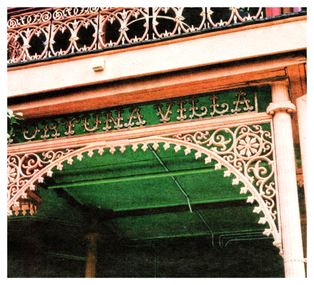
Newspaper - Fortuna Article - "Letters to the Editor", Dec 04 2008
... The Defence Department is opening Fortuna Villa to the public on Saturday as part of a community consultation process before its sale.This provides a rare opportunity for locals to visit one of Bendigo's most iconic properties, formerly home to mining magnate George Lansell. ...The Defence Department is opening Fortuna Villa to the public on Saturday as part of a community consultation process before its sale.This provides a rare opportunity for locals to visit one of Bendigo's most iconic properties, formerly home to mining magnate George Lansell. ...The Defence Department is opening Fortuna Villa to the public on Saturday as part of a community consultation process before its sale.This provides a rare opportunity for locals to visit one of Bendigo's most iconic properties, formerly home to mining magnate George Lansell. Federal Member for Bendigo, Steve Gibbons, encourages the community to visit and learn about the villa's history and potential future uses.The Villa Fortuna Action Group expects a large turnout and welcomes the opportunity, though they note the limited visiting time. Visitors can take a self-guided tour along a designated route to view significant elements of the villa. Some areas will be restricted due to safety hazards, and not all grounds will be accessible.The villa is located at 22-48 Chum Street, open from 9:30am to 3:30pm, with last entry to the grounds before 3pm.On-site parking is limited, and disabled access is not guaranteed.Fortuna Article - "Letters to the Editor" - The Bendigo AdvertiserThursday Dec 04 2008 This item contains the following: 11217.23 Colour Photo of Fortuna Villa Entrance 11217.23b Part of page 10 - Article "Letters to the Editor" The Defence Department is inviting the public to visit Fortuna, a significant historical site in Bendigo, on Saturday from 9:30 am to 3:30 pm.The invitation is warmly endorsed by Jim Evans, president of the Bendigo Historical Society Inc.non-fictionbendigo, fortuna, george lansell, villa fortuna action group, jim evans -
 Bendigo Historical Society Inc.
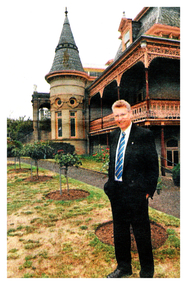
Newspaper - Fortuna Articles - "Great Bravery is now required for villa", Dec 05 2008
... property, even if acquired at no cost. He questions the justification for using ratepayers' money for new arts projects when there is already a masterplan for the existing art gallery that requires significant funding and staged development. The Villa Fortuna Action Group is the only organization with a public proposal for the site, aiming to create an arts and cultural precinct similar to Melbourne's Abbotsford Convent.The group plans to present its vision to newly elected councillors. The Department of Defence...property, even if acquired at no cost. He questions the justification for using ratepayers' money for new arts projects when there is already a masterplan for the existing art gallery that requires significant funding and staged development. The Villa Fortuna Action Group is the only organization with a public proposal for the site, aiming to create an arts and cultural precinct similar to Melbourne's Abbotsford Convent.The group plans to present its vision to newly elected councillors. The Department of Defence ...Villa Fortuna is described as having unprecedented local historical importance and whimsical architecture, making it a cultural asset for Bendigo. Saving the villa requires a bold and visionary individual or group willing to take on the challenges of restoration, including significant financial and logistical commitments. If restored, the villa could become a major attraction, hosting events, tours, and community activities that would benefit the local economy and tourism sector. The main obstacle is not whether the villa should be saved, but what sacrifices—financial and otherwise—are necessary to achieve this goal. The Villa Fortuna Action Group has developed a plan for the site, but more stakeholders may become involved. The Department of Defence, current owner, is proceeding cautiously with no urgency to sell. The upcoming public opening is seen as a potential turning point, with the document stressing that Bendigo cannot afford to lose this historic property, regardless of the cost. Mayor Kevin Gibbins opposes transforming Fortuna Villa into an arts and cultural precinct, as proposed by the Villa Fortuna Action Group. He believes the property should address local needs such as aged care, dementia, disabilities, and respite for carers. Gibbins emphasizes these are his personal views, not official council policy. Gibbins is concerned about the council's ability to finance the maintenance of the large property, even if acquired at no cost. He questions the justification for using ratepayers' money for new arts projects when there is already a masterplan for the existing art gallery that requires significant funding and staged development. The Villa Fortuna Action Group is the only organization with a public proposal for the site, aiming to create an arts and cultural precinct similar to Melbourne's Abbotsford Convent.The group plans to present its vision to newly elected councillors. The Department of Defence is preparing Fortuna Villa in Bendigo for sale, likely early next year. A tentative timeline suggests most site assessments will be drafted by Christmas, with finalization expected in the new year. Thorough assessments are underway to understand the site's characteristics, including heritage and environmental aspects.These assessments are detailed and time-consuming to ensure accuracy and completeness. An open day for the public and media is part of the ongoing community consultation process. Additional consultation activities are planned but not yet finalized. The City of Greater Bendigo is a key stakeholder in the disposal process and will receive relevant site information.The property has not yet been valued.Fortuna Article - "Great Bravery is now required for villa" - The Bendigo Advertiser Friday Dec 05 2008 by Nino Bucci This item contains the following: 11217.24a Colour Photo of the stained glass window on the staircase 11217.24b Colour Photo of David French outside the villa 11217.24c Colour Photo of the Grand conservatory 11217.24d Part of page 14 - Article "Great Bravery is now required for villa" 11217.24e Part of page 14 - Article "Mayor defends his view for the site" 11217.24f Part of page 14 - Article "Fortuna's future is one step closer"non-fictionbendigo, fortuna, george lansell, villa fortuna action group, myor of bendigo kevin gibbins -
Bendigo Historical Society Inc.
Newspaper - Fortuna Articles - "Fortuna sale not on: Gibbons", Dec 07 1999
... property, despite it being due by year-end. Steve Gibbons, Bendigo MHR, is campaigning against the sale of Fortuna and is seeking assurances that the ATSE mapping operation, which employs 150 people, will remain in Bendigo. Gibbons emphasizes the importance of these jobs and the operation's support for regional businesses, highlighting potential negative effects on the local economy if the operation is moved or closed. Gibbons urges Defence...property, despite it being due by year-end. Steve Gibbons, Bendigo MHR, is campaigning against the sale of Fortuna and is seeking assurances that the ATSE mapping operation, which employs 150 people, will remain in Bendigo. Gibbons emphasizes the importance of these jobs and the operation's support for regional businesses, highlighting potential negative effects on the local economy if the operation is moved or closed. Gibbons urges Defence ...The Federal Government has not released a promised study on the future of the Fortuna property, despite it being due by year-end. Steve Gibbons, Bendigo MHR, is campaigning against the sale of Fortuna and is seeking assurances that the ATSE mapping operation, which employs 150 people, will remain in Bendigo. Gibbons emphasizes the importance of these jobs and the operation's support for regional businesses, highlighting potential negative effects on the local economy if the operation is moved or closed. Gibbons urges Defence Minister John Moore to clarify the government's intentions for Fortuna and to inform the Bendigo public about the economic and employment implications.Pending Government Study:The government had previously indicated a study would be conducted to evaluate alternatives for the property's future, but Gibbons notes that time is running out and the study's findings have not been shared.Fortuna Article - "Fortuna sale not on: Gibbons" - The Weekender Dec 07 2009 This item contains the following: 11217.27a Part of page - Article "Fortuna sale not on: Gibbons"non-fictionbendigo, fortuna, george lansell, steve gibbons -
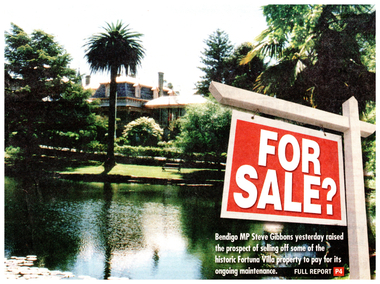 Bendigo Historical Society Inc.
Newspaper - Fortuna Articles - "Fortuna part sale idea", Jan 24 2009
... He is open to other ideas for the property's future use but stresses the need for a sustainable funding source. The City of Greater Bendigo is awaiting reports from the Department of Defence before making decisions about the property's future....He is open to other ideas for the property's future use but stresses the need for a sustainable funding source. The City of Greater Bendigo is awaiting reports from the Department of Defence before making decisions about the property's future. bendigo fortuna george lansell steve gibbons Fortuna Article - "Fortuna part sale idea" Jan 24 2009 The Bendigo Advertiser by Sara Mennie This item contains the following: 11217.34a Colour Photo of Steve Gibbons, Federal Member for Bendigo 11217.34b Colour Photo of proposed extensions to the Fortuna site 11217.34c Part of Page 4 - Article "Fortuna part sale idea" 11217.34d Colour Photo of Front Page Photo from the Bendigo Advertiser showing Fortuna with a "For Sale Sign" Newspaper Fortuna Articles - "Fortuna part sale idea" ...Steve Gibbons, Federal Member for Bendigo, suggests selling non-heritage parts of the Fortuna Villa property to fund maintenance of the historic mansion, ornamental lake, and mining battery. Non-heritage areas could be subdivided for private housing and possibly a health or aged-care facility. A new road connecting Marble and Chum streets could open up the site for these developments. The land west of the heritage lake and buildings is proposed for housing, while the corner of Chum and Booth streets is suggested for a health or aged-care facility. Gibbons emphasizes that only the original George Lansell property and its historic buildings are of heritage value; army-era buildings are not. He proposes that proceeds from development and ongoing rates be set aside to fund future maintenance of the heritage assets. Gibbons insists the mansion should remain in public ownership to preserve George Lansell's legacy and avoid burdening taxpayers or ratepayers. He is open to other ideas for the property's future use but stresses the need for a sustainable funding source. The City of Greater Bendigo is awaiting reports from the Department of Defence before making decisions about the property's future.Fortuna Article - "Fortuna part sale idea" Jan 24 2009 The Bendigo Advertiser by Sara Mennie This item contains the following: 11217.34a Colour Photo of Steve Gibbons, Federal Member for Bendigo 11217.34b Colour Photo of proposed extensions to the Fortuna site 11217.34c Part of Page 4 - Article "Fortuna part sale idea" 11217.34d Colour Photo of Front Page Photo from the Bendigo Advertiser showing Fortuna with a "For Sale Sign"non-fictionbendigo, fortuna, george lansell, steve gibbons
