
Showing 58 items matching "delivery vehicles"
-
 Marysville & District Historical Society
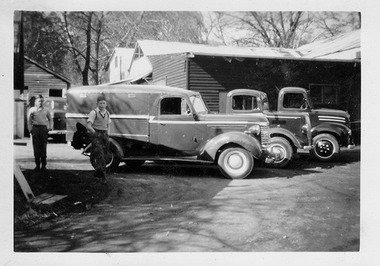
Photograph (Item) - Black and white photograph, c1950
... A digital copy of a black and white photograph of Barton Bros' delivery fleet vehicles in Marysville in Victoria....A digital copy of a black and white photograph of Barton Bros' delivery fleet vehicles in Marysville in Victoria....A digital copy of a black and white photograph of Barton Bros' delivery fleet vehicles in Marysville in Victoria. A digital copy of a black and white photograph of Barton Bros' delivery fleet vehicles in Marysville in Victoria. ...A digital copy of a black and white photograph of Barton Bros' delivery fleet vehicles in Marysville in Victoria.A digital copy of a black and white photograph of Barton Bros' delivery fleet vehicles in Marysville in Victoria. Thomas John Barton was born in 1836 in Gloucestershire and after his father died in 1850 arrived in Melbourne in 1852 along with his mother, adult sisters, younger brothers, his uncle, his uncle's wife Suzanna and their family. Thomas tried gold mining at Woods Point but found it too difficult. He then partnered with Ewen Hugh Cameron to provide the miners with meat. In 1864 they purchased a plot of land in Marysville and set up a butchers/abattoirs and from there began their business of taking supplies to the miners at the nearby Woods Point and Jamieson goldfields. In 1865 the business was firmly established and Thomas married Selina Croker at Heidelberg and brought her back to Marysville. Their first home was 'The Chestnuts', which included the store, and was situated on the town side next to the Steavenson River. Sadly, in 1876 Selina died of complications after giving birth to their sixth child. Thomas was in need of a nanny to care for his six children, including the newborn baby, and so he employed Emily Ada Sparke, who is the eldest daughter of the local school teacher. Thomas and Emily subsequently marry in 1878 and they go on to have a further 10 children over the next several years. Thomas assisted in the establishment of the first school in Marysville in 1870 and remained a very active member of the community including as a Councillor for the Shire of Healesville, Shire President and he was also appointed as a Justice of the Peace. Thomas died in Carlton in 1911. After their father's death, his sons Fred and Frank took over the family business, which was then known as Barton Bros Store which continued to operate until sometime in the 1970's.marysville, victoria, barton's store, thomas john barton, ewen hugh cameron, woods point, jamieson, gold mining, goldfields, selina croker, the chestnuts, emily ada sparke, shire of healesville, fred barton, frank barton, barton bros store, francis adam barton, frederick john barton, photograph, barton's garage, barton bros stables, super six hudson -
 Bacchus Marsh & District Historical Society
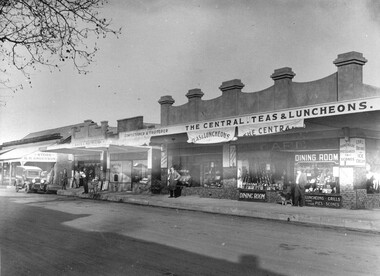
Photograph, The Central Teas & Luncheons. Main Street Bacchus Marsh. ca 1930
... ...Delivery Vehicles...Ice Cream." A delivery vehicle stands outside Anderson's store. ...Ice Cream." A delivery vehicle stands outside Anderson's store. ...Bacchus Marsh Express of 7 November 1874 reports that this building was designed and erected by Mr Jeremiah Ryan for Mr H. G. Salter, draper. Mr Salter gave the name of "Hall of Commerce" to the building, a term in common usage at the time. Following the fire of 1928 which destroyed the upper floor of the building, the ground floor was refurbished and new businesses set up. Among these were Percy Drury's Fruitery and Confectionery and Rogers' Bakery.This photograph is of the former Hall of Commerce, located on the corner of Main and Graham Streets. (For further information see VC729.) It shows the businesses operating in this building after the fire of 1928 which destroyed the upper floor. The streetscape shows a series of four businesses fronting Main Street. From L to R: G.H. Anderson. Store; Baker and Pastrycook; Confectioner and Fruiterer; The Central. Teas & Luncheons. On two awnings suspended from The Central name sign are the words "Teas & Luncheons" and "The Central". Outside the second shop can be seen various portable advertising signs, such as those used to advertise the latest news. One man reading a newspaper stands in front of this shop; five more men are ranged along the frontage, one wearing the apron commonly worn by greengrocers. Above the entrance to the tea rooms is the sign "CAFE". Other signs on the windows read "Dining Room", "Luncheons. Grills. Home Made Pies. Scones." On the corner of the shop is a two-sided sign reading " Home Made Pies, Cakes & Scones. Cool Drinks. Ice Cream." A delivery vehicle stands outside Anderson's store. Both pavement and street are made. On the back of the photo in pencil: Main St. Cr Graham St. (Hall of Commerce). Anderson's Border Store. Newsagency. Bakery (Rogers). Fruiterer (P. Drury). The Central. mr jeremiah ryan, hall of commerce, small businesses, tea rooms, cafes, delivery vehicles, advertising signage -
 Canterbury History Group
Document - Reminiscences, Munday, Bill
... ... Delivery Vehicles...Some memories of Bill Munday of growing up in Canterbury from approx. 1906 Canterbury Mangarra Road Horse Drawn Vehicles Moran and Cato Fire Station Canterbury Road Laundries Salvation Army Corps Malones Hotel Geo Carnell Upholsterers Delivery Vehicles Danks Family Shenley Street Outer Circle Railway Lifestyle Canterbury Scout troop Reminiscences A 4 1 page Document Reminiscences Munday, Bill ...Some memories of Bill Munday of growing up in Canterbury from approx. 1906A 4 1 pagecanterbury, mangarra road, horse drawn vehicles, moran and cato, fire station, canterbury road, laundries, salvation army corps, malones hotel, geo carnell upholsterers, delivery vehicles, danks family, shenley street, outer circle railway, lifestyle, canterbury scout troop, reminiscences -
Port Melbourne Historical & Preservation Society
Photograph - Transformer loaded for delivery, Bill Irving, c. 1929
... Photograph of transformer manufactured at British Electrical Transformer Co. works at South Melbourne, loaded for delivery by horse drawn delivery vehicle....Transport - Horse Industry - Manufacturing Wilson Transformers Photograph of transformer manufactured at British Electrical Transformer Co. works at South Melbourne, loaded for delivery by horse drawn delivery vehicle. Photograph Transformer loaded for delivery Bill Irving ...Copied for member Barb GARDINER by Bill IRVING of the Waverley Historical Society. Wilsons moved from Port to Glen Waverley in the 1950s, which is why WHS holds this image.Photograph of transformer manufactured at British Electrical Transformer Co. works at South Melbourne, loaded for delivery by horse drawn delivery vehicle.transport - horse, industry - manufacturing, wilson transformers -
 Lakes Entrance Historical Society
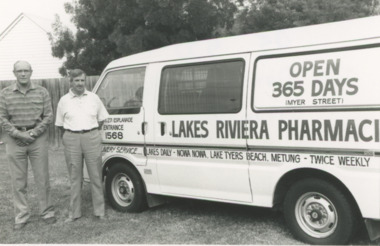
Photograph - Lakes Riviera Pharmacy, Lakes Post Newspaper, 20.4.1995
... Black and white photograph of Lakes Riviera Pharmacy delivery vehicle with drivers Jack Donnelly and Bill Deen Myers Street Lakes Entrance Victoria...Businesses Black and white photograph of Lakes Riviera Pharmacy delivery vehicle with drivers Jack Donnelly and Bill Deen Myers Street Lakes Entrance Victoria Photograph Lakes Riviera Pharmacy Lakes Post Newspaper ...Black and white photograph of Lakes Riviera Pharmacy delivery vehicle with drivers Jack Donnelly and Bill Deen Myers Street Lakes Entrance Victoriabusinesses -
 Marysville & District Historical Society
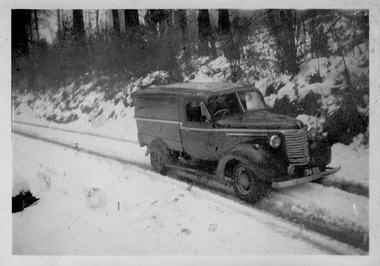
Photograph (Item) - Black and white photograph, c1950
... A digital copy of a black and white photograph of one of Barton's Delivery fleet of vehicles from Marysville in Victoria, driving down a snow covered track....A digital copy of a black and white photograph of one of Barton's Delivery fleet of vehicles from Marysville in Victoria, driving down a snow covered track....A digital copy of a black and white photograph of one of Barton's Delivery fleet of vehicles from Marysville in Victoria, driving down a snow covered track. ...A digital copy of a black and white photograph of one of Barton's Delivery fleet of vehicles from Marysville in Victoria, driving down a snow covered track.A digital copy of a black and white photograph of one of Barton's Delivery fleet of vehicles from Marysville in Victoria, driving down a snow covered track. Thomas John Barton was born in 1836 in Gloucestershire and after his father died in 1850 arrived in Melbourne in 1852 along with his mother, adult sisters, younger brothers, his uncle, his uncle's wife Suzanna and their family. Thomas tried gold mining at Woods Point but found it too difficult. He then partnered with Ewen Hugh Cameron to provide the miners with meat. In 1864 they purchased a plot of land in Marysville and set up a butchers/abattoirs and from there began their business of taking supplies to the miners at the nearby Woods Point and Jamieson goldfields. In 1865 the business was firmly established and Thomas married Selina Croker at Heidelberg and brought her back to Marysville. Their first home was 'The Chestnuts', which included the store, and was situated on the town side next to the Steavenson River. Sadly, in 1876 Selina died of complications after giving birth to their sixth child. Thomas was in need of a nanny to care for his six children, including the newborn baby, and so he employed Emily Ada Sparke, who is the eldest daughter of the local school teacher. Thomas and Emily subsequently marry in 1878 and they go on to have a further 10 children over the next several years. Thomas assisted in the establishment of the first school in Marysville in 1870 and remained a very active member of the community including as a Councillor for the Shire of Healesville, Shire President and he was also appointed as a Justice of the Peace. Thomas died in Carlton in 1911. After their father's death, his sons Fred and Frank took over the family business, which was then known as Barton Bros Store which continued to operate until sometime in the 1970's.marysville, victoria, barton's store, thomas john barton, ewen hugh cameron, woods point, jamieson, gold mining, goldfields, selina croker, the chestnuts, emily ada sparke, shire of healesville, fred barton, frank barton, barton bros store, francis adam barton, frederick john barton, photograph, barton's garage, barton bros stables, chevrolet van -
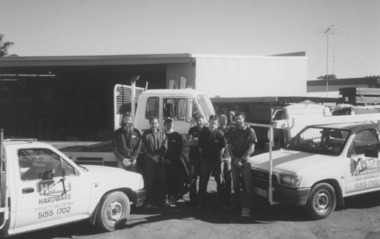 Lakes Entrance Historical Society
Photograph - Home Hardware, Lakes Post Newspaper, 1/11/1995 12:00:00 AM
... Colour photograph of seven Management and staff members at opening of Home Hardware Stock Street previously East End Hardware, taken in the timber yard with three delivery vehicles. Lakes Entrance Victoria...Opening of Home Hardware Stock Street previously East End Hardware Businesses Hardware Colour photograph of seven Management and staff members at opening of Home Hardware Stock Street previously East End Hardware, taken in the timber yard with three delivery vehicles. Lakes Entrance Victoria Photograph Home Hardware Lakes Post Newspaper ...Opening of Home Hardware Stock Street previously East End HardwareColour photograph of seven Management and staff members at opening of Home Hardware Stock Street previously East End Hardware, taken in the timber yard with three delivery vehicles. Lakes Entrance Victoriabusinesses, hardware -
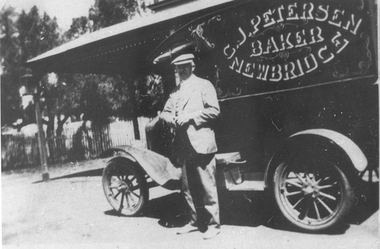 Tarnagulla History Archive
Photograph: Petersens' baker's cart with motor car wheels, Petersens' baker's cart with motor car wheels, circa 1915
... Monochrome photograph, image depicting a man standing in front of a baker's delivery vehicle with motor car wheels. Signage on vehicle reads ' C.J. ...Murray Comrie Collection. newbridge food businesses petersen baker transport newbridge, victoria Monochrome photograph, image depicting a man standing in front of a baker's delivery vehicle with motor car wheels. Signage on vehicle reads ' C.J. ...Murray Comrie Collection. Monochrome photograph, image depicting a man standing in front of a baker's delivery vehicle with motor car wheels. Signage on vehicle reads ' C.J. Petersen Baker Newbridge'. This is a very dark copy of an older original. Copy probably made by Murray Comrie in the 1960s.newbridge, food, businesses, petersen, baker, transport, newbridge, victoria -
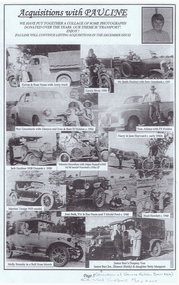 Linton and District Historical Society Inc
Photocopied page, Transport in Linton, 1920s to 1950s
... vehicles... Delivery vans...Transport Cars Trucks Horse drawn vehicles Delivery vans Kelvin and Rose Nunn Laurie Bruty Mr Smith (butcher) Betty Greenbank Roy Greenbank Tom Adams Jack Gardner Maurice Moynihan Harry and Jane Hayward Jean Bath Viv and Rae Nunn Noel Howlett Molly Brumby James and Eleanor Barr Eleanor Reidy Photocopy of a collage of photographs, showing various types of transport used in and around Linton between the 1920s and the 1950s. ...This collage of photographs may have been published in an edition of the Woady Yaloak Historical Society newsletter.Photocopy of a collage of photographs, showing various types of transport used in and around Linton between the 1920s and the 1950s. Owners of cars, trucks etc. are identified.transport, cars, trucks, horse drawn vehicles, delivery vans, kelvin and rose nunn, laurie bruty, mr smith (butcher), betty greenbank, roy greenbank, tom adams, jack gardner, maurice moynihan, harry and jane hayward, jean bath, viv and rae nunn, noel howlett, molly brumby, james and eleanor barr, eleanor reidy -
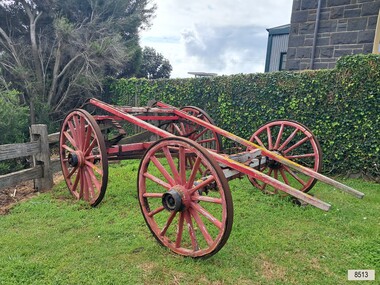 Flagstaff Hill Maritime Museum and Village
Vehicle - Wagon, Circa 1909
... ...light delivery vehicle...Over time, Pooran Singh came to own his own wagon—a top-of-the-range light delivery vehicle—and a horse named Prince. His work often took him along rough country roads, and for a period, he worked in the Corryong district of north-eastern Victoria, an area popular with hawkers. ...Wagon: a light delivery vehicle once used as a hawker's wagon. It is a four-wheel, horse-drawn vehicle with iron tyres, brakes, spoked wheels painted red with decorative yellow strips on the hubs, a timber shaft, and springs on the undercarriage. ...Over time, Pooran Singh came to own his own wagon—a top-of-the-range light delivery vehicle—and a horse named Prince. His work often took him along rough country roads, and for a period, he worked in the Corryong district of north-eastern Victoria, an area popular with hawkers. ...This wagon was used in towns across south-west Victoria during the first half of the twentieth century by Pooran Singh, an Indian-born immigrant. Singh arrived in Australia alone in 1899 at the age of 30. The following year, at the Colac Licensing Court in western Victoria, he was one of 78 hawkers granted a Hawker’s Licence. According to the Colac Herald, all but two of the applicants appeared to be Asian. While some hawkers registered horse-drawn carts, Singh was one of nineteen licensed to trade on foot, selling door to door. Applicants were encouraged to contribute to a collection for the Colac Hospital. Over time, Pooran Singh came to own his own wagon—a top-of-the-range light delivery vehicle—and a horse named Prince. His work often took him along rough country roads, and for a period, he worked in the Corryong district of north-eastern Victoria, an area popular with hawkers. In September 1909, near Thowgla, he was thrown from his wagon while attempting to navigate a deep rut and was run over by one of its wheels. Although he suffered bruising to his chest, his injuries were not serious. The following year, he was granted a Hawker’s Licence in Corryong. By 1916, Singh was living and working at Garvoc in western Victoria, where that year, he lost his paper licence on Cooramook Road, and he placed a notice in The Standard. In 1918, at the Warrnambool Petty Sessions Court, he was one of four applicants granted renewal of their hawkers’ licences, and each donated ten shillings to Warrnambool Hospital. Throughout these years, Singh became well known to farmers and their families as he travelled across Victoria’s Western District, living and working from his covered wagon. In his later years, Pooran Singh formed a close friendship with John Jandes Moore and his wife, Vera, of Russells Creek, Warrnambool. They offered him the use of their property as a base for his travels and cared for him during his final illness. John Moore was later appointed one of the two executors of Singh’s will. Pooran Singh died in Warrnambool on 8 June 1947, aged 77. His final wish was to be cremated and for his ashes to be returned to India for immersion in the Ganges. The cremation was arranged by Guyett’s Funerals in Warrnambool. Having never married, Singh left his estate to his four nephews, enabling them to buy land and build homes; one later installed a memorial plaque in his honour. In the late 1980s, Guyett’s Funerals placed his ashes in the niche wall at Warrnambool Cemetery as a memorial, while continuing to hope that family instructions might eventually arrive. Nearly 63 years after his death, renewed enquiries brought public attention to the long and respectful care given to his ashes. As a result, the renowned Indian cricketer Kapil Dev travelled to Warrnambool to collect them and escort them to India, helping to fulfil Singh’s final wish. He was joined by one of Singh’s grand-nephews, Harmel Uppal, who had travelled from England. At a formal ceremony on 25 July 2010 commemorating Singh’s life, the ashes were handed to Dev and Uppal, and local resident Avis Quarrell, who had known Singh as a child, read a poem she had written in his memory. She still owned a shell necklace that Singh had made for her mother. Some Warrnambool locals who had been closely involved also travelled to India, where they joined Uppal’s family from the village of Uppal Bhopa, near Jalandhar. On 31 July 2010, Pooran Singh’s ashes were immersed in the Ganges, fulfilling the wish he had expressed more than six decades earlier. After Pooran Singh’s death, his horse and wagon remained on John Moore’s property. When Prince died, he was buried on the beach at Warrnambool. The wagon remained with the Moore family and was occasionally used as a cubby house. In about 1997, John Moore, the son of John Jandes Moore, donated it to Flagstaff Hill. After restoration, the wagon became an attraction in the village, where volunteer Pat and his Clydesdale horse, Duke, offered visitors rides around Flagstaff Hill’s lake. This wagon is significant for its association with an Indian emigrant who used it to earn an income in Australia. It also reflects the vital role of hawkers, who travelled through rural and regional communities in the late nineteenth and early twentieth centuries, supplying food, goods and news. The wagon is also historically significant as a former Flagstaff Hill attraction, offering visitors the experience of horse-drawn rides around the lake.Wagon: a light delivery vehicle once used as a hawker's wagon. It is a four-wheel, horse-drawn vehicle with iron tyres, brakes, spoked wheels painted red with decorative yellow strips on the hubs, a timber shaft, and springs on the undercarriage. It was once a covered wagon, fitted with green, wooden sideboards, a front seat with leather-padded backrest and mounting steps. The late-19th to early-20th-century wagon was once owned by Pooran Singh, a local Indian hawker. flagstaff hill, warrnambool, maritime village, maritime museum, flagstaff hill maritime museum and village, shipwreck coast, great ocean road, southwest victoria, northwest victoria, western district, colac, colac hospital, colac licensing court, thowgla, corryong, garvoc, cooramook road, warrnambool petty sessions court, warrnambool hospital, russells creek road, ganges, warrnambool cemetery, uppal bhopa, jalandhar, hawker’s licence, covered wagon, wagon, hawker's wagon, horse-drawn cart, hawker's cart, light delivery vehicle, hawker, travelling salesman, travelling hawker, door-to-door sales, rural salesman, rural commerce, prince, duke, clydesdale horse, 1997, pooran singh, indian immigrant, pat, john james moore, vera moore, john and vera moore, john moore, guyatt’s funerals, kapil dev, harmel uppal, avis quarrell -
 Surrey Hills Historical Society Collection
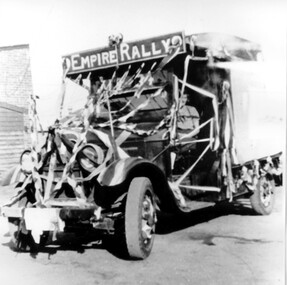
Photograph, Lloyd's butcher's truck decorated for Empire Day celebrations in Surrey Hills in 1930s
... ...delivery vehicle...Many Union Road businesses decorated carts and delivery vehicles for the Empire Day parades which drew crowds from all over Melbourne. ...Many Union Road businesses decorated carts and delivery vehicles for the Empire Day parades which drew crowds from all over Melbourne. festivals and celebrations empire day land transport 1936 elgar road whitehorse road mont albert emma atkinson (mrs) butchers delivery vehicle lloyd's butchers A black and white photograph of a vehicle decorated with streamers. ...Lloyd family butchers established on the corner of Elgar & Whitehorse Roads (within the Surrey Hills postal area). Emma Atkinson and her husband has a fruit & vegetable business next door. Edward Lloyd also had a butcher shop at 112 Union Road from 1920-1950. Many Union Road businesses decorated carts and delivery vehicles for the Empire Day parades which drew crowds from all over Melbourne. A black and white photograph of a vehicle decorated with streamers.festivals and celebrations, empire day, land transport, 1936, elgar road, whitehorse road, mont albert, emma atkinson (mrs), butchers, delivery vehicle, lloyd's butchers -
 Ballarat Tramway Museum
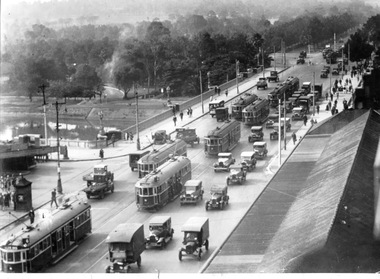
Photograph - Black & White Photograph/s, 1930's
... There are a number of delivery vehicles in the photograph, but no horse drawn vehicles are to be seen....There are a number of delivery vehicles in the photograph, but no horse drawn vehicles are to be seen. ...Black and white photo going to sepia toned, of about 11 W2's and many motor vehicles on Princes Bridge Melbourne, taken from the tower on Flinders Street station building, during the late 1930's. Many people on bridge, traffic jam of motor vehicles on the bridge itself. Note buildings at the Batman avenue terminus. Can see a tram trolley pole of a tram in Batman Avenue. No curve from Batman Ave. into Swanston St. At least two of the trams do not have route number boxes. There are a number of delivery vehicles in the photograph, but no horse drawn vehicles are to be seen.trams, tramways, melbourne, princes bridge, flinders st. station, batman ave., tram 321 -
 Musculoskeletal Health Australia (now held by the Glen Eira Historical Society)
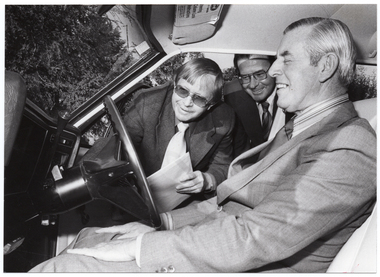
Photograph - Group photo, 1978
... In 1978, the Lions Club of Ivanhoe raised $6500 for the Rheumatism and Arthritis Association of Victoria (RAAV) to purchase a vehicle for its Action Program. In this photo, RAAV member, Laurie Griffiths, accepts delivery of the vehicle on behalf of the Association from the outgoing and incoming presidents of the club. ...In 1978, the Lions Club of Ivanhoe raised $6500 for the Rheumatism and Arthritis Association of Victoria (RAAV) to purchase a vehicle for its Action Program. In this photo, RAAV member, Laurie Griffiths, accepts delivery of the vehicle on behalf of the Association from the outgoing and incoming presidents of the club. ...In 1978, the Lions Club of Ivanhoe raised $6500 for the Rheumatism and Arthritis Association of Victoria (RAAV) to purchase a vehicle for its Action Program. In this photo, RAAV member, Laurie Griffiths, accepts delivery of the vehicle on behalf of the Association from the outgoing and incoming presidents of the club. A slightly cropped version of this photo appears on page 8 of the Vol 9, July 1978 issue of RAAV's quarterly newsletter, News Review. It is captioned: "R.A.A.V.'s Laurie Griffiths looks very pleased as he takes delivery of our new car from Mr John Fawcett, out-going President of the Ivanhoe Lions' Club, while the in-coming President Mr Ed Doherty looks on." The photo accompanies an article titled, "Gift from Ivanhoe Lions". The article reports on the donation of the vehicle for use in RAAV's Action Program, which aims to expand its services into suburban and country areas.B&W photo of three men in or around a car. One man is seated in the driver's seat of the car. The car door is open, and the other two men are in the doorway, bending forward. All three men are smiling as they look at the steering wheel and dashboard of the car.[Handwritten in pencil] R.A.A.V's laurie Griffiths looks very pleased as he takes delivery of our new car from Mr John Fawcett, out going President of Ivanhoe Lions' Club, while the in-coming President Mr Ed Doherty looks on. [On a yellow sticky note, handwritten in pencil] Gift from Ivanhoe Lions. -Lions' Club of Ivanhoe presented the R.A.A.V whi [crossed out] with $6,500 to purchase a station wagon for use in Action Prorame [sic]rheumatism and arthritis association of victoria, raav, fundraising, lions club, ivanhoe, laurie griffiths, john fawcett, ed doherty, president, gift, donation, car, vehicle, transport, action program, service expansion, 1978 -
 Flagstaff Hill Maritime Museum and Village
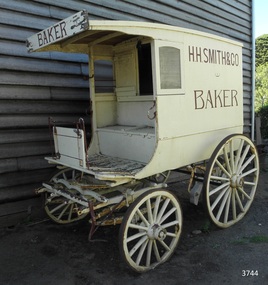
Vehicle - Wagon, H.H. Smith & Co. Baker, Circa 1930s - 1940s
... Bread continued to be delivered into the 1960s but by this time the delivery vehicles were motorised. The goods produced at Stephenson’s bakery included bread baked in different shaped tins such as High Tin, Sandwich and Vienna. ...Bread continued to be delivered into the 1960s but by this time the delivery vehicles were motorised. The goods produced at Stephenson’s bakery included bread baked in different shaped tins such as High Tin, Sandwich and Vienna. ...This baker’s wagon or cart transported and delivered bread and other baked goods in the Warrnambool area. It currently has advertising for H.H. Smith & Co. Henry Huntington Smith (1857-1941) owned and operated his Warrnambool bakery in the late 19th and early 20th century. However, the design of the wagon is similar to those used by local bakers in the 1930s and 1940s and probably originated from Stephenson’s Bakery in Warrnambool, which operated around that time. The wagon’s original internal shelves were removed in the early days of Flagstaff Hill so that children could have rides around the village in a horse-driven cart. BAKERS’ HISTORY There were many bakeries in Warrnambool in the 19th to mid-20th century. Each bread bakery made horse and cart deliveries in its allocated zone. SMITH’S BAKERY; – as shown on the wagon’s signage. Henry Huntington Smith (1857-1941) was born and educated in Warrnambool. He worked at Davis’ steam biscuit factory in Timor Street before he began his own bakery business in 1885 near the corner of Fairy and Koroit Streets. A few years later Smith built a new bakery on the corner of Fairy and Lava Street where it still stands today (2025) as Monaghan’s Pharmacy. The building was designed by James McLeod in 1892 as a bakehouse, shop and residence for Smith The address was known locally as Smith’s Corner. Next door to the bakery, at 136 Fairy Street, were stables built by Jobbins and McLeod in 1886 for William Cust. A photograph in the archives of the Warrnambool and District Historical Society shows the 1892 building with four fancy horse-drawn wagons on the street with white-clad drivers and a promotional stand erected with 5 bakers in uniform and the signage “H H Smith & Co, Pastry Cooks and Confectioners”. One of the wagons appears to have “H H Smith” painted on the side. H.H. Smith & Co. placed an Advertisement in the Weekly Times in December 1896 promoting its business as bakers, confectioners and pastry cooks, praising their shop as an ‘ornament to the town’ with ‘neat appointments’ and ‘dainty decorations’. It also boasted of supplying a large number of customers within a twelve-mile radius of Warrnambool. In November 1919 The Warrnambool Standard announced the marriage of Henry H Smith, Mayor of Warrnambool, to Jeannie Samson-Goodman in East Adelaide. In the same newspaper was a notice that Frank Crossley was to open as baker and pastry cook in H.H. Smith’s premises. As well as being the proprietor of the H.H. Smith Bakery, Henry Huntington Smith was a Councillor for the Warrnambool Municipality from 1913 to 1937 and Mayer for two terms. In December 1919 during his first term as Mayor, he was honoured for the work he had done with returning soldiers after World War I, receiving a document in recognition of this work, presented by the Mothers, Wives and Sisters of returned soldiers. Smith was very interested and involved in the community in many roles, including being the Vice President of the first Warrnambool and District Historical Society. STEPHENSON’S BAKERY: – believed to be the past owner of the wagon. The last owner of the bakery was Harold Stephenson. Stephenson was enlisted in the A.I.F. and was invalided home in 1943 before the end of the Second World War. He also served as a Councillor from 1958 to 1976, during which time he served six terms as Mayor for the City of Warrnambool (1966-1973) while he had the bakery. He was very involved in many local organisations including the Warrnambool Surf Life Saving Club and the Road Race Committee. He died in 1985, lauded as being one of Warrnambool’s “most distinguished civic leaders”. It has been said that the baker injured in World War II invented a special contraption to enable him to get up into the wagon and that he alerted his customers that he was in their vicinity by blowing a whistle. The customers would come out and choose their bread from the back of his wagon then pay him for it. However, another account is given by a man who once earned pocket money by helping the baker on his rounds. He says that it was Stephenson, the owner and manager of the bakery, and not the delivery baker who received a significant injury during the war, making him unable to climb the stairs of his upstairs accommodation at the bakery, therefore causing him to sleep downstairs. At this time in the early to late 1940 Stephenson’s bakery had three wagons, one for each of the delivery rounds. The wagons were painted black and yellow. Two of the drivers were Stan Lake and Ali (Alec) Dean who both had wagons with the covered cabin design. The third driver was Bill Lake who had a flat wagon. Stan Lake delivered in the area around Lava and Koroit Streets, Ali Dean had another round and Bill Lake had the Dennington area. Bread continued to be delivered into the 1960s but by this time the delivery vehicles were motorised. The goods produced at Stephenson’s bakery included bread baked in different shaped tins such as High Tin, Sandwich and Vienna. Some shapes were easily divided into half by breaking them apart, therefore the baker could make two-quarter loaves from a half loaf, satisfying different needs. There was the option of white or brown bread, sweet buns, fruit buns and Boston buns. The baker’s assistant was known to take great delight in ‘trimming’ the broken halves of excess bread and crust, enjoying his treat. THE BAKERY PREMISES: – Southeast corner of Fairy and Lava Streets, Warrnambool. The building retains the original cast iron veranda. Above the veranda, a motif of a wheat sheaf in ornamental plaster can be seen. Inside the building, there are still some of the original fittings. The building was classified by the National Trust in August 1979. After the Second World War, an official system of zoning was introduced as a fair way for the baking industry to operate. In 1949 different pricing was introduced by the Government for either delivered or retail purchased bread. Many of the small local bakeries went out of business after the Government banned zoning. The way was made open for the larger bread manufacturers to enter the local market with cheaper prices. Some of those companies were Mc Queens, Tip Top, Twisties, and Sunicrust, (Mc Queens ‘new’ bakery building was where the current Toyworld shop now stands, is, in the Ozone carpark.) O’Grady’s Bakery, later changing hands and known as Burkes Bakery, was on Fairy Street near the Timor Street intersection, on the North West side. There was also a bakery named Almay. The baker’s wagon is significant because of its association with H.H. Smith’s Bakery in Warrnambool.. The H.H. Smith’s Bakery building on the corner of Fairy and Lava Streets, built in 1892, is classified by the National Trust, August 1979. Smith Street Warrnambool was named after Henry Huntington Smith, who was a Warrnambool Councillor 1913 – 1937 and Mayor 1919 – 1921. Baker’s wagon, often referred to as a baker’s cart. Four wheeled horse-drawn delivery wagon, front wheels smaller than rear wheels. Wagon is clad with metal sheets and lined with varnished timber panels. Wheels have metal rims, wooden spokes and rear wheels have wooden brake pads. Horse shaft is timber with metal fittings. Front has a metal lamp holder, brake lever, metal hand grips and decorative metal foot plates. The wagon has suspension leaves on back and sides and double suspension leaves on the front. Driver’s area at front has a roof, glass side windows and wooden box seat with hinged compartment accessing wagon storage area. Door above back of seat has buckled leather handgrip strap attached, door slides open for access to wagon area. Back of wagon has a wooden step and a split door; top door has ventilation louvers, both doors have metal latches. Wagon is painted cream with brown trim and signage and green step. Remnants of red and green paint are visible; underside of seat panel is painted grey. Wagon advertises H.H. Smith & Co. Baker, a Warrnambool business established in 1885, but is of a more modern design seen around 1930’s and 1940’s and most likely belonging to Stephenson's bakery. Brown signwriting on sides of wagon “H.R. SMITH & CO. / BAKER” Brown signwriting across front of wagon “BAKER” warrnambool, shipwrecked-coast, flagstaff-hill, flagstaff-hill-maritime-museum, maritime-museum, shipwreck-coast, flagstaff-hill-maritime-village, shipwrecked-artefact, great ocean road, baker’s wagon, h.h. smith baker, warrnambool, henry h smith, jeannie samson-goodman, frank crossley, mayor of city of warrnambool, vice president of warrnambool and district historical society, stephenson’s bakery warrnambool, harold stephenson, warrnambool surf life saving club, road race committee, national trust building, stan lake, bill lake, ali dean, 19th and 20th century bakers, davies steam biscuit factory warrnambool, james mcleod building designer, jobbins and mcleod, william cust, h h smith & co, pastry cooks and confectioners, bakery trade, bread delivery wagon -
 Sunshine and District Historical Society Incorporated
Album - A.D.I. Stores And Transport WWII, 1939-45
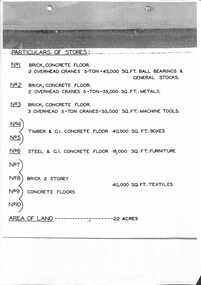
... Vehicles. 617.082 - A.D.I. Stores & Transport WW2 - Braybrook Transport Depot Section Of Fleet & Special Explosive Trucks. 617.083 - A.D.I. Stores & Transport WW2 - Braybrook Transport Depot Section Of Fleet & Buses. 617.084 - A.D.I. Stores & Transport WW2 - Melbourne Western Market Transport Section & Maribyrnong Passenger Car Pool. 617.085 - A.D.I. Stores & Transport WW2 - Melbourne Western Market City Parcel Delivery...Vehicles. 617.082 - A.D.I. Stores & Transport WW2 - Braybrook Transport Depot Section Of Fleet & Special Explosive Trucks. 617.083 - A.D.I. Stores & Transport WW2 - Braybrook Transport Depot Section Of Fleet & Buses. 617.084 - A.D.I. Stores & Transport WW2 - Melbourne Western Market Transport Section & Maribyrnong Passenger Car Pool. 617.085 - A.D.I. Stores & Transport WW2 - Melbourne Western Market City Parcel Delivery ...617.001 - A.D.I. Stores & Transport WW2 - Maribyrnong Particular Of Stores. 617.002 - A.D.I. Stores & Transport WW2 - Maribyrnong Main Entrance & Administrative Offices. 617.003 - A.D.I. Stores & Transport WW2 - Maribyrnong No 1 Store & No 2 Store. 617.004 - A.D.I. Stores & Transport WW2 - Maribyrnong No 3 Store & Textiles Stores No 7, 8, 9 & 10. 617.005 - A.D.I. Stores & Transport WW2 - Maribyrnong Furniture Store & No 3 Store. 617.006 - A.D.I. Stores & Transport WW2 - Maribyrnong 25 Pdr Shell Steel Bar Plates & Ball Bearings. 617.007 - A.D.I. Stores & Transport WW2 - Maribyrnong Electric Cable & Tin Plate & Terne Plate. 617.008 - A.D.I. Stores & Transport WW2 - Maribyrnong Treating Tin Plate Stock & Brass Rod. 617.009 - A.D.I. Stores & Transport WW2 - Maribyrnong Non-Ferrous Rod & Coper Tubing. 617.010 - A.D.I. Stores & Transport WW2 - Maribyrnong No 2 Store Tool Steel Section. 617.011 - A.D.I. Stores & Transport WW2 - Maribyrnong No 2 Store Tool Steel Section. 617.012 - A.D.I. Stores & Transport WW2 - Maribyrnong No 2 Store Steel Section & No 3 Store Machine Tool Section. 617.013 - A.D.I. Stores & Transport WW2 - Maribyrnong No 3 Store Machine Tool Section. 617.014 - A.D.I. Stores & Transport WW2 - Maribyrnong No 3 Store Machine Tool Section. 617.015 - A.D.I. Stores & Transport WW2 - Maribyrnong Box Stores. 617.016 - A.D.I. Stores & Transport WW2 - Maribyrnong Box Stores. 617.017 - A.D.I. Stores & Transport WW2 - Maribyrnong Box Stores. 617.018 - A.D.I. Stores & Transport WW2 - Maribyrnong Domestic Maintenace Store. 617.019 - A.D.I. Stores & Transport WW2 - Maribyrnong Domestic Maintenence Store. 617.020 - A.D.I. Stores & Transport WW2 - Maribyrnong Textile Store. 617.021 - A.D.I. Stores & Transport WW2 - Maribyrnong Textile Store & Protective Clothing. 617.022 - A.D.I. Stores & Transport WW2 - Maribyrnong Cream Serge Cartridge Bags For Naval Guns. 617.023 - A.D.I. Stores & Transport WW2 - Tottenham Particular Of Stores. 617.024 - A.D.I. Stores & Transport WW2 - Tottenham Stores. 617.025 - A.D.I. Stores & Transport WW2 - Tottenham Entrance & Guard Room At Gate. 617.026 - A.D.I. Stores & Transport WW2 - Tottenham Rail Siding With Crane & Weightbridge Near Entrance. 617.027 - A.D.I. Stores & Transport WW2 - Tottenham Brass Cartridge Storage Area & Smoke Floats. 617.028 - A.D.I. Stores & Transport WW2 - Tottenham Ammunition Boxes & Shell Storage Area. 617.029 - A.D.I. Stores & Transport WW2 - Tottenham Aircraft Bomb Parachutes & Small Arms Ammunition. 617.030 - A.D.I. Stores & Transport WW2 - Tottenham Stoarge Area & Boxes. 617.031 - A.D.I. Stores & Transport WW2 - Tottenham Storage Unit Piling. 617.032 - A.D.I. Stores & Transport WW2 - Tottenham Paper Stores & Stores For Empty Storage Boxes. 617.033 - A.D.I. Stores & Transport WW2 - Tottenham Paper Stores & Stores For Empty Storage Boxes & Copper Stacking Compound. 617.034 - A.D.I. Stores & Transport WW2 - Tottenham Railway Siding & Railway Platform. 617.035 - A.D.I. Stores & Transport WW2 - Tottenham Store. 617.036 - A.D.I. Stores & Transport WW2 - Derrimut Particulars Of Buildings. 617.037 - A.D.I. Stores & Transport WW2 - Derrimut Main Entrance & Guard House & Aerial View Of Magazines. 617.038 - A.D.I. Stores & Transport WW2 - Derrimut Loading Shed & Battery Train. 617.039 - A.D.I. Stores & Transport WW2 - Derrimut Magazine Loading & Train Returning From Distant Magazines. 617.040 - A.D.I. Stores & Transport WW2 - Derrimut Electric Locomotive Battery Charging Plant. 617.041 - A.D.I. Stores & Transport WW2 - Ravenhall Explosive Siding. 617.042 - A.D.I. Stores & Transport WW2 - Ravenhall Entrance & Explosive Rail Siding & Mess Hutt. 617.043 - A.D.I. Stores & Transport WW2 - Ravenhall Railway Siding At Deer Park. 617.044 - A.D.I. Stores & Transport WW2 - Longlea Explosive Area. 617.045 - A.D.I. Stores & Transport WW2 - Longlea Main Office & Foreman's Cottage. 617.046 - A.D.I. Stores & Transport WW2 - Longlea Peace Officer's Quarters & Explosive Area Loading Shed. 617.047 - A.D.I. Stores & Transport WW2 - Longlea Repacking House & 50 Ton Magazine. 617.048 - A.D.I. Stores & Transport WW2 - Longlea Main Storage & Fire Fighting Static Pool. 617.049 - A.D.I. Stores & Transport WW2 - Longlea Fire Pump Trailer. 617.050 - A.D.I. Stores & Transport WW2 - Longlea Fire Spotting Tower. 617.051 - A.D.I. Stores & Transport WW2 - Longlea Fire Breaks & Explosive Area Fire Fighting Equipment. 617.052 - A.D.I. Stores & Transport WW2 - Footscray Magazines. 617.053 - A.D.I. Stores & Transport WW2 - Footscray Explosive Magazines & Ammunition Factory Entrance (Jacks Magazine). 617.054 - A.D.I. Stores & Transport WW2 - Footscray Explosive Store & Magazine Access Tunnels Through Mound. 617.055 - A.D.I. Stores & Transport WW2 - Footscray Mounded Magazine. 617.056 - A.D.I. Stores & Transport WW2 - Hire Stores Sites. 617.057 - A.D.I. Stores & Transport WW2 - Hire Stores Sites Olympic Park Chemical Drums & Victoria Street Melbourne Radio & Signal Store. 617.058 - A.D.I. Stores & Transport WW2 - Hire Stores Sites Victoria Street Melbourne Unit Piling & Electrical Equipment. 617.059 - A.D.I. Stores & Transport WW2 - Hire Stores Sites Victoria Street Melbourne Radio & Signals Packing & Testing. 617.060 - A.D.I. Stores & Transport WW2 - Hire Stores Sites Victoria Street Melbourne Dispatched Section & Radio & Union Street North Melbourne Signal Store. 617.061 - A.D.I. Stores & Transport WW2 - Hire Stores Sites Errol Street North Melbourne Unit Piling & Electrical Equipment. 617.062 - A.D.I. Stores & Transport WW2 - Hire Stores Sites Errol Street North Melbourne Checking & Packing Store. 617.063 - A.D.I. Stores & Transport WW2 - Hire Stores Sites Casino Dance Hall Brunswick Valves Storage Store. 617.064 - A.D.I. Stores & Transport WW2 - Hire Stores Sites Casino Dance Hall Brunswick Valves Storage Store & Haymarket Parkville Copper Storage. 617.065 - A.D.I. Stores & Transport WW2 - Hire Stores Sites Deer Park Toluol Tanks & Acetone Tanks. 617.066 - A.D.I. Stores & Transport WW2 - Hire Stores Sites Deer Park Acetone Drum Stock Shelters & Albion Drum Stocks. 617.067 - A.D.I. Stores & Transport WW2 - Hire Stores Sites Lonsdale Street Melbourne Food Service Store & Repairing Frigidaire. 617.068 - A.D.I. Stores & Transport WW2 - Hire Stores Sites Lonsdale Street Melbourne Unit Pile & Stocks For Food Service Store. 617.069 - A.D.I. Stores & Transport WW2 - Hire Stores Sites Lonsdale Street Melbourne Food Service Store. 617.070 - A.D.I. Stores & Transport WW2 - Hire Stores Sites Albion Barblock Wire Coils & Crockery. 617.071 - A.D.I. Stores & Transport WW2 - Hire Stores Sites Bendigo & Ballarat Chemical Stock Stores. 617.072 - A.D.I. Stores & Transport WW2 - Hire Stores Sites Ballarat Skating Link Kexachlorethane Storage & Ballarat Motor Garage Di-Nitro-Toluol Storage. 617.073 - A.D.I. Stores & Transport WW2 - Hire Stores Sites Rae Hill School Bendigo Amorphous Phosphorus Storage & Williamstown Racecourse Grandstand. 617.074 - A.D.I. Stores & Transport WW2 - Hire Stores Sites Williamstown Racecourse Rear Of Grandstand Chemical Stocks & Racecourse Stables Chemcial Storage. 617.075 - A.D.I. Stores & Transport WW2 - Hire Stores Sites Williamstown Racecourse Tote Chemical Storage & White Phosphorus Storage Area. 617.076 - A.D.I. Stores & Transport WW2 - Hire Stores Sites Williamstown Racecourse Scratching Board Chemical Stoage Area. 617.077 - A.D.I. Stores & Transport WW2 - Braybrook Transport Depot. 617.078 - A.D.I. Stores & Transport WW2 - Braybrook Transport Depot Entrance, Guard Room & Control Room & Petrol & Oil Filling Station. 617.079 - A.D.I. Stores & Transport WW2 - Braybrook Transport Depot Offices & Repair Shops & Light Vehicle Repair Shop. 617.080 - A.D.I. Stores & Transport WW2 - Braybrook Transport Depot Semi-Trailers Loaded For Shipment & Semi-Trailers Loaded With Tallow. 617.081 - A.D.I. Stores & Transport WW2 - Braybrook Transport Depot Parking Area & Stick-Up Area For Load Vehicles. 617.082 - A.D.I. Stores & Transport WW2 - Braybrook Transport Depot Section Of Fleet & Special Explosive Trucks. 617.083 - A.D.I. Stores & Transport WW2 - Braybrook Transport Depot Section Of Fleet & Buses. 617.084 - A.D.I. Stores & Transport WW2 - Melbourne Western Market Transport Section & Maribyrnong Passenger Car Pool. 617.085 - A.D.I. Stores & Transport WW2 - Melbourne Western Market City Parcel Delivery Service & Horse Vehicles. 617.086 - A.D.I. Stores & Transport WW2 - Horse Vehicles & Maribyrnong Horse Vehicles Leaving Stables. 617.087 - A.D.I. Stores & Transport WW2 - Maribyrnong Horse Off To Work & Types Of Horses. 617.088 - A.D.I. Stores & Transport WW2 - Maribyrnong Foal & Off To Grass For Weekend. 617.089 - A.D.I. Stores & Transport WW2 - Maribyrnong Blacksmith & Horseshoeing. 617.090 - A.D.I. Stores & Transport WW2 - Maribyrnong Shrinking Tyre & Carpenter's Work Shop. 617.091 - A.D.I. Stores & Transport WW2 - Material Handing. 617.092 - A.D.I. Stores & Transport WW2 - Material Handing Iton Stillage, Iton Elevating Truck & Hand Truck & Gravity Rollers. 617.093 - A.D.I. Stores & Transport WW2 - Material Handing Fordson Tractor & Lister Tow Motor & Trailers. 617.094 - A.D.I. Stores & Transport WW2 - Material Handing Mechical Drum Loader. 617.095 - A.D.I. Stores & Transport WW2 - Material Handing Electric Stacker. 617.096 - A.D.I. Stores & Transport WW2 - Material Handing Tottenham 5 Ton Mobile Crane. 617.097 - A.D.I. Stores & Transport WW2 - Material Handing 3 Ton Crane. 617.098 - A.D.I. Stores & Transport WW2 - Material Handing Fowler Iton Tractor Crane & 2 Ton Gibson Battle Crane. 617.099 - A.D.I. Stores & Transport WW2 - Material Handing 3 Ton Ransome Rapier Crane. 617.100 - A.D.I. Stores & Transport WW2 - Material Handing Coles 3 Ton Mobile Crane. 617.101 - A.D.I. Stores & Transport WW2 - Material Handing Fowler Iton Crane & 2 Ton Gibson Batle Crane. 617.102 - A.D.I. Stores & Transport WW2 - Material Handing Material Handing Coles 3 Ton Mobile Crane. 617.103 - A.D.I. Stores & Transport WW2 - Material Handing Lawton 3000 Lbs Hydraulic Fork Truck. 617.104 - A.D.I. Stores & Transport WW2 - Material Handing Special Explosive Truck. 617.105 - A.D.I. Stores & Transport WW2 - Material Handing Road Transport Of Explosive. 617.106 - A.D.I. Stores & Transport WW2 - Material Handing 80 Ton Transport Bogie. 617.107 - A.D.I. Stores & Transport WW2 - Material Handing Special Explosive Truck. 617.108 - A.D.I. Stores & Transport WW2 - Horse Vehicles & Maribyrnong Horse Vehicles Leaving Stables. 617.109 - A.D.I. Stores & Transport WW2 - Horse Vehicles. 617.110 - A.D.I. Stores & Transport WW2 - Semi-Trailers Loaded With Tallow For Shipment. 617.111 - A.D.I. Stores & Transport WW2 - Williamstown Racecourse White Phosphorus Storage Area. 617.112 - A.D.I. Stores & Transport WW2 - Albion Barblock Wire Coils. 617.113 - A.D.I. Stores & Transport WW2 - Rae Hill School Bendigo Amorphous Phosphorus Storage. 617.114 - A.D.I. Stores & Transport WW2 - Albion Drum Stocks. 617.115 - A.D.I. Stores & Transport WW2 - Deer Park Acetone Tanks. 617.116 - A.D.I. Stores & Transport WW2 - Footscray Explosive Store (Jacks Magazine). 617.117 - A.D.I. Stores & Transport WW2 - Derrimut Aerial View Of Magazines. 617.118 - A.D.I. Stores & Transport WW2 - Tottenham Railway Siding. 617.119 - A.D.I. Stores & Transport WW2 - Tottenham Weightbridge Near Entrance. 617.120 - A.D.I. Stores & Transport WW2 - Tottenham Rail Siding With Crane. 617.121 - A.D.I. Stores & Transport WW2 - Tottenham Entrance. 617.122 - A.D.I. Stores & Transport WW2 - Maribyrnong No 2 Store Steel Section. 617.123 - A.D.I. Stores & Transport WW2 - Maribyrnong Treating Tin Plate Stock. 617.124 - A.D.I. Stores & Transport WW2 - Maribyrnong Treating Tin Plate Stock.world war 1939 - 1945 -
 Flagstaff Hill Maritime Museum and Village
Vehicle - Tip Dray, Prior to 1930s
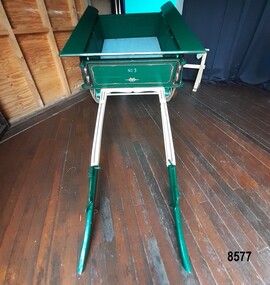
... It was noted in a letter to the editor in the "Sunshine Advocate" in 1938 that a positive argument for continued use of Tip Drays for rubbish collection related to the idea that a horse drawn vehicle involved with lots of stops and starts at different houses (very like a milkman's delivery route) often involved the horse "driving itself" while the driver picked up the rubbish - something a motor truck was unable to do! ...It was noted in a letter to the editor in the "Sunshine Advocate" in 1938 that a positive argument for continued use of Tip Drays for rubbish collection related to the idea that a horse drawn vehicle involved with lots of stops and starts at different houses (very like a milkman's delivery route) often involved the horse "driving itself" while the driver picked up the rubbish - something a motor truck was unable to do! ...A Dray is a type of dead axle wagon that was used to transport heavy loads or objects. They had a flat level floor and while some had no sides, others had box bodies and sides. Tip Drays (also known as Tip Carts, Muck Cart, Scotch Cart, Tumbrel or Putt in different parts of England) were smaller than other drays as their loads were heavy and usually only pulled by one horse. Their basic design included two wheels, a tipping body and shafts. The Tip Dray has a unique mechanism that allows the top to tip backwards to tip the load out of the back of the dray. The tipper was activated by a handle at the front allowing the driver to operate it while still having control over the horse. A Tip Dray was an indispensable piece of equipment in the days before tractors and mechanical trucks. They were used by farmers and carters to transport hay, rocks, bricks, gravel and rubbish etc. and because they were useful for dumping loads, they were favoured for use in road and railway construction. A photo in the collection of the Lorne Historical Society shows a tipping dray being used during the construction of the Great Ocean Road. They were part of the daily street traffic in towns and cities around Australia from the early days of settlement. In Australia in the early 1900's, carters began to join unions to protect their jobs and pay. N.S.W. had a "Trolley, Draymen and Carters Union", Queensland had a "Tip Dray Men's Association" and in W. A. the "Top Dray Driver's Union" had a "cessation of work" in 1911 when they were fighting for an increase in their day's wages. In 1910 a meeting of Tip Carters was held in Geelong at the Trades Hall to discuss the formation of a union (The Geelong Tip Dray Carters) which was a success and a schedule of rates for all carting, whether by contract or day labor, was fixed. By 1912 they had "labelled" more than 50 drays and had representatives on the "Trades Hall and Eight Hours Committee". By the mid 1930's and early 1940's, tip drays were being superseded by mechanical trucks and utes. However tip drays continued to be used in some circumstances. They were a practical solution to the problem of petrol rationing during W. W. 2. It was noted in a letter to the editor in the "Sunshine Advocate" in 1938 that a positive argument for continued use of Tip Drays for rubbish collection related to the idea that a horse drawn vehicle involved with lots of stops and starts at different houses (very like a milkman's delivery route) often involved the horse "driving itself" while the driver picked up the rubbish - something a motor truck was unable to do! Another article written in August 1935 and published in the Age in a parliamentary report into the rubber industry noted "tip drays had almost disappeared and in their place, metal was carted in 5 ton motor trucks" but the report went on to say that as a part of the Government relief work (during the Great Depression) the Government had "to some extent reintroduced the tip drays so that a greater number of men would be employed". This particular tip dray was owned by Mr. Oswald (Jack) Bourke. He used it to deliver dry goods from Sunbury to the Queen Victoria Market in Melbourne several times a week in the 1930's and then (between 1945 and 1962) Mr. Bourke used it on the garbage round in Springvale Victoria for the Springvale Council. The Council owned three drays and the "No. 3" painted on this dray is in recognition of its original number. After the death of Mr. Bourke in 1990, one of Mr. Bourke's sons (Andy) found the dray in a shed and restored it. The sign writing on the back and side panels were added during the restoration. This Tipping Dray is a significant example of a horse drawn vehicle that was used by workers from the early days of white settlement through to the 1940's and even into the early 1960's. It was used in a range of "working class" occupations - road construction, railway construction, carting goods, rubbish collection etc. and would have been found in cities, country towns and on farms.A wooden and metal tipping dray with a box body and four sides. It has two iron and wooden wheels (with 14 spokes), two wooden shafts and a metal tipping mechanism. The back panel folds down to allow loads to be dumped out. It is painted in green and cream with sign writing on one of the sides and on the front and back panels. It features decorative painted lines and designs in burgundy, cream and light blue on most of the wooden parts. The tipping mechanism is on the front of the dray's left side and consists of a metal pin secured with a metal ring, and a lever.Front of dray - "No. 3" Side of dray - "A. & M. BOURKE / Contractors / LONGWARRY" Back of dray - "G.T. ANDREWS / QUEEN VICTORIA MARKET - Stand C23 / Phone DANDENONG 225"flagstaff hill maritime museum and village, warrnambool, shipwreck coast, tipping dray, dray, tip dray, tip cart, vehicles, horse drawn vehicle, springvale council, jack bourke, muck cart, scotch cart, tumbrel, putt, box body, oswald bourke, sunbury, queen victoria market, melbourne, no. 3 -
 Flagstaff Hill Maritime Museum and Village
Equipment - Horse Harness, Glenn's Leather Goods, Early to mid-20th century
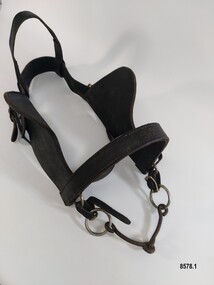
... Flagstaff Hill Maritime Museum and Village Warrnambool Great Ocean Road Sunbury Springvale dray delivery dray harness horse harness horse drawn vehicles working horse Oswald (Jack) Bourke bridle horse collar hames shaft protectors Bridle with blinkers - "M B" Bridle - design showing an elongated X with a dot in each section stamped onto strap holder Shaft Protectors - stamped design of flowers, wings, crosses and arrowheads Strap with chain - "Glenn's leather goods / Pearcedale / Victoria" Leather Strap (with two metal rings) - Maker's stamp - "name indecipherable / SADDLER / ...OURNE" Collar - "B / B" Leather strap - A leather and metal horse harness used with a horse and dray circa 1930's to the early 1960's. ...The early settlers of Victoria depended on horse drawn vehicles to farm, make roads and railways, deliver produce and transport people. Horse harnesses were an important requisite for all drivers and could be found wherever there were working horses. Horse Harnesses have played an essential role in different cultures throughout history. Simple, utilitarian horse harnesses made of leather straps and iron rings were being used in early China before AD 500 as well as ancient Greece and Rome allowing horses to pull chariots and ploughs. The Greeks and Romans were the first to use a "horse collar" which distributed the weight of the harness evenly across the horse's chest rather than relying on a "throat harness" that could damage a horse's throat or choke them. During the medieval period, European horse harnesses became more elaborate and decorative. Variations of different horse harnesses were also found in Native American and Middle Eastern cultures. Horse Harnesses usually have four basic components which include - 1. Communication - the bridle, bit and reins allows the driver to communicate instructions and commands to the horse, guiding its movement and direction. 2. Draft - the collar, hame straps, hames, traces and chains enables the horse to draw and pull the load efficiently by distributing the weight and transferring the pulling force to the vehicle. 3. Stopping - the breeching band, pole straps and breast strap helps to control or stabilise the horse and vehicle when moving downhill or stopping. 4. Support - the back pad, backband, belly band and back saddle keep the harness in the correct position and proper alignment. This dray harness is a plain, basic harness and reflects its working class origins. It was used by Mr. Oswald (Jack) Bourke with his horse and dray to firstly deliver drygoods from Sunbury to Melbourne in the 1930's and later (through the 1940's and 1950's up to 1961) when he worked on the garbage round for the Springvale City Council. This horse harness is a significant example of the equipment that was needed wherever horses were being used - particularly in the early years of Victoria's settlement by white settlers. Harnesses such as this example were used with drays, farming equipment, delivery carts and personal transportation.A leather and metal horse harness used with a horse and dray circa 1930's to the early 1960's. It is made up of a number of components. 1. A leather bridle with metal buckles and rings, blinkers and a metal single jointed, snaffle bit that has the initials M B stamped onto the leather. 2. A leather bridle with metal buckles and rings and a metal "straight bar" Eggbut snaffle bit. It has an elongated X design (with 4 dots) stamped onto the leather strap holders near each buckle. 3. A blue and white vinyl halter with one leather patched strap. The nose band and a chin strap are covered with woollen padding. 4. A pair of leather shaft protectors. They have lacing holes along each edge and a repeating design of small shapes (flowers, wings, crosses and arrowheads) which run along the front of each protector. 5. A leather strap with a stainless steel chain and catch and a maker's mark for "Glenn's Leather Goods, Pearcedale Victoria" stamped onto the end. 6. A wide leather strap covered with a webbing sleeve. It has two large metal rings and each end and one ring has a rope attached. 7. A leather strap comprised of three separate sections (two shorter and one longer) joined with two metal rings. The longer section has notches along its length and the shorter section at the other end has a buckle. It also had a maker's mark stamped on it but the mark is very worn and the writing is difficult to read. 8. An adjustable leather horse collar with two buckles and straps at the top opening and two "B's" stamped into the leather. The top of the collar is made from treated leather pieces stitched together and the underneath of the collar is untreated leather. It has a padded indentation running all the way around the collar for the hames to sit in. 9. Two pairs of long leather traces - each having a buckle and notched section at one end and each one is made with three lengths of leather spliced together. 10. A leather strap (with one spliced join) belonging to a horse harness with two shorter straps (each ending with a metal clip) attached to a steel D ring at one end. 11. Three assorted short leather straps - the top one has clips at each end and a buckle (for adjusting the length) in the centre, the middle strap has notches and a buckle and the bottom strap is white with notches and a buckle.Bridle with blinkers - "M B" Bridle - design showing an elongated X with a dot in each section stamped onto strap holder Shaft Protectors - stamped design of flowers, wings, crosses and arrowheads Strap with chain - "Glenn's leather goods / Pearcedale / Victoria" Leather Strap (with two metal rings) - Maker's stamp - "name indecipherable / SADDLER / ...OURNE" Collar - "B / B" Leather strap - flagstaff hill maritime museum and village, warrnambool, great ocean road, sunbury, springvale, dray, delivery dray, harness, horse harness, horse drawn vehicles, working horse, oswald (jack) bourke, bridle, horse collar, hames, shaft protectors -
 Flagstaff Hill Maritime Museum and Village
Vehicle - Spring Cart, Late 19th to early 20th centuries
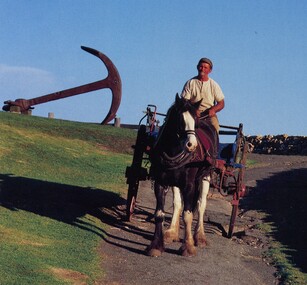
... delivery cart...Yabbie...cartwright...horse-drawn vehicle...The spring card is an example of vehicles used on farms, for business delivery and for domestic transport in the late-19th and early-20th century. ...A spring cart is a two-wheeled, one-horse cart, often with the driver standing up to drive it, and otherwise seated on a simple seat. Carts like this one had springs to make the ride smoother. It is a lighter version of a farm dray and is sometimes called a spring dray. Spring carts were often used on farms for carrying loads. In the towns, some businesses used a spring cart for deliveries of bread, milk and other goods. The carts would be used for travel and for families going on outings and picnics. Visitors to Flagstaff Hill Maritime Village from 1986 to 1992 would enjoy watching a Clydesdale horse named Duke as he worked around the village with his driver Pat McGowan. He would be hitched to a wagon or to this lightweight spring cart or sometimes he would pull the wagon with the cart attached as a trailer. The cart was used for maintenance, carting loads of timber or stone around the site or from town to Flagstaff Hill. Sometimes Duke and the cart would take visitors for cart rides around the Village. Pat McGowan was known for his restoration of horse-drawn vehicles including this spring cart. He already had 40 years of horse handling experience when he began looking after Duke, feeding and harnessing him and driving the horse and cart around the Village. Pat’s dog ‘Yabbie’ would often join them. In August 1992 Duke had to be put down. Warrnambool Veterinary Clinic and other fund-raisers began well-supported appeals and the beloved horse was replaced by a Clydesdale also named Duke (the second), who began work in late October 1992. He, like his predecessor, had a quiet temperament and was comfortable in the traffic. The spring card is an example of vehicles used on farms, for business delivery and for domestic transport in the late-19th and early-20th century. This cart is of note for being associated with the Clydesdale horse Duke which pulled the cart around Flagstaff Hills in the 1980s and 1990s, representing transport of that period.Spring cart; two-wheeled cart with shallow box tray and plank seat bolted across the front. Wheels have metal rims and fourteen (14) wooden spokes. A plank is bolted from side to side. A decorative metal step is on the cart's left and has acorn cut-out shapes in the plate. Both wheels have a brake block that is operated by a lever on the cart's right. The cart has eight-leaf suspension from front to back. The box tray is painted blue and has decorative pale yellow detail. Each shaft pole has has a handle fitting on it. (Horse equipment with the cart is a leather covered, straw filled collar.) flagstaff hill, flagstaff hill maritime museum and village, warrnambool, maritime museum, maritime village, great ocean road, shipwreck coast, springcart, spring cart, jingle, horse-drawn cart, one horse cart, two-wheeled cart, dray, spring dray, wagon, transportation, travel, cart, duke, clydesdale, pat mcgowan, delivery cart, yabbie, cartwright, horse-drawn vehicle, transport, horse cart -
 Eltham District Historical Society Inc
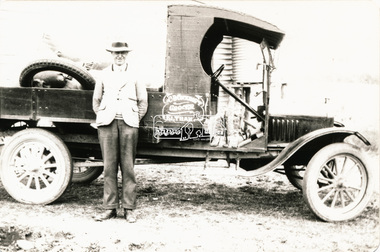
Photograph, Charles Cockcroft, Grocer, Eltham, beside his delivery truck, c.1935
... Charles Burgess Cockroft Grocer Vehicles Trucks Details inscribed in blue ink on back of photo Black and white print also negative copy of print (roll of 35mm black and white negative film, 3 strips Ilford FP4) also negative copy of print (roll of 35mm colour negative film, 5 of 7 strips Kodak CP100 5094) Charles Cockcroft, Grocer, Eltham, beside his delivery truck. ...Charles Cockcroft born Bundanoon, NSW, 1885, died 1966 and buried in Eltham Cemetery. At one time Charles had a depot in Kangaroo Ground. He delivered groceries as far away as Panton Hill, Cottlesbridge, etc.Black and white print also negative copy of print (roll of 35mm black and white negative film, 3 strips Ilford FP4) also negative copy of print (roll of 35mm colour negative film, 5 of 7 strips Kodak CP100 5094)Details inscribed in blue ink on back of photocharles burgess cockroft, grocer, vehicles, trucks -
 Bendigo Military Museum
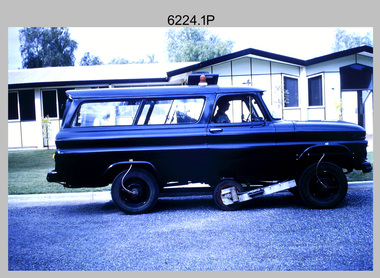
Photograph - Johnson Ground Elevation Meter (JGEM) Survey Vehicle - Army Survey Regiment, Fortuna, Bendigo, c1960s
... The two Australian GEM vehicles, referred to as Johnson GEMs (JGEMs) were converted into right-hand drive. After delivery in 1964, acceptance Natmap and RA Svy testing and operator training was undertaken at the Army's School of Military Survey located at Balcombe, Victoria. ...The two Australian GEM vehicles, referred to as Johnson GEMs (JGEMs) were converted into right-hand drive. After delivery in 1964, acceptance Natmap and RA Svy testing and operator training was undertaken at the Army's School of Military Survey located at Balcombe, Victoria. ...This is a set of 16 photograph of the Royal Australian Survey Corps’ Johnson Ground Elevation Meter (JGEM) Survey Vehicle taken at the Army Survey Regiment, Fortuna, Bendigo. The JGEM vehicle was extensively used by RA Svy within Australia from the late 1960s. A limited number of Ground Elevation Meter (GEM) station wagon type vehicles were manufactured by General Motors Corporation (GMC) in the USA for the United States Geological Survey, Canada’s mapping agencies, RA Svy and National Mapping (Natmap). The GEM was a four-wheel drive, four-wheel steer vehicle. Four-wheel steering was necessary to avoid systematic errors caused by non-tracking of front and rear wheels on conventionally steered vehicles. The manufacturer substituted the rear axle with a front axle and connected them to form the four-wheel steering mechanism. The two Australian GEM vehicles, referred to as Johnson GEMs (JGEMs) were converted into right-hand drive. After delivery in 1964, acceptance Natmap and RA Svy testing and operator training was undertaken at the Army's School of Military Survey located at Balcombe, Victoria. A small fifth wheel was mounted on a cantilever arm suspension midway between the front and rear wheels on the right side of the vehicle. It was lowered to and raised from its operating position by use of a constant pressure air cylinder. A telescopic bar, suspended between the front and rear axles, provided the reference datum for the angle measurement. The wheel provided the velocity or distance signal through a pulse generator system. A sensitive pendulum mounted on this bar provided the angle measurement for each minute distance traversed. The JGEM contained electromechanical instruments used to determine relative elevations, by trigonometric principles, along a traversed path. These relative elevations were obtained through apparatus which measures the instantaneous angle of inclination of the road and the instantaneous velocity of the meter along such a path. Road routes over which the JGEM operated were planned so that each started and ended as near as practicable to an existing point of known elevation (formally referred to as a level traverse bench mark). The difference in height from the bench mark and the road surface alongside the JGEM’s fifth wheel was measured with a level and staff. Along each route, mapping control photo reference points where new elevation values were required were identified on aerial photographs. Under favourable conditions it was possible to survey as much as 160km in an ordinary working day. The first of RA Svy’s JGEM operations was undertaken in 1:250,000 scale map areas of Queensland. CPL John Hook was the JGEM’s main operator in the early 1970s undertaking operations covering 1:250,000 scale map blocks over northern Victoria and central NSW, each requiring 36 points (9 runs of photography and 4 points across. SPR Lyn Thompson and SPR Bob McDonagh teamed with CPL Hook on some of these JGEM operations. When RA Svy was integrated into the Royal Australian Engineers in 1996, the JGEM vehicle with the Survey Corps collection was donated to its museum. It is believed to be the last of the original manufactured fleet in existence. The JGEM has undergone extensive refurbishment to achieve roadworthiness and is currently housed at The Australian Army Museum of Military Engineering, Hoslworthy Barracks, NSW. It can be viewed by making an appointment with the museum’s curator.This is a set of 16 photograph of the Royal Australian Survey Corps’ Johnson Ground Elevation Meter (JGEM) Survey Vehicle taken at the Army Survey Regiment, Fortuna, Bendigo. The photographs were on 35mm slide film and were scanned at 96 dpi. They are part of the Army Survey Regiment’s Collection. .1) - Photo, colour, c1960s, Johnson Ground Elevation Meter (JGEM) Survey Vehicle .2) - Photo, colour, c1960s, JGEM instrumentation, on-board computer. .3) - Photo, colour, c1960s, JGEM instrumentation. .4) - Photo, colour, c1960s, JGEM instrumentation, on-board computer. .5) - Photo, colour, c1960s, JGEM tyre pressure controller .6) - Photo, colour, c1960s, JGEM rear doors, SGT Geoff Briggs. .7) - Photo, colour, c1960s, JGEM 5th wheel distance/angle measurement device in lowered position, SGT Geoff Briggs. .8) - Photo, colour, c1960s, JGEM 5th wheel distance/angle measurement device in lowered position. .9) & .10) - Photo, colour, c1960s, JGEM tyre pressure system, SGT Geoff Briggs. .11) - Photo, colour, c1960s, JGEM tyre pressure system. SGT Geoff Briggs. .12) - Photo, colour, c1960s, JGEM levelling scope, levelling staff, unidentified technicians. .13) & .14) - Photo, colour, c1960s, JGEM levelling scope, unidentified technician. .15) & .16) - Photo, colour, c1960s, probably survey operation adjusted height plotted on block base sheet. .1P to .16P - Some of the equipment is annotated on the frame of the 35mm slides.royal australian survey corps, rasvy, army survey regiment, army svy regt, fortuna, asr, surveying -
 Bendigo Historical Society Inc.
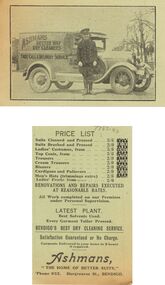
Document - RANDALL COLLECTION: ASHMAN'S, THE HOME OF BETTER SUITS, BENDIGO
... Document, Ashman's, The Home of Better Suits, Hargreaves Street, Bendigo, Phone 933.Price list of Services on the rear side.Front side is a Wagon with signage, Ashmans, Better Way, Dry Cleaners, Fee Call & Delivery Service, with a Man with a uniform standing beside the vehicle....DOCUMENT Names of bendigo pioneers ashman's Document, Ashman's, The Home of Better Suits, Hargreaves Street, Bendigo, Phone 933.Price list of Services on the rear side.Front side is a Wagon with signage, Ashmans, Better Way, Dry Cleaners, Fee Call & Delivery Service, with a Man with a uniform standing beside the vehicle. Document RANDALL COLLECTION: ASHMAN'S, THE HOME OF BETTER SUITS, BENDIGO. ...Document, Ashman's, The Home of Better Suits, Hargreaves Street, Bendigo, Phone 933.Price list of Services on the rear side.Front side is a Wagon with signage, Ashmans, Better Way, Dry Cleaners, Fee Call & Delivery Service, with a Man with a uniform standing beside the vehicle.document, names of bendigo pioneers, ashman's -
 Bendigo Historical Society Inc.
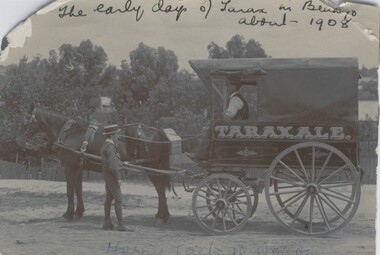
Photograph - HORSE DRAWN VEHICLE WITH MAN AND BOY, c.1908
... vehicle. Adult male driver, boy standing near horse. Inscriptions: on front - hand written across top 'The early days of Tarax in Bendigo about 1908' Hand written across bottom 'Harry Laity (may be Tait) in wagon'. Painted on wagon 'Taraxale'. History of object: James Lerk 2000 - 'The original DELIVERY...vehicle. Adult male driver, boy standing near horse. Inscriptions: on front - hand written across top 'The early days of Tarax in Bendigo about 1908' Hand written across bottom 'Harry Laity (may be Tait) in wagon'. Painted on wagon 'Taraxale'. History of object: James Lerk 2000 - 'The original DELIVERY ...Black and white photograph of four wheeled horse drawn vehicle. Adult male driver, boy standing near horse. Inscriptions: on front - hand written across top 'The early days of Tarax in Bendigo about 1908' Hand written across bottom 'Harry Laity (may be Tait) in wagon'. Painted on wagon 'Taraxale'. History of object: James Lerk 2000 - 'The original DELIVERY CART FOR George Pethard's soft drink firm which he commenced in Panton Street, Golden Square. The 'Taraxale' wagon belonged to Harry Laity (or Tait). Photographed c.1908. Photographed for Bendigo Advertiser 4.7.2000organization, business, taraxale -
 Port Melbourne Historical & Preservation Society
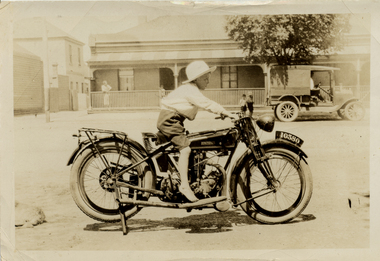
Photograph - Boy on motorbike in Bridge Street near corner of McCormack Street, Port Melbourne, 1920s
... transport - motor vehicles rudge-whitworth motorbike Sepia photo of young boy on Rudge-Whitworth motorbike in Bridge Street near corner of McCormack Street. Delivery ...Sepia photo of young boy on Rudge-Whitworth motorbike in Bridge Street near corner of McCormack Street. Delivery van in background.transport - motor vehicles, rudge-whitworth motorbike -
 Ballarat Tramway Museum
Document - Photocopy, Alan Bradley, "Tram by Road", 2003
... Trams tramways Maximum Traction Delivery Of Tramcars Transport New Trams Photocopy, poor of photograph, of a Maximum Traction car arriving in Ballarat, from The Courier, 2/5/1951, titled "Tram by Road". Shows a tram on a heavy transport vehicle ...Yields information about the delivery method of the maximum traction or bogie trams to Ballarat during the early 1950's.Photocopy, poor of photograph, of a Maximum Traction car arriving in Ballarat, from The Courier, 2/5/1951, titled "Tram by Road". Shows a tram on a heavy transport vehicle truck arriving in Ballarat.trams, tramways, maximum traction, delivery of tramcars, transport, new trams -
 Tatura Irrigation & Wartime Camps Museum
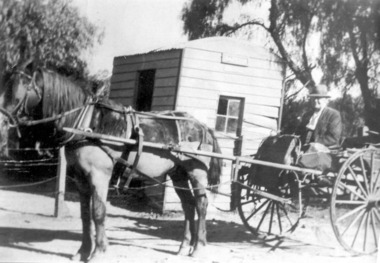
Photograph, Hogan, John, 2001
... Photo taken c.1950 in front of the Harston Post Office. mail delivery cooma harston byrneside hogan john harston post office photograph people Hogan, John in horse drawn vehicle Hogan, John Photograph ...John Hogan, son of "King" Thomas Hogan, the last postman to deliver mail to Cooma, Harston & Byrneside areas. Photo taken c.1950 in front of the Harston Post Office.Hogan, John in horse drawn vehiclemail delivery, cooma, harston, byrneside, hogan, john, harston post office, photograph, people -
 Clunes Museum
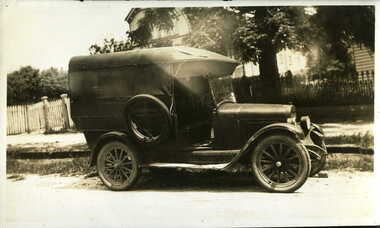
Photograph, VINTAGE CHEVROLET CAR, 1946
... THIS VAN SERVED AS LOCAL TAXI AND DELIVERY VAN. motor vehicle. CHEVROLET VITAGE ARTHUR LELEAN. ...VINTAGE CHEVROLET DELIVERY VAN OWNED BY MR. LOU ROBERTS. THIS VAN SERVED AS LOCAL TAXI AND DELIVERY VAN.BLACK AND WHITE PHOTOGRAPH OF CHEVROLET - VINTAGE DELIVERY VAN PARKED IN FRONT OF METHODIST PARSONAGE CLUNES.ARTHUR LELEAN. CLUNES PRIOR TO DRIVING TENNIS TEAM OUT TO TOURELLO TO REG KINNERSLY'S HOUSE IN CHEVROLET. CIRCA 1946-47motor vehicle., chevrolet vitage -
 Stawell Historical Society Inc
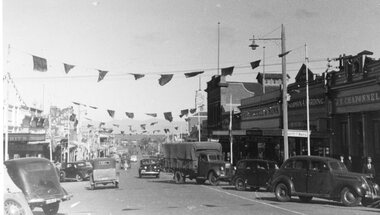
Photograph - Upper Main Street looking West, Upper Main Street with Bunting looking West & Named Shops in 2nd Photo -- 2 Photos
... Many 1940's vehicles in streetboth driving and parked. Delivery truck at centre of image....Many 1940's vehicles in streetboth driving and parked. Delivery truck at centre of image. ...Main Street Stawell c 1940 On left Bike Shop, Carters Boot Shop. On right under town Hall Tower is Stawell Post Office, T. Browns Furniture / Coles / Eales, Geo Mitchell & Sons, Norman A. Harding Men's Wear. J.T. Chaponnel.Main street scene looking west with bunting across street. Many 1940's vehicles in streetboth driving and parked. Delivery truck at centre of image.stawell streetscape -
 Yarrawonga and Mulwala Pioneer Museum
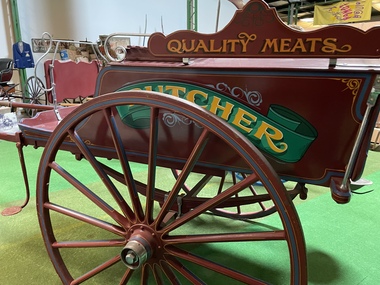
Vehicle - Butcher Delivery Cart, Purchased by Hicks Butchery Mulwala from Goulburn NSW
... Quality Meats Wooden Cart Horse Drawn with long wooden shafts which has been restored Vehicle Butcher Delivery Cart ...Belonged to our local butcher Delivered meat round the townWooden Cart Horse Drawn with long wooden shafts which has been restored“Pleased to meet you with meat to please you “. Butcher. Quality Meats -
 Puffing Billy Railway
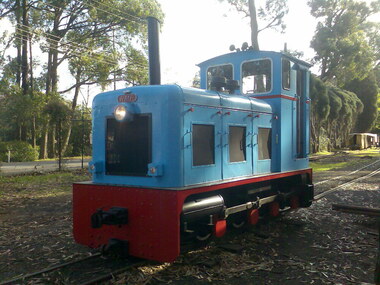
Railway Mine and Plantation (RMP) 0-6-0 Diesel Mechanical Locomotive 2' Gauge - "LI'L TOOT", 1951
... delivery to Australia Weight: 10 Tons Known at Inkerman mill as "LI'L TOOT" Major Ernest E. Baguley (1863–1948) was a British engineer.- In the years leading up to the First World War, Baguley served in the Territorial Army and became Second-in-Command, 6th Battalion, North Staffordshire Regiment, rising to the rank of Major. He served in France from 1914 to 1915. Baguley (Engineers) Ltd After the War there was a decline in the production of road vehicles...delivery to Australia Weight: 10 Tons Known at Inkerman mill as "LI'L TOOT" Major Ernest E. Baguley (1863–1948) was a British engineer.- In the years leading up to the First World War, Baguley served in the Territorial Army and became Second-in-Command, 6th Battalion, North Staffordshire Regiment, rising to the rank of Major. He served in France from 1914 to 1915. Baguley (Engineers) Ltd After the War there was a decline in the production of road vehicles ...Builders Number 3354 Build for Inkerman Mill Queensland in 1951 Displayed at the British Industrial Fair at Castle Bromwich, England 1951 prior to delivery to Australia Weight: 10 Tons Known at Inkerman mill as "LI'L TOOT" Major Ernest E. Baguley (1863–1948) was a British engineer.- In the years leading up to the First World War, Baguley served in the Territorial Army and became Second-in-Command, 6th Battalion, North Staffordshire Regiment, rising to the rank of Major. He served in France from 1914 to 1915. Baguley (Engineers) Ltd After the War there was a decline in the production of road vehicles (probably due to competition from other manufacturers) and an increase in the production of railway equipment. The name of the company was changed from Baguley Cars Ltd to Baguley (Engineers) Ltd on 10 April 1923. Following a dispute with their partners Drewry Cars. Ltd, Baguley (Engineers) Ltd went into decline and entered liquidation in 1931. Most of the plant and effects, including Major Baguley's own Baguley car, were sold at auction on 10 November 1931. E. E. Baguley Ltd Major Baguley was a great survivor of WW1 and, he set up a small repair business for Baguley products at Clarence Street, Burton-on-Trent. A new company, E. E. Baguley Ltd, was registered on 30 April 1932 and was soon building locomotives again. In 1934 E. E. Baguley Ltd moved to larger premises at Uxbridge Street, Burton-on-Trent. The company merged with Drewry to form Baguley-Drewry Ltd in 1962.Historic - Industrial Narrow Gauge Railway Diesel Mechanical Locomotive - Pioneer Sugar Mills - Inkerman Sugar Mill, Home Hill, Queensland, AustraliaRail Mine and Plantation (RMP) 0-6-0 Diesel Mechanical 2' Gauge - " LI'L TOOT " Builders Number 3354 Steel (Painted)RMP / 3354 "LI'L TOOT"rmp, diesel, mechanical, locomotive, 2', 2' gauge, puffing billy, inkerman, li'l toot, industrial narrow gauge railway, e. e. baguley ltd, pioneer sugar mills - inkerman sugar mill, rail mine and plantation (rmp) -
 Melbourne Tram Museum
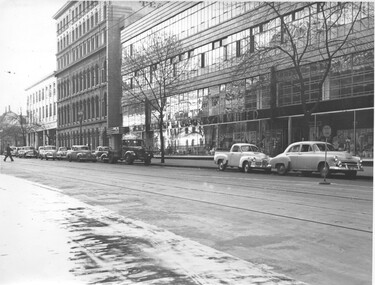
Photograph - Collins and Queen St traffic issues - set of 2, Melbourne & Metropolitan Tramways Board (MMTB), 5-8-1954
... vehicles on East side of street. Date 5-8-54, time 1510 hours." Has the Yorkshire Insurance Company building closest, the APA building and ES&A Bank buildings both dominate the corners at Collins Street. A T.A.A. Air Freight delivery...vehicles on East side of street. Date 5-8-54, time 1510 hours." Has the Yorkshire Insurance Company building closest, the APA building and ES&A Bank buildings both dominate the corners at Collins Street. A T.A.A. Air Freight delivery ...1 - "Collins Street, Safety Zone, north side at King Street, car and utility parked opposite safety zone, also four double parked vehicles in the background. Date 5-8-54, time 1525 hours". In the background is the Macpherson's Limited hardware building. 2 - "Queen Street from Flinders Street, looking north. Double-parked vehicles on East side of street. Date 5-8-54, time 1510 hours." Has the Yorkshire Insurance Company building closest, the APA building and ES&A Bank buildings both dominate the corners at Collins Street. A T.A.A. Air Freight delivery van in attempting to park in one of the central parking bays.Yields information about the traffic congestion in the City area. 1954Black and white photograph with handwritten details of time and location on the rear.On the rear of each print is the details - see Context.trams, tramways, traffic congestion, collins st, queen st
