
Showing 22 items matching "dja dja wurrung people"
-
 Sunbury Family History and Heritage Society Inc.
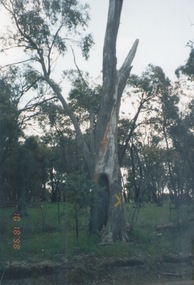
Photograph, 18th October 1998
... ...Dja Dja Wurrung People...The traditional owners are the Dja Dja Wurrung People....The traditional owners are the Dja Dja Wurrung People. The scarred tree is evidence of Aboriginal occupation in the area as the bark from such trees was used for many items. ...The Aboriginal scarred tree was growing along the Redesdale Road just north of the Langley State School. Redesdale is NW of Melbourne in the Greater Bendigo area. The traditional owners are the Dja Dja Wurrung People.The scarred tree is evidence of Aboriginal occupation in the area as the bark from such trees was used for many items. A non-digital coloured photograph of a scarred tree with other smaller trees in the background. The tree has a yellow cross painted on its trunk.scarred trees, aboriginal society, aboriginal technology, langley, dja dja wurrung people -
 The Beechworth Burke Museum
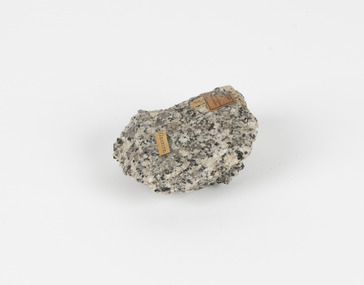
Geological specimen - Granodiorite, Unknown
... ...The Dja Dja Wurrung people...The Traditional owners of Harcourt are The Dja Dja Wurrung people. Granodiorite is a coarse-grained intrusive igneous rock similar to granite, but containing more plagioclase feldspar than orthoclase feldspar. ...The Traditional owners of Harcourt are The Dja Dja Wurrung people. Granodiorite is a coarse-grained intrusive igneous rock similar to granite, but containing more plagioclase feldspar than orthoclase feldspar. ...This specimen was found in Harcourt, Victoria. Harcourt is a small historic gold rush town located in a valley at the foot of Mount Alexander (741 m) in the Central Highlands of Victoria. In recent times the goldrush origins of the town have been replaced by a district known for apples, cider and wine. The Traditional owners of Harcourt are The Dja Dja Wurrung people. Granodiorite is a coarse-grained intrusive igneous rock similar to granite, but containing more plagioclase feldspar than orthoclase feldspar. Granodiorite has greater than 20% quartz by volume, and between 65% and 90% of the feldspar is plagioclase. This piece is of significance due to its provenance in Harcourt, Vic. Granodiorite is commonly produced in volcanic arcs, and in mountain buildings where it emplaces as large batholiths in mountain roots. Granodiorite is the plutonic equivalent of dacite. This specimen is part of a larger collection of geological and mineral specimens collected from around Australia (and some parts of the world) and donated to the Burke Museum between 1868-1880. A large percentage of these specimens were collected in Victoria as part of the Geological Survey of Victoria that begun in 1852 (in response to the Gold Rush) to study and map the geology of Victoria. Collecting geological specimens was an important part of mapping and understanding the scientific makeup of the earth. Many of these specimens were sent to research and collecting organisations across Australia, including the Burke Museum, to educate and encourage further study.Granodiorite is a coarse-grained intrusive igneous rock similar to granite, but containing more plagioclase feldspar than orthoclase feldspar. According to the QAPF diagram, granodiorite has a greater than 20% quartz by volume, and between 65% and 90% of the feldspar is plagioclase.GRANDIORITE. / Locality: / Harcourt, Victoria / Other label: Geological survey / R S / Loc Harcourt quarries [?] Alexander / 1/4 Sheet. | 4 | Granite /granodiorite, granite, burke museum, harcourt, coarse-grained, igneous, plagioclase feldspar, orthoclase feldspar, quartz, mount alexander, the dja dja wurrung people, the traditional owners, central highlands of victoria, gold rush -
 Eltham District Historical Society Inc
Document - Folder, Thomson, Donald
... ...Dja Dja Wurrung people..."N.T.S.R.U. 1941-1943" "Thomson of Arnhem Land" Victorian Aborigines Welfare Board Thomson Collection Museum Victoria Mia Mia Aboriginal Art Gallery Louise Thomson-Officer Marcia Langton Su baker Lake Tyers Victorian Aboriginal Reserve Gippsland Robert Macklin Yintjingga people 29 Edwin Road Templestowe Royal Geographic Society Nicholas Peterson Mapoon Mission Wongo Aboriginal man Wuluwirr Aboriiginal man Mattuwa Aboriginal man Mauwunbol Aboriginal man Munguyuma Aboriginal man Dja Dja Wurrung people Gavin Jennings Gary Murray Film "Ten Canoes" Galanbingu people Mandallpuy people Djinba people Rolf de Heer Arnhem Land Arafura Swamp Ramingining Caledon Bay Lindy Allen Bunjilaka Centre Newspaper clippings, A4 photocopies, etc Thomson, Donald Document Folder ...Anthropologist and Aboriginal activist Donald Thomson later lived in Eltham with wife Dorita. Contents Photocopy of photograph of Thomson family at "The Oaks", Kinglate 11 November 1891. Photocopy of old photograph of "Worlingworth", home of Donald Thomson. Booklet: "N.T.S.R.U. 1941-1943: text and photographs from the report of Sqn Leader Donald Thomson." Yirrkale Literature Production Centre, 1992. Photocopy of Australian Dictionary of Biography (Vol.16, pp385-386), entry for Thomson, Donald Finlay Fergusson. Newspaper article: "Drought close to city", no source, no date. Donald Thomson wants South Riding of Eltham declared a drought area, photograph of Elaine Thomson. Newspaper article: "Professor dies", The Post, 27 1970. Obituary of Donald Thomson. Photocopy of extracts from "Donald Thomson in Arnhem Land" 1983: Chapter "Donald Thomson: A biographical Sketch". pp1-15; Map; Notes on sources pp141-142. Newspaper article: "Memoirs of an advocate for Aboriginal rights", Diamond Valley News, 8 March 1983. Interview of Dorita Thomson, widow of Donald Thomson, about him and house "Worlingworth". Newspaper article: "Australia's secret Aboriginal 'army". Herald, 2 June 1983. Donald Thomson's life and work, and the book about it, "Donald Thomson of Arnhem Land". Invitation to exhibition of photographs by Donald Thomson, Brighton City Library, 22 July 1983. Publicity for film "Thomson of Arnhem Land" with note from Bruce Nixon, 8 June 2000. Newspaper article: "A crusader before his time", Diamond Valley News, 9 August 2000. Details of life and work of Donald Thomson. Newspaper article: "Outback part. of his life", Diamond Valley News, 9 August 2000. Interview of Dorita Thomson about Donald Thomson's life and work. Newspaper article: "Museum and Aboriginies to meet in stand-off over heritage items", The Age, 29 July 2004. Bark paintings on loan from British Museum in dispute. Magazine article: "Keeping time with Rolf", Time, 20 March 2006. Mentions of Donald Thomson. Newspaper advertisement: "The Thomson House" Templestowe, Emerson Oliver Estate Agent. The Weekly Review, no date (possibly 2017). Flier: "The Thomson House" Templestowe, Emerson Oliver Estate Agent. Newspaper article: "Once upon a time an anthropolgist watched men hunt in 10 canoes", The Age, 16 December 2006. Donald Thomson's work and a new film "Ten Canoes". Newspaper article: "A life's work offers forgotten link to the cultural wealth of nation's first people", The Age, 23 December 2024. The Donald Thomson Ethnohistory Collection. Newspaper clippings, A4 photocopies, etcdonald thomson, northern territory special reconnaissance unit, donald finlay fergusson thomson, "the oaks" kinglake, "worlingworth" eltham, elaine thomson, louise thomson, rosemary thomson, dorita thomson, st margaret's church of england eltham, australian institute of aboriginal studies, brandy creek gippsland, ."donald tomson in arnhem land"., "n.t.s.r.u. 1941-1943", "thomson of arnhem land", victorian aborigines welfare board, thomson collection museum victoria, mia mia aboriginal art gallery, louise thomson-officer, marcia langton, su baker, lake tyers victorian aboriginal reserve gippsland, robert macklin, yintjingga people, 29 edwin road templestowe, royal geographic society, nicholas peterson, mapoon mission, wongo aboriginal man, wuluwirr aboriiginal man, mattuwa aboriginal man, mauwunbol aboriginal man, munguyuma aboriginal man, dja dja wurrung people, gavin jennings, gary murray, film "ten canoes", galanbingu people, mandallpuy people, djinba people, rolf de heer, arnhem land, arafura swamp, ramingining, caledon bay, lindy allen, bunjilaka centre -
 Bacchus Marsh & District Historical Society
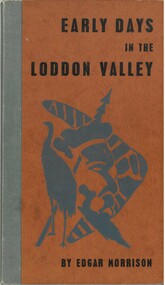
Book, Early Days in the Loddon Valley: Memoirs of Edward Stone Parker
... ...Dja Dja Wurrung People...In 1841 he established the Franklinford Aboriginal Protectorate Station in the territory of the Dja Dja Wurrung people in the Loddon Valley region of Central Victoria. ...Edward Stone Parker (1802–1865) was a Methodist preacher and assistant Protector of Aborigines in the Aboriginal Protectorate established in the Port Phillip District of colonial New South Wales under George Augustus Robinson in 1838. In 1841 he established the Franklinford Aboriginal Protectorate Station in the territory of the Dja Dja Wurrung people in the Loddon Valley region of Central Victoria. He administered the Franklinford Station from January 1841 to the end of 1848. Parker remained in the Mount Franklin area near Daylesford until his death in 1865. This work was originally published in 1865. This edition was published in 1966. It contains an introduction by Edgar Morrison. Annotated selections by Morrison from Parker's journals form the majority of this work.Printed book. Some black and white photographs. Maps and subject index. 99 pages. BMDHS Location: AR/SU14/Pamphlets Box 1non-fictionEdward Stone Parker (1802–1865) was a Methodist preacher and assistant Protector of Aborigines in the Aboriginal Protectorate established in the Port Phillip District of colonial New South Wales under George Augustus Robinson in 1838. In 1841 he established the Franklinford Aboriginal Protectorate Station in the territory of the Dja Dja Wurrung people in the Loddon Valley region of Central Victoria. He administered the Franklinford Station from January 1841 to the end of 1848. Parker remained in the Mount Franklin area near Daylesford until his death in 1865. This work was originally published in 1865. This edition was published in 1966. It contains an introduction by Edgar Morrison. Annotated selections by Morrison from Parker's journals form the majority of this work. edward stone parker 1802-1865, mount franklin aboriginal protectorate, mount franklin mission, aboriginal australians loddon valley region, dja dja wurrung people -
 The Beechworth Burke Museum
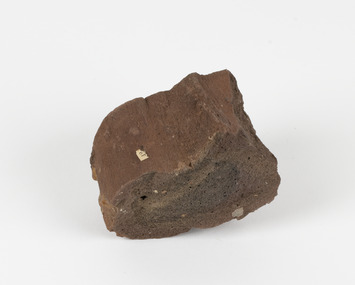
Geological specimen - Ropy Lava
... The traditional owners of this area are the Dja Dja Wurrung people....The traditional owners of this area are the Dja Dja Wurrung people. This geological specimen shows the conditions in which the Australian landscape was created as well as provides an indication as to how these events occurred. ...‘Ropy lava’ is known for its sculptural and layered qualities. It occurs in specific lava flows that are slow moving and slow cooling, allowing for unique formations to be created out of the motion. Ropy Lava is a flow that has a hardened crust with molten material underneath, the tension between these states is what creates its characteristic form. The brown/red hue of the stone is an indication of age, as it is oxidised iron deposits. This rock deposit is thought to be sourced from the area by Talbot, in western Victoria. This area has a rich mineral history and experienced the gold rush in the 1850's. The traditional owners of this area are the Dja Dja Wurrung people.This geological specimen shows the conditions in which the Australian landscape was created as well as provides an indication as to how these events occurred. It is representative of a common natural process that contextualises the formation of Australia with the formation of other landmasses. This specimen is part of a larger collection of geological and mineral specimens collected from around Australia (and some parts of the world) and donated to the Burke Museum between 1868-1880. A large percentage of these specimens were collected in Victoria as part of the Geological Survey of Victoria that begun in 1852 (in response to the Gold Rush) to study and map the geology of Victoria. Collecting geological specimens was an important part of mapping and understanding the scientific makeup of the earth. Many of these specimens were sent to research and collecting organisations across Australia, including the Burke Museum, to educate and encourage further study.Hand sized specimen in brown/red hues42 / victoria, talbot, lava, ropy, ropy lava, mineral, geological specimen, geological, geological heritage, natural stone, natural history -
 Old Colonists' Association of Ballarat Inc.
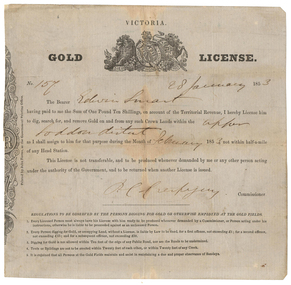
Document - Gold License, Gold License issued to Edwin Smart, 28/01/1853
... The Upper Loddon Plains is within the traditional lands of the Dja Dja Wurrung people....The Upper Loddon Plains is within the traditional lands of the Dja Dja Wurrung people. gold license edwin smart gold mining James Smart Upper Loddon Gold License issued to Edwin Smart on 28 January 1853 at the Upper Loddon. ...The Old Colonists Association Minute Book records: 'James Smart presented the Association with a Gold Diggers License dated 28th January 1853, it being resolved a vote of thanks be recorded.' The headwaters of the Loddon River rise on the northern slopes of the Great Dividing Range east of Daylesford. The river rises below Musk near Trentham and Lyonville from where it heads northward to Glenlyon and on to Loddon Falls. It then flows generally northward through Guildford and Newstead, 40 kilometres (25 mi) west of Bendigo, then towards the Murray River. The Upper Loddon Plains is within the traditional lands of the Dja Dja Wurrung people.Gold License issued to Edwin Smart on 28 January 1853 at the Upper Loddon.gold license, edwin smart, gold mining, james smart, upper loddon -
 Bendigo Historical Society Inc.
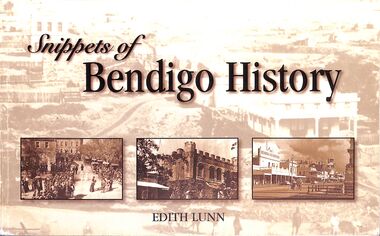
Book - "Snippets of Bendigo History", 2006
... Dja Dja Wurrung (Djaara) people, who have lived in the area for thousands of years. They managed the land sustainably, utilizing the rich hunting grounds and waterways, and their cultural stories and knowledge remain deeply woven into the landscape today. European exploration began with Major Thomas Mitchell in 1836, followed by squatters establishing sheep runs in 1837. The arrival of settlers led to the displacement of the Dja...Dja Dja Wurrung (Djaara) people, who have lived in the area for thousands of years. They managed the land sustainably, utilizing the rich hunting grounds and waterways, and their cultural stories and knowledge remain deeply woven into the landscape today. European exploration began with Major Thomas Mitchell in 1836, followed by squatters establishing sheep runs in 1837. The arrival of settlers led to the displacement of the Dja ...Edith Lunn was born in Bendigo in July, 1907, and had lived all of her life in the city and its immediate environs. Edith was awarded the Order of Australia medal in 2002 for her services to, and interest in, Bendigo's history. This text records to history of Bendigo, as recalled and researched by Edith. Bendigo, formerly known as Sandhurst, grew from Indigenous lands to a major gold rush boomtown and is now a vibrant regional city with rich cultural heritage. The Bendigo region is the traditional land of the Dja Dja Wurrung (Djaara) people, who have lived in the area for thousands of years. They managed the land sustainably, utilizing the rich hunting grounds and waterways, and their cultural stories and knowledge remain deeply woven into the landscape today. European exploration began with Major Thomas Mitchell in 1836, followed by squatters establishing sheep runs in 1837. The arrival of settlers led to the displacement of the Dja Dja Wurrung people, with waves of settlement from the south in 1837 and from the north in 1845. Gold was discovered on Bendigo Creek in 1851 by Mrs. Margaret Kennedy and Mrs. Julia Farrell, sparking one of Australia’s largest gold rushes. By 1852, around 20,000 people had arrived from across the world, including Europe and China, transforming Bendigo into a booming gold-mining economy. The city was officially named Sandhurst from 1853 to 1891. The wealth generated during this period is reflected in Bendigo’s Victorian architecture, including the Town Hall and historic buildings. Gold mining continued into the early 20th century, but by 1954, mining had largely ceased. The city then shifted focus to manufacturing and regional services, experiencing renewed growth from the 1930s onward. Modern Bendigo has become a fast-growing regional centre, aided by infrastructure like the Calder Freeway linking it to Melbourne. Today, Bendigo preserves its history through museums, walking tours, and heritage sites. Key attractions include the Bendigo Art Gallery, Bendigo Joss House Temple, Central Deborah Gold Mine, and the Goldfields Track, which highlight both the gold rush era and the city’s cultural diversity. "Snippets of Bendigo History" written by Edith Lunn. Forward by Daryl McClure. Printed by Bendigo Modern Press. Soft cover book. Front and back covers are sepia with Bendigo street scene, and front cover has three inset sepia toned Bendigo scenes inserted. Title and author's name are in black text on front cover. Author's name and book title written in black on spine. Printed in Bendigo, Australia. 65 pp. This edition was 500 copies. Contents page on iv. Details about author on iii. Contains both text and black and white images. edith lunn, bendigo -
 Bendigo Historical Society Inc.
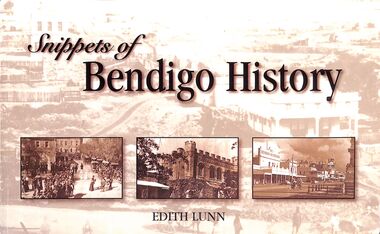
Book - "Snippets of Bendigo History", 2006
... The traditional owners of the area are the Dja Dja Wurrung (Djaara) people. The discovery of gold on Bendigo Creek in 1851 transformed the area from a sheep station into one of colonial Australia's largest boomtowns. ...The traditional owners of the area are the Dja Dja Wurrung (Djaara) people. The discovery of gold on Bendigo Creek in 1851 transformed the area from a sheep station into one of colonial Australia's largest boomtowns. ...Edith Lunn (nee Bishop) was born in Bendigo in July, 1907, and has lived all her life in the city and its immediate environs. Edith long interest and involvement in the community was recognised in 2002 when she was awarded the Order of Australia medal for her services to, and interest in, Bendigo's history. This book records some of her recollections of Bendigo in its earlier days. Bendigo (/ˈbɛndɪɡoʊ/ BEN-dig-oh), formerly known as Sandhurst, is an Australian city in north-central Victoria. The city is located in the Bendigo Valley near the geographical centre of the state and approximately 150 kilometres (93 mi) north-west of Melbourne, the state capital. Bendigo is administered by the City of Greater Bendigo. The council area encompasses roughly 3,000 square kilometres. The city is surrounded by smaller towns such as Castlemaine, Heathcote, Kyneton, Maryborough, Elmore, Rochester, Goornong and Axedale. The traditional owners of the area are the Dja Dja Wurrung (Djaara) people. The discovery of gold on Bendigo Creek in 1851 transformed the area from a sheep station into one of colonial Australia's largest boomtowns. News of the finds intensified the Victorian gold rush, bringing an influx of migrants from around the world, particularly Europe and China. Bendigo became eastern Australia's largest 19th-century gold-mining economy, and the wealth generated during this period is reflected today in the city's Victorian architectural heritage. From 1853 until 1891, Bendigo was officially named Sandhurst. Bendigo's boom period lasted until the early 20th century and after a temporary decline in population and employment, renewed growth occurred from the 1930s as the city consolidated as a manufacturing and regional service centre. Although gold mining continues, recent population growth has been most heavily concentrated in suburban areas. "Snippets of Bendigo History" by Edith Lunn. Soft cover. 65 PP. Sepia historic images of Bendigo on front and back covers. Three small sepia images inset into front cover. Title and authoresses' name on front cover and spine in black. Color and black and white images throughout. This edition 500 copies. gold, edith lunn, view street, pall mall -
 City of Ballarat
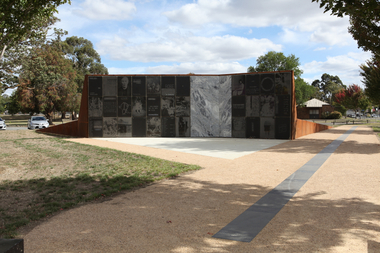
Artwork, other - Public Artwork, Open Monument by John Young, 2015
... Inscription on plaque: Open Monument 無極紀念碑 / Artist: John Young / Officially Launched by Mr Yumin Song / Chinese Consul-General to Victoria / 6th September 2015 / Open Monument unearths stories of the Chinese diaspora in Ballarat, a name which means/ “resting place” to the traditional custodians - the Wadawurrung and Dja Dja Wurrung people./ The monument comprises of two artworks: Transculture, a granite-panelled work, evoking stories of alternative worldviews, / modernity, leisure and toil. ...Open Monument is of aesthetic and historical significance to the people of Ballarat open monument chinese chinese history ballarat goldfields china ballarat goldfields john young chinese mining multicultural immigration tong way goon joss house embroidery billy butterfly chinese market gardens red lion hotel ah soon mayor of main road chinese herbalist yee lee james hong cheok cheong hong john ah loo wathawurrung robe lowe kong meng louis ah mouy tongway gallipoli william lung Inscription on plaque: Open Monument 無極紀念碑 / Artist: John Young / Officially Launched by Mr Yumin Song / Chinese Consul-General to Victoria / 6th September 2015 / Open Monument unearths stories of the Chinese diaspora in Ballarat, a name which means/ “resting place” to the traditional custodians - the Wadawurrung and Dja Dja Wurrung people./ The monument comprises of two artworks: Transculture, a granite-panelled work, evoking stories of alternative worldviews, / modernity, leisure and toil. ...Open Monument is a contemporary artwork acknowledging the history of Chinese people in Ballarat. The Chinese diaspora was global and many Chinese people came to Ballarat and the Victorian Goldfields. The work details some of the personal Chinese family memories of Ballarat from the goldrush forward. The 33 marble laser-etched panels include found images and texts mounted on a modernist metal architectural feature holding back a grassed hill landscape. Within the side walkway of gravel and composite stone is an etched of local activities relating to the Chinese community achievements that can be added to by the community.Open Monument is of aesthetic and historical significance to the people of BallaratArchitectural artwork consisting of large marble panels on a corten steel frame imbedded into a grassed mount.Inscription on plaque: Open Monument 無極紀念碑 / Artist: John Young / Officially Launched by Mr Yumin Song / Chinese Consul-General to Victoria / 6th September 2015 / Open Monument unearths stories of the Chinese diaspora in Ballarat, a name which means/ “resting place” to the traditional custodians - the Wadawurrung and Dja Dja Wurrung people./ The monument comprises of two artworks: Transculture, a granite-panelled work, evoking stories of alternative worldviews, / modernity, leisure and toil. Whilst Timeline traces the major contributions of the Chinese community in Ballarat, every decade / from the 1850s until the present. The timeline then folds out to 2170, anticipating imaginary future contributions. / The monument is open to future interpretations of this history. / I thank you for visiting and acknowledging the contributions and memories that meant so much to / those who have gone before us./ - John Young Zerunge / Patron: Mr Henry Thai OAM JP / President of Ballarat Chinese / Community Association Inc / The following generous donors to this project are acknowledged with gratitude/ City of Ballarat Sovereign Hill Museum Association Inc. Ballarat Chinese Community Association Inc. Mr Henry Thai OAM JP & Mrs Sandra Thai Mrs Shirley Doon & Family in memory of Harry Doon Chinese Masonic Association Inc. Mr Mean Te and Mrs Meng Khun Mr Jack Nguyen MA JP & Mrs My Tang Mr Tony and Mrs Elise Yu Mr Chang Zhen Zhen & Family Australian Lian Jiang Association The Federation of Chinese Associations Vic The Leesoon Family Mr Stephen K.F Ng OAM JP Dr Che Sam Lo MD phD JP OAM Elderly Chinese Home Inc. The Federation of Chinese Org from VN Cambodian and Lao Association of Vic. Inc. Bright Moon Buddhist Society Nam Pon Soon Club House See-Yup Society Mr Peter Chong Wai Lo Mr Qing Song Lin Mr Binh Quoc Mao & Mrs Thuy Cam Thai Mr Alexander Mao Mr Yuet Lung Kwok JP Mr Tai The Tran Mr Phillip K. L. Tran Mr William K. L. Tran Mr Quang Khon Tran JP Mr Kouy Taing Mrs Kieng Hor Lou Mr Bill Chang Piu Au Mr Maurice Kwok Leong Mrs Eunice J. Leong Mr Vi Minh Tran JP Mr Frank Cheng Mr David Cheng Mr William Thai Mr Lizhen Lin Mr Phillip Richard Thai Mr Hoan Ping Kow Mrs Xao Nhu Kow Mr Huy Thai Mr Yun Kuen Lo Mr Chiu Yip & Mrs Yuan Han Cho Mrs Jacqueline Louise Thai Greenwood Mr Joe Hap Chi Chao & Mrs Rosana Wei Ning Chao Charity & Multi Art Association of Victoria Inc. Mr Billy Cai Miss Nikki Cai Miss Su-Ling & Miss Lily Mays-Doon Mr Anthony Doon Mr H J Moy & Family Chinese Australian Cultural Society Ballarat Inc open monument chinese, chinese history ballarat goldfields, china, ballarat, goldfields, john young, chinese, mining, multicultural, immigration, tong way, goon, joss house, embroidery, billy butterfly, chinese market gardens, red lion hotel, ah soon, mayor of main road, chinese herbalist, yee lee, james hong, cheok cheong hong, john ah loo, wathawurrung, robe, lowe kong meng, louis ah mouy, tongway, gallipoli, william lung -
 The Beechworth Burke Museum
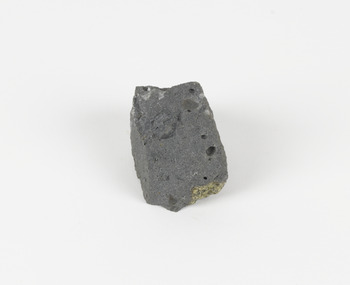
Geological specimen - Basalt (igneous-volcanic) containing Olivine, unknown
... The volcanic eruptions of Mount Franklin were most likely witnessed by members of the Dja Dja Wurrung Aboriginal tribe, who referred to this country as the 'smoking grounds'. Mount Franklin and the surrounding area appears to have been a place of considerable religious significance to Aboriginal people, there is evidence which indicates that frequent large ceremonial gatherings took place in the area. ...The volcanic eruptions of Mount Franklin were most likely witnessed by members of the Dja Dja Wurrung Aboriginal tribe, who referred to this country as the 'smoking grounds'. Mount Franklin and the surrounding area appears to have been a place of considerable religious significance to Aboriginal people, there is evidence which indicates that frequent large ceremonial gatherings took place in the area. ...This particular geological specimen was found in Mount Franklin or Lalgambook in Djadjawurrung, located between Daylesford and Newstead, approximately ninety minutes drive from Melbourne. The mountain is an example of a breached scoria cone (a steep conical hill of loose pyroclastic fragments) which was created by a volcanic eruption about 470,000 years ago, a date which may indicate the age of this geological specimen. The volcanic eruptions of Mount Franklin were most likely witnessed by members of the Dja Dja Wurrung Aboriginal tribe, who referred to this country as the 'smoking grounds'. Mount Franklin and the surrounding area appears to have been a place of considerable religious significance to Aboriginal people, there is evidence which indicates that frequent large ceremonial gatherings took place in the area. Basalt is the most common rock on Earth’s surface, more than 90% of all volcanic rock on Earth is basalt. Basalt is an aphanitic extrusive igneous rock formed from the rapid cooling of low-viscosity lava exposed at or very near the surface of a rocky planet or moon. Specimens are black in colour and weather to dark green or brown. Basalt is rich in iron and magnesium and is mainly composed of olivine, pyroxene, and plagioclase. Olivine is the name of a group of rock-forming silicate minerals with compositions ranging between Mg2SiO4 and Fe2SiO4. Unlike other minerals, Olivine has a very high crystallisation temperature which makes it the first of the minerals to crystallise from magma. As magma cools, the crystals begin to form and settle on the bottom of the lava and form basalts that are abnormally enriched in olivine in the lower part of lava flows. According to H. M. King (on geology.com) "Olivine is thought to be an important mineral in Earth's mantle. Its presence as a mantle mineral has been inferred by a change in the behaviour of seismic waves as they cross the boundary between Earth's crust and mantle". Lava from Mount Franklin and other volcanoes in the area filled valleys and buried the gold bearing streams that became the renowned ‘deep leads’ of the gold mining era. In 1852, as part of the Victorian gold rush, gold was discovered in the immediate area, this gold was created by lava flows during the Newer Volcanic period, which were mined intensively during the nineteenth century. Around 1865 the presence of a deep lead in Mount Franklin was established. Deep lead mining was initially unsuccessful, and it was not until the late 1870s that the Franklinford Gold Mining Company mined at Mount Franklin on a significant scale. A few years later the Mount Franklin Estate Gold Mining Company also struck gold, followed by the Shakespeare and Great Western companies in the mid-1880s. By the late 1880s, however, deep lead mining had ceased in the area. Soon after gold was discovered in 1851, Victoria’s Governor La Trobe wrote to the Colonial Office in London, urging ‘the propriety of selecting and appointing as Mineral Surveyor for this Colony a gentleman possessed of the requisite qualifications and acquaintance with geological science and phenomena’. Alfred Selwyn was appointed geological surveyor in Australia in 1852 which began the Geological Survey of Victoria. In 1853-69 the Geological Survey issued under Selwyn's direction sixty-one geological maps and numerous reports; they were of such high standard that a writer in the Quarterly Journal of the Geological Society of London bracketed the survey with that of the United States of America as the best in the world. During his years spent in Australia, Selwyn collected numerous significant geological specimens, examples of which are held in collections such as the Burke Museum.This geological specimen is an example of basalt and olivine which shows the volcanic lava activity and geographical specific nature of Mt Franklin as a significant volcanic site. According to Agriculture Victoria 'The crater is one of the deepest in the Central Highlands area. It is a major megacryst site with some of the largest known Victorian examples of megacrysts of augite and an orthoclase. The small parasitic mound of Lady Franklin on the western flanks adds to the geological interest of the site'. This specimen also highlights the locality as a significant place for both indigenous activity and Victorian gold rush era mining practices. This specimen is part of a larger collection of geological and mineral specimens collected from around Australia (and some parts of the world) and donated to the Burke Museum between 1868-1880. A large percentage of these specimens were collected in Victoria as part of the Geological Survey of Victoria that begun in 1852 (in response to the Gold Rush) to study and map the geology of Victoria. Collecting geological specimens was an important part of mapping and understanding the scientific makeup of the earth. Many of these specimens were sent to research and collecting organisations across Australia, including the Burke Museum, to educate and encourage further study.An angular, solid hand-sized piece of grey volcanic Basalt with green/brown Olivine phenocrysts along one flat edge.Olivine in basalt / - label is probably / correct. / C. Willman / 15/4/21burke museum, beechworth, indigo shire, beechworth museum, geological, geological specimen, mineralogy, basalt, igneous rock, igneous-volcanic, volcanic geology, volcanic, olivine, olivine specimen, basaltoid -
Federation University Historical Collection
Document, Zelda Martin, Central Victorian Goldmining towns - Boom Towns or Ghost Towns?, c1996
... Dja Dja Wurrung...Memorial Cairn...Franklinford...Mt Franklin Memorial Cairn...jajowurrong...dja dja wurung...tjaowarong...wothowurong...assistant protectors...daylesford museum...buluk...rock art - grampians...aboriginal mythology - grampians...aborigines...first nations people...Parker Edward Stone Parker Edgar Morrison Mount Franklin Protectorate Dja Dja Wurrung Memorial Cairn Franklinford Mt Franklin Memorial Cairn jajowurrong dja dja wurung tjaowarong wothowurong assistant protectors daylesford museum buluk rock art - grampians aboriginal mythology - grampians aborigines first nations people mount franklin aboriginal artifacts lake burrumbeet native police force central board of aborigines yandoit Commissioners' Reports Wardens' Reports Port Phillip/Victoria Directories 1839-1867 Local Government - Victoria 1853/1854 Surveyor General's Department - 1850's Victorian Schools 1850's A.B.Orlebar Haines Land Bill William Charles Haines Wilson Gray Land Tenure Land Leagues Victorian Gazetteer The Tarrangower Times and Maldon Advertiser - 1858-1867 The Mount Alexander Mail 1854-1866 The Tarnagulla Courier 1864 Dunolly and Burnt Creek Express 1862-1871 Bryce Rose's Diggings Directory The Castlemaine Directory 1862-1863 " [.1] 4th item in light blue display book titled Research Approach/Overview of Chapters/Confirmation of Canditure/Chapters1,2,3&4 of proposed thesis. ...Zelda Martin was a PhD candidate at the University of Melbourne.[.1] 4th item in light blue display book titled Research Approach/Overview of Chapters/Confirmation of Canditure/Chapters1,2,3&4 of proposed thesis. *Twenty-seven page article on Victorian goldfields towns titled: Central Victorian Goldmining Towns - Boom Towns or Ghost Towns. The article was written during the author's PhD study. It outlines the context methodology, and resources and the chapters of the proposed thesis: (1) Central Victorian Goldmining Towns - The Context (2) Contemporary Views of the Factors Necessary for Town Growth (3) Outward Manifestations of Town Growth (4) The Trappings of Government (5-9) The Main Towns and Their Hinterland. [.2] 5th item in Light Blue display book as above item. *Chapter 1 of proposed thesis titled 'Pick, Shovel and Tin Dish Mining.' Covers in Section A: Central Victoria - Pre 1851: Aborigines in Central Victoria, Squatters, and Government. Section B: The years 1851-1854: The Early Gold Rushes, Government Reaction, Township Surveys, Legislation, Town Development, Local Government and Early Settlement. [.3] 6th item in Light Blue display book as above item. *2A of proposed thesis titled 'Contemporary Views of the Factors Necessary for Town Growth'. Similar information to Chapter 1 plus extra re towns and maps. Sections: Introduction, Context of Place - Geographical Towns Listed, The Context of Time - Pre1851 Aborigines, Governance of Port Phillip, The Squatters, The Villages of Central Victorian Highlands, Conclusion, Condensed Version of Chapter2B. [.4] 7th item in Light Blue display book as above item. *Chapter2B of proposed thesis. Sections: Area of Research, Schools, Banks, Newspapers, Progress Association, Town Development - Sandhurst (Bendigo), Ballarat, Castlemaine,, Maryborough, Ararat and Stawell. [.5] 8th item in Light Blue display book as above item. *Chapter 3 of proposed thesis titled 'Outward Manifestations of Town Growth'. Sections: Introduction, Contemporary Writing, Educationalists, The Bankers, The Townsfolk, Current Theory, General Theories of Urban Development, and Conclusion. [.6] 9th item in Light Blue display book as above item. *Chapter 4 of proposed thesis titled 'Trappings of Government' Sections: Introduction, Early Government Attitudes to Mining and Town Development, Law and Order, Township Surveys, Legislation, Local Government, Transport and Communication, The People and Lobbyists. [.7] 10th item in Light Blue display book as above item. *'The Rise and Fall of Central Victorian Goldmining Towns'. Includes a map showing main Goldfields, a table showing towns and villages at two points in time - 1857 and 1871; a Bibliography of Primary and Secondary Sources. [.8] Resource No1. Black display book titled Local Towns 1 : Alma: *Brief history *Directory *Maps Amphitheatre / Mountain Hut: *Brief History Post Office Directory Ararat: *Brief History *Post Office Directory 1869 - Alphabetical Listing by Occupation *Ararat - Prominent Citizens of 1858 *Langi-Morgala Museum Avoca: *Brief History *Excerpts from 'Avoca The Early Years', Margery and Betty Beavis; pg1 - Beginnings; pg11 - The Midas Touch; pg25 - Local Gold Escorts; pg27 - A Town is Born; pg51- The Administration of Justice; pg53 - The Ways of the Law; pg61 - News of the Day; pg65 - A Time to Play; pg72 - Land Ownership *Post Office Directory (Bailliere's) 1869 *Tourism Map and Information of area *Historic Avoca - A 5.5km Tour *Avoca & the Pyrenees Region - information pamphlet Ballarat: *Early History of Ballarat - Ballarat Historical Society, Publication No.1: origin of the name; Ballaarat - the Beginning; Fabulous Yields from the Ballaarat Goldfield; *Streetscape Lydiard Street. *Hand drawn map showing Leigh River, Old Portland Bay Road, plaque on road to Colac; etc. *Newspaper article re 'The Theatre Royal' ( which stood in the vicinity of the current Owen Williams store) - 'The News'15/04/1998 *Article - 'Ballarat's Mechanics' Institute Lives On' Ballarat Courier, 14/09/1985 *Article - Standing the Test of Time' The News 17/11/1993 re The Mechanics Institute & picture of the Reading Room *'Ballarat a Study of a City, Phyllis Reichl, pub. Nelson, 1968; no.3 place, time and people field studies series *Investigator Vol.33 No.2, 1998 Geelong Historical Society. Article on pg75 describes Ballarat in 1861 *Folded poster - 'Ballarat 100' a history of telegraph communication, pub. Telecom. Beaufort (Fiery Creek): *Brief history *Post Office Directory [.9] Resource No.2 Black Folder Titled Towns cont.No2 Bendigo (Sandhurst): *'Family & Local History at the Bendigo Library - 1851-2001 150 years of gold'. *Bendigo Government Camp in 1853 illustration; key to sketch and names of Government officers stationed there *Excerpts from 'Bendigo and Vicinity' Adolph Haman *The Bendigo Goldfield Registry - pgs 1-7 Introduction *Excerpt: 'Breaking the Grip' *Excerpt: The Most Go-Ahead Place *Excerpts from 'History of Bendigo' - anti license agitation; laying out of town; proposed railway; gold calls and dividends; the Sandhurst Municipality; journalism *Bibliography Blackwood: *Excerpts from 'Aspects of Early Blackwood - The Goldfield, the Landmarks, the Pioneers' Alan J Buckingham and Margaret F Hitchcock, JG Publishing,1980 Buninyong: *A Brief History *Investigator Vol1 No.2 Feb 1966 Geelong Historical Society. Pg3 - Article re gold escort route - Mt Alexander to Adelaide - (see a simple monument on the Western Highway a few miles out of Horsham. Pg 15 - Ballarat Excursion - re the finding of gold. *Three articles published by Buninyong and District Historical Society Inc: (Magpie Exploration; Finding Gold In The Green Hills; Magpie Exploration; Burnt Bridge to Cargarie to Mt Mercer) *Copies of newspaper articles/items *Buninyong Street Directory Carisbrook: *In the Beginning There Was Carisbrook *The History of the Carisbrook Racecourse Carngham / Snake Valley: *Brief History *Directory Castlemaine: *Directory 1865-1866 - Alphabetical and Street *Poster - Castlemaine A Contemporary Guide "The Great Centre" 1866 - A Contemporary Guide to the Fascinating Past *Pamphlet - Castlemaine District Community Hospital *Map - Castlemaine, Maldon & Surrounding Districts *Map and Information - The Dry Diggings Track - a 55kl walk among historic goldfields relics ( Castlemaine Fryerstown Vaughan Mt Franklin Hepburn Daylesford) *Postcard - Former Court House *Directory 1867 - Alphabetical, Trade [.10] Resource No.3 Grey folder Titled Towns 3 Creswick to Maryborough Creswick: *Brief History *Booklet - "Creswick Cemetery Walk" *Booklet - The Buried Rivers of Gold Heritage Trail Creswick *Creswick Historical Museum Information Sheet *Chronological History of Creswick *Alphabetical Directory of the Borough of Creswick *Creswick's Creek Directory 1856 *Historic Creswick Walking Tour *A Brief Account of the Schools of Creswick - Past and Present *100 Years of Railway Travel in Creswick *The Berry Deep Leads *The Spence Home at Jackass Gully in the Creswick State Forest ( William Guthrie Spence - Pioneer) *The New Australian Mine and the 1882 Disaster *Creswick District News, Issue 7, July August 1999 *The Creswick Miners Walk - Information and Map *Maps Chewton: *Brief History *Directory Clunes: *Brief History *Clunes Street Directory Daylesford: *Brief History *Notable Bushfires in Daylesford District Over More Than a Century - "Black Thursday" 1851; 1862; 1899; the Disastrous Hepburn Fire of 1906; 1939; 1944; 1969. *Post Office Directory -Daylesford and Hepburn Dunolly / Inkerman: *Brief History *Directory *Pamphlet - Goldfields Historical Museum *Pamphlet - Historic Dunolly - Victoria's Best Kept Secret *Map of Gold Workings at Dunolly Area - showing where the main gold rushes occurred *Brief History - Inglewood *Directory - Inglewood - Name Occupation, Dwelling Kingower: *Brief History *Directory - Name / Ocupation / Dwelling Linton / Happy Valley / Piggoreet: *Brief History *Directory - Lintons McIvor: *"A History of the Shire and the Township of Heathcote" by J.O. Randell Majorca: *Brief History *Official Post Office Directory 1869 - Name / Occupation/ Address Maldon (Tarrangower): *Brief History Part 1 *Brief History Part 2 *Post Office Directory *List - Alphabetical Order by Names plus Business and Trade (Tarrangower Times Oct/1858) *List - Alphabetical Order by Trade plus Name and Business *Directory - Name / Occupation / Dwelling Maryborough: *Worsley Cottage - built by Arthur Worsley, a contractor in stonework in 1894 [.11] Resource No. 4 Blue Display Book titled Towns 4 Moliagul to Stawell Moliagul: *Brief History *Moligul Legislative Assembly (Voting?) List - Names and Occupations *Moliagul Victorian Post Office Directory 1868 - Name / Ocupation / Address / Comments *"The Welcome Stranger" gold nugget *The Sunday School *The Welcome Stranger Discovery Walk - information and map Moonambel (Mountain Creek) Redbank *Brief History *List of names extracted from advertisments of the Pioneer and Mountain Creek Advertiser 16/02/1861. *Bailliere's Directory 1869 - Alphabetical List of Name / Occupation / Place St Arnaud: *Brief History Sebastapol: *Brief History *Directory 1869 - Alphabetical by Name; plus occupation and address. Browns and Scarsdale: *Brief History *Browns Street Directory - Name and Occupation Smythesdale: *Brief Description *Smythesdale Street Directory -Name and Occupation Stawell (Pleasant Creek) *Brief History *Victorian Official Post Office Directory - Name /Occupation / Dwelling *Chronology - 1841-1920 *Production of gold statistics - 1879 - 1900 *Big Hill *Extracts from "The Golden Years of Stawell". Chapt 1 - Stawell's Coming Out. Capt. 2 - The Gold Rush. Caapt.3 - Cradle of Democracy. Chapt.4 - The Reefs Becomes Stawell. Chapt. 5 - Rushing In. Chapt.6 - The Pioneers. Chapt 7 - The Decade of Optimism. [.12] Resource No. 5: Blue Display Book titled 'Towns Steiglitz to the The Golden Triangle. Steiglitz: Brief History Victorian Post Office Directory 1869 *Map of Steiglitz *List of maps relevant to Steiglitz history *Information 6 tables of data from "Reports of Mining Surveyors Talbot (Back Creek) Brief History Taradale: Post office Directory 1869 - Name/Occupation/Street. Also list in alphabetical order by Occupation Taradale *Chronological Reference to Taradale Mines *Water - The Coliban System of Waterworks *Joseph Brady *The Syphon Tarnagulla (Sandy Creek) *Brief History *Tarnagulla Businessmen Cameos to give depth to advertisments in 'The Tarnagulla Courier' various issues 1864-1871 *Directory - Name/Occupation /Address *List - Name/Business/Trade Wedderburn (Koorong) *Brief History *List - Name/Occupation The Golden Triangle: *The Early Rushes - Wedderburn / Moliagul / Sandy Creek - Tarnagulla / Jones Creek - Waanyarra / Kingower / Dunolly - Goldsborough / Inglweood *Census of 1857 - Population / Occupations *1858-1871 - A Time of Consolidation- Wedderburn / Moliagul / Sandy Creek- Tarnagulla / Arnold *Census 1871 - Population *Information gleaned from the census data - Demographics / Population / Occupations / marital / Birthplace / Religion / Literacy/ Occupation and Housing Cameos *Graphs - Birthplace of settlers /Male-Female Ratio / Married males / Children under 15 as Percentage of Population / Religion *Census 1857 - Statistical data *Maps *Bibliography [.13] Resource No. 6 - Black Display Book Information and Research in Central Victoria including: *Banking - Research from ANZ Bank Archives *Institutions - also includes articles listed from the Ballarat Times Newspaper *Australian mining History Association - A.M.H.A. Bibliography *Australia's Mining History * Bibliography - Land Surveys Victoria - *1853 Administration (Statistics and Other) includes: schools / ministers of religion / police / military / local administration / licences for sale of spirits / distances between various Victorian gold fields. * Victoria Government Gazette (Copy) - N0. 116, 12/12/1854 includes: Gold Felds Commission of Enquiry & No. 85, 15/09/1854 - Addresses presented to the Lieutenant Governor (Sir Charles Hotham) during his tour through the Gold Fields of Victoria,1854. Addresses on behalf of : the people of Bendigo; Members of the Church of England, Bendigo; Members of the Wesleyan Church on the Bendigo Gold Fields; Bendigo Gold District General Hospital; the Bendigo Prospecting Association; Committee of the Bendigo Local Exhibition; Bendigo District Medical Association; Coloured Americans Resident at Bendigo; German Inhabitants of Bendigo; Landowners, Inhabitants, and Miners of Castlemaine; Inhabitants of Forest Creek; Inhabitants of Heathcote and Gold Miners of McIvor; Residents and landholders of the District of Bacchus Marsh; Inhabitants of Kilmore and Vicinity. *Gold Fields Correspondence 1853: letter from Lieutenant Colonel Valiant, (Officer commanding the Troops in Victoria) to the Lieutenant Governor re threatened disturbance at Sandhurst (Bendigo) regarding the Gold License Fee. * Extracts from a book "Victoria" re Gold Fields Commission of Enquiry involving mainly Ballarat and Castlemaine and a chapter titled 'A Tour to the Victorian Gold-Fields' *Lists of central Victorian newspapers - listed by date published 1851to 1874; by first date available to State Library. *A list of cities and towns showing County, population in 1861 &1871, and municipal status. [.14] Resource no.7. Black display book. *Reference: Papers presented to Parliament Victoria - 1859-1860 4 volumes - relevant sections copied. Contains information on Branches of Government. General / Finance / Gold / Gazette / Commission and Warrant / Statistic. *Gold Fields Act. In accordance with the Act the gold fields are divided into six districts - Ballaarat, Castlemaine , Sandhurst, Avoca, Ararat, and Beechworth.. Official staff in each gold district consists of a Resident Warden, Wardens, Wardens' Clerks, Bailiffs, Chinese Protectors, Chinese Interpreters, and Mining Surveyors. *Gold Receiver *Gaols *Police magistrates and Clerks of Petty Sessions, etc. *Field Branch *Immigration and Emigration Overland - Chinese - 1859 *Population on the Goldfields *The Geological Survey - The Government Geologist is assisited by staff from four branches - the office Branch; the Publishing Branch; the Field Branch and the Museum Branch. *Commission to Enquire Into Sludge dated 10/02/1859 (Some sections copied) - Report to the Honorable Chief Commissioner of Public Works, Melbourne re the mode of carrying the sludge from the puddling mills in Sandhurst without interfering with the drainage of the town and the roads in the neighbourhood. [.15] Resource No.8: Camel display book titled Resource No. 8. Aborigines *Lists of book titles - +"Readings in Victorian prehistory" +"The Aborigines of Port Phillip" +Aboriginal languages and clans" +"A History of the Port Phillip District" +"Langi Ghiran 1: Aboriginal Rock...." +"Koorie History: sources for aboriginal studies in the State Library of Victoria", ed. Tom Griffiths, Melb. Friends of the State Library, 1989 +"The Public Lands of Australia Felix"; settlement and land appraisal in Victoria1834-91 with special reference to the Western Plains", J.M.Powell, Melb. Oxford University Press 1970 +*Bibliography of the Victorian Aborigines' from the earliest manuscripts to 31st December 1970, Massoa, Aldo, Melb. Hawthorn Press, 1971 +"Aborigines in Colonial Victoria, 1836-1886", M.F. Christie, Sydney University Press, 1979 +"Urban and Industrial Australia: readings in Human Geography" ed J.M. Powell, Melb. Sorrett Pub. 1974 *Extracts: -Processes of Pioneer Settlement - The Squatting Occupation of Victoria, 1834-60. J.M. Powell -Areal Variations in the Class Structure of the Central-Place Hierarchy. P. Scott - Volume1 and Volume 2: Notes Relating to the Habits of the Natives of Other Parts of Australia and Tasmania. Compiled from various sources for the Government of Victoria by R Brough Smyth. John Curry, O'Neil, Melb. 1st pub. Melb. 1876. p31-45 - Numbers and Distribution of the Aborigines in Victoria -Victorian Aborigines 1835-1901 - A Resource Guide to the Holdings of the Public Record Office, Victoria; published by the Government Information Centre 1984. *History of the Aboriginal Artefacts Displayed in the Daylesford Museum. F. G. Powell (4 page pamphlet) *Letter to Zelda Martin from Peter Lovett, Cultural Officer, Ballarat & District Aboriginal Co- Operative, 05/02/1997 *Map: Ian Clarke Victorian Tribunal Boundary Map - Clans of Central Victoria. *Victorian Rock Art and Mythology - Article about Mount Langhi Ghiran and myths of the Tjapwarong people. *Two Aboriginal myths relating to the Grampians - 'The Monster Emu' / 'The Aquisition of Fire', by the Aborigines in the Grampians Areas *Article titled (chapter 8) Ballarat - information re camping sites in the region. Lake Wendouree / Lake Burrumbeet (includes a myth) / Mt Bunninyong / Lal Lal / Pitfield / Mount Elephant / Mount Egerton / Meredith / Lake Goldsmith / Lake Learmonth / Ercildoune *Notes on the Aborigines of the Wider Ballarat Region plus European names=Aboriginal names. John Morris 26/07/1995 *Role of Aborigines in Town Development in Central Victoria. Mentions Native Police Force est. in Port Phillip 1842 and Central Board for Aborigines est. 1860 *The Grave of King Billy. (Frank Wilson) Pamphlet. *Camping Places in Central and Northern Victoria. Article re Lake Burrumbeet site. *Programme for the Unveiling of Memorial Cairn for Edward Stone Parker 1802-1865. Note portrait not accurate. Accurate portrait is available in the book "A Successful Failure A Trilogy The Aborigines and Early Settlers", Edgar Morrison, Graffiti Publications, 2002. * Large envelope addressed to Mr G Netherway containing newspaper cuttings regarding the life of Edward Stone Parker, the unveiling of the Memorial Cairn as mentioned above, articles titled 'Episodes from Our Early Days' (Edgar Morrison, Yandoit)- The Black's School, A School At Last and The Final years. Also a typed page titled 'Historical Background to E.S.Parker's Career. Includes an interesting tale titled 'When the cat lay doggo' re laying power leads for the unveiling ceremony at the memorial site. [.16] green display folder titled 'Research Aids' *List of references to Commissioners' & W'ardens' Reports (formerly held at La Trobe Library Archives, now at Public Records Office [PRO]). Indicates town referred to / date of report / name of camp if different to town. * Archive information re Anglican Records *Movement around the Goldfields - Miners and Storekeepers - usefulness of newspapers in providing information - areas covered - Castlemaine, Maldon, Ararat, Stawell, Tarnagulla, Dunolly. *Port Phillip /Victoria Directories 1839/1867 - Chronological list of Directories included in this series. *"Notes on the History of Local Government in Victoria" A.W. Greig Melb. University Press 1925 - Photo-copied extract p5-p40. (Source - Deakin University Library) - Introduction by W.Harrison Moore. Section 1 - Development in New South Wales Before Separation. Section 2 - Development in Victoria After Its Separation from New South Wales. Hand written notations: 'roads, markets, and local government 1855 on' ;'opportunity of squatters in parliament' and 'opportunities of matters in parliament p33' * Notes on the Establishment of Surveyor General's Department 1851and Commissioner of Crown Lands and Survey. * Newspaper articles from The Argus, 1849, re the discovery of gold in the Pyrenees region. * Excerpt - a report on schools - A.B.Orlebar, Inspector; re the need for permanent school buildings rather than tents. *Excerpt from - 'Approaches to Urban History', Sean Glynn: The Case for Caution * Except from - 'The Urban Sprinkle', Weston Bate: Country Towns and Australian Regional History *Reference- 'The History of Land Tenure in the Colony of Victoria', John Quick. References the Haines Land Bill, land tenure and Land Leagues. [.17] Light blue envelope folder titled 'Birtchnell's Ballarat, etc. Directory 1862 *Contains various directories for Smythesdale, Buninyong, Clunes, Brown's and Creswick. [.18] Red envelope folder no.2 titled Victorian Gazetteer *Selected pages from 1869 Victorian Gazetteer on A4 paper (with a handwritten note questioning if some pages are from 1868 Victorian Gazetteer as appears to be different sizes - A3 pages.) Information includes locations and descriptions of towns, hotels, banks, communications and populations. (Does not include names, residences and occupations) [.19] Red Envelope folder titled Bailliere's Official Post Office Directory 1868 (or1869 or a mixture of both?) *Preface *Contains a selection of pages of towns highlighted in yellow in the the index *Work on this directory was commenced in 1867. *Information includes: Municipalities - mayors and councilors; lists of towns naming male inhabitants and their occupations. [.20]Yellow manila folder titled Post Grad Seminar Presentation 1996 *Gives some background to Zelda Martin's proposed thesis and why she chose the topic Gold Mining Towns Boom or Bust [.21] A3 display book - No. 1A * A list of 'Relevant Newspapers collected: The Tarrangower Times and Maldon Advertiser (first published 1858) Includes dates 1858-1867. The Mount Alexander Mail. Includes dates 1854-1866 The Tarnagulla Courier. Includes dates from1864-1871 Dunolly and Burnt Creek Express. Includes dates from 1862-1871 * Selection of newspaper pages from The Mount Alexander Mail 1854 to 1856, mostly showing advertisements for businesses and services provided to that community. [.22] A3 display book - No. 1B * Selection of newspaper pages from The Mount Alexander Mail 1857 to 1866, mostly showing advertisements for businesses and services provided to that community. [.23] A3 display book -No. 2 * Selection of newspaper pages from The Tarnagulla Courier 1864 to 1871, mostly showing advertisements for businesses and services provided to that community. [.24] A3 display book - No. 3 *Selection of newspaper pages from The Tarrangower Times (and Maldon and Newstead) Advertiser 1858 to1867, mostly showing advertisements for businesses and services provided to that community. [.25] A3 display book - No.4 * Selection of newspaper pages from The Dunolly and Burnt Creek Express; and The Dunolly and Betbetshire Express 1862 to 1871, mostly showing advertisements for businesses and services provided for that community. [.26] A3 display book - No.5 Includes: * Bryce Ross's Diggings Directory. Includes instructions for using this directory. This directory was used by "all persons having connexion or desiring to communicate with 'working parties, private friends, or Stores at the Diggings." As a directory for each area wwas completed it was published in each month's issue of Bonwick's "Digger's Magazine." Years c1852/1853. This Directory commences first at the head of Forest Creek. Includes a directory for Bendigo and Ballarat. Of interest at the end of the Bendigo and Ballarat directory is a list of the number of storekeepers, butchers, doctors, smiths, eating houses, lemonade sellers and chapels. * The Castlemaine Directory and Book of General Information Comprehending Glass's Model Calendar for the Two Years 1862 and1863. "zelda martin, victorian goldfield towns, bendigo, castlemaine, ballarat, maldon, stawell, ararat, maryborough, creswick, avoca, heathcote, banks, bank of australasia, union bank of australia, government camp, sandhurst, water supply, tarnagulla, talbot, back creek, mountain creek, police court, carisbrook, dunolly, thompson's foundry, charles clacy, anthony trollope, robert cecil, mount alexander, urbanisation, national schools, education, govenrment, industry, railway, transport, settlement, land settlement in central victoria, steiglitz, joseph brady, the new australian mine, berry deep leads, william guthrie spence, creswick state forest, arthur worsley, worsley cottage, the welcome stranger, moliagul, moonambel, redbank, st arnaud, sebastapol, brown's, scarsdale, clunes, chewton, daylesford, bushfires, inkerman, inglewood, kingower, lintons, happy valley, piggoreet, mcivor, majorca, tarrangower, taradale, the coliban system, the syphon, sandy creek, wedderburn, koorong, arnold, jones creek, waanyarra, the golden triangle, census 1857, blackwood, buninyong, durham lead, magpie, carngham, snake valley, alma, amherst, daisy hill, amphitheatre, mountain hut, beaufort, fiery creek, counties, population, gold fields commission of enquiry1854, william westgarth, gold license fee, lieutenant colonel valiant, administration of the victorian gold fields, commission to enquire into sludge 1859, e.s. parker, edward stone parker, edgar morrison, mount franklin protectorate, dja dja wurrung, memorial cairn, franklinford, mt franklin memorial cairn, jajowurrong, dja dja wurung, tjaowarong, wothowurong, assistant protectors, daylesford museum, buluk, rock art - grampians, aboriginal mythology - grampians, aborigines, first nations people, mount franklin, aboriginal artifacts, lake burrumbeet, native police force, central board of aborigines, yandoit, commissioners' reports, wardens' reports, port phillip/victoria directories 1839-1867, local government - victoria 1853/1854, surveyor general's department - 1850's, victorian schools 1850's, a.b.orlebar, haines land bill, william charles haines, wilson gray, land tenure, land leagues, victorian gazetteer, the tarrangower times and maldon advertiser - 1858-1867, the mount alexander mail 1854-1866, the tarnagulla courier 1864, dunolly and burnt creek express 1862-1871, bryce rose's diggings directory, the castlemaine directory 1862-1863 -
Federation University Historical Collection
Document, Heather Holst, 'Save the people': E.S. Parker at the Loddon Aboriginal Station, 2008
... Parker, Loddon Aboriginal Station, Mount Franklin Aboriginal Station, Aboriginal Protectorate, Port Phillip Protectorate, Loddon Station, Mary Cooke Woolmer, Joseph Parker, Mary Parker, Franklinford, Dja Dja Wurrung, Hannah Edwards, James Bodkin, Hannah Parker, Mount Franklin HOuse, Edward Parker, John Knox, Tommy Farmer, Beembarmin, Yerrebulluk, Norah Farmer, Aboriginal Farmers, Coranderrk, Willie Parker, Kolain, George Robinson, A chapter from Aboriginal History 2008, Volume 32 'Save the people': E.S. ...A chapter from Aboriginal History 2008, Volume 32edward stone parker, e.s. parker, loddon aboriginal station, mount franklin aboriginal station, aboriginal protectorate, port phillip protectorate, loddon station, mary cooke woolmer, joseph parker, mary parker, franklinford, dja dja wurrung, hannah edwards, james bodkin, hannah parker, mount franklin house, edward parker, john knox, tommy farmer, beembarmin, yerrebulluk, norah farmer, aboriginal farmers, coranderrk, willie parker, kolain, george robinson, -
 The Beechworth Burke Museum
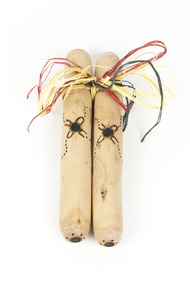
Ceremonial object - Message Sticks, Dja Dja Wurrung
... These Message Sticks acknowledge the return of Dja Dja Wurrung Cultural material held by the Burke Museum. The Burke Museum is the current custodian of a significant collection of First Peoples’ cultural material from across South-Eastern Australia. ...Dja Dja Wurrung Cultural material held by the Burke Museum. The Burke Museum is the current custodian of a significant collection of First Peoples’ cultural material from across South-Eastern Australia. These objects were sold to the Museum by Reynold Everly Johns in 1868. We recognise the harm caused by dispossession of cultural material, and by any inappropriate display and interpretation of this collection over the past 150 years. The Burke Museum is continuing to build relationships and collaborate with traditional owners, Aboriginal communities and the museum sector to ensure culturally appropriate outcomes for the collection, including repatriation of objects to communities of origin. Message sticks are a form of communication between Aboriginal nations, clans and language groups even within clans. Traditional message sticks were made and crafted from wood and were generally small and easy to carry (between 10 and 20 cm). They were carved, incised and painted with symbols and decorative designs conveying messages and information. Some were prepared hastily, like you might create a note left on a friend’s desk or a quick text message; others were prepared with more time to make the markings neat and ornate. There were always marks that were distinctive to the particular group or nation sending the message and often marks identifying the relationship of the carrier to their group. This way it could be identified and authenticated by neighboring groups and by translators when the message stick was taken long distances. dja ...These Message Sticks acknowledge the return of Dja Dja Wurrung Cultural material held by the Burke Museum. The Burke Museum is the current custodian of a significant collection of First Peoples’ cultural material from across South-Eastern Australia. These objects were sold to the Museum by Reynold Everly Johns in 1868. We recognise the harm caused by dispossession of cultural material, and by any inappropriate display and interpretation of this collection over the past 150 years. The Burke Museum is continuing to build relationships and collaborate with traditional owners, Aboriginal communities and the museum sector to ensure culturally appropriate outcomes for the collection, including repatriation of objects to communities of origin. Message sticks are a form of communication between Aboriginal nations, clans and language groups even within clans. Traditional message sticks were made and crafted from wood and were generally small and easy to carry (between 10 and 20 cm). They were carved, incised and painted with symbols and decorative designs conveying messages and information. Some were prepared hastily, like you might create a note left on a friend’s desk or a quick text message; others were prepared with more time to make the markings neat and ornate. There were always marks that were distinctive to the particular group or nation sending the message and often marks identifying the relationship of the carrier to their group. This way it could be identified and authenticated by neighboring groups and by translators when the message stick was taken long distances. Two solid cylindrical shaped pieces of wood bound together with black, red and yellow string. Each stick has etchings with angular lines and dots. dja dja wurrung, message sticks, burke museum, beechworth, beechworth museum, repatriation, reynold everly johns -
 Yarra City Council
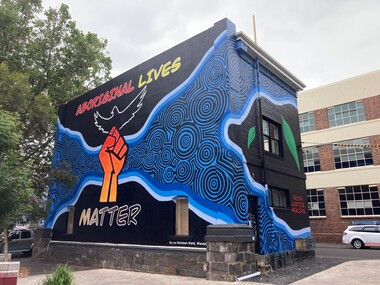
Artwork, other - Mural, Ky-ya Nicholson-Ward, Aboriginal Lives Matter, 2021
... Emerging artist Ky-ya Nicholson-Ward, a proud Wurundjeri, Dja Dja Wurrung, Nguarai Illam-Wurrung, German and Irish woman, created the mural installed on a building in Peel Street Park, Collingwood. Selected by Council's Yana Ngargna, Black Lives Matter Working Group the artwork identifies the cultural importance of the local area to the Wurundjeri Woi Wurrung people as the Traditional Owners. ...Emerging artist Ky-ya Nicholson-Ward, a proud Wurundjeri, Dja Dja Wurrung, Nguarai Illam-Wurrung, German and Irish woman, created the mural installed on a building in Peel Street Park, Collingwood. Selected by Council's Yana Ngargna, Black Lives Matter Working Group the artwork identifies the cultural importance of the local area to the Wurundjeri Woi Wurrung people as the Traditional Owners. ..."The fist references the Black Lives Matter movement and also represents the strength of Indigenous peoples all over the world and symbolises solidarity and justice for everyone affected by systematic racism. Bunjil (wedge-tailed eagle) is flying high on the building. He is the creator spirit for Wurundjeri people who looks over us and protects us. Bunjil represents healing and power to our people. The blue circles and lines represent revival and waterways; in particular, they depict the Birrarung (Yarra River), which is very significant for the Wurundjeri people. Our people are known as the Manna Gum people. The leaves in the artwork highlight Wurundjeri people and their Country. These leaves also represent the cleansing of negative spirits. The Manna Gum leaf is also an important symbolic offering in our traditional Welcome to Country ceremony. Leaves are offered to visitors as they are granted safe passage through our land. They are made welcome to everything from the tops of the trees to the roots of the earth. We ask that they take care of the land, plants and animals and to respect the protocols and rules of the Traditional Owners whilst on our Country."In 2020 Council declared its support for the global Black Lives Matter (BLM) movement. In consultation with Yarra City Council's Yana Ngargna advisory group a motion was prepared and passed unanimously by all Councillors. A number of actions were generated from this decision; one of which was for Council to commission a large-scale mural that aligned with the movement. Emerging artist Ky-ya Nicholson-Ward, a proud Wurundjeri, Dja Dja Wurrung, Nguarai Illam-Wurrung, German and Irish woman, created the mural installed on a building in Peel Street Park, Collingwood. Selected by Council's Yana Ngargna, Black Lives Matter Working Group the artwork identifies the cultural importance of the local area to the Wurundjeri Woi Wurrung people as the Traditional Owners. With a strong focus on Aboriginal identity the mural outlines the local context of the Black Lives Matter movement, which is connected to racism, policing of Aboriginal and Torres Strait Islander peoples and associated deaths in custody. The artwork acknowledges the ongoing challenges faced by Aboriginal community members and their struggle to survive white systems, policies and institutions. Ky-ya's mural tells the story of Aboriginal resilience, strength and self-determination; and will support the process of healing. It is a celebration of the local Aboriginal and Torres Strait Islander community; the significant Aboriginal history of Fitzroy, Collingwood and surrounds; and community's continuing cultural connection to the area. Importantly, this artwork provides a platform to educate a broader audience about the local context of the Black Lives Matter movement and Aboriginal deaths in custody. The mural will activate this site, enliven the area, promote inclusion, incite conversation and contribute to the creative capital of this locale. A welcoming environment for Aboriginal and non-Aboriginal communities.Aboriginal Lives Matter Ky-ya Nicholson WardOn a black background a hand fist (strength, solidarity and justice) is placed at the centre of the building; Bunjil (wedge-tailed eagle) is depicted flying high on the building; blue circles and lines represent revival and waterways (Birrarung-Yarra River) and the leaves in the artwork highlight Wurundjeri people (cleansing of spirit and welcome to Country)The artist name 'Ky-ya Nicholson Ward' painted in white, low right of the wall facing into Peel Street Park. black lives matter (blm) movement, wurundjeri woi wurrung, bunjil, identity, birrarung, country -
 Victorian Aboriginal Corporation for Languages
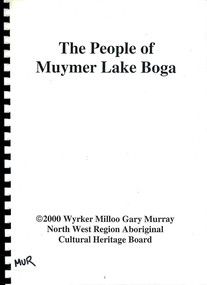
Book, Wyrker Milloo Gary Murray, The people of Muymer Lake Boga, 2000
... Latje latje Ladji ladji Wadi Wadi Yapagulk Wemba Wemba Baraparap Dja Dja Wurrung word lists, maps, public records lists The people of Muymer Lake Boga Book Wyrker Milloo Gary Murray ...word lists, maps, public records listslatje latje, ladji ladji, wadi wadi, yapagulk, wemba wemba, baraparap, dja dja wurrung -
Koorie Heritage Trust
Book, Banfield, Lorna L, Like the ark : the story of Ararat, 1955
... . - To 1900 | Economic sectors - Agriculture and horticulture - Pastoral industry - Sheep and wool | Djadja wurrung / Dyadyawurrung / Dja Dja Wrung people (S31.1) (Vic SJ54-04).... - To 1900 | Economic sectors - Agriculture and horticulture - Pastoral industry - Sheep and wool | Djadja wurrung / Dyadyawurrung / Dja Dja Wrung people (S31.1) (Vic SJ54-04) A history of the settlement of Ararat by one of the descendants. ...A history of the settlement of Ararat by one of the descendants. Most references to Aboriginal people in Chapter IV (scattered references elsewhere). Early relations between Kalkadoondeet (Kalkatungu) and Jajowurrung (Djadjawurrung) people and settlers. Violence and retribution reulting from tensions over the grazing and destruction of settlers, sheep and cattle which had overrun their waterholes and hunting groungs. Numbers and names of some Aboriginal people killed in the Ararat region. Establishment of rival 'sheep stations' by the Djadjawurrung people led by King Billy Billy.202 p. :ill ; 22 cmA history of the settlement of Ararat by one of the descendants. Most references to Aboriginal people in Chapter IV (scattered references elsewhere). Early relations between Kalkadoondeet (Kalkatungu) and Jajowurrung (Djadjawurrung) people and settlers. Violence and retribution reulting from tensions over the grazing and destruction of settlers, sheep and cattle which had overrun their waterholes and hunting groungs. Numbers and names of some Aboriginal people killed in the Ararat region. Establishment of rival 'sheep stations' by the Djadjawurrung people led by King Billy Billy.ararat (w vic sj54-08) | western district (w vic sj54-07) | king billy billy | pioneers -- victoria -- ararat -- history | gold mines and mining -- victoria -- history | colonisation | food | settlement and contacts - settlers | race relations - violent - massacres, murders, poisonings etc. - to 1900 | economic sectors - agriculture and horticulture - pastoral industry - sheep and wool | djadja wurrung / dyadyawurrung / dja dja wrung people (s31.1) (vic sj54-04) -
Koorie Heritage Trust
Book, Back to Ravenswood Committee, A Ravenswood Muster, 1972
... . | Settlment and contacts - Settlers | Settlement and contacts - Colonisation - 1851 - | Djadja wurrung / Dyadyawurung / Dja Dja Wrung people (S31/1) (Vic SJ54-04).... | Settlment and contacts - Settlers | Settlement and contacts - Colonisation - 1851 - | Djadja wurrung / Dyadyawurung / Dja Dja Wrung people (S31/1) (Vic SJ54-04) The story of Ravenswood District has been published to commemorate the centenary of S.S.1113, Ravenswood and to coincide with the Back-to-Ravenswood Celebrations held during May 1972 to mark the occasion. ...The story of Ravenswood District has been published to commemorate the centenary of S.S.1113, Ravenswood and to coincide with the Back-to-Ravenswood Celebrations held during May 1972 to mark the occasion. Includes a brief mention of the First People in the beginning of the book. Ravenswood Area, History. Jajaworung, Major Mitchell,[50] p. : ill., map, ports. ; 22 cm.The story of Ravenswood District has been published to commemorate the centenary of S.S.1113, Ravenswood and to coincide with the Back-to-Ravenswood Celebrations held during May 1972 to mark the occasion. Includes a brief mention of the First People in the beginning of the book. Ravenswood Area, History. Jajaworung, Major Mitchell,ravenswood (vic.) -- history. | settlment and contacts - settlers | settlement and contacts - colonisation - 1851 - | djadja wurrung / dyadyawurung / dja dja wrung people (s31/1) (vic sj54-04) -
 Federation University Art Collection
Artwork, other - Artwork, 'Reconciliation' by Shanaya Sheridan and Josh Muir, 2018
... Dja Dja Wurrung and Boon Wurrung woman who has resided in Ballarat for 20 years, after living in Horsham, Shepparton and Melbourne. Growing up and watching her Elders, and their style of artworks, Shanaya is influenced by a traditional style of Aboriginal art, mixing it up with contemporary colours. This reconciliation piece is Shanaya’s first commission. reconciliation josh muir shanaya sheridan aboriginal reconciliation action plan Artists' Statement: '“This painting represents reconciliation across all lands, from the skies down to the waters including the mountains, grass and sand. The hands represent people ...This artwork was created in collaboration by Shanaya Sheridan and Josh Muir in 2018. Josh Muir was a proud Yorta Yorta, Gunditjmara and Barkinji man, who holds his culture close to his heart as it gives him a voice and great sense of identity. Josh is a Ballarat-based multimedia artist. In 2015 Josh was the recipient of the Telstra National Indigenous and Torres Strait Islander Art Award – Youth Award and the Hutchinson Scholarship, through which he undertook a 12-month residency at the Victorian College of the Arts in Melbourne. Muir's work has been acquired by the Koorie Heritage Trust, The National Gallery of Australia, the Museum and Art Gallery of the Northern Territory, the National Gallery of Victoria and was commissioned as a major project artist by White Night. Shanaya Sheridan, is a proud Yorta Yorta, Dja Dja Wurrung and Boon Wurrung woman who has resided in Ballarat for 20 years, after living in Horsham, Shepparton and Melbourne. Growing up and watching her Elders, and their style of artworks, Shanaya is influenced by a traditional style of Aboriginal art, mixing it up with contemporary colours. This reconciliation piece is Shanaya’s first commission. Artists' Statement: '“This painting represents reconciliation across all lands, from the skies down to the waters including the mountains, grass and sand. The hands represent people of all cultures reaching for a brighter future, and the men and women in talks of how reconciliation can be achieved. Last but not least, the footprints represent our Aboriginal and Torres Strait Islander ancestors that have fought for reconciliation before us and their steps/progress towards reconciliation.' Digital prints of this artwork on aluminum are displayed at Federation University Australia campuses at Mt Helen, Gippsland (Churchill), Berwick, Brisbane and Horsham.reconciliation, josh muir, shanaya sheridan, aboriginal, reconciliation action plan -
 Ballarat Heritage Services
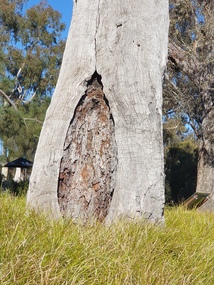
Photograph, Scarred Tree stump at Harcourt, Victoria, 2021
... Aboriginal people caused scars on trees by removing bark for various purposes, such as making canoes, containers and shields, and to build shelters. The scars, which vary in size, expose the sapwood on the trunk or branch of a tree. scarred tree scar tree harcourt Dja Dja Wurrung Aboriginal Aborigine canoe tree Colour photographs of the remains of a scarred tree at Harcourt, Victoria Scarred Tree stump at Harcourt, Victoria Photograph Australia Victoria Harcourt ...Aboriginal people caused scars on trees by removing bark for various purposes, such as making canoes, containers and shields, and to build shelters. The scars, which vary in size, expose the sapwood on the trunk or branch of a tree.Colour photographs of the remains of a scarred tree at Harcourt, Victoriascarred tree, scar tree, harcourt, dja dja wurrung, aboriginal, aborigine, canoe tree -
 Sunbury Family History and Heritage Society Inc.
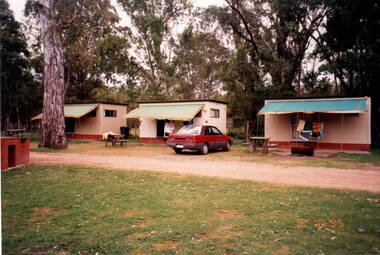
Photograph, Bulla Primary School, Hanging Rock, 1995
... Hanging Rock, also known as Mount Diogenes, is the traditional land of the Dja Dja Wurrung, Woi Wurrung and Taungurung people. It is a mamelon formed when magma poured from a vent and congealed. ...Hanging Rock, also known as Mount Diogenes, is the traditional land of the Dja Dja Wurrung, Woi Wurrung and Taungurung people. It is a mamelon formed when magma poured from a vent and congealed. ...In 1995, the upper school students from Bulla Primary School attended a camp at Hanging Rock Reserve which is part of the Macedon Ranges. At this camp the students were shown basic rock climbing skills and explored the rock for its interesting geological formations. Hanging Rock, also known as Mount Diogenes, is the traditional land of the Dja Dja Wurrung, Woi Wurrung and Taungurung people. It is a mamelon formed when magma poured from a vent and congealed. There are interesting rock functions at the site such as the Colonnade, the Eagle and the UFO. The highest point on the rock is 718metres above sea level and 105 meters above the land at its base.Hanging Rock is an important geological and volcanic structure in the Macedon Ranges area and in central Victoria. A non-digital coloured photograph of three holiday cabins and a barbecue in a bushland setting. A red car is parked outside one of the cabins as well as two permanent picnic tables.hanging rock, mount diogenes, mamelons, volcanoes, school camps, bulla primary school -
 Bacchus Marsh & District Historical Society
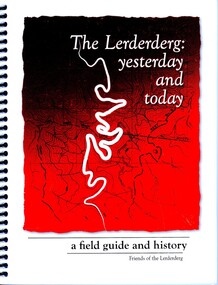
Book, The Lerderderg: Yesterday and Today: A Field Guide and History
... There is also a section describing the history of Aboriginal peoples connection to the area, the Dja Dja Wurrung and the Wurrundjeri of the Kulin nation....There is also a section describing the history of Aboriginal peoples connection to the area, the Dja Dja Wurrung and the Wurrundjeri of the Kulin nation. ...A natural and cultural history of the Lerderderg River and surrounding wilderness area near Bacchus Marsh. The chapters cover the flora, fauna, geology and geographic features of the Lerderderg River and nearby area. The chapters also include historical sections on gold mining and seeking, irrigation, and the personal recollections of various people with long and deep connections to the area. There is also a section describing the history of Aboriginal peoples connection to the area, the Dja Dja Wurrung and the Wurrundjeri of the Kulin nation.Printed book. Paperback. Spiral bound. 155 pages. Black and white, and colour photographs and illustrations. Subject and name index. Citation: The Lerderderg: Yesterday and Today: A Field Guide and History, Michael Fox, editor. Published for Friends of the Lerderderg, by Pen Folk Publishing, Blackburn, Vic., 2011. BMDHS Location: AR/SU5 lerderderg river, lerderderg state park, lerderderg river history and environment, lerderderg river first nations history, lerderderg state park gold mining history, goldmining bacchus marsh region -
 Merri-bek City Council
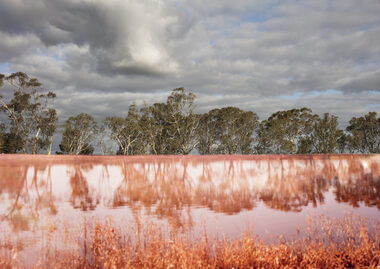
Photograph, Peta Clancy, Undercurrent, 2018-19
... people from South-Eastern Australia. She explores hidden histories of colonisation in Australia. Through manipulating photographic prints, she reconstructs these hidden histories in a contemporary setting. In 2018, Clancy was awarded the inaugural Fostering Koorie Art and Culture grant from the Koorie Heritage Trust. The grant enabled her to collaborate with the Dja Dja Wurrung...people from South-Eastern Australia. She explores hidden histories of colonisation in Australia. Through manipulating photographic prints, she reconstructs these hidden histories in a contemporary setting. In 2018, Clancy was awarded the inaugural Fostering Koorie Art and Culture grant from the Koorie Heritage Trust. The grant enabled her to collaborate with the Dja Dja Wurrung ...Peta Clancy is a descendent of the Bangerang people from South-Eastern Australia. She explores hidden histories of colonisation in Australia. Through manipulating photographic prints, she reconstructs these hidden histories in a contemporary setting. In 2018, Clancy was awarded the inaugural Fostering Koorie Art and Culture grant from the Koorie Heritage Trust. The grant enabled her to collaborate with the Dja Dja Wurrung community to create a body of work investigating massacre sites on Dja Dja Wurrung country. The exhibition Undercurrent at the Koorie Heritage Trust focussed on a massacre site submerged under water. Clancy says of the exhibition and this work: ‘I explored this site as a metaphor for the hidden history of many massacres throughout Australia and the denial of this aspect of our history and the trauma these sites evoke’.
