
Showing 37 items matching "doctors clinic"
-
 Marysville & District Historical Society
THE TRIANGLE NEWS-VOL 3 NO 28-SEPTEMBER 14 1978
... ...doctors' clinic...marysville victoria australia senior citizens birthday greetings kinder roster congratulations miniature debutante ball cricket practice tonight swimming club bushwalking those in hospital doctors' clinic be a blood donor marysville primary school mothers' club birth e.s.a. football official opening e.s.a. youth holiday village healesville rate payers association meeting bingo child portraiture joke THE TRIANGLE NEWS-VOL 3 NO 28-SEPTEMBER 14 1978 ...marysville, victoria, australia, senior citizens, birthday greetings, kinder roster, congratulations, miniature debutante ball, cricket practice tonight, swimming club, bushwalking, those in hospital, doctors' clinic, be a blood donor, marysville primary school mothers' club, birth, e.s.a., football, official opening e.s.a., youth holiday village, healesville rate payers association meeting, bingo, child portraiture, joke -
Marysville & District Historical Society
THE TRIANGLE NEWS-VOL 4 NO 1-9 FEBRUARY 1979
... ...doctors clinic...marysville victoria australia triangle news deadline welcome bob and jenny thank you-marysville school kinder roster doctors clinic new teacher in narbethong bowling club thank you ladies of marysville wanted caretaker swimming pool footy club THE TRIANGLE NEWS-VOL 4 NO 1-9 FEBRUARY 1979 ...marysville, victoria, australia, triangle news deadline, welcome bob and jenny, thank you-marysville school, kinder roster, doctors clinic, new teacher in narbethong, bowling club, thank you ladies of marysville, wanted caretaker swimming pool, footy club -
 Warrnambool and District Historical Society Inc.
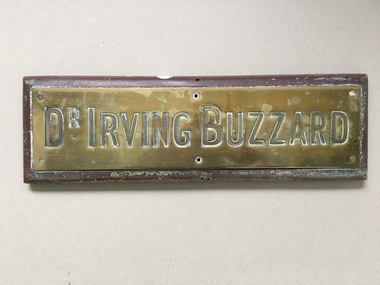
Brass Plate, Dr Irving Buzzard
... ...cambourne clinic doctors... of the 20th century which has historical and social significance. warrnambool warrnambool doctors dr irving buzzard cambourne clinic doctors Dr Irving Buzzard Small rectangular brass plate with six screw holes. ...Irving Buzzard was born in Moonee Ponds in 1897. His study of medicine was interrupted by his enrolment in the AIF in World War 1, where he served on the hospital ship " Kanowns". After discharge in 1916 he returned to his studies, graduating in 1922. he came to Warrnambool in 1929 after purchasing the Cambourne Clinic from Dr Hedley Dunstan. He practised as a GP until the outbreak of WW2. His speciality was gynaecology and obstetrics. He retired from Warrnambool practice in 1964 and moved to Melbourne.he was involved in many different organisations , being a member of local sporting clubs as well as community groups such as Rotary and the freemasons. He died in June 1981.A link to one of Warrnambool's longest serving doctors of the 20th century which has historical and social significance.Small rectangular brass plate with six screw holes. Mounted on timber which is painted brown. Name is stamped and while namDr Irving Buzzardwarrnambool, warrnambool doctors, dr irving buzzard, cambourne clinic doctors -
Whitehorse Historical Society Inc.
Article, Clinic vandalised again, 1992
... Vandalism is making life difficult for doctors at a Vermont Clinic, corner of Frances Street and Boronia Road....Health Services Smyth Tom (Dr) Vandalism Vandalism is making life difficult for doctors at a Vermont Clinic, corner of Frances Street and Boronia Road. ...Vandalism is making life difficult for doctors at a Vermont Clinic, corner of Frances Street and Boronia Road.Vandalism is making life difficult for doctors at a Vermont Clinic, corner of Frances Street and Boronia Road.Vandalism is making life difficult for doctors at a Vermont Clinic, corner of Frances Street and Boronia Road.health services, smyth, tom (dr), vandalism -
 Sunshine and District Historical Society Incorporated
Photograph - St. Albans - Service Station Photographs, John Alchin, 2026
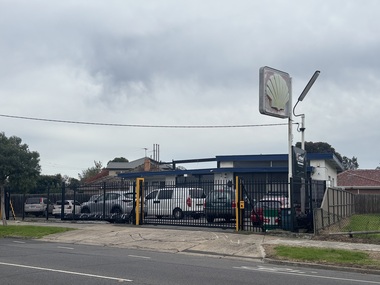
... Albans - Former Mobil Petrol Station (Now Doctor Clinic And Pharmacy Shop).jpeg 5862.12 - Kings Road 70 St. ...Albans - Former Mobil Petrol Station (Now Doctor Clinic And Pharmacy Shop).jpeg 5862.12 - Kings Road 70 St. ...Collection of photographs of current and former service stations in the St. Albans area.5862.01 - Conrad Street 34 St. Albans - Refined Motorworks 2026 Photo 01.jpeg 5862.02 - Conrad Street 34 St. Albans - Refined Motorworks 2026 Photo 02.jpeg 5862.03 - East Esplanade 34 St. Albans - Double T Repairs 2026 Photo 01.jpeg 5862.04 - East Esplanade 34 St. Albans - Double T Repairs 2026 Photo 02.jpeg 5862.05 - Taylors Road 33 St. Albans - 7 - 11 Petrol Station.jpeg 5862.06 - Main Road East 172 - T And J Road Motors 2026 Photo 01.jpeg 5862.06 - Main Road East 172 - T And J Road Motors 2026 Photo 02.jpeg 5862.07 - St. Albans Road 27 St. Albans - Astron Service Station 2026 Photo 01.jpeg 5862.07 - St. Albans Road 27 St. Albans - Astron Service Station 2026 Photo 02.jpeg 5862.07 - St. Albans Road 27 St. Albans - Astron Service Station 2026 Photo 03.jpeg 5862.08 - St. Albans Road 29 St. Albans - St. Albans Complete Car Care Centre And Bridgestone Tyres And Auto 2026.jpeg 5862.09 - St. Albans Road 31 St. Albans - G. I. Auto Care 2026 Photo 01.jpeg 5862.09 - St. Albans Road 31 St. Albans - G. I. Auto Care 2026 Photo 02.jpeg 5862.09 - St. Albans Road 31 St. Albans - G. I. Auto Care 2026 Photo 03.jpeg 5862.10 - Sunshine Avenue 53 St. Albans - 7 - 11 Petrol Station.jpeg 5862.11 - Sunshine Avenue 55 St. Albans - Former Mobil Petrol Station (Now Doctor Clinic And Pharmacy Shop).jpeg 5862.12 - Kings Road 70 St. Albans - 7 - 11 Service Station.jpeg 5862.13 - Main Road West 267 St. Albans - Reddy Express Service Station And My Car Service Centre.JPG 5862.14 - Main Road West 267 St. Albans - Reddy Express Service Station And My Car Service Centre.JPG 5862.15 - McKechnie Street 52 St. Albans - Former Service Station 2026.jpg 5862.16 - McKechnie Street 52 St. Albans - Former Service Station 2026.jpegservice station, st. albans, conrad street, east esplanade, main road east, main road west, taylors road, st. albans road, kings road -
 Bendigo Historical Society Inc.
Memorabilia - Doctor Lilian Cleeve Collection, 1915 - 1996
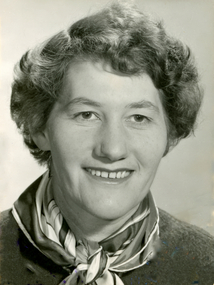
... Later Doctor Cleeve ran an eye clinic with Doctor Gorman's son, on the other side of Garsed Street. ...Later Doctor Cleeve ran an eye clinic with Doctor Gorman's son, on the other side of Garsed Street. ...Doctor Lilian Marjorie Cleeve was born in 1915 and died in February 1996. She grew up in Moonee Ponds and graduated as a Doctor from the University of Melbourne School of Medicine in 1941. She completed her training at the Women's Hospital in Melbourne between December 1940 and January 1941 where she delivered her first baby, Beverley Margaret Manley. In 1942 at the beginning of the war with Japan, Doctor Cleeve travelled to Bendigo. The train was full of soldiers travelling to camp at the Bendigo Showgrounds next to the hospital (now the Tom Flood Centre). Because of the war, the streets were in darkness. Some soldiers carried her suitcase to her new home. Doctor Cleeve immediately began work as the hospital Registrar. Later on she specialized in the delivery of babies, who always seemed to be born on her days off. After leaving the hospital Doctor Cleeve joined the medical practice of Doctors Gorman and Grant (husband and wife). Their rooms were on the corner of View and Mckenzie Streets in the Atkinson building (named after Doctor Harry Atkinson). Doctor Cleeve then established a medical practice in Garsed Street where the Dan Murphy Car Park is now located. Later Doctor Cleeve ran an eye clinic with Doctor Gorman's son, on the other side of Garsed Street. She also used to visit Puckapunyal Army Base to screen both the regular army recruits and the conscripts who were sent to Vietnam. Doctor Cleeve last worked as part of the associate medical staff at the Bendigo Teachers' College in Osborne Street from 1979 to 1980. In 1944 Lilian married Sargent George Cathcart (Fortuna Army Survey Regiment). George was the secretary/treasurer of the Bendigo Branch of the Liberal Party. They lived at 96 Moore Street ('Silver Birches'), close to the hospital. George and Lilian had one son, Andrew. George passed away from a heart attack in 1957. Lilian married Roy Lockart Chisholm in 1960. Roy was the manager of the Charing Cross Branch of the CBA Bank. Not long after their marriage, Lilian (now Mrs Chisholm), Roy, and Lilian's young son Andrew, took a honeymoon voyage on the cargo vessel "Milos" to Hong Kong, Japan, New Guinea and Borneo, where they visited the Sandakan War Memorial. In 1960 Lilian sold 96 Moore Street, and following Roy's retirement, they purchased a house which they named 'Roslyn' at 28 Reginald Street, Quarry Hill. Roy died in 1963 after suffering a stroke. Respected and well-liked, Mrs Chisholm continued to raise Andrew in Reginald Street with the assistance of her faithful housekeeper Coral Suurpaa, known to all as “Hickey". Coral lived in a house in Breen Street, beside the Myrtle Street railway bridge. Prior to this, "Hickey" had lived-in at Moore Street when Dr Cleeve was widowed after the death of her first husband. Photos, Passport, Letter and Nameplate 11138a Doctor Lilian Marjorie Cleeve passport photo May 1961 11138b British Australian Passport 11138c The Premier Visits 'Silver Birches' 96 Moore St., Bendigo on April 8th 1957 Photo. From Left to Right are: Former Bendigo Organiser, Mr T.J. Langdon (now at Ballarat), Mrs Langdon, Mrs John Stanistreet, The Premier, Hon. H.E. Bolte, Mr John Stanistreet, M.L.A., Mrs G. Cathcart (Dr Cleeve) and Mr G.W.S. Cathcart. 11138d Doctor Cleeve and George Cathcart Photo 11138e Dr Cleeve front row 3rd from the right with her first baby delivered at the Women's Hospital Melbourne 1940 Photo. Back Row: B J Bernstein, B Chromow, S I D Preston, H J Hoffman, P Zerman, D G Sisely. Middle Row: L B Satchell, J B Buchanan, O B Pearce, J C Trinea, M R Millikan, I J Selikoff, R E Dwork. Front Row: J Kremer, R B Lewis, Miss B Marshall, Dr M A Mackie, Prof. Marshall Allan, Miss L Cleeve, Miss J grant, H Berinshaw. 11138f Dr Cleeve, Coral Suurpaa, Andrew Cathcart Photo in the backyard at 28 Reginald St. Quarry Hill, 1195-1997. 11138g Letter from Andrew Cathcart to the Sisely family in dec 2009 re the photo taken at the Women's Hospital Melbourne in 1940-41 11138h Dr L M Cleeve Nameplate Front View 11138i Dr L M Cleeve Nameplate Rear View 11138j The University of Melbourne Conferring of degrees Wilson Hall Monday 1st June 1942bendigo, doctor lorna sisely, women's hospital melbourne, roy lockart chisholm, reginald street, quarry hill, coral suurpaa, dr lilian cleeve, george cathcart -
Marysville & District Historical Society
THE TRIANGLE NEWS-VOL 3 NO 22-JULY 21 1978
... marysville victoria australia head lice doctors' clinics distress lights anglican church services caltex customers 1st marysville girl guide l.a. thank you engagement rainfall blind spot holidays kindergarten k mcleod birthday lost red shield appeal salvos marysville indoor bowls welcome home haycrofts football lost dog dance birth sick list club & organisation directory THE TRIANGLE NEWS-VOL 3 NO 22-JULY 21 1978 ...marysville, victoria, australia, head lice, doctors' clinics, distress lights, anglican church services, caltex customers, 1st marysville girl guide l.a., thank you, engagement, rainfall, blind spot, holidays, kindergarten, k mcleod birthday, lost, red shield appeal salvos, marysville indoor bowls, welcome home haycrofts, football, lost dog, dance, birth, sick list, club & organisation directory -
Marysville & District Historical Society
THE TRIANGLE NEWS-VOL 3 NO 23-JULY 28 1978
... marysville victoria australia geoff cuzens retires marysville junior & senior youth clubs doctors' clinics marysville community care centre council elections-shire of healesville buxton red cross birthday wishes thanks-sue & john hawthorn dance christ church services marysville indoor bowls thanks folks kindergarten football wirreanda shop to rent golf news football news lawn bowls sick bay encore 78-brownies THE TRIANGLE NEWS-VOL 3 NO 23-JULY 28 1978 ...marysville, victoria, australia, geoff cuzens retires, marysville junior & senior youth clubs, doctors' clinics, marysville community care centre, council elections-shire of healesville, buxton red cross, birthday wishes, thanks-sue & john hawthorn, dance, christ church services, marysville indoor bowls, thanks folks, kindergarten football, wirreanda, shop to rent, golf news, football news, lawn bowls, sick bay, encore 78-brownies -
Marysville & District Historical Society
THE TRIANGLE NEWS-VOL 3 NO 26-AUGUST 18 1978
... marysville victoria australia $100 reward beauty spot nursery doctors' clinics marysville primary school mothers' club editors' note hazel hill wins poll buxton concert dance angling club dinner for sale rainfall birthday greetings indoor bowls football news scout committee meeting junior cricket coaching congratulations THE TRIANGLE NEWS-VOL 3 NO 26-AUGUST 18 1978 ...marysville, victoria, australia, $100 reward, beauty spot nursery, doctors' clinics, marysville primary school mothers' club, editors' note, hazel hill wins poll, buxton concert, dance, angling club dinner, for sale, rainfall, birthday greetings, indoor bowls, football news, scout committee meeting, junior cricket coaching, congratulations -
Marysville & District Historical Society
THE TRIANGLE NEWS-VOL 3 NO 27-AUGUST 25 1978
... marysville victoria australia $650 reward scout hall renovations community care centre doctors' clinics anglican church news marysville senior citizens marysville uniting church kinder roster situation wanted thanks beauty spot nursery table tennis marysville cricket club dance tonight rainfall chain saw users wanted to borrow football club swimming club annual meeting mooska farm sale golf news photography THE TRIANGLE NEWS-VOL 3 NO 27-AUGUST 25 1978 ...marysville, victoria, australia, $650 reward, scout hall renovations, community care centre, doctors' clinics, anglican church news, marysville senior citizens, marysville uniting church, kinder roster, situation wanted, thanks, beauty spot nursery, table tennis, marysville cricket club, dance tonight, rainfall, chain saw users, wanted to borrow, football club, swimming club annual meeting, mooska farm sale, golf news, photography -
Marysville & District Historical Society
THE TRIANGLE NEWS-VOL 3 NO 29-SEPTEMBER 22 1978
... marysville victoria australia marysville waterworks trust marysville bowling club $750 reward joke doctors' clinics wanted to buy can you help? notice bikies rampant marysville senior citizens engagement message to peter bryan kinder news golf news swimming club football girl guides local association mothers' club miniature debutante ball cricket news e.s.a. bingo healesville rate payers association ladies bushwalking THE TRIANGLE NEWS-VOL 3 NO 29-SEPTEMBER 22 1978 ...marysville, victoria, australia, marysville waterworks trust, marysville bowling club, $750 reward, joke, doctors' clinics, wanted to buy, can you help?, notice, bikies rampant, marysville senior citizens, engagement, message to peter bryan, kinder news, golf news, swimming club, football, girl guides local association, mothers' club, miniature debutante ball, cricket news, e.s.a., bingo, healesville rate payers association, ladies bushwalking -
Marysville & District Historical Society
THE TRIANGLE NEWS-VOL 5 NO 40-DECEMBER 12 1980
... marysville victoria australia annual dinner lions club football social club services church of england bingo fire restrictions christmas trees for sale welding wanted for sale swimming pool open photographer garden stakes christmas breakup s.e.s. marysville & district community care centre thanks & best wishes carols by candlelight advertising payments in triangle cricket marysville bowling junior cricket tennis practice marysville hotel earthquake door knock appeal supported generously marysville bowls club free kitten cricket club photos misplaced mary kay supper dance footy club lions club christmas treat uniting church doctors' clinics senior citizens marysville bowls new year at clubhouse THE TRIANGLE NEWS-VOL 5 NO 40-DECEMBER 12 1980 ...marysville, victoria, australia, annual dinner lions club, football social club, services church of england, bingo, fire restrictions, christmas trees for sale, welding, wanted, for sale, swimming pool open, photographer, garden stakes, christmas breakup s.e.s., marysville & district community care centre, thanks & best wishes, carols by candlelight, advertising payments in triangle, cricket, marysville bowling, junior cricket, tennis practice, marysville hotel, earthquake door knock appeal supported generously, marysville bowls club, free kitten, cricket club photos misplaced, mary kay, supper dance, footy club, lions club christmas treat, uniting church, doctors' clinics, senior citizens, marysville bowls new year at clubhouse -
Marysville & District Historical Society
THE TRIANGLE NEWS-VOL 37 NO 11-MARCH 26 2010
... clinic...locum doctors leaving...marysville victoria australia marysville district football & netball club mdfnc committee thai festival lake mountain sprint dr lachlan fraser european waspa gallipoli park committee of management volunteers needed community recovery committees kinglake ranges marysville & triangle grants up for grabs advertisements mayor's message marysville medical clinic locum doctors leaving THE TRIANGLE NEWS-VOL 37 NO 11-MARCH 26 2010 ...marysville, victoria, australia, marysville district football & netball club, mdfnc committee, thai festival, lake mountain sprint, dr lachlan fraser, european waspa, gallipoli park committee of management, volunteers needed community recovery committees, kinglake ranges, marysville & triangle, grants up for grabs, advertisements, mayor's message, marysville medical clinic, locum doctors leaving -
Glenelg Shire Council Cultural Collection
Administrative record - Appointment Slip - Henty Street Medical Clinic, Portland, n.d
... medical paperwork document Portland doctor Henty Street Family Medical Clinic blank appointment slip. ...Henty Street Family Medical Clinic blank appointment slip. Drs. Dalbir Singh and Ivan Ho.medical paperwork, document, portland doctor -
 Warrnambool and District Historical Society Inc.
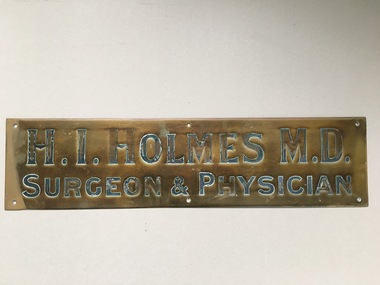
Brass Plate, Dr H I Holmes, Circa 1905
... clinic still operates from this site. Dr Holmes was a keen fisherman and a member of Rotary serving as district governor. This plate is a connection to a long standing doctor in the Warrnambool district. ...Doctor Horace Iles Holmes was born at Launceston Tasmania 09/08/1877. He was educated at Launceston High School and Tasmanian University and later at Melbourne University. After graduation he came to Warrnambool in 1905 and worked in the practice of Dr T F Fleetwood and took over the practice shortly afterwards along with the position of Honorary medical officer at Warrnambool Hospital and also health officer until 1944 and as an Honorary consulting medical officer from then until 1958. His practice which was located at " Ierne" opposite the Presbyterian Church in Spence St Warrnambool. He later moved to a new home and surgery at the corner of Spence Liebig st and Raglan parade which was later sold to Dr C B Berryman. A large medical clinic still operates from this site. Dr Holmes was a keen fisherman and a member of Rotary serving as district governor.This plate is a connection to a long standing doctor in the Warrnambool district. In his practice he would have treated many district people and as such this item has strong social and historical connections to the district. Rectangular brass plate engraved with name which has been coloured in black. There are six screw holes around the outer edge of the plaque. The back is plain .H.I. Holmes M.D. Surgeon & Physician. A stamped name at middle bottom edge is unreadablewarrnambool, warrnambool doctors, dr h i holmes, warrnambool history -
 Warrnambool and District Historical Society Inc.
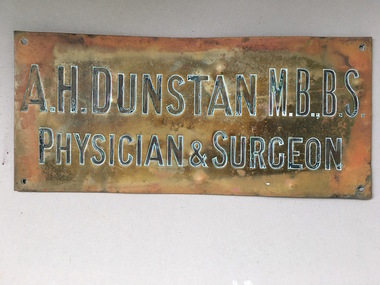
Brass Plate, A H Dunstan MBBS, Circa 1920
... doctor who practised in Warrnambool from approximately 1916 to 1929. He practised from "Cambourne" on the corner of Liebig Street and Raglan Parade. The property was named after his father's substantial home in Bendigo, his father being mayor of Bendigo around the turn of the century. Dr Dunstan was a member of the warrnambool golf club and he and his wife were involved in many aspects of social life in the town.The property still operates to this day as Cambourne clinic... one of Warrnambool's medical clinics. A link to one of Warrnambool's earlier doctors and properties. warrnambool cambourne warrnambool a h dunstan warrnambool doctor a hedley dunstan A. ...A H Dunstan was a doctor who practised in Warrnambool from approximately 1916 to 1929. He practised from "Cambourne" on the corner of Liebig Street and Raglan Parade. The property was named after his father's substantial home in Bendigo, his father being mayor of Bendigo around the turn of the century. Dr Dunstan was a member of the warrnambool golf club and he and his wife were involved in many aspects of social life in the town.The property still operates to this day as Cambourne clinic one of Warrnambool's medical clinics. A link to one of Warrnambool's earlier doctors and properties.Small brass rectangular engraved plate. It has screw holes in each corner and the name has been stamped A. H. Dunstan MBBS Physician & Surgeonwarrnambool, cambourne warrnambool, a h dunstan warrnambool, doctor a hedley dunstan -
 Eltham District Historical Society Inc
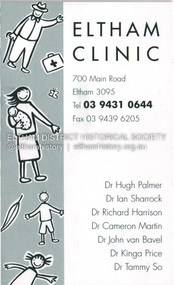
Document - Property Binder, 700 Main Road, Eltham
... Business card Eltham Clinic x 3 showing differing doctors....Business card Eltham Clinic x 3 showing differing doctors. Main Road Eltham Property Businesses Eltham Clinic Miscellaneous clippings, notes, photocopies, etc held on the subject property. 700 Main Road, Eltham Document Property Binder ...Business card Eltham Clinic x 3 showing differing doctors.main road, eltham, property, businesses, eltham clinic -
 Warrnambool and District Historical Society Inc.
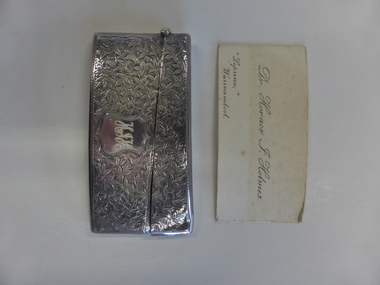
Functional object - Silver Card Case (Holmes), Mid 20th century
... doctor in Warrnambool for over 40 years. Dr Holmes (1877-1959) was born in Tasmania and completed a medical course at Melbourne University. He came to Warrnambool in 1905, taking over the practice of Dr Fleetwood at ‘Ierne’, at the corner of Spence and Kepler Streets. In 1906 he built a new home at the corner of Liebig Street and Raglan Parade and moved his practice there in 1912 (today this building is the Warrnambool Medical Clinic...doctor in Warrnambool for over 40 years. Dr Holmes (1877-1959) was born in Tasmania and completed a medical course at Melbourne University. He came to Warrnambool in 1905, taking over the practice of Dr Fleetwood at ‘Ierne’, at the corner of Spence and Kepler Streets. In 1906 he built a new home at the corner of Liebig Street and Raglan Parade and moved his practice there in 1912 (today this building is the Warrnambool Medical Clinic ...The owner of this card case was Dr Horace Holmes who was a doctor in Warrnambool for over 40 years. Dr Holmes (1877-1959) was born in Tasmania and completed a medical course at Melbourne University. He came to Warrnambool in 1905, taking over the practice of Dr Fleetwood at ‘Ierne’, at the corner of Spence and Kepler Streets. In 1906 he built a new home at the corner of Liebig Street and Raglan Parade and moved his practice there in 1912 (today this building is the Warrnambool Medical Clinic). Dr Holmes was an honorary Medical Officer at the Warrnambool Hospital. He retired in 1939 selling his practice to Dr Berryman but came out of retirement and practised as a locum until 1944. His interests included rowing golf, bowls and fishing. In the 1950s he lived at ‘Leprena’ in Canterbury Road. He was a foundation member of the Warrnambool Rotary Club. This is a most significant item as it belonged to a prominent local doctor, Dr Horace Holmes. It also has considerable social significance as it is an example of the practice of past times of carrying calling cards and the silver case is a sign of the affluence of the owner. This is a silver card case, heavily embossed, with a slightly curved shape and a hinged lid. It has the initials ‘HIH’ engraved in a shield on the front of the case. It contains nine calling cards (Dr Horace Holmes, Warrnambool). These are made of light card with printing in black on a white background. The cards are somewhat marked and discoloured. Case: ‘HIH’ Cards: ‘Dr. Horace I. Holmes, Leprena, Warrnambool’card case, dr horace holmes, warrnambool -
 Royal Australian and New Zealand College of Obstetricians & Gynaecologists (RANZCOG)
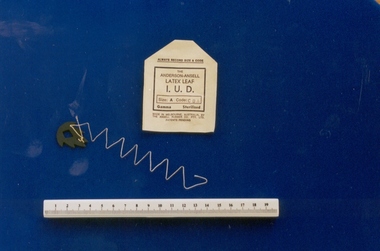
Intrauterine device, Anderson-Ansell design, Ansell, 1970s
... doctor Ian Anderson in partnership with Ansell Australia and produced at the Ansell factory, 18 River Street, Richmond in the 1970s. The device was taken up by the Battelle Foundation, USA, and clinical trials were carried out in Israel, Indonesia and Singapore. No formal clinical trials were carried out in Australia. The device was used extensively by Population Services International, a private abortion clinic...doctor Ian Anderson in partnership with Ansell Australia and produced at the Ansell factory, 18 River Street, Richmond in the 1970s. The device was taken up by the Battelle Foundation, USA, and clinical trials were carried out in Israel, Indonesia and Singapore. No formal clinical trials were carried out in Australia. The device was used extensively by Population Services International, a private abortion clinic ...The only IUD of Australian origin, developed in 1971 by Australian doctor Ian Anderson in partnership with Ansell Australia and produced at the Ansell factory, 18 River Street, Richmond in the 1970s. The device was taken up by the Battelle Foundation, USA, and clinical trials were carried out in Israel, Indonesia and Singapore. No formal clinical trials were carried out in Australia. The device was used extensively by Population Services International, a private abortion clinic in Sydney in the mid 1970s. At the time this device was donated to the collection in 1997, there were legal proceedings regarding two Australian women who claimed ongoing problems as a result of its use. The donor, Dr Richard Gutch, practised in Clifton Hill and used some in the 1970s but not for long. The drawbacks were the multi-filament string acted as a wick for infection, also the latex leaf often came away from the thread when pulled for removal. Curettage was often the only effective way to remove the IUD. Dr Gutch removed many as he developed a reputation for being skilled at their removal.Intrauterine device (IUD), Ansell-Anderson latex leaf design, with paper sleeve. Made of latex impregnated with copper and zinc. The IUD is leaf-shaped with serrated edge and diamond shape cut out from its centre. Small hole in tail with attached twisted cream coloured thread. Paper sleeve is stamped, "THE/ ANDERSON-ANSELL/LATEX LEAF/I.U.D". SIZE:A/PATENTS PENDING", and notes it is Size A.contraceptive, intrauterine device -
Glen Eira Historical Society
Document - BUSINESSES OPERATING IN CAULFIELD
... Lounge Lending Library Hawthorn Road Olney E Montgomerie A Mahonga Garage Hickox and Gerke Photo Boutique Caulfield South Caulfield Eye Clinic and Laser Centre Libraries Garages Motor Doctors Cherny Mark Dr. ...This file contains five items pertaining to Caulfield’s businesses: 1/Account dated 01/05/1936 produced by Dr. John Bryan for medical services. 2/Photocopy of undated advertising flyer for the Lounge Lending Library. 3/Photocopy of undated advertising flyer for Mahonga Garage. 4/Envelope for holding photographs and negatives when picked up by customers, undated and provided by Photo Boutique. 5/Patient information Booklet dated April 1997, produced by Caulfield Eye Clinic and Laser Centre.glenhuntly road, caulfield, bryan john dr., lounge lending library, hawthorn road, olney e, montgomerie a, mahonga garage, hickox and gerke, photo boutique, caulfield south, caulfield eye clinic and laser centre, libraries, garages motor, doctors, cherny mark dr., health professionals, repair shops -
 Warrnambool and District Historical Society Inc.
Artefact, Ear Syringe, Late 19th to Early 20th centuries
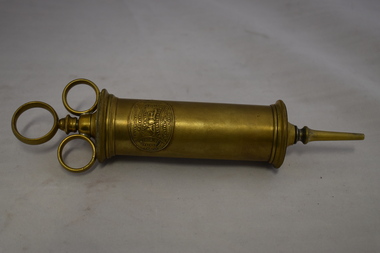
... This instrument is an ear syringe that would have belonged either to a doctor or to a medical clinic or hospital. When it was first donated to the Warrnambool and District Historical Society in 1972 it was described as a throat syringe but this does not appear to be correct. ...This instrument is an ear syringe that would have belonged either to a doctor or to a medical clinic or hospital. When it was first donated to the Warrnambool and District Historical Society in 1972 it was described as a throat syringe but this does not appear to be correct. ...This instrument is an ear syringe that would have belonged either to a doctor or to a medical clinic or hospital. When it was first donated to the Warrnambool and District Historical Society in 1972 it was described as a throat syringe but this does not appear to be correct. This ear syringe, in our collection for 45 years, is a fine example of a medical instrument in use 100 years ago or more. It will be retained for display purposes and also for its aesthetic appeal.This is a brass ear syringe. It has a barrel with a plunger that is ridged at both ends and a handle with three rings for the user to enclose three fingers and a syringe tip tapering to a point. There is an oval brass plaque attached to the barrel and this contains information on the maker of the instrument and the maker’s crest. ‘Mayer & Meltzer, Makers, London’ ‘ To the University College Hospital’ ‘To the Hospital for Deseases (sic) of the Throat’ ‘To the Hospital for Women’ ‘To the Middlesex Hospital’medical instruments of the past, history of warrnambool -
 Sunshine and District Historical Society Incorporated
Film - Royal Flying Doctor Service Of Australia Video
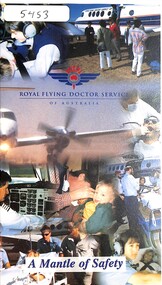
... Doctor Service has grown to become the largest, most comprehensive aeromedical service in the world. The Service has grown from the dream of Rev. Dr. John Flynn who dreamt of bringing medical help to people living in Australia's vast Outback. Today, John Flynn's Mantle of Safety covers more than 80% of Australia, bringing vital health care to people who live, work and travel in remote and rural Australia. As well as emergency services, the RFDS provides a comprehensive health service through medical clinics...Doctor Service has grown to become the largest, most comprehensive aeromedical service in the world. The Service has grown from the dream of Rev. Dr. John Flynn who dreamt of bringing medical help to people living in Australia's vast Outback. Today, John Flynn's Mantle of Safety covers more than 80% of Australia, bringing vital health care to people who live, work and travel in remote and rural Australia. As well as emergency services, the RFDS provides a comprehensive health service through medical clinics ...Rev. John Flynn, the head of the Presbyterian Inland Mission and the founder of the Royal Flying Doctor Service of Australia, attended the Sunshine and Braybrook State Schools. His father, Thomas Flynn, was the head teacher at the Braybrook and Braybrook Junction State Schools. Thomas and his family lived in Clarke Street, Sunshine.The Royal Flying Doctor Service (RFDS) is one of Australia’s most iconic and important institutions. It provides aeromedical retrieval, emergency care, and primary health services to people living in rural and remote Australia — places where medical help would otherwise be hours or days away.Royal Flying Doctor Service of Australia Video A Mantle of Safety, from small beginnings in 1928, the Royal Flying Doctor Service has grown to become the largest, most comprehensive aeromedical service in the world. The Service has grown from the dream of Rev. Dr. John Flynn who dreamt of bringing medical help to people living in Australia's vast Outback. Today, John Flynn's Mantle of Safety covers more than 80% of Australia, bringing vital health care to people who live, work and travel in remote and rural Australia. As well as emergency services, the RFDS provides a comprehensive health service through medical clinics and trains health care professionals. This video shows the work of the RFDS NSW Section whose work extends John Flynn's Mantle of Safety right across Victoria, NSW, Tasmania and part of Queensland and South Australia, covering an area the size of Western Europe. The lifesaving work of the Royal Flying Doctor Service would not be possible without the support the Service receives from State and Commonwealth Governments, businesses and the wider community.royal flying doctor, john flynn -
![Photograph - Medical Clinic Devonshire Road Sunshine, [early 1960s]](/media/collectors/5164c1772162ef0c64d700f2/items/69dc57946a5a9c1cb356da27/item-media/69dc5a896a5a9c1cb356f00a/item-fit-380x285.jpg?cb=6) Sunshine and District Historical Society Incorporated
Sunshine and District Historical Society IncorporatedPhotograph - Medical Clinic Devonshire Road Sunshine, [early 1960s]
... Photograph of medical clinic on Devonshire Road Sunshine It was one of the earlier clinics set up by several doctors in Sunshine Doctors merged their private surgeries to buildings where several could practice Early doctors were Dr Brennan Dr Waters Dr Feery and Dr Forrestal...Medical Centre Devonshire Road Sunshine Building Photograph of medical clinic on Devonshire Road Sunshine It was one of the earlier clinics set up by several doctors in Sunshine Doctors merged their private surgeries to buildings where several could practice Early doctors were Dr Brennan Dr Waters Dr Feery and Dr Forrestal Medical Clinic Devonshire Road Sunshine Photograph Medical Clinic Devonshire Road Sunshine ...Photograph of medical clinic on Devonshire Road Sunshine It was one of the earlier clinics set up by several doctors in Sunshine Doctors merged their private surgeries to buildings where several could practice Early doctors were Dr Brennan Dr Waters Dr Feery and Dr Forrestalmedical centre, devonshire road, sunshine, building -
 Whitehorse Historical Society Inc.
Leisure object - Dolls House, Yvonne Fitzmaurice, 1974
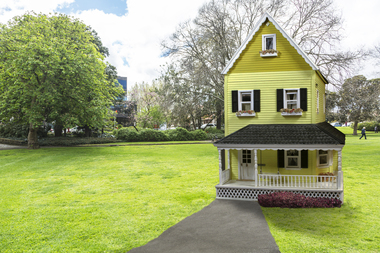
... Doctors service flying in and out of Wilcannia, western New South Wales. On returning to New Zealand Yvonne acted as part of a Medical cover team for the different armed services. one session in the Nary involved pursuing submarines which she described as being very exciting. In 1958 she travelled by sea through the Suez Canal to England and as a member of British Services served in the post WWII Germany for three year in the QARANC and also worked at The London Clinic ...THE DOLL HOUSE _ Yvonne Fitzmaurice The ten room fully furnished American farmhouse was created from an idea by former Mitcham resident, Yvonne Fitzmaurice and was constructed between 1976 and 1978 as a birthday present for her daughter, Susan. The house is a unique interpretation of early American architecture and inferior design. It is also a representation of one woman's ability to create and complete a details snapshot of a lifestyle long gone and give pleasure to family, friends and now the community. Yvonne has had an interesting and full life, born in New Zealand where was a State Registered Nurse and she specialised in hospital theatre work. Later her curiosity bought her to Australia where she worked at the Sydney hospital and with the Australia Flying Doctors service flying in and out of Wilcannia, western New South Wales. On returning to New Zealand Yvonne acted as part of a Medical cover team for the different armed services. one session in the Nary involved pursuing submarines which she described as being very exciting. In 1958 she travelled by sea through the Suez Canal to England and as a member of British Services served in the post WWII Germany for three year in the QARANC and also worked at The London Clinic with some high-profile specialists. Yvonne was introduced to her husband-to-be at a tennis party and they lived in Cambridge, UK, where their two children, Alastair and Susan, were born. On coming to Australia in 1965 as "£10 poms" (Yvonne's words) she worked in casualty at the Box Hill hospital. Initially the family lived at Blackburn South before moving to Mitcham in 1968. To help establish a new life with her family in Australia, Yvonne worked in many different positions from nursing, machine knitting for a Prahran shop, making Christmas Cards and as a commercial traveller. As a hobby she also sold a number of pastel paintings. Following the publishing of her first family history in 1994, Yvonne became a member and volunteer at the Whitehorse Historical Society where she has contributed in producing local history publication, articles for the Newsletter and has improved access to the files by creating the detailed "green files". Her interests include art, crafts and writing. Yvonne has a great philosophy, 'each day I must achieve something - no matter how small'.Hand-made child's doll's house. Built by Mrs Yvonne Fitzmaurice and finished in 1979. This house was built as a 1:12 scale and is a model of a Californian house called Peppercorn farm. House was built by Yvonne and her family and took a period of three years. A lot of the furniture is handmade and the rest is collected from various shops. "Susan Fitzmaurice" name on front of building. Date on plaque on top of front wall.na5059, na5061, na5063, na5065, na5068, na5071, na5073, na5075, na5077, na5079, na5081, na5083 -
 Melton City Libraries
Photograph, Ian and Wendy with Grandma Barrie, c.1943
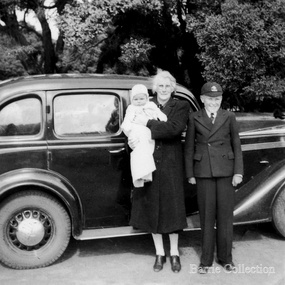
... Doctor at Mount Isa, North West Region of Queensland. The region covered an area larger than the British Isles. He was on call 24 hours for emergencies. He spent three weeks away with calls and in the fourth week attended Aboriginal Reserves. Ian took two Queensland Governors and their wives to spend three nights at the Clinic...Doctor at Mount Isa, North West Region of Queensland. The region covered an area larger than the British Isles. He was on call 24 hours for emergencies. He spent three weeks away with calls and in the fourth week attended Aboriginal Reserves. Ian took two Queensland Governors and their wives to spend three nights at the Clinic ...Jessie May born on 30th November 1883, Jessie, known as Ma Barrie to her grandchildren, was the daughter of schoolteacher, Thomas John Lang and Mary Elizabeth Coates. In 1896 Thomas and Mary Elizabeth moved to Melton. Mr Lang’s previous school was Coliban SS No 1920. Mr Lang was the Head Teacher at Melton until 1917. In 1910 he was a Committee Member Melton Mechanics Institute and Public Library at its establishment. He was a Life Member of the Melton Mechanics Institute Jessie lived in various locations around Central Victoria, particularly Pastoria and Melton. When her father was Head Teacher at Melton State School no 430, she met her future husband, Charles Ernest Barrie. The couple were married at the Methodist Church Melton on the 23rd August in 1906. They lived in the newly built house beside the Chaff Mill on the corner of Station and Brooklyn Road Melton South. Their eldest child was Mary Ena was born on the 7th of October 1907. IN 1909, Ernest Wesley (Bonnie) was born 29th April (Ascot Vale). In 1910 the family moved to a farm in Trundle NSW. The Chaff Mill was sold to Glover Onians – HSK Ward. Later the original mill was burnt and replaced, and in 1977 a fire destroyed it again and it was not rebuilt. In 1911, the family returned to Melton buying the “Darlingsford” farm in May. The weather was too at Trundle for Jessie. Their address was Elizabeth Street Moonee Ponds. William Cecil was born on the 23rd of February 1912 and Charles Edgar was born on 1st June 1913. In 1916 they lived in Moonee Ponds where the children attend Bank Street School, Ascot Vale. The children developed diphtheria Mary and Bon were transferred to Fairfield Hospital. March 1919 the family returned to live at Melton at the time of the outbreak of the Spanish influenza. Mary, Bon, and Edgar returned to Melton School. Following the death of CEB in a car accident in 1931 she was left to bring up her children on her own; the youngest Jim, aged 9 and eldest Mary, aged 24. Jessie left ‘Darlingsford’ in 1946 when her sons had safely returned from WW II. She stayed at Yarram for a time where her married twin daughters lived when more grandchildren were born and spent the remainder of her life living with various family members. SUMMARY - Dr Ian Robinson OAM Born 26th June 1931 Parents – Keith John Robinson of “Creighton” Melton Mary nee Barrie of “Darlingsford” Melton The family lived at “Heatherdale” Toolern Vale. Their 3 children, Ian the first followed by daughters, Ena May and Mary Elizabeth (Beth) Ian and Ena attended Toolern Vale State School. No 946 The family later moved to Columban Ave Strathmore. During 1942 the children stayed their grandmother’s house at “Darlingsford” Melton. They enrolled at Melton State School No 430 on the 13/3/42 after attending State School No 483 Raleigh Street Essendon. They left Melton School on the 31/7/42 returning to Essendon. Ian attended Geelong College as a boarder after completing his schooling he entered University to study Medicine. His early General Practice was in Melbourne. In 1972 he joined the Royal Flying Doctor at Mount Isa, North West Region of Queensland. The region covered an area larger than the British Isles. He was on call 24 hours for emergencies. He spent three weeks away with calls and in the fourth week attended Aboriginal Reserves. Ian took two Queensland Governors and their wives to spend three nights at the Clinic. Sir Colin and Lady Hannah are still their friends. Area Co-ordinator Ian was awarded the Royal Humane Society Medal along with his pilot when they risked their lives landing on flooded land to save a patient. Ian remained a loyal contributor to the Royal Flying Doctor Service until 1997 He met Queen Elizabeth 2nd in Cairns, and also met Prince Phillip and Prince Andrew in Brisbane. Townsville – Locum Beenleigh – General Practice Open 7 Days 198? -2002 Aspects of his work covered the following – Police Work State Commonwealth Medical Officer TEYS COMPANY Q FEVER. Q Fever presents with flu like symptoms. The 1st Test always came back Negative BUT 2nd Test always positive. Ian lectured other Medicos re Q Fever Council Immunization in schools Covered boxing bouts Large Practice In 2002 Ian retired but continued house calls for older patients. Information from Anne to Beth received by Wendy October 2013 Wendy Elizabeth Barrie Jessie May Lang [Barrie] and Ian Keith Robinson standing in front of a carlocal identities -
 Royal District Nursing Service (now known as Bolton Clarke)
Photograph - Digital image, Barry Sutton, c.1930
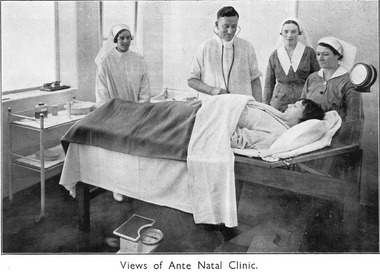
... Digital image showing a Doctor and three Melbourne District Nursing Society (MDNS) Sisters attending a patient in the Ante-Natal Clinic at the After Care Hospital. ...The Clinic gave advice on birth-control and was attended by their own patients at first, but then accepted patients from Melbourne public hospitals until their own clinics were opened. after- care hospital 45 victoria parade collingwood melbourne district nursing society (1885-1957) ante-natal clinic after-care home mdns midwifery rdns royal district nursing service Digital image showing a Doctor and three Melbourne District Nursing Society (MDNS) Sisters attending a patient in the Ante-Natal Clinic at the After Care Hospital. ...In 1930 the Society were pioneers in opening an Ante-Natal Clinic at the Melbourne District Nursing Society (MDNS) After-Care Home, setting a high standard with equipment, keeping records and providing leaflets with instructions in how to keep healthy during pregnancy, what complications to look for, and what to do when labour commenced. This image was taken in the Ante-Natal Clinic and shows some of the equipment used at that time and the uniforms worn by Trained nurses (Sisters) in the 1930s. Melbourne District Nursing Society (MDNS) was founded in 1885 and only nurses who had trained in a Hospital Training School and were fully qualified were employed by the Society. It commenced with one Trained nurse (Nurse), and another employed six months later; both walking amid the slums of inner Melbourne administering nursing care to the sick poor. The Society decided to commence a Midwifery Service and Nurse Fowler, who had previously worked for the Society, was re-employed as their first Trained Midwife. She began home births in August 1893 giving some Ante Natal care, taking midwifery bundles and providing clothes for the babe and mother as needed. Following birth, she gave Post-natal care to the mother and babe twice a day for three days and then daily for a week, and longer if required. She resigned after twelve months and Nurse Wilkie was appointed to the position. As well as walking, the Nurses used Public transport in the limited areas it ran, though a taxi was used by the Nurses and Midwife in emergencies and at night. As the Society expanded it rented premises until it was able to purchase it's own Nurses Home at 39 Victoria Parade, Collingwood in 1914. The Society were pioneers in recognizing the need for premises where patients too ill to be in their own home, but not ill enough to go to hospital, was needed. Land was procured next to No. 39, and the Society built the After-Care Home at 45 Victoria Parade, for these patients, and for patients from Hospitals. It was opened in July 1926 and the name of the Society then became ‘Melbourne District Nursing Society and After-Care Home’ (‘Hospital’ from 1934) The Ante-Natal Clinic at the Melbourne District Nursing Society After-Care Home was opened on the 23rd of September 1930 and MDNS Midwifery patients were encouraged to attend. Prior to the opening of the clinic Ante-natal care was not considered important, but within a short time 100 percent of MDNS Midwifery patients were attending. During 1934 the Women’s Welfare Clinic, including at the time a very controversial Family Planning Clinic, the first of its kind in Australia, was opened to support women at risk following multiple and difficult pregnancies. The Clinic gave advice on birth-control and was attended by their own patients at first, but then accepted patients from Melbourne public hospitals until their own clinics were opened.Digital image showing a Doctor and three Melbourne District Nursing Society (MDNS) Sisters attending a patient in the Ante-Natal Clinic at the After Care Hospital. In the forefront is a set of scales standing on the floor, behind which is the lady lying on a wooden framed bed with the base slightly raised at the top end supporting a white pillow and the lady's head. The lady has short dark hair and her frock can be seen to her waist; the rest of her body is covered by a white sheet and dark coloured blanket. Behind her and to the right of the image, are two Sisters wearing dark coloured long sleeved uniforms which have a belt and white collar; they are both wearing white veils over their short dart hair. To their left is a Doctor who has short dart wavy hair and is looking down at the lady. He is wearing a long white gown and has a stethoscope in his ears with the other end held in his right hand. To his left is another Sister who is wearing a white veil over her dark curled hair, and is wearing a long white gown. In the rear between the Doctor and Sister a hand basin can be seen. On the far left of the picture a trolley with two cloth covered shelves can be seen; a basin and squat bottle sits on the top shelf and kidney dish on the lower one. Behind this, part of a window can be seen.after- care hospital, 45 victoria parade collingwood, melbourne district nursing society (1885-1957), ante-natal clinic, after-care home, mdns midwifery, rdns, royal district nursing service -
 Royal District Nursing Service (now known as Bolton Clarke)
Photograph - Photograph, black and white, c.1980
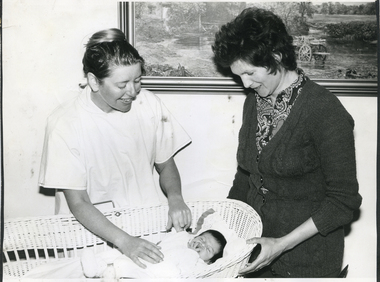
... Doctors at the Women’s Hospital and if a complication arose before or after birth the patient was transferred to their care. Following birth, the Midwife gave Post-Natal care to both the mother and babe commencing with visits twice a day. In 1898 the service ceased due to lack of funds but recommenced in 1906, and in the August 1925 Annual Report the number of MDNS home births was recorded at 478. MDNS built the After-Care Home and a pioneering Anti-Natal Clinic ...This photograph is taken in the home of the Mother and babe and shows a RDNS Sister who is visiting to give the mother and babe Post-natal care. Royal District Nursing Service (RDNS) had a Domiciliary Infant and Maternal Care (DIMC) service which gave Post-natal care to new born mothers and babes in their homes following their early discharge from hospital, or if required for other reasons. In August 1893 Melbourne District Nursing Society (MDNS), commenced a Midwifery Service with Nurse Fowler, who was trained in General nursing and Midwifery nursing, being the first Midwife employed. Mothers were assessed for suitability of a home birth or if they required delivery at the Women’s Hospital. The Midwife worked in conjunction with the Doctors at the Women’s Hospital and if a complication arose before or after birth the patient was transferred to their care. Following birth, the Midwife gave Post-Natal care to both the mother and babe commencing with visits twice a day. In 1898 the service ceased due to lack of funds but recommenced in 1906, and in the August 1925 Annual Report the number of MDNS home births was recorded at 478. MDNS built the After-Care Home and a pioneering Anti-Natal Clinic was opened in 1930. The last Ante-Natal clinic was held there in December 1951 and the MDNS Midwifery service ceased in February 1952. In 1964 MDNS commenced a Post-Natal service with General and Midwifery trained MDNS Sisters working from a room on the ground floor at the Footscray Hospital Nurses quarters, and visiting early discharged Footscray Hospital maternity cases at home. Later, as Royal District Nursing Service (RDNS), this service was extended and renamed as Domiciliary Infant and Maternal Care, (DIMC) service operating from most Centres and visiting early discharged, often 24 hours after birth, maternity cases from hospitals to give Post-natal care to the mother and babe. Many of the RDNS Sisters who worked in DIMC also had their Infant Welfare Certificate, though Midwifery trained nurses also visited. Black and white photograph showing, to the left, a Royal District Nursing (RDNS) Domiciliary Postnatal Sister, with long hair drawn up, and wearing a white gown. She is attending to a new born baby in her wicker bassinet at the baby's home. The Sister is smiling and has her left hand by the shoulder of the wrapped babe, and her right hand is resting lower on the baby. The baby's mother, who has curly short dark hair, is dressed in a floral blouse and dark cardigan. She is standing to the right of the Sister and behind the bassinet, and is looking down at her babe and smiling. Her left hand is resting on the bassinet. The baby has dark hair and has her hand partly covering her mouth. Part of a picture is seen on the wall behind the mother.rdns, royal district nursing service, rdns domiciliary post natal service, rdns domiciary infant and maternal care, rdns dimc -
 Royal District Nursing Service (now known as Bolton Clarke)
Photograph - Photograph, black and white, c.1980
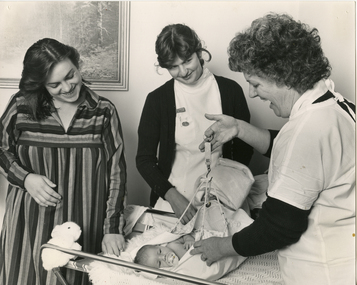
... Doctors at the Women’s Hospital and if a complication arose before or after birth the patient was transferred to their care. Following birth, the Midwife gave Post-Natal care to both the mother and babe commencing with visits twice a day. In 1898 the service ceased due to lack of funds but recommenced in 1906, and in the August 1925 Annual Report the number of MDNS home births was recorded at 478. MDNS built the After-Care Home and a pioneering Anti-Natal Clinic ...This photograph depicts a Royal District Nursing Service (RDNS) Sister (Sr.) visiting Mrs. Hodginson and babe in their home. Sr. Wan is weighing baby Tamara as part of the Post-Natal care she is giving. A nurse who is doing her Hospital training is visiting with the Sister and observing. RDNS had a Domiciliary Infant and Maternal Care, (DIMC) service operating from most Centres which visited early discharged, often 24 hours after birth, maternity cases from hospitals to give Post-natal care to the mother and babe. Sr. Wan is wearing her RDNS summer uniform of a short sleeve white blouse under a royal blue V neck tunic style frock and a dark blue cardigan. In August 1893 Melbourne District Nursing Society (MDNS), commenced a Midwifery Service with Nurse Fowler, who was trained in a hospital in General nursing and Midwifery nursing, being the first Midwife employed. Mothers were assessed for suitability of a home birth or if they required delivery at the Women’s Hospital. The Midwife worked in conjunction with the Doctors at the Women’s Hospital and if a complication arose before or after birth the patient was transferred to their care. Following birth, the Midwife gave Post-Natal care to both the mother and babe commencing with visits twice a day. In 1898 the service ceased due to lack of funds but recommenced in 1906, and in the August 1925 Annual Report the number of MDNS home births was recorded at 478. MDNS built the After-Care Home and a pioneering Anti-Natal Clinic was opened in 1930. The last Ante-Natal clinic was held there in December 1951 and the MDNS Midwifery service ceased in February 1952. In 1964 MDNS commenced a Post-Natal service with General and Midwifery trained MDNS Sisters working from a room on the ground floor at the Footscray Hospital Nurses quarters, and visiting early discharged Footscray Hospital maternity cases at home. Later, as Royal District Nursing Service (RDNS), this service was extended and renamed as Domiciliary Infant and Maternal Care, (DIMC) service operating from most Centres and visiting early discharged, often 24 hours after birth, maternity cases from hospitals to give Post-natal care to the mother and babe. Many of the RDNS Sisters who worked in DIMC also had their Infant Welfare Certificate, though Midwifery trained nurses also visited. On the right of the black and white photograph is Royal District Nursing Service (RDNS) DIMC Sister J. Wan, who has short dark curly hair and is wearing a white gown over her uniform, with the white collar and sleeves of her dark cardigan seen. She is laughing as she holds the top ring of hand held baby scales in her right hand; the bottom of the scale has a metal hook which has a sling attached to it with four cotton 'ropes'. Baby Tamara is supported in the sling which is just resting on a sheep skin and bunny rug covered metal framed change table. Sr. Wan has her left hand on the sling. To the left of the photograph is Tamara's smiling mother, Mrs. Lynda Hodginson, and in the centre of the photograph is observer Nurse Sheehan. Mrs. Hodginson is wearing a striped dress with a V neck, and has dark shoulder length hair. Nurse Sheehan has short dark hair and is wearing a white uniform and dark cardigan. A nursing watch is attached to the right hand side of her uniform. Part of a landscape picture can be seen on the wall behind her. A small white fluffy rabbit sits on the left hand side of the change table. Baby Tamara has sparse dark hair and is sucking on a dummy.Photographer's stampmdns, melbourne district nursing society, melbourne district nursing service, royal district nursing service, rdns, mdns midwifery, rdns domiciliary postnatal service, dimc, tamara hodginson, nurse sheehan, sister j. wan, mrs lynda hodginson -
 Royal District Nursing Service (now known as Bolton Clarke)
Photograph - Photograph, black and white, c. 1967
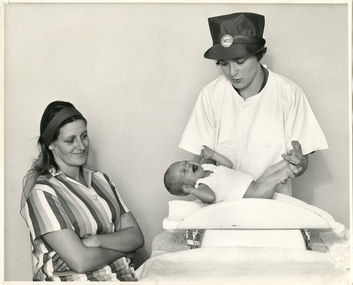
... Doctors at the Women’s Hospital and if a complication arose the patient was transferred to their care. Following birth they gave Post-Natal care to both the mother and babe. In 1898 the service ceased due to lack of funds but recommenced in 1906, and in the August 1925 Annual Report the number of MDNS home births was recorded at 478. MDNS built the After-Care Home and an Anti-Natal Clinic ...This photograph depicts Post-Natal care being given by a Royal District Nursing Service (RDNS), Sister who is working in the RDNS Domiciliary Infant and Maternal Care (DIMC) section of the Service. The photograph is taken in the home of the mother and baby and the Sister is in the process of putting the baby onto the Baby scales to ascertain the babe's weight. Sisters employed in the DIMC section of RDNS gave Post-natal care to both the mother and her newly born babe when they were discharged early from hospital. This photograph was taken in the year following Melbourne District Nursing Service (MDNS) being granted Royal patronage in 1966 and becoming Royal District Nursing Service. The Sister is wearing the the same grey uniform frock used by MDNS but the badge on her peaked cap has changed from a red Maltese cross to a metal round silver badge with a royal blue circle around the edge with the words 'Royal District Nursing Service' in white capital letters running inside the blue circle.The centre of the badge is divided into three sections; a silver rising sun top and bottom, and a thick royal blue horizontal central strip with 'RDNS' written in large white capital letters. This uniform continued to be worn until 1971 when it changed colour and style. In August 1893 Melbourne District Nursing Society (MDNS), commenced a Midwifery Service with Nurse Fowler, who trained in a Hospital and was qualified in General nursing and Midwifery nursing, being the first Midwife employed. Mothers were assessed for suitability of a home birth, or if they required delivery at the Women’s Hospital. The Midwife worked in conjunction with the Doctors at the Women’s Hospital and if a complication arose the patient was transferred to their care. Following birth they gave Post-Natal care to both the mother and babe. In 1898 the service ceased due to lack of funds but recommenced in 1906, and in the August 1925 Annual Report the number of MDNS home births was recorded at 478. MDNS built the After-Care Home and an Anti-Natal Clinic was opened in 1930. The last Ante-Natal clinic was held there in December 1951 and the MDNS Midwifery service ceased in February 1952. In 1964 MDNS commenced a Post-Natal service with General and Midwifery trained MDNS Sisters working from a room at Footscray Hospital, and visiting early discharged Footscray Hospital maternity cases at home. Now as Royal District Nursing Service (RDNS), this service was extended to a Domiciliary Infant and Maternal Care, (DIMC) service operating from most Centres and visiting early discharged, often 24 hours after birth, maternity cases from hospitals to give post-natal care to the mother and babe. Many Sisters working in this area had a Certificate in Infant Welfare as well as their General and Midwifery Certificates.In the right rear of this black and white photograph is a Royal District Nursing Service, (RDNS), Sister who is wearing a white gown over her uniform, and wearing her grey peaked hat with the RDNS badge visible, looking down at a baby she is about to weigh. The baby has sparse dark hair, is wearing a white singlet and is crying. The Baby scales, which are sitting on a table in front of the Sister, are white with a rectangular base and curved sided tray on the top. The Sister is standing behind the scales, and is supporting the babe's body with her right hand and holding baby's legs with her left hand as she lowers babe fully onto the scales. On the left of the photograph, the mother, who has long dark hair with a hair scarf holding it back, and is wearing a striped frock, is siting on a chair with her arms crossed at her waist, and is smiling at her babe as she observes proceedings.. Photographers Stampmdns, melbourne district nursing society, melbourne district nursing service, rdns, royal district nursing service, rdns domiciliary postnatal service, dimc -
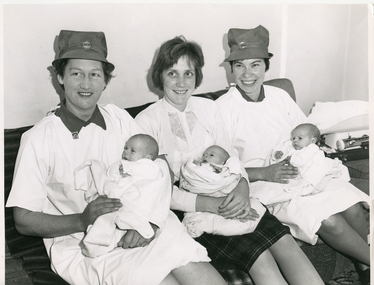 Royal District Nursing Service (now known as Bolton Clarke)
Photograph - Photograph, black and white, 09 05 1967
... Doctors at the Women’s Hospital and if a complication arose the patient was transferred to their care. Following birth they gave Post-Natal care to both the mother and babe. In 1898 the service ceased due to lack of funds but recommenced in 1906, and in the August 1925 Annual Report the number of MDNS home births was recorded at 478. MDNS built the After-Care Home and an Anti-Natal Clinic ...In 1964 Melbourne District Nursing Service (MDNS) commenced a Domiciliary Postnatal Service, later called Domiciliary Infant and Maternal.Care (DIMC), when Royal patronage was granted in 1966 (RDNS). The Sisters gave Post-natal care to the mother and babes and visited for support and advice as long as needed. The central RDNS badges on the Sisters hats is made of metal and has 'Royal District Nursing Service' written in the outside royal blue circle. The inner area is divided in three parts, the top and bottom sections are a silver rising sun and the central royal blue horizontal band has the letters 'RDNS' written white capital letters.In August 1893 Melbourne District Nursing Society (MDNS), commenced a Midwifery Service with Nurse Fowler, who was Hospital trained in General nursing and Midwifery nursing, being the first Midwife employed. Mothers were assessed for suitability of a home birth, or if they required delivery at the Women’s Hospital. The Midwife worked in conjunction with the Doctors at the Women’s Hospital and if a complication arose the patient was transferred to their care. Following birth they gave Post-Natal care to both the mother and babe. In 1898 the service ceased due to lack of funds but recommenced in 1906, and in the August 1925 Annual Report the number of MDNS home births was recorded at 478. MDNS built the After-Care Home and an Anti-Natal Clinic was opened in 1930. The last Ante-Natal clinic was held there in December 1951 and the MDNS Midwifery service ceased in February 1952. In 1964 MDNS commenced a Post-Natal service with General and Midwifery trained MDNS Sisters working from a room at Footscray Hospital, and visiting early discharged Footscray Hospital maternity cases at home. Later, as Royal District Nursing Service (RDNS), this service was extended to a Domiciliary Infant and Maternal Care (DIMC), service operating from most Centres and visiting early discharged, often 24 hours after birth, maternity cases from hospitals to give post-natal care to the mother and babe. Many of the RDNS Sisters who did DIMC had their Triple Certificate (Infant Welfare), though Midwifery trained nurses also visited. Black and white photograph showing two Royal District Nursing Service, (RDNS), Postnatal Service Sisters visiting a mother and her triplets in their home. Both Sisters and the mother are smiling and sitting on a dark coloured couch with each holding one of the babes who are wrapped in light coloured bunny rugs. The Sister on the left is wearing a white gown, with the grey peaks of her uniform showing; her nursing badge is attached to the right hand peak of her uniform. She is wearing her grey peaked hat, with central attached RDNS badge, over her short dark curled hair. To her right is the mother, who has short straight dark hair, and is wearing a white blouse and dark tartan skirt. On the far right is Sister Barbara Weisart, wearing a white gown; with the grey peaks of her uniform showing, and wearing her grey peaked hat with central RDNS badge over her short dark straight hair. A set of white baby scales are seen to her rightPhotographers Stamp. Quote No. GE 13mdns, melbourne district nursing society, melbourne district nursing service, royal district nursing service, rdns, rdns domiciliary postnatal service, dimc, sister barbara weisart
