
Showing 41 items matching "english gothic"
-
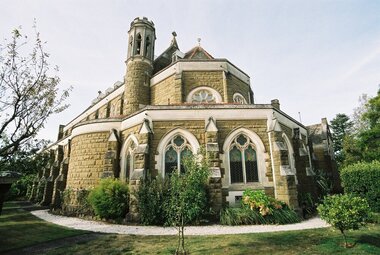 Ballarat Heritage Services
Photograph - Photograph - Colour, L.J. Gervasoni, Loretto Chapel, Ballarat, 2005, 13/04/2005
... ...english gothic...It is built in an English Gothic style with French influence. The stone is Barrabool Hills sandstone from near Geelong with white Oamaru, New Zealand, stone detailing. ...It is built in an English Gothic style with French influence. The stone is Barrabool Hills sandstone from near Geelong with white Oamaru, New Zealand, stone detailing. ...The Loreto Chapel, or Children’s Chapel as it was known, was built between 1898 and 1902. The architect was William Tappin and the builder, George Lorimer. It is built in an English Gothic style with French influence. The stone is Barrabool Hills sandstone from near Geelong with white Oamaru, New Zealand, stone detailing. Building was interrupted through lack of funds but the project was finally completed with a large bequest from the German Countess Elizabeth Wolff-Metternich, who had been a student at the Convent in 1898. The Countess tragically died on a return visit to her family in Germany. The inside of the Chapel is decorated in soft pastel colours with artwork and statuary donated to the sisters by Ballarat and Irish families. The Rose Window over the Organ Gallery depicts St. Cecilia, patron saint of music, surrounded by symbols of the four Evangelists, Matthew, Mark, Luke and John. The windows over the altar depict the instruments of the Passion of Christ. The marble altar features the Nativity scene as was requested by the children. The interior of the Chapel was restored in 1999 through the bequest of past pupil, Lucy Kerley and maintenance is continued with a bequest from past pupil, Eileen Macintyre (McGrath) (https://loreto.vic.edu.au/loreto-college/facilities/loreto-chapel/, accessed 06 June 2019_ Colour photograph of a chapel at Loretto convent, Ballarat. The chapel is made of Barrabool sandstone. loreto chapel, ballarat, children's chapel, william tappin, george loromer, english gothic, elizabeth wolff-metternich -
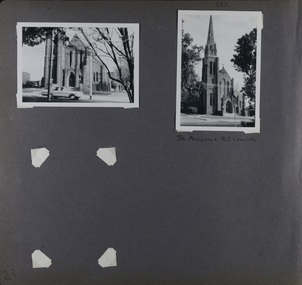 Glen Eira Historical Society
Album - Album page, St Aloysius Roman Catholic Church (Balaclava Road), Circa 1972
... ...early english gothic...From: Glen Eira Heritage Management Plan (1996) by Andrew Ward and Associates St Aloysius is architecturally important as an exceptionally imposing red brick church in the Early English Gothic Style from the inter-war period. ...This photograph is part of the Caulfield Historical Album 1972. This album was created in approximately 1972 as part of a project by the Caulfield Historical Society to assist in identifying buildings worthy of preservation. The album is related to a Survey the Caulfield Historical Society developed in collaboration with the National Trust of Australia (Victoria) and Caulfield City Council to identify historic buildings within the City of Caulfield that warranted the protection of a National Trust Classification. Principal photographer thought to be Trevor Hart, member of Caulfield Historical Society. Most photographs were taken between 1966-1972 with a small number of photographs being older and from unknown sources. All photographs are black and white except where stated, with 386 photographs over 198 pages.From: Glen Eira Heritage Management Plan (1996) by Andrew Ward and Associates St Aloysius is architecturally important as an exceptionally imposing red brick church in the Early English Gothic Style from the inter-war period. Its significance, however, is compromised by the recent removal of its Pyrmont stone spire. It is locally important as a focus of Catholic worship in Caulfield.Page 23 of Photograph Album with two black and white photographs of front views of a church. There is also a photo missing on the bottom left. Hand written: 233 [above top right photo] / St Aloysius R C Church [under top right photo] / 23[bottom left]trevor hart, caulfield north, balaclava road, st aloysius, early english gothic, inter-war period, catholic church, towers, red brick -
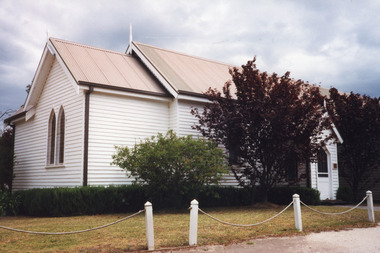 Lakes Entrance Historical Society
Photograph - St John's Anglican Church Metung 1999
... Colour photograph of St John's Anglican Church, Metung, showing a timber English Gothic style church with gable roofs over nave, chancel, porches etc. ...Religion Churches Colour photograph of St John's Anglican Church, Metung, showing a timber English Gothic style church with gable roofs over nave, chancel, porches etc. ...Original Church built late 1880's on John King's property, moved to present site 1897. Church Hall built after WWI by voluntary labour, later enlarged.Colour photograph of St John's Anglican Church, Metung, showing a timber English Gothic style church with gable roofs over nave, chancel, porches etc. Lancet windows with peripheral glazing bars. Turned finials on roofs including belfrey roof. Bollard and chain fence. Metung Victoriareligion, churches -
 Linton Mechanics Institute and Free Library Collection
Book - Short stories, Irving, Washington (writing as Geoffrey Crayon), Tales of a traveller, [1877?] [First published 1824]
... English literature...Supernatural...Gothic...Washington Iriving American literature English literature Supernatural Gothic Short stories A collection of short stories and sketches organised into four parts, each with its own narrative framework. ...A collection of short stories and sketches organised into four parts, each with its own narrative framework. The stories are presented as if written by "Geoffrey Crayon", a pseudonym/persona sometimes used by Washington Irving.Several of the stories include supernatural themes.317 p. : preface, table of contents, publisher's 'List of Books' (30 p.), Decorative brown cover and spine, embossed in black. Title and author's name embossed in gold on spine.fictionA collection of short stories and sketches organised into four parts, each with its own narrative framework. The stories are presented as if written by "Geoffrey Crayon", a pseudonym/persona sometimes used by Washington Irving.Several of the stories include supernatural themes.washington iriving, american literature, english literature, supernatural, gothic, short stories -
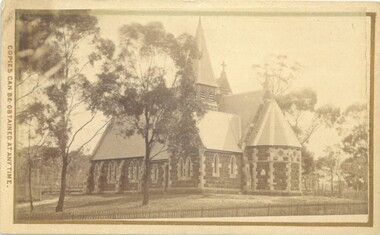 Bacchus Marsh & District Historical Society
Photograph, Holy Trinity Church Bacchus Marsh 1883
... The building was designed by Frederick Wyatt and is described as early English Gothic in style. It was opened on 5 June 1877 by Bishop Moorhouse of Melbourne. ...The building was designed by Frederick Wyatt and is described as early English Gothic in style. It was opened on 5 June 1877 by Bishop Moorhouse of Melbourne. ...The Holy Trinity Anglican Church in this location was first opened in 1877. An earlier nearby prefabricated Church building known as the 'Iron Church' had served as the Anglican place of worship in Bacchus Marsh from around 1855 until 1877. The 1877 sandstone Church with a slate roof was intended as a permanent structure for Anglican worship in Bacchus Marsh and still stands in 2024 and continues to function as an Anglican Church. The building was designed by Frederick Wyatt and is described as early English Gothic in style. It was opened on 5 June 1877 by Bishop Moorhouse of Melbourne. The sandstone was acquired from Grant's quarry at Maddingley.Small sepia unframed photograph on card with gold border framing photograph. Housed in the Jeremeas Family Album, which contains photographs of Bacchus Marsh and District in 1883 by Stevenson and McNicoll. The photograph depicts the recently constructed Anglican Holy Trinity Church in Gisborne Road, Bacchus Marsh. The view of the building is from Gisborne Road looking west. From this angle the rear and southern side of the building can be seen. A picket fence along the entrance to the Church grounds can be seen in the foreground.On the front: Stevenson & McNicoll. Photo. 108 Elizabeth St. Melbourne. COPIES CAN BE OBTAINED AT ANY TIME. On the back: LIGHT & TRUTH inscribed on a banner surmounted by a representation of the rising sun. Copies of this Portrait can be had at any time by sending the Name and Post Office Money Order or Stamps for the amount of order to STEVENSON & McNICOLL LATE BENSON & STEVENSON, Photographers. 108 Elizabeth Street, MELBOURNE churches bacchus marsh, holy trinity anglican church bacchus marsh, holy trinity church of england bacchus marsh, stevenson and mcnicoll 1883 photographs of bacchus marsh and district -
 Ballarat Heritage Services
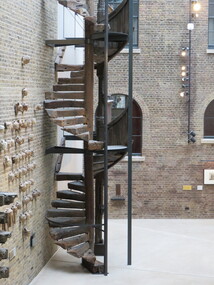
Digital Photograph, Stairs from Salisbury Cathedral
... Standing 123 metres high above the city that grew up around it Salisbury Cathedral is almost entirely Early English Gothic in architectural style. The Magna Carta housed at SAlisbury is the best preserved of the four originals dating from June 1215 and still in existence.It is written in Latin with a quill pen on treated animal skin (parchment). ...Standing 123 metres high above the city that grew up around it Salisbury Cathedral is almost entirely Early English Gothic in architectural style. The Magna Carta housed at SAlisbury is the best preserved of the four originals dating from June 1215 and still in existence.It is written in Latin with a quill pen on treated animal skin (parchment). ...These stairs are on display at Victoria and Albert Museum, London. Salisbury Cathedral is still in existence and houses the famous Magna Carta. Standing 123 metres high above the city that grew up around it Salisbury Cathedral is almost entirely Early English Gothic in architectural style. The Magna Carta housed at SAlisbury is the best preserved of the four originals dating from June 1215 and still in existence.It is written in Latin with a quill pen on treated animal skin (parchment). The sealed documents were sent throughout the country after the Charter was forced on King John barons who were unhappy with the way he was ruling England. Wooden stairsmagna carta salisbury cathedral king john stairs -
 Ballarat Heritage Services
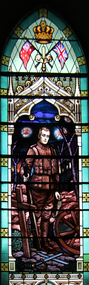
Photograph - Photograph - Colour, Former Barkly Street Uniting Church, Ballarat, 2015, 07/04/2015
... The windows are considered to be one of the most remarkable war memorial windows in Victoria, and the 1800s English Gothic-style front facade is believed to be protected by a City of Ballarat heritage overlay. ...The windows are considered to be one of the most remarkable war memorial windows in Victoria, and the 1800s English Gothic-style front facade is believed to be protected by a City of Ballarat heritage overlay. ...The World War One windows in the Barkly Street Uniting Church resulted from a request made in 1919 from the Barkly Street Young Men's Club who raised money to pay for the project. The window was designed by the Fisher Company, and was unveiled on 14 March 1920 at a total cost of 171 pounds 10 shillings. The windows are considered to be one of the most remarkable war memorial windows in Victoria, and the 1800s English Gothic-style front facade is believed to be protected by a City of Ballarat heritage overlay. Historical experts believe the windows were designed by renowned stained-glass window-maker William Montgomery. The centre window depicts a young soldier bearing an Anzac badge underneath the British and Australian flags. The image of the solider is surrounded by 24 crosses, a single dove and a bugle. A number of colour photographs of the interior of the Barkly Street Uniting Church taken while the church was offered for sale.barkly street uniting church, barkly street methodist church, world war one, world war one memorial, stained glass, soldier, religion, church -
 Warrnambool and District Historical Society Inc.
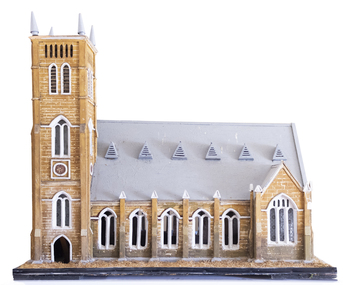
Artefact, Model of Church, C1900
... John’s Presbyterian Church, designed by Andrew Kerr, was built in the English Gothic style and opened in 1875. It was destroyed by fire in 1920 but was rebuilt to a similar style. ...John’s Presbyterian Church, designed by Andrew Kerr, was built in the English Gothic style and opened in 1875. It was destroyed by fire in 1920 but was rebuilt to a similar style. ...This model of St. John’s Presbyterian Church in Warrnambool was made by Johan Carl August Landmann (1826-1920). August Landmann and his wife, Christina came from Silesia to Australia in 1854. They settled in Warrnambool where August made a living as a carpenter and joiner. At first he rented shops in Timor Street and then built a two-storeyed shop and residence in Henna Street. Landmann built many of the early commercial buildings and residences in Warrnambool and he and his family were associated with the management of the Warrnambool Western Brewery. When he retired in 1900 he built another residence in Mickle Street and it was at that time that it is believed he made the model of the Presbyterian Church and the model of the Ozone Hotel (which is in the Warrnambool Art Gallery today). St. John’s Presbyterian Church, designed by Andrew Kerr, was built in the English Gothic style and opened in 1875. It was destroyed by fire in 1920 but was rebuilt to a similar style. This model is of great significance for two reasons: 1. It was made by a prominent early Warrnambool carpenter and joiner, Johan Carl August Landmann. 2. It is the only known model of the Warrnambool St. John’s Presbyterian Church which was destroyed by fire in 1920.This model is on a wooden stand or base which is painted black with metal screws. The edging of the stand contains straw which is now brown but was originally green to resemble grass or lawn. The church is a wooden structure (hollow inside) with some sections painted to resemble sandstone. The roof is slanted and painted grey and has six dormer windows or ventilation pieces on each side. The main body of the church has a nave with dual arched windows, the west end has dual arched windows and a door with louvre ventilation and the east end has a door and dual arched windows and two conical-shaped finials. The windows, some of which are triangular, have frosted decorated glass. Some of the glass in the windows is missing. The main tower is square-shaped with four conical-shaped finials. The upper part has four sets of louvres and two arched windows. The centre and lower sections have rosette patterns and several sets of dual arched windows with frosted decorated glass panels. The north east corner has a smaller tower.johan carl august landmann, st. john’s presbyterian church, warrnambool, warrnambool history -
 Uniting Church Archives - Synod of Victoria
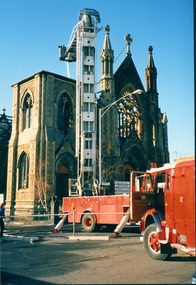
16 August 1988
... The original design for 'a handsome and commodious edifice in the early English Gothic style capable of seating 750 persons' was described and illustrated in The Australasian Sketcher (January 1883). ...The original design for 'a handsome and commodious edifice in the early English Gothic style capable of seating 750 persons' was described and illustrated in The Australasian Sketcher (January 1883). ...The foundation stone for the Cairns Memorial Church in East Melbourne was laid on 20 November 1882, and construction began in 1883 to a design produced by architects Reed, Henderson and Smart of Melbourne. The church was named in memory of the Rev. Dr. Adam Cairns (1802-1881), late pastor of Chalmers Church on Eastern Hill. Cairns was born in Scotland and ministered there until coming to Melbourne in 1853, where he served as a minister until 1876. The church in East Melbourne was intended to accommodate those who had seceded from Chalmers Church and formed themselves into a new charge. The original design for 'a handsome and commodious edifice in the early English Gothic style capable of seating 750 persons' was described and illustrated in The Australasian Sketcher (January 1883). The interior was to be octagonal in form, with the organ and choir placed in the southern transept. The first portion of the church was opened in November 1883, but was soon found, under the popular ministry of the Rev. G.D. Buchanan, to be too small for the congregation. A new design by the architects Twentyman and Askew was developed, and the first part of the redesigned building was opened on 5 October 1884. The completed building was opened on 17 April 1887. Built from Barrabool Hills stone with Waurn Ponds freestone dressings, it consisted of a nave and transepts, with raking floor, a substantial undercroft and the base of an incomplete tower and spire to the north-west. The church was gutted by fire in August 1988 and was subsequently redeveloped as an apartment complex. The congregation of Cairns Memorial now worships at Richmond-Collingwood, or at St. Michael's Collins Street. Colour photo showing the partial demolition of the Cairns Memorial Church in Powlett St. East Melbourne after it had been destroyed by fire on 15 August 1988.cairns memorial, dr adam cairns, chalmers church, powlett st. east melbourne, australasian sketcher, reed henderson smart, gothic style, presbyterian, twentyman askew -
 Uniting Church Archives - Synod of Victoria
Photograph, 29 September 1984
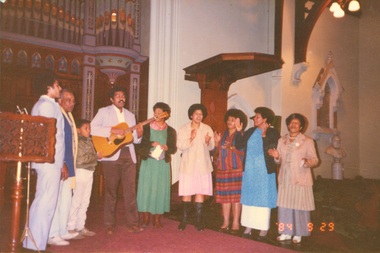
... The original design for 'a handsome and commodious edifice in the early English Gothic style capable of seating 750 persons' was described and illustrated in The Australasian Sketcher (January 1883). ...The original design for 'a handsome and commodious edifice in the early English Gothic style capable of seating 750 persons' was described and illustrated in The Australasian Sketcher (January 1883). ...The foundation stone for the Cairns Memorial Church in East Melbourne was laid on 20 November 1882, and construction began in 1883 to a design produced by architects Reed, Henderson and Smart of Melbourne. The church was named in memory of the Rev. Dr. Adam Cairns (1802-1881), late pastor of Chalmers Church on Eastern Hill. Cairns was born in Scotland and ministered there until coming to Melbourne in 1853, where he served as a minister until 1876. The church in East Melbourne was intended to accommodate those who had seceded from Chalmers Church and formed themselves into a new charge. The original design for 'a handsome and commodious edifice in the early English Gothic style capable of seating 750 persons' was described and illustrated in The Australasian Sketcher (January 1883). The interior was to be octagonal in form, with the organ and choir placed in the southern transept. The first portion of the church was opened in November 1883, but was soon found, under the popular ministry of the Rev. G.D. Buchanan, to be too small for the congregation. A new design by the architects Twentyman and Askew was developed, and the first part of the redesigned building was opened on 5 October 1884. The completed building was opened on 17 April 1887. Built from Barrabool Hills stone with Waurn Ponds freestone dressings, it consisted of a nave and transepts, with raking floor, a substantial undercroft and the base of an incomplete tower and spire to the north-west. The church was gutted by fire in August 1988 and was subsequently redeveloped as an apartment complex. The congregation of Cairns Memorial now worships at Richmond-Collingwood, or at St. Michael's Collins Street. Colour photo showing a group of Fijians singing to a guitar accompaniment in the apse of the Cairns Memorial Church East Melbourne.cairns memorial, dr adam cairns, chalmers church, powlett st. east melbourne, australasian sketcher, reed henderson smart, gothic style, presbyterian, twentyman askew, fijians -
 Uniting Church Archives - Synod of Victoria
Photograph, 21 August 1988
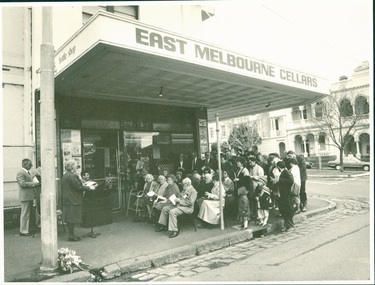
... The original design for 'a handsome and commodious edifice in the early English Gothic style capable of seating 750 persons' was described and illustrated in The Australasian Sketcher (January 1883). ...The original design for 'a handsome and commodious edifice in the early English Gothic style capable of seating 750 persons' was described and illustrated in The Australasian Sketcher (January 1883). ...The foundation stone for the Cairns Memorial Church in East Melbourne was laid on 20 November 1882, and construction began in 1883 to a design produced by architects Reed, Henderson and Smart of Melbourne. The church was named in memory of the Rev. Dr. Adam Cairns (1802-1881), late pastor of Chalmers Church on Eastern Hill. Cairns was born in Scotland and ministered there until coming to Melbourne in 1853, where he served as a minister until 1876. The church in East Melbourne was intended to accommodate those who had seceded from Chalmers Church and formed themselves into a new charge. The original design for 'a handsome and commodious edifice in the early English Gothic style capable of seating 750 persons' was described and illustrated in The Australasian Sketcher (January 1883). The interior was to be octagonal in form, with the organ and choir placed in the southern transept. The first portion of the church was opened in November 1883, but was soon found, under the popular ministry of the Rev. G.D. Buchanan, to be too small for the congregation. A new design by the architects Twentyman and Askew was developed, and the first part of the redesigned building was opened on 5 October 1884. The completed building was opened on 17 April 1887. Built from Barrabool Hills stone with Waurn Ponds freestone dressings, it consisted of a nave and transepts, with raking floor, a substantial undercroft and the base of an incomplete tower and spire to the north-west. The church was gutted by fire in August 1988 and was subsequently redeveloped as an apartment complex. The congregation of Cairns Memorial now worships at Richmond-Collingwood, or at St. Michael's Collins Street. B & W photograph showing the congregation of the Cairns Memorial Church attending a service held under the verandah of the East Melbourne Cellars (Cheers Bottle Shop) after fire had destroyed their church on 15 August 1988.cairns memorial, dr adam cairns, chalmers church, powlett st. east melbourne, australasian sketcher, reed henderson smart, gothic style, presbyterian, twentyman askew, fijians, east melbourne cellars, cheers bottle shop -
 Uniting Church Archives - Synod of Victoria
Photograph - Newspaper cutting, 22 August 1988
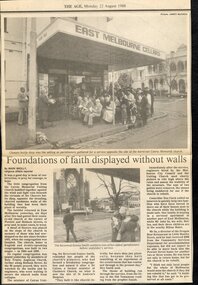
... The original design for 'a handsome and commodious edifice in the early English Gothic style capable of seating 750 persons' was described and illustrated in The Australasian Sketcher (January 1883). ...The original design for 'a handsome and commodious edifice in the early English Gothic style capable of seating 750 persons' was described and illustrated in The Australasian Sketcher (January 1883). ...The foundation stone for the Cairns Memorial Church in East Melbourne was laid on 20 November 1882, and construction began in 1883 to a design produced by architects Reed, Henderson and Smart of Melbourne. The church was named in memory of the Rev. Dr. Adam Cairns (1802-1881), late pastor of Chalmers Church on Eastern Hill. Cairns was born in Scotland and ministered there until coming to Melbourne in 1853, where he served as a minister until 1876. The church in East Melbourne was intended to accommodate those who had seceded from Chalmers Church and formed themselves into a new charge. The original design for 'a handsome and commodious edifice in the early English Gothic style capable of seating 750 persons' was described and illustrated in The Australasian Sketcher (January 1883). The interior was to be octagonal in form, with the organ and choir placed in the southern transept. The first portion of the church was opened in November 1883, but was soon found, under the popular ministry of the Rev. G.D. Buchanan, to be too small for the congregation. A new design by the architects Twentyman and Askew was developed, and the first part of the redesigned building was opened on 5 October 1884. The completed building was opened on 17 April 1887. Built from Barrabool Hills stone with Waurn Ponds freestone dressings, it consisted of a nave and transepts, with raking floor, a substantial undercroft and the base of an incomplete tower and spire to the north-west. The church was gutted by fire in August 1988 and was subsequently redeveloped as an apartment complex. The congregation of Cairns Memorial now worships at Richmond-Collingwood, or at St. Michael's Collins Street. B & W newspaper cutting from The Age newspaper on 22 August 1988.Caption: "The Rev Eunice Smith comforts two of her oldest parishioners before yesterday's service"cairns memorial, dr adam cairns, chalmers church, powlett st. east melbourne, australasian sketcher, reed henderson smart, gothic style, presbyterian, twentyman askew, fijians, east melbourne cellars, cheers bottle shop, the age newspaper, rev. eunice smith -
 Ballarat Heritage Services
Photograph - Church, Clare Gervasoni, Daylesford Uniting Church, 2023, 04/03/2023
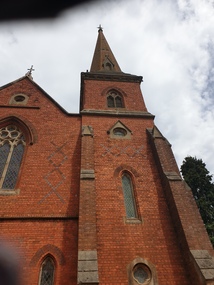
... The foundaton stone for the newer, current church was laid on 12 June 1865, designed by Architects Crouch and Wilson the structure was built in early English Gothic style. The first service was held in the new church on 10 December 1865. ...The foundaton stone for the newer, current church was laid on 12 June 1865, designed by Architects Crouch and Wilson the structure was built in early English Gothic style. The first service was held in the new church on 10 December 1865. ...The Daylesford Uniting Church (formerly Wesleyan /Methodist Church) was built in 1865, replacing an earlier Wesleyan Chapel built in 1861 which is still on site and known as the Sunday School (2024). The foundaton stone for the newer, current church was laid on 12 June 1865, designed by Architects Crouch and Wilson the structure was built in early English Gothic style. The first service was held in the new church on 10 December 1865. It is of interest for its brick broach spire, diapered brick façade and spacious interior with aisles separated from the nave by slender columns. The church organ was installed and built in 1888 by William Anderson and boasts an impressive 724 pipes, many of which are decorated with Christian symbols. This organ is a rare example of Anderson’s work and is his only instrument in Western Victoria. It is classified by the National Trust of Australia (Victoria) as being of state significance. The organ was renpvated in 1979-80 by Leighton Turner. It has 2 manuals, 14 speaking stops, 3 couplers, tracker action, Gt: 8.8 divided.8.4.4.2-2/3.2. Sw: 8.8.4.2.8. Ped: 16. In the 1880s the decline in mining led to the congregation considering ways to reduce debt. Rent was received from pew hire as well as organ concerts and annual fairs. By the end of the 19th century the church had settled into a pattern of steady parish life. The 1950s and 1960s were really the glory days of the church with an active Sunday School, tennis clubs and vibrant social activity as well as many worshippers at Sunday services. The final service was held at the church on 21 April 2024.A redbrick church on stone foundation in Daylesforddaylesford uniting church, daylesford methodist church, daylesford, john mitchell uniting church, daylesford wesleyan church, crouch and wilson, daylesford uniting sunday school -
 Ballarat Heritage Services
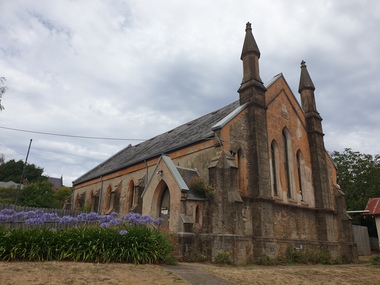
Photograph - Church, Clare Gervasoni, Former Daylesford Wesleyan Chapel, 2023, 04/03/2023
... The foundaton stone for the newer, current church was laid on 12 June 1865, designed by Architects Crouch and Wilson the structure was built in early English Gothic style. The first service was held in the new church on 10 December 1865. ...The foundaton stone for the newer, current church was laid on 12 June 1865, designed by Architects Crouch and Wilson the structure was built in early English Gothic style. The first service was held in the new church on 10 December 1865. ...The Daylesford Uniting Church (formerly Wesleyan /Methodist Church) was built in 1865, replacing an earlier Wesleyan Chapel built in 1861 which is still on site and known as the Sunday School (2024). The foundaton stone for the newer, current church was laid on 12 June 1865, designed by Architects Crouch and Wilson the structure was built in early English Gothic style. The first service was held in the new church on 10 December 1865. It is of interest for its brick broach spire, diapered brick façade and spacious interior with aisles separated from the nave by slender columns. The church organ was installed and built in 1888 by William Anderson and boasts an impressive 724 pipes, many of which are decorated with Christian symbols. This organ is a rare example of Anderson’s work and is his only instrument in Western Victoria. It is classified by the National Trust of Australia (Victoria) as being of state significance. The organ was renpvated in 1979-80 by Leighton Turner. It has 2 manuals, 14 speaking stops, 3 couplers, tracker action, Gt: 8.8 divided.8.4.4.2-2/3.2. Sw: 8.8.4.2.8. Ped: 16. In the 1880s the decline in mining led to the congregation considering ways to reduce debt. Rent was received from pew hire as well as organ concerts and annual fairs. By the end of the 19th century the church had settled into a pattern of steady parish life. The 1950s and 1960s were really the glory days of the church with an active Sunday School, tennis clubs and vibrant social activity as well as many worshippers at Sunday services. The final service was held at the church on 21 April 2024.A stone church in Daylesford. Originally built at the Daylesford Wesleyan Chapel, it was later used as the Daylesford Uniting Church Sunday School. daylesford uniting church, daylesford methodist church, daylesford, john mitchell uniting church, daylesford wesleyan church, daylesford uniting sunday school -
 Ballarat Heritage Services
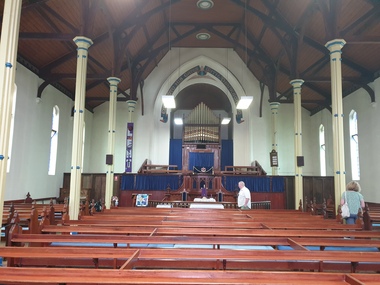
Photograph - Church, Clare Gervasoni, Daylesford Uniting Church Interior, 2023, 04/03/2023
... The foundaton stone for the newer, current church was laid on 12 June 1865, designed by Architects Crouch and Wilson the structure was built in early English Gothic style. The first service was held in the new church on 10 December 1865. ...The foundaton stone for the newer, current church was laid on 12 June 1865, designed by Architects Crouch and Wilson the structure was built in early English Gothic style. The first service was held in the new church on 10 December 1865. ...The Daylesford Uniting Church (formerly Wesleyan /Methodist Church) was built in 1865, replacing an earlier Wesleyan Chapel built in 1861 which is still on site and known as the Sunday School (2024). The foundaton stone for the newer, current church was laid on 12 June 1865, designed by Architects Crouch and Wilson the structure was built in early English Gothic style. The first service was held in the new church on 10 December 1865. It is of interest for its brick broach spire, diapered brick façade and spacious interior with aisles separated from the nave by slender columns. The church organ was installed and built in 1888 by William Anderson and boasts an impressive 724 pipes, many of which are decorated with Christian symbols. This organ is a rare example of Anderson’s work and is his only instrument in Western Victoria. It is classified by the National Trust of Australia (Victoria) as being of state significance. The organ was renpvated in 1979-80 by Leighton Turner. It has 2 manuals, 14 speaking stops, 3 couplers, tracker action, Gt: 8.8 divided.8.4.4.2-2/3.2. Sw: 8.8.4.2.8. Ped: 16. In the 1880s the decline in mining led to the congregation considering ways to reduce debt. Rent was received from pew hire as well as organ concerts and annual fairs. By the end of the 19th century the church had settled into a pattern of steady parish life. The 1950s and 1960s were really the glory days of the church with an active Sunday School, tennis clubs and vibrant social activity as well as many worshippers at Sunday services. The final service was held at the church on 21 April 2024.A redbrick church on stone foundation in Daylesforddaylesford uniting church, daylesford methodist church, daylesford, john mitchell uniting church, daylesford wesleyan church, crouch and wilson, daylesford uniting sunday school -
 Ballarat Heritage Services
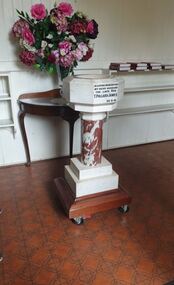
Photograph - Church, Clare Gervasoni, Daylesford Uniting Church Baptisimal Font, 2023, 04/03/2023
... The foundaton stone for the newer, current church was laid on 12 June 1865, designed by Architects Crouch and Wilson the structure was built in early English Gothic style. The first service was held in the new church on 10 December 1865. ...The foundaton stone for the newer, current church was laid on 12 June 1865, designed by Architects Crouch and Wilson the structure was built in early English Gothic style. The first service was held in the new church on 10 December 1865. ...The Daylesford Uniting Church (formerly Wesleyan /Methodist Church) was built in 1865, replacing an earlier Wesleyan Chapel built in 1861 which is still on site and known as the Sunday School (2024). The foundaton stone for the newer, current church was laid on 12 June 1865, designed by Architects Crouch and Wilson the structure was built in early English Gothic style. The first service was held in the new church on 10 December 1865. It is of interest for its brick broach spire, diapered brick façade and spacious interior with aisles separated from the nave by slender columns. The church organ was installed and built in 1888 by William Anderson and boasts an impressive 724 pipes, many of which are decorated with Christian symbols. This organ is a rare example of Anderson’s work and is his only instrument in Western Victoria. It is classified by the National Trust of Australia (Victoria) as being of state significance. The organ was renpvated in 1979-80 by Leighton Turner. It has 2 manuals, 14 speaking stops, 3 couplers, tracker action, Gt: 8.8 divided.8.4.4.2-2/3.2. Sw: 8.8.4.2.8. Ped: 16. In the 1880s the decline in mining led to the congregation considering ways to reduce debt. Rent was received from pew hire as well as organ concerts and annual fairs. By the end of the 19th century the church had settled into a pattern of steady parish life. The 1950s and 1960s were really the glory days of the church with an active Sunday School, tennis clubs and vibrant social activity as well as many worshippers at Sunday services. The final service was held at the church on 21 April 2024.A marble baptisimal font in Daylesford Uniting Church.In loving memory of my dear husband The late Rev. T. Pollard James 28.9.41daylesford uniting church, daylesford methodist church, daylesford, john mitchell uniting church, daylesford wesleyan church, daylesford uniting sunday school, baptisimal font, t. pollard james -
Ballarat Heritage Services
Photograph - Church, Clare Gervasoni, Daylesford Uniting Church John Mitchell Memorial Hall, 2023, 04/03/2023
... The foundaton stone for the newer, current church was laid on 12 June 1865, designed by Architects Crouch and Wilson the structure was built in early English Gothic style. The first service was held in the new church on 10 December 1865. ...The foundaton stone for the newer, current church was laid on 12 June 1865, designed by Architects Crouch and Wilson the structure was built in early English Gothic style. The first service was held in the new church on 10 December 1865. ...The Daylesford Uniting Church (formerly Wesleyan /Methodist Church) was built in 1865, replacing an earlier Wesleyan Chapel built in 1861 which is still on site and known as the Sunday School (2024). The foundaton stone for the newer, current church was laid on 12 June 1865, designed by Architects Crouch and Wilson the structure was built in early English Gothic style. The first service was held in the new church on 10 December 1865. It is of interest for its brick broach spire, diapered brick façade and spacious interior with aisles separated from the nave by slender columns. The church organ was installed and built in 1888 by William Anderson and boasts an impressive 724 pipes, many of which are decorated with Christian symbols. This organ is a rare example of Anderson’s work and is his only instrument in Western Victoria. It is classified by the National Trust of Australia (Victoria) as being of state significance. The organ was renpvated in 1979-80 by Leighton Turner. It has 2 manuals, 14 speaking stops, 3 couplers, tracker action, Gt: 8.8 divided.8.4.4.2-2/3.2. Sw: 8.8.4.2.8. Ped: 16. In the 1880s the decline in mining led to the congregation considering ways to reduce debt. Rent was received from pew hire as well as organ concerts and annual fairs. By the end of the 19th century the church had settled into a pattern of steady parish life. The 1950s and 1960s were really the glory days of the church with an active Sunday School, tennis clubs and vibrant social activity as well as many worshippers at Sunday services. The final service was held at the church on 21 April 2024.A small hall in the grounds of Daylesford Uniting Church. John Mitchell was a teacher and superintendent from September 1861 to 1921. The hall was still in existence in August 2024.John Mitchell Memorial Hall 1931daylesford uniting church, daylesford methodist church, daylesford, john mitchell uniting church, daylesford wesleyan church, daylesford uniting sunday school, john mitchell -
 Ballarat Heritage Services
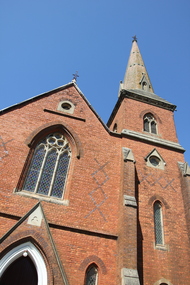
Photograph - Church, Clare Gervasoni, Daylesford Uniting Church, 18/10/2015
... The foundaton stone for the newer, current church was laid on 12 June 1865, designed by Architects Crouch and Wilson the structure was built in early English Gothic style. The first service was held in the new church on 10 December 1865. ...The foundaton stone for the newer, current church was laid on 12 June 1865, designed by Architects Crouch and Wilson the structure was built in early English Gothic style. The first service was held in the new church on 10 December 1865. ...The Daylesford Uniting Church (formerly Wesleyan /Methodist Church) was built in 1865, replacing an earlier Wesleyan Chapel built in 1861 which is still on site and known as the Sunday School (2024). The foundaton stone for the newer, current church was laid on 12 June 1865, designed by Architects Crouch and Wilson the structure was built in early English Gothic style. The first service was held in the new church on 10 December 1865. It is of interest for its brick broach spire, diapered brick façade and spacious interior with aisles separated from the nave by slender columns. The church organ was installed and built in 1888 by William Anderson and boasts an impressive 724 pipes, many of which are decorated with Christian symbols. This organ is a rare example of Anderson’s work and is his only instrument in Western Victoria. It is classified by the National Trust of Australia (Victoria) as being of state significance. The organ was renpvated in 1979-80 by Leighton Turner. It has 2 manuals, 14 speaking stops, 3 couplers, tracker action, Gt: 8.8 divided.8.4.4.2-2/3.2. Sw: 8.8.4.2.8. Ped: 16. In the 1880s the decline in mining led to the congregation considering ways to reduce debt. Rent was received from pew hire as well as organ concerts and annual fairs. By the end of the 19th century the church had settled into a pattern of steady parish life. The 1950s and 1960s were really the glory days of the church with an active Sunday School, tennis clubs and vibrant social activity as well as many worshippers at Sunday services. The final service was held at the church on 21 April 2024.A redbrick church on stone foundation in Daylesforddaylesford uniting church, daylesford methodist church, daylesford, john mitchell uniting church, daylesford wesleyan church, crouch and wilson, daylesford uniting sunday school -
 Eltham District Historical Society Inc
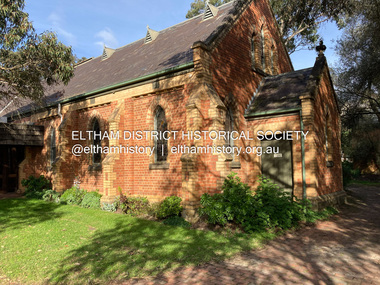
Photograph, Jim Connor, Eltham - Montmorency Uniting Church, 810 Main Rd, Eltham, 10 July 2023
... The present church on John Street was designed by architects Crouch and Wilson in the Early English Gothic style with biochrome brick window frames, buttress heads and pinnacle. ...The present church on John Street was designed by architects Crouch and Wilson in the Early English Gothic style with biochrome brick window frames, buttress heads and pinnacle. ...Located on the corner of Main Road and John Street, the church first served the community as the Eltham Wesleyan Church since 1881. It became the Eltham Methodist Church in 1902, the year it united with the Primitive Methodists. Eltham Wesleyans first worshipped together in the home of William and Mary Crozier, on 24 acres bounded by Mount Pleasant Road and Pitt Street. From there they moved to a slab and bark hut in 1855 (this later served as the first school run by David Clark prior to the building of a new school in Dalton Street) and the members then built a chapel in 1858 on Lot 20, Henry Street (later to become the Rechabite Hall and Eltham Public Hall). The present church on John Street was designed by architects Crouch and Wilson in the Early English Gothic style with biochrome brick window frames, buttress heads and pinnacle. Church member George Stebbing built the church, the foundations were constructed with stone from the walls of the first Eltham State Primary School (No. 209) building which collapsed in 1874 and were purchased by Robert David Taylor. Stebbing was also responsible for building St Margaret’s Church and Shillinglaw Cottage. The Roll of Honour, which presently hangs in the church hall (which also doubles as the Opportunity Shop) lists 27 members of the congregation who served in the First World War, 11 of whom never returned. The red-brick Church Hall was opened in 1931 and in 1971 further additions linked the hall and church, including a foyer, vestry, meeting room and toilets reflecting the Eltham style of that time with its simplicity, extensive clear glass, reused baked clay-bricks from the 1881 church, heavy ceiling beams and compressed straw ceiling. On June 26, 1977, the church became part of the new Uniting Church in Australia consisting of the former Methodist and Congregational and most of the Presbyterian Churches. Following of declining numbers of worshippers, the church merged with the Montmorency Uniting Church on June 23, 1996. In 2023 the Uniting church approved a plan to renovate the church. It is understood that the historic church and the hall will be retained, and the building added in 1971 is to be demolished, to make way for a new purpose-built Opportunity shop. The proposed areas to be demolished include the current foyer, toilets, crèche, etc, including the area between the hall and the former RSL. Works are expected to commence mid to late July 2023. The Society was invited by a church member to take photographs of these areas to document them prior to demolition works commencing. Ref: “Nillumbik Now and Then” by Marguerite Marshall (2008)jim connor collection, 2023-07-10, eltham-montmorency uniting church, john street, methodist church, opportunity shop, uniting church, uniting church hall -
 Bendigo Historical Society Inc.
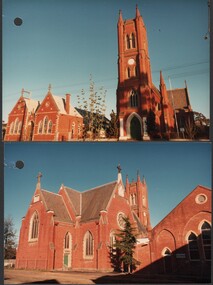
Photograph - National Trust Collection: St Paul's Church of England, Bendigo, 23/06/2025
... The cathedral is a significant example of the Early English Gothic style. The tower, with its distinctively detailed pinnacles, its spiral staircase and carillon of eight bells, is a notable feature and a town landmark. ...The cathedral is a significant example of the Early English Gothic style. The tower, with its distinctively detailed pinnacles, its spiral staircase and carillon of eight bells, is a notable feature and a town landmark. ...Victorian Heritage Database: St Paul's Cathedral, Bendigo was built in stages. The nave was built in 1868, the tower in 1872-73 and the transepts and sanctuary in 1926-27. Robert Love was the architect, although the final stage was supervised by architects Gawler and Drummond. Cathedral status was transferred from the original cathedral All Saints to St Paul's in 1981. The Gothic style cathedral is constructed of red brick with stone dressings. It has a simple cruciform plan comprising a six bay nave, transepts and sanctuary. A tall tower centrally located at the west end dominates the exterior. The peal of eight bells was cast by Meares and Co of London and installed in 1873. The interior features elaborately cusped roof principals; an organ by Alfred Fuller built in 1883 with a console and pipes added later from St Andrew's Cathedral, Sydney; and notable stained glass by Ferguson, Urie and Lyon. St Paul's Rectory was built in 1885 to a design by the architect WC Vahland. The Parish Office and Hall was built as a Sunday School in 1898 to a design by FW Lehmann. St Paul's Cathedral is of architectural, aesthetic and historical significance to the state of Victoria. The cathedral is a significant example of the Early English Gothic style. The tower, with its distinctively detailed pinnacles, its spiral staircase and carillon of eight bells, is a notable feature and a town landmark. The interior is aesthetically important for its decorative detail. The roof structure, rising some 18.3 metres from the 11 metre walls in suspended semi-circles from the pillarless nave, is highly significant for both its considerable technical achievement and its aesthetic appeal. The interior features fine examples of carved timber fixtures and fittings. The interior is also noteworthy for the high quality of its stained glass, especially the twelve apostle windows by Ferguson, Urie and Lyon. The cathedral also features a number of important movable objects such as the finely carved eagle lectern in oak, the ornately carved timber chair in the sanctuary, the two baptismal fonts, the ornately carved canons' stalls with eagle motifs in the sanctuary and the two large candle holders. Important works of art include the opus sectile reredos in mosaic; the sculpture of Madonna and Child in Queensland birch by sculptress Leopoldine Mimovich; and the carved figures of St Peter and St Paul at the high altar by the sculptress Ola Cohn. St Paul's Cathedral complex has historical associations with the Anglican church in Bendigo, particularly the rivalry between St Paul's and the original cathedral, All Saints, and the long and controversial debate about 'High Church versus Low Church'. It has associations with individuals important to the history of the Anglican church in Bendigo including John Christian MacCullagh, the first Dean of Bendigo, after whom the MacCullagh Chapel was named, and Canon David Anthony, a former rector of the church. https://vhd.heritagecouncil.vic.gov.au/places/3695National Trust Collection: St Paul's Church of England, Bendigo Church constructed of red brick with contrasting brick features. Church entry/ bell tower is a feature of Bendigo skyline. 3084.102A frontage of the Church and Church Hall onto Myers Street, Bendigo 3084.102B St Paul's C of E, rear of Church and Church Hall facing Bush's Lane, Bendigost paul's church of england -
 Eltham District Historical Society Inc
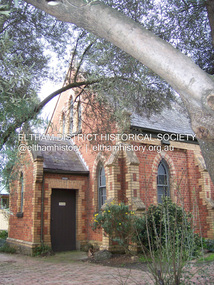
Photograph - Digital Photograph, Marguerite Marshall, Uniting Church, Main Road, Eltham, 19 August 2008
... The John Street building – in the Early English Gothic style with biochrome brick window frames, buttress heads and pinnacle – was designed by architects Crouch and Wilson. ...The John Street building – in the Early English Gothic style with biochrome brick window frames, buttress heads and pinnacle – was designed by architects Crouch and Wilson. ...Eltham's original Wesleyan Methodist Church Covered under Heritage Overlay, Nillumbik Planning Scheme. Published: Nillumbik Now and Then / Marguerite Marshall 2008; photographs Alan King with Marguerite Marshall.; p97 The pretty Uniting Church building at the corner of John and Main Roads Eltham has served the community since 1881.1 Originally called the Eltham Wesleyan Church, the church became the Eltham Methodist Church in 1902, the year it united with the Primitive Methodists.2 As the church community developed, influencing and being influenced by the wider community, its buildings changed accordingly. Eltham Wesleyans first worshiped together in 1850 at the home of William and Mary Crozier on 24 acres (9.7ha) bounded by Mount Pleasant Road and Pitt Street. From 1855 the Wesleyans worshipped in a slab-and-bark hut; then in 1858 in a chapel on Henry Street close to Maria Street (now Main Road). Meanwhile, in 1860, the Primitive Methodists opened a brick chapel at the corner of Susan and Bridge Streets. The John Street building – in the Early English Gothic style with biochrome brick window frames, buttress heads and pinnacle – was designed by architects Crouch and Wilson. Church member George Stebbing built the church as he did Eltham’s St Margaret’s Anglican Church and Shillinglaw Cottage. The Church Honour Roll is a poignant reminder of how church members have served the wider community: 27 members enlisted and 11 died in World War One. Despite the Great Depression, 1931 was a time of expansion for the church. Its red-brick hall was opened by prominent Methodist and philanthropist F J Cato of the Moran and Cato Grocery chain. The hall enabled the church to attract people from outside through activities like its gymnasium – with 40 boys and youth participating – and the girls’ callisthenics club, which competed at the Ballarat South Street Competitions. The church also held concerts, bazaars, picnics and sports, with badminton and tennis played on the church court at 23 John Street. Two stained-glass windows commemorate tragic events. A dove representing the Holy Spirit and Comforter marked the death in 1936 of member Effie Lowerson from scarlet fever at 14 years. The other depicting the Biblical story A sower went forth to sow, commemorates Ross Gangell, who died in 1961 at 23 years of a rare blood condition. Eltham’s population expanson resulted in the growth of the church and an extension in 1971, designed by member and architect Colin Jones. The church was linked to the hall and additions included a foyer, vestry, meeting room and toilets. The design reflected the Eltham style of the time, with its simplicity, extensive clear glass, reused baked clay-bricks from the 1881 church, heavy ceiling beams and solomite (compressed straw) ceiling. On June 26, 1977 the church became part of the new Uniting Church in Australia consisting of the former Methodist and Congregational and most of the Presbyterian Churches. In 1981 membership peaked at 159 – about 20 years after most Protestant churches – and continued to reach out to the wider community.3 In 1987, 147 children attended Selihoo, the weekly after-school program organised with St Margaret’s Anglican Church. From 1993, the church with other local churches, participated in LINC (Love in the Name of Christ), helping the wider community in various ways including babysitting, transport, gardening and visiting. Despite such initiatives, church numbers declined, and on June 23, 1996, the church merged with the Montmorency Uniting Church.4 However, the church continued to proclaim its message of love in community service and strong social justice action, such as in Jubilee 2000, supporting debt relief to the world’s 45 poorest countries. Some of the many church members who have had an outstanding impact on the wider community include Philip Shillinglaw, farmer and poet, and Arthur Bird (after whom the Arthur Bird Reserve is named), a pioneer orchardist and the Sunday School Superintendent for 33 years. Others were: the Rev Dr Cliff Wright, who established the Methodist Youth Fellowship and was prominent in the World Council of Churches, the Rev Brian Howe, who became Deputy Prime Minister and Tim Marshall, awarded the Order of Australia in 2000 for his work on salinity.This collection of almost 130 photos about places and people within the Shire of Nillumbik, an urban and rural municipality in Melbourne's north, contributes to an understanding of the history of the Shire. Published in 2008 immediately prior to the Black Saturday bushfires of February 7, 2009, it documents sites that were impacted, and in some cases destroyed by the fires. It includes photographs taken especially for the publication, creating a unique time capsule representing the Shire in the early 21st century. It remains the most recent comprehenesive publication devoted to the Shire's history connecting local residents to the past. nillumbik now and then (marshall-king) collection, eltham uniting church, eltham methodist church -
 Bendigo Historical Society Inc.
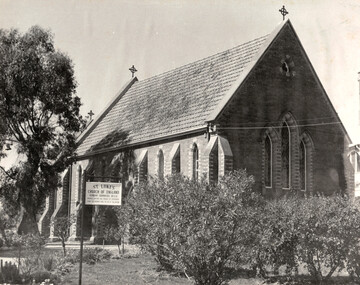
Document - National Trust Collection: Churches of Bendigo and Inglewood, Nov 7th 1965
... The cathedral is designed in the early English Gothic style. It Features a tower and spire weighing several thousand tons, with the spire rising 282 ft. from the floor and topped by a 10 ft. cross.Interior. ...The church features an Early English design from 1864 and Decorated Gothic extensions from 1884.Notable elements include the sanctuary with the Catto Memorial window and interior cusped arcading of the wainscot. ...The cathedral is designed in the early English Gothic style. It Features a tower and spire weighing several thousand tons, with the spire rising 282 ft. from the floor and topped by a 10 ft. cross.Interior. ...St LUKES ANGLICAN CHURCH BENDIGO In 1852, a party of Cornish miners, refusing to give up and having dug, by hand, down nearly 70 feet ‘got their reward. Suddenly, their picks sank into soft pipe-clay, white, satin-smooth and seemingly depthless. The men began tunnelling. Presently, the roof forming above them showered gold at their feet – the secret of Bendigo’s famous White Hills lay revealed.’ In the ‘wild rush’ that followed, when ‘the White Hills yielded enormously and some pretty piles were made’, a young Anglican priest, John Herbert Gregory, held the first Anglican church service at White Hills in 1853. The Hamlet of White Hills was surveyed and mapped in 1854 and, by 1863, St Luke’s Church in White Hills was opened on ‘an elevated site’ in a generously sized ‘church reserve’. St AUGUSTINE'S CHURCH MYERS FLAT Early diggers to this area were men named Myers and Nicholls, hence the name - Myers Flat and Myers Creek. 1857 saw the discovery of gold in the area and in less than one month 1000 ounces of gold per week resulted. The number of diggers in the Myers Creek or Burnt Gully totalled 4000 to 5000. Myers Creek consisted of several shops and buildings, two hotels, a race course and a lock-up built of logs. On November 6th, 1864, the opening of the new church of St Augustine' took place. The first mass was celebrated by the Reverand Dean Hayes, of St Killian's Sandhurst. The church of gothic design was built by a local contractor, and with bricks made from local clay. The church also has a fire place and is widely known as "The church with the Chimney. For many years it was also a Catholic school. St AUGUSTINE'S CHURCH INGLEWOOD The church features an Early English design from 1864 and Decorated Gothic extensions from 1884.Notable elements include the sanctuary with the Catto Memorial window and interior cusped arcading of the wainscot. Architectural attribution is given to Vahland and Getzschmann for one or both sections. St JOHNS CHURCH (PRESBYTERIAN) BENDIGO The church's architect was W C Vahland VIA, and the builder was N Langstaff. It was built in April 1890, and opened in Feb 1891. The tender price was 2,481 pounds. The church style was gothic, built by the Congregational Church to replace an earlier building built in 1858. St Johns bought the church in 1949 and made additions in 1951. THE SACRED HEART CATHEDRAL BENDIGO Originally designed in 1895 by Reed, Smart and Tappin of Melbourne, the first stage opened in September 1901; the second stage began in January 1954 and was expected to finish in late 1976. Skilled stonemasons were brought from overseas for the completion. The Exterior built from Geelong sandstone and Harcourt granite, matching the original materials for color consistency. The cathedral is designed in the early English Gothic style. It Features a tower and spire weighing several thousand tons, with the spire rising 282 ft. from the floor and topped by a 10 ft. cross.Interior. The original stained glass window, made in Birmingham, England, is above the main entrance on the west side. Marble for the floor was imported from Vincenzo and Via Reggio, Italy; Sicilian Pearl marble is used in the four chapels. Ceilings in the chapels feature Western red cedar and yellow pine timbers.The transept includes Australian blackwood paneling and 12 carved shields representing the apostles. The internal height from floor to ceiling is 80 ft.Artistic Elements. Two large tapestries, specially designed and crafted by Mrs. Carrington, hang in the sanctuary as a symbolic link to Bendigo. ST PAULS BENDIGO The nave was built in 1868 and the tower in 1873. The nave is notable for unusual ceiling with metal and timber overlay members. The tower notable for early brick and bold Gothic influenced design. The church was opened on 12th Nov 1868 and a new chancel sanctuary and Transepts were added on 22 Oct 1927. The architect was Robert A Love. CONGREGATIONAL CHURCHES IN BENDIGO Three main Congregational church buildings existed in Bendigo: at the corner of Forest and Mackenzie Streets (the original site), on Quarry Hill (corner of Russell and Gladstone Streets), and on Calvin Street (later the Lutheran Church). The Calvin Street church was named in honor of John Calvin, a notable figure who lived in the area. In June 1858, 1.5 acres of land were purchased at the Forest and Mackenzie Streets corner for £1200.The first church was built on this site in November 1858 and later enlarged in May 1867 to seat 500 people. A prefabricated parsonage stood nearby until about 1920, serving as a caretaker's cottage for several years. In 1890, foundation stones for a new church designed by W.C. Vahland were laid, featuring a tall tower and two gable crossings (reduced from three to save costs). The new church opened on February 26, 1890, costing £2483. The contractor was N. Longstaff. Some architectural elements, such as the chancel, were added later when St. John's Presbyterian took over the building. Congregational attendance declined, leading to the purchase and alteration of a brick school complex in Olinda Street to serve as their headquarters.The timber church on Russell Street and the Calvin Street property were sold.The valuable Forest Street property was eventually sold to a London sect and later became an investment for the Methodist Church.Historical information on seven denominational churches in Bendigo and Inglewood. This item contains the following items: 3084.36a Black and white photo of St Lukes Bendigo Church of England, Napier Street, White Hills. 3084.36b St Augustine's Church Myers Flat 100 years newsletter 1965. The newsletter's purpose is for a Commemorative afternoon mass in memory of the pioneers of Myers Flat and district.Celebration of the 101st anniversary of the first mass at St. Augustine's Church; on Sunday, November 7th, 1965, at 2:00 PM.Location: St. Augustine's Church, Myers Flat. The invitation is extended to the recipient and their friends. This invitation serves both as a memorial and a community gathering to honour local history. Also included is some hand-written history notes of the church - See the notes in the Historical Section above. 3084.36c This document is a formal letter dated 9th November 1970 from the National Trust of Australia (Victoria) to Bishop Bernard Stewart. St. Augustine's Church in Bendigo has been awarded a "D" classification by the National Trust's expert committee. The church is now officially "recorded" by the National Trust. The letter is addressed to Bishop Bernard Stewart, with copies sent to Father Louis McDonnell (Eaglehawk), A. J. Watts (Town Clerk, Bendigo), and Mrs. R. R. Adams (Secretary, Central Victorian Branch). 3084.36d This document is a formal letter from the National Trust of Australia (Victoria) to Miss L. Doble, Registrar of the Bendigo Church of England Diocese, dated March 20, 1973. St. Augustine's Church of England in Inglewood has been officially placed on the National Trust's Classified List. This classification recognizes the church as essential to Australia's heritage and emphasizes its preservation. The church features an Early English design from 1864 and Decorated Gothic extensions from 1884.Notable elements include the sanctuary with the Catto Memorial window and interior cusped arcading of the wainscot. Architectural attribution is given to Vahland and Getzschmann for one or both sections. The church is about to celebrate the centenary of its consecration on May 13, with the Archbishop expected to attend. 3084.36e This document is a survey form used by the National Trust of Australia (Victoria) to collect detailed information about St Augustine's Church at Myers Flat. It records the original purpose, present use, and current name of the building.Requires a precise address or location description for site visits.It captures special features or points of interest not visible in photographs. It documents the present owner and occupant, including their addresses, the date of initial construction and supporting evidence for that date. 3084.36f Handwritten letter re history of St Johns Presbyterian Church Bendigo, 13th October 1980 - author unknown 3084.36g Typed notes - "Interesting information on the Sacred Heart Cathedral Bendigo", and hand-written notes on St Pauls Cathedral. 3084.36h Two pages of typed notes. Three main Congregational church buildings existed in Bendigo: at the corner of Forest and Mackenzie Streets (the original site), on Quarry Hill (corner of Russell and Gladstone Streets), and on Calvin Street (later the Lutheran Church). 3084.36i Hand-written notes on St Pauls Cathedral.history, church, national trust bendigo collection, sacred heart cathedral bendigo, st augustine's church myers flat, st pauls church bendigo, st johns presbyterian church bendigo, congregational church bendigo -
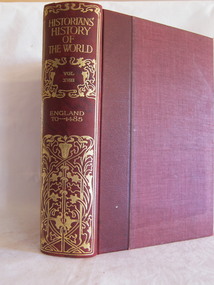 Flagstaff Hill Maritime Museum and Village
Book - Reference Book/History, Henry Smith Williams, The Historians History of the World Vol 18 set 1 - Edited by Henry Smith Williams L.L.D. Published by “The Times” 1908, 1908
... English nation from its earliest recorded beginnings through the end of the Middle Ages. Flyleaf has the title with Edited by Henry Smith Williams L.L.D. In twenty five volumes-Vol. XVIII and London “The Times” 1908 in Gothic ...Henry Smith Williams’ “The Historians' History of the World” is a chronological and geographical "tapestry" of human events, these twenty five volumes occupy a very specific and prestigious place in historical research. Volume 18 specifically focuses on the history of England to 1485, it serves as the foundational text for British history within the series. It chronicles the evolution of the English nation from its earliest recorded beginnings through the end of the Middle Ages.The Book is part of a 25 volume set with red cloth bindings and gold filigree design to rib.non-fictionHenry Smith Williams’ “The Historians' History of the World” is a chronological and geographical "tapestry" of human events, these twenty five volumes occupy a very specific and prestigious place in historical research. Volume 18 specifically focuses on the history of England to 1485, it serves as the foundational text for British history within the series. It chronicles the evolution of the English nation from its earliest recorded beginnings through the end of the Middle Ages.flagstaff hill, warrnambool, shipwrecked-coast, flagstaff-hill, flagstaff-hill-maritime-museum, maritime-museum, shipwreck-coast, flagstaff-hill-maritime-village, book, the historians history of the world vol 18 set 1 -
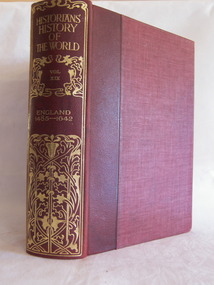 Flagstaff Hill Maritime Museum and Village
Book - Reference Book/History, Henry Smith Williams, The Historians History of the World Vol 19 set 1 - Edited by Henry Smith Williams L.L.D. Published by “The Times” 1908, 1908
... English Civil War. Flyleaf has the title with Edited by Henry Smith Williams L.L.D. In twenty five volumes-Vol. XIX and London “The Times” 1908 in Gothic script The Book is part of a 25 volume set with red cloth bindings and gold filigree design to rib. ...Henry Smith Williams’ “The Historians' History of the World” is a chronological and geographical "tapestry" of human events, these twenty five volumes occupy a very specific and prestigious place in historical research. Volume 19 is a pivotal component of the series, focusing specifically on a trans-formative era of British history from 1485 to 1642 covering the history of England from the rise of the Tudor Dynasty to the eve of the English Civil War.The Book is part of a 25 volume set with red cloth bindings and gold filigree design to rib.non-fictionHenry Smith Williams’ “The Historians' History of the World” is a chronological and geographical "tapestry" of human events, these twenty five volumes occupy a very specific and prestigious place in historical research. Volume 19 is a pivotal component of the series, focusing specifically on a trans-formative era of British history from 1485 to 1642 covering the history of England from the rise of the Tudor Dynasty to the eve of the English Civil War.flagstaff hill, warrnambool, shipwrecked-coast, flagstaff-hill-maritime-museum, maritime-museum, shipwreck-coast, flagstaff-hill-maritime-village, book, the historians history of the world vol 19 set 1, henry smith williams -
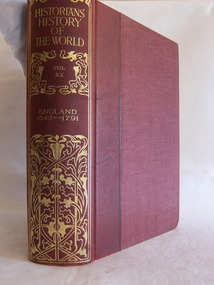 Flagstaff Hill Maritime Museum and Village
Book - Reference Book/History, Henry Smith Williams, The Historians History of the World Vol 20 set 1 - Edited by Henry Smith Williams L.L.D. Published by “The Times” 1908, 1908
... English Civil War to the late 18th century. Flyleaf has the title with Edited by Henry Smith Williams L.L.D. In twenty five volumes-Vol. XX and London “The Times” 1908 in Gothic ...Henry Smith Williams’ “The Historians' History of the World” is a chronological and geographical "tapestry" of human events, these twenty five volumes occupy a very specific and prestigious place in historical research. Volume 20 focuses on the transformation period of England from the outbreak of the English Civil War to the late 18th century.The Book is part of a 25 volume set with red cloth bindings and gold filigree design to rib.non-fictionHenry Smith Williams’ “The Historians' History of the World” is a chronological and geographical "tapestry" of human events, these twenty five volumes occupy a very specific and prestigious place in historical research. Volume 20 focuses on the transformation period of England from the outbreak of the English Civil War to the late 18th century. warrnambool, flagstaff-hill, flagstaff-hill-maritime-museum, maritime-museum, shipwreck-coast, flagstaff-hill-maritime-village, book, the historians history of the world vol 20 set 1, henry smith williams -
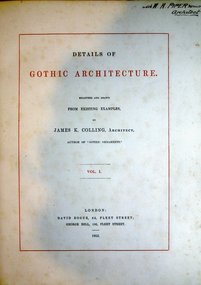 Federation University Historical Collection
Book, Details of Gothic Architecture, 1852 (exact)
... gothic england...norman...early english...It contains detailed drawings of parish churches during the 19 century. and architecture gothic decoration ornament gothic james k colling gothic england norman early english decorated perpendicular burnby church etton church yorkshire walsoken church norfolk great grimsby church lincolnshire bookplate Ballarat Technical Art School Library Inscription on title page "W. ...“Details of Gothic Architecture is measured and drawn from existing examples by James K. Colling, author of ‘Gothic Ornaments’.“—Front cover. It contains detailed drawings of parish churches during the 19 century.A large book with blue hardcover and black cloth corners and spine. Illus. with b&w plates of architectual drawings. Vol.1. Title is printed in black and red. This book contains measured drawings of details from parish churches. It includes 8p. table of contents. Inscription on title page "W. H. Piper, architect". A plate inside front cover titled "Ballarat Technical Art School Library No. AD/14".and, architecture gothic, decoration, ornament gothic, james k colling, gothic england, norman, early english, decorated, perpendicular, burnby church, etton church, yorkshire, walsoken church, norfolk, great grimsby church, lincolnshire, bookplate, ballarat technical art school library -
 Flagstaff Hill Maritime Museum and Village
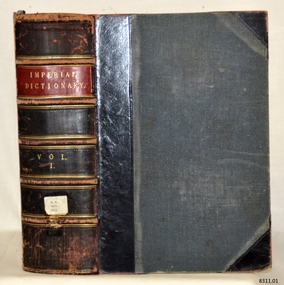
Book - Reference Dictionary/Scientific/Technological, John Ogilvie, The Imperial Dictionary English Technological and Scientific Vol 1, 1861
... Jewitt was one of the preeminent architectural and scientific wood-engravers of the Victorian era, highly celebrated for his precise, clean, and beautiful depictions of Gothic architecture, structural components, and natural history specimens. This work was the first major English dictionary to heavily incorporate integrated woodcut illustrations directly into the columns of text to help define complex mechanical and scientific objects making the work highly significant. ...The Imperial Dictionary was a massive, progressive undertaking designed to be a bridge between a traditional language dictionary and a comprehensive technical encyclopedia. John Ogilvie built the text upon the foundation of Noah Webster’s famous American Dictionary. However, Ogilvie dramatically expanded it to include thousands of new terms born from the Industrial Revolution. It heavily prioritized the vocabulary of engineering, medicine, manufacturing, chemistry, and the arts, alongside a vast array of distinct Scottish and provincial British terms that Webster had omitted.The Imperial Dictionary English Technological and Scientific Vol 1 Author: John Ogilvie Publisher: Blackie & Son Ltd Date: 1861 Further Information: Black cloth hardcover with a brown leather spine, title lettering in gold. The spine has a Library label with an inscription.non-fictionThe Imperial Dictionary was a massive, progressive undertaking designed to be a bridge between a traditional language dictionary and a comprehensive technical encyclopedia. John Ogilvie built the text upon the foundation of Noah Webster’s famous American Dictionary. However, Ogilvie dramatically expanded it to include thousands of new terms born from the Industrial Revolution. It heavily prioritized the vocabulary of engineering, medicine, manufacturing, chemistry, and the arts, alongside a vast array of distinct Scottish and provincial British terms that Webster had omitted.flagstaff hill, warrnambool, shipwrecked coast, flagstaff hill maritime museum, maritime museum, shipwreck coast, flagstaff hill maritime village, great ocean road, book, pattison collection, warrnambool library, warrnambool mechanics’ institute, ralph eric pattison, corangamite regional library service, warrnambool city librarian, mechanics’ institute library, victorian library board, warrnambool books and records, warrnambool children’s library -
 Flagstaff Hill Maritime Museum and Village
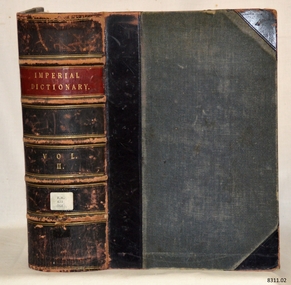
Book - Reference Dictionary/Scientific/Technological, John Ogilvie, The Imperial Dictionary English Technological and Scientific Vol 2, 1861
... Jewitt was one of the preeminent architectural and scientific wood-engravers of the Victorian era, highly celebrated for his precise, clean, and beautiful depictions of Gothic architecture, structural components, and natural history specimens. This work was the first major English dictionary to heavily incorporate integrated woodcut illustrations directly into the columns of text to help define complex mechanical and scientific objects making the work highly significant. ...The Imperial Dictionary was a massive, progressive undertaking designed to be a bridge between a traditional language dictionary and a comprehensive technical encyclopedia. John Ogilvie built the text upon the foundation of Noah Webster’s famous American Dictionary. However, Ogilvie dramatically expanded it to include thousands of new terms born from the Industrial Revolution. It heavily prioritized the vocabulary of engineering, medicine, manufacturing, chemistry, and the arts, alongside a vast array of distinct Scottish and provincial British terms that Webster had omitted.The Imperial Dictionary English Technological and Scientific Vol 2 Author: John Ogilvie Publisher: Blackie & Son Ltd Date: 1861 Further Information: Black cloth hardcover with a brown leather spine, title lettering in gold. The spine has a Library label with an inscription.non-fictionThe Imperial Dictionary was a massive, progressive undertaking designed to be a bridge between a traditional language dictionary and a comprehensive technical encyclopedia. John Ogilvie built the text upon the foundation of Noah Webster’s famous American Dictionary. However, Ogilvie dramatically expanded it to include thousands of new terms born from the Industrial Revolution. It heavily prioritized the vocabulary of engineering, medicine, manufacturing, chemistry, and the arts, alongside a vast array of distinct Scottish and provincial British terms that Webster had omitted.flagstaff hill, warrnambool, shipwrecked coast, flagstaff hill maritime museum, maritime museum, shipwreck coast, flagstaff hill maritime village, great ocean road, book, pattison collection, warrnambool library, warrnambool mechanics’ institute, ralph eric pattison, corangamite regional library service, warrnambool city librarian, mechanics’ institute library, victorian library board, warrnambool books and records, warrnambool children’s library -
 Flagstaff Hill Maritime Museum and Village
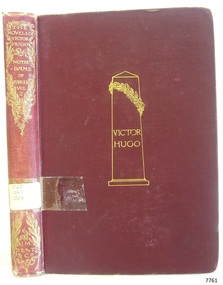
Book - Fictional Novel, Victor Hugo, Notre Dame of Paris Vol 2, 1899
... English title, The Hunchback of Notre-Dame. This grand historical novel is set in 1482 Paris and revolves around the doomed gypsy dancer Esmeralda, the tortured archdeacon Claude Frollo, the dashing but shallow captain Phoebus, and the fiercely loyal, deformed bell-ringer Quasimodo. By the time you reach the final volume, the narrative is driving toward its intense, tragic climax. Beyond the human drama, the book is a love letter to Gothic ...The novel is better known today by its English title, The Hunchback of Notre-Dame. This grand historical novel is set in 1482 Paris and revolves around the doomed gypsy dancer Esmeralda, the tortured archdeacon Claude Frollo, the dashing but shallow captain Phoebus, and the fiercely loyal, deformed bell-ringer Quasimodo. By the time you reach the final volume, the narrative is driving toward its intense, tragic climax. Beyond the human drama, the book is a love letter to Gothic architecture; Hugo famously wrote it to spark a preservation movement to save the crumbling Notre-Dame Cathedral from neglect and modernisation.Notre Dame of Paris Vol 2 Author: Victor Hugo Publisher: J M Dent & Co Date: 1899 Further Information: Translated by J. Carroll Beckwith Vol. 1 is 7072, Vol. 3 is 7073, Vol.4 is 8036fictionThe novel is better known today by its English title, The Hunchback of Notre-Dame. This grand historical novel is set in 1482 Paris and revolves around the doomed gypsy dancer Esmeralda, the tortured archdeacon Claude Frollo, the dashing but shallow captain Phoebus, and the fiercely loyal, deformed bell-ringer Quasimodo. By the time you reach the final volume, the narrative is driving toward its intense, tragic climax. Beyond the human drama, the book is a love letter to Gothic architecture; Hugo famously wrote it to spark a preservation movement to save the crumbling Notre-Dame Cathedral from neglect and modernisation.flagstaff hill, warrnambool, shipwrecked coast, flagstaff hill maritime museum, maritime museum, shipwreck coast, flagstaff hill maritime village, great ocean road, book, pattison collection, warrnambool library, warrnambool mechanics’ institute, ralph eric pattison, corangamite regional library service, warrnambool city librarian, mechanics’ institute library, victorian library board, warrnambool books and records, warrnambool children’s library, notre dame of paris vol 4, victor hugo, j. carroll beckwith -
 Glen Eira Historical Society
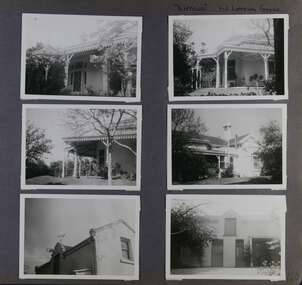
Album - Album page, Lirrewa, 1-3 Lirrewa Grove, Circa 1972
... At "Tarqua", the design acknowledges the prevailing popularity of the Italian Style in the shallow hipped roof form and symmetrical facade as well as the picturesque Gothic Revival style demonstrated especially by the use of pointed arches, fretted barges and the battlemented parapeted section. This latter style was particularly attractive to persons of means on account of its English precedents, the combination of influences being skillfully handled in this instance. trevor hart verandah lirrewa tarqua 1880's montague william langdon italian style shallow hipped roof symmetrical facade gothic revival pointed arches fretted barges battlemented parapet terraces boom era single storey timber roof brackets frieze gables cast iron ridging lirrewa grove cast iron work caulfield arches parapets gardens houses victorian style caulfield south Handwritten: "Lirrewa" 1-3 Lirrewa Grove [top right] / 120 [bottom right] Page 120 of Photograph Album with six photographs (all landscape) of views of Lirrewa, mostly including its garden. ...This photograph is part of the Caulfield Historical Album 1972. This album was created in approximately 1972 as part of a project by the Caulfield Historical Society to assist in identifying buildings worthy of preservation. The album is related to a Survey the Caulfield Historical Society developed in collaboration with the National Trust of Australia (Victoria) and Caulfield City Council to identify historic buildings within the City of Caulfield that warranted the protection of a National Trust Classification. Principal photographer thought to be Trevor Hart, member of Caulfield Historical Society. Most photographs were taken between 1966-1972 with a small number of photographs being older and from unknown sources. All photographs are black and white except where stated, with 386 photographs over 198 pages.From Victorian Heritage Database citation for Lirrewa - HO39 Tarqua and Stables, 1-3 Lirrewa Grove Caulfield South https://vhd.heritagecouncil.vic.gov.au/places/120932 (as at 26/10/2020) "Tarqua", now "Lirrewa", is situated at nos. 1-3 Lirrewa Grove, Caulfield South, and was built in 1886 for Montague William Langdon, son of the merchant Joseph Henry Langdon of nearby "Rosecraddock". It is historically and aesthetically significant. It is historically significant (Criterion A) as one of the Langdon family residences, comparing in Glen Eira also with "Rosecraddock" at 10 Craddock Avenue (1857) and "Hengar" at 356 Glen Eira Road (1889-90). It is aesthetically significant (Criterion E) for its capacity to demonstrate the stylistic influences prevailing at the time especially for substantial residences. At "Tarqua", the design acknowledges the prevailing popularity of the Italian Style in the shallow hipped roof form and symmetrical facade as well as the picturesque Gothic Revival style demonstrated especially by the use of pointed arches, fretted barges and the battlemented parapeted section. This latter style was particularly attractive to persons of means on account of its English precedents, the combination of influences being skillfully handled in this instance.Page 120 of Photograph Album with six photographs (all landscape) of views of Lirrewa, mostly including its garden.Handwritten: "Lirrewa" 1-3 Lirrewa Grove [top right] / 120 [bottom right]trevor hart, verandah, lirrewa, tarqua, 1880's, montague william langdon, italian style, shallow hipped roof, symmetrical facade, gothic revival, pointed arches, fretted barges, battlemented parapet, terraces, boom era, single storey, timber roof brackets, frieze, gables, cast iron ridging, lirrewa grove, cast iron work, caulfield, arches, parapets, gardens, houses, victorian style, caulfield south
