
Showing 68 items matching "fairfield hospital"
-
 NMIT (Northern Melbourne Institute of TAFE)
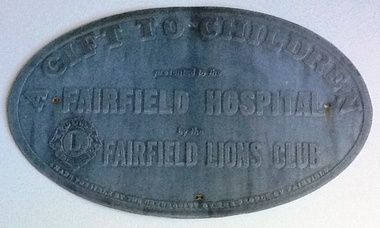
Metal Plaque: Fairfield Hospital from Fairfield Lions Club
... Metal Plaque: Fairfield Hospital from Fairfield Lions Club...Metal Plaque: Fairfield Hospital from Fairfield Lions Club...Fairfield Hospital...The plaque was removed from an old dilapidated playground roundabout or merry-go-round on the grounds of the Fairfield Hospital....Elliptical shaped Metal plaque which was removed from old play equipment at the Fairfield Hospital c2003....'A GIFT TO CHILDREN / presented to the / FAIRFIELD HOSPITAL / by the / FAIRFIELD LIONS CLUB / MADE POSSIBLE BY THE GENEROSITY OF THE PEOPLE OF FAIRFIELD'. ...The plaque was removed from an old dilapidated playground roundabout or merry-go-round on the grounds of the Fairfield Hospital. Fairfield Hospital Plaque Fairfield Lions Club NMIT 'A GIFT TO CHILDREN / presented to the / FAIRFIELD HOSPITAL / by the / FAIRFIELD LIONS CLUB / MADE POSSIBLE BY THE GENEROSITY OF THE PEOPLE OF FAIRFIELD'. ...The plaque was removed from an old dilapidated playground roundabout or merry-go-round on the grounds of the Fairfield Hospital.Elliptical shaped Metal plaque which was removed from old play equipment at the Fairfield Hospital c2003.'A GIFT TO CHILDREN / presented to the / FAIRFIELD HOSPITAL / by the / FAIRFIELD LIONS CLUB / MADE POSSIBLE BY THE GENEROSITY OF THE PEOPLE OF FAIRFIELD'. There is also a Lions International stamp imprinted on the plaque.fairfield hospital, plaque, fairfield lions club, nmit -
 NMIT (Northern Melbourne Institute of TAFE)
Photographs of Fairfield Hospital Nurses 1977-1984
... Photographs of Fairfield Hospital Nurses 1977-1984...Photographs of Fairfield Hospital Nurses 1977-1984...Fairfield Hospital...Coloured photographs of Fairfield Hospital Nurses, probably graduating nurses. ...Fairfield Hospital Hospitals Victoria History Fairfield Hospital Nurses NMIT Coloured photographs of Fairfield Hospital Nurses, probably graduating nurses. ...Coloured photographs of Fairfield Hospital Nurses, probably graduating nurses. Includes: 1977 PTS 85, 87, 88. 1978 PTS 83, 89, 90, 91, 92, 93, Fever Group 16. 1979 PTS 95, 99. 1982 PTS 103, 104, 105. 1983 PTS 106, 108 109. 1984 PTS 111.fairfield hospital, hospitals victoria history, fairfield hospital nurses, nmit -
 NMIT (Northern Melbourne Institute of TAFE)
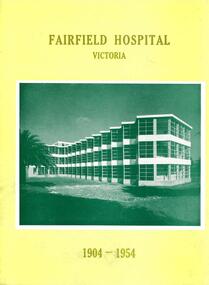
Book: Fairfield Hospital Victoria 1904-1954
... Book: Fairfield Hospital Victoria 1904-1954...Book: Fairfield Hospital Victoria 1904-1954...Fairfield Hospital...It includes a Souvenir 'Programme of Golden Jubilee Celebrations' held on 9th October 1954, and some images Book: Fairfield Hospital Victoria 1904-1954 Book: Fairfield Hospital Victoria 1904-1954 ...8 page booklet giving a brief history of Fairffield Hospital from 1904-1954. It includes a Souvenir 'Programme of Golden Jubilee Celebrations' held on 9th October 1954, and some imagesfairfield hospital, hospitals victoria history, nmit -
 Alfred Hospital Nurses League - Nursing History Collection
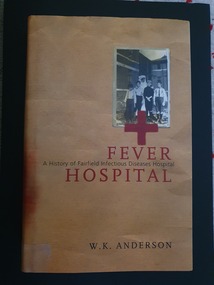
Book - Illustrated book, William Keys Anderson, Fever Hospital: a history of Fairfield Infectious Diseases Hospital, 2002
... Fever Hospital: a history of Fairfield Infectious Diseases Hospital...Fairfield Hospital (Melbourne-Vic)-history...Dedicated to all the patients and staff of Fairfield Hospital from its foundation to its closure, and to everyone who through the years has supported Fairfield's work of caring, healing and research....Also on front cover is a copy of black and white photograph: young patients 'well on the way to recovery' in the 1930's (Fairfield Hospital Archives, Austin Hospital Melbourne). ...June Middleton, past polio patient at Fairfield Hospital...The story of Fairfield Hospital is central to the story of infectious diseases in Victoria. ...A record of the work and achievement of Fairfield hospital in the context of Australian developments in medicine and health. The story of Fairfield Hospital is central to the story of infectious diseases in Victoria. Fairfield Infectious Diseases Hospital opened in 1904 as a fever hospital, later becoming one of the world's foremost centres for the treatment of infectious diseases, especially HIV/AIDS.Hardcover book bound in red, with tile and author's name printed in gold on spine. Dust jacket has an ochre coloured background, title and authors name on front cover and spine. Also on front cover is a copy of black and white photograph: young patients 'well on the way to recovery' in the 1930's (Fairfield Hospital Archives, Austin Hospital Melbourne). Book contains many illustrations.non-fictionA record of the work and achievement of Fairfield hospital in the context of Australian developments in medicine and health. The story of Fairfield Hospital is central to the story of infectious diseases in Victoria. Fairfield Infectious Diseases Hospital opened in 1904 as a fever hospital, later becoming one of the world's foremost centres for the treatment of infectious diseases, especially HIV/AIDS.fairfield hospital (melbourne-vic)-history, hospitals-victoria-history, communicable diseases -
!['Save Fairfield Hospital' badge, [1990s]](/media/collectors/5bb42dc221eaf31100db1d3b/items/5c9af03221ea720f88da88fb/item-media/5c9af03f21ea720f88daaa65/item-fit-380x285.jpg?cb=6) Australian Nursing & Midwifery Federation
Australian Nursing & Midwifery Federation'Save Fairfield Hospital' badge, [1990s]
... 'Save Fairfield Hospital' badge...Fairfield Hospital opened in 1904 as the Queen's Memorial Infectious Diseases Hospital, the first purpose-built isolation hospital for infectious diseases in Victoria. ...Badge printed with the red text 'SAVE FAIRFIELD HOSPITAL'. Silver metal, plastic-coated, with safety pin fastener adhered to back....'Save Fairfield Hospital' badge ...Fairfield Hospital opened in 1904 as the Queen's Memorial Infectious Diseases Hospital, the first purpose-built isolation hospital for infectious diseases in Victoria. Its 22-acre site was located on a bank of the Yarra River. It was renamed Fairfield Hospital in 1948. In its later years, the hospital was a centre for AIDS treatment in Victoria, and a passionate campaign fought against its planned closure in the 1990s. Fairfield Hospital finally closed in June 1996. One section of the site was gazetted as a Public Park and Memorial Garden (containing an AIDS Garden).Circular white and red plastic badge. Silver metal, plastic-coated, with safety pin fastener adhered to back. Badge printed with the red text 'SAVE FAIRFIELD HOSPITAL'. Silver metal, plastic-coated, with safety pin fastener adhered to back.medicine, health, public institutions, fairfield, victoria, city of darebin, melbourne, politics, political protest, public protest, campaigning, badges, buttons, pins, public health, infectious diseases, aids -
NMIT (Northern Melbourne Institute of TAFE)
Book: Fever Hospital: a history of Fairfield Infectious Diseases Hospital
... Book: Fever Hospital: a history of Fairfield Infectious Diseases Hospital...Book: Fever Hospital: a history of Fairfield Infectious Diseases Hospital......Fairfield Hospital....Fairfield Infectious Diseases Hospital Fairfield Hospital. Hardcover book of 274 pages published 2002 by Melbourne University Press. ...Hardcover book of 274 pages published 2002 by Melbourne University Press.fairfield infectious diseases hospital, fairfield hospital. -
 Greensborough Historical Society
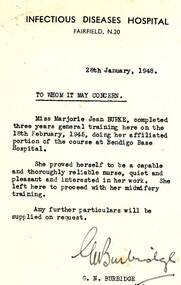
Document - Personal reference, Fairfield Infectious Diseases Hospital, Professional reference for Marjorie Jean Burke, 28/01/1948
... hospital...Fairfield Infectious Diseases Hospital...Professional reference for Marjory Jean Burke issued by the matron of Fairfield Infectious Diseases Hospital in Melbourne....Fairfield Infectious Diseases Hospital...When Miss Burke returned to Australia, she was employed at Diamond Valley Community Hospital as a nurse in 1953 and as Deputy Matron 1954-1971. marjorie jean burke nurses diamond valley community hospital Fairfield Infectious Diseases Hospital Reference typed on cream letterhead. ...Professional reference for Marjory Jean Burke issued by the matron of Fairfield Infectious Diseases Hospital in Melbourne.Miss Burke was a nurse, midwife and infant welfare sister. This collection covers her many qualifications throughout Australia and Great Britain, including references both professional and personal. When Miss Burke returned to Australia, she was employed at Diamond Valley Community Hospital as a nurse in 1953 and as Deputy Matron 1954-1971.Reference typed on cream letterhead.marjorie jean burke, nurses, diamond valley community hospital, fairfield infectious diseases hospital -
 Department of Health and Human Services
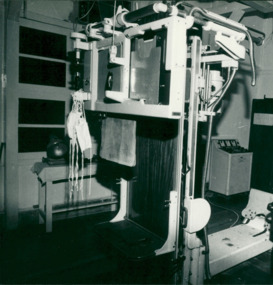
Photograph, A chest x-ray unit, a Siemens, donated through Ziarah the Gull Force Association pilgrimages and Caltex Pacific Indonesia & Fairfield Hospital donations to Ambon Hospital Indonesia - Photo taken by Dr John Forbes from his photo albums - 1971
... A chest x-ray unit, a Siemens, donated through Ziarah the Gull Force Association pilgrimages and Caltex Pacific Indonesia & Fairfield Hospital donations to Ambon Hospital Indonesia - Photo taken by Dr John Forbes from his photo albums - 1971...A chest x-ray unit, a Siemens, donated through Ziarah the Gull Force Association pilgrimages and Caltex Pacific Indonesia & Fairfield Hospital donations to Ambon Hospital Indonesia - Photo taken by Dr John Forbes from his photo albums - 1971 Photograph ... -
 Department of Health and Human Services
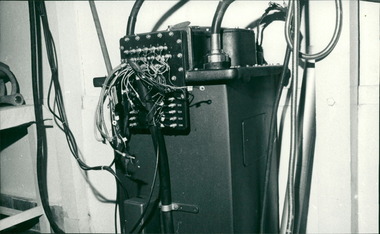
Photograph, Part of a Siemens X-ray machine donated through Ziarah the Gull Force Association pilgrimages to Ambon & Caltex Pacific Indonesia & Fairfield Hospital donations - from Dr John Forbes photo albums of Ambon Hospital Circa 1970 to 1971
... Part of a Siemens X-ray machine donated through Ziarah the Gull Force Association pilgrimages to Ambon & Caltex Pacific Indonesia & Fairfield Hospital donations - from Dr John Forbes photo albums of Ambon Hospital Circa 1970 to 1971...Department of Health & Human Services - Dr John A Forbes Fairfield / Gull Force 2/21 Bn AIF / Ziarah & Rumah Sakit Ambon Hospital Indonesia Collection Circa 1970 to 1971...Department of Health & Human Services - Dr John A Forbes Fairfield / Gull Force 2/21 Bn AIF / Ziarah & Rumah Sakit Ambon Hospital Indonesia Collection Circa 1970 to 1971...Department of Health & Human Services - Dr John A Forbes Fairfield / Gull Force 2/21 Bn AIF / Ziarah & Rumah Sakit Ambon Hospital Indonesia Collection Circa 1970 to 1971 Department of Health & Human Services - Dr John A Forbes Fairfield / Gull Force 2/21 Bn AIF / Ziarah & Rumah Sakit Ambon Hospital Indonesia Collection Circa 1970 to 1971 Part of a Siemens X-ray machine donated through Ziarah the Gull Force Association pilgrimages to Ambon & Caltex Pacific Indonesia & Fairfield Hospital donations - from Dr John Forbes photo albums of Ambon Hospital Circa 1970 to 1971 Photograph ...Department of Health & Human Services - Dr John A Forbes Fairfield / Gull Force 2/21 Bn AIF / Ziarah & Rumah Sakit Ambon Hospital Indonesia Collection Circa 1970 to 1971Department of Health & Human Services - Dr John A Forbes Fairfield / Gull Force 2/21 Bn AIF / Ziarah & Rumah Sakit Ambon Hospital Indonesia Collection Circa 1970 to 1971 -
 Department of Health and Human Services
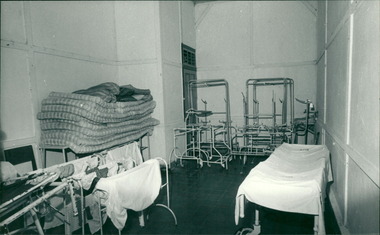
Photograph, Equipment in Ambon Hospital storage room donated through Ziarah the Gull Force Association and Caltex Pacific Indonesia & Fairfield Hospital donations to Ambon Hospital Indonesia - Photo is from Dr John Forbes photo albums on his trip to Ambon in 1971
... Equipment in Ambon Hospital storage room donated through Ziarah the Gull Force Association and Caltex Pacific Indonesia & Fairfield Hospital donations to Ambon Hospital Indonesia - Photo is from Dr John Forbes photo albums on his trip to Ambon in 1971...Department of Health & Human Services - Dr John A Forbes Fairfield / Gull Force 2/21 Bn AIF / Ziarah & Rumah Sakit Ambon Hospital Indonesia Collection...Department of Health & Human Services - Dr John A Forbes Fairfield / Gull Force 2/21 Bn AIF / Ziarah & Rumah Sakit Ambon Hospital Indonesia Collection Equipment in Ambon Hospital storage room donated through Ziarah the Gull Force Association and Caltex Pacific Indonesia & Fairfield Hospital donations to Ambon Hospital Indonesia - Photo is from Dr John Forbes photo albums on his trip to Ambon in 1971 Photograph ...Department of Health & Human Services - Dr John A Forbes Fairfield / Gull Force 2/21 Bn AIF / Ziarah & Rumah Sakit Ambon Hospital Indonesia Collection -
 Department of Health and Human Services
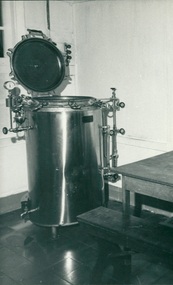
Photograph, Donated autoclave “If this only sterilizer (used only whenever all drums are filled to save electric power) breaks down, the hospital does not have sterile gauze or towels" - Equipment donated through Ziarah the Gull Force Association 2/21 Bn AIF / Dr John Forbes Fairfield Hospital & Caltex - Photo from Dr John Forbes photo albums - Ambon Hospital
... Donated autoclave “If this only sterilizer (used only whenever all drums are filled to save electric power) breaks down, the hospital does not have sterile gauze or towels" - Equipment donated through Ziarah the Gull Force Association 2/21 Bn AIF / Dr John Forbes Fairfield Hospital & Caltex - Photo from Dr John Forbes photo albums - Ambon Hospital ...Department of Health & Human Services - Dr John A Forbes Fairfield / Gull Force 2/21 Bn AIF / Ziarah Caltex & Rumah Sakit Ambon Hospital Indonesia Collection...Department of Health & Human Services - Dr John A Forbes Fairfield / Gull Force 2/21 Bn AIF / Ziarah Caltex & Rumah Sakit Ambon Hospital Indonesia Collection...Department of Health & Human Services - Dr John A Forbes Fairfield / Gull Force 2/21 Bn AIF / Ziarah Caltex & Rumah Sakit Ambon Hospital Indonesia Collection Department of Health & Human Services - Dr John A Forbes Fairfield / Gull Force 2/21 Bn AIF / Ziarah Caltex & Rumah Sakit Ambon Hospital Indonesia Collection Donated autoclave “If this only sterilizer (used only whenever all drums are filled to save electric power) breaks down, the hospital does not have sterile gauze or towels" - Equipment donated through Ziarah the Gull Force Association 2/21 Bn AIF / Dr John Forbes Fairfield Hospital & Caltex - Photo from Dr John Forbes photo albums - Ambon Hospital Photograph ...Department of Health & Human Services - Dr John A Forbes Fairfield / Gull Force 2/21 Bn AIF / Ziarah Caltex & Rumah Sakit Ambon Hospital Indonesia CollectionDepartment of Health & Human Services - Dr John A Forbes Fairfield / Gull Force 2/21 Bn AIF / Ziarah Caltex & Rumah Sakit Ambon Hospital Indonesia Collection -
St Vincent's Hospital Melbourne Archives
Badge - Nursing badges belonging to Josephine Zehnter, circa 1931-1941
... ...Fairfield Hospital Melbourne...The Melbourne hospital badges are from St Vincent's Hospital, the Women's Hospital and the Fairfield Hospital. There is also a badge stating SRN, which means Senior Registered Nurse. ...Josephine Zehnter St Vincents Hospital Melbourne Women's Hospital Melbourne Fairfield Hospital Melbourne Nursing Metal lapel nurses' badges. ...Four nurses' graduation badges indicating Josephine Zehnter's nursing training and clinical working settings. The Melbourne hospital badges are from St Vincent's Hospital, the Women's Hospital and the Fairfield Hospital. There is also a badge stating SRN, which means Senior Registered Nurse. josephine zehnter, st vincents hospital melbourne, women's hospital melbourne, fairfield hospital melbourne, nursing -
 Greensborough Historical Society
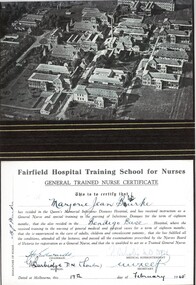
Document - Certificate, Fairfield Training School for Nurses, General Trained Nurse Certificate for Marjorie Jean Burke, 17/02/1945
... hospital...Fairfield Infectious Diseases Hospital...General Trained Nurse certificate for Marjorie Jean Burke issued by Fairfield Hospital Training School for Nurses. This also states that Miss Burke resided at Fairfield Infectious Diseases Hospital where she was trained in the nursing of infectious diseases; and at Bendigo Base Hospital where she received training in general medical and surgical cases....General Trained Nurse certificate for Marjorie Jean Burke issued by Fairfield Hospital Training School for Nurses. This also states that Miss Burke resided at Fairfield Infectious Diseases Hospital where she was trained in the nursing of infectious diseases; and at Bendigo Base Hospital where she received training in general medical and surgical cases. ...General Trained Nurse certificate for Marjorie Jean Burke issued by Fairfield Hospital Training School for Nurses. This also states that Miss Burke resided at Fairfield Infectious Diseases Hospital where she was trained in the nursing of infectious diseases; and at Bendigo Base Hospital where she received training in general medical and surgical cases.Miss Burke was a nurse, midwife and infant welfare sister. This collection covers her many qualifications throughout Australia and Great Britain, including references both professional and personal. When Miss Burke returned to Australia, she was employed at Diamond Valley Community Hospital as a nurse in 1953 and as Deputy Matron 1954-1971.Certificate typed on cream card and pasted into brown leatherette folder."Bourke" spelt incorrectly, corrected (to Burke) and initialled.marjorie jean burke, nurses, diamond valley community hospital, bendigo base hospital, fairfield infectious diseases hospital -
 Department of Health and Human Services
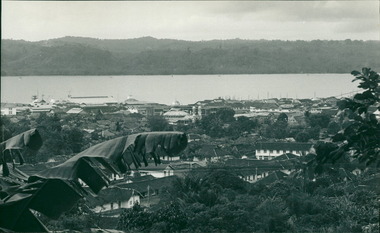
Photograph, Photo taken from the Governor Soemitro's residence in Ambon Indonesia circa 1970 to 1971 by Dr John Alan Forbes (Fairfield Infectious Diseases Hospital Superintendent) working with the "Gull Force Medical Aid programme" and Caltex Pacific Indonesia to take more medical equipment to Ambon Hospital
... Photo taken from the Governor Soemitro's residence in Ambon Indonesia circa 1970 to 1971 by Dr John Alan Forbes (Fairfield Infectious Diseases Hospital Superintendent) working with the "Gull Force Medical Aid programme" and Caltex Pacific Indonesia to take more medical equipment to Ambon Hospital...Department of Health & Human Services - Dr John A Forbes Fairfield / Gull Force 2/21 Bn AIF / Ziarah Caltex & Rumah Sakit Ambon Hospital Indonesia Collection Circa 1970 to 1971...Department of Health & Human Services - Dr John A Forbes Fairfield / Gull Force 2/21 Bn AIF / Ziarah Caltex & Rumah Sakit Ambon Hospital Indonesia Collection Circa 1970 to 1971...Department of Health & Human Services - Dr John A Forbes Fairfield / Gull Force 2/21 Bn AIF / Ziarah Caltex & Rumah Sakit Ambon Hospital Indonesia Collection Circa 1970 to 1971 Department of Health & Human Services - Dr John A Forbes Fairfield / Gull Force 2/21 Bn AIF / Ziarah Caltex & Rumah Sakit Ambon Hospital Indonesia Collection Circa 1970 to 1971 Photo taken from the Governor Soemitro's residence in Ambon Indonesia circa 1970 to 1971 by Dr John Alan Forbes (Fairfield Infectious Diseases Hospital Superintendent) working with the "Gull Force Medical Aid programme" and Caltex Pacific Indonesia to take more medical equipment to Ambon Hospital Photograph ...Department of Health & Human Services - Dr John A Forbes Fairfield / Gull Force 2/21 Bn AIF / Ziarah Caltex & Rumah Sakit Ambon Hospital Indonesia Collection Circa 1970 to 1971Department of Health & Human Services - Dr John A Forbes Fairfield / Gull Force 2/21 Bn AIF / Ziarah Caltex & Rumah Sakit Ambon Hospital Indonesia Collection Circa 1970 to 1971 -
St Vincent's Hospital Melbourne Archives
Book, Practical Nursing including Hygiene and Dietetics by W.T. Gordon Pugh M.D.B.S, in 1937
... ...Fairfield Hospital Melbourne...Gordon Pugh M.D St Vincent's Hospital Melbourne nurse training Fairfield Hospital Melbourne Invalid convalescent and home cookery Inside cover is handwritten "Nurse M Glennen, St Vincents Hospital." ...One of the textbooks used by Margaret Glennen during her nurse training at St Vincent's Hospital Melbourne which included the history and evolution of nursing and its practices to the time of 1937. Medical and surgical techniques, materia medica, midwifery and children's nursing, many illnesses or diseases that nurses may encounter in hospital and other settings. The book includes photographed or illustrations of smallpox, tuberculosis of lung and types of splints and more. Inside cover is handwritten "Nurse M Glennen, St Vincents Hospital." margaret glennen, m.t. gordon pugh m.d, st vincent's hospital melbourne nurse training, fairfield hospital melbourne, invalid convalescent and home cookery -
St Vincent's Hospital Melbourne Archives
Album - Recollections of a Trainee Nurse at St Vincent's Hospital 1940-1943 by Eileen Doris Vaughan nee Cattanach -including cartoons by Minon Phillips
... ...Fairfield Hospital Melbourne...Eileen Vaughan nee Cattanach Minon Phillips St Vincent's Hospital Melbourne Nurse training The Second World War Fairfield Hospital Melbourne Photographs have names and inscriptions, anecdotes written sideways on margins. ...Handwritten at age ninety- eight, Eileen nee Cattanach compiled two folders of nursing memories, including stories, accompanying photographs, cartoons and anecdotes of earlier training days at St Vincent's Hospital Melbourne. Eileen speaks of the close-knit camaraderie, of sharing each other's trials and tribulations through three war torn years and beyond. She describes her nursing vocation as "the satisfaction of giving help to those in need".Photographs have names and inscriptions, anecdotes written sideways on margins.eileen vaughan nee cattanach, minon phillips, st vincent's hospital melbourne, nurse training, the second world war, fairfield hospital melbourne -
 Kew Historical Society Inc
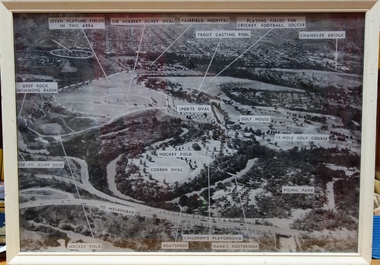
Photograph, Yarra Bend Park Trust, Yarra Bend Park Facilities, 1940s
... ...fairfield hospital...Old aerial photograph of Yarra bend Park labelled with park facilities yarra bend park sports facilities - kew - fairfield sir herbert olney oval fairfield hospital chandler bridge deep rock swimming basin kane's footbridge Framed annotated aerial photograph of Yarra Bend Park. ...Old aerial photograph of Yarra bend Park labelled with park facilitiesFramed annotated aerial photograph of Yarra Bend Park. The white frame is original to the work.yarra bend park, sports facilities - kew - fairfield, sir herbert olney oval, fairfield hospital, chandler bridge, deep rock swimming basin, kane's footbridge -
 Kew Historical Society Inc
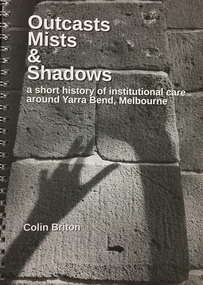
Book, Outcasts, Mists & Shadows: a short history of institutional care around Yarra Bend, Melbourne / by Colin Briton, 2017, 2017
... merri creek protectorate station and aboriginal school (1841-51), yarra bend lunatic asylum (1848-1925), fairfield infectious diseases hospital (1904-96), fairhaven (1927-51), fairlea women's prison (1956-96), thomas embling hospital (2000- ), abbotsford convent (1863-1975), kew lunatic asylum / willsmere hospital (1872-1988), kew cottages (1887-2008), caritas christi hospice (1938- ), villa alba / henry pride hospital services (1954-98), royal talbot rehabilitation centre (at kew since 1961), national guide dog training centre / guide dogs victoria (1962- )...Self-published book on institutional care around Yarra Bend, Melbourne, including sections on: Merri Creek Protectorate Station and Aboriginal School (1841-51), Yarra Bend Lunatic Asylum (1848-1925), Fairfield Infectious Diseases Hospital (1904-96), Fairhaven (1927-51), Fairlea Women's Prison (1956-96), Thomas Embling Hospital (2000- ), Abbotsford Convent (1863-1975), Kew Lunatic Asylum / Willsmere Hospital (1872-1988), Kew Cottages (1887-2008), Caritas Christi Hospice (1938- ), Villa Alba / Henry Pride hospital services (1954-98), Royal Talbot Rehabilitation Centre (at Kew since 1961), National Guide Dog Training Centre / Guide Dogs Victoria (1962- ). ...merri creek protectorate station and aboriginal school (1841-51), yarra bend lunatic asylum (1848-1925), fairfield infectious diseases hospital (1904-96), fairhaven (1927-51), fairlea women's prison (1956-96), thomas embling hospital (2000- ), abbotsford convent (1863-1975), kew lunatic asylum / willsmere hospital (1872-1988), kew cottages (1887-2008), caritas christi hospice (1938- ), villa alba / henry pride hospital services (1954-98), royal talbot rehabilitation centre (at kew since 1961), national guide dog training centre / guide dogs victoria (1962- ) "Donated by the author March 2017" Self-published book on institutional care around Yarra Bend, Melbourne, including sections on: Merri Creek Protectorate Station and Aboriginal School (1841-51), Yarra Bend Lunatic Asylum (1848-1925), Fairfield Infectious Diseases Hospital (1904-96), Fairhaven (1927-51), Fairlea Women's Prison (1956-96), Thomas Embling Hospital (2000- ), Abbotsford Convent (1863-1975), Kew Lunatic Asylum / Willsmere Hospital (1872-1988), Kew Cottages (1887-2008), Caritas Christi Hospice (1938- ), Villa Alba / Henry Pride hospital services (1954-98), Royal Talbot Rehabilitation Centre (at Kew since 1961), National Guide Dog Training Centre / Guide Dogs Victoria (1962- ). ...Self-published book on institutional care around Yarra Bend, Melbourne, including sections on: Merri Creek Protectorate Station and Aboriginal School (1841-51), Yarra Bend Lunatic Asylum (1848-1925), Fairfield Infectious Diseases Hospital (1904-96), Fairhaven (1927-51), Fairlea Women's Prison (1956-96), Thomas Embling Hospital (2000- ), Abbotsford Convent (1863-1975), Kew Lunatic Asylum / Willsmere Hospital (1872-1988), Kew Cottages (1887-2008), Caritas Christi Hospice (1938- ), Villa Alba / Henry Pride hospital services (1954-98), Royal Talbot Rehabilitation Centre (at Kew since 1961), National Guide Dog Training Centre / Guide Dogs Victoria (1962- ). ISBN: 978-0-6480223-0-5"Donated by the author March 2017"merri creek protectorate station and aboriginal school (1841-51), yarra bend lunatic asylum (1848-1925), fairfield infectious diseases hospital (1904-96), fairhaven (1927-51), fairlea women's prison (1956-96), thomas embling hospital (2000- ), abbotsford convent (1863-1975), kew lunatic asylum / willsmere hospital (1872-1988), kew cottages (1887-2008), caritas christi hospice (1938- ), villa alba / henry pride hospital services (1954-98), royal talbot rehabilitation centre (at kew since 1961), national guide dog training centre / guide dogs victoria (1962- ) -
St Vincent's Hospital Melbourne Archives
Book, Lectures for nurses by G.N. Burbidge, 3rd ed., 1935
... Author Gwen Burbidge, SRN was a Nurse Educator at Fairfield Hospital Melbourne from 1939-1960. ...Author Gwen Burbidge, SRN was a Nurse Educator at Fairfield Hospital Melbourne from 1939-1960. Margaret Glennen G.N.Burbidge St Vincent's Hospital Melbourne Inside front cover is handwritten M. ...One of the textbooks used by Margaret Glennen during her nurse training at St Vincent's Hospital Melbourne in 1943. Author Gwen Burbidge, SRN was a Nurse Educator at Fairfield Hospital Melbourne from 1939-1960. Inside front cover is handwritten M. Glennen St Vincent's Hospital Fitzroy, N6. The cost of the book is written as eight shillings and threepence.margaret glennen, g.n.burbidge, st vincent's hospital melbourne -
 Returned Nurses RSL Sub-branch
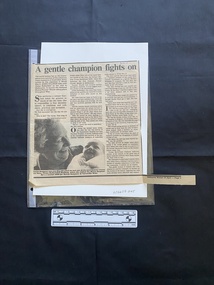
Newspaper - Newspaper clipping (inlc duplicate), Annie Gillison, A gentle champion fights on, 24 April [1988]
... Possibly best known as the courageous lone survivour of the massacre of Australian Army nurses by the Japanese in World War Two, Vivian went on to be matron of the Repatriation Hospital and then Fairfield Hospital. ...Possibly best known as the courageous lone survivour of the massacre of Australian Army nurses by the Japanese in World War Two, Vivian went on to be matron of the Repatriation Hospital and then Fairfield Hospital. World War 2 WWII WW2 World War II Vivian Bullwinkel Red Cross Mercy Hospital Michael Willessee St Kilda Road Edith Cavell Britich Belgium German Nurses' Memorial Centre Lucas Sampson Kerrie Sampson Yarraville West 'WWII ' '[blue ink, top right, both copies] 'Progress Press. ...Vivian Statham (nee Bullwinkel) visits Melbourne from her home in Perth to launch the National Mutual Nurses' Month, taking place throughout May. The biggest woman's project of the bicentennial, Nurses' Month will involve nurses throughout Australia. Though Vivian is now retired she is still very involved and concerned about the nursing world. Possibly best known as the courageous lone survivour of the massacre of Australian Army nurses by the Japanese in World War Two, Vivian went on to be matron of the Repatriation Hospital and then Fairfield Hospital. A newspaper clipping of a story consisting of three large columns of text and a large black and white photo of an older woman (head and sholders) holding a baby'WWII ' '[blue ink, top right, both copies] 'Progress Press. APRIL 1988'[black ink bottom left, one copy]world war 2, wwii, ww2, world war ii, vivian bullwinkel, red cross, mercy hospital, michael willessee, st kilda road, edith cavell, britich, belgium, german, nurses' memorial centre, lucas sampson, kerrie sampson, yarraville west -
 Returned Nurses RSL Sub-branch
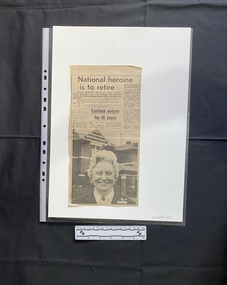
Newspaper - Newspaper clipping, National heroine is to retire, [1977]
... Very brief biological article listing decorations and positions of distinction held by Vivian Statham (neé Bullwinkel) prior to her upcoming (at time of printing) retirement as Matron of the Fairfield Hospital: - Born Kapunda, South Australia - Nurse training at Broken Hill District Hospital (1934-39) - Served with 13th Australian General Hospital (AGH) in WWII - Went down on Vyner Brooke - Only survivor of Banka [sic] Island massacre and was Japanese Prisoner of War - Post WWII was Matron of Heidelberg General Hospital (1956-60) - Trustee of the National War Memorial, Canberra 1963 - Deputy Principal Commandant of the Australian Red Cross 1964 - Achieved a Diploma of Nursing Administration - Awarded the Florence Nightingale Medal...Very brief biological article listing decorations and positions of distinction held by Vivian Statham (neé Bullwinkel) prior to her upcoming (at time of printing) retirement as Matron of the Fairfield Hospital: - Born Kapunda, South Australia - Nurse training at Broken Hill District Hospital (1934-39) - Served with 13th Australian General Hospital (AGH) in WWII - Went down on Vyner Brooke - Only survivor of Banka [sic] Island massacre and was Japanese Prisoner of War - Post WWII was Matron of Heidelberg General Hospital (1956-60) - Trustee of the National War Memorial, Canberra 1963 - Deputy Principal Commandant of the Australian Red Cross 1964 - Achieved a Diploma of Nursing Administration - Awarded the Florence Nightingale Medal WW2 WWII World War Two Vivian Statham (nee Bullwinkel) Retirement A newspaper clipping consisting of titles, four columns of text and a black and white photo of a middle aged woman outside a building. ...Very brief biological article listing decorations and positions of distinction held by Vivian Statham (neé Bullwinkel) prior to her upcoming (at time of printing) retirement as Matron of the Fairfield Hospital: - Born Kapunda, South Australia - Nurse training at Broken Hill District Hospital (1934-39) - Served with 13th Australian General Hospital (AGH) in WWII - Went down on Vyner Brooke - Only survivor of Banka [sic] Island massacre and was Japanese Prisoner of War - Post WWII was Matron of Heidelberg General Hospital (1956-60) - Trustee of the National War Memorial, Canberra 1963 - Deputy Principal Commandant of the Australian Red Cross 1964 - Achieved a Diploma of Nursing Administration - Awarded the Florence Nightingale MedalA newspaper clipping consisting of titles, four columns of text and a black and white photo of a middle aged woman outside a building.ww2, wwii, world war two, vivian statham (nee bullwinkel), retirement -
 Ambulance Victoria Museum
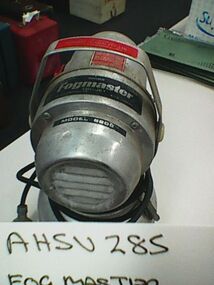
Steriliser, Fogmaster, Model 6208, AFA Corporation, Circa 1960
... Equipment was held at either the Fairfield ambulance station or at the Fairfield Infectious Diseases Hospital. Units were in use from at least 1962 through to the 1980s. ...Equipment was held at either the Fairfield ambulance station or at the Fairfield Infectious Diseases Hospital. Units were in use from at least 1962 through to the 1980s. ...Used to sterilise ambulances after carry patients to the former Fairfield Infectious Diseases Hospital. A mixture of water and disinfectant was heated and blown through the ambulance for a minimum of 10 minutes after an infectious patient was moved. Equipment was held at either the Fairfield ambulance station or at the Fairfield Infectious Diseases Hospital. Units were in use from at least 1962 through to the 1980s. Source Chas Martin curator AHSV 29 April 2016Aluminium electrical unit with swivel top portion CHALLENGER FOGMASTER TRI-JETinfectious diseases -
 Returned Nurses RSL Sub-branch
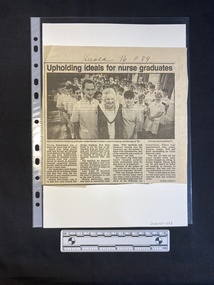
Newspaper - Newspaper clipping, [The Herald], Upholding ideals for nurse graduates, [16.11] 1989
... Matron Vivian Bullwinkel flew from Perth to Fairfield Hospital to witness the last graduates of the Basic Nursing and Aide/Enrolled Nurse Training program before training is turned over to colleges. ...Matron Vivian Bullwinkel flew from Perth to Fairfield Hospital to witness the last graduates of the Basic Nursing and Aide/Enrolled Nurse Training program before training is turned over to colleges. ...Matron Vivian Bullwinkel flew from Perth to Fairfield Hospital to witness the last graduates of the Basic Nursing and Aide/Enrolled Nurse Training program before training is turned over to colleges. Vivian set up the training program when she was the director of nursing at Fairfield, between 1961 and 1977. With this final class, the total graduates of the program reached 1195. Vivian acknowledged that while medicine and treatment as evolved with the times there is one thing that hasn't changed: people's needs. The nature of nursing means getting close to people and this was never more apparent than when in a Japanese POW camp Vivian and other fellow nurses were approached by another POW of a different nationality requesting help as they trusted them, not the people in authority. A newspaper clipping of a large black and white photo of an older woman standing in front of a large group of younger men and women in nursing uniforms above four columns of text'Herald 16.11.89.' [black ink, along top]world war two, ww2, wwii, vivian statham, michael compton, leanne cassidy -
 Alfred Hospital Nurses League - Nursing History Collection
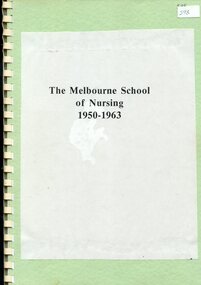
Book - Illustrated book (photocopy), Norman J Marshall, The Melbourne School of Nursing 1950-1963, 1985
... The Melbourne School of Nursing was formed in 1950 when the Royal Melbourne Hospital’s School of Nursing joined with those of the Queen Victoria Hospital, Fairfield Hospital and the Royal Women’s Hospital . ...The Melbourne School of Nursing was formed in 1950 when the Royal Melbourne Hospital’s School of Nursing joined with those of the Queen Victoria Hospital, Fairfield Hospital and the Royal Women’s Hospital . ...History of the Melbourne School of Nursing, includes list of all graduatesIllustrated book with white comb binding. Has clear plastic protective covers front and back. Title printed [in black ink] on white paper and fixed to larger pale green cardboardnon-fictionHistory of the Melbourne School of Nursing, includes list of all graduatesmelbourne school of nursing-history, the royal melbourne hospital and associated hospitals school of nursing, the royal melbourne hospital -
 Melton City Libraries
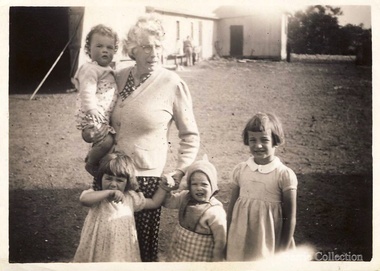
Photograph, Jessie Barrie with her grandchildren, 1946
... The children developed diphtheria Mary and Bon were transferred to Fairfield Hospital. In March 1919 the family returned to live at Melton at the time of the outbreak of the Spanish influenza. ...The children developed diphtheria Mary and Bon were transferred to Fairfield Hospital. In March 1919 the family returned to live at Melton at the time of the outbreak of the Spanish influenza. ...Jessie, known as Ma Barrie to her grandchildren, was the daughter of a school teacher. The family lived in various locations around Central Victoria, particularly Pastoria and Melton. When her father was Head Teacher at Melton State School no 430, she met her future husband, CE Barrie. Jessie May married Charles Ernest Barrie in the Methodist Church Melton on the 23rd August 1906. They lived in the newly built house beside the Chaff Mill on the corner of Station and Brooklyn road Melton South. In April 1910 the family moved to a farm in Trundle NSW. The Chaff Mill was sold to Glover Onians - HSK Ward. The family returned to Melton in 1911, buying the “Darlingsford” farm in May. In 1916 they lived in Elizabeth Street, Moonee Ponds where the children attend Bank Street School, Ascot Vale. The children developed diphtheria Mary and Bon were transferred to Fairfield Hospital. In March 1919 the family returned to live at Melton at the time of the outbreak of the Spanish influenza. Mary, Bon and Edgar returned to Melton School. Following the death of CEB in a car accident in 1931 she was left to bring up her children on her own; the youngest Jim, aged 9 and eldest Mary, aged 24. Jessie left ‘Darlingsford’ in 1946 when her sons had safely returned from WW II. She stayed at Yarram for a time where her married twin daughters lived when more grandchildren were born and spent the remainder of her life living with various family members. Jessie died in 1960 while living with Mary and Keith.Jessie Barrie with her grandchildren at Darlingsford, Meltonlocal identities -
Bendigo Historical Society Inc.
Document - Bourke Collection: Nursing Documents, 6.1.1950
... Photocopied documents of Eleanor Kennedy/Bourke Two references from Fairfield and Kurmala Hospitals Acknowledgment of resignation from Bendigo Hospital dated 28 August 1973 Victorian Nursing Council acknowledging change of name after marriage Victorian Nursing Council advising that to qualify as nursing aide Eleanor Bourke must pass Nursing Aide Exam Registration Certificate of Eleanor Bourke dated 28 April 1961 and receipt for Nursing Aide Registration fee Victorian Nursing Council letter stating Eleanor Bourke entered on the Nursing Aide Register. ...Records of Eleanor Kennedy/Bourke's nursing career including references and official correspondence from Victorian Nursing Council. references nursing Victorian Nursing Council Photocopied documents of Eleanor Kennedy/Bourke Two references from Fairfield and Kurmala Hospitals Acknowledgment of resignation from Bendigo Hospital dated 28 August 1973 Victorian Nursing Council acknowledging change of name after marriage Victorian Nursing Council advising that to qualify as nursing aide Eleanor Bourke must pass Nursing Aide Exam Registration Certificate of Eleanor Bourke dated 28 April 1961 and receipt for Nursing Aide Registration fee Victorian Nursing Council letter stating Eleanor Bourke entered on the Nursing Aide Register. ...Records of Eleanor Kennedy/Bourke's nursing career including references and official correspondence from Victorian Nursing Council.Photocopied documents of Eleanor Kennedy/Bourke Two references from Fairfield and Kurmala Hospitals Acknowledgment of resignation from Bendigo Hospital dated 28 August 1973 Victorian Nursing Council acknowledging change of name after marriage Victorian Nursing Council advising that to qualify as nursing aide Eleanor Bourke must pass Nursing Aide Exam Registration Certificate of Eleanor Bourke dated 28 April 1961 and receipt for Nursing Aide Registration fee Victorian Nursing Council letter stating Eleanor Bourke entered on the Nursing Aide Register. references, nursing, victorian nursing council -
 Geoffrey Kaye Museum of Anaesthetic History
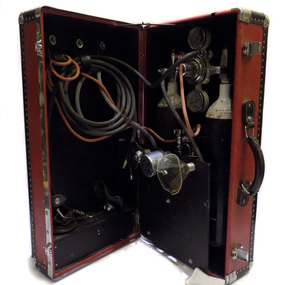
Equipment - Resuscitator Unit, c. 1960
... The R.M. resuscitator was also used in more inventive ways. At Fairfield Hospital in Melbourne, a group of physiotherapists and doctors did some innovative work with polio patients, teaching them glossopharyngeal (or “frog”) breathing, as a means of becoming less dependent on ventilators. ...The R.M. resuscitator was also used in more inventive ways. At Fairfield Hospital in Melbourne, a group of physiotherapists and doctors did some innovative work with polio patients, teaching them glossopharyngeal (or “frog”) breathing, as a means of becoming less dependent on ventilators. ...Mechanical resuscitation devices, such as the Pulmotor and Lungmotor, were popular in the early part of the twentieth century. Their use waned in the 1920s as significant bodies like the British Medical Research Council and American Red Cross refused to endorse them. The most popular of the resuscitators to emerge in the 1930s was the E&J (Ericson and Johnson) resuscitator. The device was soon widely available, vigorously promoted with support from many medical practitioners. They were soon to be found in hospitals, emergency services like the ambulance and fire brigade, and voluntary life-saving organisations. In Australia, Norman James, director of anaesthesia at the Royal Melbourne Hospital, developed an interest in equipment for ambulances and the resuscitation of drowning victims. Little in the way of practical, portable equipment was available to either the ambulances or the voluntary life-saving organisations, such as Surf Life Saving Australia (SLSA); American resuscitators, like the E&J, were expensive and bulky to import. James designed a simple portable resuscitation device for local use after being approached by Jack Conabere, secretary of the Elwood Life Saving Club (ELSC). The resulting Royal Melbourne Hospital resuscitator, or the R.M. resuscitator as it was marketed, was a simpler, manual version of those available overseas. It was gas driven with a plunger, marked “Press”, and a safety valve. The small working unit attached directly to the facemask. Once the patient was positioned facedown and the airway cleared of debris, the mask was placed firmly over the face. The plunger allowed gas to flow and lung inflation; releasing the plunger allowed expiration. This simple resuscitator was marketed by Commonwealth Industrial Gases (CIG) and became very popular in Australia with volunteer and professional rescue organisations. It represents one of the many innovations in resuscitation equipment that resulted from cooperation between volunteer life savers and medical practitioners. Norman James worked closely with Jack Conabere and the Government Pathologist to develop the equipment. ELSC was the first life saving club to use the resuscitator on the beach. While conducting an early training exercise on 23 December 1951, they used it to successfully resuscitate a man who had drowned after capsizing his home made yacht. The R.M. resuscitator was also used in more inventive ways. At Fairfield Hospital in Melbourne, a group of physiotherapists and doctors did some innovative work with polio patients, teaching them glossopharyngeal (or “frog”) breathing, as a means of becoming less dependent on ventilators. In 1981, the Australian Standards Association stated that the RM head failed to meet its revised standards and it was withdrawn from the market. Red leather suitcase with black leather trim with metal studs. There are clip locks for locking the suitcase in the closed position. The suitcase contains equipment for oxygen resuscitation. There is a space allocated for two oxygen cylinders, however there are no cylinders present.Embossed into metal plaque: The C.I.G. / Oxy-viva / PORTABLE UNIVERSAL OXYGEN RESUSCITATORresuscitation, portable, surf life saving australia, royal melbourne hospital, rm resuscitator -
 Melton City Libraries
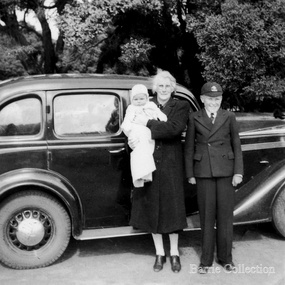
Photograph, Ian and Wendy with Grandma Barrie, c.1943
... The children developed diphtheria Mary and Bon were transferred to Fairfield Hospital. March 1919 the family returned to live at Melton at the time of the outbreak of the Spanish influenza. ...The children developed diphtheria Mary and Bon were transferred to Fairfield Hospital. March 1919 the family returned to live at Melton at the time of the outbreak of the Spanish influenza. ...Jessie May born on 30th November 1883, Jessie, known as Ma Barrie to her grandchildren, was the daughter of schoolteacher, Thomas John Lang and Mary Elizabeth Coates. In 1896 Thomas and Mary Elizabeth moved to Melton. Mr Lang’s previous school was Coliban SS No 1920. Mr Lang was the Head Teacher at Melton until 1917. In 1910 he was a Committee Member Melton Mechanics Institute and Public Library at its establishment. He was a Life Member of the Melton Mechanics Institute Jessie lived in various locations around Central Victoria, particularly Pastoria and Melton. When her father was Head Teacher at Melton State School no 430, she met her future husband, Charles Ernest Barrie. The couple were married at the Methodist Church Melton on the 23rd August in 1906. They lived in the newly built house beside the Chaff Mill on the corner of Station and Brooklyn Road Melton South. Their eldest child was Mary Ena was born on the 7th of October 1907. IN 1909, Ernest Wesley (Bonnie) was born 29th April (Ascot Vale). In 1910 the family moved to a farm in Trundle NSW. The Chaff Mill was sold to Glover Onians – HSK Ward. Later the original mill was burnt and replaced, and in 1977 a fire destroyed it again and it was not rebuilt. In 1911, the family returned to Melton buying the “Darlingsford” farm in May. The weather was too at Trundle for Jessie. Their address was Elizabeth Street Moonee Ponds. William Cecil was born on the 23rd of February 1912 and Charles Edgar was born on 1st June 1913. In 1916 they lived in Moonee Ponds where the children attend Bank Street School, Ascot Vale. The children developed diphtheria Mary and Bon were transferred to Fairfield Hospital. March 1919 the family returned to live at Melton at the time of the outbreak of the Spanish influenza. Mary, Bon, and Edgar returned to Melton School. Following the death of CEB in a car accident in 1931 she was left to bring up her children on her own; the youngest Jim, aged 9 and eldest Mary, aged 24. Jessie left ‘Darlingsford’ in 1946 when her sons had safely returned from WW II. She stayed at Yarram for a time where her married twin daughters lived when more grandchildren were born and spent the remainder of her life living with various family members. SUMMARY - Dr Ian Robinson OAM Born 26th June 1931 Parents – Keith John Robinson of “Creighton” Melton Mary nee Barrie of “Darlingsford” Melton The family lived at “Heatherdale” Toolern Vale. Their 3 children, Ian the first followed by daughters, Ena May and Mary Elizabeth (Beth) Ian and Ena attended Toolern Vale State School. No 946 The family later moved to Columban Ave Strathmore. During 1942 the children stayed their grandmother’s house at “Darlingsford” Melton. They enrolled at Melton State School No 430 on the 13/3/42 after attending State School No 483 Raleigh Street Essendon. They left Melton School on the 31/7/42 returning to Essendon. Ian attended Geelong College as a boarder after completing his schooling he entered University to study Medicine. His early General Practice was in Melbourne. In 1972 he joined the Royal Flying Doctor at Mount Isa, North West Region of Queensland. The region covered an area larger than the British Isles. He was on call 24 hours for emergencies. He spent three weeks away with calls and in the fourth week attended Aboriginal Reserves. Ian took two Queensland Governors and their wives to spend three nights at the Clinic. Sir Colin and Lady Hannah are still their friends. Area Co-ordinator Ian was awarded the Royal Humane Society Medal along with his pilot when they risked their lives landing on flooded land to save a patient. Ian remained a loyal contributor to the Royal Flying Doctor Service until 1997 He met Queen Elizabeth 2nd in Cairns, and also met Prince Phillip and Prince Andrew in Brisbane. Townsville – Locum Beenleigh – General Practice Open 7 Days 198? -2002 Aspects of his work covered the following – Police Work State Commonwealth Medical Officer TEYS COMPANY Q FEVER. Q Fever presents with flu like symptoms. The 1st Test always came back Negative BUT 2nd Test always positive. Ian lectured other Medicos re Q Fever Council Immunization in schools Covered boxing bouts Large Practice In 2002 Ian retired but continued house calls for older patients. Information from Anne to Beth received by Wendy October 2013 Wendy Elizabeth Barrie Jessie May Lang [Barrie] and Ian Keith Robinson standing in front of a carlocal identities -
 Melton City Libraries
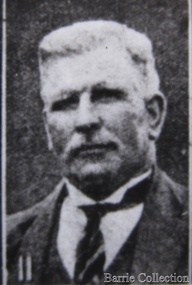
Photograph, Charles Ernest Barrie, Unknown
... Mary and Bon were taken to Fairfield Hospital and both recovered. At the end of the war influenza broke out the family returned to Darlingsford and shared the home for a short while with the Pearcey family who had been working the farm. ...Mary and Bon were taken to Fairfield Hospital and both recovered. At the end of the war influenza broke out the family returned to Darlingsford and shared the home for a short while with the Pearcey family who had been working the farm. ...This document is has been compiled by Wendy Barrie daughter of Ernest (Bon) and Edna Barrie and granddaughter of Charles E and Jessie M Barrie. Ernie Barrie operated a travelling Chaff Cutter in the St Arnaud area where his parents William and Mary Ann had taken up land at Coonooer West in 1873. Ernie commenced his working life with a team of bullocks and a chaff cutter. The earliest connection he had with Melton was in 1887. By the beginning of the 20th century Ernie and his father William and brothers, William, Samuel, James Edwin,[Ted] Robert, Arthur and Albert have been associated with farming and milling in the Melton district. In the early 1900’s Ernie and his brother Ted were in partnership in a Chaff cutting and Hay processing Mill on the corner of Station and Brooklyn road Melton South. The mill was managed by William for a time. By 1906 Charles Ernest and James Edwin were in partnership in the Station Road mill when a connecting rail line across Brooklyn Road for a siding was constructed to the Melton Railway Station. In 1911 the Mill’s letterhead shows C.E. BARRIE Hay Pressing and Chaff Cutting Mills. Melton Railway Station. Telephone No 1 Melton. This Mill as sold to H S K Ward in 1916 and stood until 1977 when it burnt down in a spectacular fire. Ernie built a house at Melton South beside the Chaff Mill at Station Road in 1906 and married Jessie May Lang in August at the Methodist Church. Jessie’s father was Thomas Lang. He came to Melton in 1896 and was the Head Teacher at Melton State School No 430 until he retired in 1917. They had 9 children with 8 surviving to adulthood. Jessie and Ernie had 6 sons and 3 daughters. All the children lived at Darlingsford. In April 1910 the family left Melton for a brief period and moved to a farm in Trundle in NSW. They returned to Melton and purchased Darlingsford in May 1911. For a time during WW1 they lived at Moonee Ponds near the Lang grandparents at Ascot Vale. Mary and Bon attended Bank St State School. The children developed diphtheria in 1916 and their youngest boy, Cecil died of complications. Mary and Bon were taken to Fairfield Hospital and both recovered. At the end of the war influenza broke out the family returned to Darlingsford and shared the home for a short while with the Pearcey family who had been working the farm. By 1922 the family had and grown and Edgar, Tom, Horace, Jessie, Joyce and Jim were living a Darlingsford. Ernie continued during the 1920’s working the farm and attend his many civic and community commitments. Two 8 clydesdale horse teams were used to work the land which meant early rising for the horses to be fed and harnessed to commence the days work. In 1916 Ernie also became involved in a Chaff Mill on the corner of Sunshine and Geelong Road West Footscray, which at the time was being run by John Ralph Schutt. It was known an Schutt Barrie. A flour mill was added at a later stage. Other Schutt and Barrie mills were situated at Parwan and Diggers Rest. Another mill was situated beside the railway line at Rockbank. The Footscray mill ceased operation in 1968 Ernie spent a lot of time and energy at the Parwan Mill and travelling around Parwan and Balliang farms, where he came to know many of the families in the district. Ernies commitment to the civic development to the Melton and district was extensive, he was involved with a number of large events during the 1920’s such as the Melton Exhibitions and the 1929 Back to Melton Celebrations. He was a member of the Australian Natives Association at the turn of the century. He was Chairman of the School Committee at Melton State School 430 and the Melton South State School in thw1920s. He donated the land for a Hall for Melton South in 1909, known as Exford Hall and later in 1919 renamed Victoria Hall. The Hall was demolished in 1992. He was a Councillor, JP, and Vice President and President of the Melton Mechanics Institute Hall Committee in 1915- 1916. He was a member of the Methodist Church and later the Scots Presbyterian Church. He was Superintendent of the Sunday School of the Methodist Church to 1910 and later Scots Presbyterian Church until 1931. This is reflected in the theme of children in the stained glass window which was dedicated in his memory by his wife Jessie as a gift to the Scots Church. Charles Ernest Barrie made many generous donations to many charities who supported young people and children. In 1918 Jessie and Ernie made the first donation to a very prominent Victorian charity whose work still continues. Yooralla. In July 1931 Ernie’s untimely death was a major blow to the family and the Melton community. To this day people still vividly recall the day they lined the streets for his funeral. The day of the funeral is recalled as the day Melton stood as two of their prominent citizens who tragically died on the same dayPhotograph of Charles Ernest Barrie taken from Scenes at Melton and Old Residentslocal identities -
 Uniting Church Archives - Synod of Victoria
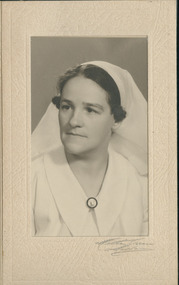
Photograph, C1947
... She commenced her training there in 1931, before moving to the Women's Hospital in 1933. In 1934 she had six months at the Fairfield Infectious Diseases Hospital, before returning to the Austin, where she was employed when she sat her final exams in November 1934. ...She commenced her training there in 1931, before moving to the Women's Hospital in 1933. In 1934 she had six months at the Fairfield Infectious Diseases Hospital, before returning to the Austin, where she was employed when she sat her final exams in November 1934. ...Hilda Charlotte Foster, 1902 - 1990, was a Double Certified Nurse when, at the age of 35, she successfully applied to the board of the Australian Inland Mission (AIM) to work at an outback field centre in South Australia. Born and raised in suburban Melbourne, she had been inspired by stories told to her by other missionaries about the fulfilment to be gained working amongst Aboriginal communities. Given her religious faith and nursing skills, she believed she could make a difference. She worked in Oodnadatta in South Australia for two years (1937-1939), followed by a stint in Innamincka in New South Wales in 1940 -1942. Before she became a nurse, Hilda Foster trained to be a Sunday School teacher and was a member of the Sunday School Council of Victoria. She completed first aid courses run through the Presbyterian Deaconesses Institute in Carlton, Victoria, and in 1930 successfully applied to become a trainee nurse at the Austin Hospital for Incurables, in Heidelberg. She commenced her training there in 1931, before moving to the Women's Hospital in 1933. In 1934 she had six months at the Fairfield Infectious Diseases Hospital, before returning to the Austin, where she was employed when she sat her final exams in November 1934. Her combined skills made her a most attractive option for the Australian Inland Mission. As well as being multi-skilled as a nurse, she provided religious instruction and spiritual ministry to members of the community. https://trove.nla.gov.au/people/762093?c=people Sister Foster nursed at Toora Bush Hospital prior to leaving for the Paton Memorial Hospital, Vila, New Hebrides in 1944. She left the New Hebrides in 1946.Matt, black and white, head and shoulders, studio portrait of Sister Hilda Charlotte Foster on card.australian inland mission, presbyterian deaconess, sister hilda charlotte foster, paton memorial hospital vila new hebrides
