
Showing 16 items matching "family history from 1840"
-
 Dandenong & District Historical Society
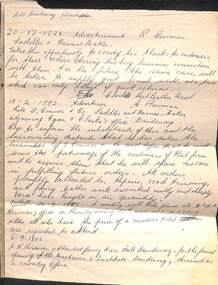
Bowman Family, Bowman Family - Various Family Members, Histories, Documents
... Family History...1988 Family Reunion...Bowmans Track Cardinia...Dandenong History...Beaconsfield History...Family History from 1840...Bowman Family - Various Family Members, Histories, Documents Alan Bowman Alexander Bowman Janet Craig Janet Bowman Alexander Watt Bowman David Bowman James Bowman Rob Bowman Robert Bowman Sally Bowman Robert George Bowman Walter Robert Bowman 1924 Electoral Roll 1876 to 1886 1984 Family History 1988 Family Reunion Bowmans Track Cardinia Dandenong History Beaconsfield History Family History from 1840 1876 Select Committee Report Thomas Vigors Thomas Vigers Thomas Vigurs 1839-1840 Assisted Immigrats Panty Gurn Gurn Run Bowman Family - Various Family Members, Histories, Documents Bowman Family - Various Family Members, Histories, Documents Bowman Family ...Bowman Family - Various Family Members, Histories, Documentsalan bowman, alexander bowman, janet craig, janet bowman, alexander watt bowman, david bowman, james bowman, rob bowman, robert bowman, sally bowman, robert george bowman, walter robert bowman, 1924 electoral roll, 1876 to 1886, 1984 family history, 1988 family reunion, bowmans track cardinia, dandenong history, beaconsfield history, family history from 1840, 1876 select committee report, thomas vigors, thomas vigers, thomas vigurs, 1839-1840 assisted immigrats, panty gurn gurn run -
 Warrnambool and District Historical Society Inc.
Booklet, The Cavenett Family 1840-1985, 1970
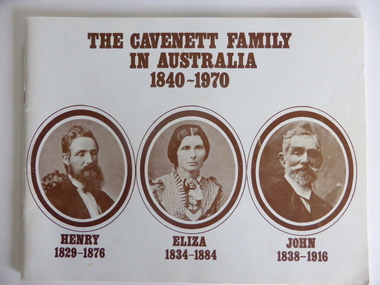
... families from 1840 to 1970. John and Eliza Cavenett with four children set sail from England to Adelaide in 1840 but Eliza and one child died on the voyage. John Cavenett married again and settled in Adelaide. Most descendants of John Cavenett that are mentioned in the booklet also lived in South Australia but some settled later in Victoria, New South Wales and Western Australia. The book has been produced by Kingsley Ireland. This book is of some interest as an example of a family history ...This booklet gives information on the Cavenett families from 1840 to 1970. John and Eliza Cavenett with four children set sail from England to Adelaide in 1840 but Eliza and one child died on the voyage. John Cavenett married again and settled in Adelaide. Most descendants of John Cavenett that are mentioned in the booklet also lived in South Australia but some settled later in Victoria, New South Wales and Western Australia. The book has been produced by Kingsley Ireland. This book is of some interest as an example of a family history written by a descendant of the pioneer family. As far as can be ascertained it does not have any local significance. This is soft cover booklet of 41 pages. The cover has a cream-coloured background with sepia-coloured photographs of three Cavenett family members on the front cover and a sepia-coloured reproduction of an S.T. Gill sketch on the back cover. The book contains a Foreword, a Preamble, information on members of the Cavenatt families, an Appendix and a Surname Index. There are many black and white photographs of the Cavenett family members. The booklet is stapled. Front Cover: ‘The Cavenett Family in Australia 1840-1970’ ‘Henry 1829-1876, Eliza 1834-1884. John 1838-1916’john and eliza cavenett, south australian pioneer families, warrnambool -
 Heytesbury District Historical Society Inc.
Book, The Shire of Heytesbury, The Infiltrators :A History of the Heytesbury 1840-1920 by Jack S. Fletcher, First Edition 1985
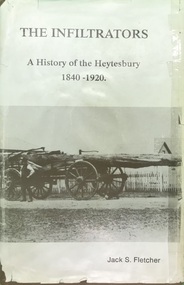
... families from the area are listed in index. This book is one of 2 by the author. The other accompanying book is titled "And We Who Followed: A History of the Heytesbury, 1921-1987", and follows "The Infiltrators". churches education agriculture history port campbell pioneers timboon cobden heytesbury princetown sports A tan hard cover book with title in gold lettering & a dust cover with a photo of a bullock team & wagon carting a large log, with two bullockies driving. The book has a locality map.contents,index,ledger entries & black & white photographs The Infiltrators :A History of the Heytesbury 1840 ...The book relates to the triumphs & the achievements, the hardships & the tribulations, of the pioneers & settlers of the district.This book gives a detailed history of the Heytesbury district, including the settlerment of the townships of Port Campbell, Timboon, Princetown. This incorporates the development and establishment of industry, commerce, agriculture, education and social and religious events. Reference to families from the area are listed in index. This book is one of 2 by the author. The other accompanying book is titled "And We Who Followed: A History of the Heytesbury, 1921-1987", and follows "The Infiltrators".A tan hard cover book with title in gold lettering & a dust cover with a photo of a bullock team & wagon carting a large log, with two bullockies driving. The book has a locality map.contents,index,ledger entries & black & white photographschurches, education, agriculture, history, port campbell, pioneers, timboon, cobden, heytesbury, princetown, sports -
 Glen Eira Historical Society
Article - Watts, William Cowley
... history of the suburb Glenhuntly is derived from the house Glen Huntly built in 1855 as the home of Thomas Watts. It was the first architect designed house in Caulfield. A black and white photograph of the house with Thomas Watts' family is included in the Southern Cross article. The house was named after the ship Glen Huntly which travelled from Scotland to Port Phillip Bay arriving 7 April 1840...history of the suburb Glenhuntly is derived from the house Glen Huntly built in 1855 as the home of Thomas Watts. It was the first architect designed house in Caulfield. A black and white photograph of the house with Thomas Watts' family is included in the Southern Cross article. The house was named after the ship Glen Huntly which travelled from Scotland to Port Phillip Bay arriving 7 April 1840 ...This file contains four items about William Cowley Watts, brother of Thomas Henry Watts:. 1/ Photocopy of two articles from newspapers on one page. One entitled "Portait for the Mayoral Gallery" (Caulfield Contact 01/09/1988) relates to a portrait of William Cowley Watts, who was the Shire President of Caulfield in 1876 and 1883, being added to Council's memorial gallery of Mayors. The other entitled "GLENHUNTLY-steeped in history" (Southern Cross 18/06/1986) states that the history of the suburb Glenhuntly is derived from the house Glen Huntly built in 1855 as the home of Thomas Watts. It was the first architect designed house in Caulfield. A black and white photograph of the house with Thomas Watts' family is included in the Southern Cross article. The house was named after the ship Glen Huntly which travelled from Scotland to Port Phillip Bay arriving 7 April 1840 2/ Research notes (2 pages) on the Watts family of Caulfield being one line of info (likely from rate books but unsourced and undated) giving 1874 details of a property in Orrong Road for William Cowley Watts on one page; plus a separate page with one line of information (unsourced and undated) giving 1910 Directory information for James S Watts architect at "Whybe" Murray St E. south side. 3/ An A4 typed article about William Cowley Watts which is similar but not the same as the Caulfield Contact article above. 4/ A photocopy combining a photo of a head and shoulders portrait of a man with handwritten notes identifying him as William Cowley Watts (1839-1883), Shire President of Caulfield, City Surveyor of Melbourne.watts william cowley, watts thomas henry, shire president, councillors, caulfield, monuments, memorials, portrait, gallery of mayors, city offices, architects, architecture, national trust, victorian institute of architects, city surveyor of melbourne, drainage system, watts charles george, caulfield grammar school, fellow of the federal institute of accountants, city treasurer of melbourne, watts geoffrey, glen huntly, glenhuntly, glenhuntly traders association, caulfield city council, huntly street, grange road, glenhuntly road, watts john, watts mary, thos. h. watts and sons, shire of caulfield, drainage, irrigation sewerage, sanitation, land surveys, royal society, mansion, retail trade, merchants, station place, watts james s, murray street, "whybe" -
 Port Melbourne Historical & Preservation Society
Print, National Bank of Australia, Liardet's Beach and Hotel in their heyday (Vic), 1875
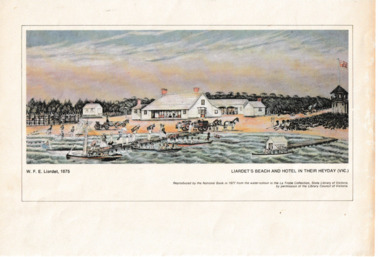
... history of the Liardet family & the Pier Hotel is part of this document. Liardet Family Natural Environment - Beaches and Foreshore Built Environment In 1972 the National Bank used this print of Liardet's Beach and Hotel in their heyday as the illustration for part of their 1978 Calendar. It was taken from a work by the colonial artist W.F.E Liardet and shows his Pier Hotel and the activity at Sandridge Beach when he was a resident of the area in the 1840 ...A short history of the Liardet family & the Pier Hotel is part of this document.In 1972 the National Bank used this print of Liardet's Beach and Hotel in their heyday as the illustration for part of their 1978 Calendar. It was taken from a work by the colonial artist W.F.E Liardet and shows his Pier Hotel and the activity at Sandridge Beach when he was a resident of the area in the 1840's. liardet family, natural environment - beaches and foreshore, built environment -
 National Wool Museum
Tool - Shearing Handpiece, c.1890
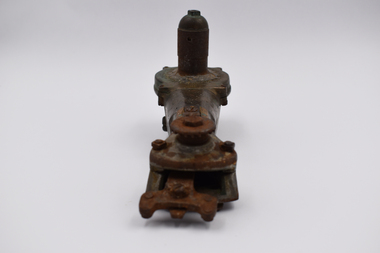
... from ‘Wellington Lodge” in Tailem Bend, South Australia. Wellington Lodge today is an Angus beef farm; however, the property has a long history which includes wool farming. Wellington Lodge has been in the McFarlane family since the 1840...from ‘Wellington Lodge” in Tailem Bend, South Australia. Wellington Lodge today is an Angus beef farm; however, the property has a long history which includes wool farming. Wellington Lodge has been in the McFarlane family since the 1840 ...Ford and McFarlane shearing handpiece c.1890. This shearing handpiece is from ‘Wellington Lodge” in Tailem Bend, South Australia. Wellington Lodge today is an Angus beef farm; however, the property has a long history which includes wool farming. Wellington Lodge has been in the McFarlane family since the 1840’s and was originally around 19000 acres. The donor, Brian Licence, assembled this handpiece out of spare parts he found while classing wool on the property in the 1960s. Brian showed the finished handpiece to the owners once his classing work was completed and was told he could keep the handpiece as a souvenir. Brian also classed wool at “Jockwar” and “Pleasant Park” in Penola for members of the McFarlane family during the 1960s. The handpiece is named after Ford, the name of the engineer who designed the handpiece and McFarlane, the owners of Wellington Lodge Station and employers of Ford. This handpiece was developed as a prototype for use on the property. The handpiece which is made of solid brass is in a “used condition” and has been patched with solder. The handpiece is stamped with the number 10. Internally, the handpiece is powered from a drive mechanism of compressed air, this compressed air was typically produced by burning mutton fat. The handpiece comes from the pre-electrical– steam engine era of shearing. Brass metal shearing handpiece. A three-pronged fitting to hold both the comb and the blade protrudes from one end. A cylindrical stem extends vertically from the other. This is likely where a connecting rod to the shearing plant would be found. Below this vertical stem, the handpiece has an additional threaded hose fitting. This is likely where compressed air was delivered into the handpiece. The inscriptions can be found on the rear, near the previously mentioned vertical stem. Around this stem is also where the repairs of solder can be found. These repairs are unique to this handpiece and are not common practise.Etched. Base of handle. “FORD & McFARLANE . SHEEP SHEARER . Etched. Base of handle. “10”sheep shearing, shearing equipment, ford & mcfarlane, wellington lodge, tailem bend, south australia, shearing handpiece, shearing -
 Stawell Historical Society Inc
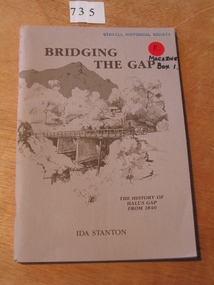
Book, Ida Stanton, Bridging The Gap 1988 -- The History of Halls Gap From 1840 by Ida Stanton, 1988
... from the descendants of Pioneer Families, and Recorded prior to 1940. Rerecorded from old well worn notes, by Grant W Greenwood, Head Teacher 1937-1939. stawell grampians Presented to Stawell Historical Society Ida Stanton May 1989 Fawn cover with drawing of trees and mountain in the background. in the foreground is a bridge over a river, with a woman in a dray. Bridging The Gap 1988 -- The History of Halls Gap From 1840 ...Tales of Hall's Gap in the Grampians, as collected by the Pupils of Hall's Gap Primary School, from the descendants of Pioneer Families, and Recorded prior to 1940. Rerecorded from old well worn notes, by Grant W Greenwood, Head Teacher 1937-1939.Fawn cover with drawing of trees and mountain in the background. in the foreground is a bridge over a river, with a woman in a dray. Presented to Stawell Historical Society Ida Stanton May 1989stawell grampians -
 Stawell Historical Society Inc
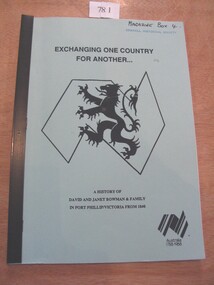
Book, Marie and Graham Moore, Exchanging One Country for Another - A History of David and Janet Bowman & Family in Port Phillip/Victoria from 1840, 1988
... Exchanging One Country for Another - A History of David and Janet Bowman & Family in Port Phillip/Victoria from 1840...A History of David and Janet Bowman & Family in Port Phillip/Victoria from 1840. ...A History of David and Janet Bowman & Family in Port Phillip/Victoria from 1840. ...Published for a reunion of David and Janet Bowman's decendentsPale Blue card cover with black ink title below which is a stylised map of Australia and The Welsh lion Bi-Centential Logo in bottom RightExchanging One Country for Another. A History of David and Janet Bowman & Family in Port Phillip/Victoria from 1840. Australia 1788-1988stawell immigration -
 Tatura Irrigation & Wartime Camps Museum
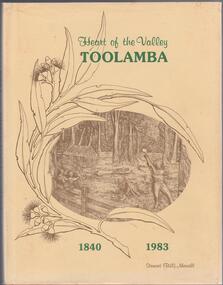
Book, Stewart (Bill)Morvell et al, Heart of the Valley, Toolamba 1840-1983, 1983
... history of Toolamba. From early days of Hume and Hovell, agriculture, schools, churches, sport and recreation. Names on Roll of Teachers and Pupils. toolamba Brown hard cover. Title in gold writing. Cream dust jacket, green writing. Sketch of gum leaves surrounding a scene of bush log hut. Family with man cutting trees. From a wood carving by Nicholas Bartels. 2nd copy. L3458. Heart of the Valley, Toolamba 1840 ...Written to accurately record the history of Toolamba. From early days of Hume and Hovell, agriculture, schools, churches, sport and recreation. Names on Roll of Teachers and Pupils.Brown hard cover. Title in gold writing. Cream dust jacket, green writing. Sketch of gum leaves surrounding a scene of bush log hut. Family with man cutting trees. From a wood carving by Nicholas Bartels. 2nd copy. L3458.toolamba -
Kew Historical Society Inc
Archive (Sub-series) - Subject File, Belford Farm (Kew East), 1958
... history of Kew and its environs, of which this file is an example. Typically files will contain primary and secondary sources. wade family - kew (vic.) farming -- kew (vic) Archive file containing genealogical research material on the Wades of Belford Farm, all photocopied. One item was prepared for a reunion of the descendants of Peter Robert & Mary Ann Mansergh (Blair) and James & Maria Mullins (Dartnell) who arrived in the Colony on the Sailing Ship ‘China’ on 1 May 1840. The item includes lists of passenger names and the names of their descendants. The other item is an inquiry from ...Various partiesReference, Research, InformationKHS OrderSubject file containing genealogical research material on the Wades of Belford Farm, all photocopied. One item was prepared for a reunion of the descendants of Peter Robert & Mary Ann Mansergh (Blair) and James & Maria Mullins (Dartnell) who arrived in the Colony on the Sailing Ship ‘China’ on 1 May 1840. The item includes lists of passenger names and the names of their descendants. The other item is an inquiry from Elvania Balcombe, which includes her own research into the Wade family.wade family - kew (vic.), farming -- kew (vic)wade family - kew (vic.), farming -- kew (vic) -
 Mont De Lancey
Decorative object - Conestoga Wagon, Mr Chas W Davis, Unknown
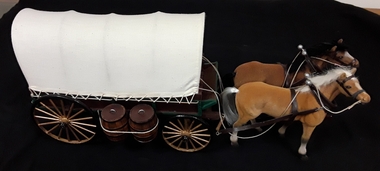
... from all over Western Europe so the old wagon designs were carried to the New World. The wagons were named after a river in Lancaster County Pennsylvania where the Stutz family built them for the western treks of history. Fondly known as the 'Prairie Schooner', the cost in 1840...from all over Western Europe so the old wagon designs were carried to the New World. The wagons were named after a river in Lancaster County Pennsylvania where the Stutz family built them for the western treks of history. Fondly known as the 'Prairie Schooner', the cost in 1840 ...The collection of thirteen model horse drawn vehicles were carefully handmade by Mr Chas W Davis 1925 - 2002. He was a talented artist and saw doctor. This model of a horse drawn Canestoga Wagon replicates the vehicle that enjoyed respect from the public during the 1880's. A model of a long covered Conestoga Wagon with two horses, brown and tan. The cream fabric covers curved shaped metal bands and is laced with string around the base to attach it to the wagon.It has a green base, green wooden seat and footrest. There are two wooden barrels attached by wire on one side and the other side has a luggage box. It has two small gold painted spoked wheels with painted black tyres at the front and two larger ones at the back. The forerunner of the Conestoga Wagon had its origin in Europe as a mobile home for shepherds and nomads in the early 1800's. The east coast of America became home to people from all over Western Europe so the old wagon designs were carried to the New World. The wagons were named after a river in Lancaster County Pennsylvania where the Stutz family built them for the western treks of history. Fondly known as the 'Prairie Schooner', the cost in 1840 was $48.00, unpainted spare wheels $8.00, Lawson axles $12.00. They came in 12 and 14 feet beds.replicas, models, scale models, vehicles, carriages, horse drawn vehicles, toy horses, drays -
Mont De Lancey
Decorative object - Conestoga Wagon, Mr Chas W Davis, Unknown
... from all over Western Europe so the old wagon designs were carried to the New World. The wagons were named after a river in Lancaster County Pennsylvania where the Stutz family built them for the western treks of history. Fondly known as the 'Prairie Schooner', the cost in 1840...from all over Western Europe so the old wagon designs were carried to the New World. The wagons were named after a river in Lancaster County Pennsylvania where the Stutz family built them for the western treks of history. Fondly known as the 'Prairie Schooner', the cost in 1840 ...The collection of thirteen model horse drawn vehicles were carefully handmade by Mr Chas W Davis 1925 - 2002. He was a talented artist and saw doctor. This model of a horse drawn Canestoga Wagon replicates the vehicle that enjoyed respect from the public during the 1880's. A model of a long covered Conestoga Wagon with two horses, brown and tan. The cream fabric covers curved shaped metal bands and is laced with string around the base to attach it to the wagon.It has a green base, green wooden seat and footrest. There are two wooden barrels attached by wire on one side and the other side has a luggage box. It has two small gold painted spoked wheels with painted black tyres at the front and two larger ones at the back. The forerunner of the Conestoga Wagon had its origin in Europe as a mobile home for shepherds and nomads in the early 1800's. The east coast of America became home to people from all over Western Europe so the old wagon designs were carried to the New World. The wagons were named after a river in Lancaster County Pennsylvania where the Stutz family built them for the western treks of history. Fondly known as the 'Prairie Schooner', the cost in 1840 was $48.00, unpainted spare wheels $8.00, Lawson axles $12.00. They came in 12 and 14 feet beds.replicas, models, scale models, vehicles, carriages, horse drawn vehicles, toy horses, drays -
Mont De Lancey
Decorative object - Conestoga Wagon, Mr Chas W Davis, Unknown
... from all over Western Europe so the old wagon designs were carried to the New World. The wagons were named after a river in Lancaster County Pennsylvania where the Stutz family built them for the western treks of history. Fondly known as the 'Prairie Schooner', the cost in 1840...from all over Western Europe so the old wagon designs were carried to the New World. The wagons were named after a river in Lancaster County Pennsylvania where the Stutz family built them for the western treks of history. Fondly known as the 'Prairie Schooner', the cost in 1840 ...The collection of thirteen model horse drawn vehicles were carefully handmade by Mr Chas W Davis 1925 - 2002. He was a talented artist and saw doctor. This model of a horse drawn Canestoga Wagon replicates the vehicle that enjoyed respect from the public during the 1880's. A model of a long covered Conestoga Wagon with two horses, brown and tan. The cream fabric covers curved shaped metal bands and is laced with string around the base to attach it to the wagon.It has a green base, green wooden seat and footrest. There are two wooden barrels attached by wire on one side and the other side has a luggage box. It has two small gold painted spoked wheels with painted black tyres at the front and two larger ones at the back. The forerunner of the Conestoga Wagon had its origin in Europe as a mobile home for shepherds and nomads in the early 1800's. The east coast of America became home to people from all over Western Europe so the old wagon designs were carried to the New World. The wagons were named after a river in Lancaster County Pennsylvania where the Stutz family built them for the western treks of history. Fondly known as the 'Prairie Schooner', the cost in 1840 was $48.00, unpainted spare wheels $8.00, Lawson axles $12.00. They came in 12 and 14 feet beds.replicas, models, scale models, vehicles, carriages, horse drawn vehicles, toy horses, drays -
Mont De Lancey
Decorative object - Conestoga Wagon, Mr Chas W Davis, Unknown
... from all over Western Europe so the old wagon designs were carried to the New World. The wagons were named after a river in Lancaster County Pennsylvania where the Stutz family built them for the western treks of history. Fondly known as the 'Prairie Schooner', the cost in 1840...from all over Western Europe so the old wagon designs were carried to the New World. The wagons were named after a river in Lancaster County Pennsylvania where the Stutz family built them for the western treks of history. Fondly known as the 'Prairie Schooner', the cost in 1840 ...The collection of thirteen model horse drawn vehicles were carefully handmade by Mr Chas W Davis 1925 - 2002. He was a talented artist and saw doctor. This model of a horse drawn Canestoga Wagon replicates the vehicle that enjoyed respect from the public during the 1880's. A model of a long covered Conestoga Wagon with two horses, brown and tan. The cream fabric covers curved shaped metal bands and is laced with string around the base to attach it to the wagon.It has a green base, green wooden seat and footrest. There are two wooden barrels attached by wire on one side and the other side has a luggage box. It has two small gold painted spoked wheels with painted black tyres at the front and two larger ones at the back. The forerunner of the Conestoga Wagon had its origin in Europe as a mobile home for shepherds and nomads in the early 1800's. The east coast of America became home to people from all over Western Europe so the old wagon designs were carried to the New World. The wagons were named after a river in Lancaster County Pennsylvania where the Stutz family built them for the western treks of history. Fondly known as the 'Prairie Schooner', the cost in 1840 was $48.00, unpainted spare wheels $8.00, Lawson axles $12.00. They came in 12 and 14 feet beds.replicas, models, scale models, vehicles, carriages, horse drawn vehicles, toy horses, drays -
 Greensborough Historical Society
Article - Newspaper clipping, Memories so sweet as time goes by, 24/03/1994
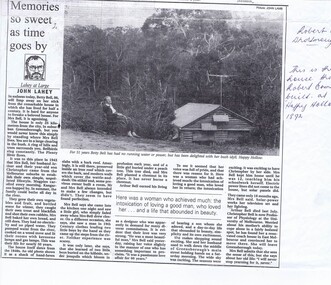
... Newspaper article from 1994 recording the history of the Bell family at Happy Hollow. Happy Hollow was built in the late 1840's about 4 km north of Greensborough on the Plenty River. ...Newspaper article from 1994 recording the history of the Bell family at Happy Hollow.Happy Hollow was built in the late 1840's about 4 km north of Greensborough on the Plenty River. The article informs us that the Bell family moved there in 1943 and lived without power or running water at that site until March 1994 when Betty moved out.A copy of a black and white article from The Age newspaper. Includes text and photograph of Betty Bell at Happy Hollow farm.Biro inscriptions in title and highlighting throuhgout..happy hollow, plenty river, bell family, betty bell, . -
 The Beechworth Burke Museum
Photograph, Walter William McLean Thwaites, c.1870
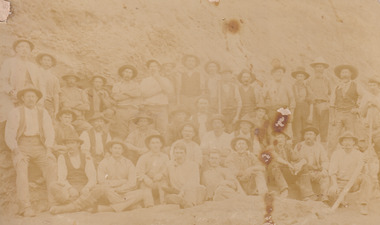
... 1840-1908) was a professional photographer born in Sydney, Australia. He learnt the craft in his father's Hobart studio, but later embarked on his own solo career and toured every existing Australian colony between 1860 to 1888. The Thwaites family were a long line of photographers and artists with Thwaites' father Walter WIlliam Thwaites Sr working as an artist and photographer in Australia after moving from England in 1834. Walter Thwaites Sr's father, also named Walter Thwaites, was a British miniature portrait artist. Images, like this one, of Australian gold rush history ...This photograph depicts a large group of men in their work clothing situated in front of a large bank of earth. They are identified as miners working in an unidentified location in Australia. This photograph was taken by photographer Walter Thwaites sometime during the period of 1865-1908, likely c.1870. It is unsure where this image was taken since Thwaites travelled a lot over his photography career and the photograph is not annotated with this information. In addition, the identities of the men in the photograph are also unknown. These men are photographed in front of a large bank of earth where they had presumably been mining for gold or other precious metals. The men, with the exception of four, are wearing wide brimmed hats to protect their faces from the sun. They are also wearing loose fitting white shirts which are often worn beneath a darker coloured vest. They wear pale coloured work pants and boots. The men are mostly clean shaven with the exception of the moustache and a couple of beards. Two of the men have pipes in their mouth. Their clothing is basic and much less dramatic than the outfits worn by the gold diggers of the 1852 gold rush. These men, by wearing similar outfits, are expressing a sense of comradery or equality between them. It is likely that they are from the same, or similar, social status. They have an air of independence and share social equality in their stance and clothing. Walter William McLean Thwaites (1840-1908) was a professional photographer born in Sydney, Australia. He learnt the craft in his father's Hobart studio, but later embarked on his own solo career and toured every existing Australian colony between 1860 to 1888. The Thwaites family were a long line of photographers and artists with Thwaites' father Walter WIlliam Thwaites Sr working as an artist and photographer in Australia after moving from England in 1834. Walter Thwaites Sr's father, also named Walter Thwaites, was a British miniature portrait artist.Images, like this one, of Australian gold rush history can reveal important information about the social and environmental impact of this period. This image depicts over 30 diggers standing in front of a bank of earth and therefore, this image has the capacity to reveal or support significant information for researchers studying the fashion and social status of diggers in Australia in approximately 1870. It can also provide information on the landscape of Australia in this period and the impact of mining for gold on both society and the Australian landscape. The Burke Museum is home to a substantial collection of Australian mining photographs which can be used to gain a deeper understanding into life on the gold fields, technology used in mining, the miners themselves and the impact of the gold digging on the environment.Sepia toned rectangular photograph printed on matte photographic paper and mounted on board.Reverse: 1997.208 / MINERS. / W. Thwaites / Photography /australia, australian photography, photography, miners, gold rush, australian landscape, diggers, walter thwaites, thwaites photography, w. thwaites photography, social history
