
Showing 264 items matching "farm view"
-
 University of Melbourne, Burnley Campus Archives
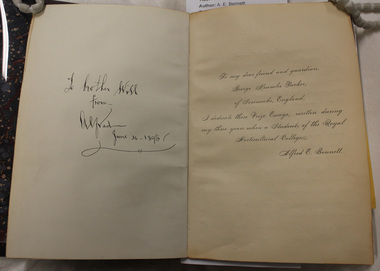
Photograph - Black and white prints and negatives, A.E. Bennett, A.E. Bennett Prize Essays, 1893-1894
... ...farm view...(v) Pioneer timber cottage man and children. (vi) Farm view. (vii) "School of Mines Maryborough. ...(v) Pioneer timber cottage man and children. (vi) Farm view. (vii) "School of Mines Maryborough. ...Alfred E. Bennett was one of the first students to graduate with a Diploma. He wrote the book after he graduated in 1894. (1) Photographs of photographs, etc. in A.E. Bennett book, "Prize Essays." (i) Acknowledgement for photographs. (ii) p. 101 Appendix. (iii) Diseases of. (iv) Apples. (v) Pioneer timber cottage man and children. (vi) Farm view. (vii) "School of Mines Maryborough. (viii) Group Staff and Students. (ix) "Railway Station Maryborough." (x) "High Street Maryborough." (xi) Maryborough. (xii) Church, Maryborough. (xiii) Maryborough? (xiv) Students and staff seated on horse-drawn cart. (xv, xvi) Distillery equipment. (2) 2 sets of proofs of all photographs in the book. (3) Negatives. Probably taken by A.P. Winzenried for "Green Grows Our Garden." (GGOG). Images used for Media are from B25.0005 as they are the complete collection. Photographs used in GGOG: 26. p9, 11. p10, 25. p12, 5. p22, 19. p29, 15. p32, 27. p 21. The original book is stored with the Burnley Rare Book Collection at the Baillieu Librarya.e. bennett, prize essay, diseases, apples, timber cottage, farm view, school of mines, maryborough, staff, students, railway station, maryborough, church, horse-drawn cart, distillery equipment, a.p. winzenried, green grows our garden, students working outside, orchard, spraying equipment, pruning, planting, orchard gates, entrance gates, neilsons cottage, principal's residence, horticultural board of advice, pavilion, wheelbarrows, californian redwood, sequoia sempervirens, excursion -
 Phillip Island and District Historical Society Inc.
Photograph
... ...farm machinery...view...Jack Jenner (1977) local history photography photographs slides film rural industry farm machinery view cowes black & white photograph jack jenner farm dray mcillwraith family phillip island Labelled: Original Farm Dray in which McIlwraith Family came to Phillip Island in January 1869. ...Part of collection of Photographs donated to the Museum by the family of the late Mr. Jack Jenner (1977)Black & White Photograph of an Original Farm DrayLabelled: Original Farm Dray in which McIlwraith Family came to Phillip Island in January 1869.local history, photography, photographs, slides, film rural industry, farm machinery, view cowes, black & white photograph, jack jenner, farm dray, mcillwraith family, phillip island -
 Narre Warren and District Family History Group
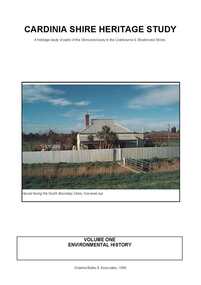
Book, Graeme Butler & Associates, Cardinia Shire Heritage Study : a heritage study of parts of the Shire previously in the Cranbourne & Sherbrooke Shires. Vol 1 : Key Findings and Recommendations Vol 2 : Heritage Place and Precinct Citations, 1998
... Farm Complex...Emerald Lake Park...The Grange (Koo Wee Rup)...Glen Afton (Yannathan)...Myrtlewood (Yannathan)...Vay View...Cardinia Shire (Vic.) heritage studies Tivoli Berry Farm (Clematis) Carramar (Emerald) Nobelius Heritage Park Dalmore Public Hall Horace Hardy Farm Complex Emerald Lake Park The Grange (Koo Wee Rup) Glen Afton (Yannathan) Myrtlewood (Yannathan) Vay View Farm (Lang Lang) Emerald Railway Station Timber Bridges (Yallock Creek) Emerald County Clud Oak Lee (Emerald) Sycamore Lodge (Emerald) Cambden Wollybutt Row (Emerald) Silver Birches (Emerald) Lang Lang Cemetery Old Monomeith Homestead sites Monomeith Park (Monomeith) Dustings Garage (Koo Wee Rup) Koo Wee Rup Public Hall Koo Wee Rup Lockup Wattle Theatre (Koo Wee Rup) Harewood (Koo Wee Rup) Warook Homestead (Monomeith) Old Yallock St John's Roman Catholic Church (Koo Wee Rup) Royal Hotel (Koo Wee Rup) Budgeree (Yannathan) Cascades Guest House (Clematis) Rutter Farm (Tooradin) Koo Wee Rup Swamp Drains Upper Ferntree Gully to Gembrook Railway Great Southern Railway Misson's Butchers Shop & Residence (Lang Lang) English Scottish & Australian Bank (Lang Lang) Clematis Park Row Houses (Lang Lang) This Environmental History of the Cardinia Shire incorporates the Environmental History of the former Shire of Pakenham, compiled by Carlotta Kellaway for Graeme Butler & Associates and the Environmental History of those areas of the Shire formerly in the Shires of Cranbourne and Sherbrooke, compiled by Jill Barnard for Graeme Butler and Associates. ...This Environmental History of the Cardinia Shire incorporates the Environmental History of the former Shire of Pakenham, compiled by Carlotta Kellaway for Graeme Butler & Associates and the Environmental History of those areas of the Shire formerly in the Shires of Cranbourne and Sherbrooke, compiled by Jill Barnard for Graeme Butler and Associates. An environmental history, which is meant as a guide to the identification of sites of significance within a shire, cannot be a complete social history of that shire. Rather, it is meant to be a summary of the various ways in which people have used and reacted to the natural environment, altering it so as to create economic, social, cultural and educational uses for themselves and their neighbours. [from the introduction]non-fictionThis Environmental History of the Cardinia Shire incorporates the Environmental History of the former Shire of Pakenham, compiled by Carlotta Kellaway for Graeme Butler & Associates and the Environmental History of those areas of the Shire formerly in the Shires of Cranbourne and Sherbrooke, compiled by Jill Barnard for Graeme Butler and Associates. An environmental history, which is meant as a guide to the identification of sites of significance within a shire, cannot be a complete social history of that shire. Rather, it is meant to be a summary of the various ways in which people have used and reacted to the natural environment, altering it so as to create economic, social, cultural and educational uses for themselves and their neighbours. [from the introduction] cardinia shire (vic.), heritage studies, tivoli berry farm (clematis), carramar (emerald), nobelius heritage park, dalmore public hall, horace hardy farm complex, emerald lake park, the grange (koo wee rup), glen afton (yannathan), myrtlewood (yannathan), vay view farm (lang lang), emerald railway station, timber bridges (yallock creek), emerald county clud, oak lee (emerald), sycamore lodge (emerald), cambden wollybutt row (emerald), silver birches (emerald), lang lang cemetery, old monomeith homestead sites, monomeith park (monomeith), dustings garage (koo wee rup), koo wee rup public hall, koo wee rup lockup, wattle theatre (koo wee rup), harewood (koo wee rup), warook homestead (monomeith), old yallock, st john's roman catholic church (koo wee rup), royal hotel (koo wee rup), budgeree (yannathan), cascades guest house (clematis), rutter farm (tooradin), koo wee rup swamp drains, upper ferntree gully to gembrook railway, great southern railway, misson's butchers shop & residence (lang lang), english scottish & australian bank (lang lang), clematis park, row houses (lang lang) -
 Peterborough History Group
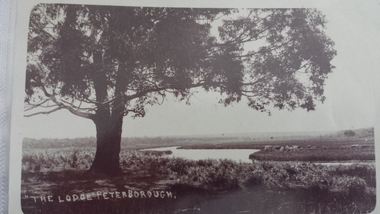
Postcard - The Lodge Postcard
... farm...curdies river - view...Historic and social significance james irivine the lodge farm curdies river - view curdies river peterborough curdies river vintage postcards Hand written letter on the back "To Cora, from Auntie May" Postcards depicting the Curdies River at The Lodge. ...Historic picture of the Curdies River, with reference to the farm known as The Lodge. the Lodge is also the name given to the good fishing spot on the banks of the Curdies which is accessed by a track through farmland.Historic and social significancePostcards depicting the Curdies River at The Lodge.Hand written letter on the back "To Cora, from Auntie May"james irivine, the lodge farm, curdies river - view, curdies river peterborough, curdies river, vintage postcards -
 Bendigo Historical Society Inc.
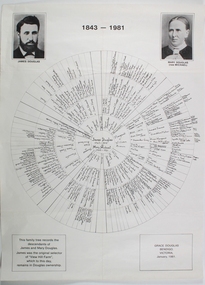
Document - DOUGLAS FAMILY TREE 1843 - 1981, 1843 - 1981
... They settled at View Hill farm in Woodstock West where they had the following family:- ...James was the original selector of View Hill Farm which remains in Douglas ownership. ...James was the original selector of View Hill Farm which remains in Douglas ownership. ...James Crawford Douglas was born in Ireland in 1842. He came to Australia in 1864 and married Mary Michael (1849-1921) in 1868. They settled at View Hill farm in Woodstock West where they had the following family:- Family tree records descendants of James and Mary Douglas. James was the original selector of View Hill Farm which remains in Douglas ownership. Refer to book 5086 in Library Box 5 'Douglas: A Family History 1845 - 1981'bendigo, history, pioneers -
Port Melbourne Historical & Preservation Society
Photograph - COR/BP tank farm clean-up, Alison Kelly, Aug 1990
... Four colour photos of bulldozer working on clean up process on site of former COR/BP tank farm - view to south. Archivally mounted on vertical strip of white card and enclosed in mylar. ...Kelly 645 2324' Four colour photos of bulldozer working on clean up process on site of former COR/BP tank farm - view to south. Archivally mounted on vertical strip of white card and enclosed in mylar. ...Shot when Alision Kelly was caretaker at the nearby 'Mission Art Centre' and displayed there and at the Port Melbourne LibraryFour colour photos of bulldozer working on clean up process on site of former COR/BP tank farm - view to south. Archivally mounted on vertical strip of white card and enclosed in mylar. Photos all looking south; views of equipment scooping out hydro-carbons, soil from pit filled with ground water; top to bottom: Williamstown and Webb Dock in background; white Toyota EAY-921 right foreground; close up; close up; Princes Pier in left backgroundInk on back: 'A. Kelly 645 2324'town planning - proposals shelved - bayside, environment, alison kelly -
 Ballarat Heritage Services
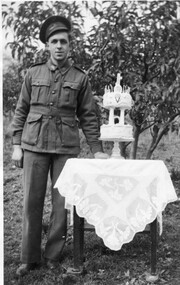
Photograph - Photograph - Black and White, Vince Gervasoni and his 21st birthday cake
... The photograph was taken in the back yard of his famile's Yandoit Creek farm 'Pine View'. ...The photograph was taken in the back yard of his famile's Yandoit Creek farm 'Pine View'. Vince Gervasoni and his 21st birthday cake Photograph Photograph - Black and White ...Vince was the youngest son of John and Catherine Gervasoni, and the grandson of Luigi Gervasoni. Black and white photograph of Vince Gervasoni in World War 2 AIF uniform, standing next to his 2 tier 21st birthday cake. The photograph was taken in the back yard of his famile's Yandoit Creek farm 'Pine View'. yandoit creek, vince gervasoni, birthday cake, world war 2 -
 Greensborough Historical Society
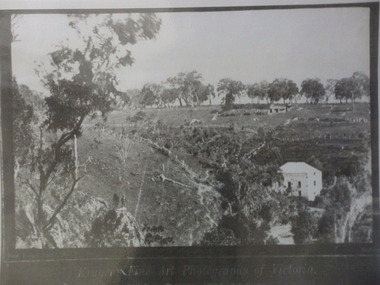
Photograph (copy), Fred Kruger, On the Plenty River near Bundoora / photograph by Fred Kruger, 1877c
... View of farm land and mill on the Plenty River near Bundoora, circa 1877; photograph by Fred Kruger. ...View of farm land and mill on the Plenty River near Bundoora, circa 1877; photograph by Fred Kruger. ...View of farm land and mill on the Plenty River near Bundoora, circa 1877; photograph by Fred Kruger. Original held at SLV (accession # H473 and Image # a53840)Black and white photograph, enlarged and laminated.fred kruger, plenty river -
 Eltham District Historical Society Inc
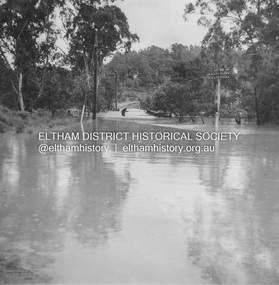
Album - Photograph, J.A. McDonald, Eltham-Diamond Creek Road, 21 Oct. 1953
... view is Mrs Lucy Egan's home. That house still stands today nestled up against the Wattletree Road Bridge on the other side built in 1959 and is owned by the Bakos family purchased by Mrs Heather Bakos in 1960.. Prior to the Wattletree Road bridge being built, Railway Parade extended up the alignment of present-day Gastons Road to the Eltham-Diamond Creek road which ran past the entrance of the present-day carpark for Edendale Farm. ...view is Mrs Lucy Egan's home. That house still stands today nestled up against the Wattletree Road Bridge on the other side built in 1959 and is owned by the Bakos family purchased by Mrs Heather Bakos in 1960.. Prior to the Wattletree Road bridge being built, Railway Parade extended up the alignment of present-day Gastons Road to the Eltham-Diamond Creek road which ran past the entrance of the present-day carpark for Edendale Farm. ...18 October 1956 Flood level on road at corner of Railway Parade. On the immediate left out of view is Mrs Lucy Egan's home. That house still stands today nestled up against the Wattletree Road Bridge on the other side built in 1959 and is owned by the Bakos family purchased by Mrs Heather Bakos in 1960.. Prior to the Wattletree Road bridge being built, Railway Parade extended up the alignment of present-day Gastons Road to the Eltham-Diamond Creek road which ran past the entrance of the present-day carpark for Edendale Farm. This view is looking west across the Glen Park Bridge, and the beginning of Wattletree Road which sweeps around to the right in the distance. Progress Road does not exist though a road reserve is present on maps.Record of various Shire of Eltham infrastructure works undertaken during the period of 1952-1962 involving bridge and road reconstruction projects, sometimes with Eltham Shire Council Project Reference numbers quoted. It was during this period that a number of significant improvements were made to roads and new bridges constructed within the shire that remain in place as of present day (2022). In many situations, the photos provide a tangible visible record of infrastructure that existed throughout the early days of the Shire. The album was put together by or under the direction of the Shire Engineer, J.A. McDonald.infrastructure, road construction, shire of eltham, bridge construction, eltham north, floods, floodwater, glen park bridge, 1956-10-18, diamond creek (creek), eltham, railway parade, wattletree road, wattletree road bridge, gastons road -
 Bacchus Marsh & District Historical Society
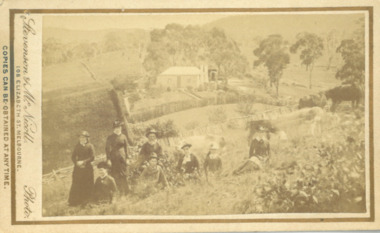
Photograph, Cameron family at Glen Head property near Bacchus Marsh 1883
... After working as a shepherd for sometime Malcolm Cameron was able to acquire land for a farm a few kilometers north west of Bacchus Marsh. The farm was called Glen View but this was later changed to Grand View. ...After working as a shepherd for sometime Malcolm Cameron was able to acquire land for a farm a few kilometers north west of Bacchus Marsh. The farm was called Glen View but this was later changed to Grand View. ...Malcolm Cameron, came from Scotland to Australia with his wife in 1862. From late 1862 they lived in Bacchus Marsh and remained there for the rest of their lives. After working as a shepherd for sometime Malcolm Cameron was able to acquire land for a farm a few kilometers north west of Bacchus Marsh. The farm was called Glen View but this was later changed to Grand View. It is known to have been a wheat farm, Malcolm Cameron died aged 89 in 1922. His wife died in 1926. Small sepia unframed photograph on card with gold border framing photograph. Housed in the album, 'Photographs of Bacchus Marsh and District in 1883 by Stevenson and McNicoll'. The image shows a family group, the Cameron family of Bacchus Marsh, standing and sitting in a paddock on their farm. Cows graze in the paddock nearby. In the background, in the distance, can be seen the Cameron family home.On the front: Stevenson & McNicoll. Photo. 108 Elizabeth St. Melbourne. COPIES CAN BE OBTAINED AT ANY TIME. On the back: LIGHT & TRUTH inscribed on a banner surmounted by a representation of the rising sun. Copies of this Portrait can be had at any time by sending the Name and Post Office Money Order or Stamps for the amount of order to STEVENSON & McNICOLL LATE BENSON & STEVENSON, Photographers. 108 Elizabeth Street, MELBOURNE. stevenson and mcnicoll 1883 photographs of bacchus marsh and district, farmers, farms, wheat farms, cameron family bacchus marsh -
 Bacchus Marsh & District Historical Society
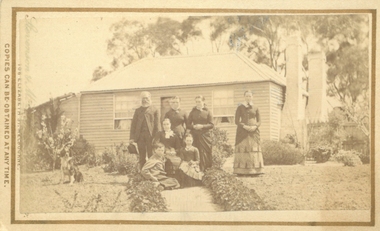
Photograph, Cameron family at Glen Head farm house near Bacchus Marsh 1883
... After working as a shepherd for some time, Malcolm Cameron was able to acquire land for a farm a few kilometres north west of Bacchus Marsh. The farm was called Glen View but this was later changed to Grand View. ...After working as a shepherd for some time, Malcolm Cameron was able to acquire land for a farm a few kilometres north west of Bacchus Marsh. The farm was called Glen View but this was later changed to Grand View. ...Malcolm Cameron, came from Scotland to Australia with his wife Isabella in 1862. From late 1862 they lived in Bacchus Marsh and remained there for the rest of their lives. After working as a shepherd for some time, Malcolm Cameron was able to acquire land for a farm a few kilometres north west of Bacchus Marsh. The farm was called Glen View but this was later changed to Grand View. It is known to have been a wheat farm. Malcolm Cameron died aged 89 in 1922. His wife died in 1926. Mrs Cameron is presumed to be the woman seated in the photograph and the younger people the Cameron children, Catherine (b.1863), Marion (b.1864)), Mary (b.1867), John (b.1870) and Isabella (b.1872). Small sepia unframed photograph on card with gold border framing photograph. Housed in the album, 'Photographs of Bacchus Marsh and District in 1883 by Stevenson and McNicoll'. The image shows a family group, the Cameron family of Bacchus Marsh, standing and sitting in the garden in front of their farm house. The group comprises four women, a girl, a boy and an elderly man, who is presumed to be Malcolm Cameron. The woman seated in the middle of the group is likely to be Mrs.Cameron. To the left in the picture is a dog. In the background is the weatherboard farm house, a simple construction with two large chimneys and a skillion extension.On the front: Stevenson & McNicoll. Photo. 108 Elizabeth St. Melbourne. COPIES CAN BE OBTAINED AT ANY TIME. On the back: LIGHT & TRUTH inscribed on a banner surmounted by a representation of the rising sun. Copies of this Portrait can be had at any time by sending the Name and Post Office Money Order or Stamps for the amount of order to STEVENSON & McNICOLL LATE BENSON & STEVENSON, Photographers. 108 Elizabeth Street, MELBOURNE. stevenson and mcnicoll 1883 photographs of bacchus marsh and district, farmers, farms, wheat farms, cameron family bacchus marsh -
 Kiewa Valley Historical Society
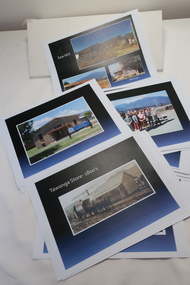
Coloured photographs on paper - Back to Tawonga 2010
... Harry Cooper's Farm Looking South 25.View from Edmondson's Farm - looking north 26. ...Harry Cooper's Farm Looking South 25.View from Edmondson's Farm - looking north 26. ...These photos were collected and copied by Di Edmondson for the 'Back To Tawonga' Event in 2010 when she launched her book "Tawonga Remembers".An historical photographic collection of Tawonga and its surrounds, places and people up to 20101. Saw Mill - Mill house 2. The Rock Pool 3. People at the Rock Pool x 2 4.Old Saw mill 5. Back to Tawonga Celebrations x6 6. Tennis Curts opposite the Tawonga Store, Bakery in the background 7. Bowling Club 8. Old Guide Hall 9. The Old Boarding House 10. Old Fire Brigade Shed 11. Building the New Tawonga Memorial Hall 12. Tawonga Go Kart Track - 1960s 13. Tawonga Pony Club 1969 State Championships 14. Tawonga Recreation Reserve Newspaper article 15. The Damm Children 19. 1980s Brian Edmondson, Geoff Edmondson, Mick Harvey, David Piera. Geoff Edmondson's car 20. Tawonga Speedway Track - 1970s Mick Harvey and Paul Harkin's car 21. 2000 22. Tawonga Sports Vera Ryder and Allie Briggs 23. Tawonga School Photos x8 24. Harry Cooper's Farm Looking South 25.View from Edmondson's Farm - looking north 26. Mount Emu 27. St Aiden's Debutante Ball 27. Grand Opening Ball 1961 Tawonga Hall 28. The Kiewa Valley Road at Tawonga. Vic. 29. Tennis Courts opposite the Bogong Hotel 30.Opening of the new Toilet Block in Pioneer park 31. Old Tawonga Store x 3 32. Tawonga Memorial Hall 33. Anglican Church, St Aiden's x 2 34. Motor Khana held at Recreation reserve 35. 1970 State Champioships Team 36. Kiewa Valley School Sports at Dederang 37. Miscellaneous photos x27 Some photos have headings and some headings have been writtentawonga remembers, back to tawonga 2010, di edmondson -
 Eltham District Historical Society Inc
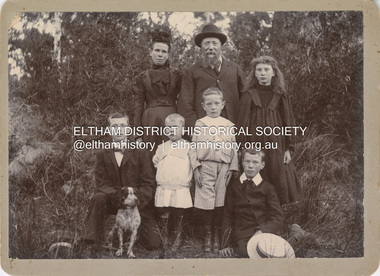
Photograph, Nicholes Photographers, Bird family, c.1905
... Around 1880 or possibly earlier he acquired the property known as View Hill at the top of Pitt Street, Eltham between Pitt Street and Mount Pleasant Road and what is now Eucalyptus Road. George and Janet developed an orchard and farm around the View Hill home and had 10 children, three of whom died young. ...Around 1880 or possibly earlier he acquired the property known as View Hill at the top of Pitt Street, Eltham between Pitt Street and Mount Pleasant Road and what is now Eucalyptus Road. George and Janet developed an orchard and farm around the View Hill home and had 10 children, three of whom died young. ...Bird family, c.1905 Back row, L-R: Janet Bird (nee Kilpatrick), George Bird, Ellen May (Nell) Bird Front row L-R: George Hugh Bird, Ernest Reginald Bird, Arthur Andrew Bird, Edwin John Bird Nicholes Photographer, Alphington According to the Sands McDougall Melbourne Directory, George. Nicholes, Photographer was first listed on the north side of Heidelberg Road, Alphington in 1904 and again in 1905. By 1906 he was still listed but with no profession. From 1907 on he was listed as a bicycle agent. On July 23, 1878, George Bird married Janet Kilpatrick (born Ayrshire) at Northcote by Presbyterian minister, Duncan Fraser. The witnesses were daughters of the minister. George gave his profession as farmer. Around 1880 or possibly earlier he acquired the property known as View Hill at the top of Pitt Street, Eltham between Pitt Street and Mount Pleasant Road and what is now Eucalyptus Road. George and Janet developed an orchard and farm around the View Hill home and had 10 children, three of whom died young. George Bird is listed in the 1977 history of the Eltham Methodist Church as Steward and trustee in the early years. In the 1950 history he is mentioned as Sunday School Superintendent. In the early 1900s, Janet regularly went to the church by horse and jinker. Janet died September 2, 1915, age 60 of endocarditis and bronchial pneumonia. At about this time, three children had married (Sarah, George and Ada) and four were living at home. However, Edwin joined the AIF in August 1915 and Ellen married in 1916 leaving two sons, Arthur and Reg, to look after their father and the property although some of the married children may have lived at View Hill for some time. From Edwin's letters, Hilda Pepper, a cousin on their mother's side) stayed with the family for some time to help. In later years, George developed glaucoma and became blind. He died December 6, 1920, aged 75 years, of diabetes mellites. Both Janet and George are buried at Eltham Cemetery, but the gravestone incorrectly gives 1921 for the death of George. The estate was divided into equal portions and distributed to the surviving members with Arthur and Ted Pepper being Executors. Ada Janet Lowe received a portion above what is now Rockliffe Street and Sis Pepper (Sarah Ann nee Bird) the portion below Rockliffe Street. Ernest Pepper built in the 1930s on the Pepper block at the Pitt Street end. George's share was along Wattle Grove and Arthur received the portion at the eastern end. Presumably the other two received portions including the top of the hill and slopes down to Pitt Street, Mount Pleasant Road and Wattle Grove. Read's (at the corner of Pitt Street and View Hill Crescent) was the first additional house brought in on wheels by a Mr Walkenden. The View Hill house was occupied by the Johanssons in the 1930s and was later damaged by fire. Source: Info provided to Marg Ball by Neil and Lyn Pepper (both deceased) abt. 2018. PANEL 1875-1920 Panels began to be produced around 1875, and were particularly suited, because of their larger size, for capturing family, or even larger, groups. They measured 8.5 by 6.5 inches (22 cm x 16.5 cm). - Frost, Lenore; Dating Family Photos 1850-1920; Valiant Press Pty. Ltd., Berwick, Victoria 1991marg ball collection, 1905, arthur andrew bird, bird family, edwin john bird, ellen may (nell) bird, ernest reginald bird, george bird (1845-1921), george hugh bird, janet bird (nee kilpatrick), nicholes photographer alphington, straw boater -
 Federation University Historical Collection
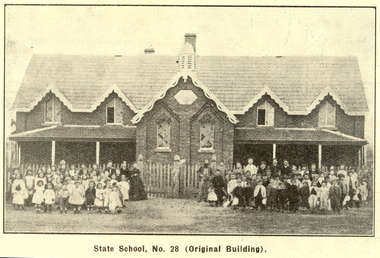
Booklet, Back to Bacchus Marsh, 1930, 1930
... Contents include Bacchus Marsh and its soldiers, Red Cross, Lerderderg Gorge, Werribee Gorge, Lerderderg Park, Coimadai, Darely Firebrick Co., Myrniong, Underbank, Balliang, Rowsley, Parwan, schoosl, churches, Shire Council, Federal Milk Pty Ltd, Bacchus Marsh Milk, Old Maddingley Bridge Images include: * Bacchus Marsh looking east, 1930 * Bacchus Marsh Looking West, 1872 * Bacchus Marsh Looking West, 1930 * Aerial View of Bacchus Marsh Township looking east * Aerial View of Bacchus Marsh Township looking south * Bacchus Marsh Agricultural Society & Pastoral Society, 1893 (named), * Original Bacchus Marsh State School No 28 * Holy Trinity Bacchus Marsh * Bacchus Marsh Baptist Church * St Bernard's Catholic Church * Bacchus Marsh Methodist Church * St Andrew's Presbyterian Church Bacchus Marsh * View of Maddingley Park, showing Original Courthouse, 1890 * Werribee Gorge * Underbank Stud Farm * Ballarat State School Number 28. ...Contents include Bacchus Marsh and its soldiers, Red Cross, Lerderderg Gorge, Werribee Gorge, Lerderderg Park, Coimadai, Darely Firebrick Co., Myrniong, Underbank, Balliang, Rowsley, Parwan, schoosl, churches, Shire Council, Federal Milk Pty Ltd, Bacchus Marsh Milk, Old Maddingley Bridge Images include: * Bacchus Marsh looking east, 1930 * Bacchus Marsh Looking West, 1872 * Bacchus Marsh Looking West, 1930 * Aerial View of Bacchus Marsh Township looking east * Aerial View of Bacchus Marsh Township looking south * Bacchus Marsh Agricultural Society & Pastoral Society, 1893 (named), * Original Bacchus Marsh State School No 28 * Holy Trinity Bacchus Marsh * Bacchus Marsh Baptist Church * St Bernard's Catholic Church * Bacchus Marsh Methodist Church * St Andrew's Presbyterian Church Bacchus Marsh * View of Maddingley Park, showing Original Courthouse, 1890 * Werribee Gorge * Underbank Stud Farm * Ballarat State School Number 28. ...The 1930 Back to Bacchus Marsh celebrations were held on 23 to 28 October 1930. The committee were Cr L.M. Gugdale (president), A.W. Bond (General secretary), W. Grant Morton, J.G. Wells, Dr E. McDonald, Charles Dickie, G.H. Anderson, F.M. Crisp, W.R. Vigor. Bacchus Marsh State School No. 28 was established in 1851 as a National School in a rented building on the right-hand side of Bacchus Marsh-Melbourne Road, just beyond Woolpack Inn. Several willow trees mark the site. H.G. Ball was the first Head Teacher of the school, and the enrolmen towas 34. In 1854 Governor Charles Hotham visited the school. In 1855 two new schools, East and West, were recommended. School No. 28 closed in 1862 and the sitre was sold. The present school site was purchased in 1865 for 67 pounds. The cost of the building was 782 pounds. (Visions and Realisations, Vol 3., 1973) A clock purchased by public subscription was placed in the front of the building to the memory of scholars who served during World War One. (Back to Bacchus Marsh, 1930)Brown covered book of 44 pages. Contents include Bacchus Marsh and its soldiers, Red Cross, Lerderderg Gorge, Werribee Gorge, Lerderderg Park, Coimadai, Darely Firebrick Co., Myrniong, Underbank, Balliang, Rowsley, Parwan, schoosl, churches, Shire Council, Federal Milk Pty Ltd, Bacchus Marsh Milk, Old Maddingley Bridge Images include: * Bacchus Marsh looking east, 1930 * Bacchus Marsh Looking West, 1872 * Bacchus Marsh Looking West, 1930 * Aerial View of Bacchus Marsh Township looking east * Aerial View of Bacchus Marsh Township looking south * Bacchus Marsh Agricultural Society & Pastoral Society, 1893 (named), * Original Bacchus Marsh State School No 28 * Holy Trinity Bacchus Marsh * Bacchus Marsh Baptist Church * St Bernard's Catholic Church * Bacchus Marsh Methodist Church * St Andrew's Presbyterian Church Bacchus Marsh * View of Maddingley Park, showing Original Courthouse, 1890 * Werribee Gorge * Underbank Stud Farm * Ballarat State School Number 28. Signed 'C. Hodgson'bacchus marsh, maddingley, maddingley park, underbank, lerderderg park, coimadai, darely firebrick co., myrniong, balliang, rowsley, parwan, schoosl, churches, shire council, federal milk pty ltd, bacchus marsh milk, old maddingley bridge, police, police paddock, maddingley gates, crisp, mccormack, cain, harkness, howe, bence, mcdonald, mcfarlane, cosgrave, flagg, burnip, scott, lodge, cameron, vallance, bacchus marsh state school, bacchus marsh state school no 28., geology, r.w. thompson, lederderg gorge, weribee gorge, comadai, darley firebrick company -
 Federation University Historical Collection
Photograph - Lantern Slides, Boxed Lantern Slides, c1920
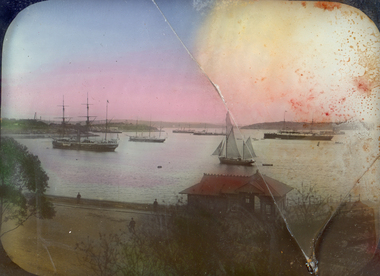
... The box contains 50 lantern slides including: * male Turk in turbin *interior of a cathedral * Cavalry Scene, Boer War (c1900) * Richard Seddon portrait * Fishermen at Sea * Turkish domed building * Eddystone Lighthouse, England * image of early printing * Cloister Court, Trinity College, Cambridge * Farm Cove, Sydney Harbour (by I.F.E) * National Park, Sydney * Customs House, Sydney * View from the Dome of St Peter's, Rome (Pre 1929) * Botanical Gardens, Sydney * Coogee Bay, NSW * Keeble College Chapel, Oxford * Holy Land - The Village of Endor * Sydney Cove * Interior portrait of members of the Victorian Legislative Assembly, Parliament House, Melbourne * Palace Dela Concord, Italy...The box contains 50 lantern slides including: * male Turk in turbin *interior of a cathedral * Cavalry Scene, Boer War (c1900) * Richard Seddon portrait * Fishermen at Sea * Turkish domed building * Eddystone Lighthouse, England * image of early printing * Cloister Court, Trinity College, Cambridge * Farm Cove, Sydney Harbour (by I.F.E) * National Park, Sydney * Customs House, Sydney * View from the Dome of St Peter's, Rome (Pre 1929) * Botanical Gardens, Sydney * Coogee Bay, NSW * Keeble College Chapel, Oxford * Holy Land - The Village of Endor * Sydney Cove * Interior portrait of members of the Victorian Legislative Assembly, Parliament House, Melbourne * Palace Dela Concord, Italy Boxed Lantern Slides Photograph Lantern Slides ...The lantern slides were most probably used at the Ballarat School of Mines. The image of Rome from St Peter's (Vatican) was taken before 1929. The "Via Conciliazione", built by Mussolini in 1929 is not present in the image. Hinged timber box designed to hold glass lantern slides. The box contains 50 lantern slides including: * male Turk in turbin *interior of a cathedral * Cavalry Scene, Boer War (c1900) * Richard Seddon portrait * Fishermen at Sea * Turkish domed building * Eddystone Lighthouse, England * image of early printing * Cloister Court, Trinity College, Cambridge * Farm Cove, Sydney Harbour (by I.F.E) * National Park, Sydney * Customs House, Sydney * View from the Dome of St Peter's, Rome (Pre 1929) * Botanical Gardens, Sydney * Coogee Bay, NSW * Keeble College Chapel, Oxford * Holy Land - The Village of Endor * Sydney Cove * Interior portrait of members of the Victorian Legislative Assembly, Parliament House, Melbourne * Palace Dela Concord, Italylantern slides, entertainment, ballarat school of mines, boer war, richard seddon, sydney harbour, coogee beach, legislative assembly, rome, roma, vatican, vaticono, fairyland, lake wendouree, glass slide, lantern slide -
 Marysville & District Historical Society
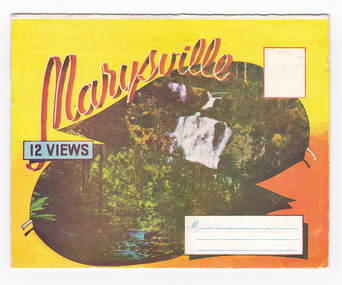
Postcard (item) - Colour photographs, Murray Views, Marysville 12 Views, 1950's
... VIEWS./ GYMPIE./ Q COPYRIGHT SAMUEL LEE & CO., PRINTERS. STEAVENSON'S FALLS, MARYSVILLE, VIC. TOURISTS AT MARYSVILLE, VIC. "FRUIT SALAD FARM...These photographs were produced by Murray Views in Gympie, Queensland as a souvenir of Marysville. steavenson falls (image 1) tourists in marysville (image 2) taggerty river (image 3) fruit salad farm (image 4) main street marysville (image 5) road scene marysville (image 6) the crossways (image 7) cumberland valley (image 8) black spur (image 9) nicholl's lookout (image 10) tree ferns (image 11) bridge (image 12) marysville victoria postcard souvenir murray views Marysville/ 12 VIEWS PRODUCED BY MURRAY VIEWS./ GYMPIE./ Q COPYRIGHT SAMUEL LEE & CO., PRINTERS. ...A fold out postcard of 12 colour photographs of scenes and landscapes in and around Marysville in Victoria.A fold out postcard 12 colour photographs of scenes and landscapes in and around Marysville in Victoria. These photographs were produced by Murray Views in Gympie, Queensland as a souvenir of Marysville.Marysville/ 12 VIEWS PRODUCED BY MURRAY VIEWS./ GYMPIE./ Q COPYRIGHT SAMUEL LEE & CO., PRINTERS. STEAVENSON'S FALLS, MARYSVILLE, VIC. TOURISTS AT MARYSVILLE, VIC. "FRUIT SALAD FARM", MARYSVILLE MAIN STREET, MARYSVILLE, VIC. ROAD SCENE, MARYSVILLE, VIC. THE CROSSWAYS, MARYSVILLE, VIC ROAD TO CUMBERLAND VALLEY, MARYSVILLE PANORAMA FROM BLACK SPUR, MARYSVILLE ROAD, MARYSVILLE, VIC. NICHOLL'S LOOKOUT, MARYSVILLE, VIC. TREE FERNS, MARYSVILLE, VIC. THE BRIDGE, MARYSVILLE, VIC.steavenson falls (image 1), tourists in marysville (image 2), taggerty river (image 3), fruit salad farm (image 4), main street marysville (image 5), road scene marysville (image 6), the crossways (image 7), cumberland valley (image 8), black spur (image 9), nicholl's lookout (image 10), tree ferns (image 11), bridge (image 12), marysville, victoria, postcard, souvenir, murray views -
 Marysville & District Historical Society
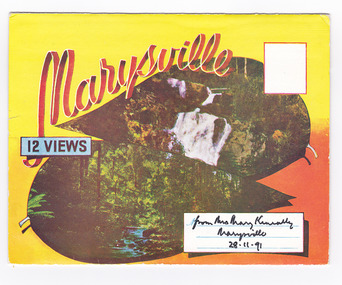
Postcard (item) - Colour photographs, Murray Views, Marysville 12 Views, 1950's
... VIEWS./ GYMPIE./ Q COPYRIGHT SAMUEL LEE & CO., PRINTERS. STEAVENSON'S FALLS, MARYSVILLE, VIC. TOURISTS AT MARYSVILLE, VIC. "FRUIT SALAD FARM...Farm and Nicoll's Lookout. Photographs are printed on both sides of the foldout. Marysville 12 Views Postcard Colour photographs Murray Views Samuel Lee & Co. ...A fold out postcard of 12 colour photographs of scenes and landscapes in and around Marysville in Victoria.A fold out postcard 12 colour photographs of scenes and landscapes in and around Marysville in Victoria. These photographs were produced by Murray Views in Gympie, Queensland as a souvenir of Marysville.Marysville/ 12 VIEWS from Mrs Mary Keneally/ Marysville/ 28.11.91 PRODUCED BY MURRAY VIEWS./ GYMPIE./ Q COPYRIGHT SAMUEL LEE & CO., PRINTERS. STEAVENSON'S FALLS, MARYSVILLE, VIC. TOURISTS AT MARYSVILLE, VIC. "FRUIT SALAD FARM", MARYSVILLE MAIN STREET, MARYSVILLE, VIC. ROAD SCENE, MARYSVILLE, VIC. THE CROSSWAYS, MARYSVILLE, VIC ROAD TO CUMBERLAND VALLEY, MARYSVILLE PANORAMA FROM BLACK SPUR, MARYSVILLE ROAD, MARYSVILLE, VIC. NICHOLL'S LOOKOUT, MARYSVILLE, VIC. TREE FERNS, MARYSVILLE, VIC. THE BRIDGE, MARYSVILLE, VIC.steavenson falls (image 1), tourists in marysville (image 2), taggerty river (image 3), fruit salad farm (image 4), main street marysville (image 5), road scene marysville (image 6), the crossways (image 7), cumberland valley (image 8), black spur (image 9), nicholl's lookout (image 10), tree ferns (image 11), bridge (image 12), marysville, victoria, postcard, souvenir, murray views -
 Marysville & District Historical Society
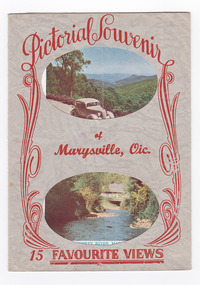
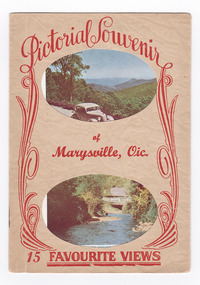
Postcard (item) - Colour and black and white photographs, Murray Views, Pictorial Souvenur of Marysville, Vic. 15 Favourite Views, 1950's
... farm (image 6)...cumberland valley (image 7)...crossways cabaret (image 8)...tree ferns (image 9)...steavenson falls (image 10)...marysville view...VIEWS. GYMPIE. Q. COPYRIGHT SAMUEL LEE & CO., PRINTERS Serial No. R 4152 NICHOLL'S LOOKOUT, MARYSVILLE, VIC. TAGGERTY RIVER, MARYSVILLE, VIC ROAD SCENE, MARYSVILLE, VIC. MAIN STREET, MARYSVILLE, VIC. THE CROSSWAYS, MARYSVILLE, VIC. FRUIT SALAD FARM...These photographs were produced by Murray Views in Gympie, Queensland as a souvenir of Marysville. marysville victoria souvenir postcard nicholl's lookout (image 1) taggerty river (image 2) road scene (image 3) main street marysville (image 4) crossways hotel (image 5) fruit salad farm (image 6) cumberland valley (image 7) crossways cabaret (image 8) tree ferns (image 9) steavenson falls (image 10) marysville view (image 11) tourists marysville (image 12) taggerty river (image 13) buxton road (image 14) black spur (image 15) Pictorial Souvenir/ of/ Marysville, Vic./ 15 Favourite Views PRODUCED BY MURRAY VIEWS. ...A fold out postcard of 15 colour and black and white photographs of scenes and landscapes in and around Marysville in Victoria.A fold out postcard of 15 colour and black and white photographs of scenes and landscapes in and around Marysville in Victoria. These photographs were produced by Murray Views in Gympie, Queensland as a souvenir of Marysville.Pictorial Souvenir/ of/ Marysville, Vic./ 15 Favourite Views PRODUCED BY MURRAY VIEWS. GYMPIE. Q. COPYRIGHT SAMUEL LEE & CO., PRINTERS Serial No. R 4152 NICHOLL'S LOOKOUT, MARYSVILLE, VIC. TAGGERTY RIVER, MARYSVILLE, VIC ROAD SCENE, MARYSVILLE, VIC. MAIN STREET, MARYSVILLE, VIC. THE CROSSWAYS, MARYSVILLE, VIC. FRUIT SALAD FARM, MARYSVILLE, VIC. ROAD TO CUMBERLAND VALLEY, MARYSVILLE, VIC. CROSSWAYS CABARET, MARYSVILLE, VIC. TREE FERNS, MARYSVILLE, VIC. STEVENSON'S FALLS, MARYSVILLE, VIC. Looking towards Marysville, Vic. Tourists at Marysville, Vic. Taggerty River, Marysville, Vic. On Buxton Road, Marysville, Vic. Panorama from Black Spur, Marysville Road, Marysville, Vic.marysville, victoria, souvenir, postcard, nicholl's lookout (image 1), taggerty river (image 2), road scene (image 3), main street marysville (image 4), crossways hotel (image 5), fruit salad farm (image 6), cumberland valley (image 7), crossways cabaret (image 8), tree ferns (image 9), steavenson falls (image 10), marysville view (image 11), tourists marysville (image 12), taggerty river (image 13), buxton road (image 14), black spur (image 15) -
 Marysville & District Historical Society
Postcard (item) - Colour and black and white photographs, Pictorial Souvenir of Marysville, Vic. 15 Favourite Views
... farm (image 6)...cumberland valley (image 7)...crossways cabaret (image 8)...tree ferns (image 9)...steavenson falls (image 10)...marysville view...VIEWS. GYMPIE. Q. COPYRIGHT SAMUEL LEE & CO., PRINTERS Serial No. R 4152 NICHOLL'S LOOKOUT, MARYSVILLE, VIC. TAGGERTY RIVER, MARYSVILLE, VIC ROAD SCENE, MARYSVILLE, VIC. MAIN STREET, MARYSVILLE, VIC. THE CROSSWAYS, MARYSVILLE, VIC. FRUIT SALAD FARM...These photographs were produced by Murray Views in Gympie, Queensland as a souvenir of Marysville. marysville victoria souvenir postcard nicholl's lookout (image 1) taggerty river (image 2) road scene (image 3) main street marysville (image 4) crossways hotel (image 5) fruit salad farm (image 6) cumberland valley (image 7) crossways cabaret (image 8) tree ferns (image 9) steavenson falls (image 10) marysville view (image 11) tourists marysville (image 12) taggerty river (image 13) buxton road (image 14) black spur (image 15) Pictorial Souvenir/ of/ Marysville, Vic./ 15 Favourite Views PRODUCED BY MURRAY VIEWS. ...A fold out postcard of 15 colour and black and white photographs of scenes and landscapes in and around Marysville in Victoria.A fold out postcard of 15 colour and black and white photographs of scenes and landscapes in and around Marysville in Victoria. These photographs were produced by Murray Views in Gympie, Queensland as a souvenir of Marysville.Pictorial Souvenir/ of/ Marysville, Vic./ 15 Favourite Views PRODUCED BY MURRAY VIEWS. GYMPIE. Q. COPYRIGHT SAMUEL LEE & CO., PRINTERS Serial No. R 4152 NICHOLL'S LOOKOUT, MARYSVILLE, VIC. TAGGERTY RIVER, MARYSVILLE, VIC ROAD SCENE, MARYSVILLE, VIC. MAIN STREET, MARYSVILLE, VIC. THE CROSSWAYS, MARYSVILLE, VIC. FRUIT SALAD FARM, MARYSVILLE, VIC. ROAD TO CUMBERLAND VALLEY, MARYSVILLE, VIC. CROSSWAYS CABARET, MARYSVILLE, VIC. TREE FERNS, MARYSVILLE, VIC. STEVENSON'S FALLS, MARYSVILLE, VIC. Looking towards Marysville, Vic. Tourists at Marysville, Vic. Taggerty River, Marysville, Vic. On Buxton Road, Marysville, Vic. Panorama from Black Spur, Marysville Road, Marysville, Vic.marysville, victoria, souvenir, postcard, nicholl's lookout (image 1), taggerty river (image 2), road scene (image 3), main street marysville (image 4), crossways hotel (image 5), fruit salad farm (image 6), cumberland valley (image 7), crossways cabaret (image 8), tree ferns (image 9), steavenson falls (image 10), marysville view (image 11), tourists marysville (image 12), taggerty river (image 13), buxton road (image 14), black spur (image 15) -
 Marysville & District Historical Society
Booklet (Item) - Tourist guide, Ian and Danese Walshe et al, MARYSVILLE and district TOURIST GUIDE, 1982
... farm...mccfarlane's grocery...barton's drapery...marysville newsagency...eildon explorer...beauty spot nursery...crossways...pumpernickel...mckenzie's tourist services...blue hills riding school...mountain view...A tourist guide outlining services, accommodation, activities and places of interest to visit in and around Marysville and the local district. marysville victoria australia tourist guide marysville hotel castles' store hawthorne's corner shop tudor lodge black spur motel and caravan park buxton general store golden fleece roadhouse marysville garage burrengeen park lake mountain steavenson falls nanda binya lodge alpenglow nursery black spur inn hotel silver stream trout farm mccfarlane's grocery barton's drapery marysville newsagency eildon explorer beauty spot nursery crossways pumpernickel mckenzie's tourist services blue hills riding school mountain view horse hire pitt's garage maryton park j l gould sawmill eildon deer park eildon weir maroondah dam snob's creek healesville sanctuary graceburn park cathedral range beauty spot walk tree fern gully walk michaeldene track keppel track woods lookout track cumberland scenic reserve cambarville the big tree cora-lyn falls barton's lookout cumberland falls sovereign view wirreanda festival scenic motel tower motel marylands guest house kooringa guest house marylyn guest house mountain lodge el kanah marysville hotel motel buxton hotel motel black spur inn buxton caravan park marysville caravan park the cumberland marysville recreation and fun park A tourist guide outlining services, accommodation, activities and places of interest to visit in and around Marysville and the local district. ...A tourist guide outlining services, accommodation, activities and places of interest to visit in and around Marysville and the local district.A tourist guide outlining services, accommodation, activities and places of interest to visit in and around Marysville and the local district.marysville, victoria, australia, tourist guide, marysville hotel, castles' store, hawthorne's corner shop, tudor lodge, black spur motel and caravan park, buxton general store, golden fleece roadhouse, marysville garage, burrengeen park, lake mountain, steavenson falls, nanda binya lodge, alpenglow nursery, black spur inn hotel, silver stream trout farm, mccfarlane's grocery, barton's drapery, marysville newsagency, eildon explorer, beauty spot nursery, crossways, pumpernickel, mckenzie's tourist services, blue hills riding school, mountain view horse hire, pitt's garage, maryton park, j l gould sawmill, eildon deer park, eildon weir, maroondah dam, snob's creek, healesville sanctuary, graceburn park, cathedral range, beauty spot walk, tree fern gully walk, michaeldene track, keppel track, woods lookout track, cumberland scenic reserve, cambarville, the big tree, cora-lyn falls, barton's lookout, cumberland falls, sovereign view, wirreanda festival, scenic motel, tower motel, marylands guest house, kooringa guest house, marylyn guest house, mountain lodge, el kanah, marysville hotel motel, buxton hotel motel, black spur inn, buxton caravan park, marysville caravan park, the cumberland, marysville recreation and fun park -
 Marysville & District Historical Society
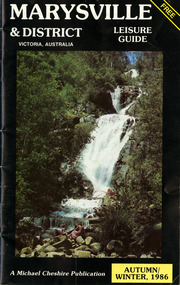
Booklet (Item) - Leisure guide, Michael Chesire & Associates Pty. Ltd, MARYSVILLE & DISTRICT LEISURE GUIDE-AUTUMN/WINTER, 1986, 1986
... view holiday lodges...cathedral restaurant...the top shop...tower motel...menzes garage...beauty spot nursery...marysville ski hire...lake mountain ski school...faraway forest...scenic motel...buxton trout farm...A free leisure guide to Marysville and the surrounding district published for Autumn and Winter, 1986. marysville victoria australia leisure guide michael cheshire & associates pty ltd marysville golf club blackwood lodges sir colin mackenzie fauna park lake eildon fraser national park yarra valley wineries marysville coach tours kooringa marylands guest house lady talbot forest drive wishing well taggerty river recreation area athols abbey phantom falls keppel falls the beeches walking track marylyn guest house kufstein inn motel the cumberland marysville tourist & progress association marysville newsagency & general store crossways restaurant & motel beauty spot walk tree fern gully walk michaeldene track keppel track woods lookout track marysville hotel motel lake mountain ski hire marysville recreation and fun park mytanta horseback safaris upper big river valley the big culvert marysville mountain view horse hire maryton park amber view holiday lodges cathedral restaurant the top shop tower motel menzes garage beauty spot nursery marysville ski hire lake mountain ski school faraway forest scenic motel buxton trout farm marysville hardware timbertop steakhouse marysville trout farm healesville sanctuary buxton hotel motel nanda binya lodge buxton antique and furniture mart the black spur inn hotel alexandra lake mountain geoffrey pope & associates A free leisure guide to Marysville and the surrounding district published for Autumn and Winter, 1986. ...A free leisure guide to Marysville and the surrounding district published for Autumn and Winter, 1986. This was produced by Michael Cheshire as a free publication to promote tourism in Marysville and the surrounding district. It includes maps of the Big River Valley, Cumberland Valley, Lady Talbot Forest Drive, the Marysville area, and the township of Marysville. It was released in the autumn of 1986 and was sponsored by the Marysville Tourist & Progress Association. The Association was formed in November 1907 to promote tourism within the area. This included the physical creation of signage, parklands, roads, and walks to various attractions. A free leisure guide to Marysville and the surrounding district published for Autumn and Winter, 1986.marysville, victoria, australia, leisure guide, michael cheshire & associates pty ltd, marysville golf club, blackwood lodges, sir colin mackenzie fauna park, lake eildon, fraser national park, yarra valley wineries, marysville coach tours, kooringa, marylands guest house, lady talbot forest drive, wishing well, taggerty river recreation area, athols abbey, phantom falls, keppel falls, the beeches walking track, marylyn guest house, kufstein inn motel, the cumberland, marysville tourist & progress association, marysville newsagency & general store, crossways restaurant & motel, beauty spot walk, tree fern gully walk, michaeldene track, keppel track, woods lookout track, marysville hotel motel, lake mountain ski hire, marysville recreation and fun park, mytanta horseback safaris, upper big river valley, the big culvert, marysville mountain view horse hire, maryton park, amber view holiday lodges, cathedral restaurant, the top shop, tower motel, menzes garage, beauty spot nursery, marysville ski hire, lake mountain ski school, faraway forest, scenic motel, buxton trout farm, marysville hardware, timbertop steakhouse, marysville trout farm, healesville sanctuary, buxton hotel motel, nanda binya lodge, buxton antique and furniture mart, the black spur inn hotel, alexandra, lake mountain, geoffrey pope & associates -
 Marysville & District Historical Society
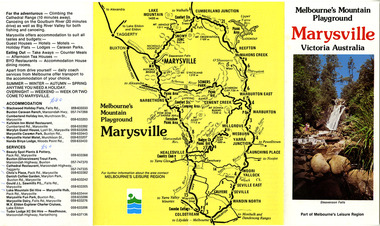
Ephemera (Item) - Tourist Guide, Melbourne's Mountain Playground Marysville Victoria Australia, Unknown
... farm...lake mountain ski hire...marysville fun park...mountain view...A fold out tourist guide to Marysville and the surrounding district. marysville victoria australia steavenson falls marysville golf club cathedral range blackwood holiday flats cumberland holiday inn kooringa conference and holiday centre marylyn guest house marysville caravan park marysville hotel motel nanda binya lodge scenic motel tower motel cathedral restaurant chris's place danish coffee garden tudor lodge roadhouse buxton trout farm silverstream trout farm lake mountain ski hire marysville fun park mountain view horse hire jl gould sawmills marysville dairy marysville drapery shop marysville garage marysville newsagency top shop A fold out tourist guide to Marysville and the surrounding district. ...A fold out tourist guide to Marysville and the surrounding district.A fold out tourist guide to Marysville and the surrounding district.marysville, victoria, australia, steavenson falls, marysville golf club, cathedral range, blackwood holiday flats, cumberland holiday inn, kooringa conference and holiday centre, marylyn guest house, marysville caravan park, marysville hotel motel, nanda binya lodge, scenic motel, tower motel, cathedral restaurant, chris's place, danish coffee garden, tudor lodge roadhouse, buxton trout farm, silverstream trout farm, lake mountain ski hire, marysville fun park, mountain view horse hire, jl gould sawmills, marysville dairy, marysville drapery shop, marysville garage, marysville newsagency, top shop -
 Marysville & District Historical Society
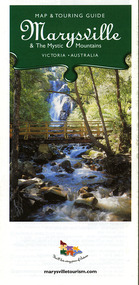
Map (Item) - Map and touring guide, Murrindindi Regional Tourism Association Inc, Marysville & The Mystic Mountains VICTORIA-AUSTRALIA, 08-2002
... view b&b...cottage riverside...crossways country inn...dalrymples guest cottages...esa country ministries...hillcrest...keppels hotel motel...kerami house...lomatia lodge...lyell guest cottages...marylands country house...marysville caravan park...marysville holiday cottages...maryton park...melina cottage...moondai farm...A fold out map and touring guide of Marysville and the surrounding district published in 2002 by Murrindindi Regional Tourism Association Inc. marysville victoria australia map and touring guide mystic mountains tourism the beeches rainforest walk lake mountain cambarville cathedral range state park the cumberland abbey green b&b cottages anastasia fairytale cottage ashlar cottage b&b somerled mountain retreat baree mudbrick cottages blackwood cottages camellia cottage cathedral view b&b cottage riverside crossways country inn dalrymples guest cottages esa country ministries hillcrest keppels hotel motel kerami house lomatia lodge lyell guest cottages marylands country house marysville caravan park marysville holiday cottages maryton park melina cottage moondai farm b&b mountain lodge marysville mount cathedral lodge mystic mountains holiday cottages nanda binya lodge rendezvous on murchison scenic b&b the hermitage tower motel waratah house willowbank at taggerty woodlands of narbethong keppels lake mountain resort cafe lanterns at willowbank mantirri blueberry farm marysville country bakery the old woolshed cafe clearstream olives uncle fred & aunty val's old style lolly shop acheron valley alpacas country store & gallery bruno's art and sculpture garden country touch things of sand & stone willowbank gallery marysville auto & hardware marysville newsagency & general store marysville visitor information centre narbethong visitor information centre gallipoli park keppels lookout lady talbot drive steavenson falls steavenson river taggerty river acheron river black spur trail riding centre buxton trout farm lake mountain resort ski hire lake mountain ski school marysville district country club marysville ski centre narbethong ski hire rubicon horse riding country touch tours murrindindi regional tourism association inc A fold out map and touring guide of Marysville and the surrounding district published in 2002 by Murrindindi Regional Tourism Association Inc. ...A fold out map and touring guide of Marysville and the surrounding district published in 2002 by Murrindindi Regional Tourism Association Inc.A fold out map and touring guide of Marysville and the surrounding district published in 2002 by Murrindindi Regional Tourism Association Inc.marysville, victoria, australia, map and touring guide, mystic mountains tourism, the beeches rainforest walk, lake mountain, cambarville, cathedral range state park, the cumberland, abbey green b&b cottages, anastasia fairytale cottage, ashlar cottage b&b, somerled mountain retreat, baree mudbrick cottages, blackwood cottages, camellia cottage, cathedral view b&b, cottage riverside, crossways country inn, dalrymples guest cottages, esa country ministries, hillcrest, keppels hotel motel, kerami house, lomatia lodge, lyell guest cottages, marylands country house, marysville caravan park, marysville holiday cottages, maryton park, melina cottage, moondai farm b&b, mountain lodge marysville, mount cathedral lodge, mystic mountains holiday cottages, nanda binya lodge, rendezvous on murchison, scenic b&b, the hermitage, tower motel, waratah house, willowbank at taggerty, woodlands of narbethong, keppels, lake mountain resort cafe, lanterns at willowbank, mantirri blueberry farm, marysville country bakery, the old woolshed cafe, clearstream olives, uncle fred & aunty val's old style lolly shop, acheron valley alpacas country store & gallery, bruno's art and sculpture garden, country touch, things of sand & stone, willowbank gallery, marysville auto & hardware, marysville newsagency & general store, marysville visitor information centre, narbethong visitor information centre, gallipoli park, keppels lookout, lady talbot drive, steavenson falls, steavenson river, taggerty river, acheron river, black spur trail riding centre, buxton trout farm, lake mountain resort ski hire, lake mountain ski school, marysville district country club, marysville ski centre, narbethong ski hire, rubicon horse riding, country touch tours, murrindindi regional tourism association inc -
 Marysville & District Historical Society
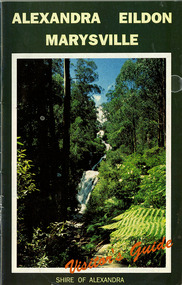
Ephemera (Item) - Visitor's Guide, Shire of Alexandra, ALEXANDRA EILDON MARYSVILLE Visitor's Guide, Unknown
... farm and zoo buxton...marysville mountain view horse hire...A tourist guide for Alexandra, Eildon and Marysville produced by the Shire of Alexandra. alexandra eildon marysville victoria australia tourist guide steavenson falls blackwood lodges marysville hotel motel the cumberland gallery restaurant marysville marysville gallery cross country ski hire marylyn guest house marylands guest house marysville crafts & gifts hearts of oak antiques geoffrey pope & associates cedron house marysville amber view holiday lodges marysville marysville ski hire lake mountain ski school fruit salad farm taggerty general store arbor green galleries marysville black spur roadhouse black spur motel & caravan park marysville caravan park the hermitage narbethong danish coffee garden maryton park buxton trout farm lake mountain outdoor centre marysville australian bush pioneer's farm the camel farm and zoo buxton marysville mountain view horse hire marysville golf and bowls club yarrolyn holiday park taggerty riverland lodge taggerty beauty spot walk tree fern gully walk michaeldene track keppel track woods lookout track A tourist guide for Alexandra, Eildon and Marysville produced by the Shire of Alexandra. ...A tourist guide for Alexandra, Eildon and Marysville produced by the Shire of Alexandra.A tourist guide for Alexandra, Eildon and Marysville produced by the Shire of Alexandra.alexandra, eildon, marysville, victoria, australia, tourist guide, steavenson falls, blackwood lodges, marysville hotel motel, the cumberland, gallery restaurant marysville, marysville gallery, cross country ski hire, marylyn guest house, marylands guest house, marysville crafts & gifts, hearts of oak antiques, geoffrey pope & associates, cedron house marysville, amber view holiday lodges marysville, marysville ski hire, lake mountain ski school, fruit salad farm, taggerty general store, arbor green galleries marysville, black spur roadhouse, black spur motel & caravan park, marysville caravan park, the hermitage narbethong, danish coffee garden, maryton park, buxton trout farm, lake mountain outdoor centre marysville, australian bush pioneer's farm, the camel farm and zoo buxton, marysville mountain view horse hire, marysville golf and bowls club, yarrolyn holiday park taggerty, riverland lodge taggerty, beauty spot walk, tree fern gully walk, michaeldene track, keppel track, woods lookout track -
 Marysville & District Historical Society
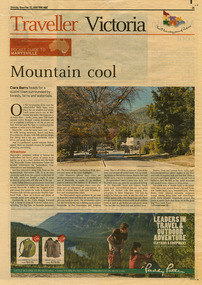
Newspaper (Item) - Newspaper article, The Age, POCKET GUIDE TO MARYSVILLE, 22-11-2008
... farm...bruno's art and sculpture garden...villa day spa...cathedral view...A newspaper article on Marysville, its local attractions, places to shop and dine, where to stay and ways of traveling to Marysville. marysville victoria australia the age black spur marysville visitor information centre steavenson falls lady talbot drive taggerty river keppel falls phantom falls beeches rainforest walk cambarville yarra ranges national park the big tree cumberland walk lake mountain steavenson river acheron river buxton bait and tackle marysville trout and salmon ponds buxton trout and salmon farm bruno's art and sculpture garden villa day spa cathedral view natural therapies marysville massage murchison street village walk uncle fred & aunty val's old style lolly shop country touch gallery manical mechanicals hidden talent craft gallery carmyle farm boutique marysville community market marysville patisserie marysville country bakery fraga's cafe restaurant terracotta room marylands country house the cumberland mantirri blueberry farm narbethong marysville farmers market the black spur inn allawah country cottages barree mud brick cottages A newspaper article on Marysville, its local attractions, places to shop and dine, where to stay and ways of traveling to Marysville. ...A newspaper article on Marysville, its local attractions, places to shop and dine, where to stay and ways of traveling to Marysville. This article was published in The Age on Saturday, November 22, 2008.A newspaper article on Marysville, its local attractions, places to shop and dine, where to stay and ways of traveling to Marysville.marysville, victoria, australia, the age, black spur, marysville visitor information centre, steavenson falls, lady talbot drive, taggerty river, keppel falls, phantom falls, beeches rainforest walk, cambarville, yarra ranges national park, the big tree, cumberland walk, lake mountain, steavenson river, acheron river, buxton bait and tackle, marysville trout and salmon ponds, buxton trout and salmon farm, bruno's art and sculpture garden, villa day spa, cathedral view natural therapies, marysville massage, murchison street, village walk, uncle fred & aunty val's old style lolly shop, country touch gallery, manical mechanicals, hidden talent craft gallery, carmyle farm boutique, marysville community market, marysville patisserie, marysville country bakery, fraga's cafe restaurant, terracotta room, marylands country house, the cumberland, mantirri blueberry farm, narbethong, marysville farmers market, the black spur inn, allawah country cottages, barree mud brick cottages -
 Marysville & District Historical Society
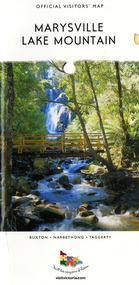
Map (Item) - Tourist map, Mystic Mountains Tourism, OFFICIAL VISITORS' MAP MARYSVILLE LAKE MOUNTAIN, Unknown
... farm...kerami guest house...keppels hotel...lake mountain-snow gum lodge...lomatia lodge...lyell guest cottages...magnolia house...keppel waters...lyrebird apartments...marysville caravan park...all view...A visitors' map of Marysville and Lake Mountain produced by Mystic Mountains Tourism for Visit Victoria. marysville lake mountain victoria australia visitor's map official visitors' map marysville lake mountain buxton narbethong taggerty visit victoria mystic mountains tourism inc graph attack p/l mystic mountains marysville triangle marysville visitor information centre marylands country house black spur steavenson falls lady talbot drive cambarville cathedral ranges wirreanda festival lake mountain summit walk summit walk loop leadbeaters loop day loop walk buxton hotel igloo roadhouse karmann waters silverstream b&b cottages buxton trout and salmon farm the niche wine bar buxton post office & general store choppers buxton roadhouse woodlands rainforest bungalows chestnut glade black spur inn wombat cottage abbey lake luxury b&b spa cottages mystic mountain ski hire & outdoors pnl 4wdriving blue views holiday units & ski hire marapana agistment park & farm stay b&b danico design things of sand & stone mantirri blueberry farm allawah country cottages amberview cottages ashlar cottage b&b black spur motel & caravan park blackwood deluxe cottages blackwood courtyard b&b dalrymples guest cottages delderfield el kanah guest house fruit salad farm kerami guest house keppels hotel lake mountain-snow gum lodge lomatia lodge lyell guest cottages magnolia house keppel waters lyrebird apartments marysville caravan park all view spa apartments riverside cottages maryton park b&b country cottages melina cottage mountain lodge mystic mountains holiday cottages nanda binya lodge rendezvous luxury cottages scenic b&b motel the cumberland south cathedral farm tower motel willowbank at taggerty woodlands rainforest retreat marysville & district country club inc mystic mountains ski hire & outdoors rubicon valley horse riding marysville trout and salmon ponds gallipoli park keppels lookout cambarville-yarra ranges national park lake mountain-yarra ranges national park lady talbot drive-yarra ranges national park cathedral range state park steavenson river taggerty river acheron river lake mountain alpine resort bruno's art and sculpture garden manical mechanicals uncle fred & aunty val's old style lolly shop carmyle farm boutique crossways historic country inn fraga's gilberts restaurant heights licensed bistro the old woolshed cafe cathedral view natural therapies crystal journey The Marysville and Lake Mountain Visitor Map and Touring Guide has been compiled and/ published by Mystic Mountains Tourism Inc. ...A visitors' map of Marysville and Lake Mountain produced by Mystic Mountains Tourism for Visit Victoria.A visitors' map of Marysville and Lake Mountain produced by Mystic Mountains Tourism for Visit Victoria.The Marysville and Lake Mountain Visitor Map and Touring Guide has been compiled and/ published by Mystic Mountains Tourism Inc. Copyright./ Production and artwork Graph Attack P/Lmarysville, lake mountain, victoria, australia, visitor's map, official visitors' map marysville lake mountain, buxton, narbethong, taggerty, visit victoria, mystic mountains tourism inc, graph attack p/l, mystic mountains, marysville triangle, marysville visitor information centre, marylands country house, black spur, steavenson falls, lady talbot drive, cambarville, cathedral ranges, wirreanda festival, lake mountain summit walk, summit walk loop, leadbeaters loop, day loop walk, buxton hotel, igloo roadhouse, karmann waters, silverstream b&b cottages, buxton trout and salmon farm, the niche wine bar, buxton post office & general store, choppers buxton roadhouse, woodlands rainforest bungalows, chestnut glade, black spur inn, wombat cottage, abbey lake luxury b&b spa cottages, mystic mountain ski hire & outdoors, pnl 4wdriving, blue views holiday units & ski hire, marapana agistment park & farm stay b&b, danico design, things of sand & stone, mantirri blueberry farm, allawah country cottages, amberview cottages, ashlar cottage b&b, black spur motel & caravan park, blackwood deluxe cottages, blackwood courtyard b&b, dalrymples guest cottages, delderfield, el kanah guest house, fruit salad farm, kerami guest house, keppels hotel, lake mountain-snow gum lodge, lomatia lodge, lyell guest cottages, magnolia house, keppel waters, lyrebird apartments, marysville caravan park, all view spa apartments, riverside cottages, maryton park b&b country cottages, melina cottage, mountain lodge, mystic mountains holiday cottages, nanda binya lodge, rendezvous luxury cottages, scenic b&b motel, the cumberland, south cathedral farm, tower motel, willowbank at taggerty, woodlands rainforest retreat, marysville & district country club inc, mystic mountains ski hire & outdoors, rubicon valley horse riding, marysville trout and salmon ponds, gallipoli park, keppels lookout, cambarville-yarra ranges national park, lake mountain-yarra ranges national park, lady talbot drive-yarra ranges national park, cathedral range state park, steavenson river, taggerty river, acheron river, lake mountain alpine resort, bruno's art and sculpture garden, manical mechanicals, uncle fred & aunty val's old style lolly shop, carmyle farm boutique, crossways historic country inn, fraga's, gilberts restaurant, heights licensed bistro, the old woolshed cafe, cathedral view natural therapies, crystal journey -
 Marysville & District Historical Society
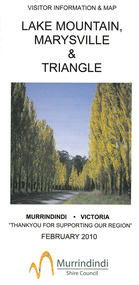
Map (Item) - Tourist map, Murrindindi Shire Council, VISITOR INFORMATION & MAP LAKE MOUNTAIN, MARYSVILLE & TRIANGLE, 02-2010
... farm stay b&b...maryton park b&b...pinjarra gardens...sarsens rest...silverstream b&b...tower motel...willowbank at taggerty...wombat cottage...woodlands rainforest retreat...buxton general store and post office...buxton zoo nursery...cathedral view...A visitor information map for Lake Mountain, Marysville and the local district produced by the Murrindindi Shire Council in February 2010. lake mountain marysville victoria australia visitor information & map murrindindi shire council big 4 holiday park taggerty black spur inn black spur motel & caravan park bush creek buddha buxton hotel motel cathedral valley farm chestnut glade crossways historic country inn delderfield luxury b&b kingbilli country estate marapana agistment park & farm stay b&b maryton park b&b pinjarra gardens sarsens rest silverstream b&b tower motel willowbank at taggerty wombat cottage woodlands rainforest retreat buxton general store and post office buxton zoo nursery cathedral view natural therapies country touch cross country ski hire foodworks highwood health retreat lake mountain ski hire lit & beyond lj hooker maroondah outdoor equipment/bait & tackle marysville medical centre marysville patisserie marysville ski centre marysville triangle real estate marysville visitor information centre mystic mountains ski hire/outdoors pat's hairdressing penni lanes country wares plant's by shelian Murrindindi Shire Council has made every effort to ensure the information provided at the time/ of printing is correct, but accepts no responsibility for an inaccuracies or omissions. ...A visitor information map for Lake Mountain, Marysville and the local district produced by the Murrindindi Shire Council in February 2010. This information guide and map was produced after the 2009 Black Saturday bushfires destroyed most of the township of Marysville.A visitor information map for Lake Mountain, Marysville and the local district produced by the Murrindindi Shire Council in February 2010.Murrindindi Shire Council has made every effort to ensure the information provided at the time/ of printing is correct, but accepts no responsibility for an inaccuracies or omissions.lake mountain, marysville, victoria, australia, visitor information & map, murrindindi shire council, big 4 holiday park taggerty, black spur inn, black spur motel & caravan park, bush creek buddha, buxton hotel motel, cathedral valley farm, chestnut glade, crossways historic country inn, delderfield luxury b&b, kingbilli country estate, marapana agistment park & farm stay b&b, maryton park b&b, pinjarra gardens, sarsens rest, silverstream b&b, tower motel, willowbank at taggerty, wombat cottage, woodlands rainforest retreat, buxton general store and post office, buxton zoo nursery, cathedral view natural therapies, country touch, cross country ski hire, foodworks, highwood health retreat, lake mountain ski hire, lit & beyond, lj hooker, maroondah outdoor equipment/bait & tackle, marysville medical centre, marysville patisserie, marysville ski centre, marysville triangle real estate, marysville visitor information centre, mystic mountains ski hire/outdoors, pat's hairdressing, penni lanes country wares, plant's by shelian -
 Marysville & District Historical Society
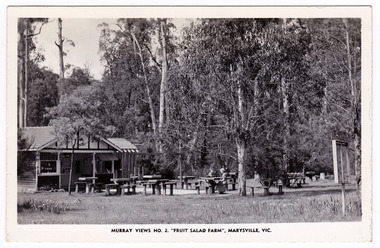
Postcard (Item) - Black and white postcard, Murray Views, MURRAY VIEWS NO. 2. "FRUIT SALAD FARM", MARYSVILLE, VIC, Unknown
... A black and white postcard of the Fruit Salad Farm in Marysville that was produced by Murray Views as a souvenir of Marysville....A black and white postcard of the Fruit Salad Farm in Marysville that was produced by Murray Views as a souvenir of Marysville....MURRAY VIEWS NO. 2. "FRUIT SALAD FARM", MARYSVILLE, VIC. Postcard Black and white postcard Murray Views ...A black and white postcard of the Fruit Salad Farm in Marysville that was produced by Murray Views as a souvenir of Marysville.A black and white postcard of the Fruit Salad Farm in Marysville that was produced by Murray Views as a souvenir of Marysville.POST CARD STAMP REAL PHOTOGRAPH PRODUCED IN/ AUSTRALIA BY MURRAY VIEWS, GYMPIE, Q.marysville, victoria, australia, fruit salad farm, accommodation, restaurant, postcard, souvenir, murray views -
 Marysville & District Historical Society
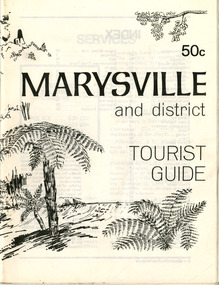
Booklet (Item) - Tourist guide, Ian and Danese Walshe et al, MARYSVILLE and district TOURIST GUIDE, 1982
... farm...mccfarlane's grocery...barton's drapery...marysville newsagency...eildon explorer...beauty spot nursery...crossways...pumpernickel...mckenzie's tourist services...blue hills riding school...mountain view...A tourist guide outlining services, accommodation, activities and places of interest to visit in and around Marysville and the local district. marysville victoria australia tourist guide marysville hotel castles' store hawthorne's corner shop tudor lodge black spur motel and caravan park buxton general store golden fleece roadhouse marysville garage burrengeen park lake mountain steavenson falls nanda binya lodge alpenglow nursery black spur inn hotel silver stream trout farm mccfarlane's grocery barton's drapery marysville newsagency eildon explorer beauty spot nursery crossways pumpernickel mckenzie's tourist services blue hills riding school mountain view horse hire pitt's garage maryton park j l gould sawmill eildon deer park eildon weir maroondah dam snob's creek healesville sanctuary graceburn park cathedral range beauty spot walk tree fern gully walk michaeldene track keppel track woods lookout track cumberland scenic reserve cambarville the big tree cora-lyn falls barton's lookout cumberland falls sovereign view wirreanda festival scenic motel tower motel marylands guest house kooringa guest house marylyn guest house mountain lodge el kanah marysville hotel motel buxton hotel motel black spur inn buxton caravan park marysville caravan park the cumberland marysville recreation and fun park A tourist guide outlining services, accommodation, activities and places of interest to visit in and around Marysville and the local district. ...A tourist guide outlining services, accommodation, activities and places of interest to visit in and around Marysville and the local district.A tourist guide outlining services, accommodation, activities and places of interest to visit in and around Marysville and the local district.marysville, victoria, australia, tourist guide, marysville hotel, castles' store, hawthorne's corner shop, tudor lodge, black spur motel and caravan park, buxton general store, golden fleece roadhouse, marysville garage, burrengeen park, lake mountain, steavenson falls, nanda binya lodge, alpenglow nursery, black spur inn hotel, silver stream trout farm, mccfarlane's grocery, barton's drapery, marysville newsagency, eildon explorer, beauty spot nursery, crossways, pumpernickel, mckenzie's tourist services, blue hills riding school, mountain view horse hire, pitt's garage, maryton park, j l gould sawmill, eildon deer park, eildon weir, maroondah dam, snob's creek, healesville sanctuary, graceburn park, cathedral range, beauty spot walk, tree fern gully walk, michaeldene track, keppel track, woods lookout track, cumberland scenic reserve, cambarville, the big tree, cora-lyn falls, barton's lookout, cumberland falls, sovereign view, wirreanda festival, scenic motel, tower motel, marylands guest house, kooringa guest house, marylyn guest house, mountain lodge, el kanah, marysville hotel motel, buxton hotel motel, black spur inn, buxton caravan park, marysville caravan park, the cumberland, marysville recreation and fun park -
 Marysville & District Historical Society
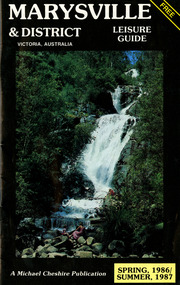
Booklet (Item) - Leisure guide, Michael Chesire & Associates Pty. Ltd, MARYSVILLE & DISTRICT LEISURE GUIDE-SPRING, 1986/SUMMBER, 1987, 1986
... view holiday lodges...cathedral restaurant...the top shop...tower motel...menzes garage...beauty spot nursery...marysville ski hire...lake mountain ski school...faraway forest...scenic motel...buxton trout farm...A free leisure guide to Marysville and the surrounding district published for Spring 1986, and Summer 1987. marysville victoria australia leisure guide michael cheshire & associates pty ltd marysville golf club blackwood lodges sir colin mackenzie fauna park lake eildon fraser national park yarra valley wineries marysville coach tours kooringa marylands guest house lady talbot forest drive wishing well taggerty river recreation area athols abbey phantom falls keppel falls the beeches walking track marylyn guest house kufstein inn motel the cumberland marysville tourist & progress association marysville newsagency & general store crossways restaurant & motel beauty spot walk tree fern gully walk michaeldene track keppel track woods lookout track marysville hotel motel lake mountain ski hire marysville recreation and fun park mytanta horseback safaris upper big river valley the big culvert marysville mountain view horse hire maryton park amber view holiday lodges cathedral restaurant the top shop tower motel menzes garage beauty spot nursery marysville ski hire lake mountain ski school faraway forest scenic motel buxton trout farm marysville hardware timbertop steakhouse marysville trout farm healesville sanctuary buxton hotel motel nanda binya lodge buxton antique and furniture mart the black spur inn hotel alexandra lake mountain j l gould sawmills pty. ltd. geoffrey pope & associates marysville crafts & gifts olde yarra track shoppe cumberland scenic reserve tudor lodge road house fruit salad farm highwayman's retreat Kilmore Historical Society *10/183 *MDL.1. ...A free leisure guide to Marysville and the surrounding district published for Spring 1986, and Summer, 1987. This was produced by Michael Cheshire as a free publication to promote tourism in Marysville and the surrounding district. It includes maps of the Big River Valley, Cumberland Valley, Lady Talbot Forest Drive, the Marysville area, and the township of Marysville. It was released in the spring of 1986. A free leisure guide to Marysville and the surrounding district published for Spring 1986, and Summer 1987.Kilmore Historical Society *10/183 *MDL.1.marysville, victoria, australia, leisure guide, michael cheshire & associates pty ltd, marysville golf club, blackwood lodges, sir colin mackenzie fauna park, lake eildon, fraser national park, yarra valley wineries, marysville coach tours, kooringa, marylands guest house, lady talbot forest drive, wishing well, taggerty river recreation area, athols abbey, phantom falls, keppel falls, the beeches walking track, marylyn guest house, kufstein inn motel, the cumberland, marysville tourist & progress association, marysville newsagency & general store, crossways restaurant & motel, beauty spot walk, tree fern gully walk, michaeldene track, keppel track, woods lookout track, marysville hotel motel, lake mountain ski hire, marysville recreation and fun park, mytanta horseback safaris, upper big river valley, the big culvert, marysville mountain view horse hire, maryton park, amber view holiday lodges, cathedral restaurant, the top shop, tower motel, menzes garage, beauty spot nursery, marysville ski hire, lake mountain ski school, faraway forest, scenic motel, buxton trout farm, marysville hardware, timbertop steakhouse, marysville trout farm, healesville sanctuary, buxton hotel motel, nanda binya lodge, buxton antique and furniture mart, the black spur inn hotel, alexandra, lake mountain, j l gould sawmills pty. ltd., geoffrey pope & associates, marysville crafts & gifts, olde yarra track shoppe, cumberland scenic reserve, tudor lodge road house, fruit salad farm, highwayman's retreat
