
Showing 68 items matching "ferguson family"
-
 Sunshine and District Historical Society Incorporated
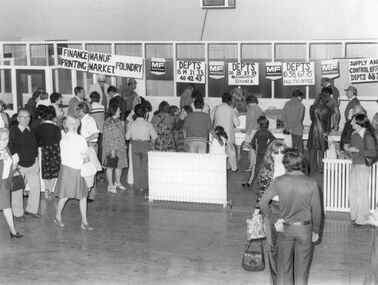
Photograph - Massey Ferguson Open Family Day, 1978
... Massey Ferguson Open Family Day...Massey Ferguson Open Family Day...Records some of the activities of a Massey Ferguson Open Family Day in 1978. Photo of factory office where information stations were set up. ...Portion of Devonshire Road was closed to traffic for the occasion Massey Ferguson Open Family Day Photograph Massey Ferguson Open Family Day ...Records some of the activities of a Massey Ferguson Open Family Day in 1978. Photo of factory office where information stations were set up. Portion of Devonshire Road was closed to traffic for the occasionmassey ferguson, sunshine harvester works -
 Narre Warren and District Family History Group
Book, Alistair Cameron, Ferguson Family History, 2009
... Ferguson Family History...John Mickle Ferguson Agnes Mickle A DVD of the Ferguson Family History by Alistair Cameron Ferguson Family History Book Alistair Cameron ...A DVD of the Ferguson Family History by Alistair Cameronnon-fictionA DVD of the Ferguson Family History by Alistair Cameronjohn mickle ferguson, agnes mickle -
 Linton and District Historical Society Inc
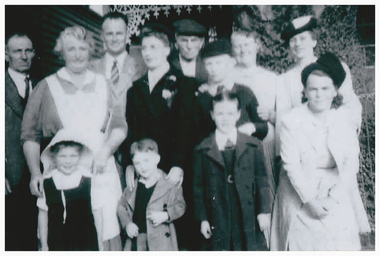
Photograph, Ferguson Family, Newport, 1946
... Ferguson Family, Newport, 1946...William John Ferguson Margaret Fitzpatrick (nee Ferguson) Joe Fitzpatrick William Bentley Ferguson Geraldine Price Darrell Fitzpatrick Maureen Fitzpatrick Norah Neenan Mrs Spinks Mic "1946 Newport / William John Ferguson / Margaret Fitzpatrick (nee Ferguson) / Joe Fitzpatrick / William Bentley Ferguson / Geraldine Price / Darrell Fitzpatrick / Maureen Fitzpatrick / Norah Neenan (Bending) / Mrs Spinks (Apron) neighbour / Mic" Black and white copy of original photograph of a group of 8 adults and 5 children standing in front of a building. Ferguson Family, Newport, 1946 Photograph ...Black and white copy of original photograph of a group of 8 adults and 5 children standing in front of a building."1946 Newport / William John Ferguson / Margaret Fitzpatrick (nee Ferguson) / Joe Fitzpatrick / William Bentley Ferguson / Geraldine Price / Darrell Fitzpatrick / Maureen Fitzpatrick / Norah Neenan (Bending) / Mrs Spinks (Apron) neighbour / Mic"william john ferguson, margaret fitzpatrick (nee ferguson), joe fitzpatrick, william bentley ferguson, geraldine price, darrell fitzpatrick, maureen fitzpatrick, norah neenan, mrs spinks, mic -
 Ringwood and District Historical Society
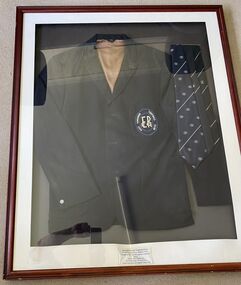
Clothing, East Ringwood Football Club Premiership Blazer 1974 and ties
... Donated by the Ferguson family....Donated by the Ferguson family. East Ringwood Football Club Premiership Blazer 1974 and ties Clothing ...Includes the first VFL Park tie, first Sydney Swans tie and the Clive Fairbairn Rapier Bats tie. Donated by the Ferguson family. -
 Eltham District Historical Society Inc
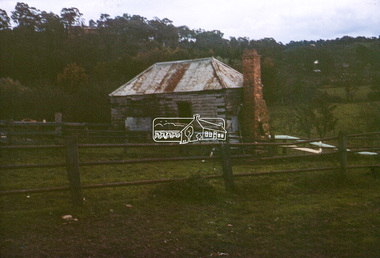
Slide - Photograph, Russell Yeoman, Ferguson property, Allwood, Hurstbridge, c.May 1974
... ...Ferguson family...The Fergusons were the last of three family generations to own the property. ...Hurstbridge Allwood Ferguson family Gray family Hurst Family Processed Jul 1974 35mm colour positive transparency Mount - Kodak Kodachrome Card Ferguson property, Allwood, Hurstbridge Slide Photograph Russell Yeoman ...This small building was photographed on a Society excursion to the property of Mrs Sheila Ferguson at Hurstbridge in 1974. It was demolished around the late 1970s. The building was located at the back of the family house at Allwood (now Hurstbridge Neighbourhood House - see Shire of Eltham Pioneers Photograph SEPP_1022), part of the original family property of Frederick and Catherine Hurst, then William and Frances (nee Hurst) Gray, then William Gordon and Sheila (nee Gray) Ferguson. The Fergusons were the last of three family generations to own the property. The Shire of Eltham aquired the property of Allwood House in 1985 and established the Hurstbridge Neighbourhood House.35mm colour positive transparency Mount - Kodak Kodachrome CardProcessed Jul 1974hurstbridge, allwood, ferguson family, gray family, hurst family -
 Kew Historical Society Inc
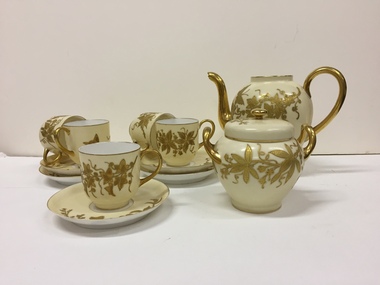
Domestic object - French Porcelain Coffee Set, 19th century
... Following the death of Hugh and Nell Ferguson, their families donated a number of items to the Kew Historical Society, including a French porcelain coffee set and a ceramic willow pattern dinner service. ...Following the death of Hugh and Nell Ferguson, their families donated a number of items to the Kew Historical Society, including a French porcelain coffee set and a ceramic willow pattern dinner service. ...Following the death of Hugh and Nell Ferguson, their families donated a number of items to the Kew Historical Society, including a French porcelain coffee set and a ceramic willow pattern dinner service. The latter was apparently bought piece by piece during the Great Depression. An item of historical interest donated by members of the Dods family in 2006. The Dods-Ferguson Collection includes a number of items once in the possession of the families related to or descended from two mayors of Kew: Cr. Hugh Ferguson and Cr. Frederick Dods.Continental porcelain coffee set of 5 cups, 6 saucers, a coffee pot, sugar bowl & lid and matching tray, once owned by the Dods family and donated in 2006.cr. frederick william dods, continental porcelain, french porcelain -
 Eltham District Historical Society Inc
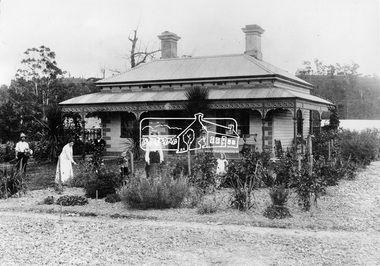
Negative - Photograph, Allwood, Hurstbridge, 1905
... According to Nancy Jacobs (nee Gray), it was home to three generations; her grandfather William Gray (though ownership was in Frances Hurst’s name), her father, as well as her home as a very small child. The Ferguson family were the last to live there, Shelia Ferguson (nee Gray) being her aunt. ...According to Nancy Jacobs (nee Gray), it was home to three generations; her grandfather William Gray (though ownership was in Frances Hurst’s name), her father, as well as her home as a very small child. The Ferguson family were the last to live there, Shelia Ferguson (nee Gray) being her aunt. ...Allwood, Hurstbridge, 1905. Hurst/Gray family in the garden in front of the Victorian style Allwood house with lace iron work on the verandah. Left to Right: Whittaker, Mrs. Catherine Hurst, Frederick George Hurst (at rear), Hurst Gray, Mrs. Frances Ellen Gray (nee Hurst), William (Bill) George Gray, Sylvia Gray (later Birch). Frederick and Catherine Hurst relocated this Victorian style weatherboard home from an inner Melbourne suburb to its present site on their Allwood property. Mr Charles Verso, builder and farmer, reassembled and refurbished the home for the Hurst’s. In 1897 Frederick and Catherine’s daughter, Frances Ellen, married William (Bill) George Gray of Cottlesbridge and the newlyweds moved into the new house. Frederick and Catherine Hurst moved into a little cottage, ‘Mia Mia’, on the other side of the Diamond Creek. William and Frances Gray established Allwood Nursery and by 1900 most of the Allwood property was under orchard, largely apples, pears, cherry plums and peaches. They also developed an extensive nursery, growing seedling stock for supply to other local orchardists and the overseas market. Shelia Gray, their youngest child, married William Gordon Ferguson and was the last one of the family to live there with her family from about 1950. According to Nancy Jacobs (nee Gray), it was home to three generations; her grandfather William Gray (though ownership was in Frances Hurst’s name), her father, as well as her home as a very small child. The Ferguson family were the last to live there, Shelia Ferguson (nee Gray) being her aunt. In 1985 the Shire of Eltham purchased the Allwood House property and established the Hurstbridge Neighbourhood House Prior to this building being relocated to Allwood, the Hurst family originally lived in a slab hut. Cross Ref: SEPP_1018 Source: Mrs. Ferguson, Hurstbridge (1970) and Nancy Jacobs (nee Gray) 2025, 2026 This photo forms part of a collection of photographs gathered by the Shire of Eltham for their centenary project book,"Pioneers and Painters: 100 years of the Shire of Eltham" by Alan Marshall (1971). The collection of over 500 images is held in partnership between Eltham District Historical Society and Yarra Plenty Regional Library (Eltham Library) and is now formally known as The Shire of Eltham Pioneers Photograph Collection.' It is significant in being the first community sourced collection representing the places and people of the Shire's first one hundred years.Digital image 4 x 5 inch B&W Neg Print 20 x 25 cm (x2)shire of eltham pioneers photograph collection, hurstbridge, hurst family, sylvia gray, hurst gray, whittaker, allwood house, allwood, frederick george hurst, gray family, mrs. catherine hurst, mrs. frances ellen gray (nee hurst), william (bill) george gray -
 Mt Dandenong & District Historical Society Inc.
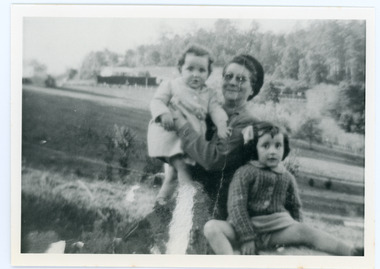
Photograph
... The Wenborn family acquired Ferguson's Lot 19 of the Village Settlement where the original Mount Dandenong School was opened in a shed. ...The Wenborn family acquired Ferguson's Lot 19 of the Village Settlement where the original Mount Dandenong School was opened in a shed. ...The Wenborn family acquired Ferguson's Lot 19 of the Village Settlement where the original Mount Dandenong School was opened in a shed. WH Collom owned the land after Ferguson and then it passes to the Wenborns. This photograph, taken c1942, shows Ivy Wenborn with her daughters Mary and Joan. John Lundy-Clarke grew up in the Kalorama/Mt Dandenong area and later in life (1972-74) began to write a comprehensive history of the area working from an original settlement map in an effort to cover all areas.Black and white photograph of a woman nursing a young girl Another young girl is seated at her right.Behind is a view of trees and a house. Handwritten inscription on reverse by John Lundy-ClarkeWenborn Family. Looking across what is now Kalorama Park showing Norman Jeeves' house behind the hedge to the left of the child.wenborn, ivy wenborn, mary wenborn, joan wenborn, norman jeeves, kalorama park, jeeves -
 Mt Dandenong & District Historical Society Inc.
Photograph
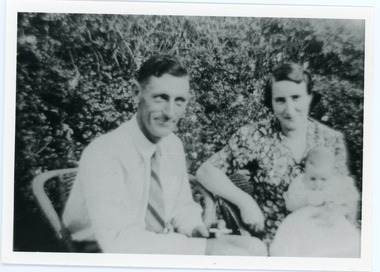
... The Wenborn family acquired Ferguson's Lot 19 of the Village Settlement where the original Mount Dandenong School was opened in a shed. ...The Wenborn family acquired Ferguson's Lot 19 of the Village Settlement where the original Mount Dandenong School was opened in a shed. ...The Wenborn family acquired Ferguson's Lot 19 of the Village Settlement where the original Mount Dandenong School was opened in a shed. WH Collom owned the land after Ferguson and then it passes to the Wenborns. This photograph shows Jim Wenborn with his wife Ivy and daughter Mary. The Wenborns had another daughter, Joan. Both children attended Mt Dandenong State School. John Lundy-Clarke grew up in the Kalorama/Mt Dandenong area and later in life (1972-74) began to write a comprehensive history of the area working from an original settlement map in an effort to cover all areas.Black and white photograph showing a man and woman seated in a garden. The woman is holding a small baby. Handwritten inscription on reverse by John Lundy-ClarkeJim Wenborn and family.wenborn, jim wenborn, ivy wenborn, mary wenborn, joan wenborn, ferguson, wh collom, mt dandenong school -
 Eltham District Historical Society Inc
Photograph - Digital Photograph, Alan King, Allwood House, Hurstbridge, 16 April 2008
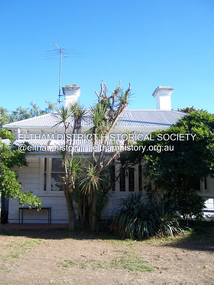
... However in 1975 the Shire designated the property as a passive recreation reserve. The Ferguson family sold most of the land, leaving the house on 0.6 hectares....However in 1975 the Shire designated the property as a passive recreation reserve. The Ferguson family sold most of the land, leaving the house on 0.6 hectares. ...Allwood - built in 1894 by Henry Hurst’s relatives, stands near the site of his house, which was demolisherd in the 1940s. Until 1924 Hurstbridge was known as Allwood. The building, one of the district's oldest is situated back from the corner of Arthurs Creek Road and Main Road. Covered under Heritage Overlay, Nillumbik Planning Scheme Published: Nillumbik Now and Then / Marguerite Marshall 2008; photographs Alan King with Marguerite Marshall.; p17 Hurst, who was a surveyor, came to Melbourne in 1852 by default, as on the way to Sydney he contracted typhoid and was off-loaded in Melbourne. Deciding to settle near Melbourne, he selected some land near the present Eltham railway station and was one of the first to grow crops there.2 But disaster struck again, when his shack was looted and burned, while he was carting goods for sale to nearby goldfields. It was then that Hurstbridge’s first settler, Cornelius Haley, asked Hurst to manage his 160 acres (65ha) grazing property and 9000 acres (3443ha) of leased land where the present Hurstbridge stands. Hurst proved equal to the tough conditions and he and his brother, Fred, cut a track with a bullock team from the property to Romsey, where Haley had selected some land. Hurst also put up a bridge across the creek near his house, after which Hurstbridge was named. He ran the property helped by two ticket-of-leave men and others, several of whom were sailors who had abandoned ship in search of gold, and were working there temporarily. In 1866, only 14 years after coming to Australia, Hurst met an early tragic death. One day a bushranger named Burke came to the house and demanded a horse. Hurst thought the bushranger might be an officer in search of runaway sailors3 and anyway, did not like the look of him, so he refused. A tussle followed and apparently Hurst shot first.4 He was shot and died five hours later from loss of blood. Later, troopers found Burke, who was subsequently hanged. The event is recorded in the Old Melbourne Gaol. The government offered the family £500 but the family refused it as ‘blood money’. Hurst’s father, Robert, even signed a petition against the bushranger’s death, claiming one life did not replace another. Hurst’s family continued to live in the district and saw a rise in their fortunes. They bought Haley’s cattle station and built the present Allwood House, using the original home as an orchard packing shed. The present Victorian style timber house had several outbuildings including a blacksmith’s shop. The property passed on to William Gray, an orchardist and nurseryman, who married Hurst’s grandniece, Frances. The business boomed from the early 1900s when it supplied most of the orchards in the area. Gray was Eltham Shire’s President for two terms and was asked to stand for parliament, but his wife’s illness and other family commitments prevented him from doing so. Then several calamities drove the family to bankruptcy. During World War One, Gray lost more than one million pounds on trees shipped overseas, which the Lloyd’s company had refused to insure. Other factors, including the Great Depression, ruined the family’s fortunes. The land was reduced from more than 640 acres (256ha) to 50 acres (20ha) and the older members married and left. After Mr Gray died, the house was leased, until his daughter Sheila Ferguson and her husband Gordon settled there in 1951, after buying it from other family members. However in 1975 the Shire designated the property as a passive recreation reserve. The Ferguson family sold most of the land, leaving the house on 0.6 hectares.This collection of almost 130 photos about places and people within the Shire of Nillumbik, an urban and rural municipality in Melbourne's north, contributes to an understanding of the history of the Shire. Published in 2008 immediately prior to the Black Saturday bushfires of February 7, 2009, it documents sites that were impacted, and in some cases destroyed by the fires. It includes photographs taken especially for the publication, creating a unique time capsule representing the Shire in the early 21st century. It remains the most recent comprehenesive publication devoted to the Shire's history connecting local residents to the past. nillumbik now and then (marshall-king) collection, hurstbridge, henry hurst, allwood house -
 Mission to Seafarers Victoria
Booklet - Manual, Sailing directions for Port Phillip, in the colony of Victoria including the ports of Melbourne and Geelong, 1854
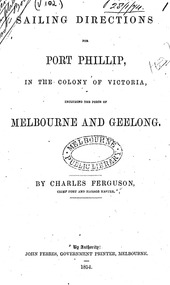
... The circumstances in which Captain Ferguson's family are left not only demands the utmost display of sympathy and interest on the part of friends, but may call for decided and prompt action; therefore I cannot rest satisfied without discharging what I consider my duty, and seeking to strengthen your hands as far as I may in bringing the character of his long services before the existing colonial authorities. ...The circumstances in which Captain Ferguson's family are left not only demands the utmost display of sympathy and interest on the part of friends, but may call for decided and prompt action; therefore I cannot rest satisfied without discharging what I consider my duty, and seeking to strengthen your hands as far as I may in bringing the character of his long services before the existing colonial authorities. ...Captain Charles Ferguson was born in Scotland in 1813. He was the Master of the "Rajah" from 1838 to 1850 on voyages from England to Australia and vice versa. He became the First Chief Harbour Master for the port of Melbourne in 1852 after being the first Harbour Master and Water Police Officer in Geelong for 12 months. On the 5th of April 1841, the Rajah sailed with James Donovan M.D. as Surgeon Superintendent, and the Rajah sailed from Woolwich with 180 female convicts. The Rajah arrived on the 19th of July in Hobart, with 179 females (one died during the voyage) and 10 children. Miss Kezia Elizabeth Hayter was the matron on board. On page 28 of the "Sailing directions for Port Phillip, in the colony of Victoria including the ports of Melbourne and Geelong", a mention is made of the Mariner's Hospital and Floating Church soon to be established. There were discussions to built the hospital in Williamstown but instead the Government decided to build it in Melbourne. The Harbour Master and a commiittee decided to use the water police hulk, Emily, left unsold in 1856, to create a floating church: the Bethel was open in July 1857 with Reverend Kerr Johnston as Chaplain. Latrobe wrote a letter to Captain Cole in 1869, a few months after learning his death : "To Captain George Ward Cole † [from a draft in another’s hand] Clapham House, Lewes, Sussex, January 28th, 1869. My dear Captain Cole, Last mail will have taken out the sad intelligence of the death of our excellent old friend, Captain Ferguson. This will have been a terrible blow to his children and to his friends in the colony, who may have held reason to expect his early return to his home, with a not unreasonable prospect of ultimate restoration to health and activity. In the course of last October I went up to town with one of my children, mainly with the purpose of finding my way to Pinner, where he and Mrs. Ferguson were staying with an intimate friend. I found him in excellent health and spirits, and enjoying the prospect of a speeding resumption of the service to which he had devoted his best days, and upon the furtherance of which his entire energy was still directed. A week or two later Captain and Mrs. Ferguson went to Dover for change of air, and being still under the impression received from the advisers by whom they had been guided during their residence at a hydropathic establishment at Matlock, felt encouraged to plan almost immediate return to the colony by the Jerusalem early in December. However, certain misgivings in the mind of a medical gentleman, then in England, under whose care Captain Ferguson had at one time placed himself in Williamtown, led them to consider it judicious before departure to take the advice of some surgeon of eminence in London. Accordingly they came up to town at the close of November. The first London practitioners they consulted shook their heads, and advised consultation with Sir Wm. Ferguson. The result was that amputation, without loss of time, was pronounced necessary. The rest is soon told. He received the painful intelligence with calmness and full resignation to God's will, and underwent the operation at King's College Hospital with exemplary firmness and Courage on the 28th of November. Perfect success seemingly attended it, and there seemed, humanly speaking, to be every prospect of a prompt cure and early convalescence; everything seemed in his favour. A few days later, however, all was clouded by symptoms of hospital fever (pyoe æm ia). This resisted all control, and finally carried him off on the 27th of December, just one month after the operation. He had lived a Christian life, and his death was the peaceful and resigned death of a Christian. It was a melancholy satisfaction to me to be able to join a few friends in following his remains to their resting place in one of the outlying London cemeteries on the last day of the year. You know Mrs Ferguson well, and will be prepared to hear me say that her whole conduct and demeanour throughout this period of suspense and bitter trial has been worthy of her high character and steadfast principle. Come what will, and happen what may, I have the fullest conviction that neither the widow nor the children will be forsaken, however doubtful and clouded the future may appear, in consequence of the irreparable loss which, they have sustained. And now, dear Captain Cole, it is possible that you may already have heard all this from other sources, but I have dictated it to you under strong impulse, for I feel assured that there is no member of the community in which you live who will more sincerely deplore the loss of Captain Ferguson on private grounds; at the same time that there is no one who, from long acquaintance with his official character and services, will be in a better position to estimate their real value or the loss which the colony has sustained. The circumstances in which Captain Ferguson's family are left not only demands the utmost display of sympathy and interest on the part of friends, but may call for decided and prompt action; therefore I cannot rest satisfied without discharging what I consider my duty, and seeking to strengthen your hands as far as I may in bringing the character of his long services before the existing colonial authorities. Of his private career previous to his entering the service of the Colonial Government in 1851 nothing need be said. Captain Ferguson was appointed as the Harbour Master at Geelong in April, 1851 – a few months before the separation of the colony from New South Wales. He there did excellent service in a variety of ways calculated to advance the interests of the port, and to introduce www.latrobesociety.org.au 27 order, where, from circumstances, but little order had hitherto prevailed. His was the first appointment of this class in that locality. The separation of the colony from New South Wales took place in the month of July following. Shortly after, the late Captain Bunbury resigned the Harbour Mastership of Port Phillip. Captain Ferguson was at once (February, 1852) appointed to succeed him, and from that time performed all duties of Chief Harbour Master of the colony. The previous year (May 1851) the first gold discoveries in New South Wales had taken place, and in the month of August those of our colony followed. At the time of Captain Ferguson’s taking charge of the Port of Melbourne their influence had begun to be fully felt, and in no department more seriously than in that of the Harbour Master. This is no place for statistical details, but they must bear me out in reminding you of a few facts connected with our late friend’s career. At the time of separation that department comprised only 30 individuals of all ranks, and when he took charge the number was much reduced. There were at that time, according to the returns, no fewer than 54 vessels, registering 26,785 tons, in Hobson’s Bay alone. The crews on arrival numbered 1,235 men. Of this number only 463 remained on board, 500 having deserted, and the rest having been discharged by arrangement or pure necessity. For the first six months after Captain Ferguson’s assumption of office as Harbour Master the duties of Police Magistrate and Chief of the Water Police were superadded, and how much labour they involved may be surmised from the fact that from 1st of April to the 31st July, 1852, four months only, no less than 236 marine cases were brought before the bench at Williamstown - sometimes as many as 30 in a day. A year later (March 1853) the returns show that the number of vessels in the harbour in Hobson’s Bay alone were 91, tonnage 43,754; and passing on to the still later returns of May, 1853, two years after Captain Ferguson’s assumption of office, we find from the records that the number of ships in port had increased to 129; tonnage, 63,292; crew on board on arrival, 2872, and at the date of report, 1628; the amount of desertions at that time having, however, proportionally diminished, in consequence of the abatement of the gold fever, caused by the non-success attendant upon the labours of thousands at the goldfields. The above numbers take no account of the large number of vessels and amount of tonnage lying at the wharves at Melbourne or elsewhere. From these figures alone it may be judged what must have been a struggle in which the Chief Harbour Master was engaged from the very outset to secure order, and answer the innumerable calls on every branch of his department, at the same time that there was for many months an almost complete impossibility of securing subordinate agency, such as boatmen, pilots, and police, at any price. But I may bear witness to the untiring diligence, energy, and self-devotion with which Captain Ferguson grappled with the difficulties of his position, and the seemingly insurmountable obstacles which stood in his way. Ashore and afloat he was always ready, showing the same directness of purpose, intelligence, and forgetfulness of self. He shunned no responsibility, and turned his hand from no work, whether within or beyond the ordinary scope of his duty, which the hard necessity of the times forced the Government to bring under his notice. Already in 1852, when the overflowing of our gaol and stockade rendered the adoption of other methods of restraint absolutely necessary, and addition to the existing buildings could not be thought of, it was Captain Ferguson who first suggested the employment of hulks; and it was with his personal assistance and supervision, and under his unflagging energy, that the three first of these – the Success, the President, and the Sacramento – were purchased, fitted up, and made available for the purpose in view, and the rules and regulations for the employment and safety of the men afloat and ashore prescribed and carried out. He carried the same energy into every branch of his department, and his influence was soon apparent. His subordinates of every class became actuated by his spirit. As time moved on, the range of his duties, both ordinary and extraordinary, increased. In the formation of the quarantine station at the heads, in the management if not the erection of lighthouses, sailing directions, port and wharf regulations, buoys, signal stations, www.latrobesociety.org.au 28 steam dredging &c., he was the main and most active agent. The whole pilot establishment and regulations, men, and vessels, were under his charge; and when I left the colony in May, 1854, the entire range of ports outside Port Phillip Heads from Point Lonsdale to Portland, as well as that of Geelong had felt the influence of his intelligent supervision and care. The entire department of Chief Harbour Master, which I have numbered at the period of separation about thirty individuals, then numbered 230. The character of Captain Ferguson’s unbroken service during the fourteen years which have elapsed since I left the colony must be well known to the Government and the people he has served so long and so faithfully. I confine myself to recalling to mind those earlier, and what must have been the hardest and most difficult, period – none can know how difficult but those who were in that fierce struggle for the maintenance of order under so many disadvantages; and on this subject I have spoken advisedly and with reason, for I may truly say he worked under my own eye. I had sincere regard for the man, and just pride in the qualities of his heart, head, and hand. Whatever mistakes may have been made by the Government of the colony in those hard and difficult times (and I am quite ready to admit that there were many, especially if the past is to be judged by the light of the present), I never have hesitated in believing that, in appointing Captain Ferguson to the office he has so long filled, it was the right man in the right place. I shall be heartily rejoiced to find that the Government and inhabitants of the colony admit that this has been the case, and to learn that they have not forgotten the strong claims of one who has served them so long and so faithfully, and who, removed by God’s providence, so to say, in the maturity of his powers, has left a widow and young family behind him. I have done, I leave you to make use of this communication, or any portion of it, which you may think judicious and called for. There may be among Ferguson’s friends those who may not be sorry to be reminded of facts. By-the-bye, I may mention as a proof how completely Captain Ferguson’s mind was engrossed by devotion to his public duty, that while in Dover, only ten days before the operation, he took an opportunity to drag himself up into the lantern of the S. Foreland Lighthouse, and made a most careful scrutiny of the whole apparatus and arrangement, with a view of the adoption of any hint for the perfection of those under his charge in the colony. And now, goodbye. I trust this will find you in good health, and in comparative vigour. Believe me ever, dear Captain Cole, Yours very truly, C. J. La Trobe"The attempt for a floating church was made as early as 1853 following similar examples in London like the Seamen's Hospital. Captain Ferguson was instrumental in the foundation of the Bethel Church.Digital copies of the 37 pages ; 22 cm.1854, hobsons bay, geelong, melbourne, williamstown, sandridge, mariner's hospital, floating church, seamen's hospital, captain charles ferguson (1813-1868), kezia elizabeth hayter (1818-1885), rajah quilt, prison hulks, water police, harbour master, harbor master, gaols -
 Federation University Historical Collection
Photographs - Colour, Hillman Award Agreement and Presentation, 1991, 1991
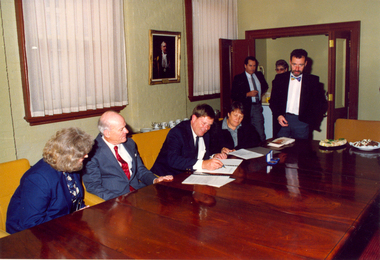
... family in honour of the late Lindsay Frederick John Hillman. The bronze medal was presented annually to an enrolled student in an accredited course in the field of electrical/electronics studies at the Ballarat School of Mines. specific Criteria for the Award consisted of a balance of academic performance, leadership qualities, commitment to further study and involvement in sporting and/or community groups. The first Hillman Award was presented in 1991. The recipients are: 1991: Paul Donald 1992 - Brett A. Hovey 1994 - Brent L. Ferguson...family in honour of the late Lindsay Frederick John Hillman. The bronze medal was presented annually to an enrolled student in an accredited course in the field of electrical/electronics studies at the Ballarat School of Mines. specific Criteria for the Award consisted of a balance of academic performance, leadership qualities, commitment to further study and involvement in sporting and/or community groups. The first Hillman Award was presented in 1991. The recipients are: 1991: Paul Donald 1992 - Brett A. Hovey 1994 - Brent L. Ferguson ...Lindsay F.J. Hillman was born in Ballarat, and attended the Ballarat Junior Technical School. He became a cadet in Electrical Engineering Laboratory at the Ballarat School of Mines where he gained eventually gained a student Teachership for diploma studies at the School. Hillman was particularly active and excelled in a wide range of sporting interests and in student activities. In 1928 and 1928 he was awarded the Ballarat School of Mines Honour blazer by the Old Boys' association for all round athletic ability, leadership and scholarship. After spending two years with the Melbourne City Council Electric Supply Department gaining industrial experience Hillman was awarded his Diploma of electrical engineering in 1931, returning to the School in 1932 to teach apprentices and senior students. Hillman was appointed lecturer in Engineering Design and Graphics in 1937, lecturer in Engineering Design and Civil Engineering in 1944, Lecturer-in-Charge of Mechanical and Civil Engineering in 1948 and Head of the Electrical Engineering Department in 1949, a position he held until his retirement in 1973. In 1975 Lindsay Hillman was appointed to the Council of the Ballarat School of Mines and played an active role in school affairs.As Vice-President of Council from 1981 until his death in 1991 Hillman took a leading part in the implementation of many of the major building projects on the Lydiard Street Campus. The L.F.J. Hillman Award was established by the Ballarat School of Mines Council in conjunction with and through the generosity of the Hillman family in honour of the late Lindsay Frederick John Hillman. The bronze medal was presented annually to an enrolled student in an accredited course in the field of electrical/electronics studies at the Ballarat School of Mines. specific Criteria for the Award consisted of a balance of academic performance, leadership qualities, commitment to further study and involvement in sporting and/or community groups. The first Hillman Award was presented in 1991. The recipients are: 1991: Paul Donald 1992 - Brett A. Hovey 1994 - Brent L. Ferguson 1995 - Kirsty McKenzie 1996 - Peter J. WhiteEighteen colour photographs of the signing of the Hillman award agreement and the first presentation of the award in 1991 to Paul Donald . .2) Gregor Hillman, Judith Tinney and Caroline Bethune .4) Judith Tinney or Caroline Bethune and Bill Gribble sign the agreement .8) Gregor Hillman, Judith Tinney and Caroline Bethune sign the agreement, along with President of the Ballarat School of Mines, Bill Gribble. .10) Paul Donald with his L.F.J. Hillman Award, 1991 .11) Ballarat School of Mines Principal, Peter Shiells, speaks at the lectern watched on by members of the Hillman family.ballarat school of mines, hillman, lindsay hillman, medal, numismatics, electrical engineering, electronics, gregor hillman. judith tinney, caroline bethune, tinney, bethune, hovey, ferguson, mckenzie, white, paul donald, donald -
 Federation University Historical Collection
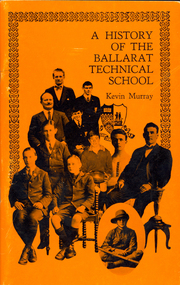
Book, Kevin Murray, A History of the Ballarat Technical School, 1969
... ballarat junior technical school ballarat school of mines steane uniform cap charles jeffrey rex cutter leslie garner robert watson kevin murray w. poole c. fenner maurice copland hesiltine arblaster barker w.h. barnard andrew berry fred martell austin martell robinson ferguson bald angow bainbridge billman blackam coxall crawley eason fraser gay gray john dulfer lamont lee lyons manson murphy myers pllover riddiford skewes snibson wilson young beacham anstis copeman janes william skilbeck wakeling harold wakeling gladstone procter f.g. procter skilbeck Gladstone Proctor Orange soft coverered book of 67 pages. Contents include the origins of Junior Technical Schools in Victoria, Albert Steane, Ballarat Girls' Junior Technical School, Teachers, mothers' club, Old Boys' Association, School records, Family ...Orange soft coverered book of 67 pages. Contents include the origins of Junior Technical Schools in Victoria, Albert Steane, Ballarat Girls' Junior Technical School, Teachers, mothers' club, Old Boys' Association, School records, Family Links, headmasters, record of teachers. ballarat junior technical school, ballarat school of mines, steane, uniform, cap, charles jeffrey, rex cutter, leslie garner, robert watson, kevin murray, w. poole, c. fenner, maurice copland, hesiltine, arblaster, barker, w.h. barnard, andrew berry, fred martell, austin, martell, robinson, ferguson, bald, angow, bainbridge, billman, blackam, coxall, crawley, eason, fraser, gay, gray, john dulfer, lamont, lee, lyons, manson, murphy, myers, pllover, riddiford, skewes, snibson, wilson, young, beacham, anstis, copeman, janes, william skilbeck, wakeling, harold wakeling, gladstone procter, f.g. procter, skilbeck, gladstone proctor -
 Mission to Seafarers Victoria
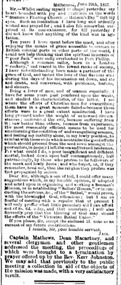
Article - Newspaper clipping, Argus newspaper, Seamen's floating church in Hobson's Bay, 2 July 1857
... Ferguson (1813-1868) was one of the members of the committee who founded the floating church. The ship Emily may have been a convict ship sailing from England to the Van Diemen's land in 1842 and 1844. Before 1856, it was used as a "water police hulk" then transformed in an accommodation for Reverend Kerr Johnson and his large family and fitted to receive 200 attendees in the chapel....Ferguson (1813-1868) was one of the members of the committee who founded the floating church. The ship Emily may have been a convict ship sailing from England to the Van Diemen's land in 1842 and 1844. Before 1856, it was used as a "water police hulk" then transformed in an accommodation for Reverend Kerr Johnson and his large family and fitted to receive 200 attendees in the chapel. ...After an attempt of building a Seamen's Hospital in Williamstown, the ship Emily was transformed in a floating chapel to welcome seamen for service. Captain Charles Ferguson (1813-1868) was one of the members of the committee who founded the floating church. The ship Emily may have been a convict ship sailing from England to the Van Diemen's land in 1842 and 1844. Before 1856, it was used as a "water police hulk" then transformed in an accommodation for Reverend Kerr Johnson and his large family and fitted to receive 200 attendees in the chapel.The article is significant as it describes the ship and its location: "The hulk is moored midway between Sandridge and Williamstown, and is distinguished by a blue flag flying at the mainmast with "Bethel" inscribed on it; and in one corner of the flag is the star of Bethlehem, in another a dove with an olive branch."1 column article in the Argusship emily, floating church, reverend kerr johnston, 1812-1887, hobson's bay, sandridge, captain ferguson, captain charles ferguson (1813-1868), convict ships -
 Marysville & District Historical Society
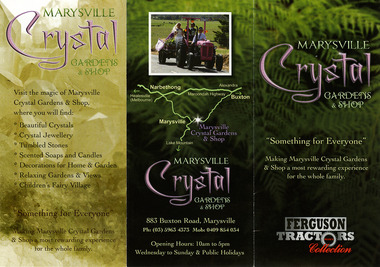
Ephemera (Item) - Advertising brochure, Marysville Crystal Gardens & Shop, Unknown
... family home and still is. After the 2009 Black Saturday bushfires, it is now the only surviving, original guest house left in Marysville. crystal gardens marysville victoria ferguson tractors marysville house arthur dickinson guest house 2009 black saturday bushfires An advertising brochure for Marysville Crystal Gardens and Shop in Victoria. ...An advertising brochure for Marysville Crystal Gardens and Shop in Victoria.An advertising brochure for Marysville Crystal Gardens and Shop in Victoria. Marysville House, home to Marysville Crystal Gardens and Shop was built by Arthur Dickinson as a guest house in the late 1920s, then added to in the late 1940s. It closed as a guest house in the late 1950s. The family catered for up to 40 guests at a time. It was also the family home and still is. After the 2009 Black Saturday bushfires, it is now the only surviving, original guest house left in Marysville.crystal gardens, marysville, victoria, ferguson tractors, marysville house, arthur dickinson, guest house, 2009 black saturday bushfires -
 Marysville & District Historical Society
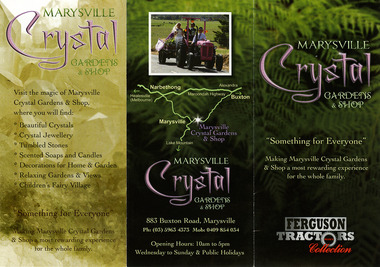
Ephemera (Item) - Advertising brochure, Marysville Crystal Gardens & Shop, Unknown
... family home and still is. After the 2009 Black Saturday bushfires, it is now the only surviving, original guest house left in Marysville. crystal gardens marysville victoria ferguson tractors marysville house arthur dickinson guest house 2009 black saturday bushfires An advertising brochure for Marysville Crystal Gardens and Shop in Victoria. ...An advertising brochure for Marysville Crystal Gardens and Shop in Victoria.An advertising brochure for Marysville Crystal Gardens and Shop in Victoria. Marysville House, home to Marysville Crystal Gardens and Shop was built by Arthur Dickinson as a guest house in the late 1920s, then added to in the late 1940s. It closed as a guest house in the late 1950s. The family catered for up to 40 guests at a time. It was also the family home and still is. After the 2009 Black Saturday bushfires, it is now the only surviving, original guest house left in Marysville.crystal gardens, marysville, victoria, ferguson tractors, marysville house, arthur dickinson, guest house, 2009 black saturday bushfires -
 Seaworks Maritime Museum
Bound Certificate, Ferguson and Mitchell, 13th March 1891
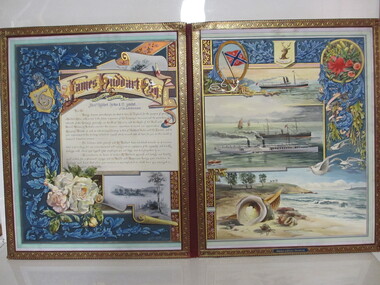
... Huddart, yourself and your family our hearty/ good wishes for a pleasant voyage, and for the Health and Happiness during your residence in/ England and trust that when your mission is accomplished we shall have you amongst us/ again in Australia." "Ferguson...Huddart, yourself and your family our hearty/ good wishes for a pleasant voyage, and for the Health and Happiness during your residence in/ England and trust that when your mission is accomplished we shall have you amongst us/ again in Australia." "Ferguson ...Large, bound page containing an ornate certificate of appreciation. Includes coloured paintings of ships at sea, the beach, stag, seagulls, the Huddart Parker and Co Flag, Australian flowers and vegetative illustrations. Borders of the page are red leather with gold pattern. Outside is red leather binding with gold writing and decorationLeft inside page: "James Huddart Esqr./ Managing Director/ Mess ts Huddart Parker & Co Limited/ Melbourne/ Dear Sir/ Having become aware that you are about to leave for the purpose of opening/ a London Office, with a view to the future expansion of the Company's business, and the promotion of the/ interests of the company generally, we the Ships Office, and the Staff of the Head and/ Branch Offices in Australia, consider the occasion opportune to record our appreciation of you as/ Managing Director of such an enterprising Company as that of Huddart Parker and Co. Limited, and to/ give expression to the feelings of kindest regard which we, each and all, have for you as the result of/ frequent business contact./ The kindness which yourself and Mrs Huddart have exhibited towards us at various/ times in providing for our entertainment and enjoyment, as expressive of the sympathy and kindly/ feelings with which you regard your employees, are not likely to be soon forgotten by us./ In conclusion, we desire to tender Mrs. Huddart, yourself and your family our hearty/ good wishes for a pleasant voyage, and for the Health and Happiness during your residence in/ England and trust that when your mission is accomplished we shall have you amongst us/ again in Australia." "Ferguson & Mitchell/ Illuminators/ Melbourne" Right inside page: "Fear God/ Ferguson & Mitchell. Melbourne" Artist signature: "Alfred Adov" written in pencil: "PWO 1265" Outside, Front Page: "Presented to/ James Huddart Esqr./ By the officers of/ Messrs.. Huddart Parker & Co. Limd/ Melbourne 13th March 1891" -
 Eltham District Historical Society Inc
Document - Sharp family
... family and of Hurstbridge. Photograph of Allwood House, 1899, including W G Gray, Carrie Sharp and Robert Sharp. Gwen Sharp Sharp's Flat Hurstbridge Sharps Road Hurstbridge Arthurs Creek Hurstbridge Hurst Private Memorial Grave site Robert Hurst Frances Hurst Hurst's Bridge Ellen Hurst Keith Sharp Sheila Ferguson Henry Facey Hurst Charles Botterell Hawkins Fanny Hawkins nee Hurst Caroline Frances Maria Sharp nee Hawkins Robert Nehemiah Sharp "The Oaks" Kinglake William Sharp Edgar Sharp Harry Sharp Stan Sharp Daisy Sharp "Homeleigh" Hurstbridge Roy Sharp Jean Sharp Lilian Sharp Allwood House Hurstbridge Ferguson's Paddock Hurstbridge Arthur's Creek Road Carrie Sharp Sharps house Hurstbridge Dorset house Hurstbridge Ryans butcher Hurstbdirge Hortons bakery Hurstbridge Bootmaker Hurstbridge D G Graham blacksmith Hurstbridge Noella Macperson nee Sharp Richard Sharp Robert Sharp Muriel Sharp edna Sharp Lyn Sharp Muriel Sharp nee Limmer Muriel Willson Henry Willson Country Fire Authority Hurstbridge Newspaper clippings, A4 photocopies, etc Document Sharp family ...Keith Sharp was a descendant of the Hurst family, and lived in Hurstbridge, being active in the Hurstbridge Country Fire Authority. His family's farm gave its name to Sharps road, Hurstbridge. Contents Gwen Sharp, no date: Photocopy of collection of material on Sharp family of Hurstbridge and naming of Sharps Road containing: Photograph Fergusen's paddock, Hurstbridge, 1987. Notes on renaming of Sharp's Flat to Sharps Road. Notes on the Hurst family and how Keith Sharp is descended from Ellen Hurst, with details of each generation. Photographs of Sharp family and of Hurstbridge. Photograph of Allwood House, 1899, including W G Gray, Carrie Sharp and Robert Sharp. Newspaper clippings, A4 photocopies, etcgwen sharp, sharp's flat hurstbridge, sharps road hurstbridge, arthurs creek, hurstbridge, hurst private memorial grave site, robert hurst, frances hurst, hurst's bridge, ellen hurst, keith sharp, sheila ferguson, henry facey hurst, charles botterell hawkins, fanny hawkins nee hurst, caroline frances maria sharp nee hawkins, robert nehemiah sharp, "the oaks" kinglake, william sharp, edgar sharp, harry sharp, stan sharp, daisy sharp, "homeleigh" hurstbridge, roy sharp, jean sharp, lilian sharp, allwood house hurstbridge, ferguson's paddock hurstbridge, arthur's creek road, carrie sharp, sharps house hurstbridge, dorset house hurstbridge, ryans butcher hurstbdirge, hortons bakery hurstbridge, bootmaker hurstbridge, d g graham blacksmith hurstbridge, noella macperson nee sharp, richard sharp, robert sharp, muriel sharp, edna sharp, lyn sharp, muriel sharp nee limmer, muriel willson, henry willson, country fire authority hurstbridge -
 Glen Eira Historical Society
Document - Murrumbeena Baptist Church, Murrumbeena Road, 44
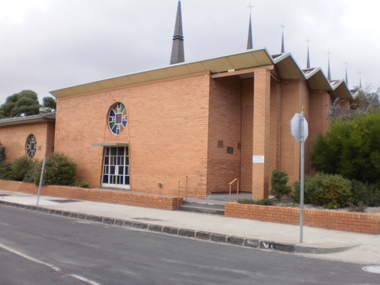
... Ferguson Mrs... White Mrs... Outhread Noel Mr.... Burleigh Betty Miss... Orchestras... Clark Ted Mr.... Daniels Alan Mr... Staunton Keith Mr.... Staunton Martin Mr... Steer Doug Mr... Pascoe Vack Mr.... Ryall Mert Mr.... Clay Ken Mr.... Carter Francis Mr.... Chambers Harry Mr... Hendry T. J. Mr... Andrews. E. F. Rev... Venning Frank... Provis Keith... Lee Milton F. Rev... Kingdom Max Rev... Kingdom Fredq... Allison C.... Eleiner E Mrs... Provis Jan Miss... Chambers Merle Miss... Collicot Allison Miss... Cook John... Cook family...Ferguson Mrs White Mrs Outhread Noel Mr. Burleigh Betty Miss Orchestras Clark Ted Mr. Daniels Alan Mr Staunton Keith Mr. Staunton Martin Mr Steer Doug Mr Pascoe Vack Mr. Ryall Mert Mr. Clay Ken Mr. Carter Francis Mr. Chambers Harry Mr Hendry T. J. Mr Andrews. E. F. Rev Venning Frank Provis Keith Lee Milton F. Rev Kingdom Max Rev Kingdom Fredq Allison C. Eleiner E Mrs Provis Jan Miss Chambers Merle Miss Collicot Allison Miss Cook John Cook family ...Reprinted history of Murrumbeena Baptist Church 1890 – 1990 compiled for the church’s centenary celebrations in 1990 by Ross Harrison Snow and Geoft Barthold. Each chapter details certain periods of church history and associated events Handwritten notes, including wording on foundation stone, by person unknown & undatedmurrumbeena, murrumbeena baptist church, pitt annie sophia, dandenong road., george samuel, baptist church, emily street, whitlam janet, box henry, snow ross harrison, gallop abel, pay henry mrs., rollings william, barthold geoff, thomas pay, pay e – miss godfrey, w- mrs, pitt st clair percival, godfrey william, pay t. a. h – mrs, blair mrs, white mrs, shearer mrs., box marie miss, box nellie miss, gallop prudence miss, gallop e. j. miss, rosstown wesleyan churches, murrumbeena baptist church, churches, gresswell f. l. mrs, neerim road, public halls, murrumbeena railway station, union chapel, kangaroo road, oakleigh, cole. j. h., turner mr., williamson r. rev, stewart allan., rosstown., architects, laver and flick messrs, mayhew george mr., chambers a. r. mr., godfrey brother, whitley w. t. rev., williamson rev., endersby elizabeth miss., meehani francis, french john, whyte mrs., thompson isabella mrs., burgess mary mrs., organ, tarry j. brother, mclean donald f. rev., wilkins george mr., sutherland mr., sydney street, nopkins ivor. rev, gallop mrs, pay brother, pitt brother, hopkins mrs, thompson ethel. miss, thompson mabel. miss, lavender mr. fred, whitlam george. master, varley frank mr, whitlam fred. mr, varley mrs, hale g. e. rev., whitlam crissie miss, curnick elizabeth miss, byrne mr, clemens f. rev., tennis club, tennis courts, cheffer mr., peace george mr., green mr., nash w. f rev., earl stanley j. rev, earl mrs., parker miss, adelaide street 12 manses, endersby david, harvey nellie. miss, fasham f. miss, mills mr., kelly mr., dyason mr, mckeon mr, lavender b. mr., chaffey alf, nelson norman, guthrie andrew, hopkins mrs., kindergarten, girl guides, loyal orange lodge, hall, fire, juniour christian endeavour league, intermediate christian, endeavour society, endersby mr, wilkins mr, wills mr, kelley mr, golden jubilee 22- 29 sept. 1940, knight e. o. rev, marriott e staunton m stone j., clay clark e. messrs, carter mr, carter mrs, deacenesses, helmore p. h. mrs, ryall c. m. mrs, carbis l. miss, wilson a. mrs, clark e. j. mrs, cornock m. miss, smith a. w. rev, mcdonald h. miss, stewart j. miss, edwards. w. messrs, crowe m. messrs, diggins l. messrs, wilson k. mr, ryall c. m. mr., wright a. mr., watkins mr., smith k. a. rev, scout groups, hobart street – 59 manses, helmer p. mr, filmer mr, carter mr., staunton martin mr., lewis donald rev 1951- 1956, perri john, collrus barry, ferguson mrs, white mrs, outhread noel mr., burleigh betty miss, orchestras, clark ted mr., daniels alan mr, staunton keith mr., staunton martin mr, steer doug mr, pascoe vack mr., ryall mert mr., clay ken mr., carter francis mr., chambers harry mr, hendry t. j. mr, andrews. e. f. rev, venning frank, provis keith, lee milton f. rev, kingdom max rev, kingdom fredq, allison c., eleiner e mrs, provis jan miss, chambers merle miss, collicot allison miss, cook john, cook family, horn neville rev, horn family, benneld family, bennett john., bennetts cliff, wiesmayrs’ family, allison barbara miss, jones ross, jones joy, fverst walter, doyle family, bertram estelle, bertram family, saletta margaret, saletta len, close kevin, close family, close anne, stewart des, stewart family, peel family, fisher family, leis family, arms harry, jones ross, jones family, jones joy, langdon family, bertram bill, staunton ian, staunton yvonne, staunton jean, staunton keith, staunton martin, clifferd. patricia, clifferd. charles, chambers awen, wall brian, wall bev, ryall geoff, ryall kay, ryall edna, davidson max, davidson mary, freeman john, hendry t s, provis keith, terrington michael, terrington doreen, carbis hazel miss, butterworth ern, clay ken, clay mrs., clay judith, clay noelle, muller ron, cook john, kingdom joy, kingdom graham, strong david, owens cliff, chambers harry, christy family, warr bill dr., morrison grace mrs., soderholm harvey, soderholm mrs, harris jeanette mrs, harris trevor rev., freeman pauline, freeman john., hendry t. j., steer doug, owens allison, owens graham, henderson ray, henderson chris, rathbone ian, rathbone pat, jenkins marion, girls’ club, wilson cliff dr., ladies evening group (legs), anderson family, l’ amont family, powell harold., harris luke, harris trevor, davies mrs, young george, anderson russell, wade joan, sauvarin lois, hill fred, wilson david., hansell fiona, hansell jane, brammer leanne, bertram ruth, langton john, crowe ken, dobney john, nobbs steve, jordan mr., steer david., steer doug, murrumbeena christian education centre (cec), suggare alwyn, gray s. mr., wilson clive rev., jephcott hume, jephcott heather, mccleary ross, mccleary glenn, claringbold mary, bennetts marcia., langton phil, worthy reg, thomson ave, mckerlie darrell rev., henderson ray, langenberg stewart van, crowe malcolm., sydney street, wall brian, zegelis imants, allison doug, owens rhonda, anderson peter, provis ken, vaitch fay, longenberg roger van, ife david, warren lena, churches bruce, churches mrs, bennetts john, mcdonald. k., cathie ian., cathie wendy, wright norman rev., alma street, mckerlie darrell rev., hampton keith rev., robinson john rev, jolly rod, crowe malcolm, lakey m, ferdinands ann, ferdinands ken, inders brett, inders jenny, cooke stephen, cooke deanne, langenberg jeremy van, binks paul, wall john, leslie geoff, leslie debbie, macleod nelson, macleod heather, dalton steven, pugh jeff, jones ross, ceulson joy, jackel lindsay, jackel sue, berry graham, wall brian, wheatland don, langton phil, stewart margaret, wheatland elise, wall bev., chambers gwen., foundation stone, morley john rev., sunday seekers, young marrieds, mothers’ group, choirs, walrond cw, turner mr, chisholm mr, mcdonald mr, church furniture, williams brother, sunday schools, victorian baptist preachers’ society, pitt mrs, thompson m miss., pitt w. miss, pay miss, thompson e. mrs., stained glass, christian endeavour society, young worshipper’ league, baptist women’s association, men’s society, murrembeena baptist football club, children’s church, youth council, junior christian endeavour, buds, baptist girls’ fellowship, boys club, baptist men’s society, youth fellowship life boys, boys brigade, alma street 17 chadstone manse, one way searchers’ group -
 Eltham District Historical Society Inc
Negative - Photograph, Members of the Hill family, early Eltham settlers, c.1860
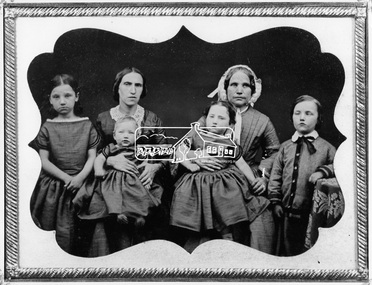
... family...research (vic.)...women...Amelia Hill...Bob Hill...Daguerreotype...Early Settlers...Georgina Hill (nee Reynolds)...Isaac Hill...Mary Jane Hill...Mrs Henry Hill...Mrs Isaac Hill...Ellen Hill (nee Fitzsimons)...Isabella Fitzsimons (nee Ferguson...Ferguson). This photo forms part of a collection of photographs gathered by the Shire of Eltham for their centenary project book,"Pioneers and Painters: 100 years of the Shire of Eltham" by Alan Marshall (1971). The collection of over 500 images is held in partnership between Eltham District Historical Society and Yarra Plenty Regional Library (Eltham Library) and is now formally known as 'The Shire of Eltham Pioneers Photograph Collection.' It is significant in being the first community sourced collection representing the places and people of the Shire's first one hundred years. sepp shire of eltham pioneers photograph collection eltham hill family ...Mrs Georgina Hill (wife of Henry), nee Reynolds (of Research, Vic.) in cap [possibly misidentified by donor - see note below] with Mrs Isaac Hill and her children (left to right) Amelia Hill, (born 1853) Mrs Isaac Hill with baby Isaac (born 1860, Eltham) on her lap. Mary Jane Hill (born 1857, Eltham) seated on Mrs Henry Hill's lap and Bob Hill. The Hill family were early settlers of the Eltham area. Daguerreotype photo enclosed in a leather bound clam shell box with felt lining and gold trim. Donated by Mrs Ivy Edna Hill, 4/1 Bridge Street, Eltham, 4 June 1966 and includes copy of her note identifying the people. Daguerreotypes were one of the first forms of early photographs. They initially appeared in Europe in 1839 and were produced in large numbers to the early 1850s but were superseded by more modern and flexible forms of technology by 1860. The photo was usually formed on a thin copper plate with light sensitve silver iodide. They have a mirror-like appearance and the image itself was mirrored. They were usually inserted into a case or frame made of wood bound in leather or velvet and cost about one guinea in Australia, the equivalent of a week's wages. With the advent of the gold-rush and growing population came an increase in numbers of photographers both studio and travelling. The daguerreotype process was protected by patents and could only result in a single image from which no copies could be made. With new technology involving wet colloidion glass plate negatives and albumen paper prints of which multiple copies could be produced at significantly reduced cost, the dauguerreotype quickly fell out of favour. An accompanying note with the photo written by Edna Hill of 4/1 Bridge Street Eltham dated 4 June 1966 states: "Dear Mr Watson, I think the enclosed old time photograph will be of interest to you. It would have been taken about 1860. The two ladies are the wives of the original pioneers of the Hill family. The one in the cap was the wife of Henry Hill, the other of Isaac Hill. The children are those of Mrs Isaac Hill, and grandchildren to Henry Hill. The little girl on the left is Amelia, the baby Isaac, the second girl is Mary Jane, and the boy on the right is Bob Hill. They grew up tobe Uncles and Aunts of my late husband. I greatly appreciated a letter received a few months ago per Cr Pelling, from the Shillinglaw Cottage Committee. Yours sincerely, Edna Hill" Victorian birth registrations show Mary Jane Hill was born 1857 in Eltham (9879 / 1857) and Isaac Hill at Eltham in 1860 (1972/1860) NOTE: Mrs Isaac Hill was Ellen Fitzsimons (1834-1863), mother to Henry Hill. Mrs Georgina Hill, wife of Henry cannot be the lady in the cap as she was not born till 1864. Georgina Reynolds (1864-1927) married Henry Hill (1862-1948) in 1884. This lady has significant wrinkling of the face, especially around her mouth. It is possible that she is the mother of Mrs Isaac Hill (Ellen Fitzsimons) who was Isabella Fitzsimons (nee Ferguson).This photo forms part of a collection of photographs gathered by the Shire of Eltham for their centenary project book,"Pioneers and Painters: 100 years of the Shire of Eltham" by Alan Marshall (1971). The collection of over 500 images is held in partnership between Eltham District Historical Society and Yarra Plenty Regional Library (Eltham Library) and is now formally known as 'The Shire of Eltham Pioneers Photograph Collection.' It is significant in being the first community sourced collection representing the places and people of the Shire's first one hundred years.Digital image 4 x 5 inch B&W Negsepp, shire of eltham pioneers photograph collection, eltham, hill family, research (vic.), women, amelia hill, bob hill, daguerreotype, early settlers, georgina hill (nee reynolds), isaac hill, mary jane hill, mrs henry hill, mrs isaac hill, ellen hill (nee fitzsimons), isabella fitzsimons (nee ferguson) -
 Eltham District Historical Society Inc
Photograph - Daguerreotype Photo Case, Members of the Hill family, early Eltham settlers, c.1860
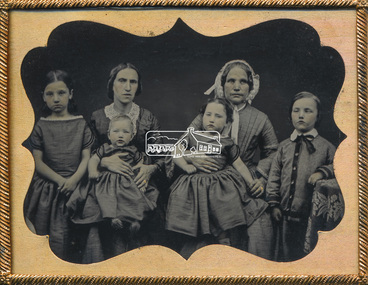
... family...isaac hill...mary jane hill...mrs henry hill...mrs isaac hill...Daguerreotype...Georgina Hill (nee Reynolds)...Research (Vic.)...sepp...Shire of Eltham Pioneers Photograph Collection...women...Ellen Hill (nee Fitzsimons)...Isabella Fitzsimons (nee Ferguson...Ferguson). Early pioneer settlers of Eltham amelia hill bob hill early settlers eltham hill family isaac hill mary jane hill mrs henry hill mrs isaac hill Daguerreotype Georgina Hill (nee Reynolds) Research (Vic.) sepp Shire of Eltham Pioneers Photograph Collection women Ellen Hill (nee Fitzsimons) Isabella Fitzsimons (nee Ferguson) Antique daguerreotypes in hinged gold frame, glass encased in a small clam-shell box lined with padded red felt and with catch Members of the Hill family, early Eltham settlers Photograph Daguerreotype Photo Case ...Mrs Georgina Hill (wife of Henry), nee Reynolds (of Research, Vic.) in cap [possibly misidentified by donor - see note below] with Mrs Isaac Hill and her children (left to right) Amelia Hill, (born 1853) Mrs Isaac Hill with baby Isaac (born 1860, Eltham) on her lap. Mary Jane Hill (born 1857, Eltham) seated on Mrs Henry Hill's lap and Bob Hill. The Hill family were early settlers of the Eltham area. Daguerreotype photo enclosed in a leather bound clam shell box with felt lining and gold trim. Donated by Mrs Ivy Edna Hill, 4/1 Bridge Street, Eltham, 4 June 1966 and includes copy of her note identifying the people. Daguerreotypes were one of the first forms of early photographs. They initially appeared in Europe in 1839 and were produced in large numbers to the early 1850s but were superseded by more modern and flexible forms of technology by 1860. The photo was usually formed on a thin copper plate with light sensitve silver iodide. They have a mirror-like appearance and the image itself was mirrored. They were usually inserted into a case or frame made of wood bound in leather or velvet and cost about one guinea in Australia, the equivalent of a week's wages. With the advent of the gold-rush and growing population came an increase in numbers of photographers both studio and travelling. The daguerreotype process was protected by patents and could only result in a single image from which no copies could be made. With new technology involving wet colloidion glass plate negatives and albumen paper prints of which multiple copies could be produced at significantly reduced cost, the dauguerreotype quickly fell out of favour. An accompanying note with the photo written by Edna Hill of 4/1 Bridge Street Eltham dated 4 June 1966 states: "Dear Mr Watson, I think the enclosed old time photograph will be of interest to you. It would have been taken about 1860. The two ladies are the wives of the original pioneers of the Hill family. The one in the cap was the wife of Henry Hill, the other of Isaac Hill. The children are those of Mrs Isaac Hill, and grandchildren to Henry Hill. The little girl on the left is Amelia, the baby Isaac, the second girl is Mary Jane, and the boy on the right is Bob Hill. They grew up tobe Uncles and Aunts of my late husband. I greatly appreciated a letter received a few months ago per Cr Pelling, from the Shillinglaw Cottage Committee. Yours sincerely, Edna Hill" Victorian birth registrations show Mary Jane Hill was born 1857 in Eltham (9879 / 1857) and Isaac Hill at Eltham in 1860 (1972/1860) NOTE: Mrs Isaac Hill was Ellen Fitzsimons (1834-1863), mother to Henry Hill. Mrs Georgina Hill, wife of Henry cannot be the lady in the cap as she was not born till 1864. Georgina Reynolds (1864-1927) married Henry Hill (1862-1948) in 1884. This lady has significant wrinkling of the face, especially around her mouth. It is possible that she is the mother of Mrs Isaac Hill (Ellen Fitzsimons) who was Isabella Fitzsimons (nee Ferguson).Early pioneer settlers of ElthamAntique daguerreotypes in hinged gold frame, glass encased in a small clam-shell box lined with padded red felt and with catchamelia hill, bob hill, early settlers, eltham, hill family, isaac hill, mary jane hill, mrs henry hill, mrs isaac hill, daguerreotype, georgina hill (nee reynolds), research (vic.), sepp, shire of eltham pioneers photograph collection, women, ellen hill (nee fitzsimons), isabella fitzsimons (nee ferguson) -
 Eltham District Historical Society Inc
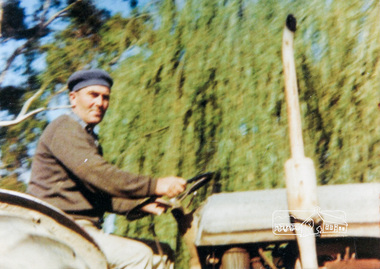
Photograph, Antonio Casonato on 'his' grey Ferguson tractor
... The Fabbro Family operated their farm in Bell Street, Eltham angtona casonato tractor fabbro's farm eltham bell street 1 colour photograph Antonio Casonato on 'his' grey Ferguson tractor Photograph ...Antonio Casonato on his tractor at Fabbro's farm, Eltham. No date. The Fabbro Family operated their farm in Bell Street, Eltham1 colour photographangtona casonato, tractor, fabbro's farm, eltham, bell street -
 Glen Eira Historical Society
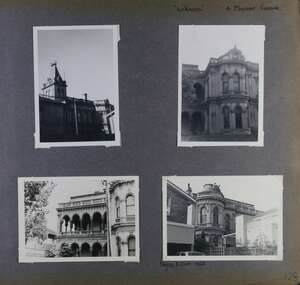
Album - Album page, Labassa, 4 Manor Grove, Circa 1972
... Ferguson and Urie, probably dating from the 1873 period. Labassa is of historical significance as an illustrative example of the wealth acquired by a number of prominent Victorian families in the second half of the 19th century. ...This photograph is part of the Caulfield Historical Album 1972. This album was created in approximately 1972 as part of a project by the Caulfield Historical Society to assist in identifying buildings worthy of preservation. The album is related to a Survey the Caulfield Historical Society developed in collaboration with the National Trust of Australia (Victoria) and Caulfield City Council to identify historic buildings within the City of Caulfield that warranted the protection of a National Trust Classification. Principal photographer thought to be Trevor Hart, member of Caulfield Historical Society. Most photographs were taken between 1966-1972 with a small number of photographs being older and from unknown sources. All photographs are black and white except where stated, with 386 photographs over 198 pages. HISTORY:-- From Victorian Heritage Database citation for Labassa https://vhd.heritagecouncil.vic.gov.au/places/278 as at (26/10/2020) Labassa, Caulfield is one of Melbourne's most lavishly decorated nineteenth century mansions. It resulted from the extensive remodelling in 1890, of an earlier house, known as Sylliott Hill, which was begun in 1862-3 for lawyer, Richard A. Billing. The land at the corner of Balaclava and Orrong Roads was first acquired in 1854 by William Lyall, transferred to his partner, John Mickle, in 1859, who also acquired the adjoining allotment in Balaclava Road, and the three allotments were conveyed to Billing. His first eight-roomed house was extended significantly in 1873 into a twenty-roomed house by architects Crouch and Wilson, who were possibly also responsible for the first house. This reflected Billing's success as a barrister, and he resided at this property until his death in 1882. In 1883 prominent Melbourne businessman, Alexander William Robertson, leased the Sylliott Hill property from Billing's widow, and in 1885 he purchased the adjoining allotment in Balaclava Road. He purchased the Billing's property in 1887 and renamed the 6.31 hectare property, Ontario. In 1889-90, Robertson commissioned the German born architect, John A. B. Koch, to extensively remodel the house into a thirty-five roomed mansion. The existing house was extended and altered, largely resulting in the nineteenth century mansion as it now appears. After Robertson's death in 1896, the house was tenanted until it was eventually sold to the mining millionaire, John Boyd Watson, in 1904. He renamed the property Labassa and carried out repair and re-decoration work to the house. In the early twentieth century, many large estates were subdivided into smaller allotments as the demand for land grew and it became difficult to maintain such large estates. After Watson's death in 1911, portions of the Labassa estate were offered for sale, with Mrs Watson retaining a 1.73 hectare portion containing the house. In 1913 forty-six allotments were auctioned at Labassa Estate, with the formation of Labassa Grove and Ontario Street to the east of the property. Labassa was first recorded as containing flats in 1923 and in the late 1920s, the owner, Robert Hannon, built a red brick block of flats adjacent to the house. Subdivision continued, until the National Trust of Australia (Victoria) purchased the house in 1980 and subsequently purchased adjoining sites, one to the south-east in 1984 (house demolished in 1988) and to the west in 1988. Labassa as it now stands is substantially as it appeared when Koch completed the work in 1890. The original two storey house was transformed into a French Renaissance style mansion, with the addition of a two level L-shaped arcaded verandah and two prominent terminating bays to the south and the east. The building is of unpainted cement render with dressed bluestone plinths, balustraded parapet and steep, slate covered, flat topped mansard roofs behind. A truncated conical roof is a feature of the south bay and a helmeted head is incorporated in the parapet over the east bay. The main south and east facades incorporate many cast cement details, including sculptures, elaborate cornices, swagged Corinthian columns and caryatid consoles flanking the entrance porch, as well as pink marble panels and imitation marble, or scagliola, on curved surfaces. At the rear of the building is a two storey wing and a single storey cottage, the former being connected to the main house by a tower. This section of the house was constructed in 1873. The estate at its peak included stables (1873), conservatory (probably 1890) and a tennis pavilion (probably 1890). All of these outbuildings survive, with the stables and conservatory being converted for residential use after 1922. Internally a range of decorative treatments remain from the late nineteenth century and the early twentieth century, both from the Robertson and Watson periods of occupancy. These include wallpapers, ceiling decoration, chimney pieces, mouldings, joinery and decorative glass. From Victorian Heritage Database citation for H0135 Labassa 2/2A Manor Grove Caulfield North https://vhd.heritagecouncil.vic.gov.au/places/278 as at (26/10/2020) HOW IS IT SIGNIFICANT? Labassa, Caulfield is of architectural, aesthetic and historical significance to the State of Victoria. WHY IS IT SIGNIFICANT? Labassa, Caulfield is of architectural significance as the most prominent example of a small number of houses built in Australia in the French Renaissance style. It is of further note due to the German interpretation of the style and the use of Hellenistic sources, via Germany. It is exceptional for its lavish treatment externally, including marble, scagliola, caryatids, swagged columns, mansard roofs and ornamental cresting. Labassa is of architectural significance as the most important surviving example of German architect, John Koch's domestic work. He undertook a large variety of work in Melbourne, including a number of houses, however Labassa is the most lavish example of his work. Labassa is of aesthetic significance for its outstanding assemblage of late nineteenth and early twentieth century European style interior decoration, which remain remarkably intact. These include a trompe l'oeil ceiling, painted ceilings, embossed imitation leather and other papers, chimney pieces, ceramic tilework, oak parquetry and stained glass, including a tripartite window by Ferguson and Urie, probably dating from the 1873 period. Labassa is of historical significance as an illustrative example of the wealth acquired by a number of prominent Victorian families in the second half of the 19th century. The early development of the property, Sylliott Hill, was due to the wealth acquired by Richard Billing, barrister and fifth Victorian to be appointed Queen's Counsel in 1878. The significant development in 1890 of Ontario, is illustrative of the wealth of Alexander Robertson, a partner in Cobb and Co., a director of Goldsborough Mort & Co., and a pastoral speculator. John B. Watson, whose father had acquired great wealth from the goldfields of Bendigo and subsequently invested in city and country properties, was the third resident to impact on the house, particularly the interiors. The Labassa estate is of historical significance as an illustrative example of the development that occurred in such suburbs as Caulfield in the 1880s due to the land boom, its proximity to Melbourne and the establishment of the Melbourne to Gippsland railway in 1879. It is also illustrative of an estate which succumbed to the pressures of subdividing in the early twentieth century, as properties became difficult to maintain and demand for land close to the city grew. It was typically divided into flats in the 1920s and was used as such for about sixty years. It is of historical significance for its associations with the remnants of the earlier estate which remain extant. These include the stables, conservatory (H2005) and tennis pavilion which all remain on separate sites. Also significant are the remains of early electrical wiring and fittings. Labassa was one of the first houses in Caulfield to be electrified and some of the original wires remain. [Online Data Upgrade Project 2004]Page 128 of Photograph Album with four photographs (two portrait and two landscape) of Labassa.Handwritten: "Labassa" 4 Manor Grove [top right] / Neg 232 8 Oct 1966 [under bottom right photo] / 128 [bottom right]trevor hart, bracketed eaves, slate roof, bay windows, decorative brackets, caulfield north, labassa, richard a. billing, balaclava road, orrong road, sylliott hill, william lyall, crouch and wilson, alexander william robertson, ontario, 1880's, john a. b. koch, mansion, john boyd watson, labassa grove, french renaissance style, l-shaped arcaded verandah, bluestone plinths, balustraded parapet, flat topped mansard roofs, conical roof, elaborate cornices, corinthian columns, caryatid consoles, marble panels, imitation marble, scagliola, tower, conservatory, stables, tennis pavilion, mouldings, decorative glass, caryatids, swagged columns, ornamental cresting, trompe l'oeil ceiling, embossed imitation leather, oak parquetry, stained glass, tripartite window, triple window, ferguson and urie, 1870's, flats, 1920's, electric wiring, 1860's, verandahs, curved windows, arched windows, italianate, terraces, gargoyles, ornamentation, ornate entrance, la bassa, manor grove, st kilda east, victorian, cast iron work, john koch, richard billing, architects, electrification, john mickle, land subdivision, mrs watson, labassa estate, robert hannon, national trust of australia (victoria), sculpture -
 Glen Eira Historical Society
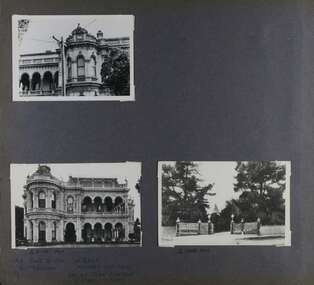
Album - Album page, Labassa, 4 Manor Grove, Circa 1972
... Ferguson and Urie, probably dating from the 1873 period. Labassa is of historical significance as an illustrative example of the wealth acquired by a number of prominent Victorian families in the second half of the 19th century. ...This photograph is part of the Caulfield Historical Album 1972. This album was created in approximately 1972 as part of a project by the Caulfield Historical Society to assist in identifying buildings worthy of preservation. The album is related to a Survey the Caulfield Historical Society developed in collaboration with the National Trust of Australia (Victoria) and Caulfield City Council to identify historic buildings within the City of Caulfield that warranted the protection of a National Trust Classification. Principal photographer thought to be Trevor Hart, member of Caulfield Historical Society. Most photographs were taken between 1966-1972 with a small number of photographs being older and from unknown sources. All photographs are black and white except where stated, with 386 photographs over 198 pages. HISTORY:-- From Victorian Heritage Database citation for Labassa https://vhd.heritagecouncil.vic.gov.au/places/278 as at (26/10/2020) Labassa, Caulfield is one of Melbourne's most lavishly decorated nineteenth century mansions. It resulted from the extensive remodelling in 1890, of an earlier house, known as Sylliott Hill, which was begun in 1862-3 for lawyer, Richard A. Billing. The land at the corner of Balaclava and Orrong Roads was first acquired in 1854 by William Lyall, transferred to his partner, John Mickle, in 1859, who also acquired the adjoining allotment in Balaclava Road, and the three allotments were conveyed to Billing. His first eight-roomed house was extended significantly in 1873 into a twenty-roomed house by architects Crouch and Wilson, who were possibly also responsible for the first house. This reflected Billing's success as a barrister, and he resided at this property until his death in 1882. In 1883 prominent Melbourne businessman, Alexander William Robertson, leased the Sylliott Hill property from Billing's widow, and in 1885 he purchased the adjoining allotment in Balaclava Road. He purchased the Billing's property in 1887 and renamed the 6.31 hectare property, Ontario. In 1889-90, Robertson commissioned the German born architect, John A. B. Koch, to extensively remodel the house into a thirty-five roomed mansion. The existing house was extended and altered, largely resulting in the nineteenth century mansion as it now appears. After Robertson's death in 1896, the house was tenanted until it was eventually sold to the mining millionaire, John Boyd Watson, in 1904. He renamed the property Labassa and carried out repair and re-decoration work to the house. In the early twentieth century, many large estates were subdivided into smaller allotments as the demand for land grew and it became difficult to maintain such large estates. After Watson's death in 1911, portions of the Labassa estate were offered for sale, with Mrs Watson retaining a 1.73 hectare portion containing the house. In 1913 forty-six allotments were auctioned at Labassa Estate, with the formation of Labassa Grove and Ontario Street to the east of the property. Labassa was first recorded as containing flats in 1923 and in the late 1920s, the owner, Robert Hannon, built a red brick block of flats adjacent to the house. Subdivision continued, until the National Trust of Australia (Victoria) purchased the house in 1980 and subsequently purchased adjoining sites, one to the south-east in 1984 (house demolished in 1988) and to the west in 1988. Labassa as it now stands is substantially as it appeared when Koch completed the work in 1890. The original two storey house was transformed into a French Renaissance style mansion, with the addition of a two level L-shaped arcaded verandah and two prominent terminating bays to the south and the east. The building is of unpainted cement render with dressed bluestone plinths, balustraded parapet and steep, slate covered, flat topped mansard roofs behind. A truncated conical roof is a feature of the south bay and a helmeted head is incorporated in the parapet over the east bay. The main south and east facades incorporate many cast cement details, including sculptures, elaborate cornices, swagged Corinthian columns and caryatid consoles flanking the entrance porch, as well as pink marble panels and imitation marble, or scagliola, on curved surfaces. At the rear of the building is a two storey wing and a single storey cottage, the former being connected to the main house by a tower. This section of the house was constructed in 1873. The estate at its peak included stables (1873), conservatory (probably 1890) and a tennis pavilion (probably 1890). All of these outbuildings survive, with the stables and conservatory being converted for residential use after 1922. Internally a range of decorative treatments remain from the late nineteenth century and the early twentieth century, both from the Robertson and Watson periods of occupancy. These include wallpapers, ceiling decoration, chimney pieces, mouldings, joinery and decorative glass.From Victorian Heritage Database citation for H0135 Labassa 2/2A Manor Grove Caulfield North https://vhd.heritagecouncil.vic.gov.au/places/278 as at (26/10/2020) HOW IS IT SIGNIFICANT? Labassa, Caulfield is of architectural, aesthetic and historical significance to the State of Victoria. WHY IS IT SIGNIFICANT? Labassa, Caulfield is of architectural significance as the most prominent example of a small number of houses built in Australia in the French Renaissance style. It is of further note due to the German interpretation of the style and the use of Hellenistic sources, via Germany. It is exceptional for its lavish treatment externally, including marble, scagliola, caryatids, swagged columns, mansard roofs and ornamental cresting. Labassa is of architectural significance as the most important surviving example of German architect, John Koch's domestic work. He undertook a large variety of work in Melbourne, including a number of houses, however Labassa is the most lavish example of his work. Labassa is of aesthetic significance for its outstanding assemblage of late nineteenth and early twentieth century European style interior decoration, which remain remarkably intact. These include a trompe l'oeil ceiling, painted ceilings, embossed imitation leather and other papers, chimney pieces, ceramic tilework, oak parquetry and stained glass, including a tripartite window by Ferguson and Urie, probably dating from the 1873 period. Labassa is of historical significance as an illustrative example of the wealth acquired by a number of prominent Victorian families in the second half of the 19th century. The early development of the property, Sylliott Hill, was due to the wealth acquired by Richard Billing, barrister and fifth Victorian to be appointed Queen's Counsel in 1878. The significant development in 1890 of Ontario, is illustrative of the wealth of Alexander Robertson, a partner in Cobb and Co., a director of Goldsborough Mort & Co., and a pastoral speculator. John B. Watson, whose father had acquired great wealth from the goldfields of Bendigo and subsequently invested in city and country properties, was the third resident to impact on the house, particularly the interiors. The Labassa estate is of historical significance as an illustrative example of the development that occurred in such suburbs as Caulfield in the 1880s due to the land boom, its proximity to Melbourne and the establishment of the Melbourne to Gippsland railway in 1879. It is also illustrative of an estate which succumbed to the pressures of subdividing in the early twentieth century, as properties became difficult to maintain and demand for land close to the city grew. It was typically divided into flats in the 1920s and was used as such for about sixty years. It is of historical significance for its associations with the remnants of the earlier estate which remain extant. These include the stables, conservatory (H2005) and tennis pavilion which all remain on separate sites. Also significant are the remains of early electrical wiring and fittings. Labassa was one of the first houses in Caulfield to be electrified and some of the original wires remain. [Online Data Upgrade Project 2004]Page 129 of Photograph Album with three landscape photographs of Labassa. One of the photographs is of Labassa's drive and gates.Handwritten: 4 JUNE 1910 / SALE JUNE 28 1910 "LA BASSA' / "AUSTRALASIAN" FORMERLY "ONTARIO"/ RES OF JOHN B WATSON / 15 ACRES 3 ROADS [under bottom left photo] / 4 JUNE 1910 [under bottom right photo] / 129 [bottom left]trevor hart, bracketed eaves, intricate lacework, slate roof, bay windows, decorative brackets, caulfield north, labassa, richard a. billing, balaclava road, orrong road, sylliott hill, william lyall, crouch and wilson, alexander william robertson, ontario, 1880's, john a. b. koch, mansion, john boyd watson, labassa grove, french renaissance style, l-shaped arcaded verandah, bluestone plinths, balustraded parapet, flat topped mansard roofs, conical roof, elaborate cornices, corinthian columns, caryatid consoles, marble panels, imitation marble, scagliola, tower, conservatory, stables, tennis pavilion, mouldings, decorative glass, caryatids, swagged columns, ornamental cresting, trompe l'oeil ceiling, embossed imitation leather, oak parquetry, stained glass, tripartite window, triple window, ferguson and urie, 1870's, flats, 1920's, electric wiring, 1860's, verandahs, curved windows, arched windows, italianate, terraces, gargoyles, ornamentation, ornate entrance, la bassa, manor grove, st kilda east, gates, cast iron work, richard billing, architects, john koch, electrification, victorian style, drives, john mickle, land subdivision, mrs watson, labassa estate, robert hannon, national trust of australia (victoria), sculpture -
Glen Eira Historical Society
Document - LECHTE, WILLIAM LUDWIG SAMUEL SEBASTION
... Family... Mr. Moss’ Congregational Church... Barnhill Mrs.... Porter Miss... Webb’s... Ferguson...Family Mr. Moss’ Congregational Church Barnhill Mrs. Porter Miss Webb’s Ferguson Orange Police Stations Kooyong Road Pennington Mr. ...3 items about this person: 1/Two twelve page carbon copied documents, purportedly written by William Letchte, son of George, written in c1935/36. He writes of his jobs as a dairyman, cow minder at the age of ten tears. He recollects streets, people, residences, business and general landscape in the area, as he takes you on a tour of the area. 2/Photocopied photo of Katrina Lechte (nee Bolch?) donated by Ian Lechte, 15 Adrian Street, East Bentleigh. 3/Photocopied copy of first pages and cover of William Lechte’s booklet on ‘Caulfield 1869 – 1935 Memories of the Past’, published by the City of Caulfield, 1992. The Society has the full booklet in its book collection (not yet catalogued as of 07/07/2015).grange road, glenhuntly, glen huntly station, alma road, dairies, caulfield park, swamp, queens avenue, station street, cross street, racecourse, heywood j. g., turf club hotel, dandenong road, royal hotel, koornang road, north road, murrumbeena road, mclaurin archibald, crosbie j. w., poath road, newton mr., hooker mr., peck family robert farmer, dairies, ross murray, rosstown, hansen hans, arnott family, peppin family, ormond station, malane family, fraser simon, overtons, shepherds, spring road, mohlers, brighton cemetery, mall kim, market gardeners, long john farmer, fiedler mr., booran road, reservoir, summers mr., maddocks mr., holland mr., caulfield council, glen eira road, harriman benjamin c., kambrook road, bambra road, princess park, marriott john, hawthorn road, brickworks, hyam mr., cottages, jasmine street, sycamore street, paddy o’briens swamp, arnold tom, london tavern hotel, guess john-grocer, topp mr., poath road, pine trees, colonel le marehand, balaclava junction, chemist shop, bell mr., nicholls mr. william h., wine shop, orme mr., pepperorn mr. john, balaclava road, orchards, harvey mr. robert tailor, schubert mr., blew charlie – gardener, philpott mr. richard b., farquhar mr. william farmer, newing t. r., glen eira road, payne john, brockhoft mr., dickson mr. james, snipe t., bevan mr., mckean family john, murray family, francis mr., hart mr., mcdougall james, brady peter, cad, elsternwick station, webb mr., masters mr. samuel, master street, ford mr., anderson mr. joseph gardener, slaney mr., boxhill mr. richard, post office, newsagent, hotham street, service james, bunn mr., sargood mr., orrong road, arnold tom – dairy, officer mr., grimwade mr., alexandra street, oakleigh hall, degraves mr., wilson samuel, ‘manifold’, house names, miller septimus, alma road, knox mr. james gardener, smith mr., coachman, ‘cumloden’, lange mr., holyrood justice mr., cronin mrs. mary, mcgivenys dairy, ‘belle vista’, lloyd c. d., caulfield council, hughes mr., armstrong j. a., tom healey’s market garden, kooyong road, inkerman road, tom roe’s market garden, mcleod captain, daish captain, plumridger mr. frederick, gardeners, tester mr. thomas, kent mr., kent g., fiddes mr., billings mr., semple mr., fosberry mr., howitt or., merrett mr., orchards, hawthorn road, hines mr., ‘rosecraddock’, langdon h. j., ‘crotonhurst’, webb justice mr., renwick s., ‘garrell’, barry mr., drinsdale family, st. mary’s church, sunday school, newing miss, teachers, stephen justice mr., stephen wilberforce, mount l., grimwade’s, ‘grimwade house’, danby’s, spence mr., venables family, mr. moss’ congregational church, barnhill mrs., porter miss, webb’s, ferguson, orange, police stations, kooyong road, pennington mr., health inspectors, engineers, inkley mr., farriers, mckeon mr., ‘sylverly’, dixon mr. edward, turner mr., marriott robert, ‘ravenhurst’, thompson j. j., wott t., architects, perrin mr. francis, tennis courts, royal parade, sayce mr. joseph j. p., ricketson h., ‘glen eira’, mansions, hospitals, turner mr., evans family, stephens miss, registers, mcculloch lady, convalescent homes, prentice street, edward street, strickland, keany pat, brentwood charlie, fordham lewis, hopetoun gardens, higgins mr. joseph f. engineer, railway construction bill, evans mr., beavis mr., twycross family john, medina captain, cowderoy mr. benjamin, murray mr., moore mr., ‘glenfern’, st. georges road, glen huntly road, cedar street, hunt bill – ‘bandy hunt’, jessamine street, alder street, le page’s store, post offices, balaclava junction, stephens frank, solicitors, parkside street, robinson j., ilbery mr. and family, mclennan mrs., victoria street, savings bank, riddell parade, elworthy mr. richard, butchers, shaw mr. william, armstrong mr., guess’ hotel, sycamore street, bagshaw mr., clack joe, wawn alex, sisson family, north road, younger mr., kooyong road, sheridan joseph, anketell family – john, wren john – carpenter, wills mr. peter, attrills arnold, heffernan family, cox peter, ilbery john, hotham street, glen huntly road, page j. w., bakeries, forests, godfrey mr., blacksmiths, thompson j. j., olive street, cedar street, letchte w., tierney richard, alma road, st. kilda east, murray peter, letchte’ cows – grazing, holland grove, eskdale road, lechte katrina, lechte ian, lechte catherine, lechte warren, lechte stuart, lechte elaine -
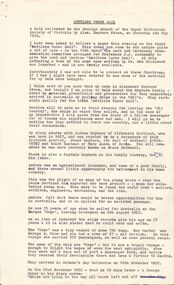 Bendigo Historical Society Inc.
Document - SETTLERS UNDER SAIL, 15/03/1918
... Auchmuty Mr Don Charlwood Andrew Hepburn James Hepburn Mary Queen of Scots Black Bothwell Captain Hepburn The 'Hope' George B Crow George Baker The 'Marlbro' Archives Department of the Latrobe Library Mr Loman The 'David Clarke' Captain Hepburn of the Royal Scots Sir John Hepburn Mr Howard Hepburn Victoria Reef Lease No 60 Ebenezer Neill Becker Stirton Margaret Cotton McLachlan Ina Hepburn The 'Donald McKay' Black Ball Line James Baines and Company of Liverpool Onedin Line Passenger Contract Ticket James McLauchlan Christian Ferguson Robert Miller William Thompson Mr Stanwin The 'Shomberg' itchell and Son The 'Dunbar' Margaret Stirton Canon Horace Stirton Dr James Nish P Pentreath Jane Pentreath St Andrew's Presbyterian Church Sandhurst James Hepburn Corporate High School Bendigo High School Iron Bark School of John Rae Rae's Hill School Mr John Rae Rae Anderson Bendigo Branch of the Royal Historical Society of Victoria Victoria Reef Mine 'Gourdie Farm' Mr Howard Hepburn John Fortey Margaret Cotton Hepburn Typed notes mentioning the history of the Hepburn Family and Margaret Cotton McLachlan coming by sailing ship to Australia to marry her fiance who was a miner in Sandhurst and extracts from the diary of William Thompson. ...Typed notes mentioning the history of the Hepburn Family and Margaret Cotton McLachlan coming by sailing ship to Australia to marry her fiance who was a miner in Sandhurst and extracts from the diary of William Thompson.document, names of bendigo pioneers, bendigo historical society, settlers under sail, alexander hepburn stone, loch ard centenary commemoration committee, professor j. j. auchmuty, mr don charlwood, andrew hepburn, james hepburn, mary queen of scots, black bothwell, captain hepburn, the 'hope', george b crow, george baker, the 'marlbro', archives department of the latrobe library, mr loman, the 'david clarke', captain hepburn of the royal scots, sir john hepburn, mr howard hepburn, victoria reef lease no 60, ebenezer neill, becker, stirton, margaret cotton mclachlan, ina hepburn, the 'donald mckay', black ball line, james baines and company of liverpool, onedin line, passenger contract ticket, james mclauchlan, christian ferguson, robert miller, william thompson, mr stanwin, the 'shomberg', itchell and son, the 'dunbar', margaret stirton, canon horace stirton, dr james nish, p pentreath, jane pentreath, st andrew's presbyterian church sandhurst, james hepburn, corporate high school, bendigo high school, iron bark school of john rae, rae's hill school, mr john rae, rae anderson, bendigo branch of the royal historical society of victoria, victoria reef mine, 'gourdie farm', mr howard hepburn, john fortey, margaret cotton hepburn -
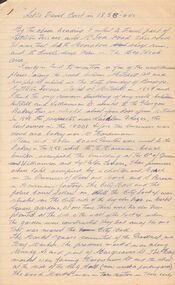 Bendigo Historical Society Inc.
Document - LET'S TRAVEL EAST IN 1858 - 60'S
... dea Mr Worth Mr Condon Mr C Cahill Nolan Family Mr Sides The Nailons Mrs Boyan Jacky Bryant John Oconnell General Store Mr Pierce Mr Matthews Mr Neil Ward Mr Hagan William Clapton Mr Joseph Dowd Mr Morris Ancient Briton Hotel The Woolpak The Railway Bridge Ampol Service Station Farrells Dairy Farringtons Brickworks Jacksons Hide & Tallow Yard Fergusons Royal Oak Hotel Mr Jackson Mr Knight St Marys Common School No812 Mrs Rersol W D Quinn Mr March Mr Fred Randall Mr Steeple The Limerick Hotel Back Creek Police Shooting Range Police Station Stone Lockup Holts Service Station Steepe's Butcher Shop Joch John Hattam Nine pages of handwritten account of businesses from Mitchell Street, along Lyttleton Terrace and McIvor Road to the City boundary on the Bendigo side of Murphy Street. ...Nine pages of handwritten account of businesses from Mitchell Street, along Lyttleton Terrace and McIvor Road to the City boundary on the Bendigo side of Murphy Street.document, let's travel east in 1858 - 60's, moorabbee sheep run, curr's sheep run, glasgow bakery, lachlan frazer, mr hardiman, steen and holm coach painters, mr h haisman coach builder, scholton and march, march and s brown, haisman factory, city hall, police court, city lockup, market square, senior citizens club, weighbridge, dunlop tyre service station, tommy burns, matt lynch, tom & mick kennedy, darling hotel, the innes, mr bullens fruit shop, bricklayers arms hotel, cheshire arms hotel, mr i boffey, newcombe's timber yard, quinns monumental establishment, alexandra fountain, cumberland hotel, sannaman's coach factory, town hall hotel, her majesties open air picture show, mr r anderson, john ohagan, sandhurst hotel, the melbourne café, haymarket hotel, the old haymarket hotel, the market ale house, the prince of wales theatre, manchester hotel, mr john doran, dr backhaus, manchester hall, the bendigo star, james griffen coach factory, mr george lansell, whitting's marine store, cartrights marine store, sandhurst flour mills, mr john buckley, moorhead hay and corn mills, brian boru hotel, mr m r?dea, mr worth, mr condon, mr c cahill, nolan family, mr sides, the nailons, mrs boyan, jacky bryant, john oconnell general store, mr pierce, mr matthews, mr neil ward, mr hagan, william clapton, mr joseph dowd, mr morris, ancient briton hotel, the woolpak, the railway bridge, ampol service station, farrells dairy, farringtons brickworks, jacksons hide & tallow yard, fergusons, royal oak hotel, mr jackson, mr knight, st marys common school no812, mrs rersol, w d quinn, mr march, mr fred randall, mr steeple, the limerick hotel, back creek police shooting range, police station, stone lockup, holts service station, steepe's butcher shop, joch, john hattam -
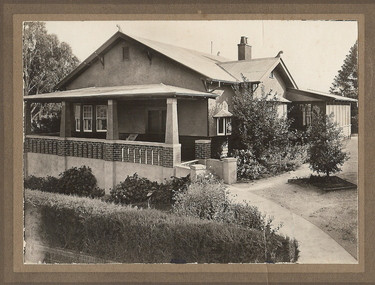 Bendigo Historical Society Inc.
Photograph - T C WATTS & SON COLLECTION: RODNEY STREET, BENDIGO, 1930
... Originally they lived at 19 Brodie Street, Quarry Hill, but by 1925 they were registered as living on the corner of Rodney and Reginald Street with their son Frederick Steele McNair Ferguson and his wife Amelia, and later with their daughter Maude. It appears the family continued to live at this address following Frederick snrs death. ...Originally they lived at 19 Brodie Street, Quarry Hill, but by 1925 they were registered as living on the corner of Rodney and Reginald Street with their son Frederick Steele McNair Ferguson and his wife Amelia, and later with their daughter Maude. It appears the family continued to live at this address following Frederick snrs death. ...Frederick Steele Ferguson (1861-1938) married Beatrice O'Brien in 1898. Originally they lived at 19 Brodie Street, Quarry Hill, but by 1925 they were registered as living on the corner of Rodney and Reginald Street with their son Frederick Steele McNair Ferguson and his wife Amelia, and later with their daughter Maude. It appears the family continued to live at this address following Frederick snrs death. Frederick and his son Frederick jnr were wool merchants.Black and white photograph mounted on rectangular brown board. House, weatherboard and rough cast, verandah with brick balustrade and rough cast pillars, corrugated iron roof, 1 chimney with 2 pots, double front door, small bay window at RH side, bay window under verandah, sleepout/sunroom attached at back right, established garden, concrete path, hedge at front, woven crinkled wire fence. On back of photo' F. Ferguson, £1800 corner Rodney and Reginald Streets, 15.4.30 corner Rodney and Reginald Streets. 2012 photo of house attached to record.Frank A. Jeffree Bendigobendigo, business, t c watts & son -
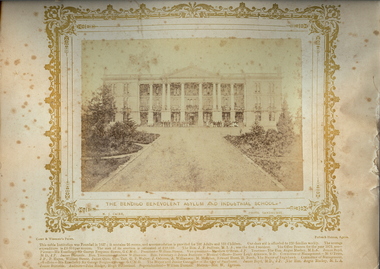 Bendigo Historical Society Inc.
Photograph - VIEWS OF BENDIGO: BENDIGO BENEVOLENT ASYLUM AND INDUSTRIAL SCHOOL, 1875
... families weekly. The average expenditure is £9,000 per annum. The cost of it's erection is established at £20,000. The Hon. J. F. Sullivan, M.L.A, was the first President. The Office Bearer for the year 1875, are --- Patron---His Excellency Sir George Ferguson...families weekly. The average expenditure is £9,000 per annum. The cost of it's erection is established at £20,000. The Hon. J. F. Sullivan, M.L.A, was the first President. The Office Bearer for the year 1875, are --- Patron---His Excellency Sir George Ferguson ...Sepia photo on cream board. Shows the Bendigo Benevolent Asylum and Industrial School, with people standing out the front and on the balcony. Inscription: Above, 'Views of Bendigo No.33'. Below, 'The Bendigo Benevolent Asylum and Industrial School', 'N.J. Caire Photo, Sandhurst'. Bottom, 'Casey & Wenborn Print Forbes & Holmes, Agents', 'This noble Institution was Founded in 1857; it contains 26 rooms, and accommodation is provided for 100 Adults and 150 Children. Outdoor aid is afforded to 220 families weekly. The average expenditure is £9,000 per annum. The cost of it's erection is established at £20,000. The Hon. J. F. Sullivan, M.L.A, was the first President. The Office Bearer for the year 1875, are --- Patron---His Excellency Sir George Ferguson Bowen, G.C.M.G. President --- William Steane. Vice-president --- Matthew O'Brien, J.P. Trustee---The Hon. Angus Mackay, M.L.A. James Boyd, M.D., J.P. James Burnside. Hon. Treasurer --- Andrew Williamson. Hon. Secretary --- James Burnside. Medical Officer --- Harry Leigh Atkinson, M.D. Committee of Management --- M. O'Brien, J.P., P. Hayes, William Steane, James Quin, Geo. Tait, G. F. Walter, J. Osborne, A. Williamson, m. Meagher, Edward Hurst, H. Birch, The Mayor of Eaglehawk. Committee of Management --- M O'Brien, ex officio --- His Excellency Sir George Ferguson Bowen: G.C.M.C. The Mayor and Junior Councilor of the City of Sandhurst. James Boyd, M.D., J.P., The Hon Angus Mackay, M.L.A. James Burnside. Auditors--- John Hasker, Hugh Sutherland. Superintendent --- William Dorman. Matron --- Mrs. W. Dorman.'. (Two copies) Nicholas CaireN. J. Caireplace, bendigo, bendigo benevolent asylum, see, 'views of bendigo' by n. j. caire -
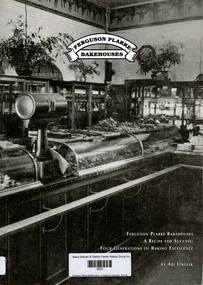 Narre Warren and District Family History Group
Book, Ari Unglik, Ferguson Plarre Bakehouses : a recipe for success : four generations of baking excellence, 1997
... Otto Plarre 1882-1967 Leisel Plarre John "Percy" Ferguson This book tells us the story of two small family bakehouses with businesses in Brunswick and Moonee Ponds. ...This book tells us the story of two small family bakehouses with businesses in Brunswick and Moonee Ponds. How they baked through two World Wars and eventually they combined their businesses to become one company.non-fictionThis book tells us the story of two small family bakehouses with businesses in Brunswick and Moonee Ponds. How they baked through two World Wars and eventually they combined their businesses to become one company. otto plarre 1882-1967, leisel plarre, john "percy" ferguson
