
Showing 62 items matching "fern house"
-
 Bendigo Military Museum
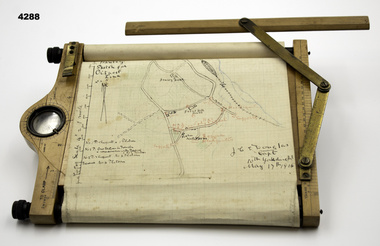
Equipment - OBSERVERS MAP BOARD, J.Hicks, 1909
... ...Hawley House, Fern Hill House...Equipment OBSERVERS MAP BOARD J.Hicks Hawley House, Fern Hill House ...Original owner, Major John Charles Edward Douglas 400th Bn Yorkshire Regt who died aged 39 on Saturday 18th December 1915, Major Douglas was the son of Admiral Sir Archibald Douglas GCB, GCVO, LL.D, JP and Lady Douglas Barrister, Gray’s Inn. Remembered with with HONOR, Bailleul Communal cemetery Extentsion (Nord) Nard France 11.B.64.Rectangular wooden board, rotating metal bezel ring, markings, compass, clinometer, leather straps, graph paper, wooden ruler, with attached brass folding hinge.“Hawley sketch for Outpost Line”, “JCE Douglas Capt, 10th Yorkshire Regt May 17th 1915”equipment, maps -
 Ballaarat Mechanics' Institute (BMI Ballarat)
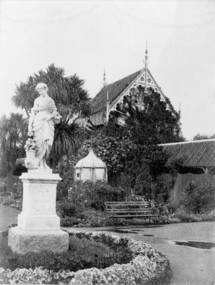
Fern House & Floral Statue
... Fern House & Floral Statue...Ballarat Botanical gardens fernery statue Fern House & Floral Statue ...This photograph is from the Max Harris Collection held by the Ballaraat Mechanics' Institute. Please contact BMI for all print and usage inquiries.ballarat, botanical gardens, fernery, statue -
 The Beechworth Burke Museum
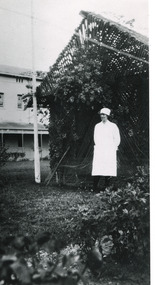
Photograph - Photograph Reproduction, 1998
... ...fern house...The photograph, created in 1998, is a copy of the original one, depicting a nurse in uniform at the Mental Hospital in Beechworth, with a fern house behind her. In the background, the two-storey building is in view, along with the covered walkway. ...The photograph, created in 1998, is a copy of the original one, depicting a nurse in uniform at the Mental Hospital in Beechworth, with a fern house behind her. In the background, the two-storey building is in view, along with the covered walkway. ...The photograph, created in 1998, is a copy of the original one, depicting a nurse in uniform at the Mental Hospital in Beechworth, with a fern house behind her. In the background, the two-storey building is in view, along with the covered walkway. The institution had to operate with serious shortage of female nurses for long periods of time. During the 1880s, small houses (cottages) were built to offer accommodation for the nurses living in the hospital and in 1937 began the construction of a nurses` hostel. In 1962 the upper level of the Nurses` Home was converted into a Nurses` Training School. The Mayday Hills Hospital was constructed between 1864 and 1867, with buildings created in a number of periods. It formally opened on 24 October 1867 and, along with the Ovens Hospital and the Benevolent Asylum, made Beechworth a prominent social welfare centre in Victoria. The need for an institution of this kind was arisen due to the increased number of people with mental disturbances (induced by the harsh living conditions on the goldfields) and the remoteness of the district from Melbourne. The two-storey buildings, designed in Italianate style, and the three-storey towers at the front, were influenced by the asylum at Colney Hatch in England. Large masses of granite were excavated for its foundation and around 250 workmen were employed for its construction. The building, divided into six sections, was comprised of dormitories, doctors` rooms and plenty ancillary rooms and facilities, such as laundries, reading rooms, a concert hall and cooking areas. The site was chosen for its panoramic view of the countryside, the hilltop atmosphere and the native fauna, all contributing to the cure of patients. The Hospital was originally named the “Ovens Lunatic Asylum” but, during the centenary celebrations in 1967, the name was officially changed to “Mayday Hills Hospital”, showing the gradual shift in the perception and understanding of mental health conditions over the last decades. The Hospital lies on the traditional land of the Kulin Nation.This photograph is historically significant as it provides an insight into the everyday life of staff living within the walls of the Mayday Hills Hospital. It also offers important information about the location and the exterior of the Hospital and contributes to the understanding of the district`s development and its importance to the course of Victoria`s history.Black and white rectangular photograph printed on paper unframed.Reverse: 3445/mental hospital, beechworth, fern house, female nurses, nurses` home, nurses` training school, nurses` hostel, mayday hills hospital, ovens hospital, colney hatch, two-storey buildings, italianate style, benevolent asylum, ovens lunatic asylum, kulin nation, workmen, covered walkway, granite, hilltop atmosphere, mental health -
 Allan Doney Collection, Bendigo Historical Society Inc.
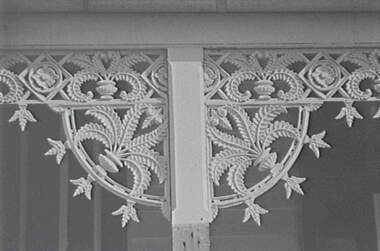
Negative - Iron Lacework - House - Fern, Allan Doney, 1950 -1970
... Iron Lacework - House - Fern...Negative Iron Lacework - House - Fern Allan Doney ...In the years of Allan Doney’s photography, landmark buildings succumbed to fire, neglect and redevelopment. He photographed the grey sand hills from Bendigo’s mining past, the streetscapes, poppet heads, miners’ cottages, gracious homes with ornate verandahs, trams and much more. Above all, his photographs show how much of the city has survived from the 19th century – and how much has not. Through two decades of great change, Allan Doney was there to capture ways people interacted with it. Although he travelled to many other places in Northern Victoria and beyond in search of subjects for his art, he seemed to always return to Bendigo for inspiration. -
 Glen Eira Historical Society
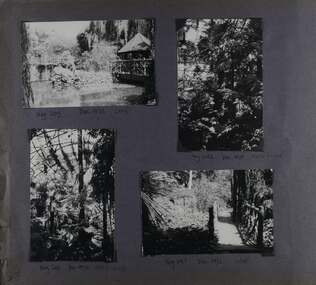
Album - Album page, Ripponlea, Hotham Street, Circa 1972
... Handwritten: Neg 239 Dec 1973 LAKE [under top left photo] / Neg 242 Dec 1973 FERN HOUSE [under top right photo] / Neg 243 Dec 1972 FERN HOUSE [under bottom left photo] / Neg 241 Dec 1972 LAKE [under bottom right photo] / 93 [bottom left]...It was built about 1884. trevor hart elsternwick mansion hotham street frederick sargood sargood reed and barnes 1860's 1890's 1880's benjamin nathan nathan louisa jones thomas bent sir thomas bent william guilfoyle adam anderson lake grotto shade house portico ripponlea victorian sir frederick sargood architects taylor and fitts rippon lea gardens ferns bridges walking trails Handwritten: Neg 239 Dec 1973 LAKE [under top left photo] / Neg 242 Dec 1973 FERN HOUSE [under top right photo] / Neg 243 Dec 1972 FERN HOUSE [under bottom left photo] / Neg 241 Dec 1972 LAKE [under bottom right photo] / 93 [bottom left] Page 93 of Photograph Album with four photographs (two landscape and two portrait) of Ripponlea - lake and gardens. ...This photograph is part of the Caulfield Historical Album 1972. This album was created in approximately 1972 as part of a project by the Caulfield Historical Society to assist in identifying buildings worthy of preservation. The album is related to a Survey the Caulfield Historical Society developed in collaboration with the National Trust of Australia (Victoria) and Caulfield City Council to identify historic buildings within the City of Caulfield that warranted the protection of a National Trust Classification. Principal photographer thought to be Trevor Hart, member of Caulfield Historical Society. Most photographs were taken between 1966-1972 with a small number of photographs being older and from unknown sources. All photographs are black and white except where stated, with 386 photographs over 198 pages.From Victorian Heritage Database citation for Rippon Lea H0614 https://vhd.heritagecouncil.vic.gov.au/places/427(as at 23/10/2020) Rippon Lea was commenced in 1868 by Frederick Sargood, a most successful politician and merchant. He was born in England in 1834 and arrived in Melbourne in 1850. He soon joined his father's wholesale soft goods firm, spending some time as its manager on the goldfields. Sargood entered the Legislative Council in 1874. He was Victoria?s first Minister for Defence in 1883. Sir Frederick Sargood was created CMG. In 1885 and KCMG in 1890 as a reward for his contribution to public life. He died suddenly in 1903. Rippon Lea was designed by the leading firm of architects, Reed and Barnes. Joseph Reed had travelled in Europe in 1863, including northern Italy. When he returned he introduced the use of polychromy. While not the first examples, Rippon Lea and the Independent Church in Collins Street were the best and set a fashion which became a distinctly Melbourne style, particularly used for houses and churches. Its popularity was possible because of the new availability of different coloured bricks. Reed's fine Lombardic Romanesque details soon became debased by others. As Sargood's family grew and his fortunes prospered, Rippon Lea was extended to include 33 rooms - a complete mansion. The cast iron porte cochere and the northern conservatory were added in 1897. The architects were Taylor and Fitts. The ballroom was added in 1882 and remodelled in 1889. Many alterations have changed the interior and exterior during the ownerships of Benjamin Nathan and later his daughter Mrs Louisa Jones in the 1930s and are in their own right of significance. Sir Thomas Bent owned the property from 1903 until 1911 but never lived there. He subdivided much of the land. The original garden dates from about 1868, and it seems that William Guilfoyle of the Botanic Gardens was involved. It was redesigned in a more natural style in the 1880s by Sargood and his head gardener, Adam Anderson. The lake, waterfalls, fernery, hill and grotto are balanced by mighty deciduous trees and conifers. These are interspersed with, but never dominated by Australian species such as eucalyptus and other exotics. The sinuous drive with its carefully prepared approach to the house is notable. The original vegetable gardens, orchard and outer paddocks no longer survive. The shade house is important as the largest known in Australia and possibly the world. Its curved plan and form of construction are particularly notable. It was built about 1884.Page 93 of Photograph Album with four photographs (two landscape and two portrait) of Ripponlea - lake and gardens.Handwritten: Neg 239 Dec 1973 LAKE [under top left photo] / Neg 242 Dec 1973 FERN HOUSE [under top right photo] / Neg 243 Dec 1972 FERN HOUSE [under bottom left photo] / Neg 241 Dec 1972 LAKE [under bottom right photo] / 93 [bottom left]trevor hart, elsternwick, mansion, hotham street, frederick sargood, sargood, reed and barnes, 1860's, 1890's, 1880's, benjamin nathan, nathan, louisa jones, thomas bent, sir thomas bent, william guilfoyle, adam anderson, lake, grotto, shade house, portico, ripponlea, victorian, sir frederick sargood, architects, taylor and fitts, rippon lea, gardens, ferns, bridges, walking trails -
 Stawell Historical Society Inc
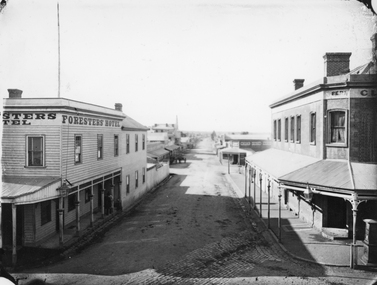
Photograph, Main Street & Patrick Streets corner looking East down Patrick Street with the Foresters Hotel on left corner 1878
... House. The building was sold in 1935 and demolished shortly after sale. Businesses visible down Patrick street, Foresters Hotel, J.H. Wallis Royal Exchange Hotel on Big Hillside of Street. With St Patrick's church tower visible in distance. Melbourne Cash Store Wines and Spirits on corner of Patrick and Sloane Street near centre of photo. Ferns...Foresters Hotel on left. Fern Boarding House on right....Foresters Hotel on left. Fern Boarding House on right. Main Street & Patrick Streets corner looking East down Patrick Street with the Foresters Hotel on left corner 1878 Photograph ...First floor view from corner of Main & Patrick Streets looking East down Patrick Street. Weatherboard Foresters Hotel in Main Street on left corner. Foresters Hotel was built in 1868 by Mr. Joseph Cawley, Mr. and Mrs. Cawley were the occupants for 30 years. The site was previously occupied by a Billiards Room. In 1917 the building became Foresters Coffee Palace with new owner Mr. J.C. Crothers who purchased the building for 410 pounds and leased it to Mr. Robert Wennerbom. The next lease holder was Miss Fulton and in 1921 Mrs. R. Claringbold took over and called the building Foresters House. The building was sold in 1935 and demolished shortly after sale. Businesses visible down Patrick street, Foresters Hotel, J.H. Wallis Royal Exchange Hotel on Big Hillside of Street. With St Patrick's church tower visible in distance. Melbourne Cash Store Wines and Spirits on corner of Patrick and Sloane Street near centre of photo. Ferns Hotel / Times office on right of photo, corner of Patrick and Main Street. Post Box on Corner at right of photo. 1878First floor view from Main Street Patrick Street intersection looking down Patrick Street. Foresters Hotel on left. Fern Boarding House on right.Victorian Views. C. Herbert, Photo. Stawell 1878stawell businesses streetscape -
 Mt Dandenong & District Historical Society Inc.
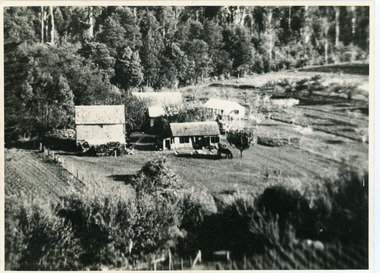
Photograph, Isaac Jeeves First Home, 1917
... Behind them is the roof of the house with the tree fern floor. The glass house came much later....Behind them is the roof of the house with the tree fern floor. The glass house came much later. isaac jeeves Isaac Jeeves Jeeves Kalorama pioneer Black and white photograph showing the first home of early settler Isaac Jeeves. ...Isaac Jeeves arrived in 1857 to take up land. The photograph taken in 1917 shows his first home, which he left c1872. The small building in the right foreground was his first dwelling. On the left is a barn. Behind them is the roof of the house with the tree fern floor. The glass house came much later.Black and white photograph showing the first home of early settler Isaac Jeeves. Photo taken in 1917.isaac jeeves, isaac jeeves, jeeves, kalorama, pioneer -
 Mt Dandenong & District Historical Society Inc.
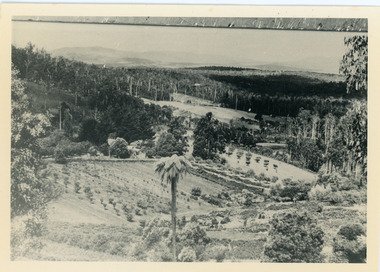
Photograph, Harmony Vale, c1913
... Richardsons (Jeannie’s) “Mt Calvin” between trees above tree fern. Isaac Jeeves house with the tree fern floor among trees against forest right centre. ...Richardsons (Jeannie’s) “Mt Calvin” between trees above tree fern. Isaac Jeeves house with the tree fern floor among trees against forest right centre. ...View of Harmony Vale, the original Kalorama settlement taken from Barbers Road. Child's sawmill can be seen (centre) with the log yard to the right. Richardson's home "Harmony Vale' is in the orchard above the logs.Black and white photograph copied from a Rose Series postcard showing the area known as "Harmony Vale' - the original Kalorama settlement. Child's sawmill is in the centre.Rose Series Photo of Harmony Vale on the Olinda Creek taken from Logans Lot 28. Link Rd crossing centre Shiloah complex left centre. Richardsons (Jeannie’s) “Mt Calvin” between trees above tree fern. Isaac Jeeves house with the tree fern floor among trees against forest right centre. Mill yard with logs above cultivated flat. Mill to left. “Harmony Vale” homestead among orchard above logs. “Glenrivers” in gully at top of clearing. About 1913. Copied JLC 1973harmony vale, harmony vale, child's sawmill, sawmill, barbers road, richardson, shiloah -
 Federation University Historical Collection
Letter - Letterbook, Ballarat School of Mines Letterbook, 1915 to 1916, 1916
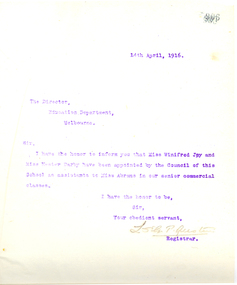
... house...ballarat eight hours' anniversary...last chance mine...evan walker...norman carmichael...doney...thomas doolan...harold wakeling...bowman...james early...garry eason...abrams...bennett...duthie...harry fern...The letter book related to outward letters from the Ballarat School of Mines. ballarat school of mines correspondence murphy vaughan victor greenhalgh irvine coulter lancelot austin l.s.g.p. austin adcock james bickett bickett tunbridge tucker desnoy phillips edgar mcconnon revill tinworth r.o. buchanan john dulfer stanley westcott wolfram assay anzac medallion beaufort house ballarat eight hours' anniversary last chance mine evan walker norman carmichael doney thomas doolan harold wakeling bowman james early garry eason abrams bennett duthie harry fern hetherington hutchinson collyeer colom carew-smyth ponsonby carew-smyth donald clark george swinburne bev syliva hestor darby joy winifred barry judd c.c. campbell cathcart centrel gold mining co adcockbawden benevolent asylum ditchburn doctor spring doepel and chandler eureka tile company pitfield edwads pyrites works embling fleay c.e. fenner mount rowan gower greenhalgh c. hosking murtoa c.a. hoadley harold herbert jolly kenny kelsall kerr architect a.m. lilburne lemmon andrew land leipson h.s. lawson a. levy scarsdale gold mines w.k. moss fred martell e.j. mcconnen read murphy h. morris leongatha maurice claude j. middleton j.c. molley e. merlin e.f. pitman p. pringle rumble dr robin edgar richard g. remfry g. robertson james rich a. ross d. l. stirling s. stretch c. skilbeck r. strachan w.k. thomson grant taylor j.h. tundbury v.e. reeves tin mining co. hobart vernon hilda wardle daylesford waller whitloa w. watson b. whitington j.b. robinson k. hamilton photography j.m. sutherland j.h. scullin scholarship w.h. wesley gundagai a.t. o'meara associated smelters port pirrie assayer telegraphy t. williams d.l. stirling edward finnis norman tinworth j.y. mcdonald h.s. summers geology homeward bound bon accord gmc e.t. vane a.d. dunstan maughan cox g.s. richards westcott w.l. carroll turnbull l. vernon s. nightingale cathcart central gold mining company cathcart a.j. moffit v.e. reevesr. mcmillan w. nankervis w.h. clutterbuck j.m. wesley e. dooley olive mckillop dana street primary school shelter shed ballarat junior technical school british nationality and aliens act war relief fund s. hylton bravo queensland molasses co ethel merlin a.e. poulton commercial winifred joy c. adcock lancelot st.g.p. austin herbert p. bennett a. bray fonald clark walter collyer o.f. colom g.e. desnoy f.w.r. doney brian h. duthie a. gordon g.m. hetherington kath hutchinson baryr judd j. kean john y. mcdonald j. murray a.f. phillips c.c. phillips john mck. sutherland bev sylvia r.e. tunbridge miachel vaughan p. vawdey h.j. vernon harold g. wakeling pharmacy board pharmacy r. cutter ballarat technical art school building dalgety & co. h.s.w. lawson a.h. powell australian institute of engineers eight hours' anniversary committee silberberg beckman's thermometer Miss Abrams Business College A bound leatherbound book with marble endpapers. ...The letter book related to outward letters from the Ballarat School of Mines.A bound leatherbound book with marble endpapers. The contents are copies of outward letters from the Ballarat School of Mines from July 1915 to May 1916. Page 807 relates to the Ballarat Eight Hours' Anniversary Committee (J. Kean) Page 906 - Letter from L. Austin (Ballarat School of Mines Registrar) concerning the appointment of Winifred Joy and Hestor Darby as assistants to Miss Abrams to the Ballarat School of Mines Senior Commercial Classes. ballarat school of mines, correspondence, murphy, vaughan, victor greenhalgh, irvine coulter, lancelot austin, l.s.g.p. austin, adcock, james bickett, bickett, tunbridge, tucker, desnoy, phillips, edgar mcconnon, revill tinworth, r.o. buchanan, john dulfer, stanley westcott, wolfram, assay, anzac medallion, beaufort house, ballarat eight hours' anniversary, last chance mine, evan walker, norman carmichael, doney, thomas doolan, harold wakeling, bowman, james early, garry eason, abrams, bennett, duthie, harry fern, hetherington, hutchinson, collyeer, colom, carew-smyth, ponsonby carew-smyth, donald clark, george swinburne, bev syliva, hestor darby, joy winifred, barry judd, c.c. campbell, cathcart centrel gold mining co, adcockbawden, benevolent asylum, ditchburn, doctor spring, doepel and chandler, eureka tile company, pitfield, edwads pyrites works, embling, fleay, c.e. fenner, mount rowan, gower, greenhalgh, c. hosking, murtoa, c.a. hoadley, harold herbert, jolly, kenny, kelsall, kerr, architect, a.m. lilburne, lemmon, andrew land, leipson, h.s. lawson, a. levy, scarsdale gold mines, w.k. moss, fred martell, e.j. mcconnen, read murphy, h. morris, leongatha, maurice claude, j. middleton, j.c. molley, e. merlin, e.f. pitman, p. pringle, rumble, dr robin, edgar richard, g. remfry, g. robertson, james rich, a. ross, d. l. stirling, s. stretch, c. skilbeck, r. strachan, w.k. thomson, grant taylor, j.h. tundbury, v.e. reeves, tin mining co. hobart, vernon, hilda wardle, daylesford, waller, whitloa, w. watson, b. whitington, j.b. robinson, k. hamilton, photography, j.m. sutherland, j.h. scullin, scholarship, w.h. wesley, gundagai, a.t. o'meara, associated smelters port pirrie, assayer, telegraphy, t. williams, d.l. stirling, edward finnis, norman tinworth, j.y. mcdonald, h.s. summers, geology, homeward bound bon accord gmc, e.t. vane, a.d. dunstan, maughan, cox, g.s. richards, westcott, w.l. carroll, turnbull, l. vernon, s. nightingale, cathcart central gold mining company cathcart, a.j. moffit, v.e. reevesr. mcmillan, w. nankervis, w.h. clutterbuck, j.m. wesley, e. dooley, olive mckillop, dana street primary school shelter shed, ballarat junior technical school, british nationality and aliens act, war relief fund, s. hylton bravo, queensland molasses co, ethel merlin, a.e. poulton, commercial, winifred joy, c. adcock, lancelot st.g.p. austin, herbert p. bennett, a. bray, fonald clark, walter collyer, o.f. colom, g.e. desnoy, f.w.r. doney, brian h. duthie, a. gordon, g.m. hetherington, kath hutchinson, baryr judd, j. kean, john y. mcdonald, j. murray, a.f. phillips, c.c. phillips, john mck. sutherland, bev sylvia, r.e. tunbridge, miachel vaughan, p. vawdey, h.j. vernon, harold g. wakeling, pharmacy board, pharmacy, r. cutter, ballarat technical art school building, dalgety & co., h.s.w. lawson, a.h. powell, australian institute of engineers, eight hours' anniversary committee, silberberg, beckman's thermometer, miss abrams business college -
 Marysville & District Historical Society
Booklet (Item) - Tourist guide, Ian and Danese Walshe et al, MARYSVILLE and district TOURIST GUIDE, 1982
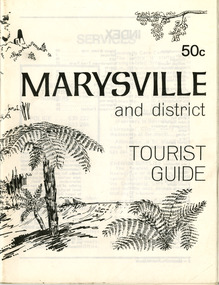
... fern gully walk...michaeldene track...keppel track...woods lookout track...cumberland scenic reserve...cambarville...the big tree...cora-lyn falls...barton's lookout...cumberland falls...sovereign view...wirreanda festival...scenic motel...tower motel...marylands guest house...A tourist guide outlining services, accommodation, activities and places of interest to visit in and around Marysville and the local district. marysville victoria australia tourist guide marysville hotel castles' store hawthorne's corner shop tudor lodge black spur motel and caravan park buxton general store golden fleece roadhouse marysville garage burrengeen park lake mountain steavenson falls nanda binya lodge alpenglow nursery black spur inn hotel silver stream trout farm mccfarlane's grocery barton's drapery marysville newsagency eildon explorer beauty spot nursery crossways pumpernickel mckenzie's tourist services blue hills riding school mountain view horse hire pitt's garage maryton park j l gould sawmill eildon deer park eildon weir maroondah dam snob's creek healesville sanctuary graceburn park cathedral range beauty spot walk tree fern gully walk michaeldene track keppel track woods lookout track cumberland scenic reserve cambarville the big tree cora-lyn falls barton's lookout cumberland falls sovereign view wirreanda festival scenic motel tower motel marylands guest house kooringa guest house marylyn guest house mountain lodge el kanah marysville hotel motel buxton hotel motel black spur inn buxton caravan park marysville caravan park the cumberland marysville recreation and fun park A tourist guide outlining services, accommodation, activities and places of interest to visit in and around Marysville and the local district. ...A tourist guide outlining services, accommodation, activities and places of interest to visit in and around Marysville and the local district.A tourist guide outlining services, accommodation, activities and places of interest to visit in and around Marysville and the local district.marysville, victoria, australia, tourist guide, marysville hotel, castles' store, hawthorne's corner shop, tudor lodge, black spur motel and caravan park, buxton general store, golden fleece roadhouse, marysville garage, burrengeen park, lake mountain, steavenson falls, nanda binya lodge, alpenglow nursery, black spur inn hotel, silver stream trout farm, mccfarlane's grocery, barton's drapery, marysville newsagency, eildon explorer, beauty spot nursery, crossways, pumpernickel, mckenzie's tourist services, blue hills riding school, mountain view horse hire, pitt's garage, maryton park, j l gould sawmill, eildon deer park, eildon weir, maroondah dam, snob's creek, healesville sanctuary, graceburn park, cathedral range, beauty spot walk, tree fern gully walk, michaeldene track, keppel track, woods lookout track, cumberland scenic reserve, cambarville, the big tree, cora-lyn falls, barton's lookout, cumberland falls, sovereign view, wirreanda festival, scenic motel, tower motel, marylands guest house, kooringa guest house, marylyn guest house, mountain lodge, el kanah, marysville hotel motel, buxton hotel motel, black spur inn, buxton caravan park, marysville caravan park, the cumberland, marysville recreation and fun park -
 Marysville & District Historical Society
Booklet (Item) - Leisure guide, Michael Chesire & Associates Pty. Ltd, MARYSVILLE & DISTRICT LEISURE GUIDE-AUTUMN/WINTER, 1986, 1986
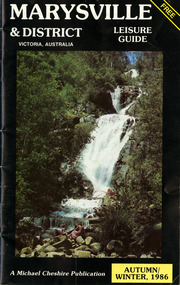
... house...kufstein inn motel...the cumberland...marysville tourist & progress association...marysville newsagency & general store...crossways restaurant & motel...beauty spot walk...tree fern...A free leisure guide to Marysville and the surrounding district published for Autumn and Winter, 1986. marysville victoria australia leisure guide michael cheshire & associates pty ltd marysville golf club blackwood lodges sir colin mackenzie fauna park lake eildon fraser national park yarra valley wineries marysville coach tours kooringa marylands guest house lady talbot forest drive wishing well taggerty river recreation area athols abbey phantom falls keppel falls the beeches walking track marylyn guest house kufstein inn motel the cumberland marysville tourist & progress association marysville newsagency & general store crossways restaurant & motel beauty spot walk tree fern gully walk michaeldene track keppel track woods lookout track marysville hotel motel lake mountain ski hire marysville recreation and fun park mytanta horseback safaris upper big river valley the big culvert marysville mountain view horse hire maryton park amber view holiday lodges cathedral restaurant the top shop tower motel menzes garage beauty spot nursery marysville ski hire lake mountain ski school faraway forest scenic motel buxton trout farm marysville hardware timbertop steakhouse marysville trout farm healesville sanctuary buxton hotel motel nanda binya lodge buxton antique and furniture mart the black spur inn hotel alexandra lake mountain geoffrey pope & associates A free leisure guide to Marysville and the surrounding district published for Autumn and Winter, 1986. ...A free leisure guide to Marysville and the surrounding district published for Autumn and Winter, 1986. This was produced by Michael Cheshire as a free publication to promote tourism in Marysville and the surrounding district. It includes maps of the Big River Valley, Cumberland Valley, Lady Talbot Forest Drive, the Marysville area, and the township of Marysville. It was released in the autumn of 1986 and was sponsored by the Marysville Tourist & Progress Association. The Association was formed in November 1907 to promote tourism within the area. This included the physical creation of signage, parklands, roads, and walks to various attractions. A free leisure guide to Marysville and the surrounding district published for Autumn and Winter, 1986.marysville, victoria, australia, leisure guide, michael cheshire & associates pty ltd, marysville golf club, blackwood lodges, sir colin mackenzie fauna park, lake eildon, fraser national park, yarra valley wineries, marysville coach tours, kooringa, marylands guest house, lady talbot forest drive, wishing well, taggerty river recreation area, athols abbey, phantom falls, keppel falls, the beeches walking track, marylyn guest house, kufstein inn motel, the cumberland, marysville tourist & progress association, marysville newsagency & general store, crossways restaurant & motel, beauty spot walk, tree fern gully walk, michaeldene track, keppel track, woods lookout track, marysville hotel motel, lake mountain ski hire, marysville recreation and fun park, mytanta horseback safaris, upper big river valley, the big culvert, marysville mountain view horse hire, maryton park, amber view holiday lodges, cathedral restaurant, the top shop, tower motel, menzes garage, beauty spot nursery, marysville ski hire, lake mountain ski school, faraway forest, scenic motel, buxton trout farm, marysville hardware, timbertop steakhouse, marysville trout farm, healesville sanctuary, buxton hotel motel, nanda binya lodge, buxton antique and furniture mart, the black spur inn hotel, alexandra, lake mountain, geoffrey pope & associates -
 Marysville & District Historical Society
Ephemera (Item) - Tourist Guide, Graeme Haycraft, Mystic Mountains Tourist Guide July 1995, 07-1995
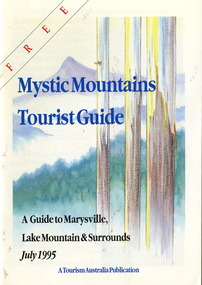
... house...the birches resort...mystic mountains tourist information...marysville caravan park...the cumberland...igloo roadhouse...top shop pancake parlour...the silver birch restaurant...steavenson's restaurant...olde yarra track shoppe...danish coffee gardens...oscars take-away...country touch pottery studio & gallery...cumberland memorial scenic reserve...cathedral range state park...lady talbot forest drive...wishing well...taggerty river picnic area...taggerty river...phantom falls...keppels falls...the beeches walking track...mount sugarloaf...maryton park holiday cottages...snowviews...esa camping & conference centre...wirreanda festival...marysville post shop...hidden talent craft gallery...marysville automotive repairs...geoffrey pope & associates...beauty spot walk...tree fern...A tourist guide outlining services, accommodation, activities and places of interest to visit in and around Marysville, Lake Mountain and the local district. marysville victoria australia tourist guide mystic mountains lake mountain tourism australia graeme haycraft magic creek nursery missing links miniature golf phelps bakery blackwood cottages marysville hotel motel tower motel kerami house marylands guest house lomatia lodge willowbank at taggerty barree mud brick cottages scenic motel somerled mountain retreat dalrymples guest cottages nanda binya lodge mathilde's of marysville country guest house the birches resort mystic mountains tourist information marysville caravan park the cumberland igloo roadhouse top shop pancake parlour the silver birch restaurant steavenson's restaurant olde yarra track shoppe danish coffee gardens oscars take-away country touch pottery studio & gallery cumberland memorial scenic reserve cathedral range state park lady talbot forest drive wishing well taggerty river picnic area taggerty river phantom falls keppels falls the beeches walking track mount sugarloaf maryton park holiday cottages snowviews esa camping & conference centre wirreanda festival marysville post shop hidden talent craft gallery marysville automotive repairs geoffrey pope & associates beauty spot walk tree fern gully walk michaeldene track marysville riding school gerraty's ski centre marysville holiday cottages marysville triangle taxi service fruit salad farm lake mountain alpine resort marysville ski hire lake mountain ski school cross country ski hire lake mountain ski hire marysville country club Acknowledgements/ Mystic Mountains Tourism Association, Marysville Office of the Dept. of Conser/ vation & Natural Resources, Mrs Elaine Postlethwaite, Ms Sue Henry & every/ advertiser without whose support this Guide would not have been possible. ...A tourist guide outlining services, accommodation, activities and places of interest to visit in and around Marysville, Lake Mountain and the local district.A tourist guide outlining services, accommodation, activities and places of interest to visit in and around Marysville, Lake Mountain and the local district.Acknowledgements/ Mystic Mountains Tourism Association, Marysville Office of the Dept. of Conser/ vation & Natural Resources, Mrs Elaine Postlethwaite, Ms Sue Henry & every/ advertiser without whose support this Guide would not have been possible.marysville, victoria, australia, tourist guide, mystic mountains, lake mountain, tourism australia, graeme haycraft, magic creek nursery, missing links miniature golf, phelps bakery, blackwood cottages, marysville hotel motel, tower motel, kerami house, marylands guest house, lomatia lodge, willowbank at taggerty, barree mud brick cottages, scenic motel, somerled mountain retreat, dalrymples guest cottages, nanda binya lodge, mathilde's of marysville country guest house, the birches resort, mystic mountains tourist information, marysville caravan park, the cumberland, igloo roadhouse, top shop pancake parlour, the silver birch restaurant, steavenson's restaurant, olde yarra track shoppe, danish coffee gardens, oscars take-away, country touch pottery studio & gallery, cumberland memorial scenic reserve, cathedral range state park, lady talbot forest drive, wishing well, taggerty river picnic area, taggerty river, phantom falls, keppels falls, the beeches walking track, mount sugarloaf, maryton park holiday cottages, snowviews, esa camping & conference centre, wirreanda festival, marysville post shop, hidden talent craft gallery, marysville automotive repairs, geoffrey pope & associates, beauty spot walk, tree fern gully walk, michaeldene track, marysville riding school, gerraty's ski centre, marysville holiday cottages, marysville triangle taxi service, fruit salad farm, lake mountain alpine resort, marysville ski hire, lake mountain ski school, cross country ski hire, lake mountain ski hire, marysville country club -
 Marysville & District Historical Society
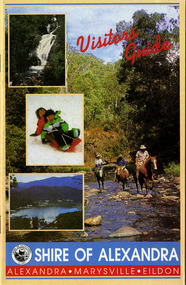
Ephemera (Item) - Visitors Guide, Shire of Alexandra, Visitors Guide ALEXANDRA-MARYSVILLE-EILDON, Unknown
... house...beauty spot walk...tree fern...A tourist guide for Alexandra, Marysville and Eildon produced by the Shire of Alexandra. alexandra marysville eildon victoria australia shire of alexandra visitor guide danish coffee garden maryton park marysville hotel motel beauty spot gardens geoffrey pope & associates australian bush pioneer's farm marysville recreation and fun park blackwood lodges marysville newsagency & general store the cumberland marysville gallery marysville gallery restaurant mount cathedral lodge cross country ski hire menzes garage marysville craft & gifts esa camping & conference centre el kanah black spur motel and caravan park marysville caravan park buxton trout farm the camel farm buxton marysville golf and bowls club taggerty general store cathedral restaurant marylyn guest house beauty spot walk tree fern gully walk michaeldene track keppel track woods lookout track A tourist guide for Alexandra, Marysville and Eildon produced by the Shire of Alexandra. ...A tourist guide for Alexandra, Marysville and Eildon produced by the Shire of Alexandra.A tourist guide for Alexandra, Marysville and Eildon produced by the Shire of Alexandra.alexandra, marysville, eildon, victoria, australia, shire of alexandra, visitor guide, danish coffee garden, maryton park, marysville hotel motel, beauty spot gardens, geoffrey pope & associates, australian bush pioneer's farm, marysville recreation and fun park, blackwood lodges, marysville newsagency & general store, the cumberland, marysville gallery, marysville gallery restaurant, mount cathedral lodge, cross country ski hire, menzes garage, marysville craft & gifts, esa camping & conference centre, el kanah, black spur motel and caravan park, marysville caravan park, buxton trout farm, the camel farm buxton, marysville golf and bowls club, taggerty general store, cathedral restaurant, marylyn guest house, beauty spot walk, tree fern gully walk, michaeldene track, keppel track, woods lookout track -
 Marysville & District Historical Society
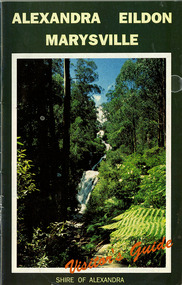
Ephemera (Item) - Visitor's Guide, Shire of Alexandra, ALEXANDRA EILDON MARYSVILLE Visitor's Guide, Unknown
... house marysville...amber view holiday lodges marysville...marysville ski hire...lake mountain ski school...fruit salad farm...taggerty general store...arbor green galleries marysville...black spur roadhouse...black spur motel & caravan park...marysville caravan park...the hermitage narbethong...danish coffee garden...maryton park...buxton trout farm...lake mountain outdoor centre marysville...australian bush pioneer's farm...the camel farm and zoo buxton...marysville mountain view horse hire...marysville golf and bowls club...yarrolyn holiday park taggerty...riverland lodge taggerty...beauty spot walk...tree fern...A tourist guide for Alexandra, Eildon and Marysville produced by the Shire of Alexandra. alexandra eildon marysville victoria australia tourist guide steavenson falls blackwood lodges marysville hotel motel the cumberland gallery restaurant marysville marysville gallery cross country ski hire marylyn guest house marylands guest house marysville crafts & gifts hearts of oak antiques geoffrey pope & associates cedron house marysville amber view holiday lodges marysville marysville ski hire lake mountain ski school fruit salad farm taggerty general store arbor green galleries marysville black spur roadhouse black spur motel & caravan park marysville caravan park the hermitage narbethong danish coffee garden maryton park buxton trout farm lake mountain outdoor centre marysville australian bush pioneer's farm the camel farm and zoo buxton marysville mountain view horse hire marysville golf and bowls club yarrolyn holiday park taggerty riverland lodge taggerty beauty spot walk tree fern gully walk michaeldene track keppel track woods lookout track A tourist guide for Alexandra, Eildon and Marysville produced by the Shire of Alexandra. ...A tourist guide for Alexandra, Eildon and Marysville produced by the Shire of Alexandra.A tourist guide for Alexandra, Eildon and Marysville produced by the Shire of Alexandra.alexandra, eildon, marysville, victoria, australia, tourist guide, steavenson falls, blackwood lodges, marysville hotel motel, the cumberland, gallery restaurant marysville, marysville gallery, cross country ski hire, marylyn guest house, marylands guest house, marysville crafts & gifts, hearts of oak antiques, geoffrey pope & associates, cedron house marysville, amber view holiday lodges marysville, marysville ski hire, lake mountain ski school, fruit salad farm, taggerty general store, arbor green galleries marysville, black spur roadhouse, black spur motel & caravan park, marysville caravan park, the hermitage narbethong, danish coffee garden, maryton park, buxton trout farm, lake mountain outdoor centre marysville, australian bush pioneer's farm, the camel farm and zoo buxton, marysville mountain view horse hire, marysville golf and bowls club, yarrolyn holiday park taggerty, riverland lodge taggerty, beauty spot walk, tree fern gully walk, michaeldene track, keppel track, woods lookout track -
 Marysville & District Historical Society
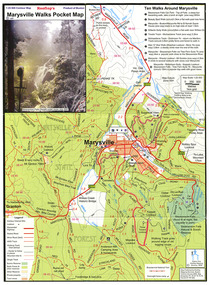
Map (Item) - Pocket map, Rooftop Mapping Services, Rooftop's Marysville Walks Pocket Map, 01-2009
... house walk...gilberts gully walk...michaeldene track...man 'o' war walk...tree fern...A pocket map of ten walking tracks in an around Marysville. marysville victoria australia rooftop mapping services steavenson falls steavenson falls car park walk beauty spot walk marysville to el kanah guest house walk gilberts gully walk michaeldene track man 'o' war walk tree fern gully walk marysville to woods lookout to mount gordon walk keppels lookout walk A pocket map of ten walking tracks in an around Marysville. ...A pocket map of ten walking tracks in an around Marysville. This map was published by Rooftop Mapping Services in January 2009.A pocket map of ten walking tracks in an around Marysville.marysville, victoria, australia, rooftop mapping services, steavenson falls, steavenson falls car park walk, beauty spot walk, marysville to el kanah guest house walk, gilberts gully walk, michaeldene track, man 'o' war walk, tree fern gully walk, marysville to woods lookout to mount gordon walk, keppels lookout walk -
 Marysville & District Historical Society
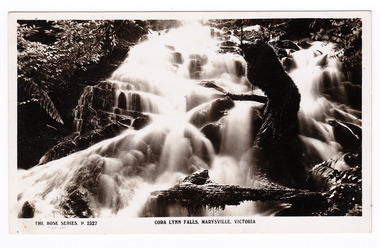
Postcard (item) - Black and white postcard, Rose Stereograph Company, Cora Lynn Falls, Marysville, Victoria, 1913-1967
... House,/ Marysville/ Monday Dear Gwen,/ Just a line now/ as it's nearly dinnertime./ We went to these falls/ last week & also to the/ Cumberland falls. I took/ some photos but it was/ too dark with all the/ ferns...House,/ Marysville/ Monday Dear Gwen,/ Just a line now/ as it's nearly dinnertime./ We went to these falls/ last week & also to the/ Cumberland falls. I took/ some photos but it was/ too dark with all the/ ferns ...A postcard in a series produced by the Rose Stereograph Company in Victoria, Australia as a souvenir of Marysville.A black and white photograph of the Cora Lynn Falls which are in Cambarville. These falls are located on the Marysville-Wood's Point Road. Cambarville is notable for its giant mountain ash (Eucalyptus regnans) trees within the Cumberland Memorial Scenic Reserve, and relics from former sawmills and gold mining. The Big Culvert is located nearby on the Marysville - Woods Point Road, which was historically part of the Yarra Track. Cambarville was established as a timber mill town in the 1940s. Timber mill owners A Cameron and FJ Barton named Cambarville. They established the mill to salvage timber from trees destroyed in the 1939 bushfires. Cambarville was impacted by the 2009 Black Saturday bushfires and any remaining structures were destroyed. POST CARD The "Rose" Series/ De Luxe A Real Photograph/ Produced in Australia Published by the Rose Stereograph Co.,/ Armadale, Victoria. Kitchener House,/ Marysville/ Monday Dear Gwen,/ Just a line now/ as it's nearly dinnertime./ We went to these falls/ last week & also to the/ Cumberland falls. I took/ some photos but it was/ too dark with all the/ ferns in the gullies./ We went to the Eildon/ Weir on Friday - do you/ remember what part that is/ in? We also went to the/ Rubicon Power Station & to/ 2 of the big timber mills that/ were burnt out 2 yrs ago./ Well I must stop/ now & write to Bub/ Love from Joan Love from Auntie Mimacora lynn falls, cambarville, marysville, victoria, waterfalls, p. 2327, rose series postcard, postcard, souvenir, a cameron, fj barton, black saturday bushfires, mountain ash, mining, timber mills, 1939 bushfires -
 Marysville & District Historical Society
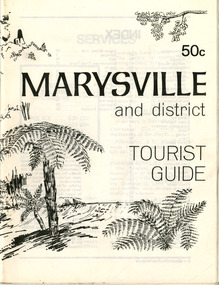
Booklet (Item) - Tourist guide, Ian and Danese Walshe et al, MARYSVILLE and district TOURIST GUIDE, 1982
... fern gully walk...michaeldene track...keppel track...woods lookout track...cumberland scenic reserve...cambarville...the big tree...cora-lyn falls...barton's lookout...cumberland falls...sovereign view...wirreanda festival...scenic motel...tower motel...marylands guest house...A tourist guide outlining services, accommodation, activities and places of interest to visit in and around Marysville and the local district. marysville victoria australia tourist guide marysville hotel castles' store hawthorne's corner shop tudor lodge black spur motel and caravan park buxton general store golden fleece roadhouse marysville garage burrengeen park lake mountain steavenson falls nanda binya lodge alpenglow nursery black spur inn hotel silver stream trout farm mccfarlane's grocery barton's drapery marysville newsagency eildon explorer beauty spot nursery crossways pumpernickel mckenzie's tourist services blue hills riding school mountain view horse hire pitt's garage maryton park j l gould sawmill eildon deer park eildon weir maroondah dam snob's creek healesville sanctuary graceburn park cathedral range beauty spot walk tree fern gully walk michaeldene track keppel track woods lookout track cumberland scenic reserve cambarville the big tree cora-lyn falls barton's lookout cumberland falls sovereign view wirreanda festival scenic motel tower motel marylands guest house kooringa guest house marylyn guest house mountain lodge el kanah marysville hotel motel buxton hotel motel black spur inn buxton caravan park marysville caravan park the cumberland marysville recreation and fun park A tourist guide outlining services, accommodation, activities and places of interest to visit in and around Marysville and the local district. ...A tourist guide outlining services, accommodation, activities and places of interest to visit in and around Marysville and the local district.A tourist guide outlining services, accommodation, activities and places of interest to visit in and around Marysville and the local district.marysville, victoria, australia, tourist guide, marysville hotel, castles' store, hawthorne's corner shop, tudor lodge, black spur motel and caravan park, buxton general store, golden fleece roadhouse, marysville garage, burrengeen park, lake mountain, steavenson falls, nanda binya lodge, alpenglow nursery, black spur inn hotel, silver stream trout farm, mccfarlane's grocery, barton's drapery, marysville newsagency, eildon explorer, beauty spot nursery, crossways, pumpernickel, mckenzie's tourist services, blue hills riding school, mountain view horse hire, pitt's garage, maryton park, j l gould sawmill, eildon deer park, eildon weir, maroondah dam, snob's creek, healesville sanctuary, graceburn park, cathedral range, beauty spot walk, tree fern gully walk, michaeldene track, keppel track, woods lookout track, cumberland scenic reserve, cambarville, the big tree, cora-lyn falls, barton's lookout, cumberland falls, sovereign view, wirreanda festival, scenic motel, tower motel, marylands guest house, kooringa guest house, marylyn guest house, mountain lodge, el kanah, marysville hotel motel, buxton hotel motel, black spur inn, buxton caravan park, marysville caravan park, the cumberland, marysville recreation and fun park -
 Marysville & District Historical Society
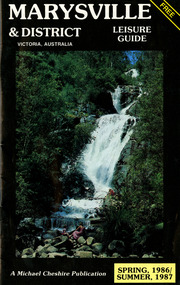
Booklet (Item) - Leisure guide, Michael Chesire & Associates Pty. Ltd, MARYSVILLE & DISTRICT LEISURE GUIDE-SPRING, 1986/SUMMBER, 1987, 1986
... house...kufstein inn motel...the cumberland...marysville tourist & progress association...marysville newsagency & general store...crossways restaurant & motel...beauty spot walk...tree fern...A free leisure guide to Marysville and the surrounding district published for Spring 1986, and Summer 1987. marysville victoria australia leisure guide michael cheshire & associates pty ltd marysville golf club blackwood lodges sir colin mackenzie fauna park lake eildon fraser national park yarra valley wineries marysville coach tours kooringa marylands guest house lady talbot forest drive wishing well taggerty river recreation area athols abbey phantom falls keppel falls the beeches walking track marylyn guest house kufstein inn motel the cumberland marysville tourist & progress association marysville newsagency & general store crossways restaurant & motel beauty spot walk tree fern gully walk michaeldene track keppel track woods lookout track marysville hotel motel lake mountain ski hire marysville recreation and fun park mytanta horseback safaris upper big river valley the big culvert marysville mountain view horse hire maryton park amber view holiday lodges cathedral restaurant the top shop tower motel menzes garage beauty spot nursery marysville ski hire lake mountain ski school faraway forest scenic motel buxton trout farm marysville hardware timbertop steakhouse marysville trout farm healesville sanctuary buxton hotel motel nanda binya lodge buxton antique and furniture mart the black spur inn hotel alexandra lake mountain j l gould sawmills pty. ltd. geoffrey pope & associates marysville crafts & gifts olde yarra track shoppe cumberland scenic reserve tudor lodge road house fruit salad farm highwayman's retreat Kilmore Historical Society *10/183 *MDL.1. ...A free leisure guide to Marysville and the surrounding district published for Spring 1986, and Summer, 1987. This was produced by Michael Cheshire as a free publication to promote tourism in Marysville and the surrounding district. It includes maps of the Big River Valley, Cumberland Valley, Lady Talbot Forest Drive, the Marysville area, and the township of Marysville. It was released in the spring of 1986. A free leisure guide to Marysville and the surrounding district published for Spring 1986, and Summer 1987.Kilmore Historical Society *10/183 *MDL.1.marysville, victoria, australia, leisure guide, michael cheshire & associates pty ltd, marysville golf club, blackwood lodges, sir colin mackenzie fauna park, lake eildon, fraser national park, yarra valley wineries, marysville coach tours, kooringa, marylands guest house, lady talbot forest drive, wishing well, taggerty river recreation area, athols abbey, phantom falls, keppel falls, the beeches walking track, marylyn guest house, kufstein inn motel, the cumberland, marysville tourist & progress association, marysville newsagency & general store, crossways restaurant & motel, beauty spot walk, tree fern gully walk, michaeldene track, keppel track, woods lookout track, marysville hotel motel, lake mountain ski hire, marysville recreation and fun park, mytanta horseback safaris, upper big river valley, the big culvert, marysville mountain view horse hire, maryton park, amber view holiday lodges, cathedral restaurant, the top shop, tower motel, menzes garage, beauty spot nursery, marysville ski hire, lake mountain ski school, faraway forest, scenic motel, buxton trout farm, marysville hardware, timbertop steakhouse, marysville trout farm, healesville sanctuary, buxton hotel motel, nanda binya lodge, buxton antique and furniture mart, the black spur inn hotel, alexandra, lake mountain, j l gould sawmills pty. ltd., geoffrey pope & associates, marysville crafts & gifts, olde yarra track shoppe, cumberland scenic reserve, tudor lodge road house, fruit salad farm, highwayman's retreat -
 Marysville & District Historical Society
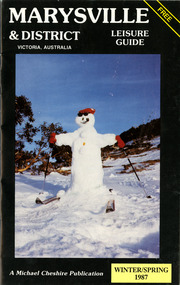
Booklet (Item) - Leisure guide, Michael Chesire & Associates Pty. Ltd, MARYSVILLE & DISTRICT LEISURE GUIDE-WINTER/SPRING 1987, 1987
... house...kufstein inn motel...the cumberland...marysville tourist & progress association...marysville newsagency & general store...crossways restaurant & motel...beauty spot walk...tree fern...A free leisure guide to Marysville and the surrounding district published for Winter and Spring, 1987. marysville victoria australia leisure guide michael cheshire & associates pty ltd marysville golf club blackwood lodges sir colin mackenzie fauna park lake eildon fraser national park yarra valley wineries marysville coach tours kooringa marylands guest house lady talbot forest drive wishing well taggerty river recreation area athols abbey phantom falls keppel falls the beeches walking track marylyn guest house kufstein inn motel the cumberland marysville tourist & progress association marysville newsagency & general store crossways restaurant & motel beauty spot walk tree fern gully walk michaeldene track keppel track woods lookout track marysville hotel motel lake mountain ski hire marysville recreation and fun park mytanta horseback safaris upper big river valley the big culvert marysville mountain view horse hire maryton park amber view holiday lodges cathedral restaurant the top shop tower motel menzes garage marysville ski hire lake mountain ski school faraway forest scenic motel buxton trout farm marysville hardware timbertop steakhouse marysville trout farm healesville sanctuary buxton hotel motel nanda binya lodge buxton antique and furniture mart the black spur inn hotel alexandra lake mountain j l gould sawmills pty. ltd. geoffrey pope & associates marysville crafts & gifts olde yarra track shoppe cumberland scenic reserve tudor lodge road house fruit salad farm highwayman's retreat beauty spot display gardens & nursery ski lake mountain cross country ski hire & kitchen buxton store valley view marysville acheron way mt donna buang road snow gum woodlands alpine ash forests mountain ash forests stringybark forests messmate forests manna gum forests A free leisure guide to Marysville and the surrounding district published for Winter/Spring 1987 MARYSVILLE & DISTRICT LEISURE GUIDE-WINTER/SPRING 1987 Booklet Leisure guide Michael Chesire & Associates Pty. ...A free leisure guide to Marysville and the surrounding district published for Winter and Spring, 1987. This was produced by Michael Cheshire as a free publication to promote tourism in Marysville and the surrounding district. It includes maps of the Big River Valley, Cumberland Valley, Lady Talbot Forest Drive, the Marysville area, and the township of Marysville. It was released in the winter of 1987. A free leisure guide to Marysville and the surrounding district published for Winter and Spring, 1987.marysville, victoria, australia, leisure guide, michael cheshire & associates pty ltd, marysville golf club, blackwood lodges, sir colin mackenzie fauna park, lake eildon, fraser national park, yarra valley wineries, marysville coach tours, kooringa, marylands guest house, lady talbot forest drive, wishing well, taggerty river recreation area, athols abbey, phantom falls, keppel falls, the beeches walking track, marylyn guest house, kufstein inn motel, the cumberland, marysville tourist & progress association, marysville newsagency & general store, crossways restaurant & motel, beauty spot walk, tree fern gully walk, michaeldene track, keppel track, woods lookout track, marysville hotel motel, lake mountain ski hire, marysville recreation and fun park, mytanta horseback safaris, upper big river valley, the big culvert, marysville mountain view horse hire, maryton park, amber view holiday lodges, cathedral restaurant, the top shop, tower motel, menzes garage, marysville ski hire, lake mountain ski school, faraway forest, scenic motel, buxton trout farm, marysville hardware, timbertop steakhouse, marysville trout farm, healesville sanctuary, buxton hotel motel, nanda binya lodge, buxton antique and furniture mart, the black spur inn hotel, alexandra, lake mountain, j l gould sawmills pty. ltd., geoffrey pope & associates, marysville crafts & gifts, olde yarra track shoppe, cumberland scenic reserve, tudor lodge road house, fruit salad farm, highwayman's retreat, beauty spot display gardens & nursery, ski lake mountain cross country ski hire & kitchen, buxton store, valley view marysville, acheron way, mt donna buang road, snow gum woodlands, alpine ash forests, mountain ash forests, stringybark forests, messmate forests, manna gum forests -
 Marysville & District Historical Society
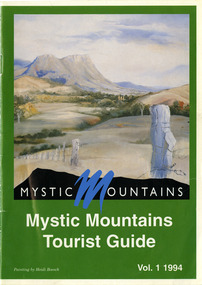
Ephemera (Item) - Tourist Guide, Michael Nash et al, Mystic Mountains Tourist Guide Vol. 1 1994, 1994
... house...wishing well...taggerty river picnic area...taggery river...phantom falls...keppel falls...the beeches walking track...mount sugarloaf...beauty spot walk...tree fern...A tourist guide outlining services, accommodation, activities and places of interest to visit in and around Marysville and the local district. marysville victoria australia tourist guide mystic mountains michael nash dudley jones marysville and district tourist and progress association department of conservation & natural resources shire of alexandra paperwork professionals pp art services harrier printing darrowby deer farm heidi boesch hidden talent craft gallery olde yarra track shoppe lady talbot forest drive mathilde's of marysville country guest house wishing well taggerty river picnic area taggery river phantom falls keppel falls the beeches walking track mount sugarloaf beauty spot walk tree fern gully walk michaeldene track keppel track woods lookout track marysville caravan park baree mud brick cottages cumberland scenic reserve nanda binya lodge cambarville the big tree barton's lookout cumberland falls our lady of the snows catholic church anglican church christ marysville christian fellowship sovereign view the big culvert st fillan steavenson's restaurant the birches resort cathedral range state park tower motel marysville post shop lake mountain wirreanda festival cross country ski hire marysville hotel motel kerami house marysville holiday cottages missing links miniature golf top shop pancake parlour marylands guest house dalrymples guest cottages crossways country inn esa camping & conference centre scenic motel the cumberland maryton park holiday cottages lomatia lodge holiday house willowbank gallery and art centre igloo roadhouse a model tours geoffrey pope & associates ACKNOWLEDGEMENTS:/ Marysville and District Tourist and Progress Association, Marysville/ Office of the Department of Conservation & Natural Resources, Shire/ of Alexandra Visitors Guide and all our advertisers whom without/ their support this publication would not have been possible. ...A tourist guide outlining services, accommodation, activities and places of interest to visit in and around Marysville and the local district.A tourist guide outlining services, accommodation, activities and places of interest to visit in and around Marysville and the local district.ACKNOWLEDGEMENTS:/ Marysville and District Tourist and Progress Association, Marysville/ Office of the Department of Conservation & Natural Resources, Shire/ of Alexandra Visitors Guide and all our advertisers whom without/ their support this publication would not have been possible.marysville, victoria, australia, tourist guide, mystic mountains, michael nash, dudley jones, marysville and district tourist and progress association, department of conservation & natural resources, shire of alexandra, paperwork professionals, pp art services, harrier printing, darrowby deer farm, heidi boesch, hidden talent craft gallery, olde yarra track shoppe, lady talbot forest drive, mathilde's of marysville country guest house, wishing well, taggerty river picnic area, taggery river, phantom falls, keppel falls, the beeches walking track, mount sugarloaf, beauty spot walk, tree fern gully walk, michaeldene track, keppel track, woods lookout track, marysville caravan park, baree mud brick cottages, cumberland scenic reserve, nanda binya lodge, cambarville, the big tree, barton's lookout, cumberland falls, our lady of the snows catholic church, anglican church christ, marysville christian fellowship, sovereign view, the big culvert, st fillan, steavenson's restaurant, the birches resort, cathedral range state park, tower motel, marysville post shop, lake mountain, wirreanda festival, cross country ski hire, marysville hotel motel, kerami house, marysville holiday cottages, missing links miniature golf, top shop pancake parlour, marylands guest house, dalrymples guest cottages, crossways country inn, esa camping & conference centre, scenic motel, the cumberland, maryton park holiday cottages, lomatia lodge holiday house, willowbank gallery and art centre, igloo roadhouse, a model tours, geoffrey pope & associates -
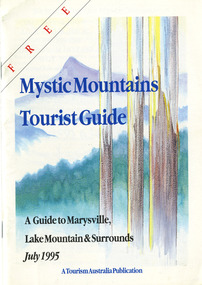 Marysville & District Historical Society
Ephemera (Item) - Tourist Guide, Graeme Haycraft, Mystic Mountains Tourist Guide July 1995, 07-1995
... house...the birches resort...mystic mountains tourist information...marysville caravan park...the cumberland...igloo roadhouse...top shop pancake parlour...the silver birch restaurant...steavenson's restaurant...olde yarra track shoppe...danish coffee gardens...oscars take-away...country touch pottery studio & gallery...cumberland memorial scenic reserve...cathedral range state park...lady talbot forest drive...wishing well...taggerty river picnic area...taggerty river...phantom falls...keppels falls...the beeches walking track...mount sugarloaf...maryton park holiday cottages...snowviews...esa camping & conference centre...wirreanda festival...marysville post shop...hidden talent craft gallery...marysville automotive repairs...geoffrey pope & associates...beauty spot walk...tree fern...A tourist guide outlining services, accommodation, activities and places of interest to visit in and around Marysville, Lake Mountain and the local district. marysville victoria australia tourist guide mystic mountains lake mountain tourism australia graeme haycraft magic creek nursery missing links miniature golf phelps bakery blackwood cottages marysville hotel motel tower motel kerami house marylands guest house lomatia lodge willowbank at taggerty barree mud brick cottages scenic motel somerled mountain retreat dalrymples guest cottages nanda binya lodge mathilde's of marysville country guest house the birches resort mystic mountains tourist information marysville caravan park the cumberland igloo roadhouse top shop pancake parlour the silver birch restaurant steavenson's restaurant olde yarra track shoppe danish coffee gardens oscars take-away country touch pottery studio & gallery cumberland memorial scenic reserve cathedral range state park lady talbot forest drive wishing well taggerty river picnic area taggerty river phantom falls keppels falls the beeches walking track mount sugarloaf maryton park holiday cottages snowviews esa camping & conference centre wirreanda festival marysville post shop hidden talent craft gallery marysville automotive repairs geoffrey pope & associates beauty spot walk tree fern gully walk michaeldene track marysville riding school gerraty's ski centre marysville holiday cottages marysville triangle taxi service fruit salad farm lake mountain alpine resort marysville ski hire lake mountain ski school cross country ski hire lake mountain ski hire marysville country club Acknowledgements/ Mystic Mountains Tourism Association, Marysville Office of the Dept. of Conser/ vation & Natural Resources, Mrs Elaine Postlethwaite, Ms Sue Henry & every/ advertiser without whose support this Guide would not have been possible. ...A tourist guide outlining services, accommodation, activities and places of interest to visit in and around Marysville, Lake Mountain and the local district.A tourist guide outlining services, accommodation, activities and places of interest to visit in and around Marysville, Lake Mountain and the local district.Acknowledgements/ Mystic Mountains Tourism Association, Marysville Office of the Dept. of Conser/ vation & Natural Resources, Mrs Elaine Postlethwaite, Ms Sue Henry & every/ advertiser without whose support this Guide would not have been possible.marysville, victoria, australia, tourist guide, mystic mountains, lake mountain, tourism australia, graeme haycraft, magic creek nursery, missing links miniature golf, phelps bakery, blackwood cottages, marysville hotel motel, tower motel, kerami house, marylands guest house, lomatia lodge, willowbank at taggerty, barree mud brick cottages, scenic motel, somerled mountain retreat, dalrymples guest cottages, nanda binya lodge, mathilde's of marysville country guest house, the birches resort, mystic mountains tourist information, marysville caravan park, the cumberland, igloo roadhouse, top shop pancake parlour, the silver birch restaurant, steavenson's restaurant, olde yarra track shoppe, danish coffee gardens, oscars take-away, country touch pottery studio & gallery, cumberland memorial scenic reserve, cathedral range state park, lady talbot forest drive, wishing well, taggerty river picnic area, taggerty river, phantom falls, keppels falls, the beeches walking track, mount sugarloaf, maryton park holiday cottages, snowviews, esa camping & conference centre, wirreanda festival, marysville post shop, hidden talent craft gallery, marysville automotive repairs, geoffrey pope & associates, beauty spot walk, tree fern gully walk, michaeldene track, marysville riding school, gerraty's ski centre, marysville holiday cottages, marysville triangle taxi service, fruit salad farm, lake mountain alpine resort, marysville ski hire, lake mountain ski school, cross country ski hire, lake mountain ski hire, marysville country club -
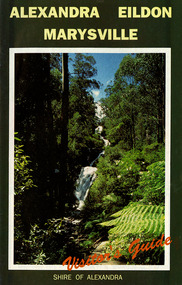 Marysville & District Historical Society
Ephemera (Item) - Visitor's Guide, Shire of Alexandra, ALEXANDRA EILDON MARYSVILLE Visitor's Guide, Unknown
... house marysville...amber view holiday lodges marysville...marysville ski hire...lake mountain ski school...fruit salad farm...taggerty general store...arbor green galleries marysville...black spur roadhouse...black spur motel & caravan park...marysville caravan park...the hermitage narbethong...danish coffee garden...maryton park...buxton trout farm...lake mountain outdoor centre marysville...australian bush pioneer's farm...the camel farm and zoo buxton...marysville mountain view horse hire...marysville golf and bowls club...yarrolyn holiday park taggerty...riverland lodge taggerty...beauty spot walk...tree fern...A tourist guide for Alexandra, Eildon and Marysville produced by the Shire of Alexandra. alexandra eildon marysville victoria australia tourist guide steavenson falls blackwood lodges marysville hotel motel the cumberland gallery restaurant marysville marysville gallery cross country ski hire marylyn guest house marylands guest house marysville crafts & gifts hearts of oak antiques geoffrey pope & associates cedron house marysville amber view holiday lodges marysville marysville ski hire lake mountain ski school fruit salad farm taggerty general store arbor green galleries marysville black spur roadhouse black spur motel & caravan park marysville caravan park the hermitage narbethong danish coffee garden maryton park buxton trout farm lake mountain outdoor centre marysville australian bush pioneer's farm the camel farm and zoo buxton marysville mountain view horse hire marysville golf and bowls club yarrolyn holiday park taggerty riverland lodge taggerty beauty spot walk tree fern gully walk michaeldene track keppel track woods lookout track A tourist guide for Alexandra, Eildon and Marysville produced by the Shire of Alexandra. ...A tourist guide for Alexandra, Eildon and Marysville produced by the Shire of Alexandra.A tourist guide for Alexandra, Eildon and Marysville produced by the Shire of Alexandra.alexandra, eildon, marysville, victoria, australia, tourist guide, steavenson falls, blackwood lodges, marysville hotel motel, the cumberland, gallery restaurant marysville, marysville gallery, cross country ski hire, marylyn guest house, marylands guest house, marysville crafts & gifts, hearts of oak antiques, geoffrey pope & associates, cedron house marysville, amber view holiday lodges marysville, marysville ski hire, lake mountain ski school, fruit salad farm, taggerty general store, arbor green galleries marysville, black spur roadhouse, black spur motel & caravan park, marysville caravan park, the hermitage narbethong, danish coffee garden, maryton park, buxton trout farm, lake mountain outdoor centre marysville, australian bush pioneer's farm, the camel farm and zoo buxton, marysville mountain view horse hire, marysville golf and bowls club, yarrolyn holiday park taggerty, riverland lodge taggerty, beauty spot walk, tree fern gully walk, michaeldene track, keppel track, woods lookout track -
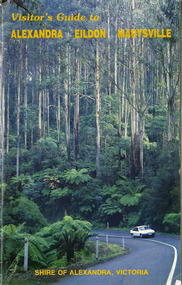 Marysville & District Historical Society
Ephemera (Item) - Visitor's Guide, Shire of Alexandra, Visitor's Guide to ALEXANDRA EILDON MARYSVILLE, Unknown
... house...marysville holiday cottages...marysville newsagency & general store...el kanah...roseleigh holiday units...restaurant tirol...olde yarra track shoppe...marysville caravan park...dalrymples guest cottages...danish coffee garden...maryton park...tower motel...marysville golf and bowls club...taggerty general store...the camel farm and zoo buxton...buxton trout farm...yarrolyn holiday park...riverland lodge...marysville mountain view horse hire...beauty spot walk...tree fern...A tourist guide for Alexandra, Eildon and Marysville produced by the Shire of Alexandra. alexandra eildon marysville victoria australia tourist guide the cumberland tudor lodge road house the hermitage narbethong blue views ski hire and holiday units narbethong blackwood lodges marysville marysville hotel motel kufstein inn marysville lake mountain mary-lyn resort marysville kooringa resort and conference centre marysville mary's ville marysville marysville crafts & gifts geoffrey pope & associates nanda binya lodge marysville crossways country inn marysville steavenson falls scenic motel marylands guest house marysville holiday cottages marysville newsagency & general store el kanah roseleigh holiday units restaurant tirol olde yarra track shoppe marysville caravan park dalrymples guest cottages danish coffee garden maryton park tower motel marysville golf and bowls club taggerty general store the camel farm and zoo buxton buxton trout farm yarrolyn holiday park riverland lodge marysville mountain view horse hire beauty spot walk tree fern gully walk michaeldene track keppel track woods lookout track A tourist guide for Alexandra, Eildon and Marysville produced by the Shire of Alexandra. ...A tourist guide for Alexandra, Eildon and Marysville produced by the Shire of Alexandra.A tourist guide for Alexandra, Eildon and Marysville produced by the Shire of Alexandra.alexandra, eildon, marysville, victoria, australia, tourist guide, the cumberland, tudor lodge road house, the hermitage narbethong, blue views ski hire and holiday units narbethong, blackwood lodges marysville, marysville hotel motel, kufstein inn marysville, lake mountain, mary-lyn resort marysville, kooringa resort and conference centre marysville, mary's ville marysville, marysville crafts & gifts, geoffrey pope & associates, nanda binya lodge marysville, crossways country inn marysville, steavenson falls, scenic motel, marylands guest house, marysville holiday cottages, marysville newsagency & general store, el kanah, roseleigh holiday units, restaurant tirol, olde yarra track shoppe, marysville caravan park, dalrymples guest cottages, danish coffee garden, maryton park, tower motel, marysville golf and bowls club, taggerty general store, the camel farm and zoo buxton, buxton trout farm, yarrolyn holiday park, riverland lodge, marysville mountain view horse hire, beauty spot walk, tree fern gully walk, michaeldene track, keppel track, woods lookout track -
 Marysville & District Historical Society
Ephemera (Item) - Visitor's Guide, Shire of Alexandra, Visitor's Guide to ALEXANDRA EILDON MARYSVILLE, Unknown
... house...marysville holiday cottages...marysville newsagency & general store...el kanah...roseleigh holiday units...restaurant tirol...olde yarra track shoppe...marysville caravan park...dalrymples guest cottages...danish coffee garden...maryton park...tower motel...marysville golf and bowls club...taggerty general store...the camel farm and zoo buxton...buxton trout farm...yarrolyn holiday park...riverland lodge...marysville mountain view horse hire...beauty spot walk...tree fern...A tourist guide for Alexandra, Eildon and Marysville produced by the Shire of Alexandra. alexandra eildon marysville victoria australia tourist guide the cumberland tudor lodge road house the hermitage narbethong blue views ski hire and holiday units narbethong blackwood lodges marysville marysville hotel motel kufstein inn marysville lake mountain mary-lyn resort marysville kooringa resort and conference centre marysville mary's ville marysville marysville crafts & gifts geoffrey pope & associates nanda binya lodge marysville crossways country inn marysville steavenson falls scenic motel marylands guest house marysville holiday cottages marysville newsagency & general store el kanah roseleigh holiday units restaurant tirol olde yarra track shoppe marysville caravan park dalrymples guest cottages danish coffee garden maryton park tower motel marysville golf and bowls club taggerty general store the camel farm and zoo buxton buxton trout farm yarrolyn holiday park riverland lodge marysville mountain view horse hire beauty spot walk tree fern gully walk michaeldene track keppel track woods lookout track A tourist guide for Alexandra, Eildon and Marysville produced by the Shire of Alexandra. ...A tourist guide for Alexandra, Eildon and Marysville produced by the Shire of Alexandra.A tourist guide for Alexandra, Eildon and Marysville produced by the Shire of Alexandra.alexandra, eildon, marysville, victoria, australia, tourist guide, the cumberland, tudor lodge road house, the hermitage narbethong, blue views ski hire and holiday units narbethong, blackwood lodges marysville, marysville hotel motel, kufstein inn marysville, lake mountain, mary-lyn resort marysville, kooringa resort and conference centre marysville, mary's ville marysville, marysville crafts & gifts, geoffrey pope & associates, nanda binya lodge marysville, crossways country inn marysville, steavenson falls, scenic motel, marylands guest house, marysville holiday cottages, marysville newsagency & general store, el kanah, roseleigh holiday units, restaurant tirol, olde yarra track shoppe, marysville caravan park, dalrymples guest cottages, danish coffee garden, maryton park, tower motel, marysville golf and bowls club, taggerty general store, the camel farm and zoo buxton, buxton trout farm, yarrolyn holiday park, riverland lodge, marysville mountain view horse hire, beauty spot walk, tree fern gully walk, michaeldene track, keppel track, woods lookout track -
 Marysville & District Historical Society
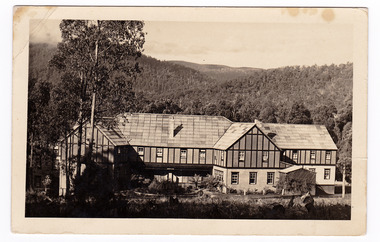
Postcard (item) - Black and white postcard, Kodak, Unknown
... A black and white postcard from Mary-Lyn Guest House in Marysville. marysville victoria australia mary chain guest houses marylyn eric dowdle postcard kodak souvenir POST CARD CORRESPONDENCE ADDRESS ONLY KODAK TUESDAY "MARY-LYN"/ MARYSVILLE VIC. 5.4.38. Dear Sarah,/ This is the prettiest place/ I have seen in Victoria. The walks/ are plentiful through Fern ...A black and white postcard from Mary-Lyn Guest House in Marysville. Mary-Lyn was a part of the Mary Chain of guest houses built by Eric Dowdle in the Depression years. The postcard was produced by Kodak as a souvenir of Marysville and was sent on 5th April 1938.A black and white postcard from Mary-Lyn Guest House in Marysville.POST CARD CORRESPONDENCE ADDRESS ONLY KODAK TUESDAY "MARY-LYN"/ MARYSVILLE VIC. 5.4.38. Dear Sarah,/ This is the prettiest place/ I have seen in Victoria. The walks/ are plentiful through Fern glades/ covered over with gum trees. Since we/ arrived here last Thursday the weather/ has been perfect, + Aunty Val are/ thoroughly enjoying every minute of our/ holiday. How is Gran keeping? We would/ like you to drop us a line to the/ above address as we will be here/ for another week. We are returning on/ the 14th. + expect to be in Benalla on/ good friday 15th. arriving by 1st Express/ in the evening. Hoping this finds you all/ keeping well./ With Love to You All/ From Aunty Elaine. marysville, victoria, australia, mary chain guest houses, marylyn, eric dowdle, postcard, kodak, souvenir -
 Ringwood and District Historical Society
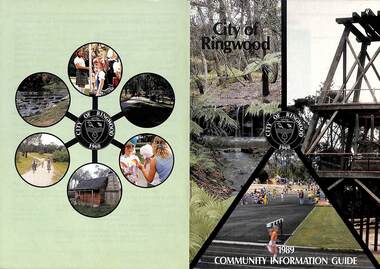
Booklet, City of Ringwood 1989 Community Information Guide, 1989
... LOCAL COMMUNITY SERVICES Accommodation 37 Alcoholism 37 Birthright 38 Blind 38 Care Force 39 Catholic Family Welfare Bureau 39 Central Ringwood Community Centre 39 Childbirth and Parenting Association 39 & 40 Churches 40 & 41 Community Services Victoria 42 Day Centres and Drop In Centres 43 Do Care 43 Drugs 43 Elderly Day Care 44 Emergency Housing 45 Family Planning Services 45 Financial Counselling 46 Hearing Aid Service 47 Hospitals 47 Housing 48 Information 48 Legal 49 Literacy 50 Lone Parents 50 Marriage Celebrants 50 Maroondah Social Health Centre 51 Neighbourhood Mediation Centre - Outer East 51 North Ringwood Community House 52 Nursing 52 Optometric Services 52 Playgroups 53 Podiatry 53 Pre-Schools 54 Red Cross 55 Retirement 55 Ringwood Croydon Advisory Service 55 Schools 56 & 57 Senior Citizens' Centres 58 Transport 59 Twins 59 Unemployment 60 Volunteering 60 Youth Accommodation Project (Maroondah). 60 Youth Emergency Accommodation Services... 60 Community information booklet issued by City of Ringwood for 1989 - covering the facilities and activities of the Ringwood Council and other local organisations and associations. Cover photographs: Front - Fern ...Community information booklet issued by City of Ringwood for 1989 - covering the facilities and activities of the Ringwood Council and other local organisations and associations. Cover photographs: Front - Fern Gully at Ringwood Lake, Poppett Head at rear of Lake, Athletics Track. Back - Highland Carnival, Wombalano Park, Miners Cottage at Ringwood Lake, Bike Path, Water Cascade at rear of Lake.CONTENTS: (page no.) 1. COUNCIL SERVICES After School Activities Programme 29 Aged Services 31, 32 & 33 Aquatic Centre 20 & 21 Budget 14 Building Information 16 By-Laws 26 Chief Executive's Message 9 Children's Services 29 Civic Centre 4 Committees of Council 5 Common Questions 36 Community Plan 10 & 11 Council Meeting Dates 4 Council Representatives 8 Councillors 6 & 7 Dogs 26 Dual Occupancy 12 Emergency Telephone Numbers 63 Family Day Care 29 Fire Hazards 27 Garbage 34 & 35 Golf Course 24 Home Handyman Services 31 Home Help 31 Incinerators 26 Knaith Road Child Care Centre 29 Library 23 Maternal and Child Health 28 Mayoral Message – Cr. R. Gardini 3 Meals on Wheels 31 Members of Parliament 62 Parks and Gardens 18 Rates 25 Residential Development Provisions 12 & 13 Ringwood Bypass Road 13 Ringwood Convention Centre & Performing Arts Centre 22 Ringwood District Centre 14 Staff 10 Town Planning 17 Works Depot 30 Youth Outreach Worker 33 2. LOCAL COMMUNITY SERVICES Accommodation 37 Alcoholism 37 Birthright 38 Blind 38 Care Force 39 Catholic Family Welfare Bureau 39 Central Ringwood Community Centre 39 Childbirth and Parenting Association 39 & 40 Churches 40 & 41 Community Services Victoria 42 Day Centres and Drop In Centres 43 Do Care 43 Drugs 43 Elderly Day Care 44 Emergency Housing 45 Family Planning Services 45 Financial Counselling 46 Hearing Aid Service 47 Hospitals 47 Housing 48 Information 48 Legal 49 Literacy 50 Lone Parents 50 Marriage Celebrants 50 Maroondah Social Health Centre 51 Neighbourhood Mediation Centre - Outer East 51 North Ringwood Community House 52 Nursing 52 Optometric Services 52 Playgroups 53 Podiatry 53 Pre-Schools 54 Red Cross 55 Retirement 55 Ringwood Croydon Advisory Service 55 Schools 56 & 57 Senior Citizens' Centres 58 Transport 59 Twins 59 Unemployment 60 Volunteering 60 Youth Accommodation Project (Maroondah). 60 Youth Emergency Accommodation Services... 60 rinx -
 Kiewa Valley Historical Society
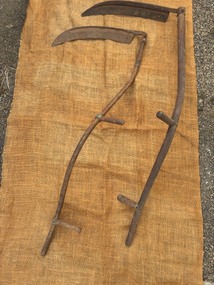
Farming Tools - 2 Scythes, 2 Fern Hooks, 2 Long Handled Sickles, Mattock, Pitch Fork, Pick Axe
... House Creek. The farm totalled more than 200 acres. Douglas left Dederang c 2000 and now (2026) lives at Baranduda. farm tools Deans Family Douglas Petzke Dederang Fern Hook - "116-319 1250 forge steel" Mattock - "783 4 1/2 (half) lbs" "oomatty". ...1. Scythe - Agricultural hand-tool for mowing grass or harvesting crops.Horse drawn machinery and tractors replaced the scythe. The scythe with the metal rod may have been fitted later, replacing a wooden rod. 2. Fern Hook - Used for slashing or reaping plants 3. Long handled sickle - A traditional single handed agricultural tool with a curved metal blade and handle. Used for harvesting. 4. Mattock - Heavy duty hand tool featuring a long handle and a stout dual-headed metal blade used in many ways eg. digging 5. Pitch Fork - An agricultural tool used to pitch loose material such as hay or leaves. 6. Pick Axe - A tool used to break and pry at the pointed end and the axe end for hoeing, skimming and chopping through roots.Douglas used these tools 70-80 years ago (1950s) mainly on his family's farm at Dandongadale near Buffalo River for harvesting as well as clearing land. Some may have been used on a family property at Whorouly as well and at the Dederang family properties from 1964. At Dederang the family had a tobacco farm and a dairy farm - (now 4 properties). Douglas Petzke had a soldier settlement farm in Dederang. Property was 'Woodside' about 1 km south east of the Dederang store. Douglad had 100 acres on each of the top and bottom sides. The bottom side was the dairy farm and the top side was beside House Creek. The farm totalled more than 200 acres. Douglas left Dederang c 2000 and now (2026) lives at Baranduda.1. Scythes x2 - Long wooden and one is metal curved rod with offset handles and a curved 600 mm long steel blade projecting from one end 2. Fern Hooks x2 - Wooden handle with curved steel blade attached at one end 3. Long-handled Sickles x2 - Both have wooden handles one of which is made from a branch of a 'tree' hence the curve. The blade is curved metal 4. Mattock - A long wooden handle with a dual-headed metal blade 5. Pitch Fork - A long wooden handle with three curved metal prongs attached at one end 6. Pick Axe - A wooden handle with a T-shaped metal attachment fixed perpendicularly to one end. The metal has a pointed end on one side of its head and a broad flat blade on the other side. Fern Hook - "116-319 1250 forge steel" Mattock - "783 4 1/2 (half) lbs" "oomatty". On the other side "LTD" and "AM"farm tools, deans family, douglas petzke, dederang -
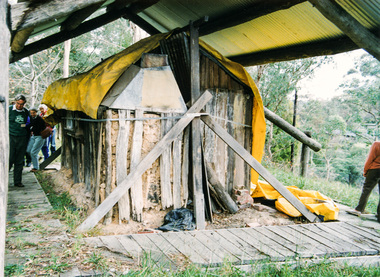 Eltham District Historical Society Inc
Photograph, Slab hut, Warrandyte, Warrandyte Mystery Tour, 29 May 1994, 29/05/1994
... Outside we heard the same bird songs, the trills and bell-pealing, saw the same straggly eucalypts, and a silver leafed wattle in flower, native grasses and ferns, and the neat present day houses, often of Warrandyte stone, perhaps veneered only. ...Outside we heard the same bird songs, the trills and bell-pealing, saw the same straggly eucalypts, and a silver leafed wattle in flower, native grasses and ferns, and the neat present day houses, often of Warrandyte stone, perhaps veneered only. ...[article by Bettina Woodburn in EDHS Newsletter No. 97, July 1994:] THE WARRANDYTE MYSTERY TOUR MAY 29TH 1994 - Members of the Eltham Historical Society met at the Old Post Office, now converted into the Warrandyte Historical Museum, for a picnic lunch on the sunny back verandah overlooking the shimmering Yarra River. Interesting photographs and artefacts filled various rooms outlining the history of this area, and told tales of Aboriginal and more recent neighbours of the Eltham Shire. The weather was calm, cloudy mostly with only occasional sunny patches, but it wasn't cold, although the autumnal leaf colours had changed to wintry brown. "All Aboard" and we set off in the Warrandyte Community Bus (with the School Bus sign displayed at the rear) to learn about local places of "Pride and Joy” from Bruce our guide and Tom the driver. Almost directly opposite we entered Whipstick Gully to explore the first of the district's hidden treasures - the Victory, one of the largest of the six or so major mines, past the old quarry now used for abseiling practice. By torchlight we entered the rocky hillside and saw the seams of quartz the miners had followed in their search for gold. Stamping batteries, and there was one in this gully, converted discarded rock into 'road metal'. Warrandyte is proud to be the first declared Goldfield in 1851, and one of the longest surviving, into the 1920s. A pleasant drive across the Bridge and along Bradley's Lane to Norman's Reserve brought us to see another Tunnel at Pound Bend through which the Yarra was diverted to allow about three miles of river-bed to be used for prospecting for alluvial gold. Still on this side of the river we visited the Old Slab Hut in Castles Road. This remnant of miners' housing is preserved because it had been incorporated into a weatherboard house, and saved from the bulldozers - a last minute reprieve, for preservation, by the National Trust. Devastating bush fires have destroyed other old cottages built of wattle and daub, with bark roofs and stone fire-places. The Cairn commemorating the disclosure of Gold Discovery at Warrandyte on June 30th 1851 beside Anderson's Creek Road was our next point of historical interest. We drove on to South Warrandyte and circled back to above the ford on Anderson's Creek to the entrance of the 4th Hill Mine. Again we crept along with our torches, careful of the low roof-rock, and side shafts. At a junction in a large cavity we were able to stand, look up a long air-vent which some 'cavers' climb down, and marvel at, and experience an aspect of a miner's life. Outside we heard the same bird songs, the trills and bell-pealing, saw the same straggly eucalypts, and a silver leafed wattle in flower, native grasses and ferns, and the neat present day houses, often of Warrandyte stone, perhaps veneered only. The day ended pleasantly, seeing more of the Yarra from Everard Drive, and the water rushing out of the Tunnel at Pound Bend, before returning to afternoon tea or coffee at the Museum. A great day for all concerned - many thanks to the Organisers.Colour photographslab hut, warrandyte, "warrandyte miner's cottage" -
 Eltham District Historical Society Inc
Photograph, Pound Bend tunnel, Warrandyte, Warrandyte Mystery Tour, 29 May 1994, 29/05/1994
... Outside we heard the same bird songs, the trills and bell-pealing, saw the same straggly eucalypts, and a silver leafed wattle in flower, native grasses and ferns, and the neat present day houses, often of Warrandyte stone, perhaps veneered only. ...Outside we heard the same bird songs, the trills and bell-pealing, saw the same straggly eucalypts, and a silver leafed wattle in flower, native grasses and ferns, and the neat present day houses, often of Warrandyte stone, perhaps veneered only. ...[article by Bettina Woodburn in EDHS Newsletter No. 97, July 1994:] THE WARRANDYTE MYSTERY TOUR MAY 29TH 1994 - Members of the Eltham Historical Society met at the Old Post Office, now converted into the Warrandyte Historical Museum, for a picnic lunch on the sunny back verandah overlooking the shimmering Yarra River. Interesting photographs and artefacts filled various rooms outlining the history of this area, and told tales of Aboriginal and more recent neighbours of the Eltham Shire. The weather was calm, cloudy mostly with only occasional sunny patches, but it wasn't cold, although the autumnal leaf colours had changed to wintry brown. "All Aboard" and we set off in the Warrandyte Community Bus (with the School Bus sign displayed at the rear) to learn about local places of "Pride and Joy” from Bruce our guide and Tom the driver. Almost directly opposite we entered Whipstick Gully to explore the first of the district's hidden treasures - the Victory, one of the largest of the six or so major mines, past the old quarry now used for abseiling practice. By torchlight we entered the rocky hillside and saw the seams of quartz the miners had followed in their search for gold. Stamping batteries, and there was one in this gully, converted discarded rock into 'road metal'. Warrandyte is proud to be the first declared Goldfield in 1851, and one of the longest surviving, into the 1920s. A pleasant drive across the Bridge and along Bradley's Lane to Norman's Reserve brought us to see another Tunnel at Pound Bend through which the Yarra was diverted to allow about three miles of river-bed to be used for prospecting for alluvial gold. Still on this side of the river we visited the Old Slab Hut in Castles Road. This remnant of miners' housing is preserved because it had been incorporated into a weatherboard house, and saved from the bulldozers - a last minute reprieve, for preservation, by the National Trust. Devastating bush fires have destroyed other old cottages built of wattle and daub, with bark roofs and stone fire-places. The Cairn commemorating the disclosure of Gold Discovery at Warrandyte on June 30th 1851 beside Anderson's Creek Road was our next point of historical interest. We drove on to South Warrandyte and circled back to above the ford on Anderson's Creek to the entrance of the 4th Hill Mine. Again we crept along with our torches, careful of the low roof-rock, and side shafts. At a junction in a large cavity we were able to stand, look up a long air-vent which some 'cavers' climb down, and marvel at, and experience an aspect of a miner's life. Outside we heard the same bird songs, the trills and bell-pealing, saw the same straggly eucalypts, and a silver leafed wattle in flower, native grasses and ferns, and the neat present day houses, often of Warrandyte stone, perhaps veneered only. The day ended pleasantly, seeing more of the Yarra from Everard Drive, and the water rushing out of the Tunnel at Pound Bend, before returning to afternoon tea or coffee at the Museum. A great day for all concerned - many thanks to the Organisers.Two colour photographswarrandyte, activities, pound bend -
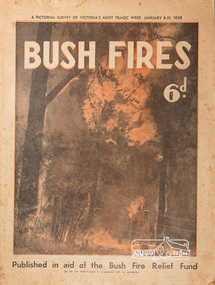 Eltham District Historical Society Inc
Magazine, Sun News-Pictorial, Bush Fires: A pictorial survey of Victoria's most tragic week, January 8-15, 1939, 1939
... Healewille. with flames visible from the town at one stage, was in a trough between two fires which burned four guest-houses, seven homes and left its surrounding beauty-spots wastes of bowed-over, blackened tree-fern fronds; with its famous Sanctuary, however, intact. ...Healewille. with flames visible from the town at one stage, was in a trough between two fires which burned four guest-houses, seven homes and left its surrounding beauty-spots wastes of bowed-over, blackened tree-fern fronds; with its famous Sanctuary, however, intact. ...THE WEEK REVIEWED (Article; Bush Fires: A pictorial survey of Victoria's most tragic week, January 8-15, 1939. Published in aid of the Bush Fire Relief Fund by the Sun News-Pictorial in co-operation with its newsagents, pp2-3) THE fiercest bush fires Australia has known since its discovery are quiescent at the moment, and Victoria, in the comparative coolness of the change which came with rain on Sunday night, has begun·to count its losses. In the fiery eight days, from Sunday to Sunday, at least sixty-six men, women and children have lost their lives in forest fires, or have succumbed to burns and shock; many others have died from heat; and several serious cases of burns are being treated in hospitals. Two babies in Narrandera district have died, and ten others are in hospital, because of milk soured by the record temperatures of those eight days. Forest damage totals at least a million pounds, and incalculable damage has been done to the seedlings which were to have been the forests of the future. Water conservation will be seriously affected by the silting-up of reservoirs and streams from which protective timber has been taken by the all-engulfing flames. More than a thousand houses have been destroyed, and these, with 40 mills, and schools, post-offices, churches, and other buildings, represent a loss of at least half a million. At least 1500 are homeless. For their aid, money raised in appeals has now passed the £50,000 mark, and the biggest relief organisation ever set up in peace time has swung into operation. The First Hint Victoria's first hint of what was to come appeared on Sunday, January 8, when most parts of the State awoke to find a blistering day awaiting. At 12.20 p.m., when the thermometer reached its highest for the day, 109.6 degrees, the first fire victims were at that moment going to their death on a bush track five feet wide off the main road to Narbethong. They were the forestry officers Charles Isaac Demby and John Hartley Barling, who went to warn Demby of his danger when he parted from his companions, and was himself surrounded by the treacherous fire. It was not until 8 o'clock next morning that the tragic news was flashed throughout the State. Searchers found the two charred bodies close together, one seeking protection in the nook of two logs. Barling's watch had stopped at 1.20. In the meantime, tragedy was spreading its cloak. By Monday, big fires were raging at Toolangi, Erica, Yallourn, Monbulk, Frankston, Dromana, Drouin South, Glenburn, and Blackwood, with smaller outbreaks at many other centres. In the ensuing week, while women and children were evacuated as fast as the flames would permit, Erica-scene of the 1926 fire disaster-thrice escaped doom by a change of wind. Indeed, those who have been in the fire country these past days say that the numbers of times a change of wind has saved towns from destruction is amazing. In the towns they speak of miracles. Monday's Miracles The escapes from Monett's Mill at Erica and from the Hardwood Company's Mill at Murrindindi, near where Demby and Barling went to their death, were Monday's miracles. Twenty came out alive from each mill. At the first a 60ft. dugout provided an oven-like refuge; at the second, 12 women and children survived in the smoke-filled gloom of a three-roomed cottage while their eight men, their clothes sometimes afire, poured water on the wooden walls. Three houses out of ten remained when the fire had passed. Record Temperatures Sunday had been the hottest Melbourne day for 33 years; Monday dropped to a 76.1 degree maximum; but Tuesday dawned hotter than ever, the mercury reaching 112.5. By now rumor was racing ahead of fact; whole towns were being reported lost; the alarm was raised for scores of missing persons. But fact soon overtook rumor, and within a few days the staggering toll began to mount to a figure beyond the wildest imaginings of the panic-stricken. Six died from heat on this torrid Tuesday, and the fires spread in a wide swathe from south-west to north-east across the State. Fish died in shallow streams. A curtain of smoke hid the sky from all Victoria, and hung far out to sea. It alarmed passengers on ships. On the Ormonde, on the voyage to Sydney from Burnie, women ran on deck, believing fire had broken out in the hold. Days later the smoke reached New Zealand. In Melbourne thousands of fire-volunteers were leaving in cars: vans, motor-buses-anything reliable on wheels-to aid the country in its grim fight. In the fires at Rubicon and. Narbethong, seventeen were facing death this day. But not till Wednesday, when Melbourne breathed again in a cool change, while the country still sweltered in temperatures up to 117 degrees, did the news come through the tree blocked roads. A woman and her little daughter, trapped on the road, were among those who died. Their bodies, and those of menfolk with them, were found strewn out at intervals along the road, where the furnace of the surrounding fire had dropped them in their tracks as they ran. Twelve died at a Rubicon mill, five on the road at Narbethong. At Alexandra, not far distant, a baby was born while the fires raged, and stretcher-bearers brought in the injured. On Thursday the State Government voted £5000 for the relief of fire victims. The Governor (Lord Huntingfield) and the Lord Mayor (Cr. Coles) visited some of the stricken areas, and dipped into their pockets personally. Later, the City Council, too, voted £5000. Friday, The 13th Friday, the Thirteenth, justified its evil name. A blistering northerly came early in the morning, presaging destruction, and forcing the mercury to a new record of 114 degrees. Racing fires killed at least ten in those terrible 12 hours. Four children were engulfed in the furnace at Colac. Panic drove them, uncontrollable, into the smoke-filled road when the fire raced down behind their home. They choked to death. In other parts fires were joining to make fronts of scores of miles. Kinglake was being menaced on two fronts, £60,000 worth of timber was going up in smoke in Ballarat district. Warburton was surrounded. Residents at Lorne, favoured resort, were being driven to the sea-front by a fire which destroyed at least 20 homes. Healewille. with flames visible from the town at one stage, was in a trough between two fires which burned four guest-houses, seven homes and left its surrounding beauty-spots wastes of bowed-over, blackened tree-fern fronds; with its famous Sanctuary, however, intact. Most of Omeo was destroyed this black day: Noojee. while 200 residents crouched in the river, was being reduced to a waste of buckled iron and smoking timber; Erica was once again saved by a change of wind. Beneath a pall of smoke, the Rubicon victims were buried at Alexandra. Friday night and the early hours of Saturday saw the streets of beleagured towns strewn with exhausted fire-fighters. Their flails beside them, ready for the next call, they lay where exhaustion overtook them-on footpaths, beside lamp-posts, in gutters, in cars, under trucks. Saturday's dawn brought clear skies and lower temperatures in many parts, and from the burnt-out areas came a great rush of tragic reports. The death-roll rushed past the fifty mark with incredible speed. Some had been trapped on roads, others at mills; some, after burying their treasures, had clung too long to the places they had made their homes for many years. Four men lost their lives because one went back for his dog. By Sunday, when the first of the saving rain came, nearly another score of names had been added to the list.Newspaper magazine, 48 pages (incl. covers). Fully digitised and searchable PDFPublished in aid of the Bush Fire Relief Fund by the Sun News-Pictorial in co-operation with its newsagents.bushfires, 1939 bushfires, black friday, warrandyte
