
Showing 24 items matching "first nation language"
-
 Warrnambool and District Historical Society Inc.
Book - Language of the Aborigines of the Colony of Victoria and other Australian Districts, 1851
... ...first nation language...Later in the book there is a small of words collected from further afield and these are arranged by the district from which they were collected. daniel bunce aboriginal language first nation language This volume is a compilation by the author, botanist, Daniel Bunce of language of the Aborigines of the Colony of Victoria. ...This volume is a compilation by the author, botanist, Daniel Bunce of language of the Aborigines of the Colony of Victoria. It was prepared as a guide to Aboriginal protectors and others who were engaging with First Nations people of the time. TheThis is a slender red covered volume with black print. There is a rectangle of white paper glued to the inside cover with a printed name. The inside cover has an inscription in black ink as does the frontice page. The front and rear covers have had paper tape applied to them. Inside the book were found two sheets of paper [.2 &.3] with handwritten notes in black ink. [.4] There is also a small white envelope with red postmarks, a typewritten address and blue printing in the bottom left hand corner which originally contained the smaller sheet of paer.non-fictionThis volume is a compilation by the author, botanist, Daniel Bunce of language of the Aborigines of the Colony of Victoria. It was prepared as a guide to Aboriginal protectors and others who were engaging with First Nations people of the time. The daniel bunce, aboriginal language, first nation language -
 Victorian Aboriginal Corporation for Languages
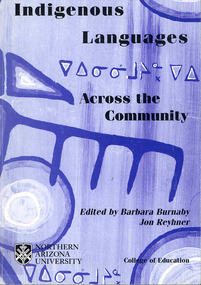
Conference proceedings, Barbara Burnaby, Indigenous languages across the community, 2002
... [Methods of madness: The Tuscarora Language Committee] [Daghida: Cold Lake First Nation works towards Dene language revitalization] [The Jicarilla Apache language summer day camp] [Report on the workshop "World of Inukitut"]. ...[Methods of madness: The Tuscarora Language Committee] [Daghida: Cold Lake First Nation works towards Dene language revitalization] [The Jicarilla Apache language summer day camp] [Report on the workshop "World of Inukitut"]. ...Language - Preservation and use. Language - Social function. [Maori: New Zealand Latin]. Language planning. [Language planning in a trans-national speech community]. [The way of the drum - when earth becomes heart] [The need for an ecological cultural community] Community language management. [Methods of madness: The Tuscarora Language Committee] [Daghida: Cold Lake First Nation works towards Dene language revitalization] [The Jicarilla Apache language summer day camp] [Report on the workshop "World of Inukitut"]. Arizona. New Mexico. Oklahoma. Adult education. Women's literacy. [Teaching reading with puppets] [Assessing Lakota language teaching issues on the Cheyenne River Reservation] [Incorporating traditional Nehiyaw/Plains Cree education in the university] [Collecting texts in Crao and Portuguese for teaching] [Early vocabularies and dictionary development: A cautionary note] [The process of spelling standardization of Innu-Aimun (Montagnais)] Pidgin. Creole. [Ojibway hockey CD-ROM in the making] [The use of multimedia and the arts in language revitalization, maintenance and development: The case of the Balsas Nahuas of Guerreo, Mexico] [The languages of Indigenous Peoples in Chukotka and the media] [Meeting of the Inukitut and Yupik family of languages on May 12, 2000]B&w photographs, diagrams,international language forum, community based practice, language research, conference papers, language policy, language and whole community development, literacy development, media, educational advances, canada, united states, new zealand, zimbabwe, mexico, russia, caribbean, inui, yupik -
Federation University Historical Collection
Article - Article - Women, Federation University: Women of Note; Dr Doris Paton, Academic and Aboriginal Elder
... Dr Doris Paton is an accomplished academic and respected Aboriginal Elder with a passion for the advancement of First Nations People through education, and the reclamation and revival of Aboriginal languages across Australia. ...Dr Doris Paton is an accomplished academic and respected Aboriginal Elder with a passion for the advancement of First Nations People through education, and the reclamation and revival of Aboriginal languages across Australia. ...Dr Doris Paton is an accomplished academic and respected Aboriginal Elder with a passion for the advancement of First Nations People through education, and the reclamation and revival of Aboriginal languages across Australia. She graduated with a Bachelor of Arts (Social Science) from Monash University, Gippsland campus in 1993, and went on to complete a Graduate Diploma Education (Secondary); Master of Education Studies (Aboriginal Education); Master of Education (Aboriginal Education); and a PhD Philosophy (Education). Her skill and expertise have been acknowledged through roles as Director Vice-Chairperson of the Victorian Aboriginal Languages Corporation (VACL) and as Chairperson of the Victorian Indigenous Languages Implementation Reference Group, Victorian Curriculum Assessment Authority, where she developed the framework to accredit “Indigenous Languages of Victoria: Revival and Reclamation”, a VCE accredited subject contributing toward the preservation of Indigenous languages across Australia. A Federation University Council Member since 2020, Doris is also long-serving Director of the Nindi Ngujarn Ngarigo Monero Aboriginal Corporation; and has served on boards for Parks Victoria, the Victorian Aboriginal Heritage Council, and the East Gippsland School for Aboriginal Health Professionals. Her work has been presented at conferences including the World Indigenous Peoples Conference on Education, and recognised with several awards including the GippsTAFE Staff Excellence Awards in the Community Development, and Personal Achievement categories, The Wurreker Award for Community Based Employee, and the Parks Victoria Regional Achiever Award.women of note, federation university, doris paton, aboriginal elder, academic, aboriginal languages, monash university gippsland, graduate diploma education, bachelor of arts, master of education, phd philosophy, victorian aboriginal languages corporation, vacl, councillor -
 Flagstaff Hill Maritime Museum and Village
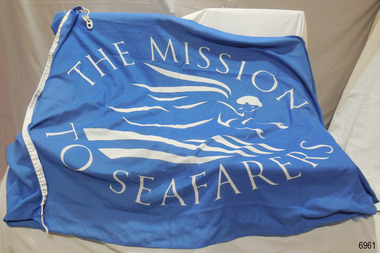
Flag - The Mission to Seafarers, circa 2000
... It depicted the first of the three angels in Revelation 14, who possessed ‘an eternal gospel to proclaim to those who dwell on the earth, to every nation and tribe and language and people. ...It depicted the first of the three angels in Revelation 14, who possessed ‘an eternal gospel to proclaim to those who dwell on the earth, to every nation and tribe and language and people. ...The flag represents The Mission to Seafarers worldwide organisation. From about the year 2000 particular flag was once flown from Flagstaff Hill's masthead on top of the turret on the St Nicholas Seamen's Church but this practice ceased around 2010 for safety reasons. The Australian beginnings were in 1856 when the Church of England (Anglican Church) established the ‘Society for Promoting Missions to Seamen Afloat, at Home and Abroad. Lord Shaftesbury was the first President and Mr William Kingston was the first Secretary. Its Constitution declared: (1)) the Object is the spiritual welfare of the seafaring classes at home and abroad. (2) In pursuance of this Object, Society will use every means consistent with the principles and received practice of the Church of England. Mr Kingston’s wife and sister designed a flag to clearly depict the Society’s Objects. It depicted the first of the three angels in Revelation 14, who possessed ‘an eternal gospel to proclaim to those who dwell on the earth, to every nation and tribe and language and people. The ‘Flying Angel’ (the angel of Revelation) became the official logo of the Society and gained great popularity. In July 2000 the Missions to Seamen changed its name to the Mission to Seafarers to better reflect the group's function, an unbiased society that cares for all who earn their living at sea. The Logo was modernised and simplified, the word changed to 'seafarer' to be gender-neutral. The angel logo no longer holds a book (Bible). The organisation states: “The Mission to Seafarers is an Anglican organisation ... The Mission offers fellowship and a warm welcome in centres where seafarers can relax away from their ships, meet local people and contact their homes, from ports around the world. The Mission provides and promotes” … “The Mission to Seafarers now has a presence in 200 ports in 50 countries worldwide. This makes us the largest sea-port-based welfare organisation in the world. We provide support to seafarers 365 days per year, regardless of their rank, nationality, gender or religion” This flag was a gift from the Mission to Seafarers Victoria at the time of the organisation's change of name from the Missions to Seamen. It was flown from the Masthead on top of the turret on the St Nicholas Seamen's Church at Flagstaff Hill from the years 2000 to around 2010. The donation of this flag signifies the ongoing association between the historical organisation and St Nicholas Seamen's Church building at Flagstaff Hill', which displays an extensive collection of furniture and furnishings from that organisation's Williamstown branch. The design on the flag is an example of several updates of the flag over the organisation's lifetime.Flag, fine linen, The Mission to Seafarers. Rectangle of blue fabric with white text around white flying angel logo. Flag has a plastic hook on top of the halyard.Printed "THE MISSION TO SEAFARERS" and logo of FLYING ANGEL symbolflagstaff hill, warrnambool, shipwrecked coast, flagstaff hill maritime museum, maritime museum, shipwreck coast, flagstaff hill maritime village, great ocean road, missions to seamen victoria, mission to seafarers, flying angel’s club, st nicholas seaman’s church williamstown, mission to seafarers flag, flag, missions to seamen, turret -
 Camperdown & District Historical Society
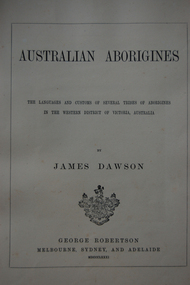
Book - "Australian Aborigines" by James Dawson, Australian Aborigines, 1881
... First edition copy of James Dawson's book, "Australian Aborigines" (1881). Dawson's book draws on his daughter Isabella's ability to speak the local languages and attempts a balanced description of a culture he considered ill-used and under-appreciated by white settlers. This work remains one of the more valuable insights into the life of First Nations...First edition copy of James Dawson's book, "Australian Aborigines" (1881). Dawson's book draws on his daughter Isabella's ability to speak the local languages and attempts a balanced description of a culture he considered ill-used and under-appreciated by white settlers. This work remains one of the more valuable insights into the life of First Nations ...First edition copy of James Dawson's book, "Australian Aborigines" (1881). Dawson's book draws on his daughter Isabella's ability to speak the local languages and attempts a balanced description of a culture he considered ill-used and under-appreciated by white settlers. This work remains one of the more valuable insights into the life of First Nations people at the point of first European contact.Title page of James Dawson's book "Australian Aborigines""AUSTRALIAN ABORIGINES" BY JAMES DAWSON THE LANGUAGES AND CUSTOMS OF SEVERAL TRIBES OF ABORIGINES IN THE WESTERN DISTRICT OF VICTORIA, AUSTRALIA BY JAMES DAWSON GEORGE ROBERTSON MELBOURNE, SYDNEY AND ADELAIDE MDCCCXXXIcdhs, cdhsfirstnations, djargurd wurrung, djargurdwurrung, isabella dawson -
 Camperdown & District Historical Society
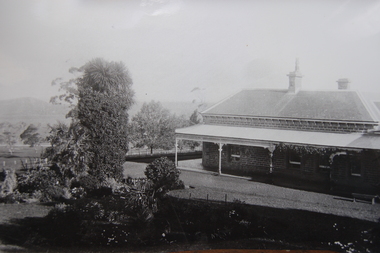
Photograph - Renny Hill homestead, Camperdown, c1890s
... Isabella was a friend to First Nations people and together with her father, James Dawson, recorded their languages and customs. ...Isabella was a friend to First Nations people and together with her father, James Dawson, recorded their languages and customs. ...''Renny Hill'', built c1876, was the home of William Andrew Taylor (1849-1927) and Isabella Park Taylor, nee Dawson (1842-1929). Isabella was a friend to First Nations people and together with her father, James Dawson, recorded their languages and customs. William Taylor was a farmer, Councillor and civic leader. In 1883 he gifted the world's oldest statue of Robert Burns to the people of Camperdown.Black and white image of ''Renny Hill'' homestead, Camperdown Renny Hill built 1876? Built for Isabella Park (Dawson) Taylor and William Taylormt sugarloaf, mount sugarloaf, cdhs, renny hill, djargurd wurrung, djargurdwurrung, cdhsfirstnations -
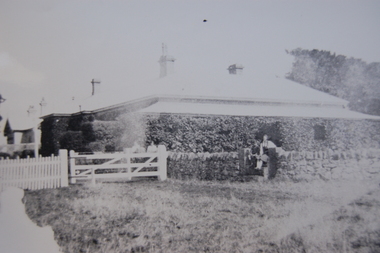 Camperdown & District Historical Society
Photograph - ''Wuurong'' homestead, Camperdown, c1870s
... His daughter, Isabella Park Dawson (1842-1929), recorded the languages and customs of Western Victorian First Nations people and together with her father, published the book "Australian Aborigines" (1881)....His daughter, Isabella Park Dawson (1842-1929), recorded the languages and customs of Western Victorian First Nations people and together with her father, published the book "Australian Aborigines" (1881). ..."'Wuurong'' homestead (originally 'Basin Banks') was built c1867 by Donald McNicol (1812-1903) shepherd, store owner and pastoralist. The property was leased c1870 by James Dawson (1806-1900) Guardian of the Aborigines, pastoralist and environmentalist. James Dawson renamed the property 'Wuurrong'. His daughter, Isabella Park Dawson (1842-1929), recorded the languages and customs of Western Victorian First Nations people and together with her father, published the book "Australian Aborigines" (1881).Black and white photograph of ''Wuurong'' homestead Front: An Early Photograph of "Wuurrong" Built By Donald McNicolcamperdown, cdhs, wuurong, djargurd wurrung, djargurdwurrung, cdhsfirstnations -
 Camperdown & District Historical Society
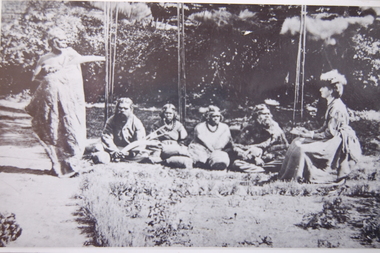
Photograph - Isabella Dawson with First Nations informants, c1865
... Isabella Park Taylor, nee Dawson (1842-1929), friend of Western Victorian First Nations people, and student of their languages and customs. ...Isabella Park Taylor, nee Dawson (1842-1929), friend of Western Victorian First Nations people, and student of their languages and customs. Isabella grew up at "Kangatong" (1844-1866) in the company of First Nations people and became fluent in their languages. ...Isabella Park Taylor, nee Dawson (1842-1929), friend of Western Victorian First Nations people, and student of their languages and customs. Isabella grew up at "Kangatong" (1844-1866) in the company of First Nations people and became fluent in their languages. With her father, James Dawson, she wrote the book "Australian Aborigines" (1881). Black and white photograph taken at "Kangatong", near Hawkesdale showing group of First Nations people in conversation with Isabella Dawson, seated on right with notebook in hand. Standing at left is Kaawirn Kuunawarn (also know as Hissing Swan and King David).James Dawson's daughter, Isabella, learning from the Aborigines on her father's station at "Kangatong" (From the original belonging to Miss M. Turner Shaw of S. Yarra. Copied by A.E. Jackson of Timboon.)cdhs, miss mary turner shaw, kaawirn kuunawarn, hissing swan, cdhsfirstnations -
 Camperdown & District Historical Society
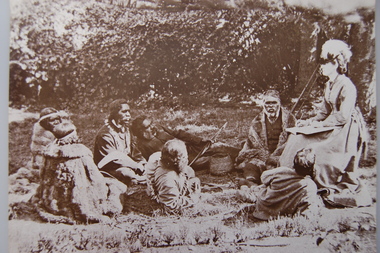
Photograph - Western District First Nations people with Isabella Dawson at 'Kangatong', c1865
... Isabella Park Taylor, nee Dawson (1842-1929), friend of Western Victorian First Nations people, and student of their languages and customs. Isabella grew up at "Kangatong" (1844-1866) in the company of First Nations people and became fluent in their languages. ...Isabella Park Taylor, nee Dawson (1842-1929), friend of Western Victorian First Nations people, and student of their languages and customs. Isabella grew up at "Kangatong" (1844-1866) in the company of First Nations people and became fluent in their languages. ...Isabella Park Taylor, nee Dawson (1842-1929), friend of Western Victorian First Nations people, and student of their languages and customs. Isabella grew up at "Kangatong" (1844-1866) in the company of First Nations people and became fluent in their languages. With her father, James Dawson, she wrote the book "Australian Aborigines" (1881).Black and white photograph taken at "Kangatong", near Hawkesdale, of seven Western Victorian First Nations people all seated in conversation with Isabella Dawson, seated at right with notebook and pen in hand.cdhs, cdhsfirstnations -
 Camperdown & District Historical Society
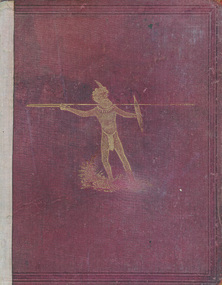
Book - "Australian Aborigines" by James Dawson, Australian Aborigines, 1881
... First edition copy of James Dawson's book, "Australian Aborigines" (1881). Dawson's book draws on his daughter Isabella's ability to speak the local languages and attempts a balanced description of a culture he considered ill-used and under-appreciated by white settlers. This work remains one of the more valuable insights into the life of First Nations...First edition copy of James Dawson's book, "Australian Aborigines" (1881). Dawson's book draws on his daughter Isabella's ability to speak the local languages and attempts a balanced description of a culture he considered ill-used and under-appreciated by white settlers. This work remains one of the more valuable insights into the life of First Nations ...First edition copy of James Dawson's book, "Australian Aborigines" (1881). Dawson's book draws on his daughter Isabella's ability to speak the local languages and attempts a balanced description of a culture he considered ill-used and under-appreciated by white settlers. This work remains one of the more valuable insights into the life of First Nations people at the point of first European contact.Cover of James Dawson's book "Australian Aborigines" (first edition)cdhs, cdhsfirstnations, djargurd wurrung, djargurdwurrung, isabella dawson -
 Camperdown & District Historical Society
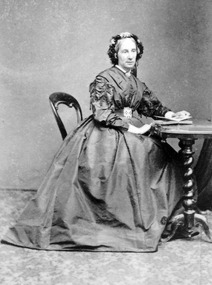
Photograph - Isabella Taylor (nee Dawson), c1890
... Isabella Park Taylor, nee Dawson (1842-1929), friend of Western Victorian First Nations people, and student of their languages and customs. Isabella grew up at "Kangatong" (1844-1866) in the company of First Nations people and became fluent in their languages. ...Isabella Park Taylor, nee Dawson (1842-1929), friend of Western Victorian First Nations people, and student of their languages and customs. Isabella grew up at "Kangatong" (1844-1866) in the company of First Nations people and became fluent in their languages. ...Isabella Park Taylor, nee Dawson (1842-1929), friend of Western Victorian First Nations people, and student of their languages and customs. Isabella grew up at "Kangatong" (1844-1866) in the company of First Nations people and became fluent in their languages. With her father, James Dawson, she wrote the book "Australian Aborigines" (1881). She married William Andrew Taylor in 1877 and they built a fine homestead on their property at "Renny Hill'' near Camperdown, Victoria. Together they had two children, Effie, born 1878 and Katherine in 1880.Studio portrait of Isabella Taylor (nee Dawson) sitting at an occasional table.cdhs, cdhsfirstnations, djargurd wurrung, djargurdwurrung -
 Camperdown & District Historical Society
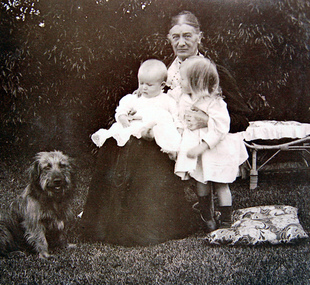
Photograph - Isabella Taylor (nee Dawson) with grandchildren, c1908
... Isabella Park Taylor, nee Dawson (1842-1929), friend of Western Victorian First Nations people, and student of their languages and customs. Isabella grew up at "Kangatong" (1844-1866) in the company of First Nations people and became fluent in their languages. ...Isabella Park Taylor, nee Dawson (1842-1929), friend of Western Victorian First Nations people, and student of their languages and customs. Isabella grew up at "Kangatong" (1844-1866) in the company of First Nations people and became fluent in their languages. ...Isabella Park Taylor, nee Dawson (1842-1929), friend of Western Victorian First Nations people, and student of their languages and customs. Isabella grew up at "Kangatong" (1844-1866) in the company of First Nations people and became fluent in their languages. With her father, James Dawson, she wrote the book "Australian Aborigines" (1881). She married William Andrew Taylor in 1877 and they built a fine homestead on their property at "Renny Hill'' near Camperdown, Victoria. Together they had two children, Effie, born 1878 and Katherine in 1880. She is pictured with her grandchildren, Jack and Katherine Thornton, Effie's children.Isabella Taylor (nee Dawson) seated with her two young grandchildren Jack and Katherine Thornton.cdhs, cdhsfirstnations, djargurd wurrung, djargurdwurrung -
 Camperdown & District Historical Society
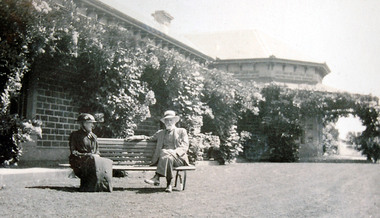
Photograph - William and Isabella Taylor (nee Dawson) at "Renny Hill", c1910
... Isabella Park Taylor, nee Dawson (1842-1929), friend of Western Victorian First Nations people, and student of their languages and customs. Isabella grew up at "Kangatong" (1844-1866) in the company of First Nations people and became fluent in their languages. ...Isabella Park Taylor, nee Dawson (1842-1929), friend of Western Victorian First Nations people, and student of their languages and customs. Isabella grew up at "Kangatong" (1844-1866) in the company of First Nations people and became fluent in their languages. ...Isabella Park Taylor, nee Dawson (1842-1929), friend of Western Victorian First Nations people, and student of their languages and customs. Isabella grew up at "Kangatong" (1844-1866) in the company of First Nations people and became fluent in their languages. With her father, James Dawson, she wrote the book "Australian Aborigines" (1881). She married William Andrew Taylor in 1877 and they built a fine homestead on their property at "Renny Hill'' near Camperdown, Victoria. Together they had two children, Effie, born 1878 and Katherine in 1880. William Taylor (1849-1927) was a farmer, Councillor and civic leader. In 1883 he gifted the world's oldest statue of Robert Burns to the people of Camperdown. William and Isabella Taylor (nee Dawson) seated together in the garden at "Renny Hill".cdhs, cdhsfirstnations, djargurd wurrung, djargurdwurrung -
 Camperdown & District Historical Society
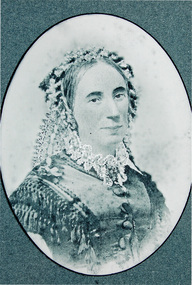
Photograph - Isabella Dawson as a young woman, c1870
... Isabella Park Taylor, nee Dawson (1842-1929), friend of Western Victorian First Nations people, and student of their languages and customs. Isabella grew up at "Kangatong" (1844-1866) in the company of First Nations people and became fluent in their languages. ...Isabella Park Taylor, nee Dawson (1842-1929), friend of Western Victorian First Nations people, and student of their languages and customs. Isabella grew up at "Kangatong" (1844-1866) in the company of First Nations people and became fluent in their languages. ...Isabella Park Taylor, nee Dawson (1842-1929), friend of Western Victorian First Nations people, and student of their languages and customs. Isabella grew up at "Kangatong" (1844-1866) in the company of First Nations people and became fluent in their languages. With her father, James Dawson, she wrote the book "Australian Aborigines" (1881). She married William Andrew Taylor in 1877 and they built a fine homestead on their property at "Renny Hill'' near Camperdown, Victoria. Together they had two children, Effie, born 1878 and Katherine in 1880.Studio portrait of Isabella Dawson as a young womancdhs, cdhsfirstnations, djargurd wurrung, djargurdwurrung -
 The Beechworth Burke Museum
Ceremonial object - Message Sticks, Dja Dja Wurrung
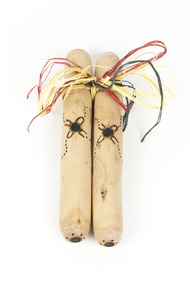
... First Peoples’ cultural material from across South-Eastern Australia. These objects were sold to the Museum by Reynold Everly Johns in 1868. We recognise the harm caused by dispossession of cultural material, and by any inappropriate display and interpretation of this collection over the past 150 years. The Burke Museum is continuing to build relationships and collaborate with traditional owners, Aboriginal communities and the museum sector to ensure culturally appropriate outcomes for the collection, including repatriation of objects to communities of origin. Message sticks are a form of communication between Aboriginal nations, clans and language...First Peoples’ cultural material from across South-Eastern Australia. These objects were sold to the Museum by Reynold Everly Johns in 1868. We recognise the harm caused by dispossession of cultural material, and by any inappropriate display and interpretation of this collection over the past 150 years. The Burke Museum is continuing to build relationships and collaborate with traditional owners, Aboriginal communities and the museum sector to ensure culturally appropriate outcomes for the collection, including repatriation of objects to communities of origin. Message sticks are a form of communication between Aboriginal nations, clans and language ...These Message Sticks acknowledge the return of Dja Dja Wurrung Cultural material held by the Burke Museum. The Burke Museum is the current custodian of a significant collection of First Peoples’ cultural material from across South-Eastern Australia. These objects were sold to the Museum by Reynold Everly Johns in 1868. We recognise the harm caused by dispossession of cultural material, and by any inappropriate display and interpretation of this collection over the past 150 years. The Burke Museum is continuing to build relationships and collaborate with traditional owners, Aboriginal communities and the museum sector to ensure culturally appropriate outcomes for the collection, including repatriation of objects to communities of origin. Message sticks are a form of communication between Aboriginal nations, clans and language groups even within clans. Traditional message sticks were made and crafted from wood and were generally small and easy to carry (between 10 and 20 cm). They were carved, incised and painted with symbols and decorative designs conveying messages and information. Some were prepared hastily, like you might create a note left on a friend’s desk or a quick text message; others were prepared with more time to make the markings neat and ornate. There were always marks that were distinctive to the particular group or nation sending the message and often marks identifying the relationship of the carrier to their group. This way it could be identified and authenticated by neighboring groups and by translators when the message stick was taken long distances. Two solid cylindrical shaped pieces of wood bound together with black, red and yellow string. Each stick has etchings with angular lines and dots. dja dja wurrung, message sticks, burke museum, beechworth, beechworth museum, repatriation, reynold everly johns -
 National Wool Museum
Textile - Cloak, Dr Deanne Gilson, Nan’s Spirit Watching over me (Rita Dalton) Cloak, 2022
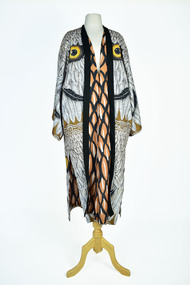
... language. The ochre is used on our bodies in ceremonies to paint our body up and is also placed on graves when someone passes. The white ochre is our most sacred connection to our ancestors and is used to celebrate both life and death. I source the white ochre from the You Yangs and only take what I need for ceremony and my painting. Deanne Gilson Wadawurrung Dja First Nations ...Standing proud, still here, the spirit of ten ancestral matriarchs adorned in contemporary ceremonial cloaks. Representing our women past, present and future, her Spirit, our culture, our Country (spelt with a capital for its importance and this is part of First Peoples protocols on acknowledging Country, our strength, our resilience and healing towards a sustainable future. The white ochre was used to create the feather pattern. White ochre is deeply connected to spirit or ‘murrup’ as we call it in language. The ochre is used on our bodies in ceremonies to paint our body up and is also placed on graves when someone passes. The white ochre is our most sacred connection to our ancestors and is used to celebrate both life and death. I source the white ochre from the You Yangs and only take what I need for ceremony and my painting.White and black feather motif with yellow eye design on outer clock, brown feather motif in lining. Solid black trimming. Cloak is machine sewn and handstitched with hand stitching on shoulder seam.deanne gilson, wadawurrung dja, first nations art, cloak -
 Sunshine and District Historical Society Incorporated
Photograph - The Walan-walan 'Bug Rug' Sculptor Kororoit Creek Sunshine West, Bajada C, Melchior, 16th August 2022
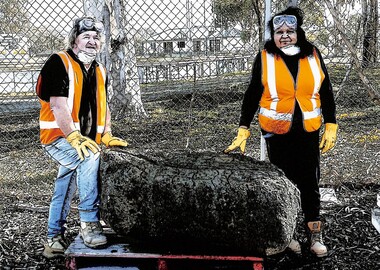
... language. The circle has more than one meaning in First Nations cultures. ...language. The circle has more than one meaning in First Nations cultures. ...After the completion of the carvings of these 6 large Basalt Blue stone Boulders they placed in a permanent position on the Kororoit Creek Trail on the west side of the creek approximately halfway between Derby Road and Wright Street. |What is Walan-walan? Walan-walan is a sculpture project at The Bug Rug by Fiona Clarke & Kenneth McKean Walan-walan means circle /round in Wurundjeri Woi Wurrung language. The circle has more than one meaning in First Nations cultures. In this case it represents the annual cycle of the year. Other important meanings include as a symbol for a meeting place or a body of water. The sculptures forming the circle are based on animal elemental signs of nature from local Aboriginal seasons. Wumangurruditj - Wombat, Ilk - Eel, Common Brown Butterfly, Gurrborra - Koala, Pied Currawong, Goanna and Buliyong - Bat. Many First Nations stories handed down over thousands of years often included mention of stars. Fiona and Ken have added glow in the dark resin to the artworks. This will gently illuminate them at night giving them a constellatory effect. The circle is relatable in many cultures. Walan-walan is a place where people come to sit and learn or simply to talk and rest in nature. It has many uses but will firstly honour the original First Nations Custodians past, present and future, who took extremely good care of this land for 60k + years. Ref: Friends of the Kororoit Creek3008.01 - The Walan-walan 'Bug Rug' Sculptor - Artists (L-R) Kenneth McKean & Fiona Clarke 3008.02 - The Walan-walan 'Bug Rug' Sculptor - Artists engraving a rock 3008.03 - The Walan-walan 'Bug Rug' Sculptor - Artists examining an engraved rock 3008.04 - The Walan-walan 'Bug Rug' Sculptor - Artists washing an engraved rock 3008.05 - The Walan-walan 'Bug Rug' Sculptor - Artist Fiona Clarke washing an engraved rock 3008.06 - The Walan-walan 'Bug Rug' Sculptor - Engraved rock 3008.07 - The Walan-walan 'Bug Rug' Sculptor - Engraved rock 3008.08 - The Walan-walan 'Bug Rug' Sculptor - Engraved rock 3008.09 - The Walan-walan 'Bug Rug' Sculptor - Rocks on palents prior to engraving 3008.10 - The Walan-walan 'Bug Rug' Sculptor - Collection of miscelleous photographsaboriginal, aborigine, first nation, kororoit creek, sunshine west -
 City of Kingston
Map - Parish of Moorabbin
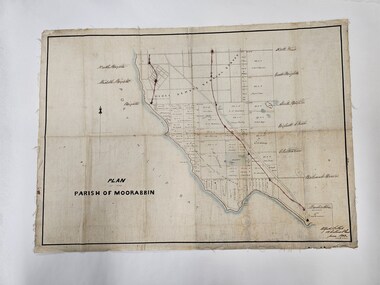
... Warning: This object includes historical language referring to First Nations Peoples which is no longer appropriate but has been recorded for historical purposes. ...Warning: This object includes historical language referring to First Nations Peoples which is no longer appropriate but has been recorded for historical purposes. ...Warning: This object includes historical language referring to First Nations Peoples which is no longer appropriate but has been recorded for historical purposes. Produced in 1853, this map shows the land holdings of European families. While the majority of holdings are small there are also large land holdings as can be seen with Henry Dendy's Special Survey. Of particular note is the "Reserve for Aborigines" which was established in approximately 1841 and consisted of over 830 acres. This area is the current location of Mordialloc township and Attenborough Park, in Mordialloc, is the last remnant of the reserve. An Alfred Sikes, possibly the surveyor/cartographer who drew this parish plan, purchased land in Berwick in 1854.A handrawn map on fabric, with blue markings representing the coastline to Port Phillip Bay, red markings representing a proposed train line to Mordialloc, major roads and street, as well as a "Reserve for Aborigines", which constituted approximately 830 acres. In the bottom right hand corner, the map has been signed and dated.Handwritten in ink: Alfred Sikes / 38 Collins St East / June. 1853moorabbin, mordialloc, dendy, port phillip bay, aboriginal reserve, attenborough park -
 Merri-bek City Council
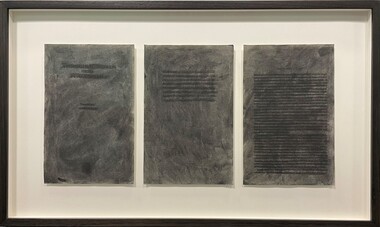
Work on paper - Charcoal and pages from Aboriginal Words and Place Names, Jenna Lee, Without us, 2022
... language. Driven to create work in which she, her family, and the broader mixed First Nations community see themselves represented, Lee builds on a foundation of her father’s teachings of culture and her mother’s teachings of papercraft. ...Jenna Lee dissects and reconstructs colonial 'Indigenous dictionaries' and embeds the works with new cultural meaning. Long obsessed with the duality of the destructive and healing properties that fire can yield, this element has been applied to the paper in the forms of burning and mark-making. In Without Us, Lee uses charcoal to conceal the text on the page, viewing this process as a ritualistic act of reclaiming and honouring Indigenous heritage while challenging the oppressive legacies of colonialism. Lee explains in Art Guide (2022), ‘These books in particular [used to create the proposed works] are Aboriginal language dictionaries—but there’s no such thing as “Aboriginal language”. There are hundreds of languages. The dictionary just presents words, with no reference to where they came from. It was specifically published by collating compendiums from the 1920s, 30s and 40s, with the purpose to give [non-Indigenous] people pleasant sounding Aboriginal words to name children, houses and boats. And yet the first things that were taken from us was our language, children, land and water. And the reason our words were so widely written down was because [white Australians] were trying to eradicate us. They thought we were going extinct. The deeper you get into it, the darker it gets. But the purpose of my work is to take those horrible things and cast them as something beautiful.’Framed artwork -
 Merri-bek City Council
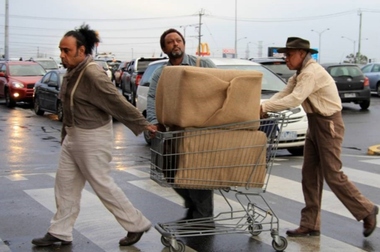
Photograph - Digital print on Ilford Fibre Pearl paper, Kim Kruger, Within ten miles of Melbourne 1, 2022
... First Nations Advisory Committee. Kruger also co-curated Sydney Road Blaks in 2022 at the Counihan Gallery in Brunswick, an exhibition that interrogated Sydney Road’s history of slavery. Within ten miles of Melbourne (2022) and Splitting logs for a “feed” (2022) were featured in this exhibition and therefore demonstrate a strong connection to the City of Merri-bek. The Sydney Road Blaks exhibition was held during Council’s name change from ‘Moreland’ to the Woiwurrung language ...merri-bek public art collection -
 Merri-bek City Council
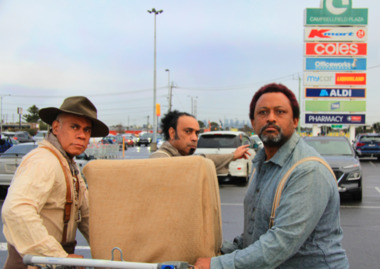
Photograph - Digital print on Ilford Fibre Pearl paper, Kim Kruger, Within ten miles of Melbourne 2, 2022
... First Nations Advisory Committee. Kruger also co-curated Sydney Road Blaks in 2022 at the Counihan Gallery in Brunswick, an exhibition that interrogated Sydney Road’s history of slavery. Within ten miles of Melbourne (2022) and Splitting logs for a “feed” (2022) were featured in this exhibition and therefore demonstrate a strong connection to the City of Merri-bek. The Sydney Road Blaks exhibition was held during Council’s name change from ‘Moreland’ to the Woiwurrung language ... -
 Merri-bek City Council
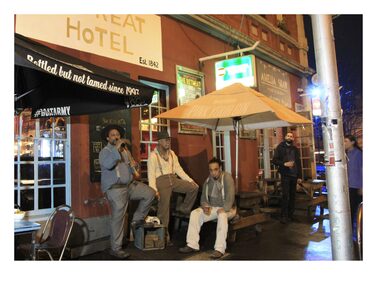
Photograph - Digital print on Ilford Fibre Pearl paper, Kim Kruger, Splitting logs for a “feed” 1, 2022
... First Nations Advisory Committee. Kruger also co-curated Sydney Road Blaks in 2022 at the Counihan Gallery in Brunswick, an exhibition that interrogated Sydney Road’s history of slavery. Within ten miles of Melbourne (2022) and Splitting logs for a “feed” (2022) were featured in this exhibition and therefore demonstrate a strong connection to the City of Merri-bek. The Sydney Road Blaks exhibition was held during Council’s name change from ‘Moreland’ to the Woiwurrung language ... -
 City of Melbourne Libraries
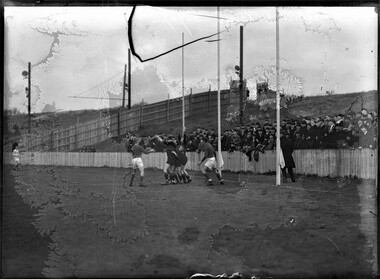
Photograph, Bull, Hugh Jones, 1897-1993, Photograph, Scotch College v. Xavier College football match, 1934
... The word “Marngrook” meaning “game ball”, comes from the language of the Gunditjmara, First Nations people of southwestern Victoria. ...The word “Marngrook” meaning “game ball”, comes from the language of the Gunditjmara, First Nations people of southwestern Victoria. ...At the first match of the 1934 Public Schools Premiership and Championships at Olympic Park (where AAMI Park is now) between Scotch College (white shorts) and Xavier College, (black shorts) a mark is missed by Xavier players and then taken by a Scotch player. Research by project volunteer, Fiona Collyer: A crowd of schoolboys standing behind a picket fence, watch with anticipation as two teams contest a football at the goalposts. The Public Schools Premiership and Championship was an Australian Rules football tournament held every winter over five weeks between six schools- Scotch College, Xavier College, Melbourne Grammar, Wesley College and traditional rivals Geelong Grammar and Geelong College. The school that won the most games out of the five played, won the competition. As the 1933 Premiers, Xavier College had the honour of playing the opening match of the season on 28 June against runners-up Scotch College at Olympic Park (where AAMI Park is now). The Public Schools Premiership matches were widely reported in Melbourne’s daily newspapers with photographs and commentary of every game. Weekly society magazine “Table Talk” featured reports and seven photographs of the first games of the season. Australian Broadcasting Commission (ABC) wireless station 3AR interspersed their afternoon program of reproduced music with detailed descriptions of the matches. Also reporting the matches was “Forty-Years-On”, presumably a student in the 1890s, whose regular column in The Herald newspaper “Activities In The Public Schools” published all the latest news on Victoria’s public (private) schools. In his column for The Australasian 7 July 1934, “Old Boy” writes about the Scotch versus Xavier match: “For more than half the game last week, Scotch was outplayed, but took the lead early in the last term and kept it. Scotch surprised even its own supporters by its dash in the last 25 minutes. Xavier, who became over confident by the prospects of victory, could not withstand the final onslaught. In the last quarter Scotch was the better side and won by seven points.” The final score was Scotch 11.11 (77 points) and Xavier 10.10 (70 points). At the end of this exciting match the overjoyed Scotch boys swarmed over the Olympic Park fences to chair their captain, Stanley Steele and carry him shoulder high, to the pavilion. The first documented game of a variation of Australian Rules football was played at Richmond Paddock (now Yarra Park) from 7 August 1858. Australian Rules football writer Hugh Buggy of The Argus 16 April 1952 explains: “It began when boys and masters of Scotch College and Melbourne Grammar School decided to play a 40-a-side game, with the first team to score two goals to be the winner. Goal posts were pitched more than a mile apart, one set on the Jolimont Hill and the other at Punt road Richmond. Nobody defined the boundary, and the play swung over the broad acres of the park and around the gum trees. It went on and on like a Test match, from noon till dusk. After 15 hours of play on three Saturdays the score was one goal all, and the game was abandoned for that season.” Rules of the game hadn’t been decided at this time - the earliest known rules were codified a year later in 1859. A sculpture and plaque located outside the Melbourne Cricket Ground (MCG), created by sculptor Louis Laumen in 2001, commemorates this game. It depicts two school boys chasing a ball along with umpire Tom Wills, a co-writer of the rules and promoter of Australian Rules football. A medley of Gaelic football, an Aboriginal game called marngrook as well as football played in English public (that is private) schools have been cited as inspiration for Australian Rules football. The word “Marngrook” meaning “game ball”, comes from the language of the Gunditjmara, First Nations people of southwestern Victoria. Marngrook was played at gatherings and celebrations and involved players competing to jump and catch the ball after it was kicked high into the air. The player that catches the ball then gets to kick it. The ball was made from possum skin, filled with pounded charcoal and tied with kangaroo sinews. Protector of Aborigines in Victoria, William Thomas (1794-1867) observed in 1841- “The men and boys joyfully assemble when this game is to be played. One makes a ball of possum skin, somewhat elastic, but firm and strong… The players of this game do not throw the ball as a white man might do, but drop it and at the same time kick it with their feet, using the instep for that purpose. The tallest men have the best chances in this game. Some of them will leap as high as five feet from the ground to catch the ball. The person who secures the ball kicks it. This continues for hours and the natives never seem to tire of the exercise.” The Victorian Football League (VFL), was founded in 1897 with eight teams playing Australian Rules football and held its first Grand Final at the MCG in 1902. From the start the games attracted large enthusiastic crowds, which included women. “Viva” writing in the Supplement to The Weekly Times - 3 July 1886 LADIES COLUMN (By Viva) FOOTBALL. A Social Sketch. “…Of the popularity of football and footballers among women, there can be no doubt. Young, soft hearted girls, who would not “tread upon a worm," avow that football matches are "awfully jolly," and seem to regard accidents as a necessary part of the amusement…a great proportion of the spectators were ladies.” “Minetta” writing for Punch Magazine - “Ladies Letter, Holmby House, Toorak” 22 June 1905 “The "Football Girl" is a feminine genus at present much to the fore in Melbourne. Not that she plays football—at least not beyond a kick in the backyard or paddock—oh, dear, no! Her interest in the game is purely from a spectacular point of view. "Football Girls" usually hunt in couples, with two male barrackers attached. They know all about So-and-So's form, and whether he is a trier or has been bought. They go to each match of their particular club, and watch the play intently, their faces wearing a decidedly strained expression when their club is getting the worst of it. They are not ashamed to barrack either, when matters are progressing successfully… Yours ever, MINETTA.” The Herald 2 July 1909 published a cartoon by Ambrose Dyson depicting women football fans, which asked- “THE QUESTION OF THE DAY. Should Girls Go To Football Matches? Should they? The sex made up their mind about the matter very early on.” The resounding answer was- “Well, I’d like to see the man that would stop me!” At the final match of the 1934 tournament on August 2, Melbourne Grammar finished the season unbeaten, winning their tenth Public Schools premiership in 16 years. The Weekly Times 11 August 1934 reported-“Melbourne Grammar…had a rather lucky escape against Xavier…Had a Xavier player not touched a shot, kicked by a team-mate, as it was going through goal Grammar would have been beaten.” Final score - Melbourne Grammar 13.7 (85 points) defeated Xavier College 12.9 (81 points). Ladder for the 1934 Season- Melbourne Grammar-5 wins Wesley College- 4 wins Scotch College- 3 wins Xavier College- 2 wins Geelong Grammar- 1 win Geelong College- 0 wins The Associated Public Schools of Victoria (APS) exists today where eleven member (private) schools, including co-educational schools, participate in 21 sporting competitions throughout the year. (The descriptor “Public School” references the historical usage of the term and the model of the British public). PUBLIC SCHOOLS FOOTBALL BEGINS WITH SCOTCH--XAVIER MATCH. (1934, June 29). The Age (Melbourne, Vic. : 1854 - 1954), p. 11. Retrieved June 23, 2025, from http://nla.gov.au/nla.news-article204824484 PUBLIC SCHOOLS FOOTBALL AT OLYMPIC PARK (1934, July 5). Table Talk (Melbourne, Vic. : 1885 - 1939), p. 5. Retrieved May 30, 2025, from http://nla.gov.au/nla.news-article149682433 PUBLIC SCHOOLS FOOTBALL. (1936, July 3). The Argus (Melbourne, Vic. : 1848 - 1957), p. 18. Retrieved May 30, 2025, from http://nla.gov.au/nla.news-article11888301 PUBLIC SCHOOLS. (1934, June 29). The Age (Melbourne, Vic. : 1854 - 1954), p. 5. Retrieved August 6, 2025, from http://nla.gov.au/nla.news-article204824486 https://en.m.wikipedia.org/wiki/History_of_Australian_rules_football COLLEGE SPORTS (1934, July 7). The Australasian (Melbourne, Vic. : 1864 - 1946), p. 48 (METROPOLITAN EDITION). Retrieved August 6, 2025, from http://nla.gov.au/nla.news-article145238393 GRAMMAR CHAMPIONS (1934, August 11). Weekly Times (Melbourne, Vic. : 1869 - 1954), p. 72. Retrieved August 6, 2025, from http://nla.gov.au/nla.news-article224562842 LETS LOOK AT FOOTBALL with HUGH BUGGY (1952, April 16). The Argus (Melbourne, Vic. : 1848 - 1957), p. 9. Retrieved August 6, 2025, from http://nla.gov.au/nla.news-article23174340 FOR YOUNG PEOPLE AMONG THE SCHOOLS. (1934, August 7). The Age (Melbourne, Vic. : 1854 - 1954), p. 4. Retrieved August 6, 2025, from http://nla.gov.au/nla.news-article205521661 https://www.nma.gov.au/defining-moments/resources/australian-rules-football#:~:text=In%20the%20winter%20of%201858,games%20of%20Australian%20Rules%20football. https://apssport.org.au/about/ http://lindsaymagazine.co/from-marngrook-to-australian-rules-football/ https://collection.australiansportsmuseum.org.au/objects/70993/possum-skin-ball FOOTBALL. (1886, July 3). Weekly Times (Melbourne, Vic. : 1869 - 1954), p. 6 (SUPPLEMENT TO THE STORY TELLER). Retrieved September 7, 2025, from http://nla.gov.au/nla.news-article221741193 Ladies' Letter. (1905, June 22). Punch (Melbourne, Vic. : 1900 - 1918; 1925), p. 28. Retrieved September 22, 2025, from http://nla.gov.au/nla.news-article175410975 THE QUESTION OF THE DAY. (1909, July 2). The Herald (Melbourne, Vic. : 1861 - 1954), p. 9. Retrieved September 22, 2025, from http://nla.gov.au/nla.news-article242062970Photographer notations on slide: "Scotch v. Xavier - Olympic Park B42".football, schools -
 City of Melbourne Libraries
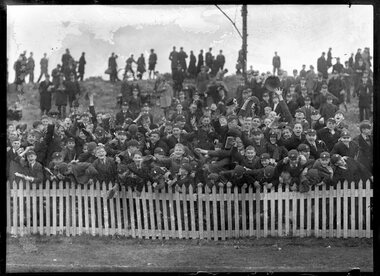
Photograph, Bull, Hugh Jones, 1897-1993, Scotch College v. Xavier College football match
... The word “Marngrook” meaning “game ball”, comes from the language of the Gunditjmara, First Nations people of southwestern Victoria. ...The word “Marngrook” meaning “game ball”, comes from the language of the Gunditjmara, First Nations people of southwestern Victoria. ...Published: 29 June 1934 Published title: PUBLIC SCHOOLS FOOTBALL BEGINS WITH SCOTCH--XAVIER MATCH. Published caption: “The Public Schools 1934 Football season began yesterday when Scotch met Xavier on the Olympic Park ground, and after a wonderful recovery in the third term, Scotch registered a narrow win. Pictured above is the crowd of Scotch boys who congregated behind the goal after the addition of another goal to their score.” Description: Scotch College pupils exuberantly cheer their team’s goal at the first football match of the Public Schools Premiership and Championship for 1934 between Scotch College and Xavier College at Olympic Park, Melbourne (where AAMI Park is now). Research by project volunteer, Fiona Collyer: The Public Schools Premiership and Championship was an Australian Rules football tournament held every winter, over five weeks between six schools- Scotch College, Xavier College, Melbourne Grammar, Wesley College and traditional rivals Geelong Grammar and Geelong College. The school that won the most games out of the five played, won the competition. As the 1933 Premiers, Xavier College had the honour of playing the opening match of the season on 28 June against runners-up Scotch College at Olympic Park (where AAMI Park is now). The Public Schools Premiership matches were widely reported in Melbourne’s daily newspapers with photographs and commentary of every game. Weekly society magazine “Table Talk” featured reports and seven photographs of the first games of the season. Australian Broadcasting Commission (ABC) wireless station 3AR interspersed their afternoon program of reproduced music with detailed descriptions of the matches. Also reporting the matches was “Forty-Years-On”, presumably a student in the 1890s, whose regular column in The Herald newspaper “Activities In The Public Schools” published all the latest news on Victoria’s public (private) schools. In his column for The Australasian 7 July 1934, “Old Boy” writes about the Scotch versus Xavier match- “For more than half the game last week, Scotch was outplayed, but took the lead early in the last term and kept it. Scotch surprised even its own supporters by its dash in the last 25 minutes. Xavier, who became over confident by the prospects of victory, could not withstand the final onslaught. In the last quarter Scotch was the better side and won by seven points.” The final score was Scotch 11.11 (77 points) and Xavier 10.10 (70 points). At the end of this exciting match the overjoyed Scotch boys swarmed over the Olympic Park fences to chair their captain, Stanley Steele and carry him shoulder high, to the pavilion. The first documented game of a variation of Australian Rules football was played at Richmond Paddock (now Yarra Park) from 7 August 1858. Australian Rules football writer Hugh Buggy of The Argus 16 April 1952 explains- “It began when boys and masters of Scotch College and Melbourne Grammar School decided to play a 40-a-side game, with the first team to score two goals to be the winner. Goal posts were pitched more than a mile apart, one set on the Jolimont Hill and the other at Punt road Richmond. Nobody defined the boundary, and the play swung over the broad acres of the park and around the gum trees. It went on and on like a Test match, from noon till dusk. After 15 hours of play on three Saturdays the score was one goal all, and the game was abandoned for that season.” Rules of the game hadn’t been decided at this time - the earliest known rules were codified a year later in 1859. A sculpture and plaque located outside the Melbourne Cricket Ground (MCG), created by sculptor Louis Laumen in 2001, commemorates this game. It depicts two school boys chasing a ball along with umpire Tom Wills, a co-writer of the rules and promoter of Australian Rules football. A medley of Gaelic football, an Aboriginal game called marngrook as well as football played in English public (that is private) schools have been cited as inspiration for Australian Rules football. The word “Marngrook” meaning “game ball”, comes from the language of the Gunditjmara, First Nations people of southwestern Victoria. Marngrook was played at gatherings and celebrations and involved players competing to jump and catch the ball after it is kicked high into the air. The player that catches the ball then gets to kick it. The ball was made from possum skin, filled with pounded charcoal and tied with kangaroo sinews. Protector of Aborigines in Victoria, William Thomas (1794-1867) observed in 1841- “The men and boys joyfully assemble when this game is to be played. One makes a ball of possum skin, somewhat elastic, but firm and strong… The players of this game do not throw the ball as a white man might do, but drop it and at the same time kick it with their feet, using the instep for that purpose. The tallest men have the best chances in this game. Some of them will leap as high as five feet from the ground to catch the ball. The person who secures the ball kicks it. This continues for hours and the natives never seem to tire of the exercise.” The Victorian Football League (VFL), was founded in 1897 with eight teams playing Australian Rules football and held its first Grand Final at the MCG in 1902. From the start the games attracted large enthusiastic crowds, which included women. “Viva” writing in the Supplement to The Weekly Times-3 July 1886- LADIES COLUMN (By Viva) FOOTBALL. A Social Sketch. “…Of the popularity of football and footballers among women, there can be no doubt. Young, soft hearted girls, who would not “tread upon a worm," avow that football matches are "awfully jolly," and seem to regard accidents as a necessary part of the amusement…a great proportion of the spectators were ladies.” “Minetta” writing for Punch Magazine - “Ladies Letter, Holmby House, Toorak” 22 June 1905 “The "Football Girl" is a feminine genus at present much to the fore in Melbourne. Not that she plays football—at least not beyond a kick in the backyard or paddock—oh, dear, no! Her interest in the game is purely from a spectacular point of view. "Football Girls" usually hunt in couples, with two male barrackers attached. They know all about So-and-So's form, and whether he is a trier or has been bought. They go to each match of their particular club, and watch the play intently, their faces wearing a decidedly strained expression when their club is getting the worst of it. They are not ashamed to barrack either, when matters are progressing successfully… Yours ever, MINETTA.” The Herald 2 July 1909 published a cartoon by Ambrose Dyson depicting women football fans, which asked- “THE QUESTION OF THE DAY. Should Girls Go To Football Matches? Should they? The sex made up their mind about the matter very early on.” The resounding answer was- “Well, I’d like to see the man that would stop me!” At the final match of the 1934 tournament on August 2, Melbourne Grammar finished the season unbeaten, winning their tenth Public Schools premiership in 16 years. The Weekly Times 11 August 1934 reported-“Melbourne Grammar…had a rather lucky escape against Xavier…Had a Xavier player not touched a shot, kicked by a team-mate, as it was going through goal Grammar would have been beaten.” Final score - Melbourne Grammar 13.7 (85 points) defeated Xavier College 12.9 (81 points). Ladder for the 1934 Season- Melbourne Grammar-5 wins Wesley College- 4 wins Scotch College- 3 wins Xavier College- 2 wins Geelong Grammar- 1 win Geelong College- 0 wins The Associated Public Schools of Victoria (APS) exists today where eleven member (private) schools, including co-educational schools, participate in 21 sporting competitions throughout the year. (The descriptor “Public School” references the historical usage of the term and the model of the British public school). PUBLIC SCHOOLS FOOTBALL BEGINS WITH SCOTCH--XAVIER MATCH. (1934, June 29). The Age (Melbourne, Vic. : 1854 - 1954), p. 11. Retrieved June 18, 2025, from http://nla.gov.au/nla.news-article204824484 PUBLIC SCHOOLS FOOTBALL AT OLYMPIC PARK (1934, July 5). Table Talk (Melbourne, Vic. : 1885 - 1939), p. 5. Retrieved June 18, 2025, from http://nla.gov.au/nla.news-article149682433 PUBLIC SCHOOLS. (1934, June 29). The Age (Melbourne, Vic. : 1854 - 1954), p. 5. Retrieved June 3, 2025, from http://nla.gov.au/nla.news-article204824486 PUBLIC SCHOOLS FOOTBALL. (1936, July 3). The Argus (Melbourne, Vic. : 1848 - 1957), p. 18. Retrieved August 6, 2025, from http://nla.gov.au/nla.news-article11888301 https://en.m.wikipedia.org/wiki/History_of_Australian_rules_football COLLEGE SPORTS (1934, July 7). The Australasian (Melbourne, Vic. : 1864 - 1946), p. 48 (METROPOLITAN EDITION). Retrieved May 30, 2025, from http://nla.gov.au/nla.news-article145238393 GRAMMAR CHAMPIONS (1934, August 11). Weekly Times (Melbourne, Vic. : 1869 - 1954), p. 72. Retrieved June 1, 2025, from http://nla.gov.au/nla.news-article224562842 LETS LOOK AT FOOTBALL with HUGH BUGGY (1952, April 16). The Argus (Melbourne, Vic. : 1848 - 1957), p. 9. Retrieved June 15, 2025, from http://nla.gov.au/nla.news-article23174340 FOR YOUNG PEOPLE AMONG THE SCHOOLS. (1934, August 7). The Age (Melbourne, Vic. : 1854 - 1954), p. 4. Retrieved June 14, 2025, from http://nla.gov.au/nla.news-article205521661 https://www.nma.gov.au/defining-moments/resources/australian-rules-football#:~:text=In%20the%20winter%20of%201858,games%20of%20Australian%20Rules%20football. https://apssport.org.au/about/ http://lindsaymagazine.co/from-marngrook-to-australian-rules-football/ https://collection.australiansportsmuseum.org.au/objects/70993/possum-skin-ball FOOTBALL. (1886, July 3). Weekly Times (Melbourne, Vic. : 1869 - 1954), p. 6 (SUPPLEMENT TO THE STORY TELLER). Retrieved September 7, 2025, from http://nla.gov.au/nla.news-article221741193 Ladies' Letter. (1905, June 22). Punch (Melbourne, Vic. : 1900 - 1918; 1925), p. 28. Retrieved September 11, 2025, from http://nla.gov.au/nla.news-article175410975 THE QUESTION OF THE DAY. (1909, July 2). The Herald (Melbourne, Vic. : 1861 - 1954), p. 9. Retrieved September 17, 2025, from http://nla.gov.au/nla.news-article242062970 Photographer notations on slide: "Scotch v Xavier - Olympic Park B42".schools, football
